EP4293333A2 - Batterietrennung mittels wassererfassung für batteriebetriebene unterwasser-pool-reinigungsvorrichtungen - Google Patents
Batterietrennung mittels wassererfassung für batteriebetriebene unterwasser-pool-reinigungsvorrichtungen Download PDFInfo
- Publication number
- EP4293333A2 EP4293333A2 EP23206694.4A EP23206694A EP4293333A2 EP 4293333 A2 EP4293333 A2 EP 4293333A2 EP 23206694 A EP23206694 A EP 23206694A EP 4293333 A2 EP4293333 A2 EP 4293333A2
- Authority
- EP
- European Patent Office
- Prior art keywords
- circuit
- battery
- disabling
- power
- water
- Prior art date
- Legal status (The legal status is an assumption and is not a legal conclusion. Google has not performed a legal analysis and makes no representation as to the accuracy of the status listed.)
- Pending
Links
Images

Classifications
-
- H—ELECTRICITY
- H01—ELECTRIC ELEMENTS
- H01H—ELECTRIC SWITCHES; RELAYS; SELECTORS; EMERGENCY PROTECTIVE DEVICES
- H01H35/00—Switches operated by change of a physical condition
- H01H35/18—Switches operated by change of liquid level or of liquid density, e.g. float switch
-
- E—FIXED CONSTRUCTIONS
- E04—BUILDING
- E04H—BUILDINGS OR LIKE STRUCTURES FOR PARTICULAR PURPOSES; SWIMMING OR SPLASH BATHS OR POOLS; MASTS; FENCING; TENTS OR CANOPIES, IN GENERAL
- E04H4/00—Swimming or splash baths or pools
- E04H4/14—Parts, details or accessories not otherwise provided for
- E04H4/16—Parts, details or accessories not otherwise provided for specially adapted for cleaning
- E04H4/1654—Self-propelled cleaners
-
- G—PHYSICS
- G01—MEASURING; TESTING
- G01M—TESTING STATIC OR DYNAMIC BALANCE OF MACHINES OR STRUCTURES; TESTING OF STRUCTURES OR APPARATUS, NOT OTHERWISE PROVIDED FOR
- G01M3/00—Investigating fluid-tightness of structures
- G01M3/02—Investigating fluid-tightness of structures by using fluid or vacuum
- G01M3/04—Investigating fluid-tightness of structures by using fluid or vacuum by detecting the presence of fluid at the leakage point
- G01M3/16—Investigating fluid-tightness of structures by using fluid or vacuum by detecting the presence of fluid at the leakage point using electric detection means
- G01M3/18—Investigating fluid-tightness of structures by using fluid or vacuum by detecting the presence of fluid at the leakage point using electric detection means for pipes, cables or tubes; for pipe joints or seals; for valves; for welds; for containers, e.g. radiators
- G01M3/186—Investigating fluid-tightness of structures by using fluid or vacuum by detecting the presence of fluid at the leakage point using electric detection means for pipes, cables or tubes; for pipe joints or seals; for valves; for welds; for containers, e.g. radiators for containers, e.g. radiators
-
- H—ELECTRICITY
- H02—GENERATION; CONVERSION OR DISTRIBUTION OF ELECTRIC POWER
- H02J—ELECTRIC POWER NETWORKS; CIRCUIT ARRANGEMENTS OR SYSTEMS FOR SUPPLYING OR DISTRIBUTING ELECTRIC POWER; SYSTEMS FOR STORING ELECTRIC ENERGY
- H02J7/00—Circuit arrangements for charging or discharging batteries or for supplying loads from batteries
- H02J7/60—Circuit arrangements for charging or discharging batteries or for supplying loads from batteries including safety or protection arrangements
- H02J7/663—Circuit arrangements for charging or discharging batteries or for supplying loads from batteries including safety or protection arrangements using battery or load disconnect circuits
Definitions
- the devices, systems, and techniques described herein include various circuitry arrangements for electrically isolating a power source such as a battery from an electrical load upon detecting the presence of water within a sealed enclosure of an underwater device. Since water intrusion is more or less inevitable, the embodiments described herein provide an electrical mechanism to safely and securely disconnect the battery, thereby preventing the battery from use and charging.
- a power source such as a battery from an electrical load upon detecting the presence of water within a sealed enclosure of an underwater device. Since water intrusion is more or less inevitable, the embodiments described herein provide an electrical mechanism to safely and securely disconnect the battery, thereby preventing the battery from use and charging.
- a system for a battery-powered swimming pool cleaner or other swimming pool equipment may include a sensing circuit to detect the presence of water within an enclosure.
- the system may also include a power circuit electrically connected to the sensing circuit and configured to direct power to an electrical load of the battery-powered swimming pool cleaner or other swimming pool equipment.
- the system may also include a disabling circuit, sometimes referred to herein as a crowbar circuit, electrically connected to the sensing circuit and the power circuit.
- the disabling circuit may be configured to receive a signal from the sensing circuit (e.g., an input voltage), and, in response, disable the power circuit from powering the electrical load (e.g., short circuit the circuitry in a manner that causes a fuse to blow).
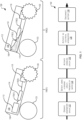
- the battery-powered swimming pool cleaner 100 is illustrated in two states, a first state 108(1) and a second state 108(2).
- the first state 108(1) the compartment 106 of the battery-powered swimming pool cleaner 100 is devoid of water or other liquid.
- the battery-powered swimming pool cleaner 100 may be fully functional.
- water 110 is shown within the compartment 106. The water 110 may have accessed the compartment 106 as a result of a failure or degradation of the water-tight seal of the compartment 106.
- the components within the compartment 106 include a battery 112, a circuit board 114, and an electrical load 116.
- the battery 112 may be any suitable single-use or rechargeable power source. In some examples, the battery 112 may include more than one battery, perhaps included in a battery pack or otherwise wired together.
- the battery 112 may be any suitable type of battery including, for example, alkaline, Lithium-ion, Lithium polymer, and the like.
- the battery 112 may be electrically connected to the circuit board 114 via a first electrical connection 118(1), and the circuit board 114 may be electrically connected to the electrical load via a second electrical connection 118(2). Power from the battery 112 may flow through the circuit board 114 and into the electrical load 116 via the electrical connections 118.
- the circuit board 114 as described in detail in later figures, may include a power circuit or power control circuit to control how the power from the battery 112 is delivered to the electrical load.
- the process 102 includes activating an electrical interrupter.
- the electrical interrupter which may be incorporated into the circuit board 114, may be activated based on the disabling circuit shorting the electrical system.
- the water-sensing probes 302 may allow for water sensing when the device is in different orientations.
- a robotic pool cleaner as described herein, may traverse many different surfaces having varying degrees of inclination.
- the water-sensing probes 302 may therefore be configured to sense water intrusion when the robotic pool cleaner is traversing the different inclinations.
- the sensitivity of the sensing circuit 208 is between 25 and 100 kilo-ohms. In at least one example, the sensitivity of the sensing circuit 208 is about 47 kilo-ohms.
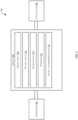
- the disabling circuit 212 may be configured to cause the interrupter 214 to trigger when the sensing circuit 208 detects water.
- the disabling circuit 212 may be referred to as a crowbar circuit.
- the sensing circuit 208 may send a signal to the disabling circuit 212.
- the signal may be voltage created by the sensing circuit 208 and that is read as an input voltage by the disabling circuit 212.
- the input voltage may have certain characteristics.
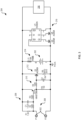
- the disabling circuit 212 may monitor the input voltage coming into the disabling circuit 212, and when the voltage exceeds a threshold as read from the characteristics such as voltage, the disabling circuit may create a short circuit across the power lines of the circuitry 204, which causes a voltage spike to propagate through the circuitry until it hits the interrupter 214.
- the interrupter 214 in this example is a fuse. The voltage spike causes the fuse to blow, which disconnects the power source 202 from the rest of the circuitry 204 and the electrical load 206.
- the disabling circuit 212 may include Q2 and R6.
- Q2 may be a metal-oxide-semiconductor field-effect transistor MOSFET transistor and, in some examples, may be a type AOD424.
- the battery load management circuit 216 may function as a power circuit that controls the flow of power from the power source 202 into the electrical load 206.
- the battery load management circuit 216 may include U1, Q3, and Q4.
- Q3 and Q4 may also be MOSFET transistors of the type AOD424.
- the UI may be a high voltage CMOS-based protection integrated circuit for over-charge/discharge of a rechargeable two-cell Lithium-ion (Li+) / Lithium polymer.
- the UI may further include a short circuit protection circuit for preventing external short circuit current.
- the UI may also include protection circuits to protect against the excess discharge-current and excess charge current.
- FIG. 4 illustrates an example flowchart showing a process 400 for implementing techniques relating to electrically disconnecting a battery based on water sensing, according to at least one example.
- the process 400 may be performed by the circuitry 204.
- the process 400 may begin at block 402.
- the process 400 includes determining whether water intrusion has been detected within a compartment of a battery-powered device. This block may be performed by the sensing circuit 208 as described herein (e.g., using a pair of probes). If the answer at block 404 is NO, the process 400 returns to the starting block at block 402. If the answer at block 404 is YES, the process 400 continues to block 406.
- the process 400 includes activating a disabling circuit to cause an interrupter to interrupt flow of electricity from a battery of the battery-powered device. This block may be performed by the disabling circuit 212 and the interrupter 218, as described herein. After the circuit has been interrupted/disabled, the process 400 may end at 408.
- Example 1 there is provided system for battery-powered swimming pool cleaners or other swimming pool equipment, including:
- Example 2 there is provided a system of any of the subsequent or preceding claims, wherein the system further includes a fuse electrically connected between the power circuit and the disabling circuit, and wherein disabling the power circuit from powering the electrical load includes causing the fuse to blow.
- Example 5 there is provided a system of any of the subsequent or preceding claims, further including a power source electrically connected to the power circuit and the disabling circuit, the power source configured to power the electrical load.
- Example 6 there is provided a system of any of the subsequent or preceding claims, wherein the power source includes one or more batteries.
- Example 7 there is provided a system of any of the subsequent or preceding claims, wherein the one or more batteries are rechargeable.
- Example 8 there is provided a system of any of the subsequent or preceding claims, wherein the sensing circuit is further configured to detect the presence of water at the power source.
- Example 9 there is provided a system of any of the subsequent or preceding claims, wherein disabling the power circuit from powering the electrical load electrically disconnects the power source from the electrical load, thereby preventing the power source from draining and charging.
- Example 10 there is provided a system of any of the subsequent or preceding claims, further including an underwater device including a compartment that defines an interior volume, and wherein the sensing circuit, the power circuit, the disabling circuit, and the power source are disposed within the interior volume.
- Example 11 there is provided a system of any of the subsequent or preceding claims, wherein the sensing circuit is further configured to detect the presence of water within the interior volume.
- Example 12 there is provided a system of any of the subsequent or preceding claims, wherein the compartment is sealed against water ingress.
- Example 13 there is provided a circuit board for battery-powered swimming pool cleaners or other swimming pool equipment, including:
- Example 14 there is provided a circuit board of any of the subsequent or preceding claims, wherein the pair of probes is a first pair of probes, the circuit board further including a second pair of probes to detect the presence of the liquid.
- Example 15 there is provided a circuit board of any of the subsequent or preceding claims, wherein the first pair of probes is disposed at a first end of the circuit board and configurable to detect the presence of the liquid at the first end of the circuit board, and the second pair of probes is disposed at a second end of the circuit board and configurable to detect the presence of the liquid at the second end of the circuit board.
- Example 16 there is provided a circuit board of any of the subsequent or preceding claims, wherein the pair of probes is formed as a pair of traces in the circuit board.
- Example 17 there is provided a circuit board of any of the subsequent or preceding claims, further including a time delay circuit electrically connected between the sensing circuit and the crowbar circuit.
- Example 18 there is provided a circuit board of any of the subsequent or preceding claims, wherein the electrical interrupter includes at least one of a fuse or a circuit breaker.
- Example 19 there is provided a circuit board of any of the subsequent or preceding claims, wherein the electrical interrupter is resettable or replaceable after the crowbar circuit has caused the electrical interrupter to interrupt the flow of electricity to the power circuit.
- Example 20 there is provided a circuit board of any of the subsequent or preceding claims, wherein the crowbar circuit includes a switching circuit and a resistor electrically connected between the electrical interrupter and the sensing circuit.
- Example 21 there is provided a battery-powered underwater pool cleaning device, including:
- Example 22 In this example, there is provided a device of any of the subsequent or preceding claims, wherein the power source includes one or more batteries.
- Example 23 In this example, there is provided a device of any of the subsequent or preceding claims, wherein the compartment is sealed against water ingress into the interior volume.
- Example 24 there is provided a device of any of the subsequent or preceding claims, wherein the circuitry includes:
- Example 25 there is provided a device of any of the subsequent or preceding claims, wherein the compartment includes a divider that divides the interior volume into a first interior sub-volume and a second interior sub-volume.
- Example 27 there is provided a device of any of the subsequent or preceding claims, wherein the circuitry includes a sensing circuit and other circuits, the sensing circuit including a pair of probes configured to detect the presence of water at a location that is spaced apart from the other circuits.
- Example 28 there is provided a device of any of the subsequent or preceding claims, wherein the pair of probes and the power source are disposed within the first interior sub-volume and the other circuits are disposed within the second interior sub-volume.
- Example 29 there is provided a device of any of the subsequent or preceding claims, wherein interrupting the power to the battery-powered underwater pool cleaning device includes electrically disconnecting the power source from the circuitry, thereby preventing the power source from powering the battery-powered underwater pool cleaning device.
- Example 21 there is provided a method for battery-powered swimming pool cleaners or other swimming pool equipment, including:
- Example 31 there is provided a method of any of the subsequent or preceding claims, wherein the disabling circuit includes a crowbar circuit and the interrupting circuit includes a fuse.
- Example 33 there is provided a method of any of the subsequent or preceding claims, wherein activating the disabling circuit includes opening the disabling circuit to allow electrical current to flow to the interrupting circuit, wherein the electrical current includes a characteristic that exceeds a disabling threshold associated with the disabling circuit.
- Example 34 In this example, there is provided a method of any of the subsequent or preceding claims, wherein the characteristic includes a voltage.
- references to “pools” and “swimming pools” herein may also refer to spas or other water containing vessels used for recreation or therapy and for which cleaning is needed or desired.
- Embodiments of the methods disclosed herein may be performed in the operation of such computing devices.
- the order of the blocks presented in the examples above can be varied-for example, blocks can be re-ordered, combined, and/or broken into sub-blocks. Certain blocks or processes can be performed in parallel.
- Disjunctive language such as the phrase "at least one of X, Y, or Z," unless specifically stated otherwise, is otherwise understood within the context as used in general to present that an item, term, etc., may be either X, Y, or Z, or any combination thereof (e.g., X, Y, and/or Z). Thus, such disjunctive language is not generally intended to, and should not, imply that certain examples require at least one of X, at least one of Y, or at least one of Z to each be present.
- a or B or C includes any or all of the following alternative combinations as appropriate for a particular usage: A alone; B alone; C alone; A and B only; A and C only; B and C only; and all three of A and B and C.
- based on is meant to be open and inclusive, in that a process, step, calculation, or other action "based on” one or more recited conditions or values may, in practice, be based on additional conditions or values beyond those recited.
- use of “based at least in part on” is meant to be open and inclusive, in that a process, step, calculation, or other action “based at least in part on” one or more recited conditions or values may, in practice, be based on additional conditions or values beyond those recited. Headings, lists, and numbering included herein are for ease of explanation only and are not meant to be limiting.
Landscapes
- Engineering & Computer Science (AREA)
- Architecture (AREA)
- Civil Engineering (AREA)
- Structural Engineering (AREA)
- Power Engineering (AREA)
- Physics & Mathematics (AREA)
- General Physics & Mathematics (AREA)
- Secondary Cells (AREA)
- Charge And Discharge Circuits For Batteries Or The Like (AREA)
- Measuring Volume Flow (AREA)
Applications Claiming Priority (3)
| Application Number | Priority Date | Filing Date | Title |
|---|---|---|---|
| US202063125473P | 2020-12-15 | 2020-12-15 | |
| PCT/US2021/061607 WO2022132452A1 (en) | 2020-12-15 | 2021-12-02 | Battery disconnection using water sensing for underwater battery-powered pool cleaning devices |
| EP21836681.3A EP4263979B1 (de) | 2020-12-15 | 2021-12-02 | Batterietrennung mittels wassererfassung für batteriebetriebene unterwasser-pool-reinigungsvorrichtungen |
Related Parent Applications (2)
| Application Number | Title | Priority Date | Filing Date |
|---|---|---|---|
| EP21836681.3A Division-Into EP4263979B1 (de) | 2020-12-15 | 2021-12-02 | Batterietrennung mittels wassererfassung für batteriebetriebene unterwasser-pool-reinigungsvorrichtungen |
| EP21836681.3A Division EP4263979B1 (de) | 2020-12-15 | 2021-12-02 | Batterietrennung mittels wassererfassung für batteriebetriebene unterwasser-pool-reinigungsvorrichtungen |
Publications (2)
| Publication Number | Publication Date |
|---|---|
| EP4293333A2 true EP4293333A2 (de) | 2023-12-20 |
| EP4293333A3 EP4293333A3 (de) | 2024-03-06 |
Family
ID=79259350
Family Applications (2)
| Application Number | Title | Priority Date | Filing Date |
|---|---|---|---|
| EP21836681.3A Active EP4263979B1 (de) | 2020-12-15 | 2021-12-02 | Batterietrennung mittels wassererfassung für batteriebetriebene unterwasser-pool-reinigungsvorrichtungen |
| EP23206694.4A Pending EP4293333A3 (de) | 2020-12-15 | 2021-12-02 | Batterietrennung mittels wassererfassung für batteriebetriebene unterwasser-pool-reinigungsvorrichtungen |
Family Applications Before (1)
| Application Number | Title | Priority Date | Filing Date |
|---|---|---|---|
| EP21836681.3A Active EP4263979B1 (de) | 2020-12-15 | 2021-12-02 | Batterietrennung mittels wassererfassung für batteriebetriebene unterwasser-pool-reinigungsvorrichtungen |
Country Status (4)
| Country | Link |
|---|---|
| US (1) | US20220189718A1 (de) |
| EP (2) | EP4263979B1 (de) |
| AU (1) | AU2021401472A1 (de) |
| WO (1) | WO2022132452A1 (de) |
Families Citing this family (2)
| Publication number | Priority date | Publication date | Assignee | Title |
|---|---|---|---|---|
| CN115680335A (zh) * | 2022-09-28 | 2023-02-03 | 深圳市思傲拓科技有限公司 | 一种游泳池机器人及控制方法 |
| CN219203256U (zh) * | 2023-02-07 | 2023-06-16 | 上海拜骋电器有限公司 | 一种防水检测电路和一种电池包 |
Citations (3)
| Publication number | Priority date | Publication date | Assignee | Title |
|---|---|---|---|---|
| US20180066444A1 (en) | 2016-09-06 | 2018-03-08 | Zodiac Pool Systems, Inc. | Buoyant automatic cleaners for spas and other water-containing vessels |
| US20200056391A1 (en) | 2018-08-14 | 2020-02-20 | Zodiac Pool Care Europe | Autonomous cleaning systems principally for swimming pools |
| US20200347630A1 (en) | 2016-11-22 | 2020-11-05 | Aqua Products, Inc. | Self-propelled robotic pool cleaner and water skimmer |
Family Cites Families (9)
| Publication number | Priority date | Publication date | Assignee | Title |
|---|---|---|---|---|
| US6718567B2 (en) * | 2002-05-29 | 2004-04-13 | Sons Design & Manufacturing, Inc. | Swimming pool water level controller |
| US20050235306A1 (en) * | 2002-09-23 | 2005-10-20 | Fima R G | Systems and methods for monitoring and controlling water consumption |
| US7118678B2 (en) * | 2003-03-07 | 2006-10-10 | Aqua Products, Inc. | Portable ozone treatment for swimming pools |
| US8430115B2 (en) * | 2010-01-05 | 2013-04-30 | Norman Thomas Stieb | Leak detection system for humidifier |
| US8659270B2 (en) * | 2010-10-29 | 2014-02-25 | Tesla Motors, Inc. | Battery pack overcharge protection system |
| WO2016105505A1 (en) * | 2014-12-23 | 2016-06-30 | Revive Electronics, LLC | Apparatuses and methods for controlling power to electronic devices |
| CN204064594U (zh) * | 2014-07-24 | 2014-12-31 | 深圳市格瑞斯通自控设备有限公司 | 线式水浸传感器 |
| EP3286389B1 (de) * | 2015-04-21 | 2020-06-03 | Aqua Products Inc. | Verfahren und vorrichtung zur bereitstellung von ausrichtungszugehörigen elektrischen signalen von einem robotischen schwimmbeckenreiniger mit einem ausrichtungssensor an eine entfernte stromversorgung über ein zweiadriges kabel |
| US20210169551A1 (en) * | 2019-12-10 | 2021-06-10 | Covidien Lp | System and method for temporarily and permanently disabling electronics in a disposable surgical tool |
-
2021
- 2021-12-02 EP EP21836681.3A patent/EP4263979B1/de active Active
- 2021-12-02 US US17/540,759 patent/US20220189718A1/en active Pending
- 2021-12-02 WO PCT/US2021/061607 patent/WO2022132452A1/en not_active Ceased
- 2021-12-02 EP EP23206694.4A patent/EP4293333A3/de active Pending
- 2021-12-02 AU AU2021401472A patent/AU2021401472A1/en active Pending
Patent Citations (3)
| Publication number | Priority date | Publication date | Assignee | Title |
|---|---|---|---|---|
| US20180066444A1 (en) | 2016-09-06 | 2018-03-08 | Zodiac Pool Systems, Inc. | Buoyant automatic cleaners for spas and other water-containing vessels |
| US20200347630A1 (en) | 2016-11-22 | 2020-11-05 | Aqua Products, Inc. | Self-propelled robotic pool cleaner and water skimmer |
| US20200056391A1 (en) | 2018-08-14 | 2020-02-20 | Zodiac Pool Care Europe | Autonomous cleaning systems principally for swimming pools |
Also Published As
| Publication number | Publication date |
|---|---|
| EP4263979A1 (de) | 2023-10-25 |
| AU2021401472A9 (en) | 2024-08-08 |
| EP4263979B1 (de) | 2026-02-18 |
| US20220189718A1 (en) | 2022-06-16 |
| AU2021401472A1 (en) | 2023-05-25 |
| EP4293333A3 (de) | 2024-03-06 |
| WO2022132452A1 (en) | 2022-06-23 |
Similar Documents
| Publication | Publication Date | Title |
|---|---|---|
| US9461482B2 (en) | Multi-chemistry battery pack system | |
| CN113795763B (zh) | 漏电检测设备、漏电检测方法及电动车辆 | |
| EP4293333A2 (de) | Batterietrennung mittels wassererfassung für batteriebetriebene unterwasser-pool-reinigungsvorrichtungen | |
| KR100968350B1 (ko) | 배터리의 누설전류 감지 장치 및 방법 | |
| US11450895B2 (en) | Electric tool and method for supplying power to electric tool | |
| KR100193736B1 (ko) | 배터리 보호 기능을 갖는 배터리 팩 | |
| TWI436547B (zh) | 用於充電一電池系統之方法及設備 | |
| EP3059114B1 (de) | Verbindungsentdeckungsschaltung | |
| US8974933B2 (en) | Method and apparatus for preventing electrolysis on battery contacts in a dual-contact battery system | |
| JP2010140785A (ja) | 故障診断回路、及び電池パック | |
| EP3988372B1 (de) | Leckstromdetektor, leckstromerkennungsverfahren und elektrisches fahrzeug | |
| CN103299504A (zh) | 充电装置 | |
| KR101475917B1 (ko) | 배터리 팩 보호 장치 및 이를 포함하는 배터리 팩 | |
| JP5064578B2 (ja) | 充電器、充電器の制御方法、制御プログラムおよび記録媒体 | |
| CN106877425B (zh) | 阻断来自电池负载的充电电压的负载侧方法 | |
| JP2023522322A (ja) | 電源と電気接地との間の電気絶縁障害を検出するための方法 | |
| CN109245028A (zh) | 列车和列车供电系统及其漏电保护装置 | |
| JP3622243B2 (ja) | 二次電池の充放電保護装置 | |
| JP2003132862A (ja) | 電池パック | |
| US6356434B1 (en) | Underground battery vault system for communications applications | |
| KR20100041202A (ko) | 배터리 셀의 swelling 감지장치 | |
| KR100656178B1 (ko) | 방수 기능을 갖는 휴대용 전자제품용 배터리 및 그 방수방법 | |
| JP4051708B2 (ja) | バッテリー異常検出装置 | |
| KR100548261B1 (ko) | 임베디드 단말기의 충전 단자 보호 장치 | |
| KR100600388B1 (ko) | 이동 통신 단말기에서 배터리 보호 장치 |
Legal Events
| Date | Code | Title | Description |
|---|---|---|---|
| PUAI | Public reference made under article 153(3) epc to a published international application that has entered the european phase |
Free format text: ORIGINAL CODE: 0009012 |
|
| STAA | Information on the status of an ep patent application or granted ep patent |
Free format text: STATUS: REQUEST FOR EXAMINATION WAS MADE |
|
| 17P | Request for examination filed |
Effective date: 20231030 |
|
| AC | Divisional application: reference to earlier application |
Ref document number: 4263979 Country of ref document: EP Kind code of ref document: P |
|
| AK | Designated contracting states |
Kind code of ref document: A2 Designated state(s): AL AT BE BG CH CY CZ DE DK EE ES FI FR GB GR HR HU IE IS IT LI LT LU LV MC MK MT NL NO PL PT RO RS SE SI SK SM TR |
|
| REG | Reference to a national code |
Ref country code: DE Ref legal event code: R079 Free format text: PREVIOUS MAIN CLASS: G01M0003180000 Ipc: E04H0004160000 |
|
| PUAL | Search report despatched |
Free format text: ORIGINAL CODE: 0009013 |
|
| RIN1 | Information on inventor provided before grant (corrected) |
Inventor name: BARENG, EUSEBIO DOMINGO Inventor name: UY, DINDO |
|
| AK | Designated contracting states |
Kind code of ref document: A3 Designated state(s): AL AT BE BG CH CY CZ DE DK EE ES FI FR GB GR HR HU IE IS IT LI LT LU LV MC MK MT NL NO PL PT RO RS SE SI SK SM TR |
|
| RIC1 | Information provided on ipc code assigned before grant |
Ipc: G01M 3/18 20060101ALI20240129BHEP Ipc: E04H 4/16 20060101AFI20240129BHEP |
|
| GRAP | Despatch of communication of intention to grant a patent |
Free format text: ORIGINAL CODE: EPIDOSNIGR1 |
|
| STAA | Information on the status of an ep patent application or granted ep patent |
Free format text: STATUS: GRANT OF PATENT IS INTENDED |