EP4289786A2 - Reagenzlösung zur reinigung von kohlenstoffnanomaterialien und verfahren dafür - Google Patents
Reagenzlösung zur reinigung von kohlenstoffnanomaterialien und verfahren dafür Download PDFInfo
- Publication number
- EP4289786A2 EP4289786A2 EP23167623.0A EP23167623A EP4289786A2 EP 4289786 A2 EP4289786 A2 EP 4289786A2 EP 23167623 A EP23167623 A EP 23167623A EP 4289786 A2 EP4289786 A2 EP 4289786A2
- Authority
- EP
- European Patent Office
- Prior art keywords
- carbon nanomaterial
- carbon
- reagent
- cnt
- solution
- Prior art date
- Legal status (The legal status is an assumption and is not a legal conclusion. Google has not performed a legal analysis and makes no representation as to the accuracy of the status listed.)
- Pending
Links
Images

Classifications
-
- C—CHEMISTRY; METALLURGY
- C01—INORGANIC CHEMISTRY
- C01B—NON-METALLIC ELEMENTS; COMPOUNDS THEREOF; METALLOIDS OR COMPOUNDS THEREOF NOT COVERED BY SUBCLASS C01C
- C01B32/00—Carbon; Compounds thereof
- C01B32/15—Nano-sized carbon materials
- C01B32/158—Carbon nanotubes
- C01B32/168—After-treatment
- C01B32/17—Purification
-
- C—CHEMISTRY; METALLURGY
- C01—INORGANIC CHEMISTRY
- C01B—NON-METALLIC ELEMENTS; COMPOUNDS THEREOF; METALLOIDS OR COMPOUNDS THEREOF NOT COVERED BY SUBCLASS C01C
- C01B32/00—Carbon; Compounds thereof
- C01B32/15—Nano-sized carbon materials
-
- C—CHEMISTRY; METALLURGY
- C01—INORGANIC CHEMISTRY
- C01B—NON-METALLIC ELEMENTS; COMPOUNDS THEREOF; METALLOIDS OR COMPOUNDS THEREOF NOT COVERED BY SUBCLASS C01C
- C01B32/00—Carbon; Compounds thereof
- C01B32/15—Nano-sized carbon materials
- C01B32/158—Carbon nanotubes
- C01B32/16—Preparation
- C01B32/162—Preparation characterised by catalysts
-
- C—CHEMISTRY; METALLURGY
- C01—INORGANIC CHEMISTRY
- C01B—NON-METALLIC ELEMENTS; COMPOUNDS THEREOF; METALLOIDS OR COMPOUNDS THEREOF NOT COVERED BY SUBCLASS C01C
- C01B2202/00—Structure or properties of carbon nanotubes
- C01B2202/20—Nanotubes characterized by their properties
- C01B2202/30—Purity
-
- C—CHEMISTRY; METALLURGY
- C01—INORGANIC CHEMISTRY
- C01P—INDEXING SCHEME RELATING TO STRUCTURAL AND PHYSICAL ASPECTS OF SOLID INORGANIC COMPOUNDS
- C01P2002/00—Crystal-structural characteristics
- C01P2002/80—Crystal-structural characteristics defined by measured data other than those specified in group C01P2002/70
- C01P2002/82—Crystal-structural characteristics defined by measured data other than those specified in group C01P2002/70 by IR- or Raman-data
-
- C—CHEMISTRY; METALLURGY
- C01—INORGANIC CHEMISTRY
- C01P—INDEXING SCHEME RELATING TO STRUCTURAL AND PHYSICAL ASPECTS OF SOLID INORGANIC COMPOUNDS
- C01P2004/00—Particle morphology
- C01P2004/10—Particle morphology extending in one dimension, e.g. needle-like
- C01P2004/13—Nanotubes
-
- C—CHEMISTRY; METALLURGY
- C01—INORGANIC CHEMISTRY
- C01P—INDEXING SCHEME RELATING TO STRUCTURAL AND PHYSICAL ASPECTS OF SOLID INORGANIC COMPOUNDS
- C01P2004/00—Particle morphology
- C01P2004/60—Particles characterised by their size
- C01P2004/64—Nanometer sized, i.e. from 1-100 nanometer
-
- C—CHEMISTRY; METALLURGY
- C01—INORGANIC CHEMISTRY
- C01P—INDEXING SCHEME RELATING TO STRUCTURAL AND PHYSICAL ASPECTS OF SOLID INORGANIC COMPOUNDS
- C01P2006/00—Physical properties of inorganic compounds
- C01P2006/10—Solid density
-
- C—CHEMISTRY; METALLURGY
- C01—INORGANIC CHEMISTRY
- C01P—INDEXING SCHEME RELATING TO STRUCTURAL AND PHYSICAL ASPECTS OF SOLID INORGANIC COMPOUNDS
- C01P2006/00—Physical properties of inorganic compounds
- C01P2006/80—Compositional purity
Definitions
- the present invention relates to a method for removal of catalytic metals that are embedded with carbon nanomaterials with or without heteroatoms by employing an environmentally benign, non-mineral acid-based reagent solution. More particularly, the present invention provides a solid reagent comprising sodium or ammonium or potassium salt of persulphate.
- Carbon nanomaterials comprise single walled carbon nanomaterials, double walled carbon nanomaterials, multi walled carbon nanomaterials, carbon nanofibers, carbon nano rings, etc.
- carbon nanotubes are single or multi layered graphene structures rolled up into seamless cylinders with varying degree of length and diameter.
- the CNTs have exceptional thermal, electrical, and mechanical properties by virtue of their structure and tube chirality. These properties are greatly influenced by presence of residual metal impurities present in the CNTs. To take full advantage of the CNT properties for various electrical, thermal, and mechanical applications, purification of CNT becomes inevitable to attain the maximum purity.
- the process of metal impurity removal from CNMs is traditionally conducted using strong mineral-acid based liquid reagents such as HCl, HNO 3 , H 2 SO 4 , and HF.
- strong mineral-acid based liquid reagents such as HCl, HNO 3 , H 2 SO 4 , and HF.
- vacuum annealing process also being used to achieve high purity CNMs.
- the combination of ammonium persulphate along with ammonia solution is used for leaching of precious metals such as copper (Cu), silver (Ag) & gold (Au) from electronic printed circuit board (PCB) components.
- the leaching process is selectively removing precious metals which are standalone in nature without having any chemical bond with carbon.
- the current approach is exclusive in nature wherein CNMs are associated with multi- valent metals characterized with plural combinations of metal oxides of iron (Fe), cobalt (Co), nickel (Ni), magnesium (Mg), aluminum (Al), etc. These metal impurities are strongly embedded with carbon atoms in metal-carbide form.
- the process of CNT production involves decomposition of hydrocarbon feedstock (with or without heteroatoms such as nitrogen, oxygen, sulfur) over the catalyst substrate at elevated temperature in the range of 500-1000°C, at atmospheric pressure or elevated pressure depending on the intended CNT structure.
- catalyst substrate acts as a nucleating agent of CNT growth and follows either tip or base growth mechanism according to tuned process conditions and type of catalyst.
- the resulting CNT growth emanated from the catalyst particles which are invariably associated with CNT structure.
- the catalyst substrate is a combination of two or three metals with suitable carrier material.
- the metals present in the catalyst facilitates the CNT growth during the CNT production process, as a result metal particles of the catalyst remain intact at the tip or base of the CNT tube. For instance, if CNT growth follows a base growth mechanism, then metal particles lie at the base of the tube, while the tip growth mechanism yields CNT associated with metals at its tip. Thus produced CNT is invariably associated with catalyst metal impurities. Further, different process methods yield CNT with purity grade ranging from 70 to 99 wt.% depending on the type of the catalyst used and depending on the structural requirement of CNT for intended applications. However, for using CNT in electrical/electronic/polymer/metal composite, conductive inks, etc. applications, it often requires high purity CNT i.e., >99.5%, which is an interesting challenge to achieve without damaging the structure of CNT.
- thermal treatment involves the heat treatment of CNT in the residual air atmosphere at temperature about 400 to 450°C for possibility of removal of catalyst impurity, however this can accelerate the combustion of CNT by catalytic effect of intrinsic catalyst particles at treating temperature [e.g., Chiang et al., J. Phys. Chem. B 2001, 105, 1157-1161 ; Chiang et al., J. Phys. Chem. B 2001, 105, 8297-8301 ].
- Chemical oxidation is also being adopted to purify CNT employing various acids namely nitric acid, or hydrogen peroxide either alone or in combination with some metal to generate in-situ hydroxyl radicals.
- the residual catalyst particles get reacted with acids and form corresponding nitrates or hydroxides, subsequently dissolved in water solution.
- These aggressive processes typically result in severe damage to, and loss of CNTs. Additionally, the processes are often limited to small batch yields, low yields, and/or low purity. Consequently, an efficient industrial scale purification process to remove these impurities is essential, as many of the applications of CNTs require highly purified CNTs.
- US5641466 discloses a process in which impure carbon materials are separated from carbon nanomaterials by pulverization and heating in the presence of an oxidizing agent at a temperature in the range from 600 to 1000°C. This method eliminates impure carbon materials that are oxidized and liberated into gas. Thus, nanotubes remain unoxidized, however the method compromises on the physical characteristics of resulting CNT such as some length from the tube tips.
- CN1436722A discloses purification technology through vacuum high temperature process for coarse carbon nanotube product containing metal catalyst and metal oxide carrier. By this process, metal oxide and support carriers are eliminated effectively.
- the purification process involves treating the 86% carbon content of CNT sample at high temperature of 2300°C for 5 hours to reach purity up to 99.93% under high vacuum.
- EP1061040A1 discloses a method consisting of two wet purification steps and one dry purification step, which are performed in sequence.
- the first wet purification involves treating of crude carbon nanotubes with acid solution followed by second wet purification step wherein the carbon nanotubes from the first wet purification process are purified using an acetone and acid solution. Drying step is carried out after the second step which involves gas purging to purify the carbon nanotube.
- US7494639B2 patent describes the use of Fenton's reagent to remove the residual metal impurities in carbon nanotubes.
- the disclosure deals with the purification process by preparing an aqueous slurry of impure CNT material which is treated with Fenton's reagent to make catalytic slurry along with hydrogen peroxide, wherein the Fe 2+ ions catalyze the production of hydroxyl radicals; and finally utilize the hydroxyl radicals in the oxidative slurry to purify the CNT material and provide purified CNTs.
- US6683783B1 discloses a method for purifying a mixture comprising single-wall carbon nanotubes and amorphous carbon with heating under oxidizing conditions so that method is sufficient to remove the amorphous carbon, followed by recovering a product comprising at least about 80% by weight of single-wall carbon nanotubes.
- US5698175A discloses a process for purifying carbon nanotubes using reagent selected from a group consisting of oxidation agents such as nitration agents and sulfonation agents in liquid phase, thus reacting the carbon nanotubes with the reagent to remove carbon impurities except carbon nanotubes.
- US20150225243A1 describes a process for purifying carbon nanotubes containing transition metal nanoparticles and carbonaceous impurities by adding oxidizing solution to form a carbon nanotube slurry, and the slurry is heated at an elevated temperature of 110°C to vaporize at least a portion of the oxidizing agent. Acid is then added to the heated carbon nanotube slurry to dissolve transition metal particles.
- US7868333B2 disclosed a process for de-metallization of carbon nanotubes for removing metal-based catalyst residues from carbon nanotubes by contacting with an active metal agent namely highly electropositive metals such as lithium, sodium, calcium, of its organic derivatives followed by further treatment in electron transport species and then treat with carbon monoxide.
- an active metal agent namely highly electropositive metals such as lithium, sodium, calcium, of its organic derivatives followed by further treatment in electron transport species and then treat with carbon monoxide.
- CN1485271A discloses a method to remove Co, Ni and Fe in CNTs by treating in hydrogen atmosphere up to 650°C and then treated with CO gas at 150-200°C. Further sample is treated under high temperature vacuum evaporation of metals.
- US8128901B2 discloses a method of removing metal impurities from carbon nanotubes, which includes treating carbon nanotubes with distilled bromine in a substantially moisture free inert atmosphere. After treatment, distilled bromine is removed from the carbon nanotubes, and by this method iron content from CNT is removed 2.5 to 3.5 by weight.
- US20020159944A1 discloses a purification process that removes extraneous carbon from SWCNT and metal containing residual catalyst particles by oxidation, reduction, and reaction of a halogen-containing gas.
- the invention provides a scalable high-purity SWCNT.
- Peng Liu et al. relates to a room temperature method for cutting of long and entangled multiwalled carbon nanotubes (MWCNTs) into short and dispersible pieces, by the combination of ultrasonic irradiation with ammonium persulfate (APS).
- MWCNTs multiwalled carbon nanotubes
- APS ammonium persulfate
- Sergio Manzetti et al. relates to different methods of solubilization of carbon nanotubes.
- a solution of potassium persulfate (9.6 mmol) in 45 mL of double-distilled H 2 O is added to ethylene glycol solution and stirred at 130°C under nitrogen atmosphere for 6 h.
- 0.4 g of MWCNTs are then added to the solution and allowed to react for 24 h with rigorous stirring, generating the surface-coated polyelectrolytes of CNTs.
- US7645497B2 relates to carboxylic acid functionalization of SWCNTs.
- raw (unfunctionalized) SWCNTs are added to a bath of aqueous composition of ammonium persulfate; and temperatures from 20-120°C are typically used in reflux of this mixture with appropriate agitation over 1 hour to several days process time; to obtain functionalized SWCNTs. After appropriate heating, the dried powder of functionalized SWCNT is obtained.
- JP5228323B2 relates to a method for producing single-walled CNT.
- single-walled carbon nanotubes are treated with HNO 3 for removal of metal impurities and improved dispersibility.
- a (NH 4 ) 2 S 2 O 8 /H 2 SO 4 solution was used as a cutting reagent wherein, 25 mg of HNO 3 -single-walled carbon nanotubes were pre-dispersed in 50 mL of 96% H 2 SO 4 for 1 hour to homogenize the mixture.
- 4 g of ammonia persulfate (NH 4 ) 2 S 2 O 8 was added as an oxidant and the mixture was further sonicated at 35-40°C for 4, 8, 20, 30 hours.
- the obtained sample was dried at 120°C for 24 hours.
- CN101164872B relates to a method for producing mono-layer carbon nano pipe.
- mono-layer carbon nano pipe is treated with HNO 3 for removal of metal impurities.
- a (NH 4 ) 2 S 2 O 8 /H 2 SO 4 solution was used as a cutting reagent wherein, 25 mg of HNO 3 -single-walled carbon nanotubes were pre-dispersed in 50 mL of 96% H 2 SO 4 for 1 hour to homogenize the mixture.
- 4 g of ammonia persulfate (NH 4 ) 2 S 2 O 8 was added as an oxidant and the mixture was further sonicated at 35-40°C for 4, 8, 20, 30 hours.
- the obtained sample was dried at 120°C for 24 hours.
- US9162894B2 relates to a method for producing graphene comprising (i) reacting graphite in an acid solution in which an oxidant is present at 40°C for 1 hour, (ii) washing the product obtained in step (i) with water to neutral and dried.
- the ratio of graphite: acid: oxidant: solvent is 1:0.1-50:0.1-50:0.1-100 by mass.
- Ji-Tae Park et al. relates to a method for preparation of functionalized MWCNT.
- pristine MWCNTs and DW were added to a flask and dispersed in an ultrasonic bath.
- K 2 S 2 O 8 was added to the flask; flask was kept at 85°C after mixing for 2 hours and was then cooled down to room temperature.
- the contents of the flask were separated using a membrane filter and rinsed with DW and then MWCNT obtained was dried in a furnace. COOK functionalized group was added to the MWCNT.
- Qing-Qing Ni et al. relates to a method to prepare water-soluble CNTs by the introduction of potassium carboxylate (-COOK) by mild oxidation process using potassium persulfate (KPS).
- KPS potassium persulfate
- 40 mg pristine SWNTs and 50 ml deionized water were added to a flask; then 0.45 g KPS was added; flask was kept at 85°C with vigorous mixing for 3 hours, and then cooled down to room temperature naturally. The supernatant solution was collected and filtered and washed with distilled water. Finally, the products were dried overnight at 80°C.
- US20200087149A1 relates to a method for synthesis of nanofluids.
- an aqueous mixture containing 0.01-0.1 wt.% of multi-walled carbon nanotubes was first ultrasonicated for 10 minutes and then, about 20 grams of KPS (potassium persulfate) and 10 grams of KOH (potassium hydroxide) were added to the solution and exposed to ultrasound waves for 10 minutes at ambient temperature. Then, the functionalized carbon nanotubes were separated by a filter and washed with distilled water.
- the amount of persulfate salt is in an amount of at least one of from about 5 to about 50%, from about 5 to about 20%, and from about 5 to about 10% by weight of water existing in the aqueous solution.
- the inventors of the present invention have found that a reagent selection is crucial to remove the metals that are encapsulated at the tip or base of the carbon nanomaterials or intercalated between the carbon nanomaterials by selective oxidation of metal while leaving the carbon nanomaterial structure unperturbed.
- the potassium persulphate or ammonium persulfate or sodium persulfate reagent solution of the present invention decomposes to give free radical persulfate species under reaction condition, and these species are responsible for removal of metals from the carbon nanomaterial, thus resulting in metal particles leaving the carbon nanomaterial and dissolving into solution by reacting with sulfate ion.
- Present invention deals with the non-acid based solid regent approach which comprises of ammonium or sodium or potassium salt of persulphate in appropriate molar ratio to the metal concentrations of carbon nanomaterial, which enable to purify carbon nanomaterials in aqueous solution at moderate process conditions.
- the same method can also be employed for demetallation of other type carbon materials including pet coke.
- the present invention discloses a reagent solution for purifying carbon nanomaterials at ambient to moderate process conditions.
- the disclosed reagent solution comprises a solid reagent selected from potassium persulphate or ammonium persulphate or sodium persulphate, which will be dissolved in deionized water in the desired molar concentrations.
- the reagent solution has been used in the appropriate mole ratios to the metal impurities that are present in carbon nanomaterials, either equivalent to or in fractional ratio of 0.1 to 1.
- the molar ratio of reagent solution is selected based on concentration of the metal impurities present in carbon nanomaterials (CNMs).
- the said reagent solution is mixed with pristine carbon nanomaterial of purity ranging from 85 to 97 wt.% to make slurry of carbon nanomaterial, which is then charged into a vessel fitted with a high torque stirrer for homogeneous mixing of the slurry.
- the slurry is kept under stirring either at room temperature or gradually heated to a temperature ranging from 70-100°C for a period of 4 to 12 hours.
- the pristine carbon nanomaterial bearing the catalytic metal impurities ranging from 3-15 wt.% is subsequently treated with reagent solution to remove the residual metals embedded with carbon nanomaterial.
- the present invention provides a non-mineral acid-based reagent solution for purification of a carbon nanomaterial, the solution comprising:
- the solid reagent is a non-mineral and an acid-based solid reagent.
- the carbon nanomaterial has a bulk density in a range of 0.01 to 0.2 g/cc.
- the carbon nanomaterial is associated with a transitional metal in a form of a metal-carbide with or without heteroatoms, wherein the carbon nanomaterial is encapsulated or intercalated with a carrier metal oxide.
- the carbon nanomaterial is selected from the group consisting of a single walled carbon nanomaterial, a double walled carbon nanomaterial, a triple walled carbon nanomaterial, a thin walled carbon nanomaterial, a multi walled carbon nanomaterial, a carbon nanofiber, and a carbon nano ring.
- the present invention also provides a process for purifying a carbon nanomaterial using a non-mineral acid-based reagent solution, the process comprising:
- the carbon nanomaterial slurry is heated for a period of 4-12 hours with stirring.
- the carbon nanomaterial slurry is heated at temperature in a range of 70-100°C. In one of the preferred features, the carbon nanomaterial slurry is heated at temperature in a range of 40 to 90°C.
- the carbon nanomaterial slurry is heated at a temperature of 70°C for 12 hours.
- the purified carbon nanomaterial cake is dried in a hot air oven at 120°C for 12 hours.
- the carbon nanomaterial is associated with a transitional metal in a form of metal-carbide with or without heteroatoms, wherein the carbon nanomaterial is encapsulated or intercalated with carrier metal oxide.
- the carbon nanomaterial is a pristine carbon nanomaterial.
- a concentration of the reagent solution is in a range from 1-50 wt.% with respect to a weight of the pristine carbon nanomaterial.
- the pristine carbon nanomaterial comprises metal impurities in a range of 3-15 wt.%.
- the metal impurities are in monometallic, bimetallic, trimetallic, or multimetallic form, and wherein the metal impurities comprise iron, cobalt, nickel, manganese, molybdenum, metals dispersed on carrier materials, whereas the carrier materials comprise magnesium oxide, alumina, silica, or combination thereof.
- the purity of the pristine carbon nanomaterial is in a range from 85 to 97 wt.%.
- a ratio of the reagent solution to the metal impurities in the pristine carbon nanomaterial is in a range from 0.1 to 1.
- the purified carbon nanomaterial has purity of more than 99-99.5 wt.%.
- the reagent solution generates persulfate radical formed in-situ , and the generated persulphate radical reacts with the metal impurities that are embedded within the carbon nanomaterials.
- the primary objective of the invention is to provide a reagent solution for purification of carbon nanomaterials with or without heteroatoms bearing catalytic metal impurities.
- the reagent solution comprises a solid reagent dissolved in deionized water in a molar ratio of 0.01 to 1.
- It is another objective of the present invention is to remove the multivalent catalytic metals embedded with CNMs using non-functionalized and non-destructive methodology.
- the present invention discloses a reagent solution for purifying carbon nanomaterials at ambient to moderate process conditions.
- the disclosed reagent solution comprises a solid reagent selected from potassium persulphate or ammonium persulphate or sodium persulphate, which will be dissolved in deionized water in the desired molar concentrations.
- the reagent solution has been used in the appropriate mole ratios to the metal impurities present in carbon nanomaterials (CNMs), either equivalent or in fractional ratio of 0.1 to 1.
- the molar ratio of reagent solution selected is based on initial metal impurities present in carbon nanomaterials.
- the said carbon nanomaterials are characterized with a bulk density in a range of 0.01 to 0.2 g/cc.
- the carbon nanomaterials, with or without heteroatoms are associated with transitional metals in a form of metal-carbides, encapsulated or intercalated along with carrier metal oxides.
- the reagent solution for purification of carbon nanomaterials comprises - (a) a solid reagent selected from a group consisting of sodium persulphate, potassium persulphate, ammonium persulphate and mixture thereof; and (b) deionized water, wherein the solid reagent is dissolved in the deionized water in a molar ratio of 0.01 to 1. This molar ratio of reagents varies from 0.01 molar to 1 molar depending on initial purity of carbon nanomaterials. Also, the solid reagent is a non-mineral and acid-based solid reagent.
- the carbon nanomaterial derived from various supported catalysts consisting of iron, cobalt & nickel, manganese, magnesium has been chosen to purify using the aforementioned reagent solution under stipulated purification process conditions.
- the said reagent generates persulfate radical formed in-situ under the process condition, wherein the said generated persulphate radical reacts with metal impurities that are embedded within the carbon nanomaterials.
- carbon nanomaterial slurry is filtered under vacuum followed by washing with deionized water.
- the resulting purified carbon nanomaterial cake is dried in a hot air oven at 120°C for 12 hours to remove the excess moisture from carbon nanomaterial.
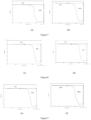
- the oven dried carbon nanomaterial is further characterized using Thermogravimetric analysis (TGA) & Inductive coupled Plasma-Atomic emission spectroscopy (ICP-AES) techniques to monitor the residual metal content and metal concentrations in carbon nanomaterials.
- TGA Thermogravimetric analysis
- ICP-AES Inductive coupled Plasma-Atomic emission
- the process for purification of carbon nanomaterials comprises:
- the disclosed purification method provides carbon nanomaterial with purity of >99-99.5 wt.% without compromising structural integrity of carbon nanomaterial.
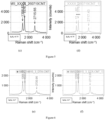
- the structural integrity of carbon nanomaterials is evident by laser Raman Spectroscopy, wherein intensity of carbon bands corresponds to Sp 3 to Sp 2 akin to purified pristine carbon nanomaterial.
- the current method of purification of carbon nanomaterial eliminates the need of corrosive and concentrated acid solutions thereby structural damage of carbon nanomaterials does not take place.
- reagent solution is either one or combination of the reagents such as ammonium persulfate (APS) or potassium persulfate (KPS) or sodium persulfate dissolved in deionized water.
- APS ammonium persulfate
- KPS potassium persulfate
- sodium persulfate dissolved in deionized water.
- different molar concentrations of reagent solution are prepared in a vessel and stored in an airtight container.
- 1 to 100 wt.% of 0.01 molar to 1 molar reagent solution, preferably 1 to 50 wt.%, and more preferably 1 to 30 wt.% of 1 molar reagent solution has been used for treating pristine carbon nanomaterial to remove the encapsulated/embedded and excess metal impurities from the carbon nanomaterials.
- said carbon nanomaterials are derived from gaseous or liquid hydrocarbon feedstock bearing carbon number C1 to C30 in the presence of catalyst substrates at elevated temperatures in a suitable reactor configuration.
- the carbon nanomaterials are obtained by different process ranging from catalytic chemical vapor deposition in different type of reactors including horizontal, vertical tubular reactors with incipient fluidization, continuous fluidization, fixed bed or floating catalyst reactor, high-pressure carbon monoxide (HiPCO) process reactor.
- the said carbon nanomaterial comprises metal impurities, either in monometallic or bimetallic or trimetallic or multimetallic form, comprises iron, cobalt, nickel, manganese, molybdenum, metals dispersed on carrier materials such as magnesium oxide, alumina, silica, or combination thereof.
- carbon nanomaterials are produced from fluidization process, preferably using liquid or gaseous hydrocarbon feed stock in presence of catalyst, wherein catalyst is preferably selected from iron-manganese supported on magnesia, nickel-manganese supported on magnesia or cobalt-manganese supported on magnesia.
- the carbon nanomaterials comprise carbon nanotubes selected from a group consisting of single walled or double walled or triple walled carbon nanomaterials, multi walled carbon nanomaterials, carbon nanofibers, carbon nano rings, etc.
- the produced carbon nanomaterials having characteristics of tubular structures having variable diameter ranging from 1 to 100 nm, and tube length ranging from 1 to 50 ⁇ m, bulk density of 0.01 to 0.25 gram/cc and bearing metal content ranging from 0.1 to 15 wt.%, preferably 0.1 to 10 wt.%.
- thus produced carbon nanotubes is ball-milled to homogenize to fine power.
- the CNT slurry is prepared by mixing the thus formed CNT powder bearing metal concentration of 0.01 to 15 wt.% with a reagent solution in a continuous stirring temperature reactor (CSTR) or agitated nutsche filter/dryer reactor (ANFD).
- CSTR continuous stirring temperature reactor
- ANFD agitated nutsche filter/dryer reactor
- the CNT slurry mixed with reagent solution in ANFD which is allowed to stir at temperature in the range of room temperature to 100°C, more preferably 40 to 70°C for 4-12 hours.
- the treated CNT slurry is subjected to vacuum to remove the excess water solution followed by washing with de-ionized water.
- obtained filtrate cake is oven dried at 120°C for 6 to 12 hours.
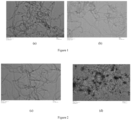
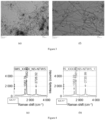
- purified CNT is analysed by inductively coupled plasma-Optical emission spectroscopy (ICP-OES), Thermogravimetric Analysis (TGA), Raman spectroscopy, Transmission Electron Microscopy (TEM), to monitor metal profiling, residual meal content, structural defects, and structural morphology, respectively.
- ICP-OES inductively coupled plasma-Optical emission spectroscopy
- TGA Thermogravimetric Analysis
- TEM Transmission Electron Microscopy
- solution A 228 grams of ammonium persulphate dissolved in 10 liters of deionized water under stirring condition, which is denoted as solution A.
- the prepared solutions are kept in different sealed containers that can be used as purification agent for CNT purification process to remove the metals in an appropriate concentration.
- Example 2 Process for production of carbon nanotubes (CNTs) using Fe-Mn catalysts
- 100 gm of 20 wt.% Iron and 22 wt.% Manganese supported on MgO catalyst is loaded into the vertical fluidized bed reactor, and the reactor is then heated up to the temperature of 650°C under inert gas atmosphere. After achieving the desired temperature, hydrogen is passed over the catalyst along with nitrogen gas to reduce the metal oxide catalyst for 2 hours. After finishing the reduction step, hydrogen gas is turned off and nitrogen gas is being continuously passed over the catalyst.
- the petroleum hydrocarbon feed is fed into the reactor using a continuous high pressure dispensing pump at the flow rate of 400 gm per hour. The liquid feed is preheated up to 400°C and the feed vapor is being carried into the reactor with help of nitrogen gas.
- the feed vapor and nitrogen gas enter the reactor wherein feed vapor passes over the catalyst surface, as a result feed starts to decompose and form the solid carbon product. After 8 hours of the process, feed is stopped, and the reactor is allowed to cool down in the nitrogen atmosphere.
- the solid carbon product is evacuated from the reactor, and the product weighs 1.5 kgs.
- the theoretical purity of CNT is approximately 93 wt.%
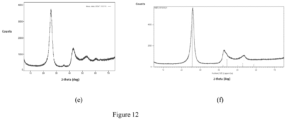
- the carbon sample is analyzed by ICAP, XRD, TEM, Raman Spectroscopy, and TGA to get the physico-chemical characteristics of the produced carbon product.
- Example 2 1.5 kg of 93 wt.% carbon purity of CNT produced in Example 2 is charged into the 20-liter stainless steel vessel.
- the 100% reagent solution of 0.1M reagent solution is prepared in example 1 is added to 1.5 kg of CNT powder to make CNT slurry.
- CNT slurry is kept under continuous stirring, while the vessel is heated at temperature of 70°C for 12 hours. Thereafter, the vessel is cooled down under stirring by turning off heaters, and slurry solution is being allowed to rest for some time to settle the solid mass at the bottom, and the excess solution is decanted.
- the wet solid CNT sample is washed with water under vacuum and dried in the oven at 100°C for 12 hours.
- the obtained CNT material is then crushed into powder and analyzed by ICAP, TGA, XRD, Raman, TEM characterization methods.
- Example 4 Process for production of carbon nanotubes (CNTs) using Co-Mn catalysts
- 100 gm of 20 wt.% Cobalt and 22 wt.% Manganese supported on MgO catalyst is loaded into the vertical fluidized bed reactor, and reactor is then heated up to the temperature of 650°C under inert atmosphere. After achieving the desired temperature, Hydrogen is passed over the catalyst along with nitrogen gas to reduce the metal oxide catalyst for 2 hours. After finishing the reduction step, hydrogen gas is turned off and nitrogen gas is being continuously passed over the catalyst.
- the petroleum hydrocarbon feed is fed into the reactor using a continuous high pressure dispensing pump at the flow rate of 400 gm per hour. The liquid feed is preheated up to 400°C and the feed vapor is being carried into the reactor with help of nitrogen gas.
- the feed vapor and nitrogen gas enter the reactor wherein feed vapor passes over the catalyst surface, as a result feed starts to decompose and form the solid carbon product. After 8 hours of the process, feed is stopped, and the reactor is allowed to cool down in the nitrogen atmosphere.
- the solid carbon product is evacuated from the reactor, and the product weighs 2.5 kgs. The theoretical purity of CNT is approximately 96 wt.%.
- the carbon sample is analyzed by ICAP, XRD, TEM, Raman Spectroscopy, and TGA to get the physico-chemical characteristics of the produced carbon product.
- Example 4 2.5 kg of 96 wt.% carbon purity of CNT produced in Example 4 is charged into the 20-liter stainless steel vessel.
- the 100% reagent solution of 0.1M reagent solution is prepared in example 1 is added to 2.5 kg of CNT powder to make CNT slurry.
- CNT slurry is kept under continuous stirring, while the vessel is heated at temperature of 70°C for 12 hours. Further, the vessel is cooled down by turning off the heaters, and slurry solution is being allowed to rest for some time to settle the solid mass at the bottom, and then excess solution is decanted.
- the wet solid CNT sample is washed with water under vacuum and dried in the oven at 100°C for 12 hours.
- the obtained CNT material is then crushed into powder and analyzed by ICAP, TGA, XRD, Raman, TEM/SEM characterization methods.
- Example 6 Process for production of carbon nanotubes (CNTs) for Ni-Mn catalyst
- 100 gm of 20 wt.% Nickel and 22 wt.% Manganese oxide supported on MgO catalyst is loaded into the vertical fluidized bed reactor, and the reactor is then heated up to the temperature of 650°C under inert atmosphere. After achieving the desired temperature, Hydrogen is passed over the catalyst along with nitrogen gas to reduce the metal oxide catalyst for 2 hours. After finishing the reduction step, hydrogen gas is turned off and nitrogen gas is being continuously passed over the catalyst.
- the petroleum hydrocarbon feed is fed into the reactor using a continuous high pressure dispensing pump at the flow rate of 400 gm per hour. The liquid feed is preheated up to 400°C and the feed vapor is being carried into the reactor with help of nitrogen gas.
- the feed vapor and nitrogen gas enter the reactor wherein feed vapor passes over the catalyst surface, as a result feed starts to decompose and form the solid carbon product.
- feed is stopped, and the reactor is allowed to cool down in the nitrogen atmosphere.
- the solid carbon product is evacuated from the reactor, and the product is weighed as 2 kgs.
- the theoretical purity of CNT is approximately 95 wt.%.
- the resulted CNT is analyzed by ICAP, TGA, XRD, Raman, TEM/SEM characterization methods.
- Example 6 2 kg of 95 wt.% carbon purity of CNT produced in Example 6 is charged into the 20-liter stainless steel vessel.
- the 100% reagent solution of 0.1M reagent solution is prepared in example 1 is added to 2 kg of CNT powder to make CNT slurry.
- CNT slurry is kept under continuous stirring, while the vessel is heated at temperature of 70°C for 12 hours. After that, the vessel is cooled down by turn off heaters, and slurry solution is allowed to rest for some time to settle the solid mass at the bottom, and then excess solution is decanted.
- the decanted solution is analyzed by ICAP for metal analysis.
- the wet solid CNT sample is washed with water under vacuum and dried in the oven at 100°C for 12 hours.
- the obtained CNT material is then crushed into powder and analyzed by ICAP, TGA, XRD, Raman, TEM/SEM characterization methods.
- Table 1 Characterization of Carbon nanomaterial samples from Example 2, 3, 4, 5, 6 and 7 Example Number Metal Analysis by ICAP (wt.%) Raman Spectroscopy (I D /I G ) Tube Diameter (nm) by TEM Tube Length ( ⁇ m) by SEM Surface Area (m 2 /g) 2 Fe-1.8 wt.% ⁇ 0.8 10-30 2-5 105 Mn-2 wt.% Mg-3.3 wt.% 3 Fe-0.2 wt.% ⁇ 0.8 10-30 2-5 120 Mn-0.01 wt.% Mg-0.01 wt.% 4 Co-0.9 wt.% ⁇ 0.7 10-25 5-8 117 Mn-1.3 wt.% Mg-1.8 wt.% 5 Co-0.1 wt.% ⁇ 0.7 10-25 5-8 143 Mn-0.01 wt.% Mg-0.01 wt.% 6 Ni-1.5 wt.% ⁇ 0.75 10-30 3-6 113 Mn-1.6 wt.% Mg-2.1
- Examples 3, 5 and 7 pertaining to purification of CNTs have lower content of metals, when compared to their counter Examples 2, 4 and 6 which are pristine CNT and have higher content of metals.
Landscapes
- Chemical & Material Sciences (AREA)
- Engineering & Computer Science (AREA)
- Materials Engineering (AREA)
- Organic Chemistry (AREA)
- Nanotechnology (AREA)
- Inorganic Chemistry (AREA)
- Chemical Kinetics & Catalysis (AREA)
- Carbon And Carbon Compounds (AREA)
- Inks, Pencil-Leads, Or Crayons (AREA)
- Solid-Sorbent Or Filter-Aiding Compositions (AREA)
Applications Claiming Priority (1)
| Application Number | Priority Date | Filing Date | Title |
|---|---|---|---|
| IN202221032397 | 2022-06-06 |
Publications (2)
| Publication Number | Publication Date |
|---|---|
| EP4289786A2 true EP4289786A2 (de) | 2023-12-13 |
| EP4289786A3 EP4289786A3 (de) | 2024-04-03 |
Family
ID=86006624
Family Applications (1)
| Application Number | Title | Priority Date | Filing Date |
|---|---|---|---|
| EP23167623.0A Pending EP4289786A3 (de) | 2022-06-06 | 2023-04-12 | Reagenzlösung zur reinigung von kohlenstoffnanomaterialien und verfahren dafür |
Country Status (4)
| Country | Link |
|---|---|
| US (1) | US20230391623A1 (de) |
| EP (1) | EP4289786A3 (de) |
| JP (1) | JP7584559B2 (de) |
| KR (1) | KR102871657B1 (de) |
Citations (15)
| Publication number | Priority date | Publication date | Assignee | Title |
|---|---|---|---|---|
| US5641466A (en) | 1993-06-03 | 1997-06-24 | Nec Corporation | Method of purifying carbon nanotubes |
| US5698175A (en) | 1994-07-05 | 1997-12-16 | Nec Corporation | Process for purifying, uncapping and chemically modifying carbon nanotubes |
| EP1061040A1 (de) | 1999-06-15 | 2000-12-20 | Iljin Nanotech Co., Ltd. | Massenreinigungsverfahren von Kohlenstoffnanoröhren |
| US20020159944A1 (en) | 2001-02-12 | 2002-10-31 | William Marsh Rice University | Gas-phase process for purifying single-wall carbon nanotubes and compositions thereof |
| CN1436722A (zh) | 2003-03-21 | 2003-08-20 | 清华大学 | 一种利用真空高温纯化碳纳米管的方法 |
| US6683783B1 (en) | 1997-03-07 | 2004-01-27 | William Marsh Rice University | Carbon fibers formed from single-wall carbon nanotubes |
| CN1485271A (zh) | 2002-09-24 | 2004-03-31 | 中国科学院成都有机化学研究所 | 一种去除碳纳米管中钴、镍或(和)铁的方法 |
| CN101164872A (zh) | 2006-10-20 | 2008-04-23 | 索尼株式会社 | 单层碳纳米管的制造方法 |
| US7494639B2 (en) | 2004-12-28 | 2009-02-24 | William Marsh Rice University | Purification of carbon nanotubes based on the chemistry of fenton's reagent |
| US7645497B2 (en) | 2005-06-02 | 2010-01-12 | Eastman Kodak Company | Multi-layer conductor with carbon nanotubes |
| US7868333B2 (en) | 2006-12-21 | 2011-01-11 | E.I. Du Pont De Nemours And Company | Process for demetallization of carbon nanotubes |
| US8128901B2 (en) | 2006-05-05 | 2012-03-06 | William Marsh Rice University | Facile purification of carbon nanotubes with liquid bromine at room temperature |
| US20150225243A1 (en) | 2014-02-07 | 2015-08-13 | Samsung Sdi Co., Ltd. | Process for purification of carbon nanotubes |
| US9162894B2 (en) | 2011-04-28 | 2015-10-20 | Ningbo Institute Of Material Technology And Engineering, Chinese Academy Of Sciences | Method for preparing graphene |
| US20200087149A1 (en) | 2015-07-22 | 2020-03-19 | Research Institute Of Petroleum Industry | Method for the synthesis of nanofluids |
Family Cites Families (3)
| Publication number | Priority date | Publication date | Assignee | Title |
|---|---|---|---|---|
| JP3103507B2 (ja) * | 1996-06-07 | 2000-10-30 | 株式会社石塚研究所 | 不純ダイヤモンド粉末の精製法 |
| KR101701369B1 (ko) * | 2015-01-27 | 2017-02-01 | 한국과학기술연구원 | 탄소가 포함된 액체상의 전구체를 이용한 연속 롤투롤 방식의 고품질 그래핀 제조방법과 그 제조장치 |
| FR3064623B1 (fr) | 2017-03-31 | 2025-06-20 | Arkema France | Processus de purification de nanotubes de carbone bruts |
-
2023
- 2023-04-11 US US18/133,311 patent/US20230391623A1/en active Pending
- 2023-04-11 KR KR1020230047341A patent/KR102871657B1/ko active Active
- 2023-04-12 EP EP23167623.0A patent/EP4289786A3/de active Pending
- 2023-04-20 JP JP2023069569A patent/JP7584559B2/ja active Active
Patent Citations (16)
| Publication number | Priority date | Publication date | Assignee | Title |
|---|---|---|---|---|
| US5641466A (en) | 1993-06-03 | 1997-06-24 | Nec Corporation | Method of purifying carbon nanotubes |
| US5698175A (en) | 1994-07-05 | 1997-12-16 | Nec Corporation | Process for purifying, uncapping and chemically modifying carbon nanotubes |
| US6683783B1 (en) | 1997-03-07 | 2004-01-27 | William Marsh Rice University | Carbon fibers formed from single-wall carbon nanotubes |
| EP1061040A1 (de) | 1999-06-15 | 2000-12-20 | Iljin Nanotech Co., Ltd. | Massenreinigungsverfahren von Kohlenstoffnanoröhren |
| US20020159944A1 (en) | 2001-02-12 | 2002-10-31 | William Marsh Rice University | Gas-phase process for purifying single-wall carbon nanotubes and compositions thereof |
| CN1485271A (zh) | 2002-09-24 | 2004-03-31 | 中国科学院成都有机化学研究所 | 一种去除碳纳米管中钴、镍或(和)铁的方法 |
| CN1436722A (zh) | 2003-03-21 | 2003-08-20 | 清华大学 | 一种利用真空高温纯化碳纳米管的方法 |
| US7494639B2 (en) | 2004-12-28 | 2009-02-24 | William Marsh Rice University | Purification of carbon nanotubes based on the chemistry of fenton's reagent |
| US7645497B2 (en) | 2005-06-02 | 2010-01-12 | Eastman Kodak Company | Multi-layer conductor with carbon nanotubes |
| US8128901B2 (en) | 2006-05-05 | 2012-03-06 | William Marsh Rice University | Facile purification of carbon nanotubes with liquid bromine at room temperature |
| CN101164872A (zh) | 2006-10-20 | 2008-04-23 | 索尼株式会社 | 单层碳纳米管的制造方法 |
| JP5228323B2 (ja) | 2006-10-20 | 2013-07-03 | ソニー株式会社 | 単層カーボンナノチューブの製造方法 |
| US7868333B2 (en) | 2006-12-21 | 2011-01-11 | E.I. Du Pont De Nemours And Company | Process for demetallization of carbon nanotubes |
| US9162894B2 (en) | 2011-04-28 | 2015-10-20 | Ningbo Institute Of Material Technology And Engineering, Chinese Academy Of Sciences | Method for preparing graphene |
| US20150225243A1 (en) | 2014-02-07 | 2015-08-13 | Samsung Sdi Co., Ltd. | Process for purification of carbon nanotubes |
| US20200087149A1 (en) | 2015-07-22 | 2020-03-19 | Research Institute Of Petroleum Industry | Method for the synthesis of nanofluids |
Non-Patent Citations (3)
| Title |
|---|
| BANDOW ET AL., J. PHYS. CHEM. B, vol. 101, 1997, pages 8839 - 8842 |
| CHIANG ET AL., J. PHYS. CHEM. B, vol. 105, 2001, pages 8297 - 8301 |
| J. PHYS. CHEM. B, vol. 111, no. 6, 2007, pages 1249 - 1252 |
Also Published As
| Publication number | Publication date |
|---|---|
| US20230391623A1 (en) | 2023-12-07 |
| KR20230168261A (ko) | 2023-12-13 |
| JP2023178945A (ja) | 2023-12-18 |
| JP7584559B2 (ja) | 2024-11-15 |
| KR102871657B1 (ko) | 2025-10-16 |
| EP4289786A3 (de) | 2024-04-03 |
Similar Documents
| Publication | Publication Date | Title |
|---|---|---|
| US7494639B2 (en) | Purification of carbon nanotubes based on the chemistry of fenton's reagent | |
| US7122165B2 (en) | Sidewall-functionalized carbon nanotubes, and methods for making the same | |
| US10336611B2 (en) | Single wall carbon nanotube purification process and improved single wall carbon nanotubes | |
| EP2128084B1 (de) | Kontinuierliches Verfahren und Vorrichtung zur Funktionalisierung von Kohlenstoffnanoröhrchen | |
| Yadav et al. | Advances in the application of carbon nanotubes as catalyst support for hydrogenation reactions | |
| JP4590643B2 (ja) | 金属ナノ粒子−炭素複合体、これによる触媒、ならびにこれを用いたナノカーボン類の製造方法およびナノカーボン類 | |
| US7488875B2 (en) | Process for purifying carbon nanotubes made on refractory oxide supports | |
| JP2006505483A (ja) | カーボンナノチューブ微粒子、組成物及びその使用法 | |
| KR20100036572A (ko) | 탄소나노튜브의 연속적인 정제 방법 및 장치 | |
| US20150225243A1 (en) | Process for purification of carbon nanotubes | |
| EP2406178A1 (de) | Wasserdampfunterstützte ozonolyse von kohlenstoffnanoröhren | |
| WO2007055707A2 (en) | Multi-step purification of single-wall carbon nanotubes | |
| EP4289786A2 (de) | Reagenzlösung zur reinigung von kohlenstoffnanomaterialien und verfahren dafür | |
| Esteves et al. | Catalyst preparation methods to reduce contaminants in a high-yield purification process of multiwalled carbon nanotubes | |
| US20080213162A1 (en) | Amplification of Carbon Nanotubes Via Seeded-Growth Methods | |
| Kushch et al. | Platinum nanoparticles on carbon nanomaterials with graphene structure as hydrogenation catalysts | |
| Tran et al. | Purification and defect elimination of single-walled carbon nanotubes by the thermal reduction technique | |
| Liu et al. | Industrially scalable process to separate catalyst substrate materials from MWNTs synthesised by fluidised-bed CVD on iron/alumina catalysts | |
| Logeswari et al. | Simultaneous purification and oxidation of the as-synthesized MWCNTs with KMnO4 using phase transfer catalyst at three different pH medium by the hydrothermal method | |
| Shetty et al. | Copper-boosted thiol-functionalized carbon nanospheres from biomass: a novel non-noble metal based recoverable catalyst for efficient nitro-to-amine reduction | |
| Sápi et al. | Synthesis and characterization of nickel catalysts supported on different carbon materials | |
| Mortazavi et al. | Effects of acid treatment duration and sulfuric acid molarity on purification of multi-walled carbon nanotubes | |
| KR102851899B1 (ko) | 탄소 정제 방법 및 탄소 생성물 | |
| CN116020079B (zh) | 催化加氢脱氯的方法 | |
| Matlhoko et al. | A comparison of purification procedures for multi-walled carbon nanotubes produced by chemical vapour deposition |
Legal Events
| Date | Code | Title | Description |
|---|---|---|---|
| PUAI | Public reference made under article 153(3) epc to a published international application that has entered the european phase |
Free format text: ORIGINAL CODE: 0009012 |
|
| STAA | Information on the status of an ep patent application or granted ep patent |
Free format text: STATUS: THE APPLICATION HAS BEEN PUBLISHED |
|
| AK | Designated contracting states |
Kind code of ref document: A2 Designated state(s): AL AT BE BG CH CY CZ DE DK EE ES FI FR GB GR HR HU IE IS IT LI LT LU LV MC ME MK MT NL NO PL PT RO RS SE SI SK SM TR |
|
| PUAL | Search report despatched |
Free format text: ORIGINAL CODE: 0009013 |
|
| AK | Designated contracting states |
Kind code of ref document: A3 Designated state(s): AL AT BE BG CH CY CZ DE DK EE ES FI FR GB GR HR HU IE IS IT LI LT LU LV MC ME MK MT NL NO PL PT RO RS SE SI SK SM TR |
|
| RIC1 | Information provided on ipc code assigned before grant |
Ipc: C01B 32/162 20170101ALI20240223BHEP Ipc: C01B 32/17 20170101ALI20240223BHEP Ipc: C01B 32/15 20170101AFI20240223BHEP |
|
| STAA | Information on the status of an ep patent application or granted ep patent |
Free format text: STATUS: REQUEST FOR EXAMINATION WAS MADE |
|
| 17P | Request for examination filed |
Effective date: 20241001 |
|
| RBV | Designated contracting states (corrected) |
Designated state(s): AL AT BE BG CH CY CZ DE DK EE ES FI FR GB GR HR HU IE IS IT LI LT LU LV MC ME MK MT NL NO PL PT RO RS SE SI SK SM TR |