EP4285739A2 - Zusammensetzungen zur verwendung in der mykotoxinextraktion - Google Patents
Zusammensetzungen zur verwendung in der mykotoxinextraktion Download PDFInfo
- Publication number
- EP4285739A2 EP4285739A2 EP23203534.5A EP23203534A EP4285739A2 EP 4285739 A2 EP4285739 A2 EP 4285739A2 EP 23203534 A EP23203534 A EP 23203534A EP 4285739 A2 EP4285739 A2 EP 4285739A2
- Authority
- EP
- European Patent Office
- Prior art keywords
- cyclodextrin
- hydroxypropyl
- mycotoxins
- beta cyclodextrin
- ppb
- Prior art date
- Legal status (The legal status is an assumption and is not a legal conclusion. Google has not performed a legal analysis and makes no representation as to the accuracy of the status listed.)
- Pending
Links
Images






Classifications
-
- G—PHYSICS
- G01—MEASURING; TESTING
- G01N—INVESTIGATING OR ANALYSING MATERIALS BY DETERMINING THEIR CHEMICAL OR PHYSICAL PROPERTIES
- G01N33/00—Investigating or analysing materials by specific methods not covered by groups G01N1/00 - G01N31/00
- G01N33/48—Biological material, e.g. blood, urine; Haemocytometers
- G01N33/50—Chemical analysis of biological material, e.g. blood, urine; Testing involving biospecific ligand binding methods; Immunological testing
- G01N33/53—Immunoassay; Biospecific binding assay; Materials therefor
- G01N33/569—Immunoassay; Biospecific binding assay; Materials therefor for microorganisms, e.g. protozoa, bacteria, viruses
- G01N33/56961—Plant cells or fungi
-
- A—HUMAN NECESSITIES
- A23—FOODS OR FOODSTUFFS; TREATMENT THEREOF, NOT COVERED BY OTHER CLASSES
- A23L—FOODS, FOODSTUFFS OR NON-ALCOHOLIC BEVERAGES, NOT OTHERWISE PROVIDED FOR; PREPARATION OR TREATMENT THEREOF
- A23L5/00—Preparation or treatment of foods or foodstuffs, in general; Food or foodstuffs obtained thereby; Materials therefor
- A23L5/20—Removal of unwanted matter, e.g. deodorisation or detoxification
- A23L5/23—Removal of unwanted matter, e.g. deodorisation or detoxification by extraction with solvents
-
- A—HUMAN NECESSITIES
- A23—FOODS OR FOODSTUFFS; TREATMENT THEREOF, NOT COVERED BY OTHER CLASSES
- A23L—FOODS, FOODSTUFFS OR NON-ALCOHOLIC BEVERAGES, NOT OTHERWISE PROVIDED FOR; PREPARATION OR TREATMENT THEREOF
- A23L11/00—Pulses, i.e. fruits of leguminous plants, for production of food; Products from legumes; Preparation or treatment thereof
- A23L11/30—Removing undesirable substances, e.g. bitter substances
- A23L11/32—Removing undesirable substances, e.g. bitter substances by extraction with solvents
-
- A—HUMAN NECESSITIES
- A23—FOODS OR FOODSTUFFS; TREATMENT THEREOF, NOT COVERED BY OTHER CLASSES
- A23L—FOODS, FOODSTUFFS OR NON-ALCOHOLIC BEVERAGES, NOT OTHERWISE PROVIDED FOR; PREPARATION OR TREATMENT THEREOF
- A23L11/00—Pulses, i.e. fruits of leguminous plants, for production of food; Products from legumes; Preparation or treatment thereof
- A23L11/30—Removing undesirable substances, e.g. bitter substances
- A23L11/34—Removing undesirable substances, e.g. bitter substances using chemical treatment, adsorption or absorption
-
- A—HUMAN NECESSITIES
- A23—FOODS OR FOODSTUFFS; TREATMENT THEREOF, NOT COVERED BY OTHER CLASSES
- A23L—FOODS, FOODSTUFFS OR NON-ALCOHOLIC BEVERAGES, NOT OTHERWISE PROVIDED FOR; PREPARATION OR TREATMENT THEREOF
- A23L5/00—Preparation or treatment of foods or foodstuffs, in general; Food or foodstuffs obtained thereby; Materials therefor
- A23L5/20—Removal of unwanted matter, e.g. deodorisation or detoxification
- A23L5/27—Removal of unwanted matter, e.g. deodorisation or detoxification by chemical treatment, by adsorption or by absorption
-
- A—HUMAN NECESSITIES
- A23—FOODS OR FOODSTUFFS; TREATMENT THEREOF, NOT COVERED BY OTHER CLASSES
- A23L—FOODS, FOODSTUFFS OR NON-ALCOHOLIC BEVERAGES, NOT OTHERWISE PROVIDED FOR; PREPARATION OR TREATMENT THEREOF
- A23L5/00—Preparation or treatment of foods or foodstuffs, in general; Food or foodstuffs obtained thereby; Materials therefor
- A23L5/20—Removal of unwanted matter, e.g. deodorisation or detoxification
- A23L5/27—Removal of unwanted matter, e.g. deodorisation or detoxification by chemical treatment, by adsorption or by absorption
- A23L5/273—Removal of unwanted matter, e.g. deodorisation or detoxification by chemical treatment, by adsorption or by absorption using adsorption or absorption agents, resins, synthetic polymers, or ion exchangers
-
- A—HUMAN NECESSITIES
- A23—FOODS OR FOODSTUFFS; TREATMENT THEREOF, NOT COVERED BY OTHER CLASSES
- A23V—INDEXING SCHEME RELATING TO FOODS, FOODSTUFFS OR NON-ALCOHOLIC BEVERAGES AND LACTIC OR PROPIONIC ACID BACTERIA USED IN FOODSTUFFS OR FOOD PREPARATION
- A23V2002/00—Food compositions, function of food ingredients or processes for food or foodstuffs
-
- G—PHYSICS
- G01—MEASURING; TESTING
- G01N—INVESTIGATING OR ANALYSING MATERIALS BY DETERMINING THEIR CHEMICAL OR PHYSICAL PROPERTIES
- G01N2333/00—Assays involving biological materials from specific organisms or of a specific nature
- G01N2333/37—Assays involving biological materials from specific organisms or of a specific nature from fungi
-
- G—PHYSICS
- G01—MEASURING; TESTING
- G01N—INVESTIGATING OR ANALYSING MATERIALS BY DETERMINING THEIR CHEMICAL OR PHYSICAL PROPERTIES
- G01N2469/00—Immunoassays for the detection of microorganisms
- G01N2469/10—Detection of antigens from microorganism in sample from host
Definitions
- the present invention relates to aqueous compositions comprising cyclodextrins or carbohydrates.
- the present invention also relates to the use of such compositions in the binding and removal of mycotoxins from foodstuff.
- the invention also includes compositions that show a broad affinity for mycotoxins.
- Aflatoxins are mycotoxins produced by mold, such as Aspergillus flavus and are found in many forms of human foods, such as cereals, grains, and peanut products.
- Different forms of aflatoxin, including aflatoxin B1, B2, G1, and G2 are known for their toxicity and carcinogenicity.
- Aflatoxin B1 (AFB1) the most toxic compound in this series, has been found to be one of the most potent carcinogens occurring naturally and it was classified as Group I human carcinogen by the International Agency for Research on Cancer (IARC) in 1987. Accordingly, the presence of aflatoxins in food has been recognized as a threat to human health.
- compositions and methods are presented for the aqueous based extraction and recovery of mycotoxins from foodstuffs.
- the compositions also show broad affinity for mycotoxins, and therefore remove a wide variety of toxic contaminants simultaneously.
- compositions and methods related to the extraction of and quantification of mycotoxins from foodstuff relate to compositions and methods related to the extraction of and quantification of mycotoxins from foodstuff.
- the compositions used herein are aqueous compositions and do not comprise an organic solvent. Accordingly, a benefit of some aspects of the present invention is the extraction of mycotoxins from foodstuff using a fully aqueous solution. Another benefit of the present invention is that the compositions described herein extract a broad range of mycotoxins.
- the invention includes an aqueous composition comprising a cyclodextrin, polyol, non-foaming surfactant, or a carbohydrate.
- the aqueous composition is a fully aqueous composition.
- the cyclodextrin is an alpha, beta, or gamma cyclodextrin of formula I wherein
- the invention includes a method of extracting one or more mycotoxins from foodstuffs, comprising contacting said foodstuffs with any composition described herein.
- the invention includes a pack or kit comprising
- compounds of the invention may optionally be substituted with one or more substituents, such as are illustrated generally above, or as exemplified by particular classes, subclasses, and species of the invention.
- aliphatic encompasses the terms alkyl, alkenyl, alkynyl, each of which being optionally substituted as set forth below.
- an "alkyl” group refers to a saturated aliphatic hydrocarbon group containing 1-12 (e.g., 1-8, 1-6, or 1-4) carbon atoms.
- An alkyl group can be straight or branched. Examples of alkyl groups include, but are not limited to, methyl, ethyl, propyl, isopropyl, butyl, isobutyl, sec-butyl, tert-butyl, n-pentyl, n-heptyl, or 2-ethylhexyl.
- An alkyl group can be substituted (i.e., optionally substituted) with one or more substituents such as halo, phospho, cycloaliphatic [e.g., cycloalkyl or cycloalkenyl], heterocycloaliphatic [e.g., heterocycloalkyl or heterocycloalkenyl], aryl, heteroaryl, alkoxy, aroyl, heteroaroyl, acyl [e.g., (aliphatic)carbonyl, (cycloaliphatic)carbonyl, or (heterocycloaliphatic)carbonyl], nitro, cyano, amido [e.g., (cycloalkylalkyl)carbonylamino, arylcarbonylamino, aralkylcarbonylamino, (heterocycloalkyl)carbonylamino, (heterocycloalkylalkyl)carbonylamino, heteroarylcarbonylamino, heteroaral
- substituted alkyls include carboxyalkyl (such as HOOC-alkyl, alkoxycarbonylalkyl, and alkylcarbonyloxyalkyl), cyanoalkyl, hydroxyalkyl, alkoxyalkyl, acylalkyl, aralkyl, (alkoxyaryl)alkyl, (sulfonylamino)alkyl (such as (alkyl-SO 2 -amino)alkyl), aminoalkyl, amidoalkyl, (cycloaliphatic)alkyl, or haloalkyl.
- carboxyalkyl such as HOOC-alkyl, alkoxycarbonylalkyl, and alkylcarbonyloxyalkyl
- cyanoalkyl hydroxyalkyl, alkoxyalkyl, acylalkyl, aralkyl, (alkoxyaryl)alkyl, (sulfonylamino)alkyl (such as (alky
- an "alkenyl” group refers to an aliphatic carbon group that contains 2-8 (e.g., 2-12, 2-6, or 2-4) carbon atoms and at least one double bond. Like an alkyl group, an alkenyl group can be straight or branched. Examples of an alkenyl group include, but are not limited to allyl, isoprenyl, 2-butenyl, and 2-hexenyl.
- An alkenyl group can be optionally substituted with one or more substituents such as halo, phospho, cycloaliphatic [e.g., cycloalkyl or cycloalkenyl], heterocycloaliphatic [e.g., heterocycloalkyl or heterocycloalkenyl], aryl, heteroaryl, alkoxy, aroyl, heteroaroyl, acyl [e.g., (aliphatic)carbonyl, (cycloaliphatic)carbonyl, or (heterocycloaliphatic)carbonyl], nitro, cyano, amido [e.g., (cycloalkylalkyl)carbonylamino, arylcarbonylamino, aralkylcarbonylamino, (heterocycloalkyl)carbonylamino, (heterocycloalkylalkyl)carbonylamino, heteroarylcarbonylamino, heteroaralkylcarbonylamino al
- substituted alkenyls include cyanoalkenyl, alkoxyalkenyl, acylalkenyl, hydroxyalkenyl, aralkenyl, (alkoxyaryl)alkenyl, (sulfonylamino)alkenyl (such as (alkyl-SO 2 -amino)alkenyl), aminoalkenyl, amidoalkenyl, (cycloaliphatic)alkenyl, or haloalkenyl.
- an "alkynyl” group refers to an aliphatic carbon group that contains 2-8 (e.g., 2-12, 2-6, or 2-4) carbon atoms and has at least one triple bond.
- An alkynyl group can be straight or branched. Examples of an alkynyl group include, but are not limited to, propargyl and butynyl.
- An alkynyl group can be optionally substituted with one or more substituents such as aroyl, heteroaroyl, alkoxy, cycloalkyloxy, heterocycloalkyloxy, aryloxy, heteroaryloxy, aralkyloxy, nitro, carboxy, cyano, halo, hydroxy, sulfo, mercapto, sulfanyl [e.g., aliphaticsulfanyl or cycloaliphaticsulfanyl], sulfinyl [e.g., aliphaticsulfinyl or cycloaliphaticsulfinyl], sulfonyl [e.g., aliphatic-SO 2 -, aliphaticamino-SO 2 -, or cycloaliphatic-SO 2 -], amido [e.g., aminocarbonyl, alkylaminocarbonyl, alkylcarbonylamino, cycloalkylaminocarbonyl
- a “carbocycle” or “cycloaliphatic” group encompasses a “cycloalkyl” group and a “cycloalkenyl” group, each of which being optionally substituted as set forth below.
- a "cycloalkyl” group refers to a saturated carbocyclic mono- or bicyclic (fused or bridged) ring of 3-10 (e.g., 5-10) carbon atoms.
- Examples of cycloalkyl groups include cyclopropyl, cyclobutyl, cyclopentyl, cyclohexyl, cycloheptyl, adamantyl, norbornyl, cubyl, octahydro-indenyl, decahydro-naphthyl, bicyclo[3.2.1]octyl, bicyclo[2.2.2]octyl, bicyclo[3.3.1]nonyl, bicyclo[3.3.2.]decyl, bicyclo[2.2.2]octyl, adamantyl, or ((aminocarbonyl)cycloalkyl)cycloalkyl.
- a "cycloalkenyl” group refers to a non-aromatic carbocyclic ring of 3-10 (e.g., 4-8) carbon atoms having one or more double bonds.
- Examples of cycloalkenyl groups include cyclopentenyl, 1,4-cyclohexa-di-enyl, cycloheptenyl, cyclooctenyl, hexahydro-indenyl, octahydro-naphthyl, cyclohexenyl, cyclopentenyl, bicyclo[2.2.2]octenyl, or bicyclo[3.3.1]nonenyl.
- a cycloalkyl or cycloalkenyl group can be optionally substituted with one or more substituents such as phosphor, aliphatic [e.g., alkyl, alkenyl, or alkynyl], cycloaliphatic, (cycloaliphatic) aliphatic, heterocycloaliphatic, (heterocycloaliphatic) aliphatic, aryl, heteroaryl, alkoxy, (cycloaliphatic)oxy, (heterocycloaliphatic)oxy, aryloxy, heteroaryloxy, (araliphatic)oxy, (heteroaraliphatic)oxy, aroyl, heteroaroyl, amino, amido [e.g., (aliphatic)carbonylamino, (cycloaliphatic)carbonylamino, ((cycloaliphatic)aliphatic)carbonylamino, (aryl)carbonylamino, (araliphatic)carbonylamino, (heterocycloali
- heterocycle or “heterocycloaliphatic” encompasses a heterocycloalkyl group and a heterocycloalkenyl group, each of which being optionally substituted as set forth below.
- heterocycloalkyl refers to a 3-10 membered mono- or bicylic (fused or bridged) (e.g., 5- to 10-membered mono- or bicyclic) saturated ring structure, in which one or more of the ring atoms is a heteroatom (e.g., N, O, S, or combinations thereof).
- heterocycloalkyl group examples include piperidyl, piperazyl, tetrahydropyranyl, tetrahydrofuryl, 1,4-dioxolanyl, 1,4-dithianyl, 1,3-dioxolanyl, oxazolidyl, isoxazolidyl, morpholinyl, thiomorpholyl, octahydrobenzofuryl, octahydrochromenyl, octahydrothiochromenyl, octahydroindolyl, octahydropyrindinyl, decahydroquinolinyl, octahydrobenzo[ b ]thiopheneyl, 2-oxa-bicyclo[2.2.2]octyl, 1-aza-bicyclo[2.2.2]octyl, 3-aza-bicyclo[3.2.1]octyl, and 2,6-dio
- heterocycloalkenyl refers to a mono- or bicylic (e.g., 5- to 10-membered mono- or bicyclic) non-aromatic ring structure having one or more double bonds, and wherein one or more of the ring atoms is a heteroatom (e.g., N, O, or S).
- monocyclic and bicyclic heterocycloaliphatics are numbered according to standard chemical nomenclature.
- a heterocycloalkyl or heterocycloalkenyl group can be optionally substituted with one or more substituents such as phosphor, aliphatic [e.g., alkyl, alkenyl, or alkynyl], cycloaliphatic, (cycloaliphatic)aliphatic, heterocycloaliphatic, (heterocycloaliphatic)aliphatic, aryl, heteroaryl, alkoxy, (cycloaliphatic)oxy, (heterocycloaliphatic)oxy, aryloxy, heteroaryloxy, (araliphatic)oxy, (heteroaraliphatic)oxy, aroyl, heteroaroyl, amino, amido [e.g., (aliphatic)carbonylamino, (cycloaliphatic)carbonylamino, ((cycloaliphatic) aliphatic)carbonylamino, (aryl)carbonylamino, (araliphatic)carbonylamino, (heterocycloalipha
- mycotoxin means any toxic metabolite, for example metabolites produced by organisms of the fungi kingdom. Without limitation, the term “mycotoxin” can refer to the toxic chemical products produced by fungi that readily colonize crops. Without limitation, examples of mycotoxins include aflatoxin, ochratoxin, fumonisin, zearalenone, deoxynivalenol (DON), T2 toxin, and ergot toxin.
- mycotoxins include aflatoxin, ochratoxin, fumonisin, zearalenone, deoxynivalenol (DON), T2 toxin, and ergot toxin.
- the term "foodstuff' means any substance suitable for consumption as food by an organism, for example foodstuff for consumption by animals or humans. Specific examples of animals are a 'companion animal' or livestock.
- MQ water means type 1 water according to the standards of ASTM (American Society for Testing and Materials).
- aqueous composition describes a composition that comprises water, but does not comprise an organic solvent, for example, a buffer that does not include any organic solvent.
- non-detect means a sample of foodstuff, for example grain, that is known to contain a non-detectable amount of mycotoxin.
- Non-detect sample are used in the experiments and examples disclosed herein to establish a baseline signal in the various tests, such as Reveal ® Q+ and Veratox.
- cyclodextrin is synonymous with the term “cycloamylose,” and describes a family of compounds made up of sugar molecules bound together in a ring (cyclic oligosaccharides).
- ⁇ -cyclodextrin indicates that the cyclodextrin has 6 sugar moieties in its cyclic structure
- ⁇ -cyclodextrin indicates that the cyclodextrin has 7 sugar moieties in its cyclic structure
- y-cyclodextrin indicates that the cyclodextrin has 8 sugar moieties in its cyclic structure.
- surfactant means a compound comprising a hydrophobic region, for example a branched, linear, cyclic, or aromatic hydrocarbon, and a hydrophilic region, for example an anionic, cationic, zwitterionic, or other moiety capable of forming hydrogen bonds with water.
- a "non-foaming surfactant” is a special type of surfactant that resists forming a foam when used for the intended application.
- buffer describes a solution that resists changes in pH when acid or alkali is added to it.
- simple buffering agents used in aqueous buffers are citric acid, acetic acid, sodium or potassium dihydrogen phosphate (NaH 2 PO 4 or KH 2 PO 4 ), disodium or dipotassium hydrogen phosphate (Na 2 HPO 4 or K 2 HPO 4 ), CHES (N-Cyclohexyl-2-aminoethanesulfonic acid), and boronic acid (borate).
- TAPS (3- ⁇ [tris(hydroxymethyl)methyl]amino ⁇ propanesulfonic acid), Bicine (N,N-bis(2-hydroxyethyl)glycine), Tris (tris(hydroxymethyl)methylamine), Tricine (N-tris(hydroxymethyl)methylglycine), TAPSO (3-[N-Tris(hydroxymethyl)methylamino]-2-hydroxypropanesulfonic Acid), HEPES (4-2-hydroxyethyl-1-piperazineethanesulfonic acid), TES (2- ⁇ [tris(hydroxymethyl)methyl]amino ⁇ ethanesulfonic acid), MOPS (3-(N-morpholino)propanesulfonic acid), PIPES (piperazine-N,N'-bis(2-ethanesulfonic acid)), Cacodylate (dimethylarsinic acid), SSC (saline sodium citrate), MES (2-(N-morpholino)ethanesulfonic acid), and
- Cavasol ® W7 HP is standard grade hydroxypropyl-beta-cyclodextrin, produced by Wacker Chemie AG, and is a low cost highly soluble beta-cyclodextrin derivative.
- the product data for Cavasol ® W7 HP are provided in the table below.
- Product data Specification data Inspection Method Value Molar substitution (per anhydro glucose unit) NMR 0,6 - 0.9 unsubstituted cyclodextrin HPLC max. 1,0 % Residue on ignition USP max. 2,5 % Propylene glycols GC max. 5,0% Loss on drying halogen dryer max. 7,0 % Typical general characteristics Inspection Method Value Solubility in water at 24 °C 2300 g/l
- the invention includes an aqueous composition comprising a cyclodextrin, polyol, non-foaming surfactant, or a carbohydrate.
- the aqueous composition is a fully aqueous composition.
- the aqueous composition comprises a carbohydrate.
- the carbohydrate is selected from starch, glycogen, cellulose, chitin, and sucrose.
- the carbohydrate is sucrose.
- the carbohydrate is cellulose.
- the aqueous composition comprises a polyol.
- the polyol is selected from maltitol, sorbitol, xylitol, erythritol, and isomalt.
- the polyol is sorbitol.
- the polyol is D-sorbitol.
- the aqueous composition comprises a non-foaming surfactant.
- the non-foaming surfactant is selected from Butylpolyalkylene oxide block copolymer, alkyl ethoxylate, Tridecyl alcohol ethoxylate, Nonylphenol ethoxylate, Octylphenol ethoxylate, Tristyrylphenol ethoxylate, Decylalcohol ethoxylate, Alkylphenol alkoxylate, Alcohol ethoxylate, Alcohol ethoxylate, Ethoxylate phosphate ester, ⁇ -(4-Nonylphenyl)- ⁇ -hydroxy-poly(oxy-1,2-ethanediyl), Fatty acid ethoxylate, and Triton CF-32.
- the ⁇ -(4-Nonylphenyl)- ⁇ -hydroxy-poly(oxy-1,2-ethanediyl) is branched.
- the non-foaming surfactant is selected from Toximol 8320, Ecosurf EH3, Makon TD18, Makon 10, Makon OP-9, Makon TSP-40, Makon DA4, Makon N-1-10, Biosoft EC600, Biosoft N1-3, Stepfac 8170, Tergitol, Ninex MT-630F, and Triton CF-32.
- the non-foaming surfactant is selected from Toximol 8320, Ecosurf EH3, and Ninex MT-630F.
- the non-foaming surfactant is selected from Toximol 8320, Ecosurf EH3, and Ninex MT-630F.
- the non-foaming surfactant is selected from Butylpolyalkylene oxide block copolymer, alkyl ethoxylate, and Fatty acid ethoxylate.
- the Butylpolyalkylene oxide block copolymer is Toximol 8320
- the alkyl ethoxylate is Ecosurf EH3
- the Tridecyl alcohol ethoxylate is Makon TD18
- the Nonylphenol ethoxylate is Makon 10
- the Octylphenol ethoxylate is Makon OP-9
- the Tristyrylphenol is ethoxylate Makon TSP-40
- the Decylalcohol ethoxylate is Makon DA4
- the Alkylphenol alkoxylate is Makon N-1-10
- the Alcohol ethoxylate is Biosoft EC600
- the Alcohol ethoxylate is Biosoft N1-3
- the Ethoxylate phosphate ester is Stepfac 8170
- the ⁇ -(4-Nonylphenyl)-co-hydroxy-poly(oxy-1,2-ethanediyl) is Tergitol
- the Fattyacid ethoxylate is
- the aqueous composition comprises a cyclodextrin.
- the aqueous composition further comprises a buffer.
- the buffer is a phosphate buffer.
- the aqueous composition comprises:
- the cyclodextrin is an alpha, beta, or gamma cyclodextrin of formula I wherein
- n 7.
- an exemplary sample of the cyclodextrin of formula I possesses, on average, 3-6 substituents of formula A per cyclodextrin molecule. In a further embodiment, an exemplary sample of the cyclodextrin of formula I possesses, on average, 4.1 - 5.1 substituents of formula A per cyclodextrin molecule.
- each E is C 1-8 alkyl.
- each E is independently selected from methylene, ethylene, n-propylene, isopropylene, n-butylene, 1,1-dimethylethylene, 1,2-dimethylethylene, In still a further embodiment, each E is isopropylene.
- the cyclodextrin is a standard grade hydroxypropyl-beta-cyclodextrin.
- the sodium chloride is present in an amount of 6-10 g/L. In a further embodiment, the sodium chloride is present in an amount of about 8 g/L. In some embodiments, the disodium phosphate is present in an amount of 10-16 g/L. In a further embodiment, the disodium phosphate is present in an amount of about 13.8 g/L. In some embodiments, the sodium dihydrogen phosphate is present in an amount of 0.35-0.70 g/L. In a further embodiment, the sodium dihydrogen phosphate is present in an amount of about 0.51 g/L. In some embodiments, the cyclodextrin is present in an amount of 20-40 g/L.
- the cyclodextrin is present in an amount of about 30 g/L. In some embodiments, the cyclodextrin is present in an amount of 110-130 g/L. In a further embodiment, the cyclodextrin is present in an amount of about 120 g/L.
- the aqueous composition comprises:
- the aqueous composition consists essentially of:
- the aqueous composition comprises:
- the aqueous composition consists essentially of:
- the invention includes a method of extracting one or more mycotoxins from foodstuffs, comprising contacting said foodstuffs with any composition described herein.
- the foodstuff is a grain.
- the grain is selected from barley, corn, fonio, kamut, millet, oats, popcorn, rice, rye, sorghum, spelt, teff, triticale, wheat, dry distiller grain, and corn gluten meal.
- the grain is selected from corn, barley, wheat, and rice.
- the mycotoxin is selected from aflatoxin, ochratoxin, fumonisin, zearalenone, deoxynivalenol, T2 toxin, and ergot toxin. In a further embodiment, the mycotoxin is selected from fumonisin, aflatoxin, zearalenone, and ochratoxin.
- the method comprises the steps of:
- the invention includes a pack or kit comprising
- lateral flow immunochromatographic devices comprise a membrane, often nitrocellulose, with a capture line deposited on the membrane.
- the capture line may be an antibody with avidity to the analyte, such as a mycotoxin, or the capture line may be an analyte bound to the membrane. In the latter case, the analyte is often conjugated to a protein to improve adhesion to the membrane.
- Laminar flow devices that have an antibody capture line(s) will bind analyte at the capture line. Bound analyte is often detected by a second antibody (the label) that is conjugated to nanoparticle gold, latex, or other visualizing agent.
- This format is often referred to as a direct assay format since assay response increases directly with analyte concentration.
- Laminar flow devices that have analyte at the capture line(s), detect the analyte using a labeled antibody that can be part of the device. For these devices, when analyte is present in the sample, the analyte competes with the label and the response decreases, which is referred to as an indirect assay format.
- laminar flow devices may also incorporate sample pads to aid in wicking sample onto the membrane and conjugate pads that have labeled antibody bound to them for use with analyte detection. Devices may also contain absorbant pads at the end of the device to aid in flow of the sample on the lateral flow device.
- Laminar flow devices made by Neogen, such as Reveal and Reveal ® Q+ (quantitative) have been used to detect mycotoxins extracted with the aqueous based extractants.
- Other laminar flow and ELISA devices from Charm Sciences Inc., Romer Labs, R-Biopharm, and Envirologix may also be used to detect myctotoxins extracted using the aqueous based extractants.
- Reveal ® Q+ devices are single-step lateral flow immunochromatographic assays based on a competitive immunoassay format intended for the quantitative testing of specific mycotoxins, such as DON, aflatoxins, fumonisin, ochratoxin, T-2/HT-2, and zearalenone, in a foodstuff sample.
- specific mycotoxins such as DON, aflatoxins, fumonisin, ochratoxin, T-2/HT-2, and zearalenone
- Veratox is a competitive direct ELISA (Enzyme-Linked Immunesorbent Assay) that provides a quantitative analysis of specific mycotoxins, such as DON, aflatoxins, fumonisin, ochratoxin, T-2/HT-2, and zearalenone, in a foodstuff sample.
- specific mycotoxins such as DON, aflatoxins, fumonisin, ochratoxin, T-2/HT-2, and zearalenone
- compositions of the present invention can be prepared using a broad range of buffers.
- Acceptable buffers to be used with the present invention include, but are not limited to buffers made with buffering agents selected from citric acid, acetic acid, sodium or potassium dihydrogen phosphate (NaH 2 PO 4 or KH 2 PO 4 ), disodium or dipotassium hydrogen phosphate (Na 2 HPO 4 or K 2 HPO 4 ), CHES (N-Cyclohexyl-2-aminoethanesulfonic acid), boronic acid (borate), TAPS (3- ⁇ [tris(hydroxymethyl)methyl]amino ⁇ propanesulfonic acid), Bicine (N,N-bis(2-hydroxyethyl)glycine), Tris (tris(hydroxymethyl)methylamine), Tricine (N-tris(hydroxymethyl)methylglycine), TAPSO (3-[N-Tris(hydroxymethyl)methylamino]-2-hydroxypropanesulfonic Acid), HEPES (4
- Grain samples are ground using a mill such that 95% of the sample will pass through a 20-mesh sieve as specified by the U.S. Department of Agriculture Grain Inspection, Packers and Stockyards Administration (GIPSA) test performance specifications for quantitative test kits. Extractant powder or liquid extractant is then added to the dry ground grain sample. Sample size is typically between 10 grams and 50 grams, the latter is specified by GIPSA. The amount of liquid extractant added would typically be 30 mL to 50 mL for 10 gram samples and 150 mL to 250 mL for 50 gram samples. In cases where the extractant is a powder, between 1 gram and 6 grams of powder is added for 10 gram samples and between 5 grams and 30 grams of powder is added for 50 gram samples.
- GIPSA U.S. Department of Agriculture Grain Inspection, Packers and Stockyards Administration
- distilled water is added at the volumes indicated for liquid extractant. Extractant and grain samples are shaken for 3 min (10 gram samples) or blended for 30 seconds (50 gram samples). The extract is filtered using a syring filter packed with glass wool or through a membrane filter, such as Whatmann filter paper. The extract can then be assayed for mycotoxins using various methods such as laminar flow, ELISA, other immunoassays, or various analytical methods including spectroscopic and mass spectrometer based assays.
- Mycotoxins extracted included aflatoxin, fumonisin, zearalenone, deoxynivalenol (DON) and ochratoxin.
- Chemicals evaluated as possible mycotoxin extractants were selected for evaluation based on physical properties including mycotoxin affinity and the ability to promote dissociation of mycotoxins or other interfering components from grain matrices.
- a variety of surfactants, proteins, lipids, carbohydrates, glycerols, and buffers were initially evaluated using existing Reveal ® Q+ quantitative lateral flow devices. These evaluations included extraction of reference materials containing mycotoxin near the maximum residue limit (MRL).
- Table 1 lists the results obtained for the chemicals that showed some differentiation between ground corn reference material containing 21 ppb aflatoxin and non-detect ground corn. Although the extractions were not optimized in this preliminary screening evaluation, an indication of aflatoxin recovery was provided by examining the ratio of Reveal ® Q+ results for the 21 ppb reference material compared to non-detect corn samples also referred to as signal to noise (S/N). These results indicated gelatin, Stabilzyme Select, cyclodextrin, glycerol, lecithin and non-foaming surfactants were able to recover aflatoxin from ground corn. Stabilzyme contains albumin which has been shown to bind mycotoxins. Further evaluation was necessary to determine how well the materials could recover aflatoxin from ground corn containing several levels of aflatoxin and whether the materials could extract other mycotoxins from ground corn and wheat.
- Cyclodextrins are cyclical carbohydrates that form a cavity capable of sequestering portions of other molecules and improving their aqueous solubilities. This property has been utilized to help solubilize poorly soluble drugs. Cylodextrins have also been shown to enhance the fluorescence of zearalenone.
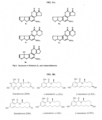
- Figure 1 shows the structure of ⁇ -cyclodextrin and includes depictions of the hydrophobic cavity that binds other molecules. The size of the cavity increases with the number of carbohydrates in the ring system.
- the primary and secondary alcohols can be substituted with various functional groups to alter the hydrophobicity of the cavity and hydrophilicity of the cyclodextrin exterior.
- Standard grade material was not available for heptakis- ⁇ -cyclodextrin but was available for ⁇ -cyclodextrin (Cavamax) and 2-hydroxypropyl- ⁇ -cyclodetrin (Cavasol ® ). The latter two raw materials were further evaluated for recoveries of other mycotoxins.
- Ethoxylate surfactants have repeating ethoxy functionality similar to ethanol. Since ethanol is a good extractant for several mycotoxins the repeating ethoxy functionality could prove useful for aqueous based mycotoxin extraction.
- Table 2 lists several commercially available ethoxylate surfactants and other non-foaming surfactants that were evaluated. These surfactants were chosen from an array of surfactants to span a range of moles of ethoxylate (moles EO) and hydrophilic, lipophilic balance (HLB). Moles of ethoxylate and HLB alter aqueous solubility and polarity of the solution which can alter extraction properties.
- Tables 3A and 3B list Reveal ® Q+ for Aflatoxin results for the non-foaming surfactants that were able to extract aflatoxin and other mycotoxins from reference materials. Each entry provides the Reveal ® Q+ results for extraction of the mycotoxin at a level near the MRL and a non-detect sample. In addition the signal to noise and extract dilution factor are listed.
- Toximul and Ecosurf EH3 provided good recoveries of zearalenone, aflatoxin, fumonisin and ochratoxin from ground corn and aflatoxin from dry distillers grain (DDG).
- DDG dry distillers grain
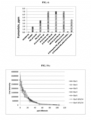
- the final ethanol concentration in the diluted filtrate was 10.8% which matched the ethanol amount for extracts that used the 65% ethanol solvent extraction process after it was diluted 1:6 in diluent.
- the next 2 sets of bars starting with the bar labelled Aq-Eco-ND are AccuScan III Q+ results for 1.0% and 0.5% EcoSurf in water used as the extractant and diluted into kit diluent without ethanol. That is followed by extraction results for Ninex in water diluted in kit diluent, extraction results for phosphate buffer and finally extraction results for 1% glycerol ethoxylate and 1% ⁇ -cyclodextrin in water diluted into kit diluent plus ethanol. Again, the final concentration of ethanol was 10.8%. The closest results to the ethanol extraction were obtained with Ninex, glycerol ethoxylate and ⁇ -cyclodextrin.
- Black bars are results obtained for non-detect ground corn and gray bars are results obtained for ground corn reference material containing 5 ppm total fumonisin. These initial screening results were obtained using the ASIII calibration curve-set parameters supplied with the kit. Non-detect samples were within specification even with the existing solvent based calibration curve. All the extractants shown in Figure 2C provided good recoveries of total fumonisin, but results were elevated for glycerol ethoxylate and ⁇ -cyclodextrin compared to HPLC determined levels. Establishing a calibration curve with the latter extractants would be expected to correct the bias from the solvent based calibration.
- FIG. 3A-E shows the structures for the mycotoxins involved in these studies.
- Fumonisin and ochratoxin contain carboxylic acids capable of forming salts at basic pH. Salts of weak acids are known to improve aqueous solubilities.
- Phosphate /NaCl buffer pH 8.0 provided respectable recoveries of the mycotoxins including fumonisin and ochratoxin.
- Phosphate /NaCl buffer, pH 8 was then used as the base formulation to which the other promising extractants, ethoxylate surfactants and cyclodextrins, were added for evaluation of mycotoxin recoveries.
- Figure 4 shows the results obtained for fumonisin extractions from ground corn reference materials using several different cyclodextrins in PBS, pH 8.0 as the extractant. These initial screening results were obtained using the ASIII calibration curve-set parameters supplied with the kit and extracts diluted into Q+ fumonisin diluent. Although the recoveries were greater than expected for the cyclodextrins the dilution could be adjusted to align the results to expected or a calibration curve set using cyclodextrin extractions. Cyclodextrins recovered fumonisin better than PBS alone and about equivalent recoveries were obtained with hydroxypropyl ⁇ -cyclodextrin from Ashland Chemical Co.
- non-foaming surfactants like Ninex MT-630F, EcoSurf EH-3 and Toximul had good recoveries of aflatoxin, fumonisin, zearalenone and ochratoxin, these surfactants are sold in large bulk quantities.
- Ninex is a special order product from Stepan Chemical Co. where it is sold in orders of 7500 pounds or greater and distributors did not carry the product.
- EcoSurf EH-3 is made by Dow Chemical Co. and distributed by Univar USA where the product is sold in a 435 pound drum at $2.25/lb.
- Toximul is also a special order surfactant made by Stepan Chemical.
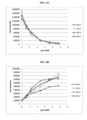
- FIGS. 5A-C Shown in Figures 5A-C are Reveal ® Q+ for Aflatoxin test and control line intensities and ratios of test to control line for seven different extractions of ground corn reference material containing 104.7, 52.4, 26.2, 13.1, 6.6, 3.3 ppb and non-detect aflatoxin.
- the 52.4 ppb dilution was prepared by 50:50 mixing the 104.7 ppb reference material with non-detect ground corn.
- the other serial dilutions were prepared mixing the diluted grain 50:50 with non-detect ground.
- Four different operators prepared grain samples using this procedure and extracted the samples using 2.6 g of Cavasol ® / PBS, pH 8.0 with 10 g of sample and 50.0 mL of Type 1 water.
- FIGS. 6A-C Shown in Figures 6A-C are Reveal ® Q+ for DON test and control line intensities and ratios of test to control line for seven different extractions of ground wheat reference material containing 4.8, 3.6, 2.4, 1.2, 0.6 ppm and non-detect DON.
- the 3.6 ppm dilution was prepared by 75:25 mixing the 4.8 ppm reference material with non-detect ground wheat.
- the other serial dilutions were prepared by 50:50 mixing the 4.8 ppm reference material with non-detect ground.
- Four different operators prepared grain samples using this procedure and extracted the samples using 2.6 g of Cavasol ® / PBS, pH 8.0 with 10 g of sample and 50.0 mL of Type 1 water.
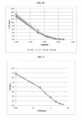
- Test line intensity decreased and control line intensity increased with increasing DON concentration as expected ( Figure 6A and 6B ).
- the ratio of test to control line is shown in Figure 6C along with one-standard deviation error bars.
- the precision of the results was good and quantitated amounts of DON were within GIPSA acceptable ranges (Table 5) for all the data sets even when the curve sets for the data from the extremes were used to analyze the other data.
- Calibration curve-sets were also established for Fumonisin, Zearalenone and Ochratoxin using Cavasol ® / PBS, pH 8.0 as the extractant for ground corn reference materials. Calibration curve sets for Cavasol ® extractions of these mycotoxins are shown in Figures 7 , 8, and 9 , respectively. For each of these extractions, 2.6 g of Cavasol ® / PBS, pH 8.0 was added to 10 g of ground corn and then 50 mL of Type 1 water was added. The solution was shaken for 3 min, filtered through a syringe filter, and then the filtered extract added to kit diluent. The dilution was dependent on the mycotoxin. Reveal ® Q+ devices were placed in 100 ⁇ L of the diluted extract, developed and the data acquired on AccuScan Gold readers.
- Table 6A A summary of results for Cavasol ® extractions of mycotoxins using the AccuScan Gold reader is provided in Table 6A.
- the last 2 columns in Table 6A compare the overall dilution of the current Reveal ® Q+ extraction methods and the Cavasol ® extraction.
- the total dilution for aflatoxin and ochratoxin extractions with Cavasol ® were the same at 1:10, but less dilution was necessary compared to the current solvent extractions.
- Total dilution for fumonisin, zearalenone were similar at 1:40 and 1:35, but greater dilution was required than for the solvent extractions.
- Dilution for DON was significantly greater than the other toxins for both the Cavasol ® and current water extractions.
- Table 6B provides a summary of the average test and control line intensities for non-detect samples and samples containing mycotoxin at the high end of the calibration range.
- the last column of the table provides the dynamic range of the Cavasol ® extractions for each mycotoxin. Greater dynamic range provides greater resolution between samples at the high range of the calibration and non-detect samples; this can also be useful for discriminating intermediate levels of mycotoxin.
- Tables 6A and 6B Summary of Calibration Curve Set Results for Cavasol ® Extraction of Mycotoxins Table 6A Toxin Extraction Ratio Extract Dilution Ratio Quant Range Current Total Dilution Cavasol Total Dilution DON -Wht 1:5 1+30 0.3-6ppm 1:100 1:155 OTA- Crn 1:5 1+1 2-20 ppb 1:12 1:10 FUM- Crn 1:5 1+7 0.3-6ppm 1:15 1:40 ZEN- Crn 1:5 1+6 50-1200 ppb 1:15 1:35 AFLA- Crn 1:5 1+1 2.0-150 ppb 1:25 1:10 Table 6B Toxin Ctl Line Intensity (ND) Ctl Line intensity (High) Test Line Intensity (ND) Test Line Intensity (High) T/C Ratio (ND) T/C Ratio (High) Dynamic Range DON -Wht 64566 941982 1453513 72798 22.9 0.0776
- Tables 7-19 provide the results of the extraction of the mycotoxins aflatoxin, zearalenone, fumonisin , and ochratoxin from ground corn with compositions comprising various extractants.
- N 10 Mean SD ND 3 %Neosorb-D-Sorbitol in MQ water with 3.33, final% Phoenoxol G-26 3.9 0.5 2.65 3 %Neosorb-D-Sorbitol in MQ water with 3.33, final% Phoenoxol G-26 4.4 0.6 5.3 3 %Neosorb-D-Sorbitol in MQ water with 3.33, final% Phoenoxol G-26 5.3 0.7 10.6 3 %Neosorb-D-Sorbitol in MQ water with 3.33, final% Phoenoxol G-26 6.9 0.6 17.8 3 %Neosorb-D-Sorbitol in MQ water with 3.33, final% Phoenoxol G-26 10.2 0.4 54.85 3 %Neosorb-D-Sorbitol in MQ water with 3.33, final% Phoenoxol G-26 27.1 1.3 109.7 3 %Ne
- a method of extracting one or more mycotoxins from foodstuffs comprising contacting said foodstuffs with a fully aqueous composition comprising a cyclodextrin, polyol, non-foaming surfactant, or a carbohydrate.
- the aqueous composition comprises a carbohydrate.
- the carbohydrate is selected from starch, glycogen, cellulose, chitin, and sucrose.
- the carbohydrate may be sucrose.
- the carbohydrate may be cellulose.
- the aqueous composition comprises a polyol.
- the polyol is selected from maltitol, sorbitol, xylitol, erythritol, and isomalt.
- the polyol is sorbitol.
- the polyol is D-sorbitol.
- the aqueous composition comprises a non-foaming surfactant.
- the non-foaming surfactant is selected from Butylpolyalkylene oxide block copolymer, alkyl ethoxylate, Tridecyl alcohol ethoxylate, Nonylphenol ethoxylate, Octylphenol ethoxylate, Tristyrylphenol ethoxylate, Decylalcohol ethoxylate, Alkylphenol alkoxylate, Alcohol ethoxylate, Alcohol ethoxylate, Ethoxylate phosphate ester, ⁇ -(4-Nonylphenyl)-co-hydroxy-poly(oxy-1,2-ethanediyl), Fatty acid ethoxylate, and Triton CF-32.
- the non-foaming surfactant is selected from Butylpolyalkylene oxide block copolymer, alkyl ethoxylate, and Fatty acid ethoxylate.
- the aqueous composition comprises a cyclodextrin.
- the aqueous composition further comprises a buffer.
- the buffer is a phosphate buffer.
- the aqueous composition comprises:
- the cyclodextrin is an alpha, beta, or gamma cyclodextrin of formula I wherein
- n 7.
- an exemplary sample of the cyclodextrin of formula I possesses, on average, 3-6 substituents of formula A per cyclodextrin molecule.
- an exemplary sample of the cyclodextrin of formula I possesses, on average, 4.1 - 5.1 substituents of formula A per cyclodextrin molecule.
- each E is C 1-8 alkyl.
- each E is independently selected from methylene, ethylene, n-propylene, isopropylene, n-butylene, 1,1-dimethylethylene, 1,2-dimethylethylene,
- each E is isopropylene.
- the cyclodextrin is a standard grade hydroxypropyl-beta-cyclodextrin.
- the sodium chloride is present in an amount of 6-10 g/L.
- the sodium chloride is present in an amount of about 8 g/L.
- the disodium phosphate is present in an amount of 10-16 g/L.
- the disodium phosphate is present in an amount of about 13.8 g/L.
- the sodium dihydrogen phosphate is present in an amount of 0.35-0.70 g/L.
- the sodium dihydrogen phosphate is present in an amount of about 0.51 g/L.
- the cyclodextrin is present in an amount of 20-40 g/L.
- the cyclodextrin is present in an amount of about 30 g/L.
- the aqueous composition comprises:
- the aqueous composition consists essentially of:
- the aqueous composition comprises:
- the aqueous composition consists essentially of:
- the foodstuff is a grain.
- the grain is selected from barley, corn, fonio, kamut, millet, oats, popcorn, rice, rye, sorghum, spelt, teff, triticale, wheat, dry distiller grain, and corn gluten meal.
- the grain is selected from corn, barley, wheat, and rice.
- the mycotoxin is selected from aflatoxin, ochratoxin, fumonisin, zearalenone, deoxynivalenol, T2 toxin, and ergot toxin.
- the mycotoxin is selected from fumonisin, aflatoxin, zearalenone, and ochratoxin.
- the method comprises the steps of:
- an aqueous composition comprising:
- the cyclodextrin is an alpha, beta, or gamma cyclodextrin of formula I wherein
- n 7.
- an exemplary sample of the cyclodextrin of formula I possesses, on average, 3-6 substituents of formula A per cyclodextrin molecule.
- an exemplary sample of the cyclodextrin of formula I possesses, on average, 4.1 - 5.1 substituents of formula A per cyclodextrin molecule.
- each E is C 1-8 alkyl.
- each E is independently selected from methylene, ethylene, n-propylene, isopropylene, n-butylene, 1,1-dimethylethylene, 1,2-dimethylethylene,
- each E is isopropylene.
- the cyclodextrin is a standard grade hydroxypropyl-beta-cyclodextrin.
- the sodium chloride is present in an amount of 6-10 g/L.
- the sodium chloride is present in an amount of about 8 g/L.
- the disodium phosphate is present in an amount of 10-16 g/L.
- the disodium phosphate is present in an amount of about 13.8 g/L.
- the sodium dihydrogen phosphate is present in an amount of 0.35-0.70 g/L.
- the sodium dihydrogen phosphate is present in an amount of about 0.51 g/L.
- the cyclodextrin is present in an amount of 20-40 g/L.
- the cyclodextrin is present in an amount of about 30 g/L.
- composition comprises:
- composition consists essentially of:
- composition comprises:
- composition consists essentially of:
Landscapes
- Life Sciences & Earth Sciences (AREA)
- Health & Medical Sciences (AREA)
- Engineering & Computer Science (AREA)
- Chemical & Material Sciences (AREA)
- Food Science & Technology (AREA)
- Polymers & Plastics (AREA)
- Nutrition Science (AREA)
- Botany (AREA)
- Agronomy & Crop Science (AREA)
- Immunology (AREA)
- Cell Biology (AREA)
- Microbiology (AREA)
- Urology & Nephrology (AREA)
- Molecular Biology (AREA)
- Hematology (AREA)
- Biomedical Technology (AREA)
- Biotechnology (AREA)
- General Physics & Mathematics (AREA)
- Tropical Medicine & Parasitology (AREA)
- Mycology (AREA)
- Medicinal Chemistry (AREA)
- Physics & Mathematics (AREA)
- Analytical Chemistry (AREA)
- Biochemistry (AREA)
- General Health & Medical Sciences (AREA)
- Virology (AREA)
- Pathology (AREA)
- Pharmaceuticals Containing Other Organic And Inorganic Compounds (AREA)
- Coloring Foods And Improving Nutritive Qualities (AREA)
- Polysaccharides And Polysaccharide Derivatives (AREA)
- Jellies, Jams, And Syrups (AREA)
- Measuring Or Testing Involving Enzymes Or Micro-Organisms (AREA)
- General Preparation And Processing Of Foods (AREA)
Priority Applications (1)
| Application Number | Priority Date | Filing Date | Title |
|---|---|---|---|
| EP23203534.5A EP4285739A3 (de) | 2014-10-10 | 2014-10-10 | Zusammensetzungen zur verwendung in der mykotoxinextraktion |
Applications Claiming Priority (3)
| Application Number | Priority Date | Filing Date | Title |
|---|---|---|---|
| PCT/US2014/060018 WO2016057044A1 (en) | 2014-10-10 | 2014-10-10 | Compositions for use in mycotoxin extraction |
| EP14795702.1A EP3203862B1 (de) | 2014-10-10 | 2014-10-10 | Zusammensetzungen zur verwendung in der mykotoxinextraktion |
| EP23203534.5A EP4285739A3 (de) | 2014-10-10 | 2014-10-10 | Zusammensetzungen zur verwendung in der mykotoxinextraktion |
Related Parent Applications (1)
| Application Number | Title | Priority Date | Filing Date |
|---|---|---|---|
| EP14795702.1A Division EP3203862B1 (de) | 2014-10-10 | 2014-10-10 | Zusammensetzungen zur verwendung in der mykotoxinextraktion |
Publications (2)
| Publication Number | Publication Date |
|---|---|
| EP4285739A2 true EP4285739A2 (de) | 2023-12-06 |
| EP4285739A3 EP4285739A3 (de) | 2024-03-20 |
Family
ID=51868302
Family Applications (2)
| Application Number | Title | Priority Date | Filing Date |
|---|---|---|---|
| EP23203534.5A Pending EP4285739A3 (de) | 2014-10-10 | 2014-10-10 | Zusammensetzungen zur verwendung in der mykotoxinextraktion |
| EP14795702.1A Active EP3203862B1 (de) | 2014-10-10 | 2014-10-10 | Zusammensetzungen zur verwendung in der mykotoxinextraktion |
Family Applications After (1)
| Application Number | Title | Priority Date | Filing Date |
|---|---|---|---|
| EP14795702.1A Active EP3203862B1 (de) | 2014-10-10 | 2014-10-10 | Zusammensetzungen zur verwendung in der mykotoxinextraktion |
Country Status (8)
| Country | Link |
|---|---|
| US (3) | US20160278405A1 (de) |
| EP (2) | EP4285739A3 (de) |
| CN (1) | CN106793813B (de) |
| AU (1) | AU2014408278B2 (de) |
| BR (1) | BR112017006776B1 (de) |
| CA (1) | CA2964060C (de) |
| MX (1) | MX384951B (de) |
| WO (1) | WO2016057044A1 (de) |
Families Citing this family (6)
| Publication number | Priority date | Publication date | Assignee | Title |
|---|---|---|---|---|
| WO2011008276A2 (en) * | 2009-07-14 | 2011-01-20 | The United States Of America, As Represented By The Secretary Of Agriculture | Utilization of non-nutritive absorbents to sequester mycotoxins during extraction of protein or other value added components from mycotoxin contaminated cereal or seed oil meal |
| ES2703686T3 (es) | 2016-07-18 | 2019-03-12 | R Biopharm Ag | Método para la extracción de micotoxinas a partir de cereales, otros alimentos y piensos |
| WO2019027988A1 (en) | 2017-07-31 | 2019-02-07 | Poet Research, Inc. | REMEDIATION OF TOXINS IN BIOREFINING PROCESS FLOWS |
| US20210403841A1 (en) | 2020-03-12 | 2021-12-30 | Poet Research, Inc. | Enzymatic degradation of mycotoxins during grain processing |
| WO2023141155A2 (en) * | 2022-01-18 | 2023-07-27 | Novita Nutrition, Llc | Distillers meal with reduced mycotoxin levels and methods of reducing mycotoxin contamination |
| EP4537672A1 (de) | 2023-10-11 | 2025-04-16 | Agrana Beteiligungs- Aktiengesellschaft | Verfahren zur herstellung eines pflanzenbasierten klebers mit reduziertem t2/ht2-gehalt |
Family Cites Families (6)
| Publication number | Priority date | Publication date | Assignee | Title |
|---|---|---|---|---|
| DE19821509A1 (de) * | 1998-05-13 | 1999-11-18 | Manfred Brunner | Verfahren zum Adsorbieren von toxischen Substanzen, insbesondere Mycotoxinen, bei der Herstellung von Human-Nahrungs- oder Tierfuttermitteln und die dabei erhaltenen Produkte |
| FR2864749B1 (fr) * | 2004-01-07 | 2008-03-14 | Realdyme | Utilisation de fibres vegetales micronisees pour la preparation d'une composition alimentaire destinee a diminuer la biodisponibilite des mycotoxines |
| WO2011008276A2 (en) * | 2009-07-14 | 2011-01-20 | The United States Of America, As Represented By The Secretary Of Agriculture | Utilization of non-nutritive absorbents to sequester mycotoxins during extraction of protein or other value added components from mycotoxin contaminated cereal or seed oil meal |
| AU2014200349B2 (en) * | 2009-08-27 | 2015-07-23 | Alltech, Inc. | Synthetic mycotoxin adsorbents and methods of making and utilizing the same |
| WO2013116847A1 (en) | 2012-02-03 | 2013-08-08 | Charm Sciences, Inc. | Extraction of mycotoxins |
| CN102836694A (zh) * | 2012-09-11 | 2012-12-26 | 重庆大学 | 一种霉菌毒素吸附剂的制备方法 |
-
2014
- 2014-10-10 EP EP23203534.5A patent/EP4285739A3/de active Pending
- 2014-10-10 BR BR112017006776-5A patent/BR112017006776B1/pt active IP Right Grant
- 2014-10-10 EP EP14795702.1A patent/EP3203862B1/de active Active
- 2014-10-10 WO PCT/US2014/060018 patent/WO2016057044A1/en not_active Ceased
- 2014-10-10 AU AU2014408278A patent/AU2014408278B2/en active Active
- 2014-10-10 CA CA2964060A patent/CA2964060C/en active Active
- 2014-10-10 MX MX2017004531A patent/MX384951B/es unknown
- 2014-10-10 CN CN201480082597.7A patent/CN106793813B/zh active Active
-
2016
- 2016-06-02 US US15/171,244 patent/US20160278405A1/en not_active Abandoned
-
2017
- 2017-06-30 US US15/639,287 patent/US10598661B2/en active Active
-
2020
- 2020-02-03 US US16/779,974 patent/US11656228B2/en active Active
Non-Patent Citations (2)
| Title |
|---|
| "March's Advanced Organic Chemistry", 2001, JOHN WILEY & SONS |
| THOMAS SORRELL: "Handbook of Chemistry and Physics", 1999, UNIVERSITY SCIENCE BOOKS, article "Additionally, general principles of organic chemistry are described in ''Organic Chemistry" |
Also Published As
| Publication number | Publication date |
|---|---|
| MX2017004531A (es) | 2017-07-17 |
| CN106793813A (zh) | 2017-05-31 |
| CA2964060A1 (en) | 2016-04-14 |
| US10598661B2 (en) | 2020-03-24 |
| US20180074056A1 (en) | 2018-03-15 |
| AU2014408278B2 (en) | 2020-01-30 |
| BR112017006776B1 (pt) | 2022-02-08 |
| EP4285739A3 (de) | 2024-03-20 |
| EP3203862A1 (de) | 2017-08-16 |
| CN106793813B (zh) | 2022-09-30 |
| BR112017006776A2 (pt) | 2018-01-09 |
| EP3203862C0 (de) | 2023-10-25 |
| US20200191786A1 (en) | 2020-06-18 |
| AU2014408278A1 (en) | 2017-04-27 |
| MX384951B (es) | 2025-03-14 |
| US20160278405A1 (en) | 2016-09-29 |
| EP3203862B1 (de) | 2023-10-25 |
| US11656228B2 (en) | 2023-05-23 |
| WO2016057044A1 (en) | 2016-04-14 |
| CA2964060C (en) | 2024-01-02 |
Similar Documents
| Publication | Publication Date | Title |
|---|---|---|
| US11656228B2 (en) | Compositions for use in mycotoxin extraction | |
| Shin et al. | Validation of a multiresidue analysis method for 379 pesticides in human serum using liquid chromatography–tandem mass spectrometry | |
| Poór et al. | Interactions of zearalenone with native and chemically modified cyclodextrins and their potential utilization | |
| Zitomer et al. | Determination of aflatoxin B1 in smokeless tobacco products by use of UHPLC-MS/MS | |
| Chung et al. | Development of an analytical method for analyzing pyrrolizidine alkaloids in different groups of food by UPLC-MS/MS | |
| Romero-González et al. | Application of conventional solid-phase extraction for multimycotoxin analysis in beers by ultrahigh-performance liquid chromatography− tandem mass spectrometry | |
| CN110383060A (zh) | 使用色谱法确定极性农药 | |
| US10117823B2 (en) | Dental composition comprising chelator and base | |
| JP2015511619A (ja) | アントシアニジン複合体 | |
| EP2572806B1 (de) | Verfahren zur Rückgewinnung von Schwermetallen | |
| EP2744817B1 (de) | Zusammensetzung für die Trennung von Proteinen und Reinigungsmittel und Proteinnachweis | |
| Wang et al. | Optimization and validation of an oxidation and solid-phase extraction procedure for analysis of imidacloprid and its metabolites in cereals using ultra-performance liquid chromatography tandem mass spectrometry | |
| Deng et al. | A novel mixed-mode solid phase extraction for simultaneous determination of melamine and cyanuric acid in food by hydrophilic interaction chromatography coupled to tandem mass chromatography | |
| US20080261312A1 (en) | Methods for matrix cleanup and analysis of drugs and metabolites in biological matrices | |
| JP2006047255A (ja) | 安定化剤及びブロッキング剤 | |
| Fenyvesi et al. | Can conversion mixture substitute beta-cyclodextrin in encapsulation of essential oils and their components? | |
| Okezaki et al. | Serum protein binding of lomefloxacin, a new antimicrobial agent, and its related quinolones | |
| AU2014204878B2 (en) | Voriconazole inclusion complexes | |
| Hérent et al. | Pyrazine and thiazole structural properties and their influence on the recovery of such derivatives in aroma extraction procedures | |
| Belajová et al. | Retention of ochratoxin A and fumonisin B1 and B2 from beer on solid surfaces: comparison of efficiency of adsorbents with different origin | |
| Trucksess et al. | Determination of deoxynivalenol in processed foods | |
| US9448243B2 (en) | Weak affinity chromatography | |
| JP4753739B2 (ja) | 検体試料の調製方法とその応用 | |
| JP2015219226A (ja) | コチニール色素中のタンパク質の定量分析方法 | |
| JP4753740B2 (ja) | 反応性増強剤とその応用 |
Legal Events
| Date | Code | Title | Description |
|---|---|---|---|
| PUAI | Public reference made under article 153(3) epc to a published international application that has entered the european phase |
Free format text: ORIGINAL CODE: 0009012 |
|
| STAA | Information on the status of an ep patent application or granted ep patent |
Free format text: STATUS: THE APPLICATION HAS BEEN PUBLISHED |
|
| AC | Divisional application: reference to earlier application |
Ref document number: 3203862 Country of ref document: EP Kind code of ref document: P |
|
| AK | Designated contracting states |
Kind code of ref document: A2 Designated state(s): AL AT BE BG CH CY CZ DE DK EE ES FI FR GB GR HR HU IE IS IT LI LT LU LV MC MK MT NL NO PL PT RO RS SE SI SK SM TR |
|
| PUAL | Search report despatched |
Free format text: ORIGINAL CODE: 0009013 |
|
| AK | Designated contracting states |
Kind code of ref document: A3 Designated state(s): AL AT BE BG CH CY CZ DE DK EE ES FI FR GB GR HR HU IE IS IT LI LT LU LV MC MK MT NL NO PL PT RO RS SE SI SK SM TR |
|
| RIC1 | Information provided on ipc code assigned before grant |
Ipc: A23L 11/30 20160101ALI20240213BHEP Ipc: A23L 5/20 20160101AFI20240213BHEP |
|
| STAA | Information on the status of an ep patent application or granted ep patent |
Free format text: STATUS: REQUEST FOR EXAMINATION WAS MADE |
|
| 17P | Request for examination filed |
Effective date: 20240718 |
|
| RBV | Designated contracting states (corrected) |
Designated state(s): AL AT BE BG CH CY CZ DE DK EE ES FI FR GB GR HR HU IE IS IT LI LT LU LV MC MK MT NL NO PL PT RO RS SE SI SK SM TR |
|
| GRAP | Despatch of communication of intention to grant a patent |
Free format text: ORIGINAL CODE: EPIDOSNIGR1 |
|
| STAA | Information on the status of an ep patent application or granted ep patent |
Free format text: STATUS: GRANT OF PATENT IS INTENDED |
|
| INTG | Intention to grant announced |
Effective date: 20260304 |