EP4278570B1 - Verfahren zur zuweisung elektrischer signale in einem netzwerk - Google Patents
Verfahren zur zuweisung elektrischer signale in einem netzwerk Download PDFInfo
- Publication number
- EP4278570B1 EP4278570B1 EP21847491.4A EP21847491A EP4278570B1 EP 4278570 B1 EP4278570 B1 EP 4278570B1 EP 21847491 A EP21847491 A EP 21847491A EP 4278570 B1 EP4278570 B1 EP 4278570B1
- Authority
- EP
- European Patent Office
- Prior art keywords
- signals
- data
- network
- signal
- assigning
- Prior art date
- Legal status (The legal status is an assumption and is not a legal conclusion. Google has not performed a legal analysis and makes no representation as to the accuracy of the status listed.)
- Active
Links
Images




Classifications
-
- H—ELECTRICITY
- H04—ELECTRIC COMMUNICATION TECHNIQUE
- H04L—TRANSMISSION OF DIGITAL INFORMATION, e.g. TELEGRAPHIC COMMUNICATION
- H04L12/00—Data switching networks
- H04L12/28—Data switching networks characterised by path configuration, e.g. LAN [Local Area Networks] or WAN [Wide Area Networks]
- H04L12/40—Bus networks
-
- H—ELECTRICITY
- H04—ELECTRIC COMMUNICATION TECHNIQUE
- H04L—TRANSMISSION OF DIGITAL INFORMATION, e.g. TELEGRAPHIC COMMUNICATION
- H04L12/00—Data switching networks
- H04L12/02—Details
- H04L12/10—Current supply arrangements
-
- H—ELECTRICITY
- H04—ELECTRIC COMMUNICATION TECHNIQUE
- H04L—TRANSMISSION OF DIGITAL INFORMATION, e.g. TELEGRAPHIC COMMUNICATION
- H04L12/00—Data switching networks
- H04L12/28—Data switching networks characterised by path configuration, e.g. LAN [Local Area Networks] or WAN [Wide Area Networks]
- H04L12/40—Bus networks
- H04L2012/40208—Bus networks characterized by the use of a particular bus standard
- H04L2012/40215—Controller Area Network CAN
-
- H—ELECTRICITY
- H04—ELECTRIC COMMUNICATION TECHNIQUE
- H04L—TRANSMISSION OF DIGITAL INFORMATION, e.g. TELEGRAPHIC COMMUNICATION
- H04L12/00—Data switching networks
- H04L12/28—Data switching networks characterised by path configuration, e.g. LAN [Local Area Networks] or WAN [Wide Area Networks]
- H04L12/40—Bus networks
- H04L2012/40267—Bus for use in transportation systems
- H04L2012/40273—Bus for use in transportation systems the transportation system being a vehicle
Definitions
- the invention relates to a method for assigning electrical signals in a network for electrical signals, in particular in a signal bus of a vehicle, and to a computer program product for assigning electrical signals in a network for electrical signals, in particular in a signal bus of a vehicle, and to a data processing system.
- ECU electronice control units
- CAN bus controller area network
- the powertrain is removed or replaced by another powertrain, some specific electronic control units are omitted.
- the vehicle's remaining ECUs need data from the removed ECUs, such as oil pressure or engine speed. If certain data is not sent, errors are reported. To prevent this, the removed ECUs can be simulated, for example. To be able to simulate the ECUs, it must be known where signals essential for operation, for example of the drive units, are located in the messages.
- Another example is the door status of a vehicle.
- the air-conditioning system must be informed whether a door is open, as the air-conditioning system must then switch to recirculation so that the doors can be properly locked again.
- An object of the invention is to provide an improved method for assigning electrical signals in a network for electrical signals, in particular in a signal bus of a vehicle.
- Another object is to provide a computer program product for executing such a method.
- Another object is to provide a data processing system for carrying out such a method.
- a method for assigning electrical signals in a network for electrical signals in a system, for ensuring safe functioning of the system with the network when one or more new signal sources are connected to the existing network, in particular in a signal bus of a vehicle, wherein at least the steps are performed of (i) generating first signals from data sources of the network as reference signals; (ii) generating second signals from the data sources of the network; (iii) assigning at least one of the second signals by comparing with at least one of the first signals and/or by comparing the at least one of the second signals with differences of the second signals in data traces for the second signal due to at least two known different network states; (iv) if a number of unassigned second signals after said assigning is equal to zero, terminating said assigning of said second signals; (v) as long as said number of unassigned second signals after said assigning is greater than zero, generating further first signals and second signals having modified known different network states and/or output conditions of said network and assign
- the virtual signals are suitably generated from first signals, for example, on the basis of logical relationships of the network and/or by modification by means of mathematical operations, so as to be checked for similarity with second signals.
- Generating, assigning, comparing can each be done in separate modules or blocks.
- the method according to the invention allows an assignment of unknown electrical signals in a network, in particular a signal bus, especially a signal bus of a vehicle, in a very efficient way.
- the signal bus can be designed as a CAN bus, for example.
- CAN buses are widely used in vehicles, for example. Other signal buses or networks can also be provided for routing signals. Likewise, the method is not tied to be used in vehicles.
- Electrical signals on the network can come from, for example, control units, signal generators, sensors, electronic components, and/or audio components.
- the signals link the functions of the individual components on the network to each other.
- Messages can transmit data packets, in particular signals, which can be addressed to specific components on the network, for example, or can be addressed to all components.
- the functions of components on the network can only run error-free if certain signals from a component are responded to in an expected manner by an addressed component. If this expected reaction fails to occur, an error is generated, for example, or certain functions in components on the network are switched off. This error-free operation is advantageously made possible by the method according to the invention.
- signals can also be used to exchange physical measured values or to transmit diagnostic data.
- components such as the electric rear axle, high-voltage battery, high-voltage auxiliary units, charging components, and the like can be integrated into a used vehicle and put into operation in a very short time.
- the assignment of unknown signals in the network allows components to be connected to an otherwise unknown network and/or provides the network with the signals necessary for smooth operation.
- the assignment of unknown signals in the network enables signals from control units required in the network to be detected and control units, for example of a new powertrain, to be connected to the vehicle's network.
- This implementation enables, for example, defined and secure communication of a new electric powertrain in a used or new vehicle that was previously equipped with an internal combustion engine.
- the process is independent of the vehicle type (bus, commercial vehicle or passenger car, or new vehicle or used vehicle).
- the invention is not limited to this implementation, but also makes it possible to connect one or more new signal sources to an existing network and to ensure the safe functioning of the system with the network.
- the method according to the invention can also be used to analyze the communication between sensors and actuators in the home automation sector or in the industrial sector, for example on a PLC bus.
- machine learning methods are used which analyze the unknown signals.
- the methods neural networks, support vector machines (SVMs) and/or decision trees, e.g. for evaluating the lengths of data packets, can be used for this purpose.
- SVMs support vector machines
- decision trees e.g. for evaluating the lengths of data packets
- the method is based on a defined procedure with which the data can be analyzed and assigned to features. Different machine learning methods are applied to the signals to decide which method is best suited for the corresponding problem.
- the method is process-safe and allows fulfillment of the requirements for functional safety of vehicles according to the ISO 26262:2018 standard from 2018.
- the method advantageously offers, for example, a significant reduction in the development time of an aftermarket powertrain for a vehicle model.
- the invention allows the functional safety of electronics, control units, electronic systems and components to be maintained, in particular for safety-critical applications in vehicles.
- Time-independent data sources may include, for example: data memory, known database file of a known network, subscriber on the network, circuit diagram. Time-dependent data sources may include, for example: data trace, analog electrical voltage, diagnostic data, trigger input, network state.
- At least the steps of (i) correlating data packets, in particular messages; (ii) generating database files; (iii) categorizing the second signals; (iv) storing the categorized second signals in the data memory can be performed for generating second signals.
- the second signals can be determined from a measurement of data traces and/or analog voltages on the network.
- signals on data traces provide the basis for assignment for the second signals.
- Signals due to analog voltages can additionally be used to identify second signals in order to increase the assignment probability.
- the steps can be performed of (i) determining a probability for a similarity of data packets present on a data trace; (ii) creating a routing table; (iii) discarding duplicate data packets.
- Data packets which are available in particular in the form of messages on data traces, can be checked for similarity in this way.
- duplicate data packets can be identified and discarded in this way, so that the number of unassigned second signals can be reduced.
- features when generating a database file, may be generated comprising at least a frequency of bit changes, a histogram of second signals, a histogram of time derivatives of the second signals, which features are stored in a buffer.
- the method when generating a database file with an algorithm of at least one machine learning method, it can be evaluated whether it is a second signal of a specified length.
- each message can be divided into signals of different, predetermined lengths.
- signal candidates are generated.
- features are generated which include at least a frequency of bit changes, a histogram of second signals, a histogram of time derivatives of the second signals.
- the algorithm of at least one machine learning method can be used to evaluate whether the signal is of the specified length.
- the evaluation is stored in the buffer.
- a profile of the second signals can be used to evaluate which second signals are present in a data packet.
- the profile can only be created once it has been determined that it is a second signal of a specified length.
- Second signals can be advantageously evaluated for a wanted length of the signal based on the features. This testing and evaluation can advantageously be done with one of the machine learning methods.
- At least one of the methods of the type neural networks, support vector machines, decision tree can be used as at least one machine learning method. These methods represent very widely used machine learning methods, which can be used in a broad field and for which corresponding tools are also commercially available.
- the algorithm can be trained to recognize unassigned second signals in data traces based on the first signals.
- the recognition can advantageously be performed by means of the machine learning algorithm.
- the algorithm can be trained to generate a database file based on a profile of unassigned second signals using the first signals.
- an efficient generation of a database file based on a profile of unassigned second signals can be achieved.
- each second signal when categorizing the second signals by means of the algorithm, can be evaluated according to which signal type it is and, depending on the signal type, a data type can be determined by means of the features and the algorithm.
- ⁇ Physical or “logical” can be assigned as the signal type.
- the data format “unsigned integer” or “signed integer” can be assigned, for example.
- a physical unit inherent in the second signal can be determined by means of the algorithm on the basis of data traces with specific network states and curve shapes.
- the unit of the second signals for example, in the case of a signal of the signal type "physical", the physical unit can be assigned.
- the algorithm can be trained to categorize unassigned second signals based on the first signals.
- an efficient categorization of unassigned second signals can be achieved.
- the algorithm can be trained to determine an inherent physical unit of unassigned second signals based on the first signals.
- an efficient determination of an inherent physical unit of unassigned second signals can be achieved.
- the probability of similarity between at least one of the second signals and at least one of the first signals or at least one of the virtual signals can be determined and, if the probability of similarity is high, an identity of the causative data source between the first signal or the virtual signal and the second signal can be checked. In this way, a similarity or even identity between a first signal or a virtual signal and a second signal can be detected very efficiently and thus the second signal can be assigned.
- differences of the second signals in the at least two network states can be evaluated.
- At least one data transmission link in particular a CAN bus
- CAN bus architectures are widely used in vehicles and represent the most commonly used network type.
- Messages are known in CAN networks as CAN messages.
- Data traces are known as CAN traces, among other things. Data traces contain signals depending on time, for example a diagnostic extract in csv files, or videos.
- the generation of a database file from second signals can be automated using the at least one machine learning algorithm.
- a computer program product for assigning electrical signals in a network for electrical signals in a system, for ensuring safe functioning of the system with the network when one or more new signal sources are connected to the existing network, in particular in a signal bus of a vehicle, the computer program product comprising at least one computer-readable storage medium comprising program instructions executable on a computer system and causing the computer system to perform a method as described above.
- the virtual signals are suitably generated from first signals, for example, on the basis of logical relationships of the network and/or by modification by means of mathematical operations, so as to be checked for similarity with second signals.
- the computer program product advantageously serves to implement the method according to the invention. To avoid unnecessary repetition, reference is made to the description of the method.
- a data processing system for executing a data processing program comprising computer-readable program instructions is proposed for executing a method for assigning electrical signals in a network for electrical signals, in particular in a signal bus of a vehicle, in particular as described above.
- the data processing system is advantageously used to carry out the method according to the invention. To avoid unnecessary repetition, reference is made to the description of the method.
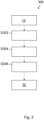
- Figure 1 shows an overall sequence of the method according to the invention for assigning electrical signals 60 in a network for electrical signals 60, in particular in a signal bus, in particular of a vehicle.
- a network for electrical signals 60, in particular in a signal bus, in particular of a vehicle.
- Several electronic components for example control units, are connected to the network.
- the network may, for example, take the form of at least one CAN bus, such as is typically used in vehicles, in particular in the drive sector.
- the method is not limited to the application to networks with CAN buses or networks in vehicles.
- the method has at least the steps described below.
- Signals and/or data from time-dependent data sources 10 of the network are preprocessed in step S100.
- Signals and/or data from time-independent data sources 30 of the network are preprocessed in step S102.
- first signals 50 are generated in the module 200 as reference signals 50. Further, second signals 60 are generated, which are unknown and cannot yet be fully assigned.
- the number of first signals 50, the reference signals 50, is denoted by R v and the number of unknown second signals 60 is denoted by U v .
- First signals 50 and second signals 60 are fed as input to block 900 for assigning the second signals 60.
- module 700 at least one of the second signals 60 is compared to at least one of the first signals 50.
- module 800 the at least one of the second signals 60 is compared to differences in the second signals 60 in data traces 12, 13 ( Figure 8 ) for the second signal 60 based on at least two known different network states 20.
- the block 900 is performed once, whereby a number U n of unassigned second signals 60 after being assigned in the block 900 is less than or equal to a number U v of unassigned second signals 60 before being assigned in the block 900, and thereby a number Zn of assigned second signals 62 after being assigned in the block 900 is greater than or equal to a number Z v of assigned second signals 62 before being assigned in the block 900.
- step S106 it is checked whether the number U n of unassigned second signals 60 is zero after assigning. If this is the case, the assignment is terminated.
- step S104 a modification is made in step S104 by known different network states 20 ( Figure 2 ) and/or output conditions of the network before further first signals 50 and second signals 60 are generated in module 200. Thereafter, the block 900 for assigning the second signals 60 is performed again.
- module 700 at least one of the further second signals 60 is compared to at least one of the further first signals 50
- module 800 the at least one of the further second signals 60 is compared to differences of the further second signals 60 in data traces 12, 13 for the second signal 60 due to at least two known different network conditions 20.
- step S106 If the number U n of unassigned second signals 60 after assigning in block 900 is zero when interrogated in step S106, then the assignment of the unknown second signals 60 is complete and the process is terminated in step S108.
- the assigning block 900 of second signals 60 can be automated, so that manual input of information can be largely eliminated. As a result, the time required to assign unknown second signals 60 in a network can be significantly reduced.
- Figure 2 shows a flowchart for generating first and second signals 50, 60 in module 200 of the method.
- Data sources 10, 30 for generating first and second signals 50, 60 may include at least one time-independent data source 30 from the group of the type: data memory 32, known database file 34 of a known network, subscriber 36 on the network, circuit diagram 38. Further, the data sources 10, 30 may comprise at least one time-dependent data source 10 from the group of the type: data trace 12, analog electrical voltage 14, diagnostic data 16, trigger input 18, network state 20.
- Diagnostic data 16 may be provided via the network or via files, such as a data trace linked to a data memory 32.
- Trigger inputs 18 may be provided via a manual input when a network condition has changed, such as when a vehicle door has been operated.
- First and second signals 50, 60 are provided as time-dependent signals 40.
- a first signal 50 may be generated in step S206 from an entry in a data memory 32 associated with a data trace 12.
- Senders of a data packet, in particular of a message can be identified in step S202 via inputs from subscribers 36 on the network as well as via data from data traces 12, for example by specifically disconnecting control units connected to the network from the network using a CAN router or the like.
- step S204 verification of potentially similar signals 50, 60 from an already known model from already known database files 34 and the new model is performed.
- First signals 50 are generated using the database file 34 and data traces 12 with similar network states, a known model and a new model. By comparing the signal traces and their origin (for example, from a control unit), a first signal 50 can be generated as a reference signal 50 if a match is found and stored in the data memory 32.
- Other first signals 50 may be generated via inputs of analog voltages 14, for example oscillograms, measured voltage levels from a measurement box, and circuit diagrams 38. In step S208, this is done by determining which one of the signals represents the voltage, for example.
- Diagnostic data 16 is decoded and processed in step S210 so as to be provided as a further first signal 50.
- Trigger inputs 18 are also used to generate first signals 50.
- Signals 50 may be generated for this purpose, in the case of a vehicle CAN bus, for example, via an ABS active signal, messages in the electronic dash board, a door OPEN/CLOSED signal.
- a network state 20 may be provided directly as a first signal 50.
- data packets in particular messages, are correlated on the basis of data traces 12.
- Data packets can in particular be formed as CAN messages in a CAN network.
- database files 34 are generated from messages from module 300 and identified senders of messages from step S202.
- second signals 60 are categorized in module 600.
- the categorized second signals 60 are stored in the data memory 32.
- Figure 3 shows a flowchart for correlating data packets in module 300 ( Figure 2 ) of the method.
- Data packets are obtained via data traces 12.
- Data packets can, in particular, take the form of CAN messages in a CAN network.
- step S302 an algorithm is first used to determine a probability 70 for a similarity of data packets present on the data trace 12.
- step S304 a routing table is then created based on the probabilities determined above.
- a buffer contains the similarity probability with each other data packet for each data packet.
- the routing table includes messages which occur at least twice in the data trace 12.
- step S306 the data packets are checked for duplicates and duplicate data packets are discarded.
- the routing table is stored in data memory 32.
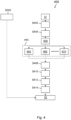
- Figure 4 shows a flowchart for generating database files in module 400 ( Figure 2 ) of the method.
- the module 400 is based on input of data packets from data traces12, in particular CAN messages on so-called CAN traces in the case of a CAN network, and can run automated with at least one algorithm 450, 460, 470 of at least one machine learning method.
- At least one of the methods of the neural network type, support vector machines, decision tree, can be advantageously used.
- the so-called "least significant bits" of each data packet are determined, for example via a bit change frequency, to find out where signals 60 start.
- step S404 second signals 60 of different lengths are generated for each existing data packet.
- features 22 are generated in the module 500 that include at least a frequency of bit changes, a histogram of second signals 60, a histogram of time derivatives of the second signals 60.
- the features 22 are stored in a buffer.
- the generated second signals 60 are evaluated according to whether the signal 60 is a signal 60 of the wanted length.
- Various machine learning methods 450, 460, 470 can be used for this purpose.
- step S408 the data is stored in a buffer.
- step S410 for each length of a signal 60, for each bit, each network state, and each machine learning method 450, 460, 470, it is determined in how many data traces 12 a signal 60 was found at that bit with that method 450, 460, 470 and that network state.
- this information is combined to a profile.
- step S414 the machine learning method 450, 460, 470 is used to evaluate which signals 60 are present in a data packet based on the profile.
- This information is stored in the data memory 32 together with the information about the signal origins determined in step S202 in Figure 2 about the identification of the senders of data packets.
- Figure 5 shows a flowchart for generating features 22 in module 500 ( Figure 4 ) of the method.
- features 22 are generated for time-dependent signals 40, which may be first and second signals 50, 60 (see Figure 2 ).
- a frequency of bit changes is generated in step S502, which indicates how often a bit of a signal 50, 60 has changed value.
- step S504 a histogram of the values of signals 60 is generated, and in step S506, a histogram of time derivatives of signals 60 is generated. In step S508, other characteristics, such as a difference of bit changes, or a status of whether the bit has ever toggled, may be added.
- the features 22 are stored in the buffer.
- Figure 6 shows a flowchart for categorizing second signals 60 in module 600 ( Figure 2 ) of the method.
- features 22 are first generated in module 500 as described in Figure 5 .
- each second signal 60 is evaluated based on the feature 22 as to which signal type it is.
- the signal type can be, for example, "physical”, “logical”, a counter “counter”, cyclic redundancy check "CRC”.
- the second signal 60 is directly classified under associated second signals 62 and stored in the data memory 32.
- the second signal 60 is stored directly in the data memory 32.
- step S606 every second signal 60 is evaluated by means of the machine learning method 450, 460, 470 on the basis of the feature 22 according to which data type it is.
- the data may be in "unsigned integer” or "signed integer” format.
- step S608 still checks whether a specific network state 20 is available.
- step S610 a physical unit inherent to the second signal 60 is determined using the machine learning method 450, 460, 470 based on data traces 12, 13 having specific states 20 and curve shapes.
- the second signals 60 are stored in the data memory 32.
- signals 60 are stored directly in data memory 32.
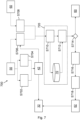
- Figure 7 shows a flowchart for comparing signals 50, 60 in module 700 of the method.
- first signals 50 are modified as reference signals on the basis of logical relationships.
- Logic diagrams, physical conditions, for example, can be used for this purpose.
- first signals 50 may be modified, for example, by undersampling, low-pass filtering, mathematical operations, bit shifts.
- First signals 50 and virtual signals 42 are selected and timed in step S706 and, together with second signals 60, which are also selected and timed in step S708, serve as input to a block 720 for determining a correlation.
- a probability of similarity between at least one of the second signals 60 and at least one of the first signals 50 and/or the virtual signal 42 is determined at step S710.
- the probability for the similarity is stored in the buffer 70.
- step S712 If there is a high probability of similarity, an identity between the first signal 50 and/or the virtual signal 42 and the second signal 60 is checked in step S712.
- step S714 If the signal 60 is assignable, which is checked in step S714, a factor and an offset are optionally determined in step S716.
- step S7108 verification is performed with a matching network state. Then, if the verification is successful, the signal 60 is stored under associated second signals 62 in the data memory 32.
- step S714 If the signal 60 is not assignable in step S714, it is further routed among unassigned signals 60.
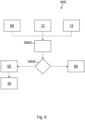
- Figure 8 shows a flowchart for evaluating differences of second signals 60 in data traces 12, 13 based on at least two known different network states 20 according to the method of the invention.
- step S804 it is then checked whether the signal 60 can be assigned. If this is the case, the signal 60 is classified under assigned signals 62 and stored in the data memory 32.
Landscapes
- Engineering & Computer Science (AREA)
- Computer Networks & Wireless Communication (AREA)
- Signal Processing (AREA)
- Small-Scale Networks (AREA)
Claims (17)
- Verfahren zum Zuordnen elektrischer Signale (60) in einem Netzwerk für elektrische Signale (60) in einem System, zur Sicherstellung des sicheren Funktionierens des Systems mit dem Netzwerk, wenn eine oder mehrere neue Signalquellen mit dem bestehenden Netzwerk verbunden werden, wobei mindestens die folgenden Schritte durchgeführt werden:(i) Erzeugen von ersten Signalen (50) von Datenquellen (10, 30) des Netzwerks als Referenzsignale (50) ;(ii) Erzeugen von zweiten Signalen (60) von den Datenquellen (10, 30) des Netzwerks;(iii) Zuordnen mindestens eines der zweiten Signale (60) durch Vergleichen desselben mit mindestens einem der ersten Signale (50) und/oder durch Vergleichen des mindestens einen der zweiten Signale (60) mit Unterschieden in den zweiten Signalen (60) in Datenspuren (12, 13) für das zweite Signal (60) basierend auf mindestens zwei bekannten unterschiedlichen Netzwerkzuständen (20);(iv) wenn eine Anzahl (Un) nicht zugeordneter zweiter Signale (60) nach der Zuordnung null beträgt, Beenden des Zuordnens der zweiten Signale (60);(v) solange die Anzahl (Un) nicht zugeordneter zweiter Signale (60) nach der Zuordnung größer als null ist, Erzeugen weiterer erster Signale (50) und zweiter Signale (60) mit modifizierten bekannten unterschiedlichen Netzwerkzuständen (20) und/oder Ausgangsbedingungen des Netzwerks und Zuordnen durch Vergleichen mindestens eines der weiteren zweiten Signale (60) mit mindestens einem der weiteren ersten Signale (50) und/oder durch Vergleichen des mindestens einen der weiteren zweiten Signale (60) mit Unterschieden der weiteren zweiten Signale (60) in Datenspuren (12, 13) für das zweite Signal (60) basierend auf mindestens zwei bekannten unterschiedlichen Netzwerkzuständen (20),wobei für einen Vergleich mit mindestens einem der ersten Signale (50) virtuelle Signale (42) aus einer Kombination von ersten Signalen (50) erzeugt werden, die zum Vergleich mit nicht zugeordneten zweiten Signalen (60) verwendet werden.
- Verfahren nach Anspruch 1, wobei mindestens eine zeitunabhängige Datenquelle (30), ausgewählt aus der Gruppe bestehend aus: Datenspeicher (32), bekannte Datenbankdatei (34) eines bekannten Netzwerks, Teilnehmer (36) in dem Netzwerk, Schaltplan (38), und mindestens eine zeitabhängige Datenquelle (10), ausgewählt aus der Gruppe des Typs: Datenspur (12), analoge elektrische Spannung (14), diagnostische Daten (16), Triggereingabe (18), Netzwerkzustand (20), als Datenquelle (10, 30) verwendet wird.
- Verfahren nach einem der vorhergehenden Ansprüche, wobei zum Erzeugen von zweiten Signalen (60) mindestens die folgenden Schritte durchgeführt werden:(i) Korrelieren von Datenpaketen, insbesondere Botschaften(ii) Erzeugen von Datenbankdateien (34);(iii) Kategorisieren der zweiten Signale (60);(iv) Speichern der kategorisieren zweiten Signale (60) in einem Datenspeicher (32),insbesondere
wobei die zweiten Signale (60) anhand einer Messung von Datenspuren (12, 13) und/oder analogen Spannungen (14) in dem Netzwerk bestimmt werden. - Verfahren nach Anspruch 3, wobei zum Korrelieren von Datenpaketen mindestens die folgenden Schritte durchgeführt werden:(i) Bestimmen einer Wahrscheinlichkeit für eine Ähnlichkeit von auf einer Datenspur (12) vorhandenen Datenpaketen;(ii) Erstellen einer Routing-Tabelle basierend auf der bestimmten Wahrscheinlichkeit;(iii) Verwerfen doppelter Datenpakete.
- Verfahren nach einem der Ansprüche 3 bis 4,
wobei bei der Generierung einer Datenbankdatei (34) Merkmale (22) erzeugt werden, wobei die Merkmale (22) mindestens eine Häufigkeit von Bitänderungen, ein Histogramm von zweiten Signalen (60), ein Histogramm von Zeitableitungen der zweiten Signale (60) umfassen, wobei die Merkmale (22) in einem Puffer gespeichert werden. - Verfahren nach einem der Ansprüche 3 bis 5,wobei bei der Generierung einer Datenbankdatei (34) mit einem Algorithmus (450, 460, 470) mindestens eines maschinellen Lernverfahrens bewertet wird, ob es sich um ein zweites Signal (60) einer vorgegebenen Länge handelt,
oderwobei bei der Generierung einer Datenbankdatei (34) mit einem Algorithmus (450, 460, 470) mindestens eines maschinellen Lernverfahrens bewertet wird, ob es sich um ein zweites Signal (60) einer vorgegebenen Länge handelt, und basierend auf einem Profil der zweiten Signale (60) ausgewertet wird, welche zweiten Signale (60) in dem Datenpaket vorhanden sind,insbesonderewobei als ein maschinelles Lernverfahren mindestens eines der Verfahren des Typs neuronale Netze, Support Vector Machine, Entscheidungsbaum, verwendet wird. - Verfahren nach Anspruch 6, wobei der Algorithmus (450, 460, 470) dazu trainiert wird, nicht zugeordnete zweite Signale (60) in Datenspuren (12, 13) basierend auf den ersten Signalen (50) zu detektieren.
- Verfahren nach einem der Ansprüche 6 bis 7, wobei der Algorithmus (450, 460, 470) anhand der Generierung einer Datenbankdatei (34) basierend auf einem Profil nicht zugeordneter zweiter Signale (60) unter Verwendung der ersten Signale (50) trainiert wird.
- Verfahren nach einem der Ansprüche 6 bis 8, wobei bei der Kategorisierung der zweiten Signale (60) mittels des ersten Algorithmus (450, 460, 470) jedes zweite Signal (60) gemäß seinem Signaltyp bewertet wird und abhängig von dem Signaltyp ein Datentyp mittels der Merkmale (22) und des Algorithmus (450, 460, 470) bestimmt wird, und wobei eine dem zweiten Signal (60) innewohnende physikalische Einheit mittels des Algorithmus (450, 460, 470) auf Grundlage von Datenspuren (12, 13) mit spezifischen Netzwerkzuständen (20) und Kurvenformen bestimmt wird.
- Verfahren nach einem der Ansprüche 6 bis 9, wobei der Algorithmus (450, 460, 470) dazu trainiert wird, nicht zugeordnete zweite Signale (60) basierend auf den ersten Signalen (50) zu kategorisieren.
- Verfahren nach einem der Ansprüche 6 bis 10, wobei der Algorithmus (450, 460, 470) dazu trainiert wird, eine inhärente physikalische Einheit nicht zugeordneter zweiter Signale (60) basierend auf den ersten Signalen (50) zu bestimmen.
- Verfahren nach einem der Ansprüche 6 bis 11, wobei beim Vergleichen von Signalen (50, 60) die Wahrscheinlichkeit für eine Ähnlichkeit zwischen mindestens einem der zweiten Signale (60) und mindestens einem der ersten Signale (50) oder mindestens einem der virtuellen Signale (42) bestimmt wird und, wenn die Wahrscheinlichkeit für eine Ähnlichkeit hoch ist, eine Identität der verursachenden Datenquelle (10, 30) zwischen dem ersten Signal (50) oder dem virtuellen Signal (42) und dem zweiten Signal (60) überprüft wird.
- Verfahren nach einem der vorhergehenden Ansprüche, wobei beim Vergleich des mindestens einen der zweiten Signale (60) mit Unterschieden der zweiten Signale (60) in Datenspuren (12, 13) für das zweite Signal (60) basierend auf mindestens zwei bekannten unterschiedlichen Netzwerkzuständen (20) Unterschiede der zweiten Signale (60) in den mindestens zwei Netzwerkzuständen (20) bewertet werden.
- Verfahren nach einem der vorhergehenden Ansprüche, wobei eine Datenübertragungsverbindungsstrecke, insbesondere ein CAN-Bus, als das Netzwerk verwendet wird.
- Verfahren nach einem der Ansprüche 6 bis 14, wobei das Generieren einer Datenbankdatei (34) aus zweiten Signalen (60) unter Verwendung des Algorithmus (450, 460, 470) automatisiert ist.
- Computerprogrammprodukt zum Zuordnen elektrischer Signale (60) in einem Netzwerk für elektrische Signale (60) in einem System, zur Sicherstellung des sicheren Funktionierens des Systems mit dem Netzwerk, wenn eine oder mehrere neue Signalquellen mit dem bestehenden Netzwerk verbunden werden, wobei das Computerprogrammprodukt mindestens ein computerlesbares Speichermedium umfasst, das Programmanweisungen umfasst, die auf einem Computersystem ausführbar sind und bewirken, dass das Computersystem ein Verfahren nach einem der vorhergehenden Ansprüche ausführt, wobei mindestens die folgenden Schritte durchgeführt werden:(i) Erzeugen von ersten Signalen (50) von Datenquellen (10, 30) des Netzwerks als Referenzsignale (50) ;(ii) Erzeugen von zweiten Signalen (60) von den Datenquellen (10, 30) des Netzwerks;(iii) Zuordnen mindestens eines der zweiten Signale (60) durch Vergleichen desselben mit mindestens einem der ersten Signale (50) und/oder durch Vergleichen des mindestens einen der zweiten Signale (60) mit Unterschieden in den zweiten Signalen (60) in Datenspuren (12, 13) für das zweite Signal (60) basierend auf mindestens zwei bekannten unterschiedlichen Netzwerkzuständen (20);(iv) wenn eine Anzahl (Un) nicht zugeordneter zweiter Signale (60) nach der Zuordnung null beträgt, Beenden des Zuordnens der zweiten Signale (60);(v) solange die Anzahl (Un) nicht zugeordneter zweiter Signale (60) nach der Zuordnung größer als null ist,Erzeugen weiterer erster Signale (50) und zweiter Signale (60) mit modifizierten bekannten unterschiedlichen Netzwerkzuständen (20) und/oder Ausgangsbedingungen des Netzwerks und Zuordnen durch Vergleichen mindestens eines der weiteren zweiten Signale (60) mit mindestens einem der weiteren ersten Signale (50) und/oder durch Vergleichen des mindestens einen der weiteren zweiten Signale (60) mit Unterschieden der weiteren zweiten Signale (60) in Datenspuren (12, 13) für das zweite Signal (60) basierend auf mindestens zwei bekannten unterschiedlichen Netzwerkzuständen (20),wobei für einen Vergleich mit mindestens einem der ersten Signale (50) virtuelle Signale (42) aus einer Kombination von ersten Signalen (50) erzeugt werden, die zum Vergleich mit nicht zugeordneten zweiten Signalen (60) verwendet werden.
- Datenverarbeitungssystem zum Ausführen eines Datenverarbeitungsprogramms, umfassend computerlesbare Programmanweisungen zum Ausführen eines Verfahrens zum Zuordnen elektrischer Signale (60) in einem Netzwerk für elektrische Signale (60), insbesondere in einem Signalbus eines Fahrzeugs, gemäß mindestens einem der Ansprüche 1 bis 15.
Applications Claiming Priority (2)
| Application Number | Priority Date | Filing Date | Title |
|---|---|---|---|
| DE102021100656.2A DE102021100656A1 (de) | 2021-01-14 | 2021-01-14 | Verfahren zum zuordnen von elektrischen signalen in einem netzwerk |
| PCT/EP2021/087579 WO2022152547A1 (en) | 2021-01-14 | 2021-12-23 | Method for assigning electrical signals in a network |
Publications (3)
| Publication Number | Publication Date |
|---|---|
| EP4278570A1 EP4278570A1 (de) | 2023-11-22 |
| EP4278570B1 true EP4278570B1 (de) | 2024-12-04 |
| EP4278570C0 EP4278570C0 (de) | 2024-12-04 |
Family
ID=79830807
Family Applications (1)
| Application Number | Title | Priority Date | Filing Date |
|---|---|---|---|
| EP21847491.4A Active EP4278570B1 (de) | 2021-01-14 | 2021-12-23 | Verfahren zur zuweisung elektrischer signale in einem netzwerk |
Country Status (6)
| Country | Link |
|---|---|
| US (1) | US12542689B2 (de) |
| EP (1) | EP4278570B1 (de) |
| CN (1) | CN116868544A (de) |
| DE (1) | DE102021100656A1 (de) |
| PL (1) | PL4278570T3 (de) |
| WO (1) | WO2022152547A1 (de) |
Family Cites Families (8)
| Publication number | Priority date | Publication date | Assignee | Title |
|---|---|---|---|---|
| US5491631A (en) * | 1991-12-25 | 1996-02-13 | Honda Giken Kogyo Kabushiki Kaisha | Fault diagnostic system for vehicles using identification and program codes |
| DE19643410B4 (de) | 1996-10-21 | 2005-08-25 | Robert Bosch Gmbh | Verfahren zur Decodierung eines digitalen Signals und Verwendung desselben in einem Bussystem |
| JP5448022B2 (ja) * | 2007-12-25 | 2014-03-19 | 矢崎総業株式会社 | 電子制御装置及び車両システム |
| US20100030546A1 (en) * | 2008-07-29 | 2010-02-04 | Freescale Semiconductor, Inc. | Gui-facilitated simulation and verification for vehicle electrical/electronic architecture design |
| JP2013123132A (ja) * | 2011-12-09 | 2013-06-20 | Toyota Motor Corp | 通信装置、通信システム及び通信方法 |
| DE102014211851A1 (de) | 2014-06-20 | 2015-12-24 | Robert Bosch Gmbh | Verfahren und Vorrichtung zum Ausgeben eines akustischen Warnsignals eines Schienenfahrzeugs und Warnsystem für ein Schienenfahrzeug |
| US11251989B2 (en) * | 2019-03-20 | 2022-02-15 | Nxp B.V. | Secure bridging of controller area network buses |
| US20240364784A1 (en) * | 2023-04-26 | 2024-10-31 | Robert Bosch Gmbh | Method and system to measure service usage and bill for associated used services based on a intrusion detection system |
-
2021
- 2021-01-14 DE DE102021100656.2A patent/DE102021100656A1/de active Pending
- 2021-12-23 CN CN202180089700.0A patent/CN116868544A/zh active Pending
- 2021-12-23 EP EP21847491.4A patent/EP4278570B1/de active Active
- 2021-12-23 US US18/271,137 patent/US12542689B2/en active Active
- 2021-12-23 WO PCT/EP2021/087579 patent/WO2022152547A1/en not_active Ceased
- 2021-12-23 PL PL21847491.4T patent/PL4278570T3/pl unknown
Also Published As
| Publication number | Publication date |
|---|---|
| CN116868544A (zh) | 2023-10-10 |
| PL4278570T3 (pl) | 2025-06-09 |
| WO2022152547A1 (en) | 2022-07-21 |
| US12542689B2 (en) | 2026-02-03 |
| EP4278570A1 (de) | 2023-11-22 |
| DE102021100656A1 (de) | 2022-07-14 |
| EP4278570C0 (de) | 2024-12-04 |
| US20230403172A1 (en) | 2023-12-14 |
Similar Documents
| Publication | Publication Date | Title |
|---|---|---|
| US11997119B2 (en) | Vehicle log transmission device, vehicle log analysis server, vehicle log analysis system, and vehicle log transmission/reception method | |
| Verma et al. | CAN-D: A modular four-step pipeline for comprehensively decoding controller area network data | |
| US12021886B2 (en) | Vehicle log transmission device, vehicle log analysis system, and vehicle log transmission/reception method | |
| Schmittner et al. | FMVEA for safety and security analysis of intelligent and cooperative vehicles | |
| Ezeobi et al. | Reverse engineering controller area network messages using unsupervised machine learning | |
| US20250039015A1 (en) | Zonal control architecture for software-defined vehicle | |
| US11302122B2 (en) | Apparatus and method for predicting injury level | |
| US20150243110A1 (en) | Method and apparatus for checking vehicle specification | |
| EP4278570B1 (de) | Verfahren zur zuweisung elektrischer signale in einem netzwerk | |
| Lin et al. | Multi-layer reverse engineering system for vehicular controller area network messages | |
| CN112765217A (zh) | 基于边缘计算和路径分析的数据处理方法及系统 | |
| CN113515307A (zh) | 一种基于混合动力汽车的可标定can信息处理系统及方法 | |
| CN110011888B (zh) | 一种模块化的can网络负载率优化方法及装置 | |
| CN120615189A (zh) | 一种用于调整用于安全性检查的测试用例的方法 | |
| CN117111584A (zh) | 一种远程诊断方法、装置、设备及存储介质 | |
| WO2022037955A1 (en) | Method for determining an indicator of a technical system, determination unit and construction system | |
| US11079438B2 (en) | Circuitry for monitoring battery systems | |
| Rishvanth et al. | Design of an in-vehicle network (Using LIN, CAN and FlexRay), gateway and its diagnostics using vector CANoe | |
| KR101040194B1 (ko) | 차량용 ecu 시스템에서 검증 중심의 프로세스 기법을 적용한 하드웨어 토플리지 개발 장치 및 방법 | |
| Han | A new mapping algorithm for vehicle CAN BUS mapping based on correlation method | |
| CN116800651B (zh) | 一种汽车总线测试系统、方法、电子设备及存储介质 | |
| Wang et al. | Machine Learning with Real-time and Small Footprint Anomaly Detection System for In-Vehicle Gateway | |
| Pandey et al. | Decoding In-Vehicle Communications: Analyzing CAN Bus Data for Enhanced Security | |
| CN110297947A (zh) | 一种数据调用方法、装置及电子设备 | |
| KR102764562B1 (ko) | 기계 공정 진단 방법 및 시스템 |
Legal Events
| Date | Code | Title | Description |
|---|---|---|---|
| STAA | Information on the status of an ep patent application or granted ep patent |
Free format text: STATUS: UNKNOWN |
|
| STAA | Information on the status of an ep patent application or granted ep patent |
Free format text: STATUS: THE INTERNATIONAL PUBLICATION HAS BEEN MADE |
|
| PUAI | Public reference made under article 153(3) epc to a published international application that has entered the european phase |
Free format text: ORIGINAL CODE: 0009012 |
|
| STAA | Information on the status of an ep patent application or granted ep patent |
Free format text: STATUS: REQUEST FOR EXAMINATION WAS MADE |
|
| 17P | Request for examination filed |
Effective date: 20230814 |
|
| AK | Designated contracting states |
Kind code of ref document: A1 Designated state(s): AL AT BE BG CH CY CZ DE DK EE ES FI FR GB GR HR HU IE IS IT LI LT LU LV MC MK MT NL NO PL PT RO RS SE SI SK SM TR |
|
| DAV | Request for validation of the european patent (deleted) | ||
| DAX | Request for extension of the european patent (deleted) | ||
| GRAP | Despatch of communication of intention to grant a patent |
Free format text: ORIGINAL CODE: EPIDOSNIGR1 |
|
| STAA | Information on the status of an ep patent application or granted ep patent |
Free format text: STATUS: GRANT OF PATENT IS INTENDED |
|
| INTG | Intention to grant announced |
Effective date: 20240705 |
|
| RAP1 | Party data changed (applicant data changed or rights of an application transferred) |
Owner name: MEDLABIX GMBH |
|
| GRAS | Grant fee paid |
Free format text: ORIGINAL CODE: EPIDOSNIGR3 |
|
| GRAA | (expected) grant |
Free format text: ORIGINAL CODE: 0009210 |
|
| STAA | Information on the status of an ep patent application or granted ep patent |
Free format text: STATUS: THE PATENT HAS BEEN GRANTED |
|
| AK | Designated contracting states |
Kind code of ref document: B1 Designated state(s): AL AT BE BG CH CY CZ DE DK EE ES FI FR GB GR HR HU IE IS IT LI LT LU LV MC MK MT NL NO PL PT RO RS SE SI SK SM TR |
|
| REG | Reference to a national code |
Ref country code: CH Ref legal event code: EP |
|
| REG | Reference to a national code |
Ref country code: DE Ref legal event code: R096 Ref document number: 602021023049 Country of ref document: DE |
|
| REG | Reference to a national code |
Ref country code: IE Ref legal event code: FG4D |
|
| U01 | Request for unitary effect filed |
Effective date: 20241204 |
|
| U07 | Unitary effect registered |
Designated state(s): AT BE BG DE DK EE FI FR IT LT LU LV MT NL PT RO SE SI Effective date: 20241213 |
|
| U20 | Renewal fee for the european patent with unitary effect paid |
Year of fee payment: 4 Effective date: 20250121 |
|
| PG25 | Lapsed in a contracting state [announced via postgrant information from national office to epo] |
Ref country code: HR Free format text: LAPSE BECAUSE OF FAILURE TO SUBMIT A TRANSLATION OF THE DESCRIPTION OR TO PAY THE FEE WITHIN THE PRESCRIBED TIME-LIMIT Effective date: 20241204 |
|
| PG25 | Lapsed in a contracting state [announced via postgrant information from national office to epo] |
Ref country code: ES Free format text: LAPSE BECAUSE OF FAILURE TO SUBMIT A TRANSLATION OF THE DESCRIPTION OR TO PAY THE FEE WITHIN THE PRESCRIBED TIME-LIMIT Effective date: 20241204 |
|
| PG25 | Lapsed in a contracting state [announced via postgrant information from national office to epo] |
Ref country code: NO Free format text: LAPSE BECAUSE OF FAILURE TO SUBMIT A TRANSLATION OF THE DESCRIPTION OR TO PAY THE FEE WITHIN THE PRESCRIBED TIME-LIMIT Effective date: 20250304 |
|
| PG25 | Lapsed in a contracting state [announced via postgrant information from national office to epo] |
Ref country code: GR Free format text: LAPSE BECAUSE OF FAILURE TO SUBMIT A TRANSLATION OF THE DESCRIPTION OR TO PAY THE FEE WITHIN THE PRESCRIBED TIME-LIMIT Effective date: 20250305 |
|
| PG25 | Lapsed in a contracting state [announced via postgrant information from national office to epo] |
Ref country code: RS Free format text: LAPSE BECAUSE OF FAILURE TO SUBMIT A TRANSLATION OF THE DESCRIPTION OR TO PAY THE FEE WITHIN THE PRESCRIBED TIME-LIMIT Effective date: 20250304 |
|
| PG25 | Lapsed in a contracting state [announced via postgrant information from national office to epo] |
Ref country code: SM Free format text: LAPSE BECAUSE OF FAILURE TO SUBMIT A TRANSLATION OF THE DESCRIPTION OR TO PAY THE FEE WITHIN THE PRESCRIBED TIME-LIMIT Effective date: 20241204 |
|
| PGFP | Annual fee paid to national office [announced via postgrant information from national office to epo] |
Ref country code: PL Payment date: 20250304 Year of fee payment: 4 |
|
| PG25 | Lapsed in a contracting state [announced via postgrant information from national office to epo] |
Ref country code: IS Free format text: LAPSE BECAUSE OF FAILURE TO SUBMIT A TRANSLATION OF THE DESCRIPTION OR TO PAY THE FEE WITHIN THE PRESCRIBED TIME-LIMIT Effective date: 20250404 |
|
| PG25 | Lapsed in a contracting state [announced via postgrant information from national office to epo] |
Ref country code: SK Free format text: LAPSE BECAUSE OF FAILURE TO SUBMIT A TRANSLATION OF THE DESCRIPTION OR TO PAY THE FEE WITHIN THE PRESCRIBED TIME-LIMIT Effective date: 20241204 |
|
| PG25 | Lapsed in a contracting state [announced via postgrant information from national office to epo] |
Ref country code: CZ Free format text: LAPSE BECAUSE OF FAILURE TO SUBMIT A TRANSLATION OF THE DESCRIPTION OR TO PAY THE FEE WITHIN THE PRESCRIBED TIME-LIMIT Effective date: 20241204 |
|
| REG | Reference to a national code |
Ref country code: CH Ref legal event code: PL |
|
| PG25 | Lapsed in a contracting state [announced via postgrant information from national office to epo] |
Ref country code: MC Free format text: LAPSE BECAUSE OF FAILURE TO SUBMIT A TRANSLATION OF THE DESCRIPTION OR TO PAY THE FEE WITHIN THE PRESCRIBED TIME-LIMIT Effective date: 20241204 |
|
| PLBE | No opposition filed within time limit |
Free format text: ORIGINAL CODE: 0009261 |
|
| STAA | Information on the status of an ep patent application or granted ep patent |
Free format text: STATUS: NO OPPOSITION FILED WITHIN TIME LIMIT |
|
| PG25 | Lapsed in a contracting state [announced via postgrant information from national office to epo] |
Ref country code: CH Free format text: LAPSE BECAUSE OF NON-PAYMENT OF DUE FEES Effective date: 20241231 |
|
| PG25 | Lapsed in a contracting state [announced via postgrant information from national office to epo] |
Ref country code: IE Free format text: LAPSE BECAUSE OF NON-PAYMENT OF DUE FEES Effective date: 20241223 |
|
| 26N | No opposition filed |
Effective date: 20250905 |