EP4275705B1 - Pancreatitis treatment - Google Patents
Pancreatitis treatment Download PDFInfo
- Publication number
- EP4275705B1 EP4275705B1 EP23184730.2A EP23184730A EP4275705B1 EP 4275705 B1 EP4275705 B1 EP 4275705B1 EP 23184730 A EP23184730 A EP 23184730A EP 4275705 B1 EP4275705 B1 EP 4275705B1
- Authority
- EP
- European Patent Office
- Prior art keywords
- calcium
- pancreatitis
- compound
- symptoms
- inhibitor
- Prior art date
- Legal status (The legal status is an assumption and is not a legal conclusion. Google has not performed a legal analysis and makes no representation as to the accuracy of the status listed.)
- Active
Links
Images







Classifications
-
- A—HUMAN NECESSITIES
- A61—MEDICAL OR VETERINARY SCIENCE; HYGIENE
- A61K—PREPARATIONS FOR MEDICAL, DENTAL OR TOILETRY PURPOSES
- A61K31/00—Medicinal preparations containing organic active ingredients
- A61K31/33—Heterocyclic compounds
- A61K31/395—Heterocyclic compounds having nitrogen as a ring hetero atom, e.g. guanethidine or rifamycins
- A61K31/435—Heterocyclic compounds having nitrogen as a ring hetero atom, e.g. guanethidine or rifamycins having six-membered rings with one nitrogen as the only ring hetero atom
- A61K31/44—Non condensed pyridines; Hydrogenated derivatives thereof
-
- A—HUMAN NECESSITIES
- A61—MEDICAL OR VETERINARY SCIENCE; HYGIENE
- A61K—PREPARATIONS FOR MEDICAL, DENTAL OR TOILETRY PURPOSES
- A61K31/00—Medicinal preparations containing organic active ingredients
- A61K31/33—Heterocyclic compounds
- A61K31/395—Heterocyclic compounds having nitrogen as a ring hetero atom, e.g. guanethidine or rifamycins
- A61K31/41—Heterocyclic compounds having nitrogen as a ring hetero atom, e.g. guanethidine or rifamycins having five-membered rings with two or more ring hetero atoms, at least one of which being nitrogen, e.g. tetrazole
- A61K31/415—1,2-Diazoles
-
- A—HUMAN NECESSITIES
- A61—MEDICAL OR VETERINARY SCIENCE; HYGIENE
- A61K—PREPARATIONS FOR MEDICAL, DENTAL OR TOILETRY PURPOSES
- A61K31/00—Medicinal preparations containing organic active ingredients
- A61K31/33—Heterocyclic compounds
- A61K31/395—Heterocyclic compounds having nitrogen as a ring hetero atom, e.g. guanethidine or rifamycins
- A61K31/41—Heterocyclic compounds having nitrogen as a ring hetero atom, e.g. guanethidine or rifamycins having five-membered rings with two or more ring hetero atoms, at least one of which being nitrogen, e.g. tetrazole
- A61K31/415—1,2-Diazoles
- A61K31/4155—1,2-Diazoles non condensed and containing further heterocyclic rings
-
- A—HUMAN NECESSITIES
- A61—MEDICAL OR VETERINARY SCIENCE; HYGIENE
- A61K—PREPARATIONS FOR MEDICAL, DENTAL OR TOILETRY PURPOSES
- A61K31/00—Medicinal preparations containing organic active ingredients
- A61K31/33—Heterocyclic compounds
- A61K31/395—Heterocyclic compounds having nitrogen as a ring hetero atom, e.g. guanethidine or rifamycins
- A61K31/41—Heterocyclic compounds having nitrogen as a ring hetero atom, e.g. guanethidine or rifamycins having five-membered rings with two or more ring hetero atoms, at least one of which being nitrogen, e.g. tetrazole
- A61K31/42—Oxazoles
- A61K31/421—1,3-Oxazoles, e.g. pemoline, trimethadione
-
- A—HUMAN NECESSITIES
- A61—MEDICAL OR VETERINARY SCIENCE; HYGIENE
- A61K—PREPARATIONS FOR MEDICAL, DENTAL OR TOILETRY PURPOSES
- A61K31/00—Medicinal preparations containing organic active ingredients
- A61K31/33—Heterocyclic compounds
- A61K31/395—Heterocyclic compounds having nitrogen as a ring hetero atom, e.g. guanethidine or rifamycins
- A61K31/41—Heterocyclic compounds having nitrogen as a ring hetero atom, e.g. guanethidine or rifamycins having five-membered rings with two or more ring hetero atoms, at least one of which being nitrogen, e.g. tetrazole
- A61K31/425—Thiazoles
- A61K31/427—Thiazoles not condensed and containing further heterocyclic rings
-
- A—HUMAN NECESSITIES
- A61—MEDICAL OR VETERINARY SCIENCE; HYGIENE
- A61K—PREPARATIONS FOR MEDICAL, DENTAL OR TOILETRY PURPOSES
- A61K31/00—Medicinal preparations containing organic active ingredients
- A61K31/33—Heterocyclic compounds
- A61K31/395—Heterocyclic compounds having nitrogen as a ring hetero atom, e.g. guanethidine or rifamycins
- A61K31/435—Heterocyclic compounds having nitrogen as a ring hetero atom, e.g. guanethidine or rifamycins having six-membered rings with one nitrogen as the only ring hetero atom
- A61K31/44—Non condensed pyridines; Hydrogenated derivatives thereof
- A61K31/4427—Non condensed pyridines; Hydrogenated derivatives thereof containing further heterocyclic ring systems
-
- A—HUMAN NECESSITIES
- A61—MEDICAL OR VETERINARY SCIENCE; HYGIENE
- A61K—PREPARATIONS FOR MEDICAL, DENTAL OR TOILETRY PURPOSES
- A61K31/00—Medicinal preparations containing organic active ingredients
- A61K31/33—Heterocyclic compounds
- A61K31/395—Heterocyclic compounds having nitrogen as a ring hetero atom, e.g. guanethidine or rifamycins
- A61K31/435—Heterocyclic compounds having nitrogen as a ring hetero atom, e.g. guanethidine or rifamycins having six-membered rings with one nitrogen as the only ring hetero atom
- A61K31/44—Non condensed pyridines; Hydrogenated derivatives thereof
- A61K31/4427—Non condensed pyridines; Hydrogenated derivatives thereof containing further heterocyclic ring systems
- A61K31/4439—Non condensed pyridines; Hydrogenated derivatives thereof containing further heterocyclic ring systems containing a five-membered ring with nitrogen as a ring hetero atom, e.g. omeprazole
-
- A—HUMAN NECESSITIES
- A61—MEDICAL OR VETERINARY SCIENCE; HYGIENE
- A61K—PREPARATIONS FOR MEDICAL, DENTAL OR TOILETRY PURPOSES
- A61K31/00—Medicinal preparations containing organic active ingredients
- A61K31/33—Heterocyclic compounds
- A61K31/395—Heterocyclic compounds having nitrogen as a ring hetero atom, e.g. guanethidine or rifamycins
- A61K31/435—Heterocyclic compounds having nitrogen as a ring hetero atom, e.g. guanethidine or rifamycins having six-membered rings with one nitrogen as the only ring hetero atom
- A61K31/44—Non condensed pyridines; Hydrogenated derivatives thereof
- A61K31/4427—Non condensed pyridines; Hydrogenated derivatives thereof containing further heterocyclic ring systems
- A61K31/444—Non condensed pyridines; Hydrogenated derivatives thereof containing further heterocyclic ring systems containing a six-membered ring with nitrogen as a ring heteroatom, e.g. amrinone
-
- A—HUMAN NECESSITIES
- A61—MEDICAL OR VETERINARY SCIENCE; HYGIENE
- A61K—PREPARATIONS FOR MEDICAL, DENTAL OR TOILETRY PURPOSES
- A61K31/00—Medicinal preparations containing organic active ingredients
- A61K31/33—Heterocyclic compounds
- A61K31/395—Heterocyclic compounds having nitrogen as a ring hetero atom, e.g. guanethidine or rifamycins
- A61K31/435—Heterocyclic compounds having nitrogen as a ring hetero atom, e.g. guanethidine or rifamycins having six-membered rings with one nitrogen as the only ring hetero atom
- A61K31/47—Quinolines; Isoquinolines
- A61K31/485—Morphinan derivatives, e.g. morphine, codeine
-
- A—HUMAN NECESSITIES
- A61—MEDICAL OR VETERINARY SCIENCE; HYGIENE
- A61K—PREPARATIONS FOR MEDICAL, DENTAL OR TOILETRY PURPOSES
- A61K31/00—Medicinal preparations containing organic active ingredients
- A61K31/33—Heterocyclic compounds
- A61K31/395—Heterocyclic compounds having nitrogen as a ring hetero atom, e.g. guanethidine or rifamycins
- A61K31/495—Heterocyclic compounds having nitrogen as a ring hetero atom, e.g. guanethidine or rifamycins having six-membered rings with two or more nitrogen atoms as the only ring heteroatoms, e.g. piperazine or tetrazines
- A61K31/4965—Non-condensed pyrazines
- A61K31/497—Non-condensed pyrazines containing further heterocyclic rings
-
- A—HUMAN NECESSITIES
- A61—MEDICAL OR VETERINARY SCIENCE; HYGIENE
- A61K—PREPARATIONS FOR MEDICAL, DENTAL OR TOILETRY PURPOSES
- A61K31/00—Medicinal preparations containing organic active ingredients
- A61K31/33—Heterocyclic compounds
- A61K31/395—Heterocyclic compounds having nitrogen as a ring hetero atom, e.g. guanethidine or rifamycins
- A61K31/495—Heterocyclic compounds having nitrogen as a ring hetero atom, e.g. guanethidine or rifamycins having six-membered rings with two or more nitrogen atoms as the only ring heteroatoms, e.g. piperazine or tetrazines
- A61K31/505—Pyrimidines; Hydrogenated pyrimidines, e.g. trimethoprim
- A61K31/506—Pyrimidines; Hydrogenated pyrimidines, e.g. trimethoprim not condensed and containing further heterocyclic rings
-
- A—HUMAN NECESSITIES
- A61—MEDICAL OR VETERINARY SCIENCE; HYGIENE
- A61K—PREPARATIONS FOR MEDICAL, DENTAL OR TOILETRY PURPOSES
- A61K31/00—Medicinal preparations containing organic active ingredients
- A61K31/33—Heterocyclic compounds
- A61K31/395—Heterocyclic compounds having nitrogen as a ring hetero atom, e.g. guanethidine or rifamycins
- A61K31/495—Heterocyclic compounds having nitrogen as a ring hetero atom, e.g. guanethidine or rifamycins having six-membered rings with two or more nitrogen atoms as the only ring heteroatoms, e.g. piperazine or tetrazines
- A61K31/505—Pyrimidines; Hydrogenated pyrimidines, e.g. trimethoprim
- A61K31/519—Pyrimidines; Hydrogenated pyrimidines, e.g. trimethoprim ortho- or peri-condensed with heterocyclic rings
-
- A—HUMAN NECESSITIES
- A61—MEDICAL OR VETERINARY SCIENCE; HYGIENE
- A61K—PREPARATIONS FOR MEDICAL, DENTAL OR TOILETRY PURPOSES
- A61K45/00—Medicinal preparations containing active ingredients not provided for in groups A61K31/00 - A61K41/00
- A61K45/06—Mixtures of active ingredients without chemical characterisation, e.g. antiphlogistics and cardiaca
-
- A—HUMAN NECESSITIES
- A61—MEDICAL OR VETERINARY SCIENCE; HYGIENE
- A61P—SPECIFIC THERAPEUTIC ACTIVITY OF CHEMICAL COMPOUNDS OR MEDICINAL PREPARATIONS
- A61P1/00—Drugs for disorders of the alimentary tract or the digestive system
- A61P1/18—Drugs for disorders of the alimentary tract or the digestive system for pancreatic disorders, e.g. pancreatic enzymes
-
- A—HUMAN NECESSITIES
- A61—MEDICAL OR VETERINARY SCIENCE; HYGIENE
- A61P—SPECIFIC THERAPEUTIC ACTIVITY OF CHEMICAL COMPOUNDS OR MEDICINAL PREPARATIONS
- A61P29/00—Non-central analgesic, antipyretic or antiinflammatory agents, e.g. antirheumatic agents; Non-steroidal antiinflammatory drugs [NSAID]
-
- C—CHEMISTRY; METALLURGY
- C07—ORGANIC CHEMISTRY
- C07D—HETEROCYCLIC COMPOUNDS
- C07D401/00—Heterocyclic compounds containing two or more hetero rings, having nitrogen atoms as the only ring hetero atoms, at least one ring being a six-membered ring with only one nitrogen atom
- C07D401/02—Heterocyclic compounds containing two or more hetero rings, having nitrogen atoms as the only ring hetero atoms, at least one ring being a six-membered ring with only one nitrogen atom containing two hetero rings
-
- C—CHEMISTRY; METALLURGY
- C07—ORGANIC CHEMISTRY
- C07D—HETEROCYCLIC COMPOUNDS
- C07D401/00—Heterocyclic compounds containing two or more hetero rings, having nitrogen atoms as the only ring hetero atoms, at least one ring being a six-membered ring with only one nitrogen atom
- C07D401/02—Heterocyclic compounds containing two or more hetero rings, having nitrogen atoms as the only ring hetero atoms, at least one ring being a six-membered ring with only one nitrogen atom containing two hetero rings
- C07D401/04—Heterocyclic compounds containing two or more hetero rings, having nitrogen atoms as the only ring hetero atoms, at least one ring being a six-membered ring with only one nitrogen atom containing two hetero rings directly linked by a ring-member-to-ring-member bond
-
- C—CHEMISTRY; METALLURGY
- C07—ORGANIC CHEMISTRY
- C07D—HETEROCYCLIC COMPOUNDS
- C07D405/00—Heterocyclic compounds containing both one or more hetero rings having oxygen atoms as the only ring hetero atoms, and one or more rings having nitrogen as the only ring hetero atom
- C07D405/02—Heterocyclic compounds containing both one or more hetero rings having oxygen atoms as the only ring hetero atoms, and one or more rings having nitrogen as the only ring hetero atom containing two hetero rings
- C07D405/04—Heterocyclic compounds containing both one or more hetero rings having oxygen atoms as the only ring hetero atoms, and one or more rings having nitrogen as the only ring hetero atom containing two hetero rings directly linked by a ring-member-to-ring-member bond
-
- C—CHEMISTRY; METALLURGY
- C07—ORGANIC CHEMISTRY
- C07D—HETEROCYCLIC COMPOUNDS
- C07D413/00—Heterocyclic compounds containing two or more hetero rings, at least one ring having nitrogen and oxygen atoms as the only ring hetero atoms
- C07D413/14—Heterocyclic compounds containing two or more hetero rings, at least one ring having nitrogen and oxygen atoms as the only ring hetero atoms containing three or more hetero rings
-
- C—CHEMISTRY; METALLURGY
- C07—ORGANIC CHEMISTRY
- C07D—HETEROCYCLIC COMPOUNDS
- C07D417/00—Heterocyclic compounds containing two or more hetero rings, at least one ring having nitrogen and sulfur atoms as the only ring hetero atoms, not provided for by group C07D415/00
- C07D417/02—Heterocyclic compounds containing two or more hetero rings, at least one ring having nitrogen and sulfur atoms as the only ring hetero atoms, not provided for by group C07D415/00 containing two hetero rings
- C07D417/10—Heterocyclic compounds containing two or more hetero rings, at least one ring having nitrogen and sulfur atoms as the only ring hetero atoms, not provided for by group C07D415/00 containing two hetero rings linked by a carbon chain containing aromatic rings
-
- C—CHEMISTRY; METALLURGY
- C07—ORGANIC CHEMISTRY
- C07D—HETEROCYCLIC COMPOUNDS
- C07D417/00—Heterocyclic compounds containing two or more hetero rings, at least one ring having nitrogen and sulfur atoms as the only ring hetero atoms, not provided for by group C07D415/00
- C07D417/14—Heterocyclic compounds containing two or more hetero rings, at least one ring having nitrogen and sulfur atoms as the only ring hetero atoms, not provided for by group C07D415/00 containing three or more hetero rings
-
- C—CHEMISTRY; METALLURGY
- C07—ORGANIC CHEMISTRY
- C07D—HETEROCYCLIC COMPOUNDS
- C07D491/00—Heterocyclic compounds containing in the condensed ring system both one or more rings having oxygen atoms as the only ring hetero atoms and one or more rings having nitrogen atoms as the only ring hetero atoms, not provided for by groups C07D451/00 - C07D459/00, C07D463/00, C07D477/00 or C07D489/00
- C07D491/02—Heterocyclic compounds containing in the condensed ring system both one or more rings having oxygen atoms as the only ring hetero atoms and one or more rings having nitrogen atoms as the only ring hetero atoms, not provided for by groups C07D451/00 - C07D459/00, C07D463/00, C07D477/00 or C07D489/00 in which the condensed system contains two hetero rings
- C07D491/04—Ortho-condensed systems
-
- A—HUMAN NECESSITIES
- A61—MEDICAL OR VETERINARY SCIENCE; HYGIENE
- A61K—PREPARATIONS FOR MEDICAL, DENTAL OR TOILETRY PURPOSES
- A61K2300/00—Mixtures or combinations of active ingredients, wherein at least one active ingredient is fully defined in groups A61K31/00 - A61K41/00
-
- Y—GENERAL TAGGING OF NEW TECHNOLOGICAL DEVELOPMENTS; GENERAL TAGGING OF CROSS-SECTIONAL TECHNOLOGIES SPANNING OVER SEVERAL SECTIONS OF THE IPC; TECHNICAL SUBJECTS COVERED BY FORMER USPC CROSS-REFERENCE ART COLLECTIONS [XRACs] AND DIGESTS
- Y02—TECHNOLOGIES OR APPLICATIONS FOR MITIGATION OR ADAPTATION AGAINST CLIMATE CHANGE
- Y02A—TECHNOLOGIES FOR ADAPTATION TO CLIMATE CHANGE
- Y02A50/00—TECHNOLOGIES FOR ADAPTATION TO CLIMATE CHANGE in human health protection, e.g. against extreme weather
- Y02A50/30—Against vector-borne diseases, e.g. mosquito-borne, fly-borne, tick-borne or waterborne diseases whose impact is exacerbated by climate change
Definitions
- the present invention relates to certain intracellular Calcium signalig inhibitors for use in a method of treating pancreatitis.
- Acute pancreatitis is the number one cause of gastrointestinal hospitalizations and a major cost burden in the United States. Acute pancreatitis demonstrates a 10-25% mortality rate in severe patients, and a 3-5% mortality rate overall. There is as yet no disease modifying therapy available for sufferers of the condition.
- a first aspect of the invention is a compound having the structure of N-(2,6-difluorobenzyl)-5-(1-ethyl-3-(thiazol-2-yl)-1H-pyrazol-5-yl)pyrimidin-2-amine, or a pharmaceutically acceptable salt thereof.
- a second aspect of the invention is a pharmaceutical composition
- a pharmaceutical composition comprising the compound N-(2,6-difluorobenzyl)-5-(1-ethyl-3-(thiazol-2-yl)-1H-pyrazol-5-yl)pyrimidin-2-amine or pharmaceutically acceptable salt thereof and a pharmaceutically acceptable excipient.
- a third aspect of the invention is an intracellular Calcium signaling inhibitor for use in a method of ameliorating the symptoms of pancreatitis in a patient in need thereof, wherein said intracellular Calcium signaling inhibitor is a compound having the structure of: N-(2,6-difluorobenzyl)-5-(1-ethyl-3-(thiazol-2-yl)-1H-pyrazol-5-yl)pyrimidin-2-amine or N-(5-(7-chloro-2,3-dihydro-[1,4]dioxino[2,3-b]pyridin-6-yl)pyridin-2-yl)-2,6-difluorobenzamide,or a pharmaceutically acceptable salt thereof.
- the symptoms are acute pancreatitis symptoms.
- the symptoms are chronic pancreatitis symptoms.
- the intracellular Calcium signaling inhibitor is a compound having the structure of N-(2,6-difluorobenzyl)-5-(1-ethyl-3-(thiazol-2-yl)-1H-pyrazol-5-yl)pyrimidin-2-amine, or a pharmaceutically acceptable salt thereof.
- the intracellular Calcium signaling inhibitor is a compound having the structure of N-(5-(7-chloro-2,3-dihydro-[1,4]dioxino[2,3-b]pyridin-6-yl)pyridin-2-yl)-2,6-difluorobenzamide, or a pharmaceutically acceptable salt thereof.
- the methods described herein may comprise the steps of identifying a person in need of amelioration of symptoms of pancreatitis, and administering an intracellular Calcium signaling inhibitor, as defined in the appended claims, to said person at a dose sufficient to ameliorate said symptoms.
- the intracellular Calcium signaling inhibitor is a CRAC channel inhibitor, as defined in the appended claims.
- the intracellular Calcium signaling inhibitor is a compound having a structure of (collectively, "Compound A”), or a pharmaceutically acceptable salt thereof. In some embodiments the intracellular Calcium signaling inhibitor is a compound having a structure from the group of
- Compound A or a nanoparticle formulation thereof including a nanoparticle suspension or emulsion.
- the intracellular Calcium signaling inhibitor is chosen from among the compounds, chloro-2,3-dihydro-[1,4]dioxino[2,3-b]pyridin-6-yl)pyridin-2-yl)-2,6-difluorobenzamide, N-(2,6-difluorobenzyl)-5-(1-ethyl-3-(thiazol-2-yl)-1H-pyrazol-5-yl)pyrimidin-2-amine, (collectively, "Compound A”), or a pharmaceutically acceptable salt thereof.
- the symptoms are acute pancreatitis symptoms.
- the symptoms comprise at least one of inflammation and edema of the pancreas, upper abdominal pain radiating to the back, left upper quadrant pain radiating to the back, nausea, vomiting, vomiting that is worsened with eating, elevated heart rate, tachycardia, elevated respiratory rate, elevated blood pressure, decreased blood pressure, dehydration, abdominal tenderness, fever, chills, peritonitis, hemodynamic instability, and reflex bowel paralysis.
- the symptoms are severe acute pancreatitis symptoms.
- the symptoms comprise at least one of pancreatic necrosis and injury to extra-pancreatic organs.
- the symptoms are chronic pancreatitis symptoms.
- the symptoms comprise at least one of persistent abdominal pain, digestive defects, malabsorption of fats, pain during food uptake, weight loss, elevation of serum amylase activity, elevation of serum lipase activity, elevation of a CRP inflammatory marker, impairment of bicarbonate production, elevated fecal elastase levels, elevated serum trypsinogen levels, pancreatic calcification, elevated serum bilirubin levels, and elevated alkaline phosphatase levels.
- the symptoms comprise at least one of elevated ESR levels, elevated IgG4 levels, elevated rheumatoid factor, presence of ANA antibody, presence of antismooth muscle antibody, assay of any of which may indicate chronic pancreatitis in a person
- the symptoms comprise at least one of steatorrhea, Sudan chemical staining of feces or fecal fat excretion of 7 grams or more over a 24hr period on a 100g fat diet, and fecal elastase in a stool sample at a value of less than 200 ⁇ g/g.
- the symptoms comprise at least one of abdominal pain, increased blood amylase levels, increased blood lipase levels, enlarged pancreas, nausea, vomiting, internal bleeding, bowel paralysis, fever, jaundice, weight loss, and elevated heart rate.
- the symptoms comprise elevated serum levels of amylase.
- the symptoms comprise elevated serum levels of lipase.
- the symptoms comprise findings of necrosis by computed tomography (CT) scan.
- CT computed tomography
- the symptoms comprise premature digestive enzyme activation.
- the premature digestive enzyme activation occurs in a pancreas of said person.
- the enzyme comprises trypsin.
- the method comprises the steps of: identifying a person having a risk factor associated with a pancreatic disorder; and administering an intracellular Calcium signaling inhibitor, as defined in the appended claims, at a dose sufficient to prevent or ameliorate said side effect.
- the intracellular Calcium inhibitor is a CRAC channel inhibitor.
- the intracellular Calcium signaling inhibitor is a compound having the structure from the group of Compound A, or a pharmaceutically acceptable salt thereof.
- the pancreatic disorder comprises an acute pancreatitis symptom.
- the pancreatic disorder comprises a chronic pancreatitis symptom.
- the person has pancreatitis as a result of being subjected to a drug regimen comprising administration of at least one of a steroid such as a corticosteroid, prednisolone, an HIV drug, didanosine, pentamidine, a diuretic, valproic acid, L-asparaginase, azathioprine, estrogen, a statin such as a cholesterol-lowering statin, an antihyperglycemic agent, metformin, a glipin such as vildagliptin and sitagliptin, an atypical antipsychotic, clozapine, risperidone, and olanzapine.
- a steroid such as a corticosteroid, prednisolone, an HIV drug, didanosine, pentamidine, a diuretic, valproic acid, L-asparaginase, azathioprine, estrogen, a statin such as a cholesterol-lowering
- the person is identified as harboring an inherited form of pancreatitis. In some aspects the person harbors a mutant allele of at least one of trypsin1, encoding trypsinogen, SPINK1, encoding a trypsin inhibitor, and cystic fibrosis transmembrane conductance regulator.
- the person has pancreatitis as a result of suffering at least one of high blood calcium, hypothermia, endoscopic retrograde cholangiopancreatography (ERCP), pancreas divisum, a congenital malformation of the pancreas, diabetes mellitus type 2, pancreatic cancer, pancreatic duct stones, vasculitis, inflammation of the small blood vessels in the pancreas, coxsackievirus infection, and porphyra, such as acute intermittent porphyria and erythropoietic protoporphyria.
- ERCP endoscopic retrograde cholangiopancreatography
- pancreas divisum a congenital malformation of the pancreas
- diabetes mellitus type 2 pancreatic cancer
- pancreatic duct stones pancreatic duct stones
- vasculitis inflammation of the small blood vessels in the pancreas
- coxsackievirus infection and porphyra, such as acute intermittent porphyria and erythrop
- the bodily health condition of said person has been impacted at least one of a gall stone, ethanol poisoning, alcoholism, trauma, mumps, an autoimmune disorder, a scorpion sting, hyperlipidaemia, hypothermia, hyperparathyroidism, and endoscopic retrograde cholangiopancreatography, azathioprine, and valproic acid.
- the bodily health condition of said person has been impacted by at least one of a Coxsackie virus, a Cytomegalovirus, a Hepatitis B virus, a Herpes simplex virus, Mumps, a Varicella-zoster virus, a Legionella bacterium, a Leptospira bacterium, a Mycoplasma bacterium, a Salmonella bacterium, an Aspergillus fungus, an Ascaris parasite, a Cryptosporidium cell and a Toxoplasma cell.
- compositions comprising an intracellular Calcium signaling inhibitor, as defined in the appended claims, and at least one drug associated with a negative impact on pancreatic activity.
- the drug is selected from the list consisting of: a steroid such as a corticosteroid, prednisolone, an HIV drug, didanosine, pentamidine, a diuretic, valproic acid, L-asparaginase, azathioprine, estrogen, a statin such as a cholesterol-lowering statin, an antihyperglycemic agent, metformin, a glipin such as vildagliptin and sitagliptin, an atypical antipsychotic, clozapine, risperidone, and olanzapine, azathioprine, and valproic acid.
- the intracellular Calcium signaling inhibitor is a CRAC inhibitor.
- intracellular Calcium signaling inhibitor is a compound having the structure from the group of Com
- a dosing regimen comprising administration to an individual of a drug associated with a negative impact on pancreatic activity, and administration of an intracellular Calcium signaling inhibitor, as defined in the appended claims.
- the drug is selected from the list consisting of: a steroid such as a corticosteroid, prednisolone, an HIV drug, didanosine, pentamidine, a diuretic, valproic acid, L-asparaginase, azathioprine, estrogen, a statin such as a cholesterol-lowering statin, an antihyperglycemic agent, metformin, a glipin such as vildagliptin and sitagliptin, an atypical antipsychotic, clozapine, risperidone, and olanzapine, azathioprine, and valproic acid.
- the intracellular Calcium signaling inhibitor is a CRAC inhibitor.
- the intracellular Calcium signaling inhibitor is a
- compositions for use of ameliorating the symptoms of pancreatitis in a person comprising the steps of identifying a person in need of amelioration of symptoms of pancreatitis, and administering an intracellular Calcium signaling inhibitor, as defined in the appended claims, to said person at a dose sufficient to ameliorate said symptoms.
- the intracellular Calcium signaling inhibitor is a CRAC channel inhibitor.
- the intracellular Calcium signaling inhibitor is a compound having the structure from the group of Compound A, or a pharmaceutically acceptable salt thereof.
- the composition further comprises a painkiller medication.
- the painkiller medication comprises an opiate.
- the painkiller medication comprises morphine.
- symptoms are acute pancreatitis symptoms.
- the symptoms comprise at least one of inflammation and edema of the pancreas, upper abdominal pain radiating to the back, left upper quadrant pain radiating to the back, nausea, vomiting, vomiting that is worsened with eating, elevated heart rate, tachycardia, elevated respiratory rate, elevated blood pressure, decreased blood pressure, dehydration, abdominal tenderness, fever, chills, peritonitis, hemodynamic instability, and reflex bowel paralysis.
- the symptoms are severe pancreatitis symptoms.
- the symptoms comprise at least one of pancreatic necrosis and injury to extra-pancreatic organs.
- the symptoms are chronic pancreatitis symptoms.
- the symptoms comprise at least one of persistent abdominal pain, digestive defects, malabsorption of fats, pain during food uptake, weight loss, elevation of serum amylase activity, elevation of serum lipase activity, elevation of a CRP inflammatory marker, impairment of bicarbonate production, elevated fecal elastase levels, elevated serum trypsinogen levels, pancreatic calcification, elevated serum bilirubin levels, and elevated alkaline phosphatase levels.
- the symptoms comprise at least one of elevated ESR levels, elevated IgG4 levels, elevated rheumatoid factor, presence of ANA antibody, presence of antismooth muscle antibody, assay of any of which may indicate chronic pancreatitis in a person.
- the symptoms comprise at least one of steatorrhea, Sudan chemical staining of feces or fecal fat excretion of 7 grams or more over a 24hr period on a 100g fat diet, and fecal elastase in a stool sample at a value of less than 200 ⁇ g/g.
- the symptoms comprise at least one of abdominal pain, increased blood amylase levels, increased blood lipase levels, enlarged pancreas, nausea, vomiting, internal bleeding, bowel paralysis, fever, jaundice, weight loss, and elevated heart rate.
- the symptoms comprise premature digestive enzyme activation.
- the premature digestive enzyme activation occurs in a pancreas of said person.
- the enzyme comprises trypsin.
- compositions for use of preventing or ameliorating a symptom associated with a pancreatic disorder in a person at risk of a pancreatic disorder comprising the steps of: identifying a person having a risk factor associated with a pancreatic disorder; and administering an intracellular Calcium signaling inhibitor, as defined in the appended claims, at a dose sufficient to prevent or ameliorate said side effect.
- the intracellular Calcium signaling inhibitor is a compound having the structure from the group of Compound A, or a pharmaceutically acceptable salt thereof.
- the pancreatic disorder comprises an acute pancreatitis symptom.
- the pancreatic disorder comprises a chronic pancreatitis symptom.
- the person is subjected to a drug regimen comprising administration of at least one of a steroid such as a corticosteroid, prednisolone, an HIV drug, didanosine, pentamidine, a diuretic, valproic acid, L-asparaginase, azathioprine, estrogen, a statin such as a cholesterol-lowering statin, an antihyperglycemic agent, metformin, a glipin such as vildagliptin and sitagliptin, an atypical antipsychotic, clozapine, risperidone, and olanzapine.
- a steroid such as a corticosteroid, prednisolone, an HIV drug, didanosine, pentamidine, a diuretic, valproic acid, L-asparaginase, azathioprine, estrogen, a statin such as a cholesterol-lowering statin, an antihyperglycemic
- the person harbors a mutant allele of at least one of trypsin1, encoding trypsinogen, SPINK1, encoding a trypsin inhibitor, and cystic fibrosis transmembrane conductance regulator.
- the person has suffered at least one of high blood calcium, hypothermia, endoscopic retrograde cholangiopancreatography (ERCP), pancreas divisum, a congenital malformation of the pancreas, diabetes mellitus type 2, pancreatic cancer, pancreatic duct stones, vasculitis, inflammation of the small blood vessels in the pancreas, coxsackie virus infection, and porphyra, such as acute intermittent porphyria and erythropoietic protoporphyria.
- the bodily health condition of said person has been impacted at least one of a gall stone, ethanol poisoning, alcoholism, trauma, mumps, an autoimmune disorder, a scorpion sting, hyperlipidaemia, hypothermia, hyperparathyroidism, and endoscopic retrograde cholangiopancreatography, azathioprine, and valproic acid.
- the bodily health condition of said person has been impacted by at least one of a Cytomegalovirus, a Hepatitis B virus, a Herpes simplex virus, Mumps, a Varicella-zoster virus, a Legionella bacterium, a Leptospira bacterium, a Mycoplasma bacterium, a Salmonella bacterium, an Aspergillus fungus, an Ascaris parasite, a Cryptosporidium cell and a Toxoplasma cell.
- a Cytomegalovirus a Hepatitis B virus
- Herpes simplex virus Herpes simplex virus
- Mumps a Varicella-zoster virus
- a Legionella bacterium a Leptospira bacterium
- a Mycoplasma bacterium a Salmonella bacterium
- an Aspergillus fungus an Ascaris parasite
- Cryptosporidium cell a Cryptosporidium cell and a Toxoplasma cell
- Methods and compositions disclosed herein are used for modulating intracellular calcium to ameliorate or prevent symptoms of pancreatitis.
- the pancreatitis is acute pancreatitis.
- the pancreatitis is chronic pancreatitis.
- methods and compounds provided herein modulate CRAC channel activity.
- methods and compounds provided herein reduce the number of functional CRAC channels.
- methods and compounds described herein are CRAC channel blockers or CRAC channel modulators.
- calcium is a key element in the transduction of signals into and within cells.
- Cellular responses to growth factors, neurotransmitters, hormones and a variety of other signal molecules are initiated through calcium-dependent processes.
- Cytosolic Ca 2+ signals control a wide array of cellular functions ranging from short-term responses such as contraction and secretion to longer-term regulation of cell growth and proliferation. Usually, these signals involve some combination of release of Ca 2+ from intracellular stores, such as the endoplasmic reticulum (ER), and influx of Ca 2+ across the plasma membrane.
- ER endoplasmic reticulum
- influx of Ca 2+ across the plasma membrane influx of Ca 2+ across the plasma membrane.
- cell activation begins with an agonist binding to a surface membrane receptor, which is coupled to phospholipase C (PLC) through a G-protein mechanism.
- PLC phospholipase C
- IP 3 inositol 1,4,5-triphosphate
- SOC plasma membrane store-operated calcium
- Store-operated calcium (SOC) influx is a process in cellular physiology that controls such diverse functions such as, but not limited to, refilling of intracellular Ca 2+ stores ( Putney et al. Cell, 75, 199-201, 1993 ), activation of enzymatic activity ( Fagan et al., J. Biol. Chem. 275:26530-26537, 2000 ), gene transcription ( Lewis, Annu. Rev. Immunol. 19:497-521, 2001 ), cell proliferation ( Nunez et al., J. Physiol. 571.1, 57-73, 2006 ), and release of cytokines ( Winslow et al., Curr. Opin. Immunol. 15:299-307, 2003 ).
- SOC Store-operated calcium
- nonexcitable cells e.g., blood cells, immune cells, hematopoietic cells, T lymphocytes and mast cells, pancreatic acinar cells (PACs), epithelial and ductal cells of other glands (eg salivary glands), endothelial and endothelial progenitor cells
- SOC influx occurs through calcium release-activated calcium (CRAC) channels, a type of SOC channel.
- CRAC calcium release-activated calcium
- STIM store-operated calcium entry
- Cellular calcium homeostasis is a result of the summation of regulatory systems involved in the control of intracellular calcium levels and movements.
- Cellular calcium homeostasis is achieved, at least in part, by calcium binding and by movement of calcium into and out of the cell across the plasma membrane and within the cell by movement of calcium across membranes of intracellular organelles including, for example, the endoplasmic reticulum, sarcoplasmic reticulum, mitochondria and endocytic organelles including endosomes and lysosomes.
- Calcium from the extracellular space can enter the cell through various calcium channels and a sodium/calcium exchanger and is actively extruded from the cell by calcium pumps and sodium/calcium exchangers.
- Calcium can also be released from internal stores through inositol trisphosphate or ryanodine receptors and can be taken up by these organelles by means of calcium pumps.
- VOC voltage-operated calcium
- SOC store-operated calcium
- sodium/calcium exchangers operating in reverse mode.
- VOC channels are activated by membrane depolarization and are found in excitable cells like nerve and muscle and are for the most part not found in nonexcitable cells.
- Ca 2+ can enter cells via Na+-Ca 2+ exchangers operating in reverse mode.
- Endocytosis provides another process by which cells can take up calcium from the extracellular medium through endosomes.
- some cells e.g., exocrine cells, can release calcium via exocytosis.
- Cytosolic calcium concentration is tightly regulated with resting levels usually estimated at approximately 0.1 ⁇ M in mammalian cells, whereas the extracellular calcium concentration is typically about 2 mM. This tight regulation facilitates transduction of signals into and within cells through transient calcium flux across the plasma membrane and membranes of intracellular organelles.
- the principal components involved in maintaining basal calcium levels are calcium pumps and leak pathways in both the endoplasmic reticulum and plasma membrane. Disturbance of resting cytosolic calcium levels can affect transmission of calcium-dependent signals and give rise to defects in a number of cellular processes. For example, cell proliferation involves a prolonged calcium signaling sequence. Other cellular processes that involve calcium signaling include, but are not limited to, secretion, transcription factor signaling, and fertilization.
- SOC store operated calcium
- CRAC calcium release-activated calcium
- SOCE does more than simply provide Ca2+ for refilling stores, but can itself generate sustained Ca 2+ signals that control such essential functions as gene expression, cell metabolism and exocytosis ( Parekh and Putney, Physiol. Rev. 85, 757-810 (2005 ).
- NFAT a phosphatase that regulates the transcription factor NFAT.
- NFAT is phosphorylated and resides in the cytoplasm, but when dephosphorylated by calcineurin, NFAT translocates to the nucleus and activates different genetic programs depending on stimulation conditions and cell type.
- NFAT In response to infections and during transplant rejection, NFAT partners with the transcription factor AP-1 (Fos-Jun) in the nucleus of "effector" T cells, thereby trans-activating cytokine genes, genes that regulate T cell proliferation and other genes that orchestrate an active immune response ( Rao et al., Annu Rev Immunol., 1997;15:707-47 ). In contrast, in T cells recognizing self-antigens, NFAT is activated in the absence of AP-1, and activates a transcriptional program known as "anergy” that suppresses autoimmune responses ( Macian et al., Transcriptional mechanisms underlying lymphocyte tolerance. Cell. 2002 Jun 14;109(6):719-31 ).
- NFAT In a subclass of T cells known as regulatory T cells which suppress autoimmunity mediated by self-reactive effector T cells, NFAT partners with the transcription factor FOXP3 to activate genes responsible for suppressor function ( Wu et al., Cell, 2006 Jul 28; 126(2):375-87 ; Rudensky AY, Gavin M, Zheng Y. Cell. 2006 Jul 28;126(2):253-256 ).
- the endoplasmic reticulum carries out a variety processes.
- the ER has a role as both a Ca 2+ sink and an agonist-sensitive Ca 2+ store, and protein folding/processing takes place within its lumen.
- numerous Ca 2+ -dependent chaperone proteins ensure that newly synthesized proteins are folded correctly and sent off to their appropriate destination.
- the ER is also involved in vesicle trafficking, release of stress signals, regulation of cholesterol metabolism, and apoptosis. Many of these processes require intraluminal Ca 2+ and protein misfolding, ER stress responses, and apoptosis can all be induced by depleting the ER of Ca 2+ for prolonged periods of time.
- ICRAC Ca 2+ release-activated Ca 2+ current
- ICRAC is non-voltage activated, inwardly rectifying, and remarkably selective for Ca 2+ . It is found in several cell types mainly of hemapoietic origin. ICRAC is not the only store-operated current, and it is now apparent that store-operated influx encompasses a family of Ca 2+- permeable channels, with different properties in different cell types. ICRAC was the first store-operated Ca 2+ current to be described and remains a popular model for studying store-operated influx.
- Store-operated calcium channels can be activated by any procedure that empties ER Ca 2+ stores; it does not seem to matter how the stores are emptied, the net effect is activation of store-operated Ca 2+ entry.
- store emptying is evoked by an increase in the levels of IP 3 or other Ca 2+ -releasing signals followed by Ca 2+ release from the stores.
- methods for emptying stores include the following:
- CCE capacitive calcium entry
- I SOC store-operated current
- I CRAC calcium release-activated current
- Electrophysiological analysis of store-operated or calcium release-activated currents reveal distinct biophysical properties (see, e.g., Parekh and Penner (1997) Physiol. Rev. 77:901-930 ) of these currents.
- the current can be activated by depletion of intracellular calcium stores (e.g., by non-physiological activators such as thapsigargin, CPA, ionomycin and BAPTA, and physiological activators such as IP 3 ) and can be selective for divalent cations, such as calcium, over monovalent ions in physiological solutions or conditions, can be influenced by changes in cytosolic calcium levels, and can show altered selectivity and conductivity in the presence of low extracellular concentrations of divalent cations.
- the current may also be blocked or enhanced by 2-APB (depending on concentration) and blocked by SKF96365 and Gd 3+ and generally can be described as a calcium current that is not strictly voltage-gated.
- Intracellular calcium stores can be characterized by sensitivity to agents, which can be physiological or pharmacological, which activate release of calcium from the stores or inhibit uptake of calcium into the stores.
- agents which can be physiological or pharmacological, which activate release of calcium from the stores or inhibit uptake of calcium into the stores.
- Different cells have been studied in characterization of intracellular calcium stores, and stores have been characterized as sensitive to various agents, including, but not limited to, IP 3 and compounds that effect the IP 3 receptor, thapsigargin, ionomycin and/or cyclic ADP-ribose (cADPR) (see, e.g., Berridge (1993) Nature 361:315-325 ; Churchill and Louis (1999) Am. J. Physiol.
- SR endoplasmic reticulum and sarcoplasmic reticulum (SR; a specialized version of the endoplasmic reticulum in striated muscle) storage organelles is achieved through sarcoplasmic-endoplasmic reticulum calcium ATPases (SERCAs), commonly referred to as calcium pumps.
- SERCAs sarcoplasmic-endoplasmic reticulum calcium ATPases
- endoplasmic reticulum calcium is replenished by the SERCA pump with cytoplasmic calcium that has entered the cell from the extracellular medium ( Yu and Hinkle (2000) J. Biol. Chem. 275:23648-23653 ; Hofer et al. (1998) EMBO J. 17:1986-1995 ).
- IP 3 receptor-mediated calcium release is triggered by IP 3 formed by the breakdown of plasma membrane phosphoinositides through the action of phospholipase C, which is activated by binding of an agonist to a plasma membrane G protein-coupled receptor or tyrosine kinase.
- Ryanodine receptor-mediated calcium release is triggered by an increase in cytoplasmic calcium and is referred to as calcium-induced calcium release (CICR).
- CICR calcium-induced calcium release
- the activity of ryanodine receptors (which have affinity for ryanodine and caffeine) may also be regulated by cyclic ADP-ribose.
- the calcium levels in the stores, and in the cytoplasm fluctuate.
- ER free calcium concentration can decrease from a range of about 60-400 ⁇ M to about 1-50 ⁇ M when HeLa cells are treated with histamine, an agonist of PLC-linked histamine receptors ( Miyawaki et al. (1997) Nature 388:882-887 ).
- Store-operated calcium entry is activated as the free calcium concentration of the intracellular stores is reduced. Depletion of store calcium, as well as a concomitant increase in cytosolic calcium concentration, can thus regulate store-operated calcium entry into cells.
- Agonist activation of signaling processes in cells can involve dramatic increases in the calcium permeability of the endoplasmic reticulum, for example, through opening of IP 3 receptor channels, and the plasma membrane through store-operated calcium entry. These increases in calcium permeability are associated with an increase in cytosolic calcium concentration that can be separated into two components: a "spike" of calcium release from the endoplasmic reticulum during activation of the IP 3 receptor and a plateau phase which is a sustained elevation of calcium levels resulting from entry of calcium into the cytoplasm from the extracellular medium.
- the resting intracellular free calcium concentration of about 100 nM can rise globally to greater than 1 ⁇ M and higher in microdomains of the cell.
- the cell modulates these calcium signals with endogenous calcium buffers, including physiological buffering by organelles such as mitochondria, endoplasmic reticulum and Golgi.
- organelles such as mitochondria, endoplasmic reticulum and Golgi.
- Mitochondrial uptake of calcium through a uniporter in the inner membrane is driven by the large negative mitochondrial membrane potential, and the accumulated calcium is released slowly through sodium-dependent and -independent exchangers, and, under some circumstances, the permeability transition pore (PTP).
- PTP permeability transition pore
- mitochondria can act as calcium buffers by taking up calcium during periods of cellular activation and can slowly release it later. Uptake of calcium into the endoplasmic reticulum is regulated by the sarcoplasmic and endoplasmic reticulum calcium ATPase (SERCA).
- SERCA sarcoplasmic and endoplasmic reticulum calcium ATPase
- Uptake of calcium into the Golgi is mediated by a P-type calcium transport ATPase (PMR 1 /ATP2C 1 ). Additionally, there is evidence that a significant amount of the calcium released upon IP 3 receptor activation is extruded from the cell through the action of the plasma membrane calcium ATPase.
- plasma membrane calcium ATPases provide the dominant mechanism for calcium clearance in human T cells and Jurkat cells, although sodium/calcium exchange also contributes to calcium clearance in human T cells.
- calcium ions can be bound to specialized calcium-buffering proteins, such as, for example, calsequestrins, calreticulins and calnexins.
- cytoplasmic calcium buffering helps regulate cytoplasmic Ca 2+ levels during periods of sustained calcium influx through SOC channels or bursts of Ca 2+ release. Large increases in cytoplasmic Ca 2+ levels or store refilling deactivate SOCE.
- store-operated calcium entry affects a multitude of events that are consequent to or in addition to the store-operated changes.
- Ca 2+ influx results in the activation of a large number of calmodulin-dependent enzymes including the serine phosphatase calcineurin.
- Activation of calcineurin by an increase in intracellular calcium results in acute secretory processes such as mast cell degranulation.
- Activated mast cells release preformed granules containing histamine, heparin, TNF ⁇ and enzymes such as ⁇ -hexosaminidase.
- Some cellular events, such as B and T cell proliferation require sustained calcineurin signaling, which requires a sustained increase in intracellular calcium.
- NFAT neurotrophic factor of activated T cells
- MEF 2 calcineurin 2
- NF ⁇ B NFAT transcription factors play important roles in many cell types, including immune cells.
- NFAT mediates transcription of a large number of molecules, including cytokines, chemokines and cell surface receptors.
- Transcriptional elements for NFAT have been found within the promoters of cytokines such as IL-2, IL-3, IL-4, IL-5, IL-8, IL-13, as well as tumor necrosis factor alpha (TNF ⁇ ), granulocyte colony-stimulating factor (G-CSF), and gamma-interferon ( ⁇ -IFN).
- TNF ⁇ tumor necrosis factor alpha
- G-CSF granulocyte colony-stimulating factor
- ⁇ -IFN gamma-interferon
- NFAT proteins The activity of NFAT proteins is regulated by their phosphorylation level, which in turn is regulated by both calcineurin and NFAT kinases.
- Activation of calcineurin by an increase in intracellular calcium levels results in dephosphorylation of NFAT and entry into the nucleus.
- Rephosphorylation of NFAT masks the nuclear localization sequence of NFAT and prevents its entry into the nucleus. Because of its strong dependence on calcineurin-mediated dephosphorylation for localization and activity, NFAT is a sensitive indicator of intracellular free calcium levels.
- the Calcium channel inhibitor is a CRAC inhibitor.
- the compound is a compound having the structure of: or a pharmaceutically acceptable salt thereof.
- the intracellular Calcium signaling inhibitor is chosen from among the compounds, N -(5-(7-chloro-2,3-dihydro-[1,4]dioxino[2,3-b]pyridin-6-yl)pyridin-2-yl)-2,6-difluorobenzamide, N- (2,6-difluorobenzyl)-5-(1-ethyl-3-(thiazol-2-yl)-1 H -pyrazol-5-yl)pyrimidin-2-amine, or a pharmaceutically acceptable salt thereof.
- acetylcholine ACh
- cholecyctokinin CCK
- Phospholipase C Phospholipase C
- PACs Pancreatic Acinar Cells
- ACh or CCK receptors trigger formation of IP 3 , 1,4,5-inositol triphosphate, which diffuses to the apical region and stimulates IP 3 receptors on the Endoplasmic Reticulum (ER) to release Ca 2+ in a controlled, pulsatile manner.
- Ca 2+ oscillations stimulate release of zymogens (pro-enzymes) into the pancreatic duct. Over time, the ER Ca 2+ needs to be replenished, which is accomplished by stricte activation of CRAC channels in the basolateral region of the cell.
- FAEEs fatty acid ethyl esters
- bile acids which accumulate due to gallstones diffuse into the PACs.
- FAEEs and bile acids cause massive release of ER Ca 2+ by activating IP 3 receptors.
- Hyperstimulation of CCK receptors can also elicit robust Ca 2+ release from ER stores. Emptying of Ca 2+ stores leads to hyperactivation of CRAC channels, causing excessive influx of Ca 2+ .
- CRAC channel inhibitor such as the reference compounds Compound I, GSK-7975A, N-(5-(2,5-dimethylbenzo[d]oxazol-6-yl)thiazol-2-yl)-2,3,6-trifluorobenzamide ("Compound II”), or 2,3,6-trifluoro-N-(3-fluoro-4-(1-methyl-3-(trifluoromethyl)-1H-pyrazol-5-yl)phenyl)benzamide ("Compound III").
- Compound II N-(5-(2,5-dimethylbenzo[d]oxazol-6-yl)thiazol-2-yl)-2,3,6-trifluorobenzamide
- Compound III 2,3,6-trifluoro-N-(3-fluoro-4-(1-methyl-3-(trifluoromethyl)-1H-pyrazol-5-yl)phenyl)benzamide
- pancreatitis can have a substantial negative effect on an individual's health.
- Pancreatitis acute or chronic, is associated with severe upper abdominal or left upper quadrant burning pain radiating to the back, nausea, and vomiting that is worsened with eating. Depending on the severity of the condition, internal bleeding may also occur. Blood pressure, heart and respiratory rates are often elevated, although dehydration may lead to a decrease rather than an increase in blood pressure. The abdomen is often tender but less so than the pain at the pancreas itself. Reflex bowel paralysis is commonly seen in pancreatitis cases, and fever or jaundice is not uncommon.
- pancreatitis Common symptoms and signs of pancreatitis include: severe epigastric pain (upper abdominal pain) radiating to the back, nausea, vomiting, loss of appetite, fever, chills (shivering), hemodynamic instability (which includes shock), tachycardia (rapid heartbeat), respiratory distress, and peritonitis.
- a person suffering from pancreatitis may demonstrate some, all, or few to none of the above-mentioned symptoms.
- abdominal pain may be the sole symptom of the condition.
- Chronic pancreatitis can lead to diabetes or pancreatic cancer.
- Defects in the delivery of digestive enzymes such as trypsin may lead to impaired digestion, leading to weight loss.
- pancreatitis As many as eighty percent of cases of pancreatitis are caused by alcohol and gallstones. Gallstones are the single most common etiology of acute pancreatitis. Alcohol is the single most common etiology of chronic pancreatitis.
- pancreatitis there are a number of additional causes of pancreatitis.
- Some medications may be associated with pancreatitis.
- medications associated with pancreatitis include corticosteroids such as prednisolone, HIV drugs such as didanosine and pentamidine, diuretics, anticonvulsants such as valproic acid, chemotherapeutic agents such as L-asparaginase and azathioprine, estrogen, medications that increase blood triglycerides, statins such as cholesterol-lowering statins, antihyperglycemic agents like metformin, and gliptins such as vildagliptin, sitagliptin, saxagliptin, and linagliptin, tetracycline, sulfonamides, azathioprine, mercaptopurine, pentamidine, Grimethoprim-suilfamethoxazole, and salicylates.
- drugs which are used to treat conditions associated with increased events of pancreatitis may also be incidentally linked to pancreatitis.
- examples include statins in dyslipidemia and gliptins in diabetes.
- some atypical antipsychotics such as clozapine, risperidone, and olanzapine may also be responsible for causing pancreatitis. This list is not exhaustive.
- pancreatitis Non-pharmaceutal causes of pancreatitis are also known.
- inherited forms of pancreatitis are known that result in the activation of trypsinogen within the pancreas, leading to autodigestion.
- Genes implicated in heritable pancreatitis include Trypsin1, which codes for trypsinogen, SPINK1, which codes for a trypsin inhibitor, and cystic fibrosis transmembrane conductance regulator.
- pancreatitis Other common nonpharmaceutical causes of pancreatitis include trauma, mumps, autoimmune disease, high blood calcium, hypothermia, and undergoing endoscopic retrograde cholangiopancreatography (ERCP).
- Pancreas divisum is a common congenital malformation of the pancreas that may underlie some recurrent cases. Penetrating ulcers are also associated with pancreatitis. Diabetes mellitus type 2 is associated with a 2.8-fold higher risk of developing symptoms of pancreatitis.
- pancreatitis Additional conditions associated with pancreatitis include pancreatic cancer, pancreatic duct stones, vasculitis (inflammation of the small blood vessels in the pancreas), coxsackie virus infection, and porphyria, particularly acute intermittent porphyria and erythropoietic protoporphyria. Pregnancy is associated with pancreatitis in some cases. Repeated marathon running, anorexia and bulemia, as well as fatty necrosis, cystic fibrosis, and scorpion venom are implicated in some pancreatitis cases.
- a number of infectious agents are implicated in pancreatitis. Examples include viral infection by viruses such as Cytomegalovirus, Hepatitis B, Herpes simplex virus, Mumps Rubulavirus, Varicella-zoster virus; Bacterial infection, such as by bacteria of the genera Legionella, Leptospira, Mycoplasma, or Salmonella; fungal infection such as by fungi of the genera Aspergillus; or parasitic infection by nematodes of the genus Ascaris or by apicomplexan alvelolates of the genera Cryptosporidium and Toxoplasma; among others.
- viruses such as Cytomegalovirus, Hepatitis B, Herpes simplex virus, Mumps Rubulavirus, Varicella-zoster virus
- Bacterial infection such as by bacteria of the genera Legionella, Leptospira, Mycoplasma, or Salmonella
- fungal infection such as by fungi of the genera Aspergillus
- the medical students' mnemonic 'GETSMASHED' is often used to remember some of the common causes of Pancreatitis: G - Gall stones E - Ethanol T - Trauma S - Steroids M - Mumps A - Autoimmune Pancreatitis S - Scorpion sting H - Hyperlipidaemia, Hypothermia, Hyperparathyroidism E - Endoscopic retrograde cholangiopancreatography D - Drugs commonly azathioprine, valproic acid.
- Pancreatitis may also be idiopathic, in which case no cause is identified.
- Pancreatitis particularly acute pancreatitis, is often classified as either 'mild', 'moderate', or 'severe' depending upon the predominant response to cell injury. These categories are all characterized by misactivation of pancreatic zymogens such as trypsinogen inside the pancreas, often due to colocalization with the trypsinogen maturase cathepsin, which activates trypsinogen to trypsin. All three categories are characterized by inflammation and edema of the pancreas.
- Moderate and severe pancreatitis are further characterized by pancreatic necrosis and secondary injury to extra-pancreatic organs, with moderate acute pancreatitis patients suffering transient ( ⁇ 48 hour) organ failure, while severe acute pancreatitis patients have persistent (>48 hour) organ failure.
- the pancreas may directly synthesize inflammatory mediators such as TNF- ⁇ and IL-1, associated with an inflammatory response and recruitment of neutrophils to the pancreas, or due to necrosis and leakage of cellular components, otherwise activate the immune system.
- the inflammatory response may lead to secondary manifestations of pancreatitis, such as hypovolemia from capillary permeability, acute respiratory distress syndrome, disseminated intravascular coagulations, renal failure, cardiovascular failure, and gastrointestinal hemorrhage.
- Acute pancreatitis may further be characterized by acute inflammation and necrosis of pancreas parenchyma, focal enzymic necrosis of pancreatic fat, and vessel necrosis (hemorrhage) resulting from intrapancreatic activation of pancreatic enzymes.
- Lipase activation may produce necrosis of fat tissue in pancreatic interstitium and peripancreatic spaces as well as vessel damage. Digestion of vascular walls results in thrombosis and hemorrhage. Inflammatory infiltrate is rich in neutrophils. Due to the pancreas lacking a capsule, the inflammation and necrosis can extend to include fascial layers in the immediate vicinity of the pancreas.
- Chronic pancreatitis is a prolonged inflammation of the pancreas that alters the organ's normal structure and function. It may be associated with episodes of acute pancreatitis or with persistent abdominal pain or digestive defects. Chronic pancreatitis sufferers usually demonstrate persistent abdominal pain or malabsorption of the fats in foods. Pain during food uptake, particularly fatty or high-protein food uptake, is also common. Weight loss, due to malabsorption of food uptake or to a reduction in food uptake due to discomfort, is also common.
- a common complication of chronic pancreatitis is diabetes.
- Chronic pancreatitis is typically diagnosed based on tests on pancreatic structure and function. Serum amylase and lipase may or may not be moderately elevated in cases of chronic pancreatitis, owing to the uncertain levels of productive cell damage. Elevated lipase is the more likely found of the two. Amylase and lipase are nearly always found elevated in the acute condition along with an elevated CRP inflammatory marker that is broadly in line with the severity of the condition.
- a secretin stimulation test is perhaps the most accurate functional test for diagnosis of chronic pancreatitis. Impairment of bi-carbonate production early in chronic pancreatitis is used to identify persons in early stages of disease (sensitivity of 95%). Additional tests used to determine chronic pancreatitis are fecal elastase measurement in stool, serum trypsinogen, computed tomography (CT), ultrasound, EUS, MRI, ERCP and MRCP. Pancreatic calcification may be seen on abdominal X-rays, as well as CT scans. Notably, however, ERCP and X-rays may trigger acute pancreatitis.
- a number of additional tests are available to assay for chronic pancreatitis. Elevated serum bilirubin and alkaline phosphatase levels may indicate chronic pancreatitis, in some cases indicating stricturing of the common bile duct due to edema, fibrosis or cancer. Autoimmune response-related chronic pancreatitis may be accompanied by elevations in ESR, IgG4, rheumatoid factor, ANA and anti-smooth muscle antibody, assay of any of which may indicate chronic pancreatitis in a person.
- a classic symptom of chronic pancreatitis, steatorrhea or food malabsorption, may be diagnosed by two different studies: Sudan chemical staining of feces or fecal fat excretion of 7 grams or more over a 24hr period on a 100g fat diet.
- an exemplary sensitive and specific test is the measurement of fecal elastase, which may be done with a single stool sample, and a value of less than 200 ⁇ g/g indicates pancreatic insufficiency.
- a number of methods are known to evaluate the severity of pancreatitis in a person. Common tests include BISAP, Ranson's, APACHE-II, and CTSI.
- the BISAP test for example, is based upon the following criteria assessed in the first 24 hours after admission: blood urea nitrogen > 25 mg/dL (8.92 mmol/L); Impaired Mental Status, defined as: disorientation, lethargy, somnolence, coma or stupor; ⁇ 2 Systemic Inflammatory Response Syndrome Criteria; Age > 60; and Pleural Effusion Present.
- a positive assessment on any of these criteria results in a 'point' in a total score ranging from 0 to 5.
- mortality rates ranged from less than 1% in the lowest-risk group to more than 20% in the highest-risk group.
- PubMed PMID 23282769 .
- a calcium channel inhibitor such as a CRAC inhibitor
- the pancreatitis is acute pancreatitis.
- the pancreatitis is chronic pancreatitis.
- a method of ameliorating the symptoms of pancreatitis in a person is disclosed.
- a method of ameliorating the symptoms of pancreatitis in a person comprising the steps of identifying a person in need of amelioration of symptoms of pancreatitis, and administering an intracellular Calcium signaling inhibitor, as defined in the appended claims, to said person at a dose sufficient to ameliorate said symptoms.
- the person may be identified using, for example, a common test for pancreatitis symptoms, such as BISAP, Ranson's, APACHE-II, and CTSI.
- the test may be BISAP.
- the test may be Ranson's.
- the test may be APACHE II.
- the test may be CTSI.
- a person is identified as a person in need of amelioration of symptoms of pancreatitis by having a BISAP score of 5, 4, 3, 2, or 1.
- the person is identified as having a BISAP score of 2.
- the person is identified as having a BISAP score of 3.
- the person is identified as having a BISAP score of 4.
- the person is identified as having a BISAP score of 5.
- a person is identified as having at least 1, 2, 3, 4, 5, 6, 7, 8, 9, or more than 9 symptoms of pancreatitis, such as the symptoms of pancreatitis disclosed herein.
- the subject is a non-human mammal.
- the symptoms are acute pancreatitis symptoms. In some embodiments the symptoms are chronic pancreatitis symptoms.
- the symptoms may comprise at least one of abdominal pain, increased blood amylase levels, increased blood lipase levels, enlarged pancreas, nausea, vomiting, internal bleeding, bowel paralysis, fever, jaundice, weight loss, and elevated heart rate.
- the symptoms may comprise premature digestive enzyme activation.
- the premature digestive enzyme activation may, for example, occur in a pancreas of said person.
- the enzyme comprises trypsin.
- the intracellular Calcium signaling inhibitor is a CRAC channel inhibitor.
- ameliorating symptoms of pancreatitis further comprises administering a painkiller medication.
- ameliorating symptoms of pancreatitis further comprises administering a painkiller medication wherein the painkiller medication comprises an opiate.
- ameliorating symptoms of pancreatitis further comprises administering a painkiller medication wherein the painkiller medication comprises morphine.
- ameliorating symptoms of pancreatitis further comprises administering a painkiller medication wherein the painkiller medication comprises fentanyl.
- ameliorating symptoms of pancreatitis further comprises administering a painkiller medication wherein the painkiller medication comprises tramadol. In some embodiments, ameliorating symptoms of pancreatitis further comprises administering a painkiller medication wherein the painkiller medication comprises meperidine.
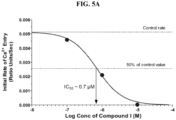
- the intracellular Calcium signaling inhibitor is delivered to achieve a tissue level concentration that is equal to, about, or greater than the in vitro IC 50 value determined for the compound. In some embodiments the Calcium signaling inhibitor is delivered to achieve a tissue level concentration that is 1.5x.
- the Calcium signaling inhibitor is delivered to achieve a tissue level concentration that ranges from 1x to 100x, 2x to 80x, 3x to 60x, 4x to 50x, 5x to 45x, 6x to 44x, 7x to 43x, 8x to 43x, 9x to 41x, or 10x to 40x, or any non-integer within said range, of the in vitro IC 50 value determined for the compound.
- the Calcium signaling inhibitor is delivered to achieve a tissue level concentration that is 1 ⁇ M, 2uM, 3 ⁇ M, 4uM, 5 ⁇ M, 6 ⁇ M, 7 ⁇ M, 8 ⁇ M, 9 ⁇ M, 10 ⁇ M, 11 ⁇ M, 12 ⁇ M, 13 ⁇ M, 14 ⁇ M, 15 ⁇ M, 16 ⁇ M, 17 ⁇ M, 18 ⁇ M, 19 ⁇ M, 20 ⁇ M, 21 ⁇ M, 22 ⁇ M, 23 ⁇ M, 24 ⁇ M, 25 ⁇ M, 26 ⁇ M, 27 ⁇ M, 28 ⁇ M, 29 ⁇ M, 30 ⁇ M, 31 ⁇ M, 32 ⁇ M, 33 ⁇ M, 34 ⁇ M, 35 ⁇ M, 36 ⁇ M, 37 ⁇ M, 38 ⁇ M, 39 ⁇ M, 40 ⁇ M, 41 ⁇ M, 42 ⁇ M, 43 ⁇ M, 44 ⁇ M, 45 ⁇ M, 46 ⁇ M, 47 ⁇ M, 48 ⁇ M, 49 ⁇ M, 50 ⁇ M, 51 ⁇ M, 52 ⁇ M, 53 ⁇ M, 54 ⁇ M, 55 ⁇ M, 56 ⁇ M, 57 ⁇ M, 58 ⁇ M,
- the Calcium signaling inhibitor is delivered to achieve a tissue level concentration that ranges from 1 ⁇ M to 100 ⁇ M, 2 ⁇ M to 90 ⁇ M, 3 ⁇ M to 80 ⁇ M, 4 ⁇ M to 70 ⁇ M, 5 ⁇ M to 60 ⁇ M, 6 ⁇ M to 50 ⁇ M, 7 ⁇ M to 40 ⁇ M, 8 ⁇ M to 30 ⁇ M, 9 ⁇ M to 20 ⁇ M, or 10 ⁇ M to 40 ⁇ M, or any integer or non-integer within said range.
- the Calcium signaling inhibitor is delivered to achieve a tissue level concentration that ranges from 9.5 ⁇ M to 10.5 ⁇ M, 9 ⁇ M to 11 ⁇ M, 8 ⁇ M to 12 ⁇ M, 7 ⁇ M to 13 ⁇ M, 5 ⁇ M to 15 ⁇ M, 2 ⁇ M to 20 ⁇ M or 1 ⁇ M to 50 ⁇ M, or any integer or non-integer within said range.
- amelioration of pancreatitis comprises reduction in severity of at least one pancreatitis symptom. In some embodiments amelioration of pancreatitis comprises reduction in severity of at least one pancreatitis symptom such that said symptom no longer impacts the previously affected person. In some embodiments amelioration comprises reduction of at least one symptom so that it has no effect on the person. In some embodiments amelioration comprises a 10%, 20%, 30%, 40%, 40%, 50%, 60%, 70%, 80%, 90%, 95%, or 100% reduction in said symptom.
- amelioration comprises reduction in severity of a plurality of symptoms, such as 2, 3, 4, 5, 6, 7, 8, 9, or more than 9 symptoms, up to and including all symptoms, said reduction comprising a 10%, 20%, 30%, 40%, 40%, 50%, 60%, 70%, 80%, 90%, 95%, or 100% reduction in said symptoms.
- amelioration comprises halting the progression of pancreatitis such as acute pancreatitis or chronic pancreatitis. In some embodiments amelioration comprises halting the progression of pancreatitis such as acute pancreatitis or chronic pancreatitis such that more severe symptoms such as organ failure, pancreas necrosis or death do not occur.
- a method of ameliorating the symptoms of pancreatitis in a person is disclosed.
- a method of ameliorating the symptoms of pancreatitis in a person comprising the steps of identifying a person in need of prophylactic amelioration of symptoms of pancreatitis, and administering an intracellular Calcium signaling inhibitor, as defined in the appended claims, to said person at a dose sufficient to prophylactically ameliorate said symptoms.
- the intracellular Calcium signaling inhibitor is a CRAC channel inhibitor, as defined in the appended claims.
- ameliorating symptoms of pancreatitis further comprises administering a painkiller medication such as an opiate. Morphine is an exemplary painkiller in some embodiments.
- the intracellular Calcium signaling inhibitor is delivered to achieve a tissue level concentration that is equal to, about, or greater than the in vitro IC 50 value determined for the compound. In some embodiments the Calcium signaling inhibitor is delivered to achieve a tissue level concentration that is 1.5x.
- the Calcium signaling inhibitor is delivered to achieve a tissue level concentration that ranges from 1x to 100x, 2x to 80x, 3x to 60x, 4x to 50x, 5x to 45x, 6x to 44x, 7x to 43x, 8x to 43x, 9x to 41x, or 10x to 40x, or any non-integer within said range, of the in vitro IC 50 value determined for the compound.
- the Calcium signaling inhibitor is delivered to achieve a tissue level concentration that is 1 ⁇ M, 2 ⁇ M, 3 ⁇ M, 4 ⁇ M, 5 ⁇ M, 6 ⁇ M, 7 ⁇ M, 8 ⁇ M, 9 ⁇ M, 10 ⁇ M, 11 ⁇ M, 12 ⁇ M, 13 ⁇ M, 14 ⁇ M, 15 ⁇ M, 16 ⁇ M, 17 ⁇ M, 18 ⁇ M, 19 ⁇ M, 20 ⁇ M, 21 ⁇ M, 22 ⁇ M, 23 ⁇ M, 24 ⁇ M, 25 ⁇ M, 26 ⁇ M, 27 ⁇ M, 28 ⁇ M, 29 ⁇ M, 30 ⁇ M, 31 ⁇ M, 32 ⁇ M, 33 ⁇ M, 34 ⁇ M, 35 ⁇ M, 36 ⁇ M, 37 ⁇ M, 38 ⁇ M, 39 ⁇ M, 40 ⁇ M, 41 ⁇ M, 42 ⁇ M, 43 ⁇ M, 44 ⁇ M, 45 ⁇ M, 46 ⁇ M, 47 ⁇ M, 48 ⁇ M, 49 ⁇ M, 50 ⁇ M, 51 ⁇ M, 52 ⁇ M, 53 ⁇ M, 54 ⁇ M, 55 ⁇ M, 56 ⁇ M, 57 ⁇ M, 58 ⁇ M,
- the Calcium signaling inhibitor is delivered to achieve a tissue level concentration that ranges from 1 ⁇ M to 100 ⁇ M, 2 ⁇ M to 90 ⁇ M, 3 ⁇ M to 80 ⁇ M, 4 ⁇ M to 70 ⁇ M, 5 ⁇ M to 60 ⁇ M, 6 ⁇ M to 50 ⁇ M, 7 ⁇ M to 40 ⁇ M, 8 ⁇ M to 30 ⁇ M, 9 ⁇ M to 20 ⁇ M, or 10 ⁇ M to 40 ⁇ M, or any integer or non-integer within said range.
- the Calcium signaling inhibitor is delivered to achieve a tissue level concentration that ranges from 9.5 ⁇ M to 10.5 ⁇ M, 9 ⁇ M to 11 ⁇ M, 8 ⁇ M to 12 ⁇ M, 7 ⁇ M to 13 ⁇ M, 5 ⁇ M to 15 ⁇ M, 2 ⁇ M to 20 ⁇ M or 1 ⁇ M to 50 ⁇ M, or any integer or non-integer within said range.
- the method comprises prophylactically ameliorating an acute pancreatitis symptom. In some embodiments the method comprises prophylactically ameliorating a chronic pancreatitis symptom.
- Prophylactically ameliorating a symptom of pancreatitis may comprise reducing the severity, likelihood of occurrence, or duration of at least one symptom of pancreatitis.
- Prophylactically ameliorating a symptom of pancreatitis may comprise reducing the severity, likelihood of occurrence, or duration of at least one symptom of pancreatitis up to the point that said at least one symptom does not occur in the person.
- prophylactically ameliorating a symptom of pancreatitis may comprise reducing the severity, likelihood of occurrence, or duration of 2, 3, 4, 5, 6, 7, 8, 9, or more than 9 symptoms of pancreatitis, up to and including reducing the severity, likelihood of occurrence, or duration of all symptoms of pancreatitis in a person, such as the symptoms of pancreatitis disclosed herein.
- the subject is a non-human mammal.
- the person is diagnosed as having a gall stone.
- the person exhibits symptoms of having a gall stone, such as pain, for example intense pain, in the upper-right side of the abdomen, and/or nausea and vomiting, which may steadily increase for from approximately 30 minutes to several hours.
- a patient may also experience referred pain between the shoulder blades or below the right shoulder.
- the person suffers from alcoholism. In some embodiments the person suffers from chronic alcohol use. In some embodiments the person has suffered from at least one instance of acute alcohol poisoning.
- the person is subjected to a drug regimen comprising administration of at least one of a steroid such as a corticosteroid, prednisolone, an HIV drug, didanosine, pentamidine, a diuretic, valproic acid, L-asparaginase, azathioprine, estrogen, a statin such as a cholesterol-lowering statin, an antihyperglycemic agent, metformin, a glipin such as vildagliptin and sitagliptin, an atypical antipsychotic, clozapine, risperidone, and olanzapine.
- a steroid such as a corticosteroid, prednisolone, an HIV drug, didanosine, pentamidine, a diuretic, valproic acid, L-asparaginase, azathioprine, estrogen, a statin such as a cholesterol-lowering statin, an antihyperglycemic
- the person is identified as harboring an inherited form of pancreatitis. In some embodiments the person harbors a mutant allele of Trypsin1 associated with inherited pancreatitis. In some embodiments the person harbors a trypsinogen enzyme variant associated with pancreatitis. In some embodiments the person harbors a mutant allele of SPINK1 associated with inherited pancreatitis. In some embodiments the person harbors a mutant allele of a cystic fibrosis transmembrane conductance regulator associated with inherited pancreatitis.
- the person has suffered at least one of high blood calcium, hypothermia, endoscopic retrograde cholangiopancreatography (ERCP), pancreas divisum, a congenital malformation of the pancreas, diabetes mellitus type 2, pancreatic cancer, pancreatic duct stones, vasculitis, inflammation of the small blood vessels in the pancreas, coxsackie virus infection, and porphyra, such as acute intermittent porphyria and erythropoietic protoporphyria.
- ERCP endoscopic retrograde cholangiopancreatography
- pancreas divisum a congenital malformation of the pancreas
- diabetes mellitus type 2 pancreatic cancer
- pancreatic duct stones pancreatic duct stones
- vasculitis inflammation of the small blood vessels in the pancreas
- coxsackie virus infection and porphyra, such as acute intermittent porphyria and erythropoietic protoporphyria
- a bodily health condition of said person has been impacted at least one of a gall stone, ethanol poisoning, alcoholism, trauma, mumps, an autoimmune disorder, a scorpion sting, hyperlipidaemia, hypothermia, hyperparathyroidism, and endoscopic retrograde cholangiopancreatography, azathioprine, and valproic acid.
- a bodily health condition of said person has been impacted by at least one of a Coxsackie virus, a Cytomegalovirus, a Hepatitis B virus, a Herpes simplex virus, Mumps, a Varicella-zoster virus, a Legionella bacterium, a Leptospira bacterium, a Mycoplasma bacterium, a Salmonella bacterium, an Aspergillus fungus, an Ascaris parasite, a Cryptosporidium cell and a Toxoplasma cell.
- compositions and administration regimens for the combinatorial administration of a Calcium channel inhibitor and a drug associated with pancreatitis comprises administration to an individual of a drug associated with a negative impact on pancreatic activity, and administration of an intracellular Calcium signaling inhibitor, as defined in the appended claims.
- the drug associated with a negative impact on pancreatic activity is a drug is selected from the list consisting of: a steroid such as a corticosteroid, prednisolone, an HIV drug, didanosine, pentamidine, a diuretic, valproic acid, L-asparaginase, azathioprine, estrogen, a statin such as a cholesterol-lowering statin, an antihyperglycemic agent, metformin, a glipin such as vildagliptin and sitagliptin, an atypical antipsychotic, clozapine, risperidone, and olanzapine, azathioprine, and valproic acid.
- a steroid such as a corticosteroid, prednisolone, an HIV drug, didanosine, pentamidine, a diuretic, valproic acid, L-asparaginase, azathioprine, estrogen,
- the intracellular Calcium signaling inhibitor is a CRAC inhibitor, as defined in the appended claims.
- the administration regimen comprises administration of a calcium channel inhibitor such as a CRAC inhibitor, as defined in the appended claims, in concert with a drug associated with a negative impact on pancreatic activity.
- the calcium channel inhibitor such as a CRAC inhibitor according to the appended claims is administered on the same week as a drug associated with a negative impact on pancreatic activity.
- the calcium channel inhibitor such as a CRAC inhibitor according to the appended claims is administered concurrently with each administration of a drug associated with a negative impact on pancreatic activity.
- the calcium channel inhibitor such as a CRAC inhibitor according to the appended claims is administered on an administration regimen pattern that is independent of the administration pattern for a drug associated with a negative impact on pancreatic activity.
- the calcium channel inhibitor such as a CRAC inhibitor according to the appended claims is administered through the same route of delivery, such as orally or intravenously, as a drug associated with a negative impact on pancreatic activity. In some embodiments the calcium channel inhibitor such as a CRAC inhibitor according to the appended claims is administered through a separate route of delivery compared to a drug associated with a negative impact on pancreatic activity.
- the calcium channel inhibitor such as a CRAC inhibitor according to the appended claims is administered to a person receiving a drug associated with a negative impact on pancreatic activity only after said person shows at least one sign of an impact of said drug on pancreatic activity, for example through an increase in blood amylase activity or blood lipase activity, or through manifestation of at least one pancreatitis symptom as disclosed herein.
- the calcium channel inhibitor such as a CRAC inhibitor according to the appended claims administered to a person receiving a drug associated with a negative impact on pancreatic activity in the absence of any evidence in or from said person related to any sign of an impact of said drug on pancreatic activity, for example through an increase in blood amylase activity or blood lipase activity, or through manifestation of at least one pancreatitis symptom as disclosed herein.
- the calcium channel inhibitor such as a CRAC inhibitor according to the appended claims is administered in a single composition with a drug associated with a negative impact on pancreatic activity.
- some embodiments disclosed herein relate to a composition comprising an intracellular Calcium signaling inhibitor and at least one drug associated with a negative impact on pancreatic activity.
- the at least one drug selected from the list consisting of: a steroid such as a corticosteroid, prednisolone, an HIV drug, didanosine, pentamidine, a diuretic, valproic acid, L-asparaginase, azathioprine, estrogen, a statin such as a cholesterol-lowering statin, an antihyperglycemic agent, metformin, a glipin such as vildagliptin and sitagliptin, an atypical antipsychotic, clozapine, risperidone, and olanzapine, azathioprine, and valproic acid.
- a steroid such as a corticosteroid, prednisolone, an HIV drug, didanosine, pentamidine, a diuretic, valproic acid, L-asparaginase, azathioprine, estrogen, a statin such as a cholesterol-lowering statin,
- the intracellular Calcium signaling inhibitor is delivered to achieve a tissue level concentration that is equal to, about, or greater than the in vitro IC 50 value determined for the compound. In some embodiments the Calcium signaling inhibitor is delivered to achieve a tissue level concentration that is 1.5x.
- the Calcium signaling inhibitor is delivered to achieve a tissue level concentration that ranges from 1x to 100x, 2x to 80x, 3x to 60x, 4x to 50x, 5x to 45x, 6x to 44x, 7x to 43x, 8x to 43x, 9x to 41x, or 10x to 40x, or any non-integer within said range, of the in vitro IC 50 value determined for the compound.
- the Calcium signaling inhibitor is delivered to achieve a tissue level concentration that is 1 ⁇ M, 2 ⁇ M, 3 ⁇ M, 4 ⁇ M, 5 ⁇ M, 6 ⁇ M, 7 ⁇ M, 8 ⁇ M, 9 ⁇ M, 10 ⁇ M, 11 ⁇ M, 12 ⁇ M, 13 ⁇ M, 14 ⁇ M, 15 ⁇ M, 16 ⁇ M, 17 ⁇ M, 18 ⁇ M, 19 ⁇ M, 20 ⁇ M, 21 ⁇ M, 22 ⁇ M, 23 ⁇ M, 24 ⁇ M, 25 ⁇ M, 26 ⁇ M, 27 ⁇ M, 28 ⁇ M, 29 ⁇ M, 30 ⁇ M, 31 ⁇ M, 32 ⁇ M, 33 ⁇ M, 34 ⁇ M, 35 ⁇ M, 36 ⁇ M, 37 ⁇ M, 38 ⁇ M, 39 ⁇ M, 40 ⁇ M, 41 ⁇ M, 42 ⁇ M, 43 ⁇ M, 44 ⁇ M, 45 ⁇ M, 46 ⁇ M, 47 ⁇ M, 48 ⁇ M, 49 ⁇ M, 50 ⁇ M, 51 ⁇ M, 52 ⁇ M, 53 ⁇ M, 54 ⁇ M, 55 ⁇ M, 56 ⁇ M, 57 ⁇ M, 58 ⁇ M,
- the Calcium signaling inhibitor is delivered to achieve a tissue level concentration that ranges from 1 ⁇ M to 100 ⁇ M, 2 ⁇ M to 90 ⁇ M, 3 ⁇ M to 80 ⁇ M, 4 ⁇ M to 70 ⁇ M, 5 ⁇ M to 60 ⁇ M, 6 ⁇ M to 50 ⁇ M, 7 ⁇ M to 40 ⁇ M, 8 ⁇ M to 30 ⁇ M, 9 ⁇ M to 20 ⁇ M, or 10 ⁇ M to 40 ⁇ M, or any integer or non-integer within said range.
- the Calcium signaling inhibitor is delivered to achieve a tissue level concentration that ranges from 9.5 ⁇ M to 10.5 ⁇ M, 9 ⁇ M to 11 ⁇ M, 8 ⁇ M to 12 ⁇ M, 7 ⁇ M to 13 ⁇ M, 5 ⁇ M to 15 ⁇ M, 2 ⁇ M to 20 ⁇ M or 1 ⁇ M to 50 ⁇ M, or any integer or non-integer within said range.
- the composition additionally comprises at least one of an excipient, a solubilizer, a surfactant, a disintegrant, and a buffer.
- the composition is a liquid or an emulsion.
- the composition is a liquid, a nanoparticle, a nanoparticle suspension, or a nanoparticle emulsion.
- the composition is a tablet.
- Standard techniques can be used for chemical syntheses, chemical analyses, pharmaceutical preparation, formulation, and delivery, and treatment of patients.
- Standard techniques can be used for recombinant DNA, oligonucleotide synthesis, and tissue culture and transformation (e.g., electroporation, lipofection).
- Reactions and purification techniques can be performed e.g., using kits of manufacturer's specifications or as commonly accomplished in the art or as described herein.
- the foregoing techniques and procedures can be generally performed of conventional methods and as described in various general and more specific references that are cited and discussed throughout the present specification.
- subject or “patient” encompasses mammals and non-mammals.
- mammals include, but are not limited to, any member of the Mammalian class: humans, non-human primates such as chimpanzees, and other apes and monkey species; farm animals such as cattle, horses, sheep, goats, swine; domestic animals such as rabbits, dogs, and cats; laboratory animals including rodents, such as rats, mice and guinea pigs.
- non-mammals include birds and fish.
- the mammal is a human.
- treat include alleviating, abating or ameliorating a disease or condition symptoms, preventing additional symptoms, ameliorating or preventing the underlying causes of symptoms, inhibiting the disease or condition, e.g., arresting the development of the disease or condition, relieving the disease or condition, causing regression of the disease or condition, relieving a condition caused by the disease or condition, or stopping the symptoms of the disease or condition either prophylactically and/or therapeutically.
- target protein refers to a protein or a portion of a protein capable of being bound by, or interacting with a compound described herein, such as a compound with a structure from the group of Compound A.
- a target protein is a STIM protein.
- a target protein is an Orai protein.
- STIM protein includes but is not limited to, mammalian STIM-1, such as human and rodent (e.g., mouse) STIM-1, Drosophila melanogaster D-STIM, C. elegans C-STIM, Anopheles gambiae STIM and mammalian STIM-2, such as human and rodent (e.g., mouse) STIM-2.
- mammalian STIM-1 such as human and rodent (e.g., mouse) STIM-1
- Drosophila melanogaster D-STIM e.g., mouse
- C. elegans C-STIM C. elegans C-STIM
- Anopheles gambiae STIM gambiae STIM
- mammalian STIM-2 such as human and rodent (e.g., mouse) STIM-2.
- such proteins have been identified as being involved in, participating in and/or providing for store-operated calcium entry or modulation thereof, cytoplasmic calcium buffering and/or modulation of calcium levels in or movement of calcium into, within or out of intracellular calcium stores (e.g., endoplasmic reticulum).
- an "Orai protein” includes Orai1 (SEQ ID NO: 1 as described in WO 07/081804 ), Orai2 (SEQ ID NO: 2 as described in WO 07/081804 ), or Orai3 (SEQ ID NO: 3 as described in WO 07/081804 ).
- Orai1 nucleic acid sequence corresponds to GenBank accession number NM_032790
- Orai2 nucleic acid sequence corresponds to GenBank accession number BC069270
- Orai3 nucleic acid sequence corresponds to GenBank accession number NM_152288.
- Orai refers to any one of the Orai genes, e.g., Orai1, Orai2, Orai3 (see Table I of WO 07/081804 ). As described herein, such proteins have been identified as being involved in, participating in and/or providing for store-operated calcium entry or modulation thereof, cytoplasmic calcium buffering and/or modulation of calcium levels in or movement of calcium into, within or out of intracellular calcium stores (e.g., endoplasmic reticulum).
- fragment or “derivative” when referring to a protein (e.g. STIM, Orai) means proteins or polypeptides which retain essentially the same biological function or activity in at least one assay as the native protein(s).
- the fragments or derivatives of the referenced protein maintains at least about 50% of the activity of the native proteins, at least 75%, at least about 95% of the activity of the native proteins, as determined e.g. by a calcium influx assay.
- amelioration of the symptoms of a particular disease, disorder or condition by administration of a particular compound or pharmaceutical composition refers to any lessening of severity, delay in onset, slowing of progression, or shortening of duration, whether permanent or temporary, lasting or transient that can be attributed to or associated with administration of the compound or composition.
- module means to interact with a target protein either directly or indirectly so as to alter the activity of the target protein, including, by way of example only, to inhibit the activity of the target, or to limit or reduce the activity of the target.
- a modulator refers to a compound that alters an activity of a target.
- a modulator can cause an increase or decrease in the magnitude of a certain activity of a target compared to the magnitude of the activity in the absence of the modulator.
- a modulator is an inhibitor, which decreases the magnitude of one or more activities of a target.
- an inhibitor completely prevents one or more activities of a target.
- modulation with reference to intracellular calcium refers to any alteration or adjustment in intracellular calcium including but not limited to alteration of calcium concentration in the cytoplasm and/or intracellular calcium storage organelles, e.g., endoplasmic reticulum, and alteration of the kinetics of calcium fluxes into, out of and within cells. In aspect, modulation refers to reduction.
- target activity refers to a biological activity capable of being modulated by a modulator.
- Certain exemplary target activities include, but are not limited to, binding affinity, signal transduction, enzymatic activity, tumor growth, inflammation or inflammation-related processes, and amelioration of one or more symptoms associated with a disease or condition.
- inhibitors refer to inhibition of store operated calcium channel activity or calcium release activated calcium channel activity.
- pharmaceutically acceptable refers a material, such as a carrier, diluent, or formulation, which does not abrogate the biological activity or properties of the compound, and is relatively nontoxic, i.e., the material may be administered to an individual without causing undesirable biological effects or interacting in a deleterious manner with any of the components of the composition in which it is contained.
- pharmaceutical combination means a product that results from the mixing or combining of more than one active ingredient and includes both fixed and non-fixed combinations of the active ingredients.
- fixed combination means that one active ingredient, e.g. a compound with a structure from the group of Compound A and a coagent, are administered to a patient as separate entities either simultaneously, concurrently or sequentially with no specific intervening time limits, wherein such administration provides effective levels of the two compounds in the body of the patient.
- cocktail therapy e.g. the administration of three or more active ingredients.
- composition refers to a mixture of a compound with a structure from the group of Compound A, described herein with other chemical components, such as carriers, stabilizers, diluents, surfactants, dispersing agents, suspending agents, thickening agents, and/or excipients.
- the pharmaceutical composition facilitates administration of the compound to an organism. Multiple techniques of administering a compound exist in the art including, but not limited to: intravenous, oral, aerosol, parenteral, ophthalmic, subcutaneous, intramuscular, pulmonary and topical administration.
- an “effective amount” or “therapeutically effective amount,” as used herein, refer to a sufficient amount of an agent or a compound being administered which will relieve to some extent one or more of the symptoms of the disease or condition being treated. The result can be reduction and/or alleviation of the signs, symptoms, or causes of a disease, or any other desired alteration of a biological system.
- an “effective amount” for therapeutic uses is the amount of the composition that includes a compound with a structure from the group of Compound A, required to provide a clinically significant decrease in disease symptoms.
- An appropriate "effective" amount in any individual case may be determined using techniques, such as a dose escalation study.
- an “enhance” or “enhancing,” as used herein, means to increase or prolong either in potency or duration a desired effect.
- the term “enhancing” refers to the ability to increase or prolong, either in potency or duration, the effect of other therapeutic agents on a system.
- An “enhancing-effective amount,” as used herein, refers to an amount adequate to enhance the effect of another therapeutic agent in a desired system.
- co-administration are meant to encompass administration of the selected therapeutic agents to a single patient, and are intended to include treatment regimens in which the agents are administered by the same or different route of administration or at the same or different time.
- carrier refers to relatively nontoxic chemical compounds or agents that facilitate the incorporation of a compound into cells or tissues.
- dilute refers to chemical compounds that are used to dilute the compound of interest prior to delivery. Diluents can also be used to stabilize compounds because they can provide a more stable environment. Salts dissolved in buffered solutions (which also can provide pH control or maintenance) are utilized as diluents in the art, including, but not limited to a phosphate buffered saline solution.
- a “metabolite” of a compound disclosed herein is a derivative of that compound that is formed when the compound is metabolized.
- active metabolite refers to a biologically active derivative of a compound that is formed when the compound is metabolized.
- metabolism refers to the sum of the processes (including, but not limited to, hydrolysis reactions and reactions catalyzed by enzymes) by which a particular substance is changed by an organism. Thus, enzymes may produce specific structural alterations to a compound.
- cytochrome P450 catalyzes a variety of oxidative and reductive reactions while uridine diphosphate glucuronyltransferases catalyze the transfer of an activated glucuronic-acid molecule to aromatic alcohols, aliphatic alcohols, carboxylic acids, amines and free sulphydryl groups. Further information on metabolism may be obtained from The Pharmacological Basis of Therapeutics, 9th Edition, McGraw-Hill (1996 ). Metabolites of the compounds disclosed herein can be identified either by administration of compounds to a host and analysis of tissue samples from the host, or by incubation of compounds with hepatic cells in vitro and analysis of the resulting compounds.
- Bioavailability refers to the percentage of the weight of the compound disclosed herein (e.g. a compound from the group of Compound A) that is delivered into the general circulation of the animal or human being studied.
- the total exposure (AUC(0- ⁇ )) of a drug when administered intravenously is usually defined as 100% bioavailable (F%).
- Oral bioavailability refers to the extent to which a compound disclosed herein, is absorbed into the general circulation when the pharmaceutical composition is taken orally as compared to intravenous injection.
- Blood plasma concentration refers to the concentration of a compound with a structure from the group of Compound A, in the plasma component of blood of a subject. It is understood that the plasma concentration of compounds described herein may vary significantly between subjects, due to variability with respect to metabolism and/or possible interactions with other therapeutic agents. In accordance with one embodiment disclosed herein, the blood plasma concentration of the compounds disclosed herein may vary from subject to subject. Likewise, values such as maximum plasma concentration (Cmax) or time to reach maximum plasma concentration (Tmax), or total area under the plasma concentration time curve (AUC(0- ⁇ )) may vary from subject to subject. Due to this variability, the amount necessary to constitute "a therapeutically effective amount" of a compound may vary from subject to subject.
- calcium homeostasis refers to the maintenance of an overall balance in intracellular calcium levels and movements, including calcium signaling, within a cell.
- intracellular calcium refers to calcium located in a cell without specification of a particular cellular location.
- cytosolic or “cytoplasmic” with reference to calcium refers to calcium located in the cell cytoplasm.
- an effect on intracellular calcium is any alteration of any aspect of intracellular calcium, including but not limited to, an alteration in intracellular calcium levels and location and movement of calcium into, out of or within a cell or intracellular calcium store or organelle.
- an effect on intracellular calcium can be an alteration of the properties, such as, for example, the kinetics, sensitivities, rate, amplitude, and electrophysiological characteristics, of calcium flux or movement that occurs in a cell or portion thereof.
- An effect on intracellular calcium can be an alteration in any intracellular calcium-modulating process, including, store-operated calcium entry, cytosolic calcium buffering, and calcium levels in or movement of calcium into, out of or within an intracellular calcium store.
- any of these aspects can be assessed in a variety of ways including, but not limited to, evaluation of calcium or other ion (particularly cation) levels, movement of calcium or other ion (particularly cation), fluctuations in calcium or other ion (particularly cation) levels, kinetics of calcium or other ion (particularly cation) fluxes and/or transport of calcium or other ion (particularly cation) through a membrane.
- An alteration can be any such change that is statistically significant.
- intracellular calcium in a test cell and a control cell is said to differ, such difference can be a statistically significant difference.
- intracellular calcium or intracellular calcium regulation means that when expression or activity of the protein in a cell is reduced, altered or eliminated, there is a concomitant or associated reduction, alteration or elimination of one or more aspects of intracellular calcium or intracellular calcium regulation. Such an alteration or reduction in expression or activity can occur by virtue of an alteration of expression of a gene encoding the protein or by altering the levels of the protein.
- a protein involved in an aspect of intracellular calcium such as, for example, store-operated calcium entry, thus, can be one that provides for or participates in an aspect of intracellular calcium or intracellular calcium regulation.
- a protein that provides for store-operated calcium entry can be a STIM protein and/or an Orai protein.
- a protein that is a component of a calcium channel is a protein that participates in multi-protein complex that forms the channel.
- basal or resting with reference to cytosolic calcium levels refers to the concentration of calcium in the cytoplasm of a cell, such as, for example, an unstimulated cell, that has not been subjected to a condition that results in movement of calcium into or out of the cell or within the cell.
- the basal or resting cytosolic calcium level can be the concentration of free calcium (i.e., calcium that is not bound to a cellular calcium-binding substance) in the cytoplasm of a cell, such as, for example, an unstimulated cell, that has not been subjected to a condition that results in movement of calcium into or out of the cell.
- movement with respect to ions, including cations, e.g., calcium, refers to movement or relocation, such as for example flux, of ions into, out of, or within a cell.
- movement of ions can be, for example, movement of ions from the extracellular medium into a cell, from within a cell to the extracellular medium, from within an intracellular organelle or storage site to the cytosol, from the cytosol into an intracellular organelle or storage site, from one intracellular organelle or storage site to another intracellular organelle or storage site, from the extracellular medium into an intracellular organelle or storage site, from an intracellular organelle or storage site to the extracellular medium and from one location to another within the cell cytoplasm.
- cation entry or “calcium entry” into a cell refers to entry of cations, such as calcium, into an intracellular location, such as the cytoplasm of a cell or into the lumen of an intracellular organelle or storage site.
- cation entry can be, for example, the movement of cations into the cell cytoplasm from the extracellular medium or from an intracellular organelle or storage site, or the movement of cations into an intracellular organelle or storage site from the cytoplasm or extracellular medium. Movement of calcium into the cytoplasm from an intracellular organelle or storage site is also referred to as "calcium release" from the organelle or storage site.
- protein that modulates intracellular calcium refers to any cellular protein that is involved in regulating, controlling and/or altering intracellular calcium.
- a protein can be involved in altering or adjusting intracellular calcium in a number of ways, including, but not limited to, through the maintenance of resting or basal cytoplasmic calcium levels, or through involvement in a cellular response to a signal that is transmitted in a cell through a mechanism that includes a deviation in intracellular calcium from resting or basal states.
- a "cellular" protein is one that is associated with a cell, such as, for example, a cytoplasmic protein, a plasma membrane-associated protein or an intracellular membrane protein.
- Proteins that modulate intracellular calcium include, but are not limited to, ion transport proteins, calcium-binding proteins and regulatory proteins that regulate ion transport proteins.
- the term “ameliorate” means to reduce, prevent, alleviate, and/or lessen the impact of a disease, symptom or condition, to bring about improvement in a disease or condition or at least a partial relief of symptoms associated with a disease or condition up to and including complete reduction such that said impact is zero or effectively zero.
- cell response refers to any cellular response that results from ion movement into or out of a cell or within a cell.
- the cell response may be associated with any cellular activity that is dependent, at least in part, on ions such as, for example, calcium.
- Such activities may include, for example, cellular activation, gene expression, endocytosis, exocytosis, cellular trafficking and apoptotic cell death.
- immune cells include cells of the immune system and cells that perform a function or activity in an immune response, such as, but not limited to, T-cells, B-cells, lymphocytes, macrophages, dendritic cells, neutrophils, eosinophils, basophils, mast cells, plasma cells, white blood cells, antigen presenting cells and natural killer cells.
- cytokine refers to small soluble proteins secreted by cells that can alter the behavior or properties of the secreting cell or another cell. Cytokines bind to cytokine receptors and trigger a behavior or property within the cell, for example, cell proliferation, death or differentiation.
- cytokines include, but are not limited to, interleukins (e.g., IL-2, IL-3, IL-4, IL-5, IL-6, IL-7, IL-8, IL-9, IL-10, IL-11, IL-12, IL-13, IL-15, IL-16, IL-17, IL-18, IL-1 ⁇ , IL-1 ⁇ , and IL-1 RA), granulocyte colony stimulating factor (G-CSF), granulocyte-macrophage colony stimulating factor (GM-CSF), oncostatin M, erythropoietin, leukemia inhibitory factor (LIF), interferons, B7.1 (also known as CD80), B7.2 (also known as B70, CD86), TNF family members (TNF- ⁇ , TNF- ⁇ , LT- ⁇ , CD40 ligand, Fas ligand, CD27 ligand, CD30 ligand, 4-1BBL, Trail), and MIF.
- interleukins e.g
- Selective inhibitor of SOC channel activity means that the inhibitor is selective for SOC channels and does not substantially affect the activity of other types of ion channels.
- “Selective inhibitor of CRAC channel activity” means that the inhibitor is selective for CRAC channels and does not substantially affect the activity of other types of ion channels and/or other SOC channels.
- the term 'calcium' may be used to refer to the element or to the divalent cation Ca 2+ .
- Example 1 CRAC Channel Inhibition by GSK-7975A Blocks Necrosis in Mouse and Human Pancreatic Acinar Cells (Reference Example)
- PACs Mouse Pancreatic Acinar Cells
- a carrier control
- TLCS taurolithocholic acid 3-sulfate
- TLCS induced necrosis in about 45% of cells during the time period of the experiment.
- Addition of GSK-7975A at 10 ⁇ M reduced this percent necrosis by half, to about 23%.
- the asterisk indicates a statistically significant change.
- Cells not treated with TLCS demonstrated a necrosis of about 10%. This result demonstrates that GSK-7975A reduces the necrosis-inducing effect of TLCS on mouse PACs.
- Human PACs were extracted and incubated with either a carrier (control) or with natural bile acid TLCS in the absence or presence of GSK-7975A. Cells were contacted with propidium iodide to assay for cell necrosis. TLCS treatment to individual cells in vitro mimics the effect of a gall stone or other blockage in pancreatic secretion in vivo.
- TLCS induced necrosis in about 45% of cells during the time period of the experiment.
- Addition of GSK-7975A at 10 ⁇ M reduced this percent necrosis to about 30%.
- the asterisk indicates a statistically significant change.
- Cells not treated with TLCS demonstrated necrosis at about 23%. This result demonstrates that GSK-7975A reduces the necrosis-inducing effect of TLCS on human PACs.
- Example 2 CRAC Channel Inhibitor (GSK-7975A) Blocks Histopathological Changes in Mouse Models of AP (Reference Example)
- Mouse acute pancreatitis models were used to evaluate the effect of a CRAC inhibitor on pancreas histopathological progression.
- Caerulein is used to hyper-stimulate CCK receptors in the normal Calcium signaling pathway in the mouse pancreas.
- TLCS is used to induce acute pancreatitis through simulation of an excess of bile acid, as would be experienced in a gallstone induced acute pancreatitis.
- Fatty acid ethyl esters (FAEE) are used to simulate alcohol-induced acute pancreatitis.
- Mice were treated with the acute pancreatitis agent (Caerulin, Fig. 2A , TLCS, Fig. 2B or FAEE, Fig. 2C ) alone or with the CRAC inhibitor GSK-7975A at either 10x or 40x the IC 50 of the CRAC inhibitor.
- GSK-7975A substantially reduces the total histopathology score of treated mice relative to mice treated with the agent in the absence of the CRAC inhibitor. This effect was statistically significant and substantially more pronounced at 40x IC 50 that ant 10xIC 50 , but was observed at the lower concentration as well. The asterisk indicates a statistically significant change. GSK-7975A at doses that achieve tissue levels 10- or 40-fold above its in vitro IC 50 value produces significant reductions in pancreatic histopathology.
- a CRAC inhibitor can ameliorate the histopathological symptoms of acute pancreatitis. This effect is observed independent of the inducing agent or the type of acute pancreatitis being modeled.
- Example 3 Compound I and GSK-7975A Inhibit CRAC Channels (Reference Example)
- Compound I and GSK-7975A were assayed for their inhibitory effect on CRAC channels. Channels comprising Orai1/STIM1 and Orai2/STIM1 were assayed. As presented in Fig. 3A , it was determined that Compound I inhibited Orai1/STIM1 cannels with a mean IC 50 of 119nM, and Orai2/STIM1 channels with a mean IC 50 of 895nM. As presented in Fig. 3B , it was determined that GSK-7975A inhibited Orai1/STIM1 cannels with a mean IC 50 of 398nM, and Orai2/STIM1 channels with a mean IC 50 of 1453nM. Compound I is about 4-fold more potent on Orai1-type CRAC channels compared to GSK-7975A. Both compounds are more potent on Orai1 than Orai2-type CRAC channels.
- Example 4 Compound I blocks Store-operated Ca 2+ entry (SOCE) in Mouse Pancreatic Acinar Cells (Reference Example)
- CRAC inhibitors may block the cell's ability to reload its ER with Calcium for successive rounds of signaling.
- Example 5 Compound I and GSK-7975A Block SOCE in Mouse Pancreatic Acinar Cells in a Dose-Dependent Manner (Reference Example)
- Mouse PACs were treated with CRAC inhibitors Compound I ( Fig. 5A ) or GSK-7975A ( Fig. 5B ) and monitored for their rate of Calcium uptake. Both CRAC inhibitors reduced the rate of store-operated Calcium entry into the ER to 50% of control levels upon treatment with 700nM of inhibitor. Compound I blocks 100% of reuptake at 10 mM.
- Example 6 Compound I blocks CCK-induced Ca 2+ entry in Mouse Pancreatic Acinar Cells (Reference Example)
- Example 7 Compound I inhibits multiple cytokines (Reference Example)
- Compound I was tested for its inhibitory effect on a number of cytokines. Cytokines INF-gamma, IL-4, and IL-4 receptors of which are expressed on Acinar cells, cytokines IL-1beta, IL-6, IL-10 and TNF-alpha, expressed in Acinar cells, and IL-2 and IL-7, cytokines important in T-cell function, were tested for an inhibitory effect of the CRAC inhibitor Compound I. T cells in bulk human PBMCs were stimulated with plate-bound anti-CD3/anti-CD28 in buffer +10% serum for 48 hrs. Released cytokines were measured by Luminex at Millipore. The results are presented in Fig. 7 . In human PBMCs, Compound I potently inhibits release of multiple cytokines which play important roles in T cells.
- Example 8 Compound I shows robust efficacy in a mouse calcinurin model of acute pancreatitis (Reference Example)
- mice were treated with a CRAC inhibitor or a vehicle prophylactically, and then challenged with CCK to trigger acute pancreatitis.
- Compound I administered i.p. prophylactically, produced significant and dose-dependent reductions in caerulein-induced pathology in the mouse pancreas (C 5 7B6 mice). This effect was significantly below the positive control CsA at 5 mg/kg, and increased in a dose-dependent manner. See Fig. 8A .
- the treatment demonstrated a dose-proportional increase of Compound I levels in the pancreas after i.p. injection (see Fig. 8B ), which corresponded to the positive results in Fig. 8A , above.
- CRAC administration prior to or concurrently with a second drug suspected of triggering acute pancreatitis or increasing the risk of acute pancreatitis, may prophylactically protect against or reduce the risk of acute pancreatitis.
- Example 9 Compound I lowers serum amylase and serum lipase levels in mouse caerulein model of acute pancreatitis (Reference Example)
- mice were either untreated (Normal), treated with CCK only (vehicle), or treated with CCK in combination with CsA or a CRAC inhibitor at the indicated dose.
- Serum amylase activity Fig. 9A
- Serum Lipase activity Fig. 9B
- the CRAC inhibitor Compound I performed as well as or better than the positive control CsA at maximal concentrations of 20mg/kg. Compound I produced significant and dose-dependent reductions in caerulein-induced serum amylase and serum lipase activities
- Example 10 Compound I reduces pancreatic pathology in therapeutic mouse caerulein model (Reference Example)
- Histopathology scores were measured in light of observation of Acinar cell degeneration, coagulation necrosis, and inflammation and edema measurements.
- Compound I produced a significant 35% reduction in caerulein-induced pathology in the pancreas when administered after the 3rd caerulein injection, consistent with efficacy in a therapeutic mode.
- Prophylactic treatment with Compound I also reduced pathology by 26%.
- CRAC inhibitors such as Compound I have a substantial effect on pancreas histopathology scores when administered prophylactically or therapeutically.
- Example 11 Compound I blocks TLCS-induced Ca 2+ entry in Mouse Pancreatic Acinar cells (Reference Example)
- Mouse PACs were treated with 500 ⁇ M TLCS and either 0, 1 ⁇ M or 3 ⁇ M of the CRAC inhibitor Compound I.
- Cytosolic Calcium levels (measured as F 3 45/F 3 80 ratios) were measured for each treatment.
- TLCS releases Ca 2+ from intracellular stores (not shown), initiating SOCE.
- Compound I at 1 or 3 ⁇ M completely blocked TLCS-induced Ca 2+ entry. The results are depicted in Fig. 11 .
- CRAC inhibitors may be effective at positively influencing Calcium signaling in Gall stone related acute pancreatitis in mammals.
- Example 12 Compound I and other CCIs inhibit TLCS-induced Amylase Release in Mouse Pancreatic Acinar Cells (Reference Example)
- Amylase release from PACs has an ER calcium-dependent and a CRAC/cytosolic calcium-dependent component.
- the calcium dependent component is blocked by introduction of the divalent cation chelating agent EGTA.
- Mouse Acinar cells were treated with TLCS and either vehicle, EGTA, or a CRAC inhibitor such as Compound I, GSK-7975A or Compound II and monitored for Amylase release. It is observed that CRAC inhibitors mimicked EGTA in their effect on Amylase release. See Fig. 12 .
- Example 13 Compound I inhibits TLCS-induced Necrosis in Mouse Pancreatic Acinar Cells (Reference Example)
- Mouse PACs were treated with either DMSO, DMSO plus 500 ⁇ M TLCS, or DMSO plus 500 ⁇ M TLCS plus 1 ⁇ M of the CRAC inhibitor Compound I.
- Cell necrosis was measured as % PI uptake.
- the CRAC inhibitor Compound I inhibits TLCS-induced necrosis in mouse PACs.
- Example 14 Phase II Clinical Trial of the Safety and Efficacy of Compounds Compound I, GSK-7975A, and Compound II in Patients with Acute Pancreatitis (Reference Example)
- phase II trial is to investigate the safety, tolerability, PK, PD, and efficacy of single and repeat intravenous infusions of a Calcium signaling inhibitor such as Compound I, GSK-7975A, and Compound II, or compounds selected from the group of Compound A, in patients with acute pancreatitis and accompanying SIRS.
- a Calcium signaling inhibitor such as Compound I, GSK-7975A, and Compound II, or compounds selected from the group of Compound A, in patients with acute pancreatitis and accompanying SIRS.
- the study will enroll 30 patients at high risk of developing moderate or severe pancreatitis, as assessed by a SIRS score of 2 or more at study entry.
- Study Design The study is a randomized, double blind, placebo-controlled, multi-center, multi-national, parallel-arm study comparing a placebo group to a CRAC inhibitor group treated intravenously with a CRAC inhibitor twice daily for up to 7 consecutive days.
- the study will enroll 45 patients at high risk of developing moderate or severe pancreatitis, as assessed by a SIRS score of 2 or more at study entry.
- the primary study endpoint is the effect of a CRAC inhibitor on systemic inflammation in acute pancreatitis as reflected by a change in SIRS score or C-reactive protein (CRP) plasma levels.
- CRP C-reactive protein
- Clinical trial material administration will begin within 24 hours of acute pancreatitis symptoms onset, or 18 hours of hospital admittance. Subjects will be randomized at a ratio of 1:1 to receive either a CRAC inhibitor at one of two doses, or placebo. The serum levels of a CRAC inhibitor at the end of each 2-hour infusion will also be monitored.
- the study duration per individual subject will be 14 days, consisting of a screening evaluation followed by an up to 7 day double blind treatment period, which will be part of an in-hospital observation period of at least 7 days, and a follow-up final visit on Day 14.
- Example 15 Compound I inhibits Junin virus budding in infected VeroE6 cells (Reference Example)
- VeroE6 cells infected with live attenuated Candid-1 JUNV are treated with either DMSO, DMSO plus 500 ⁇ M TLCS, DMSO plus 500 ⁇ M TLCS plus 1 ⁇ M of the CRAC inhibitor Compound I, DMSO plus 500 ⁇ M TLCS plus 10 ⁇ M Compound I, DMSO plus 500 ⁇ M TLCS plus 25 ⁇ M Compound I, or DMSO plus 500 ⁇ M TLCS plus 50 ⁇ M Compound I.
- Infectious virions produced from these cells are quantified in a focus-forming assay. Enumeration of JUNV foci reveals a statistically significant, dose-dependent reduction in JUNV virus production following treatment with Compound I.
- Example 16 Compound I differentially inhibits store-operated Ca 2+ entry-dependent Th1, Th2, and Th17 differentiation (Reference Example)
- Naive and stimulated murine T cells cultured under Th1-, Th2-, and Th17-polarizing conditions are treated with either DMSO, DMSO plus 500 ⁇ M TLCS, or DMSO plus 500 ⁇ M TLCS plus 1 ⁇ M of the CRAC inhibitor Compound I.
- Store-operated Ca 2+ entry (SOCE) is quantified in each treatment.
- Compound I blocks SOCE stronger in differentiated Th17 cells than in naive, Th1, or Th2 cells.
- IL-17A production by Th17 cells is more severely affected when compared with IFN- ⁇ and IL-4 production by Th1 and Th2 cells, respectively, in the presence of Compound I.
Landscapes
- Health & Medical Sciences (AREA)
- Chemical & Material Sciences (AREA)
- Animal Behavior & Ethology (AREA)
- Veterinary Medicine (AREA)
- Public Health (AREA)
- General Health & Medical Sciences (AREA)
- Life Sciences & Earth Sciences (AREA)
- Medicinal Chemistry (AREA)
- Pharmacology & Pharmacy (AREA)
- Organic Chemistry (AREA)
- Epidemiology (AREA)
- General Chemical & Material Sciences (AREA)
- Chemical Kinetics & Catalysis (AREA)
- Nuclear Medicine, Radiotherapy & Molecular Imaging (AREA)
- Bioinformatics & Cheminformatics (AREA)
- Engineering & Computer Science (AREA)
- Emergency Medicine (AREA)
- Pain & Pain Management (AREA)
- Rheumatology (AREA)
- Pharmaceuticals Containing Other Organic And Inorganic Compounds (AREA)
- Medicines That Contain Protein Lipid Enzymes And Other Medicines (AREA)
- Medicines Containing Material From Animals Or Micro-Organisms (AREA)
- Medicines Containing Plant Substances (AREA)
- Polysaccharides And Polysaccharide Derivatives (AREA)
- Plural Heterocyclic Compounds (AREA)
- Medicinal Preparation (AREA)
Applications Claiming Priority (3)
| Application Number | Priority Date | Filing Date | Title |
|---|---|---|---|
| US201562126386P | 2015-02-27 | 2015-02-27 | |
| PCT/US2016/019924 WO2016138472A1 (en) | 2015-02-27 | 2016-02-26 | Pancreatitis treatment |
| EP16756509.2A EP3261641B1 (en) | 2015-02-27 | 2016-02-26 | Pancreatitis treatment |
Related Parent Applications (1)
| Application Number | Title | Priority Date | Filing Date |
|---|---|---|---|
| EP16756509.2A Division EP3261641B1 (en) | 2015-02-27 | 2016-02-26 | Pancreatitis treatment |
Publications (4)
| Publication Number | Publication Date |
|---|---|
| EP4275705A2 EP4275705A2 (en) | 2023-11-15 |
| EP4275705A3 EP4275705A3 (en) | 2024-01-17 |
| EP4275705C0 EP4275705C0 (en) | 2025-05-14 |
| EP4275705B1 true EP4275705B1 (en) | 2025-05-14 |
Family
ID=56789809
Family Applications (3)
| Application Number | Title | Priority Date | Filing Date |
|---|---|---|---|
| EP23184730.2A Active EP4275705B1 (en) | 2015-02-27 | 2016-02-26 | Pancreatitis treatment |
| EP16756509.2A Active EP3261641B1 (en) | 2015-02-27 | 2016-02-26 | Pancreatitis treatment |
| EP20200080.8A Active EP3778595B1 (en) | 2015-02-27 | 2016-02-26 | Pancreatitis treatment |
Family Applications After (2)
| Application Number | Title | Priority Date | Filing Date |
|---|---|---|---|
| EP16756509.2A Active EP3261641B1 (en) | 2015-02-27 | 2016-02-26 | Pancreatitis treatment |
| EP20200080.8A Active EP3778595B1 (en) | 2015-02-27 | 2016-02-26 | Pancreatitis treatment |
Country Status (17)
| Country | Link |
|---|---|
| US (6) | US11311535B2 (https=) |
| EP (3) | EP4275705B1 (https=) |
| JP (5) | JP6985146B2 (https=) |
| KR (1) | KR102707159B1 (https=) |
| CN (3) | CN114712513B (https=) |
| AR (1) | AR103807A1 (https=) |
| AU (1) | AU2016224993B2 (https=) |
| BR (1) | BR112017018413B1 (https=) |
| DK (1) | DK3778595T3 (https=) |
| EA (2) | EA036265B1 (https=) |
| ES (3) | ES3033759T3 (https=) |
| HU (1) | HUE056287T2 (https=) |
| IL (1) | IL254116B2 (https=) |
| PL (1) | PL3778595T3 (https=) |
| PT (1) | PT3778595T (https=) |
| TW (2) | TWI835179B (https=) |
| WO (1) | WO2016138472A1 (https=) |
Families Citing this family (22)
| Publication number | Priority date | Publication date | Assignee | Title |
|---|---|---|---|---|
| US10703722B2 (en) | 2010-04-27 | 2020-07-07 | Calcimedica, Inc. | Compounds that modulate intracellular calcium |
| JP6195684B2 (ja) * | 2014-06-03 | 2017-09-13 | アクテリオン ファーマシューティカルズ リミテッドActelion Pharmaceuticals Ltd | ピラゾール化合物及びt型カルシウムチャンネルブロッカーとしてのそれらの使用 |
| ES3033759T3 (en) | 2015-02-27 | 2025-08-07 | Calcimedica Inc | Pancreatitis treatment |
| CA2995094A1 (en) | 2015-08-07 | 2017-02-16 | Calcimedica, Inc. | Use of crac channel inhibitors for the treatment of stroke and traumatic brain injury |
| CA3051420A1 (en) * | 2017-01-26 | 2018-08-02 | Calcimedica, Inc. | Crac channel inhibitor compositions |
| KR101798840B1 (ko) | 2017-05-17 | 2017-11-17 | 주식회사 레고켐 바이오사이언스 | 신규 오토탁신 저해 화합물 및 이를 함유하는 약제학적 조성물 |
| US10961242B2 (en) | 2017-05-17 | 2021-03-30 | Legochem Biosciences, Inc. | Compounds as autotaxin inhibitors and pharmaceutical compositions comprising the same |
| CN110063945B (zh) * | 2019-04-15 | 2021-07-09 | 温州医科大学 | 一种用于急性胰腺炎治疗的胆红素纳米颗粒及其制备方法 |
| JP2022532875A (ja) * | 2019-05-06 | 2022-07-20 | カルシメディカ,インク. | Cracチャネル阻害剤の合成 |
| EP4043450A4 (en) * | 2019-09-25 | 2023-10-25 | Medshine Discovery Inc. | 2h-benzopyran derivatives as crac inhibitors |
| CA3172249A1 (en) | 2020-03-20 | 2021-09-23 | Calcimedica, Inc. | Methods and compositions for treating acute lung injury and acute respiratory distress syndrome |
| JP2023526505A (ja) * | 2020-05-20 | 2023-06-21 | カルシメディカ,インク. | 急性腎障害を治療するための方法および組成物 |
| US11413270B2 (en) * | 2020-06-22 | 2022-08-16 | Novmetapharma Co., Ltd. | Method for the treatment of pancreatitis |
| US12496309B2 (en) | 2020-06-22 | 2025-12-16 | Novmetapharma Co., Ltd. | Method for treatment of pancreatitis |
| EP4192480A4 (en) * | 2020-08-07 | 2024-09-04 | Board of Regents, The University of Texas System | METHODS AND COMPOSITIONS FOR THE EVALUATION AND TREATMENT OF PANCREATIC CANCER |
| CA3198798A1 (en) | 2020-11-13 | 2022-05-19 | Kenneth Stauderman | Improved synthesis of crac channel inhibitors |
| CN117098756A (zh) * | 2021-02-25 | 2023-11-21 | 辰欣药业股份有限公司 | 一种环丙基取代的苯并呋喃类化合物的晶型及其制备方法 |
| CN113424795B (zh) * | 2021-05-24 | 2022-09-09 | 四川大学华西医院 | 一种急性胰腺炎动物模型的构建方法和用途 |
| CN113903460A (zh) * | 2021-12-10 | 2022-01-07 | 中国医学科学院北京协和医院 | 一种预测重症急性胰腺炎的系统及其应用 |
| JP2025504467A (ja) * | 2022-01-20 | 2025-02-12 | カルシメディカ,インク. | 肺の炎症性損傷を処置するための方法および組成物 |
| CN114522157B (zh) * | 2022-02-23 | 2023-08-15 | 重庆大学 | 钙离子螯合剂在制备用于提高血管内皮细胞吞噬能力的制剂中的应用 |
| CN120272478B (zh) * | 2025-03-28 | 2025-12-09 | 山西医科大学 | 一种抗寨卡病毒的靶点抑制剂、重组基因、表达载体及应用 |
Family Cites Families (88)
| Publication number | Priority date | Publication date | Assignee | Title |
|---|---|---|---|---|
| JPS5424289A (en) | 1977-07-26 | 1979-02-23 | Mitsubishi Chem Ind Ltd | Production of spherical diatomaceous earth carrier |
| ATE240955T1 (de) | 1996-08-09 | 2003-06-15 | Boehringer Ingelheim Pharma | 4-substituierte beta-carboline als immunomodulatoren |
| AU751139B2 (en) | 1997-10-13 | 2002-08-08 | Astellas Pharma Inc. | Amide derivative |
| US6022884A (en) | 1997-11-07 | 2000-02-08 | Amgen Inc. | Substituted pyridine compounds and methods of use |
| WO1999051580A1 (en) | 1998-04-08 | 1999-10-14 | Abbott Laboratories | Pyrazole inhibitors of cytokine production |
| CA2332957A1 (en) | 1998-06-05 | 1999-12-09 | Boehringer Ingelheim Pharmaceuticals, Inc. | Substituted 1-(4-aminophenyl)pyrazoles and their use as anti-inflammatory agents |
| US20010044445A1 (en) | 1999-04-08 | 2001-11-22 | Bamaung Nwe Y. | Azole inhibitors of cytokine production |
| CN1237051C (zh) | 1999-08-20 | 2006-01-18 | 道农业科学公司 | 杀真菌的杂环芳族酰胺和它们的组合物、使用方法和制备 |
| JP3910319B2 (ja) | 1999-09-13 | 2007-04-25 | 株式会社小糸製作所 | 自動車用灯具 |
| EP1143013A1 (en) | 2000-04-03 | 2001-10-10 | Warner-Lambert Company | Methods and compositions for screening Icrac modulators |
| EP1390030A1 (en) | 2001-05-31 | 2004-02-25 | Cellegy Pharmaceuticals, Inc | Store operated calcium influx inhibitors and methods of use |
| GB0225554D0 (en) | 2002-11-01 | 2002-12-11 | Syngenta Participations Ag | Chemical compounds |
| SI1569907T1 (sl) | 2002-12-13 | 2016-06-30 | Ym Biosciences Australia Pty Ltd | Na nikotinamidu osnovani kinazni inhibitorji |
| WO2004056774A2 (en) | 2002-12-19 | 2004-07-08 | Neurogen Corporation | Substituted biphenyl-4-carboxylic acid arylamide analogues as capsaicin receptor modulators |
| US7645588B2 (en) | 2003-03-04 | 2010-01-12 | Calcimedica, Inc. | Composition comprising a cell comprising a STIM1 protein and an agent that modulates intracellular calcium and methods of use |
| CN1826121B (zh) | 2003-07-23 | 2013-05-29 | 幸讬制药公司 | 苯基与吡啶基衍生物用于制备调控钙离子释放活化钙离子通道的药物的用途 |
| DE102004005785A1 (de) | 2004-02-06 | 2005-08-25 | Bayer Cropscience Ag | 2-Halogenfuryl/thienyl-3-carboxamide |
| WO2006006569A1 (ja) | 2004-07-12 | 2006-01-19 | Nihon Nohyaku Co., Ltd. | フェニルピリジン類又はその塩類、これらを有効成分とする除草剤及びその使用方法 |
| CN101083985A (zh) | 2004-09-21 | 2007-12-05 | 幸讬制药公司 | 用于炎症及免疫相关用途的化合物 |
| US8557861B2 (en) | 2004-09-28 | 2013-10-15 | Mast Therapeutics, Inc. | Low oil emulsion compositions for delivering taxoids and other insoluble drugs |
| KR20070107022A (ko) | 2005-01-07 | 2007-11-06 | 신타 파마슈티칼스 코프. | 염증 및 면역 관련 용도를 위한 화합물 |
| PL1848435T3 (pl) | 2005-01-25 | 2016-08-31 | Synta Pharmaceuticals Corp | Związki przeciwko zapaleniom i zastosowania związane z odpornością |
| TWI444187B (zh) | 2005-01-25 | 2014-07-11 | Synta Pharmaceuticals Corp | 用於炎症及免疫相關用途之噻吩化合物 |
| NZ560712A (en) | 2005-02-17 | 2010-12-24 | Synta Pharmaceuticals Corp | (3,4,5-trisubstituted-phenyl)isoxazole combretastin derivatives for the treatment of disorders |
| EP2527337A1 (en) | 2005-04-14 | 2012-11-28 | Bristol-Myers Squibb Company | Inhibitors of 11-beta hydroxysteroid dehydrogenase type I |
| WO2007035874A1 (en) | 2005-09-21 | 2007-03-29 | Bristol-Myers Squibb Company | Oral administration of n-(2-chloro-6-methylphenyl)-2-[[6-[4-(2-hydroxyethyl)-1-piperazinyl]-2-methyl-4-pyrimidinyl]amino]-1,3-thiazole-5-carboxamide and salts thereof |
| NL2000284C2 (nl) | 2005-11-04 | 2007-09-28 | Pfizer Ltd | Pyrazine-derivaten. |
| CN102775396B (zh) | 2005-11-08 | 2014-10-08 | 沃泰克斯药物股份有限公司 | Atp-结合弹夹转运蛋白的杂环调控剂 |
| BRPI0618661A2 (pt) | 2005-11-15 | 2011-09-06 | Baxter Int | composições de inibidores de lipoxigenase |
| WO2007081804A2 (en) | 2006-01-05 | 2007-07-19 | Immune Disease Institute, Inc. | Regulators of nfat |
| WO2007087441A2 (en) | 2006-01-25 | 2007-08-02 | Synta Pharmaceuticals Corp. | Substituted aromatic compounds for inflammation and immune-related uses |
| WO2007087442A2 (en) | 2006-01-25 | 2007-08-02 | Synta Pharmaceuticals Corp. | Substituted biaryl compounds for inflammation and immune-related uses |
| WO2007087443A2 (en) | 2006-01-25 | 2007-08-02 | Synta Pharmaceuticals Corp. | Vinyl-phenyl derivatives for inflammation and immune-related uses |
| US20070275960A1 (en) | 2006-01-25 | 2007-11-29 | Synta Pharmaceuticals Corp. | Phenyl and pyridyl compounds for inflammation and immune-related uses |
| CA2639910A1 (en) | 2006-01-25 | 2007-08-02 | Synta Pharmaceuticals Corp. | Thiazole and thiadiazole compounds for inflammation and immune-related uses |
| US20070254926A1 (en) | 2006-01-31 | 2007-11-01 | Jun Jiang | Pyridylphenyl compounds for inflammation and immune-related uses |
| US7951824B2 (en) | 2006-02-17 | 2011-05-31 | Hoffman-La Roche Inc. | 4-aryl-pyridine-2-carboxyamide derivatives |
| US8119643B2 (en) | 2006-03-20 | 2012-02-21 | Synta Pharmaceuticals Corp. | Benzoimidazolyl-pyrazine compounds for inflammation and immune-related uses |
| US8163777B2 (en) | 2006-03-23 | 2012-04-24 | Synta Pharmaceuticals Corp. | Benzimidazolyl-pyridine compounds for inflammation and immune-related uses |
| WO2007120600A2 (en) | 2006-04-10 | 2007-10-25 | Arena Pharmaceuticals, Inc. | 3-pyridinyl-pyrazole derivatives as modulators of the 5-ht2a serotonin receptor useful for the treatment of disorders related thereto |
| BRPI0713350B1 (pt) | 2006-06-26 | 2022-04-12 | Akebia Therapeutics Inc | Composto, e, composição |
| CA2669695C (en) | 2006-11-13 | 2012-10-30 | Synta Pharmaceuticals Corp. | Tetrahydropyridinyl compounds for inflammation and immune-related uses |
| EP2129219A4 (en) | 2007-02-16 | 2012-08-29 | Synta Pharmaceuticals Corp | SUBSTITUTED FUSED CYCLE COMPOUNDS USED IN CASES OF INFLAMMATION OR IMMUNE DISORDERS |
| CA2688417C (en) | 2007-05-24 | 2017-04-25 | Calcimedica, Inc. | Calcium channel proteins and uses thereof |
| US8349841B2 (en) | 2007-08-01 | 2013-01-08 | Synta Pharmaceuticals Corp. | Vinyl-aryl derivatives for inflammation and immune-related uses |
| EP2184994B1 (en) | 2007-08-01 | 2013-09-25 | Synta Pharmaceuticals Corp. | Heterocycle-aryl compounds for inflammation and immune-related uses |
| US8003797B2 (en) | 2007-08-09 | 2011-08-23 | Merck Sharp & Dohme Corp. | Pyridine carboxamide orexin receptor antagonists |
| JP5411141B2 (ja) | 2007-09-10 | 2014-02-12 | カルシメディカ,インク. | 細胞内カルシウムを調節する化合物 |
| EP2240029A4 (en) | 2008-01-07 | 2012-08-22 | Synta Pharmaceuticals Corp | COMPOUNDS FOR USE AGAINST INFLAMMATORY AND IMMUNOMIC DISEASES |
| FR2927330B1 (fr) | 2008-02-07 | 2010-02-19 | Sanofi Aventis | Derives de 5,6-bisaryl-2-pyridine-carboxamide, leur preparation et leur application en therapeutique comme antagonistes des recepteurs a l'urotensine ii |
| JP2011513332A (ja) | 2008-02-29 | 2011-04-28 | アレイ バイオファーマ、インコーポレイテッド | 癌の治療のためのraf阻害剤としてのn−(6−アミノピリジン−3−イル)−3−(スルホンアミド)ベンズアミド誘導体 |
| WO2009115609A1 (en) | 2008-03-20 | 2009-09-24 | Csl Behring Gmbh | The calcium sensor STIM1 and the platelet SOC channel Orai1 (CRACM1) are essential for pathological thrombus formation |
| US20100016598A1 (en) | 2008-07-16 | 2010-01-21 | Wyeth | Alpha7 nicotinic acetylcholine receptor inhibitors |
| US7906553B2 (en) | 2008-08-27 | 2011-03-15 | Calcimedica, Inc. | Substituted thiophene modulators of intracellular calcium |
| US8524763B2 (en) | 2008-09-22 | 2013-09-03 | Calcimedica, Inc. | Inhibitors of store operated calcium release |
| US20110269743A1 (en) | 2008-09-22 | 2011-11-03 | CalciMedica, Inc | Phenylthiophenyldihydrobenzothiazepine inhibitors of store operated calcium release |
| EP2350064A1 (en) | 2008-10-01 | 2011-08-03 | Synta Pharmaceuticals Corp. | Compounds for inflammation and immune-related uses |
| EP2350006A1 (en) | 2008-10-01 | 2011-08-03 | Synta Pharmaceuticals Corp. | Compounds for inflammation and immune-related uses |
| WO2010048559A2 (en) | 2008-10-24 | 2010-04-29 | Calcimedica Inc. | Phenylpyrazole inhibitors of store operated calcium release |
| UY32571A (es) | 2009-04-24 | 2010-11-30 | Glaxo Group Ltd | Compuestos derivados de pirazol amida |
| WO2010122088A1 (en) | 2009-04-24 | 2010-10-28 | Glaxo Group Limited | Pyrazole and triazole carboxamides as crac channel inhibitors |
| HUE032426T2 (en) | 2009-05-27 | 2017-09-28 | Alkermes Pharma Ireland Ltd | Inhibition of flake aggregation in nanoparticulate meloxicam formulations |
| WO2011034962A2 (en) | 2009-09-16 | 2011-03-24 | Calcimedica Inc. | Compounds that modulate intracellular calcium |
| US8377970B2 (en) | 2009-10-08 | 2013-02-19 | Rhizen Pharmaceuticals Sa | Modulators of calcium release-activated calcium channel |
| US8993612B2 (en) * | 2009-10-08 | 2015-03-31 | Rhizen Pharmaceuticals Sa | Modulators of calcium release-activated calcium channel and methods for treatment of non-small cell lung cancer |
| AU2010321832B2 (en) | 2009-11-20 | 2014-08-14 | Amgen Inc. | Anti-Orai1 antigen binding proteins and uses thereof |
| US8476006B2 (en) * | 2009-11-30 | 2013-07-02 | National Center For Biological Sciences | Store-operated calcium cellular assay |
| EP2531490B1 (en) | 2010-02-02 | 2014-10-15 | Novartis AG | Cyclohexyl amide derivatives as crf receptor antagonists |
| US10703722B2 (en) | 2010-04-27 | 2020-07-07 | Calcimedica, Inc. | Compounds that modulate intracellular calcium |
| AU2011248579A1 (en) | 2010-04-27 | 2012-11-29 | Calcimedica, Inc. | Compounds that modulate intracellular calcium |
| DK2563776T3 (en) * | 2010-04-27 | 2016-09-19 | Calcimedica Inc | Relations that modulate intracellular calcium |
| EP2609095A4 (en) | 2010-08-27 | 2014-06-18 | Calcimedica Inc | COMPOUNDS MODULATING INTRACELLULAR CALCIUM |
| EP2704701B1 (en) | 2011-05-03 | 2018-01-03 | PRCL Research Inc. | Compounds for inflammation and immune-related uses |
| US20120316182A1 (en) | 2011-06-10 | 2012-12-13 | Calcimedica, Inc. | Compounds that modulate intracellular calcium |
| WO2012170951A2 (en) | 2011-06-10 | 2012-12-13 | Calcimedica, Inc. | Compounds that modulate intracellular calcium |
| US9856240B2 (en) | 2011-10-19 | 2018-01-02 | Calcimedica, Inc. | Compounds that modulate intracellular calcium |
| AU2012325901A1 (en) | 2011-10-19 | 2014-05-15 | Calcimedica, Inc. | Compounds that modulate intracellular calcium |
| JP5936350B2 (ja) | 2011-12-27 | 2016-06-22 | キヤノン株式会社 | 新規有機化合物 |
| WO2013164769A1 (en) * | 2012-05-02 | 2013-11-07 | Lupin Limited | Substituted pyridine compounds as crac modulators |
| WO2014043715A1 (en) * | 2012-09-17 | 2014-03-20 | Calcimedica, Inc. | Compounds that modulate intracellular calcium |
| WO2014059333A1 (en) | 2012-10-12 | 2014-04-17 | Calcimedica, Inc. | Compounds that modulate intracellular calcium |
| EP3010586A1 (en) | 2013-06-21 | 2016-04-27 | Lupin Limited | Substituted heterocyclic compounds as crac modulators |
| ES3033759T3 (en) | 2015-02-27 | 2025-08-07 | Calcimedica Inc | Pancreatitis treatment |
| CA2995094A1 (en) | 2015-08-07 | 2017-02-16 | Calcimedica, Inc. | Use of crac channel inhibitors for the treatment of stroke and traumatic brain injury |
| CA3051420A1 (en) | 2017-01-26 | 2018-08-02 | Calcimedica, Inc. | Crac channel inhibitor compositions |
| WO2020072942A1 (en) | 2018-10-04 | 2020-04-09 | The Trustees Of Indiana University | Methods to treat renal disorders using calcium channel inhibitors |
| CA3172249A1 (en) | 2020-03-20 | 2021-09-23 | Calcimedica, Inc. | Methods and compositions for treating acute lung injury and acute respiratory distress syndrome |
| JP2023526505A (ja) | 2020-05-20 | 2023-06-21 | カルシメディカ,インク. | 急性腎障害を治療するための方法および組成物 |
-
2016
- 2016-02-26 ES ES23184730T patent/ES3033759T3/es active Active
- 2016-02-26 WO PCT/US2016/019924 patent/WO2016138472A1/en not_active Ceased
- 2016-02-26 EA EA201791811A patent/EA036265B1/ru unknown
- 2016-02-26 HU HUE20200080A patent/HUE056287T2/hu unknown
- 2016-02-26 PT PT202000808T patent/PT3778595T/pt unknown
- 2016-02-26 ES ES16756509T patent/ES2959658T3/es active Active
- 2016-02-26 AR ARP160100518A patent/AR103807A1/es not_active Application Discontinuation
- 2016-02-26 EP EP23184730.2A patent/EP4275705B1/en active Active
- 2016-02-26 CN CN202210191615.1A patent/CN114712513B/zh active Active
- 2016-02-26 EP EP16756509.2A patent/EP3261641B1/en active Active
- 2016-02-26 EP EP20200080.8A patent/EP3778595B1/en active Active
- 2016-02-26 KR KR1020177026940A patent/KR102707159B1/ko active Active
- 2016-02-26 ES ES20200080T patent/ES2899197T3/es active Active
- 2016-02-26 CN CN201680024735.5A patent/CN107530333B/zh active Active
- 2016-02-26 EA EA202091639A patent/EA202091639A3/ru unknown
- 2016-02-26 US US15/553,531 patent/US11311535B2/en active Active
- 2016-02-26 AU AU2016224993A patent/AU2016224993B2/en active Active
- 2016-02-26 TW TW111123836A patent/TWI835179B/zh active
- 2016-02-26 CN CN202010670349.1A patent/CN111773391A/zh active Pending
- 2016-02-26 BR BR112017018413-3A patent/BR112017018413B1/pt active IP Right Grant
- 2016-02-26 DK DK20200080.8T patent/DK3778595T3/da active
- 2016-02-26 PL PL20200080T patent/PL3778595T3/pl unknown
- 2016-02-26 TW TW105106002A patent/TWI771269B/zh active
- 2016-02-26 JP JP2017544866A patent/JP6985146B2/ja active Active
-
2017
- 2017-08-23 IL IL254116A patent/IL254116B2/en unknown
-
2020
- 2020-08-07 US US16/988,508 patent/US10821109B1/en active Active
- 2020-10-22 US US17/077,818 patent/US11013737B2/en active Active
-
2021
- 2021-03-16 US US17/203,547 patent/US11752148B2/en active Active
- 2021-08-26 JP JP2021138203A patent/JP2021193097A/ja active Pending
- 2021-09-10 US US17/472,422 patent/US11439639B2/en active Active
-
2023
- 2023-06-02 JP JP2023091769A patent/JP2023116577A/ja active Pending
-
2024
- 2024-03-01 US US18/593,518 patent/US20240307384A1/en active Pending
- 2024-09-24 JP JP2024165510A patent/JP7783371B2/ja active Active
-
2025
- 2025-11-26 JP JP2025204455A patent/JP2026053342A/ja active Pending
Also Published As
Similar Documents
| Publication | Publication Date | Title |
|---|---|---|
| EP4275705B1 (en) | Pancreatitis treatment | |
| HK40102788A (en) | Pancreatitis treatment | |
| CA2978007C (en) | Pancreatitis treatment | |
| WO2026072843A1 (en) | Crac inhibitors for treatment of asparaginase-induced pancreatitis in pediatric patients | |
| EA048580B1 (ru) | Лечение панкреатита | |
| EA042387B1 (ru) | Лечение панкреатита | |
| HK1244686B (zh) | 胰腺炎治疗 |
Legal Events
| Date | Code | Title | Description |
|---|---|---|---|
| PUAI | Public reference made under article 153(3) epc to a published international application that has entered the european phase |
Free format text: ORIGINAL CODE: 0009012 |
|
| STAA | Information on the status of an ep patent application or granted ep patent |
Free format text: STATUS: THE APPLICATION HAS BEEN PUBLISHED |
|
| AC | Divisional application: reference to earlier application |
Ref document number: 3261641 Country of ref document: EP Kind code of ref document: P |
|
| AK | Designated contracting states |
Kind code of ref document: A2 Designated state(s): AL AT BE BG CH CY CZ DE DK EE ES FI FR GB GR HR HU IE IS IT LI LT LU LV MC MK MT NL NO PL PT RO RS SE SI SK SM TR |
|
| REG | Reference to a national code |
Ref country code: DE Ref legal event code: R079 Free format text: PREVIOUS MAIN CLASS: A61K0045060000 Ipc: C07D0405040000 Ref country code: DE Ref legal event code: R079 Ref document number: 602016092287 Country of ref document: DE Free format text: PREVIOUS MAIN CLASS: A61K0045060000 Ipc: C07D0405040000 |
|
| PUAL | Search report despatched |
Free format text: ORIGINAL CODE: 0009013 |
|
| AK | Designated contracting states |
Kind code of ref document: A3 Designated state(s): AL AT BE BG CH CY CZ DE DK EE ES FI FR GB GR HR HU IE IS IT LI LT LU LV MC MK MT NL NO PL PT RO RS SE SI SK SM TR |
|
| RIC1 | Information provided on ipc code assigned before grant |
Ipc: A61K 31/506 20060101ALI20231214BHEP Ipc: A61P 1/18 20060101ALI20231214BHEP Ipc: A61K 31/444 20060101ALI20231214BHEP Ipc: C07D 405/04 20060101AFI20231214BHEP |
|
| REG | Reference to a national code |
Ref country code: HK Ref legal event code: DE Ref document number: 40102788 Country of ref document: HK |
|
| STAA | Information on the status of an ep patent application or granted ep patent |
Free format text: STATUS: REQUEST FOR EXAMINATION WAS MADE |
|
| 17P | Request for examination filed |
Effective date: 20240712 |
|
| RBV | Designated contracting states (corrected) |
Designated state(s): AL AT BE BG CH CY CZ DE DK EE ES FI FR GB GR HR HU IE IS IT LI LT LU LV MC MK MT NL NO PL PT RO RS SE SI SK SM TR |
|
| GRAP | Despatch of communication of intention to grant a patent |
Free format text: ORIGINAL CODE: EPIDOSNIGR1 |
|
| STAA | Information on the status of an ep patent application or granted ep patent |
Free format text: STATUS: GRANT OF PATENT IS INTENDED |
|
| INTG | Intention to grant announced |
Effective date: 20241218 |
|
| GRAS | Grant fee paid |
Free format text: ORIGINAL CODE: EPIDOSNIGR3 |
|
| GRAA | (expected) grant |
Free format text: ORIGINAL CODE: 0009210 |
|
| STAA | Information on the status of an ep patent application or granted ep patent |
Free format text: STATUS: THE PATENT HAS BEEN GRANTED |
|
| AC | Divisional application: reference to earlier application |
Ref document number: 3261641 Country of ref document: EP Kind code of ref document: P |
|
| AK | Designated contracting states |
Kind code of ref document: B1 Designated state(s): AL AT BE BG CH CY CZ DE DK EE ES FI FR GB GR HR HU IE IS IT LI LT LU LV MC MK MT NL NO PL PT RO RS SE SI SK SM TR |
|
| REG | Reference to a national code |
Ref country code: GB Ref legal event code: FG4D |
|
| REG | Reference to a national code |
Ref country code: CH Ref legal event code: EP |
|
| REG | Reference to a national code |
Ref country code: DE Ref legal event code: R096 Ref document number: 602016092287 Country of ref document: DE |
|
| REG | Reference to a national code |
Ref country code: IE Ref legal event code: FG4D |
|
| U01 | Request for unitary effect filed |
Effective date: 20250612 |
|
| U07 | Unitary effect registered |
Designated state(s): AT BE BG DE DK EE FI FR IT LT LU LV MT NL PT RO SE SI Effective date: 20250623 |
|
| REG | Reference to a national code |
Ref country code: ES Ref legal event code: FG2A Ref document number: 3033759 Country of ref document: ES Kind code of ref document: T3 Effective date: 20250807 |
|
| PG25 | Lapsed in a contracting state [announced via postgrant information from national office to epo] |
Ref country code: NO Free format text: LAPSE BECAUSE OF FAILURE TO SUBMIT A TRANSLATION OF THE DESCRIPTION OR TO PAY THE FEE WITHIN THE PRESCRIBED TIME-LIMIT Effective date: 20250814 Ref country code: GR Free format text: LAPSE BECAUSE OF FAILURE TO SUBMIT A TRANSLATION OF THE DESCRIPTION OR TO PAY THE FEE WITHIN THE PRESCRIBED TIME-LIMIT Effective date: 20250815 |
|
| PG25 | Lapsed in a contracting state [announced via postgrant information from national office to epo] |
Ref country code: PL Free format text: LAPSE BECAUSE OF FAILURE TO SUBMIT A TRANSLATION OF THE DESCRIPTION OR TO PAY THE FEE WITHIN THE PRESCRIBED TIME-LIMIT Effective date: 20250514 |
|
| PG25 | Lapsed in a contracting state [announced via postgrant information from national office to epo] |
Ref country code: HR Free format text: LAPSE BECAUSE OF FAILURE TO SUBMIT A TRANSLATION OF THE DESCRIPTION OR TO PAY THE FEE WITHIN THE PRESCRIBED TIME-LIMIT Effective date: 20250514 |
|
| PG25 | Lapsed in a contracting state [announced via postgrant information from national office to epo] |
Ref country code: RS Free format text: LAPSE BECAUSE OF FAILURE TO SUBMIT A TRANSLATION OF THE DESCRIPTION OR TO PAY THE FEE WITHIN THE PRESCRIBED TIME-LIMIT Effective date: 20250814 |
|
| PG25 | Lapsed in a contracting state [announced via postgrant information from national office to epo] |
Ref country code: IS Free format text: LAPSE BECAUSE OF FAILURE TO SUBMIT A TRANSLATION OF THE DESCRIPTION OR TO PAY THE FEE WITHIN THE PRESCRIBED TIME-LIMIT Effective date: 20250914 |
|
| PG25 | Lapsed in a contracting state [announced via postgrant information from national office to epo] |
Ref country code: SM Free format text: LAPSE BECAUSE OF FAILURE TO SUBMIT A TRANSLATION OF THE DESCRIPTION OR TO PAY THE FEE WITHIN THE PRESCRIBED TIME-LIMIT Effective date: 20250514 |
|
| PG25 | Lapsed in a contracting state [announced via postgrant information from national office to epo] |
Ref country code: CZ Free format text: LAPSE BECAUSE OF FAILURE TO SUBMIT A TRANSLATION OF THE DESCRIPTION OR TO PAY THE FEE WITHIN THE PRESCRIBED TIME-LIMIT Effective date: 20250514 |
|
| PG25 | Lapsed in a contracting state [announced via postgrant information from national office to epo] |
Ref country code: SK Free format text: LAPSE BECAUSE OF FAILURE TO SUBMIT A TRANSLATION OF THE DESCRIPTION OR TO PAY THE FEE WITHIN THE PRESCRIBED TIME-LIMIT Effective date: 20250514 |
|
| U20 | Renewal fee for the european patent with unitary effect paid |
Year of fee payment: 11 Effective date: 20260121 |
|
| PLBE | No opposition filed within time limit |
Free format text: ORIGINAL CODE: 0009261 |
|
| STAA | Information on the status of an ep patent application or granted ep patent |
Free format text: STATUS: NO OPPOSITION FILED WITHIN TIME LIMIT |
|
| REG | Reference to a national code |
Ref country code: CH Ref legal event code: L10 Free format text: ST27 STATUS EVENT CODE: U-0-0-L10-L00 (AS PROVIDED BY THE NATIONAL OFFICE) Effective date: 20260325 |
|
| PGFP | Annual fee paid to national office [announced via postgrant information from national office to epo] |
Ref country code: GB Payment date: 20260227 Year of fee payment: 11 |
|
| PGFP | Annual fee paid to national office [announced via postgrant information from national office to epo] |
Ref country code: ES Payment date: 20260302 Year of fee payment: 11 |
|
| PGFP | Annual fee paid to national office [announced via postgrant information from national office to epo] |
Ref country code: IE Payment date: 20260227 Year of fee payment: 11 |
|
| 26N | No opposition filed |
Effective date: 20260217 |