EP4265738A1 - Combinaison de marqueurs de méthylation de l'adn, utilisation, sonde d'amorce pour la détection précoce du cancer ovarien et kit - Google Patents
Combinaison de marqueurs de méthylation de l'adn, utilisation, sonde d'amorce pour la détection précoce du cancer ovarien et kit Download PDFInfo
- Publication number
- EP4265738A1 EP4265738A1 EP22737702.5A EP22737702A EP4265738A1 EP 4265738 A1 EP4265738 A1 EP 4265738A1 EP 22737702 A EP22737702 A EP 22737702A EP 4265738 A1 EP4265738 A1 EP 4265738A1
- Authority
- EP
- European Patent Office
- Prior art keywords
- seq
- detection
- gene
- chr5
- primers
- Prior art date
- Legal status (The legal status is an assumption and is not a legal conclusion. Google has not performed a legal analysis and makes no representation as to the accuracy of the status listed.)
- Pending
Links
Images

Classifications
-
- C—CHEMISTRY; METALLURGY
- C12—BIOCHEMISTRY; BEER; SPIRITS; WINE; VINEGAR; MICROBIOLOGY; ENZYMOLOGY; MUTATION OR GENETIC ENGINEERING
- C12Q—MEASURING OR TESTING PROCESSES INVOLVING ENZYMES, NUCLEIC ACIDS OR MICROORGANISMS; COMPOSITIONS OR TEST PAPERS THEREFOR; PROCESSES OF PREPARING SUCH COMPOSITIONS; CONDITION-RESPONSIVE CONTROL IN MICROBIOLOGICAL OR ENZYMOLOGICAL PROCESSES
- C12Q1/00—Measuring or testing processes involving enzymes, nucleic acids or microorganisms; Compositions therefor; Processes of preparing such compositions
- C12Q1/68—Measuring or testing processes involving enzymes, nucleic acids or microorganisms; Compositions therefor; Processes of preparing such compositions involving nucleic acids
- C12Q1/6876—Nucleic acid products used in the analysis of nucleic acids, e.g. primers or probes
- C12Q1/6883—Nucleic acid products used in the analysis of nucleic acids, e.g. primers or probes for diseases caused by alterations of genetic material
- C12Q1/6886—Nucleic acid products used in the analysis of nucleic acids, e.g. primers or probes for diseases caused by alterations of genetic material for cancer
-
- C—CHEMISTRY; METALLURGY
- C12—BIOCHEMISTRY; BEER; SPIRITS; WINE; VINEGAR; MICROBIOLOGY; ENZYMOLOGY; MUTATION OR GENETIC ENGINEERING
- C12Q—MEASURING OR TESTING PROCESSES INVOLVING ENZYMES, NUCLEIC ACIDS OR MICROORGANISMS; COMPOSITIONS OR TEST PAPERS THEREFOR; PROCESSES OF PREPARING SUCH COMPOSITIONS; CONDITION-RESPONSIVE CONTROL IN MICROBIOLOGICAL OR ENZYMOLOGICAL PROCESSES
- C12Q1/00—Measuring or testing processes involving enzymes, nucleic acids or microorganisms; Compositions therefor; Processes of preparing such compositions
- C12Q1/68—Measuring or testing processes involving enzymes, nucleic acids or microorganisms; Compositions therefor; Processes of preparing such compositions involving nucleic acids
- C12Q1/6844—Nucleic acid amplification reactions
- C12Q1/6851—Quantitative amplification
-
- C—CHEMISTRY; METALLURGY
- C12—BIOCHEMISTRY; BEER; SPIRITS; WINE; VINEGAR; MICROBIOLOGY; ENZYMOLOGY; MUTATION OR GENETIC ENGINEERING
- C12Q—MEASURING OR TESTING PROCESSES INVOLVING ENZYMES, NUCLEIC ACIDS OR MICROORGANISMS; COMPOSITIONS OR TEST PAPERS THEREFOR; PROCESSES OF PREPARING SUCH COMPOSITIONS; CONDITION-RESPONSIVE CONTROL IN MICROBIOLOGICAL OR ENZYMOLOGICAL PROCESSES
- C12Q2600/00—Oligonucleotides characterized by their use
- C12Q2600/154—Methylation markers
-
- C—CHEMISTRY; METALLURGY
- C12—BIOCHEMISTRY; BEER; SPIRITS; WINE; VINEGAR; MICROBIOLOGY; ENZYMOLOGY; MUTATION OR GENETIC ENGINEERING
- C12Q—MEASURING OR TESTING PROCESSES INVOLVING ENZYMES, NUCLEIC ACIDS OR MICROORGANISMS; COMPOSITIONS OR TEST PAPERS THEREFOR; PROCESSES OF PREPARING SUCH COMPOSITIONS; CONDITION-RESPONSIVE CONTROL IN MICROBIOLOGICAL OR ENZYMOLOGICAL PROCESSES
- C12Q2600/00—Oligonucleotides characterized by their use
- C12Q2600/16—Primer sets for multiplex assays
-
- C—CHEMISTRY; METALLURGY
- C12—BIOCHEMISTRY; BEER; SPIRITS; WINE; VINEGAR; MICROBIOLOGY; ENZYMOLOGY; MUTATION OR GENETIC ENGINEERING
- C12Q—MEASURING OR TESTING PROCESSES INVOLVING ENZYMES, NUCLEIC ACIDS OR MICROORGANISMS; COMPOSITIONS OR TEST PAPERS THEREFOR; PROCESSES OF PREPARING SUCH COMPOSITIONS; CONDITION-RESPONSIVE CONTROL IN MICROBIOLOGICAL OR ENZYMOLOGICAL PROCESSES
- C12Q2600/00—Oligonucleotides characterized by their use
- C12Q2600/166—Oligonucleotides used as internal standards, controls or normalisation probes
Definitions
- the present invention relates to the field of genetic detection technology, in particular to a combination of DNA methylation markers and the use thereof, and primers, probes and a kit for early detection of ovarian cancer which are designed for the markers.
- ovarian cancer In China, the incidence of ovarian cancer ranks third in gynecological malignant tumors, accounting for about 23% of all female reproductive tract tumors, and shows an increasing trend year by year. About 25,000 women die from ovarian cancer every year in China, which ranks first in malignant tumors. Because the ovary is deep in the pelvic cavity, small in size, and lacks typical symptoms, ovarian cancer is difficult to detect early. 60%-70% patients are in the advanced stage as they are diagnosed, and the 5-year survival rate thereof is 20%-30%. During the surgery on the patients with ovarian cancer, less than 30% of the tumor was found to be confined to the ovary, and most of the tumors had spread to the pelvic and abdominal organs. The 5-year survival rate of patients with stage I ovarian cancer may be up to 90%, but early diagnosis thereof is very difficult.
- TVUS transvaginal ultrasound
- CA125 blood test CA125 blood test
- CT contrast-enhanced computed tomography
- MRI magnetic resonance imaging
- TVUS can help identify potential ovarian hyperplasia and determine whether they are solid proliferation or cysts (cysts are noncancerous, fluid-filled sacs) by using ultrasound echoes to transmit imaging images. If a solid mass is found, a doctor may request a biopsy to determine whether the mass is benign or malignant.
- B-ultrasound which is fast, economical, non-invasive and repeatable, is the preferred examination method.
- the morphology, internal structure of small ovarian mass and its relationship with surrounding tissues are often unclear, and it is difficult to detect solid tumors with a diameter of ⁇ 1 cm.
- the CA125 blood test is used to measure the amount of CA125 protein in the blood.
- Many patients with ovarian cancer have an elevated level of CA125 in the blood.
- Not every patient with ovarian cancer has an elevated level of CA125 in the blood.
- Ovarian Cancer Research Fund Alliance Ovarian Cancer Research Fund Alliance (OCRFA)
- approximately 80% of patients with advanced ovarian cancer have a high level of CA125, and 50% of patients have a high level of CA125 in the early stages of the disease.
- patients with other diseases such as pelvic inflammatory disease and endometriosis also have an elevated level of CA125 in the blood.
- a CT scan is used to scan the abdomen with special X-rays.
- the results are processed by a computer, and cross-sectional images are generated so that doctors can see various parts of the abdominal cavity and pelvis.
- pelvic tumors can be located and characterized, and it can be known whether there is metastasis in hepatic, pneumal and retroperitoneal lymph nodes.
- pelvic lymphadenography it can be determined whether ovarian tumors have lymphatic metastasis.
- MRI has a high resolution for soft tissues, allows imaging in multiple planes, and is non-invasive.
- MRI has a large advantage in observing the depth of endometrial lesions invading the myometrium and the boundary between cervical tumors and bladder or rectum tumors, and plays an important role in the diagnosis and differential diagnosis of pelvic lesions caused by ovarian cancer.
- the cost of MRI is also higher than that of CT.
- MRI can only be done after removal of the intrauterine devices.
- Biopsy results are an important factor in the final diagnosis of ovarian cancer. Although the final histopathology is the gold standard, most ovarian cancers by then are in the middle and late stages, which cannot achieve the purpose of early diagnosis.
- Non-invasiveness and low cost are ideal features for early cancer screening.
- DNA methylation is a modification mode of epigenetics.
- DNA methylation mainly occurs in the promoter region of a gene, and is usually closely related to the inactivation of the expression of a tumor suppressor gene.
- the main methods currently used in the detection for gene methylation include: Methylation-specific PCR (MSP), Bisulfite sequencing PCR (BSP) and High Resolution Melting (HRM), etc.
- MSP Methylation-specific PCR
- BSP Bisulfite sequencing PCR
- HRM High Resolution Melting
- Methylation-specific PCR mainly relies on the binding of primers with target templates for PCR amplification to detect methylated sites; the bisulfite sequencing PCR relies on sequencing primers for PCR amplification, and subsequent sequencing is performed on this basis to realize the detection of methylated sites; the high-resolution melting distinguishes between methylated and non-methylated status mainly through the change of the melting temperature caused by the change of the CG content in the sample.
- Each method has its own characteristics.
- the BSP has high accuracy and is easy for intuitive interpretation, but has low sensitivity, relatively more cumbersome operation, and high cost;
- the HRM method has relatively low sensitivity, and has slightly complicated analysis for the results;
- the PCR has high detection sensitivity and relatively low requirements for samples, at the same time, has short detection time, has low cost, and has results easy to interpret.
- the tissue biopsy technology has certain limitations in the process of cancer diagnosis and treatment.
- the major limitations are as follows: tumors are heterogeneous; it is very difficult to obtain tissues from some patients for various reasons; there is also a risk of accelerating tumor metastasis when undergoing a puncture biopsy; and the hysteresis of tissue biopsy is also detrimental to the treatment for patients. Therefore, the tissue biopsy technology has higher requirements for the diagnosis and detection technology of cancers.
- Liquid biopsy is not only a technique, but also a clinical solution.
- the liquid biopsy has the advantages of reducing the harm of tissue biopsy through non-invasive sampling, effectively prolonging the survival period of patients, and being cost-effective.
- tissues are relatively easy to obtain, and this is non-invasive to patients.
- the amount of free DNA in plasma is small and free DNA is prone to degradation. Therefore, it is relatively difficult to detect the methylation of genes in plasma.
- the pretreatment process of the sample is extremely important, including the collection of plasma and the recovery rate and integrity of bis-DNA, but also a high sensitivity of the subsequent PCR amplification detection system is required. Therefore, there are two requirements for the development of such detection kits: the stability of sample during pretreatment and the accuracy of a PCR amplification detection system. Current detection products cannot meet these requirements.
- the purpose of the present invention is to address the above-mentioned shortcomings in the prior art and to provide a combination of DNA methylation markers and the use thereof, primers and a kit for early detection of ovarian cancer.
- the primers and kit have the characteristics of high detection accuracy, and can provide a reliable reference for the clinical diagnosis of ovarian cancer.
- the detection primers and kit can use plasma as the detection sample, and do not cause damage to patients and is more easily accepted by patients.
- the present invention provides a combination of DNA methylation markers, comprising at least one methylated fragment of each of the following four genes, including PCDHB 18P, CDO1, HOXA9 and LYPD5:
- the above four target genes (or referred to as targeted genes, marker genes) and their corresponding functional optimal methylated regions are finally screened out.
- the interpretation threshold can be determined by the complementarity of the methylation results for the methylated region of each target gene.
- the above combination of markers consists of the following methylated fragments:
- the present invention provides the use of the combination of markers in the preparation of a reagent for early screening and diagnosis of ovarian cancer.
- the present invention provides a detection primer set for early screening and diagnosis of ovarian cancer, comprising target gene detection primers for correspondingly detecting the methylated statuses of the methylated fragments in the above combination of markers, wherein each of the target gene detection primers has a nucleotide sequence with the 5' terminus having a sequence with a length of 5-10 bp which is complementary to and paired with the 3' terminus but is not paired with CG bases at the end of the 3' terminus; and the nucleotide sequence of each of the target gene detection primers has a Tm value which is 2-4°C higher than the annealing temperature of a PCR reaction system.
- the nucleotide sequence of the target gene detection primer has a clasp design structure.
- the target gene detection primer preferentially maintains itself to form a clasp structure rather than forming double-strands with other primers during the annealing process, and then a primer dimer does not form, which ensures that the amplification between different target gene detection primers will not cause interference, and there is an obvious advantage for the amplification of multiple primers.
- the clasp structure has a high specificity.
- the binding free energy ⁇ G of the detection primer to the nucleotide sequence of the methylated region of the target gene is greater than the free energy of the hairpin formed by the primer itself by ⁇ G 5-10 kcal mol -1 , and then when the 3' terminus of the detection primer has mismatched bases, the detection primer having the clasp structure is almost difficult to bind to an unmethylated sequence, keeping the primer amplification with a better specificity.
- the nucleotide sequence of the target gene detection primer has a locked nucleic acid modified base.
- the locked nucleic acid modification method is beneficial to increase the binding free energy of the detection primer to the target gene sequence template by 10-20 ⁇ Gkcal mol -1 , improves the capture efficiency of the primer and the target gene template, and increases the detection sensitivity, so that a plasma sample can be used.
- the free DNA in plasma is fragmented (about 150 bp), and the content thereof is lower than 10 ng, which can still be detected.
- nucleotide sequences of the target gene detection primers are shown below:
- the present invention provides a detection kit for early screening and diagnosis of ovarian cancer, comprising any one of the detection primer sets described above.
- the above kit further comprises target gene detection probes for correspondingly detecting the methylated statuses of the methylated fragments in the above combination of markers, wherein the nucleotide sequences of the target gene detection probes are shown below:
- the target gene detection probe also has a clasp structure, and the difference over the target gene detection primer is that a sequence with a length of 5-10 bp which is complementary to and paired with bases at the end near the 3' terminus is added at the 5' terminus of the nucleotide sequence.
- the Tm value of the hairpin structure should be higher than the annealing temperature in the PCR reaction system by 5-6°C, and meanwhile, the locked nucleic acid modified form is added.
- the objective is to increase the binding free energy of the primer to the sequence template by ⁇ G 15-25 kcal mol -1 , and improve the probe to capture low-copy target-methylated regions in the plasma free DNA.
- the target gene detection probe having the clasp structure has another advantage, that is, after labeling with the fluorophore and the quenching group, the fluorophore and the quenching group of the sequence are closer, the mutual absorption effect of fluorescence is better, and no additional background fluorescence is generated. Therefore, the low fluorescence background also does not lead to a primer dimer.
- the target gene detection probe having the clasp structure has a third advantage, that is, it has very high specificity. Because the probe has a clasp design structure, the sequence itself is difficult to bind to unmethylated sequences, which ensures that the probe sequence would only bind to matched methylated sequences.
- the target gene detection probe having the clasp structure has a fourth advantage, that is, it is suitable for multiple amplification reactions.
- the probe sequences are labeled with different fluorophores, so that they can be applied to the combined synchronous detection of multiple genes. Meanwhile, each gene can be independently interpreted to show the methylation status of each gene in different samples, and finally a functional complementary combination detection can be performed.
- the above kit further comprises internal reference gene detection primers and an internal reference gene detection probe for an internal reference gene GAPDH, wherein the internal reference gene detection primers have nucleotide sequences as shown in SEQ ID NOs: 49-50, and the internal reference gene detection probe has a nucleotide sequence as shown in SEQ ID NO: 51.
- the nucleotide sequences of the target gene detection probe and the internal reference gene detection probe are labeled with fluorophores at the 5' terminus and are labeled with quenching groups at the 3' terminus, wherein the labeled fluorophores are different between the target gene detection probes and between the internal reference gene detection probes in the same detection system.
- the fluorophores include, but are not limited to, FAM, ROX, CY5 and HEX, and the quenching groups include but are not limited to BHQ1 and BHQ2.
- the target gene detection probes labeled with the different fluorescence channels can be put in one tube for reaction to ensure the best amplification efficiency of different target genes in the sample.
- the fluorescence curve is a standard S-shaped amplification curve, and the fluorescence curve keeps the same trend with the single amplification curve of each gene.
- the above kit further comprises a PCR reaction solution, wherein each one-person-portion of the PCR reaction solution is composed of 1-1.5 ⁇ L of Taq DNA polymerase with methylation characteristics at a concentration of 1 U/ ⁇ L, 5-8 ⁇ L of dNTPs at a concentration of 10 mM, 3-6 ⁇ L of Mg 2+ at a concentration of 2-5 mM, 5 ⁇ L of 10 ⁇ DNA polymerase buffer and purified water made up to 25 ⁇ L.
- a PCR reaction solution wherein each one-person-portion of the PCR reaction solution is composed of 1-1.5 ⁇ L of Taq DNA polymerase with methylation characteristics at a concentration of 1 U/ ⁇ L, 5-8 ⁇ L of dNTPs at a concentration of 10 mM, 3-6 ⁇ L of Mg 2+ at a concentration of 2-5 mM, 5 ⁇ L of 10 ⁇ DNA polymerase buffer and purified water made up to 25 ⁇ L.
- the present invention has the following beneficial effects:
- the Illumina Infinium MethylationEPIC BeadChip (containing 853,307 CpG sites) was used to screen the methylated genes of ovarian cancer by selecting 20 paraffin-embedded ovarian cancer tissue samples and 20 paraffin-embedded ovarian benign tissue samples.
- the above 40 tissue samples were subjected to the extraction of genomic DNA and the process of DNA bisulfite conversion to obtain qualified, converted bis-DNA for the subsequent methylation chip screening and detection.
- primers were designed and screened according to the specific sequences of the methylation regions to obtain the specific nucleotide sequences of the methylation region detection primers and probes, as shown in Table 1. Table 1.
- PCR amplification system kit Using the primers and probes listed in the above Table 1, a detection kit (PCR amplification system kit) was prepared, the detection kit comprising a PCR reaction solution, a mixture solution of primers and probes, a positive quality control product and a negative quality control product, and the components are listed in Table 2 below: Table 2.
- Table 2 Composition of PCR amplification system kits Components Main ingredients PCR reaction solution 1-1.5 ⁇ L of Taq DNA polymerase with methylation characteristics at a concentration of 1 U/ ⁇ L; 5-8 ⁇ L of dNTPs at a concentration of 10 mM; Mg 2+ 3-6 ⁇ L at a concentration of 2-5 mM; 5 ⁇ L of 10 ⁇ DNA polymerase buffer; Purified water making up to 25 ⁇ L.
- 128 ovarian cancer samples with known and clear pathological information were selected: 62 samples identified as high-grade serous ovarian cancer, 28 samples identified as low-grade serous ovarian cancer, 13 samples identified as mucinous ovarian cancer, 13 samples identified as ovarian endometrioid carcinoma, and 12 samples identified as ovarian clear cell carcinoma; and 110 ovarian benign samples were selected.
- the above samples were obtained from reserved plasma samples.
- Fragments of free DNA in plasma are mostly around 150 bp, and the content thereof is very low (lower than 10 ng). Therefore, sample pretreatment reagents and subsequent PCR reaction solutions are important to determine whether changes in gene methylation in plasma free DNA can be detected.
- the methylation pretreatment reagent for a sample includes a cell genomic DNA extraction reagent and a DNA bisulfite conversion reagent.
- a cell genomic DNA extraction reagent includes a cell genomic DNA extraction reagent and a DNA bisulfite conversion reagent.
- two processes are included, one is the extraction process of plasma free DNA, and the other is the conversion process of bisulfite, and quality control should be well done in each step.
- the important component is the methylation-specific Taq polymerase, which has the following advantages: the template sequence after the bisulfite conversion is amplified, the sequence after the conversion can be specifically recognized, and the amplification efficiency of the primers on the sequence after the conversion is improved. Less Taq enzyme reduces the amplification efficiency, and too much Taq enzyme can easily cause non-specific amplification. Therefore, the selection of the amount of Taq enzyme directly affects the results of PCR amplification. In addition, the proportion of dNTPs, Mg 2+ , and 10 ⁇ DNA polymerase buffer in the system also directly affects the amplification efficiency of the primer-probe combination.
- the PCR reaction system can specifically amplify bis-DNA after the bisulfite conversion, and is used for multiplex primer amplification. Therefore, the amplification ability of the PCR reaction solution is particularly important, and it needs to ensure that the amplification efficiency of the primers and probe of each gene in the PCR reaction system is consistent with that of its corresponding single amplification. Therefore, it is necessary to screen, test and verify methylation-specific Taq polymerases modified by different antibodies and the proportion to dNTPs, Mg 2+ , and 10 ⁇ DNA polymerase buffer components, in order to determine the composition of the final PCR reaction solution and that the amplification efficiency of the PCR reaction system is optimal. Table 4.
- the PCR reaction solution in Table 3 was expanded to 25 ⁇ L, and the PCR amplification reaction system was expanded to 50 ⁇ L.
- the template for amplifying bis-DNA needs to be expanded to 20 ⁇ L to further improve the detection rate of the methylated target gene in plasma free DNA.
- a total of 238 samples were detected using the above kit reaction system, including 128 samples of ovarian cancer and 110 samples of benign ovary.
- the optimal methylated region selected from PCDHB 18P gene was chr5:141235796-141235918
- the optimal methylated region selected from CDO1 gene was Chr5:115816656-115816755
- the optimal methylation region selected from HOXA9 gene was chr7:27165835-27165919
- the optimal methylation region selected from LYPD5 was chr19:43820625-43820694.
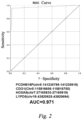
- the combined detection of the optimal methylated regions of four target genes including PCDHB18P, CDO1, HOXA9 and LYPD5 (if any one of genes was positive, the methylation detection was interpreted as positive), was analyzed compared with a tumor molecular marker CA125 (a commonly used detection means in clinical practice) detection.
- the results of the comparative analysis are shown in Table 8. It can be seen from Table 8: the positive predictive value (0.984) from the combined detection of the methylation status of the optimal methylated regions of the four genes was significantly higher than that of the tumor molecular marker CA125 (0.736). Table 8.
- DNA methylation has a high positive predictive value for early detection of ovarian cancer, and the detection can be done with plasma samples.
- the present invention uses special primer and probe design skills (for specially capturing low-copy plasma free DNA fragments), and combined detection of multi-target gene methylation regions, which are functionally complementary, and significantly improve the detection of early ovarian cancer.
Landscapes
- Chemical & Material Sciences (AREA)
- Life Sciences & Earth Sciences (AREA)
- Health & Medical Sciences (AREA)
- Organic Chemistry (AREA)
- Proteomics, Peptides & Aminoacids (AREA)
- Engineering & Computer Science (AREA)
- Zoology (AREA)
- Wood Science & Technology (AREA)
- Immunology (AREA)
- Analytical Chemistry (AREA)
- Genetics & Genomics (AREA)
- Pathology (AREA)
- Physics & Mathematics (AREA)
- Biotechnology (AREA)
- Microbiology (AREA)
- Molecular Biology (AREA)
- Biophysics (AREA)
- Biochemistry (AREA)
- Bioinformatics & Cheminformatics (AREA)
- General Engineering & Computer Science (AREA)
- General Health & Medical Sciences (AREA)
- Hospice & Palliative Care (AREA)
- Oncology (AREA)
- Chemical Kinetics & Catalysis (AREA)
- Measuring Or Testing Involving Enzymes Or Micro-Organisms (AREA)
Applications Claiming Priority (2)
| Application Number | Priority Date | Filing Date | Title |
|---|---|---|---|
| CN202210208334.2A CN114480655B (zh) | 2022-03-03 | 2022-03-03 | Dna甲基化标志物组合及应用、卵巢癌早期检测引物探针及试剂盒 |
| PCT/CN2022/095437 WO2023165035A1 (fr) | 2022-03-03 | 2022-05-27 | Combinaison de marqueurs de méthylation de l'adn, utilisation, sonde d'amorce pour la détection précoce du cancer ovarien et kit |
Publications (2)
| Publication Number | Publication Date |
|---|---|
| EP4265738A1 true EP4265738A1 (fr) | 2023-10-25 |
| EP4265738A4 EP4265738A4 (fr) | 2025-05-07 |
Family
ID=81486480
Family Applications (1)
| Application Number | Title | Priority Date | Filing Date |
|---|---|---|---|
| EP22737702.5A Pending EP4265738A4 (fr) | 2022-03-03 | 2022-05-27 | Combinaison de marqueurs de méthylation de l'adn, utilisation, sonde d'amorce pour la détection précoce du cancer ovarien et kit |
Country Status (4)
| Country | Link |
|---|---|
| US (1) | US11866790B2 (fr) |
| EP (1) | EP4265738A4 (fr) |
| CN (1) | CN114480655B (fr) |
| WO (1) | WO2023165035A1 (fr) |
Families Citing this family (3)
| Publication number | Priority date | Publication date | Assignee | Title |
|---|---|---|---|---|
| CN114480655B (zh) * | 2022-03-03 | 2024-07-16 | 北京起源聚禾生物科技有限公司 | Dna甲基化标志物组合及应用、卵巢癌早期检测引物探针及试剂盒 |
| CN118326045A (zh) * | 2024-05-21 | 2024-07-12 | 国药(武汉)医学实验室有限公司 | 卵巢癌基因甲基化检测用引物对及试剂盒 |
| CN119506425A (zh) * | 2024-09-05 | 2025-02-25 | 华中科技大学同济医学院附属同济医院 | 一种dna甲基化的核酸组合及应用、检测引物探针和试剂盒 |
Family Cites Families (15)
| Publication number | Priority date | Publication date | Assignee | Title |
|---|---|---|---|---|
| WO2009108917A2 (fr) * | 2008-02-29 | 2009-09-03 | Oncomethylome Sciences, S.A. | Marqueurs pour la détection améliorée du cancer du sein |
| WO2012031008A2 (fr) * | 2010-08-31 | 2012-03-08 | The General Hospital Corporation | Matières biologiques liées au cancer dans des microvésicules |
| US20130022974A1 (en) * | 2011-06-17 | 2013-01-24 | The Regents Of The University Of Michigan | Dna methylation profiles in cancer |
| WO2013096661A1 (fr) * | 2011-12-22 | 2013-06-27 | Illumina, Inc. | Biomarqueurs de méthylation utilisés pour le cancer de l'ovaire |
| TW201632629A (zh) | 2015-01-14 | 2016-09-16 | 臺北醫學大學 | 用於癌症診斷與預後的方法 |
| CN104762386B (zh) * | 2015-04-02 | 2017-08-25 | 中国科学院化学研究所 | 一种检测癌症相关dna甲基化的试剂盒及应用 |
| CN108699602B (zh) * | 2015-08-06 | 2022-01-11 | 犹他州立大学研究基金会 | 鉴定男性能育性状态和胚胎质量的方法 |
| WO2017040411A1 (fr) * | 2015-09-04 | 2017-03-09 | The Johns Hopkins University | Compositions et méthodes pour détecter et diagnostiquer une néoplasie |
| CA3023335A1 (fr) * | 2016-05-04 | 2017-11-30 | Queen's University At Kingston | Detection sans cellules d'adn tumoral methyle |
| WO2017218908A2 (fr) * | 2016-06-16 | 2017-12-21 | The Johns Hopkins University | Procédés et système d'analyse épigénétique |
| TWI648403B (zh) | 2016-07-29 | 2019-01-21 | Taipei Medical University (Tmu) | 婦科腫瘤的診斷方法 |
| CN111961723A (zh) * | 2020-07-17 | 2020-11-20 | 潘志文 | 用于早期卵巢癌诊断的无创检测的肿瘤标志物及试剂盒 |
| CN112501298B (zh) * | 2020-12-07 | 2022-04-01 | 北京起源聚禾生物科技有限公司 | 一种甲基化无创早期检测卵巢癌的组合物及试剂盒 |
| CN113337614A (zh) * | 2021-08-05 | 2021-09-03 | 北京起源聚禾生物科技有限公司 | 子宫内膜癌早期筛查诊断用标志物、引物探针及试剂盒 |
| CN114480655B (zh) * | 2022-03-03 | 2024-07-16 | 北京起源聚禾生物科技有限公司 | Dna甲基化标志物组合及应用、卵巢癌早期检测引物探针及试剂盒 |
-
2022
- 2022-03-03 CN CN202210208334.2A patent/CN114480655B/zh active Active
- 2022-05-27 EP EP22737702.5A patent/EP4265738A4/fr active Pending
- 2022-05-27 WO PCT/CN2022/095437 patent/WO2023165035A1/fr not_active Ceased
- 2022-07-22 US US17/871,119 patent/US11866790B2/en active Active
Also Published As
| Publication number | Publication date |
|---|---|
| CN114480655A (zh) | 2022-05-13 |
| EP4265738A4 (fr) | 2025-05-07 |
| US20230279497A1 (en) | 2023-09-07 |
| WO2023165035A1 (fr) | 2023-09-07 |
| US11866790B2 (en) | 2024-01-09 |
| CN114480655B (zh) | 2024-07-16 |
Similar Documents
| Publication | Publication Date | Title |
|---|---|---|
| CN113755603B (zh) | 子宫内膜癌早期筛查诊断用标志物、引物探针及试剂盒 | |
| CN108977543B (zh) | 一种基于联合检测sdc2和sfrp2基因甲基化水平的结直肠癌早期诊断试剂 | |
| US11866790B2 (en) | Combination of DNA methylation markers and use thereof, primers, probes and kit for early detection of ovarian cancer | |
| CN114480661A (zh) | 子宫内膜良恶性病变联合标志物、检测引物探针组及试剂盒 | |
| WO2025077120A1 (fr) | Kit et procédé de détection du cancer de la vessie | |
| CN112501298B (zh) | 一种甲基化无创早期检测卵巢癌的组合物及试剂盒 | |
| CN116144782A (zh) | 一种用于肺癌检测的组合标志物及其应用 | |
| JP7823936B2 (ja) | 子宮頸部細胞の遺伝子メチル化検出キット及びその検出方法 | |
| EP4130297A1 (fr) | Marqueurs, amorces, sondes et kit pour le dépistage précoce et le diagnostic du cancer de l'endomètre | |
| CN116004831B (zh) | 一种用于膀胱癌的诊断或辅助诊断的试剂及检测试剂盒 | |
| CN118667958A (zh) | 用于子宫内膜癌筛查的标志物组合及检测试剂盒 | |
| CN115927610B (zh) | 检测foxo6基因中目标区域的甲基化水平的试剂在制备膀胱癌诊断产品中的应用 | |
| CN116463417A (zh) | 检测目标区域甲基化水平的试剂在制备肝癌诊断产品中的应用 | |
| CN114645094A (zh) | 一种子宫内膜癌的生物标志物及其应用 | |
| CN115948561B (zh) | 一种用于食管鳞癌诊断或辅助诊断的试剂、检测试剂盒及其应用 | |
| CN115961048B (zh) | 一种基因甲基化检测引物组合、试剂及其应用 | |
| CN113943810B (zh) | 子宫内膜癌检测的试剂及试剂盒 | |
| CN117187388A (zh) | Grik2基因作为标志物在制备肺癌检测试剂盒中的应用 | |
| CN116814790A (zh) | Pitx2基因作为标志物在检测肺癌中的应用 | |
| CN116694765A (zh) | 用于检测子宫内膜癌的试剂盒及其应用 | |
| CN117987545A (zh) | 一种用于乳腺癌辅助诊断的甲基化检测试剂、试剂盒及应用 | |
| CN117568480A (zh) | 一种用于乳腺癌或癌前病变检测的试剂、试剂盒及应用 | |
| CN117535415A (zh) | 一种用于乳腺癌检测的核酸组合物和试剂盒 | |
| CN119662824A (zh) | 一种诊断/筛查子宫内膜癌的试剂盒及其应用 | |
| CN116987787A (zh) | 检测膀胱癌是否复发的装置和计算机可读存储介质 |
Legal Events
| Date | Code | Title | Description |
|---|---|---|---|
| STAA | Information on the status of an ep patent application or granted ep patent |
Free format text: STATUS: UNKNOWN |
|
| STAA | Information on the status of an ep patent application or granted ep patent |
Free format text: STATUS: THE INTERNATIONAL PUBLICATION HAS BEEN MADE |
|
| PUAI | Public reference made under article 153(3) epc to a published international application that has entered the european phase |
Free format text: ORIGINAL CODE: 0009012 |
|
| STAA | Information on the status of an ep patent application or granted ep patent |
Free format text: STATUS: REQUEST FOR EXAMINATION WAS MADE |
|
| 17P | Request for examination filed |
Effective date: 20220720 |
|
| AK | Designated contracting states |
Kind code of ref document: A1 Designated state(s): AL AT BE BG CH CY CZ DE DK EE ES FI FR GB GR HR HU IE IS IT LI LT LU LV MC MK MT NL NO PL PT RO RS SE SI SK SM TR |
|
| P01 | Opt-out of the competence of the unified patent court (upc) registered |
Effective date: 20231108 |
|
| A4 | Supplementary search report drawn up and despatched |
Effective date: 20250408 |
|
| RIC1 | Information provided on ipc code assigned before grant |
Ipc: C12N 15/11 20060101ALI20250402BHEP Ipc: C12Q 1/6851 20180101ALI20250402BHEP Ipc: C12Q 1/6886 20180101AFI20250402BHEP |
|
| DAV | Request for validation of the european patent (deleted) | ||
| DAX | Request for extension of the european patent (deleted) | ||
| GRAP | Despatch of communication of intention to grant a patent |
Free format text: ORIGINAL CODE: EPIDOSNIGR1 |
|
| STAA | Information on the status of an ep patent application or granted ep patent |
Free format text: STATUS: GRANT OF PATENT IS INTENDED |
|
| INTG | Intention to grant announced |
Effective date: 20251201 |
|
| STAA | Information on the status of an ep patent application or granted ep patent |
Free format text: STATUS: THE APPLICATION IS DEEMED TO BE WITHDRAWN |