EP4257944B1 - Verfahren zur berechnung von restspannung - Google Patents
Verfahren zur berechnung von restspannung Download PDFInfo
- Publication number
- EP4257944B1 EP4257944B1 EP21902931.1A EP21902931A EP4257944B1 EP 4257944 B1 EP4257944 B1 EP 4257944B1 EP 21902931 A EP21902931 A EP 21902931A EP 4257944 B1 EP4257944 B1 EP 4257944B1
- Authority
- EP
- European Patent Office
- Prior art keywords
- strain
- stress
- deformed portion
- deformation
- residual stress
- Prior art date
- Legal status (The legal status is an assumption and is not a legal conclusion. Google has not performed a legal analysis and makes no representation as to the accuracy of the status listed.)
- Active
Links
Images
Classifications
-
- G—PHYSICS
- G01—MEASURING; TESTING
- G01N—INVESTIGATING OR ANALYSING MATERIALS BY DETERMINING THEIR CHEMICAL OR PHYSICAL PROPERTIES
- G01N3/00—Investigating strength properties of solid materials by application of mechanical stress
- G01N3/02—Details
- G01N3/06—Special adaptations of indicating or recording means
-
- G—PHYSICS
- G01—MEASURING; TESTING
- G01L—MEASURING FORCE, STRESS, TORQUE, WORK, MECHANICAL POWER, MECHANICAL EFFICIENCY, OR FLUID PRESSURE
- G01L1/00—Measuring force or stress, in general
- G01L1/06—Measuring force or stress, in general by measuring the permanent deformation of gauges, e.g. of compressed bodies
-
- G—PHYSICS
- G01—MEASURING; TESTING
- G01L—MEASURING FORCE, STRESS, TORQUE, WORK, MECHANICAL POWER, MECHANICAL EFFICIENCY, OR FLUID PRESSURE
- G01L5/00—Apparatus for, or methods of, measuring force, work, mechanical power, or torque, specially adapted for specific purposes
- G01L5/0047—Apparatus for, or methods of, measuring force, work, mechanical power, or torque, specially adapted for specific purposes measuring forces due to residual stresses
-
- G—PHYSICS
- G01—MEASURING; TESTING
- G01N—INVESTIGATING OR ANALYSING MATERIALS BY DETERMINING THEIR CHEMICAL OR PHYSICAL PROPERTIES
- G01N3/00—Investigating strength properties of solid materials by application of mechanical stress
- G01N3/20—Investigating strength properties of solid materials by application of mechanical stress by applying steady bending forces
-
- G—PHYSICS
- G01—MEASURING; TESTING
- G01N—INVESTIGATING OR ANALYSING MATERIALS BY DETERMINING THEIR CHEMICAL OR PHYSICAL PROPERTIES
- G01N2203/00—Investigating strength properties of solid materials by application of mechanical stress
- G01N2203/0058—Kind of property studied
- G01N2203/0069—Fatigue, creep, strain-stress relations or elastic constants
-
- G—PHYSICS
- G01—MEASURING; TESTING
- G01N—INVESTIGATING OR ANALYSING MATERIALS BY DETERMINING THEIR CHEMICAL OR PHYSICAL PROPERTIES
- G01N2203/00—Investigating strength properties of solid materials by application of mechanical stress
- G01N2203/02—Details not specific for a particular testing method
- G01N2203/0202—Control of the test
- G01N2203/0212—Theories, calculations
-
- G—PHYSICS
- G01—MEASURING; TESTING
- G01N—INVESTIGATING OR ANALYSING MATERIALS BY DETERMINING THEIR CHEMICAL OR PHYSICAL PROPERTIES
- G01N2203/00—Investigating strength properties of solid materials by application of mechanical stress
- G01N2203/02—Details not specific for a particular testing method
- G01N2203/06—Indicating or recording means; Sensing means
- G01N2203/067—Parameter measured for estimating the property
- G01N2203/0676—Force, weight, load, energy, speed or acceleration
-
- Y—GENERAL TAGGING OF NEW TECHNOLOGICAL DEVELOPMENTS; GENERAL TAGGING OF CROSS-SECTIONAL TECHNOLOGIES SPANNING OVER SEVERAL SECTIONS OF THE IPC; TECHNICAL SUBJECTS COVERED BY FORMER USPC CROSS-REFERENCE ART COLLECTIONS [XRACs] AND DIGESTS
- Y02—TECHNOLOGIES OR APPLICATIONS FOR MITIGATION OR ADAPTATION AGAINST CLIMATE CHANGE
- Y02P—CLIMATE CHANGE MITIGATION TECHNOLOGIES IN THE PRODUCTION OR PROCESSING OF GOODS
- Y02P10/00—Technologies related to metal processing
- Y02P10/20—Recycling
Definitions
- the residual stress generated in the press forming product has been measured using X-rays or ultrasonic waves and predicted by finite element analysis.
- Patent Literature 1 discloses a technique in which a sample is irradiated with X-rays, diffractive X-rays emitted from the sample are detected, and stress inside the sample is measured in a non-destructive manner based on information on the diffractive X-rays.
- Patent Literature 2 discloses a technique in which ultrasonic waves are generated in a plastically deformed subject to be inspected (for example, a metal sheet or the like), and the residual stress is measured in a non-destructive manner based on sound velocity information on the measured ultrasonic waves.
- Non Patent Literature 1 F. Yoshida and T. Uemori, International Journal of Mechanical Sciences, 45 (2003), 1687-1702 .
- the present invention has been made in view of the above problems, and an object of the present invention is to provide a method of calculating residual stress, the method being capable of accurately and easily calculating residual stress of a metal sheet subjected to plastic deformation.
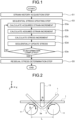
- a method of calculating residual stress calculates residual stress of a metal sheet subjected to plastic deformation and includes: a strain history acquisition step of measuring strain of a deformed portion of the metal sheet in a deformation process of plastically deforming the metal sheet and acquiring a strain history of the measured strain; a sequential stress updating step of calculating a stress increment of the deformed portion in the deformation process according to a material constitutive model using an acquired strain increment calculated, by assuming a deformation state of the deformed portion, from the strain history and an assumed strain increment calculated from strain other than the strain from which the strain history is acquired, and sequentially updating stress from a start to an end of deformation of the deformed portion using the calculated stress increment; and a residual stress determination step of determining, as residual stress of the deformed portion, the stress of the deformed portion at the end of the deformation in the deformation process among the stresses sequentially updated in the sequential stress updating step.
- a strain history of strain in in-plane two directions and in-plane shear strain at the deformed portion may be measured by a digital image correlation method, and these strain histories are acquired.
- the deformation state may be assumed from the deformation process of the deformed portion, and the assumed strain increment may be calculated based on a plasticity theory in the assumed deformation state.
- a method of calculating residual stress calculates residual stress of a metal sheet subjected to plastic deformation, and includes a strain history acquisition step S1, a sequential stress updating step S3, and a residual stress determination step S5 as illustrated in FIG. 1 . Each of these steps will be described below with reference to FIG. 1 .
- a deformed portion of the metal sheet refers to a portion plastically deformed in the deformation process of the metal sheet. Then, in the present embodiment, two cameras are installed at positions where the surface of the deformed portion of the metal sheet can be photographed, and a strain history of the surface of the deformed portion in the deformation process is acquired by a digital image correlation method (hereinafter referred to as "DIC").
- DIC digital image correlation method
- the surface of the deformed portion of the metal sheet in the deformation process is imaged at predetermined time intervals, and the images captured in each time step are subjected to image analysis to measure strain in in-plane two directions and in-plane shear strain at a predetermined position on the surface of the deformed portion.
- image analysis to measure strain in in-plane two directions and in-plane shear strain at a predetermined position on the surface of the deformed portion.
- the acquisition of the strain history in the strain history acquisition step is not limited to be performed by the DIC, and a strain gauge may be attached to the surface of the deformed portion of the metal sheet to acquire the strain history of the surface of the deformed portion in the deformation process.
- the sequential stress updating step S3 is a step of calculating a stress increment of the deformed portion in the deformation process according to a material constitutive model using an acquired strain increment calculated from the strain history acquired in the strain history acquisition step S1 and an assumed strain increment calculated, by assuming the deformation state of the deformed portion, from strain other than the strain from which the strain history is acquired, and sequentially updating the stress from the start to the end of the deformation of the deformed portion using the calculated stress increment.
- Specific processing in the sequential stress updating step S3 is performed as follows.
- an acquired strain increment is calculated from the strain history acquired in the strain history acquisition step S1 (S3a).
- the acquired strain increment is a strain increment of each of the strain in the in-plane two directions and the in-plane shear strain.
- the acquired strain increment is calculated at each time step in the deformation process.
- the acquired strain increment at each time step can be calculated from, for example, each strain at time steps and before and after the time step.
- the assumed strain increment is a strain increment of strain other than the strain from which the strain history is acquired in the strain history acquisition step. Then, the strain other than the strain from which the strain history is acquired is obtained based on plasticity theory in the assumed deformation state assuming the deformation state from the deformation process of the deformed portion.
- strain history acquisition step S1 in each time step in the deformation process, three-component strains of strains ⁇ x and ⁇ y in the in-plane two directions (x direction and y direction) of the surface of the metal sheet and the in-plane (xy plane) shear strain ⁇ xy are measured.
- strains ( ⁇ x , ⁇ y , ⁇ 2 , ⁇ xy , ⁇ yz , ⁇ zx ) of six components including not only the in-plane direction but also the out-plane direction (z direction) are generated in the deformed portion of the metal sheet.
- the surface of the metal sheet in the deformation process is a free surface, no stress is generated in the direction perpendicular to the surface of the metal sheet. That is, the deformation state of the deformed portion of the metal sheet can be assumed as a plane stress state.
- the deformation state of the deformed portion is a plane stress state
- the stress increment in the out-plane direction is zero, so that the strain ( ⁇ z ) in the out-plane direction can be uniquely obtained using equation of the strain and the stress increment based on the plasticity theory.
- the strain other than the strain from which the strain history is acquired in the strain history acquisition step S1 can be obtained based on the plasticity theory in the assumed deformation state.
- the strain other than the strain from which the strain history is acquired is obtained.
- the assumed strain increment is calculated from the strain obtained at each time step in the deformation process.
- the assumed strain increment at each time step can be calculated, for example, from the strain obtained at the time step and a time step before the above-mentioned time step.
- the calculation of the assumed strain increment (S3b) is not limited to the calculation from the strain obtained by assuming the deformation state as described above, and includes a case where a value of the assumed strain increment is given based on another assumed deformation state.
- Equation (1) The elasto-plastic coefficient tensor C ep in Equation (1) can be given by Equation (2).
- C ep C e ⁇ C e : r ⁇ ⁇ f ⁇ ⁇ : C e ⁇ ⁇ f ⁇ q ⁇ h + ⁇ f ⁇ ⁇ : C e : r
- the strain increment is obtained according to the material constitutive model.
- the strain increment is preferably 10 -6 or less.
- the residual stress can be easily calculated by acquiring the strain history in the deformation process of the metal sheet actually subjected to plastic deformation.
- the present invention it is not necessary to perform the finite element analysis on the entire metal sheet including the deformed portion, thereby making it possible to calculate the residual stress of the deformed portion in a shorter time as compared with a case where the residual stress is predicted by performing the finite element analysis on the entire metal sheet serving as an analysis target.
- the finite element analysis using a solid element in which the stress in the sheet thickness direction can be calculated with high accuracy is hardly used for press forming analysis of a general press forming product because the calculation time significantly increases.
- the deformation state of the deformed portion can be predicted in a short time and with high accuracy even if a solid element is used. Therefore, in the present invention, it is possible to calculate the residual stress with higher accuracy by assuming the predicted deformation state by the finite element analysis using the solid element and combining the acquisition of the strain history in the deformation process.
- the strain history is acquired by capturing an image of the deformed portion using a general camera in the DIC, it is also conceivable that the time interval for capturing an image is about one second. In such a case, since it is possible to obtain a strain value between consecutive time steps by interpolating the strain values measured at the consecutive time steps, the strain history may be acquired at predetermined time intervals.
- the strain history acquired in the strain history acquisition step is considered to include measurement noise. Therefore, when the stress increment is calculated using the minute strain increment (acquired strain increment) calculated from the strain history in the sequential stress updating step, the influence of the measurement noise of the strain history on the stress increment increases, and the accuracy of the calculated residual stress may decrease. In such a case, it is preferable to smooth the strain history by a low pass filter or the like for noise removal, thereby making it possible to calculate the residual stress with high accuracy.
- the residual stress obtained by the method of the present invention and the error thereof were calculated based on the residual stress calculated by the finite element method capable of obtaining the residual stress with high accuracy.
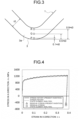
- a metal sheet 1 was plastically deformed by a roller bending test, and the residual stress of an edge face 3a in a deformed portion 3 of the metal sheet 1 was calculated.
- a pair of left and right rollers 11 having a diameter (D) of 20 mm were installed at a center-to-center distance (L) of 35 mm, and the metal sheet 1 was placed on the upper surface of the roller 11.
- the roller 11 is provided with a mechanism that smoothly rotates following deformation of the metal sheet 1.
- the punch 13 was pushed by 10 mm at a speed of 10 mm/min. Thereafter, the load was removed until the punch 13 and the metal sheet 1 were separated, bending deformation was applied to the deformed portion 3 of the metal sheet 1, and the strain history of the edge face 3a of the deformed portion 3 in the deformation process of plastically deforming the metal sheet 1 was acquired.
- strain histories of strain in the in-plane two directions (x direction and y direction in FIG. 2 ) and in-plane (xy plane in FIG. 2 ) shear strain of the edge face 3a of the deformed portion 3 of the metal sheet 1 were acquired by DIC.
- the stress increment of the deformed portion 3 in the deformation process was calculated using the acquired strain increment calculated from the acquired strain history and the assumed strain increment calculated by assuming the deformation state of the deformed portion.
- the stress in the out-plane direction (z direction in FIG. 2 ) was set to 0, and the stress increment was calculated by Equations (1) and (4) shown in the above-described embodiment.
- Equation (4) was given a yield function of isotropic von Mises.
Landscapes
- Physics & Mathematics (AREA)
- General Physics & Mathematics (AREA)
- Health & Medical Sciences (AREA)
- Life Sciences & Earth Sciences (AREA)
- Chemical & Material Sciences (AREA)
- Analytical Chemistry (AREA)
- Biochemistry (AREA)
- General Health & Medical Sciences (AREA)
- Immunology (AREA)
- Pathology (AREA)
- Investigating Strength Of Materials By Application Of Mechanical Stress (AREA)
Claims (4)
- Verfahren zur Berechnung von Restspannung, wobei das Verfahren die Restspannung eines Metallblechs berechnet, das einer plastischen Verformung unterzogen wird, und Folgendes umfasst:einen Schritt zur Erfassung der Dehnungshistorie, bei dem die Dehnung eines verformten Abschnitts des Metallblechs in einem Verformungsprozess der plastischen Verformung des Metallblechs gemessen wird und eine Dehnungshistorie der gemessenen Dehnung erfasst wird,dadurch gekennzeichnet, dass es ferner Folgendes umfasst:einen Schritt der sequentiellen Spannungsaktualisierung, bei dem ein Spannungsinkrement des verformten Abschnitts in dem Verformungsprozess gemäß einem Materialkonstitutivmodell unter Verwendung eines erfassten Dehnungsinkrements, das aus der Dehnungshistorie berechnet wird, und eines angenommenen Dehnungsinkrements, das durch Annahme eines Verformungszustands des verformten Abschnitts aus einer anderen Dehnung als der Dehnung, aus der die Dehnungshistorie erfasst wird, berechnet wird, und die Spannung von einem Anfang bis zu einem Ende der Verformung des verformten Abschnitts unter Verwendung des berechneten Spannungsinkrements sequentiell aktualisiert wird; undeinen Restspannungs-Bestimmungsschritt, bei dem als Restspannung des verformten Abschnitts die Spannung des verformten Abschnitts am Ende der Verformung im Verformungsprozess unter den Spannungen bestimmt wird, die nacheinander im Schritt der sequenziellen Spannungsaktualisierung aktualisiert werden.
- Verfahren zur Berechnung der Restspannung gemäß Anspruch 1, wobei im Schritt der Erfassung der Dehnungshistorie eine Dehnungshistorie der Dehnung in zwei Richtungen in der Ebene und der Scherung in der Ebene am verformten Abschnitt durch ein digitales Bildkorrelationsverfahren gemessen wird und diese Dehnungshistorien erfasst werden.
- Verfahren zur Berechnung der Restspannung gemäß Anspruch 1 oder 2, wobei in dem Schritt der sequentiellen Spannungsaktualisierung der Verformungszustand aus dem Verformungsprozess des verformten Abschnitts angenommen wird und das angenommene Dehnungsinkrement auf der Grundlage einer Plastizitätstheorie in dem angenommenen Verformungszustand berechnet wird.
- Verfahren zur Berechnung der Restspannung gemäß Anspruch 1 oder 2, wobei im Schritt der sequentiellen Spannungsaktualisierung der Verformungszustand des verformten Abschnitts durch eine Finite-Elemente-Analyse im Verformungsprozess des Metallblechs angenommen wird und das angenommene Dehnungsinkrement auf der Grundlage des angenommenen Verformungszustands berechnet wird.
Applications Claiming Priority (2)
| Application Number | Priority Date | Filing Date | Title |
|---|---|---|---|
| JP2020203148A JP6981521B1 (ja) | 2020-12-08 | 2020-12-08 | 残留応力の算出方法 |
| PCT/JP2021/029696 WO2022123825A1 (ja) | 2020-12-08 | 2021-08-12 | 残留応力の算出方法 |
Publications (3)
| Publication Number | Publication Date |
|---|---|
| EP4257944A1 EP4257944A1 (de) | 2023-10-11 |
| EP4257944A4 EP4257944A4 (de) | 2024-07-31 |
| EP4257944B1 true EP4257944B1 (de) | 2025-04-09 |
Family
ID=79191007
Family Applications (1)
| Application Number | Title | Priority Date | Filing Date |
|---|---|---|---|
| EP21902931.1A Active EP4257944B1 (de) | 2020-12-08 | 2021-08-12 | Verfahren zur berechnung von restspannung |
Country Status (7)
| Country | Link |
|---|---|
| US (1) | US20240027314A1 (de) |
| EP (1) | EP4257944B1 (de) |
| JP (1) | JP6981521B1 (de) |
| KR (1) | KR102927628B1 (de) |
| CN (1) | CN116569011B (de) |
| MX (1) | MX2023006759A (de) |
| WO (1) | WO2022123825A1 (de) |
Families Citing this family (3)
| Publication number | Priority date | Publication date | Assignee | Title |
|---|---|---|---|---|
| JP7698209B2 (ja) * | 2021-12-23 | 2025-06-25 | 日本製鉄株式会社 | 解析装置、解析方法、製造方法及びプログラム |
| JP7447957B1 (ja) | 2022-09-29 | 2024-03-12 | Jfeスチール株式会社 | 残留応力分布の算出方法、装置及びプログラム |
| JP7605277B1 (ja) | 2023-11-10 | 2024-12-24 | Jfeスチール株式会社 | 金属板のせん断加工試験方法、金属板のせん断加工試験システム、及び金属板のせん断加工材の製造方法 |
Family Cites Families (14)
| Publication number | Priority date | Publication date | Assignee | Title |
|---|---|---|---|---|
| JPS58162838A (ja) * | 1982-03-24 | 1983-09-27 | Mitsubishi Heavy Ind Ltd | 弾塑性応力解析方法 |
| JPS6411339A (en) * | 1987-07-06 | 1989-01-13 | Toshiba Corp | Stress analysis of semiconductor device |
| CN1112575C (zh) * | 1999-02-09 | 2003-06-25 | 中国科学院金属研究所 | 一种剩余残余应力的测定方法 |
| JP2002333409A (ja) | 2001-05-09 | 2002-11-22 | Shimadzu Corp | X線応力測定装置 |
| JP2009281782A (ja) * | 2008-05-20 | 2009-12-03 | Nippon Steel Corp | 残留応力分布予測方法、転位密度予測方法、残留応力分布予測装置、転位密度予測装置、プログラム及び記録媒体 |
| JP5251911B2 (ja) | 2010-03-23 | 2013-07-31 | 新日鐵住金株式会社 | 残留応力算出装置、残留応力測定装置、残留応力算出方法、残留応力測定方法およびプログラム |
| KR101206851B1 (ko) * | 2010-05-11 | 2012-11-30 | 서강대학교산학협력단 | 재료의 잔류응력 평가 방법 |
| ITRM20120017A1 (it) | 2012-01-18 | 2013-07-19 | Univ Degli Studi Roma Tre | Metodo per la misura del rapporto di poisson e dello stress residuo |
| JP5582211B1 (ja) * | 2013-03-14 | 2014-09-03 | Jfeスチール株式会社 | 応力−ひずみ関係シミュレート方法、スプリングバック量予測方法およびスプリングバック解析装置 |
| JP5955301B2 (ja) * | 2013-11-14 | 2016-07-20 | 株式会社神戸製鋼所 | 残留応力算出方法 |
| JP2016031348A (ja) * | 2014-07-30 | 2016-03-07 | Jfeスチール株式会社 | 残留応力測定装置および残留応力測定方法 |
| KR101924024B1 (ko) | 2017-05-24 | 2018-11-30 | 울산과학기술원 | 디지털 이미지 상관관계를 이용하는 응력 측정방법 및 그 장치 |
| JP2019124481A (ja) * | 2018-01-12 | 2019-07-25 | 株式会社神戸製鋼所 | 残留応力測定方法 |
| CN111964817B (zh) * | 2020-07-08 | 2022-04-29 | 中国特种设备检测研究院 | 基于磁巴克豪森噪声的平面应力确定方法及装置 |
-
2020
- 2020-12-08 JP JP2020203148A patent/JP6981521B1/ja active Active
-
2021
- 2021-08-12 KR KR1020237022483A patent/KR102927628B1/ko active Active
- 2021-08-12 WO PCT/JP2021/029696 patent/WO2022123825A1/ja not_active Ceased
- 2021-08-12 CN CN202180082360.9A patent/CN116569011B/zh active Active
- 2021-08-12 US US18/265,542 patent/US20240027314A1/en active Pending
- 2021-08-12 EP EP21902931.1A patent/EP4257944B1/de active Active
- 2021-08-12 MX MX2023006759A patent/MX2023006759A/es unknown
Also Published As
| Publication number | Publication date |
|---|---|
| EP4257944A4 (de) | 2024-07-31 |
| CN116569011B (zh) | 2025-09-26 |
| EP4257944A1 (de) | 2023-10-11 |
| KR20230112720A (ko) | 2023-07-27 |
| JP6981521B1 (ja) | 2021-12-15 |
| CN116569011A (zh) | 2023-08-08 |
| US20240027314A1 (en) | 2024-01-25 |
| WO2022123825A1 (ja) | 2022-06-16 |
| KR102927628B1 (ko) | 2026-02-12 |
| JP2022090698A (ja) | 2022-06-20 |
| MX2023006759A (es) | 2023-06-19 |
Similar Documents
| Publication | Publication Date | Title |
|---|---|---|
| Vayssette et al. | Numerical modelling of surface roughness effect on the fatigue behavior of Ti-6Al-4V obtained by additive manufacturing | |
| EP4257944A1 (de) | Verfahren zur berechnung von restspannung | |
| Wang et al. | Measuring forming limit strains with digital image correlation analysis | |
| Lim et al. | Time-dependent springback of advanced high strength steels | |
| JP5866892B2 (ja) | 応力−歪み関係評価方法およびスプリングバック量予測方法 | |
| JP6856632B2 (ja) | 材料の曲げ応答を特徴付けるための方法及びコンピュータープログラム製品 | |
| Asgharzadeh et al. | Determination of hardness-strength and-flow behavior relationships in bulged aluminum alloys and verification by FE analysis on Rockwell hardness test | |
| Reche et al. | Analysis of the air-bending test using finite-element simulation: Application to steel sheets | |
| KR20250010709A (ko) | 금속판의 성형 한계 취득 방법 및 장치 | |
| Abedini et al. | Fracture characterization of automotive alloys in shear loading | |
| Gonzáles et al. | Characterization of discontinuous crack closure behavior after the application of a single overload cycle | |
| EP2913115B1 (de) | Biegemachine | |
| Di Leonardo et al. | Standard mechanical testing is inadequate for the mechanical characterisation of shape-memory alloys: Source of errors and a new corrective approach | |
| EP3932578B1 (de) | Verfahren zur bewertung eines biegerisses, system zur bewertung eines biegerisses und verfahren zur herstellung einer pressgeformten komponente | |
| Siegmann et al. | Experimental approach for the determination of the Bridgman’s necking parameters | |
| EP4575437B1 (de) | Verfahren, vorrichtung und programm zur berechnung der restspannungsverteilung | |
| Nietsch et al. | Comparative study of elastic properties measurement techniques during plastic deformation of aluminum, magnesium, and titanium alloys: application to springback simulation | |
| CN120213645B (zh) | 一种紧固件的抗拉伸性能检测方法及装置 | |
| EP4134183B1 (de) | Verfahren zur identifizierung der verengungsgrenze einer metallplatte | |
| Khayatzadeh et al. | Effect of plastic deformation on elastic and plastic recovery in CP-titanium | |
| JP7741381B2 (ja) | 金属材料の破断評価方法 | |
| JP4798983B2 (ja) | ロール矯正機通板時の残留応力推定方法 | |
| JP7605277B1 (ja) | 金属板のせん断加工試験方法、金属板のせん断加工試験システム、及び金属板のせん断加工材の製造方法 | |
| Jiang | Initial grain size effect on mechanical properties and springback behavior of thin metal sheets with varying rolling reduction ratios | |
| JP7484997B1 (ja) | プレス成形品の形状変化予測方法、装置及びプログラム、並びにプレス成形品の製造方法 |
Legal Events
| Date | Code | Title | Description |
|---|---|---|---|
| STAA | Information on the status of an ep patent application or granted ep patent |
Free format text: STATUS: THE INTERNATIONAL PUBLICATION HAS BEEN MADE |
|
| PUAI | Public reference made under article 153(3) epc to a published international application that has entered the european phase |
Free format text: ORIGINAL CODE: 0009012 |
|
| STAA | Information on the status of an ep patent application or granted ep patent |
Free format text: STATUS: REQUEST FOR EXAMINATION WAS MADE |
|
| 17P | Request for examination filed |
Effective date: 20230605 |
|
| AK | Designated contracting states |
Kind code of ref document: A1 Designated state(s): AL AT BE BG CH CY CZ DE DK EE ES FI FR GB GR HR HU IE IS IT LI LT LU LV MC MK MT NL NO PL PT RO RS SE SI SK SM TR |
|
| DAV | Request for validation of the european patent (deleted) | ||
| DAX | Request for extension of the european patent (deleted) | ||
| A4 | Supplementary search report drawn up and despatched |
Effective date: 20240626 |
|
| RIC1 | Information provided on ipc code assigned before grant |
Ipc: G01L 1/00 20060101AFI20240621BHEP |
|
| GRAP | Despatch of communication of intention to grant a patent |
Free format text: ORIGINAL CODE: EPIDOSNIGR1 |
|
| STAA | Information on the status of an ep patent application or granted ep patent |
Free format text: STATUS: GRANT OF PATENT IS INTENDED |
|
| INTG | Intention to grant announced |
Effective date: 20250121 |
|
| GRAS | Grant fee paid |
Free format text: ORIGINAL CODE: EPIDOSNIGR3 |
|
| GRAA | (expected) grant |
Free format text: ORIGINAL CODE: 0009210 |
|
| STAA | Information on the status of an ep patent application or granted ep patent |
Free format text: STATUS: THE PATENT HAS BEEN GRANTED |
|
| AK | Designated contracting states |
Kind code of ref document: B1 Designated state(s): AL AT BE BG CH CY CZ DE DK EE ES FI FR GB GR HR HU IE IS IT LI LT LU LV MC MK MT NL NO PL PT RO RS SE SI SK SM TR |
|
| REG | Reference to a national code |
Ref country code: GB Ref legal event code: FG4D |
|
| REG | Reference to a national code |
Ref country code: CH Ref legal event code: EP |
|
| REG | Reference to a national code |
Ref country code: DE Ref legal event code: R096 Ref document number: 602021029074 Country of ref document: DE |
|
| REG | Reference to a national code |
Ref country code: IE Ref legal event code: FG4D |
|
| REG | Reference to a national code |
Ref country code: NL Ref legal event code: MP Effective date: 20250409 |
|
| PG25 | Lapsed in a contracting state [announced via postgrant information from national office to epo] |
Ref country code: NL Free format text: LAPSE BECAUSE OF FAILURE TO SUBMIT A TRANSLATION OF THE DESCRIPTION OR TO PAY THE FEE WITHIN THE PRESCRIBED TIME-LIMIT Effective date: 20250409 |
|
| REG | Reference to a national code |
Ref country code: AT Ref legal event code: MK05 Ref document number: 1783905 Country of ref document: AT Kind code of ref document: T Effective date: 20250409 |
|
| PG25 | Lapsed in a contracting state [announced via postgrant information from national office to epo] |
Ref country code: FI Free format text: LAPSE BECAUSE OF FAILURE TO SUBMIT A TRANSLATION OF THE DESCRIPTION OR TO PAY THE FEE WITHIN THE PRESCRIBED TIME-LIMIT Effective date: 20250409 Ref country code: PT Free format text: LAPSE BECAUSE OF FAILURE TO SUBMIT A TRANSLATION OF THE DESCRIPTION OR TO PAY THE FEE WITHIN THE PRESCRIBED TIME-LIMIT Effective date: 20250811 Ref country code: ES Free format text: LAPSE BECAUSE OF FAILURE TO SUBMIT A TRANSLATION OF THE DESCRIPTION OR TO PAY THE FEE WITHIN THE PRESCRIBED TIME-LIMIT Effective date: 20250409 |
|
| PGFP | Annual fee paid to national office [announced via postgrant information from national office to epo] |
Ref country code: DE Payment date: 20250828 Year of fee payment: 5 |
|
| REG | Reference to a national code |
Ref country code: LT Ref legal event code: MG9D |
|
| PG25 | Lapsed in a contracting state [announced via postgrant information from national office to epo] |
Ref country code: GR Free format text: LAPSE BECAUSE OF FAILURE TO SUBMIT A TRANSLATION OF THE DESCRIPTION OR TO PAY THE FEE WITHIN THE PRESCRIBED TIME-LIMIT Effective date: 20250710 Ref country code: NO Free format text: LAPSE BECAUSE OF FAILURE TO SUBMIT A TRANSLATION OF THE DESCRIPTION OR TO PAY THE FEE WITHIN THE PRESCRIBED TIME-LIMIT Effective date: 20250709 |
|
| PG25 | Lapsed in a contracting state [announced via postgrant information from national office to epo] |
Ref country code: PL Free format text: LAPSE BECAUSE OF FAILURE TO SUBMIT A TRANSLATION OF THE DESCRIPTION OR TO PAY THE FEE WITHIN THE PRESCRIBED TIME-LIMIT Effective date: 20250409 |
|
| PG25 | Lapsed in a contracting state [announced via postgrant information from national office to epo] |
Ref country code: BG Free format text: LAPSE BECAUSE OF FAILURE TO SUBMIT A TRANSLATION OF THE DESCRIPTION OR TO PAY THE FEE WITHIN THE PRESCRIBED TIME-LIMIT Effective date: 20250409 |
|
| PG25 | Lapsed in a contracting state [announced via postgrant information from national office to epo] |
Ref country code: HR Free format text: LAPSE BECAUSE OF FAILURE TO SUBMIT A TRANSLATION OF THE DESCRIPTION OR TO PAY THE FEE WITHIN THE PRESCRIBED TIME-LIMIT Effective date: 20250409 |
|
| PG25 | Lapsed in a contracting state [announced via postgrant information from national office to epo] |
Ref country code: AT Free format text: LAPSE BECAUSE OF FAILURE TO SUBMIT A TRANSLATION OF THE DESCRIPTION OR TO PAY THE FEE WITHIN THE PRESCRIBED TIME-LIMIT Effective date: 20250409 |
|
| PGFP | Annual fee paid to national office [announced via postgrant information from national office to epo] |
Ref country code: FR Payment date: 20250826 Year of fee payment: 5 |
|
| PG25 | Lapsed in a contracting state [announced via postgrant information from national office to epo] |
Ref country code: RS Free format text: LAPSE BECAUSE OF FAILURE TO SUBMIT A TRANSLATION OF THE DESCRIPTION OR TO PAY THE FEE WITHIN THE PRESCRIBED TIME-LIMIT Effective date: 20250709 |
|
| PG25 | Lapsed in a contracting state [announced via postgrant information from national office to epo] |
Ref country code: IS Free format text: LAPSE BECAUSE OF FAILURE TO SUBMIT A TRANSLATION OF THE DESCRIPTION OR TO PAY THE FEE WITHIN THE PRESCRIBED TIME-LIMIT Effective date: 20250809 |
|
| PG25 | Lapsed in a contracting state [announced via postgrant information from national office to epo] |
Ref country code: LV Free format text: LAPSE BECAUSE OF FAILURE TO SUBMIT A TRANSLATION OF THE DESCRIPTION OR TO PAY THE FEE WITHIN THE PRESCRIBED TIME-LIMIT Effective date: 20250409 |
|
| REG | Reference to a national code |
Ref country code: DE Ref legal event code: R097 Ref document number: 602021029074 Country of ref document: DE |
|
| PG25 | Lapsed in a contracting state [announced via postgrant information from national office to epo] |
Ref country code: SM Free format text: LAPSE BECAUSE OF FAILURE TO SUBMIT A TRANSLATION OF THE DESCRIPTION OR TO PAY THE FEE WITHIN THE PRESCRIBED TIME-LIMIT Effective date: 20250409 Ref country code: DK Free format text: LAPSE BECAUSE OF FAILURE TO SUBMIT A TRANSLATION OF THE DESCRIPTION OR TO PAY THE FEE WITHIN THE PRESCRIBED TIME-LIMIT Effective date: 20250409 |
|
| PG25 | Lapsed in a contracting state [announced via postgrant information from national office to epo] |
Ref country code: CZ Free format text: LAPSE BECAUSE OF FAILURE TO SUBMIT A TRANSLATION OF THE DESCRIPTION OR TO PAY THE FEE WITHIN THE PRESCRIBED TIME-LIMIT Effective date: 20250409 |
|
| PG25 | Lapsed in a contracting state [announced via postgrant information from national office to epo] |
Ref country code: EE Free format text: LAPSE BECAUSE OF FAILURE TO SUBMIT A TRANSLATION OF THE DESCRIPTION OR TO PAY THE FEE WITHIN THE PRESCRIBED TIME-LIMIT Effective date: 20250409 |
|
| PG25 | Lapsed in a contracting state [announced via postgrant information from national office to epo] |
Ref country code: SK Free format text: LAPSE BECAUSE OF FAILURE TO SUBMIT A TRANSLATION OF THE DESCRIPTION OR TO PAY THE FEE WITHIN THE PRESCRIBED TIME-LIMIT Effective date: 20250409 |
|
| PG25 | Lapsed in a contracting state [announced via postgrant information from national office to epo] |
Ref country code: IT Free format text: LAPSE BECAUSE OF FAILURE TO SUBMIT A TRANSLATION OF THE DESCRIPTION OR TO PAY THE FEE WITHIN THE PRESCRIBED TIME-LIMIT Effective date: 20250409 |
|
| PLBE | No opposition filed within time limit |
Free format text: ORIGINAL CODE: 0009261 |
|
| STAA | Information on the status of an ep patent application or granted ep patent |
Free format text: STATUS: NO OPPOSITION FILED WITHIN TIME LIMIT |
|
| REG | Reference to a national code |
Ref country code: CH Ref legal event code: L10 Free format text: ST27 STATUS EVENT CODE: U-0-0-L10-L00 (AS PROVIDED BY THE NATIONAL OFFICE) Effective date: 20260218 |
|
| PG25 | Lapsed in a contracting state [announced via postgrant information from national office to epo] |
Ref country code: RO Free format text: LAPSE BECAUSE OF FAILURE TO SUBMIT A TRANSLATION OF THE DESCRIPTION OR TO PAY THE FEE WITHIN THE PRESCRIBED TIME-LIMIT Effective date: 20250409 |
|
| 26N | No opposition filed |
Effective date: 20260112 |
|
| REG | Reference to a national code |
Ref country code: CH Ref legal event code: H13 Free format text: ST27 STATUS EVENT CODE: U-0-0-H10-H13 (AS PROVIDED BY THE NATIONAL OFFICE) Effective date: 20260324 |
|
| PG25 | Lapsed in a contracting state [announced via postgrant information from national office to epo] |
Ref country code: MC Free format text: LAPSE BECAUSE OF FAILURE TO SUBMIT A TRANSLATION OF THE DESCRIPTION OR TO PAY THE FEE WITHIN THE PRESCRIBED TIME-LIMIT Effective date: 20250409 |
|
| PG25 | Lapsed in a contracting state [announced via postgrant information from national office to epo] |
Ref country code: LU Free format text: LAPSE BECAUSE OF NON-PAYMENT OF DUE FEES Effective date: 20250812 |
|
| PG25 | Lapsed in a contracting state [announced via postgrant information from national office to epo] |
Ref country code: CH Free format text: LAPSE BECAUSE OF NON-PAYMENT OF DUE FEES Effective date: 20250831 |
|
| GBPC | Gb: european patent ceased through non-payment of renewal fee |
Effective date: 20250812 |