EP4232428B1 - Neues verfahren zur herstellung von solriamfetolhydrochlorid - Google Patents
Neues verfahren zur herstellung von solriamfetolhydrochlorid Download PDFInfo
- Publication number
- EP4232428B1 EP4232428B1 EP21806357.6A EP21806357A EP4232428B1 EP 4232428 B1 EP4232428 B1 EP 4232428B1 EP 21806357 A EP21806357 A EP 21806357A EP 4232428 B1 EP4232428 B1 EP 4232428B1
- Authority
- EP
- European Patent Office
- Prior art keywords
- phenylalanine
- mandelic acid
- amino
- complex
- obtaining
- Prior art date
- Legal status (The legal status is an assumption and is not a legal conclusion. Google has not performed a legal analysis and makes no representation as to the accuracy of the status listed.)
- Active
Links
Images


Classifications
-
- C—CHEMISTRY; METALLURGY
- C07—ORGANIC CHEMISTRY
- C07C—ACYCLIC OR CARBOCYCLIC COMPOUNDS
- C07C271/00—Derivatives of carbamic acids, i.e. compounds containing any of the groups, the nitrogen atom not being part of nitro or nitroso groups
- C07C271/06—Esters of carbamic acids
- C07C271/08—Esters of carbamic acids having oxygen atoms of carbamate groups bound to acyclic carbon atoms
- C07C271/10—Esters of carbamic acids having oxygen atoms of carbamate groups bound to acyclic carbon atoms with the nitrogen atoms of the carbamate groups bound to hydrogen atoms or to acyclic carbon atoms
- C07C271/12—Esters of carbamic acids having oxygen atoms of carbamate groups bound to acyclic carbon atoms with the nitrogen atoms of the carbamate groups bound to hydrogen atoms or to acyclic carbon atoms to hydrogen atoms or to carbon atoms of unsubstituted hydrocarbon radicals
-
- C—CHEMISTRY; METALLURGY
- C07—ORGANIC CHEMISTRY
- C07C—ACYCLIC OR CARBOCYCLIC COMPOUNDS
- C07C269/00—Preparation of derivatives of carbamic acid, i.e. compounds containing any of the groups, the nitrogen atom not being part of nitro or nitroso groups
- C07C269/04—Preparation of derivatives of carbamic acid, i.e. compounds containing any of the groups, the nitrogen atom not being part of nitro or nitroso groups from amines with formation of carbamate groups
-
- C—CHEMISTRY; METALLURGY
- C07—ORGANIC CHEMISTRY
- C07C—ACYCLIC OR CARBOCYCLIC COMPOUNDS
- C07C213/00—Preparation of compounds containing amino and hydroxy, amino and etherified hydroxy or amino and esterified hydroxy groups bound to the same carbon skeleton
-
- C—CHEMISTRY; METALLURGY
- C07—ORGANIC CHEMISTRY
- C07C—ACYCLIC OR CARBOCYCLIC COMPOUNDS
- C07C213/00—Preparation of compounds containing amino and hydroxy, amino and etherified hydroxy or amino and esterified hydroxy groups bound to the same carbon skeleton
- C07C213/08—Preparation of compounds containing amino and hydroxy, amino and etherified hydroxy or amino and esterified hydroxy groups bound to the same carbon skeleton by reactions not involving the formation of amino groups, hydroxy groups or etherified or esterified hydroxy groups
-
- C—CHEMISTRY; METALLURGY
- C07—ORGANIC CHEMISTRY
- C07C—ACYCLIC OR CARBOCYCLIC COMPOUNDS
- C07C213/00—Preparation of compounds containing amino and hydroxy, amino and etherified hydroxy or amino and esterified hydroxy groups bound to the same carbon skeleton
- C07C213/10—Separation; Purification; Stabilisation; Use of additives
-
- C—CHEMISTRY; METALLURGY
- C07—ORGANIC CHEMISTRY
- C07C—ACYCLIC OR CARBOCYCLIC COMPOUNDS
- C07C227/00—Preparation of compounds containing amino and carboxyl groups bound to the same carbon skeleton
- C07C227/36—Racemisation of optical isomers
-
- C—CHEMISTRY; METALLURGY
- C07—ORGANIC CHEMISTRY
- C07C—ACYCLIC OR CARBOCYCLIC COMPOUNDS
- C07C227/00—Preparation of compounds containing amino and carboxyl groups bound to the same carbon skeleton
- C07C227/38—Separation; Purification; Stabilisation; Use of additives
- C07C227/40—Separation; Purification
-
- C—CHEMISTRY; METALLURGY
- C07—ORGANIC CHEMISTRY
- C07C—ACYCLIC OR CARBOCYCLIC COMPOUNDS
- C07C229/00—Compounds containing amino and carboxyl groups bound to the same carbon skeleton
- C07C229/02—Compounds containing amino and carboxyl groups bound to the same carbon skeleton having amino and carboxyl groups bound to acyclic carbon atoms of the same carbon skeleton
- C07C229/34—Compounds containing amino and carboxyl groups bound to the same carbon skeleton having amino and carboxyl groups bound to acyclic carbon atoms of the same carbon skeleton the carbon skeleton containing six-membered aromatic rings
- C07C229/36—Compounds containing amino and carboxyl groups bound to the same carbon skeleton having amino and carboxyl groups bound to acyclic carbon atoms of the same carbon skeleton the carbon skeleton containing six-membered aromatic rings with at least one amino group and one carboxyl group bound to the same carbon atom of the carbon skeleton
-
- C—CHEMISTRY; METALLURGY
- C07—ORGANIC CHEMISTRY
- C07C—ACYCLIC OR CARBOCYCLIC COMPOUNDS
- C07C269/00—Preparation of derivatives of carbamic acid, i.e. compounds containing any of the groups, the nitrogen atom not being part of nitro or nitroso groups
- C07C269/08—Separation; Purification; Stabilisation; Use of additives
-
- C—CHEMISTRY; METALLURGY
- C07—ORGANIC CHEMISTRY
- C07C—ACYCLIC OR CARBOCYCLIC COMPOUNDS
- C07C59/00—Compounds having carboxyl groups bound to acyclic carbon atoms and containing any of the groups OH, O—metal, —CHO, keto, ether, groups, groups, or groups
- C07C59/40—Unsaturated compounds
- C07C59/42—Unsaturated compounds containing hydroxy or O-metal groups
- C07C59/48—Unsaturated compounds containing hydroxy or O-metal groups containing six-membered aromatic rings
- C07C59/50—Mandelic acid
-
- C—CHEMISTRY; METALLURGY
- C07—ORGANIC CHEMISTRY
- C07B—GENERAL METHODS OF ORGANIC CHEMISTRY; APPARATUS THEREFOR
- C07B2200/00—Indexing scheme relating to specific properties of organic compounds
- C07B2200/07—Optical isomers
Definitions
- the present invention concerns a novel process for preparing solriamfetol hydrochloride.
- Solriamfetol whose chemical name is (2R)-2-amino-3-phenylpropylcarbamate, is a drug used for the treatment of excessive sleepiness associated with narcolepsy and sleep apnea, and is marketed under the trade name Sunosi, in the form of the hydrochloride of formula (I)
- WO 2020/035769 A1 describes the preparation of solriamfetol from its acid salt.
- the object of the present invention is therefore to provide a new process for the synthesis of solriamfetol hydrochloride capable of overcoming current difficulties and limits in obtaining the intermediates D-phenylalanine and D-phenylalaninol with high chemical and optical purity, thus reducing the impact on the yield and overall process costs of the final product.
- the Applicant has surprisingly found that it is possible to pursue the aforementioned object by using particular reaction conditions and expedients for obtaining the intermediates D-phenylalanine and D-phenylalaninol, starting from the corresponding starting amino acid of natural origin, L-phenylalanine.
- the Applicant has discovered the possibility of obtaining in a simple way and in high yields a D-phenylalanine:(R)-mandelic acid complex with a particularly high diastereoisomeric ratio starting from L-phenylalanine.
- This allows the chirality of the latter to be substantially fully reversed in a single step, thus overcoming the current difficulties and limits in obtaining the intermediates D-phenylalanine and D-phenylalaninol, which can therefore be advantageously obtained with high optical and chemical purity, thus reducing their impact on the yield and overall costs of solriamfetol hydrochloride preparation.
- the process according to the present invention is therefore more competitive with respect to existing processes for the synthesis of solriamfetol hydrochloride.
- the present invention relates to a process for preparing (2R)-2-amino-3-phenylpropylcarbamate hydrochloride of formula (I) comprising the steps of:
- the Applicant believes that the aldehyde reacts with the starting L-phenylalanine generating an imine species which, in the presence of acetic acid, leads to the formation of an iminium ion and racemization of its stereocenter, thus giving rise, after hydrolysis of the imine species, to in situ formation of the DL-phenylalanine racemic mixture.
- the D-phenylalanine thus formed reacts to form the D-phenylalanine:(R)-mandelic acid complex which, being slightly soluble in the reaction environment and also less soluble than the L-phenylalanine:(R)-mandelic acid complex, is easy to isolate.
- the hydrolysis of the imine species leads to regeneration of the starting aldehyde which is therefore not wasted during step a. and can further convert the L-phenylalanine remaining in the reaction medium, thereby progressing the dynamic kinetic resolution of the racemic mixture formed in situ and obtaining the D-phenylalanine:(R)-mandelic acid complex with a particularly high diastereoisomeric ratio.
- the present invention also relates to a process for preparing a D-phenylalanine:(R)-mandelic acid complex, wherein the D-phenylalanine:(R)-mandelic acid molar ratio is 1:1, comprising the addition of (R)-mandelic acid and at least one aldehyde to a suspension of L-phenylalanine in acetic acid.
- the D-phenylalanine:(R)-mandelic acid complex obtained from the process according to the present invention shows a particularly high diastereoisomeric ratio and therefore allows to obtain D-phenylalanine in high yields and in a simple way, thus representing a key intermediate in the synthesis of solriamfetol hydrochloride.
- the present invention therefore also refers to a D-phenylalanine:(R)-mandelic acid complex, wherein the D-phenylalanine:(R)-mandelic acid molar ratio is 1:1, wherein said complex has a diastereoisomeric ratio higher than or equal to 99.5/0.5.
- the high diastereoisomeric ratio of the complex according to this aspect of the invention represents, in fact, an advantage in preparing solriamfetol hydrochloride, as it allows to obtain D-phenylalanine and D-phenylalaninol with a high enantiomeric purity which, as observed by the Applicant, represent a key step for obtaining solriamfetol hydrochloride.
- the present invention also relates to a process for preparing D-phenylalanine of formula (II) comprising the steps of:
- D-phenylalanine represents a key intermediate product for the synthesis of solriamfetol hydrochloride and the Applicant has found that an improved process for obtaining it can therefore contribute to making the synthesis of solriamfetol hydrochloride more competitive than existing processes.
- the present invention also relates to a process for preparing (R)-(+)-2-amino-3-phenyl-1-propanol of formula (III) comprising the steps of:
- D-phenylalaninol represents a key intermediate product for the synthesis of solriamfetol hydrochloride and the Applicant has found that an improved process for obtaining it can therefore contribute to making the synthesis of solriamfetol hydrochloride more competitive than existing processes.
- the present invention relates to a process for preparing (2R)-2-amino-3-phenylpropylcarbamate hydrochloride of formula (I) comprising the steps of:
- the Applicant believes that the aldehyde reacts with the starting L-phenylalanine generating an imine species which, in the presence of acetic acid, leads to the formation of an iminium ion and to racemization of its stereocenter, thus giving rise, after hydrolysis of the imine species, to the in situ formation of the DL-phenylalanine racemic mixture.
- the D-phenylalanine thus formed reacts to form the D-phenylalanine:(R)-mandelic acid complex which, being poorly soluble in the reaction environment and also less soluble than the L-phenylalanine:(R)-mandelic acid complex, is easy to isolate.
- the hydrolysis of the imine species leads to regeneration of the starting aldehyde which is therefore not wasted during step a. and can further convert the L-phenylalanine remaining in the reaction medium, thereby progressing the dynamic kinetic resolution of the racemic mixture formed in situ, and obtaining the D-phenylalanine:(R)-mandelic acid complex with a particularly high diastereoisomeric ratio.
- diastereoisomeric ratio means the molar ratio between the D-phenylalanine:(R)-mandelic acid complex and the L-phenylalanine:(R)-mandelic acid complex, expressed as D-phenylalanine:(R)-mandelic acid complex/ L-phenylalanine:(R)-mandelic acid complex.
- a diastereoisomeric ratio of 99.5/0.5 indicates a product in which 99.5 parts by moles of D-phenylalanine:(R)-mandelic acid complex and 0.5 parts by moles of L-phenylalanine:(R)-mandelic acid complex are present.
- the present invention may present in one or more of its aspects one or more of the preferred characteristics reported hereinafter, which can be combined with each other according to the application requirements.
- the process according to the present invention comprises the step a. of adding (R)-mandelic acid and at least one aldehyde to a suspension of L-phenylalanine in acetic acid, thus obtaining a D-phenylalanine:(R)-mandelic acid complex, wherein the D-phenylalanine:(R)-mandelic acid molar ratio is 1:1.
- said at least one aldehyde is selected from the group consisting of salicylaldehyde, benzaldehyde, picolinaldehyde (2-formyl pyridine), isonicotinaldehyde (4-formyl pyridine), propionaldehyde, and butyraldehyde.
- said at least one aldehyde is salicylaldehyde.
- step a from 1 to 1.75 equivalents of (R)-mandelic acid per 1 equivalent of L-phenylalanine, more preferably from 1.1 to 1.6 equivalents of (R)-mandelic acid per 1 equivalent of L-phenylalanine are added.
- step a from 0.01 to 0.2 equivalents of said at least one aldehyde per 1 equivalent of L-phenylalanine, more preferably from 0.01 to 0.15 equivalents of said at least one aldehyde per 1 equivalent of L-phenylalanine are added.
- said dispersion of L-phenylalanine in acetic acid comprises from 12% to 25% by weight of L-phenylalanine, with respect to the weight of acetic acid.
- said step a. is carried out at a temperature between 10 °C and 80 °C.
- step a. it is carried out without adding water.
- step a. may also be carried out in the presence of water, the Applicant has in fact observed that water slows down the reaction kinetics in step a., making the process less productive.
- the mixture is kept under stirring at a temperature ranging from 50 °C to 70 °C, preferably for a time ranging from 1 hour to 10 hours.
- the mixture thus obtained is then preferably brought to a temperature ranging from 15 °C to 30 °C, preferably over a period of time ranging from 1.5 hours to 5 hours, and then kept at said temperature, under stirring, for a time ranging from 40 hours to 150 hours.
- said step a comprises isolating said D-phenylalanine:(R)-mandelic acid complex from the reaction mixture.
- said isolating step comprises at least one operation selected from the group consisting of washing with acetic acid, filtering, and drying said D-phenylalanine:(R)-mandelic acid complex.
- drying step is carried out at a temperature ranging from 30 °C to 50 °C, preferably for a time ranging from 15 to 35 hours.
- the process according to the present invention comprises the step b. of isolating the D-phenylalanine of formula (II) from the D-phenylalanine:(R)-mandelic acid complex obtained from step a.
- the D-phenylalanine:(R)-mandelic acid complex obtained from said step a advantageously shows a D-phenylalanine:(R)-mandelic acid molar ratio of 1:1, and preferably a diastereoisomeric ratio (d.r.) higher than or equal to 98/2, even more preferably higher than or equal to 99.5/0.5.
- Said diastereoisomeric ratio may be determined by chiral HPLC analysis.
- said step b. is carried out at a temperature between 10 °C and 60 °C.
- said step b. comprises adding at least one base to a solution of said complex in at least one polar solvent.
- the Applicant has in fact also surprisingly discovered that, thanks to the addition of at least one base to a solution of a D-phenylalanine:(R)-mandelic acid complex in at least one protic solvent, wherein the molar ratio D-phenylalanine:(R)-mandelic acid is 1:1, it is possible to isolate D-phenylalanine in high yields.
- This advantageously allows to easily have an ideal starting product for the reaction of obtaining D-phenylalaninol, thus improving the process for preparing solriamfetol hydrochloride.
- said at least one base is selected from the group consisting of an amine, aqueous ammonia.
- said amine is selected from the group consisting of triethylamine, diisopropylethylamine, more preferably said amine is triethylamine.
- said at least one base is added to said solution at a temperature ranging from 15 °C to 40 °C, preferably over a period of time ranging from 15 minutes to 2 hours.
- step b from 1 to 2 equivalents, more preferably from 1.05 to 1.2 equivalents, of said at least one base per 1 equivalent of said complex are added.
- said at least one polar solvent is protic, more preferably selected from the group consisting of water, methanol, ethanol, iso-propanol, n-propanol.
- said at least one polar solvent is a binary water/ethanol mixture.
- the mixture thus obtained is kept under stirring at a temperature ranging from 15 °C to 30 °C, preferably for a time ranging from 2 hours to 6 hours.
- the mixture thus obtained is preferably filtered and the D-phenylalanine thus separated is washed with at least one polar solvent and dried.
- said at least one polar solvent is selected from the group consisting of water, methanol, ethanol, iso-propanol, n-propanol.
- D-phenylalanine is dried at a temperature ranging from 30 °C to 50 °C, preferably for a time ranging from 50 hours to 100 hours.
- the expression “chemical purity” means the relationship between a product and related substances
- the expression “optical purity” means the relationship between a product and its enantiomer.
- step b. of the process according to the present invention it is possible to obtain said D-phenylalanine with an optical purity >99.5/0.5, i.e. a product wherein the molar ratio D-phenylalanine/L-phenylalanine is greater than 99.5/0.5.
- the process according to the present invention comprises the step c. of reacting the D-phenylalanine obtained from step b. with a reducing agent, thus obtaining (R)-(+)-2-amino-3-phenyl-1-propanol of formula (III)
- said step c. comprises reacting the D-phenylalanine obtained from step b. with a reducing system consisting of sodium borohydride and boron trifluoride, wherein said sodium borohydride is used in amounts ranging from 1 to 1.2 equivalent with respect to said D-phenylalanine.
- a reducing system consisting of sodium borohydride and boron trifluoride, wherein said sodium borohydride is used in amounts ranging from 1 to 1.2 equivalent with respect to said D-phenylalanine.
- the Applicant has, in fact, also surprisingly discovered that it is possible to effectively reduce D-phenylalanine to D-phenylalaninol ((R)-(+)-2-amino-3-phenyl-1-propanol) by using a reducing system consisting of sodium borohydride and boron trifluoride, wherein said sodium borohydride is added in limited and specific amounts with respect to the D-phenylalanine to be reduced.
- the combined use of sodium borohydride and boron trifluoride allows the formation, even in situ, of borane species capable of reducing D-phenylalanine to D-phenylalaninol, and the use of limited amounts of sodium borohydride with respect to D-phenylalanine reduces significantly, and almost completely eliminates, the formation of hydrogen in the reaction medium. At the same time, this eliminates the safety issues associated with the presence of a flammable gas and allows a better control of the reaction for obtaining D-phenylalaninol, thus improving the process for preparing solriamfetol hydrochloride.
- said D-phenylalanine is suspended in at least one aprotic solvent.
- said at least one aprotic solvent is tetrahydrofuran (THF).
- said at least one aprotic solvent is anhydrous.
- said sodium borohydride is used in amounts ranging from 1.05 to 1.15 equivalents per 1 equivalent of said D-phenylalanine.
- said boron trifluoride is used in amounts ranging from 1.7 to 3.0 equivalent with respect to 1 equivalent of said D-phenylalanine.
- said sodium borohydride and said boron trifluoride are added to the reaction mixture separately.
- said sodium borohydride is added before said boron trifluoride.
- said boron trifluoride is added before said sodium borohydride.
- the reducing agent is a reducing system consisting of sodium borohydride and boron trifluoride
- said step c. is carried out at a temperature between 20 °C and 60 °C.
- said sodium borohydride and said boron trifluoride are added to D-phenylalanine at a temperature ranging from 30 to 40 °C, preferably over a period of time ranging from 2 to 10 hours.
- the reaction mixture is kept under stirring at a temperature ranging from 30 °C to 40 °C, preferably for a time ranging from 2 to 10 hours.
- a basic aqueous solution is advantageously added, more preferably an aqueous solution of an alkaline or alkaline earth metal hydroxide, more preferably sodium hydroxide.
- a basic aqueous solution is advantageously added, more preferably an aqueous solution of an alkaline or alkaline earth metal hydroxide, more preferably sodium hydroxide.
- the addition of said aqueous solution of an alkaline or alkaline earth metal hydroxide is carried out over a period of time ranging from 1 to 5 hours.
- said step c. comprises isolating said (R)-(+)-2-amino-3-phenyl-1-propanol.
- said isolating step comprises extracting with an organic solvent and crystallizing said (R)-(+)-2-amino-3-phenyl-1-propanol.
- said organic solvent is selected from the group consisting of 2-methyltetrahydrofuran (MeTHF), dichloromethane, iso-butanol, normal-butanol, toluene, isopropyl acetate, ethyl acetate, tert-butyl acetate, tetrahydrofuran.
- MeTHF 2-methyltetrahydrofuran
- dichloromethane iso-butanol
- normal-butanol normal-butanol
- toluene isopropyl acetate
- ethyl acetate tert-butyl acetate
- tetrahydrofuran 2-methyltetrahydrofuran
- said step c. comprises crystallizing said D-phenylalaninol.
- said crystallization is carried out by dissolution of D-phenylalaninol from step c. in a solvent, advantageously in toluene, and subsequent precipitation of D-phenylalaninol by cooling.
- the Applicant has in fact surprisingly found that, in this way, it is possible to obtain D-phenylalaninol in particularly high yield, chemical purity, and optical purity.
- step c. of the process according to the present invention it is possible to obtain said D-phenylalaninol with an optical purity >99.9/0.1, i.e. a product wherein the molar ratio between D-phenylalaninol and L-phenylalaninol is higher than 99.9/0.1.
- the process according to the present invention comprises the step d. of reacting (R)-(+)-2-amino-3-phenyl-1-propanol obtained from step c. with an acid, thus obtaining (2R)-2-amino-3-phenylpropylcarbamate of formula (IV)
- said step d. is carried out at a temperature between -10 °C and 30 °C.
- step d. the reaction between (R)-(+)-2-amino-3-phenyl-1-propanol obtained from step c. and an acid occurs in an anhydrous organic solvent.
- said acid is generated in situ by the reaction between a cyanate and a strong acid.
- said cyanate is an alkali metal cyanate, even more preferably sodium cyanate.
- said strong acid is anhydrous.
- said strong anhydrous acid is added over a period of time ranging from 2 hours to 4 hours.
- the reaction mixture is kept at a temperature ranging from -10 °C to 5 °C.
- said strong acid is selected from the group consisting of methanesulfonic acid, hydrochloric acid.
- said strong acid is used in amounts ranging from 3 to 10 equivalents per 1 equivalent of (R)-(+)-2-amino-3-phenyl-1-propanol.
- said anhydrous organic solvent is dichloromethane.
- said acid is mixed with (R)-(+)-2-amino-3-phenyl-1-propanol in the presence of an anhydrous organic solvent, under stirring at a temperature ranging from -10 °C to 5 °C.
- said acid is added to a solution of (R)-(+)-2-amino-3-phenyl-1-propanol in said anhydrous organic solvent.
- a basic aqueous solution is added to bring the mixture to a pH greater than 10, more preferably an aqueous solution of an alkaline or alkaline earth metal hydroxide, more preferably sodium hydroxide.
- said step d. comprises isolating said (2R)-2-amino-3-phenylpropylcarbamate from the reaction mixture.
- said isolating step comprises at least one operation selected from the group consisting of extracting with an organic solvent, washing, filtering, drying, and concentrating said (2R)-2-amino-3-phenylpropylcarbamate.
- said organic solvent is selected from the group consisting of dichloromethane, MeTHF, iso-butanol, normal-butanol, toluene, isopropyl acetate, ethyl acetate, tert-butyl acetate, tetrahydrofuran.
- the process according to the present invention comprises the step e. of converting the (2R)-2-amino-3-phenylpropylcarbamate obtained from step d. into ((2R)-2-amino-3-phenylpropylcarbamate hydrochloride of formula (I)
- said step e. comprises bubbling gaseous HCl into a solution of said (2R)-2-amino-3-phenylpropylcarbamate in a polar protic solvent.
- said polar protic solvent is selected from the group consisting of an alcohol.
- said alcohol is isopropanol.
- said polar protic solvent is anhydrous.
- said bubbling of gaseous HCl is carried out at a temperature below 60 °C.
- the mixture thus obtained is kept under stirring at a temperature ranging from 20 °C to 60 °C, preferably for a time ranging from 1 hour to 5 hours.
- said step e. comprises isolating said (2R)-2-amino-3-phenylpropylcarbamate hydrochloride from the reaction mixture.
- said isolating step comprises at least one operation selected from the group consisting of washing with an aprotic polar solvent, filtering, and drying said (2R)-2-amino-3-phenylpropylcarbamate hydrochloride.
- said polar protic solvent is isopropanol.
- said drying is carried out under vacuum, at a pressure from 0 to 10 mBar, at a temperature from 25 to 40 °C.
- the present invention further relates to a process for preparing a D-phenylalanine:(R)-mandelic acid complex, wherein the D-phenylalanine:(R)-mandelic acid molar ratio is 1:1, comprising the addition of (R)-mandelic acid and at least one aldehyde to a suspension of L-phenylalanine in acetic acid.
- the process for preparing the D-phenylalanine:(R)-mandelic acid complex according to the present invention may have one or more of the preferred characteristics of step a. of the process for preparing (2R)-2-amino-3-phenylpropylcarbamate hydrochloride according to the first aspect of the present invention, which can be combined with each other according to the application requirements.
- the D-phenylalanine:(R)-mandelic acid complex obtained from the process according to the present invention shows a particularly high diastereoisomeric ratio, and therefore allows to obtain D-phenylalanine in high yields and in a simple way, representing therefore a key intermediate in the synthesis of solriamfetol hydrochloride.
- the present invention therefore also refers to a D-phenylalanine:(R)-mandelic acid complex, wherein the D-phenylalanine:(R)-mandelic acid molar ratio is 1:1, wherein said complex has a diastereoisomeric ratio higher than or equal to 99.5/0.5.
- the high diastereoisomeric ratio of the complex according to this aspect of the invention represents, in fact, an advantage for the preparation of solriamfetol hydrochloride, as it allows to obtain D-phenylalanine and D-phenylalaninol having high enantiomeric purity, which, as found by the Applicant, represent a key step for obtaining solriamfetol hydrochloride.
- the present invention also relates to a process for preparing D-phenylalanine of formula (II) comprising the steps of:
- D-phenylalanine represents a key intermediate product for the synthesis of solriamfetol hydrochloride, and the Applicant has found that an improved process for obtaining it can therefore contribute to making the synthesis of solriamfetol hydrochloride more competitive with respect to existing processes.
- step i. of the process for preparing D-phenylalanine according to the present invention may have one or more of the preferred characteristics respectively of step a. of the process for preparing (2R)-2-amino-3-phenylpropylcarbamate hydrochloride according to the first aspect of the present invention, which can be combined with each other according to the application requirements.
- step ii. of the process for preparing D-phenylalanine according to the present invention may have one or more of the preferred characteristics respectively of step b. of the process for preparing (2R)-2-amino-3-phenylpropylcarbamate hydrochloride according to the first aspect of the present invention, which can be combined with each other according to the application requirements.
- the present invention also relates to a process for preparing (R)-(+)-2-amino-3-phenyl-1-propanol of formula (III) comprising the steps of:
- D-phenylalaninol represents a key intermediate product for the synthesis of solriamfetol hydrochloride, and the Applicant has found that an improved process for obtaining it can therefore contribute to making the synthesis of Solriamfetol hydrochloride more competitive with respect to existing processes.
- step 1 of the process for preparing (R)-(+)-2-amino-3-phenyl-1-propanol according to the present invention may have one or more of the preferred characteristics respectively of step a. of the process for preparing (2R)-2-amino-3-phenylpropylcarbamate hydrochloride according to the first aspect of the present invention, which can be combined with each other according to the application requirements.
- step 2. of the process for preparing (R)-(+)-2-amino-3-phenyl-1-propanol according to the present invention may have one or more of the preferred characteristics respectively of step b. of the process for preparing (2R)-2-amino-3-phenylpropylcarbamate hydrochloride according to the first aspect of the present invention, which can be combined with each other according to the application requirements.
- step 3. of the process for preparing (R)-(+)-2-amino-3-phenyl-1-propanol according to the present invention may have one or more of the preferred characteristics respectively of step c. of the process for preparing (2R)-2-amino-3-phenylpropylcarbamate hydrochloride according to the first aspect of the present invention, which can be combined with each other according to the application requirements.
- Chiral HPLC analysis to perform the analysis, the sample is dissolved at a concentration of 2 milligrams/milliliter in a solution consisting of 80 parts by volume of a solution of perchloric acid at 0.1% by volume in water and 20 parts by volume of acetonitrile, and is then analyzed according to the following method:
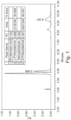
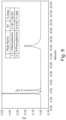
- Figure 1 shows the HPLC chromatogram obtained after complete dissolution of the reagents, in which the peaks related to (L)-phenylalanine (RT 3.996) and (D)-phenylalanine (RT 9.391) of the obtained racemic mixture are identifiable.
- reaction mixture was then allowed to spontaneously cool to 22 °C for 3 hours, then stirred at the same temperature for a further 66 hours. The formation of a precipitate was observed about 30 minutes after reaching the temperature of 22 °C.
- the product thus obtained was analyzed by chiral HPLC and 1H NMR, showing no more than 0.5% of L-phenylalanine.
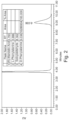
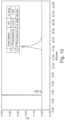
- Figure 2 shows the HPLC chromatogram obtained, in which there is the peak corresponding to (D)-phenylalanine (RT 9.039) and the substantial disappearance of the peak related to (L)-phenylalanine, thus confirming the inversion with respect to the start of the reaction.
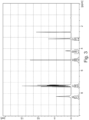
- Figure 3 shows the obtained 1H NMR spectrum (300 MHz, DMSO-d6 + TFA) which allows to confirm the D-phenylalanine:(R)-mandelic acid molar ratio of 1:1. The following is the assignment of the related peaks: ⁇ (ppm) 8.29 (bs, 3H, NH), 7.43-7.24 (m, 10H), 5.02 (s, 1H), 4.19 (m, 1H), 3.10 (m, 2H).
- reaction mixture was still kept at the same temperature for a further 2 hours, then water (7.0 g) was added to quench the reaction and stirring was continued for a further 1 hour, while keeping the temperature at 35 °C, detecting the evolution of H 2 .
- the resulting mixture was stirred at the same temperature for another 30 minutes, then 10% w/w NaOH (100 g) was slowly added over 1 hour.
- the reaction was kept under stirring at 55 °C for 6 hours, then the organic solvent was distilled and replaced with MeTHF (100 g).
- the obtained biphasic mixture was still kept under stirring at the same temperature and separated.
- the aqueous layer was extracted with additional MeTHF (100 g).
- the combined organic layers were washed with 50 grams of a solution obtained by combining 1 part by volume of a 10% by weight aqueous solution of NaOH and 1 part by volume of a 20% by weight aqueous solution of NaCl.
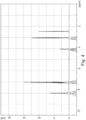
- Figure 5 shows the HPLC chromatogram obtained, in which the peak corresponding to (D)-phenylalaninol (RT 4.618) is present and in which it is possible to detect the substantial absence of the peak corresponding to (L)-phenylalaninol (RT 4.348) and the negligible percentage area of the same with respect to D-phenylalaninol.
- Figure 6 shows the 1H NMR spectrum obtained and then relative peaks assignment: ⁇ (ppm) 8.29 (bs, 3H, NH), 7.35-7.23 (m, 5H), 5.39 (bs, 1H, OH), 3.51 (m, 1H), 3.40 (m, 1H), 3.30 (m, 1H), 3.00 (m, 1H), 2.82 (m, 1H).
- the obtained mixture was kept under stirring at the same temperature for another 30 minutes, then 10% w/w NaOH (120 g) was slowly added over 1 hour.
- the reaction was kept under stirring at 55 °C for 6 hours, then the organic solvent was distilled and replaced with MeTHF (140 g).
- the resulting biphasic mixture was kept under stirring at the same temperature and separated.
- the aqueous layer was extracted with additional MeTHF (140 g).
- the combined organic layers were washed with 70 grams of a solution obtained by combining 1 part by volume of a 10% by weight aqueous solution of NaOH and 1 part by volume of a 20% by weight aqueous solution of NaCl.
- reaction mixture was kept under stirring at the same temperature for another 2 hours, then water (3 g) was added to quench the reaction and stirring was continued for a further 1 hour, while keeping the temperature at 35 °C.
- the resulting mixture was kept under stirring at the same temperature for another 30 minutes, then a 10% by weight aqueous solution of NaOH (35 g) was slowly added over 1 hour.
- the resulting mixture was kept under stirring at 55 °C for 6 hours, then the organic solvent was distilled and replaced with MeTHF (40 g).
- the biphasic mixture obtained was kept under stirring at the same temperature and separated. The aqueous layer was extracted with additional MeTHF (40 g).
- reaction mixture was allowed to warm to 25 °C and kept under stirring at the same temperature for 20 hours, then a 10% by weight aqueous solution of NaOH was added to quench the reaction, while keeping the temperature below 5 °C and until reaching a pH of 10-12.
- the two layers were then brought back to 25 °C and then separated.
- the aqueous layer was extracted with DCM (2 x 100 mL).
- the combined organic layers were washed with a 20% by weight aqueous solution of sodium chloride, dried over Na 2 SO 4 , filtered and concentrated. 8.1 grams of (2R)-2-amino-3-phenylpropylcarbamate (79% yield) were thus obtained as a colorless oil, which were used without further purification.
- Figure 7 shows the 1H NMR spectrum obtained, and the relative peaks assignment is as follows: ⁇ (ppm) 8.46 (bs, 3H, NH), 7.37-7.25 (m, 5H), 6.60 (bs, 2H, NH), 4.01 (m, 1H), 3.88 (m, 1H), 3.53 (m, 1H), 3.80 (m, 1H), 2.86 (m, 1H).
- Example 1 was repeated without adding salicylaldehyde.
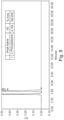
- Figure 8 shows the HPLC chromatogram obtained, in which only the peak corresponding to (L)-phenylalanine (RT 4.154) is present.
- Example 1 The test performed, when compared with Example 1, therefore confirmed the relevance of the aldehyde presence in the reaction mixture to obtain the D-phenylalanine:(R)-mandelic acid complex starting from L-phenylalanine under the investigated reaction conditions.
- EXAMPLE 18 (COMPARATIVE) - Replication of the process described in "Optical separation of racemic phenyl alanine and structure of complex consisting of R-phenyl alanine and mandelic acid", Chinese J. Struct. Chem. vol. 23, no. 1, pages 38-40
- step a. of the process according to the present invention confirmed that in the absence of aldehyde, even starting from a DL-phenylalanine racemic mixture, the D-phenylalanine:(R)-mandelic acid complex can be obtained but with a much lower reaction yield, and with diastereoisomeric ratio values similar to those obtained in the process according to the invention only after a subsequent purification step, thus inevitably further lowering the yield to values that jeopardize the productivity of the same process.
Landscapes
- Chemical & Material Sciences (AREA)
- Organic Chemistry (AREA)
- Chemical Kinetics & Catalysis (AREA)
- Organic Low-Molecular-Weight Compounds And Preparation Thereof (AREA)
Claims (11)
- Verfahren zur Herstellung von (2R)-2-Amino-3-phenylpropylcarbamathydrochlorid der Formel (I),
 a. Zugeben von (R)-Mandelsäure und mindestens einem Aldehyd zu einer Suspension von L-Phenylalanin in Essigsäure, wodurch ein D-Phenylalanin:(R)-Mandelsäure-Komplex erhalten wird, wobei das molare Verhältnis von D-Phenylalanin:(R)-Mandelsäure 1 : 1 beträgt;b. Isolieren des D-Phenylalanins der Formel (II)
 c. Umsetzen des aus Schritt b. erhaltenen D-Phenylalanins mit einem Reduktionsmittel, wodurch (R)-(+)-2-Amino-3-phenyl-1-propanol der Formel (III) erhalten wird,
 d. Umsetzen des aus Schritt c. erhaltenen (R)-(+)-2-Amino-3-phenyl-1-propanols mit einer Säure, wodurch (2R)-2-Amino-3-phenylpropilcarbamat der Formel (IV) erhalten wird,
 e. Umwandeln des aus Schritt d. erhaltenen (2R)-2-Amino-3-phenylpropilcarbamats in das (2R)-2-Amino-3-phenylpropylcarbamathydrochlorid der Formel (I).
 - Verfahren nach Anspruch 1, wobei der Schritt b. das Zugeben mindestens einer Base zu einer Lösung aus dem Komplex in mindestens einem polaren Lösungsmittel umfasst.
- Verfahren nach Anspruch 1 oder 2, wobei der Schritt c. das Umsetzen des aus Schritt b. erhaltenen D-Phenylalanins mit einem Reduktionssystem, das aus Natriumborhydrid und Bortrifluorid besteht, umfasst, wobei das Natriumborhydrid in einer Menge zwischen 1 und 1,2 Äquivalenten, bezogen auf das D-Phenylalanin, verwendet wird.
- Verfahren nach einem der Ansprüche 1 bis 3, wobei der Schritt c. das Kristallisieren des (R)-(+)-2-Amino-3-phenyl-1-propanols umfasst.
- Verfahren nach einem der Ansprüche 1 bis 4, wobei in dem Schritt d. die Reaktion zwischen dem aus Schritt c. erhaltenen (R)-(+)-2-Amino-3-phenyl-1-propanol und einer Säure in einem wasserfreien organischen Lösungsmittel stattfindet.
- Verfahren nach einem der Ansprüche 1 bis 5, wobei der Schritt e. das Einperlen von gasförmigem HCl in eine Lösung des (2R)-2-Amino-3-phenylpropylcarbamats in einem polaren protischen Lösungsmittel umfasst.
- Verfahren zur Herstellung eines D-Phenylalanin:(R)-Mandelsäure-Komplexes, wobei das molare Verhältnis von D-Phenylalanin:(R)-Mandelsäure 1 : 1 beträgt, umfassend das Zugeben von (R)-Mandelsäure und mindestens einem Aldehyd zu einer Suspension von L-Phenylalanin in Essigsäure.
- D-Phenylalanin:(R)-Mandelsäure-Komplex, wobei das molare Verhältnis von D-Phenylalanin:(R)-Mandelsäure 1 : 1 beträgt, wobei der Komplex ein Diastereomerenverhältnis von mehr als oder gleich 99,5/0,5 zeigt.
- Verfahren zur Herstellung von D-Phenylalanin der Formel (II),
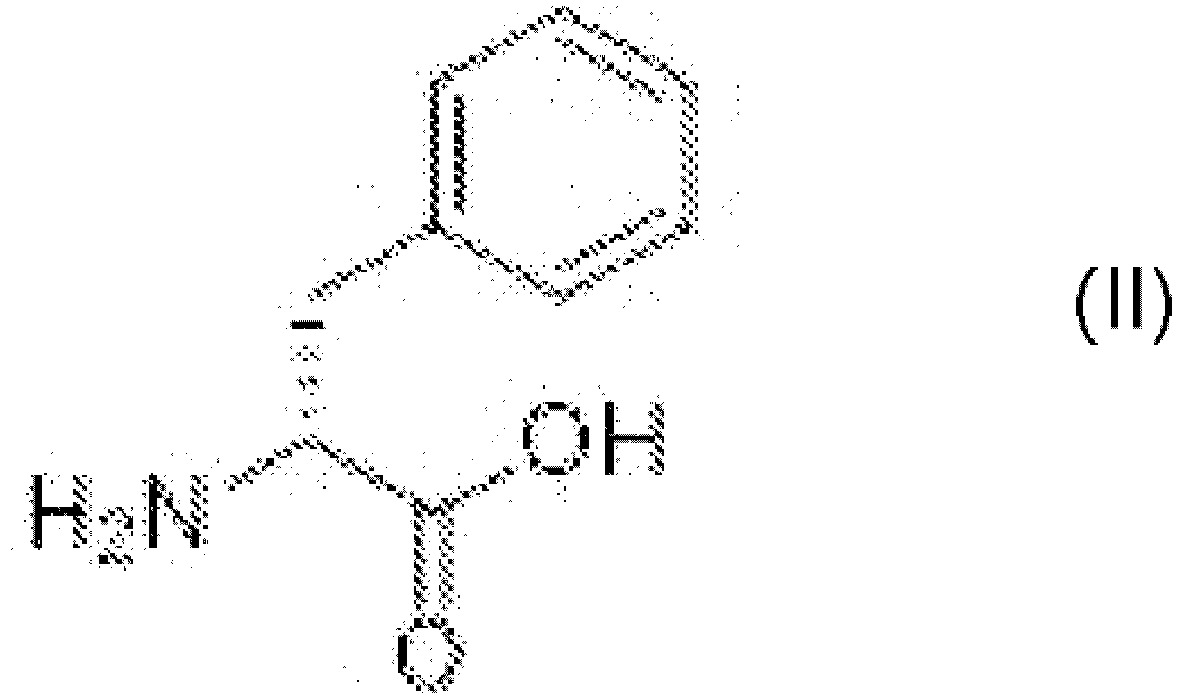 i. Zugeben von (R)-Mandelsäure und mindestens einem Aldehyd zu einer Suspension von L-Phenylalanin in Essigsäure, wodurch ein D-Phenylalanin:(R)-Mandelsäure-Komplex erhalten wird, wobei das molare Verhältnis von D-Phenylalanin:(R)-Mandelsäure 1 : 1 beträgt; undii. Isolieren von D-Phenylalanin aus dem aus Schritt i. erhaltenen D-Phenylalanin:(R)-Mandelsäure-Komplex.
 - Verfahren zur Herstellung von (R)-(+)-2-Amino-3-phenyl-1-propanol der Formel (III),
 1. Zugeben von (R)-Mandelsäure und mindestens einem Aldehyd zu einer Suspension von L-Phenylalanin in Essigsäure, wodurch ein D-Phenylalanin:(R)-Mandelsäure-Komplex erhalten wird, wobei das molare Verhältnis von D-Phenylalanin:(R)-Mandelsäure 1 : 1 beträgt;2. Isolieren von D-Phenylalanin aus dem aus Schritt 1. erhaltenen D-Phenylalanin:(R)-Mandelsäure-Komplex; und3. Umsetzen des aus Schritt 2. erhaltenen D-Phenylalanins mit einem Reduktionsmittel, wodurch (R)-(+)-2-Amino-3-phenyl-1-propanol der Formel (III) erhalten wird.
 - Verfahren nach Anspruch 10, wobei der Schritt 3. das Kristallisieren des (R)-(+)-2-Amino-3-phenyl-1-propanols umfasst.
Applications Claiming Priority (2)
| Application Number | Priority Date | Filing Date | Title |
|---|---|---|---|
| IT102020000025042A IT202000025042A1 (it) | 2020-10-22 | 2020-10-22 | Nuovo processo per la preparazione di solriamfetol cloridrato |
| PCT/IB2021/059589 WO2022084834A1 (en) | 2020-10-22 | 2021-10-19 | Novel process for preparing solriamfetol hydrochloride |
Publications (3)
| Publication Number | Publication Date |
|---|---|
| EP4232428A1 EP4232428A1 (de) | 2023-08-30 |
| EP4232428B1 true EP4232428B1 (de) | 2024-11-13 |
| EP4232428C0 EP4232428C0 (de) | 2024-11-13 |
Family
ID=74141719
Family Applications (1)
| Application Number | Title | Priority Date | Filing Date |
|---|---|---|---|
| EP21806357.6A Active EP4232428B1 (de) | 2020-10-22 | 2021-10-19 | Neues verfahren zur herstellung von solriamfetolhydrochlorid |
Country Status (5)
| Country | Link |
|---|---|
| US (1) | US20230391715A1 (de) |
| EP (1) | EP4232428B1 (de) |
| ES (1) | ES3007641T3 (de) |
| IT (1) | IT202000025042A1 (de) |
| WO (1) | WO2022084834A1 (de) |
Families Citing this family (1)
| Publication number | Priority date | Publication date | Assignee | Title |
|---|---|---|---|---|
| WO2024208791A1 (en) * | 2023-04-03 | 2024-10-10 | Inke, S.A. | Process for preparing (r)-2-amino-3-phenylpropyl carbamate |
Family Cites Families (2)
| Publication number | Priority date | Publication date | Assignee | Title |
|---|---|---|---|---|
| US4542236A (en) * | 1983-08-02 | 1985-09-17 | Nippon Kayaku Kabushiki Kaisha | Process for preparing optically active phenylalanine |
| EP3837239A4 (de) * | 2018-08-14 | 2022-05-18 | Glenmark Life Sciences Limited | Verfahren zur herstellung von solriamfetol und salz davon |
-
2020
- 2020-10-22 IT IT102020000025042A patent/IT202000025042A1/it unknown
-
2021
- 2021-10-19 WO PCT/IB2021/059589 patent/WO2022084834A1/en not_active Ceased
- 2021-10-19 EP EP21806357.6A patent/EP4232428B1/de active Active
- 2021-10-19 ES ES21806357T patent/ES3007641T3/es active Active
- 2021-10-19 US US18/032,603 patent/US20230391715A1/en active Pending
Also Published As
| Publication number | Publication date |
|---|---|
| WO2022084834A1 (en) | 2022-04-28 |
| IT202000025042A1 (it) | 2022-04-22 |
| EP4232428A1 (de) | 2023-08-30 |
| US20230391715A1 (en) | 2023-12-07 |
| EP4232428C0 (de) | 2024-11-13 |
| ES3007641T3 (en) | 2025-03-20 |
Similar Documents
| Publication | Publication Date | Title |
|---|---|---|
| JP4915019B2 (ja) | ビナフトール誘導体並びに光学分割及び変換方法 | |
| JP2009542615A (ja) | (r)−(−)−3−(カルバモイルメチル)−5−メチルヘキサン酸及びプレガバリン及び合成中間体の製法 | |
| JP2012516307A (ja) | (1s,2r)−ミルナシプランの合成方法 | |
| US20040176460A1 (en) | Process for the production of 3-phenylisoserine | |
| EP3022183A1 (de) | Verfahren zur racemisierung unerwünschter enantiomere | |
| EP4232428B1 (de) | Neues verfahren zur herstellung von solriamfetolhydrochlorid | |
| JP7805048B2 (ja) | エドキサバン中間体及びその製造方法 | |
| US9790170B2 (en) | Method for preparing lacosamide | |
| MX2007014781A (es) | Proceso para la resolucion dinamica de acido (r) o (s)-mandelico (substituido). | |
| CN111793016B (zh) | 一种拉罗替尼中间体的制备方法以及中间体化合物 | |
| JP2005247828A (ja) | 光学的に活性であるセリン誘導体の製造方法 | |
| EP2524910A1 (en) | Process for the resolution of aminobutyramide | |
| JP2002003453A (ja) | 光学活性α−メチル−ビス−3,5−(トリフルオロメチル)ベンジルアミン類の精製方法 | |
| US6797842B2 (en) | Process for producing optically active 1-(fluoro- or trifluoromethyl-substituted phenyl) ethylamine and process for purifying same | |
| JP3982993B2 (ja) | 光学活性1−(トリフルオロメチルモノ置換フェニル)エチルアミンの精製方法 | |
| US20080255367A1 (en) | Process for the preparation and isolation of the individual stereoisomers of 1-amino, 3-substituted phenylcyclopentane-carboxylates | |
| CN114853619B (zh) | 一种适于工业化生产的n-甲基酪胺盐酸盐的制备方法 | |
| CN120943767A (zh) | 消旋多取代三元环亚胺的不对称氢化动力学拆分方法 | |
| CN120230045A (zh) | 一种阿贝西利中间体的合成方法、阿贝西利的合成方法 | |
| JP4339074B2 (ja) | 光学活性な1,2−ビス(3,5−ジメチルフェニル)−1,2−エタンジアミンの製造方法 | |
| CN117886795A (zh) | 抗真菌化合物及其中间体的制备方法 | |
| CN120271474A (zh) | 一种米洛巴林关键中间体的制备方法 | |
| CN119613311A (zh) | 一种(3s,4r)-3-(n-苄基-n-环丙基)氨甲基-4-羟基吡咯烷-1-羧酸苄酯的高选择性合成方法 | |
| CN113121414A (zh) | 一种曲格列汀中间体的合成方法 | |
| CN119684305A (zh) | 一种8,8-二氟-2,6-二氮杂螺[3.4]辛烷类化合物的制备方法 |
Legal Events
| Date | Code | Title | Description |
|---|---|---|---|
| STAA | Information on the status of an ep patent application or granted ep patent |
Free format text: STATUS: UNKNOWN |
|
| STAA | Information on the status of an ep patent application or granted ep patent |
Free format text: STATUS: THE INTERNATIONAL PUBLICATION HAS BEEN MADE |
|
| PUAI | Public reference made under article 153(3) epc to a published international application that has entered the european phase |
Free format text: ORIGINAL CODE: 0009012 |
|
| STAA | Information on the status of an ep patent application or granted ep patent |
Free format text: STATUS: REQUEST FOR EXAMINATION WAS MADE |
|
| 17P | Request for examination filed |
Effective date: 20230515 |
|
| AK | Designated contracting states |
Kind code of ref document: A1 Designated state(s): AL AT BE BG CH CY CZ DE DK EE ES FI FR GB GR HR HU IE IS IT LI LT LU LV MC MK MT NL NO PL PT RO RS SE SI SK SM TR |
|
| P01 | Opt-out of the competence of the unified patent court (upc) registered |
Effective date: 20230926 |
|
| DAV | Request for validation of the european patent (deleted) | ||
| DAX | Request for extension of the european patent (deleted) | ||
| GRAP | Despatch of communication of intention to grant a patent |
Free format text: ORIGINAL CODE: EPIDOSNIGR1 |
|
| STAA | Information on the status of an ep patent application or granted ep patent |
Free format text: STATUS: GRANT OF PATENT IS INTENDED |
|
| INTG | Intention to grant announced |
Effective date: 20240621 |
|
| RAP3 | Party data changed (applicant data changed or rights of an application transferred) |
Owner name: PROCOS S.P.A. |
|
| GRAJ | Information related to disapproval of communication of intention to grant by the applicant or resumption of examination proceedings by the epo deleted |
Free format text: ORIGINAL CODE: EPIDOSDIGR1 |
|
| STAA | Information on the status of an ep patent application or granted ep patent |
Free format text: STATUS: REQUEST FOR EXAMINATION WAS MADE |
|
| INTC | Intention to grant announced (deleted) | ||
| GRAP | Despatch of communication of intention to grant a patent |
Free format text: ORIGINAL CODE: EPIDOSNIGR1 |
|
| STAA | Information on the status of an ep patent application or granted ep patent |
Free format text: STATUS: GRANT OF PATENT IS INTENDED |
|
| GRAS | Grant fee paid |
Free format text: ORIGINAL CODE: EPIDOSNIGR3 |
|
| GRAA | (expected) grant |
Free format text: ORIGINAL CODE: 0009210 |
|
| STAA | Information on the status of an ep patent application or granted ep patent |
Free format text: STATUS: THE PATENT HAS BEEN GRANTED |
|
| INTG | Intention to grant announced |
Effective date: 20240917 |
|
| AK | Designated contracting states |
Kind code of ref document: B1 Designated state(s): AL AT BE BG CH CY CZ DE DK EE ES FI FR GB GR HR HU IE IS IT LI LT LU LV MC MK MT NL NO PL PT RO RS SE SI SK SM TR |
|
| REG | Reference to a national code |
Ref country code: GB Ref legal event code: FG4D |
|
| REG | Reference to a national code |
Ref country code: CH Ref legal event code: EP |
|
| REG | Reference to a national code |
Ref country code: DE Ref legal event code: R096 Ref document number: 602021021876 Country of ref document: DE |
|
| REG | Reference to a national code |
Ref country code: IE Ref legal event code: FG4D |
|
| U01 | Request for unitary effect filed |
Effective date: 20241209 |
|
| P04 | Withdrawal of opt-out of the competence of the unified patent court (upc) registered |
Free format text: CASE NUMBER: APP_66591/2024 Effective date: 20241216 |
|
| U07 | Unitary effect registered |
Designated state(s): AT BE BG DE DK EE FI FR IT LT LU LV MT NL PT RO SE SI Effective date: 20241219 |
|
| REG | Reference to a national code |
Ref country code: ES Ref legal event code: FG2A Ref document number: 3007641 Country of ref document: ES Kind code of ref document: T3 Effective date: 20250320 |
|
| PG25 | Lapsed in a contracting state [announced via postgrant information from national office to epo] |
Ref country code: IS Free format text: LAPSE BECAUSE OF FAILURE TO SUBMIT A TRANSLATION OF THE DESCRIPTION OR TO PAY THE FEE WITHIN THE PRESCRIBED TIME-LIMIT Effective date: 20250313 Ref country code: HR Free format text: LAPSE BECAUSE OF FAILURE TO SUBMIT A TRANSLATION OF THE DESCRIPTION OR TO PAY THE FEE WITHIN THE PRESCRIBED TIME-LIMIT Effective date: 20241113 |
|
| PG25 | Lapsed in a contracting state [announced via postgrant information from national office to epo] |
Ref country code: NO Free format text: LAPSE BECAUSE OF FAILURE TO SUBMIT A TRANSLATION OF THE DESCRIPTION OR TO PAY THE FEE WITHIN THE PRESCRIBED TIME-LIMIT Effective date: 20250213 |
|
| PG25 | Lapsed in a contracting state [announced via postgrant information from national office to epo] |
Ref country code: GR Free format text: LAPSE BECAUSE OF FAILURE TO SUBMIT A TRANSLATION OF THE DESCRIPTION OR TO PAY THE FEE WITHIN THE PRESCRIBED TIME-LIMIT Effective date: 20250214 |
|
| PG25 | Lapsed in a contracting state [announced via postgrant information from national office to epo] |
Ref country code: PL Free format text: LAPSE BECAUSE OF FAILURE TO SUBMIT A TRANSLATION OF THE DESCRIPTION OR TO PAY THE FEE WITHIN THE PRESCRIBED TIME-LIMIT Effective date: 20241113 |
|
| PG25 | Lapsed in a contracting state [announced via postgrant information from national office to epo] |
Ref country code: RS Free format text: LAPSE BECAUSE OF FAILURE TO SUBMIT A TRANSLATION OF THE DESCRIPTION OR TO PAY THE FEE WITHIN THE PRESCRIBED TIME-LIMIT Effective date: 20250213 |
|
| PG25 | Lapsed in a contracting state [announced via postgrant information from national office to epo] |
Ref country code: SM Free format text: LAPSE BECAUSE OF FAILURE TO SUBMIT A TRANSLATION OF THE DESCRIPTION OR TO PAY THE FEE WITHIN THE PRESCRIBED TIME-LIMIT Effective date: 20241113 |
|
| PG25 | Lapsed in a contracting state [announced via postgrant information from national office to epo] |
Ref country code: SK Free format text: LAPSE BECAUSE OF FAILURE TO SUBMIT A TRANSLATION OF THE DESCRIPTION OR TO PAY THE FEE WITHIN THE PRESCRIBED TIME-LIMIT Effective date: 20241113 |
|
| PG25 | Lapsed in a contracting state [announced via postgrant information from national office to epo] |
Ref country code: CZ Free format text: LAPSE BECAUSE OF FAILURE TO SUBMIT A TRANSLATION OF THE DESCRIPTION OR TO PAY THE FEE WITHIN THE PRESCRIBED TIME-LIMIT Effective date: 20241113 |
|
| PLBE | No opposition filed within time limit |
Free format text: ORIGINAL CODE: 0009261 |
|
| STAA | Information on the status of an ep patent application or granted ep patent |
Free format text: STATUS: NO OPPOSITION FILED WITHIN TIME LIMIT |
|
| U20 | Renewal fee for the european patent with unitary effect paid |
Year of fee payment: 5 Effective date: 20250909 |
|
| PGFP | Annual fee paid to national office [announced via postgrant information from national office to epo] |
Ref country code: GB Payment date: 20250828 Year of fee payment: 5 |
|
| 26N | No opposition filed |
Effective date: 20250814 |
|
| PGFP | Annual fee paid to national office [announced via postgrant information from national office to epo] |
Ref country code: ES Payment date: 20251107 Year of fee payment: 5 |