EP4232325B1 - Reinigungssystem für ein kraftfahrzeug - Google Patents
Reinigungssystem für ein kraftfahrzeug Download PDFInfo
- Publication number
- EP4232325B1 EP4232325B1 EP21783243.5A EP21783243A EP4232325B1 EP 4232325 B1 EP4232325 B1 EP 4232325B1 EP 21783243 A EP21783243 A EP 21783243A EP 4232325 B1 EP4232325 B1 EP 4232325B1
- Authority
- EP
- European Patent Office
- Prior art keywords
- cleaning
- cleaning device
- pump
- nettoyage
- liquid
- Prior art date
- Legal status (The legal status is an assumption and is not a legal conclusion. Google has not performed a legal analysis and makes no representation as to the accuracy of the status listed.)
- Active
Links
Images

Classifications
-
- B—PERFORMING OPERATIONS; TRANSPORTING
- B60—VEHICLES IN GENERAL
- B60S—SERVICING, CLEANING, REPAIRING, SUPPORTING, LIFTING, OR MANOEUVRING OF VEHICLES, NOT OTHERWISE PROVIDED FOR
- B60S1/00—Cleaning of vehicles
- B60S1/02—Cleaning windscreens, windows or optical devices
- B60S1/46—Cleaning windscreens, windows or optical devices using liquid; Windscreen washers
- B60S1/48—Liquid supply therefor
- B60S1/481—Liquid supply therefor the operation of at least part of the liquid supply being controlled by electric means
-
- B—PERFORMING OPERATIONS; TRANSPORTING
- B60—VEHICLES IN GENERAL
- B60S—SERVICING, CLEANING, REPAIRING, SUPPORTING, LIFTING, OR MANOEUVRING OF VEHICLES, NOT OTHERWISE PROVIDED FOR
- B60S1/00—Cleaning of vehicles
- B60S1/02—Cleaning windscreens, windows or optical devices
- B60S1/46—Cleaning windscreens, windows or optical devices using liquid; Windscreen washers
- B60S1/48—Liquid supply therefor
- B60S1/50—Arrangement of reservoir
-
- B—PERFORMING OPERATIONS; TRANSPORTING
- B60—VEHICLES IN GENERAL
- B60S—SERVICING, CLEANING, REPAIRING, SUPPORTING, LIFTING, OR MANOEUVRING OF VEHICLES, NOT OTHERWISE PROVIDED FOR
- B60S1/00—Cleaning of vehicles
- B60S1/02—Cleaning windscreens, windows or optical devices
- B60S1/46—Cleaning windscreens, windows or optical devices using liquid; Windscreen washers
- B60S1/48—Liquid supply therefor
- B60S1/52—Arrangement of nozzles; Liquid spreading means
-
- B—PERFORMING OPERATIONS; TRANSPORTING
- B60—VEHICLES IN GENERAL
- B60S—SERVICING, CLEANING, REPAIRING, SUPPORTING, LIFTING, OR MANOEUVRING OF VEHICLES, NOT OTHERWISE PROVIDED FOR
- B60S1/00—Cleaning of vehicles
- B60S1/02—Cleaning windscreens, windows or optical devices
- B60S1/56—Cleaning windscreens, windows or optical devices specially adapted for cleaning other parts or devices than front windows or windscreens
Definitions
- the invention relates to systems for cleaning a surface of a motor vehicle, in particular motor vehicle sensors, intended to be installed on a motor vehicle, more particularly those comprising several cleaning devices.
- automotive sensors are located in areas where they are exposed to various types of contamination. Examples include various driver assistance cameras, distance sensors, ultrasonic sensors, radars, lidars, and rain sensors located on the vehicle. These sensors are very numerous in autonomous vehicles, which, by definition, must be able to drive without user intervention.
- cleaning devices are composed of a reservoir in which cleaning liquid is stored and a fluid distribution circuit composed of different pipes or hoses for conveying the cleaning liquid to at least one cleaning nozzle placed in front of a sensor so as to spray cleaning liquid onto the latter (there are generally several cleaning nozzles for several sensors).
- the document EP 3 640 100 A1 presents a cleaning device as known in the prior art.
- a pump for spraying cleaning fluid into the fluid distribution circuit to the cleaning nozzle is usually mounted directly on the reservoir. More precisely, a liquid inlet tube from the pump is force-fitted into an opening in the reservoir (a seal ensures the assembly is watertight), and the liquid outlet is connected to the fluid distribution circuit.
- the pump draws cleaning liquid from the tank, the liquid being at a pressure similar to atmospheric pressure (the pressure depends on the height of cleaning liquid in the tank), and propels it into the fluid distribution circuit at a higher pressure (the pressure difference being dependent on the sizing of the pump).
- the pressurized cleaning liquid is projected by the cleaning nozzle onto the sensor.
- the various cleaning devices allow all the sensors present on the vehicle to be cleaned so that they function optimally.
- a vehicle it is possible for a vehicle to comprise two cleaning devices as described above, one placed at the front and the other at the rear of the vehicle.
- Each device comprises a cleaning liquid reservoir and at least one cleaning nozzle, the two being connected by a fluid distribution circuit.
- Each cleaning device comprises its own pump for delivering pressurized cleaning liquid to the cleaning nozzle(s). These cleaning devices operate independently of each other, cleaning surfaces at the front and rear of the vehicle respectively.
- one of the cleaning devices on board the vehicle may no longer function due to a failure of the pump intended to project cleaning liquid into the fluid distribution circuit. No liquid can therefore be taken from the tank to be conveyed to the cleaning nozzle(s) supplied by the faulty pump.
- the operation of the sensors placed in a certain area of the vehicle may therefore be impaired, which may become critical, in particular with regard to autonomous vehicles for which the proper functioning of sensors is a major issue.
- the invention aims in particular to provide a system for cleaning motor vehicle surfaces intended to be installed on a motor vehicle comprising means allowing operation, even degraded, of a cleaning device having a fault at the level of the pump intended to supply the cleaning nozzle(s).
- the subject of the invention is a cleaning system intended to be installed on a motor vehicle and comprising at least a first and a second cleaning device, each cleaning device comprising a cleaning liquid reservoir, at least one cleaning nozzle for spraying the cleaning liquid, a fluid distribution circuit arranged to convey cleaning liquid from the reservoir to the cleaning nozzle and a pump arranged to inject the cleaning liquid contained in the reservoir into the fluid distribution circuit, the cleaning system further comprising a bypass device connecting at least two cleaning devices at their respective fluid distribution circuits, comprising an emergency line and a solenoid valve placed on the emergency line controlled as a function of the failure state of a pump, and arranged to supply the cleaning nozzle of a cleaning device with the reservoir of another cleaning device, each cleaning device comprising between its reservoir and a connection point to the bypass device a non-return member.
- bypass device solenoid valve When all cleaning devices are operating, the bypass device solenoid valve is closed and fluid communication between the cleaning devices is impossible.
- the solenoid valve of the bypass device opens and the functional pump of another cleaning device is activated to supply the cleaning nozzle(s) of the inoperative cleaning device.
- the presence non-return devices ensure that the cleaning liquid injected via the bypass device is directed to the cleaning nozzles of the inoperative cleaning device.
- upstream or “downstream” we locate the elements/equipment in the direction of transport of the flow of material to be treated.
- a first piece of equipment or element for example a pump, is located upstream of a second piece of equipment or element if the material is first treated by the first piece of equipment and then the second piece of equipment.
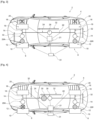
- FIG. 1 representing a cleaning system 2 on board a motor vehicle 4.
- This cleaning system 2 aims to allow the cleaning of different surfaces of the motor vehicle 4 such as for example sensors on board the vehicle or the windshield or the rear window.
- the figures include arrows 32 illustrating the direction of circulation of the cleaning liquid depending on the operating state of the cleaning system 2.
- the cleaning system comprises, in the illustrated example, a first cleaning device 6 placed at the front of the vehicle and a second cleaning device 8 placed at the rear of the vehicle.
- Each cleaning device comprises a reservoir 10 of cleaning liquid on which a pump 12 is mounted.
- the pump 12 is mounted in a recess of the reservoir 10 intended to receive the pump 12, the reservoir 10 comprising an orifice through which an inlet tube of the pump 12 is mounted, with a seal at the interface between the reservoir 10 and the pump 12 at the orifice to ensure the sealing of the assembly.
- the pump 12 is conventionally a standard pump comprising for example a main body of tubular shape. This main body may be composed of a first pumping part and a second drive part comprising an electric motor.
- the first pumping part comprises a liquid inlet tube and a liquid discharge tube in order to be able to receive cleaning liquid from the reservoir 10 and to discharge it at a pressure higher than the inlet pressure of the pump 12.
- the liquid inlet tube may be placed at a free end of the first pumping part and be coaxial with the main body of the pump 12 by sharing with the latter the same axis of revolution.
- the second discharge part can extend from the first pumping part in a direction perpendicular to the axis of revolution of the main body.
- the second drive part may be located above the first pumping part and comprise an electric motor and, at its free end, a connector for connecting the pump 12 to an electrical power source.
- cleaning nozzles are located at the other end of the cleaning devices 6 and 8 and intended to be placed in front of a surface of the motor vehicle to be cleaned in order to spray pressurized cleaning liquid there.
- Each cleaning device further comprises pipes (or conduits) connecting the different components (pump 12, cleaning nozzle, etc.) to each other to form a fluid distribution circuit 14.
- Each cleaning device may comprise, in the case where the same reservoir 10 supplies several cleaning nozzles, a liquid distributor 16 making it possible to connect a primary pipe 18 coming from the pump 12 to a series of secondary pipes 20 coming from several cleaning nozzles, as illustrated in the figures.
- the latter may comprise one or more solenoid valves to allow or not the supply of the secondary pipes 20. It is possible to envisage the presence of a solenoid valve at the primary pipe at the inlet of the liquid distributor 16 to control the supply of all the secondary pipes 20 or solenoid valves on each secondary pipe 20 for specific control of the supply of each cleaning nozzle.
- Any type of solenoid valve may be used, for example a solenoid valve, normally open or closed.
- the cleaning system may also comprise a control unit 21 for controlling the opening and closing of the liquid distributor, for example solenoid valves, in order for example to cut off the power supply to the cleaning nozzles of an operational cleaning device to ensure that the cleaning liquid from the latter is properly redirected to a faulty cleaning device.
- a control unit 21 for controlling the opening and closing of the liquid distributor, for example solenoid valves, in order for example to cut off the power supply to the cleaning nozzles of an operational cleaning device to ensure that the cleaning liquid from the latter is properly redirected to a faulty cleaning device.
- the cleaning system 2 further comprises a bypass device 22 connecting the two cleaning devices 6 and 8 at their respective fluid distribution circuits 14.
- the bypass device 22 comprises a backup line 24 connecting the fluid distribution circuit 14 of the first cleaning device 6 to the fluid distribution circuit 14 of the second cleaning device 8, preferably between the pump 12 and the liquid distributor 16 of each cleaning device. This creates a fluid communication between the two cleaning devices making it possible to supply one with the cleaning liquid stored in the reservoir 10 of the other.
- solenoid valve for example a solenoid valve, preferably normally closed.
- each cleaning device is connected to another cleaning device or even more, even considering a connection of all the cleaning devices to each other via branch devices 22.
- Each cleaning device comprises between its tank 10 and a connection point to the bypass device a non-return member 28.
- the non-return member 28 comprises a non-return valve allowing only the passage of liquid coming from the pump 12 of the cleaning device concerned. This is a simple way of preventing the cleaning liquid from a functioning cleaning device to be poured back into the reservoir 10 of a faulty cleaning device.
- the cleaning system 2 comprises a monitoring circuit 31 configured to detect that a liquid level inside the tank 10 of the first or second cleaning device is lower than a predetermined threshold value, for example by comprising a probe measuring the liquid level inside a tank 10.
- a predetermined threshold value for example by comprising a probe measuring the liquid level inside a tank 10.
- the non-return member 28 comprises a non-return valve
- an insufficient liquid level can therefore be assimilated to a failure leading to the cleaning nozzles being supplied by another cleaning device.
- the bypass device further comprises a bidirectional pump 30 placed on the emergency line.
- a bidirectional pump 30 placed on the emergency line.
- the cleaning system may comprise a monitoring circuit 31 for measuring the filling level of the reservoirs 10 of the first and second cleaning devices 6 and 8.
- This monitoring circuit 31 may of course be used to monitor the operating state of the first and second cleaning devices and therefore detect a failure of a cleaning device.
- the monitoring circuit 31 may be configured to specifically detect a failure state of the pump 12 of the first or second cleaning device 6 and 8. It is possible for the monitoring circuit 31 to comprise a pressure sensor arranged upstream of the pump 12 and another arranged downstream of the pump 12 and upstream of the non-return member 28. The observation of an absence of pressure rise downstream of the pump 12 leads to the observation of a failure of the cleaning device.
- the monitoring circuit 31 can be connected to the control unit 21. Therefore, the detection of a fault by the monitoring circuit 31 is communicated to the control unit 21 which opens the solenoid valve 26 and can also start the pump of an operational cleaning device connected to the faulty cleaning device.
- a mode of operation of the cleaning system as described above will be described in support of the Figure 2 and the Figure 4 (variant comprising a solenoid valve 26 on the emergency line 24 and solenoid valves forming non-return members 28) in the event of failure of the first cleaning device 6.
- the operating mode is the same for a failure of the second cleaning device 8.
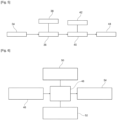
- the Figure 5 illustrates the different stages of this mode of operation.
- the first step 34 consists of detecting a failure, for example of the first cleaning device 6.
- the latter can be detected in particular by the monitoring circuit 31. This can be a detection as described above, with sensors present upstream and downstream of the pump 12 or a probe measuring the level of liquid inside the tank 10. At this stage, an anomaly leading to a failure of the first cleaning device 6 has been diagnosed.
- the second step 36 is the opening command of the solenoid valve 26 of the bypass device 22, for example by the control unit 21 coupled to the monitoring circuit. This opening command depends on the type of solenoid valve used. It is also possible to envisage a step 38 of closing the liquid distributor 16 of the second filling device 8 at this time but also the solenoid valve 29 forming a non-return member 28 of the first cleaning device 6. At this stage, the bypass device 22 can convey liquid from the second cleaning device 8 to the first cleaning device 6. If the liquid distributor 16 of the second cleaning device 8 has been closed as has the possible solenoid valve 29 forming a non-return member 28 at the first cleaning device 6, then everything is ready for the injection of liquid from the second cleaning device 8 to the first cleaning device 6. Step 36 and the optional step 38 therefore make it possible to prepare the redirection of the cleaning liquid.
- the third step 40 is the control of the operation of the pump 12 of the or one of the second cleaning devices 8 to inject cleaning liquid into the emergency line 24 up to the cleaning nozzles of the first cleaning device 6.
- a bidirectional pump 30 is present on the emergency line 24 as illustrated in the Figure 4 , then the latter is preferably activated in a synchronized manner with the pump 12 of the second cleaning device 8 (step 42 of the method).
- the liquid distributor 16 of the second cleaning device 8 as well as the solenoid valve 29 forming a non-return member 28 at the first cleaning device 6 can be closed during this step.
- cleaning liquid is taken from the reservoir 10 of the second cleaning device 8 and injected to the cleaning nozzles of the first cleaning device 6 via the emergency line 24 of the bypass device 22.
- the solenoid valve 26 can be switched back to the closed state, the bidirectional pump 30 can be deactivated as can the pump 12 of the second cleaning device 8 and all of the components that have been closed are reopened in order to ensure a return to the status quo ante (step 44 of return to the initial situation).
Landscapes
- Engineering & Computer Science (AREA)
- Mechanical Engineering (AREA)
- Water Supply & Treatment (AREA)
- Cleaning By Liquid Or Steam (AREA)
Claims (15)
- Reinigungssystem (2), das dazu bestimmt ist, in ein Kraftfahrzeug (4) integriert zu sein, und mindestens eine erste und eine zweite Reinigungsvorrichtung (6, 8) beinhaltet, wobei jede Reinigungsvorrichtung (6, 8) einen Behälter (10) für Reinigungsflüssigkeit, mindestens eine Reinigungsdüse zum Verspritzen der Reinigungsflüssigkeit, einen Fluidverteilungskreislauf (14), der dazu eingerichtet ist, Reinigungsflüssigkeit von dem Behälter (10) zu der Reinigungsdüse zu leiten, und eine Pumpe (12), die dazu eingerichtet ist, die in dem Behälter enthaltene Reinigungsflüssigkeit (10) in den Fluidverteilungskreislauf (14) einzuspeisen, beinhaltet, dadurch gekennzeichnet, dass das Reinigungssystem (2) ferner eine Umleitungsvorrichtung (22) beinhaltet, die mindestens zwei Reinigungsvorrichtungen (6, 8) im Bereich ihrer jeweiligen Fluidverteilungskreisläufe (14) verbindet, eine Hilfsleitung (24) und ein in der Hilfsleitung (24) angeordnetes Magnetventil (26), das in Abhängigkeit von dem Fehlerzustand einer Pumpe (12) gesteuert wird, beinhaltet und dazu angeordnet ist, die Reinigungsdüse einer Reinigungsvorrichtung (6, 8) durch den Behälter (10) einer anderen Reinigungsvorrichtung (6, 8) zu versorgen,
wobei jede Reinigungsvorrichtung (6, 8) zwischen ihrem Behälter (10) und einem Anschlusspunkt an die Umleitungsvorrichtung (22) einen Rückflussverhinderer (28) beinhaltet. - Reinigungssystem (2) nach Anspruch 1, wobei die erste Reinigungsvorrichtung (6) vorne im Kraftfahrzeug (4) angeordnet ist und die zweite Reinigungsvorrichtung (8) hinten im Kraftfahrzeug (4) angeordnet ist.
- Reinigungssystem (2) nach einem der vorhergehenden Ansprüche, wobei die Umleitungsvorrichtung (22) eine bidirektionale Pumpe (30) beinhaltet, die in der Hilfsleitung (24) angeordnet ist.
- Reinigungssystem (2) nach einem der vorhergehenden Ansprüche, wobei der Rückflussverhinderer (28) ein Rückschlagventil beinhaltet.
- Reinigungssystem (2) nach einem der vorhergehenden Ansprüche, wobei der Rückflussverhinderer (28) ein Magnetventil beinhaltet, das sich vorzugsweise im Bereich der Pumpe (12) befindet, die dazu angepasst ist, die in dem Behälter (10) enthaltene Reinigungsflüssigkeit in den Fluidverteilungskreislauf (14) einzuspeisen.
- Reinigungssystem (2) nach einem der vorhergehenden Ansprüche, das mehr als zwei Reinigungsvorrichtungen (6, 8) beinhaltet, wobei der Fluidverteilungskreislauf (14) einer Reinigungsvorrichtung (6, 8) mittels einer Umleitungsvorrichtung (22) mit mindestens einem Fluidverteilungskreislauf (14) anderer Reinigungsvorrichtungen (6, 8) verbunden ist.
- Reinigungssystem (2) nach einem der vorhergehenden Ansprüche, wobei jede Reinigungsvorrichtung (6, 8) einen Flüssigkeitsverteiler (16), der ein Hauptrohr (18), das von der Pumpe (12) kommt, mit einer Reihe von sekundären Rohren (20), die von mehreren Reinigungsdüsen kommen, verbindet, und eine Steuereinheit (21), die dazu konfiguriert ist, den Flüssigkeitsverteiler (16) einer Reinigungsvorrichtung in Abhängigkeit von dem Fehlerzustand der Pumpe (12) einer anderen Reinigungsvorrichtung zu schließen, beinhaltet.
- Reinigungssystem (2) nach einem der vorhergehenden Ansprüche, das einen Kreislauf zur Überwachung eines Betriebszustands der ersten und der zweiten Reinigungsvorrichtung (6, 8) und eine Steuereinheit (21), die mit dem Überwachungskreislauf verbunden ist und dazu konfiguriert ist, das Magnetventil (26) der Umleitungsvorrichtung (22) zu öffnen, beinhaltet.
- Reinigungssystem (2) nach Anspruch 8, wobei der Überwachungskreislauf dazu konfiguriert ist, einen Fehlerzustand der Pumpe (12) der ersten oder der zweiten Reinigungsvorrichtung (6, 8) zu detektieren.
- Reinigungssystem (2) nach Anspruch 9, wobei der Überwachungskreislauf einen Drucksensor, der stromaufwärts der Pumpe (12) angeordnet ist, und einen weiteren, der stromabwärts der Pumpe (12) und stromaufwärts des Rückflussverhinderers (28) angeordnet ist, beinhaltet.
- Reinigungssystem nach einem der Ansprüche 8 bis 10, wobei der Überwachungskreislauf dazu konfiguriert ist, zu detektieren, dass ein Flüssigkeitspegel in dem Behälter (10) der ersten oder der zweiten Reinigungsvorrichtung (6, 8) niedriger als ein vorbestimmter Schwellenwert ist.
- Verfahren zur Reinigung von Sensoren eines Kraftfahrzeugs mit Hilfe des Reinigungssystems (2) nach einem der vorhergehenden Ansprüche, beinhaltend die folgenden Schritte:- Detektieren eines Fehlers der ersten Reinigungsvorrichtung (6),- Ansteuern des Öffnens des Magnetventils (26) der Umleitungsvorrichtung (22) und- Ansteuern des Einschaltens der Pumpe (12) der zweiten Reinigungsvorrichtung (8), um Reinigungsflüssigkeit in die Hilfsleitung (24) bis zu der Reinigungsdüse der ersten Reinigungsvorrichtung (6) einzuspeisen.
- Reinigungsverfahren nach Anspruch 12, wobei der Schritt des Ansteuerns des Einschaltens der Pumpe (12) der zweiten Reinigungsvorrichtung (8) mit einem Ansteuern des Einschaltens einer bidirektionalen Pumpe (30), die in der Hilfsleitung (24) angeordnet ist, einhergeht.
- Reinigungsverfahren nach einem der Ansprüche 12 und 13, wobei das Verfahren nach dem Detektieren eines Fehlers der ersten Reinigungsvorrichtung (6) einen Schritt des Schließens eines Flüssigkeitsverteilers (16) der zweiten Reinigungsvorrichtung beinhaltet, der ein Hauptrohr (18), das von der Pumpe (12) der zweiten Reinigungsvorrichtung (8) kommt, mit einer Reihe von sekundären Rohren (20), die von mehreren Reinigungsdüsen der zweiten Reinigungsvorrichtung (8) kommen, verbindet.
- Reinigungsverfahren nach einem der Ansprüche 12 bis 14, wobei der Fehler der ersten Reinigungsvorrichtung (6) durch einen Kreislauf zur Überwachung eines Betriebszustands der ersten und der zweiten Reinigungsvorrichtung (6, 8) detektiert wird, wobei das Ansteuern des Öffnens des Magnetventils (26) der Umleitungsvorrichtung (22) durch eine Steuereinheit (21) gesteuert wird.
Applications Claiming Priority (2)
| Application Number | Priority Date | Filing Date | Title |
|---|---|---|---|
| FR2010771A FR3115253B1 (fr) | 2020-10-20 | 2020-10-20 | Système de nettoyage de pour véhicule automobile |
| PCT/EP2021/076394 WO2022083971A1 (fr) | 2020-10-20 | 2021-09-24 | Système de nettoyage de pour véhicule automobile |
Publications (2)
| Publication Number | Publication Date |
|---|---|
| EP4232325A1 EP4232325A1 (de) | 2023-08-30 |
| EP4232325B1 true EP4232325B1 (de) | 2025-03-19 |
Family
ID=74860000
Family Applications (1)
| Application Number | Title | Priority Date | Filing Date |
|---|---|---|---|
| EP21783243.5A Active EP4232325B1 (de) | 2020-10-20 | 2021-09-24 | Reinigungssystem für ein kraftfahrzeug |
Country Status (6)
| Country | Link |
|---|---|
| US (1) | US12509023B2 (de) |
| EP (1) | EP4232325B1 (de) |
| JP (1) | JP7537019B2 (de) |
| CN (1) | CN116323341A (de) |
| FR (1) | FR3115253B1 (de) |
| WO (1) | WO2022083971A1 (de) |
Families Citing this family (1)
| Publication number | Priority date | Publication date | Assignee | Title |
|---|---|---|---|---|
| DE102022209829A1 (de) | 2022-09-19 | 2024-03-21 | Siemens Mobility GmbH | Wischwasserbehältersystem |
Citations (6)
| Publication number | Priority date | Publication date | Assignee | Title |
|---|---|---|---|---|
| GB2253338A (en) * | 1991-03-02 | 1992-09-09 | David George Rouse | Vehicle screen wash |
| FR2830290A1 (fr) * | 2001-10-01 | 2003-04-04 | Coutier Moulage Gen Ind | Pompe double a engrenages, et installation utilisant une telle pompe |
| US20190161035A1 (en) * | 2017-11-30 | 2019-05-30 | Ford Global Technologies, Llc | Washer fluid tank with magnetically responsive sensors |
| DE102018205999A1 (de) * | 2018-04-19 | 2019-10-24 | Ford Global Technologies, Llc | Wischwassersystem und Kraftfahrzeug mit einem solchen |
| EP3640099A1 (de) * | 2017-06-13 | 2020-04-22 | Koito Manufacturing Co., Ltd. | Fahrzeugreinigungssystem und fahrzeug mit einem fahrzeugreinigungssystem |
| US20200189530A1 (en) * | 2018-12-12 | 2020-06-18 | Koito Manufacturing Co., Ltd. | Flow path switching box and vehicle cleaner system |
Family Cites Families (18)
| Publication number | Priority date | Publication date | Assignee | Title |
|---|---|---|---|---|
| DE3616737C1 (en) * | 1986-05-17 | 1987-06-25 | Daimler Benz Ag | Window-washing system for motor vehicles |
| FR2813259B1 (fr) * | 2000-08-31 | 2003-01-17 | Valeo Systemes Dessuyage | Dispositif de nettoyage d'une vitre |
| DE10342715B4 (de) * | 2003-09-16 | 2006-09-21 | Bayerische Motoren Werke Ag | Scheibenwaschanlage für ein Kraftfahrzeug |
| JP2006207907A (ja) * | 2005-01-27 | 2006-08-10 | Hiroyuki Tanaka | 温泉湯温度調整装置 |
| FR2898565B1 (fr) * | 2006-03-16 | 2008-05-09 | Renault Sas | Installation de distribution de liquide dans un vehicule automobile et vehicule automobile comportant une telle installation |
| DE102011012837A1 (de) * | 2011-03-02 | 2012-09-06 | Volkswagen Ag | Reinigungsanlage für ein Fahrzeug |
| JP5494743B2 (ja) | 2011-10-14 | 2014-05-21 | 株式会社デンソー | カメラ洗浄装置 |
| FR2991646B1 (fr) | 2012-06-08 | 2015-01-02 | Valeo Systemes Dessuyage | Systeme de nettoyage a distance d'un pare-brise de vehicule |
| BR112015000243B1 (pt) | 2012-07-11 | 2021-07-13 | Nissan Motor Co., Ltd | Dispositivo de limpeza para câmera montada em veículo e método de limpar câmera montada em veículo |
| WO2015076785A1 (en) * | 2013-11-19 | 2015-05-28 | Surefire Usa, Llc | Improved methods for manufacturing hydraulic fracturing fluid |
| US20170258593A1 (en) * | 2016-03-09 | 2017-09-14 | David Good | Cardiac assistance device |
| US20180354468A1 (en) * | 2017-06-08 | 2018-12-13 | Ford Global Technologies, Llc | Cleaning a vehicle sensor |
| WO2018230558A1 (ja) * | 2017-06-13 | 2018-12-20 | 株式会社小糸製作所 | 車両用クリーナシステムおよび車両用クリーナシステムを備える車両 |
| US10189449B2 (en) | 2017-06-23 | 2019-01-29 | Ford Global Technologies, Llc | Vehicle cleaning |
| CN208585616U (zh) * | 2018-06-29 | 2019-03-08 | 中国联合工程有限公司 | 带隔板的油罐供油系统 |
| US11448240B2 (en) * | 2018-07-11 | 2022-09-20 | Halliburton Energy Services, Inc. | Using a load sense pump as a backup for a pressure-compensated pump |
| CN113329920B (zh) | 2019-01-23 | 2024-09-24 | 株式会社小糸制作所 | 车辆用清洁系统 |
| KR20230028993A (ko) * | 2021-08-23 | 2023-03-03 | 현대자동차주식회사 | 워셔액 분배 시스템 |
-
2020
- 2020-10-20 FR FR2010771A patent/FR3115253B1/fr active Active
-
2021
- 2021-09-24 US US18/248,533 patent/US12509023B2/en active Active
- 2021-09-24 EP EP21783243.5A patent/EP4232325B1/de active Active
- 2021-09-24 JP JP2023524210A patent/JP7537019B2/ja active Active
- 2021-09-24 WO PCT/EP2021/076394 patent/WO2022083971A1/fr not_active Ceased
- 2021-09-24 CN CN202180069113.5A patent/CN116323341A/zh active Pending
Patent Citations (6)
| Publication number | Priority date | Publication date | Assignee | Title |
|---|---|---|---|---|
| GB2253338A (en) * | 1991-03-02 | 1992-09-09 | David George Rouse | Vehicle screen wash |
| FR2830290A1 (fr) * | 2001-10-01 | 2003-04-04 | Coutier Moulage Gen Ind | Pompe double a engrenages, et installation utilisant une telle pompe |
| EP3640099A1 (de) * | 2017-06-13 | 2020-04-22 | Koito Manufacturing Co., Ltd. | Fahrzeugreinigungssystem und fahrzeug mit einem fahrzeugreinigungssystem |
| US20190161035A1 (en) * | 2017-11-30 | 2019-05-30 | Ford Global Technologies, Llc | Washer fluid tank with magnetically responsive sensors |
| DE102018205999A1 (de) * | 2018-04-19 | 2019-10-24 | Ford Global Technologies, Llc | Wischwassersystem und Kraftfahrzeug mit einem solchen |
| US20200189530A1 (en) * | 2018-12-12 | 2020-06-18 | Koito Manufacturing Co., Ltd. | Flow path switching box and vehicle cleaner system |
Also Published As
| Publication number | Publication date |
|---|---|
| US20230382352A1 (en) | 2023-11-30 |
| JP7537019B2 (ja) | 2024-08-20 |
| FR3115253B1 (fr) | 2022-10-14 |
| CN116323341A (zh) | 2023-06-23 |
| EP4232325A1 (de) | 2023-08-30 |
| JP2023546220A (ja) | 2023-11-01 |
| FR3115253A1 (fr) | 2022-04-22 |
| US12509023B2 (en) | 2025-12-30 |
| WO2022083971A1 (fr) | 2022-04-28 |
Similar Documents
| Publication | Publication Date | Title |
|---|---|---|
| EP4284685B1 (de) | Verfahren zur funktionsüberprüfung eines fahrzeugoberflächenreinigungsgerätes | |
| EP3738841B1 (de) | Verteilungssystem eines fluids für fahrzeug, entsprechender fluidverteiler und fluidausstossverfahren, das ein solches system verwendet | |
| EP4232325B1 (de) | Reinigungssystem für ein kraftfahrzeug | |
| EP3745010B1 (de) | Fluidverteiler für ein fluidverteilungssystem für fahrzeuge, und ausstossverfahren eines fluids mithilfe eines solchen systems | |
| EP3250422B1 (de) | Flüssigkeitsverteilungsventil für ein flüssigkeitsverteilungssystem eines fahrzeugwäschers | |
| FR3097826A1 (fr) | Dispositif et procédé de nettoyage d'une pluralité de capteurs/émetteurs d'un véhicule automobile | |
| EP2049828A2 (de) | Verfahren und vorrichtung zur sicheren füllung eines tanks | |
| EP4081426B1 (de) | Ventil für ein sprühsystem | |
| EP4200168B1 (de) | Fluidsprühvorrichtung zur reinigung einer oberfläche eines kraftfahrzeugs | |
| EP4284686B1 (de) | Verfahren zur reinigung von kraftfahrzeugoberflächen | |
| FR3094311A1 (fr) | Système de nettoyage d’au moins deux capteurs/émetteurs d’un véhicule automobile | |
| CN116867690B (zh) | 用于核查车辆表面清洁装置的操作的方法 | |
| FR3137430A1 (fr) | Dispositif de vérification du fonctionnement d’une électrovanne solénoïde | |
| FR3139736A1 (fr) | Système de projection d’un liquide de nettoyage avec des moyens de purge de la vanne | |
| WO2022022897A1 (fr) | Support de pompe de nettoyage de véhicule automobile | |
| FR3152772A1 (fr) | Ensemble de distribution de fluide pour le nettoyage d'un capteur d'un véhicule | |
| WO2022084639A1 (fr) | Circuit d'assistance hydraulique ameliore |
Legal Events
| Date | Code | Title | Description |
|---|---|---|---|
| STAA | Information on the status of an ep patent application or granted ep patent |
Free format text: STATUS: UNKNOWN |
|
| STAA | Information on the status of an ep patent application or granted ep patent |
Free format text: STATUS: THE INTERNATIONAL PUBLICATION HAS BEEN MADE |
|
| PUAI | Public reference made under article 153(3) epc to a published international application that has entered the european phase |
Free format text: ORIGINAL CODE: 0009012 |
|
| STAA | Information on the status of an ep patent application or granted ep patent |
Free format text: STATUS: REQUEST FOR EXAMINATION WAS MADE |
|
| 17P | Request for examination filed |
Effective date: 20230323 |
|
| AK | Designated contracting states |
Kind code of ref document: A1 Designated state(s): AL AT BE BG CH CY CZ DE DK EE ES FI FR GB GR HR HU IE IS IT LI LT LU LV MC MK MT NL NO PL PT RO RS SE SI SK SM TR |
|
| DAV | Request for validation of the european patent (deleted) | ||
| DAX | Request for extension of the european patent (deleted) | ||
| GRAP | Despatch of communication of intention to grant a patent |
Free format text: ORIGINAL CODE: EPIDOSNIGR1 |
|
| STAA | Information on the status of an ep patent application or granted ep patent |
Free format text: STATUS: GRANT OF PATENT IS INTENDED |
|
| INTG | Intention to grant announced |
Effective date: 20240522 |
|
| GRAJ | Information related to disapproval of communication of intention to grant by the applicant or resumption of examination proceedings by the epo deleted |
Free format text: ORIGINAL CODE: EPIDOSDIGR1 |
|
| STAA | Information on the status of an ep patent application or granted ep patent |
Free format text: STATUS: REQUEST FOR EXAMINATION WAS MADE |
|
| GRAP | Despatch of communication of intention to grant a patent |
Free format text: ORIGINAL CODE: EPIDOSNIGR1 |
|
| STAA | Information on the status of an ep patent application or granted ep patent |
Free format text: STATUS: GRANT OF PATENT IS INTENDED |
|
| INTC | Intention to grant announced (deleted) | ||
| INTG | Intention to grant announced |
Effective date: 20241023 |
|
| GRAS | Grant fee paid |
Free format text: ORIGINAL CODE: EPIDOSNIGR3 |
|
| GRAA | (expected) grant |
Free format text: ORIGINAL CODE: 0009210 |
|
| STAA | Information on the status of an ep patent application or granted ep patent |
Free format text: STATUS: THE PATENT HAS BEEN GRANTED |
|
| AK | Designated contracting states |
Kind code of ref document: B1 Designated state(s): AL AT BE BG CH CY CZ DE DK EE ES FI FR GB GR HR HU IE IS IT LI LT LU LV MC MK MT NL NO PL PT RO RS SE SI SK SM TR |
|
| REG | Reference to a national code |
Ref country code: GB Ref legal event code: FG4D Free format text: NOT ENGLISH |
|
| REG | Reference to a national code |
Ref country code: CH Ref legal event code: EP |
|
| REG | Reference to a national code |
Ref country code: DE Ref legal event code: R096 Ref document number: 602021027859 Country of ref document: DE |
|
| REG | Reference to a national code |
Ref country code: IE Ref legal event code: FG4D Free format text: LANGUAGE OF EP DOCUMENT: FRENCH |
|
| PG25 | Lapsed in a contracting state [announced via postgrant information from national office to epo] |
Ref country code: RS Free format text: LAPSE BECAUSE OF FAILURE TO SUBMIT A TRANSLATION OF THE DESCRIPTION OR TO PAY THE FEE WITHIN THE PRESCRIBED TIME-LIMIT Effective date: 20250619 |
|
| PG25 | Lapsed in a contracting state [announced via postgrant information from national office to epo] |
Ref country code: FI Free format text: LAPSE BECAUSE OF FAILURE TO SUBMIT A TRANSLATION OF THE DESCRIPTION OR TO PAY THE FEE WITHIN THE PRESCRIBED TIME-LIMIT Effective date: 20250319 |
|
| REG | Reference to a national code |
Ref country code: LT Ref legal event code: MG9D |
|
| PG25 | Lapsed in a contracting state [announced via postgrant information from national office to epo] |
Ref country code: NO Free format text: LAPSE BECAUSE OF FAILURE TO SUBMIT A TRANSLATION OF THE DESCRIPTION OR TO PAY THE FEE WITHIN THE PRESCRIBED TIME-LIMIT Effective date: 20250619 |
|
| PG25 | Lapsed in a contracting state [announced via postgrant information from national office to epo] |
Ref country code: HR Free format text: LAPSE BECAUSE OF FAILURE TO SUBMIT A TRANSLATION OF THE DESCRIPTION OR TO PAY THE FEE WITHIN THE PRESCRIBED TIME-LIMIT Effective date: 20250319 |
|
| PG25 | Lapsed in a contracting state [announced via postgrant information from national office to epo] |
Ref country code: LV Free format text: LAPSE BECAUSE OF FAILURE TO SUBMIT A TRANSLATION OF THE DESCRIPTION OR TO PAY THE FEE WITHIN THE PRESCRIBED TIME-LIMIT Effective date: 20250319 |
|
| PG25 | Lapsed in a contracting state [announced via postgrant information from national office to epo] |
Ref country code: BG Free format text: LAPSE BECAUSE OF FAILURE TO SUBMIT A TRANSLATION OF THE DESCRIPTION OR TO PAY THE FEE WITHIN THE PRESCRIBED TIME-LIMIT Effective date: 20250319 Ref country code: GR Free format text: LAPSE BECAUSE OF FAILURE TO SUBMIT A TRANSLATION OF THE DESCRIPTION OR TO PAY THE FEE WITHIN THE PRESCRIBED TIME-LIMIT Effective date: 20250620 |
|
| REG | Reference to a national code |
Ref country code: NL Ref legal event code: MP Effective date: 20250319 |
|
| REG | Reference to a national code |
Ref country code: AT Ref legal event code: MK05 Ref document number: 1776730 Country of ref document: AT Kind code of ref document: T Effective date: 20250319 |
|
| PG25 | Lapsed in a contracting state [announced via postgrant information from national office to epo] |
Ref country code: NL Free format text: LAPSE BECAUSE OF FAILURE TO SUBMIT A TRANSLATION OF THE DESCRIPTION OR TO PAY THE FEE WITHIN THE PRESCRIBED TIME-LIMIT Effective date: 20250319 |
|
| PG25 | Lapsed in a contracting state [announced via postgrant information from national office to epo] |
Ref country code: SE Free format text: LAPSE BECAUSE OF FAILURE TO SUBMIT A TRANSLATION OF THE DESCRIPTION OR TO PAY THE FEE WITHIN THE PRESCRIBED TIME-LIMIT Effective date: 20250319 |
|
| PG25 | Lapsed in a contracting state [announced via postgrant information from national office to epo] |
Ref country code: SM Free format text: LAPSE BECAUSE OF FAILURE TO SUBMIT A TRANSLATION OF THE DESCRIPTION OR TO PAY THE FEE WITHIN THE PRESCRIBED TIME-LIMIT Effective date: 20250319 |
|
| PG25 | Lapsed in a contracting state [announced via postgrant information from national office to epo] |
Ref country code: ES Free format text: LAPSE BECAUSE OF FAILURE TO SUBMIT A TRANSLATION OF THE DESCRIPTION OR TO PAY THE FEE WITHIN THE PRESCRIBED TIME-LIMIT Effective date: 20250319 Ref country code: PT Free format text: LAPSE BECAUSE OF FAILURE TO SUBMIT A TRANSLATION OF THE DESCRIPTION OR TO PAY THE FEE WITHIN THE PRESCRIBED TIME-LIMIT Effective date: 20250721 |
|
| PGFP | Annual fee paid to national office [announced via postgrant information from national office to epo] |
Ref country code: DE Payment date: 20250916 Year of fee payment: 5 |
|
| PG25 | Lapsed in a contracting state [announced via postgrant information from national office to epo] |
Ref country code: IT Free format text: LAPSE BECAUSE OF FAILURE TO SUBMIT A TRANSLATION OF THE DESCRIPTION OR TO PAY THE FEE WITHIN THE PRESCRIBED TIME-LIMIT Effective date: 20250319 Ref country code: PL Free format text: LAPSE BECAUSE OF FAILURE TO SUBMIT A TRANSLATION OF THE DESCRIPTION OR TO PAY THE FEE WITHIN THE PRESCRIBED TIME-LIMIT Effective date: 20250319 |
|
| PG25 | Lapsed in a contracting state [announced via postgrant information from national office to epo] |
Ref country code: AT Free format text: LAPSE BECAUSE OF FAILURE TO SUBMIT A TRANSLATION OF THE DESCRIPTION OR TO PAY THE FEE WITHIN THE PRESCRIBED TIME-LIMIT Effective date: 20250319 |
|
| PGFP | Annual fee paid to national office [announced via postgrant information from national office to epo] |
Ref country code: FR Payment date: 20250929 Year of fee payment: 5 |
|
| PG25 | Lapsed in a contracting state [announced via postgrant information from national office to epo] |
Ref country code: CZ Free format text: LAPSE BECAUSE OF FAILURE TO SUBMIT A TRANSLATION OF THE DESCRIPTION OR TO PAY THE FEE WITHIN THE PRESCRIBED TIME-LIMIT Effective date: 20250319 Ref country code: EE Free format text: LAPSE BECAUSE OF FAILURE TO SUBMIT A TRANSLATION OF THE DESCRIPTION OR TO PAY THE FEE WITHIN THE PRESCRIBED TIME-LIMIT Effective date: 20250319 |
|
| PG25 | Lapsed in a contracting state [announced via postgrant information from national office to epo] |
Ref country code: RO Free format text: LAPSE BECAUSE OF FAILURE TO SUBMIT A TRANSLATION OF THE DESCRIPTION OR TO PAY THE FEE WITHIN THE PRESCRIBED TIME-LIMIT Effective date: 20250319 |
|
| PG25 | Lapsed in a contracting state [announced via postgrant information from national office to epo] |
Ref country code: SK Free format text: LAPSE BECAUSE OF FAILURE TO SUBMIT A TRANSLATION OF THE DESCRIPTION OR TO PAY THE FEE WITHIN THE PRESCRIBED TIME-LIMIT Effective date: 20250319 |
|
| PG25 | Lapsed in a contracting state [announced via postgrant information from national office to epo] |
Ref country code: IS Free format text: LAPSE BECAUSE OF FAILURE TO SUBMIT A TRANSLATION OF THE DESCRIPTION OR TO PAY THE FEE WITHIN THE PRESCRIBED TIME-LIMIT Effective date: 20250719 |
|
| REG | Reference to a national code |
Ref country code: DE Ref legal event code: R097 Ref document number: 602021027859 Country of ref document: DE |
|
| PG25 | Lapsed in a contracting state [announced via postgrant information from national office to epo] |
Ref country code: DK Free format text: LAPSE BECAUSE OF FAILURE TO SUBMIT A TRANSLATION OF THE DESCRIPTION OR TO PAY THE FEE WITHIN THE PRESCRIBED TIME-LIMIT Effective date: 20250319 |
|
| PLBE | No opposition filed within time limit |
Free format text: ORIGINAL CODE: 0009261 |
|
| STAA | Information on the status of an ep patent application or granted ep patent |
Free format text: STATUS: NO OPPOSITION FILED WITHIN TIME LIMIT |
|
| REG | Reference to a national code |
Ref country code: CH Ref legal event code: L10 Free format text: ST27 STATUS EVENT CODE: U-0-0-L10-L00 (AS PROVIDED BY THE NATIONAL OFFICE) Effective date: 20260128 |
|
| 26N | No opposition filed |
Effective date: 20251222 |
|
| REG | Reference to a national code |
Ref country code: CH Ref legal event code: H13 Free format text: ST27 STATUS EVENT CODE: U-0-0-H10-H13 (AS PROVIDED BY THE NATIONAL OFFICE) Effective date: 20260425 |