EP4220173A2 - Verfahren zur charakterisierung von disulfidbindungen - Google Patents
Verfahren zur charakterisierung von disulfidbindungen Download PDFInfo
- Publication number
- EP4220173A2 EP4220173A2 EP23150144.6A EP23150144A EP4220173A2 EP 4220173 A2 EP4220173 A2 EP 4220173A2 EP 23150144 A EP23150144 A EP 23150144A EP 4220173 A2 EP4220173 A2 EP 4220173A2
- Authority
- EP
- European Patent Office
- Prior art keywords
- disulfide bonds
- antibody
- protein
- drug product
- peptide
- Prior art date
- Legal status (The legal status is an assumption and is not a legal conclusion. Google has not performed a legal analysis and makes no representation as to the accuracy of the status listed.)
- Withdrawn
Links
Images

Classifications
-
- G—PHYSICS
- G01—MEASURING; TESTING
- G01N—INVESTIGATING OR ANALYSING MATERIALS BY DETERMINING THEIR CHEMICAL OR PHYSICAL PROPERTIES
- G01N33/00—Investigating or analysing materials by specific methods not covered by groups G01N1/00 - G01N31/00
- G01N33/48—Biological material, e.g. blood, urine; Haemocytometers
- G01N33/50—Chemical analysis of biological material, e.g. blood, urine; Testing involving biospecific ligand binding methods; Immunological testing
- G01N33/68—Chemical analysis of biological material, e.g. blood, urine; Testing involving biospecific ligand binding methods; Immunological testing involving proteins, peptides or amino acids
- G01N33/6803—General methods of protein analysis not limited to specific proteins or families of proteins
- G01N33/6806—Determination of free amino acids
- G01N33/6812—Assays for specific amino acids
- G01N33/6815—Assays for specific amino acids containing sulfur, e.g. cysteine, cystine, methionine, homocysteine
-
- G—PHYSICS
- G01—MEASURING; TESTING
- G01N—INVESTIGATING OR ANALYSING MATERIALS BY DETERMINING THEIR CHEMICAL OR PHYSICAL PROPERTIES
- G01N33/00—Investigating or analysing materials by specific methods not covered by groups G01N1/00 - G01N31/00
- G01N33/48—Biological material, e.g. blood, urine; Haemocytometers
- G01N33/50—Chemical analysis of biological material, e.g. blood, urine; Testing involving biospecific ligand binding methods; Immunological testing
- G01N33/68—Chemical analysis of biological material, e.g. blood, urine; Testing involving biospecific ligand binding methods; Immunological testing involving proteins, peptides or amino acids
- G01N33/6803—General methods of protein analysis not limited to specific proteins or families of proteins
- G01N33/6848—Methods of protein analysis involving mass spectrometry
-
- A—HUMAN NECESSITIES
- A61—MEDICAL OR VETERINARY SCIENCE; HYGIENE
- A61K—PREPARATIONS FOR MEDICAL, DENTAL OR TOILETRY PURPOSES
- A61K39/00—Medicinal preparations containing antigens or antibodies
- A61K39/395—Antibodies; Immunoglobulins; Immune serum, e.g. antilymphocytic serum
-
- G—PHYSICS
- G01—MEASURING; TESTING
- G01N—INVESTIGATING OR ANALYSING MATERIALS BY DETERMINING THEIR CHEMICAL OR PHYSICAL PROPERTIES
- G01N1/00—Sampling; Preparing specimens for investigation
- G01N1/28—Preparing specimens for investigation including physical details of (bio-)chemical methods covered elsewhere, e.g. G01N33/50, C12Q
-
- G—PHYSICS
- G01—MEASURING; TESTING
- G01N—INVESTIGATING OR ANALYSING MATERIALS BY DETERMINING THEIR CHEMICAL OR PHYSICAL PROPERTIES
- G01N27/00—Investigating or analysing materials by the use of electric, electrochemical, or magnetic means
- G01N27/62—Investigating or analysing materials by the use of electric, electrochemical, or magnetic means by investigating the ionisation of gases, e.g. aerosols; by investigating electric discharges, e.g. emission of cathode
-
- G—PHYSICS
- G01—MEASURING; TESTING
- G01N—INVESTIGATING OR ANALYSING MATERIALS BY DETERMINING THEIR CHEMICAL OR PHYSICAL PROPERTIES
- G01N30/00—Investigating or analysing materials by separation into components using adsorption, absorption or similar phenomena or using ion-exchange, e.g. chromatography or field flow fractionation
- G01N30/02—Column chromatography
- G01N30/04—Preparation or injection of sample to be analysed
- G01N30/06—Preparation
-
- G—PHYSICS
- G01—MEASURING; TESTING
- G01N—INVESTIGATING OR ANALYSING MATERIALS BY DETERMINING THEIR CHEMICAL OR PHYSICAL PROPERTIES
- G01N30/00—Investigating or analysing materials by separation into components using adsorption, absorption or similar phenomena or using ion-exchange, e.g. chromatography or field flow fractionation
- G01N30/02—Column chromatography
- G01N30/62—Detectors specially adapted therefor
- G01N30/72—Mass spectrometers
- G01N30/7233—Mass spectrometers interfaced to liquid or supercritical fluid chromatograph
-
- G—PHYSICS
- G01—MEASURING; TESTING
- G01N—INVESTIGATING OR ANALYSING MATERIALS BY DETERMINING THEIR CHEMICAL OR PHYSICAL PROPERTIES
- G01N33/00—Investigating or analysing materials by specific methods not covered by groups G01N1/00 - G01N31/00
- G01N33/48—Biological material, e.g. blood, urine; Haemocytometers
- G01N33/50—Chemical analysis of biological material, e.g. blood, urine; Testing involving biospecific ligand binding methods; Immunological testing
- G01N33/68—Chemical analysis of biological material, e.g. blood, urine; Testing involving biospecific ligand binding methods; Immunological testing involving proteins, peptides or amino acids
- G01N33/6854—Immunoglobulins
-
- A—HUMAN NECESSITIES
- A61—MEDICAL OR VETERINARY SCIENCE; HYGIENE
- A61K—PREPARATIONS FOR MEDICAL, DENTAL OR TOILETRY PURPOSES
- A61K39/00—Medicinal preparations containing antigens or antibodies
- A61K2039/505—Medicinal preparations containing antigens or antibodies comprising antibodies
-
- G—PHYSICS
- G01—MEASURING; TESTING
- G01N—INVESTIGATING OR ANALYSING MATERIALS BY DETERMINING THEIR CHEMICAL OR PHYSICAL PROPERTIES
- G01N30/00—Investigating or analysing materials by separation into components using adsorption, absorption or similar phenomena or using ion-exchange, e.g. chromatography or field flow fractionation
- G01N30/02—Column chromatography
- G01N2030/022—Column chromatography characterised by the kind of separation mechanism
- G01N2030/027—Liquid chromatography
-
- G—PHYSICS
- G01—MEASURING; TESTING
- G01N—INVESTIGATING OR ANALYSING MATERIALS BY DETERMINING THEIR CHEMICAL OR PHYSICAL PROPERTIES
- G01N30/00—Investigating or analysing materials by separation into components using adsorption, absorption or similar phenomena or using ion-exchange, e.g. chromatography or field flow fractionation
- G01N30/02—Column chromatography
- G01N30/88—Integrated analysis systems specially adapted therefor, not covered by a single one of the groups G01N30/04 - G01N30/86
- G01N2030/8809—Integrated analysis systems specially adapted therefor, not covered by a single one of the groups G01N30/04 - G01N30/86 analysis specially adapted for the sample
- G01N2030/8813—Integrated analysis systems specially adapted therefor, not covered by a single one of the groups G01N30/04 - G01N30/86 analysis specially adapted for the sample biological materials
- G01N2030/8831—Integrated analysis systems specially adapted therefor, not covered by a single one of the groups G01N30/04 - G01N30/86 analysis specially adapted for the sample biological materials involving peptides or proteins
-
- G—PHYSICS
- G01—MEASURING; TESTING
- G01N—INVESTIGATING OR ANALYSING MATERIALS BY DETERMINING THEIR CHEMICAL OR PHYSICAL PROPERTIES
- G01N2458/00—Labels used in chemical analysis of biological material
- G01N2458/15—Non-radioactive isotope labels, e.g. for detection by mass spectrometry
Definitions
- the invention is generally related to systems and methods of characterizing antibodies, in particular disulfide bonds.
- mAbs monoclonal antibodies
- issues with stability, post-translational modifications, or other changes to the antibody can occur. Alterations in antibody structure and function can cause problems such as poor shelf-life or even immunogenicity in the patient. It is therefore important to properly characterize antibody structure and monitor it throughout production. Antibody quality control and quality assurance are critical to the purity and safety of mAb products.
- Disulfide bonds are important for structural integrity, stability, and biological functions of mAbs. Non-native disulfide bonds can cause changes in the structure and stability of mAbs. Binding affinity of mAbs to antigens can be affected by up to 50% if disulfide bonds are incomplete ( Xiang, T., et al., Anal Chem, 81:8101-8108 (2009 )). The low dissociation energy of disulfide bonds and the high flexibility of the hinge region frequently lead to modifications and cleavages at the hinge region ( Moritz, B., and Stracke, J.O., Electrophoresis, 36:769-785 (2017 )).
- compositions and methods for characterizing disulfide bonds are provided.
- One embodiment provides a method for identifying scrambled disulfide bonds in a protein drug product and includes the steps of preparing peptide standards having regions of the protein drug product containing one or more disulfide bonds.
- the peptide standards can be made to contain each different kind of scrambled disulfide bond.
- one standard can include a crossed disulfide bond, and another standard can include an intra-chain disulfide bond.
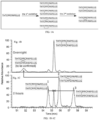
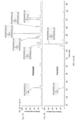
- Figure 1A shows exemplary forms of disulfide bonds that can be present in the peptide standard.
- the peptide standard contains a normal or parallel disulfide bond.
- Each peptide standard has a different, known liquid chromatography retention time compared to the other peptide standards.
- the method includes digesting a sample of protein drug product into peptides, and analyzing a sample containing protein drug product peptides and the peptide standards using a liquid chromatography tandem mass spectrometry system (LC-MS 2 system). Peptides detected at the retention times of the different standards are indicative to the presence in the protein drug product of the type of disulfide bond in the specific peptide standard.
- the protein drug product is a monoclonal antibody.
- the protein drug product is a recombinant protein, a fusion protein, or a combination thereof.
- the peptide standards can be prepared using conventional techniques. For example an oxidation reaction can be used to generate disulfide bonds in the peptide standards. In one embodiment, the oxidation reaction is performed using Cu 2+ .
- Another embodiment provides a method of producing a protein drug product including the steps of producing the protein drug product in a cell culture and identifying scrambled disulfide bonds of the protein drug product using the method describe above.
- the method includes modifying one or more cell culture, purification or excipient conditions to reduce the amount of crossed hinge disulfide bonds of the protein drug product to less than 1.0%.
- the one or more conditions can include cell culture conditions such as temperature, pH, oxygen levels, reactive oxygen species, surfactants, or combinations thereof.
- Another embodiment provides a pharmaceutical composition including monoclonal antibodies having less than 30% scrambled disulfide bonds
- Protein refers to a molecule comprising two or more amino acid residues joined to each other by a peptide bond. Protein includes polypeptides and peptides and may also include modifications such as glycosylation, lipid attachment, sulfation, gamma-carboxylation of glutamic acid residues, alkylation, hydroxylation and ADP-ribosylation. Proteins can be of scientific or commercial interest, including protein-based drugs, and proteins include, among other things, enzymes, ligands, receptors, antibodies and chimeric or fusion proteins.
- Proteins are produced by various types of recombinant cells using well-known cell culture methods, and are generally introduced into the cell by genetic engineering techniques (e.g., such as a sequence encoding a chimeric protein, or a codon-optimized sequence, an intronless sequence, etc.) where it may reside as an episome or be integrated into the genome of the cell.
- genetic engineering techniques e.g., such as a sequence encoding a chimeric protein, or a codon-optimized sequence, an intronless sequence, etc.
- Antibody refers to an immunoglobulin molecule consisting of four polypeptide chains, two heavy (H) chains and two light (L) chains inter-connected by disulfide bonds.
- Each heavy chain has a heavy chain variable region (HCVR or VH) and a heavy chain constant region.
- the heavy chain constant region contains three domains, CH1, CH2 and CH3.
- Each light chain has a light chain variable region and a light chain constant region.
- the light chain constant region consists of one domain (CL).
- the VH and VL regions can be further subdivided into regions of hypervariability, termed complementarity determining regions (CDR), interspersed with regions that are more conserved, termed framework regions (FR).
- CDR complementarity determining regions
- Each VH and VL is composed of three CDRs and four FRs, arranged from amino-terminus to carboxy-terminus in the following order: FR1, CDR1, FR2, CDR2, FR3, CDR3, FR4.
- the term “antibody” includes reference to both glycosylated and non-glycosylated immunoglobulins of any isotype or subclass.
- the term “antibody” includes antibody molecules prepared, expressed, created or isolated by recombinant means, such as antibodies isolated from a host cell transfected to express the antibody.
- the term antibody also includes bispecific antibody, which includes a heterotetrameric immunoglobulin that can bind to more than one different epitope. Bispecific antibodies are generally described in US Patent No. 8,586,713 , which is incorporated by reference into this application
- “Hinge region” refers to the flexible amino acid stretch in the central part of the heavy chains of the IgG and IgA immunoglobulin classes, which links these 2 chains by disulfide bonds.
- the hinge region is located between the CH1 and CH3 constant domains. The hinge region affords flexibility to the antibody, and allows easier binding to the antigen.
- Fc fusion proteins comprise part or all of two or more proteins, one of which is an Fc portion of an immunoglobulin molecule, which are not otherwise found together in nature. Preparation of fusion proteins comprising certain heterologous polypeptides fused to various portions of antibody-derived polypeptides (including the Fc domain) has been described, e.g., by Rath, T., et al., Crit Rev Biotech, 35(2): 235-254 (2015 ), Levin, D., et al., Trends Biotechnol, 33(1): 27-34 (2015 )) "Receptor Fc fusion proteins” comprise one or more extracellular domain(s) of a receptor coupled to an Fc moiety, which in some embodiments comprises a hinge region followed by a CH2 and CH3 domain of an immunoglobulin. In some embodiments, the Fc-fusion protein comprises two or more distinct receptor chains that bind to one or more ligand(s). For example, an Fc-fusion protein is a trap, such as
- disulfide bond refers to the linkage formed by the oxidation of two SH groups, each attached to a cysteine. Disulfide bonds play an important role in the folding and stability of many proteins.
- IgGs include two heavy chains (HC) and two light chains (LC) covalently linked by a total of 16 inter- or intra-molecular disulfide bonds.
- IgG mAbs contain 32 cysteine residues, 5 cysteine residues on each LC and 11 cysteine residues on each HC. Each LC contains one variable domain and one constant domain with a disulfide bond connection.
- the 5 th cysteine on the LC is linked to either the 3 rd or 5 th cysteine of the HC to form an interchain disulfide bond.
- the heavy chains include an N-terminal variable domain (VH) and three constant domains (CH1, CH2, and CH3) with a hinge region between CH1 and CH2 ( Vidarsson, G., et al., Front Immunol, 5:520 (2014 )).
- the 6 th and 7 th cysteine on each HC are bonded forming the hinge region.
- the hinge region of an immunoglobulin helps form the Y-shaped structure of the immunoglobulin molecule. The Y shape makes possible the flexibility of the immunoglobulin molecules required in antigen binding.
- Intra-chain disulfide bond refers to bonds that are formed between two cysteines within the same protein chain.
- Inter-chain disulfide bond refers to bonds that are formed between two cysteines of individual chains of the same protein or between two cysteines of distinct proteins.
- “Scrambled disulfide bond” refers to a disulfide bond in which a cysteine bonds to a cysteine to which it does not normally bond.
- cysteine X binds to cysteine Z instead of cysteine Y.
- Exemplary scrambled disulfide bonds include but not limited to crossed and intra-chain disulfide bonds.
- crossed-hinge refers to an antibody hinge region in which the disulfide bonds within the hinge region of the antibody are in a crossed instead of parallel formation as seen in the bottom right of Figure 1A .
- LC-MS refers to liquid chromatography-mass spectrometry which is an analytical chemistry technique that combines the physical separation capabilities of liquid chromatography (or HPLC) with the mass analysis capabilities of mass spectrometry (MS).
- Disulfide bonds are critical for IgG tertiary structure, stability, and biological function. Cysteine residues are involved in disulfide bonds. Each subclass of human IgG molecules has a well-defined homogenous disulfide structure; however, there are many reported cases in which disulfide bond heterogeneity exists. Any two cysteines in close proximity will form a covalent bond, even cysteines that do not naturally pair together. The formation of disulfide bonds between non-naturally paired cysteines is called scrambling or aggregation. Disclosed herein are different methods for identifying disulfide bonds. Also disclosed herein are methods for producing protein drug products with less than 30% scrambled disulfide bonds
- disulfide bonds are in the hinge region.
- Traditional methods for mAb hinge region disulfide bond pattern analysis involves proteolysis, fractionation and Edman degradation analysis, which is time-consuming and labor-intensive.
- traditional methods such as MS 2 -based techniques fail to distinguish between crossed and parallel hinge peptides. Identifying scrambled disulfide bonds is difficult because of the very low number of scrambled disulfide bonds that occur.
- Antibodies with scrambled disulfide bonds in the hinge region can be less stable and have a potential for inducing immunogenicity if administered to a subject.
- compositions and methods of use thereof for characterizing disulfide bonds in proteins for example monoclonal antibodies.
- Peptide standards with native and scrambled disulfide bond patterns are provided herein. These peptide standards can be used in mass spectrometry analysis to focus the analysis on peptides that elute with the peptide standards. Methods of applying the disclosed peptide standards to hinge region disulfide bond characterization are also provided.
- the peptide standard is formed by two peptides covalently bound together by one or more disulfide bonds.
- the scrambled disulfide bonds occur when a disulfide bond forms between two amino acids that are not directly opposite of each other.
- Figure 7A shows the natural parallel disulfide bond.
- Figure 7B shows an exemplary crossed disulfide bond also referred to as a scrambled disulfide bond.
- Figure 1A shows parallel, crossed and intra-chain disulfide bonds.
- the peptide standards can be used to identify the presence of parallel, crossed, or intra-chain disulfide bonds in a protein sample, for example scrambled disulfide bonds or native disulfide bonds in an antibody, for example a monoclonal antibody.
- the peptide standards can detect intra-chain disulfide bonds in a protein or peptide. Further details for making and using the disclosed disulfide bond peptides are provided below.
- Peptide standards can be synthesized using techniques known in the art, including but not limited to liquid phase synthesis, solid phase peptide synthesis, and recombinant technology ( Stawikowski, M., and Fields, G.B., Current Protoc Protein Sci, Chapter: Unit 18.1 (2002 )).
- the peptide standards can include fragments of the protein containing the disulfide bonds to be analyzed.
- the protein can be fragmented or sections of the protein containing the disulfide bonds to be analyzed can be synthesized and used to produce disulfide bond peptide standards.
- the peptide standard sequence has 100% sequence identity to the region of the protein or protein drug product of interest that includes the disulfide bond. In other embodiments, the peptide standard sequence has at least 90% sequence identity to the region of the protein or protein drug product of interest that includes the disulfide bond.
- the peptide standard sequence can have 75%, 80%, 85%, 90%, 95%, 97%, 98%, or 99% sequence identity to the region of the protein or protein drug product of interest that includes the disulfide bond. In other embodiments, the sequence of the peptide standard only represents a portion of the region that includes the disulfide bond.
- the peptide standards are typically 5 to 20 amino acids in length.
- disulfide bonds in the peptide standards can be induced through oxidation of cysteine residues in the peptide standard.
- Methods of forming disulfide bonds at cysteine include but are not limited to air oxidation, chemical oxidation, and exposing the peptide to copper (Cu 2+ ) or zinc. Air oxidation occurs by mixing thiol and cysteine containing peptides in buffer open to the air.
- the formation of disulfides on a peptide can be accomplished by disulfide exchange, for example by using 5,5-dithiobis(2-nitrobenzoate) (DTNB or Ellman's Reagent).
- disulfide bonds can be formed by exposing the peptide to copper or zinc. This can be achieved by using an inert platinum electrode or a sacrificial electrode (copper or zinc) or by generating metallic ions in electrospray ionization mass spectrometry (ESI-MS).
- ESI-MS electrospray ionization mass spectrometry
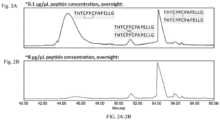
- the molar ratio of peptide:Cu 2+ needed to induce the formation of disulfide bonds is 5:1 Higher peptide concentration can preferentially induce the formation of hinge dimers over the formation of intra-chain disulfide bonds.
- the peptide standards can be exposed to Cu 2+ to induce single parallel or crossed disulfide bonds.
- the peptide standards are oxidized for about 1 hour to about 6 hours.
- the peptide standards are oxidized for 2 hours.
- the peptide standards can be oxidized for up to 24 hours in order to induce two or more parallel or crossed disulfide bonds.
- the characteristics of the synthesized peptide standards are determined.
- the characteristics include the retention time and m/z of each peptide standard.
- the synthesized peptide standards can be separated or fractionated using various chromatography methods. Peptide standards containing parallel disulfide bonds are distinguishable from peptide standards containing crossed or intra-chain disulfide bonds.
- N-terminal sequence analysis can be used to confirm the identity of the peptide standards.
- N-terminal sequence analysis involves a series of chemical reactions that derivatize and remove one amino acid at a time from the N-terminus of purified peptides or intact proteins.
- N-terminal analysis can detect disulfide bonds because the reaction to remove one amino acid at a time from the N-terminus does not disrupt the bonds between the cysteine residues in the disulfide bond.
- Edman degradation can be utilized to sequence the disulfide bond peptide standards.
- Edman degradation is similar to N-terminal analysis in that it detects the sequence of a protein or peptide in order by removing one amino acid at a time from the N-terminus of the protein or peptide.
- the first round of Edman degradation is often contaminated by impurities and therefore does not give an accurate determination of the N-terminal amino acid.
- Edman degradation can detect disulfide bonds because the reaction to remove one amino acid at a time from the N-terminus does not disrupt the bonds between the cysteine residues in the disulfide bond.
- N-terminal analysis can be combined with Edman degradation to give a complete, ordered sequence of the synthesized disulfide bond peptide standards.
- sequencing peptides are considered. These include but are not limited to C-terminal analysis and mass spectrometry.
- One embodiment provides methods for identifying and characterizing disulfide bonds in a protein drug product.
- the methods identify and characterize disulfide bonds specifically in the hinge region of an antibody.
- the antibody is an IgG antibody.
- An exemplary method includes preparing scrambled disulfide bond peptide standards and native disulfide bond peptide standards according to the sequence of the protein drug product, cleaving a sample of protein drug product into peptides, analyzing the peptide standards and the protein drug product peptides, identifying scrambled and native disulfide bonds in peptides by comparing retention time, and quantifying the level of scrambled disulfide bond peptides. Detecting peptides having the same retention time or m/z as the peptide standard indicates that the type of disulfide bond in the peptide standard is present in the protein drug product.
- the protein or protein drug product of interest can be obtained for example from a bioreactor containing cells engineered to produce monoclonal antibodies.
- the protein or protein drug product of interest is digested into peptides.
- Methods of digesting proteins are known in the art. Proteins can be digested by enzymatic digestion with proteolytic enzymes or by non-enzymatic digestion with chemicals.
- Exemplary proteolytic enzymes for digesting proteins include but are not limited to trypsin, pepsin, chymotrypsin, thermolysin, papain, pronase, Arg-C, Asp-N, Glu-C, Lys-C, and Lys-N. Combinations of proteolytic enzymes can be used to ensure complete digestion.
- Exemplary chemicals for digesting proteins include but are not limited to formic acid, hydrochloric acid, acetic acid, cyanogen bromide, 2-nitro-5-thiocyanobenzoate, and hydroxyalamine.
- the protein drug product can be subjected to double digesting.
- the first digestion can be performed using a broad-specificity protease, such as but not limited to proteinase K, thermolysin, substilisin, papain, chymotrypsin, or elastase.
- the second digestion can be performed using trypsin.
- FabRICATOR ® enzyme is used to digest the protein or protein drug product. FabRICATOR ® enzyme digests antibodies at a specific site below the hinge therefore generating F(ab')2 and Fc/2 fragments. FabRICATOR ® digestion can be combined with tryptic digestion.
- the digested peptide mixture from the protein or protein drug product can be analyzed by liquid chromatography-mass spectrometry (LC-MS or LC-MS 2 ) to determine the mass of the digested peptides.
- the digested peptide mixture is separated by liquid chromatography, for example size-exclusion chromatography.
- the peptide mixture can then be analyzed using mass spectrometry.
- Methods of performing mass spectrometry are known in the art. See for example ( Aeberssold, M., and Mann, M., Nature, 422:198-207 (2003 ))
- Commonly utilized types of mass spectrometry include but are not limited to tandem mass spectrometry (MS/MS), electrospray ionization mass spectrometry, liquid chromatography-mass spectrometry (LC-MS), and Matrix-assisted laser desorption /ionization (MALDI).
- SRM selected reaction monitoring
- an ion of a particular mass is selected in the first stage of a tandem mass spectrometer and an ion product of fragmentation of the precursor ion is selected in the second mass spectrometer for detection.
- the hinge peptide standards are also analyzed.
- the standards are used to characterize the hinge region of the protein drug product of interest.
- the retention time of the known hinge peptide standards are compared to the retention time of the peptide mixture from the protein drug product of interest. Detecting peptides having the same retention time or m/z as the peptide standard indicates that the type of disulfide bond in the peptide standard is present in the protein drug product.
- the protein of interest is a protein drug product or is a protein of interest suitable for expression in prokaryotic or eukaryotic cells.
- the protein can be an antibody or antigen-binding fragment thereof, a chimeric antibody or antigen-binding fragment thereof, an ScFv or fragment thereof, an Fc-fusion protein or fragment thereof, a growth factor or a fragment thereof, a cytokine or a fragment thereof, or an extracellular domain of a cell surface receptor or a fragment thereof.
- Proteins in the complexes may be simple polypeptides consisting of a single subunit, or complex multi subunit proteins comprising two or more subunits.
- the protein of interest may be a biopharmaceutical product, food additive or preservative, or any protein product subject to purification and quality standards
- the protein of interest is an antibody, a human antibody, a humanized antibody, a chimeric antibody, a monoclonal antibody, a multispecific antibody, a bispecific antibody, an antigen binding antibody fragment, a single chain antibody, a diabody, triabody or tetrabody, a dual-specific, tetravalent immunoglobulin G-like molecule, termed dual variable domain immunoglobulin (DVD-IG), an IgD antibody, an IgE antibody, an IgM antibody, an IgG antibody, an IgG1 antibody, an IgG2 antibody, an IgG3 antibody, or an IgG4 antibody.
- the antibody is an IgG1 antibody.
- the antibody is an IgG2 antibody. In one embodiment, the antibody is an IgG4 antibody. In another embodiment, the antibody comprises a chimeric hinge. In still other embodiments, the antibody comprises a chimeric Fc. In one embodiment, the antibody is a chimeric IgG2/IgG4 antibody. In one embodiment, the antibody is a chimeric IgG2/IgG1 antibody. In one embodiment, the antibody is a chimeric IgG2/IgG1/IgG4 antibody.
- the antibody is selected from the group consisting of an anti-Programmed Cell Death 1 antibody (e.g., an anti-PD1 antibody as described in U.S. Pat. Appln. Pub. No. US2015/0203579A1 ), an anti-Programmed Cell Death Ligand-1 (e.g., an anti-PD-L1 antibody as described in in U.S. Pat. Appln. Pub. No. US2015/0203580A1 ), an anti-Dll4 antibody, an anti-Angiopoetin-2 antibody (e.g., an anti-ANG2 antibody as described in U.S. Pat. No.
- an anti-Programmed Cell Death 1 antibody e.g., an anti-PD1 antibody as described in U.S. Pat. Appln. Pub. No. US2015/0203579A1
- an anti-Programmed Cell Death Ligand-1 e.g., an anti-PD-L1 antibody as described in in U.S. Pat. Appln. Pub. No. US
- an anti- Angiopoetin-Like 3 antibody e.g., an anti-AngPtl3 antibody as described in U.S. Pat. No. 9,018,356
- an anti-platelet derived growth factor receptor antibody e.g., an anti-PDGFR antibody as described in U.S. Pat. No. 9,265,827
- an anti-Erb3 antibody e.g., an anti- Prolactin Receptor antibody as described in U.S. Pat. No. 9,302,015
- an anti-Complement 5 antibody e.g., an anti-C5 antibody as described in U.S. Pat. Appln. Pub.
- an anti-TNF antibody an anti-epidermal growth factor receptor antibody (e.g., an anti-EGFR antibody as described in U.S. Pat. No. 9,132,192 or an anti-EGFRvIII antibody as described in U.S. Pat. Appln. Pub. No. US2015/0259423A1 ), an anti-Proprotein Convertase Subtilisin Kexin-9 antibody (e.g., an anti-PCSK9 antibody as described in U.S. Pat. No. 8,062,640 or U.S. Pat. No. 9,540,449 ), an Anti-Growth and Differentiation Factor-8 antibody (e.g.
- an anti-GDF8 antibody also known as anti-myostatin antibody, as described in U.S. Pat Nos. 8,871,209 or 9,260,515
- an anti-Glucagon Receptor e.g. anti-GCGR antibody as described in U.S. Pat. Appln. Pub. Nos. US2015/0337045A1 or US2016/0075778A1
- an anti-VEGF antibody e.g., an anti-IL1R antibody, an interleukin 4 receptor antibody (e.g., an anti-IL4R antibody as described in U.S. Pat. Appln. Pub. No. US2014/0271681A1 or U.S. Pat Nos.
- an anti-interleukin 6 receptor antibody e.g., an anti-IL6R antibody as described in U.S. Pat. Nos. 7,582,298 , 8,043,617 or 9,173,880
- an anti-IL1 antibody e.g., an anti-IL2 antibody, an anti-IL3 antibody, an anti-IL4 antibody, an anti-IL5 antibody, an anti-IL6 antibody, an anti-IL7 antibody
- an anti-interleukin 33 e.g., anti- IL33 antibody as described in U.S. Pat. Nos.
- an anti-Respiratory syncytial virus antibody e.g., anti-RSV antibody as described in U.S. Pat. Appln. Pub. No. 9,447,173
- an anti-Cluster of differentiation 3 e.g., an anti-CD3 antibody, as described in U.S. Pat. Nos. 9,447,173 and 9,447,173 , and in U.S. Application No. 62/222,605
- an anti- Cluster of differentiation 20 e.g., an anti-CD20 antibody as described in U.S. Pat. Nos. 9,657,102 and US20150266966A1 , and in U.S. Pat. No.
- an anti-CD 19 antibody an anti-CD28 antibody, an anti- Cluster of Differentiation-48 (e.g. anti-CD48 antibody as described in U.S. Pat. No. 9,228,014 ), an anti-Fel d1 antibody (e.g. as described in U.S. Pat. No. 9,079,948 ), an anti-Middle East Respiratory Syndrome virus (e.g. an anti-MERS antibody as described in U.S. Pat. Appln. Pub. No. US2015/0337029A1 ), an anti-Ebola virus antibody (e.g. as described in U.S. Pat. Appln. Pub. No.
- an anti-Zika virus antibody e.g. an anti-Lymphocyte Activation Gene 3 antibody (e.g. an anti-LAG3 antibody, or an anti-CD223 antibody), an anti-Nerve Growth Factor antibody (e.g. an anti-NGF antibody as described in U.S. Pat. Appln. Pub. No. US2016/0017029 and U.S. Pat. Nos. 8,309,088 and 9,353,176 ) and an anti-Protein Y antibody.
- the bispecific antibody is selected from the group consisting of an anti-CD3 x anti-CD20 bispecific antibody (as described in U.S. Pat. Appln. Pub. Nos.
- an anti-CD3 x anti-Mucin 16 bispecific antibody e.g., an anti-CD3 x anti-Muc16 bispecific antibody
- an anti-CD3 x anti- Prostate-specific membrane antigen bispecific antibody e.g., an anti-CD3 x anti-PSMA bispecific antibody
- the protein of interest is selected from the group consisting of abciximab, adalimumab, adalimumab-atto, ado-trastuzumab, alemtuzumab, alirocumab, atezolizumab, avelumab, basiliximab, belimumab, benralizumab, bevacizumab, bezlotoxumab, blinatumomab, brentuximab vedotin, brodalumab, canakinumab, capromab pendetide, certolizumab pegol, cemiplimab, cetuximab, denosumab, dinutuximab, dupilumab, durvalumab, eculizumab, elotuzumab, emicizumab-kxwh, emtansinealirocumab
- the protein of interest is a recombinant protein that contains an Fc moiety and another domain, (e.g., an Fc-fusion protein).
- an Fc-fusion protein is a receptor Fc-fusion protein, which contains one or more extracellular domain(s) of a receptor coupled to an Fc moiety.
- the Fc moiety comprises a hinge region followed by a CH2 and CH3 domain of an IgG.
- the receptor Fc-fusion protein contains two or more distinct receptor chains that bind to either a single ligand or multiple ligands.
- an Fc-fusion protein is a TRAP protein, such as for example an IL-1 trap (e.g., rilonacept, which contains the IL-1RAcP ligand binding region fused to the Il-1R1 extracellular region fused to Fc of hIgG1; see U.S. Pat. No. 6,927,004 , which is herein incorporated by reference in its entirety), or a VEGF trap (e.g., aflibercept or ziv-aflibercept, which comprises the Ig domain 2 of the VEGF receptor Flt1 fused to the Ig domain 3 of the VEGF receptor Flk1 fused to Fc of hIgG1; see U.S. Pat. Nos.
- IL-1 trap e.g., rilonacept, which contains the IL-1RAcP ligand binding region fused to the Il-1R1 extracellular region fused to Fc of hIgG1; see U.S. Pat. No. 6,9
- an Fc-fusion protein is a ScFv-Fc-fusion protein, which contains one or more of one or more antigen-binding domain(s), such as a variable heavy chain fragment and a variable light chain fragment, of an antibody coupled to an Fc moiety.
- One embodiment provides methods of producing a protein drug product containing less than 30% scrambled disulfide bonds.
- An exemplary method includes culturing cells producing the antibody in a cell culture under suitable conditions to produce the antibody, purifying the antibody under suitable conditions to extract the antibody, admixing the antibody with excipients under suitable conditions to stabilize the antibody, obtaining a sample of the antibody from the cell culture, following purification of the antibody from the cell culture, or following the addition of excipients to the purified antibody, characterizing disulfide bonds of the antibody according to the disclosed methods, and modifying one or more cell culture, purification or excipient conditions to reduce the amount of crossed hinge disulfide bonds of the antibody.
- the one or more cell culture, purification, or excipient conditions that are changed to reduce the amount of scrambled disulfide bonds in the antibody include but are not limited to temperature, pH, oxygen levels, reactive oxygen species, surfactants, or combinations thereof.
- an amino acid free strategy of cell culture could affect disulfide bond formation.
- the cells producing the antibody are Chinese hamster ovary cells. In another embodiment, the cells are hybridoma cells.
- the protein drug product can have less than 30% scrambled disulfide bonds in the hinge region.
- the protein drug product can have less than 30%, 25%, 20%, 18%, 16%, 14%, 12%, 10%, 9%, 8%, 7%, 6%, 5%, 4%, 3%, 1%, 0.5%, or 0.1% scrambled disulfide bonds in the hinge region.
- the protein drug product can have less than 10% scrambled disulfide bonds overall.
- the protein drug product can have less than 10%, 9.5%, 9%, 8.5%, 8%, 7.5%, 7%, 6.5%, 6%, 5.5%, 5%, 4.5%, 4%, 3.5%, 3%, 2.5%, 2%, 1.5%, 1%, 0.5%, or 0.1% scrambled disulfide bonds.
- Cysteine containing peptides were purchased from a commercial vendor. The peptides were cross-linked by incubation with 1 mM Cu 2+ as the oxidant in the presence of air. The molar ratio of peptide to Cu 2+ was 5:1.
- the cross-linked peptides were suspended in water and were placed into a protein sequencer.
- the peptides were exposed to phenyl isothiocyanate (PITC).
- PITC phenyl isothiocyanate
- Trifluoroacetic acid was added to the reaction and the PTC N-terminal residue underwent acid cleavage, resulting in the release of an unstable ATZ-amino acid.
- the ATZ-amino acid was separated from the peptide solution into a conversion flask containing ethyl acetate.
- the ATZ-amino acid was converted into a stable PTH-amino acid with 25% TFA, v/v in water.
- the PTH-amino acid solution was injected onto an HPLC. Each amino acid of the peptide is identified by HPLC.
- Antibodies were first digested into peptides. IgG1 antibodies were subjected to dual-enzyme digestion using proteinase K followed by trypsin. IgG4 antibodies were subjected to digestion by FabRICATOR followed by trypsin. Hinge peptide standards were prepared as above, using the hinge region sequence of the IgG1 and IgG4 antibodies to prepare the peptides. The digested peptide mixtures were subjected to LC-MS analysis. Hinge peptide standards were also subjected to LC-MA analysis. Retention time analysis was performed to compare the retention time of the antibody peptides to the retention time of the hinge peptide standards.
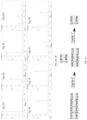
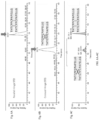
- IgG1 mAb1 was subjected to digestion into peptides and the resulting peptides were subjected to LC/MS analysis.
- the hinge peptide standards described above were also subjected to LC/MS analysis.
- IgG1 mAb1 has about 0.9% crossed hinge disulfide bonds.
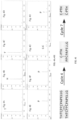
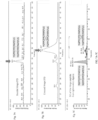
- IgG4 mAb1 A second antibody, IgG4 mAb1, was also analyzed using the disclosed methods and hinge disulfide bond peptide standards. As shown in Figures 7A-7C , IgG4 mAb1 had about 0.6% crossed hinge disulfide bonds.
Landscapes
- Life Sciences & Earth Sciences (AREA)
- Health & Medical Sciences (AREA)
- Engineering & Computer Science (AREA)
- Immunology (AREA)
- Chemical & Material Sciences (AREA)
- Molecular Biology (AREA)
- Physics & Mathematics (AREA)
- Urology & Nephrology (AREA)
- Hematology (AREA)
- Biomedical Technology (AREA)
- General Health & Medical Sciences (AREA)
- Analytical Chemistry (AREA)
- General Physics & Mathematics (AREA)
- Biochemistry (AREA)
- Pathology (AREA)
- Medicinal Chemistry (AREA)
- Microbiology (AREA)
- Bioinformatics & Cheminformatics (AREA)
- Food Science & Technology (AREA)
- Cell Biology (AREA)
- Biotechnology (AREA)
- Proteomics, Peptides & Aminoacids (AREA)
- Bioinformatics & Computational Biology (AREA)
- Biophysics (AREA)
- Spectroscopy & Molecular Physics (AREA)
- Veterinary Medicine (AREA)
- Public Health (AREA)
- Animal Behavior & Ethology (AREA)
- Epidemiology (AREA)
- Pharmacology & Pharmacy (AREA)
- Mycology (AREA)
- Electrochemistry (AREA)
- Chemical Kinetics & Catalysis (AREA)
- Peptides Or Proteins (AREA)
- Other Investigation Or Analysis Of Materials By Electrical Means (AREA)
- Investigating Or Analysing Biological Materials (AREA)
- Medicines Containing Antibodies Or Antigens For Use As Internal Diagnostic Agents (AREA)
- Measuring Or Testing Involving Enzymes Or Micro-Organisms (AREA)
- Enzymes And Modification Thereof (AREA)
- Preparation Of Compounds By Using Micro-Organisms (AREA)
Applications Claiming Priority (3)
| Application Number | Priority Date | Filing Date | Title |
|---|---|---|---|
| US201962792994P | 2019-01-16 | 2019-01-16 | |
| PCT/US2020/013907 WO2020150491A1 (en) | 2019-01-16 | 2020-01-16 | Methods for characterizing disulfide bonds |
| EP20706372.8A EP3857237B1 (de) | 2019-01-16 | 2020-01-16 | Verfahren zur charakterisierung von disulfidverbindungen |
Related Parent Applications (2)
| Application Number | Title | Priority Date | Filing Date |
|---|---|---|---|
| EP20706372.8A Division-Into EP3857237B1 (de) | 2019-01-16 | 2020-01-16 | Verfahren zur charakterisierung von disulfidverbindungen |
| EP20706372.8A Division EP3857237B1 (de) | 2019-01-16 | 2020-01-16 | Verfahren zur charakterisierung von disulfidverbindungen |
Publications (2)
| Publication Number | Publication Date |
|---|---|
| EP4220173A2 true EP4220173A2 (de) | 2023-08-02 |
| EP4220173A3 EP4220173A3 (de) | 2023-10-18 |
Family
ID=69570836
Family Applications (3)
| Application Number | Title | Priority Date | Filing Date |
|---|---|---|---|
| EP20704983.4A Withdrawn EP3857236A1 (de) | 2019-01-16 | 2020-01-16 | Verfahren zur identifizierung von freien thiolen in proteinen |
| EP20706372.8A Active EP3857237B1 (de) | 2019-01-16 | 2020-01-16 | Verfahren zur charakterisierung von disulfidverbindungen |
| EP23150144.6A Withdrawn EP4220173A3 (de) | 2019-01-16 | 2020-01-16 | Verfahren zur charakterisierung von disulfidbindungen |
Family Applications Before (2)
| Application Number | Title | Priority Date | Filing Date |
|---|---|---|---|
| EP20704983.4A Withdrawn EP3857236A1 (de) | 2019-01-16 | 2020-01-16 | Verfahren zur identifizierung von freien thiolen in proteinen |
| EP20706372.8A Active EP3857237B1 (de) | 2019-01-16 | 2020-01-16 | Verfahren zur charakterisierung von disulfidverbindungen |
Country Status (20)
| Country | Link |
|---|---|
| US (4) | US11579150B2 (de) |
| EP (3) | EP3857236A1 (de) |
| JP (2) | JP2022517720A (de) |
| KR (2) | KR20210114927A (de) |
| CN (3) | CN117110492A (de) |
| AU (2) | AU2020208395A1 (de) |
| BR (2) | BR112021009543A2 (de) |
| CA (2) | CA3116732A1 (de) |
| DK (1) | DK3857237T3 (de) |
| EA (2) | EA202191699A1 (de) |
| ES (1) | ES2942024T3 (de) |
| FI (1) | FI3857237T3 (de) |
| HU (1) | HUE061783T2 (de) |
| IL (2) | IL284471B2 (de) |
| MX (2) | MX2021008590A (de) |
| MY (1) | MY202602A (de) |
| PL (1) | PL3857237T3 (de) |
| SG (2) | SG11202104103XA (de) |
| WO (2) | WO2020150492A1 (de) |
| ZA (2) | ZA202102546B (de) |
Families Citing this family (4)
| Publication number | Priority date | Publication date | Assignee | Title |
|---|---|---|---|---|
| KR20210114927A (ko) | 2019-01-16 | 2021-09-24 | 리제너론 파마슈티칼스 인코포레이티드 | 이황화 결합을 특징 짓는 방법 |
| KR20230123498A (ko) * | 2020-12-20 | 2023-08-23 | 리제너론 파아마슈티컬스, 인크. | 생체분자에서 스크램블된 디설파이드의 식별 방법 |
| US20240060988A1 (en) * | 2021-02-25 | 2024-02-22 | Dr. Reddy’S Laboratories Limited | Thiol variants and analytical methods thereof |
| CN113189254B (zh) * | 2021-05-08 | 2021-11-16 | 北京工商大学 | 一种基于白酒中挥发性硫醇化合物的测定方法 |
Citations (34)
| Publication number | Priority date | Publication date | Assignee | Title |
|---|---|---|---|---|
| US6927004B2 (en) | 2002-03-08 | 2005-08-09 | Asml Netherlands B.V. | Mask for use in lithography, method of making a mask, lithographic apparatus, and device manufacturing method |
| US7087411B2 (en) | 1999-06-08 | 2006-08-08 | Regeneron Pharmaceuticals, Inc. | Fusion protein capable of binding VEGF |
| US7582298B2 (en) | 2006-06-02 | 2009-09-01 | Regeneron Pharmaceuticals, Inc. | High affinity antibodies to human IL-6 receptor |
| US7879984B2 (en) | 2007-07-31 | 2011-02-01 | Regeneron Pharmaceuticals, Inc. | Human antibodies to human CD20 and method of using thereof |
| US8062640B2 (en) | 2008-12-15 | 2011-11-22 | Regeneron Pharmaceuticals, Inc. | High affinity human antibodies to PCSK9 |
| US8309088B2 (en) | 2007-08-10 | 2012-11-13 | Regeneron Pharmaceuticals, Inc. | Method of treating osteoarthritis with an antibody to NGF |
| US8586713B2 (en) | 2009-06-26 | 2013-11-19 | Regeneron Pharmaceuticals, Inc. | Readily isolated bispecific antibodies with native immunoglobulin format |
| US20140088295A1 (en) | 2012-09-21 | 2014-03-27 | Regeneron Pharmaceuticals, Inc. | Anti-cd3 antibodies, bispecific antigen-binding molecules that bind cd3 and cd20, and uses thereof |
| US8735095B2 (en) | 2006-10-02 | 2014-05-27 | Regeneron Pharmaceuticals, Inc. | High affinity human antibodies to human IL-4 receptor |
| US8871209B2 (en) | 2011-11-14 | 2014-10-28 | Regeneron Pharmaceuticals, Inc. | Compositions and methods for increasing muscle mass and muscle strength by specifically antagonizing GDF8 and or Activin A |
| US8945559B2 (en) | 2010-10-06 | 2015-02-03 | Regeneron Pharmaceuticals, Inc. | Stabilized formulations containing anti-interleukin-4 receptor (IL-4R) antibodies |
| US9018356B2 (en) | 2011-06-17 | 2015-04-28 | Regeneron Pharmaceuticals, Inc. | Anti-ANGPTL3 antibodies and uses thereof |
| US9079948B2 (en) | 2012-05-03 | 2015-07-14 | Regeneron Pharmaceuticals, Inc. | Human antibodies to Fel d1 and methods of use thereof |
| US20150203579A1 (en) | 2014-01-23 | 2015-07-23 | Regeneron Pharmaceuticals, Inc. | Human Antibodies to PD-1 |
| US20150203580A1 (en) | 2014-01-23 | 2015-07-23 | Regeneron Pharmaceuticals, Inc. | Human Antibodies to PD-L1 |
| US9132192B2 (en) | 2012-06-25 | 2015-09-15 | Regeneron Pharmaceuticals, Inc. | Anti-EGFR antibodies and uses thereof |
| US20150259423A1 (en) | 2014-03-11 | 2015-09-17 | Regeneron Pharmaceuticals, Inc. | ANTI-EGFRvIII ANTIBODIES AND USES THEREOF |
| US20150266966A1 (en) | 2014-03-19 | 2015-09-24 | Regeneron Pharmaceuticals, Inc. | Methods and Antibody Compositions for Tumor Treatment |
| US9173880B2 (en) | 2010-01-08 | 2015-11-03 | Regeneron Pharmaceuticals, Inc. | Stabilized formulations containing anti-interleukin-6 receptor (IL-6R) antibodies |
| US20150313194A1 (en) | 2014-05-05 | 2015-11-05 | Regeneron Pharmaceuticals, Inc. | Humanized c5 and c3 animals |
| US20150337029A1 (en) | 2014-05-23 | 2015-11-26 | Regeneron Pharmaceuticals, Inc. | Human Antibodies to Middle East Respiratory Syndrome - Coronavirus Spike Protein |
| US20150337045A1 (en) | 2010-11-23 | 2015-11-26 | Regeneron Pharmaceuticals, Inc. | Human antibodies to the glucagon receptor |
| US9228014B2 (en) | 2010-09-27 | 2016-01-05 | Regeneron Pharmaceuticals, Inc. | Antibodies capable of blocking the interaction between CD48 and a CD48 receptor |
| US20160017029A1 (en) | 2010-07-14 | 2016-01-21 | Regeneron Pharmaceuticals, Inc. | Stabilized formulations containing anti-ngf antibodies |
| US9260515B2 (en) | 2010-05-26 | 2016-02-16 | Regeneron Pharmaceuticals, Inc. | Antibodies to human GDF8 |
| US9265827B2 (en) | 2013-01-09 | 2016-02-23 | Regeneron Pharmaceuticals, Inc. | Anti-PDGFR-beta antibodies and uses thereof |
| US20160075778A1 (en) | 2014-09-16 | 2016-03-17 | Regeneron Pharmaceuticals, Inc. | Anti-Glucagon Antibodies and Uses Thereof |
| US9302015B2 (en) | 2013-08-21 | 2016-04-05 | Regeneron Pharmaceuticals, Inc. | Anti-PRLR antibodies and methods for killing PRLR-expressing cells |
| US20160215040A1 (en) | 2015-01-26 | 2016-07-28 | Regeneron Pharmaceuticals, Inc. | Human Antibodies to Ebola Virus Glycoprotein |
| US9402898B2 (en) | 2012-01-23 | 2016-08-02 | Regeneron Pharmaceuticals, Inc. | Stabilized formulations containing anti-Ang2 antibodies |
| US9447173B2 (en) | 2013-03-14 | 2016-09-20 | Regeneron Pharmaceuticals, Inc. | Human antibodies to respiratory syncytial virus F protein and methods of use thereof |
| US9453072B2 (en) | 2013-03-13 | 2016-09-27 | Regeneron Pharmaceuticals, Inc. | Anti-IL-33 antibodies |
| US9540449B2 (en) | 2012-08-13 | 2017-01-10 | Regeneron Pharmaceuticals, Inc. | Anti-PCSK9 antibodies with pH-dependent binding characteristics |
| US9637535B2 (en) | 2013-03-15 | 2017-05-02 | Regeneron Pharmaceuticals, Inc. | IL-33 antagonists and uses thereof |
Family Cites Families (9)
| Publication number | Priority date | Publication date | Assignee | Title |
|---|---|---|---|---|
| EP1921081A1 (de) * | 2006-11-06 | 2008-05-14 | Koninklijke Philips Electronics N.V. | Verwendung von Arylboronsäuren zur Proteinmarkierung |
| WO2011156328A1 (en) * | 2010-06-08 | 2011-12-15 | Genentech, Inc. | Cysteine engineered antibodies and conjugates |
| CA2820630A1 (en) * | 2010-12-09 | 2012-06-14 | Bayer Healthcare Llc | Dimeric molecular complexes with free cysteine residues and conjugates thereof |
| KR102096678B1 (ko) * | 2012-03-27 | 2020-04-02 | 제넨테크, 인크. | 재조합 단백질을 위한 개선된 수확 작업 |
| US9835629B2 (en) | 2012-05-18 | 2017-12-05 | Pierce Biotechnology, Inc. | Methods and reagents for biomolecule labeling, enrichment and gentle elution |
| EP3175242A4 (de) * | 2014-07-29 | 2017-12-27 | Mayo Foundation for Medical Education and Research | Quantifizierung monoklonaler antikörpertherapeutika durch lc-ms/ms |
| CN108627647B (zh) * | 2017-03-24 | 2020-06-19 | 四川大学 | 一种翻译后修饰蛋白质组学的检测和定量方法 |
| CN109142561A (zh) * | 2018-07-17 | 2019-01-04 | 上海师范大学 | 同时定量蛋白质丰度与半胱氨酸氧化水平的方法及其应用 |
| KR20210114927A (ko) | 2019-01-16 | 2021-09-24 | 리제너론 파마슈티칼스 인코포레이티드 | 이황화 결합을 특징 짓는 방법 |
-
2020
- 2020-01-16 KR KR1020217016167A patent/KR20210114927A/ko not_active Withdrawn
- 2020-01-16 CN CN202310621246.XA patent/CN117110492A/zh active Pending
- 2020-01-16 AU AU2020208395A patent/AU2020208395A1/en not_active Abandoned
- 2020-01-16 BR BR112021009543-8A patent/BR112021009543A2/pt unknown
- 2020-01-16 BR BR112021009544-6A patent/BR112021009544A2/pt not_active IP Right Cessation
- 2020-01-16 KR KR1020217016160A patent/KR20210114926A/ko not_active Withdrawn
- 2020-01-16 HU HUE20706372A patent/HUE061783T2/hu unknown
- 2020-01-16 JP JP2021532314A patent/JP2022517720A/ja not_active Withdrawn
- 2020-01-16 CN CN202080006686.9A patent/CN113272651B/zh active Active
- 2020-01-16 JP JP2021532315A patent/JP7560456B2/ja active Active
- 2020-01-16 EA EA202191699A patent/EA202191699A1/ru unknown
- 2020-01-16 IL IL284471A patent/IL284471B2/en unknown
- 2020-01-16 EP EP20704983.4A patent/EP3857236A1/de not_active Withdrawn
- 2020-01-16 EA EA202191841A patent/EA202191841A1/ru unknown
- 2020-01-16 SG SG11202104103XA patent/SG11202104103XA/en unknown
- 2020-01-16 CA CA3116732A patent/CA3116732A1/en active Pending
- 2020-01-16 CN CN202080006660.4A patent/CN113272650A/zh active Pending
- 2020-01-16 PL PL20706372.8T patent/PL3857237T3/pl unknown
- 2020-01-16 WO PCT/US2020/013910 patent/WO2020150492A1/en not_active Ceased
- 2020-01-16 US US16/745,006 patent/US11579150B2/en active Active
- 2020-01-16 CA CA3116735A patent/CA3116735A1/en active Pending
- 2020-01-16 EP EP20706372.8A patent/EP3857237B1/de active Active
- 2020-01-16 ES ES20706372T patent/ES2942024T3/es active Active
- 2020-01-16 WO PCT/US2020/013907 patent/WO2020150491A1/en not_active Ceased
- 2020-01-16 EP EP23150144.6A patent/EP4220173A3/de not_active Withdrawn
- 2020-01-16 DK DK20706372.8T patent/DK3857237T3/da active
- 2020-01-16 MX MX2021008590A patent/MX2021008590A/es unknown
- 2020-01-16 AU AU2020208396A patent/AU2020208396A1/en not_active Abandoned
- 2020-01-16 MX MX2021008589A patent/MX2021008589A/es unknown
- 2020-01-16 MY MYPI2021002187A patent/MY202602A/en unknown
- 2020-01-16 FI FIEP20706372.8T patent/FI3857237T3/fi active
- 2020-01-16 SG SG11202104237YA patent/SG11202104237YA/en unknown
- 2020-01-16 US US16/745,020 patent/US11674968B2/en active Active
-
2021
- 2021-04-16 ZA ZA2021/02546A patent/ZA202102546B/en unknown
- 2021-04-16 ZA ZA2021/02547A patent/ZA202102547B/en unknown
- 2021-06-29 IL IL284473A patent/IL284473A/en unknown
-
2023
- 2023-01-13 US US18/154,401 patent/US12000839B2/en active Active
- 2023-05-02 US US18/142,193 patent/US20230273216A1/en active Pending
Patent Citations (39)
| Publication number | Priority date | Publication date | Assignee | Title |
|---|---|---|---|---|
| US7087411B2 (en) | 1999-06-08 | 2006-08-08 | Regeneron Pharmaceuticals, Inc. | Fusion protein capable of binding VEGF |
| US6927004B2 (en) | 2002-03-08 | 2005-08-09 | Asml Netherlands B.V. | Mask for use in lithography, method of making a mask, lithographic apparatus, and device manufacturing method |
| US7279159B2 (en) | 2003-06-30 | 2007-10-09 | Regeneron Pharmaceuticals, Inc. | VEGF inhibitor polypeptides |
| US8043617B2 (en) | 2006-06-02 | 2011-10-25 | Regeneron Pharmaceuticals, Inc. | Human antibodies to human IL-6 receptor |
| US7582298B2 (en) | 2006-06-02 | 2009-09-01 | Regeneron Pharmaceuticals, Inc. | High affinity antibodies to human IL-6 receptor |
| US8735095B2 (en) | 2006-10-02 | 2014-05-27 | Regeneron Pharmaceuticals, Inc. | High affinity human antibodies to human IL-4 receptor |
| US20140271681A1 (en) | 2006-10-02 | 2014-09-18 | Regeneron Pharmaceuticals, Inc. | High Affinity Human Antibodies to Human IL-4 Receptor |
| US7879984B2 (en) | 2007-07-31 | 2011-02-01 | Regeneron Pharmaceuticals, Inc. | Human antibodies to human CD20 and method of using thereof |
| US8309088B2 (en) | 2007-08-10 | 2012-11-13 | Regeneron Pharmaceuticals, Inc. | Method of treating osteoarthritis with an antibody to NGF |
| US9353176B2 (en) | 2007-08-10 | 2016-05-31 | Regeneron Pharmaceuticals, Inc. | Method of treating osteoarthritis with an antibody to NGF |
| US8062640B2 (en) | 2008-12-15 | 2011-11-22 | Regeneron Pharmaceuticals, Inc. | High affinity human antibodies to PCSK9 |
| US8586713B2 (en) | 2009-06-26 | 2013-11-19 | Regeneron Pharmaceuticals, Inc. | Readily isolated bispecific antibodies with native immunoglobulin format |
| US9173880B2 (en) | 2010-01-08 | 2015-11-03 | Regeneron Pharmaceuticals, Inc. | Stabilized formulations containing anti-interleukin-6 receptor (IL-6R) antibodies |
| US9260515B2 (en) | 2010-05-26 | 2016-02-16 | Regeneron Pharmaceuticals, Inc. | Antibodies to human GDF8 |
| US20160017029A1 (en) | 2010-07-14 | 2016-01-21 | Regeneron Pharmaceuticals, Inc. | Stabilized formulations containing anti-ngf antibodies |
| US9228014B2 (en) | 2010-09-27 | 2016-01-05 | Regeneron Pharmaceuticals, Inc. | Antibodies capable of blocking the interaction between CD48 and a CD48 receptor |
| US8945559B2 (en) | 2010-10-06 | 2015-02-03 | Regeneron Pharmaceuticals, Inc. | Stabilized formulations containing anti-interleukin-4 receptor (IL-4R) antibodies |
| US20150337045A1 (en) | 2010-11-23 | 2015-11-26 | Regeneron Pharmaceuticals, Inc. | Human antibodies to the glucagon receptor |
| US9018356B2 (en) | 2011-06-17 | 2015-04-28 | Regeneron Pharmaceuticals, Inc. | Anti-ANGPTL3 antibodies and uses thereof |
| US8871209B2 (en) | 2011-11-14 | 2014-10-28 | Regeneron Pharmaceuticals, Inc. | Compositions and methods for increasing muscle mass and muscle strength by specifically antagonizing GDF8 and or Activin A |
| US9402898B2 (en) | 2012-01-23 | 2016-08-02 | Regeneron Pharmaceuticals, Inc. | Stabilized formulations containing anti-Ang2 antibodies |
| US9079948B2 (en) | 2012-05-03 | 2015-07-14 | Regeneron Pharmaceuticals, Inc. | Human antibodies to Fel d1 and methods of use thereof |
| US9132192B2 (en) | 2012-06-25 | 2015-09-15 | Regeneron Pharmaceuticals, Inc. | Anti-EGFR antibodies and uses thereof |
| US9540449B2 (en) | 2012-08-13 | 2017-01-10 | Regeneron Pharmaceuticals, Inc. | Anti-PCSK9 antibodies with pH-dependent binding characteristics |
| US20140088295A1 (en) | 2012-09-21 | 2014-03-27 | Regeneron Pharmaceuticals, Inc. | Anti-cd3 antibodies, bispecific antigen-binding molecules that bind cd3 and cd20, and uses thereof |
| US9657102B2 (en) | 2012-09-21 | 2017-05-23 | Regeneron Pharmaceuticals, Inc. | Anti-CD3 antibodies, bispecific antigen-binding molecules that bind CD3 and CD20, and uses thereof |
| US9265827B2 (en) | 2013-01-09 | 2016-02-23 | Regeneron Pharmaceuticals, Inc. | Anti-PDGFR-beta antibodies and uses thereof |
| US9453072B2 (en) | 2013-03-13 | 2016-09-27 | Regeneron Pharmaceuticals, Inc. | Anti-IL-33 antibodies |
| US9447173B2 (en) | 2013-03-14 | 2016-09-20 | Regeneron Pharmaceuticals, Inc. | Human antibodies to respiratory syncytial virus F protein and methods of use thereof |
| US9637535B2 (en) | 2013-03-15 | 2017-05-02 | Regeneron Pharmaceuticals, Inc. | IL-33 antagonists and uses thereof |
| US9302015B2 (en) | 2013-08-21 | 2016-04-05 | Regeneron Pharmaceuticals, Inc. | Anti-PRLR antibodies and methods for killing PRLR-expressing cells |
| US20150203580A1 (en) | 2014-01-23 | 2015-07-23 | Regeneron Pharmaceuticals, Inc. | Human Antibodies to PD-L1 |
| US20150203579A1 (en) | 2014-01-23 | 2015-07-23 | Regeneron Pharmaceuticals, Inc. | Human Antibodies to PD-1 |
| US20150259423A1 (en) | 2014-03-11 | 2015-09-17 | Regeneron Pharmaceuticals, Inc. | ANTI-EGFRvIII ANTIBODIES AND USES THEREOF |
| US20150266966A1 (en) | 2014-03-19 | 2015-09-24 | Regeneron Pharmaceuticals, Inc. | Methods and Antibody Compositions for Tumor Treatment |
| US20150313194A1 (en) | 2014-05-05 | 2015-11-05 | Regeneron Pharmaceuticals, Inc. | Humanized c5 and c3 animals |
| US20150337029A1 (en) | 2014-05-23 | 2015-11-26 | Regeneron Pharmaceuticals, Inc. | Human Antibodies to Middle East Respiratory Syndrome - Coronavirus Spike Protein |
| US20160075778A1 (en) | 2014-09-16 | 2016-03-17 | Regeneron Pharmaceuticals, Inc. | Anti-Glucagon Antibodies and Uses Thereof |
| US20160215040A1 (en) | 2015-01-26 | 2016-07-28 | Regeneron Pharmaceuticals, Inc. | Human Antibodies to Ebola Virus Glycoprotein |
Non-Patent Citations (7)
| Title |
|---|
| AEBERSSOLD, M.MANN, M., NATURE, vol. 422, 2003, pages 198 - 207 |
| LEVIN, D. ET AL., TRENDS BIOTECHNOL, vol. 33, no. 1, 2015, pages 27 - 34 |
| MORITZ, B.STRACKE, J.O., ELECTROPHORESIS, vol. 36, 2017, pages 769 - 785 |
| PRUDENT, M.GIRAULT, H.H., METALLOMICS, vol. 1, 2009, pages 157 - 165 |
| RATH, T. ET AL., CRIT REV BIOTECH, vol. 35, no. 2, 2015, pages 235 - 254 |
| VIDARSSON, G. ET AL., FRONT IMMUNOL, vol. 5, 2014, pages 520 |
| XIANG, T. ET AL., ANAL CHEM, vol. 81, 2009, pages 8101 - 8108 |
Also Published As
Similar Documents
| Publication | Publication Date | Title |
|---|---|---|
| US12000839B2 (en) | Methods for characterizing disulfide bonds | |
| JP2023139186A (ja) | 薬剤生成物不純物を特性決定するためのシステム及び方法 | |
| HK40088381A (en) | Methods for characterizing disulfide bonds | |
| CA3179460A1 (en) | A high-throughput and mass-spectrometry-based method for quantitating antibodies | |
| EA047402B1 (ru) | Способы для идентификации свободных тиолов в белках |
Legal Events
| Date | Code | Title | Description |
|---|---|---|---|
| PUAI | Public reference made under article 153(3) epc to a published international application that has entered the european phase |
Free format text: ORIGINAL CODE: 0009012 |
|
| STAA | Information on the status of an ep patent application or granted ep patent |
Free format text: STATUS: THE APPLICATION HAS BEEN PUBLISHED |
|
| AC | Divisional application: reference to earlier application |
Ref document number: 3857237 Country of ref document: EP Kind code of ref document: P |
|
| AK | Designated contracting states |
Kind code of ref document: A2 Designated state(s): AL AT BE BG CH CY CZ DE DK EE ES FI FR GB GR HR HU IE IS IT LI LT LU LV MC MK MT NL NO PL PT RO RS SE SI SK SM TR |
|
| PUAL | Search report despatched |
Free format text: ORIGINAL CODE: 0009013 |
|
| REG | Reference to a national code |
Ref country code: HK Ref legal event code: DE Ref document number: 40088381 Country of ref document: HK |
|
| AK | Designated contracting states |
Kind code of ref document: A3 Designated state(s): AL AT BE BG CH CY CZ DE DK EE ES FI FR GB GR HR HU IE IS IT LI LT LU LV MC MK MT NL NO PL PT RO RS SE SI SK SM TR |
|
| RIC1 | Information provided on ipc code assigned before grant |
Ipc: G01N 33/68 20060101AFI20230914BHEP |
|
| P01 | Opt-out of the competence of the unified patent court (upc) registered |
Effective date: 20240313 |
|
| STAA | Information on the status of an ep patent application or granted ep patent |
Free format text: STATUS: REQUEST FOR EXAMINATION WAS MADE |
|
| 17P | Request for examination filed |
Effective date: 20240416 |
|
| RBV | Designated contracting states (corrected) |
Designated state(s): AL AT BE BG CH CY CZ DE DK EE ES FI FR GB GR HR HU IE IS IT LI LT LU LV MC MK MT NL NO PL PT RO RS SE SI SK SM TR |
|
| STAA | Information on the status of an ep patent application or granted ep patent |
Free format text: STATUS: THE APPLICATION HAS BEEN WITHDRAWN |
|
| 18W | Application withdrawn |
Effective date: 20241211 |