EP4200693B1 - Vorrichtung und verfahren zur steuerung eines zeigers auf einem bildschirm einer elektronischen vorrichtung - Google Patents
Vorrichtung und verfahren zur steuerung eines zeigers auf einem bildschirm einer elektronischen vorrichtung Download PDFInfo
- Publication number
- EP4200693B1 EP4200693B1 EP20950431.5A EP20950431A EP4200693B1 EP 4200693 B1 EP4200693 B1 EP 4200693B1 EP 20950431 A EP20950431 A EP 20950431A EP 4200693 B1 EP4200693 B1 EP 4200693B1
- Authority
- EP
- European Patent Office
- Prior art keywords
- input device
- wireless input
- current position
- unit
- predicted
- Prior art date
- Legal status (The legal status is an assumption and is not a legal conclusion. Google has not performed a legal analysis and makes no representation as to the accuracy of the status listed.)
- Active
Links
Images


Classifications
-
- G—PHYSICS
- G06—COMPUTING OR CALCULATING; COUNTING
- G06F—ELECTRIC DIGITAL DATA PROCESSING
- G06F3/00—Input arrangements for transferring data to be processed into a form capable of being handled by the computer; Output arrangements for transferring data from processing unit to output unit, e.g. interface arrangements
- G06F3/01—Input arrangements or combined input and output arrangements for interaction between user and computer
- G06F3/03—Arrangements for converting the position or the displacement of a member into a coded form
- G06F3/033—Pointing devices displaced or positioned by the user, e.g. mice, trackballs, pens or joysticks; Accessories therefor
- G06F3/038—Control and interface arrangements therefor, e.g. drivers or device-embedded control circuitry
-
- G—PHYSICS
- G06—COMPUTING OR CALCULATING; COUNTING
- G06F—ELECTRIC DIGITAL DATA PROCESSING
- G06F3/00—Input arrangements for transferring data to be processed into a form capable of being handled by the computer; Output arrangements for transferring data from processing unit to output unit, e.g. interface arrangements
- G06F3/01—Input arrangements or combined input and output arrangements for interaction between user and computer
- G06F3/03—Arrangements for converting the position or the displacement of a member into a coded form
- G06F3/033—Pointing devices displaced or positioned by the user, e.g. mice, trackballs, pens or joysticks; Accessories therefor
- G06F3/0354—Pointing devices displaced or positioned by the user, e.g. mice, trackballs, pens or joysticks; Accessories therefor with detection of two-dimensional [2D] relative movements between the device, or an operating part thereof, and a plane or surface, e.g. 2D mice, trackballs, pens or pucks
- G06F3/03543—Mice or pucks
-
- G—PHYSICS
- G06—COMPUTING OR CALCULATING; COUNTING
- G06F—ELECTRIC DIGITAL DATA PROCESSING
- G06F3/00—Input arrangements for transferring data to be processed into a form capable of being handled by the computer; Output arrangements for transferring data from processing unit to output unit, e.g. interface arrangements
- G06F3/01—Input arrangements or combined input and output arrangements for interaction between user and computer
- G06F3/03—Arrangements for converting the position or the displacement of a member into a coded form
- G06F3/033—Pointing devices displaced or positioned by the user, e.g. mice, trackballs, pens or joysticks; Accessories therefor
- G06F3/038—Control and interface arrangements therefor, e.g. drivers or device-embedded control circuitry
- G06F3/0383—Signal control means within the pointing device
-
- G—PHYSICS
- G06—COMPUTING OR CALCULATING; COUNTING
- G06F—ELECTRIC DIGITAL DATA PROCESSING
- G06F2203/00—Indexing scheme relating to G06F3/00 - G06F3/048
- G06F2203/038—Indexing scheme relating to G06F3/038
- G06F2203/0384—Wireless input, i.e. hardware and software details of wireless interface arrangements for pointing devices
Definitions
- Various embodiments generally relate to apparatuses for controlling a pointer on a screen of an electronic device.
- various embodiments generally relate to apparatuses including a wireless input device (such as a mouse) and a receiver device (such as a dongle) communicable with the electronic device.
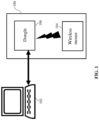
- FIG. 1 shows a prior art example of an apparatus 100 that can be employed by a user to interact with a computer 102.
- the apparatus 100 includes HIDs in the form of a wireless mouse 104 and a dongle 106.
- the dongle 106 can be connected to the computer 102 (via for example, a USB port) and the mouse 104 can communicate wirelessly with the dongle 106.
- the mouse 104 may transmit user input data indicating a change in the state of the mouse 104 (e.g. movement of the mouse 104 or clicking of one or more buttons of the mouse 104) to the dongle 106. This transmission may be via radio frequency, infra-red or any other type of wireless medium.
- the dongle 106 may then communicate such user input data to the computer 102 to carry out the user's desired tasks.
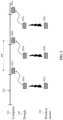
- FIG. 2 shows an example transmission of user input data from the mouse 104 to the dongle 106.
- the user input data may be repeatedly transmitted to the dongle 106 in the form of data packets 202a, 202b, 202c. Each data packet 202a, 202b, 202c is then communicated to the computer 102.
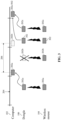
- FIG. 3 shows another example transmission of user input data from the mouse 104 to the dongle 106.
- the transmission of the user input data shown in FIG. 3 is similar to that shown in FIG. 2 , except that due to wireless interference, the transmission of the packet 202b from the mouse 104 to the dongle 106 is unsuccessful.
- the user input data may be retransmitted from the mouse 104 to the dongle 106 in the form of a data packet 302.
- the data packet 302 may be communicated to the computer 102 at around a same time as the communication of the next data packet 202c to the computer 102.
- the model of possible movements stored on the console and computer mouse can then be used to evaluate that initial movement data, and subsequent motion of the computer mouse can be predicted.
- subsequent movements of the computer mouse are known until a movement of the computer mouse substantially deviates from the predictive model.
- data corresponding to the deviations is transmitted to the console, and a new prediction of subsequent movements results.
- the console uses the predictive model and the deviations to provide motion detection feedback to a user by, for example, adjusting motion and position of a cursor on the smart display.
- a wireless input device communicable with a receiver device as set out in claim 8.
- a receiver device communicable with a wireless input device and an electronic device as set out in claim 12.
- the predicted position of the wireless input device 404 is communicated (at 732) to the electronic device 402 only if it is determined (at 730) that the prediction is successful.
- the prediction may be considered successful if the average difference between the outputs calculated with the selected polynomial equation and the previous positions at the respective time instances is below a fit success threshold. For example, if the selected polynomial equation is that in Equation (1) i.e.
- the initial velocity v i and the acceleration a may be determined using the previous positions at time instances t 0 , t 0 +1, t 0 +2, ...t 0 +9.
- This final velocity v f and the acceleration a may be used to predict a subsequent displacement s from the position of the wireless input device 404 at time t 0 +9, and the position of the wireless input device 404 at time t 0 +10 may then be predicted based on this displacement s.
- each of the initial and final velocities v i , v f , acceleration a and displacement s has an x-component and a y-component.
- the x-component of the displacement s may be predicted using the x-components of the velocities v i , v f and the acceleration a; and the y-component of the displacement s may be predicted using the y-components of the velocities v i , v f and the acceleration a.
- Movement of the wireless input device 404 by a user tends to follow a certain trajectory pattern over a short period of time (e.g. 10 - 50ms). Therefore, the position of the wireless input device 404 may be predicted in a relatively accurate manner. By predicting the position of the wireless input device 404 and transmitting data to the receiver device 406 only when the difference between the predicted position and the determined position is greater than a similarity threshold, the amount of data transmitted from the wireless input device 404 to the receiver device 406 over time can be reduced. Accordingly, less power may be consumed by the apparatus 400.
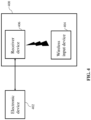
- the wireless input device 404 and the receiver device 406 may use a same function to predict the position of the wireless input device 404, where parameters of this function may be generated separately by the devices 404, 406 using substantially similar previous positions. Therefore, in the event that the receiver device 406 does not receive a data point from the wireless input device 404, the position predicted by the receiver device 406 may not differ from the position determined by the position determination unit 504 by more than the similarity threshold. In other words, the data used to control the pointer on the screen of the electronic device 402 may be substantially accurate even without transmission of data from the wireless input device 404 to the receiver device 406.
- the number of data points (e.g. 1000 data points) per second received by the electronic device 402 may not differ significantly from that in the case where all the determined positions are sent to the electronic device 402. Accordingly, the battery life of the wireless input device 404 may be increased without compromising on the integrity of the data used to control the pointer or the user experience.
- Combinations such as "at least one of A, B, or C,” “one or more of A, B, or C,” “at least one of A, B, and C,” “one or more of A, B, and C,” and "A, B, C, or any combination thereof” include any combination of A, B, and/or C, and may include multiples of A, multiples of B, or multiples of C.
- combinations such as “at least one of A, B, or C,” “one or more of A, B, or C,” “at least one of A, B, and C,” “one or more of A, B, and C,” and “A, B, C, or any combination thereof” may be A only, B only, C only, A and B, A and C, B and C, or A and B and C, where any such combinations may contain one or more member or members of A, B, or C.
- the words “module,” “mechanism,” “element,” “device,” and the like may not be a substitute for the word “means.” As such, no claim element is to be construed as a means plus function unless the element is expressly recited using the phrase "means for.”
Landscapes
- Engineering & Computer Science (AREA)
- General Engineering & Computer Science (AREA)
- Theoretical Computer Science (AREA)
- Human Computer Interaction (AREA)
- Physics & Mathematics (AREA)
- General Physics & Mathematics (AREA)
- Position Input By Displaying (AREA)
- Image Generation (AREA)
- Selective Calling Equipment (AREA)
- Telephone Function (AREA)
- User Interface Of Digital Computer (AREA)
Claims (15)
- Vorrichtung (400) zum Steuern eines Zeigers auf einem Bildschirm eines elektronischen Geräts (402), wobei die Vorrichtung aufweist:ein Empfänger-Gerät (406), das in der Lage ist, mit dem elektronischen Gerät (402) zu kommunizieren, und eine Empfangen-Einheit (602) und eine Kommunikation-Einheit (604) aufweist; undein Drahtlos-Eingabe-Gerät (404), welche aufweist:eine Erfassen-Einheit (502), die konfiguriert ist, um Bewegung des Drahtlos-Eingabe-Geräts (404) zu erfassen;eine Position-Bestimmung-Einheit (504), die konfiguriert ist, um eine bestimmte aktuelle Position des Drahtlos-Eingabe-Geräts (404) in einer aktuellen Zeitinstanz basierend auf der erfassten Bewegung zu bestimmen;eine Vorhersageeinheit (506), die konfiguriert ist, um eine erste vorhergesagte aktuelle Position des Drahtlos-Eingabe-Geräts (404) in der aktuellen Zeitinstanz vorherzusagen;eine Vergleichseinheit (508), die konfiguriert ist, um eine Differenz zwischen der bestimmten aktuellen Position und der ersten vorhergesagten aktuellen Position des Drahtlos-Eingabe-Geräts (404) zu bestimmen, und ferner konfiguriert ist, um zu bestimmen, ob die Differenz größer als ein Ähnlichkeitsschwellenwert ist; undeine Übermitteln-Einheit (510), die konfiguriert ist, um die bestimmte aktuelle Position des Drahtlos-Eingabe-Geräts (404) an das Empfänger-Gerät (406) zu übermitteln in Reaktion auf ein Bestimmen, dass die Differenz größer als der Ähnlichkeitsschwellenwert ist, und weder die bestimmte aktuelle Position noch die erste vorhergesagte aktuelle Position zu übermitteln, wenn die Differenz nicht größer als der Ähnlichkeitsschwellenwert ist;wobei die Empfangen-Einheit (602) des Empfänger-Geräts (406) konfiguriert ist, um die bestimmte aktuelle Position des Drahtlos-Eingabe-Geräts (404) zu empfangen, und die Kommunikation-Einheit (604) des Empfänger-Geräts (406) konfiguriert ist, um die bestimmte aktuelle Position des Drahtlos-Eingabe-Geräts (404) an das elektronische Gerät (402) zu kommunizieren, um den Zeiger auf dem Bildschirm des elektronischen Geräts (402) zu steuern, und eine zweite vorhergesagte aktuelle Position des Drahtlos-Eingabe-Geräts (404), die mittels einer Prädiktor-Einheit (608) des Empfänger-Geräts (406) vorhergesagt wird, an das elektronische Gerät (402) zu kommunizieren, wenn die ermittelte aktuelle Position nicht von dem Drahtlos-Eingabe-Gerät (404) empfangen wird und eine Vorhersage der zweiten vorhergesagten aktuellen Position des Drahtlos-Eingabe-Geräts (404) erfolgreich ist.
- Vorrichtung (400) nach Anspruch 1, wobei die Vorhersageeinheit (506) des Drahtlos-Eingabe-Geräts (404) konfiguriert ist, um die erste vorhergesagte aktuelle Position des Drahtlos-Eingabe-Geräts (404) in der aktuellen Zeitinstanz basierend auf vorherigen Positionen des Drahtlos-Eingabe-Geräts (404) vorherzusagen, die mittels der Position-Bestimmung-Einheit (504) in mehreren Zeitinstanzen vor der aktuellen Zeitinstanz bestimmt wurden,
vorzugsweise, wobei die Vorhersageeinheit (506) des Drahtlos-Eingabe-Geräts (404) konfiguriert ist, um:Parameter einer ersten Vorhersagefunktion auf der Grundlage der mittels der Position-Bestimmung-Einheit (504) bestimmten vorherigen Positionen des Drahtlos-Eingabe-Geräts (404) zu erzeugen; unddie erste vorhergesagte aktuelle Position des Drahtlos-Eingabe-Geräts (404) in der aktuellen Zeitinstanz unter Verwendung der ersten Vorhersagefunktion mit den erzeugten Parametern vorherzusagen. - Vorrichtung (400) nach Anspruch 1, wobei das Empfänger-Gerät (406) ferner aufweist:
eine Daten-Erfassen-Einheit (606), die konfiguriert ist, um zu bestimmen, ob die bestimmte aktuelle Position des Drahtlos-Eingabe-Geräts (404) von der Empfangen-Einheit (602) von dem Drahtlos-Eingabe-Gerät (404) empfangen wird. - Vorrichtung (400) nach Anspruch 3,wobei die Vorhersageeinheit (506) des Drahtlos-Eingabe-Geräts (404) ferner konfiguriert ist, um die erste vorhergesagte aktuelle Position des Drahtlos-Eingabe-Geräts (404) unter Verwendung einer ersten Vorhersagefunktion vorherzusagen;wobei die Prädiktor-Einheit (608) des Empfänger-Geräts (406) konfiguriert ist, um die zweite vorhergesagte aktuelle Position des Drahtlos-Eingabe-Geräts (404) unter Verwendung einer zweiten Vorhersagefunktion vorherzusagen; undwobei die erste Vorhersagefunktion und die zweite Vorhersagefunktion gleiche Funktionen mit variablen Parametern sind.
- Vorrichtung (400) nach Anspruch 4, wobei die erste Vorhersagefunktion und die zweite Vorhersagefunktion gleiche Polynomialgleichungen sind.
- Vorrichtung (400) nach Anspruch 4, wobei die erste Vorhersagefunktion und die zweite Vorhersagefunktion die gleichen Verschiebungsgleichungen sind, wobei jede Verschiebungsgleichung einen Geschwindigkeitsparameter und einen Beschleunigungsparameter aufweist,
vorzugsweise, wobei der Geschwindigkeitsparameter und der Beschleunigungsparameter für die erste Vorhersagefunktion auf der Grundlage vorheriger Positionen des Drahtlos-Eingabe-Geräts (404) bestimmt werden, die mittels der Position-Bestimmung-Einheit (504) in mehreren Zeitinstanzen vor der aktuellen Zeitinstanz bestimmt wurden, und/oder wobei der Geschwindigkeitsparameter und der Beschleunigungsparameter für die zweite Vorhersagefunktion auf der Grundlage vorheriger Positionen des Drahtlos-Eingabe-Geräts (404) bestimmt werden, die an das elektronische Gerät (402) in mehreren Zeitinstanzen vor der aktuellen Zeitinstanz kommuniziert wurden. - Vorrichtung (400) nach Anspruch 1, wobei die Vorhersage einer Position des Drahtlos-Eingabe-Geräts (404) erfolgreich ist, wenn eine durchschnittliche Differenz zwischen vorhergesagten vorherigen Positionen und bestimmten vorherigen Positionen bei entsprechenden Zeitinstanzen unter einem Fit-Erfolg-Schwellenwert ist.
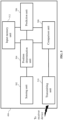
- Drahtlos-Eingabe-Gerät (404), das in der Lage ist mit einem Empfänger-Gerät (406) zu kommunizieren, wobei das Empfänger-Gerät (406) in der Lage ist mit einem elektronischen Gerät (402) zu kommunizieren und wobei das Drahtlos-Eingabe-Gerät (404) aufweist:eine Erfassen-Einheit (502), die konfiguriert ist, um Bewegung des Drahtlos-Eingabe-Geräts (404) zu erfassen;eine Position-Bestimmung-Einheit (504), die konfiguriert ist, um eine bestimmte aktuelle Position des Drahtlos-Eingabe-Geräts (404) in einer aktuellen Zeitinstanz basierend auf der erfassten Bewegung zu bestimmen;eine Vorhersageeinheit (506), die konfiguriert ist, um eine erste vorhergesagte aktuelle Position des Drahtlos-Eingabe-Geräts (404) in der aktuellen Zeitinstanz vorherzusagen;eine Vergleichseinheit (508), die konfiguriert ist, um eine Differenz zwischen der bestimmten aktuellen Position und der ersten vorhergesagten aktuellen Position des Drahtlos-Eingabe-Geräts (404) zu bestimmen, und die ferner konfiguriert ist, um zu bestimmen, ob die Differenz größer als ein Ähnlichkeitsschwellenwert ist; undeine Übermitteln-Einheit (510), die konfiguriert ist, um die bestimmte aktuelle Position des Drahtlos-Eingabe-Geräts (404) an das Empfänger-Gerät (406) als Reaktion auf ein Bestimmen, dass die Differenz größer als der Ähnlichkeitsschwellenwert ist, zu übermitteln und weder die bestimmte aktuelle Position noch die erste vorhergesagte aktuelle Position zu übermitteln, wenn die Differenz nicht größer als der Ähnlichkeitsschwellenwert ist,wobei das Empfänger-Gerät (406) konfiguriert ist, um die bestimmte aktuelle Position des Drahtlos-Eingabe-Geräts (404) an das elektronische Gerät (402) zu kommunizieren, um den Zeiger auf dem Bildschirm des elektronischen Geräts (402) zu steuern, und eine zweite vorhergesagte aktuelle Position des Drahtlos-Eingabe-Geräts (404), die mittels einer Prädiktor-Einheit (608) des Empfänger-Geräts (406) vorhergesagt wird, an das elektronische Gerät (402) zu kommunizieren, wenn die bestimmte aktuelle Position nicht von dem Drahtlos-Eingabe-Gerät (404) empfangen wird und eine Vorhersage der zweiten vorhergesagten aktuellen Position des Drahtlos-Eingabe-Geräts (404) erfolgreich ist.
- Drahtlos-Eingabe-Gerät (404) nach Anspruch 8, wobei die Vorhersageeinheit (506) konfiguriert ist, um die erste vorhergesagte aktuelle Position des Drahtlos-Eingabe-Geräts (404) in der aktuellen Zeitinstanz basierend auf vorherigen Positionen des Drahtlos-Eingabe-Geräts (404) vorherzusagen, die mittels der Position-Bestimmung-Einheit (504) in mehreren Zeitinstanzen vor der aktuellen Zeitinstanz bestimmt wurden; und
wobei die Vorhersageeinheit (506) konfiguriert ist, um:Parameter einer ersten Vorhersagefunktion auf der Grundlage der vorherigen Positionen des Drahtlos-Eingabe-Geräts (404), die mittels der Position-Bestimmung-Einheit (504) bestimmt wurden, zu erzeugen; unddie erste vorhergesagte aktuelle Position des Drahtlos-Eingabe-Geräts (404) in der aktuellen Zeitinstanz unter Verwendung der ersten Vorhersagefunktion mit den erzeugten Parametern vorherzusagen. - Drahtlos-Eingabe-Gerät (404) nach Anspruch 8, welches ferner eine Eingabe-Speicher-Einheit (512) aufweist, die konfiguriert ist, um jede Position des Drahtlos-Eingabe-Geräts (404) zu speichern, die mittels der Position-Bestimmung-Einheit (504) bestimmt wird; undwobei die Vorhersageeinheit (506) ferner konfiguriert ist, um vorher gespeicherte Positionen des Drahtlos-Eingabe-Geräts (404) von der Eingabe-Speicher-Einheit (512) zu verwenden, um die erste vorhergesagte aktuelle Position des Drahtlos-Eingabe-Geräts (404) vorherzusagen, wobei die vorher gespeicherten Positionen in Zeitinstanzen vor der aktuellen Zeitinstanz gespeichert werden,wobei die Eingabe-Speicher-Einheit (512) ferner konfiguriert ist, um jede Position des Drahtlos-Eingabe-Geräts (404), die mittels der Vorhersageeinheit (506) vorhergesagt wird, zu speichern.
- Drahtlos-Eingabe-Gerät (404) nach Anspruch 8, wobei die Vorhersage einer Position des Drahtlos-Eingabe-Geräts (404) erfolgreich ist, wenn eine durchschnittliche Differenz zwischen vorhergesagten Positionen und bestimmten vorherigen Positionen in entsprechenden Zeitinstanzen unter einem Fit-Erfolg-Schwellenwert ist.
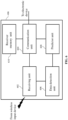
- Empfänger-Gerät (406), das in der Lage ist mit einem Drahtlos-Eingabe-Gerät (404) und einem elektronischen Gerät (402) zu kommunizieren, wobei das Empfänger-Gerät (406) aufweist:eine Empfangen-Einheit (602), die konfiguriert ist, um eine bestimmte aktuelle Position des Drahtlos-Eingabe-Geräts (404) von dem Drahtlos-Eingabe-Gerät (404) zu empfangen, wobei das Drahtlos-Eingabe-Gerät (404) konfiguriert ist, um die bestimmte aktuelle Position zu übermitteln, wenn eine Differenz zwischen der bestimmten aktuellen Position und einer ersten vorhergesagten aktuellen Position des Drahtlos-Eingabe-Geräts (404), die mittels des Drahtlos-Eingabe-Geräts (404) vorhergesagt wurde, größer als ein Ähnlichkeitsschwellenwert ist, und weder die bestimmte aktuelle Position noch die erste vorhergesagte aktuelle Position zu übermitteln, wenn die Differenz nicht größer als der Ähnlichkeitsschwellenwert ist;eine Kommunikation-Einheit (604), die konfiguriert ist, um die bestimmte aktuelle Position des Drahtlos-Eingabe-Geräts (404) an das elektronische Gerät (402) zu kommunizieren;eine Daten-Erfassen-Einheit (606), die konfiguriert ist, um zu bestimmen, ob die bestimmte aktuelle Position des Drahtlos-Eingabe-Geräts (404) mittels der Empfangen-Einheit (602) von dem Drahtlos-Eingabe-Gerät (404) empfangen wird; undeine Prädiktor-Einheit (608), die konfiguriert ist, um eine zweite vorhergesagte aktuelle Position des Drahtlos-Eingabe-Geräts (404) vorherzusagen;wobei als Reaktion auf ein Bestimmen einer Absenz des Empfangs der bestimmten aktuellen Position des Drahtlos-Eingabe-Geräts (404) und einer Vorhersage der zweiten vorhergesagten aktuellen Position des Drahtlos-Eingabe-Geräts (404), die erfolgreich ist, die Kommunikation-Einheit (604) konfiguriert ist, um die zweite vorhergesagte aktuelle Position des Drahtlos-Eingabe-Geräts (404) an das elektronisches Gerät (402) zu kommunizieren.
- Empfänger-Gerät (406) nach Anspruch 12, wobei die Prädiktor-Einheit (608) konfiguriert ist, um die zweite vorhergesagte aktuelle Position des Drahtlos-Eingabe-Geräts (404) als Reaktion auf ein Bestimmen einer Absenz des Empfangs der bestimmten aktuellen Position des Drahtlos-Eingabe-Geräts (404) vorherzusagen.
- Empfänger-Gerät (406) nach Anspruch 12, wobei die Prädiktor-Einheit (608) konfiguriert ist, um die zweite vorhergesagte aktuelle Position des Drahtlos-Eingabe-Geräts (404) auf der Grundlage vorheriger Positionen des Drahtlos-Eingabe-Geräts (404) vorherzusagen, die an das elektronische Gerät (402) in mehreren Zeitinstanzen vor der aktuellen Zeitinstanz kommuniziert werden; und
wobei die Prädiktor-Einheit (608) konfiguriert ist, um:Parameter einer zweiten Vorhersagefunktion auf der Grundlage der vorherigen Positionen des Drahtlos-Eingabe-Geräts (404), die an das elektronische Gerät (402) kommuniziert werden, zu erzeugen; unddie zweite vorhergesagte aktuelle Position des Drahtlos-Eingabe-Geräts (404) unter Verwendung der zweiten Vorhersagefunktion mit den erzeugten Parametern vorherzusagen. - Empfänger-Gerät (406) nach Anspruch 12, wobei das Empfänger-Gerät (406) ferner eine Empfänger-Speicher-Einheit (610) aufweist, die konfiguriert ist, um jede Position des Drahtlos-Eingabe-Geräts (404) zu speichern, die mittels der Empfangen-Einheit (602) empfangen wird;wobei die Prädiktor-Einheit (608) des Empfänger-Geräts (406) ferner konfiguriert ist, um zuvor gespeicherte Positionen des Drahtlos-Eingabe-Geräts (404) von der Empfänger-Speicher-Einheit (610) zu verwenden, um die zweite vorhergesagte aktuelle Position des Drahtlos-Eingabe-Geräts (404) vorherzusagen, wobei die vorher gespeicherten Positionen in Zeitinstanzen vor der aktuellen Zeitinstanz gespeichert werden; undwobei die Empfänger-Speicher-Einheit (610) ferner konfiguriert ist, um jede Position des Drahtlos-Eingabe-Geräts (404) zu speichern, die mittels der Prädiktor-Einheit (608) vorhergesagt wird, und wobei die vorher gespeicherten Positionen, die verwendet werden, um die zweite vorhergesagte aktuelle Position des Drahtlos-Eingabe-Geräts (404) vorherzusagen, vorher vorhergesagte Positionen aufweisen.
Applications Claiming Priority (1)
| Application Number | Priority Date | Filing Date | Title |
|---|---|---|---|
| PCT/SG2020/050479 WO2022039664A1 (en) | 2020-08-18 | 2020-08-18 | Apparatus and method for controlling a pointer on a screen of an electronic device |
Publications (3)
| Publication Number | Publication Date |
|---|---|
| EP4200693A1 EP4200693A1 (de) | 2023-06-28 |
| EP4200693A4 EP4200693A4 (de) | 2023-09-13 |
| EP4200693B1 true EP4200693B1 (de) | 2025-07-09 |
Family
ID=80323641
Family Applications (1)
| Application Number | Title | Priority Date | Filing Date |
|---|---|---|---|
| EP20950431.5A Active EP4200693B1 (de) | 2020-08-18 | 2020-08-18 | Vorrichtung und verfahren zur steuerung eines zeigers auf einem bildschirm einer elektronischen vorrichtung |
Country Status (6)
| Country | Link |
|---|---|
| US (1) | US11947743B2 (de) |
| EP (1) | EP4200693B1 (de) |
| CN (1) | CN115917481B (de) |
| AU (1) | AU2020464369A1 (de) |
| TW (1) | TWI910213B (de) |
| WO (1) | WO2022039664A1 (de) |
Families Citing this family (1)
| Publication number | Priority date | Publication date | Assignee | Title |
|---|---|---|---|---|
| US12373046B2 (en) * | 2023-08-02 | 2025-07-29 | Dell Products Lp | System and method for recovery and compensation for dropped or missed data packets for communication between a wireless mouse and a wireless communication dongle |
Family Cites Families (27)
| Publication number | Priority date | Publication date | Assignee | Title |
|---|---|---|---|---|
| US5298918A (en) | 1990-08-01 | 1994-03-29 | Yen Chen Chiu | Electric circuit for reducing the energy consumption of a pointing device used in combination with a data processing system |
| JP3744674B2 (ja) | 1997-04-11 | 2006-02-15 | 富士通コンポーネント株式会社 | ポインティングデバイスコントローラ |
| JP3212272B2 (ja) | 1997-10-15 | 2001-09-25 | 株式会社ハドソン | 画像位置指示装置 |
| US6781570B1 (en) | 2000-11-09 | 2004-08-24 | Logitech Europe S.A. | Wireless optical input device |
| US6907581B2 (en) * | 2001-04-03 | 2005-06-14 | Ramot At Tel Aviv University Ltd. | Method and system for implicitly resolving pointing ambiguities in human-computer interaction (HCI) |
| US7050798B2 (en) | 2002-12-16 | 2006-05-23 | Microsoft Corporation | Input device with user-balanced performance and power consumption |
| US7292225B2 (en) | 2004-04-15 | 2007-11-06 | Avago Technologies Ecbu Ip | Apparatus for controlling the position of a screen pointer that wirelessly transmits compressed data |
| TWI258098B (en) | 2004-12-31 | 2006-07-11 | Pixart Imaging Inc | Method and related apparatus for decreasing delay time and power consumption of a wireless mouse |
| US20070000584A1 (en) | 2005-06-30 | 2007-01-04 | Patricia Reynolds | Golf club charm identifiers |
| US20070027365A1 (en) | 2005-07-28 | 2007-02-01 | Dale Kosted | A Method and System of After Hours Monitoring of a veterinary patient |
| US8036428B2 (en) * | 2006-04-28 | 2011-10-11 | Pixart Imaging Inc. | Method and apparatus for detecting motion of image in optical navigator |
| DE102006045298A1 (de) | 2006-09-26 | 2008-03-27 | Siemens Ag | Verfahren zur Datenübertragung in einem Kommunikationsnetz |
| KR100812998B1 (ko) | 2006-12-15 | 2008-03-13 | 한국과학기술연구원 | 블루투스 통신을 이용한 마우스 제어 시스템 |
| GB0704600D0 (en) | 2007-03-09 | 2007-04-18 | Texas Instruments Ltd | Improvements in or relating to wireless peripheral communication |
| TWI381291B (zh) | 2008-01-25 | 2013-01-01 | Primax Electronics Ltd | 可降低無線滑鼠耗電之方法 |
| CN101498969B (zh) | 2008-02-01 | 2010-12-01 | 致伸科技股份有限公司 | 无线鼠标及降低无线鼠标耗电的方法 |
| GB201108200D0 (en) | 2011-05-16 | 2011-06-29 | Touchtype Ltd | User input prediction |
| TWI399667B (zh) * | 2009-10-01 | 2013-06-21 | Primax Electronics Ltd | 無線滑鼠之資料傳輸方法 |
| US9104238B2 (en) * | 2010-02-12 | 2015-08-11 | Broadcom Corporation | Systems and methods for providing enhanced motion detection |
| CN102890576B (zh) * | 2011-07-22 | 2016-03-02 | 宸鸿科技(厦门)有限公司 | 触控屏触摸轨迹检测方法及检测装置 |
| CN102262460B (zh) | 2011-08-29 | 2013-05-29 | 江苏惠通集团有限责任公司 | 空中鼠标及控制鼠标指针移动的方法与装置 |
| JP6177876B2 (ja) * | 2013-03-15 | 2017-08-09 | シャープ株式会社 | タッチパネルシステム |
| JP2015072534A (ja) * | 2013-10-02 | 2015-04-16 | ソニー株式会社 | 情報処理装置、および情報処理方法、並びにプログラム |
| JP6257546B2 (ja) * | 2015-03-16 | 2018-01-10 | 三菱電機株式会社 | アプリケーション試験装置 |
| SG11201900590PA (en) | 2016-07-28 | 2019-02-27 | Razer Asia Pacific Pte Ltd | Receiver devices, transmitter devices, methods for controlling a receiver device, methods for controlling a transmitter device, and computer-readable media |
| US11301064B2 (en) | 2017-05-12 | 2022-04-12 | Razer (Asia-Pacific) Pte. Ltd. | Pointing devices and methods for providing and inhibiting user inputs to a computing device |
| CN111368589A (zh) * | 2018-12-25 | 2020-07-03 | 北京三星通信技术研究有限公司 | 用于视线估计的方法、装置和电子设备 |
-
2020
- 2020-08-18 EP EP20950431.5A patent/EP4200693B1/de active Active
- 2020-08-18 CN CN202080103263.9A patent/CN115917481B/zh active Active
- 2020-08-18 US US18/020,250 patent/US11947743B2/en active Active
- 2020-08-18 AU AU2020464369A patent/AU2020464369A1/en active Pending
- 2020-08-18 WO PCT/SG2020/050479 patent/WO2022039664A1/en not_active Ceased
-
2021
- 2021-08-18 TW TW110130395A patent/TWI910213B/zh active
Also Published As
| Publication number | Publication date |
|---|---|
| CN115917481A (zh) | 2023-04-04 |
| US11947743B2 (en) | 2024-04-02 |
| AU2020464369A1 (en) | 2023-04-20 |
| EP4200693A1 (de) | 2023-06-28 |
| EP4200693A4 (de) | 2023-09-13 |
| TW202230092A (zh) | 2022-08-01 |
| TWI910213B (zh) | 2026-01-01 |
| WO2022039664A1 (en) | 2022-02-24 |
| CN115917481B (zh) | 2025-03-28 |
| US20230305645A1 (en) | 2023-09-28 |
Similar Documents
| Publication | Publication Date | Title |
|---|---|---|
| US8502769B2 (en) | Universal input device | |
| US8823602B2 (en) | Display screen sharing system, display screen sharing method, and program | |
| US7301530B2 (en) | Pointer control method, pointing apparatus, and host apparatus therefor | |
| CN102681695B (zh) | 光标控制方法及装置 | |
| CN109565171B (zh) | 充电保护方法、终端及充电器 | |
| CN111340286B (zh) | 机器人调度方法、装置、电子设备以及存储介质 | |
| US20210405758A1 (en) | Method of controlling augmented reality electronic device | |
| EP4200693B1 (de) | Vorrichtung und verfahren zur steuerung eines zeigers auf einem bildschirm einer elektronischen vorrichtung | |
| KR20160006408A (ko) | 웨어러블 기기를 이용한 차량 제스쳐 인식 장치와 제스쳐 인식 방법 및 이를 위한 웨어러블 기기 | |
| CN102999284B (zh) | 传输方法和电子设备 | |
| US20100151796A1 (en) | Terminal device and method for transceiving data thereof | |
| EP3740005A1 (de) | Verfahren zur bestimmung der räumlichen beziehung, endgerät und basisstation | |
| US9557809B2 (en) | Method of controlling an electronic or computer system | |
| CN110430325B (zh) | 信息发送方法、移动终端和存储介质 | |
| US20160098100A1 (en) | Optical mini-mouse | |
| CN100489913C (zh) | 遥控系统、遥控器、信息处理设备、遥控方法以及信息处理方法 | |
| CN109753212A (zh) | 一种文档传输方法、装置及移动终端 | |
| CN112509510A (zh) | 亮度调整方法、装置及电子设备 | |
| CN104252227B (zh) | 信息处理方法、信息处理设备和穿戴式电子设备 | |
| CN103514732A (zh) | 电子设备的控制方法、装置及系统 | |
| Rissanen et al. | Designing and implementing an intelligent Bluetooth-enabled robot car | |
| KR101187420B1 (ko) | 이동로봇 제어프로그램이 저장된 서버시스템, 휴대단말 및 기록매체 | |
| KR100832462B1 (ko) | 적외선 통신 시스템의 데이터 처리 방법 및 그 장치 | |
| KR102074412B1 (ko) | IoT 전력레벨 조절 장치 | |
| KR20230015227A (ko) | 전자 장치 및 그 제어 방법 |
Legal Events
| Date | Code | Title | Description |
|---|---|---|---|
| STAA | Information on the status of an ep patent application or granted ep patent |
Free format text: STATUS: THE INTERNATIONAL PUBLICATION HAS BEEN MADE |
|
| PUAI | Public reference made under article 153(3) epc to a published international application that has entered the european phase |
Free format text: ORIGINAL CODE: 0009012 |
|
| STAA | Information on the status of an ep patent application or granted ep patent |
Free format text: STATUS: REQUEST FOR EXAMINATION WAS MADE |
|
| 17P | Request for examination filed |
Effective date: 20230202 |
|
| AK | Designated contracting states |
Kind code of ref document: A1 Designated state(s): AL AT BE BG CH CY CZ DE DK EE ES FI FR GB GR HR HU IE IS IT LI LT LU LV MC MK MT NL NO PL PT RO RS SE SI SK SM TR |
|
| A4 | Supplementary search report drawn up and despatched |
Effective date: 20230814 |
|
| RIC1 | Information provided on ipc code assigned before grant |
Ipc: G06F 3/0354 20130101ALI20230808BHEP Ipc: G06F 3/0481 20220101ALI20230808BHEP Ipc: G06F 3/038 20130101AFI20230808BHEP |
|
| P01 | Opt-out of the competence of the unified patent court (upc) registered |
Effective date: 20230818 |
|
| DAV | Request for validation of the european patent (deleted) | ||
| DAX | Request for extension of the european patent (deleted) | ||
| GRAP | Despatch of communication of intention to grant a patent |
Free format text: ORIGINAL CODE: EPIDOSNIGR1 |
|
| STAA | Information on the status of an ep patent application or granted ep patent |
Free format text: STATUS: GRANT OF PATENT IS INTENDED |
|
| INTG | Intention to grant announced |
Effective date: 20250203 |
|
| GRAS | Grant fee paid |
Free format text: ORIGINAL CODE: EPIDOSNIGR3 |
|
| GRAA | (expected) grant |
Free format text: ORIGINAL CODE: 0009210 |
|
| STAA | Information on the status of an ep patent application or granted ep patent |
Free format text: STATUS: THE PATENT HAS BEEN GRANTED |
|
| AK | Designated contracting states |
Kind code of ref document: B1 Designated state(s): AL AT BE BG CH CY CZ DE DK EE ES FI FR GB GR HR HU IE IS IT LI LT LU LV MC MK MT NL NO PL PT RO RS SE SI SK SM TR |
|
| REG | Reference to a national code |
Ref country code: GB Ref legal event code: FG4D |
|
| REG | Reference to a national code |
Ref country code: CH Ref legal event code: EP |
|
| REG | Reference to a national code |
Ref country code: IE Ref legal event code: FG4D |
|
| REG | Reference to a national code |
Ref country code: DE Ref legal event code: R096 Ref document number: 602020054427 Country of ref document: DE |
|
| PGFP | Annual fee paid to national office [announced via postgrant information from national office to epo] |
Ref country code: DE Payment date: 20250814 Year of fee payment: 6 |
|
| PGFP | Annual fee paid to national office [announced via postgrant information from national office to epo] |
Ref country code: GB Payment date: 20250901 Year of fee payment: 6 |
|
| PGFP | Annual fee paid to national office [announced via postgrant information from national office to epo] |
Ref country code: FR Payment date: 20250902 Year of fee payment: 6 |
|
| REG | Reference to a national code |
Ref country code: NL Ref legal event code: MP Effective date: 20250709 |
|
| PG25 | Lapsed in a contracting state [announced via postgrant information from national office to epo] |
Ref country code: PT Free format text: LAPSE BECAUSE OF FAILURE TO SUBMIT A TRANSLATION OF THE DESCRIPTION OR TO PAY THE FEE WITHIN THE PRESCRIBED TIME-LIMIT Effective date: 20251110 |
|
| PG25 | Lapsed in a contracting state [announced via postgrant information from national office to epo] |
Ref country code: NL Free format text: LAPSE BECAUSE OF FAILURE TO SUBMIT A TRANSLATION OF THE DESCRIPTION OR TO PAY THE FEE WITHIN THE PRESCRIBED TIME-LIMIT Effective date: 20250709 |
|
| REG | Reference to a national code |
Ref country code: AT Ref legal event code: MK05 Ref document number: 1812433 Country of ref document: AT Kind code of ref document: T Effective date: 20250709 |
|
| PG25 | Lapsed in a contracting state [announced via postgrant information from national office to epo] |
Ref country code: IS Free format text: LAPSE BECAUSE OF FAILURE TO SUBMIT A TRANSLATION OF THE DESCRIPTION OR TO PAY THE FEE WITHIN THE PRESCRIBED TIME-LIMIT Effective date: 20251109 |
|
| PG25 | Lapsed in a contracting state [announced via postgrant information from national office to epo] |
Ref country code: NO Free format text: LAPSE BECAUSE OF FAILURE TO SUBMIT A TRANSLATION OF THE DESCRIPTION OR TO PAY THE FEE WITHIN THE PRESCRIBED TIME-LIMIT Effective date: 20251009 |
|
| REG | Reference to a national code |
Ref country code: LT Ref legal event code: MG9D |
|
| PG25 | Lapsed in a contracting state [announced via postgrant information from national office to epo] |
Ref country code: AT Free format text: LAPSE BECAUSE OF FAILURE TO SUBMIT A TRANSLATION OF THE DESCRIPTION OR TO PAY THE FEE WITHIN THE PRESCRIBED TIME-LIMIT Effective date: 20250709 |
|
| PG25 | Lapsed in a contracting state [announced via postgrant information from national office to epo] |
Ref country code: FI Free format text: LAPSE BECAUSE OF FAILURE TO SUBMIT A TRANSLATION OF THE DESCRIPTION OR TO PAY THE FEE WITHIN THE PRESCRIBED TIME-LIMIT Effective date: 20250709 |
|
| PG25 | Lapsed in a contracting state [announced via postgrant information from national office to epo] |
Ref country code: HR Free format text: LAPSE BECAUSE OF FAILURE TO SUBMIT A TRANSLATION OF THE DESCRIPTION OR TO PAY THE FEE WITHIN THE PRESCRIBED TIME-LIMIT Effective date: 20250709 |
|
| PG25 | Lapsed in a contracting state [announced via postgrant information from national office to epo] |
Ref country code: GR Free format text: LAPSE BECAUSE OF FAILURE TO SUBMIT A TRANSLATION OF THE DESCRIPTION OR TO PAY THE FEE WITHIN THE PRESCRIBED TIME-LIMIT Effective date: 20251010 |
|
| PG25 | Lapsed in a contracting state [announced via postgrant information from national office to epo] |
Ref country code: SE Free format text: LAPSE BECAUSE OF FAILURE TO SUBMIT A TRANSLATION OF THE DESCRIPTION OR TO PAY THE FEE WITHIN THE PRESCRIBED TIME-LIMIT Effective date: 20250709 |
|
| PG25 | Lapsed in a contracting state [announced via postgrant information from national office to epo] |
Ref country code: LV Free format text: LAPSE BECAUSE OF FAILURE TO SUBMIT A TRANSLATION OF THE DESCRIPTION OR TO PAY THE FEE WITHIN THE PRESCRIBED TIME-LIMIT Effective date: 20250709 |
|
| PG25 | Lapsed in a contracting state [announced via postgrant information from national office to epo] |
Ref country code: BG Free format text: LAPSE BECAUSE OF FAILURE TO SUBMIT A TRANSLATION OF THE DESCRIPTION OR TO PAY THE FEE WITHIN THE PRESCRIBED TIME-LIMIT Effective date: 20250709 Ref country code: PL Free format text: LAPSE BECAUSE OF FAILURE TO SUBMIT A TRANSLATION OF THE DESCRIPTION OR TO PAY THE FEE WITHIN THE PRESCRIBED TIME-LIMIT Effective date: 20250709 |
|
| PG25 | Lapsed in a contracting state [announced via postgrant information from national office to epo] |
Ref country code: RS Free format text: LAPSE BECAUSE OF FAILURE TO SUBMIT A TRANSLATION OF THE DESCRIPTION OR TO PAY THE FEE WITHIN THE PRESCRIBED TIME-LIMIT Effective date: 20251009 |
|
| PG25 | Lapsed in a contracting state [announced via postgrant information from national office to epo] |
Ref country code: ES Free format text: LAPSE BECAUSE OF FAILURE TO SUBMIT A TRANSLATION OF THE DESCRIPTION OR TO PAY THE FEE WITHIN THE PRESCRIBED TIME-LIMIT Effective date: 20250709 |
|
| PG25 | Lapsed in a contracting state [announced via postgrant information from national office to epo] |
Ref country code: RO Free format text: LAPSE BECAUSE OF FAILURE TO SUBMIT A TRANSLATION OF THE DESCRIPTION OR TO PAY THE FEE WITHIN THE PRESCRIBED TIME-LIMIT Effective date: 20250709 |
|
| REG | Reference to a national code |
Ref country code: CH Ref legal event code: H13 Free format text: ST27 STATUS EVENT CODE: U-0-0-H10-H13 (AS PROVIDED BY THE NATIONAL OFFICE) Effective date: 20260324 |
|
| PG25 | Lapsed in a contracting state [announced via postgrant information from national office to epo] |
Ref country code: SM Free format text: LAPSE BECAUSE OF FAILURE TO SUBMIT A TRANSLATION OF THE DESCRIPTION OR TO PAY THE FEE WITHIN THE PRESCRIBED TIME-LIMIT Effective date: 20250709 |
|
| PG25 | Lapsed in a contracting state [announced via postgrant information from national office to epo] |
Ref country code: DK Free format text: LAPSE BECAUSE OF FAILURE TO SUBMIT A TRANSLATION OF THE DESCRIPTION OR TO PAY THE FEE WITHIN THE PRESCRIBED TIME-LIMIT Effective date: 20250709 |
|
| PG25 | Lapsed in a contracting state [announced via postgrant information from national office to epo] |
Ref country code: LU Free format text: LAPSE BECAUSE OF NON-PAYMENT OF DUE FEES Effective date: 20250818 Ref country code: IT Free format text: LAPSE BECAUSE OF FAILURE TO SUBMIT A TRANSLATION OF THE DESCRIPTION OR TO PAY THE FEE WITHIN THE PRESCRIBED TIME-LIMIT Effective date: 20250709 |
|
| PG25 | Lapsed in a contracting state [announced via postgrant information from national office to epo] |
Ref country code: CH Free format text: LAPSE BECAUSE OF NON-PAYMENT OF DUE FEES Effective date: 20250831 Ref country code: CZ Free format text: LAPSE BECAUSE OF FAILURE TO SUBMIT A TRANSLATION OF THE DESCRIPTION OR TO PAY THE FEE WITHIN THE PRESCRIBED TIME-LIMIT Effective date: 20250709 |
|
| PG25 | Lapsed in a contracting state [announced via postgrant information from national office to epo] |
Ref country code: SK Free format text: LAPSE BECAUSE OF FAILURE TO SUBMIT A TRANSLATION OF THE DESCRIPTION OR TO PAY THE FEE WITHIN THE PRESCRIBED TIME-LIMIT Effective date: 20250709 Ref country code: EE Free format text: LAPSE BECAUSE OF FAILURE TO SUBMIT A TRANSLATION OF THE DESCRIPTION OR TO PAY THE FEE WITHIN THE PRESCRIBED TIME-LIMIT Effective date: 20250709 |