EP4198375B1 - Installation de stockage d'un gaz liquefie comportant une cuve et une structure de dome - Google Patents
Installation de stockage d'un gaz liquefie comportant une cuve et une structure de dome Download PDFInfo
- Publication number
- EP4198375B1 EP4198375B1 EP22211708.7A EP22211708A EP4198375B1 EP 4198375 B1 EP4198375 B1 EP 4198375B1 EP 22211708 A EP22211708 A EP 22211708A EP 4198375 B1 EP4198375 B1 EP 4198375B1
- Authority
- EP
- European Patent Office
- Prior art keywords
- liquefied gas
- tank
- facility
- storing
- barrel
- Prior art date
- Legal status (The legal status is an assumption and is not a legal conclusion. Google has not performed a legal analysis and makes no representation as to the accuracy of the status listed.)
- Active
Links
Images



Classifications
-
- B—PERFORMING OPERATIONS; TRANSPORTING
- B63—SHIPS OR OTHER WATERBORNE VESSELS; RELATED EQUIPMENT
- B63B—SHIPS OR OTHER WATERBORNE VESSELS; EQUIPMENT FOR SHIPPING
- B63B25/00—Load-accommodating arrangements, e.g. stowing, trimming; Vessels characterised thereby
- B63B25/02—Load-accommodating arrangements, e.g. stowing, trimming; Vessels characterised thereby for bulk goods
- B63B25/08—Load-accommodating arrangements, e.g. stowing, trimming; Vessels characterised thereby for bulk goods fluid
- B63B25/12—Load-accommodating arrangements, e.g. stowing, trimming; Vessels characterised thereby for bulk goods fluid closed
- B63B25/16—Load-accommodating arrangements, e.g. stowing, trimming; Vessels characterised thereby for bulk goods fluid closed heat-insulated
-
- F—MECHANICAL ENGINEERING; LIGHTING; HEATING; WEAPONS; BLASTING
- F17—STORING OR DISTRIBUTING GASES OR LIQUIDS
- F17C—VESSELS FOR CONTAINING OR STORING COMPRESSED, LIQUEFIED OR SOLIDIFIED GASES; FIXED-CAPACITY GAS-HOLDERS; FILLING VESSELS WITH, OR DISCHARGING FROM VESSELS, COMPRESSED, LIQUEFIED, OR SOLIDIFIED GASES
- F17C1/00—Pressure vessels, e.g. gas cylinder, gas tank, replaceable cartridge
- F17C1/12—Pressure vessels, e.g. gas cylinder, gas tank, replaceable cartridge with provision for thermal insulation
-
- B—PERFORMING OPERATIONS; TRANSPORTING
- B63—SHIPS OR OTHER WATERBORNE VESSELS; RELATED EQUIPMENT
- B63B—SHIPS OR OTHER WATERBORNE VESSELS; EQUIPMENT FOR SHIPPING
- B63B27/00—Arrangement of ship-based loading or unloading equipment for cargo or passengers
- B63B27/24—Arrangement of ship-based loading or unloading equipment for cargo or passengers of pipe-lines
-
- B—PERFORMING OPERATIONS; TRANSPORTING
- B63—SHIPS OR OTHER WATERBORNE VESSELS; RELATED EQUIPMENT
- B63B—SHIPS OR OTHER WATERBORNE VESSELS; EQUIPMENT FOR SHIPPING
- B63B27/00—Arrangement of ship-based loading or unloading equipment for cargo or passengers
- B63B27/30—Arrangement of ship-based loading or unloading equipment for transfer at sea between ships or between ships and off-shore structures
- B63B27/34—Arrangement of ship-based loading or unloading equipment for transfer at sea between ships or between ships and off-shore structures using pipe-lines
-
- F—MECHANICAL ENGINEERING; LIGHTING; HEATING; WEAPONS; BLASTING
- F17—STORING OR DISTRIBUTING GASES OR LIQUIDS
- F17C—VESSELS FOR CONTAINING OR STORING COMPRESSED, LIQUEFIED OR SOLIDIFIED GASES; FIXED-CAPACITY GAS-HOLDERS; FILLING VESSELS WITH, OR DISCHARGING FROM VESSELS, COMPRESSED, LIQUEFIED, OR SOLIDIFIED GASES
- F17C1/00—Pressure vessels, e.g. gas cylinder, gas tank, replaceable cartridge
-
- F—MECHANICAL ENGINEERING; LIGHTING; HEATING; WEAPONS; BLASTING
- F17—STORING OR DISTRIBUTING GASES OR LIQUIDS
- F17C—VESSELS FOR CONTAINING OR STORING COMPRESSED, LIQUEFIED OR SOLIDIFIED GASES; FIXED-CAPACITY GAS-HOLDERS; FILLING VESSELS WITH, OR DISCHARGING FROM VESSELS, COMPRESSED, LIQUEFIED, OR SOLIDIFIED GASES
- F17C13/00—Details of vessels or of the filling or discharging of vessels
-
- F—MECHANICAL ENGINEERING; LIGHTING; HEATING; WEAPONS; BLASTING
- F17—STORING OR DISTRIBUTING GASES OR LIQUIDS
- F17C—VESSELS FOR CONTAINING OR STORING COMPRESSED, LIQUEFIED OR SOLIDIFIED GASES; FIXED-CAPACITY GAS-HOLDERS; FILLING VESSELS WITH, OR DISCHARGING FROM VESSELS, COMPRESSED, LIQUEFIED, OR SOLIDIFIED GASES
- F17C13/00—Details of vessels or of the filling or discharging of vessels
- F17C13/004—Details of vessels or of the filling or discharging of vessels for large storage vessels not under pressure
-
- F—MECHANICAL ENGINEERING; LIGHTING; HEATING; WEAPONS; BLASTING
- F17—STORING OR DISTRIBUTING GASES OR LIQUIDS
- F17C—VESSELS FOR CONTAINING OR STORING COMPRESSED, LIQUEFIED OR SOLIDIFIED GASES; FIXED-CAPACITY GAS-HOLDERS; FILLING VESSELS WITH, OR DISCHARGING FROM VESSELS, COMPRESSED, LIQUEFIED, OR SOLIDIFIED GASES
- F17C2201/00—Vessel construction, in particular geometry, arrangement or size
- F17C2201/01—Shape
- F17C2201/0147—Shape complex
- F17C2201/0157—Polygonal
-
- F—MECHANICAL ENGINEERING; LIGHTING; HEATING; WEAPONS; BLASTING
- F17—STORING OR DISTRIBUTING GASES OR LIQUIDS
- F17C—VESSELS FOR CONTAINING OR STORING COMPRESSED, LIQUEFIED OR SOLIDIFIED GASES; FIXED-CAPACITY GAS-HOLDERS; FILLING VESSELS WITH, OR DISCHARGING FROM VESSELS, COMPRESSED, LIQUEFIED, OR SOLIDIFIED GASES
- F17C2201/00—Vessel construction, in particular geometry, arrangement or size
- F17C2201/05—Size
- F17C2201/052—Size large (>1000 m3)
-
- F—MECHANICAL ENGINEERING; LIGHTING; HEATING; WEAPONS; BLASTING
- F17—STORING OR DISTRIBUTING GASES OR LIQUIDS
- F17C—VESSELS FOR CONTAINING OR STORING COMPRESSED, LIQUEFIED OR SOLIDIFIED GASES; FIXED-CAPACITY GAS-HOLDERS; FILLING VESSELS WITH, OR DISCHARGING FROM VESSELS, COMPRESSED, LIQUEFIED, OR SOLIDIFIED GASES
- F17C2203/00—Vessel construction, in particular walls or details thereof
- F17C2203/03—Thermal insulations
- F17C2203/0304—Thermal insulations by solid means
- F17C2203/0358—Thermal insulations by solid means in form of panels
-
- F—MECHANICAL ENGINEERING; LIGHTING; HEATING; WEAPONS; BLASTING
- F17—STORING OR DISTRIBUTING GASES OR LIQUIDS
- F17C—VESSELS FOR CONTAINING OR STORING COMPRESSED, LIQUEFIED OR SOLIDIFIED GASES; FIXED-CAPACITY GAS-HOLDERS; FILLING VESSELS WITH, OR DISCHARGING FROM VESSELS, COMPRESSED, LIQUEFIED, OR SOLIDIFIED GASES
- F17C2205/00—Vessel construction, in particular mounting arrangements, attachments or identifications means
- F17C2205/03—Fluid connections, filters, valves, closure means or other attachments
- F17C2205/0302—Fittings, valves, filters, or components in connection with the gas storage device
- F17C2205/0305—Bosses, e.g. boss collars
-
- F—MECHANICAL ENGINEERING; LIGHTING; HEATING; WEAPONS; BLASTING
- F17—STORING OR DISTRIBUTING GASES OR LIQUIDS
- F17C—VESSELS FOR CONTAINING OR STORING COMPRESSED, LIQUEFIED OR SOLIDIFIED GASES; FIXED-CAPACITY GAS-HOLDERS; FILLING VESSELS WITH, OR DISCHARGING FROM VESSELS, COMPRESSED, LIQUEFIED, OR SOLIDIFIED GASES
- F17C2205/00—Vessel construction, in particular mounting arrangements, attachments or identifications means
- F17C2205/03—Fluid connections, filters, valves, closure means or other attachments
- F17C2205/0302—Fittings, valves, filters, or components in connection with the gas storage device
- F17C2205/0311—Closure means
-
- F—MECHANICAL ENGINEERING; LIGHTING; HEATING; WEAPONS; BLASTING
- F17—STORING OR DISTRIBUTING GASES OR LIQUIDS
- F17C—VESSELS FOR CONTAINING OR STORING COMPRESSED, LIQUEFIED OR SOLIDIFIED GASES; FIXED-CAPACITY GAS-HOLDERS; FILLING VESSELS WITH, OR DISCHARGING FROM VESSELS, COMPRESSED, LIQUEFIED, OR SOLIDIFIED GASES
- F17C2205/00—Vessel construction, in particular mounting arrangements, attachments or identifications means
- F17C2205/03—Fluid connections, filters, valves, closure means or other attachments
- F17C2205/0302—Fittings, valves, filters, or components in connection with the gas storage device
- F17C2205/0379—Manholes or access openings for human beings
-
- F—MECHANICAL ENGINEERING; LIGHTING; HEATING; WEAPONS; BLASTING
- F17—STORING OR DISTRIBUTING GASES OR LIQUIDS
- F17C—VESSELS FOR CONTAINING OR STORING COMPRESSED, LIQUEFIED OR SOLIDIFIED GASES; FIXED-CAPACITY GAS-HOLDERS; FILLING VESSELS WITH, OR DISCHARGING FROM VESSELS, COMPRESSED, LIQUEFIED, OR SOLIDIFIED GASES
- F17C2209/00—Vessel construction, in particular methods of manufacturing
- F17C2209/23—Manufacturing of particular parts or at special locations
- F17C2209/238—Filling of insulants
-
- F—MECHANICAL ENGINEERING; LIGHTING; HEATING; WEAPONS; BLASTING
- F17—STORING OR DISTRIBUTING GASES OR LIQUIDS
- F17C—VESSELS FOR CONTAINING OR STORING COMPRESSED, LIQUEFIED OR SOLIDIFIED GASES; FIXED-CAPACITY GAS-HOLDERS; FILLING VESSELS WITH, OR DISCHARGING FROM VESSELS, COMPRESSED, LIQUEFIED, OR SOLIDIFIED GASES
- F17C2221/00—Handled fluid, in particular type of fluid
- F17C2221/03—Mixtures
- F17C2221/032—Hydrocarbons
- F17C2221/033—Methane, e.g. natural gas, CNG, LNG, GNL, GNC, PLNG
-
- F—MECHANICAL ENGINEERING; LIGHTING; HEATING; WEAPONS; BLASTING
- F17—STORING OR DISTRIBUTING GASES OR LIQUIDS
- F17C—VESSELS FOR CONTAINING OR STORING COMPRESSED, LIQUEFIED OR SOLIDIFIED GASES; FIXED-CAPACITY GAS-HOLDERS; FILLING VESSELS WITH, OR DISCHARGING FROM VESSELS, COMPRESSED, LIQUEFIED, OR SOLIDIFIED GASES
- F17C2223/00—Handled fluid before transfer, i.e. state of fluid when stored in the vessel or before transfer from the vessel
- F17C2223/01—Handled fluid before transfer, i.e. state of fluid when stored in the vessel or before transfer from the vessel characterised by the phase
- F17C2223/0146—Two-phase
- F17C2223/0153—Liquefied gas, e.g. LPG, GPL
- F17C2223/0161—Liquefied gas, e.g. LPG, GPL cryogenic, e.g. LNG, GNL, PLNG
-
- F—MECHANICAL ENGINEERING; LIGHTING; HEATING; WEAPONS; BLASTING
- F17—STORING OR DISTRIBUTING GASES OR LIQUIDS
- F17C—VESSELS FOR CONTAINING OR STORING COMPRESSED, LIQUEFIED OR SOLIDIFIED GASES; FIXED-CAPACITY GAS-HOLDERS; FILLING VESSELS WITH, OR DISCHARGING FROM VESSELS, COMPRESSED, LIQUEFIED, OR SOLIDIFIED GASES
- F17C2223/00—Handled fluid before transfer, i.e. state of fluid when stored in the vessel or before transfer from the vessel
- F17C2223/03—Handled fluid before transfer, i.e. state of fluid when stored in the vessel or before transfer from the vessel characterised by the pressure level
- F17C2223/033—Small pressure, e.g. for liquefied gas
-
- F—MECHANICAL ENGINEERING; LIGHTING; HEATING; WEAPONS; BLASTING
- F17—STORING OR DISTRIBUTING GASES OR LIQUIDS
- F17C—VESSELS FOR CONTAINING OR STORING COMPRESSED, LIQUEFIED OR SOLIDIFIED GASES; FIXED-CAPACITY GAS-HOLDERS; FILLING VESSELS WITH, OR DISCHARGING FROM VESSELS, COMPRESSED, LIQUEFIED, OR SOLIDIFIED GASES
- F17C2260/00—Purposes of gas storage and gas handling
- F17C2260/01—Improving mechanical properties or manufacturing
- F17C2260/013—Reducing manufacturing time or effort
-
- F—MECHANICAL ENGINEERING; LIGHTING; HEATING; WEAPONS; BLASTING
- F17—STORING OR DISTRIBUTING GASES OR LIQUIDS
- F17C—VESSELS FOR CONTAINING OR STORING COMPRESSED, LIQUEFIED OR SOLIDIFIED GASES; FIXED-CAPACITY GAS-HOLDERS; FILLING VESSELS WITH, OR DISCHARGING FROM VESSELS, COMPRESSED, LIQUEFIED, OR SOLIDIFIED GASES
- F17C2270/00—Applications
- F17C2270/01—Applications for fluid transport or storage
- F17C2270/0102—Applications for fluid transport or storage on or in the water
- F17C2270/0105—Ships
Definitions
- the invention relates to the field of storage installations for liquefied gas comprising a sealed and thermally insulating tank for the storage and/or transport of a liquefied gas, such as tanks for the transport of Liquefied Petroleum Gas (also called LPG) having, for example, a temperature between -50°C and 0°C, or for the transport of Liquefied Natural Gas (LNG) at approximately -162°C at atmospheric pressure.
- LPG Liquefied Petroleum Gas
- LNG Liquefied Natural Gas
- installations can be installed on land or on a floating structure.
- the installation tank may be intended for the transport of liquefied gas or to receive liquefied gas used as fuel for the propulsion of the floating structure.
- the invention relates more particularly to a liquefied gas storage installation comprising a dome structure which passes through an opening made in the ceiling wall of the tank.
- WO2019215414 discloses a liquefied gas storage facility comprising a supporting structure formed by the double hull of a ship and a sealed and thermally insulating tank which is housed inside the supporting structure.
- the walls of the tank have a multi-layer structure successively comprising, from the outside to the inside, a secondary thermally insulating barrier, a secondary sealing membrane, a primary thermally insulating barrier and a primary sealing membrane intended to be in contact with the liquefied gas stored in the tank.
- the upper wall of the tank comprises, near the rear wall of the supporting structure, a space, of rectangular parallelepiped shape, projecting upwards, called a liquid dome.
- the tank includes a loading/unloading tower which has three hollow masts which pass through a cover of the liquid dome and which define either a loading or unloading line for loading or unloading fluid to or from the tank, or an emergency well allowing the descent of an emergency pump and an unloading line in the event of failure of the other pumps of unloading.
- a liquid dome is not fully satisfactory.
- the interior of the liquid dome is likely to be subjected to dynamic pressures due to the phenomenon of "sloshing", i.e. the movement of the cargo in the tank.
- thermal insulation is provided by insulating blocks fixed to the interior of the liquid dome while the sealing of the liquid dome is ensured by a sealing membrane which is fixed to the thermally insulating barrier and which is connected in a sealed manner to the primary sealing membrane of the upper wall of the tank.
- One idea behind the invention is to provide a sealed and thermally insulating tank comprising a dome structure which is protected against the movements of liquefied gas inside the tank.
- Another idea behind the invention is to propose a sealed and thermally insulating tank equipped with a dome structure which has a simple structure to manufacture.
- the invention provides a storage facility for a liquefied gas comprising a supporting structure and a sealed and thermally insulating tank arranged in the supporting structure, said sealed and thermally insulating tank having an internal space
- the supporting structure comprising an upper supporting wall and the tank comprising a ceiling wall fixed to the upper supporting wall, the ceiling wall comprising, in a thickness direction from the outside to the inside of the tank, at least one thermally insulating barrier and at least one sealing membrane supported by the thermally insulating barrier and intended to be in contact with the liquefied gas contained in the tank
- the storage facility comprising a dome structure passing through an opening made in the ceiling wall and in the upper supporting wall, the dome structure comprising a barrel which extends in the thickness direction, said barrel comprising a lower end which is directed towards the internal space of the tank and at least one closing plate which is positioned opposite the lower end of the barrel so as to cover it, the closure plate comprising at least one orifice
- the storage facility comprising at least one pipe which is intended to conduct
- the closing plate protects the dome structure against movements of the liquefied gas inside the tank.
- such a sealed and thermally insulating tank may have one or more of the following characteristics.
- the barrel is cylindrical in shape with a circular section.
- the barrel is fixed to the upper load-bearing wall.
- the barrel is welded in a watertight manner to the waterproofing membrane of the ceiling wall.
- the dome structure comprises a ceiling which is fixed, for example by welding, to an upper end of the shaft.
- the ceiling is domed, which allows the dome structure to withstand greater pressures inside the tank.
- the closure plate is fixed to the barrel and the pipe is mounted freely, in translation along the thickness direction, inside the orifice.
- the closure plate is not fixed to the pipe but to the barrel, which allows the movement of the pipe relative to the closure plate when it is subjected to thermal contraction phenomena, in particular during cooling or when loading the tank.
- the closure plate is fixed to the barrel by a plurality of fixing elements.
- the fixing elements are gussets which are each fixed, on the one hand, to an internal surface of the barrel and, on the other hand, to an upper surface of the closing plate.
- the gussets are welded to the inner surface of the barrel and welded to the upper surface of the closure plate.
- the closure plate is fixed to the pipe by means of at least two gussets.
- each gusset plate has an edge welded to the pipe and an edge welded to the closure plate, for example to the upper surface of the closure plate.
- the gussets are oriented radially relative to the axis of the pipe and are distributed regularly around the axis of the pipe.
- the conduit to which the closure plate is attached is centered relative to the shaft of the dome structure.
- the installation comprises two closing plates fixed to each other by at least two sheet metal plates forming a spacer maintaining the spacing between the two closing plates.
- the sheet metal plates also act as stiffeners.
- the dome structure includes an insulating lining that fills the interior of the barrel and rests on the closure plate.
- the insulation of the dome structure is effective and easy to install.
- a mesh is interposed between the insulating lining and the closing plate.
- the mesh thus makes it possible to retain the insulating lining in the barrel.
- the insulating filling is chosen from glass wool, rock wool and insulating foam, such as polyurethane foam.
- the insulating lining comprises one or more foam blocks. According to another embodiment, the insulating lining comprises sprayed foam.
- the dome structure includes an insulating lining that covers an exterior surface of the shaft that projects beyond the upper load-bearing wall of the load-bearing structure.
- the insulating lining also covers an exterior surface of the ceiling of the dome structure.
- the pipe is connected to a spray bar which is fixed to the closure plate and which has one or more spray nozzles. This allows for simpler installation of the spray bar than when it is fixed to the upper wall of the tank, as in the prior art.
- the spray bar has an annular shape.
- the spray nozzles are distributed around a central axis of the annular shape of the spray boom.
- the closing plate is arranged in the internal space of the sealed and thermally insulating tank. The closing plate is thus located below the lower end of the barrel.
- the closure plate is arranged in the internal space of the sealed and thermally insulating tank, at a distance from the lower end of the barrel. This makes it possible in particular to facilitate the operations of fixing the closure plate to the barrel.
- the closure plate extends in a plane which is positioned at a vertical distance from the plane of the lower end of the barrel which is less than 50 cm, advantageously greater than 5 cm and preferably between 10 and 25 cm.
- a distance makes it possible to facilitate the operations of fixing the closure plate to the barrel while positioning the closure plate above the maximum loading limit of the tank.
- the closing plate in projection in the plane of the lower end of the barrel, covers at least 80%, and preferably more than 95% of the section of the lower end of the barrel.
- the closure plate comprises a plurality of orifices and the liquefied gas storage facility comprises a plurality of conduits intended to conduct liquefied gas, each conduit passing through the dome structure and passing through one of the orifices provided in the closure plate.
- At least one of the pipes is intended for unloading liquefied gas stored in the tank, said pipe extending to the vicinity of a bottom wall of the tank and being equipped with an unloading pump.
- At least one of the pipes is intended for loading liquefied gas stored in the tank.
- the installation according to one of the aforementioned embodiments may be a land-based storage installation, for example for storing LNG or be installed in a floating, coastal or deep-water structure, in particular an ethane or methane carrier vessel, a floating storage and regasification unit (FSRU), a floating production and remote storage unit (FPSO) and others.
- FSRU floating storage and regasification unit
- FPSO floating production and remote storage unit
- the tank of the installation may be intended to receive liquefied natural gas used as fuel for the propulsion of the floating structure.
- a vessel for transporting a fluid comprises a hull, such as a double hull, and a storage facility for a liquefied gas mentioned above, the hull of the vessel forming the supporting structure.
- the invention also provides a method of loading or unloading such a vessel, in which a fluid is conveyed through insulated pipes from or to a floating or land-based storage facility to or from the vessel's tank.
- the invention also provides a transfer system for a fluid, the system comprising the aforementioned vessel, insulated pipes arranged to connect the tank installed in the hull of the vessel to a floating or land-based storage facility and a pump for driving a flow of fluid through the insulated pipes from or to the floating or land-based storage facility to or from the tank of the vessel.
- a supporting structure 1 against which a sealed and thermally insulating tank for storing a liquefied gas is intended to be fixed.
- the supporting structure 1 is, for example, formed by the double hull of a ship.
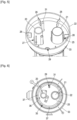
- the supporting structure 1 has a generally polyhedral shape. It has two front and rear supporting walls 2, here octagonal in shape, of which only the rear supporting wall 2 is shown on the Figure 1 .
- the front and rear walls 2 are, for example, cofferdam walls of the ship which extend transversely to the longitudinal direction of the ship.
- the supporting structure 1 also comprises an upper supporting wall 3, a lower supporting wall 4 and side supporting walls 5, 6, 7, 8, 9, 10.
- the sealed and thermally insulating tank for storing liquefied gas comprises a plurality of tank walls which are each anchored against one of the load-bearing walls 2, 3, 5, 6, 7, 8, 9, 10 of the load-bearing structure 1 and which thus define an internal space intended to contain the liquefied gas.
- each wall of the tank successively has, from the outside to the inside, along the thickness direction of the wall, a secondary thermally insulating barrier 12 comprising insulating elements 13 fixed to the supporting structure 1, a secondary sealing membrane 14 anchored to the insulating elements 13 of the secondary thermally insulating barrier 12, a primary thermally insulating barrier 15 comprising insulating elements 16 fixed to the insulating elements 13 of the secondary thermally insulating barrier 12 or to the supporting structure 1 and resting against the secondary sealing membrane 14 and a primary sealing membrane 17 anchored to the insulating elements 16 of the primary thermally insulating barrier 15 and intended to be in contact with the liquefied gas contained in the tank.
- such membrane tanks are described in particular in the applications for patent WO14057221 , FR2691520 And FR2877638 respectively targeting the Mark V ® , Mark III ® and NO96 ® products developed by the applicant.
- the liquefied gas intended to be stored in the tank may in particular be liquefied natural gas (LNG), i.e. a gas mixture comprising mainly methane and one or more other hydrocarbons, ethane, or liquefied petroleum gas (LPG), i.e. a mixture of hydrocarbons from oil refining comprising mainly propane and butane.
- LNG liquefied natural gas
- LPG liquefied petroleum gas
- the upper load-bearing wall 3 as well as the ceiling wall 11 of the tank are interrupted locally so as to delimit an opening 18.
- the tank also comprises a dome structure 19 which projects upwards from the upper load-bearing wall 3 around the opening 18 and which defines a passage 24 which is crossed by pipes 20, 21, 31 intended respectively for loading the tank with the liquefied gas, for unloading it or for cooling it.
- the dome structure 19 comprises a shaft 22 which extends in the thickness direction of the ceiling wall 11.
- the shaft 22 is cylindrical in shape with a circular cross-section.
- the dome structure 19 also comprises a ceiling 23 which is welded to the upper end of the shaft 22.
- the ceiling 23 is advantageously curved with a downwardly directed concavity, which allows the dome structure 19 to withstand higher pressures inside the tank.
- the lower end 33 of the shaft 22 is directed towards the internal space of the tank and is sealed welded to the primary sealing membrane 17.
- the shaft 22 and the ceiling 23 are, for example, made of stainless steel.
- the shaft 22 is fixed to the upper load-bearing wall 3, for example by means of an annular fixing device 32.
- the dome structure 19 includes a closure plate 25 which is attached to the barrel 22.
- the closure plate 25 is attached to the lower end of the barrel 22 by a plurality of gussets 26, shown in the figures 4 And 5
- the gussets 26 are regularly distributed around the closing plate 25.
- the gussets 26 are, on the one hand, welded against the internal surface of the barrel 22 and, on the other hand, welded against the upper surface of the closing plate 25.
- the gussets 26 comprise here two wings perpendicular to each other and one of which is fixed to the barrel 22 and the other to the closing plate 25.
- the closing plate 25 is arranged opposite the lower end 33 of the barrel 22 so as to cover it at least partially.
- the closing plate 25 is slightly offset downwards, relative to the lower end 33 of the barrel 22.
- the vertical distance between the plane of the closing plate 25 and that of the lower end 33 of the barrel 22 is less than 50 cm and greater than 5 cm, preferably between 10 and 25 cm.
- Such a spacing between the closing plate 25 and the lower end 33 of the barrel 22 makes it possible in particular to facilitate the operations of welding the gussets 26 to the closing plate 25.
- the closing plate 25 and its orifices 27, 28, 29 cover at least 80%, advantageously at least 90% and preferably 100% of the section of the barrel 22.
- the closing plate 25 comprises a plurality of orifices 27, 28, 29 through which the pipes 20, 21, 31 pass.
- the closing plate 25 is advantageously made of stainless steel.
- an insulating lining 30 is housed in the barrel 22 so as to fill the space inside the barrel 22.
- the insulating lining 30 is chosen from glass wool and rock wool and insulating foam, such as polyurethane foam for example.
- the insulating lining comprises insulating foam, this may consist of one or more insulating blocks or be obtained by spraying an expanding foam solution inside the barrel 22.
- the insulating gasket 30 rests against the closing plate 25.
- a grid 34 shown in the Figure 3 , is interposed between the closing plate 25 and the insulating lining 30 so as to retain the insulating lining 30 inside the barrel 22.
- the closing plate 25 ensures the support of the insulating lining 30 inside the barrel 22.
- the barrel 22 and ceiling 23 of the dome structure 19 are covered with insulating lining on their outer surface projecting from the upper load-bearing wall 3 in order to form thermal continuity with the thermal insulation of the ceiling wall 11 of the tank.
- the closing plate 25 further forms a protection which protects the dome structure 19 and more particularly the barrel 22 as well as the insulating lining 30 against the phenomena of sloshing of the liquefied gas which would be likely to damage them.
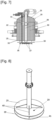
- the closing plate 25 also allows the installation near the ceiling wall 11 of the tank, of a spraying device 35, shown in the figures 3 And 6 , intended to spray liquefied gas into the internal space of the tank.
- a spraying device allows in particular the cooling of the tank, prior to loading the liquefied gas inside the tank. This cooling aims to reduce the temperature inside the tank, in particular in order to avoid excessive vaporization of the liquefied gas during loading, limit the intensity of thermal stresses in certain components housed in the tank and avoid situations likely to harm the safety of the tank and/or its integrity.
- the spraying device 35 comprises the pipe 31 which successively passes through the barrel 22 or the ceiling 23 of the dome structure 19 and the insulating lining 30 which is housed in the barrel 22.
- the pipe 31 also passes through the orifice 29 made in the closing plate 25.
- the pipe 31 joins a spray ramp 36, illustrated in the Figure 6 , which is fixed against the lower surface of the closing plate 25.
- the spray bar 36 comprises a plurality of spray nozzles 37.
- the spray nozzles 37 are oriented so as to ensure a distribution of the gas spray in the internal space of the tank.
- the spray bar 36 has an annular shape and the spray nozzles 37 are regularly distributed around the central axis of said annular shape.
- the spray bar 36 can be fixed to the internal surface of the closure plate 25 by any suitable means, such as fixing collars or fixing clips, for example.
- the pipe 20 is intended for loading liquefied gas into the tank. It passes through the drum 22 and has a bent portion extended by a vertical portion which passes through the closing plate 25. The lower end of the pipe 20 therefore opens into the internal space of the tank.
- the pipe 20 is connected outside the tank to a loading pipeline which comprises a manifold intended to be connected to a maritime or port terminal or to a bunkering vessel.
- the line 21 is intended for the discharge of liquefied gas from the tank.
- the line 21 passes through the ceiling 23 of the dome structure 19 and then passes through the closure plate 25.
- the line 21 extends over substantially the entire height of the tank up to near the bottom wall of the tank.
- the line 21 is further equipped with an unloading pump, not shown.
- the dome structure 19 may also be equipped with level sensors as well as a temperature measuring device which comprises a plurality of temperature sensors which are vertically distributed in the internal space of the tank.
- the level sensors and the temperature sensors are, for example, mounted along vertical uprights which pass through one of the openings of the closing plate 25 and which each extend along one of the pipes 20, 21, 31 and are fixed thereto.
- FIGS. 7 and 8 illustrate a dome structure according to another embodiment.
- This embodiment differs from that described above in relation to the figures 3 to 6 , in particular in that the installation comprises a pipe 38 for discharging gas in the vapor phase, in that the dome structure 19 comprises a second closure plate 39 and in that the closure plate 25 as well as the second closure plate 39 are not fixed on the barrel 22 of the dome structure 19 but directly on the pipe 38.
- a pipe 38 makes it possible to evacuate the gas in the vapor phase from the internal space of the tank in order to bring it for example to the propulsion system of a ship, a reliquefaction unit or a burner.
- the closure plate 25 has an opening through which the pipe 38 passes. Furthermore, the closure plate 25 is fixed to the pipe 38 by means of gussets 40 which have an edge welded to the pipe 38 and an edge which is welded against the upper surface of the closure plate 25. In the embodiment shown, the closure plate 25 is fixed to a lower attached portion of the pipe 38 which is fixed to the rest of the pipe 38, for example by means of flanges equipped with bolts.
- the second closing plate 39 is arranged parallel to the closing plate 25, below the latter and sheet metal plates 41 are arranged between the closing plate 25 and the second closing plate 39 and welded thereto.
- the sheet metal plates 41 thus perform the function of spacer maintaining the spacing between the two closing plates 25 and 39 and the function of stiffener reinforcing the rigidity of the closing plates 25 and 39.
- the pipe 38 does not pass through the second closure plate 39 but the latter has an opening allowing the passage of gas in the vapor phase so as to allow the gas in the vapor phase stored in the internal space of the tank to reach the pipe 38.
- FIG. 9 illustrates a dome structure according to yet another embodiment.
- the barrel 22 and ceiling 23 of the dome structure 19 are covered with an insulating lining 42 on their outer surface projecting from the upper load-bearing wall 3 in order to form a thermal continuity with the thermal insulation of the ceiling wall 11 of the tank.
- the dome structure 19 comprises a gas supply pipe 43 which opens into the interior of the barrel 22 as well as a pipe 44 which passes through an opening made in the closing plate 25 and has a lower end which opens into the internal space of the tank, for example near its bottom wall.
- the pipes 43 and 44 are, for example, likely to be used during operations of putting the tank into operation or maintenance, in particular for its reheating, its inerting or its aeration.
- an inert gas when inerting the tank, an inert gas is injected into the internal space of the tank via the gas supply pipe 43.
- the inert gas thus pushes the gas making up the initial atmosphere of the tank towards the bottom of the tank, like a piston, or it is sucked in via the pipe 44.
- the insulating lining 42 it is more advantageous for the insulating lining 42 to be arranged outside and not inside the barrel 22 in order to limit pressure losses.
- a cutaway view of an LNG carrier 70 shows a sealed and insulated tank 71 of generally prismatic shape mounted in the double hull 72 of the ship.
- the wall of the tank 71 comprises a primary sealing membrane intended to be in contact with the LNG contained in the tank, a secondary sealing membrane arranged between the primary sealing membrane and the double hull 72 of the ship, and two thermally insulating barriers arranged respectively between the primary sealing membrane and the secondary sealing membrane and between the secondary sealing membrane and the double hull 72.
- loading/unloading pipelines 73 arranged on the upper deck of the ship can be connected, by means of appropriate connectors, to a maritime or port terminal to transfer a cargo of LNG from or to the tank 71.
- FIG. 10 also represents an example of a maritime terminal comprising a loading and unloading station 75, an underwater pipeline 76 and an onshore installation 77.
- the loading and unloading station 75 is a fixed offshore installation comprising a mobile arm 74 and a tower 78 which supports the mobile arm 74.
- the mobile arm 74 carries a bundle of insulated flexible pipes 79 which can be connected to the loading/unloading pipelines 73.
- the orientable mobile arm 74 adapts to all sizes of LNG carriers.
- a connecting pipe, not shown, extends inside the tower 78.
- the loading and unloading station 75 allows the loading and unloading of the LNG carrier 70 from or to the onshore installation 77.
- the latter comprises liquefied gas storage tanks 80 and connecting pipes 81 connected by the subsea pipe 76 to the loading or unloading station 75.
- the subsea pipe 76 allows the transfer of the liquefied gas between the loading or unloading station 75 and the onshore installation 77 over a long distance, for example 5 km, which makes it possible to keep the LNG carrier 70 at a great distance from the coast during the loading and unloading operations.
- pumps on board the ship 70 and/or pumps equipping the onshore installation 77 and/or pumps equipping the loading and unloading station 75 are used.
Landscapes
- Engineering & Computer Science (AREA)
- Mechanical Engineering (AREA)
- General Engineering & Computer Science (AREA)
- Chemical & Material Sciences (AREA)
- Combustion & Propulsion (AREA)
- Ocean & Marine Engineering (AREA)
- Filling Or Discharging Of Gas Storage Vessels (AREA)
Applications Claiming Priority (1)
| Application Number | Priority Date | Filing Date | Title |
|---|---|---|---|
| FR2113916A FR3130931B1 (fr) | 2021-12-17 | 2021-12-17 | Installation de stockage d’un gaz liquéfié comportant une cuve et une structure de dôme |
Publications (3)
| Publication Number | Publication Date |
|---|---|
| EP4198375A1 EP4198375A1 (fr) | 2023-06-21 |
| EP4198375C0 EP4198375C0 (fr) | 2025-05-21 |
| EP4198375B1 true EP4198375B1 (fr) | 2025-05-21 |
Family
ID=80736039
Family Applications (1)
| Application Number | Title | Priority Date | Filing Date |
|---|---|---|---|
| EP22211708.7A Active EP4198375B1 (fr) | 2021-12-17 | 2022-12-06 | Installation de stockage d'un gaz liquefie comportant une cuve et une structure de dome |
Country Status (5)
| Country | Link |
|---|---|
| EP (1) | EP4198375B1 (enExample) |
| JP (1) | JP2023090674A (enExample) |
| KR (1) | KR20230093168A (enExample) |
| CN (1) | CN116265802A (enExample) |
| FR (1) | FR3130931B1 (enExample) |
Families Citing this family (1)
| Publication number | Priority date | Publication date | Assignee | Title |
|---|---|---|---|---|
| CN117485490B (zh) * | 2023-11-17 | 2025-08-01 | 大连船舶重工集团有限公司 | 一种新型的壳体连续c型储舱液穹 |
Family Cites Families (7)
| Publication number | Priority date | Publication date | Assignee | Title |
|---|---|---|---|---|
| FR2691520B1 (fr) | 1992-05-20 | 1994-09-02 | Technigaz Ste Nle | Structure préfabriquée de formation de parois étanches et thermiquement isolantes pour enceinte de confinement d'un fluide à très basse température. |
| FR2877638B1 (fr) | 2004-11-10 | 2007-01-19 | Gaz Transp Et Technigaz Soc Pa | Cuve etanche et thermiquement isolee a elements calorifuges resistants a la compression |
| FR2996520B1 (fr) | 2012-10-09 | 2014-10-24 | Gaztransp Et Technigaz | Cuve etanche et thermiquement isolante comportant une membrane metalique ondulee selon des plis orthogonaux |
| FR3078135B1 (fr) * | 2018-02-20 | 2021-01-15 | Gaztransport Et Technigaz | Installation de stockage et de transport d'un fluide cryogenique embarquee sur un navire |
| FR3081041B1 (fr) | 2018-05-11 | 2021-03-19 | Gaztransport Et Technigaz | Procede d'assemblage d'une cuve etanche et thermiquement isolante |
| FR3109978B1 (fr) * | 2020-05-11 | 2022-04-08 | Gaztransport Et Technigaz | Dôme liquide d’une cuve de stockage pour gaz liquéfié comportant une ouverture munie d’une trappe additionnelle |
| FR3110669B1 (fr) * | 2020-05-20 | 2024-08-02 | Gaztransport Et Technigaz | Installation de stockage pour gaz liquéfié |
-
2021
- 2021-12-17 FR FR2113916A patent/FR3130931B1/fr active Active
-
2022
- 2022-12-06 EP EP22211708.7A patent/EP4198375B1/fr active Active
- 2022-12-12 JP JP2022197854A patent/JP2023090674A/ja active Pending
- 2022-12-14 CN CN202211609353.2A patent/CN116265802A/zh active Pending
- 2022-12-14 KR KR1020220175178A patent/KR20230093168A/ko active Pending
Also Published As
| Publication number | Publication date |
|---|---|
| FR3130931A1 (fr) | 2023-06-23 |
| EP4198375C0 (fr) | 2025-05-21 |
| JP2023090674A (ja) | 2023-06-29 |
| CN116265802A (zh) | 2023-06-20 |
| FR3130931B1 (fr) | 2023-12-22 |
| KR20230093168A (ko) | 2023-06-27 |
| EP4198375A1 (fr) | 2023-06-21 |
Similar Documents
| Publication | Publication Date | Title |
|---|---|---|
| EP3250849B1 (fr) | Installation de stockage et de transport d'un fluide cryogénique embarquée sur un navire | |
| EP3472509B1 (fr) | Structure de dome gaz pour une cuve etanche et thermiquement isolante | |
| EP3948060B1 (fr) | Cuve étanche et thermiquement isolante | |
| EP3749889A1 (fr) | Installation pour le stockage et le transport d'un gaz liquefie | |
| WO2023001678A1 (fr) | Installation de stockage pour gaz liquéfié | |
| WO2022106692A1 (fr) | Dôme liquide d'une cuve de stockage pour gaz liquéfié | |
| WO2023036769A1 (fr) | Installation de stockage pour gaz liquéfié | |
| EP4198375B1 (fr) | Installation de stockage d'un gaz liquefie comportant une cuve et une structure de dome | |
| WO2021228751A1 (fr) | Dôme liquide d'une cuve de stockage pour gaz liquéfié comportant une ouverture munie d'une trappe additionnelle | |
| EP3755939A2 (fr) | Installation de stockage et de transport d'un fluide cryogénique embarquée sur un navire | |
| EP4083494A1 (fr) | Installation de stockage pour gaz liquefie | |
| WO2023227379A1 (fr) | Structure de dôme pour une cuve étanche et thermiquement isolante | |
| WO2021140218A1 (fr) | Installation de stockage pour gaz liquéfié | |
| FR3111410A1 (fr) | Dôme liquide d’une cuve de stockage pour gaz liquéfié | |
| WO2023025501A1 (fr) | Installation de stockage pour gaz liquéfié | |
| WO2021053055A1 (fr) | Cuve etanche et thermiquement isolante | |
| EP4471320A1 (fr) | Tour destinée au chargement et/ou déchargement d'une cuve destinée à contenir un gaz liquéfié | |
| FR3138903A1 (fr) | Procédé d’installation d’une rampe de pulvérisation sur une cuve | |
| FR3151073A1 (fr) | Installation de stockage d’un gaz liquéfié comportant une structure de dôme | |
| WO2021233712A1 (fr) | Installation de stockage pour gaz liquéfié | |
| FR3118796A1 (fr) | Installation de stockage pour gaz liquéfié | |
| FR3149949A1 (fr) | Installation de stockage d’un gaz liquéfié comportant une structure de dôme supportant une rampe de pulvérisation | |
| WO2025224330A1 (fr) | Bloc modulaire pour paroi de cuve | |
| WO2025045663A1 (fr) | Cuve étanche et thermiquement isolante | |
| FR3148283A1 (fr) | Cuve étanche et thermiquement isolante comprenant une gaine rigide creuse pour le passage de câbles électriques |
Legal Events
| Date | Code | Title | Description |
|---|---|---|---|
| PUAI | Public reference made under article 153(3) epc to a published international application that has entered the european phase |
Free format text: ORIGINAL CODE: 0009012 |
|
| STAA | Information on the status of an ep patent application or granted ep patent |
Free format text: STATUS: THE APPLICATION HAS BEEN PUBLISHED |
|
| AK | Designated contracting states |
Kind code of ref document: A1 Designated state(s): AL AT BE BG CH CY CZ DE DK EE ES FI FR GB GR HR HU IE IS IT LI LT LU LV MC ME MK MT NL NO PL PT RO RS SE SI SK SM TR |
|
| STAA | Information on the status of an ep patent application or granted ep patent |
Free format text: STATUS: REQUEST FOR EXAMINATION WAS MADE |
|
| 17P | Request for examination filed |
Effective date: 20231114 |
|
| RBV | Designated contracting states (corrected) |
Designated state(s): AL AT BE BG CH CY CZ DE DK EE ES FI FR GB GR HR HU IE IS IT LI LT LU LV MC ME MK MT NL NO PL PT RO RS SE SI SK SM TR |
|
| GRAP | Despatch of communication of intention to grant a patent |
Free format text: ORIGINAL CODE: EPIDOSNIGR1 |
|
| STAA | Information on the status of an ep patent application or granted ep patent |
Free format text: STATUS: GRANT OF PATENT IS INTENDED |
|
| INTG | Intention to grant announced |
Effective date: 20250113 |
|
| GRAS | Grant fee paid |
Free format text: ORIGINAL CODE: EPIDOSNIGR3 |
|
| GRAA | (expected) grant |
Free format text: ORIGINAL CODE: 0009210 |
|
| STAA | Information on the status of an ep patent application or granted ep patent |
Free format text: STATUS: THE PATENT HAS BEEN GRANTED |
|
| AK | Designated contracting states |
Kind code of ref document: B1 Designated state(s): AL AT BE BG CH CY CZ DE DK EE ES FI FR GB GR HR HU IE IS IT LI LT LU LV MC ME MK MT NL NO PL PT RO RS SE SI SK SM TR |
|
| REG | Reference to a national code |
Ref country code: GB Ref legal event code: FG4D Free format text: NOT ENGLISH |
|
| REG | Reference to a national code |
Ref country code: CH Ref legal event code: EP |
|
| REG | Reference to a national code |
Ref country code: DE Ref legal event code: R096 Ref document number: 602022014922 Country of ref document: DE |
|
| REG | Reference to a national code |
Ref country code: IE Ref legal event code: FG4D Free format text: LANGUAGE OF EP DOCUMENT: FRENCH |
|
| U01 | Request for unitary effect filed |
Effective date: 20250612 |
|
| U07 | Unitary effect registered |
Designated state(s): AT BE BG DE DK EE FI FR IT LT LU LV MT NL PT RO SE SI Effective date: 20250624 |
|
| PG25 | Lapsed in a contracting state [announced via postgrant information from national office to epo] |
Ref country code: ES Free format text: LAPSE BECAUSE OF FAILURE TO SUBMIT A TRANSLATION OF THE DESCRIPTION OR TO PAY THE FEE WITHIN THE PRESCRIBED TIME-LIMIT Effective date: 20250521 |
|
| PG25 | Lapsed in a contracting state [announced via postgrant information from national office to epo] |
Ref country code: GR Free format text: LAPSE BECAUSE OF FAILURE TO SUBMIT A TRANSLATION OF THE DESCRIPTION OR TO PAY THE FEE WITHIN THE PRESCRIBED TIME-LIMIT Effective date: 20250822 |
|
| PG25 | Lapsed in a contracting state [announced via postgrant information from national office to epo] |
Ref country code: PL Free format text: LAPSE BECAUSE OF FAILURE TO SUBMIT A TRANSLATION OF THE DESCRIPTION OR TO PAY THE FEE WITHIN THE PRESCRIBED TIME-LIMIT Effective date: 20250521 |
|
| PG25 | Lapsed in a contracting state [announced via postgrant information from national office to epo] |
Ref country code: HR Free format text: LAPSE BECAUSE OF FAILURE TO SUBMIT A TRANSLATION OF THE DESCRIPTION OR TO PAY THE FEE WITHIN THE PRESCRIBED TIME-LIMIT Effective date: 20250521 |
|
| PG25 | Lapsed in a contracting state [announced via postgrant information from national office to epo] |
Ref country code: RS Free format text: LAPSE BECAUSE OF FAILURE TO SUBMIT A TRANSLATION OF THE DESCRIPTION OR TO PAY THE FEE WITHIN THE PRESCRIBED TIME-LIMIT Effective date: 20250821 |
|
| PG25 | Lapsed in a contracting state [announced via postgrant information from national office to epo] |
Ref country code: IS Free format text: LAPSE BECAUSE OF FAILURE TO SUBMIT A TRANSLATION OF THE DESCRIPTION OR TO PAY THE FEE WITHIN THE PRESCRIBED TIME-LIMIT Effective date: 20250921 |