EP4190583A1 - A decorative sheet and method for manufacturing - Google Patents
A decorative sheet and method for manufacturing Download PDFInfo
- Publication number
- EP4190583A1 EP4190583A1 EP21212520.7A EP21212520A EP4190583A1 EP 4190583 A1 EP4190583 A1 EP 4190583A1 EP 21212520 A EP21212520 A EP 21212520A EP 4190583 A1 EP4190583 A1 EP 4190583A1
- Authority
- EP
- European Patent Office
- Prior art keywords
- decorative
- visible light
- light irradiation
- coating
- texture
- Prior art date
- Legal status (The legal status is an assumption and is not a legal conclusion. Google has not performed a legal analysis and makes no representation as to the accuracy of the status listed.)
- Withdrawn
Links
Images


Classifications
-
- B—PERFORMING OPERATIONS; TRANSPORTING
- B05—SPRAYING OR ATOMISING IN GENERAL; APPLYING FLUENT MATERIALS TO SURFACES, IN GENERAL
- B05D—PROCESSES FOR APPLYING FLUENT MATERIALS TO SURFACES, IN GENERAL
- B05D3/00—Pretreatment of surfaces to which liquids or other fluent materials are to be applied; After-treatment of applied coatings, e.g. intermediate treating of an applied coating preparatory to subsequent applications of liquids or other fluent materials
- B05D3/06—Pretreatment of surfaces to which liquids or other fluent materials are to be applied; After-treatment of applied coatings, e.g. intermediate treating of an applied coating preparatory to subsequent applications of liquids or other fluent materials by exposure to radiation
- B05D3/061—Pretreatment of surfaces to which liquids or other fluent materials are to be applied; After-treatment of applied coatings, e.g. intermediate treating of an applied coating preparatory to subsequent applications of liquids or other fluent materials by exposure to radiation using U.V.
- B05D3/065—After-treatment
- B05D3/067—Curing or cross-linking the coating
-
- B—PERFORMING OPERATIONS; TRANSPORTING
- B05—SPRAYING OR ATOMISING IN GENERAL; APPLYING FLUENT MATERIALS TO SURFACES, IN GENERAL
- B05D—PROCESSES FOR APPLYING FLUENT MATERIALS TO SURFACES, IN GENERAL
- B05D5/00—Processes for applying liquids or other fluent materials to surfaces to obtain special surface effects, finishes or structures
- B05D5/02—Processes for applying liquids or other fluent materials to surfaces to obtain special surface effects, finishes or structures to obtain a matt or rough surface
-
- B—PERFORMING OPERATIONS; TRANSPORTING
- B44—DECORATIVE ARTS
- B44C—PRODUCING DECORATIVE EFFECTS; MOSAICS; TARSIA WORK; PAPERHANGING
- B44C1/00—Processes, not specifically provided for elsewhere, for producing decorative surface effects
- B44C1/16—Processes, not specifically provided for elsewhere, for producing decorative surface effects for applying transfer pictures or the like
-
- B—PERFORMING OPERATIONS; TRANSPORTING
- B44—DECORATIVE ARTS
- B44C—PRODUCING DECORATIVE EFFECTS; MOSAICS; TARSIA WORK; PAPERHANGING
- B44C5/00—Processes for producing special ornamental bodies
- B44C5/04—Ornamental plaques, e.g. decorative panels, decorative veneers
- B44C5/0453—Ornamental plaques, e.g. decorative panels, decorative veneers produced by processes involving moulding
-
- B—PERFORMING OPERATIONS; TRANSPORTING
- B44—DECORATIVE ARTS
- B44F—SPECIAL DESIGNS OR PICTURES
- B44F1/00—Designs or pictures characterised by special or unusual light effects
- B44F1/02—Designs or pictures characterised by special or unusual light effects produced by reflected light, e.g. matt surfaces, lustrous surfaces
-
- B—PERFORMING OPERATIONS; TRANSPORTING
- B05—SPRAYING OR ATOMISING IN GENERAL; APPLYING FLUENT MATERIALS TO SURFACES, IN GENERAL
- B05D—PROCESSES FOR APPLYING FLUENT MATERIALS TO SURFACES, IN GENERAL
- B05D1/00—Processes for applying liquids or other fluent materials
- B05D1/28—Processes for applying liquids or other fluent materials performed by transfer from the surfaces of elements carrying the liquid or other fluent material, e.g. brushes, pads, rollers
-
- B—PERFORMING OPERATIONS; TRANSPORTING
- B05—SPRAYING OR ATOMISING IN GENERAL; APPLYING FLUENT MATERIALS TO SURFACES, IN GENERAL
- B05D—PROCESSES FOR APPLYING FLUENT MATERIALS TO SURFACES, IN GENERAL
- B05D2203/00—Other substrates
- B05D2203/22—Paper or cardboard
-
- B—PERFORMING OPERATIONS; TRANSPORTING
- B05—SPRAYING OR ATOMISING IN GENERAL; APPLYING FLUENT MATERIALS TO SURFACES, IN GENERAL
- B05D—PROCESSES FOR APPLYING FLUENT MATERIALS TO SURFACES, IN GENERAL
- B05D2503/00—Polyurethanes
-
- B—PERFORMING OPERATIONS; TRANSPORTING
- B44—DECORATIVE ARTS
- B44C—PRODUCING DECORATIVE EFFECTS; MOSAICS; TARSIA WORK; PAPERHANGING
- B44C1/00—Processes, not specifically provided for elsewhere, for producing decorative surface effects
- B44C1/10—Applying flat materials, e.g. leaflets, pieces of fabrics
Definitions
- the present invention generally relates to decorative sheets, in particular decorative sheets being used as top layer of decorative panels, such as flooring panels, laminates, furniture panels, wall panels, worktops, cast panels etc.
- the present invention relates to a method for manufacturing such decorative sheets and panels.
- Decorative panels such as flooring panels, laminates, furniture panels, wall panels, etc. coated with simulated versions of materials such as wood and natural stone are commonly used today, in particular where a less expensive material is desired. Obviously, these panels have to be sufficiently resistant against abrasion, indentation, chemicals and moisture.
- Such decorative panels substantially consist of a substrate such as MDF or HDF (Medium or High Density Fiberboard) or particle board and a decorative sheet provided thereon.
- the decorative sheets bear a printed decorative motif or pattern representing the image of different kinds of wood or natural stone such as marble or granite, and one or more finishing layers (so called top coating) to protect the decorative motif.
- top coatings are provided with a structure (i.e. a surface texture, profile, or topography) which gives the panel particular aesthetic and haptic characteristics making the decorative panel more realistic.
- a structure i.e. a surface texture, profile, or topography
- WO2004/042168 discloses providing structure in the substrate itself or in a priming layer and to perform a print in the form of a motif on this structured substrate.
- WO01/48333 provides impressions by a mold or cylinder, in a lacquer layer provided above the motif.
- WO01/47724 discloses providing a transparent lacquer pattern of structures by means of an inkjet on the motif.
- EP3640042 discloses a method for manufacturing coated panels having a substrate and a top layer with a decorative motif where the motif is protected by a synthetic material layer, i.e. a top coating, bearing a surface texture determined by a print, preferably printed by the same printing technique as the print of the decorative motif.
- the document discloses several methods for obtaining said texture in the synthetic material layer, one of which is using a printed mask. Synthetic material not covered by the mask may be then be cured.
- state of the art decorative panels bear top coatings with a mix of different textures, typically a predominant texture and a second distinct texture selectively interrupting or alternating with the predominant texture and corresponding to the decorative motif.
- selectivity embossed surface coverings are prepared by mechanically embossing a wear layer which overlays at least one printing ink containing a photoinitiator which has been printed in a pattern or design.
- the embossed wear layer is subjected to ultraviolet radiation which causes curing of the wear layer in the surface areas disposed over the printing ink.
- the product then is fused whereby the mechanical embossing in surface areas which are not disposed over the printing ink relaxes and becomes smooth.
- a thermoplastic wear layer is employed which can be mechanically embossed in the surface areas which are not disposed over the printing ink with a texture different from the first applied mechanical embossing.
- Another object of the present invention is to provide a decorative sheet and panel which can be manufactured in a less complex and/or more efficient and/or less costly manner.
- High coating weights are typically required to achieve high performance in combination with good aesthetics.
- a further objective is to provide a method for manufacturing a decorative sheet achieving selective texture alignment with the decorative motif while allowing the use of digital as well as analogue printing and coating techniques.
- an objective is also to provide a manufacturing method with lower processing complexity and more freedom in material choice.
- the present invention provides a decorative sheet comprising:
- the decorative sheet is less blocking for the overlapping wavelength range at the first surface areas having surface texture A than at the second surface areas having surface structure B.
- the present invention provides a decorative panel comprising a substrate and a decorative top layer consisting of a decorative sheet as described throughout this text.
- the present invention provides a method of manufacturing a decorative sheet having a textured surface comprising the steps of:
- a method for manufacturing a decorative panel using said method is provided as well.
- the present invention provides a decorative sheet comprising:
- At least partially UV or visible light irradiation transparent means being transparent for at least part of the UV or visible light irradiation spectrum, i.e. 100nm to 780nm, preferably at least part of the UV spectrum between 150nm and 450nm and most preferably between 300nm and 450nm.
- At least partially UV or visible light irradiation blocking means being able to block irradiation from at least part of the UV or visible light irradiation spectrum, i.e. 100nm to 780nm, preferably at least part of the UV spectrum between 150nm and 450nm and most preferably between 300nm and 450nm.
- UV or visible light irradiation cured or curable means cured or curable by being exposed to irradiation from at least part of the UV or visible light irradiation spectrum, i.e. 100nm to 780nm, preferably at least part of the UV spectrum between 150nm and 450nm and most preferably between 170nm and 450nm
- the UV or visible light transparent carrier sheet is not necessarily required to be (partially) transparent for the same wavelength range as the wavelength range blocked, or partially blocked, by the UV or visible light blocking decorative ink pattern. It however does require that at least part of these wavelength ranges overlap and that the overlapping wavelength range at least partially includes a curing wavelength range suitable for curing the UV or visible light curable material in the top coating.
- overlapping range is, as the skilled person will appreciate, dependent on combination of the carrier sheet and ink type, which will be relevant in selection of photoinitiator type of the coating and curing process settings (eg lamp types and irradiation dose).
- the decorative sheet is less blocking for the overlapping wavelength range at the first surface areas having surface texture A than at the second surface areas having surface structure B.
- the UV or visible light transparent carrier sheet may be selected from paper based (impregnated or not impregnated) materials, film,foil or panel based materials, acrylic plastic based materials including PMMA/ABS, thermoplastic based materials including PP, PE, PVC, PET and the like, non-woven based materials, or glass fiber based materials, or any combination thereof.
- the UV or visible light curable material may be any type of known UV or visible light curable coating suitable for finishing decorative sheets or panels.
- a preferred curable material may be radical polymerizable acrylate, polyurethane, epoxy, polyester, ether, unsaturated polyester, or vinyl ether based lacquer, or cationic UV-curable resins.
- the top coating may have a multi-layer build up wherein at least the top layer comprises the UV and visible light irradiation curable material.
- the UV curable coating may be a dual-cure curing system. This includes a combination of free radical polymerization curing systems (for example including photo-initiators and thermal initiators), and a combination of free radical polymerization curing systems with other types of reactive curing systems (for example isocyanates). Such dual-cure curing system may be beneficial in managing the curl of the decorative sheet.
- the curable coating materials may be a mix of components with different curing mechanisms, such as thermally reactive coatings, or reactive poly-urethane based coating combined with UV curable acrylate-based components.
- the curable coating materials may comprise nonreactive components as well, such as dissolved acrylics and fillers.
- the surface texture of the top coating is the surface structure or structural profile or topography of the surface of the top coating responsible for the haptic characteristics of the decorative sheet.
- the texture may be smooth (often called “satin finish") and very soft and subtle and not having a deep grain texture.
- texture is "scraped”, i.e similar to real hardwood.
- brushed i.e. similar to wood being brushed with metal wire, leather or stone (eg slate/granite) or fantasy structures, as functional structures like lotus flower, sharkskin/ anti-bacterial and many more.
- Person skilled in the art appreciates that, in order to achieve both high quality haptic characteristics of the decorative sheet and high quality aesthetic characteristics, both have to match and therefore the surface texture has to be aligned with the decorative motif.
- the alignment of the second texture with the decorative ink pattern is (partly) responsible for how the decorative sheet or the product using such sheet as decorative top layer is perceived by customers, for example the perceived authenticity of a wood or stone imitation. Poor alignment leads to a perception of fake and cheap.
- Alignment of the second texture with the decorative ink pattern can be checked with the naked eye or with one of the following techniques: optical microscopy, UV-Visible-NIR microscopy, UV-Visible-NIR microspectrometers, spectral surface mapping technology, enabling transmission data to be displayed on a 3D surface map (surface topography + UV-Visible light transmission)
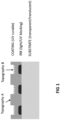
- the top surface of the top coating of the decorative sheet comprises first surface areas having a surface texture A and second surface areas having a surface texture B, said surface texture B being different from the surface texture A and being in alignment with the decorative ink pattern.
- Surface textures A and B may be present adjacent to each other on the top coating surface or may surround each other, depending on the decorative motif the second texture is aligned with.
- the surface texture A is predominant and the surface texture B is alternating with, i.e. regularly or irregularly interrupted by, the predominant texture and aligned with the decorative ink pattern.
- the second texture aligned with the decorative ink pattern may cover a higher percentage of the surface area of the top coating than the texture A.
- the surface texture A and surface texture B differ from each other in surface roughness and/or in specular reflection or gloss, and/or in top coating thickness, and/or in haptic properties, and/or in surface tension. More specifically, the textures may differ in shallowness or deepness, in higher gloss vs matt surfaces, in the presence of functional features such as light management structures, privacy film, optical gratings, anti-reflection surfaces, holographic surfaces, micro-fluidic devices, antimicrobial surfaces, brand protection, noise-absorbing/reducing, protective coatings. Optionally, one or more of these functional features may be aligned with the decorative motif as well.
- the decorative ink pattern comprises a number of distinct sub-patterns each having a perimeter fully covering the perimeter of the surface area of surface texture B aligned with the corresponding distinct sub-pattern.
- a surface area of surface texture B covers the same or smaller area as the sub-pattern of decorative ink, and is situated directly above the ink, i.e. the area of texture B may be smaller than the area of the corresponding ink sub-pattern due to the wavelike nature of light.
- the decorative sheet does not comprise the second texture in those surface areas where the thickness of the decorative ink pattern present underneath those surface areas is below UV or visible light irradiation blocking threshold thickness.
- this threshold depends amongst others on ink irradiation absorption properties, or ink layer thickness at specific UV process conditions and top-coating formulation
- the decorative sheet does not comprise the second texture B in those surface areas where there is no or insufficient decorative ink pattern present underneath those surface areas.
- the UV blocking decorative ink pattern may be located between the carrier sheet and the top coating, or it may be located at the rear side of the carrier sheet.
- the top coating may have a thickness in areas of surface texture A of at least 4 microns and/or at least 4g/m 2 of top coating at areas of surface texture A.
- the top coating may have a thickness of at least 8 microns and/or at least 8g/m 2 at areas of surface texture A, or at least 15 microns and/or at least 15g/m 2 at areas of surface texture A, or even at least 30 microns and/or at least 30g/m 2 at areas of surface texture A.
- the decorative sheet of the present invention may be applied as a final product.
- Final products may be, but not limited to wall paper, packaging or wrapping paper, nonwoven or plastic or glass fiber based fabrics, or any other type of decorative sheet.
- the decorative sheet of the present invention may be applied as an intermediate product for being adhered as a decorative top layer to any type of substrate for forming a final product.
- a final product may be any type of panel such as flooring panels, wall panels, advertising panels, etc, or panels for assembling any type of furniture such as tables, kitchens, office desks, closets and the like.
- Such final product may be wood based, glass based, stone based, carbon based, plastic based, metal based, mineral (eg. Gyproc) based, etc.
- Specific applications may be wooden plank look-alikes (flooring / sidings / decking / skirting boards /...), exterior furniture, high level finish foil, technical foil, acrylic decor, release film for texturing other surfaces (including recreational vehicles/caravan applications and textiles in the fashion industry), auto-motive parts for interior and exterior, molded parts or panels in general.
- the present invention provides a method of manufacturing a decorative sheet having a textured surface comprising the steps of:
- the mask In contrast with conventional methods where a mask is used on top of the curable coating to selectively solidify it and where the mask is removed afterwards, in the present invention the mask remains in the decorative sheet in its function of being the decorative or functional motif. Therefore, the mask, i.e. in this case the at least partially UV or visible light irradiation blocking decorative ink pattern, has to be printed on the upper or rear side of the carrier sheet, and therefore, in order to selectively expose the curable coating, the carrier sheet has to be, at least partially, transparent to the curing wavelength range to allow exposing the curable coating from its rear side.
- providing the curable coating can be completely disconnected from the printing of the decorative ink pattern, as the decorative print pattern determines its selective curing.
- Printing the at least partially UV or visible light irradiation blocking decorative ink pattern may be done by analogue printing, rotogravure printing or screen printing, or by digital printing methods as well, such as inkjet printing.
- the decorative ink pattern has to be printed with a thickness at least the UV or visible light irradiation blocking threshold thickness, such that the decorative ink pattern present has sufficient thickness underneath those surface areas where selective curing of the curable coating is not supposed to happen in order to obtain surface texture B in those surface areas.
- the blocking threshold thickness can also be achieved by overlapping of inks in layers of different composition
- the absorption (i.e. blocking) by the decorative ink pattern of the UV/visible light through the carrier sheet is always less than the absorption/blocking at the resulted surface areas having texture B.
- Coating the upper or rear side of the carrier sheet with the UV or visible light irradiation curable coating may be done by any known coating technique known in the art, such as roll, rotogravure, slotdie, commabar, screen printing, or curtain coating.
- the UV or visible light irradiation curable coating may be exposed to a curing wavelength range from at least part of the UV or visible light irradiation spectrum, i.e. 100nm to 780nm, preferably at least part of the UV spectrum between 150nm and 450nm.
- the curing is dependent on a combination of a number of variables, including but not limited to substrate (type and/or thickness); coating formulation (photoinitiator type and/or concentration, additives, pigments etc); coating thickness; ink formulation (pigment type and/or concentration); ink thickness; lamp (type, age, dosage); distance between lamp and coating; exposure time (line speed, number of lamps).
- the double bond concentration will decrease as the curing increases. This will gradually change the physical and chemical composition of the coating, going from its liquid, uncured stage to its solid full cured stage.
- Full cured does not mean 0 % double bonds, but the curing level of the coating which makes it fit for purpose.
- liquid not always mean a uncured stage, it can also be a stage at which we already have a decrease in the amount of double bonds, but still have a liquid coating, which shows in this case most of the times an increase in viscosity.
- solid not always mean a full cured stage, it can also be a stage at where there are still more double bonds present than at the full cured stage.
- Curing the first surface areas more than the second surface areas means that after exposure to the curing wavelength range, the curing stage of the first surface areas will be closer to full cured stage than the curing stage of the second surface areas, the latter consequently being closer to liquid, uncured stage.
- the method further comprises embossing the UV or visible light curable coating.
- UV-embossing surface areas of the coating that were exposed or will be exposed to UV or visible light irradiation through the decorative ink pattern may be given a specific surface texture A, defined by the mould, different from texture B. UV-embossing is done while exposing the coating to UV or visible light irradiation through the decorative ink pattern, while being in contact with the surface of the mould.
- FIG 4 and FIG 5 illustrate preferred embodiments of a method according to the present invention.
- the decorative ink pattern is printed on at least part of the upper side of the carrier sheet (step 2), while in FIG 5 it is printed on at least part of the rear side the carrier sheet (step 2).
- a UV or visible light irradiation curable coating is applied (step 3).
- embossing comprises positioning a mold over the UV or visible light irradiation curable coating (step 4) and exposing the coating to UV or visible light irradiation through the substrate and the decorative ink pattern while still being in contact with the mold thereby partially curing the UV or visible light irradiation curable coating (step 5&6), and consequently separating the decorative sheet and the mold (step 7). While being in contact with the mold the curable coating is sufficiently irradiated to selectively solidify. In the areas where the UV or visible light blocking decorative ink pattern is sufficiently present, the curable coating will remain in less cured (closer to liquid) stage due to lack of sufficient radiation to solidify. Upon removal of the decorative sheet from the mold, less cured coating will remain partly in the mold (step 9), resulting in a reduced amount of curable coating in the surface areas where a surface texture B is to be obtained
- the method further comprises a second curing step for curing the less cured curable coating (step 8), thereby achieving the surface texture B.
- This second curing may be done by exposure to a wavelength range in at least part of the UV/visible spectrum between 100nm and 450nm, and most preferably in at least part of the UV irradiation spectrum suitable for being generated by an excimer irradiation source. Exposure to UV irradiation may also by combined with a thermal cure, in order to create a specific surface texture B.
- This second curing step enables to create different gloss-levels and structures at the surface areas where the liquid coating was situated compared to the coating areas which were already cured against the mold.
- the surface structure of the coating cured in the mold will be a cast of the structure present in the mold and will no longer be affected by any of the structure defining techniques present during the second curing process where texture B is separately fixed in subsequent steps.
- the second curing step can also further cure the coating at surface areas A, as they do not need to be at their full cured stage when removing them from the mold. It is also possible to bring the coating to its full cured stage by means of EB-curing and/or thermal curing, with or without a combination of those with UV-curing.
- This second curing step can comprise more than 1 processing step, combining any of the above curing mechanisms
- the method of the present invention enables to create surface areas, in register with the decorative motif with less coating weight which create a wanted relief being the valleys (texture B) matching the blocking printing ink pattern and the other surface areas matching the structure of the mold (texture A).
- Types of molds that may be used include (but are not limited to) structured paper/film, embossed plates/panels and embossing cylinders.
- the methods of the present invention enable to create a printed, coated and embossed decorative sheet which is perfectly in register by its very nature, in a less complex, more efficient and more cost-effective manner.
- these methods allow application in a roll-to-roll process, as well as a sheet process.
- texture A Surface areas resulted in texture A are different from surface areas resulted in texture B in appearance, structure, topography, haptic effect, or gloss.
- This difference is obtained by the difference of the curing level of the top coating at the first surface areas vs second surface areas in the initial/first irradiation of the coating surface by a UV/visible light source.
- This light source can be uniformly applied over the complete printed substrate, first passing through the UV-blocking ink before reaching the UV/visible light curable coating.
- the difference in surface properties between surface first surface areas and second surface areas are always related to the different behavior of the coating due to the difference of radiation dose it is irradiated with in this first curing step at the first surface areas and second surface areas.
- the coating can still be close to liquid, or even liquid, after this first curing step, making it easy to be removed by washing and vacuum techniques. Also even if the first surface areas remain close to liquid after the first curing step, however a bit more cured than the second surface areas, different surface textures A and B can be created with subsequent curing steps, for example with UV-excimer.
- the mechanical and/or chemical resistances of the coating at these second surface areas will be lower compared to surface first surface areas A.
- the coating at surface area B will be more easily removed by mechanical (brushed) or chemical (etching) ways, thus creating difference in surface appearance and amount of coating remaining on the substrate.
- the UV or visible light transparent carrier sheet may be selected from paper based (impregnated or not impregnated) materials, film or foil based materials, acrylic plastic based materials including PMMA/ABS, thermoplastic based materials including PP, PE, PVC, PET and the like, non-woven based materials, or glass fiber based materials, or any combination thereof.
- paper based (impregnated or not impregnated) materials film or foil based materials
- acrylic plastic based materials including PMMA/ABS
- thermoplastic based materials including PP, PE, PVC, PET and the like
- non-woven based materials or glass fiber based materials, or any combination thereof.
- the preference depends strongly on the pigmentation, and other UV/light absorbing substance used in the different substrates.
- a white substrate containing TiO2 pigment will absorb a large portion of the UV-light and will therefore be more likely to be used in combination with a coating containing photo-initiators which are activated by light in the visible range.
- a method of the present invention may additionally comprise adding an opaque layer to the rear of the decorative sheet after the first curing step or after the second curing step.
- This opaque layer can be applied by a printing or coating process or during the lamination or pressing process.
- texture A or B or both may be desirable to protect texture A or B or both in further processing steps. This can be done by filling the texture, with for example a liquid release coating which is cured/solidified after application on the textures A and B or an extruded film, that can be removed after the pressing stage.
- deep macro-textures may be pressed into areas A and/or B while maintaining the (micro) surface textures A and B of the decorative sheet.
- the curing level attained by UV prior to the press cycle may need to be limited to facilitate this.
- a method of the present invention may additionally comprise providing a second UV or visible light irradiation curable coating on the rear side of the carrier sheet. As the UV or visible light irradiation is applied on the rear side of the carrier sheet through the carrier sheet, this second curable coating will be cured and may counter balance for potential curl exhibited by the top coating.
- a paper based carrier sheet known in the market as overlay with a weight of 28 g/m 2 (Glatz) is provided.
- This overlay paper is printed in rotogravure with standard waterbased rotogravure inks (KGE AG) and cylinders as used in decorative printing. Additionally, the thus printed overlay paper is printed in register, in-line, with a carbon black containing waterbased ink for decorative purposes (KGE AG) with a rotation screen printing unit to obtain areas of high UV/visible-light absorption.
- the print can be done on either side of the overlay, whatever suits the purpose of the final product best.
- the design can be wood, stone or fantasy.
- this printed overlay paper is impregnated with waterbased melamine resins (BASF) on a standard impregnation (Vits) line and winded again after drying of the melamine resin, with a resin content of 100-120%, calculated on the paperweight.
- BASF waterbased melamine resins
- Vits standard impregnation
- This printed and impregnated overlay paper is than coated with a solvent based polyurethane primer containing polyols (Desmphen type) 30-70 % and isocyanates (desmodur types) 20-60% and 10-50% of radiation curable acrylates.
- the radiation curable top coating is applied with a slot-die application system, applying 30 to 300 g/m 2 of an UV-curable resin mixture, comprising 30-70 % of an urethane acrylate, (Sartomer) 5-50 % of acrylate based monomers (Sartomer), 0,5-3 % of photoinitiator (IGM), fillers and matting agents(Grace) 1-25 %.
- This printed, impregnated, primered and coated paper is then irradiated from the rear side, through the substrate, printing inks and coating.
- An UV-lamp unit of IST with an output of 160 W/cm, having a standard mercury lamp, with at 50% of its power is used at a speed of 25m/min.
- the UV/visible light absorption is very high and thus the coating above these areas remains liquid due to lack of radiation dose.
- sufficient radiation of the UV-lamp will pass through the overlay substrate and ink to solidify the coating, depending on its exact composition, creating a semi-gloss to glossy surface.
- This decorative sheet with perfect alignment between the screen printing and matt areas of the coated surface can now be pressed in DPL, CPL or HPL- presses to obtain the desired panels/laminates with an in-register gloss/matt coated surface. Further texturing can be done by the press-plates during the press-cycle, but and the microstructures created to obtain the gloss/matt effect can be maintained in the press-cycle.
Landscapes
- Physics & Mathematics (AREA)
- Engineering & Computer Science (AREA)
- Plasma & Fusion (AREA)
- Laminated Bodies (AREA)
- Printing Methods (AREA)
- Application Of Or Painting With Fluid Materials (AREA)
Priority Applications (12)
| Application Number | Priority Date | Filing Date | Title |
|---|---|---|---|
| EP21212520.7A EP4190583A1 (en) | 2021-12-06 | 2021-12-06 | A decorative sheet and method for manufacturing |
| BE20225000A BE1029949B1 (nl) | 2021-12-06 | 2022-01-05 | Decoratievel en werkwijze voor fabricage |
| US18/715,288 US20250033083A1 (en) | 2021-12-06 | 2022-12-02 | A decorative sheet and method for manufacturing |
| PCT/EP2022/084187 WO2023104653A1 (en) | 2021-12-06 | 2022-12-02 | A decorative sheet and method for manufacturing |
| MX2024006884A MX2024006884A (es) | 2021-12-06 | 2022-12-02 | Una lamina decorativa y metodo de fabricacion. |
| EP22830162.8A EP4444555A1 (en) | 2021-12-06 | 2022-12-02 | A decorative sheet and method for manufacturing |
| CN202280087385.2A CN118510664A (zh) | 2021-12-06 | 2022-12-02 | 装饰性片材及其制造方法 |
| JP2024533817A JP2024542820A (ja) | 2021-12-06 | 2022-12-02 | 装飾板及び製造方法 |
| AU2022406975A AU2022406975A1 (en) | 2021-12-06 | 2022-12-02 | A decorative sheet and method for manufacturing |
| KR1020247022346A KR20240115318A (ko) | 2021-12-06 | 2022-12-02 | 장식용 시트 및 제작 방법 |
| CA3240069A CA3240069A1 (en) | 2021-12-06 | 2022-12-02 | A decorative sheet and method for manufacturing |
| ZA2024/05197A ZA202405197B (en) | 2021-12-06 | 2024-07-03 | A decorative sheet and method for manufacturing |
Applications Claiming Priority (1)
| Application Number | Priority Date | Filing Date | Title |
|---|---|---|---|
| EP21212520.7A EP4190583A1 (en) | 2021-12-06 | 2021-12-06 | A decorative sheet and method for manufacturing |
Publications (1)
| Publication Number | Publication Date |
|---|---|
| EP4190583A1 true EP4190583A1 (en) | 2023-06-07 |
Family
ID=78821898
Family Applications (2)
| Application Number | Title | Priority Date | Filing Date |
|---|---|---|---|
| EP21212520.7A Withdrawn EP4190583A1 (en) | 2021-12-06 | 2021-12-06 | A decorative sheet and method for manufacturing |
| EP22830162.8A Pending EP4444555A1 (en) | 2021-12-06 | 2022-12-02 | A decorative sheet and method for manufacturing |
Family Applications After (1)
| Application Number | Title | Priority Date | Filing Date |
|---|---|---|---|
| EP22830162.8A Pending EP4444555A1 (en) | 2021-12-06 | 2022-12-02 | A decorative sheet and method for manufacturing |
Country Status (11)
| Country | Link |
|---|---|
| US (1) | US20250033083A1 (https=) |
| EP (2) | EP4190583A1 (https=) |
| JP (1) | JP2024542820A (https=) |
| KR (1) | KR20240115318A (https=) |
| CN (1) | CN118510664A (https=) |
| AU (1) | AU2022406975A1 (https=) |
| BE (1) | BE1029949B1 (https=) |
| CA (1) | CA3240069A1 (https=) |
| MX (1) | MX2024006884A (https=) |
| WO (1) | WO2023104653A1 (https=) |
| ZA (1) | ZA202405197B (https=) |
Cited By (1)
| Publication number | Priority date | Publication date | Assignee | Title |
|---|---|---|---|---|
| EP4549168A1 (en) * | 2023-11-03 | 2025-05-07 | Chiyoda Europa | A decorative sheet and method for manufacturing |
Families Citing this family (1)
| Publication number | Priority date | Publication date | Assignee | Title |
|---|---|---|---|---|
| EP4721993A1 (en) * | 2023-01-10 | 2026-04-08 | Unilin, BV | Method for manufacturing decorative panels |
Citations (7)
| Publication number | Priority date | Publication date | Assignee | Title |
|---|---|---|---|---|
| US5256465A (en) * | 1990-03-28 | 1993-10-26 | Armstrong World Industries, Inc. | Tension floor covering having enhanced embossing and durability |
| WO2001047724A1 (en) | 1999-12-23 | 2001-07-05 | Perstorp Flooring Ab | A process for the manufacturing of surface elements with a structured top surface |
| US20030113520A1 (en) * | 1998-07-14 | 2003-06-19 | Kazuhiro Takahashi | Decorative material |
| US20030138617A1 (en) | 2002-01-11 | 2003-07-24 | Jean-Francois Courtoy Courtoy | Selectively embossed surface coverings and processes of manufacture |
| WO2004042168A1 (en) | 2002-11-01 | 2004-05-21 | Mannington Mills, Inc. | A surface covering panel with printed pattern |
| EP1495860A1 (en) * | 2002-03-20 | 2005-01-12 | Dai Nippon Printing Co., Ltd. | Decorative sheet |
| EP3640042A1 (en) | 2008-12-19 | 2020-04-22 | Flooring Industries Limited, SARL | Methods for manufacturing panels using a mask |
Family Cites Families (2)
| Publication number | Priority date | Publication date | Assignee | Title |
|---|---|---|---|---|
| US6699419B1 (en) * | 2000-06-05 | 2004-03-02 | General Motors Corporation | Method of forming a composite article with a textured surface and mold therefor |
| US7230764B2 (en) * | 2000-08-18 | 2007-06-12 | Reflexite Corporation | Differentially-cured materials and process for forming same |
-
2021
- 2021-12-06 EP EP21212520.7A patent/EP4190583A1/en not_active Withdrawn
-
2022
- 2022-01-05 BE BE20225000A patent/BE1029949B1/nl active IP Right Grant
- 2022-12-02 MX MX2024006884A patent/MX2024006884A/es unknown
- 2022-12-02 US US18/715,288 patent/US20250033083A1/en active Pending
- 2022-12-02 EP EP22830162.8A patent/EP4444555A1/en active Pending
- 2022-12-02 CA CA3240069A patent/CA3240069A1/en active Pending
- 2022-12-02 KR KR1020247022346A patent/KR20240115318A/ko active Pending
- 2022-12-02 CN CN202280087385.2A patent/CN118510664A/zh active Pending
- 2022-12-02 JP JP2024533817A patent/JP2024542820A/ja active Pending
- 2022-12-02 WO PCT/EP2022/084187 patent/WO2023104653A1/en not_active Ceased
- 2022-12-02 AU AU2022406975A patent/AU2022406975A1/en active Pending
-
2024
- 2024-07-03 ZA ZA2024/05197A patent/ZA202405197B/en unknown
Patent Citations (8)
| Publication number | Priority date | Publication date | Assignee | Title |
|---|---|---|---|---|
| US5256465A (en) * | 1990-03-28 | 1993-10-26 | Armstrong World Industries, Inc. | Tension floor covering having enhanced embossing and durability |
| US20030113520A1 (en) * | 1998-07-14 | 2003-06-19 | Kazuhiro Takahashi | Decorative material |
| WO2001047724A1 (en) | 1999-12-23 | 2001-07-05 | Perstorp Flooring Ab | A process for the manufacturing of surface elements with a structured top surface |
| WO2001048333A1 (en) | 1999-12-23 | 2001-07-05 | Perstorp Flooring Ab | A process for the manufacturing of surface elements |
| US20030138617A1 (en) | 2002-01-11 | 2003-07-24 | Jean-Francois Courtoy Courtoy | Selectively embossed surface coverings and processes of manufacture |
| EP1495860A1 (en) * | 2002-03-20 | 2005-01-12 | Dai Nippon Printing Co., Ltd. | Decorative sheet |
| WO2004042168A1 (en) | 2002-11-01 | 2004-05-21 | Mannington Mills, Inc. | A surface covering panel with printed pattern |
| EP3640042A1 (en) | 2008-12-19 | 2020-04-22 | Flooring Industries Limited, SARL | Methods for manufacturing panels using a mask |
Cited By (2)
| Publication number | Priority date | Publication date | Assignee | Title |
|---|---|---|---|---|
| EP4549168A1 (en) * | 2023-11-03 | 2025-05-07 | Chiyoda Europa | A decorative sheet and method for manufacturing |
| WO2025093543A1 (en) * | 2023-11-03 | 2025-05-08 | Chiyoda Europa | A decorative sheet and method for manufacturing |
Also Published As
| Publication number | Publication date |
|---|---|
| CN118510664A (zh) | 2024-08-16 |
| JP2024542820A (ja) | 2024-11-15 |
| KR20240115318A (ko) | 2024-07-25 |
| CA3240069A1 (en) | 2023-06-15 |
| BE1029949A1 (nl) | 2023-06-15 |
| BE1029949B1 (nl) | 2023-10-11 |
| US20250033083A1 (en) | 2025-01-30 |
| WO2023104653A1 (en) | 2023-06-15 |
| MX2024006884A (es) | 2024-08-22 |
| AU2022406975A1 (en) | 2024-06-13 |
| ZA202405197B (en) | 2025-10-29 |
| EP4444555A1 (en) | 2024-10-16 |
Similar Documents
| Publication | Publication Date | Title |
|---|---|---|
| JP7180743B2 (ja) | 化粧シート、化粧板及び加飾樹脂成形品 | |
| EP4087989B1 (en) | Decorative surface covering element, covering with such element, and method of producing such a decorative surface covering element | |
| US11504955B2 (en) | Decorative laminate with matte finish and method of manufacture | |
| CN109789663A (zh) | 地板和用于制造地板的方法 | |
| US10343368B2 (en) | Multi-layer additive texture laminates and methods | |
| US20250033083A1 (en) | A decorative sheet and method for manufacturing | |
| US20190210331A1 (en) | Surfacing materials and method of manufacture | |
| US11020948B2 (en) | High pressure decorative laminate having a top layer of energy cured acrylated urethane polymer | |
| KR20180017175A (ko) | 화장 시트 및 화장판 | |
| CN117083175A (zh) | 消光物品 | |
| JP2016203432A (ja) | 化粧シート及び化粧板 | |
| US20190337264A1 (en) | Surfacing materials and method of manufacture | |
| KR101456731B1 (ko) | 화장 시트 및 그것을 사용한 화장판 | |
| KR101247466B1 (ko) | A-페트 시트지가 포함된 친환경 건축 자재용 합판의 uv 하이그로시 제조 방법 | |
| RU2851930C2 (ru) | Декоративный лист и способ изготовления | |
| JP7383222B2 (ja) | 化粧紙、化粧材、及び化粧紙の製造方法 | |
| EP4549168A1 (en) | A decorative sheet and method for manufacturing | |
| CN116323766B (zh) | 消光物品 | |
| KR101091477B1 (ko) | 코팅된 종이의 케미칼 엠보싱 방법 | |
| JPH08244174A (ja) | 立体感を有する化粧材 | |
| JP2001138442A (ja) | 化粧材 | |
| JPH05309804A (ja) | 化粧板の製造法 |
Legal Events
| Date | Code | Title | Description |
|---|---|---|---|
| PUAI | Public reference made under article 153(3) epc to a published international application that has entered the european phase |
Free format text: ORIGINAL CODE: 0009012 |
|
| STAA | Information on the status of an ep patent application or granted ep patent |
Free format text: STATUS: THE APPLICATION HAS BEEN PUBLISHED |
|
| AK | Designated contracting states |
Kind code of ref document: A1 Designated state(s): AL AT BE BG CH CY CZ DE DK EE ES FI FR GB GR HR HU IE IS IT LI LT LU LV MC MK MT NL NO PL PT RO RS SE SI SK SM TR |
|
| STAA | Information on the status of an ep patent application or granted ep patent |
Free format text: STATUS: REQUEST FOR EXAMINATION WAS MADE |
|
| 17P | Request for examination filed |
Effective date: 20231207 |
|
| RBV | Designated contracting states (corrected) |
Designated state(s): AL AT BE BG CH CY CZ DE DK EE ES FI FR GB GR HR HU IE IS IT LI LT LU LV MC MK MT NL NO PL PT RO RS SE SI SK SM TR |
|
| STAA | Information on the status of an ep patent application or granted ep patent |
Free format text: STATUS: THE APPLICATION IS DEEMED TO BE WITHDRAWN |
|
| 18D | Application deemed to be withdrawn |
Effective date: 20231208 |