EP4187285B1 - Verfahren und systeme zum verarbeiten von zeitdifferenzierten beobachtungsdaten von navigationssatellitensystemen - Google Patents
Verfahren und systeme zum verarbeiten von zeitdifferenzierten beobachtungsdaten von navigationssatellitensystemen Download PDFInfo
- Publication number
- EP4187285B1 EP4187285B1 EP22181847.9A EP22181847A EP4187285B1 EP 4187285 B1 EP4187285 B1 EP 4187285B1 EP 22181847 A EP22181847 A EP 22181847A EP 4187285 B1 EP4187285 B1 EP 4187285B1
- Authority
- EP
- European Patent Office
- Prior art keywords
- delta
- observables
- epoch
- observable
- previous
- Prior art date
- Legal status (The legal status is an assumption and is not a legal conclusion. Google has not performed a legal analysis and makes no representation as to the accuracy of the status listed.)
- Active
Links
Images










Classifications
-
- G—PHYSICS
- G01—MEASURING; TESTING
- G01S—RADIO DIRECTION-FINDING; RADIO NAVIGATION; DETERMINING DISTANCE OR VELOCITY BY USE OF RADIO WAVES; LOCATING OR PRESENCE-DETECTING BY USE OF THE REFLECTION OR RERADIATION OF RADIO WAVES; ANALOGOUS ARRANGEMENTS USING OTHER WAVES
- G01S19/00—Satellite radio beacon positioning systems; Determining position, velocity or attitude using signals transmitted by such systems
- G01S19/38—Determining a navigation solution using signals transmitted by a satellite radio beacon positioning system
- G01S19/39—Determining a navigation solution using signals transmitted by a satellite radio beacon positioning system the satellite radio beacon positioning system transmitting time-stamped messages, e.g. GPS [Global Positioning System], GLONASS [Global Orbiting Navigation Satellite System] or GALILEO
- G01S19/393—Trajectory determination or predictive tracking, e.g. Kalman filtering
-
- G—PHYSICS
- G01—MEASURING; TESTING
- G01S—RADIO DIRECTION-FINDING; RADIO NAVIGATION; DETERMINING DISTANCE OR VELOCITY BY USE OF RADIO WAVES; LOCATING OR PRESENCE-DETECTING BY USE OF THE REFLECTION OR RERADIATION OF RADIO WAVES; ANALOGOUS ARRANGEMENTS USING OTHER WAVES
- G01S19/00—Satellite radio beacon positioning systems; Determining position, velocity or attitude using signals transmitted by such systems
- G01S19/38—Determining a navigation solution using signals transmitted by a satellite radio beacon positioning system
- G01S19/39—Determining a navigation solution using signals transmitted by a satellite radio beacon positioning system the satellite radio beacon positioning system transmitting time-stamped messages, e.g. GPS [Global Positioning System], GLONASS [Global Orbiting Navigation Satellite System] or GALILEO
- G01S19/42—Determining position
- G01S19/43—Determining position using carrier phase measurements, e.g. kinematic positioning; using long or short baseline interferometry
- G01S19/44—Carrier phase ambiguity resolution; Floating ambiguity; LAMBDA [Least-squares AMBiguity Decorrelation Adjustment] method
-
- G—PHYSICS
- G01—MEASURING; TESTING
- G01S—RADIO DIRECTION-FINDING; RADIO NAVIGATION; DETERMINING DISTANCE OR VELOCITY BY USE OF RADIO WAVES; LOCATING OR PRESENCE-DETECTING BY USE OF THE REFLECTION OR RERADIATION OF RADIO WAVES; ANALOGOUS ARRANGEMENTS USING OTHER WAVES
- G01S19/00—Satellite radio beacon positioning systems; Determining position, velocity or attitude using signals transmitted by such systems
- G01S19/01—Satellite radio beacon positioning systems transmitting time-stamped messages, e.g. GPS [Global Positioning System], GLONASS [Global Orbiting Navigation Satellite System] or GALILEO
- G01S19/13—Receivers
- G01S19/20—Integrity monitoring, fault detection or fault isolation of space segment
-
- G—PHYSICS
- G01—MEASURING; TESTING
- G01S—RADIO DIRECTION-FINDING; RADIO NAVIGATION; DETERMINING DISTANCE OR VELOCITY BY USE OF RADIO WAVES; LOCATING OR PRESENCE-DETECTING BY USE OF THE REFLECTION OR RERADIATION OF RADIO WAVES; ANALOGOUS ARRANGEMENTS USING OTHER WAVES
- G01S19/00—Satellite radio beacon positioning systems; Determining position, velocity or attitude using signals transmitted by such systems
- G01S19/01—Satellite radio beacon positioning systems transmitting time-stamped messages, e.g. GPS [Global Positioning System], GLONASS [Global Orbiting Navigation Satellite System] or GALILEO
- G01S19/13—Receivers
- G01S19/24—Acquisition or tracking or demodulation of signals transmitted by the system
- G01S19/30—Acquisition or tracking or demodulation of signals transmitted by the system code related
-
- G—PHYSICS
- G01—MEASURING; TESTING
- G01S—RADIO DIRECTION-FINDING; RADIO NAVIGATION; DETERMINING DISTANCE OR VELOCITY BY USE OF RADIO WAVES; LOCATING OR PRESENCE-DETECTING BY USE OF THE REFLECTION OR RERADIATION OF RADIO WAVES; ANALOGOUS ARRANGEMENTS USING OTHER WAVES
- G01S19/00—Satellite radio beacon positioning systems; Determining position, velocity or attitude using signals transmitted by such systems
- G01S19/38—Determining a navigation solution using signals transmitted by a satellite radio beacon positioning system
- G01S19/39—Determining a navigation solution using signals transmitted by a satellite radio beacon positioning system the satellite radio beacon positioning system transmitting time-stamped messages, e.g. GPS [Global Positioning System], GLONASS [Global Orbiting Navigation Satellite System] or GALILEO
- G01S19/42—Determining position
- G01S19/43—Determining position using carrier phase measurements, e.g. kinematic positioning; using long or short baseline interferometry
Definitions
- the invention relates to methods, systems, and computer programs using navigation satellite system (NSS) observations for position estimation, trajectory estimation, or the like.
- NSS navigation satellite system
- the fields of application of the methods, systems, and computer programs include, but are not limited to, navigation, highly automated driving, autonomous driving, mapmaking, land surveying, civil engineering, agriculture, disaster prevention and relief, and scientific research.
- Navigation satellite systems include both global navigation satellite systems (GNSS) and regional navigation satellite systems (RNSS), such as the Global Positioning System (GPS) (United States), GLONASS ( Russia), Galileo (Europe), BDS (China), QZSS (Japan), and the Indian Regional Navigational Satellite System (IRNSS, also referred to as NAVIC) (systems in use or in development).
- GSS Global Positioning System
- GLONASS Russian
- Galileo European
- BDS China
- QZSS Indian Regional Navigational Satellite System
- An NSS typically uses a plurality of satellites orbiting the Earth. The plurality of satellites forms a constellation of satellites.
- An NSS receiver detects a code modulated on an electromagnetic signal broadcast by a satellite. The code is also called a ranging code.
- Code detection includes comparing the bit sequence modulated on the broadcasted signal with a receiver-side version of the code to be detected. Based on the detection of the time of arrival of the code for each of a series of the satellites, the NSS receiver estimates its position. Positioning includes, but is not limited to, geolocation, i.e. the positioning on the surface of the Earth.
- a method is carried out by at least one of a navigation satellite system receiver, hereinafter abbreviated as "NSS receiver”, and a processing entity capable of receiving data from the NSS receiver, for estimating parameters useful to, i.e. suitable to, determine a position.
- the NSS receiver observes at least one NSS signal from each of a plurality of NSS satellites over multiple epochs.
- the method comprises the following steps and/or operations:
- An estimation process hereinafter referred to as “estimator”
- previous epoch is operated for an epoch.
- the estimator uses state variables and computes the values of its state variables at least based on time-differenced observables, hereinafter referred to as “delta observables”, computed for the previous epoch. Residuals, hereinafter referred to as “previous residuals”, are obtained from the estimator, each previous residual being associated with a delta observable computed for the previous epoch. For each of at least some of the delta observables, the previous residual associated with the delta observable is adjusted, wherein adjusting comprises multiplying the previous residual with a coefficient, hereinafter referred to as "back-residual coefficient".
- a system comprises at least one of: a NSS receiver, and a processing entity capable of receiving data from the NSS receiver, the system being for estimating parameters useful to, i.e. suitable to, determine a position, the NSS receiver being configured for observing at least one NSS signal from each of a plurality of NSS satellites over multiple epochs, and the system being configured for carrying out the above-described method.
- computer programs, computer program products and storage media for storing such computer programs comprise computer-executable instructions for carrying out, when executed on a computer such as one embedded in a NSS receiver or in another apparatus, or when executed on a set of computers such as a set of computers embedded in a set of apparatuses, the above-described method.
- GNSS global navigation satellite systems
- RNSS regional navigation satellite systems
- observation is often used to refer to structures of an NSS signal from which observations or measurements can be made (PRN-code, carrier phase) (see e.g. reference [4]: "The word observable is used throughout GPS literature to indicate the signals whose measurement yields the range or distance between the satellite and the receiver.”).
- the term “observable” (also referred to as “NSS observable”) is also interchangeably used to refer to the observation itself, such that, for example, “carrier phase observable” has the same meaning as “carrier phase observation”.
- delta carrier phase observables are also sometimes used although delta carrier phase observables are strictly speaking not directly observed but constructed, i.e. computed, based on observables.
- delta phase processing is an effective approach for low-latency, precise position propagation to the current epoch.
- said processing has been found to often be sensitive to visible satellite constellation geometry changes, which may result in random walk type behaviour and undesired divergence of the positioning solution, i.e. random walk behaviour of the position divergence from the true position, or random walk behaviour of trajectory divergence from the true trajectory.
- Some embodiments of the invention have been developed to reduce such random walk type behaviour in order to generate a trajectory estimate with minimal divergence, determined primarily by the satellite clocks and the atmosphere, and being less affected by the geometry of the satellite constellation, which may change rapidly due to obstructions, loss of tracking, detected outliers, etc.
- delta-carrier-phase observables is an example of delta observables processing that is known in the art.
- Such processing is beneficial in that the integer ambiguities in the carrier phases are cancelled out (as explained above with reference to reference [5]) during observation differencing so that a trajectory can be computed without the need to resolve ambiguities.
- carrierphase t range t + tropo t ⁇ iono t + rcvclock t + ⁇ ⁇ N + noise t
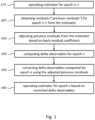
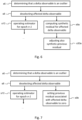
- Fig. 1 is a flowchart of a method in one embodiment of the invention.
- the method may be carried out by a NSS receiver configured for observing NSS signals from a plurality of NSS satellites over multiple epochs, by another processing entity capable of receiving data from the NSS receiver, or by an NSS receiver in conjunction with such other processing entity (i.e., by an NSS receiver and another processing entity).
- the processing entity may be remotely located from the NSS receiver and may for example receive data representing the NSS observations from the NSS receiver.
- the method aims at estimating parameters derived from NSS signals useful to, i.e. suitable to, determine a position, such as the position of a rover receiver (also called “rover system” or simply “rover”) or reference station.
- the method may eventually lead to estimating a rover position or reference station position.
- the position is a position relative to a reference point or initial point, whose absolute position need not necessarily be precisely known, and the method aims at estimating a trajectory relative to the reference point or initial point.
- the estimated parameters may for example indicate the most probable number of carrier cycles along the distance separating an NSS satellite from the NSS receiver, i.e. the estimated parameters may be the resolved integer ambiguity (although this is not necessary, as explained below).
- the method may estimate the position itself but not necessarily: parameters may be estimated that may be used, for example by another entity (such as a processing entity on a server dedicated to such task), to estimate or determine the position of the NSS receiver (e.g., a rover receiver) or of a reference station.
- other parameters such as, for example, properties of the ionosphere may be estimated.
- NSS receivers such as reference stations
- solving the integer ambiguities in the carrier phases by solving observation equations may also be used to eventually estimate the position of a satellite.
- the parameters estimated by the method may instead be parameters representing a change in the NSS receiver position based on which a trajectory, i.e. a relative position over time, can be derived.
- pseudorange code observables are used rather than, or in addition to, carrier phase observables.
- Doppler observables are used in addition to carrier phase observables.
- Doppler observables are used in addition to pseudorange code observables.
- Doppler observables are used in addition to both carrier phase observables and pseudorange code observables.
- the application relying on NSS observations to produce an estimate of said parameters, or a combination thereof, may for example be a highly automated driving or autonomous driving application relying on NSS observations to produce an estimate of the position, velocity, or acceleration of a vehicle.
- an estimation process hereinafter referred to as “estimator” is operated for an epoch, hereinafter referred to as “previous epoch”.
- previous epoch is introduced merely for the sake of convenience because, in the method described with reference to Fig. 1 , some steps performed for, or in relation to, a given epoch have an impact on steps performed for or, in relation to, an epoch occurring after said given epoch.
- the estimator uses state variables and computes the values of its state variables at least based on time-differenced observables, hereinafter referred to as “delta observables”, computed for the previous epoch.
- the estimator computes a trajectory solution using NSS signals observed by the NSS receiver and more specifically using computed time-differenced observables.
- the estimator computes a trajectory solution using delta carrier phase observables (wherein “delta carrier phase observable” means time-differenced carrier phase observable).
- delta carrier phase observable means time-differenced carrier phase observable.
- trajectory it is here meant a change in position over time in contrast to a reference position.
- An estimator computing a trajectory solution using delta carrier phase observables is advantageous in terms of implementation notably because it may involve a relatively small number of states, i.e. a relatively small number of state variables, and because position increments are computed based on carrier phase observables (which are known to yield a more precise positioning solution than code observables) without having to resolve the integer ambiguities in the carrier phases.
- the estimator is or comprises an algorithm, procedure, or process, or a piece of software, firmware, and/or hardware configured for implementing such an algorithm, procedure, or process, in which a set of state variables (or "state vector") is maintained over time, i.e. the values of the state variables are estimated based on measurements made over time.
- the measurements may comprise data representing the observed NSS signals.
- Step s10 may involve, in one embodiment, a Kalman filter, a least mean squares (LMS) estimator, and/or a robust estimator.
- LMS least mean squares
- step s10 involves an LMS estimator with memory.
- step s10 involves an LMS estimator without memory, i.e. an LMS estimator in which LMS estimates are computed independently per epoch.
- the invention is, however, not limited to the use of Kalman filter(s) and/or LMS estimator(s). Other estimation processes, filters, or filter techniques may be used.
- the estimator's state variables may represent, for example, the position of the NSS receiver, an offset in the position of the NSS receiver relative to another position (the offset per se being therefore a relative position), an offset in the position of the NSS receiver relative to another epoch, the rate of change of the position, the rate of change of the offset in the position, a bias related to the NSS receiver, a bias related to any of the NSS satellites, a bias related to any of the satellite systems, a bias related to any of the NSS signals, the rate of change of any of the said biases, or any combination of the above.
- the time-differenced observables i.e. the delta observables
- the time-differenced observables are computed for the previous epoch by differencing NSS observables observed by the NSS receiver at the previous epoch and observables observed by the NSS receiver at an epoch preceding the previous epoch, and wherein the observables comprise carrier phase observables and/or code observables.
- step s20 residuals, hereinafter referred to as "previous residuals", are obtained from the estimator.
- Each previous residual is associated with a delta observable computed for the previous epoch (by differencing observables observed by the NSS receiver at the previous epoch and observables observed by the NSS receiver at an epoch preceding the previous epoch, as explained above).
- the term “previous epoch” the term “previous residual” is merely introduced for the sake of convenience because, in the method described with reference to Fig. 1 , the residuals (i.e., the previous residuals) associated with, and computable for, the previous epoch have an impact on steps performed for or, in relation to, an epoch occurring after said previous epoch.
- the residual associated with an observable is the difference between an observable and an estimated (predicted) observable.
- the residual associated with a delta observable computed for a given epoch is the difference between a delta observable computed for the given epoch and an estimation of said delta observable for the given epoch.
- the residuals comprise at least one of: delta code observation residuals and delta carrier phase observation residuals (wherein “delta carrier phase observation” means time-differenced carrier phase observations).
- post-fit residuals also called a posteriori residuals
- the post-fit residual associated with a delta observable is the difference between the delta observable at time t and an estimation (prediction) of the delta observable determined based on information available until and including time t and after updating the states of the estimator.
- step s30 for each of at least some of the delta observables (i.e., for each of the delta observables or for some of the delta observables), the previous residual associated with the delta observable is adjusted.
- the adjustment comprises multiplying the previous residual with a coefficient, hereinafter referred to as "back-residual coefficient".
- the delta-carrier-phase noise is expected to be a random variable with sigma equals to 1 cm and if the expected drift due to non-modelled delta ionosphere, delta troposphere, and delta satellite clocks is expected to be also within 1 cm per epoch, setting a back-residual coefficient value close to 0.5 has been found to generally provide better results than setting it to 0.99 or 0.0 (or close to 0.0, such as 0.05). If an observable is expected not to have any systematic errors, but just the noise, setting the associated back-residual coefficient to a value close to 1.0 (e.g. 0.95 or even 0.99) has been found to typically provide good results.
- step s40 delta observables are computed for another epoch, hereinafter referred to as "current epoch".
- the current epoch follows the previous epoch.
- previously residual the term “current epoch” is introduced merely for the sake of convenience because, in the method described with reference to Fig. 1 , some steps performed for, or in relation to, a given epoch have an impact on steps performed for or, in relation to, an epoch occurring after said given epoch.
- the delta observables for the current epoch comprises differencing NSS observables at the current epoch and NSS observables at the previous epoch.
- the observed NSS observables comprise carrier phase observables and/or code observables.
- the observed NSS observables comprise carrier phase observables and, in that case, the delta observables may thus comprise delta carrier phase observables.
- the observed NSS observables comprise code observables and, in that case, the delta observables may thus comprise delta code observables.
- the observed NSS observables comprise carrier phase observables and code observables and, in that case, the delta observables may thus comprise delta carrier phase observables and delta code observables.
- step s50 for each of at least some of the delta observables (i.e., for each of the delta observables or for some of the delta observables), the delta observable computed for the current epoch is corrected using the adjusted previous residual associated with the delta observable. This may be performed by adding the adjusted previous residual associated to the delta observable.
- the back-residual coefficient has a value that is larger than 0 and smaller than, or equal to, 1. Applying of a reduced residual computed at the previous epoch to the newly generated delta observables has been found to provide a better accuracy, lower noise, and slower divergence, driven mostly by satellite clocks and atmosphere.
- Fig. 1 schematically illustrates the operations of the method as sequential steps.
- the steps may be performed sequentially.
- the operations of the method may also be carried out in parallel, for example for successive receiver epochs, as will be further discussed with reference to Fig. 2 .
- the method is performed at the receiver epoch rate. In another embodiment, the method is performed at a lower rate than the receiver epoch rate, which means computing the delta-carrier-phase observables at a lower rate than the receiver epoch rate and performing the other steps of the method at the same, lower rate. In one embodiment, the method is performed when a new set of measurements are used to update the positioning solution, and/or when the positioning solution is propagated using the estimator (regarding the meaning of "estimator" here, see above discussion of step s10). In one embodiment, the method is performed at a lower rate than the receiver epoch rate depending on a criterion, such as depending on the number of available satellites.
- the method is performed at least partially as part of a data post-processing process.
- the invention is not limited to a real-time operation. Rather, it may be applied for processing pre-collected data to determine a position, trajectory, or other information, in post-processing.
- the observations may be retrieved from a set of data which was previously collected and stored; the processing may be conducted for example in an office computer long after the data collection and thus not in real-time.
- Fig. 2 which is to be read in conjunction with Table 1 below, is a flowchart of a method in one embodiment of the invention, which includes steps performed for at least three exemplary epochs m-1, m, and m+1, which are shown in three separate columns each corresponding to the processing steps performed for one epoch. That is, the first column comprises steps performed for epoch m-1, the second column comprises steps performed for epoch m, and the third column comprises steps performed for epoch m+1.
- the method described with reference to Fig. 2 may be regarded as corresponding to repeating the method described with reference to Fig. 1 , in which step s60 of a given occurrence of the method described with reference to Fig. 1 overlaps with step s10 of the next occurrence of the method described with reference to Fig. 1 .
- this overlapping may be specifically described as follows:
- Operating the estimator for epoch m - 1 (see Fig. 2 , leftmost column, uppermost text box) may be regarded as constituting at the same time step s60 in a first occurrence of the method described with reference to Fig. 1 (the first occurrence involving both epochs m - 2 and m - 1, so that epoch index m-1 of Fig. 2 corresponds to epoch index n of Fig. 1 for the first occurrence) and step s10 in a second occurrence of the method described with reference to Fig.
- operating the estimator for epoch m may be regarded as constituting at the same time step s60 in the second occurrence and step s10 in a third occurrence of the method described with reference to Fig. 1 (the third occurrence involving both epochs m and m + 1, so that epoch index m+1 of Fig. 2 corresponds to epoch index n of Fig. 1 for the third occurrence).
- operating the estimator for epoch m + 1 may be regarded as constituting at the same time step s60 in the third occurrence and step s10 in a fourth occurrence of the method described with reference to Fig. 1 (the fourth occurrence involving both epochs m + 1 and m + 2, so that epoch index m + 2 of Fig. 2 corresponds to epoch index n of Fig. 1 for the fourth occurrence).
- Table 1 lists the correspondence between the steps illustrated in Fig. 2 and the successive occurrences of the method that has been described with reference to Fig. 1 as involved in the repetition illustrated in Fig. 2 .
- Table 1 Correspondence between the steps illustrated in Fig. 2 and the successive occurrences of the method described with reference to Fig. 1 as involved in Fig. 2, with overlapping steps shown in bold text Occurrences of method described with reference to Fig. 1 Steps involved in the respective occurrence insofar as illustrated in Fig. 2 First occurrence (corresponding to Fig. 1 in which n is replaced with m-1 ) s60 m - 1 (the other steps of the first occurrence are not illustrated in Fig. 2 ) Second occurrence (corresponding to Fig.
- Fig. 2 the method described with reference to Fig. 1 , which is carried out for two successive epochs, is repeated for consecutive epochs at the computation rate of the delta observables. This may eventually allow the trajectory of an NSS receiver to be estimated, i.e. tracked, based on the output of the estimator at each occurrence of step s60.
- the method may be initialized as follows.
- delta-carrier-phase observables can now be computed as the difference between carrier-phase observables from epoch 1 and carrier-phase observables from epoch 0;
- the computed delta-carrier-phase observables can be processed in the estimator; and
- the residuals obtained from the estimator may be stored in memory.
- previous residuals are available, i.e. those obtained in step (d) from epoch 1;
- back-residual coefficients may be different for different satellites/signals);
- the previous residuals are adjusted by multiplying them by corresponding pre-set or computed back-residual coefficients;
- delta carrier phase observables are computed as the difference between carrier-phase observables from epoch 2 and carrier-phase observables from epoch 1;
- the computed delta-carrier-phase observables are corrected by applying the adjusted previous residuals;
- the corrected delta-carrier-phase observables are processed in the estimator; and
- the residuals obtained from the estimator may be stored in memory.
- the processing for each of the following epochs may be similar to the processing for epoch 2.
- delta-carrier-phase observables cannot even be computed.
- any previous residuals are not available yet and are assumed to be equal to zero.
- delta-carrier-phase observables may be computed, the back-residual coefficients (if dynamically set) are computed, the adjusted previous residuals are used to correct the delta-carrier-phase observables, and the estimator is updated with the corrected delta-carrier-phase observables.
- the initialization process may be performed for all observables at the same epochs 0, 1, and 2. However, this invention is not limited to such an embodiment. In one embodiment, the initialization process is not necessarily be performed for all observables at the same epochs 0, 1, and 2. Some epoch may be the "epoch zero" for one observable (which was just acquired or which has just recovered from a loss of lock), while the same physical epoch may be "epoch 1" for some other observable and may be "epoch N" (N ⁇ 2) for some other observable, which was continuously tracked.
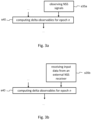
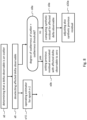
- Fig. 3a is a flowchart of a method in one embodiment of the invention, further comprising a step s35a of observing NSS signals. That is, in this embodiment, steps s10 to s60 (not all illustrated in Fig. 3a ) are carried out at least by an NSS receiver, and the NSS receiver also carries out step s35a of observing NSS signals.
- the ellipse, i.e. "!, illustrated in the upper part of Fig. 3a represents steps s10 to s30 and any other steps or operations that may be performed before step s40.
- the ellipse in the lower part of Fig. 3a represents steps s50 and s60 and any other steps or operations performed after step s40.
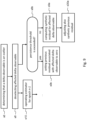
- Fig. 3b is a flowchart of a method in another embodiment of the invention, wherein an NSS receiver observes NSS signals (not illustrated in Fig. 3b ) and, then, in contrast to Fig. 3a , the NSS receiver transmits data representing the observed NSS signals, or information derived therefrom, to another processing entity or set of processing entities in charge of carrying out steps s10 to s60.
- the ellipse in the upper part of Fig. 3b represents steps s10 to s30 and any other steps or operations that may be performed before step s40
- the ellipse in the lower part of Fig. 3b represents steps s50 and s60 and any other steps or operations performed after step s40.
- the data representing the observed NSS signals, or information derived therefrom may for example be transmitted from the NSS receiver in the form of data packets, such as IP packets, through, for example, any one of, or a combination of, the Internet, a cellular network, and a suitable satellite link.
- data packets such as IP packets
- the data representing the observed NSS signals is transmitted in real-time, i.e. as soon as available (in line with the above-mentioned definition of the term "real-time").
- the data representing the observed NSS signals is transmitted as a data stream in that messages containing said data are transmitted at regular or irregular intervals through the same communication medium or channel.
- the data representing the observed NSS signals may be encoded and/or encrypted prior to transmission.
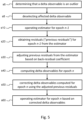
- Fig. 4 is a flowchart of a method in one embodiment of the invention, further comprising the following steps and/or operations s22 and s24, performed for each of at least some of the delta observables associated with the residuals, i.e. for each of the delta observables or for some of the delta observables.
- An estimated observation drift over a time period preceding the current epoch is determined s22.
- a value of the back-residual coefficient associated with the delta observable is determined s24 based on the estimated observation drift, wherein the larger the estimated observation drift, the smaller the back-residual coefficient.
- the estimated observation drift which is determined per delta observable, may be explained as follows.
- a computed delta observable contains unmodelled atmospheric and satellite clock errors. These errors are highly correlated in time so that they are small for each individual delta observable. However, due to their correlated nature, the error may accumulate if not properly handled.
- the estimated observation drift is the expected or estimated rate of change for the atmospheric and satellite clock errors.
- the "time period preceding the current epoch", i.e. the time period over which the estimated observation drift is determined in step s22, may be any suitable time period.
- the time period may be two- to five-second long, although the invention is not limited to these exemplary values and other time periods may be used.
- the determination of the estimated observation drift starts by initializing the estimated observation drift to zero and then residuals are analyzed for two to five seconds to produce an estimate for the drift.
- residuals for a given delta observable are averaged over some period of time (e.g. two to five seconds) and the estimated observation drift is determined based on the accumulated residual. For example, with 10-Hz processing, the residuals may be +1, -1, + 2, -1, + 1, -1, +2, -1, + 3, -3. Adding them up, we get +2, so the expected rate is determined to be about 2 per second or 0.2 per epoch.
- steps s22 and s24 are illustrated in Fig. 4 as being performed after steps s10 and s20, steps 22 and s24 may alternatively be performed prior to or in parallel to both or one of steps s10 and s20.
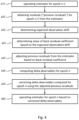
- Fig. 5 is a flowchart of a method in one embodiment of the invention, further comprising the following steps and/or operations: determining s6 that, for the previous epoch, one or more delta observable, hereinafter referred to as "affected delta observable", is or are an outlier (i.e., an NSS observation containing an unusually large error, for example, an error which exceeds three times the sigma value of the typical observations noise); and deselecting s8 the affected delta observable(s). Deselecting the affected delta observable(s) comprises, i.e. means, that the estimator is operated s10 for the previous epoch without taking the affected delta observable(s) into account.
- an outlier i.e., an NSS observation containing an unusually large error, for example, an error which exceeds three times the sigma value of the typical observations noise
- deselecting s8 the affected delta observable(s) comprises, i.e. means,
- the outlier detection process i.e. step s6, may be performed by means of various techniques, as a skilled person would appreciate. For example, a standard Chi-squared test may be used. Various other approaches are known as explained for example in reference [6], p. 10, lines 36-38. The outlier detection procedure described in reference [7] may also be used.
- the outlier detection process i.e. step s6, is performed independently at each epoch. This means that, in that embodiment, the identification of a delta observable as an outlier at one epoch (and hence its deselection in step s8) does not in itself have any impact on whether the delta observable may or may not be identified as an outlier at the next epoch.
- Deselecting outliers is advantageous in that it generally ensures the provision of a more accurate positioning solution.
- steps s6 and s8 are illustrated in Fig. 5 as being performed before step s10, steps s6 and s8 may be performed at each epoch (not illustrated in Fig. 5 ).
- Fig. 6 is a flowchart of a method in one embodiment of the invention, further comprising, in addition to the steps described with reference to Fig. 5 : computing s9a, for each of at least one affected delta observable, a previous residual, hereinafter referred to as "estimator-driven synthetic previous residual" (but also sometimes referred to simply as “synthetic residual” for the sake of conciseness), associated with the affected delta observable.
- the operation of, for each of at least some of the delta observables, adjusting s30 the previous residual associated with the delta observable comprises doing so also s30a for each estimator-driven synthetic previous residual.
- the residual R can be computed for measurements m that were processed by the estimator (e.g. a Kalman filter). However, the above computation may also be done for measurements that were not processed by the estimator.
- a so-called estimator-driven synthetic previous residual is computed based on the measurement at the previous epoch and the output from the estimator for the previous epoch but, for the observable corresponding to the estimator-driven synthetic previous residual, no measurement was inputted into the estimator for the previous epoch.
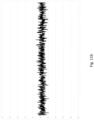
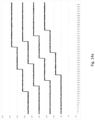
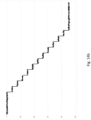
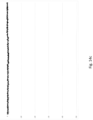
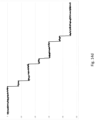
- Deselecting outliers generally ensures optimal accuracy for the state variables estimates. Thus, to ensure the most accurate delta-position estimates, some delta observables may be deselected. While ensuring better accuracy of the individual delta-position estimates, deselecting outliers changes the visible satellite constellation geometry and as a result may have a negative effect on a long-term divergence of the computed trajectory. Computing estimator-driven synthetic previous residuals generally mitigates the potential negative long-term effect of the deselection of a delta observable and yet maintains optimal per-epoch results, as will be apparent for a skilled person in view of the discussion below with reference to Figs. 11a to 16c .
- Fig. 14d shows the trajectory obtained by processing the data shown in Fig. 14a with the above-described techniques B, C, and E being combined, i.e. "OutlierDetection", “BackResid-1.0", and “SyntheticResiduals” being combined. It can be observed that the use of the "BackResid-1.0" technique together with “SyntheticResiduals” technique makes those outliers persistent, which may result in multiple outliers affecting the solution and may lead to a corruption of the trajectory estimation.
- the back-residual coefficient value was set to 1.0, i.e. technique C ("BackResid-1.0") was used.
- technique C BackResid-1.0
- selecting 1.0 as back-residual coefficient value may not always be optimal (as already discussed above).
- GNSS equipment such drifts may be caused by atmosphere change, satellite elevation change, or satellite clock. Let us assume that each of the above-referred four sensors are subject to drifting. For the sake of clarity, let us assume however that those drifts cancel out upon averaging solutions from the four sensors.
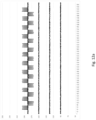
- Fig. 15a shows the measurements from the above-referred four sensors being subject to drifting.
- Fig. 15b shows the trajectory obtained by processing and combining the data from all four sensors shown in Fig. 15a with the above-described technique A, i.e. "DefaultMode". It can be observed that, as expected, a smooth trajectory is obtained as the introduced drifts from the four sensors cancel out.
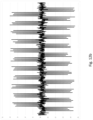
- Fig. 15c shows the trajectory obtained by processing the data shown in Fig. 15a with the above-described techniques B, C, E, and F being combined, i.e. "OutlierDetection”, “BackResid-1.0", “SyntheticResiduals”, and “OutliernessAndPersistenceCheck” being combined. It can be observed that, when using previous-residuals-based correction (as explained for example with reference to steps s20, s30, and s50 of Fig. 1 ) with drifting observables, these drifts may accumulate and may result in severe trajectory drifts.
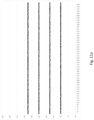
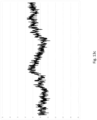
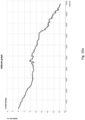
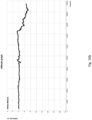
- the plots show the divergence of the trajectory computed with delta-phase and Doppler observables applying a method of processing delta-phase observables in one embodiment of the invention (labelled “New Method” in Fig. 16b ) when dynamically adjusting the back-residual coefficient values, and a method in accordance with a non-claimed reference implementation (labelled “Old version” in Fig. 16a ).
- Fig. 16c shows the estimated trajectory divergences of Figs. 16a and 16b superimposed to illustrate the improvement achieved using the method in accordance with an embodiment of the invention compared to the method in accordance with the non-claimed reference implementation.
- the method corresponding to Fig. 16b was carried out by a combination of estimating the observation drift and using adaptive (i.e., dynamically determined) back-residual coefficient values (as discussed for example with reference to steps s22 and s24 of Fig. 4 ), and performing outlierness and persistence checks and using estimator-driven synthetic previous residuals (as discussed for example with reference to steps s8c, s9a, and s30a of Fig. 10 ).
- a back-residual coefficient value 1.0 may be expected to generally provide optimal results for input data experiencing no divergence
- a skilled person will recognize from the above discussion that, if a drift is expected in the input data, applying smaller back-residual coefficient values may be more appropriate, or, alternatively, determining an optimal back-residual coefficient value dynamically based on the estimated magnitude of expected drifts may be even more appropriate.
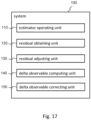
- Fig. 17 schematically illustrates a system 100 in one embodiment of the invention.
- System 100 comprises an NSS receiver and/or a processing entity capable of receiving data from the NSS receiver.
- the system operates to estimate parameters derived from NSS signals useful to, i.e. suitable to, determine a position.
- the NSS receiver is configured for observing at least one NSS signal from each of a plurality of NSS satellites over multiple epochs.
- System 100 comprises an estimator operating unit 110, a residual obtaining unit 120, a residual adjusting unit 130, a delta observable computing unit 140, and a delta observable correcting unit 150.
- Estimator operating unit 110 is configured for operating an estimation process, here referred to as "estimator", for a previous epoch (wherein the estimator uses state variables and computes the values of its state variables at least based on delta observables computed for the previous epoch).
- Residual obtaining unit 120 is configured for obtaining previous residuals from the estimator, each previous residual being associated with a delta observable computed for the previous epoch.
- Residual adjusting unit 130 is configured for, for each of at least some of the delta observables, adjusting the previous residual associated with the delta observable, wherein adjusting comprises multiplying the previous residual with a coefficient, here referred to as "back-residual coefficient".
- Delta observable computing unit 140 is configured for computing delta observables for a current epoch following the previous epoch, wherein computing the delta observables for the current epoch comprises differencing NSS observables at the current epoch and NSS observables at the previous epoch, and wherein the observed NSS observables comprise carrier phase observables and/or code observables.
- Delta observable correcting unit 150 is configured for, for each of at least some of the delta observables, correcting, using the adjusted previous residual associated with the delta observable, the delta observable computed for the current epoch.
- Estimator operating unit 110 is further configured for operating the estimator for the current epoch at least based on the corrected delta observables.
- a vehicle comprises a system 100 as described above.
- the vehicle may for example be an autonomous vehicle such as a self-driving vehicle, a driverless vehicle, a robotic vehicle, a highly automated vehicle, a partially automated vehicle, an aircraft, or an unmanned aerial vehicle.
- the vehicle may for example be a car, a truck, a bus, a motorcycle, a tractor, a combine harvester, a crop sprayer, a construction equipment, a grader, or a train.
- Exemplary applications may include machine guidance, construction work, operation of unmanned aerial vehicles (UAV), also known as drones, and operation of unmanned surface vehicles/vessels (USV).
- UAV unmanned aerial vehicles
- USV unmanned surface vehicles/vessels
- any of the above-described methods and their embodiments may be implemented, at least partially, by means of a computer program or a set of computer programs.
- the computer program(s) may be loaded on an apparatus, such as for example an NSS receiver (running on a rover station, on a reference station, or within a vehicle) or a server (which may comprise one or a plurality of computers). Therefore, the invention also relates, in some embodiments, to a computer program or set of computer programs, which, when carried out on an apparatus as described above, such as for example an NSS receiver (running on a rover station, on a reference station, or within a vehicle) or a server, carries out any one of the above-described methods and their embodiments.
- the invention also relates, in some embodiments, to a computer-readable medium or a computer-program product including the above-mentioned computer program.
- the computer-readable medium or computer-program product may for instance be a magnetic tape, an optical memory disk, a magnetic disk, a magnetooptical disk, an SSD, a CD ROM, a DVD, a CD, a flash memory unit, or the like, wherein the computer program is permanently or temporarily stored.
- a computer-readable medium (or to a computer-program product) has computer-executable instructions for carrying out any one of the methods of the invention.
- a computer program as claimed may be delivered to the field as a computer program product, for example through a firmware or software update to be installed on receivers already in the field. This applies to each of the above-described methods and apparatuses.
- NSS receivers may include one or more antennas, configured to receive the signals at the frequencies broadcasted by the satellites, processor units, one or a plurality of accurate clocks (such as crystal oscillators), one or a plurality of central processing units (CPU), one or a plurality of memory units (RAM, ROM, flash memory, or the like), and a display for displaying position information to a user.
- processor units one or a plurality of accurate clocks (such as crystal oscillators), one or a plurality of central processing units (CPU), one or a plurality of memory units (RAM, ROM, flash memory, or the like)
- CPU central processing units
- RAM random access memory
- ROM read only memory
- flash memory or the like
- the terms “estimator operating unit”, “residual obtaining unit”, “residual adjusting unit”, “delta observable computing unit”, “delta observable correcting unit”, and the like are used herein as units (or sub-units) of an apparatus (such as an NSS receiver), no restriction is made regarding how distributed the constituent parts of a unit (or sub-unit) may be. That is, the constituent parts of a unit (or sub-unit) may be distributed in different software or hardware components or devices for bringing about the intended function. Further, the units may be gathered together for performing their functions by means of a combined, single unit (or sub-unit).
- a unit may include a central processing unit (CPU), a storage unit, input/output (I/O) units, network connection devices, etc.
- CPU central processing unit
- I/O input/output
Landscapes
- Engineering & Computer Science (AREA)
- Radar, Positioning & Navigation (AREA)
- Remote Sensing (AREA)
- Computer Networks & Wireless Communication (AREA)
- Physics & Mathematics (AREA)
- General Physics & Mathematics (AREA)
- Computer Security & Cryptography (AREA)
- Position Fixing By Use Of Radio Waves (AREA)
Claims (19)
- Verfahren, das von mindestens einem von einem Navigationssatellitensystemempfänger, im Folgenden als "NSS-Empfänger" abgekürzt, und einer verarbeitenden Entität, die in der Lage ist, Daten von dem NSS-Empfänger zu empfangen, durchgeführt wird, um Parameter zu schätzen, die nützlich sind, um eine Position zu bestimmen, wobei der NSS-Empfänger mindestens ein NSS-Signal von jedem einer Vielzahl von NSS-Satelliten über mehrere Epochen beobachtet, wobei das Verfahren Folgendes umfasst:Betreiben (s10) eines Schätzungsprozesses, im Folgenden als "Schätzer" bezeichnet, für eine Epoche, im Folgenden als "vorherige Epoche" bezeichnet, wobei der Schätzer Zustandsvariablen verwendet und die Werte seiner Zustandsvariablen berechnet, mindestens basierend auf zeitdifferenzierten Observablen, im Folgenden als "Delta-Observablen" bezeichnet, berechnet für die vorherige Epoche, wobei die Delta-Observablen für die vorherige Epoche durch Differenzieren von NSS-Observablen, die von dem NSS-Empfänger in der vorherigen Epoche beobachtet wurden, und NSS-Observablen, die von dem NSS-Empfänger in einer der vorherigen Epoche vorangehenden Epoche beobachtet wurden, berechnet werden, und wobei die beobachteten NSS-Observablen mindestens eines aus Folgendem umfassen:Trägerphasenobservablen, undCodeobservablen;Erhalten (s20) von Residuen, im Folgenden als "vorherige Residuen" bezeichnet, von dem Schätzer, wobei jedes vorherige Residuum mit einer Delta-Observable assoziiert ist, die für die vorherige Epoche berechnet wurde;für jede von mindestens einigen der Delta-Observablen, Anpassen (s30) des mit der Delta-Observable assoziierten vorherigen Residuums, wobei das Anpassen das Multiplizieren des vorherigen Residuums mit einem Koeffizienten, im Folgenden als "Rückresidualkoeffizient" bezeichnet, umfasst;Berechnen (s40) von Delta-Observablen für eine andere Epoche, im Folgenden als "aktuelle Epoche" bezeichnet, wobei die aktuelle Epoche auf die vorherige Epoche folgt, wobei das Berechnen von Delta-Observablen für die aktuelle Epoche das Differenzieren von NSS-Observablen, die von dem NSS-Empfänger in der aktuellen Epoche beobachtet werden, und von NSS-Observablen, die von dem NSS-Empfänger in der vorherigen Epoche beobachtet wurden, umfasst, und wobei die beobachteten NSS-Observablen mindestens eines aus Folgendem umfassen:Trägerphasenobservablen, undCodeobservablen;für jede von mindestens einigen der Delta-Observablen, Korrigieren (s50), unter Verwendung des mit der Delta-Observable assoziierten angepassten vorherigen Residuums, wobei die Delta-Observable für die aktuelle Epoche berechnet wird, undBetreiben (s60) des Schätzers für die aktuelle Epoche mindestens basierend auf den korrigierten Delta-Observablen.
- Verfahren nach Anspruch 1, wobei der Rückresidualkoeffizient einen Wert aufweist, der größer als 0 und kleiner als oder gleich 1 ist, bevorzugt einen Wert umfasst, der zwischen 0,05 und 1 liegt, bevorzugter einen Wert umfasst, der zwischen 0,2 und 0,8 liegt, noch bevorzugter einen Wert umfasst, der zwischen 0,35 und 0,65 liegt.
- Verfahren nach Anspruch 1, weiter umfassend für jede von mindestens einigen der mit den Residuen assoziierten Delta-Observablen:Bestimmen (s22) einer geschätzten Beobachtungsdrift über einen Zeitraum, welcher der aktuellen Epoche vorausgeht, wobei die geschätzte Beobachtungsdrift pro Delta-Observable bestimmt wird; undBestimmen (s24) eines Wertes des mit der Delta-Observable assoziierten Rückresidualkoeffizienten basierend auf der geschätzten Beobachtungsdrift, wobei der Rückresidualkoeffizient umso kleiner ist, je größer die geschätzte Beobachtungsdrift ist.
- Verfahren nach einem der vorstehenden Ansprüche, weiter umfassend:Bestimmen (s6), dass für die vorherige Epoche mindestens eine Delta-Observable, im Folgenden als "betroffene Delta-Observable" bezeichnet, ein Ausreißer ist; undDeselektieren (s8) der mindestens einen betroffenen Delta-Observable, wobei das Deselektieren der mindestens einen betroffenen Delta-Observable das Betreiben (s10) des Schätzers für die vorherige Epoche ohne Berücksichtigung der mindestens einen betroffenen Delta-Observable umfasst.
- Verfahren nach Anspruch 4, weiter umfassend:Berechnen (s9a) eines vorherigen Residuums, im Folgenden als "schätzergesteuertes synthetisches vorheriges Residuum" bezeichnet, das mit der betroffenen Delta-Observable assoziiert ist, für jede der mindestens einen betroffenen Delta-Observable;wobei der Vorgang des, für jede von mindestens einigen der Delta-Observablen, Anpassens (s30) des mit der Delta-Observable assoziierten vorherigen Residuums dies zu tun auch (s30a) für jedes schätzergesteuerte synthetische vorherige Residuum umfasst.
- Verfahren nach Anspruch 4, weiter umfassend:
Einstellen (s9b), für jede der mindestens einen betroffenen Delta-Observablen, eines mit der betroffenen Delta-Observablen assoziierten vorherigen Residuums auf Null. - Verfahren nach Anspruch 4, weiter umfassend für jede der mindestens einer betroffenen Delta-Observable:Bestimmen (s8a), ob ein Ausreißergrad des Ausreißers, als welcher die betroffene Delta-Observable bestimmt wurde, einen Schwellenwert überschreitet, im Folgenden als "Ausreißerschwellenwert" bezeichnet; undfalls ja, Einstellen (s9b) eines vorherigen Residuums, das mit der betroffenen Delta-Observable assoziiert ist, auf Null, undandernfalls:Berechnen (s9a) eines vorherigen Residuums, im Folgenden als "schätzergesteuertes synthetisches vorheriges Residuum" bezeichnet, das mit der betroffenen Delta-Observable assoziiert ist;wobei der Vorgang des, für jede von mindestens einigen der Delta-Observablen, Anpassens (s30) des mit der Delta-Observable assoziierten vorherigen Residuums dies zu tun auch (s30a) für das schätzergesteuerte synthetische vorherige Residuum umfasst.
- Verfahren nach Anspruch 4, weiter umfassend für jede der mindestens einer betroffenen Delta-Observablen:Bestimmen (s8b), ob eine Dauer oder eine Anzahl von Epochen, während derer die betroffene Delta-Observable ein Ausreißer war, einen Schwellenwert überschreitet, im Folgenden als "Persistenzschwelle" bezeichnet; undfalls ja, Einstellen (s9b) eines vorherigen Residuums, das mit der betroffenen Delta-Observable assoziiert ist, auf Null, undandernfalls:Berechnen (s9a) eines vorherigen Residuums, im Folgenden als "schätzergesteuertes synthetisches vorheriges Residuum" bezeichnet, das mit der betroffenen Delta-Observable assoziiert ist;wobei der Vorgang des, für jede von mindestens einigen der Delta-Observablen, Anpassens (s30) des mit der Delta-Observable assoziierten vorherigen Residuums dies zu tun auch (s30a) für das schätzergesteuerte synthetische vorherige Residuum umfasst.
- Verfahren nach Anspruch 4, weiter umfassend für jede der mindestens einer betroffenen Delta-Observable:Bestimmen (s8c), ob ein Ausreißergrad des Ausreißers, als welcher die betroffene Delta-Observable bestimmt wurde, einen Schwellenwert überschreitet, im Folgenden als "Ausreißerschwellenwert" bezeichnet, oder ob eine Dauer oder eine Anzahl von Epochen, während derer die betroffene Delta-Observable ein Ausreißer war, einen Schwellenwert überschreitet, im Folgenden als "Persistenzschwellenwert" bezeichnet; undfalls ja, Einstellen (s9b) eines vorherigen Residuums, das mit der betroffenen Delta-Observable assoziiert ist, auf Null, undandernfalls:Berechnen (s9a) eines vorherigen Residuums, im Folgenden als "schätzergesteuertes synthetisches vorheriges Residuum" bezeichnet, das mit der betroffenen Delta-Observable assoziiert ist;wobei der Vorgang des, für jede von mindestens einigen der Delta-Observablen, Anpassens (s30) des mit der Delta-Observable assoziierten vorherigen Residuums dies zu tun auch (s30a) für das schätzergesteuerte synthetische vorherige Residuum umfasst.
- Verfahren nach Anspruch 7 oder 9, wobei der Ausreißerschwellenwert einen Wert aufweist, der abhängig ist von mindestens einem der Folgenden:dem Typ der Delta-Observable; undeinem erwarteten Rauschniveau der Delta-Observable.
- Verfahren nach Anspruch 7 oder 9, wobei mindestens eines des Folgenden zutrifft:der auf eine Delta-Trägerphasenobservable anwendbare Ausreißerschwellenwert weist einen Wert auf, der zwischen 0,1 und 1 Zyklus liegt, bevorzugt einen Wert, der zwischen 0,1 und 0,5 Zyklen liegt; undder Ausreißerchwellenwert, der auf eine Delta-Codeobservable anwendbar ist, weist einen Wert auf, der zwischen 0,1 und 10 Metern liegt.
- Verfahren nach Anspruch 8 oder 9, wobei der Persistenzschwellenwert einen Wert aufweist, der abhängig ist von mindestens einem der Folgenden:dem Typ der Delta-Observable; undeinem erwarteten Rauschniveau der Delta-Observable.
- Verfahren nach Anspruch 8 oder 9, wobei der Persistenzschwellenwert eines aus Folgendem aufweisteinem Wert, der zwischen 2 und 10 Epochen liegt, bevorzugt einem Wert, der zwischen 2 und 5 Epochen liegt; undeinem Wert, der zwischen 0,1 und 5 Sekunden liegt, bevorzugt einen Wert, der zwischen 0,2 und 1 Sekunde für eine Delta-Trägerphasenobservable liegt, und bevorzugt einen Wert, der zwischen 0,1 und 5 Sekunden für eine Delta-Codeobservable liegt.
- Verfahren nach einem der vorstehenden Ansprüche, wobei der Schätzer mindestens eines aus einem Kalman-Filter, mindestens einen Schätzer der kleinsten mittleren Quadrate und einen robusten Schätzer umfasst.
- Verfahren nach einem der vorstehenden Ansprüche, wobei das Erhalten (s20) der vorherigen Residuen aus dem Schätzer das Erhalten (s20) von Post-Fit-Residuen umfasst, wobei jedes Post-Fit-Residuum mit einer Delta-Observable assoziiert ist, die für die vorherige Epoche berechnet wurde.
- System (100), umfassend mindestens einen Navigationssatellitensystemempfänger, im Folgenden als "NSS-Empfänger" abgekürzt, und eine verarbeitende Entität, die in der Lage ist, Daten von dem NSS-Empfänger zu empfangen, wobei das System zum Schätzen von Parametern dient, die zum Bestimmen einer Position nützlich sind, wobei der NSS-Empfänger konfiguriert ist, um mindestens ein NSS-Signal von jedem aus einer Vielzahl von NSS-Satelliten über mehrere Epochen zu beobachten, und wobei das System konfiguriert ist zum:Betreiben eines Schätzungsprozesses, im Folgenden als "Schätzer" bezeichnet, für eine Epoche, im Folgenden als "vorherige Epoche" bezeichnet, wobei der Schätzer Zustandsvariablen verwendet und die Werte seiner Zustandsvariablen mindestens basierend auf zeitdifferenzierten Observablen, im Folgenden als "Delta-Observablen" bezeichnet, berechnet für die vorherige Epoche, berechnet, wobei die Delta-Observablen für die vorherige Epoche durch Differenzieren von NSS-Observablen, die von dem NSS-Empfänger in der vorherigen Epoche beobachtet wurden, und NSS-Observablen, die von dem NSS-Empfänger in einer der vorherigen Epoche vorangehenden Epoche beobachtet wurden, berechnet werden, und wobei die beobachteten NSS-Observablen mindestens eines aus Folgendem umfassen:Trägerphasenobservablen, undCodeobservablen;Erhalten von Residuen, im Folgenden als "vorherige Residuen" bezeichnet, von dem Schätzer, wobei jedes vorherige Residuum mit einer Delta-Observable assoziiert ist, die für die vorherige Epoche berechnet wurde;für jede von mindestens einigen der Delta-Observablen, Anpassen des mit der Delta-Observable assoziierten vorherigen Residuums, wobei das Anpassen das Multiplizieren des vorherigen Residuums mit einem Koeffizienten, im Folgenden als "Rückresidualkoeffizient" bezeichnet, umfasst;Berechnen von Delta-Observablen für eine andere Epoche, im Folgenden als "aktuelle Epoche" bezeichnet, wobei die aktuelle Epoche auf die vorherigen Epoche folgt, wobei das Berechnen der Delta-Observablen für die aktuelle Epoche das Differenzieren von NSS-Observablen, die von dem NSS-Empfänger in der aktuellen Epoche beobachtet werden, und von NSS-Observablen, die von dem NSS-Empfänger in der vorherigen Epoche beobachtet werden, umfasst, und wobei die beobachteten NSS-Observablen mindestens eines aus Folgendem umfassen:Trägerphasenobservablen, undCodeobservablen;für jede von mindestens einigen der Delta-Observablen, Korrigieren, unter Verwendung des mit der Delta-Observable assoziierten angepassten vorherigen Residuums, wobei die Delta-Observable für die aktuelle Epoche berechnet wird; undBetreiben des Schätzers für die aktuelle Epoche mindestens basierend auf den korrigierten Delta-Observablen.
- Fahrzeug, das ein System nach Anspruch 16 umfasst, wobei das Fahrzeug bevorzugt mindestens eines der Folgenden ist: ein Kraftfahrzeug, ein landwirtschaftlicher Traktor, ein Mähdrescher, eine Feldspritze, eine Baumaschine, ein Lastwagen, ein Bus, ein Zug, ein Motorrad, ein autonomes Fahrzeug, ein selbstfahrendes Fahrzeug, ein fahrerloses Fahrzeug, ein Roboterfahrzeug, ein hochautomatisiertes Fahrzeug, ein Flugzeug und ein unbemanntes Luftfahrzeug.
- Computerprogramm oder Satz von Computerprogrammen, die computerlesbare Anweisungen umfassen, die konfiguriert sind, wenn sie auf einem Computer oder einem Satz von Computern ausgeführt werden, um den Computer oder den Satz von Computern zu veranlassen, das Verfahren nach einem der Ansprüche 1 bis 15 auszuführen.
- Computerprogrammprodukt oder Speichermedien, die ein Computerprogramm oder einen Satz von Computerprogrammen nach Anspruch 18 umfassen.
Applications Claiming Priority (1)
| Application Number | Priority Date | Filing Date | Title |
|---|---|---|---|
| RU2021134906 | 2021-11-29 |
Publications (2)
| Publication Number | Publication Date |
|---|---|
| EP4187285A1 EP4187285A1 (de) | 2023-05-31 |
| EP4187285B1 true EP4187285B1 (de) | 2024-12-25 |
Family
ID=82492756
Family Applications (1)
| Application Number | Title | Priority Date | Filing Date |
|---|---|---|---|
| EP22181847.9A Active EP4187285B1 (de) | 2021-11-29 | 2022-06-29 | Verfahren und systeme zum verarbeiten von zeitdifferenzierten beobachtungsdaten von navigationssatellitensystemen |
Country Status (2)
| Country | Link |
|---|---|
| US (2) | US12174304B2 (de) |
| EP (1) | EP4187285B1 (de) |
Families Citing this family (1)
| Publication number | Priority date | Publication date | Assignee | Title |
|---|---|---|---|---|
| EP4187285B1 (de) * | 2021-11-29 | 2024-12-25 | Trimble Inc. | Verfahren und systeme zum verarbeiten von zeitdifferenzierten beobachtungsdaten von navigationssatellitensystemen |
Family Cites Families (16)
| Publication number | Priority date | Publication date | Assignee | Title |
|---|---|---|---|---|
| US6397147B1 (en) * | 2000-06-06 | 2002-05-28 | Csi Wireless Inc. | Relative GPS positioning using a single GPS receiver with internally generated differential correction terms |
| US6664923B1 (en) * | 2002-09-24 | 2003-12-16 | Novatel, Inc. | Position and velocity Kalman filter for use with global navigation satelite system receivers |
| US7522099B2 (en) * | 2005-09-08 | 2009-04-21 | Topcon Gps, Llc | Position determination using carrier phase measurements of satellite signals |
| US9651667B2 (en) * | 2007-06-22 | 2017-05-16 | Trimble Inc. | Combined cycle slip indicators for regionally augmented GNSS |
| DE112010000674B4 (de) * | 2009-02-22 | 2024-03-07 | Trimble Navigation Limited | Verfahren und Vorrichtung zur GNSS-Vermessung |
| EP2502091B1 (de) * | 2009-11-17 | 2014-01-01 | Topcon Positioning Systems, Inc. | Nachweis und korrektur von anomalen messungen und mehrdeutigkeitsauflösung bei einem empfänger eines globalen navigationssatellitensystems |
| EP3206050B1 (de) | 2011-03-22 | 2025-01-08 | Trimble Inc. | Gnss-signal-verarbeitung mit deltaphase |
| AU2014388688A1 (en) * | 2014-03-28 | 2016-11-03 | Mitsubishi Electric Corporation | Positioning device and positioning method |
| US10393879B2 (en) * | 2014-03-28 | 2019-08-27 | Mitsubishi Electric Corporation | Global positioning device |
| EP3035080B1 (de) | 2014-12-16 | 2022-08-31 | Trimble Inc. | Satellitennavigationssystem mit Positionierung mit Erzeugung von Korrektur-Informationen |
| EP3130943B1 (de) | 2015-08-14 | 2022-03-09 | Trimble Inc. | Satellitennavigationssystempositionierung einschliesslich der erzeugung von troposphären- korrekturinformationen |
| EP3336584B1 (de) | 2016-12-19 | 2020-11-04 | Trimble Inc. | Ausreissertolerantes navigationssatellitensystempositionierungsverfahren und -system |
| EP3627188B1 (de) * | 2018-09-21 | 2026-03-25 | Trimble Inc. | Korrekturinformationintegritätsüberwachung in positionierungsverfahren, -systemen und -vorrichtungen eines navigationssatellitensystems |
| JP7272910B2 (ja) * | 2019-09-03 | 2023-05-12 | 株式会社ゼンリンデータコム | 車載装置、状態推定方法及びプログラム |
| CN112444837B (zh) * | 2020-10-22 | 2024-05-31 | 北京航空航天大学 | 一种估计单差模糊度的rtk定位方法 |
| EP4187285B1 (de) * | 2021-11-29 | 2024-12-25 | Trimble Inc. | Verfahren und systeme zum verarbeiten von zeitdifferenzierten beobachtungsdaten von navigationssatellitensystemen |
-
2022
- 2022-06-29 EP EP22181847.9A patent/EP4187285B1/de active Active
- 2022-07-15 US US17/866,176 patent/US12174304B2/en active Active
-
2024
- 2024-10-03 US US18/906,019 patent/US20250035795A1/en active Pending
Also Published As
| Publication number | Publication date |
|---|---|
| US20230168388A1 (en) | 2023-06-01 |
| US12174304B2 (en) | 2024-12-24 |
| US20250035795A1 (en) | 2025-01-30 |
| EP4187285A1 (de) | 2023-05-31 |
Similar Documents
| Publication | Publication Date | Title |
|---|---|---|
| US10895646B2 (en) | Outlier-tolerant navigation satellite system positioning method and system | |
| EP3293549B1 (de) | Erweitertes navigationssatellitensystem-positionierungsverfahren und system mit verzögerten genauen informationen | |
| RU2363013C2 (ru) | Способ объединенного использования локальной системы кррв (кинематического режима в реальном времени) и региональной, широкозонной или глобальной системы позиционирования по фазе несущей | |
| EP1762824B1 (de) | Positionsbestimmung mittels Messung der Trägerphase von Satellitensignalen | |
| EP3502747B1 (de) | Erweitertes navigationssatellitensystem-positionierungsverfahren und system mit seeding-informationen | |
| US12123956B2 (en) | Methods and systems for handling outliers when using navigation satellite system observations | |
| JP2014153087A (ja) | Gnss測位装置およびgnss測位方法 | |
| US20240393469A1 (en) | Ionospheric disturbance mitigation methods and systems | |
| JP2016128837A (ja) | Gnss測位装置およびgnss測位方法 | |
| US20230113888A1 (en) | Methods and systems for estimating an expected accuracy using navigation satellite system observations | |
| JP6414279B2 (ja) | Gnss測位装置 | |
| US20250035795A1 (en) | Methods and systems for processing time-differenced navigation satellite system observables | |
| EP4468038A1 (de) | Verfahren und systeme zur erzeugung von informationen über ionosphärische störungen | |
| CN105425248A (zh) | 单频gnss相位稳定性监测的高频逐历元相位差方法 | |
| US20240168174A1 (en) | Methods and systems for forming time-differenced navigation satellite system observables | |
| US20240183996A1 (en) | Synthetic carrier phase observable generating methods and systems for use in forming time-differenced navigation satellite system observables | |
| JP4108738B2 (ja) | 測位装置 | |
| US9733360B2 (en) | Joint processing of GNSS pseudorange signals | |
| US10877159B2 (en) | Method and system for satellite signal processing | |
| EP4556957A1 (de) | Verfahren, systeme und computerprogramme zur schätzung einer position und zur erzeugung mindestens eines damit assoziierten schutzniveaus | |
| Shah et al. | The feasibility of observing user-segment faults in the residuals of a consensus-based multi-GNSS solution | |
| EP4692856A1 (de) | Verfahren und systeme zur positionsbestimmung unter berücksichtigung von mehrweg | |
| Zhang et al. | Exploration of Temporal Correlations of Gauss-Markov Processes in Orbit and Clock Errors of BDS-3 Satellites | |
| Yang | High Accuracy Positioning |
Legal Events
| Date | Code | Title | Description |
|---|---|---|---|
| PUAI | Public reference made under article 153(3) epc to a published international application that has entered the european phase |
Free format text: ORIGINAL CODE: 0009012 |
|
| STAA | Information on the status of an ep patent application or granted ep patent |
Free format text: STATUS: THE APPLICATION HAS BEEN PUBLISHED |
|
| AK | Designated contracting states |
Kind code of ref document: A1 Designated state(s): AL AT BE BG CH CY CZ DE DK EE ES FI FR GB GR HR HU IE IS IT LI LT LU LV MC MK MT NL NO PL PT RO RS SE SI SK SM TR |
|
| STAA | Information on the status of an ep patent application or granted ep patent |
Free format text: STATUS: REQUEST FOR EXAMINATION WAS MADE |
|
| 17P | Request for examination filed |
Effective date: 20230607 |
|
| RBV | Designated contracting states (corrected) |
Designated state(s): AL AT BE BG CH CY CZ DE DK EE ES FI FR GB GR HR HU IE IS IT LI LT LU LV MC MK MT NL NO PL PT RO RS SE SI SK SM TR |
|
| GRAP | Despatch of communication of intention to grant a patent |
Free format text: ORIGINAL CODE: EPIDOSNIGR1 |
|
| STAA | Information on the status of an ep patent application or granted ep patent |
Free format text: STATUS: GRANT OF PATENT IS INTENDED |
|
| INTG | Intention to grant announced |
Effective date: 20240906 |
|
| GRAS | Grant fee paid |
Free format text: ORIGINAL CODE: EPIDOSNIGR3 |
|
| GRAA | (expected) grant |
Free format text: ORIGINAL CODE: 0009210 |
|
| STAA | Information on the status of an ep patent application or granted ep patent |
Free format text: STATUS: THE PATENT HAS BEEN GRANTED |
|
| AK | Designated contracting states |
Kind code of ref document: B1 Designated state(s): AL AT BE BG CH CY CZ DE DK EE ES FI FR GB GR HR HU IE IS IT LI LT LU LV MC MK MT NL NO PL PT RO RS SE SI SK SM TR |
|
| RAP3 | Party data changed (applicant data changed or rights of an application transferred) |
Owner name: TRIMBLE INC. |
|
| REG | Reference to a national code |
Ref country code: GB Ref legal event code: FG4D |
|
| REG | Reference to a national code |
Ref country code: CH Ref legal event code: EP |
|
| REG | Reference to a national code |
Ref country code: DE Ref legal event code: R096 Ref document number: 602022009017 Country of ref document: DE |
|
| REG | Reference to a national code |
Ref country code: IE Ref legal event code: FG4D |
|
| REG | Reference to a national code |
Ref country code: LT Ref legal event code: MG9D |
|
| PG25 | Lapsed in a contracting state [announced via postgrant information from national office to epo] |
Ref country code: HR Free format text: LAPSE BECAUSE OF FAILURE TO SUBMIT A TRANSLATION OF THE DESCRIPTION OR TO PAY THE FEE WITHIN THE PRESCRIBED TIME-LIMIT Effective date: 20241225 |
|
| PG25 | Lapsed in a contracting state [announced via postgrant information from national office to epo] |
Ref country code: FI Free format text: LAPSE BECAUSE OF FAILURE TO SUBMIT A TRANSLATION OF THE DESCRIPTION OR TO PAY THE FEE WITHIN THE PRESCRIBED TIME-LIMIT Effective date: 20241225 |
|
| PG25 | Lapsed in a contracting state [announced via postgrant information from national office to epo] |
Ref country code: BG Free format text: LAPSE BECAUSE OF FAILURE TO SUBMIT A TRANSLATION OF THE DESCRIPTION OR TO PAY THE FEE WITHIN THE PRESCRIBED TIME-LIMIT Effective date: 20241225 |
|
| PG25 | Lapsed in a contracting state [announced via postgrant information from national office to epo] |
Ref country code: NO Free format text: LAPSE BECAUSE OF FAILURE TO SUBMIT A TRANSLATION OF THE DESCRIPTION OR TO PAY THE FEE WITHIN THE PRESCRIBED TIME-LIMIT Effective date: 20250325 |
|
| PG25 | Lapsed in a contracting state [announced via postgrant information from national office to epo] |
Ref country code: LV Free format text: LAPSE BECAUSE OF FAILURE TO SUBMIT A TRANSLATION OF THE DESCRIPTION OR TO PAY THE FEE WITHIN THE PRESCRIBED TIME-LIMIT Effective date: 20241225 Ref country code: GR Free format text: LAPSE BECAUSE OF FAILURE TO SUBMIT A TRANSLATION OF THE DESCRIPTION OR TO PAY THE FEE WITHIN THE PRESCRIBED TIME-LIMIT Effective date: 20250326 |
|
| PG25 | Lapsed in a contracting state [announced via postgrant information from national office to epo] |
Ref country code: RS Free format text: LAPSE BECAUSE OF FAILURE TO SUBMIT A TRANSLATION OF THE DESCRIPTION OR TO PAY THE FEE WITHIN THE PRESCRIBED TIME-LIMIT Effective date: 20250325 |
|
| REG | Reference to a national code |
Ref country code: NL Ref legal event code: MP Effective date: 20241225 |
|
| PG25 | Lapsed in a contracting state [announced via postgrant information from national office to epo] |
Ref country code: NL Free format text: LAPSE BECAUSE OF FAILURE TO SUBMIT A TRANSLATION OF THE DESCRIPTION OR TO PAY THE FEE WITHIN THE PRESCRIBED TIME-LIMIT Effective date: 20241225 |
|
| REG | Reference to a national code |
Ref country code: AT Ref legal event code: MK05 Ref document number: 1754629 Country of ref document: AT Kind code of ref document: T Effective date: 20241225 |
|
| PG25 | Lapsed in a contracting state [announced via postgrant information from national office to epo] |
Ref country code: SM Free format text: LAPSE BECAUSE OF FAILURE TO SUBMIT A TRANSLATION OF THE DESCRIPTION OR TO PAY THE FEE WITHIN THE PRESCRIBED TIME-LIMIT Effective date: 20241225 |
|
| PG25 | Lapsed in a contracting state [announced via postgrant information from national office to epo] |
Ref country code: PL Free format text: LAPSE BECAUSE OF FAILURE TO SUBMIT A TRANSLATION OF THE DESCRIPTION OR TO PAY THE FEE WITHIN THE PRESCRIBED TIME-LIMIT Effective date: 20241225 |
|
| PG25 | Lapsed in a contracting state [announced via postgrant information from national office to epo] |
Ref country code: ES Free format text: LAPSE BECAUSE OF FAILURE TO SUBMIT A TRANSLATION OF THE DESCRIPTION OR TO PAY THE FEE WITHIN THE PRESCRIBED TIME-LIMIT Effective date: 20241225 |
|
| PG25 | Lapsed in a contracting state [announced via postgrant information from national office to epo] |
Ref country code: IS Free format text: LAPSE BECAUSE OF FAILURE TO SUBMIT A TRANSLATION OF THE DESCRIPTION OR TO PAY THE FEE WITHIN THE PRESCRIBED TIME-LIMIT Effective date: 20250425 |
|
| PG25 | Lapsed in a contracting state [announced via postgrant information from national office to epo] |
Ref country code: PT Free format text: LAPSE BECAUSE OF FAILURE TO SUBMIT A TRANSLATION OF THE DESCRIPTION OR TO PAY THE FEE WITHIN THE PRESCRIBED TIME-LIMIT Effective date: 20250428 |
|
| PG25 | Lapsed in a contracting state [announced via postgrant information from national office to epo] |
Ref country code: EE Free format text: LAPSE BECAUSE OF FAILURE TO SUBMIT A TRANSLATION OF THE DESCRIPTION OR TO PAY THE FEE WITHIN THE PRESCRIBED TIME-LIMIT Effective date: 20241225 |
|
| PG25 | Lapsed in a contracting state [announced via postgrant information from national office to epo] |
Ref country code: AT Free format text: LAPSE BECAUSE OF FAILURE TO SUBMIT A TRANSLATION OF THE DESCRIPTION OR TO PAY THE FEE WITHIN THE PRESCRIBED TIME-LIMIT Effective date: 20241225 Ref country code: RO Free format text: LAPSE BECAUSE OF FAILURE TO SUBMIT A TRANSLATION OF THE DESCRIPTION OR TO PAY THE FEE WITHIN THE PRESCRIBED TIME-LIMIT Effective date: 20241225 |
|
| PG25 | Lapsed in a contracting state [announced via postgrant information from national office to epo] |
Ref country code: SK Free format text: LAPSE BECAUSE OF FAILURE TO SUBMIT A TRANSLATION OF THE DESCRIPTION OR TO PAY THE FEE WITHIN THE PRESCRIBED TIME-LIMIT Effective date: 20241225 |
|
| PG25 | Lapsed in a contracting state [announced via postgrant information from national office to epo] |
Ref country code: CZ Free format text: LAPSE BECAUSE OF FAILURE TO SUBMIT A TRANSLATION OF THE DESCRIPTION OR TO PAY THE FEE WITHIN THE PRESCRIBED TIME-LIMIT Effective date: 20241225 |
|
| PG25 | Lapsed in a contracting state [announced via postgrant information from national office to epo] |
Ref country code: IT Free format text: LAPSE BECAUSE OF FAILURE TO SUBMIT A TRANSLATION OF THE DESCRIPTION OR TO PAY THE FEE WITHIN THE PRESCRIBED TIME-LIMIT Effective date: 20241225 |
|
| PG25 | Lapsed in a contracting state [announced via postgrant information from national office to epo] |
Ref country code: SE Free format text: LAPSE BECAUSE OF FAILURE TO SUBMIT A TRANSLATION OF THE DESCRIPTION OR TO PAY THE FEE WITHIN THE PRESCRIBED TIME-LIMIT Effective date: 20241225 |
|
| REG | Reference to a national code |
Ref country code: DE Ref legal event code: R097 Ref document number: 602022009017 Country of ref document: DE |
|
| PG25 | Lapsed in a contracting state [announced via postgrant information from national office to epo] |
Ref country code: DK Free format text: LAPSE BECAUSE OF FAILURE TO SUBMIT A TRANSLATION OF THE DESCRIPTION OR TO PAY THE FEE WITHIN THE PRESCRIBED TIME-LIMIT Effective date: 20241225 |
|
| PLBE | No opposition filed within time limit |
Free format text: ORIGINAL CODE: 0009261 |
|
| STAA | Information on the status of an ep patent application or granted ep patent |
Free format text: STATUS: NO OPPOSITION FILED WITHIN TIME LIMIT |
|
| REG | Reference to a national code |
Ref country code: CH Ref legal event code: L10 Free format text: ST27 STATUS EVENT CODE: U-0-0-L10-L00 (AS PROVIDED BY THE NATIONAL OFFICE) Effective date: 20251105 |
|
| 26N | No opposition filed |
Effective date: 20250926 |
|
| REG | Reference to a national code |
Ref country code: CH Ref legal event code: H13 Free format text: ST27 STATUS EVENT CODE: U-0-0-H10-H13 (AS PROVIDED BY THE NATIONAL OFFICE) Effective date: 20260127 |
|
| PG25 | Lapsed in a contracting state [announced via postgrant information from national office to epo] |
Ref country code: MC Free format text: LAPSE BECAUSE OF FAILURE TO SUBMIT A TRANSLATION OF THE DESCRIPTION OR TO PAY THE FEE WITHIN THE PRESCRIBED TIME-LIMIT Effective date: 20241225 |
|
| PG25 | Lapsed in a contracting state [announced via postgrant information from national office to epo] |
Ref country code: LU Free format text: LAPSE BECAUSE OF NON-PAYMENT OF DUE FEES Effective date: 20250629 |
|
| REG | Reference to a national code |
Ref country code: BE Ref legal event code: MM Effective date: 20250630 |
|
| PG25 | Lapsed in a contracting state [announced via postgrant information from national office to epo] |
Ref country code: IE Free format text: LAPSE BECAUSE OF NON-PAYMENT OF DUE FEES Effective date: 20250629 |
|
| PG25 | Lapsed in a contracting state [announced via postgrant information from national office to epo] |
Ref country code: BE Free format text: LAPSE BECAUSE OF NON-PAYMENT OF DUE FEES Effective date: 20250630 |
|
| PG25 | Lapsed in a contracting state [announced via postgrant information from national office to epo] |
Ref country code: CH Free format text: LAPSE BECAUSE OF NON-PAYMENT OF DUE FEES Effective date: 20250630 |
|
| PG25 | Lapsed in a contracting state [announced via postgrant information from national office to epo] |
Ref country code: LT Free format text: LAPSE BECAUSE OF FAILURE TO SUBMIT A TRANSLATION OF THE DESCRIPTION OR TO PAY THE FEE WITHIN THE PRESCRIBED TIME-LIMIT Effective date: 20241225 |
|
| PGFP | Annual fee paid to national office [announced via postgrant information from national office to epo] |
Ref country code: GB Payment date: 20260622 Year of fee payment: 5 |
|
| PGFP | Annual fee paid to national office [announced via postgrant information from national office to epo] |
Ref country code: DE Payment date: 20260623 Year of fee payment: 5 |
|
| PGFP | Annual fee paid to national office [announced via postgrant information from national office to epo] |
Ref country code: FR Payment date: 20260622 Year of fee payment: 5 |
|
| PG25 | Lapsed in a contracting state [announced via postgrant information from national office to epo] |
Ref country code: CY Free format text: LAPSE BECAUSE OF FAILURE TO SUBMIT A TRANSLATION OF THE DESCRIPTION OR TO PAY THE FEE WITHIN THE PRESCRIBED TIME-LIMIT Effective date: 20241225 |