EP4170630A1 - Sensorsystem und verfahren zur unterstützten lebensmittelzubereitung - Google Patents
Sensorsystem und verfahren zur unterstützten lebensmittelzubereitung Download PDFInfo
- Publication number
- EP4170630A1 EP4170630A1 EP22202871.4A EP22202871A EP4170630A1 EP 4170630 A1 EP4170630 A1 EP 4170630A1 EP 22202871 A EP22202871 A EP 22202871A EP 4170630 A1 EP4170630 A1 EP 4170630A1
- Authority
- EP
- European Patent Office
- Prior art keywords
- motion
- recipe
- food preparation
- controller
- response
- Prior art date
- Legal status (The legal status is an assumption and is not a legal conclusion. Google has not performed a legal analysis and makes no representation as to the accuracy of the status listed.)
- Granted
Links
Images



Classifications
-
- G—PHYSICS
- G09—EDUCATION; CRYPTOGRAPHY; DISPLAY; ADVERTISING; SEALS
- G09B—EDUCATIONAL OR DEMONSTRATION APPLIANCES; APPLIANCES FOR TEACHING, OR COMMUNICATING WITH, THE BLIND, DEAF OR MUTE; MODELS; PLANETARIA; GLOBES; MAPS; DIAGRAMS
- G09B19/00—Teaching not covered by other main groups of this subclass
- G09B19/0092—Nutrition
-
- G—PHYSICS
- G01—MEASURING; TESTING
- G01P—MEASURING LINEAR OR ANGULAR SPEED, ACCELERATION, DECELERATION, OR SHOCK; INDICATING PRESENCE, ABSENCE, OR DIRECTION, OF MOVEMENT
- G01P15/00—Measuring acceleration; Measuring deceleration; Measuring shock, i.e. sudden change of acceleration
- G01P15/02—Measuring acceleration; Measuring deceleration; Measuring shock, i.e. sudden change of acceleration by making use of inertia forces using solid seismic masses
- G01P15/08—Measuring acceleration; Measuring deceleration; Measuring shock, i.e. sudden change of acceleration by making use of inertia forces using solid seismic masses with conversion into electric or magnetic values
- G01P15/0891—Measuring acceleration; Measuring deceleration; Measuring shock, i.e. sudden change of acceleration by making use of inertia forces using solid seismic masses with conversion into electric or magnetic values with indication of predetermined acceleration values
-
- G—PHYSICS
- G09—EDUCATION; CRYPTOGRAPHY; DISPLAY; ADVERTISING; SEALS
- G09B—EDUCATIONAL OR DEMONSTRATION APPLIANCES; APPLIANCES FOR TEACHING, OR COMMUNICATING WITH, THE BLIND, DEAF OR MUTE; MODELS; PLANETARIA; GLOBES; MAPS; DIAGRAMS
- G09B19/00—Teaching not covered by other main groups of this subclass
- G09B19/003—Repetitive work cycles; Sequence of movements
-
- A—HUMAN NECESSITIES
- A47—FURNITURE; DOMESTIC ARTICLES OR APPLIANCES; COFFEE MILLS; SPICE MILLS; SUCTION CLEANERS IN GENERAL
- A47J—KITCHEN EQUIPMENT; COFFEE MILLS; SPICE MILLS; APPARATUS FOR MAKING BEVERAGES
- A47J43/00—Implements for preparing or holding food, not provided for in other groups of this subclass
- A47J43/04—Machines for domestic use not covered elsewhere, e.g. for grinding, mixing, stirring, kneading, emulsifying, whipping or beating foodstuffs, e.g. power-driven
- A47J43/044—Machines for domestic use not covered elsewhere, e.g. for grinding, mixing, stirring, kneading, emulsifying, whipping or beating foodstuffs, e.g. power-driven with tools driven from the top side
- A47J2043/04409—Apparatus of hand held type
-
- A—HUMAN NECESSITIES
- A47—FURNITURE; DOMESTIC ARTICLES OR APPLIANCES; COFFEE MILLS; SPICE MILLS; SUCTION CLEANERS IN GENERAL
- A47J—KITCHEN EQUIPMENT; COFFEE MILLS; SPICE MILLS; APPARATUS FOR MAKING BEVERAGES
- A47J43/00—Implements for preparing or holding food, not provided for in other groups of this subclass
- A47J43/04—Machines for domestic use not covered elsewhere, e.g. for grinding, mixing, stirring, kneading, emulsifying, whipping or beating foodstuffs, e.g. power-driven
- A47J43/044—Machines for domestic use not covered elsewhere, e.g. for grinding, mixing, stirring, kneading, emulsifying, whipping or beating foodstuffs, e.g. power-driven with tools driven from the top side
-
- A—HUMAN NECESSITIES
- A47—FURNITURE; DOMESTIC ARTICLES OR APPLIANCES; COFFEE MILLS; SPICE MILLS; SUCTION CLEANERS IN GENERAL
- A47J—KITCHEN EQUIPMENT; COFFEE MILLS; SPICE MILLS; APPARATUS FOR MAKING BEVERAGES
- A47J43/00—Implements for preparing or holding food, not provided for in other groups of this subclass
- A47J43/10—Egg-whisks; Cream-beaters, i.e. hand implements or hand-driven devices
- A47J43/1087—Whisks or similar tools comprising mixing wires
- A47J43/1093—Whisks or similar tools comprising mixing wires the wires being of the closed-loop type mounted at the end of a shaft
Definitions
- the motion detection device(s) discussed herein are operable to capture inertial data or motion data comprising at least one of a linear velocity or acceleration data as well as angular rate data identifying the movements of the monitoring device 12 in connection with the user 18 and/or the handheld implement 15 or appliance 30.
- the linear velocity or acceleration data may be detected by an accelerometer, and the angular rate data may be captured by a gyroscope.
- the motion data may include directional data that may be recorded by a magnetometer, which may identify the direction of a magnetic pole or field of the Earth.
- the determination of whether the motion data detected by the monitoring device 12 conforms to the motion profile defined in the recipe step may be accomplished based on a variety of comparisons.
- the quantitative assessment of the motion data may be identified based on a comparison of the linear acceleration to a target acceleration rate to determine whether the movement of the user 18 conforms to the motion profile for the recipe step.
- the linear acceleration may be identified along a motion path in reference to the translational axes 58a of the coordinate system 58.
- the motion path may be compared to the target motion profile based on the peak acceleration in each of the translational axes 58a, which may be monitored as an average of the peak acceleration of the repetitive movement detection over a predetermined time (e.g., 2, 5, 8, etc. seconds).
- the average peak acceleration may be compared to a predetermined value of the average peak acceleration defined in the motion profile for the recipe step. Based on the comparison between the motion data detected for the user 18 by the monitoring device 12 and the predetermined values stored for the motion profile, the controller 50 may determine the extent to which the average peak acceleration or the acceleration range of the motion data matches the target motion profile.
- the controller 50 may monitor the motion data detected by the monitoring device 12 to determine the vector along which the acceleration occurs and the conformance to the vector over time. More specifically, the controller 50 may detect a recurring, alternating direction of the linear acceleration of the user 18 to identify conformance with a linear path for the linear stirring motion. The conformance of the acceleration to the linear path may similarly be communicated by the system 10 to the user 18 via the display devices 16. Similarly, movement that does not conform to the linear path may vary among multiple axes or may include components of rotational acceleration that are not indicative of a linear stirring motion.
- the monitoring of the sensor data captured by the monitoring device 12 may be applied in a variety of ways as discussed in the following exemplary use cases.
- the sensor data may be applied by the system 10 to provide feedback to the user 18, track the progress of completion of each recipe step, and determine or estimate a quality of the finished food product produced with the recipe based on the performance of the user 18 relative to the predefined movements and steps of the recipe.
- the system 10 may provide tracking and feedback for each step of the recipe as well as make qualitative assessments of the movement identified in the sensor data.
- the system 10 may similarly be applied to control one or more appliance(s) 30 to complete various preheating, temperature adjustment, or more generally, setting adjustments required to complete one or more of the steps of the recipe.
- one or more of the steps controlled by the system 10 may communicate a control instruction to one of more appliance(s) 30.
- the communication interface(s) 40 of the system 10 may provide for communication between the controller 50 and the one or more appliance(s) 30.
- the controller 50 may adjust or control an oven 30c or burner setting of a range 30b.
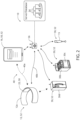
- the monitoring system 10 may be configured to control or receive motion data and inputs from a variety of sensors 22, IMUs 22a, appliance(s) 30, and handheld implements 15 to support the food preparation operation.
- the controller 50 may correspond to a distributed control structure (e.g., multiple processors or controllers) that can be manually or automatically controlled via the communication interface(s) 40 in response to the sensor data detected via the monitoring device 12 and the IMU(s) 22a.
- the communication interface 40 may correspond to a plurality of communication interfaces 40, which may be implemented using various communication protocols.
- the communication interfaces 40 may include a first communication interface 40a, which may provide communication between the monitoring device 12 and the display device 16.
- the display device 16 may be in communication with a remote database 54 (e.g., cloud database) via a second communication interface 40b, which may be in communication with the internet or an internet-connected device.
- the second communication interface 40b may correspond to a local network and may be implemented to provide for distributed communication among the appliance(s) 30 and display devices 16, as well as additional monitoring devices 12 or other connected devices 52 via a hub or router 56.
- the second communication interface 40b may include a combination of wired connections (e.g., Ethernet ® ) as well as wireless networks interfaces.
- the IMU 22a may include a plurality of inertial sensors configured to monitor the orientation and inertial states of the monitoring device 12 in a coordinate system 58 comprising a plurality of translational axes 58a and rotational axes 58b.
- the IMU 22a may be operable to measure and communicate a direction and magnitude of movement along and/or about each of the axes 58a/58b and communicate such information to the processing unit of the monitoring device 12.
- the IMU 22a may further comprise a magnetometer or magnetic field detector.
- the magnetometer may correspond to one or more magnetometers.
- the IMU 22a of the monitoring device 12 may correspond to various forms of accelerometers, gyroscopes, and/or magnetometers, which may be implemented separately or as integrated circuits.
- the IMU 22a may correspond to accelerometers, gyroscopes, and magnetometers based on Micro-ElectroMechanical Systems (MEMS) technology, Fiber Optic Gyros (FOG), and/or Ring Laser Gyros (RLG).
- MEMS Micro-ElectroMechanical Systems
- FOG Fiber Optic Gyros
- RLG Ring Laser Gyros
- Some exemplary devices that may be suitable for at least some applications as discussed herein may include devices from a variety of manufacturers including: Analog Devices, Inc.; ST Microelectronics, N.V.; Kionix, Inc.; etc. It will be appreciated that IMUs 22a may vary in quality, grade, performance, and/or durability across manufacturers and product lines.
- the monitoring device 12 may include additional sensors 22, which may include, but are not limited to, a temperature sensor 22b, a humidity sensor 22c, an altimeter 22d or pressure sensor, etc.
- Each of the sensors 22 may be incorporated in the monitoring device 12, which may be in connection with the wearable accessory 14 (e.g., a wristband) of a user 18 and/or the handheld implement 15 (e.g., a handheld appliance or cooking utensil).
- the temperature sensor 22b and humidity sensor 22c may be implemented to detect ambient conditions and adjust the recipe instructions in the food preparation application. For example, timing for an instruction to thaw a frozen food product may be adjusted by the controller 50 based on the ambient temperature of the environment of the cooking system 10.
- the altimeter 22d may correspond to a pressure sensor that detects variations in pressure and corresponding pressure changes that may indicate that the height of the monitoring device 12 and the corresponding portion of the user 18 has changed. Such detections of height may be implemented to track movements of the user 18 and/or detect the altitude of the cooking environment to adjust cooking times and recipe instructions. Additional examples of applications of the sensor data provided by the IMU 22a and additional sensors 22 are discussed in the following examples.
- control signals from the monitoring device 12 may be communicated to control a speed or intensity setting or limit that may be activated by the user 18 to complete the corresponding step of the recipe.
- the appliance interface 62 may engage the wearable accessory 14 and/or the handheld implement via a snap-fit, magnetic, or other various mechanical connections, which may align the terminals of the appliance interface 62 with corresponding terminals of the handheld implement 15.
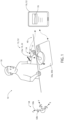
- FIG. 4 an example of a whipping operation is shown demonstrating a step of the recipe according to the food preparation method instructed by the food preparation application.
- the user 18 has been provided an instruction 70 by at least one of a text instruction, video or animated demonstration, or audible command output from the display device 16, which is depicted as a tablet.
- the instructions for the recipe may be accessed by the app via the second communication interface 40b (e.g., a home Wi-Fi connection) that accesses the remote database 54.
- a user profile may be linked to food preparation application and multiple devices (e.g., the connected devices 52) may access and provide interactive notifications to the user 18 to provide instructions for each step of the recipe.
- the monitoring device 12 applied as an implement tracking device 12b in connection with the handheld implement 15 in the form of an inverted blender.
- the handheld implement 15 is shown blending a mixture 80.
- the monitoring device 12 may be integrated in the handheld implement 15, for example, in permanent communication with the operating circuitry of the inverted blender.
- the monitoring device 12 may be implemented in the modular tracking accessory 60 configuration.
- the modular tracking accessory 60 may be configured to selectively connect to the handheld implement 15, or various kitchen or food preparation items.
- the tracking accessory 60 may communicate control signals and operating instructions to the handheld implement 15 (i.e., the handheld appliance) via the appliance interface 62.
- the control signals from the monitoring device 12 may be communicated to control a speed or intensity setting or limit that may be activated by the user 18 to complete the corresponding step of the recipe.
- the controller 50 may monitor an accumulation of the food preparation movement (e.g., motion data that matches the blending motion profile) and determine a completion of the blending step of the recipe in response to the accumulation of the food preparation movement meeting or exceeding predefined accumulated motion total associated with the blending step.
- the activation of the appliance may be detected or controlled by the monitoring device 12 and the movement of the user 18 may be monitored.
- the movement of the user 18 may be compared by the controller 50 to the motion profile in order to provide corrective instructions and detect an accumulated or effective level or amount of the blending applied. Once the detected blending level meets or exceeds a total defined for the step of the recipe, the controller 50 may determine that the blending step is completed and move forward to the next step in the recipe and/or provide the user 18 with instructions to move to the next step in the recipe.
- the controller 50 may detect whether the consistency of the mixture 80 is too thin or thick. For example, if a mixture does not include adequate moisture, the intensity of the vibrations reported by the monitoring device 12 may not decrease over time at an expected rate. For example, if the variation in vibrational intensity does not decrease at a predetermined rate associated with the recipe (e.g., the intended consistency of the mixture 80) and the mixing utility (e.g., the handheld implement 15), the controller 50 may infer that the mixture is too thick. In response to such a determination, the controller 50 may output an instruction 82 to the user 18 indicating that more moisture (e.g., milk, water, oil, etc.) should be added to the recipe.
- more moisture e.g., milk, water, oil, etc.
- the controller 50 may include in the instruction 82 that the user should review the ingredients added and the previous recipe steps to ensure that ingredients were added in appropriate proportions as instructed.
- the sensor data detected in relation to the operation of the handheld implement 15 or appliance 30 may be processed by the controller 50 to determine a quality of the mixture 80 or food product associated with or processed in the current step of the recipe.
- the same attributes of the vibrations reported by the monitoring device could be applied to conversely identify if too much liquid is included in the mixture 80.
- quality determinations may be predicted by the controller 50 based on the sensor data reported by the IMU 22a in one or more of the steps of recipe and corresponding notifications may be communicated to the user 18 as warnings to prevent completed food products that do not conform to the target quality associated with the recipe.
- the system 10 may provide feedback to the user 18 not only to adjust techniques and time associated with various recipe steps but also to indicate the potential adverse results or changes in quality that may result if the proper technique is not performed for each step of the recipe.
- the quality assessment may further be applied by the controller 50 to adjust instructions or automated steps associated with one or more of the appliances 30.
- the quality assessment may further be evaluated to adjust recipe instructions or settings of one or more of the appliances 30.
- the quality assessment may be implemented to adjust the temperature of a refrigerator for storage or a baking temperature of the oven 30c in order to optimize the resulting quality of the food product.
- the controller 50 may adjust a recipe instruction or automated command to the oven 30c to increase or decrease a baking temperature or time.
- the controller 50 of the system 10 may record the food preparation performance of the user 18 as one or more of the recipes are performed on the food preparation application. For example, the ability of the user 18 to conform to the movements, techniques, and instructions communicated from the food preparation application (i.e., from the display device 16), may be tracked by the controller 50 and stored in a profile associated with the user in the remote database 54. In response to the ability or willingness of the user 18 to conform to the instructions provided by the food preparation application and the conformance of the corresponding sensor data to predefined motion profiles for each of the recipes, the system 10 may identify a skill level of the user 18.
- the monitoring device 12 and/or various connected devices 52 of the system 10 may communicate instructions to the user indicating when the height H aligns with an inventory location of a recipe ingredient 90 of a plurality of inventory items 92 that is necessary for a step of the recipe.
- the controller 50 of the system 10 may be configured to access an inventory map indicating the locations or at least the elevation of the inventory of the refrigerator 30d.
- Such functionality may be provided by an inventory tracking system as disclosed by U.S. Patent No. 10,157,308 B2 , titled, "INTERACTION RECOGNITION AND ANALYSIS SYSTEM," and U.S. Patent No.
- the monitoring device 12 may increase a notification frequency of the audible or tactile feedback provided to the user 18 in response to the height H of the monitoring device 12 getting closer to the height of the inventory location 94.
- the monitoring device may output a notification communicating the location of the recipe ingredient 90.
- the monitoring device 12 or the display device 16 may output a notification that the recipe ingredient is located on a shelf 96 (e.g., top shelf of a refrigerator compartment) via a speaker to instruct the user where to locate the recipe ingredient.
- the system 10 may provide for various instructions to support the preparation of a food product via the food preparation application.
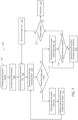
- step 110 if the motion is within the target range, the controller 50 may monitor the time or an accumulation of a food preparation movement (e.g., motion data that matches the first motion profile) within the target range (116). Based on the accumulated motion identified from the sensor data, the controller 50 may determine if the accumulated motion meets or exceeds a target accumulated motion for the recipe step to determine a recipe step completion (118). If the total motion within the target range is less than the target accumulated motion for the recipe step, the controller 50 may update the recipe instruction to indicate a remaining time, steps, or modified techniques necessary to complete the recipe step and return to step 116 to monitor the sensor data (120).
- a food preparation movement e.g., motion data that matches the first motion profile
- the memory 134 may correspond to a dedicated memory (e.g. RAM, ROM, Flash, etc.) and may further include a non-transient, computer readable medium, such as electronic memory or other storage medium such as hard disk, optical disk, flash drive, etc., for use with the processing unit 132.
- a dedicated memory e.g. RAM, ROM, Flash, etc.
- non-transient, computer readable medium such as electronic memory or other storage medium such as hard disk, optical disk, flash drive, etc.
- an operating system may be stored in the storage medium and provide for the monitoring device 12 to control and manage system resources, enable functions of application software (e.g., the food preparation application), and interface application programs with other software and functions of the monitoring device 12.
- the I/O interface 136 may correspond to a variety of interfaces configured to provide communication to and from the processing unit.
- the monitoring device 12 may comprise a wireless communication circuit 150.
- the communication circuit 150 provides the operating functionality of the communication interface 40 as previously discussed. That is, wireless communication circuit 150 may provide for communication via the first communication interface 40a and/or the second communication interface 40b via one or more circuits.
- the first communication interface 40a may provide for a first communication protocol including, but not limited to, Bluetooth ® , Bluetooth ® Low Energy (BLE), Thread, Ultra-Wideband, Z-Wave ® , ZigBee ® , or similar communication protocols.
- the system and methods discussed herein provide for the monitoring of the sensor data captured by a monitoring device that may be applied in a variety of ways.
- the sensor data may track the progress of steps of a recipe completed by a user as well as track the movement or vibrational feedback of an appliance or handheld implement used to prepare a food product.
- the system may provide feedback to the user, track the progress of completion of each recipe step, and/or determine or estimate a quality of the finished food product produced with the recipe based on the performance of the user relative to the predefined movements and steps of the recipe.
- the system may provide tracking and feedback for each step of the recipe as well as make qualitative assessments of the movement identified in the sensor data.
- the disclosure may be applied in a variety of ways to assess and improve a food preparation or cooking operation based on the sensor data and methods discussed herein.
- controllers or processors of the disclosed system may correspond to devices that perform computer-implemented processes and apparatuses for practicing those processes.
- Implementations also may be embodied in the form of a computer program product having computer program code containing instructions embodied in non-transitory and/or tangible media, such as hard drives, USB (universal serial bus) drives, or any other machine readable storage medium, where computer program code is loaded into and executed by a computer, which provides forthe configuration of a special-purpose control device, controller, or computer that implements the disclosed subject matter.
- Implementations also may be embodied in the form of computer program code, for example, whether stored in a storage medium, loaded into and/or executed by a computer/controller, or transmitted over some transmission medium or communication interfaces, wherein when the computer program code is loaded into and executed by controller, the controller becomes an apparatus for practicing implementations of the disclosed subject matter.
- the computer program code segments configure the microprocessor to create specific logic circuits.
- the disclosure provides for a motion analysis apparatus for food preparation comprising at least one motion detection device configured to capture motion data, wherein the motion detection device comprises at least one of a linear acceleration sensor and an angular rate sensor; and a controller in communication with the motion detection device, wherein the controller is configured to: compare the motion data to a food preparation movement; and initiate a motion instruction for a first step of a recipe in response to a comparison of the motion data to the food preparation movement.
- a method for providing a food preparation instruction comprising: accessing recipe in a food preparation application; capturing motion data in response to a first step of the recipe; comparing the motion data to a food preparation movement defined by a first motion profile for the first step of the recipe; and output a motion instruction for the first step in response to a comparison of the motion data to the food preparation movement.
- the term "coupled” in all of its forms, couple, coupling, coupled, etc. generally means the joining of two components (electrical or mechanical) directly or indirectly to one another. Such joining may be stationary in nature or movable in nature. Such joining may be achieved with the two components (electrical or mechanical) and any additional intermediate members being integrally formed as a single unitary body with one another or with the two components. Such joining may be permanent in nature or may be removable or releasable in nature unless otherwise stated.
- elements shown as integrally formed may be constructed of multiple parts or elements shown as multiple parts may be integrally formed, the operation of the interfaces may be reversed or otherwise varied, the length or width of the structures and/or members or connector or other elements of the system may be varied, the nature or number of adjustment positions provided between the elements may be varied.
- the elements and/or assemblies of the system may be constructed from any of a wide variety of materials that provide sufficient strength or durability, in any of a wide variety of colors, textures, and combinations. Accordingly, all such modifications are intended to be included within the scope of the present innovations. Other substitutions, modifications, changes, and omissions may be made in the design, operating conditions, and arrangement of the desired and other exemplary embodiments without departing from the spirit of the present innovations.
Landscapes
- Business, Economics & Management (AREA)
- Engineering & Computer Science (AREA)
- Physics & Mathematics (AREA)
- General Physics & Mathematics (AREA)
- Entrepreneurship & Innovation (AREA)
- Educational Administration (AREA)
- Educational Technology (AREA)
- Theoretical Computer Science (AREA)
- Health & Medical Sciences (AREA)
- General Health & Medical Sciences (AREA)
- Nutrition Science (AREA)
- General Preparation And Processing Of Foods (AREA)
Applications Claiming Priority (2)
| Application Number | Priority Date | Filing Date | Title |
|---|---|---|---|
| US202163262819P | 2021-10-21 | 2021-10-21 | |
| US17/960,951 US20230128890A1 (en) | 2021-10-21 | 2022-10-06 | Sensor system and method for assisted food preparation |
Publications (2)
| Publication Number | Publication Date |
|---|---|
| EP4170630A1 true EP4170630A1 (de) | 2023-04-26 |
| EP4170630B1 EP4170630B1 (de) | 2026-02-25 |
Family
ID=83903257
Family Applications (1)
| Application Number | Title | Priority Date | Filing Date |
|---|---|---|---|
| EP22202871.4A Active EP4170630B1 (de) | 2021-10-21 | 2022-10-20 | Sensorsystem und verfahren zur unterstützten lebensmittelzubereitung |
Country Status (2)
| Country | Link |
|---|---|
| US (1) | US20230128890A1 (de) |
| EP (1) | EP4170630B1 (de) |
Citations (4)
| Publication number | Priority date | Publication date | Assignee | Title |
|---|---|---|---|---|
| US20160059412A1 (en) * | 2014-09-02 | 2016-03-03 | Mark Oleynik | Robotic manipulation methods and systems for executing a domain-specific application in an instrumented environment with electronic minimanipulation libraries |
| US20180081449A1 (en) * | 2016-09-21 | 2018-03-22 | Kyocera Corporation | Electronic device, recording medium, and control method |
| US10157308B2 (en) | 2016-11-30 | 2018-12-18 | Whirlpool Corporation | Interaction recognition and analysis system |
| US10474987B2 (en) | 2015-08-05 | 2019-11-12 | Whirlpool Corporation | Object recognition system for an appliance and method for managing household inventory of consumables |
Family Cites Families (1)
| Publication number | Priority date | Publication date | Assignee | Title |
|---|---|---|---|---|
| US9610476B1 (en) * | 2016-05-02 | 2017-04-04 | Bao Tran | Smart sport device |
-
2022
- 2022-10-06 US US17/960,951 patent/US20230128890A1/en active Pending
- 2022-10-20 EP EP22202871.4A patent/EP4170630B1/de active Active
Patent Citations (4)
| Publication number | Priority date | Publication date | Assignee | Title |
|---|---|---|---|---|
| US20160059412A1 (en) * | 2014-09-02 | 2016-03-03 | Mark Oleynik | Robotic manipulation methods and systems for executing a domain-specific application in an instrumented environment with electronic minimanipulation libraries |
| US10474987B2 (en) | 2015-08-05 | 2019-11-12 | Whirlpool Corporation | Object recognition system for an appliance and method for managing household inventory of consumables |
| US20180081449A1 (en) * | 2016-09-21 | 2018-03-22 | Kyocera Corporation | Electronic device, recording medium, and control method |
| US10157308B2 (en) | 2016-11-30 | 2018-12-18 | Whirlpool Corporation | Interaction recognition and analysis system |
Also Published As
| Publication number | Publication date |
|---|---|
| EP4170630B1 (de) | 2026-02-25 |
| US20230128890A1 (en) | 2023-04-27 |
Similar Documents
| Publication | Publication Date | Title |
|---|---|---|
| US20240008674A1 (en) | Cooking system with error detection | |
| CN102665496B (zh) | 厨房设备 | |
| US11869332B2 (en) | Remote cooking systems and methods | |
| US10025282B1 (en) | Smart cooking device and system with cookware identification | |
| CN206833186U (zh) | 无线控制烹饪系统及无线设备 | |
| CN102651991B (zh) | 厨房设备 | |
| JP2019528525A (ja) | キッチン器具を誘導加熱及びワイヤレス給電する調理システム | |
| KR20180018548A (ko) | 레시피 시스템 | |
| AU2012272554A1 (en) | System for automating cooking steps | |
| WO2015135031A1 (en) | Method and apparatus for food preparation | |
| KR20170028973A (ko) | 맞춤식 요리 지도 제공 시스템, 물품, 및 방법 | |
| TR201906874T4 (tr) | Bir mutfak aletinin çalıştırılması için usul ve mutfak aleti. | |
| WO2019209371A1 (en) | Cooking system for tracking a cooking device | |
| WO2016142415A2 (de) | Verfahren und system mit einer steuerung für die zubereitung von speisen | |
| EP4170630B1 (de) | Sensorsystem und verfahren zur unterstützten lebensmittelzubereitung | |
| WO2019077591A1 (en) | SYSTEM AND METHOD FOR REAL-TIME SYNCHRONIZATION OF A SET OF INSTRUCTIONS USING IDO DEVICES | |
| CN205338567U (zh) | 一种低温烹饪机 | |
| US12564291B2 (en) | Method of operating a stand mixer | |
| JP7593318B2 (ja) | 情報処理装置、情報処理方法、調理システム、および調理方法 | |
| US11324083B1 (en) | Apparatus for intelligent and selective heating using sensor array | |
| EP3473935B1 (de) | Kochgerät mit benutzerwählbarer grillfunktion | |
| WO2019209332A1 (en) | Cooking system with error detection | |
| CN121311148A (zh) | 集成厨房系统 | |
| US20230148791A1 (en) | System and method for a food preparation | |
| KR20220119602A (ko) | 정보 처리 장치, 정보 처리 방법 |
Legal Events
| Date | Code | Title | Description |
|---|---|---|---|
| PUAI | Public reference made under article 153(3) epc to a published international application that has entered the european phase |
Free format text: ORIGINAL CODE: 0009012 |
|
| STAA | Information on the status of an ep patent application or granted ep patent |
Free format text: STATUS: THE APPLICATION HAS BEEN PUBLISHED |
|
| AK | Designated contracting states |
Kind code of ref document: A1 Designated state(s): AL AT BE BG CH CY CZ DE DK EE ES FI FR GB GR HR HU IE IS IT LI LT LU LV MC ME MK MT NL NO PL PT RO RS SE SI SK SM TR |
|
| STAA | Information on the status of an ep patent application or granted ep patent |
Free format text: STATUS: REQUEST FOR EXAMINATION WAS MADE |
|
| 17P | Request for examination filed |
Effective date: 20231026 |
|
| RBV | Designated contracting states (corrected) |
Designated state(s): AL AT BE BG CH CY CZ DE DK EE ES FI FR GB GR HR HU IE IS IT LI LT LU LV MC ME MK MT NL NO PL PT RO RS SE SI SK SM TR |
|
| P01 | Opt-out of the competence of the unified patent court (upc) registered |
Effective date: 20231110 |
|
| GRAP | Despatch of communication of intention to grant a patent |
Free format text: ORIGINAL CODE: EPIDOSNIGR1 |
|
| STAA | Information on the status of an ep patent application or granted ep patent |
Free format text: STATUS: GRANT OF PATENT IS INTENDED |
|
| INTG | Intention to grant announced |
Effective date: 20250924 |
|
| GRAS | Grant fee paid |
Free format text: ORIGINAL CODE: EPIDOSNIGR3 |
|
| GRAA | (expected) grant |
Free format text: ORIGINAL CODE: 0009210 |
|
| STAA | Information on the status of an ep patent application or granted ep patent |
Free format text: STATUS: THE PATENT HAS BEEN GRANTED |
|
| AK | Designated contracting states |
Kind code of ref document: B1 Designated state(s): AL AT BE BG CH CY CZ DE DK EE ES FI FR GB GR HR HU IE IS IT LI LT LU LV MC ME MK MT NL NO PL PT RO RS SE SI SK SM TR |
|
| REG | Reference to a national code |
Ref country code: CH Ref legal event code: F10 Free format text: ST27 STATUS EVENT CODE: U-0-0-F10-F00 (AS PROVIDED BY THE NATIONAL OFFICE) Effective date: 20260225 Ref country code: GB Ref legal event code: FG4D |
|
| REG | Reference to a national code |
Ref country code: DE Ref legal event code: R096 Ref document number: 602022031040 Country of ref document: DE |
|
| REG | Reference to a national code |
Ref country code: IE Ref legal event code: FG4D |