EP4164153B1 - Controlling a modulation and coding scheme for a transmission between a base station and a user equipment - Google Patents
Controlling a modulation and coding scheme for a transmission between a base station and a user equipment Download PDFInfo
- Publication number
- EP4164153B1 EP4164153B1 EP22210447.3A EP22210447A EP4164153B1 EP 4164153 B1 EP4164153 B1 EP 4164153B1 EP 22210447 A EP22210447 A EP 22210447A EP 4164153 B1 EP4164153 B1 EP 4164153B1
- Authority
- EP
- European Patent Office
- Prior art keywords
- index table
- base station
- mcs index
- mcs
- modulation
- Prior art date
- Legal status (The legal status is an assumption and is not a legal conclusion. Google has not performed a legal analysis and makes no representation as to the accuracy of the status listed.)
- Active
Links
Images

Classifications
-
- H—ELECTRICITY
- H04—ELECTRIC COMMUNICATION TECHNIQUE
- H04W—WIRELESS COMMUNICATION NETWORKS
- H04W72/00—Local resource management
- H04W72/02—Selection of wireless resources by user or terminal
-
- H—ELECTRICITY
- H04—ELECTRIC COMMUNICATION TECHNIQUE
- H04L—TRANSMISSION OF DIGITAL INFORMATION, e.g. TELEGRAPHIC COMMUNICATION
- H04L1/00—Arrangements for detecting or preventing errors in the information received
- H04L1/0001—Systems modifying transmission characteristics according to link quality, e.g. power backoff
- H04L1/0002—Systems modifying transmission characteristics according to link quality, e.g. power backoff by adapting the transmission rate
- H04L1/0003—Systems modifying transmission characteristics according to link quality, e.g. power backoff by adapting the transmission rate by switching between different modulation schemes
-
- H—ELECTRICITY
- H04—ELECTRIC COMMUNICATION TECHNIQUE
- H04L—TRANSMISSION OF DIGITAL INFORMATION, e.g. TELEGRAPHIC COMMUNICATION
- H04L1/00—Arrangements for detecting or preventing errors in the information received
- H04L1/0001—Systems modifying transmission characteristics according to link quality, e.g. power backoff
- H04L1/0009—Systems modifying transmission characteristics according to link quality, e.g. power backoff by adapting the channel coding
-
- H—ELECTRICITY
- H04—ELECTRIC COMMUNICATION TECHNIQUE
- H04L—TRANSMISSION OF DIGITAL INFORMATION, e.g. TELEGRAPHIC COMMUNICATION
- H04L1/00—Arrangements for detecting or preventing errors in the information received
- H04L1/0001—Systems modifying transmission characteristics according to link quality, e.g. power backoff
- H04L1/0015—Systems modifying transmission characteristics according to link quality, e.g. power backoff characterised by the adaptation strategy
-
- H—ELECTRICITY
- H04—ELECTRIC COMMUNICATION TECHNIQUE
- H04L—TRANSMISSION OF DIGITAL INFORMATION, e.g. TELEGRAPHIC COMMUNICATION
- H04L1/00—Arrangements for detecting or preventing errors in the information received
- H04L1/0001—Systems modifying transmission characteristics according to link quality, e.g. power backoff
- H04L1/0015—Systems modifying transmission characteristics according to link quality, e.g. power backoff characterised by the adaptation strategy
- H04L1/0016—Systems modifying transmission characteristics according to link quality, e.g. power backoff characterised by the adaptation strategy involving special memory structures, e.g. look-up tables
-
- H—ELECTRICITY
- H04—ELECTRIC COMMUNICATION TECHNIQUE
- H04L—TRANSMISSION OF DIGITAL INFORMATION, e.g. TELEGRAPHIC COMMUNICATION
- H04L1/00—Arrangements for detecting or preventing errors in the information received
- H04L1/0001—Systems modifying transmission characteristics according to link quality, e.g. power backoff
- H04L1/0023—Systems modifying transmission characteristics according to link quality, e.g. power backoff characterised by the signalling
- H04L1/0025—Transmission of mode-switching indication
-
- H—ELECTRICITY
- H04—ELECTRIC COMMUNICATION TECHNIQUE
- H04L—TRANSMISSION OF DIGITAL INFORMATION, e.g. TELEGRAPHIC COMMUNICATION
- H04L27/00—Modulated-carrier systems
- H04L27/02—Amplitude-modulated carrier systems, e.g. using on-off keying; Single sideband or vestigial sideband modulation
- H04L27/04—Modulator circuits; Transmitter circuits
-
- H—ELECTRICITY
- H04—ELECTRIC COMMUNICATION TECHNIQUE
- H04L—TRANSMISSION OF DIGITAL INFORMATION, e.g. TELEGRAPHIC COMMUNICATION
- H04L27/00—Modulated-carrier systems
- H04L27/32—Carrier systems characterised by combinations of two or more of the types covered by groups H04L27/02, H04L27/10, H04L27/18 or H04L27/26
- H04L27/34—Amplitude- and phase-modulated carrier systems, e.g. quadrature-amplitude modulated carrier systems
-
- H—ELECTRICITY
- H04—ELECTRIC COMMUNICATION TECHNIQUE
- H04L—TRANSMISSION OF DIGITAL INFORMATION, e.g. TELEGRAPHIC COMMUNICATION
- H04L1/00—Arrangements for detecting or preventing errors in the information received
- H04L1/0001—Systems modifying transmission characteristics according to link quality, e.g. power backoff
- H04L1/0023—Systems modifying transmission characteristics according to link quality, e.g. power backoff characterised by the signalling
- H04L1/0026—Transmission of channel quality indication
Definitions
- the present invention relates to the field of cellular networks, especially to an evolution of LTE networks, and in particular to networks comprising LTE networks and evolved LTE networks.
- LTE Long Term Evolution
- B4G Beyond 4G
- LTE provides a peak bit rate of 30 bps/Hz by using 64QAM modulation and 8x8 MIMO transmission.
- B4G may require a higher order modulation, for instance 256QAM, than 64QAM in order to meet future requirements.
- Higher order modulations may be relevant for example in relay backhaul due to better channel quality and better radio frequency (RF) properties which are more easily feasible for relays than for user equipments (UEs) or for isolated indoor cells where the UEs are close by and therefore both having a good link to the access point and no or very little interference from other access points due to attenuation by the walls.
- RF radio frequency
- LTE Release 10 The modulation order determination of LTE Release 10 is described in TS 36.213 V10.3, chapter 7.1.7 and CQI definition in chapter 7.2.3.
- theoretical spectral efficiency is restricted by 64QAM modulation.
- An improved spectral efficiency may be gained with extension to 256QAM.
- MCS modulation and coding scheme
- CQI channel quality indicator
- EP 1903692 A1 discloses the transmission of a channel quality indicator corresponding to a modulation scheme and coding rate.
- Examples of the present disclosure can provide a modulation and coding scheme table with a higher order modulation while remaining backward compatible.
- the first table supports up to 64QAM (quadrature amplitude modulation) and the second table supports up to 256QAM.
- the idea of this method is to introduce a higher order modulation while still supporting a modulation and coding scheme (MCS) table being introduced for a lower modulation order.
- MCS modulation and coding scheme
- modulation order in this context may be determined by the number of the different symbols that can be transmitted using it. In general MCS also considers different code rates and thus indicates the average number of payload bits that can be transmitted per symbol. The first maximum modulation order and the second maximum modulation order are different.
- modulation and coding scheme table may refer to the MCS table being defined in LTE and being used for determining and selecting appropriate modulation and coding schemes.
- the second table may be an extended MCS table being based on the MCS as defined in LTE but comprising entries corresponding to a higher order modulation. For instance, the backward compatibility may be ensured by having a first table exactly as it is currently defined in the LTE standard.
- the first and the second table may be different in some respects. For instance, one table may be biased more towards low MCS and the second towards high MCS values. For example, one table may have more MCS values below a certain threshold MCS. Also the density of MCS values at lower MCS may be higher in one table or the center of gravity or average of the MCS values may be lower in one table. In one embodiment, one table is a mirror image of the other, for instance being mirrored at the middle MCS.
- base station in this context may denote any kind of physical entity being able to communicate with a user equipment or any other network device by selecting a modulation and coding scheme from such a MCS table.
- a base station in this context may be any kind of network device providing the required functionality for the method, it may also be a transceiver node in communication with a centralized entity.
- the base station may be for example a NodeB or eNB.
- the base station informs the UE explicitly about a change of the used MCS table.
- a few high MeSs are included in the first table to be able to quickly react in case the channel gets suddenly better.
- the maximum modulation order corresponds to the highest modulation and coding scheme (MCS). Further, the highest modulation and coding scheme may be the same for both tables.
- the base station determines actual channel conditions of a radio transmission channel being used for the transmission between the base station and the user equipment, and determines a maximum supported modulation order based on the determined actual channel conditions. In some examples, the base station selects the first modulation and coding scheme table or the second modulation and coding scheme table based on a comparison of the maximum supported modulation order with the first maximum modulation order and the second maximum modulation order.
- the base station may perform the modulation and coding for the transmission based on the first table. If the actual channel conditions are good enough for the higher order modulation and if the UE supports the higher order modulation, the base station may perform the modulation and coding based on the second table supporting up to 256QAM.
- Information is transmitted to the user equipment being indicative for the selected modulation and coding scheme table.
- the base station may provide a signal to the UE comprising information about the selected and used MCS table.
- the UE may then perform, based on this information, further actions, like CQI reports.
- Transmitting information to the user equipment is based on radio resource control signalling.
- the base station receives confirmation information from the user equipment being indicative for a performed change of the selected modulation and coding scheme table.
- the base station may carry out the change from one table to the selected MCS table after receiving the confirmation signal from the UE.
- the confirmation signal may thus be indicative for a final change of the MCS tables to be carried out by the base station.
- the first modulation and coding scheme table and the second modulation and coding scheme table each comprise a common subset of equal entries being arranged at same positions within the first modulation and coding scheme table and the second modulation and coding scheme table.
- the base station controls the modulation and coding scheme for the transmission between the base station and the user equipment based on the selected modulation and coding scheme table based on the common subset of entries.
- the base station may use the common entries as long as there is no confirmation signal from the UE. This may provide the advantage that there is no misunderstanding and wrong modulation and coding as both parts (base station and UE) are using the same modulation and coding scheme (although they may possibly use different tables).
- Controlling an initial transmission between the base station and the user equipment is based on the first modulation and coding scheme table.
- the base station and the UE may use the MCS table having the lower maximum modulation order at the start of each communication. This may provide the advantage that each communication starts with the same table and afterwards the base station may decide whether to change the MCS table or not. The change may then be performed based on the actual channel conditions if the UE can support the MCS table supporting the higher order modulation.
- the bits of carrying a modulation and coding scheme index are the same for the first modulation and coding scheme table and for the second modulation and coding scheme table.
- the tables have the same size. In some examples, parts of the first MCS table and the second MCS table are equal, providing common entries as explained above. Entries of the first MCS table relating to very low modulation orders may be exchanged (redefined) for the second MCS table and may comprise the higher order modulations.
- the actual channel conditions are determined based on a channel quality indicator being selectable based on a first channel quality indicator table supporting the first maximum modulation order or based on a second channel quality indicator table supporting the second maximum modulation order, the method comprising receiving, by the base station, a channel quality indicator from the user equipment, and determining, by the base station, the actual channel conditions of the radio transmission channel being used for the transmission between the base station and the user equipment based on the received channel quality indicator.
- the CQI tables may be selected based on the selection of the MCS tables. If there is a switch or change from the first MCS table to the second MCS table, there may also be change from the first CQI table to the second CQI table. The UE may thus determine the CQI based on a table which corresponds to the selected MCS table.
- the base station selects the first channel quality indicator table or the second channel quality indicator table based on the selected modulation and coding scheme table, and transmits information to the user equipment being indicative for the selected channel quality indicator table.
- the information of the selected CQI table may be provided to the UE from the base station.
- the information may also be provided implicitly by informing the user equipment of the selected MCS table.
- the first channel quality indicator table and the second channel quality indicator table each comprise a common subset of equal entries being arranged at same positions within the first channel quality indicator table and the second channel quality indicator table.
- the CQI tables may comprise a common subset. Thus, it may be ensured that, during switching, there are no misunderstandings between the UE and the base station.
- the base station may be any type of access point or point of attachment, which is capable of providing a wireless access to a cellular network system. Thereby, the wireless access may be provided for a user equipment or for any other network element, which is capable of communicating in a wireless manner.
- the base station may be a NodeB, eNB, home NodeB or HeNB, or any other kind of access point or also a multihop node or relay.
- the base station may in particular be used for a B4G, LTE or 3GPP cell and communication.
- the base station comprises a receiving unit, for example a receiver as known by a skilled person.
- the base station also comprises a transmitting or sending unit, for example a transmitter.
- the receiver and the transmitter may be implemented as one single unit, for example as a transceiver.
- the transceiver or the receiving unit and the sending unit may be adapted to communicate with the user equipment via an antenna.
- the base station may further comprise a selection unit and a control unit.
- the selection unit and the control unit may be implemented as single units or may be implemented for example as part of a standard control unit, like a CPU or a microcontroller.
- the base station may further comprise a determination unit being adapted to determine actual channel conditions of a radio transmission channel being used for the transmission between the base station and the user equipment, and being adapted to determine a maximum supported modulation order based on the determined actual channel conditions.
- the selection unit may be adapted to select the first modulation and coding scheme table or the second modulation and coding scheme table based on a comparison of the maximum supported modulation order with the first maximum modulation order and the second maximum modulation order.
- the determination unit may be implemented as a single unit or may be implemented for example as part of a standard control unit, like a CPU or a microcontroller.
- the user equipment may be any type of communication end device, which is capable of connecting with the described base station.
- the UE may be in particular a cellular mobile phone, a Personal Digital Assistant (PDA), a notebook computer, a printer and/or any other movable communication device.
- PDA Personal Digital Assistant
- the user equipment comprises a receiving unit or receiver which is adapted for receiving signals from the base station.
- the user equipment comprises a transmitting unit for transmitting signals.
- the transmitting unit may be a transmitter as known by a skilled person.
- the receiver and the transmitting unit may be implemented as one single unit, for example as a transceiver.
- the transceiver or the receiver and the transmitting unit may be adapted to communicate with the base station via an antenna.
- the user equipment further comprises a control unit.
- the control unit may be implemented as a single unit or may be implemented for example as part of a standard control unit, like a CPU or a microcontroller.
- reference to a computer program is intended to be equivalent to a reference to a program element and/or a computer readable medium containing instructions for controlling a computer system to coordinate the performance of the above described method.
- the computer program may be implemented as computer readable instruction code by use of any suitable programming language, such as, for example, JAVA, C++, and may be stored on a computer-readable medium (removable disk, volatile or non-volatile memory, embedded memory/processor, etc.).
- the instruction code is operable to program a computer or any other programmable device to carry out the intended functions.
- the computer program may be available from a network, such as the World Wide Web, from which it may be downloaded.
- the herein disclosed subject matter may be realized by means of a computer program respectively software. However, the herein disclosed subject matter may also be realized by means of one or more specific electronic circuits respectively hardware. Furthermore, the herein disclosed subject matter may also be realized in a hybrid form, i.e. in a combination of software modules and hardware modules.
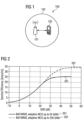
- Figure 1 shows a cellular network system 100.
- a user equipment 102 is served by a first cell 103 of the cellular network system.
- the first cell is assigned to a base station 101.
- the transmission and communication between the base station and the user equipment is controlled based on a modulation and coding scheme.
- the modulation and coding scheme is selectable based on a first modulation and coding scheme table comprising entries corresponding to a plurality of modulation and coding schemes with a first maximum modulation order or based on a second modulation and coding scheme table comprising entries corresponding to a plurality of modulation and coding schemes with a second maximum modulation order.
- the second maximum modulation order is higher (for instance up to 256QAM) than the first maximum modulation order (for instance up to 64QAM).
- the base station may determine actual channel conditions of the radio transmission channel being used for the transmission between the base station and the user equipment. Then, the base station may determine a maximum supported modulation order based on the determined actual channel conditions and eventually based on information from the user equipment which modulation order can be supported by the user equipment. The base station then selects the first modulation and coding scheme table or the second modulation and coding scheme table based on a comparison of the maximum supported modulation order with the first maximum modulation order and the second maximum modulation order. Thus, the modulation and coding scheme (MCS) for the transmission between the base station and the user equipment is controlled based on the selected modulation and coding scheme table.
- MCS modulation and coding scheme
- the base station may also select the table based on any other information, for instance based on predefined selection criteria.
- FIG. 2 presents the simulated LTE-Advanced throughput with 8x8-MIMO and modulation restricted to 64QAM (reference number 201) (coding rate 8/9) in 1-tap Ray-leigh channel with no spatial correlation.
- Spectral efficiency that would be gained with extension to 256QAM is also plotted to Figure 2 for comparison (reference number 202). It can be seen that extension to 256QAM starts to have effect around 25dB SNR range. In these figures the average SINR is plotted against the throughput. Even if the average is below the area whether 256QAM provides gain, due to fading the channel conditions may still be good for some time.
- the problem is how to introduce 256QAM for LTE to maintain backward compatibility and avoid too much complexity. 256QAM addition might need to be done to both MCS index and modulation table and CQI table defined in LTE standard.
- Another possible solution would be to take the existing MCS/CQI index table as a basis and change the usage of it so that only a subset of the current MCS values would be used, e.g. drop every third to make room for the additional 256QAM values. This causes a coarser adaptation of the channel conditions and is therefore undesirable. In the following, this method is called sub-sampling.
- the MCS/CQI index table with 256QAM extension is formed so that room for the TB (transport block) sizes related to 256QAM is taken from originally low TB sizes. Furthermore, there may be a few common modulation / TB sizes in the common MCS index area from the low range of the modulation set for such situations where extended 256QAM table is in use and channel conditions drop quickly. These indexes can be sub-sampled from the low TBS area.
- a two step switching procedure may be provided for CQI index table switching in order to make sure the UE is aware of the switching and does not use ambiguous table entries during switching.
- the MCS table may already be switched to the 256QAM version.
- One option is that the original table 7.1.7-1 and table with 256QAM extension are switched by eNB with an RRC-message (alternatively also MAC / or control signalling messages could be considered).
- algorithm responsible of this switching is eNB vendor specific but will obviously take CQI reports from the UE into account.
- the UE may be responsible of switching the MCS index table according to the RRC message and sending an acknowledgement to eNB about the received RRC message (the acknowledgement may not be essential, it may help however to avoid backward compatibility issues as a UE not supporting the switching will not acknowledge the command).
- MCS index area common for both tables, which allows data scheduling also during the time of uncertainty. This may ensure that an MCS from that area is understood correctly no matter whether the switching already took place or not.
- This common area may be continuous, i.e. has continuous MCS entries to allow a fine adaptation during switching as well.
- MCS index, modulation order and TBS index may be identical in both MCS index tables on this area.
- this common MCS index area can be used during the RRC procedure switching the tables and before eNB has received an acknowledgement from UE that it has received the RRC message switching the MCS index table.
- the common index area may be used also if implicit table switching is used and, in this case, only the common area can be used during the implicit switching procedure.
- TB sizes may be available in the common MCS index area.
- New TB sizes may be introduced in the MCS / CQI index table with 256QAM extension in order to increase spectral efficiency with 256QAM:
- MCS index and modulation table with 256QAM extension An example of the MCS index and modulation table with 256QAM extension is shown in Table 1.
- the MCS indexes 12 to 31 refer to the continuous common MCS index area.
- the MCS indexes 0, 5 and 10 refer to a sub-sampled low modulation common MCS index area and the MCS indexes 1 to 4, 6 to 9 and 1 refer to the 256QAM extension.
- Table 1 Example for a MCS index table MCS Index I MCS Modulation Order Q m TBS Index I TBS 0 2 0 1 8 26 2 8 27 3 8 28 4 8 29 5 2 5 6 8 30 7 8 31 8 8 32 9 8 33 10 4 9 11 8 reserved 12 4 11 13 4 12 14 4 13 15 4 14 16 4 15 17 6 15 18 6 16 19 6 17 20 6 18 21 6 19 22 6 20 23 6 21 24 6 22 25 6 23 26 6 24 27 6 25 28 6 26 29 2 reserved 30 4 31 6
- a new CQI index table with 256QAM extension and with common index area be used.
- the CQI tables are switched with the same RRC message responsible for MCS index table switching.
- the CQI tables may be switched implicitly.
- the eNB may be responsible of handling possible error situations caused by the unawareness which table the UE is using at an exact time during this RRC procedure. The eNB can for example simply ignore non-common CQI indexes, round them to the closest common index or take a risk and decide to which table they most probably are related to, based on some heuristics.
- Such error cases can happen because contrary to MCS selection, where the eNB initiates the change and can therefore avoid ambiguous entries during switching, for CQI the UE isn't aware of the imminent switching and thus cannot avoid them (unless it avoids them always which is pointless).
- the minimum differences in TBS for any MCS index should be maximized. This is the case in Table 1, because the entries are arranged in increasing TBS for both the 256 and QAM cases. If the 256 QAM cases were ordered inversely, for MCS index 9 there would be a TBS of 26 (in case of 256QAM) or 8 (in case of QPSK) i.e.
- a two step switching procedure can be employed: in a first command the eNB announces the switching. From then on the UE only uses CQI reports from the common MCS area. In a second command the eNB commands to perform the switching. From then on the UE fully uses the high MCS table. Despite the fact that there are now two ambiguous periods, there is no risk for misinterpretations: During both ambiguous periods the UE uses either a well defined MCS table (the original one during the first ambiguous period and the final one during the second one) or only MCSs from the common MCS area and in this common area there is no risk of misunderstanding.
- Another approach to avoid ambiguous CQI reports is to allow the UE to initiate the switching of tables for CQI and the eNB to initiate switching for MCS. Then always the originator of a message switches to corresponding tables and can thus restrict usage to the common index area during the ambiguous period.
- a new UE category is needed with 256QAM included in order to indicate UE's capability to support 256QAM.
- the UE does not support 256QAM, the above mentioned process and MCS/CQI index tables with 256QAM extensions are not used.
- the eNB can transmit the switching command, and determine form the response, whether the UE supports 256QAM.
- 256QAM and thus the MCS table of the higher modulation order should not be used since the eNB does not yet know the UEs capabilities.
- the process presented above can be used for extensions to even higher MCSs. Also the process can be extended to cover more than two tables to switch between.
- Common MCSs that are represented in two or more tables should always be at identical positions. There can be differences in the size and forming of the common index areas between the tables, for example it can be possible to have different level sub-samplings in different tables. For example, there may be 3 tables, low, mid and high. Then the mid table can include every second MCS entry in the low modulation area, while the high table only uses every 4th entry there (similar to Table 1), and these entries are selected from the ones which are also present in the mid table. This is possible because 2 is a divider of 4, therefore the sub sampling of the high table should not select every 3 rd or 5 th entry which would not be compatible. This may also be used for Table 1 that covers a broader range of CQI values.
- the existing DCI format design is unchanged. This allows to support 256 QAM for each DL DCI formats while maintaining the existing DCI blind decoding burden at the UE.
- the proposed scheme provides easy means for the eNB to avoid complicated error cases due to signaling errors.
- the proposed design allows to keep the basic functionality of the existing DL resource allocation (CQI/MCS index table) unchanged. Hence, it has only minimal impact to the DL scheduler operation.
- FIG. 4 shows a cellular network system 400 according to an exemplary embodiment of the invention.
- the cellular network system comprises a base station 101 and a user equipment 102 being served by the base station.
- the base station is described with a determination unit.
- the determination unit is optional.
- the base station comprises a determination unit 402 being adapted to determine actual channel conditions of a radio transmission channel being used for the transmission between the base station 101 and the user equipment 102, and being adapted to determine a maximum supported modulation order based on the determined actual channel conditions.
- the base station further comprises a selection unit 403 being adapted to select the first modulation and coding scheme table or the second modulation and coding scheme table based on any predefined criterion or on a comparison of the maximum supported modulation order with the first maximum modulation order and the second maximum modulation order.
- the base station comprises a control unit 404 being adapted to control the modulation and coding scheme for the transmission between the base station and the user equipment based on the selected modulation and coding scheme table.
- the base station may be any type of access point or point of attachment, which is capable of providing a wireless access to a cellular network system. Thereby, the wireless access may be provided for the user equipment, or for any other network element, which is capable of communicating in a wireless manner.
- the base station may be a NodeB, eNB, home NodeB or HeNB, or any other kind of access point.
- the base station may comprise a receiving unit, for example a receiver as known by a skilled person.
- the base station may also comprise a transmitting or sending unit, for example a transmitter.
- the receiver and the transmitter may be implemented as one single unit, for example as a transceiver 401.
- the transceiver or the receiving unit and the sending unit may be adapted to communicate with the user equipment via an antenna.
- the determination unit 402, the selection unit 403 and the control unit 404 may be implemented as single units or may be implemented for example as part of a standard control unit, like a CPU or a microcontroller.
- the user equipment may be any type of communication end device, which is capable of connecting with the described base station.
- the UE may be in particular a cellular mobile phone, a Personal Digital Assistant (PDA), a notebook computer, a printer and/or any other movable communication device.
- PDA Personal Digital Assistant
- the user equipment may comprise a receiving unit or receiver which is adapted for receiving signals from the base station.
- the user equipment may comprise a transmitting unit for transmitting signals.
- the transmitting unit may be a transmitter as known by a skilled person.
- the receiver and the transmitting unit may be implemented as one single unit, for example as a transceiver 405.
- the transceiver or the receiver and the transmitting unit may be adapted to communicate with the base station via an antenna.
- the user equipment may further comprise a control unit 406 for controlling and configuring the transmission based on information received from the base station being indicative for a selected MCS table.
- the control unit may be implemented as a single unit or may be implemented for example as part of a standard control unit, like a CPU or a microcontroller.
- a base station as disclosed herein is not limited to dedicated entities as described in some embodiments. Rather, the herein disclosed subject matter may be implemented in various ways in various locations in the communication network while still providing the desired functionality.
- any suitable entity e.g. components, units and devices
- the determination unit are at least in part provided in the form of respective computer programs which enable a processor device to provide the functionality of the respective entities as disclosed herein.
- any suitable entity disclosed herein may be provided in hardware.
- some entities may be provided in software while other entities are provided in hardware.
- any entity disclosed herein e.g. components, units and devices
- the herein disclosed subject matter may be implemented in various ways and with various granularities on device level while still providing the desired functionality.
- a separate entity e.g. a software module, a hardware module or a hybrid module
- an entity e.g. a software module, a hardware module or a hybrid module (combined software/hardware module) is configured for providing two or more functions as disclosed herein.
Landscapes
- Engineering & Computer Science (AREA)
- Computer Networks & Wireless Communication (AREA)
- Signal Processing (AREA)
- Quality & Reliability (AREA)
- Mobile Radio Communication Systems (AREA)
- Digital Transmission Methods That Use Modulated Carrier Waves (AREA)
- Radio Transmission System (AREA)
Priority Applications (7)
| Application Number | Priority Date | Filing Date | Title |
|---|---|---|---|
| EP22210447.3A EP4164153B1 (en) | 2012-02-20 | 2012-02-20 | Controlling a modulation and coding scheme for a transmission between a base station and a user equipment |
| EP23152753.2A EP4191913B1 (en) | 2012-02-20 | 2012-02-20 | Controlling a modulation and coding scheme for a transmission between a base station and a user equipment |
| PL22210447.3T PL4164153T3 (pl) | 2012-02-20 | 2012-02-20 | Sterowanie schematem modulacji i kodowania dla transmisji między stacją bazową a urządzeniem użytkownika |
| ES22210447T ES3014865T3 (en) | 2012-02-20 | 2012-02-20 | Controlling a modulation and coding scheme for a transmission between a base station and a user equipment |
| EP25153467.3A EP4521666A3 (en) | 2012-02-20 | 2012-02-20 | Controlling a modulation and coding scheme for a transmission between a base station and a user equipment |
| PT222104473T PT4164153T (pt) | 2012-02-20 | 2012-02-20 | Controle de um esquema de modulação e codificação para uma transmissão entre uma estação base e um equipamento de utilizador |
| FIEP22210447.3T FI4164153T3 (fi) | 2012-02-20 | 2012-02-20 | Tukiaseman ja käyttäjälaitteen välisen tiedonsiirron modulaatio- ja koodausmenetelmän ohjaaminen |
Applications Claiming Priority (4)
| Application Number | Priority Date | Filing Date | Title |
|---|---|---|---|
| EP22210447.3A EP4164153B1 (en) | 2012-02-20 | 2012-02-20 | Controlling a modulation and coding scheme for a transmission between a base station and a user equipment |
| PCT/EP2012/052828 WO2013123961A1 (en) | 2012-02-20 | 2012-02-20 | Controlling a modulation and coding scheme for a transmission between a base station and a user equipment |
| EP21205181.7A EP3972167B1 (en) | 2012-02-20 | 2012-02-20 | Controlling a modulation and coding scheme for a transmission between a base station and a user equipment |
| EP12705286.8A EP2817907B1 (en) | 2012-02-20 | 2012-02-20 | Controlling a modulation and coding scheme for a transmission between a base station and a user equipment |
Related Parent Applications (3)
| Application Number | Title | Priority Date | Filing Date |
|---|---|---|---|
| EP12705286.8A Division EP2817907B1 (en) | 2012-02-20 | 2012-02-20 | Controlling a modulation and coding scheme for a transmission between a base station and a user equipment |
| EP21205181.7A Division EP3972167B1 (en) | 2012-02-20 | 2012-02-20 | Controlling a modulation and coding scheme for a transmission between a base station and a user equipment |
| EP21205181.7A Division-Into EP3972167B1 (en) | 2012-02-20 | 2012-02-20 | Controlling a modulation and coding scheme for a transmission between a base station and a user equipment |
Related Child Applications (3)
| Application Number | Title | Priority Date | Filing Date |
|---|---|---|---|
| EP25153467.3A Division EP4521666A3 (en) | 2012-02-20 | 2012-02-20 | Controlling a modulation and coding scheme for a transmission between a base station and a user equipment |
| EP23152753.2A Division-Into EP4191913B1 (en) | 2012-02-20 | 2012-02-20 | Controlling a modulation and coding scheme for a transmission between a base station and a user equipment |
| EP23152753.2A Division EP4191913B1 (en) | 2012-02-20 | 2012-02-20 | Controlling a modulation and coding scheme for a transmission between a base station and a user equipment |
Publications (2)
| Publication Number | Publication Date |
|---|---|
| EP4164153A1 EP4164153A1 (en) | 2023-04-12 |
| EP4164153B1 true EP4164153B1 (en) | 2025-01-29 |
Family
ID=47720528
Family Applications (5)
| Application Number | Title | Priority Date | Filing Date |
|---|---|---|---|
| EP22210447.3A Active EP4164153B1 (en) | 2012-02-20 | 2012-02-20 | Controlling a modulation and coding scheme for a transmission between a base station and a user equipment |
| EP12705286.8A Active EP2817907B1 (en) | 2012-02-20 | 2012-02-20 | Controlling a modulation and coding scheme for a transmission between a base station and a user equipment |
| EP25153467.3A Pending EP4521666A3 (en) | 2012-02-20 | 2012-02-20 | Controlling a modulation and coding scheme for a transmission between a base station and a user equipment |
| EP21205181.7A Active EP3972167B1 (en) | 2012-02-20 | 2012-02-20 | Controlling a modulation and coding scheme for a transmission between a base station and a user equipment |
| EP23152753.2A Active EP4191913B1 (en) | 2012-02-20 | 2012-02-20 | Controlling a modulation and coding scheme for a transmission between a base station and a user equipment |
Family Applications After (4)
| Application Number | Title | Priority Date | Filing Date |
|---|---|---|---|
| EP12705286.8A Active EP2817907B1 (en) | 2012-02-20 | 2012-02-20 | Controlling a modulation and coding scheme for a transmission between a base station and a user equipment |
| EP25153467.3A Pending EP4521666A3 (en) | 2012-02-20 | 2012-02-20 | Controlling a modulation and coding scheme for a transmission between a base station and a user equipment |
| EP21205181.7A Active EP3972167B1 (en) | 2012-02-20 | 2012-02-20 | Controlling a modulation and coding scheme for a transmission between a base station and a user equipment |
| EP23152753.2A Active EP4191913B1 (en) | 2012-02-20 | 2012-02-20 | Controlling a modulation and coding scheme for a transmission between a base station and a user equipment |
Country Status (12)
| Country | Link |
|---|---|
| US (1) | US9642118B2 (pl) |
| EP (5) | EP4164153B1 (pl) |
| JP (1) | JP2015513834A (pl) |
| KR (1) | KR101643634B1 (pl) |
| CN (1) | CN104115434B (pl) |
| AU (1) | AU2012370975B2 (pl) |
| ES (4) | ES3014865T3 (pl) |
| FI (1) | FI4164153T3 (pl) |
| HU (1) | HUE069693T2 (pl) |
| PL (2) | PL4164153T3 (pl) |
| PT (1) | PT4164153T (pl) |
| WO (2) | WO2013123961A1 (pl) |
Families Citing this family (64)
| Publication number | Priority date | Publication date | Assignee | Title |
|---|---|---|---|---|
| PL4164153T3 (pl) | 2012-02-20 | 2025-04-07 | Nokia Technologies Oy | Sterowanie schematem modulacji i kodowania dla transmisji między stacją bazową a urządzeniem użytkownika |
| CN107070597B (zh) * | 2012-03-02 | 2021-05-11 | 华为技术有限公司 | 信息传输方法和设备 |
| CN103580788A (zh) * | 2012-07-27 | 2014-02-12 | 电信科学技术研究院 | 一种传输mcs指示信息的方法及装置 |
| WO2014029108A1 (en) | 2012-08-24 | 2014-02-27 | Panasonic Corporation | Communication method, base station and user equipment |
| US9306640B2 (en) * | 2012-09-07 | 2016-04-05 | Qualcomm Incorporated | Selecting a modulation and coding scheme for beamformed communication |
| US9538387B2 (en) * | 2012-09-28 | 2017-01-03 | Telefonaktiebolaget Lm Ericsson (Publ) | Radio resource assignment coordination in superdense networks |
| US9432168B2 (en) * | 2012-12-19 | 2016-08-30 | Lg Electronics Inc. | Method and apparatus for transmitting and receiving channel status information (CSI) for supporting 256QAM in wireless access system |
| US9973297B2 (en) * | 2013-01-11 | 2018-05-15 | Interdigital Patent Holdings, Inc. | System and method for adaptive modulation |
| JP5852616B2 (ja) * | 2013-01-29 | 2016-02-03 | 株式会社Nttドコモ | ユーザ端末、無線基地局及び適応変調符号化方法 |
| CN103973403B (zh) | 2013-02-06 | 2018-02-23 | 中国移动通信集团公司 | 调制编码方案指示、下行数据接收方法及装置 |
| CN104065446A (zh) * | 2013-03-21 | 2014-09-24 | 上海贝尔股份有限公司 | 用于信令发送和接收mcs的方法 |
| MX2015013469A (es) * | 2013-03-22 | 2016-05-16 | Fujitsu Ltd | Metodo y aparato para configurar indicador de calidadde canal y metodo y aparato para configurar esquema de codificaciony modulacion. |
| WO2014163430A1 (en) * | 2013-04-04 | 2014-10-09 | Samsung Electronics Co., Ltd. | 256qam signal transmission/reception method and apparatus for use in mobile communication system |
| EP2787670A1 (en) | 2013-04-05 | 2014-10-08 | Panasonic Intellectual Property Corporation of America | MCS table adaptation for 256-QAM |
| US9130784B2 (en) * | 2013-04-22 | 2015-09-08 | Google Technology Holdings LLC | Method and apparatus for enhanced modulation in a wirless communication system |
| WO2014183286A1 (en) * | 2013-05-16 | 2014-11-20 | Telefonaktiebolaget L M Ericsson (Publ) | Method and apparatus for rank override |
| WO2014194534A1 (zh) | 2013-06-08 | 2014-12-11 | 华为技术有限公司 | 一种信道质量指示及调制编码方案的通知方法、装置 |
| PL3031153T3 (pl) * | 2013-08-09 | 2018-10-31 | Telefonaktiebolaget Lm Ericsson (Publ) | Sposób i węzeł radiowy do umożliwienia stosowania modulacji wysokiego rzędu w komunikacji radiowej z urządzeniem użytkownika |
| EP3042479B1 (en) * | 2013-09-02 | 2018-11-14 | Telefonaktiebolaget LM Ericsson (publ) | Enabling modulation mode selection |
| KR20160051758A (ko) | 2013-09-03 | 2016-05-11 | 삼성전자주식회사 | 다운링크 전송 방법 및 사용자 단말 장치 |
| KR20160058873A (ko) | 2013-09-18 | 2016-05-25 | 후아웨이 테크놀러지 컴퍼니 리미티드 | 데이터 송신 방법, 기지국 및 사용자 장비 |
| EP3047586B1 (en) * | 2013-09-20 | 2018-04-25 | Telefonaktiebolaget LM Ericsson (publ) | Network node, user equipment and methods for obtaining a modulation and coding scheme |
| WO2015050416A1 (ko) * | 2013-10-04 | 2015-04-09 | 엘지전자 주식회사 | 무선접속 시스템에서 256qam 지원을 위한 채널상태정보 송수신 방법 및 장치 |
| US9531576B2 (en) | 2013-10-29 | 2016-12-27 | Lg Electronics Inc. | Method and apparatus for transmitting modulation symbol using 256QAM in a wireless access system |
| WO2015062194A1 (zh) * | 2013-10-31 | 2015-05-07 | 华为技术有限公司 | 信息通知、上报以及数据接收方法、设备 |
| CN104660544B (zh) | 2013-11-22 | 2018-07-31 | 华为技术有限公司 | 一种兼容高阶调制和低阶调制的传输方法、装置 |
| CN105794164B (zh) * | 2013-11-28 | 2019-06-18 | Lg电子株式会社 | 支持扩展调制方案的数据接收方法和设备 |
| WO2015099515A1 (en) | 2013-12-27 | 2015-07-02 | Lg Electronics Inc. | Method and apparatus for reporting channel state information |
| EP3089384B1 (en) * | 2013-12-29 | 2019-06-19 | LG Electronics Inc. | Method for feeding back channel quality indicator in wireless communication system and apparatus therefor |
| CN104753631A (zh) * | 2013-12-30 | 2015-07-01 | 中兴通讯股份有限公司 | 一种256qam的调度方法、基站及用户设备 |
| WO2015103588A1 (en) | 2014-01-06 | 2015-07-09 | Intel IP Corporation | Systems and methods for modulation and coding scheme selection and configuration |
| US9467269B2 (en) * | 2014-01-06 | 2016-10-11 | Intel IP Corporation | Systems and methods for modulation and coding scheme selection and configuration |
| US20150195819A1 (en) * | 2014-01-06 | 2015-07-09 | Intel IP Corporation | Systems and methods for modulation and coding scheme selection and configuration |
| BR112016017026A2 (pt) | 2014-01-24 | 2017-08-08 | Huawei Tech Co Ltd | Aparelho e método para determinar um parâmetro de enlace descendente |
| CN103746776A (zh) * | 2014-01-24 | 2014-04-23 | 宇龙计算机通信科技(深圳)有限公司 | 数据传输方法、数据传输装置和基站 |
| US20150215068A1 (en) * | 2014-01-29 | 2015-07-30 | Htc Corporation | Method of Selecting Modulation and Transport Block Size Index Table |
| JP6356820B2 (ja) * | 2014-01-30 | 2018-07-11 | テレフオンアクチーボラゲット エルエム エリクソン(パブル) | 256直交振幅変調のユーザ機器カテゴリのハンドリング |
| JP6370381B2 (ja) * | 2014-01-30 | 2018-08-08 | インテル・コーポレーション | ノードとシームレスに動作する256−qam対応ユーザ機器のためのメカニズム |
| CN106063214B (zh) * | 2014-03-21 | 2019-07-02 | 株式会社Kt | 用于发送和接收信道状态信息的方法和其设备 |
| US10813068B2 (en) | 2014-05-08 | 2020-10-20 | Apple Inc. | Systems, methods, and devices for synchronization source selection for device-to-device communication |
| CN104202115B (zh) * | 2014-05-09 | 2019-05-07 | 中兴通讯股份有限公司 | 高阶编码的调制处理方法及装置、基站、终端 |
| US10159062B2 (en) * | 2014-05-19 | 2018-12-18 | Lg Electronics Inc. | Method and apparatus for indicating user equipment capability in wireless communication system |
| WO2015178725A1 (ko) * | 2014-05-23 | 2015-11-26 | 엘지전자 주식회사 | 무선접속 시스템에서 256qam을 지원하는 방법 및 장치 |
| WO2016164074A1 (en) * | 2015-04-08 | 2016-10-13 | Intel Corporation | Device and method of supporting 4 layer transmission with 256 quadrature amplitude modulation |
| US10425938B2 (en) | 2015-11-06 | 2019-09-24 | Kt Corporation | Method of determining modulation order and transport block size in downlink data channel, and apparatus thereof |
| EP3378259B1 (en) | 2015-11-20 | 2020-04-15 | Telefonaktiebolaget LM Ericsson (publ) | Method and network entity for dynamic downlink power allocation for supporting higher order modulation |
| US10009142B1 (en) | 2016-08-23 | 2018-06-26 | Sprint Communications Company L.P. | Control over modulation and coding schemes used by wireless relay user equipment |
| EP3962013B1 (en) | 2017-03-24 | 2023-10-25 | Telefonaktiebolaget Lm Ericsson (Publ) | Terminal device and method for facilitating communication between terminal devices |
| US11431533B2 (en) * | 2017-05-04 | 2022-08-30 | Qualcomm Incorporated | Modulation and coding scheme value selection |
| US11246116B2 (en) | 2017-06-16 | 2022-02-08 | Qualcomm Incorporated | Multiple MCS tables for NR |
| US10708112B2 (en) | 2018-01-12 | 2020-07-07 | At&T Intellectual Property I, L.P. | Dynamic indication of higher order modulation and coding scheme table |
| US10999861B2 (en) * | 2018-07-13 | 2021-05-04 | Qualcomm Incorporated | Rate matching and semi persistent scheduling configuration in wireless communications |
| EP3864783A1 (en) | 2018-10-08 | 2021-08-18 | Telefonaktiebolaget Lm Ericsson (Publ) | Defining a condition based on a reference time interval |
| US11716713B2 (en) * | 2019-11-08 | 2023-08-01 | Qualcomm Incorporated | Modulation and coding scheme determination for sidelink communication |
| JP7100674B2 (ja) * | 2020-01-09 | 2022-07-13 | ノキア ソリューションズ アンド ネットワークス オサケユキチュア | ベースステーションとユーザ装置との間の送信に対する変調及びコード化スキームのコントロール |
| US11888674B2 (en) * | 2020-02-14 | 2024-01-30 | Qualcomm Incorporated | 16-quadrature amplitude modulation (16-QAM) downlink configuration |
| EP4133635A4 (en) * | 2020-04-10 | 2023-09-27 | Samsung Electronics Co., Ltd. | APPARATUS AND METHOD FOR SENDING AND RECEIVING TAX INFORMATION IN A COMMUNICATIONS SYSTEM |
| US20210368489A1 (en) * | 2020-05-23 | 2021-11-25 | Qualcomm Incorporated | Cqi table selection in sidelink |
| JP7416272B2 (ja) * | 2020-09-03 | 2024-01-17 | 日本電信電話株式会社 | 基地局、無線通信システム、無線通信方法、及び無線通信プログラム |
| CN116939857A (zh) * | 2022-03-31 | 2023-10-24 | 上海华为技术有限公司 | 终端调度方法、装置、基站及介质 |
| CN115208511B (zh) * | 2022-05-27 | 2024-04-26 | 浪潮通信技术有限公司 | 调制与编码策略的配置方法、装置及电子设备 |
| US20240235719A9 (en) * | 2022-10-24 | 2024-07-11 | Qualcomm Incorporated | Dynamic modulation and coding scheme table switching to support addition of higher modulation orders and new constellation types |
| WO2024164153A1 (zh) * | 2023-02-07 | 2024-08-15 | 北京小米移动软件有限公司 | 能力上报方法、装置和存储介质 |
| CN117713885B (zh) * | 2024-02-06 | 2024-06-18 | 荣耀终端有限公司 | 一种通信方法、通信装置及通信系统 |
Family Cites Families (14)
| Publication number | Priority date | Publication date | Assignee | Title |
|---|---|---|---|---|
| US7773687B2 (en) | 2004-02-04 | 2010-08-10 | Nec Corporation | Wireless apparatus, wireless communication system, and transmission mode selecting method |
| JP2006217173A (ja) * | 2005-02-02 | 2006-08-17 | Matsushita Electric Ind Co Ltd | 基地局装置及びリソース割り当て方法 |
| EP1903692B1 (en) * | 2005-08-19 | 2014-07-02 | Panasonic Corporation | Multicarrier communication system, multicarrier communication apparatus and cqi reporting method |
| KR100834668B1 (ko) | 2005-11-04 | 2008-06-02 | 삼성전자주식회사 | 통신 시스템에서 스케쥴링 장치 및 방법 |
| US7751493B2 (en) * | 2005-12-22 | 2010-07-06 | Samsung Electronics Co., Ltd. | Method for rate adaptation with extended MCS set for wideband eigen-beamforming transmission |
| US20070291913A1 (en) * | 2006-06-16 | 2007-12-20 | Solomon Trainin | Systems and arrangements for determining communication parameters in a network environment |
| JP4541368B2 (ja) | 2007-02-06 | 2010-09-08 | Kddi株式会社 | 無線基地局装置および無線端末装置 |
| JP4899924B2 (ja) | 2007-02-23 | 2012-03-21 | パナソニック電工株式会社 | パーソナルハンディホンシステムおよびそれに用いられる無線中継装置 |
| US20090161613A1 (en) * | 2007-11-30 | 2009-06-25 | Mark Kent | Method and system for constructing channel quality indicator tables for feedback in a communication system |
| JP2010034834A (ja) | 2008-07-29 | 2010-02-12 | Nec Corp | 無線送受信装置、変調制御方法、およびプログラム |
| JPWO2010061825A1 (ja) | 2008-11-25 | 2012-04-26 | 日本電気株式会社 | 通信システム、通信方法、基地局、移動局、及びプログラム |
| US8537724B2 (en) * | 2009-03-17 | 2013-09-17 | Motorola Mobility Llc | Relay operation in a wireless communication system |
| CN101790228B (zh) * | 2010-01-28 | 2013-02-20 | 北京邮电大学 | 一种td-scdma增强演进系统的下行传输方法 |
| PL4164153T3 (pl) | 2012-02-20 | 2025-04-07 | Nokia Technologies Oy | Sterowanie schematem modulacji i kodowania dla transmisji między stacją bazową a urządzeniem użytkownika |
-
2012
- 2012-02-20 PL PL22210447.3T patent/PL4164153T3/pl unknown
- 2012-02-20 ES ES22210447T patent/ES3014865T3/es active Active
- 2012-02-20 JP JP2014558008A patent/JP2015513834A/ja active Pending
- 2012-02-20 EP EP22210447.3A patent/EP4164153B1/en active Active
- 2012-02-20 CN CN201280070096.8A patent/CN104115434B/zh active Active
- 2012-02-20 US US14/379,314 patent/US9642118B2/en active Active
- 2012-02-20 EP EP12705286.8A patent/EP2817907B1/en active Active
- 2012-02-20 EP EP25153467.3A patent/EP4521666A3/en active Pending
- 2012-02-20 HU HUE23152753A patent/HUE069693T2/hu unknown
- 2012-02-20 WO PCT/EP2012/052828 patent/WO2013123961A1/en not_active Ceased
- 2012-02-20 KR KR1020147026294A patent/KR101643634B1/ko active Active
- 2012-02-20 AU AU2012370975A patent/AU2012370975B2/en active Active
- 2012-02-20 EP EP21205181.7A patent/EP3972167B1/en active Active
- 2012-02-20 PL PL23152753.2T patent/PL4191913T3/pl unknown
- 2012-02-20 EP EP23152753.2A patent/EP4191913B1/en active Active
- 2012-02-20 FI FIEP22210447.3T patent/FI4164153T3/fi active
- 2012-02-20 ES ES21205181T patent/ES2938559T3/es active Active
- 2012-02-20 ES ES23152753T patent/ES3001732T3/es active Active
- 2012-02-20 ES ES12705286T patent/ES2903114T3/es active Active
- 2012-02-20 PT PT222104473T patent/PT4164153T/pt unknown
-
2013
- 2013-02-19 WO PCT/EP2013/053263 patent/WO2013124266A1/en not_active Ceased
Also Published As
| Publication number | Publication date |
|---|---|
| EP4521666A2 (en) | 2025-03-12 |
| ES2938559T3 (es) | 2023-04-12 |
| KR20140127342A (ko) | 2014-11-03 |
| ES3001732T3 (en) | 2025-03-05 |
| US9642118B2 (en) | 2017-05-02 |
| CN104115434B (zh) | 2018-09-25 |
| PL4191913T3 (pl) | 2025-01-07 |
| WO2013123961A1 (en) | 2013-08-29 |
| JP2015513834A (ja) | 2015-05-14 |
| EP3972167A1 (en) | 2022-03-23 |
| EP2817907B1 (en) | 2021-12-08 |
| ES3014865T3 (en) | 2025-04-25 |
| EP2817907A1 (en) | 2014-12-31 |
| AU2012370975B2 (en) | 2017-03-02 |
| EP4191913C0 (en) | 2024-10-23 |
| KR101643634B1 (ko) | 2016-07-29 |
| WO2013124266A1 (en) | 2013-08-29 |
| AU2012370975A1 (en) | 2014-08-21 |
| US20150036590A1 (en) | 2015-02-05 |
| EP4521666A3 (en) | 2025-05-07 |
| EP3972167B1 (en) | 2023-01-04 |
| CN104115434A (zh) | 2014-10-22 |
| PT4164153T (pt) | 2025-03-03 |
| EP4164153A1 (en) | 2023-04-12 |
| EP4191913B1 (en) | 2024-10-23 |
| PL4164153T3 (pl) | 2025-04-07 |
| HUE069693T2 (hu) | 2025-04-28 |
| FI4164153T3 (fi) | 2025-03-04 |
| EP4191913A1 (en) | 2023-06-07 |
| ES2903114T3 (es) | 2022-03-31 |
Similar Documents
| Publication | Publication Date | Title |
|---|---|---|
| EP4164153B1 (en) | Controlling a modulation and coding scheme for a transmission between a base station and a user equipment | |
| EP2811676B1 (en) | Information transmission method and device | |
| US20160226623A1 (en) | Network Node, User Equipment and Methods for Obtaining a Modulation and Coding Scheme | |
| WO2018127765A1 (en) | Reporting of channel quality indicators corresponding to target error rates in wireless communication networks | |
| KR20150034808A (ko) | Mcs 지시 정보 전송 방법 및 장치 | |
| CN105766021A (zh) | 终端装置以及基站装置 | |
| JP2025123219A (ja) | ベースステーションとユーザ装置との間の送信に対する変調及びコード化スキームのコントロール | |
| JP6763842B2 (ja) | ベースステーションとユーザ装置との間の送信に対する変調及びコード化スキームのコントロール | |
| HK40122436A (en) | Controlling a modulation and coding scheme for a transmission between a base station and a user equipment |
Legal Events
| Date | Code | Title | Description |
|---|---|---|---|
| PUAI | Public reference made under article 153(3) epc to a published international application that has entered the european phase |
Free format text: ORIGINAL CODE: 0009012 |
|
| STAA | Information on the status of an ep patent application or granted ep patent |
Free format text: STATUS: REQUEST FOR EXAMINATION WAS MADE |
|
| 17P | Request for examination filed |
Effective date: 20221130 |
|
| AC | Divisional application: reference to earlier application |
Ref document number: 2817907 Country of ref document: EP Kind code of ref document: P Ref document number: 3972167 Country of ref document: EP Kind code of ref document: P |
|
| AK | Designated contracting states |
Kind code of ref document: A1 Designated state(s): AL AT BE BG CH CY CZ DE DK EE ES FI FR GB GR HR HU IE IS IT LI LT LU LV MC MK MT NL NO PL PT RO RS SE SI SK SM TR |
|
| RAP1 | Party data changed (applicant data changed or rights of an application transferred) |
Owner name: NOKIA TECHNOLOGIES OY |
|
| GRAP | Despatch of communication of intention to grant a patent |
Free format text: ORIGINAL CODE: EPIDOSNIGR1 |
|
| STAA | Information on the status of an ep patent application or granted ep patent |
Free format text: STATUS: GRANT OF PATENT IS INTENDED |
|
| INTG | Intention to grant announced |
Effective date: 20240416 |
|
| GRAJ | Information related to disapproval of communication of intention to grant by the applicant or resumption of examination proceedings by the epo deleted |
Free format text: ORIGINAL CODE: EPIDOSDIGR1 |
|
| STAA | Information on the status of an ep patent application or granted ep patent |
Free format text: STATUS: REQUEST FOR EXAMINATION WAS MADE |
|
| INTC | Intention to grant announced (deleted) | ||
| GRAP | Despatch of communication of intention to grant a patent |
Free format text: ORIGINAL CODE: EPIDOSNIGR1 |
|
| STAA | Information on the status of an ep patent application or granted ep patent |
Free format text: STATUS: GRANT OF PATENT IS INTENDED |
|
| INTG | Intention to grant announced |
Effective date: 20241008 |
|
| RAP3 | Party data changed (applicant data changed or rights of an application transferred) |
Owner name: NOKIA TECHNOLOGIES OY |
|
| GRAS | Grant fee paid |
Free format text: ORIGINAL CODE: EPIDOSNIGR3 |
|
| GRAA | (expected) grant |
Free format text: ORIGINAL CODE: 0009210 |
|
| STAA | Information on the status of an ep patent application or granted ep patent |
Free format text: STATUS: THE PATENT HAS BEEN GRANTED |
|
| AC | Divisional application: reference to earlier application |
Ref document number: 2817907 Country of ref document: EP Kind code of ref document: P Ref document number: 3972167 Country of ref document: EP Kind code of ref document: P |
|
| AK | Designated contracting states |
Kind code of ref document: B1 Designated state(s): AL AT BE BG CH CY CZ DE DK EE ES FI FR GB GR HR HU IE IS IT LI LT LU LV MC MK MT NL NO PL PT RO RS SE SI SK SM TR |
|
| REG | Reference to a national code |
Ref country code: GB Ref legal event code: FG4D |
|
| REG | Reference to a national code |
Ref country code: CH Ref legal event code: EP |
|
| REG | Reference to a national code |
Ref country code: DE Ref legal event code: R096 Ref document number: 602012081350 Country of ref document: DE |
|
| REG | Reference to a national code |
Ref country code: IE Ref legal event code: FG4D |
|
| REG | Reference to a national code |
Ref country code: PT Ref legal event code: SC4A Ref document number: 4164153 Country of ref document: PT Date of ref document: 20250303 Kind code of ref document: T Free format text: AVAILABILITY OF NATIONAL TRANSLATION Effective date: 20250225 |
|
| REG | Reference to a national code |
Ref country code: FI Ref legal event code: FGE |
|
| REG | Reference to a national code |
Ref country code: NL Ref legal event code: FP |
|
| REG | Reference to a national code |
Ref country code: SE Ref legal event code: TRGR |
|
| P01 | Opt-out of the competence of the unified patent court (upc) registered |
Free format text: CASE NUMBER: APP_8155/2025 Effective date: 20250218 |
|
| PGFP | Annual fee paid to national office [announced via postgrant information from national office to epo] |
Ref country code: PT Payment date: 20250318 Year of fee payment: 14 |
|
| PGFP | Annual fee paid to national office [announced via postgrant information from national office to epo] |
Ref country code: CH Payment date: 20250301 Year of fee payment: 14 |
|
| PGFP | Annual fee paid to national office [announced via postgrant information from national office to epo] |
Ref country code: PL Payment date: 20250311 Year of fee payment: 14 |
|
| REG | Reference to a national code |
Ref country code: ES Ref legal event code: FG2A Ref document number: 3014865 Country of ref document: ES Kind code of ref document: T3 Effective date: 20250425 |
|
| PG25 | Lapsed in a contracting state [announced via postgrant information from national office to epo] |
Ref country code: RS Free format text: LAPSE BECAUSE OF FAILURE TO SUBMIT A TRANSLATION OF THE DESCRIPTION OR TO PAY THE FEE WITHIN THE PRESCRIBED TIME-LIMIT Effective date: 20250429 |
|
| REG | Reference to a national code |
Ref country code: LT Ref legal event code: MG9D |
|
| PG25 | Lapsed in a contracting state [announced via postgrant information from national office to epo] |
Ref country code: NO Free format text: LAPSE BECAUSE OF FAILURE TO SUBMIT A TRANSLATION OF THE DESCRIPTION OR TO PAY THE FEE WITHIN THE PRESCRIBED TIME-LIMIT Effective date: 20250429 Ref country code: IS Free format text: LAPSE BECAUSE OF FAILURE TO SUBMIT A TRANSLATION OF THE DESCRIPTION OR TO PAY THE FEE WITHIN THE PRESCRIBED TIME-LIMIT Effective date: 20250529 |
|
| REG | Reference to a national code |
Ref country code: AT Ref legal event code: MK05 Ref document number: 1764501 Country of ref document: AT Kind code of ref document: T Effective date: 20250129 |
|
| PG25 | Lapsed in a contracting state [announced via postgrant information from national office to epo] |
Ref country code: HR Free format text: LAPSE BECAUSE OF FAILURE TO SUBMIT A TRANSLATION OF THE DESCRIPTION OR TO PAY THE FEE WITHIN THE PRESCRIBED TIME-LIMIT Effective date: 20250129 |
|
| PG25 | Lapsed in a contracting state [announced via postgrant information from national office to epo] |
Ref country code: LV Free format text: LAPSE BECAUSE OF FAILURE TO SUBMIT A TRANSLATION OF THE DESCRIPTION OR TO PAY THE FEE WITHIN THE PRESCRIBED TIME-LIMIT Effective date: 20250129 |
|
| PG25 | Lapsed in a contracting state [announced via postgrant information from national office to epo] |
Ref country code: GR Free format text: LAPSE BECAUSE OF FAILURE TO SUBMIT A TRANSLATION OF THE DESCRIPTION OR TO PAY THE FEE WITHIN THE PRESCRIBED TIME-LIMIT Effective date: 20250430 |
|
| PGFP | Annual fee paid to national office [announced via postgrant information from national office to epo] |
Ref country code: BG Payment date: 20250331 Year of fee payment: 14 |
|
| PG25 | Lapsed in a contracting state [announced via postgrant information from national office to epo] |
Ref country code: AT Free format text: LAPSE BECAUSE OF FAILURE TO SUBMIT A TRANSLATION OF THE DESCRIPTION OR TO PAY THE FEE WITHIN THE PRESCRIBED TIME-LIMIT Effective date: 20250129 |
|
| PG25 | Lapsed in a contracting state [announced via postgrant information from national office to epo] |
Ref country code: SM Free format text: LAPSE BECAUSE OF FAILURE TO SUBMIT A TRANSLATION OF THE DESCRIPTION OR TO PAY THE FEE WITHIN THE PRESCRIBED TIME-LIMIT Effective date: 20250129 |
|
| PG25 | Lapsed in a contracting state [announced via postgrant information from national office to epo] |
Ref country code: DK Free format text: LAPSE BECAUSE OF FAILURE TO SUBMIT A TRANSLATION OF THE DESCRIPTION OR TO PAY THE FEE WITHIN THE PRESCRIBED TIME-LIMIT Effective date: 20250129 |
|
| PG25 | Lapsed in a contracting state [announced via postgrant information from national office to epo] |
Ref country code: MC Free format text: LAPSE BECAUSE OF FAILURE TO SUBMIT A TRANSLATION OF THE DESCRIPTION OR TO PAY THE FEE WITHIN THE PRESCRIBED TIME-LIMIT Effective date: 20250129 |
|
| PG25 | Lapsed in a contracting state [announced via postgrant information from national office to epo] |
Ref country code: LU Free format text: LAPSE BECAUSE OF NON-PAYMENT OF DUE FEES Effective date: 20250220 |
|
| PG25 | Lapsed in a contracting state [announced via postgrant information from national office to epo] |
Ref country code: CZ Free format text: LAPSE BECAUSE OF FAILURE TO SUBMIT A TRANSLATION OF THE DESCRIPTION OR TO PAY THE FEE WITHIN THE PRESCRIBED TIME-LIMIT Effective date: 20250129 Ref country code: EE Free format text: LAPSE BECAUSE OF FAILURE TO SUBMIT A TRANSLATION OF THE DESCRIPTION OR TO PAY THE FEE WITHIN THE PRESCRIBED TIME-LIMIT Effective date: 20250129 |
|
| PG25 | Lapsed in a contracting state [announced via postgrant information from national office to epo] |
Ref country code: SK Free format text: LAPSE BECAUSE OF FAILURE TO SUBMIT A TRANSLATION OF THE DESCRIPTION OR TO PAY THE FEE WITHIN THE PRESCRIBED TIME-LIMIT Effective date: 20250129 |
|
| REG | Reference to a national code |
Ref country code: DE Ref legal event code: R097 Ref document number: 602012081350 Country of ref document: DE |
|
| PLBE | No opposition filed within time limit |
Free format text: ORIGINAL CODE: 0009261 |
|
| STAA | Information on the status of an ep patent application or granted ep patent |
Free format text: STATUS: NO OPPOSITION FILED WITHIN TIME LIMIT |
|
| REG | Reference to a national code |
Ref country code: CH Ref legal event code: L10 Free format text: ST27 STATUS EVENT CODE: U-0-0-L10-L00 (AS PROVIDED BY THE NATIONAL OFFICE) Effective date: 20251210 |
|
| 26N | No opposition filed |
Effective date: 20251030 |
|
| PGFP | Annual fee paid to national office [announced via postgrant information from national office to epo] |
Ref country code: FR Payment date: 20251231 Year of fee payment: 15 |
|
| PGFP | Annual fee paid to national office [announced via postgrant information from national office to epo] |
Ref country code: NL Payment date: 20260106 Year of fee payment: 15 |
|
| REG | Reference to a national code |
Ref country code: CH Ref legal event code: U11 Free format text: ST27 STATUS EVENT CODE: U-0-0-U10-U11 (AS PROVIDED BY THE NATIONAL OFFICE) Effective date: 20260301 |
|
| PGFP | Annual fee paid to national office [announced via postgrant information from national office to epo] |
Ref country code: SE Payment date: 20251230 Year of fee payment: 15 |
|
| PGFP | Annual fee paid to national office [announced via postgrant information from national office to epo] |
Ref country code: GB Payment date: 20260106 Year of fee payment: 15 |
|
| PGFP | Annual fee paid to national office [announced via postgrant information from national office to epo] |
Ref country code: ES Payment date: 20260305 Year of fee payment: 15 |
|
| PGFP | Annual fee paid to national office [announced via postgrant information from national office to epo] |
Ref country code: IE Payment date: 20260102 Year of fee payment: 15 Ref country code: DE Payment date: 20251230 Year of fee payment: 15 |
|
| PGFP | Annual fee paid to national office [announced via postgrant information from national office to epo] |
Ref country code: RO Payment date: 20260127 Year of fee payment: 15 Ref country code: BE Payment date: 20260105 Year of fee payment: 15 Ref country code: FI Payment date: 20260213 Year of fee payment: 15 Ref country code: IT Payment date: 20260122 Year of fee payment: 15 |
|
| PGFP | Annual fee paid to national office [announced via postgrant information from national office to epo] |
Ref country code: TR Payment date: 20260218 Year of fee payment: 15 |