EP4148115B1 - Flussratenoptimierung in einer vorrichtung zur kultivierung von zellen - Google Patents
Flussratenoptimierung in einer vorrichtung zur kultivierung von zellen Download PDFInfo
- Publication number
- EP4148115B1 EP4148115B1 EP22175853.5A EP22175853A EP4148115B1 EP 4148115 B1 EP4148115 B1 EP 4148115B1 EP 22175853 A EP22175853 A EP 22175853A EP 4148115 B1 EP4148115 B1 EP 4148115B1
- Authority
- EP
- European Patent Office
- Prior art keywords
- culture medium
- cell
- chamber
- culture
- cell culture
- Prior art date
- Legal status (The legal status is an assumption and is not a legal conclusion. Google has not performed a legal analysis and makes no representation as to the accuracy of the status listed.)
- Active
Links
Images

Classifications
-
- C—CHEMISTRY; METALLURGY
- C12—BIOCHEMISTRY; BEER; SPIRITS; WINE; VINEGAR; MICROBIOLOGY; ENZYMOLOGY; MUTATION OR GENETIC ENGINEERING
- C12M—APPARATUS FOR ENZYMOLOGY OR MICROBIOLOGY; APPARATUS FOR CULTURING MICROORGANISMS FOR PRODUCING BIOMASS, FOR GROWING CELLS OR FOR OBTAINING FERMENTATION OR METABOLIC PRODUCTS, i.e. BIOREACTORS OR FERMENTERS
- C12M23/00—Constructional details, e.g. recesses, hinges
- C12M23/44—Multiple separable units; Modules
-
- C—CHEMISTRY; METALLURGY
- C12—BIOCHEMISTRY; BEER; SPIRITS; WINE; VINEGAR; MICROBIOLOGY; ENZYMOLOGY; MUTATION OR GENETIC ENGINEERING
- C12M—APPARATUS FOR ENZYMOLOGY OR MICROBIOLOGY; APPARATUS FOR CULTURING MICROORGANISMS FOR PRODUCING BIOMASS, FOR GROWING CELLS OR FOR OBTAINING FERMENTATION OR METABOLIC PRODUCTS, i.e. BIOREACTORS OR FERMENTERS
- C12M21/00—Bioreactors or fermenters specially adapted for specific uses
- C12M21/08—Bioreactors or fermenters specially adapted for specific uses for producing artificial tissue or for ex-vivo cultivation of tissue
-
- C—CHEMISTRY; METALLURGY
- C12—BIOCHEMISTRY; BEER; SPIRITS; WINE; VINEGAR; MICROBIOLOGY; ENZYMOLOGY; MUTATION OR GENETIC ENGINEERING
- C12M—APPARATUS FOR ENZYMOLOGY OR MICROBIOLOGY; APPARATUS FOR CULTURING MICROORGANISMS FOR PRODUCING BIOMASS, FOR GROWING CELLS OR FOR OBTAINING FERMENTATION OR METABOLIC PRODUCTS, i.e. BIOREACTORS OR FERMENTERS
- C12M23/00—Constructional details, e.g. recesses, hinges
- C12M23/02—Form or structure of the vessel
- C12M23/12—Well or multiwell plates
-
- C—CHEMISTRY; METALLURGY
- C12—BIOCHEMISTRY; BEER; SPIRITS; WINE; VINEGAR; MICROBIOLOGY; ENZYMOLOGY; MUTATION OR GENETIC ENGINEERING
- C12M—APPARATUS FOR ENZYMOLOGY OR MICROBIOLOGY; APPARATUS FOR CULTURING MICROORGANISMS FOR PRODUCING BIOMASS, FOR GROWING CELLS OR FOR OBTAINING FERMENTATION OR METABOLIC PRODUCTS, i.e. BIOREACTORS OR FERMENTERS
- C12M23/00—Constructional details, e.g. recesses, hinges
- C12M23/02—Form or structure of the vessel
- C12M23/16—Microfluidic devices; Capillary tubes
-
- C—CHEMISTRY; METALLURGY
- C12—BIOCHEMISTRY; BEER; SPIRITS; WINE; VINEGAR; MICROBIOLOGY; ENZYMOLOGY; MUTATION OR GENETIC ENGINEERING
- C12M—APPARATUS FOR ENZYMOLOGY OR MICROBIOLOGY; APPARATUS FOR CULTURING MICROORGANISMS FOR PRODUCING BIOMASS, FOR GROWING CELLS OR FOR OBTAINING FERMENTATION OR METABOLIC PRODUCTS, i.e. BIOREACTORS OR FERMENTERS
- C12M23/00—Constructional details, e.g. recesses, hinges
- C12M23/22—Transparent or translucent parts
-
- C—CHEMISTRY; METALLURGY
- C12—BIOCHEMISTRY; BEER; SPIRITS; WINE; VINEGAR; MICROBIOLOGY; ENZYMOLOGY; MUTATION OR GENETIC ENGINEERING
- C12M—APPARATUS FOR ENZYMOLOGY OR MICROBIOLOGY; APPARATUS FOR CULTURING MICROORGANISMS FOR PRODUCING BIOMASS, FOR GROWING CELLS OR FOR OBTAINING FERMENTATION OR METABOLIC PRODUCTS, i.e. BIOREACTORS OR FERMENTERS
- C12M23/00—Constructional details, e.g. recesses, hinges
- C12M23/34—Internal compartments or partitions
-
- C—CHEMISTRY; METALLURGY
- C12—BIOCHEMISTRY; BEER; SPIRITS; WINE; VINEGAR; MICROBIOLOGY; ENZYMOLOGY; MUTATION OR GENETIC ENGINEERING
- C12M—APPARATUS FOR ENZYMOLOGY OR MICROBIOLOGY; APPARATUS FOR CULTURING MICROORGANISMS FOR PRODUCING BIOMASS, FOR GROWING CELLS OR FOR OBTAINING FERMENTATION OR METABOLIC PRODUCTS, i.e. BIOREACTORS OR FERMENTERS
- C12M23/00—Constructional details, e.g. recesses, hinges
- C12M23/58—Reaction vessels connected in series or in parallel
-
- C—CHEMISTRY; METALLURGY
- C12—BIOCHEMISTRY; BEER; SPIRITS; WINE; VINEGAR; MICROBIOLOGY; ENZYMOLOGY; MUTATION OR GENETIC ENGINEERING
- C12M—APPARATUS FOR ENZYMOLOGY OR MICROBIOLOGY; APPARATUS FOR CULTURING MICROORGANISMS FOR PRODUCING BIOMASS, FOR GROWING CELLS OR FOR OBTAINING FERMENTATION OR METABOLIC PRODUCTS, i.e. BIOREACTORS OR FERMENTERS
- C12M25/00—Means for supporting, enclosing or fixing the microorganisms, e.g. immunocoatings
- C12M25/02—Membranes; Filters
-
- C—CHEMISTRY; METALLURGY
- C12—BIOCHEMISTRY; BEER; SPIRITS; WINE; VINEGAR; MICROBIOLOGY; ENZYMOLOGY; MUTATION OR GENETIC ENGINEERING
- C12M—APPARATUS FOR ENZYMOLOGY OR MICROBIOLOGY; APPARATUS FOR CULTURING MICROORGANISMS FOR PRODUCING BIOMASS, FOR GROWING CELLS OR FOR OBTAINING FERMENTATION OR METABOLIC PRODUCTS, i.e. BIOREACTORS OR FERMENTERS
- C12M25/00—Means for supporting, enclosing or fixing the microorganisms, e.g. immunocoatings
- C12M25/02—Membranes; Filters
- C12M25/04—Membranes; Filters in combination with well or multiwell plates, i.e. culture inserts
-
- C—CHEMISTRY; METALLURGY
- C12—BIOCHEMISTRY; BEER; SPIRITS; WINE; VINEGAR; MICROBIOLOGY; ENZYMOLOGY; MUTATION OR GENETIC ENGINEERING
- C12M—APPARATUS FOR ENZYMOLOGY OR MICROBIOLOGY; APPARATUS FOR CULTURING MICROORGANISMS FOR PRODUCING BIOMASS, FOR GROWING CELLS OR FOR OBTAINING FERMENTATION OR METABOLIC PRODUCTS, i.e. BIOREACTORS OR FERMENTERS
- C12M29/00—Means for introduction, extraction or recirculation of materials, e.g. pumps
-
- C—CHEMISTRY; METALLURGY
- C12—BIOCHEMISTRY; BEER; SPIRITS; WINE; VINEGAR; MICROBIOLOGY; ENZYMOLOGY; MUTATION OR GENETIC ENGINEERING
- C12M—APPARATUS FOR ENZYMOLOGY OR MICROBIOLOGY; APPARATUS FOR CULTURING MICROORGANISMS FOR PRODUCING BIOMASS, FOR GROWING CELLS OR FOR OBTAINING FERMENTATION OR METABOLIC PRODUCTS, i.e. BIOREACTORS OR FERMENTERS
- C12M29/00—Means for introduction, extraction or recirculation of materials, e.g. pumps
- C12M29/04—Filters; Permeable or porous membranes or plates, e.g. dialysis
-
- C—CHEMISTRY; METALLURGY
- C12—BIOCHEMISTRY; BEER; SPIRITS; WINE; VINEGAR; MICROBIOLOGY; ENZYMOLOGY; MUTATION OR GENETIC ENGINEERING
- C12M—APPARATUS FOR ENZYMOLOGY OR MICROBIOLOGY; APPARATUS FOR CULTURING MICROORGANISMS FOR PRODUCING BIOMASS, FOR GROWING CELLS OR FOR OBTAINING FERMENTATION OR METABOLIC PRODUCTS, i.e. BIOREACTORS OR FERMENTERS
- C12M41/00—Means for regulation, monitoring, measurement or control, e.g. flow regulation
- C12M41/12—Means for regulation, monitoring, measurement or control, e.g. flow regulation of temperature
- C12M41/14—Incubators; Climatic chambers
-
- C—CHEMISTRY; METALLURGY
- C12—BIOCHEMISTRY; BEER; SPIRITS; WINE; VINEGAR; MICROBIOLOGY; ENZYMOLOGY; MUTATION OR GENETIC ENGINEERING
- C12M—APPARATUS FOR ENZYMOLOGY OR MICROBIOLOGY; APPARATUS FOR CULTURING MICROORGANISMS FOR PRODUCING BIOMASS, FOR GROWING CELLS OR FOR OBTAINING FERMENTATION OR METABOLIC PRODUCTS, i.e. BIOREACTORS OR FERMENTERS
- C12M41/00—Means for regulation, monitoring, measurement or control, e.g. flow regulation
- C12M41/26—Means for regulation, monitoring, measurement or control, e.g. flow regulation of pH
-
- C—CHEMISTRY; METALLURGY
- C12—BIOCHEMISTRY; BEER; SPIRITS; WINE; VINEGAR; MICROBIOLOGY; ENZYMOLOGY; MUTATION OR GENETIC ENGINEERING
- C12M—APPARATUS FOR ENZYMOLOGY OR MICROBIOLOGY; APPARATUS FOR CULTURING MICROORGANISMS FOR PRODUCING BIOMASS, FOR GROWING CELLS OR FOR OBTAINING FERMENTATION OR METABOLIC PRODUCTS, i.e. BIOREACTORS OR FERMENTERS
- C12M41/00—Means for regulation, monitoring, measurement or control, e.g. flow regulation
- C12M41/30—Means for regulation, monitoring, measurement or control, e.g. flow regulation of concentration
- C12M41/32—Means for regulation, monitoring, measurement or control, e.g. flow regulation of concentration of substances in solution
-
- C—CHEMISTRY; METALLURGY
- C12—BIOCHEMISTRY; BEER; SPIRITS; WINE; VINEGAR; MICROBIOLOGY; ENZYMOLOGY; MUTATION OR GENETIC ENGINEERING
- C12M—APPARATUS FOR ENZYMOLOGY OR MICROBIOLOGY; APPARATUS FOR CULTURING MICROORGANISMS FOR PRODUCING BIOMASS, FOR GROWING CELLS OR FOR OBTAINING FERMENTATION OR METABOLIC PRODUCTS, i.e. BIOREACTORS OR FERMENTERS
- C12M41/00—Means for regulation, monitoring, measurement or control, e.g. flow regulation
- C12M41/30—Means for regulation, monitoring, measurement or control, e.g. flow regulation of concentration
- C12M41/34—Means for regulation, monitoring, measurement or control, e.g. flow regulation of concentration of gas
-
- C—CHEMISTRY; METALLURGY
- C12—BIOCHEMISTRY; BEER; SPIRITS; WINE; VINEGAR; MICROBIOLOGY; ENZYMOLOGY; MUTATION OR GENETIC ENGINEERING
- C12N—MICROORGANISMS OR ENZYMES; COMPOSITIONS THEREOF; PROPAGATING, PRESERVING, OR MAINTAINING MICROORGANISMS; MUTATION OR GENETIC ENGINEERING; CULTURE MEDIA
- C12N5/00—Undifferentiated human, animal or plant cells, e.g. cell lines; Tissues; Cultivation or maintenance thereof; Culture media therefor
- C12N5/06—Animal cells or tissues; Human cells or tissues
- C12N5/0602—Vertebrate cells
- C12N5/0618—Cells of the nervous system
- C12N5/0622—Glial cells, e.g. astrocytes, oligodendrocytes; Schwann cells
-
- C—CHEMISTRY; METALLURGY
- C12—BIOCHEMISTRY; BEER; SPIRITS; WINE; VINEGAR; MICROBIOLOGY; ENZYMOLOGY; MUTATION OR GENETIC ENGINEERING
- C12N—MICROORGANISMS OR ENZYMES; COMPOSITIONS THEREOF; PROPAGATING, PRESERVING, OR MAINTAINING MICROORGANISMS; MUTATION OR GENETIC ENGINEERING; CULTURE MEDIA
- C12N5/00—Undifferentiated human, animal or plant cells, e.g. cell lines; Tissues; Cultivation or maintenance thereof; Culture media therefor
- C12N5/06—Animal cells or tissues; Human cells or tissues
- C12N5/0602—Vertebrate cells
- C12N5/069—Vascular Endothelial cells
-
- C—CHEMISTRY; METALLURGY
- C12—BIOCHEMISTRY; BEER; SPIRITS; WINE; VINEGAR; MICROBIOLOGY; ENZYMOLOGY; MUTATION OR GENETIC ENGINEERING
- C12N—MICROORGANISMS OR ENZYMES; COMPOSITIONS THEREOF; PROPAGATING, PRESERVING, OR MAINTAINING MICROORGANISMS; MUTATION OR GENETIC ENGINEERING; CULTURE MEDIA
- C12N5/00—Undifferentiated human, animal or plant cells, e.g. cell lines; Tissues; Cultivation or maintenance thereof; Culture media therefor
- C12N5/06—Animal cells or tissues; Human cells or tissues
- C12N5/0697—Artificial constructs associating cells of different lineages, e.g. tissue equivalents
-
- G—PHYSICS
- G01—MEASURING; TESTING
- G01N—INVESTIGATING OR ANALYSING MATERIALS BY DETERMINING THEIR CHEMICAL OR PHYSICAL PROPERTIES
- G01N21/00—Investigating or analysing materials by the use of optical means, i.e. using sub-millimetre waves, infrared, visible or ultraviolet light
- G01N21/01—Arrangements or apparatus for facilitating the optical investigation
- G01N21/03—Cuvette constructions
Definitions
- the present disclosure relates generally to the field of biotechnology and flow rate optimizing.
- the present disclosure relates to a cell culture apparatus, methods for cell cultivation by using the cell culture apparatus, and a cell culture incubator comprising the cell culture apparatus.
- microfluidic cell culture methods may provide continuous nutrient (culture fluid or medium) supply, waste removal, flexibility of schedules, and high automation capability.
- the less consumption of fluids, their low volumes and therefore the reduced time and cost of cell cultivation make these microfluidic methods particularly interesting for cell-based assays.
- the main goals of microfluidic cell culture devices are to mimic closely in vivo cellular microenvironments and to maintain simplicity for reproducible results.
- the apparatus may further comprise a flow driving unit configured to cause the culture medium to flow, in each cell culture module of the plurality of cell culture modules, between the at least two culture medium reservoirs via the at least two flow channels and the second chamber.
- the bottom part of the at least two culture medium reservoirs may comprise a holding member.
- the bottom part of the at least two culture medium reservoirs may comprise a holding member configured to be compatible with a liquid handling system.
- the bottom part of the at least two culture medium reservoirs may comprise a holding member for a liquid handling system.
- the cell culture apparatus may cultivate cells of the same or different types on the basal (i.e., bottom) surface of the porous membranes in the cell culture modules under uniform and controlled in vitro conditions.
- the holding member may have a bottom edge at the bottom of the culture medium reservoir, wherein the bottom edge of the holding member may have a larger diameter, and the top edge of the holding member may have a smaller diameter.
- the holding member may be located inside the culture medium reservoir. Height of the holding member may also increase from the bottom part of the culture medium reservoir towards the top part of the culture medium reservoir. The bottom edge of the holding member may be located at the center of the bottom part of the culture medium reservoir. All these features may facilitate placing at least part of the liquid handling system inside the flow outlet.
- each cell culture module of the plurality of cell culture modules may comprise a cavity at least under the bottom part of the second chamber.
- the cavity may allow deposition of the cells on the basal surface of the porous membranes without having to invert the apparatus or to use high concentrations of the cells in the culture medium to cause the cells to bond and cover the membrane.
- each of the at least two flow channels in at least one cell culture module may extend at a tilting angle to the first direction starting from the bottom part of the corresponding culture medium reservoir.
- the bottom part of the second chamber and at least part of the each of the at least two flow channels may form a cavity. This means that there may be no first channel portion parallel to the first direction. With such configuration, the flow channels may be easier and cheaper to manufacture.
- variable channel width gradually increases towards the second chamber. This may allow achieving better retainment of the laminar flow of the culture medium in the flow channels.
- the curved or angled bottom may be coated, from outside, with a cell adhesion enhancing layer such that the at least one hole of the at least one cavity may remain open.
- the cell adhesion enhancing layer may be made of a hydrophilic material (e.g., type I collagen). With such a coating layer, the cells may clump outside the bottom of the first chamber and further adhere onto the apical surface of the porous membrane.
- this coating layer allows for less cells to be used in an experiment and more precise deposition of the cells on the apical surface of the porous membrane.
- the smaller number of cells also may mean less cell death or, in other words, more healthy cells in the cell culture as dead cells may tend to release factors promoting apoptosis.
- the second chamber may have a height falling within a range from 50 ⁇ m to 150 ⁇ m.
- the second chamber in at least one cell culture module of the plurality of cell culture modules may be coated, from inside, with a cell adhesion enhancing layer.
- the cell adhesion enhancing layer may be made of a hydrophilic material. (e.g., type I collagen). With such a coating layer, the cells may attach onto the basal surface of the porous membrane more efficiently. Thus, this coating layer may allow for less cells to be used in an experiment and more precise deposition of the cells on the basal surface of the porous membrane. In turn, the smaller number of cells also may mean less cell death or, in other words, more healthy cells in the cell culture as dead cells may tend to release factors promoting apoptosis.
- each of the at least two flow channels in at least one cell culture module of the plurality of cell culture modules may be coated, from inside, with a cell adhesion enhancing layer.
- the cell adhesion enhancing layer may be made of a hydrophilic material (e.g., type I collagen).
- At least one cell culture module of the plurality of cell culture modules may further comprise at least two third electrodes arranged in the first chamber.
- the third electrodes may be arranged on the same wall or on opposite walls inside the first chamber. These electrodes may be used to perform liquid/medium level measurements in the first chamber.
- operation (a) may comprise controlling feeding of the culture medium from the outlet of the culture medium to the flow channel by optimizing injection rate, wherein optimal injection rate for the culture medium from the outlet of the culture medium to the flow channel is smaller than a maximum viable cell flow rate and larger than a cell settling rate.
- operation (a) may comprise optimizing an injection time, wherein the optimal injection time is calculated by dividing amount of the culture medium by the injection rate.
- the deposition of the cells on the basal surface of the porous membranes may be provided without having to invert the cell culture apparatus or to use high concentrations of the cells in the culture medium to cause the cells to bond and cover the membrane.
- the culture medium may be caused to flow by applying a positive pressure to said one of the at least two culture medium reservoirs in each cell culture module of the plurality of cell culture modules for the predefined time period, while capping the rest of the at least two culture medium reservoirs.
- the at least two culture medium reservoirs in each cell culture module of the plurality of cell culture modules may comprise a first culture medium reservoir and a second culture medium reservoir.
- the culture medium may be caused to flow by:
- a method for cell cultivation by using the cell culture apparatus may start with providing the culture medium to one or more of the at least two medium reservoirs and/or to at least one outlet of the at least two culture medium reservoirs in each cell culture module of the plurality of cell culture modules. Then, the method may proceed to cause, by the flow driving unit, the culture medium to flow to the second chamber from said one or more of the at least two medium reservoirs in each cell culture module of the plurality of cell culture modules. After that, the cell culture apparatus may be placed in an inverted position. Next, the method may proceed to incubate the cell culture apparatus in the inverted position for a predefined time period. The predefined time period may be selected based on the culture medium.
- the method according to the fourth aspect does not require high concentrations of the cells to be used in the culture medium to cause the cells to bond and cover the membrane.
- operation (a) may comprise controlling feeding of the culture medium from the outlet of the culture medium to the flow channel by optimizing injection rate, wherein optimal injection rate for the culture medium from the outlet of the culture medium to the flow channel is smaller than a maximum viable cell flow rate and larger than a cell settling rate.
- the injection rate is the speed of cell suspensions being injected into the flow channel; the maximum viable cell flow rate is the maximum speed of the cell suspension or culture medium flows at which the cells will be damaged or dead if exceeded; and cell settling rate is a speed at which the cells in the culture medium will settle to the bottom of the chamber, reservoir, flow channel, and/or culture medium.
- the optimized injection rate may allow to provide an optimized cell loading and flow mechanism and to guide the cells to attach to the membrane area. Too high injection rate may damage the cells, too low injection rate may make the cell settle along the flow channel and/or chamber.
- operation (a) may further comprise optimizing an injection time, wherein the optimal injection time is calculated by dividing amount of the culture medium by the injection rate. This may allow to calculate optimal injection time by using the optimal injection rate.
- the culture medium may comprise human brain vascular endothelial cells and said another culture medium may comprise human astrocytes.
- BBBs blood-brain barriers
- any positioning terminology such as “left”, “right”, “top”, “bottom”, “above”, “under”, “apical”, “basal”, etc., may be used herein for convenience to describe one element's or feature's relationship to one or more other elements or features in accordance with the figures. It should be apparent that the positioning terminology is intended to encompass different orientations of the structure and device disclosed herein, in addition to the orientation(s) depicted in the figures. As an example, if one imaginatively rotates the structure or device in the figures 90 degrees clockwise, elements or features described as “top” and “bottom” relative to other elements or features would then be oriented, respectively, “right” and “left” relative to the other elements or features. Therefore, the positioning terminology used herein should not be construed as any limitation of the present disclosure.
- a cell may refer to a biological cell, such as a plant cell, an animal cell (e.g., a mammalian cell), a bacterial cell, a fungal cell, or the like.
- a mammalian cell may be, for example, from a human, a mouse, a horse, a goat, a sheep, a cow, a primate, or the like.
- a culture medium also referred to as a growth medium, may refer to a liquid, suspension, or gel designed to support cellular growth in an artificial environment, i.e., in vitro.
- culture media may be broken into two primary categories: natural media and synthetic media.
- the natural media are those that are derived from tissue extraction or animal body fluids, such as plasma, lymph, and serum.
- the synthetic media are those created using a variety of organic and inorganic compounds.
- microfluidic chips have the advantages of in vitro cell culture (high-throughput, parallel experiments, experiments may be done at the discretion of an experimenter, no need for specialized infrastructure and personnel, etc.) with in vivo like performance.
- drugs are really selected for mice, not humans.
- human cells drugs are screened for humans.
- using humanized microfluidic cell and tissue cultures to screen drug candidates reduces pre-clinical trial time and those drugs entering clinical testing are better suited for humans. This may reduce the probability of adverse effects and increase the chance of showing efficacy resulting in less failures in clinical trials.
- each microchannel of the cell culture apparatus is also referred to as a flow channel and may relate to a sub-millimeter-scale channel that has a hydraulic diameter below 1 mm and is used for fluidically connecting the wells of the cell culture apparatus.
- the microchannel or flow channel generally denotes a channel configured to pass different fluids, such, for example, as culture media (e.g., cell suspensions), reagents, or gels, in micro-scale volumes.
- the microchannel may be shaped such that it has appropriate flow characteristics (e.g., flow rates) depending on particular applications.
- the microchannel may have a rectangular, e.g., square, or rounded cross-section, as well as be straight, bended, or tilted towards a required direction.
- Each cell culture module may further comprise a cavity under at least the bottom part of the second chamber.
- flows of culture media may be perfused and regulated between the culture medium reservoirs in each cell culture module by either placing the apparatus on a rocking platform or connecting the apparatus to a pneumatic pump.
- the apparatus thus configured may cultivate cells of the same or different types on the basal surface of the porous membranes in the cell culture modules under uniform and controlled in vitro conditions. The deposition of the cells on the basal surface of the porous membranes may be provided without having to invert the apparatus and to use high concentrations of the cells in the culture medium.
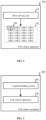
- FIG. 1 shows a block diagram of a cell culture apparatus 100 in accordance with one exemplary embodiment.
- the apparatus 100 is intended for the above-mentioned microfluidic cell culture.
- the apparatus 100 may comprise a cell culture plate 102 and a flow driving unit 104 coupled to the cell culture plate 102.
- the cell culture plate 102 may comprise multiple cell culture modules 106 and may be configured to fit the standard 96, 384, or 1536 microtiter plates.
- the flow driving unit 104 may be configured to cause a culture medium to flow in each cell culture module 106, as will be described below in more detail. It should be noted that the number, arrangement, and interconnection of the constructive elements constituting the apparatus 100, which are shown in FIG.
- the bottom part of the at least two culture medium reservoirs comprise a holding member 240.
- the holding member 240 may be configured to be compatible with a liquid handling system 602.
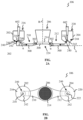
- the first culture medium reservoir 202 may have a top part with an inlet 216 for the culture medium and a bottom part with an outlet 218 for the culture medium.
- the second culture medium reservoir 204 may have a top part with an inlet 220 for the culture medium and a bottom part with an outlet 222 for the culture medium.
- the first and second culture medium reservoirs 202 and 204 may be implemented as identical hollow tubes. Although FIGs. 2A and 2B show that each of the first and second culture medium reservoirs 202 and 204 has a circular cross-section, this should not be construed as any limitation of the present disclosure; in some embodiments, any other cross-sectional shapes, such as polygonal, oval, etc., for example, are possible, if required and depending on particular applications.
- the bottom part of each of the first and second culture medium reservoirs 202 and 204 may have a different profile, for example, a positively tapered profile as shown in FIGs. 2A and 2B .
- a side 246 of the holding member 240 extends at a second tilting angle ⁇ to the first direction A starting at the bottom of the corresponding culture medium reservoir 202, 204.
- the tilting angle ⁇ may fall within a range of 5 degrees to 85 degrees.
- the first chamber 206 may be arranged between the first and second medium culture reservoirs 202 and 204 such that the first chamber 206 and the first and second culture medium reservoirs 202 and 204 are aligned with each other in a first (horizontal) direction A.
- the first chamber 206 may be implemented as a bottomless hollow tube, for example, with a positively tapered profile (as shown in FIG 2A ) or with a uniform cross-section. Again, the shown circular cross-section of the first chamber 206 is for illustrative purposes only and should not be considered as any limitation of the present disclosure.
- the second chamber 208 may be arranged under the first chamber 206 and aligned with the first chamber 206 in a second (vertical) direction B.
- the first direction A may be approximately perpendicular to the second direction.
- An angle between the first and the second direction A, B is about 90 degrees, for example.
- the second chamber 208 may have a cross-section corresponding to the cross-section of the first chamber 206.
- the second chamber 208 may have a bottom part having two or more lateral holes (not shown in FIG 2A ). As shown in FIGs. 2A and 2B , the second chamber 208 may have dimensions significantly smaller than the first chamber 206.
- the height of the second chamber 208 may fall within a range from 50 ⁇ m to 150 ⁇ m (at height values higher than 150 ⁇ m, the second chamber 208 may lose microfluidic properties).
- Such height values of the first and second chambers 206 and 208 may make the cell culture module 106 more compact, thereby reducing the total dimensions of the apparatus 100.
- the membrane 214 may have through pores (see FIG. 2B ) and may be arranged between the first chamber 206 and the second chamber 208 such that the first chamber 206 and the second chamber 208 are in flow communication with each other via the through pores of the membrane 214.
- the membrane 214 may be composed of silicone, plastic, protein, natural polymers, artificial polymers (e.g., polyester (PET)), metallic polymers or carbohydrates (e.g., cellulose), and may be formed by using one of the following methods: lithography, stamping, casting, electrospinning or in situ polymerization.
- the through pores may have different cross-sectional shapes, such, for example, as triangular, rectangular, square, oval, or polygonal (e.g., hexagonal).
- the polygonal cross-section shape of the through pores may refer to a convex or concave polygon.
- the through pores may have different cross-sectional shapes, such as any combination of two or more of the above-mentioned cross-sectional shapes (e.g., the combination of circular and square cross-section shapes).
- each of the through pores may have a pore size varying within a predefined range of values.
- the pore size may vary from 0.2 ⁇ m to 10 ⁇ m.
- the predefined range of values for the pore size (as well as the spacing between the through pores) may be selected based on certain cells to be deposited on the membrane 214.
- the first and second flow channels 210 and 212 may be microchannels providing the passage of the culture medium between the first and second culture medium reservoirs 202 and 204 through the second chamber 208.
- the first flow channel 210 may connect the bottom edge 242 of the bottom part of the first culture medium reservoir 202 to one or more of the lateral holes arranged on the left side of the bottom part of the second chamber 208.
- the second flow channel 212 may connect the bottom edge 242 of the bottom part of the second culture medium reservoir 204 to one or more of the lateral holes arranged on the right side of the bottom part of the second chamber 208.
- the culture medium is configured to be injected through the outlet 218, 222 to the flow channel 210, 212, wherein an injection rate for the culture medium from the outlet 218, 222 of the culture medium to the flow channel 210, 212 is smaller than a maximum viable cell flow rate and larger than a cell settling rate.
- the injection rate for the culture medium is the speed of cell suspensions being injected into the flow channel 210, 212.
- the maximum viable cell flow rate is the maximum speed of the cell suspension or culture medium flows at which the cells will be damaged or dead if exceeded.
- each of the first and second flow channels 210 and 212 may be fully tilted up at the tilting angle ⁇ , starting from the bottom of the corresponding culture medium reservoir 218, 222 (i.e., there may be no first channel portion parallel to the first (horizontal) direction).
- each of the at least two flow channels 210, 212 in at least one cell culture module 206 extends at a tilting angle ⁇ to the first direction A starting from the bottom or bottom edge 242 of the corresponding culture medium reservoir 202, 204.
- the bottom part of the second chamber 208 and at least part of the each of the at least two flow channels 210, 212 may form a cavity.
- each of the at least two flow channels 210, 212 in at least one cell culture module 206 extends at a tilting angle ⁇ to the first direction A starting from the bottom of the corresponding culture medium reservoir 202, 204.
- the bottom part of the second chamber 208 and at least part of the each of the at least two flow channels 210, 212 may form the cavity 224.
- each of the second chamber 208, the first flow channel 210, and the second flow channel 212 may be coated, from inside, with a cell adhesion enhancing layer.
- the cell adhesion enhancing layer may be made of a hydrophilic material.
- Some non-restrictive examples of the hydrophilic material may include Matrigel, fibronectin, hyaluronic acid, different types of collagen (e.g., a type I collagen which is suitable for creating a blood-brain barrier cell culture model based on the apparatus 100), laminins, tenascin, elastane, nanocellulose with a host of different molecules.
- Such cell adhesion enhancing layers allow for less cells to be used in an experiment and more precise deposition of the cells on the basal surface of the membrane 214.
- At least part of at least one of the following is coated, from inside, with a cell repellent layer: at least one flow channel 210, 212, at least one culture medium reservoir 202, 204, first and/or second chamber 206, 208 in at least one cell culture module 106 of the plurality of cell culture modules.
- the cell repellent layer being made of at least one of the following material: Teflon, Pluronic, PEG, or similar chained polymers.
- the cell repellent coating may be used for forming organoid on top of the membrane 214 and preventing the cells to adhere to some specific parts of the flow channels 210, 212. In some example embodiments, only the membrane areas may be used for cell adherence, which may reduce the number of cells needed and avoid non-specific binding.
- the cell repellent layer may be used to prevent the cells to adhere to some specific parts of the apparatus.
- a layered structure represents one possible implementation example of the cell culture module 106.
- the layered structure may comprise a first layer and a second layer.
- the first layer may comprise the first and second culture medium reservoirs 202 and 204 with holding members 240, as well as the first chamber 206.
- the second layer may comprise the second chamber 208 arranged exactly under the membrane 214, as well as the flow channels 210 and 212.
- the membrane 214 may be arranged between the first chamber 206 and the second chamber 208 to provide the fluid communication therebetween via the through pores.
- the cell culture module 106 may comprises a first culture medium reservoir 202, a second culture medium reservoir 204, a first (apical or top) chamber 206, a second (basal or bottom) chamber 208, a first flow channel 210, a second flow channel 212, a membrane 214, and a cavity 224.
- the first culture medium reservoir 202 may have a top part with an inlet 216 for the culture medium and a bottom part with an outlet 218 for the culture medium.
- the second culture medium reservoir 204 may have a top part with an inlet 220 for the culture medium and a bottom part with an outlet 222 for the culture medium.
- the flow driving unit 104 is configured to cause the culture medium to flow, in each cell culture module 106 of the cell culture plate 102, between the first and second culture medium reservoirs 202 and 204.
- the flow driving unit 104 may be a rocking platform that is configured to periodically rock the cell culture plate 102, thereby providing the culture medium flow.
- the flow driving unit 104 may be a pneumatic pump that is configured to supply a compressed gas or a pressurized air to the inlet of each of the first and second culture medium reservoirs 202 and 204 in each cell culture module 106 of the cell culture plate 102, thereby causing the culture medium flow therein.
- the apparatus 100 may further comprise two or more third electrodes arranged in the first chamber 206 of one or more cell culture modules 106. These third electrodes may be arranged on the chamber walls for measuring a fluid level inside the first chamber 206. In this case, the third electrodes may either be in direct contact with the fluid/culture medium to determine the fluid level by performing conductivity measurements, or be embedded into the chamber walls (e.g., at a distance of 0.5 mm - 2 mm from each other) to determine the fluid level by measuring inductive or capacitive changes in the third electrodes.
- the apparatus 100 may further comprise two or more fourth electrodes embedded into the membrane 214 of one or more cell culture modules 106. These fourth electrodes may be used to provide different stimulus signals to cells deposited on the apical and/or basal surface of the membrane.
- the liquid handling system 602 may be used to feed the culture medium to each of the at least two culture medium reservoirs and/or to each outlet of the at least two culture medium reservoirs in each cell culture module of the plurality of cell culture modules.
- the liquid handling system 602 may also be used in flow driving unit 104 for pipetting the culture medium from one of the at least two culture medium reservoirs 102, 104 to another of the at least two culture medium reservoirs 102, 104 at regular time intervals or based on a level of the culture medium in each of the at least two culture medium reservoirs 102, 104.
- liquid handling systems 602 comprise pipetting devices, pipets and micropipets, both digital and electronic, with fixed or disposable tips; microplate or microtiter plate dispensers, stackers, handlers, and washers; and a wide variety of automated robotic systems.
- the liquid handling systems 602 are well-known in this technical field, for which reason its description is omitted herein.
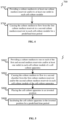
- FIG. 4 shows a flowchart of a method 700 for cell cultivation by using the cell culture apparatus 100 in accordance with a first exemplary embodiment.
- the method 700 may start with an operation S702, in which a required culture medium is provided, e.g., by the liquid handling system 602, for example pipetting station, to at least one of the first and second culture medium reservoirs 202 and 204 and/or to at least one outlet of the at least two culture medium reservoirs in each cell culture module 106 of the cell culture plate 102.
- the culture medium may be provided to the first culture medium reservoir 202 and/or to the outlet of the first culture medium reservoir 202.
- the method 700 proceeds to an operation S704, in which the flow driving unit 104 may cause the culture medium to flow from the first culture medium reservoir 202 to the second culture medium reservoir 204 in each cell culture module 106 of the cell culture plate 102 for a predefined time period.
- the predefined time period may be selected based on the culture medium (i.e., a type of cells used therein).
- the cell deposition on the basal surface of the membrane 214 may be achieved if a flow rate is greater than gravity and a continuous flow lasts at least 30 min, preferably 60 min.
- the operation (a) comprises controlling feeding of the culture medium from the outlet 218, 222 of the culture medium to the flow channel 210, 212 by optimizing an injection rate, wherein the optimal injection rate for the culture medium from the outlet of the culture medium to the flow channel 210, 212 is smaller than a maximum viable cell flow rate and larger than a cell settling rate.
- the injection rate is the speed of cell suspensions being injected into the flow channel 210, 212.
- the maximum viable cell flow rate is the maximum speed of the cell suspension or culture medium flows at which the cells will be damaged or dead if exceeded.
- the operation (a) comprises optimizing an injection time, wherein the optimal injection time is calculated by dividing amount of the culture medium by the injection rate.
- Extracellular Matrix (ECM) coating solution (used as a cell adhesion enhancing layer for the flow channels 210, 212, the second chamber 208, and the first chamber 206)
- Collagen I (Col-I) 100 ⁇ g/mL, 0.1% acetic acid Washing 1xPBS (phosphate buffer saline), ethanol 96% Plate 102 96-well format
- the stage of preparing was performed as follows:
- the BBB model based on the mouse cells was obtained as follows:
- the BBB model based on the human cells i.e., HA-cells and HPBMEC
- HA-cells and HPBMEC may be obtained in the same manner (one just needs to replace "MA” and “MPBMEC” with “HA” and “HPBMEC”, respectively, in operations 1-11 above).
- the MAs were introduced in the first chamber 206 and grown a monolayer on the apical surface of the membrane 214, while the MPBMEC were perfused through the second chamber 208 and deposited on the basal side of the membrane 214.
- the cells were treated immunohistochemically with antibodies against CD31, glial fibrillary acidic protein (GFAP), Actin and DAPI (which is a small molecule that binds to DNA showing the cell nuclei).
- GFAP glial fibrillary acidic protein
- Actin Actin
- DAPI DAPI
Landscapes
- Health & Medical Sciences (AREA)
- Engineering & Computer Science (AREA)
- Chemical & Material Sciences (AREA)
- Life Sciences & Earth Sciences (AREA)
- Zoology (AREA)
- Organic Chemistry (AREA)
- Bioinformatics & Cheminformatics (AREA)
- Wood Science & Technology (AREA)
- Biomedical Technology (AREA)
- Genetics & Genomics (AREA)
- Biotechnology (AREA)
- General Health & Medical Sciences (AREA)
- Biochemistry (AREA)
- General Engineering & Computer Science (AREA)
- Microbiology (AREA)
- Sustainable Development (AREA)
- Clinical Laboratory Science (AREA)
- Analytical Chemistry (AREA)
- Immunology (AREA)
- Cell Biology (AREA)
- Molecular Biology (AREA)
- Physics & Mathematics (AREA)
- Dispersion Chemistry (AREA)
- Neurosurgery (AREA)
- Neurology (AREA)
- Vascular Medicine (AREA)
- Thermal Sciences (AREA)
- General Physics & Mathematics (AREA)
- Pathology (AREA)
- Apparatus Associated With Microorganisms And Enzymes (AREA)
- Micro-Organisms Or Cultivation Processes Thereof (AREA)
Claims (18)
- Zellkulturvorrichtung, umfassend:eine Mehrzahl von Zellkulturmodulen, die benachbart zueinander angeordnet sind, wobei jedes Zellkulturmodul der Mehrzahl von Zellkulturmodulen umfasst:- mindestens zwei Kulturmediumreservoirs, die jeweils einen oberen Teil und einen unteren Teil aufweisen, wobei der obere Teil einen Einlass für ein Kulturmedium aufweist und der untere Teil einen Auslass für das Kulturmedium aufweist;- eine erste Kammer, die zwischen den mindestens zwei Kulturmediumreservoirs derart angeordnet ist, dass die erste Kammer und die mindestens zwei Kulturmediumreservoirs in einer ersten Richtung miteinander ausgerichtet sind;- eine zweite Kammer, die unter der ersten Kammer angeordnet ist und mit der ersten Kammer in einer zweiten Richtung ausgerichtet ist, wobei die zweite Richtung orthogonal zur ersten Richtung ist, wobei die zweite Kammer einen unteren Teil aufweist, der mindestens zwei laterale Löcher aufweist, wobei der untere Teil der zweiten Kammer höher angeordnet ist als der untere Teil jedes der mindestens zwei Kulturmediumreservoirs;- eine Membran, die darin gebildete Durchgangsporen aufweist, wobei die Membran zwischen der ersten Kammer und der zweiten Kammer derart angeordnet ist, dass die erste Kammer und die zweite Kammer über die Durchgangsporen in Strömungsverbindung miteinander stehen;- mindestens zwei Strömungskanäle, die jeweils den Auslass des unteren Teils eines der mindestens zwei Kulturmediumreservoirs mit einem der mindestens zwei lateralen Löcher des unteren Teils der zweiten Kammer verbinden; undeine Strömungsantriebseinheit, die verursacht, dass das Kulturmedium in jedem Zellkulturmodul der Mehrzahl von Zellkulturmodulen zwischen den mindestens zwei Kulturmediumreservoirs über die mindestens zwei Strömungskanäle und die zweite Kammer fließt, wobei der untere Teil der mindestens zwei Kulturmediumreservoirs ein Haltebauteil umfasst, das mit einem Flüssigkeitshandhabungssystem kompatibel ist.
- Vorrichtung gemäß Anspruch 1, wobei das Haltebauteil eine Kegelstumpfform aufweist.
- Vorrichtung gemäß Anspruch 1 oder Anspruch 2, wobei der Boden des Kulturmediumreservoirs als das Haltebauteil weitergeführt wird und eine Oberkante des Haltebauteils den Auslass für das Kulturmedium umfasst, wobei der Auslass für das Kulturmedium mindestens einen Teil des Flüssigkeitshandhabungssystems aufnimmt.
- Vorrichtung gemäß Anspruch 3, wobei das Haltebauteil eine Unterkante am Boden des Kulturmediumreservoirs aufweist, wobei die Unterkante des Haltebauteils einen größeren Durchmesser aufweist, und die Oberkante des Haltebauteils einen kleineren Durchmesser aufweist.
- Vorrichtung gemäß einem der vorhergehenden Ansprüche, wobei sich eine Seite des Haltebauteils in einem zweiten Neigungswinkel zur ersten Richtung erstreckt, beginnend am Boden des entsprechenden Kulturmediumreservoirs.
- Vorrichtung gemäß einem der vorhergehenden Ansprüche, wobei der Auslass für das Kulturmedium mindestens einen Teil des Flüssigkeitshandhabungssystems aufnimmt und das Kulturmedium durch den Auslass zu dem Strömungskanal geleitet wird.
- Vorrichtung gemäß einem der vorhergehenden Ansprüche, wobei das mindestens eine Kulturmediumreservoir eine Kavität zum Überströmen zwischen dem Haltebauteil und dem Boden des Kulturmediumreservoirs umfasst.
- Vorrichtung nach einem der vorhergehenden Ansprüche, wobei das Kulturmedium durch den Auslass in den Strömungskanal eingeleitet wird, wobei eine Injektionsrate für das Kulturmedium vom Auslass für das Kulturmedium zum Strömungskanal kleiner als eine maximale Durchflussrate lebensfähiger Zellen und größer als eine Zellabsetzrate ist, wobeidie Injektionsrate die Geschwindigkeit ist, mit der Zellsuspensionen in den Strömungskanal eingeleitet werden;wobei die maximale Durchflussrate lebensfähiger Zellen die maximale Geschwindigkeit ist, mit der Zellsuspension oder Kulturmedium fließt, bei der Zellen beschädigt werden oder absterben, wenn sie überschritten wird; unddie Zellabsetzrate eine Geschwindigkeit ist, mit der die Zellen in dem Kulturmedium sich am Boden der Kammer, Reservoirs, Strömungskanal, und/oder Kulturmedium absetzen.
- Vorrichtung gemäß Anspruch 8, wobei eine optimale Injektionszeit durch Dividieren der Kulturmediumsmenge durch die Injektionsrate berechnet wird.
- Vorrichtung gemäß einem der vorhergehenden Ansprüche, wobei mindestens ein Teil von mindestens einem der folgenden von innen mit einer zellabweisenden Schicht beschichtet ist: mindestens ein Strömungskanal, mindestens ein Kulturmediumreservoir, erste und/oder zweite Kammer in mindestens einem Zellkulturmodul der Mehrzahl von Zellkulturmodulen.
- Vorrichtung gemäß Anspruch 10, wobei die zellabweisende Schicht aus mindestens einem der folgenden Materialien hergestellt ist: Teflon, Pluronic, PEG, oder ähnliche kettenförmige Polymere.
- Vorrichtung gemäß einem der vorhergehenden Ansprüche, wobei jedes Zellkulturmodul der Mehrzahl von Zellkulturmodulen eine Kavität zumindest unter dem unteren Teil der zweiten Kammer umfasst.
- Vorrichtung gemäß Anspruch 12, wobei sich jeder der mindestens zwei Strömungskanäle zumindest teilweise in einem Neigungswinkel zur ersten Richtung erstreckt und wobei der untere Teil der zweiten Kammer und mindestens ein Teil jedes der mindestens zwei Strömungskanäle die Kavität bilden.
- Zellkulturinkubator, umfassend:die Zellkulturvorrichtung gemäß einem der Ansprüche 1 bis 13; undein Flüssigkeitshandhabungssystem, das das Kulturmedium zu mindestens einem der mindestens zwei Kulturmediumreservoirs und/oder zu mindestens einem Auslass der mindestens zwei Kulturmediumreservoirs in jedem Zellkulturmodul der Mehrzahl von Zellkulturmodulen leitet.
- Verfahren zur Zellkultivierung unter Verwendung der Zellkulturvorrichtung gemäß einem der Ansprüche 1 bis 13, wobei das Verfahren umfasst:(a) Bereitstellen des Kulturmediums in mindestens einem der mindestens zwei Mediumreservoirs und/oder in mindestens einem Auslass der mindestens zwei Kulturmediumreservoirs in jedem Zellkulturmodul der Mehrzahl von Zellkulturmodulen; und(b) Verursachen, durch die Strömungsantriebseinheit, dass das Kulturmedium von dem einen der mindestens zwei Kulturmediumreservoirs zu den restlichen der mindestens zwei Kulturmediumreservoirs in jedem Zellkulturmodul der Mehrzahl von Zellkulturmodulen für eine vordefinierte Zeitperiode fließt, wobei die vordefinierte Zeitperiode basierend auf dem Kulturmedium ausgewählt wird.
- Verfahren gemäß Anspruch 15, wobei Betrieb (a) Steuern der Zufuhr des Kulturmediums von dem Auslass des Kulturmediums zum Strömungskanal durch Optimieren der Injektionsrate umfasst, wobei optimale Injektionsrate für das Kulturmedium von dem Auslass des Kulturmediums zu dem Strömungskanal kleiner als eine maximale Durchflussrate lebensfähiger Zellen und größer als eine Zellabsetzrate ist.
- Verfahren gemäß Anspruch 16, wobei Betrieb (a) Optimieren einer Injektionszeit umfasst, wobei die optimale Injektionszeit berechnet wird, indem die Kulturmediumsmenge durch die Injektionsrate geteilt wird.
- Verfahren gemäß einem der Ansprüche 15 bis 17, wobei das Verfahren ferner umfasst:- Platzieren der Zellkulturvorrichtung in einer invertierten Position; und- Inkubieren der Zellkulturvorrichtung in der invertierten Position für eine vordefinierte Zeitperiode, wobei die vordefinierte Zeitperiode basierend auf dem Kulturmedium ausgewählt wird.
Priority Applications (3)
| Application Number | Priority Date | Filing Date | Title |
|---|---|---|---|
| KR1020220114415A KR20230038127A (ko) | 2021-09-10 | 2022-09-08 | 세포 배양 장치에서의 유속 최적화 |
| US17/930,964 US20230183634A1 (en) | 2021-09-10 | 2022-09-09 | Flow rate optimizing in a cell cultivation apparatus |
| JP2022144281A JP2023041054A (ja) | 2021-09-10 | 2022-09-12 | 細胞培養装置における流量最適化 |
Applications Claiming Priority (1)
| Application Number | Priority Date | Filing Date | Title |
|---|---|---|---|
| EP21195867.3A EP4148114B1 (de) | 2021-09-10 | 2021-09-10 | Zellkulturvorrichtung, verfahren zur kultivierung von zellen unter verwendung derselben und zellkulturinkubator damit |
Publications (3)
| Publication Number | Publication Date |
|---|---|
| EP4148115A1 EP4148115A1 (de) | 2023-03-15 |
| EP4148115B1 true EP4148115B1 (de) | 2025-04-09 |
| EP4148115C0 EP4148115C0 (de) | 2025-04-09 |
Family
ID=77710585
Family Applications (4)
| Application Number | Title | Priority Date | Filing Date |
|---|---|---|---|
| EP21195867.3A Active EP4148114B1 (de) | 2021-09-10 | 2021-09-10 | Zellkulturvorrichtung, verfahren zur kultivierung von zellen unter verwendung derselben und zellkulturinkubator damit |
| EP22175853.5A Active EP4148115B1 (de) | 2021-09-10 | 2022-05-27 | Flussratenoptimierung in einer vorrichtung zur kultivierung von zellen |
| EP22175854.3A Pending EP4148116A1 (de) | 2021-09-10 | 2022-05-27 | Bilderfassung in einer zellkultivierungsvorrichtung |
| EP22178933.2A Active EP4148117B1 (de) | 2021-09-10 | 2022-06-14 | Zellkultivierungsvorrichtung, verfahren zur zellkultivierung unter verwendung derselben, zellkultivierungsinkubator damit |
Family Applications Before (1)
| Application Number | Title | Priority Date | Filing Date |
|---|---|---|---|
| EP21195867.3A Active EP4148114B1 (de) | 2021-09-10 | 2021-09-10 | Zellkulturvorrichtung, verfahren zur kultivierung von zellen unter verwendung derselben und zellkulturinkubator damit |
Family Applications After (2)
| Application Number | Title | Priority Date | Filing Date |
|---|---|---|---|
| EP22175854.3A Pending EP4148116A1 (de) | 2021-09-10 | 2022-05-27 | Bilderfassung in einer zellkultivierungsvorrichtung |
| EP22178933.2A Active EP4148117B1 (de) | 2021-09-10 | 2022-06-14 | Zellkultivierungsvorrichtung, verfahren zur zellkultivierung unter verwendung derselben, zellkultivierungsinkubator damit |
Country Status (6)
| Country | Link |
|---|---|
| US (3) | US20240384241A1 (de) |
| EP (4) | EP4148114B1 (de) |
| JP (2) | JP2023041053A (de) |
| KR (3) | KR20230038126A (de) |
| CN (1) | CN117980463A (de) |
| WO (1) | WO2023036942A1 (de) |
Families Citing this family (5)
| Publication number | Priority date | Publication date | Assignee | Title |
|---|---|---|---|---|
| US20240150692A1 (en) * | 2022-11-08 | 2024-05-09 | Government Of The United States As Represented By The Secretary Of The Air Force | Organ crosstalk in vitro chamber to simulate multi organ tissues |
| TWM647074U (zh) * | 2023-02-02 | 2023-10-11 | 新原生細胞製備股份有限公司 | 三維培養裝置及生物培養器具 |
| KR102682842B1 (ko) * | 2023-05-30 | 2024-07-08 | 주식회사 에드믹바이오 | 배양액 유동 세포 배양 칩 |
| US20250216378A1 (en) | 2023-12-28 | 2025-07-03 | Biobridge Global | Methods for performing miniaturized dynamic assays using microfluidics and related systems |
| CN120249057A (zh) * | 2025-05-28 | 2025-07-04 | 四川迪亚生物科技集团有限公司 | 一种单向灌流细胞培养板及使用方法 |
Family Cites Families (7)
| Publication number | Priority date | Publication date | Assignee | Title |
|---|---|---|---|---|
| US9637715B2 (en) * | 2005-07-07 | 2017-05-02 | Emd Millipore Corporation | Cell culture and invasion assay method and system |
| EP3639003A4 (de) * | 2017-06-14 | 2021-03-17 | Emulate, Inc. | Auswirkungen von raumfahrt auf menschliche gehirnzellen |
| US20200024563A1 (en) * | 2018-07-20 | 2020-01-23 | Waterloo Instruments Inc. | Method and system for a cell culture system with recirculating culture medium |
| WO2020081740A1 (en) * | 2018-10-17 | 2020-04-23 | Northwestern University | Tissue culture platform having multiple well chambers fluidically coupled via microfluidic channels and selector valves |
| NL2022085B1 (en) * | 2018-11-28 | 2020-06-25 | Mimetas B V | Device for assessing mechanical strain induced in or by cells |
| KR102313280B1 (ko) * | 2019-12-09 | 2021-10-14 | 조지아 테크 리서치 코오포레이션 | 미세공학 조직 장벽 시스템 |
| US11732232B2 (en) * | 2020-08-14 | 2023-08-22 | Korea Research Institute Of Bioscience And Biotechnology | Biomimetic cell culture apparatus and cell culture system comprising the same |
-
2021
- 2021-09-10 EP EP21195867.3A patent/EP4148114B1/de active Active
-
2022
- 2022-05-27 EP EP22175853.5A patent/EP4148115B1/de active Active
- 2022-05-27 EP EP22175854.3A patent/EP4148116A1/de active Pending
- 2022-06-14 EP EP22178933.2A patent/EP4148117B1/de active Active
- 2022-09-08 KR KR1020220114376A patent/KR20230038126A/ko active Pending
- 2022-09-08 KR KR1020220114415A patent/KR20230038127A/ko active Pending
- 2022-09-09 US US18/690,724 patent/US20240384241A1/en active Pending
- 2022-09-09 CN CN202280061059.4A patent/CN117980463A/zh active Pending
- 2022-09-09 KR KR1020247011810A patent/KR20240053655A/ko not_active Ceased
- 2022-09-09 JP JP2022144173A patent/JP2023041053A/ja active Pending
- 2022-09-09 WO PCT/EP2022/075131 patent/WO2023036942A1/en not_active Ceased
- 2022-09-09 US US17/930,981 patent/US20230080802A1/en not_active Abandoned
- 2022-09-09 US US17/930,964 patent/US20230183634A1/en active Pending
- 2022-09-12 JP JP2022144281A patent/JP2023041054A/ja active Pending
Also Published As
| Publication number | Publication date |
|---|---|
| EP4148117A1 (de) | 2023-03-15 |
| KR20240053655A (ko) | 2024-04-24 |
| EP4148114A1 (de) | 2023-03-15 |
| JP2023041053A (ja) | 2023-03-23 |
| JP2023041054A (ja) | 2023-03-23 |
| EP4148116A1 (de) | 2023-03-15 |
| EP4148117B1 (de) | 2025-12-31 |
| US20240384241A1 (en) | 2024-11-21 |
| KR20230038127A (ko) | 2023-03-17 |
| EP4148114B1 (de) | 2026-01-28 |
| KR20230038126A (ko) | 2023-03-17 |
| EP4148114C0 (de) | 2026-01-28 |
| EP4148117C0 (de) | 2025-12-31 |
| US20230080802A1 (en) | 2023-03-16 |
| WO2023036942A1 (en) | 2023-03-16 |
| EP4148115A1 (de) | 2023-03-15 |
| US20230183634A1 (en) | 2023-06-15 |
| EP4148115C0 (de) | 2025-04-09 |
| CN117980463A (zh) | 2024-05-03 |
Similar Documents
| Publication | Publication Date | Title |
|---|---|---|
| EP4148115B1 (de) | Flussratenoptimierung in einer vorrichtung zur kultivierung von zellen | |
| RU2615179C2 (ru) | Устройства и способы культивирования клеток | |
| JP5578779B2 (ja) | スフェロイド培養方法及びスフェロイド培養容器 | |
| KR102527308B1 (ko) | 3d 세포 응집체의 생성 및 배양을 위한 장치 및 방법 | |
| CA2737627C (en) | Hanging drop plate | |
| JP2016093149A (ja) | 細胞培養装置および細胞培養方法 | |
| CN102575216A (zh) | 浸泡式灌注生物反应器 | |
| WO2023036909A1 (en) | Cell culture apparatus, methods for cell cultivation by using the same, cell culture incubator comprising the same, and uses of the cell culture apparatus | |
| US20230002718A1 (en) | Automated medium exchange strategy for suspension cells | |
| US20260117161A1 (en) | Cell culture apparatus, methods for cell cultivation by using the same, cell culture incubator comprising the same, and uses of the cell culture apparatus | |
| EP2628790B1 (de) | Mikrofluidisches System zur Simulation in-vivo-identischer Zellbarrieren | |
| Clementi et al. | Cell culture conditions: Cultivation of stem cells under dynamic conditions | |
| EP4289934B1 (de) | Zellkulturmembranstruktur, verfahren zu deren herstellung, zellkulturplatte, zellkulturgerät mit der zellkulturmembranstruktur und verfahren zur zellkultivierung unter verwendung des zellkulturgerätes | |
| US20250361471A1 (en) | Biologic scaffold-assisted cell cultivation | |
| EP4289932A1 (de) | Zellkultivierung durch verwendung von herausnehmbaren, von oben beladenen kammern in zellkulturplatten | |
| CN117957303A (zh) | 细胞培养装置、使用该细胞培养装置的细胞培养方法、包括该细胞培养装置的细胞培养孵箱以及该细胞培养装置的用途 | |
| Clementi et al. | Cell culture conditions: cultivation of stem cells under dynamic conditions | |
| Keshavarz et al. | Cell culture techniques in microfluidic chips | |
| WO2022158609A1 (ja) | 細胞培養容器 | |
| Vadivelu | Microbioreactors for 3-dimensional tissue |
Legal Events
| Date | Code | Title | Description |
|---|---|---|---|
| PUAI | Public reference made under article 153(3) epc to a published international application that has entered the european phase |
Free format text: ORIGINAL CODE: 0009012 |
|
| STAA | Information on the status of an ep patent application or granted ep patent |
Free format text: STATUS: THE APPLICATION HAS BEEN PUBLISHED |
|
| AK | Designated contracting states |
Kind code of ref document: A1 Designated state(s): AL AT BE BG CH CY CZ DE DK EE ES FI FR GB GR HR HU IE IS IT LI LT LU LV MC MK MT NL NO PL PT RO RS SE SI SK SM TR |
|
| STAA | Information on the status of an ep patent application or granted ep patent |
Free format text: STATUS: REQUEST FOR EXAMINATION WAS MADE |
|
| 17P | Request for examination filed |
Effective date: 20230630 |
|
| RBV | Designated contracting states (corrected) |
Designated state(s): AL AT BE BG CH CY CZ DE DK EE ES FI FR GB GR HR HU IE IS IT LI LT LU LV MC MK MT NL NO PL PT RO RS SE SI SK SM TR |
|
| GRAP | Despatch of communication of intention to grant a patent |
Free format text: ORIGINAL CODE: EPIDOSNIGR1 |
|
| STAA | Information on the status of an ep patent application or granted ep patent |
Free format text: STATUS: GRANT OF PATENT IS INTENDED |
|
| INTG | Intention to grant announced |
Effective date: 20241108 |
|
| GRAS | Grant fee paid |
Free format text: ORIGINAL CODE: EPIDOSNIGR3 |
|
| GRAA | (expected) grant |
Free format text: ORIGINAL CODE: 0009210 |
|
| STAA | Information on the status of an ep patent application or granted ep patent |
Free format text: STATUS: THE PATENT HAS BEEN GRANTED |
|
| AK | Designated contracting states |
Kind code of ref document: B1 Designated state(s): AL AT BE BG CH CY CZ DE DK EE ES FI FR GB GR HR HU IE IS IT LI LT LU LV MC MK MT NL NO PL PT RO RS SE SI SK SM TR |
|
| REG | Reference to a national code |
Ref country code: GB Ref legal event code: FG4D |
|
| REG | Reference to a national code |
Ref country code: CH Ref legal event code: EP |
|
| REG | Reference to a national code |
Ref country code: DE Ref legal event code: R096 Ref document number: 602022012787 Country of ref document: DE |
|
| REG | Reference to a national code |
Ref country code: IE Ref legal event code: FG4D |
|
| U01 | Request for unitary effect filed |
Effective date: 20250508 |
|
| U07 | Unitary effect registered |
Designated state(s): AT BE BG DE DK EE FI FR IT LT LU LV MT NL PT RO SE SI Effective date: 20250515 |
|
| PG25 | Lapsed in a contracting state [announced via postgrant information from national office to epo] |
Ref country code: ES Free format text: LAPSE BECAUSE OF FAILURE TO SUBMIT A TRANSLATION OF THE DESCRIPTION OR TO PAY THE FEE WITHIN THE PRESCRIBED TIME-LIMIT Effective date: 20250409 |
|
| PG25 | Lapsed in a contracting state [announced via postgrant information from national office to epo] |
Ref country code: GR Free format text: LAPSE BECAUSE OF FAILURE TO SUBMIT A TRANSLATION OF THE DESCRIPTION OR TO PAY THE FEE WITHIN THE PRESCRIBED TIME-LIMIT Effective date: 20250710 Ref country code: NO Free format text: LAPSE BECAUSE OF FAILURE TO SUBMIT A TRANSLATION OF THE DESCRIPTION OR TO PAY THE FEE WITHIN THE PRESCRIBED TIME-LIMIT Effective date: 20250709 |
|
| PG25 | Lapsed in a contracting state [announced via postgrant information from national office to epo] |
Ref country code: PL Free format text: LAPSE BECAUSE OF FAILURE TO SUBMIT A TRANSLATION OF THE DESCRIPTION OR TO PAY THE FEE WITHIN THE PRESCRIBED TIME-LIMIT Effective date: 20250409 |
|
| U21 | Renewal fee for the european patent with unitary effect paid with additional fee |
Year of fee payment: 4 Effective date: 20250909 |
|
| PG25 | Lapsed in a contracting state [announced via postgrant information from national office to epo] |
Ref country code: HR Free format text: LAPSE BECAUSE OF FAILURE TO SUBMIT A TRANSLATION OF THE DESCRIPTION OR TO PAY THE FEE WITHIN THE PRESCRIBED TIME-LIMIT Effective date: 20250409 |
|
| PG25 | Lapsed in a contracting state [announced via postgrant information from national office to epo] |
Ref country code: RS Free format text: LAPSE BECAUSE OF FAILURE TO SUBMIT A TRANSLATION OF THE DESCRIPTION OR TO PAY THE FEE WITHIN THE PRESCRIBED TIME-LIMIT Effective date: 20250709 |
|
| PG25 | Lapsed in a contracting state [announced via postgrant information from national office to epo] |
Ref country code: IS Free format text: LAPSE BECAUSE OF FAILURE TO SUBMIT A TRANSLATION OF THE DESCRIPTION OR TO PAY THE FEE WITHIN THE PRESCRIBED TIME-LIMIT Effective date: 20250809 |
|
| REG | Reference to a national code |
Ref country code: CH Ref legal event code: H13 Free format text: ST27 STATUS EVENT CODE: U-0-0-H10-H13 (AS PROVIDED BY THE NATIONAL OFFICE) Effective date: 20251223 |
|
| PG25 | Lapsed in a contracting state [announced via postgrant information from national office to epo] |
Ref country code: SM Free format text: LAPSE BECAUSE OF FAILURE TO SUBMIT A TRANSLATION OF THE DESCRIPTION OR TO PAY THE FEE WITHIN THE PRESCRIBED TIME-LIMIT Effective date: 20250409 |
|
| PG25 | Lapsed in a contracting state [announced via postgrant information from national office to epo] |
Ref country code: CH Free format text: LAPSE BECAUSE OF NON-PAYMENT OF DUE FEES Effective date: 20250531 |
|
| PG25 | Lapsed in a contracting state [announced via postgrant information from national office to epo] |
Ref country code: CZ Free format text: LAPSE BECAUSE OF FAILURE TO SUBMIT A TRANSLATION OF THE DESCRIPTION OR TO PAY THE FEE WITHIN THE PRESCRIBED TIME-LIMIT Effective date: 20250409 |
|
| PG25 | Lapsed in a contracting state [announced via postgrant information from national office to epo] |
Ref country code: SK Free format text: LAPSE BECAUSE OF FAILURE TO SUBMIT A TRANSLATION OF THE DESCRIPTION OR TO PAY THE FEE WITHIN THE PRESCRIBED TIME-LIMIT Effective date: 20250409 |
|
| PG25 | Lapsed in a contracting state [announced via postgrant information from national office to epo] |
Ref country code: MC Free format text: LAPSE BECAUSE OF FAILURE TO SUBMIT A TRANSLATION OF THE DESCRIPTION OR TO PAY THE FEE WITHIN THE PRESCRIBED TIME-LIMIT Effective date: 20250409 |
|
| PLBE | No opposition filed within time limit |
Free format text: ORIGINAL CODE: 0009261 |
|
| STAA | Information on the status of an ep patent application or granted ep patent |
Free format text: STATUS: NO OPPOSITION FILED WITHIN TIME LIMIT |
|
| REG | Reference to a national code |
Ref country code: CH Ref legal event code: L10 Free format text: ST27 STATUS EVENT CODE: U-0-0-L10-L00 (AS PROVIDED BY THE NATIONAL OFFICE) Effective date: 20260218 |
|
| 26N | No opposition filed |
Effective date: 20260112 |
|
| PG25 | Lapsed in a contracting state [announced via postgrant information from national office to epo] |
Ref country code: IE Free format text: LAPSE BECAUSE OF NON-PAYMENT OF DUE FEES Effective date: 20250527 |