EP4146225B1 - Methylthioninium compounds for use in the treatment of hypoxemia - Google Patents
Methylthioninium compounds for use in the treatment of hypoxemia Download PDFInfo
- Publication number
- EP4146225B1 EP4146225B1 EP21724580.2A EP21724580A EP4146225B1 EP 4146225 B1 EP4146225 B1 EP 4146225B1 EP 21724580 A EP21724580 A EP 21724580A EP 4146225 B1 EP4146225 B1 EP 4146225B1
- Authority
- EP
- European Patent Office
- Prior art keywords
- compound
- subject
- acid
- disease
- containing compound
- Prior art date
- Legal status (The legal status is an assumption and is not a legal conclusion. Google has not performed a legal analysis and makes no representation as to the accuracy of the status listed.)
- Active
Links
Images



Classifications
-
- A—HUMAN NECESSITIES
- A61—MEDICAL OR VETERINARY SCIENCE; HYGIENE
- A61K—PREPARATIONS FOR MEDICAL, DENTAL OR TOILETRY PURPOSES
- A61K31/00—Medicinal preparations containing organic active ingredients
- A61K31/33—Heterocyclic compounds
- A61K31/395—Heterocyclic compounds having nitrogen as a ring hetero atom, e.g. guanethidine or rifamycins
- A61K31/54—Heterocyclic compounds having nitrogen as a ring hetero atom, e.g. guanethidine or rifamycins having six-membered rings with at least one nitrogen and one sulfur as the ring hetero atoms, e.g. sulthiame
- A61K31/5415—Heterocyclic compounds having nitrogen as a ring hetero atom, e.g. guanethidine or rifamycins having six-membered rings with at least one nitrogen and one sulfur as the ring hetero atoms, e.g. sulthiame ortho- or peri-condensed with carbocyclic ring systems, e.g. phenothiazine, chlorpromazine, piroxicam
-
- A—HUMAN NECESSITIES
- A61—MEDICAL OR VETERINARY SCIENCE; HYGIENE
- A61K—PREPARATIONS FOR MEDICAL, DENTAL OR TOILETRY PURPOSES
- A61K33/00—Medicinal preparations containing inorganic active ingredients
-
- A—HUMAN NECESSITIES
- A61—MEDICAL OR VETERINARY SCIENCE; HYGIENE
- A61K—PREPARATIONS FOR MEDICAL, DENTAL OR TOILETRY PURPOSES
- A61K9/00—Medicinal preparations characterised by special physical form
- A61K9/0012—Galenical forms characterised by the site of application
- A61K9/0053—Mouth and digestive tract, i.e. intraoral and peroral administration
-
- A—HUMAN NECESSITIES
- A61—MEDICAL OR VETERINARY SCIENCE; HYGIENE
- A61P—SPECIFIC THERAPEUTIC ACTIVITY OF CHEMICAL COMPOUNDS OR MEDICINAL PREPARATIONS
- A61P11/00—Drugs for disorders of the respiratory system
-
- A—HUMAN NECESSITIES
- A61—MEDICAL OR VETERINARY SCIENCE; HYGIENE
- A61P—SPECIFIC THERAPEUTIC ACTIVITY OF CHEMICAL COMPOUNDS OR MEDICINAL PREPARATIONS
- A61P43/00—Drugs for specific purposes, not provided for in groups A61P1/00-A61P41/00
-
- A—HUMAN NECESSITIES
- A61—MEDICAL OR VETERINARY SCIENCE; HYGIENE
- A61P—SPECIFIC THERAPEUTIC ACTIVITY OF CHEMICAL COMPOUNDS OR MEDICINAL PREPARATIONS
- A61P7/00—Drugs for disorders of the blood or the extracellular fluid
-
- A—HUMAN NECESSITIES
- A61—MEDICAL OR VETERINARY SCIENCE; HYGIENE
- A61K—PREPARATIONS FOR MEDICAL, DENTAL OR TOILETRY PURPOSES
- A61K2300/00—Mixtures or combinations of active ingredients, wherein at least one active ingredient is fully defined in groups A61K31/00 - A61K41/00
Definitions
- the present invention relates generally to materials for use for alleviating hypoxemia or treatment of hypoxia in a subject.
- One of the primary functions of the cardiorespiratory system, including the blood, is to ensure that all tissues are adequately oxygenated at all times, i.e., that the pO 2 in the immediate environment of a cell exceeds the critical pO 2 needed for normal mitochondrial oxygen consumption and ATP production (see Chapter 7, Pittman RN. Regulation of Tissue Oxygenation. San Rafael (CA): Morgan & Claypool Life Sciences; 2011 )
- references to methods of treatment in the description of the invention are to be interpreted as references to the compounds, pharmaceutical compositions and medicaments of the present invention for use in a method for treatment of the human (or animal) body by therapy.
- the present invention provides for the use of certain hydromethylthionine salts (referred to as “LMTX” below) as therapeutics for alleviating hypoxemia in subjects. This may in turn be used to alleviate hypoxia and treat pathologies or other causes of hypoxia.
- LMTX hydromethylthionine salts
- MTC methylthionium chloride, methylene blue
- LMTX delivers the same MT (methylthionine) moiety systemically, but is more suitable for oral and intravenous use than MTC as it has improved absorption, red cell penetration and deep compartment distribution (Baddeley et al., 2015). LMTX can be used at a substantially lower dose than MTC and is thus better tolerated.
- LMTX salts can enhance oxygen saturation even at relatively low doses, and unrelated to any known effects on metHb.
- the inventors propose that the binding of the LMT moiety to haemoglobin overcomes the initial energy barrier for oxygen binding, which thereby facilitates subsequence binding and oxygenation of all four heme groups of haemoglobin.
- WO2007/110627 disclosed certain 3,7-diamino-10H-phenothiazinium salts, effective as drugs or pro-drugs for the treatment of diseases including Alzheimer's disease and other diseases such as Frontotemporal dementia (FTD), as well as viral diseases generally. These compounds are also in the “reduced” or “leuco” form when considered in respect of MTC. These leucomethylthioninium compounds were referred to therein as "LMTX" salts.
- LMTX salts having superior properties to the LMTX salts listed above, including leuco-methylthioninium bis(hydromethanesulfonate) (LMTM) (WHO INN designation: hydromethylthionine): N,N,N',N '-tetramethyl-10 H- phenothiazine-3,7-diaminium bis(hydromethanesulfonate).
- LMT.2MsOH / LMTM LMTX have not previously been disclosed for the treatment of hypoxemia.
- an MT-containing compound for use in a method of treating (or alleviating) hypoxemia in a subject
- said administration provides a total daily oral dose of more than 0.5, 5, 10, 15, 20, 25, 30, 35, 40, 50, or 60 mg and less than or equal to 100, 150, 200 or 250 mg of MT to the subject per day, optionally split into 2 or more doses.
- said administration provides a total daily oral dose of more than 35, 40, 50, or 60 mg and less than or equal to 100, 150, 200 or 250 mg of MT to the subject per day, optionally split into 2 or more doses.
- the total daily oral dose may be greater than or equal to 30.5, 30.6, 31, 35, 37.5, 40, 45, 50, 55, 60, 65, 70, 75, 80, 85, 90, 95, 100, 105, 110, 115, 120, 125, 130, 140, 150, 160, 170, 180, 200, 210, 220, 230, 240, or 250 mg.
- the total daily oral dose may be 60, 75, or 120 mg.
- a relatively low dose in order to minimise any risk of causing Met-Hb when alleviating hypoxemia.
- doses as low as 4mg of MT provided as LMTX have shown clinical benefit.
- the total dose may be from around any of 0.5, 1, 1.5, 2, 2.5, 3, 3.5, 4 mg to around any of 5, 6, 7, 8, 9, 10, 11, 12, 13, 14, 15, 16, 17, 18, 19, or 20mg.
- An example dosage is 1 to 20mg.
- a further example dosage is 2 to 15 mg.
- a further preferred dosage is 4 to 6 mg.
- the subject for treatment may be characterised or selected by certain criteria.
- the subject must be able to breathe and swallow if treatment is to be administered orally.
- SpO 2 Blood oxygen saturation levels
- the subject is characterised by having a SpO 2 less than 95% on room air e.g. less than or equal to 94%, 93%, 92%, 91% or 90%.
- the invention comprises the step of selecting the subject according to one or more of these criteria e.g. having an SpO 2 value as described above.
- the method of the invention may comprise determining SpO 2 , for example by pulse oximetry.
- the subject may be a human who has been diagnosed as having ("confirmed") hypoxemia, or wherein said method comprises making said diagnosis.
- the patient may be an adult human, and the population-based dosages described herein are premised on that basis (typical weight 50 to 70 kg). If desired, corresponding dosages may be utilised for subjects falling outside of this range by using a subject weight factor whereby the subject weight is divided by 60 kg to provide the multiplicative factor for that individual subject.
- SpO 2 can be conveniently measured using pulse oximetry.
- the principle behind pulse oximetry lies in the red and infrared light absorption characteristics of oxygenated and deoxygenated haemoglobin. Oxygenated blood absorbs infrared light more and allows red light to pass through whereas deoxygenated haemoglobin absorbs more red light and allows more infrared light to pass through.
- a pulse oximeter has a transmitter that transmits red and infrared light through the body part (usually finger, toe or earlobe) and a photo detector that detects the percentage of oxygenated versus deoxygenated haemoglobin through which the light passes.
- the device measures the changing absorbance at each of the wavelengths, allowing it to determine the absorbance due to the pulsating arterial blood alone, excluding the venous blood.
- the percentage of oxygen saturation calculated is referred to as the percentage SpO 2 .
- pulse oximetry The main indication of pulse oximetry is in the assessment of breathless patients, as it provides valuable information about the severity of the illness.
- the present invention concerns methods of treating (alleviating) hypoxaemia in a subject i.e. low levels of oxygen in blood.
- the methods are intended to enhance oxygen carrying capacity of the blood, and increase oxygen saturation in the blood. In some embodiments the methods increase oxygen saturation within 4 hours of administration.
- LMTM is able to increase oxygen saturation in the blood, apparently by a novel mechanism unrelated to its known effects on metHb.
- This may in turn be used to treat conditions causing or resulting from hypoxia (inadequate oxygen available for use by the tissues) or anoxia (absence of oxygen being delivered to the tissue).
- hypoxaemia may be anemic hypoxaemia, in which the oxygen carrying capacity of the blood has been reduced.
- Alternatively is may be hypoxic hypoxaemia or stagnant hypoxaemia (see Pittman RN. Regulation of Tissue Oxygenation. San Rafael (CA): Morgan & Claypool Life Sciences; 2011 ).
- hypoxaemia or hypoxia may result from other causes than anemia e.g. pulmonary, cardiovascular or environmental causes (e.g., pneumonia, high altitude, chronic lung disease, increased shunt from congenital heart disease etc).
- pulmonary e.g., pulmonary, cardiovascular or environmental causes (e.g., pneumonia, high altitude, chronic lung disease, increased shunt from congenital heart disease etc).
- the methods described herein may be used to treat diseases resulting in, or arising from, hypoxaemia, and in particular to treat hypoxaemia in these diseases.
- the methods described herein may be used to treat a subject diagnosed with diseases resulting in, or arising from, hypoxemia, and in particular to treat hypoxemia in these subjects.
- the methods described herein may be used to treat hypoxemic subjects who are selected according to diagnosis of diseases resulting in, or arising from, hypoxemia, in order to increase SpO 2 .
- the methods described herein may be used to treat diseases requiring long-term oxygen therapy. Examples include Chronic obstructive pulmonary disease, Pulmonary fibrosis Heart failure, Severe long-term asthma, Pulmonary hypertension and Cystic fibrosis.
- the methods described herein may be used to treat acute disease, chronic underlying lung disease, or diseases in which tissue delivery of oxygen is impaired e.g. cardiovascular diseases, and in particular to treat hypoxemia in these diseases. Examples are shown below: 1. Acute disease Lung injury - caused by trauma or infection, which may be bacterial (e.g. tuberculosis), viral (influenza) or fungal Decreased ventilation due to non-lung injury, e.g. head injury 2. Chronic, underlying lung disease Emphysema Chronic obstructive pulmonary disease Asbestosis Interstitial lung disease (including idiopathic pulmonary fibrosis) Cystic fibrosis Asthma 3. Tissue delivery Congestive cardiac failure Pulmonary oedema Cerebrovascular accident (localised failure of O 2 delivery in the brain) Pulmonary hypertension
- the methods of the invention are used to treat any one or more of the following diseases in which hypoxemia is present: anaemia (including iron deficiency); ARDS (Acute respiratory distress syndrome); asbestosis; asthma; bronchitis; carbon monoxide poisoning; cerebral hypoxia; cerebral hypoxia induced by excessive G forces (G-LOC); congenital heart defects in children; congenital heart disease in adults; congestive cardiac failure; COPD (chronic obstructive pulmonary disease) exacerbation -worsening of symptoms; COVID-19; cyanide poisoning; cystic fibrosis; deep sea diving; emphysema; histotoxic hypoxia; hypoventilation training; insomnia; intermittent angioedema; interstitial lung disease; intrauterine hypoxia; ischaemic hypoxia; lung injury, caused by trauma or infection, which may be bacterial, viral or fungal; medications, such as certain narcotics and anaesthetics, that depress breathing; pneumonia; pneu
- COPD chronic obstructive pulmonary disease
- Symptoms include breathing difficulty, cough, mucus (sputum) production and wheezing. It's typically caused by long-term exposure to irritating gases or particulate matter, most often from cigarette smoke. People with COPD are at increased risk of developing heart disease, lung cancer and a variety of other conditions.
- Emphysema and chronic bronchitis are the two most common conditions that contribute to COPD. These two conditions usually occur together and can vary in severity among individuals with COPD.
- Chronic bronchitis is inflammation of the lining of the bronchial tubes, which carry air to and from the air sacs (alveoli) of the lungs. It's characterized by daily cough and mucus (sputum) production.
- Emphysema is a condition in which the alveoli at the end of the smallest air passages (bronchioles) of the lungs are destroyed as a result of damaging exposure to cigarette smoke and other irritating gases and particulate matter.
- the subject is a human who has been diagnosed as having COVID-19.
- the method may comprise making said diagnosis.
- Diagnosis of COVID-19 may be via any method known in the art. Examples include laboratory testing for the presence of the SARS-CoV-2 virus - for example directly based on the presence of virus itself (e.g. using RT-PCR and isothermal nucleic acid amplification, or the presence of antigenic proteins) or indirectly via antibodies produced in response to infection. Other methods of diagnosis include chest X-ray, optionally in combination with characteristic symptoms as described below (see e.g. Li, Xiaowei, et al. "Molecular immune pathogenesis and diagnosis of COVID-19.” Journal of Pharmaceutical Analysis (2020 ); Fang, Yicheng, et al.
- the hypoxaemia may be in a subject who does not suffer alpha1-antitrypsin deficiency (which may lead to emphysema or cirrhosis.
- the hypoxemia may be in a subject who does not suffer from COVID-19, or, alternatively, in such subjects the dosage of MT may be at least 30 or 31 mg day oral.
- the LMT compound is an "LMTX" compound of the type described in WO2007/110627 or WO2012/107706 .
- H n A and H n B are protic acids which may be the same or different.
- protic acid is meant a proton (H + ) donor in aqueous solution. Within the protic acid A- or B- is therefore a conjugate base. Protic acids therefore have a pH of less than 7 in water (that is the concentration of hydronium ions is greater than 10 -7 moles per litre).
- protic acids examples include: Inorganic acids: hydrohalide acids (e.g., HCl, HBr), nitric acid (HNO 3 ), sulphuric acid (H 2 SO 4 )
- Preferred acids are monoprotic acid, and the salt is a bis(monoprotic acid) salt.
- a preferred MT compound is LMTM: 1 LMT.2MsOH (LMTM) 477.6 (1.67)
- the anhydrous salt has a molecular weight of around 477.6. Based on a molecular weight of 285.1 for the LMT core, the weight factor for using this MT compound in the invention is 1.67.
- weight factor is meant the relative weight of the pure MT-containing compound vs. the weight of MT which it contains.
- LMTX compounds are as follows. Their molecular weight (anhydrous) and weight factor is also shown: 2 LMT.2EsOH 505.7 (1.77) 3 LMT.2TsOH 629.9 (2.20) 4 LMT.2BSA 601.8 (2.11) 5 LMT.EDSA 475.6 (1.66) 6 LMT.PDSA 489.6 (1.72) 7 LMT.NDSA 573.7 (2.01) 8 LMT.2HCl 358.33 (1.25)
- the total daily dosed amount of MT compound may be relatively lower, when dosing more frequently (e.g. twice a day [bid] or three times a day [tid]), or higher when dosing once a day [qd].
- terapéuticaally-effective amount pertains to that amount of a compound of the invention, or a material, composition or dosage from comprising said compound, which is effective for producing some desired therapeutic effect, commensurate with a reasonable benefit/risk ratio, when administered in accordance with a desired treatment regimen.
- the present inventors have demonstrated that a therapeutically-effective amount of an MT compound in respect of the diseases of the invention can be much lower than was hitherto understood in the art.
- the agents i.e., an MT compound as described herein, plus one or more other agents
- the agents may be administered simultaneously or sequentially, and may be administered in individually varying dose schedules and via different routes.
- the agents can be administered at closely spaced intervals (e.g., over a period of 5-10 minutes) or at longer intervals (e.g., 1, 2, 3, 4 or more hours apart, or even longer periods apart where required), the precise dosage regimen being commensurate with the properties of the therapeutic agent(s).
- the treatment is a "monotherapy", which is to say that the MT-containing compound is not used in combination (within the meaning discussed above) with another active agent.
- a treatment regimen based on the MT compounds described herein will preferably extend over a sustained period of time appropriate to the disease and symptoms. The particular duration would be at the discretion of the physician.
- the duration of treatment may be:
- the MT compound of the invention, or pharmaceutical composition comprising it may be administered to the stomach of a subject/patient orally (or via a nasogastric tube).
- the compound will be administered as a composition comprising the compound, and a pharmaceutically acceptable carrier or diluent.
- the composition is a pharmaceutical composition (e.g., formulation, preparation, medicament) comprising a compound as described herein, and a pharmaceutically acceptable carrier, diluent, or excipient.
- a pharmaceutical composition e.g., formulation, preparation, medicament
- a pharmaceutically acceptable carrier e.g., diluent, or excipient.
- pharmaceutically acceptable pertains to compounds, ingredients, materials, compositions, dosage forms, etc., which are, within the scope of sound medical judgment, suitable for use in contact with the tissues of the subject in question (e.g., human) without excessive toxicity, irritation, allergic response, or other problem or complication, commensurate with a reasonable benefit/risk ratio.
- Each carrier, diluent, excipient, etc. must also be “acceptable” in the sense of being compatible with the other ingredients of the formulation.
- the composition is a pharmaceutical composition comprising at least one compound, as described herein, together with one or more other pharmaceutically acceptable ingredients well known to those skilled in the art, including, but not limited to, pharmaceutically acceptable carriers, diluents, excipients, adjuvants, fillers, buffers, preservatives, anti-oxidants, lubricants, stabilisers, solubilisers, surfactants (e.g., wetting agents), masking agents, colouring agents, flavouring agents, and sweetening agents.
- pharmaceutically acceptable carriers diluents, excipients, adjuvants, fillers, buffers, preservatives, anti-oxidants, lubricants, stabilisers, solubilisers, surfactants (e.g., wetting agents), masking agents, colouring agents, flavouring agents, and sweetening agents.
- the composition further comprises other active agents, for example, other therapeutic or prophylactic agents.
- Suitable carriers, diluents, excipients, etc. can be found in standard pharmaceutical texts. See, for example, Handbook of Pharmaceutical Additives, 2nd Edition (eds. M. Ash and I. Ash), 2001 (Synapse Information Resources, Inc., Endicott, New York, USA ), Remington's Pharmaceutical Sciences, 20th edition, pub. Lippincott, Williams & Wilkins, 2000 ; and Handbook of Pharmaceutical Excipients, 2nd edition, 1994 .
- a dosage unit e.g., a pharmaceutical tablet or capsule
- an MT compound as described herein e.g., obtained by, or obtainable by, a method as described herein; having a purity as described herein; etc.
- a pharmaceutically acceptable carrier e.g., diluent, or excipient.
- the "MT compound” although it may be present in relatively low amount, is the active agent of the dosage unit, which is to say is intended to have the therapeutic or prophylactic effect in respect of hypoxemia. Rather, the other ingredients in the dosage unit will be therapeutically inactive e.g. carriers, diluents, or excipients.
- the dosage unit is a tablet.
- the dosage unit is a capsule.
- said capsules are gelatine capsules.
- said capsules are HPMC (hydroxypropylmethylcellulose) capsules.
- dosage units may individually contain less than the total daily dose.
- An example dosage unit may contain 0.5 to 250 mg of MT.
- the amount is about 1, 2, 3, 4, 5, 6, 7, 8, 9, 10, 11, 12, 13, 14, 15, 16, 17, 18, 19, 20, 30, 40, 50, 60, 70, 80, 90, 100, 110, 120 mg of MT.
- LMTM dosage units may include 17 mg etc.
- a dosage unit pharmaceutical composition which comprises about 17, 27, 34, 51 mg etc. of LMTM.
- the unit dosage compositions described herein may be provided in a labelled packet along with instructions for their use.
- the pack is a bottle, such as are well known in the pharmaceutical art.
- a typical bottle may be made from pharmacopoeial grade HDPE (High-Density Polyethylene) with a childproof, HDPE pushlock closure and contain silica gel desiccant, which is present in sachets or canisters.
- the bottle itself may comprise a label, and be packaged in a cardboard container with instructions for us and optionally a further copy of the label.
- the pack or packet is a blister pack (preferably one having aluminium cavity and aluminium foil) which is thus substantially moisture-impervious.
- the pack may be packaged in a cardboard container with instructions for us and label on the container.
- Said label or instructions may provide information regarding treatment of hypoxemia.
- Another aspect of the present invention pertains to a method of treatment of hypoxemia comprising administering to a patient in need of treatment a prophylactically or therapeutically effective amount of a compound as described herein, preferably in the form of a pharmaceutical composition.
- Another aspect of the present invention pertains to a compound or composition as described herein, for use in a method of treatment of hypoxemia of the human or animal body by therapy.
- Another aspect of the present invention pertains to use of an MT compound or composition as described herein, in the manufacture of a medicament for use in treatment of hypoxemia.
- the medicament is a composition e.g. a dose composition as described herein.
- the LMT-containing compounds utilised in the present invention may include oxidised (MT + ) compounds as 'impurities' during synthesis, and may also oxidize (e.g., autoxidize) after synthesis to give the corresponding oxidized forms.
- oxidised (MT + ) compounds as 'impurities' during synthesis, and may also oxidize (e.g., autoxidize) after synthesis to give the corresponding oxidized forms.
- an "LMT" salt may include up to 15% e.g. 10 to 15% of MT + salt.
- the MT dose can be readily calculated using the molecular weight factors of the compounds present.
- MT-containing compounds described herein are themselves salts, they may also be provided in the form of a mixed salt (i.e., the compound of the invention in combination with another salt). Such mixed salts are intended to be encompassed by the term "and pharmaceutically acceptable salts thereof". Unless otherwise specified, a reference to a particular compound also includes salts thereof.
- the compounds of the invention may also be provided in the form of a solvate or hydrate.
- solvate is used herein in the conventional sense to refer to a complex of solute (e.g., compound, salt of compound) and solvent. If the solvent is water, the solvate may be conveniently referred to as a hydrate, for example, a mono-hydrate, a di-hydrate, a tri-hydrate, a penta-hydrate etc. Unless otherwise specified, any reference to a compound also includes solvate and any hydrate forms thereof.
- Ranges are often expressed herein as from “about” one particular value, and/or to “about” another particular value. When such a range is expressed, another embodiment includes from the one particular value and/or to the other particular value. Similarly, when values are expressed as approximations, by the use of the antecedent "about,” it will be understood that the particular value forms another embodiment.
- MTC methylthioninium chloride, methylene blue
- MTC has been applied previously in many areas of clinical medicine including treatment of methemoglobinemia, malaria, nephrolithiasis, bipolar disorder, ifosfamide encephalopathy and most recently in Alzheimer disease (AD; Wischik et al., 2015; Nedu et al 2020).
- the MT moiety can exist in the oxidised MT + form and in the reduced LMT form (Harrington et al., 2015;).
- MTC is the chloride salt of the oxidised MT + form. It needs to be converted to the reduced leuco-MT (LMT; international non-proprietary name: hydromethylthionine) form by a thiazine dye reductase activity in the gut to permit absorption and distribution to deep compartments including red cells and brain (Baddeley et al., 2015). Likewise, in isolated red cell preparations, MT + needs to be converted to LMT to permit uptake both into red cells (May et al., 2004) and into pulmonary endothelial cells (Merker et al., 1997).
- LMT reduced leuco-MT
- LMTM leuco-methylthioninium bis(hydromethanesulphonate); hydromethylthionine mesylate
- Synthesis of LMTX and LMTM compounds can be performed according to the methods described in the art (see e.g. WO2007/110627 , and WO2012/107706 )
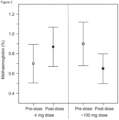
- the present inventors have used data available for patients participating in clinical trials to determine whether LMT enhances oxygen saturation of blood. Data were available for 18 subjects with oxygen saturation ⁇ 94% at baseline (lower limit of normal range is 95%).
- hypoxemia including sleep apnoea, insomnia (which may be indicative of Paroxysmal nocturnal dyspnea or paroxysmal nocturnal dyspnoea), asbestosis, oedema, asthma, bronchitis, allergies, angioedema, pneumonia, acute myocardial infarction/ hypertension, Coronary artery disease with angioplasty and stent insertion, transient ischaemic attacks (TIA), hypothyroidism, diabetes, syncope, tachycardia and sepsis.
- Table 1 Presenting clinical history of clinical trial subjects presenting with low oxygen saturation.
- Subject Clinical respiratory/ventilation type Aggravating clinical conditions 1 1 Sleep Apnoea (no date given) hypothyroid / diabetic 2 Insomnia (no date given) Often a sign of obstructive sleep apnoea or other mild hypoxia conditions such as paroxysmal nocturnal dyspnea 3 Hypertension / LBBB, left bundle branch block; LVH, Left ventricular hypertrophy.
- Oxygen saturation levels were compared pre-dose and after 4 hrs in the clinic following administration of a single doses of LMT at 4 mg and ⁇ 100mg (mean of 75, 100, 125 mg; Fig 1 ).
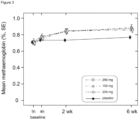
- LMTM is able to act on haemoglobin over a range of doses in such a way as to enhance oxygen saturation in the blood by a novel mechanism unrelated to its known effects on metHb. Indeed LMTM at higher doses systematically increases metHb levels ( Fig 3 ).
- Methemoglobinemia is the result of oxidation of the iron contained in haemoglobin from the ferrous (Fe 2+ ) to the ferric (Fe 3+ ) form.
- the oxidation is associated with a decrement in the capacity of haemoglobin to carry oxygen efficiently (Curry et al., 1982). This is because the binding of oxygen to metHb is irreversible in a given heamoglobin subunit. However binding in one of the four units of the haemoglobin tetramer enhances oxygen binding affinity in other members via structural changes in globin (the mechanism of co-operativity).
- MTC is the primary treatment for methemoglobinemia, and indeed represents the only approved indication for its clinical use.
- the oxidised MT + form of methylthionine given as MTC is first reduced to LMT at the cell surface as a prerequisite for red cell entry (May et al., 2004). It is then LMT which is the active species at the heme site, forming a coordinate with heme iron and permitting the transfer of an electron which converts Fe 3+ to Fe 2+ .
- This restores normal oxygen-carrying capacity (Yubisui et al., 1980; Blank et al., 2012). This is therefore a redox reaction which results in oxidation of LMT to MT + .
- LMT is regenerated from MT + via a redox reaction with NADPH which is itself regenerated from NADP by way of ongoing glycolysis in the red cell.
- NADPH which is itself regenerated from NADP by way of ongoing glycolysis in the red cell.
- LMTX can induce methaemoglobinaemia.
- the LMT moiety is acting as an electron shuttle within the red cell, as it does also in other systems (e.g. in the electron transport chain in mitochondria).
- Computational chemistry modelling shown in Fig 4 provides a structural basis explaining the dynamics of the high affinity LMT/MT + -heme interaction.
- the LMT nitrogen orientates itself towards the Fe 3+ of the heme porphyrin within 2.1 ⁇ (dotted line in Figure 1 ). This close interaction then facilitates the transfer of an electron from LMT to the Fe 3+ , thereby reducing it to Fe 2+ and the resulting formation of MT + .
- the same binding interaction with heme permit the transfer of an electron from Fe 2+ to MT + producing Fe 3+ and LMT respectively.
- the clinical evidence above indicates that this LMT-heme interaction facilitates oxygen uptake by haemoglobin.
- the available clinical evidence also shows that LMT at high concentrations (associated with oral doses in the range 150 - 250 mg/day) can produce a measurable increase in metHb levels, yet at the same time also increase SpO 2 levels. It therefore follows that the effects on LMT on SpO 2 cannot be mediated via effects on metHb levels.
- the heme When Hb is in the deoxygenated state, the heme is in the domed T state with Fe not fully accommodated in the tetrapyrrole ring, and is held by two histidines (His 87 in alpha subunit / His 92 in beta subunit and His 58 in alpha subunit / His 63 in beta submit).
- the ionic radius of the iron which is in a high-spin Fe(ll) state, is too large (radius 2.06 ⁇ ) to fit in the ring of nitrogens with which it coordinates; it is 0.6 ⁇ out of the plane of the ring ( Fig 5 ).
- haemoglobin The binding of oxygen by haemoglobin is cooperative. As haemoglobin binds successive oxygens, the oxygen affinity of the subunits increases. The affinity for the fourth oxygen to bind is approximately 300 times that for the first. The result is the sigmoid oxygen saturation curve ( Fig 7 ).
- MT is estimated to bind to the Fe of heme with an estimated field factor of 1.2 - 1.5.
- LMT binds with high affinity.
- the field factor of LMT is sufficient to bind to Fe 2+ (potentially f-factor of 1.2-1.5; CK Jorgensen, Oxidation numbers and oxidation states, Springer 1969 pp84-85 ).
- MT is therefore a strong field ligand and is able to bind to heme sufficiently to induce an R-state configuration within the protein ( Fig 8A & 8B ).
- the MT moiety is able to form a complex with Fe 2+ by donation of lone pair electrons from the N atom to the d-orbitals of ferrous iron ( Molecules 2013, 18(3), 3168-3182; https://doi.org/10.3390/molecules18033168 )
- binding of LMT overcomes the initial energy barrier for oxygen binding, which is thereafter able to bind and oxygenate all four heme groups of haemoglobin.
- the Fe 2+ ion coordination complex is filled by binding to four nitrogen atoms in the pyrrole rings, and a fifth ligand is a supplied by the proximal Histidine of haemoglobin.
- the sixth coordination ligand is vacant, and the geometry of the complex is square pyramidal with the Fe 2+ above the plane of the heme ring resulting in the characteristic domed geometry of the deoxy T-state.
- O 2 binding into the sixth coordination site this results in the Fe 2+ into the plane of the ring, leading to octahedral geometry.
- LMT is likely to induce a transition to the flat R-state and hence facilitates oxygen binding by way of the co-operativity mechanism.
- the LMT binding is non-optimal and produces a subtle conformational change in haemoglobin which potentially perturbs the orientation of the octahedral coordination complex from the optimal geometry.
- the non-optimal geometry of the LMT coordination compared to oxygen results in oxygen binding heme with higher affinity than LMT. Whereas the binding distance between the LMT nitrogen and heme iron is 2.10 ⁇ , the corresponding binding distance for oxygen is it is 1.98 ⁇ . Therefore, oxygen is able to displace LMT when it is available at high pH / low pCO 2 . This permits normal oxygen dissociation to occur with release of bound oxygen to peripheral tissues at low pH / high pCO 2 ( Fig (9 )).
Landscapes
- Health & Medical Sciences (AREA)
- Veterinary Medicine (AREA)
- Chemical & Material Sciences (AREA)
- Medicinal Chemistry (AREA)
- Pharmacology & Pharmacy (AREA)
- Life Sciences & Earth Sciences (AREA)
- Animal Behavior & Ethology (AREA)
- General Health & Medical Sciences (AREA)
- Public Health (AREA)
- Epidemiology (AREA)
- General Chemical & Material Sciences (AREA)
- Chemical Kinetics & Catalysis (AREA)
- Organic Chemistry (AREA)
- Engineering & Computer Science (AREA)
- Bioinformatics & Cheminformatics (AREA)
- Nuclear Medicine, Radiotherapy & Molecular Imaging (AREA)
- Hematology (AREA)
- Inorganic Chemistry (AREA)
- Diabetes (AREA)
- Pulmonology (AREA)
- Nutrition Science (AREA)
- Physiology (AREA)
- Pharmaceuticals Containing Other Organic And Inorganic Compounds (AREA)
- Medicinal Preparation (AREA)
- Medicines That Contain Protein Lipid Enzymes And Other Medicines (AREA)
Applications Claiming Priority (3)
| Application Number | Priority Date | Filing Date | Title |
|---|---|---|---|
| GBGB2006659.3A GB202006659D0 (en) | 2020-05-05 | 2020-05-05 | Therapeutic treatments |
| GBGB2016957.9A GB202016957D0 (en) | 2020-10-26 | 2020-10-26 | Beneficial treatment |
| PCT/EP2021/061485 WO2021224146A1 (en) | 2020-05-05 | 2021-04-30 | Methylthioninium compounds for use in the treatment of hypoxemia |
Publications (3)
| Publication Number | Publication Date |
|---|---|
| EP4146225A1 EP4146225A1 (en) | 2023-03-15 |
| EP4146225B1 true EP4146225B1 (en) | 2024-10-09 |
| EP4146225C0 EP4146225C0 (en) | 2024-10-09 |
Family
ID=75887990
Family Applications (1)
| Application Number | Title | Priority Date | Filing Date |
|---|---|---|---|
| EP21724580.2A Active EP4146225B1 (en) | 2020-05-05 | 2021-04-30 | Methylthioninium compounds for use in the treatment of hypoxemia |
Country Status (12)
| Country | Link |
|---|---|
| US (1) | US20230158040A1 (https=) |
| EP (1) | EP4146225B1 (https=) |
| JP (1) | JP2023524146A (https=) |
| KR (1) | KR20230012515A (https=) |
| CN (1) | CN115916211A (https=) |
| AU (1) | AU2021268465A1 (https=) |
| CA (1) | CA3181388A1 (https=) |
| ES (1) | ES2992641T3 (https=) |
| MX (1) | MX2022013884A (https=) |
| PL (1) | PL4146225T3 (https=) |
| TW (1) | TWI907424B (https=) |
| WO (1) | WO2021224146A1 (https=) |
Families Citing this family (1)
| Publication number | Priority date | Publication date | Assignee | Title |
|---|---|---|---|---|
| GB202204185D0 (en) | 2022-03-24 | 2022-05-11 | Wista Lab Ltd | Oral treatment |
Family Cites Families (8)
| Publication number | Priority date | Publication date | Assignee | Title |
|---|---|---|---|---|
| GB0017060D0 (en) * | 2000-07-11 | 2000-08-30 | Hunter Fleming Ltd | Production, stabilisation and use of reduced forms of pharmaceutical compounds |
| US20060264423A1 (en) | 2005-05-20 | 2006-11-23 | Bioenvision, Inc. | Methylene Blue Therapy of Viral Disease |
| ES2349322T7 (es) | 2006-03-29 | 2019-10-17 | Wista Lab Ltd | Sales de 3,7-diamino-10H-fenotiazina y su utilización |
| JP5898701B2 (ja) * | 2011-02-11 | 2016-04-13 | ウィスタ ラボラトリーズ リミテッド | フェノチアジンジアミニウム塩およびそれらの使用 |
| JP7073330B2 (ja) * | 2016-07-25 | 2022-05-23 | ウィスタ ラボラトリーズ リミテッド | ジアミノフェノチアジンの投与及び投与量 |
| GB201614834D0 (en) * | 2016-09-01 | 2016-10-19 | Wista Lab Ltd | Treatment of dementia |
| FI4385512T3 (fi) * | 2018-07-26 | 2026-01-12 | Taurx Therapeutics Man Ltd | Diaminofenotiatsiinien optimoitu annostus populaatioille |
| EP3982974A4 (en) * | 2019-06-12 | 2023-06-21 | Achal Narendrakumar Agrawal | NOVEL IMPROVED PROCESS FOR THE SYNTHESIS OF DIAMINOPHENOTHIAZINE COMPOUNDS |
-
2021
- 2021-04-30 MX MX2022013884A patent/MX2022013884A/es unknown
- 2021-04-30 EP EP21724580.2A patent/EP4146225B1/en active Active
- 2021-04-30 CN CN202180043776.XA patent/CN115916211A/zh active Pending
- 2021-04-30 KR KR1020227042296A patent/KR20230012515A/ko active Pending
- 2021-04-30 JP JP2022567338A patent/JP2023524146A/ja active Pending
- 2021-04-30 WO PCT/EP2021/061485 patent/WO2021224146A1/en not_active Ceased
- 2021-04-30 AU AU2021268465A patent/AU2021268465A1/en active Pending
- 2021-04-30 US US17/922,886 patent/US20230158040A1/en active Pending
- 2021-04-30 CA CA3181388A patent/CA3181388A1/en active Pending
- 2021-04-30 ES ES21724580T patent/ES2992641T3/es active Active
- 2021-04-30 PL PL21724580.2T patent/PL4146225T3/pl unknown
- 2021-05-05 TW TW110116178A patent/TWI907424B/zh active
Also Published As
| Publication number | Publication date |
|---|---|
| TW202200149A (zh) | 2022-01-01 |
| BR112022022322A2 (pt) | 2022-12-13 |
| ES2992641T3 (en) | 2024-12-16 |
| TWI907424B (zh) | 2025-12-11 |
| CN115916211A (zh) | 2023-04-04 |
| MX2022013884A (es) | 2022-11-30 |
| JP2023524146A (ja) | 2023-06-08 |
| WO2021224146A1 (en) | 2021-11-11 |
| US20230158040A1 (en) | 2023-05-25 |
| PL4146225T3 (pl) | 2025-03-10 |
| AU2021268465A1 (en) | 2022-12-08 |
| EP4146225C0 (en) | 2024-10-09 |
| EP4146225A1 (en) | 2023-03-15 |
| KR20230012515A (ko) | 2023-01-26 |
| CA3181388A1 (en) | 2021-11-11 |
Similar Documents
| Publication | Publication Date | Title |
|---|---|---|
| Dabholkar et al. | Repurposing methylene blue in the management of COVID-19: Mechanistic aspects and clinical investigations | |
| JP2004525080A (ja) | 血漿リポタンパク質及び心臓血管疾患の危険因子を減ずるための組成物及び方法 | |
| JP2020172531A (ja) | 統合失調症を治療するための2−((1−(2(4−フルオロフェニル)−2−オキソエチル)ピペリジン−4−イル)メチル)イソインドリン−1−オン | |
| EP4146225B1 (en) | Methylthioninium compounds for use in the treatment of hypoxemia | |
| US20230165875A1 (en) | Methylthioninium compounds for use in the treatment of covid-19 | |
| HK40088921B (en) | Methylthioninium compounds for use in the treatment of hypoxemia | |
| HK40088921A (en) | Methylthioninium compounds for use in the treatment of hypoxemia | |
| BR112022022322B1 (pt) | Uso de compostos de metiltionínio para preparação de medicamento oral para tratamento de hipoxemia | |
| US20230165876A1 (en) | Methylthioninium compounds for use in the treatment of covid-19 | |
| US20250222005A1 (en) | Methylene blue containing compounds for the treatment of methaemoglobinaemia | |
| US20070049599A1 (en) | Use of bh4 for the treatment of respiratory diseases | |
| Iliev et al. | Acute poisoning with dapsone and olanzapine: severe methemoglobinemia and coma with a favourable outcome | |
| WO2021224914A1 (en) | Treatment of viral infection, disease or disorder using a selective s1r agonist |
Legal Events
| Date | Code | Title | Description |
|---|---|---|---|
| STAA | Information on the status of an ep patent application or granted ep patent |
Free format text: STATUS: UNKNOWN |
|
| STAA | Information on the status of an ep patent application or granted ep patent |
Free format text: STATUS: THE INTERNATIONAL PUBLICATION HAS BEEN MADE |
|
| PUAI | Public reference made under article 153(3) epc to a published international application that has entered the european phase |
Free format text: ORIGINAL CODE: 0009012 |
|
| STAA | Information on the status of an ep patent application or granted ep patent |
Free format text: STATUS: REQUEST FOR EXAMINATION WAS MADE |
|
| 17P | Request for examination filed |
Effective date: 20221117 |
|
| AK | Designated contracting states |
Kind code of ref document: A1 Designated state(s): AL AT BE BG CH CY CZ DE DK EE ES FI FR GB GR HR HU IE IS IT LI LT LU LV MC MK MT NL NO PL PT RO RS SE SI SK SM TR |
|
| DAV | Request for validation of the european patent (deleted) | ||
| DAX | Request for extension of the european patent (deleted) | ||
| REG | Reference to a national code |
Ref country code: HK Ref legal event code: DE Ref document number: 40088921 Country of ref document: HK |
|
| GRAP | Despatch of communication of intention to grant a patent |
Free format text: ORIGINAL CODE: EPIDOSNIGR1 |
|
| STAA | Information on the status of an ep patent application or granted ep patent |
Free format text: STATUS: GRANT OF PATENT IS INTENDED |
|
| INTG | Intention to grant announced |
Effective date: 20240506 |
|
| GRAS | Grant fee paid |
Free format text: ORIGINAL CODE: EPIDOSNIGR3 |
|
| GRAA | (expected) grant |
Free format text: ORIGINAL CODE: 0009210 |
|
| STAA | Information on the status of an ep patent application or granted ep patent |
Free format text: STATUS: THE PATENT HAS BEEN GRANTED |
|
| AK | Designated contracting states |
Kind code of ref document: B1 Designated state(s): AL AT BE BG CH CY CZ DE DK EE ES FI FR GB GR HR HU IE IS IT LI LT LU LV MC MK MT NL NO PL PT RO RS SE SI SK SM TR |
|
| REG | Reference to a national code |
Ref country code: CH Ref legal event code: EP |
|
| REG | Reference to a national code |
Ref country code: DE Ref legal event code: R096 Ref document number: 602021019954 Country of ref document: DE |
|
| REG | Reference to a national code |
Ref country code: IE Ref legal event code: FG4D |
|
| U01 | Request for unitary effect filed |
Effective date: 20241015 |
|
| U07 | Unitary effect registered |
Designated state(s): AT BE BG DE DK EE FI FR IT LT LU LV MT NL PT RO SE SI Effective date: 20241031 |
|
| REG | Reference to a national code |
Ref country code: ES Ref legal event code: FG2A Ref document number: 2992641 Country of ref document: ES Kind code of ref document: T3 Effective date: 20241216 |
|
| PG25 | Lapsed in a contracting state [announced via postgrant information from national office to epo] |
Ref country code: HR Free format text: LAPSE BECAUSE OF FAILURE TO SUBMIT A TRANSLATION OF THE DESCRIPTION OR TO PAY THE FEE WITHIN THE PRESCRIBED TIME-LIMIT Effective date: 20241009 Ref country code: IS Free format text: LAPSE BECAUSE OF FAILURE TO SUBMIT A TRANSLATION OF THE DESCRIPTION OR TO PAY THE FEE WITHIN THE PRESCRIBED TIME-LIMIT Effective date: 20250209 |
|
| PG25 | Lapsed in a contracting state [announced via postgrant information from national office to epo] |
Ref country code: NO Free format text: LAPSE BECAUSE OF FAILURE TO SUBMIT A TRANSLATION OF THE DESCRIPTION OR TO PAY THE FEE WITHIN THE PRESCRIBED TIME-LIMIT Effective date: 20250109 |
|
| PG25 | Lapsed in a contracting state [announced via postgrant information from national office to epo] |
Ref country code: GR Free format text: LAPSE BECAUSE OF FAILURE TO SUBMIT A TRANSLATION OF THE DESCRIPTION OR TO PAY THE FEE WITHIN THE PRESCRIBED TIME-LIMIT Effective date: 20250110 |
|
| PG25 | Lapsed in a contracting state [announced via postgrant information from national office to epo] |
Ref country code: RS Free format text: LAPSE BECAUSE OF FAILURE TO SUBMIT A TRANSLATION OF THE DESCRIPTION OR TO PAY THE FEE WITHIN THE PRESCRIBED TIME-LIMIT Effective date: 20250109 |
|
| U20 | Renewal fee for the european patent with unitary effect paid |
Year of fee payment: 5 Effective date: 20250417 |
|
| PG25 | Lapsed in a contracting state [announced via postgrant information from national office to epo] |
Ref country code: SM Free format text: LAPSE BECAUSE OF FAILURE TO SUBMIT A TRANSLATION OF THE DESCRIPTION OR TO PAY THE FEE WITHIN THE PRESCRIBED TIME-LIMIT Effective date: 20241009 |
|
| PGFP | Annual fee paid to national office [announced via postgrant information from national office to epo] |
Ref country code: PL Payment date: 20250404 Year of fee payment: 5 |
|
| PGFP | Annual fee paid to national office [announced via postgrant information from national office to epo] |
Ref country code: GB Payment date: 20250423 Year of fee payment: 5 Ref country code: ES Payment date: 20250501 Year of fee payment: 5 |
|
| PGFP | Annual fee paid to national office [announced via postgrant information from national office to epo] |
Ref country code: CH Payment date: 20250501 Year of fee payment: 5 |
|
| PG25 | Lapsed in a contracting state [announced via postgrant information from national office to epo] |
Ref country code: SK Free format text: LAPSE BECAUSE OF FAILURE TO SUBMIT A TRANSLATION OF THE DESCRIPTION OR TO PAY THE FEE WITHIN THE PRESCRIBED TIME-LIMIT Effective date: 20241009 |
|
| PGFP | Annual fee paid to national office [announced via postgrant information from national office to epo] |
Ref country code: TR Payment date: 20250402 Year of fee payment: 5 |
|
| PG25 | Lapsed in a contracting state [announced via postgrant information from national office to epo] |
Ref country code: CZ Free format text: LAPSE BECAUSE OF FAILURE TO SUBMIT A TRANSLATION OF THE DESCRIPTION OR TO PAY THE FEE WITHIN THE PRESCRIBED TIME-LIMIT Effective date: 20241009 |
|
| PGFP | Annual fee paid to national office [announced via postgrant information from national office to epo] |
Ref country code: IE Payment date: 20250424 Year of fee payment: 5 |
|
| PLBE | No opposition filed within time limit |
Free format text: ORIGINAL CODE: 0009261 |
|
| STAA | Information on the status of an ep patent application or granted ep patent |
Free format text: STATUS: NO OPPOSITION FILED WITHIN TIME LIMIT |
|
| U1K | Transfer of rights of the unitary patent after the registration of the unitary effect |
Owner name: TAURX THERAPEUTICS MANAGEMENT LTD.; GB |
|
| 26N | No opposition filed |
Effective date: 20250710 |
|
| PG25 | Lapsed in a contracting state [announced via postgrant information from national office to epo] |
Ref country code: MC Free format text: LAPSE BECAUSE OF FAILURE TO SUBMIT A TRANSLATION OF THE DESCRIPTION OR TO PAY THE FEE WITHIN THE PRESCRIBED TIME-LIMIT Effective date: 20241009 |