EP4131097A1 - Bereichsempfehlungsvorrichtung - Google Patents
Bereichsempfehlungsvorrichtung Download PDFInfo
- Publication number
- EP4131097A1 EP4131097A1 EP21774131.3A EP21774131A EP4131097A1 EP 4131097 A1 EP4131097 A1 EP 4131097A1 EP 21774131 A EP21774131 A EP 21774131A EP 4131097 A1 EP4131097 A1 EP 4131097A1
- Authority
- EP
- European Patent Office
- Prior art keywords
- information
- region
- dimensional
- recommended
- target
- Prior art date
- Legal status (The legal status is an assumption and is not a legal conclusion. Google has not performed a legal analysis and makes no representation as to the accuracy of the status listed.)
- Withdrawn
Links
Images







Classifications
-
- G—PHYSICS
- G06—COMPUTING OR CALCULATING; COUNTING
- G06Q—INFORMATION AND COMMUNICATION TECHNOLOGY [ICT] SPECIALLY ADAPTED FOR ADMINISTRATIVE, COMMERCIAL, FINANCIAL, MANAGERIAL OR SUPERVISORY PURPOSES; SYSTEMS OR METHODS SPECIALLY ADAPTED FOR ADMINISTRATIVE, COMMERCIAL, FINANCIAL, MANAGERIAL OR SUPERVISORY PURPOSES, NOT OTHERWISE PROVIDED FOR
- G06Q99/00—Subject matter not provided for in other groups of this subclass
-
- G—PHYSICS
- G06—COMPUTING OR CALCULATING; COUNTING
- G06Q—INFORMATION AND COMMUNICATION TECHNOLOGY [ICT] SPECIALLY ADAPTED FOR ADMINISTRATIVE, COMMERCIAL, FINANCIAL, MANAGERIAL OR SUPERVISORY PURPOSES; SYSTEMS OR METHODS SPECIALLY ADAPTED FOR ADMINISTRATIVE, COMMERCIAL, FINANCIAL, MANAGERIAL OR SUPERVISORY PURPOSES, NOT OTHERWISE PROVIDED FOR
- G06Q10/00—Administration; Management
- G06Q10/10—Office automation; Time management
-
- G—PHYSICS
- G06—COMPUTING OR CALCULATING; COUNTING
- G06Q—INFORMATION AND COMMUNICATION TECHNOLOGY [ICT] SPECIALLY ADAPTED FOR ADMINISTRATIVE, COMMERCIAL, FINANCIAL, MANAGERIAL OR SUPERVISORY PURPOSES; SYSTEMS OR METHODS SPECIALLY ADAPTED FOR ADMINISTRATIVE, COMMERCIAL, FINANCIAL, MANAGERIAL OR SUPERVISORY PURPOSES, NOT OTHERWISE PROVIDED FOR
- G06Q50/00—Information and communication technology [ICT] specially adapted for implementation of business processes of specific business sectors, e.g. utilities or tourism
- G06Q50/10—Services
Definitions
- the present disclosure relates to a region recommendation device.
- a region recommendation device determines one or more recommended regions to be recommended to a target person from among a plurality of target regions in a target space.
- the region recommendation device includes a usage information acquiring unit, an environmental information acquiring unit, a non-environmental information acquiring unit, an information storage unit, and a recommended region determining unit.
- the usage information acquiring unit acquires usage information including at least one of a past usage history of the target regions and current availability of the target regions.
- the environmental information acquiring unit acquires environmental information regarding an indoor environment in the target regions.
- the non-environmental information acquiring unit acquires, as non-environmental information, at least one of biological information of a person in the target space and region feature information regarding equipment and peripheral information in the target regions.
- the information storage unit stores information acquired by the usage information acquiring unit, the environmental information acquiring unit, and the non-environmental information acquiring unit.
- the recommended region determining unit quantifies the information stored in the information storage unit as one or more multi-dimensional information points in a multi-dimensional space, calculates a degree of similarity between the multi-dimensional information points, and determines the one or more recommended regions.
- the recommended region determining unit determines the one or more recommended regions in consideration of not only the environmental information but also the non-environmental information when determining the one or more recommended regions. Therefore, the region recommendation device can determine a region or regions comfortable for the target person in consideration of more information.
- the recommended region determining unit quantifies the information stored in the information storage unit as one or more multi-dimensional information points in a multi-dimensional space, and determines the one or more recommended regions. Accordingly, the region recommendation device can determine the one or more recommended regions by comprehensively quantifying various pieces of information with one measure.
- a region recommendation device is the region recommendation device according to the first aspect in which the environmental information includes at least one of a temperature, a humidity, an illuminance, a color of illumination, and a noise.
- a region recommendation device is the region recommendation device according to the first or second aspect in which the biological information includes at least one of a body surface temperature, a core body temperature, and a pulse.
- a region recommendation device is the region recommendation device according to any one of the first to third aspects in which the region feature information includes at least one of a type of chair, a type of table, personal use or shared use, whether a window is near, a population density, presence or absence of an outlet, and proximity of OA equipment in the target regions.
- a region recommendation device is the region recommendation device according to any one of the first to fourth aspects in which, regarding the target person and the target regions, the recommended region determining unit quantifies the usage information, the environmental information, and the non-environmental information of a past as one or more past multi-dimensional information points in the multi-dimensional space, and quantifies the usage information, the environmental information, and the non-environmental information of present as one or more current multi-dimensional information points in the multi-dimensional space.
- a region recommendation device is the region recommendation device according to the fifth aspect in which the recommended region determining unit defines a multi-dimensional comfortable region including all or some of the one or more past multi-dimensional information points, calculates a multi-dimensional comfortable region centroid that is the centroid of the one or more past multi-dimensional information points included in the multi-dimensional comfortable region, and determines the one or more recommended regions on the basis of the multi-dimensional comfortable region centroid and the one or more current multi-dimensional information points.
- a region recommendation device 100 determines one or more recommended regions R81 to be recommended to a target person from among a plurality of target regions 81 in a target space 80.
- the target space 80 is, for example, a free address space such as a shared office.
- Fig. 1 illustrates a plan view of the target space 80.
- the region recommendation device 100 is installed near an entrance 83 of the target space 80, for example.
- the target regions 81 are a plurality of regions provided to users of the target space 80.
- the target regions 81 are given regions such as seats, rooms, or spaces.
- a single-person seat 81a, a two-person seat 81b, and a meeting room 81c are illustrated as examples of the target regions 81.
- the term "user” is used to mean a user of the target space 80.
- target person is used to mean a person who receives region recommendation by the region recommendation device 100 among users of the target space 80.
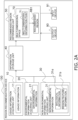
- the region recommendation device 100 mainly includes a usage information acquiring unit 10, an environmental information acquiring unit 20, a non-environmental information acquiring unit 30, an information storage unit 40, a recommended region determining unit 50, an input unit 90, and an output unit 91.
- the region recommendation device 100 further includes a control arithmetic device and a storage device.
- a processor such as a CPU or a GPU can be used as the control arithmetic device.
- the control arithmetic device reads a program stored in the storage device and performs predetermined image processing and arithmetic processing in accordance with the program. Furthermore, the control arithmetic device can write an arithmetic result into the storage device and read information stored in the storage device according to the program.
- the usage information acquiring unit 10, the environmental information acquiring unit 20, the non-environmental information acquiring unit 30, the information storage unit 40, the recommended region determining unit 50, the input unit 90, and the output unit 91 are various functional blocks implemented by the control arithmetic device.
- the usage information acquiring unit 10 acquires usage information 11 including at least one of a past usage history of the target regions 81 and current availability of the target regions 81.
- Fig. 2B is a diagram illustrating details of the usage information acquiring unit 10, the environmental information acquiring unit 20, and the non-environmental information acquiring unit 30 in Fig. 2A .
- the usage information acquiring unit 10 includes a region information acquiring unit 12, a user information acquiring unit 14, and an authenticating unit 16.
- the region information acquiring unit 12 acquires region information 13 that is information regarding the target regions 81.
- Fig. 3 illustrates an example of the region information 13.
- the region information 13 includes "target region” and “range” as main items. Items subsequent to "color of illumination” will be described later.
- the names of the target regions 81 are stored as "target region”. In Fig. 3 , "seat A" and the like are stored.
- the region information 13 has content that can be set in advance.
- the user information acquiring unit 14 acquires user information 15 that is information regarding users of the target space 80.
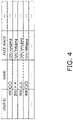
- Fig. 4 illustrates an example of the user information 15.
- the user information 15 includes "user ID”, "name”, and "face image” as main items.
- the user information acquiring unit 14 registers users of the target space 80.
- the user information acquiring unit 14 receives information such as "name” and “face image” from the users, and issues "user ID” that uniquely identifies the users. These pieces of information are stored in the user information 15.
- “100” and the like are stored as “user ID”
- "AA” and the like are stored as “name”
- "/pic/aaa.jpeg” and the like are stored as "face images”.
- the authenticating unit 16 authenticates users in the target space 80.
- face authentication For example, face authentication, fingerprint authentication, password authentication, or the like is used for authentication.
- the authenticating unit 16 authenticates the users by face authentication.
- the authenticating unit 16 authenticates the users on the basis of face images detected in the target space 80 and the user information 15.
- an object detection camera or the like is used to detect the face images.
- an object detection camera or the like is illustrated as a detector D.
- the authenticating unit 16 can output user IDs of the authenticated users.
- the usage information acquiring unit 10 acquires the usage information 11 from the region information 13, the user information 15, and the function of the authenticating unit 16.
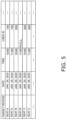
- Fig. 5 illustrates an example of the usage information 11.
- the usage information 11 includes "target region”, “date”, “time”, and "user ID” as main items.
- the "target region” is acquired from “target region” of the region information 13.
- "seat A” and the like are stored.
- a date on which the usage information 11 is acquired is stored as "date”.
- “Jan. 29, 2020” is stored.
- “Date” is acquired from, for example, an internal timer of the control arithmetic device included in the region recommendation device 100.
- a time at which the usage information 11 is acquired is stored as "time".
- the usage information 11, and environmental information 21 and non-environmental information 31, which will be described later, are acquired every hour. Therefore, in Fig. 5 , the time of every hour such as "10:00" and "11:00” is stored.
- “Time” is acquired from, for example, the internal timer or the like of the control arithmetic device included in the region recommendation device 100.
- User IDs of users who use "target region” at “time” and on “date” are stored as “user ID”.
- “100”, “NULL”, and the like are stored.
- "NULL” indicates that "target region” is not used.
- "User ID” is acquired from the region information 13, the user information 15, and the function of the authenticating unit 16.
- the environmental information acquiring unit 20 acquires the environmental information 21 regarding an indoor environment in the target regions 81.
- the environmental information 21 includes at least one of a temperature, a humidity, an illuminance, a color of illumination, and a noise.
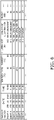
- Fig. 6 illustrates an example of the environmental information 21.
- the environmental information 21 includes, as main items, "target region”, “date”, “time”, “temperature”, “humidity”, “illuminance”, “color of illumination”, and “noise”.
- the temperature, the humidity, the illuminance, and the noise of "target region" at "time” and on “date” are stored as “temperature”, “humidity”, “illuminance”, and “noise”.
- the color of illumination of "target region” is stored as "color of illumination”.
- Tempoture is acquired from, for example, a temperature sensor or the like. In Fig. 6 , values ranging from 20°C to 22°C are stored.
- “Humidity” is acquired from, for example, a humidity sensor or the like. In Fig. 6 , values ranging from 49% to 52% are stored.
- Illuminance is acquired from, for example, an illuminance sensor or the like. In Fig. 6 , values ranging from 300 lx to 750 lx are stored.
- Noise is acquired from, for example, a sound collecting microphone or the like.
- values ranging from 20 dB to 40 dB are stored.
- Fig. 2B the above temperature sensor and the like are illustrated as the detector D.
- the non-environmental information acquiring unit 30 acquires, as the non-environmental information 31, at least one of biological information 31a of a person in the target space 80 and region feature information 31b regarding equipment and peripheral information in the target regions 81.
- the biological information 31a includes at least one of a body surface temperature, a core body temperature, and a pulse.
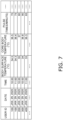
- Fig. 7 illustrates an example of the biological information 31a.
- the biological information 31a includes, as main items, "user ID”, “date”, “time”, “body surface temperature”, “core body temperature”, and "pulse”.
- the body surface temperature, the core body temperature, and the pulse of a user indicated by "user ID” at “time” and on “date” are stored as “body surface temperature”, “core body temperature”, and “pulse”, respectively.
- Body surface temperature is acquired from, for example, a thermocamera or the like. In Fig. 7 , values ranging from 33°C to 35°C are stored.
- Core body temperature is acquired from, for example, a non-contact vital sensor or the like.
- values ranging from 36.3°C to 37°C are stored.
- the "pulse” is acquired from, for example, a non-contact vital sensor or the like.
- Fig. 7 values ranging from 65 times/minute to 90 times/minute are stored.
- thermocamera or the like is illustrated as the detector D.
- the non-environmental information acquiring unit 30 authenticates users in the target space 80 by the function of the authenticating unit 16. For example, it is assumed that a user whose "user ID” is "100” is authenticated. At this time, "100" is stored as "user ID” of the biological information 31a. Since the biological information 31a is acquired at 11:00 on Jan. 29, 2020, "Jan. 29, 2020” and “11:00” are stored as “date” and "time” of the biological information 31a, respectively. Values acquired from a thermocamera or the like at 11:00 on Jan. 29, 2020 are stored as "body surface temperature", “core body temperature", and "pulse". The record acquired here corresponds to the record in the second row of the biological information 31a in Fig. 7 . When this process is performed for all users in the target space 80, the biological information 31a at 11:00 on Jan. 29, 2020 can be acquired.
- the region feature information 31b includes at least one of a type of chair, a type of table, a personal seat or not, whether a window is near, a population density, the presence or absence of an outlet, and the proximity of OA equipment in the target regions 81.
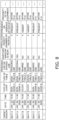
- Fig. 8 illustrates an example of the region feature information 31b.
- the region feature information 31b includes, as main items, "target region”, “date”, “time”, “type of chair”, “type of table”, “personal use or shared use”, “whether window is near”, “population density”, “presence or absence of outlet”, and “proximity of OA equipment”.
- the type of chair, the type of table, a personal seat or not, whether a window is near, the presence or absence of an outlet, and the proximity of OA equipment in “target region” are stored as “type of chair”, “ type of table”, “personal use or shared use”, “whether window is near”, “presence or absence of outlet”, and “proximity of OA equipment”.
- Type of chair "Type of chair”, “type of table”, “personal use or shared use”, “whether window is near”, “presence or absence of outlet”, and “proximity of OA equipment” are acquired from “type of chair”, “type of table”, “personal use or shared use”, “whether window is near”, “presence or absence of outlet”, and “proximity of OA equipment” of the region information 13 illustrated in Fig. 3 .
- “Population density” is the number of people within predetermined ranges from the target regions 81. "Population density” is calculated using an object detection camera or the like, for example. In Fig. 2B , an object detection camera or the like is illustrated as a detector D. In Fig. 8 , values ranging from 2 to 4 people are stored.
- the region feature information 31b acquired at 11:00 on Jan. 29, 2020 is acquired.
- “Target region” of the record is “seat A”. This "seat A” is stored as “target region” of the region feature information 31b. Since the region feature information 31b is acquired at 11:00 on Jan. 29, 2020, "Jan. 29, 2020” and “11:00” are stored as “date” and "time” of the region feature information 31b, respectively.
- Fig. 2C is a diagram illustrating details of the information storage unit 40, the recommended region determining unit 50, the input unit 90, and the output unit 91 in Fig. 2A .
- the information storage unit 40 stores the usage information 11 acquired by the usage information acquiring unit 10, the environmental information 21 acquired by the environmental information acquiring unit 20, and the biological information 31a and the region feature information 31b acquired by the non-environmental information acquiring unit 30. These pieces of information are stored in the storage device included in the region recommendation device 100.
- the recommended region determining unit 50 quantifies the information stored in the information storage unit 40 as one or more multi-dimensional information points 71 in a multi-dimensional space 70, calculates a degree of similarity between the multi-dimensional information points 71, and determines a recommended region R81.
- the recommended region determining unit 50 quantifies the usage information 11, the environmental information 21, and the non-environmental information 31 of the past as one or more past multi-dimensional information points 71a in the multi-dimensional space 70, and quantifies the usage information 11, the environmental information 21, and the non-environmental information 31 of the present as one or more current multi-dimensional information points 71b in the multi-dimensional space 70.
- the usage information 11, the environmental information 21, and the non-environmental information 31 of the past regarding the target person and the target regions 81 are the usage information 11, the environmental information 21, and the non-environmental information 31 regarding the target person and the target regions 81 stored before the date and time when the target person receives the region recommendation.
- Quantifying these pieces of information as the one or more past multi-dimensional information points 71a in the multi-dimensional space 70 refers to creating unified past information 74 by joining these pieces of information, quantifying the past information 74, and acquiring the one or more past multi-dimensional information points 71a. Since the one or more past multi-dimensional information points 71a are quantified, they can be mapped to the multi-dimensional space 70 having each item of the one or more past multi-dimensional information points 71a as an axis.
- the usage information 11, the environmental information 21, and the non-environmental information 31 of the present regarding the target person and the target regions 81 are the usage information 11, the environmental information 21, and the non-environmental information 31 regarding the target person and the unused target regions 81 at the date and time when the target person receives the region recommendation.
- Quantifying these pieces of information as the one or more current multi-dimensional information points 71b in the multi-dimensional space 70 refers to creating unified current information 75 by joining these pieces of information, quantifying the current information 75, and acquiring the one or more current multi-dimensional information points 71b. Since the one or more current multi-dimensional information points 71b are quantified, they can be mapped to the multi-dimensional space 70 having each item of the one or more current multi-dimensional information points 71b as an axis.
- the recommended region determining unit 50 further defines a multi-dimensional comfortable region 72 including all or some of the one or more past multi-dimensional information points 71a, calculates a multi-dimensional comfortable region centroid 73 that is the centroid of the one or more past multi-dimensional information points 71a included in the multi-dimensional comfortable region 72, and determines the recommended region R81 on the basis of the multi-dimensional comfortable region centroid 73 and the current multi-dimensional information points 71b.
- the definition of the multi-dimensional comfortable region 72 including all or some of the one or more past multi-dimensional information points 71a means that data cleaning such as outlier exclusion is performed on the one or more past multi-dimensional information points 71a, and a region in the multi-dimensional space 70 including the one or more past multi-dimensional information points 71a after the data cleaning is defined as the multi-dimensional comfortable region 72.
- the multi-dimensional comfortable region centroid 73 that is the centroid of the one or more past multi-dimensional information points 71a included in the multi-dimensional comfortable region 72 is calculated.
- the recommended region determining unit 50 determines, as the recommended region R81, a target region 81 associated with the current multi-dimensional information point 71b closest from the multi-dimensional comfortable region centroid 73.
- the input unit 90 receives an instruction to start the recommended region determining process from the target person through an input device 90a, and transmits the instruction to the recommended region determining unit 50.
- the input device 90a is, for example, a screen of signage 92 including a touch panel.
- Fig. 9 illustrates the screen of the signage 92 including a touch panel.
- a recommendation execution button 93 is illustrated as one related to the input unit 90. When the target person touches the recommendation execution button 93, the recommended region determining process is started by the function of the input unit 90.
- the output unit 91 receives the region information 13 of the recommended region R81 from the recommended region determining unit 50 and outputs the region information 13 on an output device 91a.
- the output unit 91 performs screen output, audio output, and the like. In the present embodiment, a case of screen output is assumed.
- the output device 91a is, for example, a screen of the signage 92.
- Fig. 9 illustrates the recommended region R81 and the layout diagram of the target space 80 as those related to the output unit 91. In Fig. 9 , "seat A" is output as the name of the recommended region R81. In the layout diagram of the target space 80, the position of "seat A", which is the recommended region R81, is indicated by an arrow.
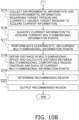
- a target person In order to receive region recommendation, a target person transmits an instruction to start the recommended region determining process from the input device 90a to the region recommendation device 100.
- the region recommendation device 100 receives the instruction to start the recommended region determining process by the function of the input unit 90. As illustrated in step S2, the region recommendation device 100 performs authentication of the target person using the authenticating unit 16. As illustrated in step S3, if the target person is authenticated, the region recommendation device 100 acquires "user ID" output from the authenticating unit 16, and proceeds to step S5. Here, it is assumed that the acquired "user ID" of the target person is "100". As illustrated in step S3, if the target person is not authenticated, since the usage information 11 of the past and the like do not exist for unauthenticated target persons, the region recommendation device 100 is unable to perform the recommended region determining process.
- the region recommendation device 100 registers the user information 15 of the target person using the user information acquiring unit 14, and ends the recommended region determining process.
- the region recommendation device 100 may, for example, output "unable to recommend a region because of the absence of past usage history" on the output device 91a using the function of the output unit 91.
- the region recommendation device 100 Upon acquiring "user ID" of the target person, as illustrated in step S5, the region recommendation device 100 acquires the current date and time from the internal timer of the control arithmetic device, and acquires the usage information 11 regarding the target person before the current date and time. Specifically, if the current date and time is 13:00 on Jan. 30, 2020, the region recommendation device 100 extracts records in which "date" and "time” are earlier than "13:00" on “Jan. 30, 2020” and "user ID” is "100" from the usage information 11. As illustrated in step S6, if the usage information 11 of the past regarding the target person is acquired, the process proceeds to step S8.
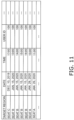
- Fig. 11 illustrates an example of the usage information 11 of the past. In Fig.
- the target person uses "seat C" at "17:00” on “Dec. 10, 2019". Furthermore, the target person uses “seat B” from “13:00” to “15:00” on “Jan. 15, 2020”. Furthermore, the target person uses “seat A” from "10:00” to "11:00” on “Jan. 29, 2020”. Normally, once the target person is authenticated, the target person is assumed to have used the target space 80 in the past, and thus, it is possible to acquire the usage information 11 of the past regarding the target person.
- the region recommendation device 100 outputs "unable to recommend a region because of the absence of past usage history" on the output device 91a using the function of the output unit 91, and ends the recommended region determining process as illustrated in step S7.
- the region recommendation device 100 Upon acquiring the usage information 11 of the past, as illustrated in step S8, the region recommendation device 100 joins the environmental information 21 and the non-environmental information 31 with the usage information 11 of the past to acquire past information 74. Specifically, the environmental information 21 and the region feature information 31b are joined using "target region", "date”, and “time” of the usage information 11 of the past as keys. This join is left outer join in which the usage information 11 of the past is set to the left. Furthermore, the region recommendation device 100 joins the biological information 31a with "user ID”, "date”, and “time” of the usage information 11 of the past as keys. This join is left outer join in which the usage information 11 of the past is set to the left.
- the region recommendation device 100 acquires the past information 74 in which the usage information 11, the environmental information 21, and the non-environmental information 31 of the past regarding the target person are unified.
- Fig. 12 illustrates an example of the past information 74.
- Fig. 12 illustrates "temperature” as a representative of the environmental information 21, "body surface temperature” as a representative of the biological information 31a, and "type of chair” and "proximity of OA equipment” as a representative of the region feature information 31b.
- the region recommendation device 100 quantifies the past information 74 to acquire the one or more past multi-dimensional information points 71a.
- Numerical data such as "temperature” and "humidity” has already been quantified.
- Nominal scale data such as "type of chair” and “type of table” is quantified by, for example, one-hot encoding.
- a numerical value is assigned to ordinal scale data such as "proximity of OA equipment” according to the order, for example.
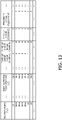
- Fig. 13 illustrates an example of the past multi-dimensional information points 71a. In Fig. 13 , in particular, the nominal scale "type of chair” and the ordinal scale "proximity of OA equipment” are quantified.
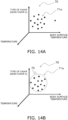
- Fig. 14A illustrates the past multi-dimensional information points 71a in the multi-dimensional space 70. In Fig. 14A , only three dimensions are drawn for visualization.
- the region recommendation device 100 Upon acquiring the past multi-dimensional information points 71a, as illustrated in step S10, the region recommendation device 100 performs data cleaning such as outlier exclusion on the past multi-dimensional information points 71a to define the multi-dimensional comfortable region 72.
- data cleaning for example, outlier exclusion, missing value exclusion, or the like is performed.
- outlier exclusion for example, a mean and a standard deviation are calculated for each of the items constituting the past multi-dimensional information points 71a, and past multi-dimensional information points 71a having an item value separated from the mean by three times or more of the standard deviation are excluded.
- past multi-dimensional information points 71a having a missing value in the item values constituting the past multi-dimensional information points 71a are excluded.
- a region including the past multi-dimensional information points 71a after the data cleaning is defined as the multi-dimensional comfortable region 72.
- Fig. 14B illustrates the past multi-dimensional information points 71a after the data cleaning and the multi-dimensional comfortable region 72.
- the region recommendation device 100 may perform scaling in addition to the data cleaning.
- Scaling is a process of aligning the scale of each item.
- distances are used to determine the recommended region R81. Therefore, it may be important to align the scale so that the each item contributes equally to the distances.
- the scaling for example, normalization, standardization, or the like is performed. In the normalization, the numerical value of each item is converted to 0 or more and 1 or less. In the standardization, the distribution of each item is converted into a distribution with a mean of 0 and a standard deviation of 1.
- the region recommendation device 100 may perform reduction of dimensions in addition to the data cleaning.
- distances are used to determine the recommended region R81. If the dimensions are too large, it may be difficult to compare distances. In such a case, reduction of dimensions is effective.
- principal component analysis for example, principal component analysis or the like is performed. Principal component analysis reduces dimensions by calculating a small number of items that aggregate information and using these items instead.
- the region recommendation device 100 Upon defining the multi-dimensional comfortable region 72, as illustrated in step S11, the region recommendation device 100 calculates the multi-dimensional comfortable region centroid 73, which is the centroid of past multi-dimensional information points 71a included in the multi-dimensional comfortable region 72.
- r (i) is a position vector of an i-th past multi-dimensional information point 71a.
- r (G) is a position vector of the multi-dimensional comfortable region centroid 73.
- m i is the weight of the i-th past multi-dimensional information point 71a. In a case of weighting by the past multi-dimensional information point 71a, m i is adjusted. For example, it is used when past multi-dimensional information points 71a in the morning are desired to be emphasized.
- the multi-dimensional comfortable region centroid 73 in which every m i is set to 1 is used.
- the multi-dimensional comfortable region centroid 73 of the present embodiment coincides with the mean vector of past multi-dimensional information points 71a included in the multi-dimensional comfortable region 72.
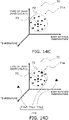
- Fig. 14C illustrates the multi-dimensional comfortable region centroid 73.
- the region recommendation device 100 Upon calculating the multi-dimensional comfortable region centroid 73, as illustrated in step S12, the region recommendation device 100 acquires the usage information 11 regarding currently unused target regions 81, using the usage information acquiring unit 10. As illustrated in step S13, if the usage information 11 regarding the currently unused target regions 81 is acquired, the process proceeds to step S15.
- Fig. 15 illustrates an example of the usage information 11 regarding the currently unused target regions 81. In Fig. 15 , "seat A”, “seat D", and “seat E" are unused.
- the region recommendation device 100 outputs "there are no currently available regions" on the output device 91a, for example, using the function of the output unit 91, and ends the recommended region determining process as illustrated in step S14.
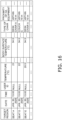
- the region recommendation device 100 Upon acquiring the usage information 11 regarding the currently unused target regions 81, as illustrated in step S15, the region recommendation device 100 acquires the environmental information 21 and the non-environmental information 31 regarding the target person and the currently unused target regions 81, using the environmental information acquiring unit 20 and the non-environmental information acquiring unit 30. The region recommendation device 100 unifies these pieces of information to acquire the current information 75 in the same manner as when acquiring the past information 74. As the biological information 31a of the non-environmental information 31, current values regarding the target person are used. Fig. 16 illustrates an example of the current information 75.
- the region recommendation device 100 Upon acquiring the current information 75, as illustrated in step S16, the region recommendation device 100 quantifies the current information 75 to acquire the current multi-dimensional information points 71b.
- the quantification method is the same as that when the past multi-dimensional information points 71a are acquired.
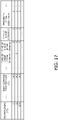
- Fig. 17 illustrates an example of the current multi-dimensional information points 71b.
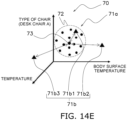
- Fig. 14D illustrates the current multi-dimensional information points 71b in the multi-dimensional space 70. In Fig. 14D , three current multi-dimensional information points 71b1, 71b2, and 71b3 are depicted.
- the region recommendation device 100 Upon acquiring the current multi-dimensional information points 71b, as illustrated in step S17, the region recommendation device 100 performs data cleaning on the current multi-dimensional information points 71b.
- the data cleaning method is the same as that for the past multi-dimensional information points 71a. If scaling and reduction of dimensions are performed on the past multi-dimensional information points 71a, the region recommendation device 100 performs the same process on the current multi-dimensional information points 71b.
- the region recommendation device 100 After the data cleaning on the current multi-dimensional information points 71b, as illustrated in step S18, the region recommendation device 100 defines a distance in the multi-dimensional space 70, and calculates the distance between the multi-dimensional comfortable region centroid 73 and each of the current multi-dimensional information points 71b.
- Minkowski distance is used as the distance between the multi-dimensional comfortable region centroid 73 and each of the current multi-dimensional information points 71b.
- r (i) is the position vector of an i-th current multi-dimensional information point 71b.
- r k (i) is the value of a k-th component of the i-th current multi-dimensional information point 71b.
- the following Mahalanobis distance is used as the distance between the multi-dimensional comfortable region centroid 73 and each of the current multi-dimensional information points 71b.
- ⁇ and ⁇ are a mean vector and a variance-covariance matrix of the past multi-dimensional information points 71a included in the multi-dimensional comfortable region 72.
- ⁇ coincides with the multi-dimensional comfortable region centroid 73. Since the Mahalanobis distance is a distance in consideration of variance, scaling of the past multi-dimensional information points 71a and the current multi-dimensional information points 71b may be skipped when the Mahalanobis distance is used.
- the region recommendation device 100 determines the recommended region R81.
- the region recommendation device 100 determines, as the recommended region R81, a target region 81 associated with the current multi-dimensional information point 71b closest from the multi-dimensional comfortable region centroid 73.
- distances from the multi-dimensional comfortable region centroid 73 to the three current multi-dimensional information points 71b1, 71b2, and 71b3 are indicated by double-headed arrows. Since the distance from the multi-dimensional comfortable region centroid 73 to the current multi-dimensional information point 71b1 is the shortest, the target region 81 associated with the current multi-dimensional information point 71b1 is determined as the recommended region R81.
- the region recommendation device 100 Upon determining the recommended region R81, as illustrated in step S20, the region recommendation device 100 outputs the region information 13 of the recommended region R81 on the output device 91a using the function of the output unit 91.
- the region recommendation device 100 determines the recommended region R81 in consideration of, not only the environmental information 21, but also the non-environmental information 31 including the biological information 31a and the region feature information 31b. Therefore, the region recommendation device 100 can determine the recommended region R81 in consideration of more pieces of information than before.
- the region recommendation device 100 of the present embodiment quantifies the usage information 11, the environmental information 21, and the non-environmental information 31 as one or more multi-dimensional information points 71 in the multi-dimensional space 70, and determines the recommended region R81. Therefore, the region recommendation device 100 may determine the recommended region R81 by comprehensively quantifying various pieces of information with one measure.
- the region recommendation device 100 determines, as the recommended region R81, the target region 81 associated with the current multi-dimensional information point 71b closest from the multi-dimensional comfortable region centroid 73. However, a plurality of current multi-dimensional information points 71b within a predetermined range from the multi-dimensional comfortable region centroid 73 may be determined as recommended regions R81. In this case, the region recommendation device 100 causes the output device 91a to output the region information 13 of the plurality of recommended regions R81. As a result, the target person can select a desired region from the plurality of recommended regions R81.
Landscapes
- Business, Economics & Management (AREA)
- Engineering & Computer Science (AREA)
- Theoretical Computer Science (AREA)
- General Physics & Mathematics (AREA)
- General Business, Economics & Management (AREA)
- Physics & Mathematics (AREA)
- Tourism & Hospitality (AREA)
- Strategic Management (AREA)
- Human Resources & Organizations (AREA)
- Entrepreneurship & Innovation (AREA)
- Economics (AREA)
- Marketing (AREA)
- Quality & Reliability (AREA)
- Operations Research (AREA)
- Data Mining & Analysis (AREA)
- Health & Medical Sciences (AREA)
- General Health & Medical Sciences (AREA)
- Primary Health Care (AREA)
- Information Retrieval, Db Structures And Fs Structures Therefor (AREA)
- Management, Administration, Business Operations System, And Electronic Commerce (AREA)
Applications Claiming Priority (2)
| Application Number | Priority Date | Filing Date | Title |
|---|---|---|---|
| JP2020056170A JP7093022B2 (ja) | 2020-03-26 | 2020-03-26 | 領域推薦装置 |
| PCT/JP2021/012463 WO2021193798A1 (ja) | 2020-03-26 | 2021-03-25 | 領域推薦装置 |
Publications (2)
| Publication Number | Publication Date |
|---|---|
| EP4131097A1 true EP4131097A1 (de) | 2023-02-08 |
| EP4131097A4 EP4131097A4 (de) | 2023-09-20 |
Family
ID=77891845
Family Applications (1)
| Application Number | Title | Priority Date | Filing Date |
|---|---|---|---|
| EP21774131.3A Withdrawn EP4131097A4 (de) | 2020-03-26 | 2021-03-25 | Bereichsempfehlungsvorrichtung |
Country Status (5)
| Country | Link |
|---|---|
| US (1) | US20230009912A1 (de) |
| EP (1) | EP4131097A4 (de) |
| JP (1) | JP7093022B2 (de) |
| CN (1) | CN115335839A (de) |
| WO (1) | WO2021193798A1 (de) |
Families Citing this family (3)
| Publication number | Priority date | Publication date | Assignee | Title |
|---|---|---|---|---|
| JP7466918B2 (ja) * | 2021-09-28 | 2024-04-15 | 京楽産業.株式会社 | 遊技機 |
| CN116156447A (zh) * | 2023-02-27 | 2023-05-23 | 南京信息工程大学 | 一种基于无线通信感知技术的图书馆智慧导引装置及方法 |
| WO2025074519A1 (ja) * | 2023-10-03 | 2025-04-10 | 日本電信電話株式会社 | 座席推薦装置、座席推薦方法、及び座席推薦プログラム |
Family Cites Families (14)
| Publication number | Priority date | Publication date | Assignee | Title |
|---|---|---|---|---|
| JP2010079585A (ja) * | 2008-09-25 | 2010-04-08 | Kokuyo Office System Kk | フリーアドレスオフィス支援システム及びプログラム |
| JP2010176483A (ja) * | 2009-01-30 | 2010-08-12 | Nec Corp | サーバ、座席割当システム、通信端末、サーバの制御方法、座席予約方法、及びプログラム |
| JP5348548B2 (ja) * | 2009-07-14 | 2013-11-20 | 清水建設株式会社 | ビル管理システム |
| JP5445119B2 (ja) * | 2009-12-24 | 2014-03-19 | ダイキン工業株式会社 | ナビゲーション装置及びナビゲーションシステム |
| JP5549473B2 (ja) * | 2010-08-13 | 2014-07-16 | 富士ゼロックス株式会社 | 情報処理装置及び情報処理プログラム |
| JP2012234420A (ja) * | 2011-05-06 | 2012-11-29 | Konica Minolta Business Technologies Inc | 位置決定装置、位置決定装置の制御方法、および位置決定装置の制御プログラム |
| JP5879744B2 (ja) * | 2011-05-19 | 2016-03-08 | カシオ計算機株式会社 | データ処理装置及びプログラム |
| JP6071728B2 (ja) | 2013-04-25 | 2017-02-01 | 大成建設株式会社 | 快適環境選択支援装置および快適環境選択支援方法 |
| EP3029620A4 (de) * | 2013-07-31 | 2017-04-12 | Sony Corporation | Informationsverarbeitungsvorrichtung, informationsverarbeitungsverfahren und programm |
| US11494390B2 (en) * | 2014-08-21 | 2022-11-08 | Affectomatics Ltd. | Crowd-based scores for hotels from measurements of affective response |
| JP2018073333A (ja) * | 2016-11-04 | 2018-05-10 | 株式会社イトーキ | 業務活動分析装置、業務活動分析方法、及びプログラム。 |
| JP6938969B2 (ja) * | 2017-03-07 | 2021-09-22 | 富士フイルムビジネスイノベーション株式会社 | 環境測定システムおよびプログラム |
| JP6772961B2 (ja) * | 2017-05-31 | 2020-10-21 | ダイキン工業株式会社 | 移動体の制御システム |
| JP7037432B2 (ja) * | 2017-07-12 | 2022-03-16 | 三菱電機ビルテクノサービス株式会社 | 快適度表示装置 |
-
2020
- 2020-03-26 JP JP2020056170A patent/JP7093022B2/ja active Active
-
2021
- 2021-03-25 EP EP21774131.3A patent/EP4131097A4/de not_active Withdrawn
- 2021-03-25 WO PCT/JP2021/012463 patent/WO2021193798A1/ja not_active Ceased
- 2021-03-25 CN CN202180023345.7A patent/CN115335839A/zh active Pending
-
2022
- 2022-09-22 US US17/950,514 patent/US20230009912A1/en not_active Abandoned
Also Published As
| Publication number | Publication date |
|---|---|
| JP2021157408A (ja) | 2021-10-07 |
| JP7093022B2 (ja) | 2022-06-29 |
| WO2021193798A1 (ja) | 2021-09-30 |
| EP4131097A4 (de) | 2023-09-20 |
| CN115335839A (zh) | 2022-11-11 |
| US20230009912A1 (en) | 2023-01-12 |
Similar Documents
| Publication | Publication Date | Title |
|---|---|---|
| US20230009912A1 (en) | Region recommendation device | |
| US20230012149A1 (en) | Region recommendation device | |
| Brewer et al. | Eyewitness identification | |
| Raru et al. | Quality of antenatal care and associated factors among pregnant women in East Africa using Demographic and Health Surveys: A multilevel analysis | |
| US20190095757A1 (en) | Learned model generating method, learned model generating device, and learned model use device | |
| Wang et al. | A case of evolutionary mismatch? Why facial width-to-height ratio may not predict behavioral tendencies | |
| Beribisky et al. | Comparing RMSEA-based indices for assessing measurement invariance in confirmatory factor models | |
| CN109817312A (zh) | 一种就诊引导方法及计算机设备 | |
| Gagnon et al. | Poisson regression for modeling count and frequency outcomes in trauma research | |
| Li et al. | Investigating approaches to estimating covariate effects in growth mixture modeling: A simulation study | |
| Turner et al. | Properties and pitfalls of weighting as an alternative to multilevel multiple imputation in cluster randomized trials with missing binary outcomes under covariate-dependent missingness | |
| US20250272432A1 (en) | Hybrid Human-Machine Differential Privacy | |
| Behl et al. | COVID-19 lifecycle: Predictive modelling of states in India | |
| McGee et al. | Resilience among unemployed and underemployed emerging adults: A cross-sectional study of how stress and coping relate to depressive symptoms | |
| Martins et al. | Correlated gamma frailty models for bivariate survival time data | |
| Lee et al. | Evaluation of two types of differential item functioning in factor mixture models with binary outcomes | |
| KR102220074B1 (ko) | 영상인식기반 실-시청 몰입도 판정 서비스 제공을 위한 데이터 생성 방법 및 장치 | |
| Yan et al. | Comparing regression coefficients between nested linear models for clustered data with generalized estimating equations | |
| Goh et al. | Development of an effective clustering algorithm for older fallers | |
| CN107209562B (zh) | 信息处理系统、信息处理装置、控制方法和存储媒体 | |
| Booth et al. | People make mistakes: Obtaining accurate ground truth from continuous annotations of subjective constructs | |
| Finell et al. | Self-reported mould and long-term sickness absences from work | |
| CN106919888A (zh) | 一种吃饭行为识别方法、装置及家庭网关 | |
| Bunce et al. | Perceptual sensitivity to changes in interpersonal distance when observing social interactions: The effects of dyad arrangement and orientation | |
| Mossman et al. | Constructing “proper” ROCs from ordinal response data using weighted power functions |
Legal Events
| Date | Code | Title | Description |
|---|---|---|---|
| STAA | Information on the status of an ep patent application or granted ep patent |
Free format text: STATUS: THE INTERNATIONAL PUBLICATION HAS BEEN MADE |
|
| PUAI | Public reference made under article 153(3) epc to a published international application that has entered the european phase |
Free format text: ORIGINAL CODE: 0009012 |
|
| STAA | Information on the status of an ep patent application or granted ep patent |
Free format text: STATUS: REQUEST FOR EXAMINATION WAS MADE |
|
| 17P | Request for examination filed |
Effective date: 20221010 |
|
| AK | Designated contracting states |
Kind code of ref document: A1 Designated state(s): AL AT BE BG CH CY CZ DE DK EE ES FI FR GB GR HR HU IE IS IT LI LT LU LV MC MK MT NL NO PL PT RO RS SE SI SK SM TR |
|
| DAV | Request for validation of the european patent (deleted) | ||
| DAX | Request for extension of the european patent (deleted) | ||
| P01 | Opt-out of the competence of the unified patent court (upc) registered |
Effective date: 20230526 |
|
| A4 | Supplementary search report drawn up and despatched |
Effective date: 20230818 |
|
| RIC1 | Information provided on ipc code assigned before grant |
Ipc: G06Q 50/10 20120101ALI20230811BHEP Ipc: G06Q 10/10 20230101ALI20230811BHEP Ipc: G06Q 10/06 20230101AFI20230811BHEP |
|
| STAA | Information on the status of an ep patent application or granted ep patent |
Free format text: STATUS: EXAMINATION IS IN PROGRESS |
|
| 17Q | First examination report despatched |
Effective date: 20240514 |
|
| STAA | Information on the status of an ep patent application or granted ep patent |
Free format text: STATUS: THE APPLICATION HAS BEEN WITHDRAWN |
|
| 18W | Application withdrawn |
Effective date: 20241010 |