EP4125885B1 - Verwendung eines thienopyridonderivats zur behandlung von diabetischer nephropathie - Google Patents
Verwendung eines thienopyridonderivats zur behandlung von diabetischer nephropathie Download PDFInfo
- Publication number
- EP4125885B1 EP4125885B1 EP21713990.6A EP21713990A EP4125885B1 EP 4125885 B1 EP4125885 B1 EP 4125885B1 EP 21713990 A EP21713990 A EP 21713990A EP 4125885 B1 EP4125885 B1 EP 4125885B1
- Authority
- EP
- European Patent Office
- Prior art keywords
- thienopyridone
- thienopyridone derivative
- derivative
- pharmaceutical composition
- formula
- Prior art date
- Legal status (The legal status is an assumption and is not a legal conclusion. Google has not performed a legal analysis and makes no representation as to the accuracy of the status listed.)
- Active
Links
Images
Classifications
-
- A—HUMAN NECESSITIES
- A61—MEDICAL OR VETERINARY SCIENCE; HYGIENE
- A61K—PREPARATIONS FOR MEDICAL, DENTAL OR TOILETRY PURPOSES
- A61K31/00—Medicinal preparations containing organic active ingredients
- A61K31/33—Heterocyclic compounds
- A61K31/395—Heterocyclic compounds having nitrogen as a ring hetero atom, e.g. guanethidine or rifamycins
- A61K31/435—Heterocyclic compounds having nitrogen as a ring hetero atom, e.g. guanethidine or rifamycins having six-membered rings with one nitrogen as the only ring hetero atom
- A61K31/4353—Heterocyclic compounds having nitrogen as a ring hetero atom, e.g. guanethidine or rifamycins having six-membered rings with one nitrogen as the only ring hetero atom ortho- or peri-condensed with heterocyclic ring systems
- A61K31/4365—Heterocyclic compounds having nitrogen as a ring hetero atom, e.g. guanethidine or rifamycins having six-membered rings with one nitrogen as the only ring hetero atom ortho- or peri-condensed with heterocyclic ring systems the heterocyclic ring system having sulfur as a ring hetero atom, e.g. ticlopidine
-
- A—HUMAN NECESSITIES
- A61—MEDICAL OR VETERINARY SCIENCE; HYGIENE
- A61P—SPECIFIC THERAPEUTIC ACTIVITY OF CHEMICAL COMPOUNDS OR MEDICINAL PREPARATIONS
- A61P13/00—Drugs for disorders of the urinary system
- A61P13/12—Drugs for disorders of the urinary system of the kidneys
-
- A—HUMAN NECESSITIES
- A61—MEDICAL OR VETERINARY SCIENCE; HYGIENE
- A61P—SPECIFIC THERAPEUTIC ACTIVITY OF CHEMICAL COMPOUNDS OR MEDICINAL PREPARATIONS
- A61P3/00—Drugs for disorders of the metabolism
- A61P3/08—Drugs for disorders of the metabolism for glucose homeostasis
- A61P3/10—Drugs for disorders of the metabolism for glucose homeostasis for hyperglycaemia, e.g. antidiabetics
Definitions
- the invention relates to the use of a thienopyridone derivative in the treatment of diabetic nephropathy.
- Diabetic nephropathy is a renal disorder having a complex etiology because of an interplay between systemic metabolic and vascular dysfunctions. It is caused, inter alia, by hyperglycemia and hyperlipidemia, which are associated with diabetes. This condition manifests in inflammation and fibrosis leading to the impairment of both glomerular filtration and tubular function.
- AMPK is indeed known to control key regulatory steps in lipid biosynthesis and lipid oxidation as well as regulation of glucose homeostasis.
- AMPK has 12 possible heterotrimers which consist of an ⁇ ( ⁇ 1, ⁇ 2) catalytic subunit, a regulatory and structurally crucial ⁇ ( ⁇ 1, ⁇ 2) subunit, and a regulatory ⁇ ( ⁇ 1, ⁇ 2, ⁇ 3) subunit. These isoforms are encoded for by distinct genes that are differentially expressed and have unique tissue specific expression profiles. Among them, the subunit ⁇ 1 appears to be the predominant subunit in kidney.
- indirect and direct AMPK activators such as metformin, AICAR and a number of other small molecules which selectively activate AMPK heterotrimers containing the ⁇ 1 subunit, such as Compound 991 from Merck, PF-249 from Pfizer ( C.T. Salatto et al., J. Pharmacol. Exp. Ther., 361(2), 303-311, 2017 ) and A-799662 from Abbott, which is a thienopyridone with the following structure:
- A-799662 can only be administered by injection due to poor oral bioavailability, which represents a strong limitation that may have precluded its development.
- PF-06409577 which is a ⁇ 1 selective direct AMPK activator showed efficacy in a preclinical model of diabetic nephropathy ( K.O. Cameron et al., J. Med. Chem., 59, 17, 8068-8081, 2016 ).
- PF-06409577 entered a phase I clinical trial for the treatment of diabetic nephropathy, this study was not completed.
- another direct activator of AMPK i.e. MK-8722 from Merck, could not only show a beneficial preventative effect but also modulate established renal disease ( X. Zhou et al., J. Pharmacol. Exp. Ther., 373(1), 45-55, 2020 ).
- this compound is also known to trigger cardiac side effects.
- this invention relates to a thienopyridone derivative of Formula (I):
- the present invention also relates to a pharmaceutical composition
- a pharmaceutical composition comprising an effective amount of a thienopyridone derivative as described above and a pharmaceutically acceptable support.
- the present invention also relates to the use of a thienopyridone derivative as described above, or a pharmaceutical composition comprising the same, for the manufacture of a medicament for the treatment of diabetic nephropathy.
- This invention pertains to specific uses of thienopyridone derivatives of Formula (I): and their pharmaceutically acceptable salts and/or solvates.
- said compound of formula (I) may be obtained by an improved process comprising the steps of:
- step (B) can comprise a substep (b1) of heating the mixture obtained in step (A), preferably at a temperature close to reflux of the mixture, followed by a substep (b2) of cooling the resulting mixture, for instance at a temperature comprised between -15 °C and 35 °C.
- close to reflux of the mixture refers typically to a temperature comprised between 90% and 100 % of the boiling point of the solvent system in step (A) (for instance, water/isopropanol or water/ n -butyl acetate).
- a distillation step preferably under reduced pressure, can be carried out between the heating substep and substep (b2).
- Step (B) allows a crystalline precipitate to form, which formation may be favored or triggered by adding seeds to steps (b2).
- said precipitate is recovered by filtration in step (C). It may then be washed successively with one or more solvents, preferably water, n -butyl acetate and/or tert -butyl methyl ether.
- solvents preferably water, n -butyl acetate and/or tert -butyl methyl ether.
- Examples of pharmaceutically acceptable salts of the compound of formula (I) can be obtained by reacting the compound of formula (I) with various organic and inorganic bases by procedures usually known in the art to give the corresponding base-addition salt.
- bases are, for example, alkali metal hydroxides, including potassium hydroxide, sodium hydroxide and lithium hydroxide; alkali metal carbonates, including potassium carbonate and sodium carbonate; alkaline earth metal hydroxides, such as barium hydroxide and calcium hydroxide; alkaline earth metal carbonates; alkali metal alkoxides, for example potassium ethoxide and sodium propoxide; and various organic bases, such as piperidine, diethanolamine and N-methylglutamine.
- the aluminium salts of the compounds of formula (1) are likewise included.
- the salts of the compound of formula (I) thus include aluminium, ammonium, calcium, copper, iron(III), iron(II), lithium, magnesium, manganese(III), manganese(II), potassium, sodium and zinc salts, but this is not intended to represent a restriction.
- any of the pharmaceutically acceptable salts of the compound of formula (I), or this compound itself, may be used in this invention in the form of one of its solvates.
- “Solvates” of the compounds are taken in the present invention to mean adductions of inert solvent molecules onto the compounds which form owing to their mutual attractive force. The nature of the solvate thus depends on the solvent used during the reaction of the base with the compound of formula (I). Examples of solvates include alcohol solvates, for instance methanol or ethanol solvates, and hydrates, including mono-, di-, tri- or tetrahydrates, but this is not intended to represent a restriction.
- the compound used in this invention is the monohydrate potassium salt of the compound of formula (I), corresponding to the following structure of formula (Ia):
- This compound may be prepared according to a process comprising the steps of:
- the thienopyridone derivative is intended to mean both the base compound of formula (I), its solvates, its salts and the solvates of its salts.
- the thienopyridone derivative or a pharmaceutical composition comprising the same are used in the treatment of diabetic nephropathy.
- the pharmaceutical composition used according to the invention may be prepared by any conventional method.
- the thienopyridone derivative can be converted into a suitable dosage form together with at least one solid, liquid and/or semi-liquid excipient or adjuvant and, if desired, in combination with one or more further active ingredients.
- pharmaceutically acceptable support refers to carrier, adjuvant, or excipient acceptable to the subject from a pharmacological/toxicological point of view and to the manufacturing pharmaceutical chemist from a physical/chemical point of view regarding to composition, formulation, stability, subject acceptance and bioavailability.
- carrier refers to any substance, not itself a therapeutic agent, that is added to a pharmaceutical composition to be used as a carrier, adjuvant, and/or diluent for the delivery of a therapeutic agent to a subject in order to improve its handling or storage properties or to enable or facilitate formation of a dosage unit of the composition into a discrete article.
- the pharmaceutical compositions of the invention can comprise one or several agents or vehicles chosen among dispersants, solubilisers, stabilisers, preservatives, etc.
- treatment refers to therapy, prevention and prophylaxis of diabetic nephropathy or at least one of its symptoms. This also means an improvement, prevention of at least one measurable physical parameter associated with the disease being treated, which is discernible or not in the subject.
- treatment or “treating” further refers to inhibiting or slowing the progression of the disease, physically, stabilization of a discernible symptom, physiologically, for example, stabilization of a physical parameter, or both.
- treatment or “treating” also refers to delaying the onset of the disease.
- the compound of the invention is administered as a preventive measure.
- prevention or “preventing” refers to a reduction in the risk of developing at least one of the symptoms related to the disease.
- treating can thus include preventing an increase in, or decreasing proteinuria, especially albuminuria, preventing or reducing kidney fibrosis, preventing the decrease or increasing glomerular filtration rate (GFR), reducing or preventing the increase in urine glucose level, reducing or preventing the increase in urine volume by the subject, and combinations thereof, with the thienopyridone derivative or a pharmaceutical composition comprising the same.
- GFR glomerular filtration rate
- the treatment involves the administration of the thienopyridone derivative or a pharmaceutical composition of the invention to a subject having declared diabetic nephropathy to cure, delay, or slow down the progress, thus improving the condition of patients.
- the term "subject” means a mammal and more particularly a human.
- the subjects to be treated according to the invention can be appropriately selected on the basis of several criteria associated with the disease.
- compositions can be administered in the form of dosage units which comprise a predetermined effective amount of active ingredient per dosage unit.
- compositions can be adapted for administration via any desired suitable method, for example by oral (including buccal or sublingual), rectal, nasal, topical (including buccal, sublingual or transdermal), vaginal or parenteral (including subcutaneous, intramuscular, intravenous or intradermal) methods.
- oral including buccal or sublingual
- rectal nasal
- topical including buccal, sublingual or transdermal
- vaginal or parenteral including subcutaneous, intramuscular, intravenous or intradermal
- parenteral including subcutaneous, intramuscular, intravenous or intradermal
- Such compositions can be prepared using all processes known in the pharmaceutical art by, for example, combining the active ingredient with the excipient(s) or adjuvant(s).
- the pharmaceutical composition according to the invention is adapted for oral administration.
- compositions adapted for oral administration can be administered as separate units, such as, for example, capsules or tablets; powders or granules; solutions or suspensions in aqueous or non-aqueous liquids; edible foams or foam foods; or emulsions, such as oil-in-water liquid emulsions or water-in-oil liquid emulsions.
- the active ingredient component in the case of oral administration in the form of a tablet or capsule, can be combined with an oral, non-toxic and pharmaceutically acceptable inert excipient.
- Powders are prepared by comminuting the compound to a suitable fine size and mixing it with a pharmaceutical excipient comminuted in a similar manner, such as, for example, an edible carbohydrate, such as, for example, starch or mannitol.
- a pharmaceutical excipient comminuted in a similar manner, such as, for example, an edible carbohydrate, such as, for example, starch or mannitol.
- a flavour, preservative, dispersant and dye may likewise be present.
- Capsules may be produced by preparing a powder mixture as described above and filling shaped gelatine shells therewith.
- Glidants and lubricants such as, for example, highly disperse silicic acid, talc, magnesium stearate, calcium stearate or polyethylene glycol in solid form, can be added to the powder mixture before the filling operation.
- a disintegrant or solubiliser such as, for example, agar-agar, calcium carbonate or sodium carbonate, may likewise be added in order to improve the availability of the medicament after the capsule has been taken.
- suitable binders include starch, gelatine, natural sugars, such as, for example, glucose or beta-lactose, sweeteners made from maize, natural and synthetic rubber, such as, for example, acacia, tragacanth or sodium alginate, carboxymethylcellulose, polyethylene glycol, waxes, and the like.
- the lubricants used in these dosage forms include sodium oleate, sodium stearate, magnesium stearate, sodium benzoate, sodium acetate, sodium chloride and the like.
- the disintegrants include, without being restricted thereto, starch, methylcellulose, agar, bentonite, xanthan gum and the like.
- the tablets are formulated by, for example, preparing a powder mixture, granulating or dry-pressing the mixture, adding a lubricant and a disintegrant and pressing the entire mixture to give tablets.
- a powder mixture is prepared by mixing the compound comminuted in a suitable manner with a diluent or a base, as described above, and optionally with a binder, such as, for example, carboxymethylcellulose, an alginate, gelatine or polyvinylpyrrolidone, a dissolution retardant, such as, for example, paraffin, an absorption accelerator, such as, for example, a quaternary salt, and/or an absorbent, such as, for example, bentonite, kaolin or dicalcium phosphate.
- a binder such as, for example, carboxymethylcellulose, an alginate, gelatine or polyvinylpyrrolidone
- a dissolution retardant such as, for example, paraffin
- an absorption accelerator such as, for example, a quaternary salt
- an absorbent such as, for example, bentonite, kaolin or dicalcium phosphate.
- the powder mixture can be granulated by wetting it with a binder, such as, for example, syrup, starch paste, acadia mucilage or solutions of cellulose or polymer materials and pressing it through a sieve.
- a binder such as, for example, syrup, starch paste, acadia mucilage or solutions of cellulose or polymer materials
- the powder mixture can be run through a tableting machine, giving lumps of non-uniform shape which are broken up to form granules.
- the granules can be lubricated by addition of stearic acid, a stearate salt, talc or mineral oil in order to prevent sticking to the tablet casting moulds. The lubricated mixture is then pressed to give tablets.
- the compound according to the invention can also be combined with a free-flowing inert excipient and then pressed directly to give tablets without carrying out the granulation or dry-pressing steps.
- a transparent or opaque protective layer consisting of a shellac sealing layer, a layer of sugar or polymer material and a gloss layer of wax may be present. Dyes can be added to these coatings in order to be able to differentiate between different dosage units.
- compositions adapted for oral administration can also be formulated by spray drying of a solid or liquid dispersion.
- Oral liquids such as, for example, solution, syrups and elixirs, can be prepared in the form of dosage units so that a given quantity comprises a prespecified amount of the compound.
- Syrups can be prepared by dissolving the compound in an aqueous solution with a suitable flavour, while elixirs are prepared using a non-toxic alcoholic vehicle.
- Suspensions can be formulated by dispersion of the compound in a non-toxic vehicle.
- Solubilisers and emulsifiers such as, for example, ethoxylated isostearyl alcohols and polyoxyethylene sorbitol ethers, preservatives, flavour additives, such as, for example, peppermint oil or natural sweeteners or saccharin, or other artificial sweeteners and the like, can likewise be added.
- the dosage unit formulations for oral administration can, if desired, be encapsulated in microcapsules.
- the formulation can also be prepared in such a way that the release is extended or retarded, such as, for example, by coating or embedding of particulate material in polymers, wax and the like.
- the thienopyridone derivative used according to the invention can also be administered in the form of liposome delivery systems, such as, for example, small unilamellar vesicles, large unilamellar vesicles and multilamellar vesicles.
- Liposomes can be formed from various phospholipids, such as, for example, cholesterol, stearylamine or phosphatidylcholines.
- the administered dose may be adapted by those skilled in the art according to the patient, the pathology, the mode of administration, etc.
- the thienopyridone derivative may be administered once or twice a day at a daily dose of 0.5mg to 300 mg for a human patient, preferably from 20 mg to 1000 mg, more preferably from 60 mg to 500 mg. It can be administered 4, 5, 6 or 7 days a week as a long-life medication.
- the thienopyridone derivative is administered as dosage units which comprise from 0.5 mg to 1500 mg, preferably from 20 mg to 1000 mg, more preferably from 60 mg to 500 mg of the thienopyridone derivative.
- X-Ray Powder Diffraction (XRPD) analyses were performed using a Panalytical Xpert Pro diffractometer equipped with a Cu (K alpha radiation) X-ray tube and a Pixcel detector system. The samples were analysed in transmission mode and held between low density polyethylene films. XRPD patterns were sorted, manipulated and indexed using HighScore Plus 2.2c software.
- Thermogravimetric (TG) analyses were carried out on a Perkin Elmer Diamond Thermogravimetric/Differential Temperature Analyser (TG/DTA).
- the calibration standards were indium and tin. Samples were placed in an aluminium sample pan, inserted into the TG furnace and accurately weighed. The samples were heated from 30-300°C in a stream of nitrogen at a rate of 10°C/minute. The temperature of the furnace was equilibrated at 30°C prior to the analysis of the samples.
- 6-Acetyl-5-hydroxytetralin 100 g, 1 eq. was dissolved in acetonitrile (300 mL). After addition of K 2 CO 3 (1.1 eq.) and benzyl bromide (1.05 eq.), the suspension was heated (76°C). After 48 hours, benzyl bromide (0.1 eq) was added. After overall 74 hours, the solid was filtered off and washed with acetonitrile (200 mL), and the combined filtrates were evaporated.
- Crystallization of potassium salt monohydrate may occur here. 4.2 parts of water were added and the mixture was seeded with compound (I) (1 to 2% of seeds). The suspension was then cooled down from 40°C to 5°C in 7 hours (5°C/hour) and kept at 5°C for several hours. The suspension was filtered. The cake was washed twice by 1.42 parts of water. The collected solid was dried at 40°C under vacuum given minimum 80% yield of Compound (Ia), at required chemical purity (i.e. 98%+).
- X-ray powder diffraction (XRPD) data of compound (Ia) indicated that it was composed of a crystalline material.
- the XRPD description of compound (Ia) is shown in Table 1.
- Table 1 Peak No 2-theta (°) d-value ( ⁇ ) Relative intensity (%) 1 4.910 17.9826 15 2 11.560 7.6486 8 3 13.010 6.7992 25 4 14.720 6.0130 100 5 16.450 5.3843 11 6 17.330 5.1128 49 7 17.770 4.9872 14 8 18.690 4.7437 12 9 19.220 4.6141 16 10 19.640 4.5164 20 11 20.190 4.3946 8 12 21.170 4.1933 23 13 21.580 4.1145 12 14 22.190 4.0028 12 15 22.700 3.9140 26 16 23.240 3.8243 17 17 23.860 3.7263 23 18 24.410 3.6435 43 19 25.330 3.5133 10 20 26.230 3.3947 17 21 26.730 3.3323 23 22 28.700 3.1079 25 23 29.590 3.
- ZSF1 rat is a Leptin-resistant, obese, hypertensive Zucker diabetic fatty/Spontaneously hypertensive heart failure F1 hybrid (ZSF1) rat.
- the obese ZSF1 rat is described as a relevant pre-clinical model for the study of renal function decline to end stage renal disease in the setting of type 2 diabetes ( Dower K et al., PLoS ONE 2017; 12(7): e0181861 ). It exhibits many of the traits of human diabetic nephropathy ( Boustany-Kari C et al., J Pharmacol Exp Ther 2016; 356:712-719 ).
- Obese ZSF1 rats and lean ZSF1 (Lean) were 12-week-old at the time of treatment initiation.
- the following groups were constituted:
- the compound of Example 2 also known as PXL770 was administered by oral gavage at the dose of 150 mg/kg twice a day for 8 days (13 weeks of age) or 90 days (24-week old of age).
- the PXL770 suspension was prepared at the concentrations used in the study (150 mg/kg) in the vehicle, i.e. carboxymethylcellulose 0.5% / Tween 80 (98/2).
- glomerular filtration rate was determined with the fluorescent glomerular filtration rate tracer fluorescein isothiocyanate (FITC)-sinistrin using the transcutaneous glomerular filtration rate system (NIC-Kidney; Mannheim Pharma and Diagnostics GmbH, Mannheim, Germany) ( Schock-Kusch D. et al., PLoS One 2013;8, e71519 ).
- FITC fluorescent glomerular filtration rate tracer fluorescein isothiocyanate
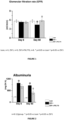
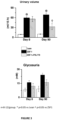
- untreated ZSF1 rats demonstrated a significant increase in urine volume and a tendency to higher urine glucose level compared to Lean rats ( Figure 3 ).
- the significant increase in urine volume in untreated ZSF1 rats was slightly more pronounced compared to 13 weeks of age, as well as the urine glucose level ( Figure 3 ).
- 8 days of PXL770 treatment reduced glycosuria.
- 90 days of PXL770 treatment decreased significantly urine volume in PXL770-treated ZSF1 rats compared to untreated ZSF1 rats ( Figure 3 ) and reduced glycosuria.
Landscapes
- Health & Medical Sciences (AREA)
- Pharmacology & Pharmacy (AREA)
- Diabetes (AREA)
- Veterinary Medicine (AREA)
- Public Health (AREA)
- Chemical & Material Sciences (AREA)
- General Health & Medical Sciences (AREA)
- Medicinal Chemistry (AREA)
- Animal Behavior & Ethology (AREA)
- Life Sciences & Earth Sciences (AREA)
- General Chemical & Material Sciences (AREA)
- Engineering & Computer Science (AREA)
- Nuclear Medicine, Radiotherapy & Molecular Imaging (AREA)
- Chemical Kinetics & Catalysis (AREA)
- Organic Chemistry (AREA)
- Bioinformatics & Cheminformatics (AREA)
- Emergency Medicine (AREA)
- Urology & Nephrology (AREA)
- Endocrinology (AREA)
- Hematology (AREA)
- Obesity (AREA)
- Epidemiology (AREA)
- Pharmaceuticals Containing Other Organic And Inorganic Compounds (AREA)
- Heterocyclic Carbon Compounds Containing A Hetero Ring Having Oxygen Or Sulfur (AREA)
Claims (8)
- Ein Thienopyridonderivat der Formel (I):
 oder ein pharmazeutisch verträgliches Salz und/oder Solvat davon,oder eine pharmazeutische Zusammensetzung, die dieses umfasst,zur Verwendung bei der Behandlung von diabetischer Nephropathie.
 - Das Thienopyridonderivat nach Anspruch 1 oder die pharmazeutische Zusammensetzung, die dieses umfasst, zur Verwendung gemäß Anspruch 1, wobei das Thienopyridonderivat ein- oder zweimal am Tag mit einer Tagesdosis für einen menschlichen Patienten von 0,5 mg bis 3000 mg, vorzugsweise von 20 mg bis 1000 mg, noch bevorzugter von 60 mg bis 500 mg verabreicht wird.
- Das Thienopyridonderivat nach Anspruch 1 oder die pharmazeutische Zusammensetzung, die dieses umfasst, zur Verwendung gemäß Anspruch 1 oder 2, wobei das Thienopyridonderivat oder die pharmazeutische Zusammensetzung wirksam einen Anstieg in Proteinurie verhindert oder Proteinurie verringert, insbesondere Albuminurie, Nierenfibrose verringert oder verhindert, den Abfall der glomerulären Filtrationsrate (GFR) verhindert oder diese anhebt, den Anstieg des Uringlukosespiegels verringert oder verhindert, das Urinvolumen in einem Patienten verringert oder dessen Anstieg verhindert, und Kombinationen davon.
- Das Thienopyridonderivat nach Anspruch 1 oder die pharmazeutische Zusammensetzung, die dieses umfasst, zur Verwendung gemäß einem der Ansprüche 1 bis 3, wobei das Thienopyridonderivat oder die pharmazeutische Zusammensetzung auf oralem Wege verabreicht wird.
- Das Thienopyridonderivat nach Anspruch 1 oder eine pharmazeutische Zusammensetzung, die dieses umfasst, zur Verwendung gemäß einem der Ansprüche 1 bis 4, wobei das Thienopyridonderivat ein Kaliumsalz Monohydrat der Formel (la) ist:

- Ein Thienopyridonderivat der Formel (I):

- Das Thienopyridonderivat der Formel (I) oder ein pharmazeutisch verträgliches Salz und/oder Solvat davon zur Verwendung nach Anspruch 6, wobei das Thienopyridonderivat ferner Albuminurie verringert oder deren Anstieg verhindert und/oder den Anstieg des Uringlukosespiegels verringert oder verhindert, und/oder das Urinvolumen in diesem Patienten verringert oder dessen Zunahme verhindert.
- Das Thienopyridonderivat der Formel (I) oder ein pharmazeutisch verträgliches Salz und/oder Solvat davon zur Verwendung nach Anspruch 6 oder 7, das in Form eines Kaliumsalz Monohydrats der Formel (la)

Applications Claiming Priority (2)
| Application Number | Priority Date | Filing Date | Title |
|---|---|---|---|
| EP20166749 | 2020-03-30 | ||
| PCT/EP2021/058005 WO2021198099A1 (en) | 2020-03-30 | 2021-03-26 | Use of a thienopyridone derivative in the treatment of diabetic nephropathy |
Publications (3)
| Publication Number | Publication Date |
|---|---|
| EP4125885A1 EP4125885A1 (de) | 2023-02-08 |
| EP4125885B1 true EP4125885B1 (de) | 2024-12-25 |
| EP4125885C0 EP4125885C0 (de) | 2024-12-25 |
Family
ID=70058242
Family Applications (1)
| Application Number | Title | Priority Date | Filing Date |
|---|---|---|---|
| EP21713990.6A Active EP4125885B1 (de) | 2020-03-30 | 2021-03-26 | Verwendung eines thienopyridonderivats zur behandlung von diabetischer nephropathie |
Country Status (4)
| Country | Link |
|---|---|
| US (1) | US20230149370A1 (de) |
| EP (1) | EP4125885B1 (de) |
| ES (1) | ES3010512T3 (de) |
| WO (1) | WO2021198099A1 (de) |
Families Citing this family (2)
| Publication number | Priority date | Publication date | Assignee | Title |
|---|---|---|---|---|
| KR20220160030A (ko) | 2020-03-26 | 2022-12-05 | 폭셀 | 부신백색질형성장애증 또는 부신척수신경병증의 치료에 있어서의 티에노피리돈 유도체의 용도 |
| BR112022019403A2 (pt) | 2020-04-02 | 2022-12-06 | Poxel | Uso de um derivado de tienopiridona no tratamento de doença renal policística autossômica dominante (drpad) |
Family Cites Families (2)
| Publication number | Priority date | Publication date | Assignee | Title |
|---|---|---|---|---|
| EP2679591A1 (de) | 2012-06-29 | 2014-01-01 | Poxel | Thienopyridon-Derivate zur Verwendung als AMPK-Aktivatoren |
| BR112021009270A2 (pt) * | 2018-11-16 | 2021-08-10 | Poxel | sal de potássio mono-hidratado de um derivado de tienopiridona e seu processo de preparação |
-
2021
- 2021-03-26 WO PCT/EP2021/058005 patent/WO2021198099A1/en not_active Ceased
- 2021-03-26 US US17/915,120 patent/US20230149370A1/en active Pending
- 2021-03-26 EP EP21713990.6A patent/EP4125885B1/de active Active
- 2021-03-26 ES ES21713990T patent/ES3010512T3/es active Active
Also Published As
| Publication number | Publication date |
|---|---|
| WO2021198099A1 (en) | 2021-10-07 |
| ES3010512T3 (en) | 2025-04-03 |
| EP4125885C0 (de) | 2024-12-25 |
| EP4125885A1 (de) | 2023-02-08 |
| US20230149370A1 (en) | 2023-05-18 |
Similar Documents
| Publication | Publication Date | Title |
|---|---|---|
| EP2064192B1 (de) | Verbindungen und verfahren zur hemmung der interaktion von bcl-proteinen mit bindungspartnern | |
| EP1541554A1 (de) | Kristall für ein orales, festes arzneimittel, und ein orales, festes arnzeimittel zur behandlung von dysurie, das diesen enthält | |
| EP4125885B1 (de) | Verwendung eines thienopyridonderivats zur behandlung von diabetischer nephropathie | |
| US20250154164A1 (en) | Monohydrate potassium salt of a thienopyridone derivative and its preparation process | |
| EA015745B1 (ru) | Соединения, проявляющие активность в отношении св | |
| US8153672B2 (en) | Polymorphic forms of deferasirox (ICL670A) | |
| EP4125887B1 (de) | Verwendung eines thienopyridonderivats zur behandlung einer autosomal dominanten polyzystischen nierenerkrankung (adpkd) | |
| JP7453475B2 (ja) | オラパリブシュウ酸共結晶及びその医薬的使用 | |
| EP4125886B1 (de) | Verwendung von thienopyridonderivaten zur behandlung von adrenoleukodystrophie oder adrenomyeloneuropathie | |
| CN110582278A (zh) | 药物组合物及其用途 | |
| JP5181675B2 (ja) | ジヒドロピリジン誘導体の酸付加塩 | |
| WO2021198284A1 (en) | Use of a thienopyridone derivative in the treatment of cardiovascular diseases | |
| CN120035591A (zh) | 用于治疗或预防高尿酸血症或痛风的化合物的固体晶型 | |
| HK40056406A (en) | Monohydrate potassium salt of a thienopyridone derivative and its preparation process | |
| HK40056406B (en) | Monohydrate potassium salt of a thienopyridone derivative and its preparation process | |
| JP2008290989A (ja) | ジヒドロピリジン誘導体の酸付加塩を含有する医薬 | |
| EP0135402A1 (de) | Periphere Opiat-Antagoniste, Verfahren zu ihrer Herstellung und diese enthaltende pharmazeutische Zusammensetzungen |
Legal Events
| Date | Code | Title | Description |
|---|---|---|---|
| STAA | Information on the status of an ep patent application or granted ep patent |
Free format text: STATUS: UNKNOWN |
|
| STAA | Information on the status of an ep patent application or granted ep patent |
Free format text: STATUS: THE INTERNATIONAL PUBLICATION HAS BEEN MADE |
|
| PUAI | Public reference made under article 153(3) epc to a published international application that has entered the european phase |
Free format text: ORIGINAL CODE: 0009012 |
|
| STAA | Information on the status of an ep patent application or granted ep patent |
Free format text: STATUS: REQUEST FOR EXAMINATION WAS MADE |
|
| 17P | Request for examination filed |
Effective date: 20221005 |
|
| AK | Designated contracting states |
Kind code of ref document: A1 Designated state(s): AL AT BE BG CH CY CZ DE DK EE ES FI FR GB GR HR HU IE IS IT LI LT LU LV MC MK MT NL NO PL PT RO RS SE SI SK SM TR |
|
| DAV | Request for validation of the european patent (deleted) | ||
| DAX | Request for extension of the european patent (deleted) | ||
| GRAP | Despatch of communication of intention to grant a patent |
Free format text: ORIGINAL CODE: EPIDOSNIGR1 |
|
| STAA | Information on the status of an ep patent application or granted ep patent |
Free format text: STATUS: GRANT OF PATENT IS INTENDED |
|
| INTG | Intention to grant announced |
Effective date: 20241010 |
|
| GRAS | Grant fee paid |
Free format text: ORIGINAL CODE: EPIDOSNIGR3 |
|
| GRAA | (expected) grant |
Free format text: ORIGINAL CODE: 0009210 |
|
| STAA | Information on the status of an ep patent application or granted ep patent |
Free format text: STATUS: THE PATENT HAS BEEN GRANTED |
|
| AK | Designated contracting states |
Kind code of ref document: B1 Designated state(s): AL AT BE BG CH CY CZ DE DK EE ES FI FR GB GR HR HU IE IS IT LI LT LU LV MC MK MT NL NO PL PT RO RS SE SI SK SM TR |
|
| REG | Reference to a national code |
Ref country code: GB Ref legal event code: FG4D |
|
| REG | Reference to a national code |
Ref country code: CH Ref legal event code: EP |
|
| REG | Reference to a national code |
Ref country code: DE Ref legal event code: R096 Ref document number: 602021023860 Country of ref document: DE |
|
| REG | Reference to a national code |
Ref country code: IE Ref legal event code: FG4D |
|
| U01 | Request for unitary effect filed |
Effective date: 20250120 |
|
| U07 | Unitary effect registered |
Designated state(s): AT BE BG DE DK EE FI FR IT LT LU LV MT NL PT RO SE SI Effective date: 20250124 |
|
| PG25 | Lapsed in a contracting state [announced via postgrant information from national office to epo] |
Ref country code: HR Free format text: LAPSE BECAUSE OF FAILURE TO SUBMIT A TRANSLATION OF THE DESCRIPTION OR TO PAY THE FEE WITHIN THE PRESCRIBED TIME-LIMIT Effective date: 20241225 |
|
| PGFP | Annual fee paid to national office [announced via postgrant information from national office to epo] |
Ref country code: IE Payment date: 20250318 Year of fee payment: 5 |
|
| PGFP | Annual fee paid to national office [announced via postgrant information from national office to epo] |
Ref country code: NO Payment date: 20250319 Year of fee payment: 5 |
|
| PG25 | Lapsed in a contracting state [announced via postgrant information from national office to epo] |
Ref country code: GR Free format text: LAPSE BECAUSE OF FAILURE TO SUBMIT A TRANSLATION OF THE DESCRIPTION OR TO PAY THE FEE WITHIN THE PRESCRIBED TIME-LIMIT Effective date: 20250326 |
|
| PGFP | Annual fee paid to national office [announced via postgrant information from national office to epo] |
Ref country code: GB Payment date: 20250326 Year of fee payment: 5 |
|
| PG25 | Lapsed in a contracting state [announced via postgrant information from national office to epo] |
Ref country code: RS Free format text: LAPSE BECAUSE OF FAILURE TO SUBMIT A TRANSLATION OF THE DESCRIPTION OR TO PAY THE FEE WITHIN THE PRESCRIBED TIME-LIMIT Effective date: 20250325 |
|
| U20 | Renewal fee for the european patent with unitary effect paid |
Year of fee payment: 5 Effective date: 20250404 |
|
| PG25 | Lapsed in a contracting state [announced via postgrant information from national office to epo] |
Ref country code: SM Free format text: LAPSE BECAUSE OF FAILURE TO SUBMIT A TRANSLATION OF THE DESCRIPTION OR TO PAY THE FEE WITHIN THE PRESCRIBED TIME-LIMIT Effective date: 20241225 |
|
| PG25 | Lapsed in a contracting state [announced via postgrant information from national office to epo] |
Ref country code: PL Free format text: LAPSE BECAUSE OF FAILURE TO SUBMIT A TRANSLATION OF THE DESCRIPTION OR TO PAY THE FEE WITHIN THE PRESCRIBED TIME-LIMIT Effective date: 20241225 |
|
| PGFP | Annual fee paid to national office [announced via postgrant information from national office to epo] |
Ref country code: ES Payment date: 20250417 Year of fee payment: 5 |
|
| PG25 | Lapsed in a contracting state [announced via postgrant information from national office to epo] |
Ref country code: IS Free format text: LAPSE BECAUSE OF FAILURE TO SUBMIT A TRANSLATION OF THE DESCRIPTION OR TO PAY THE FEE WITHIN THE PRESCRIBED TIME-LIMIT Effective date: 20250425 |
|
| PGFP | Annual fee paid to national office [announced via postgrant information from national office to epo] |
Ref country code: CH Payment date: 20250401 Year of fee payment: 5 |
|
| PG25 | Lapsed in a contracting state [announced via postgrant information from national office to epo] |
Ref country code: SK Free format text: LAPSE BECAUSE OF FAILURE TO SUBMIT A TRANSLATION OF THE DESCRIPTION OR TO PAY THE FEE WITHIN THE PRESCRIBED TIME-LIMIT Effective date: 20241225 |
|
| PG25 | Lapsed in a contracting state [announced via postgrant information from national office to epo] |
Ref country code: CZ Free format text: LAPSE BECAUSE OF FAILURE TO SUBMIT A TRANSLATION OF THE DESCRIPTION OR TO PAY THE FEE WITHIN THE PRESCRIBED TIME-LIMIT Effective date: 20241225 |
|
| PG25 | Lapsed in a contracting state [announced via postgrant information from national office to epo] |
Ref country code: MC Free format text: LAPSE BECAUSE OF FAILURE TO SUBMIT A TRANSLATION OF THE DESCRIPTION OR TO PAY THE FEE WITHIN THE PRESCRIBED TIME-LIMIT Effective date: 20241225 |
|
| PLBE | No opposition filed within time limit |
Free format text: ORIGINAL CODE: 0009261 |
|
| STAA | Information on the status of an ep patent application or granted ep patent |
Free format text: STATUS: NO OPPOSITION FILED WITHIN TIME LIMIT |
|
| 26N | No opposition filed |
Effective date: 20250926 |