EP4124151B1 - System und verfahren für direktzugangsbackoffs - Google Patents
System und verfahren für direktzugangsbackoffs Download PDFInfo
- Publication number
- EP4124151B1 EP4124151B1 EP22194064.6A EP22194064A EP4124151B1 EP 4124151 B1 EP4124151 B1 EP 4124151B1 EP 22194064 A EP22194064 A EP 22194064A EP 4124151 B1 EP4124151 B1 EP 4124151B1
- Authority
- EP
- European Patent Office
- Prior art keywords
- random access
- preamble
- prach
- backoff
- access preamble
- Prior art date
- Legal status (The legal status is an assumption and is not a legal conclusion. Google has not performed a legal analysis and makes no representation as to the accuracy of the status listed.)
- Active
Links
Images






Classifications
-
- H—ELECTRICITY
- H04—ELECTRIC COMMUNICATION TECHNIQUE
- H04W—WIRELESS COMMUNICATION NETWORKS
- H04W74/00—Wireless channel access
- H04W74/08—Non-scheduled access, e.g. ALOHA
- H04W74/0833—Random access procedures, e.g. with 4-step access
-
- H—ELECTRICITY
- H04—ELECTRIC COMMUNICATION TECHNIQUE
- H04W—WIRELESS COMMUNICATION NETWORKS
- H04W72/00—Local resource management
- H04W72/20—Control channels or signalling for resource management
- H04W72/21—Control channels or signalling for resource management in the uplink direction of a wireless link, i.e. towards the network
-
- H—ELECTRICITY
- H04—ELECTRIC COMMUNICATION TECHNIQUE
- H04W—WIRELESS COMMUNICATION NETWORKS
- H04W74/00—Wireless channel access
- H04W74/08—Non-scheduled access, e.g. ALOHA
- H04W74/0833—Random access procedures, e.g. with 4-step access
- H04W74/0841—Random access procedures, e.g. with 4-step access with collision treatment
Definitions
- the present invention relates generally to a system and method for digital communications, and, in particular embodiments, to a system and method for random access backoffs.
- a user equipment When a user equipment (UE) initially attaches to a network or participates in a handover between cells, a random access procedure is performed by the UE and the entity (such as an evolved NodeB (eNB), low power node (LPN), and so on) to which it is attaching in order to setup a connection with the entity.
- the entity such as an evolved NodeB (eNB), low power node (LPN), and so on
- ERICSSON "Remaining issues on random access for Rel-13 low complexity and enhanced coverage UEs", 3GPP DRAFT; R2-156774- REMAINING ISSUES ON RANDOM ACCESS FOR REL-13 LOW COMPLEXITY AND ENHANCED COVERAGEUES, 3RD GENERATION PARTNERSHIP PROJECT (8GPP), MOBILE COMPETENCE CENTRE; 650, ROUTE DES LUCI, vol. RAN WG2, no. Anaheim, USA; 20151116 - 20151120 16 November 2015 a random access procedure for use by a UE to operate coverage enhancements.
- the UE selects a preamble within a PRACH preamble group and transmits the preamble in configured PRACH resources.
- US 2008/043671 A1 discloses a method for transmitting a preamble over a Random Access CHannel (RACH) in a wireless communication system.
- the method includes generating a preamble having a length longer than a basic transmission unit, and dividing the preamble into preambles having a length less than the basic transmission unit; and sequentially transmitting the divided preambles over the RACH using different antennas.
- RACH Random Access CHannel
- U S2007/206531 A1 discloses a random access procedure for use by a UE wireless communication terminal in communicating with a base station (or Node-B or eNB) of a radio access network, and in particular a E-UTRA network.
- a random access preamble is sent by the UE via RACH separate and prior to a random access message burst, which is sent on SCH but not until the UE receives one or more messages indicating an acknowledgment of the preamble and providing an allocation on SCH for use in transmitting the message burst, and also providing a preamble identifier, which the radio access network can then use to request retransmission of the message burst if necessary.
- a method for transmitting a random access preamble according to claim 1 includes generating, by a UE, the random access preamble, and when a number of physical random access channel (PRACH) repetitions per attempt is larger than a threshold, segmenting, by the UE, the random access preamble into a plurality of blocks, and separately transmitting, by the UE, each of the plurality of blocks.
- PRACH physical random access channel
- Separately transmitting each of the plurality of blocks includes interleaving at least some of the plurality of blocks with an uplink data channel.
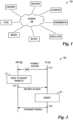
- FIG. 1 illustrates a high-level diagram of an Internet of Things (IoT) communications system 100.
- IoT communications system 100 includes a network 105 that is connected to a wide variety of IoT devices, including electrical devices, physical objects, and other items, that are consumer, industrial, automotive, environment, agricultural, military, medical, and retail in nature.
- Network 105 allows the IoT devices to be connected, as well as controlled.
- Network 105 may be any existing communications infrastructure, such as the Internet, a private or public data network, and so on.
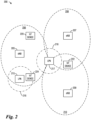
- FIG. 2 illustrates an example IoT communications system 200 implemented using a heterogeneous network (HetNet).
- the HetNet includes a planned network infrastructure, such as a 3GPP LTE compliant communications network, or any other standards or non-standards compliant communications network wherein communications take place through entities that are deployed in a structured fashion.
- the planned network infrastructure includes a plurality of evolved NodeBs (eNBs), including eNB 205 with coverage area 206, eNB 207 with coverage area 208, and eNB 209 with coverage area 210.
- eNBs evolved NodeBs
- the HetNet also includes an unplanned network infrastructure.
- the HetNet serves IoT devices, such as IoT device 220, IoT device 222, and IoT device 224, that are either mobile or immobile.
- the capabilities of the IoT devices may vary widely. As an example, if the IoT device is a smart device, such as a smart telephone, the IoT device may be capable of simultaneously communicating with multiple services, display multimedia, create multimedia, participate in an interactive session, serve data, and so on. As another example, if the IoT device is a sensor, such as a security sensor or a weather temperature, the IoT device may be limited to periodically report its sensory reading to a data aggregator. Regardless of the capabilities of the IoT devices, the IoT devices need to be able to establish a connection with the communications infrastructure (e.g., the HetNet in Figure 2 ).
- the communications infrastructure e.g., the HetNet in Figure 2 .
- eNBs are also commonly referred to as NodeBs, base stations, communications controllers, access points, and so on, depending on the type of the planned network infrastructure.
- IoT devices are also commonly referred to as user equipments (UEs), mobile stations, mobiles, terminals, users, subscribers, stations, devices, smart devices, and so on, depending on the type of the IoT devices.
- UEs user equipments
- HetNets may employ multiple eNBs capable of communicating with a number of IoT devices, only three eNBs, two LPNs, and three IoT devices are illustrated for simplicity.
- a random access procedure is performed by a UE when it initially attaches to a communications system or when it participates in a handover between cells.
- the UE participates in the random access procedure with an entity (e.g., an eNB, a LPN, and so on) of the communications system or cell.
- an entity e.g., an eNB, a LPN, and so on
- a random access procedure typically entails the UE selecting and transmitting one out of a plurality of random access preambles to the eNB (an example of an entity of the communications system as described above) and the eNB assigns network resources to the UE to allow the UE to make a connection request.
- the UE must wait a certain amount of time before the UE can try again. The amount of time that the UE waits is referred to as a backoff (BO).
- BO backoff
- FIG. 3 illustrates an example random access procedure 300.
- Random access procedure 300 involves processing performed by and transmissions made by an eNB 305 and a UE 310.
- Part of random access procedure 300 includes UE 310 selecting a random access preamble and transmitting the random access preamble to eNB 305.
- UE 310 selects a random access preamble and transmitting the random access preamble to eNB 305.
- event 315 determines a backoff (BO) parameter (block 317) and transmits a random access response (RAR) with the backoff parameter to UE 310 (event 319).
- UE 310 performs a backoff in accordance with the BO parameter provided by eNB 305 (block 321). Once the backoff completes, UE 310 transmits the random access preamble (event 323).
- BO backoff
- RAR random access response
- the RACH backoff mechanism used in 3GPP LTE is introduced in 3GPP LTE Release-13 and is based on media access control (MAC) backoff indication (BI). Limited changes to the backoff mechanism, such as a reduction in MAC BI size from 4 bits to another value and corresponding changes to backoff range can be considered if needed and time permits.
- the UE randomly and uniformly chooses the backoff time from interval [o, backoff parameter value].
- the interval [0, backoff parameter value] is also referred to as the backoff window.
- the backoff parameter value is signaled in the form of an index into a table of backoff parameter values.
- Table 1 shows Table 7.2-1, backoff parameter values from 3GPP TS 36.321 and Table 2 shows 3GPP LTE Physical Random Access Channel (PRACH) preamble durations.
- Table 1 3GPP TS 36.321Table 7.2-1 backoff parameter values.
- Index Backoff Parameter value (ms) 0 0 1 10 2 20 3 30 4 40 5 60 6 80 7 120 8 160 9 240 10 320 11 480 12 960 13 Reserved 14 Reserved 15 Reserved
- Table 2 3GPP LTE PRACH preamble durations.
- Preamble format Duration ms
- CP duration us
- Guard time duration 0 1 103.3 96.88 1 2 684.38 515.63 2 2 203.13 196.88 3 3 684.38 715.63
- NB-IoT PRACH preamble duration is even longer than some of the backoff parameter in Table 1, hence some small values make no sense compared with longer preamble duration.
- the backoff parameter value with 10ms is no use for preambles with more than one repetition.
- FIG. 4 illustrates a time-frequency diagram 400 of a NB-PRACH transmission with 2 repetitions.
- each NB-PRACH transmission consists of 4 groups with each group comprising 1 CP and a symbol group with 5 symbols.
- a first NB-PRACH transmission 405 includes 4 groups 410-416.
- a second NB-PRACH transmission 420 also includes 4 groups (420-426) with each group comprising 1 CP and a symbol group with 5 symbols.
- pseudorandom frequency hopping is implemented between NB-PRACH transmissions, which is shown in Figure 4 as frequency difference 430 between first NB-PRACH transmission 405 and second NB-PRACH transmission 420.
- the frequency resource usage within each NB-PRACH transmission remains consistent between repetitions.
- the NB-PRACH preamble duration can be much longer, especially in situations when a large number of repetitions are transmitted for the purpose of coverage enhancement. Furthermore, there is also a much wider variation in NB-PRACH length. In some circumstances, e.g., with larger repetition values, the NB-PRACH preamble duration is even longer than some of the backoff parameter values currently used in 3GPP LTE. Hence, some of the smaller backoff parameter values do not make practical sense when compared with larger NB-PRACH preamble durations. As an illustrative example, a backoff parameter value of 10 ms is not useful for NB-PRACH preambles with more than 1 repetition.
- Figure 5A illustrates a time-frequency diagram 500 illustrating a collision arising from an insufficiently small backoff parameter value. Collisions among RA preamble transmissions may happen due to the mismatched backoff time and preamble durations.
- the situation illustrated in Figure 5A involves NB-PRACH preamble durations of 25.6 ms and a backoff parameter value of 10ms.
- a first UE (UE1) and a second UE (UE2) transmit NB-PRACH preambles (preamble 508 for UE1 and preamble 509 for UE2) at the same network resource, resulting in a preamble collision.
- Both UEs randomly select backoff times of 4 ms (for UE1) and 7 ms (for UE2), respectively. Therefore, after a backoff of 4 ms, UE1 retransmits its NB-PRACH preamble (preamble 513) (event 510) and after a backoff of 7 ms, UE2 retransmits its NB-PRACH preamble (preamble 514) (event 515).
- the NB-PRACH preambles are 25.6 ms long, UE1 is unable to complete the transmission of its NB-PRACH preamble 513 before UE2 transmits its NB-PRACH preamble 514 and another preamble collision takes place.
- the collision probability for long preamble durations and short preamble durations differ greatly due to the wide range of preamble lengths.
- the backoff parameter value is set to 960 ms
- UEs using short preamble durations e.g., 12.8 ms
- UEs using long preamble durations e.g., 819.2 ms
- long preamble durations may block and cause extra delay in NB PUSCH (NB-PUSCH) transmission.
- the allocation of network resources may need to be changed to reduce the blocking issue.
- NB-PRACH preamble duration becomes much longer than some of the backoff parameter value defined for LTE, especially with large number of repetitions; the NB-PRACH preamble lengths vary widely and the collision probabilities may be different for different preamble lengths in some cases.
- the backoff parameter values are defined as multiples of random access preamble durations (random access preamble units) to align the backoff time with preamble duration.
- random access preamble units random access preamble units
- the defining of the backoff parameter values as multiple of random access preamble units allows the access opportunities and collision probability to remain substantially constant with different random access preamble durations.
- Example embodiments include:
- an eNB determines the backoff parameter values according to the load on corresponding random access channels.
- a technical standard or an operator of the communications system may define possible backoff parameter values, such as a table of possible backoff parameter values.
- an eNB selects the actual backoff parameter value(s) to signal to the UEs based on the load on the random access channels.
- network resource allocation is performed semi-statically to allocate the network resources for NB-PRACH based on random access load.
- Different numbers of network resources may be allocated for different NB-PRACH channels, with each random access channel being related to one NB-PRACH preamble format (e.g., duration, repetition, and so on).
- long random access preambles may be split into multiple parts.
- the backoff window may be used in a manner same to the backoff window in 3GPP LTE compliant communications systems, the UE randomly selects a time from within the backoff window and the UE waits until the time expires before retransmitting its NB-PRACH preamble.
- the backoff window may be used in a manner similar to the backoff window in 3GPP LTE compliant communications systems, the UE randomly selects a number from within the backoff window and the UE waits the number times the random access preamble unit before retransmitting its NB-PRACH preamble.
- Figure 6 illustrates an example backoff window 600 that is 2 times the random access preamble unit in duration. Table 6 shows example backoff times for two UEs with different random access preamble units. Table 6: Example backoff times for two UEs with different random access preamble units. Preamble duration (without GT) Backoff value selected by UE Backoff time UE1: 12.8ms 2 25.6ms UE2: 25.6ms 3 76.8ms
- backoff parameter values are specified as multiples of random access preamble units and different sets of backoff parameter values are used for different random access preamble repetitions.
- the use of different sets of backoff preamble values for different random access preamble repetitions enable the adjustment of different backoff window sizes for different random access preamble durations.
- long random access preamble durations are assigned a set of backoff parameter values with small values, while short random access preamble durations are assigned a set of backoff parameter values with large values.
- Figure 7 illustrates a table 700 of example backoff parameter values with different sets of backoff parameter values assigned to different random access preamble durations.
- backoff parameter values are specified as multiples of random access preamble units and a combination of backoff window size and frequency hopping based on the number of random access preamble repetitions is used.
- a non-zero backoff window size and frequency hopping are used in situations with small numbers of random access preamble repetitions.
- backoff windows are not used but frequency hopping is used in situations with large numbers of random access preamble repetitions.
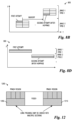
- Figure 8C illustrates a time-frequency graph 840 highlighting third example NB-PRACH operation in accordance with example embodiment 3.
- the backoff window is of duration zero (i.e., there is no backoff) and the frequency hopping occurs within the same frequency NB-PRACH band or PRB.
- Figure 8D illustrates a time-frequency graph 860 highlighting fourth example NB-PRACH operation in accordance with example embodiment 3.
- the backoff window is of duration zero and the frequency hopping occurs in a different frequency NB-PRACH band or PRB.
- the examples shown in Figures 8C and 8D may be preferably used in situations with large numbers of random access preamble repetitions.
- backoff parameter values are specified as multiples of random access preamble units and a multi-step backoff is performed.
- a two-step backoff includes: in a first step, backoff is performed in steps of a predefined period (the period and steps of the period are determined by the eNB or UE ); and in a second step, a random offset within the period is selected (the random offset is determined by the UE). Frequency hopping can also be utilized.
- UE1 is assigned an NB-PRACH backoff with one period meaning that UE1 can retransmit a NB-PRACH preamble on a UE selected time-frequency resource in the next period
- UE2 is assigned an NB-PRACH backoff with two periods meaning that UE2 can retransmit an NB-PRACH preamble on a UE selected time-frequency resource in the second period following the first transmission.
- Figure 9A when the random access preamble is shorter, there are more transmission opportunities, therefore the UEs can randomly select an access opportunity for random access preamble transmission, while for longer random access preambles, there are fewer opportunities.
- NB-PRACH with 1 milli-second subframe boundary of LTE.
- different gap time can be inserted in the end of NB-PRACH.
- Table 7 lists example gap times that may be inserted at the end of a NB-PRACH preamble. The gap times listed in Table 7 are for illustrative purposes. The actual gap time could be different and depends on the intended cell coverage and/or the preamble duration.
- the gap time for NB-PRACH with 128 repetitions may be 0.8ms for 266.7us CP and 0.2ms for 66.7us CP, respectively.
- the gap time may be used for alignment purposes, such as a 1 ms subframe boundary, for example.
- Table 7 Example gap times.
- multiple NB-PRACH resources can be multiplexed in TDM.
- Each resource is dedicated to one type of NB-PRACH with the same preamble duration.
- Multiple allocated NB-PRACH durations are aggregated in time to align the whole PRACH resource to 1ms subframe boundary. In this case, there is no gap time after PRACH. For example, 5 preambles with duration 6.4ms can align with 1ms subframe boundary.
- an eNB allocates the time-frequency resources for NB-PRACH based on the random access load.
- the eNB may make use of the system information block (SIB) to signal the allocations.
- SIB system information block
- the eNB may allocate different numbers of time-frequency resources for different random access channels, with each random access channel being related to a random access preamble format.
- the random access channels (i.e., the allocated time-frequency resources) may be time division multiplexed (TDM) and/or frequency division multiplexed (FDM) within one NB-PRACH band or PRB.
- the random access channels may be allocated in different NB-PRACH bands or PRBs.
- the load may be distributed on a random access channel basis rather than cell basis. When the load is high, more time-frequency resources may be allocated.
- Figures 10A and 10B illustrate example allocations of time-frequency resources to random access channels.
- Figure 10A illustrates an example allocation 1000 of time-frequency resources to random access channels in a FDM manner.
- Figure 10B illustrates an example allocation 1010 of time-frequency resources to random access channels in a TDM manner.
- the time-frequency resources allocated for random access channels are multiplexed with time-frequency resources allocated for NB-PUSCH.
- the multiplexing of the NB-PUSCH and the random access channels may help to reduce the latency of the NB-PUSCH caused by long NB-PRACH preambles.
- multiple bands or PRBs are used in multiplexing the NB-PRACH and the NB-PUSCH.
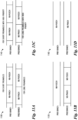
- Figure 11A illustrates a diagram 1100 of two bands or PRBs used for multiplexing channels of the same coverage level. In a situation where the NB-PUSCH and the NB-PRACH are of the same coverage level (i.e., they have the same preamble duration), the channels are multiplexed into the same band or PRB, using TDM, for example.
- Figure 11B illustrates a diagram 1120 of two bands or PRBs when at least one of the bands or PRBs has unused resources. In a situation where there are unused resources in one or more bands or PRBs, the NB-PUSCH can be allocated the unused resources.
- Figure 11C illustrates a diagram 1140 of two bands or PRBs highlighting priority based allocation.
- the allocation of the resources may be made in accordance with the priority of the preambles. As an example, long preambles have higher priority than short preambles.
- Figure 11D illustrates a diagram 1160 of two bands or PRBs with separate band or PRB allocation.
- the NB-PUSCH and the NB-PRACH may be allocated to separate bands or PRBs. If more than 2 bands or PRBs are available, each of the NB-PUSCH or the NB-PRACH may be allocated more than 1 band or PRB.
- long random access preambles are split into multiple parts. Each part may be separately scheduled and transmitted. Reducing the duration of the random access preambles reduces the latency on the NB-PUSCH since the network resources are not allocated for extended amounts of time. Each of the shorter parts may utilize the backoff parameter values assigned to a whole random access preamble of the same duration as the shorter part.
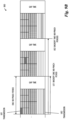
- Figure 12 illustrates a time-frequency diagram 1200 highlighting the splitting of a long random access preamble into shorter parts. As shown in diagram 1200, a long random access preamble is split into 2 parts and is transmitted in resource 1205 and resource 1210. It is noted that in order to align the boundaries (e.g., 2 ms slot or 4 ms subframe boundary), gap time may be inserted after a random access preamble.
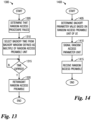
- Figure 13 illustrates a flow diagram of example operations 1300 occurring in a UE participating in a random access procedure.
- Operations 1300 may be indicative of operations occurring in a UE as the UE participates in a random access procedure.
- Operations 1300 begin with the UE determining that the random access procedure has failed (block 1305).
- the random access procedure has failed if the eNB does not send a random access response to a random access preamble sent by the UE, for example.
- the random access procedure has failed if the UE receives a random access response from the eNB, but the random access response is not for the UE but another UE that sent the same random access preamble.
- the UE selects a backoff time from a backoff window ranging from [0, random access parameter value * random access preamble unit] (block 1310).
- the random access parameter value is signaled by the eNB.
- the eNB signals an indicator of which random access parameter value to use out of a table of random access parameter values specified by a technical standard or an operator of the communications system.
- the UE waits until the backoff time expires (block 1315).
- the UE retransmits the random access preamble (block 1320).
- the random access preamble is segmented into a plurality of blocks and the UE transmits each of the plurality of blocks.
- the UE interleaves a PUSCH with at least some of the blocks.
- the random access preamble is initially transmitted on one of a first carrier or a first band, and the random access preamble is retransmitted on one of a second carrier or a second band.
- the present application provides a system and method for transmitting a random access procedure.
- the method includes generating, by a UE, the random access preamble, and when a number of physical random access channel (PRACH) repetitions per attempt is larger than a threshold, segmenting, by the UE, the random access preamble into a plurality of blocks, and separately transmitting, by the UE, each of the plurality of blocks.
- PRACH physical random access channel
- Figure 14 illustrates a flow diagram of example operations 1400 occurring in an eNB participating in a random access procedure.
- Operations 1400 may be indicative of operations occurring in an eNB as the eNB participates in a random access procedure.
- Operations 1400 begin with the eNB determining a backoff parameter value (block 1405).
- the backoff parameter value is specified as a multiple of a random access preamble unit (e.g., a random access preamble duration) of the UE.
- a random access preamble unit e.g., a random access preamble duration
- the same set of backoff parameter values is used for all random access preamble units.
- different sets of backoff parameter values are used for different random access preamble durations.
- frequency hopping is also used.
- a multi-step backoff is used, where a period for backoff is specified and an offset within the period is either specified or is selectable by the UE.
- the eNB signals the backoff parameter value or an indicator thereof to the UE (block 1410).
- the eNB receives a random access preamble in accordance with the backoff parameter value (block 1415).
- the backoff parameter value specifies a multiple of the random access preamble unit.
- the specified multiple is selected from one of the plurality of sets of specified multiples in accordance with a duration of the random access preamble.
- the method also includes selecting a step of a predefined period, and signaling an indicator of the step of the predefined period.
- the random access preamble is segmented into a plurality of blocks, and receiving the random access preamble includes separately receiving each of the plurality of blocks.
- the method also includes receiving an uplink data channel interleaved with at least some of the plurality of blocks.
- the backoff time is defined as multiple times of basic time units, where the unit may equal to a preamble duration.
- the preamble duration (without considering GT) is not aligned with the subframe boundary of 1ms subframe for 15kHz subcarrier spacing and 4ms subframe for 3.75kHz subcarrier spacing, which may increase the scheduling complexity.
- one solution is to insert gap time. Following are two examples:
- Proposal 1 Consider above solutions to align the PRACH channel with NB-IoT subframe boundaries. To deal with the possible unbalanced collision probability for different PRACH preamble formats, semi-statically resource allocation for PRACH may be adopted. Firstly, a random access channel load indicator can be defined instead of current cell load. This is to say, the load is per random access channel basis. Each random access channel is related to one preamble format. When load is heavy, more resources may be allocated. Consequently, eNB can allocate different number of resources for different random access channels based on random access channel load, in which the resource allocation information may be carried via SIB.
- a random access channel load indicator can be defined instead of current cell load. This is to say, the load is per random access channel basis. Each random access channel is related to one preamble format. When load is heavy, more resources may be allocated. Consequently, eNB can allocate different number of resources for different random access channels based on random access channel load, in which the resource allocation information may be carried via SIB.
- Proposal 2 Consider semi-static resource allocation based on random access channel load to balance the collision probabilities in different random access channels for different preamble formats.
- Figure 17 illustrates a block diagram of a non-claimed embodiment processing system 1700 for performing methods described herein, which may be installed in a host device.
- the processing system 1700 includes a processor 1704, a memory 1706, and interfaces 1710-1714, which may (or may not) be arranged as shown in Figure 17 .
- the processor 1704 may be any component or collection of components adapted to perform computations and/or other processing related tasks
- the memory 1706 may be any component or collection of components adapted to store programming and/or instructions for execution by the processor 1704.
- the memory 1706 includes a non-transitory computer readable medium.
- the processing system 1700 is included in a network device that is accessing, or part otherwise of, a telecommunications network.
- the processing system 1700 is in a network-side device in a wireless or wireline telecommunications network, such as a base station, a relay station, a scheduler, a controller, a gateway, a router, an applications server, or any other device in the telecommunications network.
- the processing system 1700 is in a user-side device accessing a wireless or wireline telecommunications network, such as a mobile station, a user equipment (UE), a personal computer (PC), a tablet, a wearable communications device (e.g., a smartwatch, etc.), or any other device adapted to access a telecommunications network.
- a wireless or wireline telecommunications network such as a mobile station, a user equipment (UE), a personal computer (PC), a tablet, a wearable communications device (e.g., a smartwatch, etc.), or any other device adapted to access a telecommunications network.
- one or more of the interfaces 1710, 1712, 1714 connects the processing system 1700 to a transceiver adapted to transmit and receive signaling over the telecommunications network.
- Figure 18 illustrates a block diagram of a transceiver 1800 adapted to transmit and receive signaling over a telecommunications network.
- the transceiver 1800 may be installed in a host device. As shown, the transceiver 1800 comprises a network-side interface 1802, a coupler 1804, a transmitter 1806, a receiver 1808, a signal processor 1810, and a device-side interface 1812.
- the network-side interface 1802 may include any component or collection of components adapted to transmit or receive signaling over a wireless or wireline telecommunications network.
- the coupler 1804 may include any component or collection of components adapted to facilitate bi-directional communication over the network-side interface 1802.
- the transmitter 1806 may include any component or collection of components (e.g., up-converter, power amplifier, etc.) adapted to convert a baseband signal into a modulated carrier signal suitable for transmission over the network-side interface 1802.
- the receiver 1808 may include any component or collection of components (e.g., down-converter, low noise amplifier, etc.) adapted to convert a carrier signal received over the network-side interface 1802 into a baseband signal.
- the signal processor 1810 may include any component or collection of components adapted to convert a baseband signal into a data signal suitable for communication over the device-side interface(s) 1812, or vice-versa.
- the device-side interface(s) 1812 may include any component or collection of components adapted to communicate data-signals between the signal processor 1810 and components within the host device (e.g., the processing system 1700, local area network (LAN) ports
- the transceiver 1800 may transmit and receive signaling over any type of communications medium.
- the transceiver 1800 transmits and receives signaling over a wireless medium.
- the transceiver 1800 may be a wireless transceiver adapted to communicate in accordance with a wireless telecommunications protocol, such as a cellular protocol (e.g., long-term evolution (LTE), etc.), a wireless local area network (WLAN) protocol (e.g., Wi-Fi, etc.), or any other type of wireless protocol (e.g., Bluetooth, near field communication (NFC), etc.).
- the network-side interface 1802 comprises one or more antenna/radiating elements.
- the network-side interface 1802 may include a single antenna, multiple separate antennas, or a multi-antenna array configured for multi-layer communication, e.g., single input multiple output (SIMO), multiple input single output (MISO), multiple input multiple output (MIMO), etc.
- the transceiver 1600 transmits and receives signaling over a wireline medium, e.g., twisted-pair cable, coaxial cable, optical fiber, etc.
- Specific processing systems and/or transceivers may utilize all of the components shown, or only a subset of the components, and levels of integration may vary from device to device.
- a signal may be transmitted by a transmitting unit or a transmitting module.
- a signal may be received by a receiving unit or a receiving module.
- a signal may be processed by a processing unit or a processing module.
- Other steps may be performed by a selecting unit/module, a waiting unit/module, a determining unit/module, and/or a signaling unit/module.
- the respective units/modules may be hardware, software, or a combination thereof.
- one or more of the units/modules may be an integrated circuit, such as field programmable gate arrays (FPGAs) or application-specific integrated circuits (ASICs).
- FPGAs field programmable gate arrays
- ASICs application-specific integrated circuits
Landscapes
- Engineering & Computer Science (AREA)
- Computer Networks & Wireless Communication (AREA)
- Signal Processing (AREA)
- Mobile Radio Communication Systems (AREA)
Claims (6)
- Verfahren zum Übertragen einer Direktzugriffspräambel, wobei das Verfahren umfasst:Erzeugen, durch eine Benutzereinrichtung, UE, der Direktzugriffspräambel; unddadurch gekennzeichnet, dass:wenn eine Anzahl von Wiederholungen eines physikalischen Direktzugriffkanals, PRACH, pro Versuch größer als ein Schwellenwert ist,Aufteilen, durch die UE, der Direktzugriffpräambel in eine Vielzahl von Teilen in diskontinuierlichen Zeitressourcen, undseparates Übertragen, durch die UE, jedes der Vielzahl von Teilen;wobei die Direktzugriffspräambel die PRACH-Wiederholungen umfasst, jede PRACH-Wiederholung der PRACH-Wiederholungen 4 Symbolgruppen (420, 422, 424, 426) umfasst.
- Verfahren nach Anspruch 1, wobei jede Symbolgruppe (420, 422, 424, 426) der 4 Symbolgruppen 1 zyklisches Präfix und 5 Symbole umfasst.
- Verfahren nach Anspruch 1, wobei das separate Übertragen jedes der Vielzahl von Teilen in diskontinuierlichen Zeitressourcen ein Verschachteln von mindestens einigen der Vielzahl von Teilen mit einem Uplink-Datenkanal umfasst.
- Nichtflüchtiges computerlesbares Speichermedium, das konfiguriert ist, um ein Computerprogramm zum Implementieren des Verfahrens nach einem der Ansprüche 1 bis 3 zu speichern.
- Benutzereinrichtung (1700, 1800), die konfiguriert ist, um das Verfahren nach einem der Ansprüche 1 bis 3 zu implementieren.
- Computerprogrammprodukt, dadurch gekennzeichnet, dass es Computeranweisungen umfasst, um eine Computervorrichtung anzuweisen, das Verfahren nach einem der Ansprüche 1 bis 3 zu implementieren.
Applications Claiming Priority (4)
| Application Number | Priority Date | Filing Date | Title |
|---|---|---|---|
| US201662308021P | 2016-03-14 | 2016-03-14 | |
| US15/451,983 US20170265230A1 (en) | 2016-03-14 | 2017-03-07 | System and Method for Random Access Backoffs |
| PCT/CN2017/076509 WO2017157268A1 (en) | 2016-03-14 | 2017-03-13 | System and method for random access backoffs |
| EP17765810.1A EP3420777B1 (de) | 2016-03-14 | 2017-03-13 | Verfahren für direktzugang |
Related Parent Applications (2)
| Application Number | Title | Priority Date | Filing Date |
|---|---|---|---|
| EP17765810.1A Division EP3420777B1 (de) | 2016-03-14 | 2017-03-13 | Verfahren für direktzugang |
| EP17765810.1A Division-Into EP3420777B1 (de) | 2016-03-14 | 2017-03-13 | Verfahren für direktzugang |
Publications (3)
| Publication Number | Publication Date |
|---|---|
| EP4124151A1 EP4124151A1 (de) | 2023-01-25 |
| EP4124151B1 true EP4124151B1 (de) | 2025-03-05 |
| EP4124151C0 EP4124151C0 (de) | 2025-03-05 |
Family
ID=59787476
Family Applications (2)
| Application Number | Title | Priority Date | Filing Date |
|---|---|---|---|
| EP22194064.6A Active EP4124151B1 (de) | 2016-03-14 | 2017-03-13 | System und verfahren für direktzugangsbackoffs |
| EP17765810.1A Active EP3420777B1 (de) | 2016-03-14 | 2017-03-13 | Verfahren für direktzugang |
Family Applications After (1)
| Application Number | Title | Priority Date | Filing Date |
|---|---|---|---|
| EP17765810.1A Active EP3420777B1 (de) | 2016-03-14 | 2017-03-13 | Verfahren für direktzugang |
Country Status (5)
| Country | Link |
|---|---|
| US (6) | US20170265230A1 (de) |
| EP (2) | EP4124151B1 (de) |
| JP (2) | JP6803921B2 (de) |
| CN (2) | CN113301661B (de) |
| WO (1) | WO2017157268A1 (de) |
Families Citing this family (33)
| Publication number | Priority date | Publication date | Assignee | Title |
|---|---|---|---|---|
| US20170265230A1 (en) | 2016-03-14 | 2017-09-14 | Futurewei Technologies, Inc. | System and Method for Random Access Backoffs |
| US10009929B1 (en) * | 2016-03-24 | 2018-06-26 | Sprint Spectrum L.P. | Contention-based random access |
| US10148461B2 (en) * | 2016-05-06 | 2018-12-04 | Telefonaktiebolaget L M Ericsson (Publ) | Preamble detection and time-of-arrival estimation for a single-tone frequency hopping random access preamble |
| MY195951A (en) * | 2016-09-26 | 2023-02-27 | Fraunhofer Ges Forschung | Physically Separated Channels for Narrowband, Low Complexity Receivers |
| US10390372B2 (en) * | 2016-09-28 | 2019-08-20 | Lg Electronics Inc. | Carrier reselection under backoff mechanism of random access procedure |
| CN108307413B (zh) * | 2016-09-30 | 2023-06-30 | 华为技术有限公司 | 接入方法、终端设备和基站 |
| CN108024361B (zh) | 2016-11-04 | 2023-09-12 | 中兴通讯股份有限公司 | 确定方法、接入、发送、处理方法及装置、基站及终端 |
| CN110199562A (zh) * | 2017-01-23 | 2019-09-03 | Oppo广东移动通信有限公司 | 用于随机接入的方法、终端设备和网络设备 |
| US11160115B2 (en) * | 2017-03-24 | 2021-10-26 | Convida Wireless, Llc | Setting of back-off time |
| CN109561514B (zh) * | 2017-09-26 | 2021-07-20 | 维沃移动通信有限公司 | 一种随机接入过程的处理方法、终端和基站 |
| US11324014B2 (en) * | 2017-12-22 | 2022-05-03 | Qualcomm Incorporated | Exposure detection in millimeter wave systems |
| WO2019127044A1 (zh) * | 2017-12-26 | 2019-07-04 | Oppo广东移动通信有限公司 | 控制ue的随机接入功率的方法、ue及计算机存储介质 |
| WO2019139426A1 (en) * | 2018-01-11 | 2019-07-18 | Samsung Electronics Co., Ltd. | Method of determining frequency-domain offset parameter, user equipment (ue), random access method, method for configuring random access information, corresponding device and computer readable medium |
| CN115643645B (zh) * | 2018-01-19 | 2026-06-23 | 北京三星通信技术研究有限公司 | 频域偏移参数确定方法、用户设备和计算机可读介质 |
| CN115277336B (zh) | 2018-01-25 | 2023-07-28 | Lg电子株式会社 | 在无线通信系统中发送和接收nprach前导码的方法和设备 |
| CN111386746B (zh) * | 2018-05-10 | 2023-07-14 | Lg电子株式会社 | 在无线通信系统中发送/接收随机接入前导码的方法及其设备 |
| CN113708911B (zh) * | 2018-05-10 | 2023-04-07 | 中兴通讯股份有限公司 | 信号的发送方法及装置、存储介质、电子装置 |
| EP3794899B1 (de) | 2018-06-19 | 2025-10-29 | Samsung Electronics Co., Ltd. | Verfahren und vorrichtung zur durchführung von direktzugriffs-backoff in einem drahtloskommunikationssystem |
| CN111869306B (zh) * | 2018-08-01 | 2021-11-16 | Oppo广东移动通信有限公司 | 随机接入的方法、终端设备和网络设备 |
| CN115226242B (zh) | 2019-01-11 | 2024-12-13 | 上海朗帛通信技术有限公司 | 一种用于无线通信的通信节点中的方法和装置 |
| CN114375032B (zh) | 2019-01-30 | 2024-05-10 | 维沃移动通信有限公司 | 一种数据处理方法及用户设备 |
| WO2020199051A1 (zh) * | 2019-03-29 | 2020-10-08 | Oppo广东移动通信有限公司 | 一种随机接入的方法、基站、终端及信道结构 |
| CN111867125B (zh) * | 2019-04-29 | 2022-12-06 | 华为技术有限公司 | 一种随机接入方法和装置 |
| KR102876205B1 (ko) * | 2019-06-24 | 2025-10-24 | 삼성전자 주식회사 | 무선통신시스템에서 2단계 랜덤엑세스 절차에서 백오프를 수행하는 방법 및 장치 |
| CN112770404B (zh) * | 2019-11-05 | 2022-04-29 | 华为技术有限公司 | 随机接入方法、装置及设备 |
| CN116458251B (zh) * | 2020-09-29 | 2024-11-22 | Oppo广东移动通信有限公司 | 随机接入方法和终端设备 |
| CN113329445A (zh) * | 2021-05-28 | 2021-08-31 | 江苏集萃深度感知技术研究所有限公司 | 基于NB-IoT的路灯控制接入方法 |
| CN114245477B (zh) * | 2022-01-27 | 2023-08-18 | 新拓尼克科技(成都)有限公司 | 一种竞争随机接入失败后的快速处理方法 |
| US12132740B2 (en) | 2022-03-16 | 2024-10-29 | Pure Storage, Inc. | Adaptive distributed backoff scheme |
| CN117833957A (zh) * | 2022-09-30 | 2024-04-05 | 华为技术有限公司 | 一种用于通信的方法、设备、存储介质和程序产品 |
| TR2023018829A1 (tr) * | 2023-12-27 | 2025-06-23 | Ulak Haberlesme Anonim Sirketi | Nb-iot ci̇hazlarina yöneli̇k rastgele eri̇şi̇m yöntemi̇ |
| WO2025174002A1 (ko) * | 2024-02-16 | 2025-08-21 | 엘지전자 주식회사 | 무선 통신 시스템에서 충돌 제어를 위한 방법 및 장치 |
| CN122120960A (zh) * | 2024-11-29 | 2026-05-29 | 北京三星通信技术研究有限公司 | 一种通信系统中的用户设备和基站及其执行的方法 |
Family Cites Families (82)
| Publication number | Priority date | Publication date | Assignee | Title |
|---|---|---|---|---|
| US7492741B2 (en) * | 2004-04-12 | 2009-02-17 | Alcatel-Lucent Usa Inc. | Space-time multipath searcher |
| US20070064665A1 (en) * | 2005-08-23 | 2007-03-22 | Interdigital Technology Corporation | Method and apparatus for accessing an uplink random access channel in a single carrier frequency division multiple access system |
| US9301318B2 (en) * | 2006-01-20 | 2016-03-29 | Nokia Technologies Oy | Random access procedure with enhanced coverage |
| KR101226819B1 (ko) * | 2006-08-21 | 2013-01-25 | 삼성전자주식회사 | 광대역 무선 통신 시스템에서 역방향 접근채널의 프리앰블송수신 방법 및 장치 |
| EP3554180B1 (de) * | 2006-10-03 | 2021-05-05 | QUALCOMM Incorporated | Verfahren und vorrichtungen für einen direktzugriff zu einem drahtlosen kommunikationssystem |
| CN102665225A (zh) * | 2007-03-20 | 2012-09-12 | 朗讯科技公司 | 无线通信系统中用于范围扩展的可配置随机接入信道结构 |
| JP4777286B2 (ja) * | 2007-03-27 | 2011-09-21 | パナソニック株式会社 | 通信装置、通信システム、および通信制御方法 |
| KR101366332B1 (ko) * | 2007-04-19 | 2014-02-21 | 엘지전자 주식회사 | 통신 시스템에서의 데이터 블록 재전송 방법 |
| US8427971B2 (en) * | 2007-06-19 | 2013-04-23 | Lg Electronics Inc. | Enhancement of LTE random access procedure |
| KR101430462B1 (ko) * | 2007-08-09 | 2014-08-19 | 엘지전자 주식회사 | Rach 프리엠블 구성방법 및 전송방법 |
| JP2009153048A (ja) * | 2007-12-21 | 2009-07-09 | Sharp Corp | 移動局装置、基地局装置、無線通信システムおよびランダムアクセスプリアンブルの再送方法 |
| US8027356B2 (en) * | 2008-01-31 | 2011-09-27 | Lg Electronics Inc. | Method for signaling back-off information in random access |
| US8682318B2 (en) * | 2008-02-04 | 2014-03-25 | Lg Electronics Inc. | Method of performing random access after applying back-off |
| US8619684B2 (en) * | 2008-05-01 | 2013-12-31 | Qualcomm Incorporated | Method and apparatus for downlink data arrival |
| GB2461780B (en) * | 2008-06-18 | 2011-01-05 | Lg Electronics Inc | Method for detecting failures of random access procedures |
| GB2461158B (en) * | 2008-06-18 | 2011-03-02 | Lg Electronics Inc | Method for performing random access procedures and terminal therof |
| CN101646251B (zh) * | 2008-08-07 | 2012-07-18 | 中兴通讯股份有限公司 | 随机接入过程和测量间隙冲突的处理方法 |
| JP2011530886A (ja) * | 2008-08-08 | 2011-12-22 | インターデイジタル パテント ホールディングス インコーポレイテッド | Macのリセットおよび再構成 |
| KR100949972B1 (ko) * | 2009-01-02 | 2010-03-29 | 엘지전자 주식회사 | 단말의 임의접속 수행 기법 |
| KR101122095B1 (ko) * | 2009-01-05 | 2012-03-19 | 엘지전자 주식회사 | 불필요한 재전송 방지를 위한 임의접속 기법 및 이를 위한 단말 |
| JP5020269B2 (ja) * | 2009-02-09 | 2012-09-05 | 株式会社エヌ・ティ・ティ・ドコモ | 無線基地局及び移動通信方法 |
| TW201108827A (en) * | 2009-03-16 | 2011-03-01 | Htc Corp | Method of handling random access procedure and related communication device |
| WO2010110522A1 (en) * | 2009-03-22 | 2010-09-30 | Lg Electronics Inc. | Random access response processing |
| TWI508602B (zh) * | 2009-04-23 | 2015-11-11 | 內數位專利控股公司 | 在多載波無線通訊中隨機存取方法及裝置 |
| CN102369773B (zh) * | 2009-04-27 | 2014-03-12 | 华为技术有限公司 | 一种随机接入竞争解决的判断方法、装置和系统 |
| CN102804655B (zh) * | 2009-06-07 | 2015-05-13 | Lg电子株式会社 | 在载波聚合移动通信系统中用户设备执行随机接入的方法 |
| CN102056322B (zh) * | 2009-10-30 | 2015-08-12 | 中兴通讯股份有限公司 | 接入处理方法及用户设备 |
| US8811345B2 (en) * | 2009-11-10 | 2014-08-19 | Qualcomm Incorporated | Method and apparatus for facilitating user equipment backoff during random access procedures |
| JP4728434B1 (ja) * | 2010-02-15 | 2011-07-20 | 株式会社エヌ・ティ・ティ・ドコモ | 移動局及び無線基地局 |
| EP2566277B1 (de) * | 2010-04-28 | 2020-09-23 | LG Electronics Inc. | Verfahren und vorrichtung zur durchführung von direktzugriffsprozeduren in einem drahtlosen kommunikationssystem |
| CN102291836B (zh) * | 2010-06-21 | 2016-01-20 | 中兴通讯股份有限公司 | 一种随机接入控制方法及系统 |
| CN102291846B (zh) * | 2010-06-21 | 2016-01-20 | 中兴通讯股份有限公司 | 一种随机接入方法及实现随机接入的系统 |
| CN103081553A (zh) * | 2010-09-27 | 2013-05-01 | 富士通株式会社 | 载波聚合系统中载波状态的处理方法和用户设备 |
| KR101403269B1 (ko) * | 2010-11-25 | 2014-06-02 | 엘지전자 주식회사 | 무선 접속 시스템에서 임의 접속을 분산하기 위한 방법 및 장치 |
| WO2012082053A1 (en) * | 2010-12-13 | 2012-06-21 | Telefonaktiebolaget L M Ericsson (Publ) | Transmission of random access preambles using tx diversity |
| WO2012108046A1 (ja) * | 2011-02-10 | 2012-08-16 | 富士通株式会社 | 無線通信システム、受信装置、送信装置および無線通信方法 |
| KR101550126B1 (ko) * | 2011-06-15 | 2015-09-11 | 엘지전자 주식회사 | 랜덤 액세스 수행 방법 및 장치 |
| EP2721896B1 (de) * | 2011-06-17 | 2018-08-22 | Telefonaktiebolaget LM Ericsson (publ) | Verfahren und knoten für direktzugang |
| US9585083B2 (en) * | 2011-06-17 | 2017-02-28 | Samsung Electronics Co., Ltd. | Apparatus and method for supporting network entry in a millimeter-wave mobile broadband communication system |
| US9143225B2 (en) * | 2011-06-30 | 2015-09-22 | Lg Electronics Inc. | Method and apparatus for ranging transmission by mobile station in wireless communication system |
| US9107225B2 (en) * | 2011-08-12 | 2015-08-11 | Lg Electronics Inc. | Method and apparatus for reporting statistic information associated with random access in a wireless communication system |
| JP2013055461A (ja) * | 2011-09-02 | 2013-03-21 | Sony Corp | 通信装置、通信方法、通信システム、および基地局 |
| US8787232B2 (en) * | 2011-10-26 | 2014-07-22 | Lg Electronics Inc. | Method and apparatus for updating extended access barring information |
| US9078257B2 (en) * | 2011-11-11 | 2015-07-07 | Intel Coproration | Random backoff for extended access barring |
| KR101564864B1 (ko) * | 2011-11-23 | 2015-10-30 | 엘지전자 주식회사 | 무선 통신 시스템에서 지연 내정 접속을 위해 사용되는 신호를 처리하는 방법 및 장치 |
| CN103167624B (zh) * | 2011-12-14 | 2015-09-30 | 电信科学技术研究院 | 一种认知无线电系统中的随机接入方法和设备 |
| KR102049794B1 (ko) * | 2012-01-09 | 2019-11-28 | 삼성전자 주식회사 | 로깅 방법 및 장치 |
| US9237537B2 (en) * | 2012-01-25 | 2016-01-12 | Ofinno Technologies, Llc | Random access process in a multicarrier base station and wireless device |
| US8526389B2 (en) * | 2012-01-25 | 2013-09-03 | Ofinno Technologies, Llc | Power scaling in multicarrier wireless device |
| IN2012DE00421A (de) * | 2012-02-15 | 2015-06-05 | Alcatel Lucent | |
| US9380582B2 (en) * | 2012-04-16 | 2016-06-28 | Samsung Electronics Co., Ltd. | Methods and apparatus for flexible beam communications in random access in system with large number of antennas |
| EP2862406A1 (de) * | 2012-06-15 | 2015-04-22 | Telefonaktiebolaget LM Ericsson (PUBL) | Direktzugriff in einem kommunikationsnetz |
| WO2014065593A1 (en) * | 2012-10-23 | 2014-05-01 | Lg Electronics Inc. | Method and apparatus for performing backoff in wireless communication system |
| CN103067880A (zh) * | 2013-01-09 | 2013-04-24 | 中兴通讯股份有限公司 | 一种发送集群消息的方法和网络侧设备、终端设备 |
| CN104919885A (zh) * | 2013-01-17 | 2015-09-16 | 瑞典爱立信有限公司 | 动态随机接入资源大小配置和选择 |
| CN103974446B (zh) * | 2013-01-30 | 2018-07-31 | 华为技术有限公司 | 一种随机接入方法及用户设备 |
| JP6195467B2 (ja) | 2013-05-08 | 2017-09-13 | 株式会社Nttドコモ | 無線通信システムおよび端末装置 |
| US9609499B2 (en) * | 2013-05-22 | 2017-03-28 | Avago Technologies General Ip (Singapore) Pte. Ltd. | Apparatus and method to prioritize a random access procedure for emergency access |
| US10051665B2 (en) * | 2013-07-16 | 2018-08-14 | Lg Electronics Inc. | Method and apparatus for performing random access procedure in wireless communication system |
| US20150043489A1 (en) * | 2013-08-09 | 2015-02-12 | Innovative Sonic Corporation | Method and apparatus for small cell enhancement in a wireless communication system |
| TWI628930B (zh) * | 2013-09-20 | 2018-07-01 | 新力股份有限公司 | 通訊裝置及方法 |
| CN103763784B (zh) * | 2014-01-22 | 2017-07-18 | 东南大学 | 用于td‑lte/td‑lte‑a系统区分用户优先级前导码分配的上行接入方法 |
| MX381591B (es) * | 2014-01-29 | 2025-03-12 | Interdigital Patent Holdings Inc | Método de acceso y adaptación de enlace para transmisiones inalámbricas mejoradas en cobertura. |
| KR101904443B1 (ko) * | 2014-06-13 | 2018-10-05 | 애플 인크. | 전력 절감, 범위 개선 및 개선된 검출을 위한 향상된 prach 방식 |
| CN111629449B (zh) * | 2014-08-15 | 2024-05-28 | 交互数字专利控股公司 | 由wtru执行的方法及wtru |
| US9781585B2 (en) * | 2014-09-25 | 2017-10-03 | Sharp Laboratories Of America, Inc. | Latency reduction for mode switching in sidelink communications |
| CN105451360A (zh) * | 2014-09-26 | 2016-03-30 | 夏普株式会社 | 用于配置随机接入响应窗的方法以及基站和用户设备 |
| RU2670379C1 (ru) * | 2014-12-29 | 2018-10-22 | Телефонактиеболагет Л М Эрикссон (Пабл) | Способы и устройства для генерации и обнаружения преамбул произвольного доступа |
| US9918344B2 (en) * | 2015-04-09 | 2018-03-13 | Intel IP Corporation | Random access procedure for enhanced coverage support |
| WO2017030485A1 (en) * | 2015-08-14 | 2017-02-23 | Telefonaktiebolaget Lm Ericsson (Publ) | Random access procedure for mtc operation |
| EP3342238B1 (de) * | 2015-08-26 | 2023-05-31 | Panasonic Intellectual Property Corporation of America | Verbessertes direktzugriffsverfahren für unlizenzierte zellen |
| US20170215209A1 (en) * | 2016-01-26 | 2017-07-27 | Futurewei Technologies, Inc. | Emergency call prioritization |
| CN108605358B (zh) * | 2016-02-08 | 2021-12-31 | 索尼移动通讯有限公司 | 终端装置、网络节点、通信系统和执行随机接入的方法 |
| US20170265230A1 (en) * | 2016-03-14 | 2017-09-14 | Futurewei Technologies, Inc. | System and Method for Random Access Backoffs |
| US10630410B2 (en) * | 2016-05-13 | 2020-04-21 | Telefonaktiebolaget Lm Ericsson (Publ) | Network architecture, methods, and devices for a wireless communications network |
| US10396881B2 (en) * | 2016-06-10 | 2019-08-27 | Qualcomm Incorporated | RACH design for beamformed communications |
| US10397958B2 (en) * | 2017-03-17 | 2019-08-27 | Asustek Computer Inc. | Method and apparatus for backoff mechanism applied for random access procedure in a wireless communication system |
| CN111511036B (zh) * | 2017-03-20 | 2022-03-01 | 华硕电脑股份有限公司 | 针对系统信息请求的随机接入程序的方法和设备 |
| US11057935B2 (en) * | 2017-03-22 | 2021-07-06 | Comcast Cable Communications, Llc | Random access process in new radio |
| US11647543B2 (en) * | 2017-03-23 | 2023-05-09 | Comcast Cable Communications, Llc | Power control for random access |
| CN110447299B (zh) * | 2017-03-29 | 2024-05-07 | 夏普株式会社 | 用于无线电系统的随机接入过程 |
| US10785804B2 (en) * | 2018-02-17 | 2020-09-22 | Ofinno, Llc | Bandwidth part configuration information |
-
2017
- 2017-03-07 US US15/451,983 patent/US20170265230A1/en not_active Abandoned
- 2017-03-13 WO PCT/CN2017/076509 patent/WO2017157268A1/en not_active Ceased
- 2017-03-13 JP JP2018548421A patent/JP6803921B2/ja active Active
- 2017-03-13 EP EP22194064.6A patent/EP4124151B1/de active Active
- 2017-03-13 CN CN202110373077.3A patent/CN113301661B/zh active Active
- 2017-03-13 CN CN201780016939.9A patent/CN108781470B/zh active Active
- 2017-03-13 EP EP17765810.1A patent/EP3420777B1/de active Active
- 2017-07-26 US US15/659,909 patent/US10149325B2/en active Active
-
2018
- 2018-10-15 US US16/160,776 patent/US10687367B2/en active Active
-
2020
- 2020-01-06 JP JP2020000307A patent/JP6980044B2/ja active Active
- 2020-06-05 US US16/894,297 patent/US11153917B2/en active Active
-
2021
- 2021-08-23 US US17/408,628 patent/US11678381B2/en active Active
-
2023
- 2023-04-28 US US18/309,030 patent/US12041664B2/en active Active
Also Published As
| Publication number | Publication date |
|---|---|
| US20200396771A1 (en) | 2020-12-17 |
| US10149325B2 (en) | 2018-12-04 |
| US11153917B2 (en) | 2021-10-19 |
| WO2017157268A1 (en) | 2017-09-21 |
| US20170325268A1 (en) | 2017-11-09 |
| EP3420777A1 (de) | 2019-01-02 |
| US20170265230A1 (en) | 2017-09-14 |
| US20190053289A1 (en) | 2019-02-14 |
| EP4124151A1 (de) | 2023-01-25 |
| CN108781470B (zh) | 2021-04-20 |
| CN108781470A (zh) | 2018-11-09 |
| US20230337290A1 (en) | 2023-10-19 |
| JP2020074546A (ja) | 2020-05-14 |
| JP6803921B2 (ja) | 2020-12-23 |
| US11678381B2 (en) | 2023-06-13 |
| EP3420777B1 (de) | 2022-10-26 |
| JP2019512955A (ja) | 2019-05-16 |
| US12041664B2 (en) | 2024-07-16 |
| US10687367B2 (en) | 2020-06-16 |
| US20210385872A1 (en) | 2021-12-09 |
| CN113301661B (zh) | 2023-03-03 |
| EP3420777A4 (de) | 2019-06-26 |
| CN113301661A (zh) | 2021-08-24 |
| JP6980044B2 (ja) | 2021-12-15 |
| EP4124151C0 (de) | 2025-03-05 |
Similar Documents
| Publication | Publication Date | Title |
|---|---|---|
| US12041664B2 (en) | System and method for random access backoffs | |
| US20230199788A1 (en) | Method and apparatus for transmitting sounding reference signal in wireless communication system of unlicensed band and method and apparatus for triggering sounding reference signal transmission | |
| EP3994945B1 (de) | Verfahren und vorrichtung zur breitband-prach-konfiguration für nr unlicensed | |
| US12101806B2 (en) | NR-U wideband enhancements | |
| EP3691168B1 (de) | Verfahren zum senden und empfangen von srs und kommunikationsvorrichtung dafür | |
| EP3592023B1 (de) | Verfahren zur durchführung einer v2x-kommunikation, und v2x ue | |
| CN110710129A (zh) | 用于动态tdd系统的冲突处理机制 | |
| KR20190132228A (ko) | 비면허 대역에서 harq 피드백 정보를 전송하는 방법 및 장치 | |
| KR20170091038A (ko) | 비면허대역 통신 시스템에서 신호를 전송하는 방법 및 장치, 상향링크 스케줄링 방법 및 장치, 그리고 채널 상태 측정 구간에 관한 정보를 전송하는 방법 및 장치 | |
| WO2015122739A1 (en) | Method and apparatus for transmitting scheduling request using contention-based resources in wireless communication system | |
| CN104125610A (zh) | D2d通信中的数据发送方法和设备 | |
| KR102614176B1 (ko) | 히든 노드 문제와 사용자 단말들의 채널 점유를 고려한 상향 링크 데이터 전송 방법 | |
| KR20170110645A (ko) | 사용자 장비에 대한 물리적 랜덤 액세스 채널 및 랜덤 액세스 응답 검출 | |
| CN113508634A (zh) | 用于无线通信系统中的随机接入前导码组选择的方法以及装置 | |
| EP2947838B1 (de) | Uplink-datenübertragungsverfahren und -vorrichtung | |
| EP3813457A1 (de) | Datenübertragungsverfahren, netzwerkvorrichtung, kommunikationsvorrichtung und speichermedium | |
| EP4362596A1 (de) | Direktzugriffsverfahren und kommunikationsvorrichtung | |
| CN117858236A (zh) | 通信方法及通信装置 | |
| EP4513812A1 (de) | Verfahren zum empfangen eines demodulationsreferenzsignals in einem drahtloskommunikationssystem und vorrichtung dafür |
Legal Events
| Date | Code | Title | Description |
|---|---|---|---|
| PUAI | Public reference made under article 153(3) epc to a published international application that has entered the european phase |
Free format text: ORIGINAL CODE: 0009012 |
|
| STAA | Information on the status of an ep patent application or granted ep patent |
Free format text: STATUS: THE APPLICATION HAS BEEN PUBLISHED |
|
| AC | Divisional application: reference to earlier application |
Ref document number: 3420777 Country of ref document: EP Kind code of ref document: P |
|
| AK | Designated contracting states |
Kind code of ref document: A1 Designated state(s): AL AT BE BG CH CY CZ DE DK EE ES FI FR GB GR HR HU IE IS IT LI LT LU LV MC MK MT NL NO PL PT RO RS SE SI SK SM TR |
|
| STAA | Information on the status of an ep patent application or granted ep patent |
Free format text: STATUS: REQUEST FOR EXAMINATION WAS MADE |
|
| 17P | Request for examination filed |
Effective date: 20230703 |
|
| RAP3 | Party data changed (applicant data changed or rights of an application transferred) |
Owner name: HUAWEI TECHNOLOGIES CO., LTD. |
|
| RBV | Designated contracting states (corrected) |
Designated state(s): AL AT BE BG CH CY CZ DE DK EE ES FI FR GB GR HR HU IE IS IT LI LT LU LV MC MK MT NL NO PL PT RO RS SE SI SK SM TR |
|
| GRAP | Despatch of communication of intention to grant a patent |
Free format text: ORIGINAL CODE: EPIDOSNIGR1 |
|
| STAA | Information on the status of an ep patent application or granted ep patent |
Free format text: STATUS: GRANT OF PATENT IS INTENDED |
|
| RIC1 | Information provided on ipc code assigned before grant |
Ipc: H04W 74/0833 20240101ALI20240927BHEP Ipc: H04W 74/08 20090101AFI20240927BHEP |
|
| INTG | Intention to grant announced |
Effective date: 20241014 |
|
| GRAS | Grant fee paid |
Free format text: ORIGINAL CODE: EPIDOSNIGR3 |
|
| GRAA | (expected) grant |
Free format text: ORIGINAL CODE: 0009210 |
|
| STAA | Information on the status of an ep patent application or granted ep patent |
Free format text: STATUS: THE PATENT HAS BEEN GRANTED |
|
| AC | Divisional application: reference to earlier application |
Ref document number: 3420777 Country of ref document: EP Kind code of ref document: P |
|
| AK | Designated contracting states |
Kind code of ref document: B1 Designated state(s): AL AT BE BG CH CY CZ DE DK EE ES FI FR GB GR HR HU IE IS IT LI LT LU LV MC MK MT NL NO PL PT RO RS SE SI SK SM TR |
|
| REG | Reference to a national code |
Ref country code: GB Ref legal event code: FG4D |
|
| REG | Reference to a national code |
Ref country code: CH Ref legal event code: EP |
|
| REG | Reference to a national code |
Ref country code: IE Ref legal event code: FG4D |
|
| REG | Reference to a national code |
Ref country code: DE Ref legal event code: R096 Ref document number: 602017088255 Country of ref document: DE |
|
| U01 | Request for unitary effect filed |
Effective date: 20250307 |
|
| U07 | Unitary effect registered |
Designated state(s): AT BE BG DE DK EE FI FR IT LT LU LV MT NL PT RO SE SI Effective date: 20250314 |
|
| PG25 | Lapsed in a contracting state [announced via postgrant information from national office to epo] |
Ref country code: RS Free format text: LAPSE BECAUSE OF FAILURE TO SUBMIT A TRANSLATION OF THE DESCRIPTION OR TO PAY THE FEE WITHIN THE PRESCRIBED TIME-LIMIT Effective date: 20250605 |
|
| PG25 | Lapsed in a contracting state [announced via postgrant information from national office to epo] |
Ref country code: ES Free format text: LAPSE BECAUSE OF FAILURE TO SUBMIT A TRANSLATION OF THE DESCRIPTION OR TO PAY THE FEE WITHIN THE PRESCRIBED TIME-LIMIT Effective date: 20250305 |
|
| PG25 | Lapsed in a contracting state [announced via postgrant information from national office to epo] |
Ref country code: NO Free format text: LAPSE BECAUSE OF FAILURE TO SUBMIT A TRANSLATION OF THE DESCRIPTION OR TO PAY THE FEE WITHIN THE PRESCRIBED TIME-LIMIT Effective date: 20250605 |
|
| PG25 | Lapsed in a contracting state [announced via postgrant information from national office to epo] |
Ref country code: HR Free format text: LAPSE BECAUSE OF FAILURE TO SUBMIT A TRANSLATION OF THE DESCRIPTION OR TO PAY THE FEE WITHIN THE PRESCRIBED TIME-LIMIT Effective date: 20250305 |
|
| PG25 | Lapsed in a contracting state [announced via postgrant information from national office to epo] |
Ref country code: GR Free format text: LAPSE BECAUSE OF FAILURE TO SUBMIT A TRANSLATION OF THE DESCRIPTION OR TO PAY THE FEE WITHIN THE PRESCRIBED TIME-LIMIT Effective date: 20250606 |
|
| U20 | Renewal fee for the european patent with unitary effect paid |
Year of fee payment: 9 Effective date: 20250616 |
|
| PG25 | Lapsed in a contracting state [announced via postgrant information from national office to epo] |
Ref country code: SM Free format text: LAPSE BECAUSE OF FAILURE TO SUBMIT A TRANSLATION OF THE DESCRIPTION OR TO PAY THE FEE WITHIN THE PRESCRIBED TIME-LIMIT Effective date: 20250305 |
|
| PG25 | Lapsed in a contracting state [announced via postgrant information from national office to epo] |
Ref country code: PL Free format text: LAPSE BECAUSE OF FAILURE TO SUBMIT A TRANSLATION OF THE DESCRIPTION OR TO PAY THE FEE WITHIN THE PRESCRIBED TIME-LIMIT Effective date: 20250305 |
|
| PG25 | Lapsed in a contracting state [announced via postgrant information from national office to epo] |
Ref country code: CZ Free format text: LAPSE BECAUSE OF FAILURE TO SUBMIT A TRANSLATION OF THE DESCRIPTION OR TO PAY THE FEE WITHIN THE PRESCRIBED TIME-LIMIT Effective date: 20250305 |
|
| REG | Reference to a national code |
Ref country code: CH Ref legal event code: H13 Free format text: ST27 STATUS EVENT CODE: U-0-0-H10-H13 (AS PROVIDED BY THE NATIONAL OFFICE) Effective date: 20251023 |
|
| PG25 | Lapsed in a contracting state [announced via postgrant information from national office to epo] |
Ref country code: SK Free format text: LAPSE BECAUSE OF FAILURE TO SUBMIT A TRANSLATION OF THE DESCRIPTION OR TO PAY THE FEE WITHIN THE PRESCRIBED TIME-LIMIT Effective date: 20250305 |
|
| PG25 | Lapsed in a contracting state [announced via postgrant information from national office to epo] |
Ref country code: IS Free format text: LAPSE BECAUSE OF FAILURE TO SUBMIT A TRANSLATION OF THE DESCRIPTION OR TO PAY THE FEE WITHIN THE PRESCRIBED TIME-LIMIT Effective date: 20250705 |
|
| PG25 | Lapsed in a contracting state [announced via postgrant information from national office to epo] |
Ref country code: MC Free format text: LAPSE BECAUSE OF FAILURE TO SUBMIT A TRANSLATION OF THE DESCRIPTION OR TO PAY THE FEE WITHIN THE PRESCRIBED TIME-LIMIT Effective date: 20250305 |
|
| PLBE | No opposition filed within time limit |
Free format text: ORIGINAL CODE: 0009261 |
|
| STAA | Information on the status of an ep patent application or granted ep patent |
Free format text: STATUS: NO OPPOSITION FILED WITHIN TIME LIMIT |
|
| REG | Reference to a national code |
Ref country code: CH Ref legal event code: L10 Free format text: ST27 STATUS EVENT CODE: U-0-0-L10-L00 (AS PROVIDED BY THE NATIONAL OFFICE) Effective date: 20260114 |
|
| PG25 | Lapsed in a contracting state [announced via postgrant information from national office to epo] |
Ref country code: CH Free format text: LAPSE BECAUSE OF NON-PAYMENT OF DUE FEES Effective date: 20250331 |
|
| PG25 | Lapsed in a contracting state [announced via postgrant information from national office to epo] |
Ref country code: IE Free format text: LAPSE BECAUSE OF NON-PAYMENT OF DUE FEES Effective date: 20250313 |
|
| 26N | No opposition filed |
Effective date: 20251208 |
|
| PGFP | Annual fee paid to national office [announced via postgrant information from national office to epo] |
Ref country code: GB Payment date: 20260202 Year of fee payment: 10 |
|
| U20 | Renewal fee for the european patent with unitary effect paid |
Year of fee payment: 10 Effective date: 20260331 |
|
| PG25 | Lapsed in a contracting state [announced via postgrant information from national office to epo] |
Ref country code: CY Free format text: LAPSE BECAUSE OF FAILURE TO SUBMIT A TRANSLATION OF THE DESCRIPTION OR TO PAY THE FEE WITHIN THE PRESCRIBED TIME-LIMIT Effective date: 20250305 |
|
| PG25 | Lapsed in a contracting state [announced via postgrant information from national office to epo] |
Ref country code: TR Free format text: LAPSE BECAUSE OF FAILURE TO SUBMIT A TRANSLATION OF THE DESCRIPTION OR TO PAY THE FEE WITHIN THE PRESCRIBED TIME-LIMIT Effective date: 20250305 |