EP4123044B1 - Hochtemperaturlegierung mit niedriger stapelfehlerenergie, bauteil und verwendung derselben - Google Patents
Hochtemperaturlegierung mit niedriger stapelfehlerenergie, bauteil und verwendung derselben Download PDFInfo
- Publication number
- EP4123044B1 EP4123044B1 EP21786319.0A EP21786319A EP4123044B1 EP 4123044 B1 EP4123044 B1 EP 4123044B1 EP 21786319 A EP21786319 A EP 21786319A EP 4123044 B1 EP4123044 B1 EP 4123044B1
- Authority
- EP
- European Patent Office
- Prior art keywords
- alloy
- temperature
- stacking fault
- fault energy
- temperature alloy
- Prior art date
- Legal status (The legal status is an assumption and is not a legal conclusion. Google has not performed a legal analysis and makes no representation as to the accuracy of the status listed.)
- Active
Links
Images
Classifications
-
- C—CHEMISTRY; METALLURGY
- C22—METALLURGY; FERROUS OR NON-FERROUS ALLOYS; TREATMENT OF ALLOYS OR NON-FERROUS METALS
- C22C—ALLOYS
- C22C19/00—Alloys based on nickel or cobalt
- C22C19/03—Alloys based on nickel or cobalt based on nickel
- C22C19/05—Alloys based on nickel or cobalt based on nickel with chromium
- C22C19/051—Alloys based on nickel or cobalt based on nickel with chromium and Mo or W
- C22C19/056—Alloys based on nickel or cobalt based on nickel with chromium and Mo or W with the maximum Cr content being at least 10% but less than 20%
-
- B—PERFORMING OPERATIONS; TRANSPORTING
- B33—ADDITIVE MANUFACTURING TECHNOLOGY
- B33Y—ADDITIVE MANUFACTURING, i.e. MANUFACTURING OF THREE-DIMENSIONAL [3-D] OBJECTS BY ADDITIVE DEPOSITION, ADDITIVE AGGLOMERATION OR ADDITIVE LAYERING, e.g. BY 3-D PRINTING, STEREOLITHOGRAPHY OR SELECTIVE LASER SINTERING
- B33Y70/00—Materials specially adapted for additive manufacturing
-
- B—PERFORMING OPERATIONS; TRANSPORTING
- B33—ADDITIVE MANUFACTURING TECHNOLOGY
- B33Y—ADDITIVE MANUFACTURING, i.e. MANUFACTURING OF THREE-DIMENSIONAL [3-D] OBJECTS BY ADDITIVE DEPOSITION, ADDITIVE AGGLOMERATION OR ADDITIVE LAYERING, e.g. BY 3-D PRINTING, STEREOLITHOGRAPHY OR SELECTIVE LASER SINTERING
- B33Y80/00—Products made by additive manufacturing
-
- C—CHEMISTRY; METALLURGY
- C22—METALLURGY; FERROUS OR NON-FERROUS ALLOYS; TREATMENT OF ALLOYS OR NON-FERROUS METALS
- C22C—ALLOYS
- C22C30/00—Alloys containing less than 50% by weight of each constituent
-
- F—MECHANICAL ENGINEERING; LIGHTING; HEATING; WEAPONS; BLASTING
- F01—MACHINES OR ENGINES IN GENERAL; ENGINE PLANTS IN GENERAL; STEAM ENGINES
- F01D—NON-POSITIVE DISPLACEMENT MACHINES OR ENGINES, e.g. STEAM TURBINES
- F01D25/00—Component parts, details, or accessories, not provided for in, or of interest apart from, other groups
- F01D25/005—Selecting particular materials
-
- F—MECHANICAL ENGINEERING; LIGHTING; HEATING; WEAPONS; BLASTING
- F01—MACHINES OR ENGINES IN GENERAL; ENGINE PLANTS IN GENERAL; STEAM ENGINES
- F01D—NON-POSITIVE DISPLACEMENT MACHINES OR ENGINES, e.g. STEAM TURBINES
- F01D25/00—Component parts, details, or accessories, not provided for in, or of interest apart from, other groups
- F01D25/24—Casings; Casing parts, e.g. diaphragms, casing fastenings
-
- F—MECHANICAL ENGINEERING; LIGHTING; HEATING; WEAPONS; BLASTING
- F01—MACHINES OR ENGINES IN GENERAL; ENGINE PLANTS IN GENERAL; STEAM ENGINES
- F01D—NON-POSITIVE DISPLACEMENT MACHINES OR ENGINES, e.g. STEAM TURBINES
- F01D5/00—Blades; Blade-carrying members; Heating, heat-insulating, cooling or antivibration means on the blades or the members
- F01D5/02—Blade-carrying members, e.g. rotors
-
- F—MECHANICAL ENGINEERING; LIGHTING; HEATING; WEAPONS; BLASTING
- F01—MACHINES OR ENGINES IN GENERAL; ENGINE PLANTS IN GENERAL; STEAM ENGINES
- F01D—NON-POSITIVE DISPLACEMENT MACHINES OR ENGINES, e.g. STEAM TURBINES
- F01D5/00—Blades; Blade-carrying members; Heating, heat-insulating, cooling or antivibration means on the blades or the members
- F01D5/12—Blades
- F01D5/28—Selecting particular materials; Particular measures relating thereto; Measures against erosion or corrosion
-
- Y—GENERAL TAGGING OF NEW TECHNOLOGICAL DEVELOPMENTS; GENERAL TAGGING OF CROSS-SECTIONAL TECHNOLOGIES SPANNING OVER SEVERAL SECTIONS OF THE IPC; TECHNICAL SUBJECTS COVERED BY FORMER USPC CROSS-REFERENCE ART COLLECTIONS [XRACs] AND DIGESTS
- Y02—TECHNOLOGIES OR APPLICATIONS FOR MITIGATION OR ADAPTATION AGAINST CLIMATE CHANGE
- Y02P—CLIMATE CHANGE MITIGATION TECHNOLOGIES IN THE PRODUCTION OR PROCESSING OF GOODS
- Y02P10/00—Technologies related to metal processing
- Y02P10/25—Process efficiency
Definitions
- the present application relates to the technical field of high-temperature alloys, in particular to a high-temperature alloy with low stacking fault energy, a structural member comprising the high-temperature alloy with low stacking fault energy and use thereof.
- the aviation engine is known as “jewel on the crown” among high-end manufacturing industries.
- High-temperature alloy materials are foundations of the aviation engine, as well as key materials for important weapons and equipment such as aerospace vehicles and naval gas turbines.
- a general-purpose high-temperature alloy can enable "one material with multiple uses” with outstanding cost performance, and has been widely used in fields such as aviation, aerospace and naval vessel.
- GH4169 alloy which is the representative of the general-purpose high-temperature alloys at this stage, is the most consumed and most versatile core high-temperature alloy material in various fields in China.
- the aviation engine and the aerospace vehicle have demanded increasingly more in the performance level, on the one hand, there is a need for the new generation of high-temperature alloy materials to increase the temperature bearing capacity of 100°C, and on the other hand, there is also a need for it to have good process characteristics to make parts and components with increasingly complex structures, achieving the goal of reducing weight and increasing efficiency.
- the whole bladed disc at the final stage of the high-pressure compressor has reached the service temperature of 750°C
- the GH4169 alloy has only a stable use temperature of 650°C, and can no longer meet the requirements of use with its temperature bearing capacity and performance level.
- EP1842934 discloses a heat-resistant superalloy used for heat-resistant members of aircraft engines, power-generating gas turbines, etc. and a heat-resistant superalloy member manufactured by one or more methods of casting, forging and powder metallurgy from the heat-resistant superalloy.
- the thermal processing performance and the mechanical performance of this superalloy is still poor to have service performance above 750°C with improved thermal processing, welding and 3D printing characteristics.
- the redissolution temperature and the volume fraction of the strengthening phase are mainly improved by increasing the alloying degree of materials.
- this method tends to increase the tendency of alloy segregation, and narrow the window for thermal processing, leading to increases in the difficulty in thermal processing.
- cracking occurs easily in the course of the welding and after the welding.
- the scope of the application of this method is limited greatly.
- the additive manufacturing (3D printing) technology which can significantly improve the capacity for forming complex components and the efficiency for producing a single-piece, is an advanced manufacturing technology that has developed rapidly in recent years, and has been widely used particularly in high-speed aircrafts.
- An object of the present application includes providing a high-temperature alloy with low stacking fault energy, so as to solve the technical problem in the prior art that the service performance is conflicting with the making process characteristics.
- An object of the present application includes providing a structural member made of the high-temperature alloy with low stacking fault energy.
- An object of the present application includes providing use of the structural member made of the high-temperature alloy with low stacking fault energy.
- the high-temperature alloy with low stacking fault energy of the present application is as defined in claim 1.
- the method for strengthening the high-performance high-temperature alloy is mainly to strengthen the precipitated phase in combination with strengthening of a solid solution and a grain boundary to obtain a comprehensive high-temperature performance.
- the means used to continue to improve the alloy performance is generally to increase the alloying degree of the material, but the means used will bring about a deterioration of the process performance, and also cannot meet the requirements on both a high performance and a good process performance.
- microstructures such as microtwinning occur easily during the deformation process when the stacking fault energy of the matrix in the high-temperature alloy is reduced, and the mechanical performance of the alloy can be improved apparently during the service process when the microtwinning and the like and the precipitated phase cooperate synergistically; and optionally, by simultaneously adjusting strengthening phase element, a general-purpose high-temperature alloy with both a high performance and a good process performance can be obtained.
- the high-temperature alloy with low stacking fault energy of the present application can have service performance above 750°C and good thermal processing, welding and 3D printing and other characteristics, and can be used as structural members for long-term use, for example, a turbine disc, a blade, a casing (cartridge receiver), a combustion chamber, and the like.
- the precipitation rate of the strengthening phase is slowed down, the redissolution temperature of the strengthening phase is reduced, and the ⁇ single-phase region is enlarged, so that the alloy has an excellent thermal deformation process performance.
- the mass fraction of Co in the high-temperature alloy with low stacking fault energy, is 23.5%-26.5%, preferably 24%-26%.
- Increase in the content of Co in the high-temperature alloy can effectively reduce the stacking fault energy of the ⁇ matrix and have microtwinning easily occurred.
- the performance of the material can be effectively improved.
- the addition of excessive Co element will not continue to significantly reduce the stacking fault energy, but will have the problem of increased alloy cost at the same time.
- the stacking fault energy can be reduced, and a good performance can be obtained.
- the mass fraction of C is 0.01%-0.06%, preferably 0.01%-0.04%, and more preferably 0.01% ⁇ 0.02%.
- C element may segregate in the grain boundary and increase the grain boundary strength; and it will also form carbides like MC, or M6C, or M23C6, which hinder the movement of dislocations under high temperature conditions and perform a function of high temperature strengthening.
- carbides like MC, or M6C, or M23C6, which hinder the movement of dislocations under high temperature conditions and perform a function of high temperature strengthening.
- an excessive content of C will cause carbides to be precipitated at the grain boundary and form a continuous carbide film, which is not good to the mechanical performance of the alloy.
- the present application can ensure the high temperature strengthening effect and mechanical performance of the alloy by adjusting the content of C within the above range, in cooperation with other elements.
- the mass fraction of Cr is 12%-14%, preferably 12%-13%.
- the addition of Cr element can effectively reduce the stacking fault energy of the matrix of the alloy, and can also perform a function of solid solution strengthening, and thus may improve the high-temperature mechanical performance of the material.
- the addition of Cr element can form a dense oxide film on the surface of the metal under high temperature conditions, so as to improve the oxidation resistance performance of the alloy.
- the content of Cr exceeds 16%, the precipitation of harmful secondary phases will be facilitated greatly, which will affect the high-temperature mechanical performance of the alloy. Therefore, in the present application, it is preferable to adjust the content of Cr within 12%-13% in order to take into account performances in various aspects.
- a sum of the mass fractions of W and Mo is ⁇ 3%, preferably ⁇ 4%.
- the mass fraction of W is 1%-1.8%, more preferably 1%-1.5%, and further preferably 1.1% ⁇ 1.3%; and the mass fraction of Mo is 2.1%-3.0%, more preferably 2.5%-3.0%, and further preferably 2.7%- 2.9%.
- W has a solid solution strengthening effect on both ⁇ and ⁇ ' phases.
- an excessive content of W will increase the tendency of precipitating a harmful phase such as ⁇ phase on the one hand; and will increase the overall density of the alloy, limiting the application of the alloy on the other hand. Therefore, in the present application, the content of W is adjusted within the above range to ensure performance. Similar to the effect of W, Mo preferentially enters the ⁇ phase and performs a function of solid solution strengthening in the nickel-based high-temperature alloy. However, an excessive content of Mo will increase the tendency of precipitating harmful phases such as ⁇ phase and ⁇ phase, resulting in a decrease in alloy performance. By adjusting the content of W and Mo within the above range, the precipitation and coarsening of the TCP phase is avoided, and a good solid solution strengthening effect is also obtained.
- a sum of the mass fractions of Al, Ti, Nb and Ta is ⁇ 7%.
- the mass fraction of Al is 2.3% ⁇ 2.5%.
- Al element is the forming element of ⁇ ' strengthening phase; as the content of the Al element increases, on the one hand, the volume fraction of ⁇ ' strengthening phase can be increased to obtain excellent high temperature performance; and on the other hand, it can also reduce the alloy density to increase its scope of application.
- a higher content of Al will increase the redissolution temperature of the ⁇ ' phase and narrow the window for thermal processing, which will damage the thermal processing characteristics of the alloy. Therefore, the present application can ensure the thermal processing characteristics of the alloy while improving the high temperature performance and reducing the density, by adjusting the Al content within the range of 2.3% ⁇ 2.5%.
- the mass fraction of Ti is 4.4% ⁇ 4.6%.
- Ti element is also the forming element of ⁇ ' strengthening phase; as the content of the Ti element increases, the volume fraction of ⁇ ' strengthening phase can also be increased to obtain excellent high temperature performance.
- the risk of precipitating ⁇ phase will increase along with the increased Ti content, which reduces the performance of the alloy.
- a ratio of a sum of the mass fractions of Nb and Ta to the mass fraction of the Al element is ⁇ 0.4; and a ratio of the mass fraction of Ti to the mass fraction of Al is ⁇ 2.1.
- the mass fraction of Nb is 0.5% ⁇ 1.5%; and the mass fraction of Ta is 0.1% ⁇ 2.0%.
- the addition of the Nb element can effectively reduce the precipitation rate of the ⁇ ' strengthening phase, and can also reduce the redissolution temperature of the ⁇ ' strengthening phase at the same time, which is beneficial to the thermal deformation process.
- an excessive content of Nb will adversely affect the crack growth resistance of the material.
- the addition of the Ta element can increase the anti-phase domain boundary energy to increase the strength of the alloy; at the same time, it also reduces the ⁇ ' redissolution temperature, which is good to the thermal processing performance of the alloy. But Ta will increase the risk of precipitating TCP phase, and increase alloy density and cost.
- the thermal processing performance of the alloy and the mechanical performance of the alloy can be considered and improved in many aspects.
- the mass fraction of the added Fe element does not exceed 2.5%, which can effectively reduce the alloy cost without excessively affecting the overall performance level of the alloy, and allows the addition of return materials such as solid waste and machining debris during the alloy manufacturing process.
- the mass fraction of B is 0.001%-0.03%
- the mass fraction of Zr is 0.001% ⁇ 0.03%.
- Both B and Zr elements segregate in the grain boundary, and can improve the thermoplasticity and the high temperature creep strength of the alloy; but the B element is easy to form a low melting point phase of boride, and an excessive content of Zr increases the process difficulty in obtaining a homogenized ingot.
- a specific content of B and Zr used can improve the performance of the alloy and improve the processing process.
- the volume fraction of ⁇ ' strengthening phase is above 30%, preferably 40%-55%, and more preferably 40%-50%.
- the volume fraction of the ⁇ ' strengthening phase preferably reaches above 40%; and moreover, in connection with the strengthening mechanism such as microtwinning, the ⁇ ' phase and the microtwinning are strengthened synergistically, obtaining the high-temperature alloy with an excellent high-temperature performance.
- the high-temperature alloy with low stacking fault energy includes: by mass fraction, 0.01% ⁇ 0.04% of C, 24%-26% of Co, 12%-14% of Cr, 1% ⁇ 1.5% of W, 2.5% ⁇ 3.0% of Mo, 2.3% ⁇ 2.5% of Al, 4.4% ⁇ 4.6% of Ti, 0.5% ⁇ 1.5% of Nb, 0.1% ⁇ 2.0% of Ta, 0.001% ⁇ 0.03% of B, 0.001% ⁇ 0.03% of Zr, 0% ⁇ 2.5% of Fe, 0% ⁇ 0.04% of Mg, and a balance of Ni.
- the high-temperature alloy with low stacking fault energy includes: by mass fraction, 0.01% ⁇ 0.02% of C, 24%-26% of Co, 12%-14% of Cr, 1% ⁇ 1.5% of W, 2.5% ⁇ 3.0% of Mo, 2.3% ⁇ 2.5% of Al, 4.4% ⁇ 4.6% of Ti, 0.5% ⁇ 1.5% of Nb, 0.1% ⁇ 2.0% of Ta, 0.001% ⁇ 0.03% of B, 0.001% ⁇ 0.03% of Zr, 0% ⁇ 2.5% of Fe, 0 % ⁇ 0.04% of Mg, and a balance of Ni.
- the high-temperature alloy with low stacking fault energy includes: by mass fraction, 0.01 ⁇ 0.02% of C, 24%-26% of Co, 12%-13% of Cr, 1.1% ⁇ 1.3% of W, 2.7% ⁇ 2.9% of Mo, 2.3% ⁇ 2.5% of Al, 4.4% ⁇ 4.6% of Ti, 0.5 % ⁇ 1.5% of Nb, 0.1% ⁇ 2.0% of Ta, 0.001% ⁇ 0.03% of B, 0.001% ⁇ 0.03% of Zr, 0% ⁇ 2.5% of Fe, and a balance of Ni.
- the present application further provides a structural member made of any one of the above high-temperature alloys with low stacking fault energy as defined in claim 12.
- the structural member includes any one of a forging member, a casting member, and an additively manufactured structural member.
- a method for making the forging member includes:
- a method for making the casting member includes: dosing in accordance with ingredients of the high-temperature alloy with low stacking fault energy, performing a vacuum induction smelting, and performing thermal processing after casting.
- a method for making the additively manufactured structural member includes:
- the present application further provides use of any one of the above structural members in aviation and aerospace equipment.
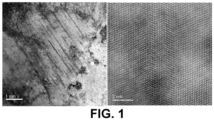
- FIG. 1 is a typical microstructure diagram of a high-temperature alloy in accordance with an example of the present application.
- the high-temperature alloy with low stacking fault energy of the present application is as defined in claim 1.
- the high-temperature alloy with low stacking fault energy of the present application can both have service performance above 750°C and good thermal processing, welding and 3D printing and other characteristics, and can be used as structural members for long-term use for example a turbine disc, a blade, a casing, a combustion chamber and the like.
- the mass fraction of each component can be as follows, respectively:
- the mass fraction of Co in the high-temperature alloy with low stacking fault energy, is 23.5%-26.5%, preferably 24%-25%.
- Increase in the content of Co in the high-temperature alloy can effectively reduce the stacking fault energy of the ⁇ matrix and have microtwinning easily occurred.
- the performance of the material can be effectively improved.
- the addition of excessive Co element will not continue to significantly reduce the stacking fault energy, but will have the problem of increased alloy cost at the same time.
- the stacking fault energy can be reduced, and a good performance can be obtained.
- the mass fraction of C is 0.01% ⁇ 0.06%, preferably 0.01%-0.04%, and more preferably 0.01% ⁇ 0.02%.
- C element may segregate in the grain boundary and increase the grain boundary strength; it will also form carbides like MC, or M6C, or M23C6, which hinder the movement of dislocations under high temperature conditions and perform a function of high temperature strengthening.
- carbides like MC, or M6C, or M23C6, which hinder the movement of dislocations under high temperature conditions and perform a function of high temperature strengthening.
- an excessive content of C will cause carbides to be precipitated at the grain boundaries and form a continuous carbide film, which is not good to the mechanical performance of the alloy.
- the present application can ensure the high temperature strengthening effect and the mechanical performance of the alloy by adjusting the content of C within the above range in combination with other elements.
- the mass fraction of Cr is 12%-14%, preferably 12%-13%.
- the addition of Cr element can effectively reduce the stacking fault energy of the matrix of the alloy, and can also perform a function of solid solution strengthening, so that the high-temperature mechanical performance of the material can be improved.
- the addition of Cr element can form a dense oxide film on the surface of the metal under high temperature conditions to improve the oxidation resistance performance of the alloy.
- the content of Cr exceeds 16%, the precipitation of harmful secondary phases will be facilitated greatly, which will affect the high-temperature mechanical performance of the alloy. Therefore, in the present application, it is preferable to adjust the content of Cr within 12%-13% in order to take into account performances in various aspects.
- a sum of the mass fractions of W and Mo is ⁇ 3%, preferably ⁇ 4%.
- the mass fraction of W is 1%-1.8%, more preferably 1% ⁇ 1.5%, and further preferably 1.1% ⁇ 1.3%; and the mass fraction of Mo is 2.1%-3.0%, more preferably 2.5%-3.0%, and further preferably 2.7%- 2.9%.
- W has a solid solution strengthening effect on both ⁇ and ⁇ ' phases.
- an excessive content of W will increase the tendency of precipitating a harmful phase such as ⁇ phase on the one hand; and increase the overall density of the alloy, limiting the application of the alloy on the other hand. Therefore, in the present application, the content of W is adjusted within the above range to ensure performance.
- Mo preferentially enters the ⁇ phase and performs a function of solid solution strengthening in the nickel-based high-temperature alloy.
- an excessive content of Mo will increase the tendency of precipitating harmful phases such as ⁇ phase and ⁇ phase, resulting in a decrease in alloy performance.
- a sum of the mass fractions of Al, Ti, Nb and Ta is ⁇ 7%.
- the mass fraction of Al is 2.3% ⁇ 2.5%.
- Al element is the forming element of ⁇ ' strengthening phase; as the content of the Al element increases, on the one hand, the volume fraction of ⁇ ' strengthening phase can be increased to obtain an excellent high temperature performance; and on the other hand, it can also reduce the alloy density to increase its scope of application.
- a higher content of Al will increase the redissolution temperature of the ⁇ ' phase and narrow the window for thermal processing, which will damage the thermal processing characteristics of the alloy. Therefore, the present application can ensure the thermal processing characteristics of the alloy while improving the high temperature performance and reducing the density, by adjusting the Al content within the range of 2.3%- 2.5%.
- the mass fraction of Ti is 4.4% ⁇ 4.5%.
- Ti element is also the forming element of ⁇ ' strengthened phase; as the content of the Ti element increases, the volume fraction of ⁇ ' strengthening phase can also be increased to obtain an excellent high temperature performance.
- the risk of precipitating ⁇ phase will increase along with the Ti content, which reduces the performance of the alloy.
- a ratio of a sum of the mass fractions of Nb and Ta to the mass fraction of the Al element is ⁇ 0.4; and a ratio of the mass fraction of Ti to the mass fraction of Al is ⁇ 2.1.
- the mass fraction of Nb is 0.5%- 1.5%; and the mass fraction of Ta is 0.1%- 2.0%.
- the addition of the Nb element can effectively reduce the precipitation rate of the ⁇ ' strengthening phase, and can also reduce the redissolution temperature of the ⁇ ' strengthening phase at the same time, which is beneficial to the thermal deformation process.
- an excessive content of Nb will adversely affect the crack growth resistance of the material.
- the addition of the Ta element can increase the anti-phase domain boundary energy to increase the strength of the alloy; at the same time, it also reduces the ⁇ ' redissolution temperature, which is good to the thermal processing performance of the alloy. But Ta will increase the risk of precipitating TCP phase, and increase alloy density and cost.
- the thermal processing performance of the alloy and the mechanical performance of the alloy can be considered and improved in many aspects.
- the mass fraction of the added Fe element does not exceed 2.5%, which can effectively reduce the alloy cost without excessively affecting the overall performance level of the alloy, and allows the addition of return materials such as solid waste and machining debris during the alloy manufacturing process.
- the mass fraction of B is 0.001%-0.03%
- the mass fraction of Zr is 0.001% ⁇ 0.03%.
- Both B and Zr elements segregate in the grain boundary, and can improve the thermoplasticity and the high temperature creep strength of the alloy; but the B element is easy to form a low melting point phase of boride, and an excessive content of Zr element increases the process difficulty in obtaining a homogenized ingot.
- the specific content of B and Zr used can improve the performance of the alloy and improve the processing process.
- the volume fraction of ⁇ ' strengthening phase is above 30%, preferably 40%-55%, and more preferably 40%-50%.
- an excessive volume fraction of the ⁇ ' strengthening phase such as 55% or even higher obtains a higher high temperature strength, but has its thermal deformation process performance reduced, rendering difficult to prepare a large-size forging member.
- the volume fraction of the ⁇ ' strengthening phase preferably reaches above 40%; and moreover, in connection with the strengthening mechanism such as microtwinning, the ⁇ ' phase and the microtwinning are strengthened synergistically, obtaining the high-temperature alloy with an excellent high-temperature performance.
- a high-temperature alloy with low stacking fault energy includes, by mass fraction: 0.01% ⁇ 0.04% of C, 24%-26% of Co, 12%-14% of Cr, 1% ⁇ 1.5% of W, 2.5% ⁇ 3.0% of Mo, 2.3% ⁇ 2.5% of Al, 4.4% ⁇ 4.6% of Ti, 0.5% ⁇ 1.5% of Nb, 0.1% ⁇ 2.0% of Ta, 0.001% ⁇ 0.03% of B, 0.001% ⁇ 0.03% of Zr, 0% ⁇ 2.5% of Fe, 0% ⁇ 0.04% of Mg, and a balance of Ni.
- a high-temperature alloy with low stacking fault energy includes, by mass fraction: 0.01% ⁇ 0.02% of C, 24%-26% of Co, 12%-13% of Cr, 1.1% ⁇ 1.3% of W, 2.7% ⁇ 2.9% of Mo, 2.3% ⁇ 2.5% of Al, 4.4% ⁇ 4.6% of Ti, 0.5 % ⁇ 1.5% of Nb, 0.1% ⁇ 2.0% of Ta, 0.001% ⁇ 0.03% of B, 0.001% ⁇ 0.03% of Zr, 0% ⁇ 2.5% of Fe, and a balance of Ni.
- the present application further provides a structural member made of any one of the above high-temperature alloys with low stacking fault energy as defined in claim 12.
- the structural member of the present application includes any one of a forging member, a casting member, and an additively manufactured structural member.
- a method for making the forging member includes:
- the condition of the homogenizing processing includes: a heat preservation is carried out at 1100-1150°C for 24-36h, and then a heat preservation is carried out at 1170-1190°C for 36-48h.
- a method for making the casting member includes: dosing in accordance with ingredients of the high-temperature alloy with low stacking fault energy, performing a vacuum induction smelting, and then performing thermal processing after casting, to obtain the casting member.
- a method for making the additively manufactured structural member includes:
- the method for smelting and making powder includes: preparing a master alloy with the vacuum horizontal continuous casting technology or the vacuum induction smelting technology, and making powder with the vacuum air atomization method.
- 3D printing is carried out with the powder feeding or powder spreading laser selective melting technology.
- the condition of the hot isostatic pressure processing includes: a temperature of 1150 to 1200°C, a pressure not less than 120 ⁇ 140 MPa, and a duration for heat and pressure preservation not less than 2 h.
- the condition of the thermal processing includes: solid solution processing is carried out at 1050 ⁇ 1120°C for 2-6 h, air cooling is carried out to room temperature; then the temperature is heated to 600 ⁇ 700°C, aging processing is carried out for 20-30 h, then air cooling is carried out to room temperature, and then the temperature is heated to 700 ⁇ 800°C and aging processing is carried out for 10-20 h, and then air cooling is carried out to room temperature.
- the present application also provides use of any one of the above structural members in aviation and aerospace equipment.
- Examples 1-7 respectively provide 1# to 7# high-temperature alloys and method for making the same.
- the measured ingredients of the high-temperature alloy are shown in Table 1.
- the method for making the alloys in Comparison 1#-Comparison 3# is the same as that of Examples 1-7, except that the ingredients of the high-temperature alloy are different.
- the method for making a high-temperature alloy comprises the following steps.
- the condition of the high temperature homogenizing processing includes: a heat preservation was carried out at 1100 ⁇ 1150°C for 24h, and then heat preservation was carried out at 1170-1190°C for 36h; and the condition of the thermal processing includes: solid solution processing was carried out at 1050 ⁇ 1100°C for 2h, air cooling was carried out to room temperature; then the temperature was heated to 600 ⁇ 680°C, aging processing was carried out for 20 h, then air cooling was carried out to room temperature, and then temperature was heated to 750 ⁇ 800°C and aging processing was carried out for 10 h, and then air cooling was carried out to room temperature.
- Table 1 Measured ingredients of the high-temperature alloy in different examples (wt%) No.
- the present example provides a high-temperature alloy casting member with low stacking fault energy, and the method for making the same comprises the following steps.
- Dosing was carried out by referring to the principle of the element ratio of the high-temperature alloy 1# in Example 1, casting was performed with the vacuum induction melting technology with a specific mold, and then the thermal processing was carried out to obtain a high-temperature alloy casting member.
- the condition of the thermal processing was as follows: a heat preservation was carried out at 1100-1150°C for 2h and then air-cooling was carried out to room temperature, then a heat preservation was carried out at 1050 ⁇ 1100°C for 2h, then air cooling was carried out to room temperature, then heating was carried out to 600 ⁇ 680°C and a heat preservation was carried out for 20h, then air cooling was carried out, then heating was carried out to 750 ⁇ 800°C and a heat preservation was carried out for 10h, and then air cooling was carried out to room temperature.
- the present example provides a high-temperature alloy additively manufactured structural member with low stacking fault energy, and the method for making the same comprises the following steps.
- Dosing was carried out by referring to the principle of the element ratio of the high-temperature alloy 1# in Example 1, the master alloy electrode was made with the vacuum induction smelting, and the powder was made with the vacuum gas atomization method; powder with the particle size in the range of 15 ⁇ 53 ⁇ m was selected and made into a high-temperature alloy sample with the laser selective melting technology (SLM); printing was carried out with a laser power of 160-280W, at a laser scanning speed of 800 ⁇ 1300mm/s, wherein a spot diameter was 80 ⁇ 100 ⁇ m, a laser spacing was 90 ⁇ 110 ⁇ m, and a powder spreading thickness was 30 ⁇ 60 ⁇ m. Then the additively manufactured structural member was made by the hot isostatic pressure processing and the thermal processing.
- SLM laser selective melting technology
- the hot isostatic pressure processing is as follows: a heat preservation and pressure preservation was carried out at 1180-1120°C under 120 ⁇ 140MPa for 4-6h.
- the condition of the thermal processing includes: solid solution processing was carried out at 1050 ⁇ 1100°C for 2h, air cooling was carried out to room temperature; then heating was carried out to 600 ⁇ 680°C, aging processing was carried out for 20 hours, air cooling was carried out to room temperature, and then heating was carried out to 750 ⁇ 800°C and aging processing was carried out for 10h, and air cooling was carried out to room temperature.
- Microstructure of the high-temperature alloy was observed with a high-resolution transmission electron microscope, and the typical structure of the high-temperature alloy was characterized.
- High-temperature alloy 1# As an example, the microstructure photo thereof is shown in FIG. 1 .
- the high-temperature alloy of the present application has low stacking fault energy and has microstructures such as microtwinning easily occurred.
- the present application provides a high-temperature alloy with low stacking fault energy, a structural member comprising the high-temperature alloy with low stacking fault energy, and use thereof.
- the high-temperature alloy with low stacking fault energy can be cast, forged, welded, printed, and so on; it has an excellent process performance, and can be suitable for making structural members in aviation and aerospace equipment, for example it can be used as structural members for long-term use for example a turbine disc, a blade, a casing, and a combustion chamber and the like.
- the high-temperature alloy with low stacking fault energy, and the structural member comprising the high-temperature alloy with low stacking fault energy provided by the present application can be used in industrial applications and are reproducible.
Landscapes
- Engineering & Computer Science (AREA)
- Chemical & Material Sciences (AREA)
- Materials Engineering (AREA)
- Mechanical Engineering (AREA)
- Metallurgy (AREA)
- Organic Chemistry (AREA)
- General Engineering & Computer Science (AREA)
- Manufacturing & Machinery (AREA)
- Turbine Rotor Nozzle Sealing (AREA)
- Powder Metallurgy (AREA)
Claims (14)
- Hochtemperatur-Legierung mit geringer Stapelfehlerenergie, dadurch gekennzeichnet, dass sie umfasst, nach Massenanteil: 0,01 % ~ 0,09 % von C, 23,5 % ~ 27,5 % von Co, 11 % ~ 15 % von Cr, 0,1 % ~ 1,8 % von W, 2,2 % ~ 2,6 % von Al, 3,5 % ~ 5,5 % von Ti, 0 % ~ 2 % von Nb, 0 % ~ 2 % von Ta, 2,1 % ~ 3,5 % von Mo, 0,0001 % ~ 0,05 % von B, 0,0001 % ~ 0,05 % von Zr, 0 % ~ 2,5 % von Fe, 0 % ~ 0,04 % von Mg,0 % ~ 0,02 % von Hf, und einen Ausgleichsanteil von Ni,wobei die Summe von Massenanteilen von Nb und Ta ≥ 0,8 % ist,wobei ein Verhältnis einer Summe der Massenanteile von Nb und Ta zu einem Massenanteil des Al-Elements ≥ 0,4 beträgt; und ein Verhältnis eines Massenanteils von Ti zu dem Massenanteil von Al ≤ 2,1 beträgt.
- Hochtemperatur-Legierung mit geringer Stapelfehlerenergie nach Anspruch 1, wobei ein Massenanteil von Co 23,5 % ~ 26,5 % beträgt.
- Hochtemperatur-Legierung mit geringer Stapelfehlerenergie nach Anspruch 1 oder 2, wobei ein Massenanteil von C 0,01 % ~ 0,06 % beträgt.
- Hochtemperatur-Legierung mit geringer Stapelfehlerenergie nach einem der Ansprüche 1-3, wobei eine Summe der Massenanteile von W und Mo ≥ 3 % beträgt; und
ein Massenanteil von W 1 % ~ 1,8 % ist und ein Massenanteil von Mo 2,1 % ~ 3,0 % beträgt. - Hochtemperatur-Legierung mit geringer Stapelfehlerenergie nach einem der Ansprüche 1-4, wobei ein Massenanteil von Cr 12 % ~ 14 % beträgt.
- Hochtemperatur-Legierung mit geringer Stapelfehlerenergie nach einem der Ansprüche 1-5, wobei eine Summe der Massenanteile von Al, Ti, Nb und Ta ≥ 7 % beträgt.
- Hochtemperatur-Legierung mit geringer Stapelfehlerenergie nach Anspruch 6, umfassend nach Massenanteil: 0,01 % ~ 0,04 % von C, 24 % ~ 26 % von Co, 12 % ~ 14 % von Cr, 1 % ~ 1,5 % von W, 2,5 % ~ 3,0 % von Mo, 2,3 % ~ 2,5 % von Al, 4,4 % ~ 4,6 % von Ti, 0,5 % ~ 1,5 % von Nb, 0,1 % ~ 2,0 % von Ta, 0,001 % ~ 0,03 % von B, 0,001 % ~ 0,03 % von Zr, 0 % ~ 2,5 % von Fe, 0 % ~ 0,04 % von Mg, und einen Ausgleichsanteil von Ni.
- Hochtemperatur-Legierung mit geringer Stapelfehlerenergie nach Anspruch 6 oder 7, umfassend nach Massenanteil: 0,01 % ~ 0,02 % von C, 24 % ~ 26 % von Co, 12 % ~ 14 % von Cr, 1 % ~ 1,5 % von W, 2,5 % ~ 3,0 % von Mo, 2,3 % ~ 2,5 % von Al, 4,4 % ~ 4,6 % von Ti, 0,5 % ~ 1,5 % von Nb, 0,1 % ~ 2,0 % von Ta, 0,001 % ~ 0,03 % von B, 0,001 % ~ 0,03 % von Zr, 0 % ~ 2,5 % von Fe, 0 % ~ 0,04 % von Mg, und einen Ausgleichsanteil von Ni.
- Hochtemperatur-Legierung mit geringer Stapelfehlerenergie nach einem der Ansprüche 6-8, umfassend nach Massenanteil: 0,01 % ~ 0,02 % von C, 24 % ~ 26 % von Co, 12 % ~ 13 % von Cr, 1,1 % ~ 1,3 % von W, 2,7 % ~ 2,9 % von Mo, 2,3 % ~ 2,5 % von Al, 4,4 % ~ 4,6 % von Ti, 0,5 % ~ 1,5 % von Nb, 0,1 % ~ 2,0 % von Ta, 0,001 % ~ 0,03 % von B, 0,001 % ~ 0,03 % von Zr, 0 % ~ 2,5 % von Fe, und einen Ausgleichsanteil von Ni.
- Hochtemperatur-Legierung mit geringer Stapelfehlerenergie nach einem der Ansprüche 1-9, wobei ein Volumenanteil der γ'-Verfestigungsphase über 30 % liegt.
- Hochtemperatur-Legierung mit geringer Stapelfehlerenergie nach einem der Ansprüche 1-10, wobei ein Volumenanteil der γ'-Verfestigungsphase 40 % ~ 55 % beträgt.
- Strukturelement, dadurch gekennzeichnet, dass das Strukturelement aus der Hochtemperatur-Legierung mit geringer Stapelfehlerenergie nach einem der Ansprüche 1-11 hergestellt ist,
wobei das Strukturelement ein Element ein beliebiges eines Schmiedeelements, eines Gusselements und eines additiv hergestellten Strukturelements umfasst. - Strukturelement nach Anspruch 12, wobei das Strukturelement ein beliebiges eines einer Turbinenscheibe, einer Schaufel, einem Gehäuse und einer Brennkammer umfasst.
- Verwenden des Strukturelements nach Anspruch 12 oder 13 bei Luftfahrt- und Raumfahrtausrüstung.
Applications Claiming Priority (2)
| Application Number | Priority Date | Filing Date | Title |
|---|---|---|---|
| CN202110433365.3A CN112981186B (zh) | 2021-04-22 | 2021-04-22 | 低层错能的高温合金、结构件及其应用 |
| PCT/CN2021/096494 WO2022222225A1 (zh) | 2021-04-22 | 2021-05-27 | 低层错能的高温合金、结构件及其应用 |
Publications (4)
| Publication Number | Publication Date |
|---|---|
| EP4123044A1 EP4123044A1 (de) | 2023-01-25 |
| EP4123044A4 EP4123044A4 (de) | 2023-01-25 |
| EP4123044C0 EP4123044C0 (de) | 2024-03-06 |
| EP4123044B1 true EP4123044B1 (de) | 2024-03-06 |
Family
ID=76339751
Family Applications (1)
| Application Number | Title | Priority Date | Filing Date |
|---|---|---|---|
| EP21786319.0A Active EP4123044B1 (de) | 2021-04-22 | 2021-05-27 | Hochtemperaturlegierung mit niedriger stapelfehlerenergie, bauteil und verwendung derselben |
Country Status (6)
| Country | Link |
|---|---|
| US (1) | US20230392234A1 (de) |
| EP (1) | EP4123044B1 (de) |
| JP (1) | JP7450639B2 (de) |
| CN (1) | CN112981186B (de) |
| ES (1) | ES2981267T3 (de) |
| WO (1) | WO2022222225A1 (de) |
Families Citing this family (8)
| Publication number | Priority date | Publication date | Assignee | Title |
|---|---|---|---|---|
| CA3226272A1 (en) | 2021-07-09 | 2023-01-12 | Ati Properties Llc | Nickel-base alloys |
| CN117286370A (zh) * | 2022-06-16 | 2023-12-26 | 北京钢研高纳科技股份有限公司 | 一种高温合金及其制备方法 |
| CA3260494A1 (en) * | 2022-06-28 | 2024-01-04 | Ati Properties Llc | NICKEL-BASED ALLOY |
| US12435393B2 (en) | 2023-04-06 | 2025-10-07 | Ati Properties Llc | Nickel-base alloys |
| CN116536556B (zh) * | 2023-04-21 | 2025-05-16 | 北京北冶功能材料有限公司 | 一种抗氧化性优异的中熵高温合金及其制备方法和应用 |
| CN116463539A (zh) * | 2023-04-21 | 2023-07-21 | 北京北冶功能材料有限公司 | 一种高温强度优异的中熵高温合金及其制备方法与应用 |
| CN116463538B (zh) * | 2023-04-21 | 2024-09-13 | 北京北冶功能材料有限公司 | 一种高强韧性的低密度中熵高温合金及其制备方法与应用 |
| CN120734325B (zh) * | 2025-08-29 | 2026-01-09 | 深圳市万泽航空科技有限责任公司 | 镍基粉末高温合金的成分处理方法 |
Family Cites Families (20)
| Publication number | Priority date | Publication date | Assignee | Title |
|---|---|---|---|---|
| JP2862487B2 (ja) * | 1994-10-31 | 1999-03-03 | 三菱製鋼株式会社 | 溶接性にすぐれたニッケル基耐熱合金 |
| EP0789087B1 (de) * | 1996-02-09 | 2000-05-10 | Hitachi, Ltd. | Hochfeste Superlegierung auf Nickelbasis für gerichtet erstarrte Giesteilen |
| EP1201777B1 (de) * | 2000-09-29 | 2004-02-04 | General Electric Company | Superlegierung mit optimiertem Hochtemperaturwirkungsgrad in Hochdruckturbinenscheiben |
| CN101072887A (zh) * | 2004-12-02 | 2007-11-14 | 独立行政法人物质·材料研究机构 | 耐热超级合金 |
| EP2503013B1 (de) * | 2009-11-19 | 2017-09-06 | National Institute for Materials Science | Hitzeresistente superlegierung |
| EP2778241B1 (de) * | 2011-12-15 | 2017-08-30 | National Institute for Materials Science | Hitzebeständige superlegierung auf nickelbasis |
| CN107250416B (zh) * | 2015-02-12 | 2019-01-01 | 日立金属株式会社 | Ni基超耐热合金的制造方法 |
| CN107427896B (zh) * | 2015-03-25 | 2019-11-05 | 日立金属株式会社 | Ni基超耐热合金的制造方法 |
| CN107427897B (zh) | 2015-03-30 | 2018-12-04 | 日立金属株式会社 | Ni基超耐热合金的制造方法 |
| CN106893893B (zh) * | 2017-04-20 | 2019-01-25 | 华能国际电力股份有限公司 | 一种高强低膨胀高温合金 |
| CN108441741B (zh) * | 2018-04-11 | 2020-04-24 | 临沂鑫海新型材料有限公司 | 一种航空航天用高强度耐腐蚀镍基高温合金及其制造方法 |
| CN108384992A (zh) * | 2018-04-20 | 2018-08-10 | 温州市赢创新材料技术有限公司 | 一种高强度耐腐蚀镍基高温合金及其制造方法 |
| CN110640151A (zh) * | 2018-06-26 | 2020-01-03 | 中南大学 | 一种镍基合金、其制备方法与一种制造物品 |
| DE102020116858A1 (de) | 2019-07-05 | 2021-01-07 | Vdm Metals International Gmbh | Nickel-Basislegierung für Pulver und Verfahren zur Herstellung eines Pulvers |
| JP7375489B2 (ja) | 2019-11-20 | 2023-11-08 | 大同特殊鋼株式会社 | Ni基耐熱合金素材の製造方法 |
| CN111187946B (zh) * | 2020-03-02 | 2021-11-16 | 北京钢研高纳科技股份有限公司 | 一种高铝含量的镍基变形高温合金及制备方法 |
| CN111235434B (zh) * | 2020-03-02 | 2021-07-30 | 北京钢研高纳科技股份有限公司 | 一种高温使用的镍基变形高温合金轮盘锻件的制备方法 |
| CN111471898B (zh) * | 2020-05-08 | 2021-03-30 | 华能国际电力股份有限公司 | 一种低膨胀高温合金及其制备工艺 |
| CN111549259B (zh) * | 2020-05-25 | 2021-06-04 | 中国科学院金属研究所 | 一种镍钴基高温合金涡轮盘及其制备方法 |
| CN112226649B (zh) * | 2020-10-14 | 2023-06-30 | 中国科学院金属研究所 | 一种变形高温合金及其制备方法 |
-
2021
- 2021-04-22 CN CN202110433365.3A patent/CN112981186B/zh active Active
- 2021-05-27 ES ES21786319T patent/ES2981267T3/es active Active
- 2021-05-27 WO PCT/CN2021/096494 patent/WO2022222225A1/zh not_active Ceased
- 2021-05-27 EP EP21786319.0A patent/EP4123044B1/de active Active
- 2021-05-27 JP JP2021563703A patent/JP7450639B2/ja active Active
- 2021-05-27 US US18/033,261 patent/US20230392234A1/en active Pending
Also Published As
| Publication number | Publication date |
|---|---|
| JP7450639B2 (ja) | 2024-03-15 |
| US20230392234A1 (en) | 2023-12-07 |
| EP4123044C0 (de) | 2024-03-06 |
| CN112981186A (zh) | 2021-06-18 |
| EP4123044A1 (de) | 2023-01-25 |
| ES2981267T3 (es) | 2024-10-08 |
| JP2023520951A (ja) | 2023-05-23 |
| CN112981186B (zh) | 2021-08-24 |
| EP4123044A4 (de) | 2023-01-25 |
| WO2022222225A1 (zh) | 2022-10-27 |
Similar Documents
| Publication | Publication Date | Title |
|---|---|---|
| EP4123044B1 (de) | Hochtemperaturlegierung mit niedriger stapelfehlerenergie, bauteil und verwendung derselben | |
| EP4134459B1 (de) | Nickelbasierte superlegierung und herstellungsverfahren dafür sowie komponente und anwendung | |
| EP3978640B1 (de) | Verfahren zur herstellung eines auf nickel basierenden deformierten hochtemperaturlegierungsturbinenscheibenschmiedeteils für hochtemperaturanwendungen | |
| EP2503013B1 (de) | Hitzeresistente superlegierung | |
| EP2778241B1 (de) | Hitzebeständige superlegierung auf nickelbasis | |
| EP4245873A1 (de) | Kriechfeste, langlebige, nickelbasierte verformungssuperlegierung und verfahren zu ihrer herstellung und verwendung | |
| CN108467972A (zh) | 一种高承温能力的镍基变形高温合金及其制备方法 | |
| CN113020598B (zh) | 一种选区激光熔化成形镍基高温合金及其制备方法 | |
| CN114934211B (zh) | 镍基高温合金、镍基高温合金粉末和镍基高温合金构件 | |
| US10737314B2 (en) | Method for producing forged TiAl components | |
| CN108425037A (zh) | 一种粉末高温合金及其制备方法 | |
| CN111218586A (zh) | 一种含有钪钛锆元素的3d打印用铝合金 | |
| EP3031938B1 (de) | Kobalt - nickel - legierung | |
| EP2821519A1 (de) | Legierung | |
| EP4653573A1 (de) | Gh4151-legierungsstück und herstellungsverfahren dafür und verwendung davon | |
| CN118773483A (zh) | 一种3d打印用钴基高温合金粉末、制备方法及应用 | |
| KR102435878B1 (ko) | 코발트기 합금 분말, 코발트기 합금 소결체 및 코발트기 합금 소결체의 제조 방법 | |
| EP4417725B1 (de) | Nickelbasierte superlegierung und herstellungsverfahren dafür sowie strukturelement | |
| JP2023120710A (ja) | Fe-Ni-Cr系合金製造物 | |
| CN117587297B (zh) | 一种焊接性能优异的镍基高温合金箔材及其制备方法与应用 | |
| CN114058990A (zh) | 一种抑制Ti-42Al-5Mn合金B2相长期时效过程Laves相析出的方法 | |
| EP4159360A1 (de) | Legierungsprodukt auf kobaltbasis und verfahren zur herstellung eines legierungsprodukts auf kobaltbasis | |
| RU2771192C9 (ru) | Порошок сплава на основе кобальта, спечённое тело из сплава на основе кобальта и способ изготовления спечённого тела из сплава на основе кобальта | |
| CN121450993A (zh) | 具有中温塑性的镍基高温合金及其制备方法和应用 | |
| deBarbadillo et al. | Dispersion-Strengthened Nickel-Base and Iron-Base Alloys |
Legal Events
| Date | Code | Title | Description |
|---|---|---|---|
| STAA | Information on the status of an ep patent application or granted ep patent |
Free format text: STATUS: UNKNOWN |
|
| STAA | Information on the status of an ep patent application or granted ep patent |
Free format text: STATUS: THE INTERNATIONAL PUBLICATION HAS BEEN MADE |
|
| STAA | Information on the status of an ep patent application or granted ep patent |
Free format text: STATUS: EXAMINATION IS IN PROGRESS |
|
| PUAI | Public reference made under article 153(3) epc to a published international application that has entered the european phase |
Free format text: ORIGINAL CODE: 0009012 |
|
| 17P | Request for examination filed |
Effective date: 20211020 |
|
| A4 | Supplementary search report drawn up and despatched |
Effective date: 20221011 |
|
| AK | Designated contracting states |
Kind code of ref document: A1 Designated state(s): AL AT BE BG CH CY CZ DE DK EE ES FI FR GB GR HR HU IE IS IT LI LT LU LV MC MK MT NL NO PL PT RO RS SE SI SK SM TR |
|
| RIN1 | Information on inventor provided before grant (corrected) |
Inventor name: GAN, BIN Inventor name: QIN, HAILONG Inventor name: DU, JINHUI Inventor name: YU, HONGYAO Inventor name: BI, ZHONGNAN |
|
| GRAP | Despatch of communication of intention to grant a patent |
Free format text: ORIGINAL CODE: EPIDOSNIGR1 |
|
| STAA | Information on the status of an ep patent application or granted ep patent |
Free format text: STATUS: GRANT OF PATENT IS INTENDED |
|
| DAV | Request for validation of the european patent (deleted) | ||
| DAX | Request for extension of the european patent (deleted) | ||
| INTG | Intention to grant announced |
Effective date: 20231006 |
|
| GRAS | Grant fee paid |
Free format text: ORIGINAL CODE: EPIDOSNIGR3 |
|
| GRAA | (expected) grant |
Free format text: ORIGINAL CODE: 0009210 |
|
| STAA | Information on the status of an ep patent application or granted ep patent |
Free format text: STATUS: THE PATENT HAS BEEN GRANTED |
|
| AK | Designated contracting states |
Kind code of ref document: B1 Designated state(s): AL AT BE BG CH CY CZ DE DK EE ES FI FR GB GR HR HU IE IS IT LI LT LU LV MC MK MT NL NO PL PT RO RS SE SI SK SM TR |
|
| REG | Reference to a national code |
Ref country code: CH Ref legal event code: EP |
|
| REG | Reference to a national code |
Ref country code: IE Ref legal event code: FG4D |
|
| REG | Reference to a national code |
Ref country code: DE Ref legal event code: R096 Ref document number: 602021010208 Country of ref document: DE |
|
| U01 | Request for unitary effect filed |
Effective date: 20240405 |
|
| U07 | Unitary effect registered |
Designated state(s): AT BE BG DE DK EE FI FR IT LT LU LV MT NL PT SE SI Effective date: 20240415 |
|
| U20 | Renewal fee for the european patent with unitary effect paid |
Year of fee payment: 4 Effective date: 20240522 |
|
| PG25 | Lapsed in a contracting state [announced via postgrant information from national office to epo] |
Ref country code: GR Free format text: LAPSE BECAUSE OF FAILURE TO SUBMIT A TRANSLATION OF THE DESCRIPTION OR TO PAY THE FEE WITHIN THE PRESCRIBED TIME-LIMIT Effective date: 20240607 |
|
| PG25 | Lapsed in a contracting state [announced via postgrant information from national office to epo] |
Ref country code: RS Free format text: LAPSE BECAUSE OF FAILURE TO SUBMIT A TRANSLATION OF THE DESCRIPTION OR TO PAY THE FEE WITHIN THE PRESCRIBED TIME-LIMIT Effective date: 20240606 Ref country code: HR Free format text: LAPSE BECAUSE OF FAILURE TO SUBMIT A TRANSLATION OF THE DESCRIPTION OR TO PAY THE FEE WITHIN THE PRESCRIBED TIME-LIMIT Effective date: 20240306 |
|
| PG25 | Lapsed in a contracting state [announced via postgrant information from national office to epo] |
Ref country code: RS Free format text: LAPSE BECAUSE OF FAILURE TO SUBMIT A TRANSLATION OF THE DESCRIPTION OR TO PAY THE FEE WITHIN THE PRESCRIBED TIME-LIMIT Effective date: 20240606 Ref country code: NO Free format text: LAPSE BECAUSE OF FAILURE TO SUBMIT A TRANSLATION OF THE DESCRIPTION OR TO PAY THE FEE WITHIN THE PRESCRIBED TIME-LIMIT Effective date: 20240606 Ref country code: HR Free format text: LAPSE BECAUSE OF FAILURE TO SUBMIT A TRANSLATION OF THE DESCRIPTION OR TO PAY THE FEE WITHIN THE PRESCRIBED TIME-LIMIT Effective date: 20240306 Ref country code: GR Free format text: LAPSE BECAUSE OF FAILURE TO SUBMIT A TRANSLATION OF THE DESCRIPTION OR TO PAY THE FEE WITHIN THE PRESCRIBED TIME-LIMIT Effective date: 20240607 |
|
| PG25 | Lapsed in a contracting state [announced via postgrant information from national office to epo] |
Ref country code: IS Free format text: LAPSE BECAUSE OF FAILURE TO SUBMIT A TRANSLATION OF THE DESCRIPTION OR TO PAY THE FEE WITHIN THE PRESCRIBED TIME-LIMIT Effective date: 20240706 |
|
| REG | Reference to a national code |
Ref country code: ES Ref legal event code: FG2A Ref document number: 2981267 Country of ref document: ES Kind code of ref document: T3 Effective date: 20241008 |
|
| PG25 | Lapsed in a contracting state [announced via postgrant information from national office to epo] |
Ref country code: SM Free format text: LAPSE BECAUSE OF FAILURE TO SUBMIT A TRANSLATION OF THE DESCRIPTION OR TO PAY THE FEE WITHIN THE PRESCRIBED TIME-LIMIT Effective date: 20240306 |
|
| PG25 | Lapsed in a contracting state [announced via postgrant information from national office to epo] |
Ref country code: CZ Free format text: LAPSE BECAUSE OF FAILURE TO SUBMIT A TRANSLATION OF THE DESCRIPTION OR TO PAY THE FEE WITHIN THE PRESCRIBED TIME-LIMIT Effective date: 20240306 |
|
| PG25 | Lapsed in a contracting state [announced via postgrant information from national office to epo] |
Ref country code: PL Free format text: LAPSE BECAUSE OF FAILURE TO SUBMIT A TRANSLATION OF THE DESCRIPTION OR TO PAY THE FEE WITHIN THE PRESCRIBED TIME-LIMIT Effective date: 20240306 |
|
| PG25 | Lapsed in a contracting state [announced via postgrant information from national office to epo] |
Ref country code: SK Free format text: LAPSE BECAUSE OF FAILURE TO SUBMIT A TRANSLATION OF THE DESCRIPTION OR TO PAY THE FEE WITHIN THE PRESCRIBED TIME-LIMIT Effective date: 20240306 |
|
| PG25 | Lapsed in a contracting state [announced via postgrant information from national office to epo] |
Ref country code: SM Free format text: LAPSE BECAUSE OF FAILURE TO SUBMIT A TRANSLATION OF THE DESCRIPTION OR TO PAY THE FEE WITHIN THE PRESCRIBED TIME-LIMIT Effective date: 20240306 Ref country code: SK Free format text: LAPSE BECAUSE OF FAILURE TO SUBMIT A TRANSLATION OF THE DESCRIPTION OR TO PAY THE FEE WITHIN THE PRESCRIBED TIME-LIMIT Effective date: 20240306 Ref country code: RO Free format text: LAPSE BECAUSE OF FAILURE TO SUBMIT A TRANSLATION OF THE DESCRIPTION OR TO PAY THE FEE WITHIN THE PRESCRIBED TIME-LIMIT Effective date: 20240306 Ref country code: PL Free format text: LAPSE BECAUSE OF FAILURE TO SUBMIT A TRANSLATION OF THE DESCRIPTION OR TO PAY THE FEE WITHIN THE PRESCRIBED TIME-LIMIT Effective date: 20240306 Ref country code: IS Free format text: LAPSE BECAUSE OF FAILURE TO SUBMIT A TRANSLATION OF THE DESCRIPTION OR TO PAY THE FEE WITHIN THE PRESCRIBED TIME-LIMIT Effective date: 20240706 Ref country code: CZ Free format text: LAPSE BECAUSE OF FAILURE TO SUBMIT A TRANSLATION OF THE DESCRIPTION OR TO PAY THE FEE WITHIN THE PRESCRIBED TIME-LIMIT Effective date: 20240306 |
|
| REG | Reference to a national code |
Ref country code: DE Ref legal event code: R097 Ref document number: 602021010208 Country of ref document: DE |
|
| PG25 | Lapsed in a contracting state [announced via postgrant information from national office to epo] |
Ref country code: MC Free format text: LAPSE BECAUSE OF FAILURE TO SUBMIT A TRANSLATION OF THE DESCRIPTION OR TO PAY THE FEE WITHIN THE PRESCRIBED TIME-LIMIT Effective date: 20240306 |
|
| PLBE | No opposition filed within time limit |
Free format text: ORIGINAL CODE: 0009261 |
|
| STAA | Information on the status of an ep patent application or granted ep patent |
Free format text: STATUS: NO OPPOSITION FILED WITHIN TIME LIMIT |
|
| PG25 | Lapsed in a contracting state [announced via postgrant information from national office to epo] |
Ref country code: MC Free format text: LAPSE BECAUSE OF FAILURE TO SUBMIT A TRANSLATION OF THE DESCRIPTION OR TO PAY THE FEE WITHIN THE PRESCRIBED TIME-LIMIT Effective date: 20240306 |
|
| 26N | No opposition filed |
Effective date: 20241209 |
|
| PG25 | Lapsed in a contracting state [announced via postgrant information from national office to epo] |
Ref country code: IE Free format text: LAPSE BECAUSE OF NON-PAYMENT OF DUE FEES Effective date: 20240527 |
|
| U20 | Renewal fee for the european patent with unitary effect paid |
Year of fee payment: 5 Effective date: 20250516 |
|
| PGFP | Annual fee paid to national office [announced via postgrant information from national office to epo] |
Ref country code: GB Payment date: 20250522 Year of fee payment: 5 Ref country code: ES Payment date: 20250616 Year of fee payment: 5 |
|
| PGFP | Annual fee paid to national office [announced via postgrant information from national office to epo] |
Ref country code: CH Payment date: 20250601 Year of fee payment: 5 |
|
| PGFP | Annual fee paid to national office [announced via postgrant information from national office to epo] |
Ref country code: TR Payment date: 20250520 Year of fee payment: 5 |
|
| PG25 | Lapsed in a contracting state [announced via postgrant information from national office to epo] |
Ref country code: HU Free format text: LAPSE BECAUSE OF FAILURE TO SUBMIT A TRANSLATION OF THE DESCRIPTION OR TO PAY THE FEE WITHIN THE PRESCRIBED TIME-LIMIT; INVALID AB INITIO Effective date: 20210527 |
|
| PG25 | Lapsed in a contracting state [announced via postgrant information from national office to epo] |
Ref country code: CY Free format text: LAPSE BECAUSE OF FAILURE TO SUBMIT A TRANSLATION OF THE DESCRIPTION OR TO PAY THE FEE WITHIN THE PRESCRIBED TIME-LIMIT; INVALID AB INITIO Effective date: 20210527 |