EP4113141B1 - Verfahren, system und vorrichtung zur überwachung eines kurzschlusses bei einer batterie - Google Patents
Verfahren, system und vorrichtung zur überwachung eines kurzschlusses bei einer batterie Download PDFInfo
- Publication number
- EP4113141B1 EP4113141B1 EP20921915.3A EP20921915A EP4113141B1 EP 4113141 B1 EP4113141 B1 EP 4113141B1 EP 20921915 A EP20921915 A EP 20921915A EP 4113141 B1 EP4113141 B1 EP 4113141B1
- Authority
- EP
- European Patent Office
- Prior art keywords
- cell
- self
- time
- phase
- traction battery
- Prior art date
- Legal status (The legal status is an assumption and is not a legal conclusion. Google has not performed a legal analysis and makes no representation as to the accuracy of the status listed.)
- Active
Links
Images

Classifications
-
- G—PHYSICS
- G01—MEASURING; TESTING
- G01R—MEASURING ELECTRIC VARIABLES; MEASURING MAGNETIC VARIABLES
- G01R31/00—Arrangements for testing electric properties; Arrangements for locating electric faults; Arrangements for electrical testing characterised by what is being tested not provided for elsewhere
- G01R31/50—Testing of electric apparatus, lines, cables or components for short-circuits, continuity, leakage current or incorrect line connections
- G01R31/52—Testing for short-circuits, leakage current or ground faults
-
- B—PERFORMING OPERATIONS; TRANSPORTING
- B60—VEHICLES IN GENERAL
- B60L—PROPULSION OF ELECTRICALLY-PROPELLED VEHICLES; SUPPLYING ELECTRIC POWER FOR AUXILIARY EQUIPMENT OF ELECTRICALLY-PROPELLED VEHICLES; ELECTRODYNAMIC BRAKE SYSTEMS FOR VEHICLES IN GENERAL; MAGNETIC SUSPENSION OR LEVITATION FOR VEHICLES; MONITORING OPERATING VARIABLES OF ELECTRICALLY-PROPELLED VEHICLES; ELECTRIC SAFETY DEVICES FOR ELECTRICALLY-PROPELLED VEHICLES
- B60L3/00—Electric devices on electrically-propelled vehicles for safety purposes; Monitoring operating variables, e.g. speed, deceleration or energy consumption
- B60L3/0023—Detecting, eliminating, remedying or compensating for drive train abnormalities, e.g. failures within the drive train
- B60L3/0046—Detecting, eliminating, remedying or compensating for drive train abnormalities, e.g. failures within the drive train relating to electric energy storage systems, e.g. batteries or capacitors
-
- B—PERFORMING OPERATIONS; TRANSPORTING
- B60—VEHICLES IN GENERAL
- B60L—PROPULSION OF ELECTRICALLY-PROPELLED VEHICLES; SUPPLYING ELECTRIC POWER FOR AUXILIARY EQUIPMENT OF ELECTRICALLY-PROPELLED VEHICLES; ELECTRODYNAMIC BRAKE SYSTEMS FOR VEHICLES IN GENERAL; MAGNETIC SUSPENSION OR LEVITATION FOR VEHICLES; MONITORING OPERATING VARIABLES OF ELECTRICALLY-PROPELLED VEHICLES; ELECTRIC SAFETY DEVICES FOR ELECTRICALLY-PROPELLED VEHICLES
- B60L3/00—Electric devices on electrically-propelled vehicles for safety purposes; Monitoring operating variables, e.g. speed, deceleration or energy consumption
- B60L3/0023—Detecting, eliminating, remedying or compensating for drive train abnormalities, e.g. failures within the drive train
- B60L3/0069—Detecting, eliminating, remedying or compensating for drive train abnormalities, e.g. failures within the drive train relating to the isolation, e.g. ground fault or leak current
-
- B—PERFORMING OPERATIONS; TRANSPORTING
- B60—VEHICLES IN GENERAL
- B60L—PROPULSION OF ELECTRICALLY-PROPELLED VEHICLES; SUPPLYING ELECTRIC POWER FOR AUXILIARY EQUIPMENT OF ELECTRICALLY-PROPELLED VEHICLES; ELECTRODYNAMIC BRAKE SYSTEMS FOR VEHICLES IN GENERAL; MAGNETIC SUSPENSION OR LEVITATION FOR VEHICLES; MONITORING OPERATING VARIABLES OF ELECTRICALLY-PROPELLED VEHICLES; ELECTRIC SAFETY DEVICES FOR ELECTRICALLY-PROPELLED VEHICLES
- B60L3/00—Electric devices on electrically-propelled vehicles for safety purposes; Monitoring operating variables, e.g. speed, deceleration or energy consumption
- B60L3/12—Recording operating variables ; Monitoring of operating variables
-
- B—PERFORMING OPERATIONS; TRANSPORTING
- B60—VEHICLES IN GENERAL
- B60L—PROPULSION OF ELECTRICALLY-PROPELLED VEHICLES; SUPPLYING ELECTRIC POWER FOR AUXILIARY EQUIPMENT OF ELECTRICALLY-PROPELLED VEHICLES; ELECTRODYNAMIC BRAKE SYSTEMS FOR VEHICLES IN GENERAL; MAGNETIC SUSPENSION OR LEVITATION FOR VEHICLES; MONITORING OPERATING VARIABLES OF ELECTRICALLY-PROPELLED VEHICLES; ELECTRIC SAFETY DEVICES FOR ELECTRICALLY-PROPELLED VEHICLES
- B60L53/00—Methods of charging batteries, specially adapted for electric vehicles; Charging stations or on-board charging equipment therefor; Exchange of energy storage elements in electric vehicles
- B60L53/60—Monitoring or controlling charging stations
- B60L53/68—Off-site monitoring or control, e.g. remote control
-
- B—PERFORMING OPERATIONS; TRANSPORTING
- B60—VEHICLES IN GENERAL
- B60L—PROPULSION OF ELECTRICALLY-PROPELLED VEHICLES; SUPPLYING ELECTRIC POWER FOR AUXILIARY EQUIPMENT OF ELECTRICALLY-PROPELLED VEHICLES; ELECTRODYNAMIC BRAKE SYSTEMS FOR VEHICLES IN GENERAL; MAGNETIC SUSPENSION OR LEVITATION FOR VEHICLES; MONITORING OPERATING VARIABLES OF ELECTRICALLY-PROPELLED VEHICLES; ELECTRIC SAFETY DEVICES FOR ELECTRICALLY-PROPELLED VEHICLES
- B60L53/00—Methods of charging batteries, specially adapted for electric vehicles; Charging stations or on-board charging equipment therefor; Exchange of energy storage elements in electric vehicles
- B60L53/80—Exchanging energy storage elements, e.g. removable batteries
-
- G—PHYSICS
- G01—MEASURING; TESTING
- G01R—MEASURING ELECTRIC VARIABLES; MEASURING MAGNETIC VARIABLES
- G01R31/00—Arrangements for testing electric properties; Arrangements for locating electric faults; Arrangements for electrical testing characterised by what is being tested not provided for elsewhere
- G01R31/36—Arrangements for testing, measuring or monitoring the electrical condition of accumulators or electric batteries, e.g. capacity or state of charge [SoC]
- G01R31/382—Arrangements for monitoring battery or accumulator variables, e.g. SoC
- G01R31/3842—Arrangements for monitoring battery or accumulator variables, e.g. SoC combining voltage and current measurements
-
- G—PHYSICS
- G01—MEASURING; TESTING
- G01R—MEASURING ELECTRIC VARIABLES; MEASURING MAGNETIC VARIABLES
- G01R31/00—Arrangements for testing electric properties; Arrangements for locating electric faults; Arrangements for electrical testing characterised by what is being tested not provided for elsewhere
- G01R31/36—Arrangements for testing, measuring or monitoring the electrical condition of accumulators or electric batteries, e.g. capacity or state of charge [SoC]
- G01R31/392—Determining battery ageing or deterioration, e.g. state of health
-
- G—PHYSICS
- G01—MEASURING; TESTING
- G01R—MEASURING ELECTRIC VARIABLES; MEASURING MAGNETIC VARIABLES
- G01R31/00—Arrangements for testing electric properties; Arrangements for locating electric faults; Arrangements for electrical testing characterised by what is being tested not provided for elsewhere
- G01R31/36—Arrangements for testing, measuring or monitoring the electrical condition of accumulators or electric batteries, e.g. capacity or state of charge [SoC]
- G01R31/396—Acquisition or processing of data for testing or for monitoring individual cells or groups of cells within a battery
-
- B—PERFORMING OPERATIONS; TRANSPORTING
- B60—VEHICLES IN GENERAL
- B60L—PROPULSION OF ELECTRICALLY-PROPELLED VEHICLES; SUPPLYING ELECTRIC POWER FOR AUXILIARY EQUIPMENT OF ELECTRICALLY-PROPELLED VEHICLES; ELECTRODYNAMIC BRAKE SYSTEMS FOR VEHICLES IN GENERAL; MAGNETIC SUSPENSION OR LEVITATION FOR VEHICLES; MONITORING OPERATING VARIABLES OF ELECTRICALLY-PROPELLED VEHICLES; ELECTRIC SAFETY DEVICES FOR ELECTRICALLY-PROPELLED VEHICLES
- B60L2240/00—Control parameters of input or output; Target parameters
- B60L2240/40—Drive Train control parameters
- B60L2240/54—Drive Train control parameters related to batteries
- B60L2240/545—Temperature
-
- B—PERFORMING OPERATIONS; TRANSPORTING
- B60—VEHICLES IN GENERAL
- B60L—PROPULSION OF ELECTRICALLY-PROPELLED VEHICLES; SUPPLYING ELECTRIC POWER FOR AUXILIARY EQUIPMENT OF ELECTRICALLY-PROPELLED VEHICLES; ELECTRODYNAMIC BRAKE SYSTEMS FOR VEHICLES IN GENERAL; MAGNETIC SUSPENSION OR LEVITATION FOR VEHICLES; MONITORING OPERATING VARIABLES OF ELECTRICALLY-PROPELLED VEHICLES; ELECTRIC SAFETY DEVICES FOR ELECTRICALLY-PROPELLED VEHICLES
- B60L2240/00—Control parameters of input or output; Target parameters
- B60L2240/40—Drive Train control parameters
- B60L2240/54—Drive Train control parameters related to batteries
- B60L2240/547—Voltage
-
- B—PERFORMING OPERATIONS; TRANSPORTING
- B60—VEHICLES IN GENERAL
- B60L—PROPULSION OF ELECTRICALLY-PROPELLED VEHICLES; SUPPLYING ELECTRIC POWER FOR AUXILIARY EQUIPMENT OF ELECTRICALLY-PROPELLED VEHICLES; ELECTRODYNAMIC BRAKE SYSTEMS FOR VEHICLES IN GENERAL; MAGNETIC SUSPENSION OR LEVITATION FOR VEHICLES; MONITORING OPERATING VARIABLES OF ELECTRICALLY-PROPELLED VEHICLES; ELECTRIC SAFETY DEVICES FOR ELECTRICALLY-PROPELLED VEHICLES
- B60L2240/00—Control parameters of input or output; Target parameters
- B60L2240/40—Drive Train control parameters
- B60L2240/54—Drive Train control parameters related to batteries
- B60L2240/549—Current
-
- B—PERFORMING OPERATIONS; TRANSPORTING
- B60—VEHICLES IN GENERAL
- B60L—PROPULSION OF ELECTRICALLY-PROPELLED VEHICLES; SUPPLYING ELECTRIC POWER FOR AUXILIARY EQUIPMENT OF ELECTRICALLY-PROPELLED VEHICLES; ELECTRODYNAMIC BRAKE SYSTEMS FOR VEHICLES IN GENERAL; MAGNETIC SUSPENSION OR LEVITATION FOR VEHICLES; MONITORING OPERATING VARIABLES OF ELECTRICALLY-PROPELLED VEHICLES; ELECTRIC SAFETY DEVICES FOR ELECTRICALLY-PROPELLED VEHICLES
- B60L2240/00—Control parameters of input or output; Target parameters
- B60L2240/70—Interactions with external data bases, e.g. traffic centres
-
- G—PHYSICS
- G01—MEASURING; TESTING
- G01R—MEASURING ELECTRIC VARIABLES; MEASURING MAGNETIC VARIABLES
- G01R31/00—Arrangements for testing electric properties; Arrangements for locating electric faults; Arrangements for electrical testing characterised by what is being tested not provided for elsewhere
- G01R31/005—Testing of electric installations on transport means
- G01R31/006—Testing of electric installations on transport means on road vehicles, e.g. automobiles or trucks
- G01R31/007—Testing of electric installations on transport means on road vehicles, e.g. automobiles or trucks using microprocessors or computers
-
- Y—GENERAL TAGGING OF NEW TECHNOLOGICAL DEVELOPMENTS; GENERAL TAGGING OF CROSS-SECTIONAL TECHNOLOGIES SPANNING OVER SEVERAL SECTIONS OF THE IPC; TECHNICAL SUBJECTS COVERED BY FORMER USPC CROSS-REFERENCE ART COLLECTIONS [XRACs] AND DIGESTS
- Y02—TECHNOLOGIES OR APPLICATIONS FOR MITIGATION OR ADAPTATION AGAINST CLIMATE CHANGE
- Y02T—CLIMATE CHANGE MITIGATION TECHNOLOGIES RELATED TO TRANSPORTATION
- Y02T10/00—Road transport of goods or passengers
- Y02T10/60—Other road transportation technologies with climate change mitigation effect
- Y02T10/70—Energy storage systems for electromobility, e.g. batteries
-
- Y—GENERAL TAGGING OF NEW TECHNOLOGICAL DEVELOPMENTS; GENERAL TAGGING OF CROSS-SECTIONAL TECHNOLOGIES SPANNING OVER SEVERAL SECTIONS OF THE IPC; TECHNICAL SUBJECTS COVERED BY FORMER USPC CROSS-REFERENCE ART COLLECTIONS [XRACs] AND DIGESTS
- Y02—TECHNOLOGIES OR APPLICATIONS FOR MITIGATION OR ADAPTATION AGAINST CLIMATE CHANGE
- Y02T—CLIMATE CHANGE MITIGATION TECHNOLOGIES RELATED TO TRANSPORTATION
- Y02T10/00—Road transport of goods or passengers
- Y02T10/60—Other road transportation technologies with climate change mitigation effect
- Y02T10/7072—Electromobility specific charging systems or methods for batteries, ultracapacitors, supercapacitors or double-layer capacitors
-
- Y—GENERAL TAGGING OF NEW TECHNOLOGICAL DEVELOPMENTS; GENERAL TAGGING OF CROSS-SECTIONAL TECHNOLOGIES SPANNING OVER SEVERAL SECTIONS OF THE IPC; TECHNICAL SUBJECTS COVERED BY FORMER USPC CROSS-REFERENCE ART COLLECTIONS [XRACs] AND DIGESTS
- Y02—TECHNOLOGIES OR APPLICATIONS FOR MITIGATION OR ADAPTATION AGAINST CLIMATE CHANGE
- Y02T—CLIMATE CHANGE MITIGATION TECHNOLOGIES RELATED TO TRANSPORTATION
- Y02T90/00—Enabling technologies or technologies with a potential or indirect contribution to GHG emissions mitigation
- Y02T90/10—Technologies relating to charging of electric vehicles
- Y02T90/12—Electric charging stations
-
- Y—GENERAL TAGGING OF NEW TECHNOLOGICAL DEVELOPMENTS; GENERAL TAGGING OF CROSS-SECTIONAL TECHNOLOGIES SPANNING OVER SEVERAL SECTIONS OF THE IPC; TECHNICAL SUBJECTS COVERED BY FORMER USPC CROSS-REFERENCE ART COLLECTIONS [XRACs] AND DIGESTS
- Y02—TECHNOLOGIES OR APPLICATIONS FOR MITIGATION OR ADAPTATION AGAINST CLIMATE CHANGE
- Y02T—CLIMATE CHANGE MITIGATION TECHNOLOGIES RELATED TO TRANSPORTATION
- Y02T90/00—Enabling technologies or technologies with a potential or indirect contribution to GHG emissions mitigation
- Y02T90/10—Technologies relating to charging of electric vehicles
- Y02T90/16—Information or communication technologies improving the operation of electric vehicles
Definitions
- the disclosure relates to the field of technologies for monitoring a battery short circuit, and in particular, to a method and system for monitoring a battery short circuit and an apparatus.
- An internal short circuit in a traction battery of an electric vehicle is one of the main causes of thermal runaway in the battery.
- a short circuit in a part of a battery causes a temperature to rise rapidly, which will cause thermal runaway in more areas of the battery, and further cause a failure in an entire cell or even an entire battery pack.
- the partial short circuit causes power consumption, a voltage decreases rapidly, a temperature increases quickly, and an insulation resistance value decreases quickly.
- a battery management system BMS
- a micro-internal short circuit of a traction battery can be detected by monitoring a voltage change of the traction battery.
- a traction battery is on a vehicle. When the traction battery is being used, running of a large number of vehicle-mounted devices causes electrical interference, or less data of the power battery is collected and uploaded during parking.
- JP 2017 143635 A relates to a vehicle power supply system that includes a main battery that supplies power to a rotating electric machine that serves as a drive source for a vehicle.
- the disclosure proposes a method and system for monitoring a battery short circuit and an apparatus, to solve or at least partially solve the problem of how to monitor a micro-internal short circuit in a traction battery accurately and efficiently.
- a method for monitoring a battery short circuit including: receiving collected electrical signal information of all cells in each traction battery; performing self-discharge observation and calculating a self-discharge rate based on a cell voltage in electrical signal information of each cell after depolarization is completed, to determine whether there is an internal short circuit in a traction battery where the cell corresponding to the self-discharge rate is located; and triggering alarm handling for the internal short circuit in the traction battery based on a back-fed result that there is an internal short circuit in the traction battery.
- the receiving collected electrical signal information of all cells in each traction battery specifically includes: in a case where the traction battery remains stationary in a battery swap station for a long time, collecting in real time, by a battery swap station-side, the electrical signal information of all the cells in each traction battery stored in the battery swap station, where the real-time collection includes: collecting the electrical signal information of all the cells in each traction battery during charging and after charging is completed in a case where the traction battery remains stationary in the battery swap station, where the electrical signal information of each cell at least includes: a single-cell voltage, a current, a temperature, and a state of charge (SOC); uploading, by the battery swap station-side, the collected electrical signal information of all the cells in the traction battery synchronously to the cloud or a local control device of the battery swap station; and receiving, on the cloud or by the local control device of the battery swap station, the electrical signal information and storing the information based on a collection time at which the information is collected in real time.
- SOC state of charge
- the performing self-discharge observation and calculating a self-discharge rate based on a cell voltage in electrical signal information of each cell after depolarization is completed, to determine whether there is an internal short circuit in a traction battery where the cell corresponding to the self-discharge rate is located specifically includes: determining, based on the collection time of the electrical signal information of each cell, a time at which the traction battery where the cell is located stops being charged; selecting, based on the time at which the traction battery stops being charged and depolarization duration corresponding to a type of the traction battery, a starting time of a first phase of self-discharge observation and calculation on the cell voltage of each cell in the traction battery; performing the first phase of self-discharge observation and calculation on the cell voltage of each cell in the traction battery from the starting time, to obtain a first-phase self-discharge rate of the cell; determining, based on the first-phase self-discharge rate of each cell, whether to perform a second phase of self-discharge observation
- the calculating a first-phase self-discharge rate p1Sdr1 of the observed j th cell within duration P1 time of the first phase of self-discharge observation and calculation specifically includes: if the time point ti at which the observation ends is less than a sum of the time point t1 at which the observation starts and P1_time, selecting a cell voltage of the j th cell within the time period from t1 to t1+P1_time for observation, and calculating a first-phase self-discharge rate plSdr of the j th cell: p 1 Sdr v t i , j ⁇ v t 1 , j t t i , j ⁇ t t 1 , j
- the determining, based on the first-phase self-discharge rate of each cell, whether to perform a second phase of self-discharge observation and calculation for the traction battery where the cell is located specifically includes: comparing the first-phase self-discharge rate plSdr or sdr1 of each cell with a first threshold s1; when the first-phase self-discharge rate p1Sdr of the cell is greater than the first threshold s1 or sdr1 is greater than the first threshold s1, determining that the traction battery where the cell is located requires the second phase of self-discharge observation and calculation; and when the first-phase self-discharge rate plSdr of the cell is less than or equal to the first threshold s1 or sdr1 is less than or equal to the first threshold s1, determining that the traction battery where the cell is located has no risk of internal short circuit and is allowed for normal exchange.
- the determining, based on the second-phase self-discharge rate of each cell, whether there is an internal short circuit in the traction battery where the cell is located specifically includes: comparing the second-phase self-discharge rate p2Sdr or sdr2 of each cell with a second threshold s2; when the second-phase self-discharge rate p2Sdr of the cell is greater than the second threshold s2 or sdr2 is greater than the second threshold s2, determining that there is an internal short circuit in the traction battery where the cell is located; and when the second-phase self-discharge rate p2Sdr of the cell is less than or equal to the second threshold s2 or sdr2 is less than or equal to the second threshold s2, determining that the traction battery where the cell is located has no risk of internal short circuit and is allowed for normal exchange, where the preset first threshold s1 is greater than the second threshold s2 that is greater than a specified value of a self-discharge rate of
- the triggering alarm handling for the internal short circuit in the traction battery based on a back-fed result that there is an internal short circuit in the traction battery specifically includes: feeding back, on the cloud or by the local control device of the battery swap station after each phase of observation and calculation is completed, a result about whether there is an internal short circuit in the traction battery to the corresponding battery swap station-side; and when the result received by the battery swap station is that there is an internal short circuit in the traction battery, triggering, by the battery swap station, alarm handling for the internal short circuit in the traction battery, where the alarm handing includes: giving an alarm, stopping usage of the traction battery, and initiating a return and repair process.
- a system for monitoring a battery short circuit including: a receiving and storage apparatus configured to receive collected electrical signal information of all cells in each traction battery; a phased-calculation apparatus configured to perform self-discharge observation and calculate a self-discharge rate based on a cell voltage in electrical signal information of each cell after depolarization is completed, to determine whether there is an internal short circuit in a traction battery where the cell corresponding to the self-discharge rate is located; and an alarm apparatus configured to trigger alarm handling for the internal short circuit in the traction battery based on a back-fed result that there is an internal short circuit in the traction battery.
- the receiving and storage apparatus specifically includes: in a case where the traction battery remains stationary in a battery swap station for a long time, collecting in real time, by a battery swap station-side, the electrical signal information of all the cells in each traction battery stored in the battery swap station, where the real-time collection includes: collecting the electrical signal information of all the cells in each traction battery during charging and after charging is completed in a case where the traction battery remains stationary in the battery swap station, where the electrical signal information of each cell at least includes: a single-cell voltage, a current, a temperature, and a state of charge (SOC); uploading, by the battery swap station-side, the collected electrical signal information of all the cells in the traction battery synchronously to the cloud or a local control device of the battery swap station; and receiving, on the cloud or by the local control device of the battery swap station, the electrical signal information and storing the information based on a collection time at which the information is collected in real time.
- SOC state of charge
- the phased-calculation apparatus specifically includes: a charging stop time apparatus configured to determine, based on the collection time of the electrical signal information of each cell, a time at which the traction battery where the cell is located stops being charged; a first-phase start selection apparatus configured to select, based on the time at which the traction battery stops being charged and depolarization duration corresponding to a type of the traction battery, a starting time of a first phase of self-discharge observation and calculation on the cell voltage of each cell in the traction battery; a first-phase calculation apparatus configured to perform the first phase of self-discharge observation and calculation on the cell voltage of each cell in the traction battery from the starting time, to obtain a first-phase self-discharge rate of the cell; and determining, based on the first-phase self-discharge rate of each cell, whether to perform a second phase of self-discharge observation and calculation for the traction battery where the cell is located; a second-phase calculation apparatus configured to: start to perform, if the determination is yes after the first
- the charging stop time apparatus specifically includes: selecting, from the electrical signal information based on a sequence of the collection time corresponding to all the cells in the traction battery, a time at which currents of all the cells are 0 as the time at which the charging stops; and
- the first-phase start selection apparatus specifically includes: determining, through tests, depolarization duration corresponding to the type of each traction battery; and selecting, as the starting time of the first phase of self-discharge observation and calculation on the cell voltage of each cell in the traction battery after the depolarization is completed, a time point with duration greater than a sum of the time at which the charging stops and the depolarization duration.
- the first-phase calculation apparatus specifically includes: comparing the first-phase self-discharge rate plSdr or sdr1 of each cell with a first threshold s1; when the first-phase self-discharge rate plSdr of the cell is greater than the first threshold s1 or sdr1 is greater than the first threshold s1, determining that the traction battery where the cell is located requires the second phase of self-discharge observation and calculation; and when the first-phase self-discharge rate plSdr of the cell is less than or equal to the first threshold s1 or sdr1 is less than or equal to the first threshold s1, determining that the traction battery where the cell is located has no risk of internal short circuit and is allowed for normal exchange.
- the second-phase calculation apparatus further includes: comparing the second-phase self-discharge rate p2Sdr or sdr2 of each cell with a second threshold s2; when the second-phase self-discharge rate p2Sdr of the cell is greater than the second threshold s2 or sdr2 is greater than the second threshold s2, determining that there is an internal short circuit in the traction battery where the cell is located; and when the second-phase self-discharge rate p2Sdr of the cell is less than or equal to the second threshold s2 or sdr2 is less than or equal to the second threshold s2, determining that the traction battery where the cell is located has no risk of internal short circuit and is allowed for normal exchange, where the preset first threshold s1 is greater than the second threshold s2 that is greater than a specified value of a self-discharge rate of the cell, and a value range of s1 and s2 is 0.1 to 100.
- the alarm apparatus specifically includes: feeding back, on the cloud or by the local control device of the battery swap station after each phase of observation and calculation is completed, a result about whether there is an internal short circuit in the traction battery to the corresponding battery swap station-side; and when the result received by the battery swap station is that there is an internal short circuit in the traction battery, triggering, by the battery swap station, alarm handling for the internal short circuit in the traction battery, where the alarm handing includes: giving an alarm, stopping usage of the traction battery, and initiating a return and repair process.
- a storage apparatus storing a plurality of pieces program codes, where the program codes are adapted to be loaded and run by a processor to perform the method for monitoring a battery short circuit according to any one of the foregoing aspects.
- a control apparatus including a processor and a storage apparatus, where the storage apparatus is adapted to store a plurality of pieces program codes, and the program codes are adapted to be loaded and run by the processor to perform the method for monitoring a battery short circuit according to any one of the foregoing aspects.
- Solution 1 A method for monitoring a battery short circuit, where including:
- Solution 2 The method according to solution 1, where the receiving collected electrical signal information of all cells in each traction battery specifically includes:
- Solution 3 The method according to solution 2, where the performing self-discharge observation and calculating a self-discharge rate based on a cell voltage in electrical signal information of each cell after depolarization is completed, to determine whether there is an internal short circuit in a traction battery where the cell corresponding to the self-discharge rate is located specifically includes:
- Solution 4 The method according to solution 3, where
- Solution 5 The method according to solution 4, where the performing the first phase of self-discharge observation and calculation on the cell voltage of each cell in the traction battery from the starting time, to obtain a first-phase self-discharge rate of the cell specifically includes:
- Solution 6 The method according to solution 5, where the calculating a first-phase self-discharge rate p1Sdr1 of the observed j th cell within duration P1_time of the first phase of self-discharge observation and calculation specifically includes:
- Solution 7 The method according to solution 4, where the performing the first phase of self-discharge observation and calculation on the cell voltage of each cell in the traction battery from the starting time, to obtain a first-phase self-discharge rate of the cell specifically includes:
- Solution 8 The method according to solution 5, 6, or 7, the determining, based on the first-phase self-discharge rate of each cell, whether to perform a second phase of self-discharge observation and calculation for the traction battery where the cell is located specifically includes:
- Solution 9 The method according to solution 8, where the starting to perform, if the determination is yes after the first phase of self-discharge observation and calculation is completed, a second phase of self-discharge observation and calculation on the cell voltage of each cell in the traction battery with duration greater than that of the first phase of self-discharge observation and calculation, to obtain a second-phase self-discharge rate of each cell specifically includes:
- Solution 10 The method according to solution 8, where the starting to perform, if the determination is yes after the first phase of self-discharge observation and calculation is completed, a second phase of self-discharge observation and calculation on the cell voltage of each cell in the traction battery with duration greater than that of the first phase of self-discharge observation and calculation, to obtain a second-phase self-discharge rate of each cell specifically includes:
- Solution 11 The method according to solution 9 or 10, where the determining, based on the second-phase self-discharge rate of each cell, whether there is an internal short circuit in the traction battery where the cell is located specifically includes:
- Solution 12 The method according to solution 11, where the triggering alarm handling for the internal short circuit in the traction battery based on a back-fed result that there is an internal short circuit in the traction battery specifically includes:
- Solution 13 A system for monitoring a battery short circuit, including:
- Solution 14 The system according to solution 13, where the receiving and storage apparatus specifically includes:
- Solution 15 The system according to solution 14, where the phased-calculation apparatus specifically includes:
- Solution 16 The system according to solution 15, where the charging stop time apparatus specifically includes: selecting, from the electrical signal information based on a sequence of the collection time corresponding to all the cells in the traction battery, a time at which currents of all the cells are 0 as the time at which the charging stops; and
- the first-phase start selection apparatus specifically includes: determining, through tests, depolarization duration corresponding to the type of each traction battery; and selecting, as the starting time of the first phase of self-discharge observation and calculation on the cell voltage of each cell in the traction battery after the depolarization is completed, a time point with duration greater than a sum of the time at which the charging stops and the depolarization duration.
- Solution 17 The system according to solution 16, where the first-phase calculation apparatus specifically includes:
- Solution 18 The system according to solution 17, where the first-phase calculation apparatus further includes:
- Solution 19 The system according to solution 16, where the first-phase calculation apparatus specifically includes:
- Solution 20 The system according to solution 17, 18, or 19, where the first-phase calculation apparatus specifically includes:
- Solution 21 The system according to solution 20, where the second-phase calculation apparatus specifically includes:
- Solution 22 The system according to solution 20, where the second-phase calculation apparatus specifically includes:
- Solution 23 The system according to solution 20 or 21, where the second-phase calculation apparatus further includes:
- Solution 24 The system according to solution 23, where the alarm apparatus specifically includes:
- Solution 25 A storage apparatus in which a plurality of program codes are stored, where the program codes are adapted to be loaded and run by a processor to perform the method for monitoring a battery short circuit according to any one of solutions 1 to 12.
- Solution 26 A control apparatus, including a processor and a storage apparatus that is adapted to store a plurality of pieces program codes, where the program codes are adapted to be loaded and run by a processor to perform the method for monitoring a battery short circuit according to any one of solutions 1 to 12.
- a micro-internal short circuit in a traction battery is monitored and determined. Specifically, based on a stable environment with fewer influencing factors, for example, an environment of a battery swap station where traction batteries are stored, a huge amount of electrical signal information of all cells in a traction battery is collected and stored in chronological order. Based on the huge amount of stable, accurate and long-term historical data collected in a static working condition, observation of a cell in the traction battery is performed stepwise in phases to calculate a self-discharge rate. Through a comparison between the self-discharge rate and a threshold, whether there is an internal short circuit in the traction battery where the cell is located is determined. Therefore, a more accurate calculation result can be obtained, and a high success rate of determination is achieved.
- phased and stepwise observation and calculation are mainly performed in a first phase and a second phase, and a sliding window calculation method is used in some steps.
- the traction battery has no risk of internal short circuit and is allowed for normal exchange.
- both calculation accuracy and operational efficiency of a battery swap station can be taken into account.
- the sliding window method can help to accurately calculate a trend change of a monotonic variation curve, thereby saving computing resources, and improving computing efficiency. Therefore, real-time monitoring of an internal short circuit in a traction battery is implemented efficiently and accurately by taking an environment of a battery swap station as a basic environment.
- a “module” or “processor” may include hardware, software, or a combination thereof.
- a module may include a hardware circuit, various suitable sensors, a communication port, and a memory, or may include a software part, for example, program code, or may be a combination of software and hardware.
- the processor may be a central processing unit, a microprocessor, a graphics processing unit, a digital signal processor, or any other suitable processor.
- the processor has a data and/or signal processing function.
- the processor may be implemented in software, hardware, or a combination thereof.
- a non-transitory computer-readable storage medium includes any suitable medium that can store program code, for example, a magnetic disk, a hard disk, an optical disc, a flash memory, a read-only memory, or a random access memory.
- the term “A and/or B” indicates all possible combinations of A and B, for example, only A, only B, or A and B.
- the term “at least one of A or B” or “at least one of A and B” has a meaning similar to “A and/or B" and may include only A, only B, or A and B.
- the terms “a/an”, “this”, and “the” in the singular form may also include the plural form.
- Static A battery is placed statically after being charged, such that an electrode plate inside the battery is in full contact with electrolyte to be completely immersed in the electrolyte.
- SEI solid electrolyte interphase
- Working condition a working status of a device in a condition directly related to actions of the device.
- Battery cell that is, cell: a basic battery unit of a traction battery, where a plurality of cells are connected in series or in parallel to form the traction battery.
- Single-cell voltage a voltage of a cell.
- Ohmic polarization also referred to as resistance polarization or ohmic drop arising from a current through an ohmic resistance within the electrode system.
- Ohmic polarization mainly depends on the electrolyte resistance and is related to the electrolyte resistivity. A higher electrolyte resistivity indicates higher polarization.
- ohmic polarization is related to a distance between two electrodes. When there is a separator, ohmic polarization is also related to a thickness, the number of layers, porosity and a tortuosity factor of pores of the separator, that is, ohmic polarization is related to a traction battery system or structure; and Ohmic polarization is in direct proportion to a current.
- Concentration polarization/electrochemical polarization polarization arising from changes of an interfacial potential difference due to a change of interfacial charge distribution caused by slow charge transfer.
- a degree of concentration polarization depends on an electrochemical reaction rate and is related to the essence of an electrochemical reaction.
- Self-discharge a phenomenon of charge reduction of a traction battery when the battery is in an open-circuit static or storage state.
- Self-discharge ratio/self-discharge rate a rate of charge reduction of a traction battery, indicating a speed of self-discharge.
- a traction battery is generally placed at an electric vehicle-side, so that the traction battery stays static when the vehicle is parked (that is, the vehicle stays static). But in this case, only a small amount of data about the traction battery can be obtained by monitoring by using a battery management system (BMS). In addition, a data storage capacity and a computing capability of the vehicle-side are limited, and only a small amount of data about the battery obtained in a short time period can be used for determination. Consequently, accuracy of a monitoring result is low. Further, when a traction battery is being used, there is interference from a large quantity of other vehicle-mounted devices. As a result, whether there is a short circuit in the traction battery cannot possibly be monitored and determined.
- BMS battery management system
- the battery swap station-side collects self-discharge signal information of each traction battery in real time when the traction battery is in a static working condition after being charged, for example, collects self-discharge signal information of all battery cells (cells) in each traction battery and uploads the information to the cloud; performs, after depolarization is completed, a first phase of self-discharge observation and calculation on the cloud based on the self-discharge signal information uploaded and stored, and determines whether a first self-discharge rate of the traction battery exceeds a first threshold; and if the first self-discharge rate exceeds the first threshold, performs a second phase of self-discharge observation and calculation for the traction battery, and determines whether a second self-discharge rate exceeds a second threshold; and if the second self-discharge rate exceeds the second threshold, it is determined that the traction battery has
- FIG. 1 is a schematic diagram of an application scenario according to an embodiment of the technical solutions of the disclosure.
- a micro-internal short circuit already occurs before a severe partial internal short circuit occurs in a traction battery, which consumes extra power of the traction battery, causing a voltage to decrease gradually.
- a micro-internal short circuit of a traction battery can be detected by monitoring a voltage change of the traction battery.
- traction batteries can be stored for a long time, a working condition of continuous and real-time monitoring can be provided, and an internal short-circuit situation (a self-discharge ratio/self-discharge rate) of a power battery that needs to be calculated can be accurately obtained.
- Each of a plurality of battery swap stations (battery swap stations 1, 2, ..., and v shown in FIG. 1 ) is determined to have a working condition in which traction batteries can be monitored in real time for a long time and stored statically for a long time and are not interfered with by other vehicle-mounted devices. Therefore, when each traction battery is stored in the battery swap station before being swapped onto an electric vehicle-side, a self-discharge rate of the traction battery can be detected to monitor, in real time, whether the traction battery has a relatively great risk of internal short circuit.
- the solutions in which a traction battery stored in a battery swap station can be in a static working condition in an environment of the battery swap station and an internal short circuit in the battery can be monitored are implemented.
- the battery swap station provides an environment in which the traction battery can stay static for a long time and electrical signal information of the battery can be collected continuously.
- each of the plurality of battery swap stations 1, 2, ..., and v stores, for a long period of time, a plurality of traction batteries to be swapped for electric vehicles.
- the battery swap station 1 stores a plurality of traction batteries 1, 2, ..., and n
- the battery swap station 2 stores a plurality of traction batteries 1, 2, ..., and m
- the battery swap station v stores a plurality of traction batteries 1, 2, ..., and x, and so on, where n, m, v, and x are all natural numbers greater than 0.
- the battery swap station 1 is used as an example herein.
- Each battery swap station may collect electrical signal information of each of the traction batteries 1, 2, ..., and n stored in the battery swap station 1 by using a data acquisition apparatus of the battery swap station-side, for example, a battery management system or another computer/electronic device/digital device having an electrical signal acquisition sensor or an electrical signal acquisition function.
- the data acquisition apparatus of the battery swap station-side may be configured to: collect a single-cell voltage, a current, a temperature, a state of charge (SOC), and other electrical signal information of all the cells in the traction battery in real time, and upload the information synchronously to the cloud for storage.
- the battery swap stations 1, 2, ..., and v each collect, in real time, various pieces of electrical signal information of all cells in all their respective stored traction batteries, and upload the information synchronously to the cloud for corresponding storage.
- the cloud may store a huge amount of long-term data, and the cloud may have a plurality of servers, server groups, and the like for accurate calculation based on the huge amount of stored data, to determine a self-discharge ratio/self-discharge rate of each traction battery stored in a corresponding battery swap station, and based on this, further determine whether a traction battery corresponding to the self-discharge rate that is calculated has a great risk of internal short circuit.
- each traction battery removed from an electric vehicle is charged in a battery swap station; and in the process of charging, the battery swap station-side may collect single-cell voltages, currents, temperatures, states of charge (SOC), and other electrical signal information of all cells in each traction battery, where the voltages (the cell voltages of all the cells) of the traction battery that are collected in the process of charging at least include terminal voltages, ohmic polarization, and concentration polarization/electrochemical polarization, and the like.
- the traction battery takes a period of time to eliminate polarization effects from it (that is, to be depolarized).
- FIG. 2 is a schematic diagram of a change curve of voltages of different traction batteries after being charged according to an embodiment of the solutions of the disclosure.
- the longitudinal axis represents a single-cell voltage (referred to as cell voltage below) of a cell in a traction battery, and the horizontal axis represents a time for monitoring self-discharge of the traction battery when the power battery is static and not in use.
- a moment t0 is an initial moment at which charging stops
- a moment t1 after a period of time is a moment at which a first phase starts and the depolarization is completed, that is, the depolarization is completed within the period of time from t0 to t1.
- t1>t0+t_polarization In an example, first, charging tests are conducted on batteries of various types/with various specifications, and depolarization duration "t_polarization" corresponding to the batteries of each type/with each specification is obtained based on test results. Then, in actual application, corresponding t_polarization is obtained directly based on a battery type/specifications, and t1 is set according to the rule "t1>t0+t polarization".
- a server or the like on the cloud may perform observation and calculation for each corresponding traction battery stepwise in multiple phases, to ensure accurate calculation while taking operational efficiency of a battery swap station into account (that is, a traction battery that does not have a great risk of internal short circuit may be directly provided for electric vehicles).
- a first phase of self-discharge observation and calculation is performed.
- a voltage of the traction battery is basically stable and does not change within a short period of time, for example, 7 days, referring to Type 1 shown in FIG. 2 .
- the voltage decreases rapidly, referring to Type 3 shown in FIG. 2 .
- a self-discharge rate of a traction battery may be calculated and determined by observing self-discharge of any cell in the traction battery, that is, a change of a cell voltage as a function of time.
- a principle of the observation and calculation is: an internal short circuit situation of a traction battery may be evaluated by calculating a voltage change after the moment t1; it is assumed that a voltage of a cell j in a traction battery 1 at the moment t1 is v_1j, and at a moment a period of time after the moment t1, for example, at a moment ti, the traction battery is within duration P1 time of the first phase of self-discharge observation, and a voltage of the cell j at the moment ti is v_ij; and a self-discharge rate of a traction battery may be calculated based on observation of a cell in the traction battery, for example, based on observation and calculation of a voltage change of the cell j from the moment t1 to the moment ti a period of time after the moment t1, where the time period ti-tl is within the duration P1 time of the first phase of self-discharge observation and calculation, where i means
- a value range of P1_time may be 1 hour to 24 hours.
- P1_time may be set to 2 hours, 1 hour, or the like according to requirements.
- duration ti-tl is within P1 time, and ti ⁇ t1+P1 time.
- the calculated self-discharge rate plSdr may be analyzed and observed. More specifically, the stepwise and phased observation and calculation of the battery self-discharge rate plSdr may be performed in the following specific manners:
- ti ⁇ t1+P1_time ti represents a time point at which the first phase of voltage self-discharge observation ends and is a time point in the past, and the time period from t1 to ti for observation is within the duration P1_time of the first phase of self-discharge observation and calculation, that is, shorter than the duration of the first phase.
- voltages in a time period from t1 to t1+P1_time may be selected for analysis.
- t t i,j represents a time point (moment) t_i that is selected from the time period from t1 to t1+P1 time for the observation of a cell voltage of the cell j, and in this case, the corresponding voltage of the cell j is v t i,j ; and t t 1 ,j represents the time point (moment) t1, earlier than t t i,j , that is selected from the time period from t1 to t1+P1_time as a starting time for the observation of a cell voltage of the cell j, and in this case, the corresponding cell voltage of the cell j is v t 1 ,j .
- plSdr is greater than s1 (a first threshold) (a first threshold)
- s1 a first threshold
- the calculated plSdr is not greater than the first threshold s1, for example, if plSdr ⁇ s1, it is determined that there is no micro-internal short circuit in the cell j. Therefore, the traction battery where the cell j is located has a relatively low risk of internal short circuit belonging to the normal range, and may be normally swapped for use by an electric vehicle when needed.
- a value range of s1 may be 0. 1 to 100.
- the cloud may feed back a result (including a case where the battery is normal and a case where the battery is retained for further observation in a next phase) to each battery swap station.
- the self-discharge rate plSdr within the duration P1_time is calculated by using the sliding window method. For example, the observation and the calculation are performed on cell voltages within the time period from ti to ti+P1_time.
- ti t1+P1 time
- ti represents a time point at which the first phase of voltage self-discharge observation ends and is a time point in the past
- the time period from t1 to ti for observation is beyond the duration P1 time of the first phase of self-discharge observation and calculation, that is, longer than the duration of the first phase.
- the sliding window is slid through the moment t1 to select voltages within the time period from ti to ti+P1 time for analysis.
- t t i,j represents a time point (moment) ti that is selected from the time period from ti to ti+P1 time for the observation of a cell voltage of the cell j, and in this case, the corresponding voltage of the cell j is v t i,j ; and t t i-P1_time,j represents the time point (moment) t i -P1_time, earlier than t t i,j , that is selected from the time period from ti to ti+P1 time as a starting time for the observation of a cell voltage of the cell j, and in this case, the corresponding cell voltage of the cell j is v t i-P1_time,j .
- plSdr is greater than s1 (a first threshold) (a first threshold)
- s1 a first threshold
- the calculated plSdr is not greater than the first threshold s1, for example, if plSdr ⁇ s1, it is determined that there is no micro-internal short circuit in the cell j. Therefore, the traction battery where the cell j is located has a relatively low risk of internal short circuit belonging to the normal range, and may be normally swapped for use by an electric vehicle when needed.
- a value range of s1 may be 0.1 to 100.
- the cloud may feed back a result (including a case where the battery is normal and a case where the battery is retained for further observation in a next phase) to each battery swap station.
- the sliding window calculation method used in (b) can help to accurately calculate a trend change of a monotonic change curve, which saves computing resources on the cloud, and improves computing efficiency.
- a second phase of self-discharge observation and calculation is performed. Duration P2_time of the second phase of observation and calculation is longer and a traction battery that is determined as having a high risk of internal short circuit in the first phase is mainly observed in the second phase. A manner of observing and calculating the self-discharge rate p2Sdr is similar to that in the first phase.
- the duration P2_time may be set to n times as long as P1 time, and a value of n ranges from 2 to 10.
- the second-phase self-discharge rate p2Sdr is observed and calculated according to formula 4:
- p 2 Sdr v i + P 2 time , j ⁇ v i , j t i + P 2 time , j ⁇ t i , j
- t i+P2_time,j represents a time point (moment) t i+P2_time , for observation of a cell voltage of the cell j, that is selected from the time period from the moment ti at which the second phase starts to ti+P2_time, and in this case, the corresponding voltage of the cell j is v i+P2_time,j ; and t i,j represents a time point (moment) t i , earlier than t i+P2_time
- s2 a second threshold
- s2 a second threshold
- the traction battery where the cell j is located has a relatively high risk of internal short circuit and cannot be directly allocated to an electric vehicle for use, and it is determined to trigger subsequent handling for the traction battery such as giving an alarm, stopping usage of the traction battery, and initiating a return and repair process.
- the calculated p2Sdr is not greater than the second threshold s2, for example, p2Sdr ⁇ s2, it is determined that there is no micro-internal short circuit in the cell j. Therefore, the traction battery where the cell j is located has a relatively low risk of internal short circuit belonging to the normal range, and may be normally swapped for use by an electric vehicle when needed.
- a value range of s2 may be 0.1 to 100.
- s1 is greater than s2 that is greater than a specific value of a self-discharge rate of a cell.
- a self-discharge rate sdr of a traction battery may be calculated by using a linear fitting method to replace a calculation manner in each phase.
- the linear fitting method is used for calculation in both the first phase and the second phase.
- a result of k namely, the self-discharge rate sdr (for example, sdr1 and sdr2) may be compared with s1 and s2, respectively.
- the self-discharge rate sdr1 is greater than s1.
- further observation in the second phase is required; and if sdr2 calculated in the second phase is greater than s2, subsequent handling such as giving an alarm is triggered; or if sdr2 is not greater than s2, it indicates that the traction battery is normal.
- sdr1 in the first phase is not greater than s1, it indicates that the traction battery is normal.
- a manner of observing, analyzing, comparing, and determining is the same as that in the first phase and the second phase described above, but a manner of calculating the self-discharge rate sdr1 in the first phase and sdr2 in the second phase is simpler except that the accuracy is relatively low.
- the cloud may feed back a result to each battery swap station.
- a server on the cloud feeds back a result to each battery swap station after completing the calculation, to trigger subsequent handling for one or more corresponding traction batteries in each battery swap station, where the subsequent handling includes giving an alarm, stopping usage of the traction battery, and initiating a return and repair process.
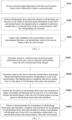
- FIG. 3 is a schematic flowchart of main steps of a method for monitoring a battery short circuit according to an embodiment of the disclosure. In this embodiment, at least the following steps are included:
- Step S310 Receive collected electrical signal information of all cells in each traction battery.
- the traction battery is stored statically in a battery swap station, and the battery swap station-side charges each traction battery stored in the battery swap station; and after being charged, the traction battery is stored statically in the battery swap station before being provided for an electric vehicle.
- the battery swap station-side may use a data acquisition apparatus to collect electrical signal information of each traction battery stored statically in the battery swap station.
- a computer having a sensor for collecting data may monitor a condition of each traction battery; and a single-cell voltage, a current, a temperature, a state of charge (SOC), and other electrical signal information of all cells in each traction battery are collected in real time in a case where the traction battery is in a static state during the charging or after the charging is completed, and the information is uploaded synchronously in real time to the cloud connected to the battery swap station, and is received and stored by a storage device on the cloud.
- the electrical signal information may be stored based on a collection time for each cell in each traction battery.
- Monitoring of a micro-internal short circuit in a traction battery requires the most accurate data, and the most accurate data may be obtained by monitoring and determining a voltage drop rate of the traction battery when it is in a static state for a period of time. In this way, whether there is an internal short circuit in the traction battery is determined.
- Step S320 Perform self-discharge observation and calculate a self-discharge rate based on a cell voltage in electrical signal information of each cell in each traction battery after depolarization is completed, to determine whether there is an internal short circuit in the traction battery where the corresponding cell is located.
- a self-discharge rate of the battery can be calculated accurately based on these data, and a status of the battery, for example, whether there is a short circuit in the battery, can be determined subsequently.
- a manner of the calculation is improved.
- operational efficiency of a battery swap station can be ensured while taking calculation accuracy into account, that is, a battery whose self-discharge rate does not exceed the threshold in the first phase can be transferred directly and provided for an electric vehicle that requires a battery.
- FIG. 4 is a schematic flowchart of main steps of a procedure of calculating a self-discharge rate according to an embodiment of the method of the disclosure.
- Step S3201 Determine, based on the collection time of the electrical signal information of each cell, a time at which the traction battery where the cell is located stops being charged.
- the electrical signal information of each cell is uploaded, based on a time at which the information is collected in real time, synchronously to the cloud for corresponding storage.
- the electrical signal information of each cell corresponds to a collection time of the information.
- a time point at which currents of all the cells (that is, of the corresponding traction battery) are 0 may be found in the electrical signal information based on a sequence of the collection time and used as the moment t0 at which the battery stops being charged.
- Step S3202 Select, based on the time at which the traction battery stops being charged and depolarization duration corresponding to a type of the traction battery, a starting time of the first phase of self-discharge observation and calculation on the cell voltage in corresponding electrical signal information of each cell in the traction battery;
- duration for completing the depolarization of the traction battery may be set based on the time at which the traction battery stops being charged and the depolarization duration (t_polarization) corresponding to the type of the traction battery.
- t_polarization the depolarization duration
- a cell voltage in addition to a terminal voltage, a cell voltage further includes ohmic polarization, concentration polarization/electrochemical polarization, and the like.
- a length of the duration t_polarization is related to factors such as designs, structures, and charging currents of different batteries. Referring to a voltage change curve shown in FIG. 2 , the charging stops at t0, and the depolarization is completed at t1. Usually, it is required that t1>t0+t polarization, that is, it is required that depolarization be fully completed.
- a depolarization time period namely the depolarization duration t_polarization corresponding to a traction battery of each type/with each set of specifications may be obtained based on accumulated test results that are obtained by carrying out charging tests on the traction battery of each type/with each set of specifications, and is recorded as a fixed parameter of the traction battery of the corresponding type/with the corresponding set of specifications.
- depolarization duration t_polarization of a traction battery can be obtained by obtaining a type/specifications (for example, a model serial number) of the traction battery.
- minimum duration for completing the depolarization is finally determined to be t0+t_polarization based on the principle of t1>tO+t polarization and actual requirements in combination with t0 that has been determined.
- a suitable collection time corresponding to the electrical signal information of each cell may be selected as the starting time t1 of the first phase of self-discharge observation and calculation.
- Depolarization duration t_polarization of a traction battery i of a model R in a battery swap station 1 is 2 hours, and t0 is 14:00 on January 2, 2020.
- a time after 16:00, for example, t1 that is 16:30 on January 2, 2020 may be used as a starting time of the first phase of self-discharge observation and calculation for the traction battery i after the depolarization of the traction battery i is completed.
- depolarization of the traction battery i of the model R in the battery swap station is completed at 16:30 on this day, and this time may be the starting time of the first phase of self-discharge observation and calculation for the traction battery i.
- Step S3203 Perform the first phase of self-discharge observation and calculation on the cell voltage in the electrical signal information of each cell in each traction battery from the selected starting time of the first phase of self-discharge observation and calculation to obtain a first-phase self-discharge rate (p1Sdr) of each cell, so as to determine whether to perform a second phase of self-discharge observation and calculation for the traction battery where the cell is located.
- p1Sdr first-phase self-discharge rate
- a huge amount of electrical signal information of all cells in a traction battery uploaded by a battery swap station is stored on the cloud.
- the electrical signal information of each cell at least includes a corresponding cell voltage of the cell at a time point/moment.
- a voltage of the traction battery is basically stable and does not change within a short period of time, for example, 7 days, referring to Type 1 shown in FIG. 2 .
- the voltage decreases rapidly, referring to Type 3 shown in FIG. 2 . Therefore, whether there is an internal short circuit in the battery may be evaluated by calculating a voltage change after the selected starting time t1, after the depolarization is completed, of the first phase of self-discharge observation and calculation.
- an internal short circuit situation of a traction battery may be evaluated by calculating a voltage change after the moment t1; it is assumed that a voltage of a cell j in a traction battery 1 at the moment t1 is v_1j, and at a moment a period of time after the moment t1, for example, at a moment ti, the traction battery is within duration P1 time of the first phase of self-discharge observation, and a voltage of the cell j at the moment ti is v_ij; and a self-discharge rate of a traction battery may be calculated based on observation of a cell in the traction battery, for example, based on observation and calculation of a voltage change of the cell j from the moment t1 to the moment ti a period of time after the moment t1, where the time period ti-tl is within the duration P1 time of the first phase of self-discharge observation and calculation, where i means the i
- a value range of P1 time may be 1 hour to 24 hours.
- P1_time may be set to 2 hours, 1 hour, or the like according to requirements.
- duration ti-tl is within P1_time, and ti ⁇ t1+P1_time.
- an absolute value of a result of formula 1 in the observation and calculation principle is used as the final result. As shown in FIG. 2 , the observed voltage change curve is decreasing, and a voltage at a current moment is usually less than a voltage at a previous moment. Therefore, the calculated self-discharge rate plSdr may be analyzed and observed.
- observation is performed from t1 to ti, and calculation is performed based on the following cases.
- ti ⁇ t1+P1_time ti represents a time point at which the first phase of voltage self-discharge observation ends and is a time point in the past, and the time period from t1 to ti for observation is within the duration P1_time of the first phase of self-discharge observation and calculation, that is, shorter than the duration of the first phase.
- voltages in a time period from t1 to t1+P1_time may be selected for analysis.
- t t i,j represents a time point (moment) ti that is selected from the time period from t1 to t1+P1 time for the observation of a cell voltage of the cell j, and in this case, the corresponding voltage of the cell j is v t i,j ; and t t 1 ,j represents the time point (moment) t_1, earlier than t t i,j , that is selected from the time period from t1 to t1+P1_time as a starting time for the observation of a cell voltage of the cell j, and in this case, the corresponding cell voltage of the cell j is v t 1 ,j .
- Example 1 P1_time is 1 hour, t_polarization is 2 hours, a time t0 at which a traction battery stops being charged is 13:00, a starting time of the first phase (a period 1) is selected as t1, t1 is 16:00, and t1-t0 > 2 indicates that selected t1 is a time point after depolarization is completed. If ti ⁇ t1 + 1, for example, ti is 16:30, a cell voltage of each corresponding cell in the traction battery within a time period from t1 to t1 + 1, for example, corresponding cell voltages of any cell j at various time points within a time period from 16:00 to 17:00, may be extracted for analysis.
- t t_i,j is 16:50
- t t_1,j is 16:00
- a corresponding cell voltage v t_i,j at 16:50 is 1
- a cell voltage v t_1,j at 16:00 is 1.01
- plSdr is 0.012.
- plSdr is greater than s1 (a first threshold) (a first threshold)
- s1 a first threshold
- the traction battery where the cell j is located has a relatively high risk of internal short circuit, cannot be directly allocated to an electric vehicle for use and needs to be retained, and requires a second phase of self-discharge observation and calculation.
- the calculated plSdr is not greater than the first threshold s1, for example, if plSdr ⁇ s1, it is determined that there is no micro-internal short circuit in the cell j.
- the traction battery where the cell j is located has a relatively low risk of internal short circuit belonging to the normal range, and may be normally swapped for use by an electric vehicle when needed.
- a value range of s1 may be 0.1 to 100.
- Example 1 is still used: plSdr is 0.012, s1 is 0.2, and 0.012 ⁇ s1. In this case, the battery is allowed for normal exchange. If plSdr is 0.3, and 0.3 > s1, a period 2 is triggered.
- the second phase of self-discharge observation and calculation is not triggered; or, if a cell voltage of any cell in the traction battery indicates plSdr > s1 in the period 1, it is considered that there is a micro-internal short circuit in the traction battery, which is highly risky, and the second phase of self-discharge observation and calculation (the period 2) is triggered.
- the cloud may feed back a result (including a case where the battery is normal and a case where the battery is retained for further observation in a next phase) to each battery swap station.
- the self-discharge rate plSdr within the duration P1_time is calculated by using the sliding window method. For example, the observation and the calculation are performed on cell voltages within the time period from ti to ti+P1_time.
- ti t1+P1 time
- ti represents a time point at which the first phase of voltage self-discharge observation ends and is a time point in the past
- the time period from t1 to ti for observation is beyond the duration P1 time of the first phase of self-discharge observation and calculation, that is, longer than the duration of the first phase.
- the sliding window is slid through the moment t1 to select voltages within the time period from ti to ti+P1 time for analysis.
- t t i,j represents a time point (moment) t_i that is selected from the time period from ti to ti+P1 time for the observation of a cell voltage of the cell j, and in this case, the corresponding voltage of the cell j is v t i,j ; and t t i-P1_time,j represents the time point (moment) t i -P1_time, earlier than t t i,j , that is selected from the time period from ti to ti+P1 time as a starting time for the observation of a cell voltage of the cell j, and in this case, the corresponding cell voltage of the cell j is v t i-P1_time,j .
- Example 2 P1 time is 1 hour, t_polarization is 2 hours, a time t0 at which a traction battery stops being charged is 13:00, a starting time of the first phase (a period 1) is selected as t1, t1 is 16:00, and t1-t0 > 2 indicates that selected t1 is a time point after depolarization is completed. If ti > t1 + 1, for example, when ti is 17:10, a cell voltage of each corresponding cell in the traction battery within a time period from ti to ti + 1, for example, corresponding cell voltages of any cell j in the traction battery at various time points within a time period from 17:30 to 18:30, may be extracted for analysis.
- t t_i,j is 18:30
- t t i-P1_time,j is 17:40
- a corresponding cell voltage v t_i,j at 18:30 is 1
- a cell voltage v t i-P1_time,j at 17:40 is 1.3
- plSdr is 0.36.
- plSdr is greater than s1 (a first threshold) (a first threshold)
- s1 a first threshold
- the traction battery where the cell j is located has a relatively high risk of internal short circuit, cannot be directly allocated to an electric vehicle for use and needs to be retained, and requires a second phase of self-discharge observation and calculation.
- the calculated plSdr is not greater than the first threshold s1, for example, if plSdr ⁇ s1, it is determined that there is no micro-internal short circuit in the cell j.
- the traction battery where the cell j is located has a relatively low risk of internal short circuit belonging to the normal range, and may be normally swapped for use by an electric vehicle when needed.
- a value range of s1 may be 0.1 to 100.
- Example 2 is still used: plSdr is 0.36, s1 is 0.2, and 0.36 > s1. In this case, the period 2 is triggered. If plSdr is 0.1, and 0.1 ⁇ s1, the battery is allowed for normal exchange.
- the second phase of self-discharge observation and calculation is not triggered; or, if a cell voltage of any cell in the traction battery indicates plSdr > s1 in the period 1, it is considered that there is a micro-internal short circuit in the traction battery, which is highly risky, and the second phase of self-discharge observation and calculation (the period 2) is triggered.
- the cloud may feed back a result (including a case where the battery is normal and a case where the battery is retained for further observation in a next phase) to each battery swap station.
- the sliding window calculation method used in (b) can help to accurately calculate a trend change of a monotonic change curve, which saves computing resources on the cloud, and improves computing efficiency.
- a self-discharge rate sdr of a traction battery may be calculated by using a linear fitting method to replace a calculation manner in each phase.
- the linear fitting method is used for calculation in the period 1.
- a result of k namely, the self-discharge rate sdrl, may be compared with s1.
- the calculated self-discharge rate sdr1 is greater than s1, and in this case, the traction battery requires further observation in the second phase, namely the period 2; or, if the calculated self-discharge rate sdr1 is not greater than s1, there is no voltage change in the cell, that is, the self-discharge rate sdr1 is not greater than s1, and in this case, the traction battery is allowed for normal exchange.
- Step S3204 When it is determined that the traction battery where the cell is located requires the second phase of self-discharge observation and calculation, select a time, with duration (P2_time) greater than that of the first phase of self-discharge observation and calculation after the first phase of self-discharge observation and calculation is completed, as a starting time of the second phase of self-discharge observation and calculation on the cell voltage of each cell in the traction battery to obtain a second-phase self-discharge rate (p2Sdr) of each cell, so as to determine whether there is an internal short circuit in the traction battery where the cell is located.
- P2_time duration
- p2Sdr second-phase self-discharge rate
- the second phase of self-discharge observation and calculation (the period 2) is required for a traction battery that is determined as having a high risk of internal short circuit in the period 1.
- a time point after completion of the first phase for the traction battery where the cell is located, for example, t2 or t3 shown in FIG. 2 is selected as the starting time of the second phase.
- a manner of obtaining the self-discharge rate p2Sdr in the second phase of self-discharge observation and calculation is similar to that in the first phase.
- the duration P2_time may be set to n times as long as P1 time, and a value of n ranges from 2 to 10.
- the second-phase self-discharge rate p2Sdr is observed and calculated according to formula 4:
- p 2 Sdr v i + P 2 time , j ⁇ v i , j t i + P 2 time , j ⁇ t i , j
- t i+P2_time,j represents a time point (moment) t i+P2_time that is selected from the time period from the moment ti after the second phase starts to ti+P2_time for observation of a cell voltage of the cell j, and in this case, the corresponding voltage of the cell j is v i+P2_time,j ; and t i,j represents a time point (moment) t i , earlier than t i+P2_time , that is selected
- s2 a second threshold
- s2 a second threshold
- the traction battery where the cell j is located has a relatively high risk of internal short circuit and cannot be directly allocated to an electric vehicle for use, and it is determined to trigger subsequent handling for the traction battery such as giving an alarm, stopping usage of the traction battery, and initiating a return and repair process.
- the calculated p2Sdr is not greater than the second threshold s2, for example, p2Sdr ⁇ s2, it is determined that there is no micro-internal short circuit in the cell j.
- a value range of s2 may be 0.1 to 100.
- s1 is greater than s2 that is greater than a specific value of a self-discharge rate of a cell.
- a second-phase self-discharge rate sdr2 of a traction battery may be calculated by using a linear fitting method to replace a calculation method in each phase.
- the linear fitting method is used for calculation in the second phase.
- a result of k namely the self-discharge rate sdr2, may be compared with s2. For example, if sdr2 calculated in the second phase is greater than s2, subsequent handling such as giving an alarm is triggered; or if sdr2 is not greater than s2, it indicates that the traction battery is normal.
- the self-discharge calculation is performed in a shorter observation period 1 and a longer observation period 2, and observation in the period 2 is triggered by a result indicated in the period 1, such that some traction batteries having a relatively high risk are retained, thereby ensuring calculation accuracy without affecting battery exchange and operation of a whole battery swap station, that is, taking operation of the battery swap station into account.
- Step S330 Trigger, based on determination that there is an internal short circuit in the traction battery where the cell is located, safety handling for the traction battery.
- the cloud may feed back a result to each battery swap station.
- a server on the cloud feeds back a result to each battery swap station after completing the calculation, to trigger subsequent handling for one or more corresponding traction batteries in each battery swap station, namely the safety handling for the traction batteries, where the safety handling includes giving an alarm, stopping usage of the traction battery, and initiating a return and repair process.
- An alarm may be given in a manner of outputting alarm information or providing various alarm sounds and optical and/or electrical signals.
- calculation performed on the cloud for monitoring an internal short circuit in a traction battery may alternatively be performed by software in a local control device of each battery swap station.
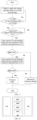
- FIG. 5 is a flowchart of an example of application control in the method for monitoring a battery short circuit according to the disclosure.
- Step 1 A battery swap station-side where traction batteries are statically stored collects signal information such as single-cell voltages, currents, temperatures, charges, and the like of all cells in each stored traction battery in a case where the traction battery remains static when being charged or after being charged, and uploads the information synchronously to the cloud or a local control device of the battery swap station in real time for storage and subsequent calculation.
- the cloud or control software of the battery swap station in another embodiment has a computing and data storage capability.
- Step 2 Monitoring and calculation are performed on the cloud or by the local terminal based on the synchronously uploaded real-time information, where specifically, a time t 0 at which charging of a traction battery ends (that is, when the traction battery stops being charged) is first determined. Whether to set a time as t0 can be determined by determining whether the charging ends at this time.
- Step 3 When being stored statically in the battery swap station and not in use, the traction battery is depolarized after t0, monitoring is performed after t0, and when the monitoring continues until a time t1, whether t1-t0 is greater than duration t_polarization of the depolarization is determined. If t1-t0 is greater than the duration t_polarization, step 4 is performed for a first phase of self-discharge observation and calculation. If t1-t0 is not greater than the duration t_polarization, wait for completion of the depolarization to find the time point t1 when the depolarization is completed.
- the monitoring may be performed on the cloud or by the local control device.
- Step 4 The first phase of self-discharge observation and calculation is performed (a period 1 is triggered), for example, from t1 to t2 as shown in FIG. 2 , to calculate a change of a cell voltage of one or more cells in a traction battery in the period 1, that is, a self-discharge rate p1Sdr.
- the calculation is performed by a server on the cloud or a processing apparatus of the local control device.
- Step 5 Whether p1Sdr/sdr1 is greater than a first threshold s1 is determined, and if p1Sdr/sdr1 is greater than s1, it is considered that there may be a micro-internal short circuit, therefore a traction battery where a cell corresponding to the self-discharge rate is located needs to be retained for a next phase of self-discharge observation and calculation, and step 6 is then performed; or if p1Sdr/sdr1 is not greater than s1, it is considered that there is not a micro-internal short circuit in a cell corresponding to the self-discharge rate, and when there is not a micro-internal short circuit in all cells in a traction battery, the traction battery is normal and allowed for exchange. A result of the calculation and determination is fed back on the cloud or by the local control device to the battery swap station.
- Step 6 A second phase of observation and calculation is performed (a period 2 is triggered), for example, from t2 to t3 as shown in FIG. 2 , for a traction battery, where a cell whose self-discharge rate is greater than s1 is located, determined through the first phase of observation and calculation. Duration of the period 2 is longer than the period 1, for example, is n times as long as the period 1. Similarly, a change of a cell voltage of one or more cells in the traction battery in the period 2, that is, a self-discharge rate p2Sdr/sdr2, is calculated after the second phase of observation and calculation.
- the monitoring and calculation are performed by the server on the cloud or the processing apparatus of the local control device.
- Step 7 Whether p2Sdr is greater than a second threshold s2 is determined, and if p2Sdr is greater than s2, it is considered that there may be a micro-internal short circuit, and therefore various subsequent handling related to battery safety such as giving an alarm (for example, providing alarm information in step 8) needs to be performed for the traction battery where the cell corresponding to the self-discharge rate is located; or if p2Sdr is not greater than s2, it is considered that there is not a micro-internal short circuit in the cell corresponding to the self-discharge rate, and when there is not a micro-internal short circuit in all cells in the traction battery, the traction battery is normal and allowed for exchange. A result of the calculation and determination is fed back on the cloud or by the local control device to the battery swap station.
- Step 8 Safety handling is performed, for example, an alarm is given, for the traction battery determined to have an internal short circuit after real-time monitoring. After obtaining the result that is fed back, the battery swap station triggers various types of handling, for example, safety handling (giving an alarm), for the corresponding traction battery. If the back-fed result obtained by the battery swap station in step 5 or step 7 indicates that there is no internal short circuit, the traction battery is allowed for normal exchange.
- s1 is greater than s2 that is greater than a specified value of a self-discharge rate of the cell, and a value range of the first threshold s1 and the second threshold s2 is 0.1 to 100.
- FIG. 6 is a schematic diagram of a main structure of a system for monitoring a battery short circuit according to an embodiment of the disclosure.
- the system at least includes: a receiving and storage apparatus 610 configured to receive collected electrical signal information of all cells in each traction battery.
- the traction battery is stored statically in a battery swap station, and the battery swap station-side charges each traction battery stored in the battery swap station; and after being charged, the traction battery is stored statically in the battery swap station before being provided for an electric vehicle.
- the battery swap station-side may use a data acquisition apparatus to collect electrical signal information of each traction battery stored statically in the battery swap station.
- a computer having a sensor for collecting data may monitor a condition of each traction battery; and a single-cell voltage, a current, a temperature, a state of charge (SOC), and other electrical signal information of all cells in each traction battery are collected in real time in a case where the traction battery is in a static state during the charging or after the charging is completed, and the information is uploaded synchronously in real time to the cloud connected to the battery swap station, and is received and stored by a storage device on the cloud.
- the electrical signal information may be stored based on a collection time for each cell in each traction battery.
- Monitoring of a micro-internal short circuit in a traction battery requires the most accurate data, and the most accurate data may be obtained by monitoring and determining a voltage drop rate of the traction battery when it is in a static state for a period of time. In this way, whether there is an internal short circuit in the traction battery is determined.
- the system further includes a phased-calculation apparatus 620 configured to perform self-discharge observation and calculate a self-discharge rate based on a cell voltage in electrical signal information of each cell in each traction battery after depolarization is completed, to determine whether there is an internal short circuit in the traction battery where the corresponding cell is located.
- a phased-calculation apparatus 620 configured to perform self-discharge observation and calculate a self-discharge rate based on a cell voltage in electrical signal information of each cell in each traction battery after depolarization is completed, to determine whether there is an internal short circuit in the traction battery where the corresponding cell is located.
- the apparatus can accurately calculate a self-discharge rate of the battery based on these data, and determine a status of the battery subsequently, for example, determine whether there is a short circuit in the battery.
- a manner of the calculation is improved.
- operational efficiency of a battery swap station can be ensured while taking calculation accuracy into account, that is, a battery whose self-discharge rate does not exceed the threshold in the first phase can be transferred directly and provided for an electric vehicle that requires a battery.
- the phased-calculation apparatus 620 further includes: a charging stop time apparatus 6201 configured to determine, based on the collection time of the electrical signal information of each cell, a time at which the traction battery where the cell is located stops being charged.
- the electrical signal information of each cell is uploaded, based on a time at which the information is collected in real time, synchronously to the cloud for corresponding storage.
- the electrical signal information of each cell corresponds to a collection time of the information.
- a time point at which currents of all the cells (that is, of the corresponding traction battery) are 0 may be found in the electrical signal information based on a sequence of the collection time and used as the moment t0 at which the battery stops being charged.
- the phased-calculation apparatus 620 further includes a first phase start selection apparatus 6202 configured to select, based on the time at which the traction battery stops being charged and depolarization duration corresponding to a type of the traction battery, a starting time of the first phase of self-discharge observation and calculation on the cell voltage in corresponding electrical signal information of each cell in the traction battery. Specifically, first, duration for completing the depolarization of the traction battery may be set based on the time at which the traction battery stops being charged and the depolarization duration (t_polarization) corresponding to the type of the traction battery.
- t_polarization depolarization duration
- a cell voltage further includes ohmic polarization, concentration polarization/electrochemical polarization, and the like.
- a depolarization time period namely the depolarization duration t_polarization corresponding to a traction battery of each type/with each set of specifications may be obtained based on accumulated test results that are obtained by carrying out charging tests on the traction battery of each type/with each set of specifications, and is recorded as a fixed parameter of the traction battery of the corresponding type/with the corresponding set of specifications.
- depolarization duration t_polarization of a traction battery can be obtained by obtaining a type/specifications (for example, a model serial number) of the traction battery. Then, minimum duration for completing the depolarization is finally determined to be t0+t_polarization based on the principle of t1>t0+t_polarization and actual requirements in combination with t0 that has been determined. In this way, a suitable collection time corresponding to the electrical signal information of each cell may be selected as the starting time t1 of the first phase of self-discharge observation and calculation.
- Depolarization duration t_polarization of a traction battery i of a model R in a battery swap station 1 is 2 hours, and t0 is 14:00 on January 2, 2020.
- t1 a time after 16:00, for example, t1 that is 16:30 on January 2, 2020, may be used as a starting time of the first phase of self-discharge observation and calculation for the traction battery i after the depolarization of the traction battery i is completed.
- depolarization of the traction battery i of the model R in the battery swap station is completed at 16:30 on this day, and this time may be the starting time of the first phase of self-discharge observation and calculation for the traction battery i.
- the phased-calculation apparatus 620 further includes a first-phase calculation apparatus 6203 configured to perform the first phase of self-discharge observation and calculation on the cell voltage in the electrical signal information of each cell in each traction battery from the selected starting time of the first phase of self-discharge observation and calculation to obtain a first-phase self-discharge rate (p1Sdr) of each cell, so as to determine whether to perform a second phase of self-discharge observation and calculation for the traction battery where the cell is located.
- p1Sdr first-phase self-discharge rate
- a huge amount of electrical signal information of all cells in a traction battery uploaded by a battery swap station is stored on the cloud.
- the electrical signal information of each cell at least includes a corresponding cell voltage of the cell at a time point/moment.
- a voltage of the traction battery is basically stable and does not change within a short period of time, for example, 7 days, referring to Type 1 shown in FIG. 2 .
- the voltage decreases rapidly, referring to Type 3 shown in FIG. 2 . Therefore, whether there is an internal short circuit in the battery may be evaluated by calculating a voltage change after the selected starting time t1, after the depolarization is completed, of the first phase of self-discharge observation and calculation.
- an internal short circuit situation of a traction battery may be evaluated by calculating a voltage change after the moment t1; it is assumed that a voltage of a cell j in a traction battery 1 at the moment t1 is v_1j, and at a moment a period of time after the moment t1, for example, at a moment ti, the traction battery is within duration P1_time of the first phase of self-discharge observation, and a voltage of the cell j at the moment ti is v_ij; and a self-discharge rate of a traction battery may be calculated based on observation of a cell in the traction battery, for example, based on observation and calculation of a voltage change of the cell j from the moment t1 to the moment ti a period of time after the moment t1, where the time period ti-t1 is within the duration P1_time of the first phase of self-discharge observation and calculation, where i means the
- a value range of P1 time may be 1 hour to 24 hours.
- P1_time may be set to 2 hours, 1 hour, or the like according to requirements.
- duration ti-t1 is within P1_time, and ti ⁇ t1+P1_time.
- an absolute value of a result of formula 1 in the observation and calculation principle may be calculated. As shown in FIG. 2 , the observed voltage change curve is decreasing, and a voltage at a current moment is usually less than a voltage at a previous moment. Therefore, the calculated self-discharge rate p1Sdr may be analyzed and observed.
- observation is performed from t1 to ti, and calculation is performed based on the following cases.
- ti ⁇ t1+P1_time ti represents a time point at which the first phase of voltage self-discharge observation ends and is a time point in the past, and the time period from t1 to ti for observation is within the duration P1_time of the first phase of self-discharge observation and calculation, that is, shorter than the duration of the first phase.
- voltages in a time period from t1 to t1+P1_time may be selected for analysis.
- t t i , j represents a time point (moment) ti that is selected from the time period from t1 to t1+P1_time for the observation of a cell voltage of the cell j, and in this case, the corresponding voltage of the cell j is v t i,j ; and t t 1,j represents the time point (moment) t1, earlier than t t i,j , that is selected from the time period from t1 to t1+P1 time as a starting time for the observation of a cell voltage of the cell j, and in this case, the corresponding cell voltage of the cell j is v t 1,j .
- Example 1 P1_time is 1 hour, t_polarization is 2 hours, a time t0 at which a traction battery stops being charged is 13:00, a starting time of the first phase (a period 1) is selected as t1, t1 is 16:00, and t1-t0 > 2 indicates that selected t1 is a time point after depolarization is completed. If ti ⁇ t1 + 1, for example, ti is 16:30, a cell voltage of each corresponding cell in the traction battery within a time period from t1 to t1 + 1, for example, corresponding cell voltages of any cell j at various time points within a time period from 16:00 to 17:00, may be extracted for analysis.
- t t_i,j is 16:50
- t t_1,j is 16:00
- a corresponding cell voltage v t_i,j at 16:50 is 1
- a cell voltage v t_1,j at 16:00 is 1.01
- p1Sdr is 0.012.
- s1 a first threshold
- the traction battery where the cell j is located has a relatively high risk of internal short circuit, cannot be directly allocated to an electric vehicle for use and needs to be retained, and requires a second phase of self-discharge observation and calculation.
- the calculated p1Sdr is not greater than the first threshold s1, for example, if p1Sdr ⁇ s1, it is determined that there is no micro-internal short circuit in the cell j.
- the traction battery where the cell j is located has a relatively low risk of internal short circuit belonging to the normal range, and may be normally swapped for use by an electric vehicle when needed.
- a value range of s1 may be 0.1 to 100.
- Example 1 is still used: p1Sdr is 0.012, s1 is 0.2, and 0.012 ⁇ s1. In this case, the battery is allowed for normal exchange. If p1Sdr is 0.3, and 0.3 > s1, a period 2 is triggered.
- the second phase of self-discharge observation and calculation is not triggered; or, if a cell voltage of any cell in the traction battery indicates p1Sdr > s1 in the period 1, it is considered that there is a micro-internal short circuit in the traction battery, which is highly risky, and the second phase of self-discharge observation and calculation (the period 2) is triggered.
- the cloud may feed back a result (including a case where the battery is normal and a case where the battery is retained for further observation in a next phase) to each battery swap station.
- the self-discharge rate p1Sdr within the duration P1_time is calculated by using the sliding window method. For example, the observation and the calculation are performed on cell voltages within the time period from ti to ti+P1_time.
- ti represents a time point at which the first phase of voltage self-discharge observation ends and is a time point in the past
- the time period from t1 to ti for observation is beyond the duration P1_time of the first phase of self-discharge observation and calculation, that is, longer than the duration of the first phase.
- the sliding window is slid through the moment t1 to select voltages within the time period from ti to ti+P1_time for analysis.
- t t i,j represents a time point (moment) ti that is selected from the time period from ti to ti+P1_time for the observation of a cell voltage of the cell j, and in this case, the corresponding voltage of the cell j is v t i,j ; and t t i-P1_time,j represents the time point (moment) t i -P1_time, earlier than t t i,j , that is selected from the time period from ti to ti+P1_time as a starting time for the observation of a cell voltage of the cell j, and in this case, the corresponding cell voltage of the cell j is V t i-P1_time,j .
- Example 2 P1_time is 1 hour, t_polarization is 2 hours, a time t0 at which a traction battery stops being charged is 13:00, a starting time of the first phase (a period 1) is selected as t1, t1 is 16:00, and t1-t0 > 2 indicates that selected t1 is a time point after depolarization is completed. If ti > t1 + 1, for example, when ti is 17: 10, a cell voltage of each corresponding cell in the traction battery within a time period from ti to ti + 1, for example, corresponding cell voltages of any cell j in the traction battery at various time points within a time period from 17:30 to 18:30, may be extracted for analysis.
- t t_i,j is 18:30
- t t i-P1_time,j is 17:40
- a corresponding cell voltage v t_i,j at 18:30 is 1
- a cell voltage v t i-P1_time,j at 17:40 is 1.3
- p1Sdr is 0.36.
- s1 a first threshold
- the traction battery where the cell j is located has a relatively high risk of internal short circuit, cannot be directly allocated to an electric vehicle for use and needs to be retained, and requires a second phase of self-discharge observation and calculation.
- the calculated p1Sdr is not greater than the first threshold s1, for example, if p1Sdr ⁇ s1, it is determined that there is no micro-internal short circuit in the cell j.
- the traction battery where the cell j is located has a relatively low risk of internal short circuit belonging to the normal range, and may be normally swapped for use by an electric vehicle when needed.
- a value range of s1 may be 0.1 to 100.
- Example 2 is still used: p1Sdr is 0.36, s1 is 0.2, and 0.36 > s1. In this case, the period 2 is triggered. If p1Sdr is 0.1, and 0.1 ⁇ s1, the battery is allowed for normal exchange.
- the second phase of self-discharge observation and calculation is not triggered; or, if a cell voltage of any cell in the traction battery indicates p1Sdr > s1 in the period 1, it is considered that there is a micro-internal short circuit in the traction battery, which is highly risky, and the second phase of self-discharge observation and calculation (the period 2) is triggered.
- the cloud may feed back a result (including a case where the battery is normal and a case where the battery is retained for further observation in a next phase) to each battery swap station.
- the sliding window calculation method used in (b) can help to accurately calculate a trend change of a monotonic change curve, which saves computing resources on the cloud, and improves computing efficiency.
- a self-discharge rate sdr of a traction battery may be calculated by using a linear fitting method to replace a calculation manner in each phase.
- the linear fitting method is used for calculation in the period 1.
- the calculated self-discharge rate sdr1 is greater than s1, and in this case, the traction battery requires further observation in the second phase, namely the period 2; or, if the calculated self-discharge rate sdr1 is not greater than s1, there is no voltage change in the cell, that is, the self-discharge rate sdr1 is not greater than s1, and in this case, the traction battery is allowed for normal exchange.
- the phased-calculation apparatus 620 further includes a second-phase calculation apparatus 6204 configured to: when it is determined that the traction battery where the cell is located requires the second phase of self-discharge observation and calculation, select a time, with duration (P2_time) greater than that of the first phase of self-discharge observation and calculation after the first phase of self-discharge observation and calculation is completed, as a starting time of the second phase of self-discharge observation and calculation on the cell voltage of each cell in the traction battery to obtain a second-phase self-discharge rate (p2Sdr) of each cell, so as to determine whether there is an internal short circuit in the traction battery where the cell is located.
- P2_time duration
- p2Sdr second-phase self-discharge rate
- the second phase of self-discharge observation and calculation (the period 2) is required for a traction battery that is determined as having a high risk of internal short circuit in the period 1.
- a time point after completion of the first phase for the traction battery where the cell is located, for example, t2 or t3 shown in FIG. 2 is selected as the starting time of the second phase.
- a manner of obtaining the self-discharge rate p2Sdr in the second phase of self-discharge observation and calculation is similar to that in the first phase.
- the duration P2_time may be set to n times as long as P1_time, and a value of n ranges from 2 to 10.
- the second-phase self-discharge rate p2Sdr is observed and calculated according to formula 4:
- p 2 Sdr v i + P 2 time , j ⁇ v i , j t i + P 2 time , j ⁇ t i , j
- t i+P2_time,j represents a time point (moment) t i+P2_time that is selected from the time period from the moment ti after the second phase starts to ti+P2 _time for observation of a cell voltage of the cell j, and in this case, the corresponding voltage of the cell j is v i+P2_time,j
- t i,j represents a time point (moment) t i , earlier than t i+P2_time , that is selected from the time period from the moment ti after the second phase starts to ti+P2 _time as a starting time for the observation of a
- s2 a second threshold
- s2 a second threshold
- the traction battery where the cell j is located has a relatively high risk of internal short circuit and cannot be directly allocated to an electric vehicle for use, and it is determined to trigger subsequent handling for the traction battery such as giving an alarm, stopping usage of the traction battery, and initiating a return and repair process.
- the calculated p2Sdr is not greater than the second threshold s2, for example, p2Sdr ⁇ s2, it is determined that there is no micro-internal short circuit in the cell j.
- a value range of s2 may be 0.1 to 100.
- s1 is greater than s2 that is greater than a specific value of a self-discharge rate of a cell.
- a second-phase self-discharge rate sdr2 of a traction battery may be calculated by using a linear fitting method to replace a calculation method in each phase.
- the linear fitting method is used for calculation in the second phase.
- a result of k namely the self-discharge rate sdr2, may be compared with s2. For example, if sdr2 calculated in the second phase is greater than s2, subsequent handling such as giving an alarm is triggered; or if sdr2 is not greater than s2, it indicates that the traction battery is normal.
- the self-discharge calculation is performed in a shorter observation period 1 and a longer observation period 2, and observation in the period 2 is triggered by a result indicated in the period 1, such that some traction batteries having a relatively high risk are retained, thereby ensuring calculation accuracy without affecting battery exchange and operation of a whole battery swap station, that is, taking operation of the battery swap station into account.
- the system further includes an alarm apparatus 630 configured to trigger, based on determination that there is an internal short circuit in the traction battery where the cell is located, safety handling for the traction battery.
- the cloud may feed back a result to each battery swap station.
- a server on the cloud feeds back a result to each battery swap station after completing the calculation, to trigger subsequent handling for one or more corresponding traction batteries in each battery swap station, namely the safety handling for the traction batteries, where the safety handling includes giving an alarm, stopping usage of the traction battery, and initiating a return and repair process.
- An alarm may be given in a manner of outputting alarm information or providing various alarm sounds and optical and/or electrical signals.
- an internal short circuit monitoring and calculation system on the cloud for a traction battery may alternatively be disposed in a local control device of each battery swap station.
- a scenario where a traction battery is stored statically in a battery swap station rather than a complex environment of an electric vehicle-side is used. Therefore, a simpler environment is implemented based on the changed scenario, data within a longer time period can be collected more easily, and the collected data is accurate and stable.
- a more accurate result can be obtained by calculation, based on larger amounts of more accurate data in a static working condition in a battery swap station having uncomplicated influences, on the cloud capable of calculating and storing huge amounts of historical data, and a higher success rate of determination is achieved with higher accuracy.
- phased retaining triggering, the sliding window method, and the like are used, which can considerably save computing resources and improve efficiency.
- the disclosure further provides an embodiment of a storage apparatus.
- the storage apparatus stores a plurality of pieces of program codes, and the program codes are adapted to be loaded and run by a processor to perform the foregoing method.
- the storage apparatus stores a plurality of pieces of program codes, and the program codes are adapted to be loaded and run by a processor to perform the foregoing method.
- the disclosure further provides an embodiment of a control apparatus.
- the apparatus includes a processor and a storage apparatus, where the storage apparatus stores a plurality of pieces of program codes, and the program codes are adapted to be loaded and run by the processor to perform the foregoing method.
- the storage apparatus stores a plurality of pieces of program codes, and the program codes are adapted to be loaded and run by the processor to perform the foregoing method.
- a micro-internal short circuit in a traction battery is monitored and determined.
- a huge amount of electrical signal information of all cells in a traction battery is collected and stored in chronological order.
- observation of a cell in the traction battery is performed stepwise in phases to calculate a self-discharge rate.
- a self-discharge rate is calculated.
- the phased and stepwise observation and calculation are mainly performed in a first phase and a second phase, and a sliding window calculation method is used in some steps.
- the self-discharge rate exceeds the second threshold, it is considered that there is a relatively great risk of internal short circuit, and an alarm is given for safety handling of the traction battery. Or, in either of a case where the self-discharge rate calculated in the first phase does not exceed the first threshold or a case where the self-discharge rate calculated in the second phase does not exceed the second threshold, it may be considered that the traction battery has no risk of internal short circuit and is allowed for normal exchange. In this way, both calculation accuracy and operational efficiency of a battery swap station can be taken into account.
- the sliding window method can help to accurately calculate a trend change of a monotonic variation curve, thereby saving computing resources, and improving computing efficiency. Therefore, real-time monitoring of an internal short circuit in a traction battery is implemented efficiently and accurately by taking an environment of a battery swap station as a basic environment.
- the computer program may be stored in a computer-readable storage medium, and when the computer program is executed by a processor, the steps of the foregoing method embodiments can be implemented.
- the computer program includes computer program code, which may be in a source code form, an object code form, an executable file form, some intermediate forms, or the like.
- the computer-readable medium may include: any entity or apparatus that can carry the computer program code, such as a medium, a USB flash drive, a removable hard disk, a magnetic disk, an optical disc, a computer memory, a read-only memory, a random access memory, an electrical carrier signal, a telecommunications signal, and a software distribution medium.
- a medium such as a medium, a USB flash drive, a removable hard disk, a magnetic disk, an optical disc, a computer memory, a read-only memory, a random access memory, an electrical carrier signal, a telecommunications signal, and a software distribution medium.
- the content included in the computer-readable medium may be appropriately added or deleted depending on requirements of the legislation and patent practice in a jurisdiction.
- the computer-readable medium does not include an electrical carrier signal and a telecommunications signal.
- modules since the configuration of the modules is merely intended to illustrate functional units of a system of the disclosure, a physical device corresponding to these modules may be a processor itself, or part of software, part of hardware, or part of a combination of software and hardware in the processor. Therefore, the number of modules in the figure is merely illustrative.
Landscapes
- Engineering & Computer Science (AREA)
- Physics & Mathematics (AREA)
- General Physics & Mathematics (AREA)
- Power Engineering (AREA)
- Transportation (AREA)
- Mechanical Engineering (AREA)
- Life Sciences & Earth Sciences (AREA)
- Sustainable Development (AREA)
- Sustainable Energy (AREA)
- Secondary Cells (AREA)
- Charge And Discharge Circuits For Batteries Or The Like (AREA)
- Tests Of Electric Status Of Batteries (AREA)
Claims (15)
- Verfahren zum Überwachen eines Batteriekurzschlusses, Folgendes umfassend:Empfangen erfasster Informationen in Form eines elektrischen Signals von allen Zellen in jeder Traktionsbatterie, wobei die Traktionsbatterie stationär in einer Batterietauschstation bleibt;Durchführen einer Selbstentladungsbeobachtung und Berechnen einer Selbstentladungsrate basierend auf einer Zellspannung in Informationen in Form eines elektrischen Signals jeder Zelle, nachdem die Depolarisation abgeschlossen ist, um zu bestimmen, ob in einer Traktionsbatterie, in der sich die Zelle befindet, die der Selbstentladungsrate entspricht, ein interner Kurzschluss vorliegt,wobei die Selbstentladungsbeobachtung und das Berechnen der Selbstentladungsrate in einer ersten Phase und einer zweiten Phase durchgeführt werden,wobei eine Selbstentladungsrate der ersten Phase jeder Zelle verwendet wird, um zu bestimmen, ob die zweite Phase der Selbstentladungsbeobachtung und Berechnung für die Traktionsbatterie, in der sich die Zelle befindet, durchzuführen ist; undAuslösen einer Alarmbearbeitung für den internen Kurzschluss in der Traktionsbatterie basierend auf einem rückgemeldeten Ergebnis, dass in der Traktionsbatterie ein interner Kurzschluss vorliegt.
- Verfahren nach Anspruch 1, wobei das Empfangen erfasster Informationen in Form eines elektrischen Signals von allen Zellen in jeder Traktionsbatterie speziell Folgendes umfasst:Erfassen der Informationen in Form eines elektrischen Signals in Echtzeit von allen Zellen in jeder Traktionsbatterie, die in der Batterietauschstation aufbewahrt wird, durch eine Batterietauschstationsseite in Echtzeit,wobei die Echtzeiterfassung Folgendes umfasst: Erfassen der Informationen in Form eines elektrischen Signals von allen Zellen in jeder Traktionsbatterie während des Ladens und nachdem das Laden abgeschlossen ist, wenn die Traktionsbatterie in der Batterietauschstation stationär bleibt,wobei die Informationen in Form eines elektrischen Signals von jeder Zelle mindestens Folgendes umfassen: eine Einzelzellenspannung, eine Stromstärke, eine Temperatur und einen Ladezustand (SOC);Hochladen der erfassten Informationen in Form eines elektrischen Signals von allen Zellen in der Traktionsbatterie synchron durch die Batterietauschstationsseite in die Cloud oder eine lokale Steuervorrichtung der Batterietauschstation; undEmpfangen der Informationen in Form eines elektrischen Signals in der Cloud oder durch die lokale Steuervorrichtung der Batterietauschstation und Speichern der Informationen basierend auf einer Erfassungszeit, zu der die Informationen in Echtzeit erfasst werden.
- Verfahren nach Anspruch 2, wobei das Durchführen einer Selbstentladungsbeobachtung und das Berechnen einer Selbstentladungsrate basierend auf einer Zellspannung in den Informationen in Form eines elektrischen Signals jeder Zelle, nachdem die Depolarisation abgeschlossen ist, um zu bestimmen, ob in der Traktionsbatterie, in der sich die Zelle befindet, die der Selbstentladungsrate entspricht, ein interner Kurzschluss vorliegt, speziell Folgendes umfasst:Bestimmen einer Zeit, zu der das Laden der Traktionsbatterie, in der sich die Zelle befindet, endet, basierend auf der Erfassungszeit der Informationen in Form eines elektrischen Signals jeder Zelle;Auswählen einer Startzeit einer ersten Phase der Selbstentladungsbeobachtung und der Berechnung anhand der Zellspannung jeder Zelle in der Traktionsbatterie, basierend auf der Zeit, zu der das Laden der Traktionsbatterie endet, und der Depolarisationsdauer, die einem Typ der Traktionsbatterie entspricht;Starten des Durchführens der zweiten Phase der Selbstentladungsbeobachtung und der Berechnung anhand der Zellspannung jeder Zelle in der Traktionsbatterie mit einer Dauer, die größer als die der ersten Phase der Selbstentladungsbeobachtung und der Berechnung ist, um eine Selbstentladungsrate der zweiten Phase jeder Zelle zu gewinnen, wenn die Bestimmung nach Abschluss der ersten Phase der Selbstentladungsbeobachtung und der Berechnung ja lautet; undBestimmen, ob in der Traktionsbatterie, in der sich die Zelle befindet, ein Kurzschluss vorliegt, basierend auf der Selbstentladungsrate der zweiten Phase jeder Zelle.
- Verfahren nach Anspruch 3, wobei
das Bestimmen einer Zeitb, zu der das Laden der Traktionsbatterie, in der sich die Zelle befindet, endet, basierend auf der Erfassungszeit der Informationen in Form eines elektrischen Signals jeder Zelle, speziell Folgendes umfasst:Auswählen einer Zeit, zu der die Stromstärken aller Zellen 0 betragen, aus den Informationen in Form eines elektrischen Signals, basierend auf einer Sequenz der Erfassungszeit, die allen Zellen in der Traktionsbatterie entspricht, als den Zeitpunkt, zu dem das Laden endet; unddas Auswählen einer Startzeit einer ersten Phase der Selbstentladungsbeobachtung und der Berechnung anhand der Zellspannung jeder Zelle in der Traktionsbatterie, basierend auf der Zeit, zu der das Laden der Traktionsbatterie endet, und der Depolarisationsdauer, die einem Typ der Traktionsbatterie entspricht, speziell Folgendes umfasst:Bestimmen der Depolarisationsdauer, die dem Typ jeder Traktionsbatterie entspricht, durch Tests; undAuswählen eines Zeitpunktes mit einer Dauer, die größer ist als eine Summe aus der Zeit, zu der das Laden endet, und der Depolarisationsdauer, als die Startzeit der ersten Phase der Selbstentladungsbeobachtung und der Berechnung anhand der Zellspannung jeder Zelle in der Traktionsbatterie nach Abschluss der Depolarisation. - Verfahren nach Anspruch 4, wobei das Durchführen der ersten Phase der Selbstentladungsbeobachtung und der Berechnung anhand der Zellspannung jeder Zelle in der Traktionsbatterie von der Startzeit an, um eine Selbstentladungsrate der ersten Phase der Zelle zu gewinnen, speziell Folgendes umfasst:Berechnen einer Selbstentladungsrate der ersten Phase p1Sdr1 der beobachteten j. Zelle innerhalb einer Dauer P1_time der ersten Phase der Selbstentladungsbeobachtung und der Berechnung:
 wobei vi,j eine Zellspannung der j. Zelle in einem Moment ti darstellt, v 1,j eine Zellspannung der j. Zelle in einem Moment t1 darstellt, ti,j den Moment ti in Bezug zu der j. Zellen darstellt und t 1,j den Moment t1 vor ti,j in Bezug auf die j. Zelle darstellt.
 - Verfahren nach Anspruch 5, wobei das Berechnen einer Selbstentladungsrate der ersten Zelle p1Sdr1 der beobachteten j. Zelle innerhalb einer Dauer P1_time der ersten Phase der Selbstentladungsbeobachtung und der Berechnung speziell Folgendes umfasst:wenn der Zeitpunkt ti, zu dem die Beobachtung endet, kleiner ist als eine Summe aus dem Zeitpunkt t1, zu dem die Beobachtung startet, und P1_time, Auswählen einer Zellspannung der j. Zelle innerhalb der Zeitspanne von t1 bis t1 + P1_time zur Beobachtung und zum Berechnen einer Selbstentladungsrate der ersten Phase p1Sdr der j. Zelle:
 wobei t ti ,j den Moment ti darstellt, der aus der Zeitspanne von t1 bis t1 + P1_time zur Beobachtung einer Zellspannung der j. Zelle ausgewählt ist, und in diesem Fall die entsprechende Spannung der j. Zelle v ti ,j ist und t t
1 ,j den Moment t1 vor tti,j darstellt, der aus der Zeitspanne von t1 bis t1 + P1_time als eine Startzeit zur Beobachtung einer Zellspannung der j. Zelle ausgewählt ist, und in diesem Fall die entsprechende Zellspannung der j. Zelle v t1,j ist, oderwenn der Zeitpunkt ti, zu dem die Beobachtung endet, größer ist als die Summe aus dem Zeitpunkt t1, zu dem die Beobachtung startet, und P1_time, Auswählen einer Zellspannung der j. Zelle innerhalb der Zeitspanne von ti bis ti + P1_time zur Beobachtung und zum Berechnen der Selbstentladungsrate der ersten Phase p1Sdr der j. Zelle: wobei tt
i,j den Moment ti darstellt, der aus der Zeitspanne von ti bis ti + P1_ time zur Beobachtung einer Zellspannung der j. Zelle ausgewählt ist, und in diesem Fall die entsprechende Zellspannung der j. Zelle vti,j ist und t ti -P1_time,j einen Moment ti-P1_time vor tti,j darstellt, der aus der Zeitspanne von ti bis ti + P1_time als eine Startzeit zur Beobachtung einer Zellspannung der j. Zelle ausgewählt ist, und in diesem Fall die entsprechende Zellspannung der j. Zelle vti - P1_time,j ist. - Verfahren nach Anspruch 4, wobei das Durchführen der ersten Phase der Selbstentladungsbeobachtung und der Berechnung anhand der Zellspannung jeder Zelle in der Traktionsbatterie von der Startzeit an, um eine Selbstentladungsrate der ersten Phase der Zelle zu gewinnen, speziell Folgendes umfasst:
Durchführen einer Linearanpassungsberechnung an allen Zellspannungen der j. Zelle innerhalb der Dauer P1_time der ersten Phase der Selbstentladungsbeobachtung und der Berechnung:
- Verfahren nach Anspruch 5, 6 oder 7, wobei das Bestimmen basierend auf der Selbstentladungsrate der ersten Phase jeder Zelle, ob eine zweite Phase der Selbstentladungsbeobachtung und der Berechnung für die Traktionsbatterie, in der sich die Zelle befindet, durchzuführen ist, speziell Folgendes umfasst:Vergleichen der Selbstentladungsrate der ersten Phase p1Sdr oder sdr1 jeder Zelle mit einem ersten Grenzwert s1;wenn die Selbstentladungsrate der ersten Phase p1Sdr der Zelle größer ist als der erste Grenzwert s1 oder sdr1 größer ist als der erste Grenzwert s1, Bestimmen, dass die Traktionsbatterie, in der sich die Zelle befindet, der zweiten Phase der Selbstentladungsbeobachtung und der Berechnung bedarf; undwenn die Selbstentladungsrate der ersten Phase p1Sdr der Zelle kleiner oder gleich dem ersten Grenzwert s1 ist oder sdr1 kleiner oder gleich dem ersten Grenzwert s1 ist, Bestimmen, dass die Traktionsbatterie, in der sich die Zelle befindet, kein Risiko für einen internen Kurschluss aufweist und normaler Austausch zulässig ist.
- Verfahren nach Anspruch 8, wobei, wenn die Bestimmung nach Abschluss der ersten Phase der Selbstentladungsbeobachtung und der Berechnung ja lautet, das Starten des Durchführens einer zweiten Phase der Selbstentladungsbeobachtung und der Berechnung anhand der Zellspannung jeder Zelle in der Traktionsbatterie mit einer Dauer, die größer als die der ersten Phase der Selbstentladungsbeobachtung und der Berechnung ist, um eine Selbstentladungsrate der zweiten Phase jeder Zelle zu gewinnen, speziell Folgendes umfasst:Durchführen der zweiten Phase der Selbstentladungsbeobachtung und der Berechnung anhand der Zellspannung jeder Zelle in der Traktionsbatterie, die der zweiten Phase der Selbstentladungsbeobachtung und der Berechnung bedarf, nach Abschluss der ersten Phase der Selbstentladungsbeobachtung und der Berechnung, wobei eine Selbstentladungsrate p2Sdr der j. Zelle innerhalb der Dauer P2_time der zweiten Phase der Selbstentladungsbeobachtung und der Berechnung wie folgt berechnet wird:
 wobei ti+P2_time,j einen Moment ti+P2_time darstellt, der aus einer Zeitspanne von dem Moment ti bis ti + P2_time zur Beobachtung einer Zellspannung der j. Zelle in der zweiten Phase der Selbstentladungsbeobachtung und der Berechnung ausgewählt ist, und in diesem Fall die entsprechende Zellspannung der j. Zelle vi+P2_time,j ist und ti,j den Moment ti vor ti+P2_time darstellt, der aus der Zeitspanne von dem Moment ti bis ti+P2_time zur Beobachtung einer Zellspannung der j. Zelle in der zweiten Phase der Selbstentladungsbeobachtung und der Berechnung ausgewählt ist, und in diesem Fall die entsprechende Zellspannung der j. Zelle vi,j ist,wobei die Dauer P2_time der zweiten Phase der Selbstentladungsbeobachtung und der Berechnung n-mal so lang wie die Dauer P1_time der ersten Phase der Selbstentladungsbeobachtung und der Berechnung ist und n ∈ [2,10].
 - Verfahren nach Anspruch 8, wobei, wenn die Bestimmung nach Abschluss der ersten Phase der Selbstentladungsbeobachtung und der Berechnung ja lautet, das Starten des Durchführens einer zweiten Phase der Selbstentladungsbeobachtung und der Berechnung anhand der Zellspannung jeder Zelle in der Traktionsbatterie mit einer Dauer, die größer ist als die der ersten Phase der Selbstentladungsbeobachtung und der Berechnung, um eine Selbstentladungsrate der zweiten Phase jeder Zelle zu gewinnen, speziell Folgendes umfasst:
Durchführen der zweiten Phase der Selbstentladungsbeobachtung und der Berechnung anhand der Zellspannung jeder Zelle in der Traktionsbatterie, die der zweiten Phase der Selbstentladungsbeobachtung und der Berechnung bedarf, nachdem die erste Phase der Selbstentladungsbeobachtung und der Berechnung abgeschlossen ist, und Durchführen einer Linearanpassungsberechnung an allen Zellspannungen der j. Zelle innerhalb der Dauer P2_time der zweiten Phase der Selbstentladungsbeobachtung und der Berechnung:
- Verfahren nach Anspruch 9 oder 10, wobei das Bestimmen basierend auf der Selbstentladungsrate der zweiten Phase jeder Zelle, ob in der Traktionsbatterie, in der sich die Zelle befindet, ein interner Kurzschluss vorliegt, Folgendes umfasst:Vergleichen der Selbstentladungsrate der zweiten Phase p2Sdr oder sdr2 jeder Zelle mit einem zweiten Grenzwert s2;wenn die Selbstentladungsrate der zweiten Phase p2Sdr der Zelle größer als der zweite Grenzwert s2 ist oder sdr2 größer als der zweite Grenzwert s2 ist, Bestimmen, dass in der Traktionsbatterie, in der sich die Zelle befindet, ein interner Kurzschluss vorliegt; undwenn die Selbstentladungsrate der zweiten Phase p2Sdr der Zelle kleiner oder gleich dem zweiten Grenzwert s2 ist oder sdr2 kleiner oder gleich dem zweiten Grenzwert s2 ist, Bestimmen, dass die Traktionsbatterie, in der sich die Zelle befindet, kein Risiko für einen internen Kurschluss aufweist und normaler Austausch zulässig ist,wobei der voreingestellte erste Grenzwert s1 größer als der zweite Grenzwert s2 ist, der größer als ein spezifizierter Wert einer Selbstentladungsrate der Zelle ist und ein Wertebereich von s1 und s2 0,1 bis 100 beträgt.
- Verfahren nach Anspruch 11, wobei das Auslösen einer Alarmbearbeitung für den internen Kurzschluss in der Traktionsbatterie basierend auf einem rückgemeldeten Ergebnis, dass in der Traktionsbatterie ein interner Kurzschluss vorliegt, speziell Folgendes umfasst:Rückmelden eines Ergebnisses darüber, ob in der Traktionsbatterie ein interner Kurzschluss vorliegt, an die entsprechende Batterietauschstationsseite anhand der Cloud oder durch die örtliche Steuervorrichtung der Batterietauschstation nach Abschluss jeder Phase der Selbstentladungsbeobachtung und der Berechnung; undwenn das durch die Batterietauschstation empfangene Ergebnis lautet, dass in der Traktionsbatterie ein interner Kurzschluss vorliegt, Auslösen einer Alarmbearbeitung für den internen Kurzschluss in der Traktionsbatterie durch die Batterietauschstation, wobei die Alarmbearbeitung Folgendes umfasst: Ausgeben eines Alarms, Beenden der Verwendung der Traktionsbatterie und Auslösen eines Rückführungs- und Reparaturprozesses.
- System zum Überwachen eines Batteriekurzschlusses, Folgendes umfassend:eine Empfangs- und Speichereinrichtung, die dafür konfiguriert ist, erfasste Informationen in Form eines elektrischen Signals von allen Zellen in jeder Traktionsbatterie zu empfangen, wobei die Traktionsbatterie stationär in einer Batterietauschstation bleibt;eine Phasenberechnungseinrichtung, die dafür konfiguriert ist, eine Selbstentladungsbeobachtung durchzuführen und eine Selbstentladungsrate zu berechnen, basierend auf einer Zellspannung in den Informationen in Form eines elektrischen Signals jeder Zelle, nachdem die Depolarisation abgeschlossen ist, um zu bestimmen, ob in einer Traktionsbatterie, in der sich die Zelle befindet, die der Selbstentladungsrate entspricht, ein interner Kurzschluss vorliegt,wobei die Selbstentladungsbeobachtung und die Berechnung der Selbstentladungsrate in einer ersten Phase und einer zweiten Phase durchgeführt werden,wobei eine Selbstentladungsrate der ersten Phase jeder Zelle verwendet wird, um zu bestimmen, ob die zweite Phase der Selbstentladungsbeobachtung und Berechnung für die Traktionsbatterie, in der sich die Zelle befindet, durchzuführen ist; undeine Alarmeinrichtung, die dafür konfiguriert ist, eine Alarmbearbeitung für den internen Kurzschluss in der Traktionsbatterie auszulösen, basierend auf einem rückgemeldeten Ergebnis, dass in der Traktionsbatterie ein interner Kurzschluss vorliegt.
- System nach Anspruch 13, wobei die Empfangs- und Speichereinrichtung speziell Folgendes umfasst:Erfassen der Informationen in Form eines elektrischen Signals von allen Zellen in jeder Traktionsbatterie, die in der Batterietauschstation aufbewahrt werden, durch eine Batterietauschstationsseite in Echtzeit,wobei die Echtzeiterfassung Folgendes umfasst: Erfassen der Informationen in Form eines elektrischen Signals von allen Zellen in jeder Traktionsbatterie während des Ladens und nachdem das Laden abgeschlossen ist, wenn die Traktionsbatterie in der Batterietauschstation stationär bleibt,wobei die Informationen in Form eines elektrischen Signals von jeder Zelle mindestens Folgendes umfassen: eine Einzelzellenspannung, eine Stromstärke, eine Temperatur und einen Ladezustand (SOC);Hochladen der erfassten Informationen in Form eines elektrischen Signals von allen Zellen in der Traktionsbatterie synchron durch die Batterietauschstationsseite in die Cloud oder eine lokale Steuervorrichtung der Batterietauschstation; undEmpfangen der Informationen in Form eines elektrischen Signals in der Cloud oder durch die lokale Steuervorrichtung der Batterietauschstation und Speichern der Informationen basierend auf einer Erfassungszeit, zu der die Informationen in Echtzeit erfasst werden.
- System nach Anspruch 14, wobei die Phasenberechnungseinrichtung speziell Folgendes umfasst:eine Ladebeendigungszeiteinrichtung, die dafür konfiguriert ist, basierend auf der Erfassungszeit der Informationen in Form eines elektrischen Signals jeder Zelle eine Zeit zu bestimmen, zu der das Laden der Traktionsbatterie, in der sich die Zelle befindet, beendet wird;eine Erste-Phase-Startauswahleinrichtung, die dafür konfiguriert ist, basierend auf der Zeit, zu der das Laden der Traktionsbatterie endet, und der Depolarisationsdauer, die einem Typ der Traktionsbatterie entspricht, eine Startzeit einer ersten Phase der Selbstentladungsbeobachtung und der Berechnung anhand der Zellspannung jeder Zelle in der Traktionsbatterie auszuwählen;eine Erste-Phase-Berechnungseinrichtung, die dafür konfiguriert ist, die erste Phase der Selbstentladungsbeobachtung und der Berechnung anhand der Zellspannung jeder Zelle in der Traktionsbatterie von der Startzeit durchzuführen, um eine Selbstentladungsrate der ersten Phase der Zelle zu gewinnen, und basierend auf der Selbstentladungsrate der ersten Phase der Zelle zu bestimmen, ob eine zweite Phase der Selbstentladungsbeobachtung und der Berechnung für die Traktionsbatterie, in der sich die Zelle befindet, durchzuführen ist;eine Zweite-Phase-Berechnungseinrichtung, die für Folgendes konfiguriert ist: Starten des Durchführens der zweiten Phase der Selbstentladungsbeobachtung und der Berechnung anhand der Zellspannung jeder Zelle in der Traktionsbatterie mit einer Dauer, die größer als die der ersten Phase der Selbstentladungsbeobachtung und der Berechnung ist, um eine Selbstentladungsrate der zweiten Phase jeder Zelle zu gewinnen, wenn die Bestimmung nach Abschluss der ersten Phase der Selbstentladungsbeobachtung und der Berechnung ja lautet; und Bestimmen, ob in der Traktionsbatterie, in der sich die Zelle befindet, ein Kurzschluss vorliegt, basierend auf der Selbstentladungsrate der zweiten Phase jeder Zelle.
Applications Claiming Priority (2)
| Application Number | Priority Date | Filing Date | Title |
|---|---|---|---|
| CN202010113170.6A CN111257764B (zh) | 2020-02-24 | 2020-02-24 | 监控电池短路的方法、系统以及装置 |
| PCT/CN2020/135576 WO2021169488A1 (zh) | 2020-02-24 | 2020-12-11 | 监控电池短路的方法、系统以及装置 |
Publications (3)
| Publication Number | Publication Date |
|---|---|
| EP4113141A1 EP4113141A1 (de) | 2023-01-04 |
| EP4113141A4 EP4113141A4 (de) | 2023-08-02 |
| EP4113141B1 true EP4113141B1 (de) | 2025-06-18 |
Family
ID=70952724
Family Applications (1)
| Application Number | Title | Priority Date | Filing Date |
|---|---|---|---|
| EP20921915.3A Active EP4113141B1 (de) | 2020-02-24 | 2020-12-11 | Verfahren, system und vorrichtung zur überwachung eines kurzschlusses bei einer batterie |
Country Status (5)
| Country | Link |
|---|---|
| US (1) | US12326477B2 (de) |
| EP (1) | EP4113141B1 (de) |
| CN (1) | CN111257764B (de) |
| TW (1) | TWI751032B (de) |
| WO (1) | WO2021169488A1 (de) |
Families Citing this family (24)
| Publication number | Priority date | Publication date | Assignee | Title |
|---|---|---|---|---|
| CN111257764B (zh) | 2020-02-24 | 2025-09-30 | 武汉蔚来能源有限公司 | 监控电池短路的方法、系统以及装置 |
| CN111913113A (zh) * | 2020-07-14 | 2020-11-10 | 蜂巢能源科技有限公司 | 电芯内短路识别方法、装置、存储介质及电子设备 |
| ES3051518T3 (en) * | 2020-08-10 | 2025-12-29 | Lg Energy Solution Ltd | Battery abnormality diagnosis apparatus and method |
| US11460513B2 (en) * | 2020-12-15 | 2022-10-04 | GM Global Technology Operations LLC | Assessment of cell group health in a battery pack |
| CN112858932B (zh) * | 2021-03-02 | 2022-11-15 | 欣旺达电动汽车电池有限公司 | 一种电池短路热失控预警装置及其方法 |
| CN112834938B (zh) * | 2021-03-10 | 2022-08-12 | 东莞新能德科技有限公司 | 电池内短路检测方法、电子装置以及存储介质 |
| US20220348107A1 (en) * | 2021-05-03 | 2022-11-03 | Popion Mobility Inc. | Methods and systems for end-to-end infrastructure for supporting use of swappable batteries in electric vehicles |
| CN113311346B (zh) * | 2021-05-19 | 2024-02-06 | 北京车和家信息技术有限公司 | 一种电芯预警方法、装置、云平台及存储介质 |
| CN113253120B (zh) * | 2021-06-29 | 2021-09-17 | 蜂巢能源科技有限公司 | 电池突发型内短路诊断方法、装置、存储介质及电子设备 |
| US12241943B2 (en) * | 2021-07-14 | 2025-03-04 | GM Global Technology Operations LLC | Method for early detection of an internal short in a battery pack |
| CN113848489B (zh) * | 2021-09-10 | 2024-03-19 | 欣旺达动力科技股份有限公司 | 电池的短路识别方法、装置及存储介质 |
| CN113884922B (zh) * | 2021-10-28 | 2022-11-18 | 同济大学 | 一种基于电压和电量离群系数的电池内短路定量诊断方法 |
| CN116338476B (zh) * | 2021-12-24 | 2026-02-27 | 北京车和家汽车科技有限公司 | 电池去极化的标准时长确定方法、系统、装置及设备 |
| CN114629905B (zh) * | 2022-02-16 | 2022-10-28 | 福建时代星云科技有限公司 | 一种基于云端数据的储能系统sop优化方法及装置 |
| US12591017B2 (en) * | 2022-05-24 | 2026-03-31 | Samsung Electronics Co., Ltd. | Method and device with battery short circuit detection |
| CN114879062B (zh) * | 2022-05-30 | 2024-11-08 | 东莞新能安科技有限公司 | 一种电池短路检测方法、装置及设备 |
| CN115825764B (zh) * | 2022-07-29 | 2025-10-31 | 宁德时代新能源科技股份有限公司 | 电芯k值确定方法、装置、计算机设备及介质 |
| CN115166564B (zh) * | 2022-08-24 | 2025-08-12 | 厦门金龙联合汽车工业有限公司 | 一种在线量化评估磷酸铁锂电池微短路程度的方法 |
| CN115856674A (zh) * | 2022-12-27 | 2023-03-28 | 章鱼博士智能技术(上海)有限公司 | 一种电芯的检测方法、装置、电子设备及存储介质 |
| CN116593930A (zh) * | 2023-03-08 | 2023-08-15 | 宇通客车股份有限公司 | 一种电池系统电芯内短路识别方法和装置 |
| CN117154249A (zh) * | 2023-08-29 | 2023-12-01 | 上海橙川储能科技有限公司 | 一种储能电池云端系统安全管理方法和系统 |
| FR3153895A1 (fr) * | 2023-10-09 | 2025-04-11 | Psa Automobiles Sa | Analyse de l’autodécharge de cellule(s) d’une batterie cellulaire |
| FR3154191B1 (fr) * | 2023-10-12 | 2025-09-26 | Psa Automobiles Sa | Surveillance d’une batterie cellulaire pour la détection de court-circuit interne |
| CN119861305B (zh) * | 2025-03-25 | 2025-06-17 | 太原科技大学 | 一种锂电池短路诊断检测方法及系统 |
Citations (1)
| Publication number | Priority date | Publication date | Assignee | Title |
|---|---|---|---|---|
| US20190305384A1 (en) * | 2016-12-23 | 2019-10-03 | Huawei Technologies Co., Ltd. | Battery micro-short circuit detection method and apparatus |
Family Cites Families (30)
| Publication number | Priority date | Publication date | Assignee | Title |
|---|---|---|---|---|
| JP2006100000A (ja) * | 2004-09-28 | 2006-04-13 | Kansai Electric Power Co Inc:The | 蓄電設備の保守方法 |
| US7795843B2 (en) * | 2007-12-28 | 2010-09-14 | Intel Corporation | Short circuit detection for batteries |
| JP2012141166A (ja) | 2010-12-28 | 2012-07-26 | Yokogawa Electric Corp | 自己放電不良検出装置および自己放電不良検出方法 |
| JP2014134395A (ja) * | 2013-01-08 | 2014-07-24 | Toyota Motor Corp | 二次電池の短絡検査方法 |
| CN103197188A (zh) * | 2013-03-05 | 2013-07-10 | 上海翼锐汽车科技有限公司 | 电池电流传感器故障诊断系统及其方法 |
| CN105814446B (zh) * | 2014-01-14 | 2019-07-23 | 费森尤斯维尔公司 | 用于确定电池的剩余运行时间的方法和装置 |
| JP6256761B2 (ja) * | 2014-04-11 | 2018-01-10 | トヨタ自動車株式会社 | 二次電池の検査方法および製造方法 |
| CN104076294B (zh) * | 2014-07-11 | 2017-02-01 | 上海工程技术大学 | 用于电动车辆电池性能测试的负载装置 |
| CN105093114B (zh) * | 2015-03-02 | 2017-12-08 | 江苏卓岸电源科技有限公司 | 一种电池在线建模与荷电状态的联合估计方法及系统 |
| CN105093128A (zh) * | 2015-08-31 | 2015-11-25 | 山东智洋电气股份有限公司 | 基于扩展卡尔曼滤波的蓄电池荷电状态估算方法 |
| CN106814319B (zh) * | 2015-11-28 | 2019-12-10 | 华南理工大学 | 一种锂离子电池自放电检测系统 |
| US10036779B2 (en) * | 2015-11-30 | 2018-07-31 | Battelle Energy Alliance, Llc | Systems and related methods for determining self-discharge currents and internal shorts in energy storage cells |
| CN106908727B (zh) * | 2015-12-22 | 2025-06-17 | 郑州比克电池有限公司 | 精准检测锂离子电池自放电的方法 |
| JP2017143635A (ja) * | 2016-02-09 | 2017-08-17 | トヨタ自動車株式会社 | 車両用電源システム |
| CN105842629A (zh) * | 2016-03-29 | 2016-08-10 | 荆门市格林美新材料有限公司 | 动力电池梯级利用检测评估方法 |
| CN106951975B (zh) * | 2016-10-12 | 2021-04-16 | 蔚来(安徽)控股有限公司 | 换电站电池数量和充电倍率优化系统和方法 |
| CN106443475A (zh) * | 2016-10-21 | 2017-02-22 | 国网山东省电力公司电力科学研究院 | 基于运营大数据的退役动力电池无拆解再次利用筛选方法 |
| WO2018089763A2 (en) * | 2016-11-10 | 2018-05-17 | Camx Power, L.L.C. | Systems and processes for assessing electrochemical cell quality |
| TWI639016B (zh) * | 2017-01-13 | 2018-10-21 | Prolific Technology Inc. | 電池內阻的量測電路及方法 |
| CN107167737A (zh) * | 2017-03-31 | 2017-09-15 | 惠州市蓝微新源技术有限公司 | 一种电池系统安全监控方法 |
| CN107256987B (zh) * | 2017-06-06 | 2019-07-09 | 江西优特汽车技术有限公司 | 一种动力电池微短路检测方法 |
| CN107729678A (zh) * | 2017-11-02 | 2018-02-23 | 中国科学院数学与系统科学研究院 | 一种卫星太阳电池在轨运行剩余寿命的建模与分析方法 |
| US10522881B1 (en) * | 2018-01-12 | 2019-12-31 | Cora Aero Llc | Estimation of self discharge rate as a measure of battery health |
| CN108363013A (zh) * | 2018-01-25 | 2018-08-03 | 湖南威威胜新能源技术有限公司 | 一种镍钴锰酸锂电池的自放电检测方法 |
| CN108160531B (zh) | 2018-03-15 | 2021-04-09 | 惠州亿纬锂能股份有限公司 | 一种电池自放电分选方法 |
| CN108400636B (zh) * | 2018-03-23 | 2020-08-07 | 刘铭新 | 电池组充放电管理系统及方法 |
| CN108663627B (zh) * | 2018-03-28 | 2020-03-24 | 维沃移动通信有限公司 | 一种电池自放电检测方法及电池自放电检测装置 |
| CN109255685A (zh) * | 2018-09-21 | 2019-01-22 | 中链科技有限公司 | 基于区块链的电池状态数据的共享方法及装置 |
| CN110599023B (zh) * | 2019-09-05 | 2022-06-14 | 厦门金龙联合汽车工业有限公司 | 一种电动车群组的换电调度方法和云管理服务器 |
| CN111257764B (zh) * | 2020-02-24 | 2025-09-30 | 武汉蔚来能源有限公司 | 监控电池短路的方法、系统以及装置 |
-
2020
- 2020-02-24 CN CN202010113170.6A patent/CN111257764B/zh active Active
- 2020-12-11 US US17/801,755 patent/US12326477B2/en active Active
- 2020-12-11 WO PCT/CN2020/135576 patent/WO2021169488A1/zh not_active Ceased
- 2020-12-11 EP EP20921915.3A patent/EP4113141B1/de active Active
-
2021
- 2021-02-20 TW TW110106007A patent/TWI751032B/zh not_active IP Right Cessation
Patent Citations (1)
| Publication number | Priority date | Publication date | Assignee | Title |
|---|---|---|---|---|
| US20190305384A1 (en) * | 2016-12-23 | 2019-10-03 | Huawei Technologies Co., Ltd. | Battery micro-short circuit detection method and apparatus |
Also Published As
| Publication number | Publication date |
|---|---|
| CN111257764A (zh) | 2020-06-09 |
| US20230086915A1 (en) | 2023-03-23 |
| US12326477B2 (en) | 2025-06-10 |
| WO2021169488A1 (zh) | 2021-09-02 |
| TW202132801A (zh) | 2021-09-01 |
| CN111257764B (zh) | 2025-09-30 |
| TWI751032B (zh) | 2021-12-21 |
| EP4113141A1 (de) | 2023-01-04 |
| EP4113141A4 (de) | 2023-08-02 |
Similar Documents
| Publication | Publication Date | Title |
|---|---|---|
| EP4113141B1 (de) | Verfahren, system und vorrichtung zur überwachung eines kurzschlusses bei einer batterie | |
| EP4130767B1 (de) | Verfahren und vorrichtung zur erkennung von lithiumplattierung | |
| EP3832328B1 (de) | Verfahren und vorrichtung zur detektion eines mikrokurzschlusses einer batterie | |
| WO2021169486A1 (zh) | 基于充电过程监控电池阻抗异常的方法、系统以及装置 | |
| CN110376536B (zh) | 电池系统soh检测方法、装置、计算机设备和存储介质 | |
| CN110579716B (zh) | 一种电池检测方法及装置 | |
| CN110488201B (zh) | 一种锂离子电池荷电状态放电筛选方法、系统、存储介质 | |
| CN112776667B (zh) | 一种车端动力电池析锂在线监控方法 | |
| CN115825778A (zh) | 温度异常检测方法、装置、设备及存储介质 | |
| CN112924866A (zh) | 容量保持率的检测方法、检测装置、车辆及存储介质 | |
| EP4484982B1 (de) | Batteriediagnosevorrichtung, batteriediagnoseverfahren, batteriepack und fahrzeug | |
| EP4425198B1 (de) | Batteriekapazitätsvorhersagevorrichtung und betriebsverfahren dafür | |
| CN117347078A (zh) | 一种新能源车辆健康状态年检平台及方法 | |
| CN119179008A (zh) | 电池的析锂检测方法、装置、电子设备及存储介质 | |
| CN120222570B (zh) | 电池充电倍率的确定方法、装置、电子设备及存储介质 | |
| EP4660652A1 (de) | Batteriedatenverwaltungsvorrichtung und betriebsverfahren dafür | |
| CN117367830A (zh) | 一种新能源车辆健康状态商检平台及方法 | |
| HK40031935A (en) | Method, system and device for monitoring short circuit of battery | |
| CN119395551B (zh) | 一种锂电池的无损析锂检测方法及系统 | |
| EP4707836A1 (de) | Batterieverwaltungsvorrichtung und betriebsverfahren dafür | |
| CN121027844A (zh) | 参比电极的修正方法、装置、设备、存储介质和程序产品 | |
| CN119596168A (zh) | 储能电池系统电芯析锂检测方法、检测装置及系统 | |
| KR20250045561A (ko) | 충전 관리 장치 및 그것의 동작 방법 | |
| CN120161366A (zh) | 内阻性能的监测方法、装置、电子设备及车辆 | |
| CN121831555A (zh) | 电动汽车电池健康状态确定方法及装置 |
Legal Events
| Date | Code | Title | Description |
|---|---|---|---|
| STAA | Information on the status of an ep patent application or granted ep patent |
Free format text: STATUS: THE INTERNATIONAL PUBLICATION HAS BEEN MADE |
|
| PUAI | Public reference made under article 153(3) epc to a published international application that has entered the european phase |
Free format text: ORIGINAL CODE: 0009012 |
|
| STAA | Information on the status of an ep patent application or granted ep patent |
Free format text: STATUS: REQUEST FOR EXAMINATION WAS MADE |
|
| 17P | Request for examination filed |
Effective date: 20220922 |
|
| AK | Designated contracting states |
Kind code of ref document: A1 Designated state(s): AL AT BE BG CH CY CZ DE DK EE ES FI FR GB GR HR HU IE IS IT LI LT LU LV MC MK MT NL NO PL PT RO RS SE SI SK SM TR |
|
| DAV | Request for validation of the european patent (deleted) | ||
| DAX | Request for extension of the european patent (deleted) | ||
| A4 | Supplementary search report drawn up and despatched |
Effective date: 20230630 |
|
| RIC1 | Information provided on ipc code assigned before grant |
Ipc: G01R 31/52 20200101ALI20230626BHEP Ipc: G01R 31/00 20060101ALI20230626BHEP Ipc: B60L 53/80 20190101ALI20230626BHEP Ipc: B60L 53/68 20190101ALI20230626BHEP Ipc: B60L 3/12 20060101ALI20230626BHEP Ipc: B60L 3/00 20190101ALI20230626BHEP Ipc: G01R 31/396 20190101ALI20230626BHEP Ipc: G01R 31/3842 20190101AFI20230626BHEP |
|
| GRAP | Despatch of communication of intention to grant a patent |
Free format text: ORIGINAL CODE: EPIDOSNIGR1 |
|
| STAA | Information on the status of an ep patent application or granted ep patent |
Free format text: STATUS: GRANT OF PATENT IS INTENDED |
|
| RIC1 | Information provided on ipc code assigned before grant |
Ipc: G01R 31/392 20190101ALI20250122BHEP Ipc: G01R 31/52 20200101ALI20250122BHEP Ipc: G01R 31/00 20060101ALI20250122BHEP Ipc: B60L 53/80 20190101ALI20250122BHEP Ipc: B60L 53/68 20190101ALI20250122BHEP Ipc: B60L 3/12 20060101ALI20250122BHEP Ipc: B60L 3/00 20190101ALI20250122BHEP Ipc: G01R 31/396 20190101ALI20250122BHEP Ipc: G01R 31/3842 20190101AFI20250122BHEP |
|
| INTG | Intention to grant announced |
Effective date: 20250204 |
|
| GRAS | Grant fee paid |
Free format text: ORIGINAL CODE: EPIDOSNIGR3 |
|
| GRAA | (expected) grant |
Free format text: ORIGINAL CODE: 0009210 |
|
| STAA | Information on the status of an ep patent application or granted ep patent |
Free format text: STATUS: THE PATENT HAS BEEN GRANTED |
|
| AK | Designated contracting states |
Kind code of ref document: B1 Designated state(s): AL AT BE BG CH CY CZ DE DK EE ES FI FR GB GR HR HU IE IS IT LI LT LU LV MC MK MT NL NO PL PT RO RS SE SI SK SM TR |
|
| REG | Reference to a national code |
Ref country code: GB Ref legal event code: FG4D |
|
| REG | Reference to a national code |
Ref country code: CH Ref legal event code: EP |
|
| REG | Reference to a national code |
Ref country code: DE Ref legal event code: R096 Ref document number: 602020053112 Country of ref document: DE |
|
| REG | Reference to a national code |
Ref country code: CH Ref legal event code: EP |
|
| REG | Reference to a national code |
Ref country code: IE Ref legal event code: FG4D |
|
| PG25 | Lapsed in a contracting state [announced via postgrant information from national office to epo] |
Ref country code: FI Free format text: LAPSE BECAUSE OF FAILURE TO SUBMIT A TRANSLATION OF THE DESCRIPTION OR TO PAY THE FEE WITHIN THE PRESCRIBED TIME-LIMIT Effective date: 20250618 |
|
| REG | Reference to a national code |
Ref country code: LT Ref legal event code: MG9D |
|
| PG25 | Lapsed in a contracting state [announced via postgrant information from national office to epo] |
Ref country code: NO Free format text: LAPSE BECAUSE OF FAILURE TO SUBMIT A TRANSLATION OF THE DESCRIPTION OR TO PAY THE FEE WITHIN THE PRESCRIBED TIME-LIMIT Effective date: 20250918 Ref country code: GR Free format text: LAPSE BECAUSE OF FAILURE TO SUBMIT A TRANSLATION OF THE DESCRIPTION OR TO PAY THE FEE WITHIN THE PRESCRIBED TIME-LIMIT Effective date: 20250919 |
|
| PG25 | Lapsed in a contracting state [announced via postgrant information from national office to epo] |
Ref country code: BG Free format text: LAPSE BECAUSE OF FAILURE TO SUBMIT A TRANSLATION OF THE DESCRIPTION OR TO PAY THE FEE WITHIN THE PRESCRIBED TIME-LIMIT Effective date: 20250618 |
|
| PG25 | Lapsed in a contracting state [announced via postgrant information from national office to epo] |
Ref country code: HR Free format text: LAPSE BECAUSE OF FAILURE TO SUBMIT A TRANSLATION OF THE DESCRIPTION OR TO PAY THE FEE WITHIN THE PRESCRIBED TIME-LIMIT Effective date: 20250618 |
|
| PG25 | Lapsed in a contracting state [announced via postgrant information from national office to epo] |
Ref country code: RS Free format text: LAPSE BECAUSE OF FAILURE TO SUBMIT A TRANSLATION OF THE DESCRIPTION OR TO PAY THE FEE WITHIN THE PRESCRIBED TIME-LIMIT Effective date: 20250918 |
|
| REG | Reference to a national code |
Ref country code: NL Ref legal event code: MP Effective date: 20250618 |
|
| PG25 | Lapsed in a contracting state [announced via postgrant information from national office to epo] |
Ref country code: LV Free format text: LAPSE BECAUSE OF FAILURE TO SUBMIT A TRANSLATION OF THE DESCRIPTION OR TO PAY THE FEE WITHIN THE PRESCRIBED TIME-LIMIT Effective date: 20250618 |
|
| PG25 | Lapsed in a contracting state [announced via postgrant information from national office to epo] |
Ref country code: NL Free format text: LAPSE BECAUSE OF FAILURE TO SUBMIT A TRANSLATION OF THE DESCRIPTION OR TO PAY THE FEE WITHIN THE PRESCRIBED TIME-LIMIT Effective date: 20250618 |
|
| PG25 | Lapsed in a contracting state [announced via postgrant information from national office to epo] |
Ref country code: PT Free format text: LAPSE BECAUSE OF FAILURE TO SUBMIT A TRANSLATION OF THE DESCRIPTION OR TO PAY THE FEE WITHIN THE PRESCRIBED TIME-LIMIT Effective date: 20251020 |
|
| REG | Reference to a national code |
Ref country code: AT Ref legal event code: MK05 Ref document number: 1804651 Country of ref document: AT Kind code of ref document: T Effective date: 20250618 |
|
| PG25 | Lapsed in a contracting state [announced via postgrant information from national office to epo] |
Ref country code: IS Free format text: LAPSE BECAUSE OF FAILURE TO SUBMIT A TRANSLATION OF THE DESCRIPTION OR TO PAY THE FEE WITHIN THE PRESCRIBED TIME-LIMIT Effective date: 20251018 |
|
| PGFP | Annual fee paid to national office [announced via postgrant information from national office to epo] |
Ref country code: DE Payment date: 20251211 Year of fee payment: 6 |
|
| PGFP | Annual fee paid to national office [announced via postgrant information from national office to epo] |
Ref country code: GB Payment date: 20251219 Year of fee payment: 6 |
|
| PG25 | Lapsed in a contracting state [announced via postgrant information from national office to epo] |
Ref country code: AT Free format text: LAPSE BECAUSE OF FAILURE TO SUBMIT A TRANSLATION OF THE DESCRIPTION OR TO PAY THE FEE WITHIN THE PRESCRIBED TIME-LIMIT Effective date: 20250618 Ref country code: SM Free format text: LAPSE BECAUSE OF FAILURE TO SUBMIT A TRANSLATION OF THE DESCRIPTION OR TO PAY THE FEE WITHIN THE PRESCRIBED TIME-LIMIT Effective date: 20250618 |
|
| PGFP | Annual fee paid to national office [announced via postgrant information from national office to epo] |
Ref country code: FR Payment date: 20251229 Year of fee payment: 6 |
|
| PG25 | Lapsed in a contracting state [announced via postgrant information from national office to epo] |
Ref country code: CZ Free format text: LAPSE BECAUSE OF FAILURE TO SUBMIT A TRANSLATION OF THE DESCRIPTION OR TO PAY THE FEE WITHIN THE PRESCRIBED TIME-LIMIT Effective date: 20250618 |
|
| PG25 | Lapsed in a contracting state [announced via postgrant information from national office to epo] |
Ref country code: PL Free format text: LAPSE BECAUSE OF FAILURE TO SUBMIT A TRANSLATION OF THE DESCRIPTION OR TO PAY THE FEE WITHIN THE PRESCRIBED TIME-LIMIT Effective date: 20250618 |
|
| PG25 | Lapsed in a contracting state [announced via postgrant information from national office to epo] |
Ref country code: EE Free format text: LAPSE BECAUSE OF FAILURE TO SUBMIT A TRANSLATION OF THE DESCRIPTION OR TO PAY THE FEE WITHIN THE PRESCRIBED TIME-LIMIT Effective date: 20250618 |
|
| PG25 | Lapsed in a contracting state [announced via postgrant information from national office to epo] |
Ref country code: SK Free format text: LAPSE BECAUSE OF FAILURE TO SUBMIT A TRANSLATION OF THE DESCRIPTION OR TO PAY THE FEE WITHIN THE PRESCRIBED TIME-LIMIT Effective date: 20250618 |
|
| PG25 | Lapsed in a contracting state [announced via postgrant information from national office to epo] |
Ref country code: ES Free format text: LAPSE BECAUSE OF FAILURE TO SUBMIT A TRANSLATION OF THE DESCRIPTION OR TO PAY THE FEE WITHIN THE PRESCRIBED TIME-LIMIT Effective date: 20250618 |
|
| PG25 | Lapsed in a contracting state [announced via postgrant information from national office to epo] |
Ref country code: RO Free format text: LAPSE BECAUSE OF FAILURE TO SUBMIT A TRANSLATION OF THE DESCRIPTION OR TO PAY THE FEE WITHIN THE PRESCRIBED TIME-LIMIT Effective date: 20250618 |
|
| PG25 | Lapsed in a contracting state [announced via postgrant information from national office to epo] |
Ref country code: DK Free format text: LAPSE BECAUSE OF FAILURE TO SUBMIT A TRANSLATION OF THE DESCRIPTION OR TO PAY THE FEE WITHIN THE PRESCRIBED TIME-LIMIT Effective date: 20250618 |
|
| PG25 | Lapsed in a contracting state [announced via postgrant information from national office to epo] |
Ref country code: IT Free format text: LAPSE BECAUSE OF FAILURE TO SUBMIT A TRANSLATION OF THE DESCRIPTION OR TO PAY THE FEE WITHIN THE PRESCRIBED TIME-LIMIT Effective date: 20250618 |
|
| PLBE | No opposition filed within time limit |
Free format text: ORIGINAL CODE: 0009261 |
|
| STAA | Information on the status of an ep patent application or granted ep patent |
Free format text: STATUS: NO OPPOSITION FILED WITHIN TIME LIMIT |
|
| REG | Reference to a national code |
Ref country code: CH Ref legal event code: L10 Free format text: ST27 STATUS EVENT CODE: U-0-0-L10-L00 (AS PROVIDED BY THE NATIONAL OFFICE) Effective date: 20260430 |