EP4112206A1 - Method of making a powder for additive manufacturing - Google Patents
Method of making a powder for additive manufacturing Download PDFInfo
- Publication number
- EP4112206A1 EP4112206A1 EP21183255.5A EP21183255A EP4112206A1 EP 4112206 A1 EP4112206 A1 EP 4112206A1 EP 21183255 A EP21183255 A EP 21183255A EP 4112206 A1 EP4112206 A1 EP 4112206A1
- Authority
- EP
- European Patent Office
- Prior art keywords
- granules
- cemented carbide
- cermet
- powder
- binder
- Prior art date
- Legal status (The legal status is an assumption and is not a legal conclusion. Google has not performed a legal analysis and makes no representation as to the accuracy of the status listed.)
- Pending
Links
Images
Classifications
-
- B—PERFORMING OPERATIONS; TRANSPORTING
- B33—ADDITIVE MANUFACTURING TECHNOLOGY
- B33Y—ADDITIVE MANUFACTURING, i.e. MANUFACTURING OF THREE-DIMENSIONAL [3D] OBJECTS BY ADDITIVE DEPOSITION, ADDITIVE AGGLOMERATION OR ADDITIVE LAYERING, e.g. BY 3D PRINTING, STEREOLITHOGRAPHY OR SELECTIVE LASER SINTERING
- B33Y70/00—Materials specially adapted for additive manufacturing
- B33Y70/10—Composites of different types of material, e.g. mixtures of ceramics and polymers or mixtures of metals and biomaterials
-
- B—PERFORMING OPERATIONS; TRANSPORTING
- B22—CASTING; POWDER METALLURGY
- B22F—WORKING METALLIC POWDER; MANUFACTURE OF ARTICLES FROM METALLIC POWDER; MAKING METALLIC POWDER; APPARATUS OR DEVICES SPECIALLY ADAPTED FOR METALLIC POWDER
- B22F1/00—Metallic powder; Treatment of metallic powder, e.g. to facilitate working or to improve properties
- B22F1/14—Treatment of metallic powder
- B22F1/142—Thermal or thermo-mechanical treatment
-
- B—PERFORMING OPERATIONS; TRANSPORTING
- B22—CASTING; POWDER METALLURGY
- B22F—WORKING METALLIC POWDER; MANUFACTURE OF ARTICLES FROM METALLIC POWDER; MAKING METALLIC POWDER; APPARATUS OR DEVICES SPECIALLY ADAPTED FOR METALLIC POWDER
- B22F1/00—Metallic powder; Treatment of metallic powder, e.g. to facilitate working or to improve properties
- B22F1/06—Metallic powder characterised by the shape of the particles
- B22F1/065—Spherical particles
-
- B—PERFORMING OPERATIONS; TRANSPORTING
- B22—CASTING; POWDER METALLURGY
- B22F—WORKING METALLIC POWDER; MANUFACTURE OF ARTICLES FROM METALLIC POWDER; MAKING METALLIC POWDER; APPARATUS OR DEVICES SPECIALLY ADAPTED FOR METALLIC POWDER
- B22F1/00—Metallic powder; Treatment of metallic powder, e.g. to facilitate working or to improve properties
- B22F1/14—Treatment of metallic powder
- B22F1/145—Chemical treatment, e.g. passivation or decarburisation
- B22F1/147—Making a dispersion
-
- B—PERFORMING OPERATIONS; TRANSPORTING
- B22—CASTING; POWDER METALLURGY
- B22F—WORKING METALLIC POWDER; MANUFACTURE OF ARTICLES FROM METALLIC POWDER; MAKING METALLIC POWDER; APPARATUS OR DEVICES SPECIALLY ADAPTED FOR METALLIC POWDER
- B22F1/00—Metallic powder; Treatment of metallic powder, e.g. to facilitate working or to improve properties
- B22F1/14—Treatment of metallic powder
- B22F1/148—Agglomerating
-
- C—CHEMISTRY; METALLURGY
- C22—METALLURGY; FERROUS OR NON-FERROUS ALLOYS; TREATMENT OF ALLOYS OR NON-FERROUS METALS
- C22C—ALLOYS
- C22C1/00—Making non-ferrous alloys
- C22C1/04—Making non-ferrous alloys by powder metallurgy
- C22C1/05—Mixtures of metal powder with non-metallic powder
- C22C1/051—Making hard metals based on borides, carbides, nitrides, oxides or silicides; Preparation of the powder mixture used as the starting material therefor
-
- C—CHEMISTRY; METALLURGY
- C22—METALLURGY; FERROUS OR NON-FERROUS ALLOYS; TREATMENT OF ALLOYS OR NON-FERROUS METALS
- C22C—ALLOYS
- C22C29/00—Alloys based on carbides, oxides, nitrides, borides, or silicides, e.g. cermets, or other metal compounds, e.g. oxynitrides, sulfides
- C22C29/02—Alloys based on carbides, oxides, nitrides, borides, or silicides, e.g. cermets, or other metal compounds, e.g. oxynitrides, sulfides based on carbides or carbonitrides
- C22C29/06—Alloys based on carbides, oxides, nitrides, borides, or silicides, e.g. cermets, or other metal compounds, e.g. oxynitrides, sulfides based on carbides or carbonitrides based on carbides, but not containing other metal compounds
- C22C29/08—Alloys based on carbides, oxides, nitrides, borides, or silicides, e.g. cermets, or other metal compounds, e.g. oxynitrides, sulfides based on carbides or carbonitrides based on carbides, but not containing other metal compounds based on tungsten carbide
-
- C—CHEMISTRY; METALLURGY
- C22—METALLURGY; FERROUS OR NON-FERROUS ALLOYS; TREATMENT OF ALLOYS OR NON-FERROUS METALS
- C22C—ALLOYS
- C22C29/00—Alloys based on carbides, oxides, nitrides, borides, or silicides, e.g. cermets, or other metal compounds, e.g. oxynitrides, sulfides
- C22C29/02—Alloys based on carbides, oxides, nitrides, borides, or silicides, e.g. cermets, or other metal compounds, e.g. oxynitrides, sulfides based on carbides or carbonitrides
- C22C29/06—Alloys based on carbides, oxides, nitrides, borides, or silicides, e.g. cermets, or other metal compounds, e.g. oxynitrides, sulfides based on carbides or carbonitrides based on carbides, but not containing other metal compounds
- C22C29/10—Alloys based on carbides, oxides, nitrides, borides, or silicides, e.g. cermets, or other metal compounds, e.g. oxynitrides, sulfides based on carbides or carbonitrides based on carbides, but not containing other metal compounds based on titanium carbide
-
- B—PERFORMING OPERATIONS; TRANSPORTING
- B22—CASTING; POWDER METALLURGY
- B22F—WORKING METALLIC POWDER; MANUFACTURE OF ARTICLES FROM METALLIC POWDER; MAKING METALLIC POWDER; APPARATUS OR DEVICES SPECIALLY ADAPTED FOR METALLIC POWDER
- B22F1/00—Metallic powder; Treatment of metallic powder, e.g. to facilitate working or to improve properties
- B22F1/05—Metallic powder characterised by the size or surface area of the particles
- B22F1/052—Metallic powder characterised by the size or surface area of the particles characterised by a mixture of particles of different sizes or by the particle size distribution
-
- B—PERFORMING OPERATIONS; TRANSPORTING
- B22—CASTING; POWDER METALLURGY
- B22F—WORKING METALLIC POWDER; MANUFACTURE OF ARTICLES FROM METALLIC POWDER; MAKING METALLIC POWDER; APPARATUS OR DEVICES SPECIALLY ADAPTED FOR METALLIC POWDER
- B22F2201/00—Treatment under specific atmosphere
- B22F2201/04—CO or CO2
-
- B—PERFORMING OPERATIONS; TRANSPORTING
- B22—CASTING; POWDER METALLURGY
- B22F—WORKING METALLIC POWDER; MANUFACTURE OF ARTICLES FROM METALLIC POWDER; MAKING METALLIC POWDER; APPARATUS OR DEVICES SPECIALLY ADAPTED FOR METALLIC POWDER
- B22F2201/00—Treatment under specific atmosphere
- B22F2201/30—Carburising atmosphere
-
- B—PERFORMING OPERATIONS; TRANSPORTING
- B22—CASTING; POWDER METALLURGY
- B22F—WORKING METALLIC POWDER; MANUFACTURE OF ARTICLES FROM METALLIC POWDER; MAKING METALLIC POWDER; APPARATUS OR DEVICES SPECIALLY ADAPTED FOR METALLIC POWDER
- B22F2207/00—Aspects of the compositions, gradients
- B22F2207/01—Composition gradients
- B22F2207/03—Composition gradients of the metallic binder phase in cermets
-
- B—PERFORMING OPERATIONS; TRANSPORTING
- B22—CASTING; POWDER METALLURGY
- B22F—WORKING METALLIC POWDER; MANUFACTURE OF ARTICLES FROM METALLIC POWDER; MAKING METALLIC POWDER; APPARATUS OR DEVICES SPECIALLY ADAPTED FOR METALLIC POWDER
- B22F2998/00—Supplementary information concerning processes or compositions relating to powder metallurgy
- B22F2998/10—Processes characterised by the sequence of their steps
-
- B—PERFORMING OPERATIONS; TRANSPORTING
- B22—CASTING; POWDER METALLURGY
- B22F—WORKING METALLIC POWDER; MANUFACTURE OF ARTICLES FROM METALLIC POWDER; MAKING METALLIC POWDER; APPARATUS OR DEVICES SPECIALLY ADAPTED FOR METALLIC POWDER
- B22F2999/00—Aspects linked to processes or compositions used in powder metallurgy
-
- C—CHEMISTRY; METALLURGY
- C22—METALLURGY; FERROUS OR NON-FERROUS ALLOYS; TREATMENT OF ALLOYS OR NON-FERROUS METALS
- C22C—ALLOYS
- C22C29/00—Alloys based on carbides, oxides, nitrides, borides, or silicides, e.g. cermets, or other metal compounds, e.g. oxynitrides, sulfides
-
- Y—GENERAL TAGGING OF NEW TECHNOLOGICAL DEVELOPMENTS; GENERAL TAGGING OF CROSS-SECTIONAL TECHNOLOGIES SPANNING OVER SEVERAL SECTIONS OF THE IPC; TECHNICAL SUBJECTS COVERED BY FORMER USPC CROSS-REFERENCE ART COLLECTIONS [XRACs] AND DIGESTS
- Y02—TECHNOLOGIES OR APPLICATIONS FOR MITIGATION OR ADAPTATION AGAINST CLIMATE CHANGE
- Y02P—CLIMATE CHANGE MITIGATION TECHNOLOGIES IN THE PRODUCTION OR PROCESSING OF GOODS
- Y02P10/00—Technologies related to metal processing
- Y02P10/25—Process efficiency
Definitions
- the present invention relates to a method of making a sintered, ready- to -print cermet or cemented carbide powder and also a powder made by such a process.
- the powder is suitable for additive manufacturing like 3D printing of cemented carbide bodies.
- Three dimensional (3D) printing or additive manufacturing is a promising manufacturing technique that makes it possible to print a three dimensional body.
- Three dimensional printing is a promising manufacturing technique because it makes it possible to produce complex structures and bodies that cannot be achieved via conventional manufacturing processes.
- Cermet and cemented carbide materials consist of hard constituents of carbides and/or nitrides such as WC or TiC in a metallic binder phase of for example Co. These materials are useful in high demanding applications due to their high hardness and high wear resistance in combination with a high toughness. Examples of areas of application are cutting tools for metal cutting, drill bits for rock drilling and wear parts.
- One of the challenges when producing cermet and cemented carbide materials using 3D printing is to provide a body with comparable microstructure, i.e. porosity, minimum of Co islands etc. as conventionally produced cermet and cemented carbide materials, i.e. formed by pressing.
- the powder used in the pressing is not sintered, however for 3D printing, such a powder is too fragile and also too porous. Therefore, the dried powder in the form of granules are sintered to different degrees when used in 3D printing. However, this can cause the granules to adhere to each other since the metal binder at the surface of the granules easily melt together.
- the sintered powder thus needs to be milled or crushed using extensive force in order to be used in 3D printing. This will lead to non-spherical grains after milling/crushing of the sintered granules which can affect the flowability of the powder.
- One way to prevent the granules from sinter together is to use a lower sintering temperature thus forming less metal binder on the surface on the granules, however that lead to less dense granules with more pores. If the granules are too porous, the 3D printed cemented carbide can, after the final sintering, still have pores.
- the present invention relates to a method of making a powder according to the above.
- the method comprises the following steps:
- the slurry comprises powders forming hard constituents, binder metal, organic binder and a solvent.
- powders forming hard constituents are herein meant powders selected from carbides, nitrides or carbonitrides of one or more elements of W, Ta, Ti, Nb, Nb, Cr and V.
- the hard constituents comprise at least 50 wt% WC grains.
- the hard constituents can also comprise carbides or carbonitrides of one or more of Ta, Ti, Nb, Cr, Hf, V, Mo and Zr, such as TiN, TiC and/or TiCN.
- the hard constituents comprise carbides or carbonitrides of one or more of Ta, Ti, Nb, Cr, Hf, V, Mo and Zr, such as TiN, TiC and/or TiCN.
- metal binder is herein meant one or more elements selected from Co, Ni and Fe, preferably Co.
- the amount of metal binder in the slurry is suitably between 5 and 14 wt%, preferably between 8 and 14 wt% based on the dry powder weight.
- the metallic binder phase content is herein calculated excluding the organic binder and solvent.
- the organic binder is suitably selected from Polyethyleglycol (PEG) or wax.
- the amount of organic binder can be between 1 and 5 wt% based on the powder weight.
- the solvent can be any solvent suitably for making a slurry, preferably a mixture of water and alcohol.
- the forming of the unsintered granules is suitably done by using spray drying or any other suitable technique that can form spherical granules.
- the unsintered granules are placed in a furnace on a tray.
- the tray of graphite is coated with yttrium oxide to prevent the powder from sticking to the tray.
- the first part of the sintering cycle is a debinding step where the organic binder is removed.
- this is done at a temperature of between 200 and 550°C for a period of time of between 5 and 240 minutes.
- the debinding can also be done in more than one step, i.e. by stepwise increasing the temperature.
- the exact debinding process depends on several things, like e.g. furnace type, batch size, type of binder etc.
- the second part of the sintering i.e. the solid state sintering, takes place at a temperature is above 1200 and below T s °C, where T s is the highest temperature where the binder is still in a solid state for a specific cermet or cemented carbide composition.
- T s is the highest temperature where the binder is still in a solid state for a specific cermet or cemented carbide composition.
- This temperature is usually displayed as a line called "solidus" in the phase diagram for each specific cermet or cemented carbide composition.
- the solid state sintering is performed for a time period of between 5 and 60 minutes.
- the sintering takes place at a temperature of between 1250 and T s °C, and more preferably between 1250 and 1300°C.
- the sintering takes place at a temperature between 1250 and 1300°C, preferably between 1260 and 1290°C.
- carburizing atmosphere is herein meant that carbon is added to the furnace. This can be done in several ways, like e.g. one or more carbon containing gases, e.g. CO, CH 4 , CO 2 . Some carbon contribution can also come from the furnace if it is a graphite furnace.
- the carburizing atmosphere is created by a carbon containing gas, preferably CO, CO 2 and/or CH 4 .
- the partial pressure of the carburizing gas should be at least 50 mBar, preferably at least 75 mBar of the total amount of gas present.
- the partial pressure of the carburizing gas should be below atmospheric pressure.
- Other suitable gases that can be present are Ar, H 2 etc.
- the total pressure in the sintering furnace should be below atmospheric pressure.
- the granules are usually adhered to each other with weak forces. Only a gentle deagglomeration needs to be performed in order to obtain the final powder.
- the de-agglomeration is preferably done by a gentle milling in a ball mill without milling liquid etc. If smaller quantities of granules are to be deagglomerated, it can be done by hand using a mortar.
- the spherical, or rounded shape, achieved from the spray drying step can thus be maintained also after the deagglomeration.
- the ready-to-print powder comprising sintered granules can be subjected to one or more sieving steps. This can be done for several purposes, like e.g. removing any larger pieces that has not been deagglomerated but also to achieve the desired granule size.
- the present invention also relates to a ready- to -print cermet or cemented carbide powder comprising sintered granules made according to the method as described above.
- ready- to -print is herein meant that the powder is ready to use in an additive manufacturing process like 3D printing.
- the powder comprises sintered granules with an average diameter (D50) of between 15 and 30 ⁇ m comprising WC and a metal binder, wherein the sintered granules have a porosity of between 0.1 and 5 vol%.
- D50 average diameter
- the powder comprises sintered granules with an average diameter (D50) of between 15 and 30 ⁇ m comprising WC and a metal binder, wherein the sintered granules have a porosity of between 0.1 and 5 vol%.
- the porosity of the sintered granules can be determined in different ways. One way is to calculate it by first measuring the density of the granules using a pycnometer. The measured density is then compared with the theoretical (or full) density for the specific cermet or cemented carbide composition. The full density can be either determined by calculation using an appropriate software like e.g. Thermocalc or by measuring it on a sintered piece with no pores made from a powder having the same composition . The difference is assumed to be pores.
- Another way of measuring the porosity is to use image analysis on a SEM or LOM image of a cross section of at least 50 sintered granules. The result will then be given in area% but is assumed to be the same value in vol%.
- the sintered granules made according the present invention have a surface region with a metal binder content less than the metal binder content in the inner part of the granules.
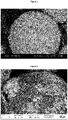
- the depletion of the metal binder in the surface region can most easily be seen in a SEM image of a granule where it can be seen that the surface of the granule is covered with WC crystals.
- the metal binder can sometimes be seen in the bottom of larger gaps in between the WC grains, however not on the actual surface of the granule. See e.g. Figure 1 .
- the sintered granules are usually spherical, or have a rounded shape which it achieved from the spray drying step. Since the granules is not sintered together during sintering, the shape that they achieved from the spray drying can be maintained.
- an unsintered granule is herein meant a compact particle comprising an organic binder and particles of hard constituents and binder metal.
- sintered granule is herein meant a compact particle comprising particles of hard constituents embedded in a binder metal matrix.
- cermet a material comprising hard constituents in a metallic binder phase, wherein the hard constituents comprise carbides or carbonitrides of one or more of Ta, Ti, Nb, Cr, Hf, V, Mo and Zr, such as TiN, TiC and/or TiCN.
- cemented carbide powder a material comprising hard constituents in a metallic binder phase, wherein the hard constituents comprise at least 50 wt% WC grains.
- the hard constituents can also comprise carbides or carbonitrides of one or more of Ta, Ti, Nb, Cr, Hf, V, Mo and Zr, such as TiN, TiC and/or TiCN.
- the present invention also relates to the use of the ready-to-print powder described above for making a cermet or cemented carbide body by additive manufacturing, like three dimensional printing.
- the three dimensional printing is binder jetting.
- Binder jetting is advantageous in that it is a relatively cheap three dimensional printing method.
- 3D printing of cermet or cemented carbide pieces are known in the art and the exact printing parameters are up to the person skilled in the art to determine based on the type of printing technology that is used. Usually, the printing step is followed by curing and depowdering, and then a sintering step where the final cermet or cemented carbide piece is achieved.
- RTP powders was used as raw material comprising WC, metallic binder and carbides of Cr and when present Ta and Nb.
- the composition of the different powders based on the elements are shown in Table 1 where the balance is carbon.
- the WC grain size (FSSS) in Invention 1 and 2 are 0.80 ⁇ m and for Invention 3 1.5 ⁇ m.
- the RTP powders also contained 2 wt% PEG, not included in the dry powder weight.
- a new slurry was made by dissolving the RTP powder into a solvent of ethanol and water in a ratio of 78/22 and by adding 2 wt% extra PEG.
- the slurry was spray dried to small granules with a D50 around 25um.
- the unsintered granules were placed in a sintering furnace on a graphite tray coated with yttrium oxide and was first subjected to a debinding step in hydrogen atmosphere which included a stepwise increase in temperature to 500°C for a time of 170 min. Then the temperature was increased in a Ar atmosphere (200mBar partial pressure) to the maximum sintering temperature of 1275°C where CO and Ar were introduced at a 1:1 flow ratio at 250mbar partial pressure. The temperature and CO/Ar atmosphere was maintained for 60 min. After that, the granules were cooled down to room temperature by free cooling.
- the powder were then sieved at 63 ⁇ m.
- the resulting cemented carbide powder comprising sintered granules is herein denoted Invention 1-3.
- FIG. 1 A SEM image of a sintered granule of Invention 1 is shown in Figure 1 .
- Table 1 Sample W [wt%] Co [wt%] Cr [wt%] Ta [wt%] Nb [wt%] Invention 1 84.1 10 0.43 0 0 Invention 2 81.4 13 0.56 0 0 Invention 3 81.1 12 0 1.35 0.15
- the particle size of the sintered granules was measured by Laser diffraction of the dry granules in an interval of 0.5 and 175 ⁇ m. The results are shown in Table 2.
- Table 2 Sample D10 D50 D90 Invention 1 7.8 18.4 32.1 Invention 2 8.4 18.7 32.6 Invention 3 8.5 19.7 35.5
- the porosity was measured by image analysis on a LOM (Light optic microscope) image (2000 magnification) on a cross section of a granule using the software Image J. An average of approx. 50 granules was analyzed per powder sample. The powder sintered at 1300°C was noticeable more difficult to deagglomerate and thus the granules were deformed to a higher extent compared to 1250 and 1275°C.
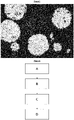
- Sintered granules were made from a powder having the same composition as Invention 1 in Example 1 according to the process described in US 2017/0072469 using graphite powder as a physical barrier. The graphite powder was removed after sintering. A SEM image of a sintered granule is shown in Figure 2 .
- the sintered granules, Invention 2 from Example 1, was used to print sample cubes (15x15x6mm).
- the cubes were produced through binder jet printing.
- the printing was done using a ExOne Innovent+ with a layer thickness of 50um during the printing. Saturation during the printing was set to 80%.
- the cubes were then sintered with a high pressure sintering cycle with a maximum temperature 1410°C for 90 minutes. In the end of the cycle 50bar high pressure was applied. All physical properties were within the specification for this substrate if would have been made using conventional methods i.e. compaction instead of printing as forming step.
- Table 4 Granules Hc [kA/m] Com [%] Density [g/cm 3 ] Porosity A B C Invention 2 16.3 11.6 14.10 02 00 00 00
Landscapes
- Chemical & Material Sciences (AREA)
- Engineering & Computer Science (AREA)
- Materials Engineering (AREA)
- Organic Chemistry (AREA)
- Metallurgy (AREA)
- Mechanical Engineering (AREA)
- Nanotechnology (AREA)
- Physics & Mathematics (AREA)
- Thermal Sciences (AREA)
- Composite Materials (AREA)
- Structural Engineering (AREA)
- Manufacturing & Machinery (AREA)
- Civil Engineering (AREA)
- Ceramic Engineering (AREA)
- Dispersion Chemistry (AREA)
- Chemical Kinetics & Catalysis (AREA)
- General Chemical & Material Sciences (AREA)
- Powder Metallurgy (AREA)
- Manufacture Of Metal Powder And Suspensions Thereof (AREA)
Priority Applications (5)
| Application Number | Priority Date | Filing Date | Title |
|---|---|---|---|
| EP21183255.5A EP4112206A1 (en) | 2021-07-01 | 2021-07-01 | Method of making a powder for additive manufacturing |
| JP2023580508A JP2024528519A (ja) | 2021-07-01 | 2022-06-23 | 積層造形のための粉末を作製する方法 |
| US18/574,534 US20240181526A1 (en) | 2021-07-01 | 2022-06-23 | Method of making a powder for additive manufacturing |
| CN202280045473.6A CN117580660A (zh) | 2021-07-01 | 2022-06-23 | 一种制备用于增材制造的粉末的方法 |
| PCT/EP2022/067077 WO2023274818A1 (en) | 2021-07-01 | 2022-06-23 | Method of making a powder for additive manufacturing |
Applications Claiming Priority (1)
| Application Number | Priority Date | Filing Date | Title |
|---|---|---|---|
| EP21183255.5A EP4112206A1 (en) | 2021-07-01 | 2021-07-01 | Method of making a powder for additive manufacturing |
Publications (1)
| Publication Number | Publication Date |
|---|---|
| EP4112206A1 true EP4112206A1 (en) | 2023-01-04 |
Family
ID=76744761
Family Applications (1)
| Application Number | Title | Priority Date | Filing Date |
|---|---|---|---|
| EP21183255.5A Pending EP4112206A1 (en) | 2021-07-01 | 2021-07-01 | Method of making a powder for additive manufacturing |
Country Status (5)
| Country | Link |
|---|---|
| US (1) | US20240181526A1 (https=) |
| EP (1) | EP4112206A1 (https=) |
| JP (1) | JP2024528519A (https=) |
| CN (1) | CN117580660A (https=) |
| WO (1) | WO2023274818A1 (https=) |
Families Citing this family (2)
| Publication number | Priority date | Publication date | Assignee | Title |
|---|---|---|---|---|
| CN116041051B (zh) * | 2023-01-16 | 2024-03-22 | 广东工业大学 | 一种应用于3dp打印的造粒粉体及其打印成型方法 |
| US20240253114A1 (en) * | 2023-01-27 | 2024-08-01 | Kennametal Inc. | Cemented carbide powders for additive manufacturing and sintered bodies made therefrom |
Citations (3)
| Publication number | Priority date | Publication date | Assignee | Title |
|---|---|---|---|---|
| US20170072469A1 (en) | 2014-04-24 | 2017-03-16 | Sandvik Intelectual Property Ab | Method of making cermet or cemented carbide powder |
| WO2021004776A1 (en) * | 2019-07-05 | 2021-01-14 | Sandvik Machining Solutions Ab | Three dimensional printing of cermet or cemented carbide |
| WO2021122520A1 (en) * | 2019-12-19 | 2021-06-24 | Ab Sandvik Coromant | Gradient cemented carbide with alternative binder |
Family Cites Families (4)
| Publication number | Priority date | Publication date | Assignee | Title |
|---|---|---|---|---|
| US3932594A (en) * | 1973-12-28 | 1976-01-13 | Union Carbide Corporation | Process for the preparation of fine grain metal carbide powders |
| WO2016135187A1 (en) * | 2015-02-25 | 2016-09-01 | Hyp Uthyrning Ab | Compacting of gas atomized metal powder to a part |
| JP6656911B2 (ja) * | 2015-12-22 | 2020-03-04 | 株式会社フジミインコーポレーテッド | 粉末積層造形に用いるための造形用材料 |
| DE102017125734A1 (de) * | 2017-11-03 | 2019-05-09 | Fraunhofer-Gesellschaft zur Förderung der angewandten Forschung e.V. | Gesintertes Hartmetallgranulat und seine Verwendung |
-
2021
- 2021-07-01 EP EP21183255.5A patent/EP4112206A1/en active Pending
-
2022
- 2022-06-23 US US18/574,534 patent/US20240181526A1/en active Pending
- 2022-06-23 JP JP2023580508A patent/JP2024528519A/ja active Pending
- 2022-06-23 CN CN202280045473.6A patent/CN117580660A/zh active Pending
- 2022-06-23 WO PCT/EP2022/067077 patent/WO2023274818A1/en not_active Ceased
Patent Citations (3)
| Publication number | Priority date | Publication date | Assignee | Title |
|---|---|---|---|---|
| US20170072469A1 (en) | 2014-04-24 | 2017-03-16 | Sandvik Intelectual Property Ab | Method of making cermet or cemented carbide powder |
| WO2021004776A1 (en) * | 2019-07-05 | 2021-01-14 | Sandvik Machining Solutions Ab | Three dimensional printing of cermet or cemented carbide |
| WO2021122520A1 (en) * | 2019-12-19 | 2021-06-24 | Ab Sandvik Coromant | Gradient cemented carbide with alternative binder |
Also Published As
| Publication number | Publication date |
|---|---|
| US20240181526A1 (en) | 2024-06-06 |
| WO2023274818A1 (en) | 2023-01-05 |
| JP2024528519A (ja) | 2024-07-30 |
| CN117580660A (zh) | 2024-02-20 |
Similar Documents
| Publication | Publication Date | Title |
|---|---|---|
| EP3442729B1 (en) | Cermet or cemented carbide mixture and three dimensional printing thereof | |
| EP1925383B1 (en) | Method of making a sintered body, a powder mixture and a sintered body | |
| EP2433727B1 (en) | Method for producing a sintered composite body | |
| KR20140091557A (ko) | 공진 음향 믹서를 사용함으로써 초경합금 또는 서멧 분말을 제조하는 방법 | |
| WO2021004776A1 (en) | Three dimensional printing of cermet or cemented carbide | |
| JP2022551924A (ja) | 粉末床系付加製造のための印刷可能かつ焼結可能な超硬合金およびサーメット粉末 | |
| US20240181526A1 (en) | Method of making a powder for additive manufacturing | |
| US20250178084A1 (en) | Cemented carbide powder for binder jet additive manufacturing | |
| CA3268333A1 (en) | Granular mixture for additive manufacturing | |
| US20240253268A1 (en) | Bimodal cemented carbide powders for additive manufacturing and structured bodies made therefrom | |
| IL320026A (en) | Granular mixture for additive manufacturing | |
| EP4610376A1 (en) | Method of making a cemented carbide body by 3d printing |
Legal Events
| Date | Code | Title | Description |
|---|---|---|---|
| PUAI | Public reference made under article 153(3) epc to a published international application that has entered the european phase |
Free format text: ORIGINAL CODE: 0009012 |
|
| STAA | Information on the status of an ep patent application or granted ep patent |
Free format text: STATUS: THE APPLICATION HAS BEEN PUBLISHED |
|
| AK | Designated contracting states |
Kind code of ref document: A1 Designated state(s): AL AT BE BG CH CY CZ DE DK EE ES FI FR GB GR HR HU IE IS IT LI LT LU LV MC MK MT NL NO PL PT RO RS SE SI SK SM TR |
|
| STAA | Information on the status of an ep patent application or granted ep patent |
Free format text: STATUS: REQUEST FOR EXAMINATION WAS MADE |
|
| 17P | Request for examination filed |
Effective date: 20230704 |
|
| RBV | Designated contracting states (corrected) |
Designated state(s): AL AT BE BG CH CY CZ DE DK EE ES FI FR GB GR HR HU IE IS IT LI LT LU LV MC MK MT NL NO PL PT RO RS SE SI SK SM TR |