EP4100337B1 - Récipient de distribution sous pression - Google Patents
Récipient de distribution sous pression Download PDFInfo
- Publication number
- EP4100337B1 EP4100337B1 EP21702703.6A EP21702703A EP4100337B1 EP 4100337 B1 EP4100337 B1 EP 4100337B1 EP 21702703 A EP21702703 A EP 21702703A EP 4100337 B1 EP4100337 B1 EP 4100337B1
- Authority
- EP
- European Patent Office
- Prior art keywords
- valve
- dispensing container
- pressurised dispensing
- seals
- container
- Prior art date
- Legal status (The legal status is an assumption and is not a legal conclusion. Google has not performed a legal analysis and makes no representation as to the accuracy of the status listed.)
- Active
Links
Images


Classifications
-
- B—PERFORMING OPERATIONS; TRANSPORTING
- B65—CONVEYING; PACKING; STORING; HANDLING THIN OR FILAMENTARY MATERIAL
- B65D—CONTAINERS FOR STORAGE OR TRANSPORT OF ARTICLES OR MATERIALS, e.g. BAGS, BARRELS, BOTTLES, BOXES, CANS, CARTONS, CRATES, DRUMS, JARS, TANKS, HOPPERS, FORWARDING CONTAINERS; ACCESSORIES, CLOSURES, OR FITTINGS THEREFOR; PACKAGING ELEMENTS; PACKAGES
- B65D83/00—Containers or packages with special means for dispensing contents
- B65D83/14—Containers for dispensing liquid or semi-liquid contents by internal gaseous pressure, i.e. aerosol containers comprising propellant
- B65D83/44—Valves specially adapted for the discharge of contents; Regulating devices
- B65D83/52—Metering valves; Metering devices
-
- B—PERFORMING OPERATIONS; TRANSPORTING
- B65—CONVEYING; PACKING; STORING; HANDLING THIN OR FILAMENTARY MATERIAL
- B65D—CONTAINERS FOR STORAGE OR TRANSPORT OF ARTICLES OR MATERIALS, e.g. BAGS, BARRELS, BOTTLES, BOXES, CANS, CARTONS, CRATES, DRUMS, JARS, TANKS, HOPPERS, FORWARDING CONTAINERS; ACCESSORIES, CLOSURES, OR FITTINGS THEREFOR; PACKAGING ELEMENTS; PACKAGES
- B65D83/00—Containers or packages with special means for dispensing contents
- B65D83/14—Containers for dispensing liquid or semi-liquid contents by internal gaseous pressure, i.e. aerosol containers comprising propellant
- B65D83/141—Containers for dispensing liquid or semi-liquid contents by internal gaseous pressure, i.e. aerosol containers comprising propellant specially adapted for specific contents or propellants
-
- C—CHEMISTRY; METALLURGY
- C09—DYES; PAINTS; POLISHES; NATURAL RESINS; ADHESIVES; COMPOSITIONS NOT OTHERWISE PROVIDED FOR; APPLICATIONS OF MATERIALS NOT OTHERWISE PROVIDED FOR
- C09K—MATERIALS FOR MISCELLANEOUS APPLICATIONS, NOT PROVIDED FOR ELSEWHERE
- C09K3/00—Materials not provided for elsewhere
- C09K3/10—Materials in mouldable or extrudable form for sealing or packing joints or covers
-
- C—CHEMISTRY; METALLURGY
- C09—DYES; PAINTS; POLISHES; NATURAL RESINS; ADHESIVES; COMPOSITIONS NOT OTHERWISE PROVIDED FOR; APPLICATIONS OF MATERIALS NOT OTHERWISE PROVIDED FOR
- C09K—MATERIALS FOR MISCELLANEOUS APPLICATIONS, NOT PROVIDED FOR ELSEWHERE
- C09K3/00—Materials not provided for elsewhere
- C09K3/10—Materials in mouldable or extrudable form for sealing or packing joints or covers
- C09K3/1006—Materials in mouldable or extrudable form for sealing or packing joints or covers characterised by the chemical nature of one of its constituents
-
- C—CHEMISTRY; METALLURGY
- C09—DYES; PAINTS; POLISHES; NATURAL RESINS; ADHESIVES; COMPOSITIONS NOT OTHERWISE PROVIDED FOR; APPLICATIONS OF MATERIALS NOT OTHERWISE PROVIDED FOR
- C09K—MATERIALS FOR MISCELLANEOUS APPLICATIONS, NOT PROVIDED FOR ELSEWHERE
- C09K3/00—Materials not provided for elsewhere
- C09K3/30—Materials not provided for elsewhere for aerosols
-
- A—HUMAN NECESSITIES
- A61—MEDICAL OR VETERINARY SCIENCE; HYGIENE
- A61M—DEVICES FOR INTRODUCING MEDIA INTO, OR ONTO, THE BODY; DEVICES FOR TRANSDUCING BODY MEDIA OR FOR TAKING MEDIA FROM THE BODY; DEVICES FOR PRODUCING OR ENDING SLEEP OR STUPOR
- A61M15/00—Inhalators
- A61M15/009—Inhalators using medicine packages with incorporated spraying means, e.g. aerosol cans
-
- C—CHEMISTRY; METALLURGY
- C09—DYES; PAINTS; POLISHES; NATURAL RESINS; ADHESIVES; COMPOSITIONS NOT OTHERWISE PROVIDED FOR; APPLICATIONS OF MATERIALS NOT OTHERWISE PROVIDED FOR
- C09K—MATERIALS FOR MISCELLANEOUS APPLICATIONS, NOT PROVIDED FOR ELSEWHERE
- C09K3/00—Materials not provided for elsewhere
- C09K3/10—Materials in mouldable or extrudable form for sealing or packing joints or covers
- C09K2003/1034—Materials or components characterised by specific properties
- C09K2003/1053—Elastomeric materials
-
- C—CHEMISTRY; METALLURGY
- C09—DYES; PAINTS; POLISHES; NATURAL RESINS; ADHESIVES; COMPOSITIONS NOT OTHERWISE PROVIDED FOR; APPLICATIONS OF MATERIALS NOT OTHERWISE PROVIDED FOR
- C09K—MATERIALS FOR MISCELLANEOUS APPLICATIONS, NOT PROVIDED FOR ELSEWHERE
- C09K2200/00—Chemical nature of materials in mouldable or extrudable form for sealing or packing joints or covers
- C09K2200/06—Macromolecular organic compounds, e.g. prepolymers
- C09K2200/0642—Copolymers containing at least three different monomers
Definitions
- the present invention relates to a pressurised dispensing container and elastomeric seal materials for use therein.
- the pressurised dispensing container may be used for dispensing pressurised fluid in the form of an aerosol.
- the pressurised dispensing container finds application as a pharmaceutical dispensing device such as a pressurised metered dose aerosol inhaler device (pMDI) and in medical check devices suitable for dispensing a pharmaceutical.
- pMDI pressurised metered dose aerosol inhaler device
- GB 1201918 It is known from GB 1201918 for example to provide dispensing apparatus in which fluid from a pressurised dispensing container is released by a valve in a controlled manner, the valve including elastomeric seals which are annular and which cooperate with a sliding valve stem to open and close fluid ports.
- FR-A-2,549,568 , WO95/02651 , EP 2 407 145 A1 , GB 2 456 028 A , GB 2148912 and PCT/GB96/01551 each disclose further examples of such dispensing apparatus.
- the required material properties necessary for good seal performance for pharmaceutical applications include: chemical compatibility (swell), tensile strength, permanent compression set, stress relaxation, elastic modulus, regulatory compliance, low permeability to fluids and gases, low levels of extractables and leachables, and stable properties after extraction.
- Known rubber compounds for sealing pharmaceutical metered dose aerosol inhalers include those based on the traditional technology of vulcanising a synthetic or natural rubber polymer.
- pressurised dispensing container which can be used with propellants based on 1,1-difluoroethane.
- the pressurised dispensing container may also be suitable for use with other low global warming propellants or combinations thereof.
- the pressurised dispensing container may also be suitable for use with propellants such as 1,1,1,2-tetrafluoroethane (HFA134a) or 1,1,1,2,3,3,3-Heptafluoropropane (HFA227), for example when one or more of HFA134a and HFA227 are used in combination with 1,1-difluoroethane.
- propellants such as 1,1,1,2-tetrafluoroethane (HFA134a) or 1,1,1,2,3,3,3-Heptafluoropropane (HFA227), for example when one or more of HFA134a and HFA227 are used in combination with 1,1-difluoroethane.
- the present invention provides a pressurised dispensing container comprising a container for product to be dispensed, and a valve fixed to the container, wherein the container contains a propellant comprising 1,1-difluoroethane and optionally an alcohol such as ethanol,
- the propellant preferably comprises or consists of HFA152a and optionally an alcohol such as ethanol.
- HFA152a is reported to have an ozone depletion potential of zero, a lower global warming potential and a shorter atmospheric lifetime.
- Sealing gasket also known as a static seal
- the sealing gasket is formed from (ii) an elastomeric composition comprising an isobutylene polymer or co-polymer thereof.
- the sealing gasket may also be referred to as a static seal, in contrast to the one or more seals co-operating with the valve stem, which may be referred to as a dynamic seal or seals.
- the purpose of the sealing gasket is to provide a seal between the valve and the dispensing container, thereby preventing the escape of the contents of the dispensing container, for example leakage of the propellant.
- the sealing gasket prevents the ingress of unwanted constituents, e.g. moisture, into the container, which can have a deleterious effect on the product, e.g. drug or pharmaceutical, to be dispensed.
- unwanted constituents e.g. moisture
- the presence of excess moisture in propellant suspensions can lead to a reduction in fine particle mass through drug particle agglomeration, reducing the therapeutic effect of the active pharmaceutical ingredient (API).
- API active pharmaceutical ingredient
- an elastomeric composition comprising an isobutylene polymer or co-polymer thereof, provides a particularly effective seal when the propellant is or comprises 1,1-difluoroethane (e.g. HFA152a).
- HFA152a has a higher dipole moment than conventional propellants, such as HFA134a, and may therefore be more hygroscopic, thereby leading to higher moisture ingress into the container.
- conventional EPDM polymers did not perform well in moisture ingress tests for propellants based on 1,1-difluoroethane.
- the propellant is often provided in conjunction with an alcohol such as ethanol.
- the inventors further found that moisture ingress into the container was compounded when alcohol was present.
- the elastomeric composition (ii) described herein surprisingly provide an effective moisture barrier when the propellant includes an alcohol such as ethanol.
- the sealing gasket according to the present invention may also be compatible with the propellants described herein in terms of helium gas permeability, low dipole moment, low change in permeability and creep behaviour with temperature, resistance to dissolving in the propellant, and low water absorption.
- butyl rubber comprises approximately 97% isobutylene and approximately 3% isoprene, and it may be polymerized using an aluminium chloride catalyst.
- the (ii) elastomeric composition may comprise a blend of an isobutylene polymer or co-polymer thereof with another polymer, such as a chlorine-substituted diene polymer.
- a blend of butyl rubber (e.g. bromobutyl rubber) and polychloroprene may be used. Blending of polychloroprene with the non-polar butyl is advantageous as it allows dissipation of static charge. Static charge builds up during the automated valve assembly process and or during storage in plastic bags can cause seals to self-adhere and pose problems in valve assembly.
- the accelerator if present, preferably includes a polysulphide compound derived from a substituted dithiocarbonic acid or derivative thereof.
- the polysulphide compound is preferably derived from a substituted xanthic acid or derivative thereof, preferably of the type ROC (S) SH, in which R is typically an alkyl radical.
- the substituted group in the polysulphide compound typically comprises an isopropyl group.
- the polysulphide compound preferably comprises three or more bridging sulphur atoms, more preferably 3,4 or 5 bridging sulphur atoms.
- the polysulphide compound is preferably substantially free from nitrogen, phosphorus and metallic elements.
- the polysulphide compound comprises or consists of diisopropyl xanthogen polysulphide.
- the (ii) elastomeric composition may further contain one or more additives, process aids, crosslinking agents, accelerators, and/or fillers. It may also be blended with additional polymer(s) or copolymer(s).
- the initiation of the cross-linking reaction may be achieved by any of the known conventional techniques, for example heating the formulation to at least the curing reaction temperature, which is typically in the range of from 130 to 200°C.
- a preferred process involves forming rubber compound strips (typically of approximately 1 mm thickness) by compression moulding.
- the moulding temperature is typically in the range 160 -180°C.
- the cure time is typically in the range 1-10 minutes.
- the moulded strips are preferably post cured in an air oven for typically 1 hour at 150°C.
- the strips may then be made into gaskets using a punching device.
- the use of the accelerator as herein described in the (ii) elastomeric composition according to the present invention can eliminate the need for free sulphur in the cross-linking process.
- the accelerator as herein described is preferably provided as a liquid and is preferably miscible with the polymer to provide a homogeneous dispersion. It has been found that the use of such an accelerator facilitates filler dispersion and can obviate the need for a separate plasticiser. The presence of plasticisers is undesirable in that they tend to leach out of the material. In contrast, the accelerator as herein described forms or is part of the cross-linked network and therefore does not leach out into the drug media. In the seal compositions according to the present invention the accelerator is typically almost totally consumed during the cross-linking reaction. This results in a cleaner rubber and the extractables are reduced. Typically, substantially no nitrosamines are generated during the cross-linking reaction.
- Elastomeric compositions comprising an isobutylene polymer or co-polymer thereof are described in, for example, WO 03/078538 A1 .
- One or more seals also known as dynamic seal or seals
- the one or more seals is/are formed from (i) the elastomeric composition comprising the ethylene-propylene-diene terpolymer.
- an elastomeric composition comprising an isobutylene polymer or co-polymer thereof provides an effective leakage and moisture seal (i.e. a static seal) when using a propellant comprising or consisting of 1,1-difluoroethane (e.g. HFA152a).
- the ethylene-propylene-diene terpolymer for use in the (i) elastomeric composition comprises from 40 to 70 wt.% ethylene, from 30 to 50 wt.% propylene, and ENB (ethylidenenorbornene) in an amount of 0.5 to 9 wt.%.
- the terpolymer preferably comprises from 45 to 65 wt.% ethylene, from 35 to 45 wt.% propylene, and from 2 to 8 wt.% ENB. More preferably, the terpolymer comprises 50 to 60 wt.% ethylene, from 38 to 43 wt.% propylene, and from 3 to 7 wt.% ENB. Most preferably, the terpolymer comprises approximately 50 wt.% ethylene, approximately 45 wt.% propylene, and approximately 5 wt.% ENB.
- the ethylene content may be determined by ASTM D3900.
- the propylene content may be determined by ASTM D3900.
- the ENB content may be determined by ASTM D6047.
- the terpolymer has a Mooney Viscosity (ML 1 + 4, 125°C) of from 10 to 90, more preferably from 20 to 80, more preferably from 30 to 70, still more preferably from 30 to 50. Most preferably, the terpolymer has a Mooney Viscosity (ML 1 + 4, 125°C) of approximately 40.
- the Mooney Viscosity may be determined by ASTM D1646.
- the unit for mooney viscosity is mooney units, MU.
- the seal or gasket may further include a process aid, preferably a low molecular weight polyethylene, stearic acid or an organic or non-organic stearate.
- the process aid for example stearic acid, may be provided in the gasket seal in an amount of up to 1 wt.%.
- the pharmaceutical may, for example, be one which is suitable for the treatment of asthma.
- examples include salbutamol, beclomethasone, salmeterol, fluticasone, formoterol, terbutaline, sodium chromoglycate, budesonide and flunisolide, and physiologically acceptable salts (for example salbutamol sulphate, salmeterol xinafoate, fluticasone propionate, beclomethasone dipropionate, and terbutaline sulphate), solvates and esters, including combinations of two or more thereof.
- Individual isomers such as, for example, R-salbutamol, may also be used.
- the pharmaceutical may comprise of one or more active ingredients, an example of which is flutiform, and may optionally be provided together with a suitable carrier, for example a liquid carrier.
- a suitable carrier for example a liquid carrier.
- One or more surfactants may be included if desired.
- formulations that include two active ingredients include: beclomethasone and formoterol; budesonide and formoterol; salmeterol and fluticasone; salbutamol and ipratropium bromide; and formoterol and mometasone.
- formulations that include three active ingredients include: formoterol, glycopyrrolate and mometasone; and beclamethasone, glycopyrrolate and formoterol.
- the fluid to be dispensed typically comprises a liquid or particulate product as a solution or suspension in a carrier liquid.
- the carrier liquid may preferably comprise an alcohol, for example ethanol.
- One or more surfactants may be present.
- One or both of oleic acid and/or glycerol may also be included in the carrier liquid.
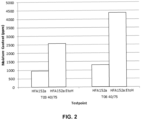
- FIG. 2 shows Moisture Content (ppm) data relating to stability storage of a filled canister where the sealing gasket comprises EPDM.
- Condition: 40/75 temperature of 40°C and 75% relative humidity.
- the sealing gasket comprises (ii) an elastomeric composition comprising an isobutylene polymer or co-polymer thereof as herein described, then moisture content is reduced under similar conditions.
- the sealing gasket according to the present invention may also be compatible with the propellants described herein in terms of low helium gas permeability, low dipole moment, low change in permeability and creep behaviour with temperature, resistance to dissolving in the propellant, and low water absorption.
- an all-EPDM valve is capable of meeting the required USP (United States Pharmacopeia) leakage specifications, with the alternative low GWP (global warming potential) propellant (HFA 152a)
- an EPDM/bromobutyl hybrid valve option has been developed in the present invention to (i) provide superior static leakage performance, and (ii) to reduce the amount of moisture ingress that is typically associated with the use of hygroscopic materials, such as propellant HFA 152a and HFA 152a mixtures containing excipients, e.g. ethanol.
- HFA 152a being a significantly different molecule (molecular size, diffusion coefficient and dipole moment) than previous propellants used in pMDI applications
- the present invention has identified through analysis and experimentation an advantageous combination of pMDI valve elastomers to address the challenging performance characteristics associated with HFA propellant 152a.
Landscapes
- Chemical & Material Sciences (AREA)
- Engineering & Computer Science (AREA)
- Dispersion Chemistry (AREA)
- Materials Engineering (AREA)
- Organic Chemistry (AREA)
- Mechanical Engineering (AREA)
- Containers And Packaging Bodies Having A Special Means To Remove Contents (AREA)
- Nozzles (AREA)
Claims (15)
- Récipient de distribution sous pression (10) comportant un récipient (11) pour un produit (12) à distribuer, et un robinet fixé au récipient (11), dans lequel le récipient (11) comporte un agent propulseur comportant du 1,1-difluoroéthane et facultativement de l'éthanol,dans lequel le robinet comporte une tige de robinet (15), un corps de robinet (16, 18) et un ou plusieurs joints (20, 21), la tige de robinet (15) pouvant coulisser à l'intérieur du corps de robinet (16, 18), les un ou plusieurs joints (20, 21) coopérant avec la tige de robinet (15) pour réguler l'évacuation d'un fluide,dans lequel le robinet comporte en outre une garniture d'étanchéité (14) pour sceller le robinet au récipient de distribution (10),caractérisé en ce que les un ou plusieurs joints (20, 21) sont formés à partir (i) d'une composition élastomère comportant un terpolymère éthylène-propylène-diène, lequel terpolymère comporte de 40 à 70 % en poids d'éthylène, de 30 à 50 % en poids de propylène et de l'ENB (éthylidènenorbornène) en une quantité de 0,5 à 9 % en poids, dans lequel le terpolymère présente une viscosité Mooney (ML 1 + 4, 125 °C) de 10 à 90, etla garniture d'étanchéité (14) est formée à partir (ii) d'une composition élastomère comportant un polymère d'isobutylène ou un copolymère de celui-ci.
- Récipient de distribution sous pression (10) selon la revendication 1, dans lequel l'agent propulseur comporte :a) du HFA152a et facultativement de l'éthanol ;b) une combinaison de HFA152a et de HFA134a et éventuellement de l'éthanol ; ouc) une combinaison de HFA152a et de HFA227ea et facultativement d'éthanol.
- Récipient de distribution sous pression (10) selon la revendication 1 ou la revendication 2, dans lequel (ii) la composition élastomère comporte un ou plusieurs parmi le polyisobutylène, le polybutène, le caoutchouc butyle, le caoutchouc butyle halogéné, y compris des dérivés de ceux-ci.
- Récipient de distribution sous pression (10) selon la revendication 3, dans lequel (ii) la composition élastomère comporte un caoutchouc bromobutyle.
- Récipient de distribution sous pression (10) selon l'une quelconque des revendications précédentes, dans lequel (i) la composition élastomère comporte un terpolymère éthylène-propylène-diène, lequel terpolymère comporte de 45 à 65 % en poids d'éthylène, de 40 à 50 % en poids de propylène et de l'ENB (éthylidènenorbornène) en une quantité de 0,5 à 9 % en poids, dans lequel le terpolymère présente une viscosité Mooney (ML 1 + 4, 125 °C) de 10 à 90.
- Récipient de distribution sous pression (10) selon l'une quelconque des revendications précédentes, dans lequel la garniture d'étanchéité (14) est définie comme étant statique, en ce qu'elle assure l'étanchéité entre des parties non mobiles du robinet.
- Récipient de distribution sous pression (10) selon l'une quelconque des revendications précédentes, dans lequel les un ou plusieurs joints (20, 21) sont définis comme étant dynamiques, en ce qu'ils assurent l'étanchéité entre des parties mobiles du robinet.
- Récipient de distribution sous pression (10) selon l'une quelconque des revendications précédentes, dans lequel les un ou plusieurs joints (20, 21) sont montés sur le corps de robinet (16, 18).
- Récipient de distribution sous pression (10) selon l'une quelconque des revendications précédentes, dans lequel les un ou plusieurs joints (20, 21) sont montés sur la tige de robinet (15).
- Récipient de distribution sous pression (10) selon la revendication 9, dans lequel un premier joint est monté sur le corps de robinet (16, 18) et un deuxième joint est monté sur la tige de robinet (15).
- Récipient de distribution sous pression (10) selon l'une quelconque des revendications précédentes, dans lequel le robinet est un robinet de pulvérisation continue.
- Récipient de distribution sous pression (10) selon l'une quelconque des revendications précédentes, dans lequel le robinet comporte en outre une chambre de dosage, et le robinet est un robinet doseur.
- Récipient de distribution sous pression (10) selon la revendication 12, dans lequel la chambre de dosage du robinet doseur est permanente.
- Récipient de distribution sous pression (10) selon la revendication 12 ou la revendication 13, dans lequel la chambre de dosage est construite entièrement à partir de composants rigides, tels que des composants formés à partir d'un ou plusieurs matériaux choisis parmi le polyester, le nylon, l'acétal ou similaire, l'acier inoxydable, la céramique, le verre ou similaire.
- Récipient de distribution sous pression (10) selon l'une quelconque des revendications précédentes qui est un dispositif de distribution pharmaceutique ; et facultativement, dans lequel le dispositif de distribution pharmaceutique est un dispositif aérosol-doseur pharmaceutique.
Priority Applications (1)
| Application Number | Priority Date | Filing Date | Title |
|---|---|---|---|
| EP25178210.8A EP4582508A3 (fr) | 2020-02-05 | 2021-01-26 | Récipient de distribution sous pression |
Applications Claiming Priority (3)
| Application Number | Priority Date | Filing Date | Title |
|---|---|---|---|
| GBGB2001537.6A GB202001537D0 (en) | 2020-02-05 | 2020-02-05 | Pressurised dispensing container |
| GBGB2020387.3A GB202020387D0 (en) | 2020-02-05 | 2020-12-22 | Pressurised dispensing container |
| PCT/GB2021/050175 WO2021156602A1 (fr) | 2020-02-05 | 2021-01-26 | Récipient de distribution sous pression |
Related Child Applications (2)
| Application Number | Title | Priority Date | Filing Date |
|---|---|---|---|
| EP25178210.8A Division EP4582508A3 (fr) | 2020-02-05 | 2021-01-26 | Récipient de distribution sous pression |
| EP25178210.8A Division-Into EP4582508A3 (fr) | 2020-02-05 | 2021-01-26 | Récipient de distribution sous pression |
Publications (2)
| Publication Number | Publication Date |
|---|---|
| EP4100337A1 EP4100337A1 (fr) | 2022-12-14 |
| EP4100337B1 true EP4100337B1 (fr) | 2025-07-09 |
Family
ID=69800212
Family Applications (2)
| Application Number | Title | Priority Date | Filing Date |
|---|---|---|---|
| EP21702703.6A Active EP4100337B1 (fr) | 2020-02-05 | 2021-01-26 | Récipient de distribution sous pression |
| EP25178210.8A Pending EP4582508A3 (fr) | 2020-02-05 | 2021-01-26 | Récipient de distribution sous pression |
Family Applications After (1)
| Application Number | Title | Priority Date | Filing Date |
|---|---|---|---|
| EP25178210.8A Pending EP4582508A3 (fr) | 2020-02-05 | 2021-01-26 | Récipient de distribution sous pression |
Country Status (10)
| Country | Link |
|---|---|
| US (2) | US12466636B2 (fr) |
| EP (2) | EP4100337B1 (fr) |
| JP (2) | JP7447289B2 (fr) |
| CN (1) | CN115397747A (fr) |
| AU (2) | AU2021217798B2 (fr) |
| BR (1) | BR112022015395A2 (fr) |
| CA (2) | CA3168854A1 (fr) |
| ES (1) | ES3039432T3 (fr) |
| GB (3) | GB202001537D0 (fr) |
| WO (1) | WO2021156602A1 (fr) |
Families Citing this family (3)
| Publication number | Priority date | Publication date | Assignee | Title |
|---|---|---|---|---|
| EP4398879A1 (fr) * | 2021-09-08 | 2024-07-17 | Kindeva Drug Delivery L.P. | Inhalateurs doseurs et compositions de solution |
| WO2024181972A1 (fr) * | 2022-03-01 | 2024-09-06 | Kindeva Drug Delivery L.P. | Inhalateurs à dose et suspensions à haute dose |
| GB202410910D0 (en) * | 2024-07-25 | 2024-09-11 | Bespak Europe Ltd | Method of filling a pressurised dispensing container and filled pressurised dispensing container |
Citations (9)
| Publication number | Priority date | Publication date | Assignee | Title |
|---|---|---|---|---|
| US20040035417A1 (en) | 2000-10-13 | 2004-02-26 | Ottolangui David Michael | Medicament dispenser |
| GB2406096A (en) | 2003-09-16 | 2005-03-23 | Bespak Plc | Elastomeric seal material for an inhaler |
| WO2006064233A1 (fr) | 2004-12-15 | 2006-06-22 | Bespak Plc | Améliorations pour ou concernant des robinets |
| GB2456028A (en) | 2008-11-14 | 2009-07-01 | Consort Medical Plc | A medicament dispenser with an HFO propellant |
| WO2017093755A1 (fr) | 2015-12-04 | 2017-06-08 | Mexichem Fluor S.A. De C.V. | Composition pharmaceutique |
| WO2017093758A1 (fr) | 2015-12-04 | 2017-06-08 | Mexichem Fluor S.A. De C.V. | Composition pharmaceutique |
| WO2018051131A1 (fr) | 2016-09-19 | 2018-03-22 | Mexichem Fluor S.A. De C.V. | Composition pharmaceutique |
| WO2018051130A1 (fr) | 2016-09-19 | 2018-03-22 | Mexichem Fluor S.A. De C.V. | Composition pharmaceutique |
| WO2018051133A1 (fr) | 2016-09-19 | 2018-03-22 | Mexichem Fluor S.A. De C.V. | Composition pharmaceutique |
Family Cites Families (27)
| Publication number | Priority date | Publication date | Assignee | Title |
|---|---|---|---|---|
| GB1201918A (en) | 1966-12-21 | 1970-08-12 | Bespak Industries Ltd | Improvements in or relating to valves for pressurised dispensers |
| FR2532714A1 (fr) | 1982-09-06 | 1984-03-09 | Aerosol Inventions Dev | Joints elastomeres pour conditionnement aerosol au dimethylether |
| DE8320083U1 (de) | 1983-07-13 | 1983-10-06 | Aerosol Inventions and Development S.A. AIDSA, 1700 Fribourg | Ventil zur Verteilung fliessfaehiger Stoffe |
| US5276094A (en) * | 1992-11-12 | 1994-01-04 | Polysar Rubber Corp. | Compositions of butyl elastomers and block copolymers of polyisobutylene |
| ES2119219T5 (es) | 1993-07-15 | 2011-05-11 | Minnesota Mining And Manufacturing Company | Cierres estancos para uso en un dispositivo para suministrar un aerosol. |
| GB9513084D0 (en) | 1995-06-27 | 1995-08-30 | Bespak Plc | Dispensing apparatus |
| GB2311982B (en) | 1996-04-09 | 2000-03-08 | Bespak Plc | Improvements in or relating to valves for dispensers |
| GB2312418A (en) | 1996-04-26 | 1997-10-29 | Bespak Plc | Valves for dispensers |
| DE19835273A1 (de) | 1997-09-03 | 1999-03-04 | Bespak Plc | Dosierventil für einen Druck-Abgabe-Behälter |
| GB9817685D0 (en) | 1998-08-13 | 1998-10-07 | Bespak Plc | Metering valve |
| JP5392880B2 (ja) * | 2000-05-22 | 2014-01-22 | キエシ・フアルマチエウテイチ・ソチエタ・ペル・アチオニ | 加圧式定量吸入器のための安定な製薬学的溶液製剤 |
| NZ522672A (en) | 2000-05-23 | 2004-07-30 | Glaxo Group Ltd | Aerosol container for formulations of salmeterol xinafoate and preparation process thereof |
| GB0125380D0 (en) * | 2001-10-23 | 2001-12-12 | Glaxo Group Ltd | Medicament dispenser |
| DE60310899T2 (de) | 2002-03-18 | 2007-10-25 | Bespak Plc, King's Lynn | Dichtungsmaterial für eine spenderapparatur |
| GB2401099A (en) | 2003-04-30 | 2004-11-03 | Bespak Plc | Improvements in valves for pressurised dispensing containers |
| US20060211589A1 (en) * | 2003-07-31 | 2006-09-21 | Godfrey Anne P | Pharmaceutical metered dose inhaler and methods relating thereto |
| EP2275479A1 (fr) * | 2003-08-11 | 2011-01-19 | Glaxo Group Limited | Aerosol doseur pharmaceutique et procedes associes |
| US20080190418A1 (en) | 2003-08-29 | 2008-08-14 | Glaxo Group Limited | Pharmaceutical Metered Dose Inhaler and Methods Relating Thereto |
| EP1746981B1 (fr) | 2004-05-13 | 2008-08-13 | CHIESI FARMACEUTICI S.p.A. | Produits de formulation d'aerosol medicinale a stabilite chimique amelioree |
| GB2423994B (en) | 2005-03-04 | 2008-07-30 | Bespak Plc | Seal for a dispensing apparatus |
| GB2441329B (en) | 2006-09-04 | 2011-06-29 | Bespak Plc | Seal for a dispensing apparatus |
| EP2407145A1 (fr) | 2010-07-13 | 2012-01-18 | The Procter & Gamble Company | Produit de laque aérosol pour la mise en forme des cheveux |
| RU2568882C2 (ru) * | 2010-07-16 | 2015-11-20 | Сипла Лимитед | Фармацевтические композиции |
| GB201305825D0 (en) * | 2013-03-28 | 2013-05-15 | Vectura Ltd | New use |
| GB2541002B (en) | 2015-08-05 | 2021-12-22 | Consort Medical Plc | Seal for a dispensing apparatus |
| EP3642135B1 (fr) * | 2017-06-20 | 2021-05-12 | APTAR France SAS | Dispositif de distribution de produit fluide |
| WO2021151857A1 (fr) * | 2020-01-28 | 2021-08-05 | Chiesi Farmaceutici S.P.A. | Inhalateurs doseurs sous pression comprenant une formulation pharmaceutique tamponnée |
-
2020
- 2020-02-05 GB GBGB2001537.6A patent/GB202001537D0/en not_active Ceased
- 2020-12-22 GB GBGB2020387.3A patent/GB202020387D0/en not_active Ceased
-
2021
- 2021-01-26 BR BR112022015395A patent/BR112022015395A2/pt active Search and Examination
- 2021-01-26 CA CA3168854A patent/CA3168854A1/fr active Pending
- 2021-01-26 EP EP21702703.6A patent/EP4100337B1/fr active Active
- 2021-01-26 GB GB2211660.2A patent/GB2607500B/en active Active
- 2021-01-26 US US17/797,417 patent/US12466636B2/en active Active
- 2021-01-26 ES ES21702703T patent/ES3039432T3/es active Active
- 2021-01-26 WO PCT/GB2021/050175 patent/WO2021156602A1/fr not_active Ceased
- 2021-01-26 AU AU2021217798A patent/AU2021217798B2/en active Active
- 2021-01-26 EP EP25178210.8A patent/EP4582508A3/fr active Pending
- 2021-01-26 CN CN202180011442.4A patent/CN115397747A/zh active Pending
- 2021-01-26 JP JP2022548181A patent/JP7447289B2/ja active Active
- 2021-01-26 CA CA3291453A patent/CA3291453A1/en active Pending
-
2024
- 2024-02-28 JP JP2024028119A patent/JP2024052867A/ja active Pending
- 2024-09-08 AU AU2024219491A patent/AU2024219491B2/en active Active
-
2025
- 2025-10-20 US US19/363,535 patent/US20260042595A1/en active Pending
Patent Citations (9)
| Publication number | Priority date | Publication date | Assignee | Title |
|---|---|---|---|---|
| US20040035417A1 (en) | 2000-10-13 | 2004-02-26 | Ottolangui David Michael | Medicament dispenser |
| GB2406096A (en) | 2003-09-16 | 2005-03-23 | Bespak Plc | Elastomeric seal material for an inhaler |
| WO2006064233A1 (fr) | 2004-12-15 | 2006-06-22 | Bespak Plc | Améliorations pour ou concernant des robinets |
| GB2456028A (en) | 2008-11-14 | 2009-07-01 | Consort Medical Plc | A medicament dispenser with an HFO propellant |
| WO2017093755A1 (fr) | 2015-12-04 | 2017-06-08 | Mexichem Fluor S.A. De C.V. | Composition pharmaceutique |
| WO2017093758A1 (fr) | 2015-12-04 | 2017-06-08 | Mexichem Fluor S.A. De C.V. | Composition pharmaceutique |
| WO2018051131A1 (fr) | 2016-09-19 | 2018-03-22 | Mexichem Fluor S.A. De C.V. | Composition pharmaceutique |
| WO2018051130A1 (fr) | 2016-09-19 | 2018-03-22 | Mexichem Fluor S.A. De C.V. | Composition pharmaceutique |
| WO2018051133A1 (fr) | 2016-09-19 | 2018-03-22 | Mexichem Fluor S.A. De C.V. | Composition pharmaceutique |
Non-Patent Citations (2)
| Title |
|---|
| ANONYMOUS: "NORDEL IP 4640 Hydrocarbon Rubber - Technical Information", DOW, 11 January 2012 (2012-01-11), XP093388873, Retrieved from the Internet <URL:https://www.cheminno.co.th/wp-content/uploads/2018/file/dow/NORDEL/TDS-NORDEL-4640.pdf> |
| CORR STUART, TIM NOAKES: "Compatibility of P152a with pressurized metered dose inhaler materials", KOURA.,THE HEATH TECHNICAL CENTRE, 1 January 2019 (2019-01-01), XP093388879 |
Also Published As
| Publication number | Publication date |
|---|---|
| ES3039432T3 (en) | 2025-10-21 |
| GB2607500A (en) | 2022-12-07 |
| GB202211660D0 (en) | 2022-09-21 |
| JP2024052867A (ja) | 2024-04-12 |
| WO2021156602A1 (fr) | 2021-08-12 |
| AU2024219491A1 (en) | 2024-09-26 |
| AU2024219491B2 (en) | 2026-03-12 |
| JP2023512840A (ja) | 2023-03-29 |
| EP4100337A1 (fr) | 2022-12-14 |
| EP4582508A2 (fr) | 2025-07-09 |
| CA3291453A1 (en) | 2026-03-02 |
| US20230082549A1 (en) | 2023-03-16 |
| AU2021217798A1 (en) | 2022-09-15 |
| CN115397747A (zh) | 2022-11-25 |
| JP7447289B2 (ja) | 2024-03-11 |
| AU2021217798B2 (en) | 2024-06-20 |
| GB2607500B (en) | 2023-11-29 |
| CA3168854A1 (fr) | 2021-08-12 |
| GB202001537D0 (en) | 2020-03-18 |
| GB202020387D0 (en) | 2021-02-03 |
| BR112022015395A2 (pt) | 2022-09-27 |
| EP4582508A3 (fr) | 2025-08-13 |
| US20260042595A1 (en) | 2026-02-12 |
| US12466636B2 (en) | 2025-11-11 |
Similar Documents
| Publication | Publication Date | Title |
|---|---|---|
| AU2024219491B2 (en) | Pressurised dispensing container | |
| EP2069450B1 (fr) | JOINT POUR APPAREIL DISTRIBUTEUr | |
| US7736712B2 (en) | Seal material for a dispensing apparatus | |
| US20120266871A1 (en) | Seal for a dispensing apparatus | |
| US20050092679A1 (en) | Method of cleaning or purifying a polymer | |
| WO2017021698A1 (fr) | Joint d'étanchéité pour appareil distributeur | |
| GB2410500A (en) | Seal for a pharmaceutical dispensing device | |
| US8129474B2 (en) | Seal for a dispensing apparatus | |
| RU2800100C1 (ru) | Раздаточный контейнер под давлением | |
| JP2007537170A (ja) | 化学的安定性が改良された薬用エーロゾル配合物製品 | |
| WO2026022298A1 (fr) | Procédé de remplissage d'un récipient de distribution sous pression et récipient de distribution sous pression rempli | |
| GB2415699A (en) | Seal material for a dispensing apparatus | |
| GB2445483A (en) | Seal for a pharmaceutical dispensing device |
Legal Events
| Date | Code | Title | Description |
|---|---|---|---|
| STAA | Information on the status of an ep patent application or granted ep patent |
Free format text: STATUS: UNKNOWN |
|
| STAA | Information on the status of an ep patent application or granted ep patent |
Free format text: STATUS: THE INTERNATIONAL PUBLICATION HAS BEEN MADE |
|
| PUAI | Public reference made under article 153(3) epc to a published international application that has entered the european phase |
Free format text: ORIGINAL CODE: 0009012 |
|
| STAA | Information on the status of an ep patent application or granted ep patent |
Free format text: STATUS: REQUEST FOR EXAMINATION WAS MADE |
|
| 17P | Request for examination filed |
Effective date: 20220801 |
|
| AK | Designated contracting states |
Kind code of ref document: A1 Designated state(s): AL AT BE BG CH CY CZ DE DK EE ES FI FR GB GR HR HU IE IS IT LI LT LU LV MC MK MT NL NO PL PT RO RS SE SI SK SM TR |
|
| DAV | Request for validation of the european patent (deleted) | ||
| DAX | Request for extension of the european patent (deleted) | ||
| RIN1 | Information on inventor provided before grant (corrected) |
Inventor name: SAPSFORD, ANDREW IAN Inventor name: BHOGAITA, JAYSUKHLAL MOHANLAL Inventor name: ALLSOP, PAUL |
|
| P01 | Opt-out of the competence of the unified patent court (upc) registered |
Effective date: 20230317 |
|
| REG | Reference to a national code |
Ref country code: DE Ref legal event code: R079 Free format text: PREVIOUS MAIN CLASS: B65D0083540000 Ref document number: 602021033729 Country of ref document: DE Ipc: B65D0083140000 |
|
| GRAP | Despatch of communication of intention to grant a patent |
Free format text: ORIGINAL CODE: EPIDOSNIGR1 |
|
| STAA | Information on the status of an ep patent application or granted ep patent |
Free format text: STATUS: GRANT OF PATENT IS INTENDED |
|
| RIC1 | Information provided on ipc code assigned before grant |
Ipc: C09K 3/30 20060101ALI20250116BHEP Ipc: B65D 83/52 20060101ALI20250116BHEP Ipc: B65D 83/141 20250101ALI20250116BHEP Ipc: C09K 3/10 20060101ALI20250116BHEP Ipc: G02F 1/361 20060101ALI20250116BHEP Ipc: B65D 83/14 20060101AFI20250116BHEP |
|
| INTG | Intention to grant announced |
Effective date: 20250203 |
|
| GRAS | Grant fee paid |
Free format text: ORIGINAL CODE: EPIDOSNIGR3 |
|
| GRAA | (expected) grant |
Free format text: ORIGINAL CODE: 0009210 |
|
| STAA | Information on the status of an ep patent application or granted ep patent |
Free format text: STATUS: THE PATENT HAS BEEN GRANTED |
|
| RBV | Designated contracting states (corrected) |
Designated state(s): AL AT BE BG CH CY CZ DE DK EE ES FI FR GR HR HU IE IS IT LI LT LU LV MC MK MT NL NO PL PT RO RS SE SI SK SM TR |
|
| AK | Designated contracting states |
Kind code of ref document: B1 Designated state(s): AL AT BE BG CH CY CZ DE DK EE ES FI FR GR HR HU IE IS IT LI LT LU LV MC MK MT NL NO PL PT RO RS SE SI SK SM TR |
|
| REG | Reference to a national code |
Ref country code: CH Ref legal event code: EP |
|
| REG | Reference to a national code |
Ref country code: IE Ref legal event code: FG4D |
|
| REG | Reference to a national code |
Ref country code: DE Ref legal event code: R096 Ref document number: 602021033729 Country of ref document: DE |
|
| REG | Reference to a national code |
Ref country code: ES Ref legal event code: FG2A Ref document number: 3039432 Country of ref document: ES Kind code of ref document: T3 Effective date: 20251021 |
|
| REG | Reference to a national code |
Ref country code: NL Ref legal event code: MP Effective date: 20250709 |
|
| PG25 | Lapsed in a contracting state [announced via postgrant information from national office to epo] |
Ref country code: PT Free format text: LAPSE BECAUSE OF FAILURE TO SUBMIT A TRANSLATION OF THE DESCRIPTION OR TO PAY THE FEE WITHIN THE PRESCRIBED TIME-LIMIT Effective date: 20251110 |
|
| PG25 | Lapsed in a contracting state [announced via postgrant information from national office to epo] |
Ref country code: NL Free format text: LAPSE BECAUSE OF FAILURE TO SUBMIT A TRANSLATION OF THE DESCRIPTION OR TO PAY THE FEE WITHIN THE PRESCRIBED TIME-LIMIT Effective date: 20250709 |
|
| REG | Reference to a national code |
Ref country code: AT Ref legal event code: MK05 Ref document number: 1811687 Country of ref document: AT Kind code of ref document: T Effective date: 20250709 |
|
| PG25 | Lapsed in a contracting state [announced via postgrant information from national office to epo] |
Ref country code: IS Free format text: LAPSE BECAUSE OF FAILURE TO SUBMIT A TRANSLATION OF THE DESCRIPTION OR TO PAY THE FEE WITHIN THE PRESCRIBED TIME-LIMIT Effective date: 20251109 |
|
| PG25 | Lapsed in a contracting state [announced via postgrant information from national office to epo] |
Ref country code: NO Free format text: LAPSE BECAUSE OF FAILURE TO SUBMIT A TRANSLATION OF THE DESCRIPTION OR TO PAY THE FEE WITHIN THE PRESCRIBED TIME-LIMIT Effective date: 20251009 |
|
| REG | Reference to a national code |
Ref country code: LT Ref legal event code: MG9D |
|
| PG25 | Lapsed in a contracting state [announced via postgrant information from national office to epo] |
Ref country code: AT Free format text: LAPSE BECAUSE OF FAILURE TO SUBMIT A TRANSLATION OF THE DESCRIPTION OR TO PAY THE FEE WITHIN THE PRESCRIBED TIME-LIMIT Effective date: 20250709 |
|
| PG25 | Lapsed in a contracting state [announced via postgrant information from national office to epo] |
Ref country code: FI Free format text: LAPSE BECAUSE OF FAILURE TO SUBMIT A TRANSLATION OF THE DESCRIPTION OR TO PAY THE FEE WITHIN THE PRESCRIBED TIME-LIMIT Effective date: 20250709 |
|
| PG25 | Lapsed in a contracting state [announced via postgrant information from national office to epo] |
Ref country code: HR Free format text: LAPSE BECAUSE OF FAILURE TO SUBMIT A TRANSLATION OF THE DESCRIPTION OR TO PAY THE FEE WITHIN THE PRESCRIBED TIME-LIMIT Effective date: 20250709 |
|
| PG25 | Lapsed in a contracting state [announced via postgrant information from national office to epo] |
Ref country code: GR Free format text: LAPSE BECAUSE OF FAILURE TO SUBMIT A TRANSLATION OF THE DESCRIPTION OR TO PAY THE FEE WITHIN THE PRESCRIBED TIME-LIMIT Effective date: 20251010 |
|
| PG25 | Lapsed in a contracting state [announced via postgrant information from national office to epo] |
Ref country code: SE Free format text: LAPSE BECAUSE OF FAILURE TO SUBMIT A TRANSLATION OF THE DESCRIPTION OR TO PAY THE FEE WITHIN THE PRESCRIBED TIME-LIMIT Effective date: 20250709 |
|
| PG25 | Lapsed in a contracting state [announced via postgrant information from national office to epo] |
Ref country code: LV Free format text: LAPSE BECAUSE OF FAILURE TO SUBMIT A TRANSLATION OF THE DESCRIPTION OR TO PAY THE FEE WITHIN THE PRESCRIBED TIME-LIMIT Effective date: 20250709 |
|
| PG25 | Lapsed in a contracting state [announced via postgrant information from national office to epo] |
Ref country code: BG Free format text: LAPSE BECAUSE OF FAILURE TO SUBMIT A TRANSLATION OF THE DESCRIPTION OR TO PAY THE FEE WITHIN THE PRESCRIBED TIME-LIMIT Effective date: 20250709 Ref country code: PL Free format text: LAPSE BECAUSE OF FAILURE TO SUBMIT A TRANSLATION OF THE DESCRIPTION OR TO PAY THE FEE WITHIN THE PRESCRIBED TIME-LIMIT Effective date: 20250709 |
|
| PG25 | Lapsed in a contracting state [announced via postgrant information from national office to epo] |
Ref country code: RS Free format text: LAPSE BECAUSE OF FAILURE TO SUBMIT A TRANSLATION OF THE DESCRIPTION OR TO PAY THE FEE WITHIN THE PRESCRIBED TIME-LIMIT Effective date: 20251009 |
|
| REG | Reference to a national code |
Ref country code: CH Ref legal event code: U11 Free format text: ST27 STATUS EVENT CODE: U-0-0-U10-U11 (AS PROVIDED BY THE NATIONAL OFFICE) Effective date: 20260201 |
|
| PG25 | Lapsed in a contracting state [announced via postgrant information from national office to epo] |
Ref country code: SM Free format text: LAPSE BECAUSE OF FAILURE TO SUBMIT A TRANSLATION OF THE DESCRIPTION OR TO PAY THE FEE WITHIN THE PRESCRIBED TIME-LIMIT Effective date: 20250709 |
|
| PG25 | Lapsed in a contracting state [announced via postgrant information from national office to epo] |
Ref country code: DK Free format text: LAPSE BECAUSE OF FAILURE TO SUBMIT A TRANSLATION OF THE DESCRIPTION OR TO PAY THE FEE WITHIN THE PRESCRIBED TIME-LIMIT Effective date: 20250709 |
|
| PGFP | Annual fee paid to national office [announced via postgrant information from national office to epo] |
Ref country code: IE Payment date: 20260108 Year of fee payment: 6 Ref country code: DE Payment date: 20260108 Year of fee payment: 6 |
|
| PGFP | Annual fee paid to national office [announced via postgrant information from national office to epo] |
Ref country code: IT Payment date: 20260108 Year of fee payment: 6 |
|
| PLBI | Opposition filed |
Free format text: ORIGINAL CODE: 0009260 |
|
| PGFP | Annual fee paid to national office [announced via postgrant information from national office to epo] |
Ref country code: FR Payment date: 20260113 Year of fee payment: 6 |
|
| PLAX | Notice of opposition and request to file observation + time limit sent |
Free format text: ORIGINAL CODE: EPIDOSNOBS2 |
|
| REG | Reference to a national code |
Ref country code: CH Ref legal event code: L10 Free format text: ST27 STATUS EVENT CODE: U-0-0-L10-L00 (AS PROVIDED BY THE NATIONAL OFFICE) Effective date: 20260423 |