EP4093628B1 - Displaysystem mit haptischer rückmeldung - Google Patents
Displaysystem mit haptischer rückmeldung Download PDFInfo
- Publication number
- EP4093628B1 EP4093628B1 EP20838510.4A EP20838510A EP4093628B1 EP 4093628 B1 EP4093628 B1 EP 4093628B1 EP 20838510 A EP20838510 A EP 20838510A EP 4093628 B1 EP4093628 B1 EP 4093628B1
- Authority
- EP
- European Patent Office
- Prior art keywords
- display
- haptic
- pulse
- motor
- display system
- Prior art date
- Legal status (The legal status is an assumption and is not a legal conclusion. Google has not performed a legal analysis and makes no representation as to the accuracy of the status listed.)
- Active
Links
Images


Classifications
-
- B—PERFORMING OPERATIONS; TRANSPORTING
- B60—VEHICLES IN GENERAL
- B60K—ARRANGEMENT OR MOUNTING OF PROPULSION UNITS OR OF TRANSMISSIONS IN VEHICLES; ARRANGEMENT OR MOUNTING OF PLURAL DIVERSE PRIME-MOVERS IN VEHICLES; AUXILIARY DRIVES FOR VEHICLES; INSTRUMENTATION OR DASHBOARDS FOR VEHICLES; ARRANGEMENTS IN CONNECTION WITH COOLING, AIR INTAKE, GAS EXHAUST OR FUEL SUPPLY OF PROPULSION UNITS IN VEHICLES
- B60K35/00—Instruments specially adapted for vehicles; Arrangement of instruments in or on vehicles
- B60K35/50—Instruments characterised by their means of attachment to or integration in the vehicle
- B60K35/53—Movable instruments, e.g. slidable
-
- B—PERFORMING OPERATIONS; TRANSPORTING
- B60—VEHICLES IN GENERAL
- B60K—ARRANGEMENT OR MOUNTING OF PROPULSION UNITS OR OF TRANSMISSIONS IN VEHICLES; ARRANGEMENT OR MOUNTING OF PLURAL DIVERSE PRIME-MOVERS IN VEHICLES; AUXILIARY DRIVES FOR VEHICLES; INSTRUMENTATION OR DASHBOARDS FOR VEHICLES; ARRANGEMENTS IN CONNECTION WITH COOLING, AIR INTAKE, GAS EXHAUST OR FUEL SUPPLY OF PROPULSION UNITS IN VEHICLES
- B60K35/00—Instruments specially adapted for vehicles; Arrangement of instruments in or on vehicles
- B60K35/10—Input arrangements, i.e. from user to vehicle, associated with vehicle functions or specially adapted therefor
-
- B—PERFORMING OPERATIONS; TRANSPORTING
- B60—VEHICLES IN GENERAL
- B60K—ARRANGEMENT OR MOUNTING OF PROPULSION UNITS OR OF TRANSMISSIONS IN VEHICLES; ARRANGEMENT OR MOUNTING OF PLURAL DIVERSE PRIME-MOVERS IN VEHICLES; AUXILIARY DRIVES FOR VEHICLES; INSTRUMENTATION OR DASHBOARDS FOR VEHICLES; ARRANGEMENTS IN CONNECTION WITH COOLING, AIR INTAKE, GAS EXHAUST OR FUEL SUPPLY OF PROPULSION UNITS IN VEHICLES
- B60K35/00—Instruments specially adapted for vehicles; Arrangement of instruments in or on vehicles
- B60K35/20—Output arrangements, i.e. from vehicle to user, associated with vehicle functions or specially adapted therefor
- B60K35/21—Output arrangements, i.e. from vehicle to user, associated with vehicle functions or specially adapted therefor using visual output, e.g. blinking lights or matrix displays
- B60K35/22—Display screens
-
- B—PERFORMING OPERATIONS; TRANSPORTING
- B60—VEHICLES IN GENERAL
- B60K—ARRANGEMENT OR MOUNTING OF PROPULSION UNITS OR OF TRANSMISSIONS IN VEHICLES; ARRANGEMENT OR MOUNTING OF PLURAL DIVERSE PRIME-MOVERS IN VEHICLES; AUXILIARY DRIVES FOR VEHICLES; INSTRUMENTATION OR DASHBOARDS FOR VEHICLES; ARRANGEMENTS IN CONNECTION WITH COOLING, AIR INTAKE, GAS EXHAUST OR FUEL SUPPLY OF PROPULSION UNITS IN VEHICLES
- B60K35/00—Instruments specially adapted for vehicles; Arrangement of instruments in or on vehicles
- B60K35/20—Output arrangements, i.e. from vehicle to user, associated with vehicle functions or specially adapted therefor
- B60K35/21—Output arrangements, i.e. from vehicle to user, associated with vehicle functions or specially adapted therefor using visual output, e.g. blinking lights or matrix displays
- B60K35/22—Display screens
- B60K35/223—Flexible displays
-
- B—PERFORMING OPERATIONS; TRANSPORTING
- B60—VEHICLES IN GENERAL
- B60K—ARRANGEMENT OR MOUNTING OF PROPULSION UNITS OR OF TRANSMISSIONS IN VEHICLES; ARRANGEMENT OR MOUNTING OF PLURAL DIVERSE PRIME-MOVERS IN VEHICLES; AUXILIARY DRIVES FOR VEHICLES; INSTRUMENTATION OR DASHBOARDS FOR VEHICLES; ARRANGEMENTS IN CONNECTION WITH COOLING, AIR INTAKE, GAS EXHAUST OR FUEL SUPPLY OF PROPULSION UNITS IN VEHICLES
- B60K35/00—Instruments specially adapted for vehicles; Arrangement of instruments in or on vehicles
- B60K35/20—Output arrangements, i.e. from vehicle to user, associated with vehicle functions or specially adapted therefor
- B60K35/25—Output arrangements, i.e. from vehicle to user, associated with vehicle functions or specially adapted therefor using haptic output
-
- B—PERFORMING OPERATIONS; TRANSPORTING
- B60—VEHICLES IN GENERAL
- B60K—ARRANGEMENT OR MOUNTING OF PROPULSION UNITS OR OF TRANSMISSIONS IN VEHICLES; ARRANGEMENT OR MOUNTING OF PLURAL DIVERSE PRIME-MOVERS IN VEHICLES; AUXILIARY DRIVES FOR VEHICLES; INSTRUMENTATION OR DASHBOARDS FOR VEHICLES; ARRANGEMENTS IN CONNECTION WITH COOLING, AIR INTAKE, GAS EXHAUST OR FUEL SUPPLY OF PROPULSION UNITS IN VEHICLES
- B60K35/00—Instruments specially adapted for vehicles; Arrangement of instruments in or on vehicles
- B60K35/55—Instruments with parts that can change their shape or position to configure an active screen, e.g. by folding or by rolling
-
- B—PERFORMING OPERATIONS; TRANSPORTING
- B60—VEHICLES IN GENERAL
- B60K—ARRANGEMENT OR MOUNTING OF PROPULSION UNITS OR OF TRANSMISSIONS IN VEHICLES; ARRANGEMENT OR MOUNTING OF PLURAL DIVERSE PRIME-MOVERS IN VEHICLES; AUXILIARY DRIVES FOR VEHICLES; INSTRUMENTATION OR DASHBOARDS FOR VEHICLES; ARRANGEMENTS IN CONNECTION WITH COOLING, AIR INTAKE, GAS EXHAUST OR FUEL SUPPLY OF PROPULSION UNITS IN VEHICLES
- B60K35/00—Instruments specially adapted for vehicles; Arrangement of instruments in or on vehicles
- B60K35/60—Instruments characterised by their location or relative disposition in or on vehicles
-
- B—PERFORMING OPERATIONS; TRANSPORTING
- B60—VEHICLES IN GENERAL
- B60R—VEHICLES, VEHICLE FITTINGS, OR VEHICLE PARTS, NOT OTHERWISE PROVIDED FOR
- B60R11/00—Arrangements for holding or mounting articles, not otherwise provided for
- B60R11/02—Arrangements for holding or mounting articles, not otherwise provided for for radio sets, television sets, telephones, or the like; Arrangement of controls thereof
- B60R11/0229—Arrangements for holding or mounting articles, not otherwise provided for for radio sets, television sets, telephones, or the like; Arrangement of controls thereof for displays, e.g. cathodic tubes
- B60R11/0235—Arrangements for holding or mounting articles, not otherwise provided for for radio sets, television sets, telephones, or the like; Arrangement of controls thereof for displays, e.g. cathodic tubes of flat type, e.g. LCD
-
- B—PERFORMING OPERATIONS; TRANSPORTING
- B60—VEHICLES IN GENERAL
- B60K—ARRANGEMENT OR MOUNTING OF PROPULSION UNITS OR OF TRANSMISSIONS IN VEHICLES; ARRANGEMENT OR MOUNTING OF PLURAL DIVERSE PRIME-MOVERS IN VEHICLES; AUXILIARY DRIVES FOR VEHICLES; INSTRUMENTATION OR DASHBOARDS FOR VEHICLES; ARRANGEMENTS IN CONNECTION WITH COOLING, AIR INTAKE, GAS EXHAUST OR FUEL SUPPLY OF PROPULSION UNITS IN VEHICLES
- B60K2360/00—Indexing scheme associated with groups B60K35/00 or B60K37/00 relating to details of instruments or dashboards
- B60K2360/143—Touch sensitive instrument input devices
- B60K2360/1438—Touch screens
-
- B—PERFORMING OPERATIONS; TRANSPORTING
- B60—VEHICLES IN GENERAL
- B60R—VEHICLES, VEHICLE FITTINGS, OR VEHICLE PARTS, NOT OTHERWISE PROVIDED FOR
- B60R11/00—Arrangements for holding or mounting articles, not otherwise provided for
- B60R2011/0042—Arrangements for holding or mounting articles, not otherwise provided for characterised by mounting means
- B60R2011/008—Adjustable or movable supports
- B60R2011/0082—Adjustable or movable supports collapsible, e.g. for storing after use
-
- B—PERFORMING OPERATIONS; TRANSPORTING
- B60—VEHICLES IN GENERAL
- B60R—VEHICLES, VEHICLE FITTINGS, OR VEHICLE PARTS, NOT OTHERWISE PROVIDED FOR
- B60R11/00—Arrangements for holding or mounting articles, not otherwise provided for
- B60R2011/0042—Arrangements for holding or mounting articles, not otherwise provided for characterised by mounting means
- B60R2011/008—Adjustable or movable supports
- B60R2011/0084—Adjustable or movable supports with adjustment by linear movement in their operational position
-
- B—PERFORMING OPERATIONS; TRANSPORTING
- B60—VEHICLES IN GENERAL
- B60R—VEHICLES, VEHICLE FITTINGS, OR VEHICLE PARTS, NOT OTHERWISE PROVIDED FOR
- B60R11/00—Arrangements for holding or mounting articles, not otherwise provided for
- B60R2011/0042—Arrangements for holding or mounting articles, not otherwise provided for characterised by mounting means
- B60R2011/008—Adjustable or movable supports
- B60R2011/0085—Adjustable or movable supports with adjustment by rotation in their operational position
-
- B—PERFORMING OPERATIONS; TRANSPORTING
- B60—VEHICLES IN GENERAL
- B60R—VEHICLES, VEHICLE FITTINGS, OR VEHICLE PARTS, NOT OTHERWISE PROVIDED FOR
- B60R11/00—Arrangements for holding or mounting articles, not otherwise provided for
- B60R2011/0042—Arrangements for holding or mounting articles, not otherwise provided for characterised by mounting means
- B60R2011/008—Adjustable or movable supports
- B60R2011/0092—Adjustable or movable supports with motorization
Definitions
- the present invention relates to a display system comprising a display with a flexible touchscreen, a housing and a motor with an electrical control, the display being extendable from the housing via the electrical control of the motor, the motor being set up to perform a bending or rolling movement of the display, whereby the bending or rolling movement when extending the display is converted into a translational movement of the display and where the motor is set up to generate haptic feedback.
- force feedback is often used to support the operation of touchscreens or touchpads.
- a user receives haptic feedback when operating a touchscreen on a display.
- the touchscreen When operating the touchscreen, which is usually a touch or an operation, the touchscreen vibrates or moves slightly mechanically in order to generate haptic feedback.
- This haptic pulse is generated by an actuator, for example a motor, an electromagnet, a piezo element or an electropolymer.
- control element of a motor vehicle with a haptic feedback dependent on a detection device has an actuation part on which an actuator acts, which serves to generate the haptic feedback, with a strength of an electrical excitation signal for driving the actuator being adjusted depending on different actuation directions of the actuation part.
- the haptic system has a touch-sensitive display surface that is used to output haptic feedback to an occupant, with an intensity of the haptic feedback being adjusted depending on a detected vehicle vibration.
- the touch screen can be moved from a retracted state to an extended state and has an actuator that provides haptic feedback on the touch screen regardless of the state of the operating device.
- the US 2012/306910 A1 relates to a mobile terminal for data protection and sharing of a 3D image displayed on a flexible display and a method for displaying a 3D image.
- the flexible display In a privacy mode, the flexible display is folded or rolled to control the display of a display area of a 3D image and the display of the 3D image, and in a sharing mode, an image such as a PIP or the like is displayed thereon.
- a folded display area or 3D image is displayed rotatably, effectively implementing a privacy mode and a sharing mode on the flexible display.
- the US 9,860,474 B2 discloses a multimedia device with a flexible display and a control method therefor.
- the device includes a guide bar, a flexible display rollable onto an outer periphery of the guide bar, the flexible display having a first portion rolled onto the outer perimeter of the guide bar and a second portion not rolled onto the outer perimeter of the guide bar is rolled up, a receiving unit configured to receive content and metadata corresponding to the content from a source device, and a control unit that adjusts a vertical width of the second area of the flexible display according to a preset condition.
- the WO 2012/079764 A1 describes a display device with a display in the form of a cylinder, and with at least one position sensor and / or acceleration sensor, which detects a movement or change in position of the display made by a user of the display, the position sensor and / or acceleration sensor and the display being connected to a computer unit is, which determines the detected change in position of the display based on the information from the position sensor and / or acceleration sensor and wherein the computer unit calculates a predetermined change in content of the display based on the change in position and transmits it to the display.
- the impulse from the actuator affects the entire display, regardless of how far the display is extended. Part of the impulse that is introduced into the display is converted by the mechanical structure into a deformation of the display and only part into the desired translational movement. This division depends on the size of the area being extended.
- the object of the present invention is therefore to provide a flexible display system with improved haptic feedback.
- the subject of the present invention is a display system comprising a display with a flexible touchscreen, a housing and a motor with an electrical control, the display being able to be extended out of the housing via the electrical control of the motor, the motor being set up to bend or To generate a rolling movement of the display, the bending or the rolling movement being converted into a translational movement of the display when the display is extended, and the motor being set up to generate haptic feedback.
- the display system comprises an electronic unit which is set up to detect a touch of the touchscreen and to trigger an electrical haptic pulse based on the detected touch, wherein the haptic pulse triggers a pulse-like haptic control of the motor.
- the electronic unit is thus set up to detect a touch or actuation of the flexible touchscreen and to output a haptic pulse.
- the electronic unit is also set up to supply current and thus carry out electrical haptic control of the motor based on this haptic pulse.
- the haptic control is usually impulse-like. Pulsed means that the motor is briefly energized alternately by the haptic control.
- the display can be briefly moved up or down from a starting position and back to the starting position due to the pulse-like electrical haptic control of the motor.
- the display system includes a haptic actuator.
- the haptic actuator can be set up in addition to or instead of the motor to output and/or detect the electrical haptic pulse and to trigger haptic control of the motor.
- the display is set up to be movable in a pulse-like haptic control from a starting position first in a first direction and then in a further direction different from the first, the display being set up at the end of the pulse-like haptics -Control to return to the starting position.
- the display moves during haptic control first in one direction, for example upwards, and immediately afterwards in another direction, for example downwards. At the end of the haptic control, the display is returned to its original position.
- the first direction and the second direction are generally designed to be opposite to one another.
- the haptic impulse can be made stronger or weaker or longer or shorter.
- the respective haptic control changes due to a stronger or weaker or longer or shorter haptic pulse, whereby the motor can be controlled more or less strongly.
- the movement path of the display can be adjusted.
- part of the rolling movement which is introduced into the display via the motor, leads to a movement of the display and another part of the rolling movement causes an outward deformation of the display or leads to greater friction in the guide.
- the division of the rolling movement therefore leads to a changed efficiency, which depends on the extension path of the display.
- the haptic impulse can be varied depending on an extension path of the display. This offers the advantage that the different perception of haptic feedback due to the mechanics and the respective storage of the display is counteracted when the display is extended at different distances.
- Variable means that the motor can be controlled more or less depending on the extension path of the display from the housing.
- a path or angle of rotation of the display, a torque of the display and an adapted haptic pulse shape of the display can also be varied.
- the motor when the display is retracted, the motor is subjected to a higher torque than when the display is at least half extended in order to achieve a constant extension path or a constant effective path. This means that a motor can be started to varying degrees depending on the extension distance.
- the variability of the haptic control can, for example, counteract less intensely perceived haptic feedback that occurs when the display is further rolled up. Too strong haptic feedback that occurs when the display is further rolled out can also be counteracted.
- the haptic impulse can be adjusted in such a way that the haptic feedback of the display is the same regardless of the extension path of the display. This offers the advantage that, despite the mechanics and storage of the display in the housing, it is independent of the extension path a homogeneous haptic feedback can be given to the user.
- the haptic pulse has a movement path between 100 ⁇ m and 140 ⁇ m, in particular between 110 ⁇ m and 120 ⁇ m.
- the duration of the haptic pulse is between 5ms and 20ms, in particular between 10ms and 15ms.
- the display system includes a computing unit that is set up to store a haptic pulse assigned to an extension path.
- the haptic impulse can be made stronger or weaker or longer or shorter.
- the haptic pulse has a pulse shape that depends on the extension path.
- a respective haptic impulse for a respective extension path is usually stored in the computing unit and can be called up.
- a respective haptic impulse is stored in a map.
- the electronic unit is set up to access the computing unit and to obtain or trigger at least one stored haptic pulse, with the respective stored haptic pulse triggering a pulse-like haptic control of the motor.
- the electronics unit is optionally set up as an amplifier unit.
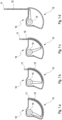
- Figure 1a shows a graphic side view of a first section of an extension movement of a display 11 of a display system 10 according to the invention
- Figure 1a the display 11 is shown in the retracted state.
- the engine is set up, one To generate bending or rolling movement of the display 11, the bending or rolling movement being converted into a translational movement of the display 11 when the display 11 is extended.
- the motor 14 is also set up to generate haptic feedback.
- Figure 1b shows a graphic side view of another section of the - in Fig. 1a shown - extension movement of the display 11. Shown is the housing 13, in which the display 11 with the touchscreen 12 is at least partially retracted with the help of the motor 14. The display 11 is only slightly moved out of the housing 13. A small extension distance or a small extension movement of the display 11 is advantageous, for example, when using the touchscreen 12 of the display 11 for air conditioning control.
- Figure 1c shows a graphic side view of another section of the - in Figs. 1a and 1b shown - extension movement of the display 11. Shown is the housing 13, in which the display 11 with the touchscreen 12 is at least partially retracted with the help of the motor 14. The display 11 is extended a little further out of the housing 13. A further extension path or a larger extension movement is particularly advantageous when using the touchscreen 12 of the display 11 for air conditioning and radio operation.
- Figure 1d shows a graphic side view of another section of the - in Fig. 1a to 1c shown - extension movement of the display 11. Shown is the housing 13, from which the display 11 with the touchscreen 12 is completely extended with the help of the motor 14. A fully extended display 11 is particularly advantageous for playing films.
- Figure 2 shows a graphic side view of an embodiment of a display 11 according to the invention, with the display 11 rolled out and the haptic pulse shown. Shown is the housing 13, in which the display 11 with the touchscreen 12 is fully extended with the help of the motor 14.
- the motor 14 performs a rotational movement due to the haptic impulse - as shown by the arrow.
- the motor 14 is set up to convert the bending or rolling movement of the display when the display is extended into a transnasal movement of the display. This means that the display 11 is converted from a curved shape into a straight shape by the motor 14.
- a touch by a user triggers a haptic impulse - as shown by the dashed arrow.
- the haptic pulse triggers a pulse-like haptic control of the motor 14.
- the haptic pulse triggered by the touch is designed as an electrical pulse, which is set up to trigger a haptic control that briefly moves the display 11 up or down and back to a starting position.
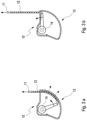
- Figure 3a shows a snapshot of a roll-out movement or an extension path of a display 11 of a display system 10 according to the invention.
- This shows - as shown by arrows - that part of the roll-out movement of the motor, which is introduced into the display 11 with the touchscreen 12 via the motor, and which represents a rotational movement, leads to a movement of the display 11.
- a further part of the rolling movement introduced by the motor 14 causes - as shown by dashed arrows - a deformation of the display 11 outwards in the direction of the housing 13 or leads to greater friction in a guide - not shown - of the housing 13.
- a higher torque of the motor is necessary than with a display that is at least half extended in order to achieve a constant extension path or a constant effective path.
- Figure 3b shows another snapshot of the roll-out movement or the extension path of the - in Fig. 3a shown - displays 11 of the display system 10 according to the invention.
- the display 11 with the touchscreen 12 is moved out of the housing 13 by the extension movement of the motor 14, the bending of the display 11 being converted into a straightened or linear version of the display 11 by converting the rolling out movement into a translational movement changes.
- Figure 4 shows a graphic side view of an embodiment of the display system 10 according to the invention, with a rolled-out display 11, which is arranged in a dashboard 15 in a vehicle 16.
- the translational movement of the rolled-out display 11 with the touchscreen 12 is shown - as shown by an arrow.
Landscapes
- Engineering & Computer Science (AREA)
- Mechanical Engineering (AREA)
- Chemical & Material Sciences (AREA)
- Combustion & Propulsion (AREA)
- Transportation (AREA)
- User Interface Of Digital Computer (AREA)
- Position Input By Displaying (AREA)
Description
- Die vorliegende Erfindung betrifft ein Displaysystem umfassend ein Display mit einem flexiblen Touchscreen, ein Gehäuse und einen Motor mit einer elektrischen Ansteuerung, wobei das Display über die elektrische Ansteuerung des Motors aus dem Gehäuse ausfahrbar ist, wobei der Motor eingerichtet ist, eine Biegung bzw. Aufrollbewegung des Displays zu erzeugen, wobei die Biegung bzw. die Aufrollbewegung beim Ausfahren des Displays in eine translatorische Bewegung des Displays umgewandelt wird und wobei der Motor eingerichtet ist, eine haptische Rückmeldung zu erzeugen.
- Im Stand der Technik wird zur Unterstützung der Bedienung von Touchscreens bzw. Touchpads häufig ein "Force Feedback" eingesetzt. Dabei bekommt ein Nutzer eine haptische Rückmeldung bei der Bedienung eines Touchscreens eines Displays. Bei der Bedienung des Touchscreens, die in der Regel eine Berührung bzw. eine Betätigung ist, vibriert der Touchscreen bzw. bewegt sich der Touchscreen mechanisch leicht, um eine haptische Rückmeldung zu erzeugen. Dieser Haptik-Impuls wird von einem Aktuator, beispielsweise einem Motor, einem Elektromagnet, einem PiezoElement oder einem Elektropolymer erzeugt.
- Weiterhin sind im Stand der Technik flexible Displays bekannt, welche gebogen bzw. gerollt werden können. Das Ausfahren der Displays erfolgt dabei in der Regel mittels eines Motors.
- Aus dem Dokument
WO 2016/142373 A1 ist ein Bedienelement eines Kraftfahrzeugs mit einer von einer Detektionseinrichtung abhängigen haptischen Rückmeldung bekannt. Das Bedienelement weist ein Betätigungsteil auf, auf das ein Aktor wirkt, der zur Erzeugung der haptischen Rückmeldung dient, wobei eine Stärke eines elektrischen Anregungssignals zum Antreiben des Aktors in Abhängigkeit von verschiedenen Betätigungsrichtungen des Betätigungsteils angepasst wird. - Aus dem Dokument
US 2017/021762 A1 sind ein haptisches System eines Fahrzeugs und ein Verfahren zum Steuern des haptischen Systems bekannt. Das haptische System weist eine berührungsempfindliche Anzeigefläche auf, die zur Ausgabe einer haptischen Rückmeldung an einen Insassen dient, wobei eine Intensität der haptischen Rückmeldung in Abhängigkeit von einer erfassten Fahrzeugvibration eingestellt wird. - Aus dem Dokument
DE 10 2015 016 499 B3 sind eine Bedienvorrichtung für ein Kraftfahrzeug mit einfahrbarem Berührungsbildschirm sowie Kraftfahrzeug und Verfahren hierzu bekannt. Der Berührungsbildschirm ist von einem eingefahrenen Zustand in einen ausgefahrenen Zustand überführbar und weist einen Aktor auf, der unabhängig von dem Zustand der Bedienvorrichtung eine haptische Rückmeldung am Berührungsbildschirm bereitstellt. - Die
US 2012/306910 A1 betrifft ein mobiles Endgerät zum Datenschutz und Teilen eines 3D-Bildes, das auf einer flexiblen Anzeige angezeigt wird, und ein Verfahren zum Anzeigen eines 3D-Bilds. In einem Datenschutzmodus wird die flexible Anzeige gefaltet oder gerollt, um die Anzeige eines Anzeigebereichs eines 3D-Bilds und die Anzeige des 3D-Bilds zu steuern, und in einem Freigabemodus wird ein Bild wie etwa ein PIP oder dergleichen darauf angezeigt. Ein gefalteter Anzeigebereich oder ein 3D-Bild wird drehbar angezeigt, wodurch effektiv ein Privatmodus und ein Freigabemodus auf der flexiblen Anzeige implementiert werden. - Die
US 9 860 474 B2 - Die
WO 2012/079764 A1 beschreibt eine Anzeigevorrichtung mit einem Display in Form eines Zylinders, und mit mindestens einem Lagesensor und/oder Beschleunigungssensor, welcher eine von einem Benutzer des Displays vorgenommene Bewegung oder Lageänderung des Displays erfasst, wobei der Lagesensor und/oder Beschleunigungssensor sowie das Display mit einer Rechnereinheit verbunden ist, welche basierend auf der Information des Lagesensors und/oder Beschleunigungssensors die erfasste Lageänderung des Displays ermittelt und wobei die Rechnereinheit eine vorbestimmte Inhaltsänderung des Displays basierend auf der Lageänderung errechnet und an das Display übermittelt. - Bei einem rollbaren, flexiblen Display, welches als Touchscreen genutzt wird, ist die Erzeugung einer haptischen Rückmeldung schwierig. Der Impuls des Aktuators wirkt auf das gesamte Display, unabhängig davon wie weit das Display ausgefahren ist. Ein Teil des Impulses, der in das Display eingeleitet wird, wird durch den mechanischen Aufbau in eine Verformung des Displays und nur ein Teil in die gewünschte translatorische Bewegung umgewandelt. Diese Aufteilung hängt dabei von der Größe des ausfahrenden Bereiches ab.
- Je weiter das Display ausgefahren ist, umso größer wird der Anteil, welcher in eine translatorische Bewegung umgewandelt wird. Das bedeutet, dass bei gleicher Ansteuerung des Motors der Nutzer bei einem zum Teil eingefahrenen Display eine weniger haptische Rückmeldung spüren wird, als bei einem ausgefahrenen Display.
- Aufgabe der vorliegenden Erfindung ist es daher, ein flexibles Displaysystem mit einer verbesserten haptischen Rückmeldung bereitzustellen.
- Diese Aufgabe wird durch ein Displaysystem mit den Merkmalen des Anspruch 1 gelöst. Vorteilhafte Weiterbildungen und Ausführungen sind Gegenstand der Beschreibung und Beschreibung der Figuren.
- Gegenstand der vorliegenden Erfindung ist ein Displaysystem umfassend ein Display mit einem flexiblen Touchscreen, ein Gehäuse und einen Motor mit einer elektrischen Ansteuerung, wobei das Display über die elektrische Ansteuerung des Motors aus dem Gehäuse ausfahrbar ist, wobei der Motor eingerichtet ist, eine Biegung bzw. Aufrollbewegung des Displays zu erzeugen, wobei die Biegung bzw. die Aufrollbewegung beim Ausfahren des Displays in eine translatorische Bewegung des Displays umgewandelt wird und wobei der Motor eingerichtet ist, eine haptische Rückmeldung zu erzeugen.
- Erfindungsgemäß umfasst das Displaysystem eine Elektronikeinheit, die eingerichtet ist, eine Berührung des Touchscreens zu erfassen und basierend auf der erfassten Berührung einen elektrischen Haptik-Impuls auszulösen, wobei der Haptik-Impuls eine impulsartige Haptik-Ansteuerung des Motors auslöst. Dies bietet den Vorteil, dass unabhängig von einem ausgefahrenen Displaybereich bzw. einem Ausfahrweg des Displays ein homogener Haptik-Impuls erzeugt werden kann.
- Die Elektronikeinheit ist somit eingerichtet, eine Berührung oder Betätigung des flexiblen Touchscreens zu erfassen und einen Haptik-Impuls auszugeben. Die Elektronikeinheit ist ferner eingerichtet, basierend auf diesem Haptik-Impuls eine Bestromung und somit eine elektrische Haptik-Ansteuerung des Motors auszuführen.
- Die Haptik-Ansteuerung ist in der Regel impulsartig. Impulsartig bedeutet dabei, dass der Motor durch die Haptik-Ansteuerung kurzzeitig wechselseitig bestromt wird.
- In einer Ausführungsform ist durch die impulsartige elektrische Haptik-Ansteuerung des Motors das Display aus einer Ausgangsposition ruckartig kurz hoch bzw. runter und wieder zurück in die Ausgangsposition bewegbar.
- In einer optionalen Ausführungsform umfasst das Displaysystem einen Haptik-Aktuator. Der Haptik-Aktuator kann dabei zusätzlich oder anstelle des Motors eingerichtet sein, den elektrischen Haptik-Impuls auszugeben und/oder zu erfassen und eine Haptik-Ansteuerung des Motors auszulösen.
- In einer Weiterbildung ist das Display eingerichtet, bei einer impulsartigen Haptik-Ansteuerung von einer Ausgangsposition zuerst in eine erste Richtung bewegbar zu sein und danach in eine weitere von der ersten unterschiedlichen Richtung bewegbar zu sein, wobei das Display eingerichtet ist, am Ende der impulsartigen Haptik-Ansteuerung wieder in die Ausgangsposition zurückzukehren.
- Somit erfolgt die Bewegung des Displays während der Haptik-Ansteuerung zuerst in eine Richtung, beispielsweise nach oben, und sofort danach in eine andere Richtung, beispielsweise nach unten. Am Ende der Haptik-Ansteuerung ist das Display wieder in der Ausgangsposition angeordnet. Die erste Richtung und die zweite Richtung sind dabei in der Regel gegensätzlich zueinander ausgebildet.
- In einer Weiterbildung ist der Haptik-Impuls stärker bzw. schwächer oder länger bzw. kürzer ausführbar. Durch einen jeweils stärkeren bzw. schwächeren oder längeren bzw. kürzeren Haptik-Impuls verändert sich die jeweilige Haptik-Ansteuerung, wodurch der Motor stärker oder weniger stark ansteuerbar ist. Durch die Veränderung des Haptik-Impulses ist ein Bewegungsweg des Displays einstellbar.
- In einer Weiterbildung führt ein Teil der Aufrollbewegung, welche in das Display über den Motor eingeleitet wird, zu einer Bewegung des Displays und ein weiterer Teil der Aufrollbewegung verursacht eine Verformung des Displays nach außen bzw. führt zu einer größeren Reibung in der Führung. Die Aufteilung der Aufrollbewegung führt somit zu einem geänderten Wirkungsgrad, der abhängig vom Ausfahrweg des Displays ist.
- In Ausgestaltung ist der Haptik-Impuls in Abhängigkeit eines Ausfahrweges des Displays variierbar. Dies bietet den Vorteil, dass der aufgrund der Mechanik und einer jeweiligen Lagerung des Displays unterschiedlichen Wahrnehmung einer haptischen Rückmeldung bei unterschiedlichen Ausfahrwegen des Displays entgegengewirkt wird.
- Varrierbar bedeutet dabei, dass der Motor in Abhängigkeit des Ausfahrweges des Displays aus dem Gehäuse stärker oder weniger stark ansteuerbar ist. Variierbar sind zudem optional ein Weg bzw. ein Drehwinkel des Displays, ein Drehmoments des Displays sowie eine angepasste Haptik-Impulsform des Displays. Beispielsweise wird der Motor bei einem eingefahrenen Display mit einem höheren Drehmoment beaufschlagt, als bei einem zumindest zur Hälfte ausgefahrenen Display, um einen gleichbleibenden Ausfahrweg bzw. einen gleichbleibenden Effektivweg zu erzielen. Somit wird in Abhängigkeit des Ausfahrweges ein Motor unterschiedlich stark anfahrbar.
- Durch die Variierbarkeit der Haptik-Ansteuerung kann beispielsweise einer weniger intensiv wahrgenommenen haptischen Rückmeldung, die auftritt, wenn das Display weiter eingerollt ist, entgegengewirkt werden. Auch kann einer zu stark wahrgenommenen haptischen Rückmeldung, die auftritt, wenn das Display weiter ausgerollt ist, entgegengewirkt werden.
- In Ausgestaltung ist der Haptik-Impuls derart einstellbar, dass die haptische Rückmeldung des Displays unabhängig vom Ausfahrweg des Displays jeweils gleich ist. Dies bietet den Vorteil, dass trotz der Mechanik und der Lagerung des Displays in dem Gehäuse unabhängig von dem Ausfahrweg eine homogene haptische Rückmeldung an den Nutzer ausgegeben werden kann.
- In weiterer Ausgestaltung weist der Haptik-Impuls einen Bewegungsweg zwischen 100µm und 140µm, insbesondere zwischen 110µm und 120µm, auf.
- In weiterer Ausgestaltung beträgt eine Dauer des Haptik-Impulses zwischen 5ms und 20ms, insbesondere zwischen 10ms und 15ms.
- In einer Weiterbildung umfasst das Displaysystem eine Recheneinheit, die eingerichtet ist, einen zu einem Ausfahrweg zugeordneten Haptik-Impuls zu speichern. In einer Ausführung ist der Haptik-Impuls stärker oder schwächer oder länger oder kürzer ausführbar. In einer weiteren Ausführungsform weist der Haptik-Impuls ein von dem Ausfahrweg abhängige Impulsform auf.
- Ein jeweiliger Haptik-Impuls zu einem jeweiligen Ausfahrweg ist dabei in der Regel in der Recheneinheit hinterlegt und abrufbar. Beispielsweise ist ein jeweiliger Haptik-Impuls in einem Kennfeld hinterlegt.
- In einer Weiterbildung ist die Elektronikeinheit eingerichtet, auf die Recheneinheit zuzugreifen und zumindest einen hinterlegten Haptik-Impuls zu beziehen bzw. auszulösen, wobei der jeweilige hinterlegte Haptik-Impuls eine impulsartige Haptik-Ansteuerung des Motors auslöst. Die Elektronikeinheit ist optional als Verstärkereinheit eingerichtet.
- Die Erfindung ist anhand von Ausführungsformen in der Zeichnung schematisch dargestellt und wird unter Bezugnahme auf die Zeichnung weiter beschrieben, wobei die gleichen Komponenten mit gleichen Bezugsziffern gekennzeichnet sind. Es zeigt:
- Fig. 1a
- eine grafische Seitansicht eines ersten Abschnittes einer Ausfahrbewegung eines Displays eines erfindungsgemäßen Displaysystems,
- Fig. 1b
- eine grafische Seitansicht eines weiteren Abschnittes der - in
Fig. 1a gezeigten - Ausfahrbewegung des Displays, - Fig. 1c
- eine grafische Seitansicht eines weiteren Abschnittes der - in
Fig. 1a und 1b gezeigten - Ausfahrbewegung des Displays, - Fig. 1d
- eine grafische Seitansicht eines weiteren Abschnittes der - in
Fig. 1a bis 1c gezeigten - Ausfahrbewegung des Displays, - Fig. 2
- eine grafische Seitansicht einer Ausführungsform eines erfindungsgemäßen Displays, mit ausgerolltem Display und Haptik-Impuls,
- Fig. 3a
- eine Momentaufnahme einer Ausrollbewegung bzw. eines Ausfahrweges eines Displays eines erfindungsgemäßen Displaysystems,
- Fig. 3b
- eine weitere Momentaufnahme der Ausrollbewegung bzw. des Ausfahrweges des - in
Fig. 3a gezeigten - Displays des erfindungsgemäßen Displaysystems, - Fig. 4
- eine grafische Seitenansicht einer Ausführungsform des erfindungsgemäßen Displays, mit ausgerolltem Display, welches in einem Armaturenbrett in einem Fahrzeug angeordnet ist.
-
Figur 1a zeigt eine grafische Seitansicht eines ersten Abschnittes einer Ausfahrbewegung eines Displays 11 eines erfindungsgemäßen Displaysystems 10. Dabei ist in derFigur 1a das Display 11 in eingefahrenem Zustand dargestellt. - Gezeigt ist ein Gehäuse 13, in dem das Display 11 mit dem Touchscreen 12 mit Hilfe des Motors 14 eingefahren ist. Der Motor ist eingerichtet, eine Biegung bzw. Aufrollbewegung des Displays 11 zu erzeugen, wobei die Biegung bzw. die Aufrollbewegung beim Ausfahren des Displays 11 in eine translatorische Bewegung des Displays 11 umgewandelt wird. Der Motor 14 ist ferner eingerichtet, eine haptische Rückmeldung zu erzeugen.
-
Figur 1b zeigt eine grafische Seitansicht eines weiteren Abschnittes der - inFig. 1a gezeigten - Ausfahrbewegung des Displays 11. Gezeigt ist das Gehäuse 13, in dem das Display 11 mit dem Touchscreen 12 mit Hilfe des Motors 14 zumindest teilweise eingefahren ist. Dabei ist das Display 11 nur ein wenig aus dem Gehäuse 13 herausgefahren. Ein geringer Ausfahrweg bzw. eine geringe Ausfahrbewegung des Displays 11 ist beispielsweise bei der Nutzung des Touchscreens 12 des Displays 11 zur Klimabedienung vorteilhaft. -
Figur 1c zeigt eine grafische Seitansicht eines weiteren Abschnittes der - inFig. 1a und 1b gezeigten - Ausfahrbewegung des Displays 11. Gezeigt ist das Gehäuse 13, in dem das Display 11 mit dem Touchscreen 12 mit Hilfe des Motors 14 zumindest teilweise eingefahren ist. Dabei ist das Display 11 etwas weiter aus dem Gehäuse 13 ausgefahren. Ein weiterer Ausfahrweg bzw. eine größere Ausfahrbewegung ist insbesondere bei der Nutzung des Touchscreens 12 des Displays 11 für eine Klima- und Radiobedienung vorteilhaft. -
Figur 1d zeigt eine grafische Seitansicht eines weiteren Abschnittes der - inFig. 1a bis 1c gezeigten - Ausfahrbewegung des Displays 11. Gezeigt ist das Gehäuse 13, aus dem das Display 11 mit dem Touchscreen 12 mit Hilfe des Motors 14 vollständig ausgefahren ist. Ein vollständig ausgefahrenes Display 11 ist insbesondere für die Wiedergabe von Filmen vorteilhaft. -
Figur 2 zeigt eine grafische Seitansicht einer Ausführungsform eines erfindungsgemäßen Displays 11, mit ausgerolltem Display 11 und dargestelltem Haptik-Impuls. Gezeigt ist das Gehäuse 13, in dem das Display 11 mit dem Touchscreen 12 mit Hilfe des Motors 14 vollständig ausgefahren ist. - Dabei führt der Motor 14 aufgrund des Haptik-Impulses - wie durch den Pfeil dargestellt - eine Drehbewegung aus. Dabei ist der Motor 14 eingerichtet, die Biegung bzw. auf Aufrollbewegung des Displays beim Ausfahren des Displays in eine transnasale Bewegung des Displays umzuwandeln. Das bedeutet, dass das Display 11 durch den Motor 14 von einer gebogenen Form in eine gerade Form überführt wird.
- Durch eine Berührung durch einen Nutzer wird - wie durch den gestrichelten Pfeil dargestellt - ein Haptik- Impuls ausgelöst. Der Haptik-Impuls löst eine impulsartige Haptik-Ansteuerung des Motors 14 aus. Der durch die Berührung ausgelöste Haptik-Impuls ist als elektrischer Impuls ausgebildet, der eingerichtet ist, eine Haptik-Ansteuerung auszulösen, die das Display 11 ruckartig kurz hoch bzw. runter und wieder zurück in eine Ausgangsposition bewegt.
-
Figur 3a zeigt eine Momentaufnahme einer Ausrollbewegung bzw. eines Ausfahrweges eines Displays 11 eines erfindungsgemäßen Displaysystems 10. Dabei ist - wie durch Pfeile dargestellt - gezeigt, dass ein Teil der Ausrollbewegung des Motors, die in das Display 11 mit dem Touchscreen 12 über den Motor eingeleitet wird, und die eine Drehbewegung darstellt, zu einer Bewegung des Displays 11 führt. Ein weiterer Teil der eingebrachten Ausrollbewegung durch den Motor 14 verursacht - wie durch gestrichelte Pfeile dargestellt - eine Verformung des Displays 11 nach außen in Richtung des Gehäuses 13 bzw. führt zu einer größeren Reibung in einer - nicht gezeigten - Führung des Gehäuses 13. Bei einer - wie inFig. 3a gezeigten - Position des Displays 11 ist dabei ein höheres Drehmoment des Motors notwendig, als bei einem zumindest zur Hälfte ausgefahrenen Display, um einen gleichbleibenden Ausfahrweg bzw. einen gleichbleibenden Effektivweg zu erzielen. -
Figur 3b zeigt eine weitere Momentaufnahme der Ausrollbewegung bzw. des Ausfahrweges des - inFig. 3a gezeigten - Displays 11 des erfindungsgemäßen Displaysystems 10. Dabei ist - wie durch Pfeile dargestellt - gezeigt, dass durch die Ausfahrbewegung des Motors 14 das Display 11 mit dem Touchscreen 12 aus dem Gehäuse 13 herausbewegt wird, wobei die Biegung des Displays 11 durch die Umwandlung der Ausrollbewegung in eine translatorische Bewegung in eine begradigte bzw. lineare Ausführung des Displays 11 wechselt. - In der
Figur 3b sind zwei Bewegungspfeile dargestellt. Zum einen ist die Drehbewegung des Motors 14 dargestellt und zum anderen die translatorische Ausdehnung des Displays 11. -
Figur 4 zeigt eine grafische Seitenansicht einer Ausführungsform des erfindungsgemäßen Displaysystems 10, mit ausgerolltem Display 11, welches in einem Armaturenbrett 15 in einem Fahrzeug 16 angeordnet ist. Dabei ist - wie durch einen Pfeil gezeigt - die translatorische Bewegung des ausgerollten Displays 11 mit dem Touchscreen 12 dargestellt. -
- 10
- Displaysystem
- 11
- Display
- 12
- Touchscreen
- 13
- Gehäuse
- 14
- Motor
- 15
- Armaturenbrett
- 16
- Fahrzeug
Claims (10)
- Displaysystem (10) umfassend ein Display (11) mit einem flexiblen Touchscreen (12), ein Gehäuse (13) und einen Motor (14) mit einer elektrischen Ansteuerung, wobei das Display (11) über die elektrische Ansteuerung des Motors (14) aus dem Gehäuse (13) ausfahrbar ist, wobei der Motor (14) eingerichtet ist, eine Biegung bzw. Aufrollbewegung des Displays (11) zu erzeugen, wobei die Biegung bzw. die Aufrollbewegung beim Ausfahren des Displays (11) in eine translatorische Bewegung des Displays (11) umgewandelt wird und wobei der Motor (14) eingerichtet ist, eine haptische Rückmeldung zu erzeugen, wobei das Displaysystem (10) eine Elektronikeinheit umfasst, die eingerichtet ist, eine Berührung des Touchscreens (12) zu erfassen und basierend auf der erfassten Berührung einen elektrischen Haptik-Impuls auszulösen, dadurch gekennzeichnet, dass der Haptik-Impuls eine impulsartige Haptik-Ansteuerung des Motors (14) auslöst.
- Displaysystem (10) nach Anspruch 1, dadurch gekennzeichnet, dass das Display (11) eingerichtet ist, bei der impulsartigen Haptik-Ansteuerung von einer Ausgangsposition zuerst in eine erste Richtung bewegbar zu sein und danach in eine weitere zu der ersten unterschiedlichen Richtung bewegbar zu sein, wobei das Display (11) eingerichtet ist, am Ende der impulsartigen Haptik-Ansteuerung wieder in die Ausgangsposition zurückzukehren.
- Displaysystem (10) nach Anspruch 1 oder 2, dadurch gekennzeichnet, dass der Haptik-Impuls stärker bzw. schwächer oder länger bzw. kürzer ausführbar ist.
- Displaysystem (10) nach einem der voranstehenden Ansprüche, dadurch gekennzeichnet, dass ein Teil der Aufrollbewegung, welche in das Display (11) über den Motor (14) eingeleitet wird, zu einer Bewegung des Displays (11) führt und ein weiterer Teil der Aufrollbewegung eine Verformung des Displays (11) nach außen verursacht bzw. zu einer größeren Reibung in der Führung führt.
- Displaysystem (10) nach Anspruch 1, dadurch gekennzeichnet, dass der Haptik-Impuls in Abhängigkeit eines Ausfahrweges des Displays (11) variierbar ist.
- Displaysystem (10) nach Anspruch 5, dadurch gekennzeichnet, dass der Haptik-Impuls derart einstellbar ist, dass die haptische Rückmeldung des Displays (11) unabhängig vom Ausfahrweg des Displays (11) jeweils gleich ist.
- Displaysystem (10) nach einem der voranstehenden Ansprüche, dadurch gekennzeichnet, dass der Haptik-Impuls einen Bewegungsweg zwischen 100µm und 140µm, insbesondere zwischen 110µm und 120µm, aufweist.
- Displaysystem (10) nach einem der voranstehenden Ansprüche, dadurch gekennzeichnet, dass eine Dauer des Haptik-Impulses zwischen 5ms und 20ms, insbesondere zwischen 10ms und 15ms, beträgt.
- Displaysystem (10) nach einem der voranstehenden Ansprüche, dadurch gekennzeichnet, dass das Displaysystem (10) eine Recheneinheit umfasst, die eingerichtet ist, einen einem Ausfahrweg des Displays (11) zugeordneten Haptik-Impuls zu speichern.
- Displaysystem (10) nach Anspruch 9, dadurch gekennzeichnet, dass die Elektronikeinheit eingerichtet ist, auf die Recheneinheit zuzugreifen und zumindest einen hinterlegten Haptik-Impuls zu beziehen bzw. auszulösen, wobei der hinterlegte Haptik-Impuls eine impulsartige Haptik-Ansteuerung des Motors (14) auslöst.
Applications Claiming Priority (2)
| Application Number | Priority Date | Filing Date | Title |
|---|---|---|---|
| DE102020101145.8A DE102020101145A1 (de) | 2020-01-20 | 2020-01-20 | Displaysystem mit haptischer Rückmeldung |
| PCT/EP2020/087420 WO2021148212A1 (de) | 2020-01-20 | 2020-12-21 | Displaysystem mit haptischer rückmeldung |
Publications (2)
| Publication Number | Publication Date |
|---|---|
| EP4093628A1 EP4093628A1 (de) | 2022-11-30 |
| EP4093628B1 true EP4093628B1 (de) | 2024-02-07 |
Family
ID=74141546
Family Applications (1)
| Application Number | Title | Priority Date | Filing Date |
|---|---|---|---|
| EP20838510.4A Active EP4093628B1 (de) | 2020-01-20 | 2020-12-21 | Displaysystem mit haptischer rückmeldung |
Country Status (3)
| Country | Link |
|---|---|
| EP (1) | EP4093628B1 (de) |
| DE (1) | DE102020101145A1 (de) |
| WO (1) | WO2021148212A1 (de) |
Families Citing this family (2)
| Publication number | Priority date | Publication date | Assignee | Title |
|---|---|---|---|---|
| DE102021120878A1 (de) * | 2021-08-11 | 2023-02-16 | Audi Aktiengesellschaft | Verfahren zum Betreiben einer Anzeigevorrichtung eines Kraftfahrzeugs, Steuereinrichtung, und Kraftfahrzeug |
| DE102021121136B3 (de) * | 2021-08-13 | 2022-12-22 | Audi Aktiengesellschaft | System zum Darstellen eines Videos |
Family Cites Families (7)
| Publication number | Priority date | Publication date | Assignee | Title |
|---|---|---|---|---|
| DE102010054605A1 (de) * | 2010-12-15 | 2012-06-21 | Witold Gantzke | Anzeigevorrichtung mit einem durch Bewegung steuerbaren Display |
| KR101832958B1 (ko) * | 2011-06-01 | 2018-02-28 | 엘지전자 주식회사 | 이동 단말기 및 그의 3d영상 표시방법 |
| KR102091602B1 (ko) * | 2013-06-10 | 2020-03-20 | 엘지전자 주식회사 | 플렉시블 디스플레이를 포함하는 멀티미디어 디바이스 및 그 제어 방법 |
| DE102015103407A1 (de) | 2015-03-09 | 2016-09-15 | Preh Gmbh | Bedienelement mit von der Detektionsrichtung abhängigem haptischem Feedback |
| US10937393B2 (en) | 2015-04-15 | 2021-03-02 | Samsung Electronics Co., Ltd. | Electronic device including flexible display and content display method thereof |
| US20170021762A1 (en) | 2015-07-22 | 2017-01-26 | Denso International America, Inc. | Haptic System And Method Of Controlling A Haptic System |
| DE102015016499B3 (de) | 2015-12-18 | 2017-04-20 | Audi Ag | Bedienvorrichtung für ein Kraftfahrzeug mit einfahrbarem Berührungsbildschirm sowie Kraftfahrzeug und Verfahren hierzu |
-
2020
- 2020-01-20 DE DE102020101145.8A patent/DE102020101145A1/de not_active Withdrawn
- 2020-12-21 WO PCT/EP2020/087420 patent/WO2021148212A1/de not_active Ceased
- 2020-12-21 EP EP20838510.4A patent/EP4093628B1/de active Active
Also Published As
| Publication number | Publication date |
|---|---|
| EP4093628A1 (de) | 2022-11-30 |
| WO2021148212A1 (de) | 2021-07-29 |
| DE102020101145A1 (de) | 2021-07-22 |
Similar Documents
| Publication | Publication Date | Title |
|---|---|---|
| WO2018001605A1 (de) | Bedien- und anzeigevorrichtung für ein kraftfahrzeug, verfahren zum betreiben einer bedien- und anzeigevorrichtung für ein kraftfahrzeug und kraftfahrzeug mit einer bedien- und anzeigevorrichtung | |
| EP4093628B1 (de) | Displaysystem mit haptischer rückmeldung | |
| DE102018103350B4 (de) | Bedienelement für einen Fahrzeuginnenraum | |
| DE102010024776B4 (de) | Vorrichtung zur Bedienung mehrerer Funktionen in einem Kraftfahrzeug | |
| EP2920665B1 (de) | Bedienvorrichtung für eine fahrzeugkomponente | |
| EP3390158B1 (de) | Kraftfahrzeug-bedienvorrichtung mit einfahrbarem berührungsbildschirm | |
| EP3268845B1 (de) | Bedienelement mit von der detektionsrichtung abhängigem haptischem feedback | |
| DE102015200037A1 (de) | Bedienvorrichtung mit verbesserter haptischer Rückmeldung | |
| EP3224849B1 (de) | Bedieneinrichtung und verfahren zum ansteuern von funktionseinheiten eines kraftfahrzeugs | |
| DE102020104864B3 (de) | Anzeigeeinheit und Kraftfahrzeug mit Anzeigeeinheit | |
| EP2877910B1 (de) | Eingabevorrichtung mit versenkbarer berührungsempfindlicher oberfläche | |
| DE102015008184B4 (de) | Kraftfahrzeugbedienvorrichtung mit blindbedienbarem Touchscreen und Verfahren zum Betreiben einer Bedienvorrichtung | |
| EP3789856A1 (de) | Eingabegerät mit berührempfindlicher eingabefläche und beweglich an einem sockel gelagertes eingabeteil wobei der sockel selektiv magnetisch auf der eingabefläche festlegbar ist und zugehöriges eingabeverfahren | |
| DE102015009313B4 (de) | Bedienvorrichtung für ein Kraftfahrzeug und Verfahren zum Betreiben einer Bedienvorrichtung | |
| DE10233503A1 (de) | Diagnosevorrichtung und Verfahren zur Diagnose von Positionen einer Verstelleinrichtung eines Kraftfahrzeugs | |
| DE102014200609A1 (de) | Berührungssensitive Bedienvorrichtung mit Mulde | |
| EP3755567B1 (de) | Bedienvorrichtung sowie verfahren zum ansteuern zumindest einer funktionseinheit für ein kraftfahrzeug mit einer optischen verlagerung eines bediensymbols | |
| EP3298473B1 (de) | Berührungssensitive bedienvorrichtung für ein fahrzeug | |
| EP2920553B1 (de) | Kapazitiver sensor zur erfassung einer relativbewegung zweier benachbarter körper | |
| EP3662346B1 (de) | Steuervorrichtung für industrielle maschinen | |
| EP3969992B1 (de) | Verfahren zum erfassen einer bedieneingabe und bedienvorrichtung | |
| EP2850508A1 (de) | Anzeigevorrichtung eines kraftwagens und verfahren zum betreiben der anzeigevorrichtung | |
| EP3496124A1 (de) | Verfahren zur ansteuerung einer bedienvorrichtung für ein kraftfahrzeug sowie bedienvorrichtung | |
| DE102020200681B4 (de) | Bedienvorrichtung für Kraftfahrzeuge mit berührungsempfindlicher Oberfläche und bewegbarem Bedienelement | |
| WO2019023725A1 (de) | Industriebedienpanel |
Legal Events
| Date | Code | Title | Description |
|---|---|---|---|
| STAA | Information on the status of an ep patent application or granted ep patent |
Free format text: STATUS: UNKNOWN |
|
| STAA | Information on the status of an ep patent application or granted ep patent |
Free format text: STATUS: THE INTERNATIONAL PUBLICATION HAS BEEN MADE |
|
| PUAI | Public reference made under article 153(3) epc to a published international application that has entered the european phase |
Free format text: ORIGINAL CODE: 0009012 |
|
| STAA | Information on the status of an ep patent application or granted ep patent |
Free format text: STATUS: REQUEST FOR EXAMINATION WAS MADE |
|
| 17P | Request for examination filed |
Effective date: 20220822 |
|
| AK | Designated contracting states |
Kind code of ref document: A1 Designated state(s): AL AT BE BG CH CY CZ DE DK EE ES FI FR GB GR HR HU IE IS IT LI LT LU LV MC MK MT NL NO PL PT RO RS SE SI SK SM TR |
|
| DAV | Request for validation of the european patent (deleted) | ||
| DAX | Request for extension of the european patent (deleted) | ||
| P01 | Opt-out of the competence of the unified patent court (upc) registered |
Effective date: 20230529 |
|
| GRAP | Despatch of communication of intention to grant a patent |
Free format text: ORIGINAL CODE: EPIDOSNIGR1 |
|
| STAA | Information on the status of an ep patent application or granted ep patent |
Free format text: STATUS: GRANT OF PATENT IS INTENDED |
|
| INTG | Intention to grant announced |
Effective date: 20230929 |
|
| GRAS | Grant fee paid |
Free format text: ORIGINAL CODE: EPIDOSNIGR3 |
|
| GRAA | (expected) grant |
Free format text: ORIGINAL CODE: 0009210 |
|
| STAA | Information on the status of an ep patent application or granted ep patent |
Free format text: STATUS: THE PATENT HAS BEEN GRANTED |
|
| AK | Designated contracting states |
Kind code of ref document: B1 Designated state(s): AL AT BE BG CH CY CZ DE DK EE ES FI FR GB GR HR HU IE IS IT LI LT LU LV MC MK MT NL NO PL PT RO RS SE SI SK SM TR |
|
| REG | Reference to a national code |
Ref country code: GB Ref legal event code: FG4D Free format text: NOT ENGLISH |
|
| REG | Reference to a national code |
Ref country code: CH Ref legal event code: EP |
|
| REG | Reference to a national code |
Ref country code: IE Ref legal event code: FG4D Free format text: LANGUAGE OF EP DOCUMENT: GERMAN |
|
| REG | Reference to a national code |
Ref country code: DE Ref legal event code: R096 Ref document number: 502020006968 Country of ref document: DE |
|
| REG | Reference to a national code |
Ref country code: LT Ref legal event code: MG9D |
|
| REG | Reference to a national code |
Ref country code: NL Ref legal event code: MP Effective date: 20240207 |
|
| PG25 | Lapsed in a contracting state [announced via postgrant information from national office to epo] |
Ref country code: IS Free format text: LAPSE BECAUSE OF FAILURE TO SUBMIT A TRANSLATION OF THE DESCRIPTION OR TO PAY THE FEE WITHIN THE PRESCRIBED TIME-LIMIT Effective date: 20240607 |
|
| PG25 | Lapsed in a contracting state [announced via postgrant information from national office to epo] |
Ref country code: LT Free format text: LAPSE BECAUSE OF FAILURE TO SUBMIT A TRANSLATION OF THE DESCRIPTION OR TO PAY THE FEE WITHIN THE PRESCRIBED TIME-LIMIT Effective date: 20240207 |
|
| PG25 | Lapsed in a contracting state [announced via postgrant information from national office to epo] |
Ref country code: GR Free format text: LAPSE BECAUSE OF FAILURE TO SUBMIT A TRANSLATION OF THE DESCRIPTION OR TO PAY THE FEE WITHIN THE PRESCRIBED TIME-LIMIT Effective date: 20240508 |
|
| PG25 | Lapsed in a contracting state [announced via postgrant information from national office to epo] |
Ref country code: RS Free format text: LAPSE BECAUSE OF FAILURE TO SUBMIT A TRANSLATION OF THE DESCRIPTION OR TO PAY THE FEE WITHIN THE PRESCRIBED TIME-LIMIT Effective date: 20240507 Ref country code: NL Free format text: LAPSE BECAUSE OF FAILURE TO SUBMIT A TRANSLATION OF THE DESCRIPTION OR TO PAY THE FEE WITHIN THE PRESCRIBED TIME-LIMIT Effective date: 20240207 Ref country code: HR Free format text: LAPSE BECAUSE OF FAILURE TO SUBMIT A TRANSLATION OF THE DESCRIPTION OR TO PAY THE FEE WITHIN THE PRESCRIBED TIME-LIMIT Effective date: 20240207 |
|
| PG25 | Lapsed in a contracting state [announced via postgrant information from national office to epo] |
Ref country code: ES Free format text: LAPSE BECAUSE OF FAILURE TO SUBMIT A TRANSLATION OF THE DESCRIPTION OR TO PAY THE FEE WITHIN THE PRESCRIBED TIME-LIMIT Effective date: 20240207 |
|
| PG25 | Lapsed in a contracting state [announced via postgrant information from national office to epo] |
Ref country code: RS Free format text: LAPSE BECAUSE OF FAILURE TO SUBMIT A TRANSLATION OF THE DESCRIPTION OR TO PAY THE FEE WITHIN THE PRESCRIBED TIME-LIMIT Effective date: 20240507 Ref country code: NO Free format text: LAPSE BECAUSE OF FAILURE TO SUBMIT A TRANSLATION OF THE DESCRIPTION OR TO PAY THE FEE WITHIN THE PRESCRIBED TIME-LIMIT Effective date: 20240507 Ref country code: NL Free format text: LAPSE BECAUSE OF FAILURE TO SUBMIT A TRANSLATION OF THE DESCRIPTION OR TO PAY THE FEE WITHIN THE PRESCRIBED TIME-LIMIT Effective date: 20240207 Ref country code: LT Free format text: LAPSE BECAUSE OF FAILURE TO SUBMIT A TRANSLATION OF THE DESCRIPTION OR TO PAY THE FEE WITHIN THE PRESCRIBED TIME-LIMIT Effective date: 20240207 Ref country code: IS Free format text: LAPSE BECAUSE OF FAILURE TO SUBMIT A TRANSLATION OF THE DESCRIPTION OR TO PAY THE FEE WITHIN THE PRESCRIBED TIME-LIMIT Effective date: 20240607 Ref country code: HR Free format text: LAPSE BECAUSE OF FAILURE TO SUBMIT A TRANSLATION OF THE DESCRIPTION OR TO PAY THE FEE WITHIN THE PRESCRIBED TIME-LIMIT Effective date: 20240207 Ref country code: GR Free format text: LAPSE BECAUSE OF FAILURE TO SUBMIT A TRANSLATION OF THE DESCRIPTION OR TO PAY THE FEE WITHIN THE PRESCRIBED TIME-LIMIT Effective date: 20240508 Ref country code: FI Free format text: LAPSE BECAUSE OF FAILURE TO SUBMIT A TRANSLATION OF THE DESCRIPTION OR TO PAY THE FEE WITHIN THE PRESCRIBED TIME-LIMIT Effective date: 20240207 Ref country code: ES Free format text: LAPSE BECAUSE OF FAILURE TO SUBMIT A TRANSLATION OF THE DESCRIPTION OR TO PAY THE FEE WITHIN THE PRESCRIBED TIME-LIMIT Effective date: 20240207 Ref country code: BG Free format text: LAPSE BECAUSE OF FAILURE TO SUBMIT A TRANSLATION OF THE DESCRIPTION OR TO PAY THE FEE WITHIN THE PRESCRIBED TIME-LIMIT Effective date: 20240207 |
|
| PG25 | Lapsed in a contracting state [announced via postgrant information from national office to epo] |
Ref country code: PL Free format text: LAPSE BECAUSE OF FAILURE TO SUBMIT A TRANSLATION OF THE DESCRIPTION OR TO PAY THE FEE WITHIN THE PRESCRIBED TIME-LIMIT Effective date: 20240207 Ref country code: PT Free format text: LAPSE BECAUSE OF FAILURE TO SUBMIT A TRANSLATION OF THE DESCRIPTION OR TO PAY THE FEE WITHIN THE PRESCRIBED TIME-LIMIT Effective date: 20240607 |
|
| PG25 | Lapsed in a contracting state [announced via postgrant information from national office to epo] |
Ref country code: SE Free format text: LAPSE BECAUSE OF FAILURE TO SUBMIT A TRANSLATION OF THE DESCRIPTION OR TO PAY THE FEE WITHIN THE PRESCRIBED TIME-LIMIT Effective date: 20240207 Ref country code: PT Free format text: LAPSE BECAUSE OF FAILURE TO SUBMIT A TRANSLATION OF THE DESCRIPTION OR TO PAY THE FEE WITHIN THE PRESCRIBED TIME-LIMIT Effective date: 20240607 Ref country code: PL Free format text: LAPSE BECAUSE OF FAILURE TO SUBMIT A TRANSLATION OF THE DESCRIPTION OR TO PAY THE FEE WITHIN THE PRESCRIBED TIME-LIMIT Effective date: 20240207 Ref country code: LV Free format text: LAPSE BECAUSE OF FAILURE TO SUBMIT A TRANSLATION OF THE DESCRIPTION OR TO PAY THE FEE WITHIN THE PRESCRIBED TIME-LIMIT Effective date: 20240207 |
|
| PG25 | Lapsed in a contracting state [announced via postgrant information from national office to epo] |
Ref country code: DK Free format text: LAPSE BECAUSE OF FAILURE TO SUBMIT A TRANSLATION OF THE DESCRIPTION OR TO PAY THE FEE WITHIN THE PRESCRIBED TIME-LIMIT Effective date: 20240207 |
|
| PG25 | Lapsed in a contracting state [announced via postgrant information from national office to epo] |
Ref country code: SM Free format text: LAPSE BECAUSE OF FAILURE TO SUBMIT A TRANSLATION OF THE DESCRIPTION OR TO PAY THE FEE WITHIN THE PRESCRIBED TIME-LIMIT Effective date: 20240207 |
|
| PG25 | Lapsed in a contracting state [announced via postgrant information from national office to epo] |
Ref country code: CZ Free format text: LAPSE BECAUSE OF FAILURE TO SUBMIT A TRANSLATION OF THE DESCRIPTION OR TO PAY THE FEE WITHIN THE PRESCRIBED TIME-LIMIT Effective date: 20240207 Ref country code: EE Free format text: LAPSE BECAUSE OF FAILURE TO SUBMIT A TRANSLATION OF THE DESCRIPTION OR TO PAY THE FEE WITHIN THE PRESCRIBED TIME-LIMIT Effective date: 20240207 |
|
| PG25 | Lapsed in a contracting state [announced via postgrant information from national office to epo] |
Ref country code: SK Free format text: LAPSE BECAUSE OF FAILURE TO SUBMIT A TRANSLATION OF THE DESCRIPTION OR TO PAY THE FEE WITHIN THE PRESCRIBED TIME-LIMIT Effective date: 20240207 |
|
| PG25 | Lapsed in a contracting state [announced via postgrant information from national office to epo] |
Ref country code: SM Free format text: LAPSE BECAUSE OF FAILURE TO SUBMIT A TRANSLATION OF THE DESCRIPTION OR TO PAY THE FEE WITHIN THE PRESCRIBED TIME-LIMIT Effective date: 20240207 Ref country code: SK Free format text: LAPSE BECAUSE OF FAILURE TO SUBMIT A TRANSLATION OF THE DESCRIPTION OR TO PAY THE FEE WITHIN THE PRESCRIBED TIME-LIMIT Effective date: 20240207 Ref country code: RO Free format text: LAPSE BECAUSE OF FAILURE TO SUBMIT A TRANSLATION OF THE DESCRIPTION OR TO PAY THE FEE WITHIN THE PRESCRIBED TIME-LIMIT Effective date: 20240207 Ref country code: EE Free format text: LAPSE BECAUSE OF FAILURE TO SUBMIT A TRANSLATION OF THE DESCRIPTION OR TO PAY THE FEE WITHIN THE PRESCRIBED TIME-LIMIT Effective date: 20240207 Ref country code: DK Free format text: LAPSE BECAUSE OF FAILURE TO SUBMIT A TRANSLATION OF THE DESCRIPTION OR TO PAY THE FEE WITHIN THE PRESCRIBED TIME-LIMIT Effective date: 20240207 Ref country code: CZ Free format text: LAPSE BECAUSE OF FAILURE TO SUBMIT A TRANSLATION OF THE DESCRIPTION OR TO PAY THE FEE WITHIN THE PRESCRIBED TIME-LIMIT Effective date: 20240207 |
|
| REG | Reference to a national code |
Ref country code: DE Ref legal event code: R097 Ref document number: 502020006968 Country of ref document: DE |
|
| PG25 | Lapsed in a contracting state [announced via postgrant information from national office to epo] |
Ref country code: IT Free format text: LAPSE BECAUSE OF FAILURE TO SUBMIT A TRANSLATION OF THE DESCRIPTION OR TO PAY THE FEE WITHIN THE PRESCRIBED TIME-LIMIT Effective date: 20240207 |
|
| PLBE | No opposition filed within time limit |
Free format text: ORIGINAL CODE: 0009261 |
|
| STAA | Information on the status of an ep patent application or granted ep patent |
Free format text: STATUS: NO OPPOSITION FILED WITHIN TIME LIMIT |
|
| PG25 | Lapsed in a contracting state [announced via postgrant information from national office to epo] |
Ref country code: IT Free format text: LAPSE BECAUSE OF FAILURE TO SUBMIT A TRANSLATION OF THE DESCRIPTION OR TO PAY THE FEE WITHIN THE PRESCRIBED TIME-LIMIT Effective date: 20240207 |
|
| 26N | No opposition filed |
Effective date: 20241108 |
|
| PG25 | Lapsed in a contracting state [announced via postgrant information from national office to epo] |
Ref country code: SI Free format text: LAPSE BECAUSE OF FAILURE TO SUBMIT A TRANSLATION OF THE DESCRIPTION OR TO PAY THE FEE WITHIN THE PRESCRIBED TIME-LIMIT Effective date: 20240207 |
|
| PG25 | Lapsed in a contracting state [announced via postgrant information from national office to epo] |
Ref country code: MC Free format text: LAPSE BECAUSE OF FAILURE TO SUBMIT A TRANSLATION OF THE DESCRIPTION OR TO PAY THE FEE WITHIN THE PRESCRIBED TIME-LIMIT Effective date: 20240207 |
|
| REG | Reference to a national code |
Ref country code: CH Ref legal event code: PL |
|
| PG25 | Lapsed in a contracting state [announced via postgrant information from national office to epo] |
Ref country code: LU Free format text: LAPSE BECAUSE OF NON-PAYMENT OF DUE FEES Effective date: 20241221 |
|
| GBPC | Gb: european patent ceased through non-payment of renewal fee |
Effective date: 20241221 |
|
| REG | Reference to a national code |
Ref country code: BE Ref legal event code: MM Effective date: 20241231 |
|
| PG25 | Lapsed in a contracting state [announced via postgrant information from national office to epo] |
Ref country code: GB Free format text: LAPSE BECAUSE OF NON-PAYMENT OF DUE FEES Effective date: 20241221 Ref country code: BE Free format text: LAPSE BECAUSE OF NON-PAYMENT OF DUE FEES Effective date: 20241231 |
|
| PG25 | Lapsed in a contracting state [announced via postgrant information from national office to epo] |
Ref country code: FR Free format text: LAPSE BECAUSE OF NON-PAYMENT OF DUE FEES Effective date: 20241231 |
|
| PG25 | Lapsed in a contracting state [announced via postgrant information from national office to epo] |
Ref country code: CH Free format text: LAPSE BECAUSE OF NON-PAYMENT OF DUE FEES Effective date: 20241231 |
|
| PG25 | Lapsed in a contracting state [announced via postgrant information from national office to epo] |
Ref country code: IE Free format text: LAPSE BECAUSE OF NON-PAYMENT OF DUE FEES Effective date: 20241221 |
|
| PGFP | Annual fee paid to national office [announced via postgrant information from national office to epo] |
Ref country code: AT Payment date: 20260113 Year of fee payment: 5 |
|
| PGFP | Annual fee paid to national office [announced via postgrant information from national office to epo] |
Ref country code: DE Payment date: 20251231 Year of fee payment: 6 |