EP4092014A2 - Kristalline form von fluvatinib oder fluvatinib-methansulfonat und herstellungsverfahren dafür - Google Patents
Kristalline form von fluvatinib oder fluvatinib-methansulfonat und herstellungsverfahren dafür Download PDFInfo
- Publication number
- EP4092014A2 EP4092014A2 EP21741704.7A EP21741704A EP4092014A2 EP 4092014 A2 EP4092014 A2 EP 4092014A2 EP 21741704 A EP21741704 A EP 21741704A EP 4092014 A2 EP4092014 A2 EP 4092014A2
- Authority
- EP
- European Patent Office
- Prior art keywords
- fluvatinib
- crystalline form
- mesylate
- ray powder
- diffraction pattern
- Prior art date
- Legal status (The legal status is an assumption and is not a legal conclusion. Google has not performed a legal analysis and makes no representation as to the accuracy of the status listed.)
- Granted
Links
Images








Classifications
-
- C—CHEMISTRY; METALLURGY
- C07—ORGANIC CHEMISTRY
- C07D—HETEROCYCLIC COMPOUNDS
- C07D215/00—Heterocyclic compounds containing quinoline or hydrogenated quinoline ring systems
- C07D215/02—Heterocyclic compounds containing quinoline or hydrogenated quinoline ring systems having no bond between the ring nitrogen atom and a non-ring member or having only hydrogen atoms or carbon atoms directly attached to the ring nitrogen atom
- C07D215/16—Heterocyclic compounds containing quinoline or hydrogenated quinoline ring systems having no bond between the ring nitrogen atom and a non-ring member or having only hydrogen atoms or carbon atoms directly attached to the ring nitrogen atom with hetero atoms or with carbon atoms having three bonds to hetero atoms with at the most one bond to halogen, e.g. ester or nitrile radicals, directly attached to ring carbon atoms
- C07D215/20—Oxygen atoms
- C07D215/22—Oxygen atoms attached in position 2 or 4
-
- C—CHEMISTRY; METALLURGY
- C07—ORGANIC CHEMISTRY
- C07D—HETEROCYCLIC COMPOUNDS
- C07D215/00—Heterocyclic compounds containing quinoline or hydrogenated quinoline ring systems
- C07D215/02—Heterocyclic compounds containing quinoline or hydrogenated quinoline ring systems having no bond between the ring nitrogen atom and a non-ring member or having only hydrogen atoms or carbon atoms directly attached to the ring nitrogen atom
- C07D215/16—Heterocyclic compounds containing quinoline or hydrogenated quinoline ring systems having no bond between the ring nitrogen atom and a non-ring member or having only hydrogen atoms or carbon atoms directly attached to the ring nitrogen atom with hetero atoms or with carbon atoms having three bonds to hetero atoms with at the most one bond to halogen, e.g. ester or nitrile radicals, directly attached to ring carbon atoms
- C07D215/48—Carbon atoms having three bonds to hetero atoms with at the most one bond to halogen
-
- A—HUMAN NECESSITIES
- A61—MEDICAL OR VETERINARY SCIENCE; HYGIENE
- A61K—PREPARATIONS FOR MEDICAL, DENTAL OR TOILETRY PURPOSES
- A61K9/00—Medicinal preparations characterised by special physical form
- A61K9/20—Pills, tablets, discs, rods
- A61K9/2004—Excipients; Inactive ingredients
- A61K9/2013—Organic compounds, e.g. phospholipids, fats
-
- A—HUMAN NECESSITIES
- A61—MEDICAL OR VETERINARY SCIENCE; HYGIENE
- A61K—PREPARATIONS FOR MEDICAL, DENTAL OR TOILETRY PURPOSES
- A61K9/00—Medicinal preparations characterised by special physical form
- A61K9/20—Pills, tablets, discs, rods
- A61K9/2004—Excipients; Inactive ingredients
- A61K9/2013—Organic compounds, e.g. phospholipids, fats
- A61K9/2018—Sugars, or sugar alcohols, e.g. lactose, mannitol; Derivatives thereof, e.g. polysorbates
-
- A—HUMAN NECESSITIES
- A61—MEDICAL OR VETERINARY SCIENCE; HYGIENE
- A61K—PREPARATIONS FOR MEDICAL, DENTAL OR TOILETRY PURPOSES
- A61K9/00—Medicinal preparations characterised by special physical form
- A61K9/20—Pills, tablets, discs, rods
- A61K9/2004—Excipients; Inactive ingredients
- A61K9/2022—Organic macromolecular compounds
- A61K9/205—Polysaccharides, e.g. alginate, gums; Cyclodextrin
- A61K9/2059—Starch, including chemically or physically modified derivatives; Amylose; Amylopectin; Dextrin
-
- A—HUMAN NECESSITIES
- A61—MEDICAL OR VETERINARY SCIENCE; HYGIENE
- A61P—SPECIFIC THERAPEUTIC ACTIVITY OF CHEMICAL COMPOUNDS OR MEDICINAL PREPARATIONS
- A61P35/00—Antineoplastic agents
-
- C—CHEMISTRY; METALLURGY
- C07—ORGANIC CHEMISTRY
- C07C—ACYCLIC OR CARBOCYCLIC COMPOUNDS
- C07C309/00—Sulfonic acids; Halides, esters, or anhydrides thereof
- C07C309/01—Sulfonic acids
- C07C309/02—Sulfonic acids having sulfo groups bound to acyclic carbon atoms
- C07C309/03—Sulfonic acids having sulfo groups bound to acyclic carbon atoms of an acyclic saturated carbon skeleton
- C07C309/04—Sulfonic acids having sulfo groups bound to acyclic carbon atoms of an acyclic saturated carbon skeleton containing only one sulfo group
-
- C—CHEMISTRY; METALLURGY
- C07—ORGANIC CHEMISTRY
- C07B—GENERAL METHODS OF ORGANIC CHEMISTRY; APPARATUS THEREFOR
- C07B2200/00—Indexing scheme relating to specific properties of organic compounds
- C07B2200/13—Crystalline forms, e.g. polymorphs
Definitions
- the present disclosure relates to the field of medicinal chemistry, and specifically relates to a crystalline form of fluvatinib or fluvatinib mesylate and preparation method thereof.
- liver cancer is a common malignant tumor in China.
- the database reported by the National Cancer Center in 2017 showed that the number of new liver cancer cases reached 362,000, and the incidence rate ranked third in China; the number of liver cancer deaths reached 316,000, ranking second.
- Hepatocellular carcinoma (HCC) occurs insidiously without obvious symptoms in early stage, so most of patients have missed the opportunity for surgery when they are diagnosed. Surgery, interventional therapy and chemotherapy all are not satisfactory for the treatment of liver cancer.
- 5-year survival rate of liver cancer is still very low.
- the current target drugs for liver cancer mainly include epidermal growth factor receptor (EGFR) inhibitors, vascular endothelial growth factor receptor (VEGFR) antagonists, multikinase inhibitors, the PI3K/Akt/mTOR signaling pathway, hepatocyte growth factor receptor (Met) inhibitors, and TGF ⁇ receptor inhibitors.
- EGFR epidermal growth factor receptor
- VEGFR vascular endothelial growth factor receptor
- multikinase inhibitors the PI3K/Akt/mTOR signaling pathway
- Met hepatocyte growth factor receptor
- TKI-targeting drugs mainly include sorafenib, lenvatinib and regorafenib. Thus, therapeutic drugs are very limited.
- CN109134365 discloses an active compound or pharmaceutically acceptable salt thereof that acts on multi-targets including VEGFR 1-3 types, fibroblast growth factor receptor 1-3 types, RET, Kit and PDGFR, having a chemical structural formula I:
- the inventors have found that the free base and pharmaceutically acceptable salts of fluvatinib, especially the methanesulfonate salt, all exhibit polymorphism, which greatly affects drug quality control, since different crystalline forms have polymorphic properties, such as different stability, solubility, and druggability. Therefore, it needs to develop a crystalline form with good stability and druggability.
- the objective of the present disclosure is to provide a crystalline form of 4-(2-fluoro-3-chloro-(cyclopropylaminocarbonyl)aminophenoxy)-7-methoxy-6-quinolinecarboxa mide (fluvatinib represented by formula I) or a crystalline form of fluvatinib methanesulfonate salt.
- fluvatinib methanesulfonate also called as “fluvatinib mesylate”, which refers to the same compound
- fluvatinib mesylate which refers to the same compound
- a crystalline form of fluvatinib is provided, and its X-ray powder diffraction pattern has characteristic diffraction peaks at 2 ⁇ degrees of 11.60 ⁇ 0.2°, 16.72 ⁇ 0.2°, and 20.25 ⁇ 0.2°, and further its X-ray powder diffraction pattern has characteristic diffraction peaks at 2 ⁇ degrees of 8.28 ⁇ 0.2°, 11.60 ⁇ 0.2°, 15.42 ⁇ 0.2°, 16.72 ⁇ 0.2°, 20.25 ⁇ 0.2°, 21.81 ⁇ 0.2°, 22.36 ⁇ 0.2° and 24.08 ⁇ 0.2°
- a crystalline form of fluvatinib mesylate is provided, and its X-ray powder diffraction pattern has characteristic diffraction peaks at 2 ⁇ degrees of 9.60 ⁇ 0.2°, 22.49 ⁇ 0.2° and 23.07 ⁇ 0.2°, and further its X-ray powder diffraction pattern has characteristic diffraction peaks at 2 ⁇ degrees of 10.74 ⁇ 0.2°, 16.79 ⁇ 0.2°, 17.51 ⁇ 0.2°, 18.50 ⁇ 0.2°, 20.64 ⁇ 0.2°, 20.85 ⁇ 0.2°, 21.51 ⁇ 0.2°, 23.73 ⁇ 0.2°, 24.84 ⁇ 0.2°, 26.51 ⁇ 0.2°, 27.05 ⁇ 0.2°, 27.88 ⁇ 0.2°, 28.60 ⁇ 0.2° and 29.74 ⁇ 0.2°
- a crystalline form of fluvatinib mesylate is provided, and its X-ray powder diffraction pattern has characteristic diffraction peaks as shown in FIG. 7 .
- a crystalline form of fluvatinib mesylate is provided, and its X-ray powder diffraction pattern has characteristic diffraction peaks at 2 ⁇ degrees of 6.28 ⁇ 0.2°, 10.65 ⁇ 0.2°, 17.87 ⁇ 0.2°, 19.48 ⁇ 0.2°, 23.57 ⁇ 0.2°, and 24.38 ⁇ 0.2°, and further its X-ray powder diffraction pattern has characteristic diffraction peaks at 2 ⁇ degrees of 10.25 ⁇ 0.2°, 14.44 ⁇ 0.2°, 15.28 ⁇ 0.2°, 18.91 ⁇ 0.2°, 19.98 ⁇ 0.2°, 20.86 ⁇ 0.2°, 21.77 ⁇ 0.2°, 22.78 ⁇ 0.2°, and 24.98 ⁇ 0.2°.
- a crystalline form of fluvatinib mesylate is provided, and its X-ray powder diffraction pattern has characteristic diffraction peaks as shown in FIG. 11 .
- a crystalline form of fluvatinib mesylate is provided, and its X-ray powder diffraction pattern has characteristic diffraction peaks as shown in FIG. 12 .
- a crystalline form of fluvatinib mesylate is provided, and its X-ray powder diffraction pattern has characteristic diffraction peaks as shown in FIG. 13 .
- a crystalline form of fluvatinib mesylate is provided, and its X-ray powder diffraction pattern has characteristic diffraction peaks as shown in FIG. 14 .
- the present disclosure provides a method of preparing the crystalline form of fluvatinib mesylate, which comprises mixing fluvatinib mesylate with an organic solvent to obtain a mixed solution, stirring the mixed solution at a temperature greater than 20°C, filtering to obtain a solid, and drying the solid to obtain the crystalline form of fluvatinib mesylate.
- the temperature is greater than 20°C and less than 70°C.
- the stirring is performed for at least 1 hour.
- the stirring time is 2-48 hours.
- the temperature is 20-30°C.
- the organic solvent is selected from the group consisting of methanol, ethanol, acetone, THF, isopropanol, ethyl acetate, acetonitrile, cyclohexane, n-hexane, n-heptane, 1.4-dioxane, dichloromethane and a mixed solvent of any combination thereof.
- the organic solvent is ethanol.
- the temperature is 20-30°C
- the stirring time is at least 2 hours or at least 12 hours, or at least 16 hours, or at least 24 hours, or 48 hours.
- the temperature is greater than 30°C and less than 70°C, and the stirring time is 1-3 hours.
- the temperature is 20-30°C
- the stirring time is 1-2 hours.
- the organic solvent is ethanol.
- the organic solvent can be a mixed solvent containing water, and preferably, can be a mixed solvent of ethanol and water or a mixed solvent of THF and water.
- a crystalline form I of fluvatinib of the present disclosure wherein its X-ray powder diffraction pattern has characteristic diffraction peaks at 2 ⁇ degrees of 11.60 ⁇ 0.2°, 16.72 ⁇ 0.2°, and 20.25 ⁇ 0.2°.
- the crystalline form I of fluvatinib exhibits an X-ray powder diffraction pattern having characteristic diffraction peaks at 2 ⁇ degrees of 8.28 ⁇ 0.2°, 11.60 ⁇ 0.2°, 15.42 ⁇ 0.2°, 16.72 ⁇ 0.2°, 20.25 ⁇ 0.2°, 21.81 ⁇ 0.2°, 22.36 ⁇ 0.2° and 24.08 ⁇ 0.2°.
- the crystalline form I of fluvatinib exhibits an X-ray powder diffraction pattern having characteristic diffraction peaks as shown in FIG. 1 .
- the present disclosure provides a method of preparing the crystalline form I of fluvatinib, which comprises dissolving fluvatinib in an organic solvent to form a suspension, stirring, and filtering to obtain the crystalline form I.
- the organic solvent is selected from the group consisting of methanol, ethanol, acetone, THF, isopropanol, ethyl acetate and any mixed solvent thereof.
- the present disclosure provides a crystalline form I of fluvatinib mesylate, which exhibits an X-ray powder diffraction pattern having characteristic diffraction peaks at 2 ⁇ degrees of 9.60 ⁇ 0.2°, 22.49 ⁇ 0.2° and 23.07 ⁇ 0.2°.
- the above-mentioned crystalline form I of fluvatinib mesylate exhibits an X-ray powder diffraction pattern having characteristic diffraction peaks at 2 ⁇ ( ⁇ 0.2°) degrees of 10.74, 16.79, 17.51, 18.50, 20.64, 20.85, 21.51, 23.73, 24.84, 26.51, 27.05, 27.88, 28.60 and 29.74.
- the crystalline form I of fluvatinib mesylate exhibits an X-ray powder diffraction pattern having characteristic diffraction peaks as shown in FIG. 4 .
- the present disclosure further provides a method of preparing the crystalline form I of fluvatinib mesylate, which comprises dissolving fluvatinib in an organic solvent, adding methanesulfonic acid to perform a reaction, after the complete of the reaction, stirring at 20-30°C for 1-2 hours, filtering, and drying.
- the organic solvent is selected from the group consisting of methanol, ethanol, acetone, THF, isopropanol, ethyl acetate and a mixed solvent of any combination thereof.
- the drying includes drying under reduced pressure at a drying temperature of 40-50°C.
- the present disclosure provides a crystalline form II of fluvatinib mesylate, which exhibits an X-ray powder diffraction pattern having characteristic diffraction peaks at 2 ⁇ ( ⁇ 0.2°) degrees of 4.88 ⁇ 0.2°, 6.93 ⁇ 0.2°, 9.77 ⁇ 0.2°, and 10.93 ⁇ 0.2°, and further exhibits an X-ray powder diffraction pattern having characteristic diffraction peaks at 2 ⁇ ( ⁇ 0.2°) degrees of 12.07, 14.81, 15.56, 17.72, 18.56, 19.74, 21.11, 21.73, 22.73, 24.68, 25.70, 6.19 and 27.49 ⁇ 0.2°
- the crystalline form II of fluvatinib mesylate exhibits an X-ray powder diffraction pattern having characteristic diffraction peaks as shown in FIG. 7 .
- the present disclosure further provides a method of preparing the crystalline form II of fluvatinib mesylate, which comprises reacting fluvatinib with a methanesulfonate salt in an organic solvent, stirring at 10-20°C for 2 hours for solid precipitation, filtering, and drying.
- the organic solvent includes, but are not limited to methanol, ethanol, acetone, THF and isopropanol.
- the present disclosure provides a crystalline form III of fluvatinib mesylate, which exhibits an X-ray powder diffraction pattern having characteristic diffraction peaks at 2 ⁇ degrees of 6.28 ⁇ 0.2°, 10.65 ⁇ 0.2°, 17.87 ⁇ 0.2°, 19.48 ⁇ 0.2°, 23.57 ⁇ 0.2°, and 24.38 ⁇ 0.2°.
- the above-mentioned crystalline form III of fluvatinib mesylate further exhibits an X-ray powder diffraction pattern having characteristic diffraction peaks at 2 ⁇ degrees of 10.25 ⁇ 0.2°, 14.44 ⁇ 0.2°, 15.28 ⁇ 0.2°, 18.91 ⁇ 0.2°, 19.98 ⁇ 0.2°, 20.86 ⁇ 0.2°, 21.77 ⁇ 0.2°, 22.78 ⁇ 0.2°, and 24.98 ⁇ 0.2°.
- the above-mentioned crystalline form III of fluvatinib mesylate of the present disclosure exhibits an X-ray powder diffraction pattern having characteristic diffraction peaks as shown in FIG. 9 .
- the present disclosure further provides a method of preparing the crystalline form III of fluvatinib mesylate, which comprises stirring fluvatinib mesylate in an organic solvent for at least 2 hours.
- the above-mentioned method of preparing the crystalline form III of fluvatinib mesylate comprises dissolving fluvatinib mesylate in an organic solvent, stirring at 20-30°C for at least 12 hours, preferably at least 16 hours, 24 hours or 48 hours, filtering, and drying filter cake.
- the above-mentioned method of preparing the crystalline form III of fluvatinib mesylate comprises dissolving fluvatinib mesylate in an organic solvent, stirring at 30-65°C for 2-3 hours, filtering, and drying filter cake.
- the drying includes drying under reduced pressure at a drying temperature of 40-50°C.
- the organic solvent is selected from the group consisting of ethanol, methanol, isopropanol, acetone, THF, cyclohexane, n-hexane, n-heptane, 1.4-dioxane, dichloromethane and ethyl acetate, and preferably from ethanol, acetone or ethyl acetate.
- a crystalline form IV of fluvatinib mesylate is provided, and its X-ray powder diffraction pattern has characteristic diffraction peaks at 2 ⁇ ( ⁇ 0.2°) degrees of 6.22 ⁇ 0.2°, 10.59 ⁇ 0.2°, 11.58 ⁇ 0.2°, 14.41 ⁇ 0.2°, 17.93 ⁇ 0.2°, 20.32 ⁇ 0.2°, 23.58 ⁇ 0.2°, 24.09 ⁇ 0.2°, 24.59 ⁇ 0.2°, and 25.79 ⁇ 0.2°, and preferably, its X-ray powder diffraction pattern has characteristic diffraction peaks as shown in FIG. 11 .
- the present disclosure provides a method of preparing the crystalline form IV of fluvatinib mesylate, which comprises dissolving fluvatinib methanesulfonate salt in a mixed solvent system of ethanol/water, stirring at 20-30°C for 20-48 h, filtering, and spin-drying filter cake at 40-50°C under reduced pressure, to obtain the crystalline form IV of fluvatinib mesylate.
- a crystalline form V of fluvatinib mesylate is further provided, and its X-ray powder diffraction pattern has characteristic diffraction peaks at 2 ⁇ degrees of 4.81 ⁇ 0.2°, 10.64 ⁇ 0.2°, 10.99 ⁇ 0.2°, 16.00 ⁇ 0.2°, 20.50 ⁇ 0.2°, 21.10 ⁇ 0.2°, 24.59 ⁇ 0.2°, 25.57 ⁇ 0.2° and 26.46 ⁇ 0.2°, and preferably its X-ray powder diffraction pattern has characteristic diffraction peaks as shown in FIG. 12 .
- the present disclosure provides a method of preparing the crystalline form V of fluvatinib mesylate, which comprises dissolving fluvatinib methanesulfonate salt in a mixed solvent system of tetrahydrofuran/water, stirring at 20-30°C for 20-48 h, filtering, and spin-drying filter cake at 40-50°C under reduced pressure, to obtain the crystalline form V of fluvatinib mesylate.
- the present disclosure further provides a crystalline form VI of fluvatinib mesylate, wherein its X-ray powder diffraction pattern has characteristic diffraction peaks at 2 ⁇ ( ⁇ 0.2°) degrees of 5.61 ⁇ 0.2°, 9.98 ⁇ 0.2°, 10.61 ⁇ 0.2°, 16.84 ⁇ 0.2°, 20.14 ⁇ 0.2°, and 20.89 ⁇ 0.2°, and preferably its X-ray powder diffraction pattern has characteristic diffraction peaks as shown in FIG. 13 .
- the present disclosure provides a method of preparing the crystalline form VI of fluvatinib mesylate, which comprises adding fluvatinib free base into methanol solvent, and adding methanesulfonic acid under stirring to perform a reaction.
- the reaction solution is stirred at 20-30°C for 2-10 h, and preferably for 4 h, filtering, and spin-drying filter cake at 40-50°C under reduced pressure, to obtain the crystalline form VI of fluvatinib mesylate.
- the present disclosure further provides a crystalline form VII of fluvatinib mesylate, wherein its X-ray powder diffraction pattern has characteristic diffraction peaks at 2 ⁇ degrees of 5.57 ⁇ 0.2°, 6.17 ⁇ 0.2°, 9.93 ⁇ 0.2°, 10.56 ⁇ 0.2°, 14.34 ⁇ 0.2°, 16.81 ⁇ 0.2°, 17.76 ⁇ 0.2°, 20.10 ⁇ 0.2°, 20.81 ⁇ 0.2°, 24.85 ⁇ 0.2°, and 25.60 ⁇ 0.2°, and preferably its X-ray powder diffraction pattern has characteristic diffraction peaks as shown in FIG. 14 .
- the present disclosure provides a method of preparing the crystalline form VII of fluvatinib mesylate, which comprises dissolving the crystalline form VI of fluvatinib mesylate into ethanol solvent, stirring at 20-30°C for 2-10 h, filtering, and spin-drying filter cake at 40-50°C under reduced pressure, to obtain the crystalline form VII of fluvatinib mesylate.
- the present disclosure also provides use of the above-mentioned crystalline form I of fluvatinib and crystalline forms I, II, III, IV, V, VI, VII of fluvatinib mesylate in the manufacture of a medicament for treating a tumor, wherein the tumor includes, but are not limited to liver cancer, renal carcinoma, gastric cancer, colorectal cancer, pancreatic cancer and lung cancer.
- the present disclosure further provides a pharmaceutical composition containing an effective amount of the above-mentioned crystalline form of fluvatinib or fluvatinib mesylate according to the present disclosure and a pharmaceutically acceptable adjuvant, wherein the crystalline form is selected from the crystalline form I of fluvatinib and the crystalline form I, II, III, IV, V, VI and VII of fluvatinib mesylate.
- the crystalline form is crystalline form I or crystalline form III of fluvatinib mesylate.
- the adjuvant includes, but is not limited to, a filler, a disintegrating agent, an adhesive, a lubricant, a coloring agent, a flavoring agent, an emulsifier, surfactant, a cosolvent, a suspending agent, an isotonic agent, a buffer, a preservative, an antioxidant, a stabilizer, an absorption enhancer and the like.
- the above-mentioned filler is selected from the group consisting of lactose, white sugar, glucose, corn starch, mannitol, sorbitol, starch, ⁇ -starch, dextrin, crystalline cellulose, light anhydrous silicic acid, aluminum silicate, calcium silicate, magnesium aluminum silicate, calcium hydrogen phosphate and combinations thereof.
- the above-mentioned disintegrating agent is selected from the group consisting of crystalline cellulose, agar, gelatin, calcium carbonate, sodium bicarbonate, calcium citrate, dextrin, pectin, low-substituted hydroxypropyl cellulose, carboxymethyl cellulose, carboxymethylcellulose calcium, croscarmellose sodium, carboxymethyl starch, sodium carboxymethyl starch and combinations thereof.
- the above-mentioned adhesive is selected from the group consisting of polyvinyl alcohol, methylcellulose, ethyl cellulose, gum arabic, gum tragacanth, gelatin, shellac, hydroxypropyl methylcellulose, hydroxypropyl cellulose, carboxy methyl cellulose sodium, polyvinylpyrrolidone, polyethylene glycol and combinations thereof.
- the above-mentioned lubricant is selected from the group consisting of magnesium stearate, calcium stearat, sodium octadecyl fumarate, talc, polyethylene glycol, colloidal silica, and combinations thereof.
- the above-mentioned coloring agent is selected from the group consisting of ferric oxide, yellow ferric oxide, carmine, caramel, ⁇ -carotene, titanium oxide, talc, sodium riboflavin phosphate, yellow aluminum lake, and other medical colorants.
- the above-mentioned flavoring agent is selected from the group consisting of cocoa powder, menthol, aromatic powder, peppermint oil, borneol, and cinnamon powder.
- the above-mentioned surfactant is selected from the group consisting of octadecyl triethanolamine, sodium dodecyl sulfate, lauryl aminopropionic acid, lecithin, glycerol monostearate, sucrose fatty acid ester, and glycerol fatty acid ester.
- the above-mentioned cosolvent is selected from the group consisting of polyethylene glycol, propylene glycol, benzyl benzoate, ethanol, cholesterol, triethanolamine, sodium carbonate, sodium citrate, and Tween 80.
- the above-mentioned antioxidant may be a sulfite, ascorbic acid, ⁇ -tocopherol or the like.
- the above-mentioned composition may be in a formulation form including tablets, powders, granules, capsules, syrup, buccal tablets, inhalants and other oral preparations, or injections.
- the above-mentioned oral preparation may be coated on their surfaces, if needed.
- injections may be supplemented with appropriate additives, such as emulsifiers, surfactants, cosolvents, suspending agents, isotonic agents, buffers, preservatives, antioxidants, stabilizers, absorption enhancers.
- additives such as emulsifiers, surfactants, cosolvents, suspending agents, isotonic agents, buffers, preservatives, antioxidants, stabilizers, absorption enhancers.
- an adult may be typically administered 100 ⁇ g to 10 g per day in one or several divided doses, depending on symptoms, age, and administration mode.
- the crystalline forms of the present disclosure are very useful as an angiogenesis inhibitor, and can effectively treat or prevent diseases though its angiogenesis inhibitory action, e.g., as an angiogenesis inhibitor, an antitumor agent, a hemangioma therapeutic agent, or a cancer metastasis inhibitor.
- the tumor includes liver cancer, pancreatic cancer, gastric cancer, thyroid carcinoma, colorectal cancer, breast cancer, prostate cancer, lung cancer, renal carcinoma, brain tumor, blood cancer or ovarian cancer, and preferably is liver cancer, thyroid carcinoma, gastric cancer, colorectal cancer, prostate cancer, lung cancer or renal carcinoma.
- the crystalline forms of fluvatinib according to the present disclosure which has never been reported, had been kept under high temperature and high humidity conditions for half of a month or 3 months to investigate its stability, and the results showed no occurrence of crystal transformation and no change on the content of related impurities.
- an organic solvent e.g., methanol, ethanol, acetone, THF, isopropanol, ethyl acetate or their mixed solvent with water for at least 2 days, no crystal transformation occurred, indicating that it is stable in solvents including water, and thus is conducive to adapt to the processing of its preparations.
- the crystalline forms of the fluvatinib mesylate of present disclosure exhibit typical polymorphism, including the seven crystalline forms found in the present disclosure.
- crystalline forms I and III exhibit superior specific characteristics, for example, when they were placed under the harsh experimental conditions of high temperature and high humidity for at least half of a month or 3 months to investigate its stability, the crystalline forms I and III of fluvatinib mesylate did not show crystal transformation, and no apparent change occurred on the related substance contents compared with before, exhibiting physical and chemical stabilities.
- the crystalline form III exhibits good formulation manufacturing characteristics such as good fluidity, hygroscopicity, and the like.
- parameters of the crystalline forms were measured by X-ray powder diffraction pattern (XRPD), DSC and TGA, which are commonly used in the ar.
- XRPD X-ray powder diffraction pattern
- DSC Differential scanning calorimeter
- the sample was placed on a glass slide, and observed after being dispersed with a cover glass.
- Objective lens 20/50 times.
- the filter cake was rinsed with ethanol (2 mL ⁇ 2), and dried at 40-50°C with spinning under reduced pressure, to obtain a solid product, named as the crystalline form I of fluvatinib mesylate.
- the product was detected by XRPD, DSC, and TGA.
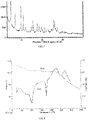
- the XRPD test results are shown in Table 1 and FIG. 4 .
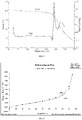
- the DSC and TGA test results are shown in FIG. 5 .
- the melting point was about 232-237°C.
- Table 1 XRPD diffraction data of the crystalline form I of fluvatinib mesylate Pos. [°2 ⁇ ] Height [cts] FWHM Left [°2 ⁇ ] d-spacing [ ⁇ ] Rel. Int.
- the free base fluvatinib (55 g) was added to EtOH (1.1 L) solvent, heated to 55-60°C.
- the methanesulfonic acid (11.88 g) was added to the reaction flask under stirring (300 rpm), and cooled to 10-20°C after the complete of the reaction.
- the reaction system was stirred at this temperature for 2 h when a brown solid precipitated, and filtered at reduced pressure.
- the filter cake was rinsed with ethanol (50 mL ⁇ 2), dried at 40-50°C with spinning under reduced pressure to obtain a product, which was a brown solid crystalline form (52.5 g).
- Method 1 To a reaction flask, 100 g of fluvatinib (free base) was added to MeOH (2.2 L) solvent, and then methanesulfonic acid (16.64 mL) was added under stirring into the reaction flask to perform a reaction. The mixture was stirred at 20-30°C for 4h when a brown solid precipitated, and filtered at reduced pressure. The filter cake was rinsed with ethanol (50 mL ⁇ 2), and dried at 40-50°C with spinning under reduced pressure to obtain a solid product (106.2 g). The solid product (105g) was added to 1 L of ethanol in a reaction flask, stirred at 20-30°C for 48 h, and filtered at reduced pressure, to obtain a filter cake.
- the filter cake was dried at 40-50°C under reduced pressure to obtain a solid crystalline product.
- the product was detected by XRPD, TGA, and DSC. The results are shown in Table 3, FIG. 9 and FIG. 10 .
- the XRPD data show that the crystalline form of the product was the crystalline form III of fluvatinib mesylate (Form III). Its melting point was about 220-226°C.
- Method 2 The crystalline form II of fluvatinib mesylate (52 g) obtained in Example 3 was added to 420 mL of ethanol, stirred mechanically at 20-30°C (300 rpm) for 16 h, and filtered at reduced pressure. The filter cake was dried at 40-50°C under reduced pressure to obtain a product. The product was detected by XRPD. As a result, its 2 ⁇ degrees in XRPD are basically consistent with those in FIG. 9 , indicating that the obtained crystalline form is Form III.
- Method 3 0.5 g of fluvatinib free base was added to 10 mL of ethanol, and added with 0.1 mL of methanesulfonic acid. The mixture was suspended at 40°C for 3-4 hours, centrifuged, filtered, and dried at 40°C in an oven. The detection results show that the prepared product is crystalline form III of the methanesulfonate salt. Its 2 ⁇ degrees in XRPD are basically consistent with those in FIG. 9 .
- Method 4 0.9 g of fluvatinib methanesulfonate was added to 7.2 mL of ethanol in a reaction flask under stirring. After the addition, the mixture was heated to 55-65°C, stirred at this temperature for about 2-3 h, and filtered at reduced pressure. The filter cake was rinsed with ethanol (0.5 mL ⁇ 2) to obtain a filter cake, and dried at 45°C under vacuum to obtain a product. Its 2 ⁇ degrees in XRPD are basically consistent with those in FIG. 9 . Table 3 XRPD diffraction data of the crystalline form III of fluvatinib mesylate Pos.
- Example 7 About 0.2 g of the crystalline form VI of fluvatinib methanesulfonate obtained in Example 7 was weighed and added to ethanol solvent to form a suspension. The suspension was stirred at 20-30°C using a magnetic stirrer for 4 h, and then filtered. The filter cake was dried at 40-50°C with spinning under reduced pressure. The obtained dry sample was detected by XRPD. The results are shown in Table 7 and FIG. 14 , indicating that the sample is the crystalline form VII of fluvatinib mesylate (Form VII). Table 7 XRPD diffraction data of the crystalline form VII of fluvatinib mesylate Pos.
- the crystalline form I of fluvatinib was placed in an organic solvent and a water-containing organic solvent, and stirred at 40° C for 2 days to investigate whether there was a crystal transformation.
- a number parts of about 30 mg of the crystalline form I of fluvatinib (Form I) were respectively weighed and added to different glass bottles, and added with an appropriate amount of a single organic solvent or a mixture containing water (see Table 8) to form suspensions.
- the above-mentioned suspension samples were placed on magnetic stirrers (40°C) to perform a stirring test. After being stirring at 40°C for 2 days, the suspension samples were filtered. The filter cake samples were then dried overnight in a vacuum dry box (40°C), and the dried samples were detected by XRPD (see Table 8 and FIG. 15 ).
- solvents amounts of solvents (mL) state under stirring for 2 days crystalline form 1 methanol 0.4 suspension Form I 2 ethanol 0.4 suspension Form I 3 ethyl acetate 0.4 suspension Form I 4 acetone 0.4 suspension Form I 5 THF 0.4 suspension Form I 6 isopropanol 0.4 suspension Form I 7 methanol-water (3: 1) 0.4 suspension Form I 8 ethanol-water (3: 1) 0.4 suspension Form I 9 acetone -water (1: 2) 0.4 suspension Form I 10 isopropanol-water (1: 1) 0.4 suspension Form I 11 THF-water (1: 1) 0.4 suspension Form I
- the crystalline form I of fluvatinib mesylate was stored in acetone, ethanol and ethyl acetate to investigate whether there was a crystal transformation.
- the crystalline form I of fluvatinib mesylate was tested for dynamic hygroscopicity by DVS to detect water content.
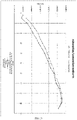
- the results show that the methanesulfonate salt has a hygroscopic weight gain of 1.3% (see FIG. 6 ) under the condition of 25°C/80% RH, indicating that the sample has slight hygroscopicity, and the crystalline form of the sample did not undergo crystal transformation after DVS measurements (see FIG. 16 ). This indicates again that the crystalline form I of fluvatinib mesylate has good stability.
- the crystalline form of the fluvatinib methanesulfonate was investigated on its stability in ethanol, to see whether there is crystal transformation.
- the crystalline form III of fluvatinib mesylate has good stability, and is suitable and adaptable to the processing process of preparations, particularly for preparing tablets or granules of fluvatinib methanesulfonate by the granulation and tableting process containing ethanol as a binder or wetting agent.
- the crystalline form III of fluvatinib mesylate was subjected to high temperature suspension experiments (50°C), to investigate whether the crystalline form III of fluvatinib mesylate undergoes crystal transformation in various type of common organic solvents, and whether it is stable.
- the crystalline form III of fluvatinib mesylate was suspended in 12 types of organic solvents (in 1 mL of solvent) and water as set forth in Table 10 at a temperature of 50°C and an amount of about 25 mg for 24 hours. The experiment conditions and results are shown in Table 10.
- the solids after being suspended in the organic solvents were detected by XRPD. The results shows that they all have the 2 ⁇ characteristic peaks of the crystal form III (see FIG. 18 ).
- Table 10 High temperature suspension experiment and results solvent No.
- the crystalline forms I, III, IV, V, VI, and VII of fluvatinib mesylate of the present disclosure were placed in harsh environments to investigate their stability. They were placed under high temperature and high humidity conditions: 25°C 92.5% R.H for 7 days, 40°C 75% R.H for 14 days, and 60°C for 14 days, and then detected by XRPD. The results are shown in Table 11.
- the crystalline form III of fluvatinib mesylate was tested for hygroscopicity under humidity conditions of 25°C, 0-90% RH, using a dynamic moisture tester a dynamic vapor sorption (DVS) analyzer. The results are shown in FIG. 19 .
- the formula amounts of the crystalline form of fluvatinib mesylate, anhydrous lactose and direct compression starch were mixed, and then mixed with magnesium stearate.
- the mixture was prepared into tablets by direct compression method, with each table weighed 200 mg.
- the crystalline forms before and after being prepared into tablets and after the tablets being placed in 40°C, 75%RH environment for 6 months were detected by XRPD.
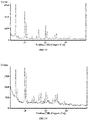
- the results are shown in FIG. 20 and 21 , wherein A, B, and C represent XRPD patterns of the crystalline form before and after being prepared into tablets and after the tablets being placed for 6 months.
- the XRPD pattern comparison between the test sample and crystalline forms of the active pharmaceutical ingredients (API) shows that neither the crystalline form I of fluvatinib mesylate nor the crystalline form III of fluvatinib mesylate undergoes crystal transformation during the process of preparing tablets, and no crystal transformation occurred after the tablets being placed for 6 months.
Landscapes
- Chemical & Material Sciences (AREA)
- Organic Chemistry (AREA)
- Health & Medical Sciences (AREA)
- Life Sciences & Earth Sciences (AREA)
- Medicinal Chemistry (AREA)
- Pharmacology & Pharmacy (AREA)
- Animal Behavior & Ethology (AREA)
- General Health & Medical Sciences (AREA)
- Public Health (AREA)
- Veterinary Medicine (AREA)
- Epidemiology (AREA)
- Biophysics (AREA)
- Molecular Biology (AREA)
- Chemical Kinetics & Catalysis (AREA)
- General Chemical & Material Sciences (AREA)
- Nuclear Medicine, Radiotherapy & Molecular Imaging (AREA)
- Pharmaceuticals Containing Other Organic And Inorganic Compounds (AREA)
- Organic Low-Molecular-Weight Compounds And Preparation Thereof (AREA)
- Indole Compounds (AREA)
- Medicinal Preparation (AREA)
Applications Claiming Priority (2)
| Application Number | Priority Date | Filing Date | Title |
|---|---|---|---|
| CN202010063033 | 2020-01-19 | ||
| PCT/CN2021/081023 WO2021143954A2 (zh) | 2020-01-19 | 2021-03-16 | 一种氟伐替尼或其甲磺酸盐的晶型及其制备方法 |
Publications (3)
| Publication Number | Publication Date |
|---|---|
| EP4092014A2 true EP4092014A2 (de) | 2022-11-23 |
| EP4092014A4 EP4092014A4 (de) | 2023-08-16 |
| EP4092014B1 EP4092014B1 (de) | 2026-05-06 |
Family
ID=76810909
Family Applications (1)
| Application Number | Title | Priority Date | Filing Date |
|---|---|---|---|
| EP21741704.7A Active EP4092014B1 (de) | 2020-01-19 | 2021-03-16 | Kristalline form von fluvatinib-methansulfonat und herstellungsverfahren dafür |
Country Status (5)
| Country | Link |
|---|---|
| US (1) | US20230106064A1 (de) |
| EP (1) | EP4092014B1 (de) |
| JP (2) | JP7534418B2 (de) |
| CN (2) | CN117945999B (de) |
| WO (1) | WO2021143954A2 (de) |
Families Citing this family (3)
| Publication number | Priority date | Publication date | Assignee | Title |
|---|---|---|---|---|
| CN113480479B (zh) * | 2021-08-12 | 2022-08-02 | 上海爱博医药科技有限公司 | 脲类多靶点酪氨酸激酶抑制剂及其医药应用 |
| CN116410133A (zh) * | 2021-12-29 | 2023-07-11 | 重庆医药工业研究院有限责任公司 | 一种氟伐替尼氢溴酸盐及其制备方法 |
| CN115215799B (zh) * | 2022-08-12 | 2024-05-31 | 上海爱博医药科技有限公司 | 脲类多靶点酪氨酸激酶抑制剂及其多种医药应用 |
Family Cites Families (7)
| Publication number | Priority date | Publication date | Assignee | Title |
|---|---|---|---|---|
| MX2017014799A (es) * | 2015-05-21 | 2023-02-23 | Crystal Pharmatech Co Ltd | Forma cristalina novedosa de mesilato de lenvatinib y procedimiento de preparacion de la misma. |
| US10562855B2 (en) * | 2016-06-08 | 2020-02-18 | Crystal Pharmatech Co., Ltd. | Crystalline form of lenvantinib mesylate and process of preparation thereof |
| EP3299360A1 (de) * | 2016-09-21 | 2018-03-28 | INDENA S.p.A. | Kristalline fromen von lenvatinib |
| WO2018059534A1 (zh) * | 2016-09-30 | 2018-04-05 | 广东众生药业股份有限公司 | 酪氨酸激酶抑制剂的晶型、盐型以及制备方法 |
| CN110494423B (zh) * | 2017-04-25 | 2022-04-26 | 苏州科睿思制药有限公司 | 乐伐替尼甲磺酸盐的新晶型及其制备方法 |
| US11161817B2 (en) * | 2017-09-28 | 2021-11-02 | Chongqing Pharmaceutical Industrial Research Institute Co. Ltd. | Quinoline derivative and use thereof as tyrosine kinase inhibitor |
| US20220175756A1 (en) * | 2019-03-15 | 2022-06-09 | Chongqing Pharmaceutical Industrial Research Institute Co., Ltd. | Application of combination of quinoline derivative and immunomodulator in preparation of antitumor drugs |
-
2021
- 2021-01-18 CN CN202410110265.0A patent/CN117945999B/zh active Active
- 2021-01-18 CN CN202110060334.8A patent/CN113135853A/zh active Pending
- 2021-03-16 EP EP21741704.7A patent/EP4092014B1/de active Active
- 2021-03-16 US US17/793,406 patent/US20230106064A1/en active Pending
- 2021-03-16 WO PCT/CN2021/081023 patent/WO2021143954A2/zh not_active Ceased
- 2021-03-16 JP JP2022543726A patent/JP7534418B2/ja active Active
-
2024
- 2024-03-14 JP JP2024040363A patent/JP2024073574A/ja not_active Abandoned
Also Published As
| Publication number | Publication date |
|---|---|
| US20230106064A1 (en) | 2023-04-06 |
| JP2023512621A (ja) | 2023-03-28 |
| WO2021143954A3 (zh) | 2021-08-26 |
| JP7534418B2 (ja) | 2024-08-14 |
| WO2021143954A2 (zh) | 2021-07-22 |
| CN113135853A (zh) | 2021-07-20 |
| CN117945999A (zh) | 2024-04-30 |
| JP2024073574A (ja) | 2024-05-29 |
| EP4092014A4 (de) | 2023-08-16 |
| CN117945999B (zh) | 2025-08-22 |
| EP4092014B1 (de) | 2026-05-06 |
Similar Documents
| Publication | Publication Date | Title |
|---|---|---|
| US12419858B2 (en) | Salt of terphenyl compound | |
| EP4092014B1 (de) | Kristalline form von fluvatinib-methansulfonat und herstellungsverfahren dafür | |
| JP2020500925A (ja) | {[5−(3−クロロフェニル)−3−ヒドロキシピリジン−2−カルボニル]アミノ}酢酸の新規結晶形及びその製造方法 | |
| EP3263573B1 (de) | Kristall von imidazo-oxazin, pharmazeutische zusammensetzung mit diesem kristall und verfahren zur herstellung dieses kristalls | |
| WO2024248083A1 (ja) | キノリン置換化合物の結晶 | |
| CN101336240B (zh) | 亚磺酰基苯并咪唑化合物的盐、其结晶及无定形物 | |
| CN114105987B (zh) | 恩替卡韦药用盐及其制备方法、药物组合物和应用 | |
| WO2018133705A1 (zh) | Gft-505的晶型及其制备方法和用途 | |
| EP3792258B1 (de) | Additionssalz von s1p1-rezeptoragonist und kristallform davon sowie pharmazeutische zusammensetzung | |
| EP3702350A1 (de) | Kristalline form eines alkinylpyridin-prolylhydroxylase-inhibitors und verfahren zu dessen herstellung | |
| JP2019089822A (ja) | トピロキソスタットの新規結晶形及びその製造方法 | |
| HUE027990T2 (en) | An amine salt of a carbostyril derivative suitable for treating gastric ulcer among others | |
| JP7835785B2 (ja) | シクロヘキセノン化合物の結晶形 | |
| EP4553078A1 (de) | 5h-pyrrolo[2,3-d pyrimidin-6(7h)-on und kristall eines salzes davon | |
| EP4509499A1 (de) | Polymorph von 7,8-dihydroxyflavon und herstellungsverfahren dafür | |
| EP4286385A1 (de) | Neues maleat eines triazolopyrazinderivats, zusammensetzung, verwendungsverfahren und herstellungsverfahren dafür | |
| EP3184516A1 (de) | Kristalliner inclusionskomplex von mirabegron mit beta-cyclodextrin | |
| WO2022144042A1 (zh) | Tas-116的晶型及其制备方法、药物组合物和用途 | |
| WO2026095022A1 (ja) | キノリン置換化合物の結晶 | |
| HK40106546A (en) | Addition salt of s1p1 receptor agonist and crystal form thereof, and pharmaceutical composition | |
| KR20230152118A (ko) | 약물 조성물 및 이의 제조 방법 및 용도 | |
| WO2022253261A1 (zh) | Lazertinib甲磺酸盐的水合物晶型及其制备方法和用途 | |
| HK40076742B (zh) | 新型三苯基化合物盐 | |
| HK40106546B (en) | Addition salt of s1p1 receptor agonist and crystal form thereof, and pharmaceutical composition | |
| HK40076742A (en) | Novel salt of terphenyl compound |
Legal Events
| Date | Code | Title | Description |
|---|---|---|---|
| STAA | Information on the status of an ep patent application or granted ep patent |
Free format text: STATUS: THE INTERNATIONAL PUBLICATION HAS BEEN MADE |
|
| PUAI | Public reference made under article 153(3) epc to a published international application that has entered the european phase |
Free format text: ORIGINAL CODE: 0009012 |
|
| STAA | Information on the status of an ep patent application or granted ep patent |
Free format text: STATUS: REQUEST FOR EXAMINATION WAS MADE |
|
| 17P | Request for examination filed |
Effective date: 20220728 |
|
| AK | Designated contracting states |
Kind code of ref document: A2 Designated state(s): AL AT BE BG CH CY CZ DE DK EE ES FI FR GB GR HR HU IE IS IT LI LT LU LV MC MK MT NL NO PL PT RO RS SE SI SK SM TR |
|
| XX | Miscellaneous (additional remarks) |
Free format text: THE RESTORATION OF THE RIGHT OF PRIORITY GRANTED BY THE RECEIVING OFFICE IS EFFECTIVE BEFORE THE EPO (R. 49TER.1(A) PCT). |
|
| RAP3 | Party data changed (applicant data changed or rights of an application transferred) |
Owner name: YAOPHARMA CO., LTD. Owner name: CHONGQING PHARMACEUTICAL RESEARCH INSTITUTE CO., LTD. |
|
| DAV | Request for validation of the european patent (deleted) | ||
| DAX | Request for extension of the european patent (deleted) | ||
| A4 | Supplementary search report drawn up and despatched |
Effective date: 20230719 |
|
| RIC1 | Information provided on ipc code assigned before grant |
Ipc: A61P 35/00 20060101ALI20230713BHEP Ipc: A61K 31/47 20060101ALI20230713BHEP Ipc: C07C 303/44 20060101ALI20230713BHEP Ipc: C07C 303/32 20060101ALI20230713BHEP Ipc: C07D 215/48 20060101AFI20230713BHEP |
|
| STAA | Information on the status of an ep patent application or granted ep patent |
Free format text: STATUS: EXAMINATION IS IN PROGRESS |
|
| 17Q | First examination report despatched |
Effective date: 20240319 |
|
| GRAP | Despatch of communication of intention to grant a patent |
Free format text: ORIGINAL CODE: EPIDOSNIGR1 |
|
| STAA | Information on the status of an ep patent application or granted ep patent |
Free format text: STATUS: GRANT OF PATENT IS INTENDED |
|
| INTG | Intention to grant announced |
Effective date: 20260224 |
|
| GRAS | Grant fee paid |
Free format text: ORIGINAL CODE: EPIDOSNIGR3 |
|
| GRAA | (expected) grant |
Free format text: ORIGINAL CODE: 0009210 |
|
| STAA | Information on the status of an ep patent application or granted ep patent |
Free format text: STATUS: THE PATENT HAS BEEN GRANTED |
|
| AK | Designated contracting states |
Kind code of ref document: B1 Designated state(s): AL AT BE BG CH CY CZ DE DK EE ES FI FR GB GR HR HU IE IS IT LI LT LU LV MC MK MT NL NO PL PT RO RS SE SI SK SM TR |
|
| REG | Reference to a national code |
Ref country code: CH Ref legal event code: F10 Free format text: ST27 STATUS EVENT CODE: U-0-0-F10-F00 (AS PROVIDED BY THE NATIONAL OFFICE) Effective date: 20260506 Ref country code: GB Ref legal event code: FG4D |
|
| XX | Miscellaneous (additional remarks) |
Free format text: THE RESTORATION OF THE RIGHT OF PRIORITY GRANTED BY THE RECEIVING OFFICE IS EFFECTIVE BEFORE THE EPO (R. 49TER.1(A) PCT) |