EP4089499B1 - Autonomes fahrsystem, verfahren zur steuerung von autonomem fahren und nichtflüchtiges speichermedium - Google Patents
Autonomes fahrsystem, verfahren zur steuerung von autonomem fahren und nichtflüchtiges speichermedium Download PDFInfo
- Publication number
- EP4089499B1 EP4089499B1 EP22170994.2A EP22170994A EP4089499B1 EP 4089499 B1 EP4089499 B1 EP 4089499B1 EP 22170994 A EP22170994 A EP 22170994A EP 4089499 B1 EP4089499 B1 EP 4089499B1
- Authority
- EP
- European Patent Office
- Prior art keywords
- autonomous driving
- remote assistance
- specific position
- driving vehicle
- target
- Prior art date
- Legal status (The legal status is an assumption and is not a legal conclusion. Google has not performed a legal analysis and makes no representation as to the accuracy of the status listed.)
- Active
Links
Images






Classifications
-
- B—PERFORMING OPERATIONS; TRANSPORTING
- B60—VEHICLES IN GENERAL
- B60W—CONJOINT CONTROL OF VEHICLE SUB-UNITS OF DIFFERENT TYPE OR DIFFERENT FUNCTION; CONTROL SYSTEMS SPECIALLY ADAPTED FOR HYBRID VEHICLES; ROAD VEHICLE DRIVE CONTROL SYSTEMS FOR PURPOSES NOT RELATED TO THE CONTROL OF A PARTICULAR SUB-UNIT
- B60W60/00—Drive control systems specially adapted for autonomous road vehicles
- B60W60/001—Planning or execution of driving tasks
- B60W60/0015—Planning or execution of driving tasks specially adapted for safety
-
- G—PHYSICS
- G05—CONTROLLING; REGULATING
- G05D—SYSTEMS FOR CONTROLLING OR REGULATING NON-ELECTRIC VARIABLES
- G05D1/00—Control of position, course, altitude or attitude of land, water, air or space vehicles, e.g. using automatic pilots
- G05D1/0011—Control of position, course, altitude or attitude of land, water, air or space vehicles, e.g. using automatic pilots associated with a remote control arrangement
- G05D1/0038—Control of position, course, altitude or attitude of land, water, air or space vehicles, e.g. using automatic pilots associated with a remote control arrangement by providing the operator with simple or augmented images from one or more cameras located onboard the vehicle, e.g. tele-operation
-
- B—PERFORMING OPERATIONS; TRANSPORTING
- B60—VEHICLES IN GENERAL
- B60W—CONJOINT CONTROL OF VEHICLE SUB-UNITS OF DIFFERENT TYPE OR DIFFERENT FUNCTION; CONTROL SYSTEMS SPECIALLY ADAPTED FOR HYBRID VEHICLES; ROAD VEHICLE DRIVE CONTROL SYSTEMS FOR PURPOSES NOT RELATED TO THE CONTROL OF A PARTICULAR SUB-UNIT
- B60W60/00—Drive control systems specially adapted for autonomous road vehicles
- B60W60/005—Handover processes
-
- B—PERFORMING OPERATIONS; TRANSPORTING
- B60—VEHICLES IN GENERAL
- B60W—CONJOINT CONTROL OF VEHICLE SUB-UNITS OF DIFFERENT TYPE OR DIFFERENT FUNCTION; CONTROL SYSTEMS SPECIALLY ADAPTED FOR HYBRID VEHICLES; ROAD VEHICLE DRIVE CONTROL SYSTEMS FOR PURPOSES NOT RELATED TO THE CONTROL OF A PARTICULAR SUB-UNIT
- B60W60/00—Drive control systems specially adapted for autonomous road vehicles
- B60W60/007—Emergency override
-
- G—PHYSICS
- G05—CONTROLLING; REGULATING
- G05D—SYSTEMS FOR CONTROLLING OR REGULATING NON-ELECTRIC VARIABLES
- G05D1/00—Control of position, course, altitude or attitude of land, water, air or space vehicles, e.g. using automatic pilots
- G05D1/0011—Control of position, course, altitude or attitude of land, water, air or space vehicles, e.g. using automatic pilots associated with a remote control arrangement
-
- G—PHYSICS
- G05—CONTROLLING; REGULATING
- G05D—SYSTEMS FOR CONTROLLING OR REGULATING NON-ELECTRIC VARIABLES
- G05D1/00—Control of position, course, altitude or attitude of land, water, air or space vehicles, e.g. using automatic pilots
- G05D1/0055—Control of position, course, altitude or attitude of land, water, air or space vehicles, e.g. using automatic pilots with safety arrangements
-
- B—PERFORMING OPERATIONS; TRANSPORTING
- B60—VEHICLES IN GENERAL
- B60W—CONJOINT CONTROL OF VEHICLE SUB-UNITS OF DIFFERENT TYPE OR DIFFERENT FUNCTION; CONTROL SYSTEMS SPECIALLY ADAPTED FOR HYBRID VEHICLES; ROAD VEHICLE DRIVE CONTROL SYSTEMS FOR PURPOSES NOT RELATED TO THE CONTROL OF A PARTICULAR SUB-UNIT
- B60W2556/00—Input parameters relating to data
- B60W2556/45—External transmission of data to or from the vehicle
Definitions
- the present invention relates to an autonomous driving vehicle, an autonomous driving control, and a non-transitory storage medium.
- Japanese Unexamined Patent Application Publication No. 2018-077649 discloses a remote driving control device that executes remote driving of a vehicle.
- the remote driving control device executes the remote driving of the vehicle by communicating with the vehicle.
- Document US 2020/239023 A1 relates to a system for controlling an antonomous vehicle that provides, in response to a request for remonte assistance, input to the autonomous vehicle defining a change in its control setting.
- a remote assistance technology for executing remote assistance to traveling of an autonomous driving vehicle is conceivable.
- the remote assistance requires communication between a remote assistance device and an autonomous driving vehicle.
- a remote assistance system includes a configuration or a function used for providing the remote assistance to the autonomous driving vehicle.
- the remote assistance system includes the remote assistance device, a communication network, a communication device mounted on the autonomous driving vehicle, and the like.
- the remote assistance cannot be provided to the autonomous driving vehicle, or accuracy of the remote assistance is reduced.
- the present invention provides a technology in which an autonomous driving vehicle can be appropriately controlled when an abnormality occurs in a remote assistance system that provides remote assistance to the autonomous driving vehicle.
- a first aspect of the present invention relates to an autonomous driving system according to claim 1 .
- a second aspect of the present invention relates to an autonomous driving control method according to claim 2.
- a third aspect of the present invention relates to a non-transitory storage medium storing instructions that are executable by a computer and that causes the computer to perform functions for controlling an autonomous driving vehicle that is a target of remote assistance according to claim 3.
- a target retracting position is set in consideration of specific positions at which remote assistance can be required. Specifically, any one of the specific positions on a target route to a destination is set as a limit position. Then, the target retracting position is set such that the target retracting position is included in the target route from a current position to the limit position of an autonomous driving vehicle.
- the target retracting position does not have to be around the current position of the autonomous driving vehicle, and may be any position as long as it is before the limit position. Therefore, it is possible to set the target retracting position such that the autonomous driving vehicle can stop with a margin. With each aspect of the present invention, safety of the autonomous driving vehicle and a vehicle in its vicinity can be improved.
- the autonomous driving is ended around the current position, and the autonomous driving can be continued until the vehicle reaches the target retracting position.
- continuity of the autonomous driving can be improved.
- any one of specific positions on the target route is set as the limit position, the number of specific positions which the autonomous driving vehicle passes through is reduced as compared with that of a case where the autonomous driving vehicle has to travel to a destination. Since the number of specific positions which the autonomous driving vehicle passes through is reduced, a probability that the remote assistance is required is reduced as a whole. Therefore, an influence of the abnormality in the remote assistance system is at least reduced.
- FIG. 1 is a conceptual diagram illustrating a remote assistance system according to the present embodiment.
- the remote assistance system includes an autonomous driving vehicle 1, a remote assistance device 2, and a communication network 3.
- the autonomous driving vehicle 1 is capable of autonomous driving.
- the autonomous driving it is assumed that a driver does not necessarily have to fully concentrate on driving (a so-called autonomous driving of Level 3 or higher).
- the autonomous driving vehicle 1 may be an autonomous driving vehicle of Level 4 or higher in which a driver is not required.
- the autonomous driving vehicle 1 is a target of remote assistance in the present embodiment.
- the remote assistance device 2 is a device used for executing remote assistance to the autonomous driving vehicle 1, and is operated by a remote operator.
- the autonomous driving vehicle 1 is connected to the remote assistance device 2 such that the autonomous driving vehicle 1 and the remote assistance device 2 are capable of communicating with each other via the communication network 3.
- the remote assistance device 2 communicates with the autonomous driving vehicle 1 via the communication network 3 to execute the remote assistance to traveling of the autonomous driving vehicle 1.
- the remote operator operates the remote assistance device 2 to execute the remote assistance to the traveling of the autonomous driving vehicle 1. It can be said that the remote assistance device 2 is a device that supports the remote assistance for the autonomous driving vehicle 1 by the remote operator.
- the communication network 3 includes a wireless base station, a wireless communication network, a wired communication network, and the like.
- a wireless communication network a 5G network is exemplified.
- FIG. 2 is a conceptual diagram used for describing an overview of the remote assistance according to the present embodiment.
- the autonomous driving system 10 controls the autonomous driving vehicle 1. During the autonomous driving, the autonomous driving system 10 executes various vehicle processes. Typical vehicle processes during the autonomous driving include the followings.
- a situation in which the remote assistance by the remote operator is required is a situation where the autonomous driving is difficult.
- the remote assistance can be required at an intersection, as illustrated in FIG. 3 .
- the autonomous driving system 10 requires the remote assistance for signal recognition. Further, when the signal display cannot be distinguished, it is also difficult to determine what action should be executed at what timing. Therefore, the autonomous driving system 10 requires the remote assistance also for the action determination processing and the timing determination processing.
- the autonomous driving system 10 may request the remote assistance for the action determination processing or the timing determination processing while the vehicle stops.
- the autonomous driving system 10 may request the remote assistance for the action determination processing.
- the autonomous driving system 10 may request the remote operator to remotely drive (remotely operate) the autonomous driving vehicle 1.
- the "remote assistance” is a concept that includes not only assistance for at least one of the recognition processing, the action determination processing, and the timing determination processing, but also the remote driving (the remote operation).
- the autonomous driving system 10 Upon determining that the remote assistance is required, the autonomous driving system 10 transmits a remote assistance request REQ to the remote assistance device 2 via the communication network 3.
- the remote assistance request REQ is information for requesting the remote assistance for the autonomous driving vehicle 1 from the remote operator.
- the remote assistance device 2 notifies the remote operator of the received remote assistance request REQ.
- the remote operator starts the remote assistance for the autonomous driving vehicle 1.
- the autonomous driving system 10 transmits vehicle information VCL to the remote assistance device 2 via the communication network 3.
- the vehicle information VCL indicates a state of the autonomous driving vehicle 1, the situation on the surroundings thereof, a result of the vehicle processing by the autonomous driving system 10, and the like.
- the remote assistance device 2 presents the remote operator with the vehicle information VCL received from the autonomous driving system 10. For example, as illustrated in FIG. 2 , the remote assistance device 2 displays image information IMG captured by a camera mounted on the autonomous driving vehicle 1 on the display device.
- the remote operator executes the remote assistance for the autonomous driving vehicle 1 with reference to the vehicle information VCL.
- An operator instruction INS is an instruction to the autonomous driving vehicle 1 input by the remote operator.
- the remote assistance device 2 receives an input of the operator instruction INS from the remote operator. Then, the remote assistance device 2 transmits the operator instruction INS to the autonomous driving vehicle 1 via the communication network 3.
- the autonomous driving system 10 receives the operator instruction INS from the remote assistance device 2 and controls the autonomous driving vehicle 1 according to the received operator instruction INS.
- a "remote assistance system 4" means a configuration or a function used for providing the remote assistance to the autonomous driving vehicle 1.
- the remote assistance system 4 includes the remote assistance device 2, the communication network 3, a communication device mounted on the autonomous driving vehicle 1, and the like (see FIG. 1 ).
- Examples of the communication device mounted on the autonomous driving vehicle 1 include a communication electronic control unit (ECU), a communication module, and a transmission/reception circuit.
- abnormalities in the remote assistance system 4 include a "functional failure" in which a function of the remote assistance system 4 is lost.
- An example of the functional failure of the remote assistance system 4 is a communication disruption.
- Another example of the functional failure in the remote assistance system 4 is a defect (down) of the remote assistance device 2.
- Yet another example of the functional failure in the remote assistance system 4 is a defect of the communication device mounted on the autonomous driving vehicle 1. When the functional failure occurs in the remote assistance system 4, it is impossible to provide the remote assistance to the autonomous driving vehicle 1.
- Abnormalities in the remote assistance system 4 may include "performance degradation" in which the function of the remote assistance system 4 is degraded.
- An example of performance degradation of the remote assistance system 4 is significant degradation in communication speed or a throughput.
- Another example of performance degradation of the remote assistance system 4 is a significant increase in a communication delay.
- Yet another example of performance degradation of the remote assistance system 4 is degradation in internal communication speed or calculation speed in the communication ECU mounted on the autonomous driving vehicle 1. When performance degradation occurs in the remote assistance system 4, the accuracy of the remote assistance may be degraded.
- the remote assistance system 4 When an abnormality occurs in the remote assistance system 4, the remote assistance cannot be provided to the autonomous driving vehicle 1, or the accuracy of the remote assistance is reduced. Then, when an abnormality is detected in the remote assistance system 4, the autonomous driving system 10 executes "retracting processing" for safely retracting the autonomous driving vehicle 1.
- FIG. 4 is a conceptual diagram used for describing an example of the retracting processing according to the present embodiment.
- a "target retracting position PE" is a target stop position when causing the autonomous driving vehicle 1 to stop by the retracting processing.
- the target retracting position PE may be set at a safe position on a road. In the example illustrated in FIG. 4 , the target retracting position PE is set on a road shoulder.
- the autonomous driving system 10 controls the autonomous driving vehicle 1 such that the autonomous driving vehicle 1 travels toward the target retracting position PE and stops at the target retracting position PE.
- the autonomous driving system 10 generates a target trajectory TR through which the autonomous driving vehicle 1 travels from a current position toward the target retracting position PE and stops at the target retracting position PE.
- the autonomous driving system 10 controls the traveling of the autonomous driving vehicle 1 such that the autonomous driving vehicle 1 follows the target trajectory TR.
- An area that can be used as the target retracting position PE in the retracting processing may be determined in advance.
- the area that can be used as the target retracting position PE in the retracting processing is hereinafter referred to as a "stop candidate area AC".
- FIG. 5 is a conceptual diagram used for describing an example of the stop candidate area AC.
- the stop prohibited area AX is an area in which parking and stopping of a vehicle are prohibited, and is determined in advance by the Road Traffic Act and the like.
- the stop prohibited area AX includes a crosswalk and an area having a predetermined width on the surroundings of the crosswalk.
- the stop prohibited area AX may include an intersection and an area having a predetermined width on the surroundings of the intersection.
- the stop prohibited area AX also includes an area before firefighting equipment and the like.
- the stop candidate area AC is selected from among areas other than the stop prohibited area AX on the road.
- the stop candidate area AC is a part of an area other than the stop prohibited area AX.
- the stop candidate area AC is selected from the viewpoint of ensuring the safety of the stopped autonomous driving vehicle 1.
- the stop candidate area AC may be an area relatively close to a road edge.
- the stop candidate area AC may be set to include a road shoulder or a roadside zone.
- a priority may be set in the stop candidate area AC.
- a high priority area ACH is a stop candidate area AC having a relatively high priority
- a low priority area ACL is a stop candidate area AC having a relatively low priority.
- straight sections are set as the high priority areas ACHs and a curved section is set as the low priority area ACL.
- the stop candidate area AC and the stop prohibited area AX are registered in advance in, for example, map information.
- the autonomous driving system 10 may set the target retracting position PE such that the target retracting position PE is included in the stop candidate area AC.
- the autonomous driving system 10 sets the target retracting position PE such that the target retracting position PE is included in the stop candidate area AC having a priority as high as possible.
- the autonomous driving system 10 executes the retracting processing. However, it is not always required to cause the autonomous driving vehicle 1 to make an emergency stop immediately after an abnormality is detected in the remote assistance system 4. This is because, in a situation where the remote assistance is not required, the autonomous driving system 10 can continue the autonomous driving as usual. In other words, it is not required to cause the autonomous driving vehicle 1 to rush to change lanes or suddenly decelerate even when an abnormality is detected in the remote assistance system 4. With the present embodiment, the autonomous driving system 10 sets the target retracting position PE also in consideration of a possibility that the remote assistance may be required.
- the position at which the remote assistance for the autonomous driving vehicle 1 may be required is hereinafter referred to as a "specific position PS".
- the specific position PS is an intersection, as illustrated in FIG. 3 .
- the specific position PS may be a position other than an operational design domain (ODD), which is an area in which the autonomous driving is possible.
- the specific position PS may include a construction section, a traffic congestion section, an accident occurrence position, and the like.
- the specific position PS is registered in advance in the map information.
- information on the specific position PS such as a traffic congestion section or an accident occurrence position, may be acquired in real time.
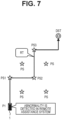
- FIG. 7 illustrates an example of a situation of the autonomous driving at the timing when the abnormality is detected in the remote assistance system 4.
- the current position and a destination of the autonomous driving vehicle 1 are represented by reference signs "P1" and "DST", respectively.
- a target route RT from the current position P1 to the destination DST of the autonomous driving vehicle 1 is set by the autonomous driving system 10.
- the autonomous driving system 10 controls the autonomous driving vehicle 1 such that it heads toward the destination DST along the target route RT.
- specific positions PS exist on the target route RT to the destination DST.
- a plurality of specific positions PS1, PS2, PS3 exists on the target route RT.
- the autonomous driving system 10 sets any specific position PS on the target route RT as a "limit position PL".
- a section of the target route RT from the current position P1 to the limit position PL is hereinafter referred to as a "retracting margin section XE".
- the autonomous driving system 10 selects the target retracting position PE from the retracting margin section XE. In other words, the autonomous driving system 10 selects the target retracting position PE such that the target retracting position PE is included in the retracting margin section XE.
- FIG. 8 is a conceptual diagram used for describing an example of the limit position PL and the retracting margin section XE.
- the limit position PL is a first specific position PS 1 closest to the current position P1 on the target route RT.
- the retracting margin section XE is a section from the current position P1 to the first specific position PS1.
- the target retracting position PE is selected from the retracting margin section XE.
- the target retracting position PE does not have to be around the current position P1 and may be before the first specific position PS1 (the limit position PL). Therefore, the target retracting position PE can be set such that the autonomous driving vehicle 1 can stop with a margin. In other words, it is possible to execute the retracting processing with a margin. Consequently, the safety of the autonomous driving vehicle 1 and vehicles in its vicinity can be improved.
- the autonomous driving vehicle 1 stops at the target retracting position PE without passing through any specific position PS. Therefore, no situation where the remote assistance is required occurs. As such, it is possible to preemptively avoid a situation where the remote assistance is required but the remote assistance cannot be received.
- FIG. 9 is a conceptual diagram used for describing another example of the limit position PL and the retracting margin section XE.
- the limit position PL is not limited to only the first specific position PS1 closest to the current position P1.
- a second specific position PS2 after the first specific position PS 1 may be set as the limit position PL.
- the retracting margin section XE is a section from the current position P1 to the second specific position PS2.
- the target retracting position PE is selected from the retracting margin section XE. As such, it is not required to cause the autonomous driving vehicle 1 to rush to change lanes or suddenly decelerate in order to stop before the first specific position PS1. In other words, it is possible to execute the retracting processing with a margin.
- the autonomous driving vehicle 1 is required to pass through the first specific position PS1.
- the first specific position PS1 is a position at which the remote assistance may be required, but the remote assistance is not always required at the first specific position PS1.
- the autonomous driving vehicle 1 can pass through the first specific position PS1 by normal autonomous driving. Even when the remote assistance is required at the first specific position PS1, in a case where the abnormality in the remote assistance system 4 is "performance degradation", the remote assistance is possible, albeit slow. In this case as well, the autonomous driving vehicle 1 can pass through the first specific position PS1. Thereafter, the autonomous driving vehicle 1 stops at the target retracting position PE before passing through the second specific position PS2.
- the number of specific positions PS which the autonomous driving vehicle 1 passes through is reduced. Since the number of specific positions PS which the autonomous driving vehicle 1 passes through is reduced, a probability that the remote assistance is required is reduced as a whole. Therefore, an influence of the abnormality in the remote assistance system 4 is at least reduced.
- the target retracting position PE is set in consideration of the specific position PS at which the remote assistance can be required. Specifically, any specific position PS on the target route RT to the destination DST is set as the limit position PL. Then, the target retracting position PE is set such that the target retracting position PE is included in the target route RT (the retracting margin section XE) from the current position P1 of the autonomous driving vehicle 1 to the limit position PL.
- the target retracting position PE does not have to be around the current position P1 and may be before the limit position PL. Therefore, the target retracting position PE can be set such that the autonomous driving vehicle 1 can stop with a margin. In other words, it is possible to execute the retracting processing with a margin. Consequently, the safety of the autonomous driving vehicle 1 and vehicles in its vicinity can be improved.
- the autonomous driving is ended around the current position P1, and the autonomous driving can be continued to the target retracting position PE. Consequently, the continuity of the autonomous driving can be improved.
- any specific position PS on the target route RT is set as the limit position PL.
- the number of specific positions PS which the autonomous driving vehicle 1 passes through is reduced. Since the number of specific positions PS which the autonomous driving vehicle 1 passes through is reduced, the probability that the remote assistance is required is reduced as a whole. Therefore, an influence caused by the abnormality in the remote assistance system 4 is at least reduced.
- the first specific position PS1 closest to the current position P1 on the target route RT may be set as the limit position PL.
- the autonomous driving vehicle 1 stops at the target retracting position PE without passing through any specific position PS. Therefore, no situation where the remote assistance is required occurs. As such, it is possible to preemptively avoid a situation where the remote assistance is required but cannot be received.
- the autonomous driving system 10 controls the autonomous driving vehicle 1.
- the autonomous driving system 10 is mounted on the autonomous driving vehicle 1.
- at least a part of the autonomous driving system 10 may be arranged in an external device outside the autonomous driving vehicle 1 and remotely control the autonomous driving vehicle 1.
- the autonomous driving system 10 may be arranged in the autonomous driving vehicle 1 and the external device in a distributed manner.
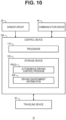
- FIG. 10 is a block diagram illustrating a configuration example of the autonomous driving system 10 according to the present embodiment.
- the autonomous driving system 10 includes a sensor group 20, a traveling device 30, a communication device 40, and a control device 100.
- the sensor group 20 is mounted on the autonomous driving vehicle 1.
- the sensor group 20 includes a vehicle state sensor, the recognition sensor, a position sensor, and the like.
- the vehicle state sensor detects a state of the autonomous driving vehicle 1. Examples of the vehicle state sensor include a vehicle speed sensor, a yaw rate sensor, a lateral acceleration sensor, and a steering angle sensor.
- the recognition sensor detects a situation in the vicinity of the autonomous driving vehicle 1. Examples of the recognition sensor include a camera, a laser imaging detection and ranging (LIDAR), and radar.
- the position sensor detects the position and the azimuth of the autonomous driving vehicle 1. Examples of the position sensor include a global positioning system (GPS) sensor.
- GPS global positioning system
- the traveling device 30 is mounted on the autonomous driving vehicle 1.
- the traveling device 30 includes a steering device, a drive device, and a braking device.
- the steering device steers wheels.
- the steering device includes a power steering (electric power steering: EPS) device.
- the drive device is a power source that generates a drive force. Examples of the drive device include an engine, an electric motor, and an in-wheel motor.
- the braking device generates a braking force.
- the communication device 40 communicates with the outside of the autonomous driving vehicle 1.
- the communication device 40 communicates with the remote assistance device 2 via the communication network 3 (see FIGS. 1 and 2 ).
- the communication device 40 may communicate with the management server.
- the communication device 40 may execute V2I communication (road-to-vehicle communication) with infrastructure in the vicinity.
- the communication device 40 may execute V2V communication (vehicle-to-vehicle communication) with surrounding vehicles.
- the communication device 40 includes a communication ECU, a communication module, a transmission/reception circuit, and the like.
- the control device 100 controls the autonomous driving vehicle 1.
- the control device 100 includes one or more processors 110 (hereinafter, simply referred to as the processor 110) and one or more storage devices 120 (hereinafter, simply referred to as the storage device 120).
- the processor 110 executes various processes.
- the processor 110 includes a central processing unit (CPU).
- the storage device 120 stores various pieces of information. Examples of the storage device 120 include a volatile memory, a non-volatile memory, a hard disk drive (HDD), and a solid-state drive (SSD).
- the control device 100 may include one or more ECUs. Apart of the control device 100 may be an information processing device outside the autonomous driving vehicle 1.
- An autonomous driving control program PROG is a computer program for controlling the autonomous driving vehicle 1.
- the autonomous operation control program PROG is stored in the storage device 120.
- the autonomous driving control program PROG may be recorded on a computer-readable recording medium.
- the driving environment information 200 indicates a driving environment of the autonomous driving vehicle 1.
- the driving environment information 200 is stored in the storage device 120.
- FIG. 11 is a block diagram illustrating an example of the driving environment information 200.
- the driving environment information 200 includes map information 210, specific position information 220, retracting area information 230, vehicle state information 240, surrounding situation information 250, vehicle position information 260, and distribution information 270.
- the map information 210 includes a general navigation map.
- the map information 210 may indicate a lane arrangement, a road shape, and the like.
- the map information 210 may include position information, such as a signal, and a sign.
- the processor 110 acquires the map information of a required area from the map database.
- the map database may be stored in a predetermined storage device mounted on the autonomous driving vehicle 1, or may be stored in an external management server. In the latter case, the processor 110 communicates with the management server and acquires required map information.
- the specific position information 220 indicates a specific position PS at which the remote assistance for the autonomous driving vehicle 1 may be required.
- the specific position information 220 is created in advance.
- the specific position information 220 may be included in the map information 210. As described below, the specific position information 220 may be added in real time.
- the retracting area information 230 indicates the positions of the stop candidate areas AC and the stop prohibited area AX (see FIG. 5 ).
- the retracting area information 230 may indicate priorities of the stop candidate areas AC (see FIG. 6 ).
- the retracting area information 230 is created in advance.
- the retracting area information 230 may be included in the map information 210.
- the vehicle state information 240 is information indicating the state of the autonomous driving vehicle 1.
- the processor 110 acquires the vehicle state information 240 from the vehicle state sensor.
- the surrounding situation information 250 is information indicating the situation in the vicinity of the autonomous driving vehicle 1.
- the processor 110 acquires the surrounding situation information 250 using the recognition sensor.
- the surrounding situation information 250 includes image information IMG captured by a camera.
- the surrounding situation information 250 further includes object information on an object in the vicinity of the autonomous driving vehicle 1. Examples of the object include a pedestrian, a bicycle, other vehicles (a preceding vehicle, a parked vehicle, and the like), a road configuration (a white line, a curb, a guardrail, a wall, a median, a roadside structure, and the like), a sign, and an obstacle.
- the object information indicates a relative position and relative speed of the object with respect to the autonomous driving vehicle 1.
- the vehicle position information 260 is information indicating the position of the autonomous driving vehicle 1.
- the processor 110 acquires the vehicle position information 260 from a detection result by the position sensor. Further, the processor 110 may acquire highly accurate vehicle position information 260 using a well-known self-position estimation process (localization) in which the object information and the map information 210 are used.
- the distribution information 270 includes road traffic information, construction section information, traffic regulation information, and the like.
- the processor 110 receives the distribution information 270 from an information provision server or roadside infrastructure via the communication device 40.
- the processor 110 can grasp the construction section, the traffic congestion section, the accident occurrence position, and the like, based on the distribution information 270. In this case, the processor 110 may add a construction section, a traffic congestion section, an accident occurrence position, and the like to the specific position information 220.
- the processor 110 executes "vehicle traveling control” that controls the traveling of the autonomous driving vehicle 1.
- the vehicle traveling control includes steering control, acceleration control, and deceleration control.
- the processor 110 executes the vehicle traveling control by controlling the traveling device 30 (the steering device, the drive device, and the braking device). Specifically, the processor 110 executes the steering control by controlling the steering device. Further, the processor 110 executes the acceleration control by controlling the drive device. Further, the processor 110 executes the deceleration control by controlling the braking device.
- the processor 110 executes the autonomous driving control based on the driving environment information 200.
- the processor 110 sets the target route RT to the destination DST based on the map information 210 and the like. Then, the processor 110 executes the vehicle traveling control such that the autonomous driving vehicle 1 heads toward the destination DST along the target route RT based on the driving environment information 200.
- the processor 110 generates a traveling plan of the autonomous driving vehicle 1 based on the driving environment information 200. Examples of the traveling plan include maintaining the current traveling lane, changing lanes, and avoiding an obstacle. Further, the processor 110 generates a target trajectory TR required for the autonomous driving vehicle 1 to travel according to the traveling plan. The target trajectory TR includes a target position and target speed. Then, the processor 110 executes the vehicle traveling control such that the autonomous driving vehicle 1 follows the target route RT and the target trajectory TR.
- the processor 110 determines whether the remote assistance by the remote operator is required. Typically, a situation where the remote assistance by the remote operator is required is a situation where the autonomous driving is difficult. For example, when at least one of the above-described recognition processing, action determination processing, and timing determination processing is difficult, the processor 110 determines that the remote assistance by the remote operator is required.
- the processor 110 Upon determining that the remote assistance is required, the processor 110 transmits the remote assistance request REQ to the remote assistance device 2 via the communication device 40.
- the remote assistance request REQ requests the remote operator to execute the remote assistance to the autonomous driving vehicle 1.
- the processor 110 transmits the vehicle information VCL to the remote assistance device 2 via the communication device 40.
- the vehicle information VCL includes at least a part of the driving environment information 200.
- the vehicle information VCL includes the image information IMG captured by a camera.
- the vehicle information VCL may include the object information.
- the vehicle information VCL may include the vehicle state information 240 or the vehicle position information 260.
- the vehicle information VCL may include results of the recognition processing, the action determination processing, and the timing determination processing.
- the processor 110 receives an operator instruction INS from the remote assistance device 2 via the communication device 40.
- the operator instruction INS is an instruction to the autonomous driving vehicle 1 input by the remote operator.
- the processor 110 executes the vehicle traveling control according to the received operator instruction INS.
- FIG. 12 is a flowchart illustrating a processing example by the autonomous driving system 10 according to the present embodiment.
- FIG. 12 illustrates a processing flow associated with a time of an occurrence of an abnormality in the remote assistance system 4.
- step S100 the processor 110 determines the presence/absence of an abnormality in the remote assistance system 4 that provides the remote assistance to the autonomous driving vehicle 1.
- the remote assistance system 4 includes the remote assistance device 2, the communication network 3, and a communication device 40 of the autonomous driving system 10.
- Abnormalities in the remote assistance system 4 include a "functional failure" in which a function of the remote assistance system 4 is lost.
- the processor 110 monitors a communication situation (for example, a throughput or the communication speed) with the remote assistance device 2. When the communication with the remote assistance device 2 is disrupted, the processor 110 determines that the functional failure has occurred in the remote assistance device 2 or the communication network 3.
- the communication device 40 for example, the communication ECU
- the processor 110 can detect a functional failure of the communication device 40.
- Abnormalities in the remote assistance system 4 may include "performance degradation" in which the function of the remote assistance system 4 is degraded.
- the processor 110 monitors the communication situation (for example, a throughput, the communication speed, or the communication delay) with the remote assistance device 2. When the throughput or the communication speed is lower than a first threshold value, the processor 110 determines that performance degradation has occurred in the remote assistance system 4. As another example, when the communication delay exceeds a second threshold value, the processor 110 determines that performance degradation has occurred in the remote assistance system 4.
- step S100: No When no abnormality is detected in the remote assistance system 4 (step S100: No), the process ends in this cycle. On the other hand, when an abnormality is detected in the remote assistance system 4 (step S100: Yes), the process proceeds to step S200.
- step S200 the processor 110 determines whether the specific position PS exists on the target route RT from the current position P1 to the destination DST.
- the target route RT is set and grasped by the processor 110.
- the specific position PS is obtained from the specific position information 220. Therefore, the processor 110 can determine whether the specific position PS exists on the target route RT based on the specific position information 220.
- step S200: Yes When the specific position PS exists on the target route RT (step S200: Yes), the process proceeds to step S300. On the other hand, when no specific position PS exists on the target route RT (step S200: No), the process proceeds to step S400.
- step S300 the processor 110 sets any specific position PS on the target route RT as the limit position PL based on the target route RT and the specific position information 220. Thereafter, the process proceeds to step S500.
- step S300 some examples of step S300 will be described.
- FIG. 13 is a flowchart illustrating an example 1 of step S300.
- step S310 the processor 110 acquires the first specific position PS1 closest to the current position P1 on the target route RT.
- the current position P1 is obtained from the vehicle position information 260.
- the specific position PS is obtained from the specific position information 220.
- the processor 110 can acquire the first specific position PS 1 based on the specific position information 220 and the vehicle position information 260.
- step S340 the processor 110 sets the first specific position PS1 as the limit position PL.
- FIG. 14 is a flowchart illustrating an example 2 of step S300.
- Step S310 is the same as that in the case of the example 1.
- step S330 the processor 110 determines whether the first specific position PS1 satisfies a permitted condition.
- the permitted condition is set from the viewpoint of whether it is possible to stop the autonomous driving vehicle 1 without causing it to rush to change lanes or suddenly decelerate.
- the permitted condition includes at least one of the following conditions (A) and (B):
- the current position P1 of the autonomous driving vehicle 1 is obtained from the vehicle position information 260.
- the current speed of the autonomous driving vehicle 1 is obtained from the vehicle state information 240.
- Kinetic performance of the autonomous driving vehicle 1 is given in advance as information.
- the processor 110 determines whether the first specific position PS1 satisfies the permitted condition based on the current position P1, the first specific position PS1, the current vehicle speed, the kinetic performance, and the like.
- step S330 When the first specific position PS 1 satisfies the permitted condition (step S330: Yes), the process proceeds to step S340.
- step S340 the processor 110 sets the first specific position PS 1 as the limit position PL.
- step S350 the processor 110 acquires a second specific position PS2 different from the first specific position PS 1 on the target route RT based on the specific position information 220.
- the second specific position PS2 is a specific position PS after the first specific position PS1 when viewed from the current position P1 (see FIG. 9 ). Thereafter, the process proceeds to step S360.
- step S360 the processor 110 sets the second specific position PS2 as the limit position PL.
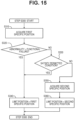
- FIG. 15 is a flowchart illustrating an example 3 of step S300. Step S310 is the same as that in the case of the example 1.
- step S320 the processor 110 determines whether the abnormality in the remote assistance system 4 is a functional failure or performance degradation.
- step S320 When the abnormality detected in the remote assistance system 4 is a functional failure (step S320: Yes), the process proceeds to step S340.
- step S340 the processor 110 sets the first specific position PS1 as the limit position PL.
- step S320 when the abnormality in the remote assistance system 4 is performance degradation (step S320: No), the process proceeds to step S330.
- Step S330 and steps thereafter are the same as those in the case of the example 2.
- step S400 the processor 110 sets the destination DST as the limit position PL. Thereafter, the process proceeds to step S500.
- step S500 the processor 110 sets the target retracting position PE based on the limit position PL. Specifically, the processor 110 acquires a section of the target route RT from the current position P1 to the limit position PL as the retracting margin section XE. Then, the processor 110 selects the target retracting position PE from the retracting margin section XE. In other words, the processor 110 sets the target retracting position PE such that the target retracting position PE is included in the retracting margin section XE.
- the processor 110 sets the target retracting position PE such that the autonomous driving vehicle 1 can actually stop based on the current position P1, the vehicle speed, the kinetic performance, and the like of the autonomous driving vehicle 1.
- the processor 110 may further refer to the retracting area information 230.
- the retracting area information 230 indicates the positions of the stop candidate areas AC and the stop prohibited area AX.
- the processor 110 sets the target retracting position PE in the stop candidate area AC that is included in the retracting margin section XE except for the stop prohibited area AX.
- the retracting area information 230 may indicate the priorities of the stop candidate areas AC. In that case, the processor 110 sets the target retracting position PE such that the target retracting position PE is included in the stop candidate area AC having a priority as high as possible.
- step S600 the processor 110 executes the vehicle traveling control such that the autonomous driving vehicle 1 travels toward the target retracting position PE and stops at the target retracting position PE.
- the processor 110 generates a target trajectory TR through which the autonomous driving vehicle 1 travels from the current position P1 toward the target retracting position PE and stops at the target retracting position PE.
- the autonomous driving system 10 executes the vehicle traveling control such that the autonomous driving vehicle 1 follows the target trajectory TR (see FIG. 4 ).
Landscapes
- Engineering & Computer Science (AREA)
- Automation & Control Theory (AREA)
- Radar, Positioning & Navigation (AREA)
- Remote Sensing (AREA)
- Transportation (AREA)
- Mechanical Engineering (AREA)
- Human Computer Interaction (AREA)
- Aviation & Aerospace Engineering (AREA)
- Physics & Mathematics (AREA)
- General Physics & Mathematics (AREA)
- Traffic Control Systems (AREA)
- Control Of Driving Devices And Active Controlling Of Vehicle (AREA)
- Navigation (AREA)
- Control Of Position, Course, Altitude, Or Attitude Of Moving Bodies (AREA)
Claims (3)
- Autonomes Fahrsystem (10), das konfiguriert ist, um ein autonom fahrendes Fahrzeug (1) zu steuern, das ein Ziel von Fernunterstützung ist, das autonome Fahrsystem (10) umfassend:eine oder mehrere Speichervorrichtungen (120), die konfiguriert sind, um spezifische Positionsinformationen (220) speichern, die spezifische Positionen (PS) angeben, an denen eine Möglichkeit besteht, dass die Fernunterstützung erforderlich ist, wobei die spezifische Position eine andere Position ist als eine Betriebsbemessungsdomäne, die ein Bereich ist, in dem das autonome Fahren möglich ist, und einen Bauabschnitt, einen Verkehrsstauabschnitt und eine Unfallereignisposition beinhaltet; undeinen oder mehrere Prozessoren (110), die zu Folgendem konfiguriert sind:Bestimmen (S100) des Vorhandenseins oder Nichtvorhandenseins einer Anomalie in einem Fernunterstützungssystem (4), das konfiguriert ist, um die Fernunterstützung für das autonom fahrende Fahrzeug (1) bereitzustellen;wobei das autonome Fahrsystem (10) dadurch gekennzeichnet ist, dass der eine oder die mehreren Prozessoren (110) zu Folgendem konfiguriert sind:Setzen (S300), wenn die Anomalie in dem Fernunterstützungssystem (4) erkannt wird, einer der spezifischen Positionen (PS) auf eine Zielstrecke (RT) von einer aktuellen Position (P1) des autonom fahrenden Fahrzeugs (1) zu einem Ziel (DST) als eine Grenzposition (P1) basierend auf den spezifischen Positionsinformationen (220);Setzen (S500) einer Zielrückzugsposition (PE), sodass die Zielrückzugsposition (PE) in der Zielstrecke (RT) von der aktuellen Position (P1) zu der Grenzposition (PL) beinhaltet ist; undSteuern (S600) des autonom fahrenden Fahrzeugs (1), sodass das autonom fahrende Fahrzeug (1) an der Zielrückzugsposition (PE) anhält; wobei der eine oder die mehreren Prozessoren (110) ferner zu Folgendem konfiguriert sind:Erfassen (S310) einer ersten spezifischen Position (PS1), die basierend auf den spezifischen Positionsinformationen (220) der aktuellen Position (P1) auf der Zielstrecke (RT) am nächsten ist;Setzen (S340), wenn die Anomalie in dem Fernunterstützungssystem (4) eine Funktionsstörung ist, der ersten spezifischen Position (PS1) als Grenzposition (P1);Bestimmen (S330), wenn die Anomalie in dem Fernunterstützungssystem (4) eine Leistungsverschlechterung ist, ob die erste spezifische Position (PS1) eine zulässige Bedingung erfüllt, wobei die zulässige Bedingung mindestens eine der folgenden Bedingungen (i) und (ii) beinhaltet:(i) ein Abstand zwischen der aktuellen Position (P1) und der ersten spezifischen Position (PS1) ist gleich wie oder größer als ein Abstandsschwellenwert;(ii) ein Fahrzeugsteuerungsbetrag, der erforderlich ist, um das autonom fahrende Fahrzeug (1) an einer Position vor der ersten spezifischen Position (PS1) anzuhalten, ist gleich wie oder niedriger als ein Steuerungsbetragsschwellenwert;Erfassen (S350), wenn die erste spezifische Position (PS1) die zulässige Bedingung nicht erfüllt, einer zweiten spezifischen Position (PS2), die sich von der ersten spezifischen Position (PS1) auf der Zielstrecke (RT) unterscheidet, basierend auf den spezifischen Positionsinformationen (220); undSetzen (S360) der zweiten spezifischen Position (PS2) als Grenzposition (P1).
- Steuerungsverfahren für autonomes Fahrens, das von einem oder mehreren Prozessoren (110) ausgeführt wird und Steuern eines autonom fahrenden Fahrzeugs (1), das ein Ziel von Fernunterstützung ist, das Steuerungsverfahren für autonomes Fahren umfassend:Bestimmen (S100) des Vorhandenseins oder Nichtvorhandenseins einer Anomalie in einem Fernunterstützungssystem (4), das konfiguriert ist, um die Fernunterstützung für das autonom fahrende Fahrzeug (1) bereitzustellen;wobei das Steuerungsverfahren für autonomes Fahren dadurch gekennzeichnet ist, dass es Folgendes umfasst:wobei das Steuerungsverfahren für autonomes Fahren ferner Folgendes umfasst:
Setzen (S300), wenn die Anomalie in dem Fernunterstützungssystem (4) erkannt wird, einer beliebigen von spezifischen Positionen (PS), bei denen eine Möglichkeit besteht, dass die Fernunterstützung auf einer Zielstrecke (RT) von einer aktuellen Position (P1) des autonom fahrenden Fahrzeugs (1) zu einem Ziel (DST) erforderlich ist, als Grenzposition (PL) basierend auf spezifischen Positionsinformationen (220), wobei die spezifischen Positionsinformationen (220) die spezifischen Positionen (PS) angeben, an denen eine Möglichkeit besteht, dass die Fernunterstützung erforderlich ist, wobei die spezifische Position eine andere Position ist als eine Betriebsbemessungsdomäne, die ein Bereich ist, in dem das autonome Fahren möglich ist, und einen Bauabschnitt, einen Verkehrsstauabschnitt und eine Unfallereignisposition beinhaltet;Erfassen (S310) einer ersten spezifischen Position (PS1), die basierend auf den spezifischen Positionsinformationen (220) der aktuellen Position (P1) auf der Zielstrecke (RT) am nächsten ist;Setzen (S340), wenn die Anomalie in dem Fernunterstützungssystem eine Funktionsstörung ist, der ersten spezifischen Position (PS1) als Grenzposition (PL);Bestimmen, wenn die Anomalie in dem Fernunterstützungssystem (4) eine Leistungsverschlechterung ist, ob die erste spezifische Position (PS1) eine zulässige Bedingung erfüllt, wobei die zulässige Bedingung mindestens eine der folgenden Bedingungen (i) und (ii) beinhaltet:(i) ein Abstand zwischen der aktuellen Position (P1) und der ersten spezifischen Position (PS1) ist gleich wie oder größer als ein Abstandsschwellenwert;(ii) ein Fahrzeugsteuerungsbetrag, der erforderlich ist, um das autonom fahrende Fahrzeug (1) an einer Position vor der ersten spezifischen Position (PS1) anzuhalten, ist gleich wie oder niedriger als ein Steuerungsbetragsschwellenwert;Erfassen (S350), wenn die erste spezifische Position (PS1) die zulässige Bedingung nicht erfüllt, einer zweiten spezifischen Position (PS2), die sich von der ersten spezifischen Position (PS1) auf der Zielstrecke (RT) unterscheidet, basierend auf den spezifischen Positionsinformationen (220);Setzen (S360) der zweiten spezifischen Position (PS2) als Grenzposition (PL);Setzen (S500) einer Zielrückzugsposition (PE), sodass die Zielrückzugsposition (PE) in der Zielstrecke (RT) von der aktuellen Position (P1) zu der Grenzposition (PL) beinhaltet ist; undSteuern (S600) des autonom fahrenden Fahrzeugs (1), sodass das autonom fahrende Fahrzeug (1) an der Zielrückzugsposition (PE) anhält. - Nicht-transitorisches Speichermedium, das Anweisungen speichert, die von einem Computer ausführbar sind und die den Computer veranlassen, Funktionen zum Steuern eines autonom fahrenden Fahrzeugs (1) durchzuführen, das ein Ziel von Fernunterstützung ist, die Funktionen umfassend:Bestimmen (S100) des Vorhandenseins oder Nichtvorhandenseins einer Anomalie in einem Fernunterstützungssystem (4), das konfiguriert ist, um die Fernunterstützung für das autonom fahrende Fahrzeug (1) bereitzustellen;wobei das nicht-transitorische Speichermedium dadurch gekennzeichnet ist, dass die Funktionen Folgendes umfassen:Setzen (S300), wenn die Anomalie in dem Fernunterstützungssystem (4) erkannt wird, einer der spezifischen Positionen (PS), an denen eine Möglichkeit besteht, dass die Fernunterstützung erforderlich ist, auf eine Zielstrecke (RT) von einer aktuellen Position (P1) des autonom fahrenden Fahrzeugs (1) zu einem Ziel (DST) als eine Grenzposition (PL) basierend auf den spezifischen Positionsinformationen (220); wobei die spezifische Positionsinformationen (220) die spezifischen Positionen (PS) angeben, an denen eine Möglichkeit besteht, dass die Fernunterstützung erforderlich ist, wobei die spezifische Position eine andere Position ist als eine Betriebsbemessungsdomäne, die ein Bereich ist, in dem das autonome Fahren möglich ist, und einen Bauabschnitt, einen Verkehrsstauabschnitt und eine Unfallereignisposition beinhaltet;Erfassen (S310) einer ersten spezifischen Position (PS1), die basierend auf den spezifischen Positionsinformationen (220) der aktuellen Position (P1) auf der Zielstrecke (RT) am nächsten ist;Setzen (S340), wenn die Anomalie in dem Fernunterstützungssystem eine Funktionsstörung ist, der ersten spezifischen Position (PS1) als Grenzposition (PL);Bestimmen, wenn die Anomalie in dem Fernunterstützungssystem (4) eine Leistungsverschlechterung ist, ob die erste spezifische Position (PS1) eine zulässige Bedingung erfüllt, wobei die zulässige Bedingung mindestens eine der folgenden Bedingungen (i) und (ii) beinhaltet:(i) ein Abstand zwischen der aktuellen Position (P1) und der ersten spezifischen Position (PS1) ist gleich wie oder größer als ein Abstandsschwellenwert;(ii) ein Fahrzeugsteuerungsbetrag, der erforderlich ist, um das autonom fahrende Fahrzeug (1) an einer Position vor der ersten spezifischen Position (PS1) anzuhalten, ist gleich wie oder niedriger als ein Steuerungsbetragsschwellenwert;Erfassen (S350), wenn die erste spezifische Position (PS1) die zulässige Bedingung nicht erfüllt, einer zweiten spezifischen Position (PS2), die sich von der ersten spezifischen Position (PS1) auf der Zielstrecke (RT) unterscheidet, basierend auf den spezifischen Positionsinformationen (220);Setzen (S360) der zweiten spezifischen Position (PS2) als Grenzposition (PL);Setzen (S500) einer Zielrückzugsposition (PE), sodass die Zielrückzugsposition (PE) in der Zielstrecke (RT) von der aktuellen Position (P1) zu der Grenzposition (PL) beinhaltet ist; undSteuern (S600) des autonom fahrenden Fahrzeugs (1), sodass das autonom fahrende Fahrzeug (1) an der Zielrückzugsposition (PE) anhält.
Applications Claiming Priority (1)
| Application Number | Priority Date | Filing Date | Title |
|---|---|---|---|
| JP2021080494A JP7605012B2 (ja) | 2021-05-11 | 2021-05-11 | 自動運転システム、自動運転制御方法、及び自動運転制御プログラム |
Publications (2)
| Publication Number | Publication Date |
|---|---|
| EP4089499A1 EP4089499A1 (de) | 2022-11-16 |
| EP4089499B1 true EP4089499B1 (de) | 2024-11-20 |
Family
ID=81448700
Family Applications (1)
| Application Number | Title | Priority Date | Filing Date |
|---|---|---|---|
| EP22170994.2A Active EP4089499B1 (de) | 2021-05-11 | 2022-04-29 | Autonomes fahrsystem, verfahren zur steuerung von autonomem fahren und nichtflüchtiges speichermedium |
Country Status (4)
| Country | Link |
|---|---|
| US (1) | US12214810B2 (de) |
| EP (1) | EP4089499B1 (de) |
| JP (1) | JP7605012B2 (de) |
| CN (1) | CN115320630B (de) |
Families Citing this family (6)
| Publication number | Priority date | Publication date | Assignee | Title |
|---|---|---|---|---|
| US12055942B1 (en) * | 2022-03-31 | 2024-08-06 | Zoox, Inc. | Validating stopping behaviors of a vehicle |
| US12358520B2 (en) * | 2023-03-23 | 2025-07-15 | Torc Robotics, Inc. | Enhanced map display for autonomous vehicles and passengers |
| US12391271B2 (en) * | 2023-03-23 | 2025-08-19 | Torc Robotics, Inc. | Enhanced signage display for autonomous vehicles and passengers |
| US20250033653A1 (en) * | 2023-07-26 | 2025-01-30 | Gm Cruise Holdings Llc | Dynamic control of remote assistance system depending on connection parameters |
| JP2025064020A (ja) * | 2023-10-05 | 2025-04-17 | トヨタ自動車株式会社 | 制御装置、および、制御方法 |
| US12424104B2 (en) | 2023-10-16 | 2025-09-23 | Plusai, Inc. | Motion planning for autonomous vehicle driving using vehicle-to-infrastructure communication |
Family Cites Families (16)
| Publication number | Priority date | Publication date | Assignee | Title |
|---|---|---|---|---|
| US10431091B2 (en) * | 2014-06-12 | 2019-10-01 | Hitachi Automotive Systems, Ltd. | Device for controlling vehicle travel |
| KR101747375B1 (ko) * | 2016-09-12 | 2017-06-15 | 아이피랩 주식회사 | 차량 원격제어 장치 및 방법, 원격 운전 시스템 |
| JP6870270B2 (ja) * | 2016-10-14 | 2021-05-12 | 日産自動車株式会社 | 無人運転システムの遠隔操作方法と遠隔操作装置 |
| JP6650386B2 (ja) | 2016-11-09 | 2020-02-19 | 本田技研工業株式会社 | 遠隔運転制御装置、車両制御システム、遠隔運転制御方法、および遠隔運転制御プログラム |
| US11181902B2 (en) * | 2016-11-11 | 2021-11-23 | Honda Motor Co., Ltd. | Remote operation system, transportation system, and remote operation method |
| JP6908549B2 (ja) * | 2018-03-20 | 2021-07-28 | 日立Astemo株式会社 | 車両制御装置および車両制御システム |
| DE102018212025A1 (de) * | 2018-07-19 | 2020-01-23 | Robert Bosch Gmbh | Verfahren zum Betreiben eines autonomen Fahrzeugs und autonomes Fahrzeug |
| CN109151034A (zh) * | 2018-08-31 | 2019-01-04 | 百度在线网络技术(北京)有限公司 | 自动驾驶车辆的远程控制方法、装置和服务器 |
| GB2610938B (en) | 2018-10-30 | 2023-09-06 | Motional Ad Llc | Redundancy in autonomous vehicles |
| DE102019101569A1 (de) * | 2019-01-23 | 2020-07-23 | Bayerische Motoren Werke Aktiengesellschaft | Verfahren zum fahrerlosen Umsetzen eines Fahrzeugs über eine Strecke innerhalb eines abgeschlossenen Geländes |
| CA3127637A1 (en) * | 2019-01-25 | 2020-07-30 | Uber Technologies, Inc. | Operator assistance for autonomous vehicles |
| JP2020164017A (ja) * | 2019-03-29 | 2020-10-08 | 本田技研工業株式会社 | 車両制御システム |
| JP7222332B2 (ja) * | 2019-08-23 | 2023-02-15 | トヨタ自動車株式会社 | 車両遠隔指示システム |
| JP7234872B2 (ja) * | 2019-09-12 | 2023-03-08 | トヨタ自動車株式会社 | 車両遠隔指示システム |
| JP7276072B2 (ja) * | 2019-10-22 | 2023-05-18 | 株式会社デンソー | 遠隔支援システム、車載装置、遠隔支援方法、及び遠隔支援プログラム |
| DE112021006820T5 (de) * | 2021-01-15 | 2023-11-09 | Mitsubishi Electric Corporation | Fernsteuerungseinrichtung |
-
2021
- 2021-05-11 JP JP2021080494A patent/JP7605012B2/ja active Active
-
2022
- 2022-04-25 CN CN202210464712.3A patent/CN115320630B/zh active Active
- 2022-04-29 EP EP22170994.2A patent/EP4089499B1/de active Active
- 2022-05-02 US US17/734,513 patent/US12214810B2/en active Active
Also Published As
| Publication number | Publication date |
|---|---|
| US20220363291A1 (en) | 2022-11-17 |
| CN115320630A (zh) | 2022-11-11 |
| EP4089499A1 (de) | 2022-11-16 |
| JP2022174596A (ja) | 2022-11-24 |
| US12214810B2 (en) | 2025-02-04 |
| CN115320630B (zh) | 2025-07-22 |
| JP7605012B2 (ja) | 2024-12-24 |
Similar Documents
| Publication | Publication Date | Title |
|---|---|---|
| EP4089499B1 (de) | Autonomes fahrsystem, verfahren zur steuerung von autonomem fahren und nichtflüchtiges speichermedium | |
| US11753035B2 (en) | Vehicle control system | |
| CN107953884B (zh) | 用于自主车辆的行驶控制设备和方法 | |
| EP3086990B1 (de) | Verfahren und system zur fahrerassistenz für ein fahrzeug | |
| EP3825979B1 (de) | Fahrassistenzverfahren und fahrassistenzvorrichtung | |
| CN112660156A (zh) | 车辆控制系统 | |
| US8949018B2 (en) | Driving assistance device and driving assistance method | |
| CN113771867A (zh) | 一种行驶状态的预测方法、装置和终端设备 | |
| US20180056998A1 (en) | System and Method for Multi-Vehicle Path Planning Technical Field | |
| JP7605013B2 (ja) | 自動運転システム、自動運転制御方法、及び自動運転制御プログラム | |
| CN112262066B (zh) | 行驶辅助方法以及行驶辅助装置 | |
| CN112849159A (zh) | 车辆控制系统以及车辆控制方法 | |
| JP2016521424A (ja) | 車両を動作させる方法および装置 | |
| CN112660155A (zh) | 车辆控制系统 | |
| US12606167B2 (en) | Vehicle control system, vehicle control method. and non-transitory computer-readable recording medium | |
| US12533953B2 (en) | Vehicle display control device, vehicle display control system, and vehicle display control method | |
| CN115867473A (zh) | 路径确认装置、路径确认方法以及车辆控制方法 | |
| EP4491477B1 (de) | Steuersystem | |
| JP7274314B2 (ja) | 隊列自動運転制御装置 | |
| US12168453B2 (en) | Vehicle control system | |
| US12246707B2 (en) | Control device for collision avoidance assistance, and collision avoidance assistance method |
Legal Events
| Date | Code | Title | Description |
|---|---|---|---|
| PUAI | Public reference made under article 153(3) epc to a published international application that has entered the european phase |
Free format text: ORIGINAL CODE: 0009012 |
|
| STAA | Information on the status of an ep patent application or granted ep patent |
Free format text: STATUS: REQUEST FOR EXAMINATION WAS MADE |
|
| 17P | Request for examination filed |
Effective date: 20220429 |
|
| AK | Designated contracting states |
Kind code of ref document: A1 Designated state(s): AL AT BE BG CH CY CZ DE DK EE ES FI FR GB GR HR HU IE IS IT LI LT LU LV MC MK MT NL NO PL PT RO RS SE SI SK SM TR |
|
| STAA | Information on the status of an ep patent application or granted ep patent |
Free format text: STATUS: EXAMINATION IS IN PROGRESS |
|
| 17Q | First examination report despatched |
Effective date: 20231106 |
|
| GRAP | Despatch of communication of intention to grant a patent |
Free format text: ORIGINAL CODE: EPIDOSNIGR1 |
|
| STAA | Information on the status of an ep patent application or granted ep patent |
Free format text: STATUS: GRANT OF PATENT IS INTENDED |
|
| INTG | Intention to grant announced |
Effective date: 20240716 |
|
| GRAS | Grant fee paid |
Free format text: ORIGINAL CODE: EPIDOSNIGR3 |
|
| GRAA | (expected) grant |
Free format text: ORIGINAL CODE: 0009210 |
|
| STAA | Information on the status of an ep patent application or granted ep patent |
Free format text: STATUS: THE PATENT HAS BEEN GRANTED |
|
| AK | Designated contracting states |
Kind code of ref document: B1 Designated state(s): AL AT BE BG CH CY CZ DE DK EE ES FI FR GB GR HR HU IE IS IT LI LT LU LV MC MK MT NL NO PL PT RO RS SE SI SK SM TR |
|
| REG | Reference to a national code |
Ref country code: GB Ref legal event code: FG4D |
|
| REG | Reference to a national code |
Ref country code: CH Ref legal event code: EP |
|
| REG | Reference to a national code |
Ref country code: DE Ref legal event code: R096 Ref document number: 602022007807 Country of ref document: DE |
|
| REG | Reference to a national code |
Ref country code: IE Ref legal event code: FG4D |
|
| REG | Reference to a national code |
Ref country code: LT Ref legal event code: MG9D |
|
| REG | Reference to a national code |
Ref country code: NL Ref legal event code: MP Effective date: 20241120 |
|
| PG25 | Lapsed in a contracting state [announced via postgrant information from national office to epo] |
Ref country code: IS Free format text: LAPSE BECAUSE OF FAILURE TO SUBMIT A TRANSLATION OF THE DESCRIPTION OR TO PAY THE FEE WITHIN THE PRESCRIBED TIME-LIMIT Effective date: 20250320 Ref country code: PT Free format text: LAPSE BECAUSE OF FAILURE TO SUBMIT A TRANSLATION OF THE DESCRIPTION OR TO PAY THE FEE WITHIN THE PRESCRIBED TIME-LIMIT Effective date: 20250320 Ref country code: HR Free format text: LAPSE BECAUSE OF FAILURE TO SUBMIT A TRANSLATION OF THE DESCRIPTION OR TO PAY THE FEE WITHIN THE PRESCRIBED TIME-LIMIT Effective date: 20241120 |
|
| PG25 | Lapsed in a contracting state [announced via postgrant information from national office to epo] |
Ref country code: FI Free format text: LAPSE BECAUSE OF FAILURE TO SUBMIT A TRANSLATION OF THE DESCRIPTION OR TO PAY THE FEE WITHIN THE PRESCRIBED TIME-LIMIT Effective date: 20241120 Ref country code: NL Free format text: LAPSE BECAUSE OF FAILURE TO SUBMIT A TRANSLATION OF THE DESCRIPTION OR TO PAY THE FEE WITHIN THE PRESCRIBED TIME-LIMIT Effective date: 20241120 |
|
| REG | Reference to a national code |
Ref country code: AT Ref legal event code: MK05 Ref document number: 1744148 Country of ref document: AT Kind code of ref document: T Effective date: 20241120 |
|
| PG25 | Lapsed in a contracting state [announced via postgrant information from national office to epo] |
Ref country code: BG Free format text: LAPSE BECAUSE OF FAILURE TO SUBMIT A TRANSLATION OF THE DESCRIPTION OR TO PAY THE FEE WITHIN THE PRESCRIBED TIME-LIMIT Effective date: 20241120 |
|
| PG25 | Lapsed in a contracting state [announced via postgrant information from national office to epo] |
Ref country code: ES Free format text: LAPSE BECAUSE OF FAILURE TO SUBMIT A TRANSLATION OF THE DESCRIPTION OR TO PAY THE FEE WITHIN THE PRESCRIBED TIME-LIMIT Effective date: 20241120 |
|
| PG25 | Lapsed in a contracting state [announced via postgrant information from national office to epo] |
Ref country code: NO Free format text: LAPSE BECAUSE OF FAILURE TO SUBMIT A TRANSLATION OF THE DESCRIPTION OR TO PAY THE FEE WITHIN THE PRESCRIBED TIME-LIMIT Effective date: 20250220 |
|
| PG25 | Lapsed in a contracting state [announced via postgrant information from national office to epo] |
Ref country code: AT Free format text: LAPSE BECAUSE OF FAILURE TO SUBMIT A TRANSLATION OF THE DESCRIPTION OR TO PAY THE FEE WITHIN THE PRESCRIBED TIME-LIMIT Effective date: 20241120 Ref country code: LV Free format text: LAPSE BECAUSE OF FAILURE TO SUBMIT A TRANSLATION OF THE DESCRIPTION OR TO PAY THE FEE WITHIN THE PRESCRIBED TIME-LIMIT Effective date: 20241120 Ref country code: GR Free format text: LAPSE BECAUSE OF FAILURE TO SUBMIT A TRANSLATION OF THE DESCRIPTION OR TO PAY THE FEE WITHIN THE PRESCRIBED TIME-LIMIT Effective date: 20250221 |
|
| PG25 | Lapsed in a contracting state [announced via postgrant information from national office to epo] |
Ref country code: PL Free format text: LAPSE BECAUSE OF FAILURE TO SUBMIT A TRANSLATION OF THE DESCRIPTION OR TO PAY THE FEE WITHIN THE PRESCRIBED TIME-LIMIT Effective date: 20241120 |
|
| PG25 | Lapsed in a contracting state [announced via postgrant information from national office to epo] |
Ref country code: RS Free format text: LAPSE BECAUSE OF FAILURE TO SUBMIT A TRANSLATION OF THE DESCRIPTION OR TO PAY THE FEE WITHIN THE PRESCRIBED TIME-LIMIT Effective date: 20250220 |
|
| P01 | Opt-out of the competence of the unified patent court (upc) registered |
Free format text: CASE NUMBER: APP_20536/2025 Effective date: 20250430 |
|
| PG25 | Lapsed in a contracting state [announced via postgrant information from national office to epo] |
Ref country code: SM Free format text: LAPSE BECAUSE OF FAILURE TO SUBMIT A TRANSLATION OF THE DESCRIPTION OR TO PAY THE FEE WITHIN THE PRESCRIBED TIME-LIMIT Effective date: 20241120 |
|
| PGFP | Annual fee paid to national office [announced via postgrant information from national office to epo] |
Ref country code: DE Payment date: 20250305 Year of fee payment: 4 |
|
| PG25 | Lapsed in a contracting state [announced via postgrant information from national office to epo] |
Ref country code: DK Free format text: LAPSE BECAUSE OF FAILURE TO SUBMIT A TRANSLATION OF THE DESCRIPTION OR TO PAY THE FEE WITHIN THE PRESCRIBED TIME-LIMIT Effective date: 20241120 |
|
| PG25 | Lapsed in a contracting state [announced via postgrant information from national office to epo] |
Ref country code: EE Free format text: LAPSE BECAUSE OF FAILURE TO SUBMIT A TRANSLATION OF THE DESCRIPTION OR TO PAY THE FEE WITHIN THE PRESCRIBED TIME-LIMIT Effective date: 20241120 |
|
| PG25 | Lapsed in a contracting state [announced via postgrant information from national office to epo] |
Ref country code: RO Free format text: LAPSE BECAUSE OF FAILURE TO SUBMIT A TRANSLATION OF THE DESCRIPTION OR TO PAY THE FEE WITHIN THE PRESCRIBED TIME-LIMIT Effective date: 20241120 |
|
| PG25 | Lapsed in a contracting state [announced via postgrant information from national office to epo] |
Ref country code: SK Free format text: LAPSE BECAUSE OF FAILURE TO SUBMIT A TRANSLATION OF THE DESCRIPTION OR TO PAY THE FEE WITHIN THE PRESCRIBED TIME-LIMIT Effective date: 20241120 |
|
| PG25 | Lapsed in a contracting state [announced via postgrant information from national office to epo] |
Ref country code: CZ Free format text: LAPSE BECAUSE OF FAILURE TO SUBMIT A TRANSLATION OF THE DESCRIPTION OR TO PAY THE FEE WITHIN THE PRESCRIBED TIME-LIMIT Effective date: 20241120 |
|
| PG25 | Lapsed in a contracting state [announced via postgrant information from national office to epo] |
Ref country code: IT Free format text: LAPSE BECAUSE OF FAILURE TO SUBMIT A TRANSLATION OF THE DESCRIPTION OR TO PAY THE FEE WITHIN THE PRESCRIBED TIME-LIMIT Effective date: 20241120 |
|
| REG | Reference to a national code |
Ref country code: DE Ref legal event code: R097 Ref document number: 602022007807 Country of ref document: DE |
|
| PG25 | Lapsed in a contracting state [announced via postgrant information from national office to epo] |
Ref country code: SE Free format text: LAPSE BECAUSE OF FAILURE TO SUBMIT A TRANSLATION OF THE DESCRIPTION OR TO PAY THE FEE WITHIN THE PRESCRIBED TIME-LIMIT Effective date: 20241120 |
|
| PLBE | No opposition filed within time limit |
Free format text: ORIGINAL CODE: 0009261 |
|
| STAA | Information on the status of an ep patent application or granted ep patent |
Free format text: STATUS: NO OPPOSITION FILED WITHIN TIME LIMIT |
|
| REG | Reference to a national code |
Ref country code: DE Ref legal event code: R084 Ref document number: 602022007807 Country of ref document: DE |
|
| 26N | No opposition filed |
Effective date: 20250821 |
|
| REG | Reference to a national code |
Ref country code: CH Ref legal event code: H13 Free format text: ST27 STATUS EVENT CODE: U-0-0-H10-H13 (AS PROVIDED BY THE NATIONAL OFFICE) Effective date: 20251125 |
|
| PG25 | Lapsed in a contracting state [announced via postgrant information from national office to epo] |
Ref country code: LU Free format text: LAPSE BECAUSE OF NON-PAYMENT OF DUE FEES Effective date: 20250429 |
|
| PG25 | Lapsed in a contracting state [announced via postgrant information from national office to epo] |
Ref country code: MC Free format text: LAPSE BECAUSE OF FAILURE TO SUBMIT A TRANSLATION OF THE DESCRIPTION OR TO PAY THE FEE WITHIN THE PRESCRIBED TIME-LIMIT Effective date: 20241120 |
|
| REG | Reference to a national code |
Ref country code: BE Ref legal event code: MM Effective date: 20250430 |
|
| PG25 | Lapsed in a contracting state [announced via postgrant information from national office to epo] |
Ref country code: BE Free format text: LAPSE BECAUSE OF NON-PAYMENT OF DUE FEES Effective date: 20250430 |
|
| PG25 | Lapsed in a contracting state [announced via postgrant information from national office to epo] |
Ref country code: CH Free format text: LAPSE BECAUSE OF NON-PAYMENT OF DUE FEES Effective date: 20250430 |
|
| REG | Reference to a national code |
Ref country code: GB Ref legal event code: 746 Effective date: 20251231 |
|
| PGFP | Annual fee paid to national office [announced via postgrant information from national office to epo] |
Ref country code: GB Payment date: 20260313 Year of fee payment: 5 |
|
| PG25 | Lapsed in a contracting state [announced via postgrant information from national office to epo] |
Ref country code: IE Free format text: LAPSE BECAUSE OF NON-PAYMENT OF DUE FEES Effective date: 20250429 |
|
| PGFP | Annual fee paid to national office [announced via postgrant information from national office to epo] |
Ref country code: FR Payment date: 20260309 Year of fee payment: 5 |