EP4084465B1 - Control apparatus, image pickup apparatus, control method, and program - Google Patents
Control apparatus, image pickup apparatus, control method, and program Download PDFInfo
- Publication number
- EP4084465B1 EP4084465B1 EP22168950.8A EP22168950A EP4084465B1 EP 4084465 B1 EP4084465 B1 EP 4084465B1 EP 22168950 A EP22168950 A EP 22168950A EP 4084465 B1 EP4084465 B1 EP 4084465B1
- Authority
- EP
- European Patent Office
- Prior art keywords
- area
- tilt
- focus
- control
- evaluation value
- Prior art date
- Legal status (The legal status is an assumption and is not a legal conclusion. Google has not performed a legal analysis and makes no representation as to the accuracy of the status listed.)
- Active
Links
Images






Classifications
-
- H—ELECTRICITY
- H04—ELECTRIC COMMUNICATION TECHNIQUE
- H04N—PICTORIAL COMMUNICATION, e.g. TELEVISION
- H04N23/00—Cameras or camera modules comprising electronic image sensors; Control thereof
- H04N23/60—Control of cameras or camera modules
- H04N23/67—Focus control based on electronic image sensor signals
-
- G—PHYSICS
- G03—PHOTOGRAPHY; CINEMATOGRAPHY; ANALOGOUS TECHNIQUES USING WAVES OTHER THAN OPTICAL WAVES; ELECTROGRAPHY; HOLOGRAPHY
- G03B—APPARATUS OR ARRANGEMENTS FOR TAKING PHOTOGRAPHS OR FOR PROJECTING OR VIEWING THEM; APPARATUS OR ARRANGEMENTS EMPLOYING ANALOGOUS TECHNIQUES USING WAVES OTHER THAN OPTICAL WAVES; ACCESSORIES THEREFOR
- G03B13/00—Viewfinders; Focusing aids for cameras; Means for focusing for cameras; Autofocus systems for cameras
- G03B13/32—Means for focusing
- G03B13/34—Power focusing
-
- H—ELECTRICITY
- H04—ELECTRIC COMMUNICATION TECHNIQUE
- H04N—PICTORIAL COMMUNICATION, e.g. TELEVISION
- H04N23/00—Cameras or camera modules comprising electronic image sensors; Control thereof
- H04N23/60—Control of cameras or camera modules
- H04N23/67—Focus control based on electronic image sensor signals
- H04N23/675—Focus control based on electronic image sensor signals comprising setting of focusing regions
-
- H—ELECTRICITY
- H04—ELECTRIC COMMUNICATION TECHNIQUE
- H04N—PICTORIAL COMMUNICATION, e.g. TELEVISION
- H04N23/00—Cameras or camera modules comprising electronic image sensors; Control thereof
- H04N23/95—Computational photography systems, e.g. light-field imaging systems
- H04N23/958—Computational photography systems, e.g. light-field imaging systems for extended depth of field imaging
- H04N23/959—Computational photography systems, e.g. light-field imaging systems for extended depth of field imaging by adjusting depth of field during image capture, e.g. maximising or setting range based on scene characteristics
-
- H—ELECTRICITY
- H04—ELECTRIC COMMUNICATION TECHNIQUE
- H04N—PICTORIAL COMMUNICATION, e.g. TELEVISION
- H04N23/00—Cameras or camera modules comprising electronic image sensors; Control thereof
- H04N23/50—Constructional details
- H04N23/54—Mounting of pick-up tubes, electronic image sensors, deviation or focusing coils
-
- H—ELECTRICITY
- H04—ELECTRIC COMMUNICATION TECHNIQUE
- H04N—PICTORIAL COMMUNICATION, e.g. TELEVISION
- H04N23/00—Cameras or camera modules comprising electronic image sensors; Control thereof
- H04N23/50—Constructional details
- H04N23/55—Optical parts specially adapted for electronic image sensors; Mounting thereof
Definitions
- the present invention relates to a control apparatus and an image pickup apparatus, each of which performs tilt control.
- a technology called the Scheimpflug principle is generally known that adjusts a focal plane by rotating an imaging plane so as to tilt the imaging plane relative to an imaging optical axis plane that is orthogonal to an imaging optical axis system for capturing an object (referred to as a "tilt control” hereinafter), and changes a depth of field for an imaging scene.
- Cameras for surveillance applications are demanded to capture an image with a deep depth of field.
- Using the above technology can increase the depth of field without narrowing an aperture stop (diaphragm) and obtain an image in which an imaging area is entirely in focus while suppressing object blurring and noise caused by a shortage of light intensity.
- Japanese Patent Laid-Open No. JP 2017 - 173 802 A discloses an image pickup apparatus that provides focus control based on focus shift amounts of a plurality of focal detecting areas (so that the focus shift amounts are minimized).
- the image pickup apparatus disclosed in JP 2017 - 173 802 A acquires a control target position through calculation, and may not provide control that results in an ideal tilt angle and focus position due to mechanical errors. Instead of the control for the control target position that is acquired through calculation, it is conceivable to control both the tilt angle and the focus position while an in-focus level of an object is determined. However, in this case, depending on the setting of an area for determining the in-focus level of the object, a change in in-focus level cannot be correctly determined and the control may cause an incorrect tilt angle and focus position.
- Document EP 3 648 450 A1 discloses an imaging apparatus wherein a control apparatus according to the preamble of independent claims 1 and 2 is provided, and which includes a controller configured to change a tilt angle between an image sensor and a plane orthogonal to an optical axis of an optical system by adjusting a tilt of the image sensor or the optical system, an evaluation value acquirer configured to acquire contrast evaluation values of a plurality of areas in an image by changing the tilt angle through the controller, and a determiner configured to determine the tilt angle for each of the plurality of areas based on the contrast evaluation values of the plurality of areas acquired by the evaluation value acquirer, and to determine the tilt angle based on the tilt angle of each determined area.
- the controller adjusts the tilt of the image sensor or the optical system based on the tilt angle determined by the determiner.
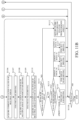
- FIG. 1 is a block diagram of the image pickup apparatus 100.
- the image pickup apparatus 100 may have a structure in which a camera body and an imaging optical system (optical system) are integrated with each other, or a structure in which the imaging optical system (interchangeable lens) is attachable to and detachable from the camera body.
- the imaging optical system includes a zoom lens 101 that moves in a direction along an optical axis OA (optical axis direction) to change a focal length, a focus lens 102 that moves in the optical axis direction for focusing, and an aperture stop (diaphragm) unit 103 that adjusts a light amount.
- the light that has passed through the imaging optical system forms an object image as an optical image on an image sensor 106 via a bandpass filter (BPF) 104 and a color filter 105.
- BPF bandpass filter
- the BPF 104 may be insertable into and ejectable from an optical path of the imaging optical system.
- the image sensor 106 is a CMOS sensor or a CCD sensor, and performs a photoelectric conversion for the object image that has been formed via the imaging optical system to output an analog electric signal (imaging signal).
- the analog electric signal that has been output from the image sensor 106 is gain-controlled by an AGC 107, converted into a digital signal by an A/D converter 108, and then input to a camera signal processing unit 109.
- the camera signal processing unit 109 performs various image processing for the digital imaging signal to generate a video signal.
- the video signal is output to a surveillance monitor apparatus 111 that is connected to the image pickup apparatus 100 by wire or wireless communication via a communication unit 110.
- the surveillance monitor apparatus 111 Upon receiving an instruction from a user, the surveillance monitor apparatus 111 outputs a control signal such as a command to each of an evaluation value acquiring area setting unit 112, a tilt control unit 115, a focus control unit 116, and a zoom control unit 117 in the image pickup apparatus 100 via the communication unit 110.
- the evaluation value acquiring area setting unit 112 sets an area (evaluation value acquiring area) to be focused based on an instruction from the communication unit 110.
- the focusing method determining unit (first determination unit) 113 determines a focusing control method according to the area that has been set by the evaluation value acquiring area setting unit 112.
- the evaluation value calculating unit (second determination unit) 114 acquires (calculates or determines) an evaluation value relating to a contrast in the area that has been set by the evaluation value acquiring area setting unit 112 from the A/D converter 108 or the camera signal processing unit 109.
- the tilt control unit (control unit) 115 instructs a tilt driving unit 118 on a tilt set position based on the focusing method that has been determined by the focusing method determining unit 113 and the evaluation value that has been calculated (determined) by the evaluation value calculating unit 114.
- the focus control unit (control unit) 116 instructs a focus driving unit 119 on a focus set position based on the focusing method that has been determined by the focusing method determining unit 113 and the evaluation value that has been calculated by the evaluation value calculating unit 114.
- the zoom control unit 117 instructs a zoom driving unit 120 on a zoom set position based on the instruction from the communication unit 110.
- the tilt driving unit 118 drives the image sensor 106 based on the tilt set position that has been instructed by the tilt control unit 115.
- the focus driving unit 119 drives the focus lens 102 based on the focus set position that has been instructed by the focus control unit 116.
- the zoom driving unit 120 drives the zoom lens 101 based on the zoom set position that has been instructed by the zoom control unit 117.
- FIG. 2 explains the tilt control, and illustrates an example of the tilt control such that faces of two objects A and B are in focus which are located within an imaging angle of view at different distances from the image pickup apparatus 100.
- the principle of tilt control is called the Scheimpflug principle, in which when an optical system principal plane 201 and an imaging plane 202 intersect each other at one point (Scheimpflug point 204), a focal plane 203 also intersects them at that point.
- a tilt angle ⁇ is calculated by the following expression (1) where F is a focal length, L is an object distance, and ⁇ is a depression angle.
- ⁇ tan ⁇ 1 f/Ltan ⁇
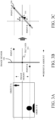
- FIGs. 3A to 3C explain a target scene for the tilt control, and a tilt angle correcting amount ⁇ and a focus position correcting amount ⁇ suitable for the scene.
- the scene in FIG. 3A illustrates two objects A and B located at different distances from the image pickup apparatus 100.
- FIG. 3B schematically illustrates a relationship among a position of the image sensor 106, an in-focus position of the object A (point A), and an in-focus position of the object B (point B) for the scene illustrated in FIG. 3A .
- a vertical position of each of the object A and B represents an image height
- a horizontal distance of each of the object A and B from the image sensor 106 represents a defocus amount.
- the image sensor 106 may be driven by the tilt angle correcting amount ⁇ (tilt angle ⁇ ) and the focus lens 102 may be driven by the focus position correcting amount ⁇ so that the imaging plane 202 is aligned with (contains) the points A and B as illustrated in FIG. 3C .
- FIGs. 4 to 6 a description will be given of an example of a control determination condition for gradually bringing both the objects A and B located in the two areas closer to in-focus states by determining the next control based on evaluation value changes of the two, front and back, areas, in a case where the focus position and the tilt angle are slightly driven.
- FIG. 4 explains the next control that is determined based on the evaluation value change.
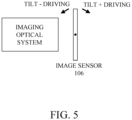
- FIG. 5 explains a tilt driving direction.
- tilt + driving and tilt - driving are defined as tilt driving in plus (+) and minus (-) direction illustrated in FIG. 5 .
- FIG. 6 schematically illustrates a positional relationship between the image sensor 106 and the points A and B in a case where control is made for focusing on the points A and B based on the determination condition illustrated in FIG. 4 . Since the tilt driving and the focus driving change the relative positional relationship between the image sensor 106 and the focus lens 102, either the image sensor 106 or the focus lens 102 may be driven. As illustrated in FIG. 6 , focusing on the points A and B is available by determining the next control based on the evaluation value change in the case of fine tilt or focus driving.
- FIGs. 7A and 7B explain a scene in this embodiment.
- FIG. 7A illustrates the scene for tilt control in a case where the object B is located near a position corresponding to a tilt axis 301 in a captured image.
- FIG. 7B schematically illustrates a relationship between the position of the image sensor 106, the in-focus position of the object A (point A), and the in-focus position of the object B (point B) for the scene illustrated in FIG. 7A .
- a vertical position of each of the object A and B represents an image height
- a horizontal distance of each of the object A and B from the image sensor 106 represents a defocus amount.
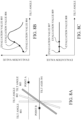
- FIGs. 8A to 8C explain an evaluation value change in a scene.
- FIG. 8A illustrates a positional relationship among the tilt axis 301, tilt angles 801 to 803, and the points A and B.
- FIGs. 8B and 8C illustrate evaluation value changes at the points A and B, respectively, in a case where the tilt angle is changed to the tilt angles 801, 802, and 803.
- a horizontal axis indicates the tilt angle
- a vertical axis indicates the evaluation value.
- Evaluation values 804, 805, and 806 for the point A in FIG. 8B and evaluation values 807, 808, and 809 for the point B in FIG. 8C correspond to the evaluation values for the tilt angles 801, 802, and 803, respectively.
- the tilt + driving brings the positions of the point A and the image sensor 106 closer to each other, and the evaluation value is increased as illustrated in FIG. 8B .
- the tilt driving does not change the evaluation value as illustrated in FIG. 8C .
- the tilt driving does not change the evaluation value on the tilt axis 301, and if control is made based on the determination condition illustrated in FIG.
- control for the in-focus state may not be made due to an erroneous determination.
- the tilt axis 301 is located at, but is not limited to, a specific position, such as a horizontal direction of a central part, in the image.
- FIG. 9 a description will be given of a control method (focusing control) according to a first embodiment.
- this embodiment relates to a focusing control method in a scene in which an object is located at a position corresponding to the tilt axis 301 in a captured image.
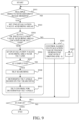
- FIG. 9 illustrates a flowchart of the control method according to this embodiment.
- the evaluation value acquiring area setting unit 112 determines whether or not there are a plurality of objects having different image heights in the scene.
- the object may be detected by the object detection in the image pickup apparatus 100, or the determination may be made according to the instruction (operation) from the user via the surveillance monitor apparatus 111. If it is determined that there are not the plurality of objects having different image heights, the flow proceeds to the step S902. If it is determined in the step S901 that there are not the plurality of objects having different image heights, it is unnecessary to increase the depth of field by the tilt control. Therefore, in the step S902, the focus control unit 116 performs autofocus (AF) control for one certain object, and proceeds to the step S911.
- AF autofocus
- the flow proceeds to the step S903.
- the evaluation value acquiring area setting unit 112 sets two areas having different image heights among the plurality of objects to evaluation value acquiring areas.
- the evaluation value acquiring area may be either an area in which the object is detected by the object detection or an area designated by the user.
- the focusing method determining unit 113 determines whether any of the two evaluation value acquiring areas set in the step 5903 exists near the position corresponding to the tilt axis in the captured image. In a case where it is determined that neither of the two evaluation value acquiring areas exists near the position corresponding to the tilt axis in the captured image, the flow proceeds to the step S905. On the other hand, in a case where it is determined that any of the two evaluation value acquiring areas exists near the position corresponding to the tilt axis in the captured image, the flow proceeds to a focusing control method (steps S906 to S910) enclosed by a dotted line.
- Whether or not the evaluation value acquiring area exists near the position corresponding to the tilt axis in the captured image can be determined by calculating a difference in distance between the position of the evaluation value acquiring area and the position of the tilt axis (rotation axis of the tilt driving unit) and by determining whether the difference is smaller than a predetermined threshold.
- the predetermined threshold may be set based on a depth of field that is determined based on a focal length, an object distance, and an F-number. The predetermined threshold may be set smaller as the depth of field is shallower and set larger as the depth of field is deeper.
- the predetermined threshold is a first threshold in a case where the depth of field is shallower than the predetermined depth of field, and the predetermined threshold is a second threshold larger than the first threshold in a case where the depth of field is deeper than the predetermined depth of field.
- the flow proceeds to the step S905.
- the tilt control unit 115 and the focus control unit 116 perform control as illustrated in FIG. 6 based on the determination condition illustrated in FIG. 4 . Thereby, control can be made such that the objects A and B located in the two evaluation value acquiring areas are in the in-focus state.
- step S904 the flow proceeds to step S906.
- the evaluation value calculating unit 114 and the focus control unit 116 perform AF in the evaluation value acquiring area that has been determined to exist near the position corresponding to the tilt axis in the captured image, and perform control that fixes a focus position (one-shot AF).
- the focus control unit 116 determines whether or not the evaluation value acquiring area existing near the tilt axis is in the in-focus state on the obj ect, that is, whether or not the one-shot AF is completed. In a case where it is determined that it is not in the in-focus state on the object, it is conceivable that the object has moved from the evaluation value acquiring area set in the step S903. Therefore, the steps S901 to S907 are repeated.
- the flow proceeds to the step S908.
- the tilt control unit 115 and the evaluation value calculating unit 114 search an evaluation value different from the evaluation value acquiring area existing near the position corresponding to the tilt axis in the captured image among the two evaluation value acquiring areas, for an evaluation value peak while changing the tilt angle (perform tilt searching).
- the tilt control unit 115 determines a tilt angle when the evaluation value is maximum, based on a tilt searching result in the step S908.
- the tilt control unit 115 performs the tilt control based on the tilt angle that has been determined in the step S909.
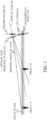
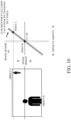
- FIG. 10 illustrates the procedure of the steps S906 to S910 (focusing control method) illustrated in FIG. 9 .
- FIG. 10 illustrates the procedure of the steps S906 to S910.
- a vertical position of each of the object A and B represents an image height
- a horizontal distance of each of the object A and B from the image sensor 106 represents a defocus amount.
- Tilt control can be made such that the points A and B are in focus by performing the one-shot AF for the evaluation value acquiring area that has been set to the object B located at the position corresponding to the tilt axis in the captured image, and by performing tilt searching in the evaluation value acquiring area that has been set to the object A.
- the evaluation value calculating unit 114 determines whether or not both of the two evaluation value acquiring areas are in focus (whether or not they are in the in-focus states). In a case where at least one of the two evaluation value acquiring areas is not in focus, the steps S901 to S911 are repeated. On the other hand, in a case where both of the two evaluation value acquiring areas are in focus, this flow is terminated.
- This embodiment can thus provide highly accurate focusing even in a case where an evaluation value acquiring area is set to a position corresponding to a tilt axis in a captured image.
- FIGs. 11A and 11B a description will be given of a control method (focusing control) according to a second embodiment. As illustrated in FIGs. 7A and 7B , this embodiment relates to a focusing control method in a scene in which an object exists on the tilt axis 301.
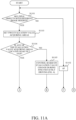
- FIGs. 11A and 11B illustrate a flowchart of the control method according to this embodiment. Since the steps S1101 to S1105 in FIGs. 11A and 11B are the same as the steps S901 to S905 in FIG. 9 , a description thereof will be omitted.
- step S1104 determines whether any of the two evaluation value acquiring areas exists near the position corresponding to the tilt axis in the captured image.
- the flow proceeds to the focusing control method (steps S1106 to S1117) enclosed by a dotted line.
- the steps S1106 to S1117 illustrate the focusing control method for determining the next control based on evaluation value changes of the two, front and back, evaluation value acquiring areas, in a case of fine focus driving toward an infinity end or side (Far) and a close (short distance) end or side (Near).
- FIG. 12 illustrates an example of a determination condition in the focusing control method in this embodiment, and explains the next control based on the evaluation value change.
- the next control is not determined based on an evaluation value change in the case of the tilt driving. This is because, as illustrated in FIGs. 8A to 8C , in a case where the evaluation value acquiring area exists at the position corresponding to the tilt axis in the captured image, the evaluation value of the evaluation value acquiring area is not changed by the tilt driving, the determination using this evaluation value causes an error, and the next control cannot be correctly determined.
- FIGs. 13A to 13M explain the control method according to this embodiment, and schematically illustrate a case where control is made for focusing on the points A and B based on the determination condition of FIG. 12 .
- the evaluation value calculating unit 114 calculates (acquires) a current evaluation value R in each of the two evaluation value acquiring areas set in the step S1103.
- the current evaluation value R is an evaluation value in a state before the focus driving illustrated by dotted lines in FIGs. 13B to 13L .
- the current evaluation value R is used for end determination processing (S1111) for stopping the focusing operation in a case where a pre-focus driving state has already been in the in-focus state on the points A and B and the evaluation value decreases in any of the focus Far driving and the focus Near driving.
- the focus control unit 116 provides fine focus Far driving by a predetermined amount.
- the image sensor 106 may be driven instead of the focus lens 102.
- the image sensor 106 illustrated by solid lines on the Far side of the image sensor 106 illustrated by dotted lines represents the image sensor 106 as a result of the fine Far driving by the predetermined amount.
- the evaluation value calculating unit 114 acquires an evaluation value Rfar of each of the two evaluation value acquiring areas that have been set in the step S1103.
- the focus control unit 116 provides fine focus Near driving by a predetermined amount.
- either the focus lens 102 or the image sensor 106 may be driven similarly to the case of the focus Far driving.
- the image sensor 106 illustrated by the solid lines on the Near side of the image sensor 106 illustrated by the dotted lines represents the image sensor 106 as a result of the fine focus Near driving by the predetermined amount.
- the evaluation value calculating unit 114 acquires the evaluation value Rnear of each of the two evaluation value acquiring areas set in the step S1103.
- the evaluation value calculating unit 114 compares the current evaluation value R acquired in the step S1106 with each of Rfar and Rnear acquired in the steps S1108 and S1110 of each of the two evaluation value acquiring areas.
- the evaluation value calculating unit 114 determines whether or not the evaluation value is increased by the focus Far or Near driving of any of the two evaluation value acquiring areas. In a case where the evaluation values of all the evaluation value acquiring areas are not increased by the focus Far or Near driving ( FIG. 13L ), the pre-focus driving position becomes a proper focus position.
- step S1111 In a case where it is determined in the step S1111 that the evaluation values of both of the two evaluation value acquiring areas are not increased by the focus Far or Near driving (Rfar ⁇ Rand Rnear ⁇ R), the flow proceeds to the step S1112. In the step S1112, the focus control unit 116 returns to the state before the focus driving ( FIG. 13M ). On the other hand, in a case where it is determined in the step S1111 that the evaluation value of any of the two evaluation value acquiring areas is increased by the focus Far or Near driving (Rfar > R or Rnear > R), the flow proceeds to the step S1113.
- the evaluation value calculating unit 114 determines a focus direction (evaluation value increasing direction) in which the evaluation value of each of the two evaluation value acquiring areas increases, based on the evaluation values Rfar and Rnear acquired in the steps S1108 and S1110.
- the evaluation value calculating unit 114 determines control to be performed next according to the determination condition illustrated in FIG. 12 .
- FIGs. 13B, 13D, 13F, and 13H in the case of focus Far and Near driving, the evaluation value of the front evaluation value acquiring area becomes larger in the focus Near driving, and the evaluation value of the back evaluation value acquiring area becomes larger in the focus Far driving.
- the control to be performed next becomes tilt + driving.
- FIG. 13J the evaluation values of both the front and back evaluation value acquiring areas become larger in the focus Near driving. In this case, the next control to be performed is focus Near driving.
- the focus control unit 116 or the tilt control unit 115 provides fine focus or tilt driving by a predetermined amount based on the next control determined based on the determination result ( FIGs. 13C, 13E, 13G, 13I, and 13K ).
- the flow proceeds to the step S1118.
- the evaluation value calculating unit 114 determines whether or not both of the two evaluation value acquiring areas are in focus (whether or not they are in the in-focus states). In a case where at least one of the two evaluation value acquiring areas is not in the in-focus state, the steps S1101 to S1118 are repeated. On the other hand, in a case where both of the two evaluation value acquiring areas are in the in-focus states, this flow is terminated.
- This embodiment can provide highly accurate focusing even in a case where the evaluation value acquiring area is set near the position corresponding to the tilt axis.
- the focusing method is switched based on the determination result of whether or not the evaluation value acquiring area exists near the position corresponding to the tilt axis in the captured image.
- the focusing method may be switched by making the determination based on the size of the evaluation value change amount caused by the tilt driving.
- FIG. 14 illustrates a relationship between a distance of the evaluation value acquiring area from the position corresponding to the tilt axis and an evaluation value changing amount.
- a horizontal axis represents the distance of the evaluation value acquiring area from the position corresponding to the tilt axis
- a vertical axis represents the evaluation value changing amount.
- the evaluation value changing amount increases as the distance of the evaluation value acquiring area from the position corresponding to the tilt axis in the captured image increases.
- the evaluation value acquiring area near the position corresponding to the tilt axis in the captured image has a smaller predetermined threshold for the evaluation value change, and an evaluation value acquiring area farther from the position corresponding to the tilt axis has a larger predetermined threshold for the evaluation value change.
- the control apparatus includes the tilt driving unit 118, the focus driving unit 119, the control unit (tilt control unit 115 and focus control unit 116), and the first determination unit (focusing method determining unit 113).
- the tilt driving unit performs tilt driving by changing the tilt of at least one of the image sensor 106 and the optical system (imaging optical system).
- the focus driving unit performs focus driving by moving in the optical axis direction the focus lens 102, which constitutes at least part of the optical system.
- the control apparatus may further include the second determination unit (evaluation value calculating unit 114) that determines the evaluation value relating to the in-focus level (evaluation value regarding contrast) of each of the plurality of areas in an image.
- the control unit controls the focus driving unit and the tilt driving unit for focusing on each of at least the first area and the second area (at least two evaluation value acquiring areas) among the plurality of areas.
- the first determination unit determines the control method of the control unit based on whether or not the difference in distance between the position of at least one of the first area and the second area and the position corresponding to the tilt axis in the image is smaller than the predetermined threshold.
- the predetermined threshold may be set based on a depth of field.
- the predetermined threshold may be the first threshold in a case where the depth of field is shallower than a predetermined depth of field, and the predetermined threshold is the second threshold larger than the first threshold in a case where the depth of field is deeper than the predetermined depth of field.
- the first determination unit may set the control method to the first method in a case where the difference in distance between the position of at least one of the first area and the second area and the position corresponding to the tilt axis is larger than the predetermined threshold.
- the first determination unit may set the control method to the second method in a case where the difference in distance between the position of at least one of the first area and the second area and the position corresponding to the tilt axis is smaller than the predetermined threshold.
- the control unit may control the focus driving unit or the tilt driving unit based on the evaluation value change of the first area and the second area during the focus driving or the tilt driving.
- the control unit may perform control based on the evaluation value change of at least one of the first area and the second area during the focus driving, and the control unit performs control based on the evaluation value change of an area of the first area and the second area during the tilt driving in which the difference in distance is determined to be larger than the predetermined threshold.
- the control unit may control, through the focus driving, for focusing on an area of the first area and the second area in which the difference in distance is determined to be smaller than the predetermined threshold, and then performs control, through the tilt driving, for focusing on an area of the first area and the second area in which the difference in distance is determined to be larger than the predetermined threshold.
- the control unit may control the focus driving unit and the tilt driving unit based on the evaluation value change of each of the first area and the second area during the focus driving.
- the control unit may determine that there is the evaluation value change in a case where an evaluation value changing amount caused by the focus driving and the tilt driving is larger than a predetermined evaluation value changing amount.
- the predetermined evaluation value changing amount caused by the tilt driving may be a first evaluation value changing amount in a case where the difference in distance is the first difference.
- the predetermined evaluation value changing amount caused by the tilt driving may be the second evaluation value changing amount larger than the first evaluation value changing amount in a case where the difference in distance is a second difference larger than the first difference.
- the control unit may set the second method in a case where it is determined that there is no evaluation value change caused by the tilt driving.
- the first area and the second area may be at least one of an area designated by the user and an area in which an object is detected by an object detection.
- Embodiment(s) of the present invention can also be realized by a computer of a system or apparatus that reads out and executes computer executable instructions (e.g., one or more programs) recorded on a storage medium (which may also be referred to more fully as a 'non-transitory computer-readable storage medium') to perform the functions of one or more of the above-described embodiment(s) and/or that includes one or more circuits (e.g., application specific integrated circuit (ASIC)) for performing the functions of one or more of the above-described embodiment(s), and by a method performed by the computer of the system or apparatus by, for example, reading out and executing the computer executable instructions from the storage medium to perform the functions of one or more of the above-described embodiment(s) and/or controlling the one or more circuits to perform the functions of one or more of the above-described embodiment(s).
- computer executable instructions e.g., one or more programs
- a storage medium which may also be referred to more fully as
- the computer may comprise one or more processors (e.g., central processing unit (CPU), micro processing unit (MPU)) and may include a network of separate computers or separate processors to read out and execute the computer executable instructions.
- the computer executable instructions may be provided to the computer, for example, from a network or the storage medium.
- the storage medium may include, for example, one or more of a hard disk, a random-access memory (RAM), a read only memory (ROM), a storage of distributed computing systems, an optical disk (such as a compact disc (CD), digital versatile disc (DVD), or Blu-ray Disc (BD) TM ), a flash memory device, a memory card, and the like.
- the present invention provides a control apparatus, an image pickup apparatus, a control method, and a storage medium (program), each of which can provide focusing with high accuracy by switching a focusing control method according to a position of an area for calculating an evaluation value relating to an in-focus level.
Landscapes
- Engineering & Computer Science (AREA)
- Multimedia (AREA)
- Signal Processing (AREA)
- Computing Systems (AREA)
- Theoretical Computer Science (AREA)
- Physics & Mathematics (AREA)
- General Physics & Mathematics (AREA)
- Studio Devices (AREA)
- Automatic Focus Adjustment (AREA)
Applications Claiming Priority (1)
| Application Number | Priority Date | Filing Date | Title |
|---|---|---|---|
| JP2021071557A JP7731692B2 (ja) | 2021-04-21 | 2021-04-21 | 制御装置、撮像装置、制御方法、およびプログラム |
Publications (2)
| Publication Number | Publication Date |
|---|---|
| EP4084465A1 EP4084465A1 (en) | 2022-11-02 |
| EP4084465B1 true EP4084465B1 (en) | 2025-01-08 |
Family
ID=81579698
Family Applications (1)
| Application Number | Title | Priority Date | Filing Date |
|---|---|---|---|
| EP22168950.8A Active EP4084465B1 (en) | 2021-04-21 | 2022-04-20 | Control apparatus, image pickup apparatus, control method, and program |
Country Status (4)
| Country | Link |
|---|---|
| US (1) | US11678072B2 (https=) |
| EP (1) | EP4084465B1 (https=) |
| JP (1) | JP7731692B2 (https=) |
| CN (1) | CN115225808B (https=) |
Family Cites Families (18)
| Publication number | Priority date | Publication date | Assignee | Title |
|---|---|---|---|---|
| US9955057B2 (en) * | 2015-12-21 | 2018-04-24 | Qualcomm Incorporated | Method and apparatus for computational scheimpflug camera |
| JP6838417B2 (ja) | 2016-03-16 | 2021-03-03 | リコーイメージング株式会社 | 撮影装置 |
| US10341567B2 (en) | 2016-03-16 | 2019-07-02 | Ricoh Imaging Company, Ltd. | Photographing apparatus |
| US11184524B2 (en) * | 2016-11-25 | 2021-11-23 | Sony Group Corporation | Focus control device, focus control method, program, and imaging device |
| CN108616693A (zh) | 2018-05-22 | 2018-10-02 | 长沙全度影像科技有限公司 | 一种用于子弹时间的对焦方法及对焦系统 |
| JP7271132B2 (ja) * | 2018-10-26 | 2023-05-11 | キヤノン株式会社 | 撮像装置および監視システム |
| JP7383436B2 (ja) | 2018-10-30 | 2023-11-20 | キヤノン株式会社 | 撮像装置 |
| KR102510704B1 (ko) * | 2018-10-30 | 2023-03-16 | 캐논 가부시끼가이샤 | 촬상 장치 |
| JP7210246B2 (ja) * | 2018-11-30 | 2023-01-23 | キヤノン株式会社 | 撮像装置、撮像装置の制御方法、情報処理装置、撮像システム、プログラム、および、記憶媒体 |
| JP7271159B2 (ja) * | 2018-12-14 | 2023-05-11 | キヤノン株式会社 | 制御装置、撮像装置、レンズ装置、プログラム、および制御装置の制御方法 |
| US11159711B2 (en) * | 2019-01-17 | 2021-10-26 | Canon Kabushiki Kaisha | Image-capturing apparatus |
| JP7463078B2 (ja) | 2019-01-17 | 2024-04-08 | キヤノン株式会社 | 撮像装置 |
| JP7271220B2 (ja) * | 2019-02-26 | 2023-05-11 | キヤノン株式会社 | 撮像装置、撮像装置の制御方法、プログラム、および、記憶媒体 |
| JP7433848B2 (ja) * | 2019-03-15 | 2024-02-20 | キヤノン株式会社 | 撮像装置、コンピュータプログラム、記憶媒体および撮像制御方法 |
| CN110290315B (zh) | 2019-06-14 | 2021-04-27 | 浙江大华技术股份有限公司 | 用于云台摄像机的跟踪聚焦方法、装置、摄像机和介质 |
| JP7362360B2 (ja) | 2019-08-29 | 2023-10-17 | キヤノン株式会社 | 制御装置、撮像装置、レンズ装置、および、プログラム |
| JP7305485B2 (ja) * | 2019-08-29 | 2023-07-10 | キヤノン株式会社 | 制御装置、撮像装置、レンズ装置、制御方法、および、プログラム |
| JP7471799B2 (ja) * | 2019-11-12 | 2024-04-22 | キヤノン株式会社 | 制御装置、撮像装置、制御方法、および、プログラム |
-
2021
- 2021-04-21 JP JP2021071557A patent/JP7731692B2/ja active Active
-
2022
- 2022-04-18 US US17/722,912 patent/US11678072B2/en active Active
- 2022-04-20 EP EP22168950.8A patent/EP4084465B1/en active Active
- 2022-04-21 CN CN202210423091.4A patent/CN115225808B/zh active Active
Also Published As
| Publication number | Publication date |
|---|---|
| CN115225808A (zh) | 2022-10-21 |
| EP4084465A1 (en) | 2022-11-02 |
| US20220345635A1 (en) | 2022-10-27 |
| CN115225808B (zh) | 2025-04-25 |
| US11678072B2 (en) | 2023-06-13 |
| JP2022166384A (ja) | 2022-11-02 |
| JP7731692B2 (ja) | 2025-09-01 |
Similar Documents
| Publication | Publication Date | Title |
|---|---|---|
| KR102543478B1 (ko) | 촬상 장치, 촬상 장치의 제어 방법, 프로그램 및 저장 매체 | |
| EP3477355A1 (en) | Lens control apparatus, imaging apparatus including lens control apparatus, and lens control method | |
| JP2008009341A (ja) | オートフォーカス装置、撮像装置及びオートフォーカス方法 | |
| EP1885119A2 (en) | Image-pickup apparatus and focus control method | |
| EP3832368B1 (en) | Imaging focus and tilt control apparatus, method and program | |
| JP2008032963A (ja) | 光学装置、撮像装置及びその制御方法 | |
| US11582394B2 (en) | Control apparatus, control method, and storage medium for providing tilt control | |
| US10542202B2 (en) | Control apparatus that performs focusing by imaging-plane phase difference AF, image capturing apparatus, control method, and non-transitory computer-readable storage medium | |
| EP1895768B1 (en) | Focus adjustment apparatus, image pickup apparatus, and control method | |
| EP3799417A1 (en) | Control apparatus, image pickup apparatus, control method, and program | |
| US12395732B2 (en) | Focusing apparatus, image pickup apparatus, focusing method, and storage medium, which can provide stable focusing | |
| JP2013083843A (ja) | 光学機器、レンズ鏡筒および自動焦点調節方法 | |
| CN112422811B (zh) | 透镜控制设备、控制方法和存储介质 | |
| EP4084465B1 (en) | Control apparatus, image pickup apparatus, control method, and program | |
| US20190320122A1 (en) | Control apparatus, image capturing apparatus, control method, and non-transitory computer-readable storage medium | |
| JP5446720B2 (ja) | 焦点検出装置、撮像装置 | |
| JP4900134B2 (ja) | 焦点調節装置、カメラ | |
| US10530985B2 (en) | Image capturing apparatus, image capturing system, method of controlling image capturing apparatus, and non-transitory computer-readable storage medium | |
| JP6900228B2 (ja) | 撮像装置、撮像システム、撮像装置の制御方法、および、プログラム | |
| JP4994733B2 (ja) | 自動焦点調節装置および撮像装置 | |
| JP5930979B2 (ja) | 撮像装置 | |
| JP5389117B2 (ja) | 撮像装置、自動焦点調節装置及び自動焦点調節方法 | |
| JP5089098B2 (ja) | 焦点調節装置、撮像装置、および制御方法 | |
| JP2008026804A (ja) | 自動焦点検出装置、撮像装置、および制御方法 | |
| JP2008026786A (ja) | 撮像装置及びフォーカス制御方法 |
Legal Events
| Date | Code | Title | Description |
|---|---|---|---|
| PUAI | Public reference made under article 153(3) epc to a published international application that has entered the european phase |
Free format text: ORIGINAL CODE: 0009012 |
|
| STAA | Information on the status of an ep patent application or granted ep patent |
Free format text: STATUS: THE APPLICATION HAS BEEN PUBLISHED |
|
| AK | Designated contracting states |
Kind code of ref document: A1 Designated state(s): AL AT BE BG CH CY CZ DE DK EE ES FI FR GB GR HR HU IE IS IT LI LT LU LV MC MK MT NL NO PL PT RO RS SE SI SK SM TR |
|
| STAA | Information on the status of an ep patent application or granted ep patent |
Free format text: STATUS: REQUEST FOR EXAMINATION WAS MADE |
|
| 17P | Request for examination filed |
Effective date: 20230502 |
|
| RBV | Designated contracting states (corrected) |
Designated state(s): AL AT BE BG CH CY CZ DE DK EE ES FI FR GB GR HR HU IE IS IT LI LT LU LV MC MK MT NL NO PL PT RO RS SE SI SK SM TR |
|
| REG | Reference to a national code |
Ref country code: DE Ref legal event code: R079 Free format text: PREVIOUS MAIN CLASS: H04N0005232000 Ipc: H04N0023670000 Ref country code: DE Ref legal event code: R079 Ref document number: 602022009485 Country of ref document: DE Free format text: PREVIOUS MAIN CLASS: H04N0005232000 Ipc: H04N0023670000 |
|
| GRAP | Despatch of communication of intention to grant a patent |
Free format text: ORIGINAL CODE: EPIDOSNIGR1 |
|
| STAA | Information on the status of an ep patent application or granted ep patent |
Free format text: STATUS: GRANT OF PATENT IS INTENDED |
|
| RIC1 | Information provided on ipc code assigned before grant |
Ipc: H04N 23/55 20230101ALN20240723BHEP Ipc: H04N 23/54 20230101ALN20240723BHEP Ipc: H04N 23/959 20230101ALI20240723BHEP Ipc: H04N 23/67 20230101AFI20240723BHEP |
|
| INTG | Intention to grant announced |
Effective date: 20240802 |
|
| RAP3 | Party data changed (applicant data changed or rights of an application transferred) |
Owner name: CANON KABUSHIKI KAISHA |
|
| RIN1 | Information on inventor provided before grant (corrected) |
Inventor name: KAWASAKI, RYO Inventor name: SATO, NATSUKO |
|
| GRAS | Grant fee paid |
Free format text: ORIGINAL CODE: EPIDOSNIGR3 |
|
| GRAA | (expected) grant |
Free format text: ORIGINAL CODE: 0009210 |
|
| STAA | Information on the status of an ep patent application or granted ep patent |
Free format text: STATUS: THE PATENT HAS BEEN GRANTED |
|
| AK | Designated contracting states |
Kind code of ref document: B1 Designated state(s): AL AT BE BG CH CY CZ DE DK EE ES FI FR GB GR HR HU IE IS IT LI LT LU LV MC MK MT NL NO PL PT RO RS SE SI SK SM TR |
|
| REG | Reference to a national code |
Ref country code: GB Ref legal event code: FG4D |
|
| REG | Reference to a national code |
Ref country code: CH Ref legal event code: EP |
|
| REG | Reference to a national code |
Ref country code: DE Ref legal event code: R096 Ref document number: 602022009485 Country of ref document: DE |
|
| REG | Reference to a national code |
Ref country code: IE Ref legal event code: FG4D |
|
| REG | Reference to a national code |
Ref country code: LT Ref legal event code: MG9D |
|
| REG | Reference to a national code |
Ref country code: NL Ref legal event code: MP Effective date: 20250108 |
|
| REG | Reference to a national code |
Ref country code: AT Ref legal event code: MK05 Ref document number: 1759094 Country of ref document: AT Kind code of ref document: T Effective date: 20250108 |
|
| PG25 | Lapsed in a contracting state [announced via postgrant information from national office to epo] |
Ref country code: NL Free format text: LAPSE BECAUSE OF FAILURE TO SUBMIT A TRANSLATION OF THE DESCRIPTION OR TO PAY THE FEE WITHIN THE PRESCRIBED TIME-LIMIT Effective date: 20250108 |
|
| PG25 | Lapsed in a contracting state [announced via postgrant information from national office to epo] |
Ref country code: RS Free format text: LAPSE BECAUSE OF FAILURE TO SUBMIT A TRANSLATION OF THE DESCRIPTION OR TO PAY THE FEE WITHIN THE PRESCRIBED TIME-LIMIT Effective date: 20250408 |
|
| PG25 | Lapsed in a contracting state [announced via postgrant information from national office to epo] |
Ref country code: PL Free format text: LAPSE BECAUSE OF FAILURE TO SUBMIT A TRANSLATION OF THE DESCRIPTION OR TO PAY THE FEE WITHIN THE PRESCRIBED TIME-LIMIT Effective date: 20250108 |
|
| PGFP | Annual fee paid to national office [announced via postgrant information from national office to epo] |
Ref country code: DE Payment date: 20250319 Year of fee payment: 4 |
|
| PG25 | Lapsed in a contracting state [announced via postgrant information from national office to epo] |
Ref country code: ES Free format text: LAPSE BECAUSE OF FAILURE TO SUBMIT A TRANSLATION OF THE DESCRIPTION OR TO PAY THE FEE WITHIN THE PRESCRIBED TIME-LIMIT Effective date: 20250108 |
|
| PG25 | Lapsed in a contracting state [announced via postgrant information from national office to epo] |
Ref country code: NO Free format text: LAPSE BECAUSE OF FAILURE TO SUBMIT A TRANSLATION OF THE DESCRIPTION OR TO PAY THE FEE WITHIN THE PRESCRIBED TIME-LIMIT Effective date: 20250408 Ref country code: IS Free format text: LAPSE BECAUSE OF FAILURE TO SUBMIT A TRANSLATION OF THE DESCRIPTION OR TO PAY THE FEE WITHIN THE PRESCRIBED TIME-LIMIT Effective date: 20250508 |
|
| PG25 | Lapsed in a contracting state [announced via postgrant information from national office to epo] |
Ref country code: HR Free format text: LAPSE BECAUSE OF FAILURE TO SUBMIT A TRANSLATION OF THE DESCRIPTION OR TO PAY THE FEE WITHIN THE PRESCRIBED TIME-LIMIT Effective date: 20250108 |
|
| PG25 | Lapsed in a contracting state [announced via postgrant information from national office to epo] |
Ref country code: LV Free format text: LAPSE BECAUSE OF FAILURE TO SUBMIT A TRANSLATION OF THE DESCRIPTION OR TO PAY THE FEE WITHIN THE PRESCRIBED TIME-LIMIT Effective date: 20250108 Ref country code: PT Free format text: LAPSE BECAUSE OF FAILURE TO SUBMIT A TRANSLATION OF THE DESCRIPTION OR TO PAY THE FEE WITHIN THE PRESCRIBED TIME-LIMIT Effective date: 20250508 |
|
| PG25 | Lapsed in a contracting state [announced via postgrant information from national office to epo] |
Ref country code: GR Free format text: LAPSE BECAUSE OF FAILURE TO SUBMIT A TRANSLATION OF THE DESCRIPTION OR TO PAY THE FEE WITHIN THE PRESCRIBED TIME-LIMIT Effective date: 20250409 Ref country code: BG Free format text: LAPSE BECAUSE OF FAILURE TO SUBMIT A TRANSLATION OF THE DESCRIPTION OR TO PAY THE FEE WITHIN THE PRESCRIBED TIME-LIMIT Effective date: 20250108 |
|
| PG25 | Lapsed in a contracting state [announced via postgrant information from national office to epo] |
Ref country code: AT Free format text: LAPSE BECAUSE OF FAILURE TO SUBMIT A TRANSLATION OF THE DESCRIPTION OR TO PAY THE FEE WITHIN THE PRESCRIBED TIME-LIMIT Effective date: 20250108 |
|
| PG25 | Lapsed in a contracting state [announced via postgrant information from national office to epo] |
Ref country code: SE Free format text: LAPSE BECAUSE OF FAILURE TO SUBMIT A TRANSLATION OF THE DESCRIPTION OR TO PAY THE FEE WITHIN THE PRESCRIBED TIME-LIMIT Effective date: 20250108 |
|
| PG25 | Lapsed in a contracting state [announced via postgrant information from national office to epo] |
Ref country code: SM Free format text: LAPSE BECAUSE OF FAILURE TO SUBMIT A TRANSLATION OF THE DESCRIPTION OR TO PAY THE FEE WITHIN THE PRESCRIBED TIME-LIMIT Effective date: 20250108 |
|
| REG | Reference to a national code |
Ref country code: DE Ref legal event code: R097 Ref document number: 602022009485 Country of ref document: DE |
|
| PG25 | Lapsed in a contracting state [announced via postgrant information from national office to epo] |
Ref country code: DK Free format text: LAPSE BECAUSE OF FAILURE TO SUBMIT A TRANSLATION OF THE DESCRIPTION OR TO PAY THE FEE WITHIN THE PRESCRIBED TIME-LIMIT Effective date: 20250108 |
|
| PG25 | Lapsed in a contracting state [announced via postgrant information from national office to epo] |
Ref country code: CZ Free format text: LAPSE BECAUSE OF FAILURE TO SUBMIT A TRANSLATION OF THE DESCRIPTION OR TO PAY THE FEE WITHIN THE PRESCRIBED TIME-LIMIT Effective date: 20250108 Ref country code: EE Free format text: LAPSE BECAUSE OF FAILURE TO SUBMIT A TRANSLATION OF THE DESCRIPTION OR TO PAY THE FEE WITHIN THE PRESCRIBED TIME-LIMIT Effective date: 20250108 |
|
| PG25 | Lapsed in a contracting state [announced via postgrant information from national office to epo] |
Ref country code: RO Free format text: LAPSE BECAUSE OF FAILURE TO SUBMIT A TRANSLATION OF THE DESCRIPTION OR TO PAY THE FEE WITHIN THE PRESCRIBED TIME-LIMIT Effective date: 20250108 |
|
| PG25 | Lapsed in a contracting state [announced via postgrant information from national office to epo] |
Ref country code: SK Free format text: LAPSE BECAUSE OF FAILURE TO SUBMIT A TRANSLATION OF THE DESCRIPTION OR TO PAY THE FEE WITHIN THE PRESCRIBED TIME-LIMIT Effective date: 20250108 |
|
| PLBE | No opposition filed within time limit |
Free format text: ORIGINAL CODE: 0009261 |
|
| STAA | Information on the status of an ep patent application or granted ep patent |
Free format text: STATUS: NO OPPOSITION FILED WITHIN TIME LIMIT |
|
| REG | Reference to a national code |
Ref country code: CH Ref legal event code: L10 Free format text: ST27 STATUS EVENT CODE: U-0-0-L10-L00 (AS PROVIDED BY THE NATIONAL OFFICE) Effective date: 20251119 |
|
| REG | Reference to a national code |
Ref country code: CH Ref legal event code: H13 Free format text: ST27 STATUS EVENT CODE: U-0-0-H10-H13 (AS PROVIDED BY THE NATIONAL OFFICE) Effective date: 20251125 |
|
| PG25 | Lapsed in a contracting state [announced via postgrant information from national office to epo] |
Ref country code: LU Free format text: LAPSE BECAUSE OF NON-PAYMENT OF DUE FEES Effective date: 20250420 |
|
| 26N | No opposition filed |
Effective date: 20251009 |
|
| PG25 | Lapsed in a contracting state [announced via postgrant information from national office to epo] |
Ref country code: MC Free format text: LAPSE BECAUSE OF FAILURE TO SUBMIT A TRANSLATION OF THE DESCRIPTION OR TO PAY THE FEE WITHIN THE PRESCRIBED TIME-LIMIT Effective date: 20250108 |
|
| REG | Reference to a national code |
Ref country code: BE Ref legal event code: MM Effective date: 20250430 |
|
| PG25 | Lapsed in a contracting state [announced via postgrant information from national office to epo] |
Ref country code: FR Free format text: LAPSE BECAUSE OF NON-PAYMENT OF DUE FEES Effective date: 20250430 |
|
| PG25 | Lapsed in a contracting state [announced via postgrant information from national office to epo] |
Ref country code: BE Free format text: LAPSE BECAUSE OF NON-PAYMENT OF DUE FEES Effective date: 20250430 |
|
| PG25 | Lapsed in a contracting state [announced via postgrant information from national office to epo] |
Ref country code: CH Free format text: LAPSE BECAUSE OF NON-PAYMENT OF DUE FEES Effective date: 20250430 |
|
| PG25 | Lapsed in a contracting state [announced via postgrant information from national office to epo] |
Ref country code: IT Free format text: LAPSE BECAUSE OF FAILURE TO SUBMIT A TRANSLATION OF THE DESCRIPTION OR TO PAY THE FEE WITHIN THE PRESCRIBED TIME-LIMIT Effective date: 20250108 |
|
| PG25 | Lapsed in a contracting state [announced via postgrant information from national office to epo] |
Ref country code: IE Free format text: LAPSE BECAUSE OF NON-PAYMENT OF DUE FEES Effective date: 20250420 |