EP4083207A1 - Verfahren zur unterdrückung der methylierung von ziel-dna in pflanzen - Google Patents
Verfahren zur unterdrückung der methylierung von ziel-dna in pflanzen Download PDFInfo
- Publication number
- EP4083207A1 EP4083207A1 EP20904326.4A EP20904326A EP4083207A1 EP 4083207 A1 EP4083207 A1 EP 4083207A1 EP 20904326 A EP20904326 A EP 20904326A EP 4083207 A1 EP4083207 A1 EP 4083207A1
- Authority
- EP
- European Patent Office
- Prior art keywords
- plant
- rna
- dna
- sirna
- methylation
- Prior art date
- Legal status (The legal status is an assumption and is not a legal conclusion. Google has not performed a legal analysis and makes no representation as to the accuracy of the status listed.)
- Granted
Links
Images




Classifications
-
- C—CHEMISTRY; METALLURGY
- C12—BIOCHEMISTRY; BEER; SPIRITS; WINE; VINEGAR; MICROBIOLOGY; ENZYMOLOGY; MUTATION OR GENETIC ENGINEERING
- C12N—MICROORGANISMS OR ENZYMES; COMPOSITIONS THEREOF; PROPAGATING, PRESERVING, OR MAINTAINING MICROORGANISMS; MUTATION OR GENETIC ENGINEERING; CULTURE MEDIA
- C12N15/00—Mutation or genetic engineering; DNA or RNA concerning genetic engineering, vectors, e.g. plasmids, or their isolation, preparation or purification; Use of hosts therefor
- C12N15/09—Recombinant DNA-technology
- C12N15/11—DNA or RNA fragments; Modified forms thereof; Non-coding nucleic acids having a biological activity
- C12N15/113—Non-coding nucleic acids modulating the expression of genes, e.g. antisense oligonucleotides; Antisense DNA or RNA; Triplex- forming oligonucleotides; Catalytic nucleic acids, e.g. ribozymes; Nucleic acids used in co-suppression or gene silencing
-
- C—CHEMISTRY; METALLURGY
- C12—BIOCHEMISTRY; BEER; SPIRITS; WINE; VINEGAR; MICROBIOLOGY; ENZYMOLOGY; MUTATION OR GENETIC ENGINEERING
- C12N—MICROORGANISMS OR ENZYMES; COMPOSITIONS THEREOF; PROPAGATING, PRESERVING, OR MAINTAINING MICROORGANISMS; MUTATION OR GENETIC ENGINEERING; CULTURE MEDIA
- C12N15/00—Mutation or genetic engineering; DNA or RNA concerning genetic engineering, vectors, e.g. plasmids, or their isolation, preparation or purification; Use of hosts therefor
- C12N15/09—Recombinant DNA-technology
- C12N15/63—Introduction of foreign genetic material using vectors; Vectors; Use of hosts therefor; Regulation of expression
- C12N15/79—Vectors or expression systems specially adapted for eukaryotic hosts
- C12N15/82—Vectors or expression systems specially adapted for eukaryotic hosts for plant cells, e.g. plant artificial chromosomes (PACs)
- C12N15/8216—Methods for controlling, regulating or enhancing expression of transgenes in plant cells
- C12N15/8218—Antisense, co-suppression, viral induced gene silencing [VIGS], post-transcriptional induced gene silencing [PTGS]
-
- A—HUMAN NECESSITIES
- A01—AGRICULTURE; FORESTRY; ANIMAL HUSBANDRY; HUNTING; TRAPPING; FISHING
- A01H—NEW PLANTS OR NON-TRANSGENIC PROCESSES FOR OBTAINING THEM; PLANT REPRODUCTION BY TISSUE CULTURE TECHNIQUES
- A01H1/00—Processes for modifying genotypes ; Plants characterised by associated natural traits
Definitions
- the present invention relates to a method for inhibiting methylation of target DNA in plants.
- RNA silencing Gene expression in plants is regulated by DNA methylation and chemical modification of histones, which are collectively known as epigenetic control. It occurs by the mechanism of RNA silencing, with RNA silencing being largely divided into two types: post-transcriptional gene silencing (PTGS) and transcriptional gene silencing (TGS). Plants depend on epigenetic control for regulation of levels of accumulation of functional components, and techniques for freely manipulating epigenetics are necessary to cause accumulation of useful components at high levels in plants. However, epigenetic control has been considered too complex for specifically removing methylation from target DNA.
- the present inventors have found, surprisingly, that in an RNA-directed DNA methylation mechanism, inhibiting binding of scaffold RNA produced by transcription of target DNA with siRNA-AGO4 complex allows methylation of the target DNA in the plants to be specifically inhibited.
- the main gist of the present invention is as follows.
- the present invention it is possible to inhibit methylation of target DNA in plants, thereby allowing convenient and rapid specific control of TGS of the target DNA. It is thereby possible to obtain plants with desired traits, thus greatly contributing to production of useful proteins or increased accumulation levels of functional components in plants.
- DNA methylation is known as one type of mechanism of epigenetics (NPL 2).
- the reaction includes either methyl group-addition reaction at the 5-position carbon atom of the pyrimidine ring of cytosine or the 6-position nitrogen atom of the purine ring of adenine, but it is believed that gene expression in plants is mainly controlled by methylation of cytosine. Specifically, methylation and demethylation of cytosine in DNA switches gene expression on and off without changing the nucleotide sequence information itself. Suppression of gene expression by DNA methylation is known as transcriptional gene silencing (TGS).
- TGS transcriptional gene silencing
- the present invention is based on the foundational concept that artificially controlling epigenetic regulation in plants allows alteration to desired plant phenotypes without gene recombination.
- DNA methyltransferases are currently classified into the two types of: de novo enzymes that create new methyl labeling on DNA, and: maintenance enzymes that recognize methylation locations on the DNA parent strand and transmit the new methylation to the daughter chain after DNA replication, and only DRM2 is known to be a de novo DNA methyltransferase. While it is not clearly understood how the locations for de novo DNA methylation are determined by cells, previous evidence suggests that the mechanism of RNA-directed DNA methylation (RdDM) is involved for most locations.
- RdDM RNA-directed DNA methylation
- the present invention is based on the finding that in an RNA-directed DNA methylation mechanism, inhibiting binding of scaffold RNA produced by transcription of target DNA with siRNA-AGO4 complex allows methylation of the target DNA in the plants to be specifically inhibited.
- the RNA-directed DNA methylation mechanism used for the present invention will therefore be explained first.
- the RdDM mechanism is a mechanism by which methylation of target DNA is induced via the DNA region that is the target of methylation (target DNA) and low molecular double stranded RNA (siRNA) at least partially having the same nucleotide sequence.
- first PolIV is recruited to the methylation target genome region and the RNA of the target region is transcribed.
- the PolIV transcription product is converted to double-stranded RNA by RNA-Dependent RNA Polymerase 2 (RDR2), and cleaved into 24-nucleotide siRNA by the RNaseIIIlike enzyme Dicer-like 3 (DCL3) (NPL 3).
- RDR2 RNA-Dependent RNA Polymerase 2
- DCL3 Dicer-like 3
- the siRNA is modified by methylation at the 3'-end by HUA Enhancer 1 (HEN1) and then taken up into Argonaut 4 (AGO4) to form a silencing effector complex (hereunder referred to as "siRNA-AGO4 complex").
- HEN1 HUA Enhancer 1
- AGO4 Argonaut 4
- siRNA taken up into the siRNA-AGO4 complex forms base pairs with RNA transcribed by DNA-dependent RNA polymerase V (PolV) (hereunder referred to as "scaffold RNA"), thereby recruiting the complex.
- PolyV DNA-dependent RNA polymerase V
- DRM2 Domains Rearranged Methyltransferase
- RNA-Directed DNA Methylation 1 RDM1
- DRM2 Defective In RNA-Directed DNA Methylation 1
- DMS3 Defective In Meristem Silencing 3
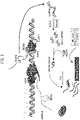
- RNA transcribed by PolIV and PolV from the target DNA (which have essentially the same sequences since they are transcribed from the same region, although the RNA transcribed by PolV is referred to specifically as "scaffold RNA”), have the function of bringing methyl group transferase DRM2 to the target DNA via binding with siRNA-AGO4 complex. Therefore, the siRNA-AGO4 complex is either captured by short RNA comprising a sequence complementary to the siRNA incorporated in the siRNA-AGO4 complex which has the role of recruiting DRM2 to the target sequence (hereunder referred to as "short dummy RNA”) ( Fig.
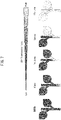
- the short dummy RNA is bound to the scaffold RNA beforehand to block binding with siRNA-AGO4, ( Fig. 3 ), thereby preventing recruit of DRM2 to the target sequence, and thus allowing DNA methylation to be inhibited.
- a method for inhibiting methylation of target DNA in plant cells comprises inhibiting binding of scaffold RNA produced by transcription of the target DNA with siRNA-AGO4 complex, in an RNA-directed DNA methylation mechanism.
- Inhibition of binding of scaffold RNA with siRNA-AGO4 complex can be accomplished, for example, by introducing into the plant cells short dummy RNA comprising a sequence complementary to the siRNA incorporated in the siRNA-AGO4 complex, or by introducing into the plant cells short dummy RNA comprising a sequence complementary to at least a portion of the scaffold RNA.
- short dummy RNA refers to RNA that is short enough to avoid eliciting RdDM, and that can bind to at least a portion of the siRNA incorporated into siRNA-AGO4 complex and/or scaffold RNA.
- the short dummy RNA preferably comprises a nucleotide sequence having at least 80% or greater, 85% or greater, 90% or greater, 92% or greater, 94% or greater, 95% or greater, 96% or greater, 97% or greater, 98% or greater or 99% or greater identity with the target DNA.
- the short dummy RNA can prevent recruiting of DRM2 to the target sequence in a DNA demethylation model based on capturing the siRNA-AGO4 complex ( Fig. 2 ), and/or in a DNA demethylation model based on blocking binding between the scaffold RNA and siRNA-AGO4 by short dummy RNA ( Fig. 3 ), thereby inhibiting methylation of the target DNA.
- RNA transcribed by PolIV and RNA transcribed by PolV from target DNA have essentially the same sequence since they are transcribed from the same region, and therefore short dummy RNA having the same sequence can be used in either DNA demethylation model.
- the short dummy RNA will typically be provided from a viral vector, but when a viral vector is not used, it may be provided by creating a recombinant plant such that it is transcribed from a sequence inserted downstream from the promoter of the plant expression vector.
- the supply rate of the short dummy RNA is thought to be much higher when supply is from a viral vector.
- the upper limit for the short dummy RNA length may be 200 bp or shorter, 190 bp or shorter, 180 bp or shorter, 170 bp or shorter, 160 bp or shorter, 150 bp or shorter, 140 bp or shorter, 130 bp or shorter, 120 bp or shorter, 110 bp or shorter, 100 bp or shorter, 90 bp or shorter, 80 bp or shorter, 70 bp or shorter, 60 bp or shorter or 50 bp or shorter, for example, and the lower limit for the short dummy RNA length may be 19 bp or longer, 20 bp or longer, 21 bp or longer, 22 bp or longer, 23 bp or longer, 24 bp or longer, 25 bp or longer, 30 bp or longer, 35 bp or longer, 40 bp or longer or 45 bp or longer, for example.
- the short dummy RNA length will typically be 19 bp to 200 bp, and is preferably 20
- the target DNA is not particularly restricted so long as it is DNA contributing to expression of the desired trait in plants and controlled by methylation, and as an example, it may be a promoter that controls a gene for expression of a desired trait for plant cells.
- desired traits include properties observed in the outer appearance (form) such as shape, color and size, and observable physiological properties such as the flowering period, as well as other physiological properties such as resistance to pathogenic organisms and temperature, but preferred properties are those relating to accumulation of functional components (metabolic components) in plants.
- the gene that expresses the desired trait is therefore preferably a gene coding for the amino acid sequence of an enzyme that controls synthesis or accumulation of a plant-derived functional component.
- plant-derived functional components include acetylenes, thiophenes, glycosides, glucosinates, purines, pyrimidines, alkaloids, phenolics (such as quinones), essential oils, vitamins, terpenoids (such as iridoids, sesquiterpenes, diterpenoids and triterpenoids), lignans and flavonoids.
- Introduction of the short dummy RNA into plant cells is preferably carried out using recombination technology, or using a transient expression system for convenience and speed.
- Examples are the plant virus vector method, agroinfiltration method, magnICON ® system and particle gun method, as well as combinations thereof.
- cDNA of a plant virus genome with the target DNA inserted is transcribed in vitro, the obtained RNA is inoculated as vector into a plant for infection, and the proliferation potency and systemic transferability of the virus itself is used for expression of the target gene in the plant.
- This method expresses the target gene by utilizing the auto-replicating ability of the virus, and therefore the expression level of the target gene in each plant cell can be increased by using a vector based on CMV or TMV, which have especially high proliferation potency.
- a culture solution of an Agrobacterium microbe transformed with a target gene-inserted T-DNA vector is introduced into plant tissue by a physical method (such as syringe injection or depressurized permeation), to infect the plant, thereby causing transient expression of the target gene in the plant.
- a physical method such as syringe injection or depressurized permeation
- Agrobacterium is a general name for a pathogenic group of bacteria among Rhizobium , a gram-negative soil bacterium genus, with examples of Agrobacterium including Agrobacterium tumifaciens which is associated with root carcinoma disease.
- the vector is usually introduced into the plant tissue by a physical method (syringe injection or depressurized permeation), to infect the plant.
- an Agrobacterium- derived vector Since an Agrobacterium- derived vector has strong infectivity by acting on the T-DNA region, it can be used for infection in a uniform systemic manner in the plant body by a physical method (injection or permeation) to allow an exogenous gene to be expressed uniformly and evenly throughout the tissue of the plant.
- TMV or PVX genomic cDNA having a target gene inserted is introduced into a T-DNA vector, and a culture solution of the Agrobacterium transformed with the obtained T-DNA vector is introduced into plant tissue by a physical method (syringe injection or depressurized permeation) to infect the plant, thereby causing transient expression of the target gene in the plant.
- the vector can be spread out systemically through the plant body by physical means (injection or permeation) to produce infection, thereby causing expression of the target gene throughout the entire tissue of the plant.
- the target gene is expressed by utilizing the auto-replicating ability of a virus (TMV or PVX), it is possible to increase the expression level of the target gene in each plant cell.
- This method therefore, combines the advantages of the plant virus vector method and agroinfiltration method.
- a nucleic acid molecule comprising a sequence corresponding to the RNA2 genome of cucumber mosaic virus (CMV) in which all or part of the gene coding for the 2b protein has been replaced with an exogenous gene, in functional combination with the T-DNA sequence of Agrobacterium, may be introduced into a host plant that functionally expresses the RNA1 genome and RNA3 genome of a different CMV, as well as protein 2b, and the plant may be cultivated to express the exogenous gene, thereby allowing the exogenous gene to be spread and expressed uniformly in all of the cells of the plant body while also increasing the efficiency of expression of the exogenous gene in the cells, so that high expression can be achieved throughout the entire plant body (PTL 1).
- This method can be employed as a suitable technique for the magnICON ® system using TMV or PVX, and makes it possible to increase the degree of freedom for types of host plants and introducible exogenous gene sizes.
- fine particles of a metal such as gold or tungsten coated with DNA or a vector are ejected at high speed to introduce the target DNA into cells.
- the vector used to introduce the short dummy RNA used for the invention is not particularly restricted so long as the short dummy RNA can be introduced into plant cells, but it will typically be a plant virus vector or T-DNA vector, and most preferably a plant virus vector.
- Plant virus vectors are not particularly restricted so long as they can infiltrate into the nucleus of plant cells, and they include vectors derived from single-stranded RNA viruses such as Tobacco mosaic virus (TMV), Cucumber mosaic virus (CMV), Potato X virus (PVX) and Clover yellow vein virus (ClYVV), single-stranded DNA viruses such as Bean yellow dwarf virus (BeYDV), Beet curly top virus (BCTV), Cabbage leaf-curl virus (CaLCuV), Wheat dwarf virus (WDV) and Tomato yellow leaf curl China virus (TYLCCNV), and double-stranded DNA viruses such as Cauliflower mosaic virus (CaMV). Particularly preferred among these are vectors derived from the RNA virus Cucumber mosaic virus
- the species of plants to which the present invention may be applied are not particularly restricted, but typical plants include those of Poaceae, Leguminosae, Brassicaceae, Compositae, Solanaceae, Rosaceae, Cucurbitaceae and Convolvulaceae.
- Examples of preferred plants include alfalfa, barley, green bean, canola, cowpea, cotton, corn, clover, lotus, lentil, lupin, millet, oat, pea, peanut, rice, rye, sweet clover, sunflower, sweet pea, soybean, sorghum, triticale, jicama, velvet bean, horse-bean, wheat, wisteria, nut plants, thale cress, redtop grass, Welsh onion, snapdragon, Dutch celery, peanut, asparagus, Atropa, wild oat, thorny bamboo, rape, bromegrass, rurimagaribana, camellia, cannabis, capsicum, chickpea, goosefoot, chicory, citrus, coffee tree, juzudama, cucumber, pumpkin, bermudagrass, dactylis, jimsonweed, digitalis, yam, oil palm, ooshiba, fescue, strawberry, geranium, soybean, sunflower, He
- the plant cells may be in any form, such as non-isolated cells present in the plant body, or cultured cells from tissue culture isolated from the plant body. In the case of cultured cells, they may be differentiated cells, dedifferentiated cells, or redifferentiated cells.
- the method for inhibiting methylation of target DNA may be used to inhibit methylation of DNA that contributes to expression of a desired trait for a plant, in order to create a plant having the desired trait.
- a method for creating a plant with a desired trait wherein the method comprises using the method described above to inhibit methylation of DNA that contributes to expression of a desired trait for plants.
- the method for inhibiting methylation of target DNA may also be used to inhibit methylation of DNA that contributes to synthesis and accumulation of a plant-derived functional component in order to produce the plant-derived functional component in a convenient and rapid manner.
- a method for producing a plant-derived functional component wherein the method described above is used to inhibit methylation of DNA that contributes to synthesis and accumulation of the plant-derived functional component in order to accumulate the functional component in the plant cells, and the functional component is recovered from the plant cells, as well as an expression system for accumulation of a plant-derived functional component, wherein the expression system includes (A) a plant body or plant cells that produce scaffold RNA produced by transcription of DNA and a siRNA-AGO4 complex that contribute to synthesis or accumulation of the plant-derived functional component, in an RNA-directed DNA methylation mechanism, and (B) short dummy RNA comprising the sequence complementary to the siRNA incorporated in the siRNA-AGO4 complex or a sequence complementary to at least
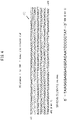
- Fig. 4 shows the sequence of the 35S promoter (SEQ ID NO: 1) that synthesizes siRNA homologous with a short dummy RNA construct (underlined portion). Assuming the use of a DNA demethylation model based on capturing siRNA-AGO4 complex ( Fig. 2 ) and/or a DNA demethylation model based on blocking binding between the scaffold RNA and siRNA-AGO4 by short dummy RNA ( Fig.
- N. benthamiana line 208RED created by the present inventors was used as the material for this experiment.
- the preparation details and characteristics of 208RED are as follows. First, N. benthamiana line 16c (see NPL 4) which emits GFP fluorescence by the introduced GFP gene was infected with CMV-A1 vector (see NPL 5) having a homologous sequence to 35S promoter linked to the GFP gene. Infection of the CMV-A1 vector causes cytosine methylation within the 35S promoter sequence via the RdDM pathway, resulting in induction of transcriptional gene silencing (TGS) of the GFP gene, and loss of GFP fluorescence.
- TGS transcriptional gene silencing
- Seeds were taken from the 208RED individuals (16c-type) having fluorescence restored to the same level as 16c (the original GFP expressing N. benthamiana) by CMV-A1-SD-51 infection and grown to the second generation (S1) and subsequent generation (S2), with GFP fluorescence being observed in each generation. Restoration of GFP fluorescence was observed in the stems in both generations, gradually spreading throughout the entire plant body ( Fig. 6 ). The phenotype of GFP fluorescence was classified into 5 groups: RED (no fluorescence), stems, petioles, leaves, and 16c-type (exhibiting the same level of GFP fluorescence as 16c) ( Fig. 7 ).
- DNA was extracted from the leaves of individuals of the first generation and second generation of 208RED individuals and 208RED individuals inoculated with CMV-A1-SD-51, using an Illustra DNA Extraction Kit Nucleon Phytopure (GE Healthcare), and the extracted DNA was subjected to bisulfite treatment using an EZ DNA Methylation-Lightning Kit (Zymo Research), converting the non-methylated cytosine to uracil.
- a TaKaRa EpiTaq HS for bisulfite-treated DNA was used for PCR amplification of the 35S promoter region from the bisulfite-treated DNA.
- the PCR primers used for plus strand detection were 35S-346F-bisuT (5'-ATTGAG AYTTTTYAAYAAAGGGTA-3': SEQ ID NO: 5) and 35S+1A-bisuA (5'-CTCTCC AAATGAAATGAACTTC-3': SEQ ID NO: 6).
- the PCR primers used for minus strand detection were 35S (-)-5-BS (5'-TTATATAGAGGAAGGGTYTTGYGAAG-3': SEQ ID NO: 7) and 35S (-)-3-BS (5'-CAATTRARACTTTTCAACAAAR-3': SEQ ID NO: 8).
Landscapes
- Life Sciences & Earth Sciences (AREA)
- Health & Medical Sciences (AREA)
- Genetics & Genomics (AREA)
- Engineering & Computer Science (AREA)
- Biomedical Technology (AREA)
- Chemical & Material Sciences (AREA)
- Wood Science & Technology (AREA)
- Organic Chemistry (AREA)
- Zoology (AREA)
- Biotechnology (AREA)
- General Engineering & Computer Science (AREA)
- Molecular Biology (AREA)
- Bioinformatics & Cheminformatics (AREA)
- General Health & Medical Sciences (AREA)
- Plant Pathology (AREA)
- Microbiology (AREA)
- Biophysics (AREA)
- Physics & Mathematics (AREA)
- Biochemistry (AREA)
- Botany (AREA)
- Developmental Biology & Embryology (AREA)
- Environmental Sciences (AREA)
- Cell Biology (AREA)
- Virology (AREA)
- Breeding Of Plants And Reproduction By Means Of Culturing (AREA)
- Micro-Organisms Or Cultivation Processes Thereof (AREA)
Applications Claiming Priority (2)
| Application Number | Priority Date | Filing Date | Title |
|---|---|---|---|
| JP2019237374 | 2019-12-26 | ||
| PCT/JP2020/048997 WO2021132669A1 (ja) | 2019-12-26 | 2020-12-25 | 植物における標的dnaのメチル化を抑制する方法 |
Publications (3)
| Publication Number | Publication Date |
|---|---|
| EP4083207A1 true EP4083207A1 (de) | 2022-11-02 |
| EP4083207A4 EP4083207A4 (de) | 2024-04-17 |
| EP4083207B1 EP4083207B1 (de) | 2026-03-25 |
Family
ID=76574496
Family Applications (1)
| Application Number | Title | Priority Date | Filing Date |
|---|---|---|---|
| EP20904326.4A Active EP4083207B1 (de) | 2019-12-26 | 2020-12-25 | Verfahren zur unterdrückung der methylierung von ziel-dna in pflanzen |
Country Status (5)
| Country | Link |
|---|---|
| US (1) | US20230056748A1 (de) |
| EP (1) | EP4083207B1 (de) |
| JP (1) | JP7745878B2 (de) |
| CN (1) | CN114867857A (de) |
| WO (1) | WO2021132669A1 (de) |
Family Cites Families (3)
| Publication number | Priority date | Publication date | Assignee | Title |
|---|---|---|---|---|
| DE602004029658D1 (de) * | 2003-03-06 | 2010-12-02 | Toudai Tlo Ltd | Verfahren zur demethylierung einer methylierten zielregion genomischer dna |
| EP2960331A4 (de) | 2013-02-20 | 2016-11-23 | Nat Inst Of Advanced Ind Scien | Nukleinsäuremolekül zur expression fremder gene in pflanzen und verfahren dafür |
| CN112639096B (zh) * | 2018-07-25 | 2024-12-31 | 国立研究开发法人产业技术综合研究所 | 抑制植物中的靶dna的甲基化的方法 |
-
2020
- 2020-12-25 JP JP2021567729A patent/JP7745878B2/ja active Active
- 2020-12-25 US US17/789,075 patent/US20230056748A1/en active Pending
- 2020-12-25 EP EP20904326.4A patent/EP4083207B1/de active Active
- 2020-12-25 WO PCT/JP2020/048997 patent/WO2021132669A1/ja not_active Ceased
- 2020-12-25 CN CN202080089733.0A patent/CN114867857A/zh active Pending
Also Published As
| Publication number | Publication date |
|---|---|
| WO2021132669A1 (ja) | 2021-07-01 |
| CN114867857A (zh) | 2022-08-05 |
| EP4083207B1 (de) | 2026-03-25 |
| EP4083207A4 (de) | 2024-04-17 |
| JP7745878B2 (ja) | 2025-09-30 |
| JPWO2021132669A1 (de) | 2021-07-01 |
| US20230056748A1 (en) | 2023-02-23 |
Similar Documents
| Publication | Publication Date | Title |
|---|---|---|
| Liu et al. | Engineered biocontainable RNA virus vectors for non-transgenic genome editing across crop species and genotypes | |
| KR101994953B1 (ko) | 침입성 dna 바이러스에 대해 식물 내성을 강화하는 방법 | |
| JP2012523850A (ja) | 植物中の複数ウイルス抵抗性 | |
| Katsarou et al. | DCL‐suppressed Nicotiana benthamiana plants: valuable tools in research and biotechnology | |
| CN104561085B (zh) | OsAGO18基因在提高水稻对水稻条纹叶枯病抗性中的应用 | |
| CN106381302A (zh) | 基于trv‑vigs技术快速鉴定菊花脑基因功能的方法 | |
| US20220315938A1 (en) | AUGMENTED sgRNAS AND METHODS FOR THEIR USE TO ENHANCE SOMATIC AND GERMLINE PLANT GENOME ENGINEERING | |
| CN110468147A (zh) | 一种基于大麦条纹花叶病毒的基因编辑载体系统 | |
| CN105567696A (zh) | 一种培育抗大豆花叶病毒转基因植物的方法 | |
| CN105624170A (zh) | OsAGO18蛋白或其编码基因在调控植物对水稻矮缩病毒或其同科病毒的抗性中的应用 | |
| EP4083207B1 (de) | Verfahren zur unterdrückung der methylierung von ziel-dna in pflanzen | |
| US11629351B2 (en) | Method for suppressing methylation of target DNA in plant | |
| KR102686730B1 (ko) | 반수체 식물을 유도하는 sPLA2δ 유전자 및 이의 용도 | |
| CN109371055B (zh) | 一种选育广谱抗马铃薯y病毒属病毒的烟草植物的方法 | |
| CN121398826A (zh) | 具有发夹样插入物的rna载体 | |
| Houhou et al. | A virus-induced gene-silencing vector based on a mild isolate of watermelon mosaic virus for reverse genetic analyses in cucurbits | |
| Pooggin | Role of small RNAs in virus-host interaction | |
| JP2008211993A (ja) | 形質転換されたダイズ及びその製造方法。 | |
| CN106701777A (zh) | 水稻OsTOE1基因在增加穗粒数和降低穗长中的应用 | |
| EP4497828A1 (de) | Minimale mirna-vorläufer | |
| EP4506459A1 (de) | Nicotiana tabacum-pflanze mit ft- und spl-genmutationen und ihre verwendung als biofabrik | |
| Yaiphabi et al. | Adenine base editor creates novel substitution mutations in eIF4G gene of rice. | |
| Mulaudzi | The elucidation of the methylation status of ToCSV and the identification of microRNAs in susceptible and resistant tomato lines | |
| KR20260030188A (ko) | 식물체의 바이러스 저항성을 조절하는 NML1 유전자 및 CRISPR/Cas 시스템을 이용한 NML1 유전자가 교정된 토마토 식물체의 제조방법 | |
| Pérez | Advancing the application of viral vectors for CRISPR/Cas genome editing and virus-induced gene silencing in plants |
Legal Events
| Date | Code | Title | Description |
|---|---|---|---|
| STAA | Information on the status of an ep patent application or granted ep patent |
Free format text: STATUS: THE INTERNATIONAL PUBLICATION HAS BEEN MADE |
|
| PUAI | Public reference made under article 153(3) epc to a published international application that has entered the european phase |
Free format text: ORIGINAL CODE: 0009012 |
|
| STAA | Information on the status of an ep patent application or granted ep patent |
Free format text: STATUS: REQUEST FOR EXAMINATION WAS MADE |
|
| 17P | Request for examination filed |
Effective date: 20220720 |
|
| AK | Designated contracting states |
Kind code of ref document: A1 Designated state(s): AL AT BE BG CH CY CZ DE DK EE ES FI FR GB GR HR HU IE IS IT LI LT LU LV MC MK MT NL NO PL PT RO RS SE SI SK SM TR |
|
| DAV | Request for validation of the european patent (deleted) | ||
| DAX | Request for extension of the european patent (deleted) | ||
| A4 | Supplementary search report drawn up and despatched |
Effective date: 20240315 |
|
| RIC1 | Information provided on ipc code assigned before grant |
Ipc: A01H 1/00 20060101ALI20240311BHEP Ipc: C12N 15/113 20100101AFI20240311BHEP |
|
| STAA | Information on the status of an ep patent application or granted ep patent |
Free format text: STATUS: EXAMINATION IS IN PROGRESS |
|
| 17Q | First examination report despatched |
Effective date: 20241105 |
|
| GRAP | Despatch of communication of intention to grant a patent |
Free format text: ORIGINAL CODE: EPIDOSNIGR1 |
|
| STAA | Information on the status of an ep patent application or granted ep patent |
Free format text: STATUS: GRANT OF PATENT IS INTENDED |
|
| INTG | Intention to grant announced |
Effective date: 20251024 |
|
| GRAS | Grant fee paid |
Free format text: ORIGINAL CODE: EPIDOSNIGR3 |
|
| GRAA | (expected) grant |
Free format text: ORIGINAL CODE: 0009210 |
|
| STAA | Information on the status of an ep patent application or granted ep patent |
Free format text: STATUS: THE PATENT HAS BEEN GRANTED |
|
| AK | Designated contracting states |
Kind code of ref document: B1 Designated state(s): AL AT BE BG CH CY CZ DE DK EE ES FI FR GB GR HR HU IE IS IT LI LT LU LV MC MK MT NL NO PL PT RO RS SE SI SK SM TR |
|
| REG | Reference to a national code |
Ref country code: CH Ref legal event code: F10 Free format text: ST27 STATUS EVENT CODE: U-0-0-F10-F00 (AS PROVIDED BY THE NATIONAL OFFICE) Effective date: 20260325 Ref country code: GB Ref legal event code: FG4D |
|
| REG | Reference to a national code |
Ref country code: DE Ref legal event code: R096 Ref document number: 602020069372 Country of ref document: DE |
|
| REG | Reference to a national code |
Ref country code: IE Ref legal event code: FG4D |