EP4080922B1 - Verfahren zum betreiben eines forst-kommunikations-systems und forst-kommunikations-system - Google Patents
Verfahren zum betreiben eines forst-kommunikations-systems und forst-kommunikations-system Download PDFInfo
- Publication number
- EP4080922B1 EP4080922B1 EP21170174.3A EP21170174A EP4080922B1 EP 4080922 B1 EP4080922 B1 EP 4080922B1 EP 21170174 A EP21170174 A EP 21170174A EP 4080922 B1 EP4080922 B1 EP 4080922B1
- Authority
- EP
- European Patent Office
- Prior art keywords
- process data
- work process
- transmission technology
- output
- input
- Prior art date
- Legal status (The legal status is an assumption and is not a legal conclusion. Google has not performed a legal analysis and makes no representation as to the accuracy of the status listed.)
- Active
Links
Images

Classifications
-
- H—ELECTRICITY
- H04—ELECTRIC COMMUNICATION TECHNIQUE
- H04L—TRANSMISSION OF DIGITAL INFORMATION, e.g. TELEGRAPHIC COMMUNICATION
- H04L67/00—Network arrangements or protocols for supporting network services or applications
- H04L67/01—Protocols
- H04L67/10—Protocols in which an application is distributed across nodes in the network
- H04L67/104—Peer-to-peer [P2P] networks
-
- G—PHYSICS
- G06—COMPUTING OR CALCULATING; COUNTING
- G06Q—INFORMATION AND COMMUNICATION TECHNOLOGY [ICT] SPECIALLY ADAPTED FOR ADMINISTRATIVE, COMMERCIAL, FINANCIAL, MANAGERIAL OR SUPERVISORY PURPOSES; SYSTEMS OR METHODS SPECIALLY ADAPTED FOR ADMINISTRATIVE, COMMERCIAL, FINANCIAL, MANAGERIAL OR SUPERVISORY PURPOSES, NOT OTHERWISE PROVIDED FOR
- G06Q10/00—Administration; Management
- G06Q10/06—Resources, workflows, human or project management; Enterprise or organisation planning; Enterprise or organisation modelling
- G06Q10/063—Operations research, analysis or management
- G06Q10/0631—Resource planning, allocation, distributing or scheduling for enterprises or organisations
- G06Q10/06311—Scheduling, planning or task assignment for a person or group
-
- G—PHYSICS
- G06—COMPUTING OR CALCULATING; COUNTING
- G06Q—INFORMATION AND COMMUNICATION TECHNOLOGY [ICT] SPECIALLY ADAPTED FOR ADMINISTRATIVE, COMMERCIAL, FINANCIAL, MANAGERIAL OR SUPERVISORY PURPOSES; SYSTEMS OR METHODS SPECIALLY ADAPTED FOR ADMINISTRATIVE, COMMERCIAL, FINANCIAL, MANAGERIAL OR SUPERVISORY PURPOSES, NOT OTHERWISE PROVIDED FOR
- G06Q10/00—Administration; Management
- G06Q10/06—Resources, workflows, human or project management; Enterprise or organisation planning; Enterprise or organisation modelling
- G06Q10/063—Operations research, analysis or management
- G06Q10/0631—Resource planning, allocation, distributing or scheduling for enterprises or organisations
- G06Q10/06311—Scheduling, planning or task assignment for a person or group
- G06Q10/063114—Status monitoring or status determination for a person or group
-
- G—PHYSICS
- G06—COMPUTING OR CALCULATING; COUNTING
- G06Q—INFORMATION AND COMMUNICATION TECHNOLOGY [ICT] SPECIALLY ADAPTED FOR ADMINISTRATIVE, COMMERCIAL, FINANCIAL, MANAGERIAL OR SUPERVISORY PURPOSES; SYSTEMS OR METHODS SPECIALLY ADAPTED FOR ADMINISTRATIVE, COMMERCIAL, FINANCIAL, MANAGERIAL OR SUPERVISORY PURPOSES, NOT OTHERWISE PROVIDED FOR
- G06Q10/00—Administration; Management
- G06Q10/06—Resources, workflows, human or project management; Enterprise or organisation planning; Enterprise or organisation modelling
- G06Q10/063—Operations research, analysis or management
- G06Q10/0631—Resource planning, allocation, distributing or scheduling for enterprises or organisations
- G06Q10/06311—Scheduling, planning or task assignment for a person or group
- G06Q10/063116—Schedule adjustment for a person or group
-
- G—PHYSICS
- G06—COMPUTING OR CALCULATING; COUNTING
- G06Q—INFORMATION AND COMMUNICATION TECHNOLOGY [ICT] SPECIALLY ADAPTED FOR ADMINISTRATIVE, COMMERCIAL, FINANCIAL, MANAGERIAL OR SUPERVISORY PURPOSES; SYSTEMS OR METHODS SPECIALLY ADAPTED FOR ADMINISTRATIVE, COMMERCIAL, FINANCIAL, MANAGERIAL OR SUPERVISORY PURPOSES, NOT OTHERWISE PROVIDED FOR
- G06Q50/00—Information and communication technology [ICT] specially adapted for implementation of business processes of specific business sectors, e.g. utilities or tourism
- G06Q50/02—Agriculture; Fishing; Forestry; Mining
-
- H—ELECTRICITY
- H04—ELECTRIC COMMUNICATION TECHNIQUE
- H04L—TRANSMISSION OF DIGITAL INFORMATION, e.g. TELEGRAPHIC COMMUNICATION
- H04L67/00—Network arrangements or protocols for supporting network services or applications
- H04L67/01—Protocols
- H04L67/12—Protocols specially adapted for proprietary or special-purpose networking environments, e.g. medical networks, sensor networks, networks in vehicles or remote metering networks
-
- H—ELECTRICITY
- H04—ELECTRIC COMMUNICATION TECHNIQUE
- H04W—WIRELESS COMMUNICATION NETWORKS
- H04W4/00—Services specially adapted for wireless communication networks; Facilities therefor
- H04W4/30—Services specially adapted for particular environments, situations or purposes
- H04W4/38—Services specially adapted for particular environments, situations or purposes for collecting sensor information
-
- H—ELECTRICITY
- H04—ELECTRIC COMMUNICATION TECHNIQUE
- H04W—WIRELESS COMMUNICATION NETWORKS
- H04W4/00—Services specially adapted for wireless communication networks; Facilities therefor
- H04W4/90—Services for handling of emergency or hazardous situations, e.g. earthquake and tsunami warning systems [ETWS]
-
- A—HUMAN NECESSITIES
- A01—AGRICULTURE; FORESTRY; ANIMAL HUSBANDRY; HUNTING; TRAPPING; FISHING
- A01G—HORTICULTURE; CULTIVATION OF VEGETABLES, FLOWERS, RICE, FRUIT, VINES, HOPS OR SEAWEED; FORESTRY; WATERING
- A01G23/00—Forestry
-
- A—HUMAN NECESSITIES
- A01—AGRICULTURE; FORESTRY; ANIMAL HUSBANDRY; HUNTING; TRAPPING; FISHING
- A01G—HORTICULTURE; CULTIVATION OF VEGETABLES, FLOWERS, RICE, FRUIT, VINES, HOPS OR SEAWEED; FORESTRY; WATERING
- A01G7/00—Botany in general
Definitions
- the invention relates to a method for operating a forestry communication system and a forestry communication system.
- the EP 2 741 264 A1 discloses a method and apparatus for managing a site.
- Ground sensor units are deployed at the site in a forest by a group of aircraft.
- Information is generated about a number of ground conditions at the site in the forest using the ground sensor units at the site.
- the information is transmitted from the ground sensor units to a remote location for analysis.
- the CN 109 246 209 A discloses an IOT (Internet of Things) security communication management method for forestry.
- the method includes the steps of an edge computing device performing analysis of data collected from an IOT device, the edge computing device comprising a communication module, an authentication module, a controller, and a strategy execution unit; the authentication module distributes dimension labels in a category-related mode to the IOT device via a label unit such that each dimension label corresponds to a type of IOT devices, the dimension labels having public key certificates, and the dimension labels are associated with the IOT devices and the category of forestry IOT services; a controller stores and assigns a security rule, and the authentication module receives an authentication key from a TLS endpoint of the IOT device and determines whether or not the dimension label is associated with the IOT device of the category; the strategy execution unit manages the communication of the IOT device according to the security rule.
- the method can perform communication management of the IOT device based on the security rule, thereby improving the security of a system.
- the US 2017/0303068 A1 discloses that information is collected from a geographically distributed sensor network using a scalable wireless geocast protocol.
- Geographically distributed networks of unattended sensors are deployed at desired locations placed to collect various types of information, such as environmental parameters, temperature, humidity, precipitation, heat signatures, video, audio, seismic activity, and/or wind conditions.
- the geographic area where the sensors are located is requested using the Geocast protocol.
- the delivery of the request is based on the physical location of a region where a sensor network is located, the type of information requested, and/or temporal conditions.
- Each sensor that receives a request determines if all requirements/conditions are met. If so, the request is accepted by the receiving sensor, processed, and responded to accordingly. Responses to requests are provided via the Geocast protocol.
- the object of the invention is to provide a method for operating a forestry communication system and a forestry communication system, each of which has improved properties, in particular enabling efficient and/or risk-reduced work in the forest.
- the invention solves the problem by providing a method with the features of claim 1 and a forestry communication system with the features of claim 11.
- Advantageous further developments and/or embodiments of the invention are described in the dependent claims.
- the inventive, in particular automatic, method is designed or configured or provided for, in particular automatically, operating a, in particular electrical, forestry communication system.
- the forestry communication system comprises or has several mobile, in particular electrical, communication devices.
- the communication devices each comprise or have an, in particular electrical, output and input device.
- the output and input device is for, in particular automatically, output and for, in particular automatically, input of work process data, in particular values and/or contents of the work process data, about work steps of tree sections to be processed and/or processed, in particular trees, concerning, in particular, at least one member or participant in a work group. designed or configured.
- the method comprises or has the step of: automatic matching, in particular multi-sided or bidirectional matching and/or adjustment and/or synchronization, of the work process data between the communication devices in a peer-to-peer network, in particular at least by means of wireless or cable-free transmission, in particular automatic transmission, based on a, in particular maximum, medium-range, in particular digital, transmission technology, in particular radio transmission technology.
- transmitting work process data in the forest can be difficult and, in particular, unreliable. This is because there may be no infrastructure for the transmission in the forest, especially in contrast to the city.
- the peer-to-peer network can be independent or autonomous.
- the synchronization of the work process data between the communication devices does not need to be and/or cannot be carried out in a client-server network and/or by means of wireless transmission based on a long-range transmission technology.
- the peer-to-peer network can be defined by the communication devices and/or the workgroup.
- the working group can be defined by the work steps and/or the tree sections and/or their members.
- the work steps can be interrelated, interdependent, coordinated or, in particular, sequential work steps. Additionally or alternatively, the work steps can be carried out or are being carried out and/or have been carried out by the work group or the tree sections can be processed or are being processed and/or have been processed by the work group.
- the member may be a user or a natural person or a human being, in particular a forest worker, or a machine.
- the output and input device can be a user output and input device. Additionally or alternatively, the output and input device can be designed to output the work process data, in particular about at least one work step of at least one tree section to be processed, to the member and/or for the member to input the work process data, in particular about at least one work step of at least one processed tree section. Furthermore additionally or alternatively, the output and input device can have a display, a vibration device and/or a sound generator, in particular a loudspeaker, for outputting the work process data and/or for optical, haptic and/or acoustic output of the work process data.
- the output and input device can have a keyboard, in particular a touch display, and/or a voice input device, in particular a microphone, for inputting the work process data and/or for touch-based or touch-sensitive or haptic and/or acoustic input of the work process data.
- a keyboard in particular a touch display
- a voice input device in particular a microphone
- the method can comprise the step of outputting, in particular optically, haptically and/or acoustically outputting, the work process data, in particular non-aligned or aligned, in particular by means of the output and input device. Additionally or alternatively, the method can comprise the step of inputting, in particular recording an input, the work process data, in particular by means of the output and input device.
- the synchronization of the work process data can be and/or carried out on the communication devices.
- the process can be repeated, in particular several times, in particular for each work step.
- the communication device can comprise, in particular, a terminal and/or a smartphone. Additionally or alternatively, the communication device can, in particular, already be present. Furthermore, additionally or alternatively, the communication device can comprise at least one transmission device for, in particular, transmitting the work process data.
- the work process data may be predetermined, particularly initially and/or at least partially, in particular by a forestry system.
- the tree sections can be in the forest. Additionally or alternatively, the tree sections can have, in particular, a tree trunk and/or a trunk section. Further additionally or alternatively, the tree sections can, in particular, each be standing, in particular living, felled and/or lying.
- the comparison is carried out anew or again, in particular immediately or in real time and/or automatically.
- the input in particular by the member, can be and/or be carried out as a result of the execution of at least one work step or at least one processing of at least one tree section, in particular by the member.
- the input comprises a confirmation of the output work process data and/or work process data that differs from the output work process data.
- the input can be the confirmation of the output work process data and/or the work process data that differs from the output work process data.
- the comparison includes or comprises: automatic comparison of work process data entered by means of one of the output and input devices with predefined work process data output by means of the output and input device.
- automatic adaptation in particular changing and/or modifying, of the predefined work process data via work steps of tree sections to be processed based on the minimum deviation and/or the entered work process data using, in particular, at least one optimization or adaptation criterion.
- the minimum deviation makes it possible to avoid adjustment in the case of a relevant deviation, in particular outside a tolerance, and/or adjustment in the case of an irrelevant deviation, in particular within a tolerance. In particular, no adjustment needs to or can be carried out if there is no minimum deviation. Additionally or alternatively, the optimization criterion can be specified.
- the optimization criterion is a risk reduction optimization criterion, a distance optimization criterion, in particular a spatial one, and/or a total or group work progress optimization criterion, in particular the fastest one, a time optimization criterion and/or a value optimization criterion.
- Such an optimization criterion makes it possible to take into account relationships between the work steps or dependencies between the work steps or a sequence of work steps, in particular in terms of time.
- the risk reduction optimization criterion makes it possible to reduce possible risks.
- the distance optimization criterion makes it possible to avoid working too close and thus potentially negatively affecting or blocking each other and/or working too far away and thus not being able to help each other.
- the risk reduction optimization criterion and/or the distance optimization criterion can be characteristic of a minimum distance, in particular a spatial distance, and/or a maximum distance, in particular a spatial distance, between locations of at least a part, in particular all, of the work steps and/or at least a part, in particular all, of the tree sections.
- the group work progress optimization criterion and/or the time optimization criterion enable an avoidance and/or a solution or help in the case of a blockage of the work of a member of the work group by another member of the work group, in particular if the work process data or at least one work step or at least one processing of at least one tree section cannot and/or could not be carried out or processed by the member as specified.
- the value optimization criterion enables an increase in the value of the tree sections processed, in particular when the value optimization criterion can be used for different tree section values, in particular tree section prices, per tree species, per tree section length, tree section diameter, tree section quantity and/or tree section quality.
- the method comprises or has the step: in the case of the minimum deviation and in the case of the adjustment based on the risk reduction optimization criterion, outputting, in particular automatically outputting, information, in particular a value and/or a content of the information, about the minimum deviation and/or the adjustment and/or the adjusted work process data and/or the optimization criterion by means of at least one of the output and input devices.
- information in particular a value and/or a content of the information, about the minimum deviation and/or the adjustment and/or the adjusted work process data and/or the optimization criterion by means of at least one of the output and input devices.
- the information can be user-perceivable.
- the work process data about at least one planting step, at least one young growth care step, at least one pruning step, at least one value pruning step, at least one felling step, at least one delimbing step, at least one cutting to length step, at least one skidding step, at least one snag removal step, at least one, in particular temporal, sequence and/or at least one, in particular respective, location of at least a part, in particular all, of the work steps and/or at least a part, in particular all, of the tree sections, at least one tree species, at least one tree section length, at least one tree section diameter, at least one tree section quantity, at least one tree section quality and/or at least one tree section value.
- the properties can be measured, in particular at least partially, in particular by the member and/or the work group.
- the location can be determined, in particular automatically, in particular recorded, in particular by means of the communication device and/or a location determination device, in particular of the communication device, in particular as a result of the input.
- the location determination device can have, in particular be, a satellite positioning receiver.
- the method comprises or has the step of: releasing, in particular automatically releasing, the adapted work process data for manual adaptation, in particular by means of at least one of the output and input devices.
- the manual adjustment can be and/or carried out by at least one of the users.
- the method comprises or has the step of: transmitting, in particular automatically transmitting, the, in particular predetermined, work process data from an external, in particular electrical, database to a, in particular electrical, gateway, in particular a smartphone, in the peer-to-peer network, in particular wirelessly based on a long-range, in particular digital, transmission technology, in particular radio transmission technology.
- a long-range, in particular digital, transmission technology in particular radio transmission technology.
- the wireless transmission based on the long-range transmission technology enables the work process data to be transmitted into the forest.
- the database can be a database of a forestry system.
- the database can be provided decentrally and/or by means of a distributed system, in particular in the form of a cloud.
- the comparison of the work process data between the communication devices does not need to be and/or cannot be carried out by means of wireless transmission based on the long-range transmission technology. This is because not every communication device can be online in the forest, i.e. with a mobile phone connection or reception.
- the long-range transmission technology can be different from the medium-range transmission technology, in particular it can have a greater range and/or, in particular therefore, a higher energy requirement.
- at least one of the communication devices can be and/or represent the gateway.
- the gateway can be mobile.
- the forestry communication system comprises or has at least one mobile, in particular electrical, communication intermediate station.
- the matching between at least one of the communication devices and one, in particular the and/or associated, communication intermediate station in the peer-to-peer network is carried out by means of wireless transmission, in particular automatic transmission, based on a short-range, in particular digital, transmission technology, in particular radio transmission technology, and from the communication intermediate station by means of wireless transmission based on the medium-range transmission technology, in particular to at least one further communication intermediate station.
- the wireless transmission based on the short-range transmission technology between the communication device and the communication intermediate station enables the coordination between the communication devices by means of wireless transmission based on the medium-range transmission technology and/or a synergy effect.
- the communication device in particular itself, does not need to or can not be designed for wireless transmission based on the medium-range transmission technology, or the communication intermediate station can be better, in particular optimized, than the communication device for wireless transmission based on the medium-range transmission technology.
- the communication intermediate station can, in particular already be present, in particular for a voice message from one of the members and/or between the communication intermediate stations.
- the communication intermediate station can have an output and/or input device, in particular an electrical one, in particular a user output and/or input device.
- the output and input device can be designed as previously mentioned.
- the output and/or input device can be designed for, in particular, optical, haptic and/or acoustic, output, in particular user output, and/or for, haptic and/or acoustic, input, in particular user input, in particular of the work process data.
- the communication intermediate station can have at least one transmission device for, in particular, transmitting, in particular the work process data.
- the short-range transmission technology can be different from the medium-range transmission technology, in particular have a shorter range and/or, in particular therefore, a lower energy requirement.
- the location can be determined and/or can be determined by means of the communication intermediate station, in particular the location determination device of the communication intermediate station.
- the communication device and/or the communication intermediate station can be installed, in particular each, in a vehicle, in particular an automobile, in particular permanently.
- At least one of the communication devices is a body-worn, in particular head-worn, and/or hand-worn communication device.
- at least the communication intermediate station is a body-worn, in particular head-worn and/or hand-held communication intermediate station.
- the communication device and/or the communication intermediate station are/is at least arranged, in particular attached, in particular integrated, on a forest worker's protective equipment, in particular a safety helmet and/or face and/or hearing protection and/or safety goggles and/or protective gloves. This enables the communication device and/or the communication intermediate station to be easily carried along.
- body-worn and/or hand-held can mean that the communication device and/or the communication intermediate station, in particular each, can have a maximum mass of 10 kg (kilograms), in particular 5 kg, in particular 2 kg, in particular 1 kg, in particular 0.5 kg, in particular 0.2 kg, in particular 0.1 kg, in particular 0.05 kg.
- the communication device, in particular the output and input device, and/or the communication intermediate station can have, in particular be, headphones, in particular a headset.
- the display if present, can be designed to display, in particular to project or fade in, in a field of vision of the user and/or on a visor of the protective helmet, face and/or hearing protection and/or safety goggles, in particular in front of the tree section.
- the display can be referred to in English as a head-up display and/or head-mounted display. Additionally or alternatively, this can be referred to in English as virtual reality and/or augmented reality.
- the method comprises or has the step: transmitting a, in particular the, voice message, in particular a content of the voice message, in particular from one of the members and/or between the communication intermediate stations, if available, in particular at least wirelessly, in particular automatically, based on the, in particular maximum, medium-range transmission technology in the peer-to-peer network.
- a synergy effect In particular, the voice message can be and/or will be recorded by means of the communication intermediate station.
- the method comprises or has the step: wirelessly transmitting, in particular automatically transmitting, emergency data and/or messages, in particular values and/or contents of the emergency data and/or messages, in particular from one of the members, based on the medium-range transmission technology in the peer-to-peer network and/or based on a, in particular the and/or digital, long-range transmission technology, in particular radio transmission technology.
- the long-range transmission technology can be different from the medium-range transmission technology, in particular have a greater range and/or, in particular, have a higher energy requirement.
- the emergency data and/or messages can be and/or be entered using the output and input device.
- the emergency data and/or messages can be provided with emergency location information.
- the medium-range transmission technology has or has a maximum range of 400 m (meters). Additionally or alternatively, the medium-range transmission technology comprises or has Bluetooth Classic transmission technology, in particular is Bluetooth Classic transmission technology. Further additionally or alternatively, the medium-range transmission technology uses a 2.4 GHz (gigahertz) carrier frequency. Further additionally or alternatively, the long-range transmission technology, if present, has or has a minimum range of 1000 m.
- the long-range transmission technology includes or has narrow-band Internet of Things transmission technology, long-term evolution transmission technology, long-range transmission technology and/or Sigfox transmission technology, in particular narrow-band Internet of Things transmission technology, long-term evolution transmission technology, long-range transmission technology and/or Sigfox transmission technology.
- the short-range transmission technology where available, has or has a maximum range of 10 m.
- the short-range transmission technology comprises or has Bluetooth low energy transmission technology and/or ZigBee transmission technology, in particular Bluetooth low energy transmission technology and/or ZigBee transmission technology.
- the long-range transmission technology can have a maximum range of 10,000 m.
- the communication devices and/or the communication intermediate station can be designed to transmit, in particular, the emergency data and/or messages, based on the short-range transmission technology from and/or to at least one, in particular further, body-worn and/or hand-held transmission device.
- the Transmission device can have an output and/or input device, in particular an electrical one, in particular a user output and/or input device.
- the transmission device can be arranged on a work device or processing device for processing the tree sections, in particular integrated therein.
- the transmission device can be designed to generate, in particular and to transmit, data, wherein the data can be provided to be taken into account in the work process, in particular when carrying out the work steps.
- the communication devices each comprise or have a storage medium, in particular electrical and/or magnetic and/or optical.
- the storage medium is designed or configured to store, in particular automatically store, the work process data. This enables the work process data to be compared between the communication devices in the peer-to-peer network.
- each of the storage media can have or contain the same, in particular the same, data or the data can be replicated.
- the method can comprise the step of storing, in particular automatically storing, the work process data, in particular the compared and/or transmitted data, in particular by means of the storage medium.
- the forestry communication system has several mobile, in particular the several mobile, communication devices.
- the communication devices each have one, in particular the output and input device.
- the output and input device is designed to output and input, in particular the work process data about, in particular the work steps to be processed and/or processed, in particular the tree sections to be processed and/or processed, relating to a, in particular the, member of a, in particular the, work group.
- the forestry communication system is designed to, in particular, automatically compare the work process data between the communication devices in a, in particular the, peer-to-peer network by means of wireless transmission based on a, in particular the, medium-range transmission technology.
- the comparison comprises: automatic comparison of, in particular, the, work process data entered by means of one of the output and input devices with, in particular, the, predefined work process data output by means of the output and input device.
- optimization criterion is a, in particular, hazard reduction optimization criterion, a, in particular, distance optimization criterion and/or a, in particular, group work progress optimization criterion, a, in particular, time optimization criterion and/or a, in particular, value optimization criterion.
- the forestry communication system is designed to, in particular, output information about the minimum deviation and/or the adjustment and/or the adjusted work process data and/or the optimization criterion by means of at least one of the output and input devices.
- the forest communication system can provide at least some or all of the benefits mentioned for the method above.
- the forestry communication system in particular the communication devices and/or the communication intermediate station, in particular a processor of the forestry communication system and/or at least one of the communication devices and/or the communication intermediate station, can be designed or configured to carry out the aforementioned method.
- the forestry communication system can be designed or configured at least partially or completely as previously mentioned for the method.
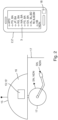
- Fig. 1 shows a forestry communication system 1 according to the invention and a method according to the invention for operating the forestry communication system 1.
- the forestry communication system 1 has several mobile communication devices 2. In the embodiment shown, the forestry communication system 1 has eight communication devices 2. In alternative embodiments, the forestry communication system can have at least two, in particular at least five, in particular at least ten, communication devices.
- the communication devices 2 each have an output and input device 3, as in Fig. 2 shown.
- the output and input device 3 is designed to output and input work process data APD about work steps AS of tree sections 4 to be processed and/or processed relating to a member 5 in a work group 6, in particular outputs and/or inputs.
- the forestry communication system 1 is designed to synchronize the work process data APD between the communication devices 2 in a peer-to-peer network 7 by means of wireless transmission based on a medium-range transmission technology 8, in particular transmits and synchronizes.
- the method comprises the step of: matching the work process data APD between the communication devices 2 in the peer-to-peer network 7 by means of wireless transmission based on the medium-range transmission technology 8, in particular by means of the forestry communication system 1.
- the work process data APD are for at least one planting step PS, at least one young stand care step JP, at least one pruning step RS, at least one value pruning step WA, at least one felling step FS, at least one delimbing step EA, at least one cutting step AL, at least one skidding step RE, at least one snag removal step HB, at least one sequence I, II, III, IV and/or at least one location PO, JO, SO, WO, FO, EO, AO, RO, HO of at least some of the work steps AS and/or at least some of the tree sections 4.
- the sequence I, II, III, IV of the work steps AS is the felling step FS, then the delimbing step EA, then the cutting step AL and then the logging step RE. If tree section 4 gets stuck during the felling step FS, the snag removal step HB is then added, and in particular the delimbing step EA.
- further work steps AS can or may or should not be carried out too close or at a minimum distance MIDI, in particular a distance optimization criterion AOK, in particular due to a potential hazard emanating from the tree section 4 to be felled and/or moved.
- the trailer removal step HB is carried out by a 5' logging vehicle with a 5" cable winch with a 5′′′ cable.
- the return step RE is interrupted and/or postponed.
- the work process data APD are about at least one tree species BA, at least one tree section length BL, at least one tree section diameter BD, at least one tree section quantity BM, at least one tree section quality BQ and/or at least one tree section value BW.
- the comparison is carried out, in particular anew, each time triggered by each, in particular new, input IN of, in particular new, work process data nAPD, in particular by means of one of the output and input devices 3.
- the comparison comprises: comparing work process data iAPD entered, in particular by means of one of the output and input devices 3, with predetermined work process data voAPD output, in particular by means of the output and input device 3.
- predetermined work process data voAPD output in particular by means of the output and input device 3.
- the optimization criterion OK is a hazard reduction optimization criterion SOK, a distance optimization criterion AOK and/or a group work progress optimization criterion FOK, a time optimization criterion ZOK and/or a value optimization criterion WOK.
- the method comprises the step: in the case of the minimum deviation MA, in particular and in the case of the adjustment based on the hazard reduction optimization criterion SOK, outputting information Info about the minimum deviation MA and/or the adjustment and/or the adjusted work process data aAPD and/or the optimization criterion OK, in particular by means of at least one of the output and input devices 3.
- the method comprises the step of releasing the adapted work process data aAPD for manual adaptation, in particular by means of at least one of the output and input devices 3.
- At least one of the output and input devices 3 outputs the, in particular predetermined, work process data vAPD via the cutting step AL of the tree section 4 to be cut to at least one of the members 5 of the work group 6.
- member 5 carries out the cutting step AL or cuts the tree section 4 to length, in particular successfully.
- member 5 inputs the work process data APD via the cutting step AL of the cut tree section 4 using the output and input device 3 or confirms the output work process data voAPD. Triggered by the input IN of the work process data nAPD, the comparison is carried out.
- the comparison comprises: comparing the work process data iAPD input with the predetermined work process data voAPD output. There is no minimum deviation.
- at least one, in particular another, of the output and input devices 3 passes the, in particular predetermined, work process data vAPD on the relocation step RE of the, in particular cut to length and to be relocated, tree section 4 to at least one, in particular another, of the members 5 of working group 6 or the forwarding step RE, in particular the execution of the forwarding step RE.
- At least one, in particular another, of the output and input devices 3 outputs the, in particular predetermined, work process data vAPD about the felling step FS of the tree section 4 to be felled to at least one, in particular another, of the members 5 of the work group 6.
- member 5 carries out the felling step FS or fells the tree section 4, in particular unsuccessfully or the tree section 4 gets stuck.
- member 5 inputs the work process data APD about the felling step FS of the felled tree section 4 using the output and input device 3 or the input IN has work process data nAPD that differs from the output work process data voAPD.
- the comparison includes: comparing the work process data iAPD entered with the specified work process data voAPD output. There is a minimum deviation MA.
- the specified work process data voAPD for the delimbing step EA of the tree section 4, in particular the one that has been felled and is actually to be delimbed, is thus adjusted based on the minimum deviation MA and/or the entered work process data iAPD, in particular based on the optimization criterion OK, in particular the hazard reduction optimization criterion SOK.
- the specified work process data vAPD for the delimbing step EA is not output or the delimbing step EA, in particular the execution of the delimbing step EA, is not released and/or not output.
- work process data APD are specified on the hanger removal step HB of the tree section 4, in particular the felled and to be moved, in particular based on the optimization criterion OK, in particular the risk reduction optimization criterion SOK and/or the group work progress optimization criterion FOK and/or the time optimization criterion ZOK.
- At least the, in particular other, of the output and input devices 3 outputs the, in particular specified, work process data vAPD on the hanger removal step HB of the tree section 4, in particular the felled and to be moved, to at least the, in particular other, of the members 5 of the work group 6 or the hanger removal step HB, in particular the execution of the hanger removal step HB, releases or outputs the information Info about the minimum deviation MA and/or the adjustment and/or the adjusted work process data aAPD and/or the optimization criterion OK.
- member 5 interrupts the relocation step RE or postpones it.
- member 5 carries out the hanger removal step HB or moves tree section 4, in particular successfully.
- member 5 enters the work process data APD via the hanger removal step HB of the moved tree section 4 using the output and input device 3 or confirms the output work process data voAPD.
- the comparison is carried out. The comparison includes: comparing the work process data iAPD entered with the specified work process data voAPD output. There is no minimum deviation.
- At least one, in particular another, of the output and input devices 3 outputs the, in particular predetermined, work process data vAPD about the delimbing step EA of the, in particular felled and/or moved and to be delimbed, section 4 to at least one, in particular another, of the members 5 of the work group 6 or releases the delimbing step EA, in particular the execution of the delimbing step EA.
- the method comprises the step of transmitting the, in particular predetermined, work process data vAPD from an external database 9 to a gateway 10, in particular a smartphone 11, in the peer-to-peer network 7, in particular wirelessly based on a long-range transmission technology 12.
- the forestry communication system 1 has at least one mobile communication intermediate station 13. In the embodiment shown, the forestry communication system 1 has eight communication intermediate stations 13. In alternative embodiments, the forestry communication system can have at least two, in particular at least five, in particular at least ten, communication intermediate stations.
- the matching between at least one of the communication devices 2 and a, in particular the and/or associated, communication intermediate station 13 in the peer-to-peer network 7 is carried out by means of wireless transmission based on a short-range transmission technology 14 and by the Communication intermediate station 13 by means of wireless transmission based on the medium-range transmission technology 8.
- the forestry communication system does not need or can have a communication intermediate station.
- the communication device in particular itself or directly, can carry out the wireless transmission based on the medium-range transmission technology.
- the communication device in particular itself or directly, can be designed for wireless transmission based on the medium-range transmission technology.
- At least one of the communication devices 2 is a body-worn, in particular head-worn, and/or hand-worn communication device 2 ⁇ , as in Fig. 2 shown.
- at least the communication intermediate station 13 is a body-worn, in particular head-worn, and/or hand-worn communication intermediate station 13'.
- the communication device and/or the communication intermediate station 13' are/is at least arranged, in particular integrated, on a forest worker's protective equipment 15, in particular a protective helmet 16 and/or face and/or hearing protection 17 and/or protective goggles and/or protective gloves.
- At least one of the communication devices 2 has a smartphone, in particular is a smartphone.
- at least one of the communication intermediate stations 13 has a headset, in particular is a headset.
- at least one of the communication devices can have a headset, in particular be.
- the method comprises the step of wirelessly transmitting a voice message SN, in particular from one of the members 5 and/or between the communication intermediate stations 13, based on the medium-range transmission technology 8 in the peer-to-peer network 7.
- the method comprises the step of wirelessly transmitting emergency data and/or messages NDN, in particular from one of the members and/or between the communication intermediate stations 13, based on the medium-range transmission technology 8 in the peer-to-peer network 7 and/or based on the long-range transmission technology 12.
- the medium-range transmission technology 8 has a maximum range 8R of 400 m. Additionally or alternatively, the medium-range transmission technology 8 has Bluetooth Classic transmission technology BC, in particular Bluetooth Classic transmission technology BC. Furthermore, additionally or alternatively, the medium-range transmission technology 8 uses a 2.4 GHz carrier frequency 8f. Furthermore, additionally or alternatively, the long-range transmission technology 12 has a minimum range 12R of 1000 m.
- the long-range transmission technology 12 has narrow-band Internet of Things transmission technology NB-loT, long-term evolution transmission technology LTE, long-range transmission technology LoRa and/or Sigfox transmission technology SIGFOX, in particular narrow-band Internet of Things transmission technology NB-loT, long-term evolution transmission technology LTE, long-range transmission technology LoRa and/or Sigfox transmission technology SIGFOX.
- the short-range transmission technology 14 has a maximum range 14R of 10 m.
- the short-range transmission technology 14 comprises Bluetooth low energy transmission technology BLE and/or ZigBee transmission technology ZB, in particular Bluetooth low energy transmission technology BLE and/or ZigBee transmission technology ZB.
- the communication devices 2 each have a storage medium 18, as in Fig. 2 shown.
- the storage medium 18 is designed to store the work process data APD, in particular stores.
- the invention provides an advantageous method for operating a forestry communication system and an advantageous forestry communication system, each of which has improved properties, in particular enabling efficient and/or risk-reduced work in the forest.
Landscapes
- Business, Economics & Management (AREA)
- Engineering & Computer Science (AREA)
- Human Resources & Organizations (AREA)
- Economics (AREA)
- Strategic Management (AREA)
- Signal Processing (AREA)
- Computer Networks & Wireless Communication (AREA)
- Health & Medical Sciences (AREA)
- Entrepreneurship & Innovation (AREA)
- Theoretical Computer Science (AREA)
- Marketing (AREA)
- General Health & Medical Sciences (AREA)
- Tourism & Hospitality (AREA)
- Physics & Mathematics (AREA)
- General Business, Economics & Management (AREA)
- General Physics & Mathematics (AREA)
- Medical Informatics (AREA)
- Computing Systems (AREA)
- Educational Administration (AREA)
- Development Economics (AREA)
- Game Theory and Decision Science (AREA)
- Operations Research (AREA)
- Quality & Reliability (AREA)
- Marine Sciences & Fisheries (AREA)
- Life Sciences & Earth Sciences (AREA)
- Agronomy & Crop Science (AREA)
- Animal Husbandry (AREA)
- Mining & Mineral Resources (AREA)
- Primary Health Care (AREA)
- Public Health (AREA)
- Environmental & Geological Engineering (AREA)
- Emergency Management (AREA)
- Mobile Radio Communication Systems (AREA)
Description
- Die Erfindung bezieht sich auf ein Verfahren zum Betreiben eines Forst-Kommunikations-Systems und ein Forst-Kommunikations-System.
- Die
EP 2 741 264 A1 offenbart ein Verfahren und eine Vorrichtung zum Verwalten eines Standorts. Bodensensoreinheiten werden an dem Ort in einem Wald von einer Gruppe von Luftfahrzeugen eingesetzt. Informationen werden über eine Anzahl von Bodenbedingungen an dem Ort in dem Wald unter Verwendung der Bodensensoreinheiten an dem Ort erzeugt. Die Informationen werden von den Bodensensoreinheiten zur Analyse an einen entfernten Ort übertragen. - Die
CN 109 246 209 A offenbart ein IOT (Internet of Things)-Sicherheitskommunikationsmanagementverfahren für die Forstwirtschaft. Das Verfahren umfasst die Schritte, dass ein Edge-Computing-Gerät die Analyse der von einem IOT-Gerät gesammelten Daten durchführt, wobei das Edge-Computing-Gerät ein Kommunikationsmodul, ein Authentifizierungsmodul, einen Controller und eine Strategieausführungseinheit umfasst; das Authentifizierungsmodul verteilt Dimensionsetiketten in einem kategoriebezogenen Modus über eine Etiketteneinheit an das IOT-Gerät, so dass jedes Dimensionsetikett einem Typ von lOT-Geräten entspricht, wobei die Dimensionsetiketten öffentliche Schlüsselzertifikate aufweisen, und die Dimensionsetiketten den IOT-Geräten zugeordnet sind und die Kategorie der forstwirtschaftlichen lOT-Dienste; ein Controller speichert und weist eine Sicherheitsregel zu, und das Authentifizierungsmodul empfängt einen Authentifizierungsschlüssel von einem TLS-Endpunkt des IOT-Geräts und bestimmt, ob das Dimensionslabel dem IOT-Gerät der Kategorie zugeordnet ist oder nicht; die Strategieausführungseinheit verwaltet die Kommunikation des IOT-Geräts gemäß der Sicherheitsregel. Das Verfahren kann eine Kommunikationsverwaltung des IOT-Geräts basierend auf der Sicherheitsregel durchführen, wodurch die Sicherheit eines Systems verbessert wird. - Die
US 2017/0303068 A1 offenbart, dass Informationen von einem geografisch verteilten Sensornetzwerk mithilfe eines skalierbaren drahtlosen Geocast-Protokolls erfasst werden. Geografisch verteilte Netzwerke unbeaufsichtigter Sensoren werden an gewünschten Orten platziert, um verschiedene Arten von Informationen zu sammeln, wie zum Beispiel Umweltparameter, Temperatur, Luftfeuchtigkeit, Niederschlag, Wärmesignaturen, Video, Audio, seismische Aktivität und/oder Windbedingungen. Um Informationen zu erfassen, wird mithilfe des Geocast-Protokolls das geografische Gebiet angefragt, in dem sich die Sensoren befinden. Die Übermittlung der Anfrage basiert auf dem physischen Ort einer Region, in der sich ein Sensornetzwerk befindet, der Art der angefragten Informationen und/oder zeitlichen Bedingungen. Jeder Sensor, der eine Anfrage empfängt, ermittelt, ob alle Anforderungen/Bedingungen erfüllt sind. Ist dies der Fall, wird die Anfrage vom Empfängersensor angenommen, verarbeitet und entsprechend beantwortet. Antworten auf Anfragen werden über das Geocast-Protokoll bereitgestellt. - Ein Dokument von Brunette et al. offenbart "Optimizing Mobile Application Communication for Challenged Network Environments".
- Der Erfindung liegt als Aufgabe die Bereitstellung eines Verfahrens zum Betreiben eines Forst-Kommunikations-Systems und eines Forst-Kommunikations-Systems zugrunde, das jeweils verbesserte Eigenschaften aufweist, insbesondere ein effizientes und/oder gefahrenreduziertes Arbeiten im Forst ermöglicht.
- Die Erfindung löst die Aufgabe durch die Bereitstellung eines Verfahrens mit den Merkmalen des Anspruchs 1 und eines Forst-Kommunikations-Systems mit den Merkmalen des Anspruchs 11. Vorteilhafte Weiterbildungen und/oder Ausgestaltungen der Erfindung sind in den abhängigen Ansprüchen beschrieben.
- Das erfindungsgemäße, insbesondere automatische, Verfahren ist zum, insbesondere automatischen, Betreiben eines, insbesondere elektrischen, Forst-Kommunikations-Systems ausgebildet bzw. konfiguriert bzw. vorgesehen. Das Forst-Kommunikations-System umfasst bzw. weist mehrere mobile, insbesondere elektrische, Kommunikations-Geräte auf. Die Kommunikations-Geräte umfassen bzw. weisen jeweils eine, insbesondere elektrische, Ausgabe- und Eingabe-Einrichtung auf. Die Ausgabe- und Eingabe-Einrichtung ist zur, insbesondere automatischen, Ausgabe und zur, insbesondere automatischen, Eingabe von Arbeitsprozess-Daten, insbesondere Werten und/oder Inhalten der Arbeitsprozess-Daten, über Arbeitsschritte zu bearbeitender und/oder bearbeiteter Baumabschnitte, insbesondere Bäume, betreffend, insbesondere mindestens, ein Mitglied bzw. einen Teilnehmer in einer Arbeitsgruppe ausgebildet bzw. konfiguriert. Das Verfahren umfasst bzw. weist den Schritt auf: automatisches Abgleichen, insbesondere mehrseitiges bzw. bidirektionales Abgleichen und/oder Angleichen und/oder Synchronisieren, der Arbeitsprozess-Daten zwischen den Kommunikations-Geräten in einem Peer-to-Peer-Netzwerk, insbesondere mindestens, mittels kabellosen bzw. drahtlosen Übertragens, insbesondere automatischen Übertragens, basierend auf einer, insbesondere maximal, mittelreichweitigen, insbesondere digitalen, Übertragungs-Technologie, insbesondere Funk-Übertragungs-Technologie.
- Dies ermöglicht, insbesondere das Peer-to-Peer-Netzwerk und die mittelreichweitige Übertragungs-Technologie ermöglichen, eine Zuverlässigkeit des Übertragens und somit des Abgleichens der Arbeitsprozess-Daten zwischen den Kommunikations-Geräten, insbesondere im Forst bzw. Wald und/oder offline, also ohne Mobilfunk-Verbindung bzw. -Empfang. Zusätzlich oder alternativ ermöglicht dies, insbesondere das Abgleichen der Arbeitsprozess-Daten zwischen den Kommunikations-Geräten, eine, insbesondere dynamische bzw. aktualisierte, Koordinierung bzw. Abstimmung der Arbeitsschritte und/oder, insbesondere somit, ein effizientes und/oder gefahrenreduziertes Arbeiten der Arbeitsgruppe, insbesondere im Forst.
- Insbesondere kann bei einem nicht-erfindungsgemäßen Verfahren ein Übertragen von Arbeitsprozess-Daten im Forst schwer, insbesondere unzuverlässig, sein. Denn im Forst kann keine Infrastruktur zu dem Übertragen vorhanden sein, insbesondere im Unterschied zur Stadt.
- Das Peer-to-Peer-Netzwerk kann eigen- bzw. selbstständig sein.
- Das Abgleichen der Arbeitsprozess-Daten zwischen den Kommunikations-Geräten braucht oder kann nicht in einem Client-Server-Netzwerk und/oder nicht mittels kabellosen Übertragens basierend auf einer langreichweitigen Übertragungs-Technologie sein und/oder ausgeführt werden.
- Das Peer-to-Peer-Netzwerk kann durch die Kommunikations-Geräte und/oder die Arbeitsgruppe definiert sein.
- Die Arbeitsgruppe kann durch die Arbeitsschritte und/oder die Baumabschnitte und/oder ihre Mitglieder definiert sein.
- Die Arbeitsschritte können miteinander zusammenhängende bzw. voneinander abhängige bzw. aufeinander abzustimmende bzw., insbesondere zeitlich, aufeinanderfolgende Arbeitsschritte sein. Zusätzlich oder alternativ können die Arbeitsschritte durch die Arbeitsgruppe auszuführen sein bzw. ausgeführt werden und/oder worden sein bzw. die Baumabschnitte können durch die Arbeitsgruppe zu bearbeiten sein bzw. bearbeitet werden und/oder worden sein.
- Das Mitglied kann ein Benutzer bzw. eine natürliche Person bzw. ein Mensch, insbesondere ein Forstarbeiter, oder eine Maschine sein.
- Die Ausgabe- und Eingabe-Einrichtung kann eine Benutzer-Ausgabe- und Eingabe-Einrichtung sein. Zusätzlich oder alternativ kann die Ausgabe- und Eingabe-Einrichtung zur Ausgabe der Arbeitsprozess-Daten, insbesondere über mindestens einen Arbeitsschritt mindestens eines zu bearbeitenden Baumabschnitts, an das Mitglied und/oder zur Eingabe der Arbeitsprozess-Daten, insbesondere über mindestens einen Arbeitsschritt mindestens eines bearbeiteten Baumabschnitts, durch das Mitglied ausgebildet sein. Weiter zusätzlich oder alternativ kann die Ausgabe- und Eingabe-Einrichtung eine Anzeige, eine Vibrationseinrichtung und/oder einen Schallerzeuger, insbesondere einen Lautsprecher, zur Ausgabe der Arbeitsprozess-Daten und/oder zur optischen, haptischen und/oder akustischen Ausgabe der Arbeitsprozess-Daten aufweisen. Weiter zusätzlich oder alternativ kann die Ausgabe- und Eingabe-Einrichtung eine Tastatur, insbesondere ein Touch-Display, und/oder eine Sprach-Eingabe-Einrichtung, insbesondere ein Mikrophon, zur Eingabe der Arbeitsprozess-Daten und/oder zur berührungsbehafteten bzw. berührungssensitiven bzw. haptischen und/oder akustischen Eingabe der Arbeitsprozess-Daten aufweisen.
- Das Verfahren kann den Schritt aufweisen: Ausgeben, insbesondere optisches, haptisches und/oder akustisches Ausgeben, der, insbesondere nicht-abgeglichenen oder abgeglichenen, Arbeitsprozess-Daten, insbesondere mittels der Ausgabe- und Eingabe-Einrichtung. Zusätzlich oder alternativ kann das Verfahren den Schritt aufweisen: Eingeben, insbesondere Erfassen einer Eingabe, der Arbeitsprozess-Daten, insbesondere mittels der Ausgabe- und Eingabe-Einrichtung.
- Das Abgleichen der Arbeitsprozess-Daten kann auf den Kommunikations-Geräten sein und/oder ausgeführt werden.
- Das Verfahren kann, insbesondere mehrfach, wiederholt, insbesondere für jeden Arbeitsschritt, werden.
- Das Kommunikations-Gerät kann ein Endgerät und/oder ein Smartphone aufweisen, insbesondere sein. Zusätzlich oder alternativ kann das Kommunikations-Gerät, insbesondere bereits, vorhanden sein. Weiter zusätzlich oder alternativ kann das Kommunikations-Gerät mindestens eine Übertragungseinrichtung zum, insbesondere zu dem, Übertragen, insbesondere der Arbeitsprozess-Daten, aufweisen.
- Die Arbeitsprozess-Daten können, insbesondere zu Anfang und/oder mindestens teilweise, vorgegeben sein, insbesondere durch ein Forstwirtschaftssystem.
- Die Baumabschnitte können im Forst sein. Zusätzlich oder alternativ können die Baumabschnitte einen Baumstamm und/oder einen Stammabschnitt aufweisen, insbesondere sein. Weiter zusätzlich oder alternativ können die Baumabschnitte, insbesondere jeweils, stehend, insbesondere lebend, gefällt und/oder liegend sein.
- Ausgelöst durch jede, insbesondere neue, Eingabe von neuen Arbeitsprozess-Daten, insbesondere mittels einer der Ausgabe- und Eingabe-Einrichtungen, wird jeweils das Abgleichen neu bzw. erneut, insbesondere unverzüglich bzw. in Echtzeit und/oder automatisch, ausgeführt. Dies ermöglicht eine Aktualität bzw. eine Konsistenz der Arbeitsprozess-Daten. Insbesondere kann die Eingabe, insbesondere durch das Mitglied, in Folge einer Ausführung mindestens eines Arbeitsschritts bzw. mindestens einer Bearbeitung mindestens eines Baumabschnitts, insbesondere durch das Mitglied, sein und/oder ausgeführt werden.
- Die Eingabe weist eine Bestätigung der ausgegebenen Arbeitsprozess-Daten und/oder von den ausgegebenen Arbeitsprozess-Daten abweichende Arbeitsprozess-Daten auf. Insbesondere kann die Eingabe die Bestätigung der ausgegebenen Arbeitsprozess-Daten und/oder die von den ausgegebenen Arbeitsprozess-Daten abweichende Arbeitsprozess-Daten sein.
- Das Abgleichen umfasst bzw. weist auf: automatisches Vergleichen von Arbeitsprozess-Daten eingegeben mittels einer der Ausgabe- und Eingabe-Einrichtungen mit vorgegebenen Arbeitsprozess-Daten ausgegeben mittels der Ausgabe- und Eingabe-Einrichtung. Bei einer Mindestabweichung der vorgegebenen Arbeitsprozess-Daten und der eingegebenen Arbeitsprozess-Daten voneinander automatisches Anpassen, insbesondere Ändern und/oder Modifizieren, der vorgegebenen Arbeitsprozess-Daten über Arbeitsschritte zu bearbeitender Baumabschnitte basierend auf der Mindestabweichung und/oder den eingegebenen Arbeitsprozess-Daten anhand, insbesondere mindestens, eines Optimierungs- bzw. Anpassungskriteriums. Dies ermöglicht eine Reorganisation der, insbesondere auszuführenden, Arbeitsschritte bei der Mindestabweichung, insbesondere falls die Arbeitsprozess-Daten bzw. mindestens ein Arbeitsschritt bzw. mindestens eine Bearbeitung mindestens eines Baumabschnitts nicht wie vorgegeben ausgeführt bzw. bearbeitet werden kann und/oder konnte. Zusätzlich oder alternativ ermöglicht die Mindestabweichung das Anpassen bei einer relevanten Abweichung, insbesondere außerhalb einer Toleranz, und/oder das Anpassen bei einer nicht relevanten Abweichung, insbesondere innerhalb einer Toleranz, zu vermeiden. Insbesondere braucht oder kann bei keiner Mindestabweichung kein Anpassen ausgeführt werden. Zusätzlich oder alternativ kann das Optimierungskriterium vorgegeben sein.
- Das Optimierungskriterium ist ein Gefahrenreduzierungsoptimierungskriterium, ein, insbesondere räumliches, Abstandsoptimierungskriterium und/oder ein, insbesondere schnellstes, Gesamt- bzw. Gruppenarbeitsfortschrittoptimierungskriterium, ein Zeitoptimierungskriterium und/oder ein Wertoptimierungskriterium. Ein derartiges Optimierungskriterium ermöglicht eine Berücksichtigung von Zusammenhängen der Arbeitsschritte miteinander bzw. Abhängigkeiten der Arbeitsschritte voneinander bzw. einer, insbesondere zeitlichen, Aufeinanderfolge der Arbeitsschritte. Insbesondere ermöglicht das Gefahrenreduzierungsoptimierungskriterium eine Reduzierung von möglichen Gefahren. Zusätzlich oder alternativ ermöglicht das Abstandsoptimierungskriterium eine Vermeidung eines zu nahen und somit sich möglicherweise gegenseitig negativ beeinträchtigenden bzw. blockierenden Arbeitens und/oder eines zu entfernten und somit sich nicht gegenseitig helfen könnenden Arbeitens der Mitglieder der Arbeitsgruppe. Insbesondere können/kann das Gefahrenreduzierungsoptimierungskriterium und/oder das Abstandsoptimierungskriterium für einen, insbesondere räumlichen, Minimalabstand und/oder einen, insbesondere räumlichen, Maximalabstand zwischen Orten mindestens eines Teils, insbesondere aller, der Arbeitsschritte und/oder mindestens eines Teils, insbesondere aller, der Baumabschnitte charakteristisch sein. Weiter zusätzlich oder alternativ ermöglichen/ermöglicht das Gruppenarbeitsfortschrittoptimierungskriterium und/oder das Zeitoptimierungskriterium eine Vermeidung und/oder eine Lösung bzw. eine Hilfe bei einer Blockade eines Arbeitens eines Mitglieds der Arbeitsgruppe durch ein weiteres Mitglied der Arbeitsgruppe, insbesondere falls die Arbeitsprozess-Daten bzw. mindestens ein Arbeitsschritt bzw. mindestens eine Bearbeitung mindestens eines Baumabschnitts durch das Mitglied nicht wie vorgegeben ausgeführt bzw. bearbeitet werden kann und/oder konnte. Weiter zusätzlich oder alternativ ermöglicht das Wertoptimierungskriterium eine Steigerung eines Werts der, insbesondere dann, bearbeiteten Baumabschnitte. Insbesondere kann das Wertoptimierungskriterium für verschiedene Baumabschnittswerte, insbesondere Baumabschnittspreise, pro Baumart, pro Baumabschnittslänge, pro Baumabschnittsdurchmesser, pro Baumabschnittsmenge und/oder pro Baumabschnittsqualität charakteristisch sein.
- Das Verfahren umfasst bzw. weist den Schritt auf: bei der Mindestabweichung und bei dem Anpassen anhand des Gefahrenreduzierungsoptimierungskriteriums Ausgeben, insbesondere automatisches Ausgeben, einer Information, insbesondere eines Werts und/oder eines Inhalts der Information, über die Mindestabweichung und/oder das Anpassen und/oder die angepassten Arbeitsprozess-Daten und/oder das Optimierungskriterium mittels mindestens einer der Ausgabe- und Eingabe-Einrichtungen. Dies ermöglicht eine Wahrnehmung des, insbesondere gefahrenreduzierungsoptimierungsbedingten, Anpassens. Insbesondere kann die Information benutzerwahrnehmbar sein.
- In einer Weiterbildung der Erfindung sind die Arbeitsprozess-Daten über mindestens einen Pflanzschritt, mindestens einen Jungbestandspflegeschritt, mindestens einen Rückschnittschritt, mindestens einen Wertastungsschritt, mindestens einen Fällschritt, mindestens einen Entastungsschritt, mindestens einen Ablängschritt, mindestens einen Rückeschritt, mindestens einen Hängerbeseitigungsschritt, mindestens eine, insbesondere zeitliche, Reihenfolge und/oder mindestens einen, insbesondere jeweiligen, Ort mindestens eines Teils, insbesondere aller, der Arbeitsschritte und/oder mindestens eines Teils, insbesondere aller, der Baumabschnitte, mindestens eine Baumart, mindestens eine Baumabschnittslänge, mindestens einen Baumabschnittsdurchmesser, mindestens eine Baumabschnittsmenge, mindestens eine Baumabschnittsqualität und/oder mindestens einen Baumabschnittswert. Ein Abgleichen derartiger Arbeitsprozess-Daten, insbesondere derartiger Arbeitsschritte und/oder derartiger Eigenschaften, ermöglicht ein besonders vorteilhaftes Arbeiten der Arbeitsgruppe. Insbesondere können die Eigenschaften, insbesondere mindestens teilweise, gemessen sein, insbesondere durch das Mitglied und/oder die Arbeitsgruppe. Zusätzlich oder alternativ kann der Ort, insbesondere automatisch, bestimmt, insbesondere erfasst, sein und/oder werden, insbesondere mittels des Kommunikations-Geräts und/oder einer Ortbestimmungseinrichtung, insbesondere des Kommunikations-Geräts, insbesondere in Folge der Eingabe. Insbesondere kann die Ortbestimmungseinrichtung einen Satelliten-Positionsbestimmungsempfänger aufweisen, insbesondere sein.
- In einer Ausgestaltung der Erfindung umfasst bzw. weist das Verfahren den Schritt auf: Freigeben, insbesondere automatisches Freigeben, der angepassten Arbeitsprozess-Daten zum manuellen Anpassen, insbesondere mittels mindestens einer der Ausgabe- und Eingabe-Einrichtungen. Insbesondere kann das manuelle Anpassen durch mindestens einen der Benutzer sein und/oder ausgeführt werden.
- In einer Weiterbildung der Erfindung umfasst bzw. weist das Verfahren den Schritt auf: Übertragen, insbesondere automatisches Übertragen, von den, insbesondere vorgegebenen, Arbeitsprozess-Daten von einer externen, insbesondere elektrischen, Datenbank zu einem, insbesondere elektrischen, Gateway, insbesondere einem Smartphone, in dem Peer-to-Peer-Netzwerk, insbesondere kabellos basierend auf einer langreichweitigen, insbesondere digitalen, Übertragungs-Technologie, insbesondere Funk-Übertragungs-Technologie. Dies ermöglicht das Gelangen von den Arbeitsprozess-Daten in das Peer-to-Peer-Netzwerk hinein bzw. zu den Kommunikations-Geräten. Insbesondere ermöglicht das Übertragen kabellos basierend auf der langreichweitigen Übertragungs-Technologie das Übertragen von den Arbeitsprozess-Daten in den Forst hinein. Insbesondere kann die Datenbank eine Datenbank eines Forstwirtschaftssystems sein. Zusätzlich oder alternativ kann die Datenbank dezentral und/oder mittels eines verteilten Systems bereitgestellt sein, insbesondere in Form einer Cloud. Weiter zusätzlich oder alternativ braucht oder kann das Abgleichen der Arbeitsprozess-Daten zwischen den Kommunikations-Geräten nicht mittels kabellosen Übertragens basierend auf der langreichweitigen Übertragungs-Technologie sein und/oder ausgeführt werden. Denn nicht jedes Kommunikations-Gerät kann im Forst online, also mit Mobilfunk-Verbindung bzw. - Empfang, sein. Zusätzlich oder alternativ kann die langreichweitige Übertragungs-Technologie von der mittelreichweitigen Übertragungs-Technologie verschieden sein, insbesondere eine höhere Reichweite und/oder, insbesondere somit, einen höheren Energiebedarf aufweisen. Weiter zusätzlich oder alternativ kann mindestens eines der Kommunikations-Geräte das Gateway sein und/oder darstellen. Weiter zusätzlich oder alternativ kann das Gateway mobil sein.
- In einer Weiterbildung der Erfindung umfasst bzw. weist das Forst-Kommunikations-System mindestens eine mobile, insbesondere elektrische, Kommunikations-Zwischenstation auf. Zusätzlich oder alternativ wird das Abgleichen zwischen mindestens einem der Kommunikations-Geräte und einer, insbesondere der und/oder zugeordneten, Kommunikations-Zwischenstation in dem Peer-to-Peer-Netzwerk mittels kabellosen Übertragens, insbesondere automatischen Übertragens, basierend auf einer kurzreichweitigen, insbesondere digitalen, Übertragungs-Technologie, insbesondere Funk-Übertragungs-Technologie, und von der Kommunikations-Zwischenstation mittels des kabellosen Übertragens basierend auf der mittelreichweitigen Übertragungs-Technologie ausgeführt, insbesondere zu mindestens einer weiteren Kommunikations-Zwischenstation. Dies, insbesondere das kabellose Übertragen basierend auf der kurzreichweitigen Übertragungs-Technologie zwischen dem Kommunikations-Gerät und der Kommunikations-Zwischenstation, ermöglicht das Abgleichen zwischen den Kommunikations-Geräten mittels kabellosen Übertragens basierend auf der mittelreichweitigen Übertragungs-Technologie und/oder einen Synergieeffekt. Insbesondere braucht oder kann das Kommunikations-Gerät, insbesondere selbst, nicht zum kabellosen Übertragen basierend auf der mittelreichweitigen Übertragungs-Technologie ausgebildet sein, oder die Kommunikations-Zwischenstation kann gegenüber dem Kommunikations-Gerät für das kabellose Übertragen basierend auf der mittelreichweitigen Übertragungs-Technologie besser, insbesondere optimiert, sein. Zusätzlich oder alternativ kann die Kommunikations-Zwischenstation, insbesondere bereits, vorhanden sein, insbesondere für eine Sprach-Nachricht von einem der Mitglieder und/oder zwischen den Kommunikations-Zwischenstationen. Weiter zusätzlich oder alternativ kann die Kommunikations-Zwischenstation eine, insbesondere elektrische, Ausgabe- und/oder Eingabe-Einrichtung, insbesondere Benutzer-Ausgabe- und/oder Eingabe-Einrichtung, aufweisen. Insbesondere kann die Ausgabe- und Eingabe-Einrichtung wie vorhergehend genannt ausgebildet sein. In anderen Worten: Die Ausgabe- und/oder Eingabe-Einrichtung kann zur, insbesondere optischen, haptischen und/oder akustischen, Ausgabe, insbesondere Benutzer-Ausgabe, und/oder zur, haptischen und/oder akustischen, Eingabe, insbesondere Benutzer-Eingabe, insbesondere von den Arbeitsprozess-Daten, ausgebildet sein. Weiter zusätzlich oder alternativ kann die Kommunikations-Zwischenstation mindestens eine Übertragungseinrichtung zum, insbesondere zu dem, Übertragen, insbesondere der Arbeitsprozess-Daten, aufweisen. Weiter zusätzlich oder alternativ kann die kurzreichweitige Übertragungs-Technologie von der mittelreichweitigen Übertragungs-Technologie verschieden sein, insbesondere eine niedrigere Reichweite und/oder, insbesondere somit, einen niedrigeren Energiebedarf aufweisen. Weiter zusätzlich oder alternativ kann der Ort bestimmt sein und/oder werden mittels der Kommunikations-Zwischenstation, insbesondere der Ortbestimmungseinrichtung der Kommunikations-Zwischenstation.
- Insbesondere können/kann das Kommunikations-Gerät und/oder die Kommunikations-Zwischenstation, insbesondere jeweils, in einem Fahrzeug, insbesondere einem Automobil, insbesondere fest, eingebaut sein.
- In einer Weiterbildung, insbesondere einer Ausgestaltung, der Erfindung ist mindestens eines der Kommunikations-Geräte ein körpergetragenes, insbesondere kopfgetragenes, und/oder handgetragenes Kommunikations-Gerät. Zusätzlich oder alternativ ist mindestens die Kommunikations-Zwischenstation, soweit vorhanden, eine körpergetragene, insbesondere kopfgetragene, und/oder handgetragene Kommunikations-Zwischenstation. Insbesondere sind/ist das Kommunikations-Gerät und/oder die Kommunikations-Zwischenstation, insbesondere jeweils, an einer Forstarbeiter-Schutzausrüstung, insbesondere einem Schutzhelm und/oder einem Gesichts- und/oder Gehörschutz und/oder einer Schutzbrille und/oder einem Schutzhandschuh, mindestens angeordnet, insbesondere befestigt, insbesondere integriert. Dies ermöglicht ein einfaches Mitführen des Kommunikations-Geräts und/oder der Kommunikations-Zwischenstation. Insbesondere kann körpergetragen und/oder handgetragen bedeuten, dass das Kommunikations-Gerät und/oder die Kommunikations-Zwischenstation, insbesondere jeweils, eine maximale Masse von 10 kg (Kilogramm), insbesondere von 5 kg, insbesondere von 2 kg, insbesondere von 1 kg, insbesondere von 0,5 kg, insbesondere von 0,2 kg, insbesondere von 0,1 kg, insbesondere von 0,05 kg, aufweisen kann. Zusätzlich oder alternativ kann das Kommunikations-Gerät, insbesondere die Ausgabe- und Eingabe-Einrichtung, und/oder die Kommunikations-Zwischenstation einen Kopfhörer, insbesondere ein Headset, aufweisen, insbesondere sein. Weiter zusätzlich oder alternativ kann die Anzeige, soweit vorhanden, zu einem Anzeigen, insbesondere zu einem Projizieren bzw. Einblenden, in ein Sichtfeld des Benutzers und/oder auf ein Visier des Schutzhelms, des Gesichts- und/oder Gehörschutz und/oder der Schutzbrille, insbesondere vor dem Baumabschnitt, ausgebildet sein. Insbesondere kann die Anzeige auf Englisch als Head-up-Display und/oder Head-mounted-Display bezeichnet werden. Zusätzlich oder alternativ kann dies auf Englisch als Virtual Reality und/oder als Augmented Reality bezeichnet werden.
- In einer Weiterbildung, insbesondere einer Ausgestaltung, der Erfindung umfasst bzw. weist das Verfahren den Schritt auf: eine, insbesondere die, Sprach-Nachricht, insbesondere einen Inhalt der Sprach-Nachricht, insbesondere von einem der Mitglieder und/oder zwischen den Kommunikations-Zwischenstationen, soweit vorhanden, insbesondere mindestens, kabellos Übertragen, insbesondere automatisch Übertragen, basierend auf der, insbesondere maximal, mittelreichweitigen Übertragungs-Technologie in dem Peer-to-Peer-Netzwerk. Dies ermöglicht einen Synergieeffekt. Insbesondere kann die Sprach-Nachricht mittels der Kommunikations-Zwischenstation erfasst sein und/oder werden.
- In einer Weiterbildung der Erfindung umfasst bzw. weist das Verfahren den Schritt auf: Notfall-Daten und/oder -Nachrichten, insbesondere Werte und/oder Inhalte der Notfall-Daten und/oder -Nachrichten, insbesondere von einem der Mitglieder, kabellos Übertragen, insbesondere automatisch Übertragen, basierend auf der mittelreichweitigen Übertragungs-Technologie in dem Peer-to-Peer-Netzwerk und/oder basierend auf einer, insbesondere der und/oder digitalen, langreichweitigen Übertragungs-Technologie, insbesondere Funk-Übertragungs-Technologie.
- Dies ermöglicht eine Erhöhung einer Wahrscheinlichkeit eines Empfangs der Notfall-Daten und/oder -Nachrichten und/oder, insbesondere somit eine Erhöhung einer Wahrscheinlichkeit im Notfall Hilfe zu bekommen. Insbesondere kann die langreichweitige Übertragungs-Technologie von der mittelreichweitigen Übertragungs-Technologie verschieden sein, insbesondere eine höhere Reichweite und/oder, insbesondere somit, einen höheren Energiebedarf aufweisen. Zusätzlich oder alternativ können die Notfall-Daten und/oder - Nachrichten mittels der Ausgabe- und Eingabe-Einrichtung eingegeben sein und/oder werden. Weiter zusätzlich oder alternativ können die Notfall-Daten und/oder -Nachrichten mit einer Notfalls-Ort-Information versehen sein.
- In einer Weiterbildung, insbesondere einer Ausgestaltung, der Erfindung hat bzw. weist die mittelreichweitige Übertragungs-Technologie eine maximale Reichweite von 400 m (Meter) auf. Zusätzlich oder alternativ umfasst bzw. weist die mittelreichweitige Übertragungs-Technologie Bluetooth-Classic-Übertragungs-Technologie auf, insbesondere ist Bluetooth-Classic-Übertragungs-Technologie. Weiter zusätzlich oder alternativ nutzt die mittelreichweitige Übertragungs-Technologie eine 2,4 GHz (Gigahertz) Trägerfrequenz. Weiter zusätzlich oder alternativ hat bzw. weist die langreichweitige Übertragungs-Technologie, soweit vorhanden, eine minimale Reichweite von 1000 m auf. Weiter zusätzlich oder alternativ umfasst bzw. weist die langreichweitige Übertragungs-Technologie, soweit vorhanden, Narrow-Band-Internet-of-Things-Übertragungs-Technologie, Long-Term-Evolution-Übertragungs-Technologie, Long-Range-Übertragungs-Technologie und/oder Sigfox-Übertragungs-Technologie auf, insbesondere ist Narrow-Band-Internet-of-Things-Übertragungs-Technologie, Long-Term-Evolution-Übertragungs-Technologie, Long-Range-Übertragungs-Technologie und/oder Sigfox-Übertragungs-Technologie. Weiter zusätzlich oder alternativ hat bzw. weist die kurzreichweitige Übertragungs-Technologie, soweit vorhanden, eine maximale Reichweite von 10 m auf. Weiter zusätzlich oder alternativ umfasst bzw. weist die kurzreichweitige Übertragungs-Technologie Bluetooth-Low-Energy-Übertragungs-Technologie und/oder ZigBee-Übertragungs-Technologie auf, insbesondere ist Bluetooth-Low-Energy-Übertragungs-Technologie und/oder ZigBee-Übertragungs-Technologie. Insbesondere kann die langreichweitige Übertragungs-Technologie eine maximale Reichweite von 10000 m aufweisen.
- Insbesondere können/kann die Kommunikations-Geräte und/oder die Kommunikations-Zwischenstation, insbesondere jeweils, zum Übertragen, insbesondere von den Notfall-Daten und/oder -Nachrichten, basierend auf der kurzreichweitigen Übertragungs-Technologie von und/oder zu mindestens einer, insbesondere weiteren, körpergetragenen und/oder handgetragenen Übertragungs-Vorrichtung ausgebildet sein. Insbesondere kann die Übertragungs-Vorrichtung eine, insbesondere elektrische, Ausgabe- und/oder Eingabe-Einrichtung, insbesondere Benutzer-Ausgabe- und/oder Eingabe-Einrichtung, aufweisen. Zusätzlich oder alternativ kann die Übertragungs-Vorrichtung an einem Arbeitsgerät bzw. Bearbeitungsgerät zur Bearbeitung der Baumabschnitte angeordnet sein, insbesondere in diesem integriert sein. Weiter zusätzlich oder alternativ kann die Übertragungs-Vorrichtung zur Generierung, insbesondere und zur Übertragung, von Daten ausgebildet sein, wobei die Daten dazu vorgesehen sein können, um im Arbeitsprozess, insbesondere bei der Ausführung der Arbeitsschritte, berücksichtigt zu werden.
- In einer Weiterbildung der Erfindung umfassen bzw. weisen die Kommunikations-Geräte, insbesondere und die Kommunikations-Zwischenstation, jeweils ein, insbesondere elektrisches und/oder magnetisches und/oder optisches, Speichermedium auf. Das Speichermedium ist zum Speichern, insbesondere automatischen Speichern, der Arbeitsprozess-Daten ausgebildet bzw. konfiguriert. Dies ermöglicht das Abgleichen der Arbeitsprozess-Daten zwischen den Kommunikations-Geräten in dem Peer-to-Peer-Netzwerk. Insbesondere kann in Folge des Abgleichens jedes der Speichermedien die gleichen, insbesondere dieselben, Daten aufweisen bzw. enthalten bzw. die Daten können repliziert sein. Zusätzlich oder alternativ kann das Verfahren den Schritt aufweisen: Speichern, insbesondere automatisches Speichern, der, insbesondere abgeglichenen und/oder übertragenen, Arbeitsprozess-Daten, insbesondere mittels des Speichermediums.
- Das erfindungsgemäße Forst-Kommunikations-System weist mehrere mobile, insbesondere die mehreren mobilen, Kommunikations-Geräte auf. Die Kommunikations-Geräte weisen jeweils eine, insbesondere die, Ausgabe- und Eingabe-Einrichtung auf. Die Ausgabe- und Eingabe-Einrichtung ist zur Ausgabe und zur Eingabe von, insbesondere den, Arbeitsprozess-Daten über, insbesondere die, Arbeitsschritte zu bearbeitender und/oder bearbeiteter, insbesondere der zu bearbeitenden und/oder bearbeiteten, Baumabschnitte betreffend ein, insbesondere das, Mitglied in einer, insbesondere der, Arbeitsgruppe ausgebildet. Das Forst-Kommunikations-System ist zum, insbesondere zu dem, automatischen Abgleichen der Arbeitsprozess-Daten zwischen den Kommunikations-Geräten in einem, insbesondere dem, Peer-to-Peer-Netzwerk mittels kabellosen Übertragens basierend auf einer, insbesondere der, mittelreichweitigen Übertragungs-Technologie ausgebildet. Ausgelöst durch jede, insbesondere neue, Eingabe von, insbesondere den, neuen Arbeitsprozess-Daten, insbesondere mittels einer der Ausgabe- und Eingabe-Einrichtungen, wird jeweils das Abgleichen neu ausgeführt. Die Eingabe weist eine, insbesondere die, Bestätigung der ausgegebenen Arbeitsprozess-Daten und/oder, insbesondere die, von den ausgegebenen Arbeitsprozess-Daten abweichende Arbeitsprozess-Daten auf. Das Abgleichen weist auf: automatisches Vergleichen von, insbesondere den, Arbeitsprozess-Daten eingegeben mittels einer der Ausgabe- und Eingabe-Einrichtungen mit, insbesondere den, vorgegebenen Arbeitsprozess-Daten ausgegeben mittels der Ausgabe- und Eingabe-Einrichtung. Bei einer, insbesondere der, Mindestabweichung der vorgegebenen Arbeitsprozess-Daten und der eingegebenen Arbeitsprozess-Daten voneinander automatisches Anpassen der vorgegebenen Arbeitsprozess-Daten über, insbesondere die, Arbeitsschritte zu bearbeitender, insbesondere der zu bearbeitenden, Baumabschnitte basierend auf der Mindestabweichung und/oder den eingegebenen Arbeitsprozess-Daten anhand eines, insbesondere des, Optimierungskriteriums. Das Optimierungskriterium ist ein, insbesondere das, Gefahrenreduzierungsoptimierungskriterium, ein, insbesondere das, Abstandsoptimierungskriterium und/oder ein, insbesondere das, Gruppenarbeitsfortschrittoptimierungskriterium, ein, insbesondere das, Zeitoptimierungskriterium und/oder ein, insbesondere das, Wertoptimierungskriterium. Das Forst-Kommunikations-System ist bei der Mindestabweichung und bei dem Anpassen anhand des Gefahrenreduzierungsoptimierungskriteriums zum, insbesondere zu dem, Ausgeben einer, insbesondere der, Information über die Mindestabweichung und/oder das Anpassen und/oder die angepassten Arbeitsprozess-Daten und/oder das Optimierungskriterium mittels mindestens einer der Ausgabe- und Eingabe-Einrichtungen ausgebildet.
- Das Forst-Kommunikations-System kann mindestens einen Teil oder alle Vorteile ermöglichen wie für das Verfahren vorhergehend genannt.
- Insbesondere kann das Forst-Kommunikations-System, insbesondere können die Kommunikations-Geräte und/oder die Kommunikations-Zwischenstation, insbesondere ein Prozessor des Forst-Kommunikations-Systems und/oder mindestens eines der Kommunikations-Geräte und/oder der Kommunikations-Zwischenstation, zum Ausführen des vorhergehend genannten Verfahrens ausgebildet bzw. konfiguriert sein. Zusätzlich oder alternativ kann das Forst-Kommunikations-System mindestens teilweise oder vollständig wie für das Verfahren vorhergehend genannt ausgebildet bzw. konfiguriert sein.
- Weitere Vorteile und Aspekte der Erfindung ergeben sich aus den Ansprüchen und aus der Beschreibung von Ausführungsbeispielen der Erfindung, die nachfolgend anhand der Figuren erläutert sind. Dabei zeigen:
- Fig. 1
- eine schematische Ansicht eines erfindungsgemäßen Forst-Kommunikations-Systems und eines erfindungsgemäßen Verfahrens zum Betreiben des Forst-Kommunikations-Systems, und
- Fig. 2
- eine schematische Ansicht eines Kommunikations-Geräts und einer Kommunikations-Zwischenstation des Forst-Kommunikations-Systems der
Fig. 1 . -
Fig. 1 zeigt ein erfindungsgemäßes Forst-Kommunikations-System 1 und ein erfindungsgemäßes Verfahren zum Betreiben des Forst-Kommunikations-Systems 1. - Das Forst-Kommunikations-System 1 weist mehrere mobile Kommunikations-Geräte 2 auf. In dem gezeigten Ausführungsbeispiel weist das Forst-Kommunikations-System 1 acht Kommunikations-Geräte 2 auf. In alternativen Ausführungsbeispielen kann das Forst-Kommunikations-System mindestens zwei, insbesondere mindestens fünf, insbesondere mindestens zehn, Kommunikations-Geräte aufweisen.
- Die Kommunikations-Geräte 2 weisen jeweils eine Ausgabe- und Eingabe-Einrichtung 3 auf, wie in
Fig. 2 gezeigt. Die Ausgabe- und Eingabe-Einrichtung 3 ist zur Ausgabe und zur Eingabe von Arbeitsprozess-Daten APD über Arbeitsschritte AS zu bearbeitender und/oder bearbeiteter Baumabschnitte 4 betreffend ein Mitglied 5 in einer Arbeitsgruppe 6 ausgebildet, insbesondere gibt aus und/oder ein. - Das Forst-Kommunikations-System 1 ist zum Abgleichen der Arbeitsprozess-Daten APD zwischen den Kommunikations-Geräten 2 in einem Peer-to-Peer-Netzwerk 7 mittels kabellosen Übertragens basierend auf einer mittelreichweitigen Übertragungs-Technologie 8 ausgebildet, insbesondere überträgt und gleicht ab.
- Das Verfahren weist den Schritt auf: Abgleichen der Arbeitsprozess-Daten APD zwischen den Kommunikations-Geräten 2 in dem Peer-to-Peer-Netzwerk 7 mittels kabellosen Übertragens basierend auf der mittelreichweitigen Übertragungs-Technologie 8, insbesondere mittels des Forst-Kommunikations-Systems 1.
- Im Detail sind die Arbeitsprozess-Daten APD über mindestens einen Pflanzschritt PS, mindestens einen Jungbestandspflegeschritt JP, mindestens einen Rückschnittschritt RS, mindestens einen Wertastungsschritt WA, mindestens einen Fällschritt FS, mindestens einen Entastungsschritt EA, mindestens einen Ablängschritt AL, mindestens einen Rückeschritt RE, mindestens einen Hängerbeseitigungsschritt HB, mindestens eine Reihenfolge I, II, III, IV und/oder mindestens einen Ort PO, JO, SO, WO, FO, EO, AO, RO, HO mindestens eines Teils der Arbeitsschritte AS und/oder mindestens eines Teils der Baumabschnitte 4.
- Insbesondere ist die Reihenfolge I, II, III, IV der Arbeitsschritte AS der Fällschritt FS, dann der Entastungsschritt EA, dann der Ablängschritt AL und dann der Rückeschritt RE. Falls beim Fällschritt FS der Baumabschnitt 4 hängen bleibt, kommt dann der Hängerbeseitigungsschritt HB dazu, und insbesondere dann der Entastungsschritt EA.
- Zusätzlich oder alternativ können oder dürfen oder sollten beim bzw. während des Fällschritts FS und/oder des Hängerbeseitigungsschritts HB weitere Arbeitsschritte AS nicht zu nah bzw. nicht unter einem Minimalabstand MIDI, insbesondere eines Abstandsoptimierungskriteriums AOK, ausgeführt werden, insbesondere aufgrund eines Gefahrenpotentials ausgehend von dem zu fällenden und/oder umzuziehenden Baumabschnitt 4.
- Weiter zusätzlich oder alternativ wird der Hängerbeseitigungsschritt HB durch ein Rückefahrzeug 5' mit Seilwinde 5" mit Seil 5‴ ausgeführt.
- Insbesondere dazu wird der Rückeschritt RE unterbrochen und/oder aufgeschoben.
- Des Weiteren sind die Arbeitsprozess-Daten APD über mindestens eine Baumart BA, mindestens eine Baumabschnittslänge BL, mindestens einen Baumabschnittsdurchmesser BD, mindestens eine Baumabschnittsmenge BM, mindestens eine Baumabschnittsqualität BQ und/oder mindestens einen Baumabschnittswert BW.
- Außerdem wird ausgelöst durch jede, insbesondere neue, Eingabe IN von, insbesondere neuen, Arbeitsprozess-Daten nAPD, insbesondere mittels einer der Ausgabe- und Eingabe-Einrichtungen 3, jeweils das Abgleichen, insbesondere neu, ausgeführt.
- Weiter weist das Abgleichen auf: Vergleichen von Arbeitsprozess-Daten iAPD eingegeben, insbesondere mittels einer der Ausgabe- und Eingabe-Einrichtungen 3, mit vorgegebenen Arbeitsprozess-Daten voAPD ausgegeben, insbesondere mittels der Ausgabe- und Eingabe-Einrichtung 3. Bei einer Mindestabweichung MA Anpassen der vorgegebenen Arbeitsprozess-Daten voAPD über Arbeitsschritte AS zu bearbeitender Baumabschnitte 4 basierend auf der Mindestabweichung MA und/oder den eingegebenen Arbeitsprozess-Daten iAPD, insbesondere anhand eines Optimierungskriteriums OK.
- Im Detail ist das Optimierungskriterium OK ein Gefahrenreduzierungsoptimierungskriterium SOK, ein Abstandsoptimierungskriterium AOK und/oder ein Gruppenarbeitsfortschrittoptimierungskriterium FOK, ein Zeitoptimierungskriterium ZOK und/oder ein Wertoptimierungskriterium WOK.
- Zudem weist das Verfahren den Schritt auf: bei der Mindestabweichung MA, insbesondere und bei dem Anpassen anhand des Gefahrenreduzierungsoptimierungskriteriums SOK, Ausgeben einer Information Info über die Mindestabweichung MA und/oder das Anpassen und/oder die angepassten Arbeitsprozess-Daten aAPD und/oder das Optimierungskriterium OK, insbesondere mittels mindestens einer der Ausgabe- und Eingabe-Einrichtungen 3.
- Des Weiteren weist das Verfahren den Schritt auf: Freigeben der angepassten Arbeitsprozess-Daten aAPD zum manuellen Anpassen, insbesondere mittels mindestens einer der Ausgabe- und Eingabe-Einrichtungen 3.
- Beispielsweise gibt mindestens eine der Ausgabe- und Eingabe-Einrichtungen 3 die, insbesondere vorgegebenen, Arbeitsprozess-Daten vAPD über den Ablängschritt AL des abzulängenden Baumabschnitts 4 an mindestens eines der Mitglieder 5 der Arbeitsgruppe 6 aus. In Folge der Ausgabe führt das Mitglied 5 den Ablängschritt AL aus bzw. längt den Baumabschnitt 4 ab, insbesondere erfolgreich. In Folge der Ausführung des Ablängschritts AL bzw. der Ablängung des abgelängten Baumabschnitts 4 gibt das Mitglied 5 die Arbeitsprozess-Daten APD über den Ablängschritt AL des abgelängten Baumabschnitts 4 mittels der Ausgabe- und Eingabe-Einrichtung 3 ein bzw. bestätigt die ausgegebenen Arbeitsprozess-Daten voAPD. Ausgelöst durch die Eingabe IN von den Arbeitsprozess-Daten nAPD wird das Abgleichen ausgeführt. Das Abgleichen weist auf: Vergleichen von den Arbeitsprozess-Daten iAPD eingegeben mit den vorgegebenen Arbeitsprozess-Daten voAPD ausgegeben. Dabei gibt es keine Mindestabweichung. In Folge des Abgleichens gibt mindestens eine, insbesondere andere, der Ausgabe- und Eingabe-Einrichtungen 3 die, insbesondere vorgegebenen, Arbeitsprozess-Daten vAPD über den Rückeschritt RE des, insbesondere abgelängten und, zu rückenden Baumabschnitts 4 an mindestens eines, insbesondere ein anderes, der Mitglieder 5 der Arbeitsgruppe 6 aus bzw. den Rückeschritt RE, insbesondere die Ausführung des Rückeschritts RE, frei.
- Zusätzlich gibt mindestens eine, insbesondere nochmals andere, der Ausgabe- und Eingabe-Einrichtungen 3 die, insbesondere vorgegebenen, Arbeitsprozess-Daten vAPD über den Fällschritt FS des zu fällenden Baumabschnitts 4 an mindestens eines, insbesondere ein nochmals anderes, der Mitglieder 5 der Arbeitsgruppe 6 aus. In Folge der Ausgabe führt das Mitglied 5 den Fällschritt FS aus bzw. fällt den Baumabschnitt 4, insbesondere nicht erfolgreich bzw. der Baumabschnitt 4 bleibt hängen. In Folge der Ausführung des Fällschritts FS bzw. der Fällung des gefällten Baumabschnitts 4 gibt das Mitglied 5 die Arbeitsprozess-Daten APD über den Fällschritt FS des gefällten Baumabschnitts 4 mittels der Ausgabe- und Eingabe-Einrichtung 3 ein bzw. die Eingabe IN weist von den ausgegebenen Arbeitsprozess-Daten voAPD abweichende Arbeitsprozess-Daten nAPD auf. Ausgelöst durch die Eingabe IN von den Arbeitsprozess-Daten nAPD wird das Abgleichen ausgeführt. Das Abgleichen weist auf: Vergleichen von den Arbeitsprozess-Daten iAPD eingegeben mit den vorgegebenen Arbeitsprozess-Daten voAPD ausgegeben. Dabei gibt es die Mindestabweichung MA. Somit werden die vorgegebenen Arbeitsprozess-Daten voAPD über den Entastungsschritt EA des, insbesondere gefällten und eigentlich, zu entastenden Baumabschnitts 4 basierend auf der Mindestabweichung MA und/oder den eingegebenen Arbeitsprozess-Daten iAPD angepasst, insbesondere anhand des Optimierungskriteriums OK, insbesondere des Gefahrenreduzierungsoptimierungskriteriums SOK. Insbesondere werden die vorgegebenen Arbeitsprozess-Daten vAPD über den Entastungsschritt EA nicht zur Ausgabe bzw. der Entastungsschritt EA, insbesondere die Ausführung des Entastungsschritts EA, wird nicht freigegeben und/oder nicht ausgegeben. Insbesondere stattdessen, werden basierend auf der Mindestabweichung MA und/oder den eingegebenen Arbeitsprozess-Daten iAPD Arbeitsprozess-Daten APD über den Hängerbeseitigungsschritt HB des, insbesondere gefällten und, umzuziehenden Baumabschnitts 4 vorgegeben, insbesondere anhand des Optimierungskriteriums OK, insbesondere des Gefahrenreduzierungsoptimierungskriteriums SOK und/oder des Gruppenarbeitsfortschrittoptimierungskriteriums FOK und/oder des Zeitoptimierungskriteriums ZOK. In Folge des Abgleichens, insbesondere der Mindestabweichung MA bzw. des Anpassens und/oder des Vorgebens, gibt mindestens die, insbesondere andere, der Ausgabe- und Eingabe-Einrichtungen 3 die, insbesondere vorgegebenen, Arbeitsprozess-Daten vAPD über den Hängerbeseitigungsschritt HB des, insbesondere gefällten und, umzuziehenden Baumabschnitts 4 an mindestens das, insbesondere andere, der Mitglieder 5 der Arbeitsgruppe 6 aus bzw. den Hängerbeseitigungsschritt HB, insbesondere die Ausführung des Hängerbeseitigungsschritts HB, frei bzw. gibt die Information Info über die Mindestabweichung MA und/oder das Anpassen und/oder die angepassten Arbeitsprozess-Daten aAPD und/oder das Optimierungskriterium OK aus. In Folge der Ausgabe unterbricht das Mitglied 5 den Rückeschritt RE bzw. schiebt diesen auf. Insbesondere stattdessen, führt das Mitglied 5 den Hängerbeseitigungsschritt HB aus bzw. zieht den Baumabschnitt 4 um, insbesondere erfolgreich. In Folge der Ausführung des Hängerbeseitigungsschritts HB bzw. der Umziehung des umgezogenen Baumabschnitts 4 gibt das Mitglied 5 die Arbeitsprozess-Daten APD über den Hängerbeseitigungsschritt HB des umgezogenen Baumabschnitts 4 mittels der Ausgabe- und Eingabe-Einrichtung 3 ein bzw. bestätigt die ausgegebenen Arbeitsprozess-Daten voAPD. Ausgelöst durch die Eingabe IN von den Arbeitsprozess-Daten nAPD wird das Abgleichen ausgeführt. Das Abgleichen weist auf: Vergleichen von den Arbeitsprozess-Daten iAPD eingegeben mit den vorgegebenen Arbeitsprozess-Daten voAPD ausgegeben. Dabei gibt es keine Mindestabweichung. In Folge des Abgleichens gibt mindestens eine, insbesondere nochmals andere, der Ausgabe- und Eingabe-Einrichtungen 3 die, insbesondere vorgegebenen, Arbeitsprozess-Daten vAPD über den Entastungsschritt EA des, insbesondere gefällten und/oder umgezogenen und, zu entastenden Baumabschnitts 4 an mindestens eines, insbesondere ein nochmals anderes, der Mitglieder 5 der Arbeitsgruppe 6 aus bzw. den Entastungsschritt EA, insbesondere die Ausführung des Entastungsschritts EA, frei.
- Außerdem weist das Verfahren den Schritt auf: Übertragen von den, insbesondere vorgegebenen, Arbeitsprozess-Daten vAPD von einer externen Datenbank 9 zu einem Gateway 10, insbesondere einem Smartphone 11, in dem Peer-to-Peer-Netzwerk 7, insbesondere kabellos basierend auf einer langreichweitigen Übertragungs-Technologie 12.
- Weiter weist das Forst-Kommunikations-System 1 mindestens eine mobile Kommunikations-Zwischenstation 13 auf. In dem gezeigten Ausführungsbeispiel weist das Forst-Kommunikations-System 1 acht Kommunikations-Zwischenstationen 13 auf. In alternativen Ausführungsbeispielen kann das Forst-Kommunikations-System mindestens zwei, insbesondere mindestens fünf, insbesondere mindestens zehn, Kommunikations-Zwischenstationen aufweisen.
- Zusätzlich oder alternativ wird das Abgleichen zwischen mindestens einem der Kommunikations-Geräte 2 und einer, insbesondere der und/oder zugeordneten, Kommunikations-Zwischenstation 13 in dem Peer-to-Peer-Netzwerk 7 mittels kabellosen Übertragens basierend auf einer kurzreichweitigen Übertragungs-Technologie 14 und von der Kommunikations-Zwischenstation 13 mittels des kabellosen Übertragens basierend auf der mittelreichweitigen Übertragungs-Technologie 8 ausgeführt.
- In alternativen Ausführungsbeispielen braucht oder kann das Forst-Kommunikations-System keine Kommunikations-Zwischenstation aufweisen. Zusätzlich oder alternativ kann in alternativen Ausführungsbeispielen von dem Kommunikations-Gerät, insbesondere selbst bzw. unmittelbar, das kabellose Übertragen basierend auf der mittelreichweitigen Übertragungs-Technologie ausgeführt werden. In anderen Worten: in alternativen Ausführungsbeispielen kann das Kommunikations-Gerät, insbesondere selbst bzw. unmittelbar, zum kabellosen Übertragen basierend auf der mittelreichweitigen Übertragungs-Technologie ausgebildet sein.
- Zudem ist mindestens eines der Kommunikations-Geräte 2 ein körpergetragenes, insbesondere kopfgetragenes, und/oder handgetragenes Kommunikations-Gerät 2`, wie in
Fig. 2 gezeigt. Zusätzlich oder alternativ ist mindestens die Kommunikations-Zwischenstation 13 eine körpergetragene, insbesondere kopfgetragene, und/oder handgetragene Kommunikations-Zwischenstation 13`. Insbesondere sind/ist das Kommunikations-Gerät und/oder die Kommunikations-Zwischenstation 13' an einer Forstarbeiter-Schutzausrüstung 15, insbesondere einem Schutzhelm 16 und/oder einem Gesichts- und/oder Gehörschutz 17 und/oder einer Schutzbrille und/oder einem Schutzhandschuh, mindestens angeordnet, insbesondere integriert. - In dem gezeigten Ausführungsbeispiel weist mindestens eines der Kommunikations-Geräte 2 ein Smartphone auf, insbesondere ist ein Smartphone. Zusätzlich weist mindestens eine der Kommunikations-Zwischenstationen 13 ein Headset auf, insbesondere ist ein Headset. In alternativen Ausführungsbeispielen kann zusätzlich oder alternativ mindestens eines der Kommunikations-Geräte ein Headset aufweisen, insbesondere sein.
- Des Weiteren weist das Verfahren den Schritt auf: eine Sprach-Nachricht SN, insbesondere von einem der Mitglieder 5 und/oder zwischen den Kommunikations-Zwischenstationen 13, kabellos Übertragen basierend auf der mittelreichweitigen Übertragungs-Technologie 8 in dem Peer-to-Peer-Netzwerk 7.
- Außerdem weist das Verfahren den Schritt auf: Notfall-Daten und/oder -Nachrichten NDN, insbesondere von einem der Mitglieder und/oder zwischen den Kommunikations-Zwischenstationen 13, kabellos Übertragen basierend auf der mittelreichweitigen Übertragungs-Technologie 8 in dem Peer-to-Peer-Netzwerk 7 und/oder basierend auf der langreichweitigen Übertragungs-Technologie 12.
- Weiter weist die mittelreichweitige Übertragungs-Technologie 8 eine maximale Reichweite 8R von 400 m auf. Zusätzlich oder alternativ weist die mittelreichweitige Übertragungs-Technologie 8 Bluetooth-Classic-Übertragungs-Technologie BC auf, insbesondere ist Bluetooth-Classic-Übertragungs-Technologie BC. Weiter zusätzlich oder alternativ nutzt die mittelreichweitige Übertragungs-Technologie 8 eine 2,4 GHz Trägerfrequenz 8f. Weiter zusätzlich oder alternativ weist die langreichweitige Übertragungs-Technologie 12 eine minimale Reichweite 12R von 1000 m auf. Weiter zusätzlich oder alternativ weist die langreichweitige Übertragungs-Technologie 12 Narrow-Band-Internet-of-Things-Übertragungs-Technologie NB-loT, Long-Term-Evolution-Übertragungs-Technologie LTE, Long-Range-Übertragungs-Technologie LoRa und/oder Sigfox-Übertragungs-Technologie SIGFOX auf, insbesondere ist Narrow-Band-Internet-of-Things-Übertragungs-Technologie NB-loT, Long-Term-Evolution-Übertragungs-Technologie LTE, Long-Range-Übertragungs-Technologie LoRa und/oder Sigfox-Übertragungs-Technologie SIGFOX. Weiter zusätzlich oder alternativ weist die kurzreichweitige Übertragungs-Technologie 14 eine maximale Reichweite 14R von 10 m auf. Weiter zusätzlich oder alternativ weist die kurzreichweitige Übertragungs-Technologie 14 Bluetooth-Low-Energy-Übertragungs-Technologie BLE und/oder ZigBee-Übertragungs-Technologie ZB auf, insbesondere ist Bluetooth-Low-Energy-Übertragungs-Technologie BLE und/oder ZigBee-Übertragungs-Technologie ZB.
- Zudem weisen die Kommunikations-Geräte 2 jeweils ein Speichermedium 18 auf, wie in
Fig. 2 gezeigt. Das Speichermedium 18 ist zum Speichern der Arbeitsprozess-Daten APD ausgebildet, insbesondere speichert. - Wie die gezeigten und oben erläuterten Ausführungsbeispiele deutlich machen, stellt die Erfindung ein vorteilhaftes Verfahren zum Betreiben eines Forst-Kommunikations-Systems und ein vorteilhaftes Forst-Kommunikations-System bereit, das jeweils verbesserte Eigenschaften aufweist, insbesondere ein effizientes und/oder gefahrenreduziertes Arbeiten im Forst ermöglicht.
Claims (11)
- Verfahren zum Betreiben eines Forst-Kommunikations-Systems (1),- wobei das Forst-Kommunikations-System (1) aufweist:- mehrere mobile Kommunikations-Geräte (2), wobei die Kommunikations-Geräte (2) jeweils aufweisen:- eine Ausgabe- und Eingabe-Einrichtung (3), wobei die Ausgabe- und Eingabe-Einrichtung (3) zur Ausgabe und zur Eingabe von Arbeitsprozess-Daten (APD) über Arbeitsschritte (AS) zu bearbeitender und/oder bearbeiteter Baumabschnitte (4) betreffend ein Mitglied (5) in einer Arbeitsgruppe (6) ausgebildet ist,- dadurch gekennzeichnet, dass das Verfahren den Schritt aufweist:- automatisches Abgleichen der Arbeitsprozess-Daten (APD) zwischen den Kommunikations-Geräten (2) in einem Peer-to-Peer-Netzwerk (7) mittels kabellosen Übertragens basierend auf einer mittelreichweitigen Übertragungs-Technologie (8),- wobei ausgelöst durch jede, insbesondere neue, Eingabe (IN) von neuen Arbeitsprozess-Daten (nAPD), insbesondere mittels einer der Ausgabe- und Eingabe-Einrichtungen (3), jeweils das Abgleichen neu ausgeführt wird,- wobei die Eingabe eine Bestätigung der ausgegebenen Arbeitsprozess-Daten und/oder von den ausgegebenen Arbeitsprozess-Daten abweichende Arbeitsprozess-Daten aufweist,- wobei das Abgleichen aufweist: automatisches Vergleichen von Arbeitsprozess-Daten (iAPD) eingegeben mittels einer der Ausgabe- und Eingabe-Einrichtungen (3) mit vorgegebenen Arbeitsprozess-Daten (voAPD) ausgegeben mittels der Ausgabe- und Eingabe-Einrichtung (3) und bei einer Mindestabweichung (MA) der vorgegebenen Arbeitsprozess-Daten (voAPD) und der eingegebenen Arbeitsprozess-Daten (iAPD) voneinander automatisches Anpassen der vorgegebenen Arbeitsprozess-Daten (voAPD) über Arbeitsschritte (AS) zu bearbeitender Baumabschnitte (4) basierend auf der Mindestabweichung (MA) und/oder den eingegebenen Arbeitsprozess-Daten (iAPD) anhand eines Optimierungskriteriums (OK),- wobei das Optimierungskriterium (OK) ein Gefahrenreduzierungsoptimierungskriterium (SOK), ein Abstandsoptimierungskriterium (AOK) und/oder ein Gruppenarbeitsfortschrittoptimierungskriterium (FOK), ein Zeitoptimierungskriterium (ZOK) und/oder ein Wertoptimierungskriterium (WOK) ist,- wobei das Verfahren den Schritt aufweist: bei der Mindestabweichung (MA) und bei dem Anpassen anhand des Gefahrenreduzierungsoptimierungskriteriums (SOK) Ausgeben einer Information (Info) über die Mindestabweichung (MA) und/oder das Anpassen und/oder die angepassten Arbeitsprozess-Daten (aAPD) und/oder das Optimierungskriterium (OK) mittels mindestens einer der Ausgabe- und Eingabe-Einrichtungen (3).
- Verfahren nach Anspruch 1,- wobei die Arbeitsprozess-Daten (APD) über mindestens einen Pflanzschritt (PS), mindestens einen Jungbestandspflegeschritt (JP), mindestens einen Rückschnittschritt (RS), mindestens einen Wertastungsschritt (WA), mindestens einen Fällschritt (FS), mindestens einen Entastungsschritt (EA), mindestens einen Ablängschritt (AL), mindestens einen Rückeschritt (RE), mindestens einen Hängerbeseitigungsschritt (HB), mindestens eine Reihenfolge (I, II, III, IV) und/oder mindestens einen Ort (PO, JO, SO, WO, FO, EO, AO, RO, HO) mindestens eines Teils der Arbeitsschritte (AS) und/oder mindestens eines Teils der Baumabschnitte (4), mindestens eine Baumart (BA), mindestens eine Baumabschnittslänge (BL), mindestens einen Baumabschnittsdurchmesser (BD), mindestens eine Baumabschnittsmenge (BM), mindestens eine Baumabschnittsqualität (BQ) und/oder mindestens einen Baumabschnittswert (BW) sind.
- Verfahren nach einem der vorhergehenden Ansprüche,- wobei das Verfahren den Schritt aufweist: Freigeben der angepassten Arbeitsprozess-Daten (aAPD) zum manuellen Anpassen, insbesondere mittels mindestens einer der Ausgabe- und Eingabe-Einrichtungen (3).
- Verfahren nach einem der vorhergehenden Ansprüche,- wobei das Verfahren den Schritt aufweist: Übertragen von den, insbesondere vorgegebenen, Arbeitsprozess-Daten (vAPD) von einer externen Datenbank (9) zu einem Gateway (10), insbesondere einem Smartphone (11), in dem Peer-to-Peer-Netzwerk (7), insbesondere kabellos basierend auf einer langreichweitigen Übertragungs-Technologie (12).
- Verfahren nach einem der vorhergehenden Ansprüche,- wobei das Forst-Kommunikations-System (1) mindestens eine mobile Kommunikations-Zwischenstation (13) aufweist, und/oder- wobei das Abgleichen zwischen mindestens einem der Kommunikations-Geräte (2) und einer, insbesondere zugeordneten, Kommunikations-Zwischenstation (13) in dem Peer-to-Peer-Netzwerk (7) mittels kabellosen Übertragens basierend auf einer kurzreichweitigen Übertragungs-Technologie (14) und von der Kommunikations-Zwischenstation (13) mittels des kabellosen Übertragens basierend auf der mittelreichweitigen Übertragungs-Technologie (6) ausgeführt wird.
- Verfahren nach einem der vorhergehenden Ansprüche, insbesondere nach Anspruch 5,- wobei mindestens eines der Kommunikations-Geräte (2) ein körpergetragenes, insbesondere kopfgetragenes, und/oder handgetragenes Kommunikations-Gerät (2') ist, und/oder wobei mindestens die Kommunikations-Zwischenstation (13) eine körpergetragene, insbesondere kopfgetragene, und/oder handgetragene Kommunikations-Zwischenstation (13') ist,- insbesondere wobei das Kommunikations-Gerät und/oder die Kommunikations-Zwischenstation (13') an einer Forstarbeiter-Schutzausrüstung (15), insbesondere einem Schutzhelm (16) und/oder einem Gesichts- und/oder Gehörschutz (17) und/oder einer Schutzbrille und/oder einem Schutzhandschuh, mindestens angeordnet, insbesondere integriert, sind/ist.
- Verfahren nach einem der vorhergehenden Ansprüche, insbesondere nach Anspruch 5,- wobei das Verfahren den Schritt aufweist: eine Sprach-Nachricht (SN), insbesondere von einem der Mitglieder (5) und/oder zwischen den Kommunikations-Zwischenstationen (13), kabellos Übertragen basierend auf der mittelreichweitigen Übertragungs-Technologie (8) in dem Peer-to-Peer-Netzwerk (7).
- Verfahren nach einem der vorhergehenden Ansprüche,- wobei das Verfahren den Schritt aufweist: Notfall-Daten und/oder -Nachrichten (NDN), insbesondere von einem der Mitglieder (5), kabellos Übertragen basierend auf der mittelreichweitigen Übertragungs-Technologie (8) in dem Peer-to-Peer-Netzwerk (7) und/oder basierend auf einer langreichweitigen Übertragungs-Technologie (12).
- Verfahren nach einem der vorhergehenden Ansprüche, insbesondere nach Anspruch 4 und/oder 5 und/oder 8,- wobei die mittelreichweitige Übertragungs-Technologie (8) eine maximale Reichweite (8R) von 400 m aufweist, und/oder- wobei die mittelreichweitige Übertragungs-Technologie (8) Bluetooth-Classic-Übertragungs-Technologie (BC) aufweist, insbesondere ist, und/oder- wobei die mittelreichweitige Übertragungs-Technologie (8) eine 2,4 GHz Trägerfrequenz (8f) nutzt, und/oder- wobei die langreichweitige Übertragungs-Technologie (12) eine minimale Reichweite (12R) von 1000 m aufweist, und/oder- wobei die langreichweitige Übertragungs-Technologie (12) Narrow-Band-Internet-of-Things-Übertragungs-Technologie (NB-loT), Long-Term-Evolution-Übertragungs-Technologie (LTE), Long-Range-Übertragungs-Technologie (LoRa) und/oder Sigfox-Übertragungs-Technologie (SIGFOX) aufweist, insbesondere ist, und/oder- wobei die kurzreichweitige Übertragungs-Technologie (14) eine maximale Reichweite (14R) von 10 m aufweist, und/oder- wobei die kurzreichweitige Übertragungs-Technologie (14) Bluetooth-Low-Energy-Übertragungs-Technologie (BLE) und/oder ZigBee-Übertragungs-Technologie (ZB) aufweist, insbesondere ist.
- Verfahren nach einem der vorhergehenden Ansprüche,- wobei die Kommunikations-Geräte (2) jeweils ein Speichermedium (18) aufweisen, wobei das Speichermedium zum Speichern der Arbeitsprozess-Daten (APD) ausgebildet ist.
- Forst-Kommunikations-System (1), insbesondere zum Ausführen eines Verfahrens nach einem der vorhergehenden Ansprüche,- wobei das Forst-Kommunikations-System (1) aufweist:- mehrere mobile Kommunikations-Geräte (2), wobei die Kommunikations-Geräte (2) jeweils aufweisen:- eine Ausgabe- und Eingabe-Einrichtung (3), wobei die Ausgabe- und Eingabe-Einrichtung (3) zur Ausgabe und zur Eingabe von Arbeitsprozess-Daten (APD) über Arbeitsschritte (AS) zu bearbeitender und/oder bearbeiteter Baumabschnitte (4) betreffend ein Mitglied (5) in einer Arbeitsgruppe (6) ausgebildet ist,- dadurch gekennzeichnet, dass das Forst-Kommunikations-System (1) zum automatischen Abgleichen der Arbeitsprozess-Daten (APD) zwischen den Kommunikations-Geräten (2) in einem Peer-to-Peer-Netzwerk (7) mittels kabellosen Übertragens basierend auf einer mittelreichweitigen Übertragungs-Technologie (8) ausgebildet ist,- wobei ausgelöst durch jede, insbesondere neue, Eingabe (IN) von neuen Arbeitsprozess-Daten (nAPD), insbesondere mittels einer der Ausgabe- und Eingabe-Einrichtungen (3), jeweils das Abgleichen neu ausgeführt wird,- wobei die Eingabe eine Bestätigung der ausgegebenen Arbeitsprozess-Daten und/oder von den ausgegebenen Arbeitsprozess-Daten abweichende Arbeitsprozess-Daten aufweist,- wobei das Abgleichen aufweist: automatisches Vergleichen von Arbeitsprozess-Daten (iAPD) eingegeben mittels einer der Ausgabe- und Eingabe-Einrichtungen (3) mit vorgegebenen Arbeitsprozess-Daten (voAPD) ausgegeben mittels der Ausgabe- und Eingabe-Einrichtung (3) und bei einer Mindestabweichung (MA) der vorgegebenen Arbeitsprozess-Daten (voAPD) und der eingegebenen Arbeitsprozess-Daten (iAPD) voneinander automatisches Anpassen der vorgegebenen Arbeitsprozess-Daten (voAPD) über Arbeitsschritte (AS) zu bearbeitender Baumabschnitte (4) basierend auf der Mindestabweichung (MA) und/oder den eingegebenen Arbeitsprozess-Daten (iAPD) anhand eines Optimierungskriteriums (OK),- wobei das Optimierungskriterium (OK) ein Gefahrenreduzierungsoptimierungskriterium (SOK), ein Abstandsoptimierungskriterium (AOK) und/oder ein Gruppenarbeitsfortschrittoptimierungskriterium (FOK), ein Zeitoptimierungskriterium (ZOK) und/oder ein Wertoptimierungskriterium (WOK) ist,- wobei das Forst-Kommunikations-System (1) bei der Mindestabweichung (MA) und bei dem Anpassen anhand des Gefahrenreduzierungsoptimierungskriteriums (SOK) zum Ausgeben einer Information (Info) über die Mindestabweichung (MA) und/oder das Anpassen und/oder die angepassten Arbeitsprozess-Daten (aAPD) und/oder das Optimierungskriterium (OK) mittels mindestens einer der Ausgabe- und Eingabe-Einrichtungen (3) ausgebildet ist.
Priority Applications (3)
| Application Number | Priority Date | Filing Date | Title |
|---|---|---|---|
| EP21170174.3A EP4080922B1 (de) | 2021-04-23 | 2021-04-23 | Verfahren zum betreiben eines forst-kommunikations-systems und forst-kommunikations-system |
| CN202210427608.7A CN115242801A (zh) | 2021-04-23 | 2022-04-22 | 用于运行森林通信系统的方法和森林通信系统 |
| US17/726,816 US20220345520A1 (en) | 2021-04-23 | 2022-04-22 | Method for Operating a Forest Communication System and to a Forest Communication System |
Applications Claiming Priority (1)
| Application Number | Priority Date | Filing Date | Title |
|---|---|---|---|
| EP21170174.3A EP4080922B1 (de) | 2021-04-23 | 2021-04-23 | Verfahren zum betreiben eines forst-kommunikations-systems und forst-kommunikations-system |
Publications (2)
| Publication Number | Publication Date |
|---|---|
| EP4080922A1 EP4080922A1 (de) | 2022-10-26 |
| EP4080922B1 true EP4080922B1 (de) | 2024-11-27 |
Family
ID=75659919
Family Applications (1)
| Application Number | Title | Priority Date | Filing Date |
|---|---|---|---|
| EP21170174.3A Active EP4080922B1 (de) | 2021-04-23 | 2021-04-23 | Verfahren zum betreiben eines forst-kommunikations-systems und forst-kommunikations-system |
Country Status (3)
| Country | Link |
|---|---|
| US (1) | US20220345520A1 (de) |
| EP (1) | EP4080922B1 (de) |
| CN (1) | CN115242801A (de) |
Citations (1)
| Publication number | Priority date | Publication date | Assignee | Title |
|---|---|---|---|---|
| US20170303068A1 (en) * | 2011-06-27 | 2017-10-19 | At&T Intellectual Property I, L.P. | lnformation Acquisition Using A Scalable Wireless Geocast Protocol |
Family Cites Families (17)
| Publication number | Priority date | Publication date | Assignee | Title |
|---|---|---|---|---|
| US20050124315A1 (en) * | 2003-10-31 | 2005-06-09 | Komatsu Ltd. | Operating environment setting system for mobile communications terminal |
| US8495244B2 (en) * | 2005-06-29 | 2013-07-23 | Jumpstart Wireless Corporation | System and method for dynamic automatic communication path selection, distributed device synchronization and task delegation |
| US7734710B2 (en) * | 2005-09-22 | 2010-06-08 | Avaya Inc. | Presence-based hybrid peer-to-peer communications |
| US11089441B2 (en) * | 2006-05-16 | 2021-08-10 | RedSky Technologies, Inc. | Method and system for locating a network device in an emergency situation including public location information with device verification |
| US20130085796A1 (en) * | 2011-10-03 | 2013-04-04 | Frank Ruffolo | Method and Apparatus for Work Management |
| US9009249B2 (en) * | 2012-11-29 | 2015-04-14 | Linkedin Corporation | Systems and methods for delivering content to a mobile device based on geo-location |
| CA2829914C (en) * | 2012-12-07 | 2016-07-05 | The Boeing Company | Forest sensor deployment and monitoring system |
| JP2014153876A (ja) * | 2013-02-07 | 2014-08-25 | Plum Systems Inc | 騒音環境下における作業者間情報伝達システム,作業者間情報伝達装置および該装置を用いた伝達方法 |
| US9159994B2 (en) * | 2013-03-15 | 2015-10-13 | Wildcat Discovery Technologies, Inc. | High energy materials for a battery and methods for making and use |
| CA2887443A1 (en) * | 2014-03-31 | 2015-09-30 | AWARE 360 Ltd. | Systems and methods for communication across multiple communications networks |
| CN118900405A (zh) * | 2016-04-19 | 2024-11-05 | 工业科技有限公司 | 工作人员安全系统 |
| WO2017216618A1 (en) * | 2016-06-13 | 2017-12-21 | Infotronic Technology Limited (華一科技有限公司) | Location Based Quality Assurance System |
| US11741406B2 (en) * | 2018-01-31 | 2023-08-29 | Microsoft Technology Licensing, Llc | Location-based task suggestions |
| CN109246209B (zh) * | 2018-08-30 | 2019-07-09 | 张家口市金诚科技有限责任公司 | 林业物联网安全通信管理方法 |
| US11246187B2 (en) * | 2019-05-30 | 2022-02-08 | Industrial Scientific Corporation | Worker safety system with scan mode |
| US11503434B2 (en) * | 2020-04-22 | 2022-11-15 | CareBand Inc. | Method and system for connectivity between a personal area network and an internet protocol network via low power wide area network wearable electronic device |
| US20220147933A1 (en) * | 2020-11-06 | 2022-05-12 | Moovila, Inc. | Systems and methods for characterizing work by working eqiupment based on proximity to a worker's computing device |
-
2021
- 2021-04-23 EP EP21170174.3A patent/EP4080922B1/de active Active
-
2022
- 2022-04-22 US US17/726,816 patent/US20220345520A1/en active Pending
- 2022-04-22 CN CN202210427608.7A patent/CN115242801A/zh active Pending
Patent Citations (1)
| Publication number | Priority date | Publication date | Assignee | Title |
|---|---|---|---|---|
| US20170303068A1 (en) * | 2011-06-27 | 2017-10-19 | At&T Intellectual Property I, L.P. | lnformation Acquisition Using A Scalable Wireless Geocast Protocol |
Non-Patent Citations (1)
| Title |
|---|
| SATHIASEELAN ARJUNA ET AL: "Optimizing Mobile Application Communication for Challenged Network Environments", PROCEEDINGS OF THE 2015 ANNUAL SYMPOSIUM ON COMPUTING FOR DEVELOPMENT, DEV '15, 1 December 2015 (2015-12-01), New York, New York, USA, pages 167 - 175, XP093129498, ISBN: 978-1-4503-3490-7, Retrieved from the Internet <URL:https://dx.doi.org/10.1145/2830629.2830644> [retrieved on 20240209] * |
Also Published As
| Publication number | Publication date |
|---|---|
| US20220345520A1 (en) | 2022-10-27 |
| EP4080922A1 (de) | 2022-10-26 |
| CN115242801A (zh) | 2022-10-25 |
Similar Documents
| Publication | Publication Date | Title |
|---|---|---|
| DE69319623T2 (de) | Gerät zur automatischen anrufverteilung zwischen teilnehmern und einer gruppe von mobilstationen durch eine zentralstation | |
| DE60314877T2 (de) | Verfahren und vorrichtung zur bereitstellung elektronischer post an ein mobiles gerät | |
| CN1864164B (zh) | 被捕获测试车队 | |
| EP1256260B1 (de) | Fitting-anlage | |
| DE112009005365B4 (de) | Verfahren und systeme zum weiterleiten von anrufen an ein call-center basierend auf gesprochenen sprachen | |
| WO2005024591A3 (en) | System and method for securely authorizing and distributing stored-value card data | |
| GB2364150B (en) | System and method for monitoring a computer system process or peripheral | |
| EP1965513A3 (de) | Einschränkung der Kommunikationskosten über Datenverbindungen für mobile Endgeräte | |
| EP2022248B1 (de) | Verfahren, notfallanordnung und notrufzentrale zur behandlung von notrufen von einem kommunikationsendgerät | |
| EP3334125A1 (de) | Überwachungssystem für eine echtzeit-überwachung einer werkzeugmaschine sowie werkzeugmaschine und sende- und empfangsmodul hierfür | |
| CN113839987A (zh) | 一种基于消息队列的消息分发方法、门禁系统及存储介质 | |
| CN113707181A (zh) | 一种基于智慧运维系统对音频设备进行异常管理的方法 | |
| WO2007044243A3 (en) | System and method for providing data services via a network | |
| DE102005060072A1 (de) | Verwaltung von mehrsprachigen Nametags für eingebettete Spracherkennung | |
| EP3116237B1 (de) | Verfahren zum betrieb eines hörgerätesystems und hörgerätesystem | |
| WO2015078739A1 (de) | Verfahren und system zum bereitstellen eines assistenzvorschlages für einen benutzer eines kraftfahrzeuges | |
| EP3588994B1 (de) | Verfahren zum begriffsabhängigen ausgeben einer auf einer spracheingabe basierenden information und system | |
| EP4080922A1 (de) | Verfahren zum betreiben eines forst-kommunikations-systems und forst-kommunikations-system | |
| DE102019122669A1 (de) | Verfahren und vorrichtung für eine peer-to-peer-verteilungsstrategie für updates | |
| CN110572845B (zh) | 一种无线对讲监控系统及方法 | |
| DE19926820C2 (de) | Gehörschutz | |
| EP3616140A1 (de) | System zur unterstützung von teamarbeit mittels augmented reality | |
| EP4383681A1 (de) | Webbasiertes arbeitsgerätsystem und zugehöriges datenzugriffsverfahren | |
| DE19938576A1 (de) | Serversystem und Verfahren zur automatischen Bestimmung, Überwachung und Übermittlung von aktuellen Wertdaten individueller Portefeuilles | |
| CN109344979A (zh) | 电力通信检修通道告警方法及系统 |
Legal Events
| Date | Code | Title | Description |
|---|---|---|---|
| PUAI | Public reference made under article 153(3) epc to a published international application that has entered the european phase |
Free format text: ORIGINAL CODE: 0009012 |
|
| STAA | Information on the status of an ep patent application or granted ep patent |
Free format text: STATUS: THE APPLICATION HAS BEEN PUBLISHED |
|
| AK | Designated contracting states |
Kind code of ref document: A1 Designated state(s): AL AT BE BG CH CY CZ DE DK EE ES FI FR GB GR HR HU IE IS IT LI LT LU LV MC MK MT NL NO PL PT RO RS SE SI SK SM TR |
|
| STAA | Information on the status of an ep patent application or granted ep patent |
Free format text: STATUS: REQUEST FOR EXAMINATION WAS MADE |
|
| 17P | Request for examination filed |
Effective date: 20230420 |
|
| RBV | Designated contracting states (corrected) |
Designated state(s): AL AT BE BG CH CY CZ DE DK EE ES FI FR GB GR HR HU IE IS IT LI LT LU LV MC MK MT NL NO PL PT RO RS SE SI SK SM TR |
|
| STAA | Information on the status of an ep patent application or granted ep patent |
Free format text: STATUS: EXAMINATION IS IN PROGRESS |
|
| 17Q | First examination report despatched |
Effective date: 20230914 |
|
| GRAP | Despatch of communication of intention to grant a patent |
Free format text: ORIGINAL CODE: EPIDOSNIGR1 |
|
| STAA | Information on the status of an ep patent application or granted ep patent |
Free format text: STATUS: GRANT OF PATENT IS INTENDED |
|
| INTG | Intention to grant announced |
Effective date: 20240705 |
|
| RIC1 | Information provided on ipc code assigned before grant |
Ipc: G06Q 50/02 20120101ALI20240621BHEP Ipc: G06Q 10/0631 20230101ALI20240621BHEP Ipc: A01G 7/00 20060101ALI20240621BHEP Ipc: H04L 67/12 20220101ALI20240621BHEP Ipc: G06Q 10/06 20120101ALI20240621BHEP Ipc: A01G 23/00 20060101ALI20240621BHEP Ipc: H04W 4/90 20180101AFI20240621BHEP |
|
| GRAS | Grant fee paid |
Free format text: ORIGINAL CODE: EPIDOSNIGR3 |
|
| GRAA | (expected) grant |
Free format text: ORIGINAL CODE: 0009210 |
|
| STAA | Information on the status of an ep patent application or granted ep patent |
Free format text: STATUS: THE PATENT HAS BEEN GRANTED |
|
| AK | Designated contracting states |
Kind code of ref document: B1 Designated state(s): AL AT BE BG CH CY CZ DE DK EE ES FI FR GB GR HR HU IE IS IT LI LT LU LV MC MK MT NL NO PL PT RO RS SE SI SK SM TR |
|
| REG | Reference to a national code |
Ref country code: GB Ref legal event code: FG4D Free format text: NOT ENGLISH |
|
| REG | Reference to a national code |
Ref country code: CH Ref legal event code: EP |
|
| REG | Reference to a national code |
Ref country code: DE Ref legal event code: R096 Ref document number: 502021005922 Country of ref document: DE |
|
| REG | Reference to a national code |
Ref country code: IE Ref legal event code: FG4D Free format text: LANGUAGE OF EP DOCUMENT: GERMAN |
|
| REG | Reference to a national code |
Ref country code: LT Ref legal event code: MG9D |
|
| REG | Reference to a national code |
Ref country code: NL Ref legal event code: MP Effective date: 20241127 |
|
| PG25 | Lapsed in a contracting state [announced via postgrant information from national office to epo] |
Ref country code: IS Free format text: LAPSE BECAUSE OF FAILURE TO SUBMIT A TRANSLATION OF THE DESCRIPTION OR TO PAY THE FEE WITHIN THE PRESCRIBED TIME-LIMIT Effective date: 20250327 Ref country code: HR Free format text: LAPSE BECAUSE OF FAILURE TO SUBMIT A TRANSLATION OF THE DESCRIPTION OR TO PAY THE FEE WITHIN THE PRESCRIBED TIME-LIMIT Effective date: 20241127 Ref country code: PT Free format text: LAPSE BECAUSE OF FAILURE TO SUBMIT A TRANSLATION OF THE DESCRIPTION OR TO PAY THE FEE WITHIN THE PRESCRIBED TIME-LIMIT Effective date: 20250327 |
|
| PG25 | Lapsed in a contracting state [announced via postgrant information from national office to epo] |
Ref country code: FI Free format text: LAPSE BECAUSE OF FAILURE TO SUBMIT A TRANSLATION OF THE DESCRIPTION OR TO PAY THE FEE WITHIN THE PRESCRIBED TIME-LIMIT Effective date: 20241127 Ref country code: NL Free format text: LAPSE BECAUSE OF FAILURE TO SUBMIT A TRANSLATION OF THE DESCRIPTION OR TO PAY THE FEE WITHIN THE PRESCRIBED TIME-LIMIT Effective date: 20241127 |
|
| PG25 | Lapsed in a contracting state [announced via postgrant information from national office to epo] |
Ref country code: BG Free format text: LAPSE BECAUSE OF FAILURE TO SUBMIT A TRANSLATION OF THE DESCRIPTION OR TO PAY THE FEE WITHIN THE PRESCRIBED TIME-LIMIT Effective date: 20241127 |
|
| PG25 | Lapsed in a contracting state [announced via postgrant information from national office to epo] |
Ref country code: ES Free format text: LAPSE BECAUSE OF FAILURE TO SUBMIT A TRANSLATION OF THE DESCRIPTION OR TO PAY THE FEE WITHIN THE PRESCRIBED TIME-LIMIT Effective date: 20241127 |
|
| PG25 | Lapsed in a contracting state [announced via postgrant information from national office to epo] |
Ref country code: NO Free format text: LAPSE BECAUSE OF FAILURE TO SUBMIT A TRANSLATION OF THE DESCRIPTION OR TO PAY THE FEE WITHIN THE PRESCRIBED TIME-LIMIT Effective date: 20250227 |
|
| PG25 | Lapsed in a contracting state [announced via postgrant information from national office to epo] |
Ref country code: LV Free format text: LAPSE BECAUSE OF FAILURE TO SUBMIT A TRANSLATION OF THE DESCRIPTION OR TO PAY THE FEE WITHIN THE PRESCRIBED TIME-LIMIT Effective date: 20241127 Ref country code: GR Free format text: LAPSE BECAUSE OF FAILURE TO SUBMIT A TRANSLATION OF THE DESCRIPTION OR TO PAY THE FEE WITHIN THE PRESCRIBED TIME-LIMIT Effective date: 20250228 |
|
| PG25 | Lapsed in a contracting state [announced via postgrant information from national office to epo] |
Ref country code: PL Free format text: LAPSE BECAUSE OF FAILURE TO SUBMIT A TRANSLATION OF THE DESCRIPTION OR TO PAY THE FEE WITHIN THE PRESCRIBED TIME-LIMIT Effective date: 20241127 |
|
| PG25 | Lapsed in a contracting state [announced via postgrant information from national office to epo] |
Ref country code: RS Free format text: LAPSE BECAUSE OF FAILURE TO SUBMIT A TRANSLATION OF THE DESCRIPTION OR TO PAY THE FEE WITHIN THE PRESCRIBED TIME-LIMIT Effective date: 20250227 |
|
| PG25 | Lapsed in a contracting state [announced via postgrant information from national office to epo] |
Ref country code: SM Free format text: LAPSE BECAUSE OF FAILURE TO SUBMIT A TRANSLATION OF THE DESCRIPTION OR TO PAY THE FEE WITHIN THE PRESCRIBED TIME-LIMIT Effective date: 20241127 |
|
| PGFP | Annual fee paid to national office [announced via postgrant information from national office to epo] |
Ref country code: DE Payment date: 20250428 Year of fee payment: 5 |
|
| PG25 | Lapsed in a contracting state [announced via postgrant information from national office to epo] |
Ref country code: DK Free format text: LAPSE BECAUSE OF FAILURE TO SUBMIT A TRANSLATION OF THE DESCRIPTION OR TO PAY THE FEE WITHIN THE PRESCRIBED TIME-LIMIT Effective date: 20241127 |
|
| PG25 | Lapsed in a contracting state [announced via postgrant information from national office to epo] |
Ref country code: EE Free format text: LAPSE BECAUSE OF FAILURE TO SUBMIT A TRANSLATION OF THE DESCRIPTION OR TO PAY THE FEE WITHIN THE PRESCRIBED TIME-LIMIT Effective date: 20241127 |
|
| PG25 | Lapsed in a contracting state [announced via postgrant information from national office to epo] |
Ref country code: RO Free format text: LAPSE BECAUSE OF FAILURE TO SUBMIT A TRANSLATION OF THE DESCRIPTION OR TO PAY THE FEE WITHIN THE PRESCRIBED TIME-LIMIT Effective date: 20241127 |
|
| PGFP | Annual fee paid to national office [announced via postgrant information from national office to epo] |
Ref country code: AT Payment date: 20250721 Year of fee payment: 5 |
|
| PG25 | Lapsed in a contracting state [announced via postgrant information from national office to epo] |
Ref country code: SK Free format text: LAPSE BECAUSE OF FAILURE TO SUBMIT A TRANSLATION OF THE DESCRIPTION OR TO PAY THE FEE WITHIN THE PRESCRIBED TIME-LIMIT Effective date: 20241127 |
|
| PG25 | Lapsed in a contracting state [announced via postgrant information from national office to epo] |
Ref country code: CZ Free format text: LAPSE BECAUSE OF FAILURE TO SUBMIT A TRANSLATION OF THE DESCRIPTION OR TO PAY THE FEE WITHIN THE PRESCRIBED TIME-LIMIT Effective date: 20241127 |
|
| PG25 | Lapsed in a contracting state [announced via postgrant information from national office to epo] |
Ref country code: IT Free format text: LAPSE BECAUSE OF FAILURE TO SUBMIT A TRANSLATION OF THE DESCRIPTION OR TO PAY THE FEE WITHIN THE PRESCRIBED TIME-LIMIT Effective date: 20241127 |
|
| REG | Reference to a national code |
Ref country code: DE Ref legal event code: R097 Ref document number: 502021005922 Country of ref document: DE |
|
| PG25 | Lapsed in a contracting state [announced via postgrant information from national office to epo] |
Ref country code: SE Free format text: LAPSE BECAUSE OF FAILURE TO SUBMIT A TRANSLATION OF THE DESCRIPTION OR TO PAY THE FEE WITHIN THE PRESCRIBED TIME-LIMIT Effective date: 20241127 |
|
| PLBE | No opposition filed within time limit |
Free format text: ORIGINAL CODE: 0009261 |
|
| STAA | Information on the status of an ep patent application or granted ep patent |
Free format text: STATUS: NO OPPOSITION FILED WITHIN TIME LIMIT |
|
| REG | Reference to a national code |
Ref country code: CH Ref legal event code: L10 Free format text: ST27 STATUS EVENT CODE: U-0-0-L10-L00 (AS PROVIDED BY THE NATIONAL OFFICE) Effective date: 20251008 |
|
| 26N | No opposition filed |
Effective date: 20250828 |
|
| REG | Reference to a national code |
Ref country code: CH Ref legal event code: H13 Free format text: ST27 STATUS EVENT CODE: U-0-0-H10-H13 (AS PROVIDED BY THE NATIONAL OFFICE) Effective date: 20251125 |
|
| PG25 | Lapsed in a contracting state [announced via postgrant information from national office to epo] |
Ref country code: LU Free format text: LAPSE BECAUSE OF NON-PAYMENT OF DUE FEES Effective date: 20250423 |
|
| PG25 | Lapsed in a contracting state [announced via postgrant information from national office to epo] |
Ref country code: MC Free format text: LAPSE BECAUSE OF FAILURE TO SUBMIT A TRANSLATION OF THE DESCRIPTION OR TO PAY THE FEE WITHIN THE PRESCRIBED TIME-LIMIT Effective date: 20241127 |
|
| GBPC | Gb: european patent ceased through non-payment of renewal fee |
Effective date: 20250423 |
|
| REG | Reference to a national code |
Ref country code: BE Ref legal event code: MM Effective date: 20250430 |
|
| PG25 | Lapsed in a contracting state [announced via postgrant information from national office to epo] |
Ref country code: GB Free format text: LAPSE BECAUSE OF NON-PAYMENT OF DUE FEES Effective date: 20250423 |
|
| PG25 | Lapsed in a contracting state [announced via postgrant information from national office to epo] |
Ref country code: FR Free format text: LAPSE BECAUSE OF NON-PAYMENT OF DUE FEES Effective date: 20250430 |
|
| PG25 | Lapsed in a contracting state [announced via postgrant information from national office to epo] |
Ref country code: BE Free format text: LAPSE BECAUSE OF NON-PAYMENT OF DUE FEES Effective date: 20250430 |
|
| PG25 | Lapsed in a contracting state [announced via postgrant information from national office to epo] |
Ref country code: CH Free format text: LAPSE BECAUSE OF NON-PAYMENT OF DUE FEES Effective date: 20250430 |
|
| PG25 | Lapsed in a contracting state [announced via postgrant information from national office to epo] |
Ref country code: IE Free format text: LAPSE BECAUSE OF NON-PAYMENT OF DUE FEES Effective date: 20250423 |