EP4051700B1 - Nucleic acids encoding anchor modified antibodies and uses thereof - Google Patents
Nucleic acids encoding anchor modified antibodies and uses thereof Download PDFInfo
- Publication number
- EP4051700B1 EP4051700B1 EP21856995.2A EP21856995A EP4051700B1 EP 4051700 B1 EP4051700 B1 EP 4051700B1 EP 21856995 A EP21856995 A EP 21856995A EP 4051700 B1 EP4051700 B1 EP 4051700B1
- Authority
- EP
- European Patent Office
- Prior art keywords
- human
- segment
- light chain
- nucleic acid
- locus
- Prior art date
- Legal status (The legal status is an assumption and is not a legal conclusion. Google has not performed a legal analysis and makes no representation as to the accuracy of the status listed.)
- Active
Links
Images










Classifications
-
- C—CHEMISTRY; METALLURGY
- C07—ORGANIC CHEMISTRY
- C07K—PEPTIDES
- C07K16/00—Immunoglobulins [IG], e.g. monoclonal or polyclonal antibodies
-
- G—PHYSICS
- G01—MEASURING; TESTING
- G01N—INVESTIGATING OR ANALYSING MATERIALS BY DETERMINING THEIR CHEMICAL OR PHYSICAL PROPERTIES
- G01N33/00—Investigating or analysing materials by specific methods not covered by groups G01N1/00 - G01N31/00
- G01N33/48—Biological material, e.g. blood, urine; Haemocytometers
- G01N33/50—Chemical analysis of biological material, e.g. blood, urine; Testing involving biospecific ligand binding methods; Immunological testing
- G01N33/68—Chemical analysis of biological material, e.g. blood, urine; Testing involving biospecific ligand binding methods; Immunological testing involving proteins, peptides or amino acids
- G01N33/6803—General methods of protein analysis not limited to specific proteins or families of proteins
- G01N33/6848—Methods of protein analysis involving mass spectrometry
- G01N33/6851—Methods of protein analysis involving laser desorption ionisation mass spectrometry
-
- A—HUMAN NECESSITIES
- A01—AGRICULTURE; FORESTRY; ANIMAL HUSBANDRY; HUNTING; TRAPPING; FISHING
- A01K—ANIMAL HUSBANDRY; AVICULTURE; APICULTURE; PISCICULTURE; FISHING; REARING OR BREEDING ANIMALS, NOT OTHERWISE PROVIDED FOR; NEW BREEDS OF ANIMALS
- A01K67/00—Rearing or breeding animals, not otherwise provided for; New or modified breeds of animals
- A01K67/027—New or modified breeds of vertebrates
- A01K67/0275—Genetically modified vertebrates, e.g. transgenic
-
- C—CHEMISTRY; METALLURGY
- C07—ORGANIC CHEMISTRY
- C07K—PEPTIDES
- C07K14/00—Peptides having more than 20 amino acids; Gastrins; Somatostatins; Melanotropins; Derivatives thereof
- C07K14/435—Peptides having more than 20 amino acids; Gastrins; Somatostatins; Melanotropins; Derivatives thereof from animals; from humans
- C07K14/575—Hormones
- C07K14/58—Atrial natriuretic factor complex; Atriopeptin; Atrial natriuretic peptide [ANP]; Cardionatrin; Cardiodilatin
-
- C—CHEMISTRY; METALLURGY
- C07—ORGANIC CHEMISTRY
- C07K—PEPTIDES
- C07K14/00—Peptides having more than 20 amino acids; Gastrins; Somatostatins; Melanotropins; Derivatives thereof
- C07K14/435—Peptides having more than 20 amino acids; Gastrins; Somatostatins; Melanotropins; Derivatives thereof from animals; from humans
- C07K14/705—Receptors; Cell surface antigens; Cell surface determinants
- C07K14/72—Receptors; Cell surface antigens; Cell surface determinants for hormones
- C07K14/723—G protein coupled receptor, e.g. TSHR-thyrotropin-receptor, LH/hCG receptor, FSH receptor
-
- C—CHEMISTRY; METALLURGY
- C07—ORGANIC CHEMISTRY
- C07K—PEPTIDES
- C07K16/00—Immunoglobulins [IG], e.g. monoclonal or polyclonal antibodies
- C07K16/06—Immunoglobulins [IG], e.g. monoclonal or polyclonal antibodies from serum
-
- C—CHEMISTRY; METALLURGY
- C07—ORGANIC CHEMISTRY
- C07K—PEPTIDES
- C07K16/00—Immunoglobulins [IG], e.g. monoclonal or polyclonal antibodies
- C07K16/18—Immunoglobulins [IG], e.g. monoclonal or polyclonal antibodies against material from animals or humans
- C07K16/28—Immunoglobulins [IG], e.g. monoclonal or polyclonal antibodies against material from animals or humans against receptors, cell surface antigens or cell surface determinants
- C07K16/2869—Immunoglobulins [IG], e.g. monoclonal or polyclonal antibodies against material from animals or humans against receptors, cell surface antigens or cell surface determinants against hormone receptors
-
- C—CHEMISTRY; METALLURGY
- C12—BIOCHEMISTRY; BEER; SPIRITS; WINE; VINEGAR; MICROBIOLOGY; ENZYMOLOGY; MUTATION OR GENETIC ENGINEERING
- C12N—MICROORGANISMS OR ENZYMES; COMPOSITIONS THEREOF; PROPAGATING, PRESERVING, OR MAINTAINING MICROORGANISMS; MUTATION OR GENETIC ENGINEERING; CULTURE MEDIA
- C12N15/00—Mutation or genetic engineering; DNA or RNA concerning genetic engineering, vectors, e.g. plasmids, or their isolation, preparation or purification; Use of hosts therefor
- C12N15/09—Recombinant DNA-technology
- C12N15/87—Introduction of foreign genetic material using processes not otherwise provided for, e.g. co-transformation
- C12N15/90—Stable introduction of foreign DNA into chromosome
- C12N15/902—Stable introduction of foreign DNA into chromosome using homologous recombination
- C12N15/907—Stable introduction of foreign DNA into chromosome using homologous recombination in mammalian cells
-
- A—HUMAN NECESSITIES
- A01—AGRICULTURE; FORESTRY; ANIMAL HUSBANDRY; HUNTING; TRAPPING; FISHING
- A01K—ANIMAL HUSBANDRY; AVICULTURE; APICULTURE; PISCICULTURE; FISHING; REARING OR BREEDING ANIMALS, NOT OTHERWISE PROVIDED FOR; NEW BREEDS OF ANIMALS
- A01K2217/00—Genetically modified animals
-
- A—HUMAN NECESSITIES
- A01—AGRICULTURE; FORESTRY; ANIMAL HUSBANDRY; HUNTING; TRAPPING; FISHING
- A01K—ANIMAL HUSBANDRY; AVICULTURE; APICULTURE; PISCICULTURE; FISHING; REARING OR BREEDING ANIMALS, NOT OTHERWISE PROVIDED FOR; NEW BREEDS OF ANIMALS
- A01K2217/00—Genetically modified animals
- A01K2217/07—Animals genetically altered by homologous recombination
-
- A—HUMAN NECESSITIES
- A01—AGRICULTURE; FORESTRY; ANIMAL HUSBANDRY; HUNTING; TRAPPING; FISHING
- A01K—ANIMAL HUSBANDRY; AVICULTURE; APICULTURE; PISCICULTURE; FISHING; REARING OR BREEDING ANIMALS, NOT OTHERWISE PROVIDED FOR; NEW BREEDS OF ANIMALS
- A01K2217/00—Genetically modified animals
- A01K2217/15—Animals comprising multiple alterations of the genome, by transgenesis or homologous recombination, e.g. obtained by cross-breeding
-
- A—HUMAN NECESSITIES
- A01—AGRICULTURE; FORESTRY; ANIMAL HUSBANDRY; HUNTING; TRAPPING; FISHING
- A01K—ANIMAL HUSBANDRY; AVICULTURE; APICULTURE; PISCICULTURE; FISHING; REARING OR BREEDING ANIMALS, NOT OTHERWISE PROVIDED FOR; NEW BREEDS OF ANIMALS
- A01K2227/00—Animals characterised by species
- A01K2227/10—Mammal
- A01K2227/105—Murine
-
- A—HUMAN NECESSITIES
- A01—AGRICULTURE; FORESTRY; ANIMAL HUSBANDRY; HUNTING; TRAPPING; FISHING
- A01K—ANIMAL HUSBANDRY; AVICULTURE; APICULTURE; PISCICULTURE; FISHING; REARING OR BREEDING ANIMALS, NOT OTHERWISE PROVIDED FOR; NEW BREEDS OF ANIMALS
- A01K2267/00—Animals characterised by purpose
- A01K2267/01—Animal expressing industrially exogenous proteins
-
- A—HUMAN NECESSITIES
- A01—AGRICULTURE; FORESTRY; ANIMAL HUSBANDRY; HUNTING; TRAPPING; FISHING
- A01K—ANIMAL HUSBANDRY; AVICULTURE; APICULTURE; PISCICULTURE; FISHING; REARING OR BREEDING ANIMALS, NOT OTHERWISE PROVIDED FOR; NEW BREEDS OF ANIMALS
- A01K2267/00—Animals characterised by purpose
- A01K2267/02—Animal zootechnically ameliorated
-
- C—CHEMISTRY; METALLURGY
- C07—ORGANIC CHEMISTRY
- C07K—PEPTIDES
- C07K2317/00—Immunoglobulins specific features
- C07K2317/20—Immunoglobulins specific features characterized by taxonomic origin
- C07K2317/21—Immunoglobulins specific features characterized by taxonomic origin from primates, e.g. man
-
- C—CHEMISTRY; METALLURGY
- C07—ORGANIC CHEMISTRY
- C07K—PEPTIDES
- C07K2317/00—Immunoglobulins specific features
- C07K2317/50—Immunoglobulins specific features characterized by immunoglobulin fragments
- C07K2317/56—Immunoglobulins specific features characterized by immunoglobulin fragments variable (Fv) region, i.e. VH and/or VL
-
- C—CHEMISTRY; METALLURGY
- C07—ORGANIC CHEMISTRY
- C07K—PEPTIDES
- C07K2317/00—Immunoglobulins specific features
- C07K2317/70—Immunoglobulins specific features characterized by effect upon binding to a cell or to an antigen
- C07K2317/76—Antagonist effect on antigen, e.g. neutralization or inhibition of binding
-
- C—CHEMISTRY; METALLURGY
- C07—ORGANIC CHEMISTRY
- C07K—PEPTIDES
- C07K2317/00—Immunoglobulins specific features
- C07K2317/90—Immunoglobulins specific features characterized by (pharmaco)kinetic aspects or by stability of the immunoglobulin
- C07K2317/92—Affinity (KD), association rate (Ka), dissociation rate (Kd) or EC50 value
-
- C—CHEMISTRY; METALLURGY
- C07—ORGANIC CHEMISTRY
- C07K—PEPTIDES
- C07K2319/00—Fusion polypeptide
- C07K2319/01—Fusion polypeptide containing a localisation/targetting motif
- C07K2319/02—Fusion polypeptide containing a localisation/targetting motif containing a signal sequence
-
- C—CHEMISTRY; METALLURGY
- C07—ORGANIC CHEMISTRY
- C07K—PEPTIDES
- C07K2319/00—Fusion polypeptide
- C07K2319/33—Fusion polypeptide fusions for targeting to specific cell types, e.g. tissue specific targeting, targeting of a bacterial subspecies
-
- C—CHEMISTRY; METALLURGY
- C07—ORGANIC CHEMISTRY
- C07K—PEPTIDES
- C07K2319/00—Fusion polypeptide
- C07K2319/70—Fusion polypeptide containing domain for protein-protein interaction
-
- Y—GENERAL TAGGING OF NEW TECHNOLOGICAL DEVELOPMENTS; GENERAL TAGGING OF CROSS-SECTIONAL TECHNOLOGIES SPANNING OVER SEVERAL SECTIONS OF THE IPC; TECHNICAL SUBJECTS COVERED BY FORMER USPC CROSS-REFERENCE ART COLLECTIONS [XRACs] AND DIGESTS
- Y02—TECHNOLOGIES OR APPLICATIONS FOR MITIGATION OR ADAPTATION AGAINST CLIMATE CHANGE
- Y02A—TECHNOLOGIES FOR ADAPTATION TO CLIMATE CHANGE
- Y02A50/00—TECHNOLOGIES FOR ADAPTATION TO CLIMATE CHANGE in human health protection, e.g. against extreme weather
- Y02A50/30—Against vector-borne diseases, e.g. mosquito-borne, fly-borne, tick-borne or waterborne diseases whose impact is exacerbated by climate change
Definitions
- Monoclonal antibody products have revolutionized the biopharmaceutical industry and achieved significant advances in the treatment of several diseases. Despite these advances and the knowledge gained by the use of monoclonal antibodies for therapeutic use, diseases linked to targets that are difficult for monoclonal antibodies to bind and/or access persist, which highlights the need for different approaches for developing effective treatments.
- nucleic acids, non-human animals, methods, and polypeptides disclosed herein relate to anchor-modified immunoglobulins.
- An anchor as described herein generally comprises the receptor binding portion of a non-immunoglobulin polypeptide that binds a cognate receptor.
- Anchors appended to immunoglobulin help to increase the affinity of the immunoglobulin to the cognate receptor of the anchor, thus improving the binding properties of the immunoglobulin.
- nucleic acid molecules that encode anchor-modified immunoglobulins and/or may be used to modify non-human animals such that the non-human animals may make anchor-modified immunoglobulins de novo.
- An anchor-modified immunoglobulin described herein may be encoded, at least in part, by a variable region (V) segment, e.g., an immunoglobulin (Ig) heavy chain variable region (V H ) segment or an Ig light chain variable region (V L ) segment, modified to encode the anchor in between and in operable linkage to: an Ig leader sequence and the framework (FR) and complementarity determining region (CDR) sequences of a germline V segment.
- V variable region
- Ig immunoglobulin
- V H immunoglobulin heavy chain variable region
- V L Ig light chain variable region
- nucleic acid molecules including targeting vectors and non-human animal genomes, comprising the unrearranged or rearranged modified Ig V segment are also described. Also described are non-human animal genomes, non-human animal cells, and non-human animals that comprise the nucleic acid molecules described herein.
- a recombinant nucleic acid molecule of the invention comprises a modified immunoglobulin (Ig) variable (V) segment that encodes an anchor modified Ig polypeptide, wherein the modified Ig V segment comprises a nucleic acid sequence encoding the anchor between a nucleic acid sequence encoding an Ig signal peptide and a nucleic acid sequence encoding the framework region (FR) 1, complementarity determining region (CDR)1, FR2, CDR2, FR3, and CDR3 of a germline Ig V segment or a variant thereof, wherein the anchor-modified Ig polypeptide comprises in operable linkage: (i) the Ig signal peptide, (ii) the anchor, and (iii) the FR1, CDR1, FR2, CDR2, FR3, and CDR3 of the germline Ig V segment or a variant thereof, wherein the anchor comprises a receptor binding portion of a non-immunoglobulin polypeptide of interest that binds a cognate receptor,
- the recombinant nucleic acid molecules described herein may also comprise one or more (un)rearranged Ig diversity (D) segment(s), one or more (un)rearranged Ig joining (J) segment(s) and/or one or more Ig constant region (C) genes.
- the Ig signal peptide is the Ig signal peptide of the germline Ig V segment, or variant thereof.
- the Ig signal peptide comprises the sequence MDWTWRFLFVVAAATGVQS (SEQ ID NO:7).
- the anchor comprises a linker that links the receptor binding portion of a non-immunoglobulin polypeptide of interest to the FR1, CDR1, FR2, CDR2, FR3, and CDR3 of the germline Ig V segment, or a variant thereof.
- the linker comprises the sequence GGGGS (SEQ ID NO:5)
- the germline Ig V segment or variant thereof is a germline Ig heavy chain variable (V H ) segment or variant thereof, e.g., is a human (h) germline Ig V segment or variant thereof, e.g., a germline human (h) V H 1-2 segment, a germline hV H 1-3 segment, a germline hV H 1-8 segment, a germline hV H 1 18 segment, a germline hV H 1-24 segment, a germline hV H 1-45 segment, a germline hV H 1-46 segment, a germline hV H 1-58 segment, a germline hV H 1-69 segment, a germline hV H 2-5 segment, a germline hV H 2-26 segment, a germline hV H 2-70 segment, a germline hV H 3-7 segment, a germline hV H 3-9 segment, a germline hV H 3-11 segment, a germline hV H
- the recombinant nucleic acid molecule may comprise a heavy chain variable region locus, e.g., may comprise in operable linkage and from 5' to 3': (I) the modified Ig V H segment, (II) one or a plurality of Ig heavy chain diversity (D H ) segments, and (III) one or a plurality of Ig heavy chain joining (J H ) segments.
- the one or a plurality of Ig D H segments of (II) comprises one, a plurality of, or all human Ig D H segments
- the one or a plurality of Ig J H segments of (III) comprises one, a plurality of, or all human Ig J H segments.
- the one or a plurality of Ig D H segments of (II) and the one or a plurality of Ig J H gene segments of (III) are recombined and form a rearranged Ig D H /J H sequence such that the recombinant nucleic acid molecule comprises in operable linkage and from 5' to 3': the modified Ig V H gene segment and the rearranged Ig D H /J H sequence.
- the modified Ig V H gene segment and the rearranged Ig D H /J H sequence are recombined and form a rearranged Ig V H /D H /J H sequence that encodes an anchor modified Ig heavy chain variable domain
- the anchor modified Ig heavy chain variable domain comprises in operable linkage: (i) the Ig signal peptide, (ii) the anchor, and (iii) the FR1, complementarity determining region (CDR) 1, FR2, CDR2, FR3, CDR3, and FR4 encoded by a rearranged Ig V H /D H /J H sequence.
- the modified Ig V H segment is an unrearranged modified Ig V H gene segment.
- the recombinant nucleic acid molecule disclosed herein further comprises a nucleic acid sequence encoding an Ig heavy chain constant region (C H ), wherein the nucleic acid sequence encoding an Ig C H is downstream of and operably linked to (I) the modified Ig V H segment, (II) the one or a plurality of Ig D H segments, and (III) the one or a plurality of Ig J H segments.
- C H Ig heavy chain constant region
- the nucleic acid sequence encoding an Ig C H comprises an Ig ⁇ gene that encodes an IgM isotype, an Ig ⁇ gene that encodes an IgD isotype, an Ig ⁇ gene that encodes an IgG isotype, an Ig ⁇ gene that encodes an IgA isotype, and/or an Ig ⁇ gene that encodes an IgE isotype.
- the recombinant nucleic acid molecule described herein comprises a nucleic acid sequence encoding an anchor-modified Ig heavy chain, wherein the anchor-modified Ig heavy chain comprises in operable linkage: (i) the Ig signal peptide, (ii) the anchor, (iii) an Ig heavy chain variable domain comprising the FR1, CDR1, FR2, CDR2, FR3, CDR3, and FR4 encoded by a rearranged Ig V H /D H /J H sequence, and (iv) an Ig C H .
- the Ig C H is a non-human Ig C H , e.g., a rodent Ig C H , e.g., a rat Ig C H or a mouse Ig C H .
- the germline Ig V segment or variant thereof is a germline Ig light chain variable (V L ) segment or variant thereof.
- the recombinant nucleic acid molecule may comprise a light chain variable region locus, e.g., may comprise in operable linkage and from 5' to 3': (I) the modified Ig V L segment, and (II) one or a plurality of Ig light chain joining (J L ) segments.
- the modified Ig V L segment and the one or a plurality of Ig J L segments are recombined and form a rearranged Ig V L /J L sequence that encodes an anchor modified Ig light chain variable domain
- the anchor modified Ig light chain variable domain comprises in operable linkage: (i) the Ig signal peptide, (ii) the anchor, and (iii) the FR1, CDR1, FR2, CDR2, FR3, CDR3, and FR4 encoded by the rearranged Ig V L /J L sequence.
- the recombinant nucleic acid molecule may comprise a light chain variable region locus and a nucleic acid sequence encoding an Ig light chain constant region (C L ), wherein the nucleic acid sequence encoding an Ig C L is downstream of and operably linked to: (I) the modified Ig V L segment and (II) the one or a plurality of Ig light chain joining (J L ) segments.
- C L Ig light chain constant region
- the anchor-modified Ig light chain comprises in operable linkage: (i) the Ig signal peptide, (ii) the anchor, (iii) an Ig light chain variable domain comprising the FR1, CDR1, FR2, CDR2, FR3, CDR3, and FR4 encoded by a rearranged Ig V L /J L sequence, and (iv) an Ig C L .
- the Ig C L is a non-human Ig C L , e.g., a rodent Ig C L , e.g., a rat Ig C L or a mouse Ig C L .
- the germline Ig V L segment or variant thereof is a germline Ig light chain variable kappa (V ⁇ ) segment or variant thereof.
- the recombinant nucleic acid molecule described herein comprises in operable linkage and from 5' to 3': (I) the modified Ig V ⁇ segment, and (II) one or a plurality of Ig light chain joining kappa (J ⁇ ) segments.
- the recombinant nucleic acid molecule described herein comprises in operable linkage and from 5' to 3': (I) the modified Ig V ⁇ segment, (II) one or a plurality of Ig light chain joining kappa (J ⁇ ) and (III) a nucleic acid sequence encoding an Ig light chain constant kappa region (C ⁇ ).
- the germline Ig V L segment or variant thereof is a germline Ig light chain variable lambda (V ⁇ ) segment or variant thereof.
- the recombinant nucleic acid molecule described herein comprises in operable linkage and from 5' to 3': (I) the modified Ig V ⁇ segment and (II) one or a plurality of Ig light chain joining lambda (J ⁇ ) segments.
- the recombinant nucleic acid molecule described herein comprises in operable linkage and from 5' to 3': (I) the modified Ig V ⁇ segment, (II) one or a plurality of Ig light chain joining lambda (J ⁇ ) segments, and a nucleic acid sequence encoding an Ig light chain constant lambda region (C ⁇ ).
- the recombinant nucleic acid molecule described herein comprises the sequence set forth as SEQ ID NO:8 or a degenerate variant thereof, or the sequence set forth as SEQ ID NO: 10 or a degenerate variant thereof.
- Targeting vectors non-human animal cells (e.g., host cells, embryonic stem cells, etc.), and non-human animals comprising the nucleic acid molecules are also described.
- non-human animal cells e.g., host cells, embryonic stem cells, etc.
- non-human animals comprising the nucleic acid molecules
- Targeting vectors comprising the recombinant nucleic acid molecule of the invention are also described.
- the targeting vector further comprises 5' and 3' homology arms that target a non-human Ig heavy chain locus such that upon homologous recombination between the targeting vector and the non-human Ig heavy chain locus, the targeted non-human Ig heavy chain locus comprises the recombinant nucleic acid molecule upstream of and in operable linkage to a non-human Ig C H at the non-human Ig heavy chain locus, optionally wherein the non-human Ig heavy chain locus is an endogenous rodent Ig heavy chain locus and/or wherein the non-human Ig heavy chain locus comprises a human or humanized immunoglobulin heavy chain variable region, a deletion of endogenous Ig V H , D H , and/or J H gene segments, or a combination thereof.
- the recombinant nucleic acid molecule upon homologous recombination between the targeting vector and the non-human Ig heavy chain locus, replaces a non-human V H segment at the non-human Ig heavy chain locus. In some embodiments, upon homologous recombination between the targeting vector and the non-human Ig heavy chain locus, replaces one or more non-human V H segments, all non-human D H segments, and all non-human J H segments at the non-human Ig heavy chain locus.
- the recombinant nucleic acid molecule upon homologous recombination between the targeting vector and the non-human Ig heavy chain locus, replaces all but one non-human V H segment or all non-human V H segments, all non-human D H segments, and all non-human J H segments at the non-human Ig heavy chain locus.
- the targeted non-human Ig heavy chain locus upon homologous recombination between the targeting vector and the non-human Ig heavy chain locus, comprises the recombinant nucleic acid molecule in operable linkage to a non-human Ig heavy chain regulatory sequence at the non-human Ig heavy chain locus.
- the targeting vector comprises the recombinant nucleic acid molecule described herein and 5' and 3' homology arms that target a non-human Ig heavy chain locus such that upon homologous recombination between the targeting vector and the non-human Ig heavy chain locus, the targeted non-human Ig heavy chain locus comprises the recombinant nucleic acid molecule in operable linkage to a non-human Ig heavy chain regulatory sequence at the non-human Ig heavy chain locus, optionally wherein the non-human Ig heavy chain locus is an endogenous rodent Ig heavy chain locus in a rodent or rodent cell (e.g., a rodent embryonic stem cell) and/or wherein the non-human Ig heavy chain locus comprises a human or humanized immunoglobulin heavy chain variable region, a deletion of endogenous Ig V H , D H , and/or J H gene segments, or a combination thereof, and optionally wherein upon homologous recombination between the rodent or rod
- the targeting vector comprises the recombinant nucleic acid molecule described herein and 5' and 3' homology arms that target a non-human Ig light chain locus such that upon homologous recombination between the targeting vector and the non-human Ig light chain locus, the targeted non-human Ig light chain locus comprises the recombinant nucleic acid molecule upstream of and in operable linkage to a non-human Ig CL at the non-human Ig light chain locus, optionally wherein the non-human Ig light chain locus is an endogenous rodent Ig light chain locus and/or wherein the non-human Ig light chain locus comprises a human or humanized immunoglobulin light chain variable region, a deletion of endogenous Ig V L and/or J L gene segments, or a combination thereof.
- the recombinant nucleic acid molecule upon homologous recombination between the targeting vector and the non-human Ig light chain locus, replaces a non-human V L segment at the non-human Ig light chain locus. In some embodiments, upon homologous recombination between the targeting vector and the non-human Ig light chain locus, the recombinant nucleic acid molecule replaces one or more non-human V L segments and all non-human J L segments at the non-human Ig light chain locus.
- the recombinant nucleic acid molecule upon homologous recombination between the targeting vector and the non-human Ig light chain locus, replaces all non-human V L segments and all non-human J H segments at the non-human Ig light chain locus. In some embodiments, upon homologous recombination between the targeting vector and the non-human Ig light chain locus, the targeted non-human Ig light chain locus comprises the recombinant nucleic acid molecule in operable linkage to a non-human Ig light chain regulatory sequence at the Ig light chain locus.
- the targeting vector described herein comprises a nucleic acid molecule described herein and 5' and 3' homology arms that target a non-human Ig light chain locus such that upon homologous recombination between the targeting vector and the non-human Ig light chain locus, the targeted non-human Ig light chain locus comprises the recombinant nucleic acid molecule in operable linkage to a non-human Ig light chain regulatory sequence at the non-human Ig light chain locus, optionally wherein the non-human Ig light chain locus is an endogenous rodent Ig light chain locus and/or wherein the non-human Ig light chain locus comprises a human or humanized immunoglobulin light chain variable region, a deletion of endogenous Ig V L and/or J L gene segments, or a combination thereof, and optionally wherein upon homologous recombination between the targeting vector and the non-human Ig light chain locus, the recombinant nucleic acid molecule replaces non-human
- the targeting vector comprises the recombinant nucleic acid molecule described herein and 5' and 3' homology arms that target a non-human Ig light chain ⁇ locus such that upon homologous recombination between the targeting vector and the non-human Ig light chain ⁇ locus, the targeted non-human Ig light chain ⁇ locus comprises the recombinant nucleic acid molecule upstream of and in operable linkage to a non-human Ig C ⁇ at the non-human Ig light chain ⁇ locus, optionally wherein the non-human Ig light chain ⁇ locus is an endogenous rodent Ig light chain ⁇ locus and/or wherein the non-human Ig light chain ⁇ locus comprises a human or humanized immunoglobulin light chain variable region, a deletion of endogenous Ig V ⁇ and/or J ⁇ gene segments, or a combination thereof.
- the recombinant nucleic acid molecule upon homologous recombination between the targeting vector and the non-human Ig light chain ⁇ locus, replaces a non-human V ⁇ segment at the non-human Ig light chain ⁇ locus. In some embodiments, upon homologous recombination between the targeting vector and the non-human Ig light chain ⁇ locus, the recombinant nucleic acid molecule replaces one or more non-human V ⁇ segments and all non-human J ⁇ segments at the non-human Ig light chain ⁇ locus.
- the recombinant nucleic acid molecule upon homologous recombination between the targeting vector and the non-human Ig light chain ⁇ locus, replaces all non-human V ⁇ segments and all non-human J ⁇ segments at the non-human Ig light chain ⁇ locus. In some embodiments, upon homologous recombination between the targeting vector and the non-human Ig light chain ⁇ locus, the targeted non-human Ig light chain ⁇ locus comprises the recombinant nucleic acid molecule in operable linkage to a non-human Ig light chain ⁇ regulatory sequence at the Ig light chain ⁇ locus.
- the targeting vector comprises the recombinant nucleic acid molecule described herein and 5' and 3' homology arms that target a non-human Ig light chain ⁇ locus such that upon homologous recombination between the targeting vector and the non-human Ig light chain ⁇ locus, the targeted non-human Ig light chain ⁇ locus comprises the recombinant nucleic acid molecule in operable linkage to a non-human Ig light chain ⁇ regulatory sequence at the Ig light chain ⁇ locus, optionally wherein upon homologous recombination between the targeting vector and the non-human Ig light chain ⁇ locus, the recombinant nucleic acid molecule replaces non-human V ⁇ segments, all non-human J ⁇ gene segments, and the non-human C ⁇ gene at the non-human Ig light chain ⁇ locus.
- the targeting vector comprises the recombinant nucleic acid molecule described herein and 5' and 3' homology arms that target a non-human Ig light chain ⁇ locus such that upon homologous recombination between the targeting vector and the non-human Ig light chain ⁇ locus, the targeted non-human Ig light chain ⁇ locus comprises the recombinant nucleic acid molecule upstream of and in operable linkage to a non-human Ig C ⁇ at the non-human Ig light chain locus, optionally wherein the non-human Ig light chain ⁇ locus is an endogenous rodent Ig light chain ⁇ locus and/or wherein the non-human Ig light chain ⁇ locus comprises a human or humanized immunoglobulin light chain variable region, a deletion of endogenous Ig V ⁇ and/or J ⁇ gene segments, or a combination thereof.
- the recombinant nucleic acid molecule upon homologous recombination between the targeting vector and the non-human Ig light chain ⁇ locus, replaces a non-human V ⁇ segment at the non-human Ig light chain ⁇ locus. In some embodiments, upon homologous recombination between the targeting vector and the non-human Ig light chain ⁇ locus, the recombinant nucleic acid molecule replaces one or more non-human V ⁇ segments and all non-human J ⁇ segments at the non-human Ig light chain locus.
- the recombinant nucleic acid molecule upon homologous recombination between the targeting vector and the non-human Ig light chain ⁇ locus, replaces all non-human V ⁇ segments and all non-human J ⁇ segments at the non-human Ig light chain ⁇ locus. In some embodiments, upon homologous recombination between the targeting vector and the non-human Ig light chain ⁇ locus, the targeted non-human Ig light chain ⁇ locus comprises the recombinant nucleic acid molecule in operable linkage to a non-human Ig light chain ⁇ regulatory sequence at the Ig light chain ⁇ locus.
- the targeting vector comprises the recombinant nucleic acid molecule as described herein and 5' and 3' homology arms that target a non-human Ig light chain ⁇ locus such that upon homologous recombination between the targeting vector and the non-human Ig light chain ⁇ locus, the targeted non-human Ig light chain ⁇ locus comprises the recombinant nucleic acid molecule in operable linkage to a non-human Ig light chain ⁇ regulatory sequence at the Ig light chain ⁇ locus.
- the recombinant nucleic acid molecule upon homologous recombination between the targeting vector and the non-human Ig light chain ⁇ locus, replaces non-human V ⁇ segments, all non-human J ⁇ gene segments, and the non-human C ⁇ gene at the non-human Ig light chain ⁇ locus.
- non-human animal genomes comprising the recombinant nucleic acid molecule and/or the targeting vector as described herein.
- the non-human animal genome comprises the recombinant nucleic acid molecule as described herein at an endogenous Ig locus of the non-human animal genome, e.g., the non-human animal genome comprises the targeting vector as described herein, wherein the targeting vector comprises 5' and 3' homology arms that target the endogenous Ig locus.
- the non-human animal genome is a rodent genome.
- the non-human animal genome is a rat genome.
- the non-human animal genome is a mouse genome.
- non-human animal or a non-human animal cell comprising the recombinant nucleic acid molecule, the targeting vector, and/or a non-human animal genome as described herein.
- the invention provides a rodent or a non-human animal cell comprising the recombinant nucleic acid molecule or the targeting vector of the invention.
- a non-human animal as described herein comprises the recombinant nucleic acid molecule, targeting vector, or non-human animal genome as described herein in its germline, e.g., in a germ cell, e.g., is capable of passing the recombinant nucleic acid molecule, the targeting vector, and/or a non-human animal genome as described herein to its offspring.
- an in vitro method of modifying an isolated cell comprises introducing into the isolated cell the recombinant nucleic acid molecule as described herein, e.g., by contacting the cell with the targeting vector as described herein.
- the cell is a host cell.
- the cell is an embryonic stem (ES) cell.
- ES embryonic stem
- cell as described herein or made according to a method described herein is a rodent cell, e.g., wherein the rodent cell is a rat cell or a mouse cell.
- non-human animal embryos and non-human animals which may comprise and/or be developed (e.g., generated) from an embryonic stem cell as described herein.
- non-human animal embryos or non-human animals are rodent.
- Such embryos or non-human animals may be developed by a method comprising implanting ES cell as described herein into an embryo, and/or implanting an embryo comprising the ES cell into a suitable host and maintaining the host under suitable conditions during development of the ES cell or the embryo into viable progeny.
- a non-human animal comprises in comparison to a control non-human animal: (a) a comparable number of mature B cells in the spleen, (b) a comparable number of kappa positive B cells in the spleen, (c) a comparable number of lambda positive B cells in the spleen, (d) a comparable level of serum IgG and/or (e) a comparable level of serum IgM.
- a non-human animal as described herein comprises a plurality of antigen-binding proteins that each specifically binds the cognate receptor of the non-immunoglobulin polypeptide of interest, the receptor binding portion of which non-immunoglobulin polypeptide of interest serves as the anchor.
- a non-immunoglobulin polypeptide of interest may comprise atrial natriuretic peptide (ANP).
- ANP atrial natriuretic peptide
- the c-terminal tail of ANP e.g., NSFRY (SEQ ID NO:3)
- the cognate receptor comprises a natriuretic peptide receptor (NPR), e.g., NPR3, or portion thereof.
- non-human animal as described herein wherein the non-human animal as described herein is immunized with the cognate receptor (optionally wherein the cognate receptor comprises a natriuretic peptide receptor (NPR), e.g., NPR3) of the non-immunoglobulin polypeptide of interest (e.g., ANP) of which the receptor binding portion (e.g., NSFRY (SEQ ID NO:3)) serves as an anchor as described herein
- NPR natriuretic peptide receptor
- NPR3 non-immunoglobulin polypeptide of interest
- the receptor binding portion e.g., NSFRY (SEQ ID NO:3)
- a non-human animal as described herein further comprises a plurality of antigen binding proteins that bind the cognate receptor, each of which comprises a KD of less than 1x10 9 and/or a t1 ⁇ 2 of greater than 30 minutes.
- At least 15% of the plurality of antigen-binding proteins are able to block and/or block binding of the cognate receptor to the non-immunoglobulin polypeptide of interest. In some embodiments, more than 50% of the plurality of antigen binding proteins bind the cognate receptor expressed on a cell surface.
- the non-human animal is a rodent.
- the non-human animal is a rat.
- the non-human animal is a mouse.
- the invention provides an anchor-modified Ig polypeptide encoded by the recombinant nucleic acid molecule of the invention, the targeting vector of the invention, the non-human animal cell of the invention, expressed by the non-human animal of the invention, expressed by the non-human animal or non-human animal cell made according to the method of the invention, or made according to the method of producing an antigen-binding protein of the invention, wherein the anchor-modified Ig polypeptide comprises an amino acid sequence set forth as SEQ ID NO:3 at its N-terminus, optionally wherein the mass of each antigen-binding protein confirms the presence of the anchor-modified Ig polypeptide, wherein the mass of each antigen-binding protein is determined by Matrix-Assisted Laser Desorption Ionization - Time of Flight Mass Spectrometry, or wherein the mass of each antigen-binding protein confirms
- the invention provides a method of producing an antigen-binding protein or obtaining a nucleic acid encoding same, the method comprising (i) immunizing a non-human animal of the invention or made according to a method of making a non-human animal of the invention with an antigen (e.g., the cognate receptor of a non-immunoglobulin polypeptide of interest, wherein the receptor binding portion of the non-immunoglobulin polypeptide of interest serves as the anchor), and (ii) allowing the non-human animal to produce an immune response to the antigen including an antibody, or nucleic acid encoding same, that binds the antigen.
- an antigen e.g., the cognate receptor of a non-immunoglobulin polypeptide of interest, wherein the receptor binding portion of the non-immunoglobulin polypeptide of interest serves as the anchor
- Some embodiments further comprise recovering the antigen binding protein, or nucleic acid encoding same, from the non-human animal or a non-human animal cell, e.g., a B cell, and optionally fusing the B cell with a myeloma cell to form a hybridoma. Some embodiments further comprise cloning the recovered nucleic acid into an expression construct, and optionally expressing the expression construct in a host cell. In some cloning embodiments, the method further comprises cloning the recovered nucleic acid, wherein the recovered nucleic acid encodes an Ig variable domain, in frame with a human Ig constant region encoding sequence.
- the mass of each antigen binding protein confirms the presence of the anchor-modified Ig polypeptide.
- the mass of each antigen-binding protein is determined by Matrix-Assisted Laser Desorption Ionization - Time of Flight Mass Spectrometry.
- the mass of each antigen binding protein confirms the presence of the anchor-modified Ig polypeptide and the mass of each antigen-binding protein is determined by Matrix-Assisted Laser Desorption Ionization - Time of Flight Mass Spectrometry.
- anchor-modified Ig polypeptides that are (a) encoded by the recombinant nucleic acid molecule described herein, a targeting vector described herein, or a non-human animal genome described herein, (b) expressed by a non-human animal or non-human animal cell described herein, (c) expressed by the non-human animal or non-human animal cell made according to a method described herein, and/or (d) produced by any method described herein.
- Administration refers to the administration of a composition to a subject or system (e.g., to a cell, organ, tissue, organism, or relevant component or set of components thereof).
- route of administration may vary depending, for example, on the subject or system to which the composition is being administered, the nature of the composition, the purpose of the administration, etc.
- administration to an animal subject may be bronchial (including by bronchial instillation), buccal, enteral, intradermal, intra-arterial, intradermal, intragastric, intramedullary, intramuscular, intranasal, intraperitoneal, intrathecal, intravenous, intraventricular, mucosal, nasal, oral, rectal, subcutaneous, sublingual, topical, tracheal (including by intratracheal instillation), transdermal, vaginal and/or vitreal.
- administration may involve intermittent dosing.
- administration may involve continuous dosing (e.g., perfusion) for at least a selected period of time.
- an antibody produced by a non-human animal disclosed herein can be administered to a subject (e.g., a human subject or rodent).
- a pharmaceutical composition includes an antibody produced by a non-human animal disclosed herein.
- a pharmaceutical composition can include a buffer, a diluent, an excipient, or any combination thereof.
- a pharmaceutical composition including an antibody produced by a non-human animal disclosed herein can be included in a container for storage or administration, for example, a vial, a syringe (e.g., an IV syringe), or a bag (e.g., an IV bag).
- a container for storage or administration for example, a vial, a syringe (e.g., an IV syringe), or a bag (e.g., an IV bag).
- Affinity refers to the strength of the interaction between an antigen-binding protein and its binding partner, e.g., between an antibody and a specific epitope.
- An antibody that specifically binds to an epitope typically has a K D with respect to its target epitope of about 10 -9 M or lower (e.g., about 1 x 10 -9 M, 1 x 10 -10 M, 1 x 10 -11 M, or about 1 x 10 -12 M).
- K D may be measured by surface plasmon resonance, e.g., BIACORE TM ; enzyme linked immunoassay (ELISA) or other well-known methods.
- Antibody refers to an immunoglobulin antigen-binding protein.
- a tetrameric antibody comprises four polypeptide immunoglobulin (Ig) chains, e.g., two Ig heavy (H) chains and two Ig light (L) chains inter-connected by disulfide bonds.
- Each heavy chain comprises an Ig heavy chain variable domain and an Ig heavy chain constant region or domain (C H ).
- the heavy chain constant region comprises three domains, C H 1, C H 2 and C H 3.
- Each Ig light chain comprises an Ig light chain variable domain and an Ig light chain constant region (C L ).
- the Ig heavy chain variable domain and Ig light chain variable domain may each be further subdivided into regions of hypervariability, termed complementarity determining regions (CDR), interspersed with regions that are more conserved, termed framework regions (FR).
- CDR complementarity determining regions
- FR framework regions
- Each of the Ig heavy chain variable domain and the light chain variable domain comprises three CDRs and four FRs, arranged from amino-terminus to carboxy-terminus in the following order: FR1, CDR1, FR2, CDR2, FR3, CDR3, FR4
- HCDR1, HCDR2 and HCDR3 light chain CDRs may be abbreviated as LCDR1, LCDR2 and LCDR3.
- Antigen-binding protein refers to immunoglobulins, antibody, antibodies, binding protein and the like, e.g., monoclonal antibodies, multispecific antibodies, human antibodies, humanized antibodies, chimeric antibodies, single-chain Fvs (scFv), single chain antibodies, Fab fragments, F(ab') fragments, disulfide-linked Fvs (sdFv), intrabodies, minibodies, diabodies and anti-idiotypic (anti-Id) antibodies, and epitope-binding fragments of any of the above.
- the terms "antibody” and “antibodies” also refer to covalent diabodies such as those disclosed in U.S. Pat. Appl. Pub. 20070004909 , and Ig-DARTS such as those disclosed in U.S. Pat. Appl. Pub. 20090060910 .
- Biologically active refers to a characteristic of any agent that has activity in a biological system, in vitro or in vivo (e.g., in an organism). For instance, an agent that, when present in an organism, has a biological effect within that organism is considered to be biologically active.
- a portion of that protein or polypeptide that confers at least one biological activity of the protein or polypeptide is typically referred to as a "biologically active" portion.
- Cognate refers to two biomolecules that typically interact (for example, a receptor and its ligand).
- Comparable refers to two or more agents, entities, situations, sets of conditions, etc. that may not be identical to one another but that are sufficiently similar to permit comparison there between so that conclusions may reasonably be drawn based on differences or similarities observed.
- Those of ordinary skill in the art will understand, in context, what degree of identity is required in any given circumstance for two or more such agents, entities, situations, sets of conditions, etc. to be considered comparable.
- Conservative refers to a conservative amino acid substitution, i.e., a substitution of an amino acid residue by another amino acid residue having a side chain R group with similar chemical properties (e.g., charge or hydrophobicity).
- a conservative amino acid substitution will not substantially change the functional properties of interest of a protein, for example, the ability of a non-immunoglobulin polypeptide of interest to bind to its cognate receptor.
- groups of amino acids that have side chains with similar chemical properties include: aliphatic side chains such as glycine, alanine, valine, leucine, and isoleucine; aliphatic-hydroxyl side chains such as serine and threonine; amide-containing side chains such as asparagine and glutamine; aromatic side chains such as phenylalanine, tyrosine, and tryptophan; basic side chains such as lysine, arginine, and histidine; acidic side chains such as aspartic acid and glutamic acid; and sulfur-containing side chains such as cysteine and methionine.
- Conservative amino acids substitution groups include, for example, valine/leucine/isoleucine, phenylalanine/tyrosine, lysine/arginine, alanine/valine, glutamate/aspartate, and asparagine/glutamine.
- a conservative amino acid substitution can be a substitution of any native residue in a protein with alanine, as used in, for example, alanine scanning mutagenesis.
- a conservative substitution is made that has a positive value in the PAM250 log-likelihood matrix disclosed in Gonnet, G. H. et al., 1992, Science 256:1443-1445 .
- a substitution is a moderately conservative substitution wherein the substitution has a nonnegative value in the PAM250 log-likelihood matrix.
- Control refers to the art-understood meaning of a "control" being a standard against which results are compared. Typically, controls are used to augment integrity in experiments by isolating variables in order to make a conclusion about such variables.
- a control is a reaction or assay that is performed simultaneously with a test reaction or assay to provide a comparator.
- a "control” may refer to a "control animal.”
- a "control animal” may have a modification as described herein, a modification that is different as described herein, or no modification (i.e., a wild-type animal).
- a "test” i.e., a variable being tested
- the variable being tested is not applied.
- a control may be a positive control or a negative control.
- a control is a historical control (i.e., of a test or assay performed previously, or an amount or result that is previously known). In some aspects, a control is or comprises a printed or otherwise saved record.
- Degenerate variant of a reference nucleic acid molecule encodes a polypeptide that has an identical amino acid sequence as that encoded by the reference nucleic acid and has a substantially identical nucleic acid sequence to the reference nucleic acid molecule but for differences due to the degeneracy of the genetic code.
- Disruption refers to the result of a homologous recombination event with a DNA molecule (e.g., with an endogenous homologous sequence such as a gene or gene locus).
- a disruption may achieve or represent an insertion, deletion, substitution, replacement, missense mutation, or a frame-shift of a DNA sequence(s), or any combination thereof. Insertions may include the insertion of entire genes, fragments of genes, e.g., exons, which may be of an origin other than the endogenous sequence (e.g., a heterologous sequence), or coding sequences derived or isolated from a particular gene of interest.
- a disruption may increase expression and/or activity of a gene or gene product (e.g., of a protein encoded by a gene). In some aspects, a disruption may decrease expression and/or activity of a gene or gene product.
- a disruption may alter the sequence of a gene or an encoded gene product (e.g., an encoded protein). In some aspects, a disruption may alter sequence of a chromosome or chromosome position in a genome. In some aspects, a disruption may truncate or fragment a gene or an encoded gene product (e.g., an encoded protein). In some aspects, a disruption may extend a gene or an encoded gene product. In some such aspects, a disruption may achieve assembly of a fusion protein. In some aspects, a disruption may affect level, but not activity, of a gene or gene product. In some aspects, a disruption may affect activity, but not level, of a gene or gene product.
- a disruption may have no significant effect on level of a gene or gene product. In some aspects, a disruption may have no significant effect on activity of a gene or gene product. In some aspects, a disruption may have no significant effect on either level or activity of a gene or gene product. In some aspects, a significant effect can be measured by, e.g., but not limited to, a Student's T-test.
- Endogenous locus or endogenous gene refers to a genetic locus found in a parent or reference organism (or cell) prior to introduction of an alteration, disruption, deletion, insertion, modification, substitution or replacement as described herein.
- an endogenous locus comprises a sequence, in whole or in part, found in nature.
- the endogenous locus is a wild-type locus.
- a reference organism is a wild-type organism.
- a reference organism is an engineered organism.
- a reference organism is a laboratory-bred organism (whether wild-type or engineered).
- Endogenous promoter refers to a promoter that is naturally associated, e.g., in a wild-type organism, with an endogenous gene or genetic locus.
- Engineered refers, in general, to the aspect of having been manipulated by the hand of man. As is common practice and is understood by those in the art, progeny of an engineered polynucleotide or cell are typically still referred to as “engineered” even though the actual manipulation was performed on a prior entity. Furthermore, as will be appreciated by those skilled in the art, a variety of methodologies are available through which "engineering" as described herein may be achieved.
- a polynucleotide may be considered to be “engineered” when two or more sequences that are not linked together in that order in nature are manipulated by the hand of man to be directly linked to one another in the engineered polynucleotide.
- an engineered polynucleotide may comprise a regulatory sequence, which is found in nature in operative linkage with a first coding sequence but not in operative linkage with a second coding sequence, linked by the hand of man so that it is operatively linked with the second coding sequence.
- first and second nucleic acid sequences that each encodes polypeptide elements or domains that in nature are not linked to one another may be linked to one another in a single engineered polynucleotide.
- a cell or organism may be considered to be "engineered” if it has been manipulated so that its genetic information is altered (e.g., new genetic material not previously present has been introduced, or previously present genetic material has been altered or removed).
- engineering may involve selection or design (e.g., of nucleic acid sequences, polypeptide sequences, cells, tissues, and/or organisms) through use of computer systems programmed to perform analysis or comparison, or otherwise to analyze, recommend, and/or select sequences, alterations, etc.).
- engineering may involve use of in vitro chemical synthesis methodologies and/or recombinant nucleic acid technologies such as, for example, for example, nucleic acid amplification (e.g., via the polymerase chain reaction) hybridization, mutation, transformation, transfection, etc., and/or any of a variety of controlled mating methodologies.
- Gene refers to a DNA sequence in a chromosome that codes for a product (e.g., an RNA product and/or a polypeptide product).
- a product e.g., an RNA product and/or a polypeptide product.
- gene generally refers to a portion of a nucleic acid that encodes a polypeptide; the term may optionally encompass regulatory sequences, as will be clear from context to those of ordinary skill in the art. This definition is not intended to exclude application of the term “gene” to non-protein-coding expression units but rather to clarify that, in most cases, the term as used in this document refers to a polypeptide-coding nucleic acid.
- a gene includes coding sequence (i.e., sequence that encodes a particular product). In some aspects, a gene includes non-coding sequence. In some aspects, a gene may include both coding (e.g., exonic) and non-coding (e.g., intronic) sequence. In some aspects, a gene may include one or more regulatory sequences (e.g., promoters, enhancers, etc.) and/or intron sequences that, for example, may control or impact one or more aspects of gene expression (e.g., cell-type-specific expression, inducible expression, etc.).
- regulatory sequences e.g., promoters, enhancers, etc.
- intron sequences e.g., intron sequences that, for example, may control or impact one or more aspects of gene expression (e.g., cell-type-specific expression, inducible expression, etc.).
- variable domains of immunoglobulin antigen receptors are encoded in sets of gene segments, also referred to herein as "segments" that are sequentially situated along the chromosome and undergo somatic recombination to form a complete variable domain exon.
- the configuration of human gene segments that are inherited e.g., the germline configuration of human gene segments, e.g., the order of human gene segments in the germline genome (e.g., the genome passed down to the next generation) of a human, may be found at Lefranc, M.-P., Exp. Clin.
- V variable
- D diversity
- J joining
- a series of recombination events serves to assemble immunoglobulins from ordered arrangement of gene segments (e.g., V, D and J).
- gene segments e.g., V, D and J.
- This assembly of gene segments is known to be imprecise and, therefore, immunoglobulin diversity is achieved both by combination of different gene segments and formation of unique junctions through imprecise joining. Further diversity is generated through a process known as somatic hypermutation in which the variable region sequence of immunoglobulins is altered to increase affinity and specificity for antigen.
- Reference to an Ig gene segment herein, e.g., an Ig V segment includes variants of the germline Ig V segment.
- a variant of a germline Ig segment e.g., a germline Ig V segment includes a polymorphic, e.g., allelic, variant thereof, a somatically hypermutated variant thereof, a recombined variant thereof, and a degenerate variant thereof.
- allelic germline Ig segments may also be found in two formats on the worldwide web (www) at imgt.org/IMGTrepertoire/Proteins/#B, which displays the alignments of all known sequences assigned to the different alleles, by comparison to the allele*01, and imgt.org/IMGTrepertoire/Proteins/#C, which provides descriptions of the nucleotide mutations and corresponding amino acid changes of the different alleles, by comparison to the allele*01. See also EP Patent No. 3 128 009 .
- An Ig V segment may be considered a recombined or somatically hypermutated variant of a germline Ig V segment if it comprises, for one or more of the following regions: FR1, FR2 and/or FR3, at least 80%, at least 85%, at least 90%, at least 95%, at least 98%, or at least 99% nucleic acid sequence homology to the germline segment, or encodes an amino acid that has at least 80%, at least 85%, at least 90%, at least 95%, at least 98%, or at least 99% amino acid sequence homology to an amino acid sequence encoded by the germline Ig V segment.
- an Ig V segment may be considered a recombined or somatically hypermutated variant of a germline Ig V segment if it comprises, for one or more of the following regions: FR1, FR2 and/or FR3, between 80% - 99% nucleic acid sequence homology to the germline segment.
- an Ig V segment may be considered a recombined or somatically hypermutated variant of a germline Ig V segment if it comprises, for one or more of the following regions: FR1, FR2 and/or FR3, between 85% - 99% nucleic acid sequence homology to the germline segment.
- an Ig V segment may be considered a recombined or somatically hypermutated variant of a germline Ig V segment if it comprises, for one or more of the following regions: FR1, FR2 and/or FR3, between 90% - 99% nucleic acid sequence homology to the germline segment.
- an Ig V segment may be considered a recombined or somatically hypermutated variant of a germline Ig V segment if it comprises, for one or more of the following regions: FR1, FR2 and/or FR3, between 95% - 99% nucleic acid sequence homology to the germline segment.
- An Ig V segment may be considered a recombined or somatically hypermutated variant of a germline Ig V segment if it encodes, for one or more of the following regions: FR1, FR2 and/or FR3, an amino acid that has between 80% - 99% amino acid sequence homology to an amino acid sequence encoded by the germline Ig V segment.
- An Ig V segment may be considered a recombined or somatically hypermutated variant of a germline Ig V segment if it encodes, for one or more of the following regions: FR1, FR2 and/or FR3, an amino acid that has between 85% - 99% amino acid sequence homology to an amino acid sequence encoded by the germline Ig V segment.
- An Ig V segment may be considered a recombined or somatically hypermutated variant of a germline Ig V segment if it encodes, for one or more of the following regions: FR1, FR2 and/or FR3, an amino acid that has between 90% - 99% amino acid sequence homology to an amino acid sequence encoded by the germline Ig V segment.
- An Ig V segment may be considered a recombined or somatically hypermutated variant of a germline Ig V segment if it encodes, for one or more of the following regions: FR1, FR2 and/or FR3, an amino acid that has between 95% - 99% amino acid sequence homology to an amino acid sequence encoded by the germline Ig V segment.
- the immunoglobulin molecule is a Y-shaped polypeptide composed of two identical heavy and two identical light chains, each of which have two structural components: one variable domain and one constant domain. It is the variable domains of heavy and light chains that are formed by the assembly of gene segments, while constant domains are fused to variable domains through RNA splicing. Although the mechanism of assembling (or joining) gene segments is similar for heavy and light chains, only one joining event is required for light chains (i.e., V to J) while two are required for heavy chains (i.e., D to J and V to DJ).
- an immunoglobulin heavy chain variable domain is encoded by variable domain exon formed by the somatic recombination of an immunoglobulin heavy chain variable (V H ) gene segment (also referred to as a V H segment) recombined with an immunoglobulin heavy chain diversity (D H ) gene segment (also referred to as a D H segment) and an immunoglobulin heavy chain joining J H gene segment (also referred to as a J H segment).
- V H immunoglobulin heavy chain variable
- D H immunoglobulin heavy chain diversity gene segment
- J H segment immunoglobulin heavy chain joining J H gene segment
- VDJ recombination and VJ recombination The assembly of gene segments for heavy and light chain variable regions (referred to respectively as VDJ recombination and VJ recombination) is guided by conserved noncoding DNA sequences that flank each gene segment, termed recombination signal sequences (RSSs), which ensure DNA rearrangements at precise locations relative to V, D and J coding sequences (see, e.g., Ramsden, D.A. et al., 1994, Nuc. Acids Res. 22(10):1785-96 ).
- RSSs recombination signal sequences
- Each RSS consists of a conserved block of seven nucleotides (heptamer) that is contiguous with a coding sequence (e.g., a V, D or J segment) followed by a spacer (either 12bp or 23bp) and a second conserved block of nine nucleotides (nonamer). Although considerable sequence divergence in the 12bp or 23Bp spacer among individuals is tolerated, the length of these sequences typically does not vary.
- Recombination between immunoglobulin gene segments follows a rule commonly referred to as the 12/23 rule, in which gene segments flanked by an RSS with a 12bp spacer (or 12 mer) are typically joined to a gene segment flanked by a 23bp spacer (or 23 mer; see, e.g., Hiom, K. and M. Gellert, 1998, Mol. Cell. 1(7):1011-9 ).
- an unrearranged gene segment without reference to an RSS is presumed to comprise the two RSS with which the gene segment is naturally associated, e.g., flanked by, operably linked to, etc.
- an unrearranged gene segment herein may comprise a gene segment in its germline (e.g., wildtype) configuration, e.g., a germline V H gene segment and a germline J H gene segment are each flanked on both sides by 23 mer RSS.
- a germline D H gene segment e.g., an unrearranged D H gene segment, is flanked on each side by a 12 mer RSS.
- an unrearranged gene segment may also refer to a gene segment in its germline configuration, including any RSS associated with such germline configuration.
- a plurality of gene segments in their germline configuration generally refers to the not only each individual gene segment being in its germline (e.g., unrearranged) configuration, but also the order and/or location of the functional gene segments. See, e.g., Lefranc, M.-P., Exp. Clin. Immunogenet., 18, 100-116 (2001 ), for the germline configuration of human V, D and J gene segments.
- Each V segment comprises a nucleic acid sequence that encodes an Ig signal or leader (L) peptide operably linked to a nucleic acid sequence that encodes the FR1, CDR1, FR2, CDR2, FR3, and part of the CDR3 of an immunoglobulin variable domain.
- Each D gene segment contributes to the CDR3 of an immunoglobulin heavy chain variable domain.
- Each J gene segment also contributes to the CDR3 and FR4 of an immunoglobulin variable domain.
- the amino acid positions of the FR1, CDR1, FR2, CDR2, FR3, CDR3, and FR4 based on a unique numbering described in Lefranc et al. (2003) Dev. Comp. Immunol. 27:55-77 and can also be viewed on www.imgt.org.
- Heterologous refers to an agent or entity from a different source.
- the term clarifies that the relevant polypeptide or fragment thereof, gene or fragment thereof, or gene product or fragment thereof: (1) was engineered by the hand of man; (2) was introduced into the cell or organism (or a precursor thereof) through the hand of man (e.g., via genetic engineering); and/or (3) is not naturally produced by or present in the relevant cell or organism (e.g., the relevant cell type or organism type).
- Another example includes a polypeptide or fragment thereof, gene or fragment thereof, or gene product or fragment thereof that is normally present in a particular native cell or organism, but has been modified, for example, by mutation or placement under the control of non-naturally associated and, in some aspects, non-endogenous regulatory elements (e.g., a promoter).
- non-endogenous regulatory elements e.g., a promoter
- Host cell refers to a cell into which a heterologous (e.g., exogenous) nucleic acid or protein has been introduced. Persons of skill upon reading this disclosure will understand that such terms refer not only to the particular subject cell, but also is used to refer to the progeny of such a cell. Because certain modifications may occur in succeeding generations due to either mutation or environmental influences, such progeny may not be identical to the parent cell, but are still included within the scope of the term "host cell”.
- a host cell is or comprises a prokaryotic or eukaryotic cell.
- a host cell is or comprises a mammalian cell.
- a host cell is any cell that is suitable for receiving and/or producing a heterologous nucleic acid or protein, regardless of the Kingdom of life to which the cell is designated.
- Exemplary cells include those of prokaryotes and eukaryotes (single-cell or multiple-cell), bacterial cells (e.g., strains of Escherichia coli, Bacillus spp., Streptomyces spp., etc.), mycobacteria cells, fungal cells, yeast cells (e.g., Saccharomyces cerevisiae, Schizosaccharomyces pombe, Pichia pastoris, Pichia methanolica, etc.), plant cells, insect cells (e.g., SF-9, SF-21, baculovirus-infected insect cells, Trichoplusia ni, etc.), non-human animal cells, human cells, or cell fusions such as, for example, hybridomas or quadromas.
- bacterial cells e.g., strains of Escherichia coli, Bacillus spp., Streptomyces spp., etc.
- mycobacteria cells e.
- the cell is a human, monkey, ape, hamster, rat, or mouse cell.
- the cell is eukaryotic and is selected from the following cells: CHO (e.g., CHO K1, DXB-11 CHO, Veggie-CHO), COS (e.g., COS-7), retinal cell, Vero, CV1, kidney (e.g., HEK293, 293 EBNA, MSR 293, MDCK, HaK, BHK), HeLa, HepG2, WI38, MRC 5, Colo205, HB 8065, HL-60, (e.g., BHK21), Jurkat, Daudi, A431 (epidermal), CV-1, U937, 3T3, L cell, C127 cell, SP2/0, NS-0, MMT 060562, Sertoli cell, BRL 3A cell, HT1080 cell, myeloma cell, tumor cell, and a cell line derived from an aforementioned cell.
- CHO e.g.,
- the cell comprises one or more viral genes, e.g., a retinal cell that expresses a viral gene (e.g., a PER.C6 ® cell).
- a host cell is or comprises an isolated cell.
- a host cell is part of a tissue.
- a host cell is part of an organism.
- Humanized refers to a molecule (e.g., a nucleic acid, protein, etc.) that was non-human in origin and for which a portion has been replaced with a corresponding portion of a corresponding human molecule in such a manner that the modified (e.g., humanized) molecule retains its biological function and/or maintains the structure that performs the retained biological function.
- modified (e.g., humanized) molecule retains its biological function and/or maintains the structure that performs the retained biological function.
- human and the like encompasses molecules having only a human origin, e.g., human nucleotides or protein comprising only human nucleotide and amino acid sequences respectively.
- the term "human(ized)" is used to reflect that the human(ized) molecule may be (a) a human molecule or (b) a humanized molecule.
- Identity in connection with a comparison of sequences, refers to identity as determined by a number of different algorithms known in the art that can be used to measure nucleotide and/or amino acid sequence identity.
- identities as described herein are determined using a ClustalW v. 1.83 (slow) alignment employing an open gap penalty of 10.0, an extend gap penalty of 0.1, and using a Gonnet similarity matrix (MACVECTOR TM 10.0.2, MacVector Inc., 2008).
- Immunoglobulin refers to a class of polypeptides, and nucleic acids encoding the polypeptides, that are present in serum or are expressed on B cells of the immune system, which function as antibodies, e.g., antigen-binding proteins.
- a non-immunoglobulin polypeptide refers to ligands, e.g., polypeptides, that binds a cognate receptor.
- Exemplary and well-known non-immunoglobulin polypeptide:cognate receptor pairs include, but are not limited to, e.g., those non-immunoglobulin polypeptides that bind cognate G-protein coupled receptors (GPCRs)
- GPCRs include, but are not limited to chemokine receptors, glucagon receptors (e.g., GLP1:GLP1R), calcitonin receptors, melanocortin receptors.
- GPCRs including the non-immunoglobulin polypeptides that bind the same, are well-known in the art. See, e.g., Wu et al. (2017) J. Mol. Biol. 429:2726-45 . Additional non-limiting and exemplary non-immunoglobulin polypeptide (ligand):cognate receptor pairs include
- In vitro refers to events that occur in an artificial environment, e.g., in a test tube or reaction vessel, in cell culture, etc., rather than within a multi-cellular organism.
- In vivo refers to events that occur within a multi-cellular organism, such as a human and/or a non-human animal. In the context of cell-based systems, the term may be used to refer to events that occur within a living cell (as opposed to, for example, in vitro systems).
- Isolated refers to a substance and/or entity that has been (1) separated from at least some of the components with which it was associated when initially produced (whether in nature and/or in an experimental setting), and/or (2) designed, produced, prepared, and/or manufactured by the hand of man. Isolated substances and/or entities may be separated from about 10 or more of the other components with which they were initially associated. In some aspects, isolated agents are at least about 80% or more pure. A substance is "pure" if it is substantially free of other components.
- a substance may still be considered “isolated” or even “pure”, after having been combined with certain other components such as, for example, one or more carriers or excipients (e.g., buffer, solvent, water, etc.); in such aspects, percent isolation or purity of the substance is calculated without including such carriers or excipients.
- carriers or excipients e.g., buffer, solvent, water, etc.
- a biological polymer such as a polypeptide or polynucleotide that occurs in nature is considered to be "isolated" when: (a) by virtue of its origin or source of derivation is not associated with some or all of the components that accompany it in its native state in nature; (b) it is substantially free of other polypeptides or nucleic acids of the same species from the species that produces it in nature; or (c) is expressed by or is otherwise in association with components from a cell or other expression system that is not of the species that produces it in nature.
- a polypeptide that is chemically synthesized or is synthesized in a cellular system different from that which produces it in nature is considered to be an "isolated” polypeptide.
- a polypeptide that has been subjected to one or more purification techniques may be considered to be an "isolated” polypeptide to the extent that it has been separated from other components: a) with which it is associated in nature; and/or b) with which it was associated when initially produced.
- Leader Sequence or Signal Peptide refers to an immunoglobulin signal or leader (L) peptide that guides an immunoglobulin heavy or light chain through the endoplasmic reticulum and that is subsequently cleaved from the heavy or light chain before assembly of the final antibody. It may also refer to the nucleic acid sequence that encodes the signal or leader peptide.
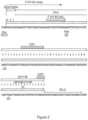
- Each V gene segment comprises a leader sequence encoded by exon 1 and exon 2 of the segment ( see, e.g., Figure 2 ) that is immediately upstream of the exon 2 sequence encoding the FR1, CDR1, FR2, CDR2, FR3 and CDR3 of the germline Ig V segment.
- Ig signal or leader sequences are well-known in the art.
- Non-human animal refers to any vertebrate organism that is not a human.
- a non-human animal may be a cyclostome, a bony fish, a cartilaginous fish (e.g., a shark or a ray), an amphibian, a reptile, a mammal, and a bird.
- a non-human mammal may be a primate, a goat, a sheep, a pig, a dog, a cow, or a rodent.
- a non-human animal may be a rat or a mouse.
- Nucleic acid in its broadest sense refers to any compound and/or substance that is or can be incorporated into an oligonucleotide chain and is generally interchangeable with nucleic acid molecule, nucleic acid sequence, nucleotide molecule, nucleotide molecule, which terms are also interchangeable with each other.
- a "nucleic acid” is a compound and/or substance that is or can be incorporated into an oligonucleotide chain via a phosphodiester linkage.
- nucleic acid refers to individual nucleic acid residues (e.g., nucleotides and/or nucleosides); in some aspects, “nucleic acid” refers to an oligonucleotide chain comprising individual nucleic acid residues.
- a "nucleic acid” is or comprises RNA; in some aspects, a “nucleic acid” is or comprises DNA.
- a "nucleic acid” is, comprises, or consists of one or more natural nucleic acid residues. In some aspects, a “nucleic acid” is, comprises, or consists of one or more nucleic acid analogs. In some aspects, a nucleic acid analog differs from a "nucleic acid” in that it does not utilize a phosphodiester backbone. For example, in some aspects, a “nucleic acid” is, comprises, or consists of one or more "peptide nucleic acids", which are known in the art and have peptide bonds instead of phosphodiester bonds in the backbone, are considered within the scope of the present invention.
- a "nucleic acid” has one or more phosphorothioate and/or 5'-N-phosphoramidite linkages rather than phosphodiester bonds.
- a "nucleic acid” is, comprises, or consists of one or more natural nucleosides (e.g., adenosine, thymidine, guanosine, cytidine, uridine, deoxyadenosine, deoxythymidine, deoxyguanosine, and deoxycytidine).
- a "nucleic acid” is, comprises, or consists of one or more nucleoside analogs (e.g., 2-aminoadenosine, 2-thiothymidine, inosine, pyrrolo-pyrimidine, 3-methyl adenosine, 5-methylcytidine, C-5 propynyl-cytidine, C-5 propynyl-uridine, 2-aminoadenosine, C5-bromouridine, C5-fluorouridine, C5-iodouridine, C5-propynyl-uridine, C5-propynyl-cytidine, C5-methylcytidine, 2-aminoadenosine, 7-deazaadenosine, 7-deazaguanosine, 8-oxoadenosine, 8-oxoguanosine, O(6)-methylguanine, 2-thiocytidine, methylated bases, intercalated bases, and
- a "nucleic acid” comprises one or more modified sugars (e.g., 2'-fluororibose, ribose, 2'-deoxyribose, arabinose, and hexose) as compared with those in natural nucleic acids.
- a "nucleic acid” has a nucleotide sequence that encodes a functional gene product such as an RNA or protein.
- a "nucleic acid” has a nucleotide sequence that encodes polypeptide fragment (e.g., a peptide).
- a "nucleic acid” includes one or more introns.
- a "nucleic acid” includes one or more exons. In some aspects, a “nucleic acid” includes one or more coding sequences. In some aspects, a “nucleic acid” is prepared by one or more of isolation from a natural source, enzymatic synthesis by polymerization based on a complementary template (in vivo or in vitro), reproduction in a recombinant cell or system, and chemical synthesis. In some aspects, a “nucleic acid” is at least 3 or more residues long. In some aspects, a “nucleic acid” is single stranded; in some aspects, a “nucleic acid” is double stranded.
- a "nucleic acid” has a nucleotide sequence comprising at least one element that encodes, or is the complement of a sequence that encodes, a polypeptide or fragment thereof. In some aspects, a "nucleic acid” has enzymatic activity.
- Operably linked refers to a juxtaposition wherein the components described are in a relationship permitting them to function in their intended manner.
- operable linkage does not require contiguity.
- unrearranged variable region gene segments "operably linked" to each other are capable of rearranging to form a rearranged variable region gene, which unrearranged variable region gene segments may not necessarily be contiguous with one another.
- Unrearranged variable region gene segments operably linked to each other and to a contiguous constant region gene are capable of rearranging to form a rearranged variable region gene that is expressed in conjunction with the constant region gene as a polypeptide chain of an antigen binding protein.
- a control sequence "operably linked" to a coding sequence is ligated in such a way that expression of the coding sequence is achieved under conditions compatible with the control sequences.
- "Operably linked" sequences include both expression control sequences that are contiguous with the gene of interest and expression control sequences that act in trans or at a distance to control the gene of interest.
- control sequence refers to polynucleotide sequences, which are necessary to affect the expression and processing of coding sequences to which they are ligated.
- “Expression control sequences” include: appropriate transcription initiation, termination, promoter and enhancer sequences; efficient RNA processing signals such as splicing and polyadenylation signals; sequences that stabilize cytoplasmic mRNA; sequences that enhance translation efficiency (i.e., Kozak consensus sequence); sequences that enhance protein stability; and when desired, sequences that enhance protein secretion. The nature of such control sequences differs depending upon the host organism.
- control sequences generally include promoter, ribosomal binding site and transcription termination sequence
- control sequences include promoters and transcription termination sequence.
- control sequences is intended to include components whose presence is essential for expression and processing and can also include additional components whose presence is advantageous, for example, leader sequences and fusion partner sequences.
- Physiological conditions has its art-understood meaning referencing conditions under which cells or organisms live and/or reproduce.
- the term refers to conditions of the external or internal milieu that may occur in nature for an organism or cell system.
- physiological conditions are those conditions present within the body of a human or non-human animal, especially those conditions present at and/or within a surgical site.
- Physiological conditions typically include, e.g., a temperature range of 20-40°C, atmospheric pressure of 1, pH of 6-8, glucose concentration of 1-20 mM, oxygen concentration at atmospheric levels, and gravity as it is encountered on earth.
- conditions in a laboratory are manipulated and/or maintained at physiological conditions.
- physiological conditions are encountered in an organism (e.g., non-human animal).
- Polypeptide refers to any polymeric chain of amino acids.
- a polypeptide has an amino acid sequence that occurs in nature. In some aspects, a polypeptide has an amino acid sequence that does not occur in nature. In some aspects, a polypeptide has an amino acid sequence that contains portions that occur in nature separately from one another (i.e., from two or more different organisms, for example, human and non-human portions). In some aspects, a polypeptide has an amino acid sequence that is engineered in that it is designed and/or produced through action of the hand of man.
- a polypeptide may comprise or consist of a plurality of fragments, each of which is found in the same parent polypeptide in a different spatial arrangement relative to one another than is found in the polypeptide of interest (e.g., fragments that are directly linked in the parent may be spatially separated in the polypeptide of interest or vice versa, and/or fragments may be present in a different order in the polypeptide of interest than in the parent), so that the polypeptide of interest is a derivative of its parent polypeptide.
- Recombinant refers to nucleic acids and/or polypeptides that are designed, engineered, prepared, expressed, created or isolated by recombinant means, such as polypeptides expressed using a recombinant expression vector transfected into a host cell, polypeptides isolated from a recombinant, combinatorial human polypeptide library ( Hoogenboom H. R., 1997 TIB Tech. 15:62-70 ; Hoogenboom H., and Chames P., 2000, Immunology Today 21:371-378 ; Azzazy H., and Highsmith W. E., 2002, Clin. Biochem. 35:425-445 ; Gavilondo J. V., and Larrick J.
- one or more of such selected sequence elements is found in nature. In some aspects, one or more of such selected sequence elements is designed in silico. In some aspects, one or more such selected sequence elements result from mutagenesis (e.g., in vivo or in vitro ) of a known sequence element, e.g., from a natural or synthetic source. For example, in some aspects, a recombinant polypeptide comprises sequences found in the genome (or polypeptide) of a source organism of interest (e.g., human, mouse, etc.).
- a recombinant polypeptide comprises sequences that occur in nature separately from one another (i.e., from two or more different organisms, for example, human and non-human portions) in two different organisms (e.g., a human and a non-human organism).
- a recombinant polypeptide has an amino acid sequence that resulted from mutagenesis (e.g., in vitro or in vivo, for example in a non-human animal), so that the amino acid sequences of the recombinant polypeptides are sequences that, while originating from and related to polypeptide sequences, may not naturally exist within the genome of a non-human animal in vivo.
- a “reference” or “control” may refer to a “reference animal” or “control animal”.
- a “reference animal” may have a modification as described herein, a modification that is different as described herein or no modification (i.e., a wild-type animal).
- a reference agent, animal, cohort, individual, population, sample, sequence or value is determined or characterized under conditions comparable to those utilized to determine or characterize the agent, animal (e.g., a mammal), cohort, individual, population, sample, sequence or value of interest.
- a reference agent, animal, cohort, individual, population, sample, sequence or value is tested and/or determined substantially simultaneously with the testing or determination of the agent, animal, cohort, individual, population, sample, sequence or value of interest.
- a reference agent, animal, cohort, individual, population, sample, sequence or value is a historical reference, optionally embodied in a tangible medium.
- a reference may refer to a control.
- "VELOCIMMUNE ® control” and the like, e.g., "control VELOCIMMUNE ® ,” or "control” as a reference animal refers to a VELOCIMMUNE ® mouse comprising humanized heavy and kappa variable region loci, where the mice are capable of breeding. These VELOCIMMUNE ® control mice are generally described in Macdonald et al (2014) Proc. Natl. Acad. Sci. USA 111 :5147-52 and supplemental information.
- Somatic Recombination refers to the recombination of V H , D H , and J H gene segments at an immunoglobulin heavy chain locus or the recombination of V L and J L gene segments at an immunoglobulin light chain locus. Somatic recombination occurs prior to antigen contact ad during B cell development in the bone marrow. At a heavy chain locus, one D H and one J H are randomly recombined with the removal of all intervening DNA in a process referred to as D-J joining. Next, a random V H segment is recombined to the rearranged D H J H segment. Recombination at an immunoglobulin light chain locus occurs in a similar manner. A V L gene segment and a J L gene segment are combined are recombined during a process referred to as V-J joining, with removal of all the DNA between them.
- Substantially refers to the qualitative condition of exhibiting total or near-total extent or degree of a characteristic or property of interest.
- One of ordinary skill in the biological arts will understand that biological and chemical phenomena rarely, if ever, go to completion and/or proceed to completeness or achieve or avoid an absolute result.
- the term “substantially” is therefore used to capture the potential lack of completeness inherent in many biological and chemical phenomena.
- Substantial homology refers to a comparison between amino acid or nucleic acid sequences. As will be appreciated by those of ordinary skill in the art, two sequences are generally considered to be “substantially homologous” if they contain homologous residues in corresponding positions. Homologous residues may be identical residues. Alternatively, homologous residues may be non-identical residues with appropriately similar structural and/or functional characteristics. For example, as is well known by those of ordinary skill in the art, certain amino acids are typically classified as “hydrophobic” or “hydrophilic” amino acids, and/or as having "polar” or “non-polar” side chains. Substitution of one amino acid for another of the same type may often be considered a "homologous" substitution.
- amino acid or nucleic acid sequences may be compared using any of a variety of algorithms, including those available in commercial computer programs such as BLASTN for nucleotide sequences and BLASTP, gapped BLAST, and PSI-BLAST for amino acid sequences. Exemplary such programs are described in Altschul, S. F. et al., 1990, J. Mol. Biol., 215(3): 403-410 ; Altschul, S. F. et al., 1996, Methods in Enzymol. 266:460-80 ; Altschul, S. F. et al., 1997, Nucleic Acids Res., 25:3389-402 ; Baxevanis, A.D., and B. F. F.
- two sequences are considered to be substantially homologous if at least 95% or more of their corresponding residues are homologous over a relevant stretch of residues.
- the relevant stretch is a complete sequence. In some aspects, the relevant stretch is at least 9 or more residues. In some aspects, the relevant stretch includes contiguous residues along a complete sequence. In some aspects, the relevant stretch includes discontinuous residues along a complete sequence, for example, noncontiguous residues brought together by the folded conformation of a polypeptide or a portion thereof. In some aspects, the relevant stretch is at least 10 or more residues.
- Substantial identity refers to a comparison between amino acid or nucleic acid sequences. As will be appreciated by those of ordinary skill in the art, two sequences are generally considered to be “substantially identical” if they contain identical residues in corresponding positions. As is well known in this art, amino acid or nucleic acid sequences may be compared using any of a variety of algorithms, including those available in commercial computer programs such as BLASTN for nucleotide sequences and BLASTP, gapped BLAST, and PSI-BLAST for amino acid sequences. Exemplary such programs are described in Altschul, S. F. et al., 1990, J. Mol. Biol., 215(3): 403-410 ; Altschul, S. F.
- two sequences are considered to be substantially identical if at least 95% or more of their corresponding residues are identical over a relevant stretch of residues.
- the relevant stretch is a complete sequence. In some aspects, the relevant stretch is at least 10 or more residues.
- Targeting vector or targeting construct refers to a polynucleotide molecule that comprises a targeting region.
- a targeting region comprises a sequence that is identical or substantially identical to a sequence in a target cell, tissue or animal and provides for integration of the targeting construct into a position within the genome of the cell, tissue or animal via homologous recombination.
- Targeting regions that target using site-specific recombinase recognition sites are also included.
- a targeting construct as described herein further comprises a nucleic acid sequence or gene of particular interest, a selectable marker, control and or regulatory sequences, and other nucleic acid sequences that allow for recombination mediated through exogenous addition of proteins that aid in or facilitate recombination involving such sequences.
- a targeting construct as described herein further comprises a gene of interest in whole or in part, wherein the gene of interest is a heterologous gene that encodes a polypeptide, in whole or in part, that has a similar function as a protein encoded by an endogenous sequence.
- a targeting construct as described herein further comprises a humanized gene of interest, in whole or in part, wherein the humanized gene of interest encodes a polypeptide, in whole or in part, that has a similar function as a polypeptide encoded by an endogenous sequence.
- a targeting construct may comprise a nucleic acid sequence manipulated by the hand of man.
- a targeting construct may be constructed to contain an engineered or recombinant polynucleotide that contains two or more sequences that are not linked together in that order in nature yet manipulated by the hand of man to be directly linked to one another in the engineered or recombinant polynucleotide.
- Transgene or transgene construct refers to a nucleic acid sequence (encoding e.g., a polypeptide of interest, in whole or in part) that has been introduced into a cell by the hand of man such as by the methods described herein.
- a transgene could be partly or entirely heterologous, i.e., foreign, to the transgenic animal or cell into which it is introduced.
- a transgene can include one or more transcriptional regulatory sequences and any other nucleic acid, such as introns or promoters, which may be necessary for expression of a selected nucleic acid sequence.
- a transgene can include one or more selectable markers that allow for subsequent selection of progeny (e.g., cells) that have taken up the transgene.
- Transgenic animal, transgenic non-human animal or Tg + are used interchangeably herein and refer to any non-naturally occurring non-human animal in which one or more of the cells of the non-human animal contain heterologous nucleic acid and/or gene encoding a polypeptide of interest, in whole or in part.
- a heterologous nucleic acid sequence and/or gene is introduced into the cell, directly or indirectly by introduction into a precursor cell, by way of deliberate genetic manipulation, such as by microinjection or by infection with a recombinant virus.
- genetic manipulation does not include classic breeding techniques, but rather is directed to introduction of recombinant DNA molecule(s). This molecule may be integrated within a chromosome, or it may be extrachromosomally replicating DNA.
- Tg + includes animals that are heterozygous or homozygous for a heterologous nucleic acid and/or gene, and/or animals that have single or multi-copies of a heterologous nucleic acid and/or gene.
- Targeting vector refers to a nucleic acid molecule capable of transporting a nucleic acid of interest to which it is associated, particularly for targeted insertion of the nucleic acid of interest into another nucleic acid molecule, e.g., donor plasmid, non-human animal genome, etc.
- vectors are capable of extra-chromosomal replication and/or expression of nucleic acids to which they are linked in a host cell such as a eukaryotic and/or prokaryotic cell.
- vectors capable of directing the expression of operably linked genes are referred to herein as "expression vectors" or "constructs”.
- Wild-type has its art-understood meaning that refers to an entity having a structure and/or activity as found in nature in a "normal” (as contrasted with mutant, diseased, engineered, altered, etc.) state or context.
- wild-type genes and polypeptides often exist in multiple different forms (e.g., alleles).
- anchor-modified immunoglobulins Ig
- modified Ig V segments that encode them, where the anchor comprises at least the receptor binding portion of a ligand (e.g., a non-immunoglobulin polypeptide) that binds a cognate receptor.
- Animals comprising the modified Ig V segments may generate a diverse repertoire of anchor-modified immunoglobulins in response to immunization with a receptor cognate to the anchor.
- the anchor acts to increase the affinity of an antibody created de novo in an animal in response to antigenic challenge with the cognate receptor, e.g., by binding to the cognate receptor simultaneously with an antibody that specifically binds the cognate receptor and/or allowing affinity maturation of those antibodies that would not normally be expanded, without the anchor, in response to antigenic challenge with the cognate receptor.
- the diverse repertoire of immunoglobulins produced by non-human animals disclosed herein may comprise anchor-modified immunoglobulins that bind the cognate receptor with high affinity, thereby increasing the population of immunoglobulins from which a lead candidate against the previously intractable target may be discovered.
- Nucleic Acid Molecules including Targeting Vectors and Animal Genomes, etc.
- An anchor-modified immunoglobulin described herein may be encoded, at least in part, by a variable region (V) segment, e.g., an immunoglobulin (Ig) heavy chain variable region (V H ) segment or an Ig light chain variable region (V L ) segment, modified to encode the anchor in between and in operable linkage to: an Ig leader sequence, and the framework (FR) and complementarity determining region (CDR) sequences of a germline Ig V segment.
- the nucleic acid sequences encoding immunoglobulin (Ig) signal peptides and the nucleic acid sequences of germline V segments, e.g., human germline V segments, are well-known in the art, as are the amino acid sequences so encoded. See, e.g., Lefranc, M.-P., Exp. Clin. Immunogenet., 18, 100-116 (2001 ) and the website found in the worldwide web (www) at the address imgt.org.
- a nucleic acid molecule, including targeting vectors, and animal genomes as described herein may comprise a nucleic acid sequence encoding any Ig signal peptide of a germline V segment.
- a modified Ig V segment comprises a nucleic acid sequence encoding a signal peptide of a first germline Ig V segment, a nucleic acid sequence encoding an anchor, and a nucleic acid encoding the framework region (FR) 1, complementarity determining region (CDR)1, FR2, CDR2, FR3, and CDR3 of a second germline Ig V segment, wherein the first germline Ig V segment and the second germline Ig V segment are different germline Ig V segments.
- FR framework region
- CDR complementarity determining region
- a modified Ig V segment comprises a nucleic acid sequence encoding a signal peptide of a first germline Ig V segment, a nucleic acid sequence encoding an anchor, and a nucleic acid encoding the framework region (FR) 1, complementarity determining region (CDR)1, FR2, CDR2, FR3, and CDR3 of a second germline Ig V segment, wherein the first germline Ig V segment and the second germline Ig V segment are the same germline Ig V segment.
- the Ig signal peptide comprises the sequence MDWTWRFLFVVAAATGVQS (SEQ ID NO:7).
- human germline V segments e.g., human germline variable heavy chain (hV H or hIGVH) segments, human germline variable kappa (hV ⁇ or hIGKV) segments, and human germline variable lambda (hV ⁇ or hIGLV) segments and murine (m) germline V segments (e.g., mouse germline variable heavy chain (mV H or mIGVH) segments, mouse germline variable kappa (mV ⁇ or mIGKV) segments, and mouse germline variable lambda (mV ⁇ or mIGLV) segments may be found at the worldwide web (www) addresses imgt.org/IMGTrepertoire/Proteins/SequenceLogos/human/ and imgt.org/IMGTrepertoire/Proteins/SequenceLogos/mouse/.
- mV H or mIGVH mouse germline variable heavy chain
- mV ⁇ or mIGKV mouse germline variable kappa
- the germline Ig V segment or variant thereof is a human (h) germline Ig V segment or variant thereof, e.g., a germline human (h) V H 1-2 segment, a germline hV H 1-3 segment, a germline hV H 1-8 segment, a germline hV H 1 18 segment, a germline hV H 1-24 segment, a germline hV H 1-45 segment, a germline hV H 1-46 segment, a germline hV H 1-58 segment, a germline hV H 1-69 segment, a germline hV H 2-5 segment, a germline hV H 2-26 segment, a germline hV H 2 70 segment, a germline hV H 3-7 segment, a germline hV H 3-9 segment, a germline hV H h
- a nucleic acid molecule as described herein comprises only the modified Ig hV H segment, e.g., does not comprise any additional hV H segments or variants thereof.
- a nucleic acid molecule as described herein further comprises, in addition to the modified Ig hV H segment, additional hV H segments, e.g., one of, more than one of, or each of V H 1-2, hV H 1-3, hV H 1-8, hV H 118, hV H 1-24, hV H 1-45, hV H 1-46, hV H 1-58, hV H 1-69, hV H 2-5, hV H 2-26, hV H 2 70, hV H 3-7, hV H 3-9, hV H 3 11, hV H 3 13, hV H 3-15, hV H 3-16, hV H 3-20, hV H 3-21, hV H 3-23, hV H 3-30, hV H 3-30-3, hV H 3-30-5, hV H 3-33, hV H 3-35, hV H 3-38, hV H 3-43, hV H
- a nucleic acid molecule as described herein may comprise an Ig heavy chain variable region, e.g., may comprise in addition to the anchor-modified V segment, additional (un)rearranged V H , D H and/or J H gene segments, and in some aspects, additional (un)rearranged hV H , hD H and/or hJ H gene segments.
- a nucleic acid molecule (e.g., a targeting vector, a non-human animal genome, etc.) as described herein comprises only one (un)rearranged hV H segment, one or more (un)rearranged hD H segment, and one or more (un)rearranged hJ H segment, wherein the only one (un)rearranged hV H segment is a modified hV H segment comprising a nucleic acid sequence encoding an anchor as described herein.
- the recombinant nucleic acid (e.g., a targeting vector, a non-human animal genome, etc.) as described herein comprises one or more human D H segments, e.g., one of, more than one of, or each of hD H 1-1, hD H 1-7, hD H 1-14, hD H 1-20, hD H 1-26, hD H 2-2, hD H 2-8, hD H 2-15, hD H 2-21, hD H 3-3, hD H 3-9, hD H 3-10, hD H 3-16, hD H 3-22, hD H 4-4, hD H 4-11, hD H 4-17, hD H 4-23, hD H 5-5, hD H 5-12, hD H 5-18, hD H 5-24, hD H 6-6, hD H 6-13, hD H 6-19, hD H 6-25, hD H 7-27
- the hD H segments are in germline configuration.
- the recombinant nucleic acid molecule (e.g., a targeting vector, a non-human animal genome, etc.) as described herein comprises one or more human J H segments, e.g., one of, more than one of, or each of hJ H 1, hJ H 2, hJ H 3, hJ H 4, hJ H 5, hJ H 6, and variants thereof.
- the hJ H segments are in germline configuration.
- the recombinant nucleic acid molecule (e.g., a targeting vector, a non-human animal genome, etc.) as described herein may comprise a heavy chain variable region locus, e.g., may comprise in operable linkage and from 5' to 3': (I) the modified Ig V H segment, (II) one or a plurality of Ig heavy chain diversity (D H ) segments, and (III) one or a plurality of all Ig heavy chain joining (J H ) segments.
- a heavy chain variable region locus e.g., may comprise in operable linkage and from 5' to 3': (I) the modified Ig V H segment, (II) one or a plurality of Ig heavy chain diversity (D H ) segments, and (III) one or a plurality of all Ig heavy chain joining (J H ) segments.
- the one or a plurality of Ig D H segments of (II) comprises one, a plurality of, or all human Ig D H segments
- the one or a plurality of Ig J H segments of (III) comprises one, a plurality of, or all human Ig J H segments.
- the one or a plurality of Ig D H segments of (II) and the one or a plurality of Ig J H gene segments of (III) are recombined and form a rearranged Ig D H /J H sequence such that the recombinant nucleic acid molecule comprises in operable linkage and from 5' to 3': the modified Ig V H gene segment and the rearranged Ig D H /J H sequence.
- the Ig V H gene segment and the rearranged Ig D H /J H sequence are recombined and form a rearranged Ig V H /D H /J H sequence that encodes an anchor modified Ig heavy chain variable domain
- the anchor modified Ig heavy chain variable domain comprises in operable linkage: (i) the Ig signal peptide, (ii) the anchor, and (iii) the FR1, complementarity determining region (CDR) 1, FR2, CDR2, FR3, CDR3, and FR4 encoded by the rearranged Ig V H /D H /J H sequence.
- the modified Ig V H segment is an unrearranged modified Ig V H gene segment.
- a recombinant nucleic acid (e.g., a targeting vector, a non-human animal genome, etc.) as described herein further comprises a nucleic acid sequence encoding an Ig heavy chain constant region (C H ), wherein the nucleic acid sequence encoding an Ig C H is downstream of and operably linked to (I) the modified Ig V H segment, (II) the one or a plurality of Ig D H segments, and (III) the one or a plurality of Ig J H segments.
- C H Ig heavy chain constant region
- the nucleic acid sequence encodes an Ig C H comprises an Ig ⁇ gene that encodes an IgM isotype, an Ig ⁇ gene that encodes an IgD isotype, an Ig ⁇ gene that encodes an IgG isotype, an Ig ⁇ gene that encodes an IgA isotype, and/or an Ig ⁇ gene that encodes an IgE isotype.
- the recombinant nucleic acid molecule described herein comprises a nucleic acid sequence encoding an anchor-modified Ig heavy chain, wherein the anchor-modified Ig heavy chain comprises in operable linkage: (i) the Ig signal peptide, (ii) the anchor, (iii) an Ig heavy chain variable domain comprising the FR1, CDR1, FR2, CDR2, FR3, CDR3, and FR4 encoded by a rearranged Ig V H /D H /J H sequence, and (iv) an Ig C H .
- the Ig C H is a non-human Ig C H , e.g., a rodent Ig C H , e.g., a rat Ig C H or a mouse Ig C H .
- the germline Ig V segment or variant thereof (e.g., that encodes FR1, CDR1, FR2, CDR2, FR3, and CDR3 of a modified Ig V segment as described herein) is a germline Ig light chain variable (V L ) segment or variant thereof.
- the recombinant nucleic acid molecule may comprise a light chain variable region locus, e.g., may comprise in operable linkage and from 5' to 3': (I) the modified Ig V L segment, and (II) one or a plurality of Ig light chain joining (J L ) segments.
- the modified Ig V L segment and the one or a plurality of Ig J L segments are recombined and form a rearranged Ig V L /J L sequence that encodes an anchor modified Ig light chain variable domain
- the anchor modified Ig light chain variable domain comprises in operable linkage: (i) the Ig signal peptide, (ii) the anchor, and (iii) the FR1, CDR1, FR2, CDR2, FR3, CDR3, and FR4 encoded by the rearranged Ig V L /J L sequence.
- the recombinant nucleic acid molecule may comprise a light chain variable region locus and a nucleic acid sequence encoding an Ig light chain constant region (C L ), wherein the nucleic acid sequence encoding an Ig C L is downstream of and operably linked to: (I) the modified Ig V L segment and (II) the one or a plurality of Ig light chain joining (J L ) segments.
- C L Ig light chain constant region
- the anchor-modified Ig light chain comprises in operable linkage: (i) the Ig signal peptide, (ii) the anchor, (iii) an Ig light chain variable domain comprising the FR1, CDR1, FR2, CDR2, FR3, CDR3, and FR4 encoded by a rearranged Ig V L /J L sequence, and (iv) an Ig C L .
- the Ig C L is a non-human Ig C L , e.g., a rodent Ig C L , e.g., a rat Ig C L or a mouse Ig C L .
- the germline Ig V segment or variant thereof is a germline Ig light chain variable kappa (V ⁇ ) segment or variant thereof, e.g., a human V ⁇ segment, e.g., is a hV ⁇ 1-5 segment, a hV ⁇ 1-6 segment, a hV ⁇ 1-8 segment, a hV ⁇ 1D-8 segment, a hV ⁇ 1-9 segment, a hV ⁇ 1-12 segment, a hV ⁇ 1D-12 segment, a hV ⁇ 1-13 segment, a hV ⁇ 1D-13 segment, a hV ⁇ 1-16 segment, a hV ⁇ 1D-16 segment, a hV ⁇ 1-17 segment, a hV ⁇ 1D-17 segment, a hV ⁇ 1-27 segment, a hV ⁇ 1-33 segment,
- V ⁇ germline Ig light chain variable kappa
- a nucleic acid molecule as described herein further comprises, in addition to the modified Ig hV ⁇ segment, additional hV ⁇ segments, e.g., one of, more than one of, or each of a hV ⁇ 1D-8 segment, a hV ⁇ 1-9 segment, a hV ⁇ 1-12 segment, a hV ⁇ 1D-12 segment, a hV ⁇ 1-13 segment, a hV ⁇ 1D-13 segment, a hV ⁇ 1-16 segment, a hV ⁇ 1D-16 segment, a hV ⁇ 1-17 segment, a hV ⁇ 1D-17 segment, a hV ⁇ 1-27 segment, a hV ⁇ 1-33 segment, a hV ⁇ 1D-33 segment, a hV ⁇ 1-37 segment, a hV ⁇ 1D-37 segment, a hV ⁇ 1-39 segment, a hV ⁇ 1D-39, a hV ⁇ 1-NL1 segment, a hV ⁇
- a nucleic acid molecule as described herein may comprise an Ig light chain ⁇ variable region, e.g., may comprise in addition to the anchor-modified hV ⁇ segment, additional (un)rearranged J ⁇ segments, and in some aspects, additional (un)rearranged hJ ⁇ gene segments.
- the recombinant nucleic acid molecule described herein comprises in operable linkage and from 5' to 3': (I) the modified Ig V ⁇ segment, and (II) one or a plurality of Ig light chain joining kappa J ⁇ segments.
- the recombinant nucleic acid molecule (e.g., a targeting vector, a non-human animal genome, etc.) as described herein comprises one or more human J ⁇ segments, e.g., one of, more than one of, or each of hJ ⁇ 1, hJ ⁇ 2, hJ ⁇ 3, hJ ⁇ 4, hJ ⁇ 5, and variants thereof.
- the hJ ⁇ segments are in germline configuration.
- the recombinant nucleic acid molecule described herein comprises in operable linkage and from 5' to 3': (I) the modified Ig V ⁇ segment, and (II) one or a plurality of Ig light chain joining kappa (J ⁇ ) and a nucleic acid sequence encoding an Ig light chain constant kappa region (C ⁇ ).
- the germline Ig V segment or variant thereof is a germline Ig light chain variable lambda (V ⁇ ) segment or variant thereof, e.g., a human V ⁇ segment, e.g., a hV ⁇ 1-36 segment, a hV ⁇ 1-40 segment, a hV ⁇ 1-41 segment, a hV ⁇ 1-44 segment, a hV ⁇ 1-47 segment, a hV ⁇ 1-50 segment, a hV ⁇ 1-51 segment, a hV ⁇ 1-62 segment, a hV ⁇ 2-5 segment, a hV ⁇ 2-8 segment, a hV ⁇ 2-11 segment, a hV ⁇ 2-14 segment, a hV ⁇ 2-18 segment, a hV ⁇ 2-23 segment, a hV ⁇ 2-33 segment, hV ⁇ 2-34 segment
- V ⁇ light chain variable lambda
- a nucleic acid molecule as described herein further comprises, in addition to the modified Ig hV ⁇ segment, additional hV ⁇ segments, e.g., one of, more than one of, or each of a hV ⁇ 1-36 segment, a hV ⁇ 1-40 segment, a hV ⁇ 1-41 segment, a hV ⁇ 1-44 segment, a hV ⁇ 1-47 segment, a hV ⁇ 1-50 segment, a hV ⁇ 1-51 segment, a hV ⁇ 1-62 segment, a hV ⁇ 2-5 segment, a hV ⁇ 2-8 segment, a hV ⁇ 2-11 segment, a hV ⁇ 2-14 segment, a hV ⁇ 2-18 segment, a hV ⁇ 2-23 segment, a hV ⁇ 2-33 segment, hV ⁇ 2-34 segment, a hV ⁇ 3-1 segment, a hV ⁇ 3-9 segment, a hV ⁇ 3-10 segment, a hV ⁇ 3-12 segment
- a nucleic acid molecule as described herein may comprise an Ig light chain ⁇ variable region, e.g., may comprise in addition to the anchor-modified hV ⁇ segment, additional (un)rearranged J ⁇ segments, and in some aspects, additional (un)rearranged hJ ⁇ gene segments.
- the recombinant nucleic acid molecule described herein comprises in operable linkage and from 5' to 3': (I) the modified Ig V ⁇ segment, and (II) one or a plurality of Ig light chain joining kappa J ⁇ segments.
- the recombinant nucleic acid (e.g., a targeting vector, a non-human animal genome, etc.) as described herein comprises one or more human J ⁇ segments, e.g., one of, more than one of, or each of hJ ⁇ 1, hJ ⁇ 2, hJ ⁇ 3, hJ ⁇ 4, hJ ⁇ 5, hJ ⁇ 6, hJ ⁇ 7 segments and variants thereof.
- the hJ ⁇ segments are in germline configuration.
- the recombinant nucleic acid molecule described herein comprises in operable linkage and from 5' to 3': (I) the modified Ig V ⁇ segment, (II) one or a plurality of Ig light chain joining lambda (J ⁇ ) segments, and a nucleic acid sequence encoding an Ig light chain constant lambda region (C ⁇ ).
- anchors comprise ligands (or portions thereof) that bind to cognate receptors.
- an anchor may comprise a non-immunoglobulin polypeptide, e.g., a receptor binding portion of the non-immunoglobulin polypeptide.
- the anchor modifications described herein may be useful to increase the affinity of antigen-binding proteins, e.g., antibodies, to intractable receptors.
- non-immunoglobulin polypeptide:cognate receptor pairs include, but are not limited to, e.g., those non-immunoglobulin polypeptides that bind cognate G-protein coupled receptors (GPCRs)
- GPCRs include, but are not limited to chemokine receptors, glucagon receptors (e.g., GLP1:GLP1R), calcitonin receptors, melanocortin receptors.
- GPCRs include, but are not limited to chemokine receptors, glucagon receptors (e.g., GLP1:GLP1R), calcitonin receptors, melanocortin receptors.
- GPCRs include, but are not limited to chemokine receptors, glucagon receptors (e.g., GLP1:GLP1R), calcitonin receptors, melanocortin receptors.
- GPCRs include, but are not limited to chemokine receptors,
- the anchor comprises a natriuretic peptide (NP), e.g., a receptor binding portion of an NP.
- NPs comprise at least eight structurally related amino acid peptides stored as three different prohormones: atrial natriuretic peptide (ANP) prohormone, B-type natriuretic peptide (BNP) prohormone, and C-type natriuretic peptide (CNP) prohormone.
- ANP atrial natriuretic peptide
- BNP B-type natriuretic peptide
- CNP C-type natriuretic peptide
- the ANP prohormone is a 126 amino acid polypeptide that is expressed primarily by cardiomyocytes and gives rise to several peptides with blood pressure lowering properties, natriuretic properties, diuretic properties, and/or kaliuretic properties. These peptides derived from the ANP prohormone are identified by their amino acid sequences beginning at the N-terminal end of the ANP prohormone: e.g., proANP 1-30 comprises a long-acting NP, proANP 31-67 comprises a vessel dilator, proANP 79-98 comprises a kaliuretic peptide, and amino acids 99-126 (also referred to as ANP), inter alia. Within the kidney, proANP is processed differently, resulting in an additional four amino acids being added to the N-terminus, e.g., proANP 95-126 (also referred to as urodilatin).
- the BNP prohormone is a 108-amino acid polypeptide, also expressed primarily by cardiomyocytes.
- the BNP prohormone is processed within the human heart to form BNP (e.g., amino acids 77-108 of its 108 amino acid prohormone), and NT-proBNP (e.g., amino acids 1-76, both of which circulate in humans.
- BNP is a reliable biomarker of ventricular dilatation. Pandit et al. (2011) Ind. J. Endocrinol. Metab. 15(4) S345-53 .
- CNP is primarily expressed by endothelial and renal epithelial cells. Two CNP molecules have been identified in the circulation. Also, although CNP appears to lack natriuretic function, CNP likely serves as a regulator of vascular tone and growth in a paracrine or autocrine manner, and there is some indication that CNP may play a role in bone growth.
- NPs exert their biological functions by specific binding to cell-surface receptors.
- Three specific receptors have been identified in mammalian tissues: two guanylyl cyclase-coupled receptors (GC-A and GC-B, also referred to as NP receptor (NPR)-A and NPR-B, respectively).
- NPR-A and NPR-B act through activation of the cGMP-dependent signaling cascade.
- the third type C receptor also referred to as NPR-C
- All three receptors bind ANP, BNP, and CNP with different affinities.
- the rank order of ligand selectivity for GC-A is ANP ⁇ BNP ⁇ CNP
- for GC-B is CNP ⁇ ANP ⁇ BNP
- for NPR-C is ANP > CNP > BNP. Jaubert et al. (1999) PNAS 96(18) 10278-283 .
- NP receptors may be useful targets for the treatment of hypertension and cardiovascular disease.
- ANP and BNP have important diuretic, natriuretic and hypotensive properties
- CNP may play a role in bone growth.
- any antibody-based targeting of NP receptors must be mindful of the differential binding affinities of the receptors for the NPs.
- the anchor comprises the sequence ANP or a portion thereof.
- a nucleic acid sequence encoding human ANP is set forth as NCBI accession number NM_006172.4 and SEQ ID NO:1 herein.
- An amino acid sequence of human ANP is set forth as NCBI accession number NP_006163 and SEQ ID NO:2 herein.
- the anchor described herein comprises the receptor binding portion of ANP, e.g., the C-terminal tail of ANP.
- the receptor binding portion of ANP comprises the amino acid sequence NSFRY (SEQ ID NO:3).
- the anchor comprises a linker that links the receptor binding portion of a non-immunoglobulin polypeptide of interest to the FR1, CDR1, FR2, CDR2, FR3, and CDR3 of the germline Ig V segment, or a variant thereof.
- the linker may be one amino acid in length.
- the linker may be two amino acids in length.
- the linker may be three amino acids in length.
- the linker may be four amino acids in length, e.g., the linker may comprise the sequence GLSG (SEQ ID NO: 13).
- the linker may be five amino acids in length, e.g., may comprise the sequence GGGGS (SEQ ID NO:5).
- the linker may be six amino acids in length, e.g., may comprise a sequence of GLSGSG (SEQ ID NO: 14).
- the linker may be seven amino acids in length.
- the linker may comprise a sequence of GLSGLSGS (SEQ ID NO: 15).
- the linker may be nine amino acids in length.
- the linker may be ten amino acids in length, e.g., may comprise a sequence of GLSGLSGLSG (SEQ ID NO:16) or GLSGGSGLSG (SEQ ID NO: 17).
- the first and second linkers are identical in length, and are each more than ten amino acids in length.
- the recombinant nucleic acid molecule described herein comprises the sequence set forth as SEQ ID NO:8 or a degenerate variant thereof, or the sequence set forth as SEQ ID NO: 10 or a degenerate variant thereof.
- targeting vectors to be employed in the methods for making the genetically modified non-human animals, cells, tissues or embryos provided herein.
- a targeting vector comprises an insert nucleic acid, e.g., a recombinant nucleic acid molecule comprising a modified Ig V segment as described herein, flanked by 5' and 3' homology arms that can undergo homologous recombination with a locus of interest, e.g., an Ig heavy or light chain variable region locus.
- an insert nucleic acid e.g., a recombinant nucleic acid molecule comprising a modified Ig V segment as described herein, flanked by 5' and 3' homology arms that can undergo homologous recombination with a locus of interest, e.g., an Ig heavy or light chain variable region locus.
- a homology arm and a target site i.e., cognate genomic region
- a target site i.e., cognate genomic region
- homology is meant DNA sequences that are either identical or share sequence identity to a corresponding or “complementary” sequence.
- sequence identity between a given target site and the corresponding homology arm found on the targeting vector can be any degree of sequence identity that allows for homologous recombination to occur.
- the amount of sequence identity shared by the homology arm of the targeting vector (or a fragment thereof) and the target site (or a fragment thereof) can be at least 50%, 55%, 60%, 65%, 70%, 75%, 80%, 81%, 82%, 83%, 84%, 85%, 86%, 87%, 88%, 89%, 90%, 91%, 92%, 93%, 94%, 95%, 96%, 97%, 98%, 99% or 100% sequence identity, such that the sequences undergo homologous recombination.
- a complementary region of homology between the homology arm and the complementary target site can be of any length that is sufficient to promote homologous recombination at the cleaved recognition site.
- a given homology arm and/or complementary target site can comprise complementary regions of homology that are at least 5-10kb, 5-15kb, 10-20kb, 20-30kb, 30-40kb, 40-50kb, 50-60kb, 60-70kb, 70-80kb, 80-90kb, 90-100kb, 100-110kb, 110-120kb, 120-130kb, 130-140kb, 140-150kb, 150-160kb, 160-170kb, 170-180kb, 180-190kb, 190-200kb, 200kb to 300kb in length or greater (such as described in the vectors described elsewhere herein) such that the homology arm has sufficient homology to undergo homologous recombination with the corresponding target sites within the genome of the cell.
- the homology arms are referred to herein as a 5' and a 3' homology arm. This terminology relates to the relative position of the homology arms to the insert nucleic acid within the targeting vector
- the homology arms of the targeting vector are therefore designed to be complementary to a target site with the targeted locus.
- the homology arms can be complementary to a locus that is native to the cell, or alternatively they can be complementary to a region of a heterologous or exogenous segment of DNA that was integrated into the genome of the cell, including, but not limited to, transgenes, expression cassettes, or heterologous or exogenous regions of genomic DNA.
- the homology arms of the targeting vector can be complementary to a region of a human artificial chromosome or any other engineered genomic region contained in an appropriate host cell.
- the homology arms of the targeting vector can be complementary to or be derived from a region of a BAC library, a cosmid library, or a P1 phage library.
- the homology arms of the targeting vector are complementary to a eukaryotic, non-human, mammalian, non-human mammalian, human, rodent, mouse or rat genomic locus that is native, heterologous or exogenous to a given cell.
- the homology arms are derived from a synthetic DNA.
- the targeting vector further comprises 5' and 3' homology arms that target a non-human Ig heavy chain locus such that upon homologous recombination between the targeting vector and the non-human Ig heavy chain locus, the targeted non-human Ig heavy chain locus comprises the recombinant nucleic acid molecule (e.g., a recombinant nucleic acid molecule comprising a modified Ig V H segment, and optionally Ig D H and/or Ig J H segments) upstream of and in operable linkage to a non-human Ig C H at the non-human Ig heavy chain locus, optionally wherein the non-human Ig heavy chain locus is an endogenous rodent Ig heavy chain locus and/or wherein the non-human Ig heavy chain locus comprises a human or humanized immunoglobulin heavy chain variable region, a deletion of endogenous Ig V H , D H , and/or J H gene segments, or a combination thereof.
- the recombinant nucleic acid molecule upon homologous recombination between the targeting vector and the non-human Ig heavy chain locus, replaces a non-human V H segment at the non-human Ig heavy chain locus. In some embodiments, upon homologous recombination between the targeting vector and the non-human Ig heavy chain locus, replaces one or more non-human V H segments, all non-human D H segments, and all non-human J H segments at the non-human Ig heavy chain locus.
- the recombinant nucleic acid molecule upon homologous recombination between the targeting vector and the non-human Ig heavy chain locus, replaces all but one non-human V H segment or all non-human V H segments, all non-human D H segments, and all non-human J H segments at the non-human Ig heavy chain locus.
- the targeted non-human Ig heavy chain locus upon homologous recombination between the targeting vector and the non-human Ig heavy chain locus, comprises the recombinant nucleic acid molecule in operable linkage to a non-human Ig heavy chain regulatory sequence at the non-human Ig heavy chain locus.
- the targeting vector comprises the recombinant nucleic acid molecule described herein and 5' and 3' homology arms that target a non-human Ig heavy chain locus such that upon homologous recombination between the targeting vector and the non-human Ig heavy chain locus, the targeted non-human Ig heavy chain locus comprises the recombinant nucleic acid molecule (e.g., a recombinant nucleic acid molecule comprising a modified Ig V H segment, and optionally Ig D H segment(s), Ig J H segment(s) and/or Ig C H gene(s)) in operable linkage to a non-human Ig heavy chain regulatory sequence at the non-human Ig heavy chain locus, optionally wherein the non-human Ig heavy chain locus is an endogenous rodent Ig heavy chain locus in a rodent or rodent cell (e.g., a rodent embryonic stem cell) and/or wherein the non-human Ig heavy chain locus comprises
- the 5' homology arm comprises a sequence set forth as SEQ ID NO: 12 and/or the 3' homology arm comprises a sequence set forth as SEQ ID NO:13.
- the targeting vector comprises the recombinant nucleic acid molecule described herein and 5' and 3' homology arms that target a non-human Ig light chain locus such that upon homologous recombination between the targeting vector and the non-human Ig light chain locus, the targeted non-human Ig light chain locus comprises the recombinant nucleic acid molecule (e.g., a recombinant nucleic acid molecule comprising a modified Ig V L segment, and optionally Ig J L segment(s) as described herein) upstream of and in operable linkage to a non-human Ig C L at the non-human Ig light chain locus, optionally wherein the non-human Ig light chain locus is an endogenous rodent Ig light chain locus and/or wherein the non-human Ig light chain locus comprises a human or humanized immunoglobulin light chain variable region, a deletion of endogenous Ig V L and/or J L gene segments, or
- the recombinant nucleic acid molecule upon homologous recombination between the targeting vector and the non-human Ig light chain locus, replaces a non-human V L segment at the non-human Ig light chain locus. In some embodiments, upon homologous recombination between the targeting vector and the non-human Ig light chain locus, the recombinant nucleic acid molecule replaces one or more non-human V L segments and all non-human J L segments at the non-human Ig light chain locus.
- the recombinant nucleic acid molecule upon homologous recombination between the targeting vector and the non-human Ig light chain locus, replaces all non-human V L segments and all non-human J H segments at the non-human Ig light chain locus. In some embodiments, upon homologous recombination between the targeting vector and the non-human Ig light chain locus, the targeted non-human Ig light chain locus comprises the recombinant nucleic acid molecule in operable linkage to a non-human Ig light chain regulatory sequence at the Ig light chain locus.
- the targeting vector described herein comprises a nucleic acid molecule described herein and 5' and 3' homology arms that target a non-human Ig light chain locus such that upon homologous recombination between the targeting vector and the non-human Ig light chain locus, the targeted non-human Ig light chain locus comprises the recombinant nucleic acid molecule (e.g., a recombinant nucleic acid molecule comprising a modified Ig V L segment, and optionally Ig J L segment(s) and/or an Ig C L gene as described herein) in operable linkage to a non-human Ig light chain regulatory sequence at the non-human Ig light chain locus, optionally wherein the non-human Ig light chain locus is an endogenous rodent Ig light chain locus and/or wherein the non-human Ig light chain locus comprises a human or humanized immunoglobulin light chain variable region, a deletion of endogenous Ig V L and/or J L gene
- the targeting vector comprises the recombinant nucleic acid molecule described herein and 5' and 3' homology arms that target a non-human Ig light chain ⁇ locus such that upon homologous recombination between the targeting vector and the non-human Ig light chain ⁇ locus, the targeted non-human Ig light chain ⁇ locus comprises the recombinant nucleic acid molecule (e.g., a recombinant nucleic acid molecule comprising a modified Ig V ⁇ segment, and optionally Ig J ⁇ segment(s) as described herein) upstream of and in operable linkage to a non-human Ig C ⁇ at the non-human Ig light chain ⁇ locus, optionally wherein the non-human Ig light chain ⁇ locus is an endogenous rodent Ig light chain ⁇ locus and/or wherein the non-human Ig light chain ⁇ locus comprises a human or humanized immunoglobulin light chain variable region, a deletion of endogenous
- the recombinant nucleic acid molecule upon homologous recombination between the targeting vector and the non-human Ig light chain ⁇ locus, replaces a non-human V ⁇ segment at the non-human Ig light chain ⁇ locus. In some embodiments, upon homologous recombination between the targeting vector and the non-human Ig light chain ⁇ locus, the recombinant nucleic acid molecule replaces one or more non-human V ⁇ segments and all non-human J ⁇ segments at the non-human Ig light chain ⁇ locus.
- the recombinant nucleic acid molecule upon homologous recombination between the targeting vector and the non-human Ig light chain ⁇ locus, replaces all non-human V ⁇ segments and all non-human J ⁇ segments at the non-human Ig light chain ⁇ locus. In some embodiments, upon homologous recombination between the targeting vector and the non-human Ig light chain ⁇ locus, the targeted non-human Ig light chain ⁇ locus comprises the recombinant nucleic acid molecule in operable linkage to a non-human Ig light chain ⁇ regulatory sequence at the Ig light chain ⁇ locus.
- the targeting vector comprises the recombinant nucleic acid molecule described herein and 5' and 3' homology arms that target a non-human Ig light chain ⁇ locus such that upon homologous recombination between the targeting vector and the non-human Ig light chain ⁇ locus, the targeted non-human Ig light chain ⁇ locus comprises the recombinant nucleic acid molecule (e.g., a recombinant nucleic acid molecule comprising a modified Ig V ⁇ segment, and optionally Ig J ⁇ segment(s) and/or an Ig C ⁇ gene as described herein) in operable linkage to a non-human Ig light chain ⁇ regulatory sequence at the Ig light chain ⁇ locus, optionally wherein upon homologous recombination between the targeting vector and the non-human Ig light chain ⁇ locus, the recombinant nucleic acid molecule replaces non-human V ⁇ segments, all non-human J ⁇ gene segments, and the non-
- the targeting vector comprises the recombinant nucleic acid molecule described herein and 5' and 3' homology arms that target a non-human Ig light chain ⁇ locus such that upon homologous recombination between the targeting vector and the non-human Ig light chain ⁇ locus, the targeted non-human Ig light chain ⁇ locus comprises the recombinant nucleic acid molecule (e.g., a recombinant nucleic acid molecule comprising a modified Ig V ⁇ segment, and optionally Ig J ⁇ segment(s)) upstream of and in operable linkage to a non-human Ig C ⁇ at the non-human Ig light chain locus, optionally wherein the non-human Ig light chain ⁇ locus is an endogenous rodent Ig light chain ⁇ locus and/or wherein the non-human Ig light chain ⁇ locus comprises a human or humanized immunoglobulin light chain variable region, a deletion of endogenous Ig V ⁇ and/
- the recombinant nucleic acid molecule upon homologous recombination between the targeting vector and the non-human Ig light chain ⁇ locus, replaces a non-human V ⁇ segment at the non-human Ig light chain ⁇ locus. In some embodiments, upon homologous recombination between the targeting vector and the non-human Ig light chain ⁇ locus, the recombinant nucleic acid molecule replaces one or more non-human V ⁇ segments and all non-human J ⁇ segments at the non-human Ig light chain locus.
- the recombinant nucleic acid molecule upon homologous recombination between the targeting vector and the non-human Ig light chain ⁇ locus, replaces all non-human V ⁇ segments and all non-human J ⁇ segments at the non-human Ig light chain ⁇ locus. In some embodiments, upon homologous recombination between the targeting vector and the non-human Ig light chain ⁇ locus, the targeted non-human Ig light chain ⁇ locus comprises the recombinant nucleic acid molecule in operable linkage to a non-human Ig light chain ⁇ regulatory sequence at the Ig light chain ⁇ locus.
- the targeting vector comprises the recombinant nucleic acid molecule as described herein and 5' and 3' homology arms that target a non-human Ig light chain ⁇ locus such that upon homologous recombination between the targeting vector and the non-human Ig light chain ⁇ locus, the targeted non-human Ig light chain ⁇ locus comprises the recombinant nucleic acid molecule (e.g., a recombinant nucleic acid molecule comprising a modified Ig V ⁇ segment, and optionally Ig J ⁇ segment(s) and/or an Ig C ⁇ gene as described herein) in operable linkage to a non-human Ig light chain ⁇ regulatory sequence at the Ig light chain ⁇ locus.
- a recombinant nucleic acid molecule e.g., a recombinant nucleic acid molecule comprising a modified Ig V ⁇ segment, and optionally Ig J ⁇ segment(s) and/or an Ig C ⁇ gene as described herein
- the recombinant nucleic acid molecule upon homologous recombination between the targeting vector and the non-human Ig light chain ⁇ locus, replaces non-human V ⁇ segments, all non-human J ⁇ gene segments, and the non-human C ⁇ gene at the non-human Ig light chain ⁇ locus.
- the targeting vector as described herein may further comprises a nucleotide sequence flanked with site-specific recombination target sequences. It is recognized any region or individual polynucleotide of interest within the targeting vector may also be flanked by such sites.
- the site-specific recombinase can be introduced into the cell by any means, including by introducing the recombinase polypeptide into the cell or by introducing a polynucleotide encoding the site-specific recombinase into the host cell.
- the polynucleotide encoding the site-specific recombinase can be located within the targeting vector or within a separate polynucleotide.
- the site-specific recombinase can be operably linked to a promoter active in the cell including, for example, an inducible promoter, a promoter that is endogenous to the cell, a promoter that is heterologous to the cell, a cell-specific promoter, a tissue-specific promoter, or a developmental stage-specific promoter.
- a promoter active in the cell including, for example, an inducible promoter, a promoter that is endogenous to the cell, a promoter that is heterologous to the cell, a cell-specific promoter, a tissue-specific promoter, or a developmental stage-specific promoter.
- Site-specific recombination target sequences which can flank the nucleotide sequence or any polynucleotide of interest in the targeting vector can include, but are not limited to, loxP, lox511, lox2272, lox66, lox71, loxM2, lox5171, FRT, FRT11, FRT71, attp, att , FRT, rox, or a combination thereof.
- the site-specific recombination sites flank a polynucleotide encoding a selection marker within the targeting vector. In such instances following integration of the targeting vector at the targeted locus, the nucleotide sequences between the site-specific recombination sites can be removed.
- the targeting vector as described herein comprises a selection marker, which may be contained in a selection cassette.
- selection markers include, but are not limited, to neomycin phosphotransferase (neo r ), hygromycin B phosphotransferase (hyg r ), puromycin-N-acetyltransferase (puro r ), blasticidin S deaminase (bsr r ), xanthine/guanine phosphoribosyl transferase (gpt), or herpes simplex virus thymidine kinase (HSV-k), or a combination thereof.
- the polynucleotide encoding the selection marker is operably linked to a promoter active in the cell. In one embodiment, the polynucleotide encoding the selection marker is flanked with site-specific recombination target sequences.
- non-human animal genomes comprising the recombinant nucleic acid molecule and/or the targeting vector as described herein.
- the non-human animal genome comprises the recombinant nucleic acid molecule as described herein at an endogenous Ig locus of the non-human animal genome, e.g., the non-human animal genome comprises the targeting vector as described herein, wherein the targeting vector comprises 5' and 3' homology arms that target the endogenous Ig locus.
- the non-human animal genome is a rodent genome.
- the non-human animal genome is a rat genome.
- the non-human animal genome is a mouse genome.
- the genome comprises a non-human Ig heavy chain locus comprising the recombinant nucleic acid molecule (e.g., a recombinant nucleic acid molecule comprising a modified Ig V H segment, and optionally Ig D H and/or Ig J H segments) upstream of and in operable linkage to a non-human Ig C H at the non-human Ig heavy chain locus, optionally wherein the non-human Ig heavy chain locus is an endogenous rodent Ig heavy chain locus and/or wherein the non-human Ig heavy chain locus comprises a human or humanized immunoglobulin heavy chain variable region, a deletion of endogenous Ig V H , D H , and/or J H gene segments, or a combination thereof.
- the recombinant nucleic acid molecule e.g., a recombinant nucleic acid molecule comprising a modified Ig V H segment, and optionally Ig D H and/or Ig J H segments
- the recombinant nucleic acid molecule replaces a non-human V H segment at the non-human Ig heavy chain locus. In some aspects, the recombinant nucleic acid molecule replaces one or more non-human V H segments, all non-human D H segments, and all non-human J H segments at the non-human Ig heavy chain locus. In some aspects, the recombinant nucleic acid molecule replaces all but one non-human V H segment or all non-human V H segments, all non-human D H segments, and all non-human J H segments at the non-human Ig heavy chain locus. In some aspects, the recombinant nucleic acid molecule is in operable linkage to a non-human Ig heavy chain regulatory sequence at the non-human Ig heavy chain locus.
- the non-human Ig heavy chain locus comprises the recombinant nucleic acid molecule (e.g., a recombinant nucleic acid molecule comprising a modified Ig V H segment, and optionally Ig D H segment(s), Ig J H segment(s) and/or Ig C H gene(s)) in operable linkage to a non-human Ig heavy chain regulatory sequence at the non-human Ig heavy chain locus, optionally wherein the non-human Ig heavy chain locus is an endogenous rodent Ig heavy chain locus in a rodent or rodent cell (e.g., a rodent embryonic stem cell) and/or wherein the non-human Ig heavy chain locus comprises a human or humanized immunoglobulin heavy chain variable region, a deletion of endogenous Ig V H , D H , and/or J H gene segments, or a combination thereof, and optionally wherein the recombinant nucleic acid molecule replaces one or more non-human nucleic
- the genome comprises a non-human Ig light chain locus comprising the recombinant nucleic acid molecule (e.g., a recombinant nucleic acid molecule comprising a modified Ig V L segment, and optionally Ig J L segment(s) as described herein) upstream of and in operable linkage to a non-human Ig C L at the non-human Ig light chain locus, optionally wherein the non-human Ig light chain locus is an endogenous rodent Ig light chain locus and/or wherein the non-human Ig light chain locus comprises a human or humanized immunoglobulin light chain variable region, a deletion of endogenous Ig V L and/or J L gene segments, or a combination thereof.
- the recombinant nucleic acid molecule e.g., a recombinant nucleic acid molecule comprising a modified Ig V L segment, and optionally Ig J L segment(s) as described herein
- the recombinant nucleic acid molecule replaces a non-human V L segment at the non-human Ig light chain locus. In some aspects, the recombinant nucleic acid molecule replaces one or more non-human V L segments and all non-human J L segments at the non-human Ig light chain locus. In some aspects, the recombinant nucleic acid molecule replaces all non-human V L segments and all non-human J H segments at the non-human Ig light chain locus. In some aspects, the recombinant nucleic acid molecule is in operable linkage to a non-human Ig light chain regulatory sequence at the Ig light chain locus.
- the Ig light chain locus comprises the recombinant nucleic acid molecule (e.g., a recombinant nucleic acid molecule comprising a modified Ig V L segment, and optionally Ig J L segment(s) and/or an Ig C L gene as described herein) in operable linkage to a non-human Ig light chain regulatory sequence at the non-human Ig light chain locus, optionally wherein the non-human Ig light chain locus is an endogenous rodent Ig light chain locus and/or wherein the non-human Ig light chain locus comprises a human or humanized immunoglobulin light chain variable region, a deletion of endogenous Ig V L and/or J L gene segments, or a combination thereof, and optionally wherein the recombinant nucleic acid molecule replaces non-human V L segments, all non-human J L gene segments, and the non-human C L gene at the non-human Ig light chain locus.
- the genome comprises a non-human Ig light chain ⁇ locus comprising the recombinant nucleic acid molecule (e.g., a recombinant nucleic acid molecule comprising a modified Ig V ⁇ segment, and optionally Ig J ⁇ segment(s) as described herein) upstream of and in operable linkage to a non-human Ig C ⁇ at the non-human Ig light chain ⁇ locus, optionally wherein the non-human Ig light chain ⁇ locus is an endogenous rodent Ig light chain ⁇ locus and/or wherein the non-human Ig light chain ⁇ locus comprises a human or humanized immunoglobulin light chain variable region, a deletion of endogenous Ig V ⁇ and/or J ⁇ gene segments, or a combination thereof.
- the recombinant nucleic acid molecule e.g., a recombinant nucleic acid molecule comprising a modified Ig V ⁇ segment, and optionally Ig J ⁇ segment(s) as
- the recombinant nucleic acid molecule replaces a non-human V ⁇ segment at the non-human Ig light chain ⁇ locus. In some aspects, the recombinant nucleic acid molecule replaces one or more non-human V ⁇ segments and all non-human J ⁇ segments at the non-human Ig light chain ⁇ locus. In some aspects, the recombinant nucleic acid molecule replaces all non-human V ⁇ segments and all non-human J ⁇ segments at the non-human Ig light chain ⁇ locus. In some aspects, recombinant nucleic acid molecule in operable linkage to a non-human Ig light chain ⁇ regulatory sequence at the Ig light chain ⁇ locus.
- the recombinant nucleic acid molecule e.g., a recombinant nucleic acid molecule comprising a modified Ig V ⁇ segment, and optionally Ig J ⁇ segment(s) and/or an Ig C ⁇ gene as described herein
- the recombinant nucleic acid molecule in operable linkage to a non-human Ig light chain ⁇ regulatory sequence at the Ig light chain ⁇ locus, optionally wherein the recombinant nucleic acid molecule replaces non-human V ⁇ segments, all non-human J ⁇ gene segments, and the non-human C ⁇ gene at the non-human Ig light chain ⁇ locus.
- the genome comprises a non-human Ig light chain ⁇ locus comprising the recombinant nucleic acid molecule (e.g., a recombinant nucleic acid molecule comprising a modified Ig V ⁇ segment, and optionally Ig J ⁇ segment(s)) upstream of and in operable linkage to a non-human Ig C ⁇ at the non-human Ig light chain locus, optionally wherein the non-human Ig light chain ⁇ locus is an endogenous rodent Ig light chain ⁇ locus and/or wherein the non-human Ig light chain ⁇ locus comprises a human or humanized immunoglobulin light chain variable region, a deletion of endogenous Ig V ⁇ and/or J ⁇ gene segments, or a combination thereof.
- the recombinant nucleic acid molecule e.g., a recombinant nucleic acid molecule comprising a modified Ig V ⁇ segment, and optionally Ig J ⁇ segment(s)
- the recombinant nucleic acid molecule replaces a non-human V ⁇ segment at the non-human Ig light chain ⁇ locus. In some aspects, the recombinant nucleic acid molecule replaces one or more non-human V ⁇ segments and all non-human J ⁇ segments at the non-human Ig light chain locus. In some aspects, upon homologous recombination between the targeting vector and the non-human Ig light chain ⁇ locus, the recombinant nucleic acid molecule replaces all non-human V ⁇ segments and all non-human J ⁇ segments at the non-human Ig light chain ⁇ locus. In some aspects, the recombinant nucleic acid molecule in operable linkage to a non-human Ig light chain ⁇ regulatory sequence at the Ig light chain ⁇ locus.
- the non-human Ig light chain ⁇ locus comprises the recombinant nucleic acid molecule (e.g., a recombinant nucleic acid molecule comprising a modified Ig V ⁇ segment, and optionally Ig J ⁇ segment(s) and/or an Ig C ⁇ gene as described herein) in operable linkage to a non-human Ig light chain ⁇ regulatory sequence at the Ig light chain ⁇ locus.
- the recombinant nucleic acid molecule replaces non-human V ⁇ segments, all non-human J ⁇ gene segments, and the non-human C ⁇ gene at the non-human Ig light chain ⁇ locus.
- Non-human animal cells non-human animals, and methods of making the same
- Non-human animals and non-human animal cells are non-human animal cells
- Non-human animals and non-human animal cells are described that express anchor-modified immunoglobulins, e.g., from Ig loci modified to comprise the recombinant nucleic acid molecule as described herein comprising a modified Ig V segment, e.g., an Ig heavy chain variable region (V H ) segment or an Ig light chain variable region (V L ) segment, modified to encode the anchor in between and in operable linkage to: an Ig leader sequence, and the framework (FR) and complementarity determining region (CDR) sequences of a germline V segment.
- Non-human animals, embryos, cells comprising the recombinant nucleic acid molecules, targeting constructs, and/or animal genomes described herein are thus described.
- the non-human animal or cell comprises the recombinant nucleic acid molecule as described herein (comprising a modified Ig V segment, e.g., an Ig heavy chain variable region (V H ) segment or an Ig light chain variable region (V L ) segment, modified to encode the anchor in between and in operable linkage to: an Ig leader sequence, and the framework (FR) and complementarity determining region (CDR) sequences of a germline V segment) randomly located within the genome of the animal.
- a modified Ig V segment e.g., an Ig heavy chain variable region (V H ) segment or an Ig light chain variable region (V L ) segment, modified to encode the anchor in between and in operable linkage to: an Ig leader sequence, and the framework (FR) and complementarity determining region (CDR) sequences of a germline V segment
- the non-human animal comprises the recombinant nucleic acid molecule as described herein (comprising a modified Ig V segment, e.g., an Ig heavy chain variable region (V H ) segment or an Ig light chain variable region (V L ) segment, modified to encode the anchor in between and in operable linkage to: an Ig leader sequence, and the framework (FR) and complementarity determining region (CDR) sequences of a germline V segment) at an endogenous Ig locus of the non-human animal, e.g., the non-human animal comprises the targeting vector as described herein, wherein the targeting vector comprises 5' and 3' homology arms that target the endogenous Ig locus.
- a modified Ig V segment e.g., an Ig heavy chain variable region (V H ) segment or an Ig light chain variable region (V L ) segment
- V H Ig heavy chain variable region
- V L Ig light chain variable region
- the non-human animal comprises the targeting vector as described here
- the non-human animal is a rodent.
- the non-human animal cell is a rodent cell.
- the non-human animal is a rat.
- the non-human animal cell is a rat cell.
- the non-human animal is a mouse.
- the non-human animal cell is a mouse cell.
- the non-human animals or non-human animal cell comprises an non-human Ig heavy chain locus comprising the recombinant nucleic acid molecule (e.g., a recombinant nucleic acid molecule comprising a modified Ig V H segment, and optionally Ig D H and/or Ig J H segments) upstream of and in operable linkage to a non-human Ig C H at the non-human Ig heavy chain locus, optionally wherein the non-human Ig heavy chain locus is an endogenous rodent Ig heavy chain locus and/or wherein the non-human Ig heavy chain locus comprises a human or humanized immunoglobulin heavy chain variable region, a deletion of endogenous Ig V H , D H , and/or J H gene segments, or a combination thereof.
- the recombinant nucleic acid molecule e.g., a recombinant nucleic acid molecule comprising a modified Ig V H segment, and optionally Ig D H and
- the recombinant nucleic acid molecule replaces a non-human V H segment at the non-human Ig heavy chain locus. In some embodiments, the recombinant nucleic acid molecule replaces one or more non-human V H segments, all non-human D H segments, and all non-human J H segments at the non-human Ig heavy chain locus. In some embodiments, the recombinant nucleic acid molecule replaces all but one non-human V H segment or all non-human V H segments, all non-human D H segments, and all non-human J H segments at the non-human Ig heavy chain locus. In some embodiments, the recombinant nucleic acid molecule is in operable linkage to a non-human Ig heavy chain regulatory sequence at the non-human Ig heavy chain locus.
- the non-human Ig heavy chain locus comprises the recombinant nucleic acid molecule (e.g., a recombinant nucleic acid molecule comprising a modified Ig V H segment, and optionally Ig D H segment(s), Ig J H segment(s) and/or Ig C H gene(s)) in operable linkage to a non-human Ig heavy chain regulatory sequence at the non-human Ig heavy chain locus, optionally wherein the non-human Ig heavy chain locus is an endogenous rodent Ig heavy chain locus in a rodent or rodent cell (e.g., a rodent embryonic stem cell) and/or wherein the non-human Ig heavy chain locus comprises a human or humanized immunoglobulin heavy chain variable region, a deletion of endogenous Ig V H , D H , and/or J H gene segments, or a combination thereof, and optionally wherein the recombinant nucleic acid molecule replaces one or more non-
- the non-human animals or non-human animal cell comprises a non-human Ig light chain locus comprising the recombinant nucleic acid molecule (e.g., a recombinant nucleic acid molecule comprising a modified Ig V L segment, and optionally Ig J L segment(s) as described herein) upstream of and in operable linkage to a non-human Ig C L at the non-human Ig light chain locus, optionally wherein the non-human Ig light chain locus is an endogenous rodent Ig light chain locus and/or wherein the non-human Ig light chain locus comprises a human or humanized immunoglobulin light chain variable region, a deletion of endogenous Ig V L and/or J L gene segments, or a combination thereof.
- the recombinant nucleic acid molecule e.g., a recombinant nucleic acid molecule comprising a modified Ig V L segment, and optionally Ig J L segment(s) as described
- the recombinant nucleic acid molecule replaces a non-human V L segment at the non-human Ig light chain locus. In some embodiments, the recombinant nucleic acid molecule replaces one or more non-human V L segments and all non-human J L segments at the non-human Ig light chain locus. In some embodiments, the recombinant nucleic acid molecule replaces all non-human V L segments and all non-human J H segments at the non-human Ig light chain locus. In some embodiments, the recombinant nucleic acid molecule is in operable linkage to a non-human Ig light chain regulatory sequence at the Ig light chain locus.
- the Ig light chain locus comprises the recombinant nucleic acid molecule (e.g., a recombinant nucleic acid molecule comprising a modified Ig V L segment, and optionally Ig J L segment(s) and/or an Ig C L gene as described herein) in operable linkage to a non-human Ig light chain regulatory sequence at the non-human Ig light chain locus, optionally wherein the non-human Ig light chain locus is an endogenous rodent Ig light chain locus and/or wherein the non-human Ig light chain locus comprises a human or humanized immunoglobulin light chain variable region, a deletion of endogenous Ig V L and/or J L gene segments, or a combination thereof, and optionally wherein the recombinant nucleic acid molecule replaces non-human V L segments, all non-human J L gene segments, and the non-human C L gene at the non-human Ig light chain locus.
- the non-human animals or non-human animal cell comprises a non-human Ig light chain ⁇ locus comprising the recombinant nucleic acid molecule (e.g., a recombinant nucleic acid molecule comprising a modified Ig V ⁇ segment, and optionally Ig J ⁇ segment(s) as described herein) upstream of and in operable linkage to a non-human Ig C ⁇ at the non-human Ig light chain ⁇ locus, optionally wherein the non-human Ig light chain ⁇ locus is an endogenous rodent Ig light chain ⁇ locus and/or wherein the non-human Ig light chain ⁇ locus comprises a human or humanized immunoglobulin light chain variable region, a deletion of endogenous Ig V ⁇ and/or J ⁇ gene segments, or a combination thereof.
- the recombinant nucleic acid molecule e.g., a recombinant nucleic acid molecule comprising a modified Ig V ⁇ segment, and optionally
- the recombinant nucleic acid molecule replaces a non-human V ⁇ segment at the non-human Ig light chain ⁇ locus. In some embodiments, the recombinant nucleic acid molecule replaces one or more non-human V ⁇ segments and all non-human J ⁇ segments at the non-human Ig light chain ⁇ locus. In some embodiments, the recombinant nucleic acid molecule replaces all non-human V ⁇ segments and all non-human J ⁇ segments at the non-human Ig light chain ⁇ locus. In some embodiments, recombinant nucleic acid molecule in operable linkage to a non-human Ig light chain ⁇ regulatory sequence at the Ig light chain ⁇ locus.
- the recombinant nucleic acid molecule (e.g., a recombinant nucleic acid molecule comprising a modified Ig V ⁇ segment, and optionally Ig J ⁇ segment(s) and/or an Ig C ⁇ gene as described herein) is in operable linkage to a non-human Ig light chain ⁇ regulatory sequence at the Ig light chain ⁇ locus, optionally wherein the recombinant nucleic acid molecule replaces non-human V ⁇ segments, all non-human J ⁇ gene segments, and the non-human C ⁇ gene at the non-human Ig light chain ⁇ locus.
- the non-human animals or non-human animal cell comprises a non-human Ig light chain ⁇ locus comprising the recombinant nucleic acid molecule (e.g., a recombinant nucleic acid molecule comprising a modified Ig V ⁇ segment, and optionally Ig J ⁇ segment(s)) upstream of and in operable linkage to a non-human Ig C ⁇ at the non-human Ig light chain locus, optionally wherein the non-human Ig light chain ⁇ locus is an endogenous rodent Ig light chain ⁇ locus and/or wherein the non-human Ig light chain ⁇ locus comprises a human or humanized immunoglobulin light chain variable region, a deletion of endogenous Ig V ⁇ and/or J ⁇ gene segments, or a combination thereof.
- the recombinant nucleic acid molecule e.g., a recombinant nucleic acid molecule comprising a modified Ig V ⁇ segment, and optionally Ig J ⁇ segment(
- the recombinant nucleic acid molecule replaces a non-human V ⁇ segment at the non-human Ig light chain ⁇ locus. In some embodiments, the recombinant nucleic acid molecule replaces one or more non-human V ⁇ segments and all non-human J ⁇ segments at the non-human Ig light chain locus. In some embodiments, upon homologous recombination between the targeting vector and the non-human Ig light chain ⁇ locus, the recombinant nucleic acid molecule replaces all non-human V ⁇ segments and all non-human J ⁇ segments at the non-human Ig light chain ⁇ locus. In some embodiments, the recombinant nucleic acid molecule in operable linkage to a non-human Ig light chain ⁇ regulatory sequence at the Ig light chain ⁇ locus.
- the non-human Ig light chain ⁇ locus comprises the recombinant nucleic acid molecule (e.g., a recombinant nucleic acid molecule comprising a modified Ig V ⁇ segment, and optionally Ig J ⁇ segment(s) and/or an Ig C ⁇ gene as described herein) in operable linkage to a non-human Ig light chain ⁇ regulatory sequence at the Ig light chain ⁇ locus.
- the recombinant nucleic acid molecule replaces non-human V ⁇ segments, all non-human J ⁇ gene segments, and the non-human C ⁇ gene at the non-human Ig light chain ⁇ locus.
- an in vitro method of modifying an isolated cell comprises introducing into the isolated cell a recombinant nucleic acid molecule as described herein, e.g., by contacting the cell with the targeting vector as described herein.
- the cell is a host cell.
- the cell is an embryonic stem (ES) cell.
- cell as described herein or made according to a method described herein is a rodent cell, e.g., wherein the rodent cell is a rat cell or a mouse cell.
- non-human animal embryos and non-human animals which may comprise and/or be developed (e.g., generated) from an embryonic stem cell as described herein.
- Such embryos or non-human animals may be developed by a method comprising implanting ES cell as described herein into an embryo, and/or implanting an embryo comprising the ES cell into a suitable host and maintaining the host under suitable conditions during development of the ES cell or the embryo into viable progeny.
- the targeting vector may be used to target an Ig locus having a human or humanized immunoglobulin variable region.
- Immunoglobulin loci comprising human variable region gene segments are known in the art and can be found, for example, in U. S. Pat. Nos.
- non-human animals as disclosed herein comprise exogenous fully human immunoglobulin transgenes comprising a modified Ig V segment as described herein, which are able to rearrange in precursor B cells in mice ( Alt et al., 1985, Immunoglobulin genes in transgenic mice, Trends Genet 1:231-236 ).
- fully human immunoglobulin transgenes comprising modified Ig V segment as described herein may be (randomly) inserted and endogenous immunoglobulin genes may also be knocked-out ( Green et al., 1994, Antigen-specific human monoclonal antibodies from mice engineered with human Ig heavy and light chain YACs, Nat Genet 7:13-21 ; Lonberg et al., 1994, Antigen-specific human antibodies from mice comprising four distinct genetic modifications, Nature 368:856-859 ; Jakobovits et al., 2007, From XenoMouse technology to panitumumab, the first fully human antibody product from transgenic mice, Nat Biotechnol 25:1134-1143 ) e.g., wherein endogenous immunoglobulin heavy chain and ⁇ light chain loci are inactivated, e.g., by targeted deletion of small but critical portions of each endogenous locus, followed by introduction of human immunoglobulin gene loci as randomly
- human or humanized immunoglobulin heavy and light chain loci comprising modified Ig V segment as described herein are at endogenous immunoglobulin heavy and light chain loci, respectively. It has been shown that replacement of even a single endogenous V H gene segment with a human V H gene segment can result in an immune response comprising humanized immunoglobulin variable domain. See, e.g., Tien et al. (2016) Cell 166:1471-84 .
- mice have been created that have a precise replacement of their entire germline immunoglobulin variable repertoire with equivalent human germline immunoglobulin variable sequences, while maintaining mouse constant regions.
- the human variable regions are linked to mouse constant regions to form chimeric human-mouse immunoglobulin loci that rearrange and express at physiologically appropriate levels.
- the antibodies expressed are "reverse chimeras," i.e., they comprise human variable region sequences and mouse constant region sequences.
- mice having humanized immunoglobulin variable regions that express antibodies having human or humanized variable regions and mouse constant regions are called VELOCIMMUNE ® mice.
- VELOCIMMUNE ® humanized mice exhibit a fully functional humoral immune system that is essentially indistinguishable from that of wild-type mice. They display normal cell populations at all stages of B cell development. They exhibit normal lymphoid organ morphology.
- Antibody sequences of VELOCIMMUNE ® mice exhibit normal V(D)J rearrangement and normal somatic hypermutation frequencies. Antibody populations in these mice reflect isotype distributions that result from normal class switching (e.g., normal isotype cis-switching).
- Immunizing VELOCIMMUNE ® mice results in robust humoral immune responses that generate large, diverse antibody repertoires having human immunoglobulin variable domains suitable for use as therapeutic candidates.
- This platform provides a plentiful source of naturally affinity-matured human immunoglobulin variable region sequences for making pharmaceutically acceptable antibodies and other antigen-binding proteins. It is the precise replacement of mouse immunoglobulin variable sequences with human immunoglobulin variable sequences such that the human immunoglobulin variable sequences are operably linked with endogenous non-human constant region gene sequence(s) in a reverse chimeric manner that allows for making VELOCIMMUNE ® mice.
- Mice modified in a reverse chimeric manner include, but are not limited mice modified to comprise at an endogenous immunoglobulin locus a human(ized) variable region (e.g., comprising (D), J, and one or more human V gene segments) operably linked to an endogenous constant region, e.g.,
- mouse or mouse cells e.g., mouse ES cell modified in a reverse chimeric manner may be modified to comprise a modified Ig V segment as described herein.
- described herein is a genetically modified non-human animal whose genome, e.g., germline genome, comprises:
- a non-human animal e.g., a rodent, e.g., a rat or a mouse
- the one or more human V H , D H , and J H segments comprises a modified human V H gene segment as described herein and are operably linked to an endogenous immunoglobulin heavy chain gene; and optionally an unrearranged or rearranged human V L and human J L segment operably linked to a non-human, e.g., rodent, e.g., a mouse or rat, or human immunoglobulin light chain constant (C L ) region gene, e.g., at an endogenous non-human light chain locus.
- C L human immunoglobulin light chain constant
- the genetically modified non-human animals comprise in their genome, e.g., germline genome, an immunoglobulin locus (exogenous or endogenous) containing an immunoglobulin variable region comprising one or more unrearranged human immunoglobulin variable region gene segments including a modified Ig V gene segment as described herein and an immunoglobulin constant region comprising an immunoglobulin constant region gene and in which the one or more unrearranged human immunoglobulin variable region gene segments are operably linked to the immunoglobulin constant region gene.
- an immunoglobulin locus exogenous or endogenous
- an immunoglobulin variable region comprising one or more unrearranged human immunoglobulin variable region gene segments including a modified Ig V gene segment as described herein and an immunoglobulin constant region comprising an immunoglobulin constant region gene and in which the one or more unrearranged human immunoglobulin variable region gene segments are operably linked to the immunoglobulin constant region gene.
- a genetically modified immunoglobulin locus comprises an immunoglobulin variable region (comprising immunoglobulin variable region gene segments) operably linked to an immunoglobulin constant region.
- the genetically modified immunoglobulin locus comprises one or more human unrearranged immunoglobulin heavy chain variable region gene segments, including a modified Ig V H gene segment as described herein, operably linked to a heavy chain constant region gene.
- the genetically modified immunoglobulin locus comprises human unrearranged immunoglobulin variable region ⁇ gene segments, including a modified Ig V ⁇ gene segment as described herein, operably linked to a ⁇ chain constant region gene.
- the genetically modified immunoglobulin locus comprises human unrearranged immunoglobulin variable region ⁇ gene segments, including a modified Ig V ⁇ gene segment as described herein, operably linked to a ⁇ chain constant region gene. In some embodiments, the genetically modified immunoglobulin locus comprises human unrearranged immunoglobulin variable region ⁇ gene segments, including a modified Ig V ⁇ gene segment as described herein, operably linked to a ⁇ chain constant region gene.
- the non-human animal comprises at an endogenous heavy chain locus an unrearranged human(ized) immunoglobulin heavy chain variable region comprising a modified Ig V H gene segment as described herein in operable linkage to an endogenous heavy chain constant region, wherein immunoglobulin variable region contains one or more unrearranged human Ig heavy chain variable region gene segments.
- the one or more unrearranged human Ig variable region gene segments comprises a modified Ig V H gene segment as described herein, one or more immunoglobulin heavy chain diversity (D H ) segments, and one or more immunoglobulin heavy chain joining (J H ) segments (optionally one or more unrearranged human J H segments).
- the modified Ig V H gene segment as described herein is the only Ig V H segment present in the heavy chain variable region.
- the unrearranged human Ig gene segments include all of the functional human D H gene segments.
- the unrearranged human Ig gene segments include all of the functional human J H gene segments. Exemplary variable regions comprising Ig heavy chain gene segments are provided, for example, in Macdonald et al, Proc. Natl. Acad. Sci. USA 111 :5147-52 and supplemental information.
- the non-human animals provided herein comprise at an endogenous heavy chain locus a restricted unrearranged human(ized) heavy chain variable region in operable linkage to an endogenous heavy chain constant region comprising at least a non-human IgM gene, wherein the restricted unrearranged human(ized) heavy chain variable region is characterized by a single human V H gene segment (e.g., a single modified Ig V H gene segment as described herein), a plurality of D H gene segments (e.g., human D H gene segments) and a plurality of J H gene segments (e.g.
- a single human V H gene segment e.g., a single modified Ig V H gene segment as described herein
- D H gene segments e.g., human D H gene segments
- J H gene segments e.g.
- the restricted immunoglobulin heavy chain locus is capable of rearranging and forming a plurality of distinct rearrangements, wherein each rearrangement is derived from the single human V H gene segment, one of the D H segments, and one of the J H segments, and wherein each rearrangement encodes a different heavy chain variable domain (e.g., as described in U.S. Pat. Pub. No. 20130096287 ).
- the single modified human V H gene segment is V H 1-2 or V H 1-69.
- a non-human animal comprises at an endogenous light chain locus an unrearranged human(ized) immunoglobulin light chain variable region, including a modified Ig V L segment as described herein, in operable linkage to an endogenous light chain constant region.
- the unrearranged human(ized) immunoglobulin light chain variable region contains unrearranged human Ig ⁇ variable region gene segments.
- the unrearranged human(ized) immunoglobulin variable region comprises one or a plurality of unrearranged human V ⁇ segments, which may include a modified Ig V ⁇ segment as described herein, and one or more unrearranged human J K segments.
- the unrearranged human immunoglobulin variable region gene segments comprise all of the human J ⁇ segments.
- the immunoglobulin variable region gene segments comprise four functional V ⁇ segments and all human J ⁇ segments. In some embodiments, the immunoglobulin variable region gene segments comprise 16 functional V ⁇ segments and all human J ⁇ segments (e.g., all functional human V ⁇ segments and J ⁇ segments). In some embodiments, the unrearranged human immunoglobulin variable region gene segments comprise all of the human V ⁇ segments and all human J ⁇ segments. Exemplary variable regions comprising Ig ⁇ gene segments are provided, for example, in Macdonald et al, Proc. Natl. Acad. Sci. USA 1 11 :5147-52 and supplemental information.
- a restricted unrearranged human(ized) light chain variable region in operable linkage to an endogenous light chain constant region is characterized in that the unrearranged human(ized) light chain variable region comprises no more than two human V L gene segments and a plurality of J L gene segments (e.g., dual light chain mice, or DLC, as described in U. S. Pat. No. 9,796,788 ), one of which no more than two human V L gene segments may be a modified Ig V L segment as described herein.
- the V L gene segments are V ⁇ gene segments.
- the V L gene segments are V ⁇ gene segments.
- the V ⁇ gene segments are IGKV3-20 and IGKV1-39.
- a non-human animal comprises exactly two unrearranged human V ⁇ gene segments and five unrearranged human J ⁇ gene segments operably linked to a mouse light chain constant region at the endogenous ⁇ light chain loci of the mouse, optionally wherein the exactly two unrearranged human V ⁇ gene segments are a human V ⁇ 1-39 gene segment and a human V ⁇ 3-20 gene segment, wherein the five unrearranged human J ⁇ gene segments are a human Jx1 gene segment, a human J ⁇ 2 gene segment, a human J ⁇ 3 gene segment, a human Jx4 gene segment, and a human J ⁇ 5 gene segment, wherein the unrearranged human kappa light chain gene segments are capable of rearranging and encoding human variable domains of an antibody, and optionally further wherein the non-human animal does not comprise an endogenous V ⁇ gene segment that is capable of rearranging to form an immunoglobulin light chain variable region.
- the unrearranged human(ized) immunoglobulin light chain variable region in operable linkage to an endogenous light chain constant region contains unrearranged human Ig ⁇ variable region gene segments, including a modified Ig ⁇ segment as described herein.
- the unrearranged human immunoglobulin variable region gene segments comprise a plurality of human V ⁇ segments and one or more human J ⁇ segments.
- the unrearranged human immunoglobulin variable region gene segments comprise one or more human V ⁇ segments, one or more human J ⁇ segments, and one or more human C ⁇ constant region sequences.
- the unrearranged human immunoglobulin variable region gene segments comprise all of the human V ⁇ segments.
- the unrearranged human immunoglobulin variable region gene segments comprise all of the human J ⁇ segments.
- Exemplary variable regions comprising Ig ⁇ gene segments are provided, for example, U. S. Pat. Nos. 9,035,128 and 6,998,514 .
- the unrearranged human(ized) immunoglobulin light chain variable region in operable linkage to an endogenous light chain constant region comprises (a) one or more human V ⁇ gene segments, (b) one or more human J ⁇ gene segments, and (c) one or more human C ⁇ gene segments, wherein (a) and (b) are operably linked to (c) and an endogenous (e.g., rodent) C ⁇ gene segment, and wherein the endogenous immunoglobulin ⁇ light chain locus further comprises: one or more rodent immunoglobulin ⁇ light chain enhancers (E ⁇ ), and one or more human immunoglobulin ⁇ light chain enhancers (E ⁇ ), optionally comprising three human E ⁇ .
- E ⁇ rodent immunoglobulin ⁇ light chain enhancers
- E ⁇ human immunoglobulin ⁇ light chain enhancers
- the unrearranged human(ized) immunoglobulin light chain variable region in operable linkage to an endogenous light chain constant region comprises an unrearranged human Ig ⁇ variable region gene segments, e.g., a modified Ig ⁇ segment as described herein, operably linked to an endogenous (e.g., rodent, e.g., rat or mouse) C ⁇ gene such that the non-human animal expresses an immunoglobulin light chain that comprises a human ⁇ variable domain sequence derived from the V ⁇ and J ⁇ gene segments fused with an endogenous ⁇ constant domain, see, e.g., US Patent No. 9,226,484 .
- a humanized immunoglobulin ⁇ light chain locus e.g., a humanized immunoglobulin endogenous ⁇ locus
- a C ⁇ gene is a rodent (e.g., rat or mouse) C ⁇ gene.
- a C ⁇ gene is a mouse C ⁇ 1 gene.
- the C ⁇ gene comprises one or more human C ⁇ genes.
- the one or more human J ⁇ gene segments and one or more C ⁇ genes of such a humanized immunoglobulin x light chain locus are present in J ⁇ -C ⁇ clusters.
- a genetically modified rodent e.g., a rat or a mouse
- a genetically modified rodent is homozygous for such a humanized immunoglobulin ⁇ light chain locus.
- a genetically modified rodent e.g., a rat or a mouse
- a genetically modified rodent e.g., a rat or a mouse
- a genetically modified rodent which comprises such a humanized immunoglobulin ⁇ light chain locus, produces an antibody comprising, inter alia, ⁇ light chains, where each ⁇ light chain comprises a human ⁇ light chain variable domain operably linked to a human ⁇ light chain constant domain, e.g., in response to antigenic stimulation.
- the immunoglobulin variable region comprising unrearranged human immunoglobulin variable region gene segments also includes human immunoglobulin variable region intergenic sequences.
- the immunoglobulin variable region includes non-human (e.g., rodent, rat, mouse) Ig variable region intergenic sequences.
- the intergenic sequence is of endogenous species origin.
- the immunoglobulin variable region is a rearranged light variable region (a universal light chain variable region).
- the rearranged Ig light chain variable region gene is a human rearranged Ig light chain variable region gene.
- Exemplary rearranged Ig light chain variable regions are provided in, e.g., U.S. Patent Nos.: 9,969,814 ; 10,130,181 , and 10,143,186 and U.S. Patent Pub. Nos. 20120021409 , 20120192300 , 20130045492 , 20130185821 , 20130302836 , and 20150313193 .
- the non-human organism comprising a universal light chain variable region is used to produce bispecific antibodies.
- a common light chain encoding sequence comprises a single rearranged human immunoglobulin light chain V ⁇ /J ⁇ sequence operably linked to an endogenous light chain constant region.
- the single rearranged human immunoglobulin light chain V ⁇ /J ⁇ sequence is modified such that the single rearranged human immunoglobulin light chain sequence encodes the anchor as described herein operably linked to the universal light chain.
- the single rearranged human immunoglobulin light chain V ⁇ /J ⁇ sequence is either (i) a human V ⁇ 1-39/J ⁇ 5 sequence comprising a human V ⁇ 1-39 gene segment fused to a human J ⁇ 5 gene segment, or (ii) a human V ⁇ 3-20/J ⁇ 1 sequence comprising a human V ⁇ 3-20 gene segment fused to a human J ⁇ 1 gene segment.
- the immunoglobulin variable region is a light chain and/or a heavy chain immunoglobulin variable region that includes insertions and/or replacements of histidine codons designed to introduce pH- dependent binding properties to the antibodies generated in such non-human organism.
- the histidine codons are inserted and/or replaced in the nucleic acid sequences encoding CDR3.
- Various such light and/or heavy immunoglobulin loci are provided in U.S. Patent Nos. 9,301,510 ; 9,334,334 ; and 9,801,362 and U.S. Patent Application Publication No. 20140013456 .
- the histidine modified rearranged human(ized) light chain variable region in operable linkage to an endogenous light chain constant region comprises a single rearranged human immunoglobulin light chain variable region gene sequence comprising human V ⁇ and J ⁇ segment sequences, optionally wherein the V ⁇ segment sequence is derived from a human V ⁇ 1-39 or V ⁇ 3-20 gene segment, and wherein the single rearranged human immunoglobulin light chain variable region gene sequence comprises a substitution of at least one non-histidine codon of the V ⁇ segment sequence with a histidine codon that is expressed at a position selected from the group consisting of 105, 106, 107, 108, 109, 111 and a combination thereof (according to IMGT numbering).
- the histidine modified unrearranged human(ized) heavy chain variable region in operable linkage to an endogenous heavy chain constant region comprises an unrearranged human(ized) immunoglobulin heavy chain variable gene sequence comprising in a complementarity determining region 3 (CDR3) encoding sequence (e.g., in a modified (human) V H gene segment as described herein) a substitution of at least one non-histidine codon with a histidine codon or an insertion of at least one histidine codon.
- CDR3 complementarity determining region 3
- the unrearranged human(ized) immunoglobulin heavy chain variable gene sequence comprises unrearranged human V H (e.g., a modified (human) V H segment as described herein), unrearranged human D H or synthetic D H , and unrearranged human J H gene segments, optionally wherein the unrearranged human V H segment (e.g., modified (human) V H segment as described herein ) comprises the substitution of at least one non-histidine codon with a histidine codon or an insertion of at least one histidine codon.
- the histidine modified unrearranged human(ized) light chain variable region in operable linkage to an endogenous heavy chain constant region comprises unrearranged V L and unrearranged J L gene segments.
- the histidine modified unrearranged human(ized) light chain variable region comprises no more than two unrearranged human V L (e.g., no more than two V ⁇ gene segments) and one or more unrearranged human J L (e.g., J ⁇ ) gene segment(s), wherein each of the no more than two human V L gene segments comprises in a CDR3 encoding sequence a substitution of at least one non-histidine codon with a histidine codon or an insertion of at least one histidine codon.
- the no more than two unrearranged human V ⁇ gene segments are human V ⁇ 1-39 and V ⁇ 3-20 gene segments each comprising one or more substitutions of a non-histidine codon with a histidine codon, and wherein the human V ⁇ and J ⁇ gene segments are capable of rearranging and the human V ⁇ and J ⁇ gene segments encode a human light chain variable domain comprising one or more histidines at a position selected from the group consisting of 105, 106, 107, 108, 109, 111 (according to IGMT numbering), and a combination thereof, wherein the one or more histidines are derived from the one or more substitutions.
- the immunoglobulin constant region comprises a heavy chain constant region gene.
- the heavy chain constant region gene is a human heavy chain constant region gene.
- the heavy chain constant region gene is of endogenous species origin.
- the heavy chain constant region gene is a mouse constant region gene or a rat constant region gene.
- the constant region gene is a mixture of human and non-human sequence.
- the constant region gene encodes a human CH1 region and a non-human (e.g., endogenous species origin, mouse, rat) CH2 and/or CH3 region.
- the heavy chain constant region gene is an C ⁇ , C ⁇ , C ⁇ (C ⁇ 1, C ⁇ 2, C ⁇ 3, C ⁇ 4), C ⁇ or C ⁇ constant region gene.
- the constant region gene is an endogenous constant region gene.
- the constant region gene encodes a mutated CH1 region so that the non-human animal expresses heavy chain only antibodies (see., e.g., U.S. Patent No. 8,754,287 , U.S. Patent Application Publication No. 2015/0289489 ).
- the Fc domains of the heavy chains comprise modifications to facilitate heavy chain heterodimer formation and/or to inhibit heavy chain homodimer formation.
- modifications are provided, for example, in U.S. Pat. Nos. 5,731,168 ; 5,807,706 ; 5,821,333 ; 7,642,228 and 8,679,785 and in U.S. Pat. Pub. No. 2013/0195849 .
- the immunoglobulin constant region comprises a light chain constant region gene.
- the light chain constant region gene is a ⁇ constant region gene.
- the light chain constant region gene is a ⁇ constant region gene.
- the light chain constant region gene is of endogenous species origin.
- the light chain constant region gene is a mouse constant region gene or a rat constant region gene.
- the light chain constant region gene is a mixture of human and non-human sequence.
- the immunoglobulin variable region comprising human variable region gene segments and the immunoglobulin constant region gene to which the variable region gene segments are operably linked are located at an endogenous immunoglobulin locus.
- the endogenous immunoglobulin locus is an endogenous heavy chain locus.
- the endogenous immunoglobulin locus is an endogenous ⁇ locus.
- the endogenous immunoglobulin locus is an endogenous ⁇ locus.
- the constant region gene to which the human variable region gene segments are operably linked is an endogenous constant region gene.
- one or more of the endogenous immunoglobulin loci or a portion of the one or more endogenous loci (e.g., a variable region and/or a constant region) in the genome of the non-human animal provided herein is inactivated.
- Endogenous immunoglobulin variable region gene loci and portions thereof can be inactivated using any method known in the art, including, but not limited to, the deletion of the locus or a portion thereof from the genome of the organism, the replacement of a locus or a portion thereof with a different nucleic acid sequence, the inversion of a portion of the locus and/or the displacement of a portion of the locus to another position in the genome of the non-human organism.
- the inactivation of the locus is only a partial inactivation.
- the variable region of the locus is inactivated but the constant region remains functional (e.g., because it is operably linked to non-endogenous variable region gene segments).
- the genetically modified non-human animal includes an inactivated endogenous immunoglobulin heavy chain locus.
- the endogenous immunoglobulin heavy chain locus or a portion thereof is inactivated by deletion, replacement, displacement and/or inversion of at least part of the endogenous variable region of the endogenous heavy chain locus.
- the at least part of the variable region of the endogenous heavy chain locus that is deleted, replaced, displaced, and/or inverted comprises the J segments of the variable region.
- the endogenous immunoglobulin heavy chain locus or portion thereof is inactivated by deletion, replacement, displacement and/or inversion of at least part of the endogenous constant region of the endogenous heavy chain locus.
- the at least part of the constant region of the endogenous heavy chain locus that is deleted, replaced, displaced, and/or inverted comprises the O ⁇ gene of the endogenous constant region.
- the genetically modified non-human animal includes an inactivated endogenous immunoglobulin ⁇ chain locus.
- the endogenous immunoglobulin ⁇ chain locus or a portion thereof is inactivated by deletion, replacement, displacement and/or inversion of at least part of the endogenous variable region of the endogenous ⁇ chain locus.
- the at least part of the variable region of the endogenous ⁇ chain locus that is deleted, replaced, displaced, and/or inverted comprises the J segments of the variable region.
- the endogenous immunoglobulin ⁇ chain locus or portion thereof is inactivated by deletion, replacement, displacement and/or inversion of at least part of the endogenous constant region of the endogenous ⁇ chain locus.
- the at least part of the constant region of the endogenous ⁇ chain locus that is deleted, replaced, displaced, and/or inverted comprises the C ⁇ gene of the endogenous constant region.
- the genetically modified non-human animal includes an inactivated endogenous immunoglobulin ⁇ chain locus.
- the endogenous immunoglobulin ⁇ chain locus or a portion thereof is inactivated by deletion, replacement, displacement and/or inversion of at least part of an endogenous variable region of the endogenous ⁇ chain locus.
- the at least part of at least one V-J-C gene cluster in the endogenous ⁇ chain locus is deleted, replaced, displaced, and/or inverted.
- the endogenous immunoglobulin ⁇ chain locus or portion thereof is inactivated by deletion, replacement, displacement and/or inversion of at least part of an endogenous constant region of the endogenous ⁇ chain locus.
- the at least part of the constant region of the endogenous ⁇ chain locus that is deleted, replaced, displaced, and/or inverted comprises a C gene of the endogenous constant region.
- the immunoglobulin locus modifications do not affect fertility of the non-human animal.
- the heavy chain locus comprises a functional, e.g., endogenous ADAM6a gene, ADAM6b gene, or both, and the genetic modification does not affect the expression and/or function of the endogenous ADAM6a gene, ADAM6b gene, or both.
- the genome of the genetically modified non-human animal further comprises an ectopically located functional, e.g., endogenous ADAM6a gene, ADAM6b gene, or both. Exemplary non-human animals expressing exogenous ADAM6a and/or ADAM6b are described in U.S. Pat. Nos. 8,642,835 and 8,697,940 .
- the genetically modified non-human animal further comprises and expresses an exogenous terminal deoxynucleotidyl transferase (TdT) for increased antigen receptor diversity.
- TdT terminal deoxynucleotidyl transferase
- Exemplary non-human animals expressing exogenous TdT are described in PCT Publication WO 2017210586 .
- a transcriptional control element includes a RAG1 transcriptional control element, a RAG2 transcriptional control element, an immunoglobulin heavy chain transcriptional control element, an immunoglobulin k light chain transcriptional control element, an immunoglobulin l light chain transcriptional control element, or any combination thereof.
- the genome of a provided non-human animal further comprises one or more human immunoglobulin heavy and/or light chain genes (see, e.g., U.S. Patent No. 8,502,018 ; U.S. Patent No. 8,642,835 ; U.S. Patent No. 8,697,940 ; U.S. Patent No: 8,791,323 ; and U.S. Patent Application Publication Nos. 2013/0096287 A1 and 2018/0125043 A1 ; and PCT Publication No. WO2019/113065 ).
- human immunoglobulin heavy and/or light chain genes see, e.g., U.S. Patent No. 8,502,018 ; U.S. Patent No. 8,642,835 ; U.S. Patent No. 8,697,940 ; U.S. Patent No: 8,791,323 ; and U.S. Patent Application Publication Nos. 2013/0096287 A1 and 2018/0125043 A1 ; and PCT Publication No.
- the recombinant nucleic acid molecule comprising a modified Ig V segment as described herein may be introduced into an embryonic stem cell of a different modified strain such as, e.g., a VELOCIMMUNE ® strain (see, e.g., U.S. Patent No. 8,502,018 or U.S. Patent No. 8,642,835 ).
- a VELOCIMMUNE ® strain see, e.g., U.S. Patent No. 8,502,018 or U.S. Patent No. 8,642,835 .
- non-human animals as described herein may be prepared by introducing the targeting vector as described herein, into a cell from a modified strain.
- the targeting vector as described herein may be introduced into a non-human animal as described in U.S. Patent Nos.
- non-human animals as described herein are prepared to further comprise human immunoglobulin genes (variable and/or constant region genes).
- non-human animals as described herein comprise a modified Ig V segment as described herein, and genetic material from a heterologous species (e.g., humans), wherein the genetic material encodes, in whole or in part, one or more human heavy and/or light chain variable regions.
- the non-human animals as described herein may be prepared as described above, or using methods known in the art, to comprise additional human or humanized genes, oftentimes depending on the intended use of the non-human animal. Genetic material of such additional human or humanized genes may be introduced through the further alteration of the genome of cells (e.g., embryonic stem cells) having the genetic modifications as described above or through breeding (not part of the invention) techniques known in the art with other genetically modified strains as desired.
- additional human or humanized genes may be introduced through the further alteration of the genome of cells (e.g., embryonic stem cells) having the genetic modifications as described above or through breeding (not part of the invention) techniques known in the art with other genetically modified strains as desired.
- non-human animals comprising a modified Ig V segment as described herein may further comprise (e.g., via cross-breeding or multiple gene targeting strategies) one or more modifications as described U.S. Patent Application Publication Nos. 2011-0195454 A1 , 2012-0021409 A1 , 2012-0192300 A1 , 2013-0045492 A1 , 2013-0185821 A1 , 2013-0198880 A1 , 2013-0302836 A1 , 2015-0059009 A1 ; International Patent Application Publication Nos. WO 2011/097603 , WO 2012/148873 , WO 2013/134263 , WO 2013/184761 , WO 2014/160179 , WO 2014/160202 .
- a transgenic founder non-human animal can be identified based upon the presence of a modified Ig V segment in its genome and/or expression of anchor-modified antibodies that comprise amino acids corresponding to a receptor binding portion of a non-immunoglobulin polypeptide that binds a cognate receptor.
- a transgenic founder non-human animal can then be used to breed (not part of the invention) additional non-human animals carrying the modified Ig V segment thereby creating a series of non-human animals each carrying one or more copies of a modified Ig V segment.
- transgenic non-human animals carrying a modified Ig V segment can further be bred (not part of the invention) to other transgenic non-human animals carrying other transgenes (e.g., human immunoglobulin genes) as desired.
- Transgenic non-human animals may also be produced to contain selected systems that allow for regulated or directed expression of the transgene.
- Exemplary systems include the Cre/loxP recombinase system of bacteriophage P1 (see, e.g., Lakso, M. et al., 1992, Proc. Natl. Acad. Sci. USA 89:6232-6236 ) and the FLP/Frt recombinase system of S. cerevisiae ( O'Gorman, S. et al, 1991, Science 251:1351-1355 ).
- Such animals can be provided through the construction of " double " transgenic animals, e.g., by mating two transgenic animals, one containing a transgene comprising a selected modification (e.g., a modified Ig V segment) and the other containing a transgene encoding a recombinase (e.g., a Cre recombinase).
- a transgene comprising a selected modification (e.g., a modified Ig V segment) and the other containing a transgene encoding a recombinase (e.g., a Cre recombinase).
- a modified Ig v segment in a mouse i.e., a mouse with a modified human V H segment, D H , and J H gene segments, all of which are operably linked with one or more murine heavy chain constant region genes
- a modified Ig v segment i.e., a mouse with a modified human V H segment, D H , and J H gene segments, all of which are operably linked with one or more murine heavy chain constant region genes
- non-human animals include any of those which can be genetically modified to express anchor-modified immunoglobulins as described herein, including, e.g., mammals, e.g., mouse, rat, rabbit, pig, bovine (e.g., cow, bull, buffalo), deer, sheep, goat, chicken, cat, dog, ferret, primate (e.g., marmoset, rhesus monkey), etc.
- the non-human animal is a rodent.
- suitable genetically modifiable ES cells are not readily available, other methods are employed to make a non-human animal comprising the genetic modification.
- Such methods include, e.g., modifying a non-ES cell genome (e.g., a fibroblast or an induced pluripotent cell) and employing somatic cell nuclear transfer (SCNT) to transfer the genetically modified genome to a suitable cell, e.g., an enucleated oocyte, and gestating the modified cell (e.g., the modified oocyte) in a non-human animal under suitable conditions to form an embryo.
- a non-ES cell genome e.g., a fibroblast or an induced pluripotent cell
- SCNT somatic cell nuclear transfer
- Methods for modifying a non-human animal genome include, e.g., employing a zinc finger nuclease (ZFN), a transcription activator-like effector nuclease (TALEN) or a Cas protein (i.e., a CRISPR/Cas system) to modify a genome to include a modified Ig V segment as described herein.
- ZFN zinc finger nuclease
- TALEN transcription activator-like effector nuclease
- Cas protein i.e., a CRISPR/Cas system
- a non-human animal as described herein is a mammal. In some aspects, a non-human animal as described herein is a small mammal, e.g., of the superfamily Dipodoidea or Muroidea.
- a genetically modified animal of the invention is a rodent. In some embodiments, a rodent as described herein is selected from a mouse, a rat, and a hamster. In some embodiments, a rodent as described herein is selected from the superfamily Muroidea.
- a genetically modified animal as described herein is from a family selected from Calomyscidae (e.g., mouse-like hamsters), Cricetidae (e.g., hamster, New World rats and mice, voles), Muridae (true mice and rats, gerbils, spiny mice, crested rats), Nesomyidae (climbing mice, rock mice, with-tailed rats, Malagasy rats and mice), Platacanthomyidae (e.g., spiny dormice), and Spalacidae (e.g., mole rates, bamboo rats, and zokors).
- Calomyscidae e.g., mouse-like hamsters
- Cricetidae e.g., hamster, New World rats and mice, voles
- Muridae true mice and rats, gerbils, spiny mice, crested rats
- Nesomyidae climbing mice
- a genetically modified rodent as described herein is selected from a true mouse or rat (family Muridae), a gerbil, a spiny mouse, and a crested rat. In some embodiments, a genetically modified mouse as described herein is from a member of the family Muridae. In some embodiment, a non-human animal as described herein is a rodent. In some embodiments, a rodent as described herein is selected from a mouse and a rat. In some embodiments, a non-human animal as described herein is a mouse.
- a non-human animal as described herein is a rodent that is a mouse of a C57BL strain selected from C57BL/A, C57BL/An, C57BL/GrFa, C57BL/KaLwN, C57BL/6, C57BL/6J, C57BL/6ByJ, C57BL/6NJ, C57BL/10, C57BL/10ScSn, C57BL/10Cr, and C57BL/Ola.
- a mouse of the present invention is a 129-strain selected from the group consisting of a strain that is 129P1, 129P2, 129P3, 129X1, 129S1 (e.g., 129S1/SV, 129S1/SvIm), 129S2, 129S4, 129S5, 129S9/SvEvH, 129/SvJae, 129S6 (129/SvEvTac), 129S7, 129S8, 129T1, 129T2 (see, e.g., Festing et al., 1999, Mammalian Genome 10:836 ; Auerbach, W.
- a genetically modified mouse as described herein is a mix of an aforementioned 129 strain and an aforementioned C57BL/6 strain.
- a mouse as described herein is a mix of aforementioned 129 strains, or a mix of aforementioned BL/6 strains.
- a 129 strain of the mix as described herein is a 129S6 (129/SvEvTac) strain.
- a mouse as described herein is a BALB strain, e.g., BALB/c strain.
- a mouse as described herein is a mix of a BALB strain and another aforementioned strain.
- a non-human animal as described herein is a rat.
- a rat as described herein is selected from a Wistar rat, an LEA strain, a Sprague Dawley strain, a Fischer strain, F344, F6, and Dark Agouti.
- a rat strain as described herein is a mix of two or more strains selected from the group consisting of Wistar, LEA, Sprague Dawley, Fischer, F344, F6, and Dark Agouti.
- in vitro and in vivo technologies have been developed for the production of antibody-based therapeutics.
- in vivo technologies have featured the production of transgenic animals (i.e., rodents) containing human immunoglobulin genes either randomly incorporated into the genome of the animal (e.g., see U.S. Patent No. 5,569,825 ) or precisely placed at an endogenous immunoglobulin locus in operable linkage with endogenous immunoglobulin constant regions of the animal (e.g., see U.S. Patent Nos. 8,502,018 ; 8,642,835 ; 8,697,940 ; and 8,791,323 ). Both approaches have been productive in producing promising antibody therapeutic candidates for use in humans.
- both approaches have the advantage over in vitro approaches in that antibody candidates are chosen from antibody repertoires generated in vivo, which includes selection for affinity and specificity for antigen within the internal milieu of the host's immune system.
- antibodies bind to naturally presented antigen (within relevant biological epitopes and surfaces) rather than artificial environments or in silico predictions that can accompany in vitro technologies.
- antibodies to complex e.g., viruses, channel polypeptides
- cytoplasmic antigens remains difficult.
- generating antibodies to polypeptides that share a high degree of sequence identity between species e.g., human and mouse
- the present invention is, among other things, based on the recognition that the construction of an in vivo system characterized by the production of antibodies having an anchor to help moor the immunoglobulin to an antigen of interest (e.g., the cognate receptor of the anchor) and increase the affinity thereof to the antigen, either by contributing to the avidity of the molecule via its own affinity to its cognate receptor and/or by allowing somatic hypermutation of a larger repertoire of immunoglobulins capable of recognizing the cognate receptor.
- an antigen of interest e.g., the cognate receptor of the anchor
- non-human animals may be employed for making a human antibody, where the human antibody comprises variable domains derived from one or more variable region nucleic acid sequences encoded by genetic material of a cell of a non-human animal as described herein.
- a provided non-human animal is immunized with an antigen of interest (e.g., a receptor that is cognate to the anchor) under conditions and for a time sufficient that the non-human animal develops an immune response to said antigen of interest.
- Antibodies are isolated from the non-human animal (or one or more cells, for example, one or more B cells) and characterized using various assays measuring, for example, affinity, specificity, epitope mapping, ability for blocking ligand-receptor interaction, inhibition receptor activation, etc.
- antibodies produced by provided non-human animals comprise one or more human variable domains that are derived from one or more human variable region nucleotide sequences isolated from the non-human animal.
- Non-human animals as described herein provide an improved in vivo system and source of biological materials (e.g., cells) for producing human antibodies that are useful for a variety of assays.
- provided non-human animals are used to develop therapeutics that target one or more receptors of a ligand receptor pair, as described herein.
- provided non-human animals are used to identify, screen and/or develop candidate therapeutics (e.g., antibodies, etc.) that bind one or more G-protein-coupled receptor (GPCR) polypeptides.
- GPCR G-protein-coupled receptor
- provided non-human animals are used to screen and develop candidate therapeutics (e.g., antibodies, etc.) that block activity of one or more receptor tyrosine kinases, one or more human GPCR polypeptides, one or more Notch receptors, one or more of CD28, CTLA4, and PD1, a plexin receptor, a LDLR, an LILR, a KIR, and integrin, or an NPR, e.g., NPR3.
- candidate therapeutics e.g., antibodies, etc.
- candidate therapeutics e.g., antibodies, etc.
- candidate therapeutics e.g., antibodies, etc.
- candidate therapeutics e.g., antibodies, etc.
- candidate therapeutics e.g., antibodies, etc.
- provided non-human animals are used to determine the binding profile of antagonists and/or agonists of one or more human GPCR polypeptides, one or more Notch receptors, one or more of CD28, CTLA4, and PD1, a plexin receptor, a LDLR, an LILR, a KIR, and integrin, or an NPR, e.g., NPR3.
- provided non-human animals are used to determine the epitope or epitopes of one or more candidate therapeutic antibodies that bind one or more human GPCR polypeptides, one or more Notch receptors, one or more of CD28, CTLA4, and PD1, a plexin receptor, a LDLR, an LILR, a KIR, and integrin, or an NPR, e.g., NPR3.
- provided non-human animals are used to determine the pharmacokinetic profiles of antibodies.
- one or more provided non-human animals and one or more control or reference non-human animals are each exposed to one or more candidate therapeutic antibodies at various doses (e.g., 0.1 mg/kg, 0.2 mg/kg, 0.3 mg/kg, 0.4 mg/kg, 0.5 mg/kg, 1 mg/kg, 2 mg/kg, 3 mg/kg, 4 mg/kg, 5 mg/mg, 7.5 mg/kg, 10 mg/kg, 15 mg/kg, 20 mg/kg, 25 mg/kg, 30 mg/kg, 40 mg/kg, or 50 mg/kg or more).
- doses e.g., 0.1 mg/kg, 0.2 mg/kg, 0.3 mg/kg, 0.4 mg/kg, 0.5 mg/kg, 1 mg/kg, 2 mg/kg, 3 mg/kg, 4 mg/kg, 5 mg/mg, 7.5 mg/kg, 10 mg/kg, 15 mg/kg, 20 mg/kg, 25 mg/kg, 30 mg/
- Candidate therapeutic antibodies may be dosed via any desired route of administration including parenteral and non-parenteral routes of administration.
- Parenteral routes include, e.g., intravenous, intraarterial, intraportal, intramuscular, subcutaneous, intraperitoneal, intraspinal, intrathecal, intracerebroventricular, intracranial, intrapleural or other routes of injection.
- Non-parenteral routes include, e.g., oral, nasal, transdermal, pulmonary, rectal, buccal, vaginal, ocular.
- Administration may also be by continuous infusion, local administration, sustained release from implants (gels, membranes or the like), and/or intravenous injection, e.g., using an intravenous fluid bag.
- Blood is isolated from non-human animals (humanized and control) at various time points (e.g., 0 hr, 6 hr, 1 day, 2 days, 3 days, 4 days, 5 days, 6 days, 7 days, 8 days, 9 days, 10 days, 11 days, or up to 30 or more days).
- Various assays may be performed to determine the pharmacokinetic profiles of administered candidate therapeutic antibodies using samples obtained from non-human animals as described herein including, but not limited to, total IgG, anti-therapeutic antibody response, agglutination, etc.
- provided non-human animals express antibodies, thus cells, cell lines, and cell cultures can be generated to serve as a source of antibodies for use in binding and functional assays, e.g., to assay for binding or function of an antagonist or agonist, particularly where the antagonist or agonist is specific for a human polypeptide sequence or epitope or, alternatively, specific for a human polypeptide sequence or epitope that functions in ligand-receptor interaction (binding).
- epitopes bound by candidate therapeutic antibodies or siRNAs can be determined using cells isolated from provided non-human animals.
- cells from provided non-human animals can be isolated and used on an ad hoc basis or can be maintained in culture for many generations.
- cells from a provided non-human animal are immortalized (e.g., via use of a virus) and maintained in culture indefinitely (e.g., in serial cultures).
- non-human animals as described herein provide an in vivo system for the generation of antibody variants that binds a human target antigen.
- Such variants include antibodies having a desired functionality, specificity, low cross-reactivity to a common epitope shared by two or more human target antigens.
- provided non-human animals are employed to generate panels of antibodies to generate a series of antibody variants that are screened for a desired or improved functionality.
- non-human animals as described herein provide an in vivo system for generating antibody libraries.
- Such libraries provide a source for heavy and light chain variable region sequences that may be grafted onto different Fc regions based on a desired effector function and/or used as a source for affinity maturation of the variable region sequence using techniques known in the art (e.g., site-directed mutagenesis, error-prone PCR, etc.).
- kits comprising one or more containers filled with at least one non-human animal, non-human cell, DNA fragment, and/or targeting vector as described herein.
- Kits may be used in any applicable method (e.g., a research method).
- Optionally associated with such container(s) can be a notice in the form prescribed by a governmental agency regulating the manufacture, use or sale of pharmaceuticals or biological products, which notice reflects (a) approval by the agency of manufacture, use or sale for human administration, (b) directions for use, or both, or a contract that governs the transfer of materials and/or biological products (e.g., a non-human animal or non-human cell as described herein) between two or more entities.
- Example 1 Construction of an immunoglobulin variable region comprising an ANP-modified immunoglobulin variable region gene segment
- This non-limiting example illustrates the construction of a targeting vector for integration of an anchor-modified immunoglobulin (Ig) variable region (V) gene segment into an immunoglobulin variable region of an immunoglobulin locus.
- Ig immunoglobulin
- V variable region
- the coding sequence of the ANP C-terminal tail is placed in operable linkage with an Ig V gene segment, which modified Ig V segment may be placed in operable linkage with Ig joining (J) gene segments, and if appropriate Ig diversity (D) gene segments, so that upon V(D)J recombination, antibodies comprising ANP C-terminal tails at the N-terminus of an immunoglobulin polypeptide chain are expressed.
- a targeting vector containing an ANP- modified V H gene segment for insertion into an immunoglobulin heavy chain variable region was created using VELOCIGENE ® technology (see, e.g., U.S. Patent No. 6,586,251 and Valenzuela et al., 2003, Nature Biotech. 21(6):652-659 ) and molecular biology techniques known in the art.
- VELOCIGENE ® technology see, e.g., U.S. Patent No. 6,586,251 and Valenzuela et al., 2003, Nature Biotech. 21(6):652-659
- a non-limiting exemplary strategy for constructing a targeting vector using sequences encoding the C-terminal tail of ANP is set forth in Figures 1-2 .
- a donor DNA fragment comprising the C-terminal tail of ANP inserted into the germline V H 1-69 gene segment via a sequence encoding a peptide linker was made by de novo DNA synthesis (Blue Heron Biotech, Bothell, WA).
- Figure 1 shows the "p466090" ANP-V H 1-69 Cas9 donor fragment.
- a spectinomycin-resistance cassette "SPEC" was ligated into the EcoRI and AvrII sites of donor plasmid p46609 to make plasmid p46685 ( Figure 1 ).
- Shown in Figure 2 is a more detailed illustration of the resulting donor plasmid p46609.
- BAC clone VI504 comprises, from 5' to 3', a ⁇ 20kb 5' mouse homology arm, a ⁇ 15kb I-CeuI-AscI fragment containing the mouse Adam6a gene "a”, a Frt-Ub-Hyg-Frt cassette, and the mouse Adam6b gene "b", a ⁇ 9kb AscI-AsiSI fragment containing the germline human V H 1-69 gene, a ⁇ 60kb fragment containing the human D H and human J H genes, and a ⁇ 8kb 3' mouse homology arm containing the mouse IgH intronic enhancer (filled oval), the IgM switch region, and part of the mouse IgM gene ( Figure 3 ).
- VI504 was digested in vitro with Cas9 complexed with a mixture of two gRNAs that cut 5' and 3' of the human germline V H 1-69 gene. The resulting 3' and 5' ends have 60bp overlaps with the ends of p46685.
- the XhoI fragments of p46685 were then assembled with VI504 (MAID6211) by Gibson Assembly to make VI738.
- VI738 was digested with MreI to remove the spectinomycin-resistance cassette.
- the BAC was then repaired by joiner oligo-mediated Gibson Assembly, leaving a seamless junction ( ⁇ MreI) to make the final LTVECs VI748 (MAID6833).
- the LTVEC was identical to VI504 except for the insertion of the ANP-G4S codons in VI748.
- Cas9/GA of VI504 (MAID6211) + p46685 VI738 Cas9 5' DNA Target(PAM) 5' V H 1-69 Cas9 crRNA 3' DNA Target(PAM) 3 V H 1-69 Cas9 crRNA Jxn PCR 5'V H 1-69 5' up detect V H 1-69 797 3' up detect spec Jxn PCR 3'V H 1-69 5' down detect spec 631 3'down detect M1116(h70) 2.
- This example demonstrates the production of non-human animals (e.g., rodents) whose genome comprises an immunoglobulin heavy chain variable region that includes an NP-modified V H gene segment, e.g., a V H gene segment comprising a C-terminal tail of ANP.
- rodents e.g., rodents
- V H gene segment e.g., a V H gene segment comprising a C-terminal tail of ANP.
- the VI748 targeting vector was linearized and electroporated into mouse embryonic stem cells having a genome that was homozygous for an endogenous Ig heavy chain variable region locus comprising a deletion of all endogenous V H , D H , and J H segments except for the most 5' V H 1-86 segment (1115KO), and for an endogenous Ig light chain variable region ⁇ locus comprising a replacement of all endogenous V ⁇ and J ⁇ segments with the complete repertoire of human V ⁇ and J ⁇ segments.
- the Ig heavy chain locus of the ES cell (with a 50% Balb, 25% C57BL/6, 25% 129 background) used for electroporation of each targeting vector is depicted in Figure 4 .
- the electroporated cells were cultured in selection medium. Drug-resistant colonies were picked 10 days after electroporation and screened by TAQMAN TM and karyotyping for correct targeting as previously described (Valenzuela et al., supra ; Frendewey, D. et al., 2010, Methods Enzymol. 476:295-307 ) using a primer/probe sets that detected proper integration of the anchor modified V H 1-69 gene segment.
- the VELOCIMOUSE ® method ( DeChiara, T.M. et al., 2010, Methods Enzymol. 476:285-294 ; DeChiara, T.M., 2009, Methods Mol. Biol. 530:311-324 ; Poueymirou et al., 2007, Nat. Biotechnol. 25:91-99 ) was used, in which targeted ES cells were injected into uncompacted 8-cell stage Swiss Webster embryos, to produce healthy fully ES cell-derived F0 generation mice that are heterozygous for the anchor (ANP) modified V H segment and that express anchor (ANP) modified antibodies. Such modified mice are referred to herein as ANP-V H 1-69 modified mice.
- the drug selection cassette may optionally be removed by the subsequent addition of a recombinase (e.g., by Cre treatment) or by breeding (not part of the invention) to a Cre deleter mouse strain (see, e.g., International Patent Application Publication No. WO 2009/114400 ) in order to remove any loxed selected cassette introduced by the targeting construct that is not removed, e.g., at the ES cell stage or in the embryo.
- the selection cassette is retained in the mice.
- ANP-V H 1-69 modified mice bone marrow and splenic B cells were analyzed by flow cytometry.
- two VELOCIMMUNE ® control mice see, e.g., U.S. Patent Nos. 8,502,018 ; 8,642,835 ; 8,697,940
- three ANP-V H 1-69 modified mice described in Example 2 were sacrificed and their spleens and bone marrow were harvested. Bone marrow was collected from femurs by centrifugation at 8,000 rpm for 2 minutes. Spleens were dissociated for single cell suspensions.
- Red blood cells from the spleen and bone marrow preparations were lysed with ACK lysis buffer, followed by washing with DPBS containing 2% FBS.
- Isolated cells (a total of 1x10 6 ) were incubated with anti-mouse CD16/CD32 (clone 2.4G2, BD) on ice for 10 minutes, followed by labeling with the antibody panels described in Table 2 for 30 minutes on ice.
- Bone marrow maturation immature B cells (B220int IgM+), mature B cells (B220high IgM+), pro-B cells (IgM-B220int, c-KitintCD43high), pre-B cells (IgM- B220int, c-Kit-CD43int).
- Spleen and bone marrow kappa/lambda B cells (CD19+ CD3-), T cells (CD3+ CD19-), IgK+ B cells (CD19+ IgK+ IgL-), IgL+ B cells (CD19+ IgK- IgL+).
- Spleen maturation mature B cells (CD19+, B220+ CD93-), follicular B cells (CD19+, B220+ CD93-, CD21/35int IgMint/+), marginal zone B cells (CD19+, B220+ CD93-, CD21/35+ IgM+), transitional B cells (CD19+, B220+ CD93+), T1 B cells (CD19+, B220+ CD93+, IgM+ CD23-), T2 B cells (CD19+, B220+ CD93+, IgM+ CD23+), and T3 B cells (CD19+, B220+ CD93+, IgMint CD23+).
- mice To further immune phenotype ANP-V H 1-69 modified mice, levels of mouse IgG were analyzed via Western blot.
- blood was drawn from a subset of ANP-V H- 1-69 modified mice and VELOCIMMUNE ® control mice. Serum was collected in serum separator tubes (BD), incubated for 30 minutes, and separated from blood by centrifugation at 9000 rcf for five minutes at 4°C.
- Mouse sera was diluted 1:25 in PBS and then ran on 4-20% Novex Tris-Glycine gels under non-reducing conditions. Gels were transferred to Polyvinylidene difluoride (PVDF) membranes according to manufacturer's specifications (BioRad Trans-Blot Transfer System).
- PVDF Polyvinylidene difluoride
- Blots were then blocked overnight with 10% nonfat milk in Tris-Buffered Saline with 0.05% Tween-20 (TBST, Sigma). PVDF membranes were incubated with anti-mouse IgG-HRP (Thermo/Pierce, Cat #31432) diluted 1:20,000 in 4% nonfat milk in TBST for one hour at room temperature. Blots were then washed five times for five minutes per wash and subsequently developed for one minute with Amersham ECL Western Blotting Detection Reagent (GE Healthcare Life Sciences) according to manufacturer's specifications. Blots were then imaged using a GE Healthcare ImageQuant LAS-4000 Cooled CCD Camera Gel Documentation System. Images were captured at 15 second intervals until 20 images were captured or images were fully exposed, whichever came first.
- the serum IgG levels were comparable between the ANP-V H 1-69 modified mice and VELOCIMMUNE ® control mice as measured by Western blot. This result suggests the ANP mice Designer V mice have normal Ab levels as compared with VELOCIMMUNE ® control mice.
- mice To further immune phenotype ANP-V H 1-69 modified mice, levels of total serum IgM and IgG were measured by ELISA. For the ELISA, plates were coated with 1 ⁇ g/mL of anti-mouse IgM+IgG+IgA (Clone Ab102445, Abcam) overnight at 4 °C. Plates were then washed in DPBS with 0.1% Tween-20 and blocked for 1 hour at room temperature in 1% BSA in DPBS.
- Serum for either ANP-V H 1-69 modified mice or VELOCIMMUNE ® control mice and mouse IgM standard (Biolegend, Cat# 401604) or mouse IgG standard (Sigma, Cat# I8765) were serially diluted in 1% BSA in DPBS and incubated for 1 hour at room temperature. After incubation, plates were washed in DPBS with 0.1% Tween-20 and IgM or IgG were detected using either anti-mouse IgM-HRP (Southern Biotech, Cat #1021-05) or anti-mouse IgG-HRP (Southern Biotech, Cat #1030-05). Further washes were performed and then TMB substrate (BD) was added.
- BD TMB substrate
- This example demonstrates production of antibodies in a rodent whose genome comprises an immunoglobulin heavy chain variable region that includes an engineered immunoglobulin variable region gene segment as described herein.
- the methods described in this example, and/or immunization methods well known in the art can be used to immunize rodents containing an engineered immunoglobulin variable region gene segment as described herein with polypeptides or fragments thereof (e.g., peptides derived from a desired epitope), or combination of polypeptides or fragments thereof, as desired.
- cohorts of mice that include an engineered immunoglobulin variable region gene segment as described herein are challenged with an antigen of interest, e.g., a receptor of a non-immunoglobulin polypeptide of interest that binds a cognate receptor, using immunization methods known in the art.
- an antigen of interest e.g., a receptor of a non-immunoglobulin polypeptide of interest that binds a cognate receptor
- the antibody immune response is monitored by an ELISA immunoassay (i.e., serum titer).
- mice for antibody isolation were subjected to titer analysis on a human NPR3 protein (comprised of the extracellular domain of NPR3 fused to a C-terminal a myc-myc-hexahistidine tag; referred to as human NPR3 ecto-MMH) and engineered human NPR3 expressing cells (HEK293 cells engineered to overexpress full length human NPR3; referred to as 293/hNPR3 cells).
- human NPR3 protein compact of the extracellular domain of NPR3 fused to a C-terminal a myc-myc-hexahistidine tag; referred to as human NPR3 ecto-MMH
- HEK293 cells engineered to overexpress full length human NPR3 referred to as 293/hNPR3 cells.
- Antibody titers in serum against NPR3 were determined using ELISA.
- Ninety six-well microtiter plates (Pierce) were coated with the human NPR3 ecto-MMH antigen at 2 ⁇ g/mL in phosphate-buffered saline (PBS, Irvine Scientific) overnight at 4 °C. Plates were washed with PBS containing 0.05% Tween-20 (PBS-T, Sigma-Aldrich) and blocked with 250 ⁇ L of 0.5% bovine serum albumin (BSA, Sigma-Aldrich) in PBS for 1 hour at room temperature. The plates were washed with PBS-T.
- PBS-T phosphate-buffered saline
- Pre-immune and immune anti-sera were serially diluted three-fold in 0.5% BSA-PBS and added to the plates for 1 h at room temperature.
- the plates were washed and goat anti-mouse IgG-Fc-Horse Radish Peroxidase (HRP) conjugated secondary antibodies (Jackson ImmunoResearch) were added at 1:5000 dilution to the plates and incubated for 1 hour at room temperature. Plates were washed and developed using TMB/H2O2 as substrate by incubating for 15-20 min. The reaction was stopped with acid and plates read on a spectrophotometer (Victor, Perkin Elmer) at 450 nm.
- Antibody titers were computed using Graphpad PRISM software. The titer was defined as interpolated serum dilution factor of which the binding signal is 2-fold over background.
- Anti-NPR3 antibody titers on engineered cells were determined using Meso Scale Discovery's (MSD) MULTI-ARRAY ® technology.
- MSD Meso Scale Discovery's
- Ninety-six-well carbon electrode plates (from MSD) were coated with 40,000 cells per well of either 293/hNPR3 cells or HEK293 cells in PBS at 37 °C for 1 hour.
- the cell coating solution was decanted and plates blocked by incubation for 1 hour at room temperature (RT) with 150 ⁇ L of 2% bovine serum albumin (BSA, Sigma-Aldrich) in PBS followed by washing with PBS.
- Pre-immune and immune anti-sera were serially diluted three-fold in 1% BSA-PBS and added to the plates for 1 hour at room temperature followed by washing.
- Goat anti-mouse IgG-Fc ruthenium conjugated secondary antibody (Jackson ImmunoResearch and Ruthenium labeled in-house ) was then added to the plates at 1 ⁇ g/mL and incubated for 1 hour at RT.
- MSD's 4X Read Buffer T surfactant free was diluted to 1X and 150 ⁇ L were added to each well and read on MSD SECTOR ® imager instrument.
- Antibody titers were computed using Graphpad PRISM software. The titer was defined as interpolated serum dilution factor of which the binding signal is 2-fold over background.
- the humoral immune responses in VELOCIMMUNE ® control and ANP-V H 1-69 modified mice were determined using recombinant hNPR3 protein and engineered human NPR3-expressing cells (HEK293/hNPR3) following immunization with NPR3 ecto protein immunogen.
- Example 4 Isolation of cells expressing and / or nucleic acids encoding antibodies produced in rodents containing engineered immunoglobulin variable region gene segment
- splenocytes and/or other lymphatic tissue
- mouse myeloma cells are harvested and fused with mouse myeloma cells to preserve their viability and form immortal hybridoma cell lines.
- the hybridoma cell lines are screened (e.g., by an ELISA assay) and selected to identify hybridoma cell lines that produce antigen-specific antibodies.
- Hybridomas may be further characterized for relative binding affinity and isotype as desired.
- antigen-specific chimeric antibodies i.e., antibodies possessing human variable domains and rodent constant domains
- DNA encoding the variable regions of heavy chain and light chains may be isolated and linked to desirable isotypes (constant regions) of the heavy chain and light chain for the preparation of fully-human antibodies.
- Such an antibody protein may be produced in a cell, such as a CHO cell. Fully human antibodies are then characterized for relative binding affinity and/or neutralizing activity of the antigen of interest.
- DNA encoding the antigen-specific chimeric antibodies or the variable domains of light and heavy chains may be isolated directly from antigen-specific lymphocytes.
- high affinity chimeric antibodies are isolated having a human variable region and a rodent constant region and are characterized and selected for desirable characteristics, including affinity, selectivity, epitope, etc.
- Rodent constant regions are replaced with a desired human constant region to generate fully-human antibodies. While the constant region selected may vary according to specific use, high affinity antigen-binding and target specificity characteristics reside in the variable region.
- Antigen-specific antibodies are also isolated directly from antigen-positive B cells (from immunized mice) without fusion to myeloma cells, as described in, e.g., U.S. Patent No. 7,582,298 . Using this method, several fully human antigen-specific antibodies (i.e., antibodies possessing human variable domains and human constant domains) are made.
- splenocytes from NPR3 immunized VELOCIMMUNE ® mice or ANP-V H 1-69 modified mice were stained with human NPR3 extracellular domain expressed with a C-terminal human Fc tag (hNPR3 ecto-hFc) and FITC-anti-mFc as described in U.S. Patent No. 7,582 , 298 .
- Single IgG positive and antigen positive B cells were isolated by fluorescence-activated cell sorting (FACS) into separate wells of a 384-well plate. RT-PCR of antibody genes from these B cells was performed according to a method described by Wang and Stollar (Journal of Immunological Methods 2000; 244 : 217-225 ).
- cDNAs for each B cell were synthesized via reverse transcriptase (RT) reaction (SUPERSCIPT TM III, Invitrogen). Each resulting RT product was then split and transferred into two corresponding wells on separate 384-well plates for amplification of heavy and light chain sequences.
- RT reverse transcriptase
- One set of the resulting RT products was first amplified by PCR using a 5' degenerate primer specific for human IgG heavy chain variable region leader sequence and a 3' primer specific for mouse heavy chain constant region, to form an amplicon.
- the amplicon was subjected to a second round of PCR using a 5' degenerate primer set specific for framework 1 of human IgG heavy chain variable region sequence or a specific primer for the ANP peptide (ANP mice only) and a 3' degenerate primer set specific for framework 4 of human IgG heavy chain variable region sequence.
- the other set of the resulting RT products was first amplified by PCR using a 5' degenerate primer set specific for human kappa light chain variable region leader sequence and a 3' primer specific for mouse kappa light chain constant region to form an amplicon.
- a second round of PCR was performed on this amplicon using a 5' degenerate primer set specific for framework 1 of human kappa light chain variable region sequence and a 3' degenerate primer set specific for framework 4 of human kappa light chain variable region sequence.
- the heavy chain and light chain PCR products were cloned into antibody vectors containing human IgG1 heavy chain constant region and kappa light chain constant region, respectively.
- Recombinant hIgG1 antibodies were produced by transient transfection of CHO K1 cells for further screening.
- Example 5 Primary Screening of supernatants isolated from CHO K1 cells
- binding properties of a panel of anti-NPR3 monoclonal antibodies containing supernatants collected from CHO K1 transfected cells, 146 from the ANP-V H 1-69 modified mice and 65 from VELOCIMMUNE ® control, to hNPR3-mmH were characterized, and the kinetic binding parameters and equilibrium binding constant were determined using SPR technology.
- the equilibrium dissociation constant (K D ) for NPR3 binding to different NPR3 monoclonal antibodies (mAbs) and the dissociation rate in pH6.0 were determined using a real-time surface plasmon resonance biosensor using a Biacore 4000 instrument. All binding studies were performed in 10mM sodium phosphate, 137mM NaCl, 2.7mM KCl and 0.05% v/v Surfactant Tween-20 (PBS-T), prepared at pH 7.4 (PBS-T_pH7.4) running buffer at 25°C.
- the Biacore CM5 sensor chip surface was first derivatized by amine coupling with anti-human Fc specific mouse mAb (REGN2567) to capture different NPR3 mAbs.
- association rate ( k a ) and dissociation rate ( k d ) were determined by fitting the real-time binding sensorgrams to a 1: 1 binding model with mass transport limitation using Biacore 4000 evaluation software while the dissociation of hNPR3-MMH from NPR3 mAbs in PBS-T_pH6.0 was determined by fitting the dissociation curve using Scrubber 2.0c curve-fitting software.
- Table 3 Median and mean K D and t1 ⁇ 2 values of hNPR3-MMH binding to NPR3 monoclonal antibodies (mAbs) isolated from VELOCIMMUNE ® control and ANP-V H 1-69 modified mice at 25°C Mouse Strain No of samples Median KD (M) Mean KD (M) Median t1 ⁇ 2 (min) Mean t1 ⁇ 2 (min) ANP-V H 1-69 modified 146 2.18E-09 7.85E-09 47.00 48.64 VELOCIMMUNE ® control 65 6.05E-09 1.39E-08 6.00 27.36
- Luminex binding assays was performed in order to determine the binding of antibodies isolated from mice immunized with NPR3 to a panel of NPR3 antigens.
- antigens were amine coupled to Luminex microspheres.
- Microspheres for amine couple proteins were prepared as follow: approximately 10 million MicroPlex microspheres (MicroPLex Microspheres, Luminex, Cat. No. LC10000-00), were resuspended by vortexing in 500 ⁇ L of 0.1M NaPO4, pH 6.2 (activation buffer) and then centrifuged to remove the supernatant.
- microspheres were resuspended in 160 ⁇ L of activation buffer and the carboxylate groups (-COOH) were activated by addition of 15 ⁇ L of 50 mg/mL of N-hydroxysuccinimide (NHS, Thermo Scientific, Cat. No. 24525) followed by addition of 15 ⁇ L of 50 mg/mL of 1-ethyl-3-[3-dimethylaminopropyl]carbodiimide (EDC, ThermoScientific, Cat. No. 22980) at 25°C.
- NHS N-hydroxysuccinimide
- EDC 1-ethyl-3-[3-dimethylaminopropyl]carbodiimide
- the pH of the reaction was reduced to 5.0 with the addition of 500 ⁇ L of 50 mM MES pH 5.0, and the microspheres were vortexed followed by centrifugation to remove the supernatant.
- the activated microspheres were immediately mixed with 500 ⁇ L of 25 ⁇ g/mL of the protein antigens [human NPR3 extracellular domain expressed with a C-terminal human Fc tag (hNPR3 ecto-hFc) and human NPR3 extracellular domain expressed with a C-terminal mouse Fc tag complexed with human ANP (hNPR3-ecto-mFc-hANP)] in 50 mM MES pH 5.0.
- a unique bead region was used per coupled protein/antibody.
- microspheres-protein mixture was incubated for two hours at 25 °C.
- the coupling reaction was quenched by addition of 50 ⁇ L of 1M Tris-HCl, pH 8.0 and the microspheres were vortexed, centrifuged, and washed three times with 800 uL of PBS containing 0.05% Tween20, to remove uncoupled proteins and other reaction components.
- Microspheres were resuspended in PBS with 2% BSA and 0.05% Na Azide at 10 million microspheres/mL.
- Microspheres with amine-coupled proteins were mixed at 2700 beads/mL, then 75 ⁇ L of microspheres were plated per well on a 96 well filter plate flat bottom plate (Millipore, Cat. No: MSBVN1250) and mixed with 25 ⁇ L of supernatants containing individual anti-NPR3 antibodies. Samples and microspheres were incubated for two hours at 25 °C and then washed twice with 200 ⁇ L of PBS with 0.05% Tween 20. To detect bound antibody levels to individual microspheres, 100 ⁇ L of 2.5 ⁇ g/mL R-Phycoerythrin conjugated goat F(ab')2 anti-human kappa (Southern Biotech, Cat. No.
- Antibodies that bound to hNPR3-ecto-hFc and hNPR3-ecto-mFc-hANP with binding signals greater than 1000, but less than 5000 and greater than 5000 are shown in Table 4. There were total of 439 samples tested: 236 samples from ANP-V H 1-69 modified mice and 203 samples from VELOCIMMUNE ® control mice. Binding signals were measured as median fluorescence intensity (MFI).
- MFI median fluorescence intensity
- an ELISA-based blocking assay was developed to determine the ability of anti-NPR3 antibodies to block human NPR3 binding human ANP (hANP).
- the recombinant human NPR3 protein comprising a portion of the human NPR3 extracellular domain (amino acids Gly27-Ser482) fused to the Fc portion of the mouse IgG2a at the NPR3 C-terminus (hNPR3-mFc, Seq ID or Accession#), was passively absorbed at a concentration of 2 ⁇ g/mL in PBS on a 96-well microtiter plate overnight at 4°C.
- the concentration of biotin-hANP was in the dynamic range of the dose dependent binding of biotin-hANP to plate-coated hNPR3 near the EC50 value.
- the plate was washed and plate-bound biotin-hANP was detected with 100 ng/mL of streptavidin conjugated with horseradish peroxidase (HRP) and visualized using TMB substrate solution (BD Biosciences, San Jose, CA) according to the manufacturer's recommended procedures. Absorbance at 450nm was measured on a Victor TM Multilabel Plate Reader (PerkinElmer TM ).
- Antibodies that blocked binding of biotin-hANP to hNPR3 more than or equal to 50% were classified as blockers.
- the ability of the anti-NPR3 antibody supernatants from VELOCIMMUNE ® control and the ANP-V H 1-69 modified mice to block human ANP binding to human NPR3 was evaluated using a ELISA-based blocking assay. As seen in Table 5, 338 anti-NPR3 antibody supernatants were tested for blocking human ANP binding to human NPR3, where 125 were from VELOCIMMUNE ® control mice and 213 were from ANP-V H 1-69 modified mice. One hundred thirty-four anti-NPR3 antibody supernatants blocked hNPR3-mFc binding to biotin-hANP with a percent blockade of greater than or equal to 50%.
- 17 were isolated from VELOCIMMUNE ® control mice and 117 from ANP-V H 1-69 modified mice, which were 14% and 55% of the number of antibodies tested from VELOCIMMUNE ® control mice and ANP-V H 1-69 modified mice, respectively.
- 7 were from VELOCIMMUNE ® control mice and 43 from ANP-V H 1-69 modified mice, which accounts for 6% and 20% of the total mAbs tested from the two trains of mice, respectively.
- the human IgG1 isotype control antibody displayed a percent blockade of 32% and was categorized as a non-blocker.
- mice produced more antibodies that bound NPR3 with high specificity and blocked the recombinant NPR3 protein binding to human ANP than that of the VELOCIMMUNE ® control mice.
- Table 5 Summary of Anti-NPR3 Antibody Supernatants Blocking Human ANP binding to Human NPR3-mFc.
- HEK293 were engineered to express human NPR3 by transfecting the cells with neomycin resistant pLVXN.NPR3 expression plasmid which encodes human NPR3 (amino acids M1-A541, UniProtKB - P17342).
- the non-transfected HEK293 cells which showed no detectable expression of NPR3 by fluorescence activated cell sorting (FACS) with commercial atrial natriuretic peptide (ANP) were included in the experiment as a background binding control.
- FACS fluorescence activated cell sorting
- ABP atrial natriuretic peptide
- An anti-allergen human IgG1 antibody and an anti-idiotype mouse IgG2 antibody were included as irrelevant antibody controls for binding.
- HEK293/hNPR3 or HEK293 cells per well were seeded separately onto 96-well carbon electrode plates (Meso Scale Discovery, Rockville, MD) and incubated for 1 hour at 37oC to allow the cells to adhere. Nonspecific binding sites were blocked by incubating with 2% BSA (w/v) in 1xPBS with Ca2+/Mg2+ for 1 hour at room temperature. To the plate-bound cells, anti-NPR3 antibody supernatants at a dilution of 1:10 or 0.2 ⁇ g/mL of control antibodies were added followed by 1 hour incubation at room temperature.
- Plates were then washed to remove unbound antibodies using an AquaMax2000 plate washer with a cell washing head (MDS Analytical Technologies, Sunnyvale, CA).
- the plate-bound human IgG was detected with SULFO-TAGTM-conjugated goat polyclonal anti-human IgG antibody specific for heavy and light chains (Jackson Immunoresearch Labs, West Grove, PA) and the plate-bound mouse IgG (the commercial NPR3 antibody and mIgG isotype control antibody) was detected with SULFO-TAGTM-conjugated goat polyclonal anti-mouse IgG antibody specific for Fc ⁇ fragment (Jackson Immunoresearch Labs, West Grove, PA) for 1 hour at room temperature.
- mice Mouse Strain Number of tested anti-NPR3 Number of specific anti-NPR3 binders % Of specific anti-NPR3 binders per strain of mice Number of specific anti-NPR3 binders with top 50 cell binding ratio % Of anti-NPR3 specific binders with top 50 cell binding ratio per total binders per strain of mice VELOCIMMUNE ® control 125 62 50% 6 5% ANP-V H 1-69 modified mice 213 188 88% 44 21%
- HEK293/hNPR3 High Sort ACL#9752, Regeneron
- HEK293/hNPR3 High Sort cells were lifted with enzyme-free cell dissociation buffer (Millipore, cat#S-004-C), washed once and resuspended in staining buffer (1X PBS, without calcium or magnesium (Irvine Scientific, cat#9240) with 2% filtered Fetal Bovine Serum (Seradigm, cat#1500-500)) and stained with fixable green viability dye (Life Technologies, cat#L23101) before being washed again and plated in the V-bottom staining plates (Axygen Scientific, cat#P-96-450-V-C-S).
- Purified antibodies isolated from ANP-V H 1-69 modified mice and VELOCIMMUNE ® control mice, a commercial antibody (GeneTex, GTX84015), or isotype control antibodies were serially diluted in staining buffer 1:3 from 100nM to 24.4pM (with an additional well for staining buffer alone without test molecule) and added to the cells in the staining plate.
- samples were stained with Alexa Fluor ® 647-tagged secondary detection antibodies [anti-human (Jackson ImmunoResearch, cat#109-607-003) and anti-mouse (Jackson ImmunoResearch, cat#115-607-003)] before fixation with CytoFix (BD Biosciences, cat#554655) fixation buffer. All samples were filtered through 96-well filter plates (Pall, cat#8027) into U-bottom read plates (Corning, cat#3799) before being run through the iQue PLUS cytometer and Mean Fluorescence Intensity (MFI) was measured for each sample.
- Alexa Fluor ® 647-tagged secondary detection antibodies anti-human (Jackson ImmunoResearch, cat#109-607-003) and anti-mouse (Jackson ImmunoResearch, cat#115-607-003)] before fixation with CytoFix (BD Biosciences, cat#554655) fixation buffer. All samples were filtered through 96-well filter plates (Pall,
- MFI geometric mean RL1-A refers to the maximum mean fluorescence intensity (MFI) value in the RL1-A channel from cells stained with the purifiedantibodies.
- MFI geometric mean RL1-A, secondary antibody alone control refers to the MFI value in the RL1-A channel from cells stained with only Alexa647-tagged secondary detection antibody.
- All 8 of the purified anti-NPR3 antibodies isolated from VELOCIMMUNE ® control mice showed specific binding to HEK293/hNPR3 cells, with fold binding values ranging from 215 to 789 over the secondary detection antibody alone control and EC50 values ranging from 2.4nM to >10nM.
- Isotype control antibodies showed no binding to HEK293/hNPR3 cells and a commercial anti-NPR3 antibody bound to HEK293/hNPR3 with 22-fold binding over the secondary detection antibody alone control and an EC50 of 7.6nM.
Landscapes
- Health & Medical Sciences (AREA)
- Life Sciences & Earth Sciences (AREA)
- Chemical & Material Sciences (AREA)
- Organic Chemistry (AREA)
- Genetics & Genomics (AREA)
- Molecular Biology (AREA)
- General Health & Medical Sciences (AREA)
- Engineering & Computer Science (AREA)
- Biochemistry (AREA)
- Biophysics (AREA)
- Immunology (AREA)
- Medicinal Chemistry (AREA)
- Proteomics, Peptides & Aminoacids (AREA)
- Zoology (AREA)
- Biomedical Technology (AREA)
- Endocrinology (AREA)
- Biotechnology (AREA)
- Bioinformatics & Cheminformatics (AREA)
- Cell Biology (AREA)
- Toxicology (AREA)
- Gastroenterology & Hepatology (AREA)
- Physics & Mathematics (AREA)
- Wood Science & Technology (AREA)
- General Engineering & Computer Science (AREA)
- Environmental Sciences (AREA)
- Microbiology (AREA)
- Cardiology (AREA)
- Bioinformatics & Computational Biology (AREA)
- Plant Pathology (AREA)
- Biodiversity & Conservation Biology (AREA)
- Animal Behavior & Ethology (AREA)
- Animal Husbandry (AREA)
- Veterinary Medicine (AREA)
- Mycology (AREA)
- Urology & Nephrology (AREA)
- Hematology (AREA)
- Neurology (AREA)
- Spectroscopy & Molecular Physics (AREA)
- Optics & Photonics (AREA)
- Pathology (AREA)
Priority Applications (1)
| Application Number | Priority Date | Filing Date | Title |
|---|---|---|---|
| EP25165733.4A EP4559939A3 (en) | 2020-12-23 | 2021-12-20 | Nucleic acids encoding anchor modified antibodies and uses therof |
Applications Claiming Priority (3)
| Application Number | Priority Date | Filing Date | Title |
|---|---|---|---|
| US202063129893P | 2020-12-23 | 2020-12-23 | |
| US202163219402P | 2021-07-08 | 2021-07-08 | |
| PCT/US2021/064263 WO2022140219A1 (en) | 2020-12-23 | 2021-12-20 | Nucleic acids encoding anchor modified antibodies and uses thereof |
Related Child Applications (2)
| Application Number | Title | Priority Date | Filing Date |
|---|---|---|---|
| EP25165733.4A Division-Into EP4559939A3 (en) | 2020-12-23 | 2021-12-20 | Nucleic acids encoding anchor modified antibodies and uses therof |
| EP25165733.4A Division EP4559939A3 (en) | 2020-12-23 | 2021-12-20 | Nucleic acids encoding anchor modified antibodies and uses therof |
Publications (3)
| Publication Number | Publication Date |
|---|---|
| EP4051700A1 EP4051700A1 (en) | 2022-09-07 |
| EP4051700C0 EP4051700C0 (en) | 2025-05-07 |
| EP4051700B1 true EP4051700B1 (en) | 2025-05-07 |
Family
ID=80787529
Family Applications (2)
| Application Number | Title | Priority Date | Filing Date |
|---|---|---|---|
| EP21856995.2A Active EP4051700B1 (en) | 2020-12-23 | 2021-12-20 | Nucleic acids encoding anchor modified antibodies and uses thereof |
| EP25165733.4A Pending EP4559939A3 (en) | 2020-12-23 | 2021-12-20 | Nucleic acids encoding anchor modified antibodies and uses therof |
Family Applications After (1)
| Application Number | Title | Priority Date | Filing Date |
|---|---|---|---|
| EP25165733.4A Pending EP4559939A3 (en) | 2020-12-23 | 2021-12-20 | Nucleic acids encoding anchor modified antibodies and uses therof |
Country Status (12)
| Country | Link |
|---|---|
| US (3) | US20240317849A1 (enExample) |
| EP (2) | EP4051700B1 (enExample) |
| JP (2) | JP7758739B2 (enExample) |
| KR (1) | KR20230125236A (enExample) |
| AU (1) | AU2021410655A1 (enExample) |
| CA (1) | CA3165366A1 (enExample) |
| ES (1) | ES3025508T3 (enExample) |
| IL (1) | IL303868A (enExample) |
| MX (1) | MX2023007401A (enExample) |
| TW (1) | TW202241934A (enExample) |
| WO (1) | WO2022140219A1 (enExample) |
| ZA (1) | ZA202305999B (enExample) |
Families Citing this family (2)
| Publication number | Priority date | Publication date | Assignee | Title |
|---|---|---|---|---|
| WO2026030428A2 (en) | 2024-08-01 | 2026-02-05 | Regeneron Pharmaceuticals, Inc. | Prostate-specific antigen peptides and uses thereof |
| WO2026035843A2 (en) | 2024-08-06 | 2026-02-12 | Regeneron Pharmaceuticals, Inc. | Non-human animals having modified immunoglobulin heavy chain constant region locus and uses thereof |
Family Cites Families (69)
| Publication number | Priority date | Publication date | Assignee | Title |
|---|---|---|---|---|
| US298A (en) | 1837-07-29 | Process for purifying salt-water preparatory to manufacturing salt | ||
| US7582A (en) | 1850-08-20 | Hot-air register | ||
| DE69120146T2 (de) | 1990-01-12 | 1996-12-12 | Cell Genesys Inc | Erzeugung xenogener antikörper |
| US6075181A (en) | 1990-01-12 | 2000-06-13 | Abgenix, Inc. | Human antibodies derived from immunized xenomice |
| US6150584A (en) | 1990-01-12 | 2000-11-21 | Abgenix, Inc. | Human antibodies derived from immunized xenomice |
| US5770429A (en) | 1990-08-29 | 1998-06-23 | Genpharm International, Inc. | Transgenic non-human animals capable of producing heterologous antibodies |
| US5814318A (en) | 1990-08-29 | 1998-09-29 | Genpharm International Inc. | Transgenic non-human animals for producing heterologous antibodies |
| US5633425A (en) | 1990-08-29 | 1997-05-27 | Genpharm International, Inc. | Transgenic non-human animals capable of producing heterologous antibodies |
| ATE158021T1 (de) | 1990-08-29 | 1997-09-15 | Genpharm Int | Produktion und nützung nicht-menschliche transgentiere zur produktion heterologe antikörper |
| US5698679A (en) * | 1994-09-19 | 1997-12-16 | National Jewish Center For Immunology And Respiratory Medicine | Product and process for targeting an immune response |
| US5731168A (en) | 1995-03-01 | 1998-03-24 | Genentech, Inc. | Method for making heteromultimeric polypeptides |
| CA2722378C (en) | 1996-12-03 | 2015-02-03 | Amgen Fremont Inc. | Human antibodies that bind tnf.alpha. |
| GB9823930D0 (en) | 1998-11-03 | 1998-12-30 | Babraham Inst | Murine expression of human ig\ locus |
| US6596541B2 (en) | 2000-10-31 | 2003-07-22 | Regeneron Pharmaceuticals, Inc. | Methods of modifying eukaryotic cells |
| US6586251B2 (en) | 2000-10-31 | 2003-07-01 | Regeneron Pharmaceuticals, Inc. | Methods of modifying eukaryotic cells |
| WO2002076196A1 (en) | 2001-03-22 | 2002-10-03 | Abbott Gmbh & Co. Kg | Transgenic animals expressing antibodies specific for genes of interest and uses thereof |
| DE60319259T2 (de) * | 2002-06-14 | 2009-03-05 | Dyax Corp., Cambridge | Rekombination von nukleinsäurebibliotheksmitgliedern |
| US20100069614A1 (en) | 2008-06-27 | 2010-03-18 | Merus B.V. | Antibody producing non-human mammals |
| US9963510B2 (en) | 2005-04-15 | 2018-05-08 | Macrogenics, Inc. | Covalent diabodies and uses thereof |
| ES2971647T3 (es) | 2005-04-15 | 2024-06-06 | Macrogenics Inc | Diacuerpos covalentes y usos de los mismos |
| AU2007235496B2 (en) | 2006-03-31 | 2013-11-21 | E. R. Squibb & Sons, L.L.C. | Transgenic animals expressing chimeric antibodies for use in preparing human antibodies |
| JP5307708B2 (ja) | 2006-06-02 | 2013-10-02 | リジェネロン・ファーマシューティカルズ・インコーポレイテッド | ヒトil−6受容体に対する高親和性抗体 |
| WO2008124086A2 (en) * | 2007-04-05 | 2008-10-16 | President And Fellows Of Harvard College | Chimeric activators: quantitatively designed protein therapeutics and uses thereof |
| PL2602323T3 (pl) | 2007-06-01 | 2018-06-29 | Open Monoclonal Technology, Inc. | Kompozycje i sposoby hamowania endogennych genów immunoglobin i wytwarzania transgenicznych ludzkich przeciwciał typu idiotypowego |
| TWI476280B (zh) | 2008-03-07 | 2015-03-11 | Regeneron Pharma | 來自二倍體宿主胚胎注射之es-細胞衍生的老鼠 |
| EP2147594B1 (en) | 2008-06-27 | 2013-11-13 | Merus B.V. | Antibody producing non-human mammals |
| AU2009298458B2 (en) | 2008-09-30 | 2015-10-08 | Ablexis, Llc | Non-human mammals for the production of chimeric antibodies |
| US9290577B2 (en) * | 2009-07-03 | 2016-03-22 | Avipep Pty Limited | Immuno-conjugates and methods for producing them |
| DK3622815T3 (da) | 2009-07-08 | 2023-06-26 | Kymab Ltd | Gnavermodeller og terapeutiske molekyler |
| ES2724975T3 (es) | 2009-12-10 | 2019-09-18 | Regeneron Pharma | Ratones que producen anticuerpos de cadena pesada |
| US20120021409A1 (en) | 2010-02-08 | 2012-01-26 | Regeneron Pharmaceuticals, Inc. | Common Light Chain Mouse |
| US20130045492A1 (en) | 2010-02-08 | 2013-02-21 | Regeneron Pharmaceuticals, Inc. | Methods For Making Fully Human Bispecific Antibodies Using A Common Light Chain |
| SMT202600080T1 (it) | 2010-02-08 | 2026-03-09 | Regeneron Pharma | Topo con catena leggera comune |
| US9796788B2 (en) | 2010-02-08 | 2017-10-24 | Regeneron Pharmaceuticals, Inc. | Mice expressing a limited immunoglobulin light chain repertoire |
| US20130185821A1 (en) | 2010-02-08 | 2013-07-18 | Regeneron Pharmaceuticals, Inc. | Common Light Chain Mouse |
| ES2984483T3 (es) | 2010-03-31 | 2024-10-29 | Ablexis Llc | Ingeniería genética de ratones para la producción de anticuerpos quiméricos |
| PT3034608T (pt) | 2010-06-22 | 2019-05-28 | Regeneron Pharma | Ratinhos expressando uma cadeia leve híbrida de imunoglobulina com uma região variável humana |
| CN103025884B (zh) | 2010-07-26 | 2015-11-25 | 特里安尼公司 | 转基因动物和使用方法 |
| SMT201700023T1 (it) | 2010-08-02 | 2017-03-08 | Regeneron Pharma | Topi che producono proteine leganti vl |
| ME02106B (me) | 2011-02-25 | 2015-10-20 | Regeneron Pharma | Miševi sa adam6 |
| HUE047278T2 (hu) | 2011-08-05 | 2020-04-28 | Regeneron Pharma | Humanizált univerzális könnyûláncú egerek |
| BR112014006394A2 (pt) | 2011-09-19 | 2017-03-28 | Kymab Ltd | manipulação de diversidade genética de imunoglobulina e terapêuticos multi-anticorpos |
| CA2791109C (en) | 2011-09-26 | 2021-02-16 | Merus B.V. | Generation of binding molecules |
| SG11201401181YA (en) | 2011-10-17 | 2014-04-28 | Regeneron Pharma | Restricted immunoglobulin heavy chain mice |
| BR112014010580B1 (pt) | 2011-11-04 | 2021-01-12 | Zymeworks, Inc. | constructo de fc heteromultimérico isolado, composição, uso de um constructo de fc heteromultimérico isolado, composição de ácido nucléico e método para expressar o constructo de fc heteromultimérico isolado |
| MX353278B (es) | 2012-03-06 | 2018-01-05 | Regeneron Pharma | Raton con cadena ligera comun. |
| WO2013138681A1 (en) | 2012-03-16 | 2013-09-19 | Regeneron Pharmaceuticals, Inc. | Mice that produce antigen-binding proteins with ph-dependent binding characteristics |
| US20140013456A1 (en) | 2012-03-16 | 2014-01-09 | Regeneron Pharmaceuticals, Inc. | Histidine Engineered Light Chain Antibodies and Genetically Modified Non-Human Animals for Generating the Same |
| EP3539374A1 (en) | 2012-03-16 | 2019-09-18 | Regeneron Pharmaceuticals, Inc. | Non-human animals expressing ph-sensitive immunoglobulin sequences |
| EP2825036B1 (en) | 2012-03-16 | 2018-05-02 | Regeneron Pharmaceuticals, Inc. | Histidine engineered light chain antibodies and genetically modified rodents for generating the same |
| MX2014014891A (es) | 2012-06-05 | 2015-06-17 | Regeneron Pharma | Metodos para hacer anticuerpos biespecificos completamente humanos usando una cadena ligera comun. |
| ME03551B (me) * | 2012-06-12 | 2020-07-20 | Regeneron Pharma | Humanizovane nehumane živoтinje sa ograničenim lokusima imunoglobulinskog тeškog lanca |
| PT2931030T (pt) | 2012-12-14 | 2020-08-03 | Open Monoclonal Tech Inc | Polinucleótidos que codificam anticorpos de roedores com idiótipos humanos e animais que os compreendem |
| MY178882A (en) | 2013-02-20 | 2020-10-21 | Regeneron Pharma | Non-human animals with modified immunoglobulin heavy chain sequences |
| EP4545567A3 (en) | 2013-03-13 | 2025-08-13 | Regeneron Pharmaceuticals, Inc. | Mice expressing a limited immunoglobulin light chain repertoire |
| HK1218550A1 (zh) | 2013-03-13 | 2017-02-24 | Regeneron Pharmaceuticals, Inc. | 常見輕鏈小鼠 |
| US9475559B2 (en) | 2013-07-03 | 2016-10-25 | Hobie Cat Company | Foot operated propulsion system for watercraft |
| CA3124228C (en) | 2014-03-21 | 2024-05-14 | Regeneron Pharmaceuticals, Inc. | Non-human animals that make single domain binding proteins |
| ES2781323T3 (es) | 2014-06-23 | 2020-09-01 | Regeneron Pharma | Montaje de ADN mediado por nucleasas |
| KR102531016B1 (ko) | 2014-11-21 | 2023-05-10 | 리제너론 파마슈티칼스 인코포레이티드 | 쌍 형성된 가이드 rna를 사용하는 표적화된 유전자 변형을 위한 방법 및 조성물 |
| US9410301B2 (en) | 2014-12-09 | 2016-08-09 | Theophile Bourgeois | Patch system and method for oil boom |
| ES2947714T3 (es) | 2014-12-19 | 2023-08-17 | Regeneron Pharma | Métodos y composiciones para la modificación genética dirigida a través de múltiples direccionamientos en un solo paso |
| CA2979702A1 (en) | 2015-03-19 | 2016-09-22 | Regeneron Pharmaceuticals, Inc. | Non-human animals that select for light chain variable regions that bind antigen |
| KR102483193B1 (ko) | 2016-06-03 | 2023-01-04 | 리제너론 파마슈티칼스 인코포레이티드 | 외인성 말단 데옥시뉴클레오타이드 전달효소를 발현하는 비인간 동물 |
| WO2018075978A1 (en) * | 2016-10-20 | 2018-04-26 | Alpine Immune Sciences, Inc. | Secretable variant immunomodulatory proteins and engineered cell therapy |
| SG10201913483XA (en) | 2016-11-04 | 2020-03-30 | Regeneron Pharma | Non-human animals having an engineered immunoglobulin lambda light chain locus |
| CN207626880U (zh) | 2017-05-19 | 2018-07-20 | 厦门汇成峰户外用品有限公司 | 一种导演椅 |
| HUE060608T2 (hu) | 2017-12-05 | 2023-03-28 | Regeneron Pharma | Genetikailag módosított immunglobulin lambda könnyûlánccal rendelkezõ egerek és azok alkalmazása |
| WO2020072937A1 (en) * | 2018-10-04 | 2020-04-09 | The Trustees Of The University Of Pennsylvania | Antibodies against basement membrane zone adhesion proteins bp180 and bp230 |
-
2021
- 2021-12-20 CA CA3165366A patent/CA3165366A1/en active Pending
- 2021-12-20 WO PCT/US2021/064263 patent/WO2022140219A1/en not_active Ceased
- 2021-12-20 IL IL303868A patent/IL303868A/en unknown
- 2021-12-20 TW TW110147766A patent/TW202241934A/zh unknown
- 2021-12-20 US US18/257,793 patent/US20240317849A1/en active Pending
- 2021-12-20 JP JP2023538732A patent/JP7758739B2/ja active Active
- 2021-12-20 EP EP21856995.2A patent/EP4051700B1/en active Active
- 2021-12-20 KR KR1020237024356A patent/KR20230125236A/ko active Pending
- 2021-12-20 US US17/555,616 patent/US12371475B2/en active Active
- 2021-12-20 ES ES21856995T patent/ES3025508T3/es active Active
- 2021-12-20 MX MX2023007401A patent/MX2023007401A/es unknown
- 2021-12-20 AU AU2021410655A patent/AU2021410655A1/en active Pending
- 2021-12-20 EP EP25165733.4A patent/EP4559939A3/en active Pending
-
2023
- 2023-06-06 ZA ZA2023/05999A patent/ZA202305999B/en unknown
-
2025
- 2025-04-28 US US19/191,550 patent/US20250304656A1/en active Pending
- 2025-05-26 JP JP2025087440A patent/JP2025116078A/ja active Pending
Also Published As
| Publication number | Publication date |
|---|---|
| US20250304656A1 (en) | 2025-10-02 |
| IL303868A (en) | 2023-08-01 |
| KR20230125236A (ko) | 2023-08-29 |
| ZA202305999B (en) | 2024-10-30 |
| JP2025116078A (ja) | 2025-08-07 |
| EP4051700C0 (en) | 2025-05-07 |
| US12371475B2 (en) | 2025-07-29 |
| JP7758739B2 (ja) | 2025-10-22 |
| US20220195014A1 (en) | 2022-06-23 |
| EP4051700A1 (en) | 2022-09-07 |
| US20240317849A1 (en) | 2024-09-26 |
| AU2021410655A9 (en) | 2024-09-12 |
| JP2024501286A (ja) | 2024-01-11 |
| MX2023007401A (es) | 2023-07-06 |
| ES3025508T3 (en) | 2025-06-09 |
| CA3165366A1 (en) | 2022-06-30 |
| EP4559939A3 (en) | 2025-09-24 |
| EP4559939A2 (en) | 2025-05-28 |
| AU2021410655A1 (en) | 2023-06-29 |
| WO2022140219A1 (en) | 2022-06-30 |
| TW202241934A (zh) | 2022-11-01 |
Similar Documents
| Publication | Publication Date | Title |
|---|---|---|
| US20250304656A1 (en) | Nucleic acids encoding anchor modified antibodies and uses thereof | |
| EP4023059B1 (en) | Non-human animals capable of dh-dh rearrangement in the immunoglobulin heavy chain coding sequences | |
| US20220174920A1 (en) | Non-human animals having an immunoglobulin heavy chain variable region that includes an engineered diversity cluster and uses thereof | |
| HK40127515A (en) | Nucleic acids encoding anchor modified antibodies and uses therof | |
| RU2859524C2 (ru) | Нуклеиновые кислоты, кодирующие модифицированные с помощью якоря антитела, и варианты их применения | |
| CN117186227A (zh) | 编码锚修饰的抗体的核酸以及其用途 | |
| CA3011359C (en) | Rodents having an engineered heavy chain diversity region | |
| HK40101672A (en) | Rodents having an engineered heavy chain diversity region | |
| HK40076920A (en) | Non-human animals capable of dh-dh rearrangement in the immunoglobulin heavy chain coding sequences | |
| HK40118853A (en) | Non-human animals capable of dh-dh rearrangement in the immunoglobulin heavy chain coding sequences | |
| HK40076920B (en) | Non-human animals capable of dh-dh rearrangement in the immunoglobulin heavy chain coding sequences |
Legal Events
| Date | Code | Title | Description |
|---|---|---|---|
| STAA | Information on the status of an ep patent application or granted ep patent |
Free format text: STATUS: UNKNOWN |
|
| STAA | Information on the status of an ep patent application or granted ep patent |
Free format text: STATUS: THE INTERNATIONAL PUBLICATION HAS BEEN MADE |
|
| PUAI | Public reference made under article 153(3) epc to a published international application that has entered the european phase |
Free format text: ORIGINAL CODE: 0009012 |
|
| STAA | Information on the status of an ep patent application or granted ep patent |
Free format text: STATUS: REQUEST FOR EXAMINATION WAS MADE |
|
| 17P | Request for examination filed |
Effective date: 20220601 |
|
| AK | Designated contracting states |
Kind code of ref document: A1 Designated state(s): AL AT BE BG CH CY CZ DE DK EE ES FI FR GB GR HR HU IE IS IT LI LT LU LV MC MK MT NL NO PL PT RO RS SE SI SK SM TR |
|
| STAA | Information on the status of an ep patent application or granted ep patent |
Free format text: STATUS: EXAMINATION IS IN PROGRESS |
|
| 17Q | First examination report despatched |
Effective date: 20221201 |
|
| REG | Reference to a national code |
Ref country code: HK Ref legal event code: DE Ref document number: 40079985 Country of ref document: HK |
|
| GRAP | Despatch of communication of intention to grant a patent |
Free format text: ORIGINAL CODE: EPIDOSNIGR1 |
|
| STAA | Information on the status of an ep patent application or granted ep patent |
Free format text: STATUS: GRANT OF PATENT IS INTENDED |
|
| DAV | Request for validation of the european patent (deleted) | ||
| DAX | Request for extension of the european patent (deleted) | ||
| INTG | Intention to grant announced |
Effective date: 20240214 |
|
| RIN1 | Information on inventor provided before grant (corrected) |
Inventor name: GROMADA, JESPER Inventor name: VORONINA, VERA Inventor name: MCWHIRTER, JOHN Inventor name: MURPHY, ANDREW J. Inventor name: MASTAITIS, JASON |
|
| GRAJ | Information related to disapproval of communication of intention to grant by the applicant or resumption of examination proceedings by the epo deleted |
Free format text: ORIGINAL CODE: EPIDOSDIGR1 |
|
| STAA | Information on the status of an ep patent application or granted ep patent |
Free format text: STATUS: EXAMINATION IS IN PROGRESS |
|
| INTC | Intention to grant announced (deleted) | ||
| GRAP | Despatch of communication of intention to grant a patent |
Free format text: ORIGINAL CODE: EPIDOSNIGR1 |
|
| STAA | Information on the status of an ep patent application or granted ep patent |
Free format text: STATUS: GRANT OF PATENT IS INTENDED |
|
| INTG | Intention to grant announced |
Effective date: 20240806 |
|
| GRAJ | Information related to disapproval of communication of intention to grant by the applicant or resumption of examination proceedings by the epo deleted |
Free format text: ORIGINAL CODE: EPIDOSDIGR1 |
|
| STAA | Information on the status of an ep patent application or granted ep patent |
Free format text: STATUS: EXAMINATION IS IN PROGRESS |
|
| INTC | Intention to grant announced (deleted) | ||
| GRAP | Despatch of communication of intention to grant a patent |
Free format text: ORIGINAL CODE: EPIDOSNIGR1 |
|
| STAA | Information on the status of an ep patent application or granted ep patent |
Free format text: STATUS: GRANT OF PATENT IS INTENDED |
|
| INTG | Intention to grant announced |
Effective date: 20250113 |
|
| GRAS | Grant fee paid |
Free format text: ORIGINAL CODE: EPIDOSNIGR3 |
|
| GRAA | (expected) grant |
Free format text: ORIGINAL CODE: 0009210 |
|
| STAA | Information on the status of an ep patent application or granted ep patent |
Free format text: STATUS: THE PATENT HAS BEEN GRANTED |
|
| RAP3 | Party data changed (applicant data changed or rights of an application transferred) |
Owner name: REGENERON PHARMACEUTICALS, INC. |
|
| AK | Designated contracting states |
Kind code of ref document: B1 Designated state(s): AL AT BE BG CH CY CZ DE DK EE ES FI FR GB GR HR HU IE IS IT LI LT LU LV MC MK MT NL NO PL PT RO RS SE SI SK SM TR |
|
| REG | Reference to a national code |
Ref country code: GB Ref legal event code: FG4D |
|
| REG | Reference to a national code |
Ref country code: CH Ref legal event code: EP |
|
| REG | Reference to a national code |
Ref country code: DE Ref legal event code: R096 Ref document number: 602021030592 Country of ref document: DE |
|
| REG | Reference to a national code |
Ref country code: IE Ref legal event code: FG4D |
|
| REG | Reference to a national code |
Ref country code: ES Ref legal event code: FG2A Ref document number: 3025508 Country of ref document: ES Kind code of ref document: T3 Effective date: 20250609 |
|
| U01 | Request for unitary effect filed |
Effective date: 20250508 |
|
| U07 | Unitary effect registered |
Designated state(s): AT BE BG DE DK EE FI FR IT LT LU LV MT NL PT RO SE SI Effective date: 20250520 |
|
| PG25 | Lapsed in a contracting state [announced via postgrant information from national office to epo] |
Ref country code: GR Free format text: LAPSE BECAUSE OF FAILURE TO SUBMIT A TRANSLATION OF THE DESCRIPTION OR TO PAY THE FEE WITHIN THE PRESCRIBED TIME-LIMIT Effective date: 20250808 Ref country code: NO Free format text: LAPSE BECAUSE OF FAILURE TO SUBMIT A TRANSLATION OF THE DESCRIPTION OR TO PAY THE FEE WITHIN THE PRESCRIBED TIME-LIMIT Effective date: 20250807 |
|
| PG25 | Lapsed in a contracting state [announced via postgrant information from national office to epo] |
Ref country code: PL Free format text: LAPSE BECAUSE OF FAILURE TO SUBMIT A TRANSLATION OF THE DESCRIPTION OR TO PAY THE FEE WITHIN THE PRESCRIBED TIME-LIMIT Effective date: 20250507 |
|
| PG25 | Lapsed in a contracting state [announced via postgrant information from national office to epo] |
Ref country code: HR Free format text: LAPSE BECAUSE OF FAILURE TO SUBMIT A TRANSLATION OF THE DESCRIPTION OR TO PAY THE FEE WITHIN THE PRESCRIBED TIME-LIMIT Effective date: 20250507 |
|
| PG25 | Lapsed in a contracting state [announced via postgrant information from national office to epo] |
Ref country code: RS Free format text: LAPSE BECAUSE OF FAILURE TO SUBMIT A TRANSLATION OF THE DESCRIPTION OR TO PAY THE FEE WITHIN THE PRESCRIBED TIME-LIMIT Effective date: 20250807 |
|
| PG25 | Lapsed in a contracting state [announced via postgrant information from national office to epo] |
Ref country code: IS Free format text: LAPSE BECAUSE OF FAILURE TO SUBMIT A TRANSLATION OF THE DESCRIPTION OR TO PAY THE FEE WITHIN THE PRESCRIBED TIME-LIMIT Effective date: 20250907 |
|
| U20 | Renewal fee for the european patent with unitary effect paid |
Year of fee payment: 5 Effective date: 20251119 |
|
| REG | Reference to a national code |
Ref country code: CH Ref legal event code: U11 Free format text: ST27 STATUS EVENT CODE: U-0-0-U10-U11 (AS PROVIDED BY THE NATIONAL OFFICE) Effective date: 20260101 |
|
| PGFP | Annual fee paid to national office [announced via postgrant information from national office to epo] |
Ref country code: GB Payment date: 20251120 Year of fee payment: 5 |
|
| PG25 | Lapsed in a contracting state [announced via postgrant information from national office to epo] |
Ref country code: SM Free format text: LAPSE BECAUSE OF FAILURE TO SUBMIT A TRANSLATION OF THE DESCRIPTION OR TO PAY THE FEE WITHIN THE PRESCRIBED TIME-LIMIT Effective date: 20250507 |
|
| PG25 | Lapsed in a contracting state [announced via postgrant information from national office to epo] |
Ref country code: CZ Free format text: LAPSE BECAUSE OF FAILURE TO SUBMIT A TRANSLATION OF THE DESCRIPTION OR TO PAY THE FEE WITHIN THE PRESCRIBED TIME-LIMIT Effective date: 20250507 |
|
| PGFP | Annual fee paid to national office [announced via postgrant information from national office to epo] |
Ref country code: IE Payment date: 20251121 Year of fee payment: 5 |
|
| PG25 | Lapsed in a contracting state [announced via postgrant information from national office to epo] |
Ref country code: SK Free format text: LAPSE BECAUSE OF FAILURE TO SUBMIT A TRANSLATION OF THE DESCRIPTION OR TO PAY THE FEE WITHIN THE PRESCRIBED TIME-LIMIT Effective date: 20250507 |
|
| PLBE | No opposition filed within time limit |
Free format text: ORIGINAL CODE: 0009261 |
|
| STAA | Information on the status of an ep patent application or granted ep patent |
Free format text: STATUS: NO OPPOSITION FILED WITHIN TIME LIMIT |
|
| REG | Reference to a national code |
Ref country code: CH Ref legal event code: L10 Free format text: ST27 STATUS EVENT CODE: U-0-0-L10-L00 (AS PROVIDED BY THE NATIONAL OFFICE) Effective date: 20260318 |
|
| PGFP | Annual fee paid to national office [announced via postgrant information from national office to epo] |
Ref country code: ES Payment date: 20260102 Year of fee payment: 5 |
|
| 26N | No opposition filed |
Effective date: 20260210 |
|
| PGFP | Annual fee paid to national office [announced via postgrant information from national office to epo] |
Ref country code: CH Payment date: 20260101 Year of fee payment: 5 |