EP4048544B1 - Antriebssystem eines hybrid- oder elektrofahrzeugs - Google Patents
Antriebssystem eines hybrid- oder elektrofahrzeugs Download PDFInfo
- Publication number
- EP4048544B1 EP4048544B1 EP20792916.7A EP20792916A EP4048544B1 EP 4048544 B1 EP4048544 B1 EP 4048544B1 EP 20792916 A EP20792916 A EP 20792916A EP 4048544 B1 EP4048544 B1 EP 4048544B1
- Authority
- EP
- European Patent Office
- Prior art keywords
- speed
- knee
- configuration
- electric machine
- load operation
- Prior art date
- Legal status (The legal status is an assumption and is not a legal conclusion. Google has not performed a legal analysis and makes no representation as to the accuracy of the status listed.)
- Active
Links
Images
Classifications
-
- B—PERFORMING OPERATIONS; TRANSPORTING
- B60—VEHICLES IN GENERAL
- B60L—PROPULSION OF ELECTRICALLY-PROPELLED VEHICLES; SUPPLYING ELECTRIC POWER FOR AUXILIARY EQUIPMENT OF ELECTRICALLY-PROPELLED VEHICLES; ELECTRODYNAMIC BRAKE SYSTEMS FOR VEHICLES IN GENERAL; MAGNETIC SUSPENSION OR LEVITATION FOR VEHICLES; MONITORING OPERATING VARIABLES OF ELECTRICALLY-PROPELLED VEHICLES; ELECTRIC SAFETY DEVICES FOR ELECTRICALLY-PROPELLED VEHICLES
- B60L15/00—Methods, circuits, or devices for controlling the traction-motor speed of electrically-propelled vehicles
- B60L15/20—Methods, circuits, or devices for controlling the traction-motor speed of electrically-propelled vehicles for control of the vehicle or its driving motor to achieve a desired performance, e.g. speed, torque, programmed variation of speed
- B60L15/2045—Methods, circuits, or devices for controlling the traction-motor speed of electrically-propelled vehicles for control of the vehicle or its driving motor to achieve a desired performance, e.g. speed, torque, programmed variation of speed for optimising the use of energy
-
- B—PERFORMING OPERATIONS; TRANSPORTING
- B60—VEHICLES IN GENERAL
- B60L—PROPULSION OF ELECTRICALLY-PROPELLED VEHICLES; SUPPLYING ELECTRIC POWER FOR AUXILIARY EQUIPMENT OF ELECTRICALLY-PROPELLED VEHICLES; ELECTRODYNAMIC BRAKE SYSTEMS FOR VEHICLES IN GENERAL; MAGNETIC SUSPENSION OR LEVITATION FOR VEHICLES; MONITORING OPERATING VARIABLES OF ELECTRICALLY-PROPELLED VEHICLES; ELECTRIC SAFETY DEVICES FOR ELECTRICALLY-PROPELLED VEHICLES
- B60L2220/00—Electrical machine types; Structures or applications thereof
- B60L2220/10—Electrical machine types
- B60L2220/14—Synchronous machines
-
- B—PERFORMING OPERATIONS; TRANSPORTING
- B60—VEHICLES IN GENERAL
- B60L—PROPULSION OF ELECTRICALLY-PROPELLED VEHICLES; SUPPLYING ELECTRIC POWER FOR AUXILIARY EQUIPMENT OF ELECTRICALLY-PROPELLED VEHICLES; ELECTRODYNAMIC BRAKE SYSTEMS FOR VEHICLES IN GENERAL; MAGNETIC SUSPENSION OR LEVITATION FOR VEHICLES; MONITORING OPERATING VARIABLES OF ELECTRICALLY-PROPELLED VEHICLES; ELECTRIC SAFETY DEVICES FOR ELECTRICALLY-PROPELLED VEHICLES
- B60L2220/00—Electrical machine types; Structures or applications thereof
- B60L2220/50—Structural details of electrical machines
- B60L2220/56—Structural details of electrical machines with switched windings
-
- B—PERFORMING OPERATIONS; TRANSPORTING
- B60—VEHICLES IN GENERAL
- B60L—PROPULSION OF ELECTRICALLY-PROPELLED VEHICLES; SUPPLYING ELECTRIC POWER FOR AUXILIARY EQUIPMENT OF ELECTRICALLY-PROPELLED VEHICLES; ELECTRODYNAMIC BRAKE SYSTEMS FOR VEHICLES IN GENERAL; MAGNETIC SUSPENSION OR LEVITATION FOR VEHICLES; MONITORING OPERATING VARIABLES OF ELECTRICALLY-PROPELLED VEHICLES; ELECTRIC SAFETY DEVICES FOR ELECTRICALLY-PROPELLED VEHICLES
- B60L2240/00—Control parameters of input or output; Target parameters
- B60L2240/40—Drive Train control parameters
- B60L2240/42—Drive Train control parameters related to electric machines
- B60L2240/421—Speed
-
- B—PERFORMING OPERATIONS; TRANSPORTING
- B60—VEHICLES IN GENERAL
- B60L—PROPULSION OF ELECTRICALLY-PROPELLED VEHICLES; SUPPLYING ELECTRIC POWER FOR AUXILIARY EQUIPMENT OF ELECTRICALLY-PROPELLED VEHICLES; ELECTRODYNAMIC BRAKE SYSTEMS FOR VEHICLES IN GENERAL; MAGNETIC SUSPENSION OR LEVITATION FOR VEHICLES; MONITORING OPERATING VARIABLES OF ELECTRICALLY-PROPELLED VEHICLES; ELECTRIC SAFETY DEVICES FOR ELECTRICALLY-PROPELLED VEHICLES
- B60L2240/00—Control parameters of input or output; Target parameters
- B60L2240/40—Drive Train control parameters
- B60L2240/42—Drive Train control parameters related to electric machines
- B60L2240/423—Torque
-
- B—PERFORMING OPERATIONS; TRANSPORTING
- B60—VEHICLES IN GENERAL
- B60L—PROPULSION OF ELECTRICALLY-PROPELLED VEHICLES; SUPPLYING ELECTRIC POWER FOR AUXILIARY EQUIPMENT OF ELECTRICALLY-PROPELLED VEHICLES; ELECTRODYNAMIC BRAKE SYSTEMS FOR VEHICLES IN GENERAL; MAGNETIC SUSPENSION OR LEVITATION FOR VEHICLES; MONITORING OPERATING VARIABLES OF ELECTRICALLY-PROPELLED VEHICLES; ELECTRIC SAFETY DEVICES FOR ELECTRICALLY-PROPELLED VEHICLES
- B60L50/00—Electric propulsion with power supplied within the vehicle
- B60L50/10—Electric propulsion with power supplied within the vehicle using propulsion power supplied by engine-driven generators, e.g. generators driven by combustion engines
- B60L50/15—Electric propulsion with power supplied within the vehicle using propulsion power supplied by engine-driven generators, e.g. generators driven by combustion engines with additional electric power supply
-
- Y—GENERAL TAGGING OF NEW TECHNOLOGICAL DEVELOPMENTS; GENERAL TAGGING OF CROSS-SECTIONAL TECHNOLOGIES SPANNING OVER SEVERAL SECTIONS OF THE IPC; TECHNICAL SUBJECTS COVERED BY FORMER USPC CROSS-REFERENCE ART COLLECTIONS [XRACs] AND DIGESTS
- Y02—TECHNOLOGIES OR APPLICATIONS FOR MITIGATION OR ADAPTATION AGAINST CLIMATE CHANGE
- Y02T—CLIMATE CHANGE MITIGATION TECHNOLOGIES RELATED TO TRANSPORTATION
- Y02T10/00—Road transport of goods or passengers
- Y02T10/60—Other road transportation technologies with climate change mitigation effect
- Y02T10/64—Electric machine technologies in electromobility
Definitions
- This invention relates to a drive system for a hybrid or electric vehicle and a method for controlling the same.
- This invention is, therefore, particularly applicable to the automotive sector and, more precisely, to the design and manufacture of electric or electric/endothermic hybrid propulsion vehicles.
- Nipp proposes the coupling of a reconfiguration system to an electric motor designed so that the change in configuration occurs once the rotation speed reaches the value of the knee speed at maximum load of the existing (or starting) configuration, where the expression "knee speed" in this text is understood as defining the maximum speed at which the machine, in the starting configuration, can follow the characteristic curve at maximum constant torque.
- the knee speed (or base speed) is the speed at which the machine's characteristic torque-speed curve changes from a constant torque condition to a decreasing torque condition.
- the control unit of the reconfiguration system drives the machine so that, when the knee speed is reached (during acceleration), the stator windings are reconfigured passing from the starting configuration, generally at higher torque and lower speed, to a finishing configuration, generally at lower torque and higher speed (with the same power supply conditions: current and voltage).
- the purpose of this invention is to provide a drive system for a hybrid or electric vehicle that are particularly high performance and, at the same time, very safe.
- the purpose of this invention is to provide a drive system for a hybrid or electric vehicle optimised for automotive applications and able to ensure continuity in power delivery and limit any torque holes as much as possible.
- a drive system comprising an electrical energy source, an electric machine, an adjusting device (e.g. inverter) linked to the electric machine and a control unit.
- an adjusting device e.g. inverter
- the adjusting device is preferably an inverter and is configured to vary the operating parameters of the electric machine.
- the electric machine is preferably of the synchronous type (magnets or reluctance) and is equipped with a rotor rotating around its own rotation axis and a stator containing a plurality of phases extending between their respective terminals. This electric machine is also reconfigurable.
- the drive system (or electric machine) comprises a switching device that is selectively switchable between a first configuration, wherein the stator phases are in a first electrical configuration, and a second configuration, wherein the stator phases are in a second electrical configuration.
- the control unit is linked to the switching device and to the adjusting device and is configured to drive them according to the operating conditions of said vehicle.
- the term "electrical configuration" is used to define the wiring diagram for connecting the conductor bundles in series, i.e. of the individual phases, which, as the type of connection between the connector bundles changes, the characteristic curve of the electric machine changes, for example by increasing or decreasing the basic speed at the expense or to the advantage of the maximum driving torque (with the same voltage or current supply).
- the electric machine in said first electrical configuration of the stator, includes a first number of conductors in series by phase, able to supply a first driving torque and has a first knee speed (or first base speed) and a pre-set first no-load operation speed.
- the electric machine in addition, in said second electrical configuration of the stator, includes a second number of conductors in series by phase able to supply a second driving torque, lower than the first driving torque, and has a second knee speed (or second base speed) higher than the first knee speed.
- the ratio between the first no-load operation speed and said second knee speed ranges between 0.7 and 1.3.
- control unit is configured to:
- flux weakening is used in this text to define the type of electric machine driving in which, in order to increase the rotor speed beyond the knee value, and since the voltage (limit value) cannot be increased, the amplitude of the voltage limit circumferences is decreased and, therefore, the maximum torque with respect to the current used moves (in the plane Id, Iq) at values such that a flux component is generated that opposes that produced by the permanent magnet.
- the configuration of the drive system is advantageous in optimizing power delivery during acceleration, minimizing "torque holes" between the first and second configuration, i.e. avoiding an abrupt transition from one configuration to another and the establishment of an uncontrolled generator operation that would compromise vehicle operation.
- the first and second configuration of the electric machine have (i.e. operate according to) a first characteristic curve and a second characteristic curve extending on a torque-speed plane.
- the first characteristic curve preferably intersects the second characteristic curve at an intersection speed.
- the characteristic curves could be defined only by the characteristics of the electric machine or imposed by a maximum mechanical power that the application (or rated mechanical power) needs from the electric machine.
- the control unit is preferably configured to bring (switch) the electric machine from the first to the second configuration to alternatively reach a switching speed:
- the switching speed ranges between the intersection speed and the second knee speed; more preferably it corresponds to the intersection speed so as to avoid any torque hole (unless there is a transient hole).
- the Applicant has found that some of the construction parameters of the electric machine must fall within predetermined intervals, obtained both experimentally and analytically.
- the first no-load operation speed is at least 1.5 times the first knee speed.
- the ratio between said first and said second number of conductors in series by phase ranges between 1 and 5, preferably between 1.5 and 3.5.
- the electric machine has aphysical anisotropy of the machine ranging between 1 and 11, preferably between 3 and 7.
- these parameters enable the machine to operate in an optimal operating zone to enable the reconfiguration of the stator windings in an equally safe and efficient way.
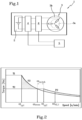
- the reference number 1 indicates a drive system for a hybrid or electric vehicle according to this invention.
- the drive system 1 is therefore a set of components that in cascade is able to generate a power/torque to be supplied to the wheels of a vehicle.
- This system 1 can be completely electric or electric/endothermic hybrid.
- This invention in any case, refers to the "electric branch" of the drive system 1, which therefore comprises an electrical energy 2 source, an electric machine 3, an adjusting device 4 (e.g. an inverter) linked to the electric machine 3 and a control unit 5.
- the electrical energy source 2 is preferably defined by a battery pack.
- it can involve using sources of another kind, such as, for example, fuel-cells, generators, solid-state batteries or other equivalent (or better) technologies.
- the electric machine 3 is preferably of the synchronous type (magnets or reluctance) and is equipped with a rotor 3a rotating around its own rotation axis and a stator 3b containing a plurality of phases extending between their respective terminals.
- Each phase is, therefore, defined by a pre-fixed number of conductor bundles in series conveniently connected to each other.
- the phases can be of various kinds, but preferably are defined by bar conductors conveniently arranged in hollows made in a stator 3b casing and electrically connected to each other at at least one free end.
- the electric machine 3 is, therefore, of the multiphase type, i.e. comprising a number of phases ranging from two and increasing depending on the type or application.
- the electric machine 3 is defined by a three-phase synchronous motor.
- the electric machine has a physical anisotropy of the machine ranging between 1 and 11, more preferably between 3 and 7.
- the adjusting device 4 is preferably an inverter (or similar device) and is configured to vary the operating parameters of the electric machine.
- the phases can be connected together in a suitable way in order to change the operating configuration of the electric machine 3.
- the electric machine 3 is preferably of the reconfigurable kind.
- a switching device 6 linked to the electric machine 3 (in particular, to the stator 3b) and selectively switchable between a first configuration, wherein the stator phases are in a first electrical configuration, and a second configuration, wherein the stator phases are in a second electrical configuration.
- the term "electrical configuration" is used to define the wiring diagram for connecting the conductor bundles in series, i.e. of the individual phases, which, as the type of connection between the conductor bundles changes, the characteristic curve of the electric machine changes, for example by increasing or decreasing the basic speed at the expense or to the advantage of the driving torque.
- stator 3b of the electric machine 3 has a plurality of reconfigurable phases to which any switching device 6 capable of modifying its electrical configuration is linked.
- the control unit 5 is, therefore, linked both to the switching device 6 and to the adjusting device 4 and is configured to drive them according to the operating conditions of said vehicle.
- the electric machine 3 is, thus, selectively configurable in at least one first and one second electrical configuration, respectively defined by the first and the second configuration of the switching device 6.
- the electric machine 3 is shaped so as to be arranged in at least one third configuration that is additional to the first two.
- the first and the second (and any third) electrical configuration are selected from the following list:
- the electric machine includes a first number of conductors in series by phase, able to supply a first (maximum) driving torque T1 and has a first knee speed ⁇ cp1 and a pre-set first no-load operation speed.
- the term "knee speed” in this text is to be understood as defining the maximum speed at which the machine, in its respective configuration, can follow its own constant torque characteristic curve.
- the knee speed (or base speed) is the speed at which the characteristic torque-speed curve of the machine goes from a constant torque condition to a decreasing torque condition (at constant mechanical power).
- the electric machine has a first characteristic curve extending on a torque-speed plane with constant torque equal to said first driving torque T1 for speed values lower than or equal to said first knee speed ⁇ cp1 and with constant power equal to a first maximum deliverable power P1 for speeds higher than said first knee speed ⁇ cp1 .
- the first characteristic curve has a first section, with constant torque, and a second section, with constant power.
- the electric machine 3 includes a second number of conductors in series by phase able to supply a second (maximum) driving torque T2, lower than the first driving torque T1, and has a second knee speed ⁇ cp2 higher than the first knee speed ⁇ cp1 (as well as a second no-load operation speed, not illustrated).
- the electric machine 3 has, therefore, a second characteristic curve extending on a torque-speed plane with constant torque equal to said second driving torque T2 for speed values lower than or equal to said second knee speed and with constant power equal to a second maximum deliverable power P2 for speeds higher than said second knee speed.
- the second characteristic curve has a first section, with constant torque, and a second section, with constant power.
- the ratio between said first and said second number of conductors in series by phase ranges between 1 and 5, preferably between 1.5 and 3.5.
- the first characteristic curve preferably intersects said second characteristic curve at an intersection speed ⁇ cross .
- the characteristic curves could be defined only by the characteristics of the electric machine or in part imposed by a maximum mechanical power that the application (or rated mechanical power) needs from the electric machine.
- the constant power section of the curve could correspond to the same maximum power curve.
- this facilitates the implementation of a control strategy aimed at providing a continuous supply of torque.
- the third electrical configuration of the phases therefore, includes a third number of conductors in series by phase, capable of providing a third driving torque, lower than the second driving torque T2, and has a third knee speed higher than the second knee speed ⁇ cp2 .
- the electric machine 3 has a respective third characteristic curve (not illustrated) extending on a torque-speed plane with constant torque equal to said third driving torque for speed values lower than said third knee speed and with constant power equal to a third maximum deliverable power for speeds higher than said third knee speed.
- the second characteristic curve also intersects said third characteristic curve at an intersection speed (not shown).
- control unit 5 is configured to:
- flux weakening in this text is to be understood as defining the control methodology for depleting the field that makes it possible to increase the operational speed of the motor at the expense of the mechanical torque.
- the first no-load operation speed ⁇ NL1 is preferably equal to at least 1.5 times the first knee speed ⁇ cp1 , more preferably at least 2 times the first knee speed ⁇ cp1 .
- the ratio between the first no-load operation speed ⁇ NL1 and said second knee speed ⁇ cp2 preferably ranges between 0.7 and 1.3.
- the fact that the electric machine is designed so that the second knee speed ⁇ cp2 falls close to the first no-load operation speed ⁇ NL1 ensures the maximum exploitation of the first configuration and, therefore, maximum torque supply continuity.
- the interval: 0.7-1.3 is to be considered optimal in that it takes into consideration the changes that the ratio ⁇ NL1 / ⁇ cp2 undergoes as a function of the magnet temperatures, thus making the operation of the electric machine optimal, irrespective of this parameter.
- the second knee speed ⁇ cp2 is lower than the first no-load operation speed ⁇ NL1 (i.e. ⁇ NL1 / ⁇ cp2 ranging between 1 and 1.3).
- the switching speed ⁇ switch being:
- the switching speed ⁇ switch ranges between said intersection speed ⁇ cross and said second knee speed ⁇ cp2 .
- the switching speed ⁇ switch falls around the second knee speed ⁇ cp2 , preferably corresponding to the intersection speed ⁇ cross , in order to avoid torque holes.
- the ratio between the intersection speed ⁇ cross and the second knee speed ⁇ cp2 ranges between 0.7 and 1, so as to maximise the continuity of the supply of power/torque, making the driver's experience of driving comfortable.
- this relationship makes it possible to correlate the second knee speed ⁇ cp2 with the "transformation ratio" n t , i.e. the ratio between said first and said second number of conductors in series by phase, as well as with the machine parameters such as inductance, anisotropy, and magnetic flux, thus optimizing the machine characteristics according to the variable configuration application.
- This relationship therefore shows the correlation between the first no-load operation speed and the second knee speed, enabling the physical characteristics of the machine to be optimised for the desired application.
- the drive system according to this invention it is possible to implement a reconfigurable electric machine 3 control method in which the switching between each configuration is carried out following a preliminary "flux weakening driving" section, at a switching speed ⁇ switch ranging between an intersection speed between the characteristic curves of the two configurations involved and the no-load operation speed of the starting speed, preferably at an intersection speed which, thanks to the design of the electric machine 3, falls near the knee speed of the arrival configuration and below the no-load operation speed.
- the invention achieves its intended purposes and significant advantages are thus obtained.
Landscapes
- Engineering & Computer Science (AREA)
- Power Engineering (AREA)
- Transportation (AREA)
- Mechanical Engineering (AREA)
- Electric Propulsion And Braking For Vehicles (AREA)
- Control Of Ac Motors In General (AREA)
Claims (8)
- Antriebssystem eines Hybrid- oder Elektrofahrzeugs, umfassend:- eine Stromquelle (2);- eine elektrische Maschine (3), die mit einem Rotor (3a) versehen ist, der sich um seine eigene Rotationsachse dreht, und einem Stator (3b), der eine Vielzahl von Phasen enthält, die sich zwischen den jeweiligen Klemmen erstrecken;- eine Umschaltvorrichtung (6), die mit der elektrischen Maschine (3) verknüpft und selektiv zwischen einer ersten Auslegung, in der sich die Phasen in einer ersten elektrischen Auslegung befinden, und einer zweiten Auslegung, in der sich die Phasen in einer zweiten elektrischen Auslegung befinden, umschaltbar ist;- eine Regelungsvorrichtung (4), die mit der elektrischen Maschine (3) verknüpft und ausgelegt ist, um deren Betriebsparameter zu variieren;- eine Steuereinheit (5), die mit der Umschaltvorrichtung (6) und der Regelungsvorrichtung (4) verknüpft und ausgelegt ist, um diese nach den Betriebsbedingungen des Fahrzeugs zu steuern,wobei:wobei die elektrische Maschine (3) in der ersten elektrischen Auslegung des Stators (3b) eine erste Anzahl von nach Phasen in Reihe geschalteten Leitern einschließt, die in der Lage sind, ein erstes Antriebsmoment (T1) bereitzustellen, und eine erste Übergangsdrehzahl (ωcp1) und eine voreingestellte erste Leerlaufbetriebsdrehzahl (ωNL1) aufweist,wobei die elektrische Maschine (3) in der zweiten elektrischen Auslegung des Stators (3b) eine zweite Anzahl von nach Phasen in Reihe geschalteten Leitern einschließt, die in der Lage sind, ein zweites Antriebsmoment (T2) bereitzustellen, das niedriger ist als das erste Antriebsmoment (T1), und eine zweite Übergangsdrehzahl (ωcp2) aufweist, die größer ist als die erste Übergangsdrehzahl (ωcp1),wobei ein Verhältnis zwischen der ersten Leerlaufbetriebsdrehzahl (ωNL1) und der zweiten Übergangsdrehzahl (ωcp2) zwischen 0,7 und 1,3 beträgt, wobei die Steuereinheit (5) ausgelegt ist, um die Regelungsvorrichtung (4) zu steuern, sodass die elektrische Maschine (3) im Feldschwächungsmodus geregelt wird, wenn die Drehzahl des Rotors (3a) höher ist als die erste Übergangsdrehzahl (ωcp1),und wobei die Steuereinheit (5) ausgelegt ist, um die Umschaltvorrichtung (6) von der ersten in die zweite Auslegung zu bringen, um eine Umschaltdrehzahl (ωswitch) zu erreichen, die höher als die erste Übergangsdrehzahl (ωcp1) und niedriger als die erste Leerlaufbetriebsdrehzahl (ωNL1) ist,- die erste Auslegung der elektrischen Maschine (3) eine erste Kennlinie aufweist, die sich auf einer Drehmoment-Drehzahl-Ebene mit konstantem Drehmoment gleich dem ersten Antriebsmoment (T1) bei Drehzahlwerten kleiner oder gleich der ersten Übergangsdrehzahl (ωcp1) und bei konstanter Leistung gleich einer ersten bereitstellbaren Höchstleistung (P1) bei Drehzahlen, die höher als die erste Übergangsdrehzahl (ωcp1) sind, erstreckt;- die zweite Auslegung der elektrischen Maschine eine zweite Kennlinie aufweist, die sich auf einer Drehmoment-Drehzahl-Ebene mit konstantem Drehmoment gleich dem zweiten Antriebsmoment (T2) bei Drehzahlwerten kleiner oder gleich der zweiten Übergangsdrehzahl (ωcp2) und bei konstanter Leistung gleich einer zweiten bereitstellbaren Höchstleistung (P2) bei Drehzahlen, die höher als die zweite Übergangsdrehzahl (ωcp2) sind, erstreckt, wobei die erste Kennlinie die zweite Kennlinie an einer Überschneidungsdrehzahl (ωcross) schneidet,und wobei:- das Verhältnis zwischen der Überschneidungsdrehzahl (ωcross) und der ersten Übergangsdrehzahl (ωcp2) zwischen 0,7 und 1 beträgt,- die erste Leerlaufbetriebsdrehzahl (ωNL1) mindestens gleich dem 1,5-Fachen der ersten Übergangsdrehzahl (ωcp1) ist;- ein Verhältnis zwischen der ersten und der zweiten Anzahl von nach Phasen in Reihe geschalteten Leitern zwischen 1 und 5, vorzugsweise zwischen 1,5 und 3,5, beträgt,wobei sich der Wert der zweiten Übergangsdrehzahl (ωcp2) aus folgender Relation ergibt:
 - ξ die Anisotropie der Maschine ist;- Ld die direkte Reluktanz auf der d-Achse ist;- nt das Verhältnis zwischen der ersten und der zweiten Anzahl von nach Phasen in Reihe geschalteten Leitern ist;- γ der Stromwinkel entlang des maximalen Drehmoments nach Amperekurven ist;- λm der Permanentmagnetfluss ist;- is der Spitzenstrom der Anlage ist.
 - Antriebssystem nach Anspruch 1, wobei die Umschaltdrehzahl (ωswitch) zwischen der Überschneidungsdrehzahl (ωcross) und der ersten Leerlaufbetriebsdrehzahl (ωNL1) eingeschlossen ist, wenn die erste Leerlaufbetriebsdrehzahl (ωNL1) größer ist als die Überschneidungsdrehzahl (ωcross).
- Antriebssystem nach Anspruch 1 oder 2, wobei die Umschaltdrehzahl (ωswitch) zwischen der Überschneidungsdrehzahl (ωcross) und der zweiten Übergangsdrehzahl (ωcp2) eingeschlossen ist, wenn die zweite Übergangsdrehzahl (ωcp2) niedriger ist als die erste Leerlaufbetriebsdrehzahl (ωNL1).
- Antriebssystem nach Anspruch 3, wobei die Umschaltdrehzahl (ωswitch) der Überschneidungsdrehzahl (ωcross) entspricht, wenn die Überschneidungsdrehzahl (ωcross) niedriger ist als die erste Leerlaufbetriebsdrehzahl (ωNL1), um Drehmomentverluste zu vermeiden.
- Antriebssystem nach einem der vorhergehenden Ansprüche, wobei die Übergangsdrehzahl (ωcp2) bei Magnettemperaturen über 120 °C niedriger ist als die erste Leerlaufbetriebsdrehzahl (ωNL1).
- Antriebssystem nach einem der vorhergehenden Ansprüche, wobei:- die Umschaltvorrichtung (6) selektiv in eine dritte Auslegung umschaltbar ist, in der sich die Phasen in einer dritten elektrischen Auslegung befinden, die eine dritte Anzahl von nach Phasen in Reihe geschalteten Leitern einschließt, die in der Lage sind, ein drittes Antriebsmoment bereitzustellen, das niedriger ist als das zweite Antriebsmoment (T2), und eine dritte Übergangsdrehzahl aufweist, die höher ist als die zweite Übergangsdrehzahl (ωcp2),- die zweite Auslegung eine zweite Leerlaufbetriebsdrehzahl einschließt, wobei ein Verhältnis zwischen der zweiten Leerlaufbetriebszahl und der dritten Übergangsdrehzahl zwischen 0,7 und 1,3 beträgt,- die Steuereinheit (5) ausgelegt ist, um die Umschaltvorrichtung (6) von der zweiten in die dritte Auslegung zu bewegen, wenn eine zweite Umschaltdrehzahl erreicht wird, die höher als die zweite Übergangsdrehzahl (ωcp2) und niedriger als die zweite Leerlaufbetriebsdrehzahl ist.
- Antriebssystem nach einem der vorhergehenden Ansprüche, wobei die erste, die zweite und die dritte elektrische Auslegung aus folgender Liste ausgewählt sind:- eine Auslegung mit Dreieckschaltung in Reihe;- eine Auslegung mit Dreieckschaltung parallel;- eine Auslegung mit Sternschaltung in Reihe;- eine Auslegung mit Sternschaltung parallel.
- Antriebssystem nach einem der vorhergehenden Ansprüche, wobei die elektrische Maschine eine physikalische Anisotropie der Maschine aufweist, die zwischen 1 und 11, vorzugsweise zwischen 3 und 7, beträgt.
Applications Claiming Priority (2)
| Application Number | Priority Date | Filing Date | Title |
|---|---|---|---|
| IT201900019670 | 2019-10-23 | ||
| PCT/IB2020/059973 WO2021079332A1 (en) | 2019-10-23 | 2020-10-23 | A drive system for a hybrid or electric vehicle |
Publications (2)
| Publication Number | Publication Date |
|---|---|
| EP4048544A1 EP4048544A1 (de) | 2022-08-31 |
| EP4048544B1 true EP4048544B1 (de) | 2024-03-13 |
Family
ID=69811513
Family Applications (1)
| Application Number | Title | Priority Date | Filing Date |
|---|---|---|---|
| EP20792916.7A Active EP4048544B1 (de) | 2019-10-23 | 2020-10-23 | Antriebssystem eines hybrid- oder elektrofahrzeugs |
Country Status (4)
| Country | Link |
|---|---|
| US (1) | US11999242B2 (de) |
| EP (1) | EP4048544B1 (de) |
| CN (1) | CN114981116B (de) |
| WO (1) | WO2021079332A1 (de) |
Families Citing this family (3)
| Publication number | Priority date | Publication date | Assignee | Title |
|---|---|---|---|---|
| CN118900784A (zh) * | 2021-11-12 | 2024-11-05 | 艾尔多股份有限公司 | 电动或混动吸热牵引系统及用于重新配置电动机器的方法 |
| IT202100028772A1 (it) | 2021-11-12 | 2023-05-12 | Eldor Corp Spa | Method for reconfiguring an electric machine |
| IT202100028769A1 (it) * | 2021-11-12 | 2023-05-12 | Eldor Corp Spa | Sistema di trazione elettrico o ibrido elettrico-endotermico e metodo di riconfigurazione di una macchina elettrica |
Family Cites Families (16)
| Publication number | Priority date | Publication date | Assignee | Title |
|---|---|---|---|---|
| US5306972A (en) | 1992-07-17 | 1994-04-26 | General Electric Company | AC motor system |
| JPH06253594A (ja) * | 1993-02-26 | 1994-09-09 | Toyota Motor Corp | 巻線切替式モータの制御装置 |
| JPH06292329A (ja) | 1993-04-05 | 1994-10-18 | Mitsubishi Electric Corp | 車両用交流発電機の出力制御装置 |
| WO2009070089A1 (en) * | 2007-11-29 | 2009-06-04 | Joensson Ragnar | Method and system for controlling an electric ac motor |
| JP4591588B2 (ja) * | 2008-09-30 | 2010-12-01 | マツダ株式会社 | 電動車両のモータ制御方法および電動車両用駆動装置 |
| WO2014174597A1 (ja) * | 2013-04-23 | 2014-10-30 | 三菱電機株式会社 | 交流電動機の制御装置 |
| JP6200312B2 (ja) * | 2013-12-24 | 2017-09-20 | 本田技研工業株式会社 | 車両用電動機の制御装置 |
| US9919903B2 (en) | 2014-03-13 | 2018-03-20 | Nabors Drilling Technologies Usa, Inc. | Multi-speed electric motor |
| JP6090260B2 (ja) * | 2014-08-19 | 2017-03-08 | 株式会社デンソー | 回転電機の制御装置 |
| KR101654707B1 (ko) * | 2014-11-18 | 2016-09-06 | 현대모비스 주식회사 | 차량용 전기 모터 시스템 및 차량용 전기 모터의 권선 턴수를 가변하는 방법 |
| JP6360442B2 (ja) * | 2015-01-14 | 2018-07-18 | 株式会社日立製作所 | 永久磁石同期モータ、巻線切替モータ駆動装置、及び、それらを用いた冷凍空調機器、電動車両 |
| EP3157162B1 (de) * | 2015-01-28 | 2020-07-15 | Panasonic Intellectual Property Management Co., Ltd. | Motorsteuerungsvorrichtung und verfahren zur korrektur der drehmomentkonstante in solch einer motorsteuerungsvorrichtung |
| EP3308458A1 (de) * | 2015-06-12 | 2018-04-18 | D&M Holding S.p.A. | Elektrische antriebseinheit |
| KR102490606B1 (ko) * | 2015-11-26 | 2023-01-19 | 현대모비스 주식회사 | 차량용 모터 제어 시스템 및 동작 방법 |
| US10486690B2 (en) * | 2016-12-14 | 2019-11-26 | Bendix Commerical Vehicle Systems, Llc | Front end motor-generator system and hybrid electric vehicle operating method |
| EP3435540A1 (de) * | 2017-07-28 | 2019-01-30 | Fundacíon Tecnalia Research & Innovation | Vorrichtung und verfahren zur modifizierung einer elektrischen konfiguration eines elektrischen antriebs |
-
2020
- 2020-10-23 EP EP20792916.7A patent/EP4048544B1/de active Active
- 2020-10-23 CN CN202080083069.9A patent/CN114981116B/zh active Active
- 2020-10-23 US US17/770,880 patent/US11999242B2/en active Active
- 2020-10-23 WO PCT/IB2020/059973 patent/WO2021079332A1/en not_active Ceased
Also Published As
| Publication number | Publication date |
|---|---|
| WO2021079332A1 (en) | 2021-04-29 |
| CN114981116A (zh) | 2022-08-30 |
| US20220410724A1 (en) | 2022-12-29 |
| CN114981116B (zh) | 2025-12-30 |
| EP4048544A1 (de) | 2022-08-31 |
| US11999242B2 (en) | 2024-06-04 |
Similar Documents
| Publication | Publication Date | Title |
|---|---|---|
| EP4048544B1 (de) | Antriebssystem eines hybrid- oder elektrofahrzeugs | |
| KR101659632B1 (ko) | 전기기계적 컨버터, 컨트롤러 및 컴퓨터 프로그램 제품을 작동하는 방법 | |
| US10205358B2 (en) | Electric machine for a vehicle powertrain and the electric machine includes a permanent magnet | |
| EP1085644B1 (de) | Hybridfahrzeug und dynamoelektrische Maschine | |
| CN103707771B (zh) | 车辆的电压放电设备及其电压放电方法 | |
| US20120268053A1 (en) | Alternating current machine with increased torque above and below rated speed for hybrid/electric propulsion systems | |
| JP2010537621A (ja) | 電気機器 | |
| CN102751932A (zh) | 用于改善旋转机械控制的装置 | |
| KR20100063025A (ko) | 차량 구동 장치를 위한 전류-전원 공급 동기 모터 | |
| US9677531B2 (en) | Multiphase induction motor with configurable windings | |
| Guan et al. | Difference in maximum torque-speed characteristics of induction machine between motor and generator operation modes for electric vehicle application | |
| Dajaku et al. | Self-excited synchronous machine with high torque capability at zero speed | |
| US11496015B2 (en) | Electric machine with stator tooth tip profile for reducing winding-based power losses | |
| Babetto et al. | Optimal design and experimental validation of a synchronous reluctance machine for fault-tolerant applications | |
| Bagheri et al. | Selective utilized phase number of multiphase induction motors strategy to enhance electric vehicles’ drive range | |
| KR102524042B1 (ko) | 속도변경 및 그에 따른 효율구간 변경이 가능한 전동기 또는 발전기 | |
| Dajaku et al. | Opportunities of advanced multi-phase concentrated windings | |
| Priyanka et al. | Analysis of Pole Phase Modulated Multiphase Induction Motor for EV Applications | |
| EP2880749B1 (de) | Elektrische maschine | |
| US8203303B2 (en) | Asynchronous AC induction electrical machines in cross-interlockingly parallel connection | |
| US20230344326A1 (en) | A wide-speed multiple interior rotor excitation machine | |
| Iwama et al. | Adjustable Field PMSM with Rotary Transformer Using Zero-Phase Current and Armature Coil-End | |
| CN107078584B (zh) | 九相感应电动机起动器/交流发电机 | |
| KR102524048B1 (ko) | 속도변경 및 그에 따른 효율구간 변경이 가능한 전동기 | |
| JP4460347B2 (ja) | 四輪駆動装置 |
Legal Events
| Date | Code | Title | Description |
|---|---|---|---|
| STAA | Information on the status of an ep patent application or granted ep patent |
Free format text: STATUS: UNKNOWN |
|
| STAA | Information on the status of an ep patent application or granted ep patent |
Free format text: STATUS: THE INTERNATIONAL PUBLICATION HAS BEEN MADE |
|
| PUAI | Public reference made under article 153(3) epc to a published international application that has entered the european phase |
Free format text: ORIGINAL CODE: 0009012 |
|
| STAA | Information on the status of an ep patent application or granted ep patent |
Free format text: STATUS: REQUEST FOR EXAMINATION WAS MADE |
|
| 17P | Request for examination filed |
Effective date: 20220504 |
|
| AK | Designated contracting states |
Kind code of ref document: A1 Designated state(s): AL AT BE BG CH CY CZ DE DK EE ES FI FR GB GR HR HU IE IS IT LI LT LU LV MC MK MT NL NO PL PT RO RS SE SI SK SM TR |
|
| DAV | Request for validation of the european patent (deleted) | ||
| DAX | Request for extension of the european patent (deleted) | ||
| GRAP | Despatch of communication of intention to grant a patent |
Free format text: ORIGINAL CODE: EPIDOSNIGR1 |
|
| STAA | Information on the status of an ep patent application or granted ep patent |
Free format text: STATUS: GRANT OF PATENT IS INTENDED |
|
| INTG | Intention to grant announced |
Effective date: 20230517 |
|
| GRAS | Grant fee paid |
Free format text: ORIGINAL CODE: EPIDOSNIGR3 |
|
| GRAA | (expected) grant |
Free format text: ORIGINAL CODE: 0009210 |
|
| STAA | Information on the status of an ep patent application or granted ep patent |
Free format text: STATUS: THE PATENT HAS BEEN GRANTED |
|
| AK | Designated contracting states |
Kind code of ref document: B1 Designated state(s): AL AT BE BG CH CY CZ DE DK EE ES FI FR GB GR HR HU IE IS IT LI LT LU LV MC MK MT NL NO PL PT RO RS SE SI SK SM TR |
|
| REG | Reference to a national code |
Ref country code: GB Ref legal event code: FG4D |
|
| REG | Reference to a national code |
Ref country code: CH Ref legal event code: EP |
|
| REG | Reference to a national code |
Ref country code: DE Ref legal event code: R096 Ref document number: 602020027269 Country of ref document: DE |
|
| REG | Reference to a national code |
Ref country code: IE Ref legal event code: FG4D |
|
| PG25 | Lapsed in a contracting state [announced via postgrant information from national office to epo] |
Ref country code: LT Free format text: LAPSE BECAUSE OF FAILURE TO SUBMIT A TRANSLATION OF THE DESCRIPTION OR TO PAY THE FEE WITHIN THE PRESCRIBED TIME-LIMIT Effective date: 20240313 |
|
| REG | Reference to a national code |
Ref country code: LT Ref legal event code: MG9D |
|
| PG25 | Lapsed in a contracting state [announced via postgrant information from national office to epo] |
Ref country code: GR Free format text: LAPSE BECAUSE OF FAILURE TO SUBMIT A TRANSLATION OF THE DESCRIPTION OR TO PAY THE FEE WITHIN THE PRESCRIBED TIME-LIMIT Effective date: 20240614 |
|
| REG | Reference to a national code |
Ref country code: NL Ref legal event code: MP Effective date: 20240313 |
|
| PG25 | Lapsed in a contracting state [announced via postgrant information from national office to epo] |
Ref country code: HR Free format text: LAPSE BECAUSE OF FAILURE TO SUBMIT A TRANSLATION OF THE DESCRIPTION OR TO PAY THE FEE WITHIN THE PRESCRIBED TIME-LIMIT Effective date: 20240313 Ref country code: RS Free format text: LAPSE BECAUSE OF FAILURE TO SUBMIT A TRANSLATION OF THE DESCRIPTION OR TO PAY THE FEE WITHIN THE PRESCRIBED TIME-LIMIT Effective date: 20240613 |
|
| PG25 | Lapsed in a contracting state [announced via postgrant information from national office to epo] |
Ref country code: ES Free format text: LAPSE BECAUSE OF FAILURE TO SUBMIT A TRANSLATION OF THE DESCRIPTION OR TO PAY THE FEE WITHIN THE PRESCRIBED TIME-LIMIT Effective date: 20240313 |
|
| PG25 | Lapsed in a contracting state [announced via postgrant information from national office to epo] |
Ref country code: RS Free format text: LAPSE BECAUSE OF FAILURE TO SUBMIT A TRANSLATION OF THE DESCRIPTION OR TO PAY THE FEE WITHIN THE PRESCRIBED TIME-LIMIT Effective date: 20240613 Ref country code: NO Free format text: LAPSE BECAUSE OF FAILURE TO SUBMIT A TRANSLATION OF THE DESCRIPTION OR TO PAY THE FEE WITHIN THE PRESCRIBED TIME-LIMIT Effective date: 20240613 Ref country code: LT Free format text: LAPSE BECAUSE OF FAILURE TO SUBMIT A TRANSLATION OF THE DESCRIPTION OR TO PAY THE FEE WITHIN THE PRESCRIBED TIME-LIMIT Effective date: 20240313 Ref country code: HR Free format text: LAPSE BECAUSE OF FAILURE TO SUBMIT A TRANSLATION OF THE DESCRIPTION OR TO PAY THE FEE WITHIN THE PRESCRIBED TIME-LIMIT Effective date: 20240313 Ref country code: GR Free format text: LAPSE BECAUSE OF FAILURE TO SUBMIT A TRANSLATION OF THE DESCRIPTION OR TO PAY THE FEE WITHIN THE PRESCRIBED TIME-LIMIT Effective date: 20240614 Ref country code: FI Free format text: LAPSE BECAUSE OF FAILURE TO SUBMIT A TRANSLATION OF THE DESCRIPTION OR TO PAY THE FEE WITHIN THE PRESCRIBED TIME-LIMIT Effective date: 20240313 Ref country code: ES Free format text: LAPSE BECAUSE OF FAILURE TO SUBMIT A TRANSLATION OF THE DESCRIPTION OR TO PAY THE FEE WITHIN THE PRESCRIBED TIME-LIMIT Effective date: 20240313 Ref country code: BG Free format text: LAPSE BECAUSE OF FAILURE TO SUBMIT A TRANSLATION OF THE DESCRIPTION OR TO PAY THE FEE WITHIN THE PRESCRIBED TIME-LIMIT Effective date: 20240313 |
|
| REG | Reference to a national code |
Ref country code: AT Ref legal event code: MK05 Ref document number: 1665445 Country of ref document: AT Kind code of ref document: T Effective date: 20240313 |
|
| PG25 | Lapsed in a contracting state [announced via postgrant information from national office to epo] |
Ref country code: SE Free format text: LAPSE BECAUSE OF FAILURE TO SUBMIT A TRANSLATION OF THE DESCRIPTION OR TO PAY THE FEE WITHIN THE PRESCRIBED TIME-LIMIT Effective date: 20240313 Ref country code: LV Free format text: LAPSE BECAUSE OF FAILURE TO SUBMIT A TRANSLATION OF THE DESCRIPTION OR TO PAY THE FEE WITHIN THE PRESCRIBED TIME-LIMIT Effective date: 20240313 |
|
| PG25 | Lapsed in a contracting state [announced via postgrant information from national office to epo] |
Ref country code: NL Free format text: LAPSE BECAUSE OF FAILURE TO SUBMIT A TRANSLATION OF THE DESCRIPTION OR TO PAY THE FEE WITHIN THE PRESCRIBED TIME-LIMIT Effective date: 20240313 |
|
| PG25 | Lapsed in a contracting state [announced via postgrant information from national office to epo] |
Ref country code: NL Free format text: LAPSE BECAUSE OF FAILURE TO SUBMIT A TRANSLATION OF THE DESCRIPTION OR TO PAY THE FEE WITHIN THE PRESCRIBED TIME-LIMIT Effective date: 20240313 |
|
| PG25 | Lapsed in a contracting state [announced via postgrant information from national office to epo] |
Ref country code: IS Free format text: LAPSE BECAUSE OF FAILURE TO SUBMIT A TRANSLATION OF THE DESCRIPTION OR TO PAY THE FEE WITHIN THE PRESCRIBED TIME-LIMIT Effective date: 20240713 |
|
| PG25 | Lapsed in a contracting state [announced via postgrant information from national office to epo] |
Ref country code: PT Free format text: LAPSE BECAUSE OF FAILURE TO SUBMIT A TRANSLATION OF THE DESCRIPTION OR TO PAY THE FEE WITHIN THE PRESCRIBED TIME-LIMIT Effective date: 20240715 Ref country code: SM Free format text: LAPSE BECAUSE OF FAILURE TO SUBMIT A TRANSLATION OF THE DESCRIPTION OR TO PAY THE FEE WITHIN THE PRESCRIBED TIME-LIMIT Effective date: 20240313 |
|
| PG25 | Lapsed in a contracting state [announced via postgrant information from national office to epo] |
Ref country code: CZ Free format text: LAPSE BECAUSE OF FAILURE TO SUBMIT A TRANSLATION OF THE DESCRIPTION OR TO PAY THE FEE WITHIN THE PRESCRIBED TIME-LIMIT Effective date: 20240313 Ref country code: EE Free format text: LAPSE BECAUSE OF FAILURE TO SUBMIT A TRANSLATION OF THE DESCRIPTION OR TO PAY THE FEE WITHIN THE PRESCRIBED TIME-LIMIT Effective date: 20240313 |
|
| PG25 | Lapsed in a contracting state [announced via postgrant information from national office to epo] |
Ref country code: AT Free format text: LAPSE BECAUSE OF FAILURE TO SUBMIT A TRANSLATION OF THE DESCRIPTION OR TO PAY THE FEE WITHIN THE PRESCRIBED TIME-LIMIT Effective date: 20240313 |
|
| PG25 | Lapsed in a contracting state [announced via postgrant information from national office to epo] |
Ref country code: PL Free format text: LAPSE BECAUSE OF FAILURE TO SUBMIT A TRANSLATION OF THE DESCRIPTION OR TO PAY THE FEE WITHIN THE PRESCRIBED TIME-LIMIT Effective date: 20240313 |
|
| PG25 | Lapsed in a contracting state [announced via postgrant information from national office to epo] |
Ref country code: SK Free format text: LAPSE BECAUSE OF FAILURE TO SUBMIT A TRANSLATION OF THE DESCRIPTION OR TO PAY THE FEE WITHIN THE PRESCRIBED TIME-LIMIT Effective date: 20240313 |
|
| PG25 | Lapsed in a contracting state [announced via postgrant information from national office to epo] |
Ref country code: SM Free format text: LAPSE BECAUSE OF FAILURE TO SUBMIT A TRANSLATION OF THE DESCRIPTION OR TO PAY THE FEE WITHIN THE PRESCRIBED TIME-LIMIT Effective date: 20240313 Ref country code: SK Free format text: LAPSE BECAUSE OF FAILURE TO SUBMIT A TRANSLATION OF THE DESCRIPTION OR TO PAY THE FEE WITHIN THE PRESCRIBED TIME-LIMIT Effective date: 20240313 Ref country code: RO Free format text: LAPSE BECAUSE OF FAILURE TO SUBMIT A TRANSLATION OF THE DESCRIPTION OR TO PAY THE FEE WITHIN THE PRESCRIBED TIME-LIMIT Effective date: 20240313 Ref country code: PT Free format text: LAPSE BECAUSE OF FAILURE TO SUBMIT A TRANSLATION OF THE DESCRIPTION OR TO PAY THE FEE WITHIN THE PRESCRIBED TIME-LIMIT Effective date: 20240715 Ref country code: PL Free format text: LAPSE BECAUSE OF FAILURE TO SUBMIT A TRANSLATION OF THE DESCRIPTION OR TO PAY THE FEE WITHIN THE PRESCRIBED TIME-LIMIT Effective date: 20240313 Ref country code: IS Free format text: LAPSE BECAUSE OF FAILURE TO SUBMIT A TRANSLATION OF THE DESCRIPTION OR TO PAY THE FEE WITHIN THE PRESCRIBED TIME-LIMIT Effective date: 20240713 Ref country code: EE Free format text: LAPSE BECAUSE OF FAILURE TO SUBMIT A TRANSLATION OF THE DESCRIPTION OR TO PAY THE FEE WITHIN THE PRESCRIBED TIME-LIMIT Effective date: 20240313 Ref country code: CZ Free format text: LAPSE BECAUSE OF FAILURE TO SUBMIT A TRANSLATION OF THE DESCRIPTION OR TO PAY THE FEE WITHIN THE PRESCRIBED TIME-LIMIT Effective date: 20240313 Ref country code: AT Free format text: LAPSE BECAUSE OF FAILURE TO SUBMIT A TRANSLATION OF THE DESCRIPTION OR TO PAY THE FEE WITHIN THE PRESCRIBED TIME-LIMIT Effective date: 20240313 |
|
| REG | Reference to a national code |
Ref country code: DE Ref legal event code: R097 Ref document number: 602020027269 Country of ref document: DE |
|
| PG25 | Lapsed in a contracting state [announced via postgrant information from national office to epo] |
Ref country code: DK Free format text: LAPSE BECAUSE OF FAILURE TO SUBMIT A TRANSLATION OF THE DESCRIPTION OR TO PAY THE FEE WITHIN THE PRESCRIBED TIME-LIMIT Effective date: 20240313 |
|
| PLBE | No opposition filed within time limit |
Free format text: ORIGINAL CODE: 0009261 |
|
| STAA | Information on the status of an ep patent application or granted ep patent |
Free format text: STATUS: NO OPPOSITION FILED WITHIN TIME LIMIT |
|
| PG25 | Lapsed in a contracting state [announced via postgrant information from national office to epo] |
Ref country code: DK Free format text: LAPSE BECAUSE OF FAILURE TO SUBMIT A TRANSLATION OF THE DESCRIPTION OR TO PAY THE FEE WITHIN THE PRESCRIBED TIME-LIMIT Effective date: 20240313 |
|
| 26N | No opposition filed |
Effective date: 20241216 |
|
| PG25 | Lapsed in a contracting state [announced via postgrant information from national office to epo] |
Ref country code: SI Free format text: LAPSE BECAUSE OF FAILURE TO SUBMIT A TRANSLATION OF THE DESCRIPTION OR TO PAY THE FEE WITHIN THE PRESCRIBED TIME-LIMIT Effective date: 20240313 |
|
| REG | Reference to a national code |
Ref country code: CH Ref legal event code: PL |
|
| GBPC | Gb: european patent ceased through non-payment of renewal fee |
Effective date: 20241023 |
|
| PG25 | Lapsed in a contracting state [announced via postgrant information from national office to epo] |
Ref country code: MC Free format text: LAPSE BECAUSE OF FAILURE TO SUBMIT A TRANSLATION OF THE DESCRIPTION OR TO PAY THE FEE WITHIN THE PRESCRIBED TIME-LIMIT Effective date: 20240313 |
|
| PG25 | Lapsed in a contracting state [announced via postgrant information from national office to epo] |
Ref country code: GB Free format text: LAPSE BECAUSE OF NON-PAYMENT OF DUE FEES Effective date: 20241023 |
|
| PG25 | Lapsed in a contracting state [announced via postgrant information from national office to epo] |
Ref country code: BE Free format text: LAPSE BECAUSE OF NON-PAYMENT OF DUE FEES Effective date: 20241031 Ref country code: LU Free format text: LAPSE BECAUSE OF NON-PAYMENT OF DUE FEES Effective date: 20241023 |
|
| PG25 | Lapsed in a contracting state [announced via postgrant information from national office to epo] |
Ref country code: FR Free format text: LAPSE BECAUSE OF NON-PAYMENT OF DUE FEES Effective date: 20241031 |
|
| PG25 | Lapsed in a contracting state [announced via postgrant information from national office to epo] |
Ref country code: CH Free format text: LAPSE BECAUSE OF NON-PAYMENT OF DUE FEES Effective date: 20241031 |
|
| REG | Reference to a national code |
Ref country code: BE Ref legal event code: MM Effective date: 20241031 |
|
| PG25 | Lapsed in a contracting state [announced via postgrant information from national office to epo] |
Ref country code: IE Free format text: LAPSE BECAUSE OF NON-PAYMENT OF DUE FEES Effective date: 20241023 |
|
| PGFP | Annual fee paid to national office [announced via postgrant information from national office to epo] |
Ref country code: DE Payment date: 20251031 Year of fee payment: 6 |
|
| PGFP | Annual fee paid to national office [announced via postgrant information from national office to epo] |
Ref country code: IT Payment date: 20251030 Year of fee payment: 6 |
|
| PG25 | Lapsed in a contracting state [announced via postgrant information from national office to epo] |
Ref country code: CY Free format text: LAPSE BECAUSE OF FAILURE TO SUBMIT A TRANSLATION OF THE DESCRIPTION OR TO PAY THE FEE WITHIN THE PRESCRIBED TIME-LIMIT; INVALID AB INITIO Effective date: 20201023 |
|
| PG25 | Lapsed in a contracting state [announced via postgrant information from national office to epo] |
Ref country code: HU Free format text: LAPSE BECAUSE OF FAILURE TO SUBMIT A TRANSLATION OF THE DESCRIPTION OR TO PAY THE FEE WITHIN THE PRESCRIBED TIME-LIMIT; INVALID AB INITIO Effective date: 20201023 |