EP4044173B1 - Verfahren und vorrichtung für text-zu-sprache, elektronische vorrichtung und speichermedium - Google Patents
Verfahren und vorrichtung für text-zu-sprache, elektronische vorrichtung und speichermedium Download PDFInfo
- Publication number
- EP4044173B1 EP4044173B1 EP22176933.4A EP22176933A EP4044173B1 EP 4044173 B1 EP4044173 B1 EP 4044173B1 EP 22176933 A EP22176933 A EP 22176933A EP 4044173 B1 EP4044173 B1 EP 4044173B1
- Authority
- EP
- European Patent Office
- Prior art keywords
- tts
- software
- task
- tasks
- terminal device
- Prior art date
- Legal status (The legal status is an assumption and is not a legal conclusion. Google has not performed a legal analysis and makes no representation as to the accuracy of the status listed.)
- Active
Links
Images


Classifications
-
- G—PHYSICS
- G10—MUSICAL INSTRUMENTS; ACOUSTICS
- G10L—SPEECH ANALYSIS TECHNIQUES OR SPEECH SYNTHESIS; SPEECH RECOGNITION; SPEECH OR VOICE PROCESSING TECHNIQUES; SPEECH OR AUDIO CODING OR DECODING
- G10L13/00—Speech synthesis; Text to speech systems
- G10L13/02—Methods for producing synthetic speech; Speech synthesisers
-
- G—PHYSICS
- G10—MUSICAL INSTRUMENTS; ACOUSTICS
- G10L—SPEECH ANALYSIS TECHNIQUES OR SPEECH SYNTHESIS; SPEECH RECOGNITION; SPEECH OR VOICE PROCESSING TECHNIQUES; SPEECH OR AUDIO CODING OR DECODING
- G10L13/00—Speech synthesis; Text to speech systems
- G10L13/02—Methods for producing synthetic speech; Speech synthesisers
- G10L13/04—Details of speech synthesis systems, e.g. synthesiser structure or memory management
-
- G—PHYSICS
- G06—COMPUTING OR CALCULATING; COUNTING
- G06F—ELECTRIC DIGITAL DATA PROCESSING
- G06F16/00—Information retrieval; Database structures therefor; File system structures therefor
- G06F16/60—Information retrieval; Database structures therefor; File system structures therefor of audio data
- G06F16/63—Querying
- G06F16/638—Presentation of query results
-
- G—PHYSICS
- G06—COMPUTING OR CALCULATING; COUNTING
- G06F—ELECTRIC DIGITAL DATA PROCESSING
- G06F3/00—Input arrangements for transferring data to be processed into a form capable of being handled by the computer; Output arrangements for transferring data from processing unit to output unit, e.g. interface arrangements
- G06F3/16—Sound input; Sound output
- G06F3/165—Management of the audio stream, e.g. setting of volume, audio stream path
-
- G—PHYSICS
- G06—COMPUTING OR CALCULATING; COUNTING
- G06F—ELECTRIC DIGITAL DATA PROCESSING
- G06F9/00—Arrangements for program control, e.g. control units
- G06F9/06—Arrangements for program control, e.g. control units using stored programs, i.e. using an internal store of processing equipment to receive or retain programs
- G06F9/46—Multiprogramming arrangements
- G06F9/48—Program initiating; Program switching, e.g. by interrupt
- G06F9/4806—Task transfer initiation or dispatching
- G06F9/4843—Task transfer initiation or dispatching by program, e.g. task dispatcher, supervisor, operating system
- G06F9/4881—Scheduling strategies for dispatcher, e.g. round robin, multi-level priority queues
-
- G—PHYSICS
- G10—MUSICAL INSTRUMENTS; ACOUSTICS
- G10L—SPEECH ANALYSIS TECHNIQUES OR SPEECH SYNTHESIS; SPEECH RECOGNITION; SPEECH OR VOICE PROCESSING TECHNIQUES; SPEECH OR AUDIO CODING OR DECODING
- G10L13/00—Speech synthesis; Text to speech systems
- G10L13/02—Methods for producing synthetic speech; Speech synthesisers
- G10L13/033—Voice editing, e.g. manipulating the voice of the synthesiser
Definitions
- the disclosure relates to the field of artificial intelligence (AI) technologies, specifically to the field of speech technologies and Internet of vehicles technologies, and particularly to a method and an apparatus for text to speech (TTS), a computer program product and a storage medium.
- AI artificial intelligence
- TTS may convert text to speech, which is an important human-computer interaction technology in AI technologies.
- TTS is widely applied in smart terminal devices, for example, vehicle smart terminals.
- WO 2017/213691 A1 discloses an audio announcement prioritisation system.
- a method and an apparatus for TTS, a computer program product and a storage medium are provided in the disclosure.
- TTS may convert text to speech, which is an important human-computer interaction technology in AI technologies.
- TTS is widely applied in smart terminal devices, for example, vehicle smart terminals.
- a plurality of applications (APPs) on a terminal device are installed with TTS functions and TTS engines are correspondingly configured for TTSs.
- the plurality of APPs on the terminal device are installed with the TTS functions, so that the plurality of APPs may perform TTSs at the same time in an uncontrollable sequence, and TTSs may be interrupted frequently, resulting in valid information being omitted, or, the plurality of TTSs may be performed at the same time, with chaotic sound and a poor user experience.
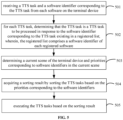
- FIG. 1 is a diagram according to a first embodiment of the disclosure. It should be noted that, the method for TTS in some embodiments of the disclosure may be applied to an apparatus for TTS.
- the apparatus for TTS may be software (for example, a TTS Manager) for controlling a player, which may interact with other software on the terminal device to acquire TTSs that needs to be performed from other software on the terminal device and control the player for TTSs.
- the method for TTS may include the following.
- TTS tasks to be processed and software identifiers corresponding to the TTS tasks, on a terminal device are acquired.
- the apparatus for TTS may interact with software having TTS tasks on the terminal device, acquire the TTSs needing to be performed in the software and take the TTSs needing to be performed in the software as the TTS tasks to be processed.
- the corresponding software identifier may be acquired, and the software identifier may be configured to identify the software on the terminal device.
- an identifier A may represent navigation software
- an identifier B may represent video software
- an identifier C may represent music software.
- a current scene of the terminal device and priorities corresponding to the software identifiers in the current scene are determined.
- the apparatus for TTS may determine the current scene of the terminal device based on an environment where the terminal device is located and the priorities corresponding to the software identifiers in the current scene. For example, when a current vehicle is driving at a high speed, it may be determined that the current scene of the terminal device is a driving state, and a priority of navigation software is highest, a priority of music software is lower and a priority of video software is lowest.
- a sorting result is acquired by sorting the TTS tasks based on the priorities corresponding to the software identifiers.
- the sorting result is acquired by sorting the TTS tasks corresponding to the software identifiers based on the priorities corresponding to the software identifiers. For example, the TTS task corresponding to the software identifier with the highest priority may rank at the foremost of the sorting result, and the TTS task corresponding to the software identifier with the lowest priority may rank at the backmost of the sorting result.
- the TTS tasks are executed based on the sorting result.
- the TTS tasks in the sorting result may be executed sequentially based on the sorting result of the TTS tasks, for example, the TTS task at the foremost of the sorting result may be executed first, and the TTS task at the backmost of the sorting result may be executed finally. It should be noted that, in the process of executing the TTS tasks, if executing one TTS task in the sorting result is completed, this TTS task may be deleted from the sorting result, to avoid the TTS task that has been executed being executed again. Further, it may be determined whether the current scene of the terminal device changes. The remaining TTS tasks in the sorting result may continue to be executed based on the current sequence in response to the current scene of the terminal device not changing.
- the priorities corresponding to the software identifiers may be redetermined based on the current scene of the terminal device in response to the current scene of the terminal device changing, a sorting result may be acquired by sorting the remaining TTS tasks based on the priorities corresponding to the software identifiers, and the remaining TTSs may be executed based on the sorting result.
- the TTS tasks to be processed and the software identifiers corresponding to the TTS tasks on the terminal device are acquired; the current scene of the terminal device and the priorities corresponding to the software identifiers in the current scene are determined; the sorting result is acquired by sorting the TTS tasks based on the priorities corresponding to the software identifiers; and the TTS tasks are executed based on the sorting result. Therefore, the TTS tasks may be managed in a unified manner, and the priorities corresponding to the software identifiers and the sorting result of the TTS tasks may be dynamically determined based on the current scene of the terminal device, so that the TTS tasks may be performed based on the sorting result, which improves the user experience.
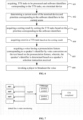
- FIG. 2 is a diagram according to a second embodiment of the disclosure.
- a priority list corresponding to the current scene may be acquired by querying, and according to an embodiment which is covered by the claims, the priorities corresponding to the software identifiers are determined based on the current scene of the terminal device.
- Some embodiments of the disclosure as illustrated in FIG. 2 may include the following.
- TTS tasks to be processed and software identifiers corresponding to the TTS tasks, on a terminal device are acquired.
- a current scene of the terminal device is determined.
- a priority list corresponding to the current scene is acquired, and priorities corresponding to the software identifiers are acquired from the priority list; in which the priority list includes a software identifier of each software and a corresponding priority on the terminal device in the current scene.
- different priority lists corresponding to different scenes may be preconfigured.
- the priority lists may be queried based on the current scene to acquire the priority list corresponding to the current scene and the priorities corresponding to the software identifiers may be acquired from the acquired priority list.
- the priority list includes the software identifier of each software on the terminal device in the current scene and the corresponding priority.
- a sorting result is acquired by sorting the TTS tasks based on the priorities corresponding to the software identifiers.
- the TTS tasks are executed based on the sorting result.
- 201 to 202 and 204 to 205 may be implemented in any manner of embodiments of the disclosure, which is not limited and repeated herein.
- the TTS tasks to be processed and the software identifiers corresponding to the TTS tasks on the terminal device are acquired; the current scene of the terminal device is determined; the priority list corresponding to the current scene is acquired by querying based on the current scene, and the priorities corresponding to the software identifiers are acquired from the priority list; the priority list includes software identifiers and corresponding priorities on the terminal device in the current scene; the sorting result is acquired by sorting the TTS tasks based on the priorities corresponding to the software identifiers; and the TTS tasks are executed based on the sorting result.
- the TTS tasks may be managed in a unified manner, and the priorities corresponding to the software identifiers and the sorting result of the TTS tasks may be dynamically determined based on the current scene of the terminal device, so that the TTS tasks may be performed based on the sorting result, which improves the user experience.
- FIG. 3 is a diagram according to a third embodiment of the disclosure.
- the sorting result of the TTS tasks may be updated in response to newly adding a TTS task to be processed.
- the embodiments as illustrated in FIG. 3 may include the following.
- TTS tasks to be processed and software identifiers corresponding to the TTS tasks, on a terminal device are acquired.
- a current scene of the terminal device and priorities corresponding to the software identifiers in the current scene are determined.
- a sorting result is acquired by sorting the TTS tasks based on the priorities corresponding to the software identifiers.
- the sorting result is updated based on updated TTS tasks in response to the TTS tasks to be processed changing and a changing type being adding newly a TTS task to be processed.
- the sorting result may be updated first by adopting different manners based on whether the current scene of the terminal devices changes.
- the apparatus for TTS acquires a newly added TTS task to be processed from the APP of the terminal device, acquires a software identifier corresponding to the newly added TTS task to be processed, and determines the priority corresponding to the software identifier corresponding to the newly added TTS task to be processed based on the current scene, and adds the newly added TTS task to be processed to the sorting result based on the priority corresponding to the software identifier corresponding to the newly added TTS task to be processed, to update the sorting result, and executes the TTS tasks based on the updated sorting result.
- the apparatus for TTS may acquire a newly added TTS task to be processed from the APP of the terminal device, redetermine the TTS tasks in the current sorting result and the newly added TTS task to be processed as the TTS tasks to be processed, and acquire the priorities corresponding to the software identifiers corresponding to the TTS tasks to be processed, and sort the TTS tasks to be processed based on the priorities corresponding to the software identifiers corresponding to the TTS tasks, to obtain the sorting result, and execute the TTS tasks based on the sorting result.
- the TTS tasks are executed based on the sorting result.
- 301 to 303 and 305 may be implemented in any manner of embodiments of the disclosure, which is not limited and repeated herein.
- the TTS tasks to be processed and the software identifiers corresponding to the TTS tasks on the terminal device are acquired; the current scene of the terminal device and the priorities corresponding to the software identifiers in the current scene are determined; the sorting result is acquired by sorting the TTS tasks based on the priorities corresponding to the software identifiers; the TTS tasks are executed based on the sorting result; and the sorting result is updated based on the updated TTS tasks in response to the TTS tasks to be processed changing and the changing type being adding newly the TTS task to be processed.
- the TTS tasks may be managed in a unified manner, and the priorities corresponding to the software identifiers and the sorting result of the TTS tasks may be dynamically determined based on the current scene of the terminal device, so that the TTS tasks may be performed based on the sorting result, which improves the user experience.
- FIG. 4 is a diagram according to a fourth embodiment of the disclosure.
- a feedback TTS task for a voice instruction in the sorting result may be determined, and it may be determined whether a software state of a software identifier corresponding to the feedback TTS task for the voice instruction is abnormal in a process of executing the feedback TTS task for the voice instruction; and it stops executing the feedback TTS task for the voice instruction in response to the software state being abnormal.
- Some embodiments of the disclosure as illustrated in FIG. 4 may include the following.
- TTS tasks to be processed and software identifiers corresponding to the TTS tasks, on a terminal device are acquired.
- a current scene of the terminal device and priorities corresponding to the software identifiers in the current scene are determined.
- a sorting result is acquired by sorting the TTS tasks based on the priorities corresponding to the software identifiers.
- the TTS tasks are executed based on the sorting result.
- a target TTS task is determined from the sorting result, in which the target TTS task is a feedback TTS task for a voice instruction.
- the target TTS task in the sorting result is determined based on the content of the TTS task. It needs to be noted that, the target TTS task is the feedback TTS task for the voice instruction, for example, a user sends a voice instruction "play music", and the feedback TTS task for the voice instruction is "ok, wait a moment”.
- a software state of a software identifier corresponding to the target TTS task is acquired in a process of executing the target TTS task.
- the software state of the software identifier corresponding to the target TTS task may be acquired in the process of executing the target TTS task, for example, the software state of the software identifier corresponding to the feedback TTS task for the voice instruction may be acquired in response to executing the feedback TTS task "ok, wait a moment" for the voice instruction.
- the target TTS task is stopped to be executed when the voice instruction may not be executed in response to the software state being abnormal.
- 401 to 404 may be implemented in any manner of embodiments of the disclosure, which is not limited and repeated herein.
- the TTS tasks to be processed and the software identifiers corresponding to the TTS tasks on the terminal device are acquired; the current scene of the terminal device and the priorities corresponding to the software identifiers in the current scene are determined; the sorting result is acquired by sorting the TTS tasks based on the priorities corresponding to the software identifiers; the TTS tasks are executed based on the sorting result; the target TTS task in the sorting result is acquired, in which the target TTS task is the feedback TTS task for the voice instruction; the software state of the software identifier corresponding to the target TTS task is acquired in the process of executing the target TTS task; and the target TTS task is stopped to be executed in response to the software state being abnormal.
- the TTS tasks may be managed in a unified manner, and the priorities corresponding to the software identifiers and the sorting result of the TTS tasks may be dynamically determined based on the current scene of the terminal device, so that the TTS tasks may be performed based on the sorting result, and the target TTS task is stopped to be executed in response to the software state being abnormal, which improves the user experience.
- FIG. 5 is a diagram according to a fifth embodiment of the disclosure.
- the TTS task is a TTS task to be processed in response to a software identifier corresponding to the TTS task existing in a registered list.
- Some embodiments of the disclosure as illustrated in FIG. 5 may include the following.
- a TTS task and a software identifier corresponding to the TTS task from each software on a terminal device are received.
- the software having the TTS task requirement on the terminal device may be registered in the registered list of the apparatus for TTS, and the TTS task corresponding to the registered software is determined as the TTS task that needs to be processed, and at the same time, the apparatus for TTS may understand the software state of the registered software in time based on the registration information.
- each software on the terminal device may send the TTS task to the apparatus for TTS, and may send the software identifier of the software itself to the apparatus for TTS at the same time.
- the apparatus for TTS may acquire the software identifier corresponding to the TTS task in response to receiving the TTS task from each software on the terminal device.
- the TTS task is a TTS task to be processed in response to the software identifier corresponding to the TTS task existing in a registered list; in which the registered list includes a software identifier of each registered software.
- the software identifier corresponding to the TTS task exists in the registered list for the TTS task in response to receiving the TTS task from each software on the terminal device.
- the TTS task is determined as the TTS task to be processed in response to the software identifier corresponding to the TTS task existing in the registered list, and the apparatus for TTS may process the TTS task in response to the software state of the software identifier corresponding to the TTS task being normal.
- the registered list includes the software identifier of each registered software.
- a current scene of the terminal device and priorities corresponding to software identifiers in the current scene are determined.
- a sorting result is acquired by sorting the TTS tasks based on the priorities corresponding to the software identifiers.
- the TTS tasks are executed based on the sorting result.
- blocks 503 to 505 may be achieved by any manner of embodiments in the disclosure, which are not limited nor repeated herein.
- the TTS task and the software identifier corresponding to the TTS task from each software on the terminal device are received; the TTS task is determined as the TTS task to be processed in response to the software identifier corresponding to the TTS task existing in the registered list; in which the registered list includes the software identifier of each registered software; the current scene of the terminal device and the priorities corresponding to the software identifiers in the current scene are determined; the sorting result is acquired by sorting the TTS tasks based on the priorities corresponding to the software identifiers; and the TTS tasks are executed based on the sorting result.
- the TTS tasks from each software on the terminal device may be managed in a unified manner, and the priorities corresponding to the software identifiers and the sorting result of the TTS tasks may be dynamically determined based on the current scene of the terminal device, so that the TTS tasks may be performed based on the sorting result, which improves the user experience.
- FIG. 6 is a diagram according to a sixth embodiment of the disclosure.
- a speaker's pronunciation may be selected to broadcast a result of the TTS task in response to executing the TTS task.
- Some embodiments of the disclosure as illustrated in FIG. 6 may include the following.
- TTS tasks to be processed and software identifiers corresponding to the TTS tasks, on a terminal device are acquired.
- a current scene of the terminal device and priorities corresponding to the software identifiers in the current scene are determined.
- a sorting result is acquired by sorting the TTS tasks based on the priorities corresponding to the software identifiers.
- a text in the TTS task is acquired based on the sorting result.
- a text in each TTS task may be sequentially acquired based on the sorting result of the TTS tasks.
- the text in the TTS task may be acquired based on the TTS content.
- a voice having a pronunciation feature corresponding to a speaker's identifier is acquired by voice conversion on the text based on the pronunciation feature, in which the speaker's identifier is determined based on a speaker's selection instruction received.
- a user may send the speaker's selection instruction to the apparatus for TTS, and the apparatus for TTS may determine the speaker's identifier based on the speaker's selection instruction, and further acquire the voice having the pronunciation feature corresponding to the speaker's identifier by voice conversion on the text based on the pronunciation feature.
- a player is invoked to broadcast the voice.
- the apparatus for TTS may invoke the player to broadcast the voice having the pronunciation feature.
- 601 to 603 may be achieved by any manner of embodiments in the disclosure, which is not limited and repeated herein.
- the TTS tasks to be processed and the software identifiers corresponding to the TTS tasks on the terminal device are acquired; the current scene of the terminal device and the priorities corresponding to the software identifiers in the current scene are determined; the sorting result is acquired by sorting the TTS tasks based on the priorities corresponding to the software identifiers; the TTS tasks are executed based on the sorting result; the text in the TTS task is acquired based on the sorting result; the voice having the pronunciation feature corresponding to the speaker's identifier is acquired by voice conversion on the text based on the pronunciation feature, in which the speaker's identifier is determined based on the speaker's selection instruction received; and the player is invoked to broadcast the voice.
- the TTS tasks from each software on the terminal device may be processed in a unified manner, and the priorities corresponding to the software identifiers and the sorting result of the TTS tasks may be dynamically determined based on the current scene of the terminal device, and the pronunciation of broadcasting the result of the TTS task may be adjusted based on the speaker's identifier, so that the TTS tasks may be performed based on the sorting result and the pronunciation feature corresponding to the speaker's identifier, which improves the user experience.
- the APPs for example, app1, app2, app3 having the TTS task requirement on the terminal device may be preregistered in the registered list of the apparatus for TTS, and the TTS Manager may monitor a state of a registered APP and acquire whether the state of the APP is normal.
- the APPs on the terminal device may send TTS tasks to the TTS Manager, and the TTS Manager may receive the TTS tasks from the APPs on the terminal device and determine whether a software identifier corresponding to each TTS task received exists in the registered list.
- the TTS task is determined as a TTS task to be processed in response to the software identifier corresponding to the TTS task existing in the registered list.
- the TTS Manager may determine priorities corresponding to the APPs based on the current scene of the terminal device, and obtain a sorting result by sorting the TTS tasks to be processed based on the priorities corresponding to the APPs, and acquire a text in the TTS task to be processed based on the sorting result. Then, the TTS Manager may determine the speaker's identifier based on the speaker's selection instruction, and further acquire a voice having a pronunciation feature corresponding to the speaker's identifier by voice conversion on the text based on the pronunciation feature, and further invoke a player to play the voice having the pronunciation feature.
- the TTS Manager executes a feedback TTS task for a voice instruction, it stops executing the feedback TTS task for the voice instruction stops in response to the software state of the APP corresponding to the feedback TTS task for the voice instruction being abnormal.
- the TTS tasks to be processed and the software identifiers corresponding to the TTS tasks on the terminal device are acquired; the current scene of the terminal device and the priorities corresponding to the software identifiers in the current scene are determined; the sorting result is acquired by sorting the TTS tasks based on the priorities corresponding to the software identifiers; and the TTS tasks are executed based on the sorting result. Therefore, the TTS tasks may be managed in a unified manner, and the priorities corresponding to the software identifiers and sorting result of the TTS tasks may be dynamically determined based on the current scene of the terminal device, so that the TTS tasks may be performed based on the sorting result, which improves the user experience.
- an apparatus for TTS is further provided in the disclosure.
- FIG. 8 is a diagram according to a seventh embodiment of the disclosure.
- the apparatus 800 for TTS includes a first acquiring module 810, a first determining module 820, a processing module 830 and an execution module 840.
- the first acquiring module 810 is configured to acquire, TTS tasks to be processed and software identifiers corresponding to the TTS tasks, on a terminal device; the first determining module 820 is configured to determine a current scene of the terminal device and priorities corresponding to the software identifiers in the current scene; the processing module 840 is configured to acquire a sorting result by sorting the TTS tasks based on the priorities corresponding to the software identifiers; and the execution module 850 is configured to execute the TTS tasks based on the sorting result.
- the first determining module 820 is specifically configured to: determine the current scene of a terminal device; acquire a priority list corresponding to the current scene; and acquire the priorities corresponding to the software identifiers from the priority list; in which the priority list includes a software identifier of each software and a corresponding priority on the terminal device in the current scene.
- the apparatus for TTS further includes a changing module.
- the changing module is configured to update the sorting result based on updated TTS tasks in response to the TTS tasks changing and a changing type being adding newly a TTS task to be processed.
- the apparatus 800 for TTS further includes a second determining module, a second acquiring module and an exception handling module.
- the second determining module is configured to determine a target TTS task from the sorting result, in which the target TTS task is a feedback TTS task for a voice instruction; the second acquiring module is configured to acquire a software state of a software identifier corresponding to the target TTS task in a process of executing the target TTS task; and the exception handling module is configured to stop executing the target TTS task in response to the software state being abnormal.
- the first acquiring module 810 is configured to: receive a TTS task and a software identifier corresponding to the TTS task from each software on the terminal device; for each TTS task, determine that the TTS task is a TTS task to be processed in response to the software identifier corresponding to the TTS task existing in a registered list; in which, the registered list includes a software identifier of each registered software.
- the execution module 810 is specifically configured to: acquire a text in the TTS task; acquire a voice having a pronunciation feature corresponding to a speaker's identifier by voice conversion on the text based on the pronunciation feature, in which the speaker's identifier is determined based on a speaker's selection instruction received; and invoke a player to play voice.
- the TTS tasks to be processed and the software identifiers corresponding to the TTS tasks on the terminal device are acquired; the current scene of the terminal device and the priorities corresponding to the software identifiers in the current scene are determined; the sorting result is acquired by sorting the TTS tasks based on the priorities corresponding to the software identifiers; and the TTS tasks are executed based on the sorting result. Therefore, the TTS tasks may be managed in a unified manner, and the priorities corresponding to the software identifiers and the sorting result of the TTS tasks may be dynamically determined based on the current scene of the terminal device, so that the TTS tasks may be performed based on the sorting result, which improves the user experience.
- a computer readable storage medium and a computer program product are further provided in the disclosure.
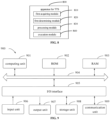
- FIG. 9 is a block diagram illustrating an example electronic device 900 according to some embodiments of the disclosure.
- the electronic devices are intended to represent various types of digital computers, such as laptop computers, desktop computers, workstations, personal digital assistants, servers, blade servers, mainframe computers, and other suitable computers.
- the electronic devices may also represent various types of mobile apparatuses, such as personal digital assistants, cellular phones, smart phones, wearable devices, and other similar computing devices.
- the components shown herein, their connections and relations, and their functions are merely examples, and are not intended to limit the implementation of the disclosure described and/or required herein.
- the device 900 includes a computing unit 901, configured to execute various appropriate actions and processes according to a computer program stored in a read-only memory (ROM) 902 or loaded from a storage unit 908 to a random-access memory (RAM) 903.
- ROM read-only memory
- RAM random-access memory
- various programs and data required for the device 900 may be stored.
- the computing unit 901, the ROM 902 and the RAM 903 may be connected with each other by a bus 904.
- An input/output (I/O) interface 905 is also connected to the bus 904.
- a plurality of components in the device 900 are connected to the I/O interface 905, and include: an input unit 906, for example, a keyboard, a mouse, etc.; an output unit 907, for example various types of displays, speakers; a storage unit 908, for example a magnetic disk, an optical disk; and a communication unit 909, for example, a network card, a modem, a wireless transceiver.
- the communication unit 909 allows the device 900 to exchange information/data through a computer network such as internet and/or various types of telecommunication networks and other devices.
- the computing unit 901 may be various types of general and/or dedicated processing components with processing and computing ability. Some examples of the computing unit 901 include but not limited to a central processing unit (CPU), a graphics processing unit (GPU), various dedicated artificial intelligence (AI) computing chips, various computing units running a machine learning model algorithm, a digital signal processor (DSP), and any appropriate processor, controller, microcontroller, etc.
- the computing unit 901 executes various methods and processing as described above, for example, a method for TTS.
- the method for TTS may be further implemented as a computer software program, which is physically contained in a machine readable medium, such as the storage unit 908.
- a part or all of the computer program may be loaded and/or installed on the device 900 through the ROM 902 and/or the communication unit 909.
- the computer program When the computer program is loaded on the RAM 903 and performed by the computing unit 901, one or more blocks in the method for TTS as described above may be performed.
- the computing unit 901 may be configured to perform a method for TTS in other appropriate ways (for example, by virtue of a firmware).
- Various implementation modes of systems and technologies described herein may be implemented in a digital electronic circuit system, an integrated circuit system, a field programmable gate array(FPGA), a dedicated application specific integrated circuit (ASIC), a system on a chip (SoC), a load programmable logic device (CPLD), a computer hardware, a firmware, a software, and/or combinations thereof.
- FPGA field programmable gate array
- ASIC application specific integrated circuit
- SoC system on a chip
- CPLD load programmable logic device
- computer hardware a firmware, a software, and/or combinations thereof.
- the various implementation modes may include: being implemented in one or more computer programs, and the one or more computer programs may be executed and/or interpreted on a programmable system including at least one programmable processor, and the programmable processor may be a dedicated or a general-purpose programmable processor that may receive data and instructions from a storage system, at least one input apparatus, and at least one output apparatus, and transmit the data and instructions to the storage system, the at least one input apparatus, and the at least one output apparatus.
- a computer code configured to execute a method in the disclosure may be written with one or any combination of multiple programming languages. These programming languages may be provided to a processor or a controller of a general purpose computer, a dedicated computer, or other apparatuses for programmable data processing so that the function/operation specified in the flowchart and/or block diagram may be performed when the program code is executed by the processor or controller.
- a computer code may be executed completely or partly on the machine, executed partly on the machine as an independent software package and executed partly or completely on the remote machine or server.
- a machine-readable medium may be a tangible medium that may contain or store a program intended for use in or in conjunction with an instruction execution system, apparatus, or device.
- a machine-readable medium may be a machine readable signal medium or a machine readable storage medium.
- a machine readable storage medium may include but not limited to an electronic, magnetic, optical, electromagnetic, infrared, or semiconductor system, apparatus or device, or any appropriate combination thereof.
- a more specific example of a machine readable storage medium includes an electronic connector with one or more cables, a portable computer disk, a hardware, a random access memory (RAM), a read-only memory (ROM), an erasable programmable read-only memory (an EPROM or a flash memory), an optical fiber device, and a portable optical disk read-only memory (CDROM), an optical storage device, a magnetic storage device, or any appropriate combination of the above.
- RAM random access memory
- ROM read-only memory
- EPROM or a flash memory erasable programmable read-only memory
- CDROM portable optical disk read-only memory
- the systems and technologies described here may be implemented on a computer, and the computer has: a display apparatus for displaying information to the user (for example, a CRT (cathode ray tube) or a LCD (liquid crystal display) monitor); and a keyboard and a pointing apparatus (for example, a mouse or a trackball) through which the user may provide input to the computer.
- a display apparatus for displaying information to the user
- a keyboard and a pointing apparatus for example, a mouse or a trackball
- Other types of apparatuses may further be configured to provide interaction with the user; for example, the feedback provided to the user may be any form of sensory feedback (for example, visual feedback, auditory feedback, or tactile feedback); and input from the user may be received in any form (including an acoustic input, a voice input, or a tactile input).
- the systems and technologies described herein may be implemented in a computing system including back-end components (for example, as a data server), or a computing system including middleware components (for example, an application server), or a computing system including front-end components (for example, a user computer with a graphical user interface or a web browser through which the user may interact with the implementation mode of the system and technology described herein), or a computing system including any combination of such back-end components, middleware components or front-end components.
- the system components may be connected to each other through any form or medium of digital data communication (for example, a communication network). Examples of communication networks include: a local area network (LAN), a wide area network (WAN), an internet and a blockchain network.
- the computer system may include a client and a server.
- the client and server are generally far away from each other and generally interact with each other through a communication network.
- the relation between the client and the server is generated by computer programs that run on the corresponding computer and have a client-server relationship with each other.
- a server further may be a server with a distributed system, or a server in combination with a blockchain.
- AI Artificial intelligence
- AI hardware technologies generally include technologies such as sensors, dedicated AI chips, cloud computing, distributed storage, big data processing, etc.
- AI software technologies mainly include computer vision technology, speech recognition technology, natural language processing(NLP) technology and machine learning(ML), deep learning(DL), big data processing technology, knowledge graph(KG) technology, etc.
Landscapes
- Engineering & Computer Science (AREA)
- Physics & Mathematics (AREA)
- Theoretical Computer Science (AREA)
- Multimedia (AREA)
- Health & Medical Sciences (AREA)
- Audiology, Speech & Language Pathology (AREA)
- Human Computer Interaction (AREA)
- Acoustics & Sound (AREA)
- Computational Linguistics (AREA)
- General Engineering & Computer Science (AREA)
- General Physics & Mathematics (AREA)
- Software Systems (AREA)
- Data Mining & Analysis (AREA)
- Databases & Information Systems (AREA)
- General Health & Medical Sciences (AREA)
- Stored Programmes (AREA)
- Two-Way Televisions, Distribution Of Moving Picture Or The Like (AREA)
- Telephonic Communication Services (AREA)
Claims (13)
- Verfahren für Text-zu-Sprache (TTS), umfassend:Erfassen (201) von TTS-Aufgaben, die zu verarbeiten sind, und Software-Kennungen entsprechend den TTS-Aufgaben, auf einem Endgerät;Bestimmen (202) einer aktuellen Szene des Endgeräts;Bestimmen (203) von Prioritäten entsprechend den Software-Kennungen in der aktuellen Szene;Erfassen (204) eines Sortierergebnisses durch Sortieren der TTS-Aufgaben basierend auf den Prioritäten entsprechend den Software-Kennungen; undAusführen (205) der TTS-Aufgaben basierend auf dem Sortierergebnis wobei das Bestimmen (203) der Prioritäten entsprechend den Software-Kennungen in der aktuellen Szene Folgendes umfasst:Erfassen (203) einer Prioritätenliste entsprechend der aktuellen Szene; undErfassen (203) der Prioritäten entsprechend den Software-Kennungen anhand der Prioritätenliste; wobei die Prioritätenliste eine Software-Kennung jeder Software und eine entsprechende Priorität auf dem Endgerät in der aktuellen Szene umfasst.
- Verfahren nach Anspruch 1, ferner umfassend:
Löschen einer TTS-Aufgabe, die anhand des Sortierergebnisses ausgeführt worden ist. - Verfahren nach einem der Ansprüche 1 bis 2, ferner umfassend:
Aktualisieren (304) des Sortierergebnisses basierend auf aktualisierten TTS-Aufgaben als Reaktion darauf, dass sich die TTS-Aufgaben ändern und ein Änderungstyp eine zu verarbeitende TTS-Aufgabe neu hinzufügt. - Verfahren nach einem der Ansprüche 1 bis 3, ferner umfassend:Bestimmen (405) einer Ziel-TTS-Aufgabe anhand des Sortierergebnisses, wobei die Ziel-TTS-Aufgabe eine Rückmeldungs-TTS-Aufgabe für einen Sprachbefehl ist;Erfassen (406) eines Softwarezustands einer Software-Kennung entsprechend der Ziel-TTS-Aufgabe in einem Prozess des Ausführens der Ziel-TTS-Aufgabe; undStoppen (407) des Ausführens der Ziel-TTS-Aufgabe als Reaktion darauf, dass der Software-Zustand abnormal ist.
- Verfahren nach einem der Ansprüche 1 bis 4, wobei das Erfassen (101) der TTS-Aufgaben, die zu verarbeiten sind, und der Software-Kennungen entsprechend den TTS-Aufgaben auf dem Endgerät Folgendes umfasst:Erhalten (501) einer TTS-Aufgabe und einer Software-Kennung entsprechend der TTS-Aufgabe von jeder Software auf dem Endgerät; undfür jede TTS-Aufgabe, Bestimmen (502), dass die TTS-Aufgabe eine zu verarbeitende TTS-Aufgabe ist, als Reaktion darauf, dass die Softwarekennung, die der TTS-Aufgabe entspricht, in einer registrierten Liste vorhanden ist; wobei die registrierte Liste eine Softwarekennung jeder registrierten Software umfasst.
- Verfahren nach einem der Ansprüche 1 bis 5, wobei eine Art des Ausführens der TTS-Aufgabe Folgendes umfasst:Erfassen eines Texts in der TTS-Aufgabe;Erfassen einer Sprache, die ein Aussprachemerkmal aufweist, das der Kennung eines Sprechers entspricht, durch Sprachumwandlung an dem Text basierend auf dem Aussprachemerkmal, wobei die Kennung des Sprechers basierend auf dem erhaltenen Auswahlbefehl eines Sprechers bestimmt wird; undAufrufen eines Spielers, um die Sprache zu übertragen.
- Vorrichtung für Text-zu-Sprache (TTS), umfassend:ein erstes Erfassungsmodul (810), das konfiguriert ist, um zu verarbeitende TTS-Aufgaben und Software-Kennungen entsprechend den TTS-Aufgaben auf einem Endgerät zu erfassen;ein erstes Bestimmungsmodul (820), das konfiguriert ist, um eine aktuelle Szene des Endgeräts und Prioritäten entsprechend den Software-Kennungen in der aktuellen Szene zu bestimmen;ein Verarbeitungsmodul (830), das konfiguriert ist, um ein Sortierergebnis durch Sortieren der TTS-Aufgaben basierend auf den Prioritäten entsprechend den Software-Kennungen zu erfassen; undein Ausführungsmodul (840), das konfiguriert ist, um die TTS-Aufgaben basierend auf dem Sortierergebnis auszuführen,wobei das Bestimmungsmodul (820) konfiguriert ist, um:eine Prioritätenliste entsprechend der aktuellen Szene zu erfassen; unddie Prioritäten entsprechend den Software-Kennungen anhand der Prioritätenliste zu erfassen;wobei die Prioritätenliste eine Software-Kennung jeder Software und eine entsprechende Priorität auf dem Endgerät in der aktuellen Szene umfasst.
- Vorrichtung nach Anspruch 7, ferner umfassend:
ein Änderungsmodul, das konfiguriert ist, um das Sortierergebnis basierend auf aktualisierten TTS-Aufgaben als Reaktion darauf zu aktualisieren, dass sich die TTS-Aufgaben ändern und ein Änderungstyp eine zu verarbeitende TTS-Aufgabe neu hinzufügt. - Vorrichtung nach einem der Ansprüche 7 bis 8, ferner umfassend:ein zweites Bestimmungsmodul, das konfiguriert ist, um eine Ziel-TTS-Aufgabe anhand des Sortierergebnisses zu bestimmen, wobei die Ziel-TTS-Aufgabe eine Rückmeldungs-TTS-Aufgabe für einen Sprachbefehl ist;ein zweites Erfassungsmodul, das konfiguriert ist, um einen Softwarezustand einer Softwarekennung entsprechend der Ziel-TTS-Aufgabe in einem Prozess des Ausführens der Ziel-TTS-Aufgabe zu erfassen; undein Ausführungshandhabungsmodul, das konfiguriert ist, um das Ausführen der Ziel-TTS-Aufgabe als Reaktion darauf, dass der Softwarezustand abnormal ist, zu stoppen.
- Vorrichtung nach einem der Ansprüche 7 bis 9, wobei das erste Erfassungsmodul (810) konfiguriert ist, um:eine TTS-Aufgabe und eine Software-Kennung entsprechend der TTS-Aufgabe von jeder Software auf dem Endgerät zu erhalten; undfür jede TTS-Aufgabe, zu bestimmen, dass die TTS-Aufgabe eine zu verarbeitende TTS-Aufgabe ist, als Reaktion darauf, dass die Software-Kennung, die der TTS-Aufgabe entspricht, in einer registrierten Liste vorhanden ist; wobei die registrierte Liste eine Software-Kennung jeder registrierten Software umfasst.
- Software nach einem der Ansprüche 7 bis 10, wobei das Ausführungsmodul (840) konfiguriert ist, um:einen Text in der TTS-Aufgabe zu erfassen;eine Sprache, die ein Aussprachemerkmal aufweist, das der Kennung eines Sprechers entspricht, durch Sprachumwandlung an dem Text basierend auf dem Aussprachemerkmal zu erfassen, wobei die Kennung des Sprechers basierend auf dem erhaltenen Auswahlbefehl eines Sprechers bestimmt wird; undAufrufen eines Spielers, um die Sprache zu übertragen.
- Nichtflüchtiges computerlesbares Speichermedium, das mit Computerbefehlen gespeichert ist, wobei die Computerbefehle konfiguriert sind, um das Verfahren nach einem der Ansprüche 1 bis 6 durchzuführen, wenn es von dem Computer durchgeführt wird.
- Computerprogrammprodukt, umfassend ein Computerprogramm, wobei das Computerprogramm konfiguriert ist, um das Verfahren nach einem der Ansprüche 1 bis 6 durchzuführen, wenn es von einem Prozessor durchgeführt wird.
Applications Claiming Priority (1)
| Application Number | Priority Date | Filing Date | Title |
|---|---|---|---|
| CN202110639016.7A CN113449141A (zh) | 2021-06-08 | 2021-06-08 | 语音播报方法、装置、电子设备及存储介质 |
Publications (3)
| Publication Number | Publication Date |
|---|---|
| EP4044173A2 EP4044173A2 (de) | 2022-08-17 |
| EP4044173A3 EP4044173A3 (de) | 2022-11-23 |
| EP4044173B1 true EP4044173B1 (de) | 2023-10-18 |
Family
ID=77810920
Family Applications (1)
| Application Number | Title | Priority Date | Filing Date |
|---|---|---|---|
| EP22176933.4A Active EP4044173B1 (de) | 2021-06-08 | 2022-06-02 | Verfahren und vorrichtung für text-zu-sprache, elektronische vorrichtung und speichermedium |
Country Status (5)
| Country | Link |
|---|---|
| US (1) | US20220293085A1 (de) |
| EP (1) | EP4044173B1 (de) |
| JP (1) | JP2022088585A (de) |
| KR (1) | KR20220081957A (de) |
| CN (1) | CN113449141A (de) |
Families Citing this family (7)
| Publication number | Priority date | Publication date | Assignee | Title |
|---|---|---|---|---|
| CN113918756A (zh) * | 2021-09-29 | 2022-01-11 | 北京布科思科技有限公司 | 语音播报方法、装置、设备和计算机可读存储介质 |
| CN114283780B (zh) * | 2021-12-27 | 2025-09-05 | 阿波罗智联(北京)科技有限公司 | 语音合成方法、装置、电子设备和存储介质 |
| CN114500112A (zh) * | 2022-04-12 | 2022-05-13 | 北京智科车联科技有限公司 | 语音播报方法、车载喇叭、车载终端和车辆 |
| CN115312025B (zh) * | 2022-07-29 | 2025-08-08 | 珠海格力电器股份有限公司 | 语音播报方法及装置、电子设备、存储介质 |
| CN115985022A (zh) * | 2022-12-14 | 2023-04-18 | 江苏丰东热技术有限公司 | 设备情况实时语音播报方法、装置、电子设备及存储介质 |
| CN116229934B (zh) * | 2023-02-01 | 2026-02-03 | 岚图汽车科技股份有限公司 | 车载语音播报方法及相关设备 |
| CN117002378A (zh) * | 2023-09-15 | 2023-11-07 | 重庆长安汽车股份有限公司 | 语音播报方法、装置、设备、车辆及计算机可读存储介质 |
Citations (1)
| Publication number | Priority date | Publication date | Assignee | Title |
|---|---|---|---|---|
| WO2017213691A1 (en) * | 2016-06-08 | 2017-12-14 | Google Llc | Audio announcement prioritization system |
Family Cites Families (17)
| Publication number | Priority date | Publication date | Assignee | Title |
|---|---|---|---|---|
| JP4403050B2 (ja) * | 2004-05-07 | 2010-01-20 | 富士通テン株式会社 | 入出力管理装置 |
| CN1918628A (zh) * | 2004-12-28 | 2007-02-21 | 松下电器产业株式会社 | 声音合成方法和信息提供装置 |
| JP4655268B2 (ja) * | 2005-04-18 | 2011-03-23 | 株式会社デンソー | 音声出力システム |
| JP4984708B2 (ja) * | 2006-07-21 | 2012-07-25 | 富士通株式会社 | 音声対話機能を有する情報処理装置 |
| JP2012133575A (ja) * | 2010-12-21 | 2012-07-12 | Toyota Motor Corp | アプリケーション出力制御方法及びアプリケーション出力制御装置 |
| JP5920104B2 (ja) * | 2012-08-15 | 2016-05-18 | 株式会社デンソー | 車両用音声制御装置 |
| US9031781B2 (en) * | 2013-05-09 | 2015-05-12 | Telenav, Inc. | Navigation system with priority notification mechanism |
| JP6722483B2 (ja) * | 2016-03-23 | 2020-07-15 | クラリオン株式会社 | サーバ装置、情報システム、車載装置 |
| US10824386B2 (en) * | 2016-07-11 | 2020-11-03 | Telenav, Inc. | Navigation system with message interchange mechanism and method of operation thereof |
| JP2018136244A (ja) * | 2017-02-23 | 2018-08-30 | トヨタ自動車株式会社 | サービス提供システム |
| CN107171874B (zh) * | 2017-07-21 | 2020-02-18 | 维沃移动通信有限公司 | 一种语音引擎切换方法、移动终端及服务器 |
| KR102615154B1 (ko) * | 2019-02-28 | 2023-12-18 | 삼성전자주식회사 | 전자 장치 및 전자 장치의 제어 방법 |
| CN109977117A (zh) * | 2019-03-18 | 2019-07-05 | 广州虎牙信息科技有限公司 | 状态数据的存储方法、数据发送的方法及装置 |
| CN110600000B (zh) * | 2019-09-29 | 2022-04-15 | 阿波罗智联(北京)科技有限公司 | 语音播报方法、装置、电子设备及存储介质 |
| CN112133281B (zh) * | 2020-09-15 | 2024-08-02 | 北京百度网讯科技有限公司 | 一种语音播报方法、装置、电子设备和存储介质 |
| US11783805B1 (en) * | 2020-09-21 | 2023-10-10 | Amazon Technologies, Inc. | Voice user interface notification ordering |
| CN112527235A (zh) * | 2020-12-18 | 2021-03-19 | 北京百度网讯科技有限公司 | 语音播放方法、装置、设备以及存储介质 |
-
2021
- 2021-06-08 CN CN202110639016.7A patent/CN113449141A/zh not_active Withdrawn
-
2022
- 2022-03-31 JP JP2022057913A patent/JP2022088585A/ja not_active Ceased
- 2022-05-30 KR KR1020220065962A patent/KR20220081957A/ko not_active Abandoned
- 2022-06-02 EP EP22176933.4A patent/EP4044173B1/de active Active
- 2022-06-03 US US17/805,283 patent/US20220293085A1/en not_active Abandoned
Patent Citations (1)
| Publication number | Priority date | Publication date | Assignee | Title |
|---|---|---|---|---|
| WO2017213691A1 (en) * | 2016-06-08 | 2017-12-14 | Google Llc | Audio announcement prioritization system |
Also Published As
| Publication number | Publication date |
|---|---|
| US20220293085A1 (en) | 2022-09-15 |
| CN113449141A (zh) | 2021-09-28 |
| JP2022088585A (ja) | 2022-06-14 |
| EP4044173A3 (de) | 2022-11-23 |
| KR20220081957A (ko) | 2022-06-16 |
| EP4044173A2 (de) | 2022-08-17 |
Similar Documents
| Publication | Publication Date | Title |
|---|---|---|
| EP4044173B1 (de) | Verfahren und vorrichtung für text-zu-sprache, elektronische vorrichtung und speichermedium | |
| CN116541497A (zh) | 任务型对话的处理方法、装置、设备和存储介质 | |
| JP2020003773A (ja) | 情報を送信するための方法と装置 | |
| KR20210088464A (ko) | 음성 인터랙션의 처리 방법, 장치, 전자 기기, 저장 매체 및 컴퓨터 프로그램 제품 | |
| CN112882709A (zh) | 基于容器引擎系统的渲染方法、装置、设备以及存储介质 | |
| EP4583039A1 (de) | Bildverarbeitungsverfahren und -vorrichtung, vorrichtung und medium | |
| CN114296838A (zh) | 车载多媒体应用管理方法及装置、电子设备和介质 | |
| EP4068278A2 (de) | Verfahren und vorrichtung zur spracherkennung, elektronische vorrichtung und aufzeichnungsmedium | |
| EP4060496A2 (de) | Verfahren, gerät, vorrichtung und speichermedium zum betrieb einer inferenzdienstplattform | |
| EP4575788A2 (de) | Datenverarbeitungsverfahren, -vorrichtung und -medium in einem verteilten system | |
| CN114861675A (zh) | 用于语义识别的方法及装置、控制指令的生成方法及装置 | |
| WO2025260816A1 (zh) | 任务执行方法、设备及系统 | |
| CN114035885A (zh) | 一种小程序页面渲染方法、装置及电子设备 | |
| CN119495298A (zh) | 数字人语音交互的处理方法、装置、电子设备和介质 | |
| WO2023109561A1 (zh) | 模态窗口的控制方法、装置、设备及存储介质 | |
| CN114356083A (zh) | 虚拟个人助理控制方法、装置、电子设备及可读存储介质 | |
| US20150100321A1 (en) | Intelligent state aware system control utilizing two-way voice / audio communication | |
| CN113990306A (zh) | 一种语音交互方法、装置、电子设备及存储介质 | |
| CN113709506A (zh) | 基于云手机的多媒体播放方法、装置、介质及程序产品 | |
| KR20220116949A (ko) | 전자 장치 및 전자 장치의 음성 인식 처리 방법 | |
| US20250309915A1 (en) | Floating-point conversion method, apparatus, chip, device and medium | |
| CN114783429B (zh) | 人机交互系统、服务器、交互终端、交互方法和电子设备 | |
| EP4050533A2 (de) | Verfahren zur bereitstellung von statusinformationen eines taxiservices, vorrichtung und medium | |
| US20250231792A1 (en) | Interrupt information processing method and apparatus, device, and storage medium | |
| US20250061311A1 (en) | Data generation |
Legal Events
| Date | Code | Title | Description |
|---|---|---|---|
| PUAI | Public reference made under article 153(3) epc to a published international application that has entered the european phase |
Free format text: ORIGINAL CODE: 0009012 |
|
| STAA | Information on the status of an ep patent application or granted ep patent |
Free format text: STATUS: THE APPLICATION HAS BEEN PUBLISHED |
|
| AK | Designated contracting states |
Kind code of ref document: A2 Designated state(s): AL AT BE BG CH CY CZ DE DK EE ES FI FR GB GR HR HU IE IS IT LI LT LU LV MC MK MT NL NO PL PT RO RS SE SI SK SM TR |
|
| PUAL | Search report despatched |
Free format text: ORIGINAL CODE: 0009013 |
|
| AK | Designated contracting states |
Kind code of ref document: A3 Designated state(s): AL AT BE BG CH CY CZ DE DK EE ES FI FR GB GR HR HU IE IS IT LI LT LU LV MC MK MT NL NO PL PT RO RS SE SI SK SM TR |
|
| RIC1 | Information provided on ipc code assigned before grant |
Ipc: G06F 3/16 20060101ALI20221017BHEP Ipc: G10L 13/04 20130101AFI20221017BHEP |
|
| STAA | Information on the status of an ep patent application or granted ep patent |
Free format text: STATUS: REQUEST FOR EXAMINATION WAS MADE |
|
| 17P | Request for examination filed |
Effective date: 20230511 |
|
| RBV | Designated contracting states (corrected) |
Designated state(s): AL AT BE BG CH CY CZ DE DK EE ES FI FR GB GR HR HU IE IS IT LI LT LU LV MC MK MT NL NO PL PT RO RS SE SI SK SM TR |
|
| GRAP | Despatch of communication of intention to grant a patent |
Free format text: ORIGINAL CODE: EPIDOSNIGR1 |
|
| STAA | Information on the status of an ep patent application or granted ep patent |
Free format text: STATUS: GRANT OF PATENT IS INTENDED |
|
| RIC1 | Information provided on ipc code assigned before grant |
Ipc: G10L 13/033 20130101ALN20230621BHEP Ipc: G06F 3/16 20060101ALI20230621BHEP Ipc: G10L 13/04 20130101AFI20230621BHEP |
|
| INTG | Intention to grant announced |
Effective date: 20230704 |
|
| GRAS | Grant fee paid |
Free format text: ORIGINAL CODE: EPIDOSNIGR3 |
|
| GRAA | (expected) grant |
Free format text: ORIGINAL CODE: 0009210 |
|
| STAA | Information on the status of an ep patent application or granted ep patent |
Free format text: STATUS: THE PATENT HAS BEEN GRANTED |
|
| P01 | Opt-out of the competence of the unified patent court (upc) registered |
Effective date: 20230831 |
|
| AK | Designated contracting states |
Kind code of ref document: B1 Designated state(s): AL AT BE BG CH CY CZ DE DK EE ES FI FR GB GR HR HU IE IS IT LI LT LU LV MC MK MT NL NO PL PT RO RS SE SI SK SM TR |
|
| REG | Reference to a national code |
Ref country code: GB Ref legal event code: FG4D |
|
| REG | Reference to a national code |
Ref country code: CH Ref legal event code: EP |
|
| REG | Reference to a national code |
Ref country code: DE Ref legal event code: R096 Ref document number: 602022000713 Country of ref document: DE |
|
| REG | Reference to a national code |
Ref country code: IE Ref legal event code: FG4D |
|
| REG | Reference to a national code |
Ref country code: LT Ref legal event code: MG9D |
|
| REG | Reference to a national code |
Ref country code: NL Ref legal event code: MP Effective date: 20231018 |
|
| REG | Reference to a national code |
Ref country code: AT Ref legal event code: MK05 Ref document number: 1623178 Country of ref document: AT Kind code of ref document: T Effective date: 20231018 |
|
| PG25 | Lapsed in a contracting state [announced via postgrant information from national office to epo] |
Ref country code: NL Free format text: LAPSE BECAUSE OF FAILURE TO SUBMIT A TRANSLATION OF THE DESCRIPTION OR TO PAY THE FEE WITHIN THE PRESCRIBED TIME-LIMIT Effective date: 20231018 |
|
| PG25 | Lapsed in a contracting state [announced via postgrant information from national office to epo] |
Ref country code: GR Free format text: LAPSE BECAUSE OF FAILURE TO SUBMIT A TRANSLATION OF THE DESCRIPTION OR TO PAY THE FEE WITHIN THE PRESCRIBED TIME-LIMIT Effective date: 20240119 |
|
| PG25 | Lapsed in a contracting state [announced via postgrant information from national office to epo] |
Ref country code: IS Free format text: LAPSE BECAUSE OF FAILURE TO SUBMIT A TRANSLATION OF THE DESCRIPTION OR TO PAY THE FEE WITHIN THE PRESCRIBED TIME-LIMIT Effective date: 20240218 |
|
| PG25 | Lapsed in a contracting state [announced via postgrant information from national office to epo] |
Ref country code: LT Free format text: LAPSE BECAUSE OF FAILURE TO SUBMIT A TRANSLATION OF THE DESCRIPTION OR TO PAY THE FEE WITHIN THE PRESCRIBED TIME-LIMIT Effective date: 20231018 |
|
| PG25 | Lapsed in a contracting state [announced via postgrant information from national office to epo] |
Ref country code: AT Free format text: LAPSE BECAUSE OF FAILURE TO SUBMIT A TRANSLATION OF THE DESCRIPTION OR TO PAY THE FEE WITHIN THE PRESCRIBED TIME-LIMIT Effective date: 20231018 |
|
| PG25 | Lapsed in a contracting state [announced via postgrant information from national office to epo] |
Ref country code: ES Free format text: LAPSE BECAUSE OF FAILURE TO SUBMIT A TRANSLATION OF THE DESCRIPTION OR TO PAY THE FEE WITHIN THE PRESCRIBED TIME-LIMIT Effective date: 20231018 |
|
| PG25 | Lapsed in a contracting state [announced via postgrant information from national office to epo] |
Ref country code: LT Free format text: LAPSE BECAUSE OF FAILURE TO SUBMIT A TRANSLATION OF THE DESCRIPTION OR TO PAY THE FEE WITHIN THE PRESCRIBED TIME-LIMIT Effective date: 20231018 Ref country code: IS Free format text: LAPSE BECAUSE OF FAILURE TO SUBMIT A TRANSLATION OF THE DESCRIPTION OR TO PAY THE FEE WITHIN THE PRESCRIBED TIME-LIMIT Effective date: 20240218 Ref country code: GR Free format text: LAPSE BECAUSE OF FAILURE TO SUBMIT A TRANSLATION OF THE DESCRIPTION OR TO PAY THE FEE WITHIN THE PRESCRIBED TIME-LIMIT Effective date: 20240119 Ref country code: ES Free format text: LAPSE BECAUSE OF FAILURE TO SUBMIT A TRANSLATION OF THE DESCRIPTION OR TO PAY THE FEE WITHIN THE PRESCRIBED TIME-LIMIT Effective date: 20231018 Ref country code: BG Free format text: LAPSE BECAUSE OF FAILURE TO SUBMIT A TRANSLATION OF THE DESCRIPTION OR TO PAY THE FEE WITHIN THE PRESCRIBED TIME-LIMIT Effective date: 20240118 Ref country code: AT Free format text: LAPSE BECAUSE OF FAILURE TO SUBMIT A TRANSLATION OF THE DESCRIPTION OR TO PAY THE FEE WITHIN THE PRESCRIBED TIME-LIMIT Effective date: 20231018 Ref country code: PT Free format text: LAPSE BECAUSE OF FAILURE TO SUBMIT A TRANSLATION OF THE DESCRIPTION OR TO PAY THE FEE WITHIN THE PRESCRIBED TIME-LIMIT Effective date: 20240219 |
|
| PG25 | Lapsed in a contracting state [announced via postgrant information from national office to epo] |
Ref country code: SE Free format text: LAPSE BECAUSE OF FAILURE TO SUBMIT A TRANSLATION OF THE DESCRIPTION OR TO PAY THE FEE WITHIN THE PRESCRIBED TIME-LIMIT Effective date: 20231018 Ref country code: RS Free format text: LAPSE BECAUSE OF FAILURE TO SUBMIT A TRANSLATION OF THE DESCRIPTION OR TO PAY THE FEE WITHIN THE PRESCRIBED TIME-LIMIT Effective date: 20231018 Ref country code: PL Free format text: LAPSE BECAUSE OF FAILURE TO SUBMIT A TRANSLATION OF THE DESCRIPTION OR TO PAY THE FEE WITHIN THE PRESCRIBED TIME-LIMIT Effective date: 20231018 Ref country code: NO Free format text: LAPSE BECAUSE OF FAILURE TO SUBMIT A TRANSLATION OF THE DESCRIPTION OR TO PAY THE FEE WITHIN THE PRESCRIBED TIME-LIMIT Effective date: 20240118 Ref country code: LV Free format text: LAPSE BECAUSE OF FAILURE TO SUBMIT A TRANSLATION OF THE DESCRIPTION OR TO PAY THE FEE WITHIN THE PRESCRIBED TIME-LIMIT Effective date: 20231018 Ref country code: HR Free format text: LAPSE BECAUSE OF FAILURE TO SUBMIT A TRANSLATION OF THE DESCRIPTION OR TO PAY THE FEE WITHIN THE PRESCRIBED TIME-LIMIT Effective date: 20231018 |
|
| PG25 | Lapsed in a contracting state [announced via postgrant information from national office to epo] |
Ref country code: DK Free format text: LAPSE BECAUSE OF FAILURE TO SUBMIT A TRANSLATION OF THE DESCRIPTION OR TO PAY THE FEE WITHIN THE PRESCRIBED TIME-LIMIT Effective date: 20231018 |
|
| REG | Reference to a national code |
Ref country code: DE Ref legal event code: R097 Ref document number: 602022000713 Country of ref document: DE |
|
| PG25 | Lapsed in a contracting state [announced via postgrant information from national office to epo] |
Ref country code: CZ Free format text: LAPSE BECAUSE OF FAILURE TO SUBMIT A TRANSLATION OF THE DESCRIPTION OR TO PAY THE FEE WITHIN THE PRESCRIBED TIME-LIMIT Effective date: 20231018 |
|
| PG25 | Lapsed in a contracting state [announced via postgrant information from national office to epo] |
Ref country code: SK Free format text: LAPSE BECAUSE OF FAILURE TO SUBMIT A TRANSLATION OF THE DESCRIPTION OR TO PAY THE FEE WITHIN THE PRESCRIBED TIME-LIMIT Effective date: 20231018 |
|
| PG25 | Lapsed in a contracting state [announced via postgrant information from national office to epo] |
Ref country code: SM Free format text: LAPSE BECAUSE OF FAILURE TO SUBMIT A TRANSLATION OF THE DESCRIPTION OR TO PAY THE FEE WITHIN THE PRESCRIBED TIME-LIMIT Effective date: 20231018 Ref country code: SK Free format text: LAPSE BECAUSE OF FAILURE TO SUBMIT A TRANSLATION OF THE DESCRIPTION OR TO PAY THE FEE WITHIN THE PRESCRIBED TIME-LIMIT Effective date: 20231018 Ref country code: RO Free format text: LAPSE BECAUSE OF FAILURE TO SUBMIT A TRANSLATION OF THE DESCRIPTION OR TO PAY THE FEE WITHIN THE PRESCRIBED TIME-LIMIT Effective date: 20231018 Ref country code: IT Free format text: LAPSE BECAUSE OF FAILURE TO SUBMIT A TRANSLATION OF THE DESCRIPTION OR TO PAY THE FEE WITHIN THE PRESCRIBED TIME-LIMIT Effective date: 20231018 Ref country code: EE Free format text: LAPSE BECAUSE OF FAILURE TO SUBMIT A TRANSLATION OF THE DESCRIPTION OR TO PAY THE FEE WITHIN THE PRESCRIBED TIME-LIMIT Effective date: 20231018 Ref country code: DK Free format text: LAPSE BECAUSE OF FAILURE TO SUBMIT A TRANSLATION OF THE DESCRIPTION OR TO PAY THE FEE WITHIN THE PRESCRIBED TIME-LIMIT Effective date: 20231018 Ref country code: CZ Free format text: LAPSE BECAUSE OF FAILURE TO SUBMIT A TRANSLATION OF THE DESCRIPTION OR TO PAY THE FEE WITHIN THE PRESCRIBED TIME-LIMIT Effective date: 20231018 |
|
| PLBE | No opposition filed within time limit |
Free format text: ORIGINAL CODE: 0009261 |
|
| STAA | Information on the status of an ep patent application or granted ep patent |
Free format text: STATUS: NO OPPOSITION FILED WITHIN TIME LIMIT |
|
| 26N | No opposition filed |
Effective date: 20240719 |
|
| PG25 | Lapsed in a contracting state [announced via postgrant information from national office to epo] |
Ref country code: SI Free format text: LAPSE BECAUSE OF FAILURE TO SUBMIT A TRANSLATION OF THE DESCRIPTION OR TO PAY THE FEE WITHIN THE PRESCRIBED TIME-LIMIT Effective date: 20231018 |
|
| PG25 | Lapsed in a contracting state [announced via postgrant information from national office to epo] |
Ref country code: SI Free format text: LAPSE BECAUSE OF FAILURE TO SUBMIT A TRANSLATION OF THE DESCRIPTION OR TO PAY THE FEE WITHIN THE PRESCRIBED TIME-LIMIT Effective date: 20231018 |
|
| PG25 | Lapsed in a contracting state [announced via postgrant information from national office to epo] |
Ref country code: MC Free format text: LAPSE BECAUSE OF FAILURE TO SUBMIT A TRANSLATION OF THE DESCRIPTION OR TO PAY THE FEE WITHIN THE PRESCRIBED TIME-LIMIT Effective date: 20231018 |
|
| PG25 | Lapsed in a contracting state [announced via postgrant information from national office to epo] |
Ref country code: LU Free format text: LAPSE BECAUSE OF NON-PAYMENT OF DUE FEES Effective date: 20240602 |
|
| PG25 | Lapsed in a contracting state [announced via postgrant information from national office to epo] |
Ref country code: IE Free format text: LAPSE BECAUSE OF NON-PAYMENT OF DUE FEES Effective date: 20240602 |
|
| PG25 | Lapsed in a contracting state [announced via postgrant information from national office to epo] |
Ref country code: BE Free format text: LAPSE BECAUSE OF NON-PAYMENT OF DUE FEES Effective date: 20240630 |
|
| REG | Reference to a national code |
Ref country code: BE Ref legal event code: MM Effective date: 20240630 |
|
| PGFP | Annual fee paid to national office [announced via postgrant information from national office to epo] |
Ref country code: DE Payment date: 20250618 Year of fee payment: 4 |
|
| PGFP | Annual fee paid to national office [announced via postgrant information from national office to epo] |
Ref country code: FR Payment date: 20250515 Year of fee payment: 4 |
|
| PG25 | Lapsed in a contracting state [announced via postgrant information from national office to epo] |
Ref country code: CY Free format text: LAPSE BECAUSE OF FAILURE TO SUBMIT A TRANSLATION OF THE DESCRIPTION OR TO PAY THE FEE WITHIN THE PRESCRIBED TIME-LIMIT; INVALID AB INITIO Effective date: 20220602 |
|
| PG25 | Lapsed in a contracting state [announced via postgrant information from national office to epo] |
Ref country code: FI Free format text: LAPSE BECAUSE OF FAILURE TO SUBMIT A TRANSLATION OF THE DESCRIPTION OR TO PAY THE FEE WITHIN THE PRESCRIBED TIME-LIMIT Effective date: 20231019 |
|
| REG | Reference to a national code |
Ref country code: CH Ref legal event code: H13 Free format text: ST27 STATUS EVENT CODE: U-0-0-H10-H13 (AS PROVIDED BY THE NATIONAL OFFICE) Effective date: 20260127 |
|
| PG25 | Lapsed in a contracting state [announced via postgrant information from national office to epo] |
Ref country code: HU Free format text: LAPSE BECAUSE OF FAILURE TO SUBMIT A TRANSLATION OF THE DESCRIPTION OR TO PAY THE FEE WITHIN THE PRESCRIBED TIME-LIMIT; INVALID AB INITIO Effective date: 20220602 |
|
| PG25 | Lapsed in a contracting state [announced via postgrant information from national office to epo] |
Ref country code: CH Free format text: LAPSE BECAUSE OF NON-PAYMENT OF DUE FEES Effective date: 20250630 |