EP4575788A2 - Datenverarbeitungsverfahren, -vorrichtung und -medium in einem verteilten system - Google Patents
Datenverarbeitungsverfahren, -vorrichtung und -medium in einem verteilten system Download PDFInfo
- Publication number
- EP4575788A2 EP4575788A2 EP25172620.4A EP25172620A EP4575788A2 EP 4575788 A2 EP4575788 A2 EP 4575788A2 EP 25172620 A EP25172620 A EP 25172620A EP 4575788 A2 EP4575788 A2 EP 4575788A2
- Authority
- EP
- European Patent Office
- Prior art keywords
- data
- computing unit
- sub
- block
- processing
- Prior art date
- Legal status (The legal status is an assumption and is not a legal conclusion. Google has not performed a legal analysis and makes no representation as to the accuracy of the status listed.)
- Pending
Links
Images


Classifications
-
- G—PHYSICS
- G06—COMPUTING OR CALCULATING; COUNTING
- G06F—ELECTRIC DIGITAL DATA PROCESSING
- G06F9/00—Arrangements for program control, e.g. control units
- G06F9/06—Arrangements for program control, e.g. control units using stored programs, i.e. using an internal store of processing equipment to receive or retain programs
- G06F9/46—Multiprogramming arrangements
- G06F9/50—Allocation of resources, e.g. of the central processing unit [CPU]
- G06F9/5061—Partitioning or combining of resources
-
- G—PHYSICS
- G06—COMPUTING OR CALCULATING; COUNTING
- G06F—ELECTRIC DIGITAL DATA PROCESSING
- G06F9/00—Arrangements for program control, e.g. control units
- G06F9/06—Arrangements for program control, e.g. control units using stored programs, i.e. using an internal store of processing equipment to receive or retain programs
- G06F9/46—Multiprogramming arrangements
- G06F9/50—Allocation of resources, e.g. of the central processing unit [CPU]
- G06F9/5061—Partitioning or combining of resources
- G06F9/5066—Algorithms for mapping a plurality of inter-dependent sub-tasks onto a plurality of physical CPUs
-
- G—PHYSICS
- G06—COMPUTING OR CALCULATING; COUNTING
- G06F—ELECTRIC DIGITAL DATA PROCESSING
- G06F15/00—Digital computers in general; Data processing equipment in general
- G06F15/76—Architectures of general purpose stored program computers
- G06F15/80—Architectures of general purpose stored program computers comprising an array of processing units with common control, e.g. single instruction multiple data processors
- G06F15/8007—Architectures of general purpose stored program computers comprising an array of processing units with common control, e.g. single instruction multiple data processors single instruction multiple data [SIMD] multiprocessors
- G06F15/8015—One dimensional arrays, e.g. rings, linear arrays, buses
-
- G—PHYSICS
- G06—COMPUTING OR CALCULATING; COUNTING
- G06F—ELECTRIC DIGITAL DATA PROCESSING
- G06F16/00—Information retrieval; Database structures therefor; File system structures therefor
- G06F16/20—Information retrieval; Database structures therefor; File system structures therefor of structured data, e.g. relational data
- G06F16/27—Replication, distribution or synchronisation of data between databases or within a distributed database system; Distributed database system architectures therefor
-
- G—PHYSICS
- G06—COMPUTING OR CALCULATING; COUNTING
- G06F—ELECTRIC DIGITAL DATA PROCESSING
- G06F9/00—Arrangements for program control, e.g. control units
- G06F9/06—Arrangements for program control, e.g. control units using stored programs, i.e. using an internal store of processing equipment to receive or retain programs
- G06F9/46—Multiprogramming arrangements
- G06F9/48—Program initiating; Program switching, e.g. by interrupt
- G06F9/4806—Task transfer initiation or dispatching
- G06F9/4843—Task transfer initiation or dispatching by program, e.g. task dispatcher, supervisor, operating system
- G06F9/4881—Scheduling strategies for dispatcher, e.g. round robin, multi-level priority queues
-
- G—PHYSICS
- G06—COMPUTING OR CALCULATING; COUNTING
- G06F—ELECTRIC DIGITAL DATA PROCESSING
- G06F9/00—Arrangements for program control, e.g. control units
- G06F9/06—Arrangements for program control, e.g. control units using stored programs, i.e. using an internal store of processing equipment to receive or retain programs
- G06F9/46—Multiprogramming arrangements
- G06F9/50—Allocation of resources, e.g. of the central processing unit [CPU]
- G06F9/5005—Allocation of resources, e.g. of the central processing unit [CPU] to service a request
- G06F9/5027—Allocation of resources, e.g. of the central processing unit [CPU] to service a request the resource being a machine, e.g. CPUs, Servers, Terminals
- G06F9/5038—Allocation of resources, e.g. of the central processing unit [CPU] to service a request the resource being a machine, e.g. CPUs, Servers, Terminals considering the execution order of a plurality of tasks, e.g. taking priority or time dependency constraints into consideration
-
- G—PHYSICS
- G06—COMPUTING OR CALCULATING; COUNTING
- G06N—COMPUTING ARRANGEMENTS BASED ON SPECIFIC COMPUTATIONAL MODELS
- G06N20/00—Machine learning
-
- G—PHYSICS
- G06—COMPUTING OR CALCULATING; COUNTING
- G06N—COMPUTING ARRANGEMENTS BASED ON SPECIFIC COMPUTATIONAL MODELS
- G06N3/00—Computing arrangements based on biological models
- G06N3/02—Neural networks
- G06N3/04—Architecture, e.g. interconnection topology
- G06N3/045—Combinations of networks
-
- G—PHYSICS
- G06—COMPUTING OR CALCULATING; COUNTING
- G06N—COMPUTING ARRANGEMENTS BASED ON SPECIFIC COMPUTATIONAL MODELS
- G06N3/00—Computing arrangements based on biological models
- G06N3/02—Neural networks
- G06N3/04—Architecture, e.g. interconnection topology
- G06N3/045—Combinations of networks
- G06N3/0455—Auto-encoder networks; Encoder-decoder networks
-
- G—PHYSICS
- G06—COMPUTING OR CALCULATING; COUNTING
- G06N—COMPUTING ARRANGEMENTS BASED ON SPECIFIC COMPUTATIONAL MODELS
- G06N3/00—Computing arrangements based on biological models
- G06N3/02—Neural networks
- G06N3/06—Physical realisation, i.e. hardware implementation of neural networks, neurons or parts of neurons
- G06N3/063—Physical realisation, i.e. hardware implementation of neural networks, neurons or parts of neurons using electronic means
-
- G—PHYSICS
- G06—COMPUTING OR CALCULATING; COUNTING
- G06N—COMPUTING ARRANGEMENTS BASED ON SPECIFIC COMPUTATIONAL MODELS
- G06N3/00—Computing arrangements based on biological models
- G06N3/02—Neural networks
- G06N3/08—Learning methods
-
- G—PHYSICS
- G06—COMPUTING OR CALCULATING; COUNTING
- G06F—ELECTRIC DIGITAL DATA PROCESSING
- G06F2209/00—Indexing scheme relating to G06F9/00
- G06F2209/50—Indexing scheme relating to G06F9/50
- G06F2209/5017—Task decomposition
Definitions
- the present disclosure relates to the field of computer technology, particularly to the field of chip technology and distributed data processing technology, and specifically to a data processing method, an apparatus, a computer-readable storage medium, and a computer program product applied to a distributed system.
- Artificial intelligence is the discipline that studies how to enable computers to simulate certain thinking processes and intelligent behaviors of a human being (such as learning, reasoning, thinking, planning, etc.), including both hardware-level and software-level technologies.
- the artificial intelligence hardware technologies generally include technologies such as sensors, special artificial intelligence chips, cloud computing, distributed storage, big data processing, etc.;
- the artificial intelligence software technologies mainly include computer vision technology, speech recognition technology, natural language processing technology, machine learning/deep learning, big data processing technology, knowledge diagram technology and other major technological directions.
- the present disclosure provides a data processing method, an electronic device, a computer readable storage medium, and a computer program product applied to a distributed system.
- a data processing method applied to a distributed system where a plurality of computing units in the distributed system can constitute a plurality of computing unit groups, and data to be processed includes a plurality of data blocks, comprising: for each data block of the plurality of data blocks, dividing the data block into a plurality of first sub-blocks corresponding to the plurality of computing unit groups respectively; for each first sub-block of the plurality of first sub-blocks, dividing the first sub-block, based on a target computing unit group corresponding to the first sub-block, into a plurality of second sub-blocks corresponding toa plurality of computing units in the target computing unit group respectively; determining, by processing each second sub-block of the plurality of second sub-blocks utilizing the corresponding computing unit of the second sub-block, a plurality of first processing results output by the plurality of computing units in the target computing unit group respectively; and determining a processing result of the first sub-block by performing a data reduction operation on the
- a data processing apparatus applied to a distributed system, wherein a plurality of computing units in the distributed system can constitute a plurality of computing unit groups, and data to be processed includes a plurality of data blocks, comprising: a first division unit, configured to divide, for each data block of the plurality of data blocks, the data block into a plurality of first sub-blocks corresponding to the plurality of computing unit groups respectively; a second division unit, configured to divide, for each first sub-block of the plurality of first sub-blocks, based on a target computing unit group corresponding to the first sub-block, the first sub-block into a plurality of second sub-blocks corresponding to a plurality of computing units in the target computing unit group respectively; a first processing unit, configured to determine, by processing each second sub-block of the plurality of second sub-blocks utilizing the corresponding computing unit of the second sub-block, a plurality of first processing results output by the plurality of computing units in the target computing unit group
- a non-transitory computer-readable storage medium storing computer instructions, where the computer instructions are used to enable the computer to perform the above data processing method.
- FIG. 1 illustrates a schematic diagram of an example system 100 in which various methods and apparatuses described herein may be implemented in accordance with embodiments of the present disclosure.
- the system 100 includes one or more client devices 101, 102, 103, 104, 105 and 106, a server 120, and one or more communication networks 110 that couple the one or more client devices to the server 120.
- the client devices 101, 102, 103, 104, 105, and 106 can be configured to execute one or more applications.
- the server 120 can include one or more components that implement functions performed by the server 120. These components can include software components, hardware components, or a combination thereof that are executable by one or more processors.
- the user operating the client devices 101, 102, 103, 104, 105, and/or 106 can sequentially utilize one or more client applications to interact with the server 120 to utilize the services provided by these components. It should be understood that a variety of different system configurations are possible, which may be different from the system 100. Therefore, FIG. 1 is an example of a system for implementing the various methods described herein and is not intended to be limiting.
- the user can use the client devices 101, 102, 103, 104, 105, and/or 106 to send data processing requests or data to be edited.
- the client device can provide an interface that enables the user of the client device to interact with the client device.
- the client device can also output information to the user via the interface.
- FIG. 1 depicts only six client devices, those skilled in the art will be able to understand that the present disclosure can support any number of client devices.
- the client devices 101, 102, 103, 104, 105, and/or 106 can include various types of computer devices, such as portable handhold devices, general-purpose computers (such as personal computers and laptop computers), workstation computers, wearable devices, smart screen devices, self-service terminal devices, service robots, gaming systems, thin clients, various message transceiving devices, sensors, or other sensing devices, and the like.
- These computer devices can run various types and versions of software applications and operating systems, such as Microsoft Windows, Apple iOS, Unix-like operating systems, Linux or Linux-like operating systems (e.g., Google Chrome OS); or include various mobile operating systems, such as Microsoft Windows Mobile OS, iOS, Windows Phone, Android.
- the portable handhold devices can include cellular telephones, smart phones, tablet computers, personal digital assistants (PDA), and the like.
- the wearable devices can include head-mounted displays, such as smart glasses, and other devices.
- the gaming systems can include various handhold gaming devices, Internet-enabled gaming devices, and the like.
- the client devices can perform various different applications, such as various applications related to the Internet, communication applications (e.g., e-mail applications), Short Message Service (SMS) applications, and can use various communication protocols.
- communication applications e.g., e-mail applications
- SMS Short Message Service
- the server 120 can include one or more general-purpose computers, a dedicated server computer (e.g., a PC (personal computer) server, a UNIX server, a mid-end server), a blade server, a mainframe computer, a server cluster, or any other suitable arrangement and/or combination.
- the server 120 may include one or more virtual machines running a virtual operating system, or other computing architectures involving virtualization (e.g., one or more flexible pools of a logical storage device that can be virtualized to maintain virtual storage devices of a server).
- the server 120 can run one or more services or software applications that provide the functions described below.
- the computing unit in the server 120 can run one or more operating systems, including any of the operating systems described above and any commercially available server operating system.
- the server 120 can also run any of a variety of additional server applications and/or intermediate layer applications, including a HTTP server, an FTP server, a CGI server, a Java server, a database server, etc.
- the server 120 can include one or more applications to analyze and merge data feeds and/or event updates received from the user of the client devices 101, 102, 103, 104, 105, and/or 106.
- the server 130 can also include one or more applications to display the data feeds and/or the real-time events via one or more display devices of the client devices 101, 102, 103, 104, 105, and/or 106.
- the server 120 can be a server of a distributed system, or a server incorporating a block chain.
- the server 120 can also be a cloud server, or an intelligent cloud computing server or an intelligent cloud host with an artificial intelligence technology.
- the cloud server is a host product in a cloud computing service system to address the defects of difficult management and limited service scalability exiting in a traditional physical host and virtual private server (VPS) service.
- VPN virtual private server
- the system 100 can also include one or more databases 130.
- these databases can be used to store data and other information.
- one or more of the databases 130 can be used to store information such as audio files and video files.
- the databases 130 can reside in various locations.
- the database used by the server 120 may be local to the server 120, or may be remote from the server 120 and may communicate with the server 120 via a network-based or dedicated connection.
- the databases 130 may be of different types.
- the database used by the server 120 can be, for example, a relational database.
- One or more of these databases can store, update, and retrieve data to and from the databases in response to a command.
- one or more of the databases 130 can also be used by an application to store application data.
- the databases used by the application can be different types of databases, such as a key-value repository, an object repository, or a conventional repository supported by a file system.
- the system 100 of FIG. 1 can be configured and operated in various ways to enable application of various methods and apparatuses described according to the present disclosure.
- FIG. 2 illustrates a flowchart of a data processing method 200 applying to a distributed system according to example embodiment of the present disclosure, where a plurality of computing units in the distributed system can constitute a plurality of computing unit groups, and data to be processed includes a plurality of data blocks.
- the method 200 includes:
- each data block in a system can constitute a plurality of computing unit groups, taking data blocks in data to be processed as the basis for division, each data block can be divided into a plurality of sub-blocks and allocated to a plurality of computing unit groups to ensure that the mapping relationship between the division results of data blocks and the computing unit groups remains stable, and thus ensure the stability of the data processing result.
- the data block information in the data to be processed may be explicit, e.g., the data to be processed may be a sequence of data blocks constituted by a plurality of data blocks that are naturally segmented.
- the data to be processed may be divided into a plurality of data blocks before step S201, for example, the data to be processed may be divided into a plurality of data blocks according to a predetermined block size.
- a computing unit group can be a collection of a plurality of computing units capable of accomplishing a set of collective communication operations in a distributed system. It could be understood that the computing units included in different computing unit groups may be the same or may be different. For example, when the aforementioned collective communication operation is a ring all-reduce operation performed based on a unidirectional ring topology, and when the plurality of computing units in the distributed system can constitute N ring topologies, then the number of computing unit groups in the distributed system is 2N.
- the plurality of computing units in the target computing unit group constitute a ring topology
- the determining a processing result of the first sub-block by performing a data reduction operation on the plurality of first processing results using the target computing unit group in step S204 comprises: sequentially accumulating the first processing result of each computing unit in the target computing unit group based on the arrangement order of the plurality of computing units in the target computing unit group in the ring topology; and determining a processing result of the first sub-block based on the accumulated result.
- the accumulation order of the intermediate processing result of each computing unit remains unchanged by applying the data slicing and computational power allocation manner described in method 200, which in turn ensures the stability of the accumulated result.
- the sequentially accumulating the corresponding first processing result of each computing unit in the target computing unit group based on the arrangement order of the plurality of computing units in the target computing unit group in the ring topology comprises: performing the following actions utilizing each of the plurality of computing units in the target computing unit group: receiving data to be accumulated from a preceding computing unit located before the computing unit in the ring topology; determining intermediate data by accumulating the data to be accumulated and the first processing result of the computing unit; and sending the intermediate data to a succeeding computing unit located after the computing unit in the ring topology, such that the succeeding computing unit can accumulate the intermediate data and the first processing result of the succeeding computing unit.
- the data reduction operation of all the computing units can be achieved more efficiently based on the ring iteration operation.
- FIG. 3 illustrates a structural schematic diagram of a distributed system 300 according to example embodiments of the present disclosure.
- the system 300 includes 2 processing cores (processing core 311 and processing core 312), 4 communication interfaces (communication interface 321, communication interface 322, communication interface 323, and communication interface 324), and 8 computing units.
- the bi-directional arrows indicated by dotted line in the figure illustrate first communication links between the processing cores
- the bi-directional arrows indicated by dashed line in the figure illustrate second communication links between the processing cores and the computing units
- the bi-directional arrows indicated by solid line in the figure illustrate third communication links between the computing units.
- the 8 nodes can constitute the following four unidirectional rings which can be used to perform data accumulation operations:
- the plurality of unidirectional ring topologies in the system can be determined based on various prior probing tools or analysis algorithms, then stored as explicit topology information, and directly applied when executing the method 200 described in the present disclosure.
- the processing core may be a CPU (Central Processing Unit)
- the operation node may be a GPU (Graphics Processing Unit)
- the first communication link may be a QPI (Quick Path Interconnect) link
- the second communication link may be a PCI (Peripheral Component Interconnect) link
- the third communication link may be an NV Link-based point-to-point link.
- the data exchange and accumulation tasks are dynamically distributed based on respective load conditions of the plurality of ring topologies, for example, the data to be processed in the same batch (with the batch size parameter being a variable parameter) may be evenly distributed to the plurality of ring topologies based on the data size.
- the first 4096 data of the data processing request A may be distributed to the unidirectional ring A, i.e., to perform node data accumulation according to the arrangement order of the nodes in the unidirectional ring A, and the next 4096 data may be distributed to the unidirectional ring B, i.e., to perform node data accumulation according to the arrangement order of the nodes in the unidirectional ring B.
- the 8192 data of the data processing request A may be equally distributed to the four unidirectional rings described above, and each unidirectional ring is responsible for processing 2048 data.
- the accumulation order of each data element contained in the data processing request A in the accumulation operation may vary, resulting in the instability of the calculation result.
- the data to be processed may be sliced and distributed to a plurality of computing unit groups for processing.
- the number of computing unit groups in the distributed system is 2, the size of the first slicing result sliced based on the data to be processed is 4.
- each data processing request has a length of 2
- the input data to be processed contains four data processing requests
- each computing unit group is responsible for processing two data processing requests (e.g., the data processing requests corresponding to the computing unit group A in computing unit 0 are query0 [a0, a1,] and query1 [a2, a3 ]).
- the data processing requests corresponding to the computing unit group A in computing unit 0 are query0 [a0, a1,] and query1 [a2, a3 ]).
- Differences in the starting positions of different data processing requests within the slicing results of the same computing unit group can also lead to differences in the data accumulation order, which may in turn result in differences in the processing results of different data processing requests.
- the data to be processed may be obtained by performing embedding representation on natural language text data.
- various types of natural language processing tasks can be achieved, such as mapping the natural language textual data to an embedding space to obtain a semantic feature tensor, and then performing operations such as semantic analysis, entity extraction, and the like based on this.
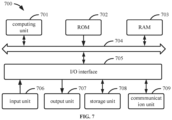
- part or all of the computer program may be loaded and/or installed onto the electronic device 700 via the ROM 702 and/or the communication unit 709.
- the computer program When the computer program is loaded to the RAM 703 and executed by the computing unit 701, one or more steps of the data process method described above may be performed.
- the computing unit 701 may be configured to perform the data process method by any other suitable means (e.g., with the aid of firmware).
Landscapes
- Engineering & Computer Science (AREA)
- Theoretical Computer Science (AREA)
- Physics & Mathematics (AREA)
- Software Systems (AREA)
- General Physics & Mathematics (AREA)
- General Engineering & Computer Science (AREA)
- Computing Systems (AREA)
- Data Mining & Analysis (AREA)
- Life Sciences & Earth Sciences (AREA)
- Biomedical Technology (AREA)
- Biophysics (AREA)
- Mathematical Physics (AREA)
- Artificial Intelligence (AREA)
- Health & Medical Sciences (AREA)
- Evolutionary Computation (AREA)
- Computational Linguistics (AREA)
- General Health & Medical Sciences (AREA)
- Molecular Biology (AREA)
- Databases & Information Systems (AREA)
- Computer Hardware Design (AREA)
- Medical Informatics (AREA)
- Computer Vision & Pattern Recognition (AREA)
- Neurology (AREA)
- Information Retrieval, Db Structures And Fs Structures Therefor (AREA)
- Hardware Redundancy (AREA)
- Multi Processors (AREA)
Applications Claiming Priority (1)
| Application Number | Priority Date | Filing Date | Title |
|---|---|---|---|
| CN202410903489.7A CN118819846A (zh) | 2024-07-05 | 2024-07-05 | 应用于分布式系统的数据处理方法及装置、设备和介质 |
Publications (2)
| Publication Number | Publication Date |
|---|---|
| EP4575788A2 true EP4575788A2 (de) | 2025-06-25 |
| EP4575788A3 EP4575788A3 (de) | 2025-11-05 |
Family
ID=93074113
Family Applications (1)
| Application Number | Title | Priority Date | Filing Date |
|---|---|---|---|
| EP25172620.4A Pending EP4575788A3 (de) | 2024-07-05 | 2025-04-25 | Datenverarbeitungsverfahren, -vorrichtung und -medium in einem verteilten system |
Country Status (5)
| Country | Link |
|---|---|
| US (1) | US20250251990A1 (de) |
| EP (1) | EP4575788A3 (de) |
| JP (1) | JP2025131564A (de) |
| KR (1) | KR20250065564A (de) |
| CN (1) | CN118819846A (de) |
Families Citing this family (1)
| Publication number | Priority date | Publication date | Assignee | Title |
|---|---|---|---|---|
| CN120762918B (zh) * | 2025-09-04 | 2025-12-23 | 上海壁仞科技股份有限公司 | 数据读写方法、处理器、电子设备及存储介质 |
Family Cites Families (1)
| Publication number | Priority date | Publication date | Assignee | Title |
|---|---|---|---|---|
| US12511173B2 (en) * | 2022-06-17 | 2025-12-30 | Luminary Cloud, Inc. | Cloud-based framework for analysis using accelerators |
-
2024
- 2024-07-05 CN CN202410903489.7A patent/CN118819846A/zh active Pending
-
2025
- 2025-04-23 US US19/187,793 patent/US20250251990A1/en active Pending
- 2025-04-24 JP JP2025072581A patent/JP2025131564A/ja active Pending
- 2025-04-24 KR KR1020250053528A patent/KR20250065564A/ko active Pending
- 2025-04-25 EP EP25172620.4A patent/EP4575788A3/de active Pending
Also Published As
| Publication number | Publication date |
|---|---|
| KR20250065564A (ko) | 2025-05-13 |
| EP4575788A3 (de) | 2025-11-05 |
| CN118819846A (zh) | 2024-10-22 |
| JP2025131564A (ja) | 2025-09-09 |
| US20250251990A1 (en) | 2025-08-07 |
Similar Documents
| Publication | Publication Date | Title |
|---|---|---|
| CN114091672B (zh) | 分布式模型推理方法及装置、电子设备和介质 | |
| WO2023231350A1 (zh) | 利用整数规划求解器实现的任务处理方法、设备和介质 | |
| EP4583039A1 (de) | Bildverarbeitungsverfahren und -vorrichtung, vorrichtung und medium | |
| WO2023221416A1 (zh) | 信息生成方法、装置、设备以及存储介质 | |
| EP4575788A2 (de) | Datenverarbeitungsverfahren, -vorrichtung und -medium in einem verteilten system | |
| CN116306396A (zh) | 芯片验证方法及装置、设备和介质 | |
| CN112506582A (zh) | 小程序数据包处理方法、装置、设备及介质 | |
| CN118627512A (zh) | 基于大语言模型的服务提供方法、装置、电子设备和介质 | |
| EP4465608A1 (de) | Datenübertragungsverfahren, -vorrichtung und -medium | |
| CN117193647A (zh) | 数据处理任务的发送方法、数据处理方法及装置、设备 | |
| CN118821675A (zh) | 芯片验证方法及装置、设备和介质 | |
| CN115762515A (zh) | 用于语音识别的神经网络的处理和应用方法、装置及设备 | |
| US20250309915A1 (en) | Floating-point conversion method, apparatus, chip, device and medium | |
| CN115334159B (zh) | 处理流式数据的方法、装置、设备和介质 | |
| CN113986355B (zh) | 数据处理方法和装置、芯片、电子设备及介质 | |
| CN114117046B (zh) | 数据处理方法、装置、电子设备及介质 | |
| US20250061311A1 (en) | Data generation | |
| CN118467159A (zh) | 应用于分布式系统的数据处理方法及装置、设备和介质 | |
| CN115454647A (zh) | 数据处理方法及装置、设备和介质 | |
| CN118132001A (zh) | 数据处理方法、数据处理系统、芯片、设备和介质 | |
| CN115934034A (zh) | 数据处理方法及装置、设备和介质 | |
| CN116541090A (zh) | 数据处理方法、装置、设备和介质 | |
| CN120832232A (zh) | 模型推理请求的调度方法及装置、设备和介质 | |
| CN115981839A (zh) | 内存分配方法及装置、设备和介质 | |
| CN119299446A (zh) | 数据发送方法及装置、设备和介质 |
Legal Events
| Date | Code | Title | Description |
|---|---|---|---|
| PUAI | Public reference made under article 153(3) epc to a published international application that has entered the european phase |
Free format text: ORIGINAL CODE: 0009012 |
|
| STAA | Information on the status of an ep patent application or granted ep patent |
Free format text: STATUS: REQUEST FOR EXAMINATION WAS MADE |
|
| 17P | Request for examination filed |
Effective date: 20250425 |
|
| AK | Designated contracting states |
Kind code of ref document: A2 Designated state(s): AL AT BE BG CH CY CZ DE DK EE ES FI FR GB GR HR HU IE IS IT LI LT LU LV MC ME MK MT NL NO PL PT RO RS SE SI SK SM TR |
|
| PUAL | Search report despatched |
Free format text: ORIGINAL CODE: 0009013 |
|
| AK | Designated contracting states |
Kind code of ref document: A3 Designated state(s): AL AT BE BG CH CY CZ DE DK EE ES FI FR GB GR HR HU IE IS IT LI LT LU LV MC ME MK MT NL NO PL PT RO RS SE SI SK SM TR |
|
| RIC1 | Information provided on ipc code assigned before grant |
Ipc: G06F 9/50 20060101AFI20251001BHEP Ipc: G06F 15/173 20060101ALI20251001BHEP Ipc: G06N 3/063 20230101ALI20251001BHEP |