EP4041606B1 - Bestimmung eines zustandes eines benutzers, der aktiv ein motorfahrzeug fährt oder nicht - Google Patents
Bestimmung eines zustandes eines benutzers, der aktiv ein motorfahrzeug fährt oder nicht Download PDFInfo
- Publication number
- EP4041606B1 EP4041606B1 EP20775665.1A EP20775665A EP4041606B1 EP 4041606 B1 EP4041606 B1 EP 4041606B1 EP 20775665 A EP20775665 A EP 20775665A EP 4041606 B1 EP4041606 B1 EP 4041606B1
- Authority
- EP
- European Patent Office
- Prior art keywords
- user
- vehicle
- eye
- current
- amplitude
- Prior art date
- Legal status (The legal status is an assumption and is not a legal conclusion. Google has not performed a legal analysis and makes no representation as to the accuracy of the status listed.)
- Active
Links
Images


Classifications
-
- B—PERFORMING OPERATIONS; TRANSPORTING
- B60—VEHICLES IN GENERAL
- B60W—CONJOINT CONTROL OF VEHICLE SUB-UNITS OF DIFFERENT TYPE OR DIFFERENT FUNCTION; CONTROL SYSTEMS SPECIALLY ADAPTED FOR HYBRID VEHICLES; ROAD VEHICLE DRIVE CONTROL SYSTEMS FOR PURPOSES NOT RELATED TO THE CONTROL OF A PARTICULAR SUB-UNIT
- B60W50/00—Details of control systems for road vehicle drive control not related to the control of a particular sub-unit, e.g. process diagnostic or vehicle driver interfaces
- B60W50/08—Interaction between the driver and the control system
- B60W50/14—Means for informing the driver, warning the driver or prompting a driver intervention
-
- B—PERFORMING OPERATIONS; TRANSPORTING
- B60—VEHICLES IN GENERAL
- B60W—CONJOINT CONTROL OF VEHICLE SUB-UNITS OF DIFFERENT TYPE OR DIFFERENT FUNCTION; CONTROL SYSTEMS SPECIALLY ADAPTED FOR HYBRID VEHICLES; ROAD VEHICLE DRIVE CONTROL SYSTEMS FOR PURPOSES NOT RELATED TO THE CONTROL OF A PARTICULAR SUB-UNIT
- B60W40/00—Estimation or calculation of non-directly measurable driving parameters for road vehicle drive control systems not related to the control of a particular sub unit, e.g. by using mathematical models
- B60W40/08—Estimation or calculation of non-directly measurable driving parameters for road vehicle drive control systems not related to the control of a particular sub unit, e.g. by using mathematical models related to drivers or passengers
-
- A—HUMAN NECESSITIES
- A61—MEDICAL OR VETERINARY SCIENCE; HYGIENE
- A61B—DIAGNOSIS; SURGERY; IDENTIFICATION
- A61B5/00—Measuring for diagnostic purposes; Identification of persons
- A61B5/16—Devices for psychotechnics; Testing reaction times ; Devices for evaluating the psychological state
- A61B5/163—Devices for psychotechnics; Testing reaction times ; Devices for evaluating the psychological state by tracking eye movement, gaze, or pupil change
-
- A—HUMAN NECESSITIES
- A61—MEDICAL OR VETERINARY SCIENCE; HYGIENE
- A61B—DIAGNOSIS; SURGERY; IDENTIFICATION
- A61B5/00—Measuring for diagnostic purposes; Identification of persons
- A61B5/16—Devices for psychotechnics; Testing reaction times ; Devices for evaluating the psychological state
- A61B5/18—Devices for psychotechnics; Testing reaction times ; Devices for evaluating the psychological state for vehicle drivers or machine operators
-
- A—HUMAN NECESSITIES
- A61—MEDICAL OR VETERINARY SCIENCE; HYGIENE
- A61B—DIAGNOSIS; SURGERY; IDENTIFICATION
- A61B5/00—Measuring for diagnostic purposes; Identification of persons
- A61B5/68—Arrangements of detecting, measuring or recording means, e.g. sensors, in relation to patient
- A61B5/6801—Arrangements of detecting, measuring or recording means, e.g. sensors, in relation to patient specially adapted to be attached to or worn on the body surface
- A61B5/6802—Sensor mounted on worn items
- A61B5/6803—Head-worn items, e.g. helmets, masks, headphones or goggles
-
- A—HUMAN NECESSITIES
- A61—MEDICAL OR VETERINARY SCIENCE; HYGIENE
- A61B—DIAGNOSIS; SURGERY; IDENTIFICATION
- A61B5/00—Measuring for diagnostic purposes; Identification of persons
- A61B5/74—Details of notification to user or communication with user or patient; User input means
- A61B5/746—Alarms related to a physiological condition, e.g. details of setting alarm thresholds or avoiding false alarms
-
- B—PERFORMING OPERATIONS; TRANSPORTING
- B60—VEHICLES IN GENERAL
- B60W—CONJOINT CONTROL OF VEHICLE SUB-UNITS OF DIFFERENT TYPE OR DIFFERENT FUNCTION; CONTROL SYSTEMS SPECIALLY ADAPTED FOR HYBRID VEHICLES; ROAD VEHICLE DRIVE CONTROL SYSTEMS FOR PURPOSES NOT RELATED TO THE CONTROL OF A PARTICULAR SUB-UNIT
- B60W30/00—Purposes of road vehicle drive control systems not related to the control of a particular sub-unit, e.g. of systems using conjoint control of vehicle sub-units
- B60W30/14—Adaptive cruise control
- B60W30/143—Speed control
-
- B—PERFORMING OPERATIONS; TRANSPORTING
- B60—VEHICLES IN GENERAL
- B60W—CONJOINT CONTROL OF VEHICLE SUB-UNITS OF DIFFERENT TYPE OR DIFFERENT FUNCTION; CONTROL SYSTEMS SPECIALLY ADAPTED FOR HYBRID VEHICLES; ROAD VEHICLE DRIVE CONTROL SYSTEMS FOR PURPOSES NOT RELATED TO THE CONTROL OF A PARTICULAR SUB-UNIT
- B60W30/00—Purposes of road vehicle drive control systems not related to the control of a particular sub-unit, e.g. of systems using conjoint control of vehicle sub-units
- B60W30/14—Adaptive cruise control
- B60W30/143—Speed control
- B60W30/146—Speed limiting
-
- B—PERFORMING OPERATIONS; TRANSPORTING
- B60—VEHICLES IN GENERAL
- B60W—CONJOINT CONTROL OF VEHICLE SUB-UNITS OF DIFFERENT TYPE OR DIFFERENT FUNCTION; CONTROL SYSTEMS SPECIALLY ADAPTED FOR HYBRID VEHICLES; ROAD VEHICLE DRIVE CONTROL SYSTEMS FOR PURPOSES NOT RELATED TO THE CONTROL OF A PARTICULAR SUB-UNIT
- B60W50/00—Details of control systems for road vehicle drive control not related to the control of a particular sub-unit, e.g. process diagnostic or vehicle driver interfaces
- B60W50/0098—Details of control systems ensuring comfort, safety or stability not otherwise provided for
-
- G—PHYSICS
- G02—OPTICS
- G02B—OPTICAL ELEMENTS, SYSTEMS OR APPARATUS
- G02B27/00—Optical systems or apparatus not provided for by any of the groups G02B1/00 - G02B26/00, G02B30/00
- G02B27/0093—Optical systems or apparatus not provided for by any of the groups G02B1/00 - G02B26/00, G02B30/00 with means for monitoring data relating to the user, e.g. head-tracking, eye-tracking
-
- G—PHYSICS
- G02—OPTICS
- G02B—OPTICAL ELEMENTS, SYSTEMS OR APPARATUS
- G02B27/00—Optical systems or apparatus not provided for by any of the groups G02B1/00 - G02B26/00, G02B30/00
- G02B27/01—Head-up displays
- G02B27/017—Head mounted
-
- G—PHYSICS
- G06—COMPUTING OR CALCULATING; COUNTING
- G06F—ELECTRIC DIGITAL DATA PROCESSING
- G06F3/00—Input arrangements for transferring data to be processed into a form capable of being handled by the computer; Output arrangements for transferring data from processing unit to output unit, e.g. interface arrangements
- G06F3/01—Input arrangements or combined input and output arrangements for interaction between user and computer
- G06F3/011—Arrangements for interaction with the human body, e.g. for user immersion in virtual reality
- G06F3/013—Eye tracking input arrangements
-
- G—PHYSICS
- G06—COMPUTING OR CALCULATING; COUNTING
- G06N—COMPUTING ARRANGEMENTS BASED ON SPECIFIC COMPUTATIONAL MODELS
- G06N3/00—Computing arrangements based on biological models
- G06N3/02—Neural networks
- G06N3/04—Architecture, e.g. interconnection topology
- G06N3/0499—Feedforward networks
-
- G—PHYSICS
- G06—COMPUTING OR CALCULATING; COUNTING
- G06N—COMPUTING ARRANGEMENTS BASED ON SPECIFIC COMPUTATIONAL MODELS
- G06N3/00—Computing arrangements based on biological models
- G06N3/02—Neural networks
- G06N3/08—Learning methods
- G06N3/09—Supervised learning
-
- G—PHYSICS
- G06—COMPUTING OR CALCULATING; COUNTING
- G06V—IMAGE OR VIDEO RECOGNITION OR UNDERSTANDING
- G06V10/00—Arrangements for image or video recognition or understanding
- G06V10/70—Arrangements for image or video recognition or understanding using pattern recognition or machine learning
- G06V10/82—Arrangements for image or video recognition or understanding using pattern recognition or machine learning using neural networks
-
- G—PHYSICS
- G06—COMPUTING OR CALCULATING; COUNTING
- G06V—IMAGE OR VIDEO RECOGNITION OR UNDERSTANDING
- G06V20/00—Scenes; Scene-specific elements
- G06V20/50—Context or environment of the image
- G06V20/59—Context or environment of the image inside of a vehicle, e.g. relating to seat occupancy, driver state or inner lighting conditions
- G06V20/597—Recognising the driver's state or behaviour, e.g. attention or drowsiness
-
- G—PHYSICS
- G06—COMPUTING OR CALCULATING; COUNTING
- G06V—IMAGE OR VIDEO RECOGNITION OR UNDERSTANDING
- G06V40/00—Recognition of biometric, human-related or animal-related patterns in image or video data
- G06V40/10—Human or animal bodies, e.g. vehicle occupants or pedestrians; Body parts, e.g. hands
- G06V40/18—Eye characteristics, e.g. of the iris
- G06V40/19—Sensors therefor
-
- G—PHYSICS
- G06—COMPUTING OR CALCULATING; COUNTING
- G06V—IMAGE OR VIDEO RECOGNITION OR UNDERSTANDING
- G06V40/00—Recognition of biometric, human-related or animal-related patterns in image or video data
- G06V40/10—Human or animal bodies, e.g. vehicle occupants or pedestrians; Body parts, e.g. hands
- G06V40/18—Eye characteristics, e.g. of the iris
- G06V40/193—Preprocessing; Feature extraction
-
- H—ELECTRICITY
- H04—ELECTRIC COMMUNICATION TECHNIQUE
- H04W—WIRELESS COMMUNICATION NETWORKS
- H04W4/00—Services specially adapted for wireless communication networks; Facilities therefor
- H04W4/02—Services making use of location information
- H04W4/021—Services related to particular areas, e.g. point of interest [POI] services, venue services or geofences
-
- H—ELECTRICITY
- H04—ELECTRIC COMMUNICATION TECHNIQUE
- H04W—WIRELESS COMMUNICATION NETWORKS
- H04W4/00—Services specially adapted for wireless communication networks; Facilities therefor
- H04W4/30—Services specially adapted for particular environments, situations or purposes
- H04W4/40—Services specially adapted for particular environments, situations or purposes for vehicles, e.g. vehicle-to-pedestrians [V2P]
-
- H—ELECTRICITY
- H04—ELECTRIC COMMUNICATION TECHNIQUE
- H04W—WIRELESS COMMUNICATION NETWORKS
- H04W4/00—Services specially adapted for wireless communication networks; Facilities therefor
- H04W4/90—Services for handling of emergency or hazardous situations, e.g. earthquake and tsunami warning systems [ETWS]
-
- A—HUMAN NECESSITIES
- A61—MEDICAL OR VETERINARY SCIENCE; HYGIENE
- A61B—DIAGNOSIS; SURGERY; IDENTIFICATION
- A61B5/00—Measuring for diagnostic purposes; Identification of persons
- A61B5/0002—Remote monitoring of patients using telemetry, e.g. transmission of vital signals via a communication network
- A61B5/0015—Remote monitoring of patients using telemetry, e.g. transmission of vital signals via a communication network characterised by features of the telemetry system
- A61B5/002—Monitoring the patient using a local or closed circuit, e.g. in a room or building
-
- A—HUMAN NECESSITIES
- A61—MEDICAL OR VETERINARY SCIENCE; HYGIENE
- A61B—DIAGNOSIS; SURGERY; IDENTIFICATION
- A61B5/00—Measuring for diagnostic purposes; Identification of persons
- A61B5/103—Measuring devices for testing the shape, pattern, colour, size or movement of the body or parts thereof, for diagnostic purposes
- A61B5/11—Measuring movement of the entire body or parts thereof, e.g. head or hand tremor or mobility of a limb
- A61B5/1112—Global tracking of patients, e.g. by using GPS
-
- A—HUMAN NECESSITIES
- A61—MEDICAL OR VETERINARY SCIENCE; HYGIENE
- A61B—DIAGNOSIS; SURGERY; IDENTIFICATION
- A61B5/00—Measuring for diagnostic purposes; Identification of persons
- A61B5/72—Signal processing specially adapted for physiological signals or for diagnostic purposes
- A61B5/7235—Details of waveform analysis
- A61B5/7264—Classification of physiological signals or data, e.g. using neural networks, statistical classifiers, expert systems or fuzzy systems
- A61B5/7267—Classification of physiological signals or data, e.g. using neural networks, statistical classifiers, expert systems or fuzzy systems involving training the classification device
-
- B—PERFORMING OPERATIONS; TRANSPORTING
- B60—VEHICLES IN GENERAL
- B60W—CONJOINT CONTROL OF VEHICLE SUB-UNITS OF DIFFERENT TYPE OR DIFFERENT FUNCTION; CONTROL SYSTEMS SPECIALLY ADAPTED FOR HYBRID VEHICLES; ROAD VEHICLE DRIVE CONTROL SYSTEMS FOR PURPOSES NOT RELATED TO THE CONTROL OF A PARTICULAR SUB-UNIT
- B60W40/00—Estimation or calculation of non-directly measurable driving parameters for road vehicle drive control systems not related to the control of a particular sub unit, e.g. by using mathematical models
- B60W40/08—Estimation or calculation of non-directly measurable driving parameters for road vehicle drive control systems not related to the control of a particular sub unit, e.g. by using mathematical models related to drivers or passengers
- B60W2040/0818—Inactivity or incapacity of driver
-
- B—PERFORMING OPERATIONS; TRANSPORTING
- B60—VEHICLES IN GENERAL
- B60W—CONJOINT CONTROL OF VEHICLE SUB-UNITS OF DIFFERENT TYPE OR DIFFERENT FUNCTION; CONTROL SYSTEMS SPECIALLY ADAPTED FOR HYBRID VEHICLES; ROAD VEHICLE DRIVE CONTROL SYSTEMS FOR PURPOSES NOT RELATED TO THE CONTROL OF A PARTICULAR SUB-UNIT
- B60W40/00—Estimation or calculation of non-directly measurable driving parameters for road vehicle drive control systems not related to the control of a particular sub unit, e.g. by using mathematical models
- B60W40/08—Estimation or calculation of non-directly measurable driving parameters for road vehicle drive control systems not related to the control of a particular sub unit, e.g. by using mathematical models related to drivers or passengers
- B60W2040/0872—Driver physiology
-
- B—PERFORMING OPERATIONS; TRANSPORTING
- B60—VEHICLES IN GENERAL
- B60W—CONJOINT CONTROL OF VEHICLE SUB-UNITS OF DIFFERENT TYPE OR DIFFERENT FUNCTION; CONTROL SYSTEMS SPECIALLY ADAPTED FOR HYBRID VEHICLES; ROAD VEHICLE DRIVE CONTROL SYSTEMS FOR PURPOSES NOT RELATED TO THE CONTROL OF A PARTICULAR SUB-UNIT
- B60W2540/00—Input parameters relating to occupants
- B60W2540/01—Occupants other than the driver
-
- B—PERFORMING OPERATIONS; TRANSPORTING
- B60—VEHICLES IN GENERAL
- B60W—CONJOINT CONTROL OF VEHICLE SUB-UNITS OF DIFFERENT TYPE OR DIFFERENT FUNCTION; CONTROL SYSTEMS SPECIALLY ADAPTED FOR HYBRID VEHICLES; ROAD VEHICLE DRIVE CONTROL SYSTEMS FOR PURPOSES NOT RELATED TO THE CONTROL OF A PARTICULAR SUB-UNIT
- B60W2540/00—Input parameters relating to occupants
- B60W2540/043—Identity of occupants
-
- B—PERFORMING OPERATIONS; TRANSPORTING
- B60—VEHICLES IN GENERAL
- B60W—CONJOINT CONTROL OF VEHICLE SUB-UNITS OF DIFFERENT TYPE OR DIFFERENT FUNCTION; CONTROL SYSTEMS SPECIALLY ADAPTED FOR HYBRID VEHICLES; ROAD VEHICLE DRIVE CONTROL SYSTEMS FOR PURPOSES NOT RELATED TO THE CONTROL OF A PARTICULAR SUB-UNIT
- B60W2540/00—Input parameters relating to occupants
- B60W2540/221—Physiology, e.g. weight, heartbeat, health or special needs
-
- B—PERFORMING OPERATIONS; TRANSPORTING
- B60—VEHICLES IN GENERAL
- B60W—CONJOINT CONTROL OF VEHICLE SUB-UNITS OF DIFFERENT TYPE OR DIFFERENT FUNCTION; CONTROL SYSTEMS SPECIALLY ADAPTED FOR HYBRID VEHICLES; ROAD VEHICLE DRIVE CONTROL SYSTEMS FOR PURPOSES NOT RELATED TO THE CONTROL OF A PARTICULAR SUB-UNIT
- B60W2540/00—Input parameters relating to occupants
- B60W2540/223—Posture, e.g. hand, foot, or seat position, turned or inclined
-
- B—PERFORMING OPERATIONS; TRANSPORTING
- B60—VEHICLES IN GENERAL
- B60W—CONJOINT CONTROL OF VEHICLE SUB-UNITS OF DIFFERENT TYPE OR DIFFERENT FUNCTION; CONTROL SYSTEMS SPECIALLY ADAPTED FOR HYBRID VEHICLES; ROAD VEHICLE DRIVE CONTROL SYSTEMS FOR PURPOSES NOT RELATED TO THE CONTROL OF A PARTICULAR SUB-UNIT
- B60W2540/00—Input parameters relating to occupants
- B60W2540/225—Direction of gaze
-
- B—PERFORMING OPERATIONS; TRANSPORTING
- B60—VEHICLES IN GENERAL
- B60W—CONJOINT CONTROL OF VEHICLE SUB-UNITS OF DIFFERENT TYPE OR DIFFERENT FUNCTION; CONTROL SYSTEMS SPECIALLY ADAPTED FOR HYBRID VEHICLES; ROAD VEHICLE DRIVE CONTROL SYSTEMS FOR PURPOSES NOT RELATED TO THE CONTROL OF A PARTICULAR SUB-UNIT
- B60W2540/00—Input parameters relating to occupants
- B60W2540/229—Attention level, e.g. attentive to driving, reading or sleeping
-
- B—PERFORMING OPERATIONS; TRANSPORTING
- B60—VEHICLES IN GENERAL
- B60W—CONJOINT CONTROL OF VEHICLE SUB-UNITS OF DIFFERENT TYPE OR DIFFERENT FUNCTION; CONTROL SYSTEMS SPECIALLY ADAPTED FOR HYBRID VEHICLES; ROAD VEHICLE DRIVE CONTROL SYSTEMS FOR PURPOSES NOT RELATED TO THE CONTROL OF A PARTICULAR SUB-UNIT
- B60W2556/00—Input parameters relating to data
- B60W2556/45—External transmission of data to or from the vehicle
-
- B—PERFORMING OPERATIONS; TRANSPORTING
- B60—VEHICLES IN GENERAL
- B60W—CONJOINT CONTROL OF VEHICLE SUB-UNITS OF DIFFERENT TYPE OR DIFFERENT FUNCTION; CONTROL SYSTEMS SPECIALLY ADAPTED FOR HYBRID VEHICLES; ROAD VEHICLE DRIVE CONTROL SYSTEMS FOR PURPOSES NOT RELATED TO THE CONTROL OF A PARTICULAR SUB-UNIT
- B60W2556/00—Input parameters relating to data
- B60W2556/45—External transmission of data to or from the vehicle
- B60W2556/50—External transmission of data to or from the vehicle of positioning data, e.g. GPS [Global Positioning System] data
-
- G—PHYSICS
- G06—COMPUTING OR CALCULATING; COUNTING
- G06N—COMPUTING ARRANGEMENTS BASED ON SPECIFIC COMPUTATIONAL MODELS
- G06N3/00—Computing arrangements based on biological models
- G06N3/02—Neural networks
- G06N3/08—Learning methods
Definitions
- the present invention relates to the determination of at least one state of a user in a motor vehicle interior, as a person actively driving the vehicle or not.
- a substantial cause of road accidents is related to the use of telecommunication devices (smartphone or other type).
- telecommunication devices smarttphone or other type
- the user is tempted to focus his attention on the screen of his smartphone.
- a solution to remedy this problem is to detect that the user is in a moving vehicle (for example using a geolocation module in the telecommunications device) and to filter all incoming communications to his device.
- this is an extreme solution because a user can be a simple passenger in the vehicle.
- drivers are increasingly available to receive notifications on their smartphone if they are not actively driving their vehicle.
- the present disclosure therefore aims to detect whether a user is in a current state where he is actively driving a vehicle or not. For example, it may then be possible to transmit notifications to it if it is detected as not actively driving the vehicle.
- the present disclosure proposes to follow the movements of the user's eye (by a camera typically implementing eye tracking or "eye tracking" in English). It has in fact been observed that a user who is a passenger or simply does not actively drive the vehicle has a tendency to sweep his gaze towards the landscape which he is watching pass. On the contrary, an active driver of the vehicle focuses his attention on the road and his gaze is more fixed.
- the gaze scanning frequency can be a criterion for determining, if it is typically beyond a threshold, that a user is not an active driver.
- the gaze scanning frequency could be specific to a user, and that it could vary from one user to another.
- WO 2017/192260 A1 discloses a system that detects the state of the driver and a passenger and transfers control to the most focused person.
- KR 2018 0072523 A , EP 2 952 403 A2 , DE 10 2015 011708 A1 And WO 2017/195200 A2 describe systems that detect the state of the driver or an occupant of the vehicle based among other things on the frequency of eye movements.
- This disclosure improves the situation.
- the use of artificial intelligence makes it possible to determine by learning and with certainty for a given user, whether the latter is actually in an active driving state or not by measuring his average or usual frequency of eye movements while being out of sight.
- an active driving state Specifically, this eye movement frequency can vary with vehicle speed and be calibrated to speed for a given, specific user, on which a prior learning step has been implemented to feed the aforementioned artificial intelligence.
- “Concentration of gaze of the vehicle driver” means the concentration of gaze, typically on the road, that a vehicle driver usually applies.
- the term “user not actively driving the vehicle” means both a passenger of the vehicle who is not the driver, and a driver of an autonomous vehicle beyond a threshold (for example in a situation of autonomy beyond 80%).
- the user is determined as a simple passenger or driver of the vehicle in an autonomous driving mode at a level greater than or equal to 80%.
- the aforementioned notification signal can be transmitted to a communicating device of the user.
- This communicating device can be of the smartphone, tablet, PC or other type, typically connected to a cellular network.
- the notification signal can be received by this network, respectively by SMS, instant messaging or e-mail.
- filtering incoming notifications refers without distinction here to both the possibility of cutting off the communicating device from the cellular network to prevent the reception of any notification (for example in "aeroplane” mode), and the possibility of receiving notifications but without displayed on the device screen.
- the device can include a motion detector module of the device (for example by geolocation or other) and thus determine, beyond a threshold speed, that the user is in a moving vehicle.
- this detector module can filter all incoming notifications on the device, but also can communicate with a processing circuit on board the vehicle and connected to the eye movement sensor, to let the notifications arrive on the device if the processing circuit determines that the user is not in an active driving situation.
- Communication with the server can be provided by the user's communicating device (smartphone or other) or by cellular communication module installed in the vehicle.
- an accelerometer in the vehicle, for example on the user's smartphone
- estimate a current frequency of bumps in the vehicle a route being confirmed as at risk of triggering motion sickness if the current frequency of bumps exceeds a threshold frequency.
- a UV radiation sensor for "ultraviolet"
- said notification intended for the user comprises a message of sensitization to UV radiation.
- the UV radiation sensor can be a light intensity sensor in the UV wavelengths or simply a differential temperature sensor by solar radiation in the passenger compartment.
- the present invention also relates to a device comprising a processing circuit and at least one eye movement sensor of the aforementioned type for implementing the above method.
- the user's eye movement sensor device may be mounted on a connected pair of glasses worn by the user (as illustrated in figure 1 commented on below).
- This pair of glasses can also carry the aforementioned accelerometer, the UV radiation detector, and/or others, or even the communicating device for glasses with informative lenses.
- the user's eye movement sensor device can be mounted on a camera arranged in the passenger compartment of the vehicle (facing the driver for example), the camera being able to be connected to an eye tracking detection module (or " eye tracking” in English) in order to detect the frequency (and optionally the amplitude) of the eye movements of the user.
- an interior camera can be fitted to a so-called “DMS” (for “Driver Monitoring System”) system which may already exist in the vehicle and serves in particular to detect when the driver is asleep, for example.
- DMS Driver Monitoring System
- the present invention also relates to a computer program comprising instructions for implementing the above method, when these instructions are executed by a processor. It also relates in an equivalent manner to a non-transitory memory medium capable of storing such a computer program durably (or not durably).
- FIG. 1 We refer to the figure 1 to firstly describe a device for detecting a state of a passenger in a motor vehicle as actively driving the vehicle or not.
- the device comprises a plurality of sensors 31, 32, 33, 34, implanted, in the example described, on the frame of a connected pair of glasses 1. These sensors are in fact connected to a communication module 13 implanted in the frame and capable of sending measurement signals from these sensors to a processing circuit 14 which the device also comprises.
- the sensor 31 is a first camera able to follow the eye movement (of the left eye here of the user)
- the sensor 32 is a second camera able to follow the eye movement of the left eye of the user. 'user.
- these cameras 31, 32 and the processing circuit 14 are together capable of measuring a displacement of the retina of each eye of the user relative to the frame formed by the periphery of the eye.
- the figure 1 shows the circumference 10 of the left eye, the circumference 11 of the right eye, as well as the position of the pupil 12 of the left eye within a grid numbered from A to J for the columns and from 1 to 5 for lines.
- the position of the pupil of the right eye is also represented.
- the grid is a virtual cutting of the surface in which the pupils evolve when they are in motion.
- the sensors 31, 32 can operate for example in the infrared and can each comprise an infrared light emitting diode and an infrared photodetector.
- the infrared light-emitting diode is selected to have characteristics that do not harm human vision.
- the infrared light emitting diode is configured to emit an infrared beam in the direction of the pupil of one of the two eyes, and the infrared photodetector is capable of detecting a reflection of the infrared beam returned by the cornea of the eye.
- a single camera aiming at a single eye of the user can be provided.
- the camera can be mounted in the passenger compartment for example in the context of DMS monitoring as indicated above.
- the processing circuit 14 comprises a communication interface 16 in particular with the module 13 (via for example a local network 15), as well as a processor 17 and a working memory 18 cooperating with the processor 17.
- the processing circuit 14 is then configured to determine the position of the pupil in the virtual grid from the intensity and the spectrum of the infrared beams reflected and picked up by each of the photo-detectors.
- the processing circuit 14 is also configured to timestamp the positions of the pupils as they are captured. To do this, the processing circuit (and more particularly its processor 17) may also include a clock or means for accessing external clock data (not shown).
- the processing circuit 14 can be directly installed in the spectacle frame 1 and be connected directly to the sensors 31 to 34
- the communication interface 16 of the processing circuit 14 is preferably connected, directly or indirectly (via the local network 15 or via an extended network WAN), to a communicating device SM (of the type smartphone or other) available to the user, in particular to filter or not notifications intended for to the user.
- the communication interface 16 of the processing circuit 14 is connected, preferably via the wide area network WAN, to a remote server SER-DB which updates information on risky paths and in particularly likely to give passengers motion sickness.
- this server may include at least one communication interface and one storage memory (not shown).
- the connected spectacle frame 1 can also include an accelerometer-type sensor 33 to confirm that a journey in progress is at risk as detailed below, this sensor also being connected to the processing circuit 14 (possibly via the communications 13).
- the connected spectacle frame 1 can also include a sensor 34 for detecting UV radiation to compare current radiation with a threshold and trigger an action if the current radiation is greater than the threshold. This sensor is also connected to the processing circuit 14 (possibly via the communication module 13).
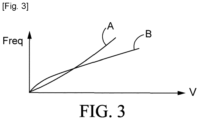
- This frequency freq can vary in particular as a function of the current speed v of the motor vehicle.
- these data such as the freq frequency and the AMP amplitude are above all specific to each individual.
- a first general step S1 is proposed for learning by artificial intelligence (for example a neural network, deep for example) parameters characteristic of the user such as the frequency freq (in particular as a function of the speed v) and of the mean AMP amplitude.
- artificial intelligence can be implemented by “deep” learning, by a trained neural network, or by learning "machine” (from the English “machine learning”).
- machine from the English “machine learning”
- a "neural network” generally by a set of transfer functions whose coefficients are gradually modified (as the learning progresses) according to a new sequence acquisition of timestamped positions of the pupils and marked as being characteristic of a scenario to be recognized.
- This general learning step S1 then precedes a common use S2 of artificial intelligence to detect an active (effective) driving state of the user and possibly whether he is suffering from motion sickness.
- a first step S11 consists in implementing the sensors 31 and 32 to repeatedly measure the amplitude AMP of eye movements of a given user and their frequency freq (as a function of the speed v of the vehicle for example). These measurements are marked (or “tagged”) by an identifier in a database according to a real, effective situation of the user. It can typically be informed that the user is (output Y of step S12) or is not in an active driving state.
- step S12 his current eye movement frequency can be determined at step S13 and steps S11 to S13 are carried out repeatedly until a minimum average THRF frequency is determined beyond which the user is definitely in a state where he is not actively driving the vehicle (simple passenger or vehicle in autonomous driving mode beyond 80%).
- the user is further asked at step S14 if he does not feel motion sickness (repeatedly) and if so (output Y of test S14), the current motion amplitude AMP measurement eyepieces can be tagged in the learning base at step S15 as being a threshold minimum THRA below which the user begins to experience motion sickness. It has in fact been observed that an amplitude of eye movements below a threshold but nevertheless characterizing a person watching the landscape pass by, was generally correlated with a motion sickness suffered by this person.
- a possible incoming notification may consist of an alert for UV radiation inside the passenger compartment, detected as being excessive by the sensor 34 at step S29 (arrow Y at the output of the test S29).
- a specific action may also be provided in the passenger compartment such as for example a sprinkling by misting of water in the direction of the user, or others.
- the sensor 33 can confirm the presence of chaos that the user experiences in the vehicle, in step S26.
- current geolocation data of the vehicle can be transmitted, in step S27, to the server SER-DB presented above with reference to the figure 1 , to store this current geolocation (or more generally the current route that the vehicle is taking) with a motion sickness risk identifier.
- This current geolocation data can be determined by a GPS chip that processing circuit 14 may include, or can be obtained alternatively by communication with the user's smartphone SM (usually comprising means for obtaining geolocation data by a GPS chip or by triangulation in the cellular network).
- This identifier can make it possible to note the route with a risk score for motion sickness which can be a function of the frequency of the chaos detected and/or of their amplitude.
- the processing circuit 14 (for example via the smartphone SM) can then solicit the server SER-DB at step S28 to obtain an alternative route which can then be displayed on a screen of a navigation device or other , connected to the processing circuit 14.
- a method has been described above in which artificial intelligence makes it possible to define a specific signature of the eye movements of an individual who is not in an active driving state.
- a notification can be transmitted to any screen in the vehicle interior or to the user's smartphone and if he does not respond to it, this means that it is indeed a driving state. active.
- the sensors 31 to 34 can be grouped together on a frame of glasses connected as described above, or alternatively be dispersed in the passenger compartment of the vehicle while nevertheless being connected to the processing circuit 14.
Landscapes
- Engineering & Computer Science (AREA)
- Physics & Mathematics (AREA)
- Health & Medical Sciences (AREA)
- Theoretical Computer Science (AREA)
- General Physics & Mathematics (AREA)
- Life Sciences & Earth Sciences (AREA)
- Automation & Control Theory (AREA)
- General Health & Medical Sciences (AREA)
- Human Computer Interaction (AREA)
- Transportation (AREA)
- Mechanical Engineering (AREA)
- Multimedia (AREA)
- General Engineering & Computer Science (AREA)
- Evolutionary Computation (AREA)
- Medical Informatics (AREA)
- Molecular Biology (AREA)
- Biomedical Technology (AREA)
- Biophysics (AREA)
- Public Health (AREA)
- Artificial Intelligence (AREA)
- Computing Systems (AREA)
- Software Systems (AREA)
- Mathematical Physics (AREA)
- Veterinary Medicine (AREA)
- Surgery (AREA)
- Animal Behavior & Ethology (AREA)
- Pathology (AREA)
- Heart & Thoracic Surgery (AREA)
- Computer Networks & Wireless Communication (AREA)
- Signal Processing (AREA)
- Optics & Photonics (AREA)
- Ophthalmology & Optometry (AREA)
- Computer Vision & Pattern Recognition (AREA)
- Databases & Information Systems (AREA)
- Psychology (AREA)
- Child & Adolescent Psychology (AREA)
- Psychiatry (AREA)
- Hospice & Palliative Care (AREA)
- Data Mining & Analysis (AREA)
- Social Psychology (AREA)
Claims (16)
- Verfahren zur Bestimmung mindestens eines Zustands eines Benutzers in einem Fahrgastraum eines Motorfahrzeugs, als eine Person, die das Fahrzeug aktiv fährt oder nicht,wobei eine Sensorvorrichtung (31, 32) für Augenbewegungen des Benutzers vorgesehen ist,wobei das Verfahren Folgendes umfasst:- Versorgen einer künstlichen Intelligenz mit Daten aus der Sensorvorrichtung, um mindestens eine Augenbewegungsfrequenz des Benutzers zu erkennen, wobei eine Augenbewegungsfrequenz oberhalb eines ersten Schwellenwerts angibt, dass der Benutzer eine vorbeiziehende Landschaft betrachtet, und sich von einem konzentrierten Blick eines Fahrzeugfahrers unterscheidet,- Bestimmen einer aktuellen Augenbewegungsfrequenz des Benutzers und Vergleichen der aktuellen Frequenz mit dem ersten Schwellenwert, und- wenn die aktuelle Frequenz größer als der erste Schwellenwert ist, Auslösen eines Benachrichtigungssignals für den Benutzer.
- Verfahren nach Anspruch 1, wobei, wenn die aktuelle Frequenz (THRF) größer als der erste Schwellenwert ist, bestimmt wird, dass der Benutzer ein einfacher Mitfahrer oder ein Fahrer des Fahrzeugs in einem autonomen Fahrmodus mit einem Grad von größer als oder gleich 80 % ist.
- Verfahren nach einem der vorhergehenden Ansprüche, wobei das Benachrichtigungssignal an ein Kommunikationsgerät (SM) des Benutzers übertragen wird.
- Verfahren nach Anspruch 3, wobei das Kommunikationsgerät zu Folgendem konfiguriert ist:- Bestimmen, ob sich der Benutzer in einem sich bewegenden Fahrzeug befindet, und- in diesem Fall, Filtern von auf dem Kommunikationsgerät eingehenden Benachrichtigungen,wobei das Verfahren ferner Folgendes umfasst:- Bestimmen, ob sich der Benutzer nicht in einer aktiven Fahrsituation befindet, und in diesem Fall, Deaktivieren des Filterns der auf dem Kommunikationsgerät eingehenden Benachrichtigungen.
- Verfahren nach einem der Ansprüche 3 und 4, das ferner Folgendes umfasst:- Bestimmen einer aktuellen Position des Fahrzeugs und- Auslösen entsprechender Benachrichtigungssignale in Abhängigkeit von der aktuellen Position des Fahrzeugs für das Gerät des Benutzers.
- Verfahren nach einem der vorhergehenden Ansprüche, wobei die Sensorvorrichtung (31, 32) ferner eine Augenbewegungsamplitude (AMP) misst und das Verfahren ferner Folgendes umfasst:- Vergleichen einer aktuellen Amplitude mit einer Schwellenamplitude (THRA), und- wenn die aktuelle Amplitude (AMP) kleiner als die Schwellenamplitude (THRA) ist, Bestimmen einer durch Reisekrankheit gekennzeichneten Situation des Benutzers und Auslösen einer Aktion in dem Fahrzeug, um dem Benutzer zu helfen.
- Verfahren nach Anspruch 6, das Folgendes umfasst:- Versorgen einer künstlichen Intelligenz mit Daten aus der Sensorvorrichtung, um mindestens eine Augenbewegungsamplitude des Benutzers zu erkennen, wobei sich der Benutzer in einer durch Reisekrankheit gekennzeichneten Situation befindet, wenn die gemessene Augenbewegungsamplitude kleiner als die Schwellenamplitude ist.
- Verfahren nach einem der Ansprüche 6 und 7, wobei die Aktion in dem Fahrzeug mindestens eines der folgenden Elemente umfasst:- eine Reduzierung der Geschwindigkeit des Fahrzeugs mindestens in Kurven, die das Fahrzeug nimmt,- ein Versprühen von Düften in dem Fahrgastraum des Fahrzeugs,- eine Veränderung der Temperaturbedingungen in dem Fahrgastraum,- ein Projizieren eines Lichtszenarios in dem Fahrgastraum.
- Verfahren nach einem der Ansprüche 6 bis 8, das ferner Folgendes umfasst:- Erhalten von aktuellen Geolokalisierungskoordinaten des Fahrzeugs, um zu identifizieren, dass eine aktuelle Route des Fahrzeugs ein Risikofaktor für das Auslösen einer Reisekrankheit ist, und- Übertragen der aktuellen Geolokalisierungskoordinaten an einen Datenbankserver zusammen mit einer Reisekrankheitskennung.
- Verfahren nach Anspruch 9, wobei der entfernte Server zu Folgendem fähig ist:- Empfangen von Geolokalisierungskoordinaten von einer Fahrzeugflotte zusammen mit einer Reisekrankheitskennung,- Ermitteln, für eine Vielzahl von möglichen Routen von einem Punkt zu einem anderen, jeweiliger Scores für das Risiko der Auslösung einer Reisekrankheit und- Übertragen von Daten an ein oder mehrere Fahrzeuge, um eine Route zu bestimmen, die zu einer Route mit hohem Score für das Risiko der Auslösung einer Reisekrankheit alternativ ist.
- Verfahren nach einem der Ansprüche 9 und 10, wobei ferner ein Beschleunigungsmesser (33) vorgesehen ist, um eine aktuelle Stoßfrequenz des Fahrzeugs zu ermitteln, wobei bestätigt wird, dass eine Route ein Risiko der Auslösung einer Reisekrankheit besitzt, wenn die aktuelle Stoßfrequenz eine Schwellenfrequenz überschreitet.
- Verfahren nach einem der vorhergehenden Ansprüche, wobei ferner ein UV-Strahlungssensor (34) vorgesehen ist und im Fall der Detektion einer UV-Strahlungssignatur, die größer als eine Schwellenstrahlung ist, die Benachrichtigung für den Benutzer eine in Bezug auf UV-Strahlung sensibilisierende Nachricht umfasst.
- Vorrichtung, die eine Verarbeitungsschaltung und mindestens einen Augenbewegungssensor für die Umsetzung des Verfahrens nach einem der vorhergehenden Ansprüche umfasst.
- Vorrichtung nach Anspruch 13, wobei die Sensorvorrichtung für Augenbewegungen des Benutzers an einer Datenbrille, die der Benutzer trägt, angebracht ist.
- Vorrichtung nach Anspruch 13, wobei die Sensorvorrichtung für Augenbewegungen des Benutzers an einer Kamera, die im Fahrgastraum des Fahrzeugs eingerichtet ist, angebracht ist.
- Computerprogramm, das Anweisungen zur Umsetzung des Verfahrens nach einem der Ansprüche 1 bis 12 umfasst, wenn die Anweisungen von einem Prozessor ausgeführt werden.
Applications Claiming Priority (2)
| Application Number | Priority Date | Filing Date | Title |
|---|---|---|---|
| FR1910976A FR3101594B1 (fr) | 2019-10-03 | 2019-10-03 | Détermination d’un état d’utilisateur conduisant activement ou non un véhicule automobile |
| PCT/EP2020/077010 WO2021063846A1 (fr) | 2019-10-03 | 2020-09-25 | Détermination d'un état d'utilisateur conduisant activement ou non un véhicule automobile |
Publications (2)
| Publication Number | Publication Date |
|---|---|
| EP4041606A1 EP4041606A1 (de) | 2022-08-17 |
| EP4041606B1 true EP4041606B1 (de) | 2023-07-19 |
Family
ID=69104722
Family Applications (1)
| Application Number | Title | Priority Date | Filing Date |
|---|---|---|---|
| EP20775665.1A Active EP4041606B1 (de) | 2019-10-03 | 2020-09-25 | Bestimmung eines zustandes eines benutzers, der aktiv ein motorfahrzeug fährt oder nicht |
Country Status (4)
| Country | Link |
|---|---|
| US (1) | US11794769B2 (de) |
| EP (1) | EP4041606B1 (de) |
| FR (1) | FR3101594B1 (de) |
| WO (1) | WO2021063846A1 (de) |
Families Citing this family (1)
| Publication number | Priority date | Publication date | Assignee | Title |
|---|---|---|---|---|
| CN117885741A (zh) * | 2023-12-28 | 2024-04-16 | 中国第一汽车股份有限公司 | 眼动追踪车辆控制方法、装置、电子设备及存储介质 |
Family Cites Families (8)
| Publication number | Priority date | Publication date | Assignee | Title |
|---|---|---|---|---|
| US8593476B2 (en) * | 2008-02-13 | 2013-11-26 | Gary Demos | System for accurately and precisely representing image color information |
| US9298985B2 (en) * | 2011-05-16 | 2016-03-29 | Wesley W. O. Krueger | Physiological biosensor system and method for controlling a vehicle or powered equipment |
| US9696798B2 (en) * | 2014-04-09 | 2017-07-04 | Lenovo Enterprise Solutions (Singapore) Pte. Ltd. | Eye gaze direction indicator |
| KR101659027B1 (ko) * | 2014-05-15 | 2016-09-23 | 엘지전자 주식회사 | 이동 단말기 및 차량 제어 장치 |
| DE102015011708A1 (de) * | 2015-09-08 | 2016-05-04 | Daimler Ag | Verfahren zur Verringerung von kinetosebedingten Störungen |
| US9864374B2 (en) * | 2016-05-04 | 2018-01-09 | Delphi Technologies, Inc. | Redundant-controls system for an automated vehicle |
| WO2017195200A2 (en) * | 2016-05-10 | 2017-11-16 | Gauzy Ltd | Advanced liquid crystal film for anti motion sickness and methods thereof |
| KR102471072B1 (ko) * | 2016-12-21 | 2022-11-25 | 삼성전자주식회사 | 전자 장치 및 그 동작 방법 |
-
2019
- 2019-10-03 FR FR1910976A patent/FR3101594B1/fr active Active
-
2020
- 2020-09-25 US US17/764,411 patent/US11794769B2/en active Active
- 2020-09-25 WO PCT/EP2020/077010 patent/WO2021063846A1/fr not_active Ceased
- 2020-09-25 EP EP20775665.1A patent/EP4041606B1/de active Active
Also Published As
| Publication number | Publication date |
|---|---|
| WO2021063846A1 (fr) | 2021-04-08 |
| FR3101594B1 (fr) | 2021-09-03 |
| US11794769B2 (en) | 2023-10-24 |
| US20220332340A1 (en) | 2022-10-20 |
| FR3101594A1 (fr) | 2021-04-09 |
| EP4041606A1 (de) | 2022-08-17 |
Similar Documents
| Publication | Publication Date | Title |
|---|---|---|
| EP3463051B1 (de) | Verbundene vorrichtung zur verhaltensüberwachung eines individuums und zur detektion und/oder verhinderung einer anomalie | |
| EP3084511B1 (de) | System und verfahren zur steuerung der helligkeit eines headup-displays und anzeige mit verwendung des besagten systems | |
| EP3060958B1 (de) | Vorrichtung und verfahren zur bestimmung eines schreib- oder lesemodus | |
| WO2017149045A1 (fr) | Dispositif et méthode de surveillance personnalisés d'un conducteur d'un véhicule automobile | |
| FR3048544A1 (fr) | Dispositif et methode de surveillance d'un conducteur d'un vehicule automobile | |
| US20220130155A1 (en) | Adaptive monitoring of a vehicle using a camera | |
| EP2940671A1 (de) | System und Methode zum Erkennen von Unfall verursachenden Bedingungen mit einem Fahrzeug | |
| EP4041606B1 (de) | Bestimmung eines zustandes eines benutzers, der aktiv ein motorfahrzeug fährt oder nicht | |
| WO2022079375A1 (fr) | Dispositif et procédé pour contrôler l'affichage d'informations dans le champ de vision d'un conducteur d'un véhicule | |
| FR3048543A1 (fr) | Dispositif et methode de surveillance d'un conducteur d'un vehicule de transport | |
| WO2017137612A1 (fr) | Dispositif et méthode anti-collision pour un véhicule automobile | |
| WO2018122474A1 (fr) | Sécurité concernant un engin et une personne équipée d'un dispositif médical | |
| KR20150061668A (ko) | 졸음운전 경보 장치 및 그 방법 | |
| FR3061687A1 (fr) | Procede et dispositif de surveillance d'un vehicule stationne | |
| EP4553562A1 (de) | Vorrichtungen und verfahren zur begünstigung einer visuellen systemkapazität in abhängigkeit von externen bedingungen | |
| AU2021105935A4 (en) | System for determining physiological condition of driver in autonomous driving and alarming the driver using machine learning model | |
| FR3057517A1 (fr) | Dispositif de prevention des situations dangereuses pour un conducteur d'un vehicule de transport et procede associe | |
| FR3057516A1 (fr) | Dispositif de prevention des situations dangereuses pour un conducteur d'un vehicule de transport et procede associe | |
| FR3101593A1 (fr) | Détermination d’un état de densité d’un trafic routier | |
| FR3119479A1 (fr) | Détermination de l’état de la fatigue d’un conducteur dans un environnement contrôlé | |
| FR3107495A1 (fr) | Dispositif de surveillance pour surveiller une personne qui conduit un véhicule | |
| FR3097674A1 (fr) | Véhicule équipé d’un système de détection de véhicule d’urgence. | |
| FR3092696A1 (fr) | Systeme de dialogue pour vehicule | |
| FR3085910A1 (fr) | Procede et systeme de retrovision numerique pour un vehicule automobile | |
| FR2993526A1 (fr) | Dispositif et procede de nettoyage d'une surface de pare-brise de vehicule |
Legal Events
| Date | Code | Title | Description |
|---|---|---|---|
| STAA | Information on the status of an ep patent application or granted ep patent |
Free format text: STATUS: UNKNOWN |
|
| STAA | Information on the status of an ep patent application or granted ep patent |
Free format text: STATUS: THE INTERNATIONAL PUBLICATION HAS BEEN MADE |
|
| PUAI | Public reference made under article 153(3) epc to a published international application that has entered the european phase |
Free format text: ORIGINAL CODE: 0009012 |
|
| STAA | Information on the status of an ep patent application or granted ep patent |
Free format text: STATUS: REQUEST FOR EXAMINATION WAS MADE |
|
| 17P | Request for examination filed |
Effective date: 20220426 |
|
| AK | Designated contracting states |
Kind code of ref document: A1 Designated state(s): AL AT BE BG CH CY CZ DE DK EE ES FI FR GB GR HR HU IE IS IT LI LT LU LV MC MK MT NL NO PL PT RO RS SE SI SK SM TR |
|
| REG | Reference to a national code |
Ref country code: DE Free format text: PREVIOUS MAIN CLASS: B60W0060000000 Ipc: B60W0040080000 Ref country code: DE Ref legal event code: R079 Ref document number: 602020014150 Country of ref document: DE Free format text: PREVIOUS MAIN CLASS: B60W0060000000 Ipc: B60W0040080000 |
|
| DAV | Request for validation of the european patent (deleted) | ||
| DAX | Request for extension of the european patent (deleted) | ||
| RIC1 | Information provided on ipc code assigned before grant |
Ipc: G06V 40/18 20220101ALI20221223BHEP Ipc: G06V 40/19 20220101ALI20221223BHEP Ipc: G06V 20/59 20220101ALI20221223BHEP Ipc: G06V 10/82 20220101ALI20221223BHEP Ipc: G06F 3/01 20060101ALI20221223BHEP Ipc: G02B 27/00 20060101ALI20221223BHEP Ipc: A61B 5/18 20060101ALI20221223BHEP Ipc: A61B 5/11 20060101ALI20221223BHEP Ipc: A61B 5/00 20060101AFI20221223BHEP |
|
| GRAP | Despatch of communication of intention to grant a patent |
Free format text: ORIGINAL CODE: EPIDOSNIGR1 |
|
| STAA | Information on the status of an ep patent application or granted ep patent |
Free format text: STATUS: GRANT OF PATENT IS INTENDED |
|
| RIC1 | Information provided on ipc code assigned before grant |
Ipc: G02B 27/00 19680901ALI20230109BHEP Ipc: G06N 3/08 20000101ALI20230109BHEP Ipc: G06V 10/82 20220101ALI20230109BHEP Ipc: A61B 5/16 19680901ALI20230109BHEP Ipc: B60W 30/14 20060101ALI20230109BHEP Ipc: B60W 50/14 20120101ALI20230109BHEP Ipc: B60W 40/08 20060101AFI20230109BHEP |
|
| INTG | Intention to grant announced |
Effective date: 20230206 |
|
| GRAS | Grant fee paid |
Free format text: ORIGINAL CODE: EPIDOSNIGR3 |
|
| GRAA | (expected) grant |
Free format text: ORIGINAL CODE: 0009210 |
|
| STAA | Information on the status of an ep patent application or granted ep patent |
Free format text: STATUS: THE PATENT HAS BEEN GRANTED |
|
| P01 | Opt-out of the competence of the unified patent court (upc) registered |
Effective date: 20230528 |
|
| AK | Designated contracting states |
Kind code of ref document: B1 Designated state(s): AL AT BE BG CH CY CZ DE DK EE ES FI FR GB GR HR HU IE IS IT LI LT LU LV MC MK MT NL NO PL PT RO RS SE SI SK SM TR |
|
| REG | Reference to a national code |
Ref country code: GB Ref legal event code: FG4D Free format text: NOT ENGLISH |
|
| REG | Reference to a national code |
Ref country code: CH Ref legal event code: EP |
|
| REG | Reference to a national code |
Ref country code: DE Ref legal event code: R096 Ref document number: 602020014150 Country of ref document: DE |
|
| REG | Reference to a national code |
Ref country code: IE Ref legal event code: FG4D Free format text: LANGUAGE OF EP DOCUMENT: FRENCH |
|
| REG | Reference to a national code |
Ref country code: LT Ref legal event code: MG9D |
|
| REG | Reference to a national code |
Ref country code: NL Ref legal event code: MP Effective date: 20230719 |
|
| REG | Reference to a national code |
Ref country code: AT Ref legal event code: MK05 Ref document number: 1589186 Country of ref document: AT Kind code of ref document: T Effective date: 20230719 |
|
| PG25 | Lapsed in a contracting state [announced via postgrant information from national office to epo] |
Ref country code: NL Free format text: LAPSE BECAUSE OF FAILURE TO SUBMIT A TRANSLATION OF THE DESCRIPTION OR TO PAY THE FEE WITHIN THE PRESCRIBED TIME-LIMIT Effective date: 20230719 |
|
| PG25 | Lapsed in a contracting state [announced via postgrant information from national office to epo] |
Ref country code: GR Free format text: LAPSE BECAUSE OF FAILURE TO SUBMIT A TRANSLATION OF THE DESCRIPTION OR TO PAY THE FEE WITHIN THE PRESCRIBED TIME-LIMIT Effective date: 20231020 |
|
| PG25 | Lapsed in a contracting state [announced via postgrant information from national office to epo] |
Ref country code: IS Free format text: LAPSE BECAUSE OF FAILURE TO SUBMIT A TRANSLATION OF THE DESCRIPTION OR TO PAY THE FEE WITHIN THE PRESCRIBED TIME-LIMIT Effective date: 20231119 |
|
| PG25 | Lapsed in a contracting state [announced via postgrant information from national office to epo] |
Ref country code: SE Free format text: LAPSE BECAUSE OF FAILURE TO SUBMIT A TRANSLATION OF THE DESCRIPTION OR TO PAY THE FEE WITHIN THE PRESCRIBED TIME-LIMIT Effective date: 20230719 Ref country code: RS Free format text: LAPSE BECAUSE OF FAILURE TO SUBMIT A TRANSLATION OF THE DESCRIPTION OR TO PAY THE FEE WITHIN THE PRESCRIBED TIME-LIMIT Effective date: 20230719 Ref country code: PT Free format text: LAPSE BECAUSE OF FAILURE TO SUBMIT A TRANSLATION OF THE DESCRIPTION OR TO PAY THE FEE WITHIN THE PRESCRIBED TIME-LIMIT Effective date: 20231120 Ref country code: NO Free format text: LAPSE BECAUSE OF FAILURE TO SUBMIT A TRANSLATION OF THE DESCRIPTION OR TO PAY THE FEE WITHIN THE PRESCRIBED TIME-LIMIT Effective date: 20231019 Ref country code: LV Free format text: LAPSE BECAUSE OF FAILURE TO SUBMIT A TRANSLATION OF THE DESCRIPTION OR TO PAY THE FEE WITHIN THE PRESCRIBED TIME-LIMIT Effective date: 20230719 Ref country code: LT Free format text: LAPSE BECAUSE OF FAILURE TO SUBMIT A TRANSLATION OF THE DESCRIPTION OR TO PAY THE FEE WITHIN THE PRESCRIBED TIME-LIMIT Effective date: 20230719 Ref country code: IS Free format text: LAPSE BECAUSE OF FAILURE TO SUBMIT A TRANSLATION OF THE DESCRIPTION OR TO PAY THE FEE WITHIN THE PRESCRIBED TIME-LIMIT Effective date: 20231119 Ref country code: HR Free format text: LAPSE BECAUSE OF FAILURE TO SUBMIT A TRANSLATION OF THE DESCRIPTION OR TO PAY THE FEE WITHIN THE PRESCRIBED TIME-LIMIT Effective date: 20230719 Ref country code: GR Free format text: LAPSE BECAUSE OF FAILURE TO SUBMIT A TRANSLATION OF THE DESCRIPTION OR TO PAY THE FEE WITHIN THE PRESCRIBED TIME-LIMIT Effective date: 20231020 Ref country code: FI Free format text: LAPSE BECAUSE OF FAILURE TO SUBMIT A TRANSLATION OF THE DESCRIPTION OR TO PAY THE FEE WITHIN THE PRESCRIBED TIME-LIMIT Effective date: 20230719 Ref country code: AT Free format text: LAPSE BECAUSE OF FAILURE TO SUBMIT A TRANSLATION OF THE DESCRIPTION OR TO PAY THE FEE WITHIN THE PRESCRIBED TIME-LIMIT Effective date: 20230719 |
|
| PG25 | Lapsed in a contracting state [announced via postgrant information from national office to epo] |
Ref country code: PL Free format text: LAPSE BECAUSE OF FAILURE TO SUBMIT A TRANSLATION OF THE DESCRIPTION OR TO PAY THE FEE WITHIN THE PRESCRIBED TIME-LIMIT Effective date: 20230719 |
|
| REG | Reference to a national code |
Ref country code: DE Ref legal event code: R097 Ref document number: 602020014150 Country of ref document: DE |
|
| PG25 | Lapsed in a contracting state [announced via postgrant information from national office to epo] |
Ref country code: ES Free format text: LAPSE BECAUSE OF FAILURE TO SUBMIT A TRANSLATION OF THE DESCRIPTION OR TO PAY THE FEE WITHIN THE PRESCRIBED TIME-LIMIT Effective date: 20230719 |
|
| PG25 | Lapsed in a contracting state [announced via postgrant information from national office to epo] |
Ref country code: SM Free format text: LAPSE BECAUSE OF FAILURE TO SUBMIT A TRANSLATION OF THE DESCRIPTION OR TO PAY THE FEE WITHIN THE PRESCRIBED TIME-LIMIT Effective date: 20230719 Ref country code: RO Free format text: LAPSE BECAUSE OF FAILURE TO SUBMIT A TRANSLATION OF THE DESCRIPTION OR TO PAY THE FEE WITHIN THE PRESCRIBED TIME-LIMIT Effective date: 20230719 Ref country code: ES Free format text: LAPSE BECAUSE OF FAILURE TO SUBMIT A TRANSLATION OF THE DESCRIPTION OR TO PAY THE FEE WITHIN THE PRESCRIBED TIME-LIMIT Effective date: 20230719 Ref country code: EE Free format text: LAPSE BECAUSE OF FAILURE TO SUBMIT A TRANSLATION OF THE DESCRIPTION OR TO PAY THE FEE WITHIN THE PRESCRIBED TIME-LIMIT Effective date: 20230719 Ref country code: DK Free format text: LAPSE BECAUSE OF FAILURE TO SUBMIT A TRANSLATION OF THE DESCRIPTION OR TO PAY THE FEE WITHIN THE PRESCRIBED TIME-LIMIT Effective date: 20230719 Ref country code: CZ Free format text: LAPSE BECAUSE OF FAILURE TO SUBMIT A TRANSLATION OF THE DESCRIPTION OR TO PAY THE FEE WITHIN THE PRESCRIBED TIME-LIMIT Effective date: 20230719 Ref country code: SK Free format text: LAPSE BECAUSE OF FAILURE TO SUBMIT A TRANSLATION OF THE DESCRIPTION OR TO PAY THE FEE WITHIN THE PRESCRIBED TIME-LIMIT Effective date: 20230719 |
|
| REG | Reference to a national code |
Ref country code: CH Ref legal event code: PL |
|
| PG25 | Lapsed in a contracting state [announced via postgrant information from national office to epo] |
Ref country code: LU Free format text: LAPSE BECAUSE OF NON-PAYMENT OF DUE FEES Effective date: 20230925 |
|
| PLBE | No opposition filed within time limit |
Free format text: ORIGINAL CODE: 0009261 |
|
| STAA | Information on the status of an ep patent application or granted ep patent |
Free format text: STATUS: NO OPPOSITION FILED WITHIN TIME LIMIT |
|
| REG | Reference to a national code |
Ref country code: BE Ref legal event code: MM Effective date: 20230930 |
|
| PG25 | Lapsed in a contracting state [announced via postgrant information from national office to epo] |
Ref country code: LU Free format text: LAPSE BECAUSE OF NON-PAYMENT OF DUE FEES Effective date: 20230925 Ref country code: IT Free format text: LAPSE BECAUSE OF FAILURE TO SUBMIT A TRANSLATION OF THE DESCRIPTION OR TO PAY THE FEE WITHIN THE PRESCRIBED TIME-LIMIT Effective date: 20230719 Ref country code: MC Free format text: LAPSE BECAUSE OF FAILURE TO SUBMIT A TRANSLATION OF THE DESCRIPTION OR TO PAY THE FEE WITHIN THE PRESCRIBED TIME-LIMIT Effective date: 20230719 |
|
| 26N | No opposition filed |
Effective date: 20240422 |
|
| REG | Reference to a national code |
Ref country code: IE Ref legal event code: MM4A |
|
| PG25 | Lapsed in a contracting state [announced via postgrant information from national office to epo] |
Ref country code: IE Free format text: LAPSE BECAUSE OF NON-PAYMENT OF DUE FEES Effective date: 20230925 |
|
| PG25 | Lapsed in a contracting state [announced via postgrant information from national office to epo] |
Ref country code: CH Free format text: LAPSE BECAUSE OF NON-PAYMENT OF DUE FEES Effective date: 20230930 |
|
| PG25 | Lapsed in a contracting state [announced via postgrant information from national office to epo] |
Ref country code: IE Free format text: LAPSE BECAUSE OF NON-PAYMENT OF DUE FEES Effective date: 20230925 Ref country code: CH Free format text: LAPSE BECAUSE OF NON-PAYMENT OF DUE FEES Effective date: 20230930 Ref country code: SI Free format text: LAPSE BECAUSE OF FAILURE TO SUBMIT A TRANSLATION OF THE DESCRIPTION OR TO PAY THE FEE WITHIN THE PRESCRIBED TIME-LIMIT Effective date: 20230719 |
|
| PG25 | Lapsed in a contracting state [announced via postgrant information from national office to epo] |
Ref country code: BE Free format text: LAPSE BECAUSE OF NON-PAYMENT OF DUE FEES Effective date: 20230930 |
|
| PG25 | Lapsed in a contracting state [announced via postgrant information from national office to epo] |
Ref country code: BG Free format text: LAPSE BECAUSE OF FAILURE TO SUBMIT A TRANSLATION OF THE DESCRIPTION OR TO PAY THE FEE WITHIN THE PRESCRIBED TIME-LIMIT Effective date: 20230719 |
|
| PG25 | Lapsed in a contracting state [announced via postgrant information from national office to epo] |
Ref country code: BG Free format text: LAPSE BECAUSE OF FAILURE TO SUBMIT A TRANSLATION OF THE DESCRIPTION OR TO PAY THE FEE WITHIN THE PRESCRIBED TIME-LIMIT Effective date: 20230719 |
|
| GBPC | Gb: european patent ceased through non-payment of renewal fee |
Effective date: 20240925 |
|
| PG25 | Lapsed in a contracting state [announced via postgrant information from national office to epo] |
Ref country code: GB Free format text: LAPSE BECAUSE OF NON-PAYMENT OF DUE FEES Effective date: 20240925 |
|
| PG25 | Lapsed in a contracting state [announced via postgrant information from national office to epo] |
Ref country code: CY Free format text: LAPSE BECAUSE OF FAILURE TO SUBMIT A TRANSLATION OF THE DESCRIPTION OR TO PAY THE FEE WITHIN THE PRESCRIBED TIME-LIMIT; INVALID AB INITIO Effective date: 20200925 |
|
| PG25 | Lapsed in a contracting state [announced via postgrant information from national office to epo] |
Ref country code: HU Free format text: LAPSE BECAUSE OF FAILURE TO SUBMIT A TRANSLATION OF THE DESCRIPTION OR TO PAY THE FEE WITHIN THE PRESCRIBED TIME-LIMIT; INVALID AB INITIO Effective date: 20200925 |
|
| PGFP | Annual fee paid to national office [announced via postgrant information from national office to epo] |
Ref country code: DE Payment date: 20250916 Year of fee payment: 6 |
|
| PGFP | Annual fee paid to national office [announced via postgrant information from national office to epo] |
Ref country code: FR Payment date: 20250929 Year of fee payment: 6 |
|
| PG25 | Lapsed in a contracting state [announced via postgrant information from national office to epo] |
Ref country code: TR Free format text: LAPSE BECAUSE OF FAILURE TO SUBMIT A TRANSLATION OF THE DESCRIPTION OR TO PAY THE FEE WITHIN THE PRESCRIBED TIME-LIMIT Effective date: 20230719 |