EP4040721B1 - Procédé de fourniture d'une connexion de données à internet au niveau d'un terminal de télécommunication, ainsi que système serveur - Google Patents
Procédé de fourniture d'une connexion de données à internet au niveau d'un terminal de télécommunication, ainsi que système serveur Download PDFInfo
- Publication number
- EP4040721B1 EP4040721B1 EP22153660.0A EP22153660A EP4040721B1 EP 4040721 B1 EP4040721 B1 EP 4040721B1 EP 22153660 A EP22153660 A EP 22153660A EP 4040721 B1 EP4040721 B1 EP 4040721B1
- Authority
- EP
- European Patent Office
- Prior art keywords
- server
- mobile radio
- data connection
- secure data
- sim card
- Prior art date
- Legal status (The legal status is an assumption and is not a legal conclusion. Google has not performed a legal analysis and makes no representation as to the accuracy of the status listed.)
- Active
Links
Images


Classifications
-
- H—ELECTRICITY
- H04—ELECTRIC COMMUNICATION TECHNIQUE
- H04L—TRANSMISSION OF DIGITAL INFORMATION, e.g. TELEGRAPHIC COMMUNICATION
- H04L63/00—Network architectures or network communication protocols for network security
- H04L63/02—Network architectures or network communication protocols for network security for separating internal from external traffic, e.g. firewalls
- H04L63/0272—Virtual private networks
-
- H—ELECTRICITY
- H04—ELECTRIC COMMUNICATION TECHNIQUE
- H04W—WIRELESS COMMUNICATION NETWORKS
- H04W12/00—Security arrangements; Authentication; Protecting privacy or anonymity
- H04W12/40—Security arrangements using identity modules
- H04W12/45—Security arrangements using identity modules using multiple identity modules
-
- H—ELECTRICITY
- H04—ELECTRIC COMMUNICATION TECHNIQUE
- H04W—WIRELESS COMMUNICATION NETWORKS
- H04W76/00—Connection management
- H04W76/10—Connection setup
- H04W76/12—Setup of transport tunnels
-
- H—ELECTRICITY
- H04—ELECTRIC COMMUNICATION TECHNIQUE
- H04W—WIRELESS COMMUNICATION NETWORKS
- H04W8/00—Network data management
- H04W8/18—Processing of user or subscriber data, e.g. subscribed services, user preferences or user profiles; Transfer of user or subscriber data
- H04W8/20—Transfer of user or subscriber data
-
- H—ELECTRICITY
- H04—ELECTRIC COMMUNICATION TECHNIQUE
- H04W—WIRELESS COMMUNICATION NETWORKS
- H04W88/00—Devices specially adapted for wireless communication networks, e.g. terminals, base stations or access point devices
- H04W88/16—Gateway arrangements
-
- H—ELECTRICITY
- H04—ELECTRIC COMMUNICATION TECHNIQUE
- H04W—WIRELESS COMMUNICATION NETWORKS
- H04W92/00—Interfaces specially adapted for wireless communication networks
- H04W92/02—Inter-networking arrangements
Definitions
- a mobile phone device accesses the Internet via its "own" mobile phone network or home mobile phone network, to which the SIM card of the mobile phone device is assigned. This can be done using different technologies such as 3G, 4G and 5G.
- 3G, 4G and 5G technologies such as 3G, 4G and 5G.
- a mobile phone device is not within the reception area of the home mobile phone network, for example because the mobile phone device is abroad, it is not possible to dial into the home mobile phone network directly.
- This has the disadvantage of reducing the services available to the mobile phone device, as some services are nationally bound and cannot be used from abroad, even when roaming.
- Such nationally bound services that cannot be used from abroad include, for example, logging into a bank or using certain accounts such as a national Twitter account.
- a telecommunications terminal that is not a mobile phone terminal may also face the problem of being able to effectively dial into the Internet and use services in another country.
- a method for routing telecommunications connections to a mobile radio terminal that is not in the reception area of its home network is known. It is provided that SIM information data from a SIM card of the mobile radio terminal is transmitted via data transmission to a mobile radio gateway, which then logs into the mobile radio home network of the mobile radio terminal at the location of the mobile radio gateway using this SIM information data. A telecommunications connection directed to the phone number of the mobile radio terminal is forwarded from the mobile radio gateway to the mobile radio terminal.
- the DE 10 2011 007 814 A1 discloses a method for routing telecommunication connections to a mobile radio terminal that is not in the reception area of its home network, wherein the mobile radio terminal has a SIM card associated with the home network with SIM information data and the SIM card is associated with a first telephone number. Triggered by an event, a A message is generated which contains at least the SIM information data of the SIM card or information which identifies the SIM card. The message is sent directly or indirectly to a mobile radio gateway from the mobile radio terminal or the device connected to the mobile radio terminal. Assignment information which identifies the sender of the message is provided at the mobile radio gateway.
- a module of the mobile radio gateway at the location of the mobile radio gateway logs into the home network using the received SIM information data or using a partner SIM card, so that every telecommunications connection directed to the first telephone number is routed to the mobile radio gateway.
- Such a telecommunications connection is forwarded by the mobile radio gateway to the sender using the assignment information.
- a terminal device establishes a data connection via a router when it is outside its home network.
- the router establishes a first secure data connection between a home agent assigned to the terminal device and the router and a second secure data connection.
- the present invention is based on the object of providing an effective method for providing a data connection to the Internet on a telecommunications terminal and a server system which enable a telecommunications terminal to provide a connection to the Internet via a specific mobile radio network.
- the present invention then considers, in a first aspect of the invention, a method for providing a data connection to the Internet at a telecommunications terminal using a mobile radio network.
- the mobile radio network can be the mobile radio network to which a SIM card considered below is assigned (in which case the mobile radio network is referred to as the home mobile radio network) or alternatively any other mobile radio network. In the latter case, it is in particular a mobile radio network of another country that is different from the country in which the home mobile radio network of the SIM card is implemented.
- the method provides for a SIM card to be assigned to a telecommunications device under consideration.
- a SIM card can be made, for example, by the user of the telecommunications device or by a server.
- the assignment can be triggered manually or automatically. In any case, the assignment is recorded on the server so that the server knows that a SIM card under consideration is assigned to the telecommunications device under consideration.
- the SIM card assigned to the telecommunications terminal is provided to a mobile radio gateway. This is done by providing the SIM card to the mobile radio gateway from the server or a separate SIM server communicating with the server, as will be explained below.
- a SIM card in the sense of the present invention can be a physical SIM card or an eSIM (electronic SIM).
- Providing a SIM card in the sense of the present invention means that SIM information data is provided that enables the SIM card to be registered in the mobile radio network. If the SIM card is thus provided to the mobile radio gateway, this does not mean physically providing a SIM card, but rather providing electronic SIM information data that enables registration in the mobile radio network.
- IMSI International Mobile Subscriber Identity
- PIN Personal Identity Number
- a SIM card personalizes a mobile terminal with regard to the user and the network operator and enables the network operator to bill call charges.
- a SIM card is also referred to as a universal integrated circuit card (UICC).
- the invention therefore refers to the "provision of a SIM card” as the data associated with and identifying a physical SIM card or an eSIM.
- a radio module of the mobile radio gateway is registered in the mobile radio network using the SIM card provided.
- the radio module registering with the SIM card is identified and authenticated.
- Two cases must be distinguished here. If the mobile radio network is the home mobile radio network of the SIM card, registration takes place in the home mobile radio network. If the mobile radio network is a different mobile radio network that is not the home mobile radio network of the SIM card, registration in the mobile radio network takes place via a Roaming, ie the radio module with the SIM card logs into the mobile network via roaming. In both cases, the device logs into the mobile network.
- a mobile data connection is established from the radio module via the mobile network to the Internet.
- APN Access Point Name
- the mobile data connection can be established, for example, to a dial-in point or gateway of the mobile network to the Internet, so that access to the Internet is available via the mobile network, in particular to the "local" Internet, which is connected to the network transition.
- a gateway represents the interface between the switching network of the mobile network and the Internet or data network (Packet Data Network).
- the connection established is referred to as a "mobile data connection" because it is established via the mobile network.
- the method according to the invention further provides for the establishment of a first secure data connection between the mobile radio gateway and the server, whereby data can be transmitted transparently between the Internet and the server via the mobile radio data connection and the first secure data connection.
- VPN Virtual Private Network
- a secure data connection is thus provided between the server and the mobile radio gateway (more precisely: the radio module of the mobile radio gateway under consideration), which enables the secure transmission of data.
- the data is transmitted transparently in the sense that the payload data of the transmitted data packets is passed through and not changed.
- a second secure data connection is established between the telecommunications terminal and the server.
- the second secure data connection can be established before or after the first secure data connection in different embodiments of the present invention.
- the first secure data connection and the second secure data connection are realized via a packet-switched network such as the Internet.
- first secure data connection and the second secure data connection are connected or assigned to each other by the server so that a The telecommunications terminal's data connection to the Internet is provided via the second secure data connection, the first secure data connection and the mobile data connection.
- the method according to the invention is based on the idea of providing two secured data connections that are linked to one another between the telecommunications terminal and the mobile radio gateway with the server interposed, which provide the telecommunications terminal with secure data access to the mobile radio network, whereby the telecommunications terminal can dial into the remote mobile radio network directly via the linked, secure data connections via the mobile radio gateway using the SIM card assigned to it. If, for example, the telecommunications terminal is located in country A and the mobile radio gateway and the mobile radio network are in country B, a data connection is provided from the telecommunications terminal in country A to the mobile radio gateway in country B, and the telecommunications terminal logs into the mobile radio network in country B via the mobile radio gateway using the SIM card.
- the method according to the invention provides direct access to the mobile radio network, even though the telecommunications terminal is located in a different area or in a different country than the country in which the mobile radio network is implemented.
- the telecommunications terminal has direct data access to the mobile radio network via the interconnected, secure data connections.
- the telecommunications terminal can use all services of the home mobile network without national restrictions with regard to the available services.
- a direct log-in to the home mobile network takes place. Aspects of the invention thus avoid a restriction of the services available from abroad.
- the radio module of the mobile gateway logs into the mobile network via roaming.
- SIM cards can be assigned to the mobile gateway for test scenarios in order to check the usability of individual services in the event of such roaming.
- a German mobile provider can check which services its own customers can use if they log into a local network in the USA. US mobile network without having to be present in the USA.
- it can be tested whether the owner of a SIM card from a German mobile network can still access email messages (probably yes) or can still access their bank account (probably no) after roaming into a US mobile network.
- any two different countries and national mobile networks can be involved.
- quality parameters such as the bandwidth and different tariffs of the mobile phone connections established in the other country with a local mobile phone network via roaming can also be tested.
- Such test scenarios can be carried out automatically using different SIM cards from different providers in different foreign networks.
- the data connections considered according to the present invention provide the connectivity on the basis of which the telecommunications terminal can then implement applications and services.
- the solution according to the invention allows different operating systems (for example Android, iOS, Windows, Linux, etc.) and applications (for example streaming services, Twitter, Facebook, etc.) to communicate directly with the target mobile network via the data connections and thus to use and test operating systems/applications as if they were directly connected to the mobile network.
- a mobile gateway provides an interface between one or more telecommunications mobile networks and any other network, such as a telecommunications fixed network or an IP network.
- a mobile gateway is called by a user of another network or receives calls from this network. Data messages and forwards the desired connection/data packets via a mobile radio channel to the mobile radio network in which the recipient is located.
- the mobile radio gateway implements the functionality of a mobile phone and, as a mobile phone, establishes a connection to the recipient.
- Mobile radio gateways therefore have the same mobile radio modules as are used in mobile radio devices (mobile phones).
- Such mobile radio gateways are known, for example, from the DE 103 14 144 A1 It is intended that a mobile radio gateway contains a large number of SIM cards for the managed mobile radio channels. Any SIM cards from different network operators can be used.
- the invention further provides, as a variant, that the SIM card is provided to the mobile radio gateway by the server.
- the server in addition to its functionality as a data router between the two secure data connections, is a SIM server that manages a large number of SIM cards.
- the essential role that the server plays for the method according to the invention by being involved in secure data connections to both the mobile radio gateway and the telecommunications terminal and connecting them to one another is further reinforced in that the server also manages the SIM cards and one of the SIM cards managed by the server is assigned to the telecommunications terminal and provided to the mobile radio gateway.
- a SIM server is a server that manages and provides SIM cards for mobile communications.
- a SIM card is requested from the SIM server by a mobile communications gateway and provided to the mobile communications gateway by the SIM server.
- the SIM cards can be available electronically as an eSIM and managed via cloud-based management.
- the provision of a SIM card to the mobile communications gateway does not take place physically, neither if the SIM card is a physical SIM card nor if the SIM card is an eSIM. Only the SIM information data that identify a SIM card and reflect its functionality is transmitted to the mobile communications gateway.
- the SIM card is thus virtually located on the SIM server or is managed by it and its functionality is emulated on the mobile communications gateway if required based on specific information and data transmitted by the SIM server. This enables the use of a central SIM card pool for one or more mobile communications gateways.
- Such SIM servers are used, for example, in the DE 103 11 980 A1 described.
- the invention provides that the SIM card is provided to the mobile radio gateway by a separate SIM server, which is different from the server that establishes the first secure data connection to the mobile radio gateway and the second secure data connection to the telecommunications terminal.
- the SIM server and the server communicate with each other.
- the server issues the command to the SIM server or forwards it to the SIM server to provide the mobile radio gateway with a specific SIM card.
- the command or trigger that the SIM server provides the mobile radio gateway with a specific SIM card is provided by manual information, for example triggered by a user, or by automatic information, for example time-controlled information.
- the SIM server can receive a corresponding command from the server, directly from a user or in another way.
- the SIM server informs the server of the SIM card's provision at the mobile communications gateway after this provision, so that the server is aware that a specific SIM card has been provided to the mobile communications gateway (namely the SIM card that has been assigned to the telecommunications terminal).
- a further embodiment provides that the SIM card is assigned to the telecommunications terminal by the SIM server.
- a further embodiment of the invention provides that the second secure data connection between the telecommunications terminal and the server is established before the first secure data connection between the mobile radio gateway and the server, whereby the establishment of the second secure data connection triggers the provision of the SIM card at the mobile radio gateway.
- a secure data connection - the second secure data connection - is first established between the telecommunications terminal and the server.
- a SIM card is assigned to the telecommunications terminal.
- the establishment of this second secure data connection automatically triggers the provision of the SIM card at the mobile radio gateway (directly by the server or an assigned SIM server). If the first secure data connection between the mobile radio gateway and the server is established at a later point in time according to the method according to the invention, the server must The secured data connection can only be connected to the second secured data connection previously established between the PBX and the server.
- the first secure data connection between the mobile radio gateway and the server is established before the second secure data connection between the telecommunications terminal and the server.
- a separate connection is established between the server and the telecommunications terminal to assign the SIM card to the telecommunications terminal, but this is then abandoned again and does not need to be a secure connection.
- the telecommunications terminal sends a command to the server that triggers the provision of the SIM card at the mobile radio gateway, again without such a command necessarily being transmitted to the server via a secure connection.
- the telecommunications terminal sends a command to provide the SIM card at the mobile radio gateway directly to the mobile radio gateway.
- the server connects the first secure data connection and the second secure data connection by assigning the two connections to each other so that data from one connection can be forwarded to the other connection and vice versa. Such an assignment can be made, for example, via IP addresses of the two secure data connections.
- the second secure data connection which is designed as a VPN tunnel, for example, is assigned its own IP address that identifies the VPN tunnel.
- the first secure data connection which is also designed as a VPN tunnel, for example, is assigned its own IP address that identifies this VPN tunnel.
- the server as a participant in both secure data connections, knows both IP addresses and that both secure data connections are assigned to the same SIM card, and can assign them to each other and forward incoming and outgoing data packets to the other secure data connection, with the server carrying out IP routing.
- the telecommunications terminal implements an application or a service after the provision of a data connection of the telecommunications terminal to the Internet and for this purpose establishes a telecommunications connection (telecommunications connection) to an Internet server and/or to another telecommunications terminal.
- a telecommunications connection serves to implement the application or the service, whereby the previously provided connectivity or the provided data connections are established.
- an SMS/MMS message is transmitted to and/or received from an Internet server and/or another telecommunications terminal via the telecommunications connection.
- a corresponding service can be provided on the user side or on the server side (for example via a web server).
- a voice call can be made available between the Internet and the telecommunications terminal, for example via VoIP.
- the server serves as a switching system to implement messages and calls between the mobile gateway and the telecommunications terminal.
- the mobile network can be a mobile network in a different geographical region than the region in which the home mobile network of the SIM card is present.
- the mobile network can be a mobile network in a different country than the country in which the home mobile network of the SIM card is implemented.
- a radio module of the mobile gateway is registered in the mobile network using the provided SIM card through roaming.
- the mobile network is the home mobile network of the SIM card, i.e. the mobile network to which the SIM card is assigned.
- first secure data connection and/or the second secure data connection are additionally encrypted.
- encryption methods guarantees a secure and tamper-proof data path to the remote mobile network.
- design variants can be provided in which algorithms determine the logical connection between a telecommunications terminal and the SIM card used and/or the provision of the SIM card at the mobile gateway.
- the use of the SIM card in the mobile gateway can be controlled over time, whereby the use of the SIM card can be controlled by parameters such as network quality, data throughput, prepaid credit, number of SMS, MMS, calls, call minutes, data volume used, etc.
- Such automatic control can be used, for example, to implement test scenarios.
- the means mentioned comprise, for example, a processor for executing instructions and a memory which is coupled to the processor and in which instructions are stored which, when executed by the processor, cause the processor to carry out the steps mentioned.
- the means are implemented by software in combination with a processor which executes the software.
- the means mentioned can each be implemented by a separate processor with associated software or the means mentioned can be provided jointly by one or more processors.
- the server system is divided into at least two different physical or virtual servers.
- a division is provided such that the server system has a separate SIM server, wherein the means which are provided and designed to provide the SIM card assigned to the telecommunications terminal to a mobile radio gateway are provided by the SIM server.
- the other means are implemented, for example, in another server.
- the SIM server makes the SIM card available to the mobile gateway and thus initiates the registration of the mobile gateway.
- the command or trigger for the SIM server to make the SIM card available to the mobile gateway can be provided in a variety of ways, for example through manual information, for example triggered by a user, or through automatic information, for example time-controlled.
- the means intended and designed to cause the mobile radio gateway to log into the mobile radio network using the received SIM card and to establish a mobile radio data connection to the Internet via the mobile radio network are also integrated into the said SIM server.
- a division of the server system into at least two different physical or virtual servers is not necessarily the case.
- all means of the server system are implemented in one server.
- such a server also has means that are intended and designed to manage a plurality of SIM cards, whereby, as already mentioned, the term "SIM card” includes physical SIM cards and/or eSIMs.
- SIM card includes physical SIM cards and/or eSIMs.
- the server thus also has the functionality of a SIM server.
- the means intended and designed to cause the mobile radio gateway to register in the mobile radio network using the received SIM card and to establish a mobile radio data connection in the mobile radio network are provided, for example, by means that generate a message that is sent to the mobile radio gateway, wherein the message contains the SIM information data, and wherein the receipt of the message at the mobile radio gateway triggers the registration of the SIM card and the establishment of the mobile radio data connection.
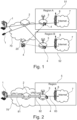
- the Figure 1 shows a telecommunications arrangement which comprises networks and telecommunications components with which a method according to the invention for establishing a data connection to the Internet can be implemented.
- the telecommunications arrangement comprises as essential components a telecommunications terminal 1, a server 2, a mobile radio gateway 3, a SIM card 4, mobile radio networks 51, 52 and the Internet 7.
- the telecommunications terminal 1 can be a mobile radio terminal or a non-mobile terminal, for example a PC or a tablet computer.
- the telecommunications terminal 1 can communicate with the server 2 via a packet switching network, for example the Internet 70 or an intranet.
- the server 2 can also communicate with the mobile radio gateway 3 via the packet switching network.
- the server 2 is used to provide a secure data connection between the telecommunications terminal 1 and the mobile radio gateway 3, as will be explained below. It can be provided that the server 2 also has the functionality of a SIM server and manages a pool of SIM cards 4.
- the SIM cards 4 can be physically located in the server 2 or can be present in the server as eSIMs.
- a separate SIM server 20 is provided, which is designed, for example, as a cloud-based SIM management system, wherein the server 2 communicates with the SIM server 20 and, for example, sends commands to the SIM server to provide certain SIM cards 4 to the mobile radio gateway 3.
- the server 2 and the SIM server 20 form a server system in the sense of the present invention.
- SIM server 20 is assigned to the server 2, whereby the SIM server 20 carries out the actual management of the SIM cards, although, as explained, this functionality can alternatively be integrated into the server 2.
- the server 2 can, for example on the basis of a corresponding command from the server 2 or the telecommunications terminal 1, logically assign a specific SIM card to the telecommunications terminal 1.
- the server 2 can also cause the SIM server 20 to provide the SIM card 4 logically assigned to the telecommunications terminal 1 to the mobile radio gateway 3, for example on the basis of a command from the telecommunications terminal 1 or automatically on its own initiative, whereby the provision of such a SIM card 9 does not take place physically, but rather only the SIM information data that identify a SIM card and reflect its functionality are transmitted to the mobile radio gateway 4 by data transmission via the network 70.
- the mobile radio gateway 3 has a plurality of radio modules for mobile radio communication (not shown separately).
- a plurality of SIM cards 4 are assigned and can be assigned to the mobile radio gateway 3, each of which enables the use of a radio module for mobile radio communication.
- a radio module sends data to a mobile radio channel and receives data via the mobile radio channel.
- One or more SIM cards can be assigned to each radio module, whereby only one SIM card is activated at any given time.
- the mobile radio gateway 3 is located in the reception area of a mobile radio network, whereby in the embodiment the Figure 1 two mobile radio gateways 3, each located in a different mobile radio network 51, 52, are shown.
- the different mobile radio networks 51, 52 are located in different regions A, B, which are, for example, different countries.
- Each mobile radio network 51, 52 usually has a plurality of mobile radio transmission stations 6, as in the Figure 1 shown schematically.
- each mobile radio network 51, 52 has a transition to the local Internet 7, ie the mobile radio network 51, 52 has, in a manner known per se, dial-in points or local transitions or gateways to the Internet 7 (not shown in detail).
- the telecommunications order of the Figure 1 The initial situation is that the telecommunications terminal 1 is located in a different country or region than the country or region in which the mobile network 51, 52 (hereinafter generally referred to as the mobile network 5) is implemented.
- a connection between the telecommunications terminal 1 and the server 2 is provided as a secure data connection in the form of a VPN tunnel via the network 70.
- a secure data connection in the form of a VPN tunnel is provided via the network 70 between the server 2 and the respective mobile gateway 3.
- the mobile network 5, in whose reception area the mobile gateway 3 is located, can be the home mobile network of the respective SIM card 4, via which a connection to the mobile network 5 is established. However, this does not necessarily have to be the case.
- the mobile network 5 in whose reception area the mobile gateway 3 is located can be a mobile network to which the SIM card 4 is not assigned, in which case a dial-in to the mobile network is carried out by the mobile gateway 3 or a radio module of the mobile gateway 3 via roaming.
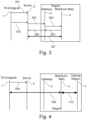
- the Figure 2 shows a schematic of the data connections that have been established.
- a secure data connection 81 in the form of a VPN tunnel is established between the telecommunications terminal 1 and the server 2, which is referred to as the second secure data connection.
- a further secure data connection 82 in the form of a VPN tunnel is established between the server 2 and the mobile radio gateway 3, which is referred to as the first secure data connection.
- a mobile radio data connection 83 to the mobile radio network 5 exists between the mobile radio gateway 3 and its radio module registered in the mobile radio network 5. This data connection 83 can be extended by a transition to the Internet 7.
- Typical scenarios are the following:
- Scenario 1 The telecommunications terminal 1 is located in Germany, for example.
- the mobile network 5 and the mobile gateway 3 are located abroad, for example the USA.
- the mobile network 5 is not the home mobile network of the SIM card 4, which is used to dial into the mobile network 5.
- Scenario 2 The telecommunications terminal 1 is located abroad, for example in France.
- the mobile network 5 and the mobile gateway 3 are located in the country, for example in Germany.
- the mobile network 5 is the home mobile network of the SIM card 4, which is used to dial into the mobile network 5.
- a SIM card 4 is assigned to the telecommunications terminal and this assignment is recorded on the server 2.
- a logical assignment of the SIM card 4 to the telecommunications terminal 1 takes place, without the SIM card 4 or SIM information data being transmitted to the telecommunications terminal 1. Accordingly, it is not relevant for the present method whether the telecommunications terminal 1 is a mobile radio terminal or another telecommunications terminal.
- the logical assignment can take place automatically or by manual command.
- the SIM card 4 is assigned to the telecommunications terminal 1 by the server 2, which communicates with the SIM server 20 for this purpose.
- the SIM card 4 is provided to the mobile radio gateway 3.
- the SIM information data is transmitted from the SIM server 20 (or alternatively from the server 2) to the mobile radio gateway 3.
- a radio module of the mobile radio gateway 3 logs into the mobile radio network 5 using the provided SIM card 4.
- the mobile radio network 5 can be the home mobile radio network of the SIM card 4, in which case a direct log-in takes place, or it can be another mobile radio network, in which case a log-in takes place via roaming.
- step 904 a mobile data connection is established to the Internet via the mobile network 5 through the registered radio module. Then, in step 905, the first secure data connection 82 is established via a VPN tunnel between the mobile gateway 3 and the server 2. A second secure data connection 83 is established via a VPN tunnel between the telecommunications terminal 1 and the server 2 in step 106. This secure data connection 83 can have already been established previously or is established after the secure data connection 82.
- the first secure data connection 82 is connected to the second secure data connection 81 by the server 2.
- This provides a data connection of the telecommunications terminal 1 to the Internet via the second secure data connection 81, the first secure data connection 82 and the mobile radio data connection 83, see also Figure 2
- the server 2 ensures that the two secure data connections 81, 82 are assigned to each other and data is passed on to the other data connection, so that the two secure data connections 81, 82 together create a VPN tunnel from the telecommunications terminal 1 to the mobile radio gateway 3.
- the method provided allows the implementation of various test scenarios, whereby it can be tested which services with which quality characteristics are available to a user who dials into a mobile network in the USA via roaming using his SIM card, which is assigned to a German mobile network.
- These test scenarios can be implemented without it being necessary to dial in with a telecommunications terminal on site in the USA.
- the two secure data connections 81, 82 form a data access via data transmission via the Internet (and not via mobile or telecommunications networks) to the mobile gateway 3 in the other country.
- the method provided allows the use of all services available in the home network, even if the telecommunications terminal 1 is located abroad.
- the telecommunications terminal 1 located abroad can dial into the mobile radio gateway 3 of the home mobile radio network via the data access formed by the two secure data connections 81, 82, so that there are no restrictions with regard to the available services.
- FIGS. 3 and 4 show the signaling process between telecommunications terminal 1, server 2, mobile radio gateway 3 and mobile radio network 5 according to a first embodiment variant.
- a SIM card is assigned to the telecommunications terminal 1 at some point in time.
- the assignment can be made by the user of the telecommunications terminal 1, an administrator or the server 2.
- the assignment can be made by manual command or automatically.
- a data connection between the telecommunications terminal 1 and the server 2 required for step 301 can then be terminated. In any case, the server 2 must be informed of the assignment unless it is made by itself.
- a command for registering the SIM card in the mobile radio gateway is sent from the TK terminal 1 to the server 2.
- the command can be generated manually or automatically.
- the SIM card is then assigned by the server 2 to the mobile radio gateway 3 according to step 303 (either directly or via the SIM server 20 according to the Figure 1 ).
- Command 302 can also be sent to server 2 without maintaining a data connection.
- step 304 the SIM card is registered in the mobile network 5 using a radio module of the mobile gateway 3.
- a data connection is then established in the mobile network 5 according to step 305. This is done via a local IP address of the mobile gateway 3 and a local access of the mobile gateway 3 to the mobile network 5.
- a secure data connection (the data connection 82 of the Figure 2 ) is established between the mobile radio gateway 3 and the server 2 according to step 306.
- the secure data connection is assigned a first IP tunnel address.
- the data of this data channel is then exchanged transparently between server 2 and mobile radio network 5, with the data being routed in the mobile radio gateway between the secure data connection to server 2 and the mobile radio data connection to the mobile radio network 5, with the data or data packets being assigned via the local IP address on the one hand and the first IP tunnel address on the other.
- step 307 the data is passed transparently between the server 2 and the mobile network 5.
- the Figure 4 shows the continuation of the signaling of the Figure 3 .
- a second secure data connection is established by the user or the TK terminal 1 (or alternatively by the server 2) between the TK terminal 1 and the server 2 (the data connection 81 of the Figure 2 )
- the server 2 connects this secure data connection of the user or TK terminal 1 (which has a second IP tunnel address assigned) with the secure data connection to the telecommunications terminal 3 or the SIM card 4.
- the server 2 routes the data between the first secure data connection and the second secure data connection, whereby the data or data packets are assigned via the first IP tunnel address on the one hand and the second IP tunnel address on the other.
- a transparent data tunnel is thus created between the telecommunications terminal 1 and the mobile network 5 of the region in question.
- the server 2 can assign the secure data connection with the mobile radio gateway 3, which is based on the mobile radio communication of the registered SIM card 4, to the secure data connection with the telecommunications terminal 1, since it is informed about the assignment of the SIM card 4 to the telecommunications terminal 1.
- the data tunnel can provide access to the data network connected behind it, generally the regional Internet.
- the telecommunications terminal 1 behaves as if it were located locally in the region covered by the mobile network 5.
- data connections considered are connections on levels 1 to 4 and possibly also level 5 of the OSI reference model, which serve to provide connectivity. This connectivity is the prerequisite for the implementation of applications and services that are located on level 7 of the OSI reference model.
- FIGS. 5 and 6 show the signaling process between telecommunications terminal 1, server 2, mobile gateway 3 and mobile network 5 according to a second embodiment variant.
- a SIM card is assigned to the telecommunications terminal 1 at some point in time according to step 501.
- the assignment can be made by the user of the telecommunications terminal 1, an administrator or the server 2.
- the assignment can be made by manual command or automatically.
- a data connection between the telecommunications terminal 1 and the server 2 required for step 301 can then be abandoned. In any case, the server 2 must be informed of the assignment unless it is made by itself.
- step 502 the user or the telecommunications terminal 1 establishes a secure data connection (for example, a VPN connection) to the server 2, then the SIM card assigned to the telecommunications terminal 1 or the SIM information data is provided to the mobile radio gateway 3 according to step 503 (by the server 2 or a SIM server 20) and the mobile radio gateway 3 is logged into the mobile radio network 5 using the assigned SIM card according to step 504.
- a secure data connection is thus first established between the telecommunications terminal and the server 2 (the data connection 81 of the Figure 2 ).
- a (second) IP tunnel address is assigned to this secure data connection.
- a further secure data connection for example a VPN connection, is established between the mobile gateway and the server 2 in accordance with step 506.
- a (first) IP tunnel address is assigned to this secure data connection.
- the data of this data channel is then exchanged transparently between server 2 and mobile network 5 in accordance with step 507, with the data being routed in the mobile gateway between the secure data connection to server 2 and the mobile data connection to the mobile network 5, with the data or data packets being assigned via the local IP address on the one hand and the first IP tunnel address on the other.
- the server 2 connects the secure data connection between server 2 and mobile radio gateway 3 with the secure data connection established in step 502 between the telecommunications terminal 1 and the server 2.
- the server 2 routes the data between the two secure data connections, whereby the data or data packets are assigned via the first IP tunnel address on the one hand and the second IP tunnel address on the other.
- a transparent data tunnel is created between the telecommunications terminal 1 and the mobile radio network 5 of the region in question.
- this data tunnel can provide access to the data network connected behind it, generally the - regional - Internet 7.
- the telecommunications terminal 1 behaves as if it were located locally in the region covered by the mobile radio network 5.
- a connectivity of the telecommunications terminal 1 to the Internet 7 is provided, on the basis of which telecommunications connections (TK connections) can be established between the telecommunications terminal 1 and a communication partner, for example an Internet server or another telecommunications terminal, in order to implement an application or a service on level 7 of the OSI reference model.
- TK connections telecommunications connections
- the Figures 7 and 8 show the implementation of a service by which an SMS/MMS message is sent or received from the telecommunications terminal 1.
- the telecommunications terminal 1 Based on the situation that a SIM card is assigned to the telecommunications terminal 1, it is provided that the user or the telecommunications terminal sends an SMS/MMS message to a regional subscriber or service provider.
- the telecommunications terminal 1 sends the SMS/MMS message to the server 2 by entering a recipient in accordance with step 701. If the telecommunications terminal 1 is not a mobile radio terminal, the SMS/MMS message is made available, for example, via a user interface on the server 2 (for example an HTML interface) or via another interface.
- the server 2 forwards the message to the mobile radio gateway 3 in accordance with step 702.
- a transmission path 705 is thus provided from the telecommunications terminal to the service/subscriber 9.
- a user or their telecommunications terminal 1 receives an SMS/MMS message from a regional subscriber or service provider 9, for example in the case of a two-way authorization in conjunction with a data application.
- the message is sent by the service/subscriber 9 over the Internet to the mobile network 5 and received by the mobile gateway 3 (steps 801, 802).
- the mobile gateway 3 forwards the received SMS/MMS message to the server 2.
- the server 2 forwards the received SMS/MMS message to the telecommunications terminal 1 in accordance with step 804.
- a transmission path 805 is thus provided from the service/subscriber 9 to the telecommunications terminal 1.
Landscapes
- Engineering & Computer Science (AREA)
- Computer Networks & Wireless Communication (AREA)
- Signal Processing (AREA)
- Computer Security & Cryptography (AREA)
- Databases & Information Systems (AREA)
- Computer Hardware Design (AREA)
- Computing Systems (AREA)
- General Engineering & Computer Science (AREA)
- Mobile Radio Communication Systems (AREA)
Claims (13)
- Procédé permettant de fournir une connexion de données à internet au niveau d'un terminal de télécommunication, terminal TK, en utilisant un réseau de téléphonie mobile (5, 51, 52), le procédé comprenant les étapes consistant à :- associer une carte SIM (4) au terminal TK (1) et détecter cette association au niveau d'un serveur (2) ;- fournir la carte SIM (4) à une passerelle de téléphonie mobile (3) ;- enregistrer un module radio de la passerelle de téléphonie mobile (3) dans le réseau de téléphonie mobile (5, 51, 52) en utilisant la carte SIM (4) fournie ;- établir une connexion de données de téléphonie mobile (83) à internet (7) par le module radio enregistré de la passerelle de téléphonie mobile (3) par l'intermédiaire du réseau de téléphonie mobile (5, 51, 52) ;- établir une première connexion de données sécurisée (82) entre la passerelle de téléphonie mobile (3) et le serveur (2), dans lequel des données entre internet (7) et le serveur (2) peuvent être transmises de manière transparente par l'intermédiaire de la connexion de données de téléphonie mobile (83) et de la première connexion de données sécurisée (82) ;- établir une deuxième connexion de données sécurisée (81) entre le terminal TK (1) et le serveur (2) ; et- relier la première connexion de données sécurisée (82) et la deuxième connexion de données sécurisée (81) par le serveur (2) pour fournir une connexion de données du terminal TK (1) à internet par l'intermédiaire de la deuxième connexion de données sécurisée (81), de la première connexion de données sécurisée (82) et de la connexion de données de téléphonie mobile (83),- dans lequel la carte SIM (4) est fournie à la passerelle de téléphonie mobile (3) par le serveur (2), le serveur (2) étant un serveur SIM, ou la carte SIM (4) est fournie à la passerelle de téléphonie mobile (3) par un serveur SIM à part (20) qui communique avec le serveur (2).
- Procédé selon la revendication 1, caractérisé en ce que la deuxième connexion de données sécurisée (81) entre le terminal TK (1) et le serveur (2) est établie avant la première connexion de données sécurisée (82) entre la passerelle de téléphonie mobile (3) et le serveur (2), l'établissement de la deuxième connexion de données sécurisée (81) déclenchant la fourniture de la carte SIM (4) au niveau de la passerelle de téléphonie mobile (3).
- Procédé selon la revendication 1, caractérisé en ce que la première connexion de données sécurisée (82) entre la passerelle de téléphonie mobile (3) et le serveur (2) est établie avant la deuxième connexion de données sécurisée (81) entre le terminal TK (1) et le serveur (2).
- Procédé selon l'une quelconque des revendications précédentes, caractérisé en ce que le serveur (2) relie la première connexion de données sécurisée (82) et la deuxième connexion de données sécurisée (81) en associant les deux connexions (81, 82) l'une à l'autre de sorte que les données d'une connexion peuvent être retransmises à l'autre connexion, et inversement.
- Procédé selon la revendication 4, caractérisé en ce que le serveur (2) associe les deux connexions (81, 82) l'une à l'autre en associant l'une à l'autre des adresses IP qui sont respectivement associées à la première connexion de données sécurisée (82) et à la deuxième connexion de données sécurisée (81).
- Procédé selon l'une quelconque des revendications précédentes, caractérisé en ce que la première connexion de données sécurisée (82) et la deuxième connexion de données sécurisée (81) sont respectivement une connexion VPN ou un autre tunnel.
- Procédé selon l'une quelconque des revendications précédentes, caractérisé en ce qu'après la fourniture d'une connexion de données du terminal TK (1) à internet, le terminal TK (1) réalise une application ou un service et établit à cet effet une connexion de télécommunication, connexion TK, avec un serveur sur internet (7) et/ou avec un autre terminal TK.
- Procédé selon la revendication 7, caractérisé en ce que par l'intermédiaire de la connexion TK, un SMS/MMS/message vocal est transmis au serveur sur internet (7) et/ou au terminal TK supplémentaire et/ou est reçu par celui-ci.
- Procédé selon l'une quelconque des revendications précédentes, caractérisé en ce que le réseau de téléphonie mobile (5, 51, 52) est un réseau de téléphonie mobile d'un autre pays que le pays dans lequel est réalisé le réseau de rattachement de téléphonie mobile de la carte SIM, dans lequel l'enregistrement d'un module radio de la passerelle de téléphonie mobile (3) dans le réseau de téléphonie mobile (5, 51, 52) est effectué par itinérance en utilisant la carte SIM (4) fournie.
- Procédé selon l'une quelconque des revendications 1 à 8, caractérisé en ce que le réseau de téléphonie mobile (5, 51, 52) est le réseau de téléphonie mobile de rattachement de la carte SIM (4).
- Système serveur, présentant :- des moyens qui sont prévus et réalisés pour associer une carte SIM (4) à un terminal TK (1) ;- un serveur SIM qui est prévu et réalisé pour fournir la carte SIM (4) associée au terminal TK (1) à une passerelle de téléphonie mobile (3) ;- des moyens qui sont prévus et réalisés pour faire que la passerelle de téléphonie mobile (3) s'enregistre auprès du réseau de téléphonie mobile (5, 51, 52) en utilisant la carte SIM (4) reçue et pour établir une connexion de données de téléphonie mobile (83) à internet (7) par l'intermédiaire du réseau de téléphonie mobile (5, 51, 52) ;- des moyens qui sont prévus et réalisés pour établir une première connexion de données sécurisée (82) entre un serveur (2) et la passerelle de téléphonie mobile (3), dans lequel des données peuvent être transmises de manière transparente entre le réseau de téléphonie mobile (5, 51, 52) et le serveur (2) par l'intermédiaire de la connexion de données de téléphonie mobile (83) et la première connexion de données sécurisée (82) ;- des moyens qui sont prévus et réalisés pour établir une deuxième connexion de données sécurisée (81) entre le serveur (2) et le terminal TK (1) ;- des moyens qui sont prévus et réalisés pour relier la première connexion de données sécurisée (82) et la deuxième connexion de données sécurisée (81) pour fournir une connexion de données du terminal TK (1) à internet par l'intermédiaire de la deuxième connexion de données sécurisée (81), de la première connexion de données sécurisée (82) et de la connexion de données de téléphonie mobile (83),- dans lequel soit tous les moyens du système serveur sont réalisés dans le serveur (2), le serveur (2) comprenant le serveur SIM, soit- le système serveur est réparti sur au moins deux serveurs physiques ou virtuels différents, dans lequel le système serveur présente le serveur (2) et le serveur SIM (20) et le serveur SIM (20) communique avec le serveur (2).
- Système serveur selon la revendication 11, caractérisé en ce que le serveur (2) est prévu et réalisé pour relier la première connexion de données sécurisée (82) et la deuxième connexion de données sécurisée (81) en associant les deux connexions (81, 82) l'une à l'autre de sorte que les données d'une connexion peuvent être retransmises à l'autre connexion, et inversement.
- Système serveur selon la revendication 12, caractérisé en ce que le serveur (2) est prévu et réalisé pour associer les deux connexions (81, 82) l'une à l'autre en ce qu'il est prévu et réalisé pour associer respectivement l'une à l'autre des adresses IP qui sont associées à la première connexion de données sécurisée (82) et à la deuxième connexion de données sécurisée (81).
Applications Claiming Priority (1)
| Application Number | Priority Date | Filing Date | Title |
|---|---|---|---|
| DE102021102446.3A DE102021102446A1 (de) | 2021-02-03 | 2021-02-03 | Verfahren zum Bereitstellen einer Datenverbindung zum Internet an einem Telekommunikations-Endgerät sowie Serversystem und Mobilfunk-Gateway |
Publications (3)
| Publication Number | Publication Date |
|---|---|
| EP4040721A1 EP4040721A1 (fr) | 2022-08-10 |
| EP4040721B1 true EP4040721B1 (fr) | 2025-02-19 |
| EP4040721C0 EP4040721C0 (fr) | 2025-02-19 |
Family
ID=80682628
Family Applications (1)
| Application Number | Title | Priority Date | Filing Date |
|---|---|---|---|
| EP22153660.0A Active EP4040721B1 (fr) | 2021-02-03 | 2022-01-27 | Procédé de fourniture d'une connexion de données à internet au niveau d'un terminal de télécommunication, ainsi que système serveur |
Country Status (3)
| Country | Link |
|---|---|
| US (1) | US12101636B2 (fr) |
| EP (1) | EP4040721B1 (fr) |
| DE (1) | DE102021102446A1 (fr) |
Families Citing this family (1)
| Publication number | Priority date | Publication date | Assignee | Title |
|---|---|---|---|---|
| US12647520B2 (en) * | 2023-04-28 | 2026-06-02 | Perfecta Federal, Llc | Virtual telephony platform for secure communication |
Family Cites Families (14)
| Publication number | Priority date | Publication date | Assignee | Title |
|---|---|---|---|---|
| DE10311980B4 (de) | 2003-03-12 | 2007-09-20 | Teles Ag Informationstechnologien | Verfahren zum Bereitstellen von mit einer Kennung versehenen Einsteckkarten in einem Mobilfunkendgerät |
| DE10314144B4 (de) | 2003-03-25 | 2005-06-09 | Teles Ag Informationstechnologien | Verfahren und Telekommunikationsgerät zum Bereitstellen von mit einer Kennung versehenen Einsteckkarten |
| US7792072B2 (en) * | 2004-12-13 | 2010-09-07 | Nokia Inc. | Methods and systems for connecting mobile nodes to private networks |
| WO2009115132A1 (fr) | 2008-03-20 | 2009-09-24 | Telefonaktiebolaget Lm Ericsson (Publ) | Procédé et appareil à usage dans un réseau de communications |
| DE102011007814A1 (de) * | 2011-04-20 | 2012-10-25 | Teles Ag Informationstechnologien | Verfahren zum Leiten von Telekommunikationsverbindungen (TK-Verbindungen) zu einem Mobilfunk-Endgerät sowie Mobilfunk-Gateway |
| US9491686B2 (en) * | 2011-07-28 | 2016-11-08 | Pulse Secure, Llc | Virtual private networking with mobile communication continuity |
| CN104768155B (zh) * | 2015-04-07 | 2021-01-15 | 北京隆普智能科技有限公司 | 一种lte蜂窝移动网络接入系统及相应的通信方法 |
| ES2828575T3 (es) * | 2016-10-14 | 2021-05-26 | Telefonica Digital Espana Slu | Acceso a través de una segunda red de telecomunicaciones móviles a los servicios ofrecidos por una primera red de telecomunicaciones móviles |
| US11483764B2 (en) * | 2018-05-28 | 2022-10-25 | Sony Corporation | Wireless communication device and wireless communication system |
| EP3592015A1 (fr) * | 2018-07-02 | 2020-01-08 | Soracom International, Pte. Ltd | Mise à jour d'un module d'identité d'abonné |
| CN108668333B (zh) * | 2018-07-09 | 2021-05-28 | 深圳市优克联新技术有限公司 | 一种移动网络的切换方法及系统 |
| US10652728B1 (en) * | 2018-11-13 | 2020-05-12 | Microsoft Technology Licensing, Llc | eSIM profile discovery |
| US11057827B1 (en) * | 2020-06-19 | 2021-07-06 | T-Mobile Innovations Llc | Provisioning an embedded universal integrated circuit card (eUICC) of a mobile communication device |
| US11483724B2 (en) * | 2021-01-05 | 2022-10-25 | At&T Intellectual Property I, L.P. | Methods, systems, and devices for provisioning a subscriber identity module (SIM) to conduct testing of a communication device |
-
2021
- 2021-02-03 DE DE102021102446.3A patent/DE102021102446A1/de not_active Withdrawn
-
2022
- 2022-01-27 EP EP22153660.0A patent/EP4040721B1/fr active Active
- 2022-02-02 US US17/649,770 patent/US12101636B2/en active Active
Also Published As
| Publication number | Publication date |
|---|---|
| US20220248231A1 (en) | 2022-08-04 |
| US12101636B2 (en) | 2024-09-24 |
| EP4040721A1 (fr) | 2022-08-10 |
| EP4040721C0 (fr) | 2025-02-19 |
| DE102021102446A1 (de) | 2022-08-04 |
Similar Documents
| Publication | Publication Date | Title |
|---|---|---|
| EP0990364B1 (fr) | Procede d'itinerance | |
| DE69934734T2 (de) | Mehrstrecken Punkt-zu-Punkt Protokoll | |
| DE69924679T2 (de) | Reduzierung der signalisierungslast in einem funkpaketnetzwerk | |
| DE69922492T2 (de) | Verfahren zum anschluss einer basisstation an ein zellulares system | |
| EP1074154B1 (fr) | Execution de services d'un reseau intelligent au moyen d'un reseau de donnees | |
| DE10120772A1 (de) | Heterogenes Mobilfunksystem | |
| EP2104394B1 (fr) | Procédé et agencement de télécommunication destinés à la préparation d'une liaison de télécommunication (liaison TK) vers un appareil radio mobile appelé | |
| DE112015001967T5 (de) | Kommunikationssystem mit Diensteauswahl durch wählen | |
| DE69925028T2 (de) | Weiterreichen in einem kommunikationssystem | |
| DE60032070T2 (de) | Architektur zur Bereitstellung von Leistungsmerkmalen für drahtlose Anrufe in einem drahtlosen Telekommunikationssystem | |
| EP4040721A1 (fr) | Procédé de fourniture d'une connexion de données à internet au niveau d'un terminal de télécommunication, ainsi que système serveur et passerelle de téléphonie mobile | |
| EP1378108B1 (fr) | Procede pour mettre en oeuvre des mesures de surveillance et effectuer des demandes de renseignement dans des reseaux de telecommunication et de donnees a protocole internet (ip) par exemple | |
| EP2700281B1 (fr) | Procédé pour aiguiller des liaisons de télécommunication vers un terminal de radiotéléphonie mobile ainsi que passerelle de radiotéléphonie mobile | |
| DE60128129T2 (de) | Physikalisches privates mobilkommunikationsnetzwerk | |
| EP2689596B1 (fr) | Procédé et appareils pour acheminer des liaisons de télécommunication (liaisons tc) jusqu'à un terminal de téléphonie mobile | |
| EP1522202B1 (fr) | Etablissement d'accords de services pour l'utilisation de fonctions internes a des reseaux de telecommunication | |
| DE19943144A1 (de) | Verfahren zur Änderung von Servicedaten | |
| EP1437011B1 (fr) | Procede de mise en oeuvre de messagerie instantanee au moyen de donnees a commutation par paquets | |
| DE60201621T2 (de) | System zum Empfangen, Speichern und Weiterleiten von Kurznachrichten (SMS) | |
| DE60037674T2 (de) | Verfahren und gerät zur durchführung von sicherheitsprozeduren unter einbeziehung von mobilstationen in hybriden, zellularen telekommunikationssystemen | |
| EP4064747B1 (fr) | Système et procédé de communication de données destinés à la synchronisation sélective des informations de données de connexion entre les pare-feu d'un réseau central à base d'ip d'un réseau mobile | |
| EP1335573B1 (fr) | Méthode pour améliorer la disponibilité de l'appelé | |
| DE102008010426B4 (de) | IP-basiertes Kommunikationsverfahren für Mobilfunkgeräte | |
| WO2004045222A2 (fr) | Procede et dispositif de mise en oeuvre d'une voie de connexion vers un reseau de telephonie mobile et terminal de communication destine a cet effet | |
| DE10034687A1 (de) | Verfahren und Übertragungseinrichtung für ein Kommunikations-system zum Übertragen von Daten mittels eines Punkt-zu-Punkt-Protokolls (SCTP) |
Legal Events
| Date | Code | Title | Description |
|---|---|---|---|
| PUAI | Public reference made under article 153(3) epc to a published international application that has entered the european phase |
Free format text: ORIGINAL CODE: 0009012 |
|
| STAA | Information on the status of an ep patent application or granted ep patent |
Free format text: STATUS: THE APPLICATION HAS BEEN PUBLISHED |
|
| AK | Designated contracting states |
Kind code of ref document: A1 Designated state(s): AL AT BE BG CH CY CZ DE DK EE ES FI FR GB GR HR HU IE IS IT LI LT LU LV MC MK MT NL NO PL PT RO RS SE SI SK SM TR |
|
| STAA | Information on the status of an ep patent application or granted ep patent |
Free format text: STATUS: REQUEST FOR EXAMINATION WAS MADE |
|
| 17P | Request for examination filed |
Effective date: 20230207 |
|
| RBV | Designated contracting states (corrected) |
Designated state(s): AL AT BE BG CH CY CZ DE DK EE ES FI FR GB GR HR HU IE IS IT LI LT LU LV MC MK MT NL NO PL PT RO RS SE SI SK SM TR |
|
| RIC1 | Information provided on ipc code assigned before grant |
Ipc: H04W 92/02 20090101ALN20240718BHEP Ipc: H04W 88/16 20090101ALN20240718BHEP Ipc: H04W 76/12 20180101ALI20240718BHEP Ipc: H04L 9/40 20220101AFI20240718BHEP |
|
| GRAP | Despatch of communication of intention to grant a patent |
Free format text: ORIGINAL CODE: EPIDOSNIGR1 |
|
| STAA | Information on the status of an ep patent application or granted ep patent |
Free format text: STATUS: GRANT OF PATENT IS INTENDED |
|
| RIC1 | Information provided on ipc code assigned before grant |
Ipc: H04W 92/02 20090101ALN20240909BHEP Ipc: H04W 88/16 20090101ALN20240909BHEP Ipc: H04W 76/12 20180101ALI20240909BHEP Ipc: H04L 9/40 20220101AFI20240909BHEP |
|
| INTG | Intention to grant announced |
Effective date: 20240924 |
|
| GRAS | Grant fee paid |
Free format text: ORIGINAL CODE: EPIDOSNIGR3 |
|
| GRAA | (expected) grant |
Free format text: ORIGINAL CODE: 0009210 |
|
| STAA | Information on the status of an ep patent application or granted ep patent |
Free format text: STATUS: THE PATENT HAS BEEN GRANTED |
|
| AK | Designated contracting states |
Kind code of ref document: B1 Designated state(s): AL AT BE BG CH CY CZ DE DK EE ES FI FR GB GR HR HU IE IS IT LI LT LU LV MC MK MT NL NO PL PT RO RS SE SI SK SM TR |
|
| REG | Reference to a national code |
Ref country code: GB Ref legal event code: FG4D Free format text: NOT ENGLISH |
|
| REG | Reference to a national code |
Ref country code: CH Ref legal event code: EP |
|
| REG | Reference to a national code |
Ref country code: IE Ref legal event code: FG4D Free format text: LANGUAGE OF EP DOCUMENT: GERMAN |
|
| REG | Reference to a national code |
Ref country code: DE Ref legal event code: R096 Ref document number: 502022002902 Country of ref document: DE |
|
| U01 | Request for unitary effect filed |
Effective date: 20250311 |
|
| U07 | Unitary effect registered |
Designated state(s): AT BE BG DE DK EE FI FR IT LT LU LV MT NL PT RO SE SI Effective date: 20250319 |
|
| PG25 | Lapsed in a contracting state [announced via postgrant information from national office to epo] |
Ref country code: RS Free format text: LAPSE BECAUSE OF FAILURE TO SUBMIT A TRANSLATION OF THE DESCRIPTION OR TO PAY THE FEE WITHIN THE PRESCRIBED TIME-LIMIT Effective date: 20250519 |
|
| PG25 | Lapsed in a contracting state [announced via postgrant information from national office to epo] |
Ref country code: PL Free format text: LAPSE BECAUSE OF FAILURE TO SUBMIT A TRANSLATION OF THE DESCRIPTION OR TO PAY THE FEE WITHIN THE PRESCRIBED TIME-LIMIT Effective date: 20250219 |
|
| PG25 | Lapsed in a contracting state [announced via postgrant information from national office to epo] |
Ref country code: ES Free format text: LAPSE BECAUSE OF FAILURE TO SUBMIT A TRANSLATION OF THE DESCRIPTION OR TO PAY THE FEE WITHIN THE PRESCRIBED TIME-LIMIT Effective date: 20250219 |
|
| PG25 | Lapsed in a contracting state [announced via postgrant information from national office to epo] |
Ref country code: NO Free format text: LAPSE BECAUSE OF FAILURE TO SUBMIT A TRANSLATION OF THE DESCRIPTION OR TO PAY THE FEE WITHIN THE PRESCRIBED TIME-LIMIT Effective date: 20250519 Ref country code: IS Free format text: LAPSE BECAUSE OF FAILURE TO SUBMIT A TRANSLATION OF THE DESCRIPTION OR TO PAY THE FEE WITHIN THE PRESCRIBED TIME-LIMIT Effective date: 20250619 |
|
| PG25 | Lapsed in a contracting state [announced via postgrant information from national office to epo] |
Ref country code: HR Free format text: LAPSE BECAUSE OF FAILURE TO SUBMIT A TRANSLATION OF THE DESCRIPTION OR TO PAY THE FEE WITHIN THE PRESCRIBED TIME-LIMIT Effective date: 20250219 |
|
| PG25 | Lapsed in a contracting state [announced via postgrant information from national office to epo] |
Ref country code: GR Free format text: LAPSE BECAUSE OF FAILURE TO SUBMIT A TRANSLATION OF THE DESCRIPTION OR TO PAY THE FEE WITHIN THE PRESCRIBED TIME-LIMIT Effective date: 20250520 |
|
| PG25 | Lapsed in a contracting state [announced via postgrant information from national office to epo] |
Ref country code: SM Free format text: LAPSE BECAUSE OF FAILURE TO SUBMIT A TRANSLATION OF THE DESCRIPTION OR TO PAY THE FEE WITHIN THE PRESCRIBED TIME-LIMIT Effective date: 20250219 |
|
| PG25 | Lapsed in a contracting state [announced via postgrant information from national office to epo] |
Ref country code: CZ Free format text: LAPSE BECAUSE OF FAILURE TO SUBMIT A TRANSLATION OF THE DESCRIPTION OR TO PAY THE FEE WITHIN THE PRESCRIBED TIME-LIMIT Effective date: 20250219 |
|
| PG25 | Lapsed in a contracting state [announced via postgrant information from national office to epo] |
Ref country code: SK Free format text: LAPSE BECAUSE OF FAILURE TO SUBMIT A TRANSLATION OF THE DESCRIPTION OR TO PAY THE FEE WITHIN THE PRESCRIBED TIME-LIMIT Effective date: 20250219 |
|
| PLBE | No opposition filed within time limit |
Free format text: ORIGINAL CODE: 0009261 |
|
| STAA | Information on the status of an ep patent application or granted ep patent |
Free format text: STATUS: NO OPPOSITION FILED WITHIN TIME LIMIT |
|
| 26N | No opposition filed |
Effective date: 20251120 |
|
| U20 | Renewal fee for the european patent with unitary effect paid |
Year of fee payment: 5 Effective date: 20260115 |