EP4034252B1 - Kerbrezeptoren mit scharnierdomäne - Google Patents
Kerbrezeptoren mit scharnierdomäne Download PDFInfo
- Publication number
- EP4034252B1 EP4034252B1 EP20869739.1A EP20869739A EP4034252B1 EP 4034252 B1 EP4034252 B1 EP 4034252B1 EP 20869739 A EP20869739 A EP 20869739A EP 4034252 B1 EP4034252 B1 EP 4034252B1
- Authority
- EP
- European Patent Office
- Prior art keywords
- cell
- cells
- hinge
- seq
- domain
- Prior art date
- Legal status (The legal status is an assumption and is not a legal conclusion. Google has not performed a legal analysis and makes no representation as to the accuracy of the status listed.)
- Active
Links
Images








Classifications
-
- C—CHEMISTRY; METALLURGY
- C07—ORGANIC CHEMISTRY
- C07K—PEPTIDES
- C07K16/00—Immunoglobulins [IG], e.g. monoclonal or polyclonal antibodies
- C07K16/18—Immunoglobulins [IG], e.g. monoclonal or polyclonal antibodies against material from animals or humans
- C07K16/28—Immunoglobulins [IG], e.g. monoclonal or polyclonal antibodies against material from animals or humans against receptors, cell surface antigens or cell surface determinants
- C07K16/2878—Immunoglobulins [IG], e.g. monoclonal or polyclonal antibodies against material from animals or humans against receptors, cell surface antigens or cell surface determinants against the NGF-receptor/TNF-receptor superfamily, e.g. CD27, CD30, CD40, CD95
-
- A—HUMAN NECESSITIES
- A61—MEDICAL OR VETERINARY SCIENCE; HYGIENE
- A61K—PREPARATIONS FOR MEDICAL, DENTAL OR TOILETRY PURPOSES
- A61K35/00—Medicinal preparations containing materials or reaction products thereof with undetermined constitution
- A61K35/12—Materials from mammals; Compositions comprising non-specified tissues or cells; Compositions comprising non-embryonic stem cells; Genetically modified cells
- A61K35/14—Blood; Artificial blood
- A61K35/17—Lymphocytes; B-cells; T-cells; Natural killer cells; Interferon-activated or cytokine-activated lymphocytes
-
- A—HUMAN NECESSITIES
- A61—MEDICAL OR VETERINARY SCIENCE; HYGIENE
- A61K—PREPARATIONS FOR MEDICAL, DENTAL OR TOILETRY PURPOSES
- A61K40/00—Cellular immunotherapy
- A61K40/10—Cellular immunotherapy characterised by the cell type used
- A61K40/11—T-cells, e.g. tumour infiltrating lymphocytes [TIL] or regulatory T [Treg] cells; Lymphokine-activated killer [LAK] cells
-
- A—HUMAN NECESSITIES
- A61—MEDICAL OR VETERINARY SCIENCE; HYGIENE
- A61K—PREPARATIONS FOR MEDICAL, DENTAL OR TOILETRY PURPOSES
- A61K40/00—Cellular immunotherapy
- A61K40/30—Cellular immunotherapy characterised by the recombinant expression of specific molecules in the cells of the immune system
- A61K40/31—Chimeric antigen receptors [CAR]
-
- A—HUMAN NECESSITIES
- A61—MEDICAL OR VETERINARY SCIENCE; HYGIENE
- A61K—PREPARATIONS FOR MEDICAL, DENTAL OR TOILETRY PURPOSES
- A61K40/00—Cellular immunotherapy
- A61K40/40—Cellular immunotherapy characterised by antigens that are targeted or presented by cells of the immune system
- A61K40/41—Vertebrate antigens
- A61K40/42—Cancer antigens
-
- A—HUMAN NECESSITIES
- A61—MEDICAL OR VETERINARY SCIENCE; HYGIENE
- A61K—PREPARATIONS FOR MEDICAL, DENTAL OR TOILETRY PURPOSES
- A61K40/00—Cellular immunotherapy
- A61K40/40—Cellular immunotherapy characterised by antigens that are targeted or presented by cells of the immune system
- A61K40/41—Vertebrate antigens
- A61K40/42—Cancer antigens
- A61K40/4202—Receptors, cell surface antigens or cell surface determinants
- A61K40/421—Immunoglobulin superfamily
- A61K40/4211—CD19 or B4
-
- A—HUMAN NECESSITIES
- A61—MEDICAL OR VETERINARY SCIENCE; HYGIENE
- A61K—PREPARATIONS FOR MEDICAL, DENTAL OR TOILETRY PURPOSES
- A61K40/00—Cellular immunotherapy
- A61K40/40—Cellular immunotherapy characterised by antigens that are targeted or presented by cells of the immune system
- A61K40/41—Vertebrate antigens
- A61K40/42—Cancer antigens
- A61K40/4202—Receptors, cell surface antigens or cell surface determinants
- A61K40/4214—Receptors for cytokines
- A61K40/4215—Receptors for tumor necrosis factors [TNF], e.g. lymphotoxin receptor [LTR], CD30
-
- A—HUMAN NECESSITIES
- A61—MEDICAL OR VETERINARY SCIENCE; HYGIENE
- A61K—PREPARATIONS FOR MEDICAL, DENTAL OR TOILETRY PURPOSES
- A61K40/00—Cellular immunotherapy
- A61K40/40—Cellular immunotherapy characterised by antigens that are targeted or presented by cells of the immune system
- A61K40/41—Vertebrate antigens
- A61K40/42—Cancer antigens
- A61K40/4254—Adhesion molecules, e.g. NRCAM, EpCAM or cadherins
-
- A—HUMAN NECESSITIES
- A61—MEDICAL OR VETERINARY SCIENCE; HYGIENE
- A61P—SPECIFIC THERAPEUTIC ACTIVITY OF CHEMICAL COMPOUNDS OR MEDICINAL PREPARATIONS
- A61P35/00—Antineoplastic agents
-
- C—CHEMISTRY; METALLURGY
- C07—ORGANIC CHEMISTRY
- C07K—PEPTIDES
- C07K14/00—Peptides having more than 20 amino acids; Gastrins; Somatostatins; Melanotropins; Derivatives thereof
- C07K14/435—Peptides having more than 20 amino acids; Gastrins; Somatostatins; Melanotropins; Derivatives thereof from animals; from humans
- C07K14/46—Peptides having more than 20 amino acids; Gastrins; Somatostatins; Melanotropins; Derivatives thereof from animals; from humans from vertebrates
- C07K14/47—Peptides having more than 20 amino acids; Gastrins; Somatostatins; Melanotropins; Derivatives thereof from animals; from humans from vertebrates from mammals
- C07K14/4701—Peptides having more than 20 amino acids; Gastrins; Somatostatins; Melanotropins; Derivatives thereof from animals; from humans from vertebrates from mammals not used
- C07K14/4702—Regulators; Modulating activity
-
- C—CHEMISTRY; METALLURGY
- C07—ORGANIC CHEMISTRY
- C07K—PEPTIDES
- C07K14/00—Peptides having more than 20 amino acids; Gastrins; Somatostatins; Melanotropins; Derivatives thereof
- C07K14/435—Peptides having more than 20 amino acids; Gastrins; Somatostatins; Melanotropins; Derivatives thereof from animals; from humans
- C07K14/705—Receptors; Cell surface antigens; Cell surface determinants
-
- C—CHEMISTRY; METALLURGY
- C07—ORGANIC CHEMISTRY
- C07K—PEPTIDES
- C07K14/00—Peptides having more than 20 amino acids; Gastrins; Somatostatins; Melanotropins; Derivatives thereof
- C07K14/435—Peptides having more than 20 amino acids; Gastrins; Somatostatins; Melanotropins; Derivatives thereof from animals; from humans
- C07K14/705—Receptors; Cell surface antigens; Cell surface determinants
- C07K14/70503—Immunoglobulin superfamily
- C07K14/70517—CD8
-
- C—CHEMISTRY; METALLURGY
- C07—ORGANIC CHEMISTRY
- C07K—PEPTIDES
- C07K14/00—Peptides having more than 20 amino acids; Gastrins; Somatostatins; Melanotropins; Derivatives thereof
- C07K14/435—Peptides having more than 20 amino acids; Gastrins; Somatostatins; Melanotropins; Derivatives thereof from animals; from humans
- C07K14/705—Receptors; Cell surface antigens; Cell surface determinants
- C07K14/70503—Immunoglobulin superfamily
- C07K14/70521—CD28, CD152
-
- C—CHEMISTRY; METALLURGY
- C07—ORGANIC CHEMISTRY
- C07K—PEPTIDES
- C07K14/00—Peptides having more than 20 amino acids; Gastrins; Somatostatins; Melanotropins; Derivatives thereof
- C07K14/435—Peptides having more than 20 amino acids; Gastrins; Somatostatins; Melanotropins; Derivatives thereof from animals; from humans
- C07K14/705—Receptors; Cell surface antigens; Cell surface determinants
- C07K14/70578—NGF-receptor/TNF-receptor superfamily, e.g. CD27, CD30, CD40, CD95
-
- C—CHEMISTRY; METALLURGY
- C07—ORGANIC CHEMISTRY
- C07K—PEPTIDES
- C07K16/00—Immunoglobulins [IG], e.g. monoclonal or polyclonal antibodies
- C07K16/18—Immunoglobulins [IG], e.g. monoclonal or polyclonal antibodies against material from animals or humans
-
- C—CHEMISTRY; METALLURGY
- C07—ORGANIC CHEMISTRY
- C07K—PEPTIDES
- C07K16/00—Immunoglobulins [IG], e.g. monoclonal or polyclonal antibodies
- C07K16/18—Immunoglobulins [IG], e.g. monoclonal or polyclonal antibodies against material from animals or humans
- C07K16/28—Immunoglobulins [IG], e.g. monoclonal or polyclonal antibodies against material from animals or humans against receptors, cell surface antigens or cell surface determinants
-
- C—CHEMISTRY; METALLURGY
- C07—ORGANIC CHEMISTRY
- C07K—PEPTIDES
- C07K16/00—Immunoglobulins [IG], e.g. monoclonal or polyclonal antibodies
- C07K16/18—Immunoglobulins [IG], e.g. monoclonal or polyclonal antibodies against material from animals or humans
- C07K16/28—Immunoglobulins [IG], e.g. monoclonal or polyclonal antibodies against material from animals or humans against receptors, cell surface antigens or cell surface determinants
- C07K16/2803—Immunoglobulins [IG], e.g. monoclonal or polyclonal antibodies against material from animals or humans against receptors, cell surface antigens or cell surface determinants against the immunoglobulin superfamily
-
- C—CHEMISTRY; METALLURGY
- C07—ORGANIC CHEMISTRY
- C07K—PEPTIDES
- C07K16/00—Immunoglobulins [IG], e.g. monoclonal or polyclonal antibodies
- C07K16/18—Immunoglobulins [IG], e.g. monoclonal or polyclonal antibodies against material from animals or humans
- C07K16/28—Immunoglobulins [IG], e.g. monoclonal or polyclonal antibodies against material from animals or humans against receptors, cell surface antigens or cell surface determinants
- C07K16/30—Immunoglobulins [IG], e.g. monoclonal or polyclonal antibodies against material from animals or humans against receptors, cell surface antigens or cell surface determinants from tumour cells
-
- C—CHEMISTRY; METALLURGY
- C07—ORGANIC CHEMISTRY
- C07K—PEPTIDES
- C07K16/00—Immunoglobulins [IG], e.g. monoclonal or polyclonal antibodies
- C07K16/18—Immunoglobulins [IG], e.g. monoclonal or polyclonal antibodies against material from animals or humans
- C07K16/32—Immunoglobulins [IG], e.g. monoclonal or polyclonal antibodies against material from animals or humans against translation products of oncogenes
-
- A—HUMAN NECESSITIES
- A61—MEDICAL OR VETERINARY SCIENCE; HYGIENE
- A61K—PREPARATIONS FOR MEDICAL, DENTAL OR TOILETRY PURPOSES
- A61K39/00—Medicinal preparations containing antigens or antibodies
- A61K2039/505—Medicinal preparations containing antigens or antibodies comprising antibodies
-
- A—HUMAN NECESSITIES
- A61—MEDICAL OR VETERINARY SCIENCE; HYGIENE
- A61K—PREPARATIONS FOR MEDICAL, DENTAL OR TOILETRY PURPOSES
- A61K39/00—Medicinal preparations containing antigens or antibodies
- A61K2039/51—Medicinal preparations containing antigens or antibodies comprising whole cells, viruses or DNA/RNA
- A61K2039/515—Animal cells
- A61K2039/5156—Animal cells expressing foreign proteins
-
- A—HUMAN NECESSITIES
- A61—MEDICAL OR VETERINARY SCIENCE; HYGIENE
- A61K—PREPARATIONS FOR MEDICAL, DENTAL OR TOILETRY PURPOSES
- A61K39/00—Medicinal preparations containing antigens or antibodies
- A61K2039/51—Medicinal preparations containing antigens or antibodies comprising whole cells, viruses or DNA/RNA
- A61K2039/515—Animal cells
- A61K2039/5158—Antigen-pulsed cells, e.g. T-cells
-
- A—HUMAN NECESSITIES
- A61—MEDICAL OR VETERINARY SCIENCE; HYGIENE
- A61K—PREPARATIONS FOR MEDICAL, DENTAL OR TOILETRY PURPOSES
- A61K2239/00—Indexing codes associated with cellular immunotherapy of group A61K40/00
- A61K2239/31—Indexing codes associated with cellular immunotherapy of group A61K40/00 characterized by the route of administration
-
- A—HUMAN NECESSITIES
- A61—MEDICAL OR VETERINARY SCIENCE; HYGIENE
- A61K—PREPARATIONS FOR MEDICAL, DENTAL OR TOILETRY PURPOSES
- A61K2239/00—Indexing codes associated with cellular immunotherapy of group A61K40/00
- A61K2239/38—Indexing codes associated with cellular immunotherapy of group A61K40/00 characterised by the dose, timing or administration schedule
-
- A—HUMAN NECESSITIES
- A61—MEDICAL OR VETERINARY SCIENCE; HYGIENE
- A61K—PREPARATIONS FOR MEDICAL, DENTAL OR TOILETRY PURPOSES
- A61K38/00—Medicinal preparations containing peptides
-
- C—CHEMISTRY; METALLURGY
- C07—ORGANIC CHEMISTRY
- C07K—PEPTIDES
- C07K2317/00—Immunoglobulins specific features
- C07K2317/50—Immunoglobulins specific features characterized by immunoglobulin fragments
- C07K2317/52—Constant or Fc region; Isotype
- C07K2317/53—Hinge
-
- C—CHEMISTRY; METALLURGY
- C07—ORGANIC CHEMISTRY
- C07K—PEPTIDES
- C07K2317/00—Immunoglobulins specific features
- C07K2317/60—Immunoglobulins specific features characterized by non-natural combinations of immunoglobulin fragments
- C07K2317/62—Immunoglobulins specific features characterized by non-natural combinations of immunoglobulin fragments comprising only variable region components
- C07K2317/622—Single chain antibody (scFv)
-
- C—CHEMISTRY; METALLURGY
- C07—ORGANIC CHEMISTRY
- C07K—PEPTIDES
- C07K2317/00—Immunoglobulins specific features
- C07K2317/70—Immunoglobulins specific features characterized by effect upon binding to a cell or to an antigen
- C07K2317/76—Antagonist effect on antigen, e.g. neutralization or inhibition of binding
-
- C—CHEMISTRY; METALLURGY
- C07—ORGANIC CHEMISTRY
- C07K—PEPTIDES
- C07K2317/00—Immunoglobulins specific features
- C07K2317/70—Immunoglobulins specific features characterized by effect upon binding to a cell or to an antigen
- C07K2317/77—Internalization into the cell
-
- C—CHEMISTRY; METALLURGY
- C07—ORGANIC CHEMISTRY
- C07K—PEPTIDES
- C07K2317/00—Immunoglobulins specific features
- C07K2317/90—Immunoglobulins specific features characterized by (pharmaco)kinetic aspects or by stability of the immunoglobulin
- C07K2317/92—Affinity (KD), association rate (Ka), dissociation rate (Kd) or EC50 value
-
- C—CHEMISTRY; METALLURGY
- C07—ORGANIC CHEMISTRY
- C07K—PEPTIDES
- C07K2319/00—Fusion polypeptide
- C07K2319/01—Fusion polypeptide containing a localisation/targetting motif
- C07K2319/03—Fusion polypeptide containing a localisation/targetting motif containing a transmembrane segment
-
- C—CHEMISTRY; METALLURGY
- C07—ORGANIC CHEMISTRY
- C07K—PEPTIDES
- C07K2319/00—Fusion polypeptide
- C07K2319/01—Fusion polypeptide containing a localisation/targetting motif
- C07K2319/09—Fusion polypeptide containing a localisation/targetting motif containing a nuclear localisation signal
-
- C—CHEMISTRY; METALLURGY
- C07—ORGANIC CHEMISTRY
- C07K—PEPTIDES
- C07K2319/00—Fusion polypeptide
- C07K2319/30—Non-immunoglobulin-derived peptide or protein having an immunoglobulin constant or Fc region, or a fragment thereof, attached thereto
-
- C—CHEMISTRY; METALLURGY
- C07—ORGANIC CHEMISTRY
- C07K—PEPTIDES
- C07K2319/00—Fusion polypeptide
- C07K2319/33—Fusion polypeptide fusions for targeting to specific cell types, e.g. tissue specific targeting, targeting of a bacterial subspecies
-
- C—CHEMISTRY; METALLURGY
- C07—ORGANIC CHEMISTRY
- C07K—PEPTIDES
- C07K2319/00—Fusion polypeptide
- C07K2319/50—Fusion polypeptide containing protease site
-
- C—CHEMISTRY; METALLURGY
- C07—ORGANIC CHEMISTRY
- C07K—PEPTIDES
- C07K2319/00—Fusion polypeptide
- C07K2319/70—Fusion polypeptide containing domain for protein-protein interaction
-
- C—CHEMISTRY; METALLURGY
- C07—ORGANIC CHEMISTRY
- C07K—PEPTIDES
- C07K2319/00—Fusion polypeptide
- C07K2319/70—Fusion polypeptide containing domain for protein-protein interaction
- C07K2319/71—Fusion polypeptide containing domain for protein-protein interaction containing domain for transcriptional activaation, e.g. VP16
-
- C—CHEMISTRY; METALLURGY
- C07—ORGANIC CHEMISTRY
- C07K—PEPTIDES
- C07K2319/00—Fusion polypeptide
- C07K2319/70—Fusion polypeptide containing domain for protein-protein interaction
- C07K2319/71—Fusion polypeptide containing domain for protein-protein interaction containing domain for transcriptional activaation, e.g. VP16
- C07K2319/715—Fusion polypeptide containing domain for protein-protein interaction containing domain for transcriptional activaation, e.g. VP16 containing a domain for ligand dependent transcriptional activation, e.g. containing a steroid receptor domain
-
- C—CHEMISTRY; METALLURGY
- C07—ORGANIC CHEMISTRY
- C07K—PEPTIDES
- C07K2319/00—Fusion polypeptide
- C07K2319/70—Fusion polypeptide containing domain for protein-protein interaction
- C07K2319/74—Fusion polypeptide containing domain for protein-protein interaction containing a fusion for binding to a cell surface receptor
Definitions
- the present disclosure relates generally to new synthetic cellular receptors that bind cell-surface ligands and have selectable specificities and activities.
- the disclosure also provides compositions and methods useful for producing such receptors, nucleic acids encoding same, host cells genetically modified with the nucleic acids, as well as methods for modulating an activity of a cell and/or for the treatment of various health conditions or diseases, such as cancers.
- CAR-T chimeric antigen receptor T cells
- off-target activity on-target
- off-tumor activity i.e., wherein the CAR-T target is also found on normal cells outside the tumor
- a possible solution to these problems is to use a synthetic receptor that is capable of modifying gene expression and/or cellular behavior.
- Notch receptors are transmembrane proteins that mediate cell-cell contact signaling and play a central role in development and other aspects of cell-to-cell communication, e.g . communication between two contacting cells, in which one contacting cell is a "receiver” cell and the other contacting cell is a “sender” cell.
- Notch receptors expressed in a receiver cell recognize their ligands ( e . g ., the delta/serrate/lag, or "DSL" family of proteins), expressed on a sending cell.
- DSL delta/serrate/lag
- Notch has a metalloprotease cleavage site (denoted “S2”), which is normally protected from cleavage by the Notch negative regulatory region (NRR), a domain consisting of three LIN-12-Notch repeat (LNR) modules and a heterodimerization domain (HD) of the Notch extracellular subunit (NEC). It is believed that this proteolysis is regulated by the force exerted by the sending cell: the DSL ligand pulls on the Notch receptor and changes the conformation of the negative regulatory region, exposing the metalloprotease site. That site is then cleaved by a constitutively active protease, releasing the extracellular binding portion and negative regulatory region (NRR) of the receptor.
- S2 metalloprotease cleavage site
- SynNotch receptors Examples of existing first-generation synthetic derivatives of Notch receptors, which are often referred to as "SynNotch receptors", exploit this straightforward signaling behavior by replacing the extracellular ligand-binding domain, which in wild-type Notch contains multiple EGF-like repeats, with an antibody derivative, and replacing the cytoplasmic domain with a transcription activator of choice, while still relying on the functionality of the Notch NRR ( US9834608 B2 and L. Morsut et al., Cell (2016) 164:780-91 ). Generally, SynNotch signaling correlates with ligand binding, but it is difficult to adjust the sensitivity and response of the receptor.
- the NRR spans approximately 160 amino acids, making this domain alone the size of some mature proteins, such as insulin or epidermal growth factor (EGF). This makes expression of the chimeric receptor less efficient and, due to vector capacity-related size constraints, the resulting chimeric receptors can exceed the capacity of some cloning and transfection vectors.
- EGF epidermal growth factor
- the present disclosure relates generally to immuno-therapeutics, such as chimeric polypeptides for use in modulating cell activities or in treating various health conditions or diseases.
- immuno-therapeutics such as chimeric polypeptides for use in modulating cell activities or in treating various health conditions or diseases.
- oligomerizable chimeric receptors that, surprisingly, retain the ability to transduce signals in response to ligand binding despite the complete absence of the Notch extracellular subunit (NEC), including the negative regulatory region (NRR). More particularly, these receptors incorporate an extracellular oligomerization domain to promote formation of oligomeric form, e.g ., dimeric or trimeric form of the chimeric receptors.
- this design facilitates oligomerization or clustering of extracellular domains (ECD) and subsequently brings together intracellular domains (ICD) to activate cell signaling, e.g ., T-cell signaling. Further, these receptors provide a range of sensitivity. Additionally, by completely omitting the native Notch NEC, polynucleotides encoding the receptors of the disclosure can be made smaller than SynNotch-encoding polynucleotides, which enables the use of vectors having more limited capacity, or facilitates the inclusion of additional elements that would otherwise be excluded by vector capacity-related size constraints.
- references to the methods of treatment by therapy in this description are to be interpreted as references to compounds, pharmaceutical compositions and medicaments of the present invention for use in those methods.
- chimeric polynucleotides including, from N-terminus to C-terminus: (a) an extracellular ligand-binding domain having a binding affinity for a selected ligand; (b) a hinge domain capable of promoting oligomer formation of the chimeric polypeptide via intermolecular disulfide bonding; (c) a transmembrane domain including one or more ligand-inducible proteolytic cleavage sites; and (d) an intracellular domain including a transcriptional regulator, wherein binding of the selected ligand to the extracellular ligand-binding domain induces cleavage at a ligand-inducible proteolytic cleavage site disposed between the transcriptional regulator and the hinge domain, and wherein the chimeric polypeptide does not include a LIN-12-Notch repeat (LNR) and/or a heterodimerization domain (HD) of a Notch receptor.
- LNR LIN-12-Notch repeat
- HD heterodimerization domain
- Non-limiting exemplary embodiments of the chimeric polypeptides according to the present disclosure include one or more of the following features.
- the transmembrane domain further includes a stop transfer sequence.
- the extracellular domain includes an antigen-binding moiety capable of binding to a ligand on the surface of a cell.
- the cell is a pathogen.
- the cell is a human cell.
- the human cell is a tumor cell.
- the human cell is a terminally differentiated cell.
- the ligand includes a protein or a carbohydrate.
- the ligand is a cluster of differentiation (CD) marker.
- the CD marker is selected from the group consisting of CD1, CD1a, CD1b, CD1c, CD1d, CD1e, CD2, CD3d, CD3e, CD3g, CD4, CD5, CD7, CD8a, CD8b, CD19, CD20, CD21, CD22, CD23, CD25, CD27, CD28, CD33, CD34, CD40, CD45, CD48, CD52, CD59, CD66, CD70, CD71, CD72, CD73, CD79A, CD79B, CD80 (B7.1), CD86 (B7.2), CD94, CD95, CD134, CD140 (PDGFR4), CD152, CD154, CD158, CD178, CD181 (CXCR1), CD182 (CXCR2), CD183 (CXCR3), CD210, CD246, CD252, CD253, CD261, CD262, CD273 (PD-L2), CD274 (PD-L1), CD276 (B7H3), CD279, CD295, CD
- nucleic acids including a nucleotide sequence that encodes a chimeric polypeptide as disclosed herein.
- the nucleotide sequence is incorporated into an expression cassette or an expression vector.
- recombinant cells including: (a) a chimeric polypeptide as disclosed herein; and/or (b) a recombinant nucleic acid as disclosed herein. Also provided, in a related aspect, are cell cultures including at least one recombinant cell as disclosed herein and a culture medium.
- compositions including a pharmaceutically acceptable carrier and one or more of the following: (a) a recombinant nucleic acid as disclosed herein; and (b) a recombinant cell as disclosed herein.
- the disclosed pharmaceutical composition includes a recombinant nucleic acid as disclosed herein and a pharmaceutically acceptable carrier.
- the recombinant nucleic acid is encapsulated in a viral capsid or a lipid nanoparticle.
- methods for modulating an activity of a cell including: (a) providing a recombinant cell of the disclosure, and (b) contacting it with a selected ligand, wherein binding of the selected ligand to the extracellular ligand-binding domain of the chimeric polypeptide induces cleavage of a ligand-inducible proteolytic cleavage site and releases the transcriptional regulator, wherein the released transcriptional regulator modulates an activity of the recombinant cell.
- Another aspect relates to methods for modulating an activity of a target cell in an individual, including administering to the individual an effective number of the recombinant cells of the disclosure, wherein the recombinant cells inhibit an activity of the target cell in the individual.
- Another aspect relates to methods for treating a health condition (e.g., disease) in an individual, including administering to the individual an effective number of the recombinant cells of the disclosure, wherein the recombinant cells treat the health condition in the individual.
- a health condition e.g., disease
- some embodiments of the disclosure relate to systems for modulating an activity of a cell, inhibiting a target cancer cell, or treating a health condition (e.g., disease) in an individual in need thereof, wherein the system includes one or more of a chimeric polypeptide of the disclosure; a polynucleotide of the disclosure; a recombinant cell of the disclosure; or a pharmaceutical composition of the disclosure.
- a health condition e.g., disease
- Another aspect of the disclosure relates to methods for making a recombinant cell of the disclosure, including (a) providing a cell capable of protein expression and (b) contacting the provided cell with a recombinant nucleic acid of the disclosure.
- the cell is obtained by leukapheresis performed on a sample obtained from a subject, and the cell is contacted ex vivo.
- the recombinant nucleic acid is encapsulated in a viral capsid or a lipid nanoparticle.
- Yet another aspect of the disclosure is the use of one or more of: a chimeric polypeptide of the disclosure; a polynucleotide of the disclosure; a recombinant cell of the disclosure; or a pharmaceutical composition of the disclosure; for the treatment of a health condition.
- the health condition is a disease, such as cancer.
- the cancer is a solid tumor, a soft tissue tumor, or a metastatic lesion.
- Another aspect of the disclosure is the use of one or more of: a chimeric polypeptide of the disclosure; a polynucleotide of the disclosure; a recombinant cell of the disclosure; or a pharmaceutical composition of the disclosure; for the manufacture of a medicament for the treatment of a health condition, e.g., disease.
- a health condition e.g., disease.
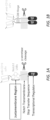
- FIGS. 1A-1B schematically illustrate differences between a SynNotch receptor and a chimeric polypeptide of the disclosure.
- FIG. 1A depicts the schematic structure of an existing synthetic Notch receptor (SynNotch), having a ligand recognition domain (for example, anti-CD19 scFv), a juxtamembrane domain (JMD) including a Notch negative regulatory region (NRR), a single-pass transmembrane domain (TMD), a stop transfer sequence (STS), and a transcriptional regulator (for example, Gal4VP64).
- SynNotch synthetic Notch receptor
- JMD juxtamembrane domain
- NRR Notch negative regulatory region
- TMD single-pass transmembrane domain
- STS stop transfer sequence
- Gal4VP64 a transcriptional regulator
- FIG. 1B depicts the schematic structure of an exemplary second-generation synthetic Notch receptor as disclosed herein (Hinge-Notch receptor), in which the entire NEC of the wild-type Notch polypeptide, including the NRR, has been deleted.
- a hinge polypeptide sequence derived from CD8 hinge domain is inserted N-terminally to the TMD.
- the CD8 hinge sequence contains polypeptide motifs that promote dimer formation of the chimeric polypeptide via intermolecular disulfide bonding.
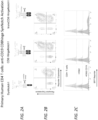
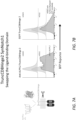
- FIGS. 2A-2C schematically summarize the design of Hinge-Notch receptors, their expression, and activation in primary T CD4+ T cells.
- FIG. 2A schematically shows an exemplary SynNotch1 receptor (Left panel) which was designed based upon human Notch1 proteins.
- the Middle panel schematically shows an exemplary CD8 Hinge-Notch1 receptor.
- CD8 Hinge-Notch1 receptor replaces the entire JMD with a CD8A hinge domain, which contains cysteine residues known to form disulfide bonds.
- the Right panel schematically an exemplary truncated CD8 Hinge-Notch1 receptor (truncCD8 Hinge-Notch1).
- FIG. 2B is a summary of flow cytometry data of receptor expression.
- primary human T-cells were transduced with two lentiviral constructs expressing either a receptor or a transcriptional reporter plasmid and activated with anti-CD3/anti-CD28 Dynabeads (Gibco).
- Receptor signaling was measured using an AlexaFluor647-tagged anti-myc antibody (Cell Signaling).
- FIG. 2C summarizes the results of receptor activation testing, where transcriptional activation of an inducible BFP reporter gene was measured using a Fortessa X-50 (BD Biosciences).
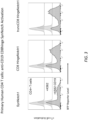
- FIG. 3 schematically summarizes the results of experiments performed to demonstrate receptor activation with concurrent T-cell activation.
- anti-MCAM, anti-CD3 Bi-specific T-cell Engagers MCAM BiTE ® s
- MCAM BiTE ® s anti-MCAM, anti-CD3 Bi-specific T-cell Engagers
- 1 ⁇ 10 5 double positive T-cells expressing anti-CD19 receptors were co-cultured with: MCAM BiTE ® s (upper trace), 1 ⁇ 10 5 K562 cells + MCAM BiTE ® s (middle trace), or 1 ⁇ 10 5 CD19+ K562 cells + MCAM BiTE ® s (lower trace) for 24 hours.
- Transcriptional activation of an inducible BFP reporter gene was subsequently measured using a Fortessa X-50 (BD Biosciences), and demonstrated increased reporter signal as compared to the signal obtained from non-activated T-cells in FIG. 2 .
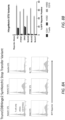
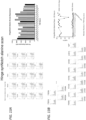
- FIGS. 4A-4D summarize the results of experiments performed to optimize the hinge domain in the context of chimeric Notch receptors.
- FIG. 4A schematically illustrates various CD8 Hinge-Notch truncation variants including one or more hinge components denoted as “a”, “b", “c”, and “d”.
- Component "a” represents the region N-terminal of the first cysteine residue.
- Component "b” represents the first cysteine residue.
- Component “c” represents the region between the first and second cysteine residues.
- Component “d” represents the second cysteine residue and the region from the second cysteine residue to the receptor transmembrane domain.
- the hinge components of the four variants tested are listed.
- FIG. 4B summarizes the results of receptor activation testing in Jurkat T-cells. Transcriptional activation of an inducible BFP reporter gene was subsequently measured using a Fortessa X-50 (BD Biosciences).
- FIG. 4C shows the quantification of %BFP positive cells from data in FIG. 4B .
- FIG. 4D is a plot of Signal:Noise ratio from data in FIG. 4B .
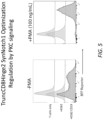
- FIG. 5 schematically summarizes the results from experiments performed to test truncCD8Hinge2 receptor activation with concurrent PKC (protein kinase C) signaling.
- PMA protein kinase C
- 1 ⁇ 10 5 double positive T-cells expressing anti-CD19 receptors were co-cultured with: no additional cells (upper trace), 1 ⁇ 10 5 K562 cells (middle trace), or 1 ⁇ 10 5 CD19+ K562 cells (lower trace) for 24 hours, with and without PMA.
- Transcriptional activation of an inducible BFP reporter gene was subsequently measured using a Fortessa X-50 (BD Biosciences).
- FIGS. 6A-6B schematically summarize the results from Hinge-Notch receptors containing alternative hinge domains derived from other sources.
- Hinge-Notch receptors containing alternative hinge domains derived from other sources.
- CD8A CD8A
- CD28 CD28
- OX40 OX40
- IgG4 IgG4Hinge-Notch
- FIG. 6B depicts the quantification of %BFP positive cells from testing in FIG. 6A .
- FIGS. 7A-7B schematically summarize the results from experiments performed to test Hinge-Notch receptors containing other ligand recognition domains.
- the anti-ALPPL2 scFv and eGFP can be used as ligand recognition domains.
- FIG. 7B a previously generated reporter positive Jurkat T-cell line was transduced with a receptor construct. Receptor expression was measured using an AlexaFluor647-tagged anti-myc antibody (Cell Signaling).
- 1 ⁇ 10 5 Jurkat T-cells expressing anti-CD19 receptors were co-cultured with: no additions (upper trace), 1 ⁇ 10 5 K562 cells (middle trace), or 1 ⁇ 10 5 ALPPL2+ K562 cells/1 ⁇ 10 5 K562 cells expressing an anti-GFP nanobody on the cell surface (lower trace) for 24 hours.
- Transcriptional activation of an inducible BFP reporter gene was subsequently measured using a Fortessa X-50 (BD Biosciences).
- FIGS. 8A-8B schematically summarize the results from experiments performed to test Hinge-Notch receptors with other stop-transfer-sequences (STS).
- STS stop-transfer-sequences
- FIG. 8A in addition to the Notch1 STS, another STS (e.g ., Notch2 STS, Notch4 STS, DAG1 STS, PTPRF STS, and KL STS) can be used to affect receptor behavior.
- STS e.g ., Notch2 STS, Notch4 STS, DAG1 STS, PTPRF STS, and KL STS
- primary human T-cells were activated with anti-CD3/anti-CD28 Dynabeads (Gibco) and transduced with two lentiviral constructs expressing either a receptor or a transcriptional reporter construct.
- Receptor/reporter positive cells were sorted for on Day 5 post initial T-cell stimulation and expanded further for activation testing. For testing, 1 ⁇ 10 5 double positive T-cells expressing anti-CD19 receptors were co-cultured with: no additions (upper trace), 1 ⁇ 10 5 K562 cells (middle trace), or 1 ⁇ 10 5 CD19+ K562 cells (lower trace) for 24 hours. Transcriptional activation of an inducible BFP reporter gene was subsequently measured using a Fortessa X-50 (BD Biosciences). FIG. 8B depicts the quantification of activation data in FIG. 8A .
- FIGS. 9A-9C schematically summarize the results from experiments performed to evaluate the functionality of various Hinge-Notch truncation variants, as exemplified by Hinge-Notch1 constructs, in order to optimize Hinge-Notch receptors.
- FIG. 9A illustrates the construct design for variants including either the full-length or a truncated form of the N-JMD domain of the construct pIZ341. Black bars indicate the amino acids composing each variant.
- "Full” refers to a full-length variant, including SEQ ID NO: 12.
- “Trunc 1” refers to a truncation variant No. 1, including SEQ ID NO: 39.
- “Trunc 2" refers to a truncation variant No.
- Trunc 3 refers to a truncation variant No. 3, including SEQ ID NO: 40.
- Trustnc 4 refers to a truncation variant No. 4, including SEQ ID NO: 41.
- FIG. 9B A comparison of expression of these CD8 hinge variants is shown in FIG. 9B .
- primary human CD4+ T-cells were activated with anti-CD3/anti-CD28 Dynabeads and transduced with two lentiviral constructs, one expressing a hinge truncation variant receptor, and the other a BFP transcriptional reporter plus anti-Alkaline phosphatase, placental-like 2 (ALPPL2) CAR.
- ALPPL2 placental-like 2
- FIG. 9B shows relative expression levels of each receptor, measured by anti-myc-tag staining ( y -axis), versus the reporter construct expression levels, measured by GFP ( x -axis).
- the rightmost panel of FIG. 9B shows MFI quantitation of receptor expression of CD8 hinge variants in double-positive cells.
- FIG. 9C shows 5 panels, representing the Full variant and the truncation variants 1 to 4, from left to right.
- T-cells expressing anti-CD19 receptors were co-cultured with, from top to bottom, no additions (top trace), ALPPL2+ K562 cells (second trace from top), CD19+ K562 cells (third trace from top), or ALPPL2+ CD19+ (bottom trace).
- Transcriptional activation of an inducible BFP reporter gene was subsequently measured using a Fortessa X-50 (BD Biosciences).
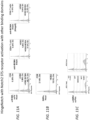
- FIG. 10 schematically summarizes the results from experiments performed to test Hinge-Notch variants with different binding domains and their dependence on proteolytic activity.
- Primary human CD4+ T-cells were activated with anti-CD3/anti-CD28 Dynabeads and transduced with two lentiviral constructs, one expressing a hinge receptor with indicated binding head truncation variant receptor, and the other a transcriptional reporter. Cells containing both constructs were sorted on Day 5 post initial T-cell stimulation and expanded further for activation testing.
- 1 ⁇ 10 5 double positive T-cells expressing receptors were co-cultured with 1 ⁇ 10 5 K562 cells (top trace), 1 ⁇ 10 5 Ligand + K562 cells (second trace from top), 1 ⁇ 10 5 Ligand + K562 cells with an ADAM10 inhibitor (third trace from top), or 1 ⁇ 10 5 Ligand + K562 cells with a gamma-secretase inhibitor, DAPT (bottom trace).
- Transcriptional activation of an inducible BFP reporter gene was subsequently measured using a Fortessa X-50 (BD Biosciences).
- FIGS. 11A-11C schematically summarize the results from experiments performed to test Hinge-Notch variants with different binding domains and a Notch2 STS domain.
- Primary CD4+ human T-cells were activated with anti-CD3/anti-CD28 Dynabeads and transduced with two lentiviral constructs, one expressing a hinge receptor with indicated binding head hingeNotch receptor, and the other a transcriptional reporter. Cells containing both constructs were sorted on Day 5 post initial T-cell stimulation and expanded further for activation testing.
- FIG. 11A For testing, 1 ⁇ 10 5 double positive T-cells expressing receptors were co-cultured with no addition (upper trace), 1 ⁇ 10 5 K562 cells (middle trace), or 1 ⁇ 10 5 BCMA+ K562 cells (lower trace) for two days ( FIG. 11A ).
- the left panel refers to a construct with an anti-BCMA scFv binding head.
- the middle panel refers to a construct with an anti-BCMA fully humanized VH binding head
- the right panel refers to a construct with an anti-BCMA fully humanized VH binding head with hinge domain optimized for the binding domain (Hinge5).
- a SIRP ⁇ binding head was similarly tested.
- 1 ⁇ 10 5 double positive T-cells expressing receptors were co-cultured with no addition (upper trace), or 1 ⁇ 10 5 K562 cells (lower trace) for two days ( FIG. 11B ).
- FIG. 11C different scFvs against the HER2 antigen were tested and compared using similar methods.
- 1 ⁇ 10 5 double positive T-cells expressing receptors were co-cultured with no addition (top trace), adherent HEK 293T cells (second trace from top), adherent MBMDA-468 cells (third trace from top), adherent MCF7 cells (fourth trace from top), or adherent SKBR3 cells (bottom trace) for two days ( FIG. 11C ).
- the left panel represents the anti-HER2 4D5-7 scFv binding head, while the right panel represents the anti-HER2 4D5-8 scFv binding head.
- transcriptional activation of an inducible BFP reporter gene was subsequently measured using a Fortessa X-50 (BD Biosciences).
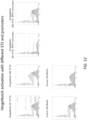
- FIG. 12 schematically summarizes the results from experiments performed to compare activation of Hinge-Notch variants with different promoters and STS domains.
- 1 ⁇ 10 5 double positive T-cells expressing anti-CD19 receptors were co-cultured with no additions (top trace), 1 ⁇ 10 5 ALPPL2+ K562 cells (second trace from top), 1 ⁇ 10 5 CD19+ K562 cells (third trace from top), or 1 ⁇ 10 5 ALPPL2+ CD19+ K562 cells (bottom trace).
- Transcriptional activation of an inducible BFP reporter gene was subsequently measured using a Fortessa X-50 (BD Biosciences). Activation using murine and human original synNotch constructs were included for comparison.
- FIGS. 13A-13B schematically summarize the results from experiments for mutational analysis of the Notch1 transmembrane domain (TMD) in Hinge-Notch constructs.
- Variants with different alanine mutations in the TMD domain of the Hinge-Notch construct were prepared.
- Each amino acid residue from position 301 (F) through position 322 (S) in the TMD of Hinge-Notch were individually mutated to alanine.
- Primary human CD4+ T-cells were activated with anti-CD3/anti-CD28 Dynabeads and transduced with two lentiviral constructs, one expressing a TMD mutant variant, and the other containing a BFP transcriptional reporter.
- FIG. 13A the left panel shows relative expression of different receptors, measured by anti-myc-tag staining ( y -axis), versus reporter construct marker expression ( x -axis), while the right panel represents MFI quantitation of receptor expression of TMD mutant variants in double-positive cells.
- FIG. 13B T-cells expressing anti-CD19 receptors were co-cultured at a ratio of 1:1 with control CD19(-) or CD19(+) K562 cells. Transcriptional activation of an inducible BFP reporter gene was subsequently measured using a Fortessa X-50 (BD Biosciences). The left panel shows flow panels of activation profiles. The right panel represents BFP% plotted as a line graph.
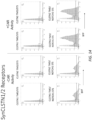
- FIG. 14 schematically summarizes the results from experiments for mutational analysis for the transmembrane domain (TMD) and the STS domain in Hinge-Notch constructs.
- TMD transmembrane domain
- STS domain in Hinge-Notch constructs.
- Four types of exemplary Hinge Notch receptors were using in this Example, all of which including an anti-CD19 scFv domain, a truncated CD8 Hinge domain, and a Gal4VP64 domain, plus different TMD domains (CLSTN1 TMD or CLSTN2 TMD) and different STS domains (CLSTN1 STS, CLSTN2 STS, or Notch1 STS).
- Primary human CD4+ T-cells were activated with anti-CD3/anti-CD28 Dynabeads (Gibco) and transduced with two lentiviral constructs, one expressing a hinge receptor with TMD/STS combination as indicated, and the other a transcriptional reporter with constitutively expressed anti-ALPPL2 CAR.
- Cells containing both constructs were sorted for on Day 5 post initial T-cell stimulation and expanded further for activation testing.
- 1 ⁇ 10 5 double positive T-cells expressing receptors were co-cultured with: 1 ⁇ 10 5 K562 cells ("-CAR" panels, blue), or 1 ⁇ 10 5 CD19+ K562 cells ("-CAR" panels, red).
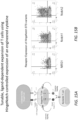
- FIGS. 15A-15B schematically summarize the results from experiments for tunable, ligand-dependent expansion of T cells using Hinge-Notch-controlled expression of an engineered cytokine.
- FIG. 15A shows a diagram of T cells engineered with Hinge-Notch STS variants to provide ligand-triggered secretion of an engineered cytokine for autocrine and paracrine expansion of T cells.
- Expression profile of anti-CD19 Hinge-Notch receptors with the indicated STS modifications are shown in FIG. 15B .
- FIG. 16 schematically summarizes the results from experiments performed to demonstrate that ligand-triggered expression of super-IL2 improves cell viability of CAR-T cells.
- 1 ⁇ 10 5 double positive T-cells expressing anti-CD19 HingeNotch Notch1 STS receptors were co-cultured in media without IL-2, with no K562 cells (top left), with CD19+ K562 cells to trigger Hinge-Notch (top right), with MCAM+ K562 cells to trigger CAR activation (bottom left) or with MCAM+ and CD19+ K562 cells to trigger activation of both receptors (bottom right).
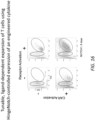
- FIG. 17 schematically summarizes the results from experiments performed to demonstrate tunable proliferation of T cells with STS-variants of Hinge-Notch.
- Primary human T-cells were activated with anti-CD3/anti-CD28 Dynabeads and transduced with two lentiviral constructs, one expressing a CAR against the MCAM antigen, and one expressing a Hinge-Notch receptor with inducible super-IL2 under Gal4-UAS control (the right four panels).
- Hinge-Notch receptors containing 3 different STS variants (NRG1, Notch1, Notch2) were tested against a no Hinge-Notch control.
- primary human T-cells were generated without CAR expression (left panels). T cells were stained with CellTrace Violet according to manufacturer's protocols, co-incubated with CD19+ K562 target cells in media without IL-2 and measured using a Fortessa X-50 at the indicated timepoints to assess proliferation by CTV signal decay.
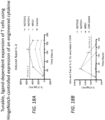
- FIGS. 18A-18B schematically summarize the results from experiments performed to demonstrate tunable secretion of super-IL2 with STS-variants of Hinge-Notch.
- Primary human T-cells were activated with anti-CD3/anti-CD28 Dynabeads and transduced with a lentiviral construct Hinge-Notch receptor with inducible super-IL2 under Gal4-UAS control ( FIG. 18A ).
- Hinge-Notch receptors containing 3 different STS variants (NRG1, Notch1, Notch2) were tested against a no HingeNotch control.
- T cells were co-incubated with MCAM+ CD19+ K562 cells in media lacking IL-2, and at the indicated timepoints, supernatant IL-2 was measured using the Instant ELISA Kit according to manufacturer's protocols with a microplate reader. Red dotted line indicates a standard concentration of IL-2 used for culturing T cells. Graded secretion of super-IL2 was achieved by activation of STS-tuned Hinge-Notch receptors.
- primary human T-cells were generated with an additional lentiviral vector expressing a CAR against MCAM.
- FIG. 19 schematically summarizes the results from experiments performed to demonstrate tunable secretion of super-IL2 with STS-variants of Hinge-Notch enhances proliferation of bystander T cells.
- Primary human T-cells were activated with anti-CD3/anti-CD28 Dynabeads and transduced with a lentiviral construct including a Hinge-Notch receptor with inducible super-IL2 under Gal4-UAS control (right panels).
- HingeNotch receptors containing 3 different STS variants (NRG1, Notch1, Notch2) were tested against a no HingeNotch control.
- HingeNotch T cells were co-incubated with "bystander" T cells stained with CellTrace Far Red expressing a CAR against MCAM (left panel) or with no CAR (right panel). T cells were co-incubated with MCAM+ CD19+ K562 cells in media lacking IL-2, and proliferation of the bystander T cells were assessed by measuring signal decay on a Fortessa X-50.
- FIG. 20 schematically summarizes the results from experiments performed to test single lentiviral vector constructs containing Hinge-Notch receptors CAR circuits.
- Primary human T-cells were activated with anti-CD3/anti-CD28 Dynabeads and transduced with a single lentiviral construct containing constitutively expressed Hinge-Notch receptors with an inducible anti-MCAM CAR cassette under Gal4-UAS control.
- Cells were sorted for Hinge-Notch receptor expression via myc-tag on Day 5 post initial T-cell stimulation and expanded further for activation testing. Three STS-variants were tested as indicated, with constitutively expressed CAR used as a control.
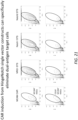
- FIG. 21 schematically summarizes the results from experiments performed to demonstrate specific dual antigen target cell killing by T cells engineered with a single lentivector containing a HingeNotch CAR circuit.
- Primary human T-cells were activated with anti-CD3/anti-CD28 Dynabeads and transduced with a single lentiviral construct containing constitutively expressed HingeNotch -receptors with an inducible anti-MCAM CAR cassette under Gal4-UAS control.
- Cells were sorted for Hinge-Notch receptor expression via myc-tag on Day 5 post initial T-cell stimulation and expanded further for activation testing. Three STS-variants were tested as indicated, with constitutively expressed CAR used as a control.
- Target cell killing was assessed by forward/side-scatter of the K562 population using a Fortessa X-50.
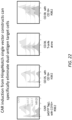
- FIG. 22 schematically summarizes the results from experiments performed for testing single lentiviral vector constructs containing Hinge-Notch receptors for control of T cell activation and exhaustion.
- Primary human T-cells were activated with anti-CD3/anti-CD28 Dynabeads and transduced with a single lentiviral construct containing constitutively expressed Hinge-Notch receptors with an inducible anti-MCAM CAR cassette under Gal4-UAS control.
- Cells were sorted for Hinge-Notch receptor expression via myc-tag on Day 5 post initial T-cell stimulation and expanded further for activation testing. Three STS-variants were tested as indicated, with constitutively expressed CAR used as a control.
- T-cells expressing anti-CD19 receptors were co-cultured with 5 ⁇ 10 4 CD19+ K562 cells.
- Transcriptional activation of the inducible CAR was subsequently measured by a GFP tag using a Fortessa X-50 (the left most panel).
- T cell activation and exhaustion were measure by expression of CD25 (the second panel from the left side) and CD39 (the third and fourth panels from the left side), respectively.
- FIG. 23 schematically summarizes the results from experiments performed for in vivo testing of Hinge-Notch-to-CAR circuits.
- NOD.Cg- Prkdc scid Il2rg tm1Wjl /SzJ (NSG) mice were implanted with 1 ⁇ 10 6 K562-BCMA/CD19 tumor cells subcutaneously on the left flank.
- NSG mice were implanted with 1 ⁇ 10 6 K562-BCMA/CD19 tumor cells on the left flank and with 1 ⁇ 10 6 K562-CD19 tumor cells on the right flank.
- tumors were infused i.v. through tail vein injection. Tumor size was monitored via caliper 2-3 per week and mice were determined to have reached endpoint when tumors measured ⁇ 20 mm. For immunophenotypic analysis, tumors and spleens were harvested 10 days post T cell implantation. Tumors were manually minced and digested in RPMI-1640 with 4 mg/ml Collagenase IV and 0.1 mg/ml DNase I at 37°C for 30 min and spleens were manually dissociated and subjected to red blood cell lysis.
- the present disclosure generally relates to, among other things, a new class of oligomerizable chimeric polypeptide receptors engineered to modulate transcriptional regulation in a ligand-dependent manner.
- the new receptors (termed "Hinge-Notch”), even though derived from Notch, do not require the Notch NEC subunit, particularly the NRR previously believed to be essential for the functioning of the receptors.
- This new class of receptors is synthetic and recombinant, and does not occur in nature.
- the chimeric polypeptides disclosed herein can be synthetic polypeptides, or can be engineered, designed, or modified so as to provide desired and/or improved properties, e.g., modulating transcription.
- the new Hinge-Notch receptors as disclosed herein are not only functional but demonstrate enhanced biologic activity is surprising and is completely contrary to the teachings in the field.
- the new chimeric receptors described herein incorporate an extracellular oligomerization domain to promote formation of oligomeric forms, e.g., dimeric or trimeric form of the chimeric receptors. It is believed that this design facilitates oligomerization/clustering of extracellular domains (ECD) and subsequently brings together intracellular domains (ICD) to activate cell signaling, e.g . T-cell signaling.
- the receptors disclosed herein bind a target cell-surface ligand, which triggers proteolytic cleavage of the chimeric receptor and release of a transcriptional regulator that modulates a custom transcriptional program in the cell.
- the disclosure also provides compositions and methods useful for producing such receptors, nucleic acids encoding same, host cells genetically modified with the nucleic acids, as well as methods for modulating an activity of a cell and/or for the treatment of various health condition, such as diseases (e.g., cancers).
- a cell includes one or more cells, including mixtures thereof.
- a and/or B is used herein to include all of the following alternatives: “A”, “B”, “A or B”, and “A and B.”
- administration refers to the delivery of a composition or formulation as disclosed herein by an administration route including, but not limited to, intravenous, intra-arterial, intracranial, intramuscular, intraperitoneal, subcutaneous, intramuscular, or combinations thereof.
- administration route including, but not limited to, intravenous, intra-arterial, intracranial, intramuscular, intraperitoneal, subcutaneous, intramuscular, or combinations thereof.
- administration by a medical professional and self-administration refers to the delivery of a composition or formulation as disclosed herein by an administration route including, but not limited to, intravenous, intra-arterial, intracranial, intramuscular, intraperitoneal, subcutaneous, intramuscular, or combinations thereof.
- administration by a medical professional and self-administration refers to the delivery of a composition or formulation as disclosed herein by an administration route including, but not limited to, intravenous, intra-arterial, intracranial, intramuscular, intraperitoneal, subcutaneous, intramuscular, or combinations thereof.
- Cancer refers to the presence of cells possessing characteristics typical of cancer-causing cells, such as uncontrolled proliferation, immortality, metastatic potential, rapid growth and proliferation rate, and certain characteristic morphological features. Some types of cancer cells can aggregate into a mass, such as a tumor, but some cancer cells can exist alone within a subject.
- a tumor can be a solid tumor, a soft tissue tumor, or a metastatic lesion.
- the term "cancer” also encompass other types of non-tumor cancers. Non-limiting examples include blood cancers or hematological malignancies, such as leukemia, lymphoma, and myeloma. Cancers can include premalignant, as well as malignant cancers.
- host cell and "recombinant cell” are used interchangeably herein. It is understood that such terms, as well as “cell”, “cell culture”, “cell line”, refer not only to the particular subject cell or cell line but also to the progeny or potential progeny of such a cell or cell line, without regard to the number of transfers or passages in culture. It should be understood that not all progeny are exactly identical to the parental cell. This is because certain modifications may occur in succeeding generations due to either mutation (e.g ., deliberate or inadvertent mutations) or environmental influences (e.g.
- progeny may not, in fact, be identical to the parent cell, but are still included within the scope of the term as used herein, so long as the progeny retain the same functionality as that of the originally cell or cell line.
- operably linked denotes a physical or functional linkage between two or more elements, e.g. , polypeptide sequences or polynucleotide sequences, which permits them to operate in their intended fashion.
- percent identity refers to two or more sequences or subsequences that are the same or have a specified percentage of nucleotides or amino acids that are the same (e.g. , about 60% sequence identity, 65%, 70%, 75%, 80%, 85%, 90%, 91%, 92%, 93%, 94%, 95%, 96%, 97%, 98%, 99%, or higher identity over a specified region, when compared and aligned for maximum correspondence over a comparison window or designated region) as measured using a BLAST or BLAST 2.0 sequence comparison algorithms with default parameters described below, or by manual alignment and visual inspection.
- sequences are then said to be "substantially identical.”
- This definition also refers to, or may be applied to, the complement of a sequence.
- This definition also includes sequences that have deletions and/or additions, as well as those that have substitutions.
- Sequence identity can be calculated over a region that is at least about 20 amino acids or nucleotides in length, or over a region that is 10-100 amino acids or nucleotides in length, or over the entire length of a given sequence. Sequence identity can be calculated using published techniques and widely available computer programs, such as the GCS program package ( Devereux et al, Nucleic Acids Res.
- Sequence identity can be measured using sequence analysis software such as the Sequence Analysis Software Package of the Genetics Computer Group at the University of Wisconsin Biotechnology Center (1710 University Avenue, Madison, Wis. 53705), with the default parameters thereof
- a "therapeutically effective amount" of an agent is an amount sufficient to provide a therapeutic benefit in the treatment or management of a health condition, such as a disease (e.g ., a cancer), or to delay or minimize one or more symptoms associated with the disease.
- a therapeutically effective amount of a compound means an amount of therapeutic agent, alone or in combination with other therapeutic agents, which provides a therapeutic benefit in the treatment or management of the disease.
- the term "therapeutically effective amount” can encompass an amount that improves overall therapy of the disease, reduces or avoids symptoms or causes of the disease, or enhances the therapeutic efficacy of another therapeutic agent.
- an “effective amount” is an amount sufficient to contribute to the treatment, prevention, or reduction of a symptom or symptoms of a disease, which could also be referred to as a “therapeutically effective amount.”
- a “reduction” of a symptom means decreasing of the severity or frequency of the symptom(s), or elimination of the symptom(s).
- the exact amount of a composition including a “therapeutically effective amount” will depend on the purpose of the treatment, and will be ascertainable by one skilled in the art using known techniques (see, e.g., Lieberman, Pharmaceutical Dosage Forms (vols.
- a "subject” or an “individual” includes animals, such as human ( e.g., human individuals) and non-human animals.
- a "subject” or “individual” is a patient under the care of a physician.
- the subject can be a human patient or an individual who has, is at risk of having, or is suspected of having a disease of interest (e.g. , cancer) and/or one or more symptoms of the disease.
- the subject can also be an individual who is diagnosed with a risk of the condition of interest at the time of diagnosis or later.
- non-human animals includes all vertebrates, e.g., mammals, e.g., rodents, e.g., mice, and non- mammals, such as non-human primates, e.g., sheep, dogs, cows, chickens, amphibians, reptiles, etc.
- ranges disclosed herein also encompass any and all possible sub-ranges and combinations of sub-ranges thereof. Any listed range can be recognized as sufficiently describing and enabling the same range being broken down into at least equal halves, thirds, quarters, fifths, tenths, etc. As a non-limiting example, each range discussed herein can be readily broken down into a lower third, middle third and upper third, and so forth. As will also be understood by one skilled in the art all language such as “up to,” “at least,” “greater than,” “less than,” and the like include the number recited and refer to ranges which can be subsequently broken down into sub-ranges as discussed above. Finally, as will be understood by one skilled in the art, a range includes each individual member. Thus, for example, a group having 1-3 articles refers to groups having 1, 2, or 3 articles. Similarly, a group having 1-5 articles refers to groups having 1, 2, 3, 4, or 5 articles, and so forth.
- Notch receptors are transmembrane proteins that normally transduce signals upon binding to surface-bound ligands expressed on adjacent cells. Notch signals rely on cell-cell contact. Evolutionary divergence of vertebrates and invertebrates has been accompanied by at least two rounds of gene duplication involving the Notch receptors: flies possess a single Notch gene, worms two (GLP-1 and LIN-12), and mammals four (NOTCH1-4). Transduction of Notch signals relies on three key events: (i) ligand recognition, (ii) conformational exposure of the ligand-dependent cleavage site, and (iii) assembly of nuclear transcriptional activation complexes.
- Canonical Notch signals are transduced by a process called regulated intramembrane proteolysis.
- Notch receptors are normally maintained in a resting, proteolytically resistant conformation on the cell surface, but ligand binding initiates a proteolytic cascade that releases the intracellular portion of the receptor (also known as intracellular notch (ICN) or Notch intracellular domain (NICD)) from the membrane.
- ICN intracellular notch
- NBD Notch intracellular domain
- the critical, regulated cleavage step is effected by ADAM metalloproteases and occurs at a site called S2 immediately external to the plasma membrane.
- This truncated receptor, dubbed NEXT for Notch extracellular truncation
- NEXT for Notch extracellular truncation
- the ICN After gamma secretase-mediated cleavage, the ICN ultimately enters the nucleus, where it assembles a transcriptional activation complex that contains a DNA-binding transcription factor termed CSL (C-promoter-binding factor in mammals; also known as RBP-J)/Suppressor of hairless in Drosophila melanogaster or Lag1 in Caenorhabditis elegans ) , and a transcriptional coactivator of the Mastermind/Lag-3 family.
- CSL C-promoter-binding factor in mammals
- RBP-J Raster-J
- Suppressor of hairless in Drosophila melanogaster or Lag1 in Caenorhabditis elegans
- This complex engages additional coactivator proteins such as p300 to recruit the basal transcription machinery and activate the expression of downstream target genes.
- Notch receptors have a modular domain organization.
- the Notch extracellular subunit (NEC) of Notch receptors consist of a series of N-terminal epidermal growth factor receptor (EGFR)-like repeats that are responsible for ligand binding. O-linked glycosylation of these EGFR repeats, including modification by O-fucose, Fringe, and Rumi glycosyltransferases, also modulates the activity of Notch receptors in response to different ligand subtypes in flies and mammals.
- NEC Notch extracellular subunit
- EGFR epidermal growth factor receptor
- the EGFR repeats are followed by three L IN-12/ N otch r epeat (LNR) modules, which are unique to Notch receptors, and are widely reported to participate in preventing premature receptor activation.
- LNR L IN-12/ N otch r epeat
- the h etero d imerization (HD) domain of Notch1 is divided by furin cleavage, so that its N-terminal part terminates the Notch extracellular subunit (NEC), and its C-terminal half constitutes the beginning of the Notch transmembrane (NTM) subunit.
- NEC Notch extracellular subunit
- NTM Notch transmembrane
- ICN intracellular region
- Notch receptors and Notch-mediated cell signaling can be found in, for example, W.R. Gordon et al., Dev Cell (2015) 33:729-36 and W.R. Gordon et al., J. Cell Sci. (2008) 121:3109-19 .
- the present disclosure provides a new class of oligomerizable chimeric polypeptide receptors engineered to modulate transcriptional regulation in a ligand-dependent manner with various advantages over existing synthetic Notch receptors.
- natural Notch receptors are large with the NEC subunit containing several dozen tandem EGFR-like repeats
- polynucleotides encoding the receptors of the disclosure can be made smaller than natural Notch receptors and existing SynNotch-encoding polynucleotides, which enables the use of vectors having more limited capacity, or the inclusion of additional elements that would otherwise be excluded by vector capacity-related size constraints.
- chimeric polypeptide receptors disclosed herein facilitate amplified activation under certain cellular and environmental contexts. This type of feedback on the receptor activity is a new feature that can be exploited to enhance and tune the production of therapeutic payloads by engineered cells. Furthermore, as described in further detail below, a number of the receptor variants disclosed herein are easier to express than existing SynNotch receptors, as they can be transduced at higher efficiencies and are expressed at higher levels on the cell surface of human primary T cells.
- certain chimeric polypeptide receptors disclosed herein have better activity than existing SynNotch receptors as determined by, e.g. , ligand-induced signal levels of a desired transcriptional output.
- Hinge-Notch and truncHinge-Notch provide higher rates of ligand-induced signal than the corresponding SynNotch, and provide lower rates of signal when not ligand-induced.
- certain chimeric polypeptide receptors disclosed herein provide a more modular platform for engineering additional Notch receptors. This modular platform facilitates domains with distinct functions being easily swapped with corresponding domains from , e.g., other species, enabling customization of receptors activation profile.
- Hinge-Notch and truncated Hinge-Notch receptors as provided herein in addition to being smaller than existing synNotch receptors and well-expressed, can be customized to a vast degree, with all elements of the receptor extracellular, transmembrane, and intracellular domains available for customization.
- testing of various CD8 HingeNotch receptors as described herein demonstrated that a variety of extracellular domains are possible.
- a similar process performed on the existing SynNotch1 regulatory domain leads to either loss of expression or loss of switch-like function.
- HingeNotch receptors described herein can provide higher levels of ligand-induced signal when compared to either murine or human versions of SynNotch1. It is also believed that HingeNotch receptors described herein can provide lower levels of signal in the absence of ligand when compared to murine versions of SynNotch1 ( e.g ., lower noise signal signal).
- existing SynNotch receptors can be engineered with ligand-binding domains such as scFvs and nanobodies, but it has been difficult to use natural extracellular domains from receptors/ligands on SynNotch receptors.
- the second-generation Notch receptors provided herein are amenable to the use of other types of ligand binding domains, e.g ., binding domains other than scFv, thus expanding the landscape of targetable diseases and tissues.
- ligand binding domains e.g ., binding domains other than scFv
- experiments presented in the Examples section below demonstrated the ability to use eGFP as ligand-binding domain, which can bind the anti-GFP nanobody LaG17 expressed on the surface of a target cell.
- existing synthetic Notch receptor such as murine and human SynNotch1 were not compatible with eGFP as a ligand-binding domain.
- chimeric polypeptide receptors have been tested and validated in primary human T cells. These new receptors are expected to show similar performance in mouse models.
- the receptors disclosed herein may be engineered into various immune cell types for enhanced discrimination and elimination of tumors, or in engineered cells for control of autoimmunity and tissue regeneration. Accordingly, engineered cells, such as immune cells engineered to express one of more of the chimeric receptors disclosed herein, are also within the scope of the disclosure.
- some embodiments of the present disclosure relate to novel, non-naturally occurring chimeric polypeptides engineered to modulate transcriptional regulation in a ligand-dependent manner.
- the new receptors even though derived from Notch, do not require the Notch regulatory regions (NRRs) previously believed to be essential for the functioning of the receptors.
- the new engineered receptors described herein incorporate an extracellular oligomerization domain (e.g., hinge domain) to promote oligomerization to form higher order oligomeric, e.g. , dimeric or trimeric, forms of the chimeric receptors.
- the hinge domain includes polypeptide motifs capable of promoting oligomer formation of the chimeric polypeptide via intermolecular disulfide bonding.
- the extracellular oligomerization domain can replace part or all of the Notch extracellular domain.
- the receptors disclosed herein bind a target cell-surface ligand, which triggers proteolytic cleavage of the receptors and release of a transcriptional regulator that modulates a custom transcriptional program in the cell.
- a chimeric polypeptide including, from N-terminus to C-terminus: (a) an e xtra c ellular ligand-binding d omain (ECD) having a binding affinity for a selected ligand; (b) a hinge domain capable of promoting oligomer formation of the chimeric polypeptide via intermolecular disulfide bonding; (c) a t rans m embrane d omain (TMD) including one or more ligand-inducible proteolytic cleavage sites; and (d) an i ntra c ellular d omain (ICD) including a transcriptional regulator, wherein binding of the selected ligand to the ECD induces cleavage at a ligand-inducible proteolytic cleavage site(s) between the transcriptional regulator and the hinge domain, and wherein the chimeric polypeptide does not include a LIN-12-Notch repeat (LNR)
- the ECD of the chimeric polypeptide receptors (e.g ., Hinge-Notch receptors) disclosed herein has a binding affinity for one or more target ligands.
- the target ligand is expressed on a cell surface, or is otherwise anchored, immobilized, or restrained so that it can exert a mechanical force on the chimeric receptor.
- binding of the ECD of a chimeric receptor provided herein to a cell-surface ligand does not necessarily remove the target ligand from the target cell surface, but instead enacts a mechanical pulling force on the chimeric receptor.
- an otherwise soluble ligand may be targeted if it is bound to a surface, or to a molecule in the extracellular matrix.
- the target ligand is a cell-surface ligand.
- suitable ligand types include cell surface receptors; adhesion proteins; carbohydrates, lipids, glycolipids, lipoproteins, and lipopolysaccharides that are surface-bound; integrins; mucins; and lectins.
- the ligand is a protein.
- the ligand is a carbohydrate.
- the ligand is a cluster of differentiation (CD) marker.
- the CD marker is selected from the group consisting of CD1, CD1a, CD1b, CD1c, CD1d, CD1e, CD2, CD3d, CD3e, CD3g, CD4, CD5, CD7, CD8a, CD8b, CD19, CD20, CD21, CD22, CD23, CD25, CD27, CD28, CD33, CD34, CD40, CD45, CD48, CD52, CD59, CD66, CD70, CD71, CD72, CD73, CD79A, CD79B, CD80 (B7.1), CD86 (B7.2), CD94, CD95, CD134, CD140 (PDGFR4), CD152, CD154, CD158, CD178, CD181 (CXCR1), CD182 (CXCR2), CD183 (CXCR3), CD210, CD246, CD252, CD253, CD261, CD262, CD273 (PD-L2), CD274 (PD-
- the extracellular domain includes the ligand-binding portion of a receptor. In some embodiments, the extracellular domain includes an antigen-binding moiety that binds to one or more target antigens. In some embodiments, the antigen-binding moiety includes one or more antigen-binding determinants of an antibody or a functional antigen-binding fragment thereof.
- the term "functional fragment thereof' or "functional variant thereof' refers to a molecule having quantitative and/or qualitative biological activity in common with the wild-type molecule from which the fragment or variant was derived.
- a functional fragment or a functional variant of an antibody is one which retains essentially the same ability to bind to the same epitope as the antibody from which the functional fragment or functional variant was derived.
- an antibody capable of binding to an epitope of a cell surface receptor may be truncated at the N-terminus and/or C-terminus, and the retention of its epitope binding activity assessed using assays known to those of skill in the art.
- the antigen-binding moiety is selected from the group consisting of an antibody, a nanobody, a diabody, a triabody, or a minibody, an F(ab') 2 fragment, an F(ab) fragment, a single chain variable fragment (scFv), and a single domain antibody (sdAb), or a functional fragment thereof.
- the antigen-binding moiety includes an scFv.
- the antigen-binding moiety can include naturally-occurring amino acid sequences or can be engineered, designed, or modified to provide desired and/or improved properties such as, e.g ., binding affinity.
- binding affinity of an antigen-binding moiety e.g., an antibody
- a target antigen e.g., CD19 antigen
- binding affinity is measured by an antigen/antibody dissociation rate.
- binding affinity is measured by a competition radioimmunoassay.
- binding affinity is measured by ELISA.
- antibody affinity is measured by flow cytometry.
- An antibody that "selectively binds" an antigen is an antigen-binding moiety that does not significantly bind other antigens but binds the antigen with high affinity, e.g. , with an equilibrium constant (KD) of 100 nM or less, such as 60 nM or less, for example, 30 nM or less, such as, 15 nM or less, or 10 nM or less, or 5 nM or less, or 1 nM or less, or 500 pM or less, or 400 pM or less, or 300 pM or less, or 200 pM or less, or 100 pM or less.
- KD equilibrium constant
- a skilled artisan can select an ECD based on the desired localization or function of a cell that is genetically modified to express a chimeric polypeptide or Hinge-Notch receptor of the present disclosure.
- a chimeric polypeptide or miniNotch receptor with an ECD including an antibody specific for a HER2 antigen can target cells to HER2-expressing breast cancer cells.
- the ECD of the disclosed polypeptide Hinge-Notch receptors is capable of binding a tumor-associated antigen (TAA) or a tumor-specific antigen (TSA).
- TAAs include a molecule, such as e.g ., protein, present on tumor cells and on normal cells, or on many normal cells, but at much lower concentration than on tumor cells.
- TSAs generally include a molecule, such as e.g ., protein which is present on tumor cells but absent from normal cells.
- the antigen-binding moiety is specific for an epitope present in an antigen that is expressed by a tumor cell, i.e., a tumor-associated antigen.
- the tumor-associated antigen can be an antigen associated with, e.g., a breast cancer cell, a B cell lymphoma, a pancreatic cancer, a Hodgkin lymphoma cell, an ovarian cancer cell, a prostate cancer cell, a mesothelioma, a lung cancer cell, a non-Hodgkin B-cell lymphoma (B-NHL) cell, an ovarian cancer cell, a prostate cancer cell, a mesothelioma cell, a melanoma cell, a chronic lymphocytic leukemia cell, an acute lymphocytic leukemia cell, a neuroblastoma cell, a glioma, a glioblastoma, a colorectal cancer cell, etc.
- a tumor-associated antigen may also be expressed by a non-cancerous cell.
- the antigen-binding domain is specific for an epitope present in a tissue-specific antigen. In some embodiments, the antigen-binding domain is specific for an epitope present in a disease-associated antigen.
- Non-limiting examples of suitable target antigens include CD19, B7H3 (CD276), BCMA (CD269), alkaline phosphatase, placental-like 2 (ALPPL2), green fluorescent protein (GFP), enhanced green fluorescent protein (EGFP), signal regulatory protein ⁇ (SIRP ⁇ ), CD123, CD171, CD179 ⁇ , CD20, CD213A2, CD22, CD24, CD246, CD272, CD30, CD33, CD38, CD44v6, CD46, CD71, CD97, CEA, CLDN6, CLECL1, CS-1, EGFR, EGFRvIII, ELF2M, EpCAM, EphA2, Ephrin B2, FAP, FLT3, GD2, GD3, GM3, GPRC5D, HER2 (ERBB2/neu), IGLL1, IL-11R ⁇ , KIT (CD 117), MUC1, NCAM, PAP, PDGFR- ⁇ , PRSS21, PSCA, PSMA, ROR1, SSEA-4, TAG72,
- the target antigen is selected from CD19, B7H3 (CD276), BCMA (CD269), ALPPL2, CD123, CD171, CD179 ⁇ , CD20, CD213A2, CD22, CD24, CD246, CD272, CD30, CD33, CD38, CD44v6, CD46, CD71, CD97, CEA, CLDN6, CLECL1, CS-1, EGFR, EGFRvIII, ELF2M, EpCAM, EphA2, Ephrin B2, FAP, FLT3, GD2, GD3, GM3, GPRC5D, HER2 (ERBB2/neu), IGLL1, IL-11Ra, KIT (CD117), MUC1, NCAM, PAP, PDGFR- ⁇ , PRSS21, PSCA, PSMA, ROR1, SSEA-4, TAG72, TEM1/CD248, TEM7R, TSHR, VEGFR2, ALPI, citrullinated vimentin, cMet, Axl, GPC2, human epidermatitis, CD
- suitable antigens include PAP (prostatic acid phosphatase), prostate stem cell antigen (PSCA), prostein, NKG2D, TARP (T cell receptor gamma alternate reading frame protein), Trp-p8, STEAP1 (six-transmembrane epithelial antigen of the prostate 1), an abnormal ras protein, an abnormal p53 protein, integrin ⁇ 3 (CD61), galactin, K-Ras (V-Ki-ras2 Kirsten rat sarcoma viral oncogene), Ral-B, GPC2, CD276 (B7H3), or IL-13R ⁇ .
- the antigen is Her2.
- the antigen is ALPPL2.
- the antigen is BCMA.
- the antigen-binding moiety of the ECD is specific for a reporter protein, such as GFP and eGFP.
- Non-limiting examples of such antigen binding moiety include a LaG17 anti-GFP nanobody.
- the antigen-binding moiety of the ECD includes an anti-BCMA fully-humanized VH domain (FHVH).
- the antigen is signal regulatory protein ⁇ (SIRP ⁇ ).
- Additional antigens suitable for targeting by the chimeric polypeptide receptors disclosed herein include, but are not limited to GPC2, human epidermal growth factor receptor 2 (Her2/neu), CD276 (B7H3), IL-13R ⁇ 1, IL-13R ⁇ 2, ⁇ -fetoprotein (AFP), carcinoembryonic antigen (CEA), cancer antigen-125 (CA-125), CA19-9, calretinin, MUC-1, epithelial membrane protein (EMA), epithelial tumor antigen (ETA).
- target antigens include, but are not limited to, tyrosinase, melanoma-associated antigen (MAGE), CD34, CD45, CD123, CD93, CD99, CD117, chromogranin, cytokeratin, desmin, glial fibrillary acidic protein (GFAP), gross cystic disease fluid protein (GCDFP-15), ALK, DLK1, FAP, NY-ESO, WT1, HMB-45 antigen, protein melan-A (melanoma antigen recognized by T lymphocytes; MART-1), myo-D1, muscle-specific actin (MSA), neurofilament, neuron-specific enolase (NSE), placental alkaline phosphatase, synaptophysin, thyroglobulin, thyroid transcription factor-1.
- MAGE melanoma-associated antigen
- CD34 CD45
- CD123 CD93
- CD99 chromogranin
- CD117 chromogranin
- GFAP glial fibr
- Additional antigens suitable for targeting by the chimeric receptors disclosed herein include, but are not limited to, those associated with an inflammatory disease such as, AOC3 (VAP-1), CAM-3001, CCL11 (eotaxin-1), CD125, CD147 (basigin), CD154 (CD40L), CD2, CD20, CD23 (IgE receptor), CD25 (a subunit of the heteromeric of IL-2 receptor), CD3, CD4, CD5, IFN- ⁇ , IFN- ⁇ , IgE, IgE Fc region, IL-1, IL-12, IL-23, IL-13, IL-17, IL-17A, IL-22, IL-4, IL-5, IL-5, IL-6, IL-6 receptor, integrin a4, integrin ⁇ 4 ⁇ 7, LFA-1 (CD11 ⁇ ), myostatin, OX-40, scleroscin, SOST, TGF ⁇ 1, TNF-a, and VEGF-A.
- an inflammatory disease such as, AOC3 (V
- antigens suitable for targeting by the chimeric polypeptides and Hinge-Notch receptors disclosed herein include, but are not limited to the pyruvate kinase isoenzyme type M2 (tumor M2-PK), CD20, CD5, CD7, CD3, TRBC1, TRBC2, BCMA, CD38, CD123, CD93, CD34, CD1 ⁇ , SLAMF7/CS1, FLT3, CD33, CD123, TALLA-1, CSPG4, DLL3, Kappa light chain, Lamba light chain, CD16/ FcyRIII, CD64, FITC, CD22, CD27, CD30, CD70, GD2 (ganglioside G2), GD3, EGFRvIII (epidermal growth factor variant III), EGFR and isovariants thereof, TEM-8, sperm protein 17 (Sp17), mesothelin.
- pyruvate kinase isoenzyme type M2 tumor M2-PK
- CD20 CD5, CD
- suitable antigens include PAP (prostatic acid phosphatase), prostate stem cell antigen (PSCA), prostein, NKG2D, TARP (T cell receptor gamma alternate reading frame protein), Trp-p8, STEAP1 (six-transmembrane epithelial antigen of the prostate 1), an abnormal ras protein, an abnormal p53 protein, integrin ⁇ 3 (CD61), galactin, K-Ras (V-Ki-ras2 Kirsten rat sarcoma viral oncogene), and Ral-B.
- the antigen is GPC2, CD19, Her2/neu, CD276 (B7H3), IL-13R ⁇ 1, or IL-13R ⁇ 2.
- the antigen is Her2. In some embodiments, the antigen is ALPPL2. In some embodiments, the antigen is BCMA. In some embodiments, the antigen-binding moiety of the ECD is specific for a reporter protein, such as GFP and eGFP. Non-limiting examples of such antigen binding moiety include a LaG17 anti-GFP nanobody. In some embodiments, the antigen-binding moiety of the ECD includes an anti-BCMA fully-humanized VH domain (FHVH).
- FHVH fully-humanized VH domain
- antigens suitable for targeting by the chimeric polypeptides and Hinge-Notch receptors disclosed herein include ligands derived from a pathogen.
- the antigen can be HER2 produced by HER2-positive breast cancer cells.
- the antigen can be CD19 that is expressed on B-cell leukemia.
- the antigen can be EGFR that is expressed on glioblastoma multiform (GBM) but much less expressed so on healthy CNS tissue.
- the antigen can be CEA that is associated with cancer in adults, for example colon cancer.
- the antigen-binding moiety of the ECD is specific for a cell surface target, where non-limiting examples of cell surface targets include CD19, CD30, Her2, CD22, ENPP3, EGFR, CD20, CD52, CD11 ⁇ , and ⁇ -integrin.
- the chimeric polypeptides and Hinge-Notch receptors disclosed herein include an extracellular domain having an antigen-binding moiety that binds CD19, CEA, HER2, MUC1, CD20, ALPPL2, BCMA, or EGFR.
- the chimeric polypeptides provided herein include an extracellular domain including an antigen-binding moiety that binds CD19.
- the chimeric polypeptides provided herein include an extracellular domain including an antigen-binding moiety that binds ALPPL2.
- the chimeric polypeptides provided herein include an extracellular domain including an antigen-binding moiety that binds BCMA.
- the chimeric polypeptides provided herein (e.g ., Hinge-Notch receptors) include an extracellular domain including an antigen-binding moiety that binds Her2.
- the chimeric polypeptides and Hinge-Notch receptors disclosed herein include an extracellular domain including an antigen-binding moiety that binds CD19, ALPPL2, BCMA, or Her2.
- the antigen-binding moiety includes an amino acid sequence having at least 70%, at least 75%, at least 80%, at least 85%, at least 90%, at least 95%, at least 96%, at least 97%, at least 98%, at least 99% sequence identity to one or more of SEQ ID NOS: 9-11, 36-38, and 72 in the Sequence Listing.
- the antigen-binding moiety includes an amino acid sequence having at least 90% sequence identity to a sequence selected from the group consisting of SEQ ID NOS: 9-11, 36-38, and 72. In some embodiments, the antigen-binding moiety includes an amino acid sequence having at least 95% sequence identity to a sequence selected from the group consisting of SEQ ID NOS: 9-11, 36-38, and 72. In some embodiments, the antigen-binding moiety includes an amino acid sequence having 100% sequence identity to one or more of SEQ ID NOS: 9-11, 36-38, and 72.
- the antigen-binding moiety includes an amino acid sequence having a sequence selected from the group consisting of SEQ ID NOS: 9-11, 36-38, and 72, wherein one, two, three, four, or five of the amino acid residues in any one of the SEQ ID NOS: 9-11, 36-38, and 72 is/are substituted by a different amino acid residue.
- the Notch extracellular domains located N-terminally to the TMD of the chimeric polypeptide of the disclosure include an oligomerization domain (e.g ., hinge domain) containing one or more polypeptide motifs that promote oligomer formation of the chimeric polypeptides via intermolecular disulfide bonding.
- the hinge domain generally includes a flexible oligo- or polypeptide connector region disposed between the ECD and the TMD.
- the hinge domain provides flexibility between the ECD and TMD and also provides sites for intermolecular disulfide bonding between two or more chimeric polypeptide monomers to form an oligomeric complex.
- the hinge domain includes motifs that promote dimer formation of the chimeric polypeptides disclosed herein. In some embodiments, the hinge domain includes motifs that promote trimer formation of the chimeric polypeptides disclosed herein (e.g ., a hinge domain derived from OX40).
- Hinge polypeptide sequences suitable for the compositions and methods of the disclosure can be naturally-occurring hinge polypeptide sequences ( e.g ., those from naturally-occurring immunoglobulins).
- a hinge polypeptide sequence can be a synthetic sequence that corresponds to a naturally-occurring hinge polypeptide sequence, or can be an entirely synthetic hinge sequence, or can be engineered, designed, or modified to provide desired and/or improved properties, e.g ., modulating transcription.
- Suitable hinge polypeptide sequences include, but are not limited to, those derived from IgA, IgD, and IgG subclasses, such as IgG1 hinge domain, IgG2 hinge domain, IgG3 hinge domain, and IgG4 hinge domain, or a functional variant thereof.
- the hinge polypeptide sequence contains one or more CXXC motifs.
- the hinge polypeptide sequence contains one or more CPPC motifs. Additional information in this regard can be found in, for example, a recent review by Vidarsson G. et al., Frontiers Immunol. October 20, 2014 .
- the hinge domain includes a hinge polypeptide sequence derived from an IgG1 hinge domain or a functional variant thereof.
- the hinge domain includes a hinge polypeptide sequence derived from an IgG2 hinge domain or a functional variant thereof.
- the hinge domain includes a hinge polypeptide sequence derived from an IgG3 hinge domain or a functional variant thereof.
- the hinge domain includes a hinge polypeptide sequence derived from an IgG4 hinge domain or a functional variant thereof.
- the hinge domain includes a hinge polypeptide sequence derived from an IgA hinge domain or a functional variant thereof.
- the hinge domain includes a hinge polypeptide sequence derived from an IgD hinge domain or a functional variant thereof.
- hinge polypeptide sequences suitable for the compositions and methods disclosed herein include, but are not limited to, hinge polypeptide sequences derived from a CD8 ⁇ hinge domain, a CD28 hinge domain, a CD152 hinge domain, a PD-1 hinge domain, a CTLA4 hinge domain, an OX40 hinge domain, an Fc ⁇ RIII ⁇ hinge domain, and functional variants thereof.
- the hinge domain includes a hinge polypeptide sequence derived from a CD8 ⁇ hinge domain or a functional variant thereof.
- the hinge domain includes a hinge polypeptide sequence derived from a CD28 hinge domain or a functional variant thereof.
- the hinge domain includes a hinge polypeptide sequence derived from an OX40 hinge domain or a functional variant thereof.
- the hinge domain includes a hinge polypeptide sequence derived from an IgG4 hinge domain or a functional variant thereof.
- the length and/or amino acid composition of the hinge domain there are no particular limitations to the length and/or amino acid composition of the hinge domain other than it confers flexibility and the capacity for oligomerization.
- the length and amino acid composition of the hinge polypeptide sequence can be optimized to vary the orientation and/or proximity of the ECD and the TMD relative to one another, as well as of the chimeric polypeptide monomers to one another, to achieve a desired activity of the chimeric polypeptide of the disclosure.
- any arbitrary single-chain peptide including about one to 100 amino acid residues (e.g. , 2, 3, 4, 5, 6, 7, 8, 9, 10, 11, 12, 13, 14, 15, 16, 17, 18, 19, 20, etc. amino acid residues) can be used as a hinge domain.
- the hinge domain includes about 5 to 50, about 10 to 60, about 20 to 70, about 30 to 80, about 40 to 90, about 50 to 100, about 60 to 80, about 70 to 100, about 30 to 60, about 20 to 80, about 30 to 90 amino acid residues. In some embodiments, the hinge domain includes about 1 to 10, about 5 to 15, about 10 to 20, about 15 to 25, about 20 to 40, about 30 to 50, about 40 to 60, about 50 to 70 amino acid residues. In some embodiments, the hinge domain includes about 40 to 70, about 50 to 80, about 60 to 80, about 70 to 90, or about 80 to 100 amino acid residues. In some embodiments, the hinge domain includes about 1 to 10, about 5 to 15, about 10 to 20, about 15 to 25 amino acid residues.
- the hinge domain includes a sequence having at least 80% sequence identity, such as, at least 80%, at least 85%, at least 90%, at least 95%, at least 96%, at least 97%, at least 98%, or 99% sequence identity to a sequence selected from the group consisting of SEQ ID NOS: 12-16 and 39-42 in the Sequence Listing.
- the hinge domain includes an amino acid sequence having at least 90% sequence identity to a sequence selected from the group consisting of SEQ ID NOS: 12-16 and 39-42.
- the hinge domain includes an amino acid sequence having at least 95% sequence identity to a sequence selected from the group consisting of SEQ ID NOS: 12-16 and 39-42.
- the hinge domain includes an amino acid sequence having about 100% sequence identity to a sequence selected from the group consisting of SEQ ID NOS: 12-16 and 39-42. In some embodiments, the hinge domain includes an amino acid sequence having a sequence selected from the group consisting of SEQ ID NOS: 12-16 and 39-42, wherein one, two, three, four, or five of the amino acid residues in any one of the SEQ ID NOS: 12-16 and 39-42 is/are substituted by a different amino acid residue.
- TMD Transmembrane domain
- the chimeric polypeptides of the disclosure include a transmembrane domain including one or more ligand-inducible proteolytic cleavage sites.
- proteolytic cleavage sites in a Notch receptor are as described above.
- Additional proteolytic cleavage sites suitable for the compositions and methods disclosed herein include, but are not limited to, a metalloproteinase cleavage site for a MMP selected from collagenase-1, -2, and -3 (MMP-1, - 8, and -13), gelatinase A and B (MMP-2 and -9), stromelysin 1, 2, and 3 (MMP-3, -10, and -11), matrilysin (MMP-7), and membrane metalloproteinases (MT1-MMP and MT2-MMP).
- MMP-1, -2, and -3 MMP-1, - 8, and -13
- MMP-2 and -9 gelatinase A and B
- MMP-3, -10, and -11 stromelysin 1, 2, and 3
- MMP-7 matrilysin
- MT1-MMP and MT2-MMP membrane metalloproteinases
- the cleavage sequence of MMP-9 is Pro-X-X-Hy (wherein, X represents an arbitrary residue; Hy, a hydrophobic residue such as Leu, Ile, Val, Phe, Trp, Tyr, Val, Met, and Pro) (SEQ ID NO: 64), e.g., Pro-X-X-Hy-(Ser/Thr) (SEQ ID NO: 65), e.g., Pro-Leu/Gln-Gly-Met- Thr-Ser (SEQ ID NO: 66) or Pro-Leu/Gln-Gly-Met-Thr (SEQ ID NO: 67).
- a suitable protease cleavage site is a plasminogen activator cleavage site, e.g., a urokinase-type plasminogen activator (uPA) or a tissue plasminogen activator (tPA) cleavage site.
- a suitable protease cleavage site is a prolactin cleavage site.
- Specific examples of cleavage sequences of uPA and tPA include sequences comprising Val-Gly-Arg (SEQ ID NO: 68).
- protease cleavage site that can be included in a proteolytically cleavable linker is a tobacco etch virus (TEV) protease cleavage site, e.g ., Glu-Asn-Leu-Tyr-Thr-Gln-Ser (SEQ ID NO: 69), where the protease cleaves between the glutamine and the serine.
- TSV tobacco etch virus
- protease cleavage site that can be included in a proteolytically cleavable linker is an enterokinase cleavage site, e.g ., Asp-Asp-Asp-Asp-Lys (SEQ ID NO: 70), where cleavage occurs after the lysine residue.
- enterokinase cleavage site e.g ., Asp-Asp-Asp-Asp-Lys
- Another example of a protease cleavage site that can be included in a proteolytically cleavable linker is a thrombin cleavage site, e.g., Leu-Val-Pro-Arg (SEQ ID NO: 71).
- protease cleavage sites include sequences cleavable by the following proteases: a PreScission TM protease (a fusion protein including human rhinovirus 3C protease and glutathione-S-transferase), a thrombin, cathepsin B, Epstein-Barr virus protease, MMP-3 (stromelysin), MMP-7 (matrilysin), MMP-9; thermolysin-like MMP, matrix metalloproteinase 2 (MMP-2), cathepsin L; cathepsin D, matrix metalloproteinase 1(MMP-1), urokinase-type plasminogen activator (uPA), membrane type 1 matrixmetalloproteinase (MT-MMP), stromelysin 3 (or MMP-11), thermolysin, fibroblast collagenase and stromelysin-1, matrix metalloproteinase 13 (collagenas
- Proteases that are not native to the host cell in which the receptor is expressed can be used as a further regulatory mechanism, in which activation of the Hinge-Notch is not possible until the protease is expressed or otherwise provided.
- a protease may be tumor-associated or disease-associated (expressed to a significantly higher degree than in normal tissue), and serve as an independent regulatory mechanism.
- some matrix metalloproteases are highly expressed in certain cancer types.
- the TMD suitable for the chimeric polypeptides and Hinge-Notch receptors disclosed herein can be any transmembrane domain of a Type 1 transmembrane receptor including at least one ⁇ -secretase cleavage site.
- a Type 1 transmembrane receptor including at least one ⁇ -secretase cleavage site.
- APP amyloid precursor protein
- Notch substrate proteins, including amyloid precursor protein (APP) and Notch, can, for example, be found in a recent review by Zhang et al., Frontiers Cell Neurosci (2014 ).
- Non-limiting suitable TMDs from Type 1 transmembrane receptors include those from CLSTN1, CLSTN2, APLP1, APLP2, LRP8, APP, BTC, TGBR3, SPN, CD44, CSF1R, CXCL16, CX3CL1, DCC, DLL1, DSG2, DAG1, CDH1, EPCAM, EPHA4, EPHB2, EFNB1, EFNB2, ErbB4, GHR, HLA-A, and IFNAR2, wherein the TMD includes at least one ⁇ -secretase cleavage site.
- TMDs suitable for the compositions and methods described herein include, but are not limited to, transmembrane domains from Type 1 transmembrane receptors IL1R1, IL1R2, IL6R, INSR, ERN1, ERN2, JAG2, KCNE1, KCNE2, KCNE3, KCNE4, KL, CHL1, PTPRF, SCN1B, SCN3B, NPR3, NGFR, PLXDC2, PAM, AGER, ROBO1, SORCS3, SORCS1, SORL1, SDC1, SDC2, SPN, TYR, TYRP1, DCT, VASN, FLT1, CDH5, PKHD1, NECTIN1, PCDHGC3, NRG1, LRP1B, CDH2, NRG2, PTPRK, SCN2B, Nradd, and PTPRM.
- Type 1 transmembrane receptors IL1R1, IL1R2, IL6R, INSR, ERN1, ERN2, JAG2, KCNE1, KCNE2, KC
- the TMD of the chimeric polypeptides or Notch receptors of the disclosure is a TMD derived from the TMD of a member of the calsyntenin family, such as, alcadein alpha and alcadein gamma.
- the TMD of the chimeric polypeptides or Notch receptors of the disclosure is a TMD known for Notch receptors.
- the TMD of the chimeric polypeptides or Notch receptors of the disclosure is a TMD derived from a different Notch receptor.
- the Notch1 TMD can be substituted with a Notch2 TMD, Notch3 TMD, Notch4 TMD, or a Notch TMD from a non-human animal such as Danio rerio, Drosophila melanogaster, Xenopus laevis, or Gallus gallus.
- a non-human animal such as Danio rerio, Drosophila melanogaster, Xenopus laevis, or Gallus gallus.
- the transmembrane domain includes an amino acid sequence exhibiting at least 70%, at least 75%, at least 80%, at least 85%, at least 90%, at least 95%, at least 96%, at least 97%, at least 98%, at least 99% sequence identity to one or more of SEQ ID NOS: 17, 77, and 78 in the Sequence Listing.
- the transmembrane domain includes an amino acid sequence having at least 90% sequence identity to a sequence selected from the group consisting of NOS: 17, 77, and 78.
- the transmembrane domain includes an amino acid sequence having at least 95% sequence identity to a sequence selected from the group consisting of NOS: 17, 77, and 78.
- the transmembrane domain includes an amino acid sequence having about 100% sequence identity to one or more of NOS: 17, 77, and 78. In some embodiments, the transmembrane domain includes an amino acid sequence having a sequence selected from the group consisting of NOS: 17, 77, and 78, wherein one, two, three, four, or five of the amino acid residues in any one of the NOS: 17, 77, and 78 is/are substituted by a different amino acid residue. In some embodiments, the amino acid substitution(s) within the TMD includes one or more substitutions within a "GV" motif of the TMD. In some embodiments, at least one of such substitution(s) is a substitution to alanine.
- one, two, three, four, five, or more of the amino acid residues of the sequence FMYVAAAAFVLLFFVGCGVLLS (SEQ ID NO: 17), as well as the sequence as set forth in SEQ ID NO: 77 or 78, may be substituted by a different amino acid residue.
- the amino acid residue at position 18 and/or 19 of the "GV" motif within SEQ ID NO: 17 is substituted by a different amino acid residue.
- the glycine residue at position 18 of SEQ ID NO: 17 is substituted by a different amino acid residue.
- the valine residue at position 19 of SEQ ID NO: 17 is substituted by a different amino acid residue.
- the transmembrane domain includes an amino acid sequence having a sequence corresponding to SEQ ID NO: 17 with a mutation at the position corresponding to position 18 of SEQ ID NO: 17, such as G18A mutations. In some embodiments, the transmembrane domain includes an amino acid sequence having a sequence corresponding to SEQ ID NO: 17 with a mutation at the position corresponding to position 19 of SEQ ID NO: 17, such as V 19A mutations.
- the chimeric polypeptides and Hinge-Notch receptors of the disclosure include a stop-transfer-sequence (STS) which constitutes a highly-charged domain located C-terminally to the TMD.
- STS stop-transfer-sequence
- the STS is linked to the TMD and the ICD in the following order, from N-terminus to C-terminus, TMD-STS-ICD.
- the length and/or amino acid composition of the STS there are no particular limitations to the length and/or amino acid composition of the STS.
- any arbitrary single-chain peptide comprising about 4 to about 40 amino acid residues (e.g.
- the STS includes about 4 to 15, about 6 to 20, about 8 to 25, about 10 to 30, about 12 to 35, about 14 to 40, about 5 to 40, about 10 to 35, about 15 to 30, about 20 to 25, about 20 to 40, about 10 to 30, about 4 to 20, or about 5 to 25 amino acid residues.
- the STS includes about 4 to 10, about 5 to 12, about 6 to 14, about 7 to 18, about 8 to 20, about 9 to 22, about 10 to 24, or about 11 to 26 amino acid residues.
- the STS includes about 4 to 10 residues, such as, 4, 5, 6, 7, 8, 9, or 10 amino acid residues.
- the STS includes a sequence having at least 70% sequence identity, such as, at least 70%, at least 75%, at least 80%, at least 85%, at least 90%, at least 95%, at least 96%, at least 97%, at least 98%, or 99% sequence identity to a STS sequence from Notch1, Notch2, Notch3, Notch4, CLSTN1, CLSTN2, CSF1R, CXCL16, DAG1, GHR, PTPRF, AGER, KL, NRG1, LRP1B, Jag2, EPCAM, KCNE3, CDH2, NRG2, PTPRK, BTC, EPHA3, IL1R2, or PTPRM.
- Notch1, Notch2, Notch3, Notch4 CLSTN1, CLSTN2, CSF1R, CXCL16, DAG1, GHR, PTPRF, AGER, KL, NRG1, LRP1B, Jag2, EPCAM, KCNE3, CDH2, NRG2, PTPRK, BTC, EPHA3, IL1R2, or PTPRM.
- the STS includes a sequence comprising only Lys (K) or Arg (R) in the first 4 residues. In some embodiments, the STS includes one, two, three, four, five, or more basic residues. In some embodiments, the STS includes five, four, three, two, one, or zero aromatic residues or residues with hydrophobic and/or bulky side chains.
- the STS includes a sequence having at least 80% sequence identity, such as, at least 80%, at least 85%, at least 90%, at least 95%, at least 96%, at least 97%, at least 98%, or 99% sequence identity to a sequence selected from the group consisting of SEQ ID NOS: 18-19, 43-63, 79, and 80 in the Sequence Listing.
- the STS includes an amino acid sequence having at least 90% sequence identity to a sequence selected from the group consisting of SEQ ID NOS: 18-19, 43-63, 79, and 80.
- the STS includes an amino acid sequence having at least 95% sequence identity to a sequence selected from the group consisting of SEQ ID NOS: 18-19, 43-63, 79, and 80. In some embodiments, the STS includes an amino acid sequence having about 100% sequence identity to a sequence selected from the group consisting of SEQ ID NOS: 18-19, 43-63, 79, and 80.
- the STS includes an amino acid sequence having a sequence selected from the group consisting of SEQ ID NOS: 18-19, 43-63, 79, and 80, wherein one, two, three, four, or five of the amino acid residues in any one of the SEQ ID NOS: 18-19, 43-63, 79, and 80 is/are substituted by a different amino acid residue.
- the STS includes a sequence having at least 70% sequence identity, such as, at leat 70%, at least 75%, at least 80%, at least 85%, at least 90%, at least 95%, at least 96%, at least 97%, at least 98%, or 99% sequence identity to a STS sequence from Notch1, Notch2, Notch3, Notch4, CLSTN1, CLSTN2, JAG2, PTPRF, LRP1B, NRG2, KCNE2, KCNE3, KCNE4, AGER, PKHD1, GHR, PTPRM, DAG1, NRG1, EPCAM, KL, PTPRK, CXCL16, or any one listed in Tables 3 and 4.
- the STS includes a sequence comprising only Lys (K) or Arg (R) in the first 4 residues. In some embodiments, the STS includes one, two, three, four, five, or more basic residues. In some embodiments, the STS comprises five, four, three, two, one, or zero aromatic residues or residues with hydrophobic and/or bulky side chains.
- the chimeric polypeptides and Hinge-Notch receptors of the disclosure include a transcriptional regulator.
- the transcriptional regulator of the disclosure is a polypeptide element that acts to activate or inhibit the transcription of a promoter-driven DNA sequence.
- Transcriptional regulators suitable for the compositions and methods of the disclosure can be naturally-occurring transcriptional regulators or can be engineered, designed, or modified so as to provide desired and/or improved properties, e.g ., modulating transcription.
- the engineered receptors of the present disclosure are advantageous in that they can provide the ability to trigger a custom transcriptional program in engineered cells.
- transcriptional regulator of the disclosure is a custom transcriptional regulator that drives transcription off a specific sequence that only appears once in the engineered cell.
- the transcriptional regulator directly regulates differentiation of the cell. In some embodiments, the transcriptional regulator indirectly modulates (e.g., regulates) differentiation of the cell by modulating the expression of a second transcription factor. It will be understood by one having ordinary skill in the art that a transcriptional regulator can be a transcriptional activator or a transcriptional repressor. In some embodiments, the transcriptional regulator is a transcriptional repressor. In some embodiments, the transcriptional regulator is a transcriptional activator. In some embodiments, the transcriptional regulator can further include a nuclear localization signal.
- the transcriptional regulator is selected from Gal4-VP16, Gal4-VP64, tetR-VP64, ZFHD1-VP64, Gal4-KRAB, and HAP1-VP16. In some embodiments, the transcriptional regulator is Gal4-VP64.
- Chimeric polypeptides and Hinge-Notch receptors of the present disclosure can be chimeric polypeptides of any length, including chimeric polypeptides that are generally between about 100 amino acids (aa) to about 1000 aa, e.g., from about 100 aa to about 200 aa, from about 150 aa to about 250 aa, from about 200 aa to about 300 aa, from about 250 aa to about 350 aa, from about 300 aa to about 400 aa, from about 350 aa to about 450 aa, from about 400 aa to about 500 aa in length.
- aa amino acids
- the disclosed chimeric polypeptides are generally between about 400 aa to about 450 aa, from about 450 aa to about 500 aa, from about 500 aa to about 550 aa, from about 550 aa to about 600 aa, from about 600 aa to about 650 aa, from about 650 aa to about 700 aa, from about 700 aa to about 750 aa, from about 750 aa to about 800 aa, from about 800 aa to about 850 aa, from about 850 aa to about 900 aa, from about 900 aa to about 950 aa, or from about 950 aa to about 1000 aa in length.
- the chimeric polypeptides of the present disclosure have a length of about 300 aa to about 400 aa. In some cases, the chimeric polypeptides of the present disclosure have a length of about 300 aa to about 350 aa. In some cases, the chimeric polypeptides of the present disclosure have a length of about 300 aa to about 325 aa. In some cases, the chimeric polypeptides of the present disclosure have a length of about 350 aa to about 400 aa. In some cases, the chimeric polypeptides of the present disclosure have a length of 750 aa to 850 aa.
- the chimeric polypeptides of the present disclosure have a length of about 525 aa, about 538 aa, about 539 aa, about 542 aa, about 550 aa, about 556 aa, or about 697 aa.
- the Notch extracellular domains located N-terminally to the TMD can further include an additional domain, for example a membrane localization signal such as a CD8A signal, a detectable marker such as a myc tag or his tag, and the like.
- an additional domain for example a membrane localization signal such as a CD8A signal, a detectable marker such as a myc tag or his tag, and the like.
- the chimeric polypeptides and HingeNotch receptors as described herein can be further engineered to include one or more additional features such as, a signal sequence, a detectable label, a tumor-specific cleavage site, a disease-specific cleavage site, or combinations thereof.
- additional features such as, a signal sequence, a detectable label, a tumor-specific cleavage site, a disease-specific cleavage site, or combinations thereof.
- proteases such as matrix metalloproteases
- proteases are upregulated in cancers, allowing tumor-specific cleavage specificity not via a specific cleavage site but via higher levels of specific proteases. Additional information in this regard can be found in, for example, J.S. Dudani et al., Annu. Rev. Cancer Biol. (2016), 2:353-76 .
- the chimeric polypeptide or Hinge-Notch receptor of the disclosure includes: (a) a hinge domain including an amino acid sequence having at least 80% sequence identity to any one of SEQ ID NO: 12-16 and 39-42; (b) a transmembrane domain including an amino acid sequence having at least 80% sequence identity to any one of SEQ ID NOS: 17, 77, and 78; and (c) a stop-transfer-sequence domain including an amino acid sequence having at least 80% sequence identity to any one of SEQ ID NOS: 18-19, 43-63, 79, and 80.
- the chimeric polypeptide or Hinge-Notch receptor of the disclosure includes: (a) a hinge domain including an amino acid sequence having at least 90% sequence identity to any one of SEQ ID NO: 12-16 and 39-42; (b) a transmembrane domain including an amino acid sequence having at least 90% sequence identity to any one of SEQ ID NOS: 17, 77, and 78; and (c) a stop-transfer-sequence domain including an amino acid sequence having at least 90% sequence identity to any one of SEQ ID NOS: 18-19, 43-63, 79, and 80.
- the chimeric polypeptide or Hinge-Notch receptor of the disclosure includes: (a) a hinge domain including an amino acid sequence having at least 95% sequence identity to any one of SEQ ID NO: 12-16 and 39-42; (b) a transmembrane domain including an amino acid sequence having at least 95% sequence identity to any one of SEQ ID NOS: 17, 77, and 78; and (c) a stop-transfer-sequence domain including an amino acid sequence having at least 95% sequence identity to any one of SEQ ID NOS: 18-19, 43-63, 79, and 80.
- the chimeric polypeptide of the disclosure includes an amino acid sequence having at least about 80%, 90%, 95%, 96%, 97, 98%, 99%, or 100% sequence identity to a chimeric receptor disclosed herein.
- chimeric polypeptides including an amino acid sequence having at least about 80%, 90%, 95%, 96%, 97, 98%, 99%, or 100% sequence identity to any one of SEQ ID NOS: 1-8, 24-35, and 73-76 identified in the Sequence Listing.
- the chimeric polypeptides include an amino acid sequence having at least about 80%, 90%, 95%, 96%, 97, 98%, 99%, or 100% sequence identity to SEQ ID NO: 1.
- the chimeric polypeptides include an amino acid sequence having at least about 80%, 90%, 95%, 96%, 97, 98%, 99%, or 100% sequence identity to SEQ ID NO: 2. In some embodiments, the chimeric polypeptides include an amino acid sequence having at least about 80%, 90%, 95%, 96%, 97, 98%, 99%, or 100% sequence identity to SEQ ID NO: 3. In some embodiments, the chimeric polypeptides include an amino acid sequence having at least about 80%, 90%, 95%, 96%, 97, 98%, 99%, or 100% sequence identity to SEQ ID NO: 4.
- the chimeric polypeptides include an amino acid sequence having at least about 80%, 90%, 95%, 96%, 97, 98%, 99%, or 100% sequence identity to SEQ ID NO: 5. In some embodiments, the chimeric polypeptides include an amino acid sequence having at least about 80%, 90%, 95%, 96%, 97, 98%, 99%, or 100% sequence identity to SEQ ID NO: 6. In some embodiments, the chimeric polypeptides include an amino acid sequence having at least about 80%, 90%, 95%, 96%, 97, 98%, 99%, or 100% sequence identity to SEQ ID NO: 7.
- the chimeric polypeptides include an amino acid sequence having at least about 80%, 90%, 95%, 96%, 97, 98%, 99%, or 100% sequence identity to SEQ ID NO: 8. In some embodiments, the chimeric polypeptides include an amino acid sequence having at least about 80%, 90%, 95%, 96%, 97, 98%, 99%, or 100% sequence identity to SEQ ID NO: 24. In some embodiments, the chimeric polypeptides include an amino acid sequence having at least about 80%, 90%, 95%, 96%, 97, 98%, 99%, or 100% sequence identity to SEQ ID NO: 25.
- the chimeric polypeptides include an amino acid sequence having at least about 80%, 90%, 95%, 96%, 97, 98%, 99%, or 100% sequence identity to SEQ ID NO: 26. In some embodiments, the chimeric polypeptides include an amino acid sequence having at least about 80%, 90%, 95%, 96%, 97, 98%, 99%, or 100% sequence identity to SEQ ID NO: 27. In some embodiments, the chimeric polypeptides include an amino acid sequence having at least about 80%, 90%, 95%, 96%, 97, 98%, 99%, or 100% sequence identity to SEQ ID NO: 28.
- the chimeric polypeptides include an amino acid sequence having at least about 80%, 90%, 95%, 96%, 97, 98%, 99%, or 100% sequence identity to SEQ ID NO: 29. In some embodiments, the chimeric polypeptides include an amino acid sequence having at least about 80%, 90%, 95%, 96%, 97, 98%, 99%, or 100% sequence identity to SEQ ID NO: 30. In some embodiments, the chimeric polypeptides include an amino acid sequence having at least about 80%, 90%, 95%, 96%, 97, 98%, 99%, or 100% sequence identity to SEQ ID NO: 31.
- the chimeric polypeptides include an amino acid sequence having at least about 80%, 90%, 95%, 96%, 97, 98%, 99%, or 100% sequence identity to SEQ ID NO: 32. In some embodiments, the chimeric polypeptides include an amino acid sequence having at least about 80%, 90%, 95%, 96%, 97, 98%, 99%, or 100% sequence identity to SEQ ID NO: 33. In some embodiments, the chimeric polypeptides include an amino acid sequence having at least about 80%, 90%, 95%, 96%, 97, 98%, 99%, or 100% sequence identity to SEQ ID NO: 34.
- the chimeric polypeptides include an amino acid sequence having at least about 80%, 90%, 95%, 96%, 97, 98%, 99%, or 100% sequence identity to SEQ ID NO: 35. In some embodiments, the chimeric polypeptides include an amino acid sequence having at least about 80%, 90%, 95%, 96%, 97, 98%, 99%, or 100% sequence identity to SEQ ID NO: 73. In some embodiments, the chimeric polypeptides include an amino acid sequence having at least about 80%, 90%, 95%, 96%, 97, 98%, 99%, or 100% sequence identity to SEQ ID NO: 74.
- the chimeric polypeptides include an amino acid sequence having at least about 80%, 90%, 95%, 96%, 97, 98%, 99%, or 100% sequence identity to SEQ ID NO: 75. In some embodiments, the chimeric polypeptides include an amino acid sequence having at least about 80%, 90%, 95%, 96%, 97, 98%, 99%, or 100% sequence identity to SEQ ID NO: 76.
- nucleic acid molecules including nucleotide sequences encoding the chimeric polypeptides and Hinge-Notch receptors of the invention, including expression cassettes, and expression vectors containing these nucleic acid molecules operably linked to heterologous nucleic acid sequences such as, for example, regulatory sequences which allow in vivo expression of the receptor in a host cell.
- Nucleic acid molecules of the present disclosure can be of any length, including for example, between about 1.5 Kb and about 50 Kb, between about 5 Kb and about 40 Kb, between about 5 Kb and about 30 Kb, between about 5 Kb and about 20 Kb, or between about 10 Kb and about 50 Kb, for example between about 15 Kb to 30 Kb, between about 20 Kb and about 50 Kb, between about 20 Kb and about 40 Kb, about 5 Kb and about 25 Kb, or about 30 Kb and about 50 Kb.
- nucleic acid molecule including a nucleotide sequence encoding a chimeric polypeptide or Hinge-Notch receptor including, from N-terminus to C-terminus: (a) an extracellular ligand-binding domain having a binding affinity for a selected ligand; (b) a hinge domain capable of promoting oligomer formation of the chimeric polypeptide via intermolecular disulfide bonding; (c) a transmembrane domain including one or more ligand-inducible proteolytic cleavage sites; and (d) an intracellular domain including a transcriptional regulator, wherein binding of the selected ligand to the extracellular ligand-binding domain induces cleavage at a ligand-inducible proteolytic cleavage site disposed between the transcriptional regulator and the hinge domain, and wherein the chimeric polypeptide does not include a LIN-12-Notch repeat (LNR) and/or a heterodimer
- the nucleotide sequence is incorporated into an expression cassette or an expression vector.
- an expression cassette generally includes a construct of genetic material that contains coding sequences and enough regulatory information to direct proper transcription and/or translation of the coding sequences in a recipient cell, in vivo and/or ex vivo.
- the expression cassette may be inserted into a vector for targeting to a desired host cell and/or into an individual.
- an expression cassette of the disclosure include a coding sequence for the chimeric polypeptide as disclosed herein, which is operably linked to expression control elements, such as a promoter, and optionally, any or a combination of other nucleic acid sequences that affect the transcription or translation of the coding sequence.
- the nucleotide sequence is incorporated into an expression vector.
- vector generally refers to a recombinant polynucleotide construct designed for transfer between host cells, and that may be used for the purpose of transformation, e.g. , the introduction of heterologous DNA into a host cell.
- the vector can be a replicon, such as a plasmid, phage, or cosmid, into which another DNA segment may be inserted so as to bring about the replication of the inserted segment.
- the expression vector can be an integrating vector.
- the expression vector can be a viral vector.
- viral vector is widely used to refer either to a nucleic acid molecule (e.g. , a transfer plasmid) that includes virus-derived nucleic acid elements that generally facilitate transfer of the nucleic acid molecule or integration into the genome of a cell or to a viral particle that mediates nucleic acid transfer. Viral particles will generally include various viral components and sometimes also host cell components in addition to nucleic acid(s).
- the term viral vector may refer either to a virus or viral particle capable of transferring a nucleic acid into a cell or to the transferred nucleic acid itself.
- Viral vectors and transfer plasmids contain structural and/or functional genetic elements that are primarily derived from a virus.
- the term "retroviral vector” refers to a viral vector or plasmid containing structural and functional genetic elements, or portions thereof, that are primarily derived from a retrovirus.
- the term “lentiviral vector” refers to a viral vector or plasmid containing structural and functional genetic elements, or portions thereof, including LTRs that are primarily derived from a lentivirus, which is a genus of retrovirus.
- nucleic acid molecules encoding a polypeptide with an amino acid sequence having at least about 80%, 90%, 95%, 96%, 97, 98%, 99%, or 100% sequence identity to a chimeric receptor disclosed herein.
- the nucleic acid molecules encode a polypeptide with an amino acid sequence having at least about 80%, 90%, 95%, 96%, 97, 98%, 99%, or 100% sequence identity to SEQ ID NO: 1. In some embodiments, the nucleic acid molecules encode a polypeptide with an amino acid sequence having at least about 80%, 90%, 95%, 96%, 97, 98%, 99%, or 100% sequence identity to SEQ ID NO: 2. In some embodiments, the nucleic acid molecules encode a polypeptide with an amino acid sequence having at least about 80%, 90%, 95%, 96%, 97, 98%, 99%, or 100% sequence identity to SEQ ID NO: 3.
- the nucleic acid molecules encode a polypeptide with an amino acid sequence having at least about 80%, 90%, 95%, 96%, 97, 98%, 99%, or 100% sequence identity to SEQ ID NO: 4. In some embodiments, the nucleic acid molecules encode a polypeptide with an amino acid sequence having at least about 80%, 90%, 95%, 96%, 97, 98%, 99%, or 100% sequence identity to SEQ ID NO: 5. In some embodiments, the nucleic acid molecules encode a polypeptide with an amino acid sequence having at least about 80%, 90%, 95%, 96%, 97, 98%, 99%, or 100% sequence identity to SEQ ID NO: 6.
- the nucleic acid molecules encode a polypeptide with an amino acid sequence having at least about 80%, 90%, 95%, 96%, 97, 98%, 99%, or 100% sequence identity to SEQ ID NO: 7. In some embodiments, the nucleic acid molecules encode a polypeptide with an amino acid sequence having at least about 80%, 90%, 95%, 96%, 97, 98%, 99%, or 100% sequence identity to SEQ ID NO: 8. In some embodiments, the nucleic acid molecules encode a polypeptide with an amino acid sequence having at least about 80%, 90%, 95%, 96%, 97, 98%, 99%, or 100% sequence identity to SEQ ID NO: 24.
- the nucleic acid molecules encode a polypeptide with an amino acid sequence having at least about 80%, 90%, 95%, 96%, 97, 98%, 99%, or 100% sequence identity to SEQ ID NO: 25. In some embodiments, the nucleic acid molecules encode a polypeptide with an amino acid sequence having at least about 80%, 90%, 95%, 96%, 97, 98%, 99%, or 100% sequence identity to SEQ ID NO: 26. In some embodiments, the nucleic acid molecules encode a polypeptide with an amino acid sequence having at least about 80%, 90%, 95%, 96%, 97, 98%, 99%, or 100% sequence identity to SEQ ID NO: 27.
- the nucleic acid molecules encode a polypeptide with an amino acid sequence having at least about 80%, 90%, 95%, 96%, 97, 98%, 99%, or 100% sequence identity to SEQ ID NO: 28. In some embodiments, the nucleic acid molecules encode a polypeptide with an amino acid sequence having at least about 80%, 90%, 95%, 96%, 97, 98%, 99%, or 100% sequence identity to SEQ ID NO: 29. In some embodiments, the nucleic acid molecules encode a polypeptide with an amino acid sequence having at least about 80%, 90%, 95%, 96%, 97, 98%, 99%, or 100% sequence identity to SEQ ID NO: 30.
- the nucleic acid molecules encode a polypeptide with an amino acid sequence having at least about 80%, 90%, 95%, 96%, 97, 98%, 99%, or 100% sequence identity to SEQ ID NO: 31. In some embodiments, the nucleic acid molecules encode a polypeptide with an amino acid sequence having at least about 80%, 90%, 95%, 96%, 97, 98%, 99%, or 100% sequence identity to SEQ ID NO: 32. In some embodiments, the nucleic acid molecules encode a polypeptide with an amino acid sequence having at least about 80%, 90%, 95%, 96%, 97, 98%, 99%, or 100% sequence identity to SEQ ID NO: 33.
- the nucleic acid molecules encode a polypeptide with an amino acid sequence having at least about 80%, 90%, 95%, 96%, 97, 98%, 99%, or 100% sequence identity to SEQ ID NO: 34. In some embodiments, the nucleic acid molecules encode a polypeptide with an amino acid sequence having at least about 80%, 90%, 95%, 96%, 97, 98%, 99%, or 100% sequence identity to SEQ ID NO: 35. In some embodiments, the nucleic acid molecules encode a polypeptide with an amino acid sequence having at least about 80%, 90%, 95%, 96%, 97, 98%, 99%, or 100% sequence identity to SEQ ID NO: 73.
- the nucleic acid molecules encode a polypeptide with an amino acid sequence having at least about 80%, 90%, 95%, 96%, 97, 98%, 99%, or 100% sequence identity to SEQ ID NO: 74. In some embodiments, the nucleic acid molecules encode a polypeptide with an amino acid sequence having at least about 80%, 90%, 95%, 96%, 97, 98%, 99%, or 100% sequence identity to SEQ ID NO: 75. In some embodiments, the nucleic acid molecules encode a polypeptide with an amino acid sequence having at least about 80%, 90%, 95%, 96%, 97, 98%, 99%, or 100% sequence identity to SEQ ID NO: 76.
- the nucleic acid sequences encoding the chimeric receptors can be optimized for expression in the host cell of interest.
- the G-C content of the sequence can be adjusted to average levels for a given cellular host, as calculated by reference to known genes expressed in the host cell.
- Methods for codon usage optimization are known in the art. Codon usages within the coding sequence of the chimeric receptor disclosed herein can be optimized to enhance expression in the host cell, such that about 1%, about 5%, about 10%, about 25%, about 50%, about 75%, or up to 100% of the codons within the coding sequence have been optimized for expression in a particular host cell.
- Some embodiments disclosed herein relate to vectors or expression cassettes including a recombinant nucleic acid molecule encoding the chimeric receptors disclosed herein.
- the expression cassette generally contains coding sequences and sufficient regulatory information to direct proper transcription and/or translation of the coding sequences in a recipient cell, in vivo and/or ex vivo.
- the expression cassette may be inserted into a vector for targeting to a desired host cell and/or into an individual.
- An expression cassette can be inserted into a plasmid, cosmid, virus, autonomously replicating polynucleotide molecule, phage, as a linear or circular, single-stranded or double-stranded, DNA or RNA polynucleotide molecule, derived from any source, capable of genomic integration or autonomous replication, including a nucleic acid molecule where one or more nucleic acid sequences has been linked in a functionally operative manner, i.e., operably linked.
- the nucleic acid molecules can be contained within a vector that is capable of directing their expression in, for example, a cell that has been transformed/transduced with the vector.
- Suitable vectors for use in eukaryotic and prokaryotic cells are known in the art and are commercially available, or readily prepared by a skilled artisan. See for example, Sambrook, J., & Russell, D. W. (2012). Molecular Cloning: A Laboratory Manual (4th ed.). Cold Spring Harbor, NY: Cold Spring Harbor Laboratory and Sambrook, J., & Russel, D. W.
- DNA vectors can be introduced into eukaryotic cells via conventional transformation or transfection techniques. Suitable methods for transforming or transfecting host cells can be found in Sambrook et al. (2012, supra ) and other standard molecular biology laboratory manuals, such as, calcium phosphate transfection, DEAE-dextran mediated transfection, transfection, microinjection, cationic lipid-mediated transfection, electroporation, transduction, scrape loading, ballistic introduction, nucleoporation, hydrodynamic shock, and infection.
- Viral vectors that can be used in the disclosure include, for example, retrovirus vectors, adenovirus vectors, and adeno-associated virus vectors, lentivirus vectors, herpes virus, simian virus 40 (SV40), and bovine papilloma virus vectors (see, for example, Gluzman (Ed.), Eukaryotic Viral Vectors, CSH Laboratory Press, Cold Spring Harbor, N.Y .).
- a chimeric receptor as disclosed herein can be produced in a eukaryotic host, such as a mammalian cells (e.g., COS cells, NIH 3T3 cells, or HeLa cells).
- nucleic acid molecules provided can contain naturally occurring sequences, or sequences that differ from those that occur naturally, but, due to the degeneracy of the genetic code, encode the same polypeptide, e.g ., antibody.
- These nucleic acid molecules can consist of RNA or DNA (for example, genomic DNA, cDNA, or synthetic DNA, such as that produced by phosphoramidite-based synthesis), or combinations or modifications of the nucleotides within these types of nucleic acids.
- the nucleic acid molecules can be double-stranded or single-stranded (e.g. , either a sense or an antisense strand).
- the nucleic acid molecules are not limited to sequences that encode polypeptides (e.g., antibodies); some or all of the non-coding sequences that lie upstream or downstream from a coding sequence (e.g ., the coding sequence of a chimeric receptor) can also be included.
- polypeptides e.g., antibodies
- some or all of the non-coding sequences that lie upstream or downstream from a coding sequence e.g ., the coding sequence of a chimeric receptor
- Those of ordinary skill in the art of molecular biology are familiar with routine procedures for isolating nucleic acid molecules. They can, for example, be generated by treatment of genomic DNA with restriction endonucleases, or by performance of the polymerase chain reaction (PCR).
- PCR polymerase chain reaction
- the nucleic acid molecule is a ribonucleic acid (RNA) molecules can be produced, for example, by in vitro transcription.
- the nucleic acid of the present invention can be introduced into a host cell, such as, for example, a human T lymphocyte, to produce a recombinant cell containing the nucleic acid molecule. Accordingly, some embodiments of the disclosure relate to methods for making a recombinant cell, including (a) providing a cell capable of protein expression and (b) contacting the provided cell with a recombinant nucleic acid of the invention.
- nucleic acid molecules of the disclosure can be achieved by methods known to those skilled in the art such as, for example, viral infection, transfection, conjugation, protoplast fusion, lipofection, electroporation, nucleofection, calcium phosphate precipitation, polyethyleneimine (PEI)-mediated transfection, DEAE-dextran mediated transfection, liposome-mediated transfection, particle gun technology, calcium phosphate precipitation, direct micro-injection, nanoparticle-mediated nucleic acid delivery, and the like.
- methods known to those skilled in the art such as, for example, viral infection, transfection, conjugation, protoplast fusion, lipofection, electroporation, nucleofection, calcium phosphate precipitation, polyethyleneimine (PEI)-mediated transfection, DEAE-dextran mediated transfection, liposome-mediated transfection, particle gun technology, calcium phosphate precipitation, direct micro-injection, nanoparticle-mediated nucleic acid delivery, and the like.
- PEI polyethyleneimine
- the nucleic acid molecules can be delivered by viral or non-viral delivery vehicles known in the art.
- the nucleic acid molecule can be stably integrated in the host genome, or can be episomally replicating, or present in the recombinant host cell as a mini-circle expression vector for transient expression.
- the nucleic acid molecule is maintained and replicated in the recombinant host cell as an episomal unit.
- the nucleic acid molecule is stably integrated into the genome of the recombinant cell.
- Stable integration can be achieved using classical random genomic recombination techniques or with more precise techniques such as guide RNA-directed CRISPR/Cas9 genome editing, or DNA-guided endonuclease genome editing with NgAgo ( Natronobacterium gregoryi Argonaute), or TALENs genome editing ( t ranscription a ctivator- l ike e ffector n ucleases).
- the nucleic acid molecule is present in the recombinant host cell as a mini-circle expression vector for transient expression.
- the nucleic acid molecules can be encapsulated in a viral capsid or a lipid nanoparticle, or can be delivered by viral or non-viral delivery means and methods known in the art, such as electroporation.
- introduction of nucleic acids into cells may be achieved by viral transduction.
- adeno-associated virus AAV is engineered to deliver nucleic acids to target cells via viral transduction.
- AAV serotypes have been described, and all of the known serotypes can infect cells from multiple diverse tissue types. AAV is capable of transducing a wide range of species and tissues in vivo with no evidence of toxicity, and it generates relatively mild innate and adaptive immune responses.
- Lentiviral-derived vector systems are also useful for nucleic acid delivery and gene therapy via viral transduction.
- Lentiviral vectors offer several attractive properties as gene-delivery vehicles, including: (i) sustained gene delivery through stable vector integration into host genome; (ii) the capability of infecting both dividing and non-dividing cells; (iii) broad tissue tropisms, including important gene- and cell-therapy-target cell types; (iv) no expression of viral proteins after vector transduction; (v) the ability to deliver complex genetic elements, such as polycistronic or intron-containing sequences; (vi) a potentially safer integration site profile; and (vii) a relatively easy system for vector manipulation and production.
- host cells can be genetically engineered (e.g. , transduced or transformed or transfected) with, for example, a vector construct of the present application that can be, for example, a viral vector or a vector for homologous recombination that includes nucleic acid sequences homologous to a portion of the genome of the host cell, or can be an expression vector for the expression of the polypeptides of interest.
- a vector construct of the present application can be, for example, a viral vector or a vector for homologous recombination that includes nucleic acid sequences homologous to a portion of the genome of the host cell, or can be an expression vector for the expression of the polypeptides of interest.
- Host cells can be either untransformed cells or cells that have already been transfected with at least one nucleic acid molecule.
- the recombinant cell is a prokaryotic cell or a eukaryotic cell. In some embodiments, the cell is ex vivo. In some embodiments, the cell is in vitro. In some embodiments, the recombinant cell is a eukaryotic cell. In some embodiments, the recombinant cell is an animal cell. In some embodiments, the animal cell is a mammalian cell. In some embodiments, the animal cell is a human cell. In some embodiments, the cell is a non-human primate cell. In some embodiments, the mammalian cell is an immune cell, a neuron, an epithelial cell, and endothelial cell, or a stem cell.
- the recombinant cell is an immune system cell, e.g., a lymphocyte (e.g ., a T cell or NK cell), or a dendritic cell.
- the immune cell is a B cell, a monocyte, a natural killer (NK) cell, a basophil, an eosinophil, a neutrophil, a dendritic cell, a macrophage, a regulatory T cell, a helper T cell (T H ), a cytotoxic T cell (T CTL ), or other T cell.
- the immune system cell is a T lymphocyte.
- the cell is a stem cell. In some embodiments, the cell is a hematopoietic stem cell. In some embodiments of the cell, the cell is a lymphocyte. In some embodiments, the cell is a precursor T cell or a T regulatory (Treg) cell. In some embodiments, the cell is a CD34+, CD8+, or a CD4+ cell. In some embodiments, the cell is a CD8+ T cytotoxic lymphocyte cell selected from the group consisting of naive CD8+ T cells, central memory CD8+ T cells, effector memory CD8+ T cells, and bulk CD8+ T cells.
- the cell is a CD4+ T helper lymphocyte cell selected from the group consisting of naive CD4+ T cells, central memory CD4+ T cells, effector memory CD4+ T cells, and bulk CD4+ T cells.
- the cell can be obtained by leukapheresis performed on a sample obtained from a subject.
- the subject is a human patient.
- the recombinant cell further includes a first and a second nucleic acid molecule as disclosed herein, wherein the first nucleic acid molecule and the second nucleic acid molecule do not have the same sequence.
- the recombinant cell further includes a first and a second chimeric polypeptide or Hinge-Notch receptor as disclosed herein, wherein the first chimeric polypeptide or Hinge-Notch receptor and the second chimeric polypeptide or Hinge-Notch receptor do not have the same sequence.
- the first chimeric polypeptide or Hinge-Notch receptor modulates the expression and/or activity of the second chimeric polypeptide or Hinge-Notch receptor.
- the recombinant cell further includes an expression cassette encoding a protein of interest operably linked to a promoter, wherein expression of the protein of interest is modulated by the chimeric receptor transcriptional regulator.
- the protein of interest is heterologous to the recombinant cell.
- a heterologous protein is one that is not normally found in the cell, e.g., not normally produced by the cell. In principle, there are no particular limitations with regard to suitable proteins whose expression can be modulated by the chimeric receptor transcriptional regulator.
- Exemplary types of proteins suitable for use with the compositions and methods disclosed herein include cytokines, cytotoxins, chemokines, immunomodulators, pro-apoptotic factors, anti-apoptotic factors, hormones, differentiation factors, dedifferentiation factors, immune cell receptors, or reporters.
- the immune cell receptor is a T-cell receptor (TCR).
- the immune cell receptor is a chimeric antigen receptor (CAR).
- the expression cassette encoding the protein of interest is incorporated into the same nucleic acid molecule that encodes the chimeric receptor of the disclosure.
- the expression cassette encoding the protein of interest is incorporated into a second expression vector that is separate from the nucleic acid molecule encoding the chimeric receptor of the disclosure.
- the culture medium can be any suitable culture medium for culturing the cells described herein. Techniques for transforming a wide variety of the above-mentioned host cells and species are known in the art and described in the technical and scientific literature. Accordingly, cell cultures including at least one recombinant cell as disclosed herein are also within the scope of this application. Methods and systems suitable for generating and maintaining cell cultures are known in the art.
- nucleic acids, and recombinant cells of the invention can be incorporated into compositions, including pharmaceutical compositions.
- Such compositions generally include the nucleic acids, and/or recombinant cells, and a pharmaceutically acceptable excipient, e.g ., carrier.
- compositions suitable for injectable use include sterile aqueous solutions (where water soluble) or dispersions and sterile powders for the extemporaneous preparation of sterile injectable solutions or dispersion.
- suitable carriers include physiological saline, bacteriostatic water, Cremophor EL TM . (BASF, Parsippany, N.J.), or phosphate buffered saline (PBS).
- the composition should be sterile and should be fluid to the extent that easy syringability exists. It should be stable under the conditions of manufacture and storage and must be preserved against the contaminating action of microorganisms such as bacteria and fungi.
- the carrier can be a solvent or dispersion medium containing, for example, water, ethanol, polyol (for example, glycerol, propylene glycol, and liquid polyethylene glycol, and the like), and suitable mixtures thereof.
- the proper fluidity can be maintained, for example, by the use of a coating such as lecithin, by the maintenance of the required particle size in the case of dispersion and by the use of surfactants, e.g ., sodium dodecyl sulfate.
- surfactants e.g ., sodium dodecyl sulfate.
- Prevention of the action of microorganisms can be achieved by various antibacterial and antifungal agents, for example, parabens, chlorobutanol, phenol, ascorbic acid, thimerosal, and the like.
- isotonic agents for example, sugars, polyalcohols such as mannitol, sorbitol, and sodium chloride in the composition.
- Prolonged absorption of the injectable compositions can be brought about by including in the composition an agent which delays absorption, for example, aluminum monostearate and gelatin.
- Sterile injectable solutions can be prepared by incorporating the active compound in the required amount in an appropriate solvent with one or a combination of ingredients enumerated above, as required, followed by filtered sterilization.
- dispersions are prepared by incorporating the active compound into a sterile vehicle, which contains a basic dispersion medium and the required other ingredients from those enumerated above.
- the chimeric polypeptides and Notch receptors of the disclosure can also be administered by transfection or infection using methods known in the art, including but not limited to the methods described in McCaffrey et al. (Nature 418:6893, 2002 ), Xia et al. (Nature Biotechnol. 20:1006-10, 2002 ), or Putnam (Am. J. Health Syst. Pharm. 53:151-60, 1996 , erratum at Am. J. Health Syst. Pharm. 53:325, 1996 ).
- nucleic acids, recombinant cells, and pharmaceutical compositions can be used to treat patients for relevant health conditions or diseases, such as cancers and chronic infections.
- nucleic acids, recombinant cells, and pharmaceutical compositions described herein can be incorporated into therapeutic agents for use in methods of treating an individual who has, who is suspected of having, or who may be at high risk for developing one or more autoimmune disorders or diseases associated with checkpoint inhibition.
- Exemplary autoimmune disorders and diseases can include, without limitation, celiac disease, type 1 diabetes, Graves' disease, inflammatory bowel disease, multiple sclerosis, psoriasis, rheumatoid arthritis, and systemic lupus erythematosus.
- some embodiments of the disclosure relate to methods for inhibiting an activity of a target cell in an individual, the methods include administering to the individual a first therapy including one or more of nucleic acids, recombinant cells, and pharmaceutical compositions as disclosed herein, wherein the first therapy inhibits the target cell.
- the target cell may be inhibited if its proliferation is reduced, if its pathologic or pathogenic behavior is reduced, if it is destroyed or killed, etc.
- Inhibition includes a reduction of the measured pathologic or pathogenic behavior of at least about 10%, about 15%, about 20%, about 25%, about 30%, about 35%, about 40%, about 45%, about 50%, about 55%, about 60%, about 65%, about 70%, about 75%, about 80%, about 85%, about 90%, or about 95%.
- the methods include administering to the individual an effective number of the recombinant cells disclosed herein, wherein the recombinant cells inhibit an activity of the target cells in the individual.
- the target cells of the disclosed methods can be any cell type in an individual and can be, for example an acute myeloma leukemia cell, an anaplastic lymphoma cell, an astrocytoma cell, a B-cell cancer cell, a breast cancer cell, a colon cancer cell, an ependymoma cell, an esophageal cancer cell, a glioblastoma cell, a glioma cell, a leiomyosarcoma cell, a liposarcoma cell, a liver cancer cell, a lung cancer cell, a mantle cell lymphoma cell, a melanoma cell, a neuroblastoma cell, a non-small cell lung cancer cell, an oligodendroglioma cell, an ovarian cancer cell, a pancreatic cancer cell, a peripheral T-cell lymphoma cell, a renal cancer cell, a sarcoma cell, a stomach cancer cell, a carcinoma
- some embodiments of the disclosure relate to methods for the treatment of a health condition (e.g., disease) in an individual in need thereof, the methods include administering to the individual a first therapy including one or more of the recombinant cells including a chimeric polypeptide or Hinge Notch receptor as disclosed herein, and/or pharmaceutical compositions as disclosed herein, wherein the first therapy treats the health condition in the individual.
- the methods include administering to the individual a first therapy including an effective number of the recombinant cells as disclosed herein, wherein the recombinant cells treat the health condition.
- some embodiments of the disclosure relate to methods for assisting in the treatment of a health condition (e.g., disease) in an individual in need thereof, the methods including administering to the individual a first therapy including one or more of chimeric polypeptides, Hinge-Notch receptors, nucleic acids, recombinant cells, and pharmaceutical compositions as disclosed herein, and a second therapy, wherein the first and second therapies together treat the disease in the individual.
- the methods include administering to the individual a first therapy including an effective number of the recombinant cells as disclosed herein, wherein the recombinant cells treat the health condition.
- the methods of the disclosure involve administering an effective amount of the recombinants cells of the disclosure to an individual in need of such treatment.
- This administering step can be accomplished using any method of implantation delivery in the art.
- the recombinant cells of the disclosure can be infused directly in the individual's bloodstream or otherwise administered to the individual.
- the methods disclosed herein include administering, which term is used interchangeably with the terms "introducing,” implanting,” and “transplanting,” recombinant cells into an individual, by a method or route that results in at least partial localization of the introduced cells at a desired site such that a desired effect(s) is/are produced.
- the recombinant cells or their differentiated progeny can be administered by any appropriate route that results in delivery to a desired location in the individual where at least a portion of the administered cells or components of the cells remain viable.
- the period of viability of the cells after administration to an individual can be as short as a few hours, e.g. , twenty-four hours, to a few days, to as long as several years, or even the lifetime of the individual, i.e., long-term engraftment.
- the recombinant cells described herein can be administered to an individual in advance of any symptom of a disease or condition to be treated. Accordingly, in some embodiments the prophylactic administration of a recombinant cell population prevents the occurrence of symptoms of the disease or condition.
- recombinant cells are provided at (or after) the onset of a symptom or indication of a disease or condition, e.g. , upon the onset of disease or condition.
- an effective amount of recombinant cells as disclosed herein can be at least 10 2 cells, at least 5 ⁇ 10 2 cells, at least 10 3 cells, at least 5 ⁇ 10 3 cells, at least 10 4 cells, at least 5 ⁇ 10 4 cells, at least 10 5 cells, at least 2 ⁇ 10 5 cells, at least 3 ⁇ 10 5 cells, at least 4 ⁇ 10 5 cells, at least 5 ⁇ 10 5 cells, at least 6 ⁇ 10 5 cells, at least 7 ⁇ 10 5 cells, at least 8 ⁇ 10 5 cells, at least 9 ⁇ 10 5 cells, at least 1 ⁇ 10 6 cells, at least 2 ⁇ 10 6 cells, at least 3 ⁇ 10 6 cells, at least 4 ⁇ 10 6 cells, at least 5 ⁇ 10 6 cells, at least 6 ⁇ 10 6 cells, at least 7 ⁇ 10 6 cells, at least 8 ⁇ 10 6 cells, at least 9 ⁇ 10 6 cells, or multiples thereof.
- the recombinant cells can be derived from one or more donors or can be derived from one or more donors or
- a recombinant cell composition e.g ., a composition including a plurality of recombinant cells according to any of the cells described herein
- a composition including recombinant cells can be administered by any appropriate route that results in effective treatment in the individual, e.g ., administration results in delivery to a desired location in the individual where at least a portion of the composition delivered, e.g ., at least 1 ⁇ 10 4 cells, is delivered to the desired site for a period of time.
- Modes of administration include injection, infusion, instillation.
- injection includes, without limitation, intravenous, intramuscular, intra-arterial, intrathecal, intraventricular, intracapsular, intraorbital, intracardiac, intradermal, intraperitoneal, transtracheal, subcutaneous, subcuticular, intraarticular, subcapsular, subarachnoid, intraspinal, intracerebrospinal, and intrasternal injection and infusion.
- the route is intravenous.
- delivery by injection or infusion is a preferred mode of administration.
- the recombinant cells are administered systemically, e.g ., via infusion or injection.
- a population of recombinant cells are administered other than directly into a target site, tissue, or organ, such that it enters, the individual's circulatory system and, thus, is subject to metabolism and other similar biological processes.
- the efficacy of a treatment including any of the compositions provided herein for the treatment of a disease or condition can be determined by a skilled clinician. However, one skilled in the art will appreciate that a treatment is considered effective if any one or all of the signs or symptoms or markers of disease are improved or ameliorated. Efficacy can also be measured by failure of an individual to worsen as assessed by decreased hospitalization or need for medical interventions ( e.g. , progression of the disease is halted or at least slowed). Methods of measuring these indicators are known to those of skill in the art and/or described herein.
- Treatment includes any treatment of a disease in an individual or an animal (some non-limiting examples include a human, or a mammal) and includes: (1) inhibiting the disease, e.g. , arresting, or slowing the progression of symptoms; or (2) relieving the disease, e.g. , causing regression of symptoms; and (3) preventing or reducing the likelihood of the development of symptoms.
- a therapeutically effective amount includes an amount of a therapeutic composition that is sufficient to promote a particular beneficial effect when administered to an individual, such as one who has, is suspected of having, or is at risk for a disease.
- an effective amount includes an amount sufficient to prevent or delay the development of a symptom of the disease, alter the course of a symptom of the disease (for example but not limited to, slow the progression of a symptom of the disease), or reverse a symptom of the disease. It is understood that for any given case, an appropriate effective amount can be determined by one of ordinary skill in the art using routine experimentation.
- the individual is a mammal.
- the mammal is a human.
- the individual has or is suspected of having a disease associated with inhibition of cell signaling mediated by a cell surface ligand or antigen.
- the diseases suitable for being treated by the compositions and methods of the disclosure include, but are not limited to, cancers, autoimmune diseases, inflammatory diseases, and infectious diseases.
- the disease is a cancer or a chronic infection.
- the recombinant cells, and pharmaceutical compositions described herein can be administered in combination with one or more additional therapeutic agents such as, for example, chemotherapeutics or anti-cancer agents or anti-cancer therapies.
- Administration "in combination with” one or more additional therapeutic agents includes simultaneous (concurrent) and consecutive administration in any order.
- the one or more additional therapeutic agents, chemotherapeutics, anti-cancer agents, or anti-cancer therapies is selected from the group consisting of chemotherapy, radiotherapy, immunotherapy, hormonal therapy, toxin therapy, and surgery.
- “Chemotherapy” and “anti-cancer agent” are used interchangeably herein.
- Various classes of anti-cancer agents can be used.
- Non-limiting examples include: alkylating agents, antimetabolites, anthracyclines, plant alkaloids, topoisomerase inhibitors, podophyllotoxin, antibodies ( e.g ., monoclonal or polyclonal), tyrosine kinase inhibitors (e.g ., imatinib mesylate (Gleevec ® or Glivec ® )), hormone treatments, soluble receptors and other antineoplastics.
- alkylating agents include: antimetabolites, anthracyclines, plant alkaloids, topoisomerase inhibitors, podophyllotoxin, antibodies ( e.g ., monoclonal or polyclonal), tyrosine kinase inhibitors (e.g ., imatinib mesylate (Gleevec ® or Glivec ® )), hormone treatments, soluble receptors and other antineoplastics.
- kits for modulating an activity of a cell include the steps of: (a) providing an effective amount of any of the recombinant cells of the invention, and (b) contacting it with a selected ligand, wherein binding of the selected ligand to the extracellular ligand-binding domain induces cleavage of a ligand-inducible proteolytic cleavage site and releases the transcriptional regulator, wherein the released transcriptional regulator modulates an activity of the recombinant cell.
- a selected ligand wherein binding of the selected ligand to the extracellular ligand-binding domain induces cleavage of a ligand-inducible proteolytic cleavage site and releases the transcriptional regulator, wherein the released transcriptional regulator modulates an activity of the recombinant cell.
- Non-limiting exemplary cellular activities that can be modulated using the methods provide herein include, but are not limited to, gene expression, proliferation, apoptosis, non-apoptotic death, differentiation, dedifferentiation, migration, secretion of a gene product, cellular adhesion, and cytolytic activity.
- the released transcriptional regulator modulates expression of a gene product of the cell. In some embodiments, the released transcriptional regulator modulates expression of a heterologous gene product in the cell.
- a heterologous gene product is one that is not normally found in the native cell, e.g ., not normally produced by the cell.
- the cell can be genetically modified with a nucleic acid including a nucleotide sequence encoding the heterologous gene product.
- the heterologous gene product is a secreted gene product. In some embodiments, the heterologous gene product is a cell surface gene product. In some cases, the heterologous gene product is an intracellular gene product. In some embodiments, the released transcriptional regulator simultaneously modulates expression of two or more heterologous gene products in the cell.
- the heterologous gene product in the cell is selected from the group consisting of a chemokine, a chemokine receptor, a chimeric antigen receptor, a cytokine, a cytokine receptor, a differentiation factor, a growth factor, a growth factor receptor, a hormone, a metabolic enzyme, a pathogen-derived protein, a proliferation inducer, a receptor, an RNA guided nuclease, a site-specific nuclease, a T-cell receptor (TCR), a chimeric antigen receptor (CAR), a toxin, a toxin-derived protein, a transcriptional regulator, a transcriptional activator, a transcriptional repressor, a translation regulator, a translational activator, a translational repressor, an activating immuno-receptor, an antibody, an apoptosis inhibitor, an apoptosis inducer, an engineered T cell receptor, an immuno-activator, an immuno-inhibit
- the released transcriptional regulator modulates differentiation of the cell, and wherein the cell is an immune cell, a stem cell, a progenitor cell, or a precursor cell.
- the chimeric receptors of the disclosure provide a higher degree of expression than a standard SynNotch receptor, when using identical binding domains and ICDs.
- the chimeric polypeptides or Hinge-Notch receptors of the disclosure can provide expression enhancement of about 10%, about 15%, about 20%, about 25%, about 30%, about 35%, about 40%, about 45%, or about 50% higher than a corresponding SynNotch receptor.
- the chimeric receptors of the disclosure can provide transcriptional regulation that responds to the degree of T cell activation, independent of ligand binding. For example, when expressed in a T cell, some receptors of the disclosure provide a stronger ligand-induced signal when the T-cell is activated as compared to the ligand-induced signal when the T-cell is not activated. This permits additional flexibility in use, for example in cases where it is desired to enhance or suppress a T cell response when activated despite the absence of the chimeric receptor ligand.
- kits including the chimeric polypeptides, Hinge-Notch receptors, recombinant nucleic acids, recombinant cells, or pharmaceutical compositions provided and described herein as well as written instructions for making and using the same.
- systems and/or kits that include one or more of: an chimeric polypeptide as described herein, a Hinge-Notch receptor as described herein, a recombinant nucleic acids as described herein, a recombinant cell as described herein, or a pharmaceutical composition as described herein.
- kits of the disclosure further include one or more syringes (including pre-filled syringes) and/or catheters (including pre-filled syringes) used to administer one any of the provided chimeric polypeptides, Hinge-Notch receptors, recombinant nucleic acids, recombinant cells, or pharmaceutical compositions to an individual.
- a kit can have one or more additional therapeutic agents that can be administered simultaneously or sequentially with the other kit components for a desired purpose, e . g ., for modulating an activity of a cell, inhibiting a target cancer cell, or treating a health condition (e.g., disease) in an individual in need thereof.
- any of the above-described systems and kits can further include one or more additional reagents, where such additional reagents can be selected from: dilution buffers; reconstitution solutions, wash buffers, control reagents, control expression vectors, negative control polypeptides, positive control polypeptides, reagents for in vitro production of the chimeric receptor polypeptides.
- the components of a system or kit can be in separate containers. In some other embodiments, the components of a system or kit can be combined in a single container.
- a system or kit can further include instructions for using the components of the kit to practice the methods.
- the instructions for practicing the methods are generally recorded on a suitable recording medium.
- the instructions can be printed on a substrate, such as paper or plastic, etc.
- the instructions can be present in the kits as a package insert, in the labeling of the container of the kit or components thereof ( i.e ., associated with the packaging or sub-packaging), etc.
- the instructions can be present as an electronic storage data file present on a suitable computer readable storage medium, e . g . CD-ROM, diskette, flash drive, etc.
- the actual instructions are not present in the kit, but means for obtaining the instructions from a remote source ( e .
- kits that includes a web address where the instructions can be viewed and/or from which the instructions can be downloaded. As with the instructions, this means for obtaining the instructions can be recorded on a suitable substrate.
- This Example describes the design and construction of a family of chimeric Notch receptors. Detailed information for various exemplary receptors of the disclosure can be found in Tables 1 and 2 below. TABLE 1. This table provides a brief description for each of the chimeric Notch receptors, their corresponding components, as well as corresponding sequence identifiers as set forth in the Sequence Listing.
- ECD extracellular domain
- N-JMD N-terminal juxtamembrane domain ( i.e ., hinge domain)
- TMD transmembrane domain
- STS stop-transfer-sequence
- TF transcriptional factor.
- This table provides a brief description for each of the chimeric Notch receptors and the respective components (with components separated by commas). Unless otherwise noted, the entry refers to a protein of human origin. For example, "Notchl, Notchl” indicates that two sequence from Notchl were fused to generate this protein module.
- the chimeric receptors described in Tables 1-2 above were built by fusing a single-chain antigen-binding fragment (scFv) recognizing CD19 (Porter DL et al., 2011), ALPPL2 (FYIA), BCMA, Her2, or an anti-BCMA fully humanized V H domain, to the corresponding receptor scaffold and a synthetic transcriptional regulator GAL4-VP64.
- scFv single-chain antigen-binding fragment
- CD19 Portable DL et al., 2011
- ALPPL2 FYIA
- BCMA BMA
- Her2 Her2
- an anti-BCMA fully humanized V H domain a synthetic transcriptional regulator GAL4-VP64.
- DNA fragments coding for the amino acid sequences provided in Table 1 and Sequence Listing were PCR amplified from synthesized gene fragments or plasmids containing DNA sequence for the indicated protein, and assembled using standard cloning techniques ( e .
- the transcriptional regulator GAL4-VP64 used in these experiments contained a DNA domain from yeast GAL4 transcription factor fused to an activation domain VP64, which consists of a tetrameric repeat of the minimal activation domain (amino acids 437-447) of the herpes simplex protein VP16.
- activation domain VP64 which consists of a tetrameric repeat of the minimal activation domain (amino acids 437-447) of the herpes simplex protein VP16.
- most exemplary receptors contained an N-terminal CD8 ⁇ signal peptide (MALPVTALLLPLALLLHAARP) (SEQ ID NO: 21) for membrane targeting, while one exemplary receptor (pIZ343eGFP) contained a Mouse IgKVIII signal peptide.
- most exemplary receptors contained a myc-tag (EQKLISEEDL) (SEQ ID NO: 22) for suitable determination of surface expression with an antibody conjugated to a fluorescent dye ( ⁇ -myc A647 ® , Cell Signaling Technology, Cat #2233).
- the receptors were each cloned into a modified lentiviral pHR'SIN:CSW vector ( KT Roybal et al., Cell 2016 Oct 6; 167(2):419-32 ) containing a phosphoglycerate kinase (PGK) promoter for all primary T cell experiments described in Examples 3-4 below.
- the pHR'SIN:CSW vector was also modified to produce the response element plasmids.
- a target sequence for binding of GAL4 DBD domain GGAGCACTGTCCTCCGAACG
- SEQ ID NO: 23 five copies of a target sequence for binding of GAL4 DBD domain (GGAGCACTGTCCTCCGAACG) (SEQ ID NO: 23) were cloned 5' to a minimal pybTATA promoter.
- a PGK promoter that constitutively drives expression of a yellow fluorescent reporter protein (mCitrine) to suitably identify successfully transduced T cells.
- the coding sequence for a blue fluorescent reporter protein was cloned via a Bam HI site in the multiple cloning site located 3' to the GAL4 response elements.
- the CARs were tagged C-terminally with a green fluorescent reporter protein (GFP) and were cloned via a Bam HI site in the multiple cloning site located 3' to the GAL4 response elements. All constructs were cloned via cloning kit (In-Fusion ® cloning, Clontech #ST0345) according to the manufacturer's instructions.
- Example 3 describes the isolation and culture of primary human T cells that were subsequently used in various cell transduction experiments described in Example 3 below.
- T cells primary CD4 + and CD8 + T cells were isolated from blood after apheresis and enriched by negative selection using human T-cell isolation kits (human CD4 + or CD8 + enrichment cocktail; STEMCELL Technologies Cat #15062 and 15063). Blood was obtained from Blood Centers of the Pacific (San Francisco, CA) as approved by the University Institutional Review Board. T cells were cryopreserved in growth medium (RPMI-1640, UCSF cell culture core) with 20% human AB serum (Valley Biomedical Inc., #HP1022) and 10% DMSO.
- T cells were cultured in human T cell medium containing X-VIVO TM 15 (Lonza #04-418Q), 5% Human AB serum and 10 mM neutralized N-acetyl L-Cysteine (Sigma-Aldrich #A9165) supplemented with 30 units/mL IL-2 (NCI BRB Preclinical Repository) for all experiments.
- Human T cells were stably transduced with lentiviral vectors
- the Example describes a general protocol used for lentiviral transduction of human T cells, unless specified otherwise in this specification.
- VSV-G vesicular stomatitis virus envelope G protein
- pantropic vectors lentiviral vectors pseudo-typed with vesicular stomatitis virus envelope G protein (VSV-G) (pantropic vectors) were produced via transfection of Lenti-X TM 293T cells (Clontech #11131D) with a pHR'SIN:CSW transgene expression vector and the viral packaging plasmids pCMVdR8.91 and pMD2.G using Mirus TransIT ® -Lenti (Mirus, #MIR 6606).
- VSV-G vesicular stomatitis virus envelope G protein
- T cells were thawed the same day and, after 24 hours in culture, were stimulated with beads having anti-CD3 and anti-CD28 antibodies bound to the surface (Human T-Activator CD3/CD28 Dynabeads ® , Life Technologies #11131D) at a 1:3 cell:bead ratio.
- viral supernatant was harvested and the primary T cells were exposed to the virus for 24 hours.
- the beads were removed, and the T cells expanded until Day 14 when they were rested and could be used in assays.
- T cells were sorted for assays with a Beckton Dickinson (BD Biosciences) FACSAria TM II flow cytometer. AND-gate T cells exhibiting basal CAR expression were gated out during sorting.
- T-cell stimulations 1 ⁇ 10 5 T cells were co-cultured with sender cells at a 1:1 ratio in flat bottom 96-well tissue culture plates. The cultures were analyzed at 24 hours for reporter activation with a BD Fortessa TM X-50. All flow cytometry analysis was performed in FlowJo TM software (TreeStar, Inc.).
- This Example describes the design of CD8Hinge-Notch receptors, and the results of experiments performed to evaluate their expression and activation in primary T CD4 + T cells.
- Two variants of CD8Hinge-Notch receptors were constructed. As shown in FIG. 2A , an exemplary SynNotch1 receptor is shown on the Left panel, which was designed based upon human Notchl proteins.
- the Middle panel schematically shows an exemplary CD8 Hinge-Notch1 receptor. Compared to the SynNotch1 receptor in left panel, CD8 Hinge-Notch1 receptors replace the NRR with a CD8 hinge domain, which contains cysteine residues known to form disulfide bonds.
- FIG. 2B is a summary of flow cytometry data of receptor expression.
- primary human T-cells were activated with anti-CD3/anti-CD28 Dynabeads (Gibco) and transduced with two lentiviral constructs expressing either a receptor or a transcriptional reporter construct.
- Receptor expression was measured using an AlexaFluor647-tagged anti-myc antibody (Cell Signaling). Reporter expression was measured through a constitutive mCitrine gene found on the reporter plasmid. Double positive cells were sorted for on Day 5 post initial T-cell stimulation and expanded further for activation testing. FIG. 2C summarizes the results of receptor activation testing. In these experiments, 1 ⁇ 10 5 double positive T-cells expressing anti-CD19 receptors were co-cultured with: no additions (upper trace), 1 ⁇ 10 5 K562 cells (middle trace), or 1 ⁇ 10 5 CD19+ K562 cells (lower trace) for 24 hours.
- This Example describes the results of experiments performed to demonstrate gene activation medicated by CD8Hinge-Notch receptors described herein with concurrent T-cell activation. These experiments were conducted using the same CD8Hinge-Notch receptor variants described above in Example 5. The results of receptor activation testing with concurrent T-cell activation is shown in FIG. 3B . In these experiments, to simulate T-cell activation, anti-MCAM, anti-CD3 Bi-specific T-cell Engagers (MCAM BiTEs) were used, which activate the T-cell receptor in the presence of K562 cells.
- MCAM BiTEs anti-MCAM, anti-CD3 Bi-specific T-cell Engagers
- This Example describes the results of experiments performed to optimize the CD8 hinge domain in the context of chimeric Notch receptors.
- Four variants of the CD8 hinge domain were tested: truncCD8 Hinge1, truncCD8 Hinge2, truncCD8 Hinge3, and truncCD8 Hinge4.
- the structural differences among these CD8 hinge domain variants are shown in FIG. 4A , where the hinge components are denoted as "a”, “b”, “c”, and “d”.
- Component "a” represents the region N-terminal of the first cysteine residue.
- Component “b” represents the first cysteine residue.
- Component "c” represents the region in between the first and second cysteine residues.
- FIG. 4B summarizes the results of receptor activation testing in Jurkat T-cells. Transcriptional activation of an inducible BFP reporter gene was subsequently measured using a Fortessa X-50 (BD Biosciences).
- FIG. 4C shows the quantification of %BFP positive cells from data in FIG. 4B .
- the results described in this Example demonstrate that all four variants of the CD8 hinge domain could activate transcription, as measured by BFP expression levels.
- truncCD8 hinge1 and 2-Notch1 receptors are optimal in that they activate transcription to high levels with ligand and exhibit minimal ligand-independent transcriptional regulation ( FIG. 4B ).
- This Example describes the results from experiments performed to test gene activation mediated by the truncCD8Hinge2 receptor described in Example 7 above with concurrent PKC signaling.
- PMA phorbol 12-myristate 13-acetate
- FIG. 5 1 ⁇ 10 5 double positive T-cells expressing anti-CD19 receptors were co-cultured with: no additional cells (upper trace), 1 ⁇ 10 5 K562 cells (middle trace), or 1 ⁇ 10 5 CD19+ K562 cells (lower trace) for 24 hours, with and without PMA.
- Hinge-Notch receptors were constructed with hinge domain derived from CD28, OX40, and IgG4 (see, e.g., FIG. 6A ).
- Hinge-Notch receptors Four exemplary Hinge-Notch receptors: pIZ343 (truncated CD8Hinge2-Notch), pIZ358 (CD28Hinge-Notch), pIZ360 (OX40Hinge-Notch), pIZ359 (IgG4Hinge-Notch) were tested.
- Table 2 As shown in FIG.
- each of the Hinge-Notch constructs pIZ343 (truncated CD8Hinge-Notch), pIZ358 (CD28Hinge-Notch), pIZ360 (OX40Hinge-Notch), pIZ359 (IgG4Hinge-Notch) were able to stimulate primary T cells as determined by expression of BFP reporter gene.
- a previously generated reporter positive Jurkat T-cell line is transduced with a receptor construct. Receptor expression was measured using an AlexaFluor647-tagged anti-myc antibody (Cell Signaling). For receptor activation testing.
- FIG. 6B depicts the quantification of %BFP positive cells from testing results in FIG. 6A .
- the experiments described in this Example demonstrate that in addition to CD8A, other usable hinge domains can be derived from alternative sources such as, CD28, OX40, and IgG4.
- This Example describes the results from experiments performed to test Hinge-Notch receptors containing alternative ligand recognition domains.
- the anti-ALPPL2 scFV and eGFP were also used as ligand recognition domains.
- FIG. 7B a previously generated reporter positive Jurkat T-cell line was transduced with a receptor construct. Receptor expression was measured using an AlexaFluor647-tagged anti-myc antibody (Cell Signaling). For receptor activation testing.
- This Example describes the results from experiments performed to test Hinge-Notch receptors containing alternative STS.
- another STS e . g ., Notch2 STS, Notch4 STS, DAG STS, PTPRF STS, and KL STS
- Notch2 STS Notch2 STS
- Notch4 STS DAG STS
- PTPRF STS PTPRF STS
- KL STS KL STS
- primary human T-cells were activated with anti-CD3/anti-CD28 Dynabeads (Gibco) and transduced with two lentiviral constructs expressing either a receptor or a transcriptional reporter construct.
- Receptor/reporter positive cells were sorted for on Day 5 post initial T-cell stimulation and expanded further for activation testing.
- FIG. 8B depicts the quantification of activation data in FIG. 8A .
- the experiments described in this Example demonstrate that in addition to Notch1 STS, other usable stop-transfer-sequences can be derived from alternative sources.
- This Example describes the generation of reporter Jurkat T cells that were subsequent used for the testing of various Hinge-Notch receptors described herein.
- E6-1 Jurkat T cells (ATCC# TIB-152) were lentivirally transduced with a reporter plasmid carrying an inducible BFP reporter gene and a constitutive mCitrine reporter gene, as described previously ( K.T. Roybal et al., Cell, 164:1-10, 2016 ). Reporter-positive Jurkat cells were sorted for mCitrine expression using a Beckton Dickinson (BD Biosciences) FACSAria TM II flow cytometer and expanded.
- BD Biosciences Beckton Dickinson
- Lentiviral particles were produced with the receptor transgene expression vector as described previously ( L. Morsut et al., Cell (2016) 164:780-91 ). Reporter-positive Jurkat cells were transduced with individual receptors and expanded for experimentation in 96 well plates.
- This Example describes experiments performed to demonstrate the stimulation of Jurkat T cells in vitro by the chimeric Hinge-Notch polypeptides described herein.
- FIG. 4A schematically illustrates four CD8 Hinge-Notch truncation variants including one or more hinge components.
- FIG. 4B summarizes the results of experiments performed to test receptor activation in Jurkat T-cells. In these experiments, a previously generated reporter positive Jurkat T-cell line was transduced with each of the CD8 Hinge-Notch variants. Receptor expression was measured using an AlexaFluor647-tagged anti-myc antibody (Cell Signaling).
- FIG. 4C shows the quantification of %BFP positive cells from data in FIG. 4B (No additions, with K562, with CD19+ K562 cells).
- FIG. 4D is a plot of Signal:Noise ratio from data in FIG. 4B . Values from Jurkat T-cells stimulated with CD19+ K562 were divided by values from Jurkat T-cells stimulated with K562 cells.
- This Example describes experiments performed for optimizing the chimeric CD8 Hinge-Notch polypeptides described herein.
- exemplary CD8 Hing truncation variants were prepared. As shown in FIG. 9A , exemplary variants including either the full-length or a truncated form of TTTPAPRPPTPAPTIASQPLSLRPEACRPAAGGAVHTRGLDFACD (SEQ ID NO: 12), corresponding to the N-JMD domain of the construct pIZ341. Black bars indicate the amino acids composing each variant. As the result, variants for comparison in FIGS.
- 9A-9C are: the "Full” variant, which includes SEQ ID NO: 12; the “Trunc 1” variant, which includes SEQ ID NO: 39; the “Trunc 2" variant, which includes SEQ ID NO: 13; the “Trunc 3” variant, which includes SEQ ID NO: 40; and the “Trunc” 4 variant, which includes SEQ ID NO: 41.
- a comparison of expression of these CD8 hinge variants is shown in FIG. 9B .
- primary human CD4+ T-cells were activated with anti-CD3/anti-CD28 Dynabeads (Gibco) and transduced with two lentiviral constructs, one expressing a hinge truncation variant receptor, and the other a BFP transcriptional reporter plus anti-ALPPL2 CAR.
- Cells containing both constructs were sorted on Day 5 post initial T-cell stimulation and expanded further for activation testing.
- the left five panels of FIG. 9B show relative expression levels of each receptor, measured by anti-myc-tag staining ( y -axis), versus the reporter construct expression levels, measured by GFP ( x -axis).
- FIG. 9B shows MFI quantitation of receptor expression of CD8 hinge variants in double-positive cells.
- T-cells expressing anti-CD19 receptors were co-cultured with: no additions (top trace), ALPPL2+ K562 cells (second trace from top), CD19+ K562 cells (third trace from top), or ALPPL2+ CD19+ (bottom trace).
- Transcriptional activation of an inducible BFP reporter gene is subsequently measured using a Fortessa X-50 (BD Biosciences).
- This Example describes experiments performed to demonstrate activation of Hinge-Notch constructs with different ligand-binding domains and their dependence on proteolytic activity of ADAM proteases and gamma-secretase.
- Three exemplary Hinge-Notch constructs were prepared, including one construct having an anti-CD19 scFv as the ligand recognition domain and a Notch2 STS domain, another construct having an anti-LaG17 nanobody as the ligand recognition domain and a Notch2 STS domain, and a third construct having an eGFP extracellular domain and a Notch1 STS domain.
- Primary human CD4+ T-cells were activated with anti-CD3/anti-CD28 Dynabeads (Gibco) and transduced with two lentiviral constructs, one expressing a hinge receptor with indicated binding head truncation variant receptor, and the other a transcriptional reporter ( FIG. 10 ).
- Cells containing both constructs were sorted on Day 5 post initial T-cell stimulation and expanded further for activation testing.
- 1 ⁇ 10 5 double positive T-cells expressing receptors were co-cultured with 1 ⁇ 10 5 K562 cells (top trace), 1 ⁇ 10 5 Ligand + K562 cells (second trace from top), 1 ⁇ 10 5 Ligand + K562 cells with an ADAM10 inhibitor (third trace from top), or 1 ⁇ 10 5 Ligand + K562 cells with a gamma-secretase inhibitor, DAPT (bottom trace).
- Transcriptional activation of an inducible BFP reporter gene was subsequently measured using a Fortessa X-50 (BD Biosciences).
- This Example describes experiments performed to demonstrate activation characteristics of exemplary Notch2 STS Hinge-Notch constructs with an expanded set of ligand-binding domains.
- FIG. 11A the left panel refers to a construct with an anti-BCMA scFv binding head, the middle panel refers to a construct with an anti-BCMA fully humanized VH binding head, and the right panel refers to a construct with an anti-BCMA fully humanized VH binding head with hinge domain optimized for the binding domain (HingeS).
- a SIRPa binding head was similarly tested.
- Primary CD8+ human T-cells were activated with anti-CD3/anti-CD28 Dynabeads (Gibco) and transduced with two lentiviral constructs, one expressing a hinge receptor with indicated binding head hingeNotch receptor, and the other a transcriptional reporter. Cells containing both constructs were sorted on Day 5 post initial T-cell stimulation and expanded further for activation testing. For testing, 1 ⁇ 10 5 double positive T-cells expressing receptors were co-cultured with no addition (blue), or 1 ⁇ 10 5 K562 cells as indicated (red) for two days ( FIG. 11B ). Transcriptional activation of an inducible BFP reporter gene was subsequently measured using a Fortessa X-50 (BD Biosciences).
- FIG. 11C Transcriptional activation of an inducible BFP reporter gene was subsequently measured using a Fortessa X-50 (BD Biosciences).
- the left panel represents the anti-HER2 4D5-7 scFv binding head, while the right panel represents the anti-HER2 4D5-8 scFv binding head.
- This Example describes experiments performed to compare activation of Hinge-Notch variants with different promoters and STS domains.
- 1 ⁇ 10 5 double positive T-cells expressing anti-CD19 receptors were co-cultured with no additions (top trace), 1 ⁇ 10 5 ALPPL2+ K562 cells (second trace from top), 1 ⁇ 10 5 CD19+ K562 cells (third trace from top), or 1 ⁇ 10 5 ALPPL2+ CD19+ K562 cells (bottom trace) ( FIG. 12 ).
- Transcriptional activation of an inducible BFP reporter gene was subsequently measured using a Fortessa X-50 (BD Biosciences). Activation using murine and human original synNotch constructs were included for comparison.
- This Example describes mutational analysis of the Notchl transmembrane domain (TMD) in Hinge-Notch constructs.
- Variants with different alanine mutations in the TMD domain of the Hinge-Notch construct were prepared. Each amino acid residue from position 301 (F) through position 322 (S) in the TMD of Hinge-Notch were individually mutated to alanine.
- Primary human CD4+ T-cells were activated with anti-CD3/anti-CD28 Dynabeads (Gibco) and transduced with two lentiviral constructs, one expressing a TMD mutant variant, and the other containing a BFP transcriptional reporter. Cells containing both constructs were sorted for on Day 5 post initial T-cell stimulation and expanded further for activation testing. In FIG.
- the left panel shows relative expression of different receptors, measured by anti-myc-tag staining (y-axis), versus reporter construct marker expression (x-axis), while the right panel represents MFI quantitation of receptor expression of TMD mutant variants in double-positive cells.
- T-cells expressing anti-CD19 receptors were co-cultured at a ratio of 1:1 with control CD19(-) or CD19(+) K562 cells.
- Transcriptional activation of an inducible BFP reporter gene was subsequently measured using a Fortessa X-50 (BD Biosciences).
- the left panel shows flow panels of activation profiles.
- the right panel represents BFP% plotted as a line graph. Results indicate the importance of the glycine (G) and valine (V) residues in the C-terminal end of the TMD.
- TMD transmembrane domain
- STS STS domain
- Hinge Notch receptors SEQ ID NOS: 73-76
- STS and TMD domains the four constructs comprise: CLSTN1 TMD and CLSTN1 STS (SEQ ID NO: 73), CLSTN2 TMD and CLSTN2 STS (SEQ ID NO: 74), CLSTN1 TMD and Notch1 STS (SEQ ID NO: 75), CLSTN2 TMD and Notch1 STS (SEQ ID NO: 76).
- This Example describes Table 3 of activation characteristics of hingeNotch STS variants without additional T cell stimulation.
- T-cells Primary human CD4+ T-cells were activated with anti-CD3/anti-CD28 Dynabeads (Gibco) and transduced with two lentiviral constructs, one expressing a hinge receptor, and the other a transcriptional reporter with constitutive eGFP-tagged anti-ALPPL2 CAR expression. Cells containing both constructs were sorted for on Day 5 post initial T-cell stimulation and expanded further for activation testing. For testing, T-cells expressing receptors were co-cultured with K562 cells or CD19+ K562 cells. BFP reporter gene was subsequently measured using a Fortessa X-50 (BD Biosciences).
- This Example describes Table 4 of activation characteristics of hingeNotch STS variants with T cell stimulation.
- T-cells Primary human CD4+ T-cells were activated with anti-CD3/anti-CD28 Dynabeads (Gibco) and transduced with two lentiviral constructs, one expressing a hinge receptor, and the other a transcriptional reporter with constitutive eGFP+ anti-ALPPL2 CAR expression. Cells containing both constructs were sorted for on Day 5 post initial T-cell stimulation and expanded further for activation testing. For testing, T-cells expressing receptors were co-cultured with K562 cells or CD19+ K562 cells. BFP reporter gene was subsequently measured using a Fortessa X-50 (BD Biosciences).
- This Example describes experiments performed to demonstrate controlled IL-2 production by T cells engineered Hinge-Notch STS variants.
- FIG. 15A shows a diagram of T cells engineered with Hinge-Notch STS variants to provide ligand-triggered secretion of an engineered cytokine for autocrine and paracrine expansion of T cells.
- Expression profile of anti-CD19 Hinge-Notch receptors with the indicated STS modifications are shown in FIG. 15B .
- Primary human T-cells were activated with anti-CD3/anti-CD28 Dynabeads (Gibco) and transduced with two lentiviral constructs, one expressing a CAR against the MCAM antigen, and one expressing a Hinge-Notch receptor with inducible super-IL2 under Gal4-UAS control. Cells containing both constructs were sorted on Day 5 post initial T-cell stimulation and expanded further for activation testing. Receptor expression was determined by anti-myc-tag staining (y-axis).
- This Example describes experiments performed to demonstrate that ligand-triggered expression of super-IL2 improves cell viability of CAR-T cells.
- This Example describes experiments performed to demonstrate tunable proliferation of T cells with STS-variants of Hinge-Notch.
- Primary human T-cells were activated with anti-CD3/anti-CD28 Dynabeads (Gibco) and transduced with two lentiviral constructs, one expressing a CAR against the MCAM antigen, and one expressing a Hinge-Notch receptor with inducible super-IL2 under Gal4-UAS control (the right four panels of FIG. 17 ).
- Hinge-Notch receptors containing 3 different STS variants (NRG1, Notch1, Notch2) were tested against a no Hinge-Notch control.
- primary human T-cells were generated without CAR expression (left panels of FIG. 17 ).
- T cells were stained with CellTrace Violet (Invitrogen) according to manufacturer's protocols, co-incubated with CD19+ K562 target cells in media without IL-2 and measured using a Fortessa X-50 (BD Biosciences) at the indicated timepoints to assess proliferation by CTV signal decay.
- This Example describes experiments performed to demonstrate tunable secretion of super-IL2 with STS-variants of Hinge-Notch.
- Hinge-Notch receptors containing 3 different STS variants (NRG1, Notch1, Notch2) were tested against a no HingeNotch control.
- T cells were co-incubated with MCAM+ CD19+ K562 cells in media lacking IL-2, and at the indicated timepoints, supernatant IL-2 was measured using the Instant ELISA Kit (Invitrogen) according to manufacturer's protocols with a microplate reader (Tecan). Red dotted line indicates a standard concentration of IL-2 used for culturing T cells. Graded secretion of super-IL2 was achieved by activation of STS-tuned HingeNotch receptors.
- primary human T-cells were generated with an additional lentiviral vector expressing a CAR against MCAM.
- Enhanced uptake of IL-2 by CAR-expressing cells resulted in loss of supernatant IL2 in CAR-only and NRG1-STS Hinge-Notch T cells.
- greater induction of super-IL2 by Notch1 and Notch2-STS based receptors initially outpaces this uptake, before proliferation and K562 elimination reduces supernatant levels.
- This Example describes experiments performed to demonstrate tunable secretion of super-IL2 with STS-variants of Hinge-Notch enhances proliferation of bystander T cells.
- HingeNotch receptors containing 3 different STS variants (NRG1, Notch1, Notch2) were tested against a no HingeNotch control.
- HingeNotch T cells were co-incubated with "bystander" T cells stained with CellTrace Far Red (Invitrogen) expressing a CAR against MCAM (left panel of FIG. 19 ) or with no CAR (right panel of FIG. 19 ).
- T cells were co-incubated with MCAM+ CD19+ K562 cells in media lacking IL-2, and proliferation of the bystander T cells were assessed by measuring signal decay on a Fortessa X-50 (BD Biosciences). For bystander T cells with and without CAR expression, proliferation was enhanced in graded fashion by STS variants of Hinge-Notch-activated T cells.
- This Example describes experiments performed to test single lentiviral vector constructs containing Hinge-Notch receptors CAR circuits.
- This Example describes experiments performed to demonstrate specific dual antigen target cell killing by T cells engineered with a single lentivector containing a HingeNotch CAR circuit.
- Target cell killing was assessed by forward/side-scatter of the K562 population using a Fortessa X-50 (BD Biosciences). As shown in FIG. 21 , Hinge-Notch circuits effectively and specifically clear target cells containing both MCAM+ and CD19+ antigens.
- This Example describes experiments performed for testing single lentiviral vector constructs containing Hinge-Notch receptors for control of T cell activation and exhaustion.
- T-cells Primary human T-cells were activated with anti-CD3/anti-CD28 Dynabeads (Gibco) and transduced with a single lentiviral construct containing constitutively expressed Hinge-Notch receptors with an inducible anti-MCAM CAR cassette under Gal4-UAS control. Cells were sorted for Hinge-Notch receptor expression via myc-tag on Day 5 post initial T-cell stimulation and expanded further for activation testing. Three STS-variants were tested as indicated, with constitutively expressed CAR used as a control. For testing, 1 ⁇ 10 5 T-cells expressing anti-CD19 receptors were co-cultured with 5 ⁇ 10 4 CD19+ K562 cells.
- Transcriptional activation of the inducible CAR was subsequently measured by a GFP tag using a Fortessa X-50 (BD Biosciences) (the left most panel of FIG. 22 ). T cell activation and exhaustion were measure by expression of CD25 and CD39, respectively ( FIG. 22 ).
- This Example describes experiments performed for in vivo testing of Hinge-Notch-to-CAR circuits.
- NOD.Cg -Prkdc scid Il2rg tm1Wjl /SzJ (NSG) mice were implanted with 1 ⁇ 10 6 K562-BCMA/CD19 tumor cells subcutaneously on the left flank.
- NSG mice were implanted with 1 ⁇ 10 6 K562-BCMA/CD19 tumor cells on the left flank and with 1 ⁇ 10 6 K562-CD19 tumor cells on the right flank.
- 2.5 ⁇ 10 6 engineered primary human CD4+ and CD8+ T cells were infused i.v. through tail vein injection.
- Tumor size was monitored via caliper 2-3 per week and mice were determined to have reached endpoint when tumors measured ⁇ 20 mm.
- tumors and spleens were harvested 10 days post T cell implantation. Tumors were manually minced and digested in RPMI-1640 with 4 mg/ml Collagenase IV (Worthington Biochemical Corporation) and 0.1 mg/ml DNase I (MilliporeSigma) at 37°C for 30 min and spleens were manually dissociated and subjected to red blood cell lysis (ACK; KD medical).
- anti-CD45 (2D1, 368516, Biolegend)
- anti-CD3 (UCHT1, 300464, Biolegend)
- anti-CD4 SK3, 563552, BD biosciences
- anti-CD8 RPA-T8, 563823, BD Biosciences
- Dead cells were excluded with Draq7 (Abcam).
- Samples were analyzed using FACSymphony X50 SORP (BD Biosciences) and data was analyzed using FlowJo software (BD Biosciences).
- pIZ358 anti-CD19scFv-CD28Hinge-Notch1TMD-Ga14VP64 Demonstrated that other hinge domains besides CD8 Hinge can be used as ligand-sensitive domains, activates about as well as a truncated CD8 Hinge.
- pIZ359 anti-CD19scFv-IgG4Hinge-Notch1TMD-Gal4VP64 Demonstrated that other hinge domains besides CD8 Hinge can be used as ligand-sensitive domains.
- pIZ360 anti-CD19scFv-OX40-Notch1TMD-Gal4VP64 Demonstrated that other hinge domains besides CD8 Hinge can be used as ligand-sensitive domains.
- pIZ361 anti-CD19scFv-CD8Hinge2-Notch1TMD-Notch2STS-Gal4VP64 Demonstrates that Notch2 STS improves signal of receptors that do not contain Notch-based ECDs.
- pIZ342 anti-CD19scFv-CD8Hinge1-Notch1TMD-Ga14VP64 Demonstrated that a truncated CD8 Hinge is sufficient as a ligand-sensitive domain, better controlled than pIZ341.
- pIZ362 anti-CD19scFV-CD8Hinge3-Notch1TMD-Notch1STS-Gal4VP64 Demonstrated that a truncated CD8 Hinge is sufficient as a ligand-sensitive domain, weaker than pIZ343.
- pIZ363 anti-CD19scFV-CD8Hinge4-Notch1TMD-Notchl STS-Gal4VP64 Demonstrated that a truncated CD8 Hinge is sufficient as a ligand-sensitive domain, weaker than pIZ343.
- pIZ361FYIA anti-ALPPL2scFv-CD8Hinge2-Notch1TMD-Notch2STS-Gal4VP64 Activated against M28, ALPPL2+ K562.
- pIZ361BCM A anti-BCMAscFV-CD8Hinge2-Notch1TMD-Notch2STS-Gal4VP64 Activated against BCMA+ K562.
- pIZ343(4D5-8) anti-Her2scFV_4D5-8-CD8Hinge2-Notch1TMD-Ga14VP64 Activated against Her2+ SKBR3.
- pIZ361(4D5-8) anti-Her2scFV_4D5-8-CD8Hinge2-Notch1TMD-Notch2STS-Gal4VP64 Activated against Her2+ SKBR3.
- pRay068A anti-BCMA_FHVH33-CD8Hinge2-Notch1TMD-Notch2STS-Gal4VP64 Activated against BCMA+ K562.
- pRay068B anti-BCMA_FHVH33-CD8Hinge5-Notch1TMD-Notch2STS-Gal4VP64 Activated against BCMA+ K562.
- pIZ370 anti-CD19scFv-CD8Hinge2-CLSTN1TMD-CLSTN1STS-Gal4VP64 Activated poorly against CD19+ K562.
- pIZ371 antiCD19scFv-CD8Hinge2-CLSTN2TNM-CLSTN2STS-Gal4VP64 Activated poorly against CD19+ K562.
- pTMD201 antiCD19scFv-CD8Hinge2-CLSTN1TMD-Notch1STS-Gal4VP64 Activated well against CD19+ K562.
- pTMD202 antiCD19scFv-CD8Hinge2-CLSTN2TMD-Notch1STS-Gal4VP64 Activated well against CD19+ K562.
Landscapes
- Health & Medical Sciences (AREA)
- Chemical & Material Sciences (AREA)
- Life Sciences & Earth Sciences (AREA)
- Organic Chemistry (AREA)
- General Health & Medical Sciences (AREA)
- Immunology (AREA)
- Medicinal Chemistry (AREA)
- Proteomics, Peptides & Aminoacids (AREA)
- Molecular Biology (AREA)
- Biochemistry (AREA)
- Biophysics (AREA)
- Genetics & Genomics (AREA)
- Public Health (AREA)
- Animal Behavior & Ethology (AREA)
- Veterinary Medicine (AREA)
- Epidemiology (AREA)
- Cell Biology (AREA)
- Zoology (AREA)
- Toxicology (AREA)
- Gastroenterology & Hepatology (AREA)
- Pharmacology & Pharmacy (AREA)
- Chemical Kinetics & Catalysis (AREA)
- General Chemical & Material Sciences (AREA)
- Nuclear Medicine, Radiotherapy & Molecular Imaging (AREA)
- Engineering & Computer Science (AREA)
- Oncology (AREA)
- Bioinformatics & Cheminformatics (AREA)
- Hematology (AREA)
- Biomedical Technology (AREA)
- Biotechnology (AREA)
- Developmental Biology & Embryology (AREA)
- Virology (AREA)
- Micro-Organisms Or Cultivation Processes Thereof (AREA)
- Peptides Or Proteins (AREA)
- Preparation Of Compounds By Using Micro-Organisms (AREA)
- Medicines That Contain Protein Lipid Enzymes And Other Medicines (AREA)
- Medicines Containing Antibodies Or Antigens For Use As Internal Diagnostic Agents (AREA)
- Medicines Containing Material From Animals Or Micro-Organisms (AREA)
Claims (15)
- Chimäres Polypeptid, das vom N-Terminus zum C-Terminus Folgendes umfasst:a) eine extrazelluläre ligandenbindende Domäne mit einer Bindungsaffinität für einen ausgewählten Liganden;b) eine Scharnierdomäne, die in der Lage ist, die Oligomerbildung des chimären Polypeptids über intermolekulare Disulfidbindungen zu fördern;c) eine Transmembrandomäne, die eine oder mehrere Liganden-induzierbare proteolytische Spaltstellen umfasst; undd) eine intrazelluläre Domäne, die einen Transkriptionsregulator umfasst, wobei die Bindung des ausgewählten Liganden an die extrazelluläre ligandenbindende Domäne die Spaltung an einer ligandeninduzierbaren proteolytischen Spaltstelle induziert, die zwischen dem Transkriptionsregulator und der Scharnierdomäne angeordnet ist,und wobei das chimäre Polypeptid keine L1N-12-Notch-Wiederholung (L1N-12-Notch Repeat, LNR) und/oder eine Heterodimerisierungsdomäne (HD) eines Notch-Rezeptors umfasst.
- Chimäres Polypeptid nach Anspruch 1, wobei die Transmembrandomäne ferner eine Stop-Transfer-Sequenz umfasst.
- Chimäres Polypeptid nach einem der Ansprüche 1 bis 2, wobei die extrazelluläre Domäne eine Antigen-bindende Einheit umfasst, die in der Lage ist, an einen Liganden auf der Oberfläche einer Zelle zu binden.
- Chimäres Polypeptid nach einem der Ansprüche 1 bis 3, wobei:(i) der Ligand ausgewählt ist aus der Gruppe bestehend aus CD1, CD1a, CD1b, CD1c, CD1d, CD1e, CD2, CD3d, CD3e, CD3g, CD4, CDS, CD7, CD8a, CD8b, CD19, CD20, CD21, CD22, CD23, CD25, CD27, CD28, CD33, CD34, CD40, CD45, CD48, CD52, CD59, CD66, CD70, CD71, CD72, CD73, CD79A, CD79B, CD80 (B7.1), CD86 (B7.2), CD94, CD95, CD134, CD140 (PDGFR4), CD152, CD154, CD158, CD178, CD181 (CXCR1), CD182 (CXCR2), CD183 (CXCR3), CD210, CD246, CD252, CD253, CD261, CD262, CD273 (PD-L2), CD274 (PD-L1), CD276 (B7H3), CD279, CD295, CD339 (JAG1), CD340 (HER2), EGFR, FGFR2, CEA, AFP, CA125, MUC-1, MAGE, alkalischer Phosphatase, Plazenta-ähnlichem 2 (ALPPL2), B-Zell-Reifungsantigen (BCMA), grün fluoreszierendem Protein (GFP), verstärktem grün fluoreszierendem Protein (EGFP) und signalregulierendem Protein α (SIRPα); und/oder(ii) der Ligand ausgewählt ist aus Zelloberflächenrezeptoren, Adhäsionsproteinen, Integrinen, Mucinen, Lektinen, tumorassoziierten Antigenen und tumorspezifischen Antigenen; und/oder(iii) der Ligand ein Tumor-assoziiertes Antigen oder ein Tumor-spezifisches Antigen ist; und/oder(iv) die extrazelluläre ligandenbindende Domäne den ligandenbindenden Teil eines Rezeptors umfasst.
- Chimäres Polypeptid nach Anspruch 3 oder 4, wobei:(i) die Antigen-bindende Einheit ausgewählt ist aus der Gruppe bestehend aus einem Antikörper, einem Nanokörper, einem Diakörper, einem Triakörper, einem Minikörper, einem F(ab')2-Fragment, einem F(ab)v-Fragment, einem einkettigen variablen Fragment (scFv), einem Einzeldomänen-Antikörper (sdAb) und einem funktionellen Fragment davon; und/oder(ii) die Antigen-bindende Einheit spezifisch an ein Tumor-assoziiertes Antigen bindet, ausgewählt aus der Gruppe bestehend aus CD19, B7H3 (CD276), BCMA (CD269), ALPPL2, CD123, CD171, CD179a, CD20, CD213A2, CD22, CD24, CD246, CD272, CD30, CD33, CD38, CD44v6, CD46, CD71, CD97, CEA, CLDN6, CLECL1, CS-1, EGFR, EGFRvIII, ELF2M, EpCAM, EphA2, Ephrin B2, FAP, FLT3, GD2, GD3, GM3, GPRC5D, HER2 (ERBB2/neu), IGLL1, IL-11Rα, KIT (CD117), MUC1, NCAM, PAP, PDGFR-β, PRSS21, PSCA, PSMA, ROR1, SIRPα, SSEA-4, TAG72, TEM1/CD248, TEM7R, TSHR, VEGFR2, ALPI, citrulliniertem Vimentin, cMet, und Axl.
- Chimäres Polypeptid nach einem der Ansprüche 1 bis 5, wobei:(i) die eine oder mehreren Liganden-induzierbaren proteolytischen Spaltstellen eine Gamma-Sekretase-Spaltstelle umfassen; und/oder(ii) die intrazelluläre Domäne eine Kemlokalisierungssequenz und eine Transkriptionsregulatorsequenz umfasst, ausgewählt aus der Gruppe bestehend aus Gal4-VP16, Gal4-VP64, tetR-VP64, ZFHD1-VP64, Gal4-KRAB und HAP1-VP16; und/oder(iii) das chimäre Polypeptid ferner eine zusätzliche proteolytische Spaltstelle, eine Signalsequenz, eine nachweisbare Markierung, eine tumorspezifische Spaltstelle, eine krankheitsspezifische Spaltstelle und Kombinationen davon umfasst; und/oder(iv) die Scharnier-Domäne abgeleitet ist von einer CD8α-Scharnier-Domäne, einer CD28-Scharnier-Domäne, einer CD152-Scharnier-Domäne, einer PD-1-Scharnier-Domäne, einer CTLA4-Scharnier-Domäne, einer OX40-Scharnier-Domäne, einer IgG1-Scharnier-Domäne, einer IgG2-Scharnier-Domäne, einer IgG3-Scharnier-Domäne und einer IgG4-Scharnier-Domäne oder einer funktionellen Variante von einer davon; und/oder(v) die Scharnierdomäne abgeleitet ist von einer CD8α-Scharnierdomäne, einer CD28-Scharnierdomäne, einer OX40-Scharnierdomäne, einer IgG4-Scharnierdomäne oder einer funktionellen Variante davon; und/oder(vi) die Scharnierdomäne eine Aminosäuresequenz mit mindestens 80% Sequenzidentität mit einer der SEQ ID NOS: 12-16 und 39-42 umfasst; und/oder(vii) die Stop-Transfer-Sequenz eine Aminosäuresequenz mit mindestens 80% Sequenzidentität mit einer der SEQ ID NOS: 18-19, 43-63, 79 und 80 umfasst; und/oder <<(viii) die Transmembrandomäne eine Aminosäuresequenz mit mindestens 80% Sequenzidentität mit einer der SEQ ID NOS: 17, 77 und 78 umfasst; und/oder(ix) das chimäre Polypeptid eine Aminosäuresequenz mit mindestens 80% Sequenzidentität mit einer der SEQ ID NOS: 1-8, 24-35 und 73-76 umfasst; und/oder <<(x) das chimäre Polypeptid weder eine L1N-12-Notch-Wiederholung (LNR) noch eine Heterodimerisierungsdomäne (HD) eines Notch-Rezeptors umfasst.
- Rekombinante Nukleinsäure, die eine Nukleotidsequenz umfasst, die für ein chimäres Polypeptid nach den Ansprüchen 1 bis 6 codiert.
- Rekombinante Zelle, die umfasst:a) ein chimäres Polypeptid nach einem der Ansprüche 1 bis 6; und/oderb) eine rekombinante Nukleinsäure nach Anspruch 7.
- Rekombinante Zelle nach Anspruch 8, die umfasst:a) ein erstes chimäres Polypeptid und ein zweites chimäres Polypeptid nach einem der Ansprüche 1 bis 6; und/oderb) eine erste Nukleinsäure und eine zweite Nukleinsäure nach Anspruch 7;wobei das erste chimäre Polypeptid und das zweite chimäre Polypeptid nicht die gleiche Sequenz haben und/oder die erste Nukleinsäure oder die zweite Nukleinsäure nicht die gleiche Sequenz haben, optional wobei das erste chimäre Polypeptid die Expression und/oder Aktivität des zweiten chimären Polypeptids moduliert.
- Pharmazeutische Zusammensetzung, die einen pharmazeutisch annehmbaren Träger und eines oder mehrere der Folgenden umfasst:a) eine rekombinante Nukleinsäure nach Anspruch 7; undb) eine rekombinante Zelle nach Anspruch 8 oder 9.
- Ex vivo oder in vitro Verfahren zur Modulation der Aktivität einer Zelle, wobei das Verfahren Folgendes umfasst:a) Bereitstellen einer rekombinanten Zelle nach Anspruch 8 oder 9; undb) Inkontaktbringen der rekombinanten Zelle mit dem ausgewählten Liganden, wobei die Bindung des ausgewählten Liganden an die extrazelluläre ligandenbindende Domäne die Spaltung einer ligandeninduzierbaren proteolytischen Spaltstelle induziert und den Transkriptionsregulator freisetzt, wobei der freigesetzte Transkriptionsregulator eine Aktivität der rekombinanten Zelle moduliert.
- Rekombinante Zelle zur Verwendung in einem Verfahren zur Behandlung eines Gesundheitszustandes bei einem Individuum, das dessen bedarf, wobei das Verfahren die Verabreichung einer ersten Therapie an das Individuum umfasst, die eine wirksame Anzahl der rekombinanten Zelle nach Anspruch 8 oder 9 umfasst, wobei die rekombinante Zelle den Gesundheitszustand des Individuums behandelt.
- Rekombinante Zelle zur Verwendung nach Anspruch 12, die ferner die Verabreichung einer zweiten Therapie an das Individuum umfasst, die ausgewählt werden kann aus der Gruppe bestehend aus Chemotherapie, Strahlentherapie, Immuntherapie, Hormontherapie und Toxintherapie, wobei optional die erste Therapie und die zweite Therapie (i) zusammen in derselben Zusammensetzung oder in getrennten Zusammensetzungen oder (ii) zur gleichen Zeit verabreicht werden.
- Rekombinante Zelle zur Verwendung nach Anspruch 12 oder 13, wobei der Gesundheitszustand ein Krebs ist, der ein solider Tumor, ein Weichteiltumor oder eine metastatische Läsion sein kann.
- Verfahren zur Herstellung der rekombinanten Zelle nach Anspruch 8 oder 9, das umfasst:a) Bereitstellen einer zur Proteinexpression fähigen Zelle;b) Inkontaktbringen der bereitgestellten Zelle mit einer rekombinanten Nukleinsäure nach Anspruch 7 in die bereitgestellte Zelle, optional wobei die Zelle durch Leukapherese erhalten wird, die an einer von einem Subjekt erhaltenen Probe durchgeführt wird, und die Zelle ex vivo in Kontakt gebracht wird.
Priority Applications (5)
| Application Number | Priority Date | Filing Date | Title |
|---|---|---|---|
| HRP20250135TT HRP20250135T1 (hr) | 2019-09-24 | 2020-09-23 | Notch receptori sa zglobnom domenom |
| SM20250031T SMT202500031T1 (it) | 2019-09-24 | 2020-09-23 | Recettori notch con dominio hinge |
| EP24200385.3A EP4461748A3 (de) | 2019-09-24 | 2020-09-23 | Notch-rezeptoren mit gelenkdomäne |
| SI202030570T SI4034252T1 (sl) | 2019-09-24 | 2020-09-23 | Receptorji zareze z zgibno domeno |
| RS20250107A RS66476B1 (sr) | 2019-09-24 | 2020-09-23 | Notch receptori sa zglobnim domenom |
Applications Claiming Priority (3)
| Application Number | Priority Date | Filing Date | Title |
|---|---|---|---|
| US201962905263P | 2019-09-24 | 2019-09-24 | |
| US201962905251P | 2019-09-24 | 2019-09-24 | |
| PCT/US2020/052327 WO2021061862A1 (en) | 2019-09-24 | 2020-09-23 | Notch receptors with hinge domain |
Related Child Applications (2)
| Application Number | Title | Priority Date | Filing Date |
|---|---|---|---|
| EP24200385.3A Division EP4461748A3 (de) | 2019-09-24 | 2020-09-23 | Notch-rezeptoren mit gelenkdomäne |
| EP24200385.3A Division-Into EP4461748A3 (de) | 2019-09-24 | 2020-09-23 | Notch-rezeptoren mit gelenkdomäne |
Publications (3)
| Publication Number | Publication Date |
|---|---|
| EP4034252A1 EP4034252A1 (de) | 2022-08-03 |
| EP4034252A4 EP4034252A4 (de) | 2023-11-08 |
| EP4034252B1 true EP4034252B1 (de) | 2024-11-06 |
Family
ID=75167117
Family Applications (2)
| Application Number | Title | Priority Date | Filing Date |
|---|---|---|---|
| EP24200385.3A Pending EP4461748A3 (de) | 2019-09-24 | 2020-09-23 | Notch-rezeptoren mit gelenkdomäne |
| EP20869739.1A Active EP4034252B1 (de) | 2019-09-24 | 2020-09-23 | Kerbrezeptoren mit scharnierdomäne |
Family Applications Before (1)
| Application Number | Title | Priority Date | Filing Date |
|---|---|---|---|
| EP24200385.3A Pending EP4461748A3 (de) | 2019-09-24 | 2020-09-23 | Notch-rezeptoren mit gelenkdomäne |
Country Status (21)
| Country | Link |
|---|---|
| US (3) | US11202801B2 (de) |
| EP (2) | EP4461748A3 (de) |
| JP (2) | JP2022548796A (de) |
| KR (1) | KR20220087454A (de) |
| CN (2) | CN119569894A (de) |
| AU (1) | AU2020355031A1 (de) |
| BR (1) | BR112022005283A2 (de) |
| CA (1) | CA3155661A1 (de) |
| DK (1) | DK4034252T3 (de) |
| ES (1) | ES3008682T3 (de) |
| FI (1) | FI4034252T3 (de) |
| HR (1) | HRP20250135T1 (de) |
| HU (1) | HUE069963T2 (de) |
| IL (2) | IL291558B2 (de) |
| LT (1) | LT4034252T (de) |
| PL (1) | PL4034252T3 (de) |
| PT (1) | PT4034252T (de) |
| RS (1) | RS66476B1 (de) |
| SI (1) | SI4034252T1 (de) |
| SM (1) | SMT202500031T1 (de) |
| WO (1) | WO2021061862A1 (de) |
Families Citing this family (12)
| Publication number | Priority date | Publication date | Assignee | Title |
|---|---|---|---|---|
| RS66476B1 (sr) | 2019-09-24 | 2025-03-31 | Univ California | Notch receptori sa zglobnim domenom |
| CA3179954A1 (en) * | 2020-04-09 | 2021-10-14 | The Regents Of The University Of California | Humanized notch receptors with hinge domain |
| AU2022244245A1 (en) * | 2021-03-23 | 2023-10-05 | The Regents Of The University Of California | Synthetic intermembrane proteolysis receptors for custom antigen-induced transcriptional regulation |
| JP2024537991A (ja) | 2021-10-14 | 2024-10-18 | アーセナル バイオサイエンシズ インコーポレイテッド | 共発現されるshRNAと論理ゲートシステムとを有する免疫細胞 |
| EP4444748A4 (de) * | 2021-12-07 | 2025-12-24 | Univ California | Synthetische zytokin-kreisläufe zur förderung der infiltration und beseitigung von immunausgestopften soliden tumoren durch manipulierte immunzellen |
| CN114349840B (zh) * | 2021-12-13 | 2024-07-12 | 中山大学肿瘤防治中心(中山大学附属肿瘤医院、中山大学肿瘤研究所) | 一种融合蛋白及其制备方法与应用 |
| CN114621929B (zh) * | 2021-12-21 | 2023-05-30 | 河南省肿瘤医院 | 一种抗肿瘤树突状细胞及其制备方法、表达载体及应用 |
| CA3253061A1 (en) * | 2022-05-16 | 2023-11-23 | The Regents Of The University Of California | T-LYMPHOCYTE ACTIVATION-SENSITIVE CONSTRUCTIONS FOR ENHANCED T-LYMPHOCYTE THERAPY (CAR) |
| US12257304B2 (en) | 2023-03-03 | 2025-03-25 | Arsenal Biosciences, Inc. | Systems targeting PSMA and CA9 |
| WO2024249416A2 (en) * | 2023-06-01 | 2024-12-05 | Vanderbilt University | Engineered cells to detect and respond to amyloid beta peptides |
| CN117304343B (zh) * | 2023-10-11 | 2024-05-07 | 北京景达生物科技有限公司 | Gpc3靶向的car-nk细胞的制备及其应用 |
| CN120248130A (zh) * | 2023-12-28 | 2025-07-04 | 上海恩凯细胞技术有限公司 | 特异性靶向肿瘤的转基因重组免疫细胞及其应用 |
Family Cites Families (10)
| Publication number | Priority date | Publication date | Assignee | Title |
|---|---|---|---|---|
| ATE234011T1 (de) * | 1994-08-02 | 2003-03-15 | Gen Hospital Corp | Zellen, die einen cd4-scheinrezeptor tragen und entsprechende moleküle und verfahren |
| KR20230007559A (ko) * | 2013-12-20 | 2023-01-12 | 프레드 허친슨 캔서 센터 | 태그된 키메라 이펙터 분자 및 그의 리셉터 |
| JP6784687B2 (ja) * | 2015-02-24 | 2020-11-11 | ザ リージェンツ オブ ザ ユニバーシティ オブ カリフォルニア | 結合誘発型転写スイッチ及びその使用方法 |
| KR102917220B1 (ko) * | 2016-01-11 | 2026-01-22 | 더 보드 어브 트러스티스 어브 더 리랜드 스탠포드 주니어 유니버시티 | 키메라 단백질 및 유전자 발현을 조절하는 방법 |
| KR102637610B1 (ko) * | 2016-08-23 | 2024-02-19 | 더 리젠츠 오브 더 유니버시티 오브 캘리포니아 | 단백질용해 절단가능한 키메라 폴리펩타이드 및 이의 사용 방법 |
| EP3568466A4 (de) * | 2017-01-10 | 2020-07-15 | The General Hospital Corporation | Zielgerichtete t-zellen mit zytotoxizität gegenüber immunsuppressiven zellen |
| US11325957B2 (en) * | 2017-06-19 | 2022-05-10 | Cell Design Labs, Inc. | Methods and compositions for reducing the immunogenicity of chimeric notch receptors |
| US10724680B2 (en) * | 2017-07-06 | 2020-07-28 | Robert Anthony Benson, SR. | Personal device holder |
| WO2019079486A1 (en) * | 2017-10-18 | 2019-04-25 | Intrexon Corporation | POLYPEPTIDE COMPOSITIONS COMPRISING SPACERS |
| RS66476B1 (sr) | 2019-09-24 | 2025-03-31 | Univ California | Notch receptori sa zglobnim domenom |
-
2020
- 2020-09-23 RS RS20250107A patent/RS66476B1/sr unknown
- 2020-09-23 CN CN202311362358.4A patent/CN119569894A/zh active Pending
- 2020-09-23 IL IL291558A patent/IL291558B2/en unknown
- 2020-09-23 HR HRP20250135TT patent/HRP20250135T1/hr unknown
- 2020-09-23 BR BR112022005283A patent/BR112022005283A2/pt unknown
- 2020-09-23 CA CA3155661A patent/CA3155661A1/en active Pending
- 2020-09-23 CN CN202080080098.XA patent/CN114761084B/zh active Active
- 2020-09-23 IL IL307609A patent/IL307609B2/en unknown
- 2020-09-23 ES ES20869739T patent/ES3008682T3/es active Active
- 2020-09-23 SI SI202030570T patent/SI4034252T1/sl unknown
- 2020-09-23 AU AU2020355031A patent/AU2020355031A1/en active Pending
- 2020-09-23 EP EP24200385.3A patent/EP4461748A3/de active Pending
- 2020-09-23 PL PL20869739.1T patent/PL4034252T3/pl unknown
- 2020-09-23 JP JP2022518818A patent/JP2022548796A/ja active Pending
- 2020-09-23 PT PT208697391T patent/PT4034252T/pt unknown
- 2020-09-23 DK DK20869739.1T patent/DK4034252T3/da active
- 2020-09-23 EP EP20869739.1A patent/EP4034252B1/de active Active
- 2020-09-23 LT LTEPPCT/US2020/052327T patent/LT4034252T/lt unknown
- 2020-09-23 KR KR1020227013693A patent/KR20220087454A/ko active Pending
- 2020-09-23 HU HUE20869739A patent/HUE069963T2/hu unknown
- 2020-09-23 SM SM20250031T patent/SMT202500031T1/it unknown
- 2020-09-23 WO PCT/US2020/052327 patent/WO2021061862A1/en not_active Ceased
- 2020-09-23 FI FIEP20869739.1T patent/FI4034252T3/fi active
-
2021
- 2021-03-30 US US17/217,618 patent/US11202801B2/en active Active
- 2021-11-17 US US17/529,091 patent/US11617766B2/en active Active
-
2023
- 2023-03-03 US US18/178,440 patent/US20240075062A1/en active Pending
-
2025
- 2025-10-10 JP JP2025171960A patent/JP2026047360A/ja active Pending
Also Published As
Similar Documents
| Publication | Publication Date | Title |
|---|---|---|
| EP4034252B1 (de) | Kerbrezeptoren mit scharnierdomäne | |
| US20220372101A1 (en) | Novel receptors having a heterologous stop transfer sequence for ligand-dependent transcriptional regulation | |
| US20220348677A1 (en) | Receptors with heterologous transmembrane domain | |
| US20220340637A1 (en) | Notch receptors with minimal linker | |
| US20230183709A1 (en) | Humanized notch receptors with hinge domain | |
| US20230174612A1 (en) | Notch receptors with zinc finger-containing transcriptional effector | |
| US20220356225A1 (en) | Notch receptors with zinc finger-containing transcriptional effector | |
| US20240262882A1 (en) | Novel receptors for ligand-dependent transcriptional regulation | |
| US20220348628A1 (en) | Novel receptors having a fibronectin repeat for ligand-dependent transcriptional regulation | |
| EA047690B1 (ru) | Рецепторы notch с шарнирным доменом | |
| HK40120333A (zh) | 具有铰链结构域的notch受体 |
Legal Events
| Date | Code | Title | Description |
|---|---|---|---|
| REG | Reference to a national code |
Ref country code: HR Ref legal event code: TUEP Ref document number: P20250135T Country of ref document: HR |
|
| STAA | Information on the status of an ep patent application or granted ep patent |
Free format text: STATUS: THE INTERNATIONAL PUBLICATION HAS BEEN MADE |
|
| PUAI | Public reference made under article 153(3) epc to a published international application that has entered the european phase |
Free format text: ORIGINAL CODE: 0009012 |
|
| STAA | Information on the status of an ep patent application or granted ep patent |
Free format text: STATUS: REQUEST FOR EXAMINATION WAS MADE |
|
| 17P | Request for examination filed |
Effective date: 20220421 |
|
| AK | Designated contracting states |
Kind code of ref document: A1 Designated state(s): AL AT BE BG CH CY CZ DE DK EE ES FI FR GB GR HR HU IE IS IT LI LT LU LV MC MK MT NL NO PL PT RO RS SE SI SK SM TR |
|
| DAV | Request for validation of the european patent (deleted) | ||
| DAX | Request for extension of the european patent (deleted) | ||
| P01 | Opt-out of the competence of the unified patent court (upc) registered |
Effective date: 20230524 |
|
| REG | Reference to a national code |
Ref country code: DE Ref legal event code: R079 Free format text: PREVIOUS MAIN CLASS: A61P0035000000 Ipc: C12N0015620000 Ref document number: 602020041041 Country of ref document: DE |
|
| A4 | Supplementary search report drawn up and despatched |
Effective date: 20231009 |
|
| RIC1 | Information provided on ipc code assigned before grant |
Ipc: C07K 16/28 20060101ALI20231003BHEP Ipc: A61P 35/00 20060101ALI20231003BHEP Ipc: C07K 14/705 20060101ALI20231003BHEP Ipc: C12N 15/62 20060101AFI20231003BHEP |
|
| RIC1 | Information provided on ipc code assigned before grant |
Ipc: C07K 16/28 20060101ALI20231205BHEP Ipc: A61P 35/00 20060101ALI20231205BHEP Ipc: C07K 14/705 20060101ALI20231205BHEP Ipc: C12N 15/62 20060101AFI20231205BHEP |
|
| GRAP | Despatch of communication of intention to grant a patent |
Free format text: ORIGINAL CODE: EPIDOSNIGR1 |
|
| STAA | Information on the status of an ep patent application or granted ep patent |
Free format text: STATUS: GRANT OF PATENT IS INTENDED |
|
| INTG | Intention to grant announced |
Effective date: 20240221 |
|
| GRAS | Grant fee paid |
Free format text: ORIGINAL CODE: EPIDOSNIGR3 |
|
| GRAA | (expected) grant |
Free format text: ORIGINAL CODE: 0009210 |
|
| STAA | Information on the status of an ep patent application or granted ep patent |
Free format text: STATUS: THE PATENT HAS BEEN GRANTED |
|
| AK | Designated contracting states |
Kind code of ref document: B1 Designated state(s): AL AT BE BG CH CY CZ DE DK EE ES FI FR GB GR HR HU IE IS IT LI LT LU LV MC MK MT NL NO PL PT RO RS SE SI SK SM TR |
|
| REG | Reference to a national code |
Ref country code: GB Ref legal event code: FG4D |
|
| REG | Reference to a national code |
Ref country code: CH Ref legal event code: EP |
|
| REG | Reference to a national code |
Ref country code: DE Ref legal event code: R096 Ref document number: 602020041041 Country of ref document: DE |
|
| REG | Reference to a national code |
Ref country code: IE Ref legal event code: FG4D |
|
| REG | Reference to a national code |
Ref country code: DK Ref legal event code: T3 Effective date: 20250123 |
|
| REG | Reference to a national code |
Ref country code: FI Ref legal event code: FGE |
|
| REG | Reference to a national code |
Ref country code: PT Ref legal event code: SC4A Ref document number: 4034252 Country of ref document: PT Date of ref document: 20250131 Kind code of ref document: T Free format text: AVAILABILITY OF NATIONAL TRANSLATION Effective date: 20250128 |
|
| REG | Reference to a national code |
Ref country code: NL Ref legal event code: FP |
|
| REG | Reference to a national code |
Ref country code: SE Ref legal event code: TRGR |
|
| REG | Reference to a national code |
Ref country code: ES Ref legal event code: FG2A Ref document number: 3008682 Country of ref document: ES Kind code of ref document: T3 Effective date: 20250324 Ref country code: GR Ref legal event code: EP Ref document number: 20250400225 Country of ref document: GR Effective date: 20250314 |
|
| REG | Reference to a national code |
Ref country code: SK Ref legal event code: T3 Ref document number: E 45865 Country of ref document: SK |
|
| REG | Reference to a national code |
Ref country code: HR Ref legal event code: T1PR Ref document number: P20250135 Country of ref document: HR |
|
| REG | Reference to a national code |
Ref country code: EE Ref legal event code: FG4A Ref document number: E024930 Country of ref document: EE Effective date: 20250123 |
|
| REG | Reference to a national code |
Ref country code: HU Ref legal event code: AG4A Ref document number: E069963 Country of ref document: HU |
|
| REG | Reference to a national code |
Ref country code: DE Ref legal event code: R097 Ref document number: 602020041041 Country of ref document: DE |
|
| PLBE | No opposition filed within time limit |
Free format text: ORIGINAL CODE: 0009261 |
|
| STAA | Information on the status of an ep patent application or granted ep patent |
Free format text: STATUS: NO OPPOSITION FILED WITHIN TIME LIMIT |
|
| REG | Reference to a national code |
Ref country code: CH Ref legal event code: U11 Free format text: ST27 STATUS EVENT CODE: U-0-0-U10-U11 (AS PROVIDED BY THE NATIONAL OFFICE) Effective date: 20251001 |
|
| PGFP | Annual fee paid to national office [announced via postgrant information from national office to epo] |
Ref country code: SM Payment date: 20250910 Year of fee payment: 6 |
|
| PGFP | Annual fee paid to national office [announced via postgrant information from national office to epo] |
Ref country code: FI Payment date: 20250925 Year of fee payment: 6 Ref country code: PT Payment date: 20250904 Year of fee payment: 6 |
|
| PGFP | Annual fee paid to national office [announced via postgrant information from national office to epo] |
Ref country code: LT Payment date: 20250903 Year of fee payment: 6 Ref country code: DE Payment date: 20250929 Year of fee payment: 6 Ref country code: DK Payment date: 20250925 Year of fee payment: 6 |
|
| REG | Reference to a national code |
Ref country code: HR Ref legal event code: ODRP Ref document number: P20250135 Country of ref document: HR Payment date: 20250910 Year of fee payment: 6 |
|
| PGFP | Annual fee paid to national office [announced via postgrant information from national office to epo] |
Ref country code: MC Payment date: 20250905 Year of fee payment: 6 Ref country code: NO Payment date: 20250929 Year of fee payment: 6 Ref country code: GR Payment date: 20250926 Year of fee payment: 6 |
|
| 26N | No opposition filed |
Effective date: 20250807 |
|
| PGFP | Annual fee paid to national office [announced via postgrant information from national office to epo] |
Ref country code: TR Payment date: 20250908 Year of fee payment: 6 Ref country code: NL Payment date: 20250926 Year of fee payment: 6 Ref country code: IT Payment date: 20250919 Year of fee payment: 6 Ref country code: LU Payment date: 20250929 Year of fee payment: 6 Ref country code: PL Payment date: 20250909 Year of fee payment: 6 |
|
| PGFP | Annual fee paid to national office [announced via postgrant information from national office to epo] |
Ref country code: BG Payment date: 20250917 Year of fee payment: 6 Ref country code: HU Payment date: 20250910 Year of fee payment: 6 Ref country code: BE Payment date: 20250929 Year of fee payment: 6 Ref country code: GB Payment date: 20250929 Year of fee payment: 6 |
|
| PGFP | Annual fee paid to national office [announced via postgrant information from national office to epo] |
Ref country code: HR Payment date: 20250910 Year of fee payment: 6 |
|
| PGFP | Annual fee paid to national office [announced via postgrant information from national office to epo] |
Ref country code: AL Payment date: 20250915 Year of fee payment: 6 Ref country code: FR Payment date: 20250925 Year of fee payment: 6 Ref country code: AT Payment date: 20250929 Year of fee payment: 6 |
|
| PGFP | Annual fee paid to national office [announced via postgrant information from national office to epo] |
Ref country code: SE Payment date: 20250927 Year of fee payment: 6 Ref country code: MT Payment date: 20250909 Year of fee payment: 6 |
|
| PGFP | Annual fee paid to national office [announced via postgrant information from national office to epo] |
Ref country code: CZ Payment date: 20250908 Year of fee payment: 6 Ref country code: RS Payment date: 20250904 Year of fee payment: 6 Ref country code: EE Payment date: 20250909 Year of fee payment: 6 Ref country code: IE Payment date: 20250929 Year of fee payment: 6 |
|
| PGFP | Annual fee paid to national office [announced via postgrant information from national office to epo] |
Ref country code: RO Payment date: 20250909 Year of fee payment: 6 |
|
| PGFP | Annual fee paid to national office [announced via postgrant information from national office to epo] |
Ref country code: SK Payment date: 20250903 Year of fee payment: 6 |
|
| PGFP | Annual fee paid to national office [announced via postgrant information from national office to epo] |
Ref country code: IS Payment date: 20250917 Year of fee payment: 6 |
|
| PGFP | Annual fee paid to national office [announced via postgrant information from national office to epo] |
Ref country code: LV Payment date: 20250903 Year of fee payment: 6 |
|
| PGFP | Annual fee paid to national office [announced via postgrant information from national office to epo] |
Ref country code: SI Payment date: 20250901 Year of fee payment: 6 |
|
| PGFP | Annual fee paid to national office [announced via postgrant information from national office to epo] |
Ref country code: MK Payment date: 20250904 Year of fee payment: 6 |
|
| PGFP | Annual fee paid to national office [announced via postgrant information from national office to epo] |
Ref country code: CH Payment date: 20251001 Year of fee payment: 6 |
|
| PGFP | Annual fee paid to national office [announced via postgrant information from national office to epo] |
Ref country code: ES Payment date: 20251001 Year of fee payment: 6 |
|
| REG | Reference to a national code |
Ref country code: AT Ref legal event code: UEP Ref document number: 1739391 Country of ref document: AT Kind code of ref document: T Effective date: 20241106 |