EP4031108B1 - Extrudierte depotform mit kontrollierter wirkstofffreisetzung - Google Patents
Extrudierte depotform mit kontrollierter wirkstofffreisetzung Download PDFInfo
- Publication number
- EP4031108B1 EP4031108B1 EP20780970.8A EP20780970A EP4031108B1 EP 4031108 B1 EP4031108 B1 EP 4031108B1 EP 20780970 A EP20780970 A EP 20780970A EP 4031108 B1 EP4031108 B1 EP 4031108B1
- Authority
- EP
- European Patent Office
- Prior art keywords
- class
- depot form
- poly
- lactide
- extruded
- Prior art date
- Legal status (The legal status is an assumption and is not a legal conclusion. Google has not performed a legal analysis and makes no representation as to the accuracy of the status listed.)
- Active
Links
Images
Classifications
-
- A—HUMAN NECESSITIES
- A61—MEDICAL OR VETERINARY SCIENCE; HYGIENE
- A61K—PREPARATIONS FOR MEDICAL, DENTAL OR TOILETRY PURPOSES
- A61K9/00—Medicinal preparations characterised by special physical form
- A61K9/0012—Galenical forms characterised by the site of application
- A61K9/0019—Injectable compositions; Intramuscular, intravenous, arterial, subcutaneous administration; Compositions to be administered through the skin in an invasive manner
- A61K9/0024—Solid, semi-solid or solidifying implants, which are implanted or injected in body tissue
-
- A—HUMAN NECESSITIES
- A61—MEDICAL OR VETERINARY SCIENCE; HYGIENE
- A61K—PREPARATIONS FOR MEDICAL, DENTAL OR TOILETRY PURPOSES
- A61K31/00—Medicinal preparations containing organic active ingredients
- A61K31/33—Heterocyclic compounds
- A61K31/395—Heterocyclic compounds having nitrogen as a ring hetero atom, e.g. guanethidine or rifamycins
- A61K31/495—Heterocyclic compounds having nitrogen as a ring hetero atom, e.g. guanethidine or rifamycins having six-membered rings with two or more nitrogen atoms as the only ring heteroatoms, e.g. piperazine or tetrazines
- A61K31/505—Pyrimidines; Hydrogenated pyrimidines, e.g. trimethoprim
- A61K31/519—Pyrimidines; Hydrogenated pyrimidines, e.g. trimethoprim ortho- or peri-condensed with heterocyclic rings
-
- A—HUMAN NECESSITIES
- A61—MEDICAL OR VETERINARY SCIENCE; HYGIENE
- A61K—PREPARATIONS FOR MEDICAL, DENTAL OR TOILETRY PURPOSES
- A61K31/00—Medicinal preparations containing organic active ingredients
- A61K31/70—Carbohydrates; Sugars; Derivatives thereof
- A61K31/7088—Compounds having three or more nucleosides or nucleotides
-
- A—HUMAN NECESSITIES
- A61—MEDICAL OR VETERINARY SCIENCE; HYGIENE
- A61K—PREPARATIONS FOR MEDICAL, DENTAL OR TOILETRY PURPOSES
- A61K38/00—Medicinal preparations containing peptides
- A61K38/04—Peptides having up to 20 amino acids in a fully defined sequence; Derivatives thereof
- A61K38/08—Peptides having 5 to 11 amino acids
-
- A—HUMAN NECESSITIES
- A61—MEDICAL OR VETERINARY SCIENCE; HYGIENE
- A61K—PREPARATIONS FOR MEDICAL, DENTAL OR TOILETRY PURPOSES
- A61K38/00—Medicinal preparations containing peptides
- A61K38/04—Peptides having up to 20 amino acids in a fully defined sequence; Derivatives thereof
- A61K38/08—Peptides having 5 to 11 amino acids
- A61K38/09—Luteinising hormone-releasing hormone [LHRH], i.e. Gonadotropin-releasing hormone [GnRH]; Related peptides
-
- A—HUMAN NECESSITIES
- A61—MEDICAL OR VETERINARY SCIENCE; HYGIENE
- A61K—PREPARATIONS FOR MEDICAL, DENTAL OR TOILETRY PURPOSES
- A61K38/00—Medicinal preparations containing peptides
- A61K38/16—Peptides having more than 20 amino acids; Gastrins; Somatostatins; Melanotropins; Derivatives thereof
- A61K38/17—Peptides having more than 20 amino acids; Gastrins; Somatostatins; Melanotropins; Derivatives thereof from animals; from humans
- A61K38/22—Hormones
-
- A—HUMAN NECESSITIES
- A61—MEDICAL OR VETERINARY SCIENCE; HYGIENE
- A61K—PREPARATIONS FOR MEDICAL, DENTAL OR TOILETRY PURPOSES
- A61K38/00—Medicinal preparations containing peptides
- A61K38/16—Peptides having more than 20 amino acids; Gastrins; Somatostatins; Melanotropins; Derivatives thereof
- A61K38/17—Peptides having more than 20 amino acids; Gastrins; Somatostatins; Melanotropins; Derivatives thereof from animals; from humans
- A61K38/22—Hormones
- A61K38/31—Somatostatins
-
- A—HUMAN NECESSITIES
- A61—MEDICAL OR VETERINARY SCIENCE; HYGIENE
- A61K—PREPARATIONS FOR MEDICAL, DENTAL OR TOILETRY PURPOSES
- A61K39/00—Medicinal preparations containing antigens or antibodies
- A61K39/395—Antibodies; Immunoglobulins; Immune serum, e.g. antilymphocytic serum
-
- A—HUMAN NECESSITIES
- A61—MEDICAL OR VETERINARY SCIENCE; HYGIENE
- A61K—PREPARATIONS FOR MEDICAL, DENTAL OR TOILETRY PURPOSES
- A61K47/00—Medicinal preparations characterised by the non-active ingredients used, e.g. carriers or inert additives; Targeting or modifying agents chemically bound to the active ingredient
- A61K47/06—Organic compounds, e.g. natural or synthetic hydrocarbons, polyolefins, mineral oil, petrolatum or ozokerite
- A61K47/08—Organic compounds, e.g. natural or synthetic hydrocarbons, polyolefins, mineral oil, petrolatum or ozokerite containing oxygen, e.g. ethers, acetals, ketones, quinones, aldehydes, peroxides
- A61K47/14—Esters of carboxylic acids, e.g. fatty acid monoglycerides, medium-chain triglycerides, parabens or PEG fatty acid esters
-
- A—HUMAN NECESSITIES
- A61—MEDICAL OR VETERINARY SCIENCE; HYGIENE
- A61K—PREPARATIONS FOR MEDICAL, DENTAL OR TOILETRY PURPOSES
- A61K47/00—Medicinal preparations characterised by the non-active ingredients used, e.g. carriers or inert additives; Targeting or modifying agents chemically bound to the active ingredient
- A61K47/30—Macromolecular organic or inorganic compounds, e.g. inorganic polyphosphates
- A61K47/34—Macromolecular compounds obtained otherwise than by reactions only involving carbon-to-carbon unsaturated bonds, e.g. polyesters, polyamino acids, polysiloxanes, polyphosphazines, copolymers of polyalkylene glycol or poloxamers
-
- A—HUMAN NECESSITIES
- A61—MEDICAL OR VETERINARY SCIENCE; HYGIENE
- A61K—PREPARATIONS FOR MEDICAL, DENTAL OR TOILETRY PURPOSES
- A61K8/00—Cosmetics or similar toiletry preparations
- A61K8/02—Cosmetics or similar toiletry preparations characterised by special physical form
- A61K8/0216—Solid or semisolid forms
- A61K8/022—Powders; Compacted Powders
-
- A—HUMAN NECESSITIES
- A61—MEDICAL OR VETERINARY SCIENCE; HYGIENE
- A61K—PREPARATIONS FOR MEDICAL, DENTAL OR TOILETRY PURPOSES
- A61K8/00—Cosmetics or similar toiletry preparations
- A61K8/02—Cosmetics or similar toiletry preparations characterised by special physical form
- A61K8/0216—Solid or semisolid forms
- A61K8/022—Powders; Compacted Powders
- A61K8/0225—Granulated powders
-
- A—HUMAN NECESSITIES
- A61—MEDICAL OR VETERINARY SCIENCE; HYGIENE
- A61K—PREPARATIONS FOR MEDICAL, DENTAL OR TOILETRY PURPOSES
- A61K8/00—Cosmetics or similar toiletry preparations
- A61K8/02—Cosmetics or similar toiletry preparations characterised by special physical form
- A61K8/11—Encapsulated compositions
-
- A—HUMAN NECESSITIES
- A61—MEDICAL OR VETERINARY SCIENCE; HYGIENE
- A61K—PREPARATIONS FOR MEDICAL, DENTAL OR TOILETRY PURPOSES
- A61K8/00—Cosmetics or similar toiletry preparations
- A61K8/18—Cosmetics or similar toiletry preparations characterised by the composition
- A61K8/72—Cosmetics or similar toiletry preparations characterised by the composition containing organic macromolecular compounds
- A61K8/84—Cosmetics or similar toiletry preparations characterised by the composition containing organic macromolecular compounds obtained by reactions otherwise than those involving only carbon-carbon unsaturated bonds
- A61K8/85—Polyesters
-
- A—HUMAN NECESSITIES
- A61—MEDICAL OR VETERINARY SCIENCE; HYGIENE
- A61K—PREPARATIONS FOR MEDICAL, DENTAL OR TOILETRY PURPOSES
- A61K9/00—Medicinal preparations characterised by special physical form
- A61K9/14—Particulate form, e.g. powders, Processes for size reducing of pure drugs or the resulting products, Pure drug nanoparticles
- A61K9/141—Intimate drug-carrier mixtures characterised by the carrier, e.g. ordered mixtures, adsorbates, solid solutions, eutectica, co-dried, co-solubilised, co-kneaded, co-milled, co-ground products, co-precipitates, co-evaporates, co-extrudates, co-melts; Drug nanoparticles with adsorbed surface modifiers
- A61K9/145—Intimate drug-carrier mixtures characterised by the carrier, e.g. ordered mixtures, adsorbates, solid solutions, eutectica, co-dried, co-solubilised, co-kneaded, co-milled, co-ground products, co-precipitates, co-evaporates, co-extrudates, co-melts; Drug nanoparticles with adsorbed surface modifiers with organic compounds
-
- A—HUMAN NECESSITIES
- A61—MEDICAL OR VETERINARY SCIENCE; HYGIENE
- A61K—PREPARATIONS FOR MEDICAL, DENTAL OR TOILETRY PURPOSES
- A61K9/00—Medicinal preparations characterised by special physical form
- A61K9/14—Particulate form, e.g. powders, Processes for size reducing of pure drugs or the resulting products, Pure drug nanoparticles
- A61K9/141—Intimate drug-carrier mixtures characterised by the carrier, e.g. ordered mixtures, adsorbates, solid solutions, eutectica, co-dried, co-solubilised, co-kneaded, co-milled, co-ground products, co-precipitates, co-evaporates, co-extrudates, co-melts; Drug nanoparticles with adsorbed surface modifiers
- A61K9/146—Intimate drug-carrier mixtures characterised by the carrier, e.g. ordered mixtures, adsorbates, solid solutions, eutectica, co-dried, co-solubilised, co-kneaded, co-milled, co-ground products, co-precipitates, co-evaporates, co-extrudates, co-melts; Drug nanoparticles with adsorbed surface modifiers with organic macromolecular compounds
-
- A—HUMAN NECESSITIES
- A61—MEDICAL OR VETERINARY SCIENCE; HYGIENE
- A61K—PREPARATIONS FOR MEDICAL, DENTAL OR TOILETRY PURPOSES
- A61K9/00—Medicinal preparations characterised by special physical form
- A61K9/14—Particulate form, e.g. powders, Processes for size reducing of pure drugs or the resulting products, Pure drug nanoparticles
- A61K9/16—Agglomerates; Granulates; Microbeadlets ; Microspheres; Pellets; Solid products obtained by spray drying, spray freeze drying, spray congealing,(multiple) emulsion solvent evaporation or extraction
- A61K9/1605—Excipients; Inactive ingredients
- A61K9/1617—Organic compounds, e.g. phospholipids, fats
-
- A—HUMAN NECESSITIES
- A61—MEDICAL OR VETERINARY SCIENCE; HYGIENE
- A61K—PREPARATIONS FOR MEDICAL, DENTAL OR TOILETRY PURPOSES
- A61K9/00—Medicinal preparations characterised by special physical form
- A61K9/14—Particulate form, e.g. powders, Processes for size reducing of pure drugs or the resulting products, Pure drug nanoparticles
- A61K9/16—Agglomerates; Granulates; Microbeadlets ; Microspheres; Pellets; Solid products obtained by spray drying, spray freeze drying, spray congealing,(multiple) emulsion solvent evaporation or extraction
- A61K9/1605—Excipients; Inactive ingredients
- A61K9/1629—Organic macromolecular compounds
- A61K9/1641—Organic macromolecular compounds obtained otherwise than by reactions only involving carbon-to-carbon unsaturated bonds, e.g. polyethylene glycol, poloxamers
- A61K9/1647—Polyesters, e.g. poly(lactide-co-glycolide)
-
- A—HUMAN NECESSITIES
- A61—MEDICAL OR VETERINARY SCIENCE; HYGIENE
- A61K—PREPARATIONS FOR MEDICAL, DENTAL OR TOILETRY PURPOSES
- A61K9/00—Medicinal preparations characterised by special physical form
- A61K9/14—Particulate form, e.g. powders, Processes for size reducing of pure drugs or the resulting products, Pure drug nanoparticles
- A61K9/16—Agglomerates; Granulates; Microbeadlets ; Microspheres; Pellets; Solid products obtained by spray drying, spray freeze drying, spray congealing,(multiple) emulsion solvent evaporation or extraction
- A61K9/1682—Processes
- A61K9/1694—Processes resulting in granules or microspheres of the matrix type containing more than 5% of excipient
-
- A—HUMAN NECESSITIES
- A61—MEDICAL OR VETERINARY SCIENCE; HYGIENE
- A61K—PREPARATIONS FOR MEDICAL, DENTAL OR TOILETRY PURPOSES
- A61K9/00—Medicinal preparations characterised by special physical form
- A61K9/48—Preparations in capsules, e.g. of gelatin, of chocolate
- A61K9/50—Microcapsules having a gas, liquid or semi-solid filling; Solid microparticles or pellets surrounded by a distinct coating layer, e.g. coated microspheres, coated drug crystals
- A61K9/5005—Wall or coating material
-
- A—HUMAN NECESSITIES
- A61—MEDICAL OR VETERINARY SCIENCE; HYGIENE
- A61P—SPECIFIC THERAPEUTIC ACTIVITY OF CHEMICAL COMPOUNDS OR MEDICINAL PREPARATIONS
- A61P27/00—Drugs for disorders of the senses
- A61P27/02—Ophthalmic agents
-
- A—HUMAN NECESSITIES
- A61—MEDICAL OR VETERINARY SCIENCE; HYGIENE
- A61P—SPECIFIC THERAPEUTIC ACTIVITY OF CHEMICAL COMPOUNDS OR MEDICINAL PREPARATIONS
- A61P27/00—Drugs for disorders of the senses
- A61P27/02—Ophthalmic agents
- A61P27/06—Antiglaucoma agents or miotics
-
- A—HUMAN NECESSITIES
- A61—MEDICAL OR VETERINARY SCIENCE; HYGIENE
- A61P—SPECIFIC THERAPEUTIC ACTIVITY OF CHEMICAL COMPOUNDS OR MEDICINAL PREPARATIONS
- A61P35/00—Antineoplastic agents
-
- A—HUMAN NECESSITIES
- A61—MEDICAL OR VETERINARY SCIENCE; HYGIENE
- A61P—SPECIFIC THERAPEUTIC ACTIVITY OF CHEMICAL COMPOUNDS OR MEDICINAL PREPARATIONS
- A61P5/00—Drugs for disorders of the endocrine system
- A61P5/06—Drugs for disorders of the endocrine system of the anterior pituitary hormones, e.g. TSH, ACTH, FSH, LH, PRL, GH
-
- A—HUMAN NECESSITIES
- A61—MEDICAL OR VETERINARY SCIENCE; HYGIENE
- A61Q—SPECIFIC USE OF COSMETICS OR SIMILAR TOILETRY PREPARATIONS
- A61Q19/00—Preparations for care of the skin
- A61Q19/08—Anti-ageing preparations
-
- A—HUMAN NECESSITIES
- A61—MEDICAL OR VETERINARY SCIENCE; HYGIENE
- A61K—PREPARATIONS FOR MEDICAL, DENTAL OR TOILETRY PURPOSES
- A61K2800/00—Properties of cosmetic compositions or active ingredients thereof or formulation aids used therein and process related aspects
- A61K2800/80—Process related aspects concerning the preparation of the cosmetic composition or the storage or application thereof
- A61K2800/805—Corresponding aspects not provided for by any of codes A61K2800/81 - A61K2800/95
Definitions
- the present invention relates to an extruded depot form comprising at least one active ingredient and at least one first compound from the class of biodegradable organic polymers and at least one second compound from the class of lipids. Furthermore, the present invention relates to a process for producing the extruded depot form and the use of the extruded depot form.
- Subcutaneous dosage forms generally include liquid or solid formulations that can be administered by injection or surgical intervention into the subcutaneous tissue. Solid formulations are usually administered as cylindrical polymer rods with an embedded active ingredient. Dosage forms that release active ingredients over a period of several days up to, for example, 24 months are also referred to as depot dosage forms.
- Active ingredients released from depot dosage forms are not subject to the so-called first-pass effect, meaning they do not pass through the digestive tract and liver, and can also ensure continuous drug delivery over a sustained period of time. This avoids significant fluctuations in drug concentration and the associated side effects that frequently occur with intravenous dosage forms, for example.
- the controlled, sustained release of active ingredients from depot dosage forms (hereinafter also referred to as “depot forms”) can also extend the application interval.
- depot dosage forms that are biodegradable do not need to be removed after the intended application time. These properties make subcutaneous depot forms user-friendly medications.
- WO2018/172494 reveals depot forms that may include biodegradable organic polymers and lipids.
- EP0486959 reveals extruded depot forms delivered as microparticles.
- US2008/145403 describes depot forms that may include biodegradable organic polymers and cyclic lipids.
- the drug release rate and duration from depot forms can be influenced by additives contained in the formulation, whereby for formulations with a long application time high demands are placed on the Biocompatibility of the ingredients must be ensured in order to minimize adverse health effects on patients.
- formulations are needed that provide continuous, controlled release over a long application period and have high biocompatibility as well as good biodegradability properties.
- an extruded depot form which comprises at least one active ingredient and at least one compound from the class of biodegradable organic polymers and at least one second compound from the class of lipids according to claim 1, and by a process for producing the depot form according to the invention according to claim 10. Furthermore, the object is achieved by a composition according to the invention for use according to claim 13 and/or 14.
- the term "depot form” refers to a dosage form in which the active ingredient is released by delayed release over a longer period of time.
- the depot form is administered parenterally and forms a preferably subcutaneous depot.
- biodegradable means that substances contained in the formulation are broken down or eroded into smaller units in vivo, for example by enzymatic, chemical or physical processes.
- the depot forms according to the invention comprise at least one active ingredient and at least one first compound from the class of biodegradable organic polymers based on lactic acid and/or glycolic acid and at least one second compound from the class of lipids.
- the controlled release of at least one active ingredient from the extruded depot form can be significantly improved by combining a biodegradable organic polymer based on lactic acid and/or glycolic acid with a lipid.
- extruded depot forms according to the invention advantageously exhibit controlled active ingredient release over a period of one week to one year, high biocompatibility, and good biodegradability.
- the dry weight of the at least one compound from the class of biodegradable organic polymers based on lactic acid and/or glycolic acid and the at least one compound from the class of lipids has a proportion of more than about 50 wt.%, preferably more than about 55 wt.%, particularly preferably more than about 60 wt.%, particularly preferably at least about 62 wt.%, of the total weight of the depot form.
- the dry weight of the at least one compound from the class of biodegradable polymers and the at least one compound from the class of lipids has a maximum proportion of about 99 wt.%, preferably of a maximum of about 97.5% by weight, particularly preferably a maximum of about 95% by weight, particularly preferably about 90% by weight, of the total weight of the depot form.
- a specified measured value such as a content in the composition, may have a deviation from the stated measured value within the measurement tolerance of an appropriate measurement method.
- the dry weight of the depot form is defined as the weight of a formulation ready for administration which has no or a negligible content, in particular less than about 3% by weight, of water.
- the total content of at least one compound from the class of biodegradable polymers includes the content of all compounds from the class of biodegradable polymers and from the class of lipids in the active ingredient-containing depot form.
- the at least one second compound from the class of lipids has a melting point above room temperature, i.e., a temperature of approximately 25°C.
- the melting point of the at least one lipid is above approximately 40°C, particularly preferably above approximately 50°C, especially above approximately 60°C, and particularly preferably above approximately 70°C.
- the melting point of the lipid in the depot form according to the invention does not exceed 100°C.
- the extruded depot form according to the invention When applied subcutaneously, the extruded depot form according to the invention releases at least one active ingredient from the active ingredient-containing depot form into the surrounding tissue, with a substantial portion of the active ingredient preferably being absorbed systemically. If the extruded depot form is intended for local therapy, a substantial portion of the active ingredient can advantageously be released into the tissue surrounding the application site.
- the absolute amount of active ingredient contained in the depot form generally determines the period of time during which a continuous supply of the active ingredient into or to the organism is maintained. Therefore, the highest possible loading of the depot form with at least one active ingredient is desirable when the application period of the depot form is long, i.e., several weeks up to twelve months.
- An extruded depot form according to the invention is preferably used for an application period of at least one week to a maximum of 12 months, preferably for an application period of one week to 6 months, in particular for an application period of 2 weeks to 3 months.
- the present invention thus relates to the medical, veterinary and/or cosmetic use of the depot form according to the invention for releasing active ingredients into the bloodstream of a human or animal body.
- a homogeneous mixture can be produced by a suitable mixing process, preferably without the addition of solvents.
- the mixing process can also comprise more than one step, for example, by first preparing a mixture of the biodegradable polymer and the lipid and, separately, a mixture of one or more optional excipients and the at least one active ingredient, which are then mixed with the polymer and the lipid in a second step.
- the thus obtained, preferably homogeneous mixture is then heated to a temperature which is higher than the melting point of the lipid used and subsequently extruded by extrusion, in particular by melt extrusion.
- a preferably homogeneous coating mixture or composition consisting of at least one of the above-mentioned components according to step (i) of the depot form according to the invention is optionally applied.
- the coating mixture is preferably applied simultaneously with the extrusion of the core.
- the components according to step (i) comprise at least about 50% by weight of the dry weight of the depot form according to the invention, preferably at least about 55% by weight, particularly preferably at least about 60% by weight, especially preferably at least about 62% by weight, of the total weight of the depot form according to the invention.
- the active ingredient is a thermosensitive active ingredient
- extrusion can advantageously be carried out at temperatures at which thermosensitive active ingredients can also be processed without impairment.
- the at least one lipid is selected such that its melting point is advantageously below the temperature at which the active ingredient thermally impaired. This is of particular interest for protein active ingredients and the like.
- an advantageous manufacturing process may provide for sterilization of the extruded depot form according to the invention prior to a possible packaging step.
- a depot form according to the invention may also be produced without a sterilization process or even under non-aseptic conditions.
- the extruded depot form according to the invention can be subjected to a packaging process in which the depot form, after a possible sterilization process, is packaged directly into a packaging unit.
- the extruded depot form can also be first introduced into an applicator intended for applying the depot form according to the invention and packaged together with this applicator into a packaging unit.
- the present invention comprises an extruded depot form which is obtainable by a process described above.
- the at least one first compound is selected from the class of organic polymers based on lactic acid and/or glycolic acid from poly(L-lactide), poly(D,L-lactide), poly(glycolide), poly(L-lactide-co-D,L-lactide), poly(L-lactide-co-glycolide), poly(D,L-lactide-co-glycolide), poly(meso-lactide), poly(D,L-lactide-co-trimethylene carbonate), poly(L-lactide-co-meso-lactide), poly(L-lactide-co-epsilon-caprolactone), poly(D,L-lactide-co-meso-lactide), Poly(D,L-lactide-co-epsilon-caprolactone), poly(meso-lactide-co-glycolide), poly(meso-lactide-co-trimethylene carbonate), poly(meso-lactide), poly(
- Particularly preferred compounds from the class of organic polymers based on lactic acid and/or glycolic acid are poly(D,L-lactide) (PLA) and poly(D,L-lactide-co-glycolide) (PLGA), which are available, for example, from Evonik Industries AG (Germany) under the names R 202 H (poly(D,L-lactide)) or RG 502 H and RG 752 H (PLGA).
- polylactide syn. polylactic acid, PLA refers to polymers of lactic acid. These optically active polymers, due to the asymmetric carbon atom, occur in the form of D- or L-lactides.
- polyglycolide refers to polymers of glycolic acid ( syn. hydroxyacetic acid).
- Poly(lactide-co-glycolide) is a copolymer of the monomers lactide and glycolide, which can be used in various ratios. This results in a biodegradable polyester made from D,L-lactic acid and glycolic acid.
- the molecular weight of the organic polymer based on lactic acid and/or glycolic acid, in particular PLA or PLGA, can in principle vary within a wide range. However, the molecular weight is preferably at least about 5 kDa and/or at most about 100 kDa. The molecular weight is particularly preferably at least about 7 kDa and/or at most about 60 kDa, in particular at least about 9 kDa and/or at most about 40 kDa, and particularly preferably at least about 10 kDa and/or at most about 30 kDa.
- the lipid contained in the extruded depot form has a melting point of at least about 60°C and/or at most about 80°C.
- the melting point of the lipid is particularly preferably at least about 62°C, in particular at least about 69°C.
- the most preferred melting point is at most about 77°C, in particular about 73°C.
- the at least one lipid is selected from mono-, di- and/or triglycerides, for example esterifications of glycerol with saturated and/or unsaturated fatty acids having a length of at least 5 and/or at most 26 carbon atoms, phosphatidic acid, lecithin, phosphatidylethanolamine, phosphatidylinositol, phosphatidylserine, diphosphatidylglycerol, ceramides, cerebrosides, gangliosides, sphingophospholipids, sphingomyelins, sphingosulfatides, glycosphingosides, acylamino sugars, acylamino sugar glycans, acyltrehaloses, acyltrehalose glycans, sorbitan fatty acid esters, squalene, steroids, polyketides, sterol lipids, prenol lipids,
- preferred lipids are hard fats, which consist, for example, of a mixture of mono-, di-, and triglycerides, which can be obtained by esterification of fatty acids of natural origin with glycerol or by transesterification of fats of natural origin.
- Particularly preferred lipids comprise fatty acids with a number of carbon atoms of at least 12 and/or at most 22, in particular of at least 18 and/or at most 22.
- a particularly preferred lipid is selected from glyceryl tristearate.
- Such hard fats are described in the Pharmacopoea Europaea (Ph. Eur. 8th edition, basic work 2014) and can be selected, for example, under the name Dynasan 112, Dynasan 116, and/or Dynasan 118.
- extruded depot forms can also comprise more than one compound from the lipid class.
- the extruded depot forms preferably comprise only one compound from the lipid class.
- the ratio of the at least one first compound from the class of polymers and the at least one second compound from the class of lipids is at most about 25:1, preferably at most about 20:1, particularly preferably at most about 19:1.
- the ratio of the at least one first compound from the class of polymers and the at least one second compound from the class of lipids is at least about 5:1, preferably at least about 10:1, particularly preferably at least about 12:1.
- Exemplary combinations of at least one compound from the class of organic polymers based on lactic acid and/or glycolic acid and at least one compound from the class of lipids are summarized in Table 1. ⁇ b>Table 1: ⁇ /b> Exemplary compositions of depot forms according to the invention.
- the depot forms according to the invention contain at least one active ingredient.
- This at least one active ingredient can be selected, without limitation, from the class of antibiotics, antimicrobials, antimycotics, antiseptics, chemotherapeutics, cytostatics, metastasis inhibitors, antiallergics, anticoagulants, sex hormones, sex hormone inhibitors, hemostatics, hormones, peptide hormones, fusion proteins, antidepressants, vaccines, Gonadotropin-releasing hormone analogues, growth factor inhibitors, hormone mimetics, multiple sclerosis therapeutics, programmed cell death receptor 1 antagonists, neuroleptics, complement system inhibitors, vitamins, antihistamines, antibodies, antibody fragments, nucleic acids, DNA, plasmid DNA, cationic DNA complexes and RNA, siRNA, mRNA and antidiabetics.
- Useful agents include, but are not limited to, heparin, heparin derivatives, hirudin, acetylsalicylic acid, enoxaparin, liraglutide, albiglutide, dulaglutide, lixisenatide, exenatide, insulin, insulin analogues, acarbose, glatiramer acetate, octreotide, pasireotide, lanreotide and/or valpreotide, desmopressin, oxytocin, zafirlukast, buserelin, somatostatin, glibenclamide, gliclazide, glimepiride, gliquidone, pioglitazone, miglitol, nateglinide, mitiglinide, repaglinide, sitagliptin, vildagliptin, dexamethasone, prednisolone, corticosterone, bude
- Preferred extruded depot forms containing at least one active ingredient can be used for the treatment of acromegaly; of symptoms associated with (functionally active) gastroenteropancreatic endocrine tumors, such as carcinoids with features of the carcinoid syndrome; advanced neuroendocrine tumors; and thyroid-stimulating hormone (TSH)-secreting pituitary adenomas; cancers such as multiple myeloma, mantle cell lymphoma, diffuse large B-cell lymphoma, acute myeloid lymphoma, follicular lymphoma, chronic lymphocytic leukemia, breast, lung, endometrial, ovarian, gastric, cervical or prostate cancer, pancreatic carcinoma, glioblastoma, renal carcinoma; Hepatocellular carcinoma, colon carcinoma, neuroendocrine tumors, head and neck tumors, sarcoma; tumor syndromes resulting directly or indirectly from genetic defects in tumor suppressor genes such as P53, PTEN or VHL, endometrial
- an advantageous extruded depot form contains at least one active ingredient from the class of peptide hormones.
- the at least one active ingredient is selected from octreotide, pasireotide, lanreotide, and/or valpreotide.
- the at least one active ingredient is selected from octreotide.
- the at least one active ingredient is selected from nucleic acids, preferably from DNA, plasmid DNA, cationic DNA complexes and RNA, siRNA, and mRNA.
- the at least one active ingredient is selected from RNA, siRNA, and mRNA, in particular from self-replicating RNA or mRNA.
- Such self-replicating RNA is known from the state of the art and can be obtained, for example, from viruses.
- RNA or mRNA can be used preferably as a vaccine and/or for cancer therapy.
- the RNA or mRNA encodes a desired antigen, such as that of a pathogen.
- the vaccines thus also stimulate immune responses against tumor-associated antigens and stimulate defense cells to fight the cancer cells.
- RNA and/or mRNA as an active ingredient in the advantageous depot form for the production of endogenous proteins and/or enzymes.
- This allows non-functional endogenous proteins and enzymes to be replaced by RNA and/or mRNA, which encode a corresponding functional protein or enzyme, with these RNA or mRNA-encoded functional proteins or enzymes.
- RNA or mRNA into or to a specific organ or tissue is relevant.
- the delivery of RNA and/or mRNA from the depot form into the eye is of interest.
- Such an application is particularly preferred for the treatment of macular degeneration and/or glaucoma, diabetes-related eye diseases, and oncology-related eye diseases.
- RNA or mRNA can advantageously be enhanced by the addition of an adjuvant.
- adjuvants are known in the art.
- the self-replicating RNA vaccine is more effective when formulated in a cationic oil-in-water nanoemulsion based on squalene and polysorbate (Tween 80) and sorbitan trioleate (Span 85), sodium citrate, and citric acid, such as adjuvant MF59 (Novartis).
- An enhanced effect of mRNA can be achieved, for example, by combining the molecules with TriMix (mRNAs encoding three immune-activating proteins: caTLR4, CD40L, and CD70).
- preferred depot forms are used for the treatment of acromegaly; symptoms associated with (functionally active) gastroenteropancreatic endocrine tumors, such as carcinoids with features of the carcinoid syndrome; advanced neuroendocrine tumors; and thyroid-stimulating hormone (TSH)-secreting pituitary adenomas.
- symptoms associated with (functionally active) gastroenteropancreatic endocrine tumors such as carcinoids with features of the carcinoid syndrome
- advanced neuroendocrine tumors and thyroid-stimulating hormone (TSH)-secreting pituitary adenomas.
- TSH thyroid-stimulating hormone
- the particularly preferred active ingredient octreotide can preferably comprise a polypeptide of amino acids with the following sequence: FCFWKTCT (Phe-Cys-Phe-Trp-Lys-Thr-Cys-Thr)
- the at least one active ingredient can also be contained in various forms in the depot form, depending on which form results in the optimal release properties of the active ingredient from the depot form.
- Amino acid-based active ingredients can generally be present as cyclopeptides, oligopeptides, or polypeptides or other pharmacologically acceptable derivatives, or as components of molecular complexes.
- the amino acids can be linked to one another via both ⁇ -peptide bonds and ⁇ -peptide bonds.
- the at least one active ingredient can also be present as a salt, such as acetate, or in the form of the free base or acid.
- amino acids of the amino acid-based active ingredients mentioned above as preferred active ingredients may have post-translational modifications. These post-translational modifications advantageously do not affect the properties of the active ingredient, particularly with regard to release and effect.
- the content of the active ingredient in the depot form according to the invention can vary within a wide range.
- An advantageous amount of active ingredient, preferably a peptide hormone, particularly preferably octreotide, pasireotide, lanreotide and/or valpreotide, especially octreotide is from about 0.3% by weight to about 50% by weight. preferably from about 3% by weight to about 45% by weight, more preferably from about 4% by weight to about 40% by weight, especially from about 7% by weight to about 35% by weight.
- a preferred extruded depot form which preferably contains a peptide hormone, in particular octreotide, advantageously exhibits an in vitro drug release of at least about 20% by weight after 7 days and/or of at least about 60% by weight after 28 days, based on the total amount of active ingredient contained in the implant.
- Extruded depot forms according to the invention are also suitable for cosmetic applications.
- an advantageous depot form can be used for cosmetic wrinkle smoothing.
- the composition according to the invention is used for local, in particular targeted, wrinkle smoothing, particularly preferably for the prevention of wrinkles, for skin tightening, and for protection against skin aging.
- active ingredients for this purpose can be selected from hyaluronic acid, collagen, and/or Botox.
- Advantageous depot forms can also contain at least one excipient commonly used for subcutaneous administration forms, which can influence the release of the active ingredient from the depot form, the stability of the active ingredient, the plasma half-life and/or the bioavailability of the at least one active ingredient.
- a preferred excipient advantageously supports the controlled release of the at least one active ingredient from the depot form.
- such an excipient contributes to long-lasting active ingredient release without, however, adversely affecting biocompatibility.
- the addition of such an excipient can improve the stability of the active ingredient contained in the depot form. This is of particular interest if the depot form is intended for long-lasting application of several weeks up to one year.
- excipients include, in particular, substances used in the manufacture of subcutaneous implants that are physiologically safe.
- the excipients preferably exhibit high biocompatibility, so that the excipients and any degradation products of the excipients are non-toxic to the user and do not cause any undesirable side effects.
- pore-forming agents can advantageously improve the release of at least one active ingredient from the subcutaneous depot form.
- a pore-forming agent can, for example, be selected from the group of hydrophilic substances such as calcium sulfate, calcium hydrogen phosphate, sugars such as glucose, lactose, fructose, mannitol, trehalose, dextrins, maltodextrin, sucrose, sorbitol, xylitol, starch or its derivatives such as hydroxyethyl starch, polyvinylpyrrolidone, polyethylene glycol (PEG) such as PEG 6000 or PEG 8000, sodium chloride, sodium citrate, citric acid, hyaluronic acids, polyvinyl alcohol, polyacrylic acid and its derivatives, polymethacrylic acid and its derivatives, polymethyl methacrylate, polystyrene, copolymers with monomers of methyl methacrylate and styrene,
- PEG polyethylene
- Particularly preferred pore formers are trehalose and/or hydroxyethyl starch and/or polyethylene glycol, which can be obtained, for example, from Clariant or Sigma-Aldrich (Austria).
- the molecular weight of a pore-forming agent is preferably at least about 1 kDa, particularly preferably at least about 3 kDa, especially at least about 4 kDa.
- a preferred molecular weight of PEG is at most about 10 kDa, particularly preferably at most about 8 kDa.
- an advantageous depot form can comprise excipients that inhibit the acylation of polypeptides, preferably of octreotide, pasireotide, lanreotide, and/or valpreotide, particularly preferably of octreotide.
- Divalent salts or salts of divalent metal ions, such as calcium chloride, are preferably suitable for this purpose.
- an excipient comprises at least one enzyme.
- Such an enzyme can favorably influence the release of the at least one active ingredient from the advantageous depot form without adversely affecting the stability and/or biodegradability of the depot form.
- Such an enzyme advantageously improves the biodegradability of the depot form.
- such an enzyme is selected from the group of lipases.
- Such a lipase can be obtained, for example, from Sigma-Aldrich.
- the drug release rate can be further increased by adding a swellable polymer, which is preferably selected from collagen, gelatin and its derivatives, starch and its derivatives (preferably hydroxyethyl starch, hydroxypropyl starch, carboxymethyl starch), cellulose derivatives, chitin, chitosan and its derivatives, polyamides, polyhydroxy acids, polyhydroxybutyrates, polyhydroxyvalerates, polycaprolactones, and polydioxanones.
- a particularly preferred swellable polymer is hydroxyethyl starch (HES), which can be purchased from Sigma Aldrich (Austria).
- the molecular weight of a swellable polymer, in particular of HES is at least about 50 kDa, preferably at least about 70 kDa, in particular at least about 100 kDa, particularly preferably at least about 120 kDa.
- the molecular weight of a swellable polymer, in particular of HES is at most about 400 kDa, particularly preferably at most about 300 kDa, in particular at most about 200 kDa, particularly preferably at most about 150 kDa.
- the degree of substitution of HES i.e. the ratio of the number of glucose units modified with hydroxyalkyl groups to the total number of Monomer units is at least about 0.1, preferably at least about 0.2, in particular at least about 0.3.
- the degree of substitution is at most about 1, preferably about 0.7, in particular about 0.5.
- the depot forms according to the invention may contain further customary excipients known to the person skilled in the art, such as tocopherols, e.g. ⁇ -tocopherol, ⁇ -tocopherol, ⁇ -tocopherol, ⁇ -tocopherol and mixtures thereof (vitamin E), which are used in particular as antioxidants.
- tocopherols e.g. ⁇ -tocopherol, ⁇ -tocopherol, ⁇ -tocopherol, ⁇ -tocopherol and mixtures thereof (vitamin E), which are used in particular as antioxidants.
- such an antioxidant inactivates reactive oxygen species in the depot form, thereby slowing down or completely preventing oxidation of the active ingredient, and thus bringing about improved stability of the active ingredient and thus a longer shelf life of the depot form according to the invention both during storage and during use.
- a content of one or more of the preferred excipients results in a controlled and sustained release of the active ingredient from the preferred extruded depot form.
- an advantageous active ingredient content is about 30 to 33 wt%
- a content of a biodegradable organic polymer is about 50 to 70 wt%
- a content of a lipid is about 5 wt%.
- trehalose can be replaced in whole or in part by HES.
- extruded depot forms according to the invention are produced by extrusion. It has been shown that the properties of the mixture prepared for extrusion of at least two compounds from the class of organic polymers based on lactic acid and/or glycolic acid and from the class of lipids with the at least one active ingredient are improved when the active ingredient is admixed to the at least two compounds as a dried powder, preferably as a spray- or freeze-dried powder or lyophilisate.
- a drying step in particular a lyophilization step, is preferably carried out before mixing the substances to produce the depot form according to the invention.
- cryoprotectors or lyoprotectors
- lyoprotectors in this context serving to protect the substances during drying, and cryoprotectors performing a corresponding function during freezing.
- the duration of drug release after subcutaneous application can be influenced by storing the extrudates immediately after extrusion, rather than cooling them to ambient temperature, for example, in a drying cabinet or incubator for a certain period at elevated temperature.
- a period of time in the range of approximately 0.5 to approximately 5 hours is preferably suitable for this purpose.
- Optional storage at Elevated temperature also referred to as the tempering step, depends essentially on the melting point of the at least one lipid and is, for example, in the range from about 40 to about 80 °C, preferably from about 55 to about 75 °C, particularly preferably from about 65 to 70 °C.
- a preferred storage temperature always depends on the temperature stability of the at least one active ingredient.
- Preferred depot forms can also be produced by a rounding process, particularly by spheronization.
- the cylindrical extrudate is advantageously rounded to remove any shapes created during extrusion, such as corners and edges that could adversely affect the application properties.
- Spheronization can also be used to produce microparticles that are subsequently administered subcutaneously and thus also represent a biodegradable depot form.
- a depot form advantageously has a homogeneous coating consisting of at least one layer applied to the core and preferably limits the initial release of active ingredient from the depot form and ensures therapeutic concentrations of the at least one active ingredient over a sustained period of time.
- a preferred coating comprises a mixture of substances or a composition which is selected from at least one of the above-mentioned components a) to c) of the depot form according to the invention and can thus, for example, also be designed to be free of active ingredient. If the coating contains an active ingredient, its content can be the same as or different from the active ingredient content of the core. In a particularly preferred embodiment, however, the coating is designed to be free of active ingredient.
- a suitable weight for an extruded depot form is within the usual range for subcutaneous implants.
- the weight of the extruded depot form also depends on the desired application time and/or application site.
- a preferred weight for an extruded depot form is However, the depot form is in the range of 1 to 1000 mg, particularly preferably at least about 20 mg and/or at most about 180 mg, in particular at least about 50 mg and/or at most about 150 mg, particularly preferably at least about 80 mg and/or at most about 120 mg.
- a depot form within the meaning of the invention can be designed as a rod, sphere, cube, ellipsoid, cuboid, pillow, cylinder, tablet, pellet, platelet or briquette.
- Depot forms according to the invention preferably have an injectable size, but can, if desired, also be introduced at the administration site by means of a surgical procedure.
- Preferred depot forms have a diameter of at least 0.1 to 10 mm and a length of at least 0.15 to 50 mm.
- depot forms have a diameter of at least 0.15 to 7.5 mm and a length of at least 0.2 to 45 mm, particularly preferably a diameter of at least 0.2 to 5 mm and a length of at least 0.3 to 40 mm.
- the term "diameter” refers to the longest line orthogonal to an axis of rotation connecting two points on the edge of the body in question.
- the axis of rotation is the straight line around which a body of revolution can be rotated.
- length refers to the part of the axis of rotation that is within the body of revolution.
- the ratio of diameter to length of preferred depot forms is advantageously in the range from 1:30 to 10:1, preferably in the range from 1:15 to 5:1, particularly preferably in the range from 1:13 to 1:1.
- the diameter of the round or almost round particles can be between about 1 and about 100 ⁇ m preferably from about 5 to about 90 ⁇ m, particularly preferably from about 10 to about 80 ⁇ m.
- a process according to the invention for producing the extruded depot form comprises mixing (a) the at least one active ingredient, (b) the at least one compound from the class of organic polymers based on lactic acid and/or glycolic acid and (c) the at least one compound from the class of lipids, whereby a homogeneous powder mixture is obtained.
- a powder mixture within the meaning of the present invention is understood to be a mixture of several solid components of a suitable size, wherein the components may have particles with a size of less than 1 nm. Furthermore, a powder mixture may also have particles with a size in the range of 1 nm to 1 ⁇ m and/or particles with a size of more than 1 ⁇ m. If at least one of the components to be mixed is not in solid form prior to mixing, it can be converted into the solid state before the powder mixture is created, for example by spray drying or freeze-drying.
- depot forms according to the invention can be administered using syringes, cannulas, applicators, and injectors, particularly applicators.
- the present invention also relates to a kit comprising an extruded depot form according to the invention and an applicator suitable for application, with which the depot form can be administered subcutaneously.
- Extruded depot forms according to the invention do not necessarily have to be sterilized before being inserted into the applicator, but can also be subjected to a sterilization process within the applicator.
- such an applicator is capable of accommodating extruded depot forms of different lengths.
- Such an applicator advantageously comprises a hollow needle for receiving extruded depot forms with the dimensions described above and a protective cap, which can be removed before application and reattached after use. This advantageously protects the extruded depot form from external influences that could negatively affect its preferred application in any way.
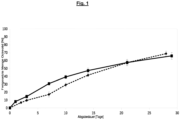
- Solid line (inventive example): 33 wt.% octreotide, 32 wt.% polylactic acid-co-glycolic acid polymer, 32 wt.% polylactic acid, 3 wt.% triglyceride.
- Dashed line (comparative example): 33 wt.% octreotide; 33.5 wt.% polylactic acid-co-glycolic acid polymer, 33.5 wt.% polylactic acid.
- a powder mixture was weighed out which consisted of 32 wt.% of the polylactic acid-co-glycolic acid polymer (Resomer ® RG752H, Evonik Industries Germany), 32 wt.% of polylactic acid (Resomer ® R202H, Evonik Industries Germany), 3 wt.% of a triglyceride (Dynasan 118, IOI Oleo GmbH, Hamburg, Germany) and 33 wt.% of octreotide lyophilisate (Bachem, Bubendorf, Switzerland).
- This powder mixture was homogeneously mixed by cryo-grinding (Freezer/Mill, C3 Saw- und Analysentechnik GmbH, Haar near Kunststoff, Germany).
- the subsequent extrusion was carried out via counter-rotating screw melt extrusion (Mini CTW, Thermo Fisher Scientific GmbH, Düsseldorf, Germany) at 85 °C to 92 °C and a screw speed of 8 rpm (revolutions per minute).
- the extrudate diameter was adjusted to 2.0 mm using a die.
- the extrudate strand was cut into extrudates of suitable length (2 cm in this example).
- the extrudate can be formed into microparticles via spheronization.
- composition of the depot forms according to the invention was supplemented with calcium chloride (Sigma Aldrich, Vienna, Austria).
- the powder mixture consisted of 30 wt.% polylactic acid-co-glycolic acid polymer ( Resomer® RG752H, Evonik Industries, Germany), 30 wt.% polylactic acid ( Resomer® R202H, Evonik Industries, Germany), 3.5 wt.% triglyceride (Dynasan 118, IOI Oleo GmbH, Hamburg, Germany), 3.5 wt.% calcium chloride, and 33 wt.% octreotide lyophilisate.
- composition of the depot forms according to the invention was supplemented with trehalose (Sigma Aldrich, Vienna, Austria).
- the powder mixture consisted of 30 wt.% polylactic acid-co-glycolic acid polymer ( Resomer® RG752H, Evonik Industries, Germany), 30 wt.% polylactic acid ( Resomer® R202H, Evonik Industries, Germany), 3.5 wt.% triglyceride (Dynasan 118, IOI Oleo GmbH, Hamburg, Germany), 3.5 wt.% trehalose, and 33 wt.% octreotide lyophilisate.
- a powder mixture was prepared from 57 wt.% polylactic acid-co-glycolic acid polymer ( Resomer® RG752H, Evonik Industries, Germany), 10 wt.% glycerol dibehenate (Compritol 888 ATO, Gattefosse), and 33 wt.% octreotide lyophilisate.
- the components of this powder mixture were homogeneously mixed by cryo-grinding (Freezer/Mill, C3 Saw- und Analysentechnik GmbH, Haar near Kunststoff, Germany).
- the subsequent extrusion was carried out via co-rotating screw melt extrusion (Mini CTW, Thermo Fisher Scientific GmbH, Düsseldorf, Germany) at 83°C to 90°C and a screw speed of 8 rpm.
- depot forms For the production of depot forms according to the invention, a powder mixture of 28.5 wt.% polylactic acid-co-glycolic acid (Resomer ® RG502H, Evonik Industries Germany), 28.5 wt.% polylactic acid (Resomer ® R203H, Evonik Industries Germany), 3 wt.% triglyceride (Dynasan 118, IOI Oleo GmbH, Hamburg, Germany) and 40 wt.% lanreotide was processed into a homogeneous mixture by means of Kroy milling.
- exemplary depot forms according to the invention were used in the appropriate Shape and size (e.g. cut into cylinders 1.5 to 2 cm long and 1.8 mm in diameter) were initially weighed individually.
- a powder mixture was weighed out, which consisted of 38 wt.% of the polylactic acid-co-glycolic acid polymer (Resomer ® RG752H, Evonik Industries Germany), 26 wt.% of polylactic acid (Resomer ® R202H, Evonik Industries Germany), 3 wt.% of a triglyceride (Dynasan 118, IOI Oleo GmbH, Hamburg, Germany), and 33 wt.% of octreotide lyophilisate (Bachem, Bubendorf, Switzerland).
- This powder mixture was homogeneously mixed by cryo-grinding (Freezer/Mill, C3 Saw- und Analysentechnik GmbH, Haar near Kunststoff, Germany). The subsequent co-extrusion was carried out using a two-fluid die.
- a homogeneous coating of 100 wt. % polylactic acid-co-glycolic acid polymer (Resomer® RG752H, Evonik Industries, Germany) was extruded using a second, identically constructed extruder (Mini CTW, Thermo Fisher Scientific GmbH, Düsseldorf, Germany).
- the core extrudate diameter was set to 2.0 mm, and the coating thickness was adjusted to 0.1 mm using the two-fluid die.
- the extrudate strand was then cut into extrudates of suitable length.
- a powder mixture was prepared which consisted of 33.5 wt.% of the polylactic acid-co-glycolic acid polymer (Resomer ® RG752H, Evonik Industries Germany), 33.5 wt.% of polylactic acid (Resomer ® R202H, Evonik Industries Germany) and 33 wt.% of octreotide lyophilisate (Bachem, Bubendorf, Switzerland).
- This powder mixture was cryomilled (Freezer/Mill, C3 Saw- und Analysentechnik GmbH, Haar near Kunststoff, Germany) mixed homogeneously.
- extrusion was carried out using counter-rotating screw melt extrusion (Mini CTW, Thermo Fisher Scientific GmbH, Düsseldorf, Germany) at 85 °C to 92 °C and a screw speed of 5–15 rpm (revolutions per minute).
- the extrudate diameter was set to 2.0 mm using a die.
- the extrudate strand was cut into extrudates of suitable lengths (in this example, a length of 2.0 cm).
- the depot forms (according to Examples 1-6) were placed in release cells and mixed with 50 ml of release medium (disodium hydrogen phosphate, pH 7.4). The depot forms were then placed in an incubation shaker (IKA ® -Werke GmbH & Co. KG, Germany) at 37 °C for the desired application time.
- release medium sodium hydrogen phosphate, pH 7.4
- a powder mixture was weighed out, which consisted of 42 wt.% of the polylactic acid-co-glycolic acid polymer (Resomer ® RG752H, Evonik Industries Germany), 42 wt.% of polylactic acid (Resomer ® R202H, Evonik Industries Germany), 5.5 wt.% of a triglyceride (Dynasan 118, IOI Oleo GmbH, Hamburg, Germany), 10 wt.% mRNA (CleanCap® EGFP mRNA, TriLink Biotechnologies, Inc.
- the protocol was as follows: The depot form according to the invention was added to a human cell culture. Release from the depot form and the activity of the encoded protein were detected using a fluorescence assay. Upon excitation with light at a wavelength of 395 nm, the cells that had taken up the mRNA and expressed the GFP gene emitted measurable light at a wavelength of 509 nm. In cell cultures that had received a negative control (without mRNA), no significant fluorescence could be measured.
- composition of the depot forms according to the invention was supplemented with glycerol dibehenate.
- the powder mixture consisted of 40 wt.% polylactic acid-co-glycolic acid polymer ( Resomer® RG752H, Evonik Industries, Germany), 40 wt.% polylactic acid ( Resomer® R202H, Evonik Industries, Germany), 5 wt.% triglyceride (Dynasan 118, IOI Oleo GmbH, Hamburg, Germany), 4.5 wt.% glycerol dibehenate (Compritol 888 ATO, Gattefosse), 10 wt.% mRNA (CleanCap® EGFP mRNA, TriLink Biotechnologies, Inc., USA), and 0.5 wt.% lipase (triacylglycerol lipase from Pseudomonas sp., Merck KGaA, Darmstadt). Expression control was carried out analog
- a powder mixture was weighed out, which consisted of 74.5 wt.% of the polylactic acid-co-glycolic acid polymer ( Resomer® RG752H, Evonik Industries Germany), 15 wt.% of a triglyceride (Dynasan 118, IOI Oleo GmbH, Hamburg, Germany), 10 wt.% of mRNA ( CleanCap® FLuc mRNA, TriLink Biotechnologies, Inc. USA), and 0.5 wt.% of lipase (triacylglycerol lipase from Pseudomonas sp., Merck KGaA Darmstadt).
- the polylactic acid-co-glycolic acid polymer Resomer® RG752H, Evonik Industries Germany
- 15 wt.% of a triglyceride Disynasan 118, IOI Oleo GmbH, Hamburg, Germany
- 10 wt.% of mRNA CleanCap® FLuc
- This powder mixture was homogeneously mixed by cryo-grinding (Freezer/Mill, C3 Saw- und Analysentechnik GmbH, Haar near Kunststoff, Germany).
- the subsequent extrusion was carried out via co-rotating screw melt extrusion (Mini Extruder ZE-5, Three-Tec GmbH, Birnen Switzerland) at 83 °C to 92 °C and a screw speed of 10 rpm.
- the depot form according to the invention was added to a human cell culture. Release from the depot form and the activity of the encoded protein were detected using the luciferase assay. Upon addition of the substrate (luciferin), the cells that had taken up the mRNA and expressed the luciferase enzyme emitted measurable light. In cell cultures that had received a negative control (without mRNA), no significant luminescence could be measured.
Landscapes
- Health & Medical Sciences (AREA)
- Life Sciences & Earth Sciences (AREA)
- Animal Behavior & Ethology (AREA)
- Veterinary Medicine (AREA)
- Public Health (AREA)
- General Health & Medical Sciences (AREA)
- Engineering & Computer Science (AREA)
- Chemical & Material Sciences (AREA)
- Medicinal Chemistry (AREA)
- Bioinformatics & Cheminformatics (AREA)
- Epidemiology (AREA)
- Pharmacology & Pharmacy (AREA)
- Proteomics, Peptides & Aminoacids (AREA)
- Immunology (AREA)
- Gastroenterology & Hepatology (AREA)
- General Chemical & Material Sciences (AREA)
- Chemical Kinetics & Catalysis (AREA)
- Endocrinology (AREA)
- Birds (AREA)
- Nuclear Medicine, Radiotherapy & Molecular Imaging (AREA)
- Organic Chemistry (AREA)
- Dermatology (AREA)
- Ophthalmology & Optometry (AREA)
- Zoology (AREA)
- Neurosurgery (AREA)
- Biomedical Technology (AREA)
- Molecular Biology (AREA)
- Oil, Petroleum & Natural Gas (AREA)
- Inorganic Chemistry (AREA)
- Biophysics (AREA)
- Diabetes (AREA)
- Microbiology (AREA)
- Mycology (AREA)
- Reproductive Health (AREA)
- Gerontology & Geriatric Medicine (AREA)
- Medicinal Preparation (AREA)
- Cosmetics (AREA)
- Medicines That Contain Protein Lipid Enzymes And Other Medicines (AREA)
- Pharmaceuticals Containing Other Organic And Inorganic Compounds (AREA)
- Peptides Or Proteins (AREA)
Description
- Die vorliegende Erfindung betrifft eine extrudierte Depotform, umfassend zumindest einen Wirkstoff und zumindest eine erste Verbindung aus der Klasse der bioabbaubaren organischen Polymere und zumindest eine zweite Verbindung aus der Klasse der Lipide. Des Weiteren betrifft die vorliegende Erfindung ein Verfahren zur Herstellung der extrudierten Depotform sowie die Verwendung der extrudierten Depotform.
- Subkutane Darreichungsformen umfassen im Allgemeinen flüssige oder feste Formulierungen, die per Injektion oder chirurgischen Eingriff in das subkutane Gewebe verabreicht werden können. Feste Formulierungen werden dabei zumeist als zylinderförmige Polymerstäbchen mit darin eingebettetem Wirkstoff verabreicht. Darreichungsformen, die dabei Wirkstoffe über einen Zeitraum von mehreren Tagen bis zu beispielsweise 24 Monaten abgeben, werden auch als Depotarzneiformen bezeichnet.
- Von Depotarzneiformen abgegebene Wirkstoffe unterliegen nicht dem sogenannten First-Pass-Effekt, passieren also nicht den Verdauungstrakt und die Leber und können zudem eine kontinuierliche Wirkstoffabgabe über einen anhaltenden Zeitraum gewährleisten. Auf diese Weise werden starke Schwankungen der Wirkstoffkonzentration und damit einhergehende Nebenwirkungen vermieden, welche beispielsweise häufig bei intravenösen Darreichungsformen auftreten. Die kontrollierte, dauerhafte Wirkstofffreisetzung von Depotarzneiformen (im Folgenden auch "Depotformen" genannt) kann zudem das Applikationsintervall verlängern. Ferner müssen Depotarzneiformen, die bioabbaubar sind, nach der beabsichtigen Applikationszeit nicht mehr entfernt werden. Diese Eigenschaften machen subkutane Depotformen zu anwenderfreundlichen Arzneimitteln.
-
WO2018/172494 enthüllt Depotformen, die bio-abbaubare organische Polymere und Lipide umfassen können. -
EP0486959 enthüllt extrudierte Depotformen, die als Mikropartikel bereitgestellt werden. -
US2008/145403 beschreibt Depotformen, die bio-abbaubare organische Polymere und zyklische Lipide umfassen können. - Die Wirkstofffreisetzungsrate und -dauer aus Depotformen kann durch in der Formulierung enthaltene Zusatzstoffe beeinflusst werden, wobei für Formulierungen mit langer Applikationsdauer hohe Anforderungen an die Biokompatibilität der Inhaltsstoffe bestehen, um gesundheitliche Beeinträchtigungen von Patienten zu minimieren.
- Daher werden Formulierungen benötigt, welche eine kontinuierliche, kontrollierte Abgabe über einen langen Applikationszeitraum und eine hohe Biokompatibilität sowie gute Eigenschaften im Hinblick auf deren Bioabbaubarkeit aufweisen.
- Die im Stand der Technik beschriebenen Darreichungssysteme weisen kurze Applikationszeiten auf und/oder verfehlen gar die erforderliche therapeutische Wirkstoffdosis beim Anwender.
- Es ist daher die Aufgabe der vorliegenden Erfindung, eine bioabbaubare Depotform für die parenterale Verabreichung von Wirkstoffen vorzusehen, welche eine anhaltende, kontrollierte Wirkstofffreisetzung in einer für die Therapie geeigneten Dosis ermöglicht.
- Diese Aufgabe wird erfindungsgemäß durch eine extrudierte Depotform gelöst, welche zumindest einen Wirkstoff und zumindest eine Verbindung aus der Klasse der bioabbaubaren organischen Polymere und zumindest eine zweite Verbindung aus der Klasse der Lipide gemäß Anspruch 1 umfasst, sowie durch ein Verfahren zur Herstellung der erfindungsgemäßen Depotform gemäß Anspruch 10. Des Weiteren wird die Aufgabe durch eine erfindungsgemäße Zusammensetzung zur Verwendung gemäß Anspruch 13 13 und/oder 14 gelöst.
- Die vorliegende Erfindung betrifft daher eine extrudierte Depotform zur anhaltenden Wirkstofffreisetzung umfassend
- (a) zumindest einen Wirkstoff,
- (b) zumindest eine erste Verbindung aus der Klasse der bioabbaubaren organischen Polymere auf Basis von Milchsäure und/oder Glykolsäure, und
- (c) zumindest eine zweite Verbindung aus der Klasse der Lipide, und
- (d) wobei b) und c) vorzugsweise mindestens 50 Gew.-% des Trockengewichts der Depotform umfassen, wobei das Verhältnis der zumindest einen Verbindung aus der Klasse der bioabbaubaren organischen Polymere und der zweiten Verbindung aus der Klasse der Lipide bei höchstens etwa 25:1 und/oder bei mindestens etwa 5:1 liegt,wobei der Schmelzpunkt der zumindest einen Verbindung aus der Klasse der Lipide bei mindestens etwa 60 °C und/oder bei höchstens etwa 80 °C liegt,und wobei die Depotform eine Länge von mindestens 0,1 cm und/oder von höchstens 5 cm aufweist.
- Unter der Bezeichnung "Depotform" ist vorliegend eine Arzneiform zu verstehen, bei welcher die Wirkstofffreisetzung durch Retardierung über einen längeren Zeitraum erfolgt. Erfindungsgemäß erfolgt die Verabreichung der Depotform parenteral und bildet ein vorzugsweise subkutanes Depot.
- Unter der Bezeichnung "bioabbaubar" ist zu verstehen, dass in der Formulierung enthaltene Substanzen in vivo beispielsweise durch enzymatische, chemische oder physikalische Prozesse in kleinere Einheiten abgebaut werden bzw. erodieren.
- In ihrer einfachsten Ausführungsform umfassen die erfindungsgemäßen Depotformen zumindest einen Wirkstoff und zumindest eine erste Verbindung aus der Klasse der bioabbaubaren organischen Polymere auf Basis von Milchsäure und/oder Glykolsäure und zumindest eine zweite Verbindung aus der Klasse der Lipide.
- Die kontrollierte Abgabe des zumindest einen Wirkstoffs aus der extrudierten Depotform kann erfindungsgemäß durch die Kombination aus einem bioabbaubaren organischen Polymer auf Basis von Milchsäure und/oder Glykolsäure und einem Lipid signifikant verbessert werden. So weisen erfindungsgemäße extrudierte Depotformen vorteilhaft eine kontrollierte Wirkstoffabgabe in einem Zeitraum von einer Woche bis zu einem Jahr, eine hohe Biokompatibilität und eine gute Bioabbaubarkeit auf.
- Dabei weist das Trockengewicht der zumindest einen Verbindung aus der Klasse der bioabbaubaren organischen Polymere auf Basis von Milchsäure und/oder Glykolsäure und der zumindest einen Verbindung aus der Klasse der Lipide einen Anteil von mehr als etwa 50 Gew.-%, bevorzugt von mehr als etwa 55 Gew.-%, besonders bevorzugt von mehr als etwa 60 Gew.-%, insbesondere bevorzugt von mindestens etwa 62 Gew.-%, am Gesamtgewicht der Depotform auf.
- Das Trockengewicht der zumindest einen Verbindung aus der Klasse der bioabbaubaren Polymere und der zumindest einen Verbindung aus der Klasse der Lipide weist jedoch maximal einen Anteil von etwa 99 Gew.-%, bevorzugt von maximal etwa 97,5 Gew.-%, besonders bevorzugt von maximal etwa 95 Gew.-%, insbesondere bevorzugt von etwa 90 Gew.-%, am Gesamtgewicht der Depotform auf.
- Die Bezeichnung "etwa" bedeutet, dass ein spezifizierter Messwert, wie zum Beispiel ein Gehalt in der Zusammensetzung, eine Abweichung des angegebenen Messwerts innerhalb der Messtoleranz einer geeigneten Messmethode haben kann.
- Als Trockengewicht der Depotform wird vorliegend das Gewicht einer zur Darreichung bereiten Formulierung bezeichnet, die keinen bzw. einen vernachlässigbaren Gehalt, insbesondere weniger als etwa 3 Gew.-%, an Wasser aufweist.
- Der Gesamtgehalt der zumindest einen Verbindung aus der Klasse der bioabbaubaren Polymere umfasst dabei den Gehalt aller Verbindungen aus der Klasse der bioabbaubaren Polymere und aus der Klasse der Lipide in der wirkstoffhaltigen Depotform.
- In einer erfindungsgemäßen Depotform weist die zumindest eine zweite Verbindung aus der Klasse der Lipide einen Schmelzpunkt auf, welcher über Raumtemperatur, also einer Temperatur von etwa 25 °C, liegt. Vorzugsweise liegt der Schmelzpunkt des zumindest einen Lipids bei über etwa 40 °C, besonders bevorzugt bei über etwa 50 °C, insbesondere bei über etwa 60 °C, insbesondere bevorzugt bei über etwa 70 °C. Jedoch liegt der Schmelzpunkt des Lipids in der erfindungsgemäßen Depotform nicht über 100 °C.
- Die erfindungsgemäße extrudierte Depotform gibt bei deren subkutaner Anwendung den zumindest einen Wirkstoff aus der wirkstoffhaltigen Depotform an das umgebende Gewebe ab, wobei vorzugsweise ein wesentlicher Teil des Wirkstoffs systemisch aufgenommen wird. Insofern die extrudierte Depotform für eine lokale Therapie vorgesehen ist, kann ein wesentlicher Anteil des Wirkstoffs vorteilhaft in das den Applikationsort umgebende Gewebe abgegeben werden.
- Die in der Depotform enthaltene absolute Wirkstoffmenge bestimmt im Allgemeinen die Zeitspanne, in welcher eine kontinuierliche Zufuhr des Wirkstoffs in oder an den Organismus aufrechterhalten wird. Deshalb ist eine möglichst hohe Beladung der Depotform mit zumindest einem Wirkstoff dann wünschenswert, wenn die Applikationszeit der Depotform lang ist, d. h. mehrere Wochen bis zu zwölf Monaten beträgt.
- Eine erfindungsgemäße extrudierte Depotform wird vorzugsweise für eine Applikationsdauer von mindestens einer Woche bis maximal 12 Monaten, bevorzugt für eine Applikationsdauer von einer Woche bis 6 Monaten, insbesondere für eine Applikationsdauer von 2 Wochen bis 3 Monaten, angewendet.
- Die vorliegende Erfindung betrifft somit die medizinische, tiermedizinische und/oder kosmetische Verwendung der erfindungsgemäßen Depotform zur Abgabe von Wirkstoffen in den Blutkreislauf eines menschlichen oder tierischen Körpers.
- Des Weiteren betrifft die vorliegende Erfindung ein Verfahren zur Herstellung einer erfindungsgemäßen Depotform, wobei das Verfahren folgende Schritte umfasst:
- (i) Bereitstellen einer vorzugsweise homogenen Mischung umfassend zumindest einen Wirkstoff, zumindest eine erste Verbindungen aus der Klasse der bioabbaubaren organischen Polymere auf Basis von Milchsäure und/oder Glykolsäure und zumindest eine zweite Verbindung aus der Klasse der Lipide gemäss einem der Ansprüche 1-9,
- (ii) Extrusion, insbesondere Schmelzextrusion, des Kerns bei einer Temperatur oberhalb der Schmelztemperatur des zumindest einen Lipids,
- (iii) optional Aufbringen einer Überzugsmischung bzw. -zusammensetzung auf das vorstehend erhaltene Extrudat vorzugsweise gleichzeitig mit Schritt (ii),
- (iv) Schneiden des Extrudats in Stücke geeigneter Größe,
- (v) optional Runden der Stücke, insbesondere durch Sphäronisation,
- (vi) optional Durchführen eines Sterilisierungsvorgangs und/oder Verpacken der Depotform.
- Unter Bereitstellen wird dabei sowohl eine Herstellung vor Ort als auch ein Zuliefern einer homogenen Mischung verstanden. Hierbei kann eine homogene Mischung durch einen geeigneten Mischvorgang, bevorzugt ohne Zugabe von Lösungsmitteln, hergestellt werden. Der Mischvorgang kann zudem mehr als einen Schritt umfassen, indem beispielsweise zuerst eine Mischung aus dem bioabbaubaren Polymer und dem Lipid und, davon getrennt, eine Mischung eines oder mehrerer optionalen/r Hilfsstoffe/s und des zumindest einen Wirkstoffs angesetzt wird, welche in einem zweiten Schritt mit dem Polymer und dem Lipid gemischt werden.
- Die so erhaltene vorzugsweise homogene Mischung wird daraufhin auf eine Temperatur erhitzt, welche höher als die Temperatur des Schmelzpunkts des eingesetzten Lipids ist, und anschließend mittels Extrusion, insbesondere mittels Schmelzextrusion, extrudiert.
- Gleichzeitig oder nach der Extrusion des Kerns (d. h. des Extrudats ohne eine Überzugsmischung) erfolgt gegebenenfalls das Aufbringen einer vorzugsweise homogenen Überzugmischung bzw. -zusammensetzung, welche aus zumindest einem der oben genannten Komponenten gemäß Schritt (i) der erfindungsgemäßen Depotform besteht. Bevorzugt erfolgt das Aufbringen der Überzugsmischung gleichzeitig mit der Extrusion des Kerns.
- Vorteilhaft umfassen dabei die Komponenten gemäß Schritt (i) mindestens etwa 50 Gew.-% des Trockengewichts der erfindungsgemäßen Depotform, bevorzugt mindestens etwa 55 Gew.-%, besonders bevorzugt mindestens etwa 60 Gew.-%, insbesondere bevorzugt mindestens etwa 62 Gew.-%, des Gesamtgewichts der erfindungsgemäßen Depotform.
- Insofern es sich bei dem Wirkstoff um einen thermosensitiven Wirkstoff handelt, kann eine Extrusion vorteilhaft bei Temperaturen erfolgen, bei welchen auch thermosensitive Wirkstoffe ohne Beeinträchtigung verarbeitet werden können. In diesem Fall erfolgt die Auswahl des zumindest einen Lipids so, dass dessen Schmelzpunkt vorteilhaft unter der Temperatur liegt, bei welcher der Wirkstoff thermisch beeinträchtigt wird. Dies ist insbesondere für Proteinwirkstoffe und dergleichen von Interesse.
- Insofern die Herstellung nicht bereits unter aseptischen Bedingungen stattgefunden hat, kann ein vorteilhaftes Herstellverfahren vor einem möglichen Verpackungsschritt eine Sterilisierung der erfindungsgemäßen extrudierten Depotform vorsehen. Jedoch kann eine erfindungsgemäße Depotform auch ohne einen Sterilisierungsvorgang oder auch unter Bedingungen, welche nicht aseptisch sind, hergestellt werden.
- Des Weiteren kann die erfindungsgemäße extrudierte Depotform einem Verpackungsvorgang unterzogen werden, in welchem die Depotform nach einem möglichen Sterilisierungsvorgang direkt in eine Verpackungseinheit verpackt wird. Alternativ kann die extrudierte Depotform auch zunächst in einen zur Applikation der erfindungsgemäßen Depotform vorgesehenen Applikator eingebracht und gemeinsam mit diesem in eine Verpackungseinheit verpackt werden.
- Schließlich umfasst die vorliegende Erfindung eine extrudierte Depotform, welche nach einem vorstehend beschriebenen Verfahren erhältlich ist.
- Weitere besonders vorteilhafte Ausgestaltungen und Weiterbildungen der Erfindung ergeben sich aus den abhängigen Ansprüchen sowie der nachfolgenden Beschreibung, wobei die Patentansprüche einer bestimmten Kategorie auch gemäß den abhängigen Ansprüchen einer anderen Kategorie weitergebildet sein können und Merkmale verschiedener Ausführungsbeispiele zu neuen Ausführungsbeispielen kombiniert werden können.
- Gemäß einer bevorzugten Ausführungsform ist die zumindest eine erste Verbindung aus der Klasse der organischen Polymere auf Basis von Milchsäure und/oder Glykolsäure ausgewählt aus Poly(L-lactid), Poly(D,L-lactid), Poly(glycolid), Poly(L-lactid-co-D,L-lactid), Poly(L-lactid-co-glycolid), Poly(D,L-lactid-co-glycolid), Poly(meso-lactid), Poly(D,L-lactid-co-trimethylencarbonat), Poly(L-lactid-co-meso-lactid), Poly(L-lactid-co-epsilon-caprolacton), Poly(D,L-lactid-co-meso-lactid), Poly(D,L-lactid-co-epsilon-caprolacton), Poly(meso-lactid-co-glycolid), Poly(meso-lactid-co-trimethylencarbonat), Poly(meso-lactid-co-epsilon-caprolacton), Poly(glycolid-co-trimethylencarbonat), Poly(glycolid-co-epsilon-caprolacton) und/oder Poly(glycolid-co-caprolacton).
- Als besonders bevorzugte Verbindung/en aus der Klasse der organischen Polymere auf Basis von Milchsäure und/oder Glykolsäure eignen sich dabei Poly(D,L-lactid) (PLA) und Poly(D,L-lactid-co-glycolid) (PLGA), welche beispielsweise bei der Firma Evonik Industries AG (Deutschland) unter den Bezeichnungen R 202 H (Poly(D,L-lactid)) bzw. RG 502 H und RG 752 H (PLGA) erhältlich sind.
- Unter der Bezeichnung Polylactid (syn. Polymilchsäuren, PLA) sind vorliegend Polymere der Milchsäure zu verstehen. Die aufgrund des asymmetrischen Kohlenstoffatoms optisch aktiven Polymere treten in der Form von D- oder L-Lactiden auf.
- Unter der Bezeichnung "Polyglycolid" (PGA) sind vorliegend Polymere der Glycolsäure (syn. Hydroxyessigsäure) zu verstehen.
- Unter der Bezeichnung Poly(lactid-co-glycolid) (PLGA) ist ein Copolymer aus den Monomeren Lactid und Glycolid zu verstehen, welche in unterschiedlichen Verhältnissen eingesetzt werden können. Hierbei bildet sich ein Polyester aus D,L-Milchsäure und Glycolsäure, welcher bioabbaubar ist.
- Das Molekulargewicht des organischen Polymers auf Basis von Milchsäure und/oder Glykolsäure, insbesondere von PLA bzw. PLGA, kann prinzipiell in einem breiten Bereich variieren. Bevorzugt liegt das Molekulargewicht jedoch bei mindestens etwa 5 kDa und/oder bei höchstens etwa 100 kDa. Besonders bevorzugt liegt das Molekulargewicht bei mindestens etwa 7 kDa und/oder bei höchstens etwa 60 kDa, insbesondere bei mindestens etwa 9 kDa und/oder bei höchstens etwa 40 kDa, insbesondere bevorzugt bei mindestens etwa 10 kDa und/oder bei höchstens etwa 30 kDa.
- Gemäß einer bevorzugten Ausführungsform weist das in der extrudierten Depotform enthaltene Lipid einen Schmelzpunkt von mindestens etwa 60 °C und/oder von höchstens etwa 80 °C auf. Besonders bevorzugt liegt der Schmelzpunkt des Lipids bei mindestens etwa 62 °C, insbesondere bei mindestens etwa 69 °C. Höchstens liegt der besonders bevorzugte Schmelzpunkt bei etwa 77 °C, insbesondere bei etwa 73 °C.
- Gemäß einer weiter bevorzugten Ausführungsform ist das zumindest eine Lipid ausgewählt aus Mono-, Di- und/oder Triglyceriden, beispielsweise Veresterungen von Glycerin mit gesättigten und/oder ungesättigten Fettsäuren einer Länge von mindestens 5 und/oder höchstens 26 Kohlenstoffatomen, Phosphatidsäure, Lecithin, Phosphatidylethanolamin, Phosphatidylinositol, Phosphatidylserin, Diphosphatidylglycerin, Ceramiden, Cerebrosiden, Gangliosiden, Sphingophospholipiden, Sphingomyelinen, Sphingosulfatiden, Glycosphingosiden, Acylaminozuckern, Acylaminozuckerglykanen, Acyltrehalosen, Acyltrehaloseglykanen, Sorbitanfettsäureestern, Squalen, Steroiden, Polyketiden, Sterollipiden, Prenollipiden, Cholesterol, Hartfetten, Wachsen, und Salzen und Derivaten davon.
- Beispiele für bevorzugte Lipide sind Hartfette, welche beispielsweise aus einem Gemisch von Mono-, Di- und Triglyceriden bestehen, das durch Veresterungen von Fettsäuren natürlichen Ursprungs mit Glycerin oder durch Umesterung von Fetten natürlichen Ursprungs erhalten werden kann. Besonders bevorzugte Lipide umfassen Fettsäuren mit einer Anzahl an C-Atomen von mindestens 12 und/oder höchstens 22, insbesondere von mindestens 18 und/oder höchstens 22. Ein ganz besonders bevorzugtes Lipid ist ausgewählt aus Glyceryltristearat. Solche Hartfette sind in der Pharmacopoea Europaea (Ph. Eur. 8. Ausgabe, Grundwerk 2014) beschrieben und können beispielsweise unter der Bezeichnung Dynasan 112, Dynasan 116 und/oder Dynasan 118 ausgewählt sein. Diese sind beispielsweise bei der Firma IOI Oleo GmbH (Deutschland) erhältlich. Insofern thermosensitive Wirkstoffe zur Anwendung kommen sollen, eignen sich vorzugsweise Lipide mit einem Schmelzpunkt unter 50 °C, wie Witepsol E85, Witepsol H5, Witepsol H12, Witepsol H37 und/oder Witepsol H15, welche beispielsweise von der Firma IOI Oleo GmbH (Deutschland) bezogen werden können.
- Ferner können extrudierte Depotformen auch mehr als eine Verbindung aus der Klasse der Lipide umfassen. Bevorzugt umfasst die extrudierte Depotformen jedoch lediglich eine Verbindung aus der Klasse der Lipide.
- Gemäß einer bevorzugten Ausführungsform liegt das Verhältnis der zumindest einen ersten Verbindungen aus der Klasse der Polymere und der zumindest einen zweiten Verbindung aus der Klasse der Lipide bei höchstens etwa 25:1, bevorzugt bei höchstens etwa 20:1, besonders bevorzugt bei höchstens etwa 19:1. Das Verhältnis der zumindest einen ersten Verbindungen aus der Klasse der Polymere und der zumindest einen zweiten Verbindung aus der Klasse der Lipide liegt jedoch mindestens etwa 5:1, bevorzugt bei mindestens etwa 10:1, besonders bevorzugt bei mindestens etwa 12:1.
- Beispielhafte Kombinationen von zumindest einer Verbindung aus der Klasse der organischen Polymere auf Basis von Milchsäure und/oder Glykolsäure und zumindest einer Verbindung aus der Klasse der Lipide sind in Tabelle 1 zusammengefasst.
Tabelle 1: Beispielhafte Zusammensetzungen erfindungsgemäßer Depotformen. Organisches Polymer auf Basis von Milchsäure und/oder Glykolsäure Lipid Gewichtsverhältnis 31,5 Gew.-% Polymilchsäure-co-glykolsäure Polymer und 31.5 Gew.-% Polymilchsäure 3,3 Gew.-% Triglycerid 19:1 30,0 Gew.-% Polymilchsäure-co-glykolsäure Polymer und 30,0 Gew.-% Polymilchsäure 3,5 Gew.-% Triglycerid 17:1 57,0 Gew.-% Polymilchsäure-co-glykolsäure Polymer 10,0 Gew.-% Glycerol dibehenate 6:1 28,5 Gew.-% Polymilchsäure-co-glykolsäure Polymer und 28,5 Gew.-% Polymilchsäure 3,0 Gew.-% Triglycerid 19:1 38,0 Gew.-% Polymilchsäure-co-glykolsäure Polymer und 26,0 Gew.-% Polymilchsäure 3,0 Gew.-% Triglycerid 21:1 - In den erfindungsgemäßen Depotformen ist zumindest ein Wirkstoff enthalten. Dieser zumindest eine Wirkstoff kann, ohne beschränkend zu sein, ausgewählt sein aus der Klasse der Antibiotika, Antimikrobiotika, Antimykotika, Antiseptika, Chemotherapeutika, Zytostatika, Metastaseinhibitoren, Antiallergika, Antikoagulanzien, Sexualhormone, Sexualhormoninhibitoren, Hämostyptika, Hormone, Peptidhormone, Fusionsproteine, Antidepressiva, Impfstoffe, Gonadotropin-Releasing-Hormon-Analoga, Wachstumsfaktorinhibitoren, Hormonmimetika, Multiple Sklerose-Therapeutika, Programmed Cell Death Rezeptor 1-Antagonisten, Neuroleptika, Komplementsysteminhibitoren, Vitamine, Antihistamine, Antikörper, Antikörperfragmente, Nucleinsäuren, DNA, Plasmid-DNA, kationischen DNA-Komplexen und RNA, siRNA, mRNA und Antidiabetika.
- Nützliche Wirkstoffe umfassen, ohne beschränkend zu sein, Heparin, Heparinderivate, Hirudin, Acetylsalicylsäure, Enoxaparin, Liraglutid, Albiglutid, Dulaglutid, Lixisenatid, Exenatid, Insulin, Insulinanaloga, Acarbose, Glatirameracetat, Octreotid, Pasireotid, Lanreotid und/oder Valpreotid, Desmopressin, Oxytocin, Zafirlukast, Buserelin, Somatostatin, Glibenclamid, Gliclazid, Glimepirid, Gliquidon, Pioglitazon, Miglitol, Nateglinid, Mitiglinid, Repaglinid, Sitagliptin, Vildagliptin, Dexamethason, Prednisolon, Corticosteron, Budesonid, Östrogen, Sulfasalazin, Mesalazin, Risperidon, Paclitaxel, 5-Fluoruracil, Cisplatin, Vinblastin, Vincristin, Epothilone, Endostatin, Angiostatin, D-Phe-Pro-Arg-Chlormethylketon, Aflibercept und monoklonale Antikörper wie beispielsweise Adalimumab, Aducanumab, Benralizumab, Bevacizumab, Certolizumab, Denosumab, Dupilumab, Efalizumab, Erenumab, Infliximab, Ipilimumab, Mepolizumab, Natalizumab, Nemolizumab, Ocrelizumab, Omalizumab, Pembrolizumab, Pertuzumab, Ranibizumab, Reslizumab, Rituximab, Solanezumab, Tocilizumab, Tralokinumab, Trastuzumab, Ustekinumab und Vedolizumab.
- Bevorzugte extrudierte Depotformen enthaltend zumindest einen Wirkstoff können dabei zur Behandlung der Akromegalie; von Symptomen, die mit (funktionell aktiven) gastroenteropankreatischen endokrinen Tumoren assoziiert sind, wie beispielsweise Karzinoide mit Merkmalen des Karzinoidsyndroms; fortgeschrittenen neuroendokrinen Tumoren; und Thyreoidea-stimulierendes Hormon (TSH)-sezernierende Hypophysenadenome; Krebserkrankungen wie beispielsweise multiples Myelom, Mantelzelllymphom, diffuses großzelliges B-Zell-Lymphom, akutes myeloides Lymphom, follikulares Lymphom, chronische lymphozytische Leukämie, Brust-, Lungen-, Endometrium-, Eierstock-, Magen-, Gebärmutterhals- oder Prostatakrebs, Pankreaskarzinom, Glioblastom, Nierenkarzinom; hepatozelluläres Karzinom, Dickdarmkarzinom, neuroendokrine Tumore, Kopf-und-Nacken Tumore, Sarkoma; Tumorsyndromen resultierend direkt oder indirekt aus genetischen Defekten in Tumorsuppressorgenen wie beispielsweise P53, PTEN oder VHL, endometriales Karzinom, Lymphangioleiomyomatose, Neurofibromatose 1, von Hippel-Lindau Erkrankung; sowie von rheumatoider Arthritis; Spondylitis ankylosans (Morbus Bechterew); Psoriasis-Arthritis; Schuppenflechte; Osteoarthritis; Gicht; Asthma; Bronchitis; allergischer Rhinitis; chronisch obstruktiver Lungenerkrankung; zystischer Fibrose; chronisch entzündlichen Darmerkrankungen wie Reizdarm, muköser Kolitis, ulzerativer Kolitis, Morbus Crohn, Chorea Huntington; Gastritis; Ösophagitis; Hepatitis; Pankreatitis; Nephritis; Lupus erythematodes; Atherosklerose; Restenose in Folge von Angioplasie; linksventrikulärer Hypertrophie; Myokardialinfarkt; Schlaganfall; ischämischen Schäden von Herz, Lunge, Darm, Nieren, Leber, Pankreas, Milz und Gehirn; akuter oder chronischer Organtransplantat-Abstoßung; Makuladegeneration; des diabetischen Makulaödems; Hyposomatotropismus; Anämie; Fruchtbarkeitsstörungen; Fettleibigkeit; Pubertas praecox; Endometriose; Mastodynie; Tourette-Syndrom; Depressionen; Persönlichkeitsstörungen; Zwangserkrankungen; ADHS bei Kindern; Reizbarkeit bei Fetalem Alkoholsyndrom und Autismus; Wahnvorstellungen; Halluzinationen; Epilepsie; Alzheimer Erkrankung; Parkinson Erkrankung; der paroxysmalen nächtlichen Hämoglobinurie; als Beruhigungsmittel; zu geschlechtsangleichenden Maßnahmen; Multipler Sklerose und Diabetes eingesetzt werden.
- Gemäß einer bevorzugten Ausführungsform enthält eine vorteilhafte extrudierte Depotform zumindest einen Wirkstoff aus der Klasse der Peptidhormone. Besonders bevorzugt ist der zumindest eine Wirkstoff ausgewählt aus Octreotid, Pasireotid, Lanreotid und/oder Valpreotid. Insbesondere ist der zumindest eine Wirkstoff ausgewählt aus Octreotid.
- Weiter bevorzugt ist der zumindest eine Wirkstoff ausgewählt aus Nucleinsäuren, bevorzugt aus DNA, Plasmid-DNA, kationischen DNA-Komplexen und RNA, siRNA und mRNA. Besonders bevorzugt ist der zumindest eine Wirkstoff ausgewählt aus RNA, siRNA und mRNA, insbesondere aus selbstreplizierender RNA oder mRNA.
- Eine solche selbstreplizierende RNA ist aus dem Stand der Technik bekannt und kann beispielsweise aus Viren gewonnen werden.
- Eine bevorzugte (selbstreplizierende) RNA oder mRNA kann vorzugsweise als Vakzine und/oder zur Krebstherapie eingesetzt werden. Die RNA oder mRNA codiert hierbei für ein gewünschtes Antigen, etwa von einem Krankheitserreger. Die Impfstoffe stimulieren so beispielsweise auch Immunreaktionen gegen Tumorassoziierte Antigene und regen Abwehrzellen an, die Krebszellen zu bekämpfen.
- Ein weiteres Einsatzgebiet ist die Verwendung von RNA und/oder mRNA als Wirkstoff in der vorteilhaften Depotform zur Bildung von körpereigenen Proteinen und/oder Enzymen. So können nicht funktionale körpereigene Proteine und Enzyme mittels RNA und/oder mRNA, welche für ein entsprechendes funktionales Protein bzw. Enzym codieren, durch diese RNA bzw. mRNA-codierten funktionalen Proteine bzw. Enzyme ersetzt werden.
- Bevorzugt ist die Abgabe von RNA bzw. mRNA in oder an ein spezifisches Organ oder Gewebe von Relevanz. Insbesondere erfolgt die Abgabe von RNA und/oder mRNA aus der Depotform in das Auge. Besonders bevorzugt erfolgt eine solche Anwendung zur Therapie der Makuladegeneration und/oder des Glaukoms, von Diabetes bedingten Augenerkrankungen sowie onkologisch bedingten Augenerkrankungen.
- Vorteilhaft können die immunstimulierenden bzw. therapeutischen Eigenschaften bzw. einer Wirkung der RNA bzw. mRNA durch die Zugabe eines Adjuvans erhöht werden. Solche Adjuvantien sind im Stand der Technik bekannt. So zeigte sich, dass beispielsweise die sich selbst vervielfältigende RNA-Vakzine wirksamer ist, wenn sie in eine kationische Öl-in-Wasser Nanoemulsion basierend auf Squalen und Polysorbate (Tween 80) und Sorbitantrioleat (Span 85), Natriumcitrat und Citronensäure, wie beispielsweise Adjuvans MF59 (Novartis), formuliert ist. Eine Wirkverstärkung bei mRNA lässt sich beispielsweise erreichen, indem die Moleküle mit TriMix (mRNAs, welche drei das Immunsystem aktivierenden Proteinen caTLR4, CD40L und CD70 codieren), zusammengebracht werden.
- Insbesondere werden bevorzugte Depotformen eingesetzt für die Behandlung der Akromegalie; von Symptomen, die mit (funktionell aktiven) gastroenteropankreatischen endokrinen Tumoren assoziiert sind, wie beispielsweise Karzinoide mit Merkmalen des Karzinoidsyndroms; fortgeschrittenen neuroendokrinen Tumoren; und Thyreoidea-stimulierendes Hormon (TSH)-sezernierende Hypophysenadenome.
- Der insbesondere bevorzugte Wirkstoff Octreotid kann dabei vorzugsweise ein Polypeptid aus Aminosäuren mit der folgenden Sequenz umfassen:
FCFWKTCT (Phe-Cys-Phe-Trp-Lys-Thr-Cys-Thr) - Der zumindest eine Wirkstoff kann ferner in verschiedenen Formen in der Depotform enthalten sein, je nachdem, welche Form die optimale Abgabeeigenschaft des Wirkstoffs aus der Depotform ergibt. Aminosäurebasierte Wirkstoffe können im Allgemeinen als Cyclopeptid, Oligopeptid oder Polypeptid oder andere pharmakologisch akzeptable Derivate oder als Komponenten von molekularen Komplexen vorliegen. Dabei können die Aminosäuren sowohl über α-Peptidbindungen als auch über ω-Peptidbindungen miteinander verknüpft sein. Der zumindest eine Wirkstoff kann auch als Salz wie beispielsweise als Acetat, oder auch in Form der freien Base bzw. Säure vorliegen.
- Des Weiteren kann zumindest eine der Aminosäuren der vorstehend als bevorzugte Wirkstoffe genannten aminosäurebasierten Wirkstoffe posttranslationale Modifikationen aufweisen. Hierbei beeinflussen diese posttranslationalen Modifikationen vorteilhaft die Eigenschaften des Wirkstoffs, insbesondere hinsichtlich der Freisetzung und Wirkung, nicht.
- Prinzipiell kann der Gehalt des Wirkstoffs in der erfindungsgemäßen Depotform in einem breiten Bereich variieren. Eine vorteilhafte Wirkstoffmenge, bevorzugt eines Peptidhormons, besonders bevorzugt Octreotid, Pasireotid, Lanreotid und/oder Valpreotid, insbesondere Octreotid, liegt bei etwa 0,3 Gew.-% bis etwa 50 Gew.-%, vorzugsweise bei etwa 3 Gew.-% bis etwa 45 Gew.-%, besonders bevorzugt bei etwa 4 Gew.-% bis etwa 40 Gew.-%, insbesondere bei etwa 7 Gew.-% bis etwa 35 Gew.-%.
- Für eine effektive Therapie ist die Wirkstoffkonzentration des aktiven Wirkstoffs, welche nach Verabreichung einer Depotform im Blut des Anwenders herrscht, von Bedeutung. Vorteilhaft weist daher eine bevorzugte extrudierte Depotform, welche vorzugsweise ein Peptidhormon, insbesondere Octreotid, enthält, eine in vitro Wirkstofffreisetzung nach 7 Tagen von mindestens etwa 20 Gew.-% und/oder nach 28 Tagen von mindestens etwa 60 Gew.-% auf, bezogen auf die gesamte im Implantat enthaltene Wirkstoffmenge.
- Erfindungsgemäße extrudierte Depotformen sind ferner für kosmetische Anwendungen geeignet. Insbesondere kann eine vorteilhafte Depotform für die kosmetische Faltenglättung eingesetzt werden. Dabei wird die erfindungsgemäße Zusammensetzung zur lokalen, insbesondere zur gezielten Faltenglättung, eingesetzt, insbesondere bevorzugt zur Vermeidung von Falten, zur Hautstraffung und zum Schutz vor Hautalterung. Beispielhafte Wirkstoffe hierfür können ausgewählt sein aus Hyaluronsäure, Kollagen und/oder Botox.
- Vorteilhafte Depotformen können überdies zumindest einen für subkutane Applikationsformen gebräuchlichen Hilfsstoff enthalten, welcher die Wirkstofffreisetzung aus der Depotform, die Wirkstoffstabilität, die Plasmahalbwertszeit und/oder die Bioverfügbarkeit des zumindest einen Wirkstoffs beeinflussen kann. Vorteilhaft unterstützt ein bevorzugter Hilfsstoff die kontrollierte Abgabe des zumindest einen Wirkstoffs aus der Depotform. Insbesondere trägt ein solcher Hilfsstoff zu einer langanhaltenden Wirkstoffabgabe bei, ohne jedoch die Biokompatibilität nachteilig zu beeinflussen. Alternativ oder zusätzlich kann die Zugabe eines solchen Hilfsstoffs die Stabilität des in der Depotform enthaltenen Wirkstoffs verbessern. Dies ist von besonderem Interesse, wenn die Depotform für eine langanhaltende Applikation von mehreren Wochen bis zu einem Jahr vorgesehen ist.
- Hierbei zu nennen sind vor allem Substanzen, die bei der Herstellung von subkutanen Implantaten eingesetzt werden und physiologisch unbedenklich sind. Vorzugsweise weisen die Hilfsstoffe eine hohe Biokompatibilität auf, sodass die Hilfsstoffe und jegliche Abbauprodukte der Hilfsstoffe nicht toxisch für den Anwender sind und keine unerwünschten Nebenwirkungen hervorrufen.
- Es hat sich gezeigt, dass die Zugabe von Porenbildnern vorteilhaft die Abgabe des zumindest einen Wirkstoffs aus der subkutanen Depotform verbessern kann. Ein solcher Porenbildner kann beispielsweise aus der Gruppe der hydrophilen Stoffe wie Calciumsulfat, Calciumhydrogenphosphat, Zucker wie beispielsweise Glucose, Lactose, Fructose, Mannitol, Trehalose, Dextrine, Maltodextrin, Saccharose, Sorbit, Xylit, Stärke bzw. deren Derivaten wie beispielsweise Hydroxyethylstärke, Polyvinylpyrrolidon, Polyethylenglycol (PEG) wie beispielsweise PEG 6000 oder PEG 8000, Natriumchlorid, Natriumcitrat, Zitronensäure, Hyaluronsäuren, Polyvinylalkohol, Polyacrylsäure und deren Derivaten, Polymethacrylsäure und deren Derivaten, Polymethylmethacrylat, Polystyrol, Copolymere mit Monomeren von Methylmethacrylat und Styrol und Mischungen davon ausgewählt sein.
- Als besonders bevorzugte Porenbildner eignen sich Trehalose und/oder Hydroxyethylstärke und/oder Polyethylenglycol, welche beispielsweise von der Firma Clariant oder Sigma-Aldrich (Österreich) bezogen werden können.
- Das Molekulargewicht eines Porenbildners, insbesondere von PEG, liegt dabei bevorzugt bei mindestens etwa 1 kDa, besonders bevorzugt bei mindestens etwa 3 kDa, insbesondere bei mindestens etwa 4 kDa. Höchstens liegt ein bevorzugtes Molekulargewicht von PEG bei etwa 10 kDa, besonders bevorzugt bei höchstens etwa 8 kDa.
- Gemäß einer weiter bevorzugten Ausführungsform kann eine vorteilhafte Depotform Hilfsstoffe umfassen, welche eine Acylierung von Polypeptiden, vorzugsweise von Octreotid, Pasireotid, Lanreotid und/oder Valpreotid, besonderes bevorzugt von Octreotid, inhibieren. Hierfür eignen sich bevorzugt divalente Salze bzw. Salze von divalenten Metallionen, wie beispielsweise Calciumchlorid.
- Gemäß einer weiter bevorzugten Ausführungsform umfasst ein Hilfsstoff zumindest ein Enzym. Ein solches Enzym kann die Abgabe des zumindest einen Wirkstoffs aus der vorteilhaften Depotform günstig beeinflussen, ohne hierbei nachteilig auf die Stabilität und/oder die Bioabbaubarkeit der Depotform zu wirken. Vorteilhaft bewirkt ein solches Enzym eine verbesserte Bioabbaubarkeit der Depotform. Besonders bevorzugt ist ein solches Enzym ausgewählt aus der Gruppe von Lipasen. Eine solche Lipase kann beispielsweise über die Firma Sigma-Aldrich bezogen werden.
- Die Wirkstoffabgaberate kann ferner durch Zugabe eines quellbaren Polymers gesteigert werden, welches bevorzugt ausgewählt ist aus Kollagen, Gelatine und deren Derivaten, Stärke und deren Derivaten (bevorzugt Hydroxyethylstärke, Hydroxypropylstärke, Carboxymethylstärke), Cellulosederivaten, Chitin, Chitosan und deren Derivaten, Polyamiden, Polyhydroxysäuren, Polyhydroxybutyraten, Polyhydroxyvaleraten, Polycaprolactonen und Polydioxanonen. Dies ist insbesondere für Wirkstoffe, für welche eine höhere Dosis benötigt wird und/oder für wirkstoffhaltige Depotformen mit einer kürzeren Applikationsdauer wie beispielsweise einer Applikationsdauer von wenigen Wochen bis zu wenigen Monaten, relevant. Ein besonders bevorzugtes quellbares Polymer ist dabei Hydroxyethylstärke (HES) und kann bei Sigma Aldrich (Österreich) bezogen werden.
- Vorzugsweise liegt das Molekulargewicht eines quellbaren Polymers, insbesondere von HES, bei mindestens etwa 50 kDa, bevorzugt bei mindestens etwa 70 kDa, insbesondere bei mindestens etwa 100 kDa, insbesondere bevorzugt bei mindestens etwa 120 kDa. Höchstens liegt das Molekulargewicht eines quellbaren Polymers, insbesondere von HES, bei etwa 400 kDa, besonders bevorzugt bei höchstens etwa 300 kDa, insbesondere bei höchstens etwa 200 kDa, insbesondere bevorzugt bei höchstens etwa 150 kDa.
- Der Substitutionsgrad von HES, also das Verhältnis der Anzahl der mit Hydroxyalkylgruppen modifizierten Glucoseeinheiten zur Gesamtzahl der Monomereinheiten, liegt bei mindestens etwa 0,1, bevorzugt bei mindestens etwa 0,2, insbesondere bei mindestens etwa 0,3. Höchstens liegt der Substitutionsgrad bei etwa 1, bevorzugt bei etwa 0,7, insbesondere bei etwa 0,5.
- Zusätzlich können die erfindungsgemäßen Depotformen noch weitere übliche, dem Fachmann bekannte Hilfsstoffe enthalten, wie beispielsweise Tocopherole, z. B. α-Tocopherol, β-Tocopherol, γ-Tocopherol, δ-Tocopherol und Mischungen davon (Vitamin E), welche insbesondere als Antioxidantien eingesetzt werden.
- In einer vorteilhaften Ausführungsform inaktiviert ein solches Antioxidans reaktive Sauerstoffspezies in der Depotform, wodurch eine Oxidation des Wirkstoffs verlangsamt oder gänzlich verhindert wird, und bewirkt damit eine verbesserte Stabilität des Wirkstoffs und somit eine längere Haltbarkeit der erfindungsgemäßen Depotform sowohl während der Lagerung als auch während der Anwendung.
- Vorteilhaft bewirkt ein Gehalt eines oder mehrerer der bevorzugten Hilfsstoffe eine kontrollierte und anhaltende Wirkstoffabgabe aus der bevorzugten extrudierten Depotform.
- Vorteilhafte Zusammensetzungen einer extrudierten Depotform sind wie folgt dargestellt:
- (i) 0,1 bis 50 Gew.-% Wirkstoff, bevorzugt 1 bis 50 Gew.-% Wirkstoff, insbesondere 2,5 bis 40 Gew.-% Wirkstoff,
- (ii) 1 bis 95 Gew.-% eines organischen Polymers auf Basis von Milchsäure und/oder Glykolsäure, bevorzugt 10 bis 89 Gew.-% eines organischen Polymers auf Basis von Milchsäure und/oder Glykolsäure,
- (iii) 1 bis 89 Gew.-% eines Lipids, bevorzugt 1 bis 60 Gew.-% eines Lipids,
- (iv) gegebenenfalls 1 bis 25 Gew.-% Trehalose, bevorzugt 5 bis 20 Gew.-% Trehalose,
- (v) gegebenenfalls 1 bis 25 Gew.-% PEG, bevorzugt 5 bis 20 Gew.-% PEG.
- Besonders bevorzugt umfasst eine Zusammensetzung einer extrudierten Depotform
- (i) 5 bis 45 Gew.-% Wirkstoff, insbesondere 10 bis 40 Gew.-% Wirkstoff,
- (ii) 30 bis 85 Gew.-% eines organischen Polymers auf Basis von Milchsäure und/oder Glykolsäure, vorzugsweise PLGA und/oder PLA
- (iii) 1 bis 30 Gew.-% eines Lipids,
- (iv) gegebenenfalls 2,5 bis 18 Gew.-% Trehalose, bevorzugt 3 bis 16 Gew.-% Trehalose, insbesondere 3,5 bis 15 Gew.-% Trehalose, und
- (v) gegebenenfalls 3 bis 17,5 Gew.-% PEG.
- Insbesondere bevorzugt sind die Bestandteile einer extrudierten Depotform ausgewählt aus
- (i) 15 bis 35 Gew.-% Wirkstoff,
- (ii) 40 bis 75 Gew.-% eines organischen Polymers auf Basis von Milchsäure und/oder Glykolsäure, vorzugsweise PLGA und/oder PLA
- (iii) 1 bis 10 Gew.-% eines Lipids,
- (iv) gegebenenfalls 5 bis 10 Gew.-% Trehalose, und
- (v) gegebenenfalls 5 bis 15 Gew.-% PEG.
- Weiter bevorzugt sind die Bestandteile einer extrudierten Depotform ausgewählt aus
- (i) 0,1 bis 50 Gew.-% Wirkstoff, bevorzugt 1 bis 50 Gew.-% Wirkstoff, insbesondere 2,5 bis 40 Gew.-% Wirkstoff, insbesondere bevorzugt 5 bis 20 Gew.-% Wirkstoff,
- (ii) 40 bis 75 Gew.-% eines organischen Polymers auf Basis von Milchsäure und/oder Glykolsäure, vorzugsweise PLGA und/oder PLA
- (iii) 1 bis 10 Gew.-% eines Lipids,
- (iv) 0,1 bis 2 Gew.-% einer Lipase, bevorzugt 0,2 bis 1 Gew.-%,
- (v) gegebenenfalls 5 bis 10 Gew.-% Trehalose, und
- (vi) gegebenenfalls 5 bis 15 Gew.-% PEG.
- Insbesondere liegt ein vorteilhafter Wirkstoffgehalt bei etwa 30 bis 33 Gew.-%, ein Gehalt eines bioabbaubaren organischen Polymers liegt bei etwa 50 bis 70 Gew.-% und ein Gehalt eines Lipids liegt bei etwa 5 Gew.-%.
- Gemäß einer weiteren bevorzugten Ausführungsform kann Trehalose ganz oder teilweise durch HES ersetzt werden.
- Wie eingangs erwähnt, werden erfindungsgemäße extrudierte Depotformen mittels Extrusion hergestellt. Es hat sich gezeigt, dass sich dabei die Eigenschaften der zur Extrusion vorbereiteten Mischung der zumindest zwei Verbindungen aus der Klasse der organischen Polymere auf Basis von Milchsäure und/oder Glykolsäure und aus der Klasse der Lipide mit dem zumindest einen Wirkstoff verbessert, wenn der Wirkstoff als getrocknetes Pulver, bevorzugt als sprüh- oder gefriergetrocknetes Pulver bzw. Lyophilisat, den zumindest zwei Verbindungen beigemischt wird.
- Insofern Wirkstoffe in gelöstem Zustand bezogen werden, erfolgt vor dem Mischen der Substanzen zur Herstellung der erfindungsgemäßen Depotform bevorzugt ein Trocknungsschritt, insbesondere ein Lyophilisierungsschritt.
- Hierfür können dem Wirkstoff prinzipiell eine Vielzahl von Substanzen zugegeben werden, um vorteilhaft die Erhaltung der Bioaktivität des Wirkstoffs zu gewährleisten. Solche Substanzen werden auch als Kryo- bzw. Lyoprotektoren bezeichnet, wobei Lyoprotektoren in diesem Zusammenhang dem Schutz der Substanzen bei der Trocknung dienen und Kryoprotektoren eine entsprechende Aufgabe während des Gefrierens haben.
- Ferner hat sich herausgestellt, dass sich die Länge der Wirkstofffreisetzung nach der subkutanen Applikation beeinflussen lassen kann, indem die Extrudate direkt nach der Extrusion nicht auf Umgebungstemperatur abgekühlt, sondern beispielsweise in einem Trockenschrank oder Inkubator für eine gewisse Zeit bei erhöhter Temperatur gelagert werden. Hierfür eignet sich vorzugsweise eine Zeitdauer im Bereich von etwa 0,5 bis etwa 5 Stunden. Die optionale Lagerung bei erhöhter Temperatur, auch als Temperschritt bezeichnet, richtet sich dabei im Wesentlichen nach dem Schmelzpunkt des zumindest einen Lipids und liegt beispielsweise im Bereich von etwa 40 bis etwa 80 °C, bevorzugt bei etwa 55 bis etwa 75 °C, besonders bevorzugt bei etwa 65 bis 70 °C. Selbstverständlich richtet sich dabei eine bevorzugte Lagerungstemperatur stets auch nach der Temperaturstabilität des zumindest einen Wirkstoffs.
- Bevorzugte Depotformen können überdies durch ein Rundungsverfahren, insbesondere durch Sphäronisation, hergestellt werden. Dabei wird das zylinderförmige Extrudat vorteilhaft so abgerundet, dass evtl. bei der Extrusion entstandene Formen wie beispielsweise Ecken und Kanten, welche die Applikationseigenschaften nachteilig beeinflussen können, entfernt werden. Die Sphäronisation kann darüber hinaus zur Herstellung von Mikropartikeln eingesetzt werden, welche im Anschluss subkutan verabreicht werden und somit ebenfalls eine bioabbaubare Depotform darstellen.
- Vorteilhaft weist eine Depotform einen homogenen Überzug auf, der aus zumindest einer auf dem Kern aufgebrachten Schicht besteht und vorzugsweise den initialen Freisetzungsschub von Wirkstoff aus der Depotform begrenzt und therapeutische Konzentrationen des zumindest einen Wirkstoffs über einen anhaltenden Zeitraum gewährleistet. Ein bevorzugter Überzug weist eine Mischung von Substanzen bzw. eine Zusammensetzung auf, welche aus zumindest einer der oben genannten Komponenten a) bis c) der erfindungsgemäßen Depotform ausgewählt sind bzw. ist, und kann somit beispielsweise auch wirkstofffrei ausgestaltet sein. Insofern der Überzug einen Wirkstoff enthält, kann dessen Gehalt gleich oder unterschiedlich vom Wirkstoffgehalt des Kerns sein. In einer besonders bevorzugten Ausführungsform ist der Überzug jedoch wirkstofffrei ausgestaltet.
- Grundsätzlich bewegt sich ein geeignetes Gewicht einer extrudierten Depotform in einem für subkutane Implantate üblichen Bereich. Dabei ist das Gewicht der extrudierten Depotform auch abhängig von der gewünschten Applikationszeit und/oder des Applikationsorts. Ein bevorzugtes Gewicht einer extrudierten Depotform liegt jedoch im Bereich von 1 bis 1000 mg, besonders bevorzugt bei mindestens etwa 20 mg und/oder höchstens etwa 180 mg, insbesondere bei mindestens etwa 50 mg und/oder bei höchstens etwa 150 mg, insbesondere bevorzugt bei mindestens etwa 80 mg und/oder bei höchstens etwa 120 mg.
- Eine Depotform im Sinne der Erfindung kann dabei als Stäbchen, Kugel, Würfel, Ellipsoid, Quader, Kissen, Zylinder, Tablette, Pellet, Plättchen oder Brikett ausgestaltet sein.
- Erfindungsgemäße Depotformen weisen bevorzugt eine injizierbare Größe auf, können jedoch, falls erwünscht, auch mittels eines chirurgischen Eingriffs an der Verabreichungsstelle eingebracht werden. Dabei haben bevorzugte Depotformen einen Durchmesser von zumindest 0,1 bis 10 mm und eine Länge von zumindest 0,15 bis 50 mm. Insbesondere haben Depotformen einen Durchmesser von zumindest 0,15 bis 7,5 mm und eine Länge von zumindest 0,2 bis 45 mm, insbesondere bevorzugt einen Durchmesser von zumindest 0,2 bis 5 mm und eine Länge von zumindest 0,3 bis 40 mm.
- Der Begriff "Durchmesser" bezieht sich dabei auf die längste orthogonal zu einer Rotationsachse verlaufende Strecke, die zwei Punkte des Rands des betreffenden Körpers miteinander verbindet. Als Rotationsachse wird diejenige Gerade bezeichnet, um die man einen Rotationskörper drehen kann.
- Der Begriff "Länge" betrifft den Teil der Rotationsachse, der sich innerhalb des Rotationskörpers befindet.
- Das Verhältnis von Durchmesser zu Länge bevorzugter Depotformen liegt vorteilhaft im Bereich von 1:30 bis 10:1, bevorzugt im Bereich von 1:15 bis 5:1, insbesondere bevorzugt im Bereich von 1:13 bis 1:1.
- Insofern extrudierte Depotformen als Mikropartikel vorliegen, kann der Durchmesser der runden bzw. nahezu runden Partikel bei etwa 1 bis etwa 100 µm liegen, bevorzugt bei etwa 5 bis etwa 90 µm, insbesondere bevorzugt bei etwa 10 bis etwa 80 µm.
- Wie bereits oben erläutert, umfasst ein erfindungsgemäßes Verfahren zur Herstellung der extrudierten Depotform das Mischen (a) des zumindest einen Wirkstoffs, (b) der zumindest einen Verbindung aus der Klasse der organischen Polymere auf Basis von Milchsäure und/oder Glykolsäure und (c) der zumindest einen Verbindung aus der Klasse der Lipide, wodurch eine homogene Pulvermischung erhalten wird.
- Unter einer Pulvermischung im Sinne der vorliegenden Erfindung wird hierbei ein Gemisch mehrerer fester Bestandteile geeigneter Größe verstanden, wobei die Bestandteile Partikel einer Größe von unter 1 nm aufweisen können. Ferner kann eine Pulvermischung auch Partikel mit einer Größe im Bereich von 1 nm bis 1 µm und/oder Partikel mit einer Größe von über 1 µm aufweisen. Insofern zumindest einer der zu mischenden Bestandteile vor dem Mischen nicht in fester Form vorliegt, kann dieser vor Erstellen der Pulvermischung in den festen Zustand überführt werden, beispielsweise durch Sprühtrocknung oder Gefriertrocknung.
- Zur Applikation der erfindungsgemäßen extrudierten Depotform in das subkutane Gewebe können prinzipiell alle dem Fachmann bekannten Applikationsgeräte eingesetzt werden. So können erfindungsgemäße Depotformen beispielsweise durch Spritzen, Kanülen, Applikatoren und Injektoren, insbesondere durch Applikatoren, verabreicht werden.
- Schließlich betrifft die vorliegende Erfindung auch ein Kit umfassend eine erfindungsgemäße extrudierte Depotform und einen zur Applikation geeigneten Applikator, mit welchem die Depotform subkutan verabreicht werden kann. Dabei müssen erfindungsgemäße extrudierte Depotformen nicht zwingend vor der Aufnahme in den Applikator sterilisiert werden, sondern können auch innerhalb des Applikators einem Sterilisierungsvorgang unterzogen werden. Ferner ist ein solcher Applikator in der Lage, extrudierte Depotformen unterschiedlicher Länge aufzunehmen. Dabei können selbstverständlich auch Depotformen, welche keine zylindrische Form aufweisen, sondern beispielsweise quaderförmig oder rund oder dergleichen sind, appliziert werden.
- Zweckmäßig weist ein solcher Applikator eine Hohlnadel zur Aufnahme extrudierter Depotformen mit den oben erläuterten Ausmaßen und eine Schutzkappe auf, welche vor der Applikation zu entfernen ist und nach der Anwendung wieder fixiert werden kann. Dadurch wird die extrudierte Depotform vorteilhaft vor äußeren Einflüssen, welche die bevorzugte Anwendung in irgendeiner Weise negativ beeinflussen können, geschützt.
- Weitere Merkmale der Erfindung ergeben sich aus der nachfolgenden Beschreibung von Ausführungsbeispielen in Verbindung mit den Ansprüchen sowie der Figuren. Es sei darauf hingewiesen, dass die Erfindung nicht auf die Ausführungsformen der beschriebenen Ausführungsbeispiele beschränkt, sondern durch den Umfang der beiliegenden Patentansprüche bestimmt ist. Insbesondere können die einzelnen Merkmale bei erfindungsgemäßen Ausführungsformen in anderer Kombination als bei den untenstehend angeführten Beispielen verwirklicht sein. Bei der nachfolgenden Erläuterung einiger Ausführungsbeispiele der Erfindung wird auf die beiliegenden Figuren Bezug genommen. Es zeigt:
Figur 1 : Freisetzungsprofile einer erfindungsgemäßen Octreotid-haltigen Depotform (gemäß Beispiel 1, siehe unten) im Vergleich mit einer nicht erfindungsgemäßen Octreotid-haltigen Depotform. Die Depotformen weisen einen Durchmesser von etwa 2 mm auf. Durchgezogene Linie (erfindungsgemäßes Beispiel): 33 Gew.-% Octreotid, 32 Gew.-% Polymilchsäure-co-glykolsäure Polymer, 32 Gew.-% Polymilchsäure, 3 Gew.-% Triglycerid. Gestrichelte Linie (Vergleichsbeispiel): 33 Gew.-% Octreotid; 33,5 Gew.-% Polymilchsäure-co-glykolsäure Polymer, 33.5 Gew.-% Polymilchsäure. - Für die Herstellung erfindungsgemäßer Depotformen wurde eine Pulvermischung eingewogen, welche zu 32 Gew.-% aus dem Polymilchsäure-co-glykolsäure Polymer (Resomer® RG752H, Evonik Industries Deutschland), zu 32 Gew.-% aus Polymilchsäure (Resomer® R202H, Evonik Industries Deutschland), zu 3 Gew.-% aus einem Triglycerid (Dynasan 118, IOI Oleo GmbH, Hamburg, Deutschland) und zu 33 Gew.-% aus Octreotid-Lyophilisat (Bachem, Bubendorf, Schweiz), bestand. Diese Pulvermischung wurde mittels Kryovermahlung (Freezer/Mill, C3 Prozess- und Analysentechnik GmbH, Haar bei München, Deutschland) homogen vermischt. Die nachfolgende Extrusion wurde über Gegenläuferschnecken-Schmelzextrusion (Mini CTW, Thermo Fisher Scientific GmbH, Karlsruhe, Deutschland) bei 85 °C bis 92 °C und einer Schneckendrehzahl von 8 Upm (Umdrehungen pro Minute) durchgeführt. Der Durchmesser für das Extrudat wurde mit einer Düse auf 2,0 mm eingestellt. Der Extrudatstrang wurde zu Extrudaten geeigneter Länge (im vorliegenden Beispiel einer Länge von 2 cm) geschnitten. Alternativ kann das Extrudat über Sphäronisation zu Mikropartikeln geformt werden.
- Die Herstellung erfolgte gemäß Beispiel 1, die Zusammensetzung der erfindungsgemäßen Depotformen wurde jedoch mit Calciumchlorid (Sigma Aldrich, Wien, Österreich) ergänzt. Die Pulvermischung bestand aus 30 Gew.-% Polymilchsäure-co-glykolsäure Polymer (Resomer® RG752H, Evonik Industries Deutschland), 30 Gew.-% Polymilchsäure (Resomer® R202H, Evonik Industries Deutschland), 3,5 Gew.-% Triglycerid (Dynasan 118, IOI Oleo GmbH, Hamburg, Deutschland), 3.5 Gew.-% Calciumchlorid und 33 Gew.-% aus Octreotid-Lyophilisat.
- Die Herstellung erfolgte gemäß Beispiel 1, die Zusammensetzung der erfindungsgemäßen Depotformen wurde jedoch mit Trehalose (Sigma Aldrich, Wien, Österreich) ergänzt. Die Pulvermischung bestand aus 30 Gew.-% Polymilchsäure-co-glykolsäure Polymer (Resomer® RG752H, Evonik Industries Deutschland), 30 Gew.-% Polymilchsäure (Resomer® R202H, Evonik Industries Deutschland), 3,5 Gew.-% Triglycerid (Dynasan 118, IOI Oleo GmbH, Hamburg, Deutschland), 3,5 Gew.-% Trehalose und 33 Gew.-% aus Octreotid-Lyophilisat.
- Für die Herstellung erfindungsgemäßer Depotformen wurde eine Pulvermischung aus 57 Gew.-% Polymilchsäure-co-glykolsäure Polymer (Resomer® RG752H, Evonik Industries Deutschland), 10 Gew.-% Glycerol dibehenate (Compritol 888 ATO, Gattefosse) und 33 Gew.-% Octreotid-Lyophilisat hergestellt. Die Bestandteile dieser Pulvermischung wurden mittels Kryovermahlung (Freezer/Mill, C3 Prozess- und Analysentechnik GmbH, Haar bei München, Deutschland) homogen vermischt. Die folgende Extrusion wurde über Gleichläuferschnecken-Schmelzextrusion (Mini CTW, Thermo Fisher Scientific GmbH, Karlsruhe, Deutschland) bei 83 °C bis 90 °C und einer Schneckendrehzahl von 8 Upm durchgeführt.
- Für die Herstellung erfindungsgemäßer Depotformen wurde eine Pulvermischung aus 28,5 Gew.-% Polymilchsäure-co-glykolsäure (Resomer® RG502H, Evonik Industries Deutschland), 28,5 Gew.-% Polymilchsäure (Resomer® R203H, Evonik Industries Deutschland), 3 Gew.-% Triglycerid (Dynasan 118, IOI Oleo GmbH, Hamburg, Deutschland) und 40 Gew.-% Lanreotid mittles Kroyvermahlung zu einer homogenen Mischung verarbeitet. Für die Untersuchung der Wirkstofffreisetzung wurden beispielhafte erfindungsgemäße Depotformen in der jeweils geeigneten Form und Größe (z. B. geschnitten zu Zylindern von 1,5 bis 2 cm Länge und einem Durchmesser von 1,8 mm) zunächst einzeln gewogen.
- Für die Herstellung erfindungsgemäßer Depotformen wurde eine Pulvermischung eingewogen, welche zu 38 Gew.-% aus dem Polymilchsäure-co-glykolsäure Polymer (Resomer® RG752H, Evonik Industries Deutschland), zu 26 Gew.-% aus Polymilchsäure (Resomer® R202H, Evonik Industries Deutschland), zu 3 Gew.-% aus einem Triglycerid (Dynasan 118, IOI Oleo GmbH, Hamburg, Deutschland) und zu 33 Gew.-% aus Octreotid-Lyophilisat (Bachem, Bubendorf, Schweiz) bestand. Diese Pulvermischung wurde mittels Kryovermahlung (Freezer/Mill, C3 Prozess- und Analysentechnik GmbH, Haar bei München, Deutschland) homogen vermischt. Die folgende Ko-Extrusion wurde mit Hilfe einer Zweistoffdüse durchgeführt, wobei neben der eigentlichen Pulvermischung mit Hilfe eines baugleichen, zweiten Extruders (Mini CTW, Thermo Fisher Scientific GmbH, Karlsruhe, Deutschland) ein homogener Überzug aus 100 Gew.-% Polymilchsäure-co-glykolsäure Polymer (Resomer® RG752H, Evonik Industries Deutschland) extrudiert wurde. Der Durchmesser für das Kern-Extrudat wurde auf 2,0 mm eingestellt und die Auftragsdicke des Überzugs wurde mit Hilfe der Zweistoffdüse auf 0,1 mm eingestellt. Der Extrudatstrang wurde im Anschluss zu Extrudaten geeigneter Länge geschnitten.
- Für die Herstellung einer Depotform, welche als Vergleichsbeispiel dient, wurde eine Pulvermischung hergestellt, welche zu 33,5 Gew.-% aus dem Polymilchsäure-co-glykolsäure Polymer (Resomer® RG752H, Evonik Industries Deutschland), zu 33,5 Gew.-% aus Polymilchsäure (Resomer® R202H, Evonik Industries Deutschland) und zu 33 Gew.-% aus Octreotid-Lyophilisat (Bachem, Bubendorf, Schweiz) bestand. Diese Pulvermischung wurde mittels Kryovermahlung (Freezer/Mill, C3 Prozess- und Analysentechnik GmbH, Haar bei München, Deutschland) homogen vermischt.
- Die nachfolgende Extrusion wurde über Gegenläuferschnecken-Schmelzextrusion (Mini CTW, Thermo Fisher Scientific GmbH, Karlsruhe, Deutschland) bei 85 °C bis 92 °C und einer Schneckendrehzahl von 5 - 15 Upm (Umdrehungen pro Minute) durchgeführt. Der Durchmesser für das Extrudat wurde mit einer Düse auf 2.0 mm eingestellt. Der Extrudatstrang wurde zu Extrudaten geeigneter Länge (im vorliegenden Beispiel einer Länge von 2,0 cm) geschnitten.
- Um die in vitro Freisetzung des Wirkstoffes aus den Depotformen zu untersuchen, wurden die Depotformen (gemäß Beispiel 1 - 6) in Freisetzungszellen gegeben und mit 50 ml Freisetzungsmedium (Dinatriumhydrogenphosphat, pH 7,4) versetzt. Die Depotformen wurden im Anschluss in einen Inkubationsschüttler (IKA®-Werke GmbH & Co. KG, Deutschland) bei 37 °C über die gewünschte Applikationszeit gegeben.
- Zu den jeweiligen Probenahmezeitpunkten wurden ca. 1 ml Probelösung mit einer Einmalpipette entnommen und direkt in ein HPLC-Gefäß abgefüllt. Nach jedem Probenahmezeitpunkt erfolgt ein kompletter Ersatz des Freisetzungsmediums.
- Für die Herstellung erfindungsgemäßer Depotformen wurde eine Pulvermischung eingewogen, welche zu 42 Gew.-% aus dem Polymilchsäure-co-glykolsäure Polymer (Resomer® RG752H, Evonik Industries Deutschland), zu 42 Gew.-% aus Polymilchsäure (Resomer® R202H, Evonik Industries Deutschland), zu 5,5 Gew.-% aus einem Triglycerid (Dynasan 118, IOI Oleo GmbH, Hamburg, Deutschland), zu 10 Gew.-% aus mRNA (CleanCap® EGFP mRNA, TriLink Biotechnologies, Inc. USA) bestand und zu 0.5 Gew.-% aus Lipase (Triacylglycerol Lipase aus Pseudomonas sp., Merck KGaA Darmstadt). Die nachfolgende Extrusion wurde über Gleichläuferschnecken-Schmelzextrusion (Mini Extruder ZE-5, Three-Tec GmbH, Birnen Schweiz) bei 85 °C bis 90 °C und einer Schneckendrehzahl von 10 Upm (Umdrehungen pro Minute) durchgeführt. Der Durchmesser für das Extrudat wurde mit einer Düse auf 0,5 mm eingestellt. Der Extrudatstrang wurde zu Extrudaten geeigneter Länge (im vorliegenden Beispiel einer Länge von 0,5 cm) geschnitten.
- Die Expressionskontrolle (Nachweis der GFP Aktivität) erfolgte mit Hilfe des GFP Assay System (Arbor Assays LLC, USA). Dabei wird nach Protokoll gearbeitet: Die erfindungsgemäße Depotform wird zu einer humanen Zellkultur gegeben. Die Freisetzung aus der Depotform und die Aktivität des codierten Proteins wurden über den Fluoreszenz Assay nachgewiesen. Bei Anregung mit Licht der Wellenlänge 395 nm emittierten die Zellen, welche die mRNA aufgenommen haben und das GFP Gen exprimieren, messbares Licht mit der Wellenlänge 509 nm. In Zellkulturen, welche eine Negativkontrolle (ohne mRNA) erhalten hatten, konnte keine wesentliche Fluoreszenz gemessen werden.
- Die Herstellung erfolgte gemäß Beispiel 1, die Zusammensetzung der erfindungsgemäßen Depotformen wurde jedoch mit Glycerol dibehenate ergänzt. Die Pulvermischung bestand aus 40 Gew.-% Polymilchsäure-co-glykolsäure Polymer (Resomer® RG752H, Evonik Industries Deutschland), 40 Gew.-% Polymilchsäure (Resomer® R202H, Evonik Industries Deutschland), 5 Gew.-% Triglycerid (Dynasan 118, IOI Oleo GmbH, Hamburg, Deutschland), 4,5 Gew.-% Glycerol dibehenate (Compritol 888 ATO, Gattefosse), zu 10 Gew.-% aus mRNA (CleanCap® EGFP mRNA, TriLink Biotechnologies, Inc. USA) und zu 0.5 Gew.-% aus Lipase (Triacylglycerol Lipase aus Pseudomonas sp., Merck KGaA Darmstadt). Die Expressionskontrolle erfolgte analog zu Beispiel 7.
- Für die Herstellung erfindungsgemäßer Depotformen wurde eine Pulvermischung eingewogen, welche zu 74,5 Gew.-% aus dem Polymilchsäure-co-glykolsäure Polymer (Resomer® RG752H, Evonik Industries Deutschland), zu 15 Gew.-% aus einem Triglycerid (Dynasan 118, IOI Oleo GmbH, Hamburg, Deutschland), zu 10 Gew.-% aus mRNA (CleanCap® FLuc mRNA, TriLink Biotechnologies, Inc. USA) bestand und zu 0.5 Gew.-% aus Lipase (Triacylglycerol Lipase aus Pseudomonas sp., Merck KGaA Darmstadt). Diese Pulvermischung wurde mittels Kryovermahlung (Freezer/Mill, C3 Prozess- und Analysentechnik GmbH, Haar bei München, Deutschland) homogen vermischt. Die nachfolgende Extrusion wurde über Gleichläuferschnecken-Schmelzextrusion (Mini Extruder ZE-5, Three-Tec GmbH, Birnen Schweiz) bei 83 °C bis 92 °C und einer Schneckendrehzahl von 10 Upm durchgeführt.
- Die Expressionskontrolle (Nachweis der Luciferase Aktivität) erfolgte mit Hilfe des Luciferase Assay System E1500 (Promega Corporation, USA). Dabei wurde nach Protokoll gearbeitet: Die erfindungsgemäße Depotform wurde zu einer humanen Zellkultur gegeben. Die Freisetzung aus der Depotform und die Aktivität des codierten Proteins wurden über den Luciferase Assay nachgewiesen. Bei Zugabe des Substrates (Luciferin) emittierten die Zellen, welche die mRNA aufgenommen haben und das Luciferase Enzym exprimieren, messbares Licht. In Zellkulturen, welche eine Negativkontrolle (ohne mRNA) erhalten hatten, konnte keine wesentliche Lumineszenz gemessen werden.
Claims (14)
- Eine extrudierte Depotform, insbesondere zur anhaltenden Wirkstofffreisetzung, umfassend(a) zumindest einen Wirkstoff,(b) zumindest eine Verbindung aus der Klasse der bioabbaubaren organischen Polymeren auf Basis von Milchsäure und/oder Glykolsäure, und(c) zumindest eine zweite Verbindung aus der Klasse der Lipide, und(d) wobei b) und c) vorzugsweise mindestens 50 Gew.-% des Trockengewichts der Depotform umfassen,wobei das Verhältnis der zumindest einen Verbindung aus der Klasse der bioabbaubaren organischen Polymere und der zweiten Verbindung aus der Klasse der Lipide bei höchstens etwa 25:1 und/oder bei mindestens etwa 5:1 liegt,wobei der Schmelzpunkt der zumindest einen Verbindung aus der Klasse der Lipide bei mindestens etwa 60 °C und/oder bei höchstens etwa 80 °C liegt,
undwobei die Depotform eine Länge von mindestens 0,1 cm und/oder von höchstens 5 cm aufweist. - Extrudierte Depotform gemäß Anspruch 1, wobei das bioabbaubare Polymer auf Basis von Milchsäure und/oder Glykolsäure ausgewählt ist aus Poly(L-lactid), Poly(D, L-lactid), Poly(glycolid), Poly(L-lactid-co-D,L-lactid), Poly(L-lactid-co-glycolid), Poly(D,L-lactid-co-glycolid), Poly(meso-lactid), Poly(D,L-lactid-co-trimethylencarbonat), Poly(L-lactid-co-meso-lactid), Poly(L-lactid-co-epsilon-caprolacton), Poly(D, L-lactid-co-meso-lactid), Poly(D, L-lactid-co- epsilon-caprolacton), Poly(meso-lactid-co-glycolid), Poly(meso-lactid-co-trimethylencarbonat), Poly(meso-lactid-co-epsilon-caprolacton), Poly(glycolid-co-trimethylencarbonat), Poly(glycolid-co-epsilon-caprolacton) und/oder Poly(glycolid-co-caprolacton).
- Extrudierte Depotform gemäß einem der vorhergehenden Ansprüche, wobei die zumindest eine Verbindung aus der Klasse der Lipide, vorzugsweise der Hartfette, besonders bevorzugt der Mono-, Di- und/oder Triglyceride und Salzen und Derivaten davon, ausgewählt ist.
- Extrudierte Depotform gemäß einem der vorhergehenden Ansprüche, wobei die zumindest eine Verbindung aus der Klasse der Lipide aus Veresterung von Glycerin mit gesättigten und/oder ungesättigten Fettsäuren mit einer Länge von 5 bis 26 Kohlenstoffatomen ausgewählt ist.
- Extrudierte Depotform gemäß einem der vorhergehenden Ansprüche, wobei die extrudierte Depotform ferner einen oder mehrere Hilfsstoff/e umfasst, welche/r ausgewählt ist/sind aus der Klasse der Enzyme, bevorzugt aus Lipasen; Polyethylenoxide, wie beispielsweise Polyethylenglykol; Salze mit divalenten Metallionen, bevorzugt Calciumchlorid; Disaccharide, bevorzugt Trehalose; Oligosaccharide, bevorzugt Cyclodextrine; Polysaccharide, bevorzugt Cellulose.
- Extrudierte Depotform gemäß einem der vorhergehenden Ansprüche, wobei der zumindest eine Wirkstoff ausgewählt ist aus der Klasse der Peptidhormone, bevorzugt aus Octreotid, Pasireotid, Lanreotid und/oder Valpreotid, insbesondere aus Octreotid, aus der Klasse der Wachstumshormone, bevorzugt aus Somatotropin und/oder Erythropoetin, aus der Klasse der VEGF-Inhibitoren, bevorzugt aus Bevacizumab und/oder Ranibizumab, aus der Klasse der Antidiabetika, bevorzugt aus Exenatid, aus der Klasse der Gonadotropin-Releasing-Hormon-Analoga (GnRH-Analoga), bevorzugt aus Goserelin und/oder Leuprorelin, aus der Klasse der Antirheumatika, bevorzugt aus Infliximab und/oder Etanercept, aus der Klasse der Brustkrebstherapeutika, bevorzugt aus Trastuzumab, aus der Klasse der MS (Multiple Sklerose)-Therapeutika, bevorzugt aus Natalizumab, aus der Klasse der Programmierten Zelltod-Rezeptor-1 (PD-1) Antagonisten, bevorzugt aus Pembrolizumab, aus der Klasse der Proteinarzneistoffe gegen die paroxysmale nächtliche Hämoglobinurie, bevorzugt aus Eculizumab, aus der Klasse der Neuroleptika, bevorzugt aus Risperidon.
- Extrudierte Depotform gemäß einem der vorhergehenden Ansprüche, wobei der zumindest eine Wirkstoff ausgewählt ist aus Nucleinsäuren, bevorzugt aus der Klasse von DNA, Plasmid-DNA, kationischen DNA-Komplexen und/oder RNA, siRNA, mRNA, besonders bevorzugt aus RNA, siRNA und/oder mRNA, insbesondere aus selbstreplizierender RNA und/oder mRNA.
- Extrudierte Depotform gemäß einem der vorhergehenden Ansprüche, wobei die extrudierte Depotform einen homogenen Kernüberzug aufweist, der eine homogene Zusammensetzung der Komponenten gemäß Anspruch 1 a), b) und/oder c) aufweist.
- Extrudierte Depotform gemäß einem der vorhergehenden Ansprüche, wobei die extrudierte Depotform ein Verhältnis von Durchmesser zu Länge von mindestens etwa 1:30 und/oder höchstens etwa 10:1, bevorzugt ein Verhältnis von Durchmesser zu Länge von mindestens etwa 1:15 und/oder höchstens etwa 5:1, aufweist.
- Verfahren zur Herstellung einer extrudierten Depotform gemäß einem der vorhergehenden Ansprüche umfassend die Schritte(i) Bereitstellen einer vorzugsweise homogenen Mischung gemäß einem der Ansprüche 1 bis 9,(ii) Extrusion, insbesondere Schmelzextrusion, des Kerns bei einer Temperatur oberhalb der Schmelztemperatur des zumindest einen Lipids,(iii) optional Aufbringen einer Überzugsmischung bzw. -zusammensetzung auf das vorstehend erhaltene Extrudat vorzugsweise gleichzeitig mit Schritt (ii),(iv) Schneiden des Extrudats in Stücke geeigneter Größe,(v) optional Runden der Stücke, insbesondere durch Sphäronisation,(vi) optional Durchführen eines Sterilisierungsvorgangs und/oder Verpacken der Depotform.
- Extrudierte Depotform gemäß einem der Ansprüche 1 bis 9, wobei die extrudierte Depotform nach einem Verfahren gemäß Anspruch 10 erhältlich ist.
- Extrudierte Depotform gemäß einem der Ansprüche 1 bis 9, wobei die in vitro Freisetzung des bevorzugten Peptidhormons, insbesondere von Octreotid, nach 7 Tagen bei mindestens etwa 20 Gew.-% und/oder nach 28 Tagen bei mindestens etwa 60 Gew.-% liegt.
- Extrudierte Depotform gemäß einem der vorhergehenden Ansprüche 1 bis 9 und 11 bis 12 zur medizinischen, tiermedizinischen oder kosmetischen Anwendung.
- Extrudierte Depotform gemäß einem der vorhergehenden Ansprüche 1 bis 9 und 11 bis 13 zur Anwendung bei der Behandlung der Akromegalie; von Symptomen, die mit (funktionell aktiven) gastroenteropankreatischen endokrinen Tumoren assoziiert sind, wie beispielsweise Karzinoide mit Merkmalen des Karzinoidsyndroms; fortgeschrittenen neuroendokrinen Tumoren; Thyreoidea-stimulierendes Hormon (TSH)-sezernierende Hypophysenadenome; zur Vakzinierung und/oder Krebstherapie; zur Therapie bei nicht-funktionaler Expression von Proteinen und/oder Enzymen; zur Behandlung der Makuladegeneration und/oder des Glaukoms, von Diabetes bedingten Augenerkrankungen sowie onkologisch bedingten Augenerkrankungen.
Applications Claiming Priority (2)
| Application Number | Priority Date | Filing Date | Title |
|---|---|---|---|
| DE102019125208 | 2019-09-19 | ||
| PCT/EP2020/076148 WO2021053167A1 (de) | 2019-09-19 | 2020-09-18 | Extrudierte depotform mit kontrollierter wirkstofffreisetzung |
Publications (3)
| Publication Number | Publication Date |
|---|---|
| EP4031108A1 EP4031108A1 (de) | 2022-07-27 |
| EP4031108C0 EP4031108C0 (de) | 2025-04-02 |
| EP4031108B1 true EP4031108B1 (de) | 2025-04-02 |
Family
ID=72659790
Family Applications (2)
| Application Number | Title | Priority Date | Filing Date |
|---|---|---|---|
| EP20780970.8A Active EP4031108B1 (de) | 2019-09-19 | 2020-09-18 | Extrudierte depotform mit kontrollierter wirkstofffreisetzung |
| EP20780972.4A Pending EP4031116A1 (de) | 2019-09-19 | 2020-09-18 | Extrudierte depotform mit kontrollierter wirkstofffreisetzung |
Family Applications After (1)
| Application Number | Title | Priority Date | Filing Date |
|---|---|---|---|
| EP20780972.4A Pending EP4031116A1 (de) | 2019-09-19 | 2020-09-18 | Extrudierte depotform mit kontrollierter wirkstofffreisetzung |
Country Status (8)
| Country | Link |
|---|---|
| US (2) | US20230210775A1 (de) |
| EP (2) | EP4031108B1 (de) |
| JP (2) | JP7731140B2 (de) |
| CN (2) | CN114450000A (de) |
| CA (2) | CA3153222A1 (de) |
| DE (2) | DE102020124430A1 (de) |
| ES (1) | ES3025959T3 (de) |
| WO (2) | WO2021053167A1 (de) |
Families Citing this family (1)
| Publication number | Priority date | Publication date | Assignee | Title |
|---|---|---|---|---|
| CN117618322A (zh) * | 2022-08-15 | 2024-03-01 | 深圳善康医药科技股份有限公司 | 一种长效缓控释植入剂的制备方法 |
Family Cites Families (18)
| Publication number | Priority date | Publication date | Assignee | Title |
|---|---|---|---|---|
| IT1243390B (it) * | 1990-11-22 | 1994-06-10 | Vectorpharma Int | Composizioni farmaceutiche in forma di particelle atte al rilascio controllato di sostanze farmacologicamente attive e procedimento per la loro preparazione. |
| US6406705B1 (en) * | 1997-03-10 | 2002-06-18 | University Of Iowa Research Foundation | Use of nucleic acids containing unmethylated CpG dinucleotide as an adjuvant |
| WO2000003660A1 (en) * | 1998-07-17 | 2000-01-27 | Skyepharma, Inc. | Biodegradable compositions for the controlled release of encapsulated substances |
| US6406745B1 (en) * | 1999-06-07 | 2002-06-18 | Nanosphere, Inc. | Methods for coating particles and particles produced thereby |
| WO2002053184A2 (en) | 2001-01-05 | 2002-07-11 | Intercell Ag | Uses for polycationic compounds as vaccine adjuvants |
| WO2003075892A1 (en) * | 2002-03-13 | 2003-09-18 | Novartis Ag | Pharmaceutical microparticles |
| US7074426B2 (en) * | 2002-03-27 | 2006-07-11 | Frank Kochinke | Methods and drug delivery systems for the treatment of orofacial diseases |
| CA2524634A1 (en) | 2003-05-09 | 2004-11-25 | Novosom Ag | Injectable liposomal depots for delivering active ingredients |
| US20150141484A1 (en) * | 2006-11-03 | 2015-05-21 | Allergan, Inc. | Methods, Compositions and Drug Delivery Systems for Intraocular Delivery of siRNA Molecules |
| US8846073B2 (en) * | 2006-12-19 | 2014-09-30 | Allergan, Inc. | Low temperature processes for making cyclic lipid implants for intraocular use |
| ES2441550T3 (es) * | 2007-12-21 | 2014-02-05 | Ludwig-Maximilians-Universität | Dispositivos extruidos con forma de varilla para la Iiberación controlada de sustancias biológicas a humanos y animales |
| SMT202000405T1 (it) * | 2008-09-04 | 2020-09-10 | Amylin Pharmaceuticals Llc | Formulazioni a rilascio prolungato usando veicolanti non acquosi |
| EP2308478A1 (de) * | 2009-10-06 | 2011-04-13 | Abbott GmbH & Co. KG | Abgabesystem zur verzögerten Freisetzung von Calciumkanalblocker Arzneistoffen |
| DE102011114864A1 (de) * | 2011-10-05 | 2013-04-11 | Acino Ag | Verfahren zur Herstellung einer homogenen Pulvermischung und Verfahren zur Herstellung eines Implantats sowie Implantat |
| BR112016010942B1 (pt) * | 2013-11-15 | 2020-11-24 | Dsm Ip Assets B.V | Formulaqao de compostos pouco soluveis por meio de extrusao por fusao a quente e processo de extrusao por fusao a quente para a produqao da mesma |
| BR112018006784B1 (pt) | 2015-10-22 | 2023-10-03 | Delsitech Oy | Formulação depot compósita de hidrogel e uso da mesma |
| DE102017106216A1 (de) * | 2017-03-22 | 2018-09-27 | Amw Gmbh | Extrudierte Depotform zur anhaltenden Wirkstofffreisetzung |
| KR20200040776A (ko) * | 2017-07-25 | 2020-04-20 | 뻬까 메드 에스아에스 | 약물 전달 조성물을 제조하기 위한 방법 |
-
2020
- 2020-09-18 JP JP2022515634A patent/JP7731140B2/ja active Active
- 2020-09-18 WO PCT/EP2020/076148 patent/WO2021053167A1/de not_active Ceased
- 2020-09-18 ES ES20780970T patent/ES3025959T3/es active Active
- 2020-09-18 CA CA3153222A patent/CA3153222A1/en active Pending
- 2020-09-18 US US17/753,588 patent/US20230210775A1/en active Pending
- 2020-09-18 EP EP20780970.8A patent/EP4031108B1/de active Active
- 2020-09-18 US US17/753,589 patent/US20230210763A1/en active Pending
- 2020-09-18 CN CN202080062953.4A patent/CN114450000A/zh active Pending
- 2020-09-18 DE DE102020124430.4A patent/DE102020124430A1/de active Pending
- 2020-09-18 DE DE102020124431.2A patent/DE102020124431A1/de active Pending
- 2020-09-18 CA CA3153224A patent/CA3153224A1/en active Pending
- 2020-09-18 EP EP20780972.4A patent/EP4031116A1/de active Pending
- 2020-09-18 WO PCT/EP2020/076155 patent/WO2021053171A1/de not_active Ceased
- 2020-09-18 JP JP2022515649A patent/JP7821486B2/ja active Active
- 2020-09-18 CN CN202080062954.9A patent/CN114340598A/zh active Pending
Also Published As
| Publication number | Publication date |
|---|---|
| CN114340598A (zh) | 2022-04-12 |
| DE102020124430A1 (de) | 2021-03-25 |
| EP4031116A1 (de) | 2022-07-27 |
| JP7821486B2 (ja) | 2026-02-27 |
| JP7731140B2 (ja) | 2025-08-29 |
| EP4031108C0 (de) | 2025-04-02 |
| JP2022548355A (ja) | 2022-11-18 |
| DE102020124431A1 (de) | 2021-03-25 |
| US20230210763A1 (en) | 2023-07-06 |
| CA3153222A1 (en) | 2021-03-25 |
| US20230210775A1 (en) | 2023-07-06 |
| CA3153224A1 (en) | 2021-03-25 |
| WO2021053167A1 (de) | 2021-03-25 |
| WO2021053171A1 (de) | 2021-03-25 |
| EP4031108A1 (de) | 2022-07-27 |
| JP2022548554A (ja) | 2022-11-21 |
| ES3025959T3 (en) | 2025-06-10 |
| CN114450000A (zh) | 2022-05-06 |
Similar Documents
| Publication | Publication Date | Title |
|---|---|---|
| EP3600243A1 (de) | Extrudierte depotform zur anhaltenden wirkstofffreisetzung | |
| EP1248596B1 (de) | Kit zur implantation enthaltend eine trägerphase und ein lösungsmittel | |
| JP5795606B2 (ja) | リスペリドン化合物の徐放送達製剤 | |
| KR102203555B1 (ko) | 입자의 동결건조 또는 동결을 위한 중합체 부형제의 용도 | |
| JP2001508756A (ja) | 非ポリマー持続性解離供給システム | |
| JP2010531807A5 (de) | ||
| KR20070057767A (ko) | 인지질 조성물 및 이의 제조 및 사용 방법 | |
| CA2856789A1 (en) | Hydrophobic drug-delivery material, method for manufacturing thereof and methods for delivery of a drug-delivery composition | |
| KR20220112737A (ko) | 리바스티그민을 포함하는 장기지속형 제제 및 이의 제조방법 | |
| CN111012734B (zh) | 一种载药网状原位相变凝胶缓释系统及其制备方法 | |
| JP2025128201A (ja) | カプセル化により異なる凝固点を有する物質を作製する方法 | |
| IL309789A (en) | Semaglutide storage systems and their use | |
| EP2760437A1 (de) | Sprühsystem zur erzeugung einer in situ gebildeten matrix | |
| CN121013711A (zh) | 用于治疗关节病诸如骨关节炎的包含秋水仙碱的关节内注射剂型 | |
| Sax et al. | In-vivo biodegradation of extruded lipid implants in rabbits | |
| CN116099007A (zh) | 一种局麻药与生物碱的帕莫酸盐缓释组合物 | |
| EP4031116A1 (de) | Extrudierte depotform mit kontrollierter wirkstofffreisetzung | |
| US20040052836A1 (en) | Pharmaceutical compositions containing at least one stable liposphere having an improved shelf life | |
| KR20160046570A (ko) | 염증성 또는 통증성 질환 치료를 위한 복합 약물 전달 제형 및 이것의 제조방법 | |
| HK40019744A (en) | Extruded depot form for prolonged active substance release | |
| Chakraborty et al. | Silk fibroin: A smart biomaterial for long term and targeted nanotherapeutics | |
| DE10001682A1 (de) | Partikel/Implantate |
Legal Events
| Date | Code | Title | Description |
|---|---|---|---|
| STAA | Information on the status of an ep patent application or granted ep patent |
Free format text: STATUS: UNKNOWN |
|
| STAA | Information on the status of an ep patent application or granted ep patent |
Free format text: STATUS: THE INTERNATIONAL PUBLICATION HAS BEEN MADE |
|
| PUAI | Public reference made under article 153(3) epc to a published international application that has entered the european phase |
Free format text: ORIGINAL CODE: 0009012 |
|
| STAA | Information on the status of an ep patent application or granted ep patent |
Free format text: STATUS: REQUEST FOR EXAMINATION WAS MADE |
|
| 17P | Request for examination filed |
Effective date: 20220308 |
|
| AK | Designated contracting states |
Kind code of ref document: A1 Designated state(s): AL AT BE BG CH CY CZ DE DK EE ES FI FR GB GR HR HU IE IS IT LI LT LU LV MC MK MT NL NO PL PT RO RS SE SI SK SM TR |
|
| DAV | Request for validation of the european patent (deleted) | ||
| DAX | Request for extension of the european patent (deleted) | ||
| GRAP | Despatch of communication of intention to grant a patent |
Free format text: ORIGINAL CODE: EPIDOSNIGR1 |
|
| STAA | Information on the status of an ep patent application or granted ep patent |
Free format text: STATUS: GRANT OF PATENT IS INTENDED |
|
| INTG | Intention to grant announced |
Effective date: 20241105 |
|
| GRAS | Grant fee paid |
Free format text: ORIGINAL CODE: EPIDOSNIGR3 |
|
| GRAA | (expected) grant |
Free format text: ORIGINAL CODE: 0009210 |
|
| STAA | Information on the status of an ep patent application or granted ep patent |
Free format text: STATUS: THE PATENT HAS BEEN GRANTED |
|
| AK | Designated contracting states |
Kind code of ref document: B1 Designated state(s): AL AT BE BG CH CY CZ DE DK EE ES FI FR GB GR HR HU IE IS IT LI LT LU LV MC MK MT NL NO PL PT RO RS SE SI SK SM TR |
|
| REG | Reference to a national code |
Ref country code: GB Ref legal event code: FG4D Free format text: NOT ENGLISH |
|
| REG | Reference to a national code |
Ref country code: CH Ref legal event code: EP |
|
| REG | Reference to a national code |
Ref country code: IE Ref legal event code: FG4D Free format text: LANGUAGE OF EP DOCUMENT: GERMAN |
|
| REG | Reference to a national code |
Ref country code: DE Ref legal event code: R096 Ref document number: 502020010758 Country of ref document: DE |
|
| U01 | Request for unitary effect filed |
Effective date: 20250402 |
|
| U07 | Unitary effect registered |
Designated state(s): AT BE BG DE DK EE FI FR IT LT LU LV MT NL PT RO SE SI Effective date: 20250409 |
|
| REG | Reference to a national code |
Ref country code: ES Ref legal event code: FG2A Ref document number: 3025959 Country of ref document: ES Kind code of ref document: T3 Effective date: 20250610 |
|
| U20 | Renewal fee for the european patent with unitary effect paid |
Year of fee payment: 6 Effective date: 20250718 |
|
| REG | Reference to a national code |
Ref country code: CH Ref legal event code: U11 Free format text: ST27 STATUS EVENT CODE: U-0-0-U10-U11 (AS PROVIDED BY THE NATIONAL OFFICE) Effective date: 20251001 |
|
| PG25 | Lapsed in a contracting state [announced via postgrant information from national office to epo] |
Ref country code: NO Free format text: LAPSE BECAUSE OF FAILURE TO SUBMIT A TRANSLATION OF THE DESCRIPTION OR TO PAY THE FEE WITHIN THE PRESCRIBED TIME-LIMIT Effective date: 20250702 Ref country code: GR Free format text: LAPSE BECAUSE OF FAILURE TO SUBMIT A TRANSLATION OF THE DESCRIPTION OR TO PAY THE FEE WITHIN THE PRESCRIBED TIME-LIMIT Effective date: 20250703 |
|
| PG25 | Lapsed in a contracting state [announced via postgrant information from national office to epo] |
Ref country code: PL Free format text: LAPSE BECAUSE OF FAILURE TO SUBMIT A TRANSLATION OF THE DESCRIPTION OR TO PAY THE FEE WITHIN THE PRESCRIBED TIME-LIMIT Effective date: 20250402 |
|
| PGFP | Annual fee paid to national office [announced via postgrant information from national office to epo] |
Ref country code: GB Payment date: 20250919 Year of fee payment: 6 |
|
| PG25 | Lapsed in a contracting state [announced via postgrant information from national office to epo] |
Ref country code: HR Free format text: LAPSE BECAUSE OF FAILURE TO SUBMIT A TRANSLATION OF THE DESCRIPTION OR TO PAY THE FEE WITHIN THE PRESCRIBED TIME-LIMIT Effective date: 20250402 |
|
| PG25 | Lapsed in a contracting state [announced via postgrant information from national office to epo] |
Ref country code: RS Free format text: LAPSE BECAUSE OF FAILURE TO SUBMIT A TRANSLATION OF THE DESCRIPTION OR TO PAY THE FEE WITHIN THE PRESCRIBED TIME-LIMIT Effective date: 20250702 |
|
| PG25 | Lapsed in a contracting state [announced via postgrant information from national office to epo] |
Ref country code: IS Free format text: LAPSE BECAUSE OF FAILURE TO SUBMIT A TRANSLATION OF THE DESCRIPTION OR TO PAY THE FEE WITHIN THE PRESCRIBED TIME-LIMIT Effective date: 20250802 |
|
| PG25 | Lapsed in a contracting state [announced via postgrant information from national office to epo] |
Ref country code: SM Free format text: LAPSE BECAUSE OF FAILURE TO SUBMIT A TRANSLATION OF THE DESCRIPTION OR TO PAY THE FEE WITHIN THE PRESCRIBED TIME-LIMIT Effective date: 20250402 |
|
| PGFP | Annual fee paid to national office [announced via postgrant information from national office to epo] |
Ref country code: CH Payment date: 20251001 Year of fee payment: 6 |
|
| PG25 | Lapsed in a contracting state [announced via postgrant information from national office to epo] |
Ref country code: CZ Free format text: LAPSE BECAUSE OF FAILURE TO SUBMIT A TRANSLATION OF THE DESCRIPTION OR TO PAY THE FEE WITHIN THE PRESCRIBED TIME-LIMIT Effective date: 20250402 |
|
| PG25 | Lapsed in a contracting state [announced via postgrant information from national office to epo] |
Ref country code: SK Free format text: LAPSE BECAUSE OF FAILURE TO SUBMIT A TRANSLATION OF THE DESCRIPTION OR TO PAY THE FEE WITHIN THE PRESCRIBED TIME-LIMIT Effective date: 20250402 |
|
| PGFP | Annual fee paid to national office [announced via postgrant information from national office to epo] |
Ref country code: ES Payment date: 20251030 Year of fee payment: 6 |
|
| PLBE | No opposition filed within time limit |
Free format text: ORIGINAL CODE: 0009261 |
|
| STAA | Information on the status of an ep patent application or granted ep patent |
Free format text: STATUS: NO OPPOSITION FILED WITHIN TIME LIMIT |
|
| REG | Reference to a national code |
Ref country code: CH Ref legal event code: L10 Free format text: ST27 STATUS EVENT CODE: U-0-0-L10-L00 (AS PROVIDED BY THE NATIONAL OFFICE) Effective date: 20260211 |
|
| 26N | No opposition filed |
Effective date: 20260105 |