EP4015520B1 - Sauerstoffhaltige heterocyclische verbindung, verfahren zu ihrer herstellung und ihre verwendung - Google Patents
Sauerstoffhaltige heterocyclische verbindung, verfahren zu ihrer herstellung und ihre verwendung Download PDFInfo
- Publication number
- EP4015520B1 EP4015520B1 EP20895574.0A EP20895574A EP4015520B1 EP 4015520 B1 EP4015520 B1 EP 4015520B1 EP 20895574 A EP20895574 A EP 20895574A EP 4015520 B1 EP4015520 B1 EP 4015520B1
- Authority
- EP
- European Patent Office
- Prior art keywords
- alkyl
- independently
- substituted
- compound
- halogen
- Prior art date
- Legal status (The legal status is an assumption and is not a legal conclusion. Google has not performed a legal analysis and makes no representation as to the accuracy of the status listed.)
- Active
Links
Classifications
-
- A—HUMAN NECESSITIES
- A61—MEDICAL OR VETERINARY SCIENCE; HYGIENE
- A61K—PREPARATIONS FOR MEDICAL, DENTAL OR TOILETRY PURPOSES
- A61K31/00—Medicinal preparations containing organic active ingredients
- A61K31/33—Heterocyclic compounds
- A61K31/395—Heterocyclic compounds having nitrogen as a ring hetero atom, e.g. guanethidine or rifamycins
- A61K31/495—Heterocyclic compounds having nitrogen as a ring hetero atom, e.g. guanethidine or rifamycins having six-membered rings with two or more nitrogen atoms as the only ring heteroatoms, e.g. piperazine or tetrazines
- A61K31/505—Pyrimidines; Hydrogenated pyrimidines, e.g. trimethoprim
- A61K31/519—Pyrimidines; Hydrogenated pyrimidines, e.g. trimethoprim ortho- or peri-condensed with heterocyclic rings
-
- A—HUMAN NECESSITIES
- A61—MEDICAL OR VETERINARY SCIENCE; HYGIENE
- A61P—SPECIFIC THERAPEUTIC ACTIVITY OF CHEMICAL COMPOUNDS OR MEDICINAL PREPARATIONS
- A61P35/00—Antineoplastic agents
-
- C—CHEMISTRY; METALLURGY
- C07—ORGANIC CHEMISTRY
- C07D—HETEROCYCLIC COMPOUNDS
- C07D491/00—Heterocyclic compounds containing in the condensed ring system both one or more rings having oxygen atoms as the only ring hetero atoms and one or more rings having nitrogen atoms as the only ring hetero atoms, not provided for by groups C07D451/00 - C07D459/00, C07D463/00, C07D477/00 or C07D489/00
- C07D491/02—Heterocyclic compounds containing in the condensed ring system both one or more rings having oxygen atoms as the only ring hetero atoms and one or more rings having nitrogen atoms as the only ring hetero atoms, not provided for by groups C07D451/00 - C07D459/00, C07D463/00, C07D477/00 or C07D489/00 in which the condensed system contains two hetero rings
- C07D491/04—Ortho-condensed systems
- C07D491/044—Ortho-condensed systems with only one oxygen atom as ring hetero atom in the oxygen-containing ring
- C07D491/052—Ortho-condensed systems with only one oxygen atom as ring hetero atom in the oxygen-containing ring the oxygen-containing ring being six-membered
-
- C—CHEMISTRY; METALLURGY
- C07—ORGANIC CHEMISTRY
- C07D—HETEROCYCLIC COMPOUNDS
- C07D519/00—Heterocyclic compounds containing more than one system of two or more relevant hetero rings condensed among themselves or condensed with a common carbocyclic ring system not provided for in groups C07D453/00 or C07D455/00
-
- C—CHEMISTRY; METALLURGY
- C07—ORGANIC CHEMISTRY
- C07B—GENERAL METHODS OF ORGANIC CHEMISTRY; APPARATUS THEREFOR
- C07B2200/00—Indexing scheme relating to specific properties of organic compounds
- C07B2200/07—Optical isomers
Definitions
- the present disclosure relates to an oxygen-containing heterocyclic compound, a preparation method therefor and use thereof.
- Ras Ras (Rat sarcoma viral oncogene) was first identified in rat sarcoma.
- the ras gene family is composed of three members: H-ras, K-ras and N-ras, and the fourth exon of K-ras has two variants: A and B.
- Ras genes are widely present in various eukaryotes, such as mammals, Drosophila, fungi, nematodes and yeast, and are expressed at varying degrees in different tissues.
- H-Ras is mainly expressed in skin and skeletal muscle
- K-Ras is mainly expressed in colon and thymus
- N-Ras is highly expressed in testis.
- Ras protein acts as a molecular switch in signal transduction of cells and regulates signal transduction by binding GTP/GDP and exchanging between them, thereby regulating life processes such as cell proliferation, differentiation, aging and apoptosis.
- Ras mutation is closely related to the occurrence and development of tumors. Ras gene is mutated in at least 30% of human tumors and is considered to be one of the most powerful drivers of cancer. Mutations in the Ras proto-oncogenes are mainly point mutations. More than 150 different Ras point mutations have been found, most of which are mutations at positions 12 and 13 of glycine and position 61 of glutamine.
- K-Ras G12C small molecule inhibitors In 2013, a research team reported the discovery of K-Ras G12C small molecule inhibitors ( Nature, 2013, 503, 548-551 ) and they identified a new binding pocket, i.e., an allosteric pocket, located below molecular switch II region from the K-Ras G12C mutant, wherein these inhibitors bind to the allosteric pocket and form a covalent bond with nearby Cys12, thereby selectively inhibiting the activation of K-Ras G12C.
- Other researchers have reported KRAS inhibitors with cellular activity ( Science, 2016, 351, 604-608 ).
- Amgen began clinical trials on compound AMG510, which is the first small molecule inhibitor that directly targets KRAS to enter the clinic.
- WO2019/099524A1 and CN109843856A respectively relates to compounds that inhibit KRas G12C, which relates to compounds that irreversibly inhibit the activity of KRas G12C, pharmaceutical compositions comprising the compounds and methods of use therefor.
- US2019/0248767A1 relates to tetrahydroquinazoline derivatives useful as anticancer agents.
- WO2019/099524A1 , CN109843856A and US2019/0248767A1 all disclose pyrimidines fused to a partially saturated ring as KRAS inhibitors for the treatment of cancer.
- the technical problem to be solved in the present disclosure is that there is no effective drug in the prior art as an Ras inhibitor for clinical treatment, and therefore, the present disclosure provides an oxygen-containing heterocyclic compound, a preparation method therefore and use thereof, wherein the oxygen-containing heterocyclic compound is expected to treat and/or prevent various Ras-mediated diseases.
- the present disclosure solves the above-mentioned technical problem through the following technical solutions.
- the present disclosure provides an oxygen-containing heterocyclic compound represented by formula I, a pharmaceutically acceptable salt thereof, a stereoisomer thereof, a tautomer thereof or an isotopic compound thereof,
- an oxygen-containing heterocyclic compound represented by formula I a pharmaceutically acceptable salt thereof, a stereoisomer thereof, a tautomer thereof or an isotopic compound thereof, some groups are as defined as follows, and the unmentioned group definitions are as described in any one of the embodiments of the present disclosure (this content is hereinafter referred to simply as "in a certain embodiment").
- an oxygen-containing heterocyclic compound represented by formula I a pharmaceutically acceptable salt thereof, a stereoisomer thereof, a tautomer thereof or an isotopic compound thereof.
- m is 0.
- R a is independently hydrogen or halogen;
- R b and R f are independently hydrogen or C 1-6 alkyl.
- the oxygen-containing heterocyclic compound represented by formula I has a structure as follows: or "a mixture of , with a molar ratio of, for example, 1:1".
- the oxygen-containing heterocyclic compound represented by formula I has a structure as follows:
- R 1 when R 1 is C 6-20 aryl, then the C 6-20 aryl may be phenyl or naphthyl, or may be phenyl or 1-naphthyl.
- R 1 is "5-12 membered heteroaryl containing 1-4 heteroatoms selected from one or more of O, S and N"
- the "5-12 membered heteroaryl containing 1-4 heteroatoms selected from one or more of O, S and N” may be "9-10 membered heteroaryl containing 1-4 heteroatoms selected from one or more of O, S and N", or may be “9-10 membered heteroaryl containing 1 heteroatom selected from one of O, S and N", or may be isoquinolyl, or may be
- R 1 when R 1 is C 6-20 aryl substituted with one or more R 1-6 , then the C 6-20 aryl may be phenyl or naphthyl, or may be phenyl or 1-naphthyl.
- R 1 when R 1 is C 6-20 aryl substituted with one or more R 1-6 , then the more R 1-6 may be two or three R 1-6 .
- the halogen when R 1-6 is independently halogen, then the halogen may be fluorine, chlorine, bromine or iodine, or may be fluorine or chlorine.
- the C 1-6 alkyl when R 1-6 is independently C 1-6 alkyl, then the C 1-6 alkyl may be C 1-4 alkyl, or may be methyl, ethyl, n-propyl, isopropyl, n-butyl, isobutyl, sec-butyl or tert-butyl, or may be methyl.
- the C 1-6 alkyl when R 1-6 is independently C 1-6 alkyl substituted with one or more R 1-6-1 , then the C 1-6 alkyl may be C 1-4 alkyl, or may be methyl, ethyl, n-propyl, isopropyl, n-butyl, isobutyl, sec-butyl or tert-butyl, or may be methyl.
- R 1-6 when R 1-6 is independently C 1-6 alkyl substituted with one or more R 1-6-1 , then the more R 1-6-1 may be two or three R 1-6-1 .
- the halogen when R 1-6-1 is independently halogen, then the halogen may be fluorine, chlorine, bromine or iodine, or may be fluorine.
- R 1-6 when R 1-6 is independently C 1-6 alkyl substituted with one or more R 1-6-1 , then the C 1-6 alkyl substituted with one or more R 1-6-1 may be trifluoromethyl.
- the C 1-6 alkyl when R 33 is independently C 1-6 alkyl, then the C 1-6 alkyl may be C 1-4 alkyl, or may be methyl, ethyl, n-propyl, isopropyl, n-butyl, isobutyl, sec-butyl or tert-butyl, or may be methyl, ethyl, n-propyl or isopropyl.
- the C 1-6 alkyl may be C 1-4 alkyl, or may be methyl, ethyl, n-propyl, isopropyl, n-butyl, isobutyl, sec-butyl or tert-butyl, or may be methyl, ethyl, n-propyl or isopropyl.
- R 31 , R 33 and R 34 are independently C 1-6 alkyl substituted with one or more R 31-1 , then the more R 31-1 may be two or three R 31-1 .
- R 31-1 is independently "4-10 membered heterocycloalkyl containing 1-3 heteroatoms selected from one or more of O and N" substituted with one or more R d15 , then the "4-10 membered heterocycloalkyl containing 1-3 heteroatoms selected from one or more of O and N" may be "5-7 membered heterocycloalkyl containing 1-3 heteroatoms selected from one or more of O and N", or may be "5-7 membered heterocycloalkyl containing 1 heteroatom selected from one of O and N", or may be tetrahydropyrrolyl, or more particularly, tetrahydropyrrole-2-yl.
- R 31-1 when R 31-1 is independently "4-10 membered heterocycloalkyl containing 1-3 heteroatoms selected from one or more of O and N" substituted with one or more R d15 , then the more R d15 may be two or three R d15 .
- the C 1-6 alkyl when R d15 is independently C 1-6 alkyl, then the C 1-6 alkyl may be C 1-4 alkyl, or may be methyl, ethyl, n-propyl, isopropyl, n-butyl, isobutyl, sec-butyl or tert-butyl, or may be methyl.
- the halogen when R d15 is independently halogen, then the halogen may be fluorine, chlorine, bromine or iodine, or may be fluorine.
- the C 1-6 alkyl may be C 1-4 alkyl, or may be methyl, ethyl, n-propyl, isopropyl, n-butyl, isobutyl, sec-butyl or tert-butyl, or may be methyl or ethyl.
- R 31 , R 33 and R 34 are independently C 1-6 alkyl substituted with one or more R 31-1 , then the C 1-6 alkyl substituted with one or more R 31-1 may be
- ring Y is a 4-12 membered heterocyclic ring containing 1-4 N atoms
- the 4-12 membered heterocyclic ring containing 1-4 N atoms may be a 6-9 membered heterocyclic ring containing 1-2 N atoms or may be which, at its upper end, is connected to R 2 .
- the oxygen-containing heterocyclic compound represented by formula I has a structure as follows:
- the C 1-6 alkyl when R 4 is independently C 1-6 alkyl, then the C 1-6 alkyl may be C 1-4 alkyl, or may be methyl, ethyl, n-propyl, isopropyl, n-butyl, isobutyl, sec-butyl or tert-butyl, or may be methyl.
- the C 1-6 alkyl when R 4 is independently C 1-6 alkyl substituted with one or more R 4-1 , then the C 1-6 alkyl may be C 1-4 alkyl, or may be methyl, ethyl, n-propyl, isopropyl, n-butyl, isobutyl, sec-butyl or tert-butyl, or may be methyl.
- R 4 when R 4 is independently C 1-6 alkyl substituted with one or more R 4-1 , then the more R 4-1 may be two or three R 4-1 .
- R 4 when R 4 is independently C 1-6 alkyl substituted with one or more R 4-1 , then the C 1-6 alkyl substituted with one or more R 4-1 may be hydroxymethyl, cyanomethyl or for example, cyanomethyl or
- R 4 when R 4 is independently C 1-6 alkyl substituted with one or more R 4-1 , then the C 1-6 alkyl substituted with one or more R 4-1 may be
- R 4 when R 4 is independently C 1-6 alkyl substituted with one or more R 4-1 , then the C 1-6 alkyl substituted with one or more R 4-1 may be hydroxymethyl or cyanomethyl.
- R 4 when R 4 is independently C 1-6 alkyl substituted with one or more R 4-1 , then the C 1-6 alkyl substituted with one or more R 4-1 may be hydroxymethyl.
- R 4 when R 4 is independently C 1-6 alkyl substituted with one or more R 4-1 , then the C 1-6 alkyl substituted with one or more R 4-1 may be cyanomethyl.
- the halogen when R a is independently halogen, then the halogen may be fluorine, chlorine, bromine or iodine, or may be fluorine.
- the C 1-6 alkyl may be C 1-4 alkyl, or may be methyl, ethyl, n-propyl, isopropyl, n-butyl, isobutyl, sec-butyl or tert-butyl, or may be methyl.
- the C 1-6 alkyl may be C 1-4 alkyl, or may be methyl, ethyl, n-propyl, isopropyl, n-butyl, isobutyl, sec-butyl or tert-butyl, or may be methyl.
- R b and R f are independently C 1-6 alkyl substituted with one or more R b-1 , then the more R b-1 may be two or three R b-1 .
- the C 1-6 alkyl may be C 1-4 alkyl, or may be methyl, ethyl, n-propyl, isopropyl, n-butyl, isobutyl, sec-butyl or tert-butyl, or may be methyl.
- R 10j and R 10k taken together with the N atom to which they are attached form "4-10 membered heterocycloalkyl containing 1-3 heteroatoms selected from one or more of O and N"
- the "4-10 membered heterocycloalkyl containing 1-3 heteroatoms selected from one or more of O and N" may be "5-6 membered heterocycloalkyl containing 2 heteroatoms selected from O and N", or may be
- the R 2 may be CN
- the R 2 may be CN
- the R 2 may be
- the R 2 may be or
- the oxygen-containing heterocyclic compound represented by formula I has any one of the following structures:
- oxygen-containing heterocyclic compound represented by formula I is any one of the following compounds:
- oxygen-containing heterocyclic compound represented by formula I is any one of the following compounds:
- the present disclosure also provides a method for preparing the above-mentioned oxygen-containing heterocyclic compound represented by formula I, the method comprising route one or route two: route one:
- R 1 , R 2 , R 3 , R 4 , G, n and Y are all as defined above;
- X 1 is a leaving group selected from OTf and Cl Alk is alkyl (for example, C 1-6 alkyl);
- PG is an amino protecting group selected from Boc and Cbz; route two:
- R 1 , R 2 , R 3 , R 4 , G, n and Y are all as defined above;
- X 3 is a leaving group (OTf or Cl);
- PG is an amino protecting group (Boc or Cbz).
- aldehyde compound A1 is condensed with acetyl acetate to obtain compound A2;
- A2 is condensed with DMF-DMA to obtain compound A3;
- A3 is reduced to A4;
- A5 is obtained from A4 after ring formation;
- the hydroxyl group in A5 is converted into a leaving group and
- A6 is obtained;
- A6 is converted into A7 by means of nucleophilic substitution, coupling, etc.;
- A7 is oxidized to obtain A8;
- A8 is further converted into A9; and
- A9 is deprotected and further converted into A11.
- the present disclosure also provides a compound represented by formula A5, A6, A7, A8, A9, A10, C1, C2, C3, C4 or C5:
- the compound represented by formula A5, A6, A7, A8, A9, A10, C1, C2, C3, C4 or C5 may be any one of the following compounds:
- the present disclosure also provides a pharmaceutical composition, comprising substance A and a pharmaceutical adjuvant; the substance A is the above-mentioned oxygen-containing heterocyclic compound represented by formula I, a pharmaceutically acceptable salt thereof, a stereoisomer thereof, a tautomer thereof or an isotopic compound thereof.
- the present disclosure also provides use of substance A in the preparation of an RAS inhibitor, wherein the substance A is the above-mentioned oxygen-containing heterocyclic compound represented by formula I, a pharmaceutically acceptable salt thereof, a stereoisomer thereof, a tautomer thereof or an isotopic compound thereof.
- the RAS comprises, for example, KRAS G12C, HRAS G12C or NRAS G12C mutation; for example, KRAS G12C.
- the present disclosure also provides use of substance A in the preparation of a medicament, wherein the medicament is used to treat or prevent an RAS-mediated disease;
- the substance A is the above-mentioned oxygen-containing heterocyclic compound represented by formula I, a pharmaceutically acceptable salt thereof, a stereoisomer thereof, a tautomer thereof or an isotopic compound thereof.
- the RAS comprises, for example, KRAS G12C, HRAS G12C or NRAS G12C mutation; for example, KRAS G12C.
- the RAS-mediated disease is, for example, cancer.
- the cancer is, for example, one or more of colon cancer, pancreatic cancer, breast cancer, prostate cancer, lung cancer, brain cancer, ovarian cancer, cervical cancer, testicular cancer, renal carcinoma, head or neck cancer, bone cancer, skin cancer, rectal cancer, liver cancer, colon cancer, esophageal cancer, gastric cancer, pancreatic cancer, thyroid cancer, bladder cancer, lymphoma, leukemia and melanoma.
- the present disclosure also provides use of substance A in the manufature of a medicament, wherein the medicament is used to treat or prevent cancer;
- the substance A is the above-mentioned oxygen-containing heterocyclic compound represented by formula I, a pharmaceutically acceptable salt thereof, a stereoisomer thereof, a tautomer thereof or an isotopic compound thereof.
- the cancer is, for example, one or more of colon cancer, pancreatic cancer, breast cancer, prostate cancer, lung cancer, brain cancer, ovarian cancer, cervical cancer, testicular cancer, renal carcinoma, head or neck cancer, bone cancer, skin cancer, rectal cancer, liver cancer, colon cancer, esophageal cancer, gastric cancer, pancreatic cancer, thyroid cancer, bladder cancer, lymphoma, leukemia and melanoma.
- the present disclosure also provides an oxygen-containing heterocyclic compound represented by formula I, a pharmaceutically acceptable salt thereof, a solvate thereof, a solvate of the pharmaceutically acceptable salt thereof, a crystal form thereof, a stereoisomer thereof, a tautomer thereof or an isotopic compound thereof:
- an oxygen-containing heterocyclic compound represented by formula I a pharmaceutically acceptable salt thereof, a solvate thereof, a solvate of the pharmaceutically acceptable salt thereof, a crystal form thereof, a stereoisomer thereof, a tautomer thereof or an isotopic compound thereof, some groups are as defined as follows, and the unmentioned group definitions are as described in any one of the embodiments of the present disclosure (this content is hereinafter referred to simply as "in a certain embodiment").
- an oxygen-containing heterocyclic compound represented by formula I a pharmaceutically acceptable salt thereof, a solvate thereof, a solvate of the pharmaceutically acceptable salt thereof, a crystal form thereof, a stereoisomer thereof, a tautomer thereof or an isotopic compound thereof.
- m is 0.
- R a is independently hydrogen or halogen;
- R b and R f are independently hydrogen or C 1-6 alkyl.
- the oxygen-containing heterocyclic compound represented by formula I has a structure as follows: or "a mixture of , with a molar ratio of, for example, 1 : 1".
- the oxygen-containing heterocyclic compound represented by formula I has a structure as follows:
- R 1 when R 1 is C 6-20 aryl, then the C 6-20 aryl may be phenyl or naphthyl, or may be phenyl or 1-naphthyl.
- R 1 is "5-12 membered heteroaryl containing 1-4 heteroatoms selected from one or more of O, S and N"
- the "5-12 membered heteroaryl containing 1-4 heteroatoms selected from one or more of O, S and N” may be "9-10 membered heteroaryl containing 1-4 heteroatoms selected from one or more of O, S and N", or may be “9-10 membered heteroaryl containing 1 heteroatom selected from one of O, S and N", or may be isoquinolyl, or may be
- R 1 when R 1 is C 6-20 aryl substituted with one or more R 1-6 , then the C 6-20 aryl may be phenyl or naphthyl, or may be phenyl or 1-naphthyl.
- R 1 when R 1 is C 6-20 aryl substituted with one or more R 1-6 , then the more R 1-6 may be two or three R 1-6 .
- the halogen when R 1-6 is independently halogen, then the halogen may be fluorine, chlorine, bromine or iodine, or may be fluorine or chlorine.
- the C 1-6 alkyl when R 1-6 is independently C 1-6 alkyl, then the C 1-6 alkyl may be C 1-4 alkyl, or may be methyl, ethyl, n-propyl, isopropyl, n-butyl, isobutyl, sec-butyl or tert-butyl, or may be methyl.
- the C 1-6 alkyl when R 1-6 is independently C 1-6 alkyl substituted with one or more R 1-6-1 , then the C 1-6 alkyl may be C 1-4 alkyl, or may be methyl, ethyl, n-propyl, isopropyl, n-butyl, isobutyl, sec-butyl or tert-butyl, or may be methyl.
- R 1-6 when R 1-6 is independently C 1-6 alkyl substituted with one or more R 1-6-1 , then the more R 1-6-1 may be two or three R 1-6-1 .
- the halogen when R 1-6-1 is independently halogen, then the halogen may be fluorine, chlorine, bromine or iodine, or may be fluorine.
- R 1-6 when R 1-6 is independently C 1-6 alkyl substituted with one or more R 1-6-1 , then the C 1-6 alkyl substituted with one or more R 1-6-1 may be trifluoromethyl.
- the C 1-6 alkyl when R 33 is independently C 1-6 alkyl, then the C 1-6 alkyl may be C 1-4 alkyl, or may be methyl, ethyl, n-propyl, isopropyl, n-butyl, isobutyl, sec-butyl or tert-butyl, or may be methyl, ethyl, n-propyl or isopropyl.
- the C 1-6 alkyl may be C 1-4 alkyl, or may be methyl, ethyl, n-propyl, isopropyl, n-butyl, isobutyl, sec-butyl or tert-butyl, or may be methyl, ethyl, n-propyl or isopropyl.
- R 31 , R 33 and R 34 are independently C 1-6 alkyl substituted with one or more R 31-1 , then the more R 31-1 may be two or three R 31-1 .
- R 31-1 is independently "4-10 membered heterocycloalkyl containing 1-3 heteroatoms selected from one or more of O and N" substituted with one or more R d15 , then the "4-10 membered heterocycloalkyl containing 1-3 heteroatoms selected from one or more of O and N" may be "5-7 membered heterocycloalkyl containing 1-3 heteroatoms selected from one or more of O and N", or may be "5-7 membered heterocycloalkyl containing 1 heteroatom selected from one of O and N", or may be tetrahydropyrrolyl, or more particularly, tetrahydropyrrole-2-yl.
- R 31-1 when R 31-1 is independently "4-10 membered heterocycloalkyl containing 1-3 heteroatoms selected from one or more of O and N" substituted with one or more R d15 , then the more R d15 may be two or three R d15 .
- the C 1-6 alkyl when R d15 is independently C 1-6 alkyl, then the C 1-6 alkyl may be C 1-4 alkyl, or may be methyl, ethyl, n-propyl, isopropyl, n-butyl, isobutyl, sec-butyl or tert-butyl, or may be methyl.
- the halogen when R d15 is independently halogen, then the halogen may be fluorine, chlorine, bromine or iodine, or may be fluorine.
- the C 1-6 alkyl may be C 1-4 alkyl, or may be methyl, ethyl, n-propyl, isopropyl, n-butyl, isobutyl, sec-butyl or tert-butyl, or may be methyl or ethyl.
- R 31 , R 33 and R 34 are independently C 1-6 alkyl substituted with one or more R 31-1 , then the C 1-6 alkyl substituted with one or more R 31-1 may be
- ring Y is a 4-12 membered heterocyclic ring containing 1-4 N atoms
- the 4-12 membered heterocyclic ring containing 1-4 N atoms may be a 6-9 membered heterocyclic ring containing 1-2 N atoms or may be , the upper end of which is connected to R 2 .
- the oxygen-containing heterocyclic compound represented by formula I has a structure as follows:
- the C 1-6 alkyl when R 4 is independently C 1-6 alkyl, then the C 1-6 alkyl may be C 1-4 alkyl, or may be methyl, ethyl, n-propyl, isopropyl, n-butyl, isobutyl, sec-butyl or tert-butyl, or may be methyl.
- the C 1-6 alkyl when R 4 is independently C 1-6 alkyl substituted with one or more R 4-1 , then the C 1-6 alkyl may be C 1-4 alkyl, or may be methyl, ethyl, n-propyl, isopropyl, n-butyl, isobutyl, sec-butyl or tert-butyl, or may be methyl.
- R 4 when R 4 is independently C 1-6 alkyl substituted with one or more R 4-1 , then the more R 4-1 may be two or three R 4-1 .
- R 4 when R 4 is independently C 1-6 alkyl substituted with one or more R 4-1 , then the C 1-6 alkyl substituted with one or more R 4-1 may be hydroxymethyl, cyanomethyl or for example, cyanomethyl or
- R 4 when R 4 is independently C 1-6 alkyl substituted with one or more R 4-1 , then the C 1-6 alkyl substituted with one or more R 4-1 may be
- R 4 when R 4 is independently C 1-6 alkyl substituted with one or more R 4-1 , then the C 1-6 alkyl substituted with one or more R 4-1 may be hydroxymethyl or cyanomethyl.
- R 4 when R 4 is independently C 1-6 alkyl substituted with one or more R 4-1 , then the C 1-6 alkyl substituted with one or more R 4-1 may be hydroxymethyl.
- R 4 when R 4 is independently C 1-6 alkyl substituted with one or more R 4-1 , then the C 1-6 alkyl substituted with one or more R 4-1 may be cyanomethyl.
- the halogen when R a is independently halogen, then the halogen may be fluorine, chlorine, bromine or iodine, or may be fluorine.
- the C 1-6 alkyl may be C 1-4 alkyl, or may be methyl, ethyl, n-propyl, isopropyl, n-butyl, isobutyl, sec-butyl or tert-butyl, or may be methyl.
- the C 1-6 alkyl may be C 1-4 alkyl, or may be methyl, ethyl, n-propyl, isopropyl, n-butyl, isobutyl, sec-butyl or tert-butyl, or may be methyl.
- R b and R f are independently C 1-6 alkyl substituted with one or more R b-1 , then the more R b-1 may be two or three R b-1 .
- the C 1-6 alkyl may be C 1-4 alkyl, or may be methyl, ethyl, n-propyl, isopropyl, n-butyl, isobutyl, sec-butyl or tert-butyl, or may be methyl.
- R 10j and R 10k taken together with the N atom to which they are attached form "4-10 membered heterocycloalkyl containing 1-3 heteroatoms selected from one or more of O and N"
- the "4-10 membered heterocycloalkyl containing 1-3 heteroatoms selected from one or more of O and N" may be "5-6 membered heterocycloalkyl containing 2 heteroatoms selected from O and N", or may be
- the R 2 may be CN
- the R 2 may be CN
- the R 2 may be
- the R 2 may be or
- the oxygen-containing heterocyclic compound represented by formula I has any one of the following structures:
- oxygen-containing heterocyclic compound represented by formula I is any one of the following compounds:
- oxygen-containing heterocyclic compound represented by formula I is any one of the following compounds:
- the present disclosure also provides a method for preparing the above-mentioned oxygen-containing heterocyclic compound represented by formula I, the method comprising route one or route two: route one:
- R 1 , R 2 , R 3 , R 4 , G, n and Y are all as defined above;
- X 1 is a leaving group (for example, OTf or Cl), etc.;
- Alk is alkyl (for example, C 1-6 alkyl);
- PG is an amino protecting group (for example, Boc or Cbz); route two:
- R 1 , R 2 , R 3 , R 4 , G, n and Y are all as defined above;
- X 3 is a leaving group selected from OTf and Cl PG is an amino protecting group selected from Boc and Cbz.
- aldehyde compound A1 is condensed with acetyl acetate to obtain compound A2;
- A2 is condensed with DMF-DMA to obtain compound A3;
- A3 is reduced to A4;
- A5 is obtained from A4 after ring formation;
- the hydroxyl group in A5 is converted into a leaving group and
- A6 is obtained;
- A6 is converted into A7 by means of nucleophilic substitution, coupling, etc.;
- A7 is oxidized to obtain A8;
- A8 is further converted into A9; and
- A9 is deprotected and further converted into A11.
- the present disclosure also provides a compound represented by formula A5, A6, A7, A8, A9, A10, C1, C2, C3, C4 or C5:
- the compound represented by formula A5, A6, A7, A8, A9, A10, C1, C2, C3, C4 or C5 may be any one of the following compounds:
- the present disclosure also provides a pharmaceutical composition, comprising substance A and a pharmaceutical adjuvant; the substance A is the above-mentioned oxygen-containing heterocyclic compound represented by formula I, a pharmaceutically acceptable salt thereof, a solvate thereof, a solvate of the pharmaceutically acceptable salt thereof, a crystal form thereof or an isotopic compound thereof.
- the present disclosure also provides use of substance A in the preparation of an RAS inhibitor, wherein the substance A is the above-mentioned oxygen-containing heterocyclic compound represented by formula I, a pharmaceutically acceptable salt thereof, a solvate thereof, a solvate of the pharmaceutically acceptable salt thereof, a crystal form thereof or an isotopic compound thereof.
- the RAS comprises, for example, KRAS G12C, HRAS G12C or NRAS G12C mutation; for example, KRAS G12C.
- the present disclosure also provides use of substance A in the preparation of a medicament, wherein the medicament is used to treat or prevent an RAS-mediated disease;
- the substance A is the above-mentioned oxygen-containing heterocyclic compound represented by formula I, a pharmaceutically acceptable salt thereof, a solvate thereof, a solvate of the pharmaceutically acceptable salt thereof, a crystal form thereof or an isotopic compound thereof.
- the RAS comprises, for example, KRAS G12C, HRAS G12C or NRAS G12C mutation; for example, KRAS G12C.
- the RAS-mediated disease is, for example, cancer; the cancer is, for example, one or more of colon cancer, pancreatic cancer, breast cancer, prostate cancer, lung cancer, brain cancer, ovarian cancer, cervical cancer, testicular cancer, renal carcinoma, head or neck cancer, bone cancer, skin cancer, rectal cancer, liver cancer, colon cancer, esophageal cancer, gastric cancer, pancreatic cancer, thyroid cancer, bladder cancer, lymphoma, leukemia and melanoma.
- the present disclosure also provides use of substance A in the preparation of a medicament, wherein the medicament is used to treat or prevent cancer;
- the substance A is the above-mentioned oxygen-containing heterocyclic compound represented by formula I, a pharmaceutically acceptable salt thereof, a solvate thereof, a solvate of the pharmaceutically acceptable salt thereof, a crystal form thereof or an isotopic compound thereof.
- the cancer is, for example, one or more of colon cancer, pancreatic cancer, breast cancer, prostate cancer, lung cancer, brain cancer, ovarian cancer, cervical cancer, testicular cancer, renal carcinoma, head or neck cancer, bone cancer, skin cancer, rectal cancer, liver cancer, colon cancer, esophageal cancer, gastric cancer, pancreatic cancer, thyroid cancer, bladder cancer, lymphoma, leukemia and melanoma.
- the present disclosure also provides a method for inhibiting RAS, the method comprising administrating to a patient an therapeutically effective amount of substance A;
- the substance A is the above-mentioned oxygen-containing heterocyclic compound represented by formula I, a pharmaceutically acceptable salt thereof, a solvate thereof, a solvate of the pharmaceutically acceptable salt thereof, a crystal form thereof or an isotopic compound thereof.
- the RAS comprises, for example, KRAS G12C, HRAS G12C or NRAS G12C mutation; for example, KRAS G12C.
- the present disclosure also provides a method for treating or preventing an RAS-mediated disease, the method comprising administrating to a patient an therapeutically effective amount of substance A; the substance A is the above-mentioned oxygen-containing heterocyclic compound represented by formula I, a pharmaceutically acceptable salt thereof, a solvate thereof, a solvate of the pharmaceutically acceptable salt thereof, a crystal form thereof or an isotopic compound thereof.
- the RAS comprises, for example, KRAS G12C, HRAS G12C or NRAS G12C mutation; for example, KRAS G12C.
- the RAS-mediated disease is, for example, cancer; the cancer is, for example, one or more of colon cancer, pancreatic cancer, breast cancer, prostate cancer, lung cancer, brain cancer, ovarian cancer, cervical cancer, testicular cancer, renal carcinoma, head or neck cancer, bone cancer, skin cancer, rectal cancer, liver cancer, colon cancer, esophageal cancer, gastric cancer, pancreatic cancer, thyroid cancer, bladder cancer, lymphoma, leukemia and melanoma.
- the present disclosure also provides a method for treating or preventing cancer, the method comprising administrating to a patient an therapeutically effective amount of substance A; the substance A is the above-mentioned oxygen-containing heterocyclic compound represented by formula I, a pharmaceutically acceptable salt thereof, a solvate thereof, a solvate of the pharmaceutically acceptable salt thereof, a crystal form thereof or an isotopic compound thereof.
- the methods for treatment of the human or animal body by surgery or therapy and diagnostic methods practised on the human or animal body are not a part of the present disclosure.
- the cancer is, for example, one or more of colon cancer, pancreatic cancer, breast cancer, prostate cancer, lung cancer, brain cancer, ovarian cancer, cervical cancer, testicular cancer, renal carcinoma, head or neck cancer, bone cancer, skin cancer, rectal cancer, liver cancer, colon cancer, esophageal cancer, gastric cancer, pancreatic cancer, thyroid cancer, bladder cancer, lymphoma, leukemia and melanoma.
- pharmaceutically acceptable salt refers to a salt prepared from compounds of the present disclosure with relatively non-toxic, pharmaceutically acceptable acids or bases.
- base addition salts can be obtained by contacting the neutral form of such compounds with a sufficient amount of pharmaceutically acceptable bases, either in pure solution or a suitable inert solvent.
- the pharmaceutically acceptable base addition salts include but are not limited to: lithium salt, sodium salt, potassium salt, calcium salt, aluminum salt, magnesium salt, zinc salt, bismuth salt, ammonium salt and diethanolamine salt.
- acid addition salts can be obtained by contacting the neutral form of such compounds with a sufficient amount of pharmaceutically acceptable acids, either in pure solution or a suitable inert solvent.
- the pharmaceutically acceptable acids include inorganic acids, and the inorganic acids include but are not limited to: hydrochloric acid, hydrobromic acid, hydroiodic acid, nitric acid, carbonic acid, phosphoric acid, phosphorous acid and sulfuric acid.
- the pharmaceutically acceptable acids include organic acids, and the organic acids include but are not limited to: acetic acid, propionic acid, oxalic acid, isobutyric acid, maleic acid, malonic acid, benzoic acid, succinic acid, suberic acid, fumaric acid, lactic acid, mandelic acid, phthalic acid, benzenesulfonic acid, p-toluenesulfonic acid, citric acid, salicylic acid, tartaric acid, methanesulfonic acid, isonicotinic acid, acidic citric acid, oleic acid, tannic acid, pantothenic acid, hydrogen tartrate, ascorbic acid, gentisic acid, fumaric acid, gluconic acid, saccharic acid, formic acid, ethanesulfonic acid, pamoic acid (i.e., 4,4'-methylene-bis(3-hydroxy-2-naphthoic acid)) and amino acid (such as glutamic acid
- solvate refers to substance formed by combining compounds of the present disclosure with stoichiometric or non-stoichiometric solvents.
- the solvent molecules in the solvate may be present in a regular arrangement or a non-ordered arrangement.
- the solvents include but are not limited to: water, methanol and ethanol.
- solvate of a pharmaceutically acceptable salt refers to: 1. substance prepared by compounds of the present disclosure and relatively non-toxic, pharmaceutically acceptable acids or bases; and 2. substance formed by combining compounds of the present disclosure with stoichiometric or non-stoichiometric solvents.
- the “solvate of a pharmaceutically acceptable salt” includes, but is not limited to, the hydrochloric acid monohydrate of compounds of the present disclosure.
- stereoisomer refers to an isomer in which the atoms or atomic groups in a molecule have the same interconnection order but different spatial arrangements, such as cis-trans isomers, optical isomers or atropisomers. These stereoisomers can be separated, purified and enriched by means of asymmetric synthesis methods or chiral separation methods (including but not limited to thin layer chromatography, rotation chromatography, column chromatography, gas chromatography and high-pressure liquid chromatography) or can also be obtained by means of chiral resolution via forming bonds (chemical bonding, etc.) or forming salts (physical bonding) with other chiral compounds, etc.
- tautomer refers to a functional group isomer resulting from the rapid movement of an atom in two positions in a molecule. For example, acetone and 1-propene-2-ol can be converted into each other by the rapid movement of hydrogen atoms on oxygen and ⁇ -carbon.
- crystal form refers to substance in which ions or molecules are arranged strictly and periodically in a three-dimensional space according to a certain way and are repeated regularly and periodically at a certain interval; and since the periodic arrangements are different, there can be multiple crystal forms, which is also known as polymorphism.
- isotopic compound refers to a compound in which one or more atoms are substituted with one or more atoms having a specific atomic mass or mass number.
- isotopes that can be incorporated into compounds of the present disclosure include, but are not limited to, isotopes of hydrogen, carbon, nitrogen, oxygen, fluorine, sulfur and chlorine (e.g., 2H, 3H, 13C, 14C, 15N, 180, 170, 18F, 35S and 36Cl).
- the isotopic compounds of the present disclosure can generally be prepared by substituting non-isotopically-labeled reagents with isotopically-labeled reagents according to the methods described herein.
- any variable (such as R 1-6 ) appears multiple times in the definition of a compound, the definition of the variable in each position is irrespective of that in the other positions, and these definitions of the variable are independent from and do not interfere with each other. Therefore, if a group is substituted with one, two or three R 1-6 groups, the group may be substituted with up to three R 1-6 groups, and the definition of R 1-6 in this position is independent from that in the other positions. In addition, a combination of substituents and/or variables are only allowed if the combination produces a stable compound.
- halogen refers to fluorine, chlorine, bromine or iodine.
- alkyl refers to straight or branched alkyl having specified number of carbon atoms.
- alkyl include methyl, ethyl, n-propyl, isopropyl, n-butyl, tert-butyl, isobutyl, sec-butyl, n-pentyl, n-hexyl, n-heptyl, n-octyl and similar alkyl groups.
- alkoxy refers to group -O-R X , wherein R X is alkyl as defined above.
- cycloalkyl refers to saturated monocyclic alkyl, preferably saturated monocyclic alkyl having 3-7 ring carbon atoms, more preferably 3-6 carbon atoms, for example, cyclopropyl, cyclobutyl, cyclopentyl or cyclohexyl.
- heterocycloalkyl refers to a saturated monocyclic group having heteroatoms, preferably a 3-7 membered saturated monocyclic group containing one, two or three ring heteroatoms independently selected from N, O or S.
- heterocycloalkyl include: pyrrolidinyl, tetrahydrofuryl, tetrahydropyranyl, tetrahydrothienyl, tetrahydropyridyl, tetrahydropyrrolyl, azetidinyl, thiazolidinyl, oxazolidinyl, piperidinyl, morpholinyl, thiomorpholinyl, piperazinyl, azepanyl, diazepanyl, oxazepanyl, etc.
- Preferred heterocyclyl is morpholin-4-yl, piperidin-1-yl, pyrrolidin-1-yl, thiomorpholin-4-yl and 1,1
- saturated heterocyclic ring refers to a saturated cyclic group having heteroatoms and can be a monocyclic ring, a bridged ring or a spiro ring.
- the monocyclic "saturated heterocyclic ring” is the "heterocycloalkyl” as described above.
- partially saturated heterocyclic ring refers to a partially saturated cyclic group having heteroatoms, which is neither fully saturated nor aromatic and can be a monocyclic ring, a bridged ring or a spiro ring.
- partially saturated heterocyclic ring include: pyranoid ring and 1,2,5,6-tetrahydropyridine.
- aryl refers to an aromatic group composed of carbon atoms, in which each ring is aromatic, and examples include phenyl or naphthyl.
- heteroaryl refers to an aromatic group containing heteroatoms, in which each ring is aromatic; preferred heteroaryl is an aromatic 5-6 membered monocyclic ring or 9-10 membered bicyclic ring containing 1, 2 or 3 heteroatoms independently selected from nitrogen, oxygen or sulfur, for example, furyl, pyridyl, pyridazinyl, pyrimidinyl, pyrazinyl, thienyl, isoxazolyl, oxazolyl, diazolyl, imidazolyl, pyrrolyl, pyrazolyl, triazolyl, tetrazolyl, thiazolyl, isothiazolyl, thiadiazolyl, benzoimidazolyl, indolyl, indazolyl, benzothiazolyl, benzoisothiazolyl, benzoxazolyl, benzoisoxazolyl, quinolyl, isoquinolyl, etc.
- pharmaceutical adjuvant refers to excipients and additives used in the production of drugs and formulation of prescriptions, and is all substances contained in a pharmaceutical preparation except for active ingredients. Reference can be made to Pharmacopoeia of the People's Republic of China (2015 edition, four volumes ), or Handbook of Pharmaceutical Excipients (Raymond C Rowe, 2009 Sixth Editi on).
- treat/treating/treatment refers to therapeutic therapy.
- “treat/treating/treatment” refers to: (1) alleviating one or more biological manifestations of a disease or condition; (2) interfering with (a) one or more points in the biological cascade resulting from or caused by a condition or (b) one or more of biological manifestations of a condition; (3) improving one or more symptoms, impacts or side effects related to a condition, or one or more symptoms, impacts or side effects related to a condition or the treatment thereof; or (4) alleviating a condition or one or more biological manifestations of the condition.
- prevent/preventing/prevention refers to a reduction in the risk of acquiring or developing a disease or disorder.
- terapéuticaally effective amount refers to an amount of a compound that is sufficient to effectively treat the diseases or conditions described herein when administered to a patient.
- the “therapeutically effective amount” will vary according to compounds, conditions and severity thereof, and age of patients to be treated, but can be adjusted by those of skill in the art as needed.
- patient refers to any animal, preferably mammal, most preferably human, which is about to receive or has received the compound or composition according to examples of the present disclosure.
- mammal includes any mammal. Examples of mammals include, but are not limited to, cattle, horses, sheep, pigs, cats, dogs, mice, rats, rabbits, guinea pigs, monkeys, humans, etc., most preferably humans.
- Reagents and starting materials used in the present disclosure are all commercially available.
- the room temperature refers to the ambient temperature, which is 10 °C to 35 °C.
- the positive effect of the present disclosure lies in: the oxygen-containing heterocyclic compound is expected to treat and/or prevent various Ras-mediated diseases.
- the room temperature refers to the ambient temperature, which is 10 °C to 35 °C. Overnight refers to 8 to 15 hours. Reflux refers to the reflux temperature of the solvent under normal pressure.
- EA/PE 1/3
- compound 3 (170 mg) was synthesized and purified by chiral resolution to give compound 3-1 (40 mg, 24%) as a white solid and compound 3-2 (20 mg, 12%) as a white solid.
- reaction mixture was then poured into 50 mL of saturated brine and extracted with ethyl acetate (100 mL * 2); the organic phase was dried over anhydrous sodium sulfate, filtered and concentrated to give a crude product.
- the crude product was separated and purified through a flash column chromatography (PE) to give compound 4-k (3.28 g, 85% yield) as a white solid.
- compound 4 (140 mg) was synthesized and purified by chiral resolution to give compound 4-1 (30 mg, 21% yield) as a white solid and compound 4-2 (40 mg, 29% yield) as a white solid.
- compound 8-c (66 mg, 0.123 mmol) was dissolved in DMF (5 mL), and DIPEA (61 ⁇ L, 0.37 mmol) and 1-Cbz-piperazine hydrochloride (38 mg, 0.15 mmol) were successively added. Under nitrogen protection, the mixture was stirred at 100 °C for 1 hour and then cooled to room temperature, quenched with saturated brine (50 mL) and extracted with ethyl acetate (50 mL * 2).
- compound 12-h (520 mg, 1.64 mmol) was dissolved in THF (20 mL); at -78 °C, under nitrogen atmosphere, tri-sec-butyl lithium borohydride (1 M, 1.64 mL, 1.64 mmol) was then added dropwise.
- compound 12-f (313 mg, 0.87 mmol) was dissolved in DCM (10 mL); in an ice-water bath, under nitrogen atmosphere, DIPEA (431 ⁇ L, 2.61 mmol) and trifluoromethanesulfonic anhydride (219 ⁇ L, 1.31 mmol) were then successively added.
- compound 12-e (83 mg, 0.169 mmol) was dissolved in DMF (10 mL), and then DIPEA (84 ⁇ L, 0.507 mmol) and benzyl (S)-2-cyanomethylpiperazine-1-carboxylate hydrochloride (59.9 mg, 0.203 mmol) were successively added. After completion of the addition, under nitrogen protection, the mixture was stirred at 100 °C for 1 hour and then cooled to room temperature; the reaction was quenched with saturated brine (50 mL) and extracted with ethyl acetate (50 mL * 2).
- compound 2-fluoroacrylic acid (5.1 mg, 0.0563 mmol) was dissolved in DMF (2 mL); at 0 °C, HATU (25.6 mg, 0.0675 mmol) and DIPEA (18.6 ⁇ L, 0.113 mmol) were then successively added; after completion of the addition, under nitrogen atmosphere, the reaction mixture was stirred at 0 °C for 20 minutes, and a solution of compound 12-a (20 mg, 0.0375 mmol) in DMF (3 mL) was then added to the above-mentioned reaction mixture, which was warmed to room temperature and continuously stirred for 5 hours.
- 16-b (92 mg, 0.142 mmol) was dissolved in ethyl acetate (10 mL) and methanol (10 mL), added 10% palladium-carbon (90 mg), replaced three times with hydrogen and stirred at room temperature for 2 hours; LCMS monitoring indicated that the reaction was complete; the product was filtered through diatomite and subjected to rotary evaporation to give 16-a (62 mg, 85%) as a white solid, which was used directly in the next reaction.
- LC-MS (ESI): m/z 513.3 [M+H] + .
- compound 2-a (0.3 g, 0.58 mmol) was dissolved in DMF (10 mL), and DIPEA (0.15 g, 1.16 mmol), 2-fluoroacrylic acid (0.105 g, 1.16 mmol) and HATU (0.44 g, 1.16 mmol) were successively added. Under nitrogen atmosphere, the mixture was stirred at room temperature for 20 hours, and then the solid was precipitated out by adding water (100 mL), filtered and dried in vacuum to give compound 18 (300 mg, 88%) as a white solid.
- 19-b (452 mg, 0.695 mmol) was dissolved in 7 N methanolic ammonia solution (50 mL) and added 10% palladium-carbon (250 mg) in an dry ice-acetone bath; the mixture was replaced three times with hydrogen and stirred at room temperature for 1 hour; TLC monitoring indicated that the reaction was complete; the product was filtered through diatomite and subjected to rotary evaporation to give 19-a (359 mg, 100%) as a white solid, which was used directly in the next reaction.
- LC-MS (ESI): m/z 517.2 [M+H] + .
- 19 (346 mg, 0.588 mmol) was subjected to resolution using chiral preparation and then subjected to rotary evaporation and lyophilized to give 19-1 (136 mg, 39%) and 19-2 (98 mg, 28%) as a white solid.
- compound 12-a 55 mg, 0.103 mmol was dissolved in DCM (10 mL), and then DIPEA (85 uL, 0.515 mmol) and acryloyl chloride (14 mg, 0.155 mmol) were successively added. After completion of the addition, under nitrogen atmosphere, the reaction mixture was stirred at room temperature for 3 hours and then quenched with a saturated sodium bicarbonate solution (50 mL) and extracted with DCM (50 mL * 2).
- reaction temperature was slowly increased to 100 °C; the reaction mixture was stirred at this temperature for 1 hour and then cooled to room temperature, added water and extracted with ethyl acetate (50 mL); the organic phase was washed with brine, dried over anhydrous sodium sulfate, filtered and subjected to rotary evaporation; the crude product was separated and purified through a flash column chromatography (0-50%, EA/PE) to give compound 34-d (111 mg, 47%) as a white solid.
- LC-MS (ESI): m/z 541.2 [M+H] + .
- Comparative compound 1' was synthesized with reference to the method in WO 2017201161 A1 .
- compound 36-g (1.5 g, 4.71 mmol) was dissolved in methanol (30 mL), and then at 0 °C, under nitrogen atmosphere, sodium methylate (1.27 g, 23.5 mmol) and compound 2-methyl-2-thiourea sulfate (1.18 g, 4.24 mmol) were successively added. After completion of the addition, the mixture was warmed to room temperature and stirred for 20 hours.
- compound 36-f (0.6 g, 1.67 mmol) was dissolved in DCM (50 mL), and then in an ice-water bath, under nitrogen atmosphere, DIPEA (0.83 mL, 5.02 mmol) and trifluoromethanesulfonic anhydride (0.51 mL, 3.01 mmol) were successively added.
- compound 36-b 200 mg, 0.3 mmol was dissolved in acetonitrile (20 mL) and added trimethyliodosilane (0.21 mL, 1.5 mmol) with stirring; the mixture was stirred at 30 °C for 2 hours, quenched with triethylamine (1 mL) and concentrated to give compound 36-a (crude product) as a brown solid.
- LC-MS (ESI): m/z 533.3 [M+1] + .
- compound 40-e (0.51 g, 1.49 mmol) was dissolved in DMF (12 mL), and DIPEA (0.39 g, 3.0 mmol) and benzyl (S)-2-cyanomethylpiperazine-1-carboxylate hydrochloride (0.48 g, 1.6 mmol) were successively added.
- Comparative compound 3' was synthesized with reference to the method in patent WO 2019155399 A1 .
- NCI-H358 was a human non-small cell lung cancer cell with KRAS G12C mutation
- A549 was a human non-small cell lung cancer cell with KRAS G12V mutation
- A375 was a wild-type malignant melanoma cell. The inhibitory effects of compounds on different mutations were evaluated by testing the proliferation inhibitory activity of these compounds on the three cell lines.
- pyranopyrimidine backbone compounds 2-2 and 18-2 of the present disclosure and the corresponding piperidinopyrimidine backbone compounds, comparative compound 1' and comparative compound 2' were compared in terms of activities. It can be seen from the results that the activity of compound 2-2 was significantly better than that of the corresponding comparative compound 1', and the activity of compound 18-2 was significantly better than that of the corresponding comparative compound 2'.
- MIA PaCa-2 was a human pancreatic cancer cell with KRAS G12C mutation.
- the activity of compounds can be evaluated by detecting the proliferation inhibitory activity of these compounds on such cell line.
- Table 2 Proliferation inhibitory activity of representative compounds of the present disclosure on H358 and MIA PaCa-2 cells
- Test purpose In this test, human liver microsomes and CYP enzyme-specific substrates were used to test the effects of different concentrations of compounds to be tested on metabolic rates of enzyme-specific substrates, so as to determine inhibitory effects of these compounds on CYP enzymes in human liver microsomes.
- preparing solutions of compounds to be tested dissolving 8 ⁇ L of 10 mM stock solution of compounds to be tested in 12 ⁇ L of acetonitrile, and then using a mixed solution of 40% DMSO and 60% acetonitrile to perform a 1 : 3 gradient dilution as follows (wherein the concentration was 400 times the final concentration): 4 mM, 1.333 mM, 0.444 mM, 0.148 mM, 0.0494 mM, 0.0165 mM, 0.00549 mM and 0 mM. 4.
- preparing positive control inhibitor solutions dissolving 8 ⁇ L of positive control inhibitor stock solutions in 12 ⁇ L of acetonitrile, and then using a mixed solution of 40% DMSO and 60% acetonitrile to perform a 1 : 3 gradient dilution as follows (wherein the concentration was 400 times the final concentration, which was described in the table below); 5. preparing mixed solutions of compounds to be tested and human liver microsomes: adding 400 ⁇ L of 0.2 mg/mL human liver microsomes to a 96-well plate, and adding 2 ⁇ L of solutions of compounds to be tested at a concentration of 400-times higher than that of the microsomes; 6.
- preparing mixed solutions of positive control compounds and human liver microsomes adding 200 ⁇ L of 0.2 mg/mL human liver microsomes to a 96-well plate, and adding 1 ⁇ L of diluted solutions of positive control compounds; 7. dispensing 30 ⁇ L of mixed solutions of the compounds and human liver microsomes to a 96-well plate, and then adding 15 ⁇ L of substrate solutions; adding 15 ⁇ L of preheated NADPH solutions to a preheated reaction plate and mixing evenly to start the reaction; 8. incubating the reaction plate at 37 °C; 3A4 was reacted for 5 minutes; 1A2, 2C9 and 2D6 were reacted for 10 minutes; 2C19 was reacted for 45 minutes; 9.
- X represents the logarithm concentration of the inhibitor
- Y represents the relative activity of the enzyme at a certain inhibitor concentration (relative to the condition without inhibitor).
- Compound IC 50 ( ⁇ M) CYP1A2 CYP2C9 CYP2C19 CYP2D6 CYP3A4 (Midazolam) CYP3A4 (Testosterone) 18-2 > 10 >10 >10 > 10 > 10 >10 MRTX849 >10 2.29 >10 > 10 5.92 7.85 AMG-510 >10 >10 >10 > 10 4.46 >10
Landscapes
- Chemical & Material Sciences (AREA)
- Organic Chemistry (AREA)
- Health & Medical Sciences (AREA)
- General Health & Medical Sciences (AREA)
- Veterinary Medicine (AREA)
- Pharmacology & Pharmacy (AREA)
- Life Sciences & Earth Sciences (AREA)
- Animal Behavior & Ethology (AREA)
- Medicinal Chemistry (AREA)
- Public Health (AREA)
- Chemical Kinetics & Catalysis (AREA)
- General Chemical & Material Sciences (AREA)
- Nuclear Medicine, Radiotherapy & Molecular Imaging (AREA)
- Epidemiology (AREA)
- Pharmaceuticals Containing Other Organic And Inorganic Compounds (AREA)
- Nitrogen Condensed Heterocyclic Rings (AREA)
- Nitrogen And Oxygen Or Sulfur-Condensed Heterocyclic Ring Systems (AREA)
Claims (21)
- Sauerstoffhaltige heterocyclische Verbindung, die durch Formel I dargestellt ist, ein pharmazeutisch unbedenkliches Salz davon, ein Solvat davon, ein Solvat des pharmazeutisch unbedenklichen Salzes davon, eine Kristallform davon, ein Stereoisomer davon, ein Tautomer davon oder eine isotopische Verbindung davon, wobei Folgendes gilt:
 R1 ist C6-20-Aryl, "5- bis 12-gliedriges Heteroaryl, enthaltend 1-4 Heteroatome ausgewählt aus einem oder mehreren von 0, S und N", C6-20-Aryl substituiert mit einem oder mehreren R1-6 oder "5- bis 12-gliedriges Heteroaryl, enthaltend 1-4 Heteroatome ausgewählt aus einem oder mehreren von O, S und N" substituiert mit einem oder mehreren R1-7;R1-6 und R1-7 sind unabhängig Halogen, Hydroxyl, - C(=O)R65, -NR63R64, -C(=O)OR66, -C(=O)NR69R610, C1-6-Alkyl, C1-6-Alkoxy, C3-10-Cycloalkyl, "5- bis 7-gliedriges Heterocycloalkyl, enthaltend 1 oder 2 Heteroatome ausgewählt aus einem oder mehreren von 0 und N", C6-20-Aryl, "5- bis 7-gliedriges Heteroaryl, enthaltend 1 oder 2 Heteroatome ausgewählt aus einem oder mehreren von 0 und N", C1-6-Alkyl substituiert mit einem oder mehreren R1-6-1, C1-6-Alkoxy substituiert mit einem oder mehreren R1-6-2, C3-10-Cycloalkyl substituiert mit einem oder mehreren R1-6-3, "5- bis 7-gliedriges Heterocycloalkyl, enthaltend 1 oder 2 Heteroatome ausgewählt aus einem oder mehreren von 0 und N" substituiert mit einem oder mehreren R1-6-4, C6-20-Aryl substituiert mit einem oder mehreren R1-6-5 oder "5- bis 7-gliedriges Heteroaryl, enthaltend 1 oder 2 Heteroatome ausgewählt aus einem oder mehreren von 0 und N" substituiert mit einem oder mehreren R1-6-6;R1-6-1, R1-6-2, R1-6-3, R1-6-4, R1-6-5 und R1-6-6 sind unabhängig Cyano, Halogen, Hydroxyl, C1-6-Alkoxy, C1-6-Alkyl, -C(=O)R65-2, -NR63-2R64-2, -C(=O)OR66-2 oder -C(=O)NR69-2R610-2;R65, R65-2, R63, R63-2, R64, R64-2, R66, R66-2, R69, R69-2, R610 und R610-2 sind unabhängig Wasserstoff oder C1-6-Alkyl;m ist 0, 1 oder 2;R5 ist unabhängig C1-6-Alkyl;R3 ist -OR31, -SR32 oder -NR33R34;R31, R32 und R34 sind unabhängig C1-6-Alkyl substituiert mit einem oder mehreren R31-1; R33 ist unabhängig H, C1-6-Alkyl oder C1-6-Alkyl substituiert mit einem oder mehreren R31-1;R31-1 ist unabhängig C3-10-Cycloalkyl, "4- bis 10-gliedriges Heterocycloalkyl, enthaltend 1-3 Heteroatome ausgewählt aus einem oder mehreren von 0 und N", C3-10-Cycloalkyl substituiert mit einem oder mehreren Rd16, "4- bis 10-gliedriges Heterocycloalkyl, enthaltend 1-3 Heteroatome ausgewählt aus einem oder mehreren von 0 und N" substituiert mit einem oder mehreren Rd15, -ORd, -SRd1, -NRe1Re2 oder - C(=O)NRe3Re4;Rd15 und Rd16 sind unabhängig C1-6-Alkyl, C1-6-Alkyl substituiert mit einem oder mehreren R1-8-1, Hydroxyl, C1-6-Alkoxy, Halogen, -NRe5Re6 oder -C(=O)NRe7Re8;Rd, Rd1, Re1, Re2, Re3 und Re4 sind unabhängig Wasserstoff, C1-6-Alkyl, C3-10-Cycloalkyl, "4- bis 10-gliedriges Heterocycloalkyl, enthaltend 1-3 Heteroatome ausgewählt aus einem oder mehreren von 0 und N" oder C1-6-Alkyl substituiert mit einem oder mehreren R1-8-2;R1-8-1 und R1-8-2 sind unabhängig Cyano, Halogen, Hydroxyl, C1-6-Alkoxy, -C(=O)Re9, -NRe10Re11, -C(=O)ORe12 oder - C(=O)NRe13Re14;Re5, Re6, Re7, Re8, Re9, Re10, Re11, Re12, Re13 und Re14 sind unabhängig Wasserstoff oder C1-6-Alkyl;Ring Y ist ein 4- bis 12-gliedriger heterocyclischer Ring, der 1-4 N-Atome enthält; der heterocyclische Ring ist ein gesättigter heterocyclischer Ring oder ein teilweise gesättigter heterocyclischer Ring; der heterocyclische Ring ist ein monocyclischer Ring, ein verbrückter Ring oder ein Spiroring;G ist N, C oder CH;n ist 0, 1, 2 oder 3;R4 ist unabhängig C1-6-Alkyl, C1-6-Alkyl substituiert mit einem oder mehreren R4-1, Oxo, -C(=O)OR4a oder -C(=O)NR4bR4c;R4-1 ist unabhängig Halogen, Cyano, Hydroxyl, C1-6-Alkoxy, -NR4iR4j, -C(=O)OR4d oder -C(=O)NR4eR4f; R4d, R4e, R4f, R4i und R4j sind unabhängig Wasserstoff oder C1-6-Alkyl;R4a, R4b und R4c sind unabhängig Wasserstoff oder C1-6-Alkyl;R2 ist CN, -C(=O)-C(Ra)=C(Rb)(Rf), -C(=O)-C≡CRf, -S(=O)2-C(Ra)=C(Rb)(Rf) oder -S(=O)2-C≡CRf;Ra ist unabhängig Wasserstoff, Deuterium, Halogen oder C1-6-Alkyl;Rb und Rf sind unabhängig Wasserstoff, Deuterium, C1-6-Alkyl, C1-6-Alkyl-C(=O)- oder C1-6-Alkyl substituiert mit einem oder mehreren Rb-1;Rb-1 ist unabhängig Halogen, Hydroxyl, C1-6-Alkoxy oder -NR10jR10k;R10j und R10k sind unabhängig Wasserstoff oder C1-6-Alkyl oder R10j und R10k bilden zusammen mit dem N-Atom, an das sie gebunden sind, "4- bis 10-gliedriges Heterocycloalkyl, enthaltend 1-3 Heteroatome ausgewählt aus einem oder mehreren von 0 und N".
 - Sauerstoffhaltige heterocyclische Verbindung, die durch Formel I dargestellt ist, nach Anspruch 1, ein pharmazeutisch unbedenkliches Salz davon, ein Solvat davon, ein Solvat des pharmazeutisch unbedenklichen Salzes davon, eine Kristallform davon, ein Stereoisomer davon, ein Tautomer davon oder eine isotopische Verbindung davon, wobei Folgendes gilt: R1 ist C6-20-Aryl, "5- bis 12-gliedriges Heteroaryl, enthaltend 1-4 Heteroatome ausgewählt aus einem oder mehreren von 0, S und N", C6-20-Aryl substituiert mit einem oder mehreren R1-6 oder "5- bis 12-gliedriges Heteroaryl, enthaltend 1-4 Heteroatome ausgewählt aus einem oder mehreren von 0, S und N" substituiert mit einem oder mehreren R1-7; R1-6 und R1-7 sind unabhängig Halogen, Hydroxyl, C1-6-Alkyl, C1-6-Alkoxy, C3-10-Cycloalkyl, C1-6-Alkyl substituiert mit einem oder mehreren R1-6-1 oder C1-6-Alkoxy substituiert mit einem oder mehreren R1-6-2; R1-6-1 und R1-6-2 sind unabhängig Halogen;und/oder m ist 0;und/oder R3 ist -OR31 oder -NR33R34; R31, R33 und R34 sind unabhängig C1-6-Alkyl substituiert mit einem oder mehreren R31-1; R31-1 ist unabhängig "5- bis 7-gliedriges Heterocycloalkyl, enthaltend 1-3 Heteroatome ausgewählt aus einem oder mehreren von 0 und N" substituiert mit einem oder mehreren Rd15 oder -NRe1Re2; Rd15 ist unabhängig C1-6-Alkyl, C1-6-Alkyl substituiert mit einem oder mehreren R1-8-1, Hydroxyl, C1-6-Alkoxy, Halogen, -NRe5Re6 oder -C(=O)NRe7Re8; R1-8-1 ist unabhängig Halogen; Re5, Re6, Re7 und Re8 sind unabhängig Wasserstoff oder C1-6-Alkyl; Re1 und Re2 sind unabhängig C1-6-Alkyl;und/oder Ring Y ist ein 4- bis 12-gliedriger heterocyclischer Ring, der 1-4 N-Atome enthält; der heterocyclische Ring ist ein gesättigter heterocyclischer Ring oder ein teilweise gesättigter heterocyclischer Ring; der heterocyclische Ring ist ein monocyclischer Ring oder ein Spiroring; G ist N, C oder CH;und/oder n ist 0 oder 1; R4 ist unabhängig C1-6-Alkyl oder C1-6-Alkyl substituiert mit einem oder mehreren R4-1; R4-1 ist unabhängig Cyano;und/oder R2 ist -C(=O)-C(Ra)=C(Rb)(Rf), -C(=O)-C≡C-Me oder -S(=O)2-C(Ra)=C(Rb)(Rf); Ra ist unabhängig Wasserstoff oder Halogen; Rb und Rf sind unabhängig Wasserstoff, C1-6-Alkyl oder C1-6-Alkyl substituiert mit einem oder mehreren Rb-1; Rb-1 ist unabhängig Halogen, Hydroxyl, C1-6-Alkoxy oder -NR10jR10k; R10j und R10k sind unabhängig Wasserstoff oder C1-6-Alkyl oder R10j und R10k bilden zusammen mit dem N-Atom, an das sie gebunden sind, "4- bis 6-gliedriges Heterocycloalkyl, enthaltend 1-3 Heteroatome ausgewählt aus einem oder mehreren von 0 und N".
- Sauerstoffhaltige heterocyclische Verbindung, die durch Formel I dargestellt ist, nach Anspruch 2, ein pharmazeutisch unbedenkliches Salz davon, ein Solvat davon, ein Solvat des pharmazeutisch unbedenklichen Salzes davon, eine Kristallform davon, ein Stereoisomer davon, ein Tautomer davon oder eine isotopische Verbindung davon, wobei Folgendes gilt: R1 ist C6-20-Aryl oder C6-20-Aryl substituiert mit einem oder mehreren R1-6; R1-6 ist unabhängig Halogen, C1-6-Alkyl oder C1-6-Alkyl substituiert mit einem oder mehreren R1-6-1; R1-6-1 ist unabhängig Halogen;und/oder R3 ist -OR31 oder -NR33R34; R31, R33 und R34 sind unabhängig C1-6-Alkyl substituiert mit einem oder mehreren R31-1; R31-1 ist unabhängig "5- bis 7-gliedriges Heterocycloalkyl, enthaltend 1-3 Heteroatome ausgewählt aus einem oder mehreren von 0 und N" substituiert mit einem oder mehreren Rd15 oder -NRe1Re2; Re1, Re2 und Rd15 sind unabhängig C1-6-Alkyl;und/oder Ring Y ist ein 4- bis 12-gliedriger heterocyclischer Ring, der 1-4 N-Atome enthält; der heterocyclische Ring ist ein gesättigter heterocyclischer Ring oder ein teilweise gesättigter heterocyclischer Ring; der heterocyclische Ring ist ein monocyclischer Ring; G ist N;und/oder n ist 0 oder 1; R4 ist unabhängig C1-6-Alkyl oder C1-6-Alkyl substituiert mit einem oder mehreren R4-1; R4-1 ist unabhängig Cyano;und/oder R2 ist -C(=O)-C(Ra)=C(Rb)(Rf); Ra ist unabhängig Wasserstoff oder Halogen; Rb und Rf sind unabhängig Wasserstoff oder C1-6-Alkyl.
- Sauerstoffhaltige heterocyclische Verbindung, die durch Formel I dargestellt ist, nach Anspruch 1, ein pharmazeutisch unbedenkliches Salz davon, ein Solvat davon, ein Solvat des pharmazeutisch unbedenklichen Salzes davon, eine Kristallform davon, ein Stereoisomer davon, ein Tautomer davon oder eine isotopische Verbindung davon, wobei Folgendes gilt:R1 ist C6-20-Aryl, "5- bis 12-gliedriges Heteroaryl, enthaltend 1-4 Heteroatome ausgewählt aus einem oder mehreren von 0, S und N", C6-20-Aryl substituiert mit einem oder mehreren R1-6 oder "5- bis 12-gliedriges Heteroaryl, enthaltend 1-4 Heteroatome ausgewählt aus einem oder mehreren von 0, S und N" substituiert mit einem oder mehreren R1-7; R1-6 und R1-7 sind unabhängig Halogen, C1-6-Alkyl oder C1-6-Alkyl substituiert mit einem oder mehreren R1-6-1; R1-6-1 ist unabhängig Halogen;und/oder R3 ist -OR31, -SR32 oder -NR33R34; R31, R32 und R34 sind unabhängig C1-6-Alkyl substituiert mit einem oder mehreren R31-1; R33 ist unabhängig H, C1-6-Alkyl oder C1-6-Alkyl substituiert mit einem oder mehreren R31-1; R31-1 ist unabhängig "5- bis 7-gliedriges Heterocycloalkyl, enthaltend 1-3 Heteroatome ausgewählt aus einem oder mehreren von 0 und N" substituiert mit einem oder mehreren Rd15 oder -NRe1Re2; Rd15 ist unabhängig C1-6-Alkyl oder Halogen; Re1 und Re2 sind unabhängig C1-6-Alkyl;und/oder n ist 0 oder 1; R4 ist unabhängig C1-6-Alkyl oder C1-6-Alkyl substituiert mit einem oder mehreren R4-1; R4-1 ist unabhängig Hydroxyl, Cyano oder -C(=O)NR4eR4f; R4e und R4f sind unabhängig Wasserstoff oder C1-6-Alkyl;und/oder R2 ist CN, -C(=O)-C(Ra)=C(Rb)(Rf), -C(=O)-C = C-Me oder -S(=O)2-C(Ra)=C (Rb) (Rf); Ra ist unabhängig Wasserstoff oder Halogen; Rb und Rf sind unabhängig Wasserstoff, C1-6-Alkyl, C1-6-Alkyl-C(=O) - oder C1-6-Alkyl substituiert mit einem oder mehreren Rb-1; Rb-1 ist unabhängig -NR10jR10k; R10j und R10k sind unabhängig Wasserstoff oder C1-6-Alkyl oder R10j und R10k bilden zusammen mit dem N-Atom, an das sie gebunden sind, "4- bis 6-gliedriges Heterocycloalkyl, enthaltend 1-3 Heteroatome ausgewählt aus einem oder mehreren von O und N".
- Sauerstoffhaltige heterocyclische Verbindung, die durch Formel I dargestellt ist, nach Anspruch 1, ein pharmazeutisch unbedenkliches Salz davon, ein Solvat davon, ein Solvat des pharmazeutisch unbedenklichen Salzes davon, eine Kristallform davon, ein Stereoisomer davon, ein Tautomer davon oder eine isotopische Verbindung davon, wobei Folgendes gilt:R3 ist -OR31 oder -NR33R34; R31, R33 und R34 sind unabhängig C1-6-Alkyl substituiert mit einem oder mehreren R31-1; R31-1 ist unabhängig "5- bis 7-gliedriges Heterocycloalkyl, enthaltend 1-3 Heteroatome ausgewählt aus einem oder mehreren von O und N" substituiert mit einem oder mehreren Rd15 oder -NRe1Re2; Rd15 ist unabhängig C1-6-Alkyl oder Halogen; Re1 und Re2 sind unabhängig C1-6-Alkyl;und/oder n ist 0 oder 1; R4 ist unabhängig C1-6-Alkyl oder C1-6-Alkyl substituiert mit einem oder mehreren R4-1; R4-1 ist unabhängig Hydroxyl oder Cyano;und/oder R2 ist -C(=O)-C(Ra)=C(Rb)(Rf), -C(=O)-C≡C-Me oder -S(=O)2-C(Ra)=C(Rb)(Rf); Ra ist unabhängig Wasserstoff oder Halogen; Rb und Rf sind unabhängig Wasserstoff, C1-6-Alkyl oder C1-6-Alkyl substituiert mit einem oder mehreren Rb-1; Rb-1 ist unabhängig -NR10jR10k; R10j und R10k sind unabhängig Wasserstoff oder C1-6-Alkyl oder R10j und R10k bilden zusammen mit dem N-Atom, an das sie gebunden sind, "4- bis 6-gliedriges Heterocycloalkyl, enthaltend 1-3 Heteroatome ausgewählt aus einem oder mehreren von O und N".
- Sauerstoffhaltige heterocyclische Verbindung, die durch Formel I dargestellt ist, nach Anspruch 1, ein pharmazeutisch unbedenkliches Salz davon, ein Solvat davon, ein Solvat des pharmazeutisch unbedenklichen Salzes davon, eine Kristallform davon, ein Stereoisomer davon, ein Tautomer davon oder eine isotopische Verbindung davon, wobei die sauerstoffhaltige heterocyclische Verbindung, die durch Formel I dargestellt ist, als Lösung 1, Lösung 2, Lösung 3, Lösung 4, Lösung 5, Lösung 6 oder Lösung 7 definiert ist:Lösung 1:R1 ist C6-20-Aryl, "5- bis 12-gliedriges Heteroaryl, enthaltend 1-4 Heteroatome ausgewählt aus einem oder mehreren von O, S und N", C6-20-Aryl substituiert mit einem oder mehreren R1-6 oder "5- bis 12-gliedriges Heteroaryl, enthaltend 1-4 Heteroatome ausgewählt aus einem oder mehreren von O, S und N" substituiert mit einem oder mehreren R1-7;R1-6 und R1-7 sind unabhängig Halogen, Hydroxyl, C1-6-Alkyl, C1-6-Alkoxy, C3-10-Cycloalkyl, C1-6-Alkyl substituiert mit einem oder mehreren R1-6-1 oder C1-6-Alkoxy substituiert mit einem oder mehreren R1-6-2; R1-6-1 und R1-6-2 sind unabhängig Halogen;m ist 0;R3 ist -OR31 oder -NR33R34;R31, R33 und R34 sind unabhängig C1-6-Alkyl substituiert mit einem oder mehreren R31-1;R31-1 ist unabhängig "5- bis 7-gliedriges Heterocycloalkyl, enthaltend 1-3 Heteroatome ausgewählt aus einem oder mehreren von O und N" substituiert mit einem oder mehreren Rd15 oder -NRe1Re2;Rd15 ist unabhängig C1-6-Alkyl, C1-6-Alkyl substituiert mit einem oder mehreren R1-8-1, Hydroxyl, C1-6-Alkoxy, Halogen, -NRe5Re6 oder -C(=O)NRe7Re8;R1-8-1 ist unabhängig Halogen; Re5, Re6, Re7 und Re8 sind unabhängig Wasserstoff oder C1-6-Alkyl;Re1 und Re2 sind unabhängig C1-6-Alkyl;Ring Y ist ein 4- bis 12-gliedriger heterocyclischer Ring, der 1-4 N-Atome enthält; der heterocyclische Ring ist ein gesättigter heterocyclischer Ring oder ein teilweise gesättigter heterocyclischer Ring; der heterocyclische Ring ist ein monocyclischer Ring oder ein Spiroring;G ist N, C oder CH;n ist 0 oder 1;R4 ist unabhängig C1-6-Alkyl oder C1-6-Alkyl substituiert mit einem oder mehreren R4-1;R4-1 ist unabhängig Cyano;R2 ist -C (=O) -C (Ra) =C (Rb) (Rf), -C (=O) -C=C-Me oder - S(=O)2-C(Ra)=C(Rb)(Rf);Ra ist unabhängig Wasserstoff oder Halogen;Rb und Rf sind unabhängig Wasserstoff, C1-6-Alkyl oder C1-6-Alkyl substituiert mit einem oder mehreren Rb-1;Rb-1 ist unabhängig Halogen, Hydroxyl, C1-6-Alkoxy oder -NR10jR10k;R10j und R10k sind unabhängig Wasserstoff oder C1-6-Alkyl oder R10j und R10k bilden zusammen mit dem N-Atom, an das sie gebunden sind, "4- bis 6-gliedriges Heterocycloalkyl, enthaltend 1-3 Heteroatome ausgewählt aus einem oder mehreren von O und N";Lösung 2:R1 ist C6-20-Aryl oder C6-20-Aryl substituiert mit einem oder mehreren R1-6;R1-6 ist unabhängig Halogen, C1-6-Alkyl oder C1-6-Alkyl substituiert mit einem oder mehreren R1-6-1;R1-6-1 ist unabhängig Halogen;m ist 0;R3 ist -OR31 oder -NR33R34;R31, R33 und R34 sind unabhängig C1-6-Alkyl substituiert mit einem oder mehreren R31-1;R31-1 ist unabhängig "5- bis 7-gliedriges Heterocycloalkyl, enthaltend 1-3 Heteroatome ausgewählt aus einem oder mehreren von O und N" substituiert mit einem oder mehreren Rd15 oder -NRe1Re2;Re1, Re2 und Rd15 sind unabhängig C1-6-Alkyl;Ring Y ist ein 4- bis 12-gliedriger heterocyclischer Ring, der 1-4 N-Atome enthält; der heterocyclische Ring ist ein gesättigter heterocyclischer Ring oder ein teilweise gesättigter heterocyclischer Ring; der heterocyclische Ring ist ein monocyclischer Ring;G ist N;n ist 0 oder 1;R4 ist unabhängig C1-6-Alkyl oder C1-6-Alkyl substituiert mit einem oder mehreren R4-1;R4-1 ist unabhängig Cyano;R2 ist -C (=O) -C (Ra) =C (Rb) (Rf) ;Ra ist unabhängig Wasserstoff oder Halogen;Rb und Rf sind unabhängig Wasserstoff oder C1-6-Alkyl;Ausführungsform 3:R1 ist C6-20-Aryl, "5- bis 12-gliedriges Heteroaryl, enthaltend 1-4 Heteroatome ausgewählt aus einem oder mehreren von O, S und N", C6-20-Aryl substituiert mit einem oder mehreren R1-6 oder "5- bis 12-gliedriges Heteroaryl, enthaltend 1-4 Heteroatome ausgewählt aus einem oder mehreren von O, S und N" substituiert mit einem oder mehreren R1-7;R1-6 und R1-7 sind unabhängig Halogen, Hydroxyl, C1-6-Alkyl, C1-6-Alkoxy, C3-10-Cycloalkyl, C1-6-Alkyl substituiert mit einem oder mehreren R1-6-1 oder C1-6-Alkoxy substituiert mit einem oder mehreren R1-6-2; R1-6-1 und R1-6-2 sind unabhängig Halogen;m ist 0;R3 ist -OR31 oder -NR33R34;R31, R33 und R34 sind unabhängig C1-6-Alkyl substituiert mit einem oder mehreren R31-1;R31-1 ist unabhängig "5- bis 7-gliedriges Heterocycloalkyl, enthaltend 1-3 Heteroatome ausgewählt aus einem oder mehreren von O und N" substituiert mit einem oder mehreren Rd15 oder -NRe1Re2;Rd15 ist unabhängig C1-6-Alkyl, C1-6-Alkyl substituiert mit einem oder mehreren R1-8-1, Hydroxyl, C1-6-Alkoxy, Halogen, -NRe5Re6 oder -C(=O)NRe7Re8;R1-8-1 ist unabhängig Halogen; Re5, Re6, Re7 und Re8 sind unabhängig Wasserstoff oder C1-6-Alkyl;Re1 und Re2 sind unabhängig C1-6-Alkyl;Ring Y ist ein 4- bis 12-gliedriger heterocyclischer Ring, der 1-4 N-Atome enthält; der heterocyclische Ring ist ein gesättigter heterocyclischer Ring oder ein teilweise gesättigter heterocyclischer Ring; der heterocyclische Ring ist ein monocyclischer Ring oder ein Spiroring;G ist N, C oder CH;n ist 0 oder 1;R4 ist unabhängig C1-6-Alkyl oder C1-6-Alkyl substituiert mit einem oder mehreren R4-1;R4-1 ist unabhängig Cyano oder Hydroxyl;R2 ist -C (=O) -C (Ra) =C (Rb) (Rf), -C (=O) -C=C-Me oder - S(=O)2-C(Ra)=C(Rb)(Rf);Ra ist unabhängig Wasserstoff oder Halogen;Rb und Rf sind unabhängig Wasserstoff, C1-6-Alkyl oder C1-6-Alkyl substituiert mit einem oder mehreren Rb-1;Rb-1 ist unabhängig Halogen, Hydroxyl, C1-6-Alkoxy oder -NR10jR10k;R10j und R10k sind unabhängig Wasserstoff oder C1-6-Alkyl oder R10j und R10k bilden zusammen mit dem N-Atom, an das sie gebunden sind, "4- bis 6-gliedriges Heterocycloalkyl, enthaltend 1-3 Heteroatome ausgewählt aus einem oder mehreren von O und N";Lösung 4:R1 ist C6-20-Aryl oder C6-20-Aryl substituiert mit einem oder mehreren R1-6;R1-6 ist unabhängig Halogen, C1-6-Alkyl oder C1-6-Alkyl substituiert mit einem oder mehreren R1-6-1;R1-6-1 ist unabhängig Halogen;m ist 0;R3 ist -OR31 oder -NR33R34;R31, R33 und R34 sind unabhängig C1-6-Alkyl substituiert mit einem oder mehreren R31-1;R31-1 ist unabhängig "5- bis 7-gliedriges Heterocycloalkyl, enthaltend 1-3 Heteroatome ausgewählt aus einem oder mehreren von O und N" substituiert mit einem oder mehreren Rd15 oder -NRe1Re2;Rd15 ist unabhängig C1-6-Alkyl oder Halogen;Re1 und Re2 sind unabhängig C1-6-Alkyl;Ring Y ist ein 4- bis 12-gliedriger heterocyclischer Ring, der 1-4 N-Atome enthält; der heterocyclische Ring ist ein gesättigter heterocyclischer Ring oder ein teilweise gesättigter heterocyclischer Ring; der heterocyclische Ring ist ein monocyclischer Ring;G ist N;n ist 0 oder 1;R4 ist unabhängig C1-6-Alkyl oder C1-6-Alkyl substituiert mit einem oder mehreren R4-1;R4-1 ist unabhängig Cyano;R2 ist -C(=O)-C(Ra)=C(Rb)(Rf);Ra ist unabhängig Wasserstoff oder Halogen;Rb und Rf sind unabhängig Wasserstoff oder C1-6-Alkyl oder C1-6-Alkyl substituiert mit einem oder mehreren Rb-1;Rb-1 ist unabhängig -NR10jR10k;R10j und R10k sind unabhängig Wasserstoff oder C1-6-Alkyl oder R10j und R10k bilden zusammen mit dem N-Atom, an das sie gebunden sind, "4- bis 10-gliedriges Heterocycloalkyl, enthaltend 1-3 Heteroatome ausgewählt aus einem oder mehreren von O und N";Lösung 5:R1 ist C6-20-Aryl, "5- bis 12-gliedriges Heteroaryl, enthaltend 1-4 Heteroatome ausgewählt aus einem oder mehreren von O, S und N", C6-20-Aryl substituiert mit einem oder mehreren R1-6 oder "5- bis 12-gliedriges Heteroaryl, enthaltend 1-4 Heteroatome ausgewählt aus einem oder mehreren von O, S und N" substituiert mit einem oder mehreren R1-7;R1-6 und R1-7 sind unabhängig Halogen, Hydroxyl, - C(=O)R65, -NR63R64, -C(=O)OR66, -C(=O)NR69R610, C1-6-Alkyl, C1-6-Alkoxy, C3-10-Cycloalkyl, "5- bis 7-gliedriges Heterocycloalkyl, enthaltend 1 oder 2 Heteroatome ausgewählt aus einem oder mehreren von O und N", C6-20-Aryl, "5- bis 7-gliedriges Heteroaryl, enthaltend 1 oder 2 Heteroatome ausgewählt aus einem oder mehreren von O und N", C1-6-Alkyl substituiert mit einem oder mehreren R1-6-1, C1-6-Alkoxy substituiert mit einem oder mehreren R1-6-2, C3-10-Cycloalkyl substituiert mit einem oder mehreren R1-6-3, "5- bis 7-gliedriges Heterocycloalkyl, enthaltend 1 oder 2 Heteroatome ausgewählt aus einem oder mehreren von O und N" substituiert mit einem oder mehreren R1-6-4, C6-20-Aryl substituiert mit einem oder mehreren R1-6-5 oder "5- bis 7-gliedriges Heteroaryl, enthaltend 1 oder 2 Heteroatome ausgewählt aus einem oder mehreren von O und N" substituiert mit einem oder mehreren R1-6-6;R1-6-1, R1-6-2, R1-6-3, R1-6-4, R1-6-5 und R1-6-6 sind unabhängig Cyano, Halogen, Hydroxyl, C1-6-Alkoxy, C1-6-Alkyl, -C(=O)R65-2, -NR63-2R64-2, -C(=O)OR66-2 oder -C(=O)NR69-2R610-2;R65, R65-2, R63, R63-2, R64, R64-2, R66, R66-2, R69, R69-2, R610 und R610-2 sind unabhängig Wasserstoff oder C1-6-Alkyl;m ist 0, 1 oder 2;R5 ist unabhängig C1-6-Alkyl;R3 ist -OR31, -SR32 oder -NR33R34;R31, R32, R33 und R34 sind unabhängig C1-6-Alkyl substituiert mit einem oder mehreren R31-1;R31-1 ist unabhängig C3-10-Cycloalkyl, "4- bis 10-gliedriges Heterocycloalkyl, enthaltend 1-3 Heteroatome ausgewählt aus einem oder mehreren von O und N", C3-10-Cycloalkyl substituiert mit einem oder mehreren Rd16, "4- bis 10-gliedriges Heterocycloalkyl, enthaltend 1-3 Heteroatome ausgewählt aus einem oder mehreren von O und N" substituiert mit einem oder mehreren Rd15, -ORd, -SRd1, -NRe1Re2 oder - C(=O)NRe3Re4;Rd15 und Rd16 sind unabhängig C1-6-Alkyl, C1-6-Alkyl substituiert mit einem oder mehreren R1-8-1, Hydroxyl, C1-6-Alkoxy, Halogen, -NRe5Re6 oder -C(=O)NRe7Re8;Rd, Rd1, Re1, Re2, Re3 und Re4 sind unabhängig Wasserstoff, C1-6-Alkyl, C3-10-Cycloalkyl, "4- bis 10-gliedriges Heterocycloalkyl, enthaltend 1-3 Heteroatome ausgewählt aus einem oder mehreren von O und N" oder C1-6-Alkyl substituiert mit einem oder mehreren R1-8-2;R1-8-1 und R1-8-2 sind unabhängig Cyano, Halogen, Hydroxyl, C1-6-Alkoxy, -C(=O)Re9, -NRe10Re11, -C (=O) ORe12 oder - C(=O)NRe13Re14;Re5, Re6, Re7, Re8, Re9, Re10, Re11, Re12, Re13 und Re14 sind unabhängig Wasserstoff oder C1-6-Alkyl;Ring Y ist ein 4- bis 12-gliedriger heterocyclischer Ring, der 1-4 N-Atome enthält; der heterocyclische Ring ist ein gesättigter heterocyclischer Ring oder ein teilweise gesättigter heterocyclischer Ring; der heterocyclische Ring ist ein monocyclischer Ring, ein verbrückter Ring oder ein Spiroring;G ist N, C oder CH;n ist 0, 1, 2 oder 3;R4 ist unabhängig C1-6-Alkyl, C1-6-Alkyl substituiert mit einem oder mehreren R4-1, Oxo, -C(=O)OR4a oder -C(=O)NR4bR4c;R4-1 ist unabhängig Halogen, Cyano, Hydroxyl, C1-6-Alkoxy, -NR4iR4j, -C(=O)OR4d oder -C(=O)NR4eR4f; R4d, R4e, R4f, R4i und R4j sind unabhängig Wasserstoff oder C1-6-Alkyl;R4a, R4b und R4c sind unabhängig Wasserstoff oder C1-6-Alkyl;R2 ist -C(=O)-C(Ra)=C(Rb)(Rf), -C(=O)-C≡CRf, -S(=O)2-C(Ra)=C(Rb)(Rf) oder -S(=O)2-C≡CRf;Ra ist unabhängig Wasserstoff, Deuterium, Halogen oder C1-6-Alkyl;Rb und Rf sind unabhängig Wasserstoff, Deuterium, C1-6-Alkyl oder C1-6-Alkyl substituiert mit einem oder mehreren Rb-1;Rb-1 ist unabhängig Halogen, Hydroxyl, C1-6-Alkoxy oder -NR10jR10k;R10j und R10k sind unabhängig Wasserstoff oder C1-6-Alkyl oder R10j und R10k bilden zusammen mit dem N-Atom, an das sie gebunden sind, "4- bis 10-gliedriges Heterocycloalkyl, enthaltend 1-3 Heteroatome ausgewählt aus einem oder mehreren von O und N";Lösung 6:R1 ist C6-20-Aryl, "5- bis 12-gliedriges Heteroaryl, enthaltend 1-4 Heteroatome ausgewählt aus einem oder mehreren von O, S und N", C6-20-Aryl substituiert mit einem oder mehreren R1-6 oder "5- bis 12-gliedriges Heteroaryl, enthaltend 1-4 Heteroatome ausgewählt aus einem oder mehreren von O, S und N" substituiert mit einem oder mehreren R1-7;R1-6 und R1-7 sind unabhängig Halogen, Hydroxyl, C1-6-Alkyl, C1-6-Alkoxy, C3-10-Cycloalkyl, C1-6-Alkyl substituiert mit einem oder mehreren R1-6-1 oder C1-6-Alkoxy substituiert mit einem oder mehreren R1-6-2; R1-6-1 und R1-6-2 sind unabhängig Halogen;m ist 0;R3 ist -OR31, -SR32 oder -NR33R34;R31, R32 und R34 sind unabhängig C1-6-Alkyl substituiert mit einem oder mehreren R31-1; R33 ist unabhängig H, C1-6-Alkyl oder C1-6-Alkyl substituiert mit einem oder mehreren R31-1;R31-1 ist unabhängig "5- bis 7-gliedriges Heterocycloalkyl, enthaltend 1-3 Heteroatome ausgewählt aus einem oder mehreren von O und N" substituiert mit einem oder mehreren Rd15 oder -NRe1Re2;Rd15 ist unabhängig C1-6-Alkyl oder Halogen;Re1 und Re2 sind unabhängig C1-6-Alkyl;Ring Y ist ein 4- bis 12-gliedriger heterocyclischer Ring, der 1-4 N-Atome enthält; der heterocyclische Ring ist ein gesättigter heterocyclischer Ring oder ein teilweise gesättigter heterocyclischer Ring; der heterocyclische Ring ist ein monocyclischer Ring oder ein Spiroring;G ist N, C oder CH;n ist 0 oder 1;R4 ist unabhängig C1-6-Alkyl oder C1-6-Alkyl substituiert mit einem oder mehreren R4-1;R4-1 ist unabhängig Cyano, Hydroxyl oder -C(=O)NR4eR4f; R4e und R4f sind unabhängig Wasserstoff oder C1-6-Alkyl;R2 ist CN, -C(=O)-C(Ra)=C(Rb)(Rf), -C( = O)-C = C-Me oder -S(=O)2-C(Ra)=C(Rb)(Rf) ;Ra ist unabhängig Wasserstoff oder Halogen;Rb und Rf sind unabhängig Wasserstoff, C1-6-Alkyl, C1-6-Alkyl-C (=O) - oder C1-6-Alkyl substituiert mit einem oder mehreren Rb-1;Rb-1 ist unabhängig Halogen, Hydroxyl, C1-6-Alkoxy oder -NR10jR10k;R10j und R10k sind unabhängig Wasserstoff oder C1-6-Alkyl oder R10j und R10k bilden zusammen mit dem N-Atom, an das sie gebunden sind, "4- bis 6-gliedriges Heterocycloalkyl, enthaltend 1-3 Heteroatome ausgewählt aus einem oder mehreren von O und N";Lösung 7:R1 ist C6-20-Aryl, "5- bis 12-gliedriges Heteroaryl, enthaltend 1-4 Heteroatome ausgewählt aus einem oder mehreren von O, S und N", C6-20-Aryl substituiert mit einem oder mehreren R1-6 oder "5- bis 12-gliedriges Heteroaryl, enthaltend 1-4 Heteroatome ausgewählt aus einem oder mehreren von O, S und N" substituiert mit einem oder mehreren R1-7;R1-6 ist unabhängig Halogen, C1-6-Alkyl oder C1-6-Alkyl substituiert mit einem oder mehreren R1-6-1;R1-6-1 ist unabhängig Halogen;m ist 0;R3 ist -OR31, -SR32 oder -NR33R34;R31, R32 und R34 sind unabhängig C1-6-Alkyl substituiert mit einem oder mehreren R31-1; R33 ist unabhängig H, C1-6-Alkyl oder C1-6-Alkyl substituiert mit einem oder mehreren R31-1;R31-1 ist unabhängig "5- bis 7-gliedriges Heterocycloalkyl, enthaltend 1-3 Heteroatome ausgewählt aus einem oder mehreren von O und N" substituiert mit einem oder mehreren Rd15 oder -NRe1Re2;Rd15 ist unabhängig C1-6-Alkyl oder Halogen;Re1 und Re2 sind unabhängig C1-6-Alkyl;Ring Y ist ein 4- bis 12-gliedriger heterocyclischer Ring, der 1-4 N-Atome enthält; der heterocyclische Ring ist ein gesättigter heterocyclischer Ring oder ein teilweise gesättigter heterocyclischer Ring; der heterocyclische Ring ist ein monocyclischer Ring;G ist N;n ist 0 oder 1;R4 ist unabhängig C1-6-Alkyl substituiert mit einem oder mehreren R4-1;R4-1 ist unabhängig Cyano oder -C(=O)NR4eR4f; R4e und R4f sind unabhängig Wasserstoff oder C1-6-Alkyl;R2 ist CN, -C(=O)-C(Ra)=C(Rb)(Rf) ;Ra ist unabhängig Wasserstoff oder Halogen;Rb und Rf sind unabhängig Wasserstoff, C1-6-Alkyl oder C1-6-Alkyl-C(=O)-.
- Sauerstoffhaltige heterocyclische Verbindung, die durch Formel I dargestellt ist, nach einem der Ansprüche 1-6, ein pharmazeutisch unbedenkliches Salz davon, ein Solvat davon, ein Solvat des pharmazeutisch unbedenklichen Salzes davon, eine Kristallform davon, ein Stereoisomer davon, ein Tautomer davon oder eine isotopische Verbindung davon, wobei die sauerstoffhaltige heterocyclische Verbindung, die durch Formel I dargestellt ist, eine Struktur wie folgt:

 und/oder, wenn R1 C6-20-Aryl ist, dann das C6-20-Aryl Phenyl oder Naphthyl ist;und/oder, wenn R1 "5- bis 12-gliedriges Heteroaryl, enthaltend 1-4 Heteroatome ausgewählt aus einem oder mehreren von O, S und N" ist, dann das "5- bis 12-gliedrige Heteroaryl, enthaltend 1-4 Heteroatome ausgewählt aus einem oder mehreren von O, S und N" "9- bis 10-gliedriges Heteroaryl, enthaltend 1-4 Heteroatome ausgewählt aus einem oder mehreren von O, S und N" ist;und/oder, wenn R1 C6-20-Aryl substituiert mit einem oder mehreren R1-6 ist, dann das C6-20-Aryl Phenyl oder Naphthyl ist;und/oder, wenn R1 C6-20-Aryl substituiert mit einem oder mehreren R1-6 ist, dann die mehreren R1-6 zwei oder drei R1-6 sind;und/oder, wenn R1-6 unabhängig Halogen ist, dann das Halogen Fluor, Chlor, Brom oder Iod ist;und/oder, wenn R1-6 unabhängig C1-6-Alkyl ist, dann das C1-6-Alkyl C1-4-Alkyl ist;und/oder, wenn R1-6 unabhängig C1-6-Alkyl substituiert mit einem oder mehreren R1-6-1 ist, dann das C1-6-Alkyl C1-4-Alkyl ist;und/oder, wenn R1-6 unabhängig C1-6-Alkyl substituiert mit einem oder mehreren R1-6-1 ist, dann die mehreren R1-6-1 zwei oder drei R1-6-1 sind;und/oder, wenn R1-6-1 unabhängig Halogen ist, dann das Halogen Fluor, Chlor, Brom oder Iod ist;und/oder, wenn R31, R33 und R34 unabhängig C1-6-Alkyl substituiert mit einem oder mehreren R31-1 sind, dann das C1-6-Alkyl C1-4-Alkyl ist;und/oder, wenn R31, R33 und R34 unabhängig C1-6-Alkyl substituiert mit einem oder mehreren R31-1 sind, dann die mehreren R31-1 zwei oder drei R31-1 sind;und/oder, wenn R31-1 unabhängig "4- bis 10-gliedriges Heterocycloalkyl, enthaltend 1-3 Heteroatome ausgewählt aus einem oder mehreren von O und N" substituiert mit einem oder mehreren Rd15 ist, dann das "4- bis 10-gliedrige Heterocycloalkyl, enthaltend 1-3 Heteroatome ausgewählt aus einem oder mehreren von O und N" "5- bis 7-gliedriges Heterocycloalkyl, enthaltend 1-3 Heteroatome ausgewählt aus einem oder mehreren von O und N" ist;und/oder, wenn R31-1 unabhängig "4- bis 10-gliedriges Heterocycloalkyl, enthaltend 1-3 Heteroatome ausgewählt aus einem oder mehreren von O und N" substituiert mit einem oder mehreren Rd15 ist, dann die mehreren Rd15 zwei oder drei Rd15 sind;und/oder, wenn Rd15 unabhängig C1-6-Alkyl ist, dann das C1-6-Alkyl C1-4-Alkyl ist;und/oder, wenn Rd15 unabhängig Halogen ist, dann das Halogen Fluor, Chlor, Brom oder Iod ist;und/oder, wenn Re1 und Re2 unabhängig C1-6-Alkyl sind, dann das C1-6-Alkyl C1-4-Alkyl ist;und/oder, wenn Ring Y ein 4- bis 12-gliedriger heterocyclischer Ring ist, der 1-4 N-Atome enthält, dann der 4- bis 12-gliedrige heterocyclische Ring, der 1-4 N-Atome enthält, ein 6- bis 9- gliedriger heterocyclischer Ring ist, der 1-2 N-Atome enthält;und/oder, wenn R4 unabhängig C1-6-Alkyl ist, dann das C1-6-Alkyl C1-4-Alkyl ist;und/oder, wenn R4 unabhängig C1-6-Alkyl substituiert mit einem oder mehreren R4-1 ist, dann das C1-6-Alkyl C1-4-Alkyl ist;und/oder, wenn R4 unabhängig C1-6-Alkyl substituiert mit einem oder mehreren R4-1 ist, dann die mehreren R4-1 zwei oder drei R4-1 sind;und/oder, wenn Ra unabhängig Halogen ist, dann das Halogen Fluor, Chlor, Brom oder Iod ist;und/oder, wenn Rb und Rf unabhängig C1-6-Alkyl sind, dann das C1-6-Alkyl C1-4-Alkyl ist;und/oder, wenn Rb und Rf unabhängig C1-6-Alkyl substituiert mit einem oder mehreren Rb-1 sind, dann das C1-6-Alkyl C1-4-Alkyl ist;und/oder, wenn Rb und Rf unabhängig C1-6-Alkyl substituiert mit einem oder mehreren Rb-1 sind, dann die mehreren Rb-1 zwei oder drei Rb-1 sind;und/oder, wenn R10j und R10k unabhängig C1-6-Alkyl sind, dann das C1-6-Alkyl C1-4-Alkyl ist.
 - Sauerstoffhaltige heterocyclische Verbindung, die durch Formel I dargestellt ist, nach Anspruch 7, ein pharmazeutisch unbedenkliches Salz davon, ein Solvat davon, ein Solvat des pharmazeutisch unbedenklichen Salzes davon, eine Kristallform davon, ein Stereoisomer davon, ein Tautomer davon oder eine isotopische Verbindung davon, wobei, wenn R1 "5- bis 12-gliedriges Heteroaryl, enthaltend 1-4 Heteroatome ausgewählt aus einem oder mehreren von O, S und N" ist, dann das "5- bis 12-gliedrige Heteroaryl, enthaltend 1-4 Heteroatome ausgewählt aus einem oder mehreren von O, S und N" Isochinolyl ist;und/oder, wenn R1 C6-20-Aryl substituiert mit einem oder mehreren R1-6 ist, dann das C6-20-Aryl Phenyl oder 1-Naphthyl ist;und/oder, wenn R1-6 unabhängig Halogen ist, dann das Halogen Fluor oder Chlor ist;und/oder, wenn R1-6 unabhängig C1-6-Alkyl ist, dann das C1-6-Alkyl Methyl, Ethyl, n-Propyl, Isopropyl, n-Butyl, Isobutyl, sec-Butyl oder tert-Butyl ist;und/oder, wenn R1-6 unabhängig C1-6-Alkyl substituiert mit einem oder mehreren R1-6-1 ist, dann das C1-6-Alkyl Methyl, Ethyl, n-Propyl, Isopropyl, n-Butyl, Isobutyl, sec-Butyl oder tert-Butyl ist;und/oder, wenn R1-6-1 unabhängig Halogen ist, dann das Halogen Fluor ist;und/oder, wenn R31, R33 und R34 unabhängig C1-6-Alkyl substituiert mit einem oder mehreren R31-1 sind, dann das C1-6-Alkyl Methyl, Ethyl, n-Propyl, Isopropyl, n-Butyl, Isobutyl, sec-Butyl oder tert-Butyl ist;und/oder, wenn R31-1 unabhängig "4- bis 10-gliedriges Heterocycloalkyl, enthaltend 1-3 Heteroatome ausgewählt aus einem oder mehreren von O und N" substituiert mit einem oder mehreren Rd15 ist, dann das "4- bis 10-gliedrige Heterocycloalkyl, enthaltend 1-3 Heteroatome ausgewählt aus einem oder mehreren von O und N" "5- bis 7-gliedriges Heterocycloalkyl, enthaltend 1 Heteroatom ausgewählt aus einem von O und N" ist;und/oder, wenn Rd15 unabhängig C1-6-Alkyl ist, dann das C1-6-Alkyl Methyl, Ethyl, n-Propyl, Isopropyl, n-Butyl, Isobutyl, sec-Butyl oder tert-Butyl ist;und/oder, wenn Rd15 unabhängig Halogen ist, dann das Halogen Fluor ist;und/oder, wenn Re1 und Re2 unabhängig C1-6-Alkyl sind, dann das C1-6-Alkyl Methyl, Ethyl, n-Propyl, Isopropyl, n-Butyl, Isobutyl, sec-Butyl oder tert-Butyl ist;und/oder, wenn Ring Y ein 4- bis 12-gliedriger heterocyclischer Ring ist, der 1-4 N-Atome enthält, dann der 4- bis 12-gliedrige heterocyclische Ring, der 1-4 N-Atome enthält,
 und/oder, wenn R4 unabhängig C1-6-Alkyl ist, dann das C1-6-Alkyl Methyl, Ethyl, n-Propyl, Isopropyl, n-Butyl, Isobutyl, sec-Butyl oder tert-Butyl ist;und/oder, wenn R4 unabhängig C1-6-Alkyl substituiert mit einem oder mehreren R4-1 ist, dann das C1-6-Alkyl Methyl, Ethyl, n-Propyl, Isopropyl, n-Butyl, Isobutyl, sec-Butyl oder tert-Butyl ist;und/oder, wenn Ra unabhängig Halogen ist, dann das Halogen Fluor ist;und/oder, wenn Rb und Rf unabhängig C1-6-Alkyl sind, dann das C1-6-Alkyl Methyl, Ethyl, n-Propyl, Isopropyl, n-Butyl, Isobutyl, sec-Butyl oder tert-Butyl ist;und/oder, wenn Rb und Rf unabhängig C1-6-Alkyl substituiert mit einem oder mehreren Rb-1 sind, dann das C1-6-Alkyl Methyl, Ethyl, n-Propyl, Isopropyl, n-Butyl, Isobutyl, sec-Butyl oder tert-Butyl ist;und/oder, wenn R10j und R10k unabhängig C1-6-Alkyl sind, dann das C1-6-Alkyl Methyl, Ethyl, n-Propyl, Isopropyl, n-Butyl, Isobutyl, sec-Butyl oder tert-Butyl ist.
 - Sauerstoffhaltige heterocyclische Verbindung, die durch Formel I dargestellt ist, nach Anspruch 8, ein pharmazeutisch unbedenkliches Salz davon, ein Solvat davon, ein Solvat des pharmazeutisch unbedenklichen Salzes davon, eine Kristallform davon, ein Stereoisomer davon, ein Tautomer davon oder eine isotopische Verbindung davon, wobei, wenn R1 "5- bis 12-gliedriges Heteroaryl, enthaltend 1-4 Heteroatome ausgewählt aus einem oder mehreren von O, S und N" ist, dann das "5- bis 12-gliedrige Heteroaryl, enthaltend 1-4 Heteroatome ausgewählt aus einem oder mehreren von O, S und N"
 und/oder, wenn R1-6 unabhängig C1-6-Alkyl ist, dann das C1-6-Alkyl Methyl ist;und/oder, wenn R1-6 unabhängig C1-6-Alkyl substituiert mit einem oder mehreren R1-6-1 ist, dann das C1-6-Alkyl substituiert mit einem oder mehreren R1-6-1 Trifluormethyl ist;und/oder, wenn R31, R33 und R34 unabhängig C1-6-Alkyl substituiert mit einem oder mehreren R31-1 sind, dann das C1-6-Alkyl Methyl, Ethyl, n-Propyl oder Isopropyl ist;und/oder, wenn R31-1 unabhängig "4- bis 10-gliedriges Heterocycloalkyl, enthaltend 1-3 Heteroatome ausgewählt aus einem oder mehreren von O und N" substituiert mit einem oder mehreren Rd15 ist, dann das "4- bis 10-gliedrige Heterocycloalkyl, enthaltend 1-3 Heteroatome ausgewählt aus einem oder mehreren von O und N" Tetrahydropyrrolyl ist;und/oder, wenn Rd15 unabhängig C1-6-Alkyl ist, dann das C1-6-Alkyl Methyl ist;und/oder, wenn Re1 und Re2 unabhängig C1-6-Alkyl sind, dann das C1-6-Alkyl Methyl oder Ethyl ist;und/oder die sauerstoffhaltige heterocyclische Verbindung, die durch Formel I dargestellt ist, eine Struktur wie folgt aufweist:
 und/oder, wenn R4 unabhängig C1-6-Alkyl ist, dann das C1-6-Alkyl Methyl ist;und/oder, wenn R4 unabhängig C1-6-Alkyl substituiert mit einem oder mehreren R4-1 ist, dann das C1-6-Alkyl Methyl ist;und/oder, wenn Rb und Rf unabhängig C1-6-Alkyl sind, dann das C1-6-Alkyl Methyl ist;und/oder, wenn Rb und Rf unabhängig C1-6-Alkyl substituiert mit einem oder mehreren Rb-1 sind, dann das C1-6-Alkyl Methyl ist;und/oder, wenn R10j und R10k unabhängig C1-6-Alkyl sind, dann das C1-6-Alkyl Methyl ist.
 - Sauerstoffhaltige heterocyclische Verbindung, die durch Formel I dargestellt ist, nach Anspruch 9, ein pharmazeutisch unbedenkliches Salz davon, ein Solvat davon, ein Solvat des pharmazeutisch unbedenklichen Salzes davon, eine Kristallform davon, ein Stereoisomer davon, ein Tautomer davon oder eine isotopische Verbindung davon, wobeidie sauerstoffhaltige heterocyclische Verbindung, die durch Formel I dargestellt ist, eine Struktur wie folgt aufweist:
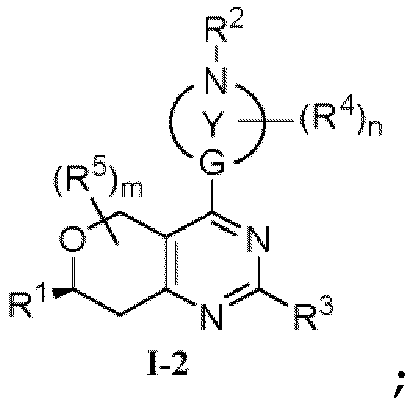 und/oder, wenn R33 unabhängig C1-6-Alkyl ist, dann das C1-6-Alkyl Methyl, Ethyl, n-Propyl, Isopropyl, n-Butyl, Isobutyl, sec-Butyl oder tert-Butyl ist oder Methyl, Ethyl, n-Propyl oder Isopropyl sein kann;und/oder, wenn R4 unabhängig C1-6-Alkyl substituiert mit einem oder mehreren R4-1 ist, dann das C1-6-Alkyl substituiert mit einem oder mehreren R4-1 Hydroxymethyl, Cyanomethyl oder
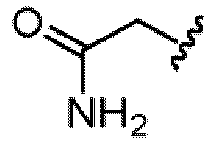 und/oder, wenn Rb und Rf unabhängig C1-6-Alkyl-C(=O) - sind, dann das C1-6-Alkyl in dem C1-6-Alkyl-C(=O)- Methyl, Ethyl, n-Propyl, Isopropyl, n-Butyl, Isobutyl, sec-Butyl oder tert-Butyl ist oder Methyl sein kann;und/oder das R2 CN,

- Sauerstoffhaltige heterocyclische Verbindung, die durch Formel I dargestellt ist, nach Anspruch 9, ein pharmazeutisch unbedenkliches Salz davon, ein Solvat davon, ein Solvat des pharmazeutisch unbedenklichen Salzes davon, eine Kristallform davon, ein Stereoisomer davon, ein Tautomer davon oder eine isotopische Verbindung davon, wobei,wenn R1 C6-20-Aryl substituiert mit einem oder mehreren R1-6 ist, dann das C6-20-Aryl substituiert mit einem oder mehreren R1-6
 und/oder, wenn R4 unabhängig C1-6-Alkyl substituiert mit einem oder mehreren R4-1 ist, dann das C1-6-Alkyl substituiert mit einem oder mehreren R4-1 Hydroxymethyl oder Cyanomethyl ist;und/oder, wenn R10j und R10k zusammen mit dem N-Atom, an das sie gebunden sind, "4- bis 10-gliedriges Heterocycloalkyl, enthaltend 1-3 Heteroatome ausgewählt aus einem oder mehreren von O und N" bilden, dann das "4- bis 10-gliedrige Heterocycloalkyl, enthaltend 1-3 Heteroatome ausgewählt aus einem oder mehreren von O und N" "5- bis 6-gliedriges Heterocycloalkyl, enthaltend 2 Heteroatome ausgewählt aus O und N" ist oder
 und/oder R2

- Sauerstoffhaltige heterocyclische Verbindung, die durch Formel I dargestellt ist, nach Anspruch 9, ein pharmazeutisch unbedenkliches Salz davon, ein Solvat davon, ein Solvat des pharmazeutisch unbedenklichen Salzes davon, eine Kristallform davon, ein Stereoisomer davon, ein Tautomer davon oder eine isotopische Verbindung davon, wobei, wenn R1 C6-20-Aryl substituiert mit einem oder mehreren R1-6 ist, dann das C6-20-Aryl substituiert mit einem oder mehreren R1-6
 und/oder, wenn R31, R33 und R34 unabhängig C1-6-Alkyl substituiert mit einem oder mehreren R31-1 sind, dann das C1-6-Alkyl substituiert mit einem oder mehreren R31-1

 und/oder, wenn R4 unabhängig C1-6-Alkyl substituiert mit einem oder mehreren R4-1 ist, dann das C1-6-Alkyl substituiert mit einem oder mehreren R4-1 Cyanomethyl ist;und/oder R2
- Sauerstoffhaltige heterocyclische Verbindung, die durch Formel I dargestellt ist, nach Anspruch 1, ein pharmazeutisch unbedenkliches Salz davon, ein Solvat davon, ein Solvat des pharmazeutisch unbedenklichen Salzes davon, eine Kristallform davon, ein Stereoisomer davon, ein Tautomer davon oder eine isotopische Verbindung davon, wobei die sauerstoffhaltige heterocyclische Verbindung, die durch Formel I dargestellt ist, eine beliebige der folgenden Strukturen aufweist:
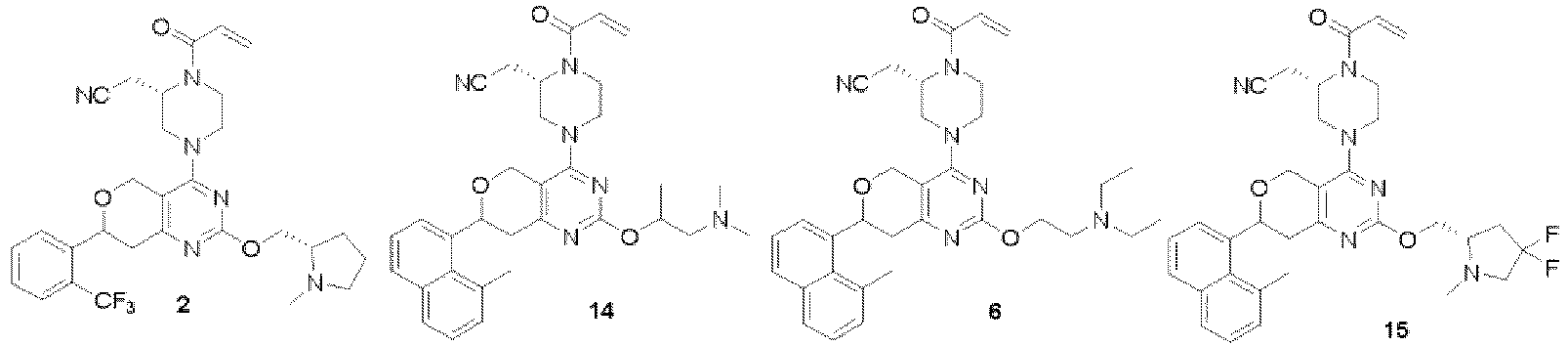


- Sauerstoffhaltige heterocyclische Verbindung, die durch Formel I dargestellt ist, nach Anspruch 1, ein pharmazeutisch unbedenkliches Salz davon, ein Solvat davon, ein Solvat des pharmazeutisch unbedenklichen Salzes davon, eine Kristallform davon, ein Stereoisomer davon, ein Tautomer davon oder eine isotopische Verbindung davon, wobei die sauerstoffhaltige heterocyclische Verbindung, die durch Formel I dargestellt ist, eine beliebige der folgenden Verbindungen ist:Verbindung
 Verbindung
 Verbindung
 Verbindung
 Verbindung
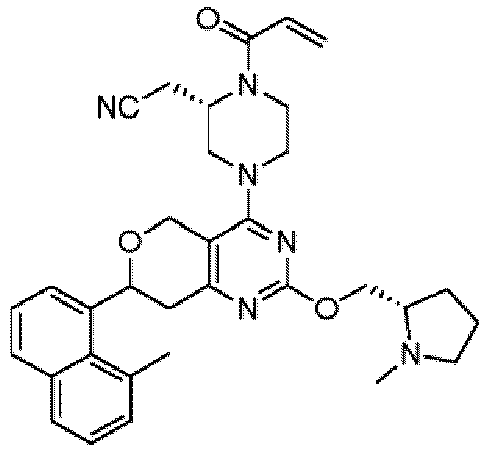 Verbindung
 Verbindung
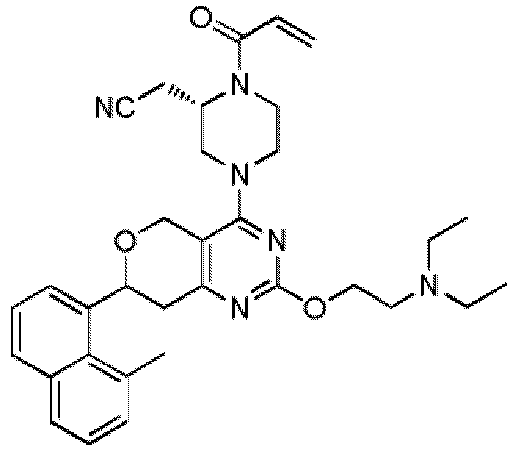 Verbindung
 Verbindung
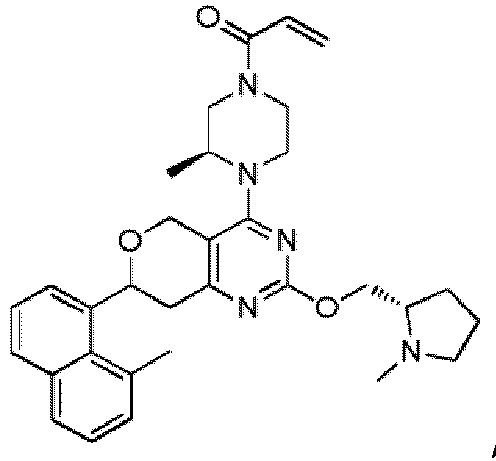 Verbindung
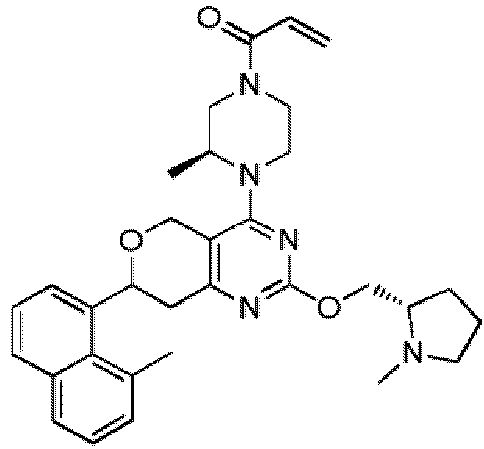 Verbindung
 Verbindung
 Verbindung
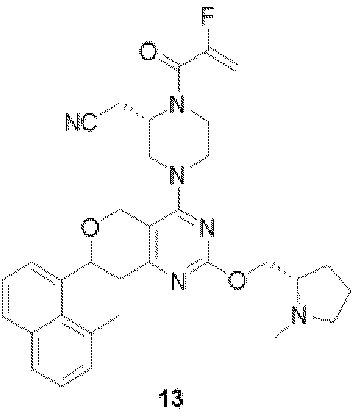 Verbindung
 Verbindung
 Verbindung
 Verbindung
 Verbindung
 Verbindung
 Verbindung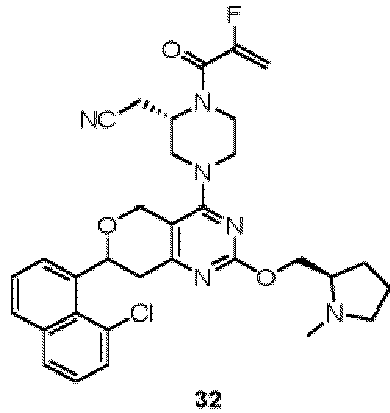
- Sauerstoffhaltige heterocyclische Verbindung, die durch Formel I dargestellt ist, nach Anspruch 1, ein pharmazeutisch unbedenkliches Salz davon, ein Solvat davon, ein Solvat des pharmazeutisch unbedenklichen Salzes davon, eine Kristallform davon, ein Stereoisomer davon, ein Tautomer davon oder eine isotopische Verbindung davon, wobei die sauerstoffhaltige heterocyclische Verbindung, die durch Formel I dargestellt ist, eine beliebige der folgenden Verbindungen ist:
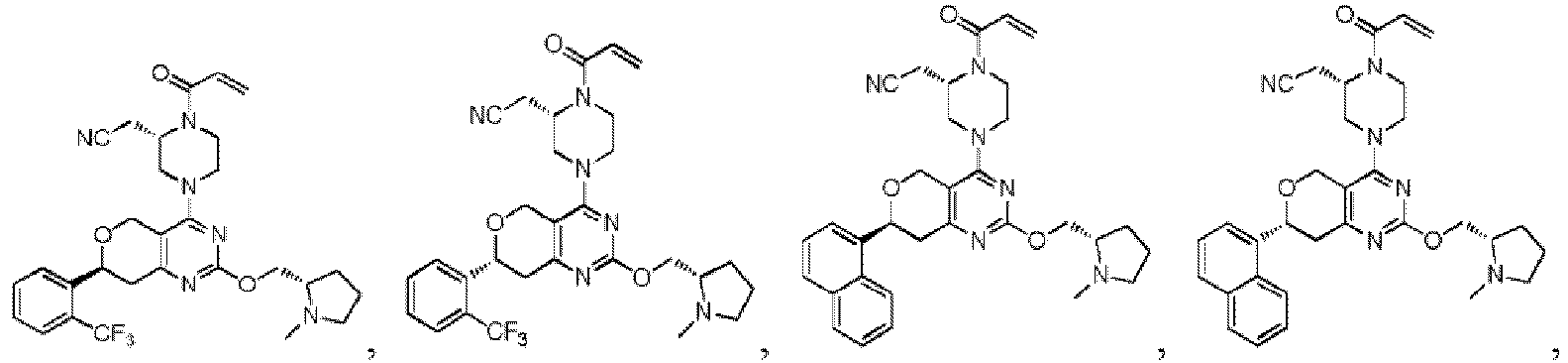


- Verfahren zum Herstellen der sauerstoffhaltigen heterocyclischen Verbindung, die durch Formel I dargestellt ist, nach einem der Ansprüche 1-15, wobei das Verfahren Route eins oder Route zwei umfasst:
Route eins: wobei X1 eine Abgangsgruppe ist; Alk Alkyl ist; und PG eine Amino-Schutzgruppe ist;
Route zwei: wobei X3 eine Abgangsgruppe ist und PG eine Amino-Schutzgruppe ist;die Abgangsgruppe OTf oder Cl ist;die Amino-Schutzgruppe Boc oder Cbz ist.
 - Verbindung, die durch Formel A5, A6, A7, A8, A9, A10, C1, C2, C3, C4 oder C5 dargestellt ist;
 wobei R1, R3, R4, G, Y und n nach einem der Ansprüche 1-15 sind;X1 und X3 unabhängig Abgangsgruppen sind und PG eine Amino-Schutzgruppe ist;die Abgangsgruppe OTf oder Cl ist;die Amino-Schutzgruppe Boc oder Cbz ist;zum Beispiel die Verbindung, die durch Formel A5, A6, A7, A8, A9, A10, C1, C2, C3, C4 oder C5 dargestellt ist, eine beliebige der folgenden Verbindungen ist:


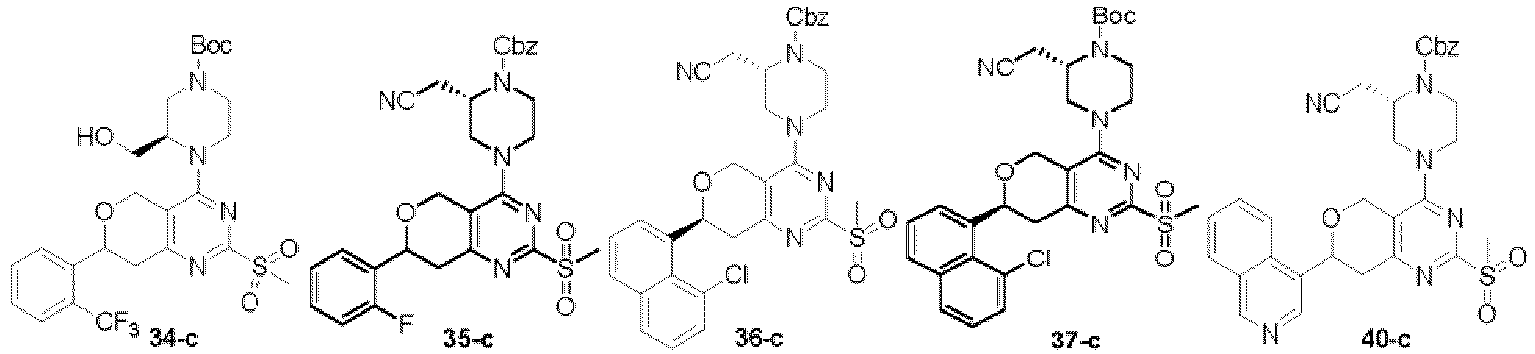


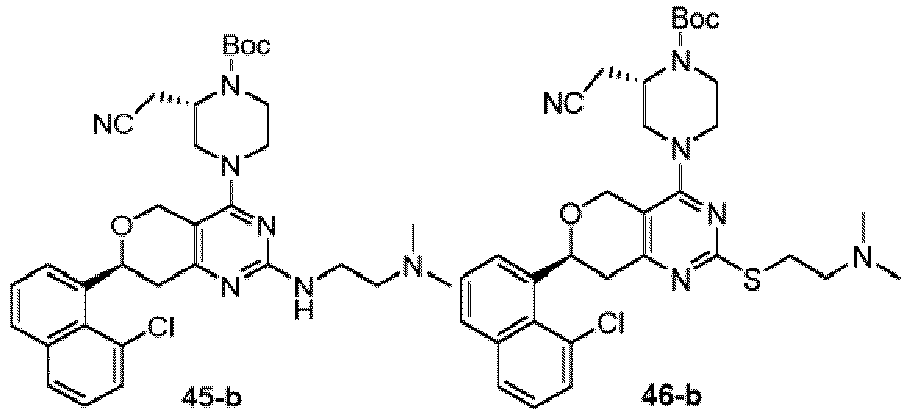


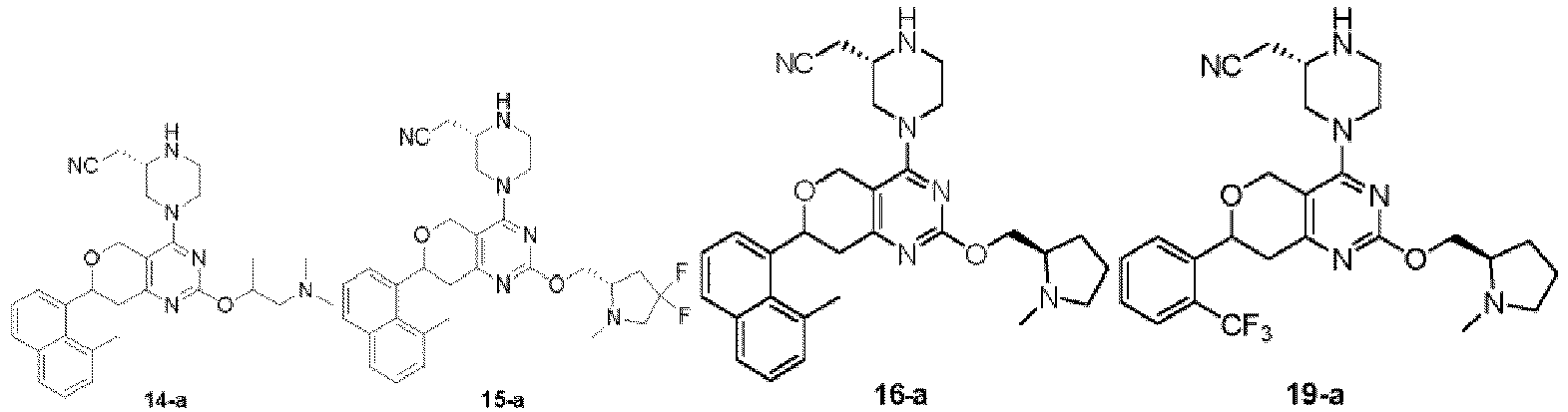

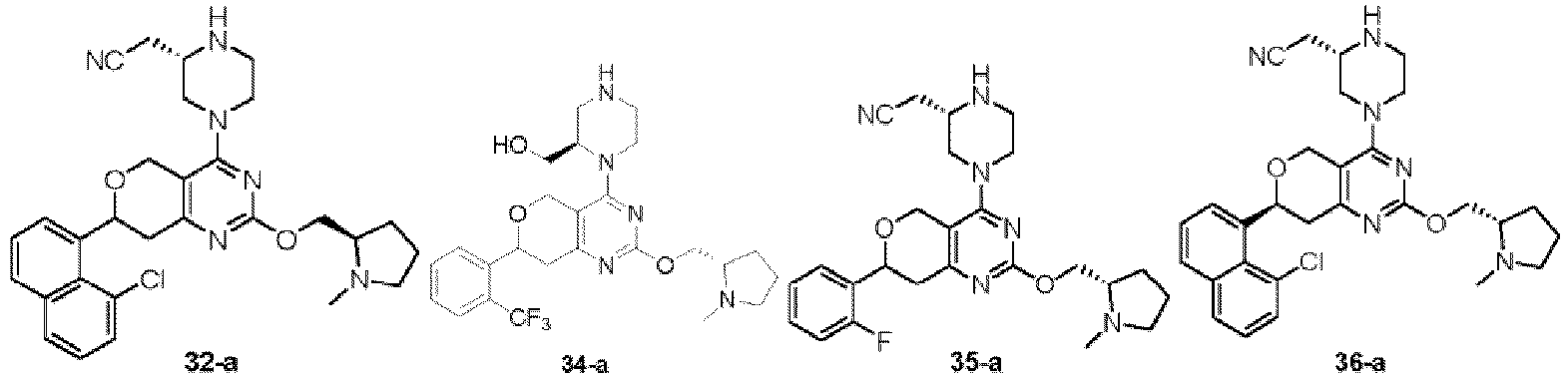


- Pharmazeutische Zusammensetzung, umfassend Substanz A und ein pharmazeutisches Adjuvans; wobei die Substanz A die sauerstoffhaltige heterocyclische Verbindung, die durch Formel I dargestellt ist, nach einem der Ansprüche 1-15, ein pharmazeutisch unbedenkliches Salz davon, ein Solvat davon, ein Solvat des pharmazeutisch unbedenklichen Salzes davon, eine Kristallform davon, ein Stereoisomer davon, ein Tautomer davon oder eine isotopische Verbindung davon ist.
- Substanz A zur Verwendung als Medikament, wobei die Substanz A die sauerstoffhaltige heterocyclische Verbindung, die durch Formel I dargestellt ist, nach einem der Ansprüche 1-15, ein pharmazeutisch unbedenkliches Salz davon, ein Solvat davon, ein Solvat des pharmazeutisch unbedenklichen Salzes davon, eine Kristallform davon, ein Stereoisomer davon, ein Tautomer davon oder eine isotopische Verbindung davon ist.
- Substanz A zur Verwendung als Medikament, wobei die Substanz A die sauerstoffhaltige heterocyclische Verbindung, die durch Formel I dargestellt ist, nach einem der Ansprüche 1-15, ein pharmazeutisch unbedenkliches Salz davon, ein Solvat davon, ein Solvat des pharmazeutisch unbedenklichen Salzes davon, eine Kristallform davon, ein Stereoisomer davon, ein Tautomer davon oder eine isotopische Verbindung davon ist;
bei der Behandlung oder Vorbeugung von Krebs, wobei es sich bei dem Krebs um eines oder mehrere von Kolonkrebs, Bauchspeicheldrüsenkrebs, Brustkrebs, Prostatakrebs, Lungenkrebs, Hirnkrebs, Eierstockkrebs, Gebärmutterhalskrebs, Hodenkrebs, Nierenkarzinom, Kopf- oder Halskrebs, Knochenkrebs, Hautkrebs, Rektalkrebs, Leberkrebs, Kolonkrebs, Speiseröhrenkrebs, Magenkrebs, Bauchspeicheldrüsenkrebs, Schilddrüsenkrebs, Blasenkrebs, Lymphom, Leukämie und Melanom handelt. - Substanz A zur Verwendung als RAS-Hemmer ex vivo, wobei die Substanz A die sauerstoffhaltige heterocyclische Verbindung, die durch Formel I dargestellt ist, nach einem der Ansprüche 1-15, ein pharmazeutisch unbedenkliches Salz davon, ein Solvat davon, ein Solvat des pharmazeutisch unbedenklichen Salzes davon, eine Kristallform davon, ein Stereoisomer davon, ein Tautomer davon oder eine isotopische Verbindung davon ist.
Applications Claiming Priority (4)
| Application Number | Priority Date | Filing Date | Title |
|---|---|---|---|
| CN201911212840 | 2019-12-02 | ||
| CN202010368798 | 2020-04-29 | ||
| CN202011077052.0A CN112979664B (zh) | 2019-12-02 | 2020-10-10 | 一种含氧杂环化合物、其制备方法及应用 |
| PCT/CN2020/122335 WO2021109737A1 (zh) | 2019-12-02 | 2020-10-21 | 一种含氧杂环化合物、其制备方法及应用 |
Publications (3)
| Publication Number | Publication Date |
|---|---|
| EP4015520A1 EP4015520A1 (de) | 2022-06-22 |
| EP4015520A4 EP4015520A4 (de) | 2023-08-23 |
| EP4015520B1 true EP4015520B1 (de) | 2025-02-19 |
Family
ID=76221416
Family Applications (1)
| Application Number | Title | Priority Date | Filing Date |
|---|---|---|---|
| EP20895574.0A Active EP4015520B1 (de) | 2019-12-02 | 2020-10-21 | Sauerstoffhaltige heterocyclische verbindung, verfahren zu ihrer herstellung und ihre verwendung |
Country Status (9)
| Country | Link |
|---|---|
| US (1) | US20220315598A1 (de) |
| EP (1) | EP4015520B1 (de) |
| JP (1) | JP7480298B2 (de) |
| KR (1) | KR20220136349A (de) |
| AU (1) | AU2020395397A1 (de) |
| BR (1) | BR112022010254A2 (de) |
| CA (1) | CA3163218A1 (de) |
| MX (1) | MX2022006663A (de) |
| WO (1) | WO2021109737A1 (de) |
Families Citing this family (27)
| Publication number | Priority date | Publication date | Assignee | Title |
|---|---|---|---|---|
| US11932633B2 (en) | 2018-05-07 | 2024-03-19 | Mirati Therapeutics, Inc. | KRas G12C inhibitors |
| JP2022500385A (ja) | 2018-09-10 | 2022-01-04 | ミラティ セラピューティクス, インコーポレイテッド | 組み合わせ療法 |
| RS66424B1 (sr) | 2018-09-10 | 2025-02-28 | Mirati Therapeutics Inc | Kombinovane terapije |
| JP2022500384A (ja) | 2018-09-10 | 2022-01-04 | ミラティ セラピューティクス, インコーポレイテッド | 組み合わせ療法 |
| IL281344B2 (en) | 2018-09-10 | 2025-09-01 | Mirati Therapeutics Inc | Combination of adagrasib and cetuximab for cancer treatment |
| US12065430B2 (en) | 2018-10-26 | 2024-08-20 | Taiho Pharmaceutical Co., Ltd. | Indazole compound or salt thereof |
| JP2022509724A (ja) | 2018-12-05 | 2022-01-24 | ミラティ セラピューティクス, インコーポレイテッド | 組み合わせ療法 |
| EP3908283A4 (de) | 2019-01-10 | 2022-10-12 | Mirati Therapeutics, Inc. | Kras-g12c-inhibitoren |
| MX2022002465A (es) | 2019-08-29 | 2022-05-19 | Mirati Therapeutics Inc | Inhibidores de kras g12d. |
| EP4034123A4 (de) | 2019-09-24 | 2023-11-01 | Mirati Therapeutics, Inc. | Kombinationstherapien |
| PE20221253A1 (es) | 2019-10-28 | 2022-08-16 | Merck Sharp & Dohme | Inhibidores de pequenas moleculas de mutante g12c de kras |
| US12479834B2 (en) | 2019-11-29 | 2025-11-25 | Taiho Pharmaceutical Co., Ltd. | Phenol compound or salt thereof |
| BR112022012106A2 (pt) | 2019-12-20 | 2022-09-20 | Mirati Therapeutics Inc | Inibidores de sos1 |
| CA3171365A1 (en) * | 2020-03-12 | 2021-09-16 | Yang Zhang | Pyrimidoheterocyclic compounds and application thereof |
| WO2022056307A1 (en) | 2020-09-11 | 2022-03-17 | Mirati Therapeutics, Inc. | Crystalline forms of a kras g12c inhibitor |
| US20220112204A1 (en) * | 2020-10-14 | 2022-04-14 | Accutar Biotechnology Inc. | Substituted dihydropyranopyrimidine compounds as kras inhibitors |
| IL303446A (en) | 2020-12-15 | 2023-08-01 | Mirati Therapeutics Inc | Azaquinazoline compounds as PAN-KRas inhibitors |
| WO2022133038A1 (en) | 2020-12-16 | 2022-06-23 | Mirati Therapeutics, Inc. | Tetrahydropyridopyrimidine pan-kras inhibitors |
| AU2022212151B2 (en) * | 2021-02-01 | 2025-01-23 | D3 Bio (Wuxi) Co., Ltd. | Pyrimidopyran compound |
| WO2022187527A1 (en) * | 2021-03-05 | 2022-09-09 | Nikang Therapeutics, Inc | Quinazoline nitrile derivatives as kras inhibitors |
| WO2022247772A1 (zh) * | 2021-05-24 | 2022-12-01 | 上海璎黎药业有限公司 | 一种含氧杂环化合物的晶型、其制备方法及应用 |
| EP4347606A4 (de) * | 2021-05-28 | 2025-04-02 | Merck Sharp & Dohme LLC | Kleinmolekülige inhibitoren des kras-g12c-mutanten |
| CN117677398A (zh) | 2021-07-27 | 2024-03-08 | 东丽株式会社 | 用于癌的治疗和/或预防的药品 |
| EP4511372A4 (de) * | 2022-04-18 | 2026-04-01 | Mirati Therapeutics Inc | Verfahren und zwischenprodukte zur synthese von adagrasib |
| WO2024081674A1 (en) | 2022-10-11 | 2024-04-18 | Aadi Bioscience, Inc. | Combination therapies for the treatment of cancer |
| TW202529768A (zh) | 2023-09-29 | 2025-08-01 | 大陸商德昇濟醫藥(無錫)有限公司 | 癌症治療的療法 |
| AU2024361909A1 (en) | 2023-10-20 | 2026-03-26 | Merck Sharp & Dohme Llc | Small molecule inhibitors of kras proteins |
Family Cites Families (14)
| Publication number | Priority date | Publication date | Assignee | Title |
|---|---|---|---|---|
| WO2010064705A1 (ja) | 2008-12-05 | 2010-06-10 | 大日本住友製薬株式会社 | H4受容体アンタゴニスト作用を有する新規7位置換ジヒドロピラノピリミジン誘導体 |
| US20100331305A1 (en) * | 2009-06-24 | 2010-12-30 | Genentech, Inc. | Oxo-heterocycle fused pyrimidine compounds, compositions and methods of use |
| ES2779152T3 (es) | 2013-10-07 | 2020-08-13 | Kadmon Corporation Llc | Derivados de (2-(5-isoindolin-2-il)pirimidin-4-il)-amina como inhibidores de Rho-quinasa para tratar enfermedades autoinmunes |
| US10246424B2 (en) | 2015-04-10 | 2019-04-02 | Araxes Pharma Llc | Substituted quinazoline compounds and methods of use thereof |
| WO2016210330A1 (en) | 2015-06-26 | 2016-12-29 | Kadmon Corporation, Llc | Glucose uptake inhibitors |
| KR101777475B1 (ko) * | 2015-12-08 | 2017-09-11 | 에스티팜 주식회사 | 신규한 디히드로피라노피리미디논 유도체 및 이들의 용도 |
| US11267812B2 (en) * | 2016-05-18 | 2022-03-08 | Mirati Therapeutics, Inc. | KRAS G12C inhibitors |
| MX2019013954A (es) | 2017-05-25 | 2020-08-31 | Araxes Pharma Llc | Inhibidores covalentes de kras. |
| HUE061599T2 (hu) | 2017-11-15 | 2023-07-28 | Mirati Therapeutics Inc | KRas G12C inhibotorok |
| TW201942115A (zh) | 2018-02-01 | 2019-11-01 | 美商輝瑞股份有限公司 | 作為抗癌藥之經取代的喹唑啉和吡啶並嘧啶衍生物 |
| TW201942116A (zh) * | 2018-02-09 | 2019-11-01 | 美商輝瑞股份有限公司 | 作為抗癌劑之四氫喹唑啉衍生物 |
| KR20210006356A (ko) | 2018-04-04 | 2021-01-18 | 아비나스 오퍼레이션스, 인코포레이티드 | 단백질분해 조절제 및 연관된 사용 방법 |
| WO2021106231A1 (en) * | 2019-11-29 | 2021-06-03 | Taiho Pharmaceutical Co., Ltd. | A compound having inhibitory activity against kras g12d mutation |
| CA3171365A1 (en) * | 2020-03-12 | 2021-09-16 | Yang Zhang | Pyrimidoheterocyclic compounds and application thereof |
-
2020
- 2020-10-21 EP EP20895574.0A patent/EP4015520B1/de active Active
- 2020-10-21 AU AU2020395397A patent/AU2020395397A1/en not_active Abandoned
- 2020-10-21 JP JP2022532809A patent/JP7480298B2/ja active Active
- 2020-10-21 WO PCT/CN2020/122335 patent/WO2021109737A1/zh not_active Ceased
- 2020-10-21 MX MX2022006663A patent/MX2022006663A/es unknown
- 2020-10-21 US US17/767,046 patent/US20220315598A1/en active Pending
- 2020-10-21 BR BR112022010254A patent/BR112022010254A2/pt not_active IP Right Cessation
- 2020-10-21 KR KR1020227022934A patent/KR20220136349A/ko not_active Withdrawn
- 2020-10-21 CA CA3163218A patent/CA3163218A1/en active Pending
Also Published As
| Publication number | Publication date |
|---|---|
| EP4015520A1 (de) | 2022-06-22 |
| EP4015520A4 (de) | 2023-08-23 |
| MX2022006663A (es) | 2022-07-05 |
| JP2023504178A (ja) | 2023-02-01 |
| KR20220136349A (ko) | 2022-10-07 |
| JP7480298B2 (ja) | 2024-05-09 |
| WO2021109737A1 (zh) | 2021-06-10 |
| CA3163218A1 (en) | 2021-06-10 |
| BR112022010254A2 (pt) | 2022-09-06 |
| US20220315598A1 (en) | 2022-10-06 |
| AU2020395397A1 (en) | 2022-06-09 |
Similar Documents
| Publication | Publication Date | Title |
|---|---|---|
| EP4015520B1 (de) | Sauerstoffhaltige heterocyclische verbindung, verfahren zu ihrer herstellung und ihre verwendung | |
| EP4570804A1 (de) | Pde4b-inhibitor und verwendung davon | |
| EP2195321B1 (de) | 3-amidopyrrolo[3,4-c]pyrazol-5-(1h, 4h, 6h)carbaldehydderivate als inhibitoren von proteinkinase c | |
| EP3580224B1 (de) | Ask1-hemmende mittel | |
| CN116514848A (zh) | 一种含氮杂环化合物、其制备方法及应用 | |
| EP3833662B1 (de) | Hemmer der keap1-nrf2 protein-protein-wechselwirkung | |
| EP2949647B1 (de) | Deuterierte phenylaminopyrimidinverbindung und pharmazeutische zusammensetzung damit | |
| EP3548031B1 (de) | Als hiv-integrase-hemmer nützliche tetracyclische heterocyclenverbindungen | |
| US20240425512A1 (en) | Nitrogen-containing heterocyclic compound, pharmaceutical composition thereof and application thereof | |
| CN105367482A (zh) | N-酰基磺酰胺凋亡促进剂 | |
| US11236086B2 (en) | Substituted pyrrolopyridines as inhibitors of activin receptor-like kinase | |
| CN112979664B (zh) | 一种含氧杂环化合物、其制备方法及应用 | |
| WO2017113288A1 (en) | Fused tricyclic heterocyclic compounds as hiv integrase inhibitors | |
| EP4349828A1 (de) | Stickstoffhaltige heterocyclische verbindung, herstellungsverfahren dafür und anwendung davon | |
| EP3668877B1 (de) | Indolderivate als histon-demethylase-inhibitoren | |
| US20220048884A1 (en) | Nrf2 activator | |
| EP4079733A1 (de) | Heterozyklische verbindung und ihre pharmazeutische zusammensetzung, herstellungsverfahren dafür, zwischenprodukt und anwendung davon | |
| EP3773577B1 (de) | Tricyclische ask1-inhibitoren | |
| HK40066525A (en) | Oxygen-containing heterocyclic compound, preparation method and application thereof | |
| JP2026507677A (ja) | Cdk12/13のアリール置換基含有分解剤、その調製方法、ならびにその医薬組成物及び使用 | |
| HK40104948A (en) | Nitrogen-containing heterocyclic compound, preparation method therefor and application thereof | |
| HK40110221A (en) | Inhibitors of keap1-nrf2 protein-protein interaction | |
| HK40054771B (en) | Inhibitors of keap1-nrf2 protein-protein interaction | |
| HK40054771A (en) | Inhibitors of keap1-nrf2 protein-protein interaction |
Legal Events
| Date | Code | Title | Description |
|---|---|---|---|
| STAA | Information on the status of an ep patent application or granted ep patent |
Free format text: STATUS: THE INTERNATIONAL PUBLICATION HAS BEEN MADE |
|
| PUAI | Public reference made under article 153(3) epc to a published international application that has entered the european phase |
Free format text: ORIGINAL CODE: 0009012 |
|
| STAA | Information on the status of an ep patent application or granted ep patent |
Free format text: STATUS: REQUEST FOR EXAMINATION WAS MADE |
|
| 17P | Request for examination filed |
Effective date: 20220314 |
|
| AK | Designated contracting states |
Kind code of ref document: A1 Designated state(s): AL AT BE BG CH CY CZ DE DK EE ES FI FR GB GR HR HU IE IS IT LI LT LU LV MC MK MT NL NO PL PT RO RS SE SI SK SM TR |
|
| REG | Reference to a national code |
Ref country code: HK Ref legal event code: DE Ref document number: 40066525 Country of ref document: HK |
|
| DAV | Request for validation of the european patent (deleted) | ||
| DAX | Request for extension of the european patent (deleted) | ||
| A4 | Supplementary search report drawn up and despatched |
Effective date: 20230726 |
|
| RIC1 | Information provided on ipc code assigned before grant |
Ipc: C07D 519/00 20060101ALI20230720BHEP Ipc: A61P 35/00 20060101ALI20230720BHEP Ipc: A61K 31/519 20060101ALI20230720BHEP Ipc: C07D 491/052 20060101AFI20230720BHEP |
|
| RAP1 | Party data changed (applicant data changed or rights of an application transferred) |
Owner name: 280 BIO, INC. |
|
| GRAP | Despatch of communication of intention to grant a patent |
Free format text: ORIGINAL CODE: EPIDOSNIGR1 |
|
| STAA | Information on the status of an ep patent application or granted ep patent |
Free format text: STATUS: GRANT OF PATENT IS INTENDED |
|
| RIC1 | Information provided on ipc code assigned before grant |
Ipc: C07D 519/00 20060101ALI20240809BHEP Ipc: A61P 35/00 20060101ALI20240809BHEP Ipc: A61K 31/519 20060101ALI20240809BHEP Ipc: C07D 491/052 20060101AFI20240809BHEP |
|
| INTG | Intention to grant announced |
Effective date: 20240918 |
|
| GRAS | Grant fee paid |
Free format text: ORIGINAL CODE: EPIDOSNIGR3 |
|
| GRAA | (expected) grant |
Free format text: ORIGINAL CODE: 0009210 |
|
| STAA | Information on the status of an ep patent application or granted ep patent |
Free format text: STATUS: THE PATENT HAS BEEN GRANTED |
|
| AK | Designated contracting states |
Kind code of ref document: B1 Designated state(s): AL AT BE BG CH CY CZ DE DK EE ES FI FR GB GR HR HU IE IS IT LI LT LU LV MC MK MT NL NO PL PT RO RS SE SI SK SM TR |
|
| REG | Reference to a national code |
Ref country code: GB Ref legal event code: FG4D |
|
| REG | Reference to a national code |
Ref country code: CH Ref legal event code: EP |
|
| REG | Reference to a national code |
Ref country code: IE Ref legal event code: FG4D |
|
| REG | Reference to a national code |
Ref country code: DE Ref legal event code: R096 Ref document number: 602020046556 Country of ref document: DE |
|
| REG | Reference to a national code |
Ref country code: NL Ref legal event code: MP Effective date: 20250219 |
|
| PG25 | Lapsed in a contracting state [announced via postgrant information from national office to epo] |
Ref country code: RS Free format text: LAPSE BECAUSE OF FAILURE TO SUBMIT A TRANSLATION OF THE DESCRIPTION OR TO PAY THE FEE WITHIN THE PRESCRIBED TIME-LIMIT Effective date: 20250519 |
|
| PG25 | Lapsed in a contracting state [announced via postgrant information from national office to epo] |
Ref country code: FI Free format text: LAPSE BECAUSE OF FAILURE TO SUBMIT A TRANSLATION OF THE DESCRIPTION OR TO PAY THE FEE WITHIN THE PRESCRIBED TIME-LIMIT Effective date: 20250219 |
|
| PG25 | Lapsed in a contracting state [announced via postgrant information from national office to epo] |
Ref country code: PL Free format text: LAPSE BECAUSE OF FAILURE TO SUBMIT A TRANSLATION OF THE DESCRIPTION OR TO PAY THE FEE WITHIN THE PRESCRIBED TIME-LIMIT Effective date: 20250219 |
|
| PG25 | Lapsed in a contracting state [announced via postgrant information from national office to epo] |
Ref country code: ES Free format text: LAPSE BECAUSE OF FAILURE TO SUBMIT A TRANSLATION OF THE DESCRIPTION OR TO PAY THE FEE WITHIN THE PRESCRIBED TIME-LIMIT Effective date: 20250219 |
|
| REG | Reference to a national code |
Ref country code: LT Ref legal event code: MG9D |
|
| PG25 | Lapsed in a contracting state [announced via postgrant information from national office to epo] |
Ref country code: IS Free format text: LAPSE BECAUSE OF FAILURE TO SUBMIT A TRANSLATION OF THE DESCRIPTION OR TO PAY THE FEE WITHIN THE PRESCRIBED TIME-LIMIT Effective date: 20250619 Ref country code: NO Free format text: LAPSE BECAUSE OF FAILURE TO SUBMIT A TRANSLATION OF THE DESCRIPTION OR TO PAY THE FEE WITHIN THE PRESCRIBED TIME-LIMIT Effective date: 20250519 |
|
| PG25 | Lapsed in a contracting state [announced via postgrant information from national office to epo] |
Ref country code: NL Free format text: LAPSE BECAUSE OF FAILURE TO SUBMIT A TRANSLATION OF THE DESCRIPTION OR TO PAY THE FEE WITHIN THE PRESCRIBED TIME-LIMIT Effective date: 20250219 |
|
| PG25 | Lapsed in a contracting state [announced via postgrant information from national office to epo] |
Ref country code: HR Free format text: LAPSE BECAUSE OF FAILURE TO SUBMIT A TRANSLATION OF THE DESCRIPTION OR TO PAY THE FEE WITHIN THE PRESCRIBED TIME-LIMIT Effective date: 20250219 |
|
| PG25 | Lapsed in a contracting state [announced via postgrant information from national office to epo] |
Ref country code: LV Free format text: LAPSE BECAUSE OF FAILURE TO SUBMIT A TRANSLATION OF THE DESCRIPTION OR TO PAY THE FEE WITHIN THE PRESCRIBED TIME-LIMIT Effective date: 20250219 Ref country code: PT Free format text: LAPSE BECAUSE OF FAILURE TO SUBMIT A TRANSLATION OF THE DESCRIPTION OR TO PAY THE FEE WITHIN THE PRESCRIBED TIME-LIMIT Effective date: 20250620 |
|
| PG25 | Lapsed in a contracting state [announced via postgrant information from national office to epo] |
Ref country code: GR Free format text: LAPSE BECAUSE OF FAILURE TO SUBMIT A TRANSLATION OF THE DESCRIPTION OR TO PAY THE FEE WITHIN THE PRESCRIBED TIME-LIMIT Effective date: 20250520 Ref country code: BG Free format text: LAPSE BECAUSE OF FAILURE TO SUBMIT A TRANSLATION OF THE DESCRIPTION OR TO PAY THE FEE WITHIN THE PRESCRIBED TIME-LIMIT Effective date: 20250219 |
|
| REG | Reference to a national code |
Ref country code: AT Ref legal event code: MK05 Ref document number: 1768188 Country of ref document: AT Kind code of ref document: T Effective date: 20250219 |
|
| PG25 | Lapsed in a contracting state [announced via postgrant information from national office to epo] |
Ref country code: SE Free format text: LAPSE BECAUSE OF FAILURE TO SUBMIT A TRANSLATION OF THE DESCRIPTION OR TO PAY THE FEE WITHIN THE PRESCRIBED TIME-LIMIT Effective date: 20250219 |
|
| PG25 | Lapsed in a contracting state [announced via postgrant information from national office to epo] |
Ref country code: SM Free format text: LAPSE BECAUSE OF FAILURE TO SUBMIT A TRANSLATION OF THE DESCRIPTION OR TO PAY THE FEE WITHIN THE PRESCRIBED TIME-LIMIT Effective date: 20250219 |
|
| PG25 | Lapsed in a contracting state [announced via postgrant information from national office to epo] |
Ref country code: DK Free format text: LAPSE BECAUSE OF FAILURE TO SUBMIT A TRANSLATION OF THE DESCRIPTION OR TO PAY THE FEE WITHIN THE PRESCRIBED TIME-LIMIT Effective date: 20250219 |
|
| PG25 | Lapsed in a contracting state [announced via postgrant information from national office to epo] |
Ref country code: IT Free format text: LAPSE BECAUSE OF FAILURE TO SUBMIT A TRANSLATION OF THE DESCRIPTION OR TO PAY THE FEE WITHIN THE PRESCRIBED TIME-LIMIT Effective date: 20250219 |
|
| PG25 | Lapsed in a contracting state [announced via postgrant information from national office to epo] |
Ref country code: AT Free format text: LAPSE BECAUSE OF FAILURE TO SUBMIT A TRANSLATION OF THE DESCRIPTION OR TO PAY THE FEE WITHIN THE PRESCRIBED TIME-LIMIT Effective date: 20250219 |
|
| PG25 | Lapsed in a contracting state [announced via postgrant information from national office to epo] |
Ref country code: EE Free format text: LAPSE BECAUSE OF FAILURE TO SUBMIT A TRANSLATION OF THE DESCRIPTION OR TO PAY THE FEE WITHIN THE PRESCRIBED TIME-LIMIT Effective date: 20250219 Ref country code: CZ Free format text: LAPSE BECAUSE OF FAILURE TO SUBMIT A TRANSLATION OF THE DESCRIPTION OR TO PAY THE FEE WITHIN THE PRESCRIBED TIME-LIMIT Effective date: 20250219 |
|
| PG25 | Lapsed in a contracting state [announced via postgrant information from national office to epo] |
Ref country code: RO Free format text: LAPSE BECAUSE OF FAILURE TO SUBMIT A TRANSLATION OF THE DESCRIPTION OR TO PAY THE FEE WITHIN THE PRESCRIBED TIME-LIMIT Effective date: 20250219 |
|
| PG25 | Lapsed in a contracting state [announced via postgrant information from national office to epo] |
Ref country code: SK Free format text: LAPSE BECAUSE OF FAILURE TO SUBMIT A TRANSLATION OF THE DESCRIPTION OR TO PAY THE FEE WITHIN THE PRESCRIBED TIME-LIMIT Effective date: 20250219 |
|
| REG | Reference to a national code |
Ref country code: DE Ref legal event code: R097 Ref document number: 602020046556 Country of ref document: DE |
|
| PLBE | No opposition filed within time limit |
Free format text: ORIGINAL CODE: 0009261 |
|
| STAA | Information on the status of an ep patent application or granted ep patent |
Free format text: STATUS: NO OPPOSITION FILED WITHIN TIME LIMIT |
|
| 26N | No opposition filed |
Effective date: 20251120 |