EP4014973B1 - Inhaled liquid for the treatment of respiratory infections in humans caused by pathogens resistant to antibiotics - Google Patents
Inhaled liquid for the treatment of respiratory infections in humans caused by pathogens resistant to antibiotics Download PDFInfo
- Publication number
- EP4014973B1 EP4014973B1 EP20020630.8A EP20020630A EP4014973B1 EP 4014973 B1 EP4014973 B1 EP 4014973B1 EP 20020630 A EP20020630 A EP 20020630A EP 4014973 B1 EP4014973 B1 EP 4014973B1
- Authority
- EP
- European Patent Office
- Prior art keywords
- compound
- novel compound
- eugenol
- novel
- lidocaine
- Prior art date
- Legal status (The legal status is an assumption and is not a legal conclusion. Google has not performed a legal analysis and makes no representation as to the accuracy of the status listed.)
- Active
Links
Images


Classifications
-
- A—HUMAN NECESSITIES
- A61—MEDICAL OR VETERINARY SCIENCE; HYGIENE
- A61K—PREPARATIONS FOR MEDICAL, DENTAL OR TOILETRY PURPOSES
- A61K31/00—Medicinal preparations containing organic active ingredients
- A61K31/16—Amides, e.g. hydroxamic acids
- A61K31/165—Amides, e.g. hydroxamic acids having aromatic rings, e.g. colchicine, atenolol, progabide
- A61K31/167—Amides, e.g. hydroxamic acids having aromatic rings, e.g. colchicine, atenolol, progabide having the nitrogen of a carboxamide group directly attached to the aromatic ring, e.g. lidocaine, paracetamol
-
- A—HUMAN NECESSITIES
- A61—MEDICAL OR VETERINARY SCIENCE; HYGIENE
- A61P—SPECIFIC THERAPEUTIC ACTIVITY OF CHEMICAL COMPOUNDS OR MEDICINAL PREPARATIONS
- A61P31/00—Antiinfectives, i.e. antibiotics, antiseptics, chemotherapeutics
- A61P31/04—Antibacterial agents
-
- C—CHEMISTRY; METALLURGY
- C07—ORGANIC CHEMISTRY
- C07C—ACYCLIC OR CARBOCYCLIC COMPOUNDS
- C07C231/00—Preparation of carboxylic acid amides
- C07C231/12—Preparation of carboxylic acid amides by reactions not involving the formation of carboxamide groups
-
- C—CHEMISTRY; METALLURGY
- C07—ORGANIC CHEMISTRY
- C07C—ACYCLIC OR CARBOCYCLIC COMPOUNDS
- C07C237/00—Carboxylic acid amides, the carbon skeleton of the acid part being further substituted by amino groups
- C07C237/02—Carboxylic acid amides, the carbon skeleton of the acid part being further substituted by amino groups having the carbon atoms of the carboxamide groups bound to acyclic carbon atoms of the carbon skeleton
- C07C237/04—Carboxylic acid amides, the carbon skeleton of the acid part being further substituted by amino groups having the carbon atoms of the carboxamide groups bound to acyclic carbon atoms of the carbon skeleton the carbon skeleton being acyclic and saturated
-
- C—CHEMISTRY; METALLURGY
- C07—ORGANIC CHEMISTRY
- C07C—ACYCLIC OR CARBOCYCLIC COMPOUNDS
- C07C43/00—Ethers; Compounds having groups, groups or groups
- C07C43/02—Ethers
- C07C43/20—Ethers having an ether-oxygen atom bound to a carbon atom of a six-membered aromatic ring
- C07C43/23—Ethers having an ether-oxygen atom bound to a carbon atom of a six-membered aromatic ring containing hydroxy or O-metal groups
-
- C—CHEMISTRY; METALLURGY
- C07—ORGANIC CHEMISTRY
- C07B—GENERAL METHODS OF ORGANIC CHEMISTRY; APPARATUS THEREFOR
- C07B2200/00—Indexing scheme relating to specific properties of organic compounds
- C07B2200/07—Optical isomers
Definitions
- the compound is a novel medicine for the treatment of respiratory infections in humans.
- the compound is a broad-spectrum antimicrobial compound in the form of a liquid meant for inhalation for the treatment of respiratory infections.
- the antimicrobial effect of Eugenol is well known.
- This invention is completely novel because Eugenol and Lidocaine, by the special process of synthesis have been bounced into one stable compound. The effect and uniqueness of this compound is the subject of this invention.
- the active principle of the compound is a stable quaternary ammonium complex of Eugenol and Lidocaine in the form of an inhaled liquid. The compound is more effective than standard 3rd generation cephalosporin antibiotics in the treatment of mentioned infections.
- the compound is created to fight antibiotic resistance of pathogenic bacteria, such as Pasteurella spp., Cryptococcus spp., Campylobacter spp., Microsporidia spp., Histoplasma capsulatum, Micrococcus spp., Candida spp., and other bacteria causing respiratory infections in humans.
- pathogenic bacteria such as Pasteurella spp., Cryptococcus spp., Campylobacter spp., Microsporidia spp., Histoplasma capsulatum, Micrococcus spp., Candida spp., and other bacteria causing respiratory infections in humans.
- the active compound of this invention is different from any other antibiotic currently available on the market.
- an extra potent effect of the synergy of Eugenol and Lidocaine is achieved.
- the antimicrobial efficacy of this novel compound will be significantly more effective than Eugenol and Lidocaine by themselves or by their simple mixture.
- the active compound of this invention has been produced as a terpene mixture of liposome terpenes, or the active compound represents a single terpene.
- the standard concentration of combinations in patent application WO 03/049726 A1 cannot be controlled nor replicated consistently.
- this invention did not describe in detail its mechanism of action, the applications of these four possibilities are applied by inhalation.
- our patent application goes in-depth with regards to using a nebulizer, unlike the abovementioned process.
- the article (Samet Mohammad et al. (2017-01-01, pages 771-774) describes the positive effect of lidocaine 2% on the bacterial culture of the bronchial fluid in treated patients. Although the positive effect of 2% lidocaine has been proven, our invention is more complex. The novel invention elaborates on the complexity of our patent application. In it, lidocaine with a purity of 99.5% was used as one of the synthesis compounds, representing approximately 44.5% of the solution. The positive effect of lidocaine 2% on patients with lung infections has strongly suggested a correlating factor that our invention will also have a positive effect.
- the novel compound is synthesized by reacting Eugenol (Sigma Aldrich) and an equimolar mass of free base Lidocaine (Sigma Aldrich) in a Dichloromethane solvent. After the reaction of those two chemicals at room temperature, for 30 minutes, a rotary vacuum evaporator is used to evaporate Dichloromethane from the mixture, leaving us with the pure novel compound.
- the novel compound is a quaternary ammonium complex salt of the naturally existing phenolic compound - Eugenol, with a synthetic local anesthetic compound - Lidocaine, as a free base form.
- the ratio of Lidocaine to Eugenol in this reaction is in the range between 1:1 and 2:1
- Gas-mass and HPLC chromatography can be used to characterize the new complex.
- polar solvents such water-methanol systems
- two separate peaks of the complex constituents should be obtained, Lidocaine as a cation and Eugenol as an anion.
- Polar solvents tend to separate anions from cations in solution and that is the reason why two separate peaks in such a system can be observed.
- Each peak is characterized by a mass spectrometer and the information obtained proves their origin from Eugenol and Lidocaine.
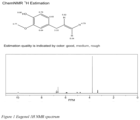
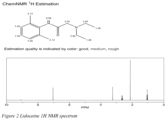
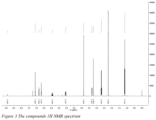
- the new complex can also be characterized on 1H-NMR and IR spectra.
- Eugenol is colorless to pale yellow oily liquid at room temperature. It can be found in many essential oils from natural products such as clove oil, nutmeg, cinnamon, basil bay leaf oil and possess antiseptic and anesthetic properties. It is also a well-known antibacterial, antifungal, antimicrobial and anticoagulant agent. Uses of Eugenol have a wide spectrum and its potential for medical uses is tremendous.
- Emulsifier 8 ml Novel active compound: 2 ml TOTAL: 100 ml
- the compound was obtained by mixing the above stated ingredients in a vacuum mixer (Silverson L5M-A Sealed Unit Lab Mixer) at 6,000 rpm for 20 minutes.
- test results were generated and monitored in order to obtain the relevant information and facts.
- the general monitored parameters were pulse, breathing, ECG (Electrocardiography), any discomfort, adverse events and/or allergy monitoring. These parameters were measured before the treatment with the novel compound and 15 minutes after its intake.
- the novel compound was ingested on the therapeutic days in each patient at 06:00 AM, 02:00 PM and 10:00 PM (Table 1 and Table 2). After the novel compound had been inhaled, the physician made observations for 30 min. Feeling of the patients during and after the inhalation of the novel compound will also be recorded for each participant
- the blood sample of each patient were checked for biochemical parameters. Blood samples were taken from each patient before the beginning of the test, on the 4 th day from test beginning, and on the 8 th day form test beginning. The last blood samples have to be checked 12 hours from the last inhalation of the novel compound.
- the biochemical parameters that were measured in blood samples include:
- the dose was: 10ml of the novel compound 2% / 30 kg of the body weight every 8 hours for seven (7) days (Table 1).
- Amount used The novel compound 0.05 mL; Cephalosporin 0.1 mL; Ampicillin 0.2 mL.
- mice and rats were specially selected for the testing of the toxicity of the compounds, medicine, and chemicals. Only the testing of acute toxicity was done since the active therapy with the novel compound takes from one (1) to three (3) days. Sub-acute toxicity was not necessary and applicable since extended treatment with the novel compound will not be in function or planned. Testing was done in the inhalable application in both white lab rats and white lab mice. Groups of the 100 lab mice and rats of both genders were placed into glass compartments. They were regularly consuming food manufactured for these lab animals. Water consumption was always available.
- Inhalation administration requires more drug than other routs of administration.
- mice 1 ⁇ L / kg, 5 ⁇ L / kg, 10 ⁇ L / kg, 20 ⁇ L / kg, 50 ⁇ L / kg, 100 ⁇ L / kg, 150 ⁇ L / kg, 200 ⁇ L / kg, 300 ⁇ L / kg, 400 ⁇ L / kg, 500 ⁇ L / kg, 600 ⁇ L / kg, 700 ⁇ L / kg, 800 ⁇ L / kg, 900 ⁇ L / kg, 1,000 ⁇ L / kg, 1250 ⁇ L / kg, 1,500 ⁇ L / kg, 1,750 ⁇ L / kg and 2,000 ⁇ L / kg.
- mice out of hundred have changed their behavior and demonstrated light discomfort: running as well as anxiety. Breading and cardiac functions were regular, function of thorax was regular and without visual changes. Discomfort symptoms noticed after the applications, were disappeared after 1 - 3 min., diverse from mouse to mouse. No mouse has ended lethally during this test. Conclusion based on these test results was: the novel compound has oral LD50 over 2,000 ⁇ L / kg for mice (p.o.). the novel compound is low toxic in the applied doses for mice orally (p.o.).
- Peroral application (p.o.) of the novel compound testing LD50 has been by rats: 1 ⁇ L / kg, 5 ⁇ L / kg, 10 ⁇ L / kg, 20 ⁇ L / kg, 50 ⁇ L / kg, 100 ⁇ L / kg, 150 ⁇ L / kg, 200 ⁇ L / kg, 300 ⁇ L / kg, 400 ⁇ L / kg, 500 ⁇ L / kg, 600 ⁇ L / kg, 650 ⁇ L / kg, 750 ⁇ L / kg, 850 ⁇ L / kg, 1,000 ⁇ L / kg, 1250 ⁇ L / kg, 1,500 ⁇ L / kg, 2,000 ⁇ L and kg, 2,250 ⁇ L.
- Inhalatory testing of the novel compound LD50 by nose-only exposure designed for the easy application of the novel compound to the lab animals through inhalation.
- the inhalation process was conducted using a nebulizer with tubes going directly into the nostrils of the animals.
- the exposure time for laboratory rats was 6 hours for each testing and 4 hours for laboratory mice.
- mice 1 ⁇ L / kg, 5 ⁇ L / kg, 10 ⁇ L / kg, 20 ⁇ L / kg, 50 ⁇ L / kg, 100 ⁇ L / kg, 150 ⁇ L / kg, 200 ⁇ L / kg, 300 ⁇ L / kg, 400 ⁇ L / kg, 500 ⁇ L / kg, 600 ⁇ L / kg, 700 ⁇ L / kg, 800 ⁇ L / kg, 900 ⁇ L / kg, 1,000 ⁇ L / kg, 1250 ⁇ L / kg, 1,500 ⁇ L / kg, 1,750 ⁇ L / kg, 2,000 ⁇ L / kg and 2,250 ⁇ L / kg.
- mice out of hundred (100) have changed their behavior and demonstrated discomfort: running as well as anxiety. Breading and cardiac functions were regular, function of thorax were regular and without visual changes. Discomfort symptoms noticed after the applications, were disappeared after 3 - 5 min., diverse from mouse to mouse. No mouse has ended lethally during this test. Conclusion based on these test results was: the novel compound inhailable liquid has LD50 over 2,250 ⁇ L / kg for mice. the novel compound is low toxic in the applied doses on mice. The animals were reexamined after 14 days, and no new irregularities were found.
- Inhalatory application of the novel compound testing LD50 has been by rats: 1 ⁇ L / kg, 5 ⁇ L / kg, 10 ⁇ L / kg, 20 ⁇ L / kg, 50 ⁇ L / kg, 100 ⁇ L / kg, 150 ⁇ L / kg, 200 ⁇ L / kg, 300 ⁇ L / kg, 400 ⁇ L / kg, 500 ⁇ L / kg, 600 ⁇ L / kg, 700 ⁇ L / kg, 800 ⁇ L / kg, 900 ⁇ L / kg, 1,000 ⁇ L / kg, 1250 ⁇ L / kg, 1,500 ⁇ L / kg, 1,750 ⁇ L / kg, 2,000 ⁇ L / kg , 2,250 ⁇ L / kg and 2,500 ⁇ L / kg.
- the dish we consider to be the experimental one 1ml of the novel compound was added to the 20 ml of liquid in the dish.
- the mutagenic test results were negative in both lab dishes - control and experimental plates. The results were identical with no signs of the mutations. Based on these preliminary results, a conclusion could be made that the novel compound possesses no mutagenic and/or cancerogenic effects.
Landscapes
- Chemical & Material Sciences (AREA)
- Organic Chemistry (AREA)
- Health & Medical Sciences (AREA)
- Animal Behavior & Ethology (AREA)
- Chemical Kinetics & Catalysis (AREA)
- Veterinary Medicine (AREA)
- Public Health (AREA)
- Medicinal Chemistry (AREA)
- General Health & Medical Sciences (AREA)
- Pharmacology & Pharmacy (AREA)
- Life Sciences & Earth Sciences (AREA)
- Communicable Diseases (AREA)
- Nuclear Medicine, Radiotherapy & Molecular Imaging (AREA)
- General Chemical & Material Sciences (AREA)
- Oncology (AREA)
- Pain & Pain Management (AREA)
- Epidemiology (AREA)
- Acyclic And Carbocyclic Compounds In Medicinal Compositions (AREA)
- Pharmaceuticals Containing Other Organic And Inorganic Compounds (AREA)
Priority Applications (6)
| Application Number | Priority Date | Filing Date | Title |
|---|---|---|---|
| HUE20020630A HUE072621T2 (hu) | 2020-12-17 | 2020-12-17 | Antibiotikumokkal szemben rezisztens kórokozók által okozott légúti fertõzések kezelésére szánt inhalációs folyadék |
| HRP20250845TT HRP20250845T1 (hr) | 2020-12-17 | 2020-12-17 | Inhalacijska tekućina za liječenje respiratornih infekcija kod ljudi uzrokovanih patogenima otpornim na antibiotike |
| PL20020630.8T PL4014973T3 (pl) | 2020-12-17 | 2020-12-17 | Płyn do inhalacji do leczenia infekcji dróg oddechowych u ludzi wywołanych przez patogeny oporne na antybiotyki |
| RS20250705A RS67017B1 (sr) | 2020-12-17 | 2020-12-17 | Inhalaciona tečnost za lečenje respiratornih infekcija kod ljudi izazvanih patogenima otpornim na antibiotike |
| EP20020630.8A EP4014973B1 (en) | 2020-12-17 | 2020-12-17 | Inhaled liquid for the treatment of respiratory infections in humans caused by pathogens resistant to antibiotics |
| ES20020630T ES3035955T3 (en) | 2020-12-17 | 2020-12-17 | Inhaled liquid for the treatment of respiratory infections in humans caused by pathogens resistant to antibiotics |
Applications Claiming Priority (1)
| Application Number | Priority Date | Filing Date | Title |
|---|---|---|---|
| EP20020630.8A EP4014973B1 (en) | 2020-12-17 | 2020-12-17 | Inhaled liquid for the treatment of respiratory infections in humans caused by pathogens resistant to antibiotics |
Publications (3)
| Publication Number | Publication Date |
|---|---|
| EP4014973A1 EP4014973A1 (en) | 2022-06-22 |
| EP4014973C0 EP4014973C0 (en) | 2025-04-23 |
| EP4014973B1 true EP4014973B1 (en) | 2025-04-23 |
Family
ID=73855635
Family Applications (1)
| Application Number | Title | Priority Date | Filing Date |
|---|---|---|---|
| EP20020630.8A Active EP4014973B1 (en) | 2020-12-17 | 2020-12-17 | Inhaled liquid for the treatment of respiratory infections in humans caused by pathogens resistant to antibiotics |
Country Status (6)
| Country | Link |
|---|---|
| EP (1) | EP4014973B1 (pl) |
| ES (1) | ES3035955T3 (pl) |
| HR (1) | HRP20250845T1 (pl) |
| HU (1) | HUE072621T2 (pl) |
| PL (1) | PL4014973T3 (pl) |
| RS (1) | RS67017B1 (pl) |
Families Citing this family (1)
| Publication number | Priority date | Publication date | Assignee | Title |
|---|---|---|---|---|
| PL246762B1 (pl) * | 2023-05-10 | 2025-03-03 | Politechnika Poznanska | Nowe czwartorzędowe sole amoniowe z kationem pochodzącym od lidokainy i anionem 2-pirośluzanowym, sposób ich otrzymywania oraz zastosowanie jako środki bakteriostatyczne i bakteriobójcze |
Family Cites Families (3)
| Publication number | Priority date | Publication date | Assignee | Title |
|---|---|---|---|---|
| WO2003049726A1 (en) * | 2001-12-07 | 2003-06-19 | Eden Research Plc | Respiratory infection prevention and treatment with terpene-containing compositions |
| WO2003069993A1 (en) * | 2002-02-20 | 2003-08-28 | Pharmessen Scientific, Inc. | Antimicrobial therapeutic compositions and methods of use |
| CN107334755A (zh) * | 2017-08-08 | 2017-11-10 | 佛山科学技术学院 | 丁香酚/丁香油在抑制口腔条件致病菌的应用 |
-
2020
- 2020-12-17 RS RS20250705A patent/RS67017B1/sr unknown
- 2020-12-17 HU HUE20020630A patent/HUE072621T2/hu unknown
- 2020-12-17 ES ES20020630T patent/ES3035955T3/es active Active
- 2020-12-17 PL PL20020630.8T patent/PL4014973T3/pl unknown
- 2020-12-17 EP EP20020630.8A patent/EP4014973B1/en active Active
- 2020-12-17 HR HRP20250845TT patent/HRP20250845T1/hr unknown
Also Published As
| Publication number | Publication date |
|---|---|
| ES3035955T3 (en) | 2025-09-11 |
| HRP20250845T1 (hr) | 2025-09-26 |
| HUE072621T2 (hu) | 2025-12-28 |
| RS67017B1 (sr) | 2025-08-29 |
| EP4014973C0 (en) | 2025-04-23 |
| EP4014973A1 (en) | 2022-06-22 |
| PL4014973T3 (pl) | 2025-09-01 |
Similar Documents
| Publication | Publication Date | Title |
|---|---|---|
| DE69815122T2 (de) | Saccharid-enthaltende zubereitungen zur behandlung von alzheimerschen erkrankung und von weiteren amyloidosen | |
| Barza et al. | Pharmacokinetics of the penicillins in man | |
| DE69229880T2 (de) | Kombinierte virustatikum-antimediator-behandlung (covam) von gewöhnlichen erkältungen | |
| CH693763A5 (de) | Verwendung eines Antibiotikums zur Herstellung eines Medikamentes zur Behandlung von schwerer chronischer Bronchitis (Bronchiektase). | |
| JP2007517764A (ja) | 病原体感染の危険を低減する方法 | |
| Lund et al. | Paroxetine: pharmacokinetics, tolerance and depletion of blood 5‐HT in man | |
| EP4014973B1 (en) | Inhaled liquid for the treatment of respiratory infections in humans caused by pathogens resistant to antibiotics | |
| EP3072895A1 (en) | Phillygenol sulphate and derivative thereof, and preparation method and application thereof | |
| AU2016397047B2 (en) | Dosage regimen for the treatment of acute exacerbations of chronic obstructive pulmonary disease | |
| Kovanen et al. | Failure of interferon to modify Creutzfeldt-Jakob disease | |
| EP3166960B1 (en) | Low substituted polymyxins and compositions thereof | |
| CN102512676A (zh) | 使用噻唑衍生物的方法 | |
| US20240374736A1 (en) | Inhaled liquid for the treatment of respiratory infections in humans caused by pathogens resistant to antibiotics | |
| CA3191513A1 (en) | Inhaled liquid for the treatment of respiratory infections in humans casused by pathogens resistant to antibiotics | |
| EP3991725B1 (en) | Novel entero-antiseptic for the treatment of gastrointenstinal infections in humans | |
| James | The effect of administration of an acetate on detoxication and therapeutic activity of sulphanilamide | |
| US20240374551A1 (en) | Entero-antiseptic for the treatment of gastrointestinal infections in humans | |
| CN119424603B (zh) | 复方多黏菌素的吸入制剂及其在制备治疗肺部感染的药物中的应用 | |
| JP7570499B2 (ja) | 肺炎を予防・治療する薬物におけるポリペプチドの応用 | |
| AU2022213291B2 (en) | Lipids that reduce lung damage, improve pulmonary function and decrease pro-inflammatory cytokines | |
| HK40052716A (en) | A polymyxin e sodium methanesulfonate solution for inhalation and its preparation | |
| Todisco et al. | Effect of bamiphylline on tracheobronchial mucus clearance in subjects with smokers’ simple chronic bronchitis | |
| DE69802828T2 (de) | Verwendung von 6,7-substituierter 2-aminotetraline zur behandlung von zytokin-vermittleten entzündungszuständen | |
| CN112546030A (zh) | 一种吸入用多粘菌素e甲磺酸钠溶液及其制备方法 | |
| Stalenheim et al. | Oral terbutaline alone and in combination with theophylline: dose, plasma concentration, and effect in long-term treatment of bronchial asthma |
Legal Events
| Date | Code | Title | Description |
|---|---|---|---|
| PUAI | Public reference made under article 153(3) epc to a published international application that has entered the european phase |
Free format text: ORIGINAL CODE: 0009012 |
|
| STAA | Information on the status of an ep patent application or granted ep patent |
Free format text: STATUS: THE APPLICATION HAS BEEN PUBLISHED |
|
| AK | Designated contracting states |
Kind code of ref document: A1 Designated state(s): AL AT BE BG CH CY CZ DE DK EE ES FI FR GB GR HR HU IE IS IT LI LT LU LV MC MK MT NL NO PL PT RO RS SE SI SK SM TR |
|
| STAA | Information on the status of an ep patent application or granted ep patent |
Free format text: STATUS: REQUEST FOR EXAMINATION WAS MADE |
|
| 17P | Request for examination filed |
Effective date: 20221216 |
|
| RAX | Requested extension states of the european patent have changed |
Extension state: ME Payment date: 20221216 Extension state: BA Payment date: 20221216 |
|
| RBV | Designated contracting states (corrected) |
Designated state(s): AL AT BE BG CH CY CZ DE DK EE ES FI FR GB GR HR HU IE IS IT LI LT LU LV MC MK MT NL NO PL PT RO RS SE SI SK SM TR |
|
| RAP1 | Party data changed (applicant data changed or rights of an application transferred) |
Owner name: CONICK BIOTECH LLC |
|
| RIN1 | Information on inventor provided before grant (corrected) |
Inventor name: NINKOV, DUSAN |
|
| STAA | Information on the status of an ep patent application or granted ep patent |
Free format text: STATUS: EXAMINATION IS IN PROGRESS |
|
| 17Q | First examination report despatched |
Effective date: 20240227 |
|
| RIC1 | Information provided on ipc code assigned before grant |
Ipc: C07C 231/12 20060101ALI20241219BHEP Ipc: C07C 237/04 20060101ALI20241219BHEP Ipc: C07C 43/23 20060101ALI20241219BHEP Ipc: A61P 31/04 20060101ALI20241219BHEP Ipc: C07C 233/00 20060101ALI20241219BHEP Ipc: A61K 31/167 20060101AFI20241219BHEP |
|
| GRAP | Despatch of communication of intention to grant a patent |
Free format text: ORIGINAL CODE: EPIDOSNIGR1 |
|
| STAA | Information on the status of an ep patent application or granted ep patent |
Free format text: STATUS: GRANT OF PATENT IS INTENDED |
|
| INTG | Intention to grant announced |
Effective date: 20250127 |
|
| GRAS | Grant fee paid |
Free format text: ORIGINAL CODE: EPIDOSNIGR3 |
|
| GRAA | (expected) grant |
Free format text: ORIGINAL CODE: 0009210 |
|
| STAA | Information on the status of an ep patent application or granted ep patent |
Free format text: STATUS: THE PATENT HAS BEEN GRANTED |
|
| AK | Designated contracting states |
Kind code of ref document: B1 Designated state(s): AL AT BE BG CH CY CZ DE DK EE ES FI FR GB GR HR HU IE IS IT LI LT LU LV MC MK MT NL NO PL PT RO RS SE SI SK SM TR |
|
| REG | Reference to a national code |
Ref country code: GB Ref legal event code: FG4D |
|
| REG | Reference to a national code |
Ref country code: CH Ref legal event code: EP |
|
| REG | Reference to a national code |
Ref country code: DE Ref legal event code: R096 Ref document number: 602020049792 Country of ref document: DE |
|
| REG | Reference to a national code |
Ref country code: IE Ref legal event code: FG4D |
|
| U01 | Request for unitary effect filed |
Effective date: 20250521 |
|
| U07 | Unitary effect registered |
Designated state(s): AT BE BG DE DK EE FI FR IT LT LU LV MT NL PT RO SE SI Effective date: 20250528 |
|
| REG | Reference to a national code |
Ref country code: GR Ref legal event code: EP Ref document number: 20250401427 Country of ref document: GR Effective date: 20250808 |
|
| REG | Reference to a national code |
Ref country code: ES Ref legal event code: FG2A Ref document number: 3035955 Country of ref document: ES Kind code of ref document: T3 Effective date: 20250911 |
|
| REG | Reference to a national code |
Ref country code: SK Ref legal event code: T3 Ref document number: E 46813 Country of ref document: SK |
|
| REG | Reference to a national code |
Ref country code: HR Ref legal event code: T1PR Ref document number: P20250845 Country of ref document: HR |
|
| REG | Reference to a national code |
Ref country code: HU Ref legal event code: AG4A Ref document number: E072621 Country of ref document: HU |
|
| PG25 | Lapsed in a contracting state [announced via postgrant information from national office to epo] |
Ref country code: SM Free format text: LAPSE BECAUSE OF FAILURE TO SUBMIT A TRANSLATION OF THE DESCRIPTION OR TO PAY THE FEE WITHIN THE PRESCRIBED TIME-LIMIT Effective date: 20250423 |
|
| PLBE | No opposition filed within time limit |
Free format text: ORIGINAL CODE: 0009261 |
|
| STAA | Information on the status of an ep patent application or granted ep patent |
Free format text: STATUS: NO OPPOSITION FILED WITHIN TIME LIMIT |
|
| REG | Reference to a national code |
Ref country code: CH Ref legal event code: L10 Free format text: ST27 STATUS EVENT CODE: U-0-0-L10-L00 (AS PROVIDED BY THE NATIONAL OFFICE) Effective date: 20260304 |