EP4013818B1 - Biologisch abbaubarer bioverbundwerkstoff und verfahren zu seiner herstellung - Google Patents
Biologisch abbaubarer bioverbundwerkstoff und verfahren zu seiner herstellung Download PDFInfo
- Publication number
- EP4013818B1 EP4013818B1 EP20765077.1A EP20765077A EP4013818B1 EP 4013818 B1 EP4013818 B1 EP 4013818B1 EP 20765077 A EP20765077 A EP 20765077A EP 4013818 B1 EP4013818 B1 EP 4013818B1
- Authority
- EP
- European Patent Office
- Prior art keywords
- pla
- paper
- capsules
- weight
- additives
- Prior art date
- Legal status (The legal status is an assumption and is not a legal conclusion. Google has not performed a legal analysis and makes no representation as to the accuracy of the status listed.)
- Active
Links
Images




Classifications
-
- B—PERFORMING OPERATIONS; TRANSPORTING
- B29—WORKING OF PLASTICS; WORKING OF SUBSTANCES IN A PLASTIC STATE IN GENERAL
- B29C—SHAPING OR JOINING OF PLASTICS; SHAPING OF MATERIAL IN A PLASTIC STATE, NOT OTHERWISE PROVIDED FOR; AFTER-TREATMENT OF THE SHAPED PRODUCTS, e.g. REPAIRING
- B29C48/00—Extrusion moulding, i.e. expressing the moulding material through a die or nozzle which imparts the desired form; Apparatus therefor
- B29C48/022—Extrusion moulding, i.e. expressing the moulding material through a die or nozzle which imparts the desired form; Apparatus therefor characterised by the choice of material
-
- B—PERFORMING OPERATIONS; TRANSPORTING
- B29—WORKING OF PLASTICS; WORKING OF SUBSTANCES IN A PLASTIC STATE IN GENERAL
- B29B—PREPARATION OR PRETREATMENT OF THE MATERIAL TO BE SHAPED; MAKING GRANULES OR PREFORMS; RECOVERY OF PLASTICS OR OTHER CONSTITUENTS OF WASTE MATERIAL CONTAINING PLASTICS
- B29B7/00—Mixing; Kneading
- B29B7/002—Methods
- B29B7/007—Methods for continuous mixing
-
- B—PERFORMING OPERATIONS; TRANSPORTING
- B29—WORKING OF PLASTICS; WORKING OF SUBSTANCES IN A PLASTIC STATE IN GENERAL
- B29B—PREPARATION OR PRETREATMENT OF THE MATERIAL TO BE SHAPED; MAKING GRANULES OR PREFORMS; RECOVERY OF PLASTICS OR OTHER CONSTITUENTS OF WASTE MATERIAL CONTAINING PLASTICS
- B29B7/00—Mixing; Kneading
- B29B7/30—Mixing; Kneading continuous, with mechanical mixing or kneading devices
- B29B7/58—Component parts, details or accessories; Auxiliary operations
- B29B7/72—Measuring, controlling or regulating
- B29B7/726—Measuring properties of mixture, e.g. temperature or density
-
- B—PERFORMING OPERATIONS; TRANSPORTING
- B29—WORKING OF PLASTICS; WORKING OF SUBSTANCES IN A PLASTIC STATE IN GENERAL
- B29B—PREPARATION OR PRETREATMENT OF THE MATERIAL TO BE SHAPED; MAKING GRANULES OR PREFORMS; RECOVERY OF PLASTICS OR OTHER CONSTITUENTS OF WASTE MATERIAL CONTAINING PLASTICS
- B29B7/00—Mixing; Kneading
- B29B7/30—Mixing; Kneading continuous, with mechanical mixing or kneading devices
- B29B7/58—Component parts, details or accessories; Auxiliary operations
- B29B7/72—Measuring, controlling or regulating
- B29B7/728—Measuring data of the driving system, e.g. torque, speed, power, vibration
-
- B—PERFORMING OPERATIONS; TRANSPORTING
- B29—WORKING OF PLASTICS; WORKING OF SUBSTANCES IN A PLASTIC STATE IN GENERAL
- B29B—PREPARATION OR PRETREATMENT OF THE MATERIAL TO BE SHAPED; MAKING GRANULES OR PREFORMS; RECOVERY OF PLASTICS OR OTHER CONSTITUENTS OF WASTE MATERIAL CONTAINING PLASTICS
- B29B7/00—Mixing; Kneading
- B29B7/80—Component parts, details or accessories; Auxiliary operations
- B29B7/82—Heating or cooling
- B29B7/823—Temperature control
-
- B—PERFORMING OPERATIONS; TRANSPORTING
- B29—WORKING OF PLASTICS; WORKING OF SUBSTANCES IN A PLASTIC STATE IN GENERAL
- B29B—PREPARATION OR PRETREATMENT OF THE MATERIAL TO BE SHAPED; MAKING GRANULES OR PREFORMS; RECOVERY OF PLASTICS OR OTHER CONSTITUENTS OF WASTE MATERIAL CONTAINING PLASTICS
- B29B9/00—Making granules
- B29B9/02—Making granules by dividing preformed material
- B29B9/06—Making granules by dividing preformed material in the form of filamentary material, e.g. combined with extrusion
-
- B—PERFORMING OPERATIONS; TRANSPORTING
- B29—WORKING OF PLASTICS; WORKING OF SUBSTANCES IN A PLASTIC STATE IN GENERAL
- B29B—PREPARATION OR PRETREATMENT OF THE MATERIAL TO BE SHAPED; MAKING GRANULES OR PREFORMS; RECOVERY OF PLASTICS OR OTHER CONSTITUENTS OF WASTE MATERIAL CONTAINING PLASTICS
- B29B9/00—Making granules
- B29B9/12—Making granules characterised by structure or composition
-
- B—PERFORMING OPERATIONS; TRANSPORTING
- B29—WORKING OF PLASTICS; WORKING OF SUBSTANCES IN A PLASTIC STATE IN GENERAL
- B29C—SHAPING OR JOINING OF PLASTICS; SHAPING OF MATERIAL IN A PLASTIC STATE, NOT OTHERWISE PROVIDED FOR; AFTER-TREATMENT OF THE SHAPED PRODUCTS, e.g. REPAIRING
- B29C48/00—Extrusion moulding, i.e. expressing the moulding material through a die or nozzle which imparts the desired form; Apparatus therefor
- B29C48/001—Combinations of extrusion moulding with other shaping operations
- B29C48/0011—Combinations of extrusion moulding with other shaping operations combined with compression moulding
-
- C—CHEMISTRY; METALLURGY
- C08—ORGANIC MACROMOLECULAR COMPOUNDS; THEIR PREPARATION OR CHEMICAL WORKING-UP; COMPOSITIONS BASED THEREON
- C08L—COMPOSITIONS OF MACROMOLECULAR COMPOUNDS
- C08L1/00—Compositions of cellulose, modified cellulose or cellulose derivatives
- C08L1/02—Cellulose; Modified cellulose
-
- C—CHEMISTRY; METALLURGY
- C08—ORGANIC MACROMOLECULAR COMPOUNDS; THEIR PREPARATION OR CHEMICAL WORKING-UP; COMPOSITIONS BASED THEREON
- C08L—COMPOSITIONS OF MACROMOLECULAR COMPOUNDS
- C08L67/00—Compositions of polyesters obtained by reactions forming a carboxylic ester link in the main chain; Compositions of derivatives of such polymers
- C08L67/04—Polyesters derived from hydroxycarboxylic acids, e.g. lactones
-
- C—CHEMISTRY; METALLURGY
- C08—ORGANIC MACROMOLECULAR COMPOUNDS; THEIR PREPARATION OR CHEMICAL WORKING-UP; COMPOSITIONS BASED THEREON
- C08L—COMPOSITIONS OF MACROMOLECULAR COMPOUNDS
- C08L97/00—Compositions of lignin-containing materials
- C08L97/02—Lignocellulosic material, e.g. wood, straw or bagasse
-
- B—PERFORMING OPERATIONS; TRANSPORTING
- B29—WORKING OF PLASTICS; WORKING OF SUBSTANCES IN A PLASTIC STATE IN GENERAL
- B29B—PREPARATION OR PRETREATMENT OF THE MATERIAL TO BE SHAPED; MAKING GRANULES OR PREFORMS; RECOVERY OF PLASTICS OR OTHER CONSTITUENTS OF WASTE MATERIAL CONTAINING PLASTICS
- B29B7/00—Mixing; Kneading
- B29B7/30—Mixing; Kneading continuous, with mechanical mixing or kneading devices
- B29B7/34—Mixing; Kneading continuous, with mechanical mixing or kneading devices with movable mixing or kneading devices
- B29B7/38—Mixing; Kneading continuous, with mechanical mixing or kneading devices with movable mixing or kneading devices rotary
- B29B7/46—Mixing; Kneading continuous, with mechanical mixing or kneading devices with movable mixing or kneading devices rotary with more than one shaft
- B29B7/48—Mixing; Kneading continuous, with mechanical mixing or kneading devices with movable mixing or kneading devices rotary with more than one shaft with intermeshing devices, e.g. screws
-
- B—PERFORMING OPERATIONS; TRANSPORTING
- B29—WORKING OF PLASTICS; WORKING OF SUBSTANCES IN A PLASTIC STATE IN GENERAL
- B29C—SHAPING OR JOINING OF PLASTICS; SHAPING OF MATERIAL IN A PLASTIC STATE, NOT OTHERWISE PROVIDED FOR; AFTER-TREATMENT OF THE SHAPED PRODUCTS, e.g. REPAIRING
- B29C2948/00—Indexing scheme relating to extrusion moulding
- B29C2948/92—Measuring, controlling or regulating
- B29C2948/92504—Controlled parameter
- B29C2948/92704—Temperature
-
- B—PERFORMING OPERATIONS; TRANSPORTING
- B29—WORKING OF PLASTICS; WORKING OF SUBSTANCES IN A PLASTIC STATE IN GENERAL
- B29K—INDEXING SCHEME ASSOCIATED WITH SUBCLASSES B29B, B29C OR B29D, RELATING TO MOULDING MATERIALS OR TO MATERIALS FOR MOULDS, REINFORCEMENTS, FILLERS OR PREFORMED PARTS, e.g. INSERTS
- B29K2001/00—Use of cellulose, modified cellulose or cellulose derivatives, e.g. viscose, as moulding material
- B29K2001/08—Cellulose derivatives
-
- B—PERFORMING OPERATIONS; TRANSPORTING
- B29—WORKING OF PLASTICS; WORKING OF SUBSTANCES IN A PLASTIC STATE IN GENERAL
- B29K—INDEXING SCHEME ASSOCIATED WITH SUBCLASSES B29B, B29C OR B29D, RELATING TO MOULDING MATERIALS OR TO MATERIALS FOR MOULDS, REINFORCEMENTS, FILLERS OR PREFORMED PARTS, e.g. INSERTS
- B29K2105/00—Condition, form or state of moulded material or of the material to be shaped
- B29K2105/0076—Microcapsules
-
- C—CHEMISTRY; METALLURGY
- C08—ORGANIC MACROMOLECULAR COMPOUNDS; THEIR PREPARATION OR CHEMICAL WORKING-UP; COMPOSITIONS BASED THEREON
- C08L—COMPOSITIONS OF MACROMOLECULAR COMPOUNDS
- C08L2201/00—Properties
- C08L2201/06—Biodegradable
Definitions
- the present invention relates to the field of composite materials, useful for several industrial applications, and in particular, it refers to a biodegradable composite obtainable by a process for its preparation, which is also part of this invention, and to its use for several industrial and packaging applications.
- the present composite materials are useful in particular for preparing biodegradable films and articles of complex shape, having improved mechanical and oxygen-barrier properties, biodegradation and heat resistance.
- Biodegradable composites obtained from renewable sources which can be processed by the standard industrial methods used for the thermoplastics, such as melt extrusion and injection moulding, are emerging as environmentally sustainable alternatives to their petroleum-based counterparts in the fields of automotive, packaging and consumer goods in general.
- paper is the most inexpensive and ubiquitary as it can be directly obtained from the cellulose deriving from agricultural and forestry sources, as well as from the cellulose recovered from the waste production of the packaging industry and from other paper-recycling processes. Moreover, paper is lightweight, mechanically strong and undergoes fast biodegradation.
- polylactic acid is a thermoplastic aliphatic polyester that dominates the market of the biodegradable bioplastics due to its mechanical strength, versatile processability, high production capability, biodegradability and biocompatibility combined to its superior sustainability in terms of energy consumption, environmental impact and life-cycle compared to polyolefins [1].
- the incorporation of paper in a bio-based matrix, like PLA not only would be environmentally and commercially attractive but, as observed with other cellulosic fillers, it would also impart an added value to the resulting biocomposites by enhancing important properties, such as impermeability to oxygen, heat resistance and biodegradation rate [1,2,3].
- JP Patent No. 2011152787A features a method to fabricate PLA/cellulose flexible moulded articles from different cellulosic raw materials including cardboard and wastepaper through extrusion at 170-220°C followed by injection moulding.
- Another aspect concerns the compatibilization with the polymer matrix through the addition of high amounts of reactive compatibilizers, coupling agents, grafting and the like.
- reactive compatibilizers such as solvents, coupling agents, grafting and the like.
- These conventional methods require the use of non-environmental friendly solvents and treatments and non-biodegradable or harmful additives that release toxic volatile components.
- they can be effective on high purity cellulose with big surface to volume ratio (i.e. microfibrillated and nanocrystalline cellulose) rather than bulk paper materials.
- expensive and time-consuming treatment of the cellulose pulp is required, like enzymatic, acid or mechanical shearing.
- US Patent No. 20130331518A1 discloses a method for the compatibilization of cellulose fibres with PLA using long-chained organic compounds containing epoxy or anhydride functionalities.
- the amount of cellulose fibres did not exceed 30% by weight of the total composition, while the interfacial adhesion between matrix and filler remained poor, as in some examples a decrease by 50% was reported in the tensile strength and elongation at break.
- the high water content resulted in prolonged drying times that would not be industrially and energetically sustainable.
- thermoplastics blends typically ranging from 180 to 240°C as reported in the abovementioned examples, which triggers thermal and oxidative degradations, resulting in darkening and poor mechanical properties.
- the International patent application No. WO2019055921A2 discloses a composite material, which includes a thermoplastic polymer matrix wherein cellulose pulp and filler material are dispersed.
- the composite may be in solid form (pellets) or molten form.
- a method for moulding a part includes providing a solid composite that includes thermoplastic polymer, filler material and cellulose pulp fibres to an injection moulding system. In these composites, a great percentage of filler is present.
- thermoplastic compositions Improvements in the formulation and compatibilization of paper-based materials in thermoplastic compositions are still needed to render them suitable for melt processing, in particular melt extrusion.
- a green and sustainable approach should be adopted, combined with a rigorous validation of the proposed fabrication method through the assessment of the composites physical-chemical properties in view of their potential applications in food, toys and similar.
- biodegradable biocomposites by melt extrusion, wherein these composites comprise high loadings of paper from compressed pulp or treated paper, recycled paper, waste paper or cardboard from the packaging industry, and biodegradable thermoplastic polymers, such as PLA, used alone or in combination with other polyesters.
- thermoplastic blends at temperatures below 180°C, in order to prevent paper degradation and discoloration, producing uniform extruded strands with a smooth surface, light colour and rheological properties that allow further melt processing in order to obtain items/objects even of complex shape.
- Subject of the present invention is therefore a process for the preparation of biodegradable biocomposites as claimed in claim 1, that solves the technical problems highlighted above for the known processes, providing a homogeneous dispersion of paper in the polymeric matrix, excellent resistance of the paper to oxidative and thermal degradation of the paper during processing.
- a further subject of the present invention is a biodegradable biocomposite obtainable by the above said process, as claimed in claims 16-17, its use and a moulded article as claimed in claims 18 and 19 respectively.
- the present invention relates to a process for preparing biodegradable biocomposites, to these biodegradable biocomposites, to their use and to moulded articles, including articles having complex shapes, obtained by moulding processing the present biocomposites.
- biocomposite indicates in this invention a composite material whose major weight portion, if not the whole of the formulations or items, consists of natural components, like cellulose, or components, such as poly(lactic acid) (PLA), which derive from enzymatic treatment of natural materials and subsequent polymerization.
- natural components like cellulose, or components, such as poly(lactic acid) (PLA), which derive from enzymatic treatment of natural materials and subsequent polymerization.
- PLA poly(lactic acid)
- biodegradable pertains to a material that degrades upon the action of naturally occurring microorganisms into non-harmful components such as carbon dioxide and water.
- the present biodegradable biocomposite comprises a thermoplastic polymer material and a cellulosic material, and optionally one or more additives, wherein the thermoplastic polymer material is a melt extruded matrix with at least 10% by weight of cellulosic material in micronized form and homogeneously dispersed within the matrix.
- moulded articles even of complex shape may be prepared that are also biodegradable.
- thermoplastic polymer material in the present composites commercially available polylactic acid (PLA) polymers such as the polylactides sold under the tradename Ingeo from Natureworks, are most preferably used. Modified polylactic acid and different stereo configurations may also be used, such as poly D-lactic acid, poly L-lactic acid, poly D-L-lactic acid, and combinations thereof. Polylactic acids with different degrees of crystallinity or amorphous may also be used.
- PLA polylactic acid
- thermoplastic polymer material or mixtures thereof in the present invention may ranges from 35 to 90% by weight, more preferably from 35 to 55% by weight.
- the cellulosic material content in the present invention is of at least 10% by weight with respect to the total weight of the composition, for instance from 10 to 60% by weight, more preferably between 30 and 60% by weight and even more preferably between 40 and 50% by weight.
- cellulosic material any material based on cellulose, selected for instance from pure paper, cellulose pulp, waste paper, recycled paper, cardboard, coated and processed paper, vegetable leaves, fruit pulp and skin, such as coffee shells and platano banana, and pet food.
- this cellulosic material is in the form of capsules that are compact capsules of millimetric size.
- millimetric size it is meant that the present capsules have size greater than approximately 850 micrometers and up to few millimetres, for example approximately 8 millimeters.
- the present capsules have size of about 3 mm of diameter and about 1 mm of height.
- the cellulosic capsules of this invention can be obtained by compression in punching machine of the above said different types of cellulosic materials in the form of sheets and foils, an example of which process is described in detail in the following.
- the paper sheet is interposed between the two plates of the punching machine that exerts a mechanical pressure on the paper sheet such that capsules are produced.
- a punching machine having a number of metal punching cylinders of about 3 mm of diameter is to be used. By varying the punching cylinder diameter and controlling the pressure exerted by them, different heights and diameters of the capsules can be obtained.
- the present inventors have found a surprisingly better performance for the paper capsules of millimetric size of this invention with respect to the powder and micro-ground materials of the state of the art when subjected to extrusion by fusion, which positively affects both the final composites properties and the process conditions.
- the capsules' size of the invention are regular, all capsules have exactly the same size, thickness and shape; this makes the process highly reproducible and the final composite product perfectly homogeneous.
- the powders, even when finely ground do not guarantee the same homogeneity of the size, and this has effects on the final product.
- the paper capsules of millimetric size of this invention are able to absorb the possible liquid additives simply by impregnation, without negatively affecting the extrusion process.
- the addition of liquid additives to the powders and to the micro-ground materials would tend to form agglomerates that could deposit on the feeder's walls, thus creating problems to the extrusion process.
- the performances of the composites obtainable by using powders are worse than performances of the present composites obtained by using capsules. This could be explained with a shortening of the length of the cellulose fibres due to pulverization with respect to the intact fibres of the capsules, which may result in a worsening of the mechanical properties.
- millimetric capsules has great advantages also on the process itself for the preparation of composites with respect to the use of powder and micro-ground materials, in terms of safety and efficiency of the process.
- the capsules do not release fine dusts and particulates, and they can be mixed in the hopper with polymer pellets without the need of protection devices for the operators and without loss of materials. This is not feasible when powders are added, which require a dedicated feeder too, separated from the polymer pellets.
- the agglomerating nature of the powders and the heterogeneity of the particles composing them can cause plant stoppage problems, partially solved by adding vibrating components inside the feeders.
- the millimetric capsules of the invention do not show such problems.
- the dispersion of the present millimetric capsules in the polymer pellets before extrusion by fusion is easier than that obtainable with a powder or a micro-ground material.
- the biodegradable biocomposites consist of thermoplastic polymer material, cellulosic material in the form of capsules optionally treated with one or more additives.
- the present biodegradable biocomposites are typically free from fillers, wherein by the term “fillers” are meant fiber glasses, minerals, such as mica, talc, clay, basalt, calcium carbonate and wollastonite, polymers with a higher melting point than that of the above said thermoplastic polymer material, such as polyvinyl alcohol and nylon, and lignocellulosic materials.
- fillers are meant fiber glasses, minerals, such as mica, talc, clay, basalt, calcium carbonate and wollastonite, polymers with a higher melting point than that of the above said thermoplastic polymer material, such as polyvinyl alcohol and nylon, and lignocellulosic materials.
- the additives of possible use in the present invention comprise non-toxic natural and/ or food contact approved plasticizers, lubricants, rheology modifiers, stabilizers, colorants, processing aids, brighteners, antioxidants, and mixtures thereof.
- these additives are preferably added to the cellulosic material as a pre-treatment before mixing it with the thermoplastic polymer material. They have proved to enhance the processability of the cellulosic materials, reduce their agglomeration, stabilize them against oxidation at the processing temperatures and compatibilize them with the hydrophobic polymer matrix such that the extruded strands present a light colour and a smooth surface, even at loadings of the cellulosic materials above 40% by weight.
- the amount of these additive ingredients ranges from 0.1% to 15% by weight of the composition, more preferably from 0.5 to 5% by weight.
- the process for the preparation of the biodegradable biocomposite described above according to this invention comprises the following steps:
- this process further comprises a step of pelletizing the extruded strands of biodegradable biocomposite.
- the strands coming from extrusion can be subjected to a cooling step before pelletizing, if necessary, for example by immersion in a water bath or in air.
- the so obtained pellets of the present biocomposites preferably of about 4 mm in length, can then be used to feed a moulding equipment wherein, by injection moulding or by compression moulding, the present biodegradable biocomposites are processed in the form of shaped articles, also of complex form.
- thermoplastic processing methods such as compression and injection moulding
- compression and injection moulding can be used to yield films and objects of variable shape and dimensions, such as cups, boxes, dog-bones and cutlery starting from pellets of the present biodegradable biocomposites.
- the temperatures used for these moulding processes range between 140 and 170°C, and preferably between 145 and 165°C. It was observed by the inventors that the pre-treatment of cellulosic capsules with one or more additives does improve the processability of the biocomposites during moulding, and prevents the degradation of the cellulosic material, allowing obtainment of uniform materials, as observed both in their morphology and in physical appearance.
- the drying procedure in step i) of the present process can be performed at a temperature ranging from 40 to 70°C for a time period comprised between 8 and 48 hours, preferably at 50°C for 12 hours, in order to remove the moisture in the thermoplastic polymer and in the cellulosic material before mixing them.
- additives When additives are present in the biocomposites of the invention, they are added to the cellulosic materials capsules in a pre-treatment procedure of the capsules with said additives.
- These additives can be in liquid phase, in molten state, in suspension or dissolved in water; when water is used, it is preferably used in the range of 8-10% by weight with respect to the weight of the cellulosic material to be treated, which is an amount of water comparable to the natural moisture content in paper and can then be removed from the treated capsules in the subsequent drying step without requiring excessively long drying times and high temperatures.
- an aqueous solution of the additives can be sprayed on the cellulosic capsules in order to further reduce the subsequent drying time.
- viscous additives can also be mixed with the capsules without any dilution or dissolution process.
- solid additives can be added to the paper capsules and melted by a gentle heating step when their thermal transition temperatures are below 70°C; in this case, to allow impregnation of the cellulosic capsules with the molten additives, a heating step to 60-70°C for about 3 hours is preferably performed.
- the additives of possible use in the present biocomposites can be selected from the group consisting of polyphenols, phenols, sugar alcohols, terpenes, oils, polyoils, esters, organic acids, waxes and mixtures thereof.
- a non-limitative exemplary selection of such additives comprises tannic acid, glycerol, carnauba wax, lignite wax, triethyl citrate, glycerol triacetate, corn oil, soy oil, castor oil, succinic acid, tartaric acid, citric acid, orange terpene, polyethylene glycol, sorbitol, corn starch, and mixtures thereof.
- one or more additives are added to the cellulosic capsules, and more preferably one or more additives bearing carboxylic, hydroxylic and ester moieties.
- these additives appear to be able to reduce cellulose agglomeration through hydrogen bonding interactions between the above said functional groups of the additive and the cellulose hydroxyl groups, thus providing an improved melt processability of the blends, stabilization of cellulose in the hydrophobic polymer matrix in the blends and against radical oxidation and thermal degradation.
- one or more additives as described above in particular colour modifiers such as stanch or colours for food, can also be added to the mixed materials before or after the melt extrusion step iii).
- thermoplastic polymer material and the cellulosic material possibly pre-treated by one or more additives are then physically mixed in step ii) of the process; this mixture is then extruded.
- the melt extrusion in step iii) of the present process is carried out at a temperature ranging from 130 to 170°C, and preferably from 135 to 165°C.
- This extrusion step may be performed in a dual-screw extruder with a screw speed ranging between 200 and 350 rpm, more preferably between 250 and 300 rpm, and a preferred feeding rate of the mixture of about 2 kg/h to obtain extruded strands of the present biocomposites.
- the paper capsules In the present extrusion step, as a result of the high shear stresses to which the paper capsules are subjected during the pultrusion, they undergo a mechanical disintegration such that a homogenous dispersion is achieved in the melt even at high loadings and the produced strand is uniform and continuous.
- the cellulose in the blends is uniformly dispersed and coated by the polymer matrix without appreciable phase separation. After the extraction of the polymer matrix in chloroform, done only for the scope of characterization, the cellulose in the blends appears as an assembly of microparticles, confirming that a micronisation process occurs during the extrusion. Moreover, as observed for the moulding process, also the melt extrusion more additives.
- the present process can be easily scaled-up, rendered automated and continuous, from the manufacturing of the cellulosic capsules that are then fed in a gravimetric feeder with additives and thermoplastic polymer, until extrusion in a continuous way to obtain the biocomposites strands that are then pelletized.
- the present biodegradable biocomposites are environmentally friendly and commercially attractive, as for example compared to pure PLA, they exhibit faster biodegradability, higher heat resistance, comparable or higher Young's modulus and improved oxygen barrier properties. They can be used therefore for various applications that include, but are not restricted to, food and cosmetic packaging, manufacturing of several types of disposable items, pipelines and tubes for agriculture, laminated papers, food trays, cutlery, brushes, combs, and toys.
- the process of this invention besides being simple and cost-effective per se, is economically and environmentally sustainable as it allows employing the conventional melt processing techniques used for thermoplastics and without solvents except for a possible low amount of water.
- Additives possibly used in the present process do not exceed 15% by weight of the total composition, more preferably their content is far lower and they comprise commercially available, low cost, FDA approved and commonly employed natural additives.
- the present biocomposites are obtained by blending paper, wastepaper, cardboard and other cellulosic materials with PLA and other biodegradable thermoplastic polyesters, and have comparable or superior mechanical, rheological and oxygen barrier properties and an improved biodegradability and heat resistance than the pure polymers and petroleum-based plastics. They represent therefore a cost-effective and greener alternative to the plastics in several applications, including, but not limited to, disposable items like cutlery, glasses and cups, food and cosmetic packaging materials, toys, furniture, pipes and tubes for agriculture, automotive, and household items in general.
- Paper sheets obtained from the compression of softwood pulp were cut in rectangular strips of 5 cm ⁇ 10 cm, and inserted between the metal plates of a punching machine, schematically shown in Figure 1 .
- the bottom plate of this machine is perforated with a lattice of holes with a diameter of 5 mm, whereas the upper plate is equipped with cylindrical metal punchers of 3 mm of diameter that apply mechanical pressure on the sheet, such that upon their downward movement, paper capsules with a diameter of 3 mm and a height of 1 mm are produced.
- the paper capsules so obtained were then collected in a tray, illustrated in Figure 2 .
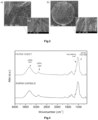
- the morphology of paper sheets and capsules was characterized by scanning electron microscopy (SEM) using a JEOL JSM-6490LA microscope operated in high vacuum with an acceleration voltage of 10 kV. Prior to imaging, each sample was coated with a 10 nm-thick gold layer, using a Cressington 208HR high-resolution sputter coater (Cressington Scientific Instrument Ltd., UK). As shown in Figure 3 , the paper capsules have a fibrous morphology ( Fig. 3b ) similar to that of the starting paper sheets ( Fig. 3a ).
- FTIR Fast Transform Infrared Spectroscopy
- Thermal degradation profiles shown in Figure 5 were then obtained through thermogravimetric analysis (TGA) (Q500, TA Instruments). Measurements were performed on 3-5 mg of samples placed in an aluminium pan under inert N 2 atmosphere with a flow rate of 50 ml•min -1 at a temperature ranging from room temperature to 600°C and at a heating rate of 10°C•min -1 .
- the weight loss ( Fig. 5a ) and its first derivative ( Fig. 5b ) were recorded simultaneously as a function of time/temperature. Also in this case, a very similar thermal degradation profile was obtained, with a T deg of 355°C for both materials.
- the capsules obtained have similar fibrous morphology, chemical structure and thermal degradation profile of the starting paper sheets, thus indicating that the capsulization, i.e. the formation of capsules, does not alter the paper's chemical and physical properties.
- each formulation in Table 1 at least 500 g were produced as follows. Polymers and capsules were first dried for 12 hours at 50°C to remove moisture. In formulations 1, 2, 8, 9, 10, 12 and 13 after drying, the ingredients were mixed manually and fed in the extruder. In formulations 3-5, 11 and 14-16 the powder has been first dissolved in water and the so obtained solution was dispensed on the paper capsules in such a ratio to obtain 0.08-0.16 g of solution per each gram of paper to allow impregnation of the paper by the solution. After drying at 50°C for 12 h, the treated paper capsules were first manually mixed with liquid additives and then with PLA and solid additives in pellets and subsequently the so-obtained blend was fed in the extruder. In formulations 6 and 7, the additives have been added onto the dried paper capsules and then such capsules were mixed manually with PLA and fed in the extruder.
- the extrusion of the blended formulations in Table 1 of Example 2 above was performed through a six zones double-screw extruder (Eurexma, Eurotech extrusion machinery Srl) with a ratio length to diameter (UD) of the screws of 14:1.
- the extruder was equipped with a hopper for the gravimetric feeding of the materials.
- pellets were then cooled in a water bath and introduced in a pelletizer to obtain pellets with a length of 4 mm.
- Such pellets present a smoother surface and a lighter colour compared to those with unfunctionalized paper due to the treatment of paper with antioxidants, oils, waxes, GTA TEC and the like, used alone or in combination, or in silicone coated wastepaper due to the layer of silicone that acts as stabilizer.
- Pictures of the extruded pellets are shown in Figure 7 .
- the extruded pellets as obtained in Example 3 have been dried at 50°C for 12 h and then processed into an injection moulding machine (Megatech H7/18, TecnicaDuebi Srl), equipped with a stainless-steel mould for the production of prismatic dog-bone shaped items (76x4x2mm).
- an injection moulding machine Megatech H7/18, TecnicaDuebi Srl
- a stainless-steel mould for the production of prismatic dog-bone shaped items (76x4x2mm).
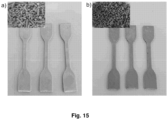
- Food colorants were added to the biocomposite extruded from formulation 5 prior to the injection moulding process, by physically mixing the colorant powder with the pellets such that coloured dog-bone shaped items and other objects were obtained (see Figure 8c, d ).
- the amount of food colorant was 1% wt with respect to the total weight of the pellets.
- the objects include spoons, rings and cups that could be used as disposable cutlery, packaging materials for food and cosmetics, thermosealable reinforcements for glasses and the like (see Figure 8e, f ).
- the extruded pellets were also processed through compression moulding using a hot press machine (Carver 4386, Carver, Inc.). Films with a thickness ranging from 400 and 500 pm were obtained upon heating 7.5 g of extruded pellets as per Example 3 above at 145°C for PLA6302D-based composites, and at 165-170°C for PLA3052D- and PLA2003D-based composites for 5 min followed by application of a pressure of 10 tons for 5 min and finally cooling at room temperature.
- a hot press machine Carver 4386, Carver, Inc.
- the cellulose fibres of paper in the biocomposites result well dispersed and entirely coated by the PLA polymer matrix, as shown in Figure 9 , in both pellets and dog-bone shaped items.
- the samples in which paper was treated with CA and GTA or TA (formulations 3,5) exhibited a more compact and less rough morphology (see Fig. 9b,d ) compared to the samples with untreated paper (formulations 1,2) (see Fig. 9a,c ).
- the paper within the biocomposite pellets and dog-bones obtained from formulations 1 and 3 of Table 1 above was extracted by precipitation in chloroform and purified upon filtration under vacuum.
- the resulting powders were subjected to chemical, morphological and thermal degradation analysis.
- the SEM micrographs in Figure 10a show that, in both materials, the cellulose fibres undergo a micronization upon melt compounding during extrusion and injection moulding. Additionally, since negligible differences were observed in the FTIR spectrum and in the thermal degradation profile of said cellulose powders compared to the original paper capsules (see Fig.10b,c,d ) it can be concluded that cellulose does not undergo any substantial thermal or chemical degradation during processing to obtain the present biocomposites.
- the UTS is comparable to the values of pure PLA for most of the materials.
- cellulosic capsules such as coffee, banana pulp and pet food were used rather than paper capsules
- the UTS decreased to 40-34 MPa.
- the said UTS values are still higher or similar with respect to other non-biodegradable polymers used for packaging such as polyethylene (15 MPa), polypropylene (40 MPa) and polystyrene (40 MPa).
- the elongation at break was found lower than pure PLA, as generally expected from cellulose composites.
- SA or presented a silicone coating such decrease is only of 25% compared to the 50% variation found for the biocomposites in which cellulose was not functionalized.
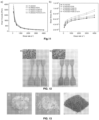
- the tested biocomposites presented a higher shear viscosity at low shear rates in the region between 100 and 1000 s -1 and a sensibly higher shear stress in the entire range of shear rates (100-4000 s -1 ) with respect to pure PLA ( figure 11 ). It was observed that these values increased with the amount of paper in the material, for example from 40% wt to 50% wt.
- plasticizers such as GTA, decreases the shear viscosity and the shear stress to values similar to those of PLA.
- melt flow rate (MFR) of the samples in Table 4 below was determined at 210°C according to ASTM D1238 B. 6-8 g of pellets extruded as described in Example 3 were typically introduced in the barrel of the melt flow index machine (Instron MF-20) and a weight of 2.16 kg was then applied over a piston that pushed the material downward for a measure length of 25.4 mm.
- MFR MVR ⁇ d Table 4 # Material Composition (wt%) MVR (cm 3 /10min) MFR (g/10min) Melt Density (g/cm 3 ) 1 (comparison) PLA3052D PLA (100%) 30.22 ⁇ 1.14 31.60 ⁇ 1.20 1.0458 2 (comparison) PLA6302D PLA (100%) 44.15 ⁇ 15 46.54 ⁇ 0.50 1.0541 3 PLA6302D-PC PLA (70%) 13.30 ⁇ 0.66 15.17 ⁇ 0.75 1.1404 PC (30%) 4 PLA6302D-PC PLA (60%) 8.95 ⁇ 1.90 10.06 ⁇ 1.75 1.1237 PC (40%) 5 PLA3052D-PC-TA PLA (55%) 60.86 ⁇ 2.51 79.75 ⁇ 3.23 1.3102 PC (40%) TA (5%)
- the tested biocomposites exhibited MFR values between 10 and 20 g/10 min, much lower with respect to the extruded PLA.
- the MFR was found to decrease upon increasing the amount of paper, for example from 30 to 40% wt. MFR values in this range are multipurpose and are indicated especially for extrusion and injection moulding.
- SA and TA has determined an exceptional increase in the MFR compared to formulations with only PLA and PC.
- the oxygen permeation tests were performed on films obtained as described above in Example 4 and reported in Table 5 using an Oxysense ® 5250i device (Oxysense ® , USA) equipped with a film permeation chamber, according to ASTM Method F3136-15 (ASTM 1989). The tests were performed under standard laboratory conditions, i.e. temperature of 23°C and 50% of relative humidity.
- the permeation chamber consisted of a cylinder divided into two parts (sensing well and driving well). The sensing well was instrumented with a fluorescence sensor called Oxydot ® , sensitive to the oxygen concentration. This chamber was purged with nitrogen while the other one (driving well) was kept open to ambient air.
- the films obtained as per example 5 were cut into a rectangular piece (6 cm ⁇ 6 cm) and placed inside the chamber.
- the OxySense ® fiber optic pen measures the oxygen reading from the Oxydot ® , at specific time intervals.
- the oxygen transmission rate (OTR) of each film was measured by monitoring the oxygen uptake with time.
- Oxysense ® OTR software used this oxygen evolution to determine the OTR of films. At least five readings were taken for each sample with a minimum coefficient of determination (R 2 ) value of 0.95.
- the present biocomposites do not bend or deform upon immersion in hot water, thus showing a great improvement with respect to the poor heat resistance of PLA alone.
- Biodegradability of the present biocomposites was evaluated through a standard biochemical oxygen demand (BOD) test, by measuring the amount of oxygen consumed during a biodegradation. 200 mg of each sample pellets were immersed in 432 mL bottles containing seawater. The oxygen consumption was monitored for 30 days by the sealed OxyTop caps on each bottle. BOD from blank bottles filled with only seawater was also measured for reference.
- BOD biochemical oxygen demand
- fillers were evaluated in experiments described herein below, in order to achieve comparative data with prior art such as WO2019/055921 , disclosing materials made of cellulose pulp fibers and fillers dispersed in a thermoplastic polymer matrix.
- fillers is meant fiber glasses, minerals (such as mica, talc, clay, basalt, calcium carbonate and wollastonite), polymers with a higher melting point than that of the thermoplastic matrix (such as polyvinyl alcohol and nylon) and lignocellulosic materials.
- the composite material of WO2019/055921 might include one or more additives selected from the group of lubricants, acid scavengers, compatibilizers, coupling agents and impact modifiers. In certain embodiments, the composite materials comprise no more than 2% by weight of additives. In others, no more than 20% by weight of additives.
- the formulations in Table 8 below were prepared by physically mixing the materials indicated, and by subsequently feeding the obtained mixtures to a twin-screw extruder.
- the extruded pellets were further processed by injection moulding at 155-160°C to obtain dogbone shaped specimens.
- the formulations 1 and 2 in Table 8 are part of this invention, while the other are comparison formulations, comprised in the scope of the claims in WO2019/055921 .
- the formulations 1 and 2 of the present invention in which the filler is not present, exhibited a good processability by extrusion.
- the obtained pellets and dog-bones are light-coloured and homogeneous ( Figure 12a, b ).
- comparison formulations 3 and 4 were not suitable for extrusion due to the agglomeration induced either by the PVA or by the glass fibres fillers respectively, as shown in Figure 13a , b. No material could be collected by extrusion of the comparison formulation 3, whereas only a few grams of dark-coloured pellets could be produced using formulation 4 (see Figure 13c ).
- the decrease in the mechanical properties coupled to higher standard deviations in the moist samples compared to the dry samples prepared according to the invention process indicate a less homogenous distribution of cellulose in the material and a limited reinforcing effect possibly ascribed to degradation phenomena occurring in the presence of moisture in the extruder.
- Composites based on PLA3052D and millimetric capsules according to this invention have been prepared, as well as composites based on PLA4032D and micro-ground paper according to what disclosed in the state of the art ( WO2015/048589 ), and composites based on PLA and cellulose fibres derived from newspaper and Kraft paper described in the state of the art by Huda et al. [3].
- the respective pure PLAs have been tested too.
- Table 11 the mechanical properties found for the tested products are reported, also indicating the percentage variation in the composites with respect to the pure PLA.
- the tested composites of this invention having a content of millimetric capsules of 30%, 40% and 50% by weight, all show a decrease lower than 5% in the T 25 , T 50 and T 75 values with respect to the pure PLA and a similar variation is also shown for the paper capsules not processed with PLA, this being an indication that the capsules undergo negligible transformations in the process of this invention.
- the thermal degradation shown on the contrary by the composites known in the state of the art, containing cellulose microfibres is significantly higher than that of pure PLA, until reaching 14% of variation in the T 75 temperature value for the composites having a 30% load of cellulose fibres. Such high thermal degradation is not found in the starting cellulose fibres not processed with PLA according to the method described in the state of the art.
Landscapes
- Engineering & Computer Science (AREA)
- Chemical & Material Sciences (AREA)
- Mechanical Engineering (AREA)
- Health & Medical Sciences (AREA)
- Chemical Kinetics & Catalysis (AREA)
- Medicinal Chemistry (AREA)
- Polymers & Plastics (AREA)
- Organic Chemistry (AREA)
- Life Sciences & Earth Sciences (AREA)
- Wood Science & Technology (AREA)
- Materials Engineering (AREA)
- Compositions Of Macromolecular Compounds (AREA)
- Biological Depolymerization Polymers (AREA)
- Processes Of Treating Macromolecular Substances (AREA)
- Manufacture Of Macromolecular Shaped Articles (AREA)
- Processing And Handling Of Plastics And Other Materials For Molding In General (AREA)
- Materials For Medical Uses (AREA)
Claims (19)
- Ein Verfahren zur Herstellung eines biologisch abbaubaren Verbundstoffes, umfassend ein thermoplastisches Polymermaterial und ein Cellulosematerial und gegebenenfalls ein oder mehrere Additive, wobei das Verfahren die folgenden Schritte umfasst:i) Bereitstellen eines Cellulosematerials in Form von Kapseln mit Millimetergröße, gegebenenfalls vorbehandelt mit einem oder mehreren Additiven, und eines thermoplastischen Polymermaterials und Trocknen derselben, um Feuchtigkeit zu entfernen;ii) Mischen des getrockneten Cellulosematerials in Form von Kapseln mit Millimetergröße mit getrocknetem thermoplastischen Polymermaterial, um ein getrocknetes Gemisch zu bilden, wobei das Cellulosematerial mindestens 10 Gew.-%, bezogen auf das Gesamtgewicht des Gemischs, beträgt;iii) Verarbeiten des Gemischs aus Schritt ii) durch Schmelzextrusion bei einer Temperatur im Bereich von 130 bis 170°C, wodurch extrudierte Stränge des biologisch abbaubaren Verbundstoffes gebildet werden.
- Das Verfahren nach Anspruch 1, wobei die Kapseln einen Durchmesser von 3 mm und eine Höhe von 1 mm aufweisen.
- Das Verfahren nach Anspruch 1 oder 2, weiter umfassend einen Schritt des Pelletisierens der extrudierten Stränge aus biologisch abbaubarem Verbundstoff und gegebenenfalls des Formgebens der so erhaltenen Pellets durch Spritzgießen oder Formpressen bei einer Temperatur im Bereich von 140 bis 170°C, um den biologisch abbaubaren Verbundstoff in Form eines Formgegenstands zu erhalten.
- Das Verfahren nach einem der Ansprüche 1-3, wobei das Trocknen bei einer Temperatur, die zwischen 40 und 70°C umfasst, für einen Zeitraum, der zwischen 8 und 48 Stunden umfasst, durchgeführt wird.
- Das Verfahren nach Anspruch 4, wobei das Trocknen bei einer Temperatur von 50°C für einen Zeitraum von 12 Stunden durchgeführt wird.
- Das Verfahren nach einem der vorhergehenden Ansprüche, wobei die Menge des getrockneten Cellulosematerials zwischen 30 und 60 Gew.-%, vorzugsweise zwischen 40 und 50 Gew.-%, bezogen auf das Gesamtgewicht des Gemischs, umfasst.
- Das Verfahren nach einem der vorhergehenden Ansprüche, wobei die Menge des getrockneten thermoplastischen Polymermaterials im Bereich von 35 bis 90 Gew.-%, vorzugsweise 35 bis 55 Gew.-%, bezogen auf das Gesamtgewicht des Gemischs, liegt.
- Das Verfahren nach einem der vorhergehenden Ansprüche, wobei das Cellulosematerial ausgewählt ist aus reinem Papier, Altpapier, Recyclingpapier, beschichtetem Papier, Karton, Gemüseblättern, Fruchtfleisch und -schalen, wie z.B. Kaffeehülsen und Kochbananenfleisch, und Tierfutter.
- Das Verfahren nach einem der vorhergehenden Ansprüche, wobei das thermoplastische Polymermaterial ausgewählt ist aus der Gruppe bestehend aus D-Polymilchsäure, L-Polymilchsäure, D,L-Polymilchsäure, meso-Polymilchsäure und Kombinationen davon, gegebenenfalls in Kombination mit einem oder mehreren Polyestern, ausgewählt aus Polybutylensuccinat (PBS), Polyhydroxyalkanoaten (PHAs), Polycaprolacton (PCL), Poly(DL-lactid-co-glycolid) (PGLA), Poly(dioxanon) (PDO), Poly(hydroxybutyrat-co-hydroxyvalerat) (PHBV), Poly(1,4-butylenadipat) (PBA), Poly(butadienadipat-co-terephthalat) (PBAT), Poly(ethylencarbonat) (PEC), Poly(propylencarbonat) (PPC) und Gemischen davon, und/oder mit thermoplastischen Stärken, Polyethylenoxiden, Polyurethanen, Polyolefinen und Gemischen davon.
- Das Verfahren nach einem der vorhergehenden Ansprüche, wobei die Menge des einen oder der mehreren getrockneten Additive im Bereich von 0,1 bis 15 Gew.-%, vorzugsweise von 0,5 bis 5 Gew.-%, bezogen auf das Gesamtgewicht des Gemischs, liegt.
- Das Verfahren nach einem der vorhergehenden Ansprüche, wobei das eine oder die mehreren Additive ausgewählt ist aus nicht-toxischen natürlichen und/oder für den Kontakt mit Lebensmitteln zugelassenen Weichmachern, Gleitmitteln, Rheologie-Modifizierern, Stabilisatoren, Färbemitteln, Verarbeitungshilfsmitteln, Aufhellern, Antioxidantien und Gemischen davon.
- Das Verfahren nach Anspruch 11, wobei das eine oder die mehreren Additive ausgewählt sind aus Verbindungen, die Carboxy-, Hydroxy- und Esterreste tragen.
- Das Verfahren nach einem der vorhergehenden Ansprüche, wobei die Schmelzextrusion in Schritt iii) bei einer Temperatur im Bereich von 135 bis 165°C durchgeführt wird.
- Das Verfahren nach einem der vorhergehenden Ansprüche, wobei die Formgebung bei einer Temperatur im Bereich von 145 bis 165°C durchgeführt wird.
- Das Verfahren nach einem der vorhergehenden Ansprüche, wobei das Cellulosematerial in Form von Kapseln durch Kompression des Cellulosematerials zwischen Platten einer Stanzmaschine in Form von Bögen oder Streifen erhalten wird.
- Ein biologisch abbaubarer Bioverbundstoff, erhältlich durch das Verfahren nach den Ansprüchen 1-15, umfassend ein thermoplastisches Polymermaterial und ein Cellulosematerial und gegebenenfalls ein oder mehrere Additive, wobei das thermoplastische Polymermaterial eine schmelzextrudierte Matrix mit mindestens 10 Gew.-% Cellulosematerial in mikronisierter Form ist, das gegebenenfalls ein oder mehrere Additive umfasst, wobei das Cellulosematerial homogen in der Matrix dispergiert ist.
- Der biologisch abbaubare Bioverbundstoff nach Anspruch 16, wobei die Menge an Cellulosematerial in mikronisierter Form und dispergiert in der schmelzextrudierten Matrix zwischen 30 und 60 Gew.-%, bezogen auf das Gesamtgewicht des Verbundstoffes, beträgt.
- Verwendung des biologisch abbaubaren Bioverbundstoffes nach den Ansprüchen 16-17 bei der Herstellung von Lebensmittel- und Kosmetikverpackung, von Einwegartikeln, Rohrleitungen und Schläuchen für die Landwirtschaft, laminierten Papieren, Essenstabletts, Besteck, Bürsten, Kämmen und Spielzeug.
- Ein Formgegenstand hergestellt aus dem biologisch abbaubaren Bioverbundstoff nach den Ansprüchen 16-17.
Applications Claiming Priority (2)
| Application Number | Priority Date | Filing Date | Title |
|---|---|---|---|
| IT102019000014658A IT201900014658A1 (it) | 2019-08-12 | 2019-08-12 | Biocomposito biodegradabile e processo per la sua preparazione |
| PCT/IB2020/057509 WO2021028816A1 (en) | 2019-08-12 | 2020-08-10 | A biodegradable biocomposite and a process for its preparation |
Publications (3)
| Publication Number | Publication Date |
|---|---|
| EP4013818A1 EP4013818A1 (de) | 2022-06-22 |
| EP4013818B1 true EP4013818B1 (de) | 2025-01-01 |
| EP4013818C0 EP4013818C0 (de) | 2025-01-01 |
Family
ID=68988204
Family Applications (1)
| Application Number | Title | Priority Date | Filing Date |
|---|---|---|---|
| EP20765077.1A Active EP4013818B1 (de) | 2019-08-12 | 2020-08-10 | Biologisch abbaubarer bioverbundwerkstoff und verfahren zu seiner herstellung |
Country Status (5)
| Country | Link |
|---|---|
| US (1) | US20220314515A1 (de) |
| EP (1) | EP4013818B1 (de) |
| JP (1) | JP7672109B2 (de) |
| IT (1) | IT201900014658A1 (de) |
| WO (1) | WO2021028816A1 (de) |
Families Citing this family (5)
| Publication number | Priority date | Publication date | Assignee | Title |
|---|---|---|---|---|
| ES2905477T3 (es) * | 2018-03-29 | 2022-04-08 | Huhtamaki Molded Fiber Tech Bv | Unidad de embalaje de un material de pulpa moldeada con capa de laminado removible y método para fabricar tal unidad de embalaje |
| CN113185823B (zh) * | 2021-05-27 | 2022-12-20 | 中国科学院长春应用化学研究所 | 一种聚己内酯复合材料及其制备方法 |
| CN115975360A (zh) * | 2022-12-30 | 2023-04-18 | 浙江金晟环保股份有限公司 | 一种具有耐热性的高分子可降解环保餐盒的制备方法 |
| WO2024214562A1 (ja) * | 2023-04-13 | 2024-10-17 | パナソニックIpマネジメント株式会社 | 複合樹脂組成物及びその成形体 |
| KR102820076B1 (ko) * | 2024-02-28 | 2025-06-13 | 주식회사 포맨코리아 | 폐지를 활용한 생분해성 수지 펠릿의 제조방법 및 이에 의해 제조되는 생분해성 펠릿 |
Family Cites Families (24)
| Publication number | Priority date | Publication date | Assignee | Title |
|---|---|---|---|---|
| US4834777A (en) * | 1988-01-28 | 1989-05-30 | Hydraulic Services, Inc. | Fuel pelletizing apparatus and method |
| US5964933A (en) * | 1996-03-05 | 1999-10-12 | Industrial Technical R & D Laboratory, Inc. | Biodegradable molding material |
| US6124384A (en) * | 1997-08-19 | 2000-09-26 | Mitsui Chemicals, Inc. | Composite resin composition |
| US6270883B1 (en) | 1998-10-09 | 2001-08-07 | The United States Of America As Represented By The Secretary Of Agriculture | Composites containing cellulosic pulp fibers and methods of making and using the same |
| US6632863B2 (en) | 2001-10-25 | 2003-10-14 | Crane Plastics Company Llc | Cellulose/polyolefin composite pellet |
| US20030186052A1 (en) * | 2002-03-29 | 2003-10-02 | Cytech Fiber Processing Systems, Inc. | Fiber pellets and processes for forming fiber pellets |
| JP2004277623A (ja) | 2003-03-18 | 2004-10-07 | Asahi Kasei Chemicals Corp | 植物セルロース熱可塑性樹脂組成物の製法 |
| JP2005014499A (ja) | 2003-06-27 | 2005-01-20 | Toyota Motor Corp | 生分解性繊維強化プラスチックの製造方法 |
| US20060267243A1 (en) * | 2005-05-26 | 2006-11-30 | Debra Tindall | Method for compounding polymer pellets with functional additives |
| JP5062991B2 (ja) | 2005-11-22 | 2012-10-31 | ユニチカ株式会社 | 樹脂組成物 |
| BRPI0600683A (pt) | 2006-02-24 | 2007-11-20 | Phb Ind Sa | composição polimérica ambientalmente degradável e seu processo de obtenção |
| JP4846405B2 (ja) | 2006-03-27 | 2011-12-28 | 北越紀州製紙株式会社 | 紙配合熱可塑性樹脂組成物の製造方法 |
| AT506067B1 (de) * | 2007-12-21 | 2009-06-15 | Chemiefaser Lenzing Ag | Presslinge aus cellulosischen spinnfasern, deren herstellung und verwendung |
| JP4593657B2 (ja) | 2008-07-11 | 2010-12-08 | 株式会社クリエイティブ | 固体燃料 |
| JP5395496B2 (ja) | 2008-09-12 | 2014-01-22 | ダイセルポリマー株式会社 | セルロース繊維含有熱可塑性樹脂組成物の製造方法 |
| JP5692786B2 (ja) | 2009-12-28 | 2015-04-01 | 花王株式会社 | ポリ乳酸樹脂組成物の製造方法 |
| DE102010022186A1 (de) | 2010-05-21 | 2011-11-24 | Hans Korte | Faserverstärkte Thermoplastverbundwerkstoffe |
| FI20115218A0 (fi) | 2011-03-03 | 2011-03-03 | Teknologian Tutkimuskeskus Vtt Oy | Menetelmä lämpömuokattavan plastisoidun sellulloosakuitu-PLA-kompaundin valmistamiseksi ja PLA-selluloosakompaundin iskulujuuden parantamiseksi |
| CN103044871B (zh) * | 2012-11-26 | 2015-08-26 | 浙江大学宁波理工学院 | 一种聚乳酸/纳米纤维素复合材料的制备方法 |
| DE102013208876A1 (de) | 2013-05-14 | 2014-11-20 | Spc Sunflower Plastic Compound Gmbh | Biokomposit bzw. Biowerkstoff mit Sonnenblumenkernschalen/ - hülsen |
| WO2015048589A1 (en) * | 2013-09-29 | 2015-04-02 | Michigan Molecular Institute | Renewable, biodegradable poly(lactic acid) composites with improved thermal properties |
| EP3183288B1 (de) | 2014-08-21 | 2021-01-06 | INEOS Styrolution Group GmbH | Polymilchsäureverbundstoffe mit naturfasern |
| JP3198742U (ja) | 2015-03-10 | 2015-07-23 | 日本ペパロン株式会社 | 生分解性複合樹脂ペレット製造装置 |
| WO2019055921A2 (en) | 2017-09-15 | 2019-03-21 | Hamilton Robert T | CELLULOSIC COMPOSITE MATERIALS |
-
2019
- 2019-08-12 IT IT102019000014658A patent/IT201900014658A1/it unknown
-
2020
- 2020-08-10 US US17/633,998 patent/US20220314515A1/en active Pending
- 2020-08-10 EP EP20765077.1A patent/EP4013818B1/de active Active
- 2020-08-10 WO PCT/IB2020/057509 patent/WO2021028816A1/en not_active Ceased
- 2020-08-10 JP JP2022506035A patent/JP7672109B2/ja active Active
Also Published As
| Publication number | Publication date |
|---|---|
| JP7672109B2 (ja) | 2025-05-07 |
| US20220314515A1 (en) | 2022-10-06 |
| JP2023503533A (ja) | 2023-01-31 |
| WO2021028816A1 (en) | 2021-02-18 |
| EP4013818C0 (de) | 2025-01-01 |
| IT201900014658A1 (it) | 2021-02-12 |
| EP4013818A1 (de) | 2022-06-22 |
Similar Documents
| Publication | Publication Date | Title |
|---|---|---|
| EP4013818B1 (de) | Biologisch abbaubarer bioverbundwerkstoff und verfahren zu seiner herstellung | |
| Papadopoulou et al. | Sustainable active food packaging from poly (lactic acid) and cocoa bean shells | |
| Wei et al. | Performance of high lignin content cellulose nanocrystals in poly (lactic acid) | |
| Sung et al. | Development of polylactic acid nanocomposite films reinforced with cellulose nanocrystals derived from coffee silverskin | |
| Huda et al. | Chopped glass and recycled newspaper as reinforcement fibers in injection molded poly (lactic acid)(PLA) composites: A comparative study | |
| García et al. | Characterization and degradation characteristics of poly (ε-caprolactone)-based composites reinforced with almond skin residues | |
| Gamon et al. | Twin-screw extrusion impact on natural fibre morphology and material properties in poly (lactic acid) based biocomposites | |
| Zhang et al. | Mechanochemical activation of cellulose and its thermoplastic polyvinyl alcohol ecocomposites with enhanced physicochemical properties | |
| Iglesias Montes et al. | Design and characterization of PLA bilayer films containing lignin and cellulose nanostructures in combination with umbelliferone as active ingredient | |
| Padil et al. | Bioplastic fibers from gum arabic for greener food wrapping applications | |
| Barczewski et al. | Characterization of poly (lactic acid) biocomposites filled with chestnut shell waste | |
| De Baynast et al. | Effects of Kraft lignin and corn cob agro-residue on the properties of injected-moulded biocomposites | |
| KR102806097B1 (ko) | 생분해성 중합체 기반 생체복합재 | |
| Nunes et al. | Rheological, mechanical and morphological properties of poly (butylene adipate-co-terephthalate)/thermoplastic starch blends and its biocomposite with babassu mesocarp | |
| CN113631657A (zh) | 聚羟基烷酸酯系树脂组合物、其成型体及膜或片 | |
| Dejene et al. | Eco-friendly packaging innovations: integrating natural fibers and ZnO nanofillers in polylactic acid (PLA) based green composites-a review | |
| Kampangkaew et al. | The synthesis of cellulose nanofibers from Sesbania Javanica for filler in thermoplastic starch | |
| Dhal et al. | Polylactic acid/polycaprolactone/sawdust based biocomposites trays with enhanced compostability | |
| Álvarez-Chávez et al. | Characterization of extruded poly (lactic acid)/pecan nutshell biocomposites | |
| Haeldermans et al. | Bio‐Based Poly (3-hydroxybutyrate)/Thermoplastic Starch Composites as a Host Matrix for Biochar Fillers | |
| Masanabo et al. | Faba bean lignocellulosic sidestream as a filler for the development of biodegradable packaging | |
| Hamouda | Sustainable packaging from coir fibers | |
| US20220275202A1 (en) | Flexible wood composite material | |
| De Cristofaro et al. | Interface interactions driven antioxidant properties in olive leaf extract/cellulose nanocrystals/poly (butylene adipate-co-terephthalate) biomaterials | |
| Dewi et al. | Characterization of sago starch-based degradable plastic with agricultural waste cellulose fiber as filler. |
Legal Events
| Date | Code | Title | Description |
|---|---|---|---|
| STAA | Information on the status of an ep patent application or granted ep patent |
Free format text: STATUS: UNKNOWN |
|
| STAA | Information on the status of an ep patent application or granted ep patent |
Free format text: STATUS: THE INTERNATIONAL PUBLICATION HAS BEEN MADE |
|
| PUAI | Public reference made under article 153(3) epc to a published international application that has entered the european phase |
Free format text: ORIGINAL CODE: 0009012 |
|
| STAA | Information on the status of an ep patent application or granted ep patent |
Free format text: STATUS: REQUEST FOR EXAMINATION WAS MADE |
|
| 17P | Request for examination filed |
Effective date: 20220204 |
|
| AK | Designated contracting states |
Kind code of ref document: A1 Designated state(s): AL AT BE BG CH CY CZ DE DK EE ES FI FR GB GR HR HU IE IS IT LI LT LU LV MC MK MT NL NO PL PT RO RS SE SI SK SM TR |
|
| DAV | Request for validation of the european patent (deleted) | ||
| DAX | Request for extension of the european patent (deleted) | ||
| GRAP | Despatch of communication of intention to grant a patent |
Free format text: ORIGINAL CODE: EPIDOSNIGR1 |
|
| STAA | Information on the status of an ep patent application or granted ep patent |
Free format text: STATUS: GRANT OF PATENT IS INTENDED |
|
| INTG | Intention to grant announced |
Effective date: 20240415 |
|
| GRAJ | Information related to disapproval of communication of intention to grant by the applicant or resumption of examination proceedings by the epo deleted |
Free format text: ORIGINAL CODE: EPIDOSDIGR1 |
|
| STAA | Information on the status of an ep patent application or granted ep patent |
Free format text: STATUS: REQUEST FOR EXAMINATION WAS MADE |
|
| GRAP | Despatch of communication of intention to grant a patent |
Free format text: ORIGINAL CODE: EPIDOSNIGR1 |
|
| STAA | Information on the status of an ep patent application or granted ep patent |
Free format text: STATUS: GRANT OF PATENT IS INTENDED |
|
| INTC | Intention to grant announced (deleted) | ||
| INTG | Intention to grant announced |
Effective date: 20240731 |
|
| GRAS | Grant fee paid |
Free format text: ORIGINAL CODE: EPIDOSNIGR3 |
|
| GRAA | (expected) grant |
Free format text: ORIGINAL CODE: 0009210 |
|
| STAA | Information on the status of an ep patent application or granted ep patent |
Free format text: STATUS: THE PATENT HAS BEEN GRANTED |
|
| AK | Designated contracting states |
Kind code of ref document: B1 Designated state(s): AL AT BE BG CH CY CZ DE DK EE ES FI FR GB GR HR HU IE IS IT LI LT LU LV MC MK MT NL NO PL PT RO RS SE SI SK SM TR |
|
| REG | Reference to a national code |
Ref country code: GB Ref legal event code: FG4D |
|
| REG | Reference to a national code |
Ref country code: CH Ref legal event code: EP |
|
| REG | Reference to a national code |
Ref country code: DE Ref legal event code: R096 Ref document number: 602020044080 Country of ref document: DE |
|
| REG | Reference to a national code |
Ref country code: IE Ref legal event code: FG4D |
|
| U01 | Request for unitary effect filed |
Effective date: 20250109 |
|
| U07 | Unitary effect registered |
Designated state(s): AT BE BG DE DK EE FI FR IT LT LU LV MT NL PT RO SE SI Effective date: 20250116 |
|
| PG25 | Lapsed in a contracting state [announced via postgrant information from national office to epo] |
Ref country code: PL Free format text: LAPSE BECAUSE OF FAILURE TO SUBMIT A TRANSLATION OF THE DESCRIPTION OR TO PAY THE FEE WITHIN THE PRESCRIBED TIME-LIMIT Effective date: 20250101 |
|
| PG25 | Lapsed in a contracting state [announced via postgrant information from national office to epo] |
Ref country code: ES Free format text: LAPSE BECAUSE OF FAILURE TO SUBMIT A TRANSLATION OF THE DESCRIPTION OR TO PAY THE FEE WITHIN THE PRESCRIBED TIME-LIMIT Effective date: 20250101 |
|
| PG25 | Lapsed in a contracting state [announced via postgrant information from national office to epo] |
Ref country code: NO Free format text: LAPSE BECAUSE OF FAILURE TO SUBMIT A TRANSLATION OF THE DESCRIPTION OR TO PAY THE FEE WITHIN THE PRESCRIBED TIME-LIMIT Effective date: 20250401 Ref country code: IS Free format text: LAPSE BECAUSE OF FAILURE TO SUBMIT A TRANSLATION OF THE DESCRIPTION OR TO PAY THE FEE WITHIN THE PRESCRIBED TIME-LIMIT Effective date: 20250501 |
|
| PG25 | Lapsed in a contracting state [announced via postgrant information from national office to epo] |
Ref country code: HR Free format text: LAPSE BECAUSE OF FAILURE TO SUBMIT A TRANSLATION OF THE DESCRIPTION OR TO PAY THE FEE WITHIN THE PRESCRIBED TIME-LIMIT Effective date: 20250101 |
|
| PG25 | Lapsed in a contracting state [announced via postgrant information from national office to epo] |
Ref country code: GR Free format text: LAPSE BECAUSE OF FAILURE TO SUBMIT A TRANSLATION OF THE DESCRIPTION OR TO PAY THE FEE WITHIN THE PRESCRIBED TIME-LIMIT Effective date: 20250402 |
|
| PG25 | Lapsed in a contracting state [announced via postgrant information from national office to epo] |
Ref country code: CZ Free format text: LAPSE BECAUSE OF FAILURE TO SUBMIT A TRANSLATION OF THE DESCRIPTION OR TO PAY THE FEE WITHIN THE PRESCRIBED TIME-LIMIT Effective date: 20250101 |
|
| U20 | Renewal fee for the european patent with unitary effect paid |
Year of fee payment: 6 Effective date: 20250825 |
|
| PG25 | Lapsed in a contracting state [announced via postgrant information from national office to epo] |
Ref country code: SM Free format text: LAPSE BECAUSE OF FAILURE TO SUBMIT A TRANSLATION OF THE DESCRIPTION OR TO PAY THE FEE WITHIN THE PRESCRIBED TIME-LIMIT Effective date: 20250101 |
|
| PGFP | Annual fee paid to national office [announced via postgrant information from national office to epo] |
Ref country code: GB Payment date: 20250826 Year of fee payment: 6 |
|
| PGFP | Annual fee paid to national office [announced via postgrant information from national office to epo] |
Ref country code: CH Payment date: 20250901 Year of fee payment: 6 |
|
| PG25 | Lapsed in a contracting state [announced via postgrant information from national office to epo] |
Ref country code: SK Free format text: LAPSE BECAUSE OF FAILURE TO SUBMIT A TRANSLATION OF THE DESCRIPTION OR TO PAY THE FEE WITHIN THE PRESCRIBED TIME-LIMIT Effective date: 20250101 |
|
| PLBE | No opposition filed within time limit |
Free format text: ORIGINAL CODE: 0009261 |
|
| STAA | Information on the status of an ep patent application or granted ep patent |
Free format text: STATUS: NO OPPOSITION FILED WITHIN TIME LIMIT |