EP4012669B1 - Verfahren und vorrichtung zur auswahl eines fingerabdruckbildes aus einer bildsequenz zur authentifizierung oder identifizierung - Google Patents
Verfahren und vorrichtung zur auswahl eines fingerabdruckbildes aus einer bildsequenz zur authentifizierung oder identifizierung Download PDFInfo
- Publication number
- EP4012669B1 EP4012669B1 EP21210352.7A EP21210352A EP4012669B1 EP 4012669 B1 EP4012669 B1 EP 4012669B1 EP 21210352 A EP21210352 A EP 21210352A EP 4012669 B1 EP4012669 B1 EP 4012669B1
- Authority
- EP
- European Patent Office
- Prior art keywords
- image
- region
- current
- value
- stability
- Prior art date
- Legal status (The legal status is an assumption and is not a legal conclusion. Google has not performed a legal analysis and makes no representation as to the accuracy of the status listed.)
- Active
Links
Images

Classifications
-
- G—PHYSICS
- G06—COMPUTING OR CALCULATING; COUNTING
- G06F—ELECTRIC DIGITAL DATA PROCESSING
- G06F21/00—Security arrangements for protecting computers, components thereof, programs or data against unauthorised activity
- G06F21/30—Authentication, i.e. establishing the identity or authorisation of security principals
- G06F21/31—User authentication
- G06F21/32—User authentication using biometric data, e.g. fingerprints, iris scans or voiceprints
-
- G—PHYSICS
- G06—COMPUTING OR CALCULATING; COUNTING
- G06V—IMAGE OR VIDEO RECOGNITION OR UNDERSTANDING
- G06V40/00—Recognition of biometric, human-related or animal-related patterns in image or video data
- G06V40/10—Human or animal bodies, e.g. vehicle occupants or pedestrians; Body parts, e.g. hands
- G06V40/12—Fingerprints or palmprints
- G06V40/1347—Preprocessing; Feature extraction
-
- G—PHYSICS
- G06—COMPUTING OR CALCULATING; COUNTING
- G06V—IMAGE OR VIDEO RECOGNITION OR UNDERSTANDING
- G06V10/00—Arrangements for image or video recognition or understanding
- G06V10/70—Arrangements for image or video recognition or understanding using pattern recognition or machine learning
- G06V10/77—Processing image or video features in feature spaces; using data integration or data reduction, e.g. principal component analysis [PCA] or independent component analysis [ICA] or self-organising maps [SOM]; Blind source separation
- G06V10/80—Fusion, i.e. combining data from various sources at the sensor level, preprocessing level, feature extraction level or classification level
- G06V10/809—Fusion, i.e. combining data from various sources at the sensor level, preprocessing level, feature extraction level or classification level of classification results, e.g. where the classifiers operate on the same input data
-
- G—PHYSICS
- G06—COMPUTING OR CALCULATING; COUNTING
- G06V—IMAGE OR VIDEO RECOGNITION OR UNDERSTANDING
- G06V10/00—Arrangements for image or video recognition or understanding
- G06V10/98—Detection or correction of errors, e.g. by rescanning the pattern or by human intervention; Evaluation of the quality of the acquired patterns
- G06V10/993—Evaluation of the quality of the acquired pattern
-
- G—PHYSICS
- G06—COMPUTING OR CALCULATING; COUNTING
- G06V—IMAGE OR VIDEO RECOGNITION OR UNDERSTANDING
- G06V40/00—Recognition of biometric, human-related or animal-related patterns in image or video data
- G06V40/10—Human or animal bodies, e.g. vehicle occupants or pedestrians; Body parts, e.g. hands
- G06V40/12—Fingerprints or palmprints
- G06V40/13—Sensors therefor
-
- G—PHYSICS
- G06—COMPUTING OR CALCULATING; COUNTING
- G06V—IMAGE OR VIDEO RECOGNITION OR UNDERSTANDING
- G06V40/00—Recognition of biometric, human-related or animal-related patterns in image or video data
- G06V40/10—Human or animal bodies, e.g. vehicle occupants or pedestrians; Body parts, e.g. hands
- G06V40/12—Fingerprints or palmprints
- G06V40/1365—Matching; Classification
Definitions
- the invention relates to a method and device for selecting an image of a fingerprint for identification or authentication of an individual.
- the image is more particularly selected from a sequence of images acquired by an image capture device.
- fingerprints for example of the type of a single finger or a plurality of fingers, makes it possible to secure access to buildings or machines. Using this technology makes it possible to strengthen security since the probability of two people having two identical fingerprints is almost zero.
- a fingerprint capture system is used to obtain at least one image of at least one fingerprint.
- each fingerprint is compared with a set of reference fingerprints contained in a database.
- each fingerprint is compared with a single fingerprint. The comparison makes it possible to determine whether or not each fingerprint obtained belongs to a person referenced in the database or whether the person is who he or she claims to be.
- a fingerprint capture system can be added to the mobile equipment during its manufacture.
- Such a fingerprint capture system on a smartphone often has an acquisition surface smaller than the size of the fingerprint. It therefore requires the use of suitable image mosaicking algorithms in order to reconstruct the fingerprint in its entirety. Such a solution is therefore expensive to implement. Since most of these mobile devices are equipped with a color camera, the document Lee et al titled “Image Preprocessing of Fingerprint Images Captured with a Mobile Camera » published in 2006 in ICB (“International Conference on Advances in Biometrics” ) suggests using this camera directly to develop a fingerprint recognition system.
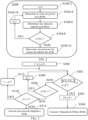
- Fig. 1 schematically illustrates a method for selecting an image of a fingerprint for identification or authentication of an individual, said image being selected from a sequence of images acquired by an image capture device according to a particular embodiment.
- the image capture device is advantageously a camera of a consumer mobile device, eg a smartphone, a tablet, a fixed or portable computer, etc.
- the terms “fingerprint” and “fingerprint” are considered synonyms.
- the method starts at step S100, at a time t.
- an image Im t comprising at least one fingerprint of the individual is acquired with an image sensor.
- the individual positions his hand in front of the sensor such that these fingerprints are visible, the hand being fixed or moving.
- At least one fingerprint is segmented in the image Im t in the form of a ROI region n , n is an index used to identify the region.
- Nt fingerprints are segmented in said image with Nt between 1 and 5.
- the finger segmentation method described in the document Lee et al titled “Preprocessing of a Fingerprint Image Captured with a Mobile Camera,” published in 2006 in International Conference on Biometrics (ICB) 348-355 allows to obtain segmented fingerprints.
- the method described in the document Suzuki et al entitled “Topological structural analysis of digitized binary images by border following” published in 1985 in Computer Vision, Graphics, and Image Processing, 30(1):32-46 allows to obtain fingerprint contours from segmented fingerprints.
- the corresponding vertices at the edge of the image or at the cutting line separating the fingerprint from the intermediate phalanx are identified with a specific label during the segmentation step.
- a value representative of a stability of the image Im t is determined.
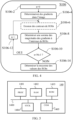
- a particular embodiment of step S104 is schematically illustrated by the Fig. 2 .
- step S106 a value representative of a sharpness of the image Im t is determined.
- a particular embodiment of step S106 is schematically illustrated by the Fig. 4 .
- a score is determined for the image Im t , the score being a combination of the values representative of the stability and the sharpness and the number Nt of segmented fingerprints in the image Im t .
- the score is representative of the quality of the image. The higher the score, the higher the quality of the image and therefore the better an identification/authentication performed from this image will be.
- the score Score(Imt) is compared to a threshold value TH.
- TH THS*THN*THNt.
- the TH value is set according to a trade-off between image quality and process execution speed.
- the image is considered to be of sufficiently good quality to be selected during a step S112 for the purposes of identifying/authenticating the individual to which it belongs. Otherwise, i.e. Score(Imt) ⁇ TH, the method resumes at step S102 and a new image is acquired.
- the best image acquired so far i.e. the one with the highest score
- the score Score(Imt) is compared, during a step S114, to the highest score obtained so far and noted ScoreMax. If Score(Imt) > ScoreMax then, during a step S116, ScoreMax is set equal to Score(Imt) and Im t is stored in memory as being the best image, noted BestImage, for identification/authentication.
- the image previously stored as the best image is therefore deleted.
- the stability and therefore the score of the BestImage image is updated by taking into account information on the stability coming from images acquired after the best image.
- the notion of stability unduly penalizes certain potentially sharp images with correctly segmented fingerprints.
- the score of the last image Score(Im t+n ) is greater than Score(Imt) because the value representing stability is higher for the image Im t+n than for the image Im t .
- these are the same images. Updating the score of the best image at each iteration by taking into account information on stability from images acquired after the best image makes it possible to compensate for this effect.
- Im t be the best current image that was acquired at time t'. Its stability value is updated taking into account information on the stability of images acquired after t'.
- the score of Im t is again compared to TH. If the updated score is greater than TH then the method continues to step S112 with Im t' .
- This approach makes it possible to reduce the average time for selecting an image for identification/authentication since the updated score Score(Im t' ) is potentially higher than before the update and may equal or exceed the threshold TH.
- the update of the stability and therefore of the score of the image Im t (the best current image) is carried out even in the case where the score associated with the image Im t is greater than or equal to TH. Indeed, it is possible that following this update, the score of the image Im t , is ultimately greater than the score of the image Im t and therefore than TH. In this case, it is preferable to select the image Im t , which is of better quality than the image Im t .
- an additional stopping criterion is used during step S110. If the number of acquired images is greater than a threshold value then BestImage is selected for identification or authentication of the individual. Thus, after a certain acquisition time, if no image has been found with a Score greater than TH, the best image that is stored in memory is used.
- a step S104-4 the center of gravity of the ROI region n is determined.
- a stability value is determined for the ROI region n .
- the stability value for the ROI region n of the image Im t is equal to a percentage of occurrences, in F images preceding the image Im t , of a label associated with it, F being a positive integer representing a number of images.
- the objective of this step is to associate with the ROI region n a label of a region already labeled previously taking into account a spatial proximity criterion or, if necessary, to associate a new label in the case where this spatial proximity criterion is not verified with any region of the previous images.
- This step is illustrated in the Fig. 3 .
- the value t' is initialized (S300) to the value t-1 and p to the value 0.
- a spatial distance between the ROI n and ROI p regions is compared to a threshold d.
- the spatial distance is equal to the Euclidean distance ⁇ CG n,t CG p,t' ⁇ L 2 where CG n,t is the center of gravity of ROI region n in image Imt and CG p,t' is the center of gravity of ROI region p in image Im t , preceding image Im t .
- Other distances can be used.
- d 100 for images of size 2000x2000 pixels. This proximity criterion makes it possible to verify that the ROI region n has not drifted too much between time t' and time t.
- the ROI region n in the image Im t is associated with the ROI region p in the image Im t' , i.e. the ROI label p is associated with ROI n (step S304).
- the ROI region p will, if applicable, have been associated with an ROI region q in an image Im t" which precedes Imt'. All the regions thus associated with each other will have the same label, a label being created at the first occurrence.
- the orientation of the ROI region n in the image Im t is compared to the orientation of the ROI region p in the image Im t' .
- a direction vector is determined for each of the two regions. This direction vector is defined by the center of gravity of the region and the central point of the cutting line defining the bottom of the region during the segmentation step.
- the ROI region n in the image Im t is associated with the ROI region p in the image Im t' , i.e.
- the label of ROI p is associated with ROI n .
- the two regions are not associated. For example, R ⁇ 0 or, according to another example, R ⁇ 0.5 will be chosen.
- R 0, if the scalar product is positive or zero, the ROI n region in the image Im t is associated with the ROI p region in the image Im t' , i.e. the label of ROI p is associated with ROI n . If the scalar product is negative then the two regions are not associated. This has the effect of eliminating possible false detections of objects located in the background.
- the ROI region n is compared to another region of the image Im t' if there is still one not tested so far. Thus, if p ⁇ N1' -1 (step S306) then p is incremented by 1 (step S308) and the method resumes at step S302 with the new ROI region p of the image Im t .
- step S306 if p ⁇ Nt'-1 (step S306), then if
- the method resumes at step S302 with the new ROI region p in the new image Im t' . Otherwise, ie if
- step S314 a new label is created and associated with the ROI region n with which regions in images following Im t may be associated. Indeed, in this case no segmented region in the f images preceding it is close in the sense of the predefined criterion to the ROI region n of the image Im t .
- a Hungarian method is used to ensure that multiple ROIs n of the current image are not associated with a ROI p of an image previous and vice versa, and that these associations are optimal in the sense of the distance between centers of gravity.
- Kuhn titled "The Hungarian Method for the assignment problem” and published in 1955 in Naval Research Logistics Quarterly, 2: 83-97 describes this method which allows to find an optimal coupling of maximum (respectively minimum) weight in a bipartite graph whose edges are valued.
- the stability value S n for the ROI region n of the image Im t is equal to a percentage of occurrences, in F images preceding the image Im t , of the label associated with it.
- n is compared to Nt-1. If n ⁇ Nt-1, n is incremented by 1 in a step S 104-10. Otherwise, the method continues to step S 104-12.
- the stability value is updated by taking into account the occurrences of the labels associated with its regions in the following images. For this purpose, if the stability of a region ROI m in the image Im t , is lower than the stability of the region ROI p in the image Im t , the region ROI p in the image Im t having the same label as the region ROI m in the image Im t' , the stability associated with the region ROI m in the image Im t , is replaced by the stability associated with the region ROI p in the image Im t .
- the global stability of the image Im t is updated, i.e. recalculated, taking into account the updated stabilities associated with the regions it includes.
- Im t be the best current image that was acquired at time t'.
- S m (t') is the stability associated with the ROI region m in the image Im t'
- S m update t ′ is the stability associated with the ROI region m in image Im t' after the update.
- the representative value of the stability of MeilleureImage is therefore updated using in equation (Eq.1), the values S m update t ′ .
- the score is updated taking into account the representative value of the stability of the updated BestImage.
- gradients of the image are determined.
- the horizontal and vertical gradients are determined.
- gradients in the image are determined in directions other than the horizontal and vertical directions. For example, Sobel filters are used to determine the horizontal and vertical gradients.
- Gx ⁇ 1 0 1 ⁇ 2 0 2 ⁇ 1 0 1
- Gy 1 2 1 0 0 0 ⁇ 1 ⁇ 2 ⁇ 1
- a sum Tn of the magnitudes of the gradients on the surface of the ROI region n is determined.
- the sum of the magnitudes of the gradients on the surface of the ROI region n after erosion of the contour is determined. This variant makes it possible to determine the value Tn on a central zone of the ROI region n and thus to avoid edge effects. Indeed, strong contrasts between the background and the contour of the finger will induce salient contours which will increase the sum of the magnitudes of the gradients.
- n is compared to Nt-1. If n ⁇ Nt-1, n is incremented by 1 in a step S106-12. Otherwise, the method continues to a step S106-14.
- the method described is advantageously used to speed up access control flows in stadiums and to combat fraud and the black market for tickets.
- the individual identifies/registers himself before the event, e.g. at home, via the camera of his smartphone which captures his fingerprints. For this purpose, the user positions his hand in front of the lens (with or without movement) of the camera. An image is then selected using the methods described in connection with the Figs 1 to 4 . The selected image will be used for identification.
- the individual Upon arrival at the stadium, the individual is identified by a dedicated fingerprint sensor.
- the dedicated fingerprint sensor checks whether the captured fingerprint matches a fingerprint in the database. This procedure therefore makes it possible to streamline the flow of spectators in the stadium, to do away with paper tickets and thus to compensate for the possible loss of tickets.
- the described method allows to improve the performance in terms of identification accuracy by 0 to 7% and to reduce the acquisition time by 40%, with a negligible increase in computation time. Furthermore, the method is robust to changes in the image capture module, e.g. to changes in the smartphone.
- FIG. 5 schematically illustrates an example of hardware architecture device 140 for selecting an image of at least one fingerprint for authentication or identification.
- the device 140 then comprises, connected by a communication bus 1400: a processor or CPU (“Central Processing Unit” in English) 1401; a random access memory RAM (“Random Access Memory” in English) 1402; a read only memory ROM (“Read Only Memory” in English) 1403; a storage unit such as a hard disk or such as a storage media reader, eg an SD (“Secure Digital” in English) card reader 1404; at least one communication interface 1405 allowing the device 140 to send or receive information.
- a communication bus 1400 a processor or CPU (“Central Processing Unit” in English) 1401; a random access memory RAM (“Random Access Memory” in English) 1402; a read only memory ROM (“Read Only Memory” in English) 1403; a storage unit such as a hard disk or such as a storage media reader, eg an SD (“Secure Digital” in English) card reader 1404; at least one communication interface 1405 allowing the device 140 to send or receive information.
- a processor or CPU Central Processing Unit”
- the processor 1401 is capable of executing instructions loaded into the RAM 1402 from the ROM 1403, from an external memory (not shown), from a storage medium (such as an SD card), or from a communications network. When the device 140 is powered on, the processor 1401 is capable of reading instructions from the RAM 1402 and executing them. These instructions form a computer program causing the processor 1401 to implement some or all of the methods described in relation to the Figs. 1 to 4 .
- the processes described in relation to the Figs 1 to 4 may be implemented in software form by executing a set of instructions by a programmable machine, for example a DSP ("Digital Signal Processor” in English) or a microcontroller, or be implemented in hardware form by a machine or a dedicated component, for example an FPGA ("Field-Programmable Gate Array” in English) or an ASIC ("Application-Specific Integrated Circuit” in English).
- a programmable machine for example a DSP ("Digital Signal Processor” in English) or a microcontroller
- FPGA Field-Programmable Gate Array
- ASIC Application-Specific Integrated Circuit
Landscapes
- Engineering & Computer Science (AREA)
- Theoretical Computer Science (AREA)
- Physics & Mathematics (AREA)
- General Physics & Mathematics (AREA)
- Multimedia (AREA)
- Quality & Reliability (AREA)
- Human Computer Interaction (AREA)
- Computer Vision & Pattern Recognition (AREA)
- Computer Security & Cryptography (AREA)
- Software Systems (AREA)
- General Engineering & Computer Science (AREA)
- Computer Hardware Design (AREA)
- Health & Medical Sciences (AREA)
- Artificial Intelligence (AREA)
- Computing Systems (AREA)
- Databases & Information Systems (AREA)
- Evolutionary Computation (AREA)
- General Health & Medical Sciences (AREA)
- Medical Informatics (AREA)
- Collating Specific Patterns (AREA)
- Image Analysis (AREA)
Claims (11)
- Verfahren zur Auswahl eines Bilds eines Fingerabdrucks zur Identifizierung oder Authentifizierung einer Person, wobei das Bild aus einer Folge von von einem Bilderfassungsmodul erfassten Bildern ausgewählt wird, dadurch gekennzeichnet, dass das Verfahren enthält:a) Erfassen (S102) eines mindestens einen Fingerabdruck enthaltenden, aktuelles Bild genannten Bilds mit dem Bilderfassungsmodul, und Segmentieren des mindestens einen Fingerabdrucks;b) Bestimmen (S104) eines für eine Stabilität des aktuellen Bilds repräsentativen Werts ausgehend von dem mindestens einen segmentierten Fingerabdruck, enthaltend:- Bestimmen eines Abstands zwischen dem Schwerpunkt des aktuellen Bereichs und dem Schwerpunkt mindestens eines in einem der f zeitlich vor dem aktuellen Bild befindlichen Bilder bestimmten, vorhergehender Bereich genannten Bereichs, dem ein Label zugeordnet ist, wobei f eine eine Anzahl von Bildern darstellende ganze Zahl ist;- Zuordnen des Labels zum aktuellen Bereich in dem Fall, in dem der Abstand geringer ist als ein zweiter Schwellwert; und- sonst Zuordnen eines neuen Labels zum aktuellen Bereich;- Bestimmen des Prozentsatzes von Vorkommen des Labels in F vor dem aktuellen Bild befindlichen Bildern, wobei F eine eine Anzahl von Bildern darstellende ganze Zahl ist, wobei der Stabilitätswert des aktuellen Bereichs gleich dem Prozentsatz ist;c) Bestimmen (S106) eines für die Schärfe des aktuellen Bilds repräsentativen Werts ausgehend von dem mindestens einen segmentierten Fingerabdruck;d) Bestimmen (S108) eines Scores für das aktuelle Bild, wobei der Score eine Kombination des für eine Stabilität repräsentativen Werts, des für eine Schärfe repräsentativen Werts und einer Anzahl von segmentierten Fingerabdrücken im aktuellen Bild ist;e) Auswahl (S112) des aktuellen Bilds zur Identifizierung oder Authentifizierung der Person in dem Fall, in dem der Score höher ist als ein erster Schwellwert, und sonst Speichern des aktuellen Bilds als bestes Bild in dem Fall, in dem sein Score höher ist als ein bester-Score-Wert, wobei der bester-Score-Wert dann gleich dem Score des aktuellen Bilds gesetzt wird, und Wiederholen der Schritte a) bis e), wobei das Bestimmen (S104) eines für eine Stabilität des aktuellen Bilds repräsentativen Werts ausgehend von dem mindestens einen segmentierten Fingerabdruck enthält:- für jeden segmentierten Fingerabdruck, wobei der segmentierte Fingerabdruck in Form eines aktueller Bereich genannten Bereichs segmentiert ist:- Bestimmen eines Schwerpunkts des aktuellen Bereichs;- Bestimmen eines Stabilitätswerts des aktuellen Bereichs abhängig von einem Abstand zwischen dem Schwerpunkt des aktuellen Bereichs und dem Schwerpunkt mindestens eines in einem der f zeitlich vor dem aktuellen Bild befindlichen Bilder bestimmten Bereichs;- Bestimmen eines Mittelwerts der bestimmten Stabilitätswerte, wobei der für eine Stabilität des aktuellen Bilds repräsentative Wert gleich dem bestimmten Mittelwert ist.
- Verfahren nach Anspruch 1, das außerdem enthält:- Bestimmen eines Richtvektors für jeden der aktuellen und vorhergehenden Bereiche: ein erster Richtvektor des aktuellen Bereichs und ein zweiter Richtvektor des vorhergehenden Bereichs, wobei ein Richtvektor durch den Schwerpunkt des entsprechenden Bereichs und dem Mittelpunkt der Schnittlinie definiert wird, die den unteren Teil des entsprechenden Bereichs im Segmentierungsschritt definiert,wobei der Schritt des Zuordnens des Labels zum aktuellen Bereich in dem Fall ist, in dem außerdem ein Skalarprodukt des ersten Richtvektors und des zweiten Richtvektors größer ist als ein dritter Schwellwert.
- Verfahren nach Anspruch 1 oder 2, wobei f=0.2*fps und F=0.8*fps ist, wobei fps die Anzahl von Bildern pro Sekunde ist.
- Verfahren nach einem der Ansprüche 1 bis 3, wobei das Bestimmen (S106) eines für die Schärfe des aktuellen Bilds repräsentativen Werts ausgehend von dem mindestens einen segmentierten Fingerabdruck enthält:- Bestimmen von Gradienten im aktuellen Bild;- für jeden segmentierten Fingerabdruck, wobei der Fingerabdruck in Form eines Bereichs segmentiert ist, Bestimmen einer Summe der Größen der Gradienten im Inneren des Bereichs;- Bestimmen eines Mittelwerts der bestimmten Summen, wobei der für die Schärfe des aktuellen Bilds repräsentative Wert gleich dem bestimmten Mittelwert ist.
- Verfahren nach Anspruch 4, wobei jeder Bereich vor der Bestimmung einer Summe der Größen der Gradienten erodiert wird, und wobei die Bestimmung einer Summe der Größen der Gradienten die Bestimmung einer Summe der Größen der Gradienten innerhalb des erodierten Bereichs enthält.
- Verfahren nach einem der Ansprüche 1 bis 5, wobei der Score für das aktuelle Bild gemäß der folgenden Formel bestimmt wird:
Score (Imt) = min(TH1, Stabilität (Imt)) * min(TH2, Schärfe (Imt)) *min(TH3, Nt) - Verfahren nach einem der Ansprüche 1 bis 6, wobei der Schritt e) außerdem die Aktualisierung des bester-Score-Werts des als bestes Bild gespeicherten Bilds unter Berücksichtigung des für die Stabilität des aktuellen Bilds repräsentativen Werts enthält;
und Auswahl des als bestes Bild gespeicherten Bilds für die Identifizierung oder Authentifizierung der Person in dem Fall, in dem der aktualisierte bester-Score-Wert höher ist als der erste Schwellwert und als der Score des aktuellen Bilds. - Verfahren nach Anspruch 7, wobei die Aktualisierung des bester-Score-Werts des als bestes Bild gespeicherten Bilds unter Berücksichtigung des für die Stabilität des aktuellen Bilds repräsentativen Werts für jeden Bereich, den das beste Bild sich mit dem aktuellen Bild teilt, das Ersetzen der dem Bereich im besten Bild zugeordneten Stabilität durch die dem Bereich im aktuellen Bild zugeordnete Stabilität in dem Fall, in dem die dem Bereich im aktuellen Bild zugeordnete Stabilität größer ist als die dem Bereich im besten Bild zugeordnete Stabilität, und Aktualisieren des bester-Score-Werts des besten Bilds unter Berücksichtigung der ersetzten Stabilitäten enthält.
- Vorrichtung zur Auswahl eines Bilds eines Fingerabdrucks zur Identifizierung oder Authentifizierung einer Person, wobei die Auswahlvorrichtung ein Bilderfassungsmodul enthält, wobei das Bild aus einer Folge von vom Bilderfassungsmodul erfassten Bildern ausgewählt wird, dadurch gekennzeichnet, dass die Auswahlvorrichtung eine elektronische Schaltungsanordnung enthält, die konfiguriert ist, um:a) ein aktuelles Bild genanntes Bild, das mindestens einen Fingerabdruck enthält, mit dem Bilderfassungsmodul zu erfassen (S102) und den mindestens einen Fingerabdruck zu segmentieren;b) einen für eine Stabilität des aktuellen Bilds repräsentativen Wert ausgehend von dem mindestens einen segmentierten Fingerabdruck zu bestimmen (S104), enthaltend:- Bestimmen eines Abstands zwischen dem Schwerpunkt des aktuellen Bereichs und dem Schwerpunkt mindestens eines in einem der f zeitlich vor dem aktuellen Bild befindlichen Bilder bestimmten, vorhergehender Bereich genannten Bereichs, dem ein Label zugeordnet ist, wobei f eine eine Anzahl von Bildern darstellende ganze Zahl ist;- Zuordnen des Labels zum aktuellen Bereich in dem Fall, in dem der Abstand geringer ist als ein zweiter Schwellwert; und- sonst Zuordnen eines neuen Labels zum aktuellen Bereich;- Bestimmen des Prozentsatzes von Vorkommen des Labels in F vor dem aktuellen Bild befindlichen Bildern, wobei F eine eine Anzahl von Bildern darstellende ganze Zahl ist, wobei der Stabilitätswert des aktuellen Bereichs gleich dem Prozentsatz ist;c) einen für die Schärfe des aktuellen Bilds repräsentativen Wert ausgehend von dem mindestens einen segmentierten Fingerabdruck zu bestimmen (S106);d) einen Score für das aktuelle Bild zu bestimmen (S108), wobei der Score eine Kombination des für eine Stabilität repräsentativen Werts, des für eine Schärfe repräsentativen Werts und einer Anzahl von segmentierten Fingerabdrücken im aktuellen Bild ist;e) das aktuelle Bild zur Identifizierung oder Authentifizierung der Person in dem Fall auszuwählen (S112), in dem der Score höher ist als ein Schwellwert, und sonst das aktuelle Bild als bestes Bild in dem Fall zu speichern, in dem sein Score höher ist als ein bester-Score-Wert, wobei der bester-Score-Wert dann gleich dem Score des aktuellen Bilds gesetzt wird, und die Schritte a) bis e) zu wiederholen, wobei das Bestimmen (S104) eines für eine Stabilität des aktuellen Bilds repräsentativen Werts ausgehend von dem mindestens einen segmentierten Fingerabdruck enthält:- für jeden segmentierten Fingerabdruck, wobei der segmentierte Fingerabdruck in Form eines aktueller Bereich genannten Bereichs segmentiert ist:- Bestimmen eines Schwerpunkts des aktuellen Bereichs;- Bestimmen eines Stabilitätswerts des aktuellen Bereichs abhängig von einem Abstand zwischen dem Schwerpunkt des aktuellen Bereichs und dem Schwerpunkt mindestens eines in einem der f zeitlich vor dem aktuellen Bild befindlichen Bilder bestimmten Bereichs;- Bestimmen eines Mittelwerts der bestimmten Stabilitätswerte, wobei der für eine Stabilität des aktuellen Bilds repräsentative Wert gleich dem bestimmten Mittelwert ist.
- Computerprogrammprodukt, dadurch gekennzeichnet, dass es Anweisungen enthält, um das Verfahren nach einem der Ansprüche 1 bis 8 durch eine Auswahlvorrichtung eines Bilds durchzuführen, wenn das Programm von einem Prozessor der Auswahlvorrichtung eines Bilds ausgeführt wird.
- Speicherträger, dadurch gekennzeichnet, dass er ein Computerprogramm speichert, das Anweisungen enthält, um das Verfahren nach einem der Ansprüche 1 bis 8 durch eine Auswahlvorrichtung eines Bilds durchzuführen, wenn das Programm von einem Prozessor der Auswahlvorrichtung eines Bilds ausgeführt wird.
Applications Claiming Priority (1)
| Application Number | Priority Date | Filing Date | Title |
|---|---|---|---|
| FR2012931A FR3117235B1 (fr) | 2020-12-09 | 2020-12-09 | Procede et dispositif de selection d’une image d’empreinte digitale dans une sequence d’images pour authentification ou identification |
Publications (3)
| Publication Number | Publication Date |
|---|---|
| EP4012669A1 EP4012669A1 (de) | 2022-06-15 |
| EP4012669B1 true EP4012669B1 (de) | 2024-08-14 |
| EP4012669C0 EP4012669C0 (de) | 2024-08-14 |
Family
ID=75438876
Family Applications (1)
| Application Number | Title | Priority Date | Filing Date |
|---|---|---|---|
| EP21210352.7A Active EP4012669B1 (de) | 2020-12-09 | 2021-11-25 | Verfahren und vorrichtung zur auswahl eines fingerabdruckbildes aus einer bildsequenz zur authentifizierung oder identifizierung |
Country Status (3)
| Country | Link |
|---|---|
| US (1) | US11455825B2 (de) |
| EP (1) | EP4012669B1 (de) |
| FR (1) | FR3117235B1 (de) |
Family Cites Families (4)
| Publication number | Priority date | Publication date | Assignee | Title |
|---|---|---|---|---|
| WO2017161557A1 (en) * | 2016-03-25 | 2017-09-28 | Microsoft Technology Licensing, Llc | Communication of fingerprint data |
| CN107704839B (zh) * | 2016-05-27 | 2021-04-23 | Oppo广东移动通信有限公司 | 一种指纹解锁方法、装置及用户终端和介质产品 |
| CN108491707B (zh) * | 2016-05-30 | 2020-01-14 | Oppo广东移动通信有限公司 | 一种解锁控制方法及终端设备和介质产品 |
| FR3084943B1 (fr) * | 2018-08-10 | 2021-04-16 | Idemia Identity & Security France | Procede pour obtenir une image d'empreinte digitale |
-
2020
- 2020-12-09 FR FR2012931A patent/FR3117235B1/fr active Active
-
2021
- 2021-11-19 US US17/531,042 patent/US11455825B2/en active Active
- 2021-11-25 EP EP21210352.7A patent/EP4012669B1/de active Active
Also Published As
| Publication number | Publication date |
|---|---|
| US20220180087A1 (en) | 2022-06-09 |
| FR3117235A1 (fr) | 2022-06-10 |
| EP4012669C0 (de) | 2024-08-14 |
| US11455825B2 (en) | 2022-09-27 |
| EP4012669A1 (de) | 2022-06-15 |
| FR3117235B1 (fr) | 2024-01-05 |
Similar Documents
| Publication | Publication Date | Title |
|---|---|---|
| Korus et al. | Multi-scale fusion for improved localization of malicious tampering in digital images | |
| US7986831B2 (en) | Image processing apparatus, image processing method and computer program | |
| US9754164B2 (en) | Systems and methods for classifying objects in digital images captured using mobile devices | |
| EP3663971B1 (de) | Gesichtserkennungsverfahren | |
| EP2786314B1 (de) | Verfahren und vorrichtung zur verfolgung eines objekts in einer folge von mindestens zwei bildern | |
| EP3637379A1 (de) | Erkennungsverfahren von dokumentenbetrug | |
| EP3620970B1 (de) | Verfahren zur extraktion von merkmalen eines fingerabdrucks, der durch ein eingangsbild dargestellt wird | |
| US12205382B2 (en) | Apparatus and method for automatic license plate recognition of a vehicle | |
| US20150220804A1 (en) | Image processor with edge selection functionality | |
| US10956744B2 (en) | Methods for categorizing input images for use e.g. as a gateway to authentication systems | |
| EP3608836B1 (de) | Verfahren zum erfassen eines fingerabdruck-bilds | |
| CN111814862A (zh) | 果蔬识别方法及装置 | |
| CA3230088A1 (fr) | Procede de mise en relation d'une image candidate avec une image de reference | |
| EP4016381A1 (de) | Verfahren zur extraktion einer signatur aus einem fingerabdruck und vorrichtung zur durchführung dieses verfahrens | |
| EP3401837B1 (de) | Vorrichtung zum abnehmen von fingerabdrücken | |
| EP4012669B1 (de) | Verfahren und vorrichtung zur auswahl eines fingerabdruckbildes aus einer bildsequenz zur authentifizierung oder identifizierung | |
| Zhu et al. | Recaptured image detection through enhanced residual-based correlation coefficients | |
| CN113221696A (zh) | 一种图像识别方法、系统、设备及存储介质 | |
| CN115035533B (zh) | 一种数据鉴真处理方法、装置、计算机设备及存储介质 | |
| Kaur et al. | A comparative review of various techniques for image splicing detection and localization | |
| EP2943935B1 (de) | Schätzung der bewegung eines bildes | |
| Ugail et al. | Evaluation of latent diffusion enhanced face recognition under forensic image degradations | |
| CN113919421A (zh) | 调整目标检测模型的方法、装置和设备 | |
| EP1676237B1 (de) | Verfahren und einrichtung zur erkennung der orientierung eines bildes | |
| WO2008104208A1 (fr) | Procede pour identifier despoints symboliques sur une image d'un visage d'une personne |
Legal Events
| Date | Code | Title | Description |
|---|---|---|---|
| PUAI | Public reference made under article 153(3) epc to a published international application that has entered the european phase |
Free format text: ORIGINAL CODE: 0009012 |
|
| STAA | Information on the status of an ep patent application or granted ep patent |
Free format text: STATUS: THE APPLICATION HAS BEEN PUBLISHED |
|
| AK | Designated contracting states |
Kind code of ref document: A1 Designated state(s): AL AT BE BG CH CY CZ DE DK EE ES FI FR GB GR HR HU IE IS IT LI LT LU LV MC MK MT NL NO PL PT RO RS SE SI SK SM TR |
|
| STAA | Information on the status of an ep patent application or granted ep patent |
Free format text: STATUS: REQUEST FOR EXAMINATION WAS MADE |
|
| 17P | Request for examination filed |
Effective date: 20221213 |
|
| RBV | Designated contracting states (corrected) |
Designated state(s): AL AT BE BG CH CY CZ DE DK EE ES FI FR GB GR HR HU IE IS IT LI LT LU LV MC MK MT NL NO PL PT RO RS SE SI SK SM TR |
|
| P01 | Opt-out of the competence of the unified patent court (upc) registered |
Effective date: 20230919 |
|
| GRAP | Despatch of communication of intention to grant a patent |
Free format text: ORIGINAL CODE: EPIDOSNIGR1 |
|
| STAA | Information on the status of an ep patent application or granted ep patent |
Free format text: STATUS: GRANT OF PATENT IS INTENDED |
|
| INTG | Intention to grant announced |
Effective date: 20240305 |
|
| GRAS | Grant fee paid |
Free format text: ORIGINAL CODE: EPIDOSNIGR3 |
|
| GRAA | (expected) grant |
Free format text: ORIGINAL CODE: 0009210 |
|
| STAA | Information on the status of an ep patent application or granted ep patent |
Free format text: STATUS: THE PATENT HAS BEEN GRANTED |
|
| AK | Designated contracting states |
Kind code of ref document: B1 Designated state(s): AL AT BE BG CH CY CZ DE DK EE ES FI FR GB GR HR HU IE IS IT LI LT LU LV MC MK MT NL NO PL PT RO RS SE SI SK SM TR |
|
| REG | Reference to a national code |
Ref country code: GB Ref legal event code: FG4D Free format text: NOT ENGLISH |
|
| REG | Reference to a national code |
Ref country code: CH Ref legal event code: EP |
|
| REG | Reference to a national code |
Ref country code: DE Ref legal event code: R096 Ref document number: 602021017141 Country of ref document: DE |
|
| REG | Reference to a national code |
Ref country code: IE Ref legal event code: FG4D Free format text: LANGUAGE OF EP DOCUMENT: FRENCH |
|
| U01 | Request for unitary effect filed |
Effective date: 20240814 |
|
| P04 | Withdrawal of opt-out of the competence of the unified patent court (upc) registered |
Free format text: CASE NUMBER: APP_47724/2024 Effective date: 20240819 |
|
| U07 | Unitary effect registered |
Designated state(s): AT BE BG DE DK EE FI FR IT LT LU LV MT NL PT SE SI Effective date: 20240821 |
|
| U20 | Renewal fee for the european patent with unitary effect paid |
Year of fee payment: 4 Effective date: 20241022 |
|
| P05 | Withdrawal of opt-out of the competence of the unified patent court (upc) changed |
Free format text: CASE NUMBER: APP_47724/2024 Effective date: 20240821 |
|
| PG25 | Lapsed in a contracting state [announced via postgrant information from national office to epo] |
Ref country code: NO Free format text: LAPSE BECAUSE OF FAILURE TO SUBMIT A TRANSLATION OF THE DESCRIPTION OR TO PAY THE FEE WITHIN THE PRESCRIBED TIME-LIMIT Effective date: 20241114 |
|
| PG25 | Lapsed in a contracting state [announced via postgrant information from national office to epo] |
Ref country code: PL Free format text: LAPSE BECAUSE OF FAILURE TO SUBMIT A TRANSLATION OF THE DESCRIPTION OR TO PAY THE FEE WITHIN THE PRESCRIBED TIME-LIMIT Effective date: 20240814 Ref country code: GR Free format text: LAPSE BECAUSE OF FAILURE TO SUBMIT A TRANSLATION OF THE DESCRIPTION OR TO PAY THE FEE WITHIN THE PRESCRIBED TIME-LIMIT Effective date: 20241115 |
|
| PG25 | Lapsed in a contracting state [announced via postgrant information from national office to epo] |
Ref country code: IS Free format text: LAPSE BECAUSE OF FAILURE TO SUBMIT A TRANSLATION OF THE DESCRIPTION OR TO PAY THE FEE WITHIN THE PRESCRIBED TIME-LIMIT Effective date: 20241214 |
|
| PG25 | Lapsed in a contracting state [announced via postgrant information from national office to epo] |
Ref country code: HR Free format text: LAPSE BECAUSE OF FAILURE TO SUBMIT A TRANSLATION OF THE DESCRIPTION OR TO PAY THE FEE WITHIN THE PRESCRIBED TIME-LIMIT Effective date: 20240814 |
|
| PG25 | Lapsed in a contracting state [announced via postgrant information from national office to epo] |
Ref country code: ES Free format text: LAPSE BECAUSE OF FAILURE TO SUBMIT A TRANSLATION OF THE DESCRIPTION OR TO PAY THE FEE WITHIN THE PRESCRIBED TIME-LIMIT Effective date: 20240814 Ref country code: RS Free format text: LAPSE BECAUSE OF FAILURE TO SUBMIT A TRANSLATION OF THE DESCRIPTION OR TO PAY THE FEE WITHIN THE PRESCRIBED TIME-LIMIT Effective date: 20241114 |
|
| PG25 | Lapsed in a contracting state [announced via postgrant information from national office to epo] |
Ref country code: RS Free format text: LAPSE BECAUSE OF FAILURE TO SUBMIT A TRANSLATION OF THE DESCRIPTION OR TO PAY THE FEE WITHIN THE PRESCRIBED TIME-LIMIT Effective date: 20241114 Ref country code: PL Free format text: LAPSE BECAUSE OF FAILURE TO SUBMIT A TRANSLATION OF THE DESCRIPTION OR TO PAY THE FEE WITHIN THE PRESCRIBED TIME-LIMIT Effective date: 20240814 Ref country code: NO Free format text: LAPSE BECAUSE OF FAILURE TO SUBMIT A TRANSLATION OF THE DESCRIPTION OR TO PAY THE FEE WITHIN THE PRESCRIBED TIME-LIMIT Effective date: 20241114 Ref country code: IS Free format text: LAPSE BECAUSE OF FAILURE TO SUBMIT A TRANSLATION OF THE DESCRIPTION OR TO PAY THE FEE WITHIN THE PRESCRIBED TIME-LIMIT Effective date: 20241214 Ref country code: HR Free format text: LAPSE BECAUSE OF FAILURE TO SUBMIT A TRANSLATION OF THE DESCRIPTION OR TO PAY THE FEE WITHIN THE PRESCRIBED TIME-LIMIT Effective date: 20240814 Ref country code: GR Free format text: LAPSE BECAUSE OF FAILURE TO SUBMIT A TRANSLATION OF THE DESCRIPTION OR TO PAY THE FEE WITHIN THE PRESCRIBED TIME-LIMIT Effective date: 20241115 Ref country code: ES Free format text: LAPSE BECAUSE OF FAILURE TO SUBMIT A TRANSLATION OF THE DESCRIPTION OR TO PAY THE FEE WITHIN THE PRESCRIBED TIME-LIMIT Effective date: 20240814 |
|
| RAP2 | Party data changed (patent owner data changed or rights of a patent transferred) |
Owner name: IDEMIA PUBLIC SECURITY FRANCE |
|
| U1K | Transfer of rights of the unitary patent after the registration of the unitary effect |
Owner name: IDEMIA PUBLIC SECURITY FRANCE; FR |
|
| U1N | Appointed representative for the unitary patent procedure changed after the registration of the unitary effect |
Representative=s name: IPS; FR |
|
| PG25 | Lapsed in a contracting state [announced via postgrant information from national office to epo] |
Ref country code: SM Free format text: LAPSE BECAUSE OF FAILURE TO SUBMIT A TRANSLATION OF THE DESCRIPTION OR TO PAY THE FEE WITHIN THE PRESCRIBED TIME-LIMIT Effective date: 20240814 |
|
| PG25 | Lapsed in a contracting state [announced via postgrant information from national office to epo] |
Ref country code: CZ Free format text: LAPSE BECAUSE OF FAILURE TO SUBMIT A TRANSLATION OF THE DESCRIPTION OR TO PAY THE FEE WITHIN THE PRESCRIBED TIME-LIMIT Effective date: 20240814 |
|
| PG25 | Lapsed in a contracting state [announced via postgrant information from national office to epo] |
Ref country code: SK Free format text: LAPSE BECAUSE OF FAILURE TO SUBMIT A TRANSLATION OF THE DESCRIPTION OR TO PAY THE FEE WITHIN THE PRESCRIBED TIME-LIMIT Effective date: 20240814 |
|
| PLBE | No opposition filed within time limit |
Free format text: ORIGINAL CODE: 0009261 |
|
| STAA | Information on the status of an ep patent application or granted ep patent |
Free format text: STATUS: NO OPPOSITION FILED WITHIN TIME LIMIT |
|
| REG | Reference to a national code |
Ref country code: CH Ref legal event code: PL |
|
| PG25 | Lapsed in a contracting state [announced via postgrant information from national office to epo] |
Ref country code: MC Free format text: LAPSE BECAUSE OF FAILURE TO SUBMIT A TRANSLATION OF THE DESCRIPTION OR TO PAY THE FEE WITHIN THE PRESCRIBED TIME-LIMIT Effective date: 20240814 |
|
| REG | Reference to a national code |
Ref country code: CH Ref legal event code: PL |
|
| 26N | No opposition filed |
Effective date: 20250515 |
|
| PG25 | Lapsed in a contracting state [announced via postgrant information from national office to epo] |
Ref country code: CH Free format text: LAPSE BECAUSE OF NON-PAYMENT OF DUE FEES Effective date: 20241130 |
|
| PG25 | Lapsed in a contracting state [announced via postgrant information from national office to epo] |
Ref country code: IE Free format text: LAPSE BECAUSE OF NON-PAYMENT OF DUE FEES Effective date: 20241125 |
|
| PG25 | Lapsed in a contracting state [announced via postgrant information from national office to epo] |
Ref country code: RO Free format text: LAPSE BECAUSE OF FAILURE TO SUBMIT A TRANSLATION OF THE DESCRIPTION OR TO PAY THE FEE WITHIN THE PRESCRIBED TIME-LIMIT Effective date: 20240814 |
|
| U20 | Renewal fee for the european patent with unitary effect paid |
Year of fee payment: 5 Effective date: 20251022 |
|
| PG25 | Lapsed in a contracting state [announced via postgrant information from national office to epo] |
Ref country code: HU Free format text: LAPSE BECAUSE OF FAILURE TO SUBMIT A TRANSLATION OF THE DESCRIPTION OR TO PAY THE FEE WITHIN THE PRESCRIBED TIME-LIMIT; INVALID AB INITIO Effective date: 20211125 |
|
| PG25 | Lapsed in a contracting state [announced via postgrant information from national office to epo] |
Ref country code: CY Free format text: LAPSE BECAUSE OF FAILURE TO SUBMIT A TRANSLATION OF THE DESCRIPTION OR TO PAY THE FEE WITHIN THE PRESCRIBED TIME-LIMIT; INVALID AB INITIO Effective date: 20211125 |