EP3663971B1 - Gesichtserkennungsverfahren - Google Patents
Gesichtserkennungsverfahren Download PDFInfo
- Publication number
- EP3663971B1 EP3663971B1 EP19211985.7A EP19211985A EP3663971B1 EP 3663971 B1 EP3663971 B1 EP 3663971B1 EP 19211985 A EP19211985 A EP 19211985A EP 3663971 B1 EP3663971 B1 EP 3663971B1
- Authority
- EP
- European Patent Office
- Prior art keywords
- face
- image
- value
- representative
- acquisition
- Prior art date
- Legal status (The legal status is an assumption and is not a legal conclusion. Google has not performed a legal analysis and makes no representation as to the accuracy of the status listed.)
- Active
Links
Images
Classifications
-
- G—PHYSICS
- G06—COMPUTING OR CALCULATING; COUNTING
- G06T—IMAGE DATA PROCESSING OR GENERATION, IN GENERAL
- G06T7/00—Image analysis
- G06T7/0002—Inspection of images, e.g. flaw detection
-
- G—PHYSICS
- G06—COMPUTING OR CALCULATING; COUNTING
- G06V—IMAGE OR VIDEO RECOGNITION OR UNDERSTANDING
- G06V10/00—Arrangements for image or video recognition or understanding
- G06V10/20—Image preprocessing
- G06V10/30—Noise filtering
-
- G—PHYSICS
- G06—COMPUTING OR CALCULATING; COUNTING
- G06V—IMAGE OR VIDEO RECOGNITION OR UNDERSTANDING
- G06V40/00—Recognition of biometric, human-related or animal-related patterns in image or video data
- G06V40/10—Human or animal bodies, e.g. vehicle occupants or pedestrians; Body parts, e.g. hands
- G06V40/16—Human faces, e.g. facial parts, sketches or expressions
- G06V40/161—Detection; Localisation; Normalisation
- G06V40/166—Detection; Localisation; Normalisation using acquisition arrangements
-
- G—PHYSICS
- G06—COMPUTING OR CALCULATING; COUNTING
- G06V—IMAGE OR VIDEO RECOGNITION OR UNDERSTANDING
- G06V40/00—Recognition of biometric, human-related or animal-related patterns in image or video data
- G06V40/10—Human or animal bodies, e.g. vehicle occupants or pedestrians; Body parts, e.g. hands
- G06V40/16—Human faces, e.g. facial parts, sketches or expressions
- G06V40/168—Feature extraction; Face representation
-
- G—PHYSICS
- G06—COMPUTING OR CALCULATING; COUNTING
- G06V—IMAGE OR VIDEO RECOGNITION OR UNDERSTANDING
- G06V40/00—Recognition of biometric, human-related or animal-related patterns in image or video data
- G06V40/10—Human or animal bodies, e.g. vehicle occupants or pedestrians; Body parts, e.g. hands
- G06V40/16—Human faces, e.g. facial parts, sketches or expressions
- G06V40/172—Classification, e.g. identification
-
- H—ELECTRICITY
- H04—ELECTRIC COMMUNICATION TECHNIQUE
- H04N—PICTORIAL COMMUNICATION, e.g. TELEVISION
- H04N23/00—Cameras or camera modules comprising electronic image sensors; Control thereof
- H04N23/70—Circuitry for compensating brightness variation in the scene
- H04N23/71—Circuitry for evaluating the brightness variation
-
- H—ELECTRICITY
- H04—ELECTRIC COMMUNICATION TECHNIQUE
- H04N—PICTORIAL COMMUNICATION, e.g. TELEVISION
- H04N23/00—Cameras or camera modules comprising electronic image sensors; Control thereof
- H04N23/70—Circuitry for compensating brightness variation in the scene
- H04N23/74—Circuitry for compensating brightness variation in the scene by influencing the scene brightness using illuminating means
-
- G—PHYSICS
- G06—COMPUTING OR CALCULATING; COUNTING
- G06T—IMAGE DATA PROCESSING OR GENERATION, IN GENERAL
- G06T2207/00—Indexing scheme for image analysis or image enhancement
- G06T2207/10—Image acquisition modality
- G06T2207/10141—Special mode during image acquisition
- G06T2207/10152—Varying illumination
-
- G—PHYSICS
- G06—COMPUTING OR CALCULATING; COUNTING
- G06T—IMAGE DATA PROCESSING OR GENERATION, IN GENERAL
- G06T2207/00—Indexing scheme for image analysis or image enhancement
- G06T2207/30—Subject of image; Context of image processing
- G06T2207/30168—Image quality inspection
-
- G—PHYSICS
- G06—COMPUTING OR CALCULATING; COUNTING
- G06T—IMAGE DATA PROCESSING OR GENERATION, IN GENERAL
- G06T2207/00—Indexing scheme for image analysis or image enhancement
- G06T2207/30—Subject of image; Context of image processing
- G06T2207/30196—Human being; Person
- G06T2207/30201—Face
Definitions
- the invention relates to an automatic face recognition method as well as to a system implementing said method.
- biometric data Faced with an upsurge in identity theft, attempted fraud and hacking of computer data, data security and access control have become major issues.
- Techniques based on the use of biometric data are renowned for their high level of reliability.
- Automatic face recognition also called facial recognition, is one of the techniques using biometric data. This technique comprises an acquisition of at least one image of a user, an extraction of biometric data from each image acquired, then a comparison of the biometric data extracted with biometric data of known individuals.
- Certain terminals such as certain smart phones (“smartphone” in English terminology), are equipped with a facial recognition system. These facial recognition systems generally use an image sensor of the terminal to acquire images of a user to be identified or authenticated. In the case of identification, this image of the user (or at least one piece of information representative of this image) is compared with a set of reference images (or information representative of reference images) contained in a database. In the case of authentication, this image (or at least one item of information representative of this image) is compared with a single reference image (or with information representative of the reference image). The comparison makes it possible to determine whether or not the captured image of the user belongs to a person referenced in the database or if the person is indeed who they claim to be.
- Facial recognition methods are known, such as the method described in the patent application.
- FR3059450 consisting in acquiring a sequence of images representative of a face, the face undergoing variations in illumination during the acquisition of the images according to a known illumination sequence. Knowing thus the variations in illumination, it is possible to determine variations in biometric characteristics which are normally induced on the user. During an authentication or an identification, the variations of the acquired biometric characteristics are compared to the variations of reference biometric characteristics in order to authenticate or identify the user.
- the lighting is generally produced by the terminal itself and in particular by a screen of the smart phone, which facilitates generation of variable lighting.
- a terminal screen generates weak lighting.
- the invention relates to an automatic face recognition method executed by a system comprising an image capture device and a light source capable of illuminating a face positioned in front of said device, the recognition method automatic face recognition comprising a recognition procedure comprising an acquisition of a plurality of images of a face, the light source producing a different illumination of the face during each image acquisition and an extraction of values representative of the face from the plurality of images.
- the method further comprises: performing an acquisition of a first image of a face from said device; estimate a value, called an estimated value, representative of a signal-to-noise ratio of an image of said face illuminated exclusively by the light source by producing a product between a value representative of a reference signal-to-noise ratio, called a reference value , the reference value having been calculated from a value representative of an image of said face illuminated exclusively by the light source obtained from a plurality of images of said face, said reference plurality, a first term representative of 'a ratio between an overall luminance index of the face in a scene in which the face is located during the acquisition of the first image and an overall luminance index of the face in a scene in which the face was located during the acquisition of the first image.
- the value representative of an image of said face illuminated exclusively by the light source is a difference between a second image of the face acquired with the light source off and a third image of the face acquired with the light source on.
- each value representative of a distance between the face and said device is an interocular distance on the face included in the image or the plurality of images corresponding to said value representative of a distance between the face and said device.
- the interocular distance is a value representative of a distance between the face and the acquisition device that is relatively simple to obtain automatically from an image of a face.
- each global luminance index is a product between an ISO sensitivity, an exposure time, a value representative of a gray level of the face in the image or in the plurality of images corresponding to said index. and a square of an aperture of said device at the time of acquisition of the image or of the plurality of images corresponding to said index or a product between an inverse of a brightness level in the vicinity of said device measured at the time of l acquisition of the image or of the plurality of images corresponding to said index and a value representative of a gray level in the image or of the plurality of images corresponding to said index.
- the method further comprises: determining that the recognition procedure can be performed when the estimated value is greater than a first predetermined threshold.
- the estimated value of the signal-to-noise ratio gives an indication of the risk that the recognition procedure will commit an authentication or identification error. Thus, when the risk of error is too great, the recognition procedure is not applied.
- the method further comprises: carrying out an acquisition of a plurality of images of the face, called the plurality acquired from said device, each image of the acquired plurality being obtained with illumination of the face by the light source different, and calculate a value, said real value, representative of a signal to noise ratio in the images of the acquired plurality; compare the actual value and the estimated value; and, determining that the recognition procedure can be performed when a value representative of a difference between the actual value and the estimated value is less than a second predetermined threshold.
- the acquired plurality comprises a fourth image of the face acquired with the light source off and a fifth image of the face acquired with the light source on.
- the invention relates to an automatic face recognition system comprising an image capture device and a device.
- light source capable of illuminating a face positioned in front of said device, the system comprising means for performing a recognition procedure comprising an acquisition of a plurality of images of a face, the light source producing a different illumination of the face during each image acquisition and extraction of representative values of the face from the plurality of images.
- the system further comprises: acquisition means for performing an acquisition of a first image of a face from said device; estimation means for estimating a value, called an estimated value, representative of a signal-to-noise ratio of an image of said face illuminated exclusively by the light source by producing a product between a value representative of a signal-to-noise ratio of reference, called reference value, the reference value having been calculated from a value representative of an image of said face illuminated exclusively by the light source obtained from a plurality of images of said face, called reference plurality , a first term representative of a ratio between a global luminance index of the face in a scene in which the face is located during the acquisition of the first image and a global luminance index of the face in a scene in which there was the face during the acquisition of the reference plurality and a second term representative of a square of a ratio between a value representative of a distance between the face and said device during the acquisition of the first image and a value representative of a distance between the face and said device during the acquisition of the reference
- the invention relates to a computer program, comprising instructions for implementing, by a device, the method according to the first aspect, when said program is executed by a processor of said device.
- the invention relates to storage means, storing a computer program comprising instructions for implementing, by a device, the method according to the first aspect, when said program is executed by a device. processor of said device.
- the invention is described below in a context where a terminal having to perform a facial recognition method similar to the method described in the patent application FR1661737 is a smart phone. Other terminals can however be envisaged, such as a tablet or a laptop.
- the invention may also relate to fixed facial recognition systems, and therefore assumed to be correctly oriented with respect to the usual light sources in their environment, but which must nevertheless verify whether a temporary light source does not reduce the effectiveness of the detection method. facial recognition.
- the invention is also suitable for any facial recognition method using variations in the illumination of the face to obtain biometric characteristics, or to determine whether it is a real face or a fraud.
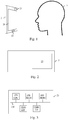
- the Fig. 1 schematically illustrates an example of implementation of the method according to the invention.
- a user 1 faces a terminal 2 of the smart phone type.
- the terminal 2 comprises a screen 20, a front camera 21 and a control button 22.
- the user 1 must be authenticated by a facial recognition process in order to be able to use the terminal 2.
- the facial recognition process executed by terminal 2 includes, for example, the method described in the request FR1661737 . Hereinafter, we call this process "recognition procedure”.
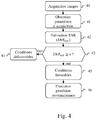
- the Fig. 2 schematically illustrates a detail of terminal 2.
- Terminal 2 comprises a processing module 23 capable of executing the facial recognition method according to the invention.
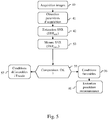
- the Fig. 3 schematically illustrates an example of the hardware architecture of the processing module 23.
- the processing module 23 then comprises, connected by a communication bus 230: a processor or CPU (“Central Processing Unit” in English) 231; a random access memory RAM (“Random Access Memory” in English) 232; a ROM read only memory 233; a storage unit such as a hard disk or a storage medium reader, such as an SD (“Secure Digital”) card reader 234; at least one communication interface 235.
- the communication interface 235 allows the processing module 23 to receive images from the front camera 21.
- Processor 231 is capable of executing instructions loaded into RAM 232 from ROM 233, external memory (not shown), storage media (such as an SD card), or a communication network. When the processing module 23 is powered on, the processor 231 is able to read from the RAM 232 instructions and execute them. These instructions form a computer program causing the implementation, by the processor 231, of all or part of the methods described below in relation to the Figs. 4 and 5 .
- a programmable machine for example a DSP (“Digital Signal Processor”), a microcontroller or a GPU (graphics processor, “Graphics Processing Unit” in terminology English), or be implemented in hardware form by a machine or a dedicated component, for example an FPGA (“Field-Programmable Gate Array”) or an ASIC (“Application-Specific Integrated Circuit”).
- DSP Digital Signal Processor
- microcontroller or a GPU
- graphics processor Graphics Processing Unit” in terminology English
- FPGA Field-Programmable Gate Array
- ASIC Application-Specific Integrated Circuit
- the Fig. 4 schematically illustrates a first example of a method according to the invention.
- the process described in relation to the Fig. 4 begins with a step 40 during which the processing module 23 causes an acquisition of an image, called the first image, by the camera 21.
- the processing module 23 obtains acquisition parameters, called current parameters, used by the front camera 21 during the acquisition of the first image.
- the processing module 23 estimates an SNR Est value, called an estimated value, representative of a signal to noise ratio (“Signal to Noise Ratio (SNR)” in English terminology) of an image of said face. illuminated exclusively by the light source.
- SNR Signal to Noise Ratio
- the processing module uses a reference signal-to-noise ratio value, called the reference value, SNR 0 .
- the SNR 0 reference value was calculated from a difference between a second image of the face of user 1 acquired by the front camera 21 with the light source turned off (i.e. ie screen 20 off) and a third image of the face of user 1 acquired by front camera 21 with the light source on (i.e. screen 20 on).
- screen 20 is considered to be on when each color component of screen 20 produces maximum light intensity.
- the screen 20 is considered to be off when each color component of the screen 20 is off.
- the acquisitions of the second and third images are very close in time so that the acquisition parameters of the second and of the third images by the front camera 21 are considered to be identical.
- the reference value SNR 0 is therefore representative of a ratio between a numerator representing a difference between the second and the third images and a denominator representing the third image. It is considered that the numerator represents an image of a face illuminated exclusively by the screen 20 and that the denominator represents an image of the same face illuminated exclusively by ambient light (sun, ambient lighting, etc.).
- each image provided by the front camera 21 is a grayscale image. In one embodiment, each image provided by the front camera 21 is a color image. In this case, the processing module 23 uses only one luminance component of each color image for the calculation of the signal-to-noise ratio values.
- the second and third images were for example acquired during an enrollment phase during a first use of the terminal 2 by the user 1 so that the user 1 can register on the terminal 2.
- the SNR value Is is estimated by the following relation.
- SNR 0 where Param Curr represents the current parameters, Param 0 represents parameters, called reference parameters, of the front camera 21 during the acquisition of the second and third images and f () is a function of the current Param Curr parameters and of the parameters of reference Param 0 .
- the ISO curr parameter (respectively ISO 0 ) represents an ISO sensitivity.
- the parameter itime curr (respectively itime 0 ) represents an exposure time.
- the parameter nvgvis curr (respectively nvgvis 0 ) is representative of a gray level of the face in the first image (respectively in the second and / or the third images).
- the parameter o curr (respectively o 0 ) represents an opening.
- the term IOD curr (respectively IOD 0 ) represents an interocular distance (ie distance between the eyes of user 1). Each interocular distance is determined using a method of automatically detecting the eyes in an image. For example, the process described in the document " Projection functions for Eye Detection, Zhi-Hua Zhou and Xin Geng, Pattern Récognition, Volume 37, Issue 5, May 2004, Pages 1049-1056 To determine a central point of the eyes is used. Once the position of the central point of each eye has been determined, the interocular distance is measured in number of pixels separating the two central points.
- the function f () includes a relation between a first term ISO curr . itimates curr . o curr 2 nvgvis curr and a second term ISO 0 . itimates 0 . o 2 2 ISO 0 . itimates 0 . o 0 2 nvgvis 0 .
- the first term is representative of an overall luminance index of the face in a scene in which the face is located during the acquisition of the first image.
- the second term is representative of an overall luminance index of the face in a scene in which the face was located during the acquisition of the second and / or the third images.
- the interocular distance IOD curr is representative of a distance between the camera 21 and the face of the user 1 during the acquisition of the first image.
- the interocular distance IOD 0 is representative of a distance between the camera 21 and the face of the user 1 during the acquisition of the second and / or the third images.
- the ISO sensitivity 0 (respectively the acquisition time itime 0 , the gray level of the face nvgvis 0 , the aperture o 0 ) is an average between the ISO sensitivity (respectively the acquisition time, the gray level of the face, the aperture) used during the acquisition of the second image and the ISO sensitivity (respectively the acquisition time, the gray level of the face, the aperture) used during the acquisition of the third image.
- the interocular distance IOD 0 is an average of the interocular distances measured in the second and third images.
- the camera 21 supplies the current and reference parameters to the processing module 23.
- the processing module 23 compares the estimated value SNR est with a predetermined signal-to-noise ratio threshold ⁇ .
- the predetermined threshold ⁇ has, for example, been determined on a set of images representative of faces acquired under variable illumination conditions.
- the predetermined signal-to-noise ratio threshold ⁇ is such that an image having a signal-to-noise ratio greater than the threshold ⁇ has a probability of causing an error of the recognition procedure less than a predetermined error rate ⁇ .
- the predetermined error rate ⁇ is “1%”.
- the processing module 23 When the estimated value SNR is less than the threshold ⁇ , the processing module 23 considers, during a step 44, that the image acquisition conditions are unfavorable to an execution of the recognition procedure. In this case, the processing module 23 displays an error message on the screen of the terminal 2. For example, the error message invites the user 1 to move to carry out his identification or his authentication.
- the processing module 23 When the estimated value SNR is greater than or equal to the threshold ⁇ , the processing module 23 considers, during a step 45, that the image acquisition conditions are favorable for an execution of the recognition procedure. In this case, the processing module 23 starts an execution of the recognition procedure during a step 46.
- the luminosity level lux 0 is an average of the luminosity levels measured during the acquisitions of the second and third images.
- the gray level nvgglob 0 is an average of the gray levels of the pixels of the second and third images.
- the nvgglob curr gray level is an average of the gray levels of the pixels in the first frame.
- the gray level nvgvis 0 is an average of the gray levels of the pixels of the second and third images corresponding to the face.
- the gray level nvgvis curr is an average of the gray levels of the pixels of the first image corresponding to the face.
- the pixels corresponding to a face in an image are determined by an automatic face detection method such as the method described in the article " Robust Real-Time Face Detection, P. Viola, M. Jones, International Journal of Computer Vision 57 (2), P. 137-154, 2004 ".
- the processing module 23 uses an average of the pixel luminance component values of the images.
- the function f () includes a relation between a first term 1 lux curr ⁇ nvg curr and a second term 1 lux 0 ⁇ nvg 0 .
- the first term is representative of an overall luminance index of the face in a scene in which the face is located during the acquisition of the first image.
- the second term is representative of an overall luminance index of the face in a scene in which the face was located during the acquisition of the second and / or the third images.
- the current and reference parameters are extracted from a file in EXIF format (Exchangeable Image File Format) associated with each image.
- EXIF format Exchangeable Image File Format
- other values representative of the distance between the camera 21 and the face of the user 1 can be used.
- the distance between the camera 21 and the face of the user 1 can be measured by a range finder.
- the reference value SNR 0 can be determined from several pairs of second (ie screen 20 off) and third images (ie screen 20 on). In this case, an SNR value is calculated for each pair of second and third images and the SNR reference value 0 is an average or a median value of the calculated SNR values.
- the reference value SNR 0 can be determined from a plurality of second images ( ie screen 20 off) and a plurality of third images (ie screen 20 on). In this case, a second average image is calculated from the plurality of second images and a third average image is calculated from the plurality of third images.
- a second image is an image acquired with at least one of the color components of the screen 20 turned off.
- a third image is an image acquired with at least one color component of the screen 20 producing a non-zero light intensity.
- the lighting produced by the screen 20 for a second image is different from the lighting produced by the screen 20 for each third image.
- the screen 20 plays a role of light source in the method described in relation to the Fig. 4 .
- the method could just as easily use an independent light source controlled by the processing module 23.
- the Fig. 5 schematically illustrates a second example of a method according to the invention.
- Fig. 5 starts the steps 40, 41 and 42 already explained in relation to the Fig. 4 .
- Step 42 is followed by a step 53 during which the processing module 23 measures a real signal-to-noise ratio value, called the real value, SNR r .
- the processing module 23 launches an acquisition of a fourth image of the face from the camera 21 with the screen 20 turned off and a fifth image of the face from the camera 21 with the screen 20 turned on. From the fourth and fifth images, the processing module 23 calculates the real value in the same way that the reference value SNR 0 was calculated.
- the processing module 23 decides, during a step 57, not to execute the recognition procedure and display, for example, an error message on the screen 20.
- the processing module 23 determines, during a step 56, that nothing is opposes an execution of the recognition procedure. Step 56 is followed by step 46 already explained, during which the processing module 23 starts the execution of the recognition procedure.
- the actual value SNR r can be determined from several pairs of fourth (ie screen 20 off) and fifth images (ie screen 20 on). In this case, an SNR value is calculated for each pair of fourth and fifth images and the actual SNR value r is an average or a median value of the calculated SNR values.
- the actual SNR r value can be determined from a plurality of fourth images (ie screen 20 off) and a plurality of fifth images (ie screen 20 on).
- a fourth average image is calculated from the plurality of fourth images and a fifth average image is calculated from the plurality of fifth images.
- a fourth image is an image acquired with at least one of the color components of the screen 20 turned off.
- a fifth image is an image acquired with at least one color component of the screen 20 producing a non-zero light intensity.
- the lighting produced by the screen 20 for a fourth image is different from the lighting produced by the screen 20 for each fifth image.
- values R each representative of a difference between a real value SNR r and an estimated value SNR Est .
- the divergence threshold ⁇ is determined so as to distinguish the R values calculated from real images acquired under favorable lighting conditions from the R values calculated from the other types of images.
Landscapes
- Engineering & Computer Science (AREA)
- Multimedia (AREA)
- Theoretical Computer Science (AREA)
- Physics & Mathematics (AREA)
- General Physics & Mathematics (AREA)
- Oral & Maxillofacial Surgery (AREA)
- Health & Medical Sciences (AREA)
- Human Computer Interaction (AREA)
- General Health & Medical Sciences (AREA)
- Computer Vision & Pattern Recognition (AREA)
- Signal Processing (AREA)
- Quality & Reliability (AREA)
- Collating Specific Patterns (AREA)
- Image Processing (AREA)
- Studio Devices (AREA)
- Image Analysis (AREA)
Claims (10)
- Verfahren zur automatischen Gesichtserkennung, ausgeführt von einem System, das eine Bildaufnahmevorrichtung und eine Lichtquelle enthält, die ein vor der Vorrichtung positioniertes Gesicht beleuchten kann, wobei das Verfahren zur automatischen Gesichtserkennung eine Erkennungsprozedur enthält, die eine Erfassung einer Vielzahl von Bildern eines Gesichts, wobei die Lichtquelle bei jeder Bilderfassung eine andere Beleuchtung des Gesichts erzeugt, und eine Gewinnung von repräsentativen Werten des Gesichts ausgehend von der Vielzahl von Bildern enthält, dadurch gekennzeichnet, dass das Verfahren außerdem enthält:- Ausführen einer Erfassung (40) eines ersten Bilds eines Gesichts ausgehend von der Vorrichtung;- Schätzen (42) eines geschätzter Wert genannten Werts, der für ein Signal-Rausch-Verhältnis eines ausschließlich von der Lichtquelle beleuchteten Bilds des Gesichts repräsentativ ist, indem ein Produkt ausgeführt wird zwischen einem Bezugswert genannten, für ein Signal-Rausch-Bezugsverhältnis repräsentativen Wert, wobei der Bezugswert ausgehend von einem für ein ausschließlich von der Lichtquelle beleuchtetes Bild des Gesichts repräsentativen Wert berechnet wurde, das ausgehend von einer Vielzahl von Bildern des Gesichts, Bezugsvielzahl genannt, erhalten wird, einem ersten Term repräsentativ für ein Verhältnis zwischen einem globalen Leuchtdichteindex des Gesichts in einer Szene, in der das Gesicht sich bei der Erfassung des ersten Bilds befindet, und einem globalen Leuchtdichteindex des Gesichts in einer Szene, in der das Gesicht sich bei der Erfassung der Bezugsvielzahl befand, und einem zweiten Term repräsentativ für ein Quadrat eines Verhältnisses zwischen einem für einen Abstand zwischen dem Gesicht und der Vorrichtung bei der Erfassung des ersten Bilds repräsentativen Wert und einem für einen Abstand zwischen dem Gesicht und der Vorrichtung bei der Erfassung der Bezugsvielzahl repräsentativen Wert;- Verwenden (43) des geschätzten Werts, um zu bestimmen, ob die Erkennungsprozedur ausgeführt werden muss oder nicht.
- Verfahren nach Anspruch 1, dadurch gekennzeichnet, dass der für ein ausschließlich von der Lichtquelle beleuchtetes Bild des Gesichts repräsentative Wert eine Differenz zwischen einem mit ausgeschalteter Lichtquelle erfassten zweiten Bild des Gesichts und einem mit eingeschalteter Lichtquelle erfassten dritten Bild des Gesichts ist.
- Verfahren nach Anspruch 1 oder 2, dadurch gekennzeichnet, dass jeder für einen Abstand zwischen dem Gesicht und der Vorrichtung repräsentative Wert ein im Bild oder der Vielzahl von Bildern enthaltener Augenabstand auf dem Gesicht entsprechend dem für einen Abstand zwischen dem Gesicht und der Vorrichtung repräsentativen Wert ist.
- Verfahren nach Anspruch 1, 2 oder 3, dadurch gekennzeichnet, dass jeder globale Leuchtdichteindex ein Produkt aus einer ISO-Empfindlichkeit, einer Belichtungszeit und einem Quadrat einer Apertur der Vorrichtung im Moment der Erfassung des Bilds oder der Vielzahl von Bildern entsprechend dem Index oder ein Produkt aus einem Umkehrwert eines Helligkeitspegels in der Nähe der Vorrichtung gemessen im Moment der Erfassung des Bilds oder der Vielzahl von Bildern entsprechend dem Index und einem für einen Graupegel im Bild oder der Vielzahl von Bildern entsprechend dem Index repräsentativen Wert ist.
- Verfahren nach einem der vorhergehenden Ansprüche, dadurch gekennzeichnet, dass das Verfahren außerdem enthält: Bestimmen, dass die Erkennungsprozedur ausgeführt werden kann, wenn der geschätzte Wert höher als eine erste vorbestimmte Schwelle ist.
- Verfahren nach einem der vorhergehenden Ansprüche, dadurch gekennzeichnet, dass das Verfahren außerdem enthält:- Ausführen einer Erfassung einer Vielzahl von Bildern des Gesichts, erfasste Vielzahl genannt, ausgehend von der Vorrichtung, wobei jedes Bild der erfassten Vielzahl mit einer anderen Beleuchtung des Gesichts durch die Lichtquelle erhalten wird, und Berechnen eines Werts, realer Wert genannt, der für ein Signal-Rausch-Verhältnis in den Bildern der erfassten Vielzahl repräsentativ ist;- Vergleichen des realen Werts und des geschätzten Werts; und- Bestimmen, dass die Erkennungsprozedur ausgeführt werden kann, wenn ein für eine Differenz zwischen dem realen Wert und dem geschätzten Wert repräsentativer Wert niedriger als eine zweite vorbestimmte Schwelle ist.
- Verfahren nach Anspruch 6, dadurch gekennzeichnet, dass die erfasste Vielzahl ein mit ausgeschalteter Lichtquelle erfasstes viertes Bild des Gesichts und ein mit eingeschalteter Lichtquelle erfasstes fünftes Bild des Gesichts enthält.
- System zur automatischen Gesichtserkennung, das eine Bildaufnahmevorrichtung und eine Lichtquelle enthält, die ein vor der Vorrichtung positioniertes Gesicht beleuchten kann, wobei das System Einrichtungen enthält, um eine Erkennungsprozedur auszuführen, die eine Erfassung einer Vielzahl von Bildern eines Gesichts, wobei die Lichtquelle bei jeder Bilderfassung eine andere Beleuchtung des Gesichts erzeugt, und eine Gewinnung von für das Gesicht repräsentativen Bildern ausgehend von der Vielzahl von Bildern enthält, dadurch gekennzeichnet, dass das System außerdem enthält:- Erfassungseinrichtungen, um eine Erfassung (40) eines ersten Bilds eines Gesichts ausgehend von der Vorrichtung auszuführen;- Einrichtungen zum Schätzen (42) eines geschätzter Wert genannten Werts, der für ein Signal-Rausch-Verhältnis eines ausschließlich von der Lichtquelle beleuchteten Bilds des Gesichts repräsentativ ist, indem ein Produkt ausgeführt wird zwischen einem Bezugswert genannten, für ein Signal-Rausch-Bezugsverhältnis repräsentativen Wert, wobei der Bezugswert ausgehend von einem für ein ausschließlich von der Lichtquelle beleuchtetes Bild des Gesichts repräsentativen Wert berechnet wurde, das ausgehend von einer Vielzahl von Bildern des Gesichts, Bezugsvielzahl genannt, erhalten wird, einem ersten Term repräsentativ für ein Verhältnis zwischen einem globalen Leuchtdichteindex des Gesichts in einer Szene, in der das Gesicht sich bei der Erfassung des ersten Bilds befindet, und einem globalen Leuchtdichteindex des Gesichts in einer Szene, in der das Gesicht sich bei der Erfassung der Bezugsvielzahl befand, und einem zweiten Term repräsentativ für ein Quadrat eines Verhältnisses zwischen einem für einen Abstand zwischen dem Gesicht und der Vorrichtung bei der Erfassung des ersten Bilds repräsentativen Wert und einem für einen Abstand zwischen dem Gesicht und der Vorrichtung bei der Erfassung der Bezugsvielzahl repräsentativen Wert;- Bestimmungseinrichtungen, die den geschätzten Wert verwenden (43), um zu bestimmen, ob die Erkennungsprozedur ausgeführt werden soll oder nicht.
- Computerprogramm, dadurch gekennzeichnet, dass es Anweisungen zur Durchführung, durch eine Vorrichtung (23), des Verfahrens nach einem der Ansprüche 1 bis 7 enthält, wenn das Programm von einem Prozessor der Vorrichtung ausgeführt wird.
- Speichereinrichtungen, dadurch gekennzeichnet, dass sie ein Computerprogramm speichern, das Anweisungen enthält, um durch eine Vorrichtung (23) das Verfahren nach einem der Ansprüche 1 bis 7 durchzuführen, wenn das Programm von einem Prozessor der Vorrichtung ausgeführt wird.
Applications Claiming Priority (1)
| Application Number | Priority Date | Filing Date | Title |
|---|---|---|---|
| FR1872407A FR3089661B1 (fr) | 2018-12-06 | 2018-12-06 | Procédé de reconnaissance faciale |
Publications (2)
| Publication Number | Publication Date |
|---|---|
| EP3663971A1 EP3663971A1 (de) | 2020-06-10 |
| EP3663971B1 true EP3663971B1 (de) | 2021-09-01 |
Family
ID=66049318
Family Applications (1)
| Application Number | Title | Priority Date | Filing Date |
|---|---|---|---|
| EP19211985.7A Active EP3663971B1 (de) | 2018-12-06 | 2019-11-28 | Gesichtserkennungsverfahren |
Country Status (3)
| Country | Link |
|---|---|
| US (1) | US11087118B2 (de) |
| EP (1) | EP3663971B1 (de) |
| FR (1) | FR3089661B1 (de) |
Families Citing this family (13)
| Publication number | Priority date | Publication date | Assignee | Title |
|---|---|---|---|---|
| USD896254S1 (en) * | 2018-10-30 | 2020-09-15 | Perfect Mobile Corp. | Display screen with graphical user interface |
| USD968990S1 (en) * | 2020-03-26 | 2022-11-08 | Shenzhen Sensetime Technology Co., Ltd. | Face recognition machine |
| CN113221774A (zh) * | 2021-05-19 | 2021-08-06 | 重庆幸尚付科技有限责任公司 | 人脸识别系统及考勤装置 |
| USD1077856S1 (en) * | 2023-05-11 | 2025-06-03 | Dyson Technology Limited | Display screen with graphical user interface |
| USD1074742S1 (en) * | 2023-05-11 | 2025-05-13 | Dyson Technology Limited | Display screen with graphical user interface |
| USD1074745S1 (en) * | 2023-05-11 | 2025-05-13 | Dyson Technology Limited | Display screen with graphical user interface |
| USD1074740S1 (en) * | 2023-05-11 | 2025-05-13 | Dyson Technology Limited | Display screen with graphical user interface |
| USD1074746S1 (en) * | 2023-05-11 | 2025-05-13 | Dyson Technology Limited | Display screen with graphical user interface |
| USD1074743S1 (en) * | 2023-05-11 | 2025-05-13 | Dyson Technology Limited | Display screen with graphical user interface |
| USD1074747S1 (en) * | 2023-05-11 | 2025-05-13 | Dyson Technology Limited | Display screen with graphical user interface |
| USD1074744S1 (en) * | 2023-05-11 | 2025-05-13 | Dyson Technology Limited | Display screen with graphical user interface |
| USD1074741S1 (en) * | 2023-05-11 | 2025-05-13 | Dyson Technology Limited | Display screen with graphical user interface |
| FR3162090A1 (fr) * | 2024-05-30 | 2025-11-14 | Idemia Identity & Security France | Procédé et dispositif de détection de fraude à l’identification d’une personne |
Family Cites Families (8)
| Publication number | Priority date | Publication date | Assignee | Title |
|---|---|---|---|---|
| JP4665780B2 (ja) * | 2006-01-30 | 2011-04-06 | ソニー株式会社 | 顔重要度判定装置、方法、および撮像装置 |
| CN101449288A (zh) * | 2006-05-23 | 2009-06-03 | 光荣株式会社 | 面部认证装置、面部认证方法以及面部认证程序 |
| US8953849B2 (en) * | 2007-04-19 | 2015-02-10 | Eyelock, Inc. | Method and system for biometric recognition |
| JP2010204304A (ja) * | 2009-03-02 | 2010-09-16 | Panasonic Corp | 撮像装置、運転者監視装置および顔部測距方法 |
| JP5652886B2 (ja) * | 2012-11-28 | 2015-01-14 | Necカシオモバイルコミュニケーションズ株式会社 | 顔認証装置、認証方法とそのプログラム、情報機器 |
| US9986151B1 (en) * | 2016-03-02 | 2018-05-29 | Amazon Technologies, Inc. | Systems and methods for determining a depth or reflectance of objects |
| CN106210471A (zh) * | 2016-07-19 | 2016-12-07 | 成都百威讯科技有限责任公司 | 一种室外面部识别方法和系统 |
| FR3059450B1 (fr) | 2016-11-30 | 2020-06-26 | Safran Identity & Security | Systeme de communication avec dispositif antifraude |
-
2018
- 2018-12-06 FR FR1872407A patent/FR3089661B1/fr not_active Expired - Fee Related
-
2019
- 2019-11-27 US US16/697,908 patent/US11087118B2/en active Active
- 2019-11-28 EP EP19211985.7A patent/EP3663971B1/de active Active
Also Published As
| Publication number | Publication date |
|---|---|
| EP3663971A1 (de) | 2020-06-10 |
| US20200184197A1 (en) | 2020-06-11 |
| FR3089661A1 (fr) | 2020-06-12 |
| FR3089661B1 (fr) | 2020-12-18 |
| US11087118B2 (en) | 2021-08-10 |
Similar Documents
| Publication | Publication Date | Title |
|---|---|---|
| EP3663971A1 (de) | Gesichtserkennungsverfahren | |
| US11263439B1 (en) | Systems and methods for passive-subject liveness verification in digital media | |
| US11373449B1 (en) | Systems and methods for passive-subject liveness verification in digital media | |
| EP3901794B1 (de) | Verfahren zur authentifizierung oder identifizierung einer person | |
| CA2957774C (fr) | Procede de securisation et de verification d'un document | |
| CA2978138C (fr) | Procede de reconnaissance de caracteres en reliefs, produit programme d'ordinateur et dispositif correspondants | |
| FR3100074A1 (fr) | Procédé d'analyse d'une caractéristique faciale d'un visage | |
| EP3866064B1 (de) | Verfahren zur authentifizierung oder identifizierung einer person | |
| EP2751739B1 (de) | Betrugserkennung in einem biometrischen zugangskontrollsystem | |
| US20170186138A1 (en) | Image processing method and apparatus | |
| FR3053500B1 (fr) | Procede de detection de fraude d'un systeme de reconnaissance d'iris | |
| EP3382605A1 (de) | Analyseverfahren eines strukturierten dokuments, das verformbar ist | |
| EP4099200A1 (de) | Verfahren und vorrichtung zur biometrischen identifizierung und/oder authentifizierung | |
| EP3264329B1 (de) | Verfahren und vorrichtung zur detektion von betrug durch überprüfung mit zwei verschiedenen fokalzonen bei der automatischen erkennung eines gesichts | |
| CN111767845B (zh) | 证件识别方法及装置 | |
| EP3888000B1 (de) | Vorrichtung und verfahren zur authentifizierung eines individuums | |
| CN112712073A (zh) | 基于眼部变化特征的活体识别方法、识别装置及电子设备 | |
| WO2007000504A1 (fr) | Procede de reconnaissance biometrique d'une main, systeme et dispositif associes | |
| EP4668143A1 (de) | Verfahren zur sicherung des zugriffs auf eine datenquelle | |
| EP4012669B1 (de) | Verfahren und vorrichtung zur auswahl eines fingerabdruckbildes aus einer bildsequenz zur authentifizierung oder identifizierung | |
| EP4685676A1 (de) | Verfahren zur sicherung des zugriffs auf eine datenquelle | |
| FR3161972A3 (fr) | Procédé de sécurisation d’accès à une source de données | |
| EP3782103B1 (de) | Vorrichtung zur bestimmung einer transaktionsvorrichtung, verfahren und entsprechendes computerprogramm | |
| FR3157636A1 (fr) | Procédé et dispositif de détermination de fraudes dans un système de reconnaissance d’images biométriques. | |
| HK40033014A (en) | Method and apparatus for card recognition |
Legal Events
| Date | Code | Title | Description |
|---|---|---|---|
| PUAI | Public reference made under article 153(3) epc to a published international application that has entered the european phase |
Free format text: ORIGINAL CODE: 0009012 |
|
| STAA | Information on the status of an ep patent application or granted ep patent |
Free format text: STATUS: THE APPLICATION HAS BEEN PUBLISHED |
|
| AK | Designated contracting states |
Kind code of ref document: A1 Designated state(s): AL AT BE BG CH CY CZ DE DK EE ES FI FR GB GR HR HU IE IS IT LI LT LU LV MC MK MT NL NO PL PT RO RS SE SI SK SM TR |
|
| AX | Request for extension of the european patent |
Extension state: BA ME |
|
| STAA | Information on the status of an ep patent application or granted ep patent |
Free format text: STATUS: REQUEST FOR EXAMINATION WAS MADE |
|
| 17P | Request for examination filed |
Effective date: 20201016 |
|
| RBV | Designated contracting states (corrected) |
Designated state(s): AL AT BE BG CH CY CZ DE DK EE ES FI FR GB GR HR HU IE IS IT LI LT LU LV MC MK MT NL NO PL PT RO RS SE SI SK SM TR |
|
| GRAP | Despatch of communication of intention to grant a patent |
Free format text: ORIGINAL CODE: EPIDOSNIGR1 |
|
| STAA | Information on the status of an ep patent application or granted ep patent |
Free format text: STATUS: GRANT OF PATENT IS INTENDED |
|
| INTG | Intention to grant announced |
Effective date: 20210419 |
|
| GRAS | Grant fee paid |
Free format text: ORIGINAL CODE: EPIDOSNIGR3 |
|
| GRAA | (expected) grant |
Free format text: ORIGINAL CODE: 0009210 |
|
| STAA | Information on the status of an ep patent application or granted ep patent |
Free format text: STATUS: THE PATENT HAS BEEN GRANTED |
|
| AK | Designated contracting states |
Kind code of ref document: B1 Designated state(s): AL AT BE BG CH CY CZ DE DK EE ES FI FR GB GR HR HU IE IS IT LI LT LU LV MC MK MT NL NO PL PT RO RS SE SI SK SM TR |
|
| REG | Reference to a national code |
Ref country code: GB Ref legal event code: FG4D Free format text: NOT ENGLISH |
|
| REG | Reference to a national code |
Ref country code: CH Ref legal event code: EP Ref country code: AT Ref legal event code: REF Ref document number: 1426991 Country of ref document: AT Kind code of ref document: T Effective date: 20210915 |
|
| REG | Reference to a national code |
Ref country code: DE Ref legal event code: R096 Ref document number: 602019007355 Country of ref document: DE |
|
| REG | Reference to a national code |
Ref country code: IE Ref legal event code: FG4D Free format text: LANGUAGE OF EP DOCUMENT: FRENCH |
|
| REG | Reference to a national code |
Ref country code: NL Ref legal event code: FP |
|
| REG | Reference to a national code |
Ref country code: DE Ref legal event code: R079 Ref document number: 602019007355 Country of ref document: DE Free format text: PREVIOUS MAIN CLASS: G06K0009000000 Ipc: G06V0010000000 |
|
| REG | Reference to a national code |
Ref country code: LT Ref legal event code: MG9D |
|
| PG25 | Lapsed in a contracting state [announced via postgrant information from national office to epo] |
Ref country code: ES Free format text: LAPSE BECAUSE OF FAILURE TO SUBMIT A TRANSLATION OF THE DESCRIPTION OR TO PAY THE FEE WITHIN THE PRESCRIBED TIME-LIMIT Effective date: 20210901 Ref country code: RS Free format text: LAPSE BECAUSE OF FAILURE TO SUBMIT A TRANSLATION OF THE DESCRIPTION OR TO PAY THE FEE WITHIN THE PRESCRIBED TIME-LIMIT Effective date: 20210901 Ref country code: SE Free format text: LAPSE BECAUSE OF FAILURE TO SUBMIT A TRANSLATION OF THE DESCRIPTION OR TO PAY THE FEE WITHIN THE PRESCRIBED TIME-LIMIT Effective date: 20210901 Ref country code: NO Free format text: LAPSE BECAUSE OF FAILURE TO SUBMIT A TRANSLATION OF THE DESCRIPTION OR TO PAY THE FEE WITHIN THE PRESCRIBED TIME-LIMIT Effective date: 20211201 Ref country code: FI Free format text: LAPSE BECAUSE OF FAILURE TO SUBMIT A TRANSLATION OF THE DESCRIPTION OR TO PAY THE FEE WITHIN THE PRESCRIBED TIME-LIMIT Effective date: 20210901 Ref country code: HR Free format text: LAPSE BECAUSE OF FAILURE TO SUBMIT A TRANSLATION OF THE DESCRIPTION OR TO PAY THE FEE WITHIN THE PRESCRIBED TIME-LIMIT Effective date: 20210901 Ref country code: BG Free format text: LAPSE BECAUSE OF FAILURE TO SUBMIT A TRANSLATION OF THE DESCRIPTION OR TO PAY THE FEE WITHIN THE PRESCRIBED TIME-LIMIT Effective date: 20211201 Ref country code: LT Free format text: LAPSE BECAUSE OF FAILURE TO SUBMIT A TRANSLATION OF THE DESCRIPTION OR TO PAY THE FEE WITHIN THE PRESCRIBED TIME-LIMIT Effective date: 20210901 |
|
| REG | Reference to a national code |
Ref country code: AT Ref legal event code: MK05 Ref document number: 1426991 Country of ref document: AT Kind code of ref document: T Effective date: 20210901 |
|
| PG25 | Lapsed in a contracting state [announced via postgrant information from national office to epo] |
Ref country code: PL Free format text: LAPSE BECAUSE OF FAILURE TO SUBMIT A TRANSLATION OF THE DESCRIPTION OR TO PAY THE FEE WITHIN THE PRESCRIBED TIME-LIMIT Effective date: 20210901 Ref country code: LV Free format text: LAPSE BECAUSE OF FAILURE TO SUBMIT A TRANSLATION OF THE DESCRIPTION OR TO PAY THE FEE WITHIN THE PRESCRIBED TIME-LIMIT Effective date: 20210901 Ref country code: GR Free format text: LAPSE BECAUSE OF FAILURE TO SUBMIT A TRANSLATION OF THE DESCRIPTION OR TO PAY THE FEE WITHIN THE PRESCRIBED TIME-LIMIT Effective date: 20211202 |
|
| PG25 | Lapsed in a contracting state [announced via postgrant information from national office to epo] |
Ref country code: AT Free format text: LAPSE BECAUSE OF FAILURE TO SUBMIT A TRANSLATION OF THE DESCRIPTION OR TO PAY THE FEE WITHIN THE PRESCRIBED TIME-LIMIT Effective date: 20210901 |
|
| PG25 | Lapsed in a contracting state [announced via postgrant information from national office to epo] |
Ref country code: IS Free format text: LAPSE BECAUSE OF FAILURE TO SUBMIT A TRANSLATION OF THE DESCRIPTION OR TO PAY THE FEE WITHIN THE PRESCRIBED TIME-LIMIT Effective date: 20220101 Ref country code: SM Free format text: LAPSE BECAUSE OF FAILURE TO SUBMIT A TRANSLATION OF THE DESCRIPTION OR TO PAY THE FEE WITHIN THE PRESCRIBED TIME-LIMIT Effective date: 20210901 Ref country code: SK Free format text: LAPSE BECAUSE OF FAILURE TO SUBMIT A TRANSLATION OF THE DESCRIPTION OR TO PAY THE FEE WITHIN THE PRESCRIBED TIME-LIMIT Effective date: 20210901 Ref country code: RO Free format text: LAPSE BECAUSE OF FAILURE TO SUBMIT A TRANSLATION OF THE DESCRIPTION OR TO PAY THE FEE WITHIN THE PRESCRIBED TIME-LIMIT Effective date: 20210901 Ref country code: PT Free format text: LAPSE BECAUSE OF FAILURE TO SUBMIT A TRANSLATION OF THE DESCRIPTION OR TO PAY THE FEE WITHIN THE PRESCRIBED TIME-LIMIT Effective date: 20220103 Ref country code: EE Free format text: LAPSE BECAUSE OF FAILURE TO SUBMIT A TRANSLATION OF THE DESCRIPTION OR TO PAY THE FEE WITHIN THE PRESCRIBED TIME-LIMIT Effective date: 20210901 Ref country code: CZ Free format text: LAPSE BECAUSE OF FAILURE TO SUBMIT A TRANSLATION OF THE DESCRIPTION OR TO PAY THE FEE WITHIN THE PRESCRIBED TIME-LIMIT Effective date: 20210901 Ref country code: AL Free format text: LAPSE BECAUSE OF FAILURE TO SUBMIT A TRANSLATION OF THE DESCRIPTION OR TO PAY THE FEE WITHIN THE PRESCRIBED TIME-LIMIT Effective date: 20210901 |
|
| REG | Reference to a national code |
Ref country code: DE Ref legal event code: R097 Ref document number: 602019007355 Country of ref document: DE |
|
| PG25 | Lapsed in a contracting state [announced via postgrant information from national office to epo] |
Ref country code: MC Free format text: LAPSE BECAUSE OF FAILURE TO SUBMIT A TRANSLATION OF THE DESCRIPTION OR TO PAY THE FEE WITHIN THE PRESCRIBED TIME-LIMIT Effective date: 20210901 |
|
| PLBE | No opposition filed within time limit |
Free format text: ORIGINAL CODE: 0009261 |
|
| STAA | Information on the status of an ep patent application or granted ep patent |
Free format text: STATUS: NO OPPOSITION FILED WITHIN TIME LIMIT |
|
| PG25 | Lapsed in a contracting state [announced via postgrant information from national office to epo] |
Ref country code: LU Free format text: LAPSE BECAUSE OF NON-PAYMENT OF DUE FEES Effective date: 20211128 Ref country code: IT Free format text: LAPSE BECAUSE OF FAILURE TO SUBMIT A TRANSLATION OF THE DESCRIPTION OR TO PAY THE FEE WITHIN THE PRESCRIBED TIME-LIMIT Effective date: 20210901 Ref country code: DK Free format text: LAPSE BECAUSE OF FAILURE TO SUBMIT A TRANSLATION OF THE DESCRIPTION OR TO PAY THE FEE WITHIN THE PRESCRIBED TIME-LIMIT Effective date: 20210901 Ref country code: BE Free format text: LAPSE BECAUSE OF NON-PAYMENT OF DUE FEES Effective date: 20211130 |
|
| REG | Reference to a national code |
Ref country code: BE Ref legal event code: MM Effective date: 20211130 |
|
| 26N | No opposition filed |
Effective date: 20220602 |
|
| PG25 | Lapsed in a contracting state [announced via postgrant information from national office to epo] |
Ref country code: SI Free format text: LAPSE BECAUSE OF FAILURE TO SUBMIT A TRANSLATION OF THE DESCRIPTION OR TO PAY THE FEE WITHIN THE PRESCRIBED TIME-LIMIT Effective date: 20210901 |
|
| PG25 | Lapsed in a contracting state [announced via postgrant information from national office to epo] |
Ref country code: IE Free format text: LAPSE BECAUSE OF NON-PAYMENT OF DUE FEES Effective date: 20211128 |
|
| P01 | Opt-out of the competence of the unified patent court (upc) registered |
Effective date: 20230428 |
|
| PG25 | Lapsed in a contracting state [announced via postgrant information from national office to epo] |
Ref country code: CY Free format text: LAPSE BECAUSE OF FAILURE TO SUBMIT A TRANSLATION OF THE DESCRIPTION OR TO PAY THE FEE WITHIN THE PRESCRIBED TIME-LIMIT Effective date: 20210901 |
|
| REG | Reference to a national code |
Ref country code: CH Ref legal event code: PL |
|
| PG25 | Lapsed in a contracting state [announced via postgrant information from national office to epo] |
Ref country code: LI Free format text: LAPSE BECAUSE OF NON-PAYMENT OF DUE FEES Effective date: 20221130 Ref country code: HU Free format text: LAPSE BECAUSE OF FAILURE TO SUBMIT A TRANSLATION OF THE DESCRIPTION OR TO PAY THE FEE WITHIN THE PRESCRIBED TIME-LIMIT; INVALID AB INITIO Effective date: 20191128 Ref country code: CH Free format text: LAPSE BECAUSE OF NON-PAYMENT OF DUE FEES Effective date: 20221130 |
|
| PG25 | Lapsed in a contracting state [announced via postgrant information from national office to epo] |
Ref country code: MK Free format text: LAPSE BECAUSE OF FAILURE TO SUBMIT A TRANSLATION OF THE DESCRIPTION OR TO PAY THE FEE WITHIN THE PRESCRIBED TIME-LIMIT Effective date: 20210901 |
|
| GBPC | Gb: european patent ceased through non-payment of renewal fee |
Effective date: 20231128 |
|
| PG25 | Lapsed in a contracting state [announced via postgrant information from national office to epo] |
Ref country code: MT Free format text: LAPSE BECAUSE OF FAILURE TO SUBMIT A TRANSLATION OF THE DESCRIPTION OR TO PAY THE FEE WITHIN THE PRESCRIBED TIME-LIMIT Effective date: 20210901 |
|
| PG25 | Lapsed in a contracting state [announced via postgrant information from national office to epo] |
Ref country code: GB Free format text: LAPSE BECAUSE OF NON-PAYMENT OF DUE FEES Effective date: 20231128 |
|
| PG25 | Lapsed in a contracting state [announced via postgrant information from national office to epo] |
Ref country code: GB Free format text: LAPSE BECAUSE OF NON-PAYMENT OF DUE FEES Effective date: 20231128 |
|
| REG | Reference to a national code |
Ref country code: DE Ref legal event code: R081 Ref document number: 602019007355 Country of ref document: DE Owner name: IDEMIA PUBLIC SECURITY FRANCE, FR Free format text: FORMER OWNER: IDEMIA IDENTITY & SECURITY FRANCE, COURBEVOIE, FR |
|
| REG | Reference to a national code |
Ref country code: NL Ref legal event code: PD Owner name: IDEMIA PUBLIC SECURITY FRANCE; FR Free format text: DETAILS ASSIGNMENT: CHANGE OF OWNER(S), ASSIGNMENT; FORMER OWNER NAME: IDEMIA IDENTITY & SECURITY FRANCE Effective date: 20251009 |
|
| PGFP | Annual fee paid to national office [announced via postgrant information from national office to epo] |
Ref country code: NL Payment date: 20251022 Year of fee payment: 7 |
|
| PG25 | Lapsed in a contracting state [announced via postgrant information from national office to epo] |
Ref country code: TR Free format text: LAPSE BECAUSE OF FAILURE TO SUBMIT A TRANSLATION OF THE DESCRIPTION OR TO PAY THE FEE WITHIN THE PRESCRIBED TIME-LIMIT Effective date: 20210901 |
|
| PGFP | Annual fee paid to national office [announced via postgrant information from national office to epo] |
Ref country code: DE Payment date: 20251022 Year of fee payment: 7 |
|
| PGFP | Annual fee paid to national office [announced via postgrant information from national office to epo] |
Ref country code: FR Payment date: 20251022 Year of fee payment: 7 |