EP3993809B1 - System for enhancing therapeutic compliance of the anti-cancer compound e7766 - Google Patents
System for enhancing therapeutic compliance of the anti-cancer compound e7766 Download PDFInfo
- Publication number
- EP3993809B1 EP3993809B1 EP20750022.4A EP20750022A EP3993809B1 EP 3993809 B1 EP3993809 B1 EP 3993809B1 EP 20750022 A EP20750022 A EP 20750022A EP 3993809 B1 EP3993809 B1 EP 3993809B1
- Authority
- EP
- European Patent Office
- Prior art keywords
- compound
- inhibitor
- pharmaceutically acceptable
- acceptable salt
- oatp
- Prior art date
- Legal status (The legal status is an assumption and is not a legal conclusion. Google has not performed a legal analysis and makes no representation as to the accuracy of the status listed.)
- Active
Links
Images


Classifications
-
- A—HUMAN NECESSITIES
- A61—MEDICAL OR VETERINARY SCIENCE; HYGIENE
- A61K—PREPARATIONS FOR MEDICAL, DENTAL OR TOILETRY PURPOSES
- A61K31/00—Medicinal preparations containing organic active ingredients
- A61K31/33—Heterocyclic compounds
- A61K31/395—Heterocyclic compounds having nitrogen as a ring hetero atom, e.g. guanethidine or rifamycins
- A61K31/495—Heterocyclic compounds having nitrogen as a ring hetero atom, e.g. guanethidine or rifamycins having six-membered rings with two or more nitrogen atoms as the only ring heteroatoms, e.g. piperazine or tetrazines
- A61K31/496—Non-condensed piperazines containing further heterocyclic rings, e.g. rifampin, thiothixene or sparfloxacin
-
- A—HUMAN NECESSITIES
- A61—MEDICAL OR VETERINARY SCIENCE; HYGIENE
- A61K—PREPARATIONS FOR MEDICAL, DENTAL OR TOILETRY PURPOSES
- A61K31/00—Medicinal preparations containing organic active ingredients
- A61K31/70—Carbohydrates; Sugars; Derivatives thereof
- A61K31/7084—Compounds having two nucleosides or nucleotides, e.g. nicotinamide-adenine dinucleotide, flavine-adenine dinucleotide
-
- A—HUMAN NECESSITIES
- A61—MEDICAL OR VETERINARY SCIENCE; HYGIENE
- A61K—PREPARATIONS FOR MEDICAL, DENTAL OR TOILETRY PURPOSES
- A61K45/00—Medicinal preparations containing active ingredients not provided for in groups A61K31/00 - A61K41/00
- A61K45/06—Mixtures of active ingredients without chemical characterisation, e.g. antiphlogistics and cardiaca
-
- A—HUMAN NECESSITIES
- A61—MEDICAL OR VETERINARY SCIENCE; HYGIENE
- A61P—SPECIFIC THERAPEUTIC ACTIVITY OF CHEMICAL COMPOUNDS OR MEDICINAL PREPARATIONS
- A61P35/00—Antineoplastic agents
-
- A—HUMAN NECESSITIES
- A61—MEDICAL OR VETERINARY SCIENCE; HYGIENE
- A61K—PREPARATIONS FOR MEDICAL, DENTAL OR TOILETRY PURPOSES
- A61K2300/00—Mixtures or combinations of active ingredients, wherein at least one active ingredient is fully defined in groups A61K31/00 - A61K41/00
Definitions
- Compound 1 which is the diammonium salt of E7766, shown below, has been reported for use in treatment of cancer. See, for example, United States Patent No. 10,246,480 .
- E7766 is also referred to as (1 R ,3 R ,15 E ,28 R ,29 R, 30 R ,31 R ,34 R ,36 R ,39 S ,41 R )-29,41-Difluoro-34,39-bis(sulfanyl)-2,33,35,38,40,42-hexaoxa-4,6,9,11,13,18,20,22,25,27-decaaza-34 ⁇ 5 ,39 ⁇ 5 -diphosphaoctacyclo [28.6.4.1 3,36 .1 28,31 .0 4,8 .0 7,12 .0 19,24 .0 23,27 ]dotetraconta - 5,7,9,11,15,19,21,23,25-nonaene-34,39-dione. If there exist any discrepancies as between this chemical name and the structure given above, the structure given above will control.
- E7766 is presented below.
- Compound 1 which is the diammonium salt of E7766, has a molecular weight of 780.7, a measured pKa of 3.41, a measured LogD of 1.31, a PSA of 200, solubility of 150 ⁇ mol/L, Papp value of 0.36 ⁇ 10 6 cm/s, and is ECCS Class 3B using the scale reported in Varma, et al., Pharm Res (2015) 32:3785-3802 .
- Compound 1 the diammonium salt, was used. Typically different lots were used for different studies.
- the present invention provides a compound which is E7766 or a pharmaceutically acceptable salt therof for use in a method of treating cancer in a patient, the method comprising administering the compound to said patient, wherein said patient is receiving an OATP inhibitor, and concomittantly ceasing or reducing administration of said OATP inhibitor or reducing administration of said compound to eliminate or reduce related adverse events:
- E7766 or a pharmaceutically acceptable salt is administered to a patient in need of treatment.
- the administered compound is provided as an NH 4 salt, a free acid, or a pharmaceutically acceptable salt thereof.
- the compound is provided as an NH 4 salt.
- E7766 is provided as an NH 4 salt, the compound is referred to as Compound 1.
- the optimal dose for treatment of cancer can be determined empirically for each individual using known methods and will depend upon a variety of factors, including the activity of the agents; the age, body weight, general health, gender and diet of the individual; the time and route of administration; and other medications the individual is taking. Optimal dosages may be established using routine testing and procedures that are well known in the art. Administration of the above compounds may be by any suitable route.
- a "drug-drug interaction" as used herein refers to pharmacokinetic or pharmacodynamics effects that may occur when two or more drugs are co-administered. Such effects typically do not arise when drugs are administered alone (i.e, not in the presence of other drugs).
- Non-limiting examples of pharmacokinetic drug-drug interaction effects may include, for example, changes in the absorption, distribution, metabolisis or excretion of one or both co-administered drugs.
- Non-limiting examples of pharmacodynamics drug-drug interaction effects may include, for example, one drug interfering (e.g., competitively or allosterically) with another drug at a protein (or receptor) binding site, or interfering indirectly through binding of a protein (or receptor) in a related biological pathway.
- Non-limiting examples of drug-drug interactions may include expected side effects, unexpected side effect, clinically adverse events and contraindications, all of which may be managed during administration of the drugs potentially involved in a drug-drug interaction.
- “Pharmaceutically acceptable salt” as used herein refers to acid addition salts or base addition salts of the compounds in the present disclosure.
- a pharmaceutically acceptable salt is any salt which retains the activity of the parent compound and does not impart any unduly deleterious or undesirable effect on a subject to whom it is administered and in the context in which it is administered.
- Pharmaceutically acceptable salts include, but are not limited to, metal complexes and salts of both inorganic and carboxylic acids.
- Pharmaceutically acceptable salts also include metal salts such as aluminum, calcium, iron, magnesium, manganese and complex salts.
- salts include, but are not limited to, acid salts such as acetic, aspartic, alkylsulfonic, arylsulfonic, axetil, benzenesulfonic, benzoic, bicarbonic, bisulfuric, bitartaric, butyric, calcium edetate, camsylic, carbonic, chlorobenzoic, citric, edetic, edisylic, estolic, esyl, esylic, formic, fumaric, gluceptic, gluconic, glutamic, glycolic, glycolylarsanilic, hexamic, hexylresorcinoic, hydrabamic, hydrobromic, hydrochloric, hydrochloride, hydroiodic, hydroxynaphthoic, isethionic, lactic, lactobionic, maleic, malic, malonic, mandelic, methanesulfonic, methylnitric,
- Embodiments may be diammonium salts of E7766.
- Pharmaceutically acceptable salts may be derived from amino acids including, but not limited to, cysteine. Methods for producing compounds as salts are known to those of skill in the art (see, e.g., Stahl et al., Handbook of Pharmaceutical Salts: Properties, Selection, and Use, Wiley-VCH; Verlag Helvetica Chimica Acta, Zurich, 2002 ; Berge et al., J. Pharm. Sci. 66: 1, 1977 ).
- an “effective amount” or “therapeutically effective amount” of a therapeutic agent is an amount sufficient to provide an observable therapeutic benefit compared to cancer left untreated in a subject or patient.
- Active agents as reported herein can be combined with a pharmaceutically acceptable carrier to provide pharmaceutical formulations thereof.
- a pharmaceutically acceptable carrier to provide pharmaceutical formulations thereof.
- the particular choice of carrier and formulation will depend upon the particular route of administration for which the composition is intended.
- “Pharmaceutically acceptable carrier” refers to a nontoxic carrier, adjuvant, or vehicle that does not destroy the pharmacological activity of the compound with which it is formulated.
- Pharmaceutically acceptable carriers, adjuvants or vehicles that may be used in the compositions include, but are not limited to, sorbic acid, potassium sorbate, partial glyceride mixtures of saturated vegetable fatty acids, water, salts or electrolytes, disodium hydrogen phosphate, potassium hydrogen phosphate, sodium chloride, zinc salts, colloidal silica, magnesium trisilicate, polyvinyl pyrrolidone, cellulose-based substances, polyethylene glycol, sodium carboxymethylcellulose, polyacrylates, waxes, polyethylene glycol and wool fat.
- compositions may be suitable for parenteral, oral, inhalation spray, topical, rectal, nasal, buccal, vaginal, intravesicular, intravesical, intratumoral or implanted reservoir administration, etc.
- the formulation comprises ingredients that are from natural or non-natural sources.
- the formulation or carrier may be provided in a sterile form. Non-limiting examples of a sterile carrier include endotoxin-free water or pyrogen-free water.
- Compositions may be administered through intravesicular, intravesical, or intratumoral administration.
- parenteral as used herein includes subcutaneous, intravenous, intramuscular, intra-articular, intra-synovial, intrasternal, intrathecal, intrahepatic, intralesional and intracranial injection or infusion techniques.
- the compounds are administered intravenously, orally, subcutaneously, or via intramuscular administration.
- Sterile injectable forms of the compositions may be aqueous or oleaginous suspension. These suspensions may be formulated according to techniques known in the art using suitable dispersing or wetting agents and suspending agents.
- the sterile injectable preparation may also be a sterile injectable solution or suspension in a nontoxic parenterally acceptable diluent or solvent.
- the acceptable vehicles and solvents that may be employed are water, Ringer's solution and isotonic sodium chloride solution.
- sterile, fixed oils are conventionally employed as a solvent or suspending medium.
- any bland fixed oil may be employed including synthetic mono- or diglycerides.
- Fatty acids and their glyceride derivatives are useful in the preparation of injectables, as are natural pharmaceutically acceptable oils, such as olive oil or castor oil, especially in their polyoxyethylated versions.
- These oil solutions or suspensions may also contain a long-chain alcohol diluent or dispersant, such as carboxymethyl cellulose or similar dispersing agents that are commonly used in the formulation of pharmaceutically acceptable dosage forms including emulsions and suspensions.
- Other commonly used surfactants, such as Tweens, Spans and other emulsifying agents that are commonly used in the manufacture of pharmaceutically acceptable solid, liquid, or other dosage forms may also be used for the purposes of formulation.
- a compound or salt may be provided in an acceptable oral dosage form, including, but not limited to, capsules, tablets, aqueous suspensions or solutions.
- carriers commonly used include lactose and corn starch.
- Lubricating agents such as magnesium stearate, may also be added.
- useful diluents include lactose and dried cornstarch.
- the active ingredient may be combined with emulsifying and suspending agents. If desired, certain sweetening, flavoring or coloring agents may also be added. In addition preservatives may also be added.
- Suitable examples of pharmaceutically acceptable preservatives include, but are not limited to, various antibacterial and antifungal agents such as solvents, for example ethanol, propylene glycol, benzyl alcohol, chlorobutanol, quaternary ammonium salts, and parabens (such as methyl paraben, ethyl paraben, propyl paraben, etc.).
- solvents for example ethanol, propylene glycol, benzyl alcohol, chlorobutanol, quaternary ammonium salts, and parabens (such as methyl paraben, ethyl paraben, propyl paraben, etc.).
- immediate-release is meant to include a conventional release, in which release of the drug starts immediately after administration.
- immediate release includes dosage forms that allow the drug to dissolve in the gastrointestinal contents, with no intention of delaying or prolonging the dissolution or absorption of the drug.
- the objective is for the drug to be released rapidly after administration, for example for it to be possible to release at least 80% of the drug within approximately 30 minutes after commencement of dissolution in a dissolution test.
- sustained-release or “extended-release” includes dosage forms whose drug-release characteristics of time course and/or location are chosen to accomplish therapeutic or convenience objectives not offered by conventional dosage forms such as a solution or an immediate release dosage form.
- steady-state means that a plasma level for a given active agent has been achieved and which is maintained with subsequent doses of the active agent at a level which is at or above the minimum effective therapeutic level and is below the minimum toxic plasma level for a given active agent.
- dose range refers to an upper and a lower limit of an acceptable variation of the amount of agent specified. Typically, a dose of an agent in any amount within the specified range can be administered to patients undergoing treatment.
- treat is used herein to mean to relieve, reduce or alleviate at least one symptom of a disease in a subject.
- the term “treat” may mean to arrest, delay the onset (i.e., the period prior to clinical manifestation of a disease or symptom of a disease) and/or reduce the risk of developing or worsening a symptom of cancer.
- protect is used herein to mean prevent delay or treat, or all, as appropriate, development or continuance or aggravation of symptoms of cancer in a subject.
- subject or “patient” is intended to include animals, which are capable of suffering from or afflicted with cancer.
- subjects or patients include mammals, e.g., humans, dogs, cows, horses, pigs, sheep, goats, cats, mice, rabbits, rats, and transgenic non-human animals.
- the subject is a human, e.g., a human suffering from, at risk of suffering from, or potentially capable of suffering from cancer.
- Advisory as used herein may include documentation as part of a regulatory approved pharmaceutical product, including, but not limited to a product label or product insert. Such documentation may include instructions, precautions or warnings to a patient or prescribing physician, for example, in one or more of the Drug Interactions, Clinical Pharmacology, Dosage and Administration, Warnings and Precautions, Contraindications, or Boxed Warnings sections.
- the term “about” or “approximately” usually means within 20%, more preferably within 10%, and most preferably still within 5% of a given value or range. Alternatively, especially in biological systems, the term “about” means approximately within a log (i.e., an order of magnitude) preferably within a factor of two of a given value.
- the disorder that is treated using one or more compounds disclosed herein is cancer.
- compositions comprising E7766 or a pharmaceutically acceptable salt thereof for the treatment of cancer.
- the pharmaceutical formulations may additionally comprise a carrier or excipient, stabilizer, flavoring agent, and/or coloring agent.
- E7766 or a pharmaceutically acceptable salt thereof may be administered using a variety of routes of administration known to those skilled in the art.
- Routes of administration include oral administration, intratumoral administration, intravesical administration, and intravesicular administration.
- a pharmaceutical formulation comprising the compound or pharmaceutically acceptable salt thereof may be taken orally in the form of liquid, syrup, tablet, capsule, powder, sprinkle, chewtab, or dissolvable disk.
- pharmaceutical formulations can be administered intravenously or transdermally. Additional routes of administration are known to those skilled in the art (see, e.g., Remington's Pharmaceutical Sciences, Gennaro A. R., Ed., 20th Edition, Mack Publishing Co., Easton, Pa .).
- the compound or pharmaceutically acceptable salt may be formulated as a paste, jelly, or suspension.
- the drug is dissolved, entrapped or suspended in the form of drug particles, microencapsulated particles, or drug-polymer particles in a gelatinous solution or semisolid.
- An advantage of an oral jelly formulation is that it is easier to administer the drug to patients who have difficulty swallowing tablets, capsules or pills.
- the compound is thoroughly mixed and suspended in an appropriate medium to form a paste or a gel. Additional agents can optionally be mixed to provide flavor during oral administration. Peanut butter or alginate, flavored with raspberry and a sweetener are examples of the many suitable taste masking agents.
- the paste or jelly can also be formulated with suitable binders or excipients known in the art for topical administration.
- the sustained release formulation is prepared by coating the active ingredient of the drug with a polymer, preferably a water-insoluble polymer.
- a polymer preferably a water-insoluble polymer.
- a water-insoluble polymer used in the pharmaceutical field as a sustained release coating agent, an enteric coating agent, or a gastric coating agent.
- the water-insoluble polymer can include, for example, ethyl cellulose, purified shellac, white shellac, aminoalkyl methacrylate copolymer RS, hydroxypropyl methylcellulose phthalate, hydroxypropyl methylcellulose acetate succinate, carboxymethylethyl-cellulose, cellulose acetate phthalate, methacrylic acid copolymer L, methacrylic acid copolymer LD, methacrylic acid copolymer S, aminoalkyl methacrylate copolymer E, or polyvinyl acetal diethylaminoacetate.
- the type, degree of substitution and molecular weight of the water-insoluble polymers can depend on solubility of the active ingredient in water or an alcohol, the desired sustained release level and the like.
- the water-insoluble polymers can be used either alone or in combination.
- the sustained release formulation may be a matrix-type tablet or granule.
- the active ingredient can be coated with up to 3 different types of polymers. These three different types of polymers can include: 1) a water insoluble polymer, such as ethylcellulose; 2) a pH independent gelling polymer, such as hydroxypropyl methylcellulose; and 3) a pH dependent gelling polymer, such as sodium alginate. These three different types of polymers can be used together to attenuate the release rate of the drugs.
- E7766 or a pharmaceutically acceptable salt thereof is administered to a patient in multiple cycles, each lasting 3 weeks.
- E7766 or a pharmaceutically acceptable salt thereof is administered in the induction cycle (Cycle 1) on days 1, 8 and 15; and administered on day 1 of each subsequent maintenance cycle (Cycle 2 and on).
- the total dose administered each time may be 25 ⁇ g, 50 ⁇ g, 75 ⁇ g, 150 ⁇ g, 300 ⁇ g, 600 ⁇ g, 1200 ⁇ g, or 1750 ⁇ g.
- the dose administered may be in one of the following dosage ranges: 75 ⁇ g - 1750 ⁇ g, 75 ⁇ g - 1200 ⁇ g , 75 ⁇ g - 600 ⁇ g, 75 ⁇ g - 300 ⁇ g, 75 ⁇ g - 150 ⁇ g, 150 ⁇ g - 1750 ⁇ g , 150 ⁇ g - 1200 ⁇ g , 150 ⁇ g - 600 ⁇ g , 150 ⁇ g - 300 ⁇ g , 300 ⁇ g - 1750 ⁇ g , 300 ⁇ g - 1200 ⁇ g , 300 ⁇ g - 600 ⁇ g , 1200 ⁇ g - 1750 ⁇ g, 75 ⁇ g - 200 ⁇ g, 75 ⁇ g - 150 ⁇ g, or 100 ⁇ g - 150 ⁇ g.
- E7766 or a pharmaceutically acceptable salt thereof is provided as a solid or concentrated solution and diluted in normal saline to a final volume of 1 mL for intratumoral administration.
- E7766 or a pharmaceutically acceptable salt thereof is provided as an intratumoral administration for treatment of breast cancer (including triple negative breast cancer (TNBC), colon cancer, colorectal cancer, glioma, head and neck squamous cell carcinoma, liver cancer, lymphoma, melanoma, prostate cancer, pancreatic cancer, renal cancer, or other solid tumors.
- breast cancer including triple negative breast cancer (TNBC), colon cancer, colorectal cancer, glioma, head and neck squamous cell carcinoma, liver cancer, lymphoma, melanoma, prostate cancer, pancreatic cancer, renal cancer, or other solid tumors.
- E7766 or a pharmaceutically acceptable salt thereof is administered to a patient first in an induction cycle (Cycle 1) lasting 6 weeks.
- E7766 or a pharmaceutically acceptable salt thereof is administered on days 1, 8, 15, 22, 29 and 36.
- Subsequent maintenance cycles (Cycle 2 and on) are initiated as identified in Table 1 below: Table 1 Cycle (week #/month #) Days administered within cycle Cycle 2 (Week 13, Month 3) 1, 8 and 15 Cycle 3 (Week 26, Month 6) 1, 8 and 15 Cycle 4 (Week 52, Month 12) 1, 8 and 15 Cycle 5 (Week 78, Month 18) 1, 8 and 15 Cycle 6 (Week 104, Month 24) 1, 8 and 15
- the total dose administered each time may be 600 ⁇ g, 800 ⁇ g, 1,600 ⁇ g, 2000 ⁇ g, 2,400 ⁇ g, 3,200 ⁇ g, 6,400 ⁇ g, 9600 ⁇ g, or 12,800 ⁇ g.
- the dose administered may be in one of the following dosage ranges: 800 ⁇ g to 12,800 ⁇ g; 800 ⁇ g to 9,600 ⁇ g; 800 ⁇ g to 6,400 ⁇ g; 800 ⁇ g to 3,200 ⁇ g; 800 ⁇ g to 2,400 ⁇ g; 800 ⁇ g to 2,000 ⁇ g; 800 ⁇ g to 1,600 ⁇ g; 1,600 ⁇ g to 12,800 ⁇ g; 1,600 ⁇ g to 9,600 ⁇ g; 1,600 ⁇ g to 6,400 ⁇ g; 1,600 ⁇ g to 3,200 ⁇ g; 1,600 ⁇ g to 2,400 ⁇ g; 1,600 ⁇ g to 2,000 ⁇ g; 2,000 ⁇ g to 12,800 ⁇ g; 2,000 ⁇ g to 12,800 ⁇ g; 1,600 ⁇ g
- E7766 or a pharmaceutically acceptable salt thereof is provided as a solid or concentrated solution and diluted in normal saline to a final volume of 25 mL for intravesicular administration. In another embodiment, E7766 or a pharmaceutically acceptable salt thereof is provided as a solid or concentrated solution and diluted in normal saline to a final volume of 25 mL for intravesical administration.
- E7766 or a pharmaceutically acceptable salt thereof is provided as an intravesicular administration for treatment of cancer (including muscle invasive and non-muscle invasive bladder cancer (NMIBC, including Bacillus Calmette-Guerin (BGC) Therapy unresponsive NMIBC), transitional cell carcinoma of the bladder, Ta or T1 papillary disease with or without carcimoa in situ (CIS), and urinary bladder neoplasms).
- cancer including muscle invasive and non-muscle invasive bladder cancer (NMIBC, including Bacillus Calmette-Guerin (BGC) Therapy unresponsive NMIBC), transitional cell carcinoma of the bladder, Ta or T1 papillary disease with or without carcimoa in situ (CIS), and urinary bladder neoplasms).
- NMIBC muscle invasive and non-muscle invasive bladder cancer
- BGC Bacillus Calmette-Guerin
- CIS carcimoa in situ
- E7766 or a pharmaceutically acceptable salt thereof is provided as an intravesical administration for treatment of bladder cancer (including muscle invasive and non-muscle invasive bladder cancer (NMIBC, including Bacillus Calmette-Guerin (BGC) Therapy unresponsive NMIBC), transitional cell carcinoma of the bladder, Ta or T1 papillary disease with or without carcimoa in situ (CIS), and urinary bladder neoplasms).
- bladder cancer including muscle invasive and non-muscle invasive bladder cancer (NMIBC, including Bacillus Calmette-Guerin (BGC) Therapy unresponsive NMIBC), transitional cell carcinoma of the bladder, Ta or T1 papillary disease with or without carcimoa in situ (CIS), and urinary bladder neoplasms).
- NMIBC muscle invasive and non-muscle invasive bladder cancer
- BGC Bacillus Calmette-Guerin
- CIS carcimoa in situ
- Sustained-release formulations can achieve a degree of sustained effect.
- the exposure and/or the bioavailability of the active ingredient may vary based on a variety of factors, such as for example, the absorption window, the carriers or excipients used in the formulation, the mode of delivery of the formulation, and/or the transit time of the active ingredient through the gastrointestinal tract of the patient.
- a therapy can contain at least one sustained-release portion for performing a sustained-release function and one immediate release portion for performing an immediate release function.
- the therapy when it is in a single dosage form, it can be in the form of tablets formed from a mixture of sustained-release granules constituting a sustained-release portion and immediate-release granules constituting an immediate-release portion, a capsule preparation obtained by filling a capsule with sustained-release granules and immediate-release granules, or press-coated tablets in which an outer layer constituting an immediate-release portion is formed on an inner core constituting a sustained-release portion.
- the compound may be dispersed uniformly in the composition, immediate release portion or sustained release portion, or may be contained in only one part of the composition, immediate-release portion or sustained-release portion, or may be contained such that there is a concentration gradient.
- a sustained-release portion in the composition according to the present invention can contain at least one non-pH-dependent polymeric substance or pH-dependent polymeric substance for controlling drug release.
- a non-pH-dependent polymeric substance used herein can comprise a polymeric substance whose charge state hardly changes under pH conditions generally found in the gastrointestinal tract, specifically from pH 1 to pH 8. This means, for example, a polymeric substance that does not have functional groups whose charge state changes depending on the pH such as basic functional groups such as amino groups or acidic functional groups such as carboxylic acid groups.
- the non-pH-dependent polymeric substance can be included for giving the composition according to the present invention a sustained-release function, but may also be included for another purpose.
- the non-pH-dependent polymeric substance used in the present invention may be water-insoluble, or may swell in water or dissolve in water to form a gel.
- water-insoluble non-pH-dependent polymeric substances include, but are not limited to, cellulose ethers, cellulose esters, and methacrylic acid-acrylic acid copolymers (trade name Eudragit, manufactured by Rohm GmbH & Co. KG, Darmstadt, Germany).
- Examples include, but are not limited to, cellulose alkyl ethers such as ethylcellulose (trade name Ethocel, manufactured by Dow Chemical Company, USA), ethyl methylcellulose, ethyl propylcellulose or isopropylcellulose, and butylcellulose, cellulose aralkyl ethers such as benzyl cellulose, cellulose cyanoalkyl ethers such as cyanoethylcellulose, cellulose organic acid esters such as cellulose acetate butyrate, cellulose acetate, cellulose propionate or cellulose butyrate, and cellulose acetate propionate, ethyl acrylate-methyl methacrylate copolymers (trade name Eudragit NE, manufactured by Rohm GmbH & Co. KG, Darmstadt, Germany), and aminoalkyl methacrylate copolymer RS (trade names Eudragit RL, Eudragit RS).
- cellulose alkyl ethers such as ethylcellulose (trade
- mean particle diameter of a water-insoluble polymer there are no particular limitations on the mean particle diameter of a water-insoluble polymer, but usually the lower this mean particle diameter the better the performance, with the mean particle diameter preferably being from 0.1 to 100 ⁇ m, more preferably from 1 to 50 ⁇ m, particularly preferably from 3 to 15 ⁇ m, most preferably from 5 to 15 ⁇ m.
- water-soluble or water-swelling non-pH-dependent polymeric substances include, but are not limited to, polyethylene oxide (trade name Polyox, manufactured by Dow Chemical Company, molecular weight 100,000 to 7,000,000), low-substituted hydroxypropyl cellulose (trade name L-HPC, manufactured by Shin-Etsu Chemical, Japan), hydroxypropyl cellulose (trade name HPC, manufactured by Nippon Soda, Co., Ltd, Japan), hydroxypropyl methylcellulose (trade names Metolose 60SH, 65SH, 90SH, manufactured by Shin-Etsu Chemical, Japan), and methylcellulose (trade name Metolose SM, manufactured by Shin-Etsu Chemical, Japan).
- polyethylene oxide trade name Polyox, manufactured by Dow Chemical Company, molecular weight 100,000 to 7,000,000
- L-HPC low-substituted hydroxypropyl cellulose
- HPC manufactured by Nippon Soda, Co., Ltd, Japan
- Metolose 60SH, 65SH, 90SH manufactured by Shin
- a single non-pH-dependent polymeric substance may be contained in the composition, or a plurality of the non-pH-dependent polymeric substances may be contained.
- the non-pH-dependent polymeric substance if used in embodiments reported herein, may be a water-insoluble polymeric substance, more preferably ethylcellulose, an ethyl acrylate-methyl methacrylate copolymer (trade name Eudragit NE), or an aminoalkyl methacrylate copolymer RS (trade name Eudragit RL, Eudragit RS). Particularly preferable is at least one of ethylcellulose and an aminoalkyl methacrylate copolymer RS. Most preferable is ethylcellulose.
- the amount of the non-pH-dependent polymeric substance contained in the composition this amount can be adjusted as appropriate in accordance with the purpose such as controlling sustained drug release.
- a pH-dependent polymeric substance that can be used may be a polymeric substance whose charge state changes under pH conditions generally found in the gastrointestinal tract, specifically from pH 1 to pH 8. This means, for example, a polymeric substance having functional groups whose charge state changes depending on the pH such as basic functional groups such as amino groups or acidic functional groups such as carboxylic acid groups.
- the pH-dependent functional groups of the pH-dependent polymeric substance are preferably acidic functional groups, with the pH-dependent polymeric substance most preferably having carboxylic acid groups.
- a pH-dependent polymeric substance may be water-insoluble, or may swell in water or dissolve in water to form a gel.
- pH-dependent polymeric substances used in the present invention include, but are not limited to, enteric polymeric substances.
- enteric polymeric substances include, but are not limited to, methacrylic acid-methyl methacrylate copolymers (Eudragit L100, Eudragit S100, manufactured by Rohm GmbH & Co. KG, Darmstadt, Germany), methacrylic acid-ethyl acrylate copolymers (Eudragit L100-55, Eudragit L30D-55, manufactured by Rohm GmbH & Co.
- hydroxypropyl methylcellulose phthalate HP-55, HP-50, manufactured by Shin-Etsu Chemical, Japan
- hydroxypropyl methylcellulose acetate succinate AQOAT, manufactured by Shin-Etsu Chemical, Japan
- carboxymethyl ethylcellulose CMEC, manufactured by Freund Corporation, Japan
- cellulose acetate phthalate HP-55, HP-50, manufactured by Shin-Etsu Chemical, Japan
- AQOAT hydroxypropyl methylcellulose acetate succinate
- CMEC carboxymethyl ethylcellulose
- a single pH-dependent polymeric substance may be contained in the composition, or a plurality of pH-dependent polymeric substances may be contained.
- the pH-dependent polymeric substance used in the present invention is preferably an enteric polymeric substance, more preferably a methacrylic acid-ethyl acrylate copolymer, a methacrylic acid-methyl methacrylate copolymer, hydroxypropyl methylcellulose phthalate, or hydroxypropyl methylcellulose acetate succinate, particularly preferably a methacrylic acid-ethyl acrylate copolymer.
- a commercially available product of a powder type or a granular type, or a suspension type in which the pH-dependent polymeric substance has been dispersed in a solvent in advance can be used as is, or such a commercially available product can be used dispersed in water or an organic solvent.
- an example is Eudragit L100-55.
- the mean particle diameter of a pH-dependent polymeric substance used in the present invention is preferably from 0.05 to 100 ⁇ m, more preferably from 0.05 to 70 ⁇ m, most preferably from 0.05 to 50 ⁇ m.
- the amount of the pH-dependent polymeric substance for example, in the case of an enteric polymeric substance, the amount is generally from 0.1 to 90 parts by weight, preferably from 1 to 70 parts by weight, more preferably from 5 to 60 parts by weight, particularly preferably from 10 to 50 parts by weight, based on 100 parts by weight of the composition.
- a therapy may further contain any of various additives, such as any of various pharmacologically acceptable carriers such as diluents, lubricants, binders and disintegrants, as well as preservatives, colorants, sweeteners, plasticizers, film coating agents and so on, as necessary.
- diluents include, but are not limited to, lactose, mannitol, dibasic calcium phosphate, starch, pregelatinized starch, crystalline cellulose, light silicic anhydride, synthetic aluminum silicate, magnesium aluminate metasilicate or the like.
- Examples of lubricants include, but are not limited to, magnesium stearate, calcium stearate, talc, sodium stearyl fumarate or the like.
- Examples of binders include, but are not limited to, hydroxypropyl cellulose, methylcellulose, sodium carboxymethyl cellulose, hydroxypropyl methylcellulose, polyvinylpyrrolidone or the like.
- Examples of disintegrants include, but are not limited to, carboxymethyl cellulose, calcium carboxymethyl cellulose, croscarmellose sodium, sodium carboxymethyl starch, low-substituted hydroxypropyl cellulose or the like.
- preservatives include, but are not limited to, paraoxybenzoic acid esters, chlorobutanol, benzyl alcohol, phenethyl alcohol, dehydroacetic acid, sorbic acid or the like.
- colorants include, but are not limited to, water-insoluble lake pigments, natural pigments (e.g., beta-carotene, chlorophyll, red ferric oxide), yellow ferric oxide, red ferric oxide, black ferric oxide or the like.
- sweeteners include, but are not limited to, sodium saccharin, dipotassium glycyrrhizate, aspartame, stevia or the like.
- plasticizers include, but are not limited to, glycerol fatty acid esters, triethyl citrate, propylene glycol, polyethylene glycol or the like.
- film coating agents include, but are not limited to, hydroxypropyl methylcellulose, hydroxypropyl cellulose or the like.
- a single conventional method, or a combination of conventional methods can be used.
- granulation is the main operation, but this may be combined with other operations such as mixing, drying, sieving, and classification.
- a wet granulation method in which a binder and a solvent are added to the powder and granulation is carried out
- a dry granulation method in which the powder is compressed and granulation is carried out
- a molten granulation method in which a binder that melts on heating is added and heating and granulation are carried out, or the like can be used.
- an operating method such as a mixing granulation method using a planetary mixer, a screw mixer or the like, a high-speed mixing granulation method using a Henschel mixer, a Super mixer or the like, an extruding granulation method using a cylindrical granulator, a rotary granulator, a screw extruding granulator, a pellet mill type granulator or the like, a wet high-shear granulation method, a fluidized-bed granulation method, a compression granulation method, a crushing granulation method, or a spraying granulation method can be used.
- a granulation solvent may be used when preparing the composition according to the present invention.
- a granulation solvent which may be water or any of various organic solvents, for example, water, a lower alcohol such as methanol or ethanol, a ketone such as acetone or methyl ethyl ketone, methylene chloride, or a mixture thereof.
- sustained-release granules contained in embodiments at least one drug and at least one selected from non-pH-dependent polymeric substances and pH-dependent polymeric substances are mixed together, a diluent and a binder are added as necessary, and granulation is carried out to obtain granular matter.
- the granular matter obtained is dried using a tray dryer, a fluidized bed dryer or the like, and sieving is carried out using a mill or an oscillator, whereby the sustained-release granules can be obtained.
- sustained-release granules in the present invention it is possible to add at least one drug, at least one selected from non-pH-dependent polymeric substances and pH-dependent polymeric substances, and as necessary a diluent and a binder using a dry compactor such as a roller compactor or a slug tabletting machine, and carry out compression-molding while mixing, and then carry out granulation by cracking down to a suitable size.
- a dry compactor such as a roller compactor or a slug tabletting machine
- the granular matter prepared using such a granulator may be used as is as granules or fine granules according to the present invention, or may be further cracked using a power mill, a roll granulator, a rotor speed mill or the like, and sieved to obtain sustained-release granules.
- immediate-release granules can also be manufactured as for the sustained-release granules.
- a compression-molded product can be manufactured as a drug-containing sustained-release portion or immediate-release portion, or as a composition reported herein using a single conventional method, or a combination of conventional methods.
- at least one drug at least one selected from non-pH-dependent polymeric substances and pH-dependent polymeric substances, a diluent such as mannitol or lactose, a binder such as polyvinylpyrrolidone or crystalline cellulose, a disintegrant such as carmellose sodium or crospovidone, and a lubricant such as magnesium stearate or talc are used, and tableting is carried out using an ordinary method, whereby the compression-molded product can be obtained.
- a diluent such as mannitol or lactose
- a binder such as polyvinylpyrrolidone or crystalline cellulose
- a disintegrant such as carmellose sodium or crospovidone
- a lubricant such as magnesium stearate
- tabletting is the main operation in the method of manufacturing the compression-molded product, but this may be combined with other operations such as mixing, drying, sugar coating formation, and coating.
- Examples of the method for the tabletting include, but are not limited to, direct compression molding in which at least one drug and pharmacologically acceptable additives are mixed together and then the mixture is directly compression-molded into tablets using a tabletting machine, and dry granule compression or wet granule compression in which sustained-release granules or immediate-release granules according to the present invention are subjected to compression-molding after adding a lubricant or a disintegrant as necessary.
- the tabletting machine used in the compression molding for example, a single-punch tabletting machine, a rotary tabletting machine, or a press-coated tabletting machine can be used.
- Drug-containing sustained-release granules or immediate-release granules, or compression-molded product according to embodiments herein can be used as is in the form of granules or a tablet as the composition, but may also be subjected to further processing to manufacture the composition.
- the compression-molded product or granules can be given a film coating using a film base material such as ethylcellulose, casein, methylcellulose, hydroxypropyl methylcellulose, methacrylic acid copolymer L, cellulose acetate phthalate, shellac or the like, or given a sugar coating using a sugar coating liquid containing saccharose, sugar alcohol, gum arabic powder, talc or the like, thus producing film-coated tablets or sugar-coated tablets.
- a film base material such as ethylcellulose, casein, methylcellulose, hydroxypropyl methylcellulose, methacrylic acid copolymer L, cellulose acetate phthalate, shellac or the like
- a sugar coating liquid containing saccharose, sugar alcohol, gum arabic powder, talc or the like thus producing film-coated tablets or sugar-coated tablets.
- One solvent in this coating technique may be purified water, but an organic solvent such as an alcohol, a ketone, an ether
- ethanol for example, ethanol, acetone, methylene chloride or the like can be used as an organic solvent.
- an apparatus ordinarily used in coating techniques for manufacturing medicines can be used, with examples including a spray coating apparatus in which the coating is carried out by spraying a coating liquid or the like, and a rotor fluidized bed granulator for layering.
- capsule preparations can be manufactured by filling sustained-release granules or immediate-release granules as above, or mini-tablets into hard gelatin capsules or HPMC capsules using an automatic capsule filling machine.
- sustained-release granules or immediate-release granules as above can be mixed with a thickener or a dispersant so as to disperse these granules, the mixture then being made into granules or tablets.
- a liquid or jelly can be made using water, and substances selected from dispersants, emulsifiers, thickeners, preservatives, pH adjustors, sweeteners, flavorings, fragrances and so on.
- dispersants emulsifiers, thickeners, preservatives, pH adjustors, sweeteners, flavorings, fragrances and so on.
- the pharmacokinetics and disposition of Compound 1 were studied in vivo in bile duct cannulated rats and dogs as well as in OATP1B1/1B3 humanized mice.
- the transporter phenotyping of Compound 1 was conducted using transfected cell lines and vesicles.
- the biliary excretion and uptake clearance of Compound 1 was also determined in sandwich cultured human hepatocytes.
- simCYP TM was also used for physiologically based pharmacokinetic (PBPK) modeling and clinical drug-drug interaction (DDI) prediction.
- PBPK modeling was applied to evaluate potential drug-drug interactions with OATP inhibitors in the clinic.
- E7766 or a pharmaceutically acceptable salt thereof, and in particular Compound 1 may give rise to a potential drug-drug interaction with OATP inhibitors.
- OATP inhibitors may be OATP1B1 inhibitors and/or OATP1B3 inhibitors.
- Co-administration of OATP inhibitors with E7766 or a pharmaceutically acceptable salt thereof could alter dosage amounts and schedules for administration of E7766 or a pharmaceutically acceptable salt thereof and/or administration of an OATP inhibitor or could caution against the co-administration entirely.
- OATP inhibitors that may have potential drug-drug interaction with E7766 or a pharmaceutically acceptable salt thereof may include, for example, but are not limited to fimasartan, clarithromycin, rifampin, clopidogrel, eslicarbazepine, CP-778875, isavuconazole, itraconazole, ombitasvir, asunaprevir, boceprevir, daclatasvir, dasabuvir, elbasvir, faldaprevir, glecaprevir, grazoprevir, letermovir, ombitasvir, paritaprevir, pibrentasvir, trimethoprim, ritonavir, simeprevir, sofosbuvir, telaprevir, velpatasvir, voxilaprevir, lopinavir, peficitinib, quercetin, tipranavir, metformin, diltiazem, sacubitril,
- OATP inhibitors are reported, in general, in Karlgren, et al., "Classification of Inhibitors of Hepatic Organic Anion Transporting Polypeptides (OATPs): Influence of Protein Expression on Drug-Drug Interactions," J Med Chem, 2012 May 24; 55(10): 4740-4763 .
- a system provides information on potential drug-drug interactions of E7766 or a pharmaceutically acceptable salt thereof and at least one OATP inhibitor.
- potential drug-drug interactions may be mananged. Management may occur, for example, by altering dosage amount, type, or schedule for the OATP inhibitor and/or E7766 or a pharmaceutically acceptable salt thereof, or by ceasing administration of the OATP inhibitor.
- management of a potential drug-drug interaction occurs by reducing the amount of OATP inhibitor that is administered and/or the frequency of administration of the OATP inhibitor. In some embodiments management of a potential drug-drug interaction occurs by reducing the amount of E7766 or a pharmaceutically acceptable salt thereof or a pharmaceutical composition comprising E7766 or a pharmaceutically acceptable salt thereof that is administered and/or by reducing the frequency of administration of E7766 or a pharmaceutically acceptable salt thereof or a pharmaceutical composition comprising E7766 or a pharmaceutically acceptable salt thereof.
- Compound 1 was formulated in sterile phosphate-buffered saline (PBS) for rat and dog studies and in 0.5% 0.1 N HCl, 5% DMSO, 10% EtOH, 84.5% saline for studies in WT and humanized mice.
- Rifampin was formulated in 0.5% 0.1 N HCl, 5% DMSO, 10% EtOH, 84.5% saline.
- Blank urine and bile, as well as plasma containing sodium heparin as the anticoagulant, were purchased from BioreclamationIVT (Westbury, NY).
- Blank feces was obtained from rats purchased from Charles River Laboratories (Wilmington, MA).
- Plasma, urine and bile samples were collected from the dogs, and blood, urine, bile and feces samples were collected from rats up to 48 hours post-dose. Blood samples were kept on wet ice after collection until centrifuged for separation of plasma. Urine samples were collected at intervals 0 to 4, 4 to 8, 8 to 24, and 24 to 48 hours post-dose into collection tubes on wet ice. Bile samples were collected at intervals 0 to 4, 4 to 8, 8 to 24, and 24 to 48 hours post-dose into collection tubes cooled via an ice pack.
- Oatp1a/1b cluster-knockout, OATP1B1- or OATP1B3-knockin mice humanized on the Oatp1a/1b-knockout background, and wild-type FVB male mice were purchased from Taconic Biosciences (Hudson, NY, USA). Mice were between 8 and 10 weeks of age (22-34 g) at the time of study.
- Compound 1 was administered at a dose of 0.5 mg/kg coadministered with either vehicle or rifampin (30 mg/kg). Blood and liver samples were collected at 0.083, 0.25, 0.5, 1, 1.5, 3, 6 hours. Plasma was isolated from blood samples by centrifugation. All samples were stored at -80°C until bioanalysis.
- Compound 1 was dosed via intravenous administration to WT, humanized, and KO mice. Blood, urine, and feces were collected from the animals over 6 hours. Blood spots were collected and expelled FTA TM DMPK-B DBS Card (GE Healthcare, Life Sciences, Whatman TM ) within the appropriate sample circle. Pharmacokinetics of Compound 1 in WT animals was also assessed after co-administration with rifampin. Liver samples were also collected from WT animals and frozen until analysis. All samples were analyzed using LC-MS/MS and the pharmacokinetics parameters of Compound 1 were determined with Phoenix WinNonlin using non-compartmental analysis.
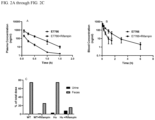
- FIG. 2A through 2C show an in vivo PK profile and elimination of Compound 1 with and without a co-dose of the Oatp/OATP inhibitor Rifampin in different mouse models.
- FIG. 2A shows PK profile of Compound 1 and the co-dose with Rifampin in wild type mice.
- FIG. 2B shows PK profile of Compound 1 and the co-dose with Rifampin in OATP1Bs humanized mice.
- FIG. 2C shows excretion of Compound 1 into urine and feces for the mice of FIG. 2A and FIG. 2B .
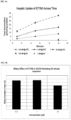
- FIG. 5 shows AUC (area under the curve, or bioavailabilty) of Compound 1 in the liver following IV administration in wild type mice did not change significantly after coadministration with Rifampin.
- the Kp (liver/plasma) value of Compound 1 decreased 5-fold in the presence of Rifampin.
- C max of Compound 1 increased about 2-fold in the presence of rifampin.
- Hepatic uptake and hepatobiliary disposition of Compound 1 was evaluated in sandwich-cultured human hepatocytes (SCHH) prepared from one donor, JEL.
- SCHH sandwich-cultured human hepatocytes
- Compound 1 was incubated for 1, 5, and 10 minutes and the solutions were collected and frozen at -80 °C until process for bioanalysis. The wells were then washed three times with ice cold Plus (+) Buffer and were frozen at -80°C until processed for bioanalysis.
- Biliary excretion of compound 1 was assessed in SCHH utilizing B-CLEAR ® Technology. Briefly, cell culture medium was removed, and hepatocytes were washed twice with warm Plus (+) or Minus (-) Buffer to maintain or disrupt tight junctions, respectively.
- the wash solutions were removed and replaced with fresh Plus (+) Buffer or Minus (-) Buffer.
- the hepatocytes were conditioned for 10 minutes at 37°C.
- the conditioning solutions were removed and replaced with dosing solutions for Compound 1.
- the solutions were collected and frozen at -80°C until process for bioanalysis.
- the wells were then washed three times with ice cold Plus (+) Buffer.
- the plates were frozen at -80°C until processed for bioanalysis.
- Hepatic uptake of Compound 1 was markedly decreased to ⁇ 7.7% of 37 °C following incubations at 4 °C. These results suggested that hepatic uptake of Compound 1 was primarily mediated by active uptake mechanisms. Hepatic uptake of Compound 1 was approximately dose-proportional from 0.3 to 1 ⁇ M dose levels following 1 to 5 minutes of exposure. However, this dose proportionality was lost at a concentration of 10 ⁇ M, suggesting hepatic uptake was saturated at concentrations >1 ⁇ M.
- the biliary excretion index (BEI) of Compound 1 ranged from 70.9 to 86.2% across the concentration range assessed, indicating a high biliary efflux for this compound. Results are shown in FIG. 4A and FIG. 4B .
- Example 4 In vitro Hepatobiliary Transporter Phenotyping- Evaluation of Transport in Overexpressed Cells or Vesicles:
- TransportoCells TM (Corning, NY, USA) expressing OATP2B1, NTCP, and HEK293-FT cells stably transfected with the vector containing OATP1B1 cDNA or OATP1B3 cDNA or empty vector were grown in a Dulbecoo's modified Eagle's medium fortified with 10% fetal calf serum and 2 mmol/L sodium butyrate (for NTCP only) in a humidified incubator at 37°C and 5% CO2. Cells were harvested at 90% confluence and then seeded in poly-D-lysine-coated 24-well 24 h prior to transporter assay.
- Concentration-dependent uptake of Compound 1 via OATP1B1 and OATP1B3 were conducted with a concentration range of 0.25-100 ⁇ mol ⁇ L-1 under linear uptake. All experiments were run in triplicates.
- TransportoCells TM membrane vesicles expressing BCRP, BSEP, MRP2, and control vector vesicles were pre-incubation with vesicle uptake buffer (47 mmol L-1 MOPs-Tris, 65 mmol L-1 KCl, 7 mmol-L-1 MgCl2, pH 7.4 for BCRP; 47 mmol ⁇ L-1 MOPs-Tris, 2.5 mmol ⁇ L-1 GSH, 65 mmol-L-1 KCl, 7 mmol ⁇ L-1 MgCl2, pH 7.4 for MRP2; and 10 mmol L-1 HEPES-Tris, 100 mmol L-1 KNO3, 12.5 mmol L-1 Mg(NO3)2, and 50 mmol L-1 sucrose, pH 7.4 for BSEP) at 37 °C for 10 minutes.
- vesicle uptake buffer 47 mmol L-1 MOPs-Tris, 65 mmol L-1 KCl, 7 mmol-L-1 MgCl2,
- the transport was initiated by adding of pre-warmed 25 mmol/L MgATP, 3 ⁇ mol ⁇ L-1 of Compound 1 in presence or absence of inhibitors (3 ⁇ mol ⁇ L-1 of Novobioncin for BCRP, 100 ⁇ mol ⁇ L-1 of MK-571 for MRP2, and 20 ⁇ mol ⁇ L-1 of Ketoconazole for BSEP).
- the transport was terminated at designated time by adding 200 ⁇ L ice-cold vesicle uptake buffer.
- the complete content was then rapidly filtrated using multi-screen HTS vacuum manifold, followed by 5 washes and filtrations.
- the plate was allowed to dry completely and then placed onto a 96-well receiver plate.
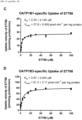
- FIG. 1A through FIG. 1D show results of in vitro hepatobiliary transporter phenotyping studies of Compound 1.
- FIG. 1(A) shows uptake of Compound 1 evaluated on SLC transporter-expressing HEK293 cells
- FIG. 1(B) shows transport of Compond 1 evaluated on ABC transporter-expressing membrane vesicles
- FIG. 1(C) shows kinetic plot fitting and Michaelis-menten parameters of OATP1B1-mediated uptake of Compound 1
- FIG.(D) shows kinetic plot fitting and Michaelis-menten parameters of OATP1B3-mediated uptake of Compound 1.
- the results shown in FIG. 1A through FIG. 1D suggest that SLC transporters OATP1B1 and OATP1B3, and ABC transporter MRP2 are responsible for hepatic uptake and sequential biliary efflux of Compound 1.
- PBPK modeling was conducted using the Simcyp TM in silico bottom-up PBPK modeling.
- PBPK modeling suggested that changes in systemic and hepatic exposure may occur if Compound 1 is coadministered with inhibitors of OATP1Bs.
- OATP1B3 due to a predominant contribution of OATP1B3 but not OATP1B1 in hepatobiliary clearance of Compound 1, the hepatobiliary clearance of Compound 1 is unlikely to be subject to PK alteration due to polymorphism in PATP1B1.
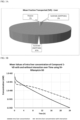
- FIG. 4A shows mean fraction transported (ft%) of Compound 1 to the liver.
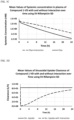
- FIG. 3B shows Mean Values of intra-liver concentration of Compound 1 with and without interaction with Rifampin over time.
- FIG. 3C shows mean values of systemic concentration in plasma of Compound 1 with and without interaction with Rifampin over time.
- FIG. 4D shows mean values of sinusoidal uptake clearance of Compound 1 with and without interaction with Rifampin over time.
- Simcyp TM software Version 17.0.0 was used. Simcyp TM parameters are shown below in Table 3.
Landscapes
- Health & Medical Sciences (AREA)
- Life Sciences & Earth Sciences (AREA)
- General Health & Medical Sciences (AREA)
- Public Health (AREA)
- Medicinal Chemistry (AREA)
- Pharmacology & Pharmacy (AREA)
- Chemical & Material Sciences (AREA)
- Animal Behavior & Ethology (AREA)
- Veterinary Medicine (AREA)
- Epidemiology (AREA)
- Molecular Biology (AREA)
- Chemical Kinetics & Catalysis (AREA)
- General Chemical & Material Sciences (AREA)
- Nuclear Medicine, Radiotherapy & Molecular Imaging (AREA)
- Organic Chemistry (AREA)
- Pharmaceuticals Containing Other Organic And Inorganic Compounds (AREA)
- Medicines That Contain Protein Lipid Enzymes And Other Medicines (AREA)
Applications Claiming Priority (2)
| Application Number | Priority Date | Filing Date | Title |
|---|---|---|---|
| US201962869389P | 2019-07-01 | 2019-07-01 | |
| PCT/US2020/040515 WO2021003279A1 (en) | 2019-07-01 | 2020-07-01 | System for enhancing therapeutic compliance of the anti-cancer compound e7766 |
Publications (2)
| Publication Number | Publication Date |
|---|---|
| EP3993809A1 EP3993809A1 (en) | 2022-05-11 |
| EP3993809B1 true EP3993809B1 (en) | 2024-10-09 |
Family
ID=71895194
Family Applications (1)
| Application Number | Title | Priority Date | Filing Date |
|---|---|---|---|
| EP20750022.4A Active EP3993809B1 (en) | 2019-07-01 | 2020-07-01 | System for enhancing therapeutic compliance of the anti-cancer compound e7766 |
Country Status (10)
| Country | Link |
|---|---|
| US (1) | US12564600B2 (https=) |
| EP (1) | EP3993809B1 (https=) |
| JP (1) | JP7704690B2 (https=) |
| KR (1) | KR20220029717A (https=) |
| CN (1) | CN114599374A (https=) |
| AU (1) | AU2020300543A1 (https=) |
| BR (1) | BR112021026876A2 (https=) |
| CA (1) | CA3145824A1 (https=) |
| MX (1) | MX2022000052A (https=) |
| WO (1) | WO2021003279A1 (https=) |
Families Citing this family (2)
| Publication number | Priority date | Publication date | Assignee | Title |
|---|---|---|---|---|
| JP2024533394A (ja) | 2021-09-09 | 2024-09-12 | エーザイ・アール・アンド・ディー・マネジメント株式会社 | Stingアゴニストのバイオマーカー及びその使用方法 |
| CN115512788B (zh) * | 2022-09-16 | 2023-08-08 | 山东大学 | 预测SGLTi人体暴露量及靶蛋白抑制率的方法及系统 |
Family Cites Families (7)
| Publication number | Priority date | Publication date | Assignee | Title |
|---|---|---|---|---|
| EP2446893A1 (en) * | 2010-11-01 | 2012-05-02 | Bergen Teknologioverføring AS | Use of nontoxic cyclic peptides to block transport via OATP1B1/ OATP1B3-related proteins, for the treatment of cancer cells expressing such transporters |
| JP2015516423A (ja) | 2012-05-07 | 2015-06-11 | ノバルティス アーゲー | アリスポリビルによる薬物動態の調節 |
| PL3265565T3 (pl) | 2015-03-04 | 2021-01-25 | Board Of Regents, The University Of Texas System | Sposoby leczenia nowotworu z hemizygotyczną utratą tp53 |
| JP2019512233A (ja) | 2016-03-10 | 2019-05-16 | ザ・ジョンズ・ホプキンス・ユニバーシティー | 凝集体を含まない単量体のジフテリア毒素融合タンパク質の生成方法及び治療的使用法 |
| US20200055883A1 (en) * | 2017-02-17 | 2020-02-20 | Eisai R&D Management Co., Ltd. | Cyclic di-nucleotides derivative for the treatment of cancer |
| KR102512494B1 (ko) | 2017-06-30 | 2023-03-22 | 교와 가부시키가이샤 | 의약 |
| US10702508B2 (en) | 2017-10-16 | 2020-07-07 | Aragon Pharmaceuticals, Inc. | Anti-androgens for the treatment of non-metastatic castration-resistant prostate cancer |
-
2020
- 2020-07-01 MX MX2022000052A patent/MX2022000052A/es unknown
- 2020-07-01 JP JP2021578078A patent/JP7704690B2/ja active Active
- 2020-07-01 KR KR1020227003441A patent/KR20220029717A/ko active Pending
- 2020-07-01 US US17/597,199 patent/US12564600B2/en active Active
- 2020-07-01 CA CA3145824A patent/CA3145824A1/en active Pending
- 2020-07-01 CN CN202080061033.0A patent/CN114599374A/zh active Pending
- 2020-07-01 EP EP20750022.4A patent/EP3993809B1/en active Active
- 2020-07-01 BR BR112021026876A patent/BR112021026876A2/pt unknown
- 2020-07-01 WO PCT/US2020/040515 patent/WO2021003279A1/en not_active Ceased
- 2020-07-01 AU AU2020300543A patent/AU2020300543A1/en active Pending
Also Published As
| Publication number | Publication date |
|---|---|
| AU2020300543A1 (en) | 2022-02-24 |
| JP2022538898A (ja) | 2022-09-06 |
| CN114599374A (zh) | 2022-06-07 |
| MX2022000052A (es) | 2022-04-06 |
| EP3993809A1 (en) | 2022-05-11 |
| BR112021026876A2 (pt) | 2022-02-22 |
| KR20220029717A (ko) | 2022-03-08 |
| US12564600B2 (en) | 2026-03-03 |
| WO2021003279A1 (en) | 2021-01-07 |
| US20220304982A1 (en) | 2022-09-29 |
| CA3145824A1 (en) | 2021-01-07 |
| JP7704690B2 (ja) | 2025-07-08 |
Similar Documents
| Publication | Publication Date | Title |
|---|---|---|
| RU2609833C2 (ru) | Лекарственные формы ингибитора гистондиацетилазы в комбинации с бендамутином и их применение | |
| EP3503923B1 (en) | Combination therapies for the treatment of hepatocellular carcinoma | |
| HK1204998A1 (en) | Combinations of histone deacetylase inhibitor and pazopanib and uses thereof | |
| EP3993809B1 (en) | System for enhancing therapeutic compliance of the anti-cancer compound e7766 | |
| EP3595725B1 (en) | Combination therapies for the treatment of breast cancer | |
| JP7665700B2 (ja) | 肝細胞癌の治療のための併用療法 | |
| BR112014020008B1 (pt) | Composição farmacêutica, uso da mesma, e, processo para a fabricação de uma formulação | |
| JP2022160654A (ja) | 細胞生存性及び/又は細胞増殖を低減するための薬物の組み合わせ | |
| RU2820595C2 (ru) | Система для повышения степени соблюдения терапевтической схемы с противораковым соединением e7766 | |
| RU2787993C2 (ru) | Комбинированные терапии для лечения гепатоцеллюлярной карциномы | |
| OA20813A (en) | Methods of administering voxelotor |
Legal Events
| Date | Code | Title | Description |
|---|---|---|---|
| STAA | Information on the status of an ep patent application or granted ep patent |
Free format text: STATUS: UNKNOWN |
|
| STAA | Information on the status of an ep patent application or granted ep patent |
Free format text: STATUS: THE INTERNATIONAL PUBLICATION HAS BEEN MADE |
|
| PUAI | Public reference made under article 153(3) epc to a published international application that has entered the european phase |
Free format text: ORIGINAL CODE: 0009012 |
|
| STAA | Information on the status of an ep patent application or granted ep patent |
Free format text: STATUS: REQUEST FOR EXAMINATION WAS MADE |
|
| 17P | Request for examination filed |
Effective date: 20220119 |
|
| AK | Designated contracting states |
Kind code of ref document: A1 Designated state(s): AL AT BE BG CH CY CZ DE DK EE ES FI FR GB GR HR HU IE IS IT LI LT LU LV MC MK MT NL NO PL PT RO RS SE SI SK SM TR |
|
| DAV | Request for validation of the european patent (deleted) | ||
| DAX | Request for extension of the european patent (deleted) | ||
| STAA | Information on the status of an ep patent application or granted ep patent |
Free format text: STATUS: EXAMINATION IS IN PROGRESS |
|
| 17Q | First examination report despatched |
Effective date: 20230524 |
|
| GRAP | Despatch of communication of intention to grant a patent |
Free format text: ORIGINAL CODE: EPIDOSNIGR1 |
|
| STAA | Information on the status of an ep patent application or granted ep patent |
Free format text: STATUS: GRANT OF PATENT IS INTENDED |
|
| INTG | Intention to grant announced |
Effective date: 20240430 |
|
| GRAS | Grant fee paid |
Free format text: ORIGINAL CODE: EPIDOSNIGR3 |
|
| GRAA | (expected) grant |
Free format text: ORIGINAL CODE: 0009210 |
|
| STAA | Information on the status of an ep patent application or granted ep patent |
Free format text: STATUS: THE PATENT HAS BEEN GRANTED |
|
| AK | Designated contracting states |
Kind code of ref document: B1 Designated state(s): AL AT BE BG CH CY CZ DE DK EE ES FI FR GB GR HR HU IE IS IT LI LT LU LV MC MK MT NL NO PL PT RO RS SE SI SK SM TR |
|
| REG | Reference to a national code |
Ref country code: CH Ref legal event code: EP |
|
| REG | Reference to a national code |
Ref country code: DE Ref legal event code: R096 Ref document number: 602020039108 Country of ref document: DE |
|
| REG | Reference to a national code |
Ref country code: IE Ref legal event code: FG4D |
|
| REG | Reference to a national code |
Ref country code: LT Ref legal event code: MG9D |
|
| REG | Reference to a national code |
Ref country code: NL Ref legal event code: MP Effective date: 20241009 |
|
| REG | Reference to a national code |
Ref country code: AT Ref legal event code: MK05 Ref document number: 1729845 Country of ref document: AT Kind code of ref document: T Effective date: 20241009 |
|
| PG25 | Lapsed in a contracting state [announced via postgrant information from national office to epo] |
Ref country code: NL Free format text: LAPSE BECAUSE OF FAILURE TO SUBMIT A TRANSLATION OF THE DESCRIPTION OR TO PAY THE FEE WITHIN THE PRESCRIBED TIME-LIMIT Effective date: 20241009 |
|
| PG25 | Lapsed in a contracting state [announced via postgrant information from national office to epo] |
Ref country code: NL Free format text: LAPSE BECAUSE OF FAILURE TO SUBMIT A TRANSLATION OF THE DESCRIPTION OR TO PAY THE FEE WITHIN THE PRESCRIBED TIME-LIMIT Effective date: 20241009 |
|
| PG25 | Lapsed in a contracting state [announced via postgrant information from national office to epo] |
Ref country code: IS Free format text: LAPSE BECAUSE OF FAILURE TO SUBMIT A TRANSLATION OF THE DESCRIPTION OR TO PAY THE FEE WITHIN THE PRESCRIBED TIME-LIMIT Effective date: 20250209 Ref country code: HR Free format text: LAPSE BECAUSE OF FAILURE TO SUBMIT A TRANSLATION OF THE DESCRIPTION OR TO PAY THE FEE WITHIN THE PRESCRIBED TIME-LIMIT Effective date: 20241009 Ref country code: PT Free format text: LAPSE BECAUSE OF FAILURE TO SUBMIT A TRANSLATION OF THE DESCRIPTION OR TO PAY THE FEE WITHIN THE PRESCRIBED TIME-LIMIT Effective date: 20250210 |
|
| PG25 | Lapsed in a contracting state [announced via postgrant information from national office to epo] |
Ref country code: FI Free format text: LAPSE BECAUSE OF FAILURE TO SUBMIT A TRANSLATION OF THE DESCRIPTION OR TO PAY THE FEE WITHIN THE PRESCRIBED TIME-LIMIT Effective date: 20241009 |
|
| PG25 | Lapsed in a contracting state [announced via postgrant information from national office to epo] |
Ref country code: BG Free format text: LAPSE BECAUSE OF FAILURE TO SUBMIT A TRANSLATION OF THE DESCRIPTION OR TO PAY THE FEE WITHIN THE PRESCRIBED TIME-LIMIT Effective date: 20241009 |
|
| PG25 | Lapsed in a contracting state [announced via postgrant information from national office to epo] |
Ref country code: ES Free format text: LAPSE BECAUSE OF FAILURE TO SUBMIT A TRANSLATION OF THE DESCRIPTION OR TO PAY THE FEE WITHIN THE PRESCRIBED TIME-LIMIT Effective date: 20241009 |
|
| PG25 | Lapsed in a contracting state [announced via postgrant information from national office to epo] |
Ref country code: NO Free format text: LAPSE BECAUSE OF FAILURE TO SUBMIT A TRANSLATION OF THE DESCRIPTION OR TO PAY THE FEE WITHIN THE PRESCRIBED TIME-LIMIT Effective date: 20250109 |
|
| PG25 | Lapsed in a contracting state [announced via postgrant information from national office to epo] |
Ref country code: LV Free format text: LAPSE BECAUSE OF FAILURE TO SUBMIT A TRANSLATION OF THE DESCRIPTION OR TO PAY THE FEE WITHIN THE PRESCRIBED TIME-LIMIT Effective date: 20241009 Ref country code: GR Free format text: LAPSE BECAUSE OF FAILURE TO SUBMIT A TRANSLATION OF THE DESCRIPTION OR TO PAY THE FEE WITHIN THE PRESCRIBED TIME-LIMIT Effective date: 20250110 Ref country code: AT Free format text: LAPSE BECAUSE OF FAILURE TO SUBMIT A TRANSLATION OF THE DESCRIPTION OR TO PAY THE FEE WITHIN THE PRESCRIBED TIME-LIMIT Effective date: 20241009 |
|
| PG25 | Lapsed in a contracting state [announced via postgrant information from national office to epo] |
Ref country code: PL Free format text: LAPSE BECAUSE OF FAILURE TO SUBMIT A TRANSLATION OF THE DESCRIPTION OR TO PAY THE FEE WITHIN THE PRESCRIBED TIME-LIMIT Effective date: 20241009 |
|
| PG25 | Lapsed in a contracting state [announced via postgrant information from national office to epo] |
Ref country code: RS Free format text: LAPSE BECAUSE OF FAILURE TO SUBMIT A TRANSLATION OF THE DESCRIPTION OR TO PAY THE FEE WITHIN THE PRESCRIBED TIME-LIMIT Effective date: 20250109 |
|
| PG25 | Lapsed in a contracting state [announced via postgrant information from national office to epo] |
Ref country code: SM Free format text: LAPSE BECAUSE OF FAILURE TO SUBMIT A TRANSLATION OF THE DESCRIPTION OR TO PAY THE FEE WITHIN THE PRESCRIBED TIME-LIMIT Effective date: 20241009 |
|
| PG25 | Lapsed in a contracting state [announced via postgrant information from national office to epo] |
Ref country code: DK Free format text: LAPSE BECAUSE OF FAILURE TO SUBMIT A TRANSLATION OF THE DESCRIPTION OR TO PAY THE FEE WITHIN THE PRESCRIBED TIME-LIMIT Effective date: 20241009 |
|
| REG | Reference to a national code |
Ref country code: DE Ref legal event code: R097 Ref document number: 602020039108 Country of ref document: DE |
|
| PG25 | Lapsed in a contracting state [announced via postgrant information from national office to epo] |
Ref country code: EE Free format text: LAPSE BECAUSE OF FAILURE TO SUBMIT A TRANSLATION OF THE DESCRIPTION OR TO PAY THE FEE WITHIN THE PRESCRIBED TIME-LIMIT Effective date: 20241009 |
|
| PG25 | Lapsed in a contracting state [announced via postgrant information from national office to epo] |
Ref country code: RO Free format text: LAPSE BECAUSE OF FAILURE TO SUBMIT A TRANSLATION OF THE DESCRIPTION OR TO PAY THE FEE WITHIN THE PRESCRIBED TIME-LIMIT Effective date: 20241009 |
|
| PG25 | Lapsed in a contracting state [announced via postgrant information from national office to epo] |
Ref country code: SK Free format text: LAPSE BECAUSE OF FAILURE TO SUBMIT A TRANSLATION OF THE DESCRIPTION OR TO PAY THE FEE WITHIN THE PRESCRIBED TIME-LIMIT Effective date: 20241009 |
|
| PG25 | Lapsed in a contracting state [announced via postgrant information from national office to epo] |
Ref country code: CZ Free format text: LAPSE BECAUSE OF FAILURE TO SUBMIT A TRANSLATION OF THE DESCRIPTION OR TO PAY THE FEE WITHIN THE PRESCRIBED TIME-LIMIT Effective date: 20241009 |
|
| PLBE | No opposition filed within time limit |
Free format text: ORIGINAL CODE: 0009261 |
|
| STAA | Information on the status of an ep patent application or granted ep patent |
Free format text: STATUS: NO OPPOSITION FILED WITHIN TIME LIMIT |
|
| PG25 | Lapsed in a contracting state [announced via postgrant information from national office to epo] |
Ref country code: SE Free format text: LAPSE BECAUSE OF FAILURE TO SUBMIT A TRANSLATION OF THE DESCRIPTION OR TO PAY THE FEE WITHIN THE PRESCRIBED TIME-LIMIT Effective date: 20241009 |
|
| 26N | No opposition filed |
Effective date: 20250710 |
|
| PGFP | Annual fee paid to national office [announced via postgrant information from national office to epo] |
Ref country code: DE Payment date: 20250729 Year of fee payment: 6 |
|
| PGFP | Annual fee paid to national office [announced via postgrant information from national office to epo] |
Ref country code: IT Payment date: 20250721 Year of fee payment: 6 |
|
| PGFP | Annual fee paid to national office [announced via postgrant information from national office to epo] |
Ref country code: GB Payment date: 20250728 Year of fee payment: 6 |
|
| PGFP | Annual fee paid to national office [announced via postgrant information from national office to epo] |
Ref country code: FR Payment date: 20250725 Year of fee payment: 6 |
|
| REG | Reference to a national code |
Ref country code: CH Ref legal event code: H13 Free format text: ST27 STATUS EVENT CODE: U-0-0-H10-H13 (AS PROVIDED BY THE NATIONAL OFFICE) Effective date: 20260224 |
|
| PG25 | Lapsed in a contracting state [announced via postgrant information from national office to epo] |
Ref country code: LU Free format text: LAPSE BECAUSE OF NON-PAYMENT OF DUE FEES Effective date: 20250701 |
|
| REG | Reference to a national code |
Ref country code: BE Ref legal event code: MM Effective date: 20250731 |
|
| PG25 | Lapsed in a contracting state [announced via postgrant information from national office to epo] |
Ref country code: BE Free format text: LAPSE BECAUSE OF NON-PAYMENT OF DUE FEES Effective date: 20250731 |
|
| PG25 | Lapsed in a contracting state [announced via postgrant information from national office to epo] |
Ref country code: CH Free format text: LAPSE BECAUSE OF NON-PAYMENT OF DUE FEES Effective date: 20250731 |