EP3992302A1 - Generic cartridge and method for multiplex nucleic acid detection - Google Patents
Generic cartridge and method for multiplex nucleic acid detection Download PDFInfo
- Publication number
- EP3992302A1 EP3992302A1 EP21205713.7A EP21205713A EP3992302A1 EP 3992302 A1 EP3992302 A1 EP 3992302A1 EP 21205713 A EP21205713 A EP 21205713A EP 3992302 A1 EP3992302 A1 EP 3992302A1
- Authority
- EP
- European Patent Office
- Prior art keywords
- nucleic acid
- generic
- cartridge
- primer
- target
- Prior art date
- Legal status (The legal status is an assumption and is not a legal conclusion. Google has not performed a legal analysis and makes no representation as to the accuracy of the status listed.)
- Pending
Links
Images




Classifications
-
- C—CHEMISTRY; METALLURGY
- C12—BIOCHEMISTRY; BEER; SPIRITS; WINE; VINEGAR; MICROBIOLOGY; ENZYMOLOGY; MUTATION OR GENETIC ENGINEERING
- C12Q—MEASURING OR TESTING PROCESSES INVOLVING ENZYMES, NUCLEIC ACIDS OR MICROORGANISMS; COMPOSITIONS OR TEST PAPERS THEREFOR; PROCESSES OF PREPARING SUCH COMPOSITIONS; CONDITION-RESPONSIVE CONTROL IN MICROBIOLOGICAL OR ENZYMOLOGICAL PROCESSES
- C12Q1/00—Measuring or testing processes involving enzymes, nucleic acids or microorganisms; Compositions therefor; Processes of preparing such compositions
- C12Q1/68—Measuring or testing processes involving enzymes, nucleic acids or microorganisms; Compositions therefor; Processes of preparing such compositions involving nucleic acids
- C12Q1/6813—Hybridisation assays
- C12Q1/6816—Hybridisation assays characterised by the detection means
- C12Q1/6823—Release of bound markers
-
- C—CHEMISTRY; METALLURGY
- C12—BIOCHEMISTRY; BEER; SPIRITS; WINE; VINEGAR; MICROBIOLOGY; ENZYMOLOGY; MUTATION OR GENETIC ENGINEERING
- C12Q—MEASURING OR TESTING PROCESSES INVOLVING ENZYMES, NUCLEIC ACIDS OR MICROORGANISMS; COMPOSITIONS OR TEST PAPERS THEREFOR; PROCESSES OF PREPARING SUCH COMPOSITIONS; CONDITION-RESPONSIVE CONTROL IN MICROBIOLOGICAL OR ENZYMOLOGICAL PROCESSES
- C12Q1/00—Measuring or testing processes involving enzymes, nucleic acids or microorganisms; Compositions therefor; Processes of preparing such compositions
- C12Q1/68—Measuring or testing processes involving enzymes, nucleic acids or microorganisms; Compositions therefor; Processes of preparing such compositions involving nucleic acids
- C12Q1/6844—Nucleic acid amplification reactions
- C12Q1/6851—Quantitative amplification
-
- C—CHEMISTRY; METALLURGY
- C12—BIOCHEMISTRY; BEER; SPIRITS; WINE; VINEGAR; MICROBIOLOGY; ENZYMOLOGY; MUTATION OR GENETIC ENGINEERING
- C12Q—MEASURING OR TESTING PROCESSES INVOLVING ENZYMES, NUCLEIC ACIDS OR MICROORGANISMS; COMPOSITIONS OR TEST PAPERS THEREFOR; PROCESSES OF PREPARING SUCH COMPOSITIONS; CONDITION-RESPONSIVE CONTROL IN MICROBIOLOGICAL OR ENZYMOLOGICAL PROCESSES
- C12Q1/00—Measuring or testing processes involving enzymes, nucleic acids or microorganisms; Compositions therefor; Processes of preparing such compositions
- C12Q1/68—Measuring or testing processes involving enzymes, nucleic acids or microorganisms; Compositions therefor; Processes of preparing such compositions involving nucleic acids
- C12Q1/6809—Methods for determination or identification of nucleic acids involving differential detection
-
- C—CHEMISTRY; METALLURGY
- C12—BIOCHEMISTRY; BEER; SPIRITS; WINE; VINEGAR; MICROBIOLOGY; ENZYMOLOGY; MUTATION OR GENETIC ENGINEERING
- C12Q—MEASURING OR TESTING PROCESSES INVOLVING ENZYMES, NUCLEIC ACIDS OR MICROORGANISMS; COMPOSITIONS OR TEST PAPERS THEREFOR; PROCESSES OF PREPARING SUCH COMPOSITIONS; CONDITION-RESPONSIVE CONTROL IN MICROBIOLOGICAL OR ENZYMOLOGICAL PROCESSES
- C12Q1/00—Measuring or testing processes involving enzymes, nucleic acids or microorganisms; Compositions therefor; Processes of preparing such compositions
- C12Q1/68—Measuring or testing processes involving enzymes, nucleic acids or microorganisms; Compositions therefor; Processes of preparing such compositions involving nucleic acids
- C12Q1/6813—Hybridisation assays
- C12Q1/6816—Hybridisation assays characterised by the detection means
- C12Q1/6818—Hybridisation assays characterised by the detection means involving interaction of two or more labels, e.g. resonant energy transfer
-
- C—CHEMISTRY; METALLURGY
- C12—BIOCHEMISTRY; BEER; SPIRITS; WINE; VINEGAR; MICROBIOLOGY; ENZYMOLOGY; MUTATION OR GENETIC ENGINEERING
- C12Q—MEASURING OR TESTING PROCESSES INVOLVING ENZYMES, NUCLEIC ACIDS OR MICROORGANISMS; COMPOSITIONS OR TEST PAPERS THEREFOR; PROCESSES OF PREPARING SUCH COMPOSITIONS; CONDITION-RESPONSIVE CONTROL IN MICROBIOLOGICAL OR ENZYMOLOGICAL PROCESSES
- C12Q1/00—Measuring or testing processes involving enzymes, nucleic acids or microorganisms; Compositions therefor; Processes of preparing such compositions
- C12Q1/68—Measuring or testing processes involving enzymes, nucleic acids or microorganisms; Compositions therefor; Processes of preparing such compositions involving nucleic acids
- C12Q1/6844—Nucleic acid amplification reactions
- C12Q1/6848—Nucleic acid amplification reactions characterised by the means for preventing contamination or increasing the specificity or sensitivity of an amplification reaction
-
- C—CHEMISTRY; METALLURGY
- C12—BIOCHEMISTRY; BEER; SPIRITS; WINE; VINEGAR; MICROBIOLOGY; ENZYMOLOGY; MUTATION OR GENETIC ENGINEERING
- C12Q—MEASURING OR TESTING PROCESSES INVOLVING ENZYMES, NUCLEIC ACIDS OR MICROORGANISMS; COMPOSITIONS OR TEST PAPERS THEREFOR; PROCESSES OF PREPARING SUCH COMPOSITIONS; CONDITION-RESPONSIVE CONTROL IN MICROBIOLOGICAL OR ENZYMOLOGICAL PROCESSES
- C12Q1/00—Measuring or testing processes involving enzymes, nucleic acids or microorganisms; Compositions therefor; Processes of preparing such compositions
- C12Q1/68—Measuring or testing processes involving enzymes, nucleic acids or microorganisms; Compositions therefor; Processes of preparing such compositions involving nucleic acids
- C12Q1/6844—Nucleic acid amplification reactions
- C12Q1/6853—Nucleic acid amplification reactions using modified primers or templates
-
- C—CHEMISTRY; METALLURGY
- C12—BIOCHEMISTRY; BEER; SPIRITS; WINE; VINEGAR; MICROBIOLOGY; ENZYMOLOGY; MUTATION OR GENETIC ENGINEERING
- C12Q—MEASURING OR TESTING PROCESSES INVOLVING ENZYMES, NUCLEIC ACIDS OR MICROORGANISMS; COMPOSITIONS OR TEST PAPERS THEREFOR; PROCESSES OF PREPARING SUCH COMPOSITIONS; CONDITION-RESPONSIVE CONTROL IN MICROBIOLOGICAL OR ENZYMOLOGICAL PROCESSES
- C12Q1/00—Measuring or testing processes involving enzymes, nucleic acids or microorganisms; Compositions therefor; Processes of preparing such compositions
- C12Q1/68—Measuring or testing processes involving enzymes, nucleic acids or microorganisms; Compositions therefor; Processes of preparing such compositions involving nucleic acids
- C12Q1/6844—Nucleic acid amplification reactions
- C12Q1/6858—Allele-specific amplification
-
- C—CHEMISTRY; METALLURGY
- C12—BIOCHEMISTRY; BEER; SPIRITS; WINE; VINEGAR; MICROBIOLOGY; ENZYMOLOGY; MUTATION OR GENETIC ENGINEERING
- C12Q—MEASURING OR TESTING PROCESSES INVOLVING ENZYMES, NUCLEIC ACIDS OR MICROORGANISMS; COMPOSITIONS OR TEST PAPERS THEREFOR; PROCESSES OF PREPARING SUCH COMPOSITIONS; CONDITION-RESPONSIVE CONTROL IN MICROBIOLOGICAL OR ENZYMOLOGICAL PROCESSES
- C12Q2525/00—Reactions involving modified oligonucleotides, nucleic acids, or nucleotides
- C12Q2525/10—Modifications characterised by
- C12Q2525/161—Modifications characterised by incorporating target specific and non-target specific sites
-
- C—CHEMISTRY; METALLURGY
- C12—BIOCHEMISTRY; BEER; SPIRITS; WINE; VINEGAR; MICROBIOLOGY; ENZYMOLOGY; MUTATION OR GENETIC ENGINEERING
- C12Q—MEASURING OR TESTING PROCESSES INVOLVING ENZYMES, NUCLEIC ACIDS OR MICROORGANISMS; COMPOSITIONS OR TEST PAPERS THEREFOR; PROCESSES OF PREPARING SUCH COMPOSITIONS; CONDITION-RESPONSIVE CONTROL IN MICROBIOLOGICAL OR ENZYMOLOGICAL PROCESSES
- C12Q2525/00—Reactions involving modified oligonucleotides, nucleic acids, or nucleotides
- C12Q2525/30—Oligonucleotides characterised by their secondary structure
- C12Q2525/301—Hairpin oligonucleotides
-
- C—CHEMISTRY; METALLURGY
- C12—BIOCHEMISTRY; BEER; SPIRITS; WINE; VINEGAR; MICROBIOLOGY; ENZYMOLOGY; MUTATION OR GENETIC ENGINEERING
- C12Q—MEASURING OR TESTING PROCESSES INVOLVING ENZYMES, NUCLEIC ACIDS OR MICROORGANISMS; COMPOSITIONS OR TEST PAPERS THEREFOR; PROCESSES OF PREPARING SUCH COMPOSITIONS; CONDITION-RESPONSIVE CONTROL IN MICROBIOLOGICAL OR ENZYMOLOGICAL PROCESSES
- C12Q2531/00—Reactions of nucleic acids characterised by
- C12Q2531/10—Reactions of nucleic acids characterised by the purpose being amplify/increase the copy number of target nucleic acid
- C12Q2531/125—Rolling circle
-
- C—CHEMISTRY; METALLURGY
- C12—BIOCHEMISTRY; BEER; SPIRITS; WINE; VINEGAR; MICROBIOLOGY; ENZYMOLOGY; MUTATION OR GENETIC ENGINEERING
- C12Q—MEASURING OR TESTING PROCESSES INVOLVING ENZYMES, NUCLEIC ACIDS OR MICROORGANISMS; COMPOSITIONS OR TEST PAPERS THEREFOR; PROCESSES OF PREPARING SUCH COMPOSITIONS; CONDITION-RESPONSIVE CONTROL IN MICROBIOLOGICAL OR ENZYMOLOGICAL PROCESSES
- C12Q2561/00—Nucleic acid detection characterised by assay method
- C12Q2561/109—Invader technology
-
- C—CHEMISTRY; METALLURGY
- C12—BIOCHEMISTRY; BEER; SPIRITS; WINE; VINEGAR; MICROBIOLOGY; ENZYMOLOGY; MUTATION OR GENETIC ENGINEERING
- C12Q—MEASURING OR TESTING PROCESSES INVOLVING ENZYMES, NUCLEIC ACIDS OR MICROORGANISMS; COMPOSITIONS OR TEST PAPERS THEREFOR; PROCESSES OF PREPARING SUCH COMPOSITIONS; CONDITION-RESPONSIVE CONTROL IN MICROBIOLOGICAL OR ENZYMOLOGICAL PROCESSES
- C12Q2561/00—Nucleic acid detection characterised by assay method
- C12Q2561/113—Real time assay
-
- C—CHEMISTRY; METALLURGY
- C12—BIOCHEMISTRY; BEER; SPIRITS; WINE; VINEGAR; MICROBIOLOGY; ENZYMOLOGY; MUTATION OR GENETIC ENGINEERING
- C12Q—MEASURING OR TESTING PROCESSES INVOLVING ENZYMES, NUCLEIC ACIDS OR MICROORGANISMS; COMPOSITIONS OR TEST PAPERS THEREFOR; PROCESSES OF PREPARING SUCH COMPOSITIONS; CONDITION-RESPONSIVE CONTROL IN MICROBIOLOGICAL OR ENZYMOLOGICAL PROCESSES
- C12Q2563/00—Nucleic acid detection characterized by the use of physical, structural and functional properties
- C12Q2563/179—Nucleic acid detection characterized by the use of physical, structural and functional properties the label being a nucleic acid
-
- C—CHEMISTRY; METALLURGY
- C12—BIOCHEMISTRY; BEER; SPIRITS; WINE; VINEGAR; MICROBIOLOGY; ENZYMOLOGY; MUTATION OR GENETIC ENGINEERING
- C12Q—MEASURING OR TESTING PROCESSES INVOLVING ENZYMES, NUCLEIC ACIDS OR MICROORGANISMS; COMPOSITIONS OR TEST PAPERS THEREFOR; PROCESSES OF PREPARING SUCH COMPOSITIONS; CONDITION-RESPONSIVE CONTROL IN MICROBIOLOGICAL OR ENZYMOLOGICAL PROCESSES
- C12Q2565/00—Nucleic acid analysis characterised by mode or means of detection
- C12Q2565/60—Detection means characterised by use of a special device
- C12Q2565/629—Detection means characterised by use of a special device being a microfluidic device
-
- C—CHEMISTRY; METALLURGY
- C12—BIOCHEMISTRY; BEER; SPIRITS; WINE; VINEGAR; MICROBIOLOGY; ENZYMOLOGY; MUTATION OR GENETIC ENGINEERING
- C12Q—MEASURING OR TESTING PROCESSES INVOLVING ENZYMES, NUCLEIC ACIDS OR MICROORGANISMS; COMPOSITIONS OR TEST PAPERS THEREFOR; PROCESSES OF PREPARING SUCH COMPOSITIONS; CONDITION-RESPONSIVE CONTROL IN MICROBIOLOGICAL OR ENZYMOLOGICAL PROCESSES
- C12Q2600/00—Oligonucleotides characterized by their use
- C12Q2600/16—Primer sets for multiplex assays
Definitions
- the field of the invention generally relates to detection of nucleic acid targets in a multiplex reaction setting.
- disclosed herein are methods, kits, kits of parts, systems and components thereof for performing a multiplex PCR detection using custom genetic target panels in a generic detection cartridge.
- the disclosed methods and kits can typically be utilized for quickly designing automated multiplex PCR-based detection assays for a large number, i.e. tens or multiples of tens, of personalized and/or customized genetic targets, including mutations, SNPs, pathogenic sequences, epigenetic lesions etc.
- the general principle underlying the disclosed methods and products is a provision of: (1) a panel-agnostic generic detection cartridge preloaded with generic reporter; and, separately therefrom (2) a target-specific multiplex PCR oligonucleotide pool, which, in the target presence under PCR amplification conditions, leads to generation of a molecule capable of specifically reacting with and generating a signal from the generic reporter inside of the cartridge. Consequently, the disclosed herein methods and products enormously simplify the standard diagnostic assay development pipeline, and are hence highly advantageous for bringing custom-selected genetic testing panels to laboratories and patients at a rate faster than ever possible before.
- NGS Next Generation Sequencing
- personalized oncological monitoring including but not limited to: personalized molecular surveillance testing using liquid biopsies, personalized therapy selections, treatment and/or recurrence monitoring , follow up after surgery, detecting MRD, recurrence monitoring after adjuvant therapy, and even in case of a relapse ,monitoring of acquirement of resistance mutations and response to treatment, as well as in cell therapies, personalized cancer vaccines and neoantigen-targeting immunotherapies.
- the disclosed herein methods and products are equally applicable to be used in outside cancer applications including transplant monitoring or prenatal testing, as well in detection of non-human sequences, e.g. for detecting viral and bacterial pathogens the field of infectious diseases, detection of sepsis, microbiome characterization and many others.
- the present disclosure provides methods, kits, kits of parts, systems, and components thereof, for performing multiplex detection of genetic targets using customized genetic target panels in a generic detection cartridge for a point-of-care (PoC) device.
- PoC point-of-care
- the presented herein methods and products including kits, kits of parts, cartridges, systems and components, address the above described drawbacks by providing a sample-to-result generic detection cartridge, preloaded with all the necessary sample processing and amplification chemistries, but in place of the diagnostic target-specific reagents of the existing assay-specific cartridges, the generic detection cartridge contains general reporters (e.g. labelled probes) configured to detect the presence of a generic sequence tag.
- general reporters e.g. labelled probes
- such generic detection cartridge can be upfront extensively tested, characterized, produced and stocked for rapid supply to clients such as hospitals, clinics, or testing centers, when needed.
- An oligonucleotide subset can comprise a target-specific primer or a primer pair, but can also comprise one or more additional oligonucleotides acting as a primer or a probe, depending on the amplification chemistry of choice.
- the compatibility of the oligonucleotide subset mixes with the generic cartridge, loaded with generic reporters would be dependent on the following: (i) their ability to perform in one multiplex amplification reaction inside of the cartridge; and (ii) configuration of each target-specific oligonucleotide subset to generate, in the presence of its target, a nucleic acid product comprising a generic sequence tag associated with and detectable by a defined generic reporter inside of the cartridge.
- a user receives a two-(or more-)component-product comprising the generic cartridge and the target-specific oligonucleotide pool, instead of a single package with a cartridge already preloaded with reagents specific to a fixed diagnostic panel. Consequently, instead of inserting only a biological sample into the assay-specific cartridge, the user also inserts the mix of target-specific oligonucleotides; a procedure that is schematically illustrated in Fig.1 and constitutes only a minimal additional handling burden vs. the present practice.
- the generic cartridge-based approach has an enormous potential for substantially shortening the new assay's delivery time by, in our estimation, at least several months to a year, in certain instances up to several years. This is because the nucleic acid isolation chemistry and reporter system can be standardized per generic cartridge type, pushing away the design efforts to concentrate on establishing an efficient multiplexing reaction with the mix of the target specific oligonucleotide subsets.
- the commonly available tools for primer design are still mostly based on rudimentary thermodynamic profiling to predict primer and probe behavior.
- the reaction conditions typically contain components that were not considered in the thermodynamic model, including buffer additives, enzyme-specific behaviors related to handling of primer-template mismatches, impact of PCR ramp rates and cycle times etc. Consequently, it is also broadly recognized that the available oligonucleotide tools are not particularly suited for predicting primer and probe behavior, which is especially critical for high-performance assays in which less than 1% variant should be detected in a multiplex PCR.
- Present disclosure provides methods, kits, kits of parts, systems, and components thereof, for performing multiplex detection of genetic targets using customized genetic target panels in a generic detection cartridge.
- the general principle underlying the disclosed methods and products is based on providing at least the two following separate components:
- a method for detecting multiple genetic targets comprising:
- kit or a kit of parts comprising, provided as separate components:
- a cancer patient can be a cancer patient, a patient suffering from an infectious disease, a transplant receiver, or an expecting future mother.
- advantageous uses of the disclosed methods, kits, and components include but are not limited to post-NGS analysis patient surveillance, response to treatment or therapy monitoring, minimal residual disease (MRD) detection or monitoring, post-surgery follow up, or in individualized cancer neoantigen-targeting immunotherapy selection.
- MRD minimal residual disease
- Present disclosure provides methods, kits, kits of parts, systems, and components thereof, for performing multiplex detection of genetic targets using customized genetic target panels in a generic detection cartridge.
- a method for detecting multiple genetic targets comprising:
- the term “genetic target” refers to any gene, transcript, nucleic acid in general, or fragment or forms of any of the above, which can be targeted for detection or investigation by a diagnostic assay.
- genetic targets include, but are not limited to genes, sometimes referred to "target genes", gene mutants, particular mutations or short nucleotide polymorphisms (SNPs) within genes, allelic forms, or genetic variants.
- SNPs short nucleotide polymorphisms
- variant may refer to any genetic variant, i.e. any genetic feature that is known or expected to be different across genetic samples.
- variant as used herein can be interpreted as a type of a "genetic target" and can refer to particular mutations, SNPs, or genetic rearrangements, including duplications and deletions. Genetic rearrangements, duplications and deletions may affect small regions, such as regions of one or a few basepairs (bp), or large regions, such as large chromosomal defects stretching over multiple kilobasepairs (kbp).
- bp basepairs
- kbp large chromosomal defects stretching over multiple kilobasepairs
- variant will typically refer to a known genetic difference between a tissue that requires monitoring in a subject and a normal tissue and can be treated as a term synonymous to the terms “specific allele”, “mutation”, “SNP”, “variants” in line with their standard meaning as used in the field of molecular biology and biotechnology.
- oligonucleotide relates to a relatively short or oligomeric, usually below 200 bp, nucleic acid. Oligonucleotides are frequently synthetic and can comprise various modifications, like modified bases, or be conjugated to various molecules of different functionalities etc.
- oligonucleotide subset is to be interpreted as a functionally-linked group of oligonucleotides that are specific to a "genetic target”. The oligonucleotides in an oligonucleotide subset will normally hybridize, depending on the application, within or around the sequence covering or flanking the genetic target, possibly to enable the genetic target's amplification or detection.
- a typical target-specific oligonucleotide subset will include at least one primer, likely a primer pair, and possibly also an oligonucleotide probe specific to a genetic target such as a genetic variant.
- the term “multiple” in “multiple oligonucleotide subsets” or “multiple genetic targets” is to be understood as referring to more than one, i.e. a plurality of genetic targets. In the context of a multiplex amplification or a multiplex PCR, the term “multiple” will usually refer to more than 10 or in the range of multiples of 10.
- the term "mix of multiple oligonucleotide subsets” is to be interpreted as a composition, possibly a solution or at least a partially dried form thereof (e.g. lyophilized) containing the multiple oligonucleotide subsets mixed together.
- the term “mix” can also refer a "panel” or a "set” comprising the multiple oligonucleotide subsets.
- nucleic acid and its equivalent “polynucleotide”, as used herein is given the regular meaning in the field and refers to a polymer of primarily ribonucleotides or primarily deoxyribonucleotides bound together by phosphodiester linkages between the nucleotide monomers.
- (Deoxy)nucleotides are phosphorylated forms of (deoxy)nucleosides, which most commonly include adenosine, guanosine, cytidine, thymidine, or uridine.
- nucleosides consist of a pentose sugar, being ribose or deoxyribose, and a nitrogenous base (“nucleobase”, or simply, “base”) being either adenine, guanine (that are purines), cytosine, thymine, or uracil (being pyrimidines).
- base a nitrogenous base
- nucleic acid sequence is termed "nucleic acid sequence” and is conventionally given in a so called 5'-end to 3'-end direction referring to chemical orientation of the nucleic acid stand.
- a nucleic acid sequences can e.g. be ATATGCC, which is to be interpreted herein as referring to 5'- ATATGCC - 3' nucleic acid sequence. Under the same convention, the latter sequence will be complementary to the sequence 5' - GGCATAT-3', or simply GGCATAT.
- Nucleic acids include but are not limited to DNA and RNA, including genomic DNA, mitochondrial DNA or methylated DNA, cDNA, mRNA, rRNA, tRNA, hnRNA, microRNA, IncRNA, siRNA, and various modified versions thereof. Nucleic acids can most commonly be obtained from natural sources like biological samples obtained from different types of organisms. On the other hand, nucleic acids can also be synthesized, recombined, or otherwise produced in any of the known human-devised methods (e.g. PCR)
- the term "generic sequence tag” is to be understood as a sequence, usually within the length range of oligonucleotides, not present or possibly present at a low to negligible abundance in the genetic information of the organism from which the genetic targets are being detected.
- Examples of possible unique sequence tags include but are not limited to nullomers, scrambled synthetic sequences, sequence derived from different/phylogenetically distant organism, Unique Molecular Identifiers etc.
- the generic sequence tag being "unique" to (an oligonucleotide) subset (from the mix)" is to be understood that exactly one generic sequence tag corresponds to exactly one "oligonucleotide subset" that is specific to one "genetic target”.
- detectable nucleic acid product refers to a product or a byproduct from an amplification reaction of a genetic target with the oligonucleotide subset specific to said target.
- the detectable nucleic acid product is to be understood as being detectable by the virtue of comprising a "unique generic sequence tag" that can be detected by a generic reporter, e.g. being a probe with a label.
- An example of a detectable nucleic acid product can be an amplicon incorporating the generic sequence tag sequence and generated with a primer or a primer pair forming part of a subset from the multiple oligonucleotide subset.
- An alternative detectable nucleic acid product can be cleaved or otherwise released part of an amplicon, a primer, or a probe, said released part incorporating in its sequence the generic sequence tag.
- a specific example of such detectable nucleic acid product is a free mediator being a released by cleavage part of a mediator probe and comprising the generic sequence tag.
- the term "separately" in the particular contexts of the mix of multiple oligonucleotide subsets being provided separately from the cartridge, or the cartridge being provided separately from said mix, is to be understood that there is no physical connection present between the mix and the cartridge until the moment a user inserts the mix or a part thereof into the cartridge.
- the mix can be provided in a liquid form inside of a vial or a tube or any other container. In such instance, a user would open such container and pour or, more likely transfer by means of an e.g. pipette, its contents comprising the mix into the cartridge.
- the mix can be spotted and/or absorbed onto a solid medium, such as cellulose or a piece of parchment, and provided into the cartridge while bound onto said medium.
- a solid medium such as cellulose or a piece of parchment
- Other alternatives also exist, including beads, dissolvable tablets, or capsules etc.
- the mix in the context of the present invention is not physically comprised inside of the cartridge until being transferred thereto by a user before, together, or after also providing into the cartridge the biological material or isolated nucleic acid.
- the mix and the cartridge can even be provided at different points in time, e.g. when they are sold or shipped on different days to the user.
- biological sample is intended to include a variety of specimen or solutions of biological sources, which contain nucleic acid and/or cellular material, irrespective whether it is freshly obtained from an organism (i.e. fresh tissue sample) or preserved by any method known in the art (e.g. an frozen or an FFPE sample).
- biological samples include: cultures of cells such as mammalian cells but also of eukaryotic microorganisms, body fluids, body fluid precipitates, lavage specimen, fine needle aspirates, biopsy samples, tissue samples, cancer cells, other types of cells obtained from a patient, cells from a tissue or in vitro cultured cells from an individual being tested and/or treated for disease or infection, or forensic samples.
- Non-limiting examples of body fluid samples include whole blood, bone marrow, cerebrospinal fluid (CSF), peritoneal fluid, pleural fluid, lymph fluid, serum, plasma, urine, chyle, stool, ejaculate, sputum, nipple aspirate, saliva, swabs specimen, wash or lavage fluid and/or brush specimens.
- CSF cerebrospinal fluid
- peritoneal fluid pleural fluid
- lymph fluid serum, plasma, urine, chyle, stool, ejaculate, sputum, nipple aspirate, saliva, swabs specimen, wash or lavage fluid and/or brush specimens.
- liquid biopsy or a “liquid biopsy sample” shall be understood as referring to any non-tissue specimen, especially body fluid sample, obtained from a subject.
- Liquid biopsy sources include but are not limited to blood, plasma, serum, urine, cerebrospinal (CSF) fluid, amniotic fluid, other body fluids such as saliva, sweat, tears, breast milk, semen, stool, pleural fluid, peritoneal fluid or washings etc. Analyzing nucleic acids in liquid biopsy samples can minimize the need for expensive, invasive, and frequently painful tissue and/or tumor biopsies to enable dynamic disease or other physiological state monitoring.
- CSF cerebrospinal
- cell-free tumor DNA or RNA extracted from liquid biopsies can potentially be used in detection of mutations, translocations or copy number alterations, and the expression of specific cancer markers.
- Blood plasma, serum or whole blood alike
- CTCs circulating tumor cells
- cfDNA cell-free DNA
- cfRNA cell-free RNA
- the DNA can be methylated or not methylated.
- ctDNA comprises however only a tiny fraction of cfDNA present in the blood, which highlights the importance of maximizing sample volumes for nucleic acid analyses in order to detect rare mutations.
- cfDNA is always of low quality and fragmented to the approximate size of a nucleosome (140 bp to 170 bp). Consequently, for certain cancer types including kidney, prostate, and upper and lower tract urothelial carcinomas, alternative liquid biopsy approaches such as urine may be a richer source of tumor-derived material. Urine also has other unique benefits such as ease of acquisition (does not require trained medical staff), lack of patient discomfort (increased patient compliance), and may have fewer contaminating proteins compared to blood.
- nucleic acid isolation is to be interpreted as any form of releasing nucleic acids from a biological material to make it available for amplification.
- the term can encompass any procedure involving liquefaction of a biological sample or any nucleic acid extraction or purification on a solid support, such as silica.
- PCR polymerase chain reaction
- Quantitative PCR or simply “qPCR” is herein given the definition of a laboratory technique based on PCR, which is used to amplify and possibly simultaneously detect or quantify a targeted DNA molecule.
- qPCR the key feature of qPCR is that the DNA product is being detected during thermocycling as the reaction progresses in "real time”; hence, the alternative name of qPCR "real-time PCR”.
- qPCR can be used to quantify numbers of messenger RNAs and is then called a reverse transcriptase qPCR or an RT-qPCR.
- RT reverse transcription
- quantitative PCR or simply “qPCR” will be employed with preference over the term “real-time PCR” or "RT-PCR” in order to avoid confusion with reverse transcription PCR, also frequently abbreviated as RT-PCR.
- qPCRs use one of the two most common methods for detecting the product amplification in real-time: (a) intercalation of non-specific fluorescent dyes with any double-stranded DNA, or (2) sequence-specific DNA probes consisting of oligonucleotides that are labelled with a fluorescent reporter which permits detection only after hybridization of the probe with its complementary target sequence.
- sequence-specific DNA probes consisting of oligonucleotides that are labelled with a fluorescent reporter which permits detection only after hybridization of the probe with its complementary target sequence.
- the fluorescent signals generated during thermocycling are detected by an appropriate optical detection system and tracked from the moment they pass the background threshold till the reaction reaches plateau.
- the copy number of the target sequences can be estimated using either relative or absolute quantification strategy, typically by analyzing the shape of the obtained amplification curve (standard curve strategy) or by determining when the signal rises above some threshold value (often called the Ct value, but sometimes also Cp value or Cq value).
- some threshold value often called the Ct value, but sometimes also Cp value or Cq value.
- the target nucleic acid levels estimated in a given sample using the Ct or standard curve analysis are expressed as relative to values obtained for the same target in another reference sample, for example, an untreated control sample.
- absolute quantification the qPCR signal is related to input copy number using a standard curve or can also be calculated according to a more recent digital PCR method.
- the term "primer” refers to an oligonucleotide, whether occurring naturally as in for example a purified restriction digest or produced synthetically, which is capable of acting as a point of initiation of nucleic acid sequence synthesis when placed under conditions in which synthesis of a primer extension product which is complementary to a nucleic acid strand is induced, i.e. in the presence of different nucleotide triphosphates and a polymerase in an appropriate buffer ("buffer” includes pH, ionic strength, cofactors etc.) and at a suitable temperature.
- buffer includes pH, ionic strength, cofactors etc.
- variant-specific primer refers to a primer that specifically binds to a variant sequence.
- variant-specific primer pair refers to a primer pair that, in a PCR reaction, is intended to produce an amplicon only if the variant is present.
- a variant-specific primer pair may e.g. include a variant-specific primer, such that amplicons are only generated if the variant is present and the variant-specific primer has a suitable binding place.
- a variant-specific primer pair may include two primers which only bind in the correct orientation and at a suitable distance if the variant is present. For example, if the variant is a deletion, in the absence of the deletion the distance between the primers of the primer pair may be too large to generate an amplicon in the PCR reaction. In the presence of the deletion, the target-bound primers of the variant-specific primer pair have a correct distance for amplicon generation.
- a type of a variant-specific primer is a so called "ARMS-primer".
- ARMS stands for Amplification Refractory Mutation System, which is a frequent application of PCR for identification of point mutations or polymorphisms, in which DNA is amplified by allele specific primers.
- the ARMS PCR uses a pair of primers, including an ARMS primer and usually a common PCR primer and.
- the ARMS primer will normally have the following spatial features: (1.) length of usually about 20 to 40 bp; (2.)
- the nucleotide at the 3' end of the primer is usually complementary to the target nucleotide i.e. G for C or C for G and T for A or A for T. Mismatch at this position can dramatically reduce the amplification.
- the ARMS primer for the mutant allele should have the last nucleotide complementary to the nucleotide T i.e. it should have A.
- the primer for the normal allele at the same position should be complementary to the nucleotide A i.e. it should have T; (3.) possibly, an additional one or more mismatches at one of the last five to ten nucleotides of the ARMS primer to further increase its specificity.
- a cartridge for an automated system possibly a PoC system or device.
- the term "cartridge” is to be understood as a self-contained assembly of chambers and/or channels, which is formed as a single object that can be transferred or moved as one fitting inside or outside of a larger instrument that is suitable for accepting or connecting to such cartridge.
- a cartridge and its instrument can be seen as forming an automated system, further referred to as an automated platform.
- a fluidic cartridge shall be understood as a cartridge including at least one chamber or channel suitable for treating, processing, discharging, or analyzing a fluid, preferably a liquid.
- a fluidic cartridge can be a microfluidic cartridge.
- the terms “fluidic” or sometimes “microfluidic” refers to systems and arrangements dealing with the behavior, control, and manipulation of fluids that are geometrically constrained to a small, typically sub-millimeter-scale in at least one or two dimensions (e.g. width and height or a channel).
- Microfluidic systems include structures such as micro pneumatic systems (pressure sources, liquid pumps, micro valves, etc.) and microfluidic structures for the handling of micro, nano- and picoliter volumes (microfluidic channels, etc.). Exemplary and very suitable in the present context fluidic systems were described in EP1896180 , EP1904234 , and EP2419705 .
- the term "chamber" is to be understood as any functionally defined compartment of any geometrical shape within a fluidic or microfluidic assembly, defined by at least one wall and comprising the means necessary for performing the function which is attributed to this compartment.
- amplification chamber is to be understood as a compartment within a (micro)fluidic assembly, which suitable for performing and purposefully provided in said assembly in order to perform amplification of nucleic acids.
- amplification chamber include a PCR chamber and a qPCR chamber.
- cartridges may comprise oligonucleotide generic probes.
- the term "generic reporter” is to be interpreted as any oligonucleotide probe capable of generating a detectable signal or a change in signal, as a result of its hybridization with a at least partially, preferably substantially, complementary to at least its part, the unique generic sequence tag.
- a generic reporter can be interpreted as a labelled probe-specific to a generic sequence tag.
- a method is disclosed wherein a user not only inserts a biological sample to a cartridge, but also the separately provided mix of multiple custom target specific oligonucleotide subsets. This is in contrast to the procedure with the existing assay-specific cartridges, wherein the target-specific oligonucleotides are provided inside of the cartridge.
- the mix of target-specific oligonucleotide subsets has to be provided into the cartridge by a user, equally as the sample potentially containing the genetic targets of interest as defined by the mix.
- a signal is generated and can be detected from at least one of the plurality of generic reporters comprised within the cartridge.
- At least one, preferably more, of the multiple oligonucleotide subsets are specific to a genetic target that was identified in a Next Generation Sequencing (NGS) analysis previously performed on a sample from an individual from whom the biological sample was obtained and provided into the cartridge.
- NGS Next Generation Sequencing
- a tumor sample from patient is first analyzed by NGS for determining the key tumor-associated lesions.
- a custom panel of target-specific oligonucleotide subsets comprising oligonucleotide reagents specific to the selected identified lesions and genes of interest can relatively quickly be designed and produced.
- the status of the selected lesions and genes can readily and cost-effectively be monitored using the generic detection cartridge, the custom designed panel, and a sample from said patient, for example blood or plasma.
- a sample from said patient for example blood or plasma.
- the patient's tumor status and response is monitored and surveilled on molecular level for any possible instances requiring medical intervention or change of treatment, without the need of repeating the NGS analysis.
- the plurality of generic reporters is immobilized inside of the integrated fluidic cartridge, preferably by being immobilized inside of the one or more nucleic acid amplification compartments.
- the immobilization can be done by covalent bonding or affinity interactions as known in the art, which could be useful in generic cartridges based on monolithic or etched chip-like structures with channels under controlled liquid flow.
- Alternative option involves providing reagents in a matrix-containing spot solution, which can later be dried or freeze-dried to a glass state or similar, not only immobilizing the reagents but also protecting them and stabilizing their storage life.
- the plurality of generic reporters are immobilized in a spot solution.
- reagents can naturally be included in the spot mix together with the generic reporters, which can include e.g. dNTPs and/or enzymes like polymerases and reverse transcriptases.
- generic reporters can include e.g. dNTPs and/or enzymes like polymerases and reverse transcriptases.
- one or more spots with different reagents can be deposited in the compartment of choice.
- spot solutions are provided e.g. including methylation sensitive enzymes.
- a methylation sensitive restriction enzyme (MSRE) or a methylation dependent restriction enzyme (MDRE) can be added to the spot solution.
- MSRE methylation sensitive restriction enzyme
- MDRE methylation dependent restriction enzyme
- the mixture of DNA, target specific oligonucleotide subset, and the MSRE/MDRE is heated to temperature between 50-110°C, typically between 70-99°C to inactivate the MSRE/MDRE.
- a hotstart PCR enzyme can be activated, followed by a typical qPCR cycling protocol. Using this approach, any methylation signature can be easily detected within the same generic detection cartridge.
- Spotting a generic reporter and/or other reagents is simple and positively correlates with prolonged shelf life.
- different sport solution compositions, or means of immobilization can be used.
- the spotting or immobilization positions for reagents like MSRE/MDRE can also be made in different compartments or channels, depending on a given cartridge infrastructure, position of heaters etc. For example, they can be also provided upstream of the amplification chamber.
- kits, kits of parts, systems, and components, compatible with any of the previous ones the multiplex nucleic acid amplification and the generation of the signal from the at least one of the plurality of generic reporters is performed inside of the one or more amplification compartments.
- Such arrangement allows to monitor the reaction and target detection in real time, as well as places the detectable nucleic acid products generated during the amplification in close vicinity of the generic reporters.
- Other arrangements using a flow cell and separating the amplification and signal detection can also alternatively be envisaged.
- the nucleic acids isolated from the biological sample and the mix of multiple oligonucleotide subsets can be moved inside of the integrated fluidic cartridge into at least two or more different amplification compartments. This is beneficial in at least two instances.
- repetitions, like duplicates or triplicates of the same reaction are considered, for example for borderline detectable low copy number targets, Or, two, for automated systems having a defined or a fixed number of wavelength-specific detection channels associated with amplification chambers and adapted for capturing signals from the provided therein reporters.
- nucleic acid and oligonucleotide pool mixture between more than two amplification compartments, one can detect more targets from the multiplex reactions by providing or spotting different generic reporters in different amplification compartments, even though the different generic reporters can be conjugated with a dye detectable in the same channel.
- different generic reporters are provided in the different amplification compartments within the same cartridge.
- the signal generated in the presence of the detectable nucleic acid product can be generated from a light-emitting dye and, possibly where the different amplification compartments comprising the different generic reporters comprise a set of the same or at least partially overlapping light-emitting dyes.
- the different amplification compartments comprising the different generic reporters comprise a set of the same or at least partially overlapping light-emitting dyes.
- each compartment the same multiplex amplification would take place and in each compartment 4 different generic reporters could signalize in 4 different channels (the red, yellow, green, and blue) the presence of a detectable nucleic acid product of the amplification.
- each group of the 4 different generic reporters per compartment can be specific to a different target from the multiplex
- 12 different targets from the multiplex can be associated with 12 different detection event over the 3 amplification compartments, each compartment allowing detection in 4 channels.
- the multiplex nucleic acid amplifications with the mix can be performed simultaneously in each of said two or more amplification compartments.
- the multiple oligonucleotide subsets comprises at least a primer comprising the unique generic sequence tag
- the detectable nucleic acid product is an amplicon comprising said unique generic sequence tag.
- the oligonucleotide subsets can merely comprise target-specific primer pairs, wherein one of the primers per such pair comprise, e.g. in a stem-loop-structure the generic sequence tag that is detectable by a generic reporter in the generic detection cartridge.
- the detectable nucleic acid product is the amplicon itself as generated as part of the multiplex amplification.
- kits, kits of parts, systems, and components wherein one or more of the multiple oligonucleotide subsets comprises at least one primer and at least one mediator probe, said mediator probe comprising the unique generic sequence tag, and wherein the detectable nucleic acid product is a cleaved free mediator comprising said unique generic sequence tag.
- This embodiment is based on mediator chemistry principle as disclosed in EP2776585 from Albert Ludwig University of Freiburg, and schematically shown in Fig.2 . It has been evaluated to work very efficiently in prototype cartridges as described in the Examples section below. We have further modified the original principle by combining it with ARMS primers, which resulted in improved sensitivities. Hence, in some embodiments of the latter example, the at least one primer is an ARMS primer.
- certain target-specific ARMS primers were further modified to include a stem-loop structure, in which the stem can optionally be composed of the target sequence.
- the mediator probe in such a way that it at least partially overlaps with the stem-loop-modified ARMS primer and the concept is show in Fig.6 .
- the 5' end of the ARMS primer comprises a sequence complementary to the target sequence
- the 5' end of the ARMS primer terminates with the stem-loop-stem structure that serves as a generic tail tag, which has advantages for streamlined design of such primers.
- the 3' component of the stem of the ARMS primer can have a sequence that is derived from the target sequence, or can be another sequence.
- the mediator probe cannot bind to the target sequence and hence cannot create a signal.
- the mediator probe also cannot bind to its complementary sequence within the ARMS primer, which is inside of the stem-loop configuration and hence inaccessible for the mediator probe.
- the stem structure can be unfolded by the polymerase, thereby creating a binding site for the mediator probe. Once bound, the free mediator is released as the other primer is extended, and the free mediator can bind to the spotted generic reporter and create a signal.
- the ARMS primer comprises a stem-loop structure, and preferably, the mediator probe sequence further at least partially overlaps with the sequence comprised in said stem-loop structure.
- a method is provided wherein the nucleic acid isolation from the biological sample is performed in the presence of the mix of multiple oligonucleotide subsets, possibly within the nucleic acid extraction compartment.
- a user can add the mix of multiple oligonucleotide subsets together with the biological sample into the cartridge, which saves time.
- a nucleic acid isolation protocol comprising liquefaction protocol on the Idylla TM -based generic cartridge prototype.
- Alternatives comprise first providing the mix of multiple oligonucleotide subsets and having it pumped deepener into the internal cartridge space, followed by the biological sample addition once the mix achieves the desired compartment in the cartridge, and only them initiating the nucleic acid isolation protocol.
- Another alternative may involve including two entry ports within the cartridge, one for the mix and one for the biological sample.
- the biological sample is a solid tissue sample, possibly a fixed solid tissue sample, preferably a formalin-fixed paraffin-embedded (FFPE) sample.
- FFPE formalin-fixed paraffin-embedded
- the nucleic acid isolation could advantageously comprise or consist of liquefaction of said solid tissue sample.
- nucleic acid isolation comprises isolation of cell-free nucleic acids.
- nucleic acid isolation could advantageously comprise or consist of nucleic acid extraction, preferably on solid support.
- kits, kits of parts, systems, and components wherein at least a part of the oligonucleotide subsets from the mix of multiple oligonucleotide subsets, is designed by a computer-implemented method comprising machine learning or artificial intelligence.
- kits, kits of parts, systems, or components wherein the mix of multiple oligonucleotide subsets comprises a subset specific to a region in the KIF11 gene.
- said region in the KIF11 gene is used as a genomic reference gene, or alternatively, a KIF11 amplicon generated with said subset is used as a genomic reference gene.
- Preferred embodiments of present examples concern the human KIF11 gene, but possibly can also concern its other mammalian homologue.
- the region in KIF11 is located in any of the following exons 6, 8, 18, 21, or exon 21- intron 21 boundary.
- kits, kits of parts, systems, or components wherein one or more of the multiple oligonucleotide subsets comprises a primer specific to a region in the human KIF11 gene, preferably wherein at least two of the multiple oligonucleotide subsets comprise primers specific to a different region in human KIF11 gene, wherein said primers are designed to generate two KIF11 amplicons of discernably different lengths.
- KIF11 as a surprisingly stable genomic region among majority of cancer types, irrespectively of the disclosed herein methods, uses, kits, kits of parts, systems, or components, use of KIF11 as a genomic reference target or a house-keeping gene reference is hereby in general disclosed for any DNA or RNA amplification reaction, in particular in cancer.
- the region in KIF11 is located in any of the following exons 6, 8, 18, 21, or exon 21 - intron 21 boundary and are hereby also disclosed as suitable genomic reference targets regions.
- kits, kit of parts, systems, or components thereof comprising, provided as separate components:
- kits, kit of parts, systems, or components thereof are provided wherein the plurality of generic reporters is immobilized inside of the cartridge.
- kits, kit of parts, systems, or components thereof wherein an oligonucleotide subset from the mix of multiple oligonucleotide subsets comprises at least a primer and a mediator probe, and preferably wherein the primer is an ARMS primer.
- the ARMS primer comprises a stem-loop structure and wherein the mediator probe sequence at least partially overlaps with the sequence comprised in said stem-loop structure.
- kits, kit of parts, systems, or components thereof wherein one or more of the multiple oligonucleotide subsets comprises a primer specific to a region in the human KIF11 gene, preferably wherein at least two of the multiple oligonucleotide subsets comprise primers specific to different regions in the human KIF11 gene, wherein said primers are designed to generate two KIF11 amplicons of discernably different lengths.
- the region in the human KIF11 gene is located in any of the following exons 6, 8, 18, 21, or exon 21-intron 21 boundary.
- KIF11 appears to be an extremely promising genomic reference gene, very rarely affected by somatic mutations or copy number alterations in the tumor samples we tested or screened to date.
- the suitability of KIF11 as pan-cancer "stable" reference control could also be confirmed in a great variety of tumors of 228 studies included in the TCGA at the time of our analysis, with a slight exception of 2-7% of prostate cancers (TCGA reported amplifications or deletions, depending on the study) and 9% of nerve sheath tumors (amplifications).
- KIF11 genomic locus appears as exceptionally stable and only when designing assays for prostate cancers or nerve sheath tumors, additional studies would be recommended to de-risk genomic stability of KIF11 as control region of choice.
- KIF11 appears to be highly genomically stable in terms of copy number alterations and somatic mutations in nearly all cancer types for which public data is available, as well as, in terms of SNPs for the investigated exons and exon 21-intron 21 boundary. Consequently, KIF11 appears to be a very promising generic control with a high likelihood of providing consistent performance across any global population.
- the mediator probe chemistry has only been used in combination with standard primers, i.e. primers that are not mutation- or variant-selective and amplify a nucleic acid region irrespective of whether a mutation/SNP of interest is present therein. Consequently, to date, where a variant-specific detection would be of interest, the mediator probe would be designed such to partially overlap with the mutation or SNP of interest.
- Fig.3 The results showing strong discriminative power of the presented herein approach are shown in Fig.3 , illustrating the performance of a 3-plex assay that combines the use of ARMS primers and mediator probes for the highly sensitive detection of SNPs and indels in an EGFR gene.
- the results show that a titration series of synthetic mutant targets was robustly amplified and clearly detectable in a genomic wild type background of 10.000 copies.
- the 3-plex assay was able to detect down to 10 mutant target copies with sufficient discrimination from the Limit of Blank (LOB, indicated with a solid square in the figure) for some of the targets of the 3-plex assay.
- LOB Limit of Blank
- the generic cartridge prototype was prepared based on a fluidic sample-processing cartridge proprietary to Biocartis NV and compatible with their automated molecular testing system Idylla TM .
- the cartridge is manufactured as a single disposable entity containing a sample entry port and multiple internal compartments for reagents and waste that communicate with a fluidic path for sample processing and nucleic acid isolation according to a strategy of choice.
- the fluidic path terminates in five independent nucleic acid PCR amplification chambers preloaded with amplification reagents and configured to accept a portion of the nucleic acids as isolated in upstream sections of the fluidic path.
- the amplification chambers are equipped with transparent walls that enable detection of signals generated during nucleic acid amplification such as PCR performed with light-emitting dyes signalizing the presence of a genetic target of interest.
- Idylla TM cartridges as described above were loaded with reagents and a buffer optimized for liquefaction of fixed solid tissue samples (e.g. FFPE samples), as described in EP2958997 belonging to Biocartis NV.
- a buffer optimized for liquefaction of fixed solid tissue samples e.g. FFPE samples
- spot solutions of 5 differently-labeled unique generic reporters together with PCR reagents including dNTPs, Taq polymerase, etc. were spotted and dried in accordance with the manufacturer's protocol in each one of the 5 amplification chambers of the cartridge.
- the Mg 2+ and buffering agents required for PCR were integrated in the buffer used for liquefaction.
- a mix of 61 target-specific oligonucleotide subsets was designed as follows.
- Each target-specific oligonucleotide subset of the 61 subsets in the mix contained one forward primer, one reverse primer, and one mediator probe.
- forward primers were typically designed as allele-selective ARMS primers, i.e. primers that bind specifically to one allele of interest.
- one specific allele is regarded as a target, even though it may concern the same gene as another allele targeted by another subset in the mix.
- the reverse primers and the mediator probes in each subset were mostly non-allele-selective, and rather designed to bind to a region in a gene close to the allele of interest.
- the mix of 61 target-specific oligonucleotide subsets contained 61 forward primers of different sequences (defining the 61 genetic targets comprising different genes and different alleles of the same gene), 9 different reverse primers, and 9 different mediator probes.
- Each mediator sequence (or "free mediator” comprising or consisting of a unique generic sequence tag) complementary to exactly one of the generic reporter probes ( i.e. complementary to the unique generic sequence tag binding site of the generic reporter molecule) as spotted in the amplification chambers of the generic cartridge prototype, was covalently coupled to a target specific sequence to together form one of the 9 mediator probes.
- the mediator sequences can e.g. be designed as nullomers (i.e. a scrambled sequence that does not occur in the human genome) of 10-30 nucleotides in length, but also non-nullomers can be considered.
- the lengths of the mediator sequences can vary but are considered to be in an acceptable range if they are predicted to give a specific signal by interacting with their corresponding generic reporter and to not cross-react with other generic reporters. Examples of such mediator sequences can be found in Wadle et al. (2015, Biomolecular Detection and Quantification 7:1-8 , Real-time PCR probe optimization using design of experiments approach). Sequences as used herein as mediator sequences can also be obtained from Biocartis upon request.
- the generic prototype cartridges were then inserted into the Idylla TM instruments and the fully automated tests were initiated. During these tests, the Idylla TM platform executes pumping of the sample preparation buffer into the lysis chamber and applies heating and high frequency ultrasound (HiFU) treatment to the contents of the lysis chamber in order to obtain a homogenous liquefact. In a next step, the liquefact is heat-inactivated by slow pumping through a heated area followed by transfer of a portion of the heat-inactivated liquefact comprising nucleic acid targets and the mix of target-specific oligonucleotide subsets to each one of the 5 parallel amplification chambers.
- HiFU high frequency ultrasound
- the PCR cycling protocol adapted for the 61-plex with the oligonucleotide mix is started, which in the presented herein setting results in generation of free mediators if appropriate target genes or alleles are present in the given liquefact portion.
- the free mediators hybridize to their respective complementary general reporter probes as spotted in the amplification chambers.
- the hybridization events result in the generation of fluorescence signals that are measured during the annealing/elongation steps, followed by standard post-processing to correct the data for offset and drift, and for the determination of the first cycle at which amplification can be detected.
- a Decision Tree with 2 simple parameters was used to remove curves that either had a fluorescence signal that was too low (cf. ratio of signal at the plateau versus at the baseline should be >0.1), or had a Cq that was not in the expected range (cf. 15 ⁇ Cq ⁇ 36).
- the above procedure was performed using a synthetic target at titration series of 0-10-50-100 copies per PCR chamber (corresponding to 0.0-0.1-0.7-1.4% mutant copies when used in a sample containing 7000 genomic copies per PCR chamber).
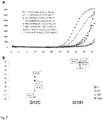
- the synthetic targets were admixed with either a high-background clinical sample containing 7000 genomic copies per PCR chamber or 1000 copies of genomic DNA per PCR chamber, both confirmed upfront to be negative for the mutations of interest. Exemplary obtained amplification curves are shown in Figs.4 and 5 .
- Table 3 SEQ ID NO oligo name 5>3 sequence 40 5HER2_T2_9 GGAAGCATACGTGATGGCATAC 51 3HER2_T1_7 GCTGCACCGTGGATGTCA 60 5HER2_MP1_MHS14_M3 CGGAGGACTGTCGCGTATATGCCCAGAAGGCGGGAGACATA/3Phos/
- the data unexpectedly shows that with the presented herein methodology, it is possible to detect down to 10 copies per PCR for a selected marker such as HER2 ex20ins, KRAS G12C and EGFR S768I.
- the method is consequently surprisingly sensitive, given the multiplexing complexity.
- no false-positives were detected across over 50 prototype cartridges tested, it can be concluded that the present method meets stringent specificity criteria as well.
- the data shows that it is possible to detect one specific marker in a specific chamber, even though the marker was amplified across all of the amplification chambers in parallel identical multiplex reactions with primer pairs and mediator probes provided together with the biological sample.
- EGFR G719A is detected in channel 2 from chamber A, but not in the other chambers
- EGFR S768I is detected in channel 2 from chamber B, but not in the other chambers.
- EGFR L858R is detected in channel 1 from chamber C, but not in the other chambers
- KRAS G12C is detected in channel 1 from chamber D, but not in the other chambers.
- the data further shows that it is possible to discriminate between two mutants within the same chamber.
- C797S is detected in channel 4 from chamber B, and not in the other channels from chamber B
- EGFR S768I is detected in channel 2 from chamber B, and not in the other channels from chamber B.
- the data also importantly shows that it is possible to detect multiple markers at the same time in a single amplification chamber using different generic reporters. To illustrate this, each discussed herein target was always being detected in combination with the positive control genomic reference gene, which was used as a sample processing control in all amplification chambers.
- KRAS G12C it may be valuable to discriminate neighboring mutations, as they may lead to a different clinical action.
- An example of this includes the need to discriminate KRAS G12C from other KRAS G12 or G13 mutations, if it is desired to use the mutation assay for the detection of KRAS mutant tumors that could respond to a specific KRAS G12C-targeting therapy.
- this is arranged by spotting the ARMS primer for KRAS G12C amplification in a different chamber than the ARMS primers for the other KRAS G12 or G13 mutations.
- the ARMS primers to include a stem-loop structure, in which the stem can optionally be composed of the target sequence.
- the mediator probe in such a way that it at least partially overlaps with the modified ARMS primer, while in the standard mediator probe design the probes are always downstream of the primer used for amplification. The concept is shown in Fig. 6 for a situation where the binding site of the mediator probe falls completely within the ARMS primer, but it can be envisioned that part of the binding site of the mediator probe falls outside of the ARMS primer.
- the 3' component of the stem of the ARMS primer can have a sequence that is derived from the target sequence, or can be another sequence.
- the mediator probe cannot bind to the target sequence and hence cannot create a signal.
- the mediator probe also cannot bind to its complementary sequence within the ARMS primer, which is inside of the stem-loop configuration and hence inaccessible for the mediator probe.
- the stem structure can be unfolded by the polymerase, thereby creating a binding site for the mediator probe. Once bound, the free mediator is released as the other primer is extended, and the free mediator can bind to the spotted generic reporter and create a signal.
- the next step was the development of DNA fragmentation control qPCR amplification based on KIF11 and its detection with the mediator chemistry readout adapted for the prototype generic cartridge as described above.
- a short (82 bp) and a long (204 bp) PCR amplicon targeting different exons of the KIF11 were designed together with two corresponding to them mediator probes.
- Each of the mediator probes was designed to target its specific generic reporter conjugated with different light-emitting dyes based in channel 5 and channel 1, respectively. Both of the reporters were provided in the same amplification chamber of each prototype cartridge, such that qPCR signals associated with the two amplicons and mediators could be detected in the same reaction.
- Cq difference (delta Cq) between the long and short amplicon qPCR curves was used as a measure of DNA fragmentation.
- Performance of the "KIF11 DNA fragmentation duplex" was determined on a set of clinical FFPE samples, of which the DNA fragmentation level was previously determined using an orthogonal ddPCR-based method.
- the assay was also tested on high quality genomic DNA (gDNA) derived from white blood cells (Promega), which is expected to be unfragmented. The results are shown in Figure 9 , wherein the lines with circles represent the short amplicon and the regular lines represent the long amplicon. Cq values were determined using a threshold (horizontal line).
- the present KIF11 duplex assay may also be suitable for prediction of deamination artefacts.
- the presented here fragmentation assays are likely also suitable to provide information on e.g. contamination with genomic DNA from white blood cells in a plasma sample.
Landscapes
- Chemical & Material Sciences (AREA)
- Life Sciences & Earth Sciences (AREA)
- Organic Chemistry (AREA)
- Zoology (AREA)
- Wood Science & Technology (AREA)
- Proteomics, Peptides & Aminoacids (AREA)
- Health & Medical Sciences (AREA)
- Engineering & Computer Science (AREA)
- Analytical Chemistry (AREA)
- Molecular Biology (AREA)
- Biochemistry (AREA)
- Microbiology (AREA)
- Biotechnology (AREA)
- Biophysics (AREA)
- Physics & Mathematics (AREA)
- Genetics & Genomics (AREA)
- Immunology (AREA)
- Bioinformatics & Cheminformatics (AREA)
- General Engineering & Computer Science (AREA)
- General Health & Medical Sciences (AREA)
- Chemical Kinetics & Catalysis (AREA)
- Measuring Or Testing Involving Enzymes Or Micro-Organisms (AREA)
- Apparatus Associated With Microorganisms And Enzymes (AREA)
- Saccharide Compounds (AREA)
Applications Claiming Priority (2)
| Application Number | Priority Date | Filing Date | Title |
|---|---|---|---|
| EP20204806 | 2020-10-29 | ||
| EP20214901 | 2020-12-17 |
Publications (1)
| Publication Number | Publication Date |
|---|---|
| EP3992302A1 true EP3992302A1 (en) | 2022-05-04 |
Family
ID=78536187
Family Applications (2)
| Application Number | Title | Priority Date | Filing Date |
|---|---|---|---|
| EP21205713.7A Pending EP3992302A1 (en) | 2020-10-29 | 2021-10-29 | Generic cartridge and method for multiplex nucleic acid detection |
| EP21805437.7A Active EP4237584B1 (en) | 2020-10-29 | 2021-10-29 | Generic cartridge and method for multiplex nucleic acid detection |
Family Applications After (1)
| Application Number | Title | Priority Date | Filing Date |
|---|---|---|---|
| EP21805437.7A Active EP4237584B1 (en) | 2020-10-29 | 2021-10-29 | Generic cartridge and method for multiplex nucleic acid detection |
Country Status (8)
| Country | Link |
|---|---|
| US (1) | US20240035075A1 (https=) |
| EP (2) | EP3992302A1 (https=) |
| JP (1) | JP7848199B2 (https=) |
| KR (1) | KR20230098259A (https=) |
| AU (1) | AU2021367997A1 (https=) |
| CA (1) | CA3200315A1 (https=) |
| ES (1) | ES3034761T3 (https=) |
| WO (1) | WO2022090521A1 (https=) |
Families Citing this family (4)
| Publication number | Priority date | Publication date | Assignee | Title |
|---|---|---|---|---|
| WO2023067110A1 (en) * | 2021-10-20 | 2023-04-27 | Tataa Biocenter Ab | Methods and compositions for detection of mutant nucleic acid sequences |
| WO2024240872A1 (en) | 2023-05-23 | 2024-11-28 | Biocartis Nv | Cartridges comprising tablets |
| WO2025141779A1 (ja) * | 2023-12-27 | 2025-07-03 | 株式会社日立ハイテク | 血漿の分取条件の決定方法、血漿分取装置、それを備えたdna抽出装置 |
| WO2025141758A1 (ja) * | 2023-12-27 | 2025-07-03 | 株式会社日立ハイテク | 検体検査方法及び検体検査システム |
Citations (11)
| Publication number | Priority date | Publication date | Assignee | Title |
|---|---|---|---|---|
| WO2007004103A1 (en) | 2005-06-30 | 2007-01-11 | Koninklijke Philips Electronics N.V. | Cartridge for automated medical diagnostics |
| EP1896180A2 (en) | 2005-06-23 | 2008-03-12 | Koninklijke Philips Electronics N.V. | Cartridge, system and method for automated medical diagnostics |
| EP1948822A1 (en) | 2005-10-07 | 2008-07-30 | Johnson & Johnson Research Pty Limited | Multicomponent nucleic acid enzymes and methods for their use |
| EP2419705A1 (en) | 2009-04-14 | 2012-02-22 | Biocartis SA | Treatment of a sample with focused acoustic energy |
| EP2753717A1 (en) | 2011-09-09 | 2014-07-16 | SpeeDx Pty Ltd | Nucleic acid enzyme substrates |
| EP2776585A1 (de) | 2011-11-10 | 2014-09-17 | Albert-Ludwigs-Universität Freiburg | Bifunktionale oligonukleotidsonde zur universellen echtzeit multianalytdetektion |
| EP2817421A1 (en) | 2012-02-20 | 2014-12-31 | SpeeDx Pty Ltd | Detection of nucleic acids |
| EP2958997A1 (en) | 2013-02-25 | 2015-12-30 | Biocartis NV | Isolation of nucleic acids |
| US20160305972A1 (en) * | 2013-11-18 | 2016-10-20 | Integenx Inc. | Cartridges and Instruments for Sample Analysis |
| EP3640340A1 (en) * | 2017-04-28 | 2020-04-22 | Xiamen University | Method for detecting target nucleic acid sequences |
| WO2020165180A1 (en) | 2019-02-12 | 2020-08-20 | Biocartis Nv | Protocols and kits for multiplex amplification and ngs-specific tagging |
Family Cites Families (8)
| Publication number | Priority date | Publication date | Assignee | Title |
|---|---|---|---|---|
| US8598333B2 (en) * | 2006-05-26 | 2013-12-03 | Alnylam Pharmaceuticals, Inc. | SiRNA silencing of genes expressed in cancer |
| EP2310522B1 (en) * | 2008-06-17 | 2013-03-20 | Sigma-Aldrich Co. LLC | Real time polymerase chain reaction process using a universal detection system |
| US9587270B2 (en) * | 2009-06-29 | 2017-03-07 | Luminex Corporation | Chimeric primers with hairpin conformations and methods of using same |
| EP3325152B1 (en) * | 2015-07-23 | 2022-12-07 | Biocartis NV | Automated sample to ngs library preparation |
| WO2017013102A1 (en) * | 2015-07-23 | 2017-01-26 | Biocartis Nv | Optimized clinical sample sequencing |
| KR101961642B1 (ko) * | 2016-04-25 | 2019-03-25 | (주)진매트릭스 | 절단된 상보적인 태그 절편을 이용한 표적 핵산 서열 검출 방법 및 그 조성물 |
| WO2018190365A1 (ja) | 2017-04-12 | 2018-10-18 | 国立大学法人九州大学 | 神経障害性疼痛マーカー及びその使用 |
| US20210189473A1 (en) * | 2018-09-06 | 2021-06-24 | ChromaCode,Inc. | Universal tail primers with multiple binding motifs for multiplexed detection of single nucleotide polymorphisms |
-
2021
- 2021-10-29 KR KR1020237017929A patent/KR20230098259A/ko active Pending
- 2021-10-29 JP JP2023526474A patent/JP7848199B2/ja active Active
- 2021-10-29 US US18/250,555 patent/US20240035075A1/en active Pending
- 2021-10-29 WO PCT/EP2021/080221 patent/WO2022090521A1/en not_active Ceased
- 2021-10-29 CA CA3200315A patent/CA3200315A1/en active Pending
- 2021-10-29 ES ES21805437T patent/ES3034761T3/es active Active
- 2021-10-29 EP EP21205713.7A patent/EP3992302A1/en active Pending
- 2021-10-29 AU AU2021367997A patent/AU2021367997A1/en active Pending
- 2021-10-29 EP EP21805437.7A patent/EP4237584B1/en active Active
Patent Citations (13)
| Publication number | Priority date | Publication date | Assignee | Title |
|---|---|---|---|---|
| EP1896180A2 (en) | 2005-06-23 | 2008-03-12 | Koninklijke Philips Electronics N.V. | Cartridge, system and method for automated medical diagnostics |
| WO2007004103A1 (en) | 2005-06-30 | 2007-01-11 | Koninklijke Philips Electronics N.V. | Cartridge for automated medical diagnostics |
| EP1904234A1 (en) | 2005-06-30 | 2008-04-02 | Koninklijke Philips Electronics N.V. | Cartridge for automated medical diagnostics |
| EP1948822A1 (en) | 2005-10-07 | 2008-07-30 | Johnson & Johnson Research Pty Limited | Multicomponent nucleic acid enzymes and methods for their use |
| EP2419705A1 (en) | 2009-04-14 | 2012-02-22 | Biocartis SA | Treatment of a sample with focused acoustic energy |
| EP2753717A1 (en) | 2011-09-09 | 2014-07-16 | SpeeDx Pty Ltd | Nucleic acid enzyme substrates |
| EP2776585A1 (de) | 2011-11-10 | 2014-09-17 | Albert-Ludwigs-Universität Freiburg | Bifunktionale oligonukleotidsonde zur universellen echtzeit multianalytdetektion |
| US20140315747A1 (en) * | 2011-11-10 | 2014-10-23 | Albert-Ludwigs-Universitaet Freiburg | Bifunctional oligonucleotide probe for universal real time multianalyte detection |
| EP2817421A1 (en) | 2012-02-20 | 2014-12-31 | SpeeDx Pty Ltd | Detection of nucleic acids |
| EP2958997A1 (en) | 2013-02-25 | 2015-12-30 | Biocartis NV | Isolation of nucleic acids |
| US20160305972A1 (en) * | 2013-11-18 | 2016-10-20 | Integenx Inc. | Cartridges and Instruments for Sample Analysis |
| EP3640340A1 (en) * | 2017-04-28 | 2020-04-22 | Xiamen University | Method for detecting target nucleic acid sequences |
| WO2020165180A1 (en) | 2019-02-12 | 2020-08-20 | Biocartis Nv | Protocols and kits for multiplex amplification and ngs-specific tagging |
Non-Patent Citations (8)
| Title |
|---|
| CIRIELLO ET AL., NAT GEN, 2013 |
| DAIGO ET AL., INT J ONCOL, vol. 52, 2018, pages 155 - 165 |
| IMAI ET AL., PATHOBIOLOGY, vol. 84, 2016, pages 16 - 24 |
| JOHNSTON LOUISE ET AL: "Clinical performance evaluation of the Idylla NRAS-BRAF mutation test on retrospectively collected formalin-fixed paraffin-embedded colorectal cancer tissue", vol. 71, no. 4, 12 September 2017 (2017-09-12), GB, pages 336 - 343, XP055790709, ISSN: 0021-9746, Retrieved from the Internet <URL:https://www.ncbi.nlm.nih.gov/pmc/articles/PMC5868529/pdf/jclinpath-2017-204629.pdf> DOI: 10.1136/jclinpath-2017-204629 * |
| KITANO SHIRO ET AL: "A Novel Fully Automated Molecular Diagnostic System (AMDS) for Colorectal Cancer Mutation Detection", PLOS ONE, vol. 8, no. 5, 9 January 2013 (2013-01-09), pages e62989, XP055790683, DOI: 10.1371/journal.pone.0062989 * |
| PEI ET AL., ONCOL LETT, 2017, pages 6618 - 6626, Retrieved from the Internet <URL:https://doi.org/10.3892/oI.2017.7053> |
| SIMON WADLE ET AL: "Simplified development of multiplex real-time PCR through master mix augmented by universal fluorogenic reporters", BIOTECHNIQUES, vol. 61, no. 3, 1 January 2016 (2016-01-01), US, pages 123 - 128, XP055527930, ISSN: 0736-6205, DOI: 10.2144/000114443 * |
| WADLE ET AL., BIOMOLECULAR DETECTION AND QUANTIFICATION, vol. 7, 2015, pages 1 - 8 |
Also Published As
| Publication number | Publication date |
|---|---|
| ES3034761T3 (en) | 2025-08-22 |
| JP2023547498A (ja) | 2023-11-10 |
| EP4237584A1 (en) | 2023-09-06 |
| US20240035075A1 (en) | 2024-02-01 |
| EP4237584C0 (en) | 2025-04-23 |
| WO2022090521A1 (en) | 2022-05-05 |
| EP4237584B1 (en) | 2025-04-23 |
| JP7848199B2 (ja) | 2026-04-20 |
| KR20230098259A (ko) | 2023-07-03 |
| CA3200315A1 (en) | 2022-05-05 |
| AU2021367997A1 (en) | 2023-06-08 |
Similar Documents
| Publication | Publication Date | Title |
|---|---|---|
| US20240301483A1 (en) | Dna mutation detection employing enrichment of mutant polynucleotide sequences and minimally invasive sampling | |
| EP4237584B1 (en) | Generic cartridge and method for multiplex nucleic acid detection | |
| CN107075581B (zh) | 由靶向测序进行数字测量 | |
| US20160340725A1 (en) | Method to increase sensitivity of next generation sequencing | |
| US20180051320A1 (en) | Depletion of abundant sequences by hybridization (dash) | |
| Beikircher et al. | Multiplexed and sensitive DNA methylation testing using methylation-sensitive restriction enzymes “MSRE-qPCR” | |
| US20230005568A1 (en) | Method of correcting amplification bias in amplicon sequencing | |
| WO2018170659A1 (en) | Methods and compositions for preparing sequencing libraries | |
| CN108699553A (zh) | 用于筛选甲状腺癌中突变的组合物和方法 | |
| CN105368932B (zh) | 基于焦磷酸测序技术的结核分枝杆菌(tb)耐药性基因的检测技术 | |
| Belder et al. | From RNA isolation to microarray analysis: comparison of methods in FFPE tissues | |
| WO2017070281A1 (en) | Blocker-based enrichment system and uses thereof | |
| US11028431B2 (en) | Detection of short homopolymeric repeats | |
| US20080274909A1 (en) | Kits and Reagents for Use in Diagnosis and Prognosis of Genomic Disorders | |
| Ruiz et al. | Single‐molecule detection of cancer mutations using a novel PCR‐LDR‐qPCR assay | |
| Mardis | Sequencing the AML genome, transcriptome, and epigenome | |
| US10927405B2 (en) | Molecular tag attachment and transfer | |
| CN115380119A (zh) | 一种检测基因组中的结构重排的方法 | |
| CN116783308A (zh) | 用于多重核酸检测的通用卡盒和方法 | |
| HK40073668A (en) | Generic cartridge and method for multiplex nucleic acid detection | |
| US20100297622A1 (en) | Method for high-throughput gene expression profile analysis | |
| Al-Turkmani et al. | Molecular assessment of human diseases in the clinical laboratory | |
| Deharvengt et al. | Molecular assessment of human diseases in the clinical laboratory | |
| Arneson et al. | Comparison of Whole Genome Amplification Methods for Analysis of DNA Extracted from Microdissected Early Breast Lesions in Formalin‐Fixed Paraffin‐Embedded Tissue | |
| WO2026059910A1 (en) | Combinatorial variant detection for rapid genotyping |
Legal Events
| Date | Code | Title | Description |
|---|---|---|---|
| PUAI | Public reference made under article 153(3) epc to a published international application that has entered the european phase |
Free format text: ORIGINAL CODE: 0009012 |
|
| STAA | Information on the status of an ep patent application or granted ep patent |
Free format text: STATUS: THE APPLICATION HAS BEEN PUBLISHED |
|
| AK | Designated contracting states |
Kind code of ref document: A1 Designated state(s): AL AT BE BG CH CY CZ DE DK EE ES FI FR GB GR HR HU IE IS IT LI LT LU LV MC MK MT NL NO PL PT RO RS SE SI SK SM TR |
|
| STAA | Information on the status of an ep patent application or granted ep patent |
Free format text: STATUS: REQUEST FOR EXAMINATION WAS MADE |
|
| 17P | Request for examination filed |
Effective date: 20220922 |
|
| RBV | Designated contracting states (corrected) |
Designated state(s): AL AT BE BG CH CY CZ DE DK EE ES FI FR GB GR HR HU IE IS IT LI LT LU LV MC MK MT NL NO PL PT RO RS SE SI SK SM TR |
|
| REG | Reference to a national code |
Ref country code: HK Ref legal event code: DE Ref document number: 40073668 Country of ref document: HK |
|
| STAA | Information on the status of an ep patent application or granted ep patent |
Free format text: STATUS: EXAMINATION IS IN PROGRESS |
|
| 17Q | First examination report despatched |
Effective date: 20230209 |