EP3974441B1 - Peptide compound or pharmaceutically acceptable salt thereof - Google Patents
Peptide compound or pharmaceutically acceptable salt thereof Download PDFInfo
- Publication number
- EP3974441B1 EP3974441B1 EP20808771.8A EP20808771A EP3974441B1 EP 3974441 B1 EP3974441 B1 EP 3974441B1 EP 20808771 A EP20808771 A EP 20808771A EP 3974441 B1 EP3974441 B1 EP 3974441B1
- Authority
- EP
- European Patent Office
- Prior art keywords
- injected
- stirring
- dehydrated
- minutes
- gly
- Prior art date
- Legal status (The legal status is an assumption and is not a legal conclusion. Google has not performed a legal analysis and makes no representation as to the accuracy of the status listed.)
- Active
Links
Images







Classifications
-
- A—HUMAN NECESSITIES
- A23—FOODS OR FOODSTUFFS; TREATMENT THEREOF, NOT COVERED BY OTHER CLASSES
- A23L—FOODS, FOODSTUFFS OR NON-ALCOHOLIC BEVERAGES, NOT OTHERWISE PROVIDED FOR; PREPARATION OR TREATMENT THEREOF
- A23L33/00—Modifying nutritive qualities of foods; Dietetic products; Preparation or treatment thereof
- A23L33/10—Modifying nutritive qualities of foods; Dietetic products; Preparation or treatment thereof using additives
- A23L33/17—Amino acids, peptides or proteins
- A23L33/18—Peptides; Protein hydrolysates
-
- A—HUMAN NECESSITIES
- A61—MEDICAL OR VETERINARY SCIENCE; HYGIENE
- A61K—PREPARATIONS FOR MEDICAL, DENTAL OR TOILETRY PURPOSES
- A61K8/00—Cosmetics or similar toiletry preparations
- A61K8/18—Cosmetics or similar toiletry preparations characterised by the composition
- A61K8/30—Cosmetics or similar toiletry preparations characterised by the composition containing organic compounds
- A61K8/64—Proteins; Peptides; Derivatives or degradation products thereof
-
- A—HUMAN NECESSITIES
- A61—MEDICAL OR VETERINARY SCIENCE; HYGIENE
- A61P—SPECIFIC THERAPEUTIC ACTIVITY OF CHEMICAL COMPOUNDS OR MEDICINAL PREPARATIONS
- A61P29/00—Non-central analgesic, antipyretic or antiinflammatory agents, e.g. antirheumatic agents; Non-steroidal antiinflammatory drugs [NSAID]
-
- A—HUMAN NECESSITIES
- A61—MEDICAL OR VETERINARY SCIENCE; HYGIENE
- A61Q—SPECIFIC USE OF COSMETICS OR SIMILAR TOILETRY PREPARATIONS
- A61Q19/00—Preparations for care of the skin
-
- C—CHEMISTRY; METALLURGY
- C07—ORGANIC CHEMISTRY
- C07K—PEPTIDES
- C07K7/00—Peptides having 5 to 20 amino acids in a fully defined sequence; Derivatives thereof
- C07K7/04—Linear peptides containing only normal peptide links
- C07K7/06—Linear peptides containing only normal peptide links having 5 to 11 amino acids
-
- A—HUMAN NECESSITIES
- A23—FOODS OR FOODSTUFFS; TREATMENT THEREOF, NOT COVERED BY OTHER CLASSES
- A23V—INDEXING SCHEME RELATING TO FOODS, FOODSTUFFS OR NON-ALCOHOLIC BEVERAGES AND LACTIC OR PROPIONIC ACID BACTERIA USED IN FOODSTUFFS OR FOOD PREPARATION
- A23V2002/00—Food compositions, function of food ingredients or processes for food or foodstuffs
-
- A—HUMAN NECESSITIES
- A23—FOODS OR FOODSTUFFS; TREATMENT THEREOF, NOT COVERED BY OTHER CLASSES
- A23V—INDEXING SCHEME RELATING TO FOODS, FOODSTUFFS OR NON-ALCOHOLIC BEVERAGES AND LACTIC OR PROPIONIC ACID BACTERIA USED IN FOODSTUFFS OR FOOD PREPARATION
- A23V2200/00—Function of food ingredients
- A23V2200/30—Foods, ingredients or supplements having a functional effect on health
-
- A—HUMAN NECESSITIES
- A23—FOODS OR FOODSTUFFS; TREATMENT THEREOF, NOT COVERED BY OTHER CLASSES
- A23V—INDEXING SCHEME RELATING TO FOODS, FOODSTUFFS OR NON-ALCOHOLIC BEVERAGES AND LACTIC OR PROPIONIC ACID BACTERIA USED IN FOODSTUFFS OR FOOD PREPARATION
- A23V2250/00—Food ingredients
- A23V2250/54—Proteins
- A23V2250/55—Peptide, protein hydrolysate
-
- A—HUMAN NECESSITIES
- A61—MEDICAL OR VETERINARY SCIENCE; HYGIENE
- A61K—PREPARATIONS FOR MEDICAL, DENTAL OR TOILETRY PURPOSES
- A61K2800/00—Properties of cosmetic compositions or active ingredients thereof or formulation aids used therein and process related aspects
- A61K2800/10—General cosmetic use
-
- A—HUMAN NECESSITIES
- A61—MEDICAL OR VETERINARY SCIENCE; HYGIENE
- A61K—PREPARATIONS FOR MEDICAL, DENTAL OR TOILETRY PURPOSES
- A61K38/00—Medicinal preparations containing peptides
Definitions
- Various embodiments of the present invention relate to a peptide compound or a pharmaceutically acceptable salt thereof. Specifically, various embodiments of the present invention relate to a peptide compound or a pharmaceutically acceptable salt thereof having an anti-inflammatory activity.
- the inflammatory response is a defense mechanism of the living tissue against external stimuli such as bacterial infection or internal stimuli such as in vivo metabolites, and it occurs when nitric oxide (NO) and various cytokines such as TNF- ⁇ , IL-1 ⁇ , and IL-6, which are various inflammatory regulators in cells, are produced.
- NO nitric oxide
- various cytokines such as TNF- ⁇ , IL-1 ⁇ , and IL-6, which are various inflammatory regulators in cells, are produced.
- lipopolysaccharide also known as endotoxin
- NF- ⁇ B nuclear facter- ⁇ B
- iNOS inducible nitric oxide synthase
- COX-2 cyclooxygenase-2
- Substances currently used for anti-inflammatory purposes include non-steroids such as flufenamic acid, ibuprofen, benzydamine, indomethacin, and the like; and steroids such as prednisolone, dexamethasone, hydrocortisone, betamethasone and the like.
- non-steroids such as flufenamic acid, ibuprofen, benzydamine, indomethacin, and the like
- steroids such as prednisolone, dexamethasone, hydrocortisone, betamethasone and the like.
- KR-A-2018 0126406 discloses the heptapeptide Hyp-Gly-Gln-Leu-Gly-Leu-Ala for a therapeutic application, such as the treatment of keratis.
- the present inventors have developed a peptide that can be economically mass-produced using only 7 amino acid residues while continuing research on substances exhibiting excellent anti-inflammatory activity, and found that the peptide does not exhibit cytotoxicity and has excellent anti-inflammatory activity. Based on the above, the present inventors completed the present invention.
- a peptide compound or a pharmaceutically acceptable salt thereof there is provided a peptide compound or a pharmaceutically acceptable salt thereof.
- a peptide compound or a pharmaceutically acceptable salt thereof according to one embodiment of the present invention is selected from the group consisting of the amino acid sequences recited in appended claim 1.
- the present invention can provide peptide compounds having various structures or pharmaceutically acceptable salts thereof that can be used in various fields.
- novel peptide compound or pharmaceutically acceptable salt thereof of the present invention has only 7 amino acid residues, economical mass production is possible. In addition, it does not show cytotoxicity, has excellent stability, and exhibits excellent anti-inflammatory activity.
- the peptide compound or pharmaceutically acceptable salt thereof of the present invention has only 7 amino acid residues, economical mass production is possible.
- the term "anti-inflammatory" means preventing, treating or ameliorating inflammation.
- the inflammation refers to a disease caused by infection due to external infectious agents (bacteria, fungi, viruses, various types of allergens, and the like), wounds, surgery, burns, frostbite, electrical stimulation, or chemicals, etc., and the disease includes dermatitis, inflammatory bowel disease, gastric ulcer, colitis, cystitis, rhinitis, tonsillitis or asthma, etc., but is not particularly limited thereto.
- the present invention relates to a pharmaceutical composition for preventing or treating inflammation, comprising the above-described novel peptide compound or pharmaceutically acceptable salt thereof as an active ingredient.
- the novel peptide compound or pharmaceutically acceptable salt thereof may be included at a concentration of 0.001 to 10 ⁇ M.
- a composition comprising an anti-inflammatory active peptide at a concentration of less than 0.001 ⁇ M may have a weak anti-inflammatory effect, and if it has a concentration of more than 10 ⁇ M, the increase in the effect according to the increase in concentration is not proportional, so it may be inefficient, and there is a problem in that the stability of the formulation is not secured.
- the pharmaceutical composition for preventing or treating inflammation of the present invention may be several oral or parenteral formulations. When it is formulated, it can be prepared using a diluent or an excipient such as a filler, a bulking agent, a binder, a wetting agent, a disintegrating agent, a surfactant, etc. commonly used.
- Solid preparations for oral administration include tablets, pills, powders, granules, capsules, and the like, and such a solid preparation may be prepared by mixing one or more compounds with at least one excipient, for example, starch, calcium carbonate, sucrose or lactose, gelatin, and the like.
- lubricants such as magnesium stearate, talc and the like may also be used.
- Liquid preparations for oral administration include suspensions, internal solutions, emulsions, syrups, and the like.
- various excipients such as a wetting agent, a sweeting agent, a perfuming agent, a preserving agent and the like may be included.
- Preparations for parenteral administration may include sterile aqueous solutions, non-aqueous solvents, suspensions, emulsions, lyophilized preparations, and suppositories.
- a non-aqueous solvent and a suspending solvent propylene glycol, polyethylene glycol, vegetable oils such as olive oil, injectable esters such as ethyl oleate, and the like may be used.
- a base of the suppository witepsol, macrogol, tween 61, cacao butter, laurin butter, glycerogelatin, and the like may be used.
- the dosage form of the composition of the present invention may be used in the form of a salt, and may be also used alone or in combination with other active compounds as well as in an appropriate group.
- the salt for example, hydrochloric acid, sulfuric acid, nitric acid, phosphoric acid, hydrofluoric acid, hydrobromic acid, formic acid, acetic acid, tartaric acid, lactic acid, citric acid, fumaric acid, maleic acid, succinic acid, methanesulfonic acid, benzenesulfonic acid, toluenesulfonic acid, naphthalenesulfonic acid, and the like may be used.
- composition of the present invention may be administered parenterally or orally as desired, and may be administered once to several times in divided doses to be administered in an amount of 0.1 to 500 mg, 1 to 100 mg per 1 kg of body weight per day.
- the dosage for a specific patient may vary depending on the patient's body weight, age, sex, health condition, diet, administration time, mode of administration, excretion rate, severity of disease, and the like.
- composition according to the present invention may be formulated and used in any form including oral formulations such as a powder, a granule, a tablet, a capsule, a suspension, an emulsion, a syrup and an aerosol, external preparations such as an ointment and a cream, a suppository, and a sterile injection solution, and the like, respectively, according to conventional methods.
- oral formulations such as a powder, a granule, a tablet, a capsule, a suspension, an emulsion, a syrup and an aerosol
- external preparations such as an ointment and a cream, a suppository, and a sterile injection solution, and the like, respectively, according to conventional methods.
- composition according to the present invention may be administered to mammals such as rats, mice, livestock, and humans by various routes such as parenteral and oral administration, and all modes of administration may be expected, and it may be administered, for example, by oral, rectal or intravenous, intramuscular, subcutaneous, intrauterine dural or intracerebroventricular injection.
- composition according to the present invention does not have serious toxicity and side effects, so it can be safely used even when used for a long period of time for preventive purposes.
- the present invention relates to a food composition for preventing or ameliorating inflammation, comprising the above-described peptide compound or pharmaceutically acceptable salt thereof as an active ingredient.
- the novel peptide compound or pharmaceutically acceptable salt thereof may be included at a concentration of 0.001 to 10 ⁇ M.
- a composition comprising an anti-inflammatory active peptide at a concentration of less than 0.001 ⁇ M may have a weak anti-inflammatory effect, and if it has a concentration of more than 10 ⁇ M, the increase in the effect according to the increase in concentration is not proportional, so it may be inefficient, and there is a problem in that the stability of the formulation is not secured.
- the food composition for preventing or ameliorating inflammation is preferably a powder, a granule, a tablet, a capsule or a beverage, but is not limited thereto.
- the food of the present invention may be used by adding the peptide compound or pharmaceutically acceptable salt thereof of the present invention as it is, or in combination with other food or food ingredients, and may be appropriately used according to a conventional method.
- the type of the food is not particularly limited.
- examples of the food to which the novel peptide compound or pharmaceutically acceptable salt thereof of the present invention can be added include meat, sausage, bread, chocolate, candy, snacks, confectionery, pizza, ramen, other noodles, gum, dairy products including ice cream, various soups, beverages, teas, drinks, alcoholic beverages, vitamin complexes, and the like, and include all foods in the ordinary sense.
- the beverage composition of the present invention may contain various flavoring agents, natural carbohydrates or the like as additional ingredients, like conventional beverages.
- natural carbohydrates are monosaccharides such as glucose and fructose, disaccharides such as maltose and sucrose, and polysaccharides such as dextrin and cyclodextrin, and sugar alcohols such as xylitol, sorbitol and erythritol.
- a sweeting agent natural sweeting agents such as taumatine and stevia extract, synthetic sweeting agents such as saccharin and aspartame, and the like may be used.
- the food of the present invention may contain various nutrients, vitamins, electrolytes, flavoring agents, coloring agents, pectic acid and its salts, alginic acid and its salts, organic acids, protective colloidal thickeners, pH adjusters, stabilizing agents, preserving agents, glycerin, alcohol, a carbonation agent used in carbonated beverages, and the like.
- it may contain the pulp for the production of natural fruit juice, fruit juice beverage and vegetable beverage.
- These ingredients may be used independently or in combination.
- the proportion of these additives is not critical, but is generally selected in the range of 0.01 to 0.1 parts by weight per 100 parts by weight of the composition of the present invention.
- the food composition for preventing or ameliorating inflammation according to the present invention may be used as a feed additive or feed.
- the composition When used as a feed additive, the composition may be a solution having a high concentration of 20 to 90% or may be prepared in a powder or granular form.
- the feed additives may further include any one of or one or more of organic acids such as citric acid, humic acid, adipic acid, lactic acid, and malic acid, phosphates such as sodium phosphate, potassium phosphate, acidic pyrophosphate, and polyphosphate, natural antioxidants such as polyphenol, catechin, alpha-tocopherol, rosemary extract, vitamin C, green tea extract, licorice extract, chitosan, tannic acid, and phytic acid.
- the composition When used as a feed, the composition may be formulated in a conventional feed form, and may include conventional feed ingredients together.
- Feed additives and feeds may further include grains such as milled or crushed wheat, oats, barley, corn and rice; vegetable protein feeds such as feeds based on rape, soybean, and sunflower as a main ingredient; animal protein feeds such as blood meal, meat meal, bone meal and fish meal; dry ingredients consisting of sugar and dairy products, for example, various powdered milk and whey powder, and the like, and may further include nutritional supplements, digestion and absorption enhancers, growth promoters, and the like.
- grains such as milled or crushed wheat, oats, barley, corn and rice
- vegetable protein feeds such as feeds based on rape, soybean, and sunflower as a main ingredient
- animal protein feeds such as blood meal, meat meal, bone meal and fish meal
- dry ingredients consisting of sugar and dairy products for example, various powdered milk and whey powder, and the like, and may further include nutritional supplements, digestion and absorption enhancers, growth promoters, and the like.
- the feed additive may be administered to the animal alone or in combination with other feed additives in an edible carrier.
- the feed additive can be easily administered to the animal as a top dressing, directly mixing them with animal feed, or in an oral formulation separate from the feed.
- a pharmaceutically acceptable edible carrier as well known in the art to prepare an immediate release or sustained release formulation.
- Such edible carriers may be solid or liquid, for example corn starch, lactose, sucrose, soybean flakes, peanut oil, olive oil, sesame oil and propylene glycol.
- the feed additive may be a tablet, a capsule, a powder, a troche or a sugar-containing tablet, or a top dressing in a microdispersed form.
- the feed additive may be in the form of a gelatin soft capsule, or a syrup or a suspension, an emulsion, or a solution.
- the feed additive and feed may contain auxiliary agents, for example, preservatives, stabilizers, wetting or emulsifying agents, solubility promoters, and the like.
- the feed additive may be used by adding to animal feed by immersion, spraying, or mixing.
- the feed or feed additive of the present invention may be applied to a diet of a number of animals including mammals, poultry and fish.
- mammal including pigs, cattle, sheep, goats, laboratory rodents, and laboratory rodents, as well as pets (for example, dogs, cats), and the like, may be used for the poultry including chickens, turkeys, ducks, geese, pheasants, and quail, and the like, and may be used for the fish such as trout, but is not limited thereto.
- the feed or feed additive may be used for preventing or treating inflammation in pets.
- the pets include dogs, cats, mice, rabbits, and the like, but are not limited thereto.
- the present invention relates to a cosmetic composition having an anti-inflammatory effect, comprising the above-described novel peptide compound or pharmaceutically acceptable salt thereof as an active ingredient.
- the novel peptide compound or pharmaceutically acceptable salt thereof may be included at a concentration of 0.001 to 10 ⁇ M.
- a composition comprising an anti-inflammatory active peptide at a concentration of less than 0.001 ⁇ M may have a weak anti-inflammatory effect, and if it has a concentration of more than 10 ⁇ M, the increase in the effect according to the increase in concentration is not proportional, so it may be inefficient, and there is a problem in that the stability of the formulation is not secured.
- composition of the present invention when used as a cosmetic composition, as an active ingredient, in addition to the above-described novel peptide compound or pharmaceutically acceptable salt thereof, components commonly used in a cosmetic composition may be additionally included.
- a cosmetic composition may include conventional adjuvants such as antioxidants, stabilizing agents, solubilizers, vitamins, pigments and fragrances, and carriers.
- the cosmetic composition may be also prepared in any formulation conventionally prepared in the art, and may be formulated into, for example, a solution, a suspension, an emulsion, a paste, a gel, a cream, a lotion, a powder, a soap, a surfactant-containing cleansing oil, a powder foundation, an emulsion foundation, a wax foundation and a spray and the like, but is not limited thereto. More specifically, it may be prepared in the form of a nourishing cream, an astringent lotion, a softening lotion, a lotion, an essence, a nutrition gel, a massage cream or the like.
- the formulation of the cosmetic composition is a paste, a cream or a gel, animal oil, vegetable oil, wax, paraffin, starch, gum tragacanth, cellulose derivative, polyethylene glycol, silicone, bentonite, silica, talc or zinc oxide, or the like may be used as a carrier component.
- lactose, talc, silica, aluminum hydroxide, calcium silicate or polyamide powder may be used as a carrier component, and in particular, in the case of a spray, it may additionally include propellants such as chlorofluorohydrocarbon, propane/butane or dimethyl ether.
- a solvent, a solubilizer or an emulsifier is used as a carrier component, and it includes for example, water, ethanol, isopropanol, ethyl carbonate, ethyl acetate, benzyl alcohol, benzyl benzoate, propylene glycol, 1,3-butylglycol oil, glycerol aliphatic esters, fatty acid esters of polyethylene glycol or sorbitan.
- the formulation of the cosmetic composition is a suspension
- a liquid diluent such as water, ethanol or propylene glycol
- a suspending agent such as ethoxylated isostearyl alcohol, polyoxyethylene sorbitol ester, and polyoxyethylene sorbitan ester, microcrystalline cellulose, aluminum metahydroxide, bentonite, agar, tragacanth, or the like may be used.
- the formulation of the cosmetic composition is a surfactant-containing cleansing
- aliphatic alcohol sulfate, aliphatic alcohol ether sulfate, sulfosuccinic acid monoester isethionate, imidazolinium derivative, methyl taurate, sarcosinate, fatty acid amide ether sulfate, alkylamidobetaine, aliphatic alcohol, fatty acid glyceride, fatty acid diethanolamide, vegetable oil, lanolin derivative, ethoxylated glycerol fatty acid ester, or the like
- aliphatic alcohol aliphatic alcohol sulfate, aliphatic alcohol ether sulfate, sulfosuccinic acid monoester, isethionate, imidazolinium derivative, methyl taurate, sarcosinate, fatty acid amide ether sulfate, alkylamidobetaine, aliphatic alcohol, fatty acid glycer
- MC dichloromethane
- DIEA N,N-diisopropylethylamine
- the loading rate was calculated to be a total of 0.61 mmol/g in the same manner as in Example 1 using Fmoc-Pro-OH.
- the loading rate was calculated to be a total of 0.96 mmol/g in the same manner as in Example 1 using Fmoc-Gly-OH.
- the loading rate was calculated to be a total of 0.87 mmol/g in the same manner as in Example 1 using Fmoc-Ala-OH.
- the loading rate was calculated to be a total of 0.97 mmol/g in the same manner as in Example 1 using Fmoc-Leu-OH.
- the loading rate was calculated to be a total of 0.94 mmol/g in the same manner as in Example 1 using Fmoc-Asp (OtBu)-OH.
- the loading rate was calculated to be a total of 0.62 mmol/g in the same manner as in Example 1 using Fmoc-Glu (OtBu)-OH.
- the loading rate was calculated to be a total of 0.992 mmol/g in the same manner as in Example 1 using Fmoc-Val-OH.
- the filtered solution was concentrated to 1/2 under reduced pressure based on the volume of the filtered solution.
- the concentrated solution was added dropwise to the reaction part containing 300 ml of IPE (isopropyl ether) and stirred for 30 minutes.
- a crude solid can be obtained by dehydrating the precipitated solid.
- DIC diisopropyl carbodiimide
- a crude solid can be obtained by repeating a series of processes according to the amino acid sequence according to Table 1 and performing the cleavage step (Example 9). 4 g of the crude solid was purified through Prep LC and then lyophilized to obtain 2.1 g of a final solid.
- a crude solid can be obtained by repeating a series of processes according to the amino acid sequence according to Table 1 and performing the cleavage step (Example 9). 4 g of the crude solid was purified through Prep LC and then lyophilized to obtain 1.9 g of a final solid.
- a crude solid can be obtained by repeating a series of processes according to the amino acid sequence according to Table 1 and performing the cleavage step (Example 9). 4 g of the crude solid was purified through Prep LC and then lyophilized to obtain 2.1 g of a final solid.
- a crude solid can be obtained by repeating a series of processes according to the amino acid sequence according to Table 1 and performing the cleavage step (Example 9). 4 g of the crude solid was purified through Prep LC and then lyophilized to obtain 2.2 g of a final solid.
- a crude solid can be obtained by repeating a series of processes according to the amino acid sequence according to Table 1 and performing the cleavage step (Example 9). 4 g of the crude solid was purified through Prep LC and then lyophilized to obtain 2.0 g of a final solid.
- a crude solid can be obtained by repeating a series of processes according to the amino acid sequence according to Table 1 and performing the cleavage step (Example 9). 4 g of the crude solid was purified through Prep LC and then lyophilized to obtain 2.9 g of a final solid.
- a crude solid can be obtained by repeating a series of processes according to the amino acid sequence according to Table 1 and performing the cleavage step (Example 9). 4 g of the crude solid was purified through Prep LC and then lyophilized to obtain 2.2 g of a final solid.
- a crude solid can be obtained by repeating a series of processes according to the amino acid sequence according to Table 1 and performing the cleavage step (Example 9). 4 g of the crude solid was purified through Prep LC and then lyophilized to obtain 1.8 g of a final solid.
- a crude solid can be obtained by repeating a series of processes according to the amino acid sequence according to Table 1 and performing the cleavage step (Example 9). 4 g of the crude solid was purified through Prep LC and then lyophilized to obtain 1.8 g of a final solid.
- a crude solid can be obtained by repeating a series of processes according to the amino acid sequence according to Table 1 and performing the cleavage step (Example 9). 4 g of the crude solid was purified through Prep LC and then lyophilized to obtain 1.4 g of a final solid.
- a crude solid can be obtained by repeating a series of processes according to the amino acid sequence according to Table 1 and performing the cleavage step (Example 9). 4 g of the crude solid was purified through Prep LC and then lyophilized to obtain 1.8 g of a final solid.
- a crude solid can be obtained by repeating a series of processes according to the amino acid sequence according to Table 1 and performing the cleavage step (Example 9). 4 g of the crude solid was purified through Prep LC and then lyophilized to obtain 1.9 g of a final solid.
- a crude solid can be obtained by repeating a series of processes according to the amino acid sequence according to Table 1 and performing the cleavage step (Example 9). 4 g of the crude solid was purified through Prep LC and then lyophilized to obtain 3.0 g of a final solid.
- a crude solid can be obtained by repeating a series of processes according to the amino acid sequence according to Table 1 and performing the cleavage step (Example 9). 4 g of the crude solid was purified through Prep LC and then lyophilized to obtain 3.0 g of a final solid.
- a crude solid can be obtained by repeating a series of processes according to the amino acid sequence according to Table 1 and performing the cleavage step (Example 9). 4 g of the crude solid was purified through Prep LC and then lyophilized to obtain 2.7 g of a final solid.
- a crude solid can be obtained by repeating a series of processes according to the amino acid sequence according to Table 1 and performing the cleavage step (Example 9). 4 g of the crude solid was purified through Prep LC and then lyophilized to obtain 3.3 g of a final solid.
- a crude solid can be obtained by repeating a series of processes according to the amino acid sequence according to Table 1 and performing the cleavage step (Example 9). 4 g of the crude solid was purified through Prep LC and then lyophilized to obtain 1.9 g of a final solid.
- a crude solid can be obtained by repeating a series of processes according to the amino acid sequence according to Table 1 and performing the cleavage step (Example 9). 4 g of the crude solid was purified through Prep LC and then lyophilized to obtain 2.4 g of a final solid.
- a crude solid can be obtained by repeating a series of processes according to the amino acid sequence according to Table 1 and performing the cleavage step (Example 9). 4 g of the crude solid was purified through Prep LC and then lyophilized to obtain 2.0 g of a final solid.
- a crude solid can be obtained by repeating a series of processes according to the amino acid sequence according to Table 1 and performing the cleavage step (Example 9). 4 g of the crude solid was purified through Prep LC and then lyophilized to obtain 2.5 g of a final solid.
- a crude solid can be obtained by repeating a series of processes according to the amino acid sequence according to Table 1 and performing the cleavage step (Example 9). 4 g of the crude solid was purified through Prep LC and then lyophilized to obtain 2.1 g of a final solid.
- a crude solid can be obtained by repeating a series of processes according to the amino acid sequence according to Table 1 and performing the cleavage step (Example 9). 4 g of the crude solid was purified through Prep LC and then lyophilized to obtain 2.0 g of a final solid.
- a crude solid can be obtained by repeating a series of processes according to the amino acid sequence according to Table 1 and performing the cleavage step (Example 9). 4 g of the crude solid was purified through Prep LC and then lyophilized to obtain 1.9 g of a final solid.
- a crude solid can be obtained by repeating a series of processes according to the amino acid sequence according to Table 1 and performing the cleavage step (Example 9). 4 g of the crude solid was purified through Prep LC and then lyophilized to obtain 2.1 g of a final solid.
- a crude solid can be obtained by repeating a series of processes according to the amino acid sequence according to Table 1 and performing the cleavage step (Example 9). 4 g of the crude solid was purified through Prep LC and then lyophilized to obtain 2.7 g of a final solid.
- a crude solid can be obtained by repeating a series of processes according to the amino acid sequence according to Table 1 and performing the cleavage step (Example 9). 4 g of the crude solid was purified through Prep LC and then lyophilized to obtain 2.4 g of a final solid.
- a crude solid can be obtained by repeating a series of processes according to the amino acid sequence according to Table 1 and performing the cleavage step (Example 9). 4 g of the crude solid was purified through Prep LC and then lyophilized to obtain 1.5 g of a final solid.
- a crude solid can be obtained by repeating a series of processes according to the amino acid sequence according to Table 1 and performing the cleavage step (Example 9). 4 g of the crude solid was purified through Prep LC and then lyophilized to obtain 1.6 g of a final solid.
- a crude solid can be obtained by repeating a series of processes according to the amino acid sequence according to Table 1 and performing the cleavage step (Example 9). 4 g of the crude solid was purified through Prep LC and then lyophilized to obtain 0.9 g of a final solid.
- a crude solid can be obtained by repeating a series of processes according to the amino acid sequence according to Table 1 and performing the cleavage step (Example 9). 4 g of the crude solid was purified through Prep LC and then lyophilized to obtain 1.7 g of a final solid.
- a crude solid can be obtained by repeating a series of processes according to the amino acid sequence according to Table 1 and performing the cleavage step (Example 9). 4 g of the crude solid was purified through Prep LC and then lyophilized to obtain 1.2 g of a final solid.
- a crude solid can be obtained by repeating a series of processes according to the amino acid sequence according to Table 1 and performing the cleavage step (Example 9). 4 g of the crude solid was purified through Prep LC and then lyophilized to obtain 1.5 g of a final solid.
- a crude solid can be obtained by repeating a series of processes according to the amino acid sequence according to Table 1 and performing the cleavage step (Example 9). 4 g of the crude solid was purified through Prep LC and then lyophilized to obtain 1.2 g of a final solid.
- a crude solid can be obtained by repeating a series of processes according to the amino acid sequence according to Table 1 and performing the cleavage step (Example 9). 4 g of the crude solid was purified through Prep LC and then lyophilized to obtain 1.2 g of a final solid.
- a crude solid can be obtained by repeating a series of processes according to the amino acid sequence according to Table 1 and performing the cleavage step (Example 9). 4 g of the crude solid was purified through Prep LC and then lyophilized to obtain 2.4 g of a final solid.
- a crude solid can be obtained by repeating a series of processes according to the amino acid sequence according to Table 1 and performing the cleavage step (Example 9). 4 g of the crude solid was purified through Prep LC and then lyophilized to obtain 1.6 g of a final solid.
- a crude solid can be obtained by repeating a series of processes according to the amino acid sequence according to Table 1 and performing the cleavage step (Example 9). 4 g of the crude solid was purified through Prep LC and then lyophilized to obtain 1.5 g of a final solid.
- a crude solid can be obtained by repeating a series of processes according to the amino acid sequence according to Table 1 and performing the cleavage step (Example 9). 4 g of the crude solid was purified through Prep LC and then lyophilized to obtain 1.5 g of a final solid.
- a crude solid can be obtained by repeating a series of processes according to the amino acid sequence according to Table 1 and performing the cleavage step (Example 9). 4 g of the crude solid was purified through Prep LC and then lyophilized to obtain 0.9 g of a final solid.
- a crude solid can be obtained by repeating a series of processes according to the amino acid sequence according to Table 1 and performing the cleavage step (Example 9). 4 g of the crude solid was purified through Prep LC and then lyophilized to obtain 1.8 g of a final solid.
- a crude solid can be obtained by repeating a series of processes according to the amino acid sequence according to Table 1 and performing the cleavage step (Example 9). 4 g of the crude solid was purified through Prep LC and then lyophilized to obtain 1.1 g of a final solid.
- a crude solid can be obtained by repeating a series of processes according to the amino acid sequence according to Table 1 and performing the cleavage step (Example 9). 4 g of the crude solid was purified through Prep LC and then lyophilized to obtain 2.1 g of a final solid.
- a crude solid can be obtained by repeating a series of processes according to the amino acid sequence according to Table 1 and performing the cleavage step (Example 9). 4 g of the crude solid was purified through Prep LC and then lyophilized to obtain 1.3 g of a final solid.
- a crude solid can be obtained by repeating a series of processes according to the amino acid sequence according to Table 1 and performing the cleavage step (Example 9). 4 g of the crude solid was purified through Prep LC and then lyophilized to obtain 2.2 g of a final solid.
- a crude solid can be obtained by repeating a series of processes according to the amino acid sequence according to Table 1 and performing the cleavage step (Example 9). 4 g of the crude solid was purified through Prep LC and then lyophilized to obtain 1.9 g of a final solid.
- a crude solid can be obtained by repeating a series of processes according to the amino acid sequence according to Table 1 and performing the cleavage step (Example 9). 4 g of the crude solid was purified through Prep LC and then lyophilized to obtain 1.6 g of a final solid.
- a crude solid can be obtained by repeating a series of processes according to the amino acid sequence according to Table 1 and performing the cleavage step (Example 9). 4 g of the crude solid was purified through Prep LC and then lyophilized to obtain 1.6 g of a final solid.
- a crude solid can be obtained by repeating a series of processes according to the amino acid sequence according to Table 1 and performing the cleavage step (Example 9). 4 g of the crude solid was purified through Prep LC and then lyophilized to obtain 1.9 g of a final solid.
- a crude solid can be obtained by repeating a series of processes according to the amino acid sequence according to Table 1 and performing the cleavage step (Example 9). 4 g of the crude solid was purified through Prep LC and then lyophilized to obtain 1.6 g of a final solid.
- a crude solid can be obtained by repeating a series of processes according to the amino acid sequence according to Table 1 and performing the cleavage step (Example 9). 4 g of the crude solid was purified through Prep LC and then lyophilized to obtain 2.8 g of a final solid.
- a crude solid can be obtained by repeating a series of processes according to the amino acid sequence according to Table 1 and performing the cleavage step (Example 9). 4 g of the crude solid was purified through Prep LC and then lyophilized to obtain 2.2 g of a final solid.
- a crude solid can be obtained by repeating a series of processes according to the amino acid sequence according to Table 1 and performing the cleavage step (Example 9). 4 g of the crude solid was purified through Prep LC and then lyophilized to obtain 3.1 g of a final solid.
- a crude solid can be obtained by repeating a series of processes according to the amino acid sequence according to Table 1 and performing the cleavage step (Example 9). 4 g of the crude solid was purified through Prep LC and then lyophilized to obtain 1.1 g of a final solid.
- a crude solid can be obtained by repeating a series of processes according to the amino acid sequence according to Table 1 and performing the cleavage step (Example 9). 4 g of the crude solid was purified through Prep LC and then lyophilized to obtain 0.8 g of a final solid.
- a crude solid can be obtained by repeating a series of processes according to the amino acid sequence according to Table 1 and performing the cleavage step (Example 9). 4 g of the crude solid was purified through Prep LC and then lyophilized to obtain 2.6 g of a final solid.
- a crude solid can be obtained by repeating a series of processes according to the amino acid sequence according to Table 1 and performing the cleavage step (Example 9). 4 g of the crude solid was purified through Prep LC and then lyophilized to obtain 2.1 g of a final solid.
- a crude solid can be obtained by repeating a series of processes according to the amino acid sequence according to Table 1 and performing the cleavage step (Example 9). 4 g of the crude solid was purified through Prep LC and then lyophilized to obtain 2.1 g of a final solid.
- a crude solid can be obtained by repeating a series of processes according to the amino acid sequence according to Table 1 and performing the cleavage step (Example 9). 4 g of the crude solid was purified through Prep LC and then lyophilized to obtain 1.8 g of a final solid.
- a crude solid can be obtained by repeating a series of processes according to the amino acid sequence according to Table 1 and performing the cleavage step (Example 9). 4 g of the crude solid was purified through Prep LC and then lyophilized to obtain 2.2 g of a final solid.
- a crude solid can be obtained by repeating a series of processes according to the amino acid sequence according to Table 1 and performing the cleavage step (Example 9). 4 g of the crude solid was purified through Prep LC and then lyophilized to obtain 1.8 g of a final solid.
- a crude solid can be obtained by repeating a series of processes according to the amino acid sequence according to Table 1 and performing the cleavage step (Example 9). 4 g of the crude solid was purified through Prep LC and then lyophilized to obtain 2.3 g of a final solid.
- a crude solid can be obtained by repeating a series of processes according to the amino acid sequence according to Table 1 and performing the cleavage step (Example 9). 3 g of the crude solid was purified through Prep LC and then lyophilized to obtain 1.3 g of a final solid.
- a crude solid can be obtained by repeating a series of processes according to the amino acid sequence according to Table 1 and performing the cleavage step (Example 9). 4 g of the crude solid was purified through Prep LC and then lyophilized to obtain 0.5 g of a final solid.
- a crude solid can be obtained by repeating a series of processes according to the amino acid sequence according to Table 1 and performing the cleavage step (Example 9). 3 g of the crude solid was purified through Prep LC and then lyophilized to obtain 1.0 g of a final solid.
- a crude solid can be obtained by repeating a series of processes according to the amino acid sequence according to Table 1 and performing the cleavage step (Example 9). 1.5 g of the crude solid was purified through Prep LC and then lyophilized to obtain 0.3 g of a final solid.
- the dissolved solution was injected into the trityl-Ala reaction part, and then 31.32 ml of DIC was injected and dehydrated by stirring for 4 hours at room temperature.
- 15.41 g of a crude solid can be obtained by repeating a series of processes according to the amino acid sequence according to Table 1 and performing the cleavage step (Example 9). 5 g of the crude solid was purified through Prep LC and then lyophilized to obtain 1.42 g of a final solid.
- a crude solid can be obtained by repeating a series of processes according to the amino acid sequence according to Table 1 and performing the cleavage step (Example 9). 3 g of the crude solid was purified through Prep LC and then lyophilized to obtain 0.53 g of a final solid.
- a crude solid can be obtained by repeating a series of processes according to the amino acid sequence according to Table 1 and performing the cleavage step (Example 9). 5 g of the crude solid was purified through Prep LC and then lyophilized to obtain 2.3 g of a final solid.
- a crude solid can be obtained by repeating a series of processes according to the amino acid sequence according to Table 1 and performing the cleavage step (Example 9). 5 g of the crude solid was purified through Prep LC and then lyophilized to obtain 1.6 g of a final solid.
- a crude solid can be obtained by repeating a series of processes according to the amino acid sequence according to Table 1 and performing the cleavage step (Example 9). 5 g of the crude solid was purified through Prep LC and then lyophilized to obtain 2.6 g of a final solid.
- a crude solid can be obtained by repeating a series of processes according to the amino acid sequence according to Table 1 and performing the cleavage step (Example 9). 5 g of the crude solid was purified through Prep LC and then lyophilized to obtain 0.4 g of a final solid.
- a crude solid can be obtained by repeating a series of processes according to the amino acid sequence according to Table 1 and performing the cleavage step (Example 9). 3 g of the crude solid was purified through Prep LC and then lyophilized to obtain 0.11 g of a final solid.
- a crude solid can be obtained by repeating a series of processes according to the amino acid sequence according to Table 1 and performing the cleavage step (Example 9). 3 g of the crude solid was purified through Prep LC and then lyophilized to obtain 0.65 g of a final solid.
- a crude solid can be obtained by repeating a series of processes according to the amino acid sequence according to Table 1 and performing the cleavage step (Example 9). 5 g of the crude solid was purified through Prep LC and then lyophilized to obtain 1.27 g of a final solid.
- a crude solid can be obtained by repeating a series of processes according to the amino acid sequence according to Table 1 and performing the cleavage step (Example 9). 3 g of the crude solid was purified through Prep LC and then lyophilized to obtain 1.08 g of a final solid.
- a crude solid can be obtained by repeating a series of processes according to the amino acid sequence according to Table 1 and performing the cleavage step (Example 9). 3 g of the crude solid was purified through Prep LC and then lyophilized to obtain 1.46 g of a final solid.
- a crude solid can be obtained by repeating a series of processes according to the amino acid sequence according to Table 1 and performing the cleavage step (Example 9). 3 g of the crude solid was purified through Prep LC and then lyophilized to obtain 1.13 g of a final solid.
- Example 10 5 g of the crude solid obtained in Example 10 was injected, and then 240 mL of toluene was injected. The reaction part was heated to 110 °C, and the reaction proceeded for 24 hours. After completion of the reaction, the solid was dehydrated by cooling to room temperature, and 4.4 g can be obtained. 4 g of the crude solid was purified through Prep LC and then lyophilized to obtain 1.15 g of a final solid.
- Example 11 4 g of the crude solid obtained in Example 11 was injected, and then 192 mL of toluene was injected. The reaction part was heated to 110 °C, and the reaction proceeded for 24 hours. After completion of the reaction, the solid was dehydrated by cooling to room temperature, and 3.7 g can be obtained. 3 g of the crude solid was purified through Prep LC and then lyophilized to obtain 0.86 g of a final solid.
- Example 12 5 g of the crude solid obtained in Example 12 was injected, and then 240 mL of toluene was injected. The reaction part was heated to 110 °C, and the reaction proceeded for 24 hours. After completion of the reaction, the solid was dehydrated by cooling to room temperature, and 3.9 g can be obtained. 3 g of the crude solid was purified through Prep LC and then lyophilized to obtain 1.15 g of a final solid.
- Example 15 4 g of the crude solid obtained in Example 15 was injected, and then 192 mL of toluene was injected. The reaction part was heated to 110 °C, and the reaction proceeded for 24 hours. After completion of the reaction, the solid was dehydrated by cooling to room temperature, and 3.7 g can be obtained. 3.5 g of the crude solid was purified through Prep LC and then lyophilized to obtain 1.41 g of a final solid.
- Example 16 5 g of the crude solid obtained in Example 16 was injected, and then 240 mL of toluene was injected. The reaction part was heated to 110 °C, and the reaction proceeded for 24 hours. After completion of the reaction, the solid was dehydrated by cooling to room temperature, and 4.9 g can be obtained. 4 g of the crude solid was purified through Prep LC and then lyophilized to obtain 2.14 g of a final solid.
- Example 19 4 g of the crude solid obtained in Example 19 was injected, and then 192 mL of toluene was injected. The reaction part was heated to 110 °C, and the reaction proceeded for 24 hours. After completion of the reaction, the solid was dehydrated by cooling to room temperature, and 3.7 g can be obtained. 3.5 g of the crude solid was purified through Prep LC and then lyophilized to obtain 1.49 g of a final solid.
- Example 10 1 g of the crude solid obtained in Example 10 was injected, and then 4 mL of IPA (isopropyl alcohol) was injected. 0.62 mL of H 2 SO 4 was added and stirred under reflux to confirm the completion of the reaction by HPLC. It was dehydrated by cooling to room temperature, and 0.95 g of a crude solid can be obtained. 0.5 g of the crude solid was purified through Prep LC and then lyophilized to obtain 0.14 g of a final solid.
- IPA isopropyl alcohol
- Example 11 3 g of the crude solid obtained in Example 11 was injected, and then 12 mL of IPA was injected. 1.86 mL of H 2 SO 4 was added and stirred under reflux to confirm the completion of the reaction by HPLC. It was dehydrated by cooling to room temperature, and 2.1 g of a crude solid can be obtained. 2 g of the crude solid was purified through Prep LC and then lyophilized to obtain 0.57 g of a final solid.
- Example 12 4 g of the crude solid obtained in Example 12 was injected, and then 16 mL of IPA was injected. 2.48 mL of H 2 SO 4 was added and stirred under reflux to confirm the completion of the reaction by HPLC. It was dehydrated by cooling to room temperature, and 3.0 g of a crude solid can be obtained. 2 g of the crude solid was purified through Prep LC and then lyophilized to obtain 0.62 g of a final solid.
- Example 100 1 g of the crude solid obtained in Example 100 was injected, and then 4 mL of IPA was injected. 0.62 mL of H 2 SO 4 was added and stirred under reflux to confirm the completion of the reaction by HPLC. It was dehydrated by cooling to room temperature, and 0.72 g of a crude solid can be obtained. 0.5 g of the crude solid was purified through Prep LC and then lyophilized to obtain 0.11 g of a final solid.
- Example 100 1 g of the crude solid obtained in Example 100 was injected, and then 4 mL of IPA was injected. 0.62 mL of H 2 SO 4 was added and stirred under reflux to confirm the completion of the reaction by HPLC. It was dehydrated by cooling to room temperature, and 0.52 g of a crude solid can be obtained. 0.5 g of the crude solid was purified through Prep LC and then lyophilized to obtain 0.08 g of a final solid.
- Example 101 1 g of the crude solid obtained in Example 101 was injected, and then 4 mL of IPA was injected. 0.62 mL of H 2 SO 4 was added and stirred under reflux to confirm the completion of the reaction by HPLC. It was dehydrated by cooling to room temperature, and 0.59 g of a crude solid can be obtained. 0.5 g of the crude solid was purified through Prep LC and then lyophilized to obtain 0.14 g of a final solid.
- Example 101 1 g of the crude solid obtained in Example 101 was injected, and then 4 mL of IPA was injected. 0.62 mL of H 2 SO 4 was added and stirred under reflux to confirm the completion of the reaction by HPLC. It was dehydrated by cooling to room temperature, and 0.64 g of a crude solid can be obtained. 0.5 g of the crude solid was purified through Prep LC and then lyophilized to obtain 0.12 g of a final solid.
- Example 102 1 g of the crude solid obtained in Example 102 was injected, and then 4 mL of IPA was injected. 0.62 mL of H 2 SO 4 was added and stirred under reflux to confirm the completion of the reaction by HPLC. It was dehydrated by cooling to room temperature, and 0.39 g of a crude solid can be obtained. 0.3 g of the crude solid was purified through Prep LC and then lyophilized to obtain 0.07 g of a final solid.
- Example 102 1 g of the crude solid obtained in Example 102 was injected, and then 4 mL of IPA was injected. 0.62 mL of H 2 SO 4 was added and stirred under reflux to confirm the completion of the reaction by HPLC. It was dehydrated by cooling to room temperature, and 0.79 g of a crude solid can be obtained. 0.5 g of the crude solid was purified through Prep LC and then lyophilized to obtain 0.20 g of a final solid.
- Example 10 1 g of the crude solid obtained in Example 10 was injected, and then 4 mL of IPA was injected. 0.62 mL of H 2 SO 4 was added and stirred under reflux to confirm the completion of the reaction by HPLC. It was dehydrated by cooling to room temperature, and 0.48 g of a crude solid can be obtained. 0.3 g of the crude solid was purified through Prep LC and then lyophilized to obtain 0.08 g of a final solid.
- Example 11 1 g of the crude solid obtained in Example 11 was injected, and then 4 mL of IPA was injected. 0.62 mL of H 2 SO 4 was added and stirred under reflux to confirm the completion of the reaction by HPLC. It was dehydrated by cooling to room temperature, and 0.81 g of a crude solid can be obtained. 0.5 g of the crude solid was purified through Prep LC and then lyophilized to obtain 0.10 g of a final solid.
- Example 12 1 g of the crude solid obtained in Example 12 was injected, and then 4 mL of IPA was injected. 0.62 mL of H 2 SO 4 was added and stirred under reflux to confirm the completion of the reaction by HPLC. It was dehydrated by cooling to room temperature, and 0.69 g of a crude solid can be obtained. 0.5 g of the crude solid was purified through Prep LC and then lyophilized to obtain 0.11 g of a final solid.
- Example 30 1 g of the crude solid obtained in Example 30 was injected, and then 4 mL of IPA was injected. H 2 SO 4 (0.62 mL) was added and stirred under reflux to confirm the completion of the reaction by HPLC. It was dehydrated by cooling to room temperature, and 0.48 g of a crude solid can be obtained. 0.4 g of the crude solid was purified through Prep LC and then lyophilized to obtain 0.27 g of a final solid.
- a crude solid can be obtained by repeating a series of processes according to the amino acid sequence according to Table 1 and performing the cleavage step (Example 9). 3 g of the crude solid was purified through Prep LC and then lyophilized to obtain 0.89 g of a final solid.
- a crude solid can be obtained by repeating a series of processes according to the amino acid sequence according to Table 1 and performing the cleavage step (Example 9). 3 g of the crude solid was purified through Prep LC and then lyophilized to obtain 1.26 g of a final solid.
- a crude solid can be obtained by repeating a series of processes according to the amino acid sequence according to Table 1 and performing the cleavage step (Example 9). 3 g of the crude solid was purified through Prep LC and then lyophilized to obtain 1.08 g of a final solid.
- a crude solid can be obtained by repeating a series of processes according to the amino acid sequence according to Table 1 and performing the cleavage step (Example 9). 3 g of the crude solid was purified through Prep LC and then lyophilized to obtain 1.20 g of a final solid.
- a crude solid can be obtained by repeating a series of processes according to the amino acid sequence according to Table 1 and performing the cleavage step (Example 9). 4 g of the crude solid was purified through Prep LC and then lyophilized to obtain 2.06 g of a final solid.
- Example Initial content (%) Day 1 content (%) Day 3 content (%) Day 7 content (%) 1
- Example 10 98.76 NT 86.65 78.68 2
- Example 11 98.96 91.37 81.21 64.19 3
- Example 12 95.31 89.90 79.04 58.75 4
- Example 13 98.51 98.39 98.04 97.64 5
- Example 14 97.13 96.58 96.07 95.55 6
- Example 15 91.84 91.06 81.63 70.56 7
- Example 16 80.41 47.33 16.48 10.78 8
- Example 18 82.99 53.91 36.72 13.41
- Example 19 95.90 89.94 79.26 71.50
- Example 20 99.35 98.77 99.69 99.66 12
- Example 21 84.05 79.91 77.37 69.10 13
- An anti-inflammatory efficacy was evaluated for representative examples of the above examples. Specifically, in order to confirm whether Examples 10, 32, 41, 55, 59 and 91, which are representative examples of 5 amino acid residues, Examples 11 and 30, which are representative examples of 6 amino acid residues, Example 86, which is a representative example of 7 amino acid residues, and Examples 103 and 104, which are representative examples of 8 amino acid residues, have an anti-inflammatory effect, a change in the secretion amount of inflammatory cytokines was confirmed by enzyme-linked immunosorbent assay (ELISA) using Raw 264.7 cells, which are macrophage (monocyte) cell lines.
- ELISA enzyme-linked immunosorbent assay
- the Examples were diluted in Raw264.7 cells (Korean Cell Line Bank, 40071) at a concentration of 10 nM, 100 nM, 1 ⁇ M, and 10 ⁇ M, respectively, and pretreated for 1 hour, and then LPS (Sigma, L6529) at a concentration of 1 ⁇ g/ml was added to induce an inflammatory response. After 24 hours of induction, the cell culture supernatant was collected and analyzed.
- Enzyme-linked immunosorbent assay was performed using Mouse IL-6 Quantikine ELISA Kit (R&D systems, M6000B), TNF-alpha Quantikine ELISA Kit (R&D systems, MTA00B), Mouse IL-1 beta/II,-1F2 Quantikine ELISAKit (R&D systems, MLB00C) in accordance with the manufacturer's manual.
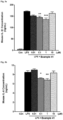
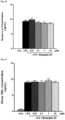
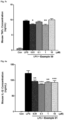
- Example 10 which is a 5 mer, significantly reduced the IL-1 ⁇ level increased by LPS at a concentration of 100 nM and 1 ⁇ M, and referring to Figure 1c , significantly reduced the TNF ⁇ level increased by LPS at a concentration of 10 nM and 1 ⁇ M.
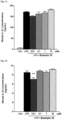
- Example 32 which is a 5 mer, significantly reduced the IL-1 ⁇ level increased by LPS at a concentration of 10 nM, 100 nM and 1 ⁇ M.
- Example 41 which is a 5 mer, significantly reduced the IL-I ⁇ level and IL-6 level increased by LPS at a concentration of 100 nM and 1 ⁇ M, respectively.
- Examples 55 and 59 which are 5 mer, significantly reduced the IL-I ⁇ level increased by LPS at a concentration of 100 nM.
- Example 91 which is a 5 mer, reduced the IL-1 ⁇ level increased by LPS at all concentrations (10 nM, 100 nM, 1 ⁇ M, and 10 ⁇ M), and significantly reduced only the IL-6 level increased by LPS at a concentration of 1 ⁇ M.
- Example 30 which is a 6 mer, significantly reduced the IL-6 level increased by LPS at a concentration of 10 nM.
- Example 11 which is a 6 mer, significantly reduced the TNF ⁇ level increased by LPS at a concentration of 10 ⁇ M.
- Example 86 which is a 7 mer, significantly reduced the IL-I ⁇ level increased by LPS at a concentration of 10 nM, 1 ⁇ M, and 10 ⁇ M.
- Example 103 which is a 8 mer, significantly reduced the IL-1 ⁇ level increased by LPS at a concentration of 1 ⁇ M.
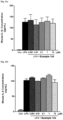
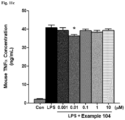
- Example 104 which is a 8 mer, significantly reduced the TNF ⁇ level increased by LPS at a concentration of 10 nM.
- Examples 10, 32, 41, 55, 59, 86, 91 and 103 which are representative examples of the present invention, showed a significant anti-inflammatory effect by regulating the secretion of IL-I ⁇ secreted from immune cells
- Examples 30, 32, 41, and 91 showed a significant anti-inflammatory activity by regulating the secretion of IL-6
- Examples 10, 11, 59, and 104 showed a significant anti-inflammatory activity by regulating the secretion of TNF ⁇ , respectively.
Landscapes
- Health & Medical Sciences (AREA)
- Life Sciences & Earth Sciences (AREA)
- Chemical & Material Sciences (AREA)
- General Health & Medical Sciences (AREA)
- Animal Behavior & Ethology (AREA)
- Public Health (AREA)
- Veterinary Medicine (AREA)
- Organic Chemistry (AREA)
- Medicinal Chemistry (AREA)
- Proteomics, Peptides & Aminoacids (AREA)
- Molecular Biology (AREA)
- Epidemiology (AREA)
- Pharmacology & Pharmacy (AREA)
- Biochemistry (AREA)
- Biophysics (AREA)
- Genetics & Genomics (AREA)
- Rheumatology (AREA)
- Nuclear Medicine, Radiotherapy & Molecular Imaging (AREA)
- Birds (AREA)
- Dermatology (AREA)
- General Chemical & Material Sciences (AREA)
- Engineering & Computer Science (AREA)
- Pain & Pain Management (AREA)
- Chemical Kinetics & Catalysis (AREA)
- Polymers & Plastics (AREA)
- Food Science & Technology (AREA)
- Nutrition Science (AREA)
- Mycology (AREA)
- Immunology (AREA)
- Bioinformatics & Cheminformatics (AREA)
- Peptides Or Proteins (AREA)
- Medicines That Contain Protein Lipid Enzymes And Other Medicines (AREA)
- Cosmetics (AREA)
Description
- Various embodiments of the present invention relate to a peptide compound or a pharmaceutically acceptable salt thereof. Specifically, various embodiments of the present invention relate to a peptide compound or a pharmaceutically acceptable salt thereof having an anti-inflammatory activity.
- Recently, the proportion of the elderly continues to increase due to the development of medical technology and the extension of life expectancy according to the economic development, and chronic inflammatory diseases such as atopy and asthma are increasing as the inflammatory response become chronic due to the immune system abnormality according to the increase in environmental pollution and stress.
- In general, the inflammatory response is a defense mechanism of the living tissue against external stimuli such as bacterial infection or internal stimuli such as in vivo metabolites, and it occurs when nitric oxide (NO) and various cytokines such as TNF-α, IL-1β, and IL-6, which are various inflammatory regulators in cells, are produced. In addition, lipopolysaccharide (LPS), also known as endotoxin, is present in the cellular outer membrane of Gram negative bacteria and induces the activation of NF-κB (nuclear facter-κB), an intracellular transcription factor, in macrophages or mononuclear cells, thereby inducing gene expression of inflammatory cytokines, iNOS (inducible nitric oxide synthase), and COX-2 (cyclooxygenase-2) and producing inflammatory mediators.
- Therefore, in order to regulate the inflammatory response, it is a key factor to regulate the expression of iNOS, COX-2, or NF-κB, and the secretion of cytokines and nitric oxide, and substances that regulate the activity of these factors are attracting attention as preventive and therapeutic agents for inflammatory diseases.
- Substances currently used for anti-inflammatory purposes include non-steroids such as flufenamic acid, ibuprofen, benzydamine, indomethacin, and the like; and steroids such as prednisolone, dexamethasone, hydrocortisone, betamethasone and the like. However, These substances are highly toxic and cause several serious side effects such as liver damage, cancer, and stroke, which limit their use. In addition, there are cases in which a problem of inducing severe immunosuppression occurs because it cannot selectively act on substances that cause inflammation. Accordingly, the development of an inflammation therapeutic agent using a natural product that is safe for the body and has the advantage of being easy to consume for a long period of time compared to conventional medicines is being made. However, in the case of an anti-inflammatory substance extracted from a natural product, there are problems that the effective concentration at which the substance exhibits efficacy is weak, and a high production cost is required because it must be cultivated in agricultural land, etc.
- In order to improve the above problems, a new concept anti-inflammatory agent is being developed as an alternative to the existing chemical inflammation therapeutic agent or an inflammation therapeutic agent using a natural product, and in particular, a lot of research is being done on the synthesis of peptides having an anti-inflammatory activity.
KR-A-2018 0126406 - Accordingly, the present inventors have developed a peptide that can be economically mass-produced using only 7 amino acid residues while continuing research on substances exhibiting excellent anti-inflammatory activity, and found that the peptide does not exhibit cytotoxicity and has excellent anti-inflammatory activity. Based on the above, the present inventors completed the present invention.
- In various embodiments of the present invention, there is provided a peptide compound or a pharmaceutically acceptable salt thereof.
- A peptide compound or a pharmaceutically acceptable salt thereof according to one embodiment of the present invention is selected from the group consisting of the amino acid sequences recited in appended
claim 1. - The present invention can provide peptide compounds having various structures or pharmaceutically acceptable salts thereof that can be used in various fields.
- Since the novel peptide compound or pharmaceutically acceptable salt thereof of the present invention has only 7 amino acid residues, economical mass production is possible. In addition, it does not show cytotoxicity, has excellent stability, and exhibits excellent anti-inflammatory activity.
-
-
Figures 1a, 1b and1c show results of measuring the expression levels of IL-1β, IL-6 and TNFα according to the treatment of Example 10 in LPS-stimulated macrophages, respectively. -
Figures 2a ,2b and 2c show results of measuring the expression levels of IL-1β, IL-6 and TNFα according to the treatment of Example 32 in LPS-stimulated macrophages, respectively. -
Figures 3a, 3b and3c show results of measuring the expression levels of IL-1β, IL-6 and TNFα according to the treatment of Example 41 in LPS-stimulated macrophages, respectively. -
Figures 4a ,4b and 4c show results of measuring the expression levels of IL-1β, IL-6 and TNFα according to the treatment of Example 55 in LPS-stimulated macrophages, respectively. -
Figures 5a, 5b and5c show results of measuring the expression levels of IL-1β, IL-6 and TNFα according to the treatment of Example 59 in LPS-stimulated macrophages, respectively. -
Figures 6a ,6b and 6c show results of measuring the expression levels of IL-1β, IL-6 and TNFα according to the treatment of Example 91 in LPS-stimulated macrophages, respectively. -
Figures 7a, 7b and7c show results of measuring the expression levels of IL-1β, IL-6 and TNFα according to the treatment of Example 30 in LPS-stimulated macrophages, respectively. -
Figures 8a ,8b and 8c show results of measuring the expression levels of IL-1β, IL-6 and TNFα according to the treatment of Example 11 in LPS-stimulated macrophages, respectively. -
Figures 9a, 9b and9c show results of measuring the expression levels of IL-1β, IL-6 and TNFα according to the treatment of Example 86 in LPS-stimulated macrophages, respectively. -
Figures 10a ,10b and 10c show results of measuring the expression levels of IL-1β, IL-6 and TNFα according to the treatment of Example 103 in LPS-stimulated macrophages, respectively. -
Figures 11a, 11b and11c show results of measuring the expression levels of IL-1β, IL-6 and TNFα according to the treatment of Example 104 in LPS-stimulated macrophages, respectively. - The ten individual peptide compounds are recited in appended
claim 1. Preferred peptide compounds are recited in appendedclaims 2 and 3. - Since the peptide compound or pharmaceutically acceptable salt thereof of the present invention has only 7 amino acid residues, economical mass production is possible.
- The above-described novel peptide compound or pharmaceutically acceptable salt thereof does not show cytotoxicity, has excellent stability, and has an anti-inflammatory activity. As used herein, the term "anti-inflammatory" means preventing, treating or ameliorating inflammation. Here, the inflammation refers to a disease caused by infection due to external infectious agents (bacteria, fungi, viruses, various types of allergens, and the like), wounds, surgery, burns, frostbite, electrical stimulation, or chemicals, etc., and the disease includes dermatitis, inflammatory bowel disease, gastric ulcer, colitis, cystitis, rhinitis, tonsillitis or asthma, etc., but is not particularly limited thereto.
- The present invention relates to a pharmaceutical composition for preventing or treating inflammation, comprising the above-described novel peptide compound or pharmaceutically acceptable salt thereof as an active ingredient.
- In the pharmaceutical composition for preventing or treating inflammation of the present invention, the novel peptide compound or pharmaceutically acceptable salt thereof may be included at a concentration of 0.001 to 10 µM. A composition comprising an anti-inflammatory active peptide at a concentration of less than 0.001 µM may have a weak anti-inflammatory effect, and if it has a concentration of more than 10 µM, the increase in the effect according to the increase in concentration is not proportional, so it may be inefficient, and there is a problem in that the stability of the formulation is not secured.
- The pharmaceutical composition for preventing or treating inflammation of the present invention may be several oral or parenteral formulations. When it is formulated, it can be prepared using a diluent or an excipient such as a filler, a bulking agent, a binder, a wetting agent, a disintegrating agent, a surfactant, etc. commonly used. Solid preparations for oral administration include tablets, pills, powders, granules, capsules, and the like, and such a solid preparation may be prepared by mixing one or more compounds with at least one excipient, for example, starch, calcium carbonate, sucrose or lactose, gelatin, and the like. In addition to the excipients, lubricants such as magnesium stearate, talc and the like may also be used.
- Liquid preparations for oral administration include suspensions, internal solutions, emulsions, syrups, and the like. In addition to water and liquid paraffin, which are commonly used simple diluents, various excipients such as a wetting agent, a sweeting agent, a perfuming agent, a preserving agent and the like may be included.
- Preparations for parenteral administration may include sterile aqueous solutions, non-aqueous solvents, suspensions, emulsions, lyophilized preparations, and suppositories. As a non-aqueous solvent and a suspending solvent, propylene glycol, polyethylene glycol, vegetable oils such as olive oil, injectable esters such as ethyl oleate, and the like may be used. As a base of the suppository, witepsol, macrogol, tween 61, cacao butter, laurin butter, glycerogelatin, and the like may be used.
- The dosage form of the composition of the present invention may be used in the form of a salt, and may be also used alone or in combination with other active compounds as well as in an appropriate group. As the salt, for example, hydrochloric acid, sulfuric acid, nitric acid, phosphoric acid, hydrofluoric acid, hydrobromic acid, formic acid, acetic acid, tartaric acid, lactic acid, citric acid, fumaric acid, maleic acid, succinic acid, methanesulfonic acid, benzenesulfonic acid, toluenesulfonic acid, naphthalenesulfonic acid, and the like may be used.
- The composition of the present invention may be administered parenterally or orally as desired, and may be administered once to several times in divided doses to be administered in an amount of 0.1 to 500 mg, 1 to 100 mg per 1 kg of body weight per day. The dosage for a specific patient may vary depending on the patient's body weight, age, sex, health condition, diet, administration time, mode of administration, excretion rate, severity of disease, and the like.
- The composition according to the present invention may be formulated and used in any form including oral formulations such as a powder, a granule, a tablet, a capsule, a suspension, an emulsion, a syrup and an aerosol, external preparations such as an ointment and a cream, a suppository, and a sterile injection solution, and the like, respectively, according to conventional methods.
- The composition according to the present invention may be administered to mammals such as rats, mice, livestock, and humans by various routes such as parenteral and oral administration, and all modes of administration may be expected, and it may be administered, for example, by oral, rectal or intravenous, intramuscular, subcutaneous, intrauterine dural or intracerebroventricular injection.
- On the other hand, the composition according to the present invention does not have serious toxicity and side effects, so it can be safely used even when used for a long period of time for preventive purposes.
- The present invention relates to a food composition for preventing or ameliorating inflammation, comprising the above-described peptide compound or pharmaceutically acceptable salt thereof as an active ingredient.
- In the food composition for preventing or ameliorating inflammation of the present invention, the novel peptide compound or pharmaceutically acceptable salt thereof may be included at a concentration of 0.001 to 10 µM. A composition comprising an anti-inflammatory active peptide at a concentration of less than 0.001 µM may have a weak anti-inflammatory effect, and if it has a concentration of more than 10 µM, the increase in the effect according to the increase in concentration is not proportional, so it may be inefficient, and there is a problem in that the stability of the formulation is not secured.
- The food composition for preventing or ameliorating inflammation is preferably a powder, a granule, a tablet, a capsule or a beverage, but is not limited thereto.
- The food of the present invention may be used by adding the peptide compound or pharmaceutically acceptable salt thereof of the present invention as it is, or in combination with other food or food ingredients, and may be appropriately used according to a conventional method.
- The type of the food is not particularly limited. Examples of the food to which the novel peptide compound or pharmaceutically acceptable salt thereof of the present invention can be added include meat, sausage, bread, chocolate, candy, snacks, confectionery, pizza, ramen, other noodles, gum, dairy products including ice cream, various soups, beverages, teas, drinks, alcoholic beverages, vitamin complexes, and the like, and include all foods in the ordinary sense.
- The beverage composition of the present invention may contain various flavoring agents, natural carbohydrates or the like as additional ingredients, like conventional beverages. The above-described natural carbohydrates are monosaccharides such as glucose and fructose, disaccharides such as maltose and sucrose, and polysaccharides such as dextrin and cyclodextrin, and sugar alcohols such as xylitol, sorbitol and erythritol. As a sweeting agent, natural sweeting agents such as taumatine and stevia extract, synthetic sweeting agents such as saccharin and aspartame, and the like may be used.
- In addition to the above, the food of the present invention may contain various nutrients, vitamins, electrolytes, flavoring agents, coloring agents, pectic acid and its salts, alginic acid and its salts, organic acids, protective colloidal thickeners, pH adjusters, stabilizing agents, preserving agents, glycerin, alcohol, a carbonation agent used in carbonated beverages, and the like. In addition, it may contain the pulp for the production of natural fruit juice, fruit juice beverage and vegetable beverage. These ingredients may be used independently or in combination. The proportion of these additives is not critical, but is generally selected in the range of 0.01 to 0.1 parts by weight per 100 parts by weight of the composition of the present invention.
- The food composition for preventing or ameliorating inflammation according to the present invention may be used as a feed additive or feed.
- When used as a feed additive, the composition may be a solution having a high concentration of 20 to 90% or may be prepared in a powder or granular form. The feed additives may further include any one of or one or more of organic acids such as citric acid, humic acid, adipic acid, lactic acid, and malic acid, phosphates such as sodium phosphate, potassium phosphate, acidic pyrophosphate, and polyphosphate, natural antioxidants such as polyphenol, catechin, alpha-tocopherol, rosemary extract, vitamin C, green tea extract, licorice extract, chitosan, tannic acid, and phytic acid. When used as a feed, the composition may be formulated in a conventional feed form, and may include conventional feed ingredients together.
- Feed additives and feeds may further include grains such as milled or crushed wheat, oats, barley, corn and rice; vegetable protein feeds such as feeds based on rape, soybean, and sunflower as a main ingredient; animal protein feeds such as blood meal, meat meal, bone meal and fish meal; dry ingredients consisting of sugar and dairy products, for example, various powdered milk and whey powder, and the like, and may further include nutritional supplements, digestion and absorption enhancers, growth promoters, and the like.
- The feed additive may be administered to the animal alone or in combination with other feed additives in an edible carrier. In addition, the feed additive can be easily administered to the animal as a top dressing, directly mixing them with animal feed, or in an oral formulation separate from the feed. When the feed additive is administered separately from animal feed, it may be combined with a pharmaceutically acceptable edible carrier as well known in the art to prepare an immediate release or sustained release formulation. Such edible carriers may be solid or liquid, for example corn starch, lactose, sucrose, soybean flakes, peanut oil, olive oil, sesame oil and propylene glycol. When a solid carrier is used, the feed additive may be a tablet, a capsule, a powder, a troche or a sugar-containing tablet, or a top dressing in a microdispersed form. When a liquid carrier is used, the feed additive may be in the form of a gelatin soft capsule, or a syrup or a suspension, an emulsion, or a solution.
- In addition, the feed additive and feed may contain auxiliary agents, for example, preservatives, stabilizers, wetting or emulsifying agents, solubility promoters, and the like. The feed additive may be used by adding to animal feed by immersion, spraying, or mixing.
- The feed or feed additive of the present invention may be applied to a diet of a number of animals including mammals, poultry and fish.
- It may be used for the mammal including pigs, cattle, sheep, goats, laboratory rodents, and laboratory rodents, as well as pets (for example, dogs, cats), and the like, may be used for the poultry including chickens, turkeys, ducks, geese, pheasants, and quail, and the like, and may be used for the fish such as trout, but is not limited thereto.
- In one embodiment, the feed or feed additive may be used for preventing or treating inflammation in pets. The pets include dogs, cats, mice, rabbits, and the like, but are not limited thereto.
- The present invention relates to a cosmetic composition having an anti-inflammatory effect, comprising the above-described novel peptide compound or pharmaceutically acceptable salt thereof as an active ingredient.
- In the cosmetic composition of the present invention, the novel peptide compound or pharmaceutically acceptable salt thereof may be included at a concentration of 0.001 to 10 µM. A composition comprising an anti-inflammatory active peptide at a concentration of less than 0.001 µM may have a weak anti-inflammatory effect, and if it has a concentration of more than 10 µM, the increase in the effect according to the increase in concentration is not proportional, so it may be inefficient, and there is a problem in that the stability of the formulation is not secured.
- When the composition of the present invention is used as a cosmetic composition, as an active ingredient, in addition to the above-described novel peptide compound or pharmaceutically acceptable salt thereof, components commonly used in a cosmetic composition may be additionally included. For example, it may include conventional adjuvants such as antioxidants, stabilizing agents, solubilizers, vitamins, pigments and fragrances, and carriers.
- The cosmetic composition may be also prepared in any formulation conventionally prepared in the art, and may be formulated into, for example, a solution, a suspension, an emulsion, a paste, a gel, a cream, a lotion, a powder, a soap, a surfactant-containing cleansing oil, a powder foundation, an emulsion foundation, a wax foundation and a spray and the like, but is not limited thereto. More specifically, it may be prepared in the form of a nourishing cream, an astringent lotion, a softening lotion, a lotion, an essence, a nutrition gel, a massage cream or the like.
- When the formulation of the cosmetic composition is a paste, a cream or a gel, animal oil, vegetable oil, wax, paraffin, starch, gum tragacanth, cellulose derivative, polyethylene glycol, silicone, bentonite, silica, talc or zinc oxide, or the like may be used as a carrier component.
- When the formulation of the cosmetic composition is a powder or a spray, lactose, talc, silica, aluminum hydroxide, calcium silicate or polyamide powder may be used as a carrier component, and in particular, in the case of a spray, it may additionally include propellants such as chlorofluorohydrocarbon, propane/butane or dimethyl ether.
- When the formulation of the cosmetic composition is a solution or an emulsion, a solvent, a solubilizer or an emulsifier is used as a carrier component, and it includes for example, water, ethanol, isopropanol, ethyl carbonate, ethyl acetate, benzyl alcohol, benzyl benzoate, propylene glycol, 1,3-butylglycol oil, glycerol aliphatic esters, fatty acid esters of polyethylene glycol or sorbitan.
- When the formulation of the cosmetic composition is a suspension, as a carrier component, a liquid diluent such as water, ethanol or propylene glycol, a suspending agent such as ethoxylated isostearyl alcohol, polyoxyethylene sorbitol ester, and polyoxyethylene sorbitan ester, microcrystalline cellulose, aluminum metahydroxide, bentonite, agar, tragacanth, or the like may be used.
- When the formulation of the cosmetic composition is a surfactant-containing cleansing, as a carrier component, aliphatic alcohol sulfate, aliphatic alcohol ether sulfate, sulfosuccinic acid monoester, isethionate, imidazolinium derivative, methyl taurate, sarcosinate, fatty acid amide ether sulfate, alkylamidobetaine, aliphatic alcohol, fatty acid glyceride, fatty acid diethanolamide, vegetable oil, lanolin derivative, ethoxylated glycerol fatty acid ester, or the like may be used.
- Hereinafter, the present invention will be described in more detail through the examples. These examples are for illustrating the present invention in more detail, and the scope of the present invention is not limited to these examples.
- Peptides according to Examples 10 to 125 described in Table 1 below were prepared.
- The peptides that are not recited in
claim 1 are disclosed for comparative or illustrative purposes only.Table 1] No Example Sequence 1 Example 10 Hyp-Gly-Gln-Asp-Gly 2 Example 11 Hyp-Gly-Gln-Asp-Gly-Leu 3 Example 12 Hyp-Gly-Gln-Asp-Gly-Leu-Ala 4 Example 13 Hyp-Gly-Gln-Ala-Gly 5 Example 14 Hyp-Gly-Gln-Ala-Gly-Leu-Ala 6 Example 15 Hyp-Gly-Gln-Asp-Gly-Leu-Ala-Gly 7 Example 16 Gln-Asp-Gly-Leu-Ala-Gly-Pro-Lys 8 Example 17 Hyp-Gly-Gln-Leu-Gly-Leu-Ala-Gly 9 Example 18 Gln-Leu-Gly-Leu-Ala-Gly-Pro-Lys 10 Example 19 Asp-Gly-Leu-Ala-Gly-Pro-Lys 11 Example 20 Leu-Gly-Leu-Ala-Gly-Pro-Lys 12 Example 21 Hyp-Gly-Gln-Asp-Val 13 Example 22 Hyp-Gly-Gln-Asp-Val-Leu 14 Example 23 Hyp-Gly-Gln-Asp-Val-Leu-Ala 15 Example 24 Hyp-Gly-Gln-Asp-Val-Leu-Ala-Gly 16 Example 25 Leu-Ala-Gly-Pro-Lys 17 Example 26 Gly-Leu-Ala-Gly-Pro-Lys 18 Example 27 Hyp-Gly-Leu-Ala-Gly-Pro-Lys 19 Example 28 Hyp-Gly-Gln-Asp-Gly-Pro-Lys 20 Example 29 Gly-Gln-Asp-Gly-Leu-Ala 21 Example 30 Gln-Asp-Gly-Leu-Ala-Gly 22 Example 31 Asp-Gly-Leu-Ala-Gly-Pro 23 Example 32 Hyp-Gly-Gln-Asp-Leu 24 Example 33 Hyp-Gly-Gln-Asp-Ala 25 Example 34 Hyp-Gly-Gln-Asp-Val-Leu 26 Example 35 Hyp-Gly-Gln-Asp-Leu-Leu 27 Example 36 Hyp-Gly-Gln-Asp-Ala-Leu 28 Example 37 Hyp-Gly-Gln-Asp-Val-Leu-Ala 29 Example 38 Hyp-Gly-Gln-Asp-Leu-Leu-Ala 30 Example 39 Hyp-Gly-Gln-Asp-Ala-Leu-Ala 31 Example 40 D Hyp-Gly-Gln-Asp-Gly 32 Example 41 cis-4F-Pro-Gly-Gln-Asp-Gly 33 Example 42 trans-4NH2-Pro-Gly-Gln-Asp-Gly 34 Example 43 4,4-difluoro-Pro-Gly-Gln-Asp-Gly 35 Example 44 4-methylene-Pro-Gly-Gln-Asp-Gly 36 Example 45 D Hyp-Gly-Gln-Asp-Gly-Leu 37 Example 46 cis-4F-Pro-Gly-Gln-Asp-Gly-Leu 38 Example 47 trans-4NH2-Pro-Gly-Gln-Asp-Gly-Leu 39 Example 48 4,4-difluoro-Pro-Gly-Gln-Asp-Gly-Leu 40 Example 49 4-methylene-Pro-Gly-Gln-Asp-Gly-Leu 41 Example 50 D Hyp -Gly-Gln-Asp-Gly-Leu-Ala 42 Example 51 cis-4F Pro-Gly-Gln-Asp-Gly-Leu-Ala 43 Example 52 trans-4NH2-Pro-Gly-Gln-Asp-Gly-Leu-Ala 44 Example 53 4,4-difluoro-Pro-Gly-Gln-Asp-Gly-Leu-Ala 45 Example 54 4-methylene-Pro -Gly-Gln-Asp-Gly-Leu-Ala 46 Example 55 4,4-dimethyl Pro -Gly-Gln-Asp-Gly 47 Example 56 4,4-dimethyl Pro -Gly-Gln-Asp-Gly-Leu 48 Example 57 4,4-dimethyl Pro -Gly-Gln-Asp-Gly-Leu-Ala 49 Example 58 Hyp-Gly-D Gln-Asp-Gly 50 Example 59 Hyp-Gly-Gln-D Asp-Gly 51 Example 60 Hyp-Gly-D Gln-Asp-Gly-Leu 52 Example 61 Hyp-Gly-Gln-D Asp-Gly-Leu 53 Example 62 Hyp-Gly-Gln-Asp-Gly-D Leu 54 Example 63 Hyp-Gly-D Gln-Asp-Gly-Leu-Ala 55 Example 64 Hyp-Gly-Gln-D Asp-Gly-Leu-Ala 56 Example 65 Hyp-Gly-Gln-Asp-Gly-D Leu-Ala 57 Example 66 Hyp-Gly-Gln-Asp-Gly-Leu-D Ala 58 Example 67 Hyp-Gly-Gln-Glu-Gly 59 Example 68 Hyp-Gly-Gln-Glu-Gly-Leu 60 Example 69 Hyp-Gly-Gln-Glu-Gly-Leu-Ala 61 Example 70 Gln-Glu-Gly-Leu-Ala-Gly 62 Example 71 Hyp-Gly-Gln-Asp-Gly-Val 63 Example 72 Hyp-Gly-Gln-Asp-Gly-Val-Ala 64 Example 73 Hyp-Ala-Gln-Asp-Gly 65 Example 74 Hyp-Val-Gln-Asp-Gly 66 Example 75 Hyp-Leu-Gln-Asp-Gly 67 Example 76 Pro-Gly-Gln-Asp-Gly 68 Example 77 Pro-Gly-Gln-Asp-Gly-Leu 69 Example 78 Pro-Gly-Gln-Asp-Gly-Leu-Ala 70 Example 79 Hyp-Gly-Gln-Asn-Gly-Leu-Ala 71 Example 80 Hyp-Gly-Gln-His-Gly-Leu-Ala 72 Example 81 Hyp-Gly-Gln-Asn-Gly-Leu 73 Example 82 Hyp-Gly-Gln-His-Gly-Leu 74 Example 83 Hyp-Gly-Gln-Asp-Aib-Leu-Ala 75 Example 84 Hyp-Gly-Gln-Aib-Gly-Leu 76 Example 85 Hyp-Gly-Gln-Asp-Aib 77 Example 86 Hyp-Gly-Gln-Glu-Leu-Leu-Ala 78 Example 87 Hyp-Gly-Gln-Glu-Val-Leu-Ala 79 Example 88 Hyp-Gly-Gln-Glu-Leu-Leu 80 Example 89 Hyp-Gly-Gln-Glu-Val-Leu 81 Example 90 Hyp-Gly-Gln-Glu-Leu 82 Example 91 Hyp-Gly-Gln-Glu-Val 83 Example 92 Hyp-Gly-Gln-Glu-Aib-Leu-Ala 84 Example 93 Hyp-Gly-Gln-Glu-tert Leu-Leu-Ala 85 Example 94 Hyp-Gly-Gln-Glu-Phenyl Gly-Leu-Ala 86 Example 95 Hyp-Gly-Gln-Leu-Val 87 Example 96 Hyp-Gly-Gln-Leu-Leu-Leu-Ala 88 Example 97 Hyp-Gly-Gln-Leu-Val-Leu-Ala 89 Example 98 Hyp-Gly-Gln-Leu-Leu-Leu 90 Example 99 Hyp-Gly-Gln-Leu-Val-Leu 91 Example 100 Hyp-Gly-Gln-Asu-Gly 92 Example 101 Hyp-Gly-Gln-Asu-Gly-Leu 93 Example 102 Hyp-Gly-Gln-Asu-Gly-Leu-Ala 94 Example 103 Hyp-Gly-Gln-Asu-Gly-Leu-Ala-Gly 95 Example 104 Gln-Asu-Gly-Leu-Ala-Gly-Pro-Lys 96 Example 105 Asu-Gly-Leu-Ala-Gly-Pro-Lys 97 Example 106 Hyp-Gly-Gln-Asp-Gly (isopropyl ester) 98 Example 107 Hyp-Gly-Gln-Asp-Gly-Leu (isopropyl ester) 99 Example 108 Hyp-Gly-Gln-Asp-Gly-Leu-Ala (isopropyl ester) 100 Example 109 Hyp-Gly-Gln-Asu-Gly (isopropyl ester) 101 Example 110 Hyp-Gly-Gln-Asp (isopropyl ester)-Gly (isopropyl ester) 102 Example 111 Hyp-Gly-Gln-Asu-Gly-Leu (isopropyl ester) 103 Example 112 Hyp-Gly-Gln-Asp (isopropyl ester)-Gly-Leu (isopropyl ester) 104 Example 113 Hyp-Gly-Gln-Asu-Gly-Leu-Ala (isopropyl ester) 105 Example 114 Hyp-Gly-Gln-Asp (isopropyl ester)-Gly-Leu-Ala (isopropyl ester) 106 Example 115 Hyp-Gly-Gln-Asp (isopropyl ester)-Gly 107 Example 116 Hyp-Gly-Gln-Asp (isopropyl ester)-Gly-Leu 108 Example 117 Hyp-Gly-Gln-Asp (isopropyl ester)-Gly-Leu-Ala 109 Example 118 Gln-Asu-Gly-Leu-Ala-Gly 114 Example 119 Hyp-Gly-Gln-Ala-Val 115 Example 120 Hyp-Gly-Gln-Ala-Leu 116 Example 121 Hyp-Gly-Gln-Leu-Leu 117 Example 122 Hyp-Gly-Gln-Ala-Gly-Leu 118 Example 123 Hyp-Gly-Gln-Ala-Leu-Leu 119 Example 124 Hyp-Gly-Gln-Ala-Val-Leu 120 Example 125 Hyp-Gly-Gln-D Asp-Leu - 2.2 L of dichloromethane (hereinafter, MC) was injected into 150 g of 2-chlorotrityl resin, stirred for 1 hour, and then dehydrated. 205.22 g of Fmoc-Lys (Boc)-OH, 1.8 L of MC, and 153 ml of N,N-diisopropylethylamine (hereinafter, DIEA) were injected into the other reaction part, and stirred for 10 minutes to dissolve, and then injected into the reaction part containing resin, and stirred at room temperature for 4 hours. They were stirred and then dehydrated. 1.8 L of MC was injected into the dehydrated solid, and stirred for 10 minutes, and then dehydrated, and this process was repeated twice. The dissolved solution of 1530 ml of MC, 180 ml of MeOH, 90 ml of DIEA was injected, and stirred for 30 minutes, and then dehydrated, and this process was repeated twice. After drying with nitrogen for 15 hours, the dried solid was dried under vacuum at 25 °C for 15 hours to obtain 267 g of a final solid. It was found that the loading rate was calculated to be 0.82 mmol/g.
- It was found that the loading rate was calculated to be a total of 0.61 mmol/g in the same manner as in Example 1 using Fmoc-Pro-OH.
- It was found that the loading rate was calculated to be a total of 0.96 mmol/g in the same manner as in Example 1 using Fmoc-Gly-OH.
- It was found that the loading rate was calculated to be a total of 0.87 mmol/g in the same manner as in Example 1 using Fmoc-Ala-OH.
- It was found that the loading rate was calculated to be a total of 0.97 mmol/g in the same manner as in Example 1 using Fmoc-Leu-OH.
- It was found that the loading rate was calculated to be a total of 0.94 mmol/g in the same manner as in Example 1 using Fmoc-Asp (OtBu)-OH.
- It was found that the loading rate was calculated to be a total of 0.62 mmol/g in the same manner as in Example 1 using Fmoc-Glu (OtBu)-OH.
- It was found that the loading rate was calculated to be a total of 0.992 mmol/g in the same manner as in Example 1 using Fmoc-Val-OH.
- 99 ml of 20% piperidie/DMF (dimethylformamide) was injected into the compound in which the desired amino acid sequence is bound to the trityl group-introduced resin, which has been synthesized, and dehydrated by stirring for 10 minutes. This process was repeated twice. 99 ml of DMF was injected and dehydrated by stirring for 10 minutes. This process was repeated twice. 99 ml of MC was injected and then dehydrated by stirring for 10 minutes. This process was repeated three times. 30 ml of MC, 70 ml of TFA (trifluoroacetic acid), and 1 ml of H2O were injected into the other reaction part, and dissolved, and then injected into the reaction part. They were stirred for 4 hours at room temperature and filtered. The filtered solution was concentrated to 1/2 under reduced pressure based on the volume of the filtered solution. The concentrated solution was added dropwise to the reaction part containing 300 ml of IPE (isopropyl ether) and stirred for 30 minutes. A crude solid can be obtained by dehydrating the precipitated solid.
- 400 ml of 20% piperidine/DMF was injected into 50 mmol of glycine loaded in the same manner as in Example 3 and dehydrated by stirring for 10 minutes. This process was repeated twice. 450 ml of DMF was injected and dehydrated by stirring for 10 minutes. This process was repeated twice. 450 ml of MC was injected and then dehydrated by stirring for 10 minutes. This process was repeated three times. In the other reaction part, 41.15 g of Fmoc-Asp (OtBu)-OH, 13.52 g of 1-hydroxy-1H-benzotriazole (hereinafter, HOBt), and 900 ml of DMF were dissolved by stirring for 10 minutes. The dissolved solution was injected into the trityl-Gly reaction part, and then 31.32 ml of diisopropyl carbodiimide (hereinafter, DIC) was injected and dehydrated by stirring for 4 hours at room temperature. 16.7 g of a crude solid can be obtained by repeating a series of processes according to the amino acid sequence according to Table 1 and performing the cleavage step (Example 9). 4 g of the crude solid was purified through Prep LC and then lyophilized to obtain 1.8 g of a final solid.
- 400 ml of 20% piperidine/DMF was injected into 50 mmol of leucine loaded in the same manner as in Example 5 and dehydrated by stirring for 10 minutes. This process was repeated twice. 450 ml of DMF was injected and dehydrated by stirring for 10 minutes. This process was repeated twice. 450 ml of MC was injected and then dehydrated by stirring for 10 minutes. This process was repeated three times. In the other reaction part, 29.7 g of Fmoc-Gly-OH, 13.52 g of HOBt, and 900 ml of DMF were dissolved by stirring for 10 minutes. The dissolved solution was injected into the trityl-Leu reaction part, and then 31.32 ml of DIC was injected and dehydrated by stirring for 4 hours at room temperature. 21.1 g of a crude solid can be obtained by repeating a series of processes according to the amino acid sequence according to Table 1 and performing the cleavage step (Example 9). 4 g of the crude solid was purified through Prep LC and then lyophilized to obtain 2.1 g of a final solid.
- 400 ml of 20% piperidine/DMF was injected into 50 mmol of alanine loaded in the same manner as in Example 4 and dehydrated by stirring for 10 minutes. This process was repeated twice. 450 ml of DMF was injected and dehydrated by stirring for 10 minutes. This process was repeated twice. 450 ml of MC was injected and then dehydrated by stirring for 10 minutes. This process was repeated three times. In the other reaction part, 35.3 g of Fmoc-Leu-OH, 13.52 g of HOBt, and 900 ml of DMF were dissolved by stirring for 10 minutes. The dissolved solution was injected into the trityl-Ala reaction part, and then 31.32 ml of DIC was injected and dehydrated by stirring for 4 hours at room temperature. 24.4 g of a crude solid can be obtained by repeating a series of processes according to the amino acid sequence according to Table 1 and performing the cleavage step (Example 9). 4 g of the crude solid was purified through Prep LC and then lyophilized to obtain 2.0 g of a final solid.
- 400 ml of 20% piperidine/DMF was injected into 50 mmol of glycine loaded in the same manner as in Example 3 and dehydrated by stirring for 10 minutes. This process was repeated twice. 450 ml of DMF was injected and dehydrated by stirring for 10 minutes. This process was repeated twice. 450 ml of MC was injected and then dehydrated by stirring for 10 minutes. This process was repeated three times. In the other reaction part, 31.1 g of Fmoc-Ala-OH, 13.52 g of HOBt, and 900 ml of DMF were dissolved by stirring for 10 minutes. The dissolved solution was injected into the trityl-Gly reaction part, and then 31.32 ml of DIC was injected and dehydrated by stirring for 4 hours at room temperature. 24.4 g of a crude solid can be obtained by repeating a series of processes according to the amino acid sequence according to Table 1 and performing the cleavage step (Example 9). 4 g of the crude solid was purified through Prep LC and then lyophilized to obtain 1.6 g of a final solid.
- 400 ml of 20% piperidine/DMF was injected into 50 mmol of alanine loaded in the same manner as in Example 4 and dehydrated by stirring for 10 minutes. This process was repeated twice. 450 ml of DMF was injected and dehydrated by stirring for 10 minutes. This process was repeated twice. 450 ml of MC was injected and then dehydrated by stirring for 10 minutes. This process was repeated three times. In the other reaction part, 31.1 g of Fmoc-Leu-OH, 13.52 g of HOBt, and 900 ml of DMF were dissolved by stirring for 10 minutes. The dissolved solution was injected into the trityl-Ala reaction part, and then 31.32 ml of DIC was injected and dehydrated by stirring for 4 hours at room temperature. 20.2 g of a crude solid can be obtained by repeating a series of processes according to the amino acid sequence according to Table 1 and performing the cleavage step (Example 9). 4 g of the crude solid was purified through Prep LC and then lyophilized to obtain 1.9 g of a final solid.
- 400 ml of 20% piperidine/DMF was injected into 50 mmol of glycine loaded in the same manner as in Example 3 and dehydrated by stirring for 10 minutes. This process was repeated twice. 450 ml of DMF was injected and dehydrated by stirring for 10 minutes. This process was repeated twice. 450 ml of MC was injected and then dehydrated by stirring for 10 minutes. This process was repeated three times. In the other reaction part, 31.13 g of Fmoc-Ala-OH, 13.52 g of HOBt, and 900 ml of DMF were dissolved by stirring for 10 minutes. The dissolved solution was injected into the trityl-Gly reaction part, and then 31.32 ml of DIC was injected and dehydrated by stirring for 4 hours at room temperature. 27.5 g of a crude solid can be obtained by repeating a series of processes according to the amino acid sequence according to Table 1 and performing the cleavage step (Example 9). 4 g of the crude solid was purified through Prep LC and then lyophilized to obtain 2.1 g of a final solid.
- 400 ml of 20% piperidine/DMF was injected into 50 mmol of lysine loaded in the same manner as in Example 1 and dehydrated by stirring for 10 minutes. This process was repeated twice. 450 ml of DMF was injected and dehydrated by stirring for 10 minutes. This process was repeated twice. 450 ml of MC was injected and then dehydrated by stirring for 10 minutes. This process was repeated three times. In the other reaction part, 33.73 g of Fmoc-Pro-OH, 13.52 g of HOBt, and 900 ml of DMF were dissolved by stirring for 10 minutes. The dissolved solution was injected into the trityl-Lys reaction part, and then 31.32 ml of DIC was injected and dehydrated by stirring for 4 hours at room temperature. 28.3 g of a crude solid can be obtained by repeating a series of processes according to the amino acid sequence according to Table 1 and performing the cleavage step (Example 9). 4 g of the crude solid was purified through Prep LC and then lyophilized to obtain 2.2 g of a final solid.
- 400 ml of 20% piperidine/DMF was injected into 50 mmol of glycine loaded in the same manner as in Example 3 and dehydrated by stirring for 10 minutes. This process was repeated twice. 450 ml of DMF was injected and dehydrated by stirring for 10 minutes. This process was repeated twice. 450 ml of MC was injected and then dehydrated by stirring for 10 minutes. This process was repeated three times. In the other reaction part, 31.13 g of Fmoc-Ala-OH, 13.52 g of HOBt, and 900 ml of DMF were dissolved by stirring for 10 minutes. The dissolved solution was injected into the trityl-Gly reaction part, and then 31.32 ml of DIC was injected and dehydrated by stirring for 4 hours at room temperature. 23.1 g of a crude solid can be obtained by repeating a series of processes according to the amino acid sequence according to Table 1 and performing the cleavage step (Example 9). 4 g of the crude solid was purified through Prep LC and then lyophilized to obtain 2.0 g of a final solid.
- 400 ml of 20% piperidine/DMF was injected into 50 mmol of lysine loaded in the same manner as in Example 1 and dehydrated by stirring for 10 minutes. This process was repeated twice. 450 ml of DMF was injected and dehydrated by stirring for 10 minutes. This process was repeated twice. 450 ml of MC was injected and then dehydrated by stirring for 10 minutes. This process was repeated three times. In the other reaction part, 33.73 g of Fmoc-Pro-OH, 13.52 g of HOBt, and 900 ml of DMF were dissolved by stirring for 10 minutes. The dissolved solution was injected into the trityl-Lys reaction part, and then 31.32 ml of DIC was injected and dehydrated by stirring for 4 hours at room temperature. 26.4 g of a crude solid can be obtained by repeating a series of processes according to the amino acid sequence according to Table 1 and performing the cleavage step (Example 9). 4 g of the crude solid was purified through Prep LC and then lyophilized to obtain 2.9 g of a final solid.
- 400 ml of 20% piperidine/DMF was injected into 50 mmol of lysine loaded in the same manner as in Example 1 and dehydrated by stirring for 10 minutes. This process was repeated twice. 450 ml of DMF was injected and dehydrated by stirring for 10 minutes. This process was repeated twice. 450 ml of MC was injected and then dehydrated by stirring for 10 minutes. This process was repeated three times. In the other reaction part, 33.73 g of Fmoc-Pro-OH, 13.52 g of HOBt, and 900 ml of DMF were dissolved by stirring for 10 minutes. The dissolved solution was injected into the trityl-Lys reaction part, and then 31.32 ml of DIC was injected and dehydrated by stirring for 4 hours at room temperature. 21.37 g of a crude solid can be obtained by repeating a series of processes according to the amino acid sequence according to Table 1 and performing the cleavage step (Example 9). 4 g of the crude solid was purified through Prep LC and then lyophilized to obtain 2.2 g of a final solid.
- 400 ml of 20% piperidine/DMF was injected into 50 mmol of lysine loaded in the same manner as in Example 1 and dehydrated by stirring for 10 minutes. This process was repeated twice. 450 ml of DMF was injected and dehydrated by stirring for 10 minutes. This process was repeated twice. 450 ml of MC was injected and then dehydrated by stirring for 10 minutes. This process was repeated three times. In the other reaction part, 33.73 g of Fmoc-Pro-OH, 13.52 g of HOBt, and 900 ml of DMF were dissolved by stirring for 10 minutes. The dissolved solution was injected into the trityl-Lys reaction part, and then 31.32 ml of DIC was injected and dehydrated by stirring for 4 hours at room temperature. 23.25 g of a crude solid can be obtained by repeating a series of processes according to the amino acid sequence according to Table 1 and performing the cleavage step (Example 9). 4 g of the crude solid was purified through Prep LC and then lyophilized to obtain 1.8 g of a final solid.
- 400 ml of 20% piperidine/DMF was injected into 50 mmol of valine loaded in the same manner as in Example 1 and dehydrated by stirring for 10 minutes. This process was repeated twice. 450 ml of DMF was injected and dehydrated by stirring for 10 minutes. This process was repeated twice. 450 ml of MC was injected and then dehydrated by stirring for 10 minutes. This process was repeated three times. In the other reaction part, 41.14 g of Fmoc-Asp (OtBu)-OH, 13.52 g of HOBt, and 900 ml of DMF were dissolved by stirring for 10 minutes. The dissolved solution was injected into the trityl-Val reaction part, and then 31.32 ml of DIC was injected and dehydrated by stirring for 4 hours at room temperature. 23.25 g of a crude solid can be obtained by repeating a series of processes according to the amino acid sequence according to Table 1 and performing the cleavage step (Example 9). 4 g of the crude solid was purified through Prep LC and then lyophilized to obtain 1.8 g of a final solid.
- 400 ml of 20% piperidine/DMF was injected into 50 mmol of leucine loaded in the same manner as in Example 5 and dehydrated by stirring for 10 minutes. This process was repeated twice. 450 ml of DMF was injected and dehydrated by stirring for 10 minutes. This process was repeated twice. 450 ml of MC was injected and then dehydrated by stirring for 10 minutes. This process was repeated three times. In the other reaction part, 33.93 g of Fmoc-Val-OH, 13.52 g of HOBt, and 900 ml of DMF were dissolved by stirring for 10 minutes. The dissolved solution was injected into the trityl-Leu reaction part, and then 31.32 ml of DIC was injected and dehydrated by stirring for 4 hours at room temperature. 20.76 g of a crude solid can be obtained by repeating a series of processes according to the amino acid sequence according to Table 1 and performing the cleavage step (Example 9). 4 g of the crude solid was purified through Prep LC and then lyophilized to obtain 1.4 g of a final solid.
- 400 ml of 20% piperidine/DMF was injected into 50 mmol of alanine loaded in the same manner as in Example 4 and dehydrated by stirring for 10 minutes. This process was repeated twice. 450 ml of DMF was injected and dehydrated by stirring for 10 minutes. This process was repeated twice. 450 ml of MC was injected and then dehydrated by stirring for 10 minutes. This process was repeated three times. In the other reaction part, 35.34 g of Fmoc-Leu-OH, 13.52 g of HOBt, and 900 ml of DMF were dissolved by stirring for 10 minutes. The dissolved solution was injected into the trityl-Ala reaction part, and then 31.32 ml of DIC was injected and dehydrated by stirring for 4 hours at room temperature. 20.76 g of a crude solid can be obtained by repeating a series of processes according to the amino acid sequence according to Table 1 and performing the cleavage step (Example 9). 4 g of the crude solid was purified through Prep LC and then lyophilized to obtain 1.8 g of a final solid.
- 400 ml of 20% piperidine/DMF was injected into 50 mmol of glycine loaded in the same manner as in Example 3 and dehydrated by stirring for 10 minutes. This process was repeated twice. 450 ml of DMF was injected and dehydrated by stirring for 10 minutes. This process was repeated twice. 450 ml of MC was injected and then dehydrated by stirring for 10 minutes. This process was repeated three times. In the other reaction part, 35.34 g of Fmoc-Ala-OH, 13.52 g of HOBt, and 900 ml of DMF were dissolved by stirring for 10 minutes. The dissolved solution was injected into the trityl-Gly reaction part, and then 31.32 ml of DIC was injected and dehydrated by stirring for 4 hours at room temperature. 30.26 g of a crude solid can be obtained by repeating a series of processes according to the amino acid sequence according to Table 1 and performing the cleavage step (Example 9). 4 g of the crude solid was purified through Prep LC and then lyophilized to obtain 1.9 g of a final solid.
- 400 ml of 20% piperidine/DMF was injected into 50 mmol of lysine loaded in the same manner as in Example 1 and dehydrated by stirring for 10 minutes. This process was repeated twice. 450 ml of DMF was injected and dehydrated by stirring for 10 minutes. This process was repeated twice. 450 ml of MC was injected and then dehydrated by stirring for 10 minutes. This process was repeated three times. In the other reaction part, 35.34 g of Fmoc-Pro-OH, 13.52 g of HOBt, and 900 ml of DMF were dissolved by stirring for 10 minutes. The dissolved solution was injected into the trityl-Lys reaction part, and then 31.32 ml of DIC was injected and dehydrated by stirring for 4 hours at room temperature. 16.16 g of a crude solid can be obtained by repeating a series of processes according to the amino acid sequence according to Table 1 and performing the cleavage step (Example 9). 4 g of the crude solid was purified through Prep LC and then lyophilized to obtain 2.7 g of a final solid.
- 400 ml of 20% piperidine/DMF was injected into 50 mmol of lysine loaded in the same manner as in Example 1 and dehydrated by stirring for 10 minutes. This process was repeated twice. 450 ml of DMF was injected and dehydrated by stirring for 10 minutes. This process was repeated twice. 450 ml of MC was injected and then dehydrated by stirring for 10 minutes. This process was repeated three times. In the other reaction part, 33.73 g of Fmoc-Pro-OH, 13.52 g of HOBt, and 900 ml of DMF were dissolved by stirring for 10 minutes. The dissolved solution was injected into the trityl-Lys reaction part, and then 31.32 ml of DIC was injected and dehydrated by stirring for 4 hours at room temperature. 18.63 g of a crude solid can be obtained by repeating a series of processes according to the amino acid sequence according to Table 1 and performing the cleavage step (Example 9). 4 g of the crude solid was purified through Prep LC and then lyophilized to obtain 3.0 g of a final solid.
- 400 ml of 20% piperidine/DMF was injected into 50 mmol of lysine loaded in the same manner as in Example 1 and dehydrated by stirring for 10 minutes. This process was repeated twice. 450 ml of DMF was injected and dehydrated by stirring for 10 minutes. This process was repeated twice. 450 ml of MC was injected and then dehydrated by stirring for 10 minutes. This process was repeated three times. In the other reaction part, 33.73 g of Fmoc-Pro-OH, 13.52 g of HOBt, and 900 ml of DMF were dissolved by stirring for 10 minutes. The dissolved solution was injected into the trityl-Lys reaction part, and then 31.32 ml of DIC was injected and dehydrated by stirring for 4 hours at room temperature. 18.63 g of a crude solid can be obtained by repeating a series of processes according to the amino acid sequence according to Table 1 and performing the cleavage step (Example 9). 4 g of the crude solid was purified through Prep LC and then lyophilized to obtain 3.0 g of a final solid.
- 400 ml of 20% piperidine/DMF was injected into 50 mmol of lysine loaded in the same manner as in Example 1 and dehydrated by stirring for 10 minutes. This process was repeated twice. 450 ml of DMF was injected and dehydrated by stirring for 10 minutes. This process was repeated twice. 450 ml of MC was injected and then dehydrated by stirring for 10 minutes. This process was repeated three times. In the other reaction part, 33.73 g of Fmoc-Pro-OH, 13.52 g of HOBt, and 900 ml of DMF were dissolved by stirring for 10 minutes. The dissolved solution was injected into the trityl-Lys reaction part, and then 31.32 ml of DIC was injected and dehydrated by stirring for 4 hours at room temperature. 21.35 g of a crude solid can be obtained by repeating a series of processes according to the amino acid sequence according to Table 1 and performing the cleavage step (Example 9). 4 g of the crude solid was purified through Prep LC and then lyophilized to obtain 2.7 g of a final solid.
- 400 ml of 20% piperidine/DMF was injected into 50 mmol of alanine loaded in the same manner as in Example 4 and dehydrated by stirring for 10 minutes. This process was repeated twice. 450 ml of DMF was injected and dehydrated by stirring for 10 minutes. This process was repeated twice. 450 ml of MC was injected and then dehydrated by stirring for 10 minutes. This process was repeated three times. In the other reaction part, 35.34 g of Fmoc-Leu-OH, 13.52 g of HOBt, and 900 ml of DMF were dissolved by stirring for 10 minutes. The dissolved solution was injected into the trityl-Ala reaction part, and then 31.32 ml of DIC was injected and dehydrated by stirring for 4 hours at room temperature. 20.80 g of a crude solid can be obtained by repeating a series of processes according to the amino acid sequence according to Table 1 and performing the cleavage step (Example 9). 4 g of the crude solid was purified through Prep LC and then lyophilized to obtain 3.3 g of a final solid.
- 400 ml of 20% piperidine/DMF was injected into 50 mmol of glycine loaded in the same manner as in Example 3 and dehydrated by stirring for 10 minutes. This process was repeated twice. 450 ml of DMF was injected and dehydrated by stirring for 10 minutes. This process was repeated twice. 450 ml of MC was injected and then dehydrated by stirring for 10 minutes. This process was repeated three times. In the other reaction part, 31.13 g of Fmoc-Ala-OH, 13.52 g of HOBt, and 900 ml of DMF were dissolved by stirring for 10 minutes. The dissolved solution was injected into the trityl-Gly reaction part, and then 31.32 ml of DIC was injected and dehydrated by stirring for 4 hours at room temperature. 19.28 g of a crude solid can be obtained by repeating a series of processes according to the amino acid sequence according to Table 1 and performing the cleavage step (Example 9). 4 g of the crude solid was purified through Prep LC and then lyophilized to obtain 1.9 g of a final solid.
- 400 ml of 20% piperidine/DMF was injected into 50 mmol of proline loaded in the same manner as in Example 2 and dehydrated by stirring for 10 minutes. This process was repeated twice. 450 ml of DMF was injected and dehydrated by stirring for 10 minutes. This process was repeated twice. 450 ml of MC was injected and then dehydrated by stirring for 10 minutes. This process was repeated three times. In the other reaction part, 29.73 g of Fmoc-Gly-OH, 13.52 g of HOBt, and 900 ml of DMF were dissolved by stirring for 10 minutes. The dissolved solution was injected into the trityl-Pro reaction part, and then 31.32 ml of DIC was injected and dehydrated by stirring for 4 hours at room temperature. 18.87 g of a crude solid can be obtained by repeating a series of processes according to the amino acid sequence according to Table 1 and performing the cleavage step (Example 9). 4 g of the crude solid was purified through Prep LC and then lyophilized to obtain 2.4 g of a final solid.
- 400 ml of 20% piperidine/DMF was injected into 50 mmol of leucine loaded in the same manner as in Example 5 and dehydrated by stirring for 10 minutes. This process was repeated twice. 450 ml of DMF was injected and dehydrated by stirring for 10 minutes. This process was repeated twice. 450 ml of MC was injected and then dehydrated by stirring for 10 minutes. This process was repeated three times. In the other reaction part, 41.14 g of Fmoc-Asp (OtBu)-OH, 13.52 g of HOBt, and 900 ml of DMF were dissolved by stirring for 10 minutes. The dissolved solution was injected into the trityl-Leu reaction part, and then 31.32 ml of DIC was injected and dehydrated by stirring for 4 hours at room temperature. 20.30 g of a crude solid can be obtained by repeating a series of processes according to the amino acid sequence according to Table 1 and performing the cleavage step (Example 9). 4 g of the crude solid was purified through Prep LC and then lyophilized to obtain 2.0 g of a final solid.
- 400 ml of 20% piperidine/DMF was injected into 50 mmol of alanine loaded in the same manner as in Example 4 and dehydrated by stirring for 10 minutes. This process was repeated twice. 450 ml of DMF was injected and dehydrated by stirring for 10 minutes. This process was repeated twice. 450 ml of MC was injected and then dehydrated by stirring for 10 minutes. This process was repeated three times. In the other reaction part, 41.14 g of Fmoc-Asp (OtBu)-OH, 13.52 g of HOBt, and 900 ml of DMF were dissolved by stirring for 10 minutes. The dissolved solution was injected into the trityl-Ala reaction part, and then 31.32 ml of DIC was injected and dehydrated by stirring for 4 hours at room temperature. 17.10 g of a crude solid can be obtained by repeating a series of processes according to the amino acid sequence according to Table 1 and performing the cleavage step (Example 9). 4 g of the crude solid was purified through Prep LC and then lyophilized to obtain 2.5 g of a final solid.
- 400 ml of 20% piperidine/DMF was injected into 50 mmol of leucine loaded in the same manner as in Example 5 and dehydrated by stirring for 10 minutes. This process was repeated twice. 450 ml of DMF was injected and dehydrated by stirring for 10 minutes. This process was repeated twice. 450 ml of MC was injected and then dehydrated by stirring for 10 minutes. This process was repeated three times. In the other reaction part, 33.93 g of Fmoc-Val-OH, 13.52 g of HOBt, and 900 ml of DMF were dissolved by stirring for 10 minutes. The dissolved solution was injected into the trityl-Leu reaction part, and then 31.32 ml of DIC was injected and dehydrated by stirring for 4 hours at room temperature. 20.62 g of a crude solid can be obtained by repeating a series of processes according to the amino acid sequence according to Table 1 and performing the cleavage step (Example 9). 4 g of the crude solid was purified through Prep LC and then lyophilized to obtain 2.1 g of a final solid.
- 400 ml of 20% piperidine/DMF was injected into 50 mmol of leucine loaded in the same manner as in Example 5 and dehydrated by stirring for 10 minutes. This process was repeated twice. 450 ml of DMF was injected and dehydrated by stirring for 10 minutes. This process was repeated twice. 450 ml of MC was injected and then dehydrated by stirring for 10 minutes. This process was repeated three times. In the other reaction part, 35.34 g of Fmoc-Leu-OH, 13.52 g of HOBt, and 900 ml of DMF were dissolved by stirring for 10 minutes. The dissolved solution was injected into the trityl-Leu reaction part, and then 31.32 ml of DIC was injected and dehydrated by stirring for 4 hours at room temperature. 22.48 g of a crude solid can be obtained by repeating a series of processes according to the amino acid sequence according to Table 1 and performing the cleavage step (Example 9). 4 g of the crude solid was purified through Prep LC and then lyophilized to obtain 2.0 g of a final solid.
- 400 ml of 20% piperidine/DMF was injected into 50 mmol of leucine loaded in the same manner as in Example 5 and dehydrated by stirring for 10 minutes. This process was repeated twice. 450 ml of DMF was injected and dehydrated by stirring for 10 minutes. This process was repeated twice. 450 ml of MC was injected and then dehydrated by stirring for 10 minutes. This process was repeated three times. In the other reaction part, 31.13 g of Fmoc-Ala-OH, 13.52 g of HOBt, and 900 ml of DMF were dissolved by stirring for 10 minutes. The dissolved solution was injected into the trityl-Leu reaction part, and then 31.32 ml of DIC was injected and dehydrated by stirring for 4 hours at room temperature. 22.12 g of a crude solid can be obtained by repeating a series of processes according to the amino acid sequence according to Table 1 and performing the cleavage step (Example 9). 4 g of a solid was purified through Prep LC and then lyophilized to obtain 2.1 g of a final solid.
- 400 ml of 20% piperidine/DMF was injected into 50 mmol of alanine loaded in the same manner as in Example 4 and dehydrated by stirring for 10 minutes. This process was repeated twice. 450 ml of DMF was injected and dehydrated by stirring for 10 minutes. This process was repeated twice. 450 ml of MC was injected and then dehydrated by stirring for 10 minutes. This process was repeated three times. In the other reaction part, 35.34 g of Fmoc-Leu-OH, 13.52 g of HOBt, and 900 ml of DMF were dissolved by stirring for 10 minutes. The dissolved solution was injected into the trityl-Ala reaction part, and then 31.32 ml of DIC was injected and dehydrated by stirring for 4 hours at room temperature. 22.32 g of a crude solid can be obtained by repeating a series of processes according to the amino acid sequence according to Table 1 and performing the cleavage step (Example 9). 4 g of the crude solid was purified through Prep LC and then lyophilized to obtain 1.9 g of a final solid.
- 400 ml of 20% piperidine/DMF was injected into 50 mmol of alanine loaded in the same manner as in Example 4 and dehydrated by stirring for 10 minutes. This process was repeated twice. 450 ml of DMF was injected and dehydrated by stirring for 10 minutes. This process was repeated twice. 450 ml of MC was injected and then dehydrated by stirring for 10 minutes. This process was repeated three times. In the other reaction part, 35.34 g of Fmoc-Leu-OH, 13.52 g of HOBt, and 900 ml of DMF were dissolved by stirring for 10 minutes. The dissolved solution was injected into the trityl-Ala reaction part, and then 31.32 ml of DIC was injected and dehydrated by stirring for 4 hours at room temperature. 24.80 g of a crude solid can be obtained by repeating a series of processes according to the amino acid sequence according to Table 1 and performing the cleavage step (Example 9). 4 g of the crude solid was purified through Prep LC and then lyophilized to obtain 2.1 g of a final solid.
- 400 ml of 20% piperidine/DMF was injected into 50 mmol of alanine loaded in the same manner as in Example 4 and dehydrated by stirring for 10 minutes. This process was repeated twice. 450 ml of DMF was injected and dehydrated by stirring for 10 minutes. This process was repeated twice. 450 ml of MC was injected and then dehydrated by stirring for 10 minutes. This process was repeated three times. In the other reaction part, 35.34 g of Fmoc-Leu-OH, 13.52 g of HOBt, and 900 ml of DMF were dissolved by stirring for 10 minutes. The dissolved solution was injected into the trityl-Ala reaction part, and then 31.32 ml of DIC was injected and dehydrated by stirring for 4 hours at room temperature. 24.50 g of a crude solid can be obtained by repeating a series of processes according to the amino acid sequence according to Table 1 and performing the cleavage step (Example 9). 4 g of the crude solid was purified through Prep LC and then lyophilized to obtain 2.7 g of a final solid.
- 400 ml of 20% piperidine/DMF was injected into 50 mmol of glycine loaded in the same manner as in Example 3 and dehydrated by stirring for 10 minutes. This process was repeated twice. 450 ml of DMF was injected and dehydrated by stirring for 10 minutes. This process was repeated twice. 450 ml of MC was injected and then dehydrated by stirring for 10 minutes. This process was repeated three times. In the other reaction part, 41.14 g of Fmoc-Asp (OtBu)-OH, 13.52 g of HOBt, and 900 ml of DMF were dissolved by stirring for 10 minutes. The dissolved solution was injected into the trityl-Gly reaction part, and then 31.32 ml of DIC was injected and dehydrated by stirring for 4 hours at room temperature. 15.26 g of a crude solid can be obtained by repeating a series of processes according to the amino acid sequence according to Table 1 and performing the cleavage step (Example 9). 4 g of the crude solid was purified through Prep LC and then lyophilized to obtain 2.4 g of a final solid.
- 400 ml of 20% piperidine/DMF was injected into 50 mmol of glycine loaded in the same manner as in Example 3 and dehydrated by stirring for 10 minutes. This process was repeated twice. 450 ml of DMF was injected and dehydrated by stirring for 10 minutes. This process was repeated twice. 450 ml of MC was injected and then dehydrated by stirring for 10 minutes. This process was repeated three times. In the other reaction part, 41.14 g of Fmoc-Asp (OtBu)-OH, 13.52 g of HOBt, and 900 ml of DMF were dissolved by stirring for 10 minutes. The dissolved solution was injected into the trityl-Gly reaction part, and then 31.32 ml of DIC was injected and dehydrated by stirring for 4 hours at room temperature. 15.91 g of a crude solid can be obtained by repeating a series of processes according to the amino acid sequence according to Table 1 and performing the cleavage step (Example 9). 4 g of the crude solid was purified through Prep LC and then lyophilized to obtain 1.5 g of a final solid.
- 400 ml of 20% piperidine/DMF was injected into 50 mmol of glycine loaded in the same manner as in Example 3 and dehydrated by stirring for 10 minutes. This process was repeated twice. 450 ml of DMF was injected and dehydrated by stirring for 10 minutes. This process was repeated twice. 450 ml of MC was injected and then dehydrated by stirring for 10 minutes. This process was repeated three times. In the other reaction part, 41.14 g of Fmoc-Asp (OtBu)-OH, 13.52 g of HOBt, and 900 ml of DMF were dissolved by stirring for 10 minutes. The dissolved solution was injected into the trityl-Gly reaction part, and then 31.32 ml of DIC was injected and dehydrated by stirring for 4 hours at room temperature. 19.82 g of a crude solid can be obtained by repeating a series of processes according to the amino acid sequence according to Table 1 and performing the cleavage step (Example 9). 4 g of the crude solid was purified through Prep LC and then lyophilized to obtain 1.6 g of a final solid.
- 400 ml of 20% piperidine/DMF was injected into 50 mmol of glycine loaded in the same manner as in Example 3 and dehydrated by stirring for 10 minutes. This process was repeated twice. 450 ml of DMF was injected and dehydrated by stirring for 10 minutes. This process was repeated twice. 450 ml of MC was injected and then dehydrated by stirring for 10 minutes. This process was repeated three times. In the other reaction part, 41.14 g of Fmoc-Asp (OtBu)-OH, 13.52 g of HOBt, and 900 ml of DMF were dissolved by stirring for 10 minutes. The dissolved solution was injected into the trityl-Gly reaction part, and then 31.32 ml of DIC was injected and dehydrated by stirring for 4 hours at room temperature. 17.90 g of a crude solid can be obtained by repeating a series of processes according to the amino acid sequence according to Table 1 and performing the cleavage step (Example 9). 4 g of the crude solid was purified through Prep LC and then lyophilized to obtain 0.9 g of a final solid.
- 400 ml of 20% piperidine/DMF was injected into 50 mmol of glycine loaded in the same manner as in Example 3 and dehydrated by stirring for 10 minutes. This process was repeated twice. 450 ml of DMF was injected and dehydrated by stirring for 10 minutes. This process was repeated twice. 450 ml of MC was injected and then dehydrated by stirring for 10 minutes. This process was repeated three times. In the other reaction part, 41.14 g of Fmoc-Asp (OtBu)-OH, 13.52 g of HOBt, and 900 ml of DMF were dissolved by stirring for 10 minutes. The dissolved solution was injected into the trityl-Gly reaction part, and then 31.32 ml of DIC was injected and dehydrated by stirring for 4 hours at room temperature. 14.32 g of a crude solid can be obtained by repeating a series of processes according to the amino acid sequence according to Table 1 and performing the cleavage step (Example 9). 4 g of the crude solid was purified through Prep LC and then lyophilized to obtain 1.7 g of a final solid.
- 400 ml of 20% piperidine/DMF was injected into 50 mmol of leucine loaded in the same manner as in Example 5 and dehydrated by stirring for 10 minutes. This process was repeated twice. 450 ml of DMF was injected and dehydrated by stirring for 10 minutes. This process was repeated twice. 450 ml of MC was injected and then dehydrated by stirring for 10 minutes. This process was repeated three times. In the other reaction part, 29.73 g of Fmoc-Gly-OH, 13.52 g of HOBt, and 900 ml of DMF were dissolved by stirring for 10 minutes. The dissolved solution was injected into the trityl-Leu reaction part, and then 31.32 ml of DIC was injected and dehydrated by stirring for 4 hours at room temperature. 18.62 g of a crude solid can be obtained by repeating a series of processes according to the amino acid sequence according to Table 1 and performing the cleavage step (Example 9). 4 g of the crude solid was purified through Prep LC and then lyophilized to obtain 1.2 g of a final solid.
- 400 ml of 20% piperidine/DMF was injected into 50 mmol of leucine loaded in the same manner as in Example 5 and dehydrated by stirring for 10 minutes. This process was repeated twice. 450 ml of DMF was injected and dehydrated by stirring for 10 minutes. This process was repeated twice. 450 ml of MC was injected and then dehydrated by stirring for 10 minutes. This process was repeated three times. In the other reaction part, 29.73 g of Fmoc-Gly-OH, 13.52 g of HOBt, and 900 ml of DMF were dissolved by stirring for 10 minutes. The dissolved solution was injected into the trityl-Leu reaction part, and then 31.32 ml of DIC was injected and dehydrated by stirring for 4 hours at room temperature. 20.00 g of a crude solid can be obtained by repeating a series of processes according to the amino acid sequence according to Table 1 and performing the cleavage step (Example 9). 4 g of the crude solid was purified through Prep LC and then lyophilized to obtain 1.5 g of a final solid.
- 400 ml of 20% piperidine/DMF was injected into 50 mmol of leucine loaded in the same manner as in Example 5 and dehydrated by stirring for 10 minutes. This process was repeated twice. 450 ml of DMF was injected and dehydrated by stirring for 10 minutes. This process was repeated twice. 450 ml of MC was injected and then dehydrated by stirring for 10 minutes. This process was repeated three times. In the other reaction part, 29.73 g of Fmoc-Gly-OH, 13.52 g of HOBt, and 900 ml of DMF were dissolved by stirring for 10 minutes. The dissolved solution was injected into the trityl-Leu reaction part, and then 31.32 ml of DIC was injected and dehydrated by stirring for 4 hours at room temperature. 17.81 g of a crude solid can be obtained by repeating a series of processes according to the amino acid sequence according to Table 1 and performing the cleavage step (Example 9). 4 g of the crude solid was purified through Prep LC and then lyophilized to obtain 1.2 g of a final solid.
- 400 ml of 20% piperidine/DMF was injected into 50 mmol of leucine loaded in the same manner as in Example 5 and dehydrated by stirring for 10 minutes. This process was repeated twice. 450 ml of DMF was injected and dehydrated by stirring for 10 minutes. This process was repeated twice. 450 ml of MC was injected and then dehydrated by stirring for 10 minutes. This process was repeated three times. In the other reaction part, 29.73 g of Fmoc-Gly-OH, 13.52 g of HOBt, and 900 ml of DMF were dissolved by stirring for 10 minutes. The dissolved solution was injected into the trityl-Leu reaction part, and then 31.32 ml of DIC was injected and dehydrated by stirring for 4 hours at room temperature. 17.81 g of a crude solid can be obtained by repeating a series of processes according to the amino acid sequence according to Table 1 and performing the cleavage step (Example 9). 4 g of the crude solid was purified through Prep LC and then lyophilized to obtain 1.2 g of a final solid.
- 400 ml of 20% piperidine/DMF was injected into 50 mmol of leucine loaded in the same manner as in Example 5 and dehydrated by stirring for 10 minutes. This process was repeated twice. 450 ml of DMF was injected and dehydrated by stirring for 10 minutes. This process was repeated twice. 450 ml of MC was injected and then dehydrated by stirring for 10 minutes. This process was repeated three times. In the other reaction part, 29.73 g of Fmoc-Gly-OH, 13.52 g of HOBt, and 900 ml of DMF were dissolved by stirring for 10 minutes. The dissolved solution was injected into the trityl-Leu reaction part, and then 31.32 ml of DIC was injected and dehydrated by stirring for 4 hours at room temperature. 21.54 g of a crude solid can be obtained by repeating a series of processes according to the amino acid sequence according to Table 1 and performing the cleavage step (Example 9). 4 g of the crude solid was purified through Prep LC and then lyophilized to obtain 2.4 g of a final solid.
- 400 ml of 20% piperidine/DMF was injected into 50 mmol of alanine loaded in the same manner as in Example 4 and dehydrated by stirring for 10 minutes. This process was repeated twice. 450 ml of DMF was injected and dehydrated by stirring for 10 minutes. This process was repeated twice. 450 ml of MC was injected and then dehydrated by stirring for 10 minutes. This process was repeated three times. In the other reaction part, 35.34 g of Fmoc-Leu-OH, 13.52 g of HOBt, and 900 ml of DMF were dissolved by stirring for 10 minutes. The dissolved solution was injected into the trityl-Ala reaction part, and then 31.32 ml of DIC was injected and dehydrated by stirring for 4 hours at room temperature. 18.23 g of a crude solid can be obtained by repeating a series of processes according to the amino acid sequence according to Table 1 and performing the cleavage step (Example 9). 4 g of the crude solid was purified through Prep LC and then lyophilized to obtain 1.6 g of a final solid.
- 400 ml of 20% piperidine/DMF was injected into 50 mmol of alanine loaded in the same manner as in Example 4 and dehydrated by stirring for 10 minutes. This process was repeated twice. 450 ml of DMF was injected and dehydrated by stirring for 10 minutes. This process was repeated twice. 450 ml of MC was injected and then dehydrated by stirring for 10 minutes. This process was repeated three times. In the other reaction part, 35.34 g of Fmoc-Leu-OH, 13.52 g of HOBt, and 900 ml of DMF were dissolved by stirring for 10 minutes. The dissolved solution was injected into the trityl-Ala reaction part, and then 31.32 ml of DIC was injected and dehydrated by stirring for 4 hours at room temperature. 9.14 g of a crude solid can be obtained by repeating a series of processes according to the amino acid sequence according to Table 1 and performing the cleavage step (Example 9). 4 g of the crude solid was purified through Prep LC and then lyophilized to obtain 1.5 g of a final solid.
- 400 ml of 20% piperidine/DMF was injected into 50 mmol of alanine loaded in the same manner as in Example 4 and dehydrated by stirring for 10 minutes. This process was repeated twice. 450 ml of DMF was injected and dehydrated by stirring for 10 minutes. This process was repeated twice. 450 ml of MC was injected and then dehydrated by stirring for 10 minutes. This process was repeated three times. In the other reaction part, 35.34 g of Fmoc-Leu-OH, 13.52 g of HOBt, and 900 ml of DMF were dissolved by stirring for 10 minutes. The dissolved solution was injected into the trityl-Ala reaction part, and then 31.32 ml of DIC was injected and dehydrated by stirring for 4 hours at room temperature. 17.23 g of a crude solid can be obtained by repeating a series of processes according to the amino acid sequence according to Table 1 and performing the cleavage step (Example 9). 4 g of the crude solid was purified through Prep LC and then lyophilized to obtain 1.5 g of a final solid.
- 400 ml of 20% piperidine/DMF was injected into 50 mmol of alanine loaded in the same manner as in Example 4 and dehydrated by stirring for 10 minutes. This process was repeated twice. 450 ml of DMF was injected and dehydrated by stirring for 10 minutes. This process was repeated twice. 450 ml of MC was injected and then dehydrated by stirring for 10 minutes. This process was repeated three times. In the other reaction part, 35.34 g of Fmoc-Leu-OH, 13.52 g of HOBt, and 900 ml of DMF were dissolved by stirring for 10 minutes. The dissolved solution was injected into the trityl-Ala reaction part, and then 31.32 ml of DIC was injected and dehydrated by stirring for 4 hours at room temperature. 10.56 g of a crude solid can be obtained by repeating a series of processes according to the amino acid sequence according to Table 1 and performing the cleavage step (Example 9). 4 g of the crude solid was purified through Prep LC and then lyophilized to obtain 0.9 g of a final solid.
- 400 ml of 20% piperidine/DMF was injected into 50 mmol of alanine loaded in the same manner as in Example 4 and dehydrated by stirring for 10 minutes. This process was repeated twice. 450 ml of DMF was injected and dehydrated by stirring for 10 minutes. This process was repeated twice. 450 ml of MC was injected and then dehydrated by stirring for 10 minutes. This process was repeated three times. In the other reaction part, 35.34 g of Fmoc-Leu-OH, 13.52 g of HOBt, and 900 ml of DMF were dissolved by stirring for 10 minutes. The dissolved solution was injected into the trityl-Ala reaction part, and then 31.32 ml of DIC was injected and dehydrated by stirring for 4 hours at room temperature. 13.94 g of a crude solid can be obtained by repeating a series of processes according to the amino acid sequence according to Table 1 and performing the cleavage step (Example 9). 4 g of the crude solid was purified through Prep LC and then lyophilized to obtain 1.2 g of a final solid.
- 400 ml of 20% piperidine/DMF was injected into 50 mmol of glycine loaded in the same manner as in Example 3 and dehydrated by stirring for 10 minutes. This process was repeated twice. 450 ml of DMF was injected and dehydrated by stirring for 10 minutes. This process was repeated twice. 450 ml of MC was injected and then dehydrated by stirring for 10 minutes. This process was repeated three times. In the other reaction part, 41.15 g of Fmoc-Asp (OtBu)-OH, 13.52 g of HOBt, and 900 ml of DMF were dissolved by stirring for 10 minutes. The dissolved solution was injected into the trityl-Gly reaction part, and then 31.32 ml of DIC was injected and dehydrated by stirring for 4 hours at room temperature. 17.29 g of a crude solid can be obtained by repeating a series of processes according to the amino acid sequence according to Table 1 and performing the cleavage step (Example 9). 4 g of the crude solid was purified through Prep LC and then lyophilized to obtain 1.8 g of a final solid.
- 400 ml of 20% piperidine/DMF was injected into 50 mmol of leucine loaded in the same manner as in Example 5 and dehydrated by stirring for 10 minutes. This process was repeated twice. 450 ml of DMF was injected and dehydrated by stirring for 10 minutes. This process was repeated twice. 450 ml of MC was injected and then dehydrated by stirring for 10 minutes. This process was repeated three times. In the other reaction part, 29.73 g of Fmoc-Gly-OH, 13.52 g of HOBt, and 900 ml of DMF were dissolved by stirring for 10 minutes. The dissolved solution was injected into the trityl-Leu reaction part, and then 31.32 ml of DIC was injected and dehydrated by stirring for 4 hours at room temperature. 18.69 g of a crude solid can be obtained by repeating a series of processes according to the amino acid sequence according to Table 1 and performing the cleavage step (Example 9). 4 g of the crude solid was purified through Prep LC and then lyophilized to obtain 1.1 g of a final solid.
- 400 ml of 20% piperidine/DMF was injected into 50 mmol of alanine loaded in the same manner as in Example 4 and dehydrated by stirring for 10 minutes. This process was repeated twice. 450 ml of DMF was injected and dehydrated by stirring for 10 minutes. This process was repeated twice. 450 ml of MC was injected and then dehydrated by stirring for 10 minutes. This process was repeated three times. In the other reaction part, 35.34 g of Fmoc-Leu-OH, 13.52 g of HOBt, and 900 ml of DMF were dissolved by stirring for 10 minutes. The dissolved solution was injected into the trityl-Ala reaction part, and then 31.32 ml of DIC was injected and dehydrated by stirring for 4 hours at room temperature. 21.09 g of a crude solid can be obtained by repeating a series of processes according to the amino acid sequence according to Table 1 and performing the cleavage step (Example 9). 4 g of the crude solid was purified through Prep LC and then lyophilized to obtain 2.1 g of a final solid.
- 400 ml of 20% piperidine/DMF was injected into 50 mmol of glycine loaded in the same manner as in Example 3 and dehydrated by stirring for 10 minutes. This process was repeated twice. 450 ml of DMF was injected and dehydrated by stirring for 10 minutes. This process was repeated twice. 450 ml of MC was injected and then dehydrated by stirring for 10 minutes. This process was repeated three times. In the other reaction part, 41.15 g of Fmoc-Asp (OtBu)-OH, 13.52 g of HOBt, and 900 ml of DMF were dissolved by stirring for 10 minutes. The dissolved solution was injected into the trityl-Gly reaction part, and then 31.32 ml of DIC was injected and dehydrated by stirring for 4 hours at room temperature. 15.67 g of a crude solid can be obtained by repeating a series of processes according to the amino acid sequence according to Table 1 and performing the cleavage step (Example 9). 4 g of the crude solid was purified through Prep LC and then lyophilized to obtain 1.3 g of a final solid.
- 400 ml of 20% piperidine/DMF was injected into 50 mmol of glycine loaded in the same manner as in Example 3 and dehydrated by stirring for 10 minutes. This process was repeated twice. 450 ml of DMF was injected and dehydrated by stirring for 10 minutes. This process was repeated twice. 450 ml of MC was injected and then dehydrated by stirring for 10 minutes. This process was repeated three times. In the other reaction part, 41.15 g of Fmoc-D Asp (OtBu)-OH, 13.52 g of HOBt, and 900 ml of DMF were dissolved by stirring for 10 minutes. The dissolved solution was injected into the trityl-Gly reaction part, and then 31.32 ml of DIC was injected and dehydrated by stirring for 4 hours at room temperature. 17.21 g of a crude solid can be obtained by repeating a series of processes according to the amino acid sequence according to Table 1 and performing the cleavage step (Example 9). 4 g of the crude solid was purified through Prep LC and then lyophilized to obtain 2.2 g of a final solid.
- 400 ml of 20% piperidine/DMF was injected into 50 mmol of leucine loaded in the same manner as in Example 5 and dehydrated by stirring for 10 minutes. This process was repeated twice. 450 ml of DMF was injected and dehydrated by stirring for 10 minutes. This process was repeated twice. 450 ml of MC was injected and then dehydrated by stirring for 10 minutes. This process was repeated three times. In the other reaction part, 29.73 g of Fmoc-Gly-OH, 13.52 g of HOBt, and 900 ml of DMF were dissolved by stirring for 10 minutes. The dissolved solution was injected into the trityl-Leu reaction part, and then 31.32 ml of DIC was injected and dehydrated by stirring for 4 hours at room temperature. 20.48 g of a crude solid can be obtained by repeating a series of processes according to the amino acid sequence according to Table 1 and performing the cleavage step (Example 9). 4 g of the crude solid was purified through Prep LC and then lyophilized to obtain 1.9 g of a final solid.
- 400 ml of 20% piperidine/DMF was injected into 50 mmol of leucine loaded in the same manner as in Example 5 and dehydrated by stirring for 10 minutes. This process was repeated twice. 450 ml of DMF was injected and dehydrated by stirring for 10 minutes. This process was repeated twice. 450 ml of MC was injected and then dehydrated by stirring for 10 minutes. This process was repeated three times. In the other reaction part, 29.73 g of Fmoc-Gly-OH, 13.52 g of HOBt, and 900 ml of DMF were dissolved by stirring for 10 minutes. The dissolved solution was injected into the trityl-Leu reaction part, and then 31.32 ml of DIC was injected and dehydrated by stirring for 4 hours at room temperature. 21.32 g of a crude solid can be obtained by repeating a series of processes according to the amino acid sequence according to Table 1 and performing the cleavage step (Example 9). 4 g of the crude solid was purified through Prep LC and then lyophilized to obtain 1.6 g of a final solid.
- 400 ml of 20% piperidine/DMF was injected into 50 mmol of D leucine loaded in the same manner as in Example 5 and dehydrated by stirring for 10 minutes. This process was repeated twice. 450 ml of DMF was injected and dehydrated by stirring for 10 minutes. This process was repeated twice. 450 ml of MC was injected and then dehydrated by stirring for 10 minutes. This process was repeated three times. In the other reaction part, 29.73 g of Fmoc-Gly-OH, 13.52 g of HOBt, and 900 ml of DMF were dissolved by stirring for 10 minutes. The dissolved solution was injected into the trityl-D Leu reaction part, and then 31.32 ml of DIC was injected and dehydrated by stirring for 4 hours at room temperature. 24.76 g of a crude solid can be obtained by repeating a series of processes according to the amino acid sequence according to Table 1 and performing the cleavage step (Example 9). 4 g of the crude solid was purified through Prep LC and then lyophilized to obtain 1.9 g of a final solid.
- 400 ml of 20% piperidine/DMF was injected into 50 mmol of alanine loaded in the same manner as in Example 4 and dehydrated by stirring for 10 minutes. This process was repeated twice. 450 ml of DMF was injected and dehydrated by stirring for 10 minutes. This process was repeated twice. 450 ml of MC was injected and then dehydrated by stirring for 10 minutes. This process was repeated three times. In the other reaction part, 29.73 g of Fmoc-Leu-OH, 13.52 g of HOBt, and 900 ml of DMF were dissolved by stirring for 10 minutes. The dissolved solution was injected into the trityl-Ala reaction part, and then 31.32 ml of DIC was injected and dehydrated by stirring for 4 hours at room temperature. 23.68 g of a crude solid can be obtained by repeating a series of processes according to the amino acid sequence according to Table 1 and performing the cleavage step (Example 9). 4 g of the crude solid was purified through Prep LC and then lyophilized to obtain 1.6 g of a final solid.
- 400 ml of 20% piperidine/DMF was injected into 50 mmol of alanine loaded in the same manner as in Example 4 and dehydrated by stirring for 10 minutes. This process was repeated twice. 450 ml of DMF was injected and dehydrated by stirring for 10 minutes. This process was repeated twice. 450 ml of MC was injected and then dehydrated by stirring for 10 minutes. This process was repeated three times. In the other reaction part, 29.73 g of Fmoc-Leu-OH, 13.52 g of HOBt, and 900 ml of DMF were dissolved by stirring for 10 minutes. The dissolved solution was injected into the trityl-Ala reaction part, and then 31.32 ml of DIC was injected and dehydrated by stirring for 4 hours at room temperature. 24.15 g of a crude solid can be obtained by repeating a series of processes according to the amino acid sequence according to Table 1 and performing the cleavage step (Example 9). 4 g of the crude solid was purified through Prep LC and then lyophilized to obtain 1.7 g of a final solid.
- 400 ml of 20% piperidine/DMF was injected into 50 mmol of alanine loaded in the same manner as in Example 4 and dehydrated by stirring for 10 minutes. This process was repeated twice. 450 ml of DMF was injected and dehydrated by stirring for 10 minutes. This process was repeated twice. 450 ml of MC was injected and then dehydrated by stirring for 10 minutes. This process was repeated three times. In the other reaction part, 29.73 g of Fmoc-D Leu-OH, 13.52 g of HOBt, and 900 ml of DMF were dissolved by stirring for 10 minutes. The dissolved solution was injected into the trityl-Ala reaction part, and then 31.32 ml of DIC was injected and dehydrated by stirring for 4 hours at room temperature. 26.98 g of a crude solid can be obtained by repeating a series of processes according to the amino acid sequence according to Table 1 and performing the cleavage step (Example 9). 4 g of the crude solid was purified through Prep LC and then lyophilized to obtain 1.7 g of a final solid.
- 400 ml of 20% piperidine/DMF was injected into 50 mmol of D alanine loaded in the same manner as in Example 4 and dehydrated by stirring for 10 minutes. This process was repeated twice. 450 ml of DMF was injected and dehydrated by stirring for 10 minutes. This process was repeated twice. 450 ml of MC was injected and then dehydrated by stirring for 10 minutes. This process was repeated three times. In the other reaction part, 29.73 g of Fmoc-Leu-OH, 13.52 g of HOBt, and 900 ml of DMF were dissolved by stirring for 10 minutes. The dissolved solution was injected into the trityl-D Ala reaction part, and then 31.32 ml of DIC was injected and dehydrated by stirring for 4 hours at room temperature. 22.78 g of a crude solid can be obtained by repeating a series of processes according to the amino acid sequence according to Table 1 and performing the cleavage step (Example 9). 4 g of the crude solid was purified through Prep LC and then lyophilized to obtain 1.9 g of a final solid.
- 400 ml of 20% piperidine/DMF was injected into 50 mmol of glycine loaded in the same manner as in Example 3 and dehydrated by stirring for 10 minutes. This process was repeated twice. 450 ml of DMF was injected and dehydrated by stirring for 10 minutes. This process was repeated twice. 450 ml of MC was injected and then dehydrated by stirring for 10 minutes. This process was repeated three times. In the other reaction part, 42.54 g of Fmoc-Glu (OtBu)-OH, 13.52 g of HOBt, and 900 ml of DMF were dissolved by stirring for 10 minutes. The dissolved solution was injected into the trityl-Gly reaction part, and then 31.32 ml of DIC was injected and dehydrated by stirring for 4 hours at room temperature. 17.18 g of a crude solid can be obtained by repeating a series of processes according to the amino acid sequence according to Table 1 and performing the cleavage step (Example 9). 4 g of the crude solid was purified through Prep LC and then lyophilized to obtain 1.6 g of a final solid.
- 400 ml of 20% piperidine/DMF was injected into 50 mmol of leucine loaded in the same manner as in Example 5 and dehydrated by stirring for 10 minutes. This process was repeated twice. 450 ml of DMF was injected and dehydrated by stirring for 10 minutes. This process was repeated twice. 450 ml of MC was injected and then dehydrated by stirring for 10 minutes. This process was repeated three times. In the other reaction part, 29.73 g of Fmoc-Gly-OH, 13.52 g of HOBt, and 900 ml of DMF were dissolved by stirring for 10 minutes. The dissolved solution was injected into the trityl-Leu reaction part, and then 31.32 ml of DIC was injected and dehydrated by stirring for 4 hours at room temperature. 19.11 g of a crude solid can be obtained by repeating a series of processes according to the amino acid sequence according to Table 1 and performing the cleavage step (Example 9). 4 g of the crude solid was purified through Prep LC and then lyophilized to obtain 2.8 g of a final solid.
- 400 ml of 20% piperidine/DMF was injected into 50 mmol of alanine loaded in the same manner as in Example 4 and dehydrated by stirring for 10 minutes. This process was repeated twice. 450 ml of DMF was injected and dehydrated by stirring for 10 minutes. This process was repeated twice. 450 ml of MC was injected and then dehydrated by stirring for 10 minutes. This process was repeated three times. In the other reaction part, 35.34 g of Fmoc-Leu-OH, 13.52 g of HOBt, and 900 ml of DMF were dissolved by stirring for 10 minutes. The dissolved solution was injected into the trityl-Ala reaction part, and then 31.32 ml of DIC was injected and dehydrated by stirring for 4 hours at room temperature. 20.40 g of a crude solid can be obtained by repeating a series of processes according to the amino acid sequence according to Table 1 and performing the cleavage step (Example 9). 4 g of the crude solid was purified through Prep LC and then lyophilized to obtain 2.2 g of a final solid.
- 400 ml of 20% piperidine/DMF was injected into 50 mmol of glycine loaded in the same manner as in Example 3 and dehydrated by stirring for 10 minutes. This process was repeated twice. 450 ml of DMF was injected and dehydrated by stirring for 10 minutes. This process was repeated twice. 450 ml of MC was injected and then dehydrated by stirring for 10 minutes. This process was repeated three times. In the other reaction part, 35.34 g of Fmoc-Ala-OH, 13.52 g of HOBt, and 900 ml of DMF were dissolved by stirring for 10 minutes. The dissolved solution was injected into the trityl-Gly reaction part, and then 31.32 ml of DIC was injected and dehydrated by stirring for 4 hours at room temperature. 17.78 g of a crude solid can be obtained by repeating a series of processes according to the amino acid sequence according to Table 1 and performing the cleavage step (Example 9). 4 g of the crude solid was purified through Prep LC and then lyophilized to obtain 3.1 g of a final solid.
- 400 ml of 20% piperidine/DMF was injected into 50 mmol of valine loaded in the same manner as in Example 8 and dehydrated by stirring for 10 minutes. This process was repeated twice. 450 ml of DMF was injected and dehydrated by stirring for 10 minutes. This process was repeated twice. 450 ml of MC was injected and then dehydrated by stirring for 10 minutes. This process was repeated three times. In the other reaction part, 29.73 g of Fmoc-Gly-OH, 13.52 g of HOBt, and 900 ml of DMF were dissolved by stirring for 10 minutes. The dissolved solution was injected into the trityl-Val reaction part, and then 31.32 ml of DIC was injected and dehydrated by stirring for 4 hours at room temperature. 15.24 g of a crude solid can be obtained by repeating a series of processes according to the amino acid sequence according to Table 1 and performing the cleavage step (Example 9). 4 g of the crude solid was purified through Prep LC and then lyophilized to obtain 1.1 g of a final solid.
- 400 ml of 20% piperidine/DMF was injected into 50 mmol of alanine loaded in the same manner as in Example 4 and dehydrated by stirring for 10 minutes. This process was repeated twice. 450 ml of DMF was injected and dehydrated by stirring for 10 minutes. This process was repeated twice. 450 ml of MC was injected and then dehydrated by stirring for 10 minutes. This process was repeated three times. In the other reaction part, 33.93 g of Fmoc-Val-OH, 13.52 g of HOBt, and 900 ml of DMF were dissolved by stirring for 10 minutes. The dissolved solution was injected into the trityl-Ala reaction part, and then 31.32 ml of DIC was injected and dehydrated by stirring for 4 hours at room temperature. 22.23 g of a crude solid can be obtained by repeating a series of processes according to the amino acid sequence according to Table 1 and performing the cleavage step (Example 9). 4 g of the crude solid was purified through Prep LC and then lyophilized to obtain 0.8 g of a final solid.
- 400 ml of 20% piperidine/DMF was injected into 50 mmol of glycine loaded in the same manner as in Example 3 and dehydrated by stirring for 10 minutes. This process was repeated twice. 450 ml of DMF was injected and dehydrated by stirring for 10 minutes. This process was repeated twice. 450 ml of MC was injected and then dehydrated by stirring for 10 minutes. This process was repeated three times. In the other reaction part, 41.14 g of Fmoc-Asp (OtBu)-OH, 13.52 g of HOBt, and 900 ml of DMF were dissolved by stirring for 10 minutes. The dissolved solution was injected into the trityl-Gly reaction part, and then 31.32 ml of DIC was injected and dehydrated by stirring for 4 hours at room temperature. 18.04 g of a crude solid can be obtained by repeating a series of processes according to the amino acid sequence according to Table 1 and performing the cleavage step (Example 9). 4 g of the crude solid was purified through Prep LC and then lyophilized to obtain 2.6 g of a final solid.
- 400 ml of 20% piperidine/DMF was injected into 50 mmol of glycine loaded in the same manner as in Example 3 and dehydrated by stirring for 10 minutes. This process was repeated twice. 450 ml of DMF was injected and dehydrated by stirring for 10 minutes. This process was repeated twice. 450 ml of MC was injected and then dehydrated by stirring for 10 minutes. This process was repeated three times. In the other reaction part, 41.14 g of Fmoc-Asp (OtBu)-OH, 13.52 g of HOBt, and 900 ml of DMF were dissolved by stirring for 10 minutes. The dissolved solution was injected into the trityl-Gly reaction part, and then 31.32 ml of DIC was injected and dehydrated by stirring for 4 hours at room temperature. 18.17 g of a crude solid can be obtained by repeating a series of processes according to the amino acid sequence according to Table 1 and performing the cleavage step (Example 9). 4 g of the crude solid was purified through Prep LC and then lyophilized to obtain 2.1 g of a final solid.
- 400 ml of 20% piperidine/DMF was injected into 50 mmol of glycine loaded in the same manner as in Example 3 and dehydrated by stirring for 10 minutes. This process was repeated twice. 450 ml of DMF was injected and dehydrated by stirring for 10 minutes. This process was repeated twice. 450 ml of MC was injected and then dehydrated by stirring for 10 minutes. This process was repeated three times. In the other reaction part, 41.14 g of Fmoc-Asp (OtBu)-OH, 13.52 g of HOBt, and 900 ml of DMF were dissolved by stirring for 10 minutes. The dissolved solution was injected into the trityl-Gly reaction part, and then 31.32 ml of DIC was injected and dehydrated by stirring for 4 hours at room temperature. 16.94 g of a crude solid can be obtained by repeating a series of processes according to the amino acid sequence according to Table 1 and performing the cleavage step (Example 9). 4 g of the crude solid was purified through Prep LC and then lyophilized to obtain 1.6 g of a final solid.
- 400 ml of 20% piperidine/DMF was injected into 50 mmol of glycine loaded in the same manner as in Example 3 and dehydrated by stirring for 10 minutes. This process was repeated twice. 450 ml of DMF was injected and dehydrated by stirring for 10 minutes. This process was repeated twice. 450 ml of MC was injected and then dehydrated by stirring for 10 minutes. This process was repeated three times. In the other reaction part, 41.14 g of Fmoc-Asp (OtBu)-OH, 13.52 g of HOBt, and 900 ml of DMF were dissolved by stirring for 10 minutes. The dissolved solution was injected into the trityl-Gly reaction part, and then 31.32 ml of DIC was injected and dehydrated by stirring for 4 hours at room temperature. 16.87 g of a crude solid can be obtained by repeating a series of processes according to the amino acid sequence according to Table 1 and performing the cleavage step (Example 9). 4 g of the crude solid was purified through Prep LC and then lyophilized to obtain 2.1 g of a final solid.
- 400 ml of 20% piperidine/DMF was injected into 50 mmol of leucine loaded in the same manner as in Example 5 and dehydrated by stirring for 10 minutes. This process was repeated twice. 450 ml of DMF was injected and dehydrated by stirring for 10 minutes. This process was repeated twice. 450 ml of MC was injected and then dehydrated by stirring for 10 minutes. This process was repeated three times. In the other reaction part, 29.73 g of Fmoc-Gly-OH, 13.52 g of HOBt, and 900 ml of DMF were dissolved by stirring for 10 minutes. The dissolved solution was injected into the trityl-Leu reaction part, and then 31.32 ml of DIC was injected and dehydrated by stirring for 4 hours at room temperature. 19.35 g of a crude solid can be obtained by repeating a series of processes according to the amino acid sequence according to Table 1 and performing the cleavage step (Example 9). 4 g of the crude solid was purified through Prep LC and then lyophilized to obtain 1.8 g of a final solid.
- 400 ml of 20% piperidine/DMF was injected into 50 mmol of alanine loaded in the same manner as in Example 4 and dehydrated by stirring for 10 minutes. This process was repeated twice. 450 ml of DMF was injected and dehydrated by stirring for 10 minutes. This process was repeated twice. 450 ml of MC was injected and then dehydrated by stirring for 10 minutes. This process was repeated three times. In the other reaction part, 35.34 g of Fmoc-Leu-OH, 13.52 g of HOBt, and 900 ml of DMF were dissolved by stirring for 10 minutes. The dissolved solution was injected into the trityl-Ala reaction part, and then 31.32 ml of DIC was injected and dehydrated by stirring for 4 hours at room temperature. 19.90 g of a crude solid can be obtained by repeating a series of processes according to the amino acid sequence according to Table 1 and performing the cleavage step (Example 9). 4 g of the crude solid was purified through Prep LC and then lyophilized to obtain 2.2 g of a final solid.
- 400 ml of 20% piperidine/DMF was injected into 50 mmol of alanine loaded in the same manner as in Example 4 and dehydrated by stirring for 10 minutes. This process was repeated twice. 450 ml of DMF was injected and dehydrated by stirring for 10 minutes. This process was repeated twice. 450 ml of MC was injected and then dehydrated by stirring for 10 minutes. This process was repeated three times. In the other reaction part, 35.34 g of Fmoc-Leu-OH, 13.52 g of HOBt, and 900 ml of DMF were dissolved by stirring for 10 minutes. The dissolved solution was injected into the trityl-Ala reaction part, and then 31.32 ml of DIC was injected and dehydrated by stirring for 4 hours at room temperature. 14.37 g of a crude solid can be obtained by repeating a series of processes according to the amino acid sequence according to Table 1 and performing the cleavage step (Example 9). 4 g of the crude solid was purified through Prep LC and then lyophilized to obtain 1.8 g of a final solid.
- 400 ml of 20% piperidine/DMF was injected into 50 mmol of alanine loaded in the same manner as in Example 4 and dehydrated by stirring for 10 minutes. This process was repeated twice. 450 ml of DMF was injected and dehydrated by stirring for 10 minutes. This process was repeated twice. 450 ml of MC was injected and then dehydrated by stirring for 10 minutes. This process was repeated three times. In the other reaction part, 35.34 g of Fmoc-Leu-OH, 13.52 g of HOBt, and 900 ml of DMF were dissolved by stirring for 10 minutes. The dissolved solution was injected into the trityl-Ala reaction part, and then 31.32 ml of DIC was injected and dehydrated by stirring for 4 hours at room temperature. 21.38 g of a crude solid can be obtained by repeating a series of processes according to the amino acid sequence according to Table 1 and performing the cleavage step (Example 9). 4 g of the crude solid was purified through Prep LC and then lyophilized to obtain 2.3 g of a final solid.
- 400 ml of 20% piperidine/DMF was injected into 50 mmol of leucine loaded in the same manner as in Example 5 and dehydrated by stirring for 10 minutes. This process was repeated twice. 450 ml of DMF was injected and dehydrated by stirring for 10 minutes. This process was repeated twice. 450 ml of MC was injected and then dehydrated by stirring for 10 minutes. This process was repeated three times. In the other reaction part, 29.73 g of Fmoc-Gly-OH, 13.52 g of HOBt, and 900 ml of DMF were dissolved by stirring for 10 minutes. The dissolved solution was injected into the trityl-Leu reaction part, and then 31.32 ml of DIC was injected and dehydrated by stirring for 4 hours at room temperature. 23.27 g of a crude solid can be obtained by repeating a series of processes according to the amino acid sequence according to Table 1 and performing the cleavage step (Example 9). 4 g of the crude solid was purified through Prep LC and then lyophilized to obtain 1.7 g of a final solid.
- 400 ml of 20% piperidine/DMF was injected into 50 mmol of leucine loaded in the same manner as in Example 5 and dehydrated by stirring for 10 minutes. This process was repeated twice. 450 ml of DMF was injected and dehydrated by stirring for 10 minutes. This process was repeated twice. 450 ml of MC was injected and then dehydrated by stirring for 10 minutes. This process was repeated three times. In the other reaction part, 29.73 g of Fmoc-Gly-OH, 13.52 g of HOBt, and 900 ml of DMF were dissolved by stirring for 10 minutes. The dissolved solution was injected into the trityl-Leu reaction part, and then 31.32 ml of DIC was injected and dehydrated by stirring for 4 hours at room temperature. 20.64 g of a crude solid can be obtained by repeating a series of processes according to the amino acid sequence according to Table 1 and performing the cleavage step (Example 9). 3 g of the crude solid was purified through Prep LC and then lyophilized to obtain 1.3 g of a final solid.
- 400 ml of 20% piperidine/DMF was injected into 50 mmol of alanine loaded in the same manner as in Example 4 and dehydrated by stirring for 10 minutes. This process was repeated twice. 450 ml of DMF was injected and dehydrated by stirring for 10 minutes. This process was repeated twice. 450 ml of MC was injected and then dehydrated by stirring for 10 minutes. This process was repeated three times. In the other reaction part, 35.34 g of Fmoc-Leu-OH, 13.52 g of HOBt, and 450 ml of DMF were dissolved by stirring for 10 minutes. The dissolved solution was injected into the trityl-Ala reaction part, and then 31.32 ml of DIC was injected and dehydrated by stirring for 4 hours at room temperature. 14.68 g of a crude solid can be obtained by repeating a series of processes according to the amino acid sequence according to Table 1 and performing the cleavage step (Example 9). 4 g of the crude solid was purified through Prep LC and then lyophilized to obtain 0.5 g of a final solid.
- 400 ml of 20% piperidine/DMF was injected into 50 mmol of leucine loaded in the same manner as in Example 5 and dehydrated by stirring for 10 minutes. This process was repeated twice. 450 ml of DMF was injected and dehydrated by stirring for 10 minutes. This process was repeated twice. 450 ml of MC was injected and then dehydrated by stirring for 10 minutes. This process was repeated three times. In the other reaction part, 29.73 g of Fmoc-Gly-OH, 13.52 g of HOBt, and 900 ml of DMF were dissolved by stirring for 10 minutes. The dissolved solution was injected into the trityl-Leu reaction part, and then 31.32 ml of DIC was injected and dehydrated by stirring for 4 hours at room temperature. 14.68 g of a crude solid can be obtained by repeating a series of processes according to the amino acid sequence according to Table 1 and performing the cleavage step (Example 9). 3 g of the crude solid was purified through Prep LC and then lyophilized to obtain 1.0 g of a final solid.
- 400 ml of 20% piperidine/DMF was injected into 50 mmol of Aib (alpa-Me-Ala) loaded in the same manner as in Example 4 and dehydrated by stirring for 10 minutes. This process was repeated twice. 450 ml of DMF was injected and dehydrated by stirring for 10 minutes. This process was repeated twice. 450 ml of MC was injected and then dehydrated by stirring for 10 minutes. This process was repeated three times. In the other reaction part, 41.14 g of Fmoc-Asp (OtBu)-OH, 13.52 g of HOBt, and 900 ml of DMF were dissolved by stirring for 10 minutes. The dissolved solution was injected into the trityl-Aib reaction part, and then 31.32 ml of DIC was injected and dehydrated by stirring for 4 hours at room temperature. 8.96 g of a crude solid can be obtained by repeating a series of processes according to the amino acid sequence according to Table 1 and performing the cleavage step (Example 9). 1.5 g of the crude solid was purified through Prep LC and then lyophilized to obtain 0.3 g of a final solid.
- 400 ml of 20% piperidine/DMF was injected into 50 mmol of alanine loaded in the same manner as in Example 4 and dehydrated by stirring for 10 minutes. This process was repeated twice. 450 ml of DMF was injected and dehydrated by stirring for 10 minutes. This process was repeated twice. 450 ml of MC was injected and then dehydrated by stirring for 10 minutes. This process was repeated three times. In the other reaction part, 35.34 g of Fmoc-Leu-OH, 13.52 g of HOBt, and 900 ml of DMF were dissolved by stirring for 10 minutes. The dissolved solution was injected into the trityl-Ala reaction part, and then 31.32 ml of DIC was injected and dehydrated by stirring for 4 hours at room temperature. 15.41 g of a crude solid can be obtained by repeating a series of processes according to the amino acid sequence according to Table 1 and performing the cleavage step (Example 9). 5 g of the crude solid was purified through Prep LC and then lyophilized to obtain 1.42 g of a final solid.
- 400 ml of 20% piperidine/DMF was injected into 50 mmol of alanine loaded in the same manner as in Example 4 and dehydrated by stirring for 10 minutes. This process was repeated twice. 450 ml of DMF was injected and dehydrated by stirring for 10 minutes. This process was repeated twice. 450 ml of MC was injected and then dehydrated by stirring for 10 minutes. This process was repeated three times. In the other reaction part, 35.34 g of Fmoc-Leu-OH, 13.52 g of HOBt, and 900 ml of DMF were dissolved by stirring for 10 minutes. The dissolved solution was injected into the trityl-Ala reaction part, and then 31.32 ml of DIC was injected and dehydrated by stirring for 4 hours at room temperature. 17.53 g of a crude solid can be obtained by repeating a series of processes according to the amino acid sequence according to Table 1 and performing the cleavage step (Example 9). 3 g of the crude solid was purified through Prep LC and then lyophilized to obtain 0.53 g of a final solid.
- 400 ml of 20% piperidine/DMF was injected into 50 mmol of Leu loaded in the same manner as in Example 5 and dehydrated by stirring for 10 minutes. This process was repeated twice. 450 ml of DMF was injected and dehydrated by stirring for 10 minutes. This process was repeated twice. 450 ml of MC was injected and then dehydrated by stirring for 10 minutes. This process was repeated three times. In the other reaction part, 35.34 g of Fmoc-Leu-OH, 13.52 g of HOBt, and 900 ml of DMF were dissolved by stirring for 10 minutes. The dissolved solution was injected into the trityl-Leu reaction part, and then 31.32 ml of DIC was injected and dehydrated by stirring for 4 hours at room temperature. 20.76 g of a crude solid can be obtained by repeating a series of processes according to the amino acid sequence according to Table 1 and performing the cleavage step (Example 9). 5 g of the crude solid was purified through Prep LC and then lyophilized to obtain 2.3 g of a final solid.
- 400 ml of 20% piperidine/DMF was injected into 50 mmol of Leu loaded in the same manner as in Example 5 and dehydrated by stirring for 10 minutes. This process was repeated twice. 450 ml of DMF was injected and dehydrated by stirring for 10 minutes. This process was repeated twice. 450 ml of MC was injected and then dehydrated by stirring for 10 minutes. This process was repeated three times. In the other reaction part, 33.93 g of Fmoc-Val-OH, 13.52 g of HOBt, and 900 ml of DMF were dissolved by stirring for 10 minutes. The dissolved solution was injected into the trityl-Leu reaction part, and then 31.32 ml of DIC was injected and dehydrated by stirring for 4 hours at room temperature. 18.81 g of a crude solid can be obtained by repeating a series of processes according to the amino acid sequence according to Table 1 and performing the cleavage step (Example 9). 5 g of the crude solid was purified through Prep LC and then lyophilized to obtain 1.6 g of a final solid.
- 400 ml of 20% piperidine/DMF was injected into 50 mmol of Leu loaded in the same manner as in Example 5 and dehydrated by stirring for 10 minutes. This process was repeated twice. 450 ml of DMF was injected and dehydrated by stirring for 10 minutes. This process was repeated twice. 450 ml of MC was injected and then dehydrated by stirring for 10 minutes. This process was repeated three times. In the other reaction part, 42.54 g of Fmoc-Glu (OtBu)-OH, 13.52 g of HOBt, and 900 ml of DMF were dissolved by stirring for 10 minutes. The dissolved solution was injected into the trityl-Leu reaction part, and then 31.32 ml of DIC was injected and dehydrated by stirring for 4 hours at room temperature. 18.66 g of a crude solid can be obtained by repeating a series of processes according to the amino acid sequence according to Table 1 and performing the cleavage step (Example 9). 5 g of the crude solid was purified through Prep LC and then lyophilized to obtain 2.6 g of a final solid.
- 400 ml of 20% piperidine/DMF was injected into 50 mmol of Val loaded in the same manner as in Example 8 and dehydrated by stirring for 10 minutes. This process was repeated twice. 450 ml of DMF was injected and dehydrated by stirring for 10 minutes. This process was repeated twice. 450 ml of MC was injected and then dehydrated by stirring for 10 minutes. This process was repeated three times. In the other reaction part, 42.54 g of Fmoc-Glu (OtBu)-OH, 13.52 g of HOBt, and 900 ml of DMF were dissolved by stirring for 10 minutes. The dissolved solution was injected into the trityl-Val reaction part, and then 31.32 ml of DIC was injected and dehydrated by stirring for 4 hours at room temperature. 19.74 g of a crude solid can be obtained by repeating a series of processes according to the amino acid sequence according to Table 1 and performing the cleavage step (Example 9). 5 g of the crude solid was purified through Prep LC and then lyophilized to obtain 0.4 g of a final solid.
- 400 ml of 20% piperidine/DMF was injected into 50 mmol of Ala loaded in the same manner as in Example 4 and dehydrated by stirring for 10 minutes. This process was repeated twice. 450 ml of DMF was injected and dehydrated by stirring for 10 minutes. This process was repeated twice. 450 ml of MC was injected and then dehydrated by stirring for 10 minutes. This process was repeated three times. In the other reaction part, 35.34 g of Fmoc-Leu-OH, 13.52 g of HOBt, and 900 ml of DMF were dissolved by stirring for 10 minutes. The dissolved solution was injected into the trityl-Ala reaction part, and then 31.32 ml of DIC was injected and dehydrated by stirring for 4 hours at room temperature. 22.48 g of a crude solid can be obtained by repeating a series of processes according to the amino acid sequence according to Table 1 and performing the cleavage step (Example 9). 3 g of the crude solid was purified through Prep LC and then lyophilized to obtain 0.11 g of a final solid.
- 400 ml of 20% piperidine/DMF was injected into 50 mmol of Ala loaded in the same manner as in Example 4 and dehydrated by stirring for 10 minutes. This process was repeated twice. 450 ml of DMF was injected and dehydrated by stirring for 10 minutes. This process was repeated twice. 450 ml of MC was injected and then dehydrated by stirring for 10 minutes. This process was repeated three times. In the other reaction part, 35.34 g of Fmoc-Leu-OH, 13.52 g of HOBt, and 900 ml of DMF were dissolved by stirring for 10 minutes. The dissolved solution was injected into the trityl-Ala reaction part, and then 31.32 ml of DIC was injected and dehydrated by stirring for 4 hours at room temperature. 20.35 g of a crude solid can be obtained by repeating a series of processes according to the amino acid sequence according to Table 1 and performing the cleavage step (Example 9). 3 g of the crude solid was purified through Prep LC and then lyophilized to obtain 0.65 g of a final solid.
- 400 ml of 20% piperidine/DMF was injected into 50 mmol of Ala loaded in the same manner as in Example 4 and dehydrated by stirring for 10 minutes. This process was repeated twice. 450 ml of DMF was injected and dehydrated by stirring for 10 minutes. This process was repeated twice. 450 ml of MC was injected and then dehydrated by stirring for 10 minutes. This process was repeated three times. In the other reaction part, 35.34 g of Fmoc-Leu-OH, 13.52 g of HOBt, and 900 ml of DMF were dissolved by stirring for 10 minutes. The dissolved solution was injected into the trityl-Ala reaction part, and then 31.32 ml of DIC was injected and dehydrated by stirring for 4 hours at room temperature. 23.91 g of a crude solid can be obtained by repeating a series of processes according to the amino acid sequence according to Table 1 and performing the cleavage step (Example 9). 3 g of the crude solid was purified through Prep LC and then lyophilized to obtain 0.67 g of a final solid.
- 400 ml of 20% piperidine/DMF was injected into 50 mmol of Val loaded in the same manner as in Example 8 and dehydrated by stirring for 10 minutes. This process was repeated twice. 450 ml of DMF was injected and dehydrated by stirring for 10 minutes. This process was repeated twice. 450 ml of MC was injected and then dehydrated by stirring for 10 minutes. This process was repeated three times. In the other reaction part, 35.34 g of Fmoc-Leu-OH, 13.52 g of HOBt, and 900 ml of DMF were dissolved by stirring for 10 minutes. The dissolved solution was injected into the trityl-Val reaction part, and then 31.32 ml of DIC was injected and dehydrated by stirring for 4 hours at room temperature. 15.41 g of a crude solid can be obtained by repeating a series of processes according to the amino acid sequence according to Table 1 and performing the cleavage step (Example 9). 3 g of the crude solid was purified through Prep LC and then lyophilized to obtain 1.17 g of a final solid.
- 400 ml of 20% piperidine/DMF was injected into 50 mmol of Ala loaded in the same manner as in Example 4 and dehydrated by stirring for 10 minutes. This process was repeated twice. 450 ml of DMF was injected and dehydrated by stirring for 10 minutes. This process was repeated twice. 450 ml of MC was injected and then dehydrated by stirring for 10 minutes. This process was repeated three times. In the other reaction part, 35.34 g of Fmoc-Leu-OH, 13.52 g of HOBt, and 900 ml of DMF were dissolved by stirring for 10 minutes. The dissolved solution was injected into the trityl-Ala reaction part, and then 31.32 ml of DIC was injected and dehydrated by stirring for 4 hours at room temperature. 22.60 g of a crude solid can be obtained by repeating a series of processes according to the amino acid sequence according to Table 1 and performing the cleavage step (Example 9). 5 g of the crude solid was purified through Prep LC and then lyophilized to obtain 1.27 g of a final solid.
- 400 ml of 20% piperidine/DMF was injected into 50 mmol of Ala loaded in the same manner as in Example 4 and dehydrated by stirring for 10 minutes. This process was repeated twice. 450 ml of DMF was injected and dehydrated by stirring for 10 minutes. This process was repeated twice. 450 ml of MC was injected and then dehydrated by stirring for 10 minutes. This process was repeated three times. In the other reaction part, 35.34 g of Fmoc-Leu-OH, 13.52 g of HOBt, and 900 ml of DMF were dissolved by stirring for 10 minutes. The dissolved solution was injected into the trityl-Ala reaction part, and then 31.32 ml of DIC was injected and dehydrated by stirring for 4 hours at room temperature. 19.39 g of a crude solid can be obtained by repeating a series of processes according to the amino acid sequence according to Table 1 and performing the cleavage step (Example 9). 3 g of the crude solid was purified through Prep LC and then lyophilized to obtain 1.08 g of a final solid.
- 400 ml of 20% piperidine/DMF was injected into 50 mmol of Leu loaded in the same manner as in Example 5 and dehydrated by stirring for 10 minutes. This process was repeated twice. 450 ml of DMF was injected and dehydrated by stirring for 10 minutes. This process was repeated twice. 450 ml of MC was injected and then dehydrated by stirring for 10 minutes. This process was repeated three times. In the other reaction part, Fmoc-Leu-OH (35.34 g), 13.52 g of HOBt, and 900 ml of DMF were dissolved by stirring for 10 minutes. The dissolved solution was injected into the trityl-Leu reaction part, and then 31.32 ml of DIC was injected and dehydrated by stirring for 4 hours at room temperature. 20.26 g of a crude solid can be obtained by repeating a series of processes according to the amino acid sequence according to Table 1 and performing the cleavage step (Example 9). 3 g of the crude solid was purified through Prep LC and then lyophilized to obtain 1.46 g of a final solid.
- 400 ml of 20% piperidine/DMF was injected into 50 mmol of Leu loaded in the same manner as in Example 5 and dehydrated by stirring for 10 minutes. This process was repeated twice. 450 ml of DMF was injected and dehydrated by stirring for 10 minutes. This process was repeated twice. 450 ml of MC was injected and then dehydrated by stirring for 10 minutes. This process was repeated three times. In the other reaction part, 33.93 g of Fmoc-Val-OH, 13.52 g of HOBt, and 900 ml of DMF were dissolved by stirring for 10 minutes. The dissolved solution was injected into the trityl-Leu reaction part, and then 31.32 ml of DIC was injected and dehydrated by stirring for 4 hours at room temperature. 20.76 g of a crude solid can be obtained by repeating a series of processes according to the amino acid sequence according to Table 1 and performing the cleavage step (Example 9). 3 g of the crude solid was purified through Prep LC and then lyophilized to obtain 1.13 g of a final solid.
- 5 g of the crude solid obtained in Example 10 was injected, and then 240 mL of toluene was injected. The reaction part was heated to 110 °C, and the reaction proceeded for 24 hours. After completion of the reaction, the solid was dehydrated by cooling to room temperature, and 4.4 g can be obtained. 4 g of the crude solid was purified through Prep LC and then lyophilized to obtain 1.15 g of a final solid.
- 4 g of the crude solid obtained in Example 11 was injected, and then 192 mL of toluene was injected. The reaction part was heated to 110 °C, and the reaction proceeded for 24 hours. After completion of the reaction, the solid was dehydrated by cooling to room temperature, and 3.7 g can be obtained. 3 g of the crude solid was purified through Prep LC and then lyophilized to obtain 0.86 g of a final solid.
- 5 g of the crude solid obtained in Example 12 was injected, and then 240 mL of toluene was injected. The reaction part was heated to 110 °C, and the reaction proceeded for 24 hours. After completion of the reaction, the solid was dehydrated by cooling to room temperature, and 3.9 g can be obtained. 3 g of the crude solid was purified through Prep LC and then lyophilized to obtain 1.15 g of a final solid.
- 4 g of the crude solid obtained in Example 15 was injected, and then 192 mL of toluene was injected. The reaction part was heated to 110 °C, and the reaction proceeded for 24 hours. After completion of the reaction, the solid was dehydrated by cooling to room temperature, and 3.7 g can be obtained. 3.5 g of the crude solid was purified through Prep LC and then lyophilized to obtain 1.41 g of a final solid.
- 5 g of the crude solid obtained in Example 16 was injected, and then 240 mL of toluene was injected. The reaction part was heated to 110 °C, and the reaction proceeded for 24 hours. After completion of the reaction, the solid was dehydrated by cooling to room temperature, and 4.9 g can be obtained. 4 g of the crude solid was purified through Prep LC and then lyophilized to obtain 2.14 g of a final solid.
- 4 g of the crude solid obtained in Example 19 was injected, and then 192 mL of toluene was injected. The reaction part was heated to 110 °C, and the reaction proceeded for 24 hours. After completion of the reaction, the solid was dehydrated by cooling to room temperature, and 3.7 g can be obtained. 3.5 g of the crude solid was purified through Prep LC and then lyophilized to obtain 1.49 g of a final solid.
- 1 g of the crude solid obtained in Example 10 was injected, and then 4 mL of IPA (isopropyl alcohol) was injected. 0.62 mL of H2SO4 was added and stirred under reflux to confirm the completion of the reaction by HPLC. It was dehydrated by cooling to room temperature, and 0.95 g of a crude solid can be obtained. 0.5 g of the crude solid was purified through Prep LC and then lyophilized to obtain 0.14 g of a final solid.
- 3 g of the crude solid obtained in Example 11 was injected, and then 12 mL of IPA was injected. 1.86 mL of H2SO4 was added and stirred under reflux to confirm the completion of the reaction by HPLC. It was dehydrated by cooling to room temperature, and 2.1 g of a crude solid can be obtained. 2 g of the crude solid was purified through Prep LC and then lyophilized to obtain 0.57 g of a final solid.
- 4 g of the crude solid obtained in Example 12 was injected, and then 16 mL of IPA was injected. 2.48 mL of H2SO4 was added and stirred under reflux to confirm the completion of the reaction by HPLC. It was dehydrated by cooling to room temperature, and 3.0 g of a crude solid can be obtained. 2 g of the crude solid was purified through Prep LC and then lyophilized to obtain 0.62 g of a final solid.
- 1 g of the crude solid obtained in Example 100 was injected, and then 4 mL of IPA was injected. 0.62 mL of H2SO4 was added and stirred under reflux to confirm the completion of the reaction by HPLC. It was dehydrated by cooling to room temperature, and 0.72 g of a crude solid can be obtained. 0.5 g of the crude solid was purified through Prep LC and then lyophilized to obtain 0.11 g of a final solid.
- 1 g of the crude solid obtained in Example 100 was injected, and then 4 mL of IPA was injected. 0.62 mL of H2SO4 was added and stirred under reflux to confirm the completion of the reaction by HPLC. It was dehydrated by cooling to room temperature, and 0.52 g of a crude solid can be obtained. 0.5 g of the crude solid was purified through Prep LC and then lyophilized to obtain 0.08 g of a final solid.
- 1 g of the crude solid obtained in Example 101 was injected, and then 4 mL of IPA was injected. 0.62 mL of H2SO4 was added and stirred under reflux to confirm the completion of the reaction by HPLC. It was dehydrated by cooling to room temperature, and 0.59 g of a crude solid can be obtained. 0.5 g of the crude solid was purified through Prep LC and then lyophilized to obtain 0.14 g of a final solid.
- 1 g of the crude solid obtained in Example 101 was injected, and then 4 mL of IPA was injected. 0.62 mL of H2SO4 was added and stirred under reflux to confirm the completion of the reaction by HPLC. It was dehydrated by cooling to room temperature, and 0.64 g of a crude solid can be obtained. 0.5 g of the crude solid was purified through Prep LC and then lyophilized to obtain 0.12 g of a final solid.
- 1 g of the crude solid obtained in Example 102 was injected, and then 4 mL of IPA was injected. 0.62 mL of H2SO4 was added and stirred under reflux to confirm the completion of the reaction by HPLC. It was dehydrated by cooling to room temperature, and 0.39 g of a crude solid can be obtained. 0.3 g of the crude solid was purified through Prep LC and then lyophilized to obtain 0.07 g of a final solid.
- 1 g of the crude solid obtained in Example 102 was injected, and then 4 mL of IPA was injected. 0.62 mL of H2SO4 was added and stirred under reflux to confirm the completion of the reaction by HPLC. It was dehydrated by cooling to room temperature, and 0.79 g of a crude solid can be obtained. 0.5 g of the crude solid was purified through Prep LC and then lyophilized to obtain 0.20 g of a final solid.
- 1 g of the crude solid obtained in Example 10 was injected, and then 4 mL of IPA was injected. 0.62 mL of H2SO4 was added and stirred under reflux to confirm the completion of the reaction by HPLC. It was dehydrated by cooling to room temperature, and 0.48 g of a crude solid can be obtained. 0.3 g of the crude solid was purified through Prep LC and then lyophilized to obtain 0.08 g of a final solid.
- 1 g of the crude solid obtained in Example 11 was injected, and then 4 mL of IPA was injected. 0.62 mL of H2SO4 was added and stirred under reflux to confirm the completion of the reaction by HPLC. It was dehydrated by cooling to room temperature, and 0.81 g of a crude solid can be obtained. 0.5 g of the crude solid was purified through Prep LC and then lyophilized to obtain 0.10 g of a final solid.
- 1 g of the crude solid obtained in Example 12 was injected, and then 4 mL of IPA was injected. 0.62 mL of H2SO4 was added and stirred under reflux to confirm the completion of the reaction by HPLC. It was dehydrated by cooling to room temperature, and 0.69 g of a crude solid can be obtained. 0.5 g of the crude solid was purified through Prep LC and then lyophilized to obtain 0.11 g of a final solid.
- 1 g of the crude solid obtained in Example 30 was injected, and then 4 mL of IPA was injected. H2SO4 (0.62 mL) was added and stirred under reflux to confirm the completion of the reaction by HPLC. It was dehydrated by cooling to room temperature, and 0.48 g of a crude solid can be obtained. 0.4 g of the crude solid was purified through Prep LC and then lyophilized to obtain 0.27 g of a final solid.
- 400 ml of 20% piperidine/DMF was injected into 50 mmol of Val loaded in the same manner as in Example 8 and dehydrated by stirring for 10 minutes. This process was repeated twice. 450 ml of DMF was injected and dehydrated by stirring for 10 minutes. This process was repeated twice. 450 ml of MC was injected and then dehydrated by stirring for 10 minutes. This process was repeated three times. In the other reaction part, 31.13 g of Fmoc-Ala-OH, 13.52 g of HOBt, and 900 ml of DMF were dissolved by stirring for 10 minutes. The dissolved solution was injected into the trityl-Val reaction part, and then 31.32 ml of DIC was injected and dehydrated by stirring for 4 hours at room temperature. 11.94 g of a crude solid can be obtained by repeating a series of processes according to the amino acid sequence according to Table 1 and performing the cleavage step (Example 9). 3 g of the crude solid was purified through Prep LC and then lyophilized to obtain 1.07 g of a final solid.
- 400 ml of 20% piperidine/DMF was injected into 50 mmol of Leu loaded in the same manner as in Example 5 and dehydrated by stirring for 10 minutes. This process was repeated twice. 450 ml of DMF was injected and dehydrated by stirring for 10 minutes. This process was repeated twice. 450 ml of MC was injected and then dehydrated by stirring for 10 minutes. This process was repeated three times. In the other reaction part, 31.13 g of Fmoc-Ala-OH, 13.52 g of HOBt, and 900 ml of DMF were dissolved by stirring for 10 minutes. The dissolved solution was injected into the trityl-Leu reaction part, and then 31.32 ml of DIC was injected and dehydrated by stirring for 4 hours at room temperature. 13.57 g of a crude solid can be obtained by repeating a series of processes according to the amino acid sequence according to Table 1 and performing the cleavage step (Example 9). 3 g of the crude solid was purified through Prep LC and then lyophilized to obtain 1.44 g of a final solid.
- 400 ml of 20% piperidine/DMF was injected into 50 mmol of Leu loaded in the same manner as in Example 5 and dehydrated by stirring for 10 minutes. This process was repeated twice. 450 ml of DMF was injected and dehydrated by stirring for 10 minutes. This process was repeated twice. 450 ml of MC was injected and then dehydrated by stirring for 10 minutes. This process was repeated three times. In the other reaction part, 31.13 g of Fmoc-Leu-OH, 13.52 g of HOBt, and 900 ml of DMF were dissolved by stirring for 10 minutes. The dissolved solution was injected into the trityl-Leu reaction part, and then 31.32 ml of DIC was injected and dehydrated by stirring for 4 hours at room temperature. 12.91 g of a crude solid can be obtained by repeating a series of processes according to the amino acid sequence according to Table 1 and performing the cleavage step (Example 9). 3 g of the crude solid was purified through Prep LC and then lyophilized to obtain 0.89 g of a final solid.
- 400 ml of 20% piperidine/DMF was injected into 50 mmol of Leu loaded in the same manner as in Example 5 and dehydrated by stirring for 10 minutes. This process was repeated twice. 450 ml of DMF was injected and dehydrated by stirring for 10 minutes. This process was repeated twice. 450 ml of MC was injected and then dehydrated by stirring for 10 minutes. This process was repeated three times. In the other reaction part, Fmoc-Gly-OH (29.73 g), 13.52 g of HOBt, and 900 ml of DMF were dissolved by stirring for 10 minutes. The dissolved solution was injected into the trityl-Leu reaction part, and then 31.32 ml of DIC was injected and dehydrated by stirring for 4 hours at room temperature. 11.82 g of a crude solid can be obtained by repeating a series of processes according to the amino acid sequence according to Table 1 and performing the cleavage step (Example 9). 3 g of the crude solid was purified through Prep LC and then lyophilized to obtain 1.26 g of a final solid.
- 400 ml of 20% piperidine/DMF was injected into 50 mmol of Leu loaded in the same manner as in Example 5 and dehydrated by stirring for 10 minutes. This process was repeated twice. 450 ml of DMF was injected and dehydrated by stirring for 10 minutes. This process was repeated twice. 450 ml of MC was injected and then dehydrated by stirring for 10 minutes. This process was repeated three times. In the other reaction part, 31.13 g of Fmoc-Leu-OH, 13.52 g of HOBt, and 900 ml of DMF were dissolved by stirring for 10 minutes. The dissolved solution was injected into the trityl-Leu reaction part, and then 31.32 ml of DIC was injected and dehydrated by stirring for 4 hours at room temperature. 12.44 g of a crude solid can be obtained by repeating a series of processes according to the amino acid sequence according to Table 1 and performing the cleavage step (Example 9). 3 g of the crude solid was purified through Prep LC and then lyophilized to obtain 1.08 g of a final solid.
- 400 ml of 20% piperidine/DMF was injected into 50 mmol of Leu loaded in the same manner as in Example 5 and dehydrated by stirring for 10 minutes. This process was repeated twice. 450 ml of DMF was injected and dehydrated by stirring for 10 minutes. This process was repeated twice. 450 ml of MC was injected and then dehydrated by stirring for 10 minutes. This process was repeated three times. In the other reaction part, 33.93 g of Fmoc-Val-OH, 13.52 g of HOBt, and 900 ml of DMF were dissolved by stirring for 10 minutes. The dissolved solution was injected into the trityl-Leu reaction part, and then 31.32 ml of DIC was injected and dehydrated by stirring for 4 hours at room temperature. 10.47 g of a crude solid can be obtained by repeating a series of processes according to the amino acid sequence according to Table 1 and performing the cleavage step (Example 9). 3 g of the crude solid was purified through Prep LC and then lyophilized to obtain 1.20 g of a final solid.
- 400 ml of 20% piperidine/DMF was injected into 50 mmol of Leu loaded in the same manner as in Example 5 and dehydrated by stirring for 10 minutes. This process was repeated twice. 450 ml of DMF was injected and dehydrated by stirring for 10 minutes. This process was repeated twice. 450 ml of MC was injected and then dehydrated by stirring for 10 minutes. This process was repeated three times. In the other reaction part, 41.15 g of Fmoc-D Asp (OtBu)-OH, 13.52 g of HOBt, and 900 ml of DMF were dissolved by stirring for 10 minutes. The dissolved solution was injected into the trityl-Leu reaction part, and then 31.32 ml of DIC was injected and dehydrated by stirring for 4 hours at room temperature. 8.41 g of a crude solid can be obtained by repeating a series of processes according to the amino acid sequence according to Table 1 and performing the cleavage step (Example 9). 4 g of the crude solid was purified through Prep LC and then lyophilized to obtain 2.06 g of a final solid.
- For each of the peptides of Examples 10 to 125 above, the content change was confirmed when stored for 7 days at a concentration of 1 mg/1 ml in a dissolved state at a storage condition of 40 °C and RH 75 %. The results are shown in Table 2 below.
[Table 2] No. Example Initial content (%) Day 1 content (%) Day 3 content (%) Day 7 content (%) 1 Example 10 98.76 NT 86.65 78.68 2 Example 11 98.96 91.37 81.21 64.19 3 Example 12 95.31 89.90 79.04 58.75 4 Example 13 98.51 98.39 98.04 97.64 5 Example 14 97.13 96.58 96.07 95.55 6 Example 15 91.84 91.06 81.63 70.56 7 Example 16 80.41 47.33 16.48 10.78 8 Example 17 96.55 96.53 96.69 96.27 9 Example 18 82.99 53.91 36.72 13.41 10 Example 19 95.90 89.94 79.26 71.50 11 Example 20 99.35 98.77 99.69 99.66 12 Example 21 84.05 79.91 77.37 69.10 13 Example 22 88.14 85.47 83.10 82.67 14 Example 23 96.40 95.25 94.22 90.56 15 Example 24 96.57 96.14 95.71 95.13 16 Example 25 89.14 85.76 81.09 77.40 17 Example 26 92.17 89.41 87.99 85.43 18 Example 27 98.24 98.16 98.15 98.16 19 Example 28 99.14 98.50 97.37 96.19 20 Example 29 95.19 93.74 92.16 90.82 21 Example 30 96.44 95.61 94.27 91.57 22 Example 31 91.42 85.08 78.24 60.99 23 Example 32 98.05 96.81 93.57 90.50 24 Example 33 99.46 96.68 89.94 86.76 25 Example 34 97.18 97.05 95.50 91.59 26 Example 35 98.51 97.50 95.78 93.68 27 Example 36 95.40 94.13 90.58 85.95 28 Example 37 98.59 98.64 97.76 93.55 29 Example 38 97.06 92.19 88.19 85.93 30 Example 39 93.03 91.76 88.16 85.50 31 Example 40 89.95 81.96 70.04 51.11 32 Example 41 96.95 93.20 91.07 85.34 33 Example 42 71.84 65.09 52.07 37.87 34 Example 43 99.47 86.75 65.09 48.43 35 Example 44 99.11 89.07 78.54 56.03 36 Example 45 94.45 86.74 69.07 56.03 37 Example 46 93.29 87.32 81.37 62.32 38 Example 47 94.90 84.03 75.02 51.42 39 Example 48 92.71 84.40 76.53 53.82 40 Example 49 94.35 86.53 79.49 60.01 41 Example 50 96.67 89.44 80.15 56.11 42 Example 51 92.07 83.35 72.55 49.31 43 Example 52 96.55 86.35 74.65 54.51 44 Example 53 94.88 87.14 76.02 62.88 45 Example 54 95.42 83.66 73.59 62.48 46 Example 55 97.82 94.34 90.29 81.00 47 Example 56 90.94 84.52 79.98 51.41 48 Example 57 91.95 75.20 71.82 53.88 49 Example 58 98.03 98.01 97.85 97.56 50 Example 59 98.78 98.78 98.76 98.75 51 Example 60 97.21 92.72 88.92 58.84 52 Example 61 92.80 87.65 83.70 56.36 53 Example 62 97.24 92.60 84.99 70.41 54 Example 63 94.37 88.74 81.41 64.20 55 Example 64 96.19 91.62 86.18 48.37 56 Example 65 95.64 92.97 86.96 75.40 57 Example 66 96.42 89.15 79.64 60.49 58 Example 67 98.36 99.14 98.75 98.07 59 Example 68 98.71 98.25 97.51 96.93 60 Example 69 97.12 96.94 96.32 95.69 61 Example 70 92.41 90.84 88.52 85.77 62 Example 71 95.21 93.07 88.76 82.04 63 Example 72 97.08 95.91 90.84 82.07 64 Example 73 92.11 89.07 82.64 75.49 65 Example 74 98.01 92.95 85.57 79.66 66 Example 75 98.53 91.10 75.24 61.06 67 Example 76 95.07 90.01 82.34 69.13 68 Example 77 92.01 86.66 80.88 69.44 69 Example 78 97.41 92.18 85.14 74.01 70 Example 79 94.36 97.87 81.04 76.89 71 Example 80 98.44 97.18 97.13 97.07 72 Example 81 95.87 93.01 92.10 89.51 73 Example 82 97.54 92.51 85.09 79.04 74 Example 83 95.42 95.35 94.70 94.00 75 Example 84 97.78 97.91 97.29 96.49 76 Example 85 92.62 92.08 88.07 75.04 77 Example 86 98.16 97.40 97.77 97.55 78 Example 87 99.14 98.07 96.57 94.38 79 Example 88 99.23 98.94 98.07 97.37 80 Example 89 99.57 99.07 98.81 98.43 81 Example 90 98.68 98.58 98.32 97.94 82 Example 91 99.08 99.10 98.74 98.68 83 Example 92 96.92 97.05 96.92 96.56 84 Example 93 98.39 98.35 98.05 97.79 85 Example 94 98.59 98.77 98.43 98.15 86 Example 95 98.64 98.62 98.10 97.78 87 Example 96 98.07 97.14 96.64 96.02 88 Example 97 97.08 95.01 94.31 94.08 89 Example 98 99.03 99.07 98.86 98.74 90 Example 99 99.45 99.44 99.28 99.15 91 Example 100 97.58 93.43 85.30 74.12 92 Example 101 88.72 86.61 86.38 83.40 93 Example 102 92.47 90.18 85.07 81.09 94 Example 103 97.09 97.20 96.90 94.88 95 Example 104 94.22 96.52 93.78 93.01 96 Example 105 89.11 54.80 41.83 31.24 97 Example 106 89.54 81.47 75.61 68.25 98 Example 107 87.55 76.34 65.41 58.41 99 Example 108 79.49 67.07 62.81 59.24 100 Example 109 85.34 79.15 69.45 59.07 101 Example 110 98.00 85.18 72.44 91.84 102 Example 111 97.48 90.71 82.07 69.37 103 Example 112 95.34 92.78 86.07 80.91 104 Example 113 93.25 92.40 85.41 72.35 105 Example 114 84.91 75.01 56.84 32.74 106 Example 115 92.71 88.57 82.00 71.64 107 Example 116 88.64 85.82 84.31 83.50 108 Example 117 94.77 90.61 85.37 76.88 109 Example 118 96.15 92.71 85.67 79.33 114 Example 119 96.39 96.33 96.18 95.89 115 Example 120 99.07 98.87 98.73 98.44 116 Example 121 99.39 99.29 99.13 99.22 117 Example 122 98.82 98.66 98.56 98.27 118 Example 123 99.26 99.14 98.98 98.86 119 Example 124 99.40 99.22 99.11 98.97 120 Example 125 98.28 97.15 95.07 88.48 - Referring to Table 2 above, it can be seen that in most examples, the content was maintained at 50 % or more after 7 days, and the stability was very good.
- An anti-inflammatory efficacy was evaluated for representative examples of the above examples. Specifically, in order to confirm whether Examples 10, 32, 41, 55, 59 and 91, which are representative examples of 5 amino acid residues, Examples 11 and 30, which are representative examples of 6 amino acid residues, Example 86, which is a representative example of 7 amino acid residues, and Examples 103 and 104, which are representative examples of 8 amino acid residues, have an anti-inflammatory effect, a change in the secretion amount of inflammatory cytokines was confirmed by enzyme-linked immunosorbent assay (ELISA) using Raw 264.7 cells, which are macrophage (monocyte) cell lines.
- Specifically, the Examples were diluted in Raw264.7 cells (Korean Cell Line Bank, 40071) at a concentration of 10 nM, 100 nM, 1 µM, and 10 µM, respectively, and pretreated for 1 hour, and then LPS (Sigma, L6529) at a concentration of 1 µg/ml was added to induce an inflammatory response. After 24 hours of induction, the cell culture supernatant was collected and analyzed. Enzyme-linked immunosorbent assay was performed using Mouse IL-6 Quantikine ELISA Kit (R&D systems, M6000B), TNF-alpha Quantikine ELISA Kit (R&D systems, MTA00B), Mouse IL-1 beta/II,-1F2 Quantikine ELISAKit (R&D systems, MLB00C) in accordance with the manufacturer's manual.
- As a result, referring to
Figure 1a , Example 10, which is a 5 mer, significantly reduced the IL-1β level increased by LPS at a concentration of 100 nM and 1 µM, and referring toFigure 1c , significantly reduced the TNFα level increased by LPS at a concentration of 10 nM and 1 µM. - Referring to
Figure 2a , Example 32, which is a 5 mer, significantly reduced the IL-1β level increased by LPS at a concentration of 10 nM, 100 nM and 1 µM. - Referring to
Figure 3a , Example 41, which is a 5 mer, significantly reduced the IL-Iβ level and IL-6 level increased by LPS at a concentration of 100 nM and 1 µM, respectively. - Referring to
Figures 4a and5a , Examples 55 and 59, which are 5 mer, significantly reduced the IL-Iβ level increased by LPS at a concentration of 100 nM. - Referring to
Figures 6a and6b , Example 91, which is a 5 mer, reduced the IL-1β level increased by LPS at all concentrations (10 nM, 100 nM, 1 µM, and 10 µM), and significantly reduced only the IL-6 level increased by LPS at a concentration of 1 µM. - Referring to
Figure 7b , Example 30, which is a 6 mer, significantly reduced the IL-6 level increased by LPS at a concentration of 10 nM. - Referring to
Figure 8c , Example 11, which is a 6 mer, significantly reduced the TNFα level increased by LPS at a concentration of 10 µM. - Referring to
Figure 9a , Example 86, which is a 7 mer, significantly reduced the IL-Iβ level increased by LPS at a concentration of 10 nM, 1 µM, and 10 µM. - Referring to
Figure 10a , Example 103, which is a 8 mer, significantly reduced the IL-1β level increased by LPS at a concentration of 1 µM. - Referring to
Figure 11c , Example 104, which is a 8 mer, significantly reduced the TNFα level increased by LPS at a concentration of 10 nM. - That is, Examples 10, 32, 41, 55, 59, 86, 91 and 103, which are representative examples of the present invention, showed a significant anti-inflammatory effect by regulating the secretion of IL-Iβ secreted from immune cells, and Examples 30, 32, 41, and 91 showed a significant anti-inflammatory activity by regulating the secretion of IL-6, and Examples 10, 11, 59, and 104 showed a significant anti-inflammatory activity by regulating the secretion of TNFα, respectively.
Claims (9)
- A novel peptide compound selected from the group consisting of the amino acid sequence below or a pharmaceutically acceptable salt thereof:Hyp-Gly-Gln-Asp-Gly-Leu-Ala,Hyp-Gly-Gln-Ala-Gly-Leu-Ala,Hyp-Gly-Gln-Glu-Gly-Leu-Ala,Hyp-Gly-Gln-Asn-Gly-Leu-Ala,Hyp-Gly-Gln-Glu-Leu-Leu-Ala,Hyp-Gly-Gln-Glu-Val-Leu-Ala,Hyp-Gly-Gln-Glu-Aib-Leu-Ala,Hyp-Gly-Gln-Leu-Leu-Leu-Ala,Hyp-Gly-Gln-Leu-Val-Leu-Ala, andHyp-Gly-Gln-Asu-Gly-Leu-Ala.
- The novel peptide compound according to claim 1, wherein the peptide compound is selected from the group consisting of the amino acid sequence below or a pharmaceutically acceptable salt thereof:Hyp-Gly-Gln-Glu-Leu-Leu-Ala,Hyp-Gly-Gln-Glu-Val-Leu-Ala, andHyp-Gly-Gln-Glu-Aib-Leu-Ala.
- The peptide compound according to claim 1, wherein the peptide compound has the amino acid sequence of Hyp-Gly-Gln-Glu-Aib-Leu-Ala or a pharmaceutically acceptable salt thereof.
- A pharmaceutical composition comprising the peptide according to any one of claims 1 to 3 as an active ingredient.
- The pharmaceutical composition of claim 4 for use in preventing or treating inflammation.
- A food composition comprising the peptide according to any one of claims 1 to 3 as an active ingredient.
- The food composition of claim 6 for use in preventing or ameliorating inflammation.
- A cosmetic composition comprising the peptide according to any one of claims 1 to 3 as an active ingredient.
- The cosmetic composition of claim 8 for use as an anti-inflammatory.
Priority Applications (1)
| Application Number | Priority Date | Filing Date | Title |
|---|---|---|---|
| EP24210365.3A EP4483959A3 (en) | 2019-05-21 | 2020-05-20 | Novel peptide compound or pharmaceutically acceptable salt thereof |
Applications Claiming Priority (2)
| Application Number | Priority Date | Filing Date | Title |
|---|---|---|---|
| KR20190059628 | 2019-05-21 | ||
| PCT/KR2020/006594 WO2020235932A1 (en) | 2019-05-21 | 2020-05-20 | Novel peptide compound or pharmaceutically acceptable salt thereof |
Related Child Applications (1)
| Application Number | Title | Priority Date | Filing Date |
|---|---|---|---|
| EP24210365.3A Division EP4483959A3 (en) | 2019-05-21 | 2020-05-20 | Novel peptide compound or pharmaceutically acceptable salt thereof |
Publications (3)
| Publication Number | Publication Date |
|---|---|
| EP3974441A1 EP3974441A1 (en) | 2022-03-30 |
| EP3974441A4 EP3974441A4 (en) | 2023-10-18 |
| EP3974441B1 true EP3974441B1 (en) | 2024-12-04 |
Family
ID=73458705
Family Applications (2)
| Application Number | Title | Priority Date | Filing Date |
|---|---|---|---|
| EP24210365.3A Pending EP4483959A3 (en) | 2019-05-21 | 2020-05-20 | Novel peptide compound or pharmaceutically acceptable salt thereof |
| EP20808771.8A Active EP3974441B1 (en) | 2019-05-21 | 2020-05-20 | Peptide compound or pharmaceutically acceptable salt thereof |
Family Applications Before (1)
| Application Number | Title | Priority Date | Filing Date |
|---|---|---|---|
| EP24210365.3A Pending EP4483959A3 (en) | 2019-05-21 | 2020-05-20 | Novel peptide compound or pharmaceutically acceptable salt thereof |
Country Status (15)
| Country | Link |
|---|---|
| US (2) | US12428446B2 (en) |
| EP (2) | EP4483959A3 (en) |
| JP (1) | JP7576048B2 (en) |
| KR (2) | KR20200134175A (en) |
| CN (1) | CN114269769B (en) |
| AU (1) | AU2020277930B2 (en) |
| BR (1) | BR112021023477A2 (en) |
| CA (1) | CA3139411A1 (en) |
| ES (1) | ES3012499T3 (en) |
| MX (1) | MX2021014051A (en) |
| MY (1) | MY205382A (en) |
| PL (1) | PL3974441T3 (en) |
| SG (1) | SG11202112276RA (en) |
| WO (1) | WO2020235932A1 (en) |
| ZA (1) | ZA202109175B (en) |
Families Citing this family (7)
| Publication number | Priority date | Publication date | Assignee | Title |
|---|---|---|---|---|
| AU2020277930B2 (en) * | 2019-05-21 | 2024-06-13 | Eyebio Korea | Novel peptide compound or pharmaceutically acceptable salt thereof |
| KR102593936B1 (en) * | 2021-12-13 | 2023-10-27 | 주식회사 아이바이오코리아 | Composition for treating macular degeneration comprising novel peptides |
| JP2024546906A (en) * | 2021-12-13 | 2024-12-26 | アイバイオコリア インコーポレイテッド | Composition for treating macular degeneration comprising a novel peptide |
| KR20230089987A (en) | 2021-12-14 | 2023-06-21 | 주식회사 아이바이오코리아 | A pharmaceutical composition for ocular administration comprising a peptide drug |
| WO2023224454A1 (en) | 2022-05-20 | 2023-11-23 | 주식회사 엘지화학 | Positive electrode active material and method for preparing same |
| KR102587729B1 (en) | 2023-02-27 | 2023-10-12 | 주식회사 아이바이오코리아 | Composition for treating diabetic retinopathy comprising peptides |
| KR102728422B1 (en) * | 2024-05-27 | 2024-11-11 | 주식회사 아이바이오코리아 | Novel peptides having effects on treating inflammatory diseases, and uses thereof |
Family Cites Families (27)
| Publication number | Priority date | Publication date | Assignee | Title |
|---|---|---|---|---|
| US5084555A (en) | 1989-08-21 | 1992-01-28 | The Administrators Of The Tulane Educational Fund | An octapeptide bombesin analog |
| IT1241761B (en) * | 1990-08-03 | 1994-02-01 | Menarini Farma Ind | SYNTHETIC PEPTIDES OF THE NEUROKININ A ANTAGONISTS, THEIR SALTS AND RELATED MANUFACTURING PROCEDURES |
| US6037135A (en) * | 1992-08-07 | 2000-03-14 | Epimmune Inc. | Methods for making HLA binding peptides and their uses |
| WO2004074312A2 (en) * | 2003-02-05 | 2004-09-02 | University Of Ulster | Tryptophyllin peptides and uses thereof |
| CA2595406C (en) * | 2005-01-20 | 2017-07-11 | Biomarck Pharmaceuticals, Ltd. | Mucin hypersecretion inhibitors based on the structure of mans-related peptides and methods of use |
| US8378070B2 (en) * | 2007-03-12 | 2013-02-19 | Ramot At Tel-Aviv University Ltd. | Peptides for the regulation of neurotransmitter sequestration and release |
| JP5385284B2 (en) * | 2007-09-11 | 2014-01-08 | モンドバイオテック ラボラトリーズ アクチエンゲゼルシャフト | Use of gluten exorphin C as a therapeutic agent |
| US20090074672A1 (en) * | 2007-09-17 | 2009-03-19 | Sri International | Tumor Boundary Imaging |
| JP5299956B2 (en) | 2008-09-29 | 2013-09-25 | 国立大学法人東北大学 | Peptides used for simultaneous protein quantification of metabolic enzymes using a mass spectrometer |
| WO2011060349A1 (en) * | 2009-11-13 | 2011-05-19 | North Carolina State University | Methods of modulating mesenchymal stem cells |
| JP6470678B2 (en) * | 2012-04-13 | 2019-02-13 | ルブリゾル アドバンスド マテリアルズ, インコーポレイテッド | Compound (II) that inhibits neuronal exocytosis |
| EP2839292A4 (en) | 2012-04-19 | 2015-08-26 | Univ California | COMPOSITIONS AND METHODS FOR DETECTING INSTABLE ATHEROSCLEROSIS PLATES |
| KR101438744B1 (en) | 2012-08-02 | 2014-09-15 | 전남대학교산학협력단 | Compositions for Preventing or Treating of Dry Eyes or Inflammatory Eye Surface Diseases Comprising Adiponectin as Active Ingredient |
| KR101721059B1 (en) * | 2014-12-26 | 2017-03-30 | 주식회사 아이바이오코리아 | Pharmaceutical composition for preventing or treating ocular surface disease |
| EP3441081B1 (en) | 2016-04-08 | 2020-07-15 | Eyebio Korea | Collagen type ii alpha-1-based peptide useful for the treatment of an ocular surface disease |
| KR101798183B1 (en) * | 2016-04-08 | 2017-11-15 | 주식회사 아이바이오코리아 | Pharmaceutical composition for preventing or treating dry eye |
| KR101810163B1 (en) | 2016-04-08 | 2018-01-25 | 주식회사 아이바이오코리아 | Pharmaceutical composition for preventing or treating ocular surface diseases |
| KR101795650B1 (en) * | 2016-05-12 | 2017-11-09 | 인제대학교 산학협력단 | Composition for inhibiting angiogenesis comprising chimeric protein of Aflibercept-collagen type II peptide |
| KR101795653B1 (en) | 2016-05-19 | 2017-11-09 | 인제대학교 산학협력단 | Composition for inhibiting angiogenesis comprising chimeric protein of collagen type II peptide-Aflibercept |
| EP3475293A4 (en) * | 2016-06-28 | 2020-03-11 | Valorisation-Recherche, Limited Partnership | NOVEL CYCLIC PEPTIDES AND USES THEREOF |
| HUP1700012A2 (en) * | 2017-01-06 | 2018-07-30 | Evolveritas Kft | Novel proteins and use thereof |
| US11590202B2 (en) * | 2017-04-11 | 2023-02-28 | University Of Maryland, Baltimore | Inhibitors of LTβR-NFκB signaling pathways for treating inflammation and cancer |
| EP3643723B1 (en) | 2017-05-17 | 2024-05-15 | Yuyu Pharma, Inc. | Novel peptide and pharmaceutical composition for treatment of eye diseases comprising same novel peptide as active ingredient |
| CN107814840B (en) * | 2017-12-12 | 2020-04-10 | 浙江辉肽生命健康科技有限公司 | Bioactive polypeptide PKYPVEPF as well as preparation method and application thereof |
| CN108727472A (en) * | 2018-06-07 | 2018-11-02 | 南方医科大学 | Negatively charged cell-penetrating peptides and the purposes as intracellular transport carrier |
| TWI865470B (en) | 2018-11-14 | 2024-12-11 | 南韓商柳柳製藥股份有限公司 | Peptides and pharmaceutical compositions for treating eye diseases |
| AU2020277930B2 (en) * | 2019-05-21 | 2024-06-13 | Eyebio Korea | Novel peptide compound or pharmaceutically acceptable salt thereof |
-
2020
- 2020-05-20 AU AU2020277930A patent/AU2020277930B2/en active Active
- 2020-05-20 MX MX2021014051A patent/MX2021014051A/en unknown
- 2020-05-20 ES ES20808771T patent/ES3012499T3/en active Active
- 2020-05-20 MY MYPI2021006829A patent/MY205382A/en unknown
- 2020-05-20 WO PCT/KR2020/006594 patent/WO2020235932A1/en not_active Ceased
- 2020-05-20 EP EP24210365.3A patent/EP4483959A3/en active Pending
- 2020-05-20 JP JP2021568962A patent/JP7576048B2/en active Active
- 2020-05-20 EP EP20808771.8A patent/EP3974441B1/en active Active
- 2020-05-20 CN CN202080037370.6A patent/CN114269769B/en active Active
- 2020-05-20 PL PL20808771.8T patent/PL3974441T3/en unknown
- 2020-05-20 SG SG11202112276RA patent/SG11202112276RA/en unknown
- 2020-05-20 CA CA3139411A patent/CA3139411A1/en active Pending
- 2020-05-20 BR BR112021023477A patent/BR112021023477A2/en unknown
- 2020-05-20 US US17/613,176 patent/US12428446B2/en active Active
- 2020-05-20 KR KR1020200060397A patent/KR20200134175A/en not_active Ceased
-
2021
- 2021-11-17 ZA ZA2021/09175A patent/ZA202109175B/en unknown
-
2022
- 2022-04-29 KR KR1020220053844A patent/KR102523943B1/en active Active
-
2024
- 2024-06-27 US US18/756,527 patent/US20240352071A1/en active Pending
Also Published As
| Publication number | Publication date |
|---|---|
| PL3974441T3 (en) | 2025-04-07 |
| MX2021014051A (en) | 2022-02-11 |
| KR20200134175A (en) | 2020-12-01 |
| BR112021023477A2 (en) | 2022-02-15 |
| KR20220062252A (en) | 2022-05-16 |
| US12428446B2 (en) | 2025-09-30 |
| CN114269769A (en) | 2022-04-01 |
| MY205382A (en) | 2024-10-18 |
| US20240228538A1 (en) | 2024-07-11 |
| CN114269769B (en) | 2024-12-06 |
| JP7576048B2 (en) | 2024-10-30 |
| EP4483959A2 (en) | 2025-01-01 |
| WO2020235932A1 (en) | 2020-11-26 |
| EP3974441A1 (en) | 2022-03-30 |
| US20240352071A1 (en) | 2024-10-24 |
| CA3139411A1 (en) | 2020-11-26 |
| ES3012499T3 (en) | 2025-04-09 |
| AU2020277930B2 (en) | 2024-06-13 |
| EP4483959A3 (en) | 2025-06-04 |
| JP2022533991A (en) | 2022-07-27 |
| KR102523943B1 (en) | 2023-04-20 |
| ZA202109175B (en) | 2024-04-24 |
| AU2020277930A1 (en) | 2021-12-09 |
| SG11202112276RA (en) | 2021-12-30 |
| EP3974441A4 (en) | 2023-10-18 |
Similar Documents
| Publication | Publication Date | Title |
|---|---|---|
| US20240352071A1 (en) | Novel Peptide Compound Or Pharmaceutically Acceptable Salt Thereof | |
| US10646498B2 (en) | Composition for preventing, alleviating or treating muscle diseases or improving muscular function | |
| KR101889793B1 (en) | Composition for prevention of hair loss or for promoting hair growth comprising a marine animal fermentation | |
| US11612629B2 (en) | Pharmaceutical composition for preventing or treating muscle diseases, containing ginseng berry extract as active ingredient | |
| KR102124986B1 (en) | Composition for prevention or treatment of muscular disorder or improvement of muscular functions comprising Leonurus japonicus extract or leonurine | |
| KR102353335B1 (en) | Inhibitor compostion for TLR4-MD2 comprising fraction of ethanol extract of Hibiscus Syriacus | |
| KR102800502B1 (en) | Composition for anti-inflammatory, improving skin condition or inhibiting lipid accumulation containing a fusion peptide combining tripeptide and deoxycholic acid | |
| KR102436532B1 (en) | Anti-inflammatory or immunity-boosting composition comprising Protaetia Brevitarsis extract prepared by high pressure-enzymatic hydrolysis system | |
| KR102032945B1 (en) | Peptides having anti-inflammatory activity and composition the same for anti-inflammatory | |
| KR20200140749A (en) | Composition for improvement, treatment or prevention of muscular disorders, or improvement of muscular functions comprising Cudrania tricuspidata | |
| RU2824612C2 (en) | Novel peptide compound or pharmaceutically acceptable salt thereof | |
| US20220088106A1 (en) | Composition comprising cudrania tricuspidate as effective component for alleviating, treating, or preventing muscular diseases, or improving muscule functions | |
| KR20200021434A (en) | Pharmaceutical composition for prevention or treatment of muscular disease comprising Codonopsis lanceolata extract as an active ingredient | |
| KR102725513B1 (en) | Insect-derived Proteatiamycine-9 peptide with anti-inflammation and a use of the peptide | |
| KR102886916B1 (en) | Composition for anti-inflammation containing freeze-dried product of chicken breast hydrolyzed extract as effective component | |
| KR20200134153A (en) | Novel peptide compound or pharmaceutically acceptable salt thereof | |
| KR101150485B1 (en) | A pharmaceutical composition comprising extract of Alchornea triplinervia for prevention and treatment of asthma or inflammatory diseases | |
| KR102517662B1 (en) | Composition for improvement, treatment or prevention of muscular disorders, or improvement of muscular functions comprising chaga | |
| KR102823860B1 (en) | Anti-inflammatory composition comprising the extract of Paspalum thunbergii Kunth | |
| KR102310480B1 (en) | Pharmaceutical composition for prevention or treatment of muscular disease comprising syringaresinol as an active ingredient | |
| KR102488519B1 (en) | New cyclic pentadepsipeptide and composition for wound healing and regeneration comprising new cyclic pentadepsipeptide as an effective ingredient | |
| HK40068628A (en) | Novel peptide compound or pharmaceutically acceptable salt thereof | |
| KR20260047662A (en) | Use of a mixture of fermented Rhus Veniciflua Strokes extract and Orostachys japonicus extract with MRGPRX2 inhibitory activity | |
| KR20230040784A (en) | Insect-derived Proteatiamycine-11 peptide with anti-inflammation and a use of the peptide | |
| KR20210013497A (en) | A composition for preventing or treating atopic dermatitis comprising the extract of oat sprout |
Legal Events
| Date | Code | Title | Description |
|---|---|---|---|
| STAA | Information on the status of an ep patent application or granted ep patent |
Free format text: STATUS: THE INTERNATIONAL PUBLICATION HAS BEEN MADE |
|
| PUAI | Public reference made under article 153(3) epc to a published international application that has entered the european phase |
Free format text: ORIGINAL CODE: 0009012 |
|
| STAA | Information on the status of an ep patent application or granted ep patent |
Free format text: STATUS: REQUEST FOR EXAMINATION WAS MADE |
|
| 17P | Request for examination filed |
Effective date: 20211118 |
|
| AK | Designated contracting states |
Kind code of ref document: A1 Designated state(s): AL AT BE BG CH CY CZ DE DK EE ES FI FR GB GR HR HU IE IS IT LI LT LU LV MC MK MT NL NO PL PT RO RS SE SI SK SM TR |
|
| DAV | Request for validation of the european patent (deleted) | ||
| DAX | Request for extension of the european patent (deleted) | ||
| STAA | Information on the status of an ep patent application or granted ep patent |
Free format text: STATUS: EXAMINATION IS IN PROGRESS |
|
| A4 | Supplementary search report drawn up and despatched |
Effective date: 20230914 |
|
| RIC1 | Information provided on ipc code assigned before grant |
Ipc: A61K 38/00 20060101ALN20230908BHEP Ipc: A61P 29/00 20060101ALI20230908BHEP Ipc: A23L 33/18 20160101ALI20230908BHEP Ipc: A61Q 19/00 20060101ALI20230908BHEP Ipc: A61K 8/64 20060101ALI20230908BHEP Ipc: C07K 7/06 20060101AFI20230908BHEP |
|
| 17Q | First examination report despatched |
Effective date: 20230927 |
|
| GRAP | Despatch of communication of intention to grant a patent |
Free format text: ORIGINAL CODE: EPIDOSNIGR1 |
|
| STAA | Information on the status of an ep patent application or granted ep patent |
Free format text: STATUS: GRANT OF PATENT IS INTENDED |
|
| RIC1 | Information provided on ipc code assigned before grant |
Ipc: A61K 38/00 20060101ALN20240604BHEP Ipc: A61P 29/00 20060101ALI20240604BHEP Ipc: A23L 33/18 20160101ALI20240604BHEP Ipc: A61Q 19/00 20060101ALI20240604BHEP Ipc: A61K 8/64 20060101ALI20240604BHEP Ipc: C07K 7/06 20060101AFI20240604BHEP |
|
| INTG | Intention to grant announced |
Effective date: 20240625 |
|
| GRAS | Grant fee paid |
Free format text: ORIGINAL CODE: EPIDOSNIGR3 |
|
| GRAA | (expected) grant |
Free format text: ORIGINAL CODE: 0009210 |
|
| STAA | Information on the status of an ep patent application or granted ep patent |
Free format text: STATUS: THE PATENT HAS BEEN GRANTED |
|
| P01 | Opt-out of the competence of the unified patent court (upc) registered |
Free format text: CASE NUMBER: APP_57114/2024 Effective date: 20241018 |
|
| AK | Designated contracting states |
Kind code of ref document: B1 Designated state(s): AL AT BE BG CH CY CZ DE DK EE ES FI FR GB GR HR HU IE IS IT LI LT LU LV MC MK MT NL NO PL PT RO RS SE SI SK SM TR |
|
| REG | Reference to a national code |
Ref country code: CH Ref legal event code: EP |
|
| REG | Reference to a national code |
Ref country code: DE Ref legal event code: R096 Ref document number: 602020042638 Country of ref document: DE |
|
| REG | Reference to a national code |
Ref country code: IE Ref legal event code: FG4D |
|
| REG | Reference to a national code |
Ref country code: LT Ref legal event code: MG9D |
|
| REG | Reference to a national code |
Ref country code: NL Ref legal event code: MP Effective date: 20241204 Ref country code: ES Ref legal event code: FG2A Ref document number: 3012499 Country of ref document: ES Kind code of ref document: T3 Effective date: 20250409 |
|
| PG25 | Lapsed in a contracting state [announced via postgrant information from national office to epo] |
Ref country code: HR Free format text: LAPSE BECAUSE OF FAILURE TO SUBMIT A TRANSLATION OF THE DESCRIPTION OR TO PAY THE FEE WITHIN THE PRESCRIBED TIME-LIMIT Effective date: 20241204 |
|
| PG25 | Lapsed in a contracting state [announced via postgrant information from national office to epo] |
Ref country code: FI Free format text: LAPSE BECAUSE OF FAILURE TO SUBMIT A TRANSLATION OF THE DESCRIPTION OR TO PAY THE FEE WITHIN THE PRESCRIBED TIME-LIMIT Effective date: 20241204 |
|
| PG25 | Lapsed in a contracting state [announced via postgrant information from national office to epo] |
Ref country code: BG Free format text: LAPSE BECAUSE OF FAILURE TO SUBMIT A TRANSLATION OF THE DESCRIPTION OR TO PAY THE FEE WITHIN THE PRESCRIBED TIME-LIMIT Effective date: 20241204 |
|
| PG25 | Lapsed in a contracting state [announced via postgrant information from national office to epo] |
Ref country code: NO Free format text: LAPSE BECAUSE OF FAILURE TO SUBMIT A TRANSLATION OF THE DESCRIPTION OR TO PAY THE FEE WITHIN THE PRESCRIBED TIME-LIMIT Effective date: 20250304 |
|
| PG25 | Lapsed in a contracting state [announced via postgrant information from national office to epo] |
Ref country code: LV Free format text: LAPSE BECAUSE OF FAILURE TO SUBMIT A TRANSLATION OF THE DESCRIPTION OR TO PAY THE FEE WITHIN THE PRESCRIBED TIME-LIMIT Effective date: 20241204 Ref country code: GR Free format text: LAPSE BECAUSE OF FAILURE TO SUBMIT A TRANSLATION OF THE DESCRIPTION OR TO PAY THE FEE WITHIN THE PRESCRIBED TIME-LIMIT Effective date: 20250305 |
|
| PGFP | Annual fee paid to national office [announced via postgrant information from national office to epo] |
Ref country code: FR Payment date: 20250310 Year of fee payment: 6 Ref country code: PL Payment date: 20250318 Year of fee payment: 6 |
|
| PGFP | Annual fee paid to national office [announced via postgrant information from national office to epo] |
Ref country code: GB Payment date: 20250327 Year of fee payment: 6 |
|
| PG25 | Lapsed in a contracting state [announced via postgrant information from national office to epo] |
Ref country code: RS Free format text: LAPSE BECAUSE OF FAILURE TO SUBMIT A TRANSLATION OF THE DESCRIPTION OR TO PAY THE FEE WITHIN THE PRESCRIBED TIME-LIMIT Effective date: 20250304 |
|
| PG25 | Lapsed in a contracting state [announced via postgrant information from national office to epo] |
Ref country code: NL Free format text: LAPSE BECAUSE OF FAILURE TO SUBMIT A TRANSLATION OF THE DESCRIPTION OR TO PAY THE FEE WITHIN THE PRESCRIBED TIME-LIMIT Effective date: 20241204 |
|
| REG | Reference to a national code |
Ref country code: AT Ref legal event code: MK05 Ref document number: 1748081 Country of ref document: AT Kind code of ref document: T Effective date: 20241204 |
|
| PG25 | Lapsed in a contracting state [announced via postgrant information from national office to epo] |
Ref country code: SM Free format text: LAPSE BECAUSE OF FAILURE TO SUBMIT A TRANSLATION OF THE DESCRIPTION OR TO PAY THE FEE WITHIN THE PRESCRIBED TIME-LIMIT Effective date: 20241204 |
|
| PGFP | Annual fee paid to national office [announced via postgrant information from national office to epo] |
Ref country code: DE Payment date: 20250325 Year of fee payment: 6 |
|
| PGFP | Annual fee paid to national office [announced via postgrant information from national office to epo] |
Ref country code: ES Payment date: 20250606 Year of fee payment: 6 |
|
| PG25 | Lapsed in a contracting state [announced via postgrant information from national office to epo] |
Ref country code: IS Free format text: LAPSE BECAUSE OF FAILURE TO SUBMIT A TRANSLATION OF THE DESCRIPTION OR TO PAY THE FEE WITHIN THE PRESCRIBED TIME-LIMIT Effective date: 20250404 |
|
| PGFP | Annual fee paid to national office [announced via postgrant information from national office to epo] |
Ref country code: IT Payment date: 20250422 Year of fee payment: 6 |
|
| PG25 | Lapsed in a contracting state [announced via postgrant information from national office to epo] |
Ref country code: PT Free format text: LAPSE BECAUSE OF FAILURE TO SUBMIT A TRANSLATION OF THE DESCRIPTION OR TO PAY THE FEE WITHIN THE PRESCRIBED TIME-LIMIT Effective date: 20250404 |
|
| PG25 | Lapsed in a contracting state [announced via postgrant information from national office to epo] |
Ref country code: EE Free format text: LAPSE BECAUSE OF FAILURE TO SUBMIT A TRANSLATION OF THE DESCRIPTION OR TO PAY THE FEE WITHIN THE PRESCRIBED TIME-LIMIT Effective date: 20241204 |
|
| PGFP | Annual fee paid to national office [announced via postgrant information from national office to epo] |
Ref country code: CH Payment date: 20250601 Year of fee payment: 6 |
|
| PG25 | Lapsed in a contracting state [announced via postgrant information from national office to epo] |
Ref country code: AT Free format text: LAPSE BECAUSE OF FAILURE TO SUBMIT A TRANSLATION OF THE DESCRIPTION OR TO PAY THE FEE WITHIN THE PRESCRIBED TIME-LIMIT Effective date: 20241204 Ref country code: RO Free format text: LAPSE BECAUSE OF FAILURE TO SUBMIT A TRANSLATION OF THE DESCRIPTION OR TO PAY THE FEE WITHIN THE PRESCRIBED TIME-LIMIT Effective date: 20241204 |
|
| PG25 | Lapsed in a contracting state [announced via postgrant information from national office to epo] |
Ref country code: SK Free format text: LAPSE BECAUSE OF FAILURE TO SUBMIT A TRANSLATION OF THE DESCRIPTION OR TO PAY THE FEE WITHIN THE PRESCRIBED TIME-LIMIT Effective date: 20241204 |
|
| PGFP | Annual fee paid to national office [announced via postgrant information from national office to epo] |
Ref country code: TR Payment date: 20250514 Year of fee payment: 6 |
|
| PG25 | Lapsed in a contracting state [announced via postgrant information from national office to epo] |
Ref country code: CZ Free format text: LAPSE BECAUSE OF FAILURE TO SUBMIT A TRANSLATION OF THE DESCRIPTION OR TO PAY THE FEE WITHIN THE PRESCRIBED TIME-LIMIT Effective date: 20241204 |
|
| REG | Reference to a national code |
Ref country code: DE Ref legal event code: R097 Ref document number: 602020042638 Country of ref document: DE |
|
| PG25 | Lapsed in a contracting state [announced via postgrant information from national office to epo] |
Ref country code: SE Free format text: LAPSE BECAUSE OF FAILURE TO SUBMIT A TRANSLATION OF THE DESCRIPTION OR TO PAY THE FEE WITHIN THE PRESCRIBED TIME-LIMIT Effective date: 20241204 |
|
| PG25 | Lapsed in a contracting state [announced via postgrant information from national office to epo] |
Ref country code: DK Free format text: LAPSE BECAUSE OF FAILURE TO SUBMIT A TRANSLATION OF THE DESCRIPTION OR TO PAY THE FEE WITHIN THE PRESCRIBED TIME-LIMIT Effective date: 20241204 |
|
| PLBE | No opposition filed within time limit |
Free format text: ORIGINAL CODE: 0009261 |
|
| STAA | Information on the status of an ep patent application or granted ep patent |
Free format text: STATUS: NO OPPOSITION FILED WITHIN TIME LIMIT |
|
| 26N | No opposition filed |
Effective date: 20250905 |
|
| PG25 | Lapsed in a contracting state [announced via postgrant information from national office to epo] |
Ref country code: LU Free format text: LAPSE BECAUSE OF NON-PAYMENT OF DUE FEES Effective date: 20250520 |
|
| REG | Reference to a national code |
Ref country code: BE Ref legal event code: MM Effective date: 20250531 |
|
| PG25 | Lapsed in a contracting state [announced via postgrant information from national office to epo] |
Ref country code: MC Free format text: LAPSE BECAUSE OF FAILURE TO SUBMIT A TRANSLATION OF THE DESCRIPTION OR TO PAY THE FEE WITHIN THE PRESCRIBED TIME-LIMIT Effective date: 20241204 |
|
| PG25 | Lapsed in a contracting state [announced via postgrant information from national office to epo] |
Ref country code: IE Free format text: LAPSE BECAUSE OF NON-PAYMENT OF DUE FEES Effective date: 20250520 |
|
| PG25 | Lapsed in a contracting state [announced via postgrant information from national office to epo] |
Ref country code: BE Free format text: LAPSE BECAUSE OF NON-PAYMENT OF DUE FEES Effective date: 20250531 |