EP3960174A1 - Parasympathische aktive phenyl-glycosid-substituierte hydroxy-methyl-piperidin- und -pyrrolidin-alkaloide zur medizinischen verwendung - Google Patents
Parasympathische aktive phenyl-glycosid-substituierte hydroxy-methyl-piperidin- und -pyrrolidin-alkaloide zur medizinischen verwendung Download PDFInfo
- Publication number
- EP3960174A1 EP3960174A1 EP20193376.9A EP20193376A EP3960174A1 EP 3960174 A1 EP3960174 A1 EP 3960174A1 EP 20193376 A EP20193376 A EP 20193376A EP 3960174 A1 EP3960174 A1 EP 3960174A1
- Authority
- EP
- European Patent Office
- Prior art keywords
- compound
- sup
- alkyl
- use according
- dysregulated
- Prior art date
- Legal status (The legal status is an assumption and is not a legal conclusion. Google has not performed a legal analysis and makes no representation as to the accuracy of the status listed.)
- Granted
Links
- 0 CC*(CC(C(C(CC1)(CC2)CC12c(cc(cc1)O*)c1O*)*=C)N(*)C1C)C1O* Chemical compound CC*(CC(C(C(CC1)(CC2)CC12c(cc(cc1)O*)c1O*)*=C)N(*)C1C)C1O* 0.000 description 5
Images


Classifications
-
- A—HUMAN NECESSITIES
- A61—MEDICAL OR VETERINARY SCIENCE; HYGIENE
- A61K—PREPARATIONS FOR MEDICAL, DENTAL OR TOILETRY PURPOSES
- A61K31/00—Medicinal preparations containing organic active ingredients
- A61K31/33—Heterocyclic compounds
- A61K31/395—Heterocyclic compounds having nitrogen as a ring hetero atom, e.g. guanethidine or rifamycins
- A61K31/435—Heterocyclic compounds having nitrogen as a ring hetero atom, e.g. guanethidine or rifamycins having six-membered rings with one nitrogen as the only ring hetero atom
- A61K31/44—Non condensed pyridines; Hydrogenated derivatives thereof
- A61K31/445—Non condensed piperidines, e.g. piperocaine
-
- A—HUMAN NECESSITIES
- A61—MEDICAL OR VETERINARY SCIENCE; HYGIENE
- A61K—PREPARATIONS FOR MEDICAL, DENTAL OR TOILETRY PURPOSES
- A61K31/00—Medicinal preparations containing organic active ingredients
- A61K31/33—Heterocyclic compounds
- A61K31/395—Heterocyclic compounds having nitrogen as a ring hetero atom, e.g. guanethidine or rifamycins
- A61K31/40—Heterocyclic compounds having nitrogen as a ring hetero atom, e.g. guanethidine or rifamycins having five-membered rings with one nitrogen as the only ring hetero atom, e.g. sulpiride, succinimide, tolmetin, buflomedil
-
- A—HUMAN NECESSITIES
- A61—MEDICAL OR VETERINARY SCIENCE; HYGIENE
- A61P—SPECIFIC THERAPEUTIC ACTIVITY OF CHEMICAL COMPOUNDS OR MEDICINAL PREPARATIONS
- A61P1/00—Drugs for disorders of the alimentary tract or the digestive system
- A61P1/14—Prodigestives, e.g. acids, enzymes, appetite stimulants, antidyspeptics, tonics, antiflatulents
-
- A—HUMAN NECESSITIES
- A61—MEDICAL OR VETERINARY SCIENCE; HYGIENE
- A61P—SPECIFIC THERAPEUTIC ACTIVITY OF CHEMICAL COMPOUNDS OR MEDICINAL PREPARATIONS
- A61P21/00—Drugs for disorders of the muscular or neuromuscular system
-
- A—HUMAN NECESSITIES
- A61—MEDICAL OR VETERINARY SCIENCE; HYGIENE
- A61P—SPECIFIC THERAPEUTIC ACTIVITY OF CHEMICAL COMPOUNDS OR MEDICINAL PREPARATIONS
- A61P25/00—Drugs for disorders of the nervous system
- A61P25/28—Drugs for disorders of the nervous system for treating neurodegenerative disorders of the central nervous system, e.g. nootropic agents, cognition enhancers, drugs for treating Alzheimer's disease or other forms of dementia
-
- A—HUMAN NECESSITIES
- A61—MEDICAL OR VETERINARY SCIENCE; HYGIENE
- A61P—SPECIFIC THERAPEUTIC ACTIVITY OF CHEMICAL COMPOUNDS OR MEDICINAL PREPARATIONS
- A61P9/00—Drugs for disorders of the cardiovascular system
- A61P9/04—Inotropic agents, i.e. stimulants of cardiac contraction; Drugs for heart failure
-
- A—HUMAN NECESSITIES
- A61—MEDICAL OR VETERINARY SCIENCE; HYGIENE
- A61P—SPECIFIC THERAPEUTIC ACTIVITY OF CHEMICAL COMPOUNDS OR MEDICINAL PREPARATIONS
- A61P9/00—Drugs for disorders of the cardiovascular system
- A61P9/06—Antiarrhythmics
Definitions
- the present invention relates to a compound and a pharmaceutical composition
- a compound and a pharmaceutical composition comprising said compound for use in the treatment of Alzheimer's disease, dementia, psychosis, neurosis, mental stress, cognitive dysbalance, atonic dysregulation of smooth muscles cells and smooth muscles, dysregulated saliva secretion, dysregulated intestinal fluids secretion, dysregulated bronchial secretion, tachycardia and diminished contractility of the heart, for induction of hyperhidrosis for diaphoretic treatments, to increase reduction of anticholineric side effects induced by drugs within pharmacotherapy.
- Acetylcholine is an essential transmitter and modulator for inter cell-cell communication and interaction in humans and many animals. As a function of the included cell types and cell location different tasks are regulated by the presence or absence of ACh. For muscle activation the substance is released by nerve cells and interacts with muscle cells by special ACh receptors. In the autonomic nervous system the substance acts simultaneously as an internal transmitter and as a product released by the parasympathetic nervous system. In addition, ACh is the primary neurotransmitter of the parasympathetic nervous system. Also the brain comprises a number of cholinergic areas, wherein the presence of ACh influences emotional and cognitive functions like stimulation, concentration, memory and motivation. Central ACh stimulus can result in activation or inhibition of neurons.
- ACh finds it counterpart in an ACh degrading enzyme, i.e. acetylcholinesterase (AChE). Therefore, ACh is released from the presynaptic neuron into the synaptic cleft, binds to corresponding ACh receptors on the post-synaptic membrane and is afterwards enzymatically degraded into choline and acetate.
- ACh degrading enzyme i.e. acetylcholinesterase (AChE). Therefore, ACh is released from the presynaptic neuron into the synaptic cleft, binds to corresponding ACh receptors on the post-synaptic membrane and is afterwards enzymatically degraded into choline and acetate.
- the "right" dynamic equilibrium between ACh generation, release and degradation form the basis of a normal and healthy cellular and body function. Consequently, based on the broad and important influence on the body many drug substances have been developed affecting or influencing cholinergic transmission.
- EP 2 999 480 B1 discloses a composition of extracts from Hippeastrum papilio comprising galanthamine, narwedine and haemanthamine obtainable by conventional procedures for liquid-liquid extraction of alkaloids, and characterized in that it contains the following components as determined by integration of their GC-MS peak areas and expressed as a percentage of their total ion current: galanthamine from 40% to 98%, haemanthamine from 0.01% to 35%, narwedine from 0.01% to 10%, and other alkaloids of homolycorine-, and/or tazettine-, and/or monthanine- and/or lycorine-type from 0.001% to 35%, and non-alkaloid plant metabolites from 0.001 to 1 %, and in that it is derived from the total extracts from dry herbage of Hippeastrum papilio.
- EP2892563B1 discloses a N-(2-(6-fluoro-1H-indol-3-yl)ethyl)-3-(2,2,3,3-tetra-fluoropropoxy)benzylamine or a pharmaceutically acceptable salt thereof for use in treating Alzheimer's disease by improving or augmenting the effect of an acetylcholinesterase inhibitor comprising administering an effective daily dose of said compound to a patient in need of such treatment, wherein the effective daily dose administered to the patient is between 30 and 60 mg.
- WO 2013 168 090 A1 discloses the use of effective amount of any one of the Pelargonium graveolens constituents selected from a group consisting of: (S)(-)citronellol, linalool, menthone and isomenthone or any combination thereof, in the preparation of a medicament for treating a mammal suffering from or susceptible to a neurodegenerative condition which can be improved or prevented by inhibition of acetylcholinesterase (AChE).
- AChE acetylcholinesterase
- the task of the current invention to overcome, at least in part, the drawbacks of the state of the art. Especially, it is a task of the current invention to provide a compound group useful as drug/medicament for use in humans or veterinary medicine. Furthermore, it is a task of the current invention to provide a compound group useful as compounds for use in the treatment of diseases related to a reduced ACh concentration or a reduced ACh response and pharmaceutical compositions comprising said compounds.
- the specific alkaloids according to formula 1 can be used as human or veterinary medicament.
- Pharmacological tests based on the compounds revealed that the compounds are able to stimulate the parasympathetic nervous system by modulation of the ACh receptors. This has been shown by using isolated organs of mice within ex vivo experiments.
- the compounds comprise a significant and concentration dependent AChE inhibition. Therefore, the compounds are able to positively influence conditions related to diseases related to reduced ACh concentration levels or reduced ACh response.
- the compounds do not influence the cellular proliferation over a wide concentration range (1 to 100 ⁇ M) and therefore can be regarded as non-toxic.
- the compounds are not only direct para-sympathomimetic drugs by AChE inhibition, but can also be considered as positive or negative modulators of the cell membrane associated ACh receptor. This means, that the compounds actively change the ACh induced quantitative response, mediated by the receptor.
- the ex vivo and in vitro data reveal, that besides the influence on the receptor also AChE activity is inhibited, resulting in a two-sided cholinergic effect.
- the compounds can be used in the treatment of a variety of different human or animal diseases as well as in pest control. The latter use is reasonable, because many insects, protozoa or parasitic helminths comprise an ACh regulated neuronal system.
- the inventive group of compounds is suitable for and intended to be used as a medicament.
- the alkaloids according to formula 1 are effective in treating human and animal subjects, also including non-mammalian animals like helminths, protozoa and insects. Therefore, in the case of humans and mammalian animals the medicament is able to prevent or ease an illness based on ACh dysregulation. For insects or helminths the medicament can be used for pest control.
- the compounds according to formula 1 can be used as such or in the form of a pharmaceutically acceptable salt. It is obvious to the skilled artisan that based on the protonable/de-protonable moieties in the Markush formula the compound may be neutral or charged, depending on the respective pH. Therefore, as a function of the chemical surrounding and environment the compounds may comprise a positive or negative charge, wherein the counter-ions may, for instance, be halogen, alkali, alkaline earth or organic acid counter-ions.
- the compounds according to formula 1 comprise two cyclic structures, connected by an alkyl chain.
- the alkyl chain may comprise from 7 up to 12 -CH 2 - groups in-between the ring structures.
- the non-aromatic N-heterocycle may be a 5 or a 6 membered cycle as expressed by the index m. In case m equals 1 a five membered N-heterocyle and in case m equals 2 a 6 membered N-heterocycle is formed.
- the basic structure of the 5 membered N-heterocycle is known as a pyrrolidine and the 6 membered N-heterocycle is known as a piperidine.
- R 1 can represent an atom or a group of atoms, i.e. H or C1-C3 alkyl.
- R 1 can be void or absent. Based on the presence or absence of this group also the ring structure is changing. In case wherein R 1 is void or absent the nitrogen is integrated in the N-heterocycle via a double bond. If a group is present at the N-atom in the heterocycle a single bond is necessary for charge compensation in the N-heterocycle, only. Therefore, for this moiety four alternatives are possible:
- R 2 C1-C3 alkyl
- R 3 H or -CO-R 5 and R 5 is C1-C3 alkyl
- R 4 H or -CO-R 6 and R 6 is C1-C3 alkyl
- Gly mono- or disaccharide, wherein substituent R 2 is directly bound to the N-heterocycle and can be a lower alkyl like methyl, ethyl, propyl.
- the substituents R 3 and R 4 are bound to the cycles via an -O- linkage and may form either a hydroxyl or an ester-group.
- a mono- or disaccharide is attached, wherein suitable mono- or di-saccharides are known to the skilled artisan. It is assumed that the glycosidic group can also be eliminated and removed by intestinal or systemic catabolic transformation in the organism not changing the activity of the molecule. It is further assumed that the deglycosylated compounds are able to penetrate biological barriers (e.g. blood brain barrier, intestinal epithelia etc.) in the organisms better than the glycosylated compounds.
- biological barriers e.g. blood brain barrier, intestinal epithelia etc.
- n is equal to 9 or 10.
- the overall length of the alkyl chain spacer in between the hetero and the aromatic ring influences the magnitude of interaction of the compound and the ACh receptor as well as the interaction of the compound and AChE.
- the receptor and enzyme interaction seems to be favorable, resulting in more distinct physiological effects. This can result in different degrees of interaction with the cell membrane bound ACh receptor, leading to variable modulation of the receptor activity.
- the alkyl chain length will have relevant influence on the physicochemical properties of the compounds for use (e.g. polarity, solubility, distribution coefficient etc.) which again will influence pharmacokinetic as well as pharmacodynamic properties
- Gly can be selected from the group consisting of glucose, mannose, galactose, xylose, rhamnose, arabinose, fucose, glucuronic acid, rutinose. Based on the overall solubility of the compound and the biocompatibility above mentioned group of sugars has been found advantageous. The higher degree of polarity of the glycosylated compounds bears advantages for optimized galenical formulations (e.g. aqueous solutions, solution for injection etc.).
- Gly can be glucose.
- the biocompatibility and solubility contribution of a monosaccharide in the form of glucose has been found favorable. It is further assumed that the glucose moiety can be removed after oral intake of the compound for use by glucosidases in the intestinal tract, leading to a deglycosylated compound with higher degree of absorption over the intestinal barrier. It is assumed that the glucose moiety of the compound for use can be recognized also by specific glucose transporters in in various tissues and cells of the organism, leading to a higher degree of absorption by interaction with the glucose transporter, which transports the glucosylated compounds over and through the biological barrier.
- R 2 can be methyl. Especially a very short chain alkyl substitution at the N-heterocycle is able to positively influence the interaction with the receptor and the AChE interaction of the compound.
- R 3 can be -CO-CH 3 .
- R 3 can be -CO-CH 3 .
- an ester group at the N-heterocycle This may result in an inactivation of the compound, but increases the bioavailability after oral administration and also the penetration over the blood brain barrier into the central nervous system.
- the compound is more lipophilic, and, therefore, penetrates better lipophilic barriers.
- the transformation to the physiologically active hydroxyl-form can be achieved by esterases, present in the cell surrounding or in case of an oral delivery form is used in the intestine or liver, wherein the pro-drug is converted to the physiologically active entity.
- R 4 can be H.
- the resulting hydroxyl group at the aromatic system can enhance the interaction of the compound with the AChE or the ACh receptor via hydrogen bond.
- R 1 can be H and m can be 2.
- a favorable interaction of the compound, with the ACh receptor and AChE can be achieved in cases, wherein the N-heterocycle comprises a piperidine structure. The better physiologic interactions may result from the specific steric or electronic structure at this position.
- R 1 in another embodiment of the compound for use according R 1 can be void and m is 1.
- a favorable interaction of the compound, with the ACh receptor and AChE can be achieved in cases, wherein the N-heterocycle comprises a partial pyrrolidine structure and a double bond in the ring. The better physiologic interactions may result from the specific steric or electronic structure at this position.
- R 4 can be -CO-CH 3 .
- R 4 can be -CO-CH 3 .
- an ester group at the aromatic ring This may result in an inactivation of the compound, but increases the bioavailability after oral administration and also the penetration over the blood brain barrier into the central nervous system.
- the compound is more lipophilic, and, therefore, penetrates better lipophilic barriers.
- the transformation to the physiologically active phenolic-form can be achieved by esterases, present in the cell surrounding or in case of an oral delivery is used in the intestine or liver, wherein the pro-drug is converted to the physiologically active specie.
- the compound in a preferred embodiment of the compound for use can be selected from the group consisting of wherein Glu is glucose, or mixtures or salts thereof.
- Glu is glucose, or mixtures or salts thereof.
- the two above depicted structures have been found very effective in ex vivo and in vitro testing. Significant influences on ACh response are achieved at low compound concentrations, indicating a high affinity to AChE and inhibition of the enzyme activity and a favorable interaction with the ACh receptor.
- the compounds are stable in a physiological environment and non-toxic.
- inventive compounds in the treatment of diseases related to reduced ACh concentration levels or reduced ACh response. Because of the physiological effects of the compounds it has been found helpful to use the compounds in treatments of diseases, wherein ACh concentrations are lower than required or usual.
- the ACh depletion may origin from an increased AChE concentration or activity, or from reduced ACh synthesis or from an alteration of the receptor response.
- an administration of an effective amount of the compounds is able to reduce the physiological effects of the malfunction or disbalance
- the compounds may further be helpful in cases, wherein the disbalance is induced by chemical compounds.
- inventive compounds can be used in a treatment against diseases selected from the group consisting of Alzheimer's disease, dementia, psychosis, neurosis, mental stress, cognitive dysbalance, atonic dysregulation of smooth muscles cells and smooth muscles, dysregulated saliva secretion, dysregulated intestinal fluids secretion, dysregulated bronchial secretion, tachycardia and diminished contractility of the heart, for induction of hyperhidrosis for diaphoretic treatments, to increase reduction of anticholineric side effects induced by drugs within pharmacotherapy.
- diseases affecting the central nervous system (CNS) are related to a reduced ACh concentration or a reduced ACh receptor response.
- CNS central nervous system
- Alzheimer disease and some other forms of dementia also schizophrenia and psychoses can be named in that group.
- central neurotransmitters e.g. hyperactivity of adrenergic, noradrenergic, dopaminerc or enzymergic system, leading to a relative underactivity of the cholinergic system
- ACh concentration could reduce symptoms.
- further diseases e.g. atonic bladder dysfunction, tachycardic arrhythmia, reduced cardiac contractility, hypertension, ophthalmologic disorders associated with reduced ACh titers, atonic disorders of smooth muscle cells, smooth muscles and the gall bladder, improvements in saliva production and secretion, gastric juice secretion, bronchial secretion, perspiration are, at least in part, dependent on the respective ACh response.
- Sweeting is mainly controlled by ACh, therefore stimulation of the ACh system by the inventive compounds can lead to hyperhidrosis, which again is favorable during e.g. common cold infections and can also be used for forced detoxification and elimination of compounds over the skin. Therefore, it is possible to positively influence dysfunctional states by administering the inventive group of compounds.
- the inventive group of compounds can also be used to treat unwanted anticholinergic side effects of drugs within pharmacotherapy. E.g. many antidepressants reduce the activity of the cholinergic system as an unwanted side effect, which is known to be in general a big burden for the patients; typical symptoms are dry mouth or cardiac problems or reduced sweeting or reduced body temperature etc. These conditions can be treated by application of the compounds described in this invention.
- inventive group of substances Besides targeting human or mammalian animals it is further possible to use the inventive group of substances as inhibitor for the vitality of insects in general. It is possible to use the compounds for the elimination of insects in human or veterinary related areas. Furthermore, it is possible to use the inventive group of substances as helminth or protozoa inhibitor.
- a pharmaceutical composition comprising the inventive compounds for use and a pharmaceutically acceptable excipient is within the scope of the current invention.
- the compounds according to the invention can be integrated in a pharmaceutical composition by adding one or more suitable excipients.
- Excipients can either be liquid or solid, depending on the chosen drug delivery. It is possible to dissolve the compounds in a pharmaceutically acceptable solvent and to formulate an i.v. or i.m delivery form, or a different formulation for any parenteral application. Furthermore, it is possible to formulate an oral delivery by further adding tableting substances. Based on the chemical and physical properties several different delivery forms can be generated. With respect to the further advantages of the pharmaceutical composition it is especially referenced to the advantages of the inventive medical use.
- the inventive pharmaceutical composition can especially be used in above mentioned treatments. With respect to the further advantages of the use of the pharmaceutical composition it is especially referenced to the advantages of the pharmaceutical composition and the inventive medical use.
- the claimed compounds can be synthesized according to a route depicted in figure 1 .
- a cyclization reaction is performed on compound A in the presence if NH 4 + , followed by elimination of water, resulting in the formation of the N,O heterocyle comprising compound B.
- the 5 membered N,O-heterocycle is transformed to an unsaturated, 6 membered N-heterocyclce (compound C).
- the heterocycle is hydrogenated in the presence of Raney Ni and Hydrogen to yield compound D, followed by a glycolysation step assisted by acetobromoglucose to yield compound E.
- inventive compounds can be isolated and purified from the herbal material and especially from the flowers of species from the genus Tilia (plant family Malvaceae).
- solvents and reagents were of analytical quality and obtained from VWR International (Darmstadt, Germany). Consumables were obtained from Sarstedt (Nümbrecht, Germany). Water was produced by a Millipore simplicity 185 system (Merck, Darmstadt, Germany).
- UHPLC-ESI-qTOF-MSMS analysis was performed using a Dionex Ultimate 3000 RS Liquid Chromatography System on a Dionex Acclaim RSLC 120, C18 column (2.1 ⁇ 100 mm, 2.2 ⁇ m) column at a temperature of 40°C. Injection volume: 10 ⁇ L. Flow rate: 0.4 mL/min. Samples were dissolved in methanol/water (9:1 v/v) to a concentration of 10 mg/mL.
- the binary gradient comprised of (A) water with 0.1% formic acid and (B) acetonitrile with 0.1% formic acid and was designed as follows: 0.48 - 9.00 min linear from 15 to 38 % B; 9.00-9.02 min linear from 38 to 100 % B; 9.02-15.00 min isocratic at 100 % B; 15.00-15.10 min linear from 100 to 10 % B; 15.10-20.00 min isocratic at 10 % B.
- MS/MS experiments were performed for verification of ion identity via fragmentation pattern. MS/MS scans were triggered by AutoMS2 settings within a range of m/z 50-1500, using a collision energy of 30-70 eV and collision cell RF of 130 Vpp.
- Tilia cordata flowers (68 g) and Tilia platyphyllos flowers (151 g) were extracted according to the same protocol yielding 12 g (17% w/w) aqueous extract TP and 30 g (20% w/w) aqueous extract TC.
- a Sephadex LH-20 column (345 ⁇ 30 mm; bed volume: 244 mL) was prepared for fractionation of SPE fraction B. 1.42 g of SPE fraction B was dissolved 15 mL 5 % NH 3 in ethanol/water (1:1 v/v), and successively separated in steps of 5 mL. Isocratic elution with 250 mL 5 % NH3 in ethanol/water (1:1 v/v) at a flow of 0.8 mL/min yields 25 fractions á 10 mL. Monitoring these fractions via UHPLC-ESI-MS as described below showed that Tilia alkaloids together with other substances eluted after 180 to 210 mL. Fractions were combined and yielded 367 mg (0.46 % (w/w) related to the crude extract) of basic fraction C.
- Preparative HPLC was performed to isolate the single compounds from basic fraction C using Waters Quaternary Gradient Module 2545, Photodiode Array Detector 2998, Autosampler 2707, Waters Prep Degasser and Waters Fraction Collector III.
- Software Waters Chrom-Scope v1.40 Beta (Waters, Milford, MA, USA). Nucleodur C18 HTec (5 ⁇ m, 250 ⁇ 21 mm) served as stationary phase.
- Mobile phase gradient (A) water/trifluoroacetic acid (98:2 v/v) and (B) acetonitrile/trifluoroacetic acid (98:2 v/v): 0 to 16 min: linear from 0 to 18 % B; 16 to 56 min: linear from 18 to 30 % B; 56 to 64 min: linear from 30 to 100 % B; 64 to 68 min: isocratic at 100 % B; 68 to 72 min: linear from 100 to 0 % B; 72 to 80 min: isocratic at 0 % B; column temperature: room temperature; Flow: 10.0 mL/min; injection volume: 1000 ⁇ L.
- Mobile phase gradient A: water with 0.1 % formic acid; B: acetonitrile with 0.1 % formic acid), t R 0-4 min: linear from 0 to 18 % B; 4-14 min: linear from 18 to 30 % B; 14-16 min: linear from 30 to 100 % B; 16-17 min: isocratic at 100 % B; 17-18 min: linear from 100 to 0 % B; 18-20 min: isocratic at 0 % B; column temperature: 40 °C; flow rate: 0.5 mL/min; injection volume: 4 ⁇ L.
- Eluted compounds were detected using a Waters PDA e ⁇ over a wavelength range of 200-800 nm and a Waters QDa mass spectrometer over a range of in the positive ion mode with a cone voltage of 15 V and a capillary voltage of 0.8 V.
- HMBC data reveal the linkage of the ⁇ C 195.08 ppm carbon to an alkyl chain of 10 carbons (starting at carbon ⁇ C 38.80 ppm, ending at carbon ⁇ C 30.98 ppm). This alkyl chain, attached on one side to the heterocycle, is also connected to the phenolic part of the molecule, which is proven by HMBC coupling of the aromatic carbons with the protons from carbon at ⁇ C 30.98 ppm.
- MS 2 fragmentation pattern confirmed the proposed structural features and the different building blocks of the molecule (hexose, dihydroxy-methyl-phenol, alkyl chain and hydroxyl-methyl-dihydro-pyrrole) could be verified by the typical MS fragmentation sequence
- the molecule is supposed to consist of four main structural elements: a 2-methyl-3-hydroxy-3,4-dihydro-2H-pyrrole heterocycle, a C10 alkyl chain, a hydroquinone and a hexose.
- the mouse trachea model was chosen.
- a mixture of compounds 1 and 2 (as defined in the experimental section) was dissolved in water at a concentration of 1 mg/ml and the solution was added to the organ bath (Mayflower, Hugo Sachs El-ektronik, March, D).
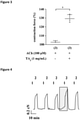
- Figure 2 depicts the results of 5 independent measurements, starting from the left.
- a contraction of the trachea was induced by adding 100 ⁇ M ACh.
- a contraction of the trachea is visible on the given force scale.
- a rinsing step is performed as indicated by the arrows.
- the fourth measurement is performed after addition of the compound mixture and equilibration of the bath for 10 minutes. It can be seen, that the trachea response is larger compared to the first three cycles. The last experiment reveals, that after a rinsing step approximately the same response is generated by ACh compared to the first three control measurements. The latter is an indicator that the pharmacological effect of the test compounds is reversible.
- Figure 4 displays another trachea experiment.
- the overall setup is similar to the above described experiment.
- the first three peaks are control peaks originated from contractions based on ACh alone.
- the inventive compound was added at the ACh induced contraction peak and remained in the bath for 5 minutes. It is visible that the contraction force is significantly increased after compound addition.
- the fifth cycle exhibits, that after washing the "standard" ACh induced contraction force is re-established, indicating a reversable influence of the inventive compounds on smooth muscle contraction.
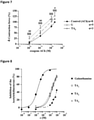
- Figure 6 shows the ACh dose dependent effects on trachea contraction force of a control (solid line) and a bath also comprising 1 mg/ml of a mixture of inventive compound 1 and 2.
- the ACh concentrations are given on a logarithmic scale. Each result is given as an average also comprising the standard deviation. The data reveal that there is a significant difference between standard and experiment starting from 10 -6 molar ACh.
- Figure 7 displays the pharmacological effects of galantamine, a "gold" standard in ACh response modulation, on the force response of a mouse trachea. Galantamine was added to the bath 10 minutes prior to ACh addition. The experiment is comparable to the experiment depicted in and described for figure 2 . A comparison of figure 7 and figure 6 reveals, that galantamine comprises a response already at lower ACh levels and the overall increase in contraction force is somewhat higher.
- the mouse trachea model data reveal, that in an in-vivo model the inventive compounds are able to alter the ACh response of smooth muscle cells. This becomes visible by an increased contraction force after supplementing the inventive compounds to the bath.
- the single substances were tested with an acetylcholinesterase Inhibitor Screening Kit (Sigma Aldrich, Taufkirchen, D).
- the test assay is based on the Ellman method, wherein Acetylthiocholin after hydrolysis reacts with 5,5'-Dithio-bis-2-nitrobenzoic acid forming the colored 5-thio-2-nitrobenzoate. The latter can be detected in an UV-experiment at 412 nm.
- the experiments were performed in a 96 well plate. An AChE concentration of 90 u/L was employed. Galantamine was used as a positive control at 0.01, 0.1, 1, 5, 10 und 100 ⁇ M. The inventive compounds were tested in concentrations of 1, 100, 200, 300, 600 und 900 ⁇ M. A well without inhibitor was used as a negative control. For assessing the UV-absorption after 10 minutes reaction time a plate reader (Clariostar BMG LABTECH GmbH, Ortenberg, D) was used.
- Figure 8 shows the inhibition profile of three compounds according to the invention and the "gold" standard galantamine as a function of the inhibitor concentration. It can be deduced that the gold standard comprises a higher potential to inhibit AChE (IC 50 2 ⁇ M), based on the earlier onset at lower concentrations and the overall better inhibitory effect. Nevertheless, the inventive compounds do also show a significant concentration dependent inhibition comprising IC 50 values of 231 ⁇ M (compound 1) and 172 ⁇ M (compound 2), respectively. For the third compound, compound 3, the 50% inhibition level was not achieved in this experiment, presumably based on the acetyl-moiety substitution.
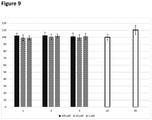
- Figure 9 shows exemplarily, that up to 100 ⁇ M no statistical significant reduction in cell proliferation can be detected for HaCaT cells. Similar results are obtained for the other cell lines. This result indicates that the inventive compounds are very biocompatible.
Landscapes
- Health & Medical Sciences (AREA)
- Life Sciences & Earth Sciences (AREA)
- Veterinary Medicine (AREA)
- Engineering & Computer Science (AREA)
- Bioinformatics & Cheminformatics (AREA)
- Chemical & Material Sciences (AREA)
- Public Health (AREA)
- Medicinal Chemistry (AREA)
- General Health & Medical Sciences (AREA)
- Animal Behavior & Ethology (AREA)
- Pharmacology & Pharmacy (AREA)
- General Chemical & Material Sciences (AREA)
- Nuclear Medicine, Radiotherapy & Molecular Imaging (AREA)
- Chemical Kinetics & Catalysis (AREA)
- Organic Chemistry (AREA)
- Cardiology (AREA)
- Neurology (AREA)
- Epidemiology (AREA)
- Biomedical Technology (AREA)
- Hospice & Palliative Care (AREA)
- Neurosurgery (AREA)
- Heart & Thoracic Surgery (AREA)
- Nutrition Science (AREA)
- Physical Education & Sports Medicine (AREA)
- Orthopedic Medicine & Surgery (AREA)
- Psychiatry (AREA)
- Pharmaceuticals Containing Other Organic And Inorganic Compounds (AREA)
Priority Applications (1)
| Application Number | Priority Date | Filing Date | Title |
|---|---|---|---|
| EP20193376.9A EP3960174B1 (de) | 2020-08-28 | 2020-08-28 | Parasympathische aktive phenyl-glycosid-substituierte hydroxy-methyl-piperidin- und -pyrrolidin-alkaloide zur medizinischen verwendung |
Applications Claiming Priority (1)
| Application Number | Priority Date | Filing Date | Title |
|---|---|---|---|
| EP20193376.9A EP3960174B1 (de) | 2020-08-28 | 2020-08-28 | Parasympathische aktive phenyl-glycosid-substituierte hydroxy-methyl-piperidin- und -pyrrolidin-alkaloide zur medizinischen verwendung |
Publications (3)
| Publication Number | Publication Date |
|---|---|
| EP3960174A1 true EP3960174A1 (de) | 2022-03-02 |
| EP3960174B1 EP3960174B1 (de) | 2024-10-30 |
| EP3960174C0 EP3960174C0 (de) | 2024-10-30 |
Family
ID=72290919
Family Applications (1)
| Application Number | Title | Priority Date | Filing Date |
|---|---|---|---|
| EP20193376.9A Active EP3960174B1 (de) | 2020-08-28 | 2020-08-28 | Parasympathische aktive phenyl-glycosid-substituierte hydroxy-methyl-piperidin- und -pyrrolidin-alkaloide zur medizinischen verwendung |
Country Status (1)
| Country | Link |
|---|---|
| EP (1) | EP3960174B1 (de) |
Citations (4)
| Publication number | Priority date | Publication date | Assignee | Title |
|---|---|---|---|---|
| WO2013168090A1 (en) | 2012-05-07 | 2013-11-14 | The State Of Israel, Ministry Of Agriculture & Rural Development, Agricultural Researc Organization (Aro) (Volcanii Center). | Geranium oil and constituents thereof for treatment of neurodegenerative diseases |
| EP2999480A1 (de) | 2013-03-07 | 2016-03-30 | Berbee Beheer BV | Extrakt aus hippeastrum papilio mit hohem galanthamingehalt |
| CN106349141A (zh) * | 2016-08-30 | 2017-01-25 | 中国科学院化学研究所 | 多羟基吡咯烷类化合物及其制备方法和应用 |
| EP2892563B1 (de) | 2012-09-09 | 2018-11-14 | H. Lundbeck A/S | Pharmazeutische zusammensetzungen zur behandlung von morbus alzheimer |
-
2020
- 2020-08-28 EP EP20193376.9A patent/EP3960174B1/de active Active
Patent Citations (4)
| Publication number | Priority date | Publication date | Assignee | Title |
|---|---|---|---|---|
| WO2013168090A1 (en) | 2012-05-07 | 2013-11-14 | The State Of Israel, Ministry Of Agriculture & Rural Development, Agricultural Researc Organization (Aro) (Volcanii Center). | Geranium oil and constituents thereof for treatment of neurodegenerative diseases |
| EP2892563B1 (de) | 2012-09-09 | 2018-11-14 | H. Lundbeck A/S | Pharmazeutische zusammensetzungen zur behandlung von morbus alzheimer |
| EP2999480A1 (de) | 2013-03-07 | 2016-03-30 | Berbee Beheer BV | Extrakt aus hippeastrum papilio mit hohem galanthamingehalt |
| CN106349141A (zh) * | 2016-08-30 | 2017-01-25 | 中国科学院化学研究所 | 多羟基吡咯烷类化合物及其制备方法和应用 |
Non-Patent Citations (3)
| Title |
|---|
| CHESHIRE WILLIAM P JR ET AL: "Drug-induced hyperhidrosis and hypohidrosis - Incidence, prevention and management", DRUG SAFETY, ADIS PRESS, AUCKLAND, NZ, vol. 31, no. 2, 1 January 2008 (2008-01-01), pages 109 - 126, XP009189658, ISSN: 0114-5916 * |
| POPE C ET AL: "Pharmacology and toxicology of cholinesterase inhibitors: uses and misuses of a common mechanism of action", ENVIRONMENTAL TOXICOLOGY AND PHARMACOLOGY, ELSEVIER, AMSTERDAM, NL, vol. 19, no. 3, 1 May 2005 (2005-05-01), pages 433 - 446, XP027640516, ISSN: 1382-6689, [retrieved on 20050501] * |
| S NISHINO ET AL: "Muscle atonia is triggered by cholinergic stimulation of the basal forebrain: implication for the pathophysiology of canine narcolepsy", THE JOURNAL OF NEUROSCIENCE, vol. 15, no. 7, 1 July 1995 (1995-07-01), US, pages 4806 - 4814, XP055771415, ISSN: 0270-6474, DOI: 10.1523/JNEUROSCI.15-07-04806.1995 * |
Also Published As
| Publication number | Publication date |
|---|---|
| EP3960174B1 (de) | 2024-10-30 |
| EP3960174C0 (de) | 2024-10-30 |
Similar Documents
| Publication | Publication Date | Title |
|---|---|---|
| US8138165B2 (en) | Chromones and chromone derivatives and uses thereof | |
| Mbeunkui et al. | In vitro antiplasmodial activity of indole alkaloids from the stem bark of Geissospermum vellosii | |
| EP0154864B1 (de) | Physostigminderivate mit Acetylcholinesterase-Inhibitoreigenschaften, und das entsprechende Herstellungsverfahren | |
| CN108290864A (zh) | 一种蛋白激酶抑制剂及其制备方法和医药用途 | |
| WO2011054837A2 (de) | Bifunktionale prodrugs und drugs | |
| WO1997008146A1 (en) | Pyridinium derivatives and pharmaceutical compositions containing them | |
| EP3960174B1 (de) | Parasympathische aktive phenyl-glycosid-substituierte hydroxy-methyl-piperidin- und -pyrrolidin-alkaloide zur medizinischen verwendung | |
| CN112004799A (zh) | Akr1c3抑制剂及医药用途 | |
| KR100203456B1 (ko) | 디하이드로에보디아민-에이치씨1를 유효성분으로 함유하는 알츠하이머병에 의한 치매 치료제 | |
| Muhammad et al. | Chemodiverse monoterpene indole alkaloids from Kopsia teoi, inhibitory potential against α-amylase, and their molecular docking studies | |
| CN106928311B (zh) | 柠檬苦素衍生物、其制备方法及医药用途 | |
| CN112174865A (zh) | Akr1c3抑制剂及医药用途 | |
| Irvine | Kryptopyrrole and other monopyrroles in molecular neurobiology | |
| Chen et al. | Characterization of new metabolites from in vivo biotransformation of norisoboldine by liquid chromatography/mass spectrometry and NMR spectroscopy | |
| Magalhães et al. | Effect of indole alkaloids from roots of Rauvolfia ligustrina in the noradrenergic neurotransmission | |
| RU2672569C2 (ru) | Новое производное оксима хромона и его использование в качестве аллостерического модулятора метаботропных рецепторов глутамата | |
| EP2776462B1 (de) | Indolalkylamino-withasteroid-konjugate und verwendungsverfahren dafür | |
| CN114478561B (zh) | 一种依帕司他石蒜碱偶联物及其制备方法和用途 | |
| CN114423775B (zh) | 一类芳基葡糖苷衍生物及其制备方法和应用 | |
| CN116284018A (zh) | 一种呋喃并[2,3-b]喹啉衍生物的制备方法及其应用 | |
| KR100570810B1 (ko) | 신규 세라마이드 유도체, 이의 제조방법 및 이의 용도 | |
| AU2011214464B2 (en) | Use of isorhamnetin triglycosides | |
| CN115137727A (zh) | 一种gsh/h2o2双响应性的两性离子罗丹明-喜树碱纳米前药应用于癌症化疗 | |
| CN102439022A (zh) | 新型钠通道阻滞化合物河豚毒素吡喃半乳糖苷 | |
| CN114957296A (zh) | 一类新型阿尔茨海默病检测探针及其生物应用 |
Legal Events
| Date | Code | Title | Description |
|---|---|---|---|
| PUAI | Public reference made under article 153(3) epc to a published international application that has entered the european phase |
Free format text: ORIGINAL CODE: 0009012 |
|
| STAA | Information on the status of an ep patent application or granted ep patent |
Free format text: STATUS: THE APPLICATION HAS BEEN PUBLISHED |
|
| AK | Designated contracting states |
Kind code of ref document: A1 Designated state(s): AL AT BE BG CH CY CZ DE DK EE ES FI FR GB GR HR HU IE IS IT LI LT LU LV MC MK MT NL NO PL PT RO RS SE SI SK SM TR |
|
| STAA | Information on the status of an ep patent application or granted ep patent |
Free format text: STATUS: REQUEST FOR EXAMINATION WAS MADE |
|
| 17P | Request for examination filed |
Effective date: 20220830 |
|
| RBV | Designated contracting states (corrected) |
Designated state(s): AL AT BE BG CH CY CZ DE DK EE ES FI FR GB GR HR HU IE IS IT LI LT LU LV MC MK MT NL NO PL PT RO RS SE SI SK SM TR |
|
| GRAP | Despatch of communication of intention to grant a patent |
Free format text: ORIGINAL CODE: EPIDOSNIGR1 |
|
| STAA | Information on the status of an ep patent application or granted ep patent |
Free format text: STATUS: GRANT OF PATENT IS INTENDED |
|
| INTG | Intention to grant announced |
Effective date: 20240523 |
|
| GRAS | Grant fee paid |
Free format text: ORIGINAL CODE: EPIDOSNIGR3 |
|
| GRAA | (expected) grant |
Free format text: ORIGINAL CODE: 0009210 |
|
| STAA | Information on the status of an ep patent application or granted ep patent |
Free format text: STATUS: THE PATENT HAS BEEN GRANTED |
|
| AK | Designated contracting states |
Kind code of ref document: B1 Designated state(s): AL AT BE BG CH CY CZ DE DK EE ES FI FR GB GR HR HU IE IS IT LI LT LU LV MC MK MT NL NO PL PT RO RS SE SI SK SM TR |
|
| REG | Reference to a national code |
Ref country code: GB Ref legal event code: FG4D |
|
| REG | Reference to a national code |
Ref country code: CH Ref legal event code: EP |
|
| REG | Reference to a national code |
Ref country code: DE Ref legal event code: R096 Ref document number: 602020040174 Country of ref document: DE |
|
| REG | Reference to a national code |
Ref country code: IE Ref legal event code: FG4D |
|
| U01 | Request for unitary effect filed |
Effective date: 20241129 |
|
| U07 | Unitary effect registered |
Designated state(s): AT BE BG DE DK EE FI FR IT LT LU LV MT NL PT RO SE SI Effective date: 20241210 |
|
| PG25 | Lapsed in a contracting state [announced via postgrant information from national office to epo] |
Ref country code: IS Free format text: LAPSE BECAUSE OF FAILURE TO SUBMIT A TRANSLATION OF THE DESCRIPTION OR TO PAY THE FEE WITHIN THE PRESCRIBED TIME-LIMIT Effective date: 20250228 Ref country code: HR Free format text: LAPSE BECAUSE OF FAILURE TO SUBMIT A TRANSLATION OF THE DESCRIPTION OR TO PAY THE FEE WITHIN THE PRESCRIBED TIME-LIMIT Effective date: 20241030 |
|
| PG25 | Lapsed in a contracting state [announced via postgrant information from national office to epo] |
Ref country code: ES Free format text: LAPSE BECAUSE OF FAILURE TO SUBMIT A TRANSLATION OF THE DESCRIPTION OR TO PAY THE FEE WITHIN THE PRESCRIBED TIME-LIMIT Effective date: 20241030 |
|
| PG25 | Lapsed in a contracting state [announced via postgrant information from national office to epo] |
Ref country code: NO Free format text: LAPSE BECAUSE OF FAILURE TO SUBMIT A TRANSLATION OF THE DESCRIPTION OR TO PAY THE FEE WITHIN THE PRESCRIBED TIME-LIMIT Effective date: 20250130 |
|
| PG25 | Lapsed in a contracting state [announced via postgrant information from national office to epo] |
Ref country code: GR Free format text: LAPSE BECAUSE OF FAILURE TO SUBMIT A TRANSLATION OF THE DESCRIPTION OR TO PAY THE FEE WITHIN THE PRESCRIBED TIME-LIMIT Effective date: 20250131 |
|
| PG25 | Lapsed in a contracting state [announced via postgrant information from national office to epo] |
Ref country code: PL Free format text: LAPSE BECAUSE OF FAILURE TO SUBMIT A TRANSLATION OF THE DESCRIPTION OR TO PAY THE FEE WITHIN THE PRESCRIBED TIME-LIMIT Effective date: 20241030 |
|
| PG25 | Lapsed in a contracting state [announced via postgrant information from national office to epo] |
Ref country code: RS Free format text: LAPSE BECAUSE OF FAILURE TO SUBMIT A TRANSLATION OF THE DESCRIPTION OR TO PAY THE FEE WITHIN THE PRESCRIBED TIME-LIMIT Effective date: 20250130 |
|
| PG25 | Lapsed in a contracting state [announced via postgrant information from national office to epo] |
Ref country code: SM Free format text: LAPSE BECAUSE OF FAILURE TO SUBMIT A TRANSLATION OF THE DESCRIPTION OR TO PAY THE FEE WITHIN THE PRESCRIBED TIME-LIMIT Effective date: 20241030 |
|
| PG25 | Lapsed in a contracting state [announced via postgrant information from national office to epo] |
Ref country code: SK Free format text: LAPSE BECAUSE OF FAILURE TO SUBMIT A TRANSLATION OF THE DESCRIPTION OR TO PAY THE FEE WITHIN THE PRESCRIBED TIME-LIMIT Effective date: 20241030 |
|
| PG25 | Lapsed in a contracting state [announced via postgrant information from national office to epo] |
Ref country code: CZ Free format text: LAPSE BECAUSE OF FAILURE TO SUBMIT A TRANSLATION OF THE DESCRIPTION OR TO PAY THE FEE WITHIN THE PRESCRIBED TIME-LIMIT Effective date: 20241030 |
|
| PLBE | No opposition filed within time limit |
Free format text: ORIGINAL CODE: 0009261 |
|
| STAA | Information on the status of an ep patent application or granted ep patent |
Free format text: STATUS: NO OPPOSITION FILED WITHIN TIME LIMIT |
|
| U20 | Renewal fee for the european patent with unitary effect paid |
Year of fee payment: 6 Effective date: 20250820 |
|
| 26N | No opposition filed |
Effective date: 20250731 |
|
| PGFP | Annual fee paid to national office [announced via postgrant information from national office to epo] |
Ref country code: CH Payment date: 20250901 Year of fee payment: 6 |
|
| PG25 | Lapsed in a contracting state [announced via postgrant information from national office to epo] |
Ref country code: MC Free format text: LAPSE BECAUSE OF FAILURE TO SUBMIT A TRANSLATION OF THE DESCRIPTION OR TO PAY THE FEE WITHIN THE PRESCRIBED TIME-LIMIT Effective date: 20241030 |
|
| GBPC | Gb: european patent ceased through non-payment of renewal fee |
Effective date: 20250828 |
|
| REG | Reference to a national code |
Ref country code: CH Ref legal event code: R18 Free format text: ST27 STATUS EVENT CODE: U-0-0-R10-R18 (AS PROVIDED BY THE NATIONAL OFFICE) Effective date: 20260501 |