EP3954201B1 - Verfahren zur verringerung der staubansammlung in der smogschicht, die die inversionsschicht ist - Google Patents
Verfahren zur verringerung der staubansammlung in der smogschicht, die die inversionsschicht ist Download PDFInfo
- Publication number
- EP3954201B1 EP3954201B1 EP20217680.6A EP20217680A EP3954201B1 EP 3954201 B1 EP3954201 B1 EP 3954201B1 EP 20217680 A EP20217680 A EP 20217680A EP 3954201 B1 EP3954201 B1 EP 3954201B1
- Authority
- EP
- European Patent Office
- Prior art keywords
- inversion layer
- accumulation
- measurements
- layer
- shock wave
- Prior art date
- Legal status (The legal status is an assumption and is not a legal conclusion. Google has not performed a legal analysis and makes no representation as to the accuracy of the status listed.)
- Active
Links
Images


Classifications
-
- A—HUMAN NECESSITIES
- A01—AGRICULTURE; FORESTRY; ANIMAL HUSBANDRY; HUNTING; TRAPPING; FISHING
- A01G—HORTICULTURE; CULTIVATION OF VEGETABLES, FLOWERS, RICE, FRUIT, VINES, HOPS OR SEAWEED; FORESTRY; WATERING
- A01G15/00—Devices or methods for influencing weather conditions
Definitions
- the object of the invention is a method of lowering the accumulation of dusts in the smog layer, especially when there are no factors that would naturally lower the accumulation of dusts in the smog layer.
- Smog is an atmospheric phenomenon resulting from the mixing of humid air with smoke, fumes and solid particles, very often accompanied by the occurrence of moisture condensation (fog).
- Air pollution, such as smog (of the London type) is caused by the emission of large quantities of chemical compounds hazardous to health into the atmosphere, such as, among others: sulphur oxides and nitrogen oxides and carcinogenic polycyclic aromatic hydrocarbons (PAHs), as well as solid substances, i.e. particulate matter (including PM10, PM2.5 also considered to be carcinogenic).
- PHAs polycyclic aromatic hydrocarbons
- PM Particulate Matter
- the exact composition of the dust depends on the conditions in which it was created, but it often contains polycyclic aromatic hydrocarbons, heavy metals, furans, sulphur, radionuclides of natural and possibly artificial origin and asbestos.
- Many of the dust components e.g. benzo(a)pyrene, arsenic, lead, cadmium or nickel, have a negative impact on human health and lead primarily to respiratory, cardiovascular and cancer diseases.
- arsenic and its compounds have been identified by the International Agency for Research on Cancer (IARC) as carcinogenic to humans and are listed in Group 1, as described in the publication entitled " Arsen i nieorganiczne zwiqzki arsenu. Wytyczne szacowania ryzyka zdrowotnego dla czynników rakotwórczych” IMP , ód ⁇ 2003, vol. 17, 5.
- IARC International Agency for Research on Cancer
- PM10 dust which consists of fractions of particles up to 10 ⁇ m
- PM2.5 dust which consists of fractions of particles up to 2.5 ⁇ m
- PM1 dust which consists of fractions of ultra-fine particles up to 1 ⁇ m.
- WHO World Health Organization
- the mechanism of dust accumulation in the ground layer of the atmosphere is conditioned by many random atmospheric factors, and in particular by the disappearance of vertical convective movements of air masses, resulting from an even vertical temperature profile and low temperatures values.
- the cause of the disappearance of convection in the ground layer is, for the most part, the resulting inversion layer, in which the area of occurrence, the distribution of the vertical gradient of air temperature deviates from the prevalent type of temperature gradient, characterized by an even temperature drop.
- the temperature together with the altitude, increases or does not change, while in normal conditions it should decrease.
- the inversion layer which consists of the deposited mass of warmer air, creates a covering layer for the mass of colder air near the ground, which results in the disappearance of convection, which is a natural mechanism for dispersing particulate matter suspended in the air.
- the differences are disappearing in the densities of moist and dusty air, observed along the height, and thus the buoyancy force F W acting on a single particle suspended in the air, as well as the aerodynamic drag force of air F D , the Magnus force F M , the transverse pressure gradient force F P , the Saffman force F S are balanced with the gravity forces F G and cohesion forces F K and Coriolis F C .
- the solid particles are suspended in the air at certain heights, constantly migrating among themselves, but do not elevate.
- This cloud in the form of a layer of smog with accumulation of PM10, PM2,5, PM1 dusts exceeding the acceptable standards is created on a windless, cold day. Especially often this phenomenon occurs in a basin, where in case of disappearance of convective movements of air masses there is an accumulation of low emission dusts.
- the time of depositing a layer of smog with high accumulations of dust depends (is strongly correlated) on the prevailing weather conditions and ranges from several hours to several days.
- the natural conditions causing the shortening of deposit time of this layer are a windy day, a day with precipitation and a warm day.
- the deposit time of the smog layer is directly influenced by air temperature, wind speed and air humidity.
- the disappearance of convective dust lifting causes the accumulation of dusts in the ground layers to increase continuously, significantly affecting air quality. This situation lasts until the area of temperature inversion is naturally dispersed (precipitation, strong wind from any direction or increase in air temperature).
- any action which, during the period of the smog layer's accumulation with dust accumulations exceeding acceptable standards, in the absence of natural dispersion factors, aims at inhibiting the deterioration of the air condition, even immediate and temporary, is valuable and desirable.
- a method of removing particulate matter from the city's foggy air is known from patent application CN104689661 A .
- the method includes the following steps: placing a huge well in a place with the lowest height in the suburban zone, effectively drawing polluted air into the well, removing dusts and disinfecting the air successively.
- the technology assumes the flow of purified air back into the city through the existing network of city pipes.
- the plan of distribution of air intake wells is laid out in accordance with the city road plan, using the current installation networks.
- the air after the cleaning process is returned to the city to dilute the remaining pollutants in the air.
- the method improves air cleanliness and reduces the damage associated with the impact of particulate matter on human health.
- the application of this system on an urban scale requires considerable investment.
- Application EP2125156 A1 discloses a method and device for the removal of fine particles from the air in a residential area with a short range, up to several meters. Polluted air is sucked in by the device from the environment, at a height of up to one meter. Coarse-grained particles are first caught using filters. The air is then cleaned of fine dust fractions up to 0.2 ⁇ m in grain size.
- a method of capturing particulate matter coming from road transport is known from patent description JP3958622 B2 .
- the method involves filter placement along the roadway on walls e.g. acoustic screens.
- Various types of adsorbents can be used, preferably located at a height of about one meter, properly profiled in relation to the roadway, in order to catch dust more effectively, as well as electrostatic precipitators. It is also possible to use devices built into the wall to remove solid particles. This solution applies only to dust of communication origin, it is not complementary to other emission sources.
- the operating costs seem to be considerable and, in addition, continuous operation of the fans can be burdensome for residents.
- the system for forcing air masses to move over open areas, especially for stimulating and supporting air streams over open urbanized areas is known from patent application PL424785 A1 . It contains elements forcing air movement situated on supporting elements, which is characterized in that there are at least two air movement forcing elements in the same direction on at least one line determined on the ventilated area, positioned on the supporting elements and spaced between 29 H and 51 H, where H is the height from the level of the base of the supporting element to the axis of attachment of the air movement forcing element.
- Air movement forcing elements on the same line generate an air stream with a flow rate of at least 4700 m 3 /s, and the height from the level of the base of the supporting elements to the axis of the air movement forcing element attachment is between 40 m and 60 m.
- the above described solutions increase the movement of air in the ground layer, affecting the height of about 70 meters.
- the problem of dust particles remaining in urban areas is largely related to the emerging area of temperature inversion. This area, causes the disappearance of natural convective movements of the air masses and stops the process of natural dusts rising from the ground layer.
- the height of the temperature inversion area varies and depends on the location of the temperature inversion layer, which is usually located higher than 70 meters, usually from 100 to 200 meters.
- the object of the invention is to develop a method of reducing dust accumulation in the smog layer, which is an inversion layer, deposited in connection with weather conditions, and to maximally shorten the time of stagnant conditions preventing the natural process of smog dispersion.
- the object is also to reduce the accumulation of dusts suspended in polluted air, especially in situations of a sudden increase in the level of dust pollution, especially in metropolitan areas and maintaining air pollution, in the ground layer up to 100 m, at the level required by the WHO recommended values and the current Directive 2008/50/EC of the European Parliament and of the European Council of 21 May 2008 on ambient air quality and cleaner air for Europe (CAFE).
- the essence of the method of lowering the accumulation of dusts in the smog layer, which is an inversion layer, especially when there are no factors conducive to natural lowering of the accumulation of dusts in the smog layer, in which the mobile measuring station is used, equipped with devices for measuring air temperature, wind speed and dust accumulation, as well as an anti-hail cannon and a properly programmed computer comprising a central unit, is based on the fact that based on the measurements performed, the position of the inversion layer and its parameters are determined and then, using the anti-hail cannon, the structure of the inversion layer is destroyed.
- the air temperature and wind speed as well as the accumulation of PM 10, PM 2.5 in area are measured in situ, using a mobile measuring station (MSP), on a measuring path from 0 to the altitude at which the inversion layer is identified or up to 500 m.
- MSP mobile measuring station
- These measurements are taken at predetermined measuring points, 1 to 20 m apart, preferably 1 m away from each other, and the results are transmitted by RF to the central unit, where they are compared with reference data and archived.
- the method according to the invention On the basis of the performed measurements it is determined whether it is advisable to use the method according to the invention.
- the average wind speed calculated on the basis of previously made measurements, is greater than 0.8 m/s and/or the temperature drop on every subsequent 10 m altitude is greater than 1.0°C, then there are natural smog dispersion conditions and it is not advisable to continue with the method according to the invention. In this case, the measurement is stopped and the mobile measuring station is brought to the ground. On the other hand, if the wind speed is less than 0.8 m/s and/or the temperature drop on the 10 m altitude is less than 1.0°C, the mobile measuring station is raised to the next measuring point and continues the measurements, recognizing that the weather conditions warrant the continuation of the method.
- the measured area shall be considered an inversion layer.
- the lower boundary of this layer is the measurement height at which the dust accumulation limits were measured and the low temperature gradient, which characterizes the inversion layer.
- measurements shall be continued until at least 5 consecutive measurements at intervals of 1 m are obtained, showing an accumulation of PM 10 less than 50 ⁇ g/m 3 and/or an accumulation of PM 2.5 less than 25 ⁇ g/m 3 and a temperature drop on the 10 m altitude greater than 0.1°C. Measuring such values indicates the leaving the inversion layer.
- the upper boundary of the inversion layer is the highest height at which the measurement showed conditions specific to the inversion layer.
- the length of a single cycle is at least 10 minutes and consists of at least 60 explosions of the explosive mixture.
- the minimum range of the explosion cycle is defined for an inversion layer with a lower boundary of 70 m and a thickness not exceeding 30 m.
- the shock wave cycle is extended by 1 minute for every 10 m higher position of the lower inversion layer boundary and for every 10 m thicker inversion layer.
- Generating a shock wave starts with the introduction of a mixture of combustible gases and air into the detonation chamber of the shock wave generator under pressure and then triggers its explosion.
- the outlet stream of gases is directed to, the nozzle ending with a nozzle cone angle from 8° to 12°, the outlet pipe is perpendicular to the ground.
- the detonation pressure of the combustible gas mixture is not less than 1 MPa.
- the filling of the detonation chamber of the shockwave generator is continuous and the interval between the initiation of subsequent explosions is no longer than 10 seconds.
- the dust accumulation is measured at a distance of 10 to 20 m from the axis of the shot, using a mobile measuring station, on the same path as the measurements were made before the shock wave generation cycle.
- the arithmetic average is calculated from the measurements of accumulations made from 0 m to the level of the upper inversion layer, before the shock wave generation cycle and the calculated arithmetic average is subtracted from the measurements of accumulations made after the shock wave generation cycle. If the calculated difference from the arithmetic averages of the accumulation measurements is ⁇ 15%, the method is stopped for at least 1 - 4 hours, and if it is less than 15%, the shock wave generation cycle is immediately repeated.
- a group of shock wave generators operating simultaneously is activated. If more than one generator is used, the generators are arranged in a circle and the distance between the individual generators is 2 R, where R is the radius of the base of the inverted cone, the shape of which takes the form of an impact wave, at the level of its contact with the lower boundary of the inversion layer, occurring at a height of 100 m. Increased efficiency is also achieved by the generators being properly deflected from the vertical.
- the outlet lines are positioned at an angle of no more than 30° to the vertical, counting from the vertical.
- a nozzle with a 12° cone top angle is preferably used.
- a nozzle with the top angle of the cone 10° is used, and when the lower boundary of the inversion layer is at a height of 150 m, a nozzle with the top angle of the cone 8° is preferably used.
- a mobile measuring station is used to carry out measurements, which is a flying device, preferably a drone type, equipped with appropriate measuring devices and wireless communication devices, programmed and controlled by the central unit via wireless communication.
- the advantage of the method according to the invention is that it allows to change the state of stagnant conditions preventing the natural process of smog dispersion. Destruction of the structure of the inversion layer carried out according to the invention shortens the duration of unfavorable conditions of lack of thermal convection and restores conditions for the natural process of smog dispersion.
- the method according to the invention does not require significant investments in infrastructure. It is simple and cheap to implement. The devices necessary for the implementation of the method are easy to disassemble and can be moved to any place. It eliminates the state of passive waiting for weather conditions to change, which will reduce the state of dustiness in the area formed under the inversion layer.
- the use of elements of the method according to the invention allows to reduce the accumulation of particulate matter suspended in the polluted air, especially in situations of a sudden increase in the level of dust pollution, especially in metropolitan areas, and to maintain the air pollution, at a level considered to be of little detriment to human health.
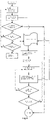
- fig.1 shows the algorithm of operations and activities performed in the method according to the invention
- fig.2 shows, in a simplified form, the situation in which the method according to the invention is implemented
- fig.3 shows, in a simplified form, the effect of penetration of the shock wave of the first explosion in the inversion layer
- fig.4 shows the scheme of arrangement of generator groups with the amount of N > 2
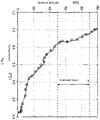
- fig. 5 shows a diagram of the air temperature profile in relation to height
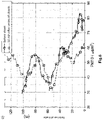
- fig. 6 shows a diagram of PM 10 accumulation measurements before and after the shooting cycle.
- Inopower anti-hail cannon powered by acetylene, with an overpressure of 6 bar
- the detonation chamber of this cannon has a volume of 0.67 m3.
- the stream of exhaust gases constituting the shock wave is directed, in Inopower's anti-hail cannon, to an outlet pipe 3 m long, ending with a nozzle with a cone tip angle of 12°.
- the gun was set vertically (0° angle counted from the vertical), the detonation pressure was 1 MPa.
- Yuneec Typhoon H520 drone was used, equipped with an altimeter, integrated sensor for measuring temperature from -20°C - + 50°C, humidity from 20% to 95% RH, pressure from 800 mbar - 1150 mbar, FT205 sensor for measuring wind speed and direction from 0 to 75 m/s and two sensors for PM 10 and PM 2.5 Atmon FL type with a measuring range of 0 - 999 ⁇ g/m 3 and a resolution of 15 ⁇ g/m 3 and a transmitter for radio transmission of measurement results.
- the method of decreasing the accumulation of dusts in the smog layer constituting the inversion layer was performed on 25.11.2019 on the next day of increasing the accumulation of dusts in the ground layer and in stagnant conditions preventing the natural process of smog dispersion.
- the first step was to determine the parameters of the inversion layer, based on the results of measurements carried out using the mobile measurement station The results of measurements and calculations are presented in Table 1.
- the measuring points were 1 m apart along the altitude, on the path of vertical ascent of MSP.
- the profile of changes in temperature, wind speed and accumulations of PM 2.5 and PM 10 along the altitude from 0 to 103 m was measured.
- the extent of the inversion layer was identified and determined. Measurements started from a height of 0 m.
- Fig. 5 shows a diagram of temperature changes with altitude
- Fig. 6 shows a diagram of PM 10 accumulation measurements along altitude.
- Table 1 from 0 to 50 m, the temperature drop for each 10 m was greater than 0.1°C and less than 1°C.
- the average wind speed on a 10 m was less than 0.8 m/s.
- the mobile measuring station was continued to be lifted.
- a temperature drop of 0.039°C was observed from an altitude of 50 to 60 m and a PM 2.5 accumulation higher than the limit accumulation of 25 ⁇ g/m 3 was observed for 5 consecutive measurements obtained at altitudes of 50-54 m, which informed about the occurrence of the lower limit of the inversion layer, the base of which was assumed at an altitude of 50 m. Temperature drop below 0.1°C on a 10 m altitude was observed up to 90 m height. Then the mobile measuring station was lifted to further measuring heights on a 10 m altitude.
- a control measurement of the dust accumulation was carried out at a distance of 10 m from the axis of the shot, taking a measurement from 0 to the height of the inversion layer (96 m), the measurement points were 1 m away from each other.
- the average accumulation of PM2.5 was 32 ⁇ g/m 3 , i.e. a decrease of 15.8%
- PM 10 was 49.9 ⁇ g/m 3 , i.e. a decrease of 19.5%.
- the mobile measuring station was brought to the ground and the procedure of dust accumulation reduction was suspended for 3 hours.
- the invention can be used in heavily urbanized areas with high low emissions, where there is a natural condition for smog to remain as a result of creating an inversion layer (basins, river valleys). Smog accumulated as a result of creating an inversion layer, when there are no conditions for the natural process of smog dispersion, creates conditions that are dangerous to people's health and life.
- the invention allows to change the state of stagnation conditions preventing the natural process of smog dispersion, contributing to the temporary improvement of the air condition in the areas at risk of smog accumulation.
Landscapes
- Life Sciences & Earth Sciences (AREA)
- Atmospheric Sciences (AREA)
- Environmental Sciences (AREA)
- Investigating Or Analyzing Materials Using Thermal Means (AREA)
- Sampling And Sample Adjustment (AREA)
Claims (8)
- Verfahren zur Verringerung der Ansammlung von Stäuben in der Smogschicht, die eine Inversionsschicht ist, die sich über einem Gebiet mit erhöhter Staubemission ansammelt und die Schaffung eines thermischen Inversionsgebiets ermöglicht, unter Verwendung einer mobilen Messstation, die mit Vorrichtungen zur Messung der Lufttemperatur, der Windgeschwindigkeit und der Staubansammlung sowie einer Anti-Hagelkanone und einem entsprechend programmierten Computer mit einer Zentraleinheit ausgestattet ist, dadurch gekennzeichnet, dass:- die Lufttemperatur und Windgeschwindigkeit sowie die Akkumulation von PM 10, PM 2.5 im Gebiet werden in situ mit einer mobilen Messstation auf einer Messstrecke gemessen von 0 bis zu der Höhe, in der die Inversionsschicht festgestellt wird, oder bis zu 500 m,- Die Messungen werden an vorbestimmten Messpunkten im Abstand von 1 bis 20 m, vorzugsweise 1 m voneinander entfernt, vorgenommen und die Ergebnisse per Funk an die Zentraleinheit übertragen, wo sie mit Referenzdaten verglichen und archiviert werden,- Die Bedingungen für die Durchführung der Methode werden alle 10 m ausgewertet, und wenn die auf der Grundlage von 10 zuvor durchgeführten Messungen berechnete durchschnittliche Windgeschwindigkeit größer als 0,8 m/s ist und/oder der Temperaturabfall auf jeder folgenden 10 m Höhe größer als 1,0°C ist, wird die Messung abgebrochen und die mobile Messstation auf den Erdboden gebracht,- Wenn die Windgeschwindigkeit weniger als 0,8 m/s beträgt und/oder der Temperaturabfall auf 10 m Höhe weniger als 1,0°C beträgt, wird die mobile Messstation zum nächsten Messpunkt gefahren und setzt die Messungen fort,- Wenn mindestens 5 aufeinanderfolgende Messungen in Abständen von 1 m durchgeführt werden, die eine Akkumulation von PM 10 von mehr als 50 pg/m3 und/oder eine Akkumulation von PM 2,5 von mehr als 25 pg/m3 und einen Temperaturabfall in 10 m Höhe von weniger als 0,TC ergeben, wird das gemessene Gebiet als Inversionsschicht betrachtet, wobei die untere Grenze der ersten Messhöhe mit überschrittenen Staubakkumulationswerten und einem geringen Temperaturgradienten entspricht,- Die Messungen werden so lange fortgesetzt, bis mindestens fünf aufeinanderfolgende Messungen in Abständen von 1 m vorliegen, die eine Akkumulation von PM 10 unter 50 pg/m3 und/oder eine Akkumulation von PM 2,5 unter 25 pg/m3 und einen Temperaturabfall in 10 m Höhe von mehr als 0,TC ergeben, was auf das Verlassen der Inversionsschicht hinweist, und die obere Grenze der Inversionsschicht die letzte Höhe ist, in der die Messung die für die Inversionsschicht spezifischen Bedingungen ergeben hat,- Nach der Bestimmung der Parameter der Inversionsschicht wird die mobile Messstation auf den Erdboden gebracht,- auf der Grundlage von Parametern, die die Inversionsschicht lokalisieren, wird die Größe des Stoßwellenzyklus bestimmt, wobei die Dauer eines einzelnen Zyklus mindestens 10 Minuten beträgt und aus mindestens 60 Explosionen des Explosivstoffgemisches besteht und für eine Inversionsschicht mit einer unteren Grenze von 70 m und einer Dicke von höchstens 30 m definiert ist und für jede 10 m höhere Position der unteren Inversionsschichtgrenze und für jede 10 m dickere Inversionsschicht um 1 Minute verlängert wird,- ein Gemisch aus brennbaren Gasen und Luft unter Druck in die Detonationskammer des Stoßwellengenerators eingeleitet wird und dann dessen Explosion auslöst, wobei ein Auslassstrom von Gasen auf die Düse gerichtet ist, die mit einem Düsenkegelwinkel von 8" bis 12° endet, das Auslassrohr senkrecht zum Erdboden steht, wobei der Detonationsdruck des brennbaren Gasgemisches nicht weniger als 1 MPa beträgt,- die Füllung der Detonationskammer des Stoßwellengenerators ist kontinuierlich und wird zwischen der Auslösung nachfolgender Explosionen < 10 Sekunden gestoppt,- Nach jedem Zyklus der Stoßwellenerzeugung wird die Staubansammlung in einem Abstand von 10 bis 20 m von der Achse des Schusses mit einer mobilen Messstation auf demselben Weg gemessen, auf dem die Messungen vor dem Zyklus der Stoßwellenerzeugung durchgeführt wurden,- der arithmetische Mittelwert wird aus den Akkumulationsmessungen berechnet, die von 0 m bis zum Niveau der oberen Inversionsschicht vor dem Zyklus der Stoßwellenerzeugung durchgeführt wurden, und der berechnete arithmetische Mittelwert wird von den Akkumulationsmessungen subtrahiert, die nach dem Zyklus der Stoßwellenerzeugung durchgeführt wurden,- Wenn die berechnete Differenz der arithmetischen Mittelwerte der Akkumulationsmessungen >15% ist, wird das Verfahren für mindestens 1 - 4 Stunden gestoppt, und wenn sie weniger als 15% beträgt, wird der Zyklus der Stoßwellenerzeugung sofort wiederholt,- wenn eine Abnahme der durchschnittlichen Akkumulation von PM 10 unter 40 pg/m3 und eine durchschnittliche Akkumulation von PM 2,5 unter 20 pg/m3 festgestellt wird, endet das Verfahren zur Verringerung der Staubakkumulation in der Smogschicht.
- Verfahren nach Anspruch 1, dadurch gekennzeichnet, dass bei einer Staubansammlung in der Inversionsschicht, die ein kritisches Niveau erreicht, eine Gruppe von gleichzeitig arbeitenden Stoßwellengeneratoren aktiviert wird.
- Verfahren nach Anspruch 1 und 2, dadurch gekennzeichnet, dass, wenn mehr als ein Generator verwendet wird, die Generatoren kreisförmig angeordnet sind und der Abstand zwischen den einzelnen Generatoren R bis 3R, vorzugsweise 2R, beträgt, wobei R der Radius der Basis des umgekehrten Kegels ist, dessen Form die Form einer Aufprallwelle hat, auf der Höhe ihres Kontakts mit der unteren Grenze der Inversionsschicht, die in einer Höhe von 100 m auftritt.
- Verfahren nach Anspruch 1, dadurch gekennzeichnet, dass die Auslassleitungen der Stoßwellengeneratoren in einem Winkel von nicht mehr als 30" zur Vertikalen angeordnet sind, von der Vertikalen aus gerechnet.
- Verfahren nach Anspruch 1, dadurch gekennzeichnet, dass für die Inversionsschicht mit unterer Begrenzung in einer Höhe von 50 m bis 100 m eine Düse mit einem Kegelspitzenwinkel von 12° verwendet wird.
- Verfahren nach Anspruch 1, dadurch gekennzeichnet, dass für die Inversionsschicht mit unterer Begrenzung in einer Höhe von 100 m bis 150 m eine Düse mit einem Kegelspitzenwinkel von 10° verwendet wird.
- Verfahren nach Anspruch 1, dadurch gekennzeichnet, dass für die Inversionsschicht mit unterer Grenze in einer Höhe von 150 m eine Düse mit einem Kegelspitzenwinkel von 8° verwendet wird.
- Verfahren nach Anspruch 1, dadurch gekennzeichnet, dass zur Durchführung der Messungen eine mobile Messstation verwendet wird, bei der es sich um ein fliegendes Gerät, vorzugsweise eine Drohne, handelt, das mit geeigneten Messgeräten und drahtlosen Kommunikationsgeräten ausgestattet ist und von der Zentraleinheit über drahtlose Kommunikation programmiert und gesteuert wird.
Applications Claiming Priority (1)
| Application Number | Priority Date | Filing Date | Title |
|---|---|---|---|
| PL434933A PL245637B1 (pl) | 2020-08-11 | 2020-08-11 | Sposób obniżenia stężenia pyłów w warstwie smogu, stanowiącej warstwę inwersyjną |
Publications (2)
| Publication Number | Publication Date |
|---|---|
| EP3954201A1 EP3954201A1 (de) | 2022-02-16 |
| EP3954201B1 true EP3954201B1 (de) | 2023-01-18 |
Family
ID=79554220
Family Applications (1)
| Application Number | Title | Priority Date | Filing Date |
|---|---|---|---|
| EP20217680.6A Active EP3954201B1 (de) | 2020-08-11 | 2020-12-29 | Verfahren zur verringerung der staubansammlung in der smogschicht, die die inversionsschicht ist |
Country Status (2)
| Country | Link |
|---|---|
| EP (1) | EP3954201B1 (de) |
| PL (1) | PL245637B1 (de) |
Family Cites Families (12)
| Publication number | Priority date | Publication date | Assignee | Title |
|---|---|---|---|---|
| FR2231312B2 (de) * | 1972-06-16 | 1977-02-11 | Philagro Sa | |
| JPS51139368A (en) * | 1975-05-28 | 1976-12-01 | Koden Electronics Co Ltd | System of measuring wavelengths |
| CH689181A5 (de) | 1997-11-18 | 1998-11-30 | Ruedi Loosli | Verfahren zur Entfernung von Smog und smogartig verschmutzer Luft aus Staedten. |
| JP3958622B2 (ja) | 2002-04-25 | 2007-08-15 | 積水樹脂株式会社 | 浮遊粒子状物質捕集方法及び装置 |
| HRP20090483A2 (hr) | 2007-02-19 | 2009-11-30 | Mix Progetti S.R.L. | Postupak i oprema za filtriranje zraka u gradskoj sredini |
| CN101473765A (zh) * | 2009-02-06 | 2009-07-08 | 杨正 | 调节逆温层温度,控制大气污染的方法 |
| CN104689661A (zh) | 2013-12-05 | 2015-06-10 | 党亮才 | 城市雾霾处理技术 |
| CN105714726B (zh) * | 2016-01-28 | 2017-06-16 | 中北大学 | 一种基于突破逆温层的消减雾霾的方法 |
| PL234528B1 (pl) | 2018-03-06 | 2020-03-31 | Politechnika Krakowska Im Tadeusza Kosciuszki | System do wymuszania ruchów mas powietrza, nad otwartymi obszarami, zwłaszcza wzbudzania i podtrzymywania strugi powietrza nad otwartymi obszarami zurbanizowanymi |
| PL234529B1 (pl) | 2018-03-06 | 2020-03-31 | Politechnika Krakowska Im Tadeusza Kosciuszki | System do wymuszania ruchów mas powietrza nad otwartymi obszarami |
| RU2694200C1 (ru) * | 2018-06-04 | 2019-07-09 | Михаил Юрьевич Пашкевич | Способ разрушения слоя инверсии температуры в тропосфере |
| CN110426754A (zh) * | 2019-07-31 | 2019-11-08 | 西安逆流环保科技有限公司 | 一种利用人工垂直射流扰动逆温层的方法 |
-
2020
- 2020-08-11 PL PL434933A patent/PL245637B1/pl unknown
- 2020-12-29 EP EP20217680.6A patent/EP3954201B1/de active Active
Also Published As
| Publication number | Publication date |
|---|---|
| PL434933A1 (pl) | 2022-02-14 |
| PL245637B1 (pl) | 2024-09-09 |
| EP3954201A1 (de) | 2022-02-16 |
Similar Documents
| Publication | Publication Date | Title |
|---|---|---|
| Hien et al. | Influence of meteorological conditions on PM2. 5 and PM2. 5− 10 concentrations during the monsoon season in Hanoi, Vietnam | |
| Mohan et al. | Comprehensive analysis for prediction of dust removal efficiency using twin-fluid atomization in a spray scrubber | |
| CN107930299B (zh) | 微尘清除装置 | |
| CN105714726B (zh) | 一种基于突破逆温层的消减雾霾的方法 | |
| Yen et al. | Exploratory investigation on the suppression efficiency of fugitive dust emitted from coal stockpile: Comparison of innovative atomizing and traditional spraying technologies | |
| EP3954201B1 (de) | Verfahren zur verringerung der staubansammlung in der smogschicht, die die inversionsschicht ist | |
| CN106500206B (zh) | 公路隧道负离子空气净化方法 | |
| Chen et al. | Design of a rain-shower based cleaning system for simultaneous PM2. 5 removal and CO2 capture of ambient air | |
| WO2020213808A1 (ko) | 미세먼지 저감 시스템 | |
| Onofrio et al. | The role of a steel plant in north-west Italy to the local air concentrations of PCDD/Fs | |
| CN207614514U (zh) | 一种烟气除尘装置 | |
| Hertel et al. | Urban air pollution climates throughout the world | |
| Kalasee et al. | A review of air pollution and solutions way management related to Ribbed smoked sheets (RSS) production of community-level rubber cooperatives in Thailand: Smoke, soot and PAHs particles | |
| CN108442305A (zh) | 空气对流消减雾霾装置及其方法 | |
| CN202823064U (zh) | 一种湿式共振栅风井排风口除尘装置 | |
| Yusoff et al. | Investigation of relationship between particulate matter (PM2. 5 and PM10) and meteorological parameters at Roadside Area of First Penang Bridge | |
| CN207463789U (zh) | 一种气-固组合定向集流吸尘装置 | |
| Schnell et al. | Atmospheric ice nuclei: No detectable effects from a coal‐fired powerplant plume | |
| CN104689661A (zh) | 城市雾霾处理技术 | |
| Zona et al. | Changes in particulate matter concentrations at different altitudinal levels with environmental dynamics | |
| CN108435421A (zh) | 建筑工地用电雾组合空气净化装置 | |
| Hammad et al. | Phytoremediation effectiveness of marginalized vegetation as green bio-filter of particulate matters in the Southwestern of Japan (Fukuoka) | |
| CN106994392A (zh) | 锅炉烟气湿式电除尘器 | |
| Sarkar et al. | Effect of wet deposition on the transmission of aerosolized SARS-CoV-2: Facts and mechanisms | |
| Pipal et al. | Particulate matter and its consequences in ambient air: the current scenario |
Legal Events
| Date | Code | Title | Description |
|---|---|---|---|
| PUAI | Public reference made under article 153(3) epc to a published international application that has entered the european phase |
Free format text: ORIGINAL CODE: 0009012 |
|
| STAA | Information on the status of an ep patent application or granted ep patent |
Free format text: STATUS: THE APPLICATION HAS BEEN PUBLISHED |
|
| AK | Designated contracting states |
Kind code of ref document: A1 Designated state(s): AL AT BE BG CH CY CZ DE DK EE ES FI FR GB GR HR HU IE IS IT LI LT LU LV MC MK MT NL NO PL PT RO RS SE SI SK SM TR |
|
| STAA | Information on the status of an ep patent application or granted ep patent |
Free format text: STATUS: REQUEST FOR EXAMINATION WAS MADE |
|
| 17P | Request for examination filed |
Effective date: 20220421 |
|
| RBV | Designated contracting states (corrected) |
Designated state(s): AL AT BE BG CH CY CZ DE DK EE ES FI FR GB GR HR HU IE IS IT LI LT LU LV MC MK MT NL NO PL PT RO RS SE SI SK SM TR |
|
| GRAP | Despatch of communication of intention to grant a patent |
Free format text: ORIGINAL CODE: EPIDOSNIGR1 |
|
| STAA | Information on the status of an ep patent application or granted ep patent |
Free format text: STATUS: GRANT OF PATENT IS INTENDED |
|
| INTG | Intention to grant announced |
Effective date: 20220727 |
|
| GRAS | Grant fee paid |
Free format text: ORIGINAL CODE: EPIDOSNIGR3 |
|
| GRAA | (expected) grant |
Free format text: ORIGINAL CODE: 0009210 |
|
| STAA | Information on the status of an ep patent application or granted ep patent |
Free format text: STATUS: THE PATENT HAS BEEN GRANTED |
|
| AK | Designated contracting states |
Kind code of ref document: B1 Designated state(s): AL AT BE BG CH CY CZ DE DK EE ES FI FR GB GR HR HU IE IS IT LI LT LU LV MC MK MT NL NO PL PT RO RS SE SI SK SM TR |
|
| REG | Reference to a national code |
Ref country code: GB Ref legal event code: FG4D |
|
| REG | Reference to a national code |
Ref country code: DE Ref legal event code: R096 Ref document number: 602020007674 Country of ref document: DE |
|
| REG | Reference to a national code |
Ref country code: CH Ref legal event code: EP |
|
| REG | Reference to a national code |
Ref country code: AT Ref legal event code: REF Ref document number: 1544189 Country of ref document: AT Kind code of ref document: T Effective date: 20230215 Ref country code: IE Ref legal event code: FG4D |
|
| REG | Reference to a national code |
Ref country code: LT Ref legal event code: MG9D |
|
| REG | Reference to a national code |
Ref country code: NL Ref legal event code: MP Effective date: 20230118 |
|
| REG | Reference to a national code |
Ref country code: AT Ref legal event code: MK05 Ref document number: 1544189 Country of ref document: AT Kind code of ref document: T Effective date: 20230118 |
|
| PG25 | Lapsed in a contracting state [announced via postgrant information from national office to epo] |
Ref country code: NL Free format text: LAPSE BECAUSE OF FAILURE TO SUBMIT A TRANSLATION OF THE DESCRIPTION OR TO PAY THE FEE WITHIN THE PRESCRIBED TIME-LIMIT Effective date: 20230118 |
|
| PG25 | Lapsed in a contracting state [announced via postgrant information from national office to epo] |
Ref country code: RS Free format text: LAPSE BECAUSE OF FAILURE TO SUBMIT A TRANSLATION OF THE DESCRIPTION OR TO PAY THE FEE WITHIN THE PRESCRIBED TIME-LIMIT Effective date: 20230118 Ref country code: PT Free format text: LAPSE BECAUSE OF FAILURE TO SUBMIT A TRANSLATION OF THE DESCRIPTION OR TO PAY THE FEE WITHIN THE PRESCRIBED TIME-LIMIT Effective date: 20230518 Ref country code: NO Free format text: LAPSE BECAUSE OF FAILURE TO SUBMIT A TRANSLATION OF THE DESCRIPTION OR TO PAY THE FEE WITHIN THE PRESCRIBED TIME-LIMIT Effective date: 20230418 Ref country code: LV Free format text: LAPSE BECAUSE OF FAILURE TO SUBMIT A TRANSLATION OF THE DESCRIPTION OR TO PAY THE FEE WITHIN THE PRESCRIBED TIME-LIMIT Effective date: 20230118 Ref country code: LT Free format text: LAPSE BECAUSE OF FAILURE TO SUBMIT A TRANSLATION OF THE DESCRIPTION OR TO PAY THE FEE WITHIN THE PRESCRIBED TIME-LIMIT Effective date: 20230118 Ref country code: HR Free format text: LAPSE BECAUSE OF FAILURE TO SUBMIT A TRANSLATION OF THE DESCRIPTION OR TO PAY THE FEE WITHIN THE PRESCRIBED TIME-LIMIT Effective date: 20230118 Ref country code: ES Free format text: LAPSE BECAUSE OF FAILURE TO SUBMIT A TRANSLATION OF THE DESCRIPTION OR TO PAY THE FEE WITHIN THE PRESCRIBED TIME-LIMIT Effective date: 20230118 Ref country code: AT Free format text: LAPSE BECAUSE OF FAILURE TO SUBMIT A TRANSLATION OF THE DESCRIPTION OR TO PAY THE FEE WITHIN THE PRESCRIBED TIME-LIMIT Effective date: 20230118 |
|
| PG25 | Lapsed in a contracting state [announced via postgrant information from national office to epo] |
Ref country code: SE Free format text: LAPSE BECAUSE OF FAILURE TO SUBMIT A TRANSLATION OF THE DESCRIPTION OR TO PAY THE FEE WITHIN THE PRESCRIBED TIME-LIMIT Effective date: 20230118 Ref country code: PL Free format text: LAPSE BECAUSE OF FAILURE TO SUBMIT A TRANSLATION OF THE DESCRIPTION OR TO PAY THE FEE WITHIN THE PRESCRIBED TIME-LIMIT Effective date: 20230118 Ref country code: IS Free format text: LAPSE BECAUSE OF FAILURE TO SUBMIT A TRANSLATION OF THE DESCRIPTION OR TO PAY THE FEE WITHIN THE PRESCRIBED TIME-LIMIT Effective date: 20230518 Ref country code: GR Free format text: LAPSE BECAUSE OF FAILURE TO SUBMIT A TRANSLATION OF THE DESCRIPTION OR TO PAY THE FEE WITHIN THE PRESCRIBED TIME-LIMIT Effective date: 20230419 Ref country code: FI Free format text: LAPSE BECAUSE OF FAILURE TO SUBMIT A TRANSLATION OF THE DESCRIPTION OR TO PAY THE FEE WITHIN THE PRESCRIBED TIME-LIMIT Effective date: 20230118 |
|
| REG | Reference to a national code |
Ref country code: DE Ref legal event code: R097 Ref document number: 602020007674 Country of ref document: DE |
|
| PG25 | Lapsed in a contracting state [announced via postgrant information from national office to epo] |
Ref country code: SM Free format text: LAPSE BECAUSE OF FAILURE TO SUBMIT A TRANSLATION OF THE DESCRIPTION OR TO PAY THE FEE WITHIN THE PRESCRIBED TIME-LIMIT Effective date: 20230118 Ref country code: RO Free format text: LAPSE BECAUSE OF FAILURE TO SUBMIT A TRANSLATION OF THE DESCRIPTION OR TO PAY THE FEE WITHIN THE PRESCRIBED TIME-LIMIT Effective date: 20230118 Ref country code: EE Free format text: LAPSE BECAUSE OF FAILURE TO SUBMIT A TRANSLATION OF THE DESCRIPTION OR TO PAY THE FEE WITHIN THE PRESCRIBED TIME-LIMIT Effective date: 20230118 Ref country code: DK Free format text: LAPSE BECAUSE OF FAILURE TO SUBMIT A TRANSLATION OF THE DESCRIPTION OR TO PAY THE FEE WITHIN THE PRESCRIBED TIME-LIMIT Effective date: 20230118 Ref country code: CZ Free format text: LAPSE BECAUSE OF FAILURE TO SUBMIT A TRANSLATION OF THE DESCRIPTION OR TO PAY THE FEE WITHIN THE PRESCRIBED TIME-LIMIT Effective date: 20230118 |
|
| PLBE | No opposition filed within time limit |
Free format text: ORIGINAL CODE: 0009261 |
|
| STAA | Information on the status of an ep patent application or granted ep patent |
Free format text: STATUS: NO OPPOSITION FILED WITHIN TIME LIMIT |
|
| PG25 | Lapsed in a contracting state [announced via postgrant information from national office to epo] |
Ref country code: SK Free format text: LAPSE BECAUSE OF FAILURE TO SUBMIT A TRANSLATION OF THE DESCRIPTION OR TO PAY THE FEE WITHIN THE PRESCRIBED TIME-LIMIT Effective date: 20230118 |
|
| 26N | No opposition filed |
Effective date: 20231019 |
|
| PG25 | Lapsed in a contracting state [announced via postgrant information from national office to epo] |
Ref country code: SI Free format text: LAPSE BECAUSE OF FAILURE TO SUBMIT A TRANSLATION OF THE DESCRIPTION OR TO PAY THE FEE WITHIN THE PRESCRIBED TIME-LIMIT Effective date: 20230118 |
|
| PG25 | Lapsed in a contracting state [announced via postgrant information from national office to epo] |
Ref country code: IT Free format text: LAPSE BECAUSE OF FAILURE TO SUBMIT A TRANSLATION OF THE DESCRIPTION OR TO PAY THE FEE WITHIN THE PRESCRIBED TIME-LIMIT Effective date: 20230118 |
|
| REG | Reference to a national code |
Ref country code: CH Ref legal event code: PL |
|
| PG25 | Lapsed in a contracting state [announced via postgrant information from national office to epo] |
Ref country code: LU Free format text: LAPSE BECAUSE OF NON-PAYMENT OF DUE FEES Effective date: 20231229 |
|
| PG25 | Lapsed in a contracting state [announced via postgrant information from national office to epo] |
Ref country code: MC Free format text: LAPSE BECAUSE OF FAILURE TO SUBMIT A TRANSLATION OF THE DESCRIPTION OR TO PAY THE FEE WITHIN THE PRESCRIBED TIME-LIMIT Effective date: 20230118 |
|
| REG | Reference to a national code |
Ref country code: BE Ref legal event code: MM Effective date: 20231231 |
|
| PG25 | Lapsed in a contracting state [announced via postgrant information from national office to epo] |
Ref country code: MC Free format text: LAPSE BECAUSE OF FAILURE TO SUBMIT A TRANSLATION OF THE DESCRIPTION OR TO PAY THE FEE WITHIN THE PRESCRIBED TIME-LIMIT Effective date: 20230118 Ref country code: LU Free format text: LAPSE BECAUSE OF NON-PAYMENT OF DUE FEES Effective date: 20231229 |
|
| REG | Reference to a national code |
Ref country code: IE Ref legal event code: MM4A |
|
| PG25 | Lapsed in a contracting state [announced via postgrant information from national office to epo] |
Ref country code: IE Free format text: LAPSE BECAUSE OF NON-PAYMENT OF DUE FEES Effective date: 20231229 |
|
| PG25 | Lapsed in a contracting state [announced via postgrant information from national office to epo] |
Ref country code: BE Free format text: LAPSE BECAUSE OF NON-PAYMENT OF DUE FEES Effective date: 20231231 |
|
| PG25 | Lapsed in a contracting state [announced via postgrant information from national office to epo] |
Ref country code: CH Free format text: LAPSE BECAUSE OF NON-PAYMENT OF DUE FEES Effective date: 20231231 |
|
| PG25 | Lapsed in a contracting state [announced via postgrant information from national office to epo] |
Ref country code: IE Free format text: LAPSE BECAUSE OF NON-PAYMENT OF DUE FEES Effective date: 20231229 Ref country code: CH Free format text: LAPSE BECAUSE OF NON-PAYMENT OF DUE FEES Effective date: 20231231 Ref country code: BE Free format text: LAPSE BECAUSE OF NON-PAYMENT OF DUE FEES Effective date: 20231231 |
|
| PG25 | Lapsed in a contracting state [announced via postgrant information from national office to epo] |
Ref country code: BG Free format text: LAPSE BECAUSE OF FAILURE TO SUBMIT A TRANSLATION OF THE DESCRIPTION OR TO PAY THE FEE WITHIN THE PRESCRIBED TIME-LIMIT Effective date: 20230118 |
|
| PG25 | Lapsed in a contracting state [announced via postgrant information from national office to epo] |
Ref country code: BG Free format text: LAPSE BECAUSE OF FAILURE TO SUBMIT A TRANSLATION OF THE DESCRIPTION OR TO PAY THE FEE WITHIN THE PRESCRIBED TIME-LIMIT Effective date: 20230118 |
|
| PG25 | Lapsed in a contracting state [announced via postgrant information from national office to epo] |
Ref country code: CY Free format text: LAPSE BECAUSE OF FAILURE TO SUBMIT A TRANSLATION OF THE DESCRIPTION OR TO PAY THE FEE WITHIN THE PRESCRIBED TIME-LIMIT; INVALID AB INITIO Effective date: 20201229 |
|
| PG25 | Lapsed in a contracting state [announced via postgrant information from national office to epo] |
Ref country code: HU Free format text: LAPSE BECAUSE OF FAILURE TO SUBMIT A TRANSLATION OF THE DESCRIPTION OR TO PAY THE FEE WITHIN THE PRESCRIBED TIME-LIMIT; INVALID AB INITIO Effective date: 20201229 |
|
| PG25 | Lapsed in a contracting state [announced via postgrant information from national office to epo] |
Ref country code: TR Free format text: LAPSE BECAUSE OF FAILURE TO SUBMIT A TRANSLATION OF THE DESCRIPTION OR TO PAY THE FEE WITHIN THE PRESCRIBED TIME-LIMIT Effective date: 20230118 |
|
| PGFP | Annual fee paid to national office [announced via postgrant information from national office to epo] |
Ref country code: DE Payment date: 20251103 Year of fee payment: 6 |
|
| PGFP | Annual fee paid to national office [announced via postgrant information from national office to epo] |
Ref country code: GB Payment date: 20251103 Year of fee payment: 6 |
|
| PGFP | Annual fee paid to national office [announced via postgrant information from national office to epo] |
Ref country code: FR Payment date: 20251103 Year of fee payment: 6 |