EP3947366B1 - Inhibiteurs d'hpk1 - Google Patents
Inhibiteurs d'hpk1 Download PDFInfo
- Publication number
- EP3947366B1 EP3947366B1 EP20711972.8A EP20711972A EP3947366B1 EP 3947366 B1 EP3947366 B1 EP 3947366B1 EP 20711972 A EP20711972 A EP 20711972A EP 3947366 B1 EP3947366 B1 EP 3947366B1
- Authority
- EP
- European Patent Office
- Prior art keywords
- group
- substituted
- independently selected
- monocyclic
- atom
- Prior art date
- Legal status (The legal status is an assumption and is not a legal conclusion. Google has not performed a legal analysis and makes no representation as to the accuracy of the status listed.)
- Active
Links
Classifications
-
- C—CHEMISTRY; METALLURGY
- C07—ORGANIC CHEMISTRY
- C07D—HETEROCYCLIC COMPOUNDS
- C07D471/00—Heterocyclic compounds containing nitrogen atoms as the only ring hetero atoms in the condensed system, at least one ring being a six-membered ring with one nitrogen atom, not provided for by groups C07D451/00 - C07D463/00
- C07D471/02—Heterocyclic compounds containing nitrogen atoms as the only ring hetero atoms in the condensed system, at least one ring being a six-membered ring with one nitrogen atom, not provided for by groups C07D451/00 - C07D463/00 in which the condensed system contains two hetero rings
- C07D471/04—Ortho-condensed systems
-
- A—HUMAN NECESSITIES
- A61—MEDICAL OR VETERINARY SCIENCE; HYGIENE
- A61P—SPECIFIC THERAPEUTIC ACTIVITY OF CHEMICAL COMPOUNDS OR MEDICINAL PREPARATIONS
- A61P35/00—Antineoplastic agents
-
- C—CHEMISTRY; METALLURGY
- C07—ORGANIC CHEMISTRY
- C07D—HETEROCYCLIC COMPOUNDS
- C07D401/00—Heterocyclic compounds containing two or more hetero rings, having nitrogen atoms as the only ring hetero atoms, at least one ring being a six-membered ring with only one nitrogen atom
- C07D401/14—Heterocyclic compounds containing two or more hetero rings, having nitrogen atoms as the only ring hetero atoms, at least one ring being a six-membered ring with only one nitrogen atom containing three or more hetero rings
-
- C—CHEMISTRY; METALLURGY
- C07—ORGANIC CHEMISTRY
- C07D—HETEROCYCLIC COMPOUNDS
- C07D405/00—Heterocyclic compounds containing both one or more hetero rings having oxygen atoms as the only ring hetero atoms, and one or more rings having nitrogen as the only ring hetero atom
- C07D405/02—Heterocyclic compounds containing both one or more hetero rings having oxygen atoms as the only ring hetero atoms, and one or more rings having nitrogen as the only ring hetero atom containing two hetero rings
- C07D405/10—Heterocyclic compounds containing both one or more hetero rings having oxygen atoms as the only ring hetero atoms, and one or more rings having nitrogen as the only ring hetero atom containing two hetero rings linked by a carbon chain containing aromatic rings
-
- C—CHEMISTRY; METALLURGY
- C07—ORGANIC CHEMISTRY
- C07D—HETEROCYCLIC COMPOUNDS
- C07D405/00—Heterocyclic compounds containing both one or more hetero rings having oxygen atoms as the only ring hetero atoms, and one or more rings having nitrogen as the only ring hetero atom
- C07D405/14—Heterocyclic compounds containing both one or more hetero rings having oxygen atoms as the only ring hetero atoms, and one or more rings having nitrogen as the only ring hetero atom containing three or more hetero rings
-
- C—CHEMISTRY; METALLURGY
- C07—ORGANIC CHEMISTRY
- C07D—HETEROCYCLIC COMPOUNDS
- C07D409/00—Heterocyclic compounds containing two or more hetero rings, at least one ring having sulfur atoms as the only ring hetero atoms
- C07D409/02—Heterocyclic compounds containing two or more hetero rings, at least one ring having sulfur atoms as the only ring hetero atoms containing two hetero rings
- C07D409/04—Heterocyclic compounds containing two or more hetero rings, at least one ring having sulfur atoms as the only ring hetero atoms containing two hetero rings directly linked by a ring-member-to-ring-member bond
-
- C—CHEMISTRY; METALLURGY
- C07—ORGANIC CHEMISTRY
- C07D—HETEROCYCLIC COMPOUNDS
- C07D413/00—Heterocyclic compounds containing two or more hetero rings, at least one ring having nitrogen and oxygen atoms as the only ring hetero atoms
- C07D413/14—Heterocyclic compounds containing two or more hetero rings, at least one ring having nitrogen and oxygen atoms as the only ring hetero atoms containing three or more hetero rings
-
- C—CHEMISTRY; METALLURGY
- C07—ORGANIC CHEMISTRY
- C07D—HETEROCYCLIC COMPOUNDS
- C07D417/00—Heterocyclic compounds containing two or more hetero rings, at least one ring having nitrogen and sulfur atoms as the only ring hetero atoms, not provided for by group C07D415/00
- C07D417/14—Heterocyclic compounds containing two or more hetero rings, at least one ring having nitrogen and sulfur atoms as the only ring hetero atoms, not provided for by group C07D415/00 containing three or more hetero rings
-
- C—CHEMISTRY; METALLURGY
- C07—ORGANIC CHEMISTRY
- C07D—HETEROCYCLIC COMPOUNDS
- C07D471/00—Heterocyclic compounds containing nitrogen atoms as the only ring hetero atoms in the condensed system, at least one ring being a six-membered ring with one nitrogen atom, not provided for by groups C07D451/00 - C07D463/00
- C07D471/12—Heterocyclic compounds containing nitrogen atoms as the only ring hetero atoms in the condensed system, at least one ring being a six-membered ring with one nitrogen atom, not provided for by groups C07D451/00 - C07D463/00 in which the condensed system contains three hetero rings
- C07D471/14—Ortho-condensed systems
-
- C—CHEMISTRY; METALLURGY
- C07—ORGANIC CHEMISTRY
- C07D—HETEROCYCLIC COMPOUNDS
- C07D491/00—Heterocyclic compounds containing in the condensed ring system both one or more rings having oxygen atoms as the only ring hetero atoms and one or more rings having nitrogen atoms as the only ring hetero atoms, not provided for by groups C07D451/00 - C07D459/00, C07D463/00, C07D477/00 or C07D489/00
- C07D491/02—Heterocyclic compounds containing in the condensed ring system both one or more rings having oxygen atoms as the only ring hetero atoms and one or more rings having nitrogen atoms as the only ring hetero atoms, not provided for by groups C07D451/00 - C07D459/00, C07D463/00, C07D477/00 or C07D489/00 in which the condensed system contains two hetero rings
- C07D491/04—Ortho-condensed systems
- C07D491/044—Ortho-condensed systems with only one oxygen atom as ring hetero atom in the oxygen-containing ring
- C07D491/048—Ortho-condensed systems with only one oxygen atom as ring hetero atom in the oxygen-containing ring the oxygen-containing ring being five-membered
Definitions
- the present invention relates to pharmaceutical agents useful for therapy and/or prophylaxis in a mammal, pharmaceutical composition comprising such compounds, and their use as HPK1 inhibitors, useful for treating diseases such as cancer.
- One of the hallmarks of cancer is its ability to evade the immune system by suppressing its ability to recognize malignant cells and mount an effective immune response against them.
- Therapeutic strategies designed to overcome these immunosuppressive effects include interfering with mechanisms that negatively regulate effector T cell function, such as the PD1/PDL1 immune checkpoint axis (Ribas and Wolchok, 2018).
- Antibodies that block PD1/PDL1 interaction and thereby eliminate the suppressive effect on T cells have demonstrated clinical benefit in several cancer types.
- Another example is the use of therapeutic antibodies that block the interaction between CD80/CD86 and the T-cell co-inhibitory receptor, CTLA-4, which facilitates T cell expansion in secondary lymphoid tissues.
- HPK1 Hematopoietic Progenitor Kinase 1
- MAP4K1 a serine/threonine kinase whose expression is restricted to hematopoietic cells
- HPK1 deficiency is associated with autoimmunity in humans and mice, suggesting a role in immune tolerance.
- HPK1 expression was down-regulated in PBMCs from patients with psoriatic arthritis (Batliwalla et al., 2005; Stoeckman et al., 2006) and in T cells from patients with systemic lupus erythematosus (Zhang et al., 2011), while HPK1-deficient mice displayed increased susceptibility to experimentally induced autoimmune encephalitis (Shui et al., 2007).
- HPK1-deficient dendritic cells displayed enhanced antigen-presenting and T-cell activating properties, consistent with a negative regulatory role in these immune cells (Alzabin et al., 2009).
- HPK1 may also play a role in T and B cell adhesion by regulating integrin activation (Patzak et al., 2010; Königsberger et al., 2010).
- Overexpression studies suggested a role in activation-induced cell death through JNK pathway activation (Arnold et al., 2001; Brenner et al., 2005).
- HPK1 kinase is activated by T cell receptor and B cell receptor engagement.
- Hpk1 Upon TCR activation in T cells, Hpk1 is recruited to the TCR foci where it is phosphorylated and activated by Lck and Zap70 kinases (Arnold et al., 2005; Ling et al., 2001; Liou et al; 2000).
- Activated Hpk1 phosphorylates the adaptor proteins SLP76 and LAT, components of the TCR signalling complex that also includes GADS (Di Bartolo et al., 2007).
- Hpk1-dependent SLP76 phosphorylation on S376 creates a docking site for 14-3-3 proteins, which target SLP76 for degradation, thereby causing disruption of the TCR signalling complex and preventing further downstream signalling required for T cell activation (Lasserre et al., 2011).
- Hpk1 can also be activated by PGE2 in a PKA-dependent manner (Sawasdikosol et al., 2003, 2007; Alzabin et al., 2010) and possibly other immunosuppressive factors produced by tumors (Nagata et al., 1999; Zhou et al., 1999).
- WO2019051199 describe derivatives as HPK1 modulators and uses thereof for the treatment of cancer.
- WO2018081531 describes methods for human T-cell activation.
- WO2018102366 describes anilinopyrimidines as HPK1 inhibitors.
- WO2016090300 describes methods and compositions for treating cancer using PD-1 axis antagonists and HPK1 antagonists.
- WO2018167147 WO2018183956 and WO2018183964 describe compounds as inhibitors of HPK1.
- WO2018215668 describes inhibitors of MAP4K1.
- WO2018228920 , WO2018228923 and WO2018228925 describe compounds useful in the treatment or prophylaxis of a disease, where the disease is cancer or conditions with dysregulated immune responses or other disorders associated with aberrant MAP4K1 signaling.
- WO2016205942 describes HPK1 inhibitors.
- the present invention concerns novel compounds of Formula (I),
- the present invention also relates to a pharmaceutical composition
- a pharmaceutical composition comprising a therapeutically effective amount of a compound of Formula (I), a pharmaceutically acceptable addition salt, an N-oxide, or a solvate thereof, and a pharmaceutically acceptable carrier or excipient.
- the invention relates to a compound of Formula (I), a pharmaceutically acceptable addition salt, an N-oxide, or a solvate thereof, for use as a medicament, and to a compound of Formula (I), a pharmaceutically acceptable addition salt, an N-oxide or a solvate thereof, for use in the treatment or in the prevention of cancer.
- the invention relates to a compound of Formula (I), a pharmaceutically acceptable addition salt, an N-oxide, or a solvate thereof, for use in the treatment or in the prevention of cancer.
- the invention also relates to the use of a compound of Formula (I), a pharmaceutically acceptable addition salt, an N-oxide, or a solvate thereof, in combination with an additional pharmaceutical agent for use in the treatment or prevention of cancer.
- the invention relates to a process for preparing a pharmaceutical composition according to the invention, characterized in that a pharmaceutically acceptable carrier is intimately mixed with a therapeutically effective amount of a compound of Formula (I), a pharmaceutically acceptable addition salt, an N-oxide, or a solvate thereof.
- the invention also relates to a product comprising a compound of Formula (I), a pharmaceutically acceptable addition salt, an N-oxide, or a solvate thereof, and an additional pharmaceutical agent, as a combined preparation for simultaneous, separate or sequential use in the treatment or prevention of cancer.
- 'halo' or 'halogen' as used herein represents fluoro, chloro, bromo and iodo.
- 'C x-y ' refers to the number of carbon atoms in a given group.
- a C 1-6 alkyl group contains from 1 to 6 carbon atoms, and so on.
- 'C 1-4 alkyl' as used herein as a group or part of a group represents a straight or branched chain fully saturated hydrocarbon radical having from 1 to 4 carbon atoms, such as methyl, ethyl, n-propyl, isopropyl, n-butyl, s-butyl, t-butyl and the like.
- 'C 3-6 cycloalkyl' as used herein as a group or part of a group defines a fully saturated, cyclic hydrocarbon radical having from 3 to 6 carbon atoms, such as cyclopropyl, cyclobutyl, cyclopentyl and cyclohexyl.
- 'substituted' is used in the present invention, it is meant, unless otherwise indicated or clear from the context, to indicate that one or more hydrogens, in particular from 1 to 4 hydrogens, more in particular from 1 to 3 hydrogens, preferably 1 or 2 hydrogens, more preferably 1 hydrogen, on the atom or radical indicated in the expression using 'substituted' are replaced with a selection from the indicated group, provided that the normal valency is not exceeded, and that the substitution results in a chemically stable compound, i.e. a compound that is sufficiently robust to survive isolation to a useful degree of purity from a reaction mixture.
- substituents When two or more substituents are present on a moiety they may, where possible and unless otherwise indicated or clear from the context, replace hydrogens on the same atom or they may replace hydrogen atoms on different atoms in the moiety.
- a substituent on a heterocyclyl group may replace any hydrogen atom on a ring carbon atom or on a ring heteroatom (e.g. a hydrogen on a nitrogen atom may be replaced by a substituent).
- a 'non-aromatic' group (e.g. a 'monocyclic non-aromatic heterocyclyl') embraces unsaturated ring systems without aromatic character, partially saturated and fully saturated carbocyclic and heterocyclic ring systems.
- the term 'fully saturated' refers to rings where there are no multiple bonds between ring atoms.
- aromatic, non-aromatic or fully saturated heterocyclyl groups can be attached to the remainder of the molecule of Formula (I) through any available ring carbon atom (carbon linked) or nitrogen atom (nitrogen linked).
- aromatic, non-aromatic or fully saturated heterocyclyl groups may optionally be substituted, where possible, on carbon and/or nitrogen atoms according to the embodiments.
- Non-limiting examples are:
- bicyclic fully saturated heterocyclyl groups include fused, spiro and bridged saturated heterocycles.
- Fused bicyclic groups are two cycles that share two atoms and the bond between these atoms.
- Spiro bicyclic groups are two cycles that are joined at a single atom.
- Bridged bicyclic groups are two cycles that share more than two atoms.
- R 4a represents hydrogen. This means that the nitrogen atom to which R 4a is attached, always has a hydrogen atom and is not substituted, nor is a double bond attached to said nitrogen atom.
- R 1b and R 4b taken together to form a monocyclic 5-membered aromatic heterocyclyl containing 1 N-atom and optionally 1 or 2 additional heteroatoms each independently selected from the group consisting of N, O, S include, but are not limited to
- R 1b and R 4b taken together to form a monocyclic 4-, 5-, 6- or 7-membered fully saturated heterocyclyl containing 1 N-atom and optionally 1 or 2 additional heteroatoms each independently selected from the group consisting of N, O, S include, but are not limited to:
- R 1b and R 4b taken together to form a bicyclic 6- to 12-membered aromatic heterocyclyl containing 1 N-atom and optionally 1 or 2 additional heteroatoms each independently selected from the group consisting of N, O, S include, but are not limited to
- R 1b and R 4b taken together to form a bicyclic 6- to 12-membered fully saturated heterocyclyl containing 1 N-atom and optionally 1 or 2 additional heteroatoms each independently selected from the group consisting of N, O, S include, but are not limited to
- Non-limiting examples of R 4a and R 4b taken together to form together with the N-atom to which they are attached a monocyclic 5-membered aromatic heterocyclyl containing 1 N-atom and optionally 1 or 2 additional heteroatoms each independently selected from the group consisting of N, O, S, include, but are not limited to
- Non-limiting examples of R 4a and R 4b taken together to form together with the N-atom to which they are attached a monocyclic 4-, 5-, 6- or 7-membered fully saturated heterocyclyl containing 1 N-atom and optionally 1 or 2 additional heteroatoms each independently selected from the group consisting of N, O, S, include, but are not limited to:
- Non-limiting examples of R 4a and R 4b taken together to form together with the N-atom to which they are attached a bicyclic 6- to 12-membered aromatic heterocyclyl containing 1 N-atom and optionally 1 or 2 additional heteroatoms each independently selected from the group consisting of N, O, S, include, but are not limited to
- Non-limiting examples of R 4a and R 4b taken together to form together with the N-atom to which they are attached a bicyclic 6- to 12-membered fully saturated heterocyclyl containing 1 N-atom and optionally 1 or 2 additional heteroatoms each independently selected from the group consisting of N, O, S, include, but are not limited to
- Non-limiting examples of carbon linked monocyclic 5-, 6- or 7-membered aromatic heterocyclyl containing 1, 2 or 3 hetereoatoms each independently selected from the group consisting of N, O and S, include, but are not limited to
- Non-limiting examples of carbon linked bicyclic 6- to 12-membered aromatic heterocyclyl containing 1, 2 or 3 hetereoatoms each independently selected from the group consisting of N, O and S, include, but are not limited to
- Non-limiting examples are:
- Non-limiting examples of monocyclic 4-, 5-, 6- or 7-membered fully saturated heterocyclyl containing 1, 2 or 3 heteroatoms each independently selected from the group consisting of N, O, S, include, but are not limited to:
- each definition is independent.
- subject refers to an animal, preferably a mammal (e.g. cat, dog, primate or human), more preferably a human, who is or has been the object of treatment, observation or experiment.
- a mammal e.g. cat, dog, primate or human
- terapéuticaally effective amount means that amount of active compound or pharmaceutical agent that elicits the biological or medicinal response in a tissue system, animal or human that is being sought by a researcher, veterinarian, medicinal doctor or other clinician, which includes alleviation or reversal of the symptoms of the disease or disorder being treated.
- composition is intended to encompass a product comprising the specified ingredients in the specified amounts, as well as any product which results, directly or indirectly, from combinations of the specified ingredients in the specified amounts.
- treatment is intended to refer to all processes wherein there may be a slowing, interrupting, arresting or stopping of the progression of a disease, but does not necessarily indicate a total elimination of all symptoms.
- compound(s) of the (present) invention or “compound(s) according to the (present) invention” as used herein, is meant to include the compounds of Formula (I) and the pharmaceutically acceptable addition salts, the N-oxides, and the solvates thereof.
- the invention includes all stereoisomers of the compounds of the invention either as a pure stereoisomer or as a mixture of two or more stereoisomers.
- Enantiomers are stereoisomers that are non-superimposable mirror images of each other.
- a 1:1 mixture of a pair of enantiomers is a racemate or racemic mixture.
- Atropisomers are stereoisomers which have a particular spatial configuration, resulting from a restricted rotation about a single bond, due to large steric hindrance. All atropisomeric forms of the compounds of Formula (I) are intended to be included within the scope of the present invention.
- Diastereomers are stereoisomers that are not enantiomers, i.e. they are not related as mirror images. If a compound contains a double bond, the substituents may be in the E or the Z configuration.
- Substituents on bivalent cyclic saturated or partially saturated radicals may have either the cis- or trans-configuration; for example if a compound contains a disubstituted cycloalkyl group, the substituents may be in the cis or trans configuration.
- the invention includes enantiomers, atropisomers, diastereomers, racemates, E isomers, Z isomers, cis isomers, trans isomers and mixtures thereof, whenever chemically possible.
- the absolute configuration is specified according to the Cahn-Ingold-Prelog system.
- the configuration at an asymmetric atom is specified by either R or S.
- Resolved stereoisomers whose absolute configuration is not known can be designated by (+) or (-) depending on the direction in which they rotate plane polarized light.
- resolved enantiomers whose absolute configuration is not known can be designated by (+) or (-) depending on the direction in which they rotate plane polarized light.
- stereoisomer is substantially free, i.e. associated with less than 50%, preferably less than 20%, more preferably less than 10%, even more preferably less than 5%, in particular less than 2% and most preferably less than 1%, of the other stereoisomers.
- a compound of Formula (I) is for instance specified as (R)
- a compound of Formula (I) is for instance specified as E
- Z Z isomer
- a compound of Formula (I) is for instance specified as cis, this means that the compound is substantially free of the trans isomer.
- the stereochemical configuration for centers in some compounds may be designated "R” or " S " when the mixture(s) was separated; for some compounds, the stereochemical configuration at indicated centers has been designated as " R *” or “S*” when the absolute stereochemistry is undetermined (even if the bonds are drawn stereo specifically) although the compound itself has been isolated as a single stereoisomer and is enantiomerically pure.
- the absolute stereochemistry of the stereocentres is undetermined (even if the bonds are drawn stereospecifically), although the compound itself has been isolated as a single stereoisomer and is enantiomerically pure.
- the configuration of the first stereocentre is independent of the configuration of the second stereocentre in the same compound.
- Co. 56 also covers the other tautomeric form
- compositions include acid addition salts and base addition salts.
- Such salts may be formed by conventional means, for example by reaction of a free acid or a free base form with one or more equivalents of an appropriate base or acid, optionally in a solvent, or in a medium in which the salt is insoluble, followed by removal of said solvent, or said medium, using standard techniques (e.g. in vacuo, by freeze-drying or by filtration). Salts may also be prepared by exchanging a counter-ion of a compound of the invention in the form of a salt with another counter-ion, for example using a suitable ion exchange resin.
- compositions of Formula (I), N-oxides and solvates thereof, are able to form.
- Appropriate acids comprise, for example, inorganic acids such as hydrohalic acids, e.g. hydrochloric or hydrobromic acid, sulfuric, nitric, phosphoric and the like acids; or organic acids such as, for example, acetic, propanoic, hydroxyacetic, lactic, pyruvic, oxalic (i.e. ethanedioic), malonic, succinic (i.e.
- salt forms can be converted by treatment with an appropriate base into the free base form.
- the compounds of Formula (I) and solvates thereof containing an acidic proton may also be converted into their non-toxic metal or amine salt forms by treatment with appropriate organic and inorganic bases.
- Appropriate base salt forms comprise, for example, the ammonium salts, the alkali and earth alkaline metal salts, e.g. the lithium, sodium, potassium, cesium, magnesium, calcium salts and the like, salts with organic bases, e.g.
- primary, secondary and tertiary aliphatic and aromatic amines such as methylamine, ethylamine, propylamine, isopropylamine, the four butylamine isomers, dimethylamine, diethylamine, diethanolamine, dipropylamine, diisopropylamine, di-n-butylamine, pyrrolidine, piperidine, morpholine, trimethylamine, triethylamine, tripropylamine, quinuclidine, pyridine, quinoline and isoquinoline; the benzathine, N-methyl-D-glucamine, hydrabamine salts, and salts with amino acids such as, for example, arginine, lysine and the like.
- the salt form can be converted by treatment with acid into the free acid form.
- solvate comprises the solvent addition forms as well as the salts thereof, which the compounds of Formula (I) are able to form.
- solvent addition forms are e.g. hydrates, alcoholates and the like.
- enantiomerically pure means that the product contains at least 80% by weight of one enantiomer and 20% by weight or less of the other enantiomer. Preferably the product contains at least 90% by weight of one enantiomer and 10% by weight or less of the other enantiomer. In the most preferred embodiment the term “enantiomerically pure” means that the composition contains at least 99% by weight of one enantiomer and 1% or less of the other enantiomer.
- the present invention also embraces isotopically-labeled compounds of the present invention which are identical to those recited herein, but for the fact that one or more atoms are replaced by an atom having an atomic mass or mass number different from the atomic mass or mass number usually found in nature (or the most abundant one found in nature).
- isotopes and isotopic mixtures of any particular atom or element as specified herein are contemplated within the scope of the compounds of the invention, either naturally occurring or synthetically produced, either with natural abundance or in an isotopically enriched form.
- Exemplary isotopes that can be incorporated into compounds of the invention include isotopes of hydrogen, carbon, nitrogen, oxygen, phosphorus, sulfur, fluorine, chlorine and iodine, such as 2 H, 3 H , 11 C, 13 C, 14 C, 13 N, 15 O, 17 O, 18 O, 32 P, 33 P, 35 S, 18 F, 36 Cl, 122 I, 123 I, 125 I, 131 I, 75 Br, 76 Br, 77 Br and 82 Br.
- the radioactive isotope is selected from the group of 2 H, 3 H, 11 C and 18 F. More preferably, the radioactive isotope is 2 H.
- deuterated compounds are intended to be included within the scope of the present invention.
- Certain isotopically-labeled compounds of the present invention may be useful for example in substrate tissue distribution assays.
- Tritiated ( 3 H) and carbon-l4 ( 14 C) isotopes are useful for their ease of preparation and detectability.
- substitution with heavier isotopes such as deuterium (i.e., 2 H) may afford certain therapeutic advantages resulting from greater metabolic stability (e.g., increased in vivo half-life or reduced dosage requirements) and hence may be preferred in some circumstances.
- Positron emitting isotopes such as 15 O, 13 N, 11 C and 18 F are useful for positron emission tomography (PET) studies.
- PET imaging in cancer finds utility in helping locate and identify tumours, stage the disease and determine suitable treatment.
- Human cancer cells overexpress many receptors or proteins that are potential disease-specific molecular targets.
- Radiolabelled tracers that bind with high affinity and specificity to such receptors or proteins on tumour cells have great potential for diagnostic imaging and targeted radionuclide therapy ( Charron, Carlie L. et al. Tetrahedron Lett. 2016, 57(37), 4119-4127 ).
- target-specific PET radiotracers may be used as biomarkers to examine and evaluate pathology, by for example, measuring target expression and treatment response ( Austin R. et al. Cancer Letters (2016), doi: 10.1016/j .canlet.2016.05.008 ).
- the present invention relates in particular to compounds of Formula (I) as defined herein, and the tautomers and the stereoisomeric forms thereof, wherein
- the present invention relates in particular to compounds of Formula (I) as defined herein, and the tautomers and the stereoisomeric forms thereof, wherein
- the present invention relates in particular to compounds of Formula (I) as defined herein, and the tautomers and the stereoisomeric forms thereof, wherein
- the present invention relates to those compounds of Formula (I) and the pharmaceutically acceptable addition salts, the N-oxides, and the solvates thereof, or any subgroup thereof as mentioned in any of the other embodiments, wherein R 2 represents Het b .
- the present invention relates to those compounds of Formula (I) and the pharmaceutically acceptable addition salts, the N-oxides, and the solvates thereof, or any subgroup thereof as mentioned in any of the other embodiments, wherein Het b is attached the remainder of the molecule via a carbon atom (carbon linked).
- the present invention relates to those compounds of Formula (I) and the pharmaceutically acceptable addition salts, the N-oxides, and the solvates thereof, or any subgroup thereof as mentioned in any of the other embodiments, wherein
- the present invention relates to those compounds of Formula (I) and the pharmaceutically acceptable addition salts, the N-oxides, and the solvates thereof, or any subgroup thereof as mentioned in any of the other embodiments, wherein
- the present invention relates to those compounds of Formula (I) and the pharmaceutically acceptable addition salts, the N-oxides, and the solvates thereof, or any subgroup thereof as mentioned in any of the other embodiments, wherein
- the present invention relates to those compounds of Formula (I) and the pharmaceutically acceptable addition salts, the N-oxides, and the solvates thereof, or any subgroup thereof as mentioned in any of the other embodiments, wherein
- the present invention relates to those compounds of Formula (I) and the pharmaceutically acceptable addition salts, the N-oxides, and the solvates thereof, or any subgroup thereof as mentioned in any of the other embodiments, wherein
- the present invention relates to those compounds of Formula (I) and the pharmaceutically acceptable addition salts, the N-oxides, and the solvates thereof, or any subgroup thereof as mentioned in any of the other embodiments, wherein R 2 represents
- the present invention relates to those compounds of Formula (I) and the pharmaceutically acceptable addition salts, the N-oxides, and the solvates thereof, or any subgroup thereof as mentioned in any of the other embodiments, wherein
- the present invention relates to those compounds of Formula (I) and the pharmaceutically acceptable addition salts, the N-oxides, and the solvates thereof, or any subgroup thereof as mentioned in any of the other embodiments, wherein
- the present invention relates to those compounds of Formula (I) and the pharmaceutically acceptable addition salts, the N-oxides, and the solvates thereof, or any subgroup thereof as mentioned in any of the other embodiments, wherein
- the present invention relates to those compounds of Formula (I) and the pharmaceutically acceptable addition salts, the N-oxides, and the solvates thereof, or any subgroup thereof as mentioned in any of the other embodiments, wherein
- the present invention relates to those compounds of Formula (I) and the pharmaceutically acceptable addition salts, the N-oxides, and the solvates thereof, or any subgroup thereof as mentioned in any of the other embodiments, wherein
- the present invention relates to those compounds of Formula (I) and the pharmaceutically acceptable addition salts, the N-oxides, and the solvates thereof, or any subgroup thereof as mentioned in any of the other embodiments, wherein
- the present invention relates to those compounds of Formula (I) and the pharmaceutically acceptable addition salts, the N-oxides, and the solvates thereof, or any subgroup thereof as mentioned in any of the other embodiments, wherein
- the present invention relates to those compounds of Formula (I) and the pharmaceutically acceptable addition salts, the N-oxides, and the solvates thereof, or any subgroup thereof as mentioned in any of the other embodiments, wherein
- the present invention relates to those compounds of Formula (I) and the pharmaceutically acceptable addition salts, the N-oxides, and the solvates thereof, or any subgroup thereof as mentioned in any of the other embodiments, wherein
- the present invention relates to those compounds of Formula (I) and the pharmaceutically acceptable addition salts, the N-oxides, and the solvates thereof, or any subgroup thereof as mentioned in any of the other embodiments, wherein
- the present invention relates to those compounds of Formula (I) and the pharmaceutically acceptable addition salts, the N-oxides, and the solvates thereof, or any subgroup thereof as mentioned in any of the other embodiments, wherein
- the present invention relates to those compounds of Formula (I) and the pharmaceutically acceptable addition salts, the N-oxides, and the solvates thereof, or any subgroup thereof as mentioned in any of the other embodiments, wherein
- the present invention relates to those compounds of Formula (I) and the pharmaceutically acceptable addition salts, the N-oxides, and the solvates thereof, or any subgroup thereof as mentioned in any of the other embodiments, wherein
- the present invention relates to those compounds of Formula (I) and the pharmaceutically acceptable addition salts, the N-oxides, and the solvates thereof, or any subgroup thereof as mentioned in any of the other embodiments, wherein
- the present invention relates to those compounds of Formula (I) and the pharmaceutically acceptable addition salts, the N-oxides, and the solvates thereof, or any subgroup thereof as mentioned in any of the other embodiments, wherein
- the present invention relates to those compounds of Formula (I) and the pharmaceutically acceptable addition salts, the N-oxides, and the solvates thereof, or any subgroup thereof as mentioned in any of the other embodiments, wherein
- the present invention relates to those compounds of Formula (I) and the pharmaceutically acceptable addition salts, the N-oxides, and the solvates thereof, or any subgroup thereof as mentioned in any of the other embodiments, wherein
- the present invention relates to those compounds of Formula (I) and the pharmaceutically acceptable addition salts, the N-oxides, and the solvates thereof, or any subgroup thereof as mentioned in any of the other embodiments, wherein Het c represents oxetanyl.
- the present invention relates to those compounds of Formula (I) and the pharmaceutically acceptable addition salts, the N-oxides, and the solvates thereof, or any subgroup thereof as mentioned in any of the other embodiments, wherein the compounds of Formula (I) are restricted to compounds of Formula (I-a1):
- the present invention relates to those compounds of Formula (I) and the pharmaceutically acceptable addition salts, the N-oxides, and the solvates thereof, or any subgroup thereof as mentioned in any of the other embodiments, wherein the compounds of Formula (I) are restricted to compounds of Formula (I-a2):
- the present invention relates to a subgroup of Formula (I) as defined in the general reaction schemes.
- the compound of Formula (I) is selected from the group consisting of
- references to Formula (I) also include all other sub-groups and examples thereof as defined herein.
- compounds of the present invention may also be prepared by analogous reaction protocols as described in the general schemes below and the specific examples, combined with standard synthetic processes commonly used by those skilled in the art.
- reaction work-up refers to the series of manipulations required to isolate and purify the product(s) of a chemical reaction such as for example quenching, column chromatography, extraction).
- microwave heating may be used instead of conventional heating to shorten the overall reaction time.
- intermediates and final compounds shown in the Schemes below may be further functionalized according to methods well-known by the person skilled in the art.
- the intermediates and compounds described herein can be isolated in free form or as a salt, or a solvate thereof.
- the intermediates and compounds described herein may be synthesized in the form of mixtures of tautomers and stereoisomeric forms that can be separated from one another following art-known resolution procedures.
- DCM dichloromethane
- LAH lithium aluminium hydride
- r.t room temperature
- Boc tert-butoxycarbonyl
- MeCN acetonitrile
- MeOH means methanol
- THF trifluoroacetic acid
- THF tetrahydrofuran
- Ti(OEt) 4 means titanium ethoxide
- Pd(PPh 3 ) 4 means tetrakis(triphenylphosphine)palladium
- [Ir(dtbbpy)(ppy) 2 ]PF 6 means (4,4'-Di-t-butyl-2, 2'-bipyridine)bis[2-(2-pyridinyl-kN)phenyl-kC]iridium(III) hexafluorophosphate
- SnAP means tin amine protocol
- SLAP silicon amine protocol
- the intermediates of Formula (XII) may be synthesized in the form of racemic mixtures of enantiomers which can be separated from one another such as liquid chromatography using a chiral stationary phase or SFC.
- Intermediates of Formula (XV) can be further functionalized by a person skilled in the art.
- the stereoisomers of intermediates of Formula (XV) and (XVIII) can be separated from one another such as liquid chromatography using a chiral stationary phase or SFC.
- R q and R z can be selected from the list of substituents as defined in the scope of the present invention and do also include bicyclic spiro moieties formed together with the N-containing heterocyclyls to which they are attached.
- R q and R z for example will not represent cyano or a directly attached amine substituent.
- R q and R z can be selected from the list of substituents as defined in the scope of the present invention and do also include bicyclic spiro moieties formed together with the N-containing heterocyclyls to which they are attached.
- R q and R z for example will not represent cyano or a directly attached amine substituent.
- Suitable amino-protecting groups include t-butoxycarbonyl (Boc), acetyl ... The need for such protection is readily determined by one skilled in the art.
- the compounds of Formula (I) may be synthesized in the form of racemic mixtures of enantiomers which can be separated from one another following art-known resolution procedures.
- the racemic compounds of Formula (I) containing a basic nitrogen atom may be converted into the corresponding diastereomeric salt forms by reaction with a suitable chiral acid. Said diastereomeric salt forms are subsequently separated, for example, by selective or fractional crystallization and the enantiomers are liberated therefrom by alkali.
- An alternative manner of separating the enantiomeric forms of the compounds of Formula (I) involves liquid chromatography using a chiral stationary phase. Said pure stereochemically isomeric forms may also be derived from the corresponding pure stereochemically isomeric forms of the appropriate starting materials, provided that the reaction occurs stereospecifically.
- Suitable amino-protecting groups include acetyl, trifluoroacetyl, t-butoxycarbonyl (Boc), benzyloxycarbonyl (CBz) and 9-fluorenylmethyleneoxycarbonyl (Fmoc).
- Hpk1 inhibitor is a compound that reduces Hpk1 functions, such as the ability to recruit proteins to the TCR and phosphorylate proteins like SLP76 and GADS.
- the compounds of the present invention inhibit the Hpk1 kinase. Therefore, the compounds may be useful in the treatment or prevention, in particular in the treatment, of diseases that are susceptible to the effects of the immune system, such as cancer and viral infection.
- the compounds of the present invention may enhance an immune response.
- the compounds of the present invention may increase T cell activity.
- the compounds of the present invention may have anti-tumoral properties through immune modulation.
- the compounds according to the present invention or pharmaceutical compositions thereof may be useful for treating or preventing, in particular treating, of diseases such as lung cancer, melanoma, head and neck cancer, esophageal cancer, bladder and urothelial cancer, liver cancer, kidney cancer, prostate cancer and hematopoietic cancer.
- diseases such as lung cancer, melanoma, head and neck cancer, esophageal cancer, bladder and urothelial cancer, liver cancer, kidney cancer, prostate cancer and hematopoietic cancer.
- the inhibition of HPK1 by a provided compound may be useful in treating or preventing, in particular treating, the following non-limiting list of cancers: breast cancer, lung cancer, esophageal cancer, bladder cancer, hematopoietic cancer, lymphoma, medulloblastoma, rectum adenocarcinoma, colon adenocarcinoma, gastric cancer, pancreatic cancer, liver cancer, adenoid cystic carcinoma, lung adenocarcinoma, head and neck squamous cell carcinoma, brain tumors, hepatocellular carcinoma, renal cell carcinoma, melanoma, oligodendroglioma, ovarian clear cell carcinoma, and ovarian serous cystadenoma.
- cancers breast cancer, lung cancer, esophageal cancer, bladder cancer, hematopoietic cancer, lymphoma, medulloblastoma, rectum adenocarcinoma, colon adenocarcinoma,
- cancers which may be treated or prevented, in particular treated, include, but are not limited to, acoustic neuroma, adenocarcinoma, adrenal gland cancer, anal cancer, angiosarcoma (e.g., lymphangio sarcoma, lymphangioendothelio sarcoma, hemangio sarcoma), appendix cancer, benign monoclonal gammopathy, biliary cancer (e.g., cholangiocarcinoma), bladder cancer, breast cancer (e.g., adenocarcinoma of the breast, papillary carcinoma of the breast, mammary cancer, medullary carcinoma of the breast), brain cancer (e.g., meningioma; glioma, e.g., astrocytoma, oligodendroglioma; medulloblastoma), bronchus cancer, carcinoid tumor, cervical cancer (e.g., cervical adenocarcinom
- uterine cancer uterine sarcoma
- esophageal cancer e.g., adenocarcinoma of the esophagus, Barrett' s adenocarinoma
- eye cancer e.g., intraocular melanoma, retinoblastoma
- familiar hypereosinophilia gall bladder cancer
- gastric cancer e.g., stomach adenocarcinoma
- gastrointestinal stromal tumor GIST
- head and neck cancer e.g., head and neck squamous cell carcinoma
- oral cancer e.g., oral squamous cell carcinoma (OSCC)
- throat cancer e.g., pharyngeal cancer, laryngeal cancer, nasopharyngeal cancer, oropharyngeal cancer
- hematopoietic cancers e.g., leukemia such as acute lymphocytic leukemia (ALL)
- ALL acute lymphoc
- alpha chain disease e.g., alpha chain disease, gamma chain disease, mu chain disease
- hemangioblastoma e.g., hemangioblastoma a.k.a.
- MMD myeloproliferative disorder
- MPD
- myelofibrosis MF
- chronic idiopathic myelofibrosis chronic myelocytic leukemia (CML), chronic neutrophilic leukemia (CNL), hypereosinophilic syndrome (HES)
- neuroblastoma e.g., neurofibromatosis (NF) type 1 or type 2, schwannomatosis
- neuroendocrine cancer e.g., gastroenteropancreatic neuroendoctrine tumor (GEP-NET), carcinoid tumor
- osteosarcoma ovarian cancer (e.g., cystadenocarcinoma, ovarian embryonal carcinoma, ovarian adenocarcinoma), papillary adenocarcinoma, pancreatic cancer (e.g., pancreatic andenocarcinoma, intraductal papillary mucinous neoplasm (IPMN), Islet cell tumors), penile cancer (e.g., Paget' s disease of the
- the compounds according to the present invention or pharmaceutical compositions thereof may also have therapeutic applications in combination with immune modulatory agents, such as inhibitors of the PD1/PDL1 immune checkpoint axis, for example antibodies (or peptides) that bind to and/or inhibit the activity of PD-1 or the activity of PD-L1.
- immune modulatory agents such as inhibitors of the PD1/PDL1 immune checkpoint axis, for example antibodies (or peptides) that bind to and/or inhibit the activity of PD-1 or the activity of PD-L1.
- the compounds according to the present invention or pharmaceutical compositions thereof, may also be combined with radiotherapy or chemotherapeutic agents.
- the compounds according to the present invention or pharmaceutical compositions thereof may also be combined with other agents that stimulate or enhance the immune response, such as vaccines.
- the compounds according to the present invention or pharmaceutical compositions thereof may calso be used to enhance the antigen presenting properties of dendritic cells produced ex vivo.
- the compounds according to the present invention or pharmaceutical compositions thereof may be useful for treating or preventing, in particular treating, of infectious diseases, such as viral, bacterial, fungal, and parasitic infections.
- infectious diseases such as viral, bacterial, fungal, and parasitic infections.
- the compounds according to the present invention or pharmaceutical compositions thereof may be useful for treating or preventing, in particular treating, of chronic infections.
- the compounds according to the present invention or pharmaceutical compositions thereof may be useful for treating or preventing, in particular treating, of chronic viral infections.
- the invention relates to compounds of Formula (I) and pharmaceutically acceptable addition salts, N-oxides, and solvates thereof, for use as a medicament.
- the invention relates to compounds of Formula (I) and pharmaceutically acceptable addition salts, N-oxides, and solvates thereof, for use in the inhibition of HPK1 activity.
- the compounds of the present invention can be "anti-cancer agents", which term also encompasses “anti-tumor cell growth agents” and “anti-neoplastic agents”.
- the invention relates to compounds of Formula (I) and pharmaceutically acceptable addition salts, N-oxides, and solvates thereof, for use in the treatment of diseases mentioned above.
- the invention relates to compounds of Formula (I) and pharmaceutically acceptable addition salts, N-oxides, and solvates thereof, for the treatment or prevention, in particular for the treatment, of said diseases.
- the invention relates to compounds of Formula (I) and pharmaceutically acceptable addition salts, N-oxides, and solvates thereof, for the treatment or prevention, in particular in the treatment, of HPK1 mediated diseases or conditions.
- the invention relates to compounds of Formula (I) and pharmaceutically acceptable addition salts, N-oxides, and solvates thereof, for the manufacture of a medicament.
- the invention relates to compounds of Formula (I) and pharmaceutically acceptable addition salts, N-oxides, and solvates thereof, for the manufacture of a medicament for the inhibition of HPK1.
- the invention relates to compounds of Formula (I) and pharmaceutically acceptable addition salts, N-oxides, and solvates thereof, for the manufacture of a medicament for the treatment or prevention, in particular for the treatment, of any one of the disease conditions mentioned hereinbefore.
- the invention relates to compounds of Formula (I) and pharmaceutically acceptable addition salts, N-oxides, and solvates thereof, for the manufacture of a medicament for the treatment of any one of the disease conditions mentioned hereinbefore.
- the invention relates to compounds of Formula (I) and pharmaceutically acceptable addition salts, N-oxides, and solvates thereof, can be administered to mammals, preferably humans, for the treatment or prevention of any one of the diseases mentioned hereinbefore.
- a therapeutically effective amount of the compounds of the present invention is the amount sufficient to have therapeutic activity and that this amount varies inter alias, depending on the type of disease, the concentration of the compound in the therapeutic formulation, and the condition of the patient.
- An effective therapeutic daily amount would be from about 0.005 mg/kg to 100 mg/kg.
- an effective therapeutic daily amount would be 25 mg/kg BID (twice a day) or 50 mg/kg BID.
- an effective therapeutic daily amount would be 50 mg/kg QD (once a day) or 100 mg/kg QD.
- the amount of a compound according to the present invention, also referred to herein as the active ingredient, which is required to achieve a therapeutically effect may vary on case-by-case basis, for example with the particular compound, the route of administration, the age and condition of the recipient, and the particular disorder or disease being treated.
- compositions for preventing or treating the disorders referred to herein comprising a therapeutically effective amount of a compound of Formula (I), or a pharmaceutically acceptable addition salt, an N-oxide, or a solvate thereof, and a pharmaceutically acceptable carrier or diluent.
- the present invention further provides a pharmaceutical composition comprising a compound according to the present invention, together with a pharmaceutically acceptable carrier or diluent.
- a pharmaceutically acceptable carrier or diluent must be "acceptable" in the sense of being compatible with the other ingredients of the composition and not deleterious to the recipients thereof.
- compositions may be prepared by any methods well known in the art of pharmacy, for example, using methods such as those described in Gennaro et al. Remington's Pharmaceutical Sciences (18th ed., Mack Publishing Company, 1990, see especially Part 8 : Pharmaceutical preparations and their Manufacture ).
- the compounds of the present invention may be administered alone or in combination with one or more additional therapeutic agents.
- Combination therapy includes administration of a single pharmaceutical dosage formulation which contains a compound according to the present invention and one or more additional therapeutic agents, as well as administration of the compound according to the present invention and each additional therapeutic agent in its own separate pharmaceutical dosage formulation.
- an embodiment of the present invention relates to a product containing as first active ingredient a compound according to the invention and as further active ingredient one or more anticancer agent, as a combined preparation for simultaneous, separate or sequential use in the treatment of patients suffering from cancer.
- the one or more other medicinal agents and the compound according to the present invention may be administered simultaneously (e.g. in separate or unitary compositions) or sequentially in either order. In the latter case, the two or more compounds will be administered within a period and in an amount and manner that is sufficient to ensure that an advantageous or synergistic effect is achieved. It will be appreciated that the preferred method and order of administration and the respective dosage amounts and regimes for each component of the combination will depend on the particular other medicinal agent and compound of the present invention being administered, their route of administration, the particular condition, in particular tumour, being treated and the particular host being treated.
- DCM dichloromethane
- DME 1,2-dimethoxyethane
- DMF-DMA N,N- dimethylformamide dimethyl acetal
- ACN acetonitrile
- Ac acetyl
- LAH lithium aluminium hydride
- sol means solution
- prep means preparative
- aq means aqueous
- Int Means Intermediate
- Co means compound
- r.t means room temperature
- r.m.” means reaction mixture
- KAc means potassium acetate
- AcONH 4 means ammonium acetate
- BisPin means bis(pinacolato)diboron
- DCE means 1,2-dichloroethane
- DIPE means diisopropyl ether
- Boc means tert -butoxycarbonyl
- Titanium (IV) ethoxide 25.26 g, 110.7 mmol was added dropwise to a solution of intermediate 86 (10 g, 27.7 mmol) and (S)-(-)-t-butylsulfinamide (6.71 g, 55.37 mmol). The solution was stirred at 45°C overnight and the mixture was poured into brine (400 mL) and DCM (500 mL) was added. The mixture was filtered through a pad of celite which was washed wuth DCM (500 mL).The organic layer was separated, dried over Na 2 SO 4 , filtered and evaporated until dryness.
- Triethylamine (0.944 mL, 6.8 mmol) was added at 0 °C to a solution of intermediate 105 (1.16 g, 3.57 mmol) in DCM (35 mL) under argon atmosphere. Then methane sulfonyl chloride (0.414 mL, 5.35 mmol) was added slowly to the previous solution and the mixture warmed to room temperature and stirred for 20 h. The mixture was diluted with water and the layers separated and the aqueous phase was extracted with DCM (3 x 40 mL). The combined organic extracts were dried over MgSO4, filtered and the solvent removed under reduced pressure. The crude intermediate 106 obtained was dried under high vacuum and used directly in the next step without further purification.
- the crude mixture was dissolved in EtOAc and washed with 1M HCl aqueous solution. The layers were separated and the aqueous phase extracted with EtOAc (10 x 20 mL). The combined organic extracts were dried over MgSO 4 , filtered and the solvent removed under reduced pressure. The crude mixture was purified by silicagel column chromatography (DCM:MeOH; 0-15%).
- Titanium (IV) ethoxide (4.96 mL, 23.65 mmol) was added dropwise under nitrogen atmosphere to a solution of intermediate 112 (1.34 g, 5.91 mmol) and 2-methyl-2-propanesulfinamide in dry THF (17 mL). The mixture was stirred at room temperature for 16 h. The reaction mixture was diluted with DCM and brine. The resulting precipitate was removed by filtration through celite and washed with DCM. The layers were separated and the aqueous phase extracted with DCM. The combined organic extracts were dried over MgSO 4 , filtered and the solvent removed under reduced pressure. The crude mixture was purified by flash column chromatography eluting with a mixture of Heptane/AcOEt (50%) to afford intermediate 113 (1.3 g, 67%) .
- Triethylamine (0.922 mL, 6.6 mmol) was added at 0 °C to a solution of intermediate 116 (1.09 g, 3.48 mmol) in DCM (35 mL) under argon atmosphere. Then methanesulfonyl chloride (0.404 mL, 5.2 mmol) was added slowly to the previous solution and the mixture warmed to room temperature and stirred for 2 h. The mixture was diluted with water and the layers separated and the aqueous phase was extracted with DCM (3 x 40 mL). The combined organic extracts were dried over MgSO4, filtered and the solvent removed under reduced pressure. The yellow oil obtained was dried under high vacuum and used directly in the next step without further purification.
- the reaction mixture was degassed with nitrogen and irradiated under blue light in a Hepatochem device for 20 hours (Hepatochem photoreactor - irradiated with a Cree lamp 18W). Water and ethyl acetate were added, the organic layer was separated, dried over MgSO 4 , filtered and evaporated until dryness. The residue was purified by preparative LC (irregular SiOH 40 ⁇ m 12g, from 100% DCM to DCM 95%/ MeOH 5%/ NH 4 OH 0.1%). The fractions were collected and evaporated until dryness to give intermediate 131 (0.094 g, 45%).
- the reaction mixture was stirred at rt for 16 h under blue light (34W - Hepatochem photoreactor - irraditated with a Kessil lamp).
- the recation mixture was poured into H 2 O and K 2 CO 3 and extracted with AcOEt.
- the organic layer was dried over MgSO4, filtered and evaporated until dryness.
- the residue was purified by preparative LC (Stationary phase: irregular SiOH 15-40 ⁇ m 40g GraceResolv, graduent from 100% heptane to 50% heptane 50% AcOEt). The fractions were collected and evaporated until dryness yielding intermediate 144 (0.4 g, 63%).
- Methylmagnesium bromide (1.4 M in THF, 3.8 mL, 5.35 mmol) was added at 0 °C to a solution of intermediate 5 (1.2 g, 4.46 mmol) in dry THF (8 mL) under nitrogen atmosphere. The reaction was stirred at 0 °C for 30 min and then warmed to room temperature for 1.5 h. The reaction was quenched with a saturated NH4Cl aqueous solution. The aqueous phase was extracted with EtOAc (5 x 15 mL). The combined organic extracts were dried over MgSO 4 , filtered and the solvent removed under reduced pressure.
- Tetra-n-butylammonium tribromide (1.6 g, 3.31 mmol) was added to a solution of intermediate 147 (0.94 g, 3.31 mmol) in acetonitrile (10 mL). The reaction was stirred at rt for 2h. The solvent was concentrated under reduced pressure, and the residue was redissolved in EtOAc. The solution was washed with saturated aqueous NaHCO3, dried over MgSO 4 , and concentrated under reduced pressure. The crude mixture was purified by silicagel column chromatography (Heptane:EtOAc; 0-35%). All fractions were combined and concentrated to afford intermediate 148 (1.14 g, 95%).
- intermediate 150 (0.46 g, 1.48 mmol) in dry THF (20 mL) was added portionwise 1,1-carbonylimidazole (0.36g, 2.22 mmol). The mixture was stirred at rt for 2 h. An ammonium hydroxide solution (0.91 g/mL, 11.4 mL, 74 mmol) was added and the reaction was stirred at rt overnight. The reaction mixture was diluted with ethyl acetate (50 ml) and washed with water. The phases were separated and the aqueous layer was extracted with Ethyl acetate (5x30 mL). The organic layer was dried over MgSO4, filtered and evaporated until dryness. The residue was purified by flash chromatography using Heptane/Ethyl acetate 0% to 100% as gradient. The desired fractions were collected and concentrated to afford intermediate 151 (0.349 g, 82%).
- intermediate 152 (0.32 g, 0.95 mmol) in AcOH (1.68 mL) was added hydrazine monohydrate (0.101 mL, 2.08 mmol). The reaction mixture was stirred and heated at 120°C for 1 hour. The reaction mixture was concentrated and was triturated with diethyl ether, filtered and the solid was dried under high vacuum yielding intermediate 150 (0.3 g, Quant.).
- Triethylamine (0.51 mL, 3.67 mmol) was added to a mixture of intermediate 156 (0.427 g, 1.47 mmol), acetic anhydride (0.15 mL, 1.62 mmol) in DCM (15 mL) at room temperature. The mixture was stirred overnight. The solvents were evaporated and the crude mixture was purified by flash column chromatography over silica gel, gradient : DCM/DCM-MeOH (9:1) from 100/0 to 0/100% yielding intermediate 157 (0.41 g, 90%).
- intermediate 158 (0.252 g, 0.35 mmol, 75% purity) in methanol (15 mL) was added Pd/C 10% under nitrogen atmosphere. The resulting reaction mixture was stirred at room temperature under hydrogen atmosphere for 3 hours. After completion of the reaction, the catalyst was filtered off on celite and washed with methanol. The filtrate was concentrated under reduced pressure to get intermediate 159 (0.205 g, 97%, 90% purity).
- Intermediate 166 was prepared starting from intermediate 165 and following an analogous reaction protocol as was used for intermediate 158.
- F1 was crystallized in acetonitrile, filtered, washed with diethylether and dried to give F3.
- the reaction mixture was poured into H 2 O and K 2 CO 3 and extracted with DCM.
- the organic layer was dried over MgSO4, filtered and evaporated until dryness.
- the residue was purified by preparative LC twice (Stationary phase: irregular SiOH 15-40 ⁇ m 80 and 40g GraceResolv, graduent from DCM/MeOH/NH 4 OH 98/2/0 to 95/5/0.1). The fractions were collected and evaporated until dryness yielding Co.103 (1.09 g, 63%).
- HPLC High Performance Liquid Chromatography
- MS Mass Spectrometer
- MSD Mass Selective Detector
- DAD Diode Array Detector
- melting points were determined with a DSC 1 STAR e System from Mettler Toledo (method 1) or a Mettler Toledo MP50 (method 2) or a Kofler bench (method 3). Melting points were measured with a temperature gradient of 10°C/minute up to 350 °C. Melting points are given by peak values.
- a recombinant fusion protein consisting of full-length human Hpk1 with an N-terminal Glutatione S-transferase (GST) tag was produced in a baculovirus/insect cell expression system.
- GST-Hpk1 protein was purified from cell lysates by glutathione sepharose affinity chromatography.
- Kinase inhibition was determined using the ADP Glo TM Kinase Assay kit (Promega, V9101). Test compounds were prepared by serial dilution in dimethyl sulfoxide (DMSO) and 0.1 ⁇ l of each dilution was spotted onto a 384-well white Proxiplate (Perkin Elmer, 6008289).
- DMSO dimethyl sulfoxide
- kinase assay buffer 40 mM Tris pH 7.5, 2 mM dithiothreitol (DTT), 0.05% Bovine Serum Albumin, 5 mM MgCl 2 ) containing Hpk1 protein was transferred to each well and incubated for 30-45 minutes at room temperature.
- the enzymatic reaction was started by adding 2 ⁇ l of kinase assay buffer containing 75 ⁇ M ATP. After 120 minutes, the reaction was stopped by adding 3 ⁇ l of ADP Glo TM reagent (Promega, V9101) and incubating 45 minutes at room temperature.
- Hpk1 inhibition in cells was determined by detection of SLP76 phosphorylation at S376 in lysates from HEK293 cells engineered to express Hpk1 and SLP76.
- Serial dilutions of test compounds were prepared in cell culture medium and 20 ⁇ l was transferred into each well of a 96-well plate containing HEK293 cells in 180 ⁇ l of culture medium. After incubation for 4 hours at 37°C/5% CO 2 , the culture medium was removed, plates were put on ice and cells washed with cold Minimal Essential Medium before lysing in 90 ⁇ l of cold Mammalian Protein Extraction Reagent (Thermo Scientific, 78501) for 30 minutes on ice.
- the cell lysates were transferred to another 96-well plate, centrifuged 10 minutes at 3000 rcf (4°C) and 30 ⁇ l transferred to a 96-well High-bind plate (MSD, L15XB-3). After coating overnight at 4°C, the cell lysate was removed, wells were washed with base buffer (TBS, 0.2% Tween-20), and blocking solution (base buffer containing 3% MSD blocker A) was added to each well for 1 hour at room temperature. The blocking solution was removed, the wells were washed with base buffer, and detection antibody (SLP76 pS376) was added in 25 ⁇ l base buffer containing 1% MSD blocker A to each well.
- base buffer TBS, 0.2% Tween-20
- blocking solution base buffer containing 3% MSD blocker A
- MSD Mesoscale plate reader
- IC 50 values were determined by curve-fitting the electrochemiluminescent signals obtained from the lysates of HEK293 cells expressing Hpk1 and SLP76 treated with test compounds at various concentrations minus the signal obtained from HEK293 cells expressing SLP76 only.
Landscapes
- Chemical & Material Sciences (AREA)
- Organic Chemistry (AREA)
- Health & Medical Sciences (AREA)
- Chemical Kinetics & Catalysis (AREA)
- General Chemical & Material Sciences (AREA)
- Medicinal Chemistry (AREA)
- Nuclear Medicine, Radiotherapy & Molecular Imaging (AREA)
- Pharmacology & Pharmacy (AREA)
- Life Sciences & Earth Sciences (AREA)
- Animal Behavior & Ethology (AREA)
- General Health & Medical Sciences (AREA)
- Public Health (AREA)
- Veterinary Medicine (AREA)
- Pharmaceuticals Containing Other Organic And Inorganic Compounds (AREA)
Claims (20)
- Composé de Formule (I)
 ou tautomère ou forme stéréoisomère de celui-ci, dans lequella liaison en pointillé vers R1b est une liaison éventuelle qui peut être présente lorsque R1b et R4b sont pris ensemble pour former un hétérocycle aromatique monocyclique ou bicyclique tel que défini ici ;A1 représente CH ou N ; A2 représente CH ; A3 représente CH ou N ;à condition qu'un seul parmi A1 et A3 représente N ;A4 représente CH ou N ; A5 représente CR3a ; A6 représente CH ;R1a représente hydrogène ;R1b représente hydrogène ou -CH3 ;R4a représente hydrogène, C1-4alkyle ou C3-6cycloalkyle ;R4b représente hydrogène, C1-4alkyle, C3-6cycloalkyle, ouun hétérocycle non aromatique monocyclique à 4, 5, 6 ou 7 chaînons à liaison carbone, contenant 1, 2 ou 3 hétéroatomes chacun choisi indépendamment dans le groupe constitué de N, O et S ;dans lequel ledit atome S pourrait être substitué pour former S(=O), S(=O)2 ou S(=O)(=NR×) ;
ouR1b et R4b sont pris ensemble pour former, avec les atomes auxquels ils sont attachés, un hétérocycle aromatique monocyclique à 5 chaînons ou un hétérocycle monocyclique entièrement saturé à 4, 5, 6 ou 7 chaînons, contenant chacun 1 atome N et éventuellement 1 ou 2 hétéroatomes supplémentaires chacun choisi indépendamment dans le groupe constitué de N, O, S ; dans lequel ledit atome S éventuel pourrait être substitué pour former S(=O), S(=O)2 ou S(=O)(=NR×) ; ou un hétérocycle bicyclique à 6 à 12 chaînons, aromatique ou entièrement saturé, contenant 1 atome N et éventuellement 1 ou 2 hétéroatomes supplémentaires chacun choisi indépendamment dans le groupe constitué de N, O, S ; dans lequel ledit atome S éventuel pourrait être substitué pour former S(=O), S(=O)2 ou S(=O)(=NR×) ;dans lequel ledit hétérocycle monocyclique ou bicyclique, aromatique ou entièrement saturé, pourrait être substitué sur un ou plusieurs des atomes de carbone par au total 1, 2 ou 3 substituants chacun choisi indépendamment dans le groupe constitué de OH, CN, halo, R7, -O-R7, -S(=O)2-R7, -C(=O)-R7, -NR6cR6d, - C(=O)-NR6aR6b et Hetc ;dans lequel ledit hétérocycle monocyclique ou bicyclique, aromatique ou entièrement saturé, pourrait être substitué sur les atomes d'azote supplémentaires éventuels par au total 1 ou 2 substituants chacun choisi indépendamment dans le groupe constitué de R7, -S(=O)2-R7, -C(=O)-R7, -C(=O)-NR6aR6b et Hetd ;à condition que, dans le cas où R1b et R4b sont pris ensemble, R4a représente hydrogène ; et R1a représente hydrogène ou R1a est absent lorsque la liaison en pointillé vers R1b est une liaison ;
ouR4a et R4b sont pris ensemble pour former, avec l'atome N auquel ils sont attachés, un hétérocycle aromatique monocyclique à 5 chaînons ou un hétérocycle monocyclique entièrement saturé à 4, 5, 6 ou 7 chaînons, chacun contenant 1 atome N et éventuellement 1 ou 2 hétéroatomes supplémentaires chacun choisi indépendamment dans le groupe constitué de N, O, S ; dans lequel ledit atome S éventuel pourrait être substitué pour former S(=O), S(=O)2 ou S(=O)(=NR×) ; ou un hétérocycle bicyclique à 6 à 12 chaînons, aromatique ou entièrement saturé, contenant 1 atome N et éventuellement 1 ou 2 hétéroatomes supplémentaires chacun choisi indépendamment dans le groupe constitué de N, O, S ; dans lequel ledit atome S éventuel pourrait être substitué pour former S(=O), S(=O)2 ou S(=O)(=NR×) ;dans lequel ledit hétérocycle monocyclique ou bicyclique, aromatique ou entièrement saturé, pourrait être substitué sur un ou plusieurs des atomes de carbone par au total 1, 2 ou 3 substituants chacun choisi indépendamment dans le groupe constitué de OH, CN, halo, R7, -O-R7, -S(=O)2-R7, -C(=O)-R7, -NR6cR6d, - C(=O)-NR6aR6b et Hetc ;dans lequel ledit hétérocycle monocyclique ou bicyclique, aromatique ou entièrement saturé, pourrait être substitué sur les atomes d'azote par au total 1 ou 2 substituants chacun choisi indépendamment dans le groupe constitué de R7, - S(=O)2-R7, -C(=O)-R7, -C(=O)-NR6aR6b et Hetd ;dans le cas où R4a et R4b sont pris ensemble, R1a représente hydrogène, et R1b représente hydrogène ;R2 est choisi dans le groupe constitué de cyano ; halo ; -C(=O)-NR6aR6b ; -CH2-NR8cR8d ; Hetb ; -P(=O)-(C1-4alkyle)2 ; -S(=O)2-C1-4alkyle ; -S(=O)(=NR×)-C1-4alkyle ;C1-6alkyle éventuellement substitué par 1 ou 2 substituants chacun choisi indépendamment dans le groupe constitué de halo, -OH, cyano et -O-C1-4alkyle ;C3-6cycloalkyle éventuellement substitué par 1 ou 2 substituants chacun choisi indépendamment dans le groupe constitué de halo, -OH, cyano et -O-C1-4alkyle ; etC3-6cycloalkényle éventuellement substitué par 1 ou 2 substituants chacun choisi indépendamment dans le groupe constitué de halo, -OH, cyano et -O-C1-4alkyle ;R3a représente hydrogène, halo, R7, -O-R7, cyano, -C(=O)-NR6eR6f, Heta, ou phényle éventuellement substitué par 1, 2 ou 3 substituants chacun choisi indépendamment dans le groupe constitué de halo, cyano, C1-4alkyle, -O-C1-4alkyle, C1-4alkyle substitué par un cyano, et C1-4alkyle substitué par 1, 2 ou 3 atomes d'halo ;Heta représente un hétérocycle aromatique monocyclique à 5, 6 ou 7 chaînons à liaison carbone ou un hétérocycle non aromatique monocyclique à 4, 5, 6 ou 7 chaînons à liaison carbone, chacun contenant 1, 2 ou 3 hétéroatomes chacun choisi indépendamment dans le groupe constitué de N, O ou S ; dans lequel ledit atome S pourrait être substitué pour former S(=O), S(=O)2 ou S(=O)(=NRx) ; ou un hétérocycle bicyclique, aromatique ou non aromatique, à 6 à 12 chaînons contenant 1, 2 ou 3 hétéroatomes, chacun choisi indépendamment dans le groupe constitué de N, O ou S ; dans lequel ledit atome S pourrait être substitué pour former S(=O), S(=O)2 ou S(=O)(=NRx) ; dans lequel ledit hétérocycle monocyclique ou bicyclique, aromatique ou non aromatique, pourrait être substitué sur un ou plusieurs atomes de carbone par au total 1, 2 ou 3 substituants chacun choisi indépendamment dans le groupe constitué de -OH, CN, halo, R7, -O-R7, -S(=O)2-R7, -C(=O)-R7, -NR6cR6d, -C(=O)-NR6aR6b et Hetc ;dans lequel ledit hétérocycle monocyclique ou bicyclique, aromatique ou non aromatique, pourrait être substitué sur les atomes d'azote par au total 1 ou 2 substituants chacun choisi indépendamment dans le groupe constitué de R7, - S(=O)2-R7, -C(=O)-R7, -C(=O)-NR6aR6b et Hetd ;R6a, R6b, R6c, R6d, R6e et R6f sont chacun choisi indépendamment dans le groupe constitué d'hydrogène ; C3-6cycloalkyle éventuellement substitué par un - OR5 ; etC1-4alkyle éventuellement substitué par un -OR5, dans lequel deux atomes d'hydrogène sur le même atome de carbone dudit C1-4alkyle pourraient être pris ensemble pour former C3-6cycloalkyle ;R5 représente hydrogène ou C1-4alkyle ;R8a, R8c et R8d sont chacun choisi indépendamment dans le groupe constitué d'hydrogène ; C1-4alkyle éventuellement substitué par un -OH ou -O-C1-4alkyle ; et C3-6alkényle éventuellement substitué par un -OH ou -O-C1-4alkyle ;R8b est choisi dans le groupe constitué de C1-4alkyle éventuellement substitué par un -OH ou -O-C1-4alkyle ; et C3-6alkényle éventuellement substitué par un -OH ou -O-C1-4alkyle ;
ouR8a et R8b, ou R8c et R8d sont pris ensemble pour former, avec l'atome N auquel ils sont attachés, un hétérocycle monocyclique entièrement saturé contenant 1 atome N et éventuellement 1 ou 2 hétéroatomes supplémentaires chacun choisi indépendamment dans le groupe constitué de N, O, S ; dans lequel ledit atome S éventuel pourrait être substitué pour former S(=O), S(=O)2 ou S(=O)(=NRx) ; dans lequel ledit hétérocycle monocyclique entièrement saturé à 4, 5, 6 ou 7 chaînons pourrait être substitué sur un ou plusieurs des atomes de carbone par au total 1, 2 ou 3 substituants chacun choisi indépendamment dans le groupe constitué de -OH, CN, halo, R7, -O-R7, -S(=O)2-R7, - C(=O)-R7, -NR6cR6d, et -C(=O)-NR6aR6b ;dans lequel ledit hétérocycle monocyclique entièrement saturé pourrait être substitué sur les atomes d'azote par au total 1 ou 2 substituants chacun choisi indépendamment dans le groupe constitué de R7, -S(=O)2-R7, -C(=O)-R7 et - C(=O)-NR6aR6b ;chaque Hetc représente indépendamment un hétérocycle monocyclique entièrement saturé à 4, 5, 6 ou 7 chaînons contenant 1, 2 ou 3 hétéroatomes chacun choisi indépendamment dans le groupe constitué de N, O ou S ; dans lequel ledit atome S pourrait être substitué pour former S(=O), S(=O)2 ou S(=O)(=NRx) ;chaque Hetd représente indépendamment un hétérocycle monocyclique entièrement saturé à 4, 5, 6 ou 7 chaînons à liaison carbone, contenant 1, 2 ou 3 hétéroatomes chacun choisi indépendamment dans le groupe constitué de N, O ou S ; dans lequel ledit atome S pourrait être substitué pour former S(=O), S(=O)2 ou S(=O)(=NRx) ;Hetb représente un hétérocycle non aromatique monocyclique à 4, 5, 6 ou 7 chaînons contenant 1, 2 ou 3 hétéroatomes chacun choisi indépendamment dans le groupe constitué de N, O, S ; dans lequel ledit atome S pourrait être substitué pour former S(=O), S(=O)2 ou S(=O)(=NRx) ; ou un hétérocycle non aromatique bicyclique à 6 à 12 chaînons contenant 1, 2 ou 3 hétéroatomes chacun choisi indépendamment dans le groupe constitué de N, O, S ; dans lequel ledit atome S pourrait être substitué pour former S(=O), S(=O)2 ou S(=O)(=NRx) ;dans lequel ledit hétérocycle non aromatique monocyclique ou bicyclique pourrait être substitué sur un ou plusieurs atomes de carbone par au total 1, 2 ou 3 substituants chacun choisi indépendamment dans le groupe constitué de -OH, CN, halo, R7, -O-R7, -S(=O)2-R7, -C(=O)-R7, -NR6cR6d et -C(=O)-NR6aR6b ;dans lequel ledit hétérocycle non aromatique monocyclique ou bicyclique pourrait être substitué sur les atomes d'azote par au total 1 ou 2 substituants chacun choisi indépendamment dans le groupe constitué de R7, -S(=O)2-R7, - C(=O)-R7 et -C(=O)-NR6aR6b ;chaque R7 représente indépendamment C3-6cycloalkyle éventuellement substitué par 1, 2 ou 3 substituants chacun choisi indépendamment dans le groupe constitué de halo, -O-C1-4alkyle et cyano ; ou C1-4alkyle éventuellement substitué par 1, 2 ou 3 substituants chacun choisi indépendamment dans le groupe constitué de -OH, -O-C1-4alkyle et cyano ; chaque Rx représente hydrogène ou C1-4alkyle ;ou un sel d'addition pharmaceutiquement acceptable, un N-oxyde ou un solvate de celui-ci. - Composé selon la revendication 1, dans lequella liaison en pointillé vers R1b est une liaison éventuelle qui pourrait être présente lorsque R1b et R4b sont pris ensemble pour former un hétérocycle aromatique monocyclique tel que défini ici ;A1 représente CH ou N ; A2 représente CH ; A3 représente CH ou N ;à condition qu'un seul parmi A1 et A3 représente N ;A4 représente CH ; A5 représente CR3a ; A6 représente CH ;R1a représente hydrogène ;R1b représente hydrogène ;R4a représente hydrogène, ou C1-4alkyle ;R4b représente C1-4alkyle, ou C3-6cycloalkyle, ouun hétérocycle non aromatique monocyclique à 4, 5, 6 ou 7 chaînons à liaison carbone, contenant 1, 2 ou 3 atomes d'oxygène ;
ouR1b et R4b sont pris ensemble pour former, avec les atomes auxquels ils sont attachés, un hétérocycle aromatique monocyclique à 5 chaînons ou un hétérocycle monocyclique à 4, 5, 6 ou 7 chaînons entièrement saturé, contenant chacun 1 atome N et éventuellement 1 ou 2 hétéroatomes supplémentaires chacun choisi indépendamment dans le groupe constitué de N, O, S ; dans lequel ledit atome S éventuel pourrait être substitué pour former S(=O) ; ouun hétérocycle bicyclique entièrement saturé à 6 à 12 chaînons, contenant 1 atome N et éventuellement 1 ou 2 hétéroatomes supplémentaires chacun choisi indépendamment dans le groupe constitué de N, O, S ; dans lequel ledit atome S éventuel peut être substitué pour former S(=O) ;dans lequel ledit hétérocycle monocyclique ou bicyclique, aromatique ou entièrement saturé, pourrait être substitué sur un ou plusieurs des atomes de carbone par au total 1, 2 ou 3 substituants chacun choisi indépendamment dans le groupe constitué de halo et R7 ;à condition que, dans le cas où R1b et R4b sont pris ensemble, R4a représente hydrogène ; et R1a représente hydrogène ou R1a est absent lorsque la liaison en pointillé vers R1b est une liaison ;
ouR4a et R4b sont pris ensemble pour former, avec l'atome N auquel ils sont attachés, un hétérocycle monocyclique entièrement saturé à 4, 5, 6 ou 7 chaînons, contenant 1 atome N ; dans lequel ledit hétérocycle monocyclique entièrement saturé pourrait être substitué sur un ou plusieurs des atomes de carbone par au total 1, 2 ou 3 substituants halo ;dans le cas où R4a et R4b sont pris ensemble, R1a représente hydrogène, et R1b représente hydrogène ; R2 est choisi dans le groupe constitué de cyano ; Hetb ; et C3-6cycloalkyle éventuellement substitué par 1 ou 2 substituants chacun choisi indépendamment dans le groupe constitué de halo et -O-C1-4alkyle ;R3a représente halo, R7, -O-R7, cyano, -C(=O)-NR6eR6f, Heta ou phényle éventuellement substitué par 1, 2 ou 3 substituants chacun choisi indépendamment dans le groupe constitué de halo et cyano ;Heta représente un hétérocycle aromatique monocyclique à 5, 6 ou 7 chaînons à liaison carbone ou un hétérocycle non aromatique monocyclique à 4, 5, 6 ou 7 chaînons à liaison carbone, chacun contenant 1, 2 ou 3 hétéroatomes chacun choisi indépendamment dans le groupe constitué de N, O ou S ; dans lequel ledit atome S pourrait être substitué pour former S(=O) ou S(=O)2 ; ouun hétérocycle bicyclique non aromatique à 6 à 12 chaînons à liaison carbone, contenant 1, 2 ou 3 hétéroatomes chacun choisi indépendamment dans le groupe constitué de N ou O ;dans lequel ledit hétérocycle monocyclique ou bicyclique, aromatique ou non aromatique, pourrait être substitué sur un ou plusieurs des atomes de carbone par au total 1, 2 ou 3 substituants choisis indépendamment dans le groupe constitué de -OH, CN, halo, R7, -O-R7, -NR6cR6d et Hetc ;dans lequel ledit hétérocycle monocyclique ou bicyclique, aromatique ou non aromatique, pourrait être substitué sur les atomes d'azote par au total 1 ou 2 substituants choisis indépendamment dans le groupe constitué de R7, -S(=O)2-R7 et -C(=O)-R7 ;R6c, R6d, R6e et R6f sont chacun choisi indépendamment dans le groupe constitué d'hydrogène ; et C1-4alkyle éventuellement substitué par un -OR5 ;R5 représente hydrogène ;chaque Hetc représente indépendamment un hétérocycle monocyclique entièrement saturé à 4, 5, 6 ou 7 chaînons, contenant 1, 2 ou 3 atomes d'azote ;Hetb représente un hétérocycle non aromatique monocyclique à 4, 5, 6 ou 7 chaînons contenant 1, 2 ou 3 hétéroatomes chacun choisi indépendamment dans le groupe constitué de N, O, S ;dans lequel ledit atome S pourrait être substitué pour former S(=O) ou S(=O)2 ; ouun hétérocycle non aromatique bicyclique à 6 à 12 chaînons contenant 1, 2 ou 3 hétéroatomes chacun choisi indépendamment dans le groupe constitué de N, O, S ; dans lequel ledit atome S pourrait être substitué pour former S(=O) ou S(=O)2 ;dans lequel ledit hétérocycle non aromatique monocyclique ou bicyclique pourrait être substitué sur les atomes d'azote par au total 1 ou 2 substituants chacun choisi indépendamment dans le groupe constitué de -S(=O)2-R7 et -C(=O)-R7 ;chaque R7 représente indépendamment un C1-4alkyle éventuellement substitué par 1, 2 ou 3 substituants chacun choisi indépendamment dans le groupe constitué de halo, -OH et cyano. - Composé selon la revendication 1 ou 2, dans lequel la liaison en pointillé vers R1b est absente ;A1 représente CH ou N ; A2 représente CH ; A3 représente CH ;A4 représente CH ; A5 représente CR3a ; A6 représente CH ;R1b et R4b sont pris ensemble pour former, avec l'atome N auquel ils sont attachés, un hétérocyclyle monocyclique entièrement saturé à 4, 5, 6 ou 7 chaînons, contenant chacun 1 atome N et éventuellement 1 ou 2 hétéroatomes supplémentaires chacun choisi indépendamment dans le groupe constitué de N, O, S ; dans lequel ledit atome S éventuel pourrait être substitué pour former S(=O) ; dans lequel ledit hétérocycle monocyclique entièrement saturé pourrait être substitué sur l'un des atomes de carbone par 1 substituant choisi dans le groupe constitué de halo et R7 ;à condition que R4a représente hydrogène ; et R1a représente hydrogène ;R2 représente Hetb ;R3a représente halo, cyano ou Heta ;Heta représente un hétérocycle aromatique monocyclique à 5, 6 ou 7 chaînons à liaison carbone, contenant 1, 2 ou 3 hétéroatomes chacun choisi indépendamment dans le groupe constitué de N, O ou S ; dans lequel ledit atome S pourrait être substitué pour former S(=O) ou S(=O)2 ;dans lequel ledit hétérocycle aromatique monocyclique pourrait être substitué sur l'un des atomes de carbone par un substituant halo ;dans lequel ledit hétérocycle aromatique monocyclique pourrait être substitué sur un atome d'azote par R7 ;Hetb représente un hétérocycle monocyclique non aromatique à 4, 5, 6 ou 7 chaînons contenant 1 atome d'oxygène ;chaque R7 représente C1-4alkyle.
- Composé selon la revendication 1, dans lequelR1b et R4b sont pris ensemble pour former, avec les atomes auxquels ils sont attachés, un hétérocycle aromatique monocyclique à 5 chaînons ou un hétérocycle monocyclique entièrement saturé à 4, 5, 6 ou 7 chaînons, contenant chacun 1 atome N et éventuellement 1 ou 2 hétéroatomes supplémentaires chacun choisi indépendamment dans le groupe constitué de N, O, S ; dans lequel ledit atome S éventuel pourrait être substitué pour former S(=O), S(=O)2 ou S(=O)(=NRx) ; ouun hétérocycle bicyclique à 6 à 12 chaînons, aromatique ou entièrement saturé, contenant 1 atome N et éventuellement 1 ou 2 hétéroatomes supplémentaires chacun choisi indépendamment dans le groupe constitué de N, O, S ; dans lequel ledit atome S éventuel pourrait être substitué pour former S(=O), S(=O)2 ou S(=O)(=NRx) ;dans lequel ledit hétérocycle monocyclique ou bicyclique, aromatique ou entièrement saturé, pourrait être substitué sur un ou plusieurs des atomes de carbone par au total 1, 2 ou 3 substituants chacun choisi indépendamment dans le groupe constitué de -OH, CN, halo, R7, -O-R7, -S(=O)2-R7,-C(=O)-R7, -NR6cR6d, - C(=O)-NR6aR6b et Hetc ;dans lequel ledit hétérocycle monocyclique ou bicyclique, aromatique ou entièrement saturé, pourrait être substitué sur les atomes d'azote supplémentaires éventuels par au total 1 ou 2 substituants chacun choisi indépendamment dans le groupe constitué de R7, -S(=O)2-R7,-C(=O)-R7, -C(=O)-NR6aR6b et Hetd ;à condition que R4a représente hydrogène ; etR1a représente hydrogène ou R1a est absent lorsque la liaison en pointillé vers R1b est une liaison.
- Composé selon la revendication 1, dans lequella liaison en pointillé vers R1b est absente ;A1 représente CH ou N ; A2 représente CH ; A3 représente CH ;A4 représente CH ; A5 représente CR3a ; A6 représente CH ;R1b et R4b sont pris ensemble pour former avec les atomes auxquels ils sont attachés
 R4a représente hydrogène ; et R1a représente hydrogène ;R2 représente Hetb ;R3a représente halo, cyano ou Heta ;Heta représente
 Hetb représente tétrahydropyranyle ; en particulier 4-tétrahydropyranyle.
 - Composé selon la revendication 1, dans lequel le composé est choisi dans le groupe constitué de


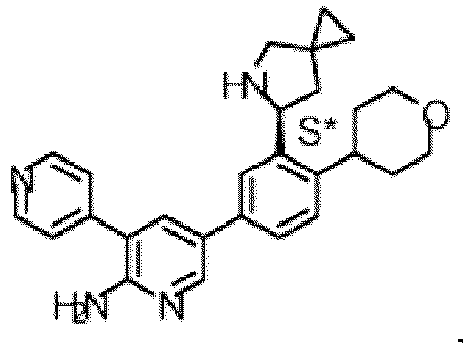


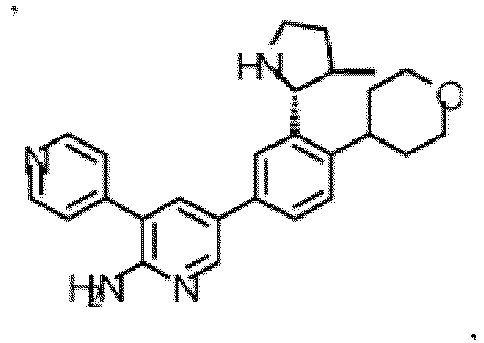


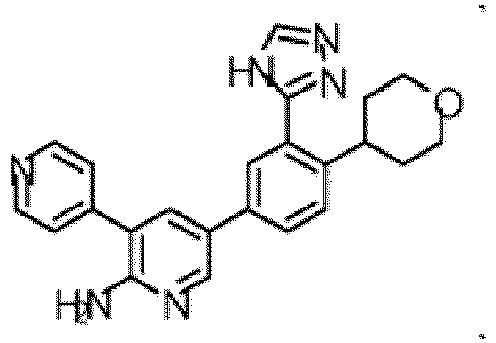


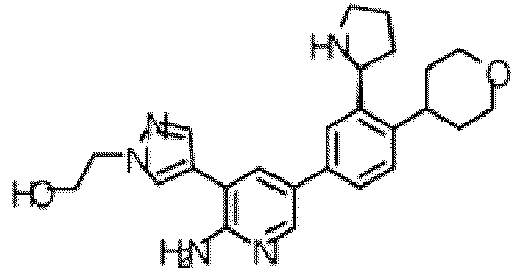


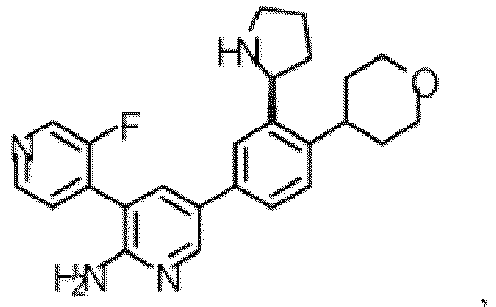


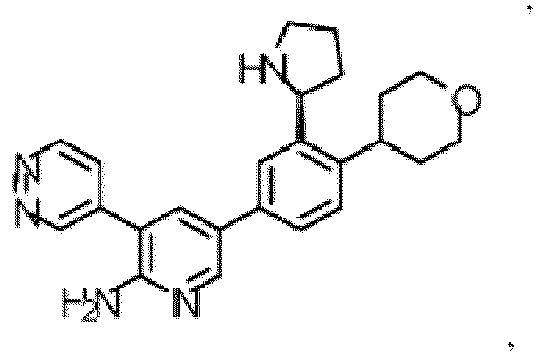
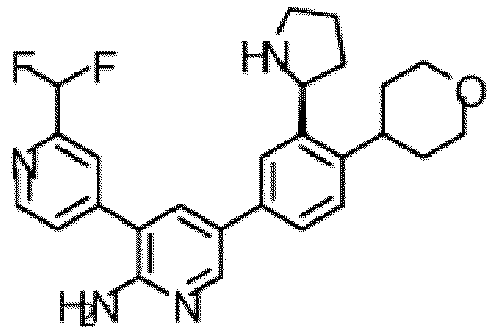


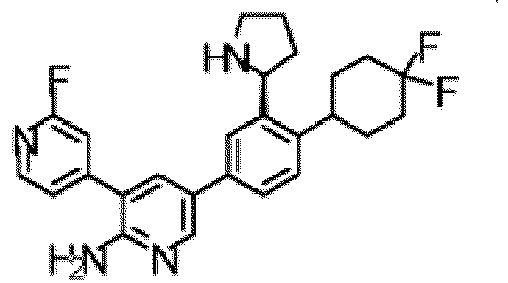

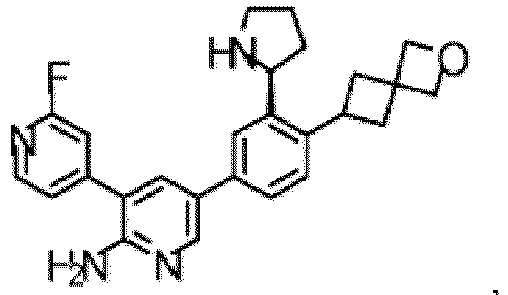

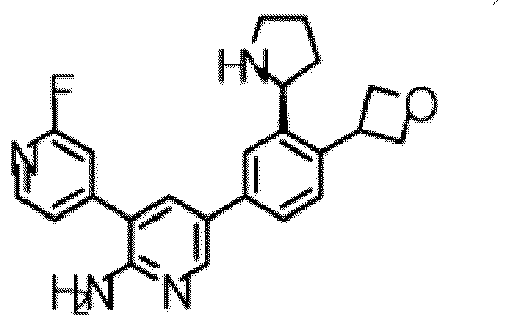

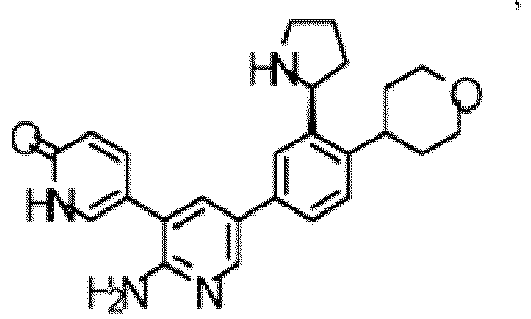

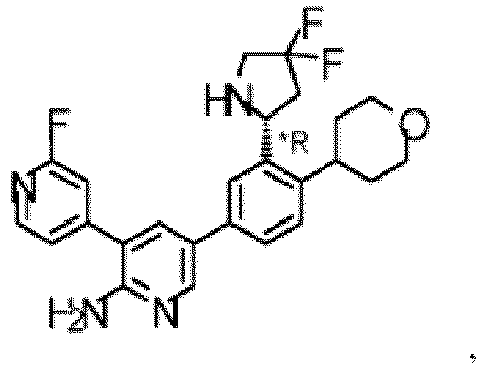


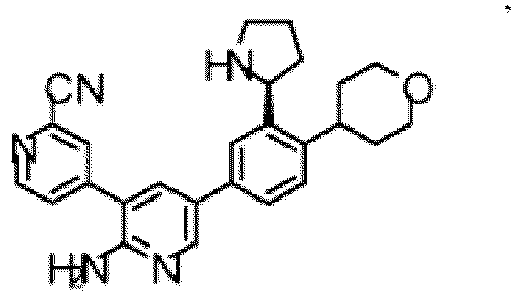


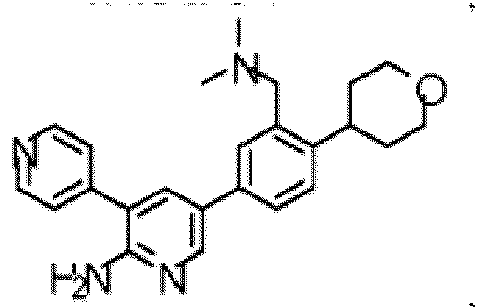


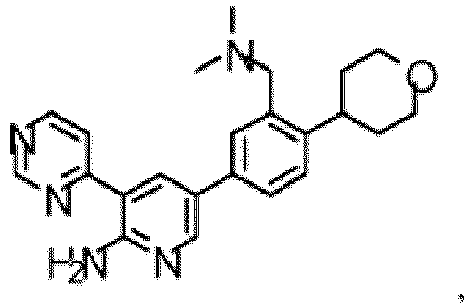


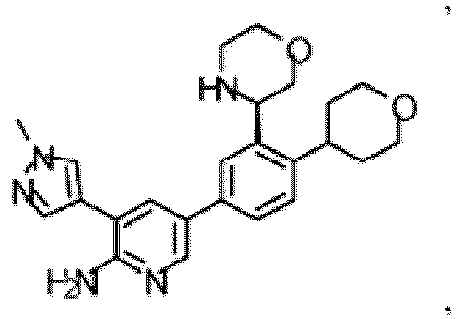


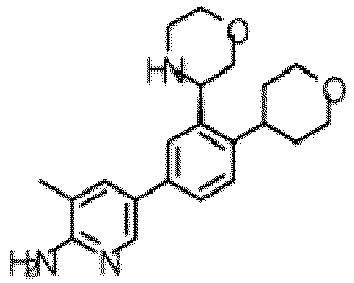


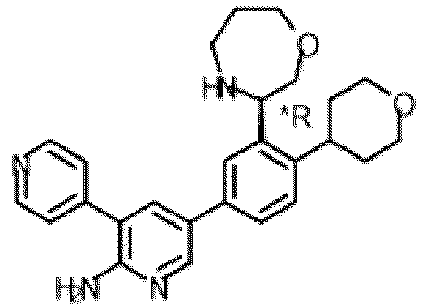


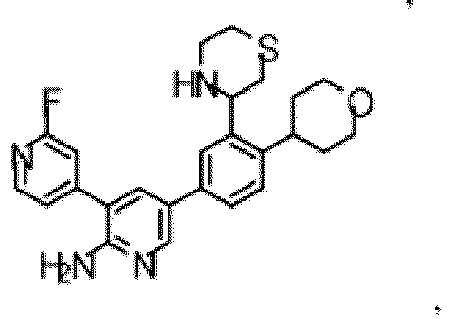


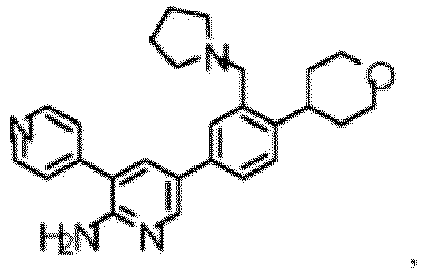
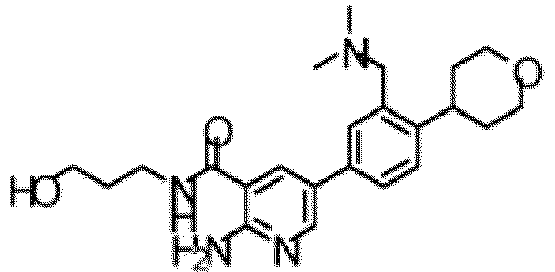

 tautomères et formes stéréoisomères de ceux-ci,et sels d'addition, N-oxydes et solvates pharmaceutiquement acceptables de ceux-ci.
 - Composé selon la revendication 1, dans lequel le composé est

- Composé selon la revendication 1, dans lequel le composé est

- Composé selon la revendication 1, dans lequel le composé est
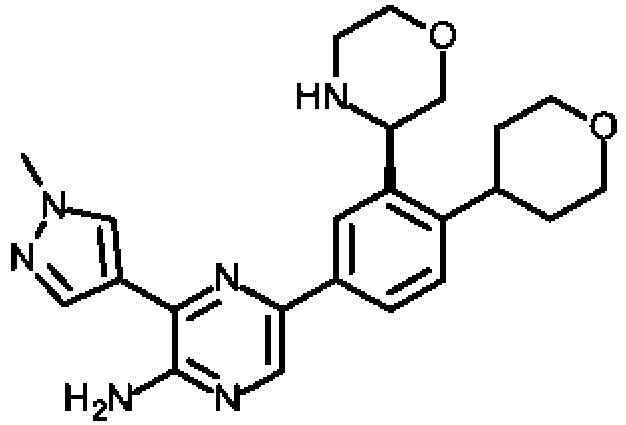
- Composé selon la revendication 1, dans lequel le composé est

- Composé selon la revendication 1, dans lequel le composé est

- Composé selon la revendication 1, dans lequel le composé est

- Composé selon la revendication 1, dans lequel le composé est

- Composé selon la revendication 1, dans lequel le composé est

- Composition pharmaceutique comprenant un composé selon l'une quelconque des revendications 1 à 14 et un support ou diluant pharmaceutiquement acceptable.
- Procédé pour la préparation d'une composition pharmaceutique selon la revendication 15 comprenant le mélange d'un support pharmaceutiquement acceptable avec une quantité thérapeutiquement efficace d'un composé selon l'une quelconque des revendications 1 à 14.
- Composé selon l'une quelconque des revendications 1 à 14 ou composition pharmaceutique selon la revendication 15 pour une utilisation comme médicament.
- Composé selon l'une quelconque des revendications 1 à 14 ou composition pharmaceutique selon la revendication 15 pour une utilisation dans la prévention ou le traitement d'un cancer et d'une infection virale.
- Composé ou composition pharmaceutique pour une utilisation selon la revendication 18 dans la prévention ou le traitement d'un cancer, dans lequel le cancer est choisi parmi cancer du poumon, mélanome, cancer de la tête et du cou, cancer de l'œsophage, cancer de la vessie et cancer urothélial, cancer du foie, cancer du rein, cancer de la prostate et cancer hématopoïétique.
- Composé ou composition pharmaceutique pour une utilisation selon la revendication 18 dans la prévention ou le traitement d'une infection virale chronique.
Applications Claiming Priority (3)
| Application Number | Priority Date | Filing Date | Title |
|---|---|---|---|
| US201962823708P | 2019-03-26 | 2019-03-26 | |
| EP19167820 | 2019-04-08 | ||
| PCT/EP2020/058081 WO2020193511A1 (fr) | 2019-03-26 | 2020-03-24 | Inhibiteurs de hpk1 |
Publications (3)
| Publication Number | Publication Date |
|---|---|
| EP3947366A1 EP3947366A1 (fr) | 2022-02-09 |
| EP3947366B1 true EP3947366B1 (fr) | 2025-05-21 |
| EP3947366C0 EP3947366C0 (fr) | 2025-05-21 |
Family
ID=69845447
Family Applications (1)
| Application Number | Title | Priority Date | Filing Date |
|---|---|---|---|
| EP20711972.8A Active EP3947366B1 (fr) | 2019-03-26 | 2020-03-24 | Inhibiteurs d'hpk1 |
Country Status (8)
| Country | Link |
|---|---|
| US (1) | US12492194B2 (fr) |
| EP (1) | EP3947366B1 (fr) |
| AU (1) | AU2020249409A1 (fr) |
| CA (1) | CA3129768A1 (fr) |
| ES (1) | ES3035145T3 (fr) |
| MA (1) | MA55477A (fr) |
| TW (1) | TW202102488A (fr) |
| WO (1) | WO2020193511A1 (fr) |
Families Citing this family (10)
| Publication number | Priority date | Publication date | Assignee | Title |
|---|---|---|---|---|
| TWI721623B (zh) | 2018-10-31 | 2021-03-11 | 美商基利科學股份有限公司 | 經取代之6-氮雜苯并咪唑化合物 |
| TW202136261A (zh) | 2018-10-31 | 2021-10-01 | 美商基利科學股份有限公司 | 經取代之6-氮雜苯并咪唑化合物 |
| US11453681B2 (en) | 2019-05-23 | 2022-09-27 | Gilead Sciences, Inc. | Substituted eneoxindoles and uses thereof |
| CN114437058A (zh) * | 2020-10-30 | 2022-05-06 | 珠海宇繁生物科技有限责任公司 | 氘代hpk1激酶抑制剂及其制备方法和应用 |
| EP4303216A1 (fr) * | 2021-03-03 | 2024-01-10 | Genfleet Therapeutics (Shanghai) Inc. | Composé hétérocyclique à six chaînons substitué par un cycle condensé, son procédé de préparation et son utilisation |
| US20240425479A1 (en) * | 2021-04-30 | 2024-12-26 | Ontario Institute For Cancer Research (Oicr) | Halo-substituted amino aza-heteroaryl compounds as inhibitors of the haematopoietic progenitor kinase 1 (hpk1) |
| AU2022267407A1 (en) * | 2021-04-30 | 2023-11-09 | Ontario Institute For Cancer Research (Oicr) | Substituted amino aza-heteroaryl compounds as inhibitors of the haematopoietic progenitor kinase 1 (hpk1) |
| WO2023001794A1 (fr) | 2021-07-20 | 2023-01-26 | Astrazeneca Ab | Pyrazine-2-carboxamides substituées utilisées en tant qu'inhibiteurs de hpk1 pour le traitement du cancer |
| IL321286A (en) | 2022-12-16 | 2025-08-01 | Hangzhou Zhongmeihuadong Pharmaceutical Co Ltd | Protac fusion compound, method of preparation and use thereof |
| WO2025113536A1 (fr) * | 2023-11-28 | 2025-06-05 | 杭州和正医药有限公司 | Dérivé de polyaryle et son utilisation |
Family Cites Families (17)
| Publication number | Priority date | Publication date | Assignee | Title |
|---|---|---|---|---|
| US7115653B2 (en) * | 2000-03-30 | 2006-10-03 | Curis, Inc. | Small organic molecule regulators of cell proliferation |
| US20160158360A1 (en) | 2014-12-05 | 2016-06-09 | Genentech, Inc. | Methods and compositions for treating cancer using pd-1 axis antagonists and hpk1 antagonists |
| RS61919B1 (sr) | 2015-06-25 | 2021-06-30 | Univ Health Network | Inhibitori hpk1 i postupci za njihovo korišćenje |
| UA125650C2 (uk) | 2016-09-09 | 2022-05-11 | Інсайт Корпорейшн | Регулятори нрk1 на основі похідних піразолопіридину та їх застосування для лікування раку |
| US10280164B2 (en) | 2016-09-09 | 2019-05-07 | Incyte Corporation | Pyrazolopyridone compounds and uses thereof |
| TW201811799A (zh) | 2016-09-09 | 2018-04-01 | 美商英塞特公司 | 吡唑并嘧啶化合物及其用途 |
| WO2018049214A1 (fr) | 2016-09-09 | 2018-03-15 | Incyte Corporation | Dérivés de pyrazolopyridine comme modulateurs de hpk1 et leurs utilisations pour le traitement du cancer |
| WO2018081531A2 (fr) | 2016-10-28 | 2018-05-03 | Ariad Pharmaceuticals, Inc. | Méthodess d'activation de lymphocytes t humains |
| US11180482B2 (en) | 2016-11-30 | 2021-11-23 | Ariad Pharmaceuticals, Inc. | Anilinopyrimidines as haematopoietic progenitor kinase 1 (HPK1) inhibitors |
| WO2018167147A1 (fr) | 2017-03-15 | 2018-09-20 | F. Hoffmann-La Roche Ag | Azaindoles utilisés en tant qu'inhibiteurs de hpk1 |
| RU2019133646A (ru) | 2017-03-30 | 2021-04-30 | Ф. Хоффманн-Ля Рош Аг | Изохинолины в качестве ингибиторов hpk1 |
| MX2019011511A (es) | 2017-03-30 | 2019-11-18 | Hoffmann La Roche | Naftiridinas como inhibidores de cinasa 1 progenitora hematopoyetica (hpk1). |
| EP3630778A1 (fr) | 2017-05-26 | 2020-04-08 | Ichnos Sciences SA | Nouveaux inhibiteurs de map4k1 |
| WO2018228920A1 (fr) | 2017-06-13 | 2018-12-20 | Bayer Pharma Aktiengesellschaft | Dérivés de pyrrolopyridine substitués |
| EP3638670B1 (fr) | 2017-06-13 | 2021-07-21 | Bayer Pharma Aktiengesellschaft | Dérivés de pyrrolopyridine substitués utilisés en tant que modulateurs de map4k1 pour le traitement de maladies cancéreuses |
| EP3638671A1 (fr) | 2017-06-13 | 2020-04-22 | Bayer Pharma Aktiengesellschaft | Dérivés de pyrrolopyridine substitués |
| US10722495B2 (en) | 2017-09-08 | 2020-07-28 | Incyte Corporation | Cyanoindazole compounds and uses thereof |
-
2020
- 2020-03-24 CA CA3129768A patent/CA3129768A1/fr active Pending
- 2020-03-24 AU AU2020249409A patent/AU2020249409A1/en not_active Abandoned
- 2020-03-24 EP EP20711972.8A patent/EP3947366B1/fr active Active
- 2020-03-24 US US17/442,650 patent/US12492194B2/en active Active
- 2020-03-24 MA MA055477A patent/MA55477A/fr unknown
- 2020-03-24 WO PCT/EP2020/058081 patent/WO2020193511A1/fr not_active Ceased
- 2020-03-24 TW TW109109735A patent/TW202102488A/zh unknown
- 2020-03-24 ES ES20711972T patent/ES3035145T3/es active Active
Also Published As
| Publication number | Publication date |
|---|---|
| WO2020193511A1 (fr) | 2020-10-01 |
| TW202102488A (zh) | 2021-01-16 |
| EP3947366C0 (fr) | 2025-05-21 |
| EP3947366A1 (fr) | 2022-02-09 |
| CA3129768A1 (fr) | 2020-10-01 |
| US12492194B2 (en) | 2025-12-09 |
| MA55477A (fr) | 2022-02-09 |
| US20220177458A1 (en) | 2022-06-09 |
| ES3035145T3 (en) | 2025-08-29 |
| AU2020249409A1 (en) | 2021-09-30 |
Similar Documents
| Publication | Publication Date | Title |
|---|---|---|
| EP3947366B1 (fr) | Inhibiteurs d'hpk1 | |
| EP3947373B1 (fr) | Inhibiteurs de hpk1 bicycliques | |
| EP3867263B1 (fr) | Chimère de ciblage de protéolyse (protacs) utilisés comme agents de dégradation de smarca2 et/ou smarca4 | |
| JP6847844B2 (ja) | 治療用ピリダジン化合物およびその使用 | |
| US20240239788A1 (en) | Small molecule inhibitors of kras g12d mutant | |
| TWI634112B (zh) | Cot調節劑及其使用方法 | |
| WO2023099624A1 (fr) | 2-amino-3-cyano thiophènes annelés et leurs dérivés pour le traitement du cancer | |
| KR101530117B1 (ko) | 야누스 키나제 억제제 화합물 및 방법 | |
| TWI839363B (zh) | 嘧啶化合物及包括其之供預防或治療癌症的藥學組成物 | |
| EP3049412B1 (fr) | Nouveaux dérivés de 3-(1h-pyrazol-4-yl)-1h-pyrrolo[2,3-c]pyridine utilisés comme inhibiteurs de nik | |
| TW202128685A (zh) | 作為fgfr抑制劑之雙環雜環 | |
| HUE030869T2 (en) | Heterocyclylamines as pi3k inhibitors | |
| TW201444846A (zh) | 吡唑并嘧啶衍生物治療PI3Kδ 相關病症之用途 | |
| JP2021503479A (ja) | 置換ヘテロアリール化合物及び使用方法 | |
| US12064421B2 (en) | Substituted 1H-pyrazolo[4,3-c]pyridines and derivatives as EGFR inhibitors | |
| CN111689991B (zh) | 取代的杂芳基化合物及其组合物和用途 | |
| HK1198365A1 (en) | Imidazopyridine compounds, compositions and methods of use | |
| JP6586463B2 (ja) | PI3Kβ阻害剤としての複素環連結イミダゾピリダジン誘導体 | |
| US20220023281A1 (en) | Heterocyclic spiro-compounds as am2 receptor inhibitors | |
| WO2025210042A1 (fr) | Combinaison de zongertinib avec un inhibiteur de sos1 destiné à être utilisé dans le traitement du cancer | |
| HK40101523A (en) | Tricyclic carboxamide derivatives as prmt5 inhibitors | |
| HK40101523B (en) | Tricyclic carboxamide derivatives as prmt5 inhibitors | |
| HK1189586A (en) | Pyrazolopyridines and pyrazolopyridines and their use as tyk2 inhibitors |
Legal Events
| Date | Code | Title | Description |
|---|---|---|---|
| STAA | Information on the status of an ep patent application or granted ep patent |
Free format text: STATUS: UNKNOWN |
|
| STAA | Information on the status of an ep patent application or granted ep patent |
Free format text: STATUS: THE INTERNATIONAL PUBLICATION HAS BEEN MADE |
|
| PUAI | Public reference made under article 153(3) epc to a published international application that has entered the european phase |
Free format text: ORIGINAL CODE: 0009012 |
|
| STAA | Information on the status of an ep patent application or granted ep patent |
Free format text: STATUS: REQUEST FOR EXAMINATION WAS MADE |
|
| 17P | Request for examination filed |
Effective date: 20211026 |
|
| AK | Designated contracting states |
Kind code of ref document: A1 Designated state(s): AL AT BE BG CH CY CZ DE DK EE ES FI FR GB GR HR HU IE IS IT LI LT LU LV MC MK MT NL NO PL PT RO RS SE SI SK SM TR |
|
| STAA | Information on the status of an ep patent application or granted ep patent |
Free format text: STATUS: EXAMINATION IS IN PROGRESS |
|
| 17Q | First examination report despatched |
Effective date: 20220818 |
|
| GRAP | Despatch of communication of intention to grant a patent |
Free format text: ORIGINAL CODE: EPIDOSNIGR1 |
|
| STAA | Information on the status of an ep patent application or granted ep patent |
Free format text: STATUS: GRANT OF PATENT IS INTENDED |
|
| INTG | Intention to grant announced |
Effective date: 20231220 |
|
| GRAS | Grant fee paid |
Free format text: ORIGINAL CODE: EPIDOSNIGR3 |
|
| GRAJ | Information related to disapproval of communication of intention to grant by the applicant or resumption of examination proceedings by the epo deleted |
Free format text: ORIGINAL CODE: EPIDOSDIGR1 |
|
| GRAL | Information related to payment of fee for publishing/printing deleted |
Free format text: ORIGINAL CODE: EPIDOSDIGR3 |
|
| STAA | Information on the status of an ep patent application or granted ep patent |
Free format text: STATUS: EXAMINATION IS IN PROGRESS |
|
| INTC | Intention to grant announced (deleted) | ||
| GRAP | Despatch of communication of intention to grant a patent |
Free format text: ORIGINAL CODE: EPIDOSNIGR1 |
|
| STAA | Information on the status of an ep patent application or granted ep patent |
Free format text: STATUS: GRANT OF PATENT IS INTENDED |
|
| INTG | Intention to grant announced |
Effective date: 20240909 |
|
| GRAA | (expected) grant |
Free format text: ORIGINAL CODE: 0009210 |
|
| STAA | Information on the status of an ep patent application or granted ep patent |
Free format text: STATUS: THE PATENT HAS BEEN GRANTED |
|
| AK | Designated contracting states |
Kind code of ref document: B1 Designated state(s): AL AT BE BG CH CY CZ DE DK EE ES FI FR GB GR HR HU IE IS IT LI LT LU LV MC MK MT NL NO PL PT RO RS SE SI SK SM TR |
|
| REG | Reference to a national code |
Ref country code: GB Ref legal event code: FG4D |
|
| REG | Reference to a national code |
Ref country code: CH Ref legal event code: EP |
|
| REG | Reference to a national code |
Ref country code: DE Ref legal event code: R096 Ref document number: 602020051575 Country of ref document: DE |
|
| REG | Reference to a national code |
Ref country code: IE Ref legal event code: FG4D |
|
| U01 | Request for unitary effect filed |
Effective date: 20250620 |
|
| U07 | Unitary effect registered |
Designated state(s): AT BE BG DE DK EE FI FR IT LT LU LV MT NL PT RO SE SI Effective date: 20250702 |
|
| REG | Reference to a national code |
Ref country code: ES Ref legal event code: FG2A Ref document number: 3035145 Country of ref document: ES Kind code of ref document: T3 Effective date: 20250829 |
|
| PG25 | Lapsed in a contracting state [announced via postgrant information from national office to epo] |
Ref country code: NO Free format text: LAPSE BECAUSE OF FAILURE TO SUBMIT A TRANSLATION OF THE DESCRIPTION OR TO PAY THE FEE WITHIN THE PRESCRIBED TIME-LIMIT Effective date: 20250821 Ref country code: GR Free format text: LAPSE BECAUSE OF FAILURE TO SUBMIT A TRANSLATION OF THE DESCRIPTION OR TO PAY THE FEE WITHIN THE PRESCRIBED TIME-LIMIT Effective date: 20250822 |
|
| PG25 | Lapsed in a contracting state [announced via postgrant information from national office to epo] |
Ref country code: PL Free format text: LAPSE BECAUSE OF FAILURE TO SUBMIT A TRANSLATION OF THE DESCRIPTION OR TO PAY THE FEE WITHIN THE PRESCRIBED TIME-LIMIT Effective date: 20250521 |
|
| PG25 | Lapsed in a contracting state [announced via postgrant information from national office to epo] |
Ref country code: HR Free format text: LAPSE BECAUSE OF FAILURE TO SUBMIT A TRANSLATION OF THE DESCRIPTION OR TO PAY THE FEE WITHIN THE PRESCRIBED TIME-LIMIT Effective date: 20250521 |
|
| PG25 | Lapsed in a contracting state [announced via postgrant information from national office to epo] |
Ref country code: RS Free format text: LAPSE BECAUSE OF FAILURE TO SUBMIT A TRANSLATION OF THE DESCRIPTION OR TO PAY THE FEE WITHIN THE PRESCRIBED TIME-LIMIT Effective date: 20250821 |
|
| PG25 | Lapsed in a contracting state [announced via postgrant information from national office to epo] |
Ref country code: IS Free format text: LAPSE BECAUSE OF FAILURE TO SUBMIT A TRANSLATION OF THE DESCRIPTION OR TO PAY THE FEE WITHIN THE PRESCRIBED TIME-LIMIT Effective date: 20250921 |
|
| PG25 | Lapsed in a contracting state [announced via postgrant information from national office to epo] |
Ref country code: SM Free format text: LAPSE BECAUSE OF FAILURE TO SUBMIT A TRANSLATION OF THE DESCRIPTION OR TO PAY THE FEE WITHIN THE PRESCRIBED TIME-LIMIT Effective date: 20250521 |
|
| VS25 | Lapsed in a validation state [announced via postgrant information from nat. office to epo] |
Ref country code: MD Free format text: LAPSE BECAUSE OF FAILURE TO SUBMIT A TRANSLATION OF THE DESCRIPTION OR TO PAY THE FEE WITHIN THE PRESCRIBED TIME-LIMIT Effective date: 20250521 |
|
| PG25 | Lapsed in a contracting state [announced via postgrant information from national office to epo] |
Ref country code: CZ Free format text: LAPSE BECAUSE OF FAILURE TO SUBMIT A TRANSLATION OF THE DESCRIPTION OR TO PAY THE FEE WITHIN THE PRESCRIBED TIME-LIMIT Effective date: 20250521 |
|
| PG25 | Lapsed in a contracting state [announced via postgrant information from national office to epo] |
Ref country code: SK Free format text: LAPSE BECAUSE OF FAILURE TO SUBMIT A TRANSLATION OF THE DESCRIPTION OR TO PAY THE FEE WITHIN THE PRESCRIBED TIME-LIMIT Effective date: 20250521 |
|
| PLBE | No opposition filed within time limit |
Free format text: ORIGINAL CODE: 0009261 |
|
| STAA | Information on the status of an ep patent application or granted ep patent |
Free format text: STATUS: NO OPPOSITION FILED WITHIN TIME LIMIT |
|
| REG | Reference to a national code |
Ref country code: CH Ref legal event code: U11 Free format text: ST27 STATUS EVENT CODE: U-0-0-U10-U11 (AS PROVIDED BY THE NATIONAL OFFICE) Effective date: 20260401 |
|
| REG | Reference to a national code |
Ref country code: CH Ref legal event code: L10 Free format text: ST27 STATUS EVENT CODE: U-0-0-L10-L00 (AS PROVIDED BY THE NATIONAL OFFICE) Effective date: 20260402 |
|
| PGFP | Annual fee paid to national office [announced via postgrant information from national office to epo] |
Ref country code: GB Payment date: 20260202 Year of fee payment: 7 |
|
| PGFP | Annual fee paid to national office [announced via postgrant information from national office to epo] |
Ref country code: IE Payment date: 20260211 Year of fee payment: 7 |
|
| VS25 | Lapsed in a validation state [announced via postgrant information from nat. office to epo] |
Ref country code: MA Free format text: LAPSE BECAUSE OF FAILURE TO SUBMIT A TRANSLATION OF THE DESCRIPTION OR TO PAY THE FEE WITHIN THE PRESCRIBED TIME-LIMIT Effective date: 20250521 |